EP1422254A2 - Photocationic polymerization initiator and photocationically polymerizable composition - Google Patents
Photocationic polymerization initiator and photocationically polymerizable composition Download PDFInfo
- Publication number
- EP1422254A2 EP1422254A2 EP03257136A EP03257136A EP1422254A2 EP 1422254 A2 EP1422254 A2 EP 1422254A2 EP 03257136 A EP03257136 A EP 03257136A EP 03257136 A EP03257136 A EP 03257136A EP 1422254 A2 EP1422254 A2 EP 1422254A2
- Authority
- EP
- European Patent Office
- Prior art keywords
- ring
- aromatic ring
- fused
- compound
- group
- Prior art date
- Legal status (The legal status is an assumption and is not a legal conclusion. Google has not performed a legal analysis and makes no representation as to the accuracy of the status listed.)
- Granted
Links
- 0 COc1c(cccc2)c2c(*)c2ccccc12 Chemical compound COc1c(cccc2)c2c(*)c2ccccc12 0.000 description 1
Classifications
-
- C—CHEMISTRY; METALLURGY
- C08—ORGANIC MACROMOLECULAR COMPOUNDS; THEIR PREPARATION OR CHEMICAL WORKING-UP; COMPOSITIONS BASED THEREON
- C08F—MACROMOLECULAR COMPOUNDS OBTAINED BY REACTIONS ONLY INVOLVING CARBON-TO-CARBON UNSATURATED BONDS
- C08F4/00—Polymerisation catalysts
-
- C—CHEMISTRY; METALLURGY
- C08—ORGANIC MACROMOLECULAR COMPOUNDS; THEIR PREPARATION OR CHEMICAL WORKING-UP; COMPOSITIONS BASED THEREON
- C08F—MACROMOLECULAR COMPOUNDS OBTAINED BY REACTIONS ONLY INVOLVING CARBON-TO-CARBON UNSATURATED BONDS
- C08F2/00—Processes of polymerisation
- C08F2/46—Polymerisation initiated by wave energy or particle radiation
- C08F2/48—Polymerisation initiated by wave energy or particle radiation by ultraviolet or visible light
- C08F2/50—Polymerisation initiated by wave energy or particle radiation by ultraviolet or visible light with sensitising agents
-
- C—CHEMISTRY; METALLURGY
- C08—ORGANIC MACROMOLECULAR COMPOUNDS; THEIR PREPARATION OR CHEMICAL WORKING-UP; COMPOSITIONS BASED THEREON
- C08G—MACROMOLECULAR COMPOUNDS OBTAINED OTHERWISE THAN BY REACTIONS ONLY INVOLVING UNSATURATED CARBON-TO-CARBON BONDS
- C08G59/00—Polycondensates containing more than one epoxy group per molecule; Macromolecules obtained by polymerising compounds containing more than one epoxy group per molecule using curing agents or catalysts which react with the epoxy groups
- C08G59/18—Macromolecules obtained by polymerising compounds containing more than one epoxy group per molecule using curing agents or catalysts which react with the epoxy groups ; e.g. general methods of curing
- C08G59/68—Macromolecules obtained by polymerising compounds containing more than one epoxy group per molecule using curing agents or catalysts which react with the epoxy groups ; e.g. general methods of curing characterised by the catalysts used
Definitions
- the present invention relates to a novel photopolymerization initiator that can be favorably used for photoresist materials, printing board materials, hologram materials and dental materials, and to a photopolymerizable composition containing the above photopolymerization initiator.
- photocationic polymerization initiators there can be exemplified photo acid-generating compounds such as iodonium salt compound and sulfonium salt compound.
- these photo acid-generating compounds do not usually absorb light in the near-ultraviolet region and cannot, hence, excite the polymerization reaction even by using an ordinary source of light (370 to 550 nm) such as halogen lamp.
- Non-Patent Document 1 There have also been known photo acid-generating compounds which, by themselves, absorb light in the near-ultraviolet to visible light regions, such as cyclopentadienyl/iron/allene complex, and diazonium salt compound (see, for example, Non-Patent Document 1).
- the radically polymerizing system has a problem in that the polymerization is impaired by oxygen and, besides, volumetric shrinkage takes place to a large extent due to polymerization.
- a paste-type dental restorative as represented by a composite resin or a compmer(Polyacid modified resin composite) used for restoring the decay or breakage of natural teeth, is directly filled in a cavity of tooth, shaped and is, then, cured. Therefore, an unpolymerized layer or a lowly polymerized layer is produced in the surface of the cured product as the polymerization is impaired by oxygen. Accordingly, the surface must be polished after curing. When the polishing is not effected, there occurs such a problem in that the cured product is colored or discolored due to aging.
- the cationic polymerization is superior to the radical polymerization from such a standpoint that the polymerization is not impaired by oxygen.
- the problem of volumetric shrinkage due to the polymerization greatly decreases.
- a cyclopentadienyl/iron/allene complex is strongly colored after curing while a diazonium salt compound form bubbles.
- a photocationic polymerization initiator comprising (A) a photo acid-generating compound and (B) a fused polycyclic aromatic compound, wherein said fused polycyclic aromatic compound has a molecular structure in which a fused aromatic ring is further condensed with a non-aromatic ring, and at least one of the atoms constituting said non-aromatic ring directly bonded to a common atom in said fused aromatic ring and said non-aromatic ring, is a saturated carbon atom, said saturated carbon atom having at least one hydrogen atom.
- the photo acid-generating compound (A) used for the photocationic polymerization initiator of the present invention directly generates a Bronsted acid or a Lewis acid upon the irradiation with ultraviolet rays, and there can be used any known compound without limitation.
- photo acid-generating compounds have been described in the above-mentioned prior technical literatures. Concrete examples include a diaryliodonium salt compound, a sulfonium salt compound, a sulfonic acid ester compound, and a halomethyl-substituted-S-triazine derivative.
- the diaryliodonium salt is best suited for the present invention on account of its particularly high polymerization activity.
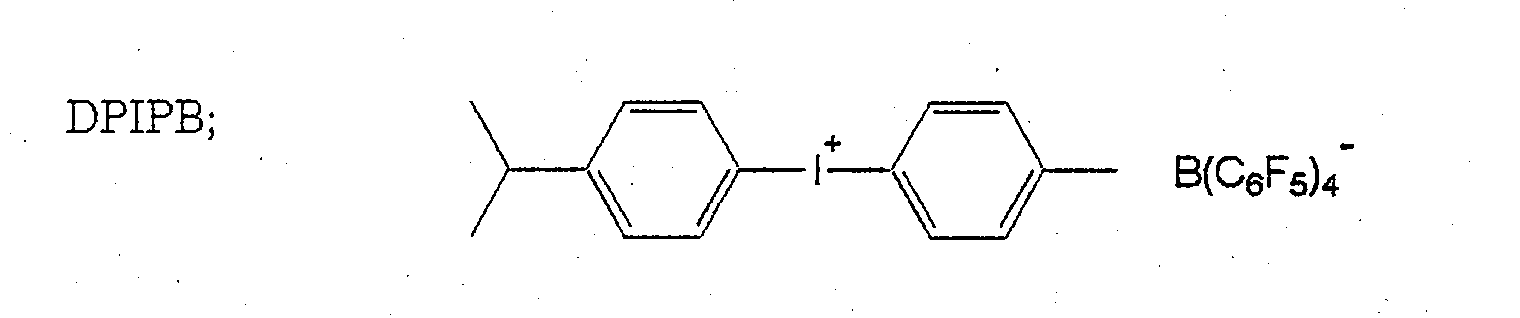
- a representative diaryliodonium salt compound is expressed by the following general formula (1), wherein R 1 , R 2 , R 3 and R 4 are, independently from each other, hydrogen atoms, halogen atoms, alkyl groups, aryl groups, alkenyl groups, alkoxy groups, aryloxy groups or nitro groups, M- is a halide ion, p-toluene sulfonato ion, perfluoroalkyl sulfonato ion, tetrafluoroborate ion, tetrakispentafluorophenyl borate ion, tetrakispentafluorophenyl garlate ion, hexafluorophosphate ion, hexafluoroarsenato ion or hexafluoroantimonate ion.
- diaryliodonium salt represented by the above general formula (1) examples include chloride, bromide, p-toluene sulfonato, trifluoromethane sulfonato, tetrafluoroborate, tetrakis(pentafluorophenyl) borate, tetrakis pentafluorophenyl garlate, hexafluorophosphate, hexafluoroarsenato and hexafluoroantimonate of the following diaryliodonium.
- diaryliodonium forming salts examples include chloride, bromide, p-toluene sulfonato, trifluoromethane sulfonato, tetrafluoroborate, tetrakis(pentafluorophenyl) borate, tetrakis pentafluorophenyl garlate, hexafluorophosphate, hexa
- diaryl iodonium salts it is desired to use p-toluene sulfonato, perfluoroalkyl sulfonato (e.g., trifluoromethane sulfonato), tetrafluoroborate, tetrakispentafluorophenyl borate, tetrakispentafluorophenyl garlate, hexafluorophosphate, hexafluoroarsenato, and hexafluoroantimonate on account of their solubility in monomer.
- perfluoroalkyl sulfonato e.g., trifluoromethane sulfonato
- tetrafluoroborate etrakispentafluorophenyl borate
- tetrakispentafluorophenyl garlate hexafluorophosphate
- examples of the sulfonium salt compound preferably used as the photo acid-generating compound in addition to the above-mentioned diaryl iodonium salts include salts of sulfonium, such as dimethylphenacyl sulfonium, dimethylbenzyl sulfonium, dimethyl-4-hydroxyphenyl sulfonium, dimethyl-4-hydroxynaphthyl sulfonium, dimethyl-4,7-dihydroxynaphthyl sulfonium, dimethyl-4,8-dihydroxynaphthyl sulfonium, triphenyl sulfonium, p-tolyldiphenyl sulfonium, p-tert-butylphenyldiphenyl sulfonium and diphenyl-4-phenylthiophenyl sulfonium, which may be chloride, bromide, p-toluene
- sulfonic acid ester compound examples include benzoin tosylate, ⁇ -methylolbenzoin tosylate, o-nitrobenzyl p-toluene sulfonato, and p-nitrobehzyl-9,10-diethoxyanthracene-2-sulfonato.
- halomethyl substituted-S-triazine derivative examples include 2,4,6-tris(trichloromethyl)-S-triazine, 2-methyl-4,6-bis(trichloromethyl)-S-triazine, 2-phenyl-4,6-bis(trichloromethyl)-S-triazine, and 2-methyl-4,6-bis(tribromomethyl)-S-triazine.
- the above photo acid-generating compounds may be used in one kind or being mixed together in two or more kinds.
- the amount of using the photo acid-generating compound there is no particular limitation on the amount of using the photo acid-generating compound provided it is used in an amount enough for initiating the polymerization by the irradiation with light.
- the photo acid-generating compound is used in an amount of 0.001 to 10 parts by mass and, more .preferably, 0.05 to 5 parts by mass per 100 parts by mass of the cationically polymerizable monomer that will be described later.
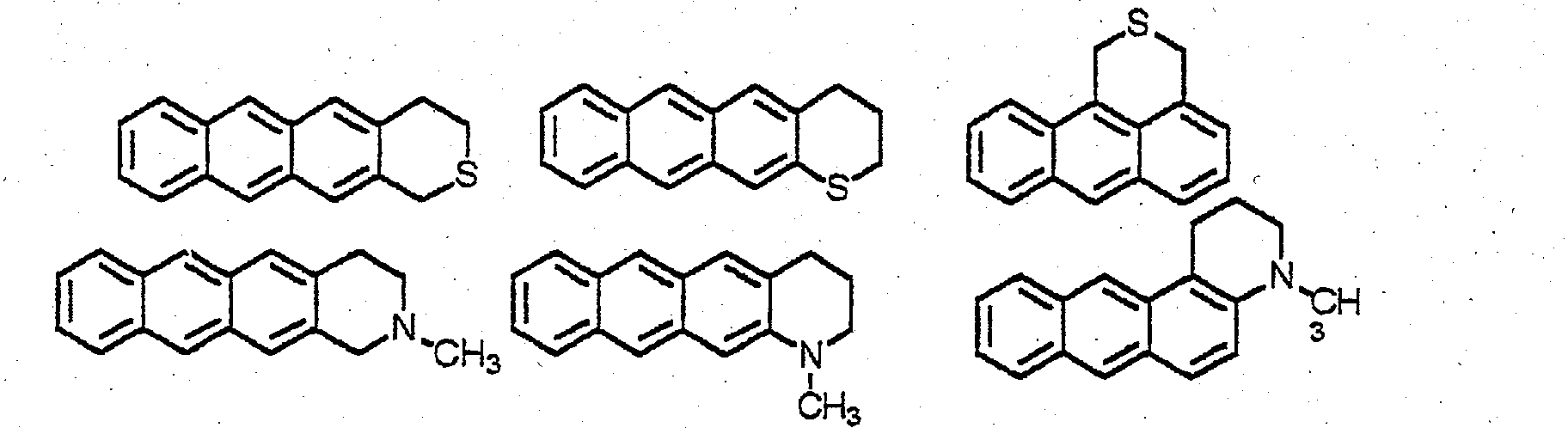
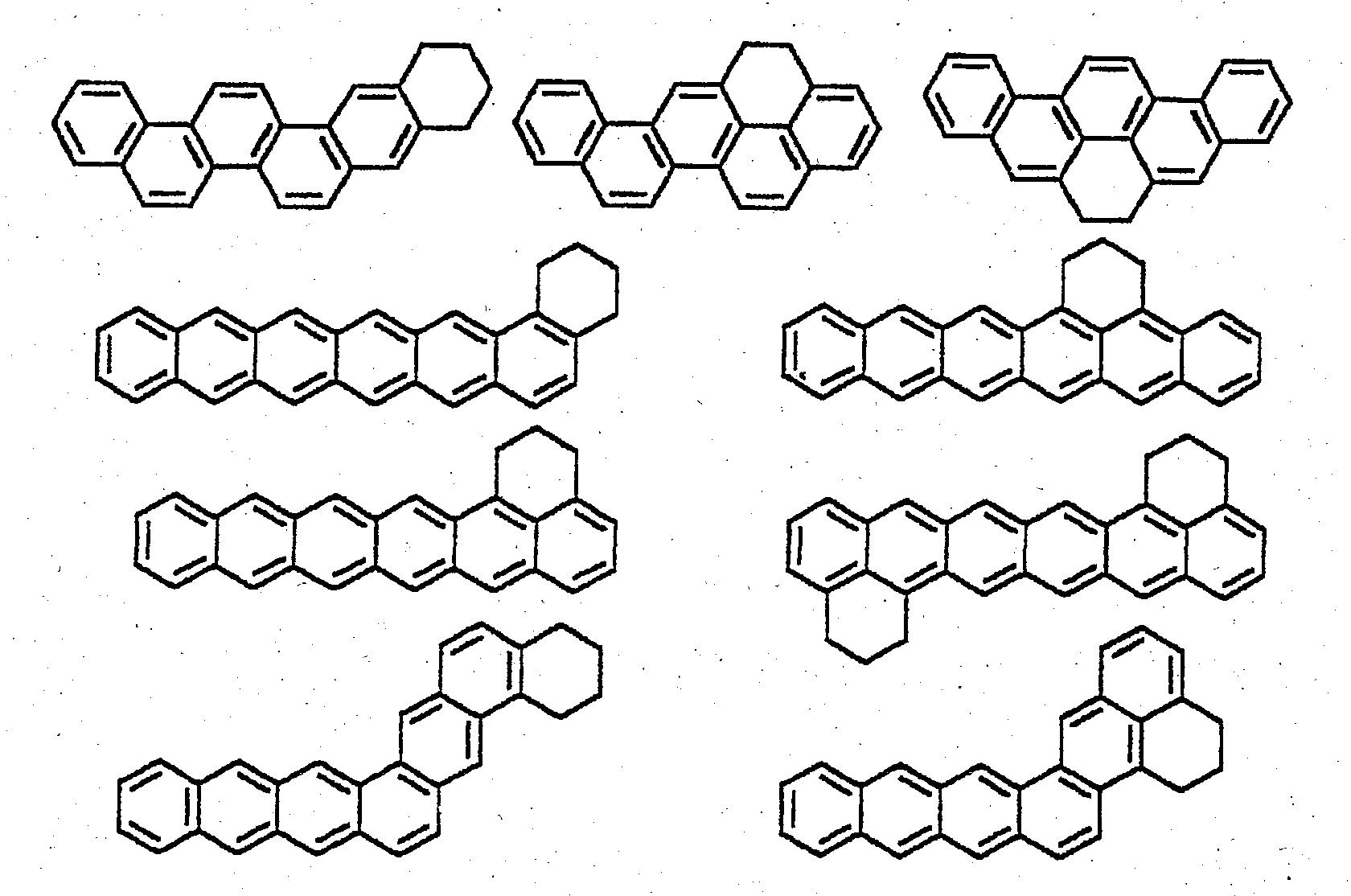
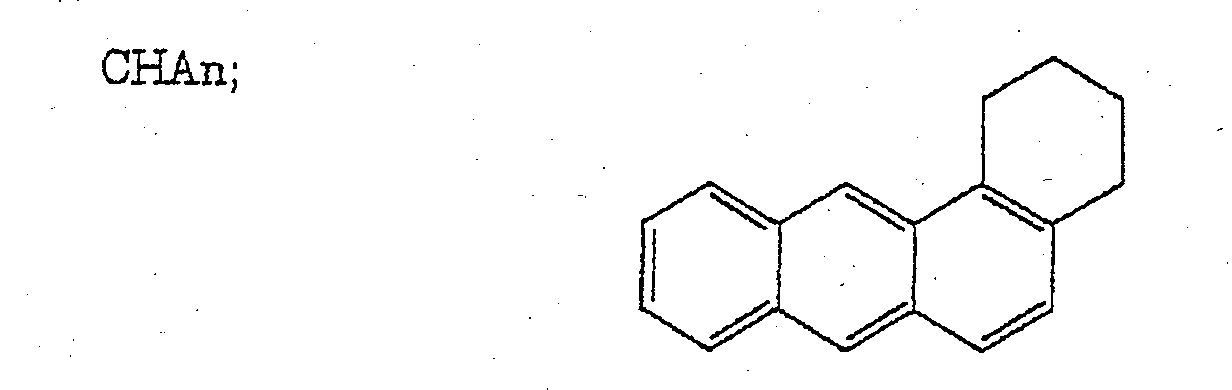
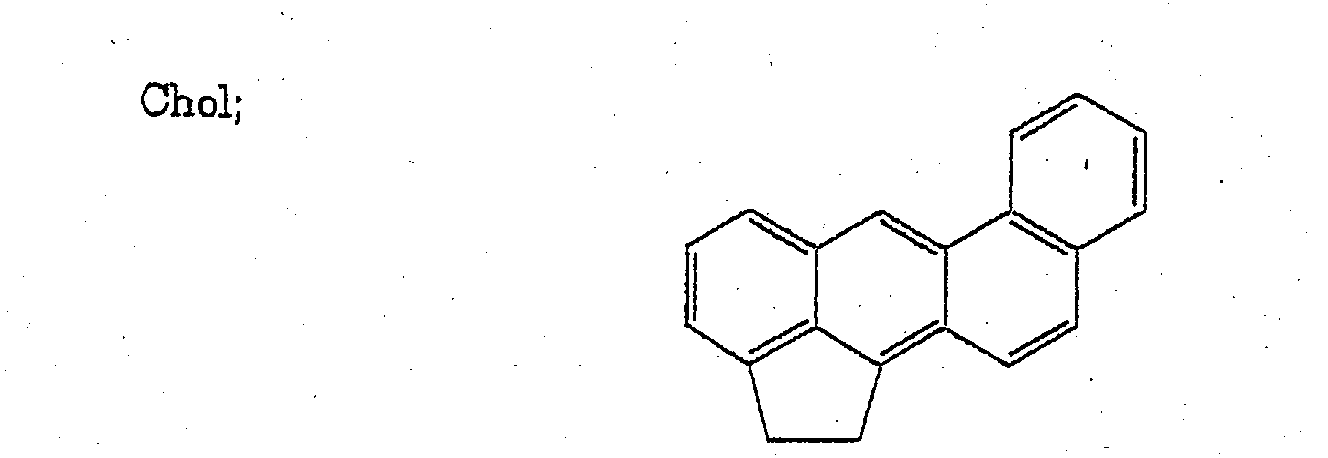
- the fused polycyclic aromatic compound (B) used in combination with the photo acid-generating compound is a sensitizer having a molecular structure in which a fused aromatic ring is further fused with a non-aromatic ring, and at least one of the atoms constituting the non-aromatic ring directly bonded to a common atom in the fused aromatic ring and the non-aromatic ring, is a saturated carbon atom.
- the saturated carbon atom has at least one hydrogen atom.
- the effect of the present invention is not obtained even by using a compound in which the fused aromatic ring has not been further fused with the non-aromatic ring but which is constituted by the aromatic ring only. Even in case the fused aromatic ring is further fused with the non-aromatic ring, the effect of the present invention is not obtained when hydrogen atom is possessed by none of the atoms (hereinafter often referred to simply as "atoms neighboring the ring-fusion atoms") constituting the non-aromatic ring directly bonded to the common atoms (ring-fusion atoms) in the fused aromatic ring and the non-aromatic ring, or when the atoms constituting the non-aromatic ring are the atoms (i.e., atoms having an unsaturated bond) other than the saturated carbon atoms.
- atoms neighboring the ring-fusion atoms constituting the non-aromatic ring directly bonded to the common atoms (ring-fusion atoms) in the
- the effect of the present invention is not obtained when the atoms neighboring the ring-fusion atoms are all saturated carbon atoms forming a group such as a dichloromethylene group or a dimethylmethylene group without at all having hydrogen atom, or are unsaturated carbon atoms having a double bond (or triple bond), or are atoms (such as oxygen atoms or nitrogen atoms) other than carbon atoms.
- the atoms neighboring the ring-fusion atoms need not all be the saturated carbon atoms having at least one hydrogen atom, but some of a plurality of atoms neighboring the ring-fusion atom may be other than carbon atoms, may be carbon atoms without at all having hydrogen atom, or may be unsaturated carbon atoms.
- Atoms constituting the non-aromatic ring (except a common atom in the fused polycyclic aromatic ring) other than the atoms neighboring the ring-fusion atoms, are free from the above-mentioned limitation, and may be atoms of any kind or in any state.
- the fused aromatic ring may have any known structure. From the standpoint of solubility in monomers, polymerization activity and easy availability, however, it is desired that the fused aromatic ring is the one in which 2 to 6 benzene rings are fused.
- the fused aromatic ring examples include a naphthalene ring in which two benzene rings are fused; an anthracene ring or a phenanthrene ring in which three benzene rings are fused; a naphthacene ring, a 1,2-benzanthracene ring, a chrysene ring or a pyrene ring in which four benzene rings are fused; a benzo (a) pyrene ring, a benzo (e) pyrene ring, a benzo (g) pyrene ring, a benzo (h) pyrene ring, a benzo (i) pyrene ring, a perylene ring, a pentacene ring, a pentaphene ring or a picene ring in which five benzene rings are fused; and a hexaphene ring and a hexacene ring
- the fused polycyclic aromatic compound (B) used in the present invention is further condensed with the non-aromatic ring.
- the fused polycyclic aromatic compound has a structure in which a total of three or more rings inclusive of at least two rings (which are fused together) exhibiting aromatic property and at least one non-aromatic ring, are fused together.
- the form of fusion may be an ortho fusion sharing a side of the fused aromatic ring and of the non-aromatic ring, or an ortho-peri fusion sharing two or more sides of the fused aromatic ring and of the non-aromatic ring.
- a 1,2,3,4-tetrahydrophenanthrene in which a side a of a naphthalene and a cyclohexane are fused together corresponds to the former fusion
- a 2,3-dihydrophenalene in which two sides d and e of the naphthalene and the cyclohexane are fused together corresponds to the latter fusion.
- the non-aromatic ring with which the fused aromatic ring is to be further fused there is no particular limitation provided at least one neighboring atom bonded to a ring-fusion atom (a common atom in the non-aromatic ring and the fused aromatic ring) becomes a saturated carbon atom having at least one hydrogen atom, and any known non-aromatic ring may be used. Further, the non-aromatic ring may be further fused with any other aromatic ring or non-aromatic ring, and may further have various substituents.
- fused polycyclic aromatic compound used in the present invention may be fused with a plurality of non-aromatic rings, and may further have a non-cyclic substituent.
- R 5 is a hydrogen atom, a halogen atom, a hydroxyl group, a mercapto group or an organic residue with 1 to 10 carbon atoms
- m is an integer of 0 to 6
- R 6 is a halogen atom, a hydroxyl group, a mercapto group, or a monovalent organic residue having 1 to 10 carbon atoms, or a plurality of R 6 may be bonded together to form a non-aromatic ring, and when there are a plurality of R 6 or when there are a plurality of non-aromatic rings formed by the bonding of R 6 , these R 6 may be the same or different.
- a group represented by the following formula (3) is a fused aromatic hydrocarbon cyclic group having a valency of (m+2) and in which 2 to 6 benzene rings are fused together, and a portion represented by the following formula (4), is the one that is the non-aromatic ring condensed with the fused aromatic hydrocarbon ring and that is not common with the fused aromatic hydrocarbon ring.
- the non-aromatic ring having a partial structure represented by the above formula (4) (the remainder thereof is common with the fused aromatic hydrocarbon ring represented the above formula (3)) has at least 3 carbon atoms (at least 2 of them are common with the fused aromatic hydrocarbon ring, and at least one is existing as a saturated carbon atom that is bonded to the fused carbon atom) and, the saturated carbon atom has at least one hydrogen atom.
- the non-aromatic ring preferably has 5 to 7 atoms that constitute a ring (common atoms with the fused aromatic hydrocarbon ring).
- the non-aromatic ring may be a heterocyclic ring having oxygen atoms, nitrogen atoms or sulfur atoms for constituting the ring.
- non-aromatic ring which is condensed with the fused aromatic hydrocarbon ring include saturated hydrocarbon rings having 4 to 7 atoms constituting a ring, such as cyclobutane ring, cyclopentane ring, cyclohexane ring, cycloheptane ring, cyclooctane ring, cyclopentene ring, cyclohexene ring and cycloheptene ring; partly unsaturated hydrocarbon rings having 4 to 7 atoms constituting a ring, such as 1,2-cycloheptadiene ring, cyclooctene ring, 1,2-cyclooctadiene ring, and 1,3-cyclooctadiene ring; oxygen-containing saturated heterocyclic rings such as oxetane ring and tetrahydrofurane ring; nitrogen-containing saturated heterocyclic rings such as azetidine ring, tetrahydropyrane
- the non-aromatic rings may have, as R 5 in the above formula (2), a hydroxyl group, a mercapto group, a halogen atom, or a monovalent organic residue having 1 to 10 carbon atoms, or may have, as a substituent, a hydroxyl group, a mercapto group, a halogen atom or a monovalent organic residue having 1 to 10 carbon atoms at other positions of the ring. There may be further fused other aromatic and/or non-aromatic rings.
- examples of the halogen atom include fluorine atom, chlorine atom, bromine atom and iodine atom.
- the monovalent organic residue having 1 to 10 carbon atoms there can be exemplified a substituted or unsubstituted alkyl group, a substituted or unsubstituted alkenyl group, a substituted or unsubstituted acyloxy group, a substituted or unsubstituted alkoxy group, a substituted or unsubstituted alkylthio group, a substituted or unsubstituted aryl group, and a dialkylamino group.
- alkyl groups having 1 to 10 carbon atoms such as methyl group, ethyl group, propyl group, isopropyl group, butyl group, sec-butyl group, t-butyl group, pentyl group, isopentyl group and hexyl group.
- substituents in the above substituted alkyl group include alkoxy groups such as methoxy group and ethoxy group; aryl groups such as phenyl group and tolyl group; 1-alkenyl groups such as vinyl group and 1-propenyl group; hydroxyl group; halogen atoms such as fluorine atom, chlorine atom and bromine atom; acyloxy groups such as acetyloxy group and benzoyloxy group; alkylthio groups such as ethylthio group and butylthio group; and mercapto group.
- alkoxy groups such as methoxy group and ethoxy group
- aryl groups such as phenyl group and tolyl group
- 1-alkenyl groups such as vinyl group and 1-propenyl group
- hydroxyl group halogen atoms such as fluorine atom, chlorine atom and bromine atom
- acyloxy groups such as acetyloxy group and benzoyloxy group
- the unsubstituted alkenyl group there can be exemplified a vinyl group and a 1-propenyl group.
- the substituent that may be possessed by the above alkenyl group there can be exemplified the same substituents as those exemplified concerning the above alkyl group.
- the unsubstituted acyloxy group there can be exemplified an acetyloxy group, a propionyloxy group and a benzoyloxy group.
- the substituents that may be possessed by the acyloxy group there can be exemplified the same substituents as those exemplified concerning the above alkyl group.
- substituted or unsubstituted alkoxy group and as the substituted or unsubstituted alkylthio group there can be exemplified alkoxy groups and alkylthio groups derived from the above substituted or unsubstituted alkyl groups.
- substituted or unsubstituted aryl group there can be exemplified a phenyl group and a tolyl group
- dialkylamino group there can be exemplified a dimethylamino group and a diethylamino group.
- the group R 5 in the formula (2) is, particularly desirably, a hydrogen atom.
- the non-aromatic ring to be condensed is a saturated or partly unsaturated hydrocarbon ring from the standpoint of easy synthesis and easy availability.
- the non-aromatic ring is a hydrocarbon ring having 5 to 7 atoms constituting a ring (inclusive of common atoms with the fused aromatic hydrocarbon ring) or a fused polycyclic hydrocarbon ring having 8 to 12 carbon atoms, in which the above hydrocarbon ring is further condensed with a hydrocarbon ring.
- the above non-aromatic ring is further condensed with the above fused aromatic hydrocarbon ring to share a plurality of carbon atoms (common atoms) thereby to form a fused polycyclic aromatic compound used in the present invention.
- the fusion is desirably the ortho fusion or the ortho-peri fusion sharing 2 to 3 carbon atoms.
- the non-aromatic ring When the non-aromatic ring is to be condensed with the fused aromatic hydrocarbon ring, at least one of the atoms constituting the non-aromatic ring and directly bonding to the common atoms.with the fused polycyclic aromatic ring, must become a saturated carbon atom having at least one hydrogen atom (i.e., active hydrogen). That is, the carbon atom represented by >CHR 5 in the above general formula (2) must be so condensed as to be directly bonded to the fused aromatic hydrocarbon ring represented by the above formula (3).
- the substituent R 6 which can be bonded to the fused aromatic hydrocarbon ring is a hydroxyl group, a mercapto group, a halogen atom or a monovalent organic residue having 1 to 10 carbon atoms. Further, a plurality of substituents R 6 may be bonded together to form a non-aromatic ring.
- the halogen atom or the monovalent organic residue having 1 to 10 carbon atoms there can be exemplified those that were concretely exemplified above concerning the group R 5 .
- the ring may assume a form in which it is condensed with a ring similar to the non-aromatic ring of which the partial structure was exemplified by the above formula (4).
- the neighboring atoms bonded to the ring-fusion atoms (common atoms) between the non-aromatic ring which the plurality of R 6 are forming and the fused aromatic ring need not all be the saturated carbon atoms having a hydrogen atom.
- the atoms neighboring the ring-fusion atoms may all be the atoms other than the carbon atoms or may all be the unsaturated carbon atoms, or may be the saturated carbon atoms substituted by halogen atoms or alkyl groups so will not to leave hydrogen atoms.
- the groups R 6 or the rings may be the same or different.
- the fused polycyclic aromatic compounds represented by the above formula (2) therefore, it is desired to use those having an absorption peak at a wavelength area of not shorter than 350 nm.
- the fused aromatic hydrocarbon cyclic group represented by the formula (3) in general, there is used a compound with which three or more benzene rings are linearly condensed exhibiting the absorption peak at a wavelength of not shorter than 350 nm.
- the above fused polycyclic aromatic compounds can be used in a single kind or in two or more kinds being mixed together.
- the amount of addition of the fused polycyclic aromatic compound varies depending upon the kind of the photo acid-generating compound but is, usually, 0.001 to 20 mols and, particularly, 0.005 to 10 mols per mol of the photo acid-generating compound (A).
- the photocationic polymerization initiator comprising the photo acid-generating compound (A) and the fused polycyclic aromatic compound (B) is mixed into a cationically polymeriable monomer so as to be used as a photocationically polymerizable composition.
- a known monomer that has been known to undergo the cationic polymerization without any limitation.
- Such compounds have been closely described in the above-mentioned prior technical literatures and in the literatures quoted therein.
- Concrete examples of a representative cationically polymerizable monomer include a vinyl ether compound, an epoxy compound, an oxetane compound, an aziridine compound, an azetidine compound, an episulfide compound, a cyclic acetal, a bicycloortho ester, a spiroortho ester, a spiroortho carbonate and a tetrahydrofurane.
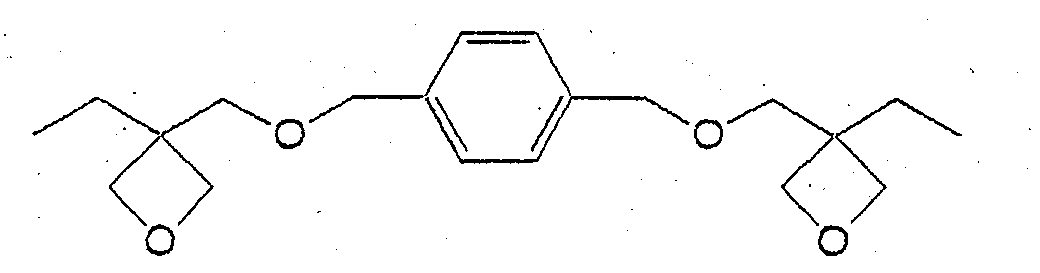
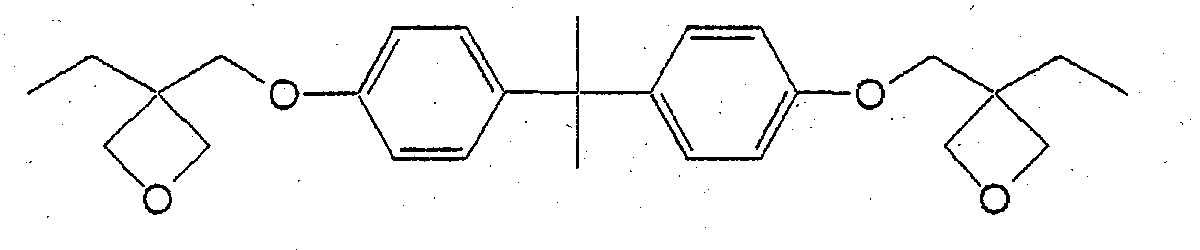
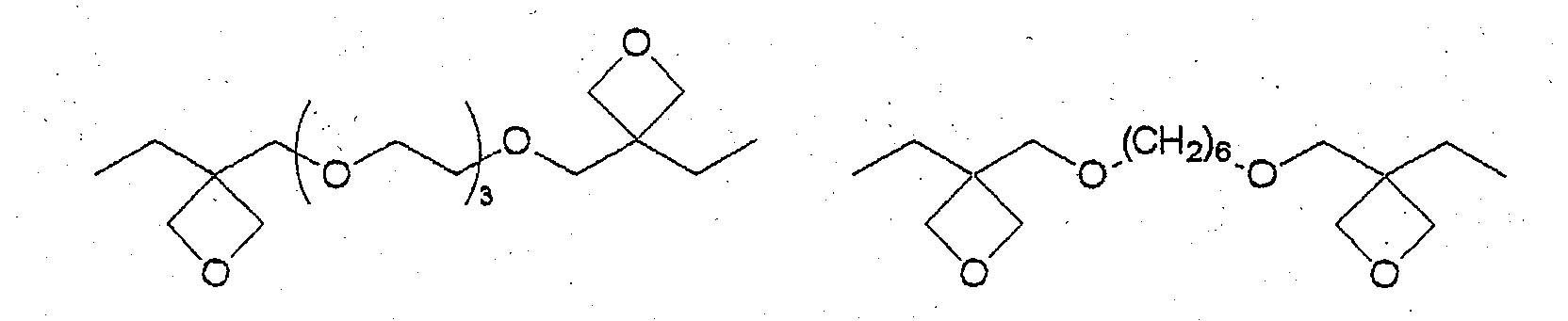
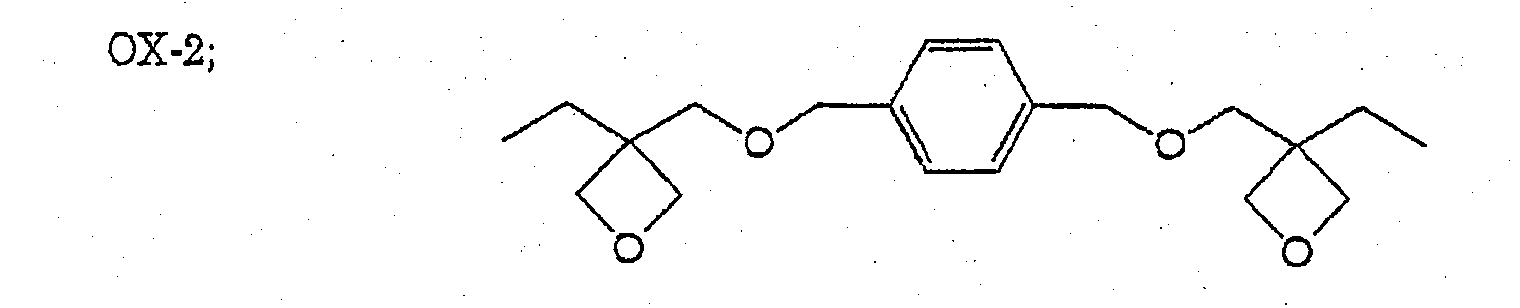
- oxetane compound examples include those compounds having one oxetane ring, such as trimethylene oxide, 3-methyl-3-oxetanyl methanol, 3-ethyl-3-oxetanyl methanol, 3-ethyl-3-phenoxymethyl oxetane, 3,3-diethyl oxetane, and 3-ethyl-3-(2-ethylhexyloxy) oxetane; compounds having two or more oxetane rings, such as 1,4-bis(3-ethyl-3-oxetanylmethyloxy)benzene, 4,4'-bis(3-ethyl-3-oxetanylmethyloxy)biphenyl, 4,4'-bis(3-ethyl-3-oxetanylmethyloxymethyl)biphenyl, ethylene glycol bis(3-ethyl-3-oxetanylmethyl)ether, diethylene glycol bis(3
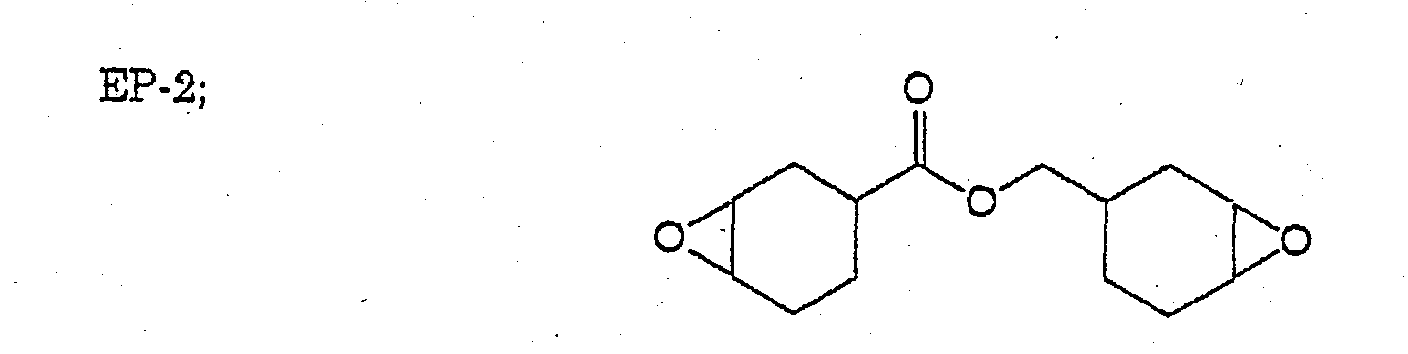
- Examples of the epoxy compound that can be preferably used as the cationically polymerizable monomer include diglycerolpolydiglycidyl ether, pentaerythritolpolyglycidyl ether, 1,4-bis(2,3-epoxypropoxyperfluoroisopropyl)cyclohexane, sorbitolpolyglycidyl ether, trimethylolpropanepolyglycidyl ether, resorcindiglycidyl ether, 1,6-hexanedioldiglycidyl ether, polyethylene glycol diglycidyl ether, phenylglycidyl ether, p-tert-butylphenylglycidyl ether, diglycidyl adipate ester, o-diglycidyl phthalate ester, dibromophenylglycidyl ether, 1,2,7,8-diepoxyoctane, 4,4,'
- These cationically polymerizable monomers can be used alone or in a combination of two or more kinds.
- the polymerizable composition containing the cationic monomer is blended with the above-mentioned photocationic polymerization initiator.
- the photocationic polymerization initiator is blended in such an amount that the amount of the photo acid-generating_compound is 0.001 to 10 parts by mass and, particularly, 0.05 to 5 parts by mass per 100 parts by mass of the cationically polymerizable monomer.
- the photocationically polymerizable composition of the present invention can be further blended with various cationic polymerization initiators in addition to those described above.
- cationic polymerization initiators include boron trifluoride ether complex, titanium tetrachloride, aluminum trichloride, p-toluenesulfonic acid, trifluoromethanesulfonic acid, hydrochloric acid, sulfuric acid, perchloric acid, iodine, iodine bromide and triphenylmethylhexafluorcantimonato.
- the phococationically polymerizable composition of the present invention by itself is useful as a surface coating material or an adhesive. Upon adding a filler thereto, further, the volumetric shrinkage upon the polymerization very decreases, and the composition becomes highly useful as a dental material and, particularly, as a filling restorative (composite resin) for dental use.
- the filler there can be used, without any particular limitation, a known filler that has been generally used for the dental composite resins.
- the fillers can generally be roughly divided into organic fillers and inorganic fillers.
- a representative organic filler that can be preferably used include polymethyl methacrylate, polyethyl methacrylate, methyl methacrylate/ethyl methacrylate copolymer, crosslinked polymethyl methacrylate, crosslinked polyethyl methacrylate, ethylene/vinyl acetate copolymer, styrene/butadiene copolymer, acrylonitrile/styrene copolymer, and acrylonitrile/styrene/butadiene copolymer, which can be used in one kind or as a mixture of two or more kinds.
- a representative inorganic filler examples include quartz, silica, alumina, silica titania, silica zirconia, lanthanum glass, barium glass, strontium glass and various cation-eluting fillers.
- the cation-eluting filler there can be exemplified hydroxides such as calcium hydroxide and strontium hydroxide, and oxides such as zinc oxide, silicate glass and fluoroaluminosiliate glass.
- the inorganic fillers may be used in one kind or being mixed together in two or more kinds. Use of the inorganic filler containing a heavy metal such as zirconia contributes to imparting X-ray contrast property.
- a granular organic/inorganic composite filler obtained by adding a polymerizable monomer to the inorganic fillers to obtain a paste thereof and, then, polymerizing and pulverizing the paste.
- the refractive index of the filler i.e., the filler having a refractive index of 1.4 to 1.7 as possessed by dental fillers, in general, can be used without any limitation.
- the ratio of blending the filler may be suitably determined depending upon the object of use by taking into consideration the viscosity (operability) of when it is mixed into the polymerizable monomer and the mechanical properties of the cured material. In general, however, the filler is blended in a range of 50 to 1500 parts by mass and, preferably, 70 to 1000 parts by mass per 100 parts by mass of the polymerizable monomer.
- the photocationically polymerizable composition of the invention may be blended with a known additive.
- the additive include polymerization inhibitor, antioxidant, ultraviolet ray-absorbing agent, dye, antistatic agent, pigment and perfume.
- an organic solvent and a viscosity-imparting agent there may be added an organic solvent and a viscosity-imparting agent.
- the organic solvent there can be exemplified hexane, heptane, octane, toluene, dichloromethane, methanol, ethanol and ethyl acetate.
- the viscosity-imparting agent there can be exemplified high molecular compounds such as polyvinyl pyrrolidone, carboxymethyl cellulose and polyvinyl alcohol.
- the above compounds are weighed out in predetermined amounts and are suitably mixed together to obtain a photopolymerizable composition of the present invention.
- the photopolymerizable composition of the present invention there can be used such light sources as carbon arc, xenon lamp, metal halide lamp, tungsten lamp, fluorescent lamp, sunlight, helium-cadmium laser or argon laser without any limitation.
- the time of irradiation varies depending upon the wavelength of the source of light, intensity, shape and material of the cured material and may, hence, be determined in advance by preparatory experiment. In general, however, it is desired to adjust the rate of blending various components such that the time of irradiation lies in a range of about 5 to about 60 seconds.
- TOKUSO POWER LITE manufactured by Tokuyama Co.
- a curable composition was filled in a metal mold measuring 2 x 2 x 25 mm, and was irradiated with light for 1.5 minutes by using the light irradiator so as to be cured.
- the cured material was preserved at 37°C overnight.
- an autograph manufactured by Shimazu Seisakusho Co.
- the cured materials each in a number of five were measured for their three-point bending strengths and flexural moduli of elasticity maintaining a distance between fulcrums of 20 mm at a crosshead speed of 0.5 mm/min, and their average values were calculated.
- a plunger made of SUS having a diameter of 3 mm and a height of 4 mm was introduced into a split mold made of SUS having a hole of a diameter of 3 mm and a height of 7 mm, such that the height of the hole was 3 mm.
- a curable composition was filled therein, and a polypropylene film was brought into pressed contact therewith from the upper side.
- the composition was placed on a glass plate equipped with a dental irradiator with the film surface faced downward and, then, a probe capable of measuring fine motion of the needle was brought into contact therewith from above the SUS plunger.
- the composition was cured by polymerization by using the dental irradiator, and a volumetric shrinkage [%] 10 minutes after the start of irradiation was calculated from the distance of motion of the probe in the up-and-down direction.
- the curable composition was placed in a state of being contacted to the air, and was irradiated with light for one minute using the dental irradiator.
- the surfaces of the cured materials that were sticky due to being not polymerized were denoted by X, and the surfaces without stickiness were denoted by ⁇ .
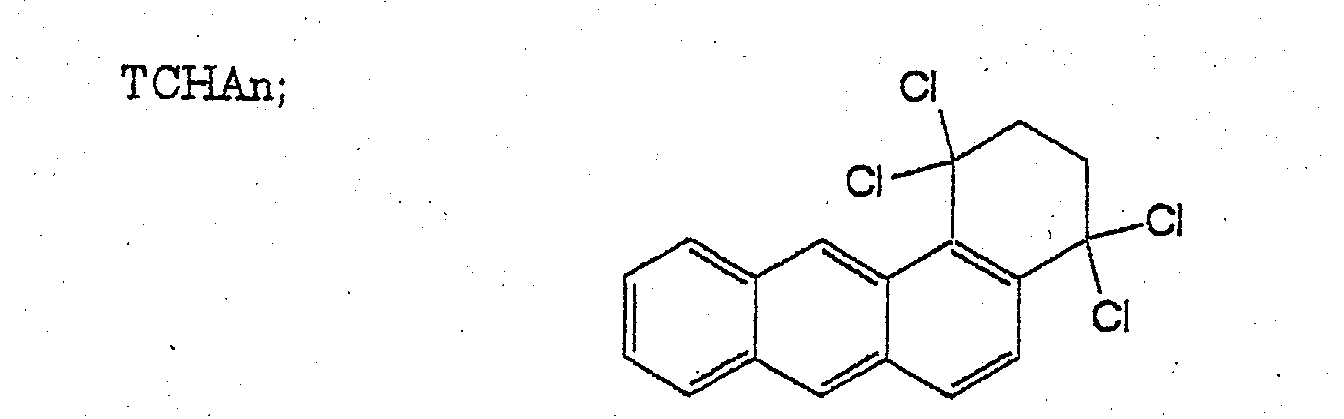
- Comparative Examples 1 and 2 there were used fused polycyclic aromatic compounds in which atoms bonded to the ring-fusion atoms (common atoms of the non-aromatic ring and the fused aromatic ring) were not the saturated carbon atoms having hydrogen atom, instead of using the fused polycyclic aromatic compound (B) which is one of the essential components of the present invention.
- the fused polycyclic aromatic compound (B) which is one of the essential components of the present invention.
- light had to be irradiated for extended periods of time until gelling took place and, besides, cured depths were not sufficient.
- Comparative Example 6 there was used a fused polycyclic aromatic compound substituted with an alkoxy' group, instead of using the fused polycyclic aromatic compound (B) which is one of the essential components of the present invention. Light had to be irradiated for an extended period of time until gelling took place and, besides, the cured depth was not sufficient.
- Comparative Example 7 there were used CQ which is a sensitizing coloring matter and DMBE which is an electron donor. Under the conditions of this Comparative Example, the cured depth of not smaller than 10 mm could not be obtained.
- Comparative Example 8 there was used only a fused polycyclic aromatic compound without photo acid-generating compound. In this case, the curing did not took place at all.
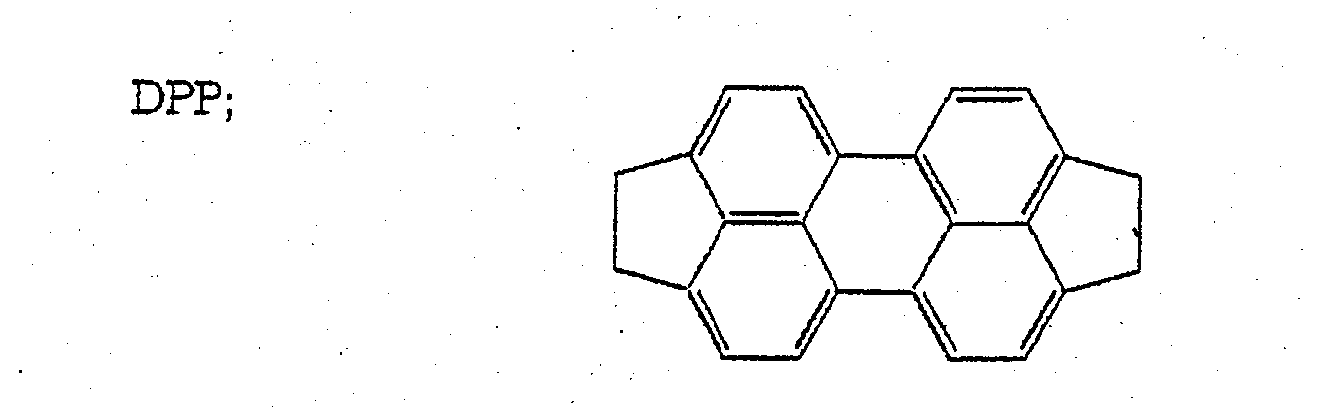
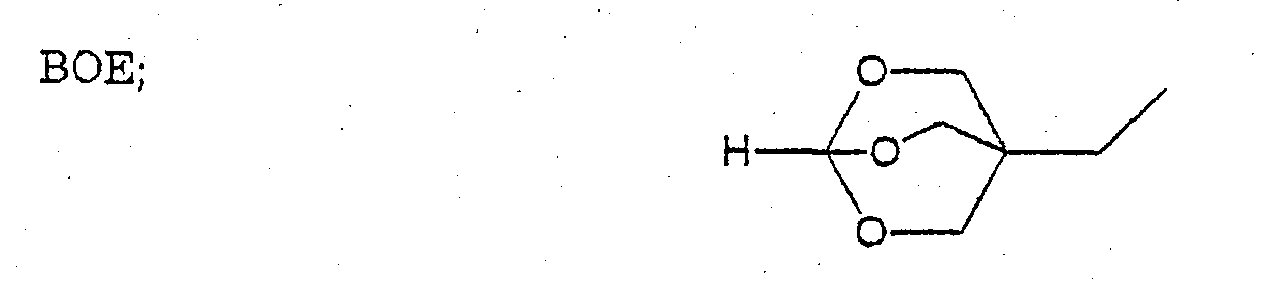
- a solution A 100 parts by mass of a mixture of OX-2/EP-1 at a nass ratio of 95/5, there were dissolved 0.8 parts by mass of DPISb and 0.2 parts by mass of DPP in a dark place to prepare a solution A. There were further similarly prepared a solution B by using a mixture of OX-2/EP-2 at a ratio of 95/5, a solution C by using a mixture of OX-2/DV at a ratio of 95/5, and a solution D by using a mixture of BOE/EP-2 at a ratio of 50/50.
- an inorganic filler F2 was prepared by using spherical silica (particle size, 0.2 to 2 ⁇ m) treated with 3-glycidyloxypropyltrimethoxysilane
- an inorganic filler F3 was prepared by using spherical silica/zirconia (particle size, 0.4 ⁇ m)
- an inorganic filler F4 was prepared by using spherical silica/zirconia (particle size, 0.2 ⁇ m)
- an inorganic filler F5 was prepared by using sphericalsilica/titania (particle size, 0.1 ⁇ m)
- an inorganic filler F6 was prepared by using pulverized silica/zirconia (particle size, 0.5 ⁇ m).
- the thus prepared inorganic fillers and the solutions were mixed together in an agate mortar.
- the mixtures were placed in vacuum to remove bubbles, and curable compositions were obtained. Further, the filler contents with respect to the curable compositions were expressed by weight ratios and were regarded to be filling rates (%).
- Table 2 shows the above curable compositions, bending strengths, flexural moduli of elasticity, volumetric shrinkage by polymerization and unpolymerized surfaces.
- the photocationic polymerization initiator of the present invention possesses sufficient sensitivity even' for the wavelengths in the visible light region, and makes it possible to obtain an increased depth of curing by the irradiation with light in a short period of time even by using a visible light irradiator that has been placed in dental use. Further, the polymerized and cured material thereof exhibits a variety of excellent mechanical properties.
- the cationically polymerizable monomer shows less volumetric shrinkage when it is polymerized than the radically polymerizable monomers, and blending the filler further decreases the volumetric shrinkage by polymerization.
Landscapes
- Chemical & Material Sciences (AREA)
- Health & Medical Sciences (AREA)
- Chemical Kinetics & Catalysis (AREA)
- Medicinal Chemistry (AREA)
- Polymers & Plastics (AREA)
- Organic Chemistry (AREA)
- Engineering & Computer Science (AREA)
- Materials Engineering (AREA)
- Dental Preparations (AREA)
Abstract
Description

Examples of diaryliodonium forming salts:






























- CQ:
- Camphorquinone
- DMBE:
- Ethyl N,N-dimethylaminobenzoate


Claims (6)
- A photocationic polymerization initiator comprising (A) a photo acid-generating compound and (B) a fused polycyclic aromatic compound, wherein said fused polycyclic aromatic compound has a molecular structure in which a fused aromatic ring is further condensed with a non-aromatic ring, and at least one of the atoms constituting said non-aromatic ring directly bonded to a common atom in the fused aromatic ring and the non-aromatic ring, is a saturated carbon atom, said saturated carbon atom having at least one hydrogen atom.
- A photocationic polymerization initiator according to claim 1, wherein the photo acid-generating compound (A) is a diaryl iodonium salt compound.
- A photocationic polymerization initiator according to claim 1 or 2, wherein the fused polycyclic aromatic compound has a fused aromatic ring in which three or more benzene rings are linearly condensed, and has a molecular structure in which said fused aromatic ring is further condensed with the non-aromatic ring.
- A photocationic polymerization initiator according to claim 1, 2 or 3, wherein the fused polycyclic aromatic compound (B) is contained in an amount of 0.001 to 20 mols per mol of the photo acid-generating compound (A).
- A photocationically polymerizable composition comprising a photocationic polymerization initiator of any preceding claim and a cationically polymerizable monomer.
- A photocationically polymerizable composition according to claim 5, wherein the photocationic polymerization initiator is blended in an amount of 0.001 to 10 parts by mass per 100 parts by mass of the cationionically polymerizable monomer.
Applications Claiming Priority (2)
| Application Number | Priority Date | Filing Date | Title |
|---|---|---|---|
| JP2002328308 | 2002-11-12 | ||
| JP2002328308 | 2002-11-12 |
Publications (3)
| Publication Number | Publication Date |
|---|---|
| EP1422254A2 true EP1422254A2 (en) | 2004-05-26 |
| EP1422254A3 EP1422254A3 (en) | 2004-11-10 |
| EP1422254B1 EP1422254B1 (en) | 2008-06-18 |
Family
ID=32212003
Family Applications (1)
| Application Number | Title | Priority Date | Filing Date |
|---|---|---|---|
| EP03257136A Expired - Lifetime EP1422254B1 (en) | 2002-11-12 | 2003-11-12 | Photocationic polymerization initiator and photocationically polymerizable composition |
Country Status (4)
| Country | Link |
|---|---|
| US (1) | US6930134B2 (en) |
| EP (1) | EP1422254B1 (en) |
| CN (1) | CN100474109C (en) |
| DE (1) | DE60321641D1 (en) |
Cited By (5)
| Publication number | Priority date | Publication date | Assignee | Title |
|---|---|---|---|---|
| US6930134B2 (en) * | 2002-11-12 | 2005-08-16 | Tokuyama Corporation | Photocationic polymerization initiator and photocationically polymerizable composition |
| EP1591098A1 (en) * | 2004-04-27 | 2005-11-02 | Tokuyama Corporation | Cationically curable composition for dental use |
| US7741381B2 (en) | 2005-03-18 | 2010-06-22 | Tokuyama Corporation | Curable composition |
| US7906565B2 (en) | 2005-02-15 | 2011-03-15 | Tokuyama Corporation | Tissue conditioner for dental use |
| US8104609B2 (en) | 2007-03-08 | 2012-01-31 | Tokuyama Dental Corporation | Container |
Families Citing this family (6)
| Publication number | Priority date | Publication date | Assignee | Title |
|---|---|---|---|---|
| US7601480B2 (en) * | 2006-12-20 | 2009-10-13 | Az Electronic Materials Usa Corp. | Photoactive compounds |
| JP5656439B2 (en) * | 2010-03-31 | 2015-01-21 | キヤノン株式会社 | New benzopyrene compounds |
| EP2380925A1 (en) * | 2010-04-22 | 2011-10-26 | 3M Innovative Properties Company | Radiation curable composition, process of production and use thereof |
| CN103529647B (en) * | 2013-10-24 | 2017-02-08 | 京东方科技集团股份有限公司 | Photoresist composition, colorful film base plate and display device |
| CN105348414B (en) * | 2015-11-20 | 2017-03-22 | 江南大学 | Method and composition used for realizing deep cationic photopolymerization |
| WO2019043114A1 (en) * | 2017-08-30 | 2019-03-07 | Dentsply Detrey Gmbh | Photoinitiator modified polyacidic polymer |
Family Cites Families (9)
| Publication number | Priority date | Publication date | Assignee | Title |
|---|---|---|---|---|
| US3640718A (en) * | 1968-04-10 | 1972-02-08 | Minnesota Mining & Mfg | Spectral sentization of photosensitive compositions |
| US4069054A (en) * | 1975-09-02 | 1978-01-17 | Minnesota Mining And Manufacturing Company | Photopolymerizable composition containing a sensitized aromatic sulfonium compound and a cationacally polymerizable monomer |
| US5055439A (en) * | 1989-12-27 | 1991-10-08 | International Business Machines Corporation | Photoacid generating composition and sensitizer therefor |
| JP3587325B2 (en) * | 1996-03-08 | 2004-11-10 | 富士写真フイルム株式会社 | Positive photosensitive composition |
| EP0927726B1 (en) | 1996-09-19 | 2004-11-10 | Nippon Soda Co., Ltd. | Photocatalytic composition |
| JPH11263804A (en) * | 1998-03-16 | 1999-09-28 | Nippon Soda Co Ltd | Photo-curing composition and method of curing |
| US6777160B2 (en) * | 2001-03-12 | 2004-08-17 | Fuji Photo Film Co., Ltd. | Positive-working resist composition |
| DE60321641D1 (en) * | 2002-11-12 | 2008-07-31 | Tokuyama Corp | Photopolymerizable initiator combination and photopolymerizable composition |
| JP4030422B2 (en) * | 2002-12-18 | 2008-01-09 | 株式会社トクヤマ | Photopolymerization initiator composition and photopolymerization composition |
-
2003
- 2003-11-12 DE DE60321641T patent/DE60321641D1/en not_active Expired - Lifetime
- 2003-11-12 EP EP03257136A patent/EP1422254B1/en not_active Expired - Lifetime
- 2003-11-12 US US10/704,604 patent/US6930134B2/en not_active Expired - Lifetime
- 2003-11-12 CN CNB2003101231749A patent/CN100474109C/en not_active Expired - Fee Related
Cited By (6)
| Publication number | Priority date | Publication date | Assignee | Title |
|---|---|---|---|---|
| US6930134B2 (en) * | 2002-11-12 | 2005-08-16 | Tokuyama Corporation | Photocationic polymerization initiator and photocationically polymerizable composition |
| EP1591098A1 (en) * | 2004-04-27 | 2005-11-02 | Tokuyama Corporation | Cationically curable composition for dental use |
| US7365106B2 (en) | 2004-04-27 | 2008-04-29 | Tokuyama Corporation | Cationically curable composition for dental use |
| US7906565B2 (en) | 2005-02-15 | 2011-03-15 | Tokuyama Corporation | Tissue conditioner for dental use |
| US7741381B2 (en) | 2005-03-18 | 2010-06-22 | Tokuyama Corporation | Curable composition |
| US8104609B2 (en) | 2007-03-08 | 2012-01-31 | Tokuyama Dental Corporation | Container |
Also Published As
| Publication number | Publication date |
|---|---|
| CN1510514A (en) | 2004-07-07 |
| US20040132853A1 (en) | 2004-07-08 |
| US6930134B2 (en) | 2005-08-16 |
| DE60321641D1 (en) | 2008-07-31 |
| EP1422254B1 (en) | 2008-06-18 |
| CN100474109C (en) | 2009-04-01 |
| EP1422254A3 (en) | 2004-11-10 |
Similar Documents
| Publication | Publication Date | Title |
|---|---|---|
| EP1431315B1 (en) | Photopolymerization initiator and photopolymerizable composition | |
| JP4001352B2 (en) | Polymerizable compositions based on epoxides | |
| EP1422254B1 (en) | Photocationic polymerization initiator and photocationically polymerizable composition | |
| JPH11130945A (en) | Composition which undergoes photoinduced cationic curing and use thereof | |
| EP1277776A1 (en) | Photocurable resin composition for sealing material and method of sealing | |
| AU758128B2 (en) | Storage-stable cationically polymerised preparations with improved hardening characteristics | |
| US6652281B1 (en) | Dental materials | |
| JP2021109956A (en) | Cationic curable composition | |
| EP1591098A1 (en) | Cationically curable composition for dental use | |
| WO2022030276A1 (en) | Photocationic curable composition and curable dental composition | |
| JP2004149587A (en) | Photo cationic polymerization initiator composition | |
| JP4723263B2 (en) | Dental curable composition | |
| JP4540409B2 (en) | Dental polymerizable composition | |
| JP4519448B2 (en) | Photocationic polymerization initiator composition and photocationic polymerizable composition | |
| JP4749779B2 (en) | Dental cationic curable composition | |
| JP2021116356A (en) | Photocationically curable composition | |
| JP5300190B2 (en) | Photocationic curable composition | |
| JP4456859B2 (en) | Dental cationic curable composition | |
| JP2007031288A (en) | Dental cationic curable composition | |
| JP2012116808A (en) | Dental curable composition | |
| JPH09268204A (en) | Polymerization initiator by visible rays and polymerizable composition by visible rays | |
| JP7160289B2 (en) | dental curable composition | |
| JP7175542B1 (en) | dental curable composition | |
| JP7809267B2 (en) | Photocationically curable composition | |
| JP4494854B2 (en) | Dental cationic curable composition |
Legal Events
| Date | Code | Title | Description |
|---|---|---|---|
| PUAI | Public reference made under article 153(3) epc to a published international application that has entered the european phase |
Free format text: ORIGINAL CODE: 0009012 |
|
| AK | Designated contracting states |
Kind code of ref document: A2 Designated state(s): AT BE BG CH CY CZ DE DK EE ES FI FR GB GR HU IE IT LI LU MC NL PT RO SE SI SK TR |
|
| AX | Request for extension of the european patent |
Extension state: AL LT LV MK |
|
| PUAL | Search report despatched |
Free format text: ORIGINAL CODE: 0009013 |
|
| AK | Designated contracting states |
Kind code of ref document: A3 Designated state(s): AT BE BG CH CY CZ DE DK EE ES FI FR GB GR HU IE IT LI LU MC NL PT RO SE SI SK TR |
|
| AX | Request for extension of the european patent |
Extension state: AL LT LV MK |
|
| 17P | Request for examination filed |
Effective date: 20050419 |
|
| AKX | Designation fees paid |
Designated state(s): DE FR GB |
|
| GRAP | Despatch of communication of intention to grant a patent |
Free format text: ORIGINAL CODE: EPIDOSNIGR1 |
|
| GRAS | Grant fee paid |
Free format text: ORIGINAL CODE: EPIDOSNIGR3 |
|
| GRAA | (expected) grant |
Free format text: ORIGINAL CODE: 0009210 |
|
| AK | Designated contracting states |
Kind code of ref document: B1 Designated state(s): DE FR GB |
|
| REG | Reference to a national code |
Ref country code: GB Ref legal event code: FG4D |
|
| REF | Corresponds to: |
Ref document number: 60321641 Country of ref document: DE Date of ref document: 20080731 Kind code of ref document: P |
|
| PLBE | No opposition filed within time limit |
Free format text: ORIGINAL CODE: 0009261 |
|
| STAA | Information on the status of an ep patent application or granted ep patent |
Free format text: STATUS: NO OPPOSITION FILED WITHIN TIME LIMIT |
|
| 26N | No opposition filed |
Effective date: 20090319 |
|
| REG | Reference to a national code |
Ref country code: FR Ref legal event code: PLFP Year of fee payment: 13 |
|
| REG | Reference to a national code |
Ref country code: FR Ref legal event code: PLFP Year of fee payment: 14 |
|
| REG | Reference to a national code |
Ref country code: FR Ref legal event code: PLFP Year of fee payment: 15 |
|
| REG | Reference to a national code |
Ref country code: FR Ref legal event code: PLFP Year of fee payment: 16 |
|
| PGFP | Annual fee paid to national office [announced via postgrant information from national office to epo] |
Ref country code: GB Payment date: 20201104 Year of fee payment: 18 Ref country code: FR Payment date: 20201013 Year of fee payment: 18 Ref country code: DE Payment date: 20201028 Year of fee payment: 18 |
|
| REG | Reference to a national code |
Ref country code: DE Ref legal event code: R119 Ref document number: 60321641 Country of ref document: DE |
|
| GBPC | Gb: european patent ceased through non-payment of renewal fee |
Effective date: 20211112 |
|
| PG25 | Lapsed in a contracting state [announced via postgrant information from national office to epo] |
Ref country code: GB Free format text: LAPSE BECAUSE OF NON-PAYMENT OF DUE FEES Effective date: 20211112 Ref country code: DE Free format text: LAPSE BECAUSE OF NON-PAYMENT OF DUE FEES Effective date: 20220601 |
|
| PG25 | Lapsed in a contracting state [announced via postgrant information from national office to epo] |
Ref country code: FR Free format text: LAPSE BECAUSE OF NON-PAYMENT OF DUE FEES Effective date: 20211130 |