EP1422224A1 - Dithiazole compounds, matrix metalloprotease inhibitors and external preparations for the skin - Google Patents
Dithiazole compounds, matrix metalloprotease inhibitors and external preparations for the skin Download PDFInfo
- Publication number
- EP1422224A1 EP1422224A1 EP02772819A EP02772819A EP1422224A1 EP 1422224 A1 EP1422224 A1 EP 1422224A1 EP 02772819 A EP02772819 A EP 02772819A EP 02772819 A EP02772819 A EP 02772819A EP 1422224 A1 EP1422224 A1 EP 1422224A1
- Authority
- EP
- European Patent Office
- Prior art keywords
- alkyl
- compound
- group
- aryl
- hydrogen atom
- Prior art date
- Legal status (The legal status is an assumption and is not a legal conclusion. Google has not performed a legal analysis and makes no representation as to the accuracy of the status listed.)
- Granted
Links
- 0 Cc(cc1)ccc1C(Nc(cc1)ccc1S(NCC(NC(S=S1)=NC1=S)=O)(=*)=O)=O Chemical compound Cc(cc1)ccc1C(Nc(cc1)ccc1S(NCC(NC(S=S1)=NC1=S)=O)(=*)=O)=O 0.000 description 2
- VPTDIYKQKRKEQD-UHFFFAOYSA-N COCCOCCOc(ccc(C(C(NC(SS1)=NC1=S)=O)O)c1)c1OCCOCCOC Chemical compound COCCOCCOc(ccc(C(C(NC(SS1)=NC1=S)=O)O)c1)c1OCCOCCOC VPTDIYKQKRKEQD-UHFFFAOYSA-N 0.000 description 1
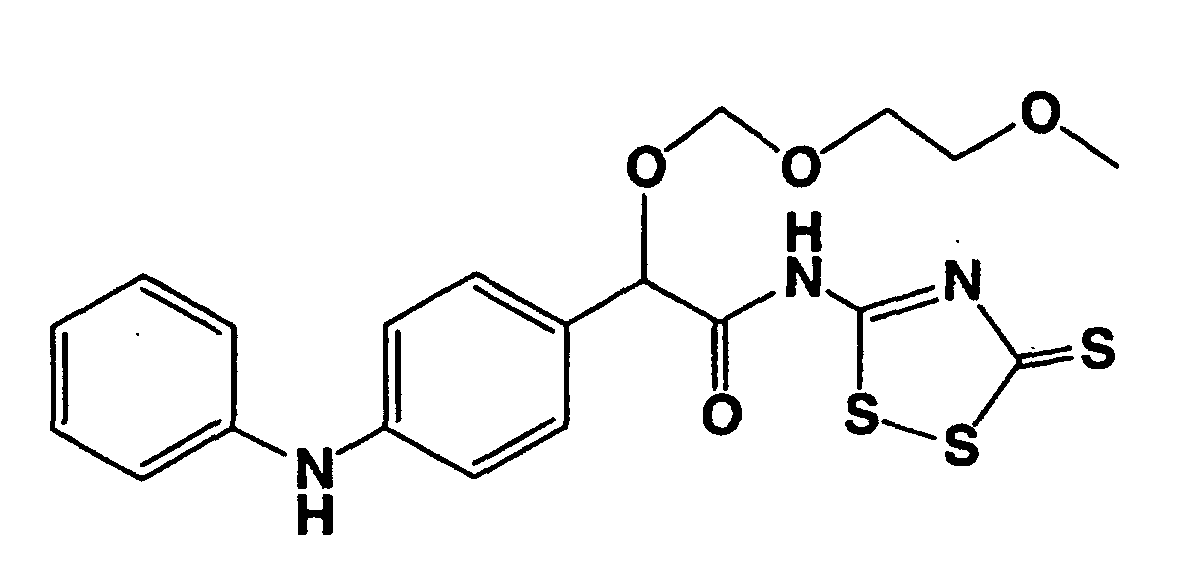
- HZLZVJZKAAUNMB-UHFFFAOYSA-N COCCOCOC(C(NC(SS1)=NC1=S)=O)c(cc1)ccc1Nc1ccccc1 Chemical compound COCCOCOC(C(NC(SS1)=NC1=S)=O)c(cc1)ccc1Nc1ccccc1 HZLZVJZKAAUNMB-UHFFFAOYSA-N 0.000 description 1
- QILBCWGPEGKDRK-UHFFFAOYSA-N O=C(Cc1cccc(OCc(cc2)ccc2F)c1)NC(SS1)=NC1=S Chemical compound O=C(Cc1cccc(OCc(cc2)ccc2F)c1)NC(SS1)=NC1=S QILBCWGPEGKDRK-UHFFFAOYSA-N 0.000 description 1
Classifications
-
- A—HUMAN NECESSITIES
- A61—MEDICAL OR VETERINARY SCIENCE; HYGIENE
- A61Q—SPECIFIC USE OF COSMETICS OR SIMILAR TOILETRY PREPARATIONS
- A61Q19/00—Preparations for care of the skin
- A61Q19/08—Anti-ageing preparations
-
- A—HUMAN NECESSITIES
- A61—MEDICAL OR VETERINARY SCIENCE; HYGIENE
- A61K—PREPARATIONS FOR MEDICAL, DENTAL OR TOILETRY PURPOSES
- A61K31/00—Medicinal preparations containing organic active ingredients
- A61K31/33—Heterocyclic compounds
- A61K31/395—Heterocyclic compounds having nitrogen as a ring hetero atom, e.g. guanethidine or rifamycins
- A61K31/41—Heterocyclic compounds having nitrogen as a ring hetero atom, e.g. guanethidine or rifamycins having five-membered rings with two or more ring hetero atoms, at least one of which being nitrogen, e.g. tetrazole
-
- A—HUMAN NECESSITIES
- A61—MEDICAL OR VETERINARY SCIENCE; HYGIENE
- A61K—PREPARATIONS FOR MEDICAL, DENTAL OR TOILETRY PURPOSES
- A61K31/00—Medicinal preparations containing organic active ingredients
- A61K31/33—Heterocyclic compounds
- A61K31/395—Heterocyclic compounds having nitrogen as a ring hetero atom, e.g. guanethidine or rifamycins
- A61K31/435—Heterocyclic compounds having nitrogen as a ring hetero atom, e.g. guanethidine or rifamycins having six-membered rings with one nitrogen as the only ring hetero atom
- A61K31/44—Non condensed pyridines; Hydrogenated derivatives thereof
- A61K31/4427—Non condensed pyridines; Hydrogenated derivatives thereof containing further heterocyclic ring systems
- A61K31/4439—Non condensed pyridines; Hydrogenated derivatives thereof containing further heterocyclic ring systems containing a five-membered ring with nitrogen as a ring hetero atom, e.g. omeprazole
-
- A—HUMAN NECESSITIES
- A61—MEDICAL OR VETERINARY SCIENCE; HYGIENE
- A61K—PREPARATIONS FOR MEDICAL, DENTAL OR TOILETRY PURPOSES
- A61K31/00—Medicinal preparations containing organic active ingredients
- A61K31/33—Heterocyclic compounds
- A61K31/395—Heterocyclic compounds having nitrogen as a ring hetero atom, e.g. guanethidine or rifamycins
- A61K31/435—Heterocyclic compounds having nitrogen as a ring hetero atom, e.g. guanethidine or rifamycins having six-membered rings with one nitrogen as the only ring hetero atom
- A61K31/47—Quinolines; Isoquinolines
- A61K31/4709—Non-condensed quinolines and containing further heterocyclic rings
-
- A—HUMAN NECESSITIES
- A61—MEDICAL OR VETERINARY SCIENCE; HYGIENE
- A61K—PREPARATIONS FOR MEDICAL, DENTAL OR TOILETRY PURPOSES
- A61K31/00—Medicinal preparations containing organic active ingredients
- A61K31/33—Heterocyclic compounds
- A61K31/395—Heterocyclic compounds having nitrogen as a ring hetero atom, e.g. guanethidine or rifamycins
- A61K31/535—Heterocyclic compounds having nitrogen as a ring hetero atom, e.g. guanethidine or rifamycins having six-membered rings with at least one nitrogen and one oxygen as the ring hetero atoms, e.g. 1,2-oxazines
- A61K31/5375—1,4-Oxazines, e.g. morpholine
- A61K31/5377—1,4-Oxazines, e.g. morpholine not condensed and containing further heterocyclic rings, e.g. timolol
-
- A—HUMAN NECESSITIES
- A61—MEDICAL OR VETERINARY SCIENCE; HYGIENE
- A61K—PREPARATIONS FOR MEDICAL, DENTAL OR TOILETRY PURPOSES
- A61K8/00—Cosmetics or similar toiletry preparations
- A61K8/18—Cosmetics or similar toiletry preparations characterised by the composition
- A61K8/30—Cosmetics or similar toiletry preparations characterised by the composition containing organic compounds
- A61K8/49—Cosmetics or similar toiletry preparations characterised by the composition containing organic compounds containing heterocyclic compounds
-
- A—HUMAN NECESSITIES
- A61—MEDICAL OR VETERINARY SCIENCE; HYGIENE
- A61P—SPECIFIC THERAPEUTIC ACTIVITY OF CHEMICAL COMPOUNDS OR MEDICINAL PREPARATIONS
- A61P1/00—Drugs for disorders of the alimentary tract or the digestive system
- A61P1/04—Drugs for disorders of the alimentary tract or the digestive system for ulcers, gastritis or reflux esophagitis, e.g. antacids, inhibitors of acid secretion, mucosal protectants
-
- A—HUMAN NECESSITIES
- A61—MEDICAL OR VETERINARY SCIENCE; HYGIENE
- A61P—SPECIFIC THERAPEUTIC ACTIVITY OF CHEMICAL COMPOUNDS OR MEDICINAL PREPARATIONS
- A61P17/00—Drugs for dermatological disorders
-
- A—HUMAN NECESSITIES
- A61—MEDICAL OR VETERINARY SCIENCE; HYGIENE
- A61P—SPECIFIC THERAPEUTIC ACTIVITY OF CHEMICAL COMPOUNDS OR MEDICINAL PREPARATIONS
- A61P19/00—Drugs for skeletal disorders
-
- A—HUMAN NECESSITIES
- A61—MEDICAL OR VETERINARY SCIENCE; HYGIENE
- A61P—SPECIFIC THERAPEUTIC ACTIVITY OF CHEMICAL COMPOUNDS OR MEDICINAL PREPARATIONS
- A61P19/00—Drugs for skeletal disorders
- A61P19/02—Drugs for skeletal disorders for joint disorders, e.g. arthritis, arthrosis
-
- A—HUMAN NECESSITIES
- A61—MEDICAL OR VETERINARY SCIENCE; HYGIENE
- A61P—SPECIFIC THERAPEUTIC ACTIVITY OF CHEMICAL COMPOUNDS OR MEDICINAL PREPARATIONS
- A61P3/00—Drugs for disorders of the metabolism
-
- A—HUMAN NECESSITIES
- A61—MEDICAL OR VETERINARY SCIENCE; HYGIENE
- A61P—SPECIFIC THERAPEUTIC ACTIVITY OF CHEMICAL COMPOUNDS OR MEDICINAL PREPARATIONS
- A61P35/00—Antineoplastic agents
-
- A—HUMAN NECESSITIES
- A61—MEDICAL OR VETERINARY SCIENCE; HYGIENE
- A61P—SPECIFIC THERAPEUTIC ACTIVITY OF CHEMICAL COMPOUNDS OR MEDICINAL PREPARATIONS
- A61P43/00—Drugs for specific purposes, not provided for in groups A61P1/00-A61P41/00
-
- A—HUMAN NECESSITIES
- A61—MEDICAL OR VETERINARY SCIENCE; HYGIENE
- A61Q—SPECIFIC USE OF COSMETICS OR SIMILAR TOILETRY PREPARATIONS
- A61Q19/00—Preparations for care of the skin
-
- C—CHEMISTRY; METALLURGY
- C07—ORGANIC CHEMISTRY
- C07D—HETEROCYCLIC COMPOUNDS
- C07D285/00—Heterocyclic compounds containing rings having nitrogen and sulfur atoms as the only ring hetero atoms, not provided for by groups C07D275/00 - C07D283/00
- C07D285/01—Five-membered rings
-
- C—CHEMISTRY; METALLURGY
- C07—ORGANIC CHEMISTRY
- C07D—HETEROCYCLIC COMPOUNDS
- C07D417/00—Heterocyclic compounds containing two or more hetero rings, at least one ring having nitrogen and sulfur atoms as the only ring hetero atoms, not provided for by group C07D415/00
- C07D417/02—Heterocyclic compounds containing two or more hetero rings, at least one ring having nitrogen and sulfur atoms as the only ring hetero atoms, not provided for by group C07D415/00 containing two hetero rings
- C07D417/12—Heterocyclic compounds containing two or more hetero rings, at least one ring having nitrogen and sulfur atoms as the only ring hetero atoms, not provided for by group C07D415/00 containing two hetero rings linked by a chain containing hetero atoms as chain links
-
- C—CHEMISTRY; METALLURGY
- C07—ORGANIC CHEMISTRY
- C07D—HETEROCYCLIC COMPOUNDS
- C07D417/00—Heterocyclic compounds containing two or more hetero rings, at least one ring having nitrogen and sulfur atoms as the only ring hetero atoms, not provided for by group C07D415/00
- C07D417/14—Heterocyclic compounds containing two or more hetero rings, at least one ring having nitrogen and sulfur atoms as the only ring hetero atoms, not provided for by group C07D415/00 containing three or more hetero rings
-
- A—HUMAN NECESSITIES
- A61—MEDICAL OR VETERINARY SCIENCE; HYGIENE
- A61K—PREPARATIONS FOR MEDICAL, DENTAL OR TOILETRY PURPOSES
- A61K2800/00—Properties of cosmetic compositions or active ingredients thereof or formulation aids used therein and process related aspects
- A61K2800/74—Biological properties of particular ingredients
- A61K2800/78—Enzyme modulators, e.g. Enzyme agonists
- A61K2800/782—Enzyme inhibitors; Enzyme antagonists
Definitions
- the present invention relates to a dithiazole compound and, in particular, to a matrix metalloproteases (MMPs) inhibitor.
- MMPs matrix metalloproteases
- a human skin is roughly classified into three layers of epidermis, dermis and subcutaneous tissue, and epidermis and dermis are contacted each other through a basement membrane.
- stratum corneum is an extremely important site from a viewpoint of beauty. Since the basement membrane structure has great influence on division of epidermic cells, it can be said that the basement membrane also has great influence on a skin.
- the basement membrane is one of extracellular matrices, and is composed of type IV collagen, proteoglycan, laminin, fibronectin and the like.
- ECM extracellular matrix
- MMPs matrix metalloproteases
- MMPs are usually classified into collagenase group, gelatinase group, stromlycin group, and others (matrilycin etc.) in view of their structures and functions.
- the collagenase group includes MMP-1 (interstitial collagenase), MMP-8, MMP-13 and the like.
- MMP-1 is known to be an enzyme degrading type I collagen, type III collagen and the like, which are main components of dermis matrix.
- MMP-8 and MMP-13 have the action of degrading type I collagen and the like.
- the gelatinase group includes MMP-2, MMP-9 and the like.
- MMP-2 and MMP-9 are known to be an enzyme degrading type IV collagen and laminin which are basement membrane components, and degrading elastin and the like which are dermis matrix components.
- the stromlycin group includes MMP-3, MMP-10 and the like.
- MMP-3 and MMP-10 are known to be an enzyme degrading proteoglycan, type IV collagen, laminin and the like.
- MMPs activity is important in protecting the basement membrane and various extracellular matrices, and improving or preventing skin aging such as wrinkles and slacks.
- excellent MMPs inhibiting substances are desired.
- MMPs are involved in tissue matrix degradation as described above, it is suggested that MMPs are involved in many disease states accompanying abnormal metabolism of a connecting tissue or a basement membrane matrix, for example, arthritis (rheumatoid arthritis, osteoarthritis etc.), bone disease (osteoporosis etc.), periodontal disease, ectopic angiogenesis, multiple sclerosis, metastasis of tumor, and tissue ulcer formation (ulcer formation of cornea, epidermis, stomach etc.) (WO 98/08815 etc.). Therefore, MMPs inhibitor is also expected as an agent for treating or preventing these diseases due to abnormal metabolism of tissue matrix.
- An object of the present invention is to provide a compound having the MMPs inhibiting action, and to provide a MMPs inhibitor, a pharmaceutical composition, a cosmetic composition and a skin external composition containing the same as an active ingredient.
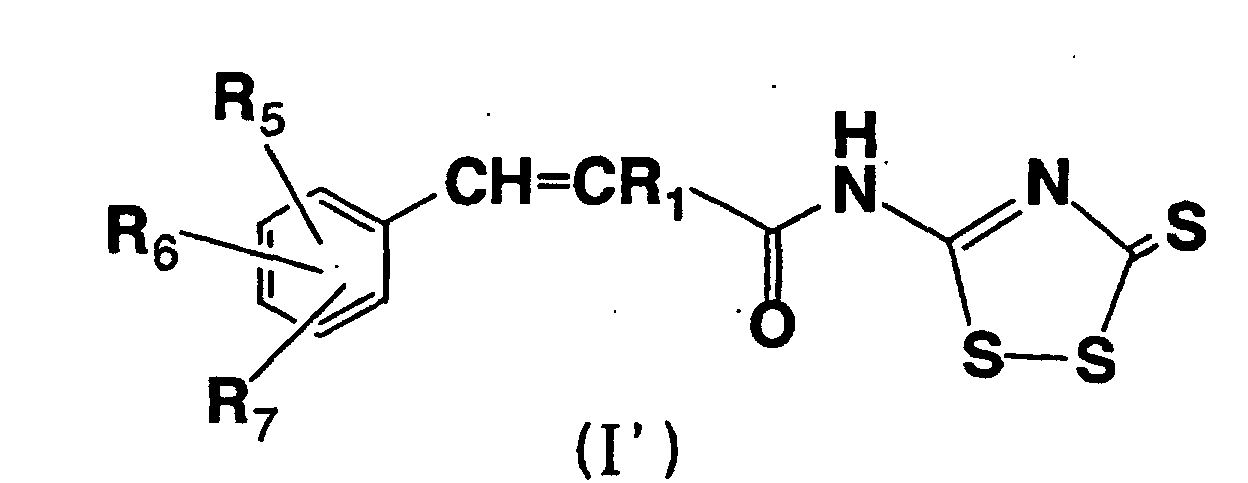
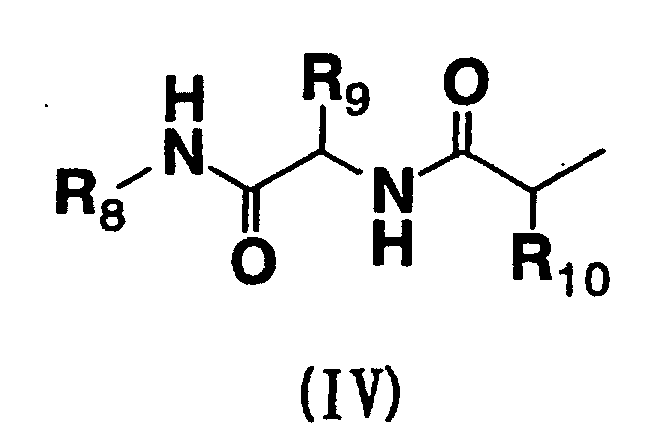
- the dithiazole compound of the present invention is expressed by the following formula (I): wherein R 1 is hydrogen atom, alkyl, alkenyl, aryl, arylalkyl, heteroarylalkyl, heteroarylthioalkyl, hydroxy, alkoxyalkyl or Het-alkyl (wherein Het is 5-or 6-membered heterocyclic group containing at least one nitrogen atom, and said nitrogen atom is bonded to the alkyl group); R 2 is hydrogen atom, alkyl, aryl, arylalkyl, heteroaryl, heteroarylalkyl, hydroxy, alkoxy, H(C x H 2x O) m - (wherein x is an integer of 1 to 3, and m is an integer of 2 to 5), arylalkoxy, hydroxyalkyl, acyloxyalkyl, alkoxyalkyl, (aryl or heteroaryl)-alkoxyalkyl, alkyl-(thio, s
- R 1 is hydrogen atom or alkyl
- R 2 is hydrogen atom, hydroxy, alkyl, alkoxy, H(C x H 2x O) m -, aryl, arylalkoxy, arylalkyl, heteroarylalkyl, Het-alkyl or alkylamino
- R 3 is any one of said groups (II) to (IV); wherein when R 3 is said group (II), A is aryl or aryl-Z 1 -aminoaryl, Y and Z 1 are each -SO 2 -or -CO-, and R 4 is hydrogen atom, arylalkyl or heteroarylalkyl, or the group A-Y-N(R 4 )-CR 1 R 2 -CONH- may be said group (II'); wherein when R 3 is said group (III), R 5 , R 6 and R 7 are each hydrogen atom, alkyl, alkoxy,
- R 3 is said group (II) in the compound (I), it is preferable that R 1 is hydrogen atom, and Y is -SO 2 -.
- A is preferably alkoxyphenyl or (alkylbenzoyl)aminophenyl.
- R 2 is preferably hydrogen atom, alkyl, arylalkyl or heteroarylalkyl. It is also preferable that the group A-Y-N(R 4 )-CR 1 R 2 -CONH- is said group (II'), and the ring B is 1,2,3,4-tetrahydroisoquinoline, pyrrolidine or morpholine.
- R 1 is hydrogen atom or alkyl
- n is 0.
- R 2 is preferably hydrogen atom, hydroxy, alkyl, alkoxy, H(C x H 2x O) m -, aryl, arylalkoxy or alkylamino.
- R 5 is hydrogen atom
- R 6 is hydrogen atom, alkoxy or arylalkoxy
- R 7 is alkoxy, alkenyloxy or arylalkoxy.
- the compound (I) is expressed by said formula (I'), wherein R 1 , R 5 and R 6 are each hydrogen atom and R 7 is arylalkoxy.
- R 3 is said group (IV) in the compound (I), it is preferable that R 1 is hydrogen atom, R 2 is hydrogen atom or Het-alkyl, R 8 is alkyl, R 9 is alkyl or arylalkyl, and R 10 is alkyl.
- a matrix metalloprotease-inhibitor of the present invention comprises, as an active ingredient, said dithiazole compound or the pharmacologically acceptable salt thereof.
- a cosmetic composition of the present invention comprises, as an active ingredient, said dithiazole compound or the pharmacologically acceptable salt thereof.
- a pharmaceutical composition of the present invention comprises, as an active ingredient, said dithiazole compound or the pharmacologically acceptable salt thereof.
- a skin external composition of the present invention comprises, as an active ingredient, said dithiazole compound or the pharmacologically acceptable salt thereof.
- R 1 can be hydrogen atom, alkyl, alkenyl, aryl, arylalkyl, heteroarylalkyl, heteroarylthioalkyl, hydroxy, alkoxyalkyl or Het-alkyl, preferably hydrogen atom or alkyl, further preferably hydrogen atom.
- R 2 can be hydrogen atom, alkyl, aryl, arylalkyl, heteroaryl, heteroarylalkyl, hydroxy, alkoxy, H(C x H 2x O) m -, arylalkoxy, hydroxyalkyl, acyloxyalkyl, alkoxyalkyl, (aryl or heteroaryl)-alkoxyalkyl, alkyl-(thio, sulfinyl or sulfonyl)-alkyl, (amino or alkylamino)-alkyl, acylaminoalkyl, amino, alkylamino, acylamino or Het-alkyl.
- It is preferably hydrogen atom, hydroxy, alkyl, alkoxy, H(C x H 2x O) m -, aryl, arylalkoxy, arylalkyl, heteroarylalkyl, Het-alkyl or alkylamino.
- x is an integer of 1 to 3
- m is an integer of 2 to 5
- each (C x H 2x O) unit may be the same or different from each other.
- R 3 is any one of the aforementioned groups (II) to (IV).
- R 1 is preferably hydrogen atom.
- R 2 is preferably hydrogen atom, alkyl, arylalkyl or heteroarylalkyl.
- the alkyl is preferably isopropyl, and the arylalkyl is preferably benzyl.
- the heteroarylalkyl is preferably indolylmethyl.
- A can be alkyl, alkoxy, aryl, aryloxy, heteroaryl, aryl-Z 1 -aminoaryl or arylamino-Z 1 -aryl (wherein Z 1 can be -SO 2 - or -CO-).
- A is preferably unsubstituted or alkoxy-substituted aryl, or unsubstituted or alkyl-substituted aryl-Z 1 -aminoaryl, more preferably phenyl, alkoxyphenyl, benzoylaminophenyl or alkylbenzoylaminophenyl, particularly preferably methoxyphenyl or methylbenzoylaminophenyl.
- Y is -SO 2 - or -CO-, preferably-SO 2 -.
- R 4 can be hydrogen atom, alkyl, aryl, arylalkyl, heteroaryl, heteroarylalkyl, hydroxyalkyl, acyloxyalkyl, alkoxyalkyl, alkyl-(thio, sulfinyl or sulfonyl)-alkyl, (amino or alkylamino)-alkyl or acylaminoalkyl, preferably hydrogen atom, arylalkyl or heteroarylalkyl.
- the arylalkyl is preferably benzyl
- the heteroarylalkyl is preferably pyridinylmethyl.
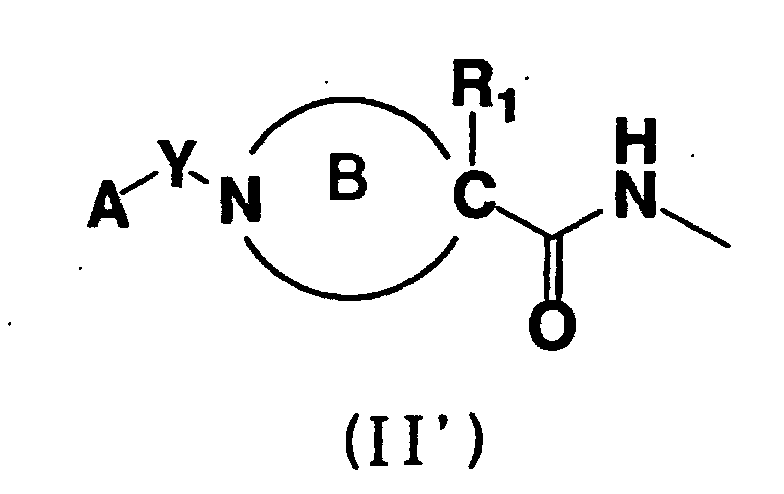
- the group A-Y-N(R 4 )-CR 1 R 2 -CONH- can be said group (II').
- the ring B in said group (II') is 1,2,3,4-tetrahydroisoquinoline, piperidine, oxazolidine, thiazolidine, pyrrolidine, morpholine, piperazine or thiomorpholine, preferably 1,2,3,4-tetrahydroisoquinoline, pyrrolidine or morpholine.
- the ring B may be substituted with an alkyl at any position.
- a nitrogen atom which is not bonded to Y may be substituted with alkyl, acyl, alkylsulfonyl, (aryl or heteroaryl)-carbonyl, alkylsulfonyl, (aryl or heteroaryl)-sulfonyl or alkoxycarbonyl.
- R 1 is preferably hydrogen atom or alkyl.
- the alkyl is preferably methyl.
- R 1 is particularly preferably hydrogen atom.
- R 2 is preferably hydrogen atom, hydroxy, alkyl, H(C x H 2x O) m -, aryl, arylalkoxy or alkylamino.
- the alkyl is preferably methyl or isopropyl.
- the aryl is preferably unsubstituted or haloarylalkoxy-substituted phenyl, further preferably fluorobenzyloxyphenyl.
- the arylalkoxy is preferably benzyloxy.
- the alkylamino is preferably dimethylamino.
- R 2 is particularly preferably hydrogen atom or alkyl.
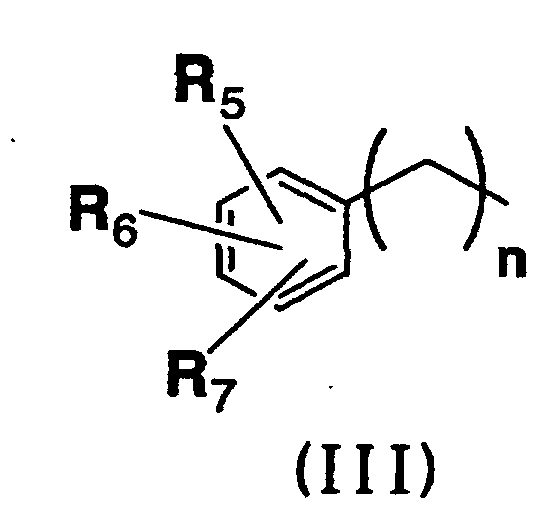
- R 5 , R 6 and R 7 can be hydrogen atom, alkyl, alkenyl, aryl, heteroaryl, arylalkyl, heteroarylalkyl, halogen atom, amino, alkylamino, (aryl or heteroaryl)-amino, (aryl or heteroaryl)-alkylamino, acylamino, (alkyl, aryl or heteroaryl) -Z 2 -amino, hydroxy, alkoxy, H(C x H 2x O) m -, alkenyloxy, aryloxy, heteroaryloxy, acyl, acyloxy, (aryl or heteroaryl)-alkoxy, (alkyl, aryl or heteroaryl)-Z 3 -oxy, mercapto, alkylthio, arylthio, heteroarylthio, acylthio, (aryl or heteroaryl)-alkylthio or (alkyl, aryl or heteroaryl)
- Each of R 5 , R 6 and R 7 is preferably hydrogen atom, alkyl, alkoxy, H(C x H 2x O) m -, alkenyloxy, arylalkoxy, heteroarylalkoxy, aryl-Z 2 -amino, alkylamino, arylamino or heteroarylamino. Further, it is preferable that R 5 is hydrogen atom, R 6 is hydrogen atom, alkoxy or arylalkoxy, and R 7 is alkoxy, alkenyloxy or arylalkoxy.
- the alkyl is preferably propyl, and the alkoxy is preferably methoxy or octyloxy.
- the alkenyloxy is preferably geranyloxy.
- the arylalkoxy is preferably unsubstituted or halogen-, alkoxy- or arylalkoxy-substituted benzyloxy, further preferably fluorobenzyloxy, methoxybenzyloxy or (benzyloxy)benzyloxy.
- the heteroarylalkoxy is preferably pyridinylmethyloxy.
- the aryl-Z 2 -amino is preferably unsubstituted or alkoxy-substituted phenyl-Z 2 -amino, and further preferably methoxyphenylsulfonylamino or butoxyphenylcarbonylamino.
- the alkylamino is preferably butylamino.
- the arylamino is preferably anilino, and the heteroarylamino is preferably pyridinylamino.
- n is 0 or 1, preferably 0.
- the compound (I) may be the compound (I').
- R 1 , R 5 , R 6 and R 7 are as defined above. It is preferable that R 1 , R 5 and R 6 are hydrogen atoms and R 7 is unsubstituted or halogen-substituted arylalkoxy, further fluorobenzyloxy.
- R 1 is preferably hydrogen atom.
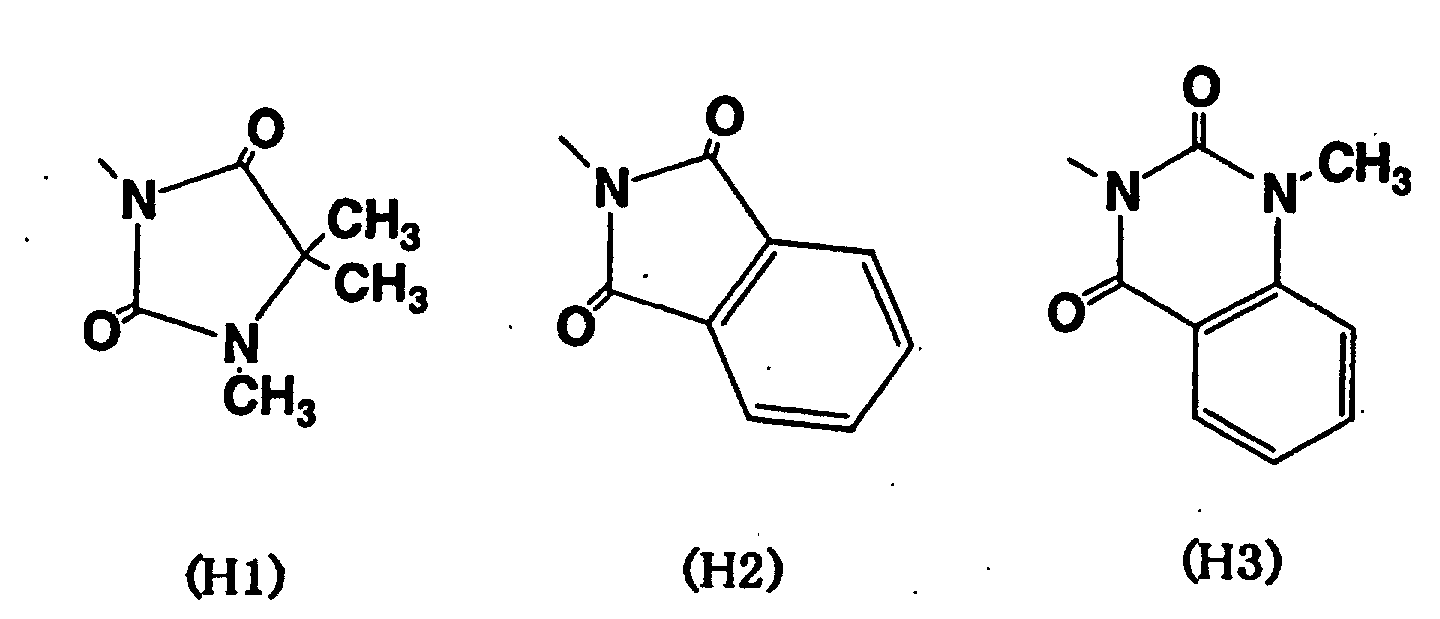
- R 2 is preferably hydrogen atom or Het-alkyl, and said Het-alkyl is preferably a group (H2) described later.
- R 8 is hydrogen atom or alkyl, preferably alkyl, further preferably methyl.
- R 9 is a side chain of an ⁇ -amino acid, and is derived from a side chain R of an ⁇ -amino acid H 2 N-CH(R)-COOH which can be used as a raw material for an amine R 8 -NHCO-CH(R 9 )-NH 2 in Reaction 15 of Scheme 4 described later.
- R 9 is preferably alkyl or arylalkyl, more preferably tert-butyl or benzyl.
- R 10 is hydrogen atom, alkyl, alkenyl or arylalkyl, preferably alkyl, more preferably isobutyl.
- Alkyl is a straight, branched or cyclic saturated hydrocarbon group having a carbon number of 1 to 10, preferably a carbon number of I to 6. Examples thereof include methyl, ethyl, n-propyl, isopropyl, n-butyl, isobutyl, sec-butyl, tert-butyl, n-pentyl, isoamyl, n-hexyl, n-octyl, cyclopropyl, cyclobutyl, cyclopentyl and cyclohexyl groups.
- alkyl groups may be substituted with one or more substituents selected from halogen atom, hydroxy, carboxy, alkoxycarbonyl, nitro and cyano at any position.
- Alkenyl means a straight, branched or cyclic unsaturated hydrocarbon group having at least one double bond at any position and having a carbon number of 2 to 10. Examples thereof include vinyl, 1-propenyl, 1-butenyl, 2-butenyl, 2-methyl-2-propenyl, 3,7-dimethyl-2,6-octadienyl (geranyl), cyclopropenyl, cyclobutenyl, cyclopentenyl and cyclohexenyl.
- alkenyl groups may be substituted with one or more substituents selected from aryl, heteroaryl, hydroxy, alkoxy, halogen atom, carboxy, alkoxycarbonyl, nitro, cyano and amino at any position.
- Acyl represents a carbonyl group having an alkyl or alkenyl group. Examples thereof include acetyl, propionyl, butyryl, acryl and butenoyl groups.
- Acylamino is an amino group having an acyl group.
- Acylaminoalkyl is an alkyl group substituted with an acylamino group.
- Alkoxy is an oxy group having an alkyl group.
- Alkenyloxy is an oxy group having an alkenyl group.
- Alkoxyalkyl is an alkyl group substituted with an alkoxy group.
- Acyloxyalkyl is an alkyl group substituted with an acyloxy group.
- Alkylamino is an amino group substituted with one or two alkyl groups.
- Alkylaminoalkyl is an alkyl group substituted with an alkylamino group.
- Alkylthio is a thio group having an alkyl group.
- Acylthio is a thio group having an acyl group.
- Alkylsulfonylamino is a sulfonylamino group (-SO 2 NH-) having an alkyl group.
- Alkylthioalkyl is an alkyl group substituted with an alkylthio group.
- Alkylsulfinylalkyl is an alkyl group substituted with a sulfinyl group (-SO-) having an alkyl group.
- Alkylsulfonylalkyl is an alkyl group substituted with a sulfonyl group (-SO 2 -) having an alkyl group.
- Aryl is an aromatic hydrocarbon group. Preferable examples thereof include phenyl and naphthyl.
- the aryl group may be substituted with one or more substituents selected from alkyl, hydroxy, alkoxy, arylalkoxy, haloarylalkoxy, mercapto, alkylthio, halogen atom, acyl, carboxy, alkoxycarbonyl, nitro, cyano, haloalkyl, aryl, aryloxy, heteroaryl, heteroaryloxy, amino, alkylamino, alkenyl, alkanoyl, acyloxy, acylamino and alkylsulfonyl at any position.
- Such substituent is preferably alkyl, alkoxy, arylalkoxy, haloarylalkoxy or halogen atom, more preferably methyl, methoxy, butoxy, benzyloxy, fluorobenzyloxy or fluorine atom.
- Arylamino is an amino group substituted with one or more aryl groups.
- Aryloxy is an oxy group having an aryl group.
- Arylalkyl is an alkyl group substituted with an aryl group, preferably benzyl.
- Arylalkoxy is an alkoxy group substituted with an aryl group, preferably benzyloxy.
- Arylalkoxyalkyl is an alkyl group substituted with an arylalkoxy group.
- Arylalkylamino is an amino group substituted with one or more arylalkyl groups.
- Arylthio is a thio group having an aryl group.
- Arylalkylthio is an alkylthio group substituted with an aryl group.
- Arylsulfonylamino is sulfonylamino group (-SO 2 NH-) having an aryl group.
- Heteroaryl means a 5- to 10-membered monocyclic or bicyclic aromatic heterocyclic group. Examples thereof include thienyl, furyl, pyrrolyl, pyridinyl, pyrazinyl, thiazolyl, pyrimidinyl, quinolinyl, tetrazolyl, benzothiazolyl, benzofuryl and indolyl. Preferable example is pyridinyl or indolyl.
- the heteroaryl may be substituted with one or more substituents selected from alkyl, hydroxy, alkoxy, mercapto, alkylthio, halogen atom, carboxy, alkoxycarbonyl, nitro, cyano, haloalkyl, aryl, aryloxy, heteroaryl, heteroaryloxy, amino, alkylamino, alkenyl, alkanoyl, acyloxy, acylamino and alkylsulfonyl at any position.
- substituents selected from alkyl, hydroxy, alkoxy, mercapto, alkylthio, halogen atom, carboxy, alkoxycarbonyl, nitro, cyano, haloalkyl, aryl, aryloxy, heteroaryl, heteroaryloxy, amino, alkylamino, alkenyl, alkanoyl, acyloxy, acylamino and alkylsulfonyl at any position.
- Heteroarylalkyl is an alkyl group substituted with a heteroaryl group. It is preferably pyridinylmethyl or indolylmethyl.
- Heteroaryloxy is an oxy group substituted with a heteroaryl group.
- Heteroarylalkoxy is an alkoxy group substituted with a heteroaryl group. It is preferably pyridinylmethyloxy group.
- Heteroarylalkoxyalkyl is an alkyl group substituted with a heteroarylalkoxy group.
- Heteroarylamino is an amino group substituted with one or two heteroaryl groups.
- Heteroarylalkylamino is an amino group substituted with one or two heteroarylalkyl groups.
- Heteroarylthio is a thio group having a heteroaryl group.
- Heteroarylalkylthio is an alkylthio group substituted with a heteroaryl group.
- Heteroarylthioalkyl is an alkyl group substituted with a heteroarylthio group.
- Heteroarylsulfonylamino is a sulfonylamino group (-SO 2 NH-) having a heteroaryl group.
- Halo and halogen atom are each chlorine, bromine, fluorine or iodine atom.
- Haloarylalkoxy is an alkoxy group having an aryl group substituted with a halogen atom.
- Het is a 5- or 6-membered monovalent heterocyclic group having at least one nitrogen atom, and said nitrogen atom is bonded to an alkyl group to form "Het-alkyl". Het may contain one or more additional hetero atoms (N, O or S) in addition to the nitrogen atom bonded to the alkyl group. Also, any carbon atom that forms the ring may be substituted with an alkyl or oxo group. When the additional nitrogen atom is present therein, the nitrogen atom may be substituted with an alkyl group. Het may be condensed with an aryl group.
- Het examples include morpholino, thiomorpholino, piperidino, pyrrolidino and the following groups (H1) to (H3). Preferably, it is the group (H2).
- Het-alkyl is an alkyl group having a Het group.
- Side chain of ⁇ -amino acid means a group R of a natural or unnatural ⁇ -amino acid represented by H 2 N-CH(R)- COOH.
- groups of the group R of a natural ⁇ -amino acid include (corresponding ⁇ -amino acid is indicated in parentheses): hydrogen (glycine), methyl (alanine), isopropyl (valine), isobutyl (leucine), hydroxymethyl (serine), 1-hydroxyethyl (threonine), mercaptomethyl (cysteine), 2-methylthioethyl (methionine), carboxymethyl (aspartic acid), carboxyethyl (glutamic acid), 4-aminobutyl (lysine), benzyl (phenylalanine) and p-hydroxybenzyl (tyrosine).
- Examples of the group R of an unnatural ⁇ -amino acid include alkyl groups such as ethyl, n-butyl, t-butyl, neopentyl, n-heptyl and cyclohexylmethyl, phenyl, 1-naphthyl, 2-naphthyl and arylalkyl groups such as phenethyl.
- the functional group may be protected with a known protecting group.
- the dithiazole compound (I) of the present invention may have one or more asymmetric centers therein.
- the present compound may be an enantiomer, a diastereomer or a mixture thereof based on an asymmetric carbon.
- isomers such as a conformational isomer and a geometrical isomer, these can be also included in the present invention.
- R 1 to R 10 , A, Y and n are as defined above.
- protecting and deprotecting reactions for an arbitral functional group can be performed at a suitable step.
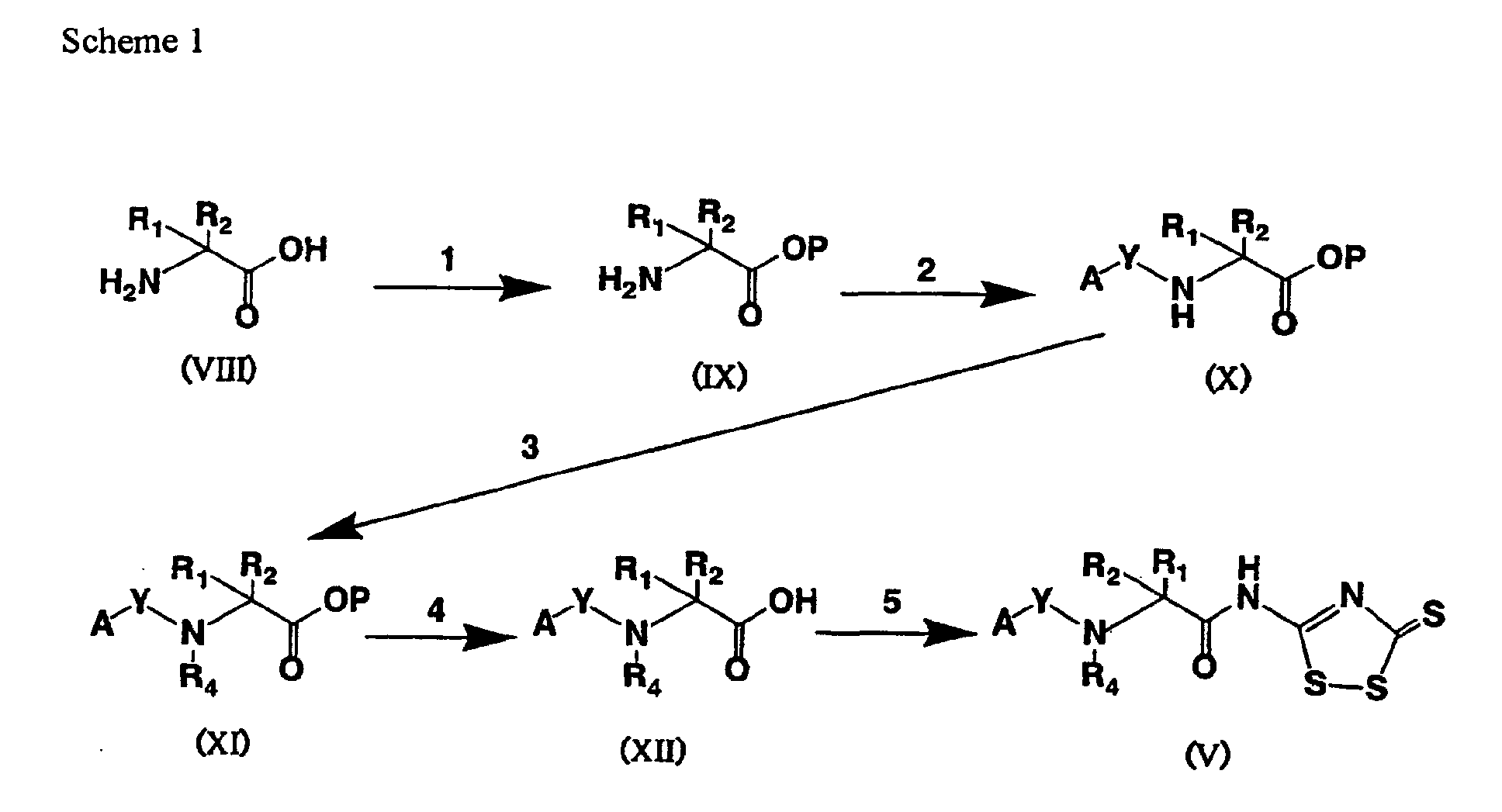
- a compound (V) wherein R 3 is the group (II) can be synthesized as follows:
- an amino acid (VIII) or an acid-added salt thereof can be esterified using lower alkanol (e.g. methanol), for example, in the presence of thionyl chloride, to give a compound (IX) (wherein P is a protecting group).
- the reaction may be performed in lower alkanol (e.g. methanol) in the presence of an acid catalyst (e.g. sulfuric acid), if necessary, by heating, to give the compound (IX).
- an acid catalyst e.g. sulfuric acid
- Examples of the protecting group P for a carboxyl group include methyl, ethyl, tert-butyl and benzyl.
- the amino acid (VIII) or an acid-added salt thereof, and the compound (IX) having the protecting group P can be commercially available, or may be synthesized by appropriately combining known methods.
- the compound (IX) can be subjected to a reaction using a corresponding halide (e.g. A-Y-Cl), specifically, a sulfonylating reagent (e.g. arylsulfonyl chloride) or a carbonilating reagent (e.g. arylcarbonyl chloride) in a solvent (e.g. tetrahydrofuran, toluene or acetonitrile) in the presence of a suitable base (e.g. triethylamine or N-methylmorpholine), to give a compound (X).
- a corresponding halide e.g. A-Y-Cl
- a sulfonylating reagent e.g. arylsulfonyl chloride
- a carbonilating reagent e.g. arylcarbonyl chloride
- a solvent e.g. tetrahydrofuran, toluene
- the sulfonylating reagent can be commercially available, or can be synthesized according to the known method (New Experimental Chemical Course, vol. 14, p.1787(1978) etc.).
- the carbonilating reagent can be also commercially available, or can be synthesized according to the known method (New Experimental Chemical Course, vol. 14, p.1106(1978) etc.).
- the substituent A may be further modified at this stage.
- Reaction 3 a reaction can be performed using R 4 -X (X is halogen such as Cl, Br, I etc.) in a polar solvent (e.g. dimethylformamide) in the presence of a suitable base (e.g. sodium hydride or potassium carbonate), to give a compound (XI).
- a polar solvent e.g. dimethylformamide
- a suitable base e.g. sodium hydride or potassium carbonate
- carboxylic acid (XII) can be obtained by using a standard mild method of ester hydrolysis.
- Examples of the activated compound of the carboxylic acid (XII) include an acid anhydride (in particular, mixed acid anhydride), an acid halide and an activated ester.
- the mixed acid anhydride can be prepared, for example, using pivalic acid chloride or ethyl chlorocarbonate.
- the acid halide is preferably acid chloride, and can be prepared, for example, using thionyl chloride or oxalyl chloride.
- the activated ester can be prepared, for example, using 1,1'-carbonyldiimidazole, N-(dimethylaminopropyl)-N'-ethylcarbodiimide or dicyclohexylcarbodiimide, in the presence or the absence of 1-hydroxybenzotriazole.
- a reaction of the activated compound of the carboxylic acid (XII) such as an acid chloride or an activated ester with 3-amino-1,2,4-dithiazole-5-thione (XIII) can be performed in a solvent (e.g. dimethylformamide, tetrahydrofuran or dichloromethane) in the presence of a base (e.g. triethylamine).
- a solvent e.g. dimethylformamide, tetrahydrofuran or dichloromethane
- a base e.g. triethylamine
- Scheme 2 is an alternative method of Scheme 1, and a compound (V') wherein R 1 and R 2 of the compound (V) are hydrogen can be synthesized.
- a reaction can be performed using an amine (XIV) and a corresponding halide (e.g. A-Y-Cl), specifically, a sulfonylating reagent (e.g. arylsulfonyl chloride) or a carbonilating reagent (e.g. arylcarbonyl chloride) in a solvent (e.g. tetrahydrofuran, toluene or acetonitrile) in the presence of a suitable base (e.g. triethylamine), to give a compound (XV).
- a solvent e.g. tetrahydrofuran, toluene or acetonitrile
- a suitable base e.g. triethylamine
- the compound (XV) and alkyl haloacetate e.g. ethyl bromoacetate
- a solvent tetrahydrofuran, toluene or acetonitrile
- a base e.g. sodium hydride
- Reaction 8 and Reaction 9 can be performed according to said Reaction 4 and Reaction 5 in Scheme 1.
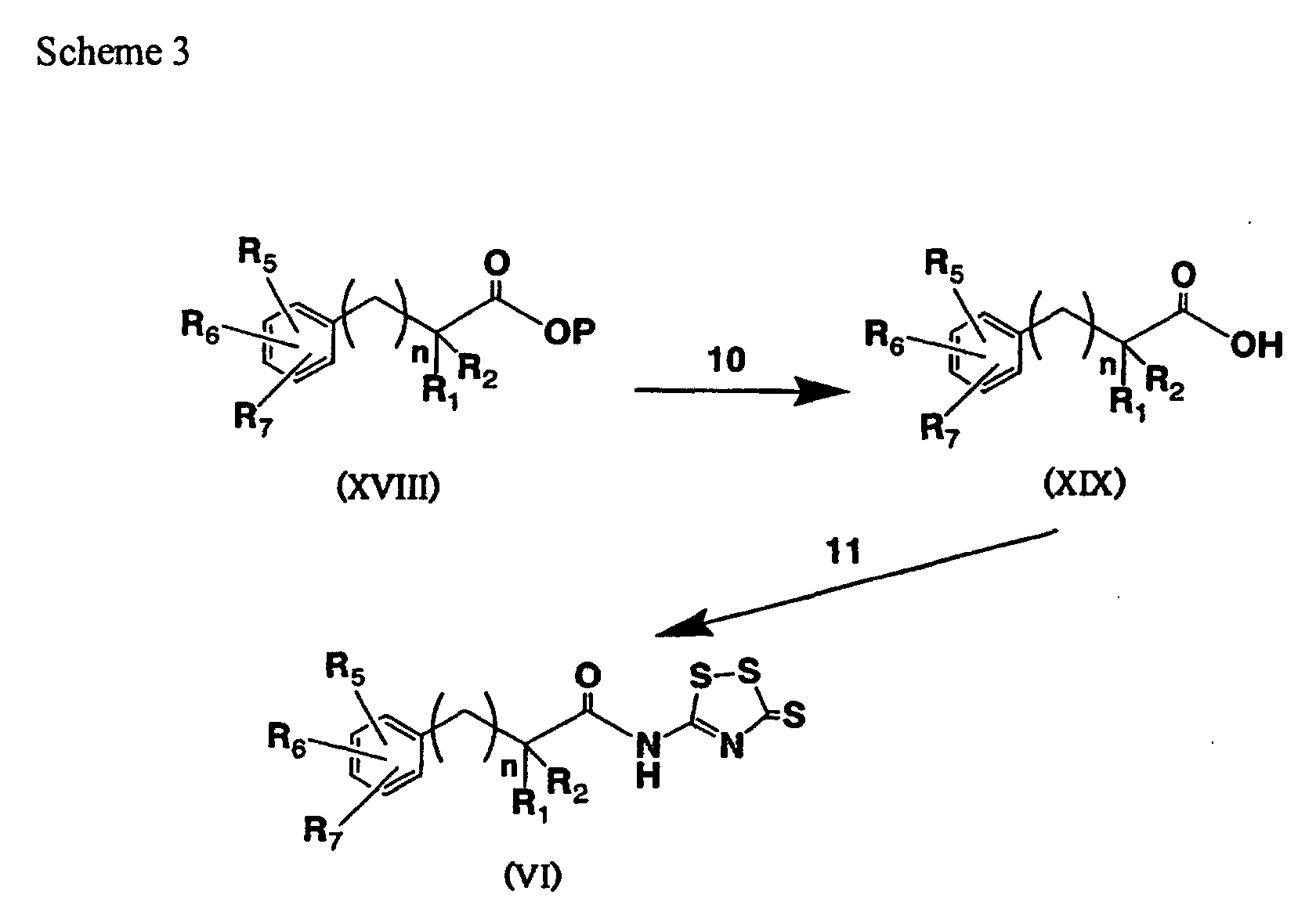
- a compound (VI) wherein R 3 is a group (III) can be prepared as follows:
- Reaction 10 and Reaction 11 can be performed according to said Reaction 4 and Reaction 5 in Scheme 1.
- the compound (XVIII) can be commercially available, or can be synthesized by appropriately combining known reactions to perform introduction and conversion of a substituent.
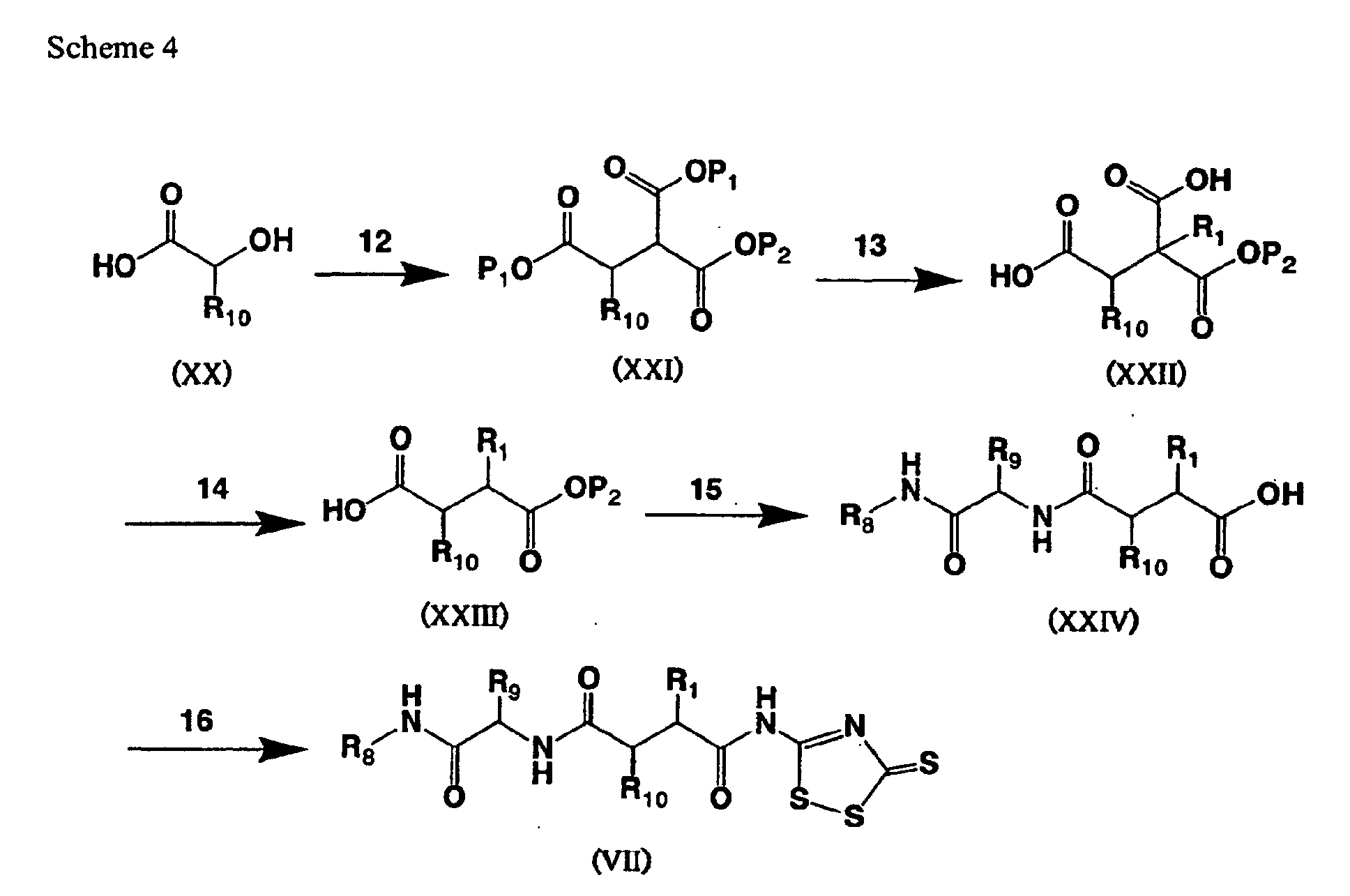
- a compound wherein R 3 is the group (IV) and R 2 is hydrogen atom can be prepared as follows:
- triester (XXI) can be obtained by protecting a carboxyl group of a hydroxycarboxylic acid (XX) with P 1 , and converting its hydroxy group into a group having a high eliminating ability such as p-toluenesulfonyloxy, methanesulfonyloxy or trifluoromethansulfonyloxy group, which is reacted with a nucleophilic reagent such as malonate.
- P 1 and P 2 mean carboxyl-protecting groups, for example, P 1 represents benzyl group, and P 2 represents tert-butyl group.
- R 1 can be introduced into the compound (XXI). Then, a deprotecting reaction, for example, a hydrogenating reaction using a palladium catalyst (Pd-C, Pd-CaCO 3 etc.) can be performed to give a dicarboxylic acid (XXII).
- a base e.g. sodium hydride
- R 1 -X X is as defined above
- a deprotecting reaction for example, a hydrogenating reaction using a palladium catalyst (Pd-C, Pd-CaCO 3 etc.) can be performed to give a dicarboxylic acid (XXII).
- Reaction 14 for example, a decarbonilating reaction can be performed in toluene in the presence of N-methylmorpholine, if necessary, by heating, to give a compound (XXIII).
- an amidation with an amine (R 8 -NHCO-CH(R 9 )NH 2 ) is performed in the presence of a condensing agent.
- the reaction can be performed using a condensing agent such as 1,1'-carbonyldiimidazole, N-(dimethylaminopropyl)-N'-ethylcarbodiimide or dicyclohexylcarbodiimide in a solvent (e.g. dimethylformamide or dichloromethane) in the presence or the absence of 1-hydroxybenzotriazole, preferably at room temperature.
- a deprotecting reaction a carboxylic acid (XXIV) can be obtained.
- Reaction 16 can be performed according to the Reaction 5 of Scheme 1.
- these compounds may be in the form of one of possible isomers or a mixture thereof, for example, a pure geometrically isomer (cis or trans), an optical isomer (enantiomer), a racemic body or a mixture thereof.
- a pure geometrically isomer cis or trans
- an optical isomer enantiomer
- racemic body a mixture thereof.
- the aforementioned possible isomers or a mixture thereof are within the scope of the present invention.
- a resulting compound when a resulting compound is a mixture of isomers, the mixture can be separated into one pure isomer or a racemic body based on a physicochemical difference of components, for example, by chromatography and/or fractional crystallization.
- the dithiazole compound of the present invention can be converted into an acid-added salt by a conventional method, if necessary.
- an acid of the acid-added salt include inorganic acids such as hydrochloric acid, hydrobromic acid, sulfuric acid and phosphoric acid, and organic acids such as acetic acid, propionic acid, citric acid, lactic acid, oxalic acid, maleic acid, fumaric acid, succinic acid, tartaric acid and methanesulfonic acid.
- the dithiazole compound (I) of the present invention has an excellent MMPs inhibiting action, it is useful as an agent for treating or preventing diseases which can be expected to be improved by the present action, for example, rheumatoid arthritis, osteoarthritis, osteoporosis, periodontal disease, ectopic angiogenesis, multiple sclerosis, metastasis of tumor, cornea ulcer and the like.
- an administration route is not particularly limited, and the compound can be administered by any method, for example, orally, parenterally or locally.
- a dose is appropriately adjusted depending on subject (mammal, particularly human), an age, sex, individual difference, symptom and the like, being not particularly limited.
- a dose of 0.1 to 500 mg/kg, preferably 0.5 to 200mg/kg of the dithiazole compound (I) of the present invention can be administered orally or parenterally in a single dose or several doses per day.
- the dithiazole compound (I) of the present invention can be administered in various preparation forms.
- An amount of an active ingredient in a preparation is not particularly limited, but is usually 0.01 % to 70% by weight, preferably 0.1 to 50% by weight.
- a preparation is prepared using a normal preparation carrier by a conventional method and, if necessary, pharmacologically acceptable additives may be added thereto.
- an excipient and, further, if necessary, a binder, a disintegrating agent, a lubricant, a colorant, a corrigent and the like are added to an active component to form tablets, coated tablets, granules, powders, capsules or the like by a conventional method.
- excipient for example, lactose, corn starch, sucrose, glucose, sorbit, crystalline cellulose, silicon dioxide, calcium phosphate, glycine and the like can be used.
- binder for example, polyvinyl alcohol, polyvinyl ether, ethyl cellulose, methyl cellulose, gum arabic, tragacanth, gelatin, shellac, hydroxypropyl cellulose, hydroxypropyl starch, polyvinylpyrrolidone and the like can be used.
- disintegrating agent for example, starch, agar, gelatin powder, crystalline cellulose, calcium carbonate, sodium hydrogencarbonate, calcium citrate, sodium citrate, dextrin, pectin, alginic acid and the like can be used.
- lubricant for example, magnesium stearate, sodium laurate, talc, polyethylene glycol, silica, hydrogenated vegetable oil and the like can be used.
- colorant those permitted to be added to pharmaceutical preparations can be used.
- corrigent cocoa powder, menthol, aromatic acid, mentha oil, bomeol and cinnamon powder can be used. If necessary, tablets, granules and the like can be appropriately coated with a sugar coating, a gelatin coating or the like.
- a corrigent When an oral liquid formulation is prepared, a corrigent, a colorant, an emulsifying agent, a suspending agent, a diluent and the like may be added to an active ingredient to form an aqueous suspension, an elixir, a syrup or the like.
- An injection can be a sterile aqueous or non-aqueous solution, suspension and emulsion.
- auxiliary agents such as an antiseptic, a wetting agent, an emulsifying agent, a dispersing agent, a stabilizer and a solubilizer may be contained therein.
- An injection is usually sterilized by filtration (bacteria - retaining filter etc.), incorporation of a germicide or ⁇ -ray irradiation. Alternatively, after these treatments, it is converted into a solid composition by freeze-drying or the like, which is used by adding sterile water or sterile injectable diluent thereinto just before use.
- the compound may be also administered parenterally as a suppository.
- the dithiazole compound (I) of the present invention may be incorporated into a skin external composition, which is particularly effective as an anti-aging cosmetic for the purpose of improving or preventing skin aging such as wrinkles, slacks and dullness of a skin.
- the "anti-aging cosmetic” in the present invention broadly means a cosmetic for preventing or improving aging, in particular, aging of a skin.
- an amount of the dithiazole compound (I) to be incorporated is 0.00001 to 10 % by weight, preferably 0.0001 to 5% by weight in a total amount of the composition.
- the amount is less than 0.00001 % by weight, the effect is not sufficiently exerted.
- the amount exceeds 10% by weight, considerable improvement in the effect is not recognized, and formulation becomes difficult in some cases.
- a skin external composition of the present invention if necessary, can be appropriately incorporated other ingredients which are usually used in an external composition such as a cosmetic or pharmaceutical product in addition to the dithiazole compound (I) as an active ingredient, within a range that the effect of the present invention is not deteriorated.
- a whitening agent, a humectant, an antioxidant, an oily ingredient, an ultraviolet absorbing agent, a surfactant, a thickener, an alcohol, a powder ingredient, a coloring agent, an aqueous ingredient, water, various skin nutrients and the like can be incorporated therein.
- a metal sequesting agent such as disodium edatate, trisodium edatate, sodium citrate, sodium polyphosphate, sodium metaphosphate, or gluconic acid; a drug such as caffeine, tannin, verapamil, tranexamic acid and a derivative thereof, a glycyrrhiza extract, glove lysine, hot water extract of a fruit of Chinese quince, various crude drugs, tocopherol acetate, or glycyrrhizic acid and a derivative thereof and a salt thereof; a whitening agent such as vitamin C, magnesium ascorbylphosphate, ascorbyl glucoside, arbutin or kojic acid; a sugar such as glucose, fructose, mannose, sucrose or trehalose; a vitamin A derivative such as retinoic acid, retinol, retinol acetate or retinol palmitate; and the like may be appropriately incorporated therein.
- the form of the skin external composition is not particularly limited, and can be arbitrary forms such as solution system, solubilized system, emulsified system, powder dispersed system, water-oil biphase system, water-oil-powder triphase system, solid ointment, gel, aerosol, mousse and the like.
- its use form is also arbitrary, and may be a base cosmetic such as a lotion, an emulsion, a cream, a pack, an essence or the like, a makeup cosmetic such as foundation or the like, a hair cosmetic, a fragrance cosmetic, a bath preparation or the like, but it is not limited thereto.
- a test material was dissolved in dimethyl sulfoxide (DMSO) to the concentration of 10mM, to prepare a stock solution.
- the stock solution was diluted with a measuring buffer (0.05M tris at pH 7.5 containing 0.2M NaCl and 5mM CaCl 2 ) to adjust the concentration to 100 ⁇ M, which was used as a sample solution.
- a control solution a solution containing no test material was similarly prepared.
- MMP-9 crude enzyme solution derived from a mouse skin
- the test was performed according to a gelatin zymography method ("Bio-antioxidant provitamin C", Nobuhiko Miwa ed., p.76, 1999, Fragrance Journal, Tokyo).
- dithiazole compounds of the present invention inhibited MMPs activity.
- Test Material MMPs Inhibition Compound 1 ⁇ Compound 2 ⁇ Compound 5 ⁇ Compound 7 ⁇ Compound 8 ⁇ Compound 9 ⁇ Compound 12 o ⁇
- Phase A and Phase C were each dissolved uniformly. Phase C was added and solubilized into Phase A, and then Phase B added thereto. The mixture was filled up in a container, to give an essence.
- Compounding Example 8 Pack Phase A: Dipropylene glycol 5.0 weight % POE(60)hardened caster oil 5.0 Phase B: Compound 1 0.01 Olive oil 5.0 Tocopherol acetate 0.2 Ethylparaben 0.2 Perfume 0.2 Phase C: Sodium hydrogensulfite 0.03 Polyvinyl alcohol 13.0 (saponification degree 90, polymerization degree 2000) Ethanol 7.0 Soybean lysolecithin 0.1 Beech buds extract 0.1 Purified water Balance
- Phase A, Phase B and Phase C were each dissolved uniformly. Phase A was added and solubilized into Phase B, and then Phase B added thereto. The mixture was filled up in a container, to give a pack.
- Compounding Example 9 Solid foundation (1)Talc 43.0 weight % (2)Kaolin 15.0 (3)Sericite 10.0 (4)Zinc oxide 7.0 (5)Titanium dioxide 3.6 (6)Yellow iron oxide 2.9 (7)Black iron oxide 0.2 (8)Squalane 8.0 (9)Isostearic acid 4.0 (10)POE sorbitan monooleate 3.0 (11)Isocetyl octanoate 2.0 (12)Vitamin E acetate 0.05 (13)Compound 2 1.0 (14)Beech buds extract 0.1 (15)Antiseptics q.s. (16)Perfume q.s.
- Powder components of (1)-(7) were mixed by a blender thoroughly, and then oil components of (8)-(13) and components of (14)-(16) were added and well-kneaded therein. The mixture was filled up and formed in a container, to give a solid foundation.
- the water phase components except for perfume were stirred together with heating, and the powder, which was mixed and grinded thoroughly, was added thereto.
- the mixture was treated by a homomixer, and then the oil phase, which was mixed with heating, was added thereto. After being treated by the homomixer, the mixture, with perfume added thereto while being stirred, was cooled to room temperature, to give a emulsion type foundation.
- Glycine tert-butyl ester hydrochloride is reacted with 4-nitrobenzenesulfonyl chloride in pyridine, to give tert-butyl 2- ⁇ [(4-nitrophenyl)sulfonyl]amino ⁇ acetate.
- This compound is subjected to a catalytic reduction using Pd-C in ethanol, to give tert-butyl 2- ⁇ [(4-aminophenyl)sulfonyl]amino ⁇ acetate.
- This compound is reacted with p-toluoyl chloride in pyridine, to give tert-butyl 2-[[[4-[(4-methylbenzoyl)amino]phenyl]sulfonyl]amino]acetate.
- N-Methylmorpholine, N-hydroxybenzotriazole and 1-ethyl-3-(3'-dimethylamino propyl)carbodiimide hydrochloride are added and reacted to a solution of this compound in N,N-dimethylformamide, to give the captioned compound.
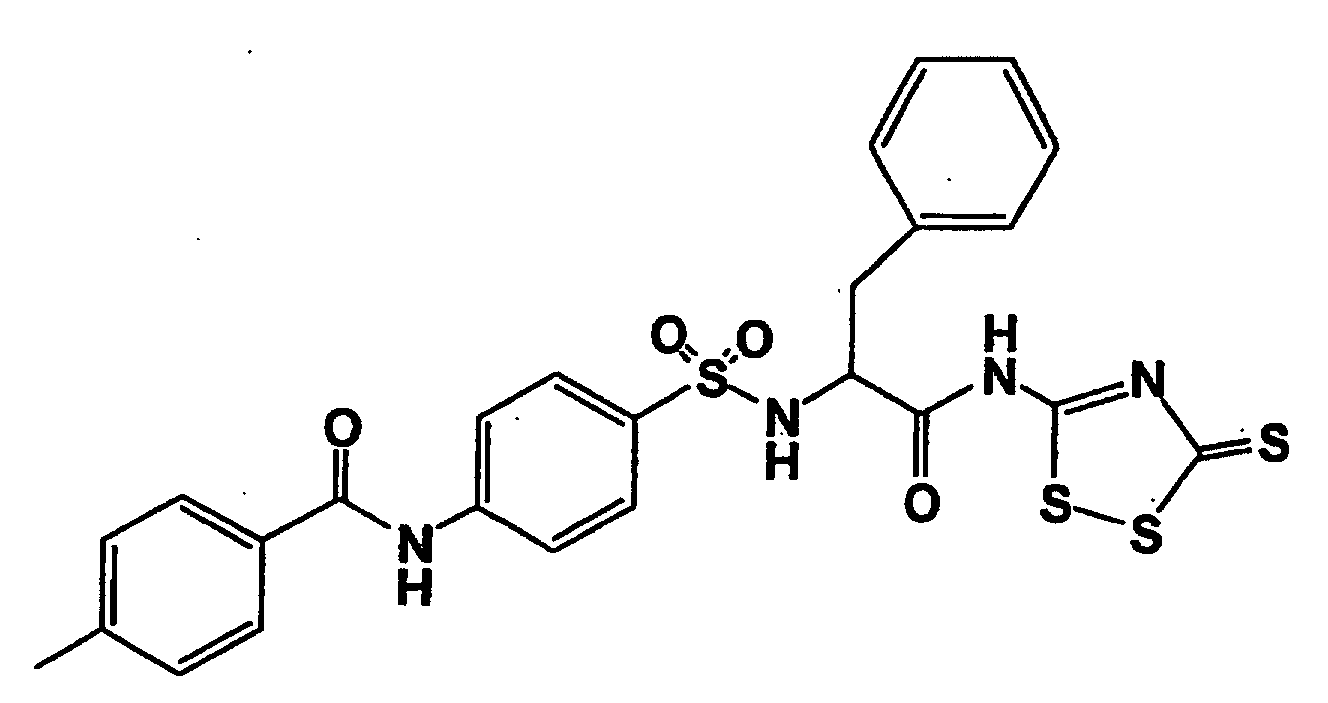
- Phenylalanine tert-butyl ester hydrochloride is reacted with 4-nitrobenzenesulfonyl chloride in pyridine, to give tert-butyl 2- ⁇ [4-nitrophenyl)sulfonyl]amino ⁇ -3-phenylpropanoate.
- This compound is subjected to a catalytic reduction using Pd-C in ethanol, to give tert-butyl 2- ⁇ [(4-aminophenyl)sulfonyl]amino ⁇ -3-phenylpropanoate.
- This compound is reacted with p-toluoyl chloride in pyridine, to give tert-butyl 2-[[[4-[(4-methylbenzoyl)amino]phenyl]sulfonyl]amino ⁇ -3-phenylpropanoate.
- N-Methylmorpholine, N-hydroxybenzotriazole and 1-ethyl-3-(3'-dimethylamino propyl)carbodiimide hydrochloride are added and reacted to a solution of this compound in N,N-dimethylformamide, and further reacted with 3-amino-1,2,4-dithiazole-5-thione, to give the captioned compound.
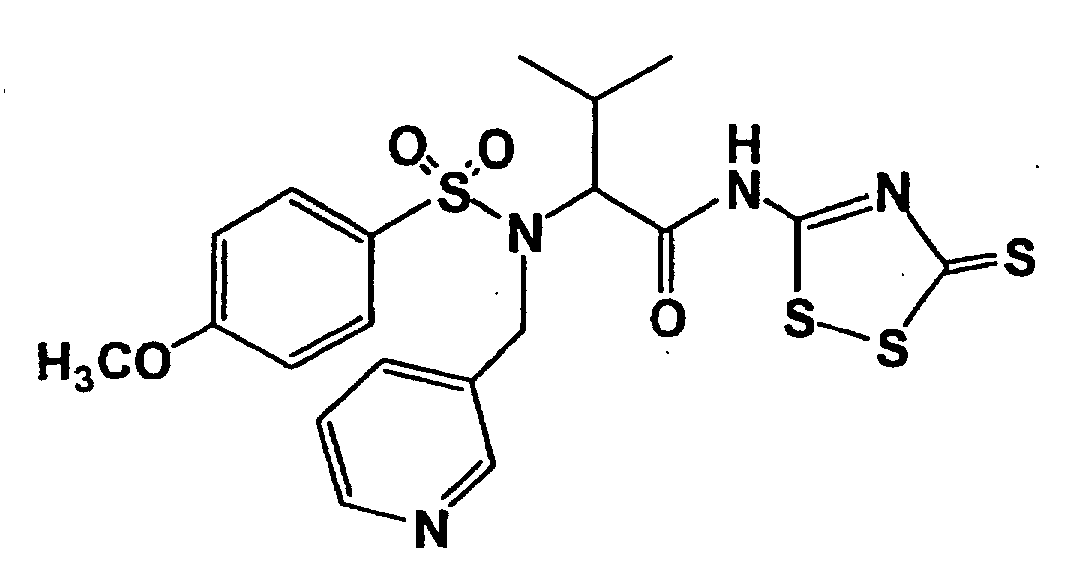
- Valine tert-butyl ester hydrochloride is reacted with 4-methoxybenzenesulfonyl chloride in dichloromethane in the presence of triethylamine, to give tert-butyl 2- ⁇ [(4-methoxyphenyl)sulfonyl]amino ⁇ -3-methylbutanoate.
- This compound is reacted with 3-(chloromethyl)pyridine hydrochloride in DMF in the presence of potassium carbonate, to give tert-butyl 2- ⁇ [(4-methoxyphenyl) sulfonyl](3-pyridinylmethyl)amino ⁇ -3-methylbutanoate.
- This compound was subjected to a deprotecting reaction with 4N hydrochloric acid-dioxane added thereto, to give 2- ⁇ [(4-methoxyphenyl)sulfonyl](3-pyridinylmethyl) amino ⁇ -3-methylbutanoic acid salt.
- N-Methylmorpholine, N-hydroxybenzotriazole and 1-ethyl-3-(3'-dimethylamino propyl)carbodiimide hydrochloride are added and reacted to a solution of this compound in N,N-dimethylformamide, and then further reacted with 3-amino-1,2,4-dithiazole-5-thione, to give the captioned compound.
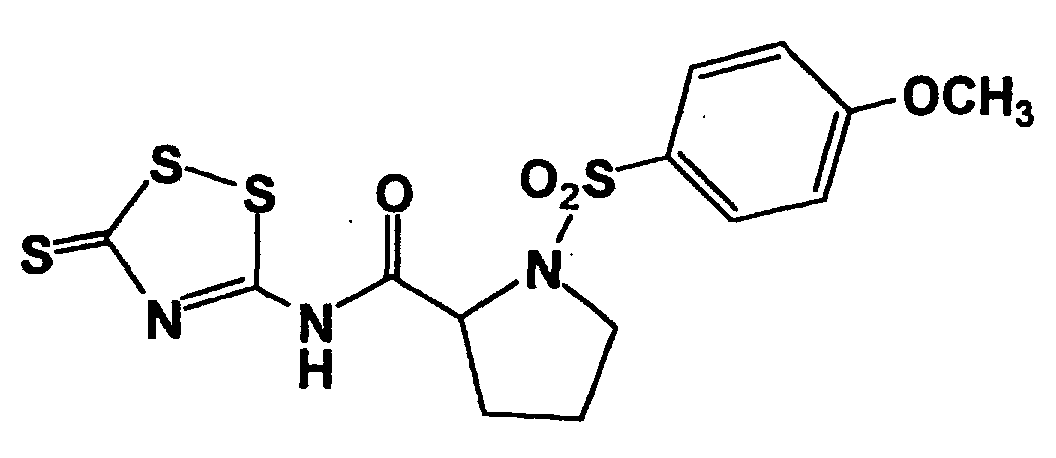
- Proline is reacted with 4-methoxybenzenesulfonyl chloride in dichloromethane in the presence of triethylamine, to give 1-[(4-methoxyphenyl)sulfonyl]-2-pyrrolidinecarboxylic acid.
- N-Methylmorpholine, N-hydroxybenzotriazole and 1-ethyl-3-(3'-dimethylamino propyl)carbodiimide hydrochloride are added and reacted to a solution of this compound in N,N-dimethylformamide, and further reacted with 3-amino-1,2,4-dithiazole-5-thione, to give the captioned compound.
- 1,2,3,4-Tetrahydro-3-isoquinolinecarboxylic acid hydrochloride is reacted with 4-methoxybenzenesulfonyl chloride in dichloromethane in the presence of triethylamine, to give 2-[(4-methoxyphenyl)sulfonyl]-1,2,3,4-tetrahydro-3-isoquinoline carboxylic acid.
- N-Methylmorpholine, N-hydroxybenzotriazole and 1-ethyl-3-(3'-dimethylamino propyl)carbodiimide hydrochloride are added and reacted to a solution of this compound in N,N-dimethylformamide, and further reacted with 3-amino-1,2,4-dithiazole-5-thione, to give the captioned compound.
- 3-Morpholinecarboxylic acid is reacted with 4-methoxybenzenesulfonyl chloride in dichloromethane in the presence of triethylamine, to give 4-[(4-methoxyphenyl) sulfonyl]-3-morpholinecarboxylic acid.
- N-Methylmorpholine, N-hydroxybenzotriazole and 1-ethyl-3-(3'-dimethylamino propyl)carbodiimide hydrochloride are added and reacted to a solution of this compound in N,N-dimethylformamide, and further reacted with 3-amino-1,2,4-dithiazole-5-thione, to give the captioned compound.
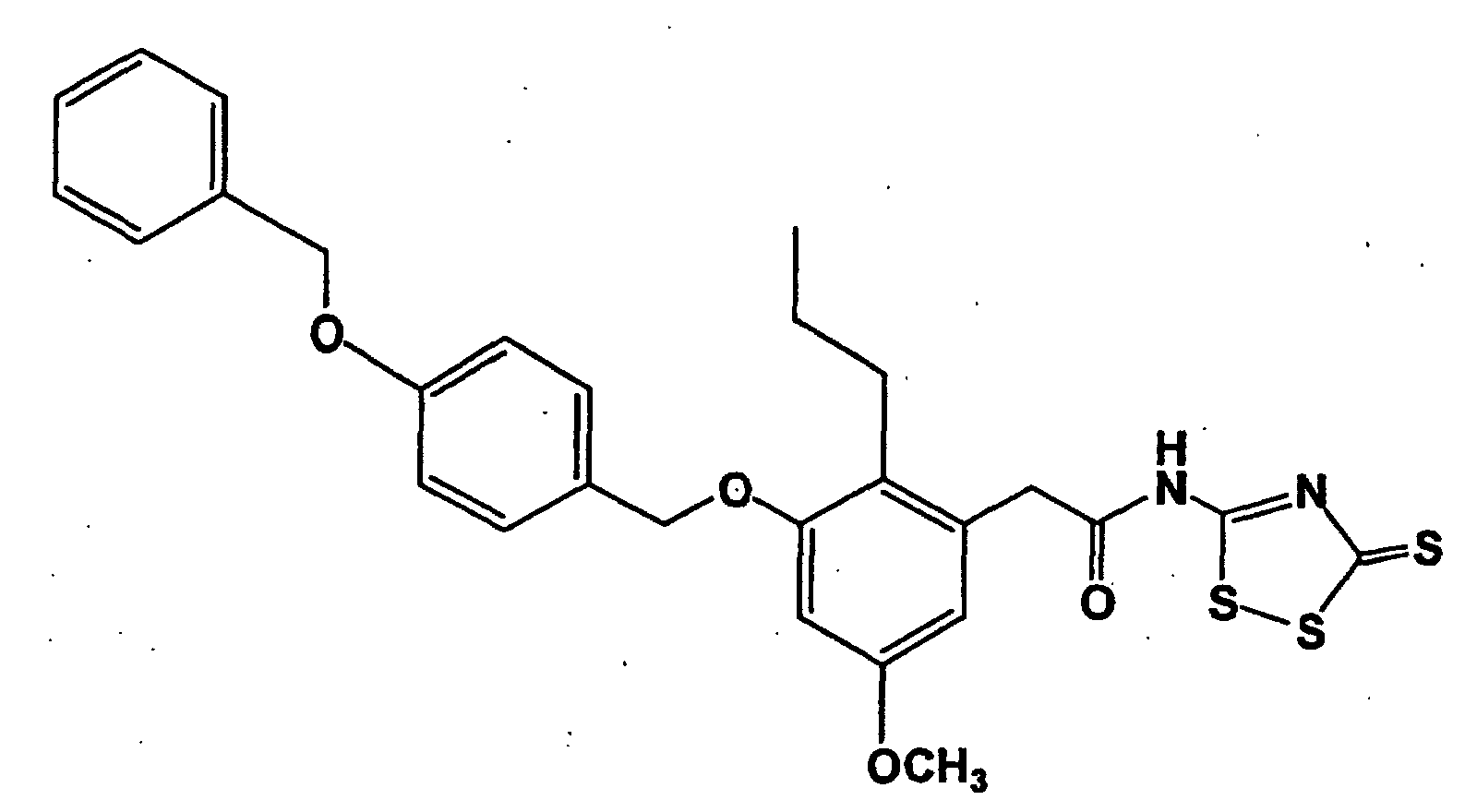
- 2-(3-Hydroxy-5-methoxy-2-propylphenyl)acetic acid is refluxed in methanol in the presence of sulfuric acid, to give methyl 2-(3-hydroxy-5-methoxy-2-propylphenyl)acetate.
- This compound is reacted with 4-benzyloxybenzyl chloride in acetone in the presence of potassium carbonate, to give methyl 2-[3-[[4-(benzyloxy)benzyl]oxy]-5-methoxy-2-propylphenyl] acetate.
- This compound is treated with 1N potassium hydroxide in methanol, to give 2-[3-[[4-(benzyloxy)benzyl]oxy]-5-methoxy-2-propylphenyl]acetic acid.
- N-Methylmorpholine, N-hydroxybenzotriazole and 1-ethyl-3-(3'-dimethylamino propyl)carbodiimide hydrochloride are added and reacted to a solution of this compound in N,N-dimethylformamide, and further reacted with 3-amino-1,2,4-dithiazole-5-thione, to give the captioned compound.
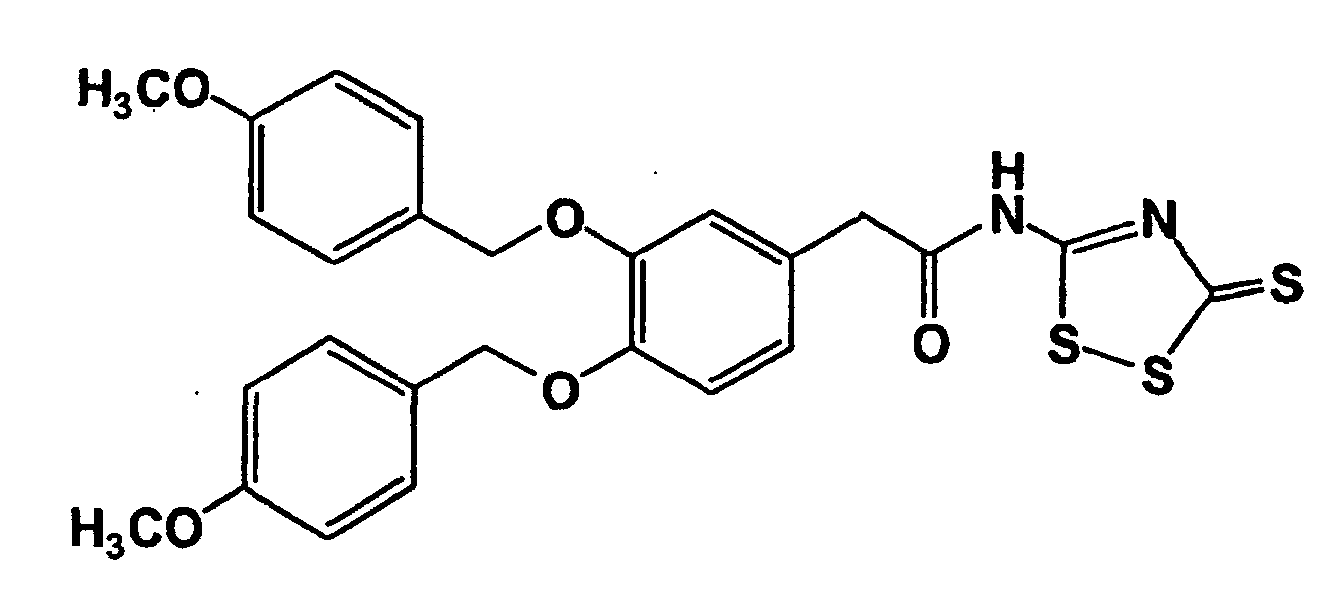
- 3,4-Dihydroxyphenylacetic acid is refluxed in methanol in the presence of sulfuric acid, to give methyl 2-(3,4-dihydroxyphenyl)acetate.
- This compound is reacted with 4-methoxybenzyl chloride in acetone in the presence of potassium carbonate, to give methyl 2- ⁇ 3,4-bis[(4-methoxybenzyl)oxy]phenyl ⁇ acetate.
- This compound is treated with 1N potassium hydroxide in methanol, to give 2- ⁇ 3,4-bis[(4-methoxybenzyl)oxy]phenyl ⁇ acetic acid.
- N-Methylmorpholine, N-hydroxybenzotriazole and 1-ethyl-3-(3'-dimethylamino propyl)carbodiimide hydrochloride are added and reacted to a solution of this compound in N,N-dimethylformamide, and further reacted with 3-amino-1,2,4-dithiazole-5-thione, to give the captioned compound.
- Ethyl (3-amino-4-hydroxyphenyl) acetate is reacted with 4-methoxybenzene sulfonyl chloride in chloroform in the presence of triethylamine, to give ethyl 2-[4-hydroxy-3-[[(4-methoxyphenyl)sulfonyl]amino]phenyl]acetate.
- This compound is reacted with 1-bromo2-(2-methoxyethoxy)ethane in acetone in the presence of potassium carbonate, to give ethyl 2-[4-[2-(2-methoxyethoxy)ethoxy]-3-[[(4-methoxyphenyl)sulfonyl]amino]phenyl]acetate.
- This compound is treated with 1N potassium hydroxide in methanol, to give 2-[4-[2-(2-methoxyethoxy)ethoxy]-3-[[(4-methoxyphenyl)sulfonyl]amino]phenyl]acetic acid.
- N-Methylmorpholine, N-hydroxybenzotriazole and 1-ethyl-3-(3'-dimethylamino propyl)carbodiimide hydrochloride are added and reacted to a solution of this compound in N,N-dimethylformamide, and further reacted with 3-amino-1,2,4-dithiazole-5-thione, to give the captioned compound.
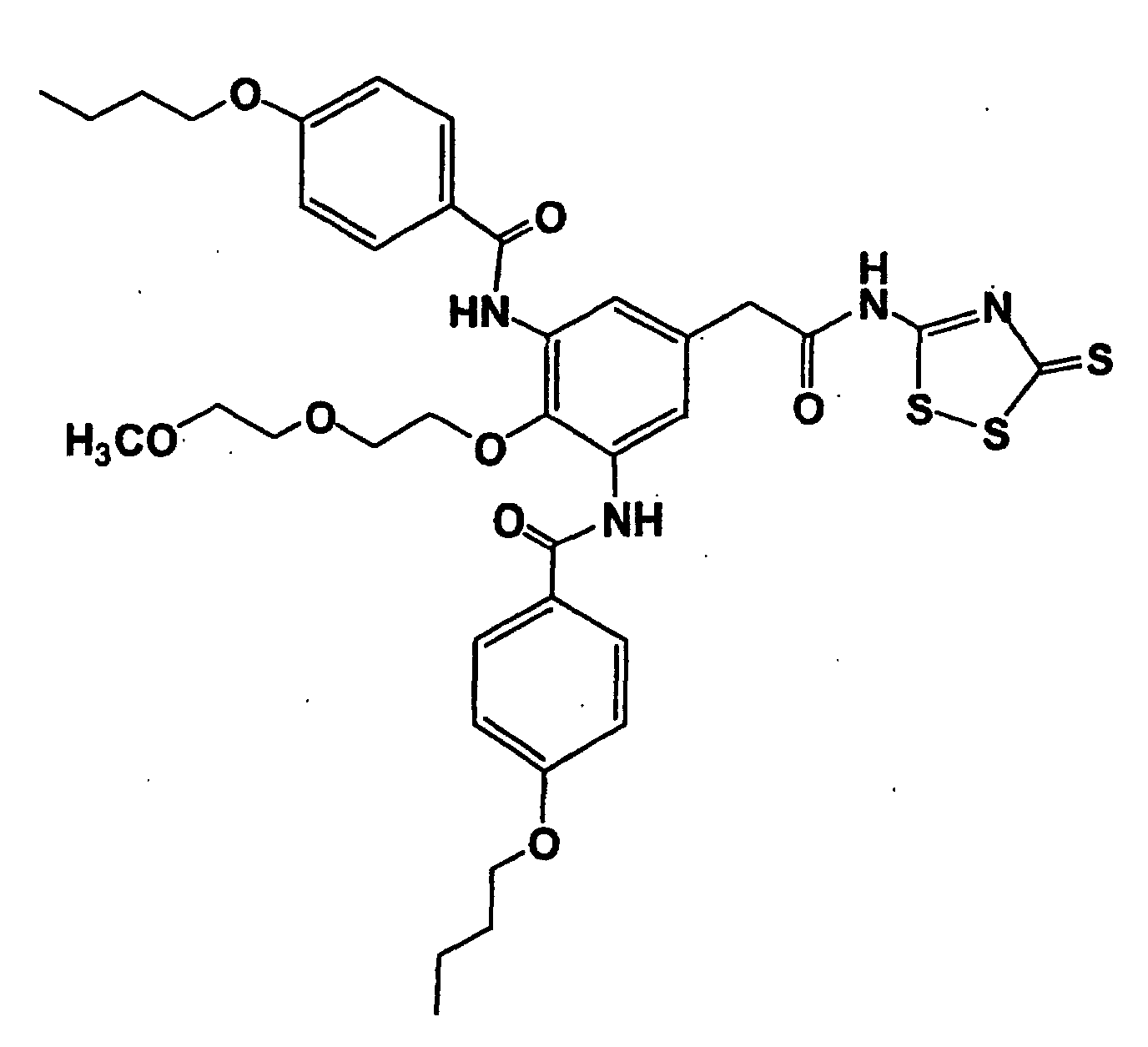
- 3,5-Dinitro-4-hydroxyphenylacetic acid is refluxed in methanol in the presence of sulfuric acid, to give methyl 2-(3,5-dinitro-4-hydroxyphenyl)acetate.
- This compound is reacted in ethanol in the presence of palladium catalyst in hydrogen atmosphere, to give methyl 2-(3,5-diamino-4-hydroxyphenyl)acetate.
- This compound is reacted with 4-n-butoxybenzoylchloride in chloroform in the presence of triethylamine, to give methyl 2- ⁇ 3,5-bis[(4-butoxybenzoyl)amino]-4-hydroxyphenyl ⁇ acetate.
- This compound is reacted with 1-bromo-2-(2-methoxyethoxy)ethane in acetone in the presence of potassium carbonate, to give methyl 2- ⁇ 3,5-bis[(4-butoxybenzoyl) amino]-4-[2-(2-methoxyethoxy)ethoxy]phenyl ⁇ acetate.
- This compound is treated with 1N potassium hydroxide in methanol, to give 2- ⁇ 3,5-bis[(4-butoxybenzoyl)amino]-4-[2-(2-methoxyethoxy)ethoxy]phenyl ⁇ acetic acid.
- N-Methylmorpholine, N-hydroxybenzotriazole and 1-ethyl-3-(3'-dimethylamino propyl)carbodiimide hydrochloride are added and reacted to a solution of this compound in N,N-dimethylformamide, and further reacted with 3-amino-1,2,4-dithiazole-5-thione, to give the captioned compound.
- 2,5-Dihydroxyphenylacetic acid is refluxed in methanol in the presence of sulfuric acid, to give methyl 2-(2,5-dihydroxyphenyl)acetate.
- This compound is reacted with 3-(chloromethyl)pyridine hydrochloride in acetone in the presence of potassium carbonate, to give methyl 2-[2,5-bis(pyridinylmethoxy)phenyl] acetate.
- This compound is treated with 1N potassium hydroxide in methanol, to give 2-[2,5-bis(3-pyridinylmethoxy)phenyl]acetic acid.
- N-Methylmorpholine, N-hydroxybenzotriazole and 1-ethyl-3-(3'-dimethylamino propyl)carbodiimide hydrochloride are added and reacted to a solution of this compound in N,N-dimethylformamide, and further reacted with 3-amino-1,2,4-dithiazole-5-thione, to give the captioned compound.
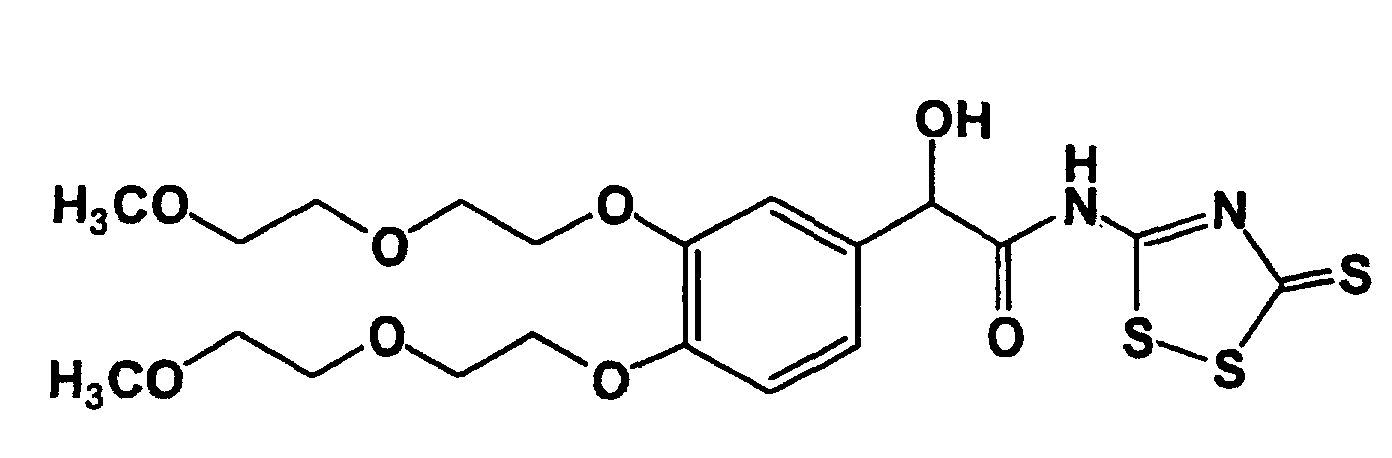
- 3,4-Dihydroxymandelic acid is refluxed in methanol in the presence of sulfuric acid, to give methyl 2-(3,4-dihydroxyphenyl)-2-hydroxyacetate.
- This compound is reacted with 1-bromo-2-(2-methoxyethoxy)ethane in acetone in the presence of potassium carbonate in acetone, to give methyl 2-[3,4-bis[2-(2-methoxyethoxy)ethoxy]phenyl ⁇ -2-hydroxyacetate.
- This compound is treated with 1N potassium hydroxide in methanol, to give 2-[3,4-bis[2-(2-methoxyethoxy)ethoxy]phenyl ⁇ -2-hydroxyacetic acid.
- N-Methylmorpholine, N-hydroxybenzotriazole and 1-ethyl-3-(3'-dimethylamino propyl)carbodiimide hydrochloride are added and reacted to a solution of this compound in N,N-dimethylformamide, and further reacted with 3-amino-1,2,4-dithiazole-5-thione, to give the captioned compound.
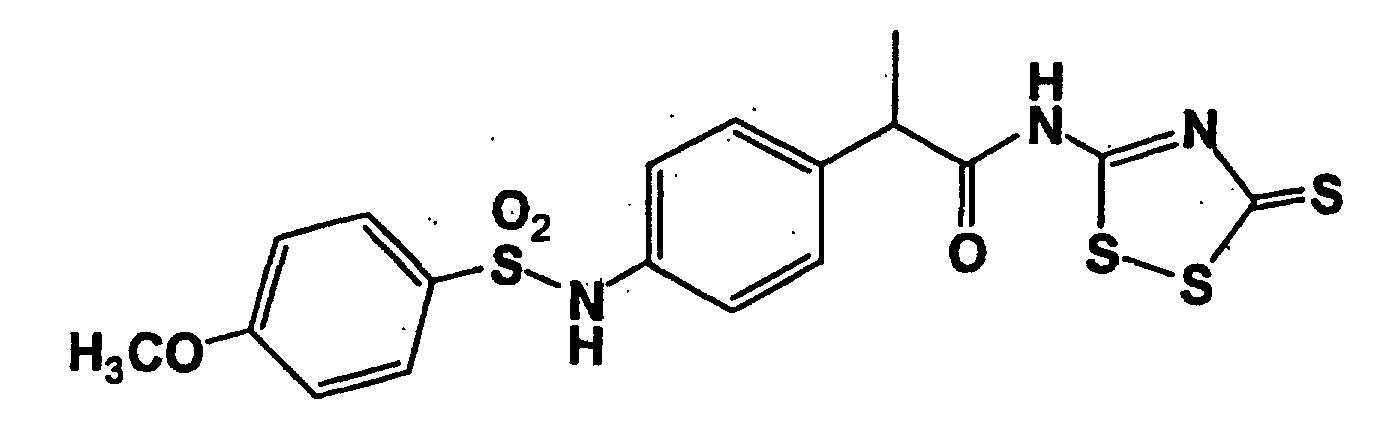
- 2-(4-Nitrophenyl)propionic acid is refluxed in methanol in the presence of sulfuric acid, to give methyl 2-(4-nitrophenyl)propanoate.
- This compound is reacted in the presence of palladium catalyst in ethanol in hydrogen atmosphere, to give methyl 2-(4-aminophenyl)propanoate.
- This compound is reacted with 4-methoxybenzenesulfonyl chloride in chloroform in the presence of triethylamine, to give methyl 2-[4-[[(4-methoxyphenyl)sulfonyl]amino] phenyl]propanoate.
- This compound is treated with 1N potassium hydroxide in methanol, to give 2-[4-[[(4-methoxyphenyl)sulfonyl]amino]phenyl]propionic acid.
- N-Methylmorpholine, N-hydroxybenzotriazole and 1-ethyl-3-(3'-dimethylamino propyl)carbodiimide hydrochloride are added and reacted to a solution of this compound in N,N-dimethylformamide, and further reacted with 3-amino-1,2,4-dithiazole-5-thione, to give the captioned compound.
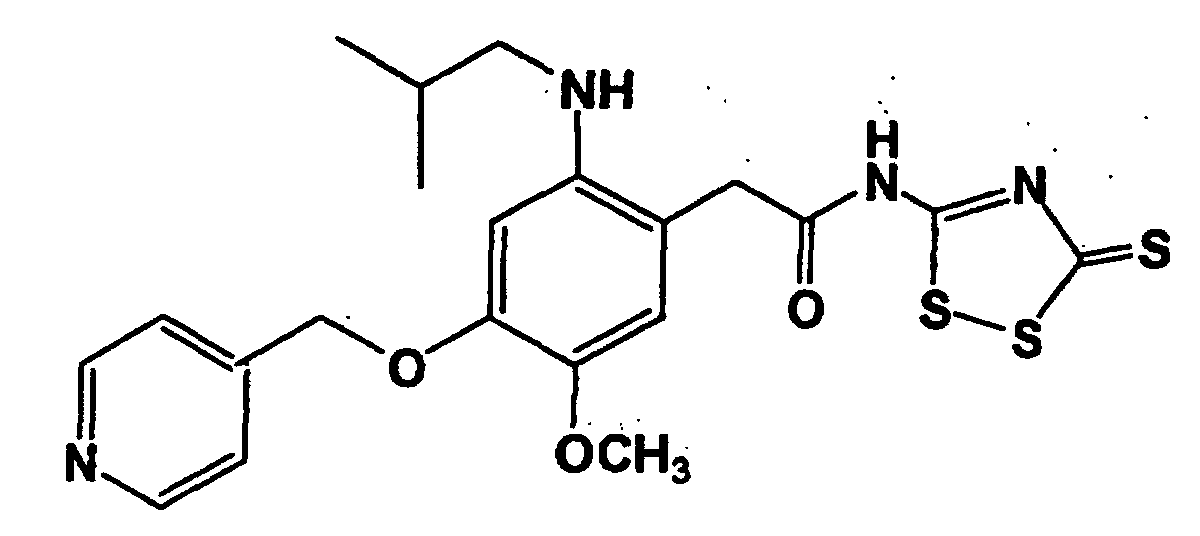
- This compound is reacted with 4-chloromethylpyridine hydrochloride in acetone in the presence of potassium carbonate, to give methyl 2-[2-bromo-5-methoxy-4-(4-pyridinylmethoxy)phenyl]acetate.
- This compound is reacted with isobutylamine in the presence of sodium amide, to give methyl 2-[2-(isobutylamino)-5-methoxy-4-(4-pyridinylmethoxy)phenyl]acetate.
- This compound is treated with 1N potassium hydroxide in methanol, to give 2-[2-(isobutylamino)-5-methoxy-4-(4-pyridinylmethoxy)phenyl]acetic acid.
- N-Methylmorpholine, N-hydroxybenzotriazole and 1-ethyl-3-(3'-dimethylamino propyl)carbodiimide hydrochloride are added and reacted to a solution of this compound in N,N-dimethylformamide, and further reacted with 3-amino-1,2,4-dithiazole-5-thione, to give the captioned compound.
- This compound is reacted with trifluoromethanesulfonic acid anhydride in pyridine, and further reacted with 1-benzyl 3-(tert-butyl) malonate, to give 1,2-dibenzyl 1-(tert-butyl) 4-methyl-1,1,2-pentatricarboxylate.
- This compound is subjected to a catalytic reduction in the presence of palladium catalyst in ethanol, to give 2-(tert-butoxycarbonyl)-3-isobutylsuccinic acid.
- This compound is refluxed in toluene in the presence of N-methylmorpholine, to give 2-[2-(tert-butoxy)-2-oxoethyl]-4-methylpentanoic acid.
- N-Methylmorpholine, N-hydroxybenzotriazole and 1-ethyl-3-(3'-dimethylamino propyl)carbodiimide hydrochloride are added and reacted to a solution of this compound in N,N-dimethylformamide, and further reacted with 2-amino-N,3,3-trimethylbutanamide, to give tert-butyl 3-[[[2,2-dimethyl-1-[(methylamino)carbonyl]propyl]amino]carbonyl]-5-methylhexanoate.
- This compound is refluxed with trimethylsilyl trifluoromethanesulfonate in dioxane in the presence of triethylamine, to give 3-[[[2,2-dimethyl-1-[(methylamino)carbonyl] propyl]amino]carbonyl]-5-methylhexanoic acid.
- N-Methylmorpholine, N-hydroxybenzotriazole and 1-ethyl-3-(3'-dimethylamino propyl)carbodiimide hydrochloride are added and reacted to this compound in N,N-dimethylformamide, and further reacted with 3-amino-1,2,4-dithiazole-5-thione, to give the captioned compound.
- This compound is reacted with trifluoromethanesulfonic acid anhydride in pyridine, and further reacted with 1-benzyl 3-(tert-butyl) malonate, to give 1,2-dibenzyl 1-(tert-butyl) 4-methyl-1,1,2-pentatricarboxylate.
- This compound is reacted with sodium hydride in tetrahydrofuran, and further reacted with N-(bromomethyl)phthalimide, to give 2,3-dibenzyl 2-(tert-butyl) 1-(1,3-dioxo-1,3dihydro-2H-isoindole-2-yl)-5-methyl-2,2,3- hexanetricarboxylate.
- This compound is subjected to a catalytic reduction in the presence of palladium catalyst in ethanol, to give 2-(tert-butoxycarbonyl)-2-[(1,3-dioxo-1,3-dihydro-2H-isoindole-2-yl)methyl]-3-isobutylsuccinic acid.
- This compound is refluxed in toluene in the presence ofN-methylmorpholine, to give 2- ⁇ 2-(tert-butoxy)-1-[(1,3-dioxo-1,3-dihydro-2H-isoindole-2-yl)methyl]-2-oxoethyl ⁇ -4-methylpentanoic acid.
- N-Methylmorpholine, N-hydroxybenzotriazole and 1-ethyl-3-(3'-dimethylamino propyl)carbodiimide hydrochloride are added and reacted to a solution of this compound in N,N-dimethylformamide, and further reacted with 2-amino-N,3,3-trimethylbutanamide, to give tert-butyl 3-[[[2,2-dimethyl-1-[(methylamino)carbonyl]propyl]amino]carbonyl]-2-[(1,3-dioxo-1,3-dihydro-2H-isoindole-2-yl)methyl]-5-methylhexanoate.
- N-Methylmorpholine, N-hydroxybenzotriazole and 1-ethyl-3-(3'-dimethylamino propyl)carbodiimide hydrochloride are added and reacted to this compound in N,N-dimethylformamide, and further reacted with 3-amino-1,2,4-dithiazole-5-thione, to give the captioned compound.
- This compound is reacted with trifluoromethanesulfonic acid anhydride in pyridine, and further reacted with 1-benzyl 3-(tert-butyl) malonate, to give 1,2-dibenzyl 1-(tert-butyl) 4-methyl-1,1,2-pentatricarboxylate.
- This compound is subjected to a catalytic reduction in the presence of palladium catalyst in ethanol, to give 2-(tert-butoxycarbonyl)-3-isobutylsuccinic acid.
- This compound is refluxed in toluene in the presence of N-methylmorpholine, to give 2-[2-(tert-butoxy)-2-oxoethyl]-4-methylpentanoic acid.
- N-Methylmorpholine, N-hydroxybenzotriazole and 1-ethyl-3-(3'-dimethylamino propyl)carbodiimide hydrochloride are added and reacted to a solution of this compound in N,N-dimethylformamide, and further reacted with 2-amino-N-methyl-3-phenylpropanamide, to give tert-butyl 3-[[[1-benzyl2-(methylamino)-2-oxoethyl]amino]carbonyl]-5-methylhexanoate.
- N-Methylmorpholine, N-hydroxybenzotriazole and 1-ethyl-3-(3'-dimethylamino propyl)carbodiimide hydrochloride are added and reacted to this compound in N,N-dimethylformamide, and further reacted with 3-amino-1,2,4-dithiazole-5-thione, to give the captioned compound.
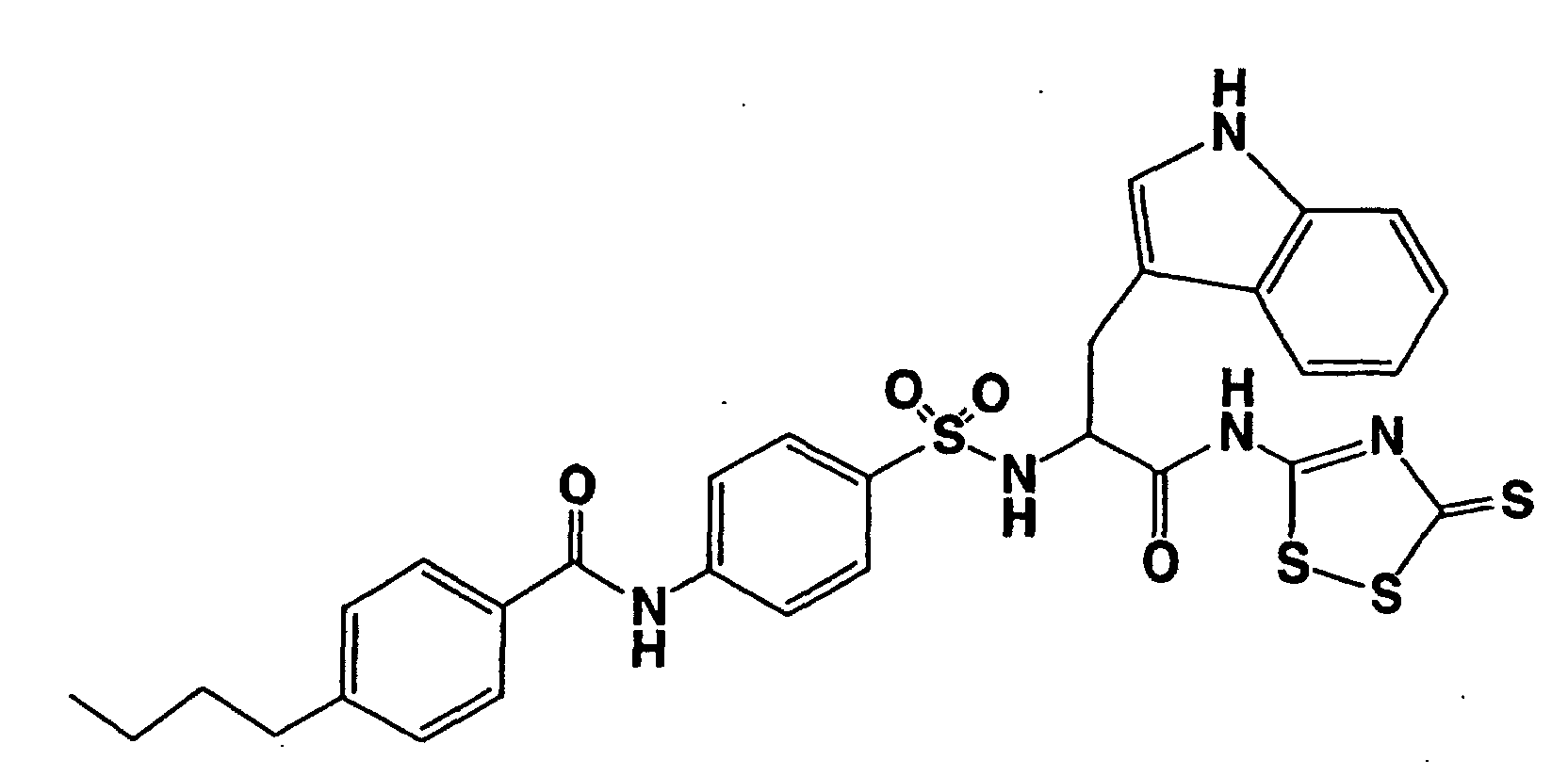
- DL-tryptophan methyl ester hydrochloride is reacted with 4-nitrobenzenesulfonyl chloride in pyridine, to give methyl 2- ⁇ [(4-nitrophenyl)sulfonyl]amino ⁇ -3-(1H-indole-3-yl) propanate.
- This compound is subjected to a catalytic reduction using Pd-C in ethanol, to give methyl 2- ⁇ [(4-aminophenyl)sulfonyl]amino ⁇ -3-(1H-indole-3-yl)propanate.
- This compound is reacted with 4-n-butylbenzoylchloride in pyridine, to give methyl 2-[[[4-[(4-butylbenzoyl)amino]phenyl]sulfonyl]amino]-3-(1H-indole-3-yl)propanate.
- This compound is reacted with potassium hydroxide in tetrahydrofuran, to give 2-[[[4-[(4-butylbenzoyl)amino]phenyl]sulfonyl]amino]-3-(1H-indole-3-yl)propionic acid.
- N-Methylmorpholine, N-hydroxybenzotriazole and 1-ethyl-3-(3'-dimethylamino propyl)carbodiimide hydrochloride are added and reacted to a solution of this compound in N,N-dimethylformamide, and further reacted with 3-amino-1,2,4-dithiazole-5-thione, to give the captioned compound.
- This compound is reacted with 2-methoxyethoxymethylchloride in chloroform in the presence of N,N-diisopropylethylamine, to give methyl 2-(4-bromophenyl)-2-[(2-methoxyethoxy)methoxy]acetate.
- This compound is reacted with aniline in the presence of copper, potassium iodide and potassium carbonate, to give methyl 2-(4-anilinophenyl)-2-[(2-methoxyethoxy)methoxy] acetate.
- This compound is reacted with potassium hydroxide in tetrahydrofuran, to give 2-(4-anilinophenyl)-2-[(2-methoxyethoxy)methoxy]acetic acid.
- N-Methylmorpholine, N-hydroxybenzotriazole and 1-ethyl-3-(3'-dimethylamino propyl)carbodiimide hydrochloride are added and reacted to a solution of this compound in N,N-dimethylformamide, and further reacted with 3-amino-1,2,4-dithiazole-5-thione, to give the captioned compound.
- Methyl 2-(4-bromophenyl)-2-hydroxyacetate obtained in said Compound 35 is reacted with benzyl bromide in N,N-dimethylformamide in the presence of sodium hydride, to give methyl 2-benzyloxy-2-(4-bromophenyl)acetoamide.
- This compound is reacted with 4-aminopyridine in the presence of copper, potassium iodide and potassium carbonate, to give methyl 2-benzyloxy-2-[4-(4-pyridinylaminophenyl)] acetoamide.
- This compound is reacted with potassium hydroxide in tetrahydrofuran, to give 2-benzyloxy-2-[4-(4-pyridinylaminophenyl)]acetic acid.
- N-Methylmorpholine, N-hydroxybenzotriazole and 1-ethyl-3-(3'-dimethylamino propyl)carbodiimide hydrochloride are added and reacted to a solution of this compound in N,N-dimethylformamide, and further reacted with 3-amino-1,2,4-dithiazole-5-thione, to give the captioned compound.
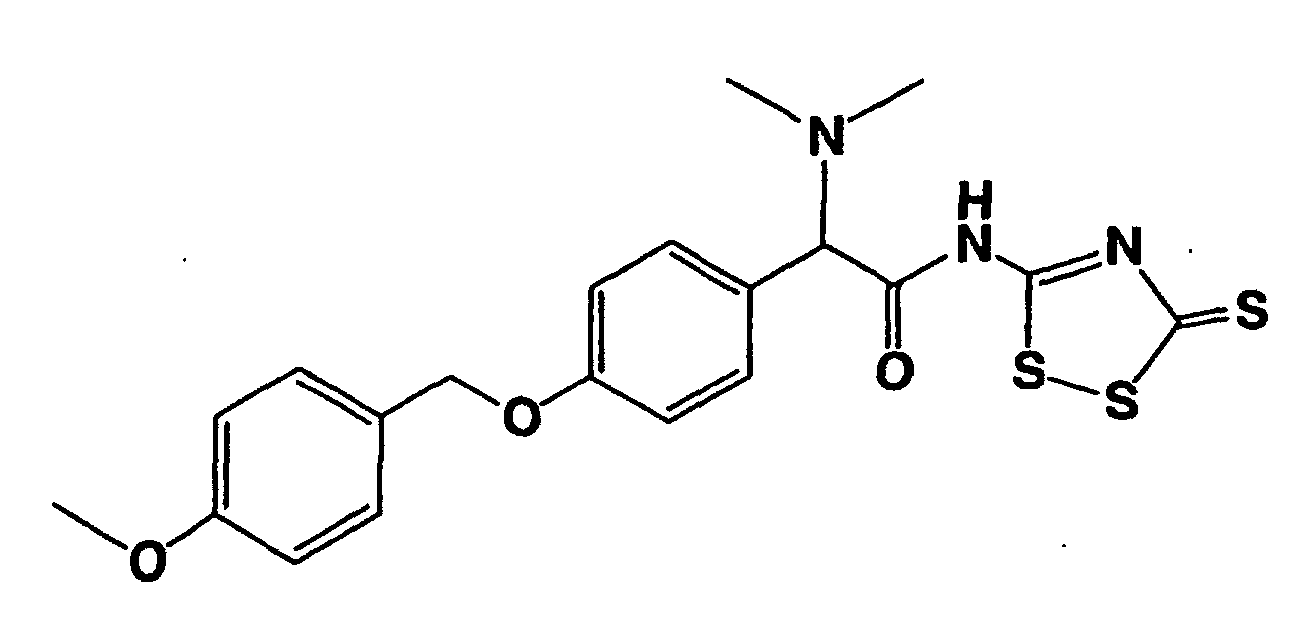
- Hydroxyphenylglycine is refluxed in methanol in the presence of sulfuric acid, to give methyl 2-amino2-(4-hydroxyphenyl)acetate.
- This compound is reacted with methyl iodide in tetrahydrofuran in the presence of trimethylamine, to give methyl 2-(dimethylamino)-2-(4-hydroxyphenyl)acetate.
- This compound is reacted with 4-methoxybenzyl chloride in acetone in the presence of potassium carbonate, to give methyl 2-(dimethylamino)-2- ⁇ 4-[(4-methoxybenzyl)oxy] phenyl ⁇ acetate.
- This compound is treated with 1N potassium hydroxide, to give 2-(dimethylamino)-2- ⁇ 4-[(4-methoxybenzyl)oxy]phenyl ⁇ acetic acid.
- N-Methylmorpholine, N-hydroxybenzotriazole and 1-ethyl-3-(3'-dimethylamino propyl) carbodiimide hydrochloride are added and reacted to a solution of this compound in N,N-dimethylformamide, and further reacted with 3-amino-1,2,4-dithiazole-5-thione, to give the captioned compound.
- the dithiazole compound (I) of the present invention is effective as a matrix metalloprotease (MMPs) inhibitor, it can be incorporated into various pharmaceutical and cosmetic products.
- MMPs matrix metalloprotease
- it can be applied to a skin external composition for the purpose of improving or preventing skin-aging, or to agent for treating or preventing various diseases due to abnormal metabolism of tissue matrix such as arthritis, tissue ulcer formation, metastasis or infiltration of tumor and the like.
Landscapes
- Health & Medical Sciences (AREA)
- Chemical & Material Sciences (AREA)
- Organic Chemistry (AREA)
- Life Sciences & Earth Sciences (AREA)
- Animal Behavior & Ethology (AREA)
- Veterinary Medicine (AREA)
- Public Health (AREA)
- General Health & Medical Sciences (AREA)
- Medicinal Chemistry (AREA)
- Pharmacology & Pharmacy (AREA)
- Epidemiology (AREA)
- Nuclear Medicine, Radiotherapy & Molecular Imaging (AREA)
- General Chemical & Material Sciences (AREA)
- Chemical Kinetics & Catalysis (AREA)
- Dermatology (AREA)
- Engineering & Computer Science (AREA)
- Bioinformatics & Cheminformatics (AREA)
- Gerontology & Geriatric Medicine (AREA)
- Physical Education & Sports Medicine (AREA)
- Birds (AREA)
- Hematology (AREA)
- Obesity (AREA)
- Diabetes (AREA)
- Immunology (AREA)
- Orthopedic Medicine & Surgery (AREA)
- Rheumatology (AREA)
- Pharmaceuticals Containing Other Organic And Inorganic Compounds (AREA)
- Cosmetics (AREA)
- Nitrogen- Or Sulfur-Containing Heterocyclic Ring Compounds With Rings Of Six Or More Members (AREA)
- Plural Heterocyclic Compounds (AREA)
Abstract
Description
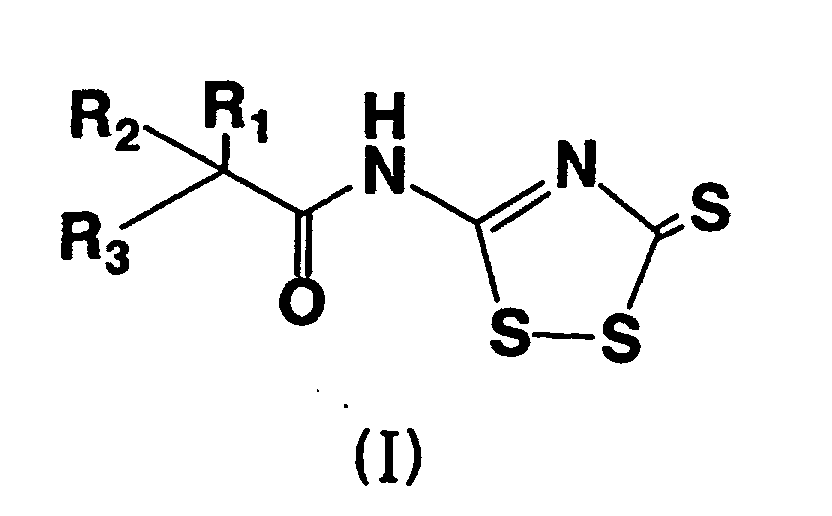
R2 is hydrogen atom, alkyl, aryl, arylalkyl, heteroaryl, heteroarylalkyl, hydroxy, alkoxy, H(CxH2xO)m- (wherein x is an integer of 1 to 3, and m is an integer of 2 to 5), arylalkoxy, hydroxyalkyl, acyloxyalkyl, alkoxyalkyl, (aryl or heteroaryl)-alkoxyalkyl, alkyl-(thio, sulfinyl or sulfonyl)-alkyl, (amino or alkylamino)-alkyl, acylaminoalkyl, amino, alkylamino, acylamino or Het-alkyl; and
R3 is a group expressed by the following formula (II), (III) or (IV):
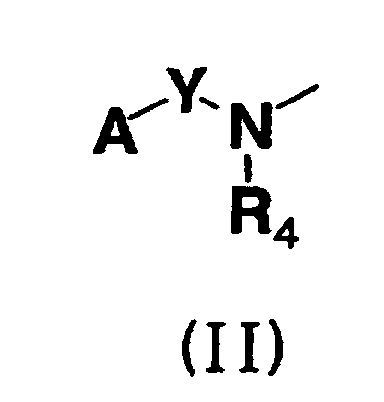
Y and Z1 are each -SO2- or -CO-;
R4 is hydrogen atom, alkyl, aryl, arylalkyl, heteroaryl, heteroarylalkyl, hydroxyalkyl, acyloxyalkyl, alkoxyalkyl, alkyl-(thio, sulfinyl or sulfonyl)-alkyl, (amino or alkylamino)-alkyl or acylaminoalkyl; and
wherein the group A-Y-N (R4)-CR1R2-CONH- may be a group expressed by the following formula (II'):
Z2, Z3 and Z4 are each-SO2-or -CO-;
n is 0 or 1; and
wherein when n=1, the compound (I) may be a compound expressed by the following formula (I'):
wherein when R3 is said group (II), A is aryl or aryl-Z1-aminoaryl, Y and Z1 are each -SO2-or -CO-, and R4 is hydrogen atom, arylalkyl or heteroarylalkyl, or the group A-Y-N(R4)-CR1R2-CONH- may be said group (II');
wherein when R3 is said group (III), R5, R6 and R7 are each hydrogen atom, alkyl, alkoxy, H(CxH2xO)m-, alkenyloxy, arylalkoxy, heteroarylalkoxy, aryl-Z2-amino, alkylamino, arylamino or heteroarylamino, and n is 0 or 1, wherein when n=1, the compound (I) may be said compound (I');
wherein when R3 is said group (IV), R8 is hydrogen atom or alkyl, R9 is a side chain of an α-amino acid, and R10 is hydrogen atom or alkyl.


| Test Material | MMPs Inhibition |
| Compound 1 | ○ |
| Compound 2 | ○ |
| Compound 5 | ○ |
| Compound 7 | ○ |
| Compound 8 | ○ |
| Compound 9 | ○ |
| Compound 12 | o ○ |

1H-NMR(CDCl3) δ 7.80(2H, d), 7.30-7.18(5H, m), 6.97(2H, d), 4.63(1H, t), 4.11(2H, d), 3.88(3H, s).
1H-NMR(CDCl3) δ 7.83(2H, d), 7.33-7.24(5H, m), 6.98(2H, d), 4.48(2H, s), 4.01(2H,q), 3.90(2H, s), 3.88(3H, s), 1.15(3H, t).
1H-NMR(CDCl3) δ 7.82(2H, d), 7.31-7.20(5H, m), 6.97(2H, d), 4.46(2H, s), 3.92(2H, s), 3.87(3H, s).
1H-NMR(DMSO-d6) δ 7.80(2H, d), 7.31-7.25(5H, m), 7.10(2H, d), 4.42(2H, s), 4.14(2H, s), 3.85(3H, s).

1H-NMR(CDCl3) δ 7.18(2H, d), 6.87(2H, d), 5.48(1H, t), 5.09(1H, t), 4.51(2H, d), 3.68(3H, s), 3.56(2H, s), 2.13-2.06(4H, m), 1.72(3H, s), 1.68(3H, s), 1.59(3H, s).
1H-NMR(CDCl3) δ 7.18(2H, d), 6.88(2H, d), 5.48(1H, t), 5.09(1H, t), 4.51(2H, d), 3.58(2H, s), 2.13-2.06(4H, m), 1.72(3H, s), 1.68(3H, s), 1.60(3H, s).
1H-NMR(CDCl3) δ 7.15(2H, d), 6.87(2H, d), 5.48(1H, t), 5.09(1H, t), 4.51(2H, d), 3.96(2H, s), 2.13-2.06(4H, m), 1.73(3H, s), 1.68(3H, s), 1.61 (3H, s).
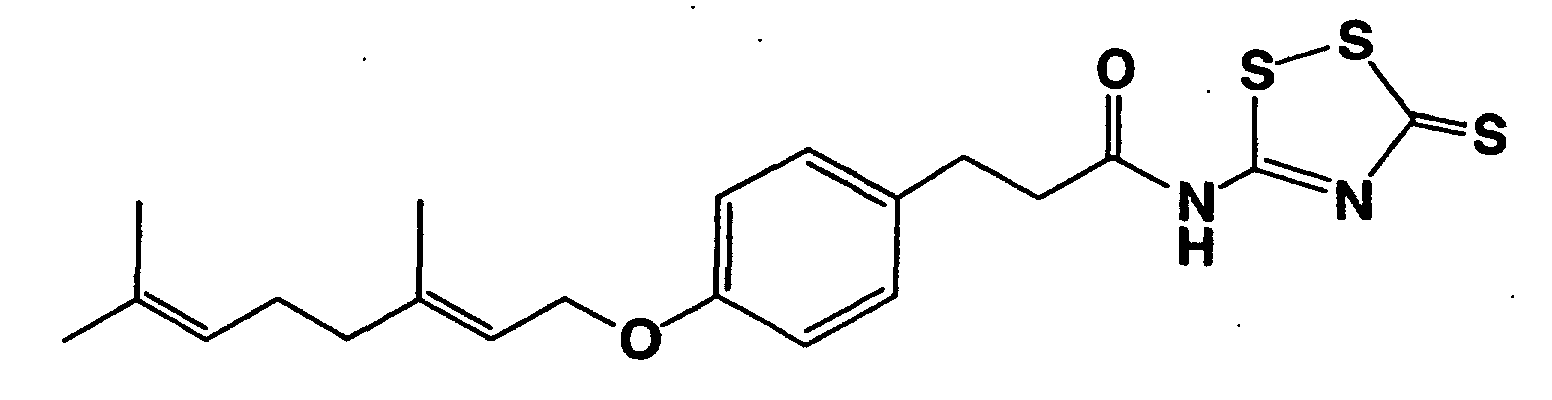
1H-NMR(CDCl3) δ 7.11(2H, d), 6.84(2H, d), 5.48(1H, t), 5.09(1H, t), 4.51(2H, d), 2.90(2H, t), 2.64(2H, t), 2.13-2.06(4H, m), 1.72(3H, s), 1.68(3H, s), 1.60(3H, s).
1H-NMR(CDCl3) δ 11.54(1H, brs), 7.07(2H, d), 6.80(2H, d), 5.47(1H, t), 5.08(1H, t), 4.48(2H, d), 3.05(2H,t), 2.95(2H, s), 2.13-2.06(4H, m), 1.72(3H, s), 1.67(3H, s), 1.60(3H, s).
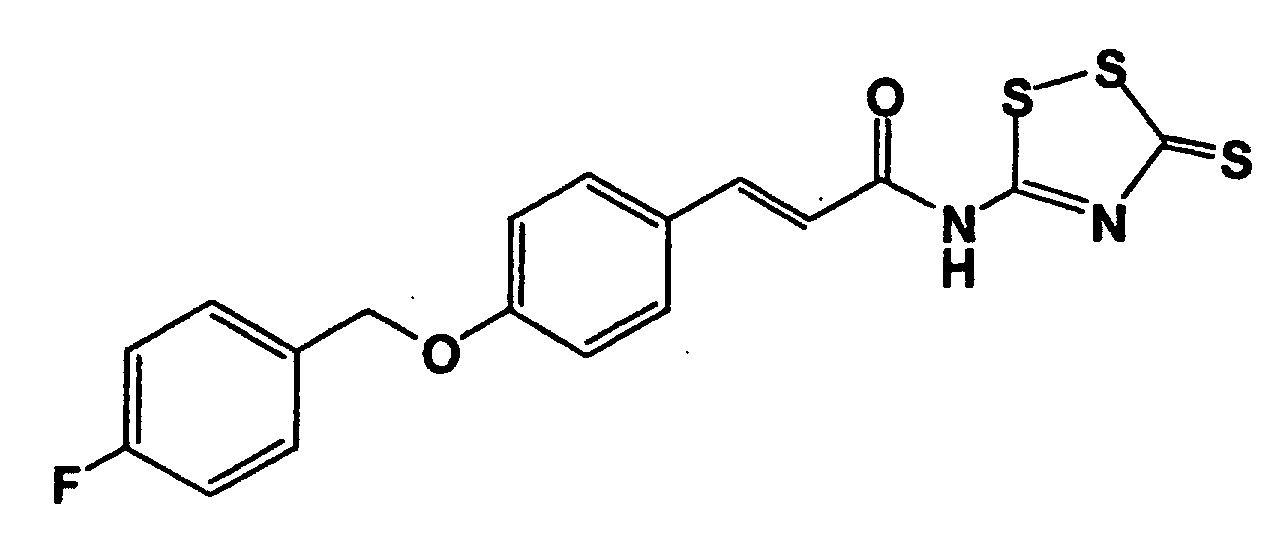
1H-NMR(DMSO-d6) δ 12.17(1H, brs), 7.62(2H, d), 7.56-7.48(3H, m), 7.24-7.18(2H, m), 7.04(2H, d), 6.38(2H, d), 5.14(2H,s).
1H-NMR(DMSO-d6) δ 7.86(1H, d), 7.67(2H, d), 7.54-7.49(2H, m), 7.24-7.20(2H, m), 7.10(2H, d), 6.73(1H, d), 5.17(2H,s).

1H-NMR(CDCl3) δ 7.39(2H, m), 7.20(2H, d), 7.06(2H, m), 6.92(2H, d), 5.00(2H, s), 3.59(2H,s).
1H-NMR(DMSO-d6) δ 7.47(2H, m), 7.25-7.17(4H, m), 6.97(2H, d), 5.06(2H, s), 3.83(2H,s).

1H-NMR(CDCl3) δ 7.18(2H, d), 6.85(2H, d), 3.93(2H, t), 3.57(2H, s), 1.80-1.73(2H, m), 1.46-1.28(10H, m), 0.89(3H, t).
1H-NMR(DMSO-d6) δ 13.86(1H, brs), 7.22(2H, d), 6.88(2H, d), 3.94(2H, t), 3.83(2H, s), 1.72-1.65(2H, m), 1.41-1.26(10H, m), 0.86(3H, t).
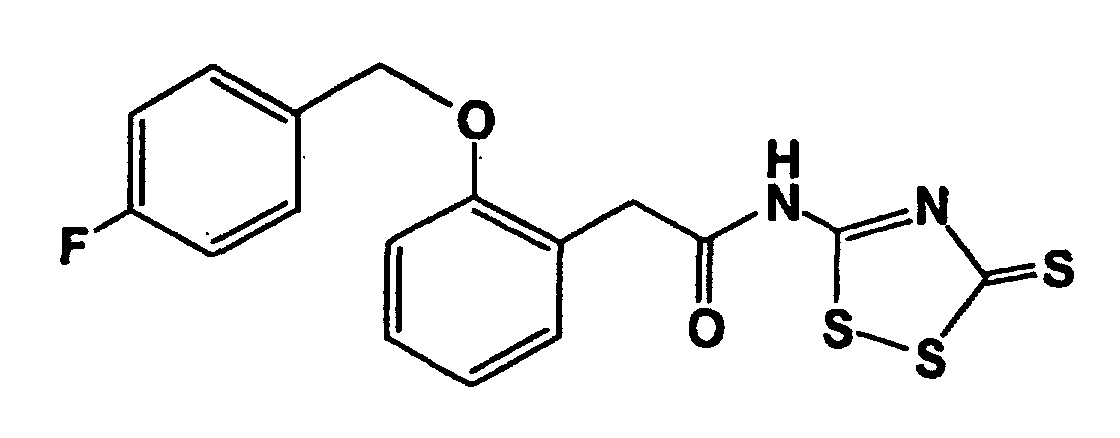
1H-NMR(CDCl3) δ 7.33(2H, m), 7.27-7.20(2H, m), 7.01-6.90(4H, m), 5.01(2H, s), 3.69(2H, s).
1H-NMR(CDCl3) δ 7.41-7.34(3H, m), 7.27-7.25(1H, m), 7.10-7.01(4H, m), 5.10(2H, s), 3.89(2H, s).
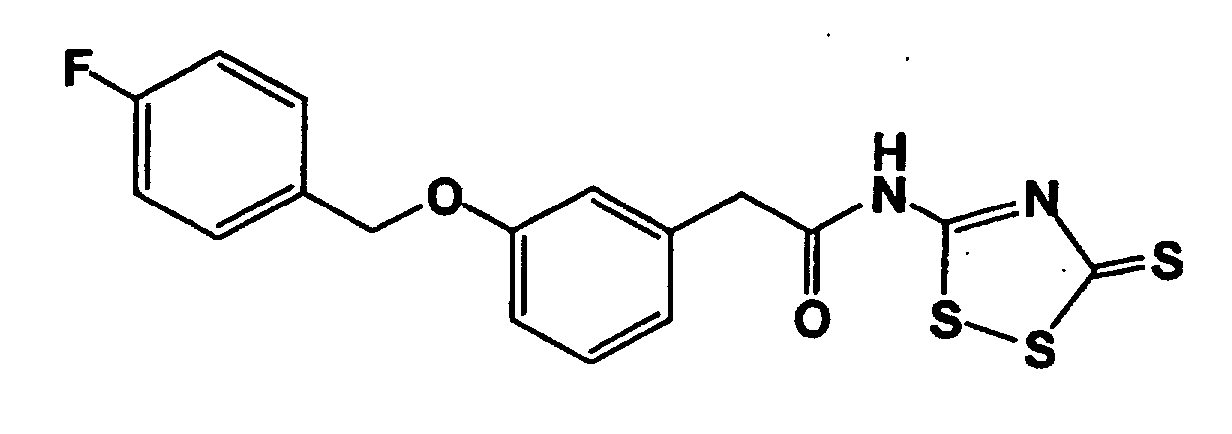
1H-NMR(CDCl3) δ 7.41-7.37(2H, m), 7.25(2H, t), 7.09-7.03(2H, m), 6.91-6.87(2H, m), 5.01(2H, s), 3.62(2H, s).
1H-NMR(DMSO-d6) δ 7.52-7.48(2H, m), 7.29-718(3H, m), 7.00-6.90(3H, m), 5.08(2H, s), 3.89(2H, s).

1H-NMR(CDCl3) δ 7.37(4H, dd), 7.06(4H, t), 6.54-6.50(3H, m), 4.97(4H, s), 3.58(2H,s).
1H-NMR(DMSO-d6) δ 7.46(4H, dd), 7.18(4H, t), 6.60(3H, m), 5.10(2H, s), 3.89(2H,s).
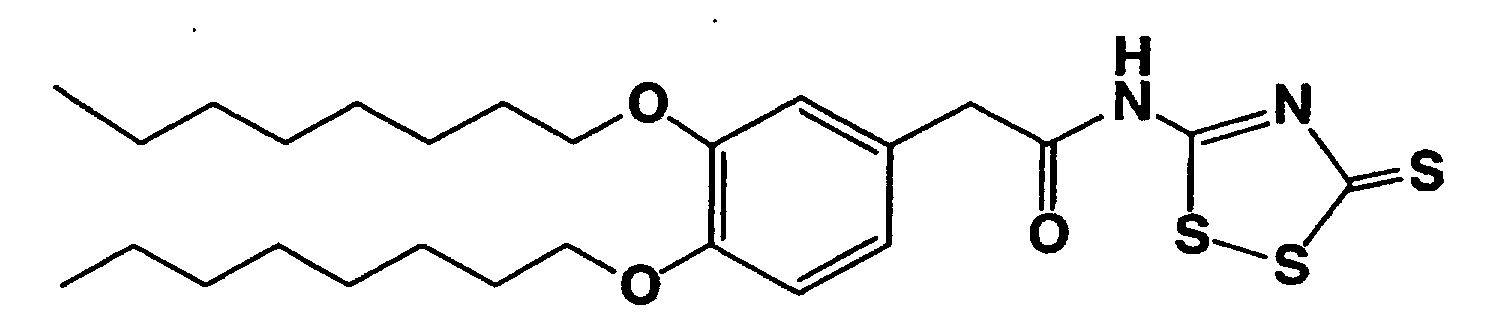
1H-NMR(CDCl3) δ 6.83-6.76(3H, m), 3.99-3.94(4H, m), 3.68(3H, s), 3.53(2H, s), 1.84-1.76(4H, m), 1.45-1.28(20H, m), 0.88(6H, t).
1H-NMR(CDCl3) δ 6.83-6.77(3H, m), 3.97(4H, m), 3.56(2H, s), 1.82-1.76(4H, m), 1.48-1.28(20H, m), 0.88(6H, t).
1H-NMR(DMSO-d6) δ 6.93-6.88(2H, m), 6.81(1H, dd), 3.92(4H, m), 3.80(2H, s), 1.72-1.64(4H, m), 1.42-1.26(20H, m), 0.86(6H, t).
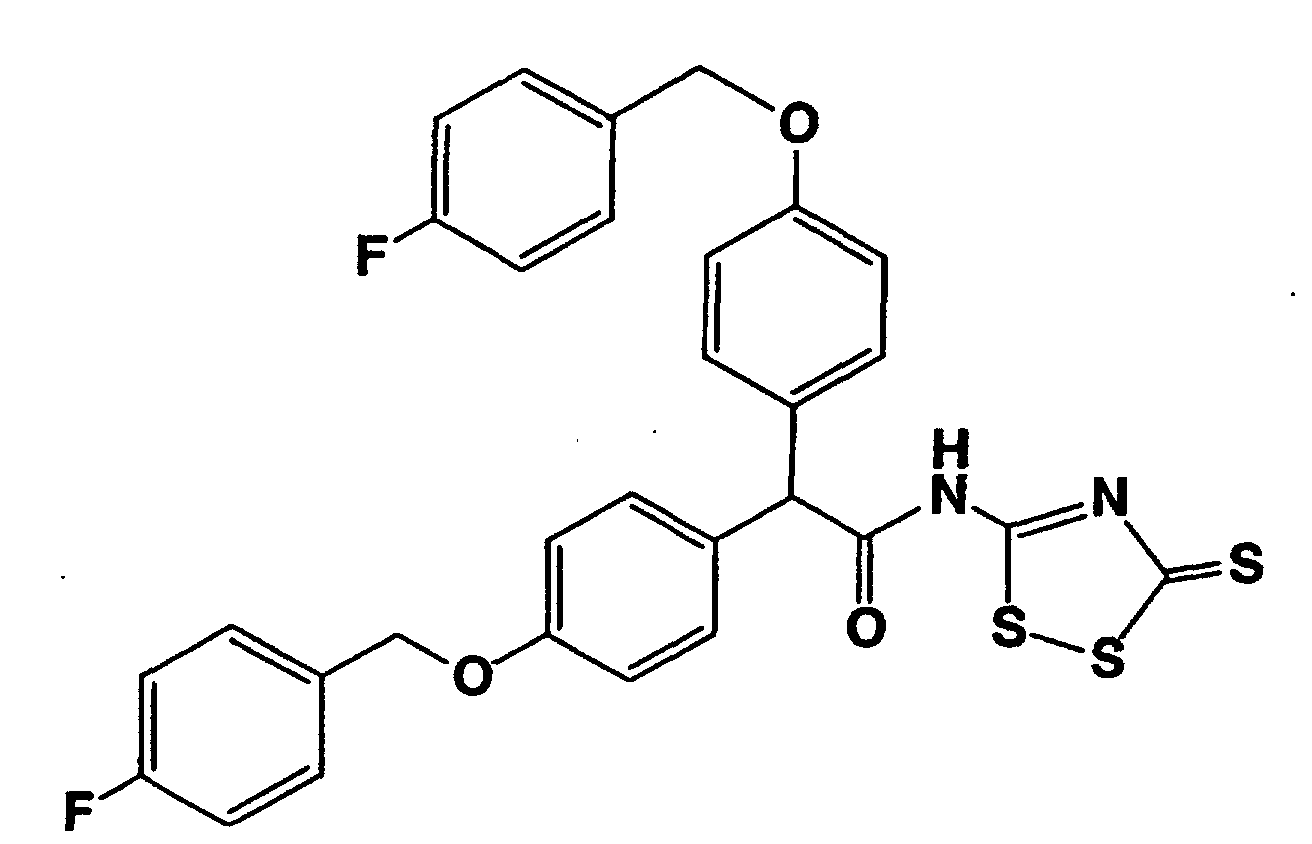
1H-NMR(CDCl3) δ 7.38(4H, dd), 7.23(4H, d), 7.06(4H, t), 6.91(4H, d), 4.99(4H, s), 4.94(1H, s).
1H-NMR(DMSO-d6) δ 7.47(4H, dd), 7.23-7.17(8H, m), 7.00(4H, d), 5.28(1H, s), 5.07(4H,s).

1H-NMR(CDCl3) δ 7.38(2H, dd), 7.24(2H, d), 7.06(2H, t), 6.90(2H, d), 4.99(2H, s), 3.09(1H, d), 2.28(1H, m), 1.06(3H, d), 0.71(3H, d).
1H-NMR(DMSO-d6) δ 7.38(2H, dd), 7.05(4H, m), 6.77(2H, d), 4.91(2H, s), 3.68(1H, d), 2.40(1H, m), 1.01(3H, d), 0.73(3H, d).

1H-NMR(CDCl3) δ 7.39(2H, dd), 7.19(2H, d), 7.06(2H, t), 6.91(2H, d), 5.00(2H, s), 3.68(3H, s), 3.56(2H, s).
Methyl 2-{4-[(4-fluorobenzyl)oxy]phenyl}-2-methylpropanoate:
1H-NMR(CDCl3) δ 7.39(2H, dd), 7.27(2H, d), 7.06(2H, t), 6.91 (2H, d), 5.00(2H, s), 3.64(3H, s), 1.56(6H, s).
Methyl 2- {4-[(4-fluorobenzyl)oxy]phenyl}propanoate:
1H-NMR(CDCl3) δ 7.39(2H, dd), 7.22(2H, d), 7.06(2H, t), 6.92(2H, d), 4.99(2H, s), 3.67(1H, q), 3.65(3H, s), 1.47(3H, d).
1H-NMR(CDCl3) δ 9.06(1H, brs), 7.42(2H, dd), 7.25(2H, d), 7.10(2H, t), 6.99(2H, d), 5.04(2H, s), 1.67(6H, s).

1H-NMR(DMSO-d6) δ 7.48(2H, dd), 7.26(2H, d), 7.20(2H, t), 7.00(2H, d), 5.07(2H, s), 3.99(1H, q), 1.45(3H,d).

1H-NMR(CDCl3) δ 7.39(2H, dd), 7.33(2H, d), 7.07(2H, t), 6.95(2H, d), 5.12(1H, d), 5.02(2H, s), 3.76(3H, s), 3.36(1H, d).
1H-NMR(CDCl3) δ 7.41-7.36(4H, m), 7.07(2H, t), 6.94(2H, d), 5.18(1H, s), 5.01(2H, s), 4.82(1H, d), 4.75(1H, d), 3.74-3.72(2H, m), 3.71(3H, s), 3.58-3.55(2H, m), 3.37(3H, s).
1H-NMR(CDCl3) δ 7.40-7.35(4H, m), 7.07(2H, t), 6.95(2H, d), 5.20(1H, s), 5.01(2H, s), 4.81(1H, d), 4.73(1H, d), 3.82-3.78(1H, m), 3.73-3.67(1H, m), 3.57-3.51(2H, m), 3.37(3H, s).
1H-NMR(CDCl3) δ 7.39(2H, dd), 7.32(2H, d), 7.07(2H, t), 6.99(2H, d), 5.40(1H, s), 5.03(2H, s), 4.80(1H, d), 4.72(1H, d), 3.74-3.70(2H, m), 3.58-3.55(2H, m), 3.40(3H, s).
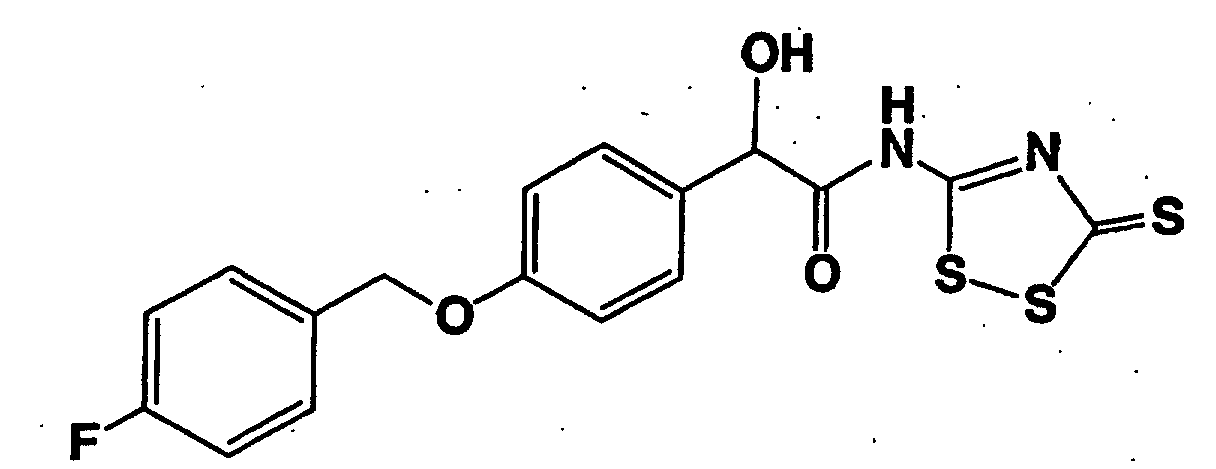
1H-NMR(DMSO-d6) δ 12.02(1H, brs), 7.49(2H, dd), 7.32(2H, d), 7.21(2H, t), 7.07(2H, d), 5.96(1H, s), 5.12(2H, s).
| Compounding Example 1 | Cream |
| (1)Stearic acid | 5.0 weight % |
| (2)Stearyl alcohol | 4.0 |
| (3)Isopropyl myristate | 18.0 |
| (4)Glyceryl monostearate | 3.0 |
| (5)Propylene glycol | 10.0 |
| (6)Compound 1 | 0.001 |
| (7)Vitamin E acetate | 0.05 |
| (8)Potassium hydroxide | 0.2 |
| (9)Sodium hydrogensulfite | 0.01 |
| (10)Phenoxyethanol | 0.02 |
| (11)Perfume | q.s. |
| (12)Ion-exchange water | Balance |
| Compounding Example 2 | Cream |
| (1)Stearic acid | 2.0 weight % |
| (2)Stearyl alcohol | 7.0 |
| (3)Hydrogenated lanolin | 2.0 |
| (4)Squalane | 5.0 |
| (5)2-Octyldodecyl alcohol | 6.0 |
| (6)POE(25)cetyl ether | 3.0 |
| (7)Glyceryl monostearate | 2.0 |
| (8)Propylene glycol | 5.0 |
| (9)Magnesium ascorbylphosphate 0.1 | |
| (10)Compound 2 | 0.001 |
| (11 )Sodium hydrogensulfite | 0.03 |
| (12)Ethylparaben | 0.3 |
| (13)Perfume | q.s. |
| (14)Ion-exchange water | Balance |
| Compounding Example 3 | Cream |
| (1)Solid paraffin | 5.0 weight % |
| (2)Beeswax | 10.0 |
| (3)Vaseline | 15.0 |
| (4)Liquid paraffin | 41.0 |
| (5)Glyceryl monostearate | 2.0 |
| (6)POE(20)sorbitan monolaurate | 2.0 |
| (7)Soap powder | 0.1 |
| (8)Borax | 0.2 |
| (9)Soybean lysolecithin | 0.1 |
| (10)Compound 3 | 0.01 |
| (11)Sodium hydrogensulfite | 0.03 |
| (12)Ethylparaben | 0.3 |
| (13)Perfume | q.s. |
| (14)Ion-exchange water | Balance |
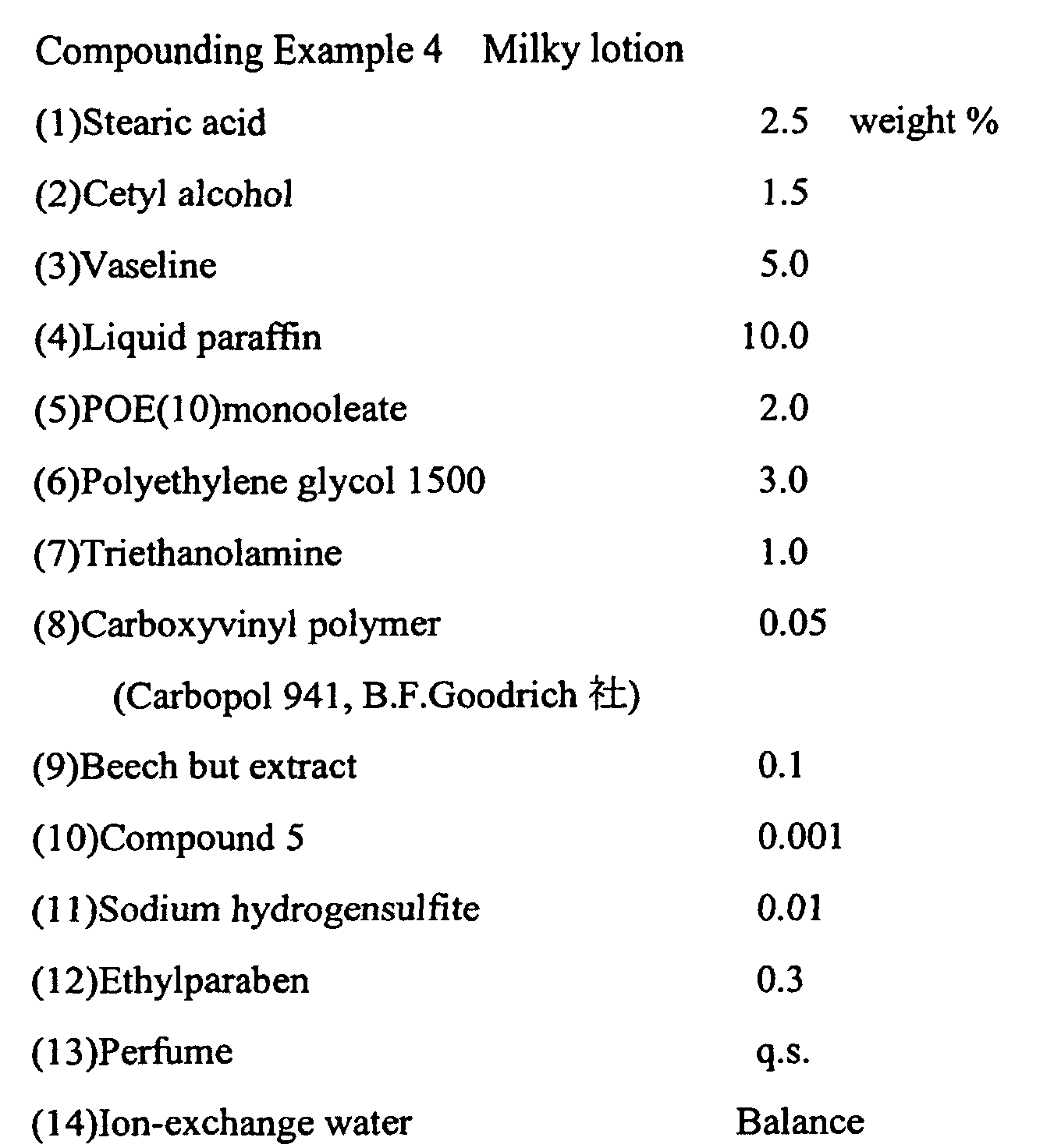
| Compounding Example 5 | Milky lotion |
| (1)Microcrystalline wax | 1.0 weight % |
| (2)Beeswax | 2.0 |
| (3)Lanolin | 20.0 |
| (4)Liquid paraffin | 10.0 |
| (5)Squalane | 5.0 |
| (6)Sorbitan sesquioleate | 4.0 |
| (7)POE(20)sorbitan monooleate | 1.0 |
| (8)Propylene glycol | 7.0 |
| (9)Gambir extract | 0.1 |
| (10)Compound 6 | 2.0 |
| (11)Sodium hydrogensulfite | 0.01 |
| (12)Ethylparaben | 0.3 |
| (13)Perfume | q.s. |
| (14)Ion-exchange water | Balance |


| Compounding Example 8 | Pack |
| Phase A: | |
| Dipropylene glycol | 5.0 weight % |
| POE(60)hardened caster oil | 5.0 |
| Phase B: | |
| Compound 1 | 0.01 |
| Olive oil | 5.0 |
| Tocopherol acetate | 0.2 |
| Ethylparaben | 0.2 |
| Perfume | 0.2 |
| Phase C: | |
| Sodium hydrogensulfite | 0.03 |
| Polyvinyl alcohol | 13.0 |
| (saponification degree 90, polymerization degree 2000) | |
| Ethanol | 7.0 |
| Soybean lysolecithin | 0.1 |
| Beech buds extract | 0.1 |
| Purified water | Balance |
| Compounding Example 9 | Solid foundation |
| (1)Talc | 43.0 weight % |
| (2)Kaolin | 15.0 |
| (3)Sericite | 10.0 |
| (4)Zinc oxide | 7.0 |
| (5)Titanium dioxide | 3.6 |
| (6)Yellow iron oxide | 2.9 |
| (7)Black iron oxide | 0.2 |
| (8)Squalane | 8.0 |
| (9)Isostearic acid | 4.0 |
| (10)POE sorbitan monooleate | 3.0 |
| (11)Isocetyl octanoate | 2.0 |
| (12)Vitamin E acetate | 0.05 |
| (13)Compound 2 | 1.0 |
| (14)Beech buds extract | 0.1 |
| (15)Antiseptics | q.s. |
| (16)Perfume | q.s. |
| Compounding Example 10 | Emulsion type foundation (Cream type) |
| Powder part: | |
| Titanium dioxide | 10.3 weight % |
| Sericite | 5.4 |
| Kaolin | 3.0 |
| Yellow iron oxide | 0.8 |
| Red iron oxide | 0.3 |
| Black iron oxide | 0.2 |
| Oil phase: | |
| Decamethylcyclopentasiloxane | 11.0 |
| Liquid paraffin | 4.4 |
| POE dimethylpolysiloxane | 4.0 |
| Compound 3 | 1.0 |
| Octyl methoxycinnamate | 0.5 |
| Vitamin E acetate | 0.05 |
| Water phase: | |
| Purified water | 51.0 |
| 1,3-Butylene glycol | 4.5 |
| Sorbitan sesquioleate | 3.0 |
| Gambir extract | 0.1 |
| Antiseptics | q.s. |
| Perfume | q.s. |








Claims (20)
- A dithiazole compound or a salt thereof expressed by the following formula (I):wherein R1 is hydrogen atom, alkyl, alkenyl, aryl, arylalkyl, heteroarylalkyl, heteroarylthioalkyl, hydroxy, alkoxyalkyl or Het-alkyl (wherein Het is 5-or 6-membered heterocyclic group containing at least one nitrogen atom, and said nitrogen atom is bonded to the alkyl group);

R2 is hydrogen atom, alkyl, aryl, arylalkyl, heteroaryl, heteroarylalkyl, hydroxy, alkoxy, H(CxH2xO)m- (wherein x is an integer of 1 to 3, and m is an integer of 2 to 5), arylalkoxy, hydroxyalkyl, acyloxyalkyl, alkoxyalkyl, (aryl or heteroaryl)-alkoxyalkyl, alkyl-(thio, sulfinyl or sulfonyl)-alkyl, (amino or alkylamino)-alkyl, acylaminoalkyl, amino, alkylamino, acylamino or Het-alkyl; and
R3 is a group expressed by the following formula (II), (III) or (IV):wherein A is alkyl, alkoxy, aryl, aryloxy, heteroaryl, aryl-Z1-aminoaryl or arylamino-Z1-aryl;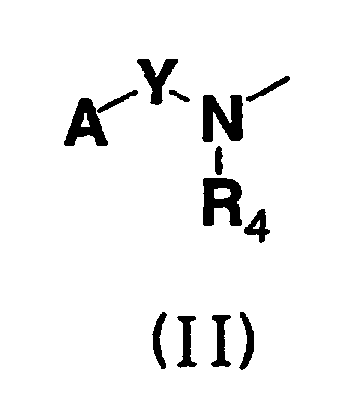
Y and Z1 are each -SO2- or -CO-;
R4 is hydrogen atom, alkyl, aryl, arylalkyl, heteroaryl, heteroarylalkyl, hydroxyalkyl, acyloxyalkyl, alkoxyalkyl, alkyl-(thio, sulfinyl or sulfonyl)-alkyl, (amino or alkylamino)-alkyl or acylaminoalkyl; and
wherein the group A-Y-N (R4)-CR1R2-CONH- may be a group expressed by the following formula (II'):wherein the ring B is 1,2,3,4-tetrahydroisoquinoline, piperidine, oxazolidine, thiazolidine, pyrrolidine, morpholine piperazine or thiomorpholine, and A, Y and R1 are as defined above;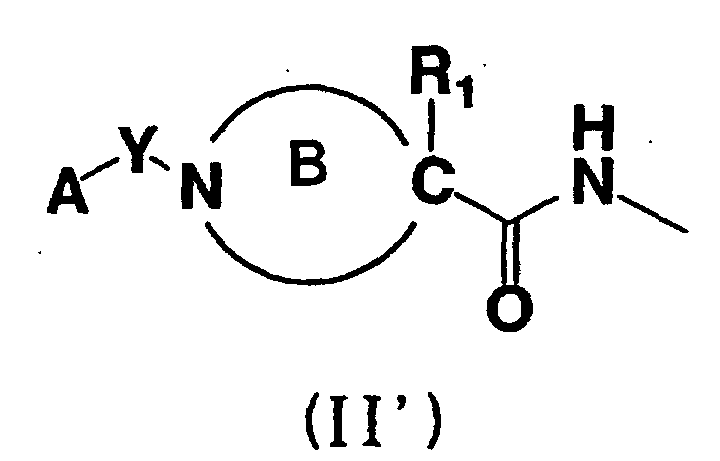 wherein R5, R6 and R7 are each hydrogen atom, alkyl, alkenyl, aryl, heteroaryl, arylalkyl, heteroarylalkyl, halogen atom, amino, alkylamino, (aryl or heteroaryl)-amino, (aryl or heteroaryl)-alkylamino, acylamino, (alkyl, aryl or heteroaryl)-Z2-amino, hydroxy, alkoxy, H(CxH2xO)m- (x is an integer of 1 to 3, and m is an integer of 2 to 5), alkenyloxy, aryloxy, heteroaryloxy, acyl, acyloxy, (aryl or heteroaryl)-alkoxy, (alkyl, aryl or heteroaryl)-Z3-oxy, mercapto, alkylthio, arylthio, heteroarylthio, acylthio, (aryl or heteroaryl)-alkylthio or (alkyl, aryl or heteroaryl)-Z4-thio;

Z2, Z3 and Z4 are each-SO2-or -CO-;
n is 0 or 1; and
wherein when n =1, the compound (I) may be a compound expressed by the following formula (I'):wherein R1, R5, R6 and R7 are as defined above;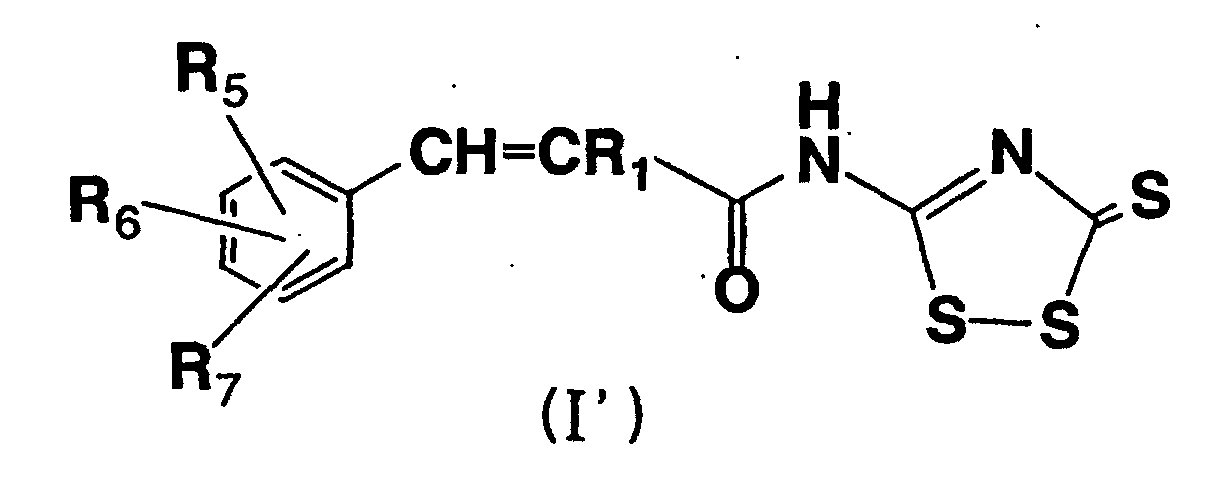 wherein R8 is hydrogen atom or alkyl; R9 is a side chain of an α-amino acid; and R10 is hydrogen atom, alkyl, alkenyl or arylalkyl.

- A dithiazole compound or a salt thereof according to claim 1, wherein R1 is hydrogen atom or alkyl; R2 is hydrogen atom, hydroxy, alkyl, alkoxy, H(CxH2xO)m-, aryl, arylalkoxy, arylalkyl, heteroarylalkyl, Het-alkyl or alkylamino; and R3 is any one of said groups (II) to (IV),
wherein when R3 is said group (II), A is aryl or aryl-Z1-aminoaryl, Y and Z1 are each -SO2-or -CO-, and R4 is hydrogen atom, arylalkyl or heteroarylalkyl, or the group A-Y-N(R4)-CR1R2-CONH- may be said group (II');
wherein when R3 is said group (III), R5, R6 and R7 are each hydrogen atom, alkyl, alkoxy, H(CxH2xO)m-, alkenyloxy, arylalkoxy, heteroarylalkoxy, aryl-Z2-amino, alkylamino, arylamino or heteroarylamino, and n is 0 or 1, wherein when n=1, the compound (I) may be said compound (I');
wherein when R3 is said group (IV), R8 is hydrogen atom or alkyl, R9 is a side chain of an α-amino acid, R10 is hydrogen atom or alkyl. - A dithiazole compound or a salt thereof according to claim 1 or 2, wherein R3 is said group (II).
- A dithiazole compound or a salt thereof according to claim 3, wherein R1 is hydrogen atom, and Y is -SO2-.
- A dithiazole compound or a salt thereof according to claim 3 or 4, wherein A is alkoxyphenyl or (alkylbenzoyl)aminophenyl.
- A dithiazole compound or a salt thereof according to any of claims 3 to 5, wherein R2 is hydrogen atom, alkyl, arylalkyl or heteroarylalkyl.
- A dithiazole compound or a salt thereof according to any of claims 3 to 5, wherein the group A-Y-N(R4)-CR1R2-CONH- is said group (II'), and the ring B is 1,2,3,4-tetrahydroisoquinoline, pyrrolidine or morpholine.
- A dithiazole compound or a salt thereof according to claim 1 or 2, wherein R3 is said group (III).
- A dithiazole compound or a salt thereof according to claim 8, wherein R1 is hydrogen atom or alkyl, and n is 0.
- A dithiazole compound or a salt thereof according to claim 8 or 9, wherein R2 is hydrogen atom, hydroxy, alkyl, H(CxH2xO)m-, aryl, arylalkoxy or alkylamino.
- A dithiazole compound or a salt thereof according to claim 10, wherein R5 is hydrogen atom, R6 is hydrogen atom, alkoxy or arylalkoxy, and R7 is alkoxy, alkenyloxy or arylalkoxy.
- A dithiazole compound or a salt thereof according to claim 8, which is expressed by said formula (I'), wherein R1, R5 and R6 are each hydrogen atom and R7 is arylalkoxy.
- A dithiazole compound or a salt thereof according to claim 1 or 2, wherein R3 is said group (IV).
- A dithiazole compound or a salt thereof according to claim 13, wherein R1 is hydrogen atom, R2 is hydrogen atom or Het-alkyl, R8 is alkyl, R9 is alkyl or arylalkyl, and R10 is alkyl.
- A matrix metalloprotease inhibitor comprising, as an active ingredient, a dithiazole compound or a pharmacologically acceptable salt thereof according to any of claims 1 to 14.
- A cosmetic composition comprising, as an active ingredient, a dithiazole compound or a pharmacologically acceptable salt thereof according to any of claims 1 to 14.
- A pharmaceutical composition comprising, as an active ingredient, a dithiazole compound or a pharmacologically acceptable salt thereof according to any of claims 1 to 14.
- A skin external composition comprising, as an active ingredient, a dithiazole compound or a pharmacologically acceptable salt thereof according to any of claims 1 to 14.
- A method for preventing or treating diseases related to metalloprotease activity, which comprises administering an effective amount of a dithiazole compound or a pharmacologically acceptable salt thereof according to any of claims 1 to 14 to man or mammals.
- A method for preventing or treating skin symptoms related to skin-aging, which comprises applying an effective amount of a dithiazole compound or a pharmacologically acceptable salt thereof according to any of claims 1 to 14 on a human skin.
Applications Claiming Priority (3)
| Application Number | Priority Date | Filing Date | Title |
|---|---|---|---|
| JP2001258066A JP4825375B2 (en) | 2001-08-28 | 2001-08-28 | Dithiazole compound, matrix metalloprotease activity inhibitor, topical skin preparation |
| JP2001258066 | 2001-08-28 | ||
| PCT/JP2002/008649 WO2003020711A1 (en) | 2001-08-28 | 2002-08-28 | Dithiazole compounds, matrix metalloprotease inhibitors and external preparations for the skin |
Publications (3)
| Publication Number | Publication Date |
|---|---|
| EP1422224A1 true EP1422224A1 (en) | 2004-05-26 |
| EP1422224A4 EP1422224A4 (en) | 2005-11-09 |
| EP1422224B1 EP1422224B1 (en) | 2007-12-19 |
Family
ID=19085645
Family Applications (1)
| Application Number | Title | Priority Date | Filing Date |
|---|---|---|---|
| EP02772819A Expired - Lifetime EP1422224B1 (en) | 2001-08-28 | 2002-08-28 | Dithiazole compounds, matrix metalloprotease inhibitors and external preparations for the skin |
Country Status (7)
| Country | Link |
|---|---|
| US (1) | US7348017B2 (en) |
| EP (1) | EP1422224B1 (en) |
| JP (1) | JP4825375B2 (en) |
| KR (1) | KR100911092B1 (en) |
| CN (1) | CN1319957C (en) |
| DE (1) | DE60224203T2 (en) |
| WO (1) | WO2003020711A1 (en) |
Cited By (3)
| Publication number | Priority date | Publication date | Assignee | Title |
|---|---|---|---|---|
| WO2007140941A3 (en) * | 2006-06-02 | 2008-02-14 | Dsm Ip Assets Bv | Process for the preparation of a hydroxy-aromatic resin; hydroxy-aromatic resin, and modification thereof |
| EP1807076A4 (en) * | 2004-10-29 | 2010-06-02 | Merck Sharp & Dohme | N- (PYRIDIN-3-YL) -2-PHENYLBUTANAMIDES AS MODULATORS OF THE ANDROGEN RECEPTOR |
| US7973052B2 (en) | 2003-04-15 | 2011-07-05 | Wellstat Therapeutics Corporation | Compounds for the treatment of metabolic disorders |
Families Citing this family (6)
| Publication number | Priority date | Publication date | Assignee | Title |
|---|---|---|---|---|
| ITRE20010042A1 (en) * | 2001-04-24 | 2002-10-24 | Corghi Spa | LIFTING DEVICE FOR TIRE CHANGING MACHINES |
| EP2540734B1 (en) * | 2004-04-05 | 2016-03-30 | Alnylam Pharmaceuticals, Inc. | Process and reagents for oligonucleotide synthesis and purification |
| WO2006001463A1 (en) * | 2004-06-23 | 2006-01-05 | Ono Pharmaceutical Co., Ltd. | Compound having s1p receptor binding potency and use thereof |
| CA2621406A1 (en) * | 2005-09-07 | 2007-03-15 | Plexxikon, Inc. | Pparactive compounds |
| KR101057485B1 (en) | 2008-08-04 | 2011-08-17 | 서울대학교산학협력단 | Pharmaceutical composition for the prevention and treatment of diseases caused by L-X-alpha overexpression containing 1,2-dithiothion derivative |
| US8546566B2 (en) | 2010-10-12 | 2013-10-01 | Boehringer Ingelheim International Gmbh | Process for manufacturing dihydropteridinones and intermediates thereof |
Family Cites Families (9)
| Publication number | Priority date | Publication date | Assignee | Title |
|---|---|---|---|---|
| US3753908A (en) | 1971-08-30 | 1973-08-21 | Chevron Res | Oxidation inhibited lubricating oil compositions with extreme pressure properties |
| DE2228364C3 (en) * | 1972-06-10 | 1982-03-18 | Bergwerksverband Gmbh, 4300 Essen | 3-acylamino-1,2,4-dithiazoline-5-thione (acylxanthan hydrogen). |
| JP3297053B2 (en) * | 1994-01-20 | 2002-07-02 | ブリテッシュ バイオテック ファーマシューティカルズ リミテッド | Metalloproteinase inhibitors |
| US5677282A (en) * | 1995-06-07 | 1997-10-14 | Proscript, Inc. | Amino acid amides of 1,3,4-thiadiazoles as matrix metalloproteinase |
| WO1997040031A1 (en) * | 1996-04-23 | 1997-10-30 | Pharmacia & Upjohn Company | Thiadiazolyl(thio)ureas useful as matrix metalloprotease inhibitors |
| PT1021424E (en) * | 1996-06-21 | 2003-06-30 | Upjohn Co | TIADIAZOLO AMIDES AS MATRIX METALOPROTEINASE INHIBITORS |
| BR9713465A (en) | 1996-08-28 | 2000-03-28 | Procter & Gamble | Cytically substituted amine metallotprotease inhibitors |
| US6096881A (en) * | 1997-05-30 | 2000-08-01 | Hybridon, Inc. | Sulfur transfer reagents for oligonucleotide synthesis |
| CA2315720A1 (en) * | 1997-12-22 | 1999-07-01 | Bayer Corporation | Inhibition of p38 kinase activity using substituted heterocyclic ureas |
-
2001
- 2001-08-28 JP JP2001258066A patent/JP4825375B2/en not_active Expired - Fee Related
-
2002
- 2002-08-28 WO PCT/JP2002/008649 patent/WO2003020711A1/en not_active Ceased
- 2002-08-28 KR KR1020047001888A patent/KR100911092B1/en not_active Expired - Fee Related
- 2002-08-28 EP EP02772819A patent/EP1422224B1/en not_active Expired - Lifetime
- 2002-08-28 US US10/487,411 patent/US7348017B2/en not_active Expired - Fee Related
- 2002-08-28 CN CNB028171039A patent/CN1319957C/en not_active Expired - Fee Related
- 2002-08-28 DE DE60224203T patent/DE60224203T2/en not_active Expired - Lifetime
Non-Patent Citations (2)
| Title |
|---|
| No further relevant documents disclosed * |
| See also references of WO03020711A1 * |
Cited By (3)
| Publication number | Priority date | Publication date | Assignee | Title |
|---|---|---|---|---|
| US7973052B2 (en) | 2003-04-15 | 2011-07-05 | Wellstat Therapeutics Corporation | Compounds for the treatment of metabolic disorders |
| EP1807076A4 (en) * | 2004-10-29 | 2010-06-02 | Merck Sharp & Dohme | N- (PYRIDIN-3-YL) -2-PHENYLBUTANAMIDES AS MODULATORS OF THE ANDROGEN RECEPTOR |
| WO2007140941A3 (en) * | 2006-06-02 | 2008-02-14 | Dsm Ip Assets Bv | Process for the preparation of a hydroxy-aromatic resin; hydroxy-aromatic resin, and modification thereof |
Also Published As
| Publication number | Publication date |
|---|---|
| KR100911092B1 (en) | 2009-08-06 |
| US20040236111A1 (en) | 2004-11-25 |
| CN1549809A (en) | 2004-11-24 |
| EP1422224A4 (en) | 2005-11-09 |
| EP1422224B1 (en) | 2007-12-19 |
| WO2003020711A1 (en) | 2003-03-13 |
| KR20040032149A (en) | 2004-04-14 |
| JP2003064065A (en) | 2003-03-05 |
| US7348017B2 (en) | 2008-03-25 |
| DE60224203T2 (en) | 2008-12-04 |
| DE60224203D1 (en) | 2008-01-31 |
| CN1319957C (en) | 2007-06-06 |
| JP4825375B2 (en) | 2011-11-30 |
Similar Documents
| Publication | Publication Date | Title |
|---|---|---|
| JPWO2009099195A1 (en) | Whitening agent and external preparation for skin | |
| CN104039767A (en) | N-(pyrid-4-yl)amides and N-(pyrimidin-4-yl)amides and their pharmaceutical and cosmetic use | |
| EP1422224B1 (en) | Dithiazole compounds, matrix metalloprotease inhibitors and external preparations for the skin | |
| US9421157B2 (en) | Use of C-glycoside derivatives as pro-desquamating active agents | |
| JP2001507342A (en) | Use of matrix metalloproteinase inhibitors to treat neurological disorders and promote wound healing | |
| US20130022644A1 (en) | Novel n-phenylacetamide derivatives, which inhibit the enzyme soat-1, and pharmaceutical and cosmetic compositions containing them | |
| JP5431635B2 (en) | Use of urea compounds to promote desquamation | |
| JP2010538045A (en) | N-phenylacetamide derivatives, inhibitors of the enzyme SOAT-1, and pharmaceutical and cosmetic compositions containing them | |
| JP2010538046A (en) | Derivatives of N-phenylacetamide as inhibitors of the enzyme SOAT-1 for pharmaceutical and cosmetic use | |
| JP5666170B2 (en) | Composition | |
| JP2011241165A5 (en) | ||
| US7176217B2 (en) | Azabicyclo compound matrix metalloprotease inhibitor and skin preparation | |
| JP2001519826A (en) | Metalloproteinase inhibitor | |
| AU2019229433A1 (en) | Synthesis of cyclohexane carboxamide derivatives useful as sensates in consumer products | |
| US8420681B2 (en) | Dioxo-imidazolidine derivatives, which inhibit the enzyme SOAT-1, and pharmaceutical and cosmetic compositions containing them | |
| JP4160357B2 (en) | Azabicyclo compounds, matrix metalloprotease inhibitors, skin external preparations | |
| JP2008528539A (en) | Use of 3-sulfanylpropanamides for promoting hair and eyelash growth and / or for limiting their loss and / or depigmentation | |
| JP2012518679A (en) | Novel dioxo-imidazolidine derivatives that inhibit the enzyme SOAT-1 and pharmaceutical and cosmetic compositions containing them | |
| JP2012518678A (en) | Novel dioxo-imidazolidine derivatives that inhibit the enzyme SOAT-1 and pharmaceutical and cosmetic compositions containing them | |
| JP5911208B2 (en) | Skin preparation | |
| JP5963402B2 (en) | Skin preparation | |
| JP2013032299A5 (en) | ||
| JP2013032299A (en) | External preparation for skin | |
| JP2013001657A (en) | Skin care preparation | |
| JP2007008939A (en) | Use of benzyl-1,3-thiazolidine-2,4-dione compounds for promoting and / or inducing and / or stimulating the coloration of keratin materials and / or for limiting decolorization and / or whitening of keratin materials |
Legal Events
| Date | Code | Title | Description |
|---|---|---|---|
| PUAI | Public reference made under article 153(3) epc to a published international application that has entered the european phase |
Free format text: ORIGINAL CODE: 0009012 |
|
| 17P | Request for examination filed |
Effective date: 20040312 |
|
| AK | Designated contracting states |
Kind code of ref document: A1 Designated state(s): AT BE BG CH CY CZ DE DK EE ES FI FR GB GR IE IT LI LU MC NL PT SE SK TR |
|
| A4 | Supplementary search report drawn up and despatched |
Effective date: 20050923 |
|
| RIC1 | Information provided on ipc code assigned before grant |
Ipc: 7A 61K 7/48 B Ipc: 7C 07D 417/12 B Ipc: 7C 07D 285/01 A Ipc: 7A 61K 31/5377 B Ipc: 7A 61K 31/4439 B Ipc: 7A 61K 31/4709 B Ipc: 7C 07D 417/14 B Ipc: 7A 61K 7/00 B Ipc: 7C 07D 285/00 B Ipc: 7A 61P 3/00 B Ipc: 7A 61K 31/41 B Ipc: 7A 61P 1/04 B |
|
| 17Q | First examination report despatched |
Effective date: 20060323 |
|
| GRAP | Despatch of communication of intention to grant a patent |
Free format text: ORIGINAL CODE: EPIDOSNIGR1 |
|
| RIC1 | Information provided on ipc code assigned before grant |
Ipc: C07D 285/00 20060101ALI20070709BHEP Ipc: A61K 31/41 20060101ALI20070709BHEP Ipc: A61K 31/4709 20060101ALI20070709BHEP Ipc: A61P 1/04 20060101ALI20070709BHEP Ipc: C07D 417/12 20060101ALI20070709BHEP Ipc: C07D 285/01 20060101AFI20070709BHEP Ipc: A61K 31/5377 20060101ALI20070709BHEP Ipc: A61P 3/00 20060101ALI20070709BHEP Ipc: C07D 417/14 20060101ALI20070709BHEP Ipc: A61K 31/4439 20060101ALI20070709BHEP |
|
| GRAS | Grant fee paid |
Free format text: ORIGINAL CODE: EPIDOSNIGR3 |
|
| GRAA | (expected) grant |
Free format text: ORIGINAL CODE: 0009210 |
|
| AK | Designated contracting states |
Kind code of ref document: B1 Designated state(s): DE FR GB |
|
| REG | Reference to a national code |
Ref country code: GB Ref legal event code: FG4D |
|
| REF | Corresponds to: |
Ref document number: 60224203 Country of ref document: DE Date of ref document: 20080131 Kind code of ref document: P |
|
| ET | Fr: translation filed | ||
| PLBE | No opposition filed within time limit |
Free format text: ORIGINAL CODE: 0009261 |
|
| STAA | Information on the status of an ep patent application or granted ep patent |
Free format text: STATUS: NO OPPOSITION FILED WITHIN TIME LIMIT |
|
| 26N | No opposition filed |
Effective date: 20080922 |
|
| PGFP | Annual fee paid to national office [announced via postgrant information from national office to epo] |
Ref country code: GB Payment date: 20120821 Year of fee payment: 11 |
|
| PGFP | Annual fee paid to national office [announced via postgrant information from national office to epo] |
Ref country code: DE Payment date: 20120822 Year of fee payment: 11 Ref country code: FR Payment date: 20120906 Year of fee payment: 11 |
|
| GBPC | Gb: european patent ceased through non-payment of renewal fee |
Effective date: 20130828 |
|
| PG25 | Lapsed in a contracting state [announced via postgrant information from national office to epo] |
Ref country code: DE Free format text: LAPSE BECAUSE OF NON-PAYMENT OF DUE FEES Effective date: 20140301 |
|
| REG | Reference to a national code |
Ref country code: FR Ref legal event code: ST Effective date: 20140430 |
|
| REG | Reference to a national code |
Ref country code: DE Ref legal event code: R119 Ref document number: 60224203 Country of ref document: DE Effective date: 20140301 |
|
| PG25 | Lapsed in a contracting state [announced via postgrant information from national office to epo] |
Ref country code: GB Free format text: LAPSE BECAUSE OF NON-PAYMENT OF DUE FEES Effective date: 20130828 |
|
| PG25 | Lapsed in a contracting state [announced via postgrant information from national office to epo] |
Ref country code: FR Free format text: LAPSE BECAUSE OF NON-PAYMENT OF DUE FEES Effective date: 20130902 |