EP1421953A1 - Medicinal compositions containing angiotensin ii receptor antagonist - Google Patents
Medicinal compositions containing angiotensin ii receptor antagonist Download PDFInfo
- Publication number
- EP1421953A1 EP1421953A1 EP02762874A EP02762874A EP1421953A1 EP 1421953 A1 EP1421953 A1 EP 1421953A1 EP 02762874 A EP02762874 A EP 02762874A EP 02762874 A EP02762874 A EP 02762874A EP 1421953 A1 EP1421953 A1 EP 1421953A1
- Authority
- EP
- European Patent Office
- Prior art keywords
- pharmaceutical composition
- salt
- angiotensin
- receptor antagonist
- pharmacologically acceptable
- Prior art date
- Legal status (The legal status is an assumption and is not a legal conclusion. Google has not performed a legal analysis and makes no representation as to the accuracy of the status listed.)
- Withdrawn
Links
Classifications
-
- A—HUMAN NECESSITIES
- A61—MEDICAL OR VETERINARY SCIENCE; HYGIENE
- A61K—PREPARATIONS FOR MEDICAL, DENTAL OR TOILETRY PURPOSES
- A61K31/00—Medicinal preparations containing organic active ingredients
- A61K31/33—Heterocyclic compounds
- A61K31/395—Heterocyclic compounds having nitrogen as a ring hetero atom, e.g. guanethidine or rifamycins
- A61K31/41—Heterocyclic compounds having nitrogen as a ring hetero atom, e.g. guanethidine or rifamycins having five-membered rings with two or more ring hetero atoms, at least one of which being nitrogen, e.g. tetrazole
-
- A—HUMAN NECESSITIES
- A61—MEDICAL OR VETERINARY SCIENCE; HYGIENE
- A61K—PREPARATIONS FOR MEDICAL, DENTAL OR TOILETRY PURPOSES
- A61K45/00—Medicinal preparations containing active ingredients not provided for in groups A61K31/00 - A61K41/00
- A61K45/06—Mixtures of active ingredients without chemical characterisation, e.g. antiphlogistics and cardiaca
-
- A—HUMAN NECESSITIES
- A61—MEDICAL OR VETERINARY SCIENCE; HYGIENE
- A61P—SPECIFIC THERAPEUTIC ACTIVITY OF CHEMICAL COMPOUNDS OR MEDICINAL PREPARATIONS
- A61P9/00—Drugs for disorders of the cardiovascular system
-
- A—HUMAN NECESSITIES
- A61—MEDICAL OR VETERINARY SCIENCE; HYGIENE
- A61P—SPECIFIC THERAPEUTIC ACTIVITY OF CHEMICAL COMPOUNDS OR MEDICINAL PREPARATIONS
- A61P9/00—Drugs for disorders of the cardiovascular system
- A61P9/10—Drugs for disorders of the cardiovascular system for treating ischaemic or atherosclerotic diseases, e.g. antianginal drugs, coronary vasodilators, drugs for myocardial infarction, retinopathy, cerebrovascula insufficiency, renal arteriosclerosis
Definitions
- the present invention relates to a pharmaceutical composition for administering simultaneously, separately or sequentially an angiotensin II receptor antagonist and an acylcoenzyme A: cholesterol acyltransferase (hereinafter refered as ACAT) inhibitor.
- ACAT cholesterol acyltransferase
- the present invention also relates to a method for the prevention or treatment of arteriosclerosis or diseases resulting from arteriosclerosis such as ischemic heart disease, ischemic brain disease, peripheral circulatory failure, and the like, which comprises administering simultaneously, separately or sequentially a pharmacologically effective amount of an angiotensin II receptor antagonist and an ACAT inhibitor to a warm-blooded animal (particularly a human).
- arteriosclerosis may be the primary causes of ischemic heart diseases (myocardial infarction, unstable angina, and ischemic sudden death), ischemic brain disorders (cerebral infarction, cerebral apoplexy, and so forth), peripheral circulatory failure, and the like.
- ischemic heart diseases myocardial infarction, unstable angina, and ischemic sudden death
- ischemic brain disorders Cerebral infarction, cerebral apoplexy, and so forth
- peripheral circulatory failure and the like.
- risk factors for arteriosclerosis include hypertension, and abnormalities in carbohydrate metabolism based on insulin resistance. These risk factors are considered to enhance complications of the above etiological diseases and have been proposed as syndrome X [ Diabetes , 37 , 1595 (1988)].
- the present inventors have eagerly studied a pharmaceutical composition comprising an angiotensin II receptor antagonist and an ACAT inhibitor. As a result, it has been found that the pharmaceutical composition comprising an angiotensin II receptor antagonist and an ACAT inhibitor has a more prominent suppressive action against progression of arteriosclerosis with low toxicity, when both active ingredients are administered in combination (simultaneously, separately or sequentially), rather than when either one is administered alone. Furthermore, the present inventors have found that this combination therapy is useful as a preventive or therapeutic agent (particularly a therapeutic agent) for warm-blooded animals (particularly humans) with diseases resulting from arteriosclerosis such as ischemic heart disease, ischemic brain diseases, and peripheral circulatory failure, and thus have completed the present invention.
- the present invention provides a pharmaceutical composition (particularly a pharmaceutical composition for the prevention or treatment of arteriosclerosis or arteriosclerosis-derived diseases such as ischemic heart disease, ischemic brain disease, peripheral circulatory failure, and the like) for administering simultaneously, separately or sequentially an angiotensin II receptor antagonist and an ACAT inhibitor.
- the present invention also provides a method for the prevention or treatment of arteriosclerosis or arteriosclerosis-derived diseases such as ischemic heart disease, ischemic brain disease, peripheral circulatory failure, and the like, which comprises administering simultaneously, separately or sequentially a pharmacologically effective amount of an angiotensin II receptor antagonist and an ACAT inhibitor to a warm-blooded animal (particularly a human).
- arteriosclerosis or arteriosclerosis-derived diseases such as ischemic heart disease, ischemic brain disease, peripheral circulatory failure, and the like, which comprises administering simultaneously, separately or sequentially a pharmacologically effective amount of an angiotensin II receptor antagonist and an ACAT inhibitor to a warm-blooded animal (particularly a human).
- the active ingredients of the pharmaceutical composition of the present invention are an angiotensin II receptor antagonist and an ACAT inhibitor.
- angiotensin II receptor antagonist that is one of the active ingredients of the pharmaceutical composition of the present invention blocks vasoconstrictive action of angiotensin II by binding to angiotensin II receptors located on the cell surface membrane, and was originally developed as an antihypertensive agent.
- Such an angiotensin II receptor antagonist includes, for example, a biphenyl tetrazole compound or biphenylcarboxylic acid derivative such as:
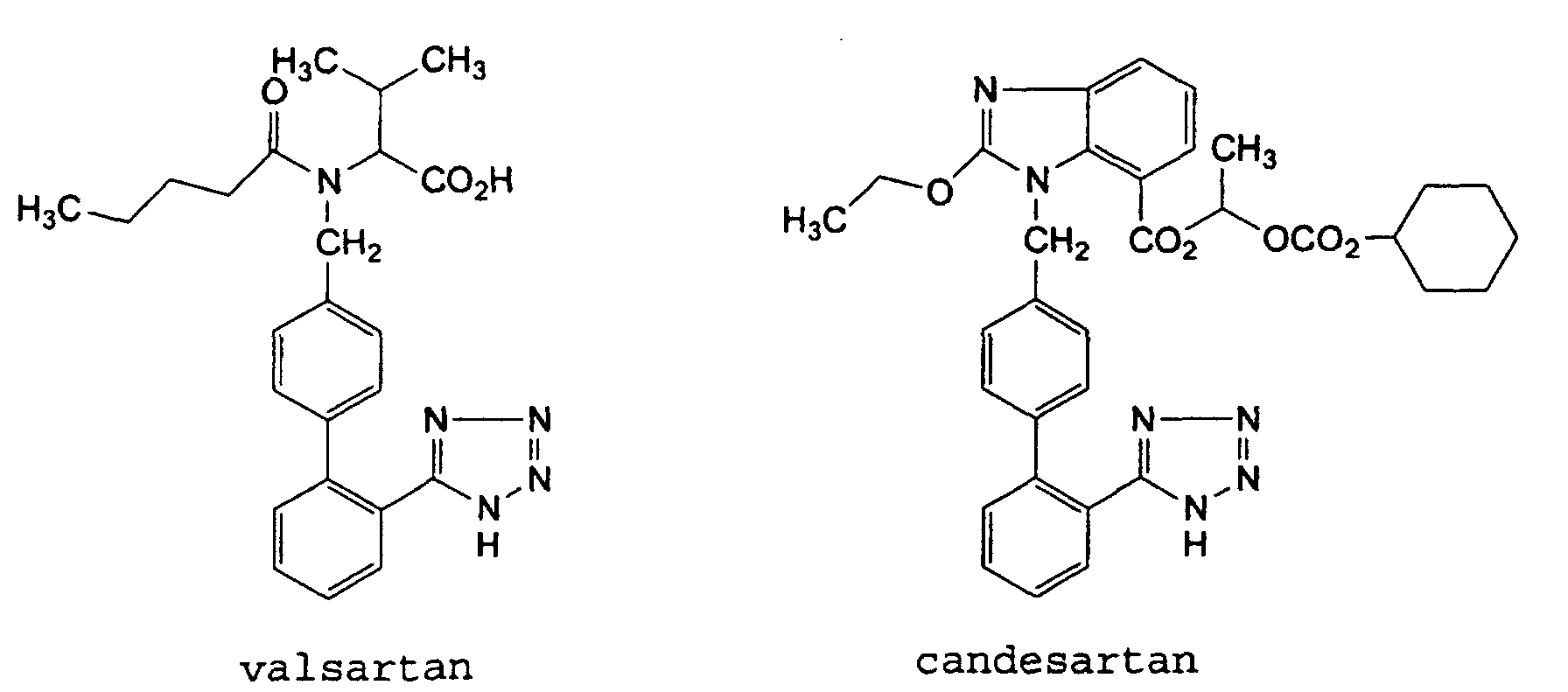
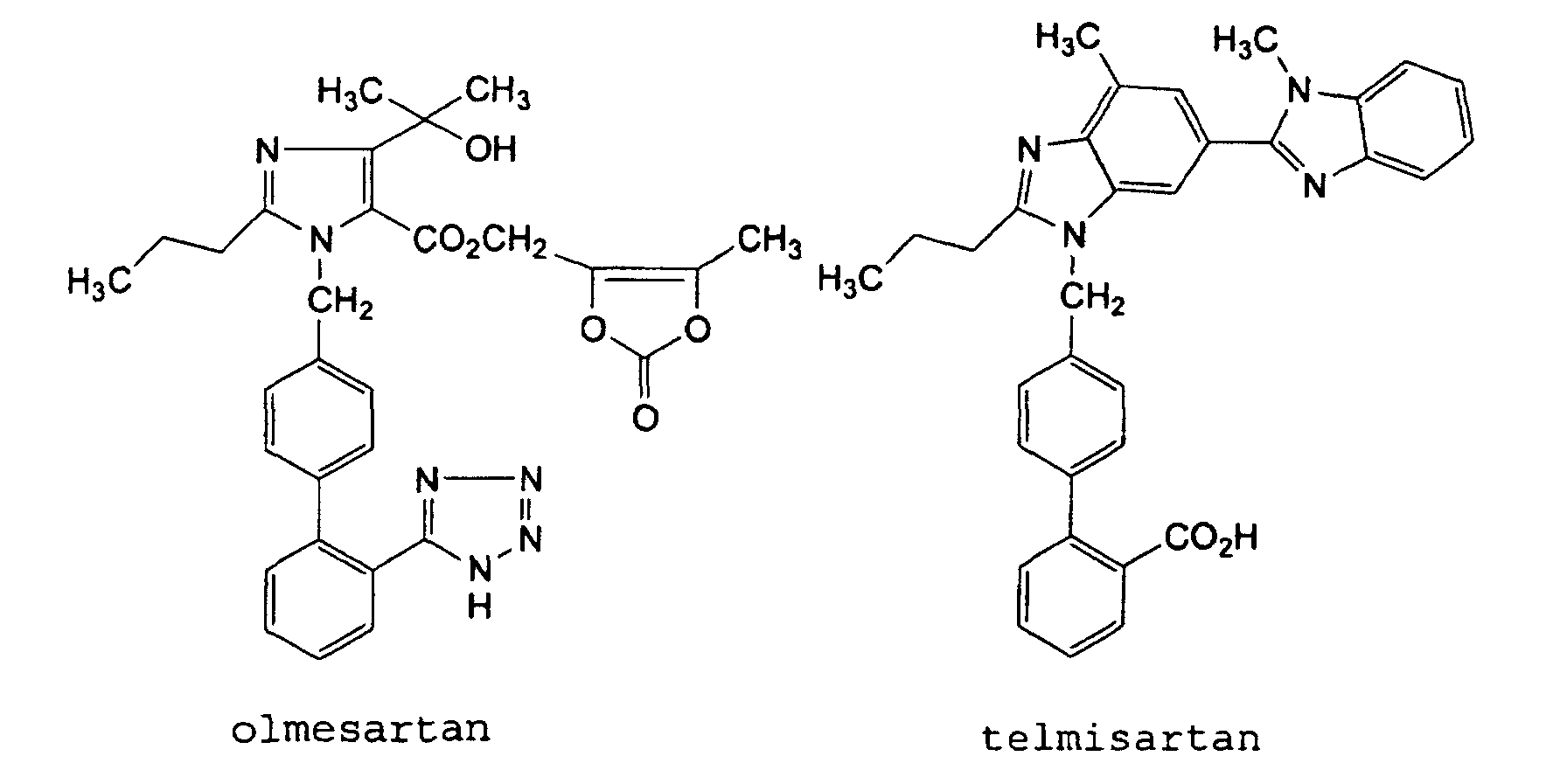
- the angiotensin II receptor antagonist preferably is losartan, irbesartan, valsartan, candesartan, olmesartan, or telmisartan; more preferred is losartan or olmesartan; and most preferred is olmesartan.
- planar chemical structures of the preferred angiotensin II receptor antagonists are shown below.
- the "ACAT inhibitor” that is one of the active ingredients of the pharmaceutical composition of the present invention, is an agent that inhibits acylcoenzyme A: cholesterol acyltransferase (ACAT), and not only decreases cholesterol but also acts directly on arteriosclerotic lesions of blood vessel walls and then inhibits the formation of macrophage foam cells (inhibits accumulation of cholesterol in the cells).
- ACAT cholesterol acyltransferase
- the inhibitor was originally designed as an agent for preventing or treating hyperlipidemia or arteriosclerosis.
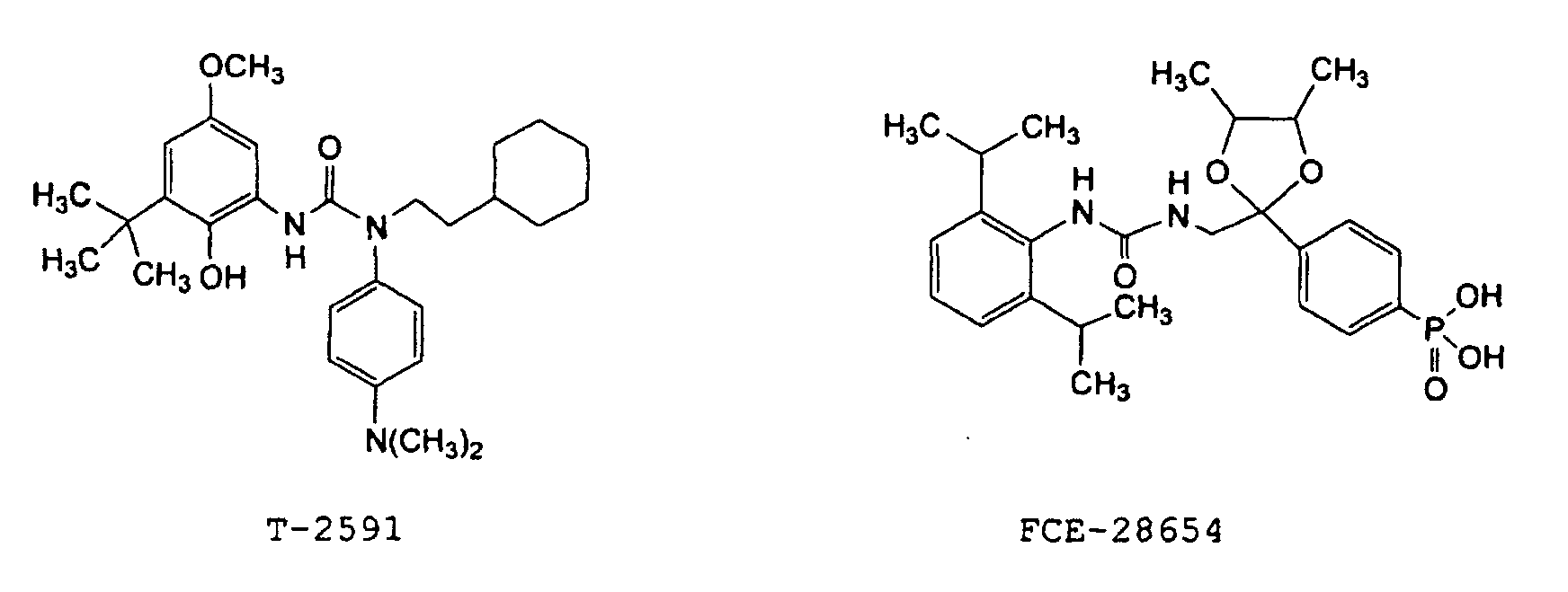
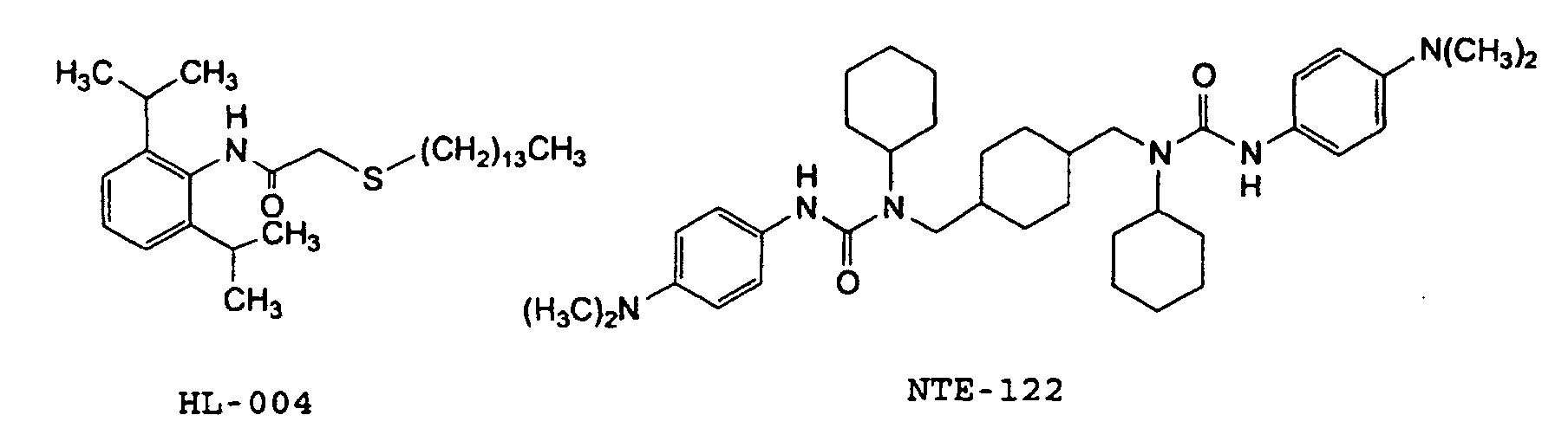
- Such an ACAT inhibitor includes, for example:
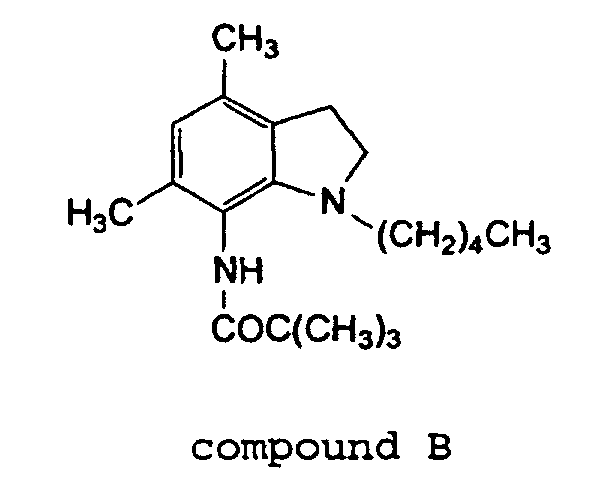
- the ACAT inhibitor preferably is a compound selected from the group consisting of FR-129169, CI-1011, F-1394, F-12511, T-2591, FCE-28654, K-10085, HL-004, NTE-122, FR-186054, N-(1-octyl-5-carboxymethyl-4,6-dimethylindolin-7-yl)-2,2-dimethylpropaneamide (hereinafter referred as compound A), and N-(1-pentyl-4,6-dimethylindolin-7-yl)-2,2-dimethylpropaneamide (hereinafter referred as compound B), or a pharmacologically acceptable salt thereof.
- the ACAT inhibitor more preferably is a compound selected from the group consisting of CI-1011, F-12511, N-(1-octyl-5-carboxymethyl-4,6-dimethylindolin-7-yl)-2,2-dimethylpropaneamide (compound A), and N-(1-pentyl-4,6-dimethylindolin-7-yl)-2,2-dimethylpropaneamide (compound B), or a pharmacologically acceptable salt thereof; most preferred is N-(1-octyl-5-carboxymethyl-4,6-dimethylindolin-7-yl)-2,2-dimethylpropaneamide (compound A) or a pharmacologically acceptable salt thereof.
- the salts of these compounds can be prepared by reacting the compounds with an acid, and when the angiotensin II receptor antagonist and the ACAT inhibitor have an acidic group such as a carboxyl group, the salts of these compounds can be prepared by reacting the compounds with a base. Such salts are included in the present invention.
- the preferred salt when the original antagonist and inhibitor have a basic group, includes an inorganic acid salt, for example, a hydrohalogenate such as hydrofluoride, hydrochloride, hydrobromide, or hydroiodide, nitrate, perchlorate, sulfate, phosphate or the like; an organic acid salt, for example, a lower alkanesulfonate such as methanesulfonate, trifluoromethanesulfonate, or ethanesulfonate, an arylsulfonate such as benzenesulfonate or p-toluenesulfonate, acetate, malate, fumarate, succinate, citrate, ascorbate, tartarate, oxalate, maleate, or the like; or an amino acid salt such as glycine salt, lysine salt, arginine salt, ornitine salt, glutamate, or aspartic acid salt.
- the preferred salt when the original antagonist and inhibitor have an acidic group, includes a metal salt, for example, an alkali metal salt such as sodium salt, potassium salt, or lithium salt, an alkaline earth metal salt such as calcium salt or magnesium salt, aluminum salt, iron salt, or the like; an amine salt, for example, an inorganic salt such as ammonium salt, an organic acid salt such as t-octylamine salt, dibenzylamine salt, morpholine salt, glucosamine salt, phenylglycine alkyl ester salt, ethylenediamine salt, N-methylglucamine salt, guanidine salt, diethylamine salt, triethylamine salt, dicyclohexylamine salt, N,N'-dibenzylethylenediamine salt, chloroprocaine salt, procaine salt, diethanolamine salt, N-benzylphenethylamine salt, piperazine salt, tetramethylammonium salt, tris(hydroxymethyl)aminome
- the active ingredients of the pharmaceutical composition of the present invention have asymmetric carbons in their structures, these compounds can exist as various stereoisomers due to such asymmetric carbons.
- these compounds are represented as a single chemical formula individually.
- the present invention encompasses both individual stereoisomers and mixtures of two or more stereoisomers in any ratio.
- the active ingredients of the pharmaceutical composition of the present invention are allowed to stand in contact with the atmosphere or to recrystallize, they may absorb water or water may attach on them to form a hydrate.
- the present invention encompasses such hydrates.
- the pharmaceutical composition of the present invention is a pharmaceutical composition for administering simultaneously, separately or sequentially an angiotensin II receptor antagonist and an ACAT inhibitor.
- a dosage form for administration of the two agents "simultaneously" is not particularly limited provided that the two agents can be administered almost at the same time.
- the preferred dosage form is a single unit dosage form containing the two agents.
- a dosage form for administration of the two agents "separately or sequentially " is not particularly limited provided that the two agents can be separately administered wherein there is a time interval between the first administration, of one agent, and the second administration, of the other agent.
- the angiotensin II receptor antagonist is administered, or after pre-determined time from the first administration of the angiotensin II receptor antagonist, the ACAT inhibitor is administered.
- the pharmaceutical composition of the present invention relates to
- angiotensin II receptor antagonists active ingredients of the pharmaceutical composition of the present invention, can easily be prepared according to procedures described in the specifications of Japanese Patent Publication (Kokai) Sho 61-267541 (EP 188248, USP 4,771,072), WO 99/32478 (USP 5,994,391, USP 6,107,494, USP 2002013476), Japanese Patent Publication (Kokai) Hei 5-310634 (EPP 597107, EP 701991), WO 99/35135, WO 99/64409 (USP 6,221,897), WO 00/47568, WO 00/61568 (USP 6,277,831), and EP 1070703.
- the ACAT inhibitors, active ingredients of the pharmaceutical composition of the present invention can easily be prepared according to procedures described in the specifications of WO 92/09561, Japanese Patent Publication (Kohyo) Hei 8-510256 (WO 94/26702, USP 5,491,172), EP 421441 (USP 5,120,738), Japanese Patent Publication (Kohyo) 2000-50771 (WO 97/19918, USP 5,990,173), Japanese Patent Publication (Kokai) Hei 10-195037 (EP 790240, USP 5,849,732), WO 96/26948, WO 98/54153 (EP 987254), WO 92/09572 (EP 559898, USP 5,475,130), Japanese Patent Publication (Kokai) Hei 7-82232 (EP 718281), Japanese Patent Publication (Kohyo) Hei 10-510512 (WO 96/10559), WO 96/09287 (EP 0782986, USP 5,990,150),
- the pharmaceutical composition for administering simultaneously, separately or sequentially an angiotensin II receptor antagonist and an ACAT inhibitor has a more prominent suppressive action against progression of arteriosclerosis with low toxicity and therefore is useful as a preventive or therapeutic agent (particularly therapeutic agent) for arteriosclerosis or diseases resulting from arteriosclerosis such as ischemic heart disease, ischemic brain diseases or peripheral circulatory failure for warm-blooded animals (particularly humans).
- the angiotensin II receptor antagonist and the ACAT inhibitor in the present invention exhibit excellent effects when administered in combination rather than when either is administered alone.
- the active ingredients of the pharmaceutical composition of the present invention can be prepared in the form of two separate administration units or in the form of a single administration unit by physically mixing the two agents.
- each of the angiotensin II receptor antagonist and the ACAT inhibitor may be administered orally in formulations such as tablets, capsules, granules, powders, or syrups or administered parenterally in formulations such as injections or suppositories by optionally mixing with a pharmacologically acceptable excipient, diluent, and the like.
- Preparations are prepared by conventionally known methods using additive agents such as excipients (for instance, organic excipients including sugar derivatives such as lactose, sucrose, glucose, mannitol, and sorbitol; starch derivatives such as corn starch, potato starch, ⁇ -starch, and dextrin; cellulose derivatives such as crystalline cellulose; gum arabic; dextran; pullulan; and inorganic excipients including silicate derivatives such as light anhydrous silicic acid, synthetic aluminum silicate, calcium silicate, and magnesium aluminometasilicate; phosphates such as calcium hydrogenphosphate; carbonates such as calcium carbonate; and sulfates such as calcium sulfate), lubricants (for instance, stearic acid, metal salts of stearic acid such as calcium stearate and magnesium stearate; talc; colloidal silica; waxes such as veegum and spermaceti; boric acid
- the dose and rate of administration of the angiotensin II receptor antagonist and the ACAT inhibitor, the active ingredients of the pharmaceutical composition of the present invention depend on various factors such as the activities of the pharmaceutical agents and symptoms, age, and body weight of the patients.
- the dose varies depending on the symptom, age, etc. of the patients.
- Dosing rates of administration of the angiotensin II receptor antagonist and the ACAT inhibitor, the active ingredients of the pharmaceutical composition of the present invention, may also be widely varied.
- the rates of administration of the angiotensin II receptor antagonist and the ACAT inhibitor are 1:500 to 500:1 as their weight ratios.
- Watanabe heritable hyperlipidemic (WHHL) rabbits aged 16 weeks were divided in 4 groups consisting of 12 or 13 animals each: control group (5% gum arabic solution), olmesartan (0.5 mg/kg) group, compound A (20 mg/kg) group, and combination group of olmesartan (0.5 mg/kg) and compound A (20 mg/kg). These test agents were orally administered for 24 weeks. After the 24 th week, the rabbits were sacrificed and their aorta were isolated to determine the aortic lumen area and arteriosclerotic lesion area in the aortic lumen.
- the intima media thickness (rate of lesion area), rate of extracellular matrix area in the lesion region, rate of the smooth muscle cells in the lesion area, rate of infiltrated area of leukocytes in the lesion region, and lipid contents in aorta were determined following Elastica Masson staining and immunohistochemical staining of aortic slice preparations. The results indicate that the combination group of olmesartan and compound A exerted excellent suppressive effects on progression of arteriosclerosis.
- the powders described above are mixed well, and tableted with a tableting machine to prepare a tablet containing 200 mg.
- compound A indicates N-(1-octyl-5-carboxymethyl-4,6-dimethylindolin-7-yl)-2,2-dimethylpropaneamide sulfate.
Landscapes
- Health & Medical Sciences (AREA)
- Public Health (AREA)
- Life Sciences & Earth Sciences (AREA)
- Animal Behavior & Ethology (AREA)
- Veterinary Medicine (AREA)
- Chemical & Material Sciences (AREA)
- General Health & Medical Sciences (AREA)
- Pharmacology & Pharmacy (AREA)
- Medicinal Chemistry (AREA)
- Epidemiology (AREA)
- Bioinformatics & Cheminformatics (AREA)
- Engineering & Computer Science (AREA)
- Organic Chemistry (AREA)
- Nuclear Medicine, Radiotherapy & Molecular Imaging (AREA)
- General Chemical & Material Sciences (AREA)
- Chemical Kinetics & Catalysis (AREA)
- Heart & Thoracic Surgery (AREA)
- Cardiology (AREA)
- Urology & Nephrology (AREA)
- Vascular Medicine (AREA)
- Pharmaceuticals Containing Other Organic And Inorganic Compounds (AREA)
- Medicines That Contain Protein Lipid Enzymes And Other Medicines (AREA)
Abstract
Description





| group | lesion area in % |
| control group | 59.7 |
| olmesartan group | 49.3 |
| compound A group | 59.0 |
| combination group of | |
| olmesartan and | 46.2 |
| compound A |
| olmesartan | 50.0 mg |
| compound A | 10.0 mg |
| lactose | 113.0 mg |
| cornstarch | 25.0 mg |
| magnesium stearate | 2.0 mg |
| 200 mg |
Claims (9)
- A pharmaceutical composition for administering simultaneously, separately or sequentially an angiotensin II receptor antagonist and an ACAT inhibitor.
- A pharmaceutical composition according to claim 1 wherein the angiotensin II receptor antagonist is losartan, irbesartan, valsartan, candesartan, olmesartan, or telmisartan.
- A pharmaceutical composition according to claim 1 wherein the angiotensin II receptor antagonist is losartan or olmesartan.
- A pharmaceutical composition according to claim 1 wherein the angiotensin II receptor antagonist is olmesartan.
- A pharmaceutical composition according to any one of claims 1 to 4 wherein the ACAT inhibitor is FR-129169, CI-1011, F-1394, F-12511, T-2591, FCE-28654, K-10085, HL-004, NTE-122, FR-186054, N-(1-octyl-5-carboxymethyl-4,6-dimethylindolin-7-yl)-2,2-dimethylpropaneamide, or N-(1-pentyl-4,6-dimethylindolin-7-yl)-2,2-dimethylpropaneamide or a pharmacologically acceptable salt thereof.
- A pharmaceutical composition according to any one of claims 1 to 4 wherein the ACAT inhibitor is N-(1-octyl-5-carboxymethyl-4,6-dimethylindolin-7-yl)-2,2-dimethylpropaneamide or a pharmacologically acceptable salt thereof.
- A pharmaceutical composition for administering simultaneously, separately or sequentially olmesartan and N-(1-octyl-5-carboxymethyl-4,6-dimethylindolin-7-yl)-2,2-dimethylpropaneamide.
- A pharmaceutical composition according to any one of claims 1 to 7 for prevention or treatment of arteriosclerosis.
- A pharmaceutical composition according to any one of claims 1 to 7 for prevention or treatment of ischemic heart disease.
Applications Claiming Priority (3)
| Application Number | Priority Date | Filing Date | Title |
|---|---|---|---|
| JP2001257435 | 2001-08-28 | ||
| JP2001257435 | 2001-08-28 | ||
| PCT/JP2002/008629 WO2003020315A1 (en) | 2001-08-28 | 2002-08-27 | Medicinal compositions containing angiotensin ii receptor antagonist |
Publications (2)
| Publication Number | Publication Date |
|---|---|
| EP1421953A1 true EP1421953A1 (en) | 2004-05-26 |
| EP1421953A4 EP1421953A4 (en) | 2004-09-15 |
Family
ID=19085097
Family Applications (1)
| Application Number | Title | Priority Date | Filing Date |
|---|---|---|---|
| EP02762874A Withdrawn EP1421953A4 (en) | 2001-08-28 | 2002-08-27 | Medicinal compositions containing angiotensin ii receptor antagonist |
Country Status (17)
| Country | Link |
|---|---|
| US (1) | US20040198788A1 (en) |
| EP (1) | EP1421953A4 (en) |
| KR (1) | KR20040032969A (en) |
| CN (1) | CN1589154A (en) |
| AU (1) | AU2002328569B9 (en) |
| BR (1) | BR0212254A (en) |
| CA (1) | CA2459017A1 (en) |
| CO (1) | CO5560583A2 (en) |
| HU (1) | HUP0401696A2 (en) |
| IL (1) | IL160438A0 (en) |
| MX (1) | MXPA04001878A (en) |
| NO (1) | NO20041291L (en) |
| NZ (1) | NZ531346A (en) |
| PL (1) | PL368843A1 (en) |
| RU (1) | RU2004105965A (en) |
| WO (1) | WO2003020315A1 (en) |
| ZA (1) | ZA200401603B (en) |
Cited By (2)
| Publication number | Priority date | Publication date | Assignee | Title |
|---|---|---|---|---|
| EP1604664A4 (en) * | 2003-01-31 | 2006-12-27 | Sankyo Co | MEDICINE FOR THE PREVENTION AND TREATMENT OF ARTERIOSCLEROSIS AND HYPERTENSION |
| WO2007086980A3 (en) * | 2005-11-10 | 2008-03-06 | Univ Duke | Methods of determining the risk of developing coronary artery disease |
Families Citing this family (2)
| Publication number | Priority date | Publication date | Assignee | Title |
|---|---|---|---|---|
| KR101345876B1 (en) * | 2012-01-31 | 2013-12-30 | 인제대학교 산학협력단 | Composition for preserving cells, tissue or organs containing Fimasartan |
| CN112979617A (en) * | 2019-12-17 | 2021-06-18 | 中国科学院苏州纳米技术与纳米仿生研究所 | Irbesartan piperazine salt and preparation method and application thereof |
Family Cites Families (18)
| Publication number | Priority date | Publication date | Assignee | Title |
|---|---|---|---|---|
| ES8705837A1 (en) * | 1985-01-10 | 1987-05-16 | Tanabe Seiyaku Co | A PROCEDURE FOR THE PREPARATION OF NAFTALENE DERIVATIVES. |
| US5138069A (en) * | 1986-07-11 | 1992-08-11 | E. I. Du Pont De Nemours And Company | Angiotensin II receptor blocking imidazoles |
| EP0421441B1 (en) * | 1989-10-06 | 1995-01-25 | Fujirebio Inc. | Pantothenic acid derivatives |
| DE122010000024I1 (en) * | 1990-02-19 | 2010-07-08 | Novartis Ag | acyl compounds |
| US5196444A (en) * | 1990-04-27 | 1993-03-23 | Takeda Chemical Industries, Ltd. | 1-(cyclohexyloxycarbonyloxy)ethyl 2-ethoxy-1-[[2'-(1H-tetrazol-5-yl)biphenyl-4-yl]methyl]benzimidazole-7-carboxylate and compositions and methods of pharmaceutical use thereof |
| GB9025509D0 (en) * | 1990-11-23 | 1991-01-09 | Fujisawa Pharmaceutical Co | New amide derivatives,processes for the preparation thereof and pharmaceutical composition comprising the same |
| KR0169501B1 (en) * | 1990-11-26 | 1999-03-20 | 우에하라 아키라 | Anilide Derivatives |
| US5591762A (en) * | 1991-02-06 | 1997-01-07 | Dr. Karl Thomae Gmbh | Benzimidazoles useful as angiotensin-11 antagonists |
| CA2229000C (en) * | 1991-02-21 | 2002-04-09 | Sankyo Company, Limited | 1-biphenylimidazole derivatives, their preparation and their therapeutic use |
| US5491172A (en) * | 1993-05-14 | 1996-02-13 | Warner-Lambert Company | N-acyl sulfamic acid esters (or thioesters), N-acyl sulfonamides, and N-sulfonyl carbamic acid esters (or thioesters) as hypercholesterolemic agents |
| JP3720395B2 (en) * | 1994-09-20 | 2005-11-24 | 京都薬品工業株式会社 | Novel heterocyclic derivative, production method thereof and pharmaceutical use thereof |
| CZ292632B6 (en) * | 1995-10-05 | 2003-11-12 | Kyoto Pharmaceutical Industries, Ltd. | Indoline, indole or tetrahydroquinoline derivative and pharmaceutical preparation in which the derivative is comprised |
| FR2741619B1 (en) * | 1995-11-28 | 1998-02-13 | Pf Medicament | NOVEL 2,3,5-TRIMETHYL-4-HYDROXY-ANILIDES DERIVATIVES, THEIR PREPARATION AND THEIR THERAPEUTIC APPLICATION |
| CA2197364A1 (en) * | 1996-02-15 | 1997-08-16 | Toshikazu Suzuki | Phenol compound and process for preparing the same |
| JPH11228416A (en) * | 1997-10-23 | 1999-08-24 | Takeda Chem Ind Ltd | Lipid reducing |
| US6221897B1 (en) * | 1998-06-10 | 2001-04-24 | Aventis Pharma Deutschland Gmbh | Benzothiepine 1,1-dioxide derivatives, a process for their preparation, pharmaceuticals comprising these compounds, and their use |
| DE19916108C1 (en) * | 1999-04-09 | 2001-01-11 | Aventis Pharma Gmbh | 1,4-Benzothiazepine-1,1-dioxide derivatives substituted with sugar residues, process for their preparation and their use |
| ATE480236T1 (en) * | 2001-04-25 | 2010-09-15 | Takeda Pharmaceutical | USE OF THE ABC EXPRESSION PROMOTER PIOGLITAZONE FOR THE TREATMENT OF ARTERIOSCLEROSIS OBLITERANS |
-
2002
- 2002-08-27 NZ NZ531346A patent/NZ531346A/en unknown
- 2002-08-27 HU HU0401696A patent/HUP0401696A2/en unknown
- 2002-08-27 RU RU2004105965/15A patent/RU2004105965A/en not_active Application Discontinuation
- 2002-08-27 EP EP02762874A patent/EP1421953A4/en not_active Withdrawn
- 2002-08-27 KR KR10-2004-7002806A patent/KR20040032969A/en not_active Withdrawn
- 2002-08-27 WO PCT/JP2002/008629 patent/WO2003020315A1/en not_active Ceased
- 2002-08-27 BR BR0212254-5A patent/BR0212254A/en not_active IP Right Cessation
- 2002-08-27 CN CNA028213645A patent/CN1589154A/en active Pending
- 2002-08-27 MX MXPA04001878A patent/MXPA04001878A/en unknown
- 2002-08-27 IL IL16043802A patent/IL160438A0/en unknown
- 2002-08-27 AU AU2002328569A patent/AU2002328569B9/en not_active Ceased
- 2002-08-27 PL PL02368843A patent/PL368843A1/en not_active Application Discontinuation
- 2002-08-27 CA CA002459017A patent/CA2459017A1/en not_active Abandoned
-
2004
- 2004-02-26 ZA ZA200401603A patent/ZA200401603B/en unknown
- 2004-02-26 US US10/789,340 patent/US20040198788A1/en not_active Abandoned
- 2004-03-16 CO CO04024652A patent/CO5560583A2/en unknown
- 2004-03-26 NO NO20041291A patent/NO20041291L/en not_active Application Discontinuation
Cited By (3)
| Publication number | Priority date | Publication date | Assignee | Title |
|---|---|---|---|---|
| EP1604664A4 (en) * | 2003-01-31 | 2006-12-27 | Sankyo Co | MEDICINE FOR THE PREVENTION AND TREATMENT OF ARTERIOSCLEROSIS AND HYPERTENSION |
| EP3045174A1 (en) * | 2003-01-31 | 2016-07-20 | Daiichi Sankyo Company, Limited | Medicine for prevention of and treatment for arteriosclerosis and hypertension |
| WO2007086980A3 (en) * | 2005-11-10 | 2008-03-06 | Univ Duke | Methods of determining the risk of developing coronary artery disease |
Also Published As
| Publication number | Publication date |
|---|---|
| EP1421953A4 (en) | 2004-09-15 |
| AU2002328569B9 (en) | 2005-10-27 |
| WO2003020315A1 (en) | 2003-03-13 |
| ZA200401603B (en) | 2004-10-19 |
| RU2004105965A (en) | 2005-05-10 |
| NO20041291L (en) | 2004-05-27 |
| NO20041291D0 (en) | 2004-03-26 |
| CA2459017A1 (en) | 2003-03-13 |
| CO5560583A2 (en) | 2005-09-30 |
| KR20040032969A (en) | 2004-04-17 |
| MXPA04001878A (en) | 2004-06-15 |
| BR0212254A (en) | 2004-10-19 |
| HUP0401696A2 (en) | 2004-11-29 |
| US20040198788A1 (en) | 2004-10-07 |
| AU2002328569B2 (en) | 2005-09-22 |
| CN1589154A (en) | 2005-03-02 |
| PL368843A1 (en) | 2005-04-04 |
| NZ531346A (en) | 2005-10-28 |
| IL160438A0 (en) | 2004-07-25 |
Similar Documents
| Publication | Publication Date | Title |
|---|---|---|
| US20050209288A1 (en) | Compositions comprising (S)-amlodipine malate and an angiotensin receptor blocker and methods of their use | |
| PT1467728E (en) | PHARMACEUTICAL COMPOSITIONS UNDERSTANDING VALSARTAN AND NEP INHIBITORS | |
| WO2004067003A1 (en) | Medicine for prevention of and treatment for arteriosclerosis and hypertension | |
| SK288460B6 (en) | Solid dosage form containing olmesartan medoxomil and amlodipine and its use | |
| WO2002017913A1 (en) | Medicinal compositions for preventing or treating heart failure | |
| AU2004283047B2 (en) | Pharmaceutical composition comprising a selective I1 imidazoline receptor agonist and an angiotensin II receptor blocker | |
| KR20090094288A (en) | Solid preparation | |
| US20040198788A1 (en) | Medicinal compositions containing angiotensin II receptor antagonist | |
| US9545445B2 (en) | Therapeutic drug for hypertension or prehypertension | |
| HK1061799A (en) | Medicinal compositions containing angiotensin ii receptor antagonist | |
| KR20090094285A (en) | Method for improving dissolution property | |
| US11666587B2 (en) | Veterinary composition comprising torasemide for the treatment of pulmonary edema associated with heart failure in domestic animals | |
| CA2859704C (en) | Combination of (3s,3s') 4,4'-disulfanediylbis(3-aminobutane 1-sulfonic acid) and a second antihypertensive agent | |
| EP1646391B1 (en) | Use of 2h-[1,3]-oxazino[3,2-a]indole derivatives for the treatment of neuropathic pain | |
| KR20070012486A (en) | Combination of organic compounds | |
| CN101854934A (en) | Therapeutic composition comprising amlodipine nicotinate and sartan | |
| US12048677B2 (en) | Compositions and uses thereof for the treatment of heart failure in domestic animals | |
| JP2003146907A (en) | Pharmaceutical composition comprising angiotensin ii receptor antagonist | |
| JP2009256209A (en) | Antihypertensive therapy | |
| WO2006002983A1 (en) | Combination of organic compounds | |
| HK1203051B (en) | Combination of (3s,3s') 4,4'-disulfanediylbis(3-aminobutane 1-sulfonic acid) and a second antihypertensive agent | |
| NZ627251B2 (en) | Combination of (3s,3s') 4,4'-disulfanediylbis(3-aminobutane 1-sulfonic acid) and a second antihypertensive agent | |
| HK1087027B (en) | Use of 2h-[1, 3]-oxazino[3,2-a]indole derivatives for the treatment of neuropathic pain |
Legal Events
| Date | Code | Title | Description |
|---|---|---|---|
| PUAI | Public reference made under article 153(3) epc to a published international application that has entered the european phase |
Free format text: ORIGINAL CODE: 0009012 |
|
| 17P | Request for examination filed |
Effective date: 20040226 |
|
| AK | Designated contracting states |
Kind code of ref document: A1 Designated state(s): AT BE BG CH CY CZ DE DK EE ES FI FR GB GR IE IT LI LU MC NL PT SE SK TR |
|
| AX | Request for extension of the european patent |
Extension state: AL LT LV MK RO SI |
|
| A4 | Supplementary search report drawn up and despatched |
Effective date: 20040803 |
|
| REG | Reference to a national code |
Ref country code: HK Ref legal event code: DE Ref document number: 1061799 Country of ref document: HK |
|
| STAA | Information on the status of an ep patent application or granted ep patent |
Free format text: STATUS: THE APPLICATION IS DEEMED TO BE WITHDRAWN |
|
| 18D | Application deemed to be withdrawn |
Effective date: 20060818 |
|
| REG | Reference to a national code |
Ref country code: HK Ref legal event code: WD Ref document number: 1061799 Country of ref document: HK |