-
This invention relates generally to a method for managing knowledge in an
enterprise, and more particularly to a system and method for knowledge flow to value
consulting.
-
The problem of changing all or portions of the enterprise and being certain that
the entire enterprise will improve has never been solved. Recently, companies have been
"reengineered" with mixed results. Many business initiatives fail at great cost to
enterprises. Volumes of reasons are given to explain these failures, but one basic reason
underlies them all: the facts (knowledge) to manage and change the business were not
available or were ignored. An important asset of an enterprise is its knowledge.
Unfortunately, knowledge is difficult to measure and manage.
-
Until recently, there was no lens through which to view knowledge as an aspect of
an organization's assets. First, managers and consultants focused on profit, efficiency,
and productivity. Over time, they then added quality management, process improvement,
and information technology. But these lenses ignored the knowledge in the minds of
workers and documents.
-
Within the last decade, there has been movement towards rectifying the situation.
First came document management, which addresses the storage and recall of documents
as objects. As a natural follow-on, "Content" within documents, such as sentences,
paragraphs, tables, and graphics, could be managed. Content management involves
managing internal objects and supports their dynamic reuse in different documents. For
example, content management is used to personalize an owner's web page. There are
many other aspects to both document and content management.
-
As an outgrowth of the interest in documents and content, a larger, more
comprehensive field has arisen, the filed of knowledge management. Knowledge
management is consciously engineering a worker's environment so that knowledge can
be better created, captured, validated, shared and used. Knowledge management includes
not only document and content management, but also all aspects of interpersonal and
electronic communications. There are many knowledge-related business problems. Such
problems include: knowledge walking out the door. Some knowledge resides inside
people's heads. When a person (or an entire generation) leaves an organization, unless
the knowledge has been captured and transferred to those remaining or is explicitly
defined, the organization has lost a valuable asset. Another problem is knowledge
hoarding. Knowledge can be shared, but often it is not. When the prevailing cultural
theme is "Knowledge is power," knowledge does not flow and organizations are crippled.
Unsubstantiated assertions. People make assertions that pose as facts. Until the
assertions are tested and validated, they should not be considered knowledge. In the
scientific community, this is well understood. There are clear distinctions made between
claims and verifiable truths. When mere claims are taken as truth, complications set in.
Another problem is shelf-life of knowledge. Some knowledge retains its value over time
much better than some other knowledge. Thus there are "time-honored truths" and
"yesterday's news." One of the many challenges for an organization is helping a given
"packet" of knowledge live a long and productive life, working through the life cycle.
Knowing when to discard a packet is just as important as how to create new knowledge.
Another problem is intangibility. Some knowledge is intangible, which makes it difficult
to manage directly. Therefore, the organization must manage the knowledge
environment to affect its quality and flow. What is needed is a method which enables an
enterprise to capture critical knowledge and connect it to those who need to know the
knowledge.
-
Fact-based management is rare in most areas of business except in manufacturing
where processes are explicitly defmed and monitored about flow-to-value: components
flow through fabrication and assembly to create value in products. Document
management and workflow deployed on global information networks can provide the
flow-to-value statistics to manage with facts and continuously improve the entire
enterprise. The ability to compete on knowledge is dependent upon an enterprise's
ability to explicitly define, monitor and continuously improve knowledge flow-to-value:
knowledge flows through business processes to create value in its output documents and
services.
-
In order to manage knowledge within an enterprise, the enterprise's body of
knowledge must be identified and defined. Knowledge includes cognition, skills,
theories, rules, processes, techniques, instructions for action used by the enterprise to
solve problems and to produce output, some of which has been recorded in documents
and some of which is unrecorded form. A document may include any form of media
used for recordation, whether paper, electronic, optical or using some other form of
technology. Unrecorded knowledge in the form of skills and information retained in the
minds of the enterprises members should be identified. Once a body of knowledge has
been identified, a set of knowledge objects is selected from the body of knowledge. A
knowledge object is any specific knowledge that is used in an enterprise process to
produce an output of value to the enterprise. Examples of knowledge objects include
information recorded in documents (such as a design document for a computer software
product), core competency in individuals (such as the skills of a chief scientist), and
information embedded in process and systems used by the enterprise (such as a process
for routing publication approvals).
-
Once a set of knowledge objects is defined, a set of measurable enterprise
processes which utilize the knowledge objects is defined. An enterprise process uses
knowledge objects in its operation to create an output having value to the enterprise.
Examples of output having value can be products, software, a document, an approval, etc.
The knowledge objects are used in the measurable enterprise processes in order to
measure the knowledge flow to value (the time it takes the knowledge object to flow
through the process such that the output is created). The enterprise processes can then be
modified using a framework, such as Six Sigma, in order to optimize the knowledge flow
to value. This process can be repeated periodically, or as needed to continuously improve
the knowledge flow to value.
-
A knowledge/document taxonomy is used to make the knowledge objects
shareable and accessible. A taxonomy is defined as "orderly classifications according to
their presumed relationships." Metadata (e.g., title, author, data, location, description)
and keywords may be used as a corporate library card catalogue; this categorization can
be derived from library science cataloging techniques plus engineering or scientific
disciplines associated with the company's industry, or some other classification technique
applicable to the enterprise. Precision and recall of search can be improved by explicitly
defining and continuously improving the knowledge document taxonomy.
-
A method for managing knowledge within an enterprise, according to the
invention includes defining a body of knowledge for the enterprise comprising skills,
theories, rules, processes, techniques, instructions for action used by the enterprise to
solve problems and to produce output, some of which has been recorded in documents
and some of which is in unrecorded form; analyzing the body of knowledge to identify a
plurality of knowledge objects, wherein a knowledge object comprises specific
knowledge contained within the body of knowledge which is used by an enterprise
process to produce an output having value to the enterprise; defining a measurable
business environment comprising a plurality of measurable enterprise processes, wherein
the plurality of enterprise processes use the plurality of knowledge objects to produce the
outputs having value to the enterprise; measuring the flow of each knowledge object
through its associated measurable enterprise process to produce the associated output to
determine a baseline flow for the knowledge object; modifying the enterprise process and
measuring the flow of the knowledge object through the modified enterprise process until
an optimized flow for the knowledge object has been achieved; capturing any unrecorded
knowledge objects and recording them in documents; defining a knowledge taxonomy for
the enterprise comprising a classification system for classifying the plurality of
knowledge objects for the enterprise; and classifying the body of recorded knowledge
objects according to the knowledge taxonomy for the enterprise.
-
The method may further included periodically re-defining the body of knowledge
for the enterprise to include new skills, theories, rules, processes, techniques, instructions
for action used by the enterprise to solve problems and to produce output, some of which
has been recorded in documents and some of which is unrecorded form and to remove
those skills, theories, rules, processes, techniques, instructions for action which are no
longer used by the enterprise to solve problems and to produce output; and periodically
re-analyzing the body of knowledge to identify additional knowledge objects contained
within the body of knowledge to be included in the plurality of knowledge objects and to
remove no longer needed knowledge objects from the plurality of knowledge objects.
-
In accordance with one aspect of the method, defining a body of knowledge may
include collecting data pertaining to skills, theories, rules, processes, techniques,
instructions for action used by the enterprise to solve problems and to produce output;
transforming the collected data into information comprising summaries and correlations
of data; and validating the information using analytical, statistical and logical methods or
by peer group review to produce knowledge.
-
In accordance with another aspect of the method, analyzing the body of
knowledge to identify a plurality of knowledge objects may include identifying a
plurality of enterprise processes, wherein an enterprise process uses knowledge to
produce an output having value to the enterprise; and analyzing the body of knowledge to
identify which knowledge are used by the enterprise process to produce an output having
value to the enterprise.
-
The method may further include capturing any unrecorded knowledge and
recording them in documents; and classifying the body of recorded knowledge according
to the knowledge taxonomy for the enterprise. In accordance with another aspect of the
method, modifying the enterprise process and measuring the flow of the knowledge
object through the modified enterprise may involve using a Six Sigma framework.
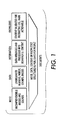
- FIG. 1 is a block diagram showing the relationship between noise, data,
information, knowledge and documents;
- FIG. 2 is a block diagram which illustrates the interaction between knowledge;
process, people, systems and change in an enterprise;
- FIG. 3 illustrates a Six Sigma framework;
- FIG. 4 illustrates the life cycle of a document in a document management system;
- FIG. 5 illustrates an exemplary metrics and business case;
- FIG. 6 illustrates a cause and effect diagram for analyzing knowledge bottlenecks;
- FIG. 7 illustrates an operate phase in a knowledge management system; and
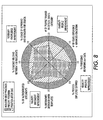
- FIG. 8 illustrates metrics for knowledge work.
-
-
The method of managing knowledge in an enterprise may be implemented in a
variety of ways, including a software implementation. The method of managing
knowledge may also be used by a consultant as a tool to provide services to an enterprise.
Consulting is, by its very nature, a knowledge-intensive activity. Clients engage
consultants for knowledge, expertise and insights. The ability to compete on knowledge
is dependent upon an organization's ability to explicitly define, monitor and continuously
improve knowledge flow-to-value. An objective of a globally deployed
content/document management and workflow system is be to measure knowledge flow-to-value
of the entire enterprise. Once the facts to manage are available, significant
global process improvement is possible. When consultants apply their knowledge to
business problems, they recommend that the clients make changes. Very often, these
changes relate to the knowledge environment.
-
The method of managing knowledge in an enterprise can be used by a consultant
to assist an enterprise to identify, modify and maximize the enterprise's use of its body of
knowledge, and in particular the enterprise's key knowledge objects. A Six Sigma
process may be used as the framework to provide process improvement to the
knowledge-flow-to-value process and provides a foundation for continuously accelerating
enterprise knowledge.
-
Many companies struggle to keep pace in a rapidly changing market.
Increasingly, they look to intranets to help increase their rate of bringing innovations to
market, reduce cost and improve their ability to "compete on knowledge." The use of
intranets does not achieve the desired result. An assessment of businesses identifies five
general problem areas:
- eCommerce Strategy: Companies are making ALL information available on their
internal and external web sites with a subsequent loss of productivity. People are deluged
with volumes of information, only some of which provides value to their process.
- Empowerment: This has become a euphemism for abandonment. Departments
are allowed to select their own supporting information systems that result in redundant
systems and information silos.
- Audit: ROI, business justification, metrics are either absent or inconsistently
applied.
- Without metrics and measurement, it is impossible to accurately predict time, cost
and resource requirements; nor are most managers held accountable for them.
- Technology: Global networks are everywhere, but they do not support effective,
efficient global access to corporate knowledge.
- Competencies: Most Information Technology departments deploy technology
before or without an understanding of the process it must support. With the installation
of enterprise systems, technology dictates sub-optimal process change.
-
-
Resolving these challenges can be achieved by identifying how knowledge flows
through a process to create value for the customer of the process. This knowledge must
be captured in documents that are structured and authenticated for human comprehension.
These documents are then used as milestones of a project that explicitly defines their
creation which is, subsequently, instantiated and monitored with workflow that
automatically generates performance statistics about "knowledge flow to customer
value."
-
An enterprise possesses many different types of knowledge, both recorded and
unrecorded. Knowledge includes cognition, skills, theories, rules, processes, techniques,
instructions for action used by the enterprise to solve problems and to produce output,
some of which has been recorded in documents and some of which is unrecorded form.
A document may include any form of media used for recordation, whether paper,
electronic, optical or using some other form of technology. Unrecorded knowledge in the
form of skills and information retained in the minds of the enterprises members should be
identified. Some of the most important knowledge is stored in the minds of enterprise
employees members.
-
Knowledge is captured in a variety of ways. Experts collaborate to explicitly
capture knowledge in documents based on their tacit knowledge and skills. Other
knowledge is created and put into documents in a variety of ways that can be
productively described by business cases. However, knowledge must also be catalogued
(such as with key words) and stored in ways that can be found with sophisticated
searches.
-
The knowledge that has broadest value is the information people need to operate
processes that create value for the customer of the process. For example, the knowledge
in engineering documents used to create a product adds value by meeting customer needs,
which, hopefully, produces a profit. This knowledge is built into technology, work
instruction documents and core competencies of people. Potential value is built into the
development process, where people create new products and record their specific
attributes in design documents for more new products down the road. The cost and rate
at which value is added or created has a significant impact on an enterprise's wealth.
-
Noise can be thought of as an incomprehensible jumble of images and text. Data
can be considered the results from monitoring events or is derived from other data.
Information is the result of summarizing or correlating data. It is data organized into
patterns. Knowledge is information which has meaning (and can be in both recorded and
unrecorded form). It has been validated, often from documents or collections of
documents, but not necessarily, based on criteria determined by the consumer and the
industry, such as: quality of method ― analytical, statistical and logical methods used to
build the information base; review by peer group to validate structure and content based
on correspondence: the knowledge corresponds to something real; coherence: the
knowledge coheres appropriately with other propositions; pragmatic: propositions that
work.
-
Figure 1 illustrates the relationship between noise and knowledge. Consider that
unstructured volumes of information arbitrarily made available on an enterprise's intranet
may be more noise than data. In this case, people who search for information may get
less than one per cent precision and recall, just like the internet. Either they get hundreds
of irrelevant documents (poor precision) or none (poor recall). Providing people with no
data or volumes of data that they can't trust significantly inhibits productivity. Global
intranets that deliver timely, accurate knowledge to explicitly defined processes are a key
to enterprise performance.
-
Documents are an explicit form of enterprise communication and contain data,
information and knowledge formatted for people. All explicit communication between
people is a document: written, oral, electronic, paper, video, audio or physical prototype.
This definition of documents subordinates them to data, information and knowledge.
Repositories are "libraries" of documents, either physical or electronic. To be effective,
they must be well-organized. Most often, this requires using meta-data and taxonomies
for structure. At another level, irrelevant collections of documents may be more noise
than knowledge.
-
Knowledge, Content and Document Management. Documents may contain
aggregated data, information and knowledge. Documents are often made up of data,
information and knowledge objects. For instance, a data object might be a set of numbers
generated by a gauge and incorporated in a printout. An information object might be the
set of characters that make up a street address. A document may be an email with
attachments. These objects also contain content. Content management manages these
objects and supports the dynamic reuse of an object in different documents, as in
personalized web pages.
-
Analysis of document and content flow is a viable approach to analyzing an
enterprise's knowledge, because documents represent a "sufficiently coarse grained but
detailed enough" view of knowledge in enterprise to define the state of a business and its
problems, and indicate a structure for the solution. Originally, each document is created
by a person using a combination of insight, interpretation of old knowledge, analysis,
synthesis and systems. Until knowledge is recorded in a document, it does not belong to
the enterprise, but remains with the people who possess it. In an undocumented process,
knowledge departs with that person. Put into documents, this knowledge can be
archived, accessed, reused and reinterpreted long after the people who created it leave.
Each value-added step in any enterprise process may be described in a document,
changed through documentation or replicated with the enterprise using a document to
initiate it. Documents may be used as the primary knowledge objects for analyzing
knowledge flow to customer value. Modeling document flow can simultaneously
consider processes, people and technology and how they contribute to the enterprise.
-
Knowledge Taxonomy based on Enterprise Knowledge Objects. A knowledge /document
taxonomy makes knowledge shareable and accessible. A taxonomy is defined
as "orderly classifications according to their presumed relationships" and should be
independent of organization. For knowledge to be shareable and accessible, documents
must be part of an enterprise knowledge architecture. Metadata (data about data, e.g.,
title, author, data, location, description) and keywords may be used to act as a corporate
library card catalogue; this categorization can be derived from library science cataloguing
techniques plus engineering or scientific disciplines associated with the company's
industry. Precision and recall of search may be improved by explicitly defining and
continuously improving this knowledge document taxonomy, including keywords.
-
A digital library is a managed collection of information, with associated services,
where the information is stored in digital formats and accessible on a network with
procedures to select the materials in the collections, to organize it, to make it available to
users, and to archive it. They provide standards for cataloging, indexing and validating
information. Digital libraries can be used to store the enterprise's documents which have
been categorized according to the knowledge taxonomy.
-
A knowledge taxonomy for an enterprise may be initially broken down into five
types of documents: knowledge, transaction, management, capability and external.
Knowledge documents contain the specific knowledge that the enterprise uses to create
unique value for its customers in the form of products and services. Transaction
documents contain the knowledge that initiates processes and records the performance of
the processes. Management documents contain the strategic direction and operational
facts to direct a business process. Capability documents catalog and quantify enterprise
capability and capacity - intelligence, process, people, systems, facilities and tacit
knowledge. External documents contain information about the enterprise's market
environment and are created and maintained outside of the enterprise.
For example, a knowledge taxonomy for a manufacturing organization might be
broken down into the five types of documents (Competitive, Transaction, Management,
Capability and External) with the following subcategories:
Competitive
-
- Market: account history, competitors, product specs, proposal and quote,
collaterals, price lists/catalogs.
- Develop: ECR/ECO/ECN, Family of parts BOM, standard parts list, models-solid
surface, FEM/FEA, product drawings, design BOM, detail drawings, detail BOM,
assembly drawings.
- Purchase: supplier history, catalog parts, prototype POs pilot contracts, production
contracts, schedules.
- Build: status, capability and capacity, time and cost to build, DFM/DFA redlines,
fixture design, facility requirement, material requirement, facilities plan.
- Support: maintenance manuals, installation manuals, service bulletins, parts
catalogs, user guides, support schedules.
-
Transaction
-
- Request: Sales forecast, sales order, service order, purchase order, work order,
tool order.
- Require: document requirement, process steps, capability requirement, requested
resources, delivery requirement(shipping, receiving, move tickets, packing lists, POs).
- Schedule and Authorize: current schedule, over-utilized capacity, unavailable
capability, back schedules, proposed schedules.
- Approve: sign-off checks, test acceptance, certification, content verification,
measurement.
- Status of Operations: document history, process history, maintenance history,
time cards, capability available, resource availability.
- Failure Notification: erroneous documents, inadequate methods, bad product or
service, warranty data.
-
Management
-
- Strategy: mission, process vision, enterprise metrics, allocations.
- Change Requirements: change plan, capability requirement, project milestones,
test criteria.
- Measures (audit): process metrics, summary structures, sampling criteria,
variation limits.
- Operations (direct): goals, finance (contract, customer, budget, invoices, job
costing reports, accounts receivable, accounts payable, payroll checks, rebate checks),
directives, forecasts.
- Policy: guidelines, HRM policy procedures, HRM documents, budgets,
transaction structure, knowledge structures.
-
Capability
-
- Intelligence: sales/customer, method (patent), product (patent), market valuation,
operations status.
- Process: deliverables, function, education, job classes/skills.
- Systems: communication, automation, computation.
- Facilities: equipment, tools, physical plant.
-
External
-
- Stockholder Customer: status, capability and capacity, RFP/RFP, drawings and
specifications.
- Suppliers: status, capability and capacity, product drawings, design BOM,
proposal and quotes.
- Competitor: strategy, products, pricing, customers.
- Economy: exchange rates, market indicators, global politics.
- Government: regulations, standards.
-
-
Knowledge may be stored in documents which are categorized according to the
knowledge/document taxonomy. Note that some knowledge (for example, strategy) may
originally be in unrecorded form and must be recorded before it can be categorized.
-
For explicit knowledge to be shareable and accessible, documents must be part of
an enterprise knowledge architecture. Documents are repositories of enterprise
knowledge that can be used to support people in operating and improving processes.
When an enterprise knows how its documents flow through and affect its processes, it
can determine how to accelerate the enterprise for faster response to its marketplace.
-
Consulting Dimensions. To assure a successful transformation of a knowledge
environment, all dimensions should be considered. Culture makes information
meaningful, in terms of interpreting people's experience and helping them decide how to
act. It is in this sense that knowledge is called actionable information. Content
management is focused on managing, retrieving and presenting information to invoke
desirable behaviors in the information consumer (e.g., filling out a paper or online form
quickly and accurately). Process represents the tasks that people perform to create value
for the customer of the process. It must be defined in a way that permits monitoring and
measurement of knowledge flow to value. Technology architectures ensure knowledge is
optimally accessible, managed and archived and are key to building environments that
improve a corporation's ability to compete on its knowledge. Infrastructure using global
information networks, collaboration technologies and the web is deployed to support
business requirements and ensures that flow of knowledge to value.
-
Culture Dimension. Knowledge is related to culture because culture assigns
meaning to information, transforming it into knowledge. Culture is the source of the
context, relevance, authenticity, and experience that elevate information into knowledge.
Culture makes information meaningful, in terms of interpreting people's experience and
helping them decide how to act. It is in this sense that knowledge is called actionable
information. Knowledge management recognizes of the close relationship between
knowledge and culture. Anthropology, Sociology, Cognitive Neurology, Organizational
Psychology, Ethnography are useful in analyzing knowledge and culture. The cultural
dimensions involves:
- Knowledge categories: share features of meaning and knowledge rules, declared
or implied, that usually control behavior or stimulate activity, which is tacitly approved
or openly promoted by society.
- Ethnography: a family of techniques through which anthropologists investigate
cultures; it is used to interpret aspects of a culture (corporate or otherwise): How people
are grouped or categorized; The general behavior of groups (sharing, political, hostile);
How groups communicate; Barriers between groups (e.g., distance, language, attitudes,
etc.); A group's dependence on external information.
- Communities of Practice: "peers in the execution of 'real work'. What holds them
together is a common sense of purpose and a real need to know what each other knows.
Most people belong to more than one of many practices within a single organization."
- Quality criteria: distinguishes "good" knowledge from "bad" knowledge.
- Physical environment: Distance among workers and their tools, office
arrangements, physical barriers, geographic dispersion, and similar considerations.
- Content Dimension. Content design is focused on presenting information to
invoke desirable behaviors in the information consumer (e.g., filling out a paper or online
form quickly and accurately). Many of the tools used in cultural assessment for
collecting information can be used here, but an understanding of alternative presentation
methods from the architectural dimension is also required here to project a future state.
The disciplines and terminology associated with this dimension include: Understanding
the events associated with the need to receive knowledge through a document interface;
Understanding the importance of conceptualizing business activities as the product of
knowledge flows through document interfaces; Analyzing the current and desired
behaviors associated with communicating knowledge through various document
interfaces (i.e., hard copy documents, Internet, Intranet, voice mail, multi-media training,
etc.); Engineering document interfaces to solve current business problems with an aim to
maximize the accuracy and efficiency of future business directions and capitalize on
existing corporate talent, opportunities, leading edge document centric process, and
technologies.
- Process Dimension. The process dimension represents the tasks that people
perform to create value for the customer of the process. Once knowledge and content
objects that deliver value are clearly identified, it is possible to define the process in a
way that permits monitoring and measurement of knowledge flow to value. The process
dimension is used to establish the economic value added or return on equity in a
knowledge environment by monitoring and measuring the rate at which knowledge and
innovation flow to customer defined value and its accelerated rate as a result of the
recommended changes. Most of the tools and techniques that are used in this space are
robust and have been well established by process engineering and Six Sigma in
manufacturing. The tools used include process and simulation modelers, with business
process management using web services. However, a difference in applying the process
dimension is the focus on people interactions and behaviors as a key mechanism in
operating and improving process, creating a high degree of interaction with the cultural
dimension.
- Architecture Dimension. The support of knowledge in corporation is heavily
dependent on the principles of library and information science, supported by web
technologies. Building technology architectures that ensure knowledge is optimally
accessible, managed and archived are key to building knowledge environments that
improve a corporation's ability to compete on its knowledge. The effective integration
and global deployment of Content Management, Portal, Content/Document Management,
Workflow and other key COTS software are the components of an over all Knowledge
Technology Architecture Strategy. The architectural dimension is defined in the context
of the Knowledge and Content Lifecycle.
- Infrastructure Dimension. The infrastructure dimension is concerned with
ensuring that the corporate infrastructure will support the flow of knowledge to value
whatever the media. This includes determine the required hardware technology. This
includes document, information and data capture, indexing, repository management and
distribution as hardcopy or electronic information on a variety of media. It includes the
facilities and physical placement of technology and people.
-
-
The method of managing knowledge can be implemented for a particular
enterprise by defining a structure by which knowledge is communicated; optimizing the
flow of information throughout the enterprise; establishing a framework of information
technology to support the rapid distribution of information; gathering and recording data
on business performance; and providing information to employees responsible for
changing the business. When global document management and workflow is fully
operational, the resources and technology available to the enterprise can smoothly
accelerate the output of product and services.
-
The method may further include identifying critical knowledge to deliver value,
structuring comprehensible document templates and defining an enterprise knowledge
taxonomy; modeling core processes to identify synergies, defining processes as projects
with document milestones, and instantiating and monitoring projects with workflow;
defining and understanding management as a process (lead, improve, direct, enable,
audit), installing metrics to audit performance, and identifying and training for core
competencies; installing and using document management to provide exceptional access
to knowledge; installing and using project management and workflow software to
explicitly define and monitor knowledge flow to customer value; and using document and
workflow transaction statistics to optimally "Operate" and "Diagnose" knowledge
taxonomy and flow; using business cases to optimally "Develop" and "Deploy" enabling
technology.
-
Figure 2 illustrates relevant documents and high level processes in an enterprise.
Figure 2 also illustrates the interaction between knowledge, process, people, systems and
change. In all of these areas there are documents. If the full impact of document
technology is to be assured within an enterprise, its documents should be stored and
authenticated within the context of a well-defined architecture for knowledge.
-
People, who are educated to manage and change processes with facts from
systems that summarize transaction documents, are able to: lead by effectively allocating
resources based on facts; improve by changing processes, products and services in
response to markets; direct by profitably producing products and services with processes
that are fine-tuned to resolve bottlenecks through evaluating status and performance
documents; audit by assessing variation of processes, products and services through real
time monitoring of the velocity and content of all value added documents; enable by
supporting core processes with document systems that automate and accelerate document
flow.
-
To perform their work in today's business environment, people need to manage
themselves. In this sense, the terms employees, managers, workgroups and teams are
synonymous. The elements of management: lead, improve, direct, enable and audit, are
parts of every job description. For the entire enterprise to succeed, however, there must
be a framework of meaningful metrics against which performance can be measured. As
the role of direct supervision diminishes, the importance of metrics, monitoring,
measurement, and business process statistics increases. The ability to easily sift and
summarize business transactions in a variety of views, including raw data, becomes
critical to effective, efficient and viable management.
-
Deming introduced the idea that knowledge of process variation was fundamental
to continuous process improvement. These variations are defined statistically in terms of
standard deviations from the mean (represented by the Greek letter, sigma) of a normal
distribution (bell curve). Six Sigma is six standard deviations from the mean or 3.4
defects or errors (or whatever the bell curve represents) per million.
-
Six Sigma can be used as a framework to improve the knowledge flow to value
process for continuously accelerating enterprise knowledge. Six Sigma consists of five
majors tasks: Define, Measure, Analyze, Improve and Control. The Define task requires
that a high-level process model be developed of the candidate process for improvement.
Since the process being considered is no less than the enterprise, the enterprise process
view will be used as the foundation for Six Sigma knowledge continuous process
improvement. A purpose of an enterprise level Six Sigma knowledge consulting process
is to increase the economic value added of the enterprise.
-
Figure 3 illustrates the components of a Six Sigma process applied to a particular
problem, such as the management of knowledge in an enterprise. The first step is to
Define the project's purpose and scope. A clear statement of the intended improvement
is created, as well as a high level process map and list of what is important to the
enterprise. The second step is to Measure the current state. Baseline data is generated on
the enterprise's current process performance. Data that pinpoints problem location or
occurrence is identified. A more focused problem statement may be defined. The next
step is to Analyze (diagnose) to identify root causes and confirm them with data. The
fourth step is to Improve: to try out and implement solutions that address root causes.
The last step is to Control to evaluate the solutions and plan, to maintain gains by
standardizing the process and to outline steps for on-going improvements including
opportunities for replication. The output of the Six Sigma process is a before and after
analysis; a monitoring system and documentation of results, learnings and
recommendations. During the Six Sigma process, it may be decided to introduce new
technology in order to make processes more effective and efficient but also to provide
tools to better manage processes and guide change.
-
CONTROL: Document Architecture. The knowledge embedded in accessible
documents is the enterprise knowledge on which companies operate their business and
the basis from which they build and grow. Document Lifecycle Management illustrated
in Figure 4 requires a corporate wide strategy and architecture for document services. As
the work process move from engineering to development and testing to manufacturing
and to support, for example, it is desirable that the accumulated knowledge is kept and
used. The maximum benefit may be achieved if this corporate wide perspective and
standards are adhered to and the perspective of overall work processes, not organizational
silos' is maintained.
-
The document lifecycle sets the context of a document architecture; it provides a
structural model that sets the context for development of business support infrastructure
services. This architecture defines a set of components ("services") that cooperatively
provide functionality required by the users, while enabling the sharing and reuse of
technology, infrastructure, and application software. These services may be provided, for
example, through partnerships and alliances among various internal service
organizations. Examples of component services are set forth in Table 1.
| Create | Templates are created with officeware to define document structures that are completed manually or dynamically later. Dynamic Documents are created directly from application software, from templates and officeware. |
| Recognize | Transformation converts information in one format to another.
Translation changes the document from its native language to the user's language. |
| Capture | Acquires information from a portion of published electronic media such as clipping a PC screen, web page, text, video or audio. |
| Scan | Transfers physical media such as paper, photographs, microfilm and microfiche into an electronic format. |
| Store | Checks in a document identified by metadata fields into one or more document repositories. Metadata identifies critical document attributes. |
| Account | Monitors and tracks who, when, uses (view, write, redline), version, location, unauthorized access attempts, and duration of transactions. |
| Access | Checks out a document and/or its metadata from a document repository with view, redline or write, and user, revision and restrictions. |
| Construct Construct | Identifies links of a dynamic and static compound document so the links can be managed by a document management system. |
| Search | Identifies a list of documents that contain metadata and/or information that satisfies the conditions of a complex query. |
| Schedule | Schedules required work based on its knowledge of resources that is stored in transaction documents created from tracking process steps. |
| Distribute | Provides the ability to notify individuals and transmit critical documents to them in two ways: Push distribution sends documents to a specified audience. Pull distribution puts documents where they can be viewed by a specified audience. |
| Track | Checks the document status and records statistics that support metrics of time, cost, and resource utilization for scheduled processes. |
| Publish | Instantiates the templates and scripts as defined in construct to prepare documents for distribution. |
| Hardcopy | Print, Copy, Fax. |
| View | Displays a document on a PC or video screen for use by its viewer. Viewing documents is ubiquitous in every business. |
| Use | Critique creates redlines and annotations.
Analyze creates a new document from studying the contents of the document (i.e., graph).
Revise changes an existing released document, resulting in a new version of the document.
Synthesize creates a higher level compound document composed of other released documents, new documents and scripts. |
-
IMPROVE/Develop: Solution Domains and Business Case Stages. Technology
solution domains must define a rational order of technology selection and deployment to
explicit define and monitor the development, deployment and operating environments. It
must be understood at all levels of the organization that enterprise knowledge and process
variation are the fundamental elements of enterprise productivity and the impact that will
have on specific tasks. For example, IT Solution Domains introduced in Figure 5
include: Portal aligns information resources with the organizations business objectives
by personalizing, profiling, and presenting its information, business, applications and
inter-organizational interfaces in the context of roles and work processes. Knowledge
and Workgroup Collaboration provides the ability to create a forum where teams of
people can share resources and information and work together on a worldwide basis; it
enables a collaborative environment required for both structured and unstructured
business processes. Project management is the application of knowledge skills tools and
techniques to project activities in order to meet or exceed stakeholder needs and
expectations from a project; a project is a temporary endeavor undertaken to create a
unique product or service. Workflow enables external and internal users to automate and
drive critical business activities and authenticate process deliverables. Content
Management manages dynamic documents throughout their lifecycle; collaborative
creation, secure delivery, revision, online publishing, and re-use. Document
Management provides a secure repository for multiple versions and markups of
compound and dynamic documents in multiple file formats and supports check-in with
administrative sign-offs, check-out to authorized updaters, reviewers and viewers and
monitors and reports on all document transactions.
-
Change scenarios in the Development Methodology are defined by IT Solution
Domains, flow to value metrics and businesses cases to facilitate understanding of core
business processes and the impact of document technology. Businesses cases that have
been considered so far are illustrated in Figure 5.
-
A Business Case outlines specific ways in which knowledge/document
management projects could impact business processes. A business case project was
defined to align with the ANSI standard Project Scope processes for project management.
The goal is not to provide a complete inventory of possible projects, but rather to discuss
enough to convey the basic idea. All business cases assume that much of the knowledge
to deliver value is or will be captured in documents, the process of productively using
knowledge is explicitly defined within a project. The project is instantiated and
monitored with workflow to provide knowledge-oriented as well as cost, time and quality
performance statistics illustrated in Figure 6. These Flow-to-Value statistics will be
captured as part of each business case project, but they must also be captured as part of
the business environment that is created as the result of the projects. The purpose of
capturing knowledge and document transactions metrics is to build an understanding of
how better knowledge impacts business processes and can be used to improve them.
-
The progression of a business case is shown in Table 2:
-
IMPROVE/Deploy: Cost Benefit Analysis Templates. Capturing DMS Benefits.
A DMS provides tools to manage people and guide change and can increase revenue
and/or reduce cost depending on the system and business environment in which it is
deployed. To justify a DMS' initial deployment, a general business case and cost/benefit
analysis is provided. Additional and more significant local benefits accrue by developing
and deploying more comprehensive document management and workflow solutions. A
DMS benefits table is set forth in Table 3:
| Time Benefit Savings | Year 0 | Year 1 | Year 2 |
| (a) % of time spent handling documents |
| (b) % of time spend with a DMS |
| (c) % of time spent creating existing documents |
| (d) % of time spent with a DMS |
| (e) % of time correcting document errors |
| (f) % of time spent with a DMS |
| W % of time save per user (a-b+c-d+e-f) |
| X % of documents in the system |
| Y Total Users |
| Z Average burdened cost per user |
| Cost savings (benefit) = W*X*Y*Z |
| Other benefits: |
| paper cost savings |
| copier equipment maintenance cost avoidance |
| telephone cost savings |
| postage cost savings |
| floor space for file cabinets and equipment |
| Total Hard Benefits (time + other) |
-
Table 3 is developed from time spent searching for documents, recreating existing
documents, and correcting errors in documents. Its major fallacy is that it is dependent
on people's opinion not from careful monitoring of business process.
-
DMS Soft Benefits. Once a DMS is deployed, immediate value will be derived
from the capture of process metrics. Additional soft benefits will accrue as a result of the
deployment. These benefits will vary significantly depending upon the business
environment. These soft benefits should be quantified to give further credibility to the
need for a globally deployed document management system.
| Benefit | Example Metric |
| Improved total solutions and services | Fewer complaints |
| Strengthen customer relations | Faster response to inquiries |
| Stimulate innovation | Less time spent on administrative |
| Develop the internal culture / competence | Record performance statistics |
| Better management Information | Variation of process known |
| Improved quality assurance & control | Fewer customer service request |
| Better customer service | Fewer late deliveries |
| Improved employee satisfaction | Fewer sick days |
-
ANALYZE. To facilitate an understanding of the problems in the business
environment a Cause and Effect (or Fishbone) diagram like one shown in Figure 6 may
be used. When the problems causing the bottlenecks are understood a variety of analysis
methodologies may be employed. To initiate analysis, document flow that records the
creation and distribution of enterprise knowledge must be defined. It defines and uses a
high-level core process model, but in more detail and unique to the organization to
communicate and identify major bottlenecks. It is also appropriate to initiate a time-based
simulation. However, ongoing long-term dynamic analysis presumes that time-stamped
documents are or will be available to determine the rate of flow. This won't be
available until a project view of process with documents as milestones is adopted and
supported by the document and workflow technology described earlier.
-
The method for analysis information include: Use process models to specify
critical document links within and between processes; Explicitly define processes as
projects with document milestones using a project management software; Monitor critical
document velocity and compute variance from process histories; Document ill-structured
processes, linkages and bottlenecks associated with document flow, document formats or
natural language. In addition, some customer employees should be trained in modeling
and Six Sigma processes so that the technique becomes part of the organizational
infrastructure.
-
Initially an "almost AS IS" view of the organization is developed to determine
what improvements and innovations can be accomplished immediately. This initial
implementation will provide the information systems tools to support the Document
Lifecycle. This includes defining requirements for the document and workflow
technology that must be installed to reduce bottlenecks in business processes.
-
When the process / document environment is being modeled, it is important to
identify the critical documents and bottlenecks as they become evident. After they are
installed, a document manager and workflow begin supplying information to simulate
existing processes. "What if" analysis of the existing processes can supply critical
information for deployment.
-
MEASURE: Business Environment. Figure 7 illustrates knowledge being used
by a process in the Control Phase of Figure 5 to create value that is supported by
Document Lifecycle Management (Figure 7) and IT Solution Domains (Figure 8).
Notice that when the knowledge use and creation are supported appropriately, Document
Management and Workflow automatically capture the statistics in Table 3.
-
The knowledge management questions that should be continuously asked and
answered are: Is there a process by which unknown knowledge and knowledge in
people's heads to optimize the business becomes explicitly defined in processes,
documents and systems? Is the process being measured in a way that tells how to
improve it and its knowledge support capabilities? Is knowledge in the bubbles
contradictory (e.g., Do people perform tasks as defined). Do people trust the knowledge
in the bubbles; how do they go about trusting it?
-
Failure Mode and Affects Analysis (FMEA). FMEA is tool to help identify and
clarify the what measure and how to collect data on those input and output process
documents that are critical to the current process. To construct an FMEA: Identify the
potential failure modes; Identify the potential effect of each failure and rate its severity;
Identify the causes and likelihood of occurrence; Rate the ability to detect each failure
mode; Determine the Risk Priority Number (RPN) by multiplying these numbers
together; Identify ways (and analytical methods) to reduce or eliminate risk associated
with high RPNs.
| illustrates an FMEA for knowledge and documents. |
| Potential Failure Mode | Severity of failure | Occurrence of failure | Detection of failure |
| Incorrect | 10] Stop operations | 10] More than 1 per hour | 10] Defect is not detectable |
| Incomplete | 9] Be Illegal | 9] More than 2 per day | 9] Occasional objects validated |
| Incomprehensible | 8] Be unfit for use | 8] More than 1 per day | 8] Objects systematically validated |
| Incoherent | 7] Extreme cust. dissatisfaction | 7] More than 2 per week | 7] All objects validated |
| Untimely | 6] Result in partial malfunction | 6] More than 1 per week | 6] Validated and formally analyzed |
| Unavailable to reuse | 5] Cause major perf. loss | 5] More than 1 per mo. | 5] Process is monitored & validated |
| Uncategorized for search | 4] Cause minor perf. loss | 4] Once per quarter | 4] Immediate reaction to task overruns |
| Limited availability | 3] Cause minor nuisance | 3] Once per 2 quarters | 3] 100% validations of objects & process |
| Limited comprehensibility | 2] Be unnoticed; minor effect | 2] Once per year | 2] All objects automatically analyzed |
| Not reused | 1] Be unnoticed; no effect | 1] Once per 3 years | 1] Defect obvious & kept from customer |
| RPN = Severity x Occurrence x Detection; after recommended action, re-compute RPN |
-
Best Practice Metrics. Figure 8 represents best practice along the eight spokes
where the outside circle is a best practice 10 and 0 is no practice. The inner most figure
represents the current state of the business process and the surrounding figure inside the
circle identifies what was achieved with the installation of technology and subsequent
process improvements.
-
The spokes of wheel were derived from the Critical-to-Quality tree categories in
the introduction of this report for visibility, validity, velocity and viability of knowledge.
After deployment and training in the use of these systems, further improvements can be
attained utilizing Six Sigma improvement and knowledge sharing and management
methods.
-
CONTROL: Total Quality Knowledge Management. The Diagnosis
Methodology creates an environment where knowledge is continuously captured in
continuously redesigned document templates. These templates are milestones of
continuously redefined projects that explicitly define the process of flow to value. These
projects are instantiated and monitored with workflow to generate value faster and
continuously improve everything. TQKM simultaneously considers knowledge, process,
people, systems, and change.
-
Method for Knowledge in Documents. Identify critical knowledge as document
objects that deliver value to the customer. Define an enterprise knowledge classification
system of subject categories with descriptive, structural and administrative metadata and
keywords to assure accessibility. Organize corporate knowledge libraries using the
classification system. Create and maintain a union catalog of all corporate libraries.
Structure document templates for comprehensibility to capture critical knowledge
content. Monitor document reuse, age, keyword and metadata usage, and authentication.
-
Method for Process with Document Milestones. Model core processes to identify
critical document links and synergies. Define a project view of process with document
milestones used to deliver customer value. Instantiate the project with workflow and
monitor knowledge flow to value. Abstract, index and catalog documents and knowledge
that are critical to the process.
-
Method for People Interact through Documents. Define and understand
management as a process -- lead, improve, direct and enable. Install metrics to audit and
benchmark process and corporate library performance. Summarize workflow and
document usage statistics to manage all resources. Monitor people's process
performance and related core competencies. Teach project management, document
construction and authoring, library science and TQKM.
-
Method for Systems Support for Documents. Provide an enterprise wide
information technology system to: Construct, manage, publish and use document objects
and structures, Search, access, catalog, index and abstract corporate knowledge,
Explicitly define, operate, monitor, and report on processes and document transactions.
-
Method for Change to Accelerate Knowledge Flow. Analyze the effectiveness of
classifications for knowledge search. Analyze the variation of process cost and velocity
of knowledge to guide change. Continuously improve knowledge classification,
document templates, processes, skills, and systems to eliminate bottlenecks, accelerate
flow, improve access, and increase authenticity of knowledge. Assemble integrated
systems from commercial technology.'