EP1418509A1 - Method using image recomposition to improve scene classification - Google Patents
Method using image recomposition to improve scene classification Download PDFInfo
- Publication number
- EP1418509A1 EP1418509A1 EP03078317A EP03078317A EP1418509A1 EP 1418509 A1 EP1418509 A1 EP 1418509A1 EP 03078317 A EP03078317 A EP 03078317A EP 03078317 A EP03078317 A EP 03078317A EP 1418509 A1 EP1418509 A1 EP 1418509A1
- Authority
- EP
- European Patent Office
- Prior art keywords
- image
- images
- expanded set
- classifier
- recomposition
- Prior art date
- Legal status (The legal status is an assumption and is not a legal conclusion. Google has not performed a legal analysis and makes no representation as to the accuracy of the status listed.)
- Granted
Links
Images



Classifications
-
- G—PHYSICS
- G06—COMPUTING OR CALCULATING; COUNTING
- G06F—ELECTRIC DIGITAL DATA PROCESSING
- G06F16/00—Information retrieval; Database structures therefor; File system structures therefor
- G06F16/50—Information retrieval; Database structures therefor; File system structures therefor of still image data
- G06F16/58—Retrieval characterised by using metadata, e.g. metadata not derived from the content or metadata generated manually
- G06F16/583—Retrieval characterised by using metadata, e.g. metadata not derived from the content or metadata generated manually using metadata automatically derived from the content
-
- G—PHYSICS
- G06—COMPUTING OR CALCULATING; COUNTING
- G06F—ELECTRIC DIGITAL DATA PROCESSING
- G06F18/00—Pattern recognition
- G06F18/20—Analysing
- G06F18/21—Design or setup of recognition systems or techniques; Extraction of features in feature space; Blind source separation
- G06F18/214—Generating training patterns; Bootstrap methods, e.g. bagging or boosting
-
- G—PHYSICS
- G06—COMPUTING OR CALCULATING; COUNTING
- G06V—IMAGE OR VIDEO RECOGNITION OR UNDERSTANDING
- G06V10/00—Arrangements for image or video recognition or understanding
- G06V10/20—Image preprocessing
- G06V10/24—Aligning, centring, orientation detection or correction of the image
- G06V10/242—Aligning, centring, orientation detection or correction of the image by image rotation, e.g. by 90 degrees
-
- G—PHYSICS
- G06—COMPUTING OR CALCULATING; COUNTING
- G06V—IMAGE OR VIDEO RECOGNITION OR UNDERSTANDING
- G06V10/00—Arrangements for image or video recognition or understanding
- G06V10/70—Arrangements for image or video recognition or understanding using pattern recognition or machine learning
- G06V10/77—Processing image or video features in feature spaces; using data integration or data reduction, e.g. principal component analysis [PCA] or independent component analysis [ICA] or self-organising maps [SOM]; Blind source separation
- G06V10/774—Generating sets of training patterns; Bootstrap methods, e.g. bagging or boosting
-
- G—PHYSICS
- G06—COMPUTING OR CALCULATING; COUNTING
- G06V—IMAGE OR VIDEO RECOGNITION OR UNDERSTANDING
- G06V20/00—Scenes; Scene-specific elements
-
- G—PHYSICS
- G06—COMPUTING OR CALCULATING; COUNTING
- G06V—IMAGE OR VIDEO RECOGNITION OR UNDERSTANDING
- G06V20/00—Scenes; Scene-specific elements
- G06V20/10—Terrestrial scenes
Definitions
- the invention relates generally to the field of digital image processing and, more particular to a method for using multiple recomposed versions of the input digital image to improve scene classification.
- Semantic scene classification can improve the performance of content-based image organization and retrieval (CBIR).
- CBIR content-based image organization and retrieval
- Many current CBIR systems allow a user to specify an image and search for images similar to it, where similarity is often defined only by color or texture properties. This so-called “query by example” has often proven to be inadequate. Knowing the category of a scene a priori helps narrow the search space dramatically. For instance, knowing what constitutes a party scene allows us to consider only party scenes in our search to answer the query "Find pictures of Mary's birthday party". This way, the search time is reduced, the hit rate is higher, and the false alarm rate is expected to be lower.
- Figure 1 shows four scenes (a)-(d) with distracting foreground regions. This is especially true in consumer images, where the typical consumer pays less attention to composition and lighting than would a professional photographer. Therefore, consumer images contain greater variability, causing the high performance (on professionally-taken stock photo libraries such as the Corel database) of many existing systems to decline when used in this domain.
- the present invention is directed to overcoming one or more of the problems set forth above.
- the invention resides in a method for improving image classification of a digital image comprising the steps of: (a) providing an image; (b) systematically recomposing the image to generate an expanded set of images; and (c) using a classifier and the expanded set of images to determine an image classification for the image, whereby the expanded set of images provides at least one of an improved classifier and an improved classification result.
- the present invention provides a method for either (or both) systematically generating recomposed versions of an exemplar image to generate an expanded set of training exemplars to derive a robust classifier, or systematically generating recomposed versions of a testing input digital image to generate an expanded set of testing images with the same salient characteristics to derive a robust image classification result.
- This has the advantage of increasing the diversity of training exemplars, allowing better match of an image with exemplars, and providing a method of obtaining more robust image classification.
- the present invention will be described as implemented in a programmed digital computer. It will be understood that a person of ordinary skill in the art of digital image processing and software programming will be able to program a computer to practice the invention from the description given below.
- the present invention may be embodied in a computer program product having a computer readable storage medium such as a magnetic or optical storage medium bearing machine readable computer code. Alternatively, it will be understood that the present invention may be implemented in hardware or firmware.
- a large obstacle to high performance in semantic scene classification is the immense variety, both in terms of color and composition, of images in each class.
- Obtaining enough training data for an exemplar-based system can be a daunting task, especially when the classes contain many variations.
- Manually collecting large numbers of high-quality, prototypical images is time-consuming, even with the help of themed stock photo libraries. Therefore, it is critical to make efficient use of all available training data.
- the best match of a testing image with the set of training exemplars occurs when the image matches an exemplar of its class, both in its color and its composition.
- the test image may contain variations not present in the training set.
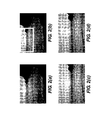
- the degree of match is affected by the photographer's choice of what to capture in the image (affecting its composition) and when to capture the image (potentially affecting its color due to changes in the scene illuminant over time). If it were possible to "relive" the scene, one could attempt to obtain an image with more prototypical color and composition for the class. For instance, referring to Figures 2(a)-2(d), an original scene (FIG. 2(a)) contains a salient sub-region (FIG.
- FIG. 2(d) which is cropped and re-sized (FIG. 2(c)). Finally, in FIG. 2(d), an illuminant shift is applied, simulating a sunset occurring later in time. How can one "relive" the scene? In other words, how can one transform an arbitrary image into one that will match a prototypical exemplar better?
- Image recomposition is generally defined as a process that systematically creates altered versions of the same image, including spatial composition and color composition.
- the different types and uses of spatial recomposition (mirroring and cropping images) and effective (simulated) temporal recomposition (shifting the color of images) are presented in Table 1 and will be elaborated in more detail below. They are categorized as recomposition in training, testing, and both. Some type-use combinations need visual inspection to ensure such recompositions do not destroy the integrity of the training examples (e.g., aggressive crop may result in the loss of the main subject of the picture).
- Types and Uses of Image Recomposition. Type Use Mirror Training Conservative crop Training, testing Aggressive crop Training (need inspection), testing Color shift Training (need inspection), testing
- Using recomposition on a limited-size set of training data can yield a much richer, more diverse set of exemplars.
- the goal is to obtain these exemplars without having to inspect each image visually.
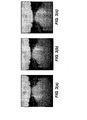
- One technique is to reflect each image about the vertical axis, thereby doubling the number of exemplars. For instance, as shown in Figures 3(a)-3(c), the original image (3(b)) is transformed by a horizontal mirroring (3(a)) or a crop (20% from the bottom as shown in 3(c)).
- the classification of the new image is unchanged; that is, while reflecting a sunset image with the sun on the left side of the image moves the sun to the right side, the image remains a valid sunset image.
- Another technique is to crop the edges of an image.
- the assumption is that the salient portion of an image is in the center and imperfect composition is caused by distractions in the periphery. Cropping from each side of the image in turn produces four new images of the same classification.
- a salient part of the image such as the sun or the horizon line in a sunset
- a conservative crop of a small amount e.g. 10%
- the semantic classification of a scene is highly unlikely to change, although the classification by an algorithm may change.
- the edges of the image can be cropped in an attempt to match better the features of a test image against the exemplars. It may be necessary to crop more aggressively (as in Figure 2) to obtain such a match.
- Some classes of images contain a large variation in their global color distribution, and shifting the overall color of the test image appropriately can yield a better match with a training exemplar.
- an early and a late sunset may have the same spatial distribution of color (bright sky over dark foreground), but the overall appearance of the early sunset is much cooler, due to a color change in the scene illuminant.
- a temporal recomposition comprises a series of illuminant shifts in 3-button increments, starting from -6 buttons ( Figure 4(a)) and ending at +9 buttons ( Figure (f)), where a button equals 0.4 of a photographic stop.
- a button equals 0.4 of a photographic stop.
- variation within the amount of illuminant in the scene can be handled using changes along the luminance axis. Color shift along other axes may be applicable in other problem domains.
- the classifier may or may not label a new, recomposed image with the same class as the original image. How does one adjudicate when the classifications of the recomposed images differ? Duin (see R.P.W. Duin, "The combining classifier: To train or not to train?”, Proceedings oflnternational Conference on Pattern Recognition, 2002) discussed two types of combiners, fixed and trained. Fixed combining rules include voting schemes and using the sum or average of the scores. A trained combiner is a second classifier for mapping the scores to a single score. Two considerations affect the choice of which to use: the availability of training data and the degree to which the base classifiers have been trained.
- the scores can also be combined in such a way as to find the most consistent image classification. For instance, a voting scheme can be used for combination. This is desirable: classification based on a number of slightly varied recomposed images with the same salient scene content should be more robust than classification based on the original image alone. If the single classification based on the original image is incorrect due to some statistical anomaly (e.g. foreground distractions or poor spatial registration with the set of exemplars), yet many of the recomposed images are classified correctly, a majority rule will correct the anomaly.
- some statistical anomaly e.g. foreground distractions or poor spatial registration with the set of exemplars
- recomposition may be used on both the training and testing data. Since each serves a different purpose, they may be combined readily. One may question the need for using both types of recompositions; namely, if one had a sufficiently rich set of training exemplars, why would recomposing the test image be necessary? The need to use recomposition in both training and testing is practical. There is no guarantee that the training data is diverse enough to begin with, or that recomposition in training exemplars has exhaustively created all possible variations and completely fills the image space.
- a related question is the choice between recomposing training images and obtaining additional unique exemplars. Aside from the argument presented earlier about the lack of good training data, and the time necessary to gather it, there is also the question of the quality of the data available. Recomposing a small set of prototypical exemplars is likely to be more desirable than using more but lesser quality exemplars.
- a last question is whether a more aggressive approach may be used in recomposing the training data so as to minimize the need to recompose the test data. Because aggressive recomposition can cause images to lose their salient content, one must ensure that the integrity of the expanded training set is not compressed; the discussion now turns to a technique for doing exactly this.
- Such recomposed images are then eliminated while the remaining recomposed images are added to the expanded training set to improve its richness. This is a preferred tradeoff between generating fewer recomposed images in an unsupervised manner and generating many recomposed images in a completely supervised fashion.
- a Support Vector Machine is preferably used as the classifier because SVMs have been shown to give higher performance than other classifiers such as Learning Vector Quantizers (LVQ) on similar problems (See, for example, B. Scholkopf, C. Burges, and A. Smola, Advances in Kernel Methods: Support Vector Learning, MIT Press, Cambridge, MA, 1999, pp. 263-266, and Y. Wang and H. Zhang, "Content-based image orientation detection with support vector machines," Proceedings of IEEE Workshop on Content-Based Access of Image and Video Libraries, 2001).
- LVQ Learning Vector Quantizers
- RBF Random Basis Function
- the above system is extended to distinguish between six types of outdoor scenes: beach, sunset, fall foliage, field, mountain, and urban (defined in Table 2).
- the images used for training and testing included Corel and consumer images.
- the same features and classifier are used as for the sunset detector, although the SVM classifier was extended to multiple classes by using a one-vs.-all approach (see B. Scholkopf, C. Burges, and A. Smola. Advances in Kernel Methods: Support Vector Learning. MIT Press, Cambridge, MA, 1999, pp 256-258). Spatial recomposition was especially effective when used in training, since the training set was still limited. Recomposition was not used on the testing set.
- Class Definitions of six outdoor scene classes Class Definition Beach At least 5% each of water, sand, and sky Sunset Illuminant source in front of camera Fall foliage Detectable color in turned leaves on tree Field No aerial view, not cluttered with trees ("open") Mountain Open, whole mountains, mid-range view, Less than 90% snow or fog-covered Urban At least one building, no extreme perspectives
- an image is classified with four scores, each coming from a SVM tuned to recognize images of a given orientation.
- the one-vs.-all classifier classifies the image with the orientation corresponding to the SVM that yields the maximum score. This process is repeated nine times, once for each cropped version of the image. The process finally votes among the nine classifications, using the scores to break ties (although a tie means no single orientation dominated and that the image is a good candidate for rejection, i.e., no apparent orientation).
- An example of the voting scheme is given in Figure 7.
- Image recomposition is similar in spirit to bootstrapping or bagging methods, with a major distinction being that only a single classifier is trained and used in classification.
- the key to successful application of this scheme to an image classification problem is that such image recomposition would only affect the distractive components in the image in such a way that they can be discounted in the final classification and the salient content is invariant to such perturbation to the image.
- this is a general approach to boosting classification performance as long as appropriate ways of recomposition are selected according to the domain of problem and the features/classifier used.
- Figure 9 shows a diagram of the method for improving the scene classification of a digital image according to the invention.
- an input exemplar image 10 or an input test image 12 is provided in an input stage 14 and then applied to a recomposition stage 16, where the input image is systematically recomposed according to either a spatial recomposition algorithm 18 or a temporal recomposition algorithm 20 (or both), as described heretofore in the detailed description of the invention.
- the result of the recomposition is an expanded set of images 22, which depending on the type of input image (exemplar or test image) will be an expanded set of exemplar images 24 or an expanded set of test images 26 (or both).
- the expanded set of images are exemplar images, they are used to train the classifier in a training stage 28, thereby providing an improved classifier according to the invention.
- the expanded set of images are test images, they are used in a classifier stage 30, thereby providing an improved image classification result according to the invention.
- the improved classifier resulting from the expanded set of exemplar images 24 may be used together with the expanded set of test images 26 to provide an overall improved classification result.
- the subject matter of the present invention relates to digital image understanding technology, which is understood to mean technology that digitally process a digital image to recognize and thereby assign useful meaning to human understandable objects, attributes or conditions and then to utilize the results obtained in the further processing of the digital image.
- Scene classification can also find application in image enhancement. Rather than applying generic color balancing and exposure adjustment to all scenes, the adjustment could be customized to the scene, e.g., retaining or boosting brilliant colors in sunset images while removing warm-colored cast from tungsten-illuminated indoor images.
- the recomposition technique described by the present invention is not limited to photographic images.
- spatial recomposition can also be applied to medical images for medical image classification (although color recomposition does not apply).
Landscapes
- Engineering & Computer Science (AREA)
- Theoretical Computer Science (AREA)
- General Physics & Mathematics (AREA)
- Physics & Mathematics (AREA)
- Multimedia (AREA)
- Databases & Information Systems (AREA)
- Library & Information Science (AREA)
- Data Mining & Analysis (AREA)
- Computer Vision & Pattern Recognition (AREA)
- General Engineering & Computer Science (AREA)
- Evolutionary Computation (AREA)
- Artificial Intelligence (AREA)
- Health & Medical Sciences (AREA)
- Computing Systems (AREA)
- Software Systems (AREA)
- Medical Informatics (AREA)
- General Health & Medical Sciences (AREA)
- Life Sciences & Earth Sciences (AREA)
- Bioinformatics & Cheminformatics (AREA)
- Bioinformatics & Computational Biology (AREA)
- Evolutionary Biology (AREA)
- Image Analysis (AREA)
Abstract
Description
- The invention relates generally to the field of digital image processing and, more particular to a method for using multiple recomposed versions of the input digital image to improve scene classification.
- Automatically determining the semantic classification (e.g., sunset, picnic, beach) of an arbitrary image is a difficult problem. Much research has been done recently, and a variety of classifiers and feature sets have been proposed. The most common design for such systems has been to use low-level features (e.g., color, texture) and statistical pattern recognition techniques. Such systems are exemplar-based, relying on learning patterns from a training set (see A. Vailaya, M. Figueiredo, A. Jain, and H.J. Zhang, "Content-based hierarchical classification of vacation images", Proceedings of IEEE International Conference on Multimedia Computing and Systems, 1999). Such exemplar-based systems are in contrast to model-based systems, in which the characteristics of classes are specified directly using human knowledge, or hybrid systems, in which the model is learned.
- Semantic scene classification can improve the performance of content-based image organization and retrieval (CBIR). Many current CBIR systems allow a user to specify an image and search for images similar to it, where similarity is often defined only by color or texture properties. This so-called "query by example" has often proven to be inadequate. Knowing the category of a scene a priori helps narrow the search space dramatically. For instance, knowing what constitutes a party scene allows us to consider only party scenes in our search to answer the query "Find pictures of Mary's birthday party". This way, the search time is reduced, the hit rate is higher, and the false alarm rate is expected to be lower.
- Current scene classification systems enjoy limited success on unconstrained image sets. What are the reasons for this? The primary reason appears to be the incredible variety of images found within most semantic classes. Exemplar-based systems must account for such variation in their training sets. Even hundreds of exemplars do not necessarily capture all of the variability inherent in some classes. Take the class of sunset images as an example. Sunset images captured at various stages of the sunset can vary greatly in color, as the colors tend to become more brilliant as the sun approaches the horizon, and then fade as time progresses further. The composition can also vary, due in part to the camera's field of view: does it encompass the horizon or the sky only? Where is the sun relative to the horizon? Is the sun centered or offset to one side?
- A second reason for limited success in exemplar-based classification is that images often contain excessive or distracting foreground regions, which cause the scene to look less prototypical and thus not match any of the training exemplars well. For example, Figure 1 shows four scenes (a)-(d) with distracting foreground regions. This is especially true in consumer images, where the typical consumer pays less attention to composition and lighting than would a professional photographer. Therefore, consumer images contain greater variability, causing the high performance (on professionally-taken stock photo libraries such as the Corel database) of many existing systems to decline when used in this domain.
- Consequently, a need exists for a method that overcomes the above-described issues in image classification. These issues are addressed by introducing the concept of spatial image recomposition, designed to minimize the impact of undesirable composition (i.e., foreground objects), and of simulated or effective temporal image recomposition, designed to minimize the effects of color changes occurring over time.
- This approach is supported by past success in other domains. In face recognition and detection, researchers used perturbed versions of faces in training (e.g., see H. Rowley, S. Baluja, and T. Kanade, "Rotation invariant neural network-based face detection", Proceedings of IEEE Conference on Computer Vision and Pattern Recognition, 1998) in order to handle geometric variation. This is related to resampling or bootstrapping. In addition, bagging (bootstrap aggression) uses multiple versions of a training set to train a different component classifier and the final classification decision is based on the vote of each component classifier (see R. O. Duda, P. E. Hart, and D. G. Stork, Pattern Classification. John Wiley & Sons, New York, 2001, pp. 475-476).
- The present invention is directed to overcoming one or more of the problems set forth above. Briefly summarized, according to one aspect of the present invention, the invention resides in a method for improving image classification of a digital image comprising the steps of: (a) providing an image; (b) systematically recomposing the image to generate an expanded set of images; and (c) using a classifier and the expanded set of images to determine an image classification for the image, whereby the expanded set of images provides at least one of an improved classifier and an improved classification result.
- The present invention provides a method for either (or both) systematically generating recomposed versions of an exemplar image to generate an expanded set of training exemplars to derive a robust classifier, or systematically generating recomposed versions of a testing input digital image to generate an expanded set of testing images with the same salient characteristics to derive a robust image classification result. This has the advantage of increasing the diversity of training exemplars, allowing better match of an image with exemplars, and providing a method of obtaining more robust image classification.
- FIGS. 1(a)-1(d) show four examples of sunset images with distracting foreground regions.
- FIGS. 2(a)-2(d) show a series of images exemplifying how an arbitrary image (a) is transformed into one (d) that better matches a prototypical exemplar.
- FIGS. 3(a)-3(c) show an example of spatial recompositions, where original image (b) can be transformed by a horizontal mirroring (a) or a crop (20% from bottom as shown on (c)).
- FIGS. 4(a)-4(f) show an example of temporal recomposition comprising a series of illuminant shifts.
- FIGS. 5(a) and 5(b) show typical examples of false positives induced by using spatial recomposition.
- FIGS. 6(a)-6(f) show examples of how sunsets and false positives are processed when temporal recompositions are used, where the original (left images) and illuminant-shift (+6 buttons) images (right images) are shown. Note that the bottom image is one of the purposefully confusing images: A winter scene with the sun low in the horizon, but not setting.
- FIG. 7 shows a table resolving independent recomposition decisions using voting where, e.g., "T10" means 10% cropped from the image top, and so on.
- FIGS. 8(a)-8(c) show examples of sample testing images that gained by using recomposition according to the invention.
- FIG. 9 is a diagram illustrating elements of a method for practicing the present invention.
-
- The present invention will be described as implemented in a programmed digital computer. It will be understood that a person of ordinary skill in the art of digital image processing and software programming will be able to program a computer to practice the invention from the description given below. The present invention may be embodied in a computer program product having a computer readable storage medium such as a magnetic or optical storage medium bearing machine readable computer code. Alternatively, it will be understood that the present invention may be implemented in hardware or firmware.
- A large obstacle to high performance in semantic scene classification is the immense variety, both in terms of color and composition, of images in each class. Obtaining enough training data for an exemplar-based system can be a daunting task, especially when the classes contain many variations. Manually collecting large numbers of high-quality, prototypical images is time-consuming, even with the help of themed stock photo libraries. Therefore, it is critical to make efficient use of all available training data.
- Furthermore, the best match of a testing image with the set of training exemplars occurs when the image matches an exemplar of its class, both in its color and its composition. However, the test image may contain variations not present in the training set. The degree of match is affected by the photographer's choice of what to capture in the image (affecting its composition) and when to capture the image (potentially affecting its color due to changes in the scene illuminant over time). If it were possible to "relive" the scene, one could attempt to obtain an image with more prototypical color and composition for the class. For instance, referring to Figures 2(a)-2(d), an original scene (FIG. 2(a)) contains a salient sub-region (FIG. 2(b)) which is cropped and re-sized (FIG. 2(c)). Finally, in FIG. 2(d), an illuminant shift is applied, simulating a sunset occurring later in time. How can one "relive" the scene? In other words, how can one transform an arbitrary image into one that will match a prototypical exemplar better?
- According to the invention, a concept called effective spatial and temporal recomposition is used to address the above issues. Image recomposition is generally defined as a process that systematically creates altered versions of the same image, including spatial composition and color composition. The different types and uses of spatial recomposition (mirroring and cropping images) and effective (simulated) temporal recomposition (shifting the color of images) are presented in Table 1 and will be elaborated in more detail below. They are categorized as recomposition in training, testing, and both. Some type-use combinations need visual inspection to ensure such recompositions do not destroy the integrity of the training examples (e.g., aggressive crop may result in the loss of the main subject of the picture).
Types and Uses of Image Recomposition. Type Use Mirror Training Conservative crop Training, testing Aggressive crop Training (need inspection), testing Color shift Training (need inspection), testing - Using recomposition on a limited-size set of training data can yield a much richer, more diverse set of exemplars. The goal is to obtain these exemplars without having to inspect each image visually. One technique is to reflect each image about the vertical axis, thereby doubling the number of exemplars. For instance, as shown in Figures 3(a)-3(c), the original image (3(b)) is transformed by a horizontal mirroring (3(a)) or a crop (20% from the bottom as shown in 3(c)). Clearly, the classification of the new image is unchanged; that is, while reflecting a sunset image with the sun on the left side of the image moves the sun to the right side, the image remains a valid sunset image.
- Another technique is to crop the edges of an image. The assumption is that the salient portion of an image is in the center and imperfect composition is caused by distractions in the periphery. Cropping from each side of the image in turn produces four new images of the same classification. Of course, one does not want to lose a salient part of the image (such as the sun or the horizon line in a sunset), but for a conservative crop of a small amount, e.g., 10%, the semantic classification of a scene is highly unlikely to change, although the classification by an algorithm may change.
- while recomposing the training set yields more exemplars, recomposing a test image and classifying each new, recomposed image yields multiple classifications of the original image. In terms of spatial recomposition, the edges of the image can be cropped in an attempt to match better the features of a test image against the exemplars. It may be necessary to crop more aggressively (as in Figure 2) to obtain such a match. However, if the classifier has been trained using mirrored images, there is no need to mirror the test image due to symmetry already built into the classifier. For example, when using a 1-NN classifier, the feature vector, T, of a testing image will lie a certain distance from the nearest exemplar vector E. Call the vectors of the reflected images of E and T, E' and T', respectively. Due to symmetry in the features, d(E,T) = d(E', T'), making T' redundant.
- Some classes of images contain a large variation in their global color distribution, and shifting the overall color of the test image appropriately can yield a better match with a training exemplar. Using the class of sunset images as an example, an early and a late sunset may have the same spatial distribution of color (bright sky over dark foreground), but the overall appearance of the early sunset is much cooler, due to a color change in the scene illuminant. By artificially changing the color along the illuminant ( = red-blue) axis towards the warmer side, we can simulate the appearance of capturing the image later in time; we dub this illuminant shift an effective temporal recomposition. For example, as shown in Figures 4(a)-4(f), a temporal recomposition comprises a series of illuminant shifts in 3-button increments, starting from -6 buttons (Figure 4(a)) and ending at +9 buttons (Figure (f)), where a button equals 0.4 of a photographic stop. Likewise, variation within the amount of illuminant in the scene can be handled using changes along the luminance axis. Color shift along other axes may be applicable in other problem domains.
- Whether using spatial or temporal recomposition, the classifier may or may not label a new, recomposed image with the same class as the original image. How does one adjudicate when the classifications of the recomposed images differ? Duin (see R.P.W. Duin, "The combining classifier: To train or not to train?", Proceedings oflnternational Conference on Pattern Recognition, 2002) discussed two types of combiners, fixed and trained. Fixed combining rules include voting schemes and using the sum or average of the scores. A trained combiner is a second classifier for mapping the scores to a single score. Two considerations affect the choice of which to use: the availability of training data and the degree to which the base classifiers have been trained. Duin suggests that undertrained classifiers can benefit from a trained combiner, while those that are overtrained (e.g., support vector machines (SVMs)) cannot. In the present study, this was found to be the case (e.g., a second-stage SVM did not help).
- In a two-class problem, one interesting fixed combiner of r recompositions is to use the m-th order statistic, e.g., the maximum (m=1), the second largest (m=2), or the median (m = r/2). Varying the parameter m moves the classifier's position on the operating curve. Small m classifies images positively in an aggressive manner, giving greater recall at the expense of more false positives. The choice of m will clearly depend on the application.
- The scores can also be combined in such a way as to find the most consistent image classification. For instance, a voting scheme can be used for combination. This is desirable: classification based on a number of slightly varied recomposed images with the same salient scene content should be more robust than classification based on the original image alone. If the single classification based on the original image is incorrect due to some statistical anomaly (e.g. foreground distractions or poor spatial registration with the set of exemplars), yet many of the recomposed images are classified correctly, a majority rule will correct the anomaly.
- For some applications, recomposition may be used on both the training and testing data. Since each serves a different purpose, they may be combined readily. One may question the need for using both types of recompositions; namely, if one had a sufficiently rich set of training exemplars, why would recomposing the test image be necessary? The need to use recomposition in both training and testing is practical. There is no guarantee that the training data is diverse enough to begin with, or that recomposition in training exemplars has exhaustively created all possible variations and completely fills the image space.
- A related question is the choice between recomposing training images and obtaining additional unique exemplars. Aside from the argument presented earlier about the lack of good training data, and the time necessary to gather it, there is also the question of the quality of the data available. Recomposing a small set of prototypical exemplars is likely to be more desirable than using more but lesser quality exemplars.
- In addition, use of recomposition in testing on top of recomposition in training is certainly a way to boost recall if so desired, though potentially at the expense of a higher false alarm rate.
- A last question is whether a more aggressive approach may be used in recomposing the training data so as to minimize the need to recompose the test data. Because aggressive recomposition can cause images to lose their salient content, one must ensure that the integrity of the expanded training set is not compressed; the discussion now turns to a technique for doing exactly this.
- Our goal in using conservative recompositions on the training set is to make the process completely unsupervised. However, if yet more training data is desired and aggressive recompositions, such as larger amounts of cropping or significant color shifts, are used, a training methodology is needed so that one does not need to go to the other extreme, that of inspecting every recomposed image.
- Admittedly, because some aggressive recompositions can remove some scene content characteristic to the class of an image, a more rigorous approach to adding these images to the training data would be to visually inspect each of the recomposed training images. Doing so can be tedious and laborious. Only inspecting a subset of the recomposed images needing attention would be more efficient. In order to screen the recomposed images, one can train a classifier using the original training images and then classify the recomposed versions of the training images using this classifier. Only those recomposed images that fail (or pass with low confidence) the classifier need to be evaluated visually to determine if the recomposition has caused the image to lose salient scene content. Such recomposed images are then eliminated while the remaining recomposed images are added to the expanded training set to improve its richness. This is a preferred tradeoff between generating fewer recomposed images in an unsupervised manner and generating many recomposed images in a completely supervised fashion.
- Next, three preferred embodiments of the present invention are described for sunset detection, outdoor scene classification, and automatic image orientation detection, respectively.
- In the aforementioned hierarchical image classification scheme described by Vailaya et al., sunsets were easily separated from mountain/forest scenes. Color was found to be more salient for the problem than other features, such as edge direction alone, confirming an intuition that sunsets are recognizable by their brilliant, warm colors. Furthermore, spatial information should be incorporated to distinguish sunsets from other scenes containing warm colors, such as those of desert rock formations. Therefore, spatial color moments may be used, dividing the image into 49 regions using a 7x7 grid and computing the mean and variance of each band of a Luv-transformed image. This yields 49 x 2 x 3 = 294 features.
- A Support Vector Machine (SVM) is preferably used as the classifier because SVMs have been shown to give higher performance than other classifiers such as Learning Vector Quantizers (LVQ) on similar problems (See, for example, B. Scholkopf, C. Burges, and A. Smola, Advances in Kernel Methods: Support Vector Learning, MIT Press, Cambridge, MA, 1999, pp. 263-266, and Y. Wang and H. Zhang, "Content-based image orientation detection with support vector machines," Proceedings of IEEE Workshop on Content-Based Access of Image and Video Libraries, 2001). In particular, a Gaussian kernel was used, creating an RBF-style classifier (RBF=Radial Basis Function, see Wang and Zhang). SVMs are designed for two-class problems, and output a real number for each testing image. The sign is the classification and the magnitude can be used as a loose measure of the confidence.
- Using recomposition in the training set increased performance significantly, presumably because the set was much richer. This overcomes some of the effects of having a limited training set. Using recompositions in the testing set increased both the number of hits and the number of false positives. Finally, using recompositions in both training and testing gave the best results overall. Note that these results correspond to optimal operating points on different curves.
- Using spatial recomposition on the testing images met the goal of correctly classifying sunset images with large distracting foreground regions: for example, the images presented in Figure 1 were all classified incorrectly by the baseline system, but correctly when recomposition was used (gained by recomposition). The image (b) on the upper right is a good example of how recomposition by cropping can help. Cropping the large, dark, water region in the foreground from the image increases the SVM score substantially. The other images fared similarly: for example, cropping the bottom 20% from the bottom left image (a) eliminates the confusing reflection in the water.
- However, the number of false positive images also increased, partially offsetting the gain in recall. Typical false positives induced by recomposition are shown in Figures 5a and 5b. Each of these images contains patterns not typical of sunsets (e.g., the multiple bright regions in the night image, or the sky in the desert image), which when cropped out, make the image appear to be much more sunset-like.
- Some sunset images have prototypical composition, but weak colors, corresponding to early or late sunsets. Shifting the scene illuminant "warms up" these images, causing them to be classified correctly, but also introduces many false positives, both of which are shown in Figure 6.
- The above system is extended to distinguish between six types of outdoor scenes: beach, sunset, fall foliage, field, mountain, and urban (defined in Table 2). The images used for training and testing included Corel and consumer images. The same features and classifier are used as for the sunset detector, although the SVM classifier was extended to multiple classes by using a one-vs.-all approach (see B. Scholkopf, C. Burges, and A. Smola. Advances in Kernel Methods: Support Vector Learning. MIT Press, Cambridge, MA, 1999, pp 256-258). Spatial recomposition was especially effective when used in training, since the training set was still limited. Recomposition was not used on the testing set.
Definitions of six outdoor scene classes Class Definition Beach At least 5% each of water, sand, and sky Sunset Illuminant source in front of camera Fall foliage Detectable color in turned leaves on tree Field No aerial view, not cluttered with trees ("open") Mountain Open, whole mountains, mid-range view, Less than 90% snow or fog-covered Urban At least one building, no extreme perspectives - The goal of automatic image orientation detection (see Y. Wang and H. Zhang, "Content-based image orientation detection with support vector machines", Proceedings of IEEE Workshop on Content-Based Access of Image and Video Libraries, 2001) is to classify an arbitrary image into one of four compass directions (N, S, E, W), depending on which direction the top of the image is facing. Doing so based on image content alone is a difficult problem. For the preferred embodiment, a baseline system uses spatial color moments and a one-vs.-all SVM classifier, which is similar and achieves similar results to that in Wang et al.
- Recomposition in testing can be expected to improve classification in this domain as well, but the rationale for using it is much different: cropping the edges of an image should not affect the perceived orientation of the image. Therefore, the combined classification based on a number of slightly different images should be more robust than that of a single image. Experimenting with both fixed (voting) and trained combiners, the performance of each was found to be comparable; voting was chosen for its simplicity.
- In this application, an image is classified with four scores, each coming from a SVM tuned to recognize images of a given orientation. The one-vs.-all classifier classifies the image with the orientation corresponding to the SVM that yields the maximum score. This process is repeated nine times, once for each cropped version of the image. The process finally votes among the nine classifications, using the scores to break ties (although a tie means no single orientation dominated and that the image is a good candidate for rejection, i.e., no apparent orientation). An example of the voting scheme is given in Figure 7.
- Sample Corel images that were gained by using the recomposition scheme are shown in Figure 8. In each of these cases, some region on the border of the image is distracting. The dark shadows (FIG 8(c)), the dark trees (FIG. 8(b)), and the reflection of the sun (FIG. 8(c)) all confused the classifier; bright or dark regions appear at the side of an image, not at the top or bottom.
- Image recomposition is similar in spirit to bootstrapping or bagging methods, with a major distinction being that only a single classifier is trained and used in classification. The key to successful application of this scheme to an image classification problem is that such image recomposition would only affect the distractive components in the image in such a way that they can be discounted in the final classification and the salient content is invariant to such perturbation to the image. Thus, this is a general approach to boosting classification performance as long as appropriate ways of recomposition are selected according to the domain of problem and the features/classifier used.
- The following guidelines are offered to help decide how to use image recomposition in image classification. First, if the training set is sparse, using conservative spatial recompositions can help greatly. More aggressive recomposition, both spatial and temporal, should be done in a semi-supervised manner. In a two-class problem, recomposing the test image can cause a better match with an exemplar of the same class, giving an operating curve parameter that can be used to customize the performance to the application. In a multi-class problem, voting among the classifications of recomposed images is more robust. Clearly, in the ideal case where classes are well separated in training data and testing images match the exemplars well, recomposition is not expected to help much.
- Figure 9 shows a diagram of the method for improving the scene classification of a digital image according to the invention. Initially either an
input exemplar image 10 or aninput test image 12 is provided in aninput stage 14 and then applied to arecomposition stage 16, where the input image is systematically recomposed according to either aspatial recomposition algorithm 18 or a temporal recomposition algorithm 20 (or both), as described heretofore in the detailed description of the invention. The result of the recomposition is an expanded set ofimages 22, which depending on the type of input image (exemplar or test image) will be an expanded set ofexemplar images 24 or an expanded set of test images 26 (or both). If the expanded set of images are exemplar images, they are used to train the classifier in atraining stage 28, thereby providing an improved classifier according to the invention. If the expanded set of images are test images, they are used in aclassifier stage 30, thereby providing an improved image classification result according to the invention. As indicated by thebroken line 32 connecting thetraining stage 28 and theclassification stage 30, the improved classifier resulting from the expanded set ofexemplar images 24 may be used together with the expanded set oftest images 26 to provide an overall improved classification result. However, it is also possible to apply therecomposition stage 16 in only one of the two paths shown in Figure 10 (i.e., either in training an improved classifier or in providing an improved image classification result, but not both). - The subject matter of the present invention relates to digital image understanding technology, which is understood to mean technology that digitally process a digital image to recognize and thereby assign useful meaning to human understandable objects, attributes or conditions and then to utilize the results obtained in the further processing of the digital image.
- Scene classification can also find application in image enhancement. Rather than applying generic color balancing and exposure adjustment to all scenes, the adjustment could be customized to the scene, e.g., retaining or boosting brilliant colors in sunset images while removing warm-colored cast from tungsten-illuminated indoor images.
- The recomposition technique described by the present invention is not limited to photographic images. For example, spatial recomposition can also be applied to medical images for medical image classification (although color recomposition does not apply).
Claims (11)
- A method for improving image classification of a digital image comprising the steps of:(a) providing an image;(b) systematically recomposing the image to generate an expanded set of images; and(c) using a classifier and the expanded set of images to determine an image classification for the image, whereby the expanded set of images provides at least one of an improved classifier and an improved classification result.
- The method as claimed in claim 1 wherein the image provided in step (a) is an exemplar image and in step (b) the exemplar image is systematically recomposed to generate an expanded set of exemplar images.
- The method as claimed in claim 2 wherein the expanded set of exemplar images are used to train the classifier in step (c), thereby providing an improved classifier.
- The method as claimed in claim 1 wherein the image provided in step (a) is a test image and in step (b) the test image is systematically recomposed to generate an expanded set of test images.
- The method as claimed in claim 4 wherein the expanded set of test images are processed by the classifier in step (c), thereby providing an improved image classification result.
- The method as claimed in claim 1 wherein step (b) comprises spatially recomposing the image to generate an expanded set of spatially recomposed images.
- The method as claimed in claim 6 wherein spatially recomposing the image in step (b) comprises horizontally mirroring the image, thereby doubling the number of images in the expanded set of images.
- The method as claimed in claim 6 wherein spatially recomposing the image in step (b) comprises systematically cropping the edges of the image from one or more sides of the image, thereby increasing the number of images in the expanded set of images.
- The method as claimed in claim 1 wherein step (b) comprises temporally recomposing the image to generate an expanded set of temporally recomposed images, whereby the images in the expanded set simulate the appearance of capturing an image earlier or later in time.
- The method as claimed in claim 9 wherein temporally recomposing the image in step (b) comprises systematically shifting the color distribution of the image, thereby increasing the number of images in the expanded set of images.
- The method as claimed in claim 7 wherein temporally recomposing the image in step (b) comprises systematically shifting the illuminant quality of the image, thereby increasing the number of images in the expanded set of images.
Applications Claiming Priority (4)
| Application Number | Priority Date | Filing Date | Title |
|---|---|---|---|
| US42266602P | 2002-10-31 | 2002-10-31 | |
| US422666P | 2002-10-31 | ||
| US647722 | 2003-08-25 | ||
| US10/647,722 US7313268B2 (en) | 2002-10-31 | 2003-08-25 | Method for using effective spatio-temporal image recomposition to improve scene classification |
Publications (2)
| Publication Number | Publication Date |
|---|---|
| EP1418509A1 true EP1418509A1 (en) | 2004-05-12 |
| EP1418509B1 EP1418509B1 (en) | 2016-02-24 |
Family
ID=32110366
Family Applications (1)
| Application Number | Title | Priority Date | Filing Date |
|---|---|---|---|
| EP03078317.9A Expired - Lifetime EP1418509B1 (en) | 2002-10-31 | 2003-10-20 | Method using image recomposition to improve scene classification |
Country Status (2)
| Country | Link |
|---|---|
| US (1) | US7313268B2 (en) |
| EP (1) | EP1418509B1 (en) |
Cited By (3)
| Publication number | Priority date | Publication date | Assignee | Title |
|---|---|---|---|---|
| WO2006130542A1 (en) | 2005-06-02 | 2006-12-07 | Eastman Kodak Company | Using photographer identity to classify images |
| WO2008005175A1 (en) * | 2006-06-29 | 2008-01-10 | Eastman Kodak Company | Using background for searching image collections |
| US8094947B2 (en) | 2008-05-20 | 2012-01-10 | Xerox Corporation | Image visualization through content-based insets |
Families Citing this family (24)
| Publication number | Priority date | Publication date | Assignee | Title |
|---|---|---|---|---|
| US7313268B2 (en) * | 2002-10-31 | 2007-12-25 | Eastman Kodak Company | Method for using effective spatio-temporal image recomposition to improve scene classification |
| US7266559B2 (en) * | 2002-12-05 | 2007-09-04 | Microsoft Corporation | Method and apparatus for adapting a search classifier based on user queries |
| US20050018882A1 (en) * | 2003-06-30 | 2005-01-27 | Iowa University Research Foundation | Controlled surface wave image velocimetry |
| KR20070118156A (en) * | 2005-06-30 | 2007-12-13 | 올림푸스 가부시키가이샤 | Search system and search method |
| US7885458B1 (en) * | 2005-10-27 | 2011-02-08 | Nvidia Corporation | Illuminant estimation using gamut mapping and scene classification |
| GB2449412B (en) * | 2007-03-29 | 2012-04-25 | Hewlett Packard Development Co | Integrating object detectors |
| US8564687B2 (en) * | 2007-05-07 | 2013-10-22 | Nvidia Corporation | Efficient determination of an illuminant of a scene |
| US8698917B2 (en) * | 2007-06-04 | 2014-04-15 | Nvidia Corporation | Reducing computational complexity in determining an illuminant of a scene |
| US7836093B2 (en) * | 2007-12-11 | 2010-11-16 | Eastman Kodak Company | Image record trend identification for user profiles |
| US8194992B2 (en) * | 2008-07-18 | 2012-06-05 | Xerox Corporation | System and method for automatic enhancement of seascape images |
| US20100226582A1 (en) * | 2009-03-03 | 2010-09-09 | Jiebo Luo | Assigning labels to images in a collection |
| US8442309B2 (en) * | 2009-06-04 | 2013-05-14 | Honda Motor Co., Ltd. | Semantic scene segmentation using random multinomial logit (RML) |
| US9064173B2 (en) | 2012-03-07 | 2015-06-23 | Blue River Technology, Inc. | Method and apparatus for automated plant necrosis |
| US9251437B2 (en) * | 2012-12-24 | 2016-02-02 | Google Inc. | System and method for generating training cases for image classification |
| HU230989B1 (en) | 2013-01-17 | 2019-08-28 | Gd Photonics Kft. | Composition for improving the efficiency of uvb light therapy, process for their preparation and use thereof |
| US10327393B2 (en) | 2013-03-07 | 2019-06-25 | Blue River Technology Inc. | Modular precision agriculture system |
| US9658201B2 (en) | 2013-03-07 | 2017-05-23 | Blue River Technology Inc. | Method for automatic phenotype measurement and selection |
| WO2015013723A2 (en) | 2013-07-26 | 2015-01-29 | Blue River Technology, Inc. | System and method for plant treatment |
| EP3107367B1 (en) | 2014-02-21 | 2023-08-02 | Blue River Technology Inc. | Method and system for in-situ precision calibration of a precision agricultural system to accommodate for a treatment delay |
| WO2016013885A1 (en) * | 2014-07-25 | 2016-01-28 | Samsung Electronics Co., Ltd. | Method for retrieving image and electronic device thereof |
| EP3264892B1 (en) | 2015-03-06 | 2020-10-07 | Blue River Technology Inc. | Modular precision agriculture system |
| US9826149B2 (en) * | 2015-03-27 | 2017-11-21 | Intel Corporation | Machine learning of real-time image capture parameters |
| CN109960973B (en) * | 2017-12-22 | 2021-06-15 | Oppo广东移动通信有限公司 | Photo adjustment method, device, storage medium, and electronic device |
| CN109697453A (en) * | 2018-09-30 | 2019-04-30 | 中科劲点(北京)科技有限公司 | Semi-supervised scene classification recognition methods, system and device based on multimodality fusion |
Citations (2)
| Publication number | Priority date | Publication date | Assignee | Title |
|---|---|---|---|---|
| WO1999057622A2 (en) * | 1998-05-01 | 1999-11-11 | Barnhill Technologies, Llc | Pre-processing and post-processing for enhancing knowledge discovery using support vector machines |
| WO2002059828A2 (en) * | 2001-01-23 | 2002-08-01 | Biowulf Technologies, Llc | Computer-aided image analysis |
Family Cites Families (13)
| Publication number | Priority date | Publication date | Assignee | Title |
|---|---|---|---|---|
| US5999639A (en) * | 1997-09-04 | 1999-12-07 | Qualia Computing, Inc. | Method and system for automated detection of clustered microcalcifications from digital mammograms |
| JPH11275377A (en) * | 1998-03-25 | 1999-10-08 | Fujitsu Ltd | Color data conversion method and apparatus |
| US6421463B1 (en) * | 1998-04-01 | 2002-07-16 | Massachusetts Institute Of Technology | Trainable system to search for objects in images |
| US6185335B1 (en) * | 1998-07-07 | 2001-02-06 | Electronics For Imaging, Inc. | Method and apparatus for image classification and halftone detection |
| US6801645B1 (en) * | 1999-06-23 | 2004-10-05 | Icad, Inc. | Computer aided detection of masses and clustered microcalcifications with single and multiple input image context classification strategies |
| US6944319B1 (en) * | 1999-09-13 | 2005-09-13 | Microsoft Corporation | Pose-invariant face recognition system and process |
| JP2001318745A (en) * | 2000-05-11 | 2001-11-16 | Sony Corp | Data processing device, data processing method, and recording medium |
| US6545743B1 (en) * | 2000-05-22 | 2003-04-08 | Eastman Kodak Company | Producing an image of a portion of a photographic image onto a receiver using a digital image of the photographic image |
| US6915025B2 (en) * | 2001-11-27 | 2005-07-05 | Microsoft Corporation | Automatic image orientation detection based on classification of low-level image features |
| US7113636B2 (en) * | 2002-08-30 | 2006-09-26 | Lockheed Martin Corporation | Method and computer program product for generating training data for a new class in a pattern recognition classifier |
| US7313268B2 (en) * | 2002-10-31 | 2007-12-25 | Eastman Kodak Company | Method for using effective spatio-temporal image recomposition to improve scene classification |
| US7822233B2 (en) * | 2003-11-14 | 2010-10-26 | Fujifilm Corporation | Method and apparatus for organizing digital media based on face recognition |
| EP1670257B1 (en) * | 2004-12-10 | 2018-09-26 | Ricoh Company, Ltd. | Compressing a mutlivalue image with control of memory space requirement |
-
2003
- 2003-08-25 US US10/647,722 patent/US7313268B2/en not_active Expired - Fee Related
- 2003-10-20 EP EP03078317.9A patent/EP1418509B1/en not_active Expired - Lifetime
Patent Citations (2)
| Publication number | Priority date | Publication date | Assignee | Title |
|---|---|---|---|---|
| WO1999057622A2 (en) * | 1998-05-01 | 1999-11-11 | Barnhill Technologies, Llc | Pre-processing and post-processing for enhancing knowledge discovery using support vector machines |
| WO2002059828A2 (en) * | 2001-01-23 | 2002-08-01 | Biowulf Technologies, Llc | Computer-aided image analysis |
Non-Patent Citations (1)
| Title |
|---|
| ZHOU X S ET AL: "COMPARING DISCRIMINATING TRANSFORMATIONS AND SVM FOR LEARNING DURING MULTIMEDIA RETRIEVAL", AUTOMATIC DIGITAL COMPUTATION. LONDON, 25 - 28 MARCH, 1953, LONDON, HER MAJESTY'S STATIONARY OFFICE, GB, PAGE(S) 137-146, XP002950555 * |
Cited By (5)
| Publication number | Priority date | Publication date | Assignee | Title |
|---|---|---|---|---|
| WO2006130542A1 (en) | 2005-06-02 | 2006-12-07 | Eastman Kodak Company | Using photographer identity to classify images |
| US7574054B2 (en) | 2005-06-02 | 2009-08-11 | Eastman Kodak Company | Using photographer identity to classify images |
| CN101189621B (en) * | 2005-06-02 | 2010-11-24 | 伊斯曼柯达公司 | Using photographer identity to classify images |
| WO2008005175A1 (en) * | 2006-06-29 | 2008-01-10 | Eastman Kodak Company | Using background for searching image collections |
| US8094947B2 (en) | 2008-05-20 | 2012-01-10 | Xerox Corporation | Image visualization through content-based insets |
Also Published As
| Publication number | Publication date |
|---|---|
| US7313268B2 (en) | 2007-12-25 |
| US20040120572A1 (en) | 2004-06-24 |
| EP1418509B1 (en) | 2016-02-24 |
Similar Documents
| Publication | Publication Date | Title |
|---|---|---|
| EP1418509B1 (en) | Method using image recomposition to improve scene classification | |
| US10762608B2 (en) | Sky editing based on image composition | |
| US10346677B2 (en) | Classification and organization of consumer digital images using workflow, and face detection and recognition | |
| US8175376B2 (en) | Framework for image thumbnailing based on visual similarity | |
| US7035467B2 (en) | Method and system for processing images for themed imaging services | |
| US8345921B1 (en) | Object detection with false positive filtering | |
| US8660342B2 (en) | Method to assess aesthetic quality of photographs | |
| CN101630363B (en) | Rapid detection method of face in color image under complex background | |
| US7587068B1 (en) | Classification database for consumer digital images | |
| US7302113B2 (en) | Displaying digital images | |
| EP1886255B1 (en) | Using photographer identity to classify images | |
| CN109376603A (en) | A kind of video frequency identifying method, device, computer equipment and storage medium | |
| Luo et al. | Automatic image orientation detection via confidence-based integration of low-level and semantic cues | |
| US11776237B2 (en) | Mitigating people distractors in images | |
| Luo et al. | Image transform bootstrapping and its applications to semantic scene classification | |
| Bautell et al. | Sunset scene classification using simulated image recomposition | |
| JP3962517B2 (en) | Face detection method and apparatus, and computer-readable medium | |
| Vural et al. | Multi-view fast object detection by using extended haar filters in uncontrolled environments | |
| Luo et al. | A probabilistic approach to image orientation detection via confidence-based integration of low-level and semantic cues | |
| Luo et al. | Using image-transform-based bootstrapping to improve scene classification | |
| JP2005032210A (en) | Method for effectively using spatio-temporal image recomposition to improve scene classification | |
| JP3530363B2 (en) | Recognition model generation method and image recognition method | |
| CN116597156B (en) | Key point detection methods, computer equipment and storage media | |
| CN119784927B (en) | A method for completing three-dimensional building models | |
| Chen et al. | An efficient framework for location-based scene matching in image databases |
Legal Events
| Date | Code | Title | Description |
|---|---|---|---|
| PUAI | Public reference made under article 153(3) epc to a published international application that has entered the european phase |
Free format text: ORIGINAL CODE: 0009012 |
|
| AK | Designated contracting states |
Kind code of ref document: A1 Designated state(s): AT BE BG CH CY CZ DE DK EE ES FI FR GB GR HU IE IT LI LU MC NL PT RO SE SI SK TR |
|
| AX | Request for extension of the european patent |
Extension state: AL LT LV MK |
|
| 17P | Request for examination filed |
Effective date: 20041007 |
|
| AKX | Designation fees paid |
Designated state(s): DE FR GB |
|
| 17Q | First examination report despatched |
Effective date: 20050428 |
|
| APAI | Date of receipt of notice of appeal modified |
Free format text: ORIGINAL CODE: EPIDOSCNOA2E |
|
| APBK | Appeal reference recorded |
Free format text: ORIGINAL CODE: EPIDOSNREFNE |
|
| APBN | Date of receipt of notice of appeal recorded |
Free format text: ORIGINAL CODE: EPIDOSNNOA2E |
|
| APBR | Date of receipt of statement of grounds of appeal recorded |
Free format text: ORIGINAL CODE: EPIDOSNNOA3E |
|
| APAF | Appeal reference modified |
Free format text: ORIGINAL CODE: EPIDOSCREFNE |
|
| RAP1 | Party data changed (applicant data changed or rights of an application transferred) |
Owner name: INTELLECTUAL VENTURES FUND 83 LLC |
|
| APAF | Appeal reference modified |
Free format text: ORIGINAL CODE: EPIDOSCREFNE |
|
| APBT | Appeal procedure closed |
Free format text: ORIGINAL CODE: EPIDOSNNOA9E |
|
| GRAP | Despatch of communication of intention to grant a patent |
Free format text: ORIGINAL CODE: EPIDOSNIGR1 |
|
| INTG | Intention to grant announced |
Effective date: 20150924 |
|
| GRAS | Grant fee paid |
Free format text: ORIGINAL CODE: EPIDOSNIGR3 |
|
| GRAA | (expected) grant |
Free format text: ORIGINAL CODE: 0009210 |
|
| INTG | Intention to grant announced |
Effective date: 20151218 |
|
| AK | Designated contracting states |
Kind code of ref document: B1 Designated state(s): DE FR GB |
|
| REG | Reference to a national code |
Ref country code: GB Ref legal event code: FG4D |
|
| REG | Reference to a national code |
Ref country code: DE Ref legal event code: R096 Ref document number: 60348571 Country of ref document: DE |
|
| REG | Reference to a national code |
Ref country code: FR Ref legal event code: PLFP Year of fee payment: 14 |
|
| REG | Reference to a national code |
Ref country code: DE Ref legal event code: R097 Ref document number: 60348571 Country of ref document: DE |
|
| PLBE | No opposition filed within time limit |
Free format text: ORIGINAL CODE: 0009261 |
|
| STAA | Information on the status of an ep patent application or granted ep patent |
Free format text: STATUS: NO OPPOSITION FILED WITHIN TIME LIMIT |
|
| 26N | No opposition filed |
Effective date: 20161125 |
|
| REG | Reference to a national code |
Ref country code: FR Ref legal event code: PLFP Year of fee payment: 15 |
|
| PGFP | Annual fee paid to national office [announced via postgrant information from national office to epo] |
Ref country code: DE Payment date: 20171027 Year of fee payment: 15 Ref country code: FR Payment date: 20171025 Year of fee payment: 15 |
|
| PGFP | Annual fee paid to national office [announced via postgrant information from national office to epo] |
Ref country code: GB Payment date: 20171027 Year of fee payment: 15 |
|
| REG | Reference to a national code |
Ref country code: DE Ref legal event code: R079 Ref document number: 60348571 Country of ref document: DE Free format text: PREVIOUS MAIN CLASS: G06F0017300000 Ipc: G06F0016000000 |
|
| REG | Reference to a national code |
Ref country code: DE Ref legal event code: R119 Ref document number: 60348571 Country of ref document: DE |
|
| GBPC | Gb: european patent ceased through non-payment of renewal fee |
Effective date: 20181020 |
|
| PG25 | Lapsed in a contracting state [announced via postgrant information from national office to epo] |
Ref country code: DE Free format text: LAPSE BECAUSE OF NON-PAYMENT OF DUE FEES Effective date: 20190501 |
|
| PG25 | Lapsed in a contracting state [announced via postgrant information from national office to epo] |
Ref country code: FR Free format text: LAPSE BECAUSE OF NON-PAYMENT OF DUE FEES Effective date: 20181031 |
|
| PG25 | Lapsed in a contracting state [announced via postgrant information from national office to epo] |
Ref country code: GB Free format text: LAPSE BECAUSE OF NON-PAYMENT OF DUE FEES Effective date: 20181020 |