EP1418484A2 - Event sequence detection - Google Patents
Event sequence detection Download PDFInfo
- Publication number
- EP1418484A2 EP1418484A2 EP03104056A EP03104056A EP1418484A2 EP 1418484 A2 EP1418484 A2 EP 1418484A2 EP 03104056 A EP03104056 A EP 03104056A EP 03104056 A EP03104056 A EP 03104056A EP 1418484 A2 EP1418484 A2 EP 1418484A2
- Authority
- EP
- European Patent Office
- Prior art keywords
- event
- key
- stage
- events
- stages
- Prior art date
- Legal status (The legal status is an assumption and is not a legal conclusion. Google has not performed a legal analysis and makes no representation as to the accuracy of the status listed.)
- Ceased
Links
Images
Classifications
-
- H—ELECTRICITY
- H04—ELECTRIC COMMUNICATION TECHNIQUE
- H04L—TRANSMISSION OF DIGITAL INFORMATION, e.g. TELEGRAPHIC COMMUNICATION
- H04L63/00—Network architectures or network communication protocols for network security
- H04L63/02—Network architectures or network communication protocols for network security for separating internal from external traffic, e.g. firewalls
- H04L63/0227—Filtering policies
-
- G—PHYSICS
- G06—COMPUTING OR CALCULATING; COUNTING
- G06F—ELECTRIC DIGITAL DATA PROCESSING
- G06F21/00—Security arrangements for protecting computers, components thereof, programs or data against unauthorised activity
- G06F21/50—Monitoring users, programs or devices to maintain the integrity of platforms, e.g. of processors, firmware or operating systems
- G06F21/55—Detecting local intrusion or implementing counter-measures
-
- H—ELECTRICITY
- H04—ELECTRIC COMMUNICATION TECHNIQUE
- H04L—TRANSMISSION OF DIGITAL INFORMATION, e.g. TELEGRAPHIC COMMUNICATION
- H04L63/00—Network architectures or network communication protocols for network security
- H04L63/14—Network architectures or network communication protocols for network security for detecting or protecting against malicious traffic
- H04L63/1408—Network architectures or network communication protocols for network security for detecting or protecting against malicious traffic by monitoring network traffic
Definitions
- the present invention relates to event sequence detection for example in an intrusion detection system (IDS).
- IDS intrusion detection system
- Intrusion detection system is a type of security management system for computers and networks.
- An IDS system gathers and analyzes information from various areas within a computer or a network to identify possible security breaches, which include both intrusions (attacks from outside the organization) and misuse (attacks from within the organization).
- ID uses vulnerability assessment (sometimes referred to as scanning ), which is a technology developed to assess the security of a computer system or network.
- Intrusion detection functions include:
- An IDS system is configured to generate an alarm, when an event, which is considered to be malicious, is detected.
- correlation of the events may be taken into account. That is, also the context in which an event is detected may have an effect on whether the event is classified suspicious or not.
- Object of the invention is to provide another solution for detecting event sequences in the context of identifying intrusion attempts.
- the idea of the invention is to identify event sequences by detecting a common parameter in two or more events.
- An aspect of the invention is an event sequence detection method, comprising defining an event sequence including two or more stages in order, each of the stages including one or more events, defining a filtering function for each of said stages, each filtering function providing a TRUE indication, when one of the events belonging to the respective event is received, and a FALSE indication otherwise, defining at least one binding function for each of the stages such that a pair of binding functions in two successive stages links the events in these two successive stages, continuously receiving event data, continuously evaluating the received event data with the filtering functions, when the evaluation results in a TRUE indication from one of the filter functions, deriving at least one key value from the received event data by the corresponding at least one binding function, determining that said sequence has been detected, when a TRUE indication has been obtained in each stage in a timely order and the derived key values link the detected events in the successive stages.
- Another aspect of the invention is an event sequence detection method, comprising defining an event sequence including two or more stages in order, each of the stages including one or more events, defining a filtering function for each of said stages, each filtering function providing a TRUE indication, when one of the events belonging to the respective event is received, and a FALSE indication otherwise, evaluating the filtering functions with the event data, if the filtering function of the one of the stages evaluates to TRUE, a binding function associated with the respective stage is evaluated for extracting a first key from the event data, if the stage, which evaluates to TRUE, is the first stage, it is checked whether the event and the first key already exist in a table associated with the first stage, and the if checking result is negative, the event and the first key are added to the table, if the stage, which evaluates to TRUE, is some other than the first stage, it is checked, whether there is an entry with the first key in the table of the previous stage, if the checking result is negative, nothing is done, and if the checking result
- a further aspect of the invention is an event sequence detection method, comprising defining an event sequence including two or more events, defining a filtering function and an associated binding function for each event, each filtering function providing a TRUE indication, when the respective event is received, and a FALSE indication otherwise, continuously receiving event data, continuously evaluating the received event data with the filtering functions, each time when the evaluation results in a TRUE indication from one of the filter functions, registering the corresponding event and a key value derived from the received event data by the corresponding binding function, determining the event sequence as detected, if all events of the event sequence with mutually matching key values are registered.
- a further aspect of the invention is an event sequence detection method, comprising defining an event sequence including two or more stages, each of the stages including one or more events, defining a filtering function for each of said stages, each filtering function providing a TRUE indication, when one of the events belonging to the respective event is received, and a FALSE indication otherwise, evaluating the filtering functions with the event data, if the filtering function of the one of the stages evaluates to TRUE, a binding function associated with the respective stage is evaluated for extracting a key from the event data, checking whether the key already exists in a table associated with the set of stages, if the key is not found in the table, the event with the key is added to the table, if the key is found in the table, it is checked whether an event for the current stage is already recorded for the key, if no event for the current stage is already recorded for the key, the event is added to the table in connection with the key and the current stage, checking whether the key has an event recorded for each stage, and if the key has an event recorded for each
- a further aspect of the invention is an event sequence detection method, comprising defining an event sequence including two or more stages, each of the stages including one or more events, defining a filtering function for each of said stages, each filtering function providing a TRUE indication, when one of the events belonging to the respective event is received, and a FALSE indication otherwise, evaluating the filtering functions with the event data, if the filtering function of the one of the stages evaluates to TRUE, a binding function associated with the respective stage is evaluated for extracting a key from the event data, checking whether the key already exists in a table associated with the set of stages, if the key is not found in the table, the event with the key is added to the table, if the key is found in the table, it is checked whether an event for the current stage is already recorded for the key, if no event for the current stage is already recorded for the key, the event is added to the table in connection with the key and the current stage, if an event for the current stage is already recorded for the key, i n-crementing
- a further aspect of the invention is an event sequence detector block for execution by a processor in a data communications network environment, comprising:
- a further aspect of the invention is an event sequence detector block for execution by a processor in a data communications network environment, comprising:
- a further aspect of the invention is a computer readable storage medium comprising a computer program that carries out any one of the methods of the invention when executed by a computer.
- a further aspect of the invention is a computer program that carries out any one of the methods of the invention when executed by a computer.
- the present invention may be embodied in program modules that run in a computing device, such as on a workstation, a personal computer, a server, or a special purpose appliance, having a processor and a memory and being connected to a data network or system to be monitored.
- the data network may be a fixed line network or a wireless network.
- the present invention may be embodied as a part of an intrusion detection system (IDS).
- IDS intrusion detection system
- Intrusion detection system is a type of security management system for computers and networks.
- An IDS system gathers and analyzes information from various areas within a computer or a network to identify possible security breaches, which include both intrusions (attacks from outside the organization) and misuse (attacks from within the organization).
- An illustrative operating environment for an IDS system in a very simplified configuration is shown in Figure 1.
- the IDS system 10 is providing security functions for host servers A and B within a local network of the organization.
- An attacker 12 located outside the organization attempts to attack to the host A or B over the Internet 11.
- the IDS system may include one or more sensors 13 that notify when significant events occur that relate to the sensor's operation.
- the sensors can be located at any locations in the network where the system operation and traffic shall be monitored.
- the events may include status messages about normal system operation.
- the events may also include various error and warning messages.
- suitable sensors include Real-Secure Network Sensor 6.5 and 7.0 from Internet Security Systems Inc (ISS), Atlanta, GA. It should be appreciated, however, that the details of the sensors, or other sources of the event data, and the specific type of the event data a p-plied by the present invention are not essential to the present invention. It is only necessary that event data is available for the event sequence detection according to the invention.
- the IDS system may further include an analyzer or detector 14 that may contain the event sequence detection according to the invention.
- the analyzer 14 may be located on the workstation or the console of the network security personnel, for example, or alternatively at any other device or location in the network.
- the IDS system may further include several analysers.
- An IDS system is configured to generate an alarm, when an event, which is considered to be malicious, is detected.
- correlation of the events may be taken into account. That is, also the context in which an event is detected may have an effect on whether the event is classified suspicious or not.
- Event sequence detection is an important tool when trying to find out whether an attack was successful or not, and in detecting complex attack scenarios.
- the analyzer 14 receives event data or, more generally, events. Events may be received from multiple sources, such as the sensors 13. These events can contain arbitrary data, for example timestamp of the event, the situation identifier that caused generating that event record, etc. Let the sequence of events received by the analyzer 14 be E .
- a set of filters (denoted by f 1 , f 2 ,...) is provided.
- TRUE TRUE
- FALSE FALSE
- a filtering function checks, if some parts of the event data match to the values or value ranges set for the function.
- a filtering function may be a rule to which event data is compared.
- the time information such as a timestamp of an event e is denoted by t ( e ).
- t e
- the analyzer can be used to sort the events in the order of increasing timestamps, if they are received in a slightly permuted order.
- Binding functions are denoted by b x / x,y or b y / x,y , where x and y are positive integers and x ⁇ y .
- x stands for an earlier event and y for the later event (or stage as described in some embodiments below).
- x stands for an earlier event and y for the later event (or stage as described in some embodiments below).
- x stands for an earlier event and y for the later event (or stage as described in some embodiments below).
- the domain of a binding function is the set of events and the range of a binding function is the set of sequences of octets (or bytes), derived or extracted or computed from the argument event.
- a binding function is used for finding event data pairs for which some part of a first event data has the same value than some other part of a second event data. More than one part of event data can be included in one binding function, and the parts, which are checked, may as well be the same in both events.
- an event sequence of n events is detected from the received events if and only if there exist events e 1 , e 2 ,..., e n ⁇ E such that all the following conditions are fulfilled:
- the binding functions links two consecutive events or stages.
- the intermediate events or stages have two binding functions, one for an earlier event or stage and one for later event or stage.
- binding function is linking also other than immediately neighbouring events or stages.
- b 1 / 1,3 ( e 1 ) b 3 / 1,3 ( e 3 ) links events or stages 1 and 3.
- An event group of n events is detected from the received events if, and only if, there exist events e 1 , e 2 ,..., e n ⁇ E such that all the following conditions are fulfilled:
- binding function definition is simpler, because we no more need to link two successive events but rather find a common part of all events of the group.
- event filter expressions are used both as filters and binding functions.
- event records may consist of log names and associated values. Each event may give zero or more values to each log name. Each log name may have a fixed type. Log names may be integers, but in this description we use symbolic names starting with LN_.
- an event filter expression When an event filter expression is evaluated in the context of an event, the values of the log names in the event are investigated and the value of the event filter expression is evaluated.
- an event can contain following log names and their values: Event 1: log name Value LN_SITUATION_ID 999 LN_SITUATION_STRING "Too long SMTP command was detected" LN_IPV4_DESTINATION 10.0.0.1
- An event filter expression may present a combination of logi-cal statements concerning a single event, which can be evaluated to be either true or false.
- the statements may refer to the symbolic log names that are present in the event.
- the log names may present either the value assigned to them in the event or just a logical value whether the particular log name is present in the event.
- a number of operations may be available to values, both log name references and literal, of different types.
- the expressions can also be grouped with parentheses.
- the supported types may include one or more of the following:
- log names may be allowed to occur more than once in single event, two special functions are meant to handle these cases.
- both embodiments may comprise a predefined time window. In that case events are considered to be part of the same set (or sequence) of events only if they are received within the predefined time-window.
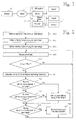
- step 200 two or more stages (step 200) and a filtering function (e.g. rule) for each of them (step 202) are defined.
- Processing of an event goes as follows:
- the filtering functions are evaluated with the received (step 204) event data (e.g. event data is compared to the filtering rules), in steps 206, 218 and 226.
- event data e.g. event data is compared to the filtering rules
- the filtering function of the one of the stages evaluates to TRUE (e.g. event data matches filtering rule of one of the stages) in the step 206, 218 or 226) in the step 206, 218 or 226, a binding function associated with the respective stage is evaluated for extracting/deriving a first key from the event data (step 208, 220 or 228, respectively).
- step 206 If the stage, which evaluates to TRUE, is the first stage (the step 206), it is checked if the event and the first key already exist in a table associated with the first stage (step 210). If not, the event and the first key are added to the table (step 212). If yes, a timestamp of the event may be updated in the table (step 216, and then the process proceeds to step 236). Otherwise (i.e. if the time stamp is not in use or not updated), nothing needs to be done (the process proceeds directly to step 236).
- step 2128 If the stage, which evaluates to TRUE, is some other than the first stage or the last stage (step 218), it is checked, if there is an entry with the first key in the table of the previous stage (step 221). If not, nothing is done (the process proceeds to the step 236). If yes, another binding function associated with the current stage is evaluated for extracting a second key from the event data (step 222). Then, the table associated with the current stage is checked (224). If the event and the second key do not exist in the table, the event and the second key are added to the table (225). If the event and the second key already exist in the table, a timestamp of the event may be updated in the table (step 216). Otherwise, nothing needs to be done (the process proceeds directly to the step 236).
- stage which evaluates to TRUE
- stage 30 If the stage, which evaluates to TRUE, is the last stage (the step 226), it is checked, if there is an entry with the first key in the table of the previous stage (step 30). If not, nothing is done (the process proceeds directly to the step 236). If yes, it is determined that a sequence of events has been detected (step 232). Further, the detection may be reported and/or the related entries in the stages 1-3 be deleted (step 234).
- stages evaluate to TRUE
- the processing can be arranged in ascending or descending order of the stages. If the stages are processed in ascending order, a single event can practically occur multiple times in the detected sequence (that is, a single event can evaluate to TRUE in first, second, third and so on stages of one sequence).
- the configuration of the stages naturally dictates, if this is possible in reality. If the stages are processed in descending order, all events in a detected sequence are distinct.
- the entries older than the time window may be deleted (step 236).
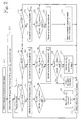
- step 300 two or more stages (step 300) and a filtering function (rule) for each of them (steps 302 and 304) are also defined. Processing of an event goes as follows:
- step 306 The filtering functions are evaluated with the received (step 306) event data (i.e. event data is compared to the filtering rules) in step 308.
- a binding function associated with the stage is evaluated for extracting a key from the event data (step 310).
- step 312 A table associated with the set of stages is checked (step 312). If the key is not found in the table, the event with the key is added to the table (step 314).
- step 316 If the key is found in the table, it is checked if an event for the current stage is recorded for the key (step 316). If yes, nothing needs to be done, and the process proceeds to step 318 (or alternatively, if it is defined that more than one event for each stage is required, the number of events with this key and stage is incremented). If not, the event is added to the table in connection with the key (step 314).
- step 312 it is checked if the key has an event (or alternatively, a predefined number of events) recorded for each stage (step 318),and if yes, it is determined that a set of events has been detected (step 320).
- This sequence mimics a scenario where the attacker manages to gain a root access to a host by overflowing an SMTP server buffer. However, the server remains non-functional after the overflow and any further connections are rejected. The attacker then manages to use local user information to log on another host within the same LAN and then tries to open an outbound connection that should normally not happen.
- This sequence has 3 stages and to detect all such sequences on-the-fly, we have to store some information of prefixes, i.e. partial sequences, that can later, with additional events, form complete sequences as will be explained below.
- Event 1 log name Value LN_SITUATION_ID 999 LN_SITUATION_STRING "Too long SMTP command was detected” LN_lPV4_DESTINATION 10.0.0.1
- Event 2 log name Value LN_SITUATION_ID 999 LN_SITUATION_STRING "Too long SMTP command was detected” LN_IPV4_DESTINATION 10.0.0.15
- Event 3 log name Value LN_SITUATION_ID 998 LN_SITUATION_STRING "Attempted connection refused" LN_PORT_DESTINATION 25 LN_IPV4_DESTINATION 10.0.0.1
- Event 4 log name Value LN_SITUATION_ID 998 LN_SITUATION_STRING "Attempted connection refused" LN_PORT_DESTINATION 25 LN_IPV4_DESTINATION 10.254.0.5
- Event 5 log name Value LN_SITUATION_ID 998 LN_SITUATION_STRING "Attempted connection
- the detection can be implemented in a detector or analyser using, for example, a hash table for each stage of the event sequence, except for the final stage.
- the hash table may contain references to the events forming a unique (according to the binding function value) prefix of length 1 on stage 1, length 2 on stage 2, and so on.
- the key to the table is the value of b 1 / 1,2 on stage 1, b 2 / 2,3 on stage 2, and so on.
- the following example illustrates how the hash tables are updated upon receiving the five events shown above.
- the filters are evaluated, and it is found out that only f 1 evaluates to true, so the event is considered only for stage 1.
- the binding function b 1 / 1,2 is evaluated; its value is 10.0.0.1 (LN_IPV4_DESTINATION of the received event).
- Stage 1 key references 10.0.0.1
- Event 1 Stage 2: key references
- Stage 1 Stage 1: key references 10.0.0.1 Event 1 10.0.0.15 Event 2
- Stage 2 key references
- f 3 evaluates to true. As before, it is checked whether the hash table of the previous stage (stage 2) has an entry with key b 3 / 2,3 (10.0.0.0). Because there is an entry with that key, it is determined that a event sequence consisting of events Event 1, Event 3, and Event 5 is detected.
- the analyser or detector may send or provide a respective alarm or report, for example to the operator console.
- the hash table entries may be removed from the tables when the first event that the entry refers to is old enough (i.e. outside the time window). This may be implemented simply by a linked list that contains a pointer to each hash table element. The list is kept sorted so that the element that will expire next is the first element on the list. If a corresponding entry already exists in the table when adding another prefix, the expiration time of the entry may be adjusted, if the new prefix has later expiration time than the prefix that was already in the table.
Landscapes
- Engineering & Computer Science (AREA)
- Computer Security & Cryptography (AREA)
- General Engineering & Computer Science (AREA)
- Computer Hardware Design (AREA)
- Computer Networks & Wireless Communication (AREA)
- Theoretical Computer Science (AREA)
- Computing Systems (AREA)
- Software Systems (AREA)
- Signal Processing (AREA)
- Physics & Mathematics (AREA)
- General Physics & Mathematics (AREA)
- Data Exchanges In Wide-Area Networks (AREA)
- Burglar Alarm Systems (AREA)
Abstract
Description
- Monitoring and analyzing both user and system activities,
- Analyzing system configurations and vulnerabilities,
- Assessing system and file integrity,
- Ability to recognize patterns typical of attacks,
- Analysis of abnormal activity patterns, and
- Tracking user policy violations.
defining an event sequence including two or more stages in order, each of the stages including one or more events,
defining a filtering function for each of said stages, each filtering function providing a TRUE indication, when one of the events belonging to the respective event is received, and a FALSE indication otherwise,
defining at least one binding function for each of the stages such that a pair of binding functions in two successive stages links the events in these two successive stages,
continuously receiving event data,
continuously evaluating the received event data with the filtering functions,
when the evaluation results in a TRUE indication from one of the filter functions, deriving at least one key value from the received event data by the corresponding at least one binding function,
determining that said sequence has been detected, when a TRUE indication has been obtained in each stage in a timely order and the derived key values link the detected events in the successive stages.
defining an event sequence including two or more stages in order, each of the stages including one or more events,
defining a filtering function for each of said stages, each filtering function providing a TRUE indication, when one of the events belonging to the respective event is received, and a FALSE indication otherwise,
evaluating the filtering functions with the event data,
if the filtering function of the one of the stages evaluates to TRUE, a binding function associated with the respective stage is evaluated for extracting a first key from the event data,
if the stage, which evaluates to TRUE, is the first stage, it is checked whether the event and the first key already exist in a table associated with the first stage, and the if checking result is negative, the event and the first key are added to the table,
if the stage, which evaluates to TRUE, is some other than the first stage, it is checked, whether there is an entry with the first key in the table of the previous stage, if the checking result is negative, nothing is done, and if the checking result is confirmative, another binding function associated with the current stage is evaluated for extracting a second key from the event data and the table associated with the current stage is checked for whether the event and the second key do exist in the table, and if the latter checking result is negative, the event and the second key are added to the table,
if the stage, which evaluates to TRUE, is the last stage, it is checked, whether there is an entry with the first key in the table of the previous stage, and if the checking result is negative, nothing is done, and if the checking result is confirmative, it is determined that a sequence of events has been detected.
defining an event sequence including two or more events,
defining a filtering function and an associated binding function for each event, each filtering function providing a TRUE indication, when the respective event is received, and a FALSE indication otherwise,
continuously receiving event data,
continuously evaluating the received event data with the filtering functions,
each time when the evaluation results in a TRUE indication from one of the filter functions, registering the corresponding event and a key value derived from the received event data by the corresponding binding function,
determining the event sequence as detected, if all events of the event sequence with mutually matching key values are registered.
defining an event sequence including two or more stages, each of the stages including one or more events,
defining a filtering function for each of said stages, each filtering function providing a TRUE indication, when one of the events belonging to the respective event is received, and a FALSE indication otherwise,
evaluating the filtering functions with the event data,
if the filtering function of the one of the stages evaluates to TRUE, a binding function associated with the respective stage is evaluated for extracting a key from the event data,
checking whether the key already exists in a table associated with the set of stages,
if the key is not found in the table, the event with the key is added to the table,
if the key is found in the table, it is checked whether an event for the current stage is already recorded for the key,
if no event for the current stage is already recorded for the key, the event is added to the table in connection with the key and the current stage,
checking whether the key has an event recorded for each stage, and
if the key has an event recorded for each stage, determining that the event sequence has been detected.
defining an event sequence including two or more stages, each of the stages including one or more events,
defining a filtering function for each of said stages, each filtering function providing a TRUE indication, when one of the events belonging to the respective event is received, and a FALSE indication otherwise,
evaluating the filtering functions with the event data,
if the filtering function of the one of the stages evaluates to TRUE, a binding function associated with the respective stage is evaluated for extracting a key from the event data,
checking whether the key already exists in a table associated with the set of stages,
if the key is not found in the table, the event with the key is added to the table,
if the key is found in the table, it is checked whether an event for the current stage is already recorded for the key,
if no event for the current stage is already recorded for the key, the event is added to the table in connection with the key and the current stage,
if an event for the current stage is already recorded for the key, i n-crementing the number of events with this key and stage,
checking whether the key has a predetermined number of events recorded for each stage, and
if the key has a predetermined number of events recorded for each stage, determining that the event sequence has been detected.
- t(e 1) < t(e 2) <...< t(en )
- f 1(e 1) = f 2(e 2) =...= fn (en ) = TRUE
- b 1 / 1,2 (e 1) = b 2 / 1,2 (e 2), b 2 / 2,3 (e 2) = b 3 / 2,3(e 3), ..., AND b n-1 / n-1,n(en -1) = b n / n-1,n(en )
- t(en ) - t(e 1) ≤ TIME WINDOW SIZE
- f 1(e 1) = f 2(e 2 ) =...= fn (en ) = TRUE
- b 1(e 1) = b 2(e 2) =...= bn (en )
- all the events e 1,e 2,...,en have been received within a configurable time window.
| Event 1: | |
| log name | Value |
| LN_SITUATION_ID | 999 |
| LN_SITUATION_STRING | "Too long SMTP command was detected" |
| LN_IPV4_DESTINATION | 10.0.0.1 |
| EFE | EFE(Event 1) |
| defined(LN_SITUATION) | TRUE |
| defined(LN_SOME_OTHER) | FALSE |
| LN_IPV4_DESTINATION & | 10.0.0.0 |
| 255.255.255.0 | |
| LN SITUATION ID == 999 | TRUE |
- bool, for Boolean logical value
- int32, for 32-bit integer
- int64, for 64-bit integer
- float, for single precision floating point number
- double, for double precision floating point number
- string, for a string of characters.
- defined(log name), returns true if the log name is present in the event.
- (expr), parentheses for expression grouping
- <,>,>=,<=,==,!=, gives logical value of numeric or alphabetical relation
- !, logical not negates value of logical expression
- &&, ∥, ->, logical and, or, and implication operations return Boolean value
- log_name, returns value assigned to the log name in the event
- literal, literal numeric (integer or floating point) or string value
- unary -, negates numeric parameter value
- +,-,*,/,**, add, subtract, multiply, divide, and raise to power, to numeric values
- &,|,^,<<,>> bitwise and, or, xor, and shift operations for integer types NTP [RFC 1305, 2030] time stamp functions.
- time(), returns current NTP-stamp
- get_year(int64), returns year of NTP stamp given as parameter.
- get_month(int64), returns number of month (0-11) of NTP stamp given as parameter.
- get_wday(int64), returns number of week day (0-6, 0=sunday) of NTP stamp given as parameter.
- get_mday(int64), returns day of month (1-31) of NTP stamp given as parameter.
- get_yday(int64), returns number of day of year (0-365) of NTP stamp given as parameter.
- day_time(int64) Without parameter, current time is taken as parameter.
- Literal NTP stamp value can be expressed in format YYYYMMDD.hh:mm:ss.s, for example 20020729. 15:17:27.123, means July 29 15:17 27.123s 2002 in local time zone.
- for_all(relational expression), returns true if the relational expression is true for all occurrences of log name present in relational expression.
- for_any(relational expression), returns true if the relational expression is true for any occurrence of log name present in relational expression.
| Event 1: | |
| log name | Value |
| LN_SITUATION_ID | 999 |
| LN_SITUATION_STRING | "Too long SMTP command |
| was detected" | |
| LN_lPV4_DESTINATION | 10.0.0.1 |
| Event 2: | |
| log name | Value |
| LN_SITUATION_ID | 999 |
| LN_SITUATION_STRING | "Too long SMTP command was detected" |
| LN_IPV4_DESTINATION | 10.0.0.15 |
| Event 3: | |
| log name | Value |
| LN_SITUATION_ID | 998 |
| LN_SITUATION_STRING | "Attempted connection refused" |
| LN_PORT_DESTINATION | 25 |
| LN_IPV4_DESTINATION | 10.0.0.1 |
| Event 4: | |
| log name | Value |
| LN_SITUATION_ID | 998 |
| LN_SITUATION_STRING | "Attempted connection refused" |
| LN_PORT_DESTINATION | 25 |
| LN_IPV4_DESTINATION | 10.254.0.5 |
| Event 5: | |
| log name | Value |
| LN_SITUATION_ID | 997 |
| LN_SITUATION_STRING | "Attempted unauthorized connection" |
| LN_IPV4_SOURCE | 10.0.0.254 |
| Stage 1: | |
| key | references |
| 10.0.0.1 | Event 1 |
| Stage 2: | |
| key | references |
| Stage 1: | |
| key | references |
| 10.0.0.1 | Event 1 |
| 10.0.0.15 | Event 2 |
| Stage 2: | |
| key | references |
| Stage 1: | |
| key | references |
| 10.0.0.1 | Event 1 |
| 10.0.0.15 | Event 2 |
| Stage 2: | |
| key | references |
| 10.0.0.0 | Event 1, Event 3 |
Claims (17)
- An event sequence detection method, comprising
having or defining an event sequence including two or more stages in order, each of the stages including one or more events,
having or defining a filtering function for each of said stages, each filtering function providing a TRUE indication, when one of the events belonging to the respective event is received, and a FALSE indication otherwise,
having or defining at least one binding function for each of the stages such that a pair of binding functions in two successive stages links the events in these two successive stages,
continuously receiving event data,
continuously evaluating the received event data with the filtering functions,
when the evaluation results in a TRUE indication from one of the fitter functions, deriving at least one key value from the received event data by the corresponding at least one binding function,
determining that said sequence has been detected, when a TRUE indication has been obtained in each stage in a timely order and the derived key values link the detected events in the successive stages. - The method as claimed in claim 1, wherein said determining comprises determining that said sequence has been detected, when a TRUE indication has been obtained in each stage in a timely order and the derived key values link the detected events in the successive stages within a time window.
- The method as claimed in claim 1 or 2, wherein said determining comprises
when the filter function that provided the TRUE indication is the filter function for the first stage, registering or updating the current event with the derived key value in said first stage,
when the filter function that provided the TRUE indication is the filter function for other than the first stage and a last stage in order in said sequence and there is a registration with one of the at least one derived key value in the previous stage in order in said sequence, registering or updating the current event or events with the at least one derived key value,
when the filter function that provided the TRUE indication is the filter function for the last stage in order in said sequence and there is a registration with one of the at least one derived key value in the previous stage in order in said sequence, determining that said event sequence has been detected. - The method as claimed in claim 2, comprising cancelling registered event and key value older than the time window based on time information or a time stamp.
- The method as claimed in claim 4, wherein said updating comprises updating the time information or the time stamp of an already registered event and the associated at least one key value.
- An event sequence detection method, comprising
having or defining an event sequence including two or more stages in order, each of the stages including one or more events,
having or defining a filtering function for each of said stages, each filtering function providing a TRUE indication, when one of the events belonging to the respective event is received, and a FALSE indication otherwise,
evaluating the filtering functions with the event data,
if the filtering function of the one of the stages evaluates to TRUE, a binding function associated with the respective stage is evaluated for extracting a first key from the event data,
if the stage, which evaluates to TRUE, is the first stage, it is checked whether the event and the first key already exist in a table associated with the first stage, and the if checking result is negative, the event and the first key are added to the table,
if the stage, which evaluates to TRUE, is some other than the first stage, it is checked, whether there is an entry with the first key in the table of the previous stage, if the checking result is
negative, nothing is done, and if the checking result is confirmative, another binding function associated with the current stage is evaluated for extracting a second key from the event data and the table associated with the current stage is checked for whether the event and the second key do exist in the table, and if the latter checking result is negative, the event and the second key are added to the table,
if the stage, which evaluates to TRUE, is the last stage, it is checked, whether there is an entry with the first key in the table of the previous stage, and if the checking result is negative, nothing is done, and if the checking result is confirmative, it is determined that a sequence of events has been detected. - The method according to claim 6, comprising
providing the events in the tables with time information or time stamps,
updating the time information or the time stamp of the event, if the event to be added to a table already exists in the table,
cancelling an entry that is older than a time window. - An event sequence detection method, comprising
having or defining an event sequence including two or more events,
having or defining a filtering function and an associated binding function for each event, each filtering function providing a TRUE indication, when the respective event is received, and a FALSE indication otherwise,
continuously receiving event data,
continuously evaluating the received event data with the filtering functions,
each time when the evaluation results in a TRUE indication from one of the filter functions, registering the corresponding event and a key value derived from the received event data by the corresponding binding function,
determining the event sequence as detected, if all events of the event sequence with mutually matching key values are registered within a time window. - An event sequence detection method, comprising
having or defining an event sequence including two or more stages, each of the stages including one or more events,
having or defining a filtering function for each of said stages, each filtering function providing a TRUE indication, when one of the events belonging to the respective event is received, and a FALSE indication otherwise,
evaluating the filtering functions with the event data,
if the filtering function of the one of the stages evaluates to TRUE, a binding function associated with the respective stage is evaluated for extracting a key from the event data,
checking whether the key already exists in a table associated with the set of stages,
if the key is not found in the table, the event with the key is added to the table,
if the key is found in the table, it is checked whether an event for the current stage is already recorded for the key,
if no event for the current stage is already recorded for the key, the event is added to the table in connection with the key and the current stage,
checking whether the key has an event recorded for each stage, and
if the key has an event recorded for each stage, determining that the event sequence has been detected. - The method as claimed in claim 9, wherein said determining comprises determining that said sequence has been detected, when the key an event has an event recorded for each stage within a time window.
- An event sequence detection method, comprising
having or defining an event sequence including two or more stages, each of the stages including one or more events,
having or defining a filtering function for each of said stages, each filtering function providing a TRUE indication, when one of the events belonging to the respective event is received, and a FALSE indication otherwise,
evaluating the filtering functions with the event data,
if the filtering function of the one of the stages evaluates to TRUE, a binding function associated with the respective stage is evaluated for extracting a key from the event data,
checking whether the key already exists in a table associated with the set of stages,
if the key is not found in the table, the event with the key is added to the table,
if the key is found in the table, it is checked whether an event for the current stage is already recorded for the key,
if no event for the current stage is already recorded for the key, the event is added to the table in connection with the key and the current stage,
if an event for the current stage is already recorded for the key, i n-crementing the number of events with this key and stage,
checking whether the key has a predetermined number of events recorded for each stage, and
if the key has a predetermined number of events recorded for each stage, determining that the event sequence has been detected. - An event sequence detector block for execution by a processor in a data communications network environment, comprising:a computer readable memory, anda routine stored on a the computer readable memory and adapted to be implemented on the processor, wherein the routine:has a predefined event sequence including two or more stages in order, each of the stages including one or more events,has a predefined filtering function for each of said stages, each filtering function providing a TRUE indication, when one of the events belonging to the respective event is received, and a FALSE indication otherwise,has at least one predefined binding function for each of the stages such that a pair of binding functions in two successive stages links the events in these two successive stages,continuously receives event data,continuously evaluates the received event data with the filtering functions,when the evaluation results in a TRUE indication from one of the filter functions, derives at least one key value from the received event data by the corresponding at least one binding function,determines that said sequence has been detected, when a TRUE indication has been obtained in each stage in a timely order and the derived key values link the detected events in the successive stages.
- An event sequence detector block as claimed in claim 12, wherein said routine determines that said sequence has been detected, when a TRUE indication has been obtained in each stage in a timely order and the derived key values link the detected events in the successive stages within a time window.
- An event sequence detector block for execution by a processor in a data communications network environment, comprising:a computer readable memory, anda routine stored on a the computer readable memory and adapted to be implemented on the processor, wherein the routine:has a predefined event sequence including two or more events,has a predefined filtering function and an associated binding function for each event, each filtering function providing a TRUE indication, when the respective event is received, and a FALSE indication otherwise,continuously receives event data,continuously evaluates the received event data with the filtering functions,each time when the evaluation results in a TRUE indication from one of the filter functions, registers the corresponding event and a key value derived from the received event data by the corresponding binding function,determines the event sequence as detected, if all events of the event sequence with mutually matching key values are registered.
- An event sequence detector block as claimed in claim 12, wherein said routine determines the event sequence as detected, if all events of the event sequence with mutually matching key values are registered within a time window.
- A computer readable storage medium comprising a computer program that carries out the method according to any one of claims 1 to 11 when executed by a computer.
- A computer program that carries out the method according to any one of claims 1 to 11 when executed by a computer.
Applications Claiming Priority (2)
| Application Number | Priority Date | Filing Date | Title |
|---|---|---|---|
| US289449 | 1981-08-03 | ||
| US10/289,449 US7234166B2 (en) | 2002-11-07 | 2002-11-07 | Event sequence detection |
Publications (2)
| Publication Number | Publication Date |
|---|---|
| EP1418484A2 true EP1418484A2 (en) | 2004-05-12 |
| EP1418484A3 EP1418484A3 (en) | 2005-04-27 |
Family
ID=32107636
Family Applications (1)
| Application Number | Title | Priority Date | Filing Date |
|---|---|---|---|
| EP03104056A Ceased EP1418484A3 (en) | 2002-11-07 | 2003-11-03 | Event sequence detection |
Country Status (2)
| Country | Link |
|---|---|
| US (1) | US7234166B2 (en) |
| EP (1) | EP1418484A3 (en) |
Cited By (13)
| Publication number | Priority date | Publication date | Assignee | Title |
|---|---|---|---|---|
| WO2007094942A3 (en) * | 2006-02-14 | 2007-12-13 | Computer Ass Think Inc | Dynamic threat event management system and method |
| CN100372296C (en) * | 2004-07-16 | 2008-02-27 | 北京航空航天大学 | Network intrusion detection system with two-level decision-making kernel and its alarm optimization method |
| EP2157526A1 (en) * | 2008-08-14 | 2010-02-24 | Assa Abloy AB | RFID reader with embedded attack detection heuristics |
| EP2013728A4 (en) * | 2006-05-01 | 2011-06-01 | Cisco Tech Inc | METHOD AND APPARATUS FOR PROVIDING COMPUTER AND NETWORK SECURITY |
| US8255995B2 (en) | 2005-12-16 | 2012-08-28 | Cisco Technology, Inc. | Methods and apparatus providing computer and network security utilizing probabilistic policy reposturing |
| US8495743B2 (en) | 2005-12-16 | 2013-07-23 | Cisco Technology, Inc. | Methods and apparatus providing automatic signature generation and enforcement |
| PT106586A (en) * | 2012-10-17 | 2014-04-17 | Inov Inesc Inovaç O Inst De Novas Tecnologias | METHOD AND SYSTEM OF DETECTION OF INTRUSION IN NETWORKS AND SYSTEMS BASED ON SPECIFICATION OF BUSINESS PROCESSES |
| WO2016008757A1 (en) * | 2014-07-15 | 2016-01-21 | Siemens Aktiengesellschaft | Computing device and method for detecting attacks on a technical system based on events of an event sequence |
| US9286469B2 (en) | 2005-12-16 | 2016-03-15 | Cisco Technology, Inc. | Methods and apparatus providing computer and network security utilizing probabilistic signature generation |
| CN106062765A (en) * | 2014-02-26 | 2016-10-26 | 三菱电机株式会社 | Attack detection device, attack detection method, and attack detection program |
| EP3062258A4 (en) * | 2013-10-24 | 2017-05-31 | Mitsubishi Electric Corporation | Information processing device, information processing method, and program |
| GB2557954A (en) * | 2016-12-20 | 2018-07-04 | F Secure Corp | Improvement of distributed behavioral monitoring |
| US10452877B2 (en) | 2016-12-16 | 2019-10-22 | Assa Abloy Ab | Methods to combine and auto-configure wiegand and RS485 |
Families Citing this family (20)
| Publication number | Priority date | Publication date | Assignee | Title |
|---|---|---|---|---|
| US7325002B2 (en) * | 2003-04-04 | 2008-01-29 | Juniper Networks, Inc. | Detection of network security breaches based on analysis of network record logs |
| US7921075B2 (en) * | 2006-09-29 | 2011-04-05 | International Business Machines Corporation | Generic sequencing service for business integration |
| US9274857B2 (en) * | 2006-10-13 | 2016-03-01 | International Business Machines Corporation | Method and system for detecting work completion in loosely coupled components |
| US9514201B2 (en) * | 2006-10-13 | 2016-12-06 | International Business Machines Corporation | Method and system for non-intrusive event sequencing |
| US9597019B2 (en) * | 2007-02-09 | 2017-03-21 | Lifescan, Inc. | Method of ensuring date and time on a test meter is accurate |
| US9418005B2 (en) | 2008-07-15 | 2016-08-16 | International Business Machines Corporation | Managing garbage collection in a data processing system |
| WO2010019593A1 (en) | 2008-08-11 | 2010-02-18 | Assa Abloy Ab | Secure wiegand communications |
| US9396234B2 (en) * | 2009-05-29 | 2016-07-19 | International Business Machines Corporation | Event monitoring for complex event processing |
| US20100333071A1 (en) * | 2009-06-30 | 2010-12-30 | International Business Machines Corporation | Time Based Context Sampling of Trace Data with Support for Multiple Virtual Machines |
| US8997116B2 (en) * | 2009-11-12 | 2015-03-31 | Red Hat, Inc. | Event logging application programming interface (API) |
| US9176783B2 (en) | 2010-05-24 | 2015-11-03 | International Business Machines Corporation | Idle transitions sampling with execution context |
| US8843684B2 (en) | 2010-06-11 | 2014-09-23 | International Business Machines Corporation | Performing call stack sampling by setting affinity of target thread to a current process to prevent target thread migration |
| US8799872B2 (en) | 2010-06-27 | 2014-08-05 | International Business Machines Corporation | Sampling with sample pacing |
| US8799904B2 (en) | 2011-01-21 | 2014-08-05 | International Business Machines Corporation | Scalable system call stack sampling |
| US9990499B2 (en) * | 2013-08-05 | 2018-06-05 | Netflix, Inc. | Dynamic security testing |
| WO2016014021A1 (en) * | 2014-07-21 | 2016-01-28 | Hewlett-Packard Development Company, L.P. | Security indicator linkage determination |
| US11323459B2 (en) | 2018-12-10 | 2022-05-03 | Bitdefender IPR Management Ltd. | Systems and methods for behavioral threat detection |
| US11153332B2 (en) | 2018-12-10 | 2021-10-19 | Bitdefender IPR Management Ltd. | Systems and methods for behavioral threat detection |
| US11089034B2 (en) * | 2018-12-10 | 2021-08-10 | Bitdefender IPR Management Ltd. | Systems and methods for behavioral threat detection |
| US11847111B2 (en) | 2021-04-09 | 2023-12-19 | Bitdefender IPR Management Ltd. | Anomaly detection systems and methods |
Family Cites Families (3)
| Publication number | Priority date | Publication date | Assignee | Title |
|---|---|---|---|---|
| US6370648B1 (en) * | 1998-12-08 | 2002-04-09 | Visa International Service Association | Computer network intrusion detection |
| EP1277326A2 (en) * | 2000-04-28 | 2003-01-22 | Internet Security Systems, Inc. | Method and system for managing computer security information |
| US7032114B1 (en) * | 2000-08-30 | 2006-04-18 | Symantec Corporation | System and method for using signatures to detect computer intrusions |
-
2002
- 2002-11-07 US US10/289,449 patent/US7234166B2/en not_active Expired - Lifetime
-
2003
- 2003-11-03 EP EP03104056A patent/EP1418484A3/en not_active Ceased
Cited By (19)
| Publication number | Priority date | Publication date | Assignee | Title |
|---|---|---|---|---|
| CN100372296C (en) * | 2004-07-16 | 2008-02-27 | 北京航空航天大学 | Network intrusion detection system with two-level decision-making kernel and its alarm optimization method |
| US8413245B2 (en) | 2005-12-16 | 2013-04-02 | Cisco Technology, Inc. | Methods and apparatus providing computer and network security for polymorphic attacks |
| US9286469B2 (en) | 2005-12-16 | 2016-03-15 | Cisco Technology, Inc. | Methods and apparatus providing computer and network security utilizing probabilistic signature generation |
| US8495743B2 (en) | 2005-12-16 | 2013-07-23 | Cisco Technology, Inc. | Methods and apparatus providing automatic signature generation and enforcement |
| US8255995B2 (en) | 2005-12-16 | 2012-08-28 | Cisco Technology, Inc. | Methods and apparatus providing computer and network security utilizing probabilistic policy reposturing |
| US9167000B2 (en) | 2006-02-14 | 2015-10-20 | Ca, Inc. | Dynamic threat event management system and method |
| WO2007094942A3 (en) * | 2006-02-14 | 2007-12-13 | Computer Ass Think Inc | Dynamic threat event management system and method |
| EP2013728A4 (en) * | 2006-05-01 | 2011-06-01 | Cisco Tech Inc | METHOD AND APPARATUS FOR PROVIDING COMPUTER AND NETWORK SECURITY |
| EP2157526A1 (en) * | 2008-08-14 | 2010-02-24 | Assa Abloy AB | RFID reader with embedded attack detection heuristics |
| PT106586A (en) * | 2012-10-17 | 2014-04-17 | Inov Inesc Inovaç O Inst De Novas Tecnologias | METHOD AND SYSTEM OF DETECTION OF INTRUSION IN NETWORKS AND SYSTEMS BASED ON SPECIFICATION OF BUSINESS PROCESSES |
| US10282542B2 (en) | 2013-10-24 | 2019-05-07 | Mitsubishi Electric Corporation | Information processing apparatus, information processing method, and computer readable medium |
| EP3062258A4 (en) * | 2013-10-24 | 2017-05-31 | Mitsubishi Electric Corporation | Information processing device, information processing method, and program |
| CN106062765A (en) * | 2014-02-26 | 2016-10-26 | 三菱电机株式会社 | Attack detection device, attack detection method, and attack detection program |
| WO2016008757A1 (en) * | 2014-07-15 | 2016-01-21 | Siemens Aktiengesellschaft | Computing device and method for detecting attacks on a technical system based on events of an event sequence |
| US10931693B2 (en) | 2014-07-15 | 2021-02-23 | Siemens Aktiengesellschaft | Computation apparatus and method for identifying attacks on a technical system on the basis of events of an event sequence |
| US10452877B2 (en) | 2016-12-16 | 2019-10-22 | Assa Abloy Ab | Methods to combine and auto-configure wiegand and RS485 |
| GB2557954A (en) * | 2016-12-20 | 2018-07-04 | F Secure Corp | Improvement of distributed behavioral monitoring |
| US10972505B2 (en) | 2016-12-20 | 2021-04-06 | F-Secure Corporation | Distributed behavioral monitoring |
| GB2557954B (en) * | 2016-12-20 | 2021-04-07 | F Secure Corp | Method of security threat detection |
Also Published As
| Publication number | Publication date |
|---|---|
| US20040093510A1 (en) | 2004-05-13 |
| US7234166B2 (en) | 2007-06-19 |
| EP1418484A3 (en) | 2005-04-27 |
Similar Documents
| Publication | Publication Date | Title |
|---|---|---|
| US7234166B2 (en) | Event sequence detection | |
| US8056115B2 (en) | System, method and program product for identifying network-attack profiles and blocking network intrusions | |
| US10867034B2 (en) | Method for detecting a cyber attack | |
| US20030084318A1 (en) | System and method of graphically correlating data for an intrusion protection system | |
| Xu et al. | Alert correlation through triggering events and common resources | |
| EP1995929B1 (en) | Distributed system for the detection of eThreats | |
| US8006306B2 (en) | Exploit-based worm propagation mitigation | |
| CN111953673B (en) | DNS hidden tunnel detection method and system | |
| CN114189361B (en) | Situation awareness method, device and system for defending threat | |
| US20030083847A1 (en) | User interface for presenting data for an intrusion protection system | |
| Qu et al. | Statistical anomaly detection for link-state routing protocols | |
| IL262866A (en) | Automated forensics of computer systems using behavioral intelligence | |
| CN111259204A (en) | APT detection correlation analysis method based on graph algorithm | |
| US20080291018A1 (en) | Method, computer program element and a system for processing alarms triggered by a monitoring system | |
| KR101788410B1 (en) | An analysis system of security breach with analyzing a security event log and an analysis method thereof | |
| EP3242240B1 (en) | Malicious communication pattern extraction device, malicious communication pattern extraction system, malicious communication pattern extraction method and malicious communication pattern extraction program | |
| US12341751B2 (en) | White list-based content lock firewall method and system | |
| US20030084340A1 (en) | System and method of graphically displaying data for an intrusion protection system | |
| Debar et al. | Intrusion detection: Introduction to intrusion detection and security information management | |
| US7844999B1 (en) | Message parsing in a network security system | |
| Giacinto et al. | Alarm clustering for intrusion detection systems in computer networks | |
| Dwivedi et al. | Event correlation for intrusion detection systems | |
| Bolzoni et al. | ATLANTIDES: an architecture for alert verification in network intrusion detection systems | |
| CN114205146A (en) | Processing method and device for multi-source heterogeneous security log | |
| US8578479B2 (en) | Worm propagation mitigation |
Legal Events
| Date | Code | Title | Description |
|---|---|---|---|
| PUAI | Public reference made under article 153(3) epc to a published international application that has entered the european phase |
Free format text: ORIGINAL CODE: 0009012 |
|
| AK | Designated contracting states |
Kind code of ref document: A2 Designated state(s): AT BE BG CH CY CZ DE DK EE ES FI FR GB GR HU IE IT LI LU MC NL PT RO SE SI SK TR |
|
| AX | Request for extension of the european patent |
Extension state: AL LT LV MK |
|
| PUAL | Search report despatched |
Free format text: ORIGINAL CODE: 0009013 |
|
| AK | Designated contracting states |
Kind code of ref document: A3 Designated state(s): AT BE BG CH CY CZ DE DK EE ES FI FR GB GR HU IE IT LI LU MC NL PT RO SE SI SK TR |
|
| AX | Request for extension of the european patent |
Extension state: AL LT LV MK |
|
| 17P | Request for examination filed |
Effective date: 20050620 |
|
| AKX | Designation fees paid |
Designated state(s): DE FR GB |
|
| 17Q | First examination report despatched |
Effective date: 20050721 |
|
| STAA | Information on the status of an ep patent application or granted ep patent |
Free format text: STATUS: THE APPLICATION HAS BEEN REFUSED |
|
| 18R | Application refused |
Effective date: 20080126 |