EP1411647A2 - Method of power allocation and rate control in OFDMA - Google Patents
Method of power allocation and rate control in OFDMA Download PDFInfo
- Publication number
- EP1411647A2 EP1411647A2 EP03255053A EP03255053A EP1411647A2 EP 1411647 A2 EP1411647 A2 EP 1411647A2 EP 03255053 A EP03255053 A EP 03255053A EP 03255053 A EP03255053 A EP 03255053A EP 1411647 A2 EP1411647 A2 EP 1411647A2
- Authority
- EP
- European Patent Office
- Prior art keywords
- wireless unit
- transmit power
- channel
- base station
- channel quality
- Prior art date
- Legal status (The legal status is an assumption and is not a legal conclusion. Google has not performed a legal analysis and makes no representation as to the accuracy of the status listed.)
- Granted
Links
Images

Classifications
-
- H—ELECTRICITY
- H04—ELECTRIC COMMUNICATION TECHNIQUE
- H04J—MULTIPLEX COMMUNICATION
- H04J11/00—Orthogonal multiplex systems, e.g. using WALSH codes
-
- H—ELECTRICITY
- H04—ELECTRIC COMMUNICATION TECHNIQUE
- H04W—WIRELESS COMMUNICATION NETWORKS
- H04W52/00—Power management, e.g. Transmission Power Control [TPC] or power classes
- H04W52/04—Transmission power control [TPC]
- H04W52/18—TPC being performed according to specific parameters
- H04W52/26—TPC being performed according to specific parameters using transmission rate or quality of service QoS [Quality of Service]
- H04W52/265—TPC being performed according to specific parameters using transmission rate or quality of service QoS [Quality of Service] taking into account the quality of service QoS
-
- H—ELECTRICITY
- H04—ELECTRIC COMMUNICATION TECHNIQUE
- H04L—TRANSMISSION OF DIGITAL INFORMATION, e.g. TELEGRAPHIC COMMUNICATION
- H04L1/00—Arrangements for detecting or preventing errors in the information received
- H04L1/0001—Systems modifying transmission characteristics according to link quality, e.g. power backoff
- H04L1/0002—Systems modifying transmission characteristics according to link quality, e.g. power backoff by adapting the transmission rate
-
- H—ELECTRICITY
- H04—ELECTRIC COMMUNICATION TECHNIQUE
- H04W—WIRELESS COMMUNICATION NETWORKS
- H04W52/00—Power management, e.g. Transmission Power Control [TPC] or power classes
- H04W52/04—Transmission power control [TPC]
- H04W52/18—TPC being performed according to specific parameters
- H04W52/26—TPC being performed according to specific parameters using transmission rate or quality of service QoS [Quality of Service]
-
- H—ELECTRICITY
- H04—ELECTRIC COMMUNICATION TECHNIQUE
- H04W—WIRELESS COMMUNICATION NETWORKS
- H04W52/00—Power management, e.g. Transmission Power Control [TPC] or power classes
- H04W52/04—Transmission power control [TPC]
- H04W52/18—TPC being performed according to specific parameters
- H04W52/26—TPC being performed according to specific parameters using transmission rate or quality of service QoS [Quality of Service]
- H04W52/267—TPC being performed according to specific parameters using transmission rate or quality of service QoS [Quality of Service] taking into account the information rate
-
- H—ELECTRICITY
- H04—ELECTRIC COMMUNICATION TECHNIQUE
- H04L—TRANSMISSION OF DIGITAL INFORMATION, e.g. TELEGRAPHIC COMMUNICATION
- H04L1/00—Arrangements for detecting or preventing errors in the information received
- H04L1/0001—Systems modifying transmission characteristics according to link quality, e.g. power backoff
- H04L1/0023—Systems modifying transmission characteristics according to link quality, e.g. power backoff characterised by the signalling
- H04L1/0026—Transmission of channel quality indication
Definitions
- the present invention relates to telecommunications, and more particularly to power allocation and rate control.
- Wireless communications systems employ a number of geographically distributed, cellular communication sites or base stations. Each base station supports the transmission and reception of communication signals to and from stationary or fixed, wireless communication devices or units. Each base station handles communications over a particular region commonly referred to as a cell/ sector.
- the overall coverage area for a wireless communications system is defined by the union of cells for the deployed base stations.
- the coverage areas for adjacent or nearby cell sites may overlap one another to ensure, where possible, contiguous communications coverage within the outer boundaries of the system.
- a wireless unit When active, a wireless unit receives signals from at least one base station over a forward link or downlink and transmits signals to at least one base station over a reverse link or uplink.
- TDMA time-division multiple access
- CDMA code-division multiple access
- TDMA Time Division Multiple Access
- the radio spectrum is divided into time slots. Each time slow allows only one user to transmit and/or receive.
- TDMA requires precise timing between the transmitter and receiver so that each user may transmit their information during their allocated time.
- different wireless channels are distinguished by different channelization codes or sequences. These distinct channelization codes are used to encode different information streams, which may then be modulated at one or more different carrier frequencies for simultaneous transmission.
- a receiver may recover a particular stream from a received signal using the appropriate code or sequence to decode the received signal.
- each active wireless unit generally requires the assignment of a dedicated link on the downlink, as well as a dedicated link on the uplink.
- Next generation wireless communication systems such as those employing High Speed Downlink Packet Access (“HSDPA”), are expected to provide high rate packet data services in support of Internet access and multimedia communication.
- HSDPA High Speed Downlink Packet Access
- Data communications may not require dedicated links on the downlink or the uplink, but rather enable one or more channels to be shared by a number of wireless units.
- each of the wireless units on the uplink competes for available resources.
- Resources to be managed in the uplink include the received power at the base station, and the interference created by each user to other users in the same sector or cell, as well as in other sectors or cells, for example.
- a carrier signal may be defined by a number (e.g., 1024) of sub-carriers or tones transmitted using at set of mathematically time orthogonal continuous waveforms.
- a set of orthogonal waveforms is the set of sinusoids with frequencies that are integer multiples of a fixed positive value.
- the orthogonality of the tones allows for their transmission and/or reception, while preventing them from interfere with one another.
- a number of neighboring tones may be grouped together to form a block of tones such that each user may be assigned one or more blocks of tones. Each tone experiences flat fading with respect to the other tones, and thusly, the equalization demands in the transmission and/or reception of the block of tones may be substantially reduced.
- the base station may need to manage its resources on the downlink. These base station resources include transmit power budget.
- OFDMA may support a simplified implementation for managing a base station's transmit power budget.
- the transmit power budget may be uniformly allocated.
- the transmit power allocated to each wireless unit requesting HSDPA service in an identical manner.
- the base station controls the rate of transmission for each wireless unit.
- this process may involve transmitting one or more pilot signals to each wireless unit.
- each wireless unit After receiving the pilot signal(s), each wireless unit transmits a signal containing channel condition information to the base station.
- the channel in which the block(s) of tones are transmitted on the downlink is characterized here by this signal, more commonly referred to as channel quality information ("CQI").
- CQI channel quality information
- a single CQI is transmitted to the base station irrespective of the number of blocks of tones a wireless unit may have designated thereto.
- the base station in response to receiving a CQI from each wireless unit, controls rate of transmission for the relevant wireless units.
- the number of blocks designated to a user may be reflective of the data demands of the user and the capacity of the system.
- OFDMA implemented HSDPA systems have not, to date, been optimized.
- a single CQI is transmitted without regard to the number of blocks of tones the wireless unit has assigned, one issue of significance is fading.
- One wireless unit may receive a number of blocks, each of which may fade at differing degrees. Consequently, the single CQI may not reflect changes in the channel condition over the course of time in which the numbers of blocks are transmitted on the downlink. This diminishes the gain that may be achieved by managing the base station's transmit power budget.
- the present invention provides a method for managing the resources of a base station. More particularly, the present invention provides a method for adjusting the transmit power budget and transmission control rate of a base station.
- the method of the present invention may be applied to HSDPA systems, including those that are implemented using OFDMA.
- a base station receives at least one CQI from each wireless unit. As a result, the base station selects a transmit power level for each wireless unit in response to each unit's CQI. The base station may also consider the available transmit power budget, while selecting the transmit power level for each wireless unit. Once the transmit power level for each wireless unit has been selected, the method designates a transmission rate for each wireless unit in response to the CQI for each unit.
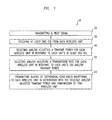
- a flow chart depicting one embodiment of the present invention is illustrated. More particularly, a method (10) is depicted for managing the resources of a base station offering data services, such as HSDPA.
- the resources of a base station may include the transmit power budget and transmission rate control on the downlink.
- a wireless communication system offering HSDPA services may be implemented by a number of schemes, including OFDMA.
- the channels for conveying data from the base station to each wireless unit may be defined by any one of a number of multiple access schemes, including code division, time division, and/or frequency division, for example. Therefore, multi-code transmission, code division multiplexing and link adaptation may be employed in conjunction with HSDPA.
- the base station of the wireless communication system initially generates one or more pilot signals ( 20 ).
- the generated pilot signal(s) are transmitted to a number of wireless units.
- the pilot signal(s) may be transmitted after any number of protocol exchanges between the base station and wireless unit. Consequently, the base station may have already determined after transmitting the pilot signal(s) which wireless unit(s) is seeking to acquire access to its HSDPA services.
- At least one channel quality information (“CQI") signal is transmitted by each wireless unit ( 30 ).
- the CQI signal(s) may be transmitted in response to the pilot signal(s).
- the CQI signal(s) is received by the base station and provides the characteristics of the channel.
- the CQI signal(s) from each wireless unit define the various attributes of the channel over which data may be transmitted on the downlink. These attributes include the attenuation pattern viewed by the specific wireless unit.
- the base station may then allocate its resources. As noted above, these resources include transmit power and transmit rate control, for example. Consequently, the base station may select a transmit power for each wireless unit from which it receives a CQI signal(s) ( 40 ). This step may be performed at the onset of a downlink data transmission. In this circumstance, the method ( 10 ) selects the transmit power for a wireless unit prior to the first downlink of data from the base station. Alternatively, it may be executed in the midst of data transmission over the downlink.
- these resources include transmit power and transmit rate control, for example. Consequently, the base station may select a transmit power for each wireless unit from which it receives a CQI signal(s) ( 40 ). This step may be performed at the onset of a downlink data transmission. In this circumstance, the method ( 10 ) selects the transmit power for a wireless unit prior to the first downlink of data from the base station. Alternatively, it may be executed in the midst of data transmission over the downlink.
- This step of allocating the transmit power from a base station's budget may be executed in accordance with any number of prioritization or scheduling schemes.
- the pool of received CQI signals are evaluated and ranked.
- a wireless unit having the lowest attenuation pattern may receive a greater portion of the transmit power budget than the remainder of the wireless units that have had their CQI signals received.
- the base station may select a transmission rate for each wireless unit ( 50 ). This selection step is performed in response to the CQI signal(s) of each wireless unit. This step may be performed at the onset of a downlink data transmission.
- the method ( 10 ) calls for determining the appropriate data transmission rate for a wireless unit in view of its CQI signal(s). Alternatively, it may be executed in the midst of data transmission over the downlink.
- the base station may begin transmitting data on the downlink ( 60 ). This transmission is executed over a designated channel.
- the data transmitted over the downlink channel to each user may include one or more blocks of at least two tones (e.g., sub-carriers). In practicality, each block may more likely comprise 50, 100 or 200 tones, for example.
- Each tone may correspond with one or more data bits.
- each tone within a block may comprise one or more time orthogonal continuous waveform(s).
- one ore more blocks of orthogonal continuous waveforms may be transmitted once the transmit power and transmission rate have been selected.
- the time orthogonal continuous waveforms in each block comprise one or more sinusoids having frequencies that are integer multiples of a fixed positive value. Consequently, a block of tones includes a defined number of sinusoids, which are integer multiples of each other's frequencies. These sinusoids are orthogonally aligned. To minimize the potentiality of interference, the number of sinusoids is frequently limited to a maximum of eight (8), for example.
- the transmission rate for each wireless unit in response to a CQI signal(s) may be controlled by allocating a specific number of blocks to a user. For example, a wireless unit selected to have a relatively higher transmission rate may have three (3) blocks of tones allocated thereby. In contrast, the base station may allocate only one (1) block of tones to another user that is deemed worthy of a relatively lower transmission rate.
- each wireless unit may transmit a CQI signal(s) periodically to characterize its channel condition.
- the base station may take advantage of such information when performing scheduling.
- one block of tones may be defined as a fundamental unit for scheduling.
- a block of tones may consist of a fixed number of neighboring tones.
- the wireless unit may be assigned one or multiple blocks of tones for a given transmission time interval ("TTI"). However, this assignment may also depend on the amount of data stored in the buffer.
- TTI transmission time interval
- the base station may schedule the wireless unit based on one or more selection criteria. These criteria may include, for example, the maximum carrier to interference (C/I) ratio, round robin, or proportional fair. Thereafter, the base station may compute the required transmit power for each wireless unit based on the most recent CQI signals(s).
- C/I maximum carrier to interference
- the base station may compute the required transmit power for each wireless unit based on the most recent CQI signals(s).
- the modulation and data rate may then be selected accordingly.
- transmit power allocation and transmission rate optimization may be performed jointly or simultaneously in an HSDPA system implemented using OFDMA.
- reception of the CQI signals from each relevant wireless unit is a necessity.
- a CQI signal(s) is generated and transmitted back to the base station for scheduling.
- a base station designed for multiple access may optimize the overall downlink transmission rate and the rate for each scheduled wireless unit by scheduling one or multiple wireless units.
- selecting one or multiple blocks of sub-carriers for each wireless unit within one scheduling instance in response to the CQI signals available at the time of scheduling may optimize the overall downlink transmission rate and the rate for each scheduled wireless unit.
- the base station may then select the affordable data rates for each wireless unit according to the allocated power.
- wireless units having more attractive CQI values may be given preferential treatment. More particularly, the wireless units having more attractive CQI values may be allocated more power from the base station's resources to transmit data. In contrast, wireless units having less attractive channel conditions may be allocated less power from the base station's resources to transmit data.
- processing circuitry required to implement and use the described system may be implemented in application specific integrated circuits, software-driven processing circuitry, firmware, programmable logic devices, hardware, discrete components or arrangements of the above components as would be understood by one of ordinary skill in the art with the benefit of this disclosure.
- processing circuitry required to implement and use the described system may be implemented in application specific integrated circuits, software-driven processing circuitry, firmware, programmable logic devices, hardware, discrete components or arrangements of the above components as would be understood by one of ordinary skill in the art with the benefit of this disclosure.
- Those skilled in the art will readily recognize that these and various other modifications, arrangements and methods can be made to the present invention without strictly following the exemplary applications illustrated and described herein and without departing from the spirit and scope of the present invention It is therefore contemplated that the appended claims will cover any such modifications or embodiments as fall within the true scope of the invention.
Landscapes
- Engineering & Computer Science (AREA)
- Quality & Reliability (AREA)
- Computer Networks & Wireless Communication (AREA)
- Signal Processing (AREA)
- Mobile Radio Communication Systems (AREA)
- Electrotherapy Devices (AREA)
- Vehicle Body Suspensions (AREA)
- Radio Relay Systems (AREA)
Abstract
Description
Claims (13)
- A method comprising:in response to channel information, selecting at least one transmit power for transmitting at least one block of tones over a channel.
- The method of Claim 1, wherein the channel information comprises at least one channel quality indicator signal.
- The method of Claim 2, wherein the at least one block comprises at least two tones, and the at least two tones comprises at least two time orthogonal continuous waveforms.
- The method of Claim 3, wherein the at least two time orthogonal continuous waveforms comprises at least two sinusoids having frequencies that are integer multiples of a fixed positive value.
- The method of Claim 2, further comprising:in response to the channel quality indicator signal, selecting at least one transmission rate.
- A method for managing the resources of a base station amongst a number of wireless units, the method comprising:receiving at least one channel quality information signal from each wireless unit; andin response to the channel quality information signal of each wireless unit, selecting at least one transmit power and selecting at least one transmission rate for each wireless unit.
- The method of Claim 6, further comprising:transmitting at least one block of orthogonal continuous waveforms over a channel to each wireless unit employing the selected transmit power and selected transmission rate.
- The method of Claims 2 or 7, wherein the at least one channel quality indicator signal is received in response to at least one pilot signal being transmitted.
- The method of Claims 2 or 7, wherein the channel is defined by at least one of a code division, time division, and/or frequency division multiple access system.
- The method of Claim 7, wherein the at least one block of orthogonal continuous waveforms comprises at least two sinusoids having frequencies that are integer multiples of a fixed positive value.
- The method of Claims 4 or 10, wherein each sinusoid comprises at least one data bit.
- The method of Claims 2 or 8, wherein the at least one transmit power is selected for downlink data transmission.
- The method of Claims 5 or 7, wherein the at least one transmission rate is selected for downlink data transmission.
Applications Claiming Priority (2)
| Application Number | Priority Date | Filing Date | Title |
|---|---|---|---|
| US10/261,293 US7426176B2 (en) | 2002-09-30 | 2002-09-30 | Method of power allocation and rate control in OFDMA systems |
| US261293 | 2002-09-30 |
Publications (3)
| Publication Number | Publication Date |
|---|---|
| EP1411647A2 true EP1411647A2 (en) | 2004-04-21 |
| EP1411647A3 EP1411647A3 (en) | 2004-05-26 |
| EP1411647B1 EP1411647B1 (en) | 2005-06-08 |
Family
ID=32029941
Family Applications (1)
| Application Number | Title | Priority Date | Filing Date |
|---|---|---|---|
| EP03255053A Expired - Lifetime EP1411647B1 (en) | 2002-09-30 | 2003-08-14 | Method of power allocation and rate control in OFDMA |
Country Status (6)
| Country | Link |
|---|---|
| US (1) | US7426176B2 (en) |
| EP (1) | EP1411647B1 (en) |
| JP (1) | JP4305834B2 (en) |
| KR (1) | KR100700308B1 (en) |
| AT (1) | ATE297614T1 (en) |
| DE (1) | DE60300808T2 (en) |
Cited By (11)
| Publication number | Priority date | Publication date | Assignee | Title |
|---|---|---|---|---|
| WO2005015770A1 (en) * | 2003-08-08 | 2005-02-17 | Intel Corporation | Adaptive bit loading and power allocation in a multicarrier wireless communication system |
| EP1620965A4 (en) * | 2003-04-25 | 2006-06-14 | Motorola Inc | Method and apparatus for channel quality feedback within a communication system |
| WO2006121679A1 (en) * | 2005-05-09 | 2006-11-16 | Intel Corporation | System, apparatus and method of varying channel bandwidth |
| US7315577B2 (en) | 2003-09-15 | 2008-01-01 | Intel Corporation | Multiple antenna systems and method using high-throughput space-frequency block codes |
| US7333556B2 (en) | 2004-01-12 | 2008-02-19 | Intel Corporation | System and method for selecting data rates to provide uniform bit loading of subcarriers of a multicarrier communication channel |
| US7440510B2 (en) | 2003-09-15 | 2008-10-21 | Intel Corporation | Multicarrier transmitter, multicarrier receiver, and methods for communicating multiple spatial signal streams |
| US7570953B2 (en) | 2004-01-12 | 2009-08-04 | Intel Corporation | Multicarrier communication system and methods for link adaptation using uniform bit loading and subcarrier puncturing |
| US7649833B2 (en) | 2003-12-29 | 2010-01-19 | Intel Corporation | Multichannel orthogonal frequency division multiplexed receivers with antenna selection and maximum-ratio combining and associated methods |
| WO2011097925A1 (en) * | 2010-02-12 | 2011-08-18 | Mediatek Inc. | Uplink power control message design in wireless ofdma systems |
| CN102440033A (en) * | 2010-02-12 | 2012-05-02 | 联发科技股份有限公司 | Uplink power control index in wireless OFDMA systems |
| GB2488163A (en) * | 2011-02-18 | 2012-08-22 | Sony Corp | Using Signal Parameter Estimation of a first signal type ( DVB-T2) to predict corresponding parameter values for a second signal type ( DVB-NGH) |
Families Citing this family (47)
| Publication number | Priority date | Publication date | Assignee | Title |
|---|---|---|---|---|
| US7002900B2 (en) | 2002-10-25 | 2006-02-21 | Qualcomm Incorporated | Transmit diversity processing for a multi-antenna communication system |
| US7986742B2 (en) | 2002-10-25 | 2011-07-26 | Qualcomm Incorporated | Pilots for MIMO communication system |
| US8208364B2 (en) | 2002-10-25 | 2012-06-26 | Qualcomm Incorporated | MIMO system with multiple spatial multiplexing modes |
| US8320301B2 (en) | 2002-10-25 | 2012-11-27 | Qualcomm Incorporated | MIMO WLAN system |
| US20040081131A1 (en) | 2002-10-25 | 2004-04-29 | Walton Jay Rod | OFDM communication system with multiple OFDM symbol sizes |
| US8134976B2 (en) | 2002-10-25 | 2012-03-13 | Qualcomm Incorporated | Channel calibration for a time division duplexed communication system |
| US8169944B2 (en) | 2002-10-25 | 2012-05-01 | Qualcomm Incorporated | Random access for wireless multiple-access communication systems |
| US8570988B2 (en) | 2002-10-25 | 2013-10-29 | Qualcomm Incorporated | Channel calibration for a time division duplexed communication system |
| US8018902B2 (en) * | 2003-06-06 | 2011-09-13 | Telefonaktiebolaget L M Ericsson (Publ) | Methods and apparatus for channel quality indicator determination |
| GB2405289B (en) * | 2003-08-20 | 2006-10-25 | Ipwireless Inc | Method,base station,remote station and system for HSDPA communication |
| US20050063344A1 (en) * | 2003-09-22 | 2005-03-24 | Telefonaktiebolaget Lm Ericsson (Publ) | Methods and apparatus for efficient decoding |
| DE60335373D1 (en) * | 2003-10-06 | 2011-01-27 | Ericsson Telefon Ab L M | Coordinated data flow control and data buffer allocation in UMTS |
| KR100996080B1 (en) | 2003-11-19 | 2010-11-22 | 삼성전자주식회사 | Apparatus and Method for Adaptive Modulation and Coding Control in Communication System Using Orthogonal Frequency Division Multiplexing |
| US9473269B2 (en) | 2003-12-01 | 2016-10-18 | Qualcomm Incorporated | Method and apparatus for providing an efficient control channel structure in a wireless communication system |
| US20050207441A1 (en) * | 2004-03-22 | 2005-09-22 | Onggosanusi Eko N | Packet transmission scheduling in a multi-carrier communications system |
| US8452316B2 (en) * | 2004-06-18 | 2013-05-28 | Qualcomm Incorporated | Power control for a wireless communication system utilizing orthogonal multiplexing |
| US7197692B2 (en) | 2004-06-18 | 2007-03-27 | Qualcomm Incorporated | Robust erasure detection and erasure-rate-based closed loop power control |
| EP1613117B1 (en) * | 2004-07-01 | 2013-05-22 | Samsung Electronics Co., Ltd. | System and method for transmitting uplink control information in an OFDMA communication system |
| KR100895165B1 (en) * | 2004-07-10 | 2009-05-04 | 삼성전자주식회사 | Dynamic Resource Allocation Method for Orthogonal Division Multiple Access System |
| US9294218B2 (en) * | 2004-07-16 | 2016-03-22 | Qualcomm Incorporated | Rate prediction in fractional reuse systems |
| EP1825606B1 (en) * | 2004-12-17 | 2010-02-10 | Telefonaktiebolaget L M Ericsson (Publ) | Power link margin for high-speed downlink packet access |
| KR100589896B1 (en) | 2004-12-17 | 2006-06-14 | 한국전자통신연구원 | Mobile terminal device in orthogonal frequency division multiple access system and transmission power control method in the device |
| US8942639B2 (en) * | 2005-03-15 | 2015-01-27 | Qualcomm Incorporated | Interference control in a wireless communication system |
| US8848574B2 (en) | 2005-03-15 | 2014-09-30 | Qualcomm Incorporated | Interference control in a wireless communication system |
| US7466749B2 (en) * | 2005-05-12 | 2008-12-16 | Qualcomm Incorporated | Rate selection with margin sharing |
| KR100648926B1 (en) * | 2005-07-11 | 2006-11-27 | 삼성전자주식회사 | Multifunction device with user identification information additional function and method |
| JP4983602B2 (en) * | 2005-08-23 | 2012-07-25 | 日本電気株式会社 | Radio communication method and system for reducing inter-cell interference, and its mobile station and base station |
| JP2007110529A (en) * | 2005-10-14 | 2007-04-26 | Mitsubishi Electric Corp | Channel quality transmission method, terminal and base station |
| JP5430938B2 (en) * | 2005-10-27 | 2014-03-05 | クゥアルコム・インコーポレイテッド | Method and apparatus for estimating reverse link loading in a wireless communication system |
| KR100726810B1 (en) * | 2005-12-08 | 2007-06-11 | 한국전자통신연구원 | Power Control Method and Power Control Device for Competition of Mobile Terminal in Orthogonal Frequency Division Multiple Access System |
| KR101315478B1 (en) | 2005-12-08 | 2013-10-07 | 한국전자통신연구원 | Terminal and method of controlling trasmitting power thereof |
| WO2007066938A2 (en) * | 2005-12-08 | 2007-06-14 | Electronics And Telecommunications Research Institute | Method for controlling signal power level to control contention between mobile terminals, and signal power level controller in orthogonal frequency division multiplexing system |
| EP1806942A1 (en) * | 2006-01-05 | 2007-07-11 | Alcatel Lucent | Method of semidynamic centralized interference coordination for cellular systems |
| KR100913089B1 (en) | 2006-02-07 | 2009-08-21 | 엘지전자 주식회사 | Method for Transmitting Pilot for Multiple Carrier System |
| US8259756B2 (en) * | 2006-05-18 | 2012-09-04 | Telefonaktiebolaget Lm Ericsson (Publ) | Method and arrangement in a mobile telecommunication network |
| KR100964577B1 (en) * | 2006-06-02 | 2010-06-21 | 삼성전자주식회사 | Power control method and system in communication system |
| US8442572B2 (en) | 2006-09-08 | 2013-05-14 | Qualcomm Incorporated | Method and apparatus for adjustments for delta-based power control in wireless communication systems |
| US8670777B2 (en) * | 2006-09-08 | 2014-03-11 | Qualcomm Incorporated | Method and apparatus for fast other sector interference (OSI) adjustment |
| US8325654B2 (en) * | 2006-12-28 | 2012-12-04 | Futurewei Technologies, Inc. | Integrated scheduling and power control for the uplink of an OFDMA network |
| US8130867B2 (en) * | 2007-01-05 | 2012-03-06 | Qualcomm Incorporated | Pilot design for improved channel and interference estimation |
| KR101181626B1 (en) * | 2007-08-03 | 2012-09-10 | 후지쯔 가부시끼가이샤 | Method for controlling transmission power for wireless base station, and wireless base station |
| KR101455981B1 (en) * | 2007-08-14 | 2014-11-03 | 엘지전자 주식회사 | A method for generating an adaptive channel quality indicator according to a downlink situation and a user equipment |
| US7978623B1 (en) | 2008-03-22 | 2011-07-12 | Freescale Semiconductor, Inc. | Channel rank updates in multiple-input multiple-output communication systems |
| US8711785B2 (en) * | 2008-03-25 | 2014-04-29 | Qualcomm Incorporated | Fast carrier allocation in multi-carrier systems |
| US8149946B2 (en) * | 2008-05-06 | 2012-04-03 | Industrial Technology Research Institute | Joint transceiver design for MIMO communications |
| US8184599B2 (en) * | 2008-06-23 | 2012-05-22 | Qualcomm Incorporated | Management of UE operation in a multi-carrier communication system |
| CN103548286A (en) * | 2011-04-13 | 2014-01-29 | 爱立信(中国)通信有限公司 | Method and base station for power allocation in wireless system |
Family Cites Families (14)
| Publication number | Priority date | Publication date | Assignee | Title |
|---|---|---|---|---|
| GB9418514D0 (en) | 1994-09-14 | 1994-11-02 | At & T Global Inf Solution | Information transmission system |
| US6307849B1 (en) | 1997-09-08 | 2001-10-23 | Qualcomm Incorporated | Method and system for changing forward traffic channel power allocation during soft handoff |
| US6347071B1 (en) | 1998-10-13 | 2002-02-12 | Lucent Technologies Inc. | Time division multiplexed transmission of OFDM symbols |
| US6430401B1 (en) | 1999-03-29 | 2002-08-06 | Lucent Technologies Inc. | Technique for effectively communicating multiple digital representations of a signal |
| US6259319B1 (en) | 1999-08-19 | 2001-07-10 | Lucent Technologies Inc. | Adaptive gain and/or phase adjustment control system and method |
| US6445693B1 (en) | 1999-09-15 | 2002-09-03 | Lucent Technologies Inc. | Method and apparatus for estimating power of first adjacent analog FM interference in an in-band on-channel (IBOC) communication system |
| US6393276B1 (en) * | 2000-01-12 | 2002-05-21 | Telefonaktiebolaget Lm Ericsson | Mobile station assisted forward link open loop power and rate control in a CDMA system |
| JP4847664B2 (en) | 2000-01-20 | 2011-12-28 | ノーテル・ネットワークス・リミテッド | Frame structure for variable-speed wireless channels transmitting high-speed data |
| ATE468723T1 (en) | 2000-11-03 | 2010-06-15 | Sony Deutschland Gmbh | TRANSMIT POWER CONTROL FOR OFDM COMMUNICATION CONNECTIONS |
| US7035201B2 (en) * | 2001-04-20 | 2006-04-25 | Mediatek Inc. | Programmable transceiver structure of multi-rate OFDM-CDMA for wireless multimedia communications |
| US7245598B2 (en) * | 2002-02-21 | 2007-07-17 | Qualcomm Incorporated | Feedback of channel quality information |
| US7099299B2 (en) * | 2002-03-04 | 2006-08-29 | Agency For Science, Technology And Research | CDMA system with frequency domain equalization |
| US6873831B2 (en) * | 2002-04-01 | 2005-03-29 | Qualcomm Incorporated | Method and apparatus for transmit power modulation in a wireless communications system |
| US6677864B2 (en) * | 2002-04-18 | 2004-01-13 | Telefonaktiebolaget L.M. Ericsson | Method for multicast over wireless networks |
-
2002
- 2002-09-30 US US10/261,293 patent/US7426176B2/en not_active Expired - Lifetime
-
2003
- 2003-08-14 AT AT03255053T patent/ATE297614T1/en not_active IP Right Cessation
- 2003-08-14 EP EP03255053A patent/EP1411647B1/en not_active Expired - Lifetime
- 2003-08-14 DE DE60300808T patent/DE60300808T2/en not_active Expired - Lifetime
- 2003-08-21 JP JP2003297459A patent/JP4305834B2/en not_active Expired - Fee Related
- 2003-08-21 KR KR1020030057879A patent/KR100700308B1/en not_active Expired - Fee Related
Cited By (18)
| Publication number | Priority date | Publication date | Assignee | Title |
|---|---|---|---|---|
| EP1620965A4 (en) * | 2003-04-25 | 2006-06-14 | Motorola Inc | Method and apparatus for channel quality feedback within a communication system |
| US7640373B2 (en) | 2003-04-25 | 2009-12-29 | Motorola, Inc. | Method and apparatus for channel quality feedback within a communication system |
| WO2005015770A1 (en) * | 2003-08-08 | 2005-02-17 | Intel Corporation | Adaptive bit loading and power allocation in a multicarrier wireless communication system |
| US7286609B2 (en) | 2003-08-08 | 2007-10-23 | Intel Corporation | Adaptive multicarrier wireless communication system, apparatus and associated methods |
| US7315577B2 (en) | 2003-09-15 | 2008-01-01 | Intel Corporation | Multiple antenna systems and method using high-throughput space-frequency block codes |
| US7440510B2 (en) | 2003-09-15 | 2008-10-21 | Intel Corporation | Multicarrier transmitter, multicarrier receiver, and methods for communicating multiple spatial signal streams |
| US8730894B2 (en) | 2003-12-29 | 2014-05-20 | Intel Corporation | Variable bandwidth OFDM receiver and methods for receiving OFDM signals of different bandwidths |
| US7649833B2 (en) | 2003-12-29 | 2010-01-19 | Intel Corporation | Multichannel orthogonal frequency division multiplexed receivers with antenna selection and maximum-ratio combining and associated methods |
| US8045449B2 (en) | 2003-12-29 | 2011-10-25 | Intel Corporation | OFDM receiver and methods for operating in high-throughput and increased range modes |
| US7570953B2 (en) | 2004-01-12 | 2009-08-04 | Intel Corporation | Multicarrier communication system and methods for link adaptation using uniform bit loading and subcarrier puncturing |
| US7333556B2 (en) | 2004-01-12 | 2008-02-19 | Intel Corporation | System and method for selecting data rates to provide uniform bit loading of subcarriers of a multicarrier communication channel |
| WO2006121679A1 (en) * | 2005-05-09 | 2006-11-16 | Intel Corporation | System, apparatus and method of varying channel bandwidth |
| US7660289B2 (en) | 2005-05-09 | 2010-02-09 | Intel Corporation | System, apparatus and method of varying channel bandwidth |
| WO2011097925A1 (en) * | 2010-02-12 | 2011-08-18 | Mediatek Inc. | Uplink power control message design in wireless ofdma systems |
| US8520542B2 (en) | 2010-02-12 | 2013-08-27 | Mediatek Inc. | Uplink power control message design in wireless OFDMA systems |
| CN102440033A (en) * | 2010-02-12 | 2012-05-02 | 联发科技股份有限公司 | Uplink power control index in wireless OFDMA systems |
| GB2488163A (en) * | 2011-02-18 | 2012-08-22 | Sony Corp | Using Signal Parameter Estimation of a first signal type ( DVB-T2) to predict corresponding parameter values for a second signal type ( DVB-NGH) |
| US8665368B2 (en) | 2011-02-18 | 2014-03-04 | Sony Corporation | Signal acquisition apparatus and method and signal transmission apparatus and method |
Also Published As
| Publication number | Publication date |
|---|---|
| KR20040028490A (en) | 2004-04-03 |
| US7426176B2 (en) | 2008-09-16 |
| EP1411647B1 (en) | 2005-06-08 |
| KR100700308B1 (en) | 2007-03-29 |
| ATE297614T1 (en) | 2005-06-15 |
| EP1411647A3 (en) | 2004-05-26 |
| JP2004129241A (en) | 2004-04-22 |
| DE60300808D1 (en) | 2005-07-14 |
| DE60300808T2 (en) | 2006-03-23 |
| US20040062192A1 (en) | 2004-04-01 |
| JP4305834B2 (en) | 2009-07-29 |
Similar Documents
| Publication | Publication Date | Title |
|---|---|---|
| US7426176B2 (en) | Method of power allocation and rate control in OFDMA systems | |
| US20040203476A1 (en) | Method of feedback for HSDPA system using OFMDA | |
| RU2348118C2 (en) | Method, station and carrier that stores program for priority-oriented planner with varied periods of planning and varied planned periods | |
| US8498273B2 (en) | Management of uplink resources in multi-carrier CDMA system | |
| JP5265727B2 (en) | Apparatus and method for controlling transmission of communication system | |
| Lim et al. | Proportional fair scheduling of uplink single-carrier FDMA systems | |
| US7760751B2 (en) | System for supporting consecutive and distributed subcarrier channels in OFDMA networks | |
| AU2007357775B2 (en) | Transmitting apparatus, receiving apparatus and communication method | |
| KR100974326B1 (en) | Dynamic resource allocation device and method in communication system using orthogonal frequency division multiple access | |
| US20030227889A1 (en) | Systems and methods for channel allocation for forward-link multi-user systems | |
| JP4981127B2 (en) | I/Q IMBALANCE COMPENSATION USING SCHEDULING - Patent application | |
| US20050111429A1 (en) | System and method for dynamically allocating resources in a mobile communication system employing orthogonal frequency division multiple access | |
| KR100837494B1 (en) | System and method for wireless communication of time division multiple access data using adaptive multiplexing and coding | |
| WO2005086381A1 (en) | Method and system for allocating frequency resources based on multiple frequency reuse factors in cellular communication systems | |
| US7072661B2 (en) | Wireless communications system and related methods for allocating data transmission | |
| US20090110032A1 (en) | Method of Reusing Spreading Codes | |
| US20060079240A1 (en) | Apparatus and method for assigning subcarrier in OFDMA communication system | |
| US20050096059A1 (en) | Method of indicating delay | |
| CN101237691B (en) | A Method of Realizing Resource Allocation in OFDMA Networks | |
| AU2011235938C1 (en) | Transmitting apparatus, receiving apparatus and communication method | |
| AU2001249379A1 (en) | Method and apparatus for controlling transmissions of a communications system |
Legal Events
| Date | Code | Title | Description |
|---|---|---|---|
| PUAI | Public reference made under article 153(3) epc to a published international application that has entered the european phase |
Free format text: ORIGINAL CODE: 0009012 |
|
| PUAL | Search report despatched |
Free format text: ORIGINAL CODE: 0009013 |
|
| 17P | Request for examination filed |
Effective date: 20030902 |
|
| AK | Designated contracting states |
Kind code of ref document: A2 Designated state(s): AT BE BG CH CY CZ DE DK EE ES FI FR GB GR HU IE IT LI LU MC NL PT RO SE SI SK TR |
|
| AX | Request for extension of the european patent |
Extension state: AL LT LV MK |
|
| AK | Designated contracting states |
Kind code of ref document: A3 Designated state(s): AT BE BG CH CY CZ DE DK EE ES FI FR GB GR HU IE IT LI LU MC NL PT RO SE SI SK TR |
|
| AX | Request for extension of the european patent |
Extension state: AL LT LV MK |
|
| RIC1 | Information provided on ipc code assigned before grant |
Ipc: 7H 04L 27/26 B Ipc: 7H 04B 7/005 A Ipc: 7H 04L 1/00 B |
|
| 17Q | First examination report despatched |
Effective date: 20040428 |
|
| GRAP | Despatch of communication of intention to grant a patent |
Free format text: ORIGINAL CODE: EPIDOSNIGR1 |
|
| AKX | Designation fees paid |
Designated state(s): AT BE BG CH CY CZ DE DK EE ES FI FR GB GR HU IE IT LI LU MC NL PT RO SE SI SK TR |
|
| GRAS | Grant fee paid |
Free format text: ORIGINAL CODE: EPIDOSNIGR3 |
|
| GRAA | (expected) grant |
Free format text: ORIGINAL CODE: 0009210 |
|
| AK | Designated contracting states |
Kind code of ref document: B1 Designated state(s): AT BE BG CH CY CZ DE DK EE ES FI FR GB GR HU IE IT LI LU MC NL PT RO SE SI SK TR |
|
| PG25 | Lapsed in a contracting state [announced via postgrant information from national office to epo] |
Ref country code: IT Free format text: LAPSE BECAUSE OF FAILURE TO SUBMIT A TRANSLATION OF THE DESCRIPTION OR TO PAY THE FEE WITHIN THE PRESCRIBED TIME-LIMIT;WARNING: LAPSES OF ITALIAN PATENTS WITH EFFECTIVE DATE BEFORE 2007 MAY HAVE OCCURRED AT ANY TIME BEFORE 2007. THE CORRECT EFFECTIVE DATE MAY BE DIFFERENT FROM THE ONE RECORDED. Effective date: 20050608 Ref country code: SK Free format text: LAPSE BECAUSE OF FAILURE TO SUBMIT A TRANSLATION OF THE DESCRIPTION OR TO PAY THE FEE WITHIN THE PRESCRIBED TIME-LIMIT Effective date: 20050608 Ref country code: EE Free format text: LAPSE BECAUSE OF FAILURE TO SUBMIT A TRANSLATION OF THE DESCRIPTION OR TO PAY THE FEE WITHIN THE PRESCRIBED TIME-LIMIT Effective date: 20050608 Ref country code: RO Free format text: LAPSE BECAUSE OF FAILURE TO SUBMIT A TRANSLATION OF THE DESCRIPTION OR TO PAY THE FEE WITHIN THE PRESCRIBED TIME-LIMIT Effective date: 20050608 Ref country code: SI Free format text: LAPSE BECAUSE OF FAILURE TO SUBMIT A TRANSLATION OF THE DESCRIPTION OR TO PAY THE FEE WITHIN THE PRESCRIBED TIME-LIMIT Effective date: 20050608 Ref country code: CH Free format text: LAPSE BECAUSE OF FAILURE TO SUBMIT A TRANSLATION OF THE DESCRIPTION OR TO PAY THE FEE WITHIN THE PRESCRIBED TIME-LIMIT Effective date: 20050608 Ref country code: LI Free format text: LAPSE BECAUSE OF FAILURE TO SUBMIT A TRANSLATION OF THE DESCRIPTION OR TO PAY THE FEE WITHIN THE PRESCRIBED TIME-LIMIT Effective date: 20050608 Ref country code: NL Free format text: LAPSE BECAUSE OF FAILURE TO SUBMIT A TRANSLATION OF THE DESCRIPTION OR TO PAY THE FEE WITHIN THE PRESCRIBED TIME-LIMIT Effective date: 20050608 Ref country code: BE Free format text: LAPSE BECAUSE OF FAILURE TO SUBMIT A TRANSLATION OF THE DESCRIPTION OR TO PAY THE FEE WITHIN THE PRESCRIBED TIME-LIMIT Effective date: 20050608 Ref country code: AT Free format text: LAPSE BECAUSE OF FAILURE TO SUBMIT A TRANSLATION OF THE DESCRIPTION OR TO PAY THE FEE WITHIN THE PRESCRIBED TIME-LIMIT Effective date: 20050608 |
|
| REG | Reference to a national code |
Ref country code: GB Ref legal event code: FG4D |
|
| REG | Reference to a national code |
Ref country code: CH Ref legal event code: EP |
|
| REF | Corresponds to: |
Ref document number: 60300808 Country of ref document: DE Date of ref document: 20050714 Kind code of ref document: P |
|
| REG | Reference to a national code |
Ref country code: IE Ref legal event code: FG4D |
|
| PG25 | Lapsed in a contracting state [announced via postgrant information from national office to epo] |
Ref country code: LU Free format text: LAPSE BECAUSE OF NON-PAYMENT OF DUE FEES Effective date: 20050814 Ref country code: CY Free format text: LAPSE BECAUSE OF FAILURE TO SUBMIT A TRANSLATION OF THE DESCRIPTION OR TO PAY THE FEE WITHIN THE PRESCRIBED TIME-LIMIT Effective date: 20050814 |
|
| PG25 | Lapsed in a contracting state [announced via postgrant information from national office to epo] |
Ref country code: IE Free format text: LAPSE BECAUSE OF NON-PAYMENT OF DUE FEES Effective date: 20050815 |
|
| REG | Reference to a national code |
Ref country code: SE Ref legal event code: TRGR |
|
| PG25 | Lapsed in a contracting state [announced via postgrant information from national office to epo] |
Ref country code: MC Free format text: LAPSE BECAUSE OF NON-PAYMENT OF DUE FEES Effective date: 20050831 |
|
| PG25 | Lapsed in a contracting state [announced via postgrant information from national office to epo] |
Ref country code: DK Free format text: LAPSE BECAUSE OF FAILURE TO SUBMIT A TRANSLATION OF THE DESCRIPTION OR TO PAY THE FEE WITHIN THE PRESCRIBED TIME-LIMIT Effective date: 20050908 Ref country code: GR Free format text: LAPSE BECAUSE OF FAILURE TO SUBMIT A TRANSLATION OF THE DESCRIPTION OR TO PAY THE FEE WITHIN THE PRESCRIBED TIME-LIMIT Effective date: 20050908 Ref country code: BG Free format text: LAPSE BECAUSE OF FAILURE TO SUBMIT A TRANSLATION OF THE DESCRIPTION OR TO PAY THE FEE WITHIN THE PRESCRIBED TIME-LIMIT Effective date: 20050908 |
|
| PG25 | Lapsed in a contracting state [announced via postgrant information from national office to epo] |
Ref country code: ES Free format text: LAPSE BECAUSE OF FAILURE TO SUBMIT A TRANSLATION OF THE DESCRIPTION OR TO PAY THE FEE WITHIN THE PRESCRIBED TIME-LIMIT Effective date: 20050919 |
|
| PG25 | Lapsed in a contracting state [announced via postgrant information from national office to epo] |
Ref country code: PT Free format text: LAPSE BECAUSE OF FAILURE TO SUBMIT A TRANSLATION OF THE DESCRIPTION OR TO PAY THE FEE WITHIN THE PRESCRIBED TIME-LIMIT Effective date: 20051108 |
|
| NLV1 | Nl: lapsed or annulled due to failure to fulfill the requirements of art. 29p and 29m of the patents act | ||
| REG | Reference to a national code |
Ref country code: CH Ref legal event code: PL |
|
| ET | Fr: translation filed | ||
| PLBE | No opposition filed within time limit |
Free format text: ORIGINAL CODE: 0009261 |
|
| STAA | Information on the status of an ep patent application or granted ep patent |
Free format text: STATUS: NO OPPOSITION FILED WITHIN TIME LIMIT |
|
| REG | Reference to a national code |
Ref country code: IE Ref legal event code: MM4A |
|
| 26N | No opposition filed |
Effective date: 20060309 |
|
| REG | Reference to a national code |
Ref country code: GB Ref legal event code: 732E Free format text: REGISTERED BETWEEN 20131121 AND 20131127 |
|
| REG | Reference to a national code |
Ref country code: FR Ref legal event code: CD Owner name: ALCATEL-LUCENT USA INC. Effective date: 20131122 |
|
| REG | Reference to a national code |
Ref country code: FR Ref legal event code: GC Effective date: 20140410 |
|
| REG | Reference to a national code |
Ref country code: FR Ref legal event code: RG Effective date: 20141015 |
|
| REG | Reference to a national code |
Ref country code: FR Ref legal event code: PLFP Year of fee payment: 13 |
|
| REG | Reference to a national code |
Ref country code: FR Ref legal event code: PLFP Year of fee payment: 14 |
|
| REG | Reference to a national code |
Ref country code: FR Ref legal event code: PLFP Year of fee payment: 15 |
|
| PGFP | Annual fee paid to national office [announced via postgrant information from national office to epo] |
Ref country code: FI Payment date: 20170822 Year of fee payment: 15 Ref country code: CZ Payment date: 20170811 Year of fee payment: 15 Ref country code: FR Payment date: 20170822 Year of fee payment: 15 Ref country code: GB Payment date: 20170822 Year of fee payment: 15 Ref country code: DE Payment date: 20170822 Year of fee payment: 15 |
|
| PGFP | Annual fee paid to national office [announced via postgrant information from national office to epo] |
Ref country code: HU Payment date: 20170816 Year of fee payment: 15 Ref country code: SE Payment date: 20170821 Year of fee payment: 15 Ref country code: TR Payment date: 20170724 Year of fee payment: 15 |
|
| REG | Reference to a national code |
Ref country code: DE Ref legal event code: R119 Ref document number: 60300808 Country of ref document: DE |
|
| REG | Reference to a national code |
Ref country code: SE Ref legal event code: EUG |
|
| GBPC | Gb: european patent ceased through non-payment of renewal fee |
Effective date: 20180814 |
|
| PG25 | Lapsed in a contracting state [announced via postgrant information from national office to epo] |
Ref country code: CZ Free format text: LAPSE BECAUSE OF NON-PAYMENT OF DUE FEES Effective date: 20180814 Ref country code: FI Free format text: LAPSE BECAUSE OF NON-PAYMENT OF DUE FEES Effective date: 20180814 Ref country code: HU Free format text: LAPSE BECAUSE OF NON-PAYMENT OF DUE FEES Effective date: 20180815 |
|
| PG25 | Lapsed in a contracting state [announced via postgrant information from national office to epo] |
Ref country code: SE Free format text: LAPSE BECAUSE OF NON-PAYMENT OF DUE FEES Effective date: 20180815 |
|
| PG25 | Lapsed in a contracting state [announced via postgrant information from national office to epo] |
Ref country code: DE Free format text: LAPSE BECAUSE OF NON-PAYMENT OF DUE FEES Effective date: 20190301 |
|
| PG25 | Lapsed in a contracting state [announced via postgrant information from national office to epo] |
Ref country code: FR Free format text: LAPSE BECAUSE OF NON-PAYMENT OF DUE FEES Effective date: 20180831 |
|
| PG25 | Lapsed in a contracting state [announced via postgrant information from national office to epo] |
Ref country code: GB Free format text: LAPSE BECAUSE OF NON-PAYMENT OF DUE FEES Effective date: 20180814 |
|
| REG | Reference to a national code |
Ref country code: DE Ref legal event code: R081 Ref document number: 60300808 Country of ref document: DE Owner name: WSOU INVESTMENTS, LLC, LOS ANGELES, US Free format text: FORMER OWNER: LUCENT TECHNOLOGIES INC., MURRAY HILL, N.J., US |
|
| REG | Reference to a national code |
Ref country code: GB Ref legal event code: 732E Free format text: REGISTERED BETWEEN 20201001 AND 20201007 |
|
| PG25 | Lapsed in a contracting state [announced via postgrant information from national office to epo] |
Ref country code: TR Free format text: LAPSE BECAUSE OF NON-PAYMENT OF DUE FEES Effective date: 20180814 |