EP1411117A1 - Oligonucleotides for detecting tubercle bacillus and method therefor - Google Patents
Oligonucleotides for detecting tubercle bacillus and method therefor Download PDFInfo
- Publication number
- EP1411117A1 EP1411117A1 EP02749365A EP02749365A EP1411117A1 EP 1411117 A1 EP1411117 A1 EP 1411117A1 EP 02749365 A EP02749365 A EP 02749365A EP 02749365 A EP02749365 A EP 02749365A EP 1411117 A1 EP1411117 A1 EP 1411117A1
- Authority
- EP
- European Patent Office
- Prior art keywords
- rna
- oligonucleotide
- sequence
- mycobacterium tuberculosis
- gene
- Prior art date
- Legal status (The legal status is an assumption and is not a legal conclusion. Google has not performed a legal analysis and makes no representation as to the accuracy of the status listed.)
- Granted
Links
Images


Classifications
-
- C—CHEMISTRY; METALLURGY
- C12—BIOCHEMISTRY; BEER; SPIRITS; WINE; VINEGAR; MICROBIOLOGY; ENZYMOLOGY; MUTATION OR GENETIC ENGINEERING
- C12Q—MEASURING OR TESTING PROCESSES INVOLVING ENZYMES, NUCLEIC ACIDS OR MICROORGANISMS; COMPOSITIONS OR TEST PAPERS THEREFOR; PROCESSES OF PREPARING SUCH COMPOSITIONS; CONDITION-RESPONSIVE CONTROL IN MICROBIOLOGICAL OR ENZYMOLOGICAL PROCESSES
- C12Q1/00—Measuring or testing processes involving enzymes, nucleic acids or microorganisms; Compositions therefor; Processes of preparing such compositions
- C12Q1/68—Measuring or testing processes involving enzymes, nucleic acids or microorganisms; Compositions therefor; Processes of preparing such compositions involving nucleic acids
- C12Q1/6876—Nucleic acid products used in the analysis of nucleic acids, e.g. primers or probes
- C12Q1/6888—Nucleic acid products used in the analysis of nucleic acids, e.g. primers or probes for detection or identification of organisms
- C12Q1/689—Nucleic acid products used in the analysis of nucleic acids, e.g. primers or probes for detection or identification of organisms for bacteria
-
- C—CHEMISTRY; METALLURGY
- C12—BIOCHEMISTRY; BEER; SPIRITS; WINE; VINEGAR; MICROBIOLOGY; ENZYMOLOGY; MUTATION OR GENETIC ENGINEERING
- C12N—MICROORGANISMS OR ENZYMES; COMPOSITIONS THEREOF; PROPAGATING, PRESERVING, OR MAINTAINING MICROORGANISMS; MUTATION OR GENETIC ENGINEERING; CULTURE MEDIA
- C12N15/00—Mutation or genetic engineering; DNA or RNA concerning genetic engineering, vectors, e.g. plasmids, or their isolation, preparation or purification; Use of hosts therefor
- C12N15/09—Recombinant DNA-technology
- C12N15/11—DNA or RNA fragments; Modified forms thereof; Non-coding nucleic acids having a biological activity
Definitions
- the present invention relates to oligonucleotides and a method for detecting Mycobacterium tuberculosis in clinical examination.
- the oligonucleotides provided in the present invention are useful as reagents for genetic diagnosis which involves procedures such as cleavage, amplification and detection of RNA or DNA, and as reagents for inhibiting reverse transcription or translation of RNA.
- the sequences of the oligonucleotides provided in the present invention are useful for reagents or the like for quantitative determination and detection of Mycobacterium tuberculosis .
- tuberculosis Notwithstanding the significant reduction of the occurrence of tuberculosis, it is becoming a serious subject of discussion since its morbidity in the older people has recently increased and, also, it may result in a mass infection among young people who have not experienced tuberculous infection before.
- the usual examination methods for Mycobacterium tuberculosis were based on smear test or culture test. However, since the growth of Mycobacterium tuberculosis is slow, it takes more than 4 weeks to obtain results.
- kits for detecting tubercule bacillus are commercially available. Included therein is a kit which performs a DNA amplification, in which the detection is carried out by amplifying a genomic DNA coding for 16S rRNA with PCR, followed by hybridization with a specific DNA probe, and a kit which performs the detection by EIA, in which a gene coding for the protein antigen b (hereafter, referred to as "pab”), an antigenic protein of Mycobacterium tuberculosis, having a known sequence (Inf. and Immun. 57, 2481-2488, 1989), is amplified with a ligase chain reaction (LCR method).
- LCR method ligase chain reaction
- RT-PCR Reverse Transcription-Polymerase Chain Reaction
- This method amplifies the specific DNA sequence by a process comprising of synthesizing a cDNA from the target RNA in a reverse transcription step, and then amplifying the specific sequence of said cDNA by repetition of a cycle comprising heat denaturation, primer annealing and extension reactions, in the presence of a pair of primers complementary and homologous to both ends of the specific sequence of said cDNA (the antisense primer may be the same as the one used in the reverse transcription step) as well as a thermostable DNA polymerase.
- RT-PCR method requires a two-step operation (a reverse transcription step and a PCR step) as well as an operation involving repetition of rapidly increasing and decreasing the temperature, which prevents its automation.
- RNA sequence is amplified by the concerted action of a reverse transcriptase and an RNA polymerase.
- RNA as a template, a double-stranded DNA including a promoter sequence is synthesized with a primer containing the promoter sequence, reverse transcriptase and Ribonuclease H; this double-stranded DNA is used as a template in synthesizing an RNA containing a specific sequence of the target RNA with an RNA polymerase and, subsequently, this RNA provides a template in a chain reaction for synthesizing a double-stranded DNA containing the promoter sequence.
- NASBA, 3SR, and the like allow amplification at a constant temperature and are considered suitable for automation.
- the target RNA may form an intramolecular structure that inhibits binding of the primer, which may reduce the reaction efficiency. Therefore, they require subjecting the target RNA to heat denaturation prior to the amplification reaction so as to destroy the intramolecular structure thereof and thus improve the primer binding efficiency. Furthermore, an oligonucleotide capable of binding to an RNA that has formed the intramolecular structure mentioned above is also desired when carrying out the detection of the RNA at a low temperature.
- the first object of the present invention is to provide an oligonucleotide capable of cleaving and amplifying a pab gene which codes for an antigenic protein of Mycobacterium tuberculosis, pab, or an RNA derived from said gene, as well as being useful in highly sensitive detection and identification of said gene or RNA. Also, the present invention provides an oligonucleotide useful as a reagent for inhibiting reverse transcription or translation of an RNA.
- the second object of the present invention is to provide preferable combination of oligonucleotides capable of specifically amplifying an RNA derived from said pab gene at a relatively low temperature (41°C, for example) as well as useful in carrying out a highly sensitive detection and identification of said RNA.
- the first embodiment of the present invention which has been accomplished to achieve the first object mentioned above, relates to an oligonucleotide for cleavage, detection or amplification of pab gene, a gene element of Mycobacterium tuberculosis, which codes for an antigenic protein, pab, or an RNA derived from said gene, which oligonucleotide is capable of binding specifically to said pab gene or RNA derived therefrom, and comprises at least 10 contiguous bases of any of the sequences listed as SEQ. ID. Nos. 1 to 20, or an oligonucleotide complementary to said oligonucleotide.
- the second embodiment of the present invention which has been accomplished to achieve the first object mentioned above, relates to the oligonucleotide according to said first embodiment, wherein said oligonucleotide is an oligonucleotide primer for DNA elongation reaction.
- the third embodiment of the present invention which has been accomplished to achieve the first object mentioned above, relates to the oligonucleotide according to said first embodiment, wherein said oligonucleotide is an oligonucleotide probe of which a portion is modified or labeled with a detectable marker.
- the fourth embodiment of the present invention which has been accomplished to achieve the first object mentioned above, relates to the oligonucleotide according to said first embodiment, wherein said oligonucleotide is a synthetic oligonucleotide in which a portion of its base(s) is(are) modified without impairing the function of said oligonucleotide as an oligonucleotide probe.
- the first embodiment of the present invention which has been accomplished to achieve the second object mentioned above, relates to an RNA amplification process, comprising the steps of: forming a cDNA with an RNA-dependent DNA polymerase using a specific sequence of an RNA derived from Mycobacterium tuberculosis pab gene as a template, with a first primer having a sequence homologous to said specific sequence and a second primer having a sequence complementary to said specific sequence, wherein either the first or second primer has a sequence having the RNA polymerase promoter sequence added at its 5'-region, thereby producing an RNA-DNA double-strand; digesting the RNA of said RNA-DNA double-strand with Ribonuclease H to form a single-stranded DNA; and then forming a double-stranded DNA that includes the promoter sequence allowing transcription of said specific sequence or an RNA comprising a sequence complementary to said specific sequence with a DNA-dependent DNA polymerase using said single-stranded DNA as a template, said double
- oligonucleotide comprising at least 10 contiguous bases of any of the sequences listed as SEQ. IDs. No.34 to No.41 having a sequence complementary to a portion of the RNA sequence of the Mycobacterium tuberculosis pab gene to be amplified is used as the second primer, wherein either the first or second primer includes the RNA polymerase promoter sequence at its 5'-region.
- the second embodiment of the present invention which has been accomplished to achieve the second object mentioned above, relates to the method according to said first embodiment, wherein said amplification process is carried out in the presence of an oligonucleotide capable of specifically binding to the RNA transcription product resulting from said amplification and labeled with an intercalator fluorescent pigment, and changes in the fluorescent properties of the reaction solution is measured, with the proviso that the labeled oligonucleotide has a sequence different from those of the first or second primer.
- the third embodiment of the present invention which has been accomplished to achieve the second object mentioned above, relates to the method according to said second embodiment, characterized in that said oligonucleotide is designed so as to complementarily bind to a least a portion of the sequence of said RNA transcription product, and the fluorescent property changes relative to that of a situation where a complex formation is absent.
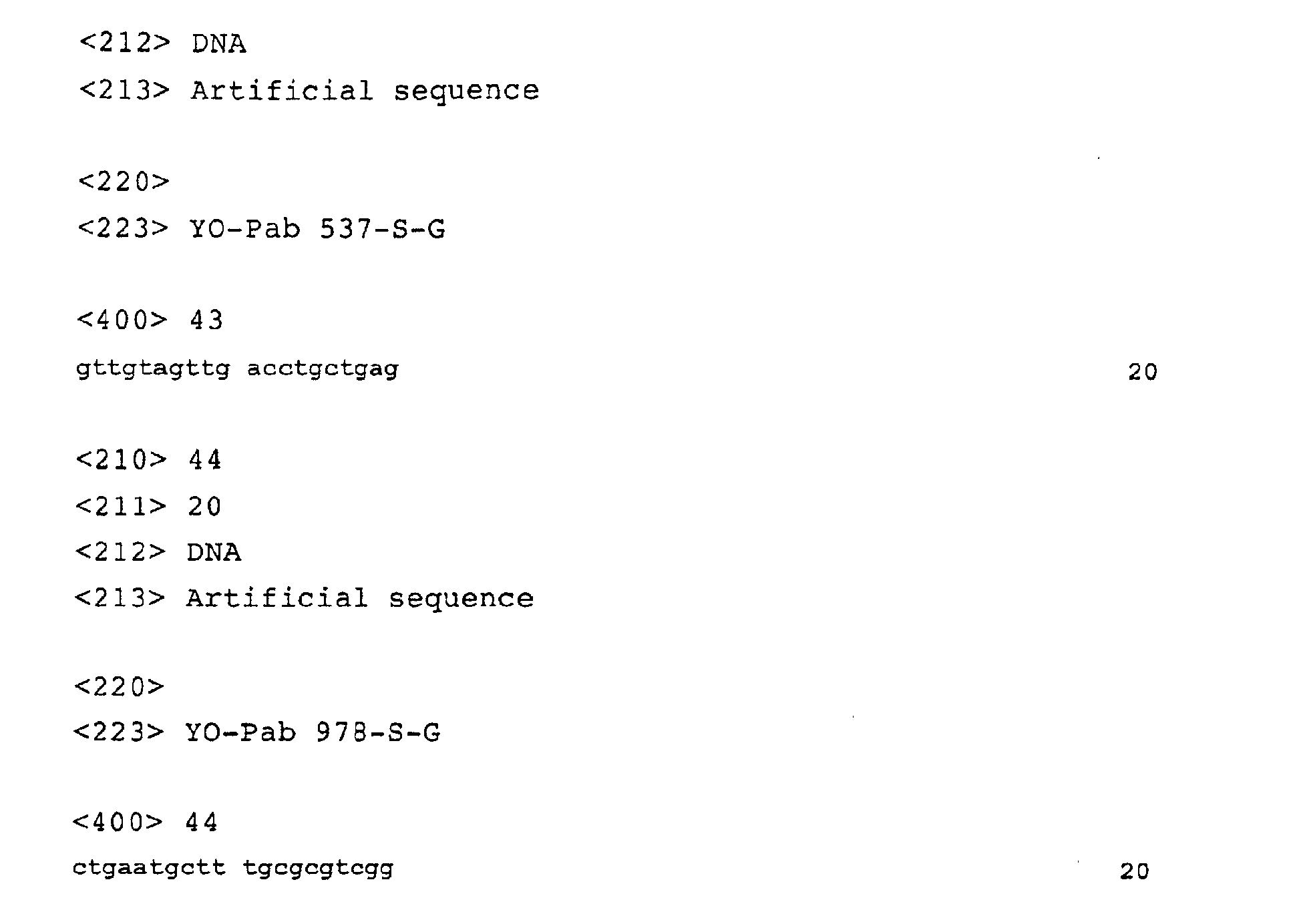
- the fourth embodiment of the present invention which has been accomplished to achieve the second object mentioned above, relates to the method according to said third embodiment, characterized in that said oligonucleotide comprises at least 10 contiguous bases of any of the sequences listed as SEQ. IDs. No.42 to No.44 or its complementary sequence.
- the first object of the present invention is to provide an oligonucleotide capable of cleaving and amplifying a pab gene which codes for an antigenic protein of Mycobacterium tuberculosis, pab, or an RNA derived from said gene, as well as being useful in highly sensitive detection and identification of said gene or RNA.
- the oligonucleotides of the invention are oligonucleotides that complementary bind in a specific manner to intramolecular structure-free regions of the target RNA in the aforementioned RNA amplification, and they are capable of binding specifically to the target RNA without heat denaturation described above.
- the present invention provides oligonucleotides that binds to intramolecular structure-free regions of the Mycobacterium tuberculosis RNA at a relatively low and constant temperature (35-50°C, and preferably 41°C), which are useful for specific cleavage, amplification, detection or the like of Mycobacterium tuberculosis RNA.
- the present invention relates to oligonucleotide probes for cleaving said target RNA at specific site, oligonucleotide primers for amplifying said target DNA with PCR, oligonucleotide primers for amplifying said target RNA with NASBA or the like, and oligonucleotides which accomplish rapidly and highly sensitive detection by using them as oligonucleotide probes for detecting the target nucleic acid without or after performing these amplifications.
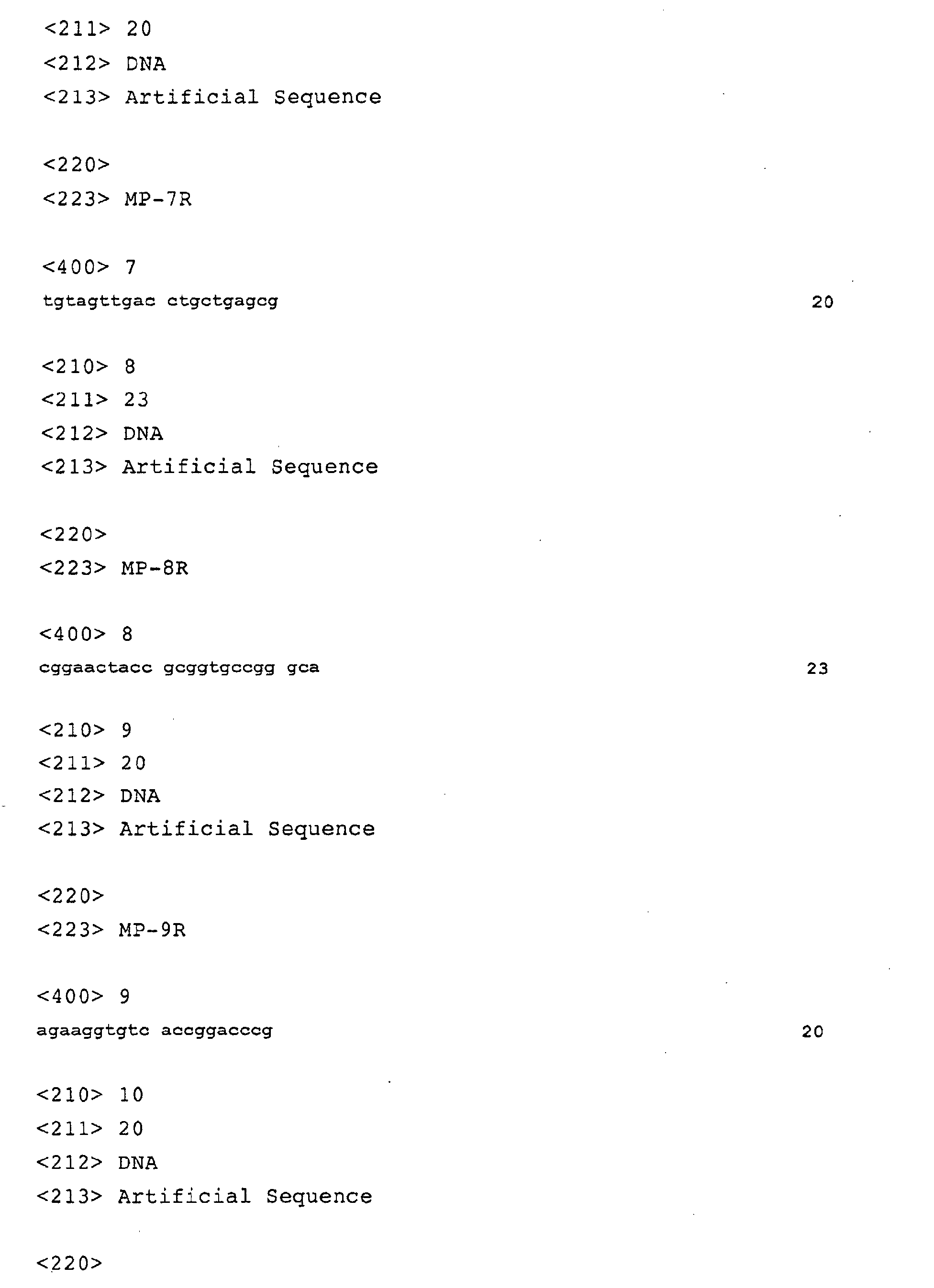
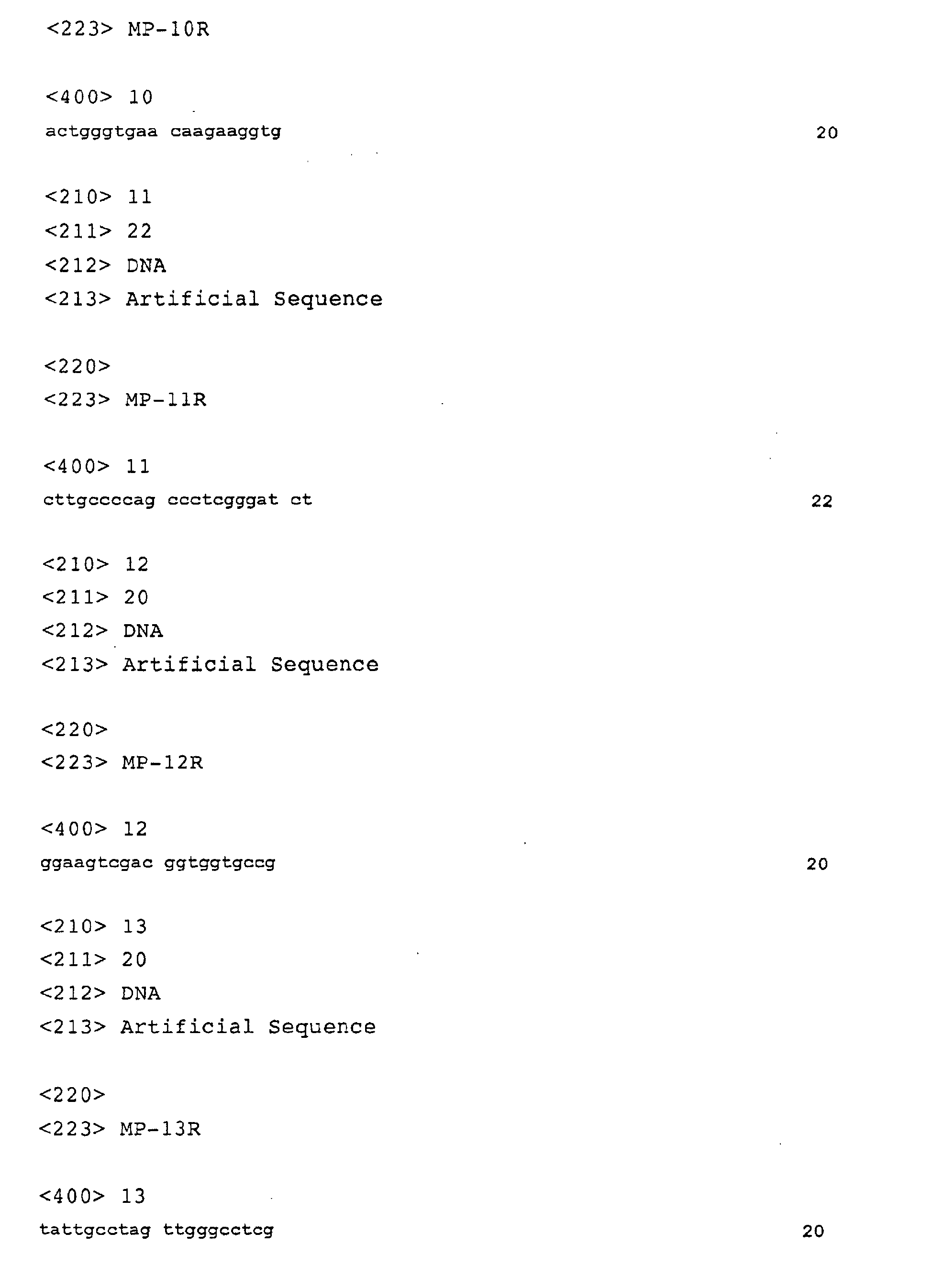
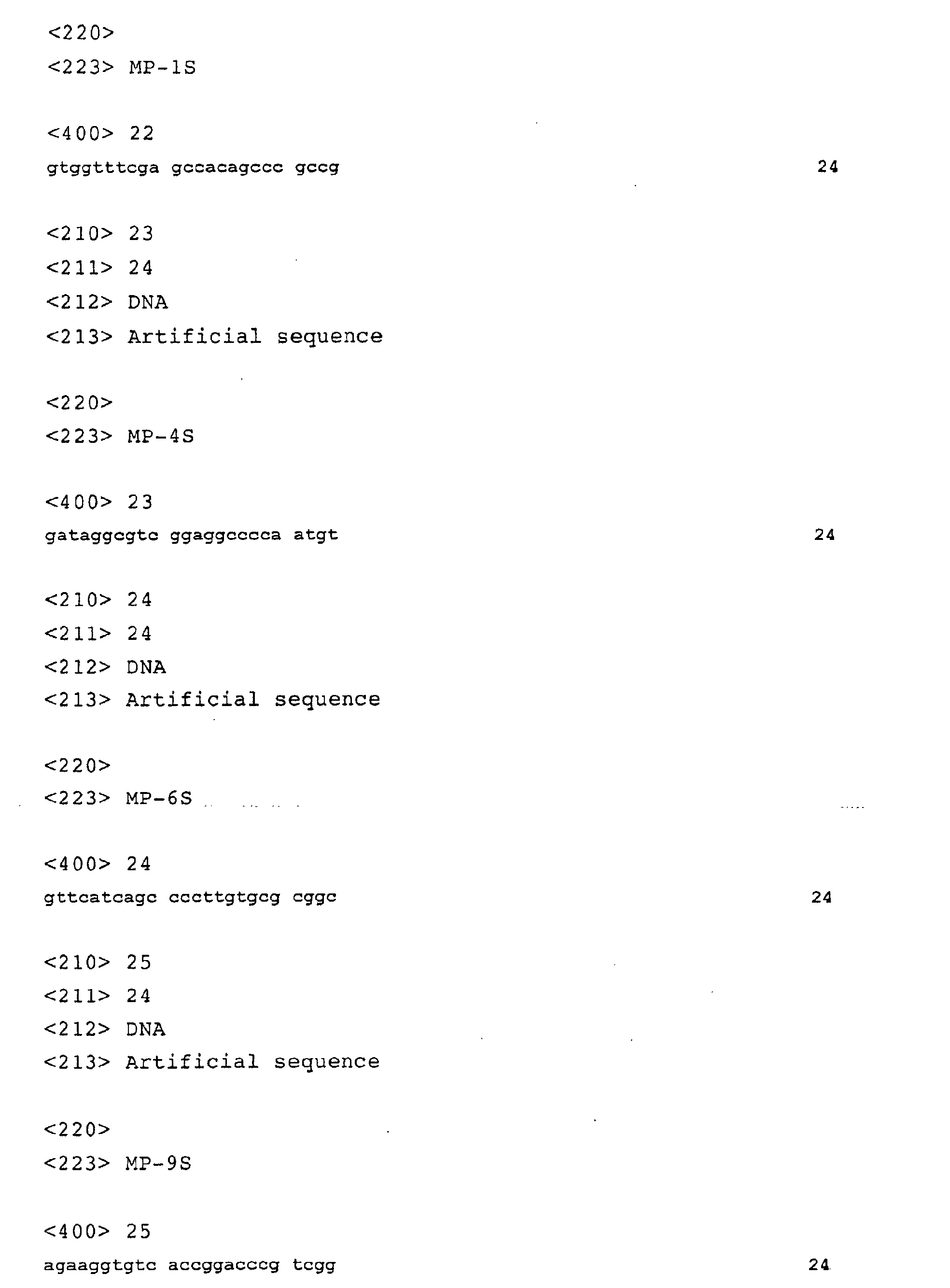
- SEQ. IDs. No.1 through No.20 illustrate the oligonucleotides of the present invention useful in cleavage, amplification, detection or the like of RNA derived from Mycobacterium tuberculosis .
- RNA derived from Mycobacterium tuberculosis also includes RNA that has been produced by using this gene as a template.
- each of the oligonucleotide of the present invention may include entire base sequence of any of SEQ IDs No. 1 to No. 20, since an order of 10 bases is adequate for specific binding to an RNA derived from Mycobacterium tuberculosis , these oligonucleotides can be ones comprising at least 10 contiguous bases of the described sequences.
- the oligonucleotides of the present invention can be used, for example, as probes for cleaving RNA.
- this can be accomplished merely by hybridizing the oligonucleotides of the present invention to single-stranded target RNA, and then treating it with an enzyme which digests only the RNA portion of the double-stranded RNA-DNA.
- an enzyme known to have Ribonuclease H activity may be used.
- Each oligonucleotide of the present invention can be used, for example, as an oligonucleotide primer for nucleic acid amplification. If a nucleic acid amplification method is carried out using the oligonucleotide of the present invention as the primer, it would be possible to amplify only the target nucleic acid, namely Mycobacterium tuberculosis nucleic acid.
- examples of amplification methods include PCR, LCR, NASBA and 3SR, nucleic acid amplification methods that can be carried out at a constant temperature such as LCR, NASBA and 3SR are particularly preferable.
- Mycobacterium tuberculosis can be detected by detecting the amplification product by various methods. In this case, any of the above oligonucleotides other than the oligonucleotide used in the amplification may be used as the probe, and the fragment of the amplified specific sequence can be confirmed by electrophoresis or the like.
- Each oligonucleotide of the present invention can be used as a probe by, for example, modifying its portion or labeling it with a detectable marker.
- the oligonucleotide of the present invention labeled with the detectable marker may be hybridized to a single-stranded target nucleic acid, after which the hybridized probe can be detected via the marker.
- the marker detection may be carried out by a method suitable for the particular marker, and for example, when using an intercalator fluorescent dye for labeling the oligonucleotide, a dye with the property of exhibiting increased fluorescent intensity by intercalation in the double-stranded nucleic acid comprising the target nucleic acid and the oligonucleotide probe may be used in order to allow easy detection of only the hybridized probe without removal of the probe that has not hybridized to the target nucleic acid.
- the marker may be detected after removal of the probe that has not hybridized to the target nucleic acid.
- the target nucleic acid in the sample is preferably amplified to a detectable amount by a nucleic acid amplification method such as PCR, NASBA or 3SR method, among which isothermal nucleic acid amplification methods such as the NASBA and 3SR methods are most preferable.
- a nucleic acid amplification method such as PCR, NASBA or 3SR method, among which isothermal nucleic acid amplification methods such as the NASBA and 3SR methods are most preferable.
- it is especially preferable to modify the probe by, for example, adding glycolic acid to the 3'-end so that the probe will not function as a nucleotide primer.
- the second object of the present invention is to provide preferable combinations of oligonucleotides capable of specifically amplifying an RNA derived from said pab gene at a relatively low temperature (41°C, for example) as well as useful in carrying out a highly sensitive detection and identification of said RNA.
- the invention related to this second object provides a nucleic acid amplification process for amplifying an RNA derived from Mycobacterium tuberculosis pab gene, and a method for detecting an RNA transcription product produced by this nucleic acid amplification process.
- This nucleic acid amplification process includes PCR, NASBA or 3SR method, among which isothermal nucleic acid amplification methods such as the NASBA and 3SR methods, which amplifies the RNA derived from Mycobacterium tuberculosis pab gene by use of a concerted action of a reverse transcriptase and an RNA polymerase (by reacting the reverse transcriptase and the RNA polymerase under a condition to provide a concerted action), are mostly preferable.
- an RNA derived from Mycobacterium tuberculosis pab gene present in a sample is used as a template for synthesis of a DNA employing an RNA-dependent DNA polymerase
- the RNA of the double-stranded RNA/DNA is digested by Ribonuclease H to produce a single-stranded DNA
- the single-stranded DNA is then used as a template for production of a double-stranded DNA having a promoter sequence capable of transcribing RNA comprising the specific sequence or a sequence complementary to said specific sequence employing a DNA-dependent DNA polymerase
- the double-stranded DNA produces an RNA transcription product in the presence of an RNA polymerase
- the RNA transcription product is then used as a template for cDNA synthesis employing the RNA-dependent DNA polymerase.
- the present invention is characterized in that an oligonucleotide comprising at least 10 contiguous bases of any of the sequences listed as SEQ. IDs. No.28 to No.33 having a sequence homologous to a portion of the RNA sequence of the Mycobacterium tuberculosis pab gene to be amplified is used as the first primer and an oligonucleotide comprising at least 10 contiguous bases of any of the sequences listed as SEQ. IDs. No.34 to No.41 having a sequence complementary to a portion of the RNA sequence of the Mycobacterium tuberculosis pab gene is used as the second primer, wherein either the first or second primer has the RNA polymerase promoter sequence at its 5'-region.
- RNA-dependent DNA polymerase the DNA-dependent DNA polymerase and the ribonuclease H to be used in the present invention
- AMV reverse transcriptase having all of these types of activity.
- the RNA polymerase to be used in the present invention is not particularly restricted, T7 phage RNA polymerase or SP6 phage RNA polymerase is preferably used.
- an oligonucleotide that is complementary to the region adjacent to and overlapping with the 5' end region of the specific sequence (bases 1 to 10) of the RNA derived from Mycobacterium tuberculosis pab gene is added, and the RNA derived from Mycobacterium tuberculosis pab gene is cleaved with Ribonuclease H at the 5' end region of the specific sequence to give the initial template for nucleic acid amplification, thereby allowing amplification even for an RNA derived from Mycobacterium tuberculosis pab gene without having the specific sequence positioned at its 5' end.
- the oligonucleotide used for the cleaving may, for example, be any of those listed as SEQ. IDs No. 22 to No. 27, provided that it differs from the one used as the second primer in the amplification process.
- the oligonucleotide for cleaving is preferably chemically modified (for example, aminated) at the 3' hydroxyl group in order to prevent an extension reaction from the 3' end.
- the amplification product obtained by the above amplification process can be detected by any known method, per se, it is preferable to carry out the detection, in the presence of an oligonucleotide probe labeled with an intercalator fluorescent pigment, by measuring changes in the fluorescent properties of the reaction solution.
- This oligonucleotide may be one in which the intercalator fluorescent pigment is bonded to a phosphorous atom in the oligonucleotide through a linker.
- the oligonucleotide is characterized in that when it forms a double-stranded chain with the target nucleic acid, separation analysis is not required because the intercalator portion intercalates into the double-stranded chain portion to vary the fluorescent characteristics (Ishiguro, T. et al. (1996), Nucleic Acids Res. 24 (24) 4992-4997).
- the oligonucleotide sequence is not critical so long as it has a sequence complementary to at least a portion of the amplification product.
- the oligonucleotide sequence is preferably one comprising at least 10 contiguous bases of the sequence listed as SEQ. IDs. No. 42 to No. 44, or complementary sequence thereof.
- chemical modification for example, glycolic acid addition
- at the 3' end hydroxyl group of the oligonucleotide is preferred in order to inhibit an extension reaction based on the oligonucleotide used as a primer.
- RNA having the same sequence as the specific sequence of an RNA derived from Mycobacterium tuberculosis pab gene in a single tube at a constant temperature and in a single step, and, thus, the amplification process is easily automated.
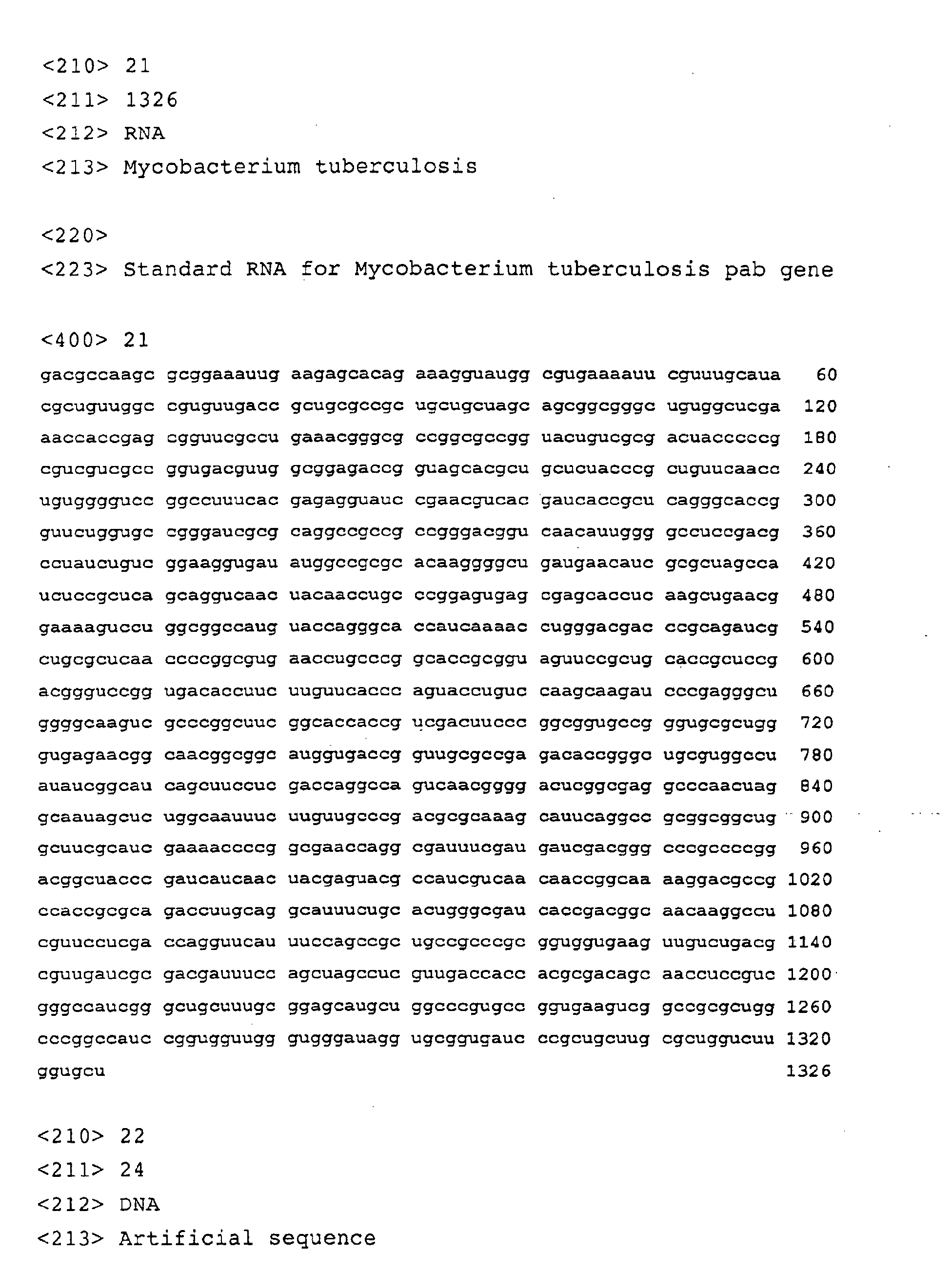
- the pab-RNA is a synthesized and purified RNA obtained by in vitro transcription using double-stranded DNA containing the pab-RNA base sequence as the template.
- Fig. 1 black and white inverted.
- Table 1 shows the positions and expected band chain lengths resulting when the oligonucleotide specifically binds to the standard RNA. Specific bands were confirmed for MP-1R, MP-2R, MP-4R, MP-6R, MP-7R, MP-8R, MP-9R, MP-12R, MP-13R, MP-14R, MP-15R, MP-17R and MP-18R.
- oligonucleotides strongly bind to the Mycobacterium tuberculosis pab gene RNA at 41°C in a constant state.
- the base numbers shown in Table 1 represent those in the base sequence of the Mycobacterium tuberculosis pab gene. Further, the circles in the Table represent that only specific bands had been observed, and the crosses therein represent that both specific and nonspecific bands had been observed.
- the oligonucleotides of the present invention are oligonucleotides that complementary bind to RNA derived from pab gene, which is a genetic element of Mycobacterium tuberculosis, even under conditions of relatively low and constant temperature (35-50°C, preferably 41°C), which tend to cause an intramolecular structure in RNA and prevent binding of primers and probes thereto. Specific binding of the oligonucleotides is therefore possible without heat denaturation of the target RNA.
- oligonucleotides of the invention are thus useful as oligonucleotides for cleavage, amplification, detection or the like of RNA derived from Mycobacterium tuberculosis pab gene, i.e. as oligonucleotide primers or oligonucleotide probes to be used in RNA amplification methods.
- oligonucleotides of the invention are also clearly useful for amplification and detection of Mycobacterium tuberculosis pab gene.
- Oligonucleotides complementary to the above-mentioned oligonucleotides are also useful for amplification of double-stranded DNA by the PCR method, or for detection of cDNA obtained by reverse transcription of RNA.
- oligonucleotides of the invention are not limited to the specifically listed base sequences (between 20 and 23 mers), and they may be oligonucleotides comprising at least 10 or more contiguous bases within those sequences. This is obvious from the fact that 10mer base sequences are sufficient to ensure adequate specificity of primers or probes to target nucleic acids under relatively low temperature condition (preferably, at 41°C).
- RNA amplification reaction was carried out using oligonucleotide probes which specifically bind to an RNA derived from Mycobacterium tuberculosis pab gene.
- RNA amplification reactions using the combinations of oligonucleotides shown in Table 2 a specific band could be confirmed in combinations (c), (h) and (m). Accordingly, it was demonstrated that these combinations are effective in detecting the Mycobacterium tuberculosis .
- Table 2 shows the combinations of the first, second and third oligonucleotides used in the present example, as well as the chain lengths of the amplified specific band resulting from the RNA amplification reactions using these combinations.
- the 3' end hydroxyl group of each first oligonucleotide base sequence was aminated.
- Each second oligonucleotide base sequence includes T7 promoter region in its region of from the 1st "A" to the 28th "A” from the 5' end.
- the base numbers represent those in the base sequence of the Mycobacterium tuberculosis pab gene.
- MP-1S (SEQ. ID. No.22; Bases No. 213 to No. 236)
- MP-4S (SEQ. ID. No.23; Bases No. 453 to No. 476)
- MP-6S (SEQ. ID. No.24; Bases No. 494 to No. 517)
- MP-9S (SEQ. ID. No.25; Bases No. 708 to No. 731)
- MP-12S (SEQ. ID. No.26; Bases No. 786 to No. 809)
- MP-13S (SEQ. ID. No.27; Bases No. 933 to No. 956)
- MP-1F (SEQ. ID. No.28; Bases No. 228 to No. 250)
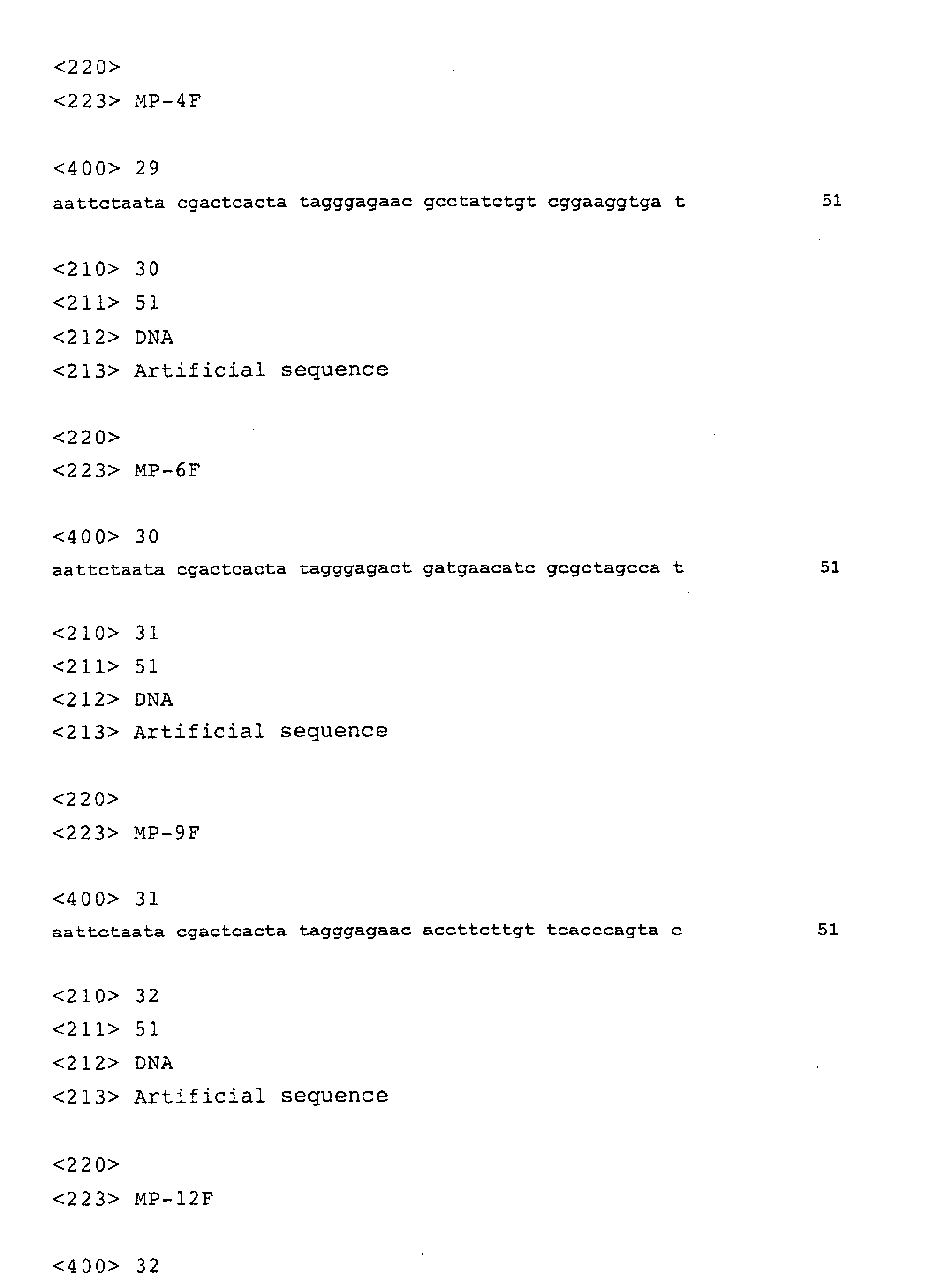
- MP-4F (SEQ. ID. No.29; Bases No. 468 to No. 490)
- MP-6F (SEQ. ID. No.30; Bases No. 509 to No. 531)
- MP-9F (SEQ. ID. No.31; Bases No. 723 to No. 745)
- MP-12F (SEQ. ID. No.32; Bases No. 800 to No. 823) MP-13F (SEQ. ID. No.33; Bases No. 948 to No. 970)
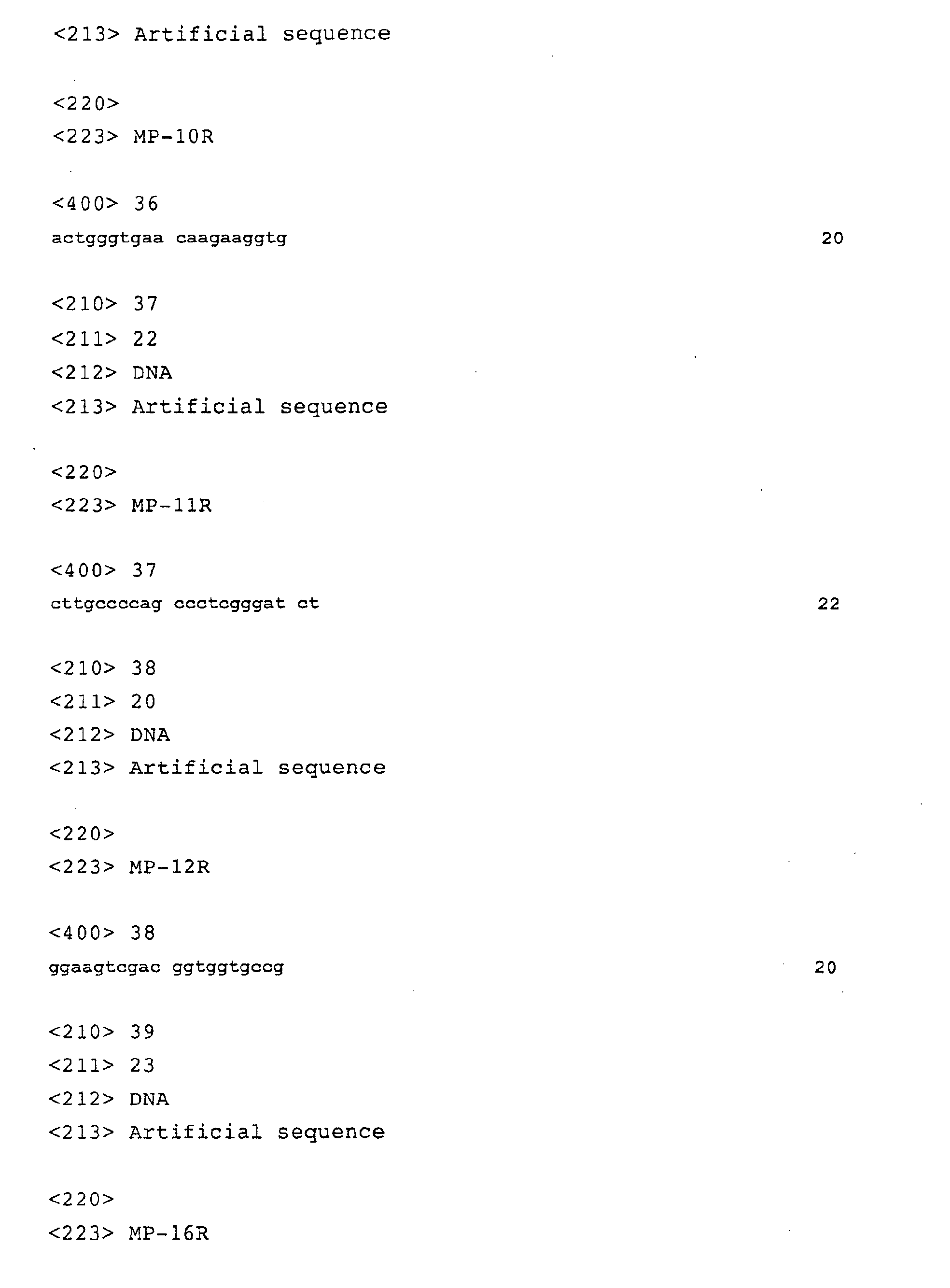
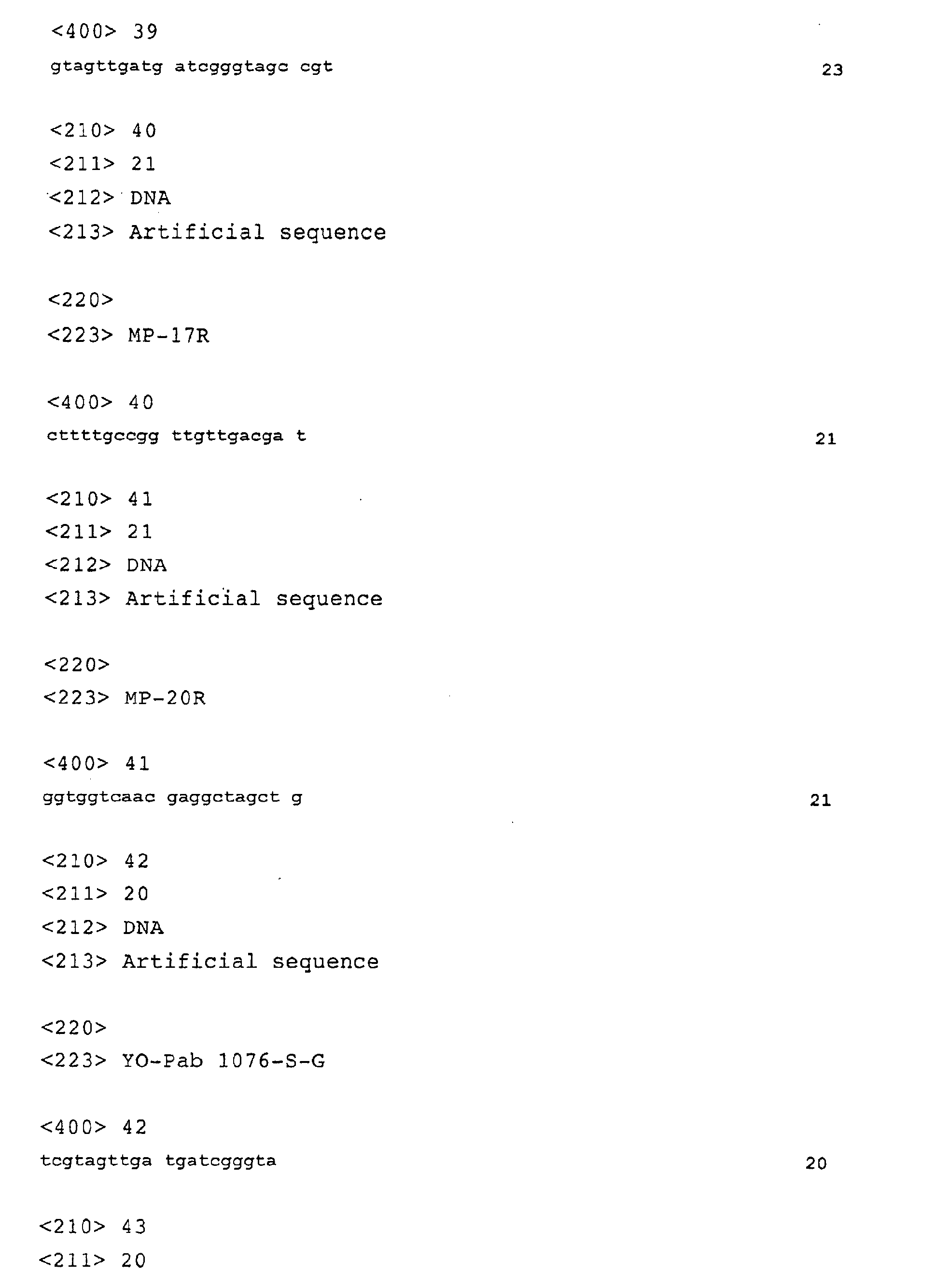
- MP-3R (SEQ. ID. No.34; Bases No. 319 to No. 339) MP-9R (SEQ. ID. No.35; Bases No. 712 to No. 731) MP-10R (SEQ. ID. No.36; Bases No. 724 to No. 743) MP-11R (SEQ. ID. No.37; Bases No. 757 to No. 778) MP-12R (SEQ. ID. No.38; Bases No. 790 to No. 809) MP-16R (SEQ. ID. No.39; Bases No. 1071 to No. 1093) MP-17R (SEQ. ID. No.40; Bases No. 1103 to No. 1123) MP-20R (SEQ. ID. No.41; Bases No. 1270 to No. 1290)
- RNA derived from Mycobacterium tuberculosis pab gene was carried out using combinations of oligonucleotides according to the present invention.
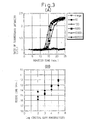
- Fig.3(A) shows the time-course changes in the fluorescence increase ratio (fluorescence intensity at predetermined time/background fluorescence intensity) of the sample, where enzyme was added at 0 minutes.
- Fig. 3(B) shows the relationship between the logarithm of the initial RNA amount and the rising time (time at which the relative fluorescence reaches the negative sample's average value plus 3 standard deviations; i.e., the time to reach 1.2).
- the initial RNA amount was between 10 1 copies/test and 10 5 copies/test.
- Fig. 3(A) shows that 10 2 copies were detected in about 15 minutes.
- a fluorescent profile and a calibration curve both depending on the initial concentration of the labeled RNA was obtained, indicating that it is possible to quantify the target RNA present in unknown samples. This demonstrates that this method allows rapid, highly sensitive detection of Mycobacterium tuberculosis .
- the present invention provides useful combinations of oligonucleotide primers or oligonucleotide probes which specifically bind to RNA derived from Mycobacterium tuberculosis pab gene, and rapidly amplify and detect the target RNA even under relatively low and constant temperature (35-50°C and preferably 41°C) conditions in which RNA in a sample would form an intramolecular structure which inhibit the primer and probe binding.
- the base lengths of the oligonucleotides in the combinations of the present invention are not limited to the concretely described lengths, but rather include oligonucleotides comprised of at least 10 contiguous bases within these sequences. This is clear from the fact that a base sequence of about 10 mer is adequate for ensuring specificity of primer or probe to a target nucleic acid under relatively low temperature (preferably 41°C) conditions.
Landscapes
- Chemical & Material Sciences (AREA)
- Life Sciences & Earth Sciences (AREA)
- Health & Medical Sciences (AREA)
- Organic Chemistry (AREA)
- Engineering & Computer Science (AREA)
- Proteomics, Peptides & Aminoacids (AREA)
- Genetics & Genomics (AREA)
- Zoology (AREA)
- Analytical Chemistry (AREA)
- Wood Science & Technology (AREA)
- General Engineering & Computer Science (AREA)
- Biotechnology (AREA)
- Bioinformatics & Cheminformatics (AREA)
- Molecular Biology (AREA)
- Microbiology (AREA)
- Biochemistry (AREA)
- Biophysics (AREA)
- General Health & Medical Sciences (AREA)
- Physics & Mathematics (AREA)
- Biomedical Technology (AREA)
- Immunology (AREA)
- Plant Pathology (AREA)
- Measuring Or Testing Involving Enzymes Or Micro-Organisms (AREA)
Abstract
Description
| 60 mM | Tris-HCl buffer (pH 8.6) |
| 17 mM | magnesium chloride |
| 90 mM | potassium chloride |
| 39 U | RNase inhibitor (Takara Shuzo Co., Ltd.) |
| 1 mM | DTT |
| 0.066 µM | standard RNA distilled water for adjusting volume |
| 0.2 µM | oligonucleotide solution (one of the oligonucleotides shown below was used) |
| Oligonucleotide | Base positions | Expected cleaved band lengths (base) | Result |
| MP-1R | 206-236 | 111, 1200 | ○ |
| MP-2R | 268-288 | 163, 1148 | ○ |
| MP-3R | 319-339 | 214, 1097 | × |
| MP-4R | 454-476 | 350, 960 | ○ |
| MP-5R | 484-504 | 379, 932 | × |
| MP-6R | 498-517 | 393, 919 | ○ |
| MP-7R | 535-554 | 430, 882 | ○ |
| MP-8R | 674-697 | 570, 739 | ○ |
| MP-9R | 712-730 | 607, 705 | ○ |
| MP-10R | 724-743 | 619, 693 | × |
| MP-11R | 757-778 | 652, 658 | × |
| MP-12R | 790-809 | 685, 627 | ○ |
| MP-13R | 937-956 | 832, 343 | ○ |
| MP-14R | 961-982 | 856, 454 | ○ |
| MP-15R | 1011-1030 | 906, 406 | ○ |
| MP-16R | 1071-1093 | 966, 343 | × |
| MP-17R | 1103-1123 | 998, 313 | ○ |
| MP-18R | 1166-1185 | 1061, 251 | ○ |
| MP-19R | 1256-1278 | 1151, 158 | × |
| MP-20R | 1270-1290 | 1165, 146 | × |
| 60 mM | Tris-HCl buffer (pH 8.6) | |
| 17 mM | magnesium chloride | |
| 90 mM | potassium chloride | |
| 39 | RNase Inhibitor | |
| 1 mM | DTT | |
| 0.25 mM | each of dATP, dCTP, dGTP and dTTP | |
| 3.6 mM | ITP | |
| 3.0 mM | each of ATP, CTP, GTP and UTP | |
| 0.16 µM | of the first oligonucleotide | |
| 1.0 µM | of the second oligonucleotide | |
| 1.0 µM | of the | |
| 13 % | DMSO | |
| Distilled water for adjusting volume |
| 1.7 | sorbitol | |
| 3 µg | bovine serum albumin | |
| 142 U | T7 RNA polymerase (Gibco) | |
| 8 U | AMV-Reverse transcriptase (Takara Shuzo Co., Ltd.) | |
| Distilled water for adjusting volume |
| Combination | 1st oligonucleotide | 2nd oligonucleotide | 3rd oligonucleotide | Amplification product chain length (base) |
| (a) | MP-4S | MP-4F | MP-9R | 270 |
| (b) | MP-4S | MP-4F | MP-12R | 348 |
| (c) | MP-13S | MP-13F | MP-17R | 182 |
| (d) | MP-1S | MP-1F | MP-3R | 118 |
| (e) | MP-4S | MP-4F | MP-10R | 282 |
| (f) | MP-4S | MP-4F | MP-11R | 317 |
| (g) | MP-6S | MP-6F | MP-10R | 241 |
| (h) | MP-6S | MP-6F | MP-11R | 276 |
| (i) | MP-9S | MP-9F | MP-16R | 377 |
| (j) | MP-12S | MP-12F | MP-16R | 299 |
| (k) | MP-13S | MP-13F | MP-16R | 152 |
| (l) | MP-13S | MP-13F | MP-20R | 349 |
| (m) | MP-6S | MP-6F | MP-9R | 229 |
The 3' end hydroxyl group of each first oligonucleotide base sequence was aminated. Each second oligonucleotide base sequence includes T7 promoter region in its region of from the 1st "A" to the 28th "A" from the 5' end. The base numbers represent those in the base sequence of the Mycobacterium tuberculosis pab gene.
MP-4S (SEQ. ID. No.23; Bases No. 453 to No. 476)
MP-6S (SEQ. ID. No.24; Bases No. 494 to No. 517)
MP-9S (SEQ. ID. No.25; Bases No. 708 to No. 731)
MP-12S (SEQ. ID. No.26; Bases No. 786 to No. 809)
MP-13S (SEQ. ID. No.27; Bases No. 933 to No. 956)
MP-4F (SEQ. ID. No.29; Bases No. 468 to No. 490)
MP-6F (SEQ. ID. No.30; Bases No. 509 to No. 531)
MP-9F (SEQ. ID. No.31; Bases No. 723 to No. 745)
MP-12F (SEQ. ID. No.32; Bases No. 800 to No. 823)
MP-13F (SEQ. ID. No.33; Bases No. 948 to No. 970)
MP-9R (SEQ. ID. No.35; Bases No. 712 to No. 731)
MP-10R (SEQ. ID. No.36; Bases No. 724 to No. 743)
MP-11R (SEQ. ID. No.37; Bases No. 757 to No. 778)
MP-12R (SEQ. ID. No.38; Bases No. 790 to No. 809)
MP-16R (SEQ. ID. No.39; Bases No. 1071 to No. 1093)
MP-17R (SEQ. ID. No.40; Bases No. 1103 to No. 1123)
MP-20R (SEQ. ID. No.41; Bases No. 1270 to No. 1290)
| 60 mM | Tris-HCl buffer (pH 8.6) | |
| 17 mM | magnesium chloride | |
| 150 mM | potassium chloride | |
| 39 | RNase Inhibitor | |
| 1 mM | DTT | |
| 0.25 mM | each of dATP, dCTP, dGTP and dTTP | |
| 3.6 mM | ITP | |
| 3.0 mM | each of ATP, CTP, GTP and UTP | |
| 0.16 µM | of the first oligonucleotide (MP-13S; SEQ. ID. No.27; wherein its 3' end hydroxyl group is aminated) | |
| 1.0 µM | of the second oligonucleotide (MP-13F; SEQ. ID. No.33) | |
| 1.0 µM | of the third oligonucleotide (MP-17R; SEQ. ID. No.40) | |
| 25 nM | intercalator fluorescent pigment-labeled oligonucleotide (YO-Pab1076-S-G; SEQ. ID. No.42; labeled with an intercalator fluorescent pigment at the phosphorous atom between the 10th "A" and the 11th "T" from the 5' end, and modified with a glycol group at its 3' end hydroxyl group.) | |
| 13 % | DMSO | |
| Distilled water for adjusting volume |
| 1.7 | sorbitol | |
| 3 µg | bovine serum albumin | |
| 142 U | T7 RNA polymerase (Gibco) | |
| 8 U | AMV-Reverse transcriptase (Takara Shuzo Co., Ltd.) | |
| Distilled water for adjusting volume |






Claims (8)
- An oligonucleotide for cleavage, detection or amplification of pab gene, a gene element of Mycobacterium tuberculosis, or an RNA derived from said gene, which oligonucleotide is capable of binding specifically to said pab gene or RNA derived therefrom, and comprises at least 10 contiguous bases of any of the sequences listed as SEQ. IDs. No. 1 to No. 20, or an oligonucleotide complementary to said oligonucleotide.
- The oligonucleotide according to claim 1, wherein said oligonucleotide is an oligonucleotide primer for DNA elongation reaction.
- The oligonucleotide according to claim 1, wherein said oligonucleotide is an oligonucleotide probe a portion of which is modified or labeled with a detectable marker.
- The oligonucleotide according to claim 3, wherein said oligonucleotide is a synthetic oligonucleotide in which a portion of its base(s) is (are) modified without impairing the function of said oligonucleotide as an oligonucleotide probe.
- A method for amplifying pab gene, a gene element of Mycobacterium tuberculosis, which employs an RNA amplification process, comprising the steps of: forming a cDNA with an RNA-dependent DNA polymerase using a specific sequence of an RNA derived from said pab gene present in a sample as a template, with a first primer having a sequence homologous to said specific sequence and a second primer having a sequence complementary to said specific sequence, wherein either the first or second primer has a sequence having the RNA polymerase promoter sequence added at its 5'-region, thereby producing an RNA-DNA double-strand; digesting the RNA of said RNA-DNA double-strand with Ribonuclease H to form a single-stranded DNA; and then forming a double-stranded DNA that includes the promoter sequence allowing transcription of said specific sequence or an RNA comprising a sequence complementary to said specific sequence with a DNA-dependent DNA polymerase using said single-stranded DNA as a template, said double-stranded DNA produces an RNA transcription product in the presence of an RNA polymerase, and said RNA transcription product is subsequently used as the template for the cDNA synthesis with said RNA-dependent DNA polymerase; said method is characterized in that an oligonucleotide comprising at least 10 contiguous bases of any of the sequences listed as SEQ. IDs. No. 28 to No. 33 having a sequence homologous to a portion of the RNA sequence of the Mycobacterium tuberculosis pab gene to be amplified is used as the first primer and an oligonucleotide comprising at least 10 contiguous bases of any of the sequences listed as SEQ. IDs. No. 34 to No. 41 having a sequence complementary to a portion of the RNA sequence of the Mycobacterium tuberculosis pab gene is used as the second primer.
- The method according to claim 5, wherein said RNA amplification process is carried out in the presence of an oligonucleotide probe capable of specifically binding to the RNA transcription product resulting from said amplification and labeled with an intercalator fluorescent pigment, and changes in the fluorescent properties of the reaction solution is measured, with the proviso that the labeled oligonucleotide has a sequence different from those of said first and second primers.
- The method according to claim 6, characterized in that said probe is designed so as to complementary bind to at least a portion of the sequence of said RNA transcription product, and the fluorescent property changes relative to that of a situation where a complex formation is absent.
- The method according to claim 7, characterized in that said probe has a sequence comprising at least 10 contiguous bases of any of the sequences listed as SEQ. IDs. No. 42 to No. 44 or a sequence complementary thereto.
Applications Claiming Priority (5)
| Application Number | Priority Date | Filing Date | Title |
|---|---|---|---|
| JP2001224436A JP2003033182A (en) | 2001-07-25 | 2001-07-25 | Oligonucleotides for Mycobacterium tuberculosis detection |
| JP2001224436 | 2001-07-25 | ||
| JP2001240874A JP2003047478A (en) | 2001-08-08 | 2001-08-08 | Method for detecting the pab gene of Mycobacterium tuberculosis |
| JP2001240874 | 2001-08-08 | ||
| PCT/JP2002/007508 WO2003010309A1 (en) | 2001-07-25 | 2002-07-24 | Oligonucleotides for detecting tubercle bacillus and method therefor |
Publications (3)
| Publication Number | Publication Date |
|---|---|
| EP1411117A1 true EP1411117A1 (en) | 2004-04-21 |
| EP1411117A4 EP1411117A4 (en) | 2005-09-07 |
| EP1411117B1 EP1411117B1 (en) | 2010-06-09 |
Family
ID=26619238
Family Applications (1)
| Application Number | Title | Priority Date | Filing Date |
|---|---|---|---|
| EP02749365A Expired - Lifetime EP1411117B1 (en) | 2001-07-25 | 2002-07-24 | NASBA based method for detecting mycobacterium tuberculosis |
Country Status (8)
| Country | Link |
|---|---|
| US (1) | US7105319B2 (en) |
| EP (1) | EP1411117B1 (en) |
| KR (1) | KR100984264B1 (en) |
| CN (1) | CN100351374C (en) |
| AT (1) | ATE470710T1 (en) |
| DE (1) | DE60236659D1 (en) |
| TW (1) | TWI243855B (en) |
| WO (1) | WO2003010309A1 (en) |
Families Citing this family (5)
| Publication number | Priority date | Publication date | Assignee | Title |
|---|---|---|---|---|
| KR100984264B1 (en) * | 2001-07-25 | 2010-09-30 | 토소가부시키가이샤 | Oligonucleotides and Methods for the Detection of Mycobacterium Tuberculosis |
| CN100999550B (en) * | 2006-01-10 | 2010-10-06 | 中国人民解放军第三○九医院 | Tubercle branch bacillus fusion protein and application thereof |
| CN101298471B (en) * | 2006-06-06 | 2011-01-19 | 中国人民解放军第二军医大学 | Antigen epitope for stimulating human body's protective immune response against Mycobacterium tuberculosis and use thereof |
| CN100415771C (en) * | 2006-06-06 | 2008-09-03 | 中国人民解放军第二军医大学 | Antigen epitope for exciting human anti-tubercle bacillus protective immune response and its use |
| CN101857903B (en) * | 2010-06-11 | 2013-02-06 | 亚能生物技术(深圳)有限公司 | Mycobacteria strain detecting dot blot membrane and kit |
Family Cites Families (7)
| Publication number | Priority date | Publication date | Assignee | Title |
|---|---|---|---|---|
| US5631130A (en) * | 1994-05-13 | 1997-05-20 | Abbott Laboratories | Materials and methods for the detection of Mycobacterium tuberculosis |
| WO1998016645A2 (en) * | 1996-10-11 | 1998-04-23 | Corixa Corporation | Compounds and methods for diagnosis of tuberculosis |
| EP1002878A3 (en) * | 1998-11-19 | 2003-11-12 | Tosoh Corporation | Hepatitis C Virus RNA-binding oligo DNA and method preparing it |
| EP1055734B1 (en) * | 1999-05-24 | 2004-10-13 | Tosoh Corporation | Method for assaying ribonucleic acid |
| EP1103624A4 (en) * | 1999-06-04 | 2004-12-22 | Tosoh Corp | METHOD FOR AMPLIFYING POTENTIALIZED NUCLEIC ACID |
| KR100984264B1 (en) * | 2001-07-25 | 2010-09-30 | 토소가부시키가이샤 | Oligonucleotides and Methods for the Detection of Mycobacterium Tuberculosis |
| JP2003116543A (en) * | 2001-10-10 | 2003-04-22 | Tosoh Corp | Evaluation method of efficacy and toxicity |
-
2002
- 2002-07-24 KR KR1020037004251A patent/KR100984264B1/en not_active Expired - Fee Related
- 2002-07-24 DE DE60236659T patent/DE60236659D1/en not_active Expired - Lifetime
- 2002-07-24 AT AT02749365T patent/ATE470710T1/en not_active IP Right Cessation
- 2002-07-24 WO PCT/JP2002/007508 patent/WO2003010309A1/en not_active Ceased
- 2002-07-24 CN CNB028025067A patent/CN100351374C/en not_active Expired - Fee Related
- 2002-07-24 US US10/381,256 patent/US7105319B2/en not_active Expired - Fee Related
- 2002-07-24 TW TW091116495A patent/TWI243855B/en not_active IP Right Cessation
- 2002-07-24 EP EP02749365A patent/EP1411117B1/en not_active Expired - Lifetime
Also Published As
| Publication number | Publication date |
|---|---|
| EP1411117A4 (en) | 2005-09-07 |
| CN100351374C (en) | 2007-11-28 |
| US20040087782A1 (en) | 2004-05-06 |
| US7105319B2 (en) | 2006-09-12 |
| ATE470710T1 (en) | 2010-06-15 |
| DE60236659D1 (en) | 2010-07-22 |
| WO2003010309A1 (en) | 2003-02-06 |
| TWI243855B (en) | 2005-11-21 |
| EP1411117B1 (en) | 2010-06-09 |
| KR100984264B1 (en) | 2010-09-30 |
| CN1464906A (en) | 2003-12-31 |
| KR20040017796A (en) | 2004-02-27 |
Similar Documents
| Publication | Publication Date | Title |
|---|---|---|
| EP2218780B1 (en) | Nucleic acid amplification method, and reagent and reagent kit for use in the method | |
| JP2002330788A (en) | Amplification and detection of Chlamydiaceae bacteria | |
| EP3464618B1 (en) | Compositions and methods for detection of mycoplasma genitalium | |
| US7297517B2 (en) | Oligonucleotides and method for detection of meca gene of methicillin-resistant Staphylococcus aureus | |
| EP1134292B1 (en) | Oligonucleotides for detection of 'Vibrio parahaemolyticus' and detection method for 'Vibrio parahaemolyticus' using the same oligonucleotides | |
| US7105319B2 (en) | Oligonucleotides for detecting tubercle bacillus and method therefor | |
| US7495094B2 (en) | Detection reagent for thermostable direct hemolysin-related hemolysin gene of Vibrio parahaemolyticus | |
| JP2002320487A (en) | Amplification and detection of Bordetella pertussis | |
| US6893847B2 (en) | Oligonucleotide for detecting Salmonella and method of detecting Salmonella | |
| EP1209242A2 (en) | Oligonucleotides and method for characterizing and detecting genogroup II type small round structured virus (SRSV) | |
| EP1170383A2 (en) | Oligonucleotides and method for detection of small round structured virus (SRSV) RNA | |
| EP1352974A1 (en) | Oligonucleotide for detection of atypical mycobacteria mycobacterium avium and detection method | |
| EP1512754B1 (en) | Detection reagent for thermostable direct hemolysin gene of vibrio parahaemolyticus | |
| JP2003284565A (en) | Oligonucleotides and detection method for detection of atypical mycobacterium Mycobacterimintracellulare | |
| US6756198B2 (en) | Oligonucleotide for highly sensitive detection of hepatitis C virus and method for detection thereof | |
| JP2001258569A (en) | Oligonucleotides for detection of Vibrio parahaemolyticus | |
| EP4562180A1 (en) | Method and kit for detecting single nucleotide polymorphisms (snp) by loop-mediated isothermal amplification (lamp) | |
| JP2003033182A (en) | Oligonucleotides for Mycobacterium tuberculosis detection | |
| JP2001258570A (en) | Oligonucleotides for detection of Vibrio parahaemolyticus |
Legal Events
| Date | Code | Title | Description |
|---|---|---|---|
| PUAI | Public reference made under article 153(3) epc to a published international application that has entered the european phase |
Free format text: ORIGINAL CODE: 0009012 |
|
| 17P | Request for examination filed |
Effective date: 20040205 |
|
| AK | Designated contracting states |
Kind code of ref document: A1 Designated state(s): AT BE BG CH CY CZ DE DK EE ES FI FR GB GR IE IT LI LU MC NL PT SE SK TR |
|
| RIN1 | Information on inventor provided before grant (corrected) |
Inventor name: ISHIGURO, TAKAHIKO Inventor name: MASUDA, NORIYOSHI Inventor name: MARUYAMA, TAKAHIRO Inventor name: TSUCHIYA, SHIGEO Inventor name: MATSUBA, TAKAO |
|
| A4 | Supplementary search report drawn up and despatched |
Effective date: 20050725 |
|
| GRAP | Despatch of communication of intention to grant a patent |
Free format text: ORIGINAL CODE: EPIDOSNIGR1 |
|
| RTI1 | Title (correction) |
Free format text: NASBA BASED METHOD FOR DETECTING MYCOBACTERIUM TUBERCULOSIS |
|
| GRAS | Grant fee paid |
Free format text: ORIGINAL CODE: EPIDOSNIGR3 |
|
| GRAA | (expected) grant |
Free format text: ORIGINAL CODE: 0009210 |
|
| AK | Designated contracting states |
Kind code of ref document: B1 Designated state(s): AT BE BG CH CY CZ DE DK EE ES FI FR GB GR IE IT LI LU MC NL PT SE SK TR |
|
| REG | Reference to a national code |
Ref country code: CH Ref legal event code: EP |
|
| REG | Reference to a national code |
Ref country code: IE Ref legal event code: FG4D |
|
| REF | Corresponds to: |
Ref document number: 60236659 Country of ref document: DE Date of ref document: 20100722 Kind code of ref document: P |
|
| REG | Reference to a national code |
Ref country code: NL Ref legal event code: VDEP Effective date: 20100609 |
|
| RAP2 | Party data changed (patent owner data changed or rights of a patent transferred) |
Owner name: TOSOH CORPORATION |
|
| PG25 | Lapsed in a contracting state [announced via postgrant information from national office to epo] |
Ref country code: SE Free format text: LAPSE BECAUSE OF FAILURE TO SUBMIT A TRANSLATION OF THE DESCRIPTION OR TO PAY THE FEE WITHIN THE PRESCRIBED TIME-LIMIT Effective date: 20100609 |
|
| PG25 | Lapsed in a contracting state [announced via postgrant information from national office to epo] |
Ref country code: FI Free format text: LAPSE BECAUSE OF FAILURE TO SUBMIT A TRANSLATION OF THE DESCRIPTION OR TO PAY THE FEE WITHIN THE PRESCRIBED TIME-LIMIT Effective date: 20100609 Ref country code: AT Free format text: LAPSE BECAUSE OF FAILURE TO SUBMIT A TRANSLATION OF THE DESCRIPTION OR TO PAY THE FEE WITHIN THE PRESCRIBED TIME-LIMIT Effective date: 20100609 |
|
| PG25 | Lapsed in a contracting state [announced via postgrant information from national office to epo] |
Ref country code: CY Free format text: LAPSE BECAUSE OF FAILURE TO SUBMIT A TRANSLATION OF THE DESCRIPTION OR TO PAY THE FEE WITHIN THE PRESCRIBED TIME-LIMIT Effective date: 20100609 Ref country code: GR Free format text: LAPSE BECAUSE OF FAILURE TO SUBMIT A TRANSLATION OF THE DESCRIPTION OR TO PAY THE FEE WITHIN THE PRESCRIBED TIME-LIMIT Effective date: 20100910 |
|
| PG25 | Lapsed in a contracting state [announced via postgrant information from national office to epo] |
Ref country code: NL Free format text: LAPSE BECAUSE OF FAILURE TO SUBMIT A TRANSLATION OF THE DESCRIPTION OR TO PAY THE FEE WITHIN THE PRESCRIBED TIME-LIMIT Effective date: 20100609 Ref country code: EE Free format text: LAPSE BECAUSE OF FAILURE TO SUBMIT A TRANSLATION OF THE DESCRIPTION OR TO PAY THE FEE WITHIN THE PRESCRIBED TIME-LIMIT Effective date: 20100609 |
|
| PG25 | Lapsed in a contracting state [announced via postgrant information from national office to epo] |
Ref country code: MC Free format text: LAPSE BECAUSE OF NON-PAYMENT OF DUE FEES Effective date: 20100731 Ref country code: SK Free format text: LAPSE BECAUSE OF FAILURE TO SUBMIT A TRANSLATION OF THE DESCRIPTION OR TO PAY THE FEE WITHIN THE PRESCRIBED TIME-LIMIT Effective date: 20100609 Ref country code: BE Free format text: LAPSE BECAUSE OF FAILURE TO SUBMIT A TRANSLATION OF THE DESCRIPTION OR TO PAY THE FEE WITHIN THE PRESCRIBED TIME-LIMIT Effective date: 20100609 Ref country code: PT Free format text: LAPSE BECAUSE OF FAILURE TO SUBMIT A TRANSLATION OF THE DESCRIPTION OR TO PAY THE FEE WITHIN THE PRESCRIBED TIME-LIMIT Effective date: 20101011 Ref country code: CZ Free format text: LAPSE BECAUSE OF FAILURE TO SUBMIT A TRANSLATION OF THE DESCRIPTION OR TO PAY THE FEE WITHIN THE PRESCRIBED TIME-LIMIT Effective date: 20100609 |
|
| REG | Reference to a national code |
Ref country code: CH Ref legal event code: PL |
|
| PLBE | No opposition filed within time limit |
Free format text: ORIGINAL CODE: 0009261 |
|
| STAA | Information on the status of an ep patent application or granted ep patent |
Free format text: STATUS: NO OPPOSITION FILED WITHIN TIME LIMIT |
|
| PG25 | Lapsed in a contracting state [announced via postgrant information from national office to epo] |
Ref country code: DK Free format text: LAPSE BECAUSE OF FAILURE TO SUBMIT A TRANSLATION OF THE DESCRIPTION OR TO PAY THE FEE WITHIN THE PRESCRIBED TIME-LIMIT Effective date: 20100609 Ref country code: LI Free format text: LAPSE BECAUSE OF NON-PAYMENT OF DUE FEES Effective date: 20100731 Ref country code: CH Free format text: LAPSE BECAUSE OF NON-PAYMENT OF DUE FEES Effective date: 20100731 |
|
| 26N | No opposition filed |
Effective date: 20110310 |
|
| PG25 | Lapsed in a contracting state [announced via postgrant information from national office to epo] |
Ref country code: IT Free format text: LAPSE BECAUSE OF NON-PAYMENT OF DUE FEES Effective date: 20100724 |
|
| REG | Reference to a national code |
Ref country code: DE Ref legal event code: R097 Ref document number: 60236659 Country of ref document: DE Effective date: 20110309 |
|
| PG25 | Lapsed in a contracting state [announced via postgrant information from national office to epo] |
Ref country code: IE Free format text: LAPSE BECAUSE OF NON-PAYMENT OF DUE FEES Effective date: 20100724 |
|
| PGRI | Patent reinstated in contracting state [announced from national office to epo] |
Ref country code: IT Effective date: 20110616 |
|
| PG25 | Lapsed in a contracting state [announced via postgrant information from national office to epo] |
Ref country code: LU Free format text: LAPSE BECAUSE OF NON-PAYMENT OF DUE FEES Effective date: 20100724 Ref country code: BG Free format text: LAPSE BECAUSE OF FAILURE TO SUBMIT A TRANSLATION OF THE DESCRIPTION OR TO PAY THE FEE WITHIN THE PRESCRIBED TIME-LIMIT Effective date: 20100609 |
|
| PG25 | Lapsed in a contracting state [announced via postgrant information from national office to epo] |
Ref country code: TR Free format text: LAPSE BECAUSE OF FAILURE TO SUBMIT A TRANSLATION OF THE DESCRIPTION OR TO PAY THE FEE WITHIN THE PRESCRIBED TIME-LIMIT Effective date: 20100609 |
|
| PGFP | Annual fee paid to national office [announced via postgrant information from national office to epo] |
Ref country code: GB Payment date: 20120718 Year of fee payment: 11 |
|
| PGFP | Annual fee paid to national office [announced via postgrant information from national office to epo] |
Ref country code: DE Payment date: 20120718 Year of fee payment: 11 Ref country code: IT Payment date: 20120719 Year of fee payment: 11 Ref country code: FR Payment date: 20120719 Year of fee payment: 11 |
|
| PG25 | Lapsed in a contracting state [announced via postgrant information from national office to epo] |
Ref country code: BG Free format text: LAPSE BECAUSE OF FAILURE TO SUBMIT A TRANSLATION OF THE DESCRIPTION OR TO PAY THE FEE WITHIN THE PRESCRIBED TIME-LIMIT Effective date: 20100909 |
|
| PG25 | Lapsed in a contracting state [announced via postgrant information from national office to epo] |
Ref country code: ES Free format text: LAPSE BECAUSE OF FAILURE TO SUBMIT A TRANSLATION OF THE DESCRIPTION OR TO PAY THE FEE WITHIN THE PRESCRIBED TIME-LIMIT Effective date: 20100920 |
|
| GBPC | Gb: european patent ceased through non-payment of renewal fee |
Effective date: 20130724 |
|
| REG | Reference to a national code |
Ref country code: FR Ref legal event code: ST Effective date: 20140331 |
|
| PG25 | Lapsed in a contracting state [announced via postgrant information from national office to epo] |
Ref country code: DE Free format text: LAPSE BECAUSE OF NON-PAYMENT OF DUE FEES Effective date: 20140201 Ref country code: GB Free format text: LAPSE BECAUSE OF NON-PAYMENT OF DUE FEES Effective date: 20130724 |
|
| REG | Reference to a national code |
Ref country code: DE Ref legal event code: R119 Ref document number: 60236659 Country of ref document: DE Effective date: 20140201 |
|
| PG25 | Lapsed in a contracting state [announced via postgrant information from national office to epo] |
Ref country code: IT Free format text: LAPSE BECAUSE OF NON-PAYMENT OF DUE FEES Effective date: 20130724 Ref country code: FR Free format text: LAPSE BECAUSE OF NON-PAYMENT OF DUE FEES Effective date: 20130731 |
|
| P01 | Opt-out of the competence of the unified patent court (upc) registered |
Effective date: 20230523 |