EP1410804A1 - Cancer vaccine containing cancer antigen based on tumor suppressor gene wt1 product and cationic liposomes - Google Patents
Cancer vaccine containing cancer antigen based on tumor suppressor gene wt1 product and cationic liposomes Download PDFInfo
- Publication number
- EP1410804A1 EP1410804A1 EP02738876A EP02738876A EP1410804A1 EP 1410804 A1 EP1410804 A1 EP 1410804A1 EP 02738876 A EP02738876 A EP 02738876A EP 02738876 A EP02738876 A EP 02738876A EP 1410804 A1 EP1410804 A1 EP 1410804A1
- Authority
- EP
- European Patent Office
- Prior art keywords
- cancer
- peptide
- amino acid
- antigen
- seq
- Prior art date
- Legal status (The legal status is an assumption and is not a legal conclusion. Google has not performed a legal analysis and makes no representation as to the accuracy of the status listed.)
- Withdrawn
Links
Images

Classifications
-
- A—HUMAN NECESSITIES
- A61—MEDICAL OR VETERINARY SCIENCE; HYGIENE
- A61K—PREPARATIONS FOR MEDICAL, DENTAL OR TOILETRY PURPOSES
- A61K39/00—Medicinal preparations containing antigens or antibodies
- A61K39/0005—Vertebrate antigens
- A61K39/0011—Cancer antigens
- A61K39/001152—Transcription factors, e.g. SOX or c-MYC
- A61K39/001153—Wilms tumor 1 [WT1]
-
- A—HUMAN NECESSITIES
- A61—MEDICAL OR VETERINARY SCIENCE; HYGIENE
- A61K—PREPARATIONS FOR MEDICAL, DENTAL OR TOILETRY PURPOSES
- A61K9/00—Medicinal preparations characterised by special physical form
- A61K9/10—Dispersions; Emulsions
- A61K9/127—Synthetic bilayered vehicles, e.g. liposomes or liposomes with cholesterol as the only non-phosphatidyl surfactant
- A61K9/1271—Non-conventional liposomes, e.g. PEGylated liposomes or liposomes coated or grafted with polymers
- A61K9/1272—Non-conventional liposomes, e.g. PEGylated liposomes or liposomes coated or grafted with polymers comprising non-phosphatidyl surfactants as bilayer-forming substances, e.g. cationic lipids or non-phosphatidyl liposomes coated or grafted with polymers
-
- A—HUMAN NECESSITIES
- A61—MEDICAL OR VETERINARY SCIENCE; HYGIENE
- A61P—SPECIFIC THERAPEUTIC ACTIVITY OF CHEMICAL COMPOUNDS OR MEDICINAL PREPARATIONS
- A61P35/00—Antineoplastic agents
-
- A—HUMAN NECESSITIES
- A61—MEDICAL OR VETERINARY SCIENCE; HYGIENE
- A61P—SPECIFIC THERAPEUTIC ACTIVITY OF CHEMICAL COMPOUNDS OR MEDICINAL PREPARATIONS
- A61P35/00—Antineoplastic agents
- A61P35/02—Antineoplastic agents specific for leukemia
-
- C—CHEMISTRY; METALLURGY
- C07—ORGANIC CHEMISTRY
- C07K—PEPTIDES
- C07K14/00—Peptides having more than 20 amino acids; Gastrins; Somatostatins; Melanotropins; Derivatives thereof
- C07K14/435—Peptides having more than 20 amino acids; Gastrins; Somatostatins; Melanotropins; Derivatives thereof from animals; from humans
- C07K14/46—Peptides having more than 20 amino acids; Gastrins; Somatostatins; Melanotropins; Derivatives thereof from animals; from humans from vertebrates
- C07K14/47—Peptides having more than 20 amino acids; Gastrins; Somatostatins; Melanotropins; Derivatives thereof from animals; from humans from vertebrates from mammals
- C07K14/4701—Peptides having more than 20 amino acids; Gastrins; Somatostatins; Melanotropins; Derivatives thereof from animals; from humans from vertebrates from mammals not used
- C07K14/4748—Tumour specific antigens; Tumour rejection antigen precursors [TRAP], e.g. MAGE
-
- A—HUMAN NECESSITIES
- A61—MEDICAL OR VETERINARY SCIENCE; HYGIENE
- A61K—PREPARATIONS FOR MEDICAL, DENTAL OR TOILETRY PURPOSES
- A61K39/00—Medicinal preparations containing antigens or antibodies
- A61K2039/555—Medicinal preparations containing antigens or antibodies characterised by a specific combination antigen/adjuvant
- A61K2039/55511—Organic adjuvants
- A61K2039/55555—Liposomes; Vesicles, e.g. nanoparticles; Spheres, e.g. nanospheres; Polymers
Definitions
- the present invention relates to a cancer vaccine comprising a cancer antigen based on the product of a tumor suppressor gene WT1 of Wilms tumor and lipofectin.
- This cancer vaccine is useful as an anti-cancer vaccine for blood cancers such as leukemia, myelodysplastic syndrome, multiple myeloma and malignant lymphoma, or solid cancers such as gastric cancer, colon cancer, lung cancer, breast cancer, germ cell cancer, liver cancer, skin cancer, bladder cancer, prostatic cancer, uterine cancer, cervical cancer and ovarian cancer, as well as all other cancers that express WT1.
- Immunological mechanisms for eliminating foreign substances generally comprise the humoral immunity which involves macrophages that recognize antigen so as to function as antigen presenting cells, helper T cells that recognize the antigen presentation by said macrophages and produce various lymphokines so as to activate other T cells etc., and B lymphocytes, etc., that differentiate into antibody-producing cells by the action of said lymphokines; and the cellular immunity in which killer T cells differentiated by antigen presentation attack and destroy target cells.
- cancer immunity is mainly derived from cellular immunity which involves killer T cells.
- killer T cell-mediated cancer immunity precursor T cells that recognized cancer antigen presented in the form of a complex with the major histocompatibility complex (MHC) class I differentiate and grow to produce killer T cells, which attack and destroy cancer cells.
- MHC major histocompatibility complex
- cancer cells have presented the complex of the MHC class I antigen and cancer antigen on the cell surface, which becomes the target for killer T cells (Curr. Opin. Immuno. 5:709, 1993; Curr. Opin. Immunol. 5:719, 1993; Cell 82:13, 1995; Immunol. Rev. 146:167, 1995).
- the above cancer antigen presented on the target cancer cells by MHC class I antigen is believed to be a peptide composed of about 8-12 amino acids produced as a result of processing by intracellular protease of antigen proteins synthesized in the cancer cells (Curr. Opin. Immunol. 5:709, 1993; Curr. Opin. Immunol. 5:719, 1993; Cell 82:13, 1995; Immunol. Rev. 146:167, 1995).
- the tumor suppressor gene WT1 (WT1 gene) of Wilms tumor was isolated from chromosome 11p13 as one of the causative genes for Wilms tumor based on the analysis of the WAGR syndrome that is accompanied by Wilms tumor, aniridia, urogenital abnormality, mental retardation etc. (Gessler, M. et al., Nature, Vol. 343, pp. 774-778, 1990), and its genomic DNA is about 50 kb comprising ten exons and its cDNA is about 3 kb.
- the amino acid sequence deduced from the cDNA is as set forth in SEQ ID NO: 1 (Mol. Cell. Biol. 11:1707, 1991).
- the WT1 gene is highly expressed in human leukemia, and the treatment of leukemic cells with a WT1 antisense oligomer leads to the suppression of the cell growth (Japanese Unexamined Patent Publication (Kokai) No. 9-104627), which suggests that the WT1 gene is acting on the growth of leukemic cells in a facilitative manner. Furthermore, the WT1 gene has also been highly expressed in solid cancers such as gastric cancer, colon cancer, lung cancer, breast cancer, germ cell cancer, liver cancer, skin cancer, bladder cancer, prostatic cancer, uterine cancer, cervical cancer and ovarian cancer (Japanese Patent Application No. 9-191635), and the WT1 gene was found to be a new tumor marker for leukemia and solid cancers.
- a peptide having about 8-12 amino acids comprising a portion of expression products of the WT1 gene could serve as a cancer vaccine against the above range of cancers.
- the administration of such a peptide as it is cannot serve as a cancer vaccine. This is because it is expected that the peptide administered cannot be effectively delivered to the major histocompatibility complex class I on the antigen-presenting cells.
- Lipofectin a cationic liposome
- DOTMA lipid N-[1-(2,3-dioleyloxy)propyl]-N,N,N-trimethylammonium chloride
- DOPE phospholipid dioleoylphosphatidylethanolamine
- the present invention provides a novel cancer vaccine comprising a cancer antigen peptide derived from a WT1 gene expression product and a substance useful as a carrier therefor.
- a polypeptide comprising 7-30 contiguous amino acids containing at least one amino acid that is estimated to serve as an anchor amino acid serves as a cancer antigen in the binding with the mouse and human MHC class I and MHC class II, and that cationic liposomes such as lipofectin are useful as carriers for this peptide antigen and, thereby, have completed the present invention.
- the present invention provides a cancer vaccine comprising a cancer antigen containing a mouse WT1 gene expression product or a portion thereof, and a cationic liposome.
- the present invention provides a cancer vaccine comprising a cancer antigen that comprises as an active ingredient a peptide comprising 6-30 amino acids containing at least one amino acid selected from the group consisting of Phe, Tyr, Leu, Met, Asn and Ile, that is estimated to function as an anchor amino acid for binding to the MHC antigen, in the amino acid sequence as set forth in SEQ ID NO: 1 corresponding to the cDNA of the MHC antigen, and a cationic liposome.
- the present invention provides a cancer vaccine comprising a cancer antigen that comprises as an active ingredient a peptide comprising 7-30 amino acids containing at least one amino acid selected from the group consisting of Met, Leu, and Val, that is estimated to function as an anchor amino acid for binding to the MHC antigen, in an amino acid sequence as set forth in SEQ ID NO: 2 corresponding to the cDNA of human WT1, and a cationic liposome.
- A is a graph that compares the ability of inducing cytotoxic T cells of a mixture (closed circle) of a cancer antigen peptide D b 126 and lipofectin (LPF), a lipopolysaccharide-blast (open square) pulsed with D b 126, lipofectin alone (open triangle) and the cancer antigen peptide D b 126 alone (open circle) using (3) RNAS cells and (4) RNAS cells stimulated with the cancer antigen peptide D b 126
- B is a graph of the result in which tests similar to the above A were carried out using (1) C1498 cells and (2) WT1 gene-introduced C1498 cells.
- A indicates that the combination of the cancer antigen peptide D b 126 and lipofectin has an activity of inducing cytotoxic T cells, and B indicates that the activity thereof is WT1-specific.
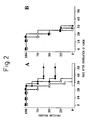
- A is a graph that shows the effect of lipofectin as an adjuvant (carrier) for the anti-cancer effect of the peptide D b 126 using WT1 gene-introduced C1498 cells
- B is a graph that shows the result of similar tests using C1498 cells. Signs that indicate the test substances are the same as in Fig. 1.
- A indicates that lipofectin is effective as an adjuvant (carrier) for the cancer antigen peptide D b 126, and the comparison of A and B shows that the anti-cancer effect is WT1-specific.
- K b and D b of mouse MHC class I as well as A0201 of human HLA were selected, and peptides estimated to have a high affinity with them were selected.
- the size of cancer antigen peptides presented on the surface of cancer cells by MHC class I is about 8-12 amino acids.
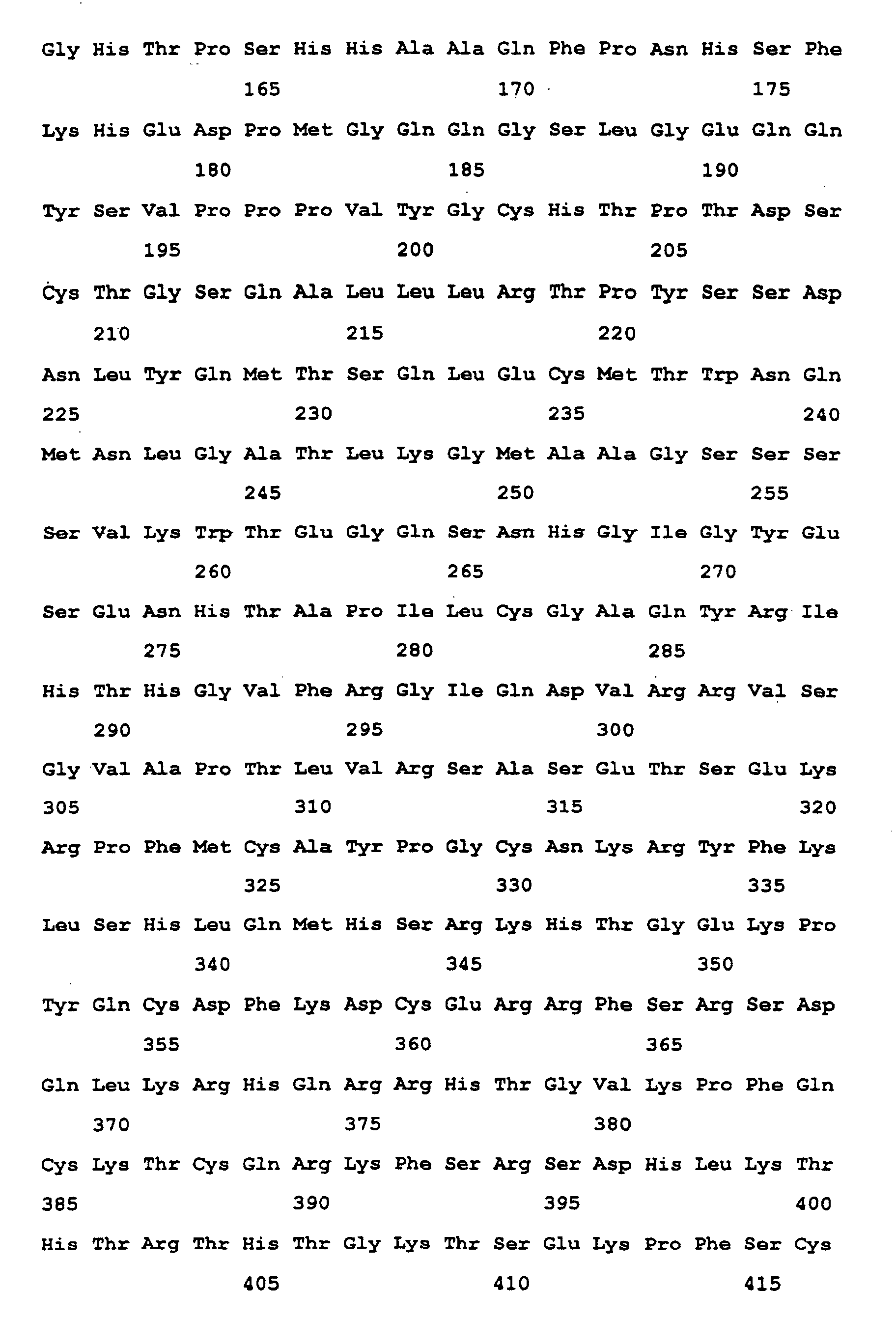
- the cancer antigen peptide of the present invention is a peptide comprising 7-30 contiguous amino acids containing at least one amino acid of Phe, Tyr, Leu, Met, Asn and Ile in the amino acid sequence of the WT1 gene product as set forth in SEQ ID NO: 1.
- the number of amino acids is preferably 8-12, for example 8 or 9.
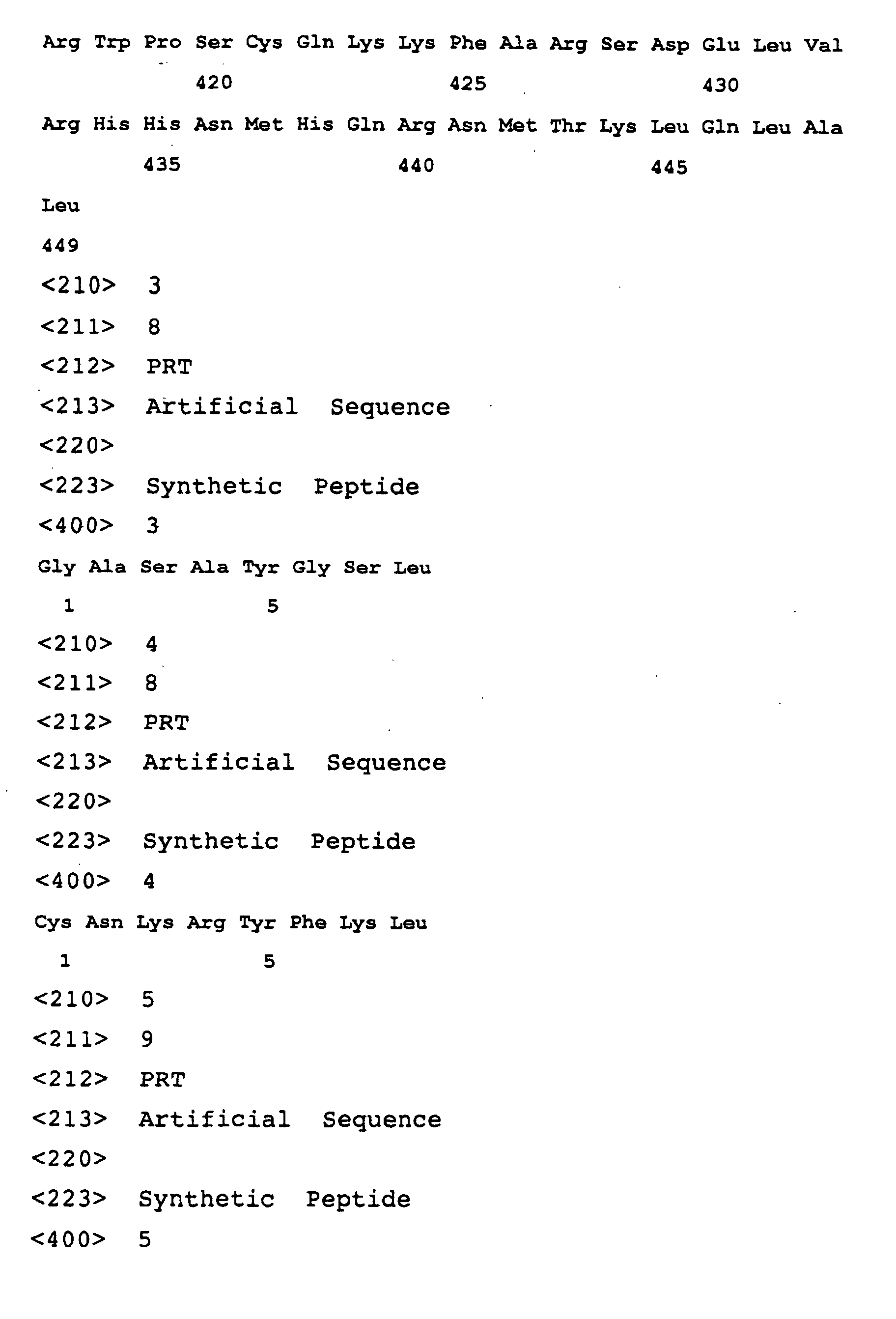
- specific embodiments include, as a peptide that binds to K b of MHC class I, the following peptides comprising 8 amino acids: as a peptide that binds to D b of MHC class I, the following peptides comprising 9 amino acids:
- the underlined amino acids are those that are thought to serve as anchors.
- the cancer antigen peptide of the present invention may also be a peptide in which a modification such as amino acid substitution has been introduced into a peptide which is a portion of the expression product of the WT1 gene.
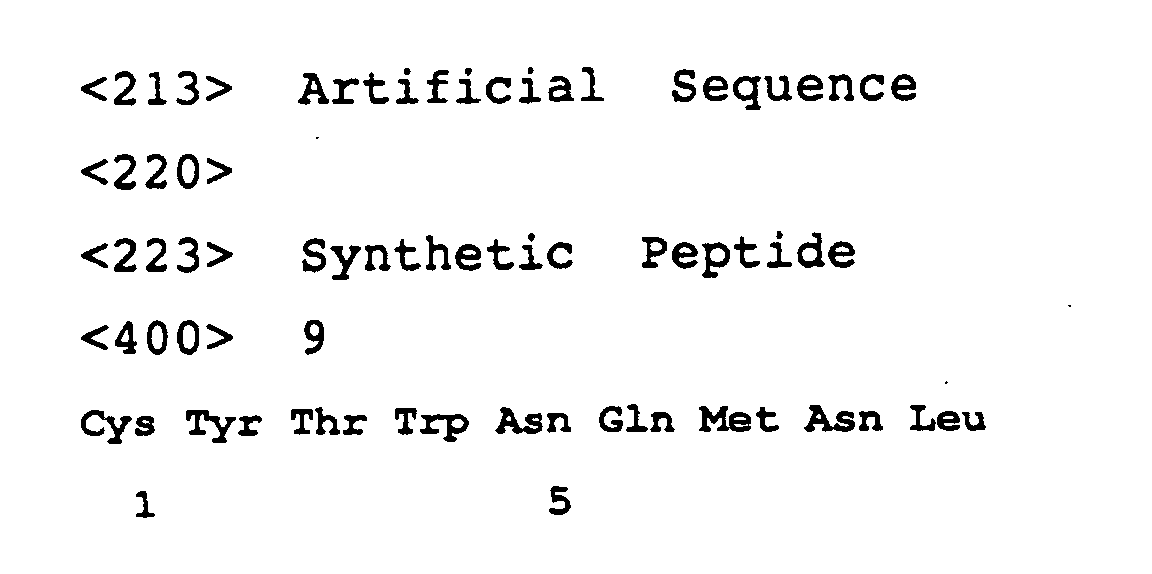
- a modified peptide there can be mentioned a cancer antigen peptide comprising as an active ingredient a peptide that comprises 9-30 amino acids containing the following amino acid sequence: Cys Tyr Thr Trp Asn Gln Met Asn Leu (SEQ ID NO: 9).
- a peptide having an amino acid sequence Cys Tyr Thr Trp Asn Gln Met Asn Leu (SEQ ID NO: 9) in which Met at position 2 of the above peptide D b 235 (SEQ ID NO: 7) has been changed to Tyr.
- a liposome comprising N-[1-(2,3-dioleyloxy)propyl]-N,N,N-trimethylammonium chloride (DOTMA), N-[1-(2,3-dioleyloxy)propyl]-N,N,N-trimethylammonium methyl sulfate (DOTAP) or dioctadecylamide-glycylspermine (DOGS), or mixtures thereof with a neutral lipid.
- DOTMA N-[1-(2,3-dioleyloxy)propyl]-N,N,N-trimethylammonium methyl sulfate
- DOGS dioctadecylamide-glycylspermine
- a neutral lipid there can be mentioned, for example, licithin, lysolecithin, sphingomyelin, phosphatidic acid, phosphatidylethanolamine, and dioleoylphosphatidylethanolamine (DOPE).
- lipofectin which is a 1:1 mixture of an artificial lipid N-[1-(2,3-dioleyloxy)propyl]-N,N,N-trimethylammonium chloride (DOTMA) and a phospholipid dioleoylphosphatidylethanolamine (DOPE).
- the cancer vaccine of the present invention can be used for the prevention or treatment of cancers that are accompanied by increased levels of the WT1 gene expression, for example blood cancers such as leukemia, myelodysplastic syndrome, multiple myeloma and malignant lymphoma, and solid cancers such as gastric cancer, colon cancer, lung cancer, breast cancer, germ cell cancer, liver cancer, skin cancer, bladder cancer, prostatic cancer, uterine cancer, cervical cancer and ovarian cancer.
- This vaccine can be administered by oral administration, or parenteral administration such as intraperitoneal, cutaneous, dermal, intramuscular, intravenous, and nasal administration.
- the dosage of the cancer vaccine of the present invention is generally 0.1 ⁇ g to 1 mg/kg per day.
- LPS-blast lipopolysaccharide-blast
- spleen cells were recovered, and the cells were incubated for 3 days in a complete RPMI medium containing lipopolysaccharide (LPS) (10 ⁇ g/ml). After washing, the cells were incubated in a complete RPMI medium containing the cancer antigen peptide D b 126 (1 ⁇ M) and ovalbumin (OVA) (100 ⁇ g/ml). After washing, the cells were suspended in 2 ml Hanks' balanced salt solution (HBSS) which was set as the lipopolysaccharide-blast (LPS-blast).
- LPS lipopolysaccharide
- HBSS Hanks' balanced salt solution
- CTL cytotoxic T cells
- C57BL/6 mice were immunized three times weekly by subcutaneous administration, to the back thereof, of a mixture of the cancer antigen peptide D b 126 and lipofectin (LPF) (mixed at a 1:2 weight ratio of D b 126 and LPF), and as a positive control by the intraperitoneal administration of lipopolysaccharide-blast (LPS-blast) (1 ml/mouse).
- LPF lipopolysaccharide-blast
- spleen cells were recovered and set as effector cells. Spleen cells stimulated with the cancer antigen peptide D b 126 (1 ⁇ M, 2 hours, 37°C, 5% CO2) were washed with HBSS to obtain stimulator cells.
- the above effector cells (5 x 10⁶ cells/well) and the above stimulator cells (2.5 x 10⁶ cells/well) were mixed, and then subjected to lymphocyte-lymphocyte mixed culture for the in vitro second challenge of the cytotoxic T cells. Five days later, cytotoxic T cells were recovered.
- C1498 cells (2) C1498 cells that have introduced therein and express the WT1 gene (C1498muWT1), (3) RMA-S cells, and (4) RMA-S cells stimulated with the cancer antigen D b 126 (1 ⁇ M, treated for 1 hour at 5% CO2) (D b 126-pulsed RMA-S), each labelled with Na 2 51 CrO 4 (0.56 MBq/10 6 cells, treated for 1 hour at 37°C and 5% CO2), were plated as the target cells onto 96-well microtiter plates (10 4 cells/well), to which cytotoxic T cells prepared as above were plated.
- D b 126 cancer antigen
- Na 2 51 CrO 4 (0.56 MBq/10 6 cells
- Example 1 Since Example 1 has shown that cytotoxic T cells are effectively induced by using lipofectin (LPF) as an adjuvant for the cancer antigen peptide D b 126, cancer antigen-specific anti-tumor effect when immunized using lipofectin as an adjuvant (carrier) was examined for the purpose of further confirming the usefulness of lipofectin (LPF) as an adjuvant for cancer vaccines.
- LPF lipofectin
- C1498muWT1 cells As the tumor model, WT1 gene-introduced C1498 cells (C1498muWT1 cells) were used; as the immunization animal, C57BL/6 mice were used; and as the model cancer antigen, the peptide D b 126 was used.
- C57BL/6 mice were immunized three times weekly by subcutaneous administration, to the back thereof, of the same mixture as in Example 1 of the cancer antigen peptide D b 126 and lipofectin (LPF) (10 nmol/mouse), or by the intraperitoneal administration of lipopolysaccharide-blast (LPS-blast) (1 ml), and one week after the final immunization C1498muWT1 cells or C1498 cells were intraperitoneally transplanted at an amount of 2 x 10 6 cells/100 ml.
- lipofectin (LPF) as an adjuvant (carrier) for cancer vaccine was carried out using WT1 as the model tumor antigen and WT1 gene-introduced cells (C1498muWT1 cells) as the model tumor, and using, as an index, resistance against C1498muWT1 cells when the peptide D b 126/lipofectin (LPF) mixture was used for immunization.
- LPF lipofectin
Landscapes
- Health & Medical Sciences (AREA)
- Chemical & Material Sciences (AREA)
- Life Sciences & Earth Sciences (AREA)
- Medicinal Chemistry (AREA)
- General Health & Medical Sciences (AREA)
- Veterinary Medicine (AREA)
- Public Health (AREA)
- Animal Behavior & Ethology (AREA)
- Pharmacology & Pharmacy (AREA)
- Epidemiology (AREA)
- Organic Chemistry (AREA)
- Biophysics (AREA)
- Immunology (AREA)
- Molecular Biology (AREA)
- Dispersion Chemistry (AREA)
- Oncology (AREA)
- General Chemical & Material Sciences (AREA)
- Nuclear Medicine, Radiotherapy & Molecular Imaging (AREA)
- Zoology (AREA)
- Toxicology (AREA)
- Biochemistry (AREA)
- Chemical Kinetics & Catalysis (AREA)
- Genetics & Genomics (AREA)
- Gastroenterology & Hepatology (AREA)
- Mycology (AREA)
- Proteomics, Peptides & Aminoacids (AREA)
- Microbiology (AREA)
- Hematology (AREA)
- Medicinal Preparation (AREA)
- Medicines Containing Antibodies Or Antigens For Use As Internal Diagnostic Agents (AREA)
- Peptides Or Proteins (AREA)
- Medicines That Contain Protein Lipid Enzymes And Other Medicines (AREA)
Abstract
Description







comprising nine amino acids are mentioned as complying with the above condition.




Claims (30)
- A cancer vaccine comprising a cancer antigen which comprises as an active ingredient the product of a tumor suppressor gene WT1, a partial peptide or a modified version thereof, and a cationic liposome.
- The cancer vaccine according to claim 1 wherein said cancer antigen is a peptide comprising 7-30 contiguous amino acids containing at least one anchor amino acid selected from Phe, Tyr, Leu, Met, Asn and Ile in the amino acid sequence as set forth in SEQ ID NO: 1, or a peptide comprising 7-30 contiguous amino acids containing at least one anchor amino acid selected from Met, Leu and Val in the amino acid sequence as set forth in SEQ ID NO: 2.
- The cancer vaccine according to claim 1 or 2 wherein said antigen is a cancer antigen that permits a high expression of the tumor suppressor gene WT1.
- The cancer vaccine according to claim 1 or 2 wherein said cancer is leukemia, myelodysplastic syndrome, malignant lymphoma, multiple myeloma, gastric cancer, colon cancer, lung cancer, breast cancer, germ cell cancer, liver cancer, skin cancer, bladder cancer, prostatic cancer, uterine cancer, cervical cancer or ovarian cancer.
- The cancer vaccine according to any of claims 1 to 4 wherein said cancer antigen peptide is any of:







- The cancer vaccine according to claim 5 wherein said cancer antigen peptide is:


- The cancer vaccine according to claim 1 wherein said cancer antigen peptide is a peptide comprising 9-30 amino acids containing the following amino acid sequence: Cys Tyr Thr Trp Asn Gln Met Asn Leu (SEQ ID NO: 9).
- The cancer vaccine according to claim 7 wherein said cancer antigen peptide is a peptide comprising the following amino acid sequence: Cys Tyr Thr Trp Asn Gln Met Asn Leu (SEQ ID NO: 9).
- The cancer vaccine according to any one of claims 1 to 8 wherein said cationic liposome is a liposome comprising N-[1-(2,3-dioleyloxy)propyl]-N,N,N-trimethylammonium chloride, N-[1-(2,3-dioleyloxy)propyl]-N,N,N-trimethylammonium methyl sulfate or dioctadecylamide-glycylspermine; or a mixture thereof with a neutral lipid.
- The cancer vaccine according to claim 9 wherein said cationic liposome is lipofectin.
- The use of a cancer antigen which comprises as an active ingredient the product of the tumor suppressor gene WT1, a partial peptide or a modified version thereof, and a cationic liposome for the production of cancer vaccine.
- The use according to claim 11 wherein said cancer antigen is a peptide comprising 7-30 contiguous amino acids containing at least one anchor amino acid selected from Phe, Tyr, Leu, Met, Asn and Ile in the amino acid sequence as set forth in SEQ ID NO: 1, or a peptide comprising 7-30 contiguous amino acids containing at least one anchor amino acid selected from Met, Leu and val in the amino acid sequence as set forth in SEQ ID NO: 2.
- The use according to claim 11 or 12 wherein said antigen is a cancer antigen that permits high expression of the tumor suppressor gene WT1.
- The use according to claim 11 or 12 wherein said cancer is leukemia, myelodysplastic syndrome, malignant lymphoma, multiple myeloma, gastric cancer, colon cancer, lung cancer, breast cancer, germ cell cancer, liver cancer, skin cancer, bladder cancer, prostatic cancer, uterine cancer, cervical cancer or ovarian cancer.
- The use according to any of claims 11 to 14 wherein said cancer antigen peptide is any of:





- The use according to claim 15 wherein said cancer antigen peptide is:


- The use according to claim 11 wherein said cancer antigen peptide is a peptide comprising 9-30 amino acids containing the following amino acid sequence: Cys Tyr Thr Trp Asn Gln Met Asn Leu (SEQ ID NO: 9).
- The use according to claim 17 wherein said cancer antigen peptide is a peptide comprising the following amino acid sequence: Cys Tyr Thr Trp Asn Gln Met Asn Leu (SEQ ID NO: 9).
- The use according to any one of claims 11 to 18 wherein said cationic liposome is a liposome comprising N-[1-(2,3-dioleyloxy)propyl]-N,N,N-trimethylammonium chloride, N-[1-(2,3-dioleyloxy)propyl]-N,N,N-trimethylammonium methyl sulfate or dioctadecylamide-glycylspermine; or a mixture thereof with a neutral lipid.
- The use according to claim 19 wherein said cationic liposome is lipofectin.
- A method of treating patients with cancer, said method comprising administering a cancer antigen which comprises as an active ingredient the product of the tumor suppressor gene WT1, a partial peptide or a modified version thereof, and a cationic liposome.
- The method according to claim 21 wherein said cancer antigen is a peptide comprising 7-30 contiguous amino acids containing at least one anchor amino acid selected from Phe, Tyr, Leu, Met, Asn and Ile in the amino acid sequence as set forth in SEQ ID NO: 1, or a peptide comprising 7-30 contiguous amino acids containing at least one anchor amino acid selected from Met, Leu and Val in the amino acid sequence as set forth in SEQ ID NO: 2.
- The method according to claim 21 or 22 wherein said antigen is a cancer antigen that permits high expression of the tumor suppressor gene WT1.
- The method according to claim 21 or 22 wherein said cancer is leukemia, myelodysplastic syndrome, malignant lymphoma, multiple myeloma, gastric cancer, colon cancer, lung cancer, breast cancer, germ cell cancer, liver cancer, skin cancer, bladder cancer, prostatic cancer, uterine cancer, cervical cancer or ovarian cancer.
- The method according to any of claims 11 to 24 wherein said cancer antigen peptide is any of:






- The method according to claim 25 wherein said cancer antigen peptide is:


- The method according to claim 21 wherein said cancer antigen peptide is a peptide comprising 9-30 amino acids containing the following amino acid sequence: Cys Tyr Thr Trp Asn Gln Met Asn Leu (SEQ ID NO: 9).
- The method according to claim 27 wherein said cancer antigen peptide is a peptide comprising the following amino acid sequence: Cys Tyr Thr Trp Asn Gln Met Asn Leu (SEQ ID NO: 9).
- The method according to any one of claims 21 to 28 wherein said cationic liposome is a liposome comprising N-[1-(2,3-dioleyloxy)propyl]-N,N,N-trimethylammonium chloride, N-[1-(2,3-dioleyloxy)propyl]-N,N,N-trimethylammonium methyl sulfate or dioctadecylamide-glycylspermine; or a mixture thereof with a neutral lipid.
- The method according to claim 29 wherein said cationic liposome is lipofectin.
Priority Applications (1)
| Application Number | Priority Date | Filing Date | Title |
|---|---|---|---|
| EP08013828A EP2014300B1 (en) | 2001-06-29 | 2002-06-28 | Cancer vaccine comprising a cancer antigen based on the product of a tumor suppressor gene WT1 and a cationic liposome |
Applications Claiming Priority (3)
| Application Number | Priority Date | Filing Date | Title |
|---|---|---|---|
| JP2001199449 | 2001-06-29 | ||
| JP2001199449 | 2001-06-29 | ||
| PCT/JP2002/006597 WO2003002142A1 (en) | 2001-06-29 | 2002-06-28 | Cancer vaccine containing cancer antigen based on tumor suppressor gene wt1 product and cationic liposomes |
Related Child Applications (1)
| Application Number | Title | Priority Date | Filing Date |
|---|---|---|---|
| EP08013828A Division EP2014300B1 (en) | 2001-06-29 | 2002-06-28 | Cancer vaccine comprising a cancer antigen based on the product of a tumor suppressor gene WT1 and a cationic liposome |
Publications (2)
| Publication Number | Publication Date |
|---|---|
| EP1410804A1 true EP1410804A1 (en) | 2004-04-21 |
| EP1410804A4 EP1410804A4 (en) | 2007-10-24 |
Family
ID=19036745
Family Applications (2)
| Application Number | Title | Priority Date | Filing Date |
|---|---|---|---|
| EP02738876A Withdrawn EP1410804A4 (en) | 2001-06-29 | 2002-06-28 | ANTICARCINOGEN VACCINE CONTAINING A TUMOR ANTIGEN BASED ON A TUMOR SUPPRESSOR WT1 GENE PRODUCT AND CATIONIC LIPOSOMES |
| EP08013828A Expired - Lifetime EP2014300B1 (en) | 2001-06-29 | 2002-06-28 | Cancer vaccine comprising a cancer antigen based on the product of a tumor suppressor gene WT1 and a cationic liposome |
Family Applications After (1)
| Application Number | Title | Priority Date | Filing Date |
|---|---|---|---|
| EP08013828A Expired - Lifetime EP2014300B1 (en) | 2001-06-29 | 2002-06-28 | Cancer vaccine comprising a cancer antigen based on the product of a tumor suppressor gene WT1 and a cationic liposome |
Country Status (8)
| Country | Link |
|---|---|
| US (2) | US20060165708A1 (en) |
| EP (2) | EP1410804A4 (en) |
| JP (2) | JP4229832B2 (en) |
| CN (1) | CN1320923C (en) |
| AT (1) | ATE494905T1 (en) |
| CA (1) | CA2451846A1 (en) |
| DE (1) | DE60238958D1 (en) |
| WO (1) | WO2003002142A1 (en) |
Cited By (8)
| Publication number | Priority date | Publication date | Assignee | Title |
|---|---|---|---|---|
| EP1657250A1 (en) * | 2004-11-11 | 2006-05-17 | Charité - Universitätsmedizin Berlin | HLA-A *01-binding T-cell epitope of WT1 |
| EP1905780A1 (en) * | 2006-07-27 | 2008-04-02 | FUJIFILM Corporation | Cancer suppressing agent |
| EP1696027A4 (en) * | 2003-11-05 | 2008-05-14 | Int Inst Cancer Immunology Inc | ANTIGEN PEPTIDE BINDING TO ORIGINAL HLA-DR WT1 |
| WO2008149225A3 (en) * | 2007-06-07 | 2009-01-29 | Univ Degli Studi Torino | Anti-tumour vaccine comprising full-length wt1 |
| EP2127670A4 (en) * | 2007-02-28 | 2010-03-24 | Univ Hokkaido Nat Univ Corp | LIPOSOME FOR INDUCING CELLULAR MEDIATION IMMUNITY |
| US9803246B2 (en) | 2011-06-28 | 2017-10-31 | International Institute Of Cancer Immunology, Inc. | Receptor gene for peptide cancer antigen-specific T cell |
| US10093977B2 (en) | 2007-03-05 | 2018-10-09 | International Institute Of Cancer Immunology, Inc. | Cancer antigen-specific T-cell receptor gene, peptide encoded by the gene, and use of them |
| US10500257B2 (en) | 2003-06-27 | 2019-12-10 | International Institute Of Cancer Immunology, Inc. | Method of selecting WT1 vaccine adaptive patient |
Families Citing this family (21)
| Publication number | Priority date | Publication date | Assignee | Title |
|---|---|---|---|---|
| ATE470435T1 (en) * | 2003-11-03 | 2010-06-15 | Yissum Res Dev Co | METHOD FOR SELECTING CATIONIC OR ANIONIC LIPOSOMES FOR THE TREATMENT OF A MUCOUS MEMBRANE AND SET CONTAINING THE SAME |
| US7303881B2 (en) * | 2004-04-30 | 2007-12-04 | Pds Biotechnology Corporation | Antigen delivery compositions and methods of use |
| EP2565201B1 (en) * | 2005-10-17 | 2014-11-26 | Sloan-Kettering Institute For Cancer Research | WT1 HLA class II-binding peptides and compositions and methods comprising same |
| JP5002749B2 (en) * | 2006-03-22 | 2012-08-15 | 富士フイルム株式会社 | Cancer inhibitor |
| EP2010209B1 (en) | 2006-04-10 | 2016-06-15 | Sloan Kettering Institute For Cancer Research | Immunogenic wt-1 peptides and methods of use thereof |
| MX352947B (en) | 2007-02-27 | 2017-12-14 | Int Inst Cancer Immunology Inc | METHOD FOR ACTIVATION OF HELPER T CELL and COMPOSITION FOR USE IN THE METHOD. |
| US8877206B2 (en) * | 2007-03-22 | 2014-11-04 | Pds Biotechnology Corporation | Stimulation of an immune response by cationic lipids |
| AU2009236306B2 (en) | 2008-04-17 | 2015-04-02 | Pds Biotechnology Corporation | Stimulation of an immune response by enantiomers of cationic lipids |
| SG189287A1 (en) | 2010-10-05 | 2013-05-31 | Int Inst Cancer Immunology Inc | Method for activating helper t cell |
| JP6082901B2 (en) * | 2011-01-31 | 2017-02-22 | オリンパス株式会社 | Vaccine / adjuvant |
| EP3520810A3 (en) | 2012-01-13 | 2019-11-06 | Memorial Sloan-Kettering Cancer Center | Immunogenic wt1 peptides and use thereof |
| US8562681B2 (en) | 2012-01-31 | 2013-10-22 | Styker Spine | Laminoplasty implant, method and instrumentation |
| US10286064B2 (en) | 2012-06-15 | 2019-05-14 | Pds Biotechnology Corporation | Cationic lipid vaccine compositions and methods of use |
| AU2013317805B2 (en) | 2012-09-21 | 2018-07-26 | Pds Biotechnology Corporation | Improved vaccine compositions and methods of use |
| AR094026A1 (en) | 2012-12-17 | 2015-07-08 | Otsuka Pharma Co Ltd | METHOD FOR ACTIVATING THE T HELPER CELL |
| US10815273B2 (en) | 2013-01-15 | 2020-10-27 | Memorial Sloan Kettering Cancer Center | Immunogenic WT-1 peptides and methods of use thereof |
| LT2945647T (en) | 2013-01-15 | 2021-02-25 | Memorial Sloan Kettering Cancer Center | Immunogenic wt-1 peptides and methods of use thereof |
| DE102015201207B4 (en) | 2014-06-24 | 2019-02-21 | Sms Group Gmbh | Four-saddle press tool and forging press and method for forging a workpiece |
| US11612652B2 (en) | 2015-11-13 | 2023-03-28 | Pds Biotechnology Corporation | Lipids as synthetic vectors to enhance antigen processing and presentation ex-vivo in dendritic cell therapy |
| TW201924722A (en) | 2017-12-05 | 2019-07-01 | 美商Pds生技公司 | Methods and compositions comprising cationic lipids for stimulating type I interferon genes |
| WO2023212095A1 (en) * | 2022-04-27 | 2023-11-02 | The Regents Of The University Of California | Molecules that enhance extracellular vesicle release |
Family Cites Families (6)
| Publication number | Priority date | Publication date | Assignee | Title |
|---|---|---|---|---|
| US104627A (en) | 1870-06-21 | Improvement in churn-power | ||
| JPH09191635A (en) | 1996-01-05 | 1997-07-22 | Toshio Aida | motor |
| AU4932199A (en) * | 1998-07-31 | 2000-02-21 | Haruo Sugiyama | Cancer antigens based on tumor suppressor gene wt1 product |
| KR100752065B1 (en) * | 1998-09-30 | 2007-08-28 | 코릭사 코포레이션 | VT1-specific immunotherapy compositions and methods |
| GB9823897D0 (en) * | 1998-11-02 | 1998-12-30 | Imp College Innovations Ltd | Immunotherapeutic methods and molecules |
| WO2001025273A2 (en) * | 1999-10-04 | 2001-04-12 | Corixa Corporation | Compositions and methods for wt1 specific immunotherapy |
-
2002
- 2002-06-28 WO PCT/JP2002/006597 patent/WO2003002142A1/en not_active Ceased
- 2002-06-28 CA CA002451846A patent/CA2451846A1/en not_active Abandoned
- 2002-06-28 EP EP02738876A patent/EP1410804A4/en not_active Withdrawn
- 2002-06-28 EP EP08013828A patent/EP2014300B1/en not_active Expired - Lifetime
- 2002-06-28 CN CNB028126939A patent/CN1320923C/en not_active Expired - Fee Related
- 2002-06-28 AT AT08013828T patent/ATE494905T1/en not_active IP Right Cessation
- 2002-06-28 US US10/482,327 patent/US20060165708A1/en not_active Abandoned
- 2002-06-28 JP JP2003508381A patent/JP4229832B2/en not_active Expired - Fee Related
- 2002-06-28 DE DE60238958T patent/DE60238958D1/en not_active Expired - Lifetime
-
2008
- 2008-10-03 JP JP2008259018A patent/JP2009079054A/en active Pending
- 2008-11-21 US US12/276,133 patent/US20090098197A1/en not_active Abandoned
Cited By (11)
| Publication number | Priority date | Publication date | Assignee | Title |
|---|---|---|---|---|
| US10500257B2 (en) | 2003-06-27 | 2019-12-10 | International Institute Of Cancer Immunology, Inc. | Method of selecting WT1 vaccine adaptive patient |
| EP1696027A4 (en) * | 2003-11-05 | 2008-05-14 | Int Inst Cancer Immunology Inc | ANTIGEN PEPTIDE BINDING TO ORIGINAL HLA-DR WT1 |
| EP2071028A3 (en) * | 2003-11-05 | 2009-06-24 | International Institute of Cancer Immunology, Inc. | HLA-DR-binding antigen peptide derived from WT1 |
| EP1657250A1 (en) * | 2004-11-11 | 2006-05-17 | Charité - Universitätsmedizin Berlin | HLA-A *01-binding T-cell epitope of WT1 |
| EP1905780A1 (en) * | 2006-07-27 | 2008-04-02 | FUJIFILM Corporation | Cancer suppressing agent |
| EP2127670A4 (en) * | 2007-02-28 | 2010-03-24 | Univ Hokkaido Nat Univ Corp | LIPOSOME FOR INDUCING CELLULAR MEDIATION IMMUNITY |
| US10093977B2 (en) | 2007-03-05 | 2018-10-09 | International Institute Of Cancer Immunology, Inc. | Cancer antigen-specific T-cell receptor gene, peptide encoded by the gene, and use of them |
| US10669584B2 (en) | 2007-03-05 | 2020-06-02 | International Institute Of Cancer Immunology, Inc. | Cancer antigen-specific T-cell receptor gene, peptide encoded by the gene, and use of them |
| WO2008149225A3 (en) * | 2007-06-07 | 2009-01-29 | Univ Degli Studi Torino | Anti-tumour vaccine comprising full-length wt1 |
| US9803246B2 (en) | 2011-06-28 | 2017-10-31 | International Institute Of Cancer Immunology, Inc. | Receptor gene for peptide cancer antigen-specific T cell |
| US10648036B2 (en) | 2011-06-28 | 2020-05-12 | International Institute Of Cancer Immunology, Inc. | Receptor gene for peptide cancer antigen-specific T cell |
Also Published As
| Publication number | Publication date |
|---|---|
| JP2009079054A (en) | 2009-04-16 |
| WO2003002142A1 (en) | 2003-01-09 |
| HK1064589A1 (en) | 2005-02-04 |
| JP4229832B2 (en) | 2009-02-25 |
| ATE494905T1 (en) | 2011-01-15 |
| US20090098197A1 (en) | 2009-04-16 |
| WO2003002142A8 (en) | 2003-12-11 |
| EP1410804A4 (en) | 2007-10-24 |
| EP2014300B1 (en) | 2011-01-12 |
| US20060165708A1 (en) | 2006-07-27 |
| DE60238958D1 (en) | 2011-02-24 |
| CA2451846A1 (en) | 2003-01-09 |
| EP2014300A1 (en) | 2009-01-14 |
| CN1320923C (en) | 2007-06-13 |
| JPWO2003002142A1 (en) | 2004-10-14 |
| CN1520311A (en) | 2004-08-11 |
Similar Documents
| Publication | Publication Date | Title |
|---|---|---|
| EP2014300B1 (en) | Cancer vaccine comprising a cancer antigen based on the product of a tumor suppressor gene WT1 and a cationic liposome | |
| US9403886B2 (en) | Tumor antigen based on products of the tumor suppressor gene WT1 | |
| US8105604B2 (en) | WT1 modified peptide | |
| CN1318447C (en) | Tumor antigen peptide derived from cyclophilin B | |
| JPWO1999067288A1 (en) | Tumor antigen peptide derived from cyclophilin B | |
| ES2316191T3 (en) | NEW ANTIGENIC TUMOR PROTEIN SART-3 AND ANTIGENIC TUMOR PEPTIDE OF THE SAME. | |
| US7071294B1 (en) | Tumor antigen protein art-1 and tumor antigen peptide thereof | |
| HK1062141A (en) | Cancer vaccine containing cancer antigen based on tumor suppressor gene wt1 product and cationic liposomes | |
| CA2336486A1 (en) | Hla-a2 restricted tumor antigen peptide originated from sart-1 | |
| HK1064589B (en) | Cancer vaccine containing cancer antigen based on tumor suppessor gene wti product and cationic liposomes | |
| HK1036073B (en) | Cancer antigens based on tumor suppressor gene wt1 product | |
| HK1130069B (en) | Tumor antigen based on products of the tumor suppressor gene wt1 | |
| HK1153761B (en) | Cancer antigens based on products of the tumor suppressor gene wt1 | |
| HK1036077A (en) | Tumor antigen peptides originating in cyclophilin b |
Legal Events
| Date | Code | Title | Description |
|---|---|---|---|
| PUAI | Public reference made under article 153(3) epc to a published international application that has entered the european phase |
Free format text: ORIGINAL CODE: 0009012 |
|
| 17P | Request for examination filed |
Effective date: 20040121 |
|
| AK | Designated contracting states |
Kind code of ref document: A1 Designated state(s): AT BE CH CY DE DK ES FI FR GB GR IE IT LI LU MC NL PT SE TR |
|
| AX | Request for extension of the european patent |
Extension state: AL LT LV MK RO SI |
|
| REG | Reference to a national code |
Ref country code: HK Ref legal event code: DE Ref document number: 1062141 Country of ref document: HK |
|
| A4 | Supplementary search report drawn up and despatched |
Effective date: 20070920 |
|
| 17Q | First examination report despatched |
Effective date: 20080122 |
|
| STAA | Information on the status of an ep patent application or granted ep patent |
Free format text: STATUS: THE APPLICATION IS DEEMED TO BE WITHDRAWN |
|
| 18D | Application deemed to be withdrawn |
Effective date: 20080802 |
|
| REG | Reference to a national code |
Ref country code: HK Ref legal event code: WD Ref document number: 1062141 Country of ref document: HK |