EP1407673B1 - Non-gelling milk concentrates - Google Patents
Non-gelling milk concentrates Download PDFInfo
- Publication number
- EP1407673B1 EP1407673B1 EP03256215.9A EP03256215A EP1407673B1 EP 1407673 B1 EP1407673 B1 EP 1407673B1 EP 03256215 A EP03256215 A EP 03256215A EP 1407673 B1 EP1407673 B1 EP 1407673B1
- Authority
- EP
- European Patent Office
- Prior art keywords
- milk
- calcium
- concentrated milk
- dairy
- concentrated
- Prior art date
- Legal status (The legal status is an assumption and is not a legal conclusion. Google has not performed a legal analysis and makes no representation as to the accuracy of the status listed.)
- Expired - Lifetime
Links
Images



Classifications
-
- A—HUMAN NECESSITIES
- A23—FOODS OR FOODSTUFFS; TREATMENT THEREOF, NOT COVERED BY OTHER CLASSES
- A23C—DAIRY PRODUCTS, e.g. MILK, BUTTER OR CHEESE; MILK OR CHEESE SUBSTITUTES; PREPARATION THEREOF
- A23C9/00—Milk preparations; Milk powder or milk powder preparations
- A23C9/005—Condensed milk; Sugared condensed milk
-
- A—HUMAN NECESSITIES
- A23—FOODS OR FOODSTUFFS; TREATMENT THEREOF, NOT COVERED BY OTHER CLASSES
- A23C—DAIRY PRODUCTS, e.g. MILK, BUTTER OR CHEESE; MILK OR CHEESE SUBSTITUTES; PREPARATION THEREOF
- A23C9/00—Milk preparations; Milk powder or milk powder preparations
- A23C9/14—Milk preparations; Milk powder or milk powder preparations in which the chemical composition of the milk is modified by non-chemical treatment
- A23C9/142—Milk preparations; Milk powder or milk powder preparations in which the chemical composition of the milk is modified by non-chemical treatment by dialysis, reverse osmosis or ultrafiltration
- A23C9/1422—Milk preparations; Milk powder or milk powder preparations in which the chemical composition of the milk is modified by non-chemical treatment by dialysis, reverse osmosis or ultrafiltration by ultrafiltration, microfiltration or diafiltration of milk, e.g. for separating protein and lactose; Treatment of the UF permeate
-
- A—HUMAN NECESSITIES
- A23—FOODS OR FOODSTUFFS; TREATMENT THEREOF, NOT COVERED BY OTHER CLASSES
- A23J—PROTEIN COMPOSITIONS FOR FOODSTUFFS; WORKING-UP PROTEINS FOR FOODSTUFFS; PHOSPHATIDE COMPOSITIONS FOR FOODSTUFFS
- A23J1/00—Obtaining protein compositions for foodstuffs; Bulk opening of eggs and separation of yolks from whites
- A23J1/20—Obtaining protein compositions for foodstuffs; Bulk opening of eggs and separation of yolks from whites from milk, e.g. casein; from whey
-
- Y—GENERAL TAGGING OF NEW TECHNOLOGICAL DEVELOPMENTS; GENERAL TAGGING OF CROSS-SECTIONAL TECHNOLOGIES SPANNING OVER SEVERAL SECTIONS OF THE IPC; TECHNICAL SUBJECTS COVERED BY FORMER USPC CROSS-REFERENCE ART COLLECTIONS [XRACs] AND DIGESTS
- Y02—TECHNOLOGIES OR APPLICATIONS FOR MITIGATION OR ADAPTATION AGAINST CLIMATE CHANGE
- Y02P—CLIMATE CHANGE MITIGATION TECHNOLOGIES IN THE PRODUCTION OR PROCESSING OF GOODS
- Y02P60/00—Technologies relating to agriculture, livestock or agroalimentary industries
- Y02P60/80—Food processing, e.g. use of renewable energies or variable speed drives in handling, conveying or stacking
- Y02P60/87—Re-use of by-products of food processing for fodder production
Definitions
- the invention relates to non-gelling concentrated milk products and methods for producing the same.
- Membrane filtration technology e.g., microfiltration, ultrafiltration, and the like is employed in the dairy industry to provide selective separation, concentration, and purification of protein components from a liquid dairy product such as raw milk.
- Membrane filtration technology comprises the steps of separating the liquid dairy product into a first liquid component (i.e., permeate or ultrafiltrate) and a second liquid component (i.e., concentrate or retentate) by placing the dairy product in contact with a semi-permeable membrane.
- the concentrate which does not flow through the semi-permeable membrane, has a higher protein concentration than the first liquid component which passes through the semi-permeable membrane.
- the permeate is collected, and typically disposed of on the farm or used as livestock feed.
- the second liquid component or retentate is treated until a milk concentrate with the desired enriched concentration factor and/or protein content is obtained.
- the initial milk product is usually contacted with the semi-permeable membrane under pressure and is typically subjected to turbulent flow so as to agitate the liquid adjacent the membrane, thereby allowing water and small molecular weight solutes (e.g., lactose) to pass through the membrane in order to obtain higher solids in the retained liquid concentrate.
- water and small molecular weight solutes e.g., lactose
- casein protein in milk and conventionally produced concentrated or ultrafiltered milk exists as insoluble micelles.
- casein is less able to function in situations where soluble proteins are desired or needed. Therefore, there remains a need for milk, and processes for preparing milk, in which casein is not present in insoluble micelles.
- U.S. Patent 4,268,528 (May 19, 1981 ) provides a process for the preparation of a cheese from ultrafiltered milk wherein the calcium content of the cheese can be accurately adjusted. Milk is coagulated by lactic fermentation to lower the pH of the milk to 4.4 or less prior to ultrafiltration to prepare a conditioned milk substrate. The retentate obtained by ultrafiltration has essentially the same calcium content as the original milk.
- U.S. Patent 4,921,717 (May 1, 1990 ) provides a process for producing a sterilized, concentrated milk product.
- the process comprising partially concentrating milk or milk product (usually to about half the original volume), sterilizing the partially concentrated milk product, and further concentrating the sterilized milk product.
- the complete process generally provides a 2.5 to 3-fold concentration of the original milk or milk product.
- U.S. Patent 5,654,025 (August 5, 1997 ) provides a process designed to concentrate milk on the farm before shipment. The process involves cooling raw milk to below 45°F [7.2°C] and then directing the cooled milk through serial membrane separation units while maintaining the temperature to progressively concentrate the product in a single pass. Generally, the concentrate has1 ⁇ 3 to 1 ⁇ 2 the volume of the original milk.
- U.S. Patent 5,707,678 (January 13, 1998 ) provides a process for microfiltration of whey from milk or colostrum.
- the process involves separation of fat, precipitation of casein by acidification, and optional ultrafiltration of whey to reduce the calcium level in the concentrate.
- the resulting concentrate can be microfiltered without fouling or clogging associated with the presence of calcium phosphate or other calcium complexes.
- the acidification is accomplished by adding an acid such as, for example, hydrochloric acid, phosphoric acid, or lactic acid.
- US 6139901 provides a process treating an approximately neutral fluid milk composition, including milk protein concentrate and milk plus added whey, by selecting an alkali, adjusting the pH upward, heating, cooling, selecting an acid, and adjusting the pH down before ultrafiltering and, in one particular process, thereafter diafiltering the treated composition.
- Selection of the appropriate alkali, pH values, temperatures, acid, and membrane filter porosity results in improved yields of retentate proteins having selected compositions with improved utility, including a more palatable flavor, a broad range of solution viscosities, an increase in the solubility of the dried retentates in cold water to nearly 100%, and an increase in the calcium content of the membrane filtered retentate by 50% compared to a similar retentate from standard milk.
- Appropriate selection of processing conditions can result in at least one filter permeate with a protein composition enriched in alpha lactalbumin, a protein that is highly beneficial for human nutrition.
- SU1358890 discloses a soluble concentrate of milk proteins to be used in medical and juvenile nutrition.
- the concentrate is made by ultrafiltration of milk feedstock, after which the bulk protein obtained is diluted with acidified water and dialysed.
- the nutritional value of the concentrate is increased by carrying out ultrafiltration in two stages. Stage 2 is conducted at 5-55°C until dry matter content plus added K citrate equals 18-20%. Stage 2 is conducted at 71-80°C to dry matter content 22-27%.
- the bulk protein is then diluted with water at pH 4.7-6.0.
- the original feedstock can be skimmed milk and whey in the ratio (1:0.9) to (1:3.5), or skimmed milk alone or whey alone.
- WO 02/082917 provides a method of producing modified milk protein concentrates using cation exchange to replace divalent ions with monovalent ions.
- the modified milk protein concentrate produced may be converted into a gel which may be a cheese-like product itself, or used to make end products such as cheeses, cheese-like products, savoury products, desserts, confectionary products and intermediate food products.
- the current invention provides 3.5X and greater, and especially 5X and greater, concentrated milk protein concentrates and processes for producing the same.
- the milk protein concentrates of the current invention are truly soluble and therefore more functional than previously described milk concentrates.
- the milk concentrates of the current invention essentially eliminate the long-standing cold gelation problem associated with the handling, shipping, and storage of 3.5X and higher milk concentrates, and especially 5X and higher milk concentrates.
- This invention provides a calcium-reduced 3.5X or more concentrated milk that is physically stable (i.e., non-gelling) during prolonged refrigeration storage and has increased protein functionality.
- this invention provides a calcium-reduced 5X or more concentrated milk that is physically stable (i.e., non-gelling) during prolonged refrigeration storage and has increased protein functionality.
- This stable milk concentrate is preferably produced by microfiltering or ultrafiltering (with or without diafiltering) milk, preferably skim milk, in the presence of citrate, phosphate, or other buffers.
- citrate buffer binds calcium in the milk, thereby allowing it to be removed with lactose and other ions in the permeate stream.
- calcium is separated from the casein micelles in the milk protein retentate or concentrate. Native casein micelle structure is significantly disrupted as a result of partial calcium removal, thereby rendering the concentrate less likely to gel at refrigeration temperatures.
- the present invention provides a concentrated milk derived from a dairy liquid, said concentrated milk comprising casein, a calcium-binding buffer and a liquid aqueous dairy product having reduced calcium levels and macromolecular milk components at a 5 times or greater concentration as compared to the dairy liquid from which the concentrated milk is derived, wherein the concentrated milk Is an ungelled state, and wherein the concentrated milk does not gel on extended (i.e., at least one month) refrigerated storage.
- the concentrated milk may be dried (e.g., freeze dried, spray dried, or the like); such dried milk product generally has a protein solubility of at least 60 percent, preferably at least 80 percent, and most preferably at least 90 percent.
- the present invention also provides a process (generally as illustrated in Figure 1 ) for producing concentrated milk comprising: (1) providing an initial dairy liquid; (2) adding a calcium-binding buffer to the initial dairy liquid to form a first dairy substrate; (3) concentrating the first dairy substrate to form a partially concentrated milk; (4) diluting the partially concentrated milk with a low-calcium diluent to form a second dairy substrate; and (5) concentrating the second dairy substrate to form the concentrated milk; wherein concentrated milk has calcium levels below 1000ppm and macromolecular milk components at a 3.5 times or greater concentration as compared to the initial dairy liquid, wherein the concentrated milk is in an ungelled state, and wherein the concentrated milk does not gel on extended refrigerated storage.
- the present invention also provides a process (generally as illustrated in Figure 2 ) for producing concentrated milk comprising: (1) providing an initial dairy liquid; (2) adding a calcium-binding buffer to the initial dairy liquid to form a first dairy substrate; (3) concentrating the first dairy substrate using ultrafiltration to form a partially concentrated milk; (4) diluting the partially concentrated milk with a low-calcium diluent to form a second dairy substrate; and (5) concentrating the second dairy substrate using diafiltration to form the concentrated milk; wherein concentrated milk has calcium levels below 1000ppm and macromolecular milk components at a 3.5 times or greater concentration as compared to the initial dairy liquid, wherein the concentrated milk is in an ungelled state, and wherein the concentrated milk does not gel on extended refrigerated storage.
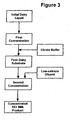
- the present invention also provides a process (generally as illustrated in Figure 3 ) for producing concentrated milk comprising: (1) providing an initial dairy liquid; (2) concentrating the initial dairy substrate to form a partially concentrated milk; (3) adding a calcium-binding buffer to the partially concentrated milk to form a first dairy substrate; (4) diluting the first dairy substrate with a low-calcium diluent to form a second dairy substrate; and (5) concentrating the second dairy substrate to form the concentrated milk; wherein concentrated milk has reduced calcium levels and macromolecular milk components at a 3.5 times or greater concentration as compared to the initial dairy liquid, wherin the concentrated milk is in an ungelled state, and wherein the concentrated milk does not gel on extended refrigerated storage.
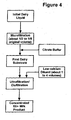
- the present invention also provides a process (generally as illustrated in Figure 4 ) for producing concentrated milk comprising: (1) providing an initial dairy liquid; (2) concentrating the initial dairy liquid using microfiltration to form a partially concentrated milk; (3) adding a calcium-binding buffer to the partially concentrated milk to form a first dairy substrate; (4) diluting the first dairy substrate with a low-calcium diluent to form a second dairy substrate; and (5) concentrating the second dairy substrate using ultrafiltration and diafiltration to form the concentrated milk; wherein concentrated milk has reduced calcium levels and macromolecular milk components at a 3.5 times or greater concentration as compared to the initial dairy liquid, wherein the concentrated milk is in an ungelled state, and wherein the concentrated milk does not gel on extended refrigerated storage.
- the current invention provides 3.5X and greater, preferably 5X to 6.5X, milk concentrates having reduced calcium levels which do not gel upon refrigerated storage.
- These 3.5X and greater milk concentrates include substantially all macromolecular milk components in an uncurded state.
- the milk concentrates are prepared using a calcium-binding buffer.
- this buffer is a citrate buffer, most preferably a citrate buffer containing between 0 and 6 percent citric acid and between 15 and 30 percent alkali metal citrate (preferably trisodium citrate) and having a pH of 6 to 7.
- FIG. 1 provides general overview of one embodiment of the process of the present invention for making milk concentrates.
- the process includes adding an effective amount of a calcium-binding buffer to an initial dairy liquid (e.g., full-fat, reduced-fat, or skim milk).
- the initial dairy liquid and calcium-binding buffer mixture is then concentrated to a first reduced volume, typically 1 ⁇ 2 to 1/8 the original volume of milk.
- the partially concentrated milk preferably is then diluted with a low-calcium diluent, preferably by adding a volume of low-calcium diluent that is at least equal to the first reduced volume, and concentrated to a final volume of at most 1/5 to 1/6.5 volume of the original or initial dairy liquid.
- the first concentration step is preferably carried out using ultrafiltration.
- the second concentration step is preferably carried out using a buffer exchange method, preferably diafiltration. Milk concentrates produced using this process do not exhibit significant gelation upon extended refrigerated storage.
- Figure 2 illustrates a preferred embodiment of the current invention based on the general process of Figure 1 .
- Figure 3 provides general overview of another embodiment of the process of the present invention for making milk concentrates.
- the process includes concentrating an initial dairy liquid (e.g., full-fat, reduced-fat, or skim milk), to a first reduced volume (typically to 1 ⁇ 2 to 1/8 the original volume of milk) and then adding an effective amount of a calcium-binding buffer to form a first dairy substrate.
- the first dairy substrate is then diluted with a low-calcium diluent, preferably by adding a volume of low-calcium diluent that is at least equal to the first reduced volume, and concentrated to a final volume of at most 1/5 to 1/6.5 volume of the original or initial dairy liquid.
- the first concentration step is preferably carried out using microfiltration.
- the second concentration step is preferably carried out using a buffer exchange method, preferably ultrafiltration combined with diafiltration. Milk concentrates produced using this process do not exhibit significant gelation upon extended refrigerated storage.
- Figure 4 illustrates a preferred embodiment of the current invention based on the general process of Figure 3 .
- the initial dairy liquid employed in the present invention may originate from any lactating livestock animal whose milk is useful as a source of human food.
- livestock animals include, by way of non-limiting example, cows, buffalo, other ruminants, goats, sheep, and the like.
- cows' milk is the preferred milk used in the practice of the invention.
- the milk used as starting material for the processes of the current invention may be whole milk, low-fat milk, or skim milk.
- the current invention involves the addition of an effective amount of a calcium-binding buffer to milk ( Figures 1 and 2 ) or concentrated milk ( Figures 3 and 4 ).
- a calcium-binding buffer examples include citrate and phosphate buffers.
- a citrate buffer is used.
- a preferred citrate buffer is an aqueous solution containing between 0 and 6 percent citric acid and between 15 and 30 percent alkali metal citrate (preferably trisodium citrate) and having a pH of 6 to 7.
- An especially preferred citrate buffer is an aqueous solution containing 3 to 3.5 percent citric acid and 20 to 25 percent alkali metal citrate (preferably trisodium citrate) and having a pH of 6 to 7 and even more preferably 6.4 to 6.8.
- the effective amount of the calcium binding buffer varies depending on the milk or concentrated milk and the calcium binding capacity of the buffer. In general, the effective amount is an amount that reduces calcium concentration in the milk or concentrated milk to reduced levels, as defined below, after the processing described herein.
- the amount of citrate buffer added to the initial undiluted liquid milk product is 1 to 6 percent and preferably 2 to 4 percent.
- the amount of citrate buffer added to the first concentrated liquid milk product is 2 to 4 percent and preferably 4 to 24 percent.
- a concentration step of the process of Figure 1 the initial dairy liquid with added calcium-binding buffer is concentrated to a first reduced volume, typically 3/4 to 1/8 the original volume of milk, preferably, 1 ⁇ 2 to 1/4 the original volume of milk.
- the partially concentrated milk after dilution with the low calcium diluent, is further concentrated to 1/4 to 1/8 the original volume of the milk, preferably 1/5 to 1/6 the original volume of the milk.
- the initial dairy liquid is concentrated to a first reduced volume, typically 3/4 to 1/8 the original volume of milk, preferably, 1 ⁇ 2 to 1/4 the original volume of milk.
- a second concentration step is used to further concentrate the resulting mixture to 1/4 to 1/8 the original volume of the milk, preferably 1/5 to 1/6 the original volume of the milk.
- the first concentration step is performed using ultrafiltration.
- Methods for ultrafiltering dairy liquids are well known in the art of food processing.
- the ultrafiltration is performed using conventional ultrafiltration equipment with a filter with a cutoff of less than 20,000 molecular weight, most preferably a cutoff of 10,000 molecular weight. More preferably, spiral wound membrane filters are used. The filter's cutoff is preferably sufficient to assure that substantially all macromolecular milk components are retained in the milk concentrate.
- Ultrafiltration is typically carried out with a baseline pressure of 25 to 65 psi [172.37 to 448.16 kPa] and a temperature of 45 to 55°C.
- the ultrafiltration may be carried out with any configuration of modules currently known in milk ultrafiltration. For example, modules using two membrane elements can be used in pairs as a filtration stage. Generally, ultrafiltration processes using 1 to 6 filtration stages can be used.
- a low calcium diluent is a diluent in which calcium concentrations are no greater than 0.1X the reduced calcium levels of concentrated milk according to the current invention, as defined below.
- the low calcium diluent contains no calcium.
- the diluent can be any solution used in milk processing that does not change the functionality of milk provided it meets the low calcium requirements discussed above.
- the diluent may be membrane filtration permeate (e.g., microfiltration permeate, ultrafiltration permeate), liquid whey, or water.
- the diluent is water.
- the second concentration step in the process illustrated in Figures 1 and 2 is performed using a buffer exchange method.
- the buffer exchange method is diafiltration.
- the weight of the substrate is kept about constant throughout the dilution process by continuous addition of the low calcium diluent.
- Methods for diafiltering dairy liquids are well known in the art of food processing.
- the diafiltration is performed using the same filter and under the same conditions as used for the ultrafiltration step, except that diluent is fed into the diafiltration system.
- the diafiltration and ultrafiltration steps are performed in the same system without disruption.
- the first concentration step is performed using microfiltration.
- Methods for microfiltering dairy liquids are well known in the art of food processing.
- the microfiltration is performed using conventional microfiltration equipment with ceramic membrane filters with an average pore size of 0.2 micrometer or less, preferably 0.1 micrometer.
- the filter's average pore size is preferably sufficient to assure that substantially some macromolecular milk components are retained in the milk concentrate.
- Microfiltration is typically carried out under a uniform trans-membrane pressure of 0.1 to 0.5 bars [10 to 50 kPa] and a temperature of 45 to 55°C.
- the microfiltration may be carried out with any configuration of modules currently known in milk microfiltration.
- modules using 1 to 36 membrane elements can be used as a filtration stage.
- the microfiltration process uses 1 to 5 filtration stages.
- a low calcium diluent is a diluent in which calcium concentrations are no greater than 0.1X the reduced calcium levels of concentrated milk according to the current invention, as defined below.
- the low calcium diluent contains no calcium.
- the diluent can be any solution used in milk processing that does not change the functionality of milk provided it meets the low calcium requirements discussed above.
- the diluent may be membrane filtration permeate (e.g. microfiltration permeate, ultrafiltration permeate), liquid whey, or water.
- the diluent is water.
- the second concentration step in Figure 3 is performed using a buffer exchange method.
- the buffer exchange method is microfiltration combined with diafiltration.
- the weight of the substrate is kept about constant throughout the dilution process by continuous addition of the low calcium diluent.
- Methods for diafiltering dairy liquids are well known in the art of food processing.
- the diafiltration is performed using the same filter and under the same conditions as used for the ultrafiltration step, except that diluent is fed into the diafiltration system.
- the diafiltration and ultrafiltration steps are performed in the same system without disruption.
- Skim milk generally contains 1,200 ppm calcium and 3.6 percent protein.
- “reduced calcium levels” are calcium levels below 1000 ppm (i.e., generally at least a 15 percent reduction or more), and preferably below 600 ppm (i.e., a 50 percent reduction or more). Since the protein levels are essentially unchanged in the practice of this invention, such reduced calcium levels result in a calcium to protein ratio in the final concentrated milk of less than 0.03, and preferably less than 0.015.
- extended refrigerated storage is storage for time periods in which conventionally prepared concentrates (generally 3.5X to 5X milk concentrates) form a gel under refrigeration temperatures (i.e., 2 to 8°C).
- Figure 5 compares the gelling characteristics of a conventionally prepared 5X milk concentrate with a 6.5X milk concentrate prepared using the present invention. As can be seen in Figure 5 , the viscosity of the inventive milk concentrate remains essentially unchanged even after one month at refrigerated temperatures; typically viscosity changes are not observed even after 4 months. ( Figure 5 uses the non-SI unit cps; 1 cps equals 0.01 Pa-sec).
- casein relates to any, or all, of the phosphoproteins in milk, and to mixtures of any of them.
- An important characteristic of casein is that it forms micelles in naturally occurring milk and in the dairy liquids employed in the present invention.
- Many casein components have been identified, including, but not limited to, ⁇ -casein (including ⁇ s1 -casein and ⁇ s2 -casein), ⁇ -casein, ⁇ -casein, and their genetic variants.
- the milk concentrates produced according to this invention are ideally suited for transportation for further processing (e.g., conversion to cheese or other dairy product) since they have a significantly reduced tendency to gel during prolonged refrigerated storage. If desired, these milk concentrates may be freeze-dried and stored in a dried state. Such dried milk concentrates retain the improved protein functionality described herein and allow for increased storage times before further processing.
- EXAMPLE 1 This example provides an embodiment of the process of the present invention according to Figures 1 and 2 .
- Citrate buffer 24 Ibs [10.89 kg]; 3.2 percent citric acid, 21.5 percent trisodium citrate, 75.3 percent water
- 600 Ibs. [272.16kg] of pasteurized skim milk at 49°C.
- the milk and buffer solution was ultrafiltered with a 10,000 molecular weight cut-off membrane to a concentration factor of three.
- the retentate was then diafiltered with two volumes of water at constant weight, and then further concentrated to a final concentration factor of six.
- the resulting concentrate contained 13.5 percent protein with a casein to whey protein ratio of 80/20,1020 ppm calcium, and a calcium to protein ratio of 0.008.
- the milk concentrates did not gel upon refrigerated storage (i.e., 2 to 8°C) even after 10 weeks.
- a similar but conventionally prepared concentrate would be expected to gel within 24 hours at 4°C.
- the final concentrates made according to the current invention also had improved protein solubility. After freeze-drying, the resulting solid powder was reconstituted in 0.1 M NaCl to make a 3 percent protein solution.
- the protein solubility obtained with concentrates of the present invention was 95 percent at pH 7.
- a control concentrate i.e., prepared in essentially the same manner without the citrate buffer
- EXAMPLE 2 This example provides another embodiment of the process of the present invention according to Figures 3 and 4 .
- Pasteurized skim milk (3000 Ibs. [1360.78 kg]) was microfiltered in a Tetra Pak microfiltration system consisting of 4 stages, wherein each stage contained 7 ceramic membrane elements with an average pore size of 0.1 micrometer, with a total membrane area of 9 m 2 .
- the skim milk was microfiltered to a concentration factor of about three at a feed rate of 30 Ibs per minute [13.61 kg per minute], a processing temperature of 49°C, and an average uniform trans-membrane pressure of 0.3 bars [30 kPa].
- Citrate buffer (126 Ibs [57.16 kg]; 3.2 percent citric acid, 21.5 percent trisodium citrate, 75.3 percent water; pH 5.7; Brix reading: 23.5 percent; temperature 25°C) was added to 1030 Ibs [467.20 kg] of the microfiltration retentate (Brix Reading: 16 percent; 14 percent total solids, pH 6.7, temperature 49°C).
- the microfiltration retentate and buffer were then diafiltered and ultrafiltered with three volumes of water at a discontinuous rate in a four-stage NIRO ultrafiltration system containing two modules per stage (total membrane area of 107 m 2 ). Each module contained 2 spiral wound (KOCH) membrane elements with a 10,000 molecular weight cut-off value.
- the buffered milk concentrate was ultrafiltered to a concentration factor of 6.85 (corresponding to a concentration factor of 5 based on the whole process).
- the buffered milk was fed at a rate of 7.7 gallons per minute [29.15 liters per minute], with a Brix reading of 4.5 percent.
- the processing temperature was 42°C and the baseline pressure was 65 psi [448.16 kPa]. The same unit was used for the diafiltration and ultrafiltration processes.
- the final concentrate contained 80 percent protein on a dry basis with a casein to whey protein ratio of 90/10, 9400 ppm of calcium on a dry basis, and a calcium to protein ratio of 0.012.
- the milk concentrates did not gel upon refrigerated storage (i.e., 2 to 8°C) even after 10 weeks.
- a similar but conventionally prepared concentrate would be expected to gel within 24 hours at 4°C.
- the final concentrates also had improved protein solubility.
- a spray- dried concentrate reconstituted in 0.1 M NaCl to make a 3 percent protein solution had a protein solubility of 99 percent at pH 7; this compares to 30 percent for a control sample.
Landscapes
- Life Sciences & Earth Sciences (AREA)
- Chemical & Material Sciences (AREA)
- Engineering & Computer Science (AREA)
- Food Science & Technology (AREA)
- Polymers & Plastics (AREA)
- Water Supply & Treatment (AREA)
- Biochemistry (AREA)
- Dairy Products (AREA)
Description
- The invention relates to non-gelling concentrated milk products and methods for producing the same.
- Membrane filtration technology (e.g., microfiltration, ultrafiltration, and the like) is employed in the dairy industry to provide selective separation, concentration, and purification of protein components from a liquid dairy product such as raw milk. Membrane filtration technology comprises the steps of separating the liquid dairy product into a first liquid component (i.e., permeate or ultrafiltrate) and a second liquid component (i.e., concentrate or retentate) by placing the dairy product in contact with a semi-permeable membrane. The concentrate, which does not flow through the semi-permeable membrane, has a higher protein concentration than the first liquid component which passes through the semi-permeable membrane. In conventional ultrafiltration processes, the permeate is collected, and typically disposed of on the farm or used as livestock feed. The second liquid component or retentate is treated until a milk concentrate with the desired enriched concentration factor and/or protein content is obtained. The initial milk product is usually contacted with the semi-permeable membrane under pressure and is typically subjected to turbulent flow so as to agitate the liquid adjacent the membrane, thereby allowing water and small molecular weight solutes (e.g., lactose) to pass through the membrane in order to obtain higher solids in the retained liquid concentrate.
- On-farm ultrafiltration generally allows reduced volumes for the resulting concentrated milk products, thereby lowering shipping, storage, and refrigeration costs. Thus, milk intended for shipment is often concentrated by a factor of 3X to obtain these benefits. Modern membrane filtration technology, however, allows efficient production of 5X to 6X (and higher) milk concentrate, which would, of course, allow for additional cost savings since less water would be shipped. Unfortunately, 3.5X and higher concentrates (especially 5X and higher) are likely to gel during transportation or storage. Such age gelation characteristics generally limits the use of such higher concentrated products unless special and costly handling systems (e.g., reheating prior to pumping) are available. Thus, there remains a need for improved milk concentrates which do not have such age gelation characteristics. More specifically, there remains a need for improved milk concentrates, especially 5X and greater concentrates, which are less likely to gel during transportation and/or storage at refrigeration temperatures.
- Additionally, the casein protein in milk and conventionally produced concentrated or ultrafiltered milk exists as insoluble micelles. In this form, the casein is less able to function in situations where soluble proteins are desired or needed. Therefore, there remains a need for milk, and processes for preparing milk, in which casein is not present in insoluble micelles.
-
U.S. Patent 4,268,528 (May 19, 1981 ) provides a process for the preparation of a cheese from ultrafiltered milk wherein the calcium content of the cheese can be accurately adjusted. Milk is coagulated by lactic fermentation to lower the pH of the milk to 4.4 or less prior to ultrafiltration to prepare a conditioned milk substrate. The retentate obtained by ultrafiltration has essentially the same calcium content as the original milk. -
U.S. Patent 4,921,717 (May 1, 1990 ) provides a process for producing a sterilized, concentrated milk product. The process comprising partially concentrating milk or milk product (usually to about half the original volume), sterilizing the partially concentrated milk product, and further concentrating the sterilized milk product. The complete process generally provides a 2.5 to 3-fold concentration of the original milk or milk product. -
U.S. Patent 5,654,025 (August 5, 1997 ) provides a process designed to concentrate milk on the farm before shipment. The process involves cooling raw milk to below 45°F [7.2°C] and then directing the cooled milk through serial membrane separation units while maintaining the temperature to progressively concentrate the product in a single pass. Generally, the concentrate has⅓ to ½ the volume of the original milk. -
U.S. Patent 5,707,678 (January 13, 1998 ) provides a process for microfiltration of whey from milk or colostrum. The process involves separation of fat, precipitation of casein by acidification, and optional ultrafiltration of whey to reduce the calcium level in the concentrate. The resulting concentrate can be microfiltered without fouling or clogging associated with the presence of calcium phosphate or other calcium complexes. The acidification is accomplished by adding an acid such as, for example, hydrochloric acid, phosphoric acid, or lactic acid. -
US 6139901 provides a process treating an approximately neutral fluid milk composition, including milk protein concentrate and milk plus added whey, by selecting an alkali, adjusting the pH upward, heating, cooling, selecting an acid, and adjusting the pH down before ultrafiltering and, in one particular process, thereafter diafiltering the treated composition. Selection of the appropriate alkali, pH values, temperatures, acid, and membrane filter porosity results in improved yields of retentate proteins having selected compositions with improved utility, including a more palatable flavor, a broad range of solution viscosities, an increase in the solubility of the dried retentates in cold water to nearly 100%, and an increase in the calcium content of the membrane filtered retentate by 50% compared to a similar retentate from standard milk. Appropriate selection of processing conditions can result in at least one filter permeate with a protein composition enriched in alpha lactalbumin, a protein that is highly beneficial for human nutrition. - In an experiment to determine the effect of lactose concentrate on age gelation of UHT sterilized skim milk concentrate, N.Venkatachalam and Donald.J. McMahon concluded that lactose does not play a role in causing age gelation of UHT milk concentrates. This finding was published in the Journal of Dairy Science, American Dairy Science Association, Champaign, Illinois, Vol. 74, No.1, 12 August 1991, page 101.
-
SU1358890 Stage 2 is conducted at 5-55°C until dry matter content plus added K citrate equals 18-20%.Stage 2 is conducted at 71-80°C to dry matter content 22-27%. The bulk protein is then diluted with water at pH 4.7-6.0. The original feedstock can be skimmed milk and whey in the ratio (1:0.9) to (1:3.5), or skimmed milk alone or whey alone. -
WO 02/082917 - The current invention provides 3.5X and greater, and especially 5X and greater, concentrated milk protein concentrates and processes for producing the same. The milk protein concentrates of the current invention are truly soluble and therefore more functional than previously described milk concentrates. Furthermore, the milk concentrates of the current invention essentially eliminate the long-standing cold gelation problem associated with the handling, shipping, and storage of 3.5X and higher milk concentrates, and especially 5X and higher milk concentrates.
- This invention provides a calcium-reduced 3.5X or more concentrated milk that is physically stable (i.e., non-gelling) during prolonged refrigeration storage and has increased protein functionality. In an especially preferred embodiment, this invention provides a calcium-reduced 5X or more concentrated milk that is physically stable (i.e., non-gelling) during prolonged refrigeration storage and has increased protein functionality. This stable milk concentrate is preferably produced by microfiltering or ultrafiltering (with or without diafiltering) milk, preferably skim milk, in the presence of citrate, phosphate, or other buffers. Although not wishing to be limited by theory, it appears that the citrate buffer binds calcium in the milk, thereby allowing it to be removed with lactose and other ions in the permeate stream. Thus, calcium is separated from the casein micelles in the milk protein retentate or concentrate. Native casein micelle structure is significantly disrupted as a result of partial calcium removal, thereby rendering the concentrate less likely to gel at refrigeration temperatures.
- The present invention provides a concentrated milk derived from a dairy liquid, said concentrated milk comprising casein, a calcium-binding buffer and a liquid aqueous dairy product having reduced calcium levels and macromolecular milk components at a 5 times or greater concentration as compared to the dairy liquid from which the concentrated milk is derived, wherein the concentrated milk Is an ungelled state, and wherein the concentrated milk does not gel on extended (i.e., at least one month) refrigerated storage. If desired, the concentrated milk may be dried (e.g., freeze dried, spray dried, or the like); such dried milk product generally has a protein solubility of at least 60 percent, preferably at least 80 percent, and most preferably at least 90 percent.
- The present invention also provides a process (generally as illustrated in
Figure 1 ) for producing concentrated milk comprising: (1) providing an initial dairy liquid; (2) adding a calcium-binding buffer to the initial dairy liquid to form a first dairy substrate; (3) concentrating the first dairy substrate to form a partially concentrated milk; (4) diluting the partially concentrated milk with a low-calcium diluent to form a second dairy substrate; and (5) concentrating the second dairy substrate to form the concentrated milk; wherein concentrated milk has calcium levels below 1000ppm and macromolecular milk components at a 3.5 times or greater concentration as compared to the initial dairy liquid, wherein the concentrated milk is in an ungelled state, and wherein the concentrated milk does not gel on extended refrigerated storage. - In a preferred embodiment, the present invention also provides a process (generally as illustrated in
Figure 2 ) for producing concentrated milk comprising: (1) providing an initial dairy liquid; (2) adding a calcium-binding buffer to the initial dairy liquid to form a first dairy substrate; (3) concentrating the first dairy substrate using ultrafiltration to form a partially concentrated milk; (4) diluting the partially concentrated milk with a low-calcium diluent to form a second dairy substrate; and (5) concentrating the second dairy substrate using diafiltration to form the concentrated milk; wherein concentrated milk has calcium levels below 1000ppm and macromolecular milk components at a 3.5 times or greater concentration as compared to the initial dairy liquid, wherein the concentrated milk is in an ungelled state, and wherein the concentrated milk does not gel on extended refrigerated storage. - The present invention also provides a process (generally as illustrated in
Figure 3 ) for producing concentrated milk comprising: (1) providing an initial dairy liquid; (2) concentrating the initial dairy substrate to form a partially concentrated milk; (3) adding a calcium-binding buffer to the partially concentrated milk to form a first dairy substrate; (4) diluting the first dairy substrate with a low-calcium diluent to form a second dairy substrate; and (5) concentrating the second dairy substrate to form the concentrated milk; wherein concentrated milk has reduced calcium levels and macromolecular milk components at a 3.5 times or greater concentration as compared to the initial dairy liquid, wherin the concentrated milk is in an ungelled state, and wherein the concentrated milk does not gel on extended refrigerated storage. - In another preferred embodiment, the present invention also provides a process (generally as illustrated in
Figure 4 ) for producing concentrated milk comprising: (1) providing an initial dairy liquid; (2) concentrating the initial dairy liquid using microfiltration to form a partially concentrated milk; (3) adding a calcium-binding buffer to the partially concentrated milk to form a first dairy substrate; (4) diluting the first dairy substrate with a low-calcium diluent to form a second dairy substrate; and (5) concentrating the second dairy substrate using ultrafiltration and diafiltration to form the concentrated milk; wherein concentrated milk has reduced calcium levels and macromolecular milk components at a 3.5 times or greater concentration as compared to the initial dairy liquid, wherein the concentrated milk is in an ungelled state, and wherein the concentrated milk does not gel on extended refrigerated storage. -
-
Figure 1 provides a flow diagram generally illustrating one embodiment of the process of the present invention. -
Figure 2 provides a flow diagram illustrating a preferred embodiment of the process according to the embodiment ofFigure 1 . -
Figure 3 provides a flow diagram generally illustrating another embodiment of the process of the present invention. -
Figure 4 provides a flow diagram illustrating a preferred embodiment of the process according to the embodiment ofFigure 2 . -
Figure 5 compares the gelling characteristics of a conventionally prepared 5X milk concentrate with a 6.5X milk concentrate prepared using the present invention during storage at 5°C. - The current invention provides 3.5X and greater, preferably 5X to 6.5X, milk concentrates having reduced calcium levels which do not gel upon refrigerated storage. These 3.5X and greater milk concentrates include substantially all macromolecular milk components in an uncurded state. The milk concentrates are prepared using a calcium-binding buffer. Preferably, this buffer is a citrate buffer, most preferably a citrate buffer containing between 0 and 6 percent citric acid and between 15 and 30 percent alkali metal citrate (preferably trisodium citrate) and having a pH of 6 to 7.
- The milk concentrates of the current invention may be produced using novel processes of the current invention.
Figure 1 provides general overview of one embodiment of the process of the present invention for making milk concentrates. In general, the process includes adding an effective amount of a calcium-binding buffer to an initial dairy liquid (e.g., full-fat, reduced-fat, or skim milk). The initial dairy liquid and calcium-binding buffer mixture is then concentrated to a first reduced volume, typically ½ to 1/8 the original volume of milk. The partially concentrated milk preferably is then diluted with a low-calcium diluent, preferably by adding a volume of low-calcium diluent that is at least equal to the first reduced volume, and concentrated to a final volume of at most 1/5 to 1/6.5 volume of the original or initial dairy liquid. The first concentration step is preferably carried out using ultrafiltration. The second concentration step is preferably carried out using a buffer exchange method, preferably diafiltration. Milk concentrates produced using this process do not exhibit significant gelation upon extended refrigerated storage.Figure 2 , illustrates a preferred embodiment of the current invention based on the general process ofFigure 1 . -
Figure 3 provides general overview of another embodiment of the process of the present invention for making milk concentrates. In general, the process includes concentrating an initial dairy liquid (e.g., full-fat, reduced-fat, or skim milk), to a first reduced volume (typically to ½ to 1/8 the original volume of milk) and then adding an effective amount of a calcium-binding buffer to form a first dairy substrate. The first dairy substrate is then diluted with a low-calcium diluent, preferably by adding a volume of low-calcium diluent that is at least equal to the first reduced volume, and concentrated to a final volume of at most 1/5 to 1/6.5 volume of the original or initial dairy liquid. The first concentration step is preferably carried out using microfiltration. The second concentration step is preferably carried out using a buffer exchange method, preferably ultrafiltration combined with diafiltration. Milk concentrates produced using this process do not exhibit significant gelation upon extended refrigerated storage.Figure 4 , illustrates a preferred embodiment of the current invention based on the general process ofFigure 3 . - The initial dairy liquid employed in the present invention may originate from any lactating livestock animal whose milk is useful as a source of human food. Such livestock animals include, by way of non-limiting example, cows, buffalo, other ruminants, goats, sheep, and the like. Generally, however, cows' milk is the preferred milk used in the practice of the invention. The milk used as starting material for the processes of the current invention may be whole milk, low-fat milk, or skim milk.
- As discussed above, the current invention involves the addition of an effective amount of a calcium-binding buffer to milk (
Figures 1 and2 ) or concentrated milk (Figures 3 and4 ). Any buffer which binds calcium can be used with the current invention. Examples of calcium-binding buffers include citrate and phosphate buffers. In preferred embodiments, a citrate buffer is used. A preferred citrate buffer is an aqueous solution containing between 0 and 6 percent citric acid and between 15 and 30 percent alkali metal citrate (preferably trisodium citrate) and having a pH of 6 to 7. An especially preferred citrate buffer is an aqueous solution containing 3 to 3.5 percent citric acid and 20 to 25 percent alkali metal citrate (preferably trisodium citrate) and having a pH of 6 to 7 and even more preferably 6.4 to 6.8. - The effective amount of the calcium binding buffer varies depending on the milk or concentrated milk and the calcium binding capacity of the buffer. In general, the effective amount is an amount that reduces calcium concentration in the milk or concentrated milk to reduced levels, as defined below, after the processing described herein. Generally, the amount of citrate buffer added to the initial undiluted liquid milk product (see
Figures 1 and2 ) is 1 to 6 percent and preferably 2 to 4 percent. Generally, the amount of citrate buffer added to the first concentrated liquid milk product (seeFigures 3 and4 ) is 2 to 4 percent and preferably 4 to 24 percent. - Two concentration steps are typically employed in the present process. In a first concentration step of the process of
Figure 1 , the initial dairy liquid with added calcium-binding buffer is concentrated to a first reduced volume, typically 3/4 to 1/8 the original volume of milk, preferably, ½ to 1/4 the original volume of milk. In a second concentration step, the partially concentrated milk, after dilution with the low calcium diluent, is further concentrated to 1/4 to 1/8 the original volume of the milk, preferably 1/5 to 1/6 the original volume of the milk. In a first concentration step of the process ofFigure 3 , the initial dairy liquid is concentrated to a first reduced volume, typically 3/4 to 1/8 the original volume of milk, preferably, ½ to 1/4 the original volume of milk. After adding the citrate buffer and the low calcium diluent, a second concentration step is used to further concentrate the resulting mixture to 1/4 to 1/8 the original volume of the milk, preferably 1/5 to 1/6 the original volume of the milk. - In the preferred embodiment of
Figure 3 , the first concentration step is performed using ultrafiltration. Methods for ultrafiltering dairy liquids are well known in the art of food processing. In preferred embodiments, the ultrafiltration is performed using conventional ultrafiltration equipment with a filter with a cutoff of less than 20,000 molecular weight, most preferably a cutoff of 10,000 molecular weight. More preferably, spiral wound membrane filters are used. The filter's cutoff is preferably sufficient to assure that substantially all macromolecular milk components are retained in the milk concentrate. - Ultrafiltration is typically carried out with a baseline pressure of 25 to 65 psi [172.37 to 448.16 kPa] and a temperature of 45 to 55°C. The ultrafiltration may be carried out with any configuration of modules currently known in milk ultrafiltration. For example, modules using two membrane elements can be used in pairs as a filtration stage. Generally, ultrafiltration processes using 1 to 6 filtration stages can be used.
- After the milk with added calcium-binding buffer is concentrated in a first concentration step, it is diluted with at least about one volume of a low calcium diluent to form a partially concentrated milk having reduced calcium levels. A low calcium diluent is a diluent in which calcium concentrations are no greater than 0.1X the reduced calcium levels of concentrated milk according to the current invention, as defined below. Preferably the low calcium diluent contains no calcium. The diluent can be any solution used in milk processing that does not change the functionality of milk provided it meets the low calcium requirements discussed above. For example, the diluent may be membrane filtration permeate (e.g., microfiltration permeate, ultrafiltration permeate), liquid whey, or water. Preferably, the diluent is water.
- Preferably, the second concentration step in the process illustrated in
Figures 1 and2 is performed using a buffer exchange method. In preferred embodiments, the buffer exchange method is diafiltration. Preferably, the weight of the substrate is kept about constant throughout the dilution process by continuous addition of the low calcium diluent. Methods for diafiltering dairy liquids are well known in the art of food processing. In preferred embodiments, the diafiltration is performed using the same filter and under the same conditions as used for the ultrafiltration step, except that diluent is fed into the diafiltration system. Preferably, the diafiltration and ultrafiltration steps are performed in the same system without disruption. - In the preferred embodiment shown in
Figure 4 , the first concentration step is performed using microfiltration. Methods for microfiltering dairy liquids are well known in the art of food processing. In preferred embodiments, the microfiltration is performed using conventional microfiltration equipment with ceramic membrane filters with an average pore size of 0.2 micrometer or less, preferably 0.1 micrometer. The filter's average pore size is preferably sufficient to assure that substantially some macromolecular milk components are retained in the milk concentrate. - Microfiltration is typically carried out under a uniform trans-membrane pressure of 0.1 to 0.5 bars [10 to 50 kPa] and a temperature of 45 to 55°C. The microfiltration may be carried out with any configuration of modules currently known in milk microfiltration. For example, modules using 1 to 36 membrane elements can be used as a filtration stage. Preferably the microfiltration process uses 1 to 5 filtration stages.
- After the milk is concentrated in the first concentration step, an effective amount of a calcium-binding buffer is added to the partially concentrated milk. It is then diluted with at least about one volume of a low calcium diluent to form a partially concentrated milk having reduced calcium levels. A low calcium diluent is a diluent in which calcium concentrations are no greater than 0.1X the reduced calcium levels of concentrated milk according to the current invention, as defined below. Preferably the low calcium diluent contains no calcium. The diluent can be any solution used in milk processing that does not change the functionality of milk provided it meets the low calcium requirements discussed above. For example, the diluent may be membrane filtration permeate (e.g. microfiltration permeate, ultrafiltration permeate), liquid whey, or water. Preferably, the diluent is water.
- Preferably, the second concentration step in
Figure 3 is performed using a buffer exchange method. In preferred embodiments, the buffer exchange method is microfiltration combined with diafiltration. Preferably, the weight of the substrate is kept about constant throughout the dilution process by continuous addition of the low calcium diluent. Methods for diafiltering dairy liquids are well known in the art of food processing. In preferred embodiments, the diafiltration is performed using the same filter and under the same conditions as used for the ultrafiltration step, except that diluent is fed into the diafiltration system. Preferably, the diafiltration and ultrafiltration steps are performed in the same system without disruption. - Skim milk generally contains 1,200 ppm calcium and 3.6 percent protein. For purposes of this invention, "reduced calcium levels" are calcium levels below 1000 ppm (i.e., generally at least a 15 percent reduction or more), and preferably below 600 ppm (i.e., a 50 percent reduction or more). Since the protein levels are essentially unchanged in the practice of this invention, such reduced calcium levels result in a calcium to protein ratio in the final concentrated milk of less than 0.03, and preferably less than 0.015. For purposes of this invention, "extended refrigerated storage" is storage for time periods in which conventionally prepared concentrates (generally 3.5X to 5X milk concentrates) form a gel under refrigeration temperatures (i.e., 2 to 8°C). Typically such time periods for such conventionally prepared products are from 2 to 24 hours. Milk gels that form upon refrigerated storage of conventional 3.5X or greater (and especially 5X or greater) milk concentrates are well known in the art.
Figure 5 compares the gelling characteristics of a conventionally prepared 5X milk concentrate with a 6.5X milk concentrate prepared using the present invention. As can be seen inFigure 5 , the viscosity of the inventive milk concentrate remains essentially unchanged even after one month at refrigerated temperatures; typically viscosity changes are not observed even after 4 months. (Figure 5 uses the non-SI unit cps; 1 cps equals 0.01 Pa-sec). - As used herein, "casein" relates to any, or all, of the phosphoproteins in milk, and to mixtures of any of them. An important characteristic of casein is that it forms micelles in naturally occurring milk and in the dairy liquids employed in the present invention. Many casein components have been identified, including, but not limited to, α-casein (including αs1-casein and αs2-casein), β-casein, κ-casein, and their genetic variants.
- The milk concentrates produced according to this invention are ideally suited for transportation for further processing (e.g., conversion to cheese or other dairy product) since they have a significantly reduced tendency to gel during prolonged refrigerated storage. If desired, these milk concentrates may be freeze-dried and stored in a dried state. Such dried milk concentrates retain the improved protein functionality described herein and allow for increased storage times before further processing.
- The following examples describe and illustrate the processes and products of the invention. These examples are intended to be merely illustrative of the present invention, and not limiting thereof in either scope or spirit. Unless indicated otherwise, all percentages and ratios are by weight. Those skilled in the art will readily understand that variations of the materials, conditions, and processes described in these examples can be used.
- EXAMPLE 1. This example provides an embodiment of the process of the present invention according to
Figures 1 and2 . Citrate buffer (24 Ibs [10.89 kg]; 3.2 percent citric acid, 21.5 percent trisodium citrate, 75.3 percent water) was added to 600 Ibs. [272.16kg] of pasteurized skim milk at 49°C. The milk and buffer solution (49°C) was ultrafiltered with a 10,000 molecular weight cut-off membrane to a concentration factor of three. The retentate was then diafiltered with two volumes of water at constant weight, and then further concentrated to a final concentration factor of six. - The resulting concentrate contained 13.5 percent protein with a casein to whey protein ratio of 80/20,1020 ppm calcium, and a calcium to protein ratio of 0.008. The milk concentrates did not gel upon refrigerated storage (i.e., 2 to 8°C) even after 10 weeks. In contrast and as illustrated in
Figure 5 , a similar but conventionally prepared concentrate would be expected to gel within 24 hours at 4°C. - The final concentrates made according to the current invention also had improved protein solubility. After freeze-drying, the resulting solid powder was reconstituted in 0.1 M NaCl to make a 3 percent protein solution. The protein solubility obtained with concentrates of the present invention was 95 percent at pH 7. In comparison, a control concentrate (i.e., prepared in essentially the same manner without the citrate buffer) had only 27 percent protein solubility and did gel.
- EXAMPLE 2. This example provides another embodiment of the process of the present invention according to
Figures 3 and4 . Pasteurized skim milk (3000 Ibs. [1360.78 kg]) was microfiltered in a Tetra Pak microfiltration system consisting of 4 stages, wherein each stage contained 7 ceramic membrane elements with an average pore size of 0.1 micrometer, with a total membrane area of 9 m2. The skim milk was microfiltered to a concentration factor of about three at a feed rate of 30 Ibs per minute [13.61 kg per minute], a processing temperature of 49°C, and an average uniform trans-membrane pressure of 0.3 bars [30 kPa]. Citrate buffer (126 Ibs [57.16 kg]; 3.2 percent citric acid, 21.5 percent trisodium citrate, 75.3 percent water; pH 5.7; Brix reading: 23.5 percent; temperature 25°C) was added to 1030 Ibs [467.20 kg] of the microfiltration retentate (Brix Reading: 16 percent; 14 percent total solids, pH 6.7, temperature 49°C). The microfiltration retentate and buffer were then diafiltered and ultrafiltered with three volumes of water at a discontinuous rate in a four-stage NIRO ultrafiltration system containing two modules per stage (total membrane area of 107 m2). Each module contained 2 spiral wound (KOCH) membrane elements with a 10,000 molecular weight cut-off value. The buffered milk concentrate was ultrafiltered to a concentration factor of 6.85 (corresponding to a concentration factor of 5 based on the whole process). The buffered milk was fed at a rate of 7.7 gallons per minute [29.15 liters per minute], with a Brix reading of 4.5 percent. The processing temperature was 42°C and the baseline pressure was 65 psi [448.16 kPa]. The same unit was used for the diafiltration and ultrafiltration processes. - The final concentrate contained 80 percent protein on a dry basis with a casein to whey protein ratio of 90/10, 9400 ppm of calcium on a dry basis, and a calcium to protein ratio of 0.012. The milk concentrates did not gel upon refrigerated storage (i.e., 2 to 8°C) even after 10 weeks. In contrast and as illustrated in
Figure 5 , a similar but conventionally prepared concentrate would be expected to gel within 24 hours at 4°C. - The final concentrates also had improved protein solubility. A spray- dried concentrate reconstituted in 0.1 M NaCl to make a 3 percent protein solution had a protein solubility of 99 percent at pH 7; this compares to 30 percent for a control sample.
Claims (17)
- A concentrated milk derived from a dairy liquid, said concentrated milk comprising casein, a calcium-binding buffer and a liquid aqueous dairy product having calcium levels below 1000ppm and macromolecular milk components at a 5 times or greater concentration as compared to the dairy liquid from which the concentrated milk is derived wherein the concentrated milk is in an ungelled state and does not gel on extended refrigerated storage.
- A concentrated milk according to Claim 1, wherein the calcium-binding buffer is a citrate buffer.
- A concentrated milk according to Claim 1 or 2, wherein the concentrated milk has a calcium to protein ratio of less than 0.03.
- A concentrated milk according to Claim 3, wherein the concentrated milk has a calcium to protein ratio of less than 0.015.
- A process for producing concentrated milk comprising:(1) providing an initial dairy liquid;(2) adding a calcium-binding buffer to the initial dairy liquid to form a first dairy substrate;(3) concentrating the first dairy substrate to form a partially concentrated milk;(4) diluting the partiaiiy concentrated milk with a iow-caicium diluent to form a second dairy substrate; and(5) concentrating the second dairy substrate to form the concentrated milk;wherein the concentrated milk has calcium levels below 1000ppm and macromolecular milk components at a 3.5 times or greater concentration as compared to the initial dairy liquid, wherein the concentrated milk is in an ungelled state, and wherein the concentrated milk does not gel on extended refrigerated storage.
- A process according to Claim 5, wherein the concentrating of the first dairy substrate is effected using ultrafiltration and the concentrating of the second dairy substrate is effected using diafiltration.
- A process according to claim 6, wherein both the ultrafiltration and the diafiltration are carried out in a single processing unit.
- A process according to any one of Claims 5 to 7, wherein the first dairy substrate is concentrated by a factor of 2X to 4X and partially concentrated milk is diluted with 1 to 3 volumes of the low-calcium diluent.
- A process according to any one of Claims 5 to 8, wherein the calcium-binding buffer is a citrate buffer which is added to the partially concentrated milk at a level of 2 to 4 percent.
- A process according to Claim 9, wherein the calcium-binding buffer is a citrate buffer which is added to the partially concentrated milk at a level of 3 to 3.4 percent.
- A process according to Claim 5 wherein steps (2) and (3) are inverted and the initial dairy liquid is firstly concentrated to form a partially concentrated milk to which the calcium binding buffer is added.
- A process according to Claim 11, wherein the concentrating of the initial dairy substrate is effected using microfiltration and the concentrating of the second dairy substrate is effected using ultrafiltration combined with diafiltration.
- A process according to any one of Claims 5 to 12, wherein the concentrated milk has macromolecular milk components at a 5 times or greater concentration as compared to the initial dairy liquid.
- A process according to any one of Claims 5 to 13, wherein the calcium-binding buffer is a citrate buffer.
- A process according to Claim 14, wherein the citrate buffer comprises up to 6 percent citric acid and 15 to 30 percent alkali metal citrate in an aqueous medium.
- A process according to Claim 15, wherein the citrate buffer comprises from 3 to 3.5 percent citric acid and 20 to 25 percent trisodium citrate in an aqueous medium.
- A process according to any one of Claims 5 to 16, wherein the low-calcium diluent is water.
Applications Claiming Priority (2)
| Application Number | Priority Date | Filing Date | Title |
|---|---|---|---|
| US10/264,861 US7026004B2 (en) | 2002-10-04 | 2002-10-04 | Non-gelling milk concentrates |
| US264861 | 2002-10-04 |
Publications (2)
| Publication Number | Publication Date |
|---|---|
| EP1407673A1 EP1407673A1 (en) | 2004-04-14 |
| EP1407673B1 true EP1407673B1 (en) | 2014-05-07 |
Family
ID=32030322
Family Applications (1)
| Application Number | Title | Priority Date | Filing Date |
|---|---|---|---|
| EP03256215.9A Expired - Lifetime EP1407673B1 (en) | 2002-10-04 | 2003-10-02 | Non-gelling milk concentrates |
Country Status (4)
| Country | Link |
|---|---|
| US (2) | US7026004B2 (en) |
| EP (1) | EP1407673B1 (en) |
| CA (1) | CA2443083C (en) |
| ES (1) | ES2472727T3 (en) |
Cited By (1)
| Publication number | Priority date | Publication date | Assignee | Title |
|---|---|---|---|---|
| US9775366B2 (en) | 2012-04-10 | 2017-10-03 | Kraft Foods R & D, Inc. | Process for producing cream cheese |
Families Citing this family (21)
| Publication number | Priority date | Publication date | Assignee | Title |
|---|---|---|---|---|
| US7887864B2 (en) | 2004-07-23 | 2011-02-15 | Kraft Foods Global Brands Llc | Heat-stable concentrated milk product |
| RU2388230C2 (en) | 2004-07-23 | 2010-05-10 | КРАФТ ФУДЗ ГЛОБАЛ БРЭНДС ЭлЭлСи | Thermally stable concentrated milk product |
| DE602005025510D1 (en) * | 2004-09-09 | 2011-02-03 | Nestec Sa | MANUFACTURING METHODS FOR FOODS WITH IMPROVED QUALITY |
| LT5362B (en) * | 2005-11-02 | 2006-10-25 | Vytautas Fedaravicius | CASH MANUFACTURING AND EQUIPMENT |
| US20080160134A1 (en) * | 2006-12-27 | 2008-07-03 | Jamie Allen Hestekin | Method Of Producing Concentrated Liquid Dairy Products |
| NL1033804C2 (en) | 2007-05-04 | 2008-11-06 | Friesland Brands Bv | Low-calorie milk products. |
| US10667538B2 (en) * | 2007-11-07 | 2020-06-02 | Leprino Foods Company | Non-fat dry milk production processes for cheesemaking |
| IE20080476A1 (en) * | 2008-06-10 | 2010-03-03 | Teagasc | Miscellar casein powders with different levels of calcium and cheeses prepared therefrom |
| US9282755B2 (en) | 2008-09-02 | 2016-03-15 | Intercontinental Great Brands Llc | Heat stable concentrated dairy liquid and cream product |
| US9055752B2 (en) | 2008-11-06 | 2015-06-16 | Intercontinental Great Brands Llc | Shelf-stable concentrated dairy liquids and methods of forming thereof |
| UA112972C2 (en) * | 2010-09-08 | 2016-11-25 | Інтерконтінентал Грейт Брендс ЛЛС | LIQUID DAIRY CONCENTRATE WITH A HIGH CONTENT OF DRY SUBSTANCES |
| US10721940B2 (en) | 2011-07-21 | 2020-07-28 | Kraft Food Group Brands Llc | Methods for reducing viscosity and delaying onset of cold gelation of high solids concentrated milk products |
| HRP20180872T1 (en) * | 2012-01-31 | 2018-07-13 | Benemilk Ltd | ANIMAL FOOD AND THE PROCEDURE OF ITS PREPARATION |
| US10834935B2 (en) | 2012-02-01 | 2020-11-17 | Koninklijke Douwe Egberts B.V. | Dairy mineral-fortified liquid dairy products and methods of making |
| US10849334B2 (en) | 2012-02-01 | 2020-12-01 | Koninklijke Douwe Egberts B.V. | Dairy mineral-fortified liquid dairy products and methods for making the dairy mineral-fortified liquid dairy products |
| FI126372B (en) * | 2012-06-27 | 2016-10-31 | Valio Oy | Cheese and process for making it |
| CA2880714C (en) | 2012-08-22 | 2020-06-23 | Kraft Foods Group Brands Llc | Processed cheese with cultured dairy components and method of manufacturing |
| SG10201808326QA (en) * | 2014-03-26 | 2018-10-30 | Meiji Co Ltd | Nutrition composition |
| CN111317028A (en) * | 2018-12-17 | 2020-06-23 | 内蒙古蒙牛乳业(集团)股份有限公司 | Normal-temperature yoghourt without stabilizer and preparation method thereof |
| US20200260753A1 (en) * | 2019-02-19 | 2020-08-20 | South Dakota Board Of Regents | Process for Manufacture of Process Cheese Without Emulsifying Salt |
| US12495811B2 (en) | 2019-04-18 | 2025-12-16 | Fonterra Co-Operative Group Limited | Dairy product and process |
Family Cites Families (10)
| Publication number | Priority date | Publication date | Assignee | Title |
|---|---|---|---|---|
| FR2367431A1 (en) | 1976-10-18 | 1978-05-12 | Normandie Laitiere | PROCEDURE FOR OB |
| GB2190274B (en) | 1986-05-09 | 1990-08-01 | Milk Marketing Board | Sterilised concentrated milk |
| SU1358890A1 (en) * | 1986-05-16 | 1987-12-15 | Истринское Отделение Всесоюзного Научно-Исследовательского Института Молочной Промышленности | Method of producing soluble concentrate of milk albumin |
| CO4560537A1 (en) * | 1992-12-28 | 1998-02-10 | Nestle Sa | DAIRY COMPOSITION AND PREPARATION PROCEDURE |
| US5707678A (en) | 1995-04-12 | 1998-01-13 | Galagen Inc. | Method for microfiltration of milk or colostral whey |
| US5654025A (en) | 1995-10-30 | 1997-08-05 | Raghunath; Bala | Ultrafiltration of cooled milk |
| US6139901A (en) * | 1997-09-16 | 2000-10-31 | New Zealand Milk Products (North Amerca) Inc. | Membrane filtered milk proteins varying in composition and functional attributes |
| US6689402B1 (en) * | 1999-03-31 | 2004-02-10 | Kraft Foods, Inc. | Methods for manufacture of fat-free cream cheese |
| NZ511095A (en) * | 2001-04-12 | 2003-06-30 | New Zealand Dairy Board | Subjecting a milk protein concentrate to cation exchange depleting the calcium content to produce a gel |
| US6562383B1 (en) * | 2002-04-26 | 2003-05-13 | Kraft Foods Holdings, Inc. | Process for producing flavored cheese without curing |
-
2002
- 2002-10-04 US US10/264,861 patent/US7026004B2/en not_active Expired - Lifetime
-
2003
- 2003-09-26 CA CA2443083A patent/CA2443083C/en not_active Expired - Lifetime
- 2003-10-02 ES ES03256215.9T patent/ES2472727T3/en not_active Expired - Lifetime
- 2003-10-02 EP EP03256215.9A patent/EP1407673B1/en not_active Expired - Lifetime
-
2006
- 2006-01-30 US US11/275,801 patent/US20070020372A1/en not_active Abandoned
Cited By (1)
| Publication number | Priority date | Publication date | Assignee | Title |
|---|---|---|---|---|
| US9775366B2 (en) | 2012-04-10 | 2017-10-03 | Kraft Foods R & D, Inc. | Process for producing cream cheese |
Also Published As
| Publication number | Publication date |
|---|---|
| CA2443083C (en) | 2013-08-27 |
| US7026004B2 (en) | 2006-04-11 |
| CA2443083A1 (en) | 2004-04-04 |
| ES2472727T3 (en) | 2014-07-02 |
| US20070020372A1 (en) | 2007-01-25 |
| EP1407673A1 (en) | 2004-04-14 |
| US20040067296A1 (en) | 2004-04-08 |
Similar Documents
| Publication | Publication Date | Title |
|---|---|---|
| CA2443083C (en) | Non-gelling milk concentrates | |
| Hammam et al. | Progress in micellar casein concentrate: Production and applications | |
| US11219225B2 (en) | Methods for casein production | |
| EP2775850B1 (en) | Method for producing an infant formula base | |
| RU2308196C2 (en) | Method for obtaining of milk product free of lactose | |
| US8449938B2 (en) | Lactose-free milk product and processes for producing the same | |
| EP1938694A1 (en) | Method of producing concentrated liquid dairy products | |
| US20130011515A1 (en) | Milk protein concentrates | |
| HUT77043A (en) | Physical separation of casein and whey proteins | |
| JP4250254B2 (en) | Whey protein concentrate and method for producing the same | |
| US20130287892A1 (en) | Milk protein concentrates | |
| EP3664624A1 (en) | Methods for making high-protein greek yogurt using membrane systems before and after fermentation | |
| EP4081042B1 (en) | Production and separation of milk fractions with a final nanofiltration step |
Legal Events
| Date | Code | Title | Description |
|---|---|---|---|
| PUAI | Public reference made under article 153(3) epc to a published international application that has entered the european phase |
Free format text: ORIGINAL CODE: 0009012 |
|
| AK | Designated contracting states |
Kind code of ref document: A1 Designated state(s): AT BE BG CH CY CZ DE DK EE ES FI FR GB GR HU IE IT LI LU MC NL PT RO SE SI SK TR |
|
| AX | Request for extension of the european patent |
Extension state: AL LT LV MK |
|
| 17P | Request for examination filed |
Effective date: 20040921 |
|
| AKX | Designation fees paid |
Designated state(s): AT BE BG CH CY CZ DE DK EE ES FI FR GB GR HU IE IT LI LU MC NL PT RO SE SI SK TR |
|
| AXX | Extension fees paid |
Extension state: LT Payment date: 20040921 Extension state: LV Payment date: 20040921 Extension state: AL Payment date: 20040921 Extension state: MK Payment date: 20040921 |
|
| RIN1 | Information on inventor provided before grant (corrected) |
Inventor name: LINDSTROM, TED R. Inventor name: HYDE, MICHAEL ANTHONY Inventor name: DIAZ-CASTILLO, OMAR Inventor name: MEI, FU-I Inventor name: LAYE, ISABELLE Inventor name: LOH, JIMBAY P. |
|
| RAP1 | Party data changed (applicant data changed or rights of an application transferred) |
Owner name: KRAFT FOODS GLOBAL BRANDS LLC |
|
| RAP1 | Party data changed (applicant data changed or rights of an application transferred) |
Owner name: KRAFT FOODS GROUP BRANDS LLC |
|
| GRAP | Despatch of communication of intention to grant a patent |
Free format text: ORIGINAL CODE: EPIDOSNIGR1 |
|
| INTG | Intention to grant announced |
Effective date: 20131203 |
|
| GRAS | Grant fee paid |
Free format text: ORIGINAL CODE: EPIDOSNIGR3 |
|
| GRAA | (expected) grant |
Free format text: ORIGINAL CODE: 0009210 |
|
| AK | Designated contracting states |
Kind code of ref document: B1 Designated state(s): AT BE BG CH CY CZ DE DK EE ES FI FR GB GR HU IE IT LI LU MC NL PT RO SE SI SK TR |
|
| AX | Request for extension of the european patent |
Extension state: AL LT LV MK |
|
| REG | Reference to a national code |
Ref country code: GB Ref legal event code: FG4D |
|
| REG | Reference to a national code |
Ref country code: AT Ref legal event code: REF Ref document number: 665866 Country of ref document: AT Kind code of ref document: T Effective date: 20140515 |
|
| REG | Reference to a national code |
Ref country code: IE Ref legal event code: FG4D |
|
| REG | Reference to a national code |
Ref country code: DE Ref legal event code: R096 Ref document number: 60346122 Country of ref document: DE Effective date: 20140618 |
|
| REG | Reference to a national code |
Ref country code: NL Ref legal event code: T3 |
|
| REG | Reference to a national code |
Ref country code: ES Ref legal event code: FG2A Ref document number: 2472727 Country of ref document: ES Kind code of ref document: T3 Effective date: 20140702 |
|
| REG | Reference to a national code |
Ref country code: AT Ref legal event code: MK05 Ref document number: 665866 Country of ref document: AT Kind code of ref document: T Effective date: 20140507 |
|
| REG | Reference to a national code |
Ref country code: LT Ref legal event code: MG9D |
|
| PG25 | Lapsed in a contracting state [announced via postgrant information from national office to epo] |
Ref country code: GR Free format text: LAPSE BECAUSE OF FAILURE TO SUBMIT A TRANSLATION OF THE DESCRIPTION OR TO PAY THE FEE WITHIN THE PRESCRIBED TIME-LIMIT Effective date: 20140808 Ref country code: CY Free format text: LAPSE BECAUSE OF FAILURE TO SUBMIT A TRANSLATION OF THE DESCRIPTION OR TO PAY THE FEE WITHIN THE PRESCRIBED TIME-LIMIT Effective date: 20140507 Ref country code: FI Free format text: LAPSE BECAUSE OF FAILURE TO SUBMIT A TRANSLATION OF THE DESCRIPTION OR TO PAY THE FEE WITHIN THE PRESCRIBED TIME-LIMIT Effective date: 20140507 |
|
| PG25 | Lapsed in a contracting state [announced via postgrant information from national office to epo] |
Ref country code: SE Free format text: LAPSE BECAUSE OF FAILURE TO SUBMIT A TRANSLATION OF THE DESCRIPTION OR TO PAY THE FEE WITHIN THE PRESCRIBED TIME-LIMIT Effective date: 20140507 Ref country code: AT Free format text: LAPSE BECAUSE OF FAILURE TO SUBMIT A TRANSLATION OF THE DESCRIPTION OR TO PAY THE FEE WITHIN THE PRESCRIBED TIME-LIMIT Effective date: 20140507 |
|
| PG25 | Lapsed in a contracting state [announced via postgrant information from national office to epo] |
Ref country code: PT Free format text: LAPSE BECAUSE OF FAILURE TO SUBMIT A TRANSLATION OF THE DESCRIPTION OR TO PAY THE FEE WITHIN THE PRESCRIBED TIME-LIMIT Effective date: 20140908 |
|
| PG25 | Lapsed in a contracting state [announced via postgrant information from national office to epo] |
Ref country code: CZ Free format text: LAPSE BECAUSE OF FAILURE TO SUBMIT A TRANSLATION OF THE DESCRIPTION OR TO PAY THE FEE WITHIN THE PRESCRIBED TIME-LIMIT Effective date: 20140507 Ref country code: RO Free format text: LAPSE BECAUSE OF FAILURE TO SUBMIT A TRANSLATION OF THE DESCRIPTION OR TO PAY THE FEE WITHIN THE PRESCRIBED TIME-LIMIT Effective date: 20140507 Ref country code: DK Free format text: LAPSE BECAUSE OF FAILURE TO SUBMIT A TRANSLATION OF THE DESCRIPTION OR TO PAY THE FEE WITHIN THE PRESCRIBED TIME-LIMIT Effective date: 20140507 Ref country code: SK Free format text: LAPSE BECAUSE OF FAILURE TO SUBMIT A TRANSLATION OF THE DESCRIPTION OR TO PAY THE FEE WITHIN THE PRESCRIBED TIME-LIMIT Effective date: 20140507 Ref country code: EE Free format text: LAPSE BECAUSE OF FAILURE TO SUBMIT A TRANSLATION OF THE DESCRIPTION OR TO PAY THE FEE WITHIN THE PRESCRIBED TIME-LIMIT Effective date: 20140507 |
|
| REG | Reference to a national code |
Ref country code: DE Ref legal event code: R097 Ref document number: 60346122 Country of ref document: DE |
|
| PLBE | No opposition filed within time limit |
Free format text: ORIGINAL CODE: 0009261 |
|
| STAA | Information on the status of an ep patent application or granted ep patent |
Free format text: STATUS: NO OPPOSITION FILED WITHIN TIME LIMIT |
|
| 26N | No opposition filed |
Effective date: 20150210 |
|
| REG | Reference to a national code |
Ref country code: DE Ref legal event code: R097 Ref document number: 60346122 Country of ref document: DE Effective date: 20150210 |
|
| PG25 | Lapsed in a contracting state [announced via postgrant information from national office to epo] |
Ref country code: MC Free format text: LAPSE BECAUSE OF FAILURE TO SUBMIT A TRANSLATION OF THE DESCRIPTION OR TO PAY THE FEE WITHIN THE PRESCRIBED TIME-LIMIT Effective date: 20140507 Ref country code: LU Free format text: LAPSE BECAUSE OF FAILURE TO SUBMIT A TRANSLATION OF THE DESCRIPTION OR TO PAY THE FEE WITHIN THE PRESCRIBED TIME-LIMIT Effective date: 20141002 |
|
| REG | Reference to a national code |
Ref country code: CH Ref legal event code: PL |
|
| REG | Reference to a national code |
Ref country code: IE Ref legal event code: MM4A |
|
| PG25 | Lapsed in a contracting state [announced via postgrant information from national office to epo] |
Ref country code: SI Free format text: LAPSE BECAUSE OF FAILURE TO SUBMIT A TRANSLATION OF THE DESCRIPTION OR TO PAY THE FEE WITHIN THE PRESCRIBED TIME-LIMIT Effective date: 20140507 Ref country code: LI Free format text: LAPSE BECAUSE OF NON-PAYMENT OF DUE FEES Effective date: 20141031 Ref country code: CH Free format text: LAPSE BECAUSE OF NON-PAYMENT OF DUE FEES Effective date: 20141031 |
|
| REG | Reference to a national code |
Ref country code: FR Ref legal event code: PLFP Year of fee payment: 13 |
|
| PG25 | Lapsed in a contracting state [announced via postgrant information from national office to epo] |
Ref country code: IE Free format text: LAPSE BECAUSE OF NON-PAYMENT OF DUE FEES Effective date: 20141002 |
|
| PG25 | Lapsed in a contracting state [announced via postgrant information from national office to epo] |
Ref country code: BG Free format text: LAPSE BECAUSE OF FAILURE TO SUBMIT A TRANSLATION OF THE DESCRIPTION OR TO PAY THE FEE WITHIN THE PRESCRIBED TIME-LIMIT Effective date: 20140507 |
|
| PG25 | Lapsed in a contracting state [announced via postgrant information from national office to epo] |
Ref country code: HU Free format text: LAPSE BECAUSE OF FAILURE TO SUBMIT A TRANSLATION OF THE DESCRIPTION OR TO PAY THE FEE WITHIN THE PRESCRIBED TIME-LIMIT; INVALID AB INITIO Effective date: 20031002 Ref country code: TR Free format text: LAPSE BECAUSE OF FAILURE TO SUBMIT A TRANSLATION OF THE DESCRIPTION OR TO PAY THE FEE WITHIN THE PRESCRIBED TIME-LIMIT Effective date: 20140507 |
|
| REG | Reference to a national code |
Ref country code: FR Ref legal event code: PLFP Year of fee payment: 14 |
|
| REG | Reference to a national code |
Ref country code: FR Ref legal event code: PLFP Year of fee payment: 15 |
|
| REG | Reference to a national code |
Ref country code: FR Ref legal event code: PLFP Year of fee payment: 16 |
|
| PGFP | Annual fee paid to national office [announced via postgrant information from national office to epo] |
Ref country code: NL Payment date: 20221026 Year of fee payment: 20 Ref country code: FR Payment date: 20221025 Year of fee payment: 20 |
|
| PGFP | Annual fee paid to national office [announced via postgrant information from national office to epo] |
Ref country code: IT Payment date: 20221020 Year of fee payment: 20 Ref country code: GB Payment date: 20221027 Year of fee payment: 20 Ref country code: ES Payment date: 20221102 Year of fee payment: 20 Ref country code: DE Payment date: 20221027 Year of fee payment: 20 |
|
| PGFP | Annual fee paid to national office [announced via postgrant information from national office to epo] |
Ref country code: BE Payment date: 20221027 Year of fee payment: 20 |
|
| P01 | Opt-out of the competence of the unified patent court (upc) registered |
Effective date: 20230324 |
|
| REG | Reference to a national code |
Ref country code: DE Ref legal event code: R071 Ref document number: 60346122 Country of ref document: DE |
|
| REG | Reference to a national code |
Ref country code: NL Ref legal event code: MK Effective date: 20231001 |
|
| REG | Reference to a national code |
Ref country code: BE Ref legal event code: MK Effective date: 20231002 |
|
| REG | Reference to a national code |
Ref country code: GB Ref legal event code: PE20 Expiry date: 20231001 |
|
| REG | Reference to a national code |
Ref country code: ES Ref legal event code: FD2A Effective date: 20231026 |
|
| PG25 | Lapsed in a contracting state [announced via postgrant information from national office to epo] |
Ref country code: GB Free format text: LAPSE BECAUSE OF EXPIRATION OF PROTECTION Effective date: 20231001 |
|
| PG25 | Lapsed in a contracting state [announced via postgrant information from national office to epo] |
Ref country code: ES Free format text: LAPSE BECAUSE OF EXPIRATION OF PROTECTION Effective date: 20231003 |
|
| PG25 | Lapsed in a contracting state [announced via postgrant information from national office to epo] |
Ref country code: ES Free format text: LAPSE BECAUSE OF EXPIRATION OF PROTECTION Effective date: 20231003 |