EP1406183A2 - Method and system for refreshing browser pages - Google Patents
Method and system for refreshing browser pages Download PDFInfo
- Publication number
- EP1406183A2 EP1406183A2 EP02026855A EP02026855A EP1406183A2 EP 1406183 A2 EP1406183 A2 EP 1406183A2 EP 02026855 A EP02026855 A EP 02026855A EP 02026855 A EP02026855 A EP 02026855A EP 1406183 A2 EP1406183 A2 EP 1406183A2
- Authority
- EP
- European Patent Office
- Prior art keywords
- dom
- node
- tree
- hierarchy
- cached
- Prior art date
- Legal status (The legal status is an assumption and is not a legal conclusion. Google has not performed a legal analysis and makes no representation as to the accuracy of the status listed.)
- Ceased
Links
Images


Classifications
-
- G—PHYSICS
- G06—COMPUTING OR CALCULATING; COUNTING
- G06F—ELECTRIC DIGITAL DATA PROCESSING
- G06F16/00—Information retrieval; Database structures therefor; File system structures therefor
- G06F16/90—Details of database functions independent of the retrieved data types
- G06F16/95—Retrieval from the web
- G06F16/957—Browsing optimisation, e.g. caching or content distillation
Definitions
- the present invention generally relates to data processing and, more particularly, relates to server and client computers that communicate remotely over a network and to the operation of a browser in the client computer.
- a server computer sends pages to a client computer; the pages have instructions in a markup language (e.g., HTML) and/or in a script language (e.g., JavaScript).
- the client computer has a Web browser that interprets the pages and thereby provides screen presentations to a user. Pages will be also referred to as user interface (UI) pages.
- UI user interface
- the appearance of the presentations changes, for example, when the user navigates through various user interface (UI) elements of the page, when the user enters data, or when the server computer updates the pages.
- UI user interface
- requests from the client to the server for layout updates still involve client-server communication (in both directions, so-called roundtrips) and combining.
- a user interface (UI) page of an application can include multiple views. Typically, each view includes a couple of UI elements, such as controls or other views.
- the structure of the UI page can be described as a UI tree structure, where the root node of the tree represents the UI page and child nodes represent UI elements. Each node can have further child nodes.
- a client computer with browser initially receives a UI page with markup language portions from a server computer.
- the markup language portions describe the UI elements of the UI page.
- the client parses the markup language portions of the UI page and builds a document object model (DOM) of the UI page.
- the DOM e.g., HTML DOM
- the DOM includes nodes in a DOM hierarchy that represent the UI elements of the UI page in the browser.
- the browser presents a screen presentation of the UI page that corresponds to the DOM.
- a request is triggered, for example, by a user interaction or an interaction with a further computer system results in a change of an UI element (e.g., a data value or the background colour of the UI element needs to be changed), typically, the whole UI page is re-rendered.
- an UI element e.g., a data value or the background colour of the UI element needs to be changed
- An exemplary implementation of the present invention refers to known computer techniques such as model view controller (MVC), Document Object Model (DOM) and Dynamic Hypertext Markup Language (DHTML).
- DHTML can be used to modify the DOM (e.g., HTML DOM) to dynamically change presentations after a UI page has been received by the browser in the client .
- the client uses a publicly available browser that offers navigation through mouse-clicks or other form of user action.
- the server can send browser compatible instructions to the client to provide a framework that enables the client to render UI elements included in the UI page.
- these instructions can be written in a scripting language, such as Java Script or Visual Basic Script.
- a browser that supports DHTML can use the framework to manipulate the UI page without a need for server roundtrips if the corresponding content that is needed for the manipulation is already available at the client.
- the content can be stored in HTML-DOM cache.
- the UI page includes multiple UI elements, such as a first view LIST (cf. FIG. 3) and a second view DETAIL (cf. FIG. 3) and can include further views.
- the LIST view includes further UI element table control TABLE to list customers.
- the DETAIL view includes UI elements first input field NAME and second input field ADDRESS to maintain the name and address of a customer that is selected in the table control.
- the UI tree (cf. FIG. 3) includes a hierarchical structure of the UI elements.
- FIG. 1 is a simplified flow chart of a first method for modifying a document object model (DOM) hierarchy in a browser that can be implemented with an embodiment of the present invention.
- DOM document object model
- the method 400 includes the following steps:
- the dirty flag can indicate invalidity of a cached DOM representation of the UI element.
- the dirty flag can be set for the DOM representation of the UI element ADDRESS.
- the dirty flag indicates invalidity of a cached DOM representation of a further UI element that is on the path of the UI element in the UI tree.
- the dirty flag can be set for the further UI element that is the parent of the UI element in the UI tree. It can also be set for any further UI element up to the root node of the UI tree that is on the path from the root node to the UI element. For example, instead of setting the dirty flag for the UI element ADDRESS it can be set for the view DETAIL that includes ADDRESS and other UI elements (e.g., NAME).
- Method 400 can be executed by the client without a need to send data from the server to the client. Therefore, performance is improved and use of bandwidth for the client server communication is reduced.
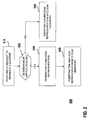
- FIG. 2 is a simplified flow chart of a second method 500 for modifying a DOM hierarchy in a browser that can be implemented with an embodiment of the present invention.
- the method 500 includes the following steps:
- FIG. 3 illustrates UI elements of a UI tree 700 referencing nodes in a corresponding document object model 800 (e.g., a HTML DOM).
- the UI tree 700 has a root node (ROOT) which has child nodes (e.g., DETAIL, LIST).
- UI tree nodes correspond to UI elements.
- the child nodes can be views (DETAIL, LIST) on a UI page.
- Each view can have further child nodes, such as further views or controls (e.g., ADDRESS, NAME, TABLE, ROW).
- Each UI element references (solid and dashed arrows) a node in the DOM hierarchy.
- the referenced nodes can have sub-trees.
Landscapes
- Engineering & Computer Science (AREA)
- Databases & Information Systems (AREA)
- Theoretical Computer Science (AREA)
- Data Mining & Analysis (AREA)
- Physics & Mathematics (AREA)
- General Engineering & Computer Science (AREA)
- General Physics & Mathematics (AREA)
- Document Processing Apparatus (AREA)
- Information Retrieval, Db Structures And Fs Structures Therefor (AREA)
- Information Transfer Between Computers (AREA)
Abstract
Description
- FIG. 1
- is a simplified flow chart of a first method that can be implemented with an embodiment of the present invention;
- FIG. 2
- is a simplified flow chart of a second method that can be implemented with an embodiment of the present invention; and
- FIG. 3
- illustrates UI elements of a UI tree referencing nodes in a corresponding document object model.
Claims (20)
- A method (400) for modifying a document object model (DOM) hierarchy in a browser comprising the steps:identifying (410) a change of a user interface (UI) element that references a node of the DOM hierarchy;determining (420) whether the change of the UI element can be applied to the DOM hierarchy by using a delta renderer;if the change can be applied by using the delta renderer, finding (430) in the DOM hierarchy the node that is referenced by the UI element and modifying (440) at least one attribute related to the node according to the change by using the delta renderer; andelse, setting (450) a dirty flag.
- The method (400) of claim 1, wherein the dirty flag indicates invalidity of a cached DOM representation of the UI element.
- The method (400) of claim 1, wherein the dirty flag indicates invalidity of a cached DOM representation of a further UI element that is on the path of the UI element in the UI tree.
- The method (400) of any of the claims 2 to 3, wherein the cached DOM representation comprises the node and the at least one attribute is an attribute of the node.
- The method (400) of any of the claims 2 to 3, wherein the cached DOM representation comprises a sub-tree of the DOM hierarchy and the node is the root node of the sub-tree and the at least one attribute is an attribute of a sub-node of the sub-tree.
- A method (500) for modifying a document object model (DOM) hierarchy in a browser comprising the steps:receiving (510) a request to render a user interface (UI) element of a UI-tree;;determining (520) whether a dirty flag is set for a cached DOM representation of a flagged UI element that is on the path of the UI element in the UI tree; the flagged UI element having a reference to a node of the DOM hierarchy;if the dirty flag is set, generating (530) a new DOM representation of the flagged UI element and inserting (540) the new DOM representation into the DOM hierarchy by using the UI-tree and the reference to the node; andelse, inserting (550) the cached DOM representation into the DOM hierarchy by using the UI-tree and the reference to the node.
- The method (500) of claim 7, wherein the cached DOM representation is a cached sub-tree of the DOM hierarchy and the node is the root node of the cached sub-tree.
- The method (500) of claim 7, wherein the new DOM representation is a new sub-tree of the DOM hierarchy and the node is the root node of the new sub-tree.
- A computer program product comprising instructions that when loaded into a memory of a computer system cause at least one processor of the computer system to perform the steps according to any one of the claims 1 to 5.
- A computer program product comprising instructions that when loaded into a memory of a computer system cause at least one processor of the computer system to perform the steps according to any one of the claims 6 to 9.
- A computer system for modifying a document object model (DOM) hierarchy of a client comprising:a browser to identify (410) a change of a user interface (UI) element that references a node of the DOM hierarchy; and to determine (420) whether the change of the UI element can be applied to the DOM hierarchy by a delta renderer; and to set a dirty flag when the change cannot be applied by the delta renderer; andthe delta renderer to find in the DOM hierarchy the node that is referenced by the UI element; and to modify (440) at least one attribute related to the node according to the change.
- The computer system of claim 11, where the delta renderer comprises a set of functions that can modify a corresponding DOM representation of the UI element.
- The computer system of claim 12, where the set of functions comprises setter functions.
- The computer system of any one of the claims 11 to 13, wherein the dirty flag indicates invalidity of a cached DOM representation of the UI element.
- The computer system of any one of the claims 11 to 13, wherein the dirty flag indicates invalidity of a cached DOM representation of a further UI element that is on the path of the UI element in the UI tree.
- The computer system of any one of the claims 14 to 15, wherein the cached DOM representation comprises the node and the at least one attribute is an attribute of the node.
- The computer system of any one of the claims 14 to 15, wherein the cached DOM representation comprises a sub-tree of the DOM hierarchy and the node is the root node of the sub-tree and the at least one attribute is an attribute of a sub-node of the sub-tree.
- A computer system for modifying a document object model (DOM) hierarchy of a client comprising:means for receiving (510) a request to render a user interface (UI) element of a UI-tree;means for determining (520) whether a dirty flag is set for a cached DOM representation of a flagged UI element that is on the path of the UI element in the UI tree; the flagged UI element having a reference to a node of the DOM hierarchy;means for generating (530) a new DOM representation of the flagged UI element and inserting (540) the new DOM representation into the DOM hierarchy by using the UI-tree and the reference to the node if the dirty flag is set; andmeans for inserting (550) the cached DOM representation into the DOM hierarchy by using the UI-tree and the reference to the node if the dirty flag is not set.
- The computer system of claim 18, wherein the cached DOM representation is a cached sub-tree of the DOM hierarchy and the node is the root node of the cached sub-tree.
- The method (500) of claim 18, wherein the new DOM representation is a new sub-tree of the DOM hierarchy and the node is the root node of the new sub-tree.
Priority Applications (2)
| Application Number | Priority Date | Filing Date | Title |
|---|---|---|---|
| PCT/EP2003/010441 WO2004031984A1 (en) | 2002-10-01 | 2003-09-18 | Method and system for refreshing browser pages |
| AU2003267390A AU2003267390A1 (en) | 2002-10-01 | 2003-09-18 | Method and system for refreshing browser pages |
Applications Claiming Priority (2)
| Application Number | Priority Date | Filing Date | Title |
|---|---|---|---|
| US41560002P | 2002-10-01 | 2002-10-01 | |
| US415600P | 2010-11-19 |
Publications (2)
| Publication Number | Publication Date |
|---|---|
| EP1406183A2 true EP1406183A2 (en) | 2004-04-07 |
| EP1406183A3 EP1406183A3 (en) | 2004-04-14 |
Family
ID=31994288
Family Applications (1)
| Application Number | Title | Priority Date | Filing Date |
|---|---|---|---|
| EP02026855A Ceased EP1406183A3 (en) | 2002-10-01 | 2002-12-02 | Method and system for refreshing browser pages |
Country Status (2)
| Country | Link |
|---|---|
| US (1) | US7712025B2 (en) |
| EP (1) | EP1406183A3 (en) |
Cited By (5)
| Publication number | Priority date | Publication date | Assignee | Title |
|---|---|---|---|---|
| EP1769340A4 (en) * | 2004-06-25 | 2007-10-10 | Icesoft Technologies Canada Co | Increasing portability of document-based user interface software objects |
| EP2414972A2 (en) * | 2009-03-31 | 2012-02-08 | QUALCOMM Incorporated | Apparatus and methods for rendering a page |
| WO2012148692A1 (en) * | 2011-04-28 | 2012-11-01 | Qualcomm Incorporated | Memoizing web - browsing computation with dom-based isomorphism |
| CN103778365A (en) * | 2012-10-18 | 2014-05-07 | 腾讯科技(深圳)有限公司 | Webpage hidden content detecting method and device |
| EP2721509A4 (en) * | 2011-06-20 | 2014-12-24 | Google Inc | Collecting user feedback about web pages |
Families Citing this family (29)
| Publication number | Priority date | Publication date | Assignee | Title |
|---|---|---|---|---|
| EP1406168A3 (en) * | 2002-09-30 | 2006-11-02 | Sap Ag | Computer system and methods for using interrelated data at runtime |
| US7853884B2 (en) * | 2003-02-28 | 2010-12-14 | Oracle International Corporation | Control-based graphical user interface framework |
| US7644367B2 (en) | 2003-05-16 | 2010-01-05 | Microsoft Corporation | User interface automation framework classes and interfaces |
| US8127252B2 (en) * | 2003-11-07 | 2012-02-28 | Microsoft Corporation | Method and system for presenting user interface (UI) information |
| JPWO2006051960A1 (en) * | 2004-11-12 | 2008-05-29 | 株式会社ジャストシステム | Document processing apparatus and document processing method |
| US8627344B2 (en) * | 2004-12-15 | 2014-01-07 | Siebel Systems, Inc. | Methods and apparatuses for user interface management |
| US8122354B1 (en) | 2005-02-25 | 2012-02-21 | The Mathworks, Inc. | Systems and methods for providing an indicator of detection of input related to an element of a user interface |
| US7676549B2 (en) * | 2005-05-27 | 2010-03-09 | Microsoft Corporation | Techniques for providing accessibility options in remote terminal sessions |
| US7360166B1 (en) * | 2005-08-17 | 2008-04-15 | Clipmarks Llc | System, method and apparatus for selecting, displaying, managing, tracking and transferring access to content of web pages and other sources |
| US7962895B2 (en) * | 2006-07-20 | 2011-06-14 | Oracle America, Inc. | Language for binding scalable vector graphics elements to java classes |
| US20090006942A1 (en) * | 2007-06-28 | 2009-01-01 | Microsoft Corporation | Embedded markup resources |
| EP2031819A1 (en) * | 2007-09-03 | 2009-03-04 | British Telecommunications Public Limited Company | Distributed system |
| US8134553B2 (en) * | 2007-09-24 | 2012-03-13 | Microsoft Corporation | Rendering three-dimensional objects on a server computer |
| US8095865B2 (en) * | 2007-11-21 | 2012-01-10 | Microsoft Corporation | Layout manager |
| US20100005410A1 (en) * | 2008-07-03 | 2010-01-07 | Pang Xin | Mobile device application framework |
| US8572477B1 (en) * | 2010-01-29 | 2013-10-29 | Asana, Inc. | Web-based incremental computing |
| WO2012155147A2 (en) * | 2011-05-12 | 2012-11-15 | Webtrends, Inc. | Graphical-user-interface-based method and system for designing and configuring web-site testing and analysis |
| US8607251B1 (en) * | 2011-09-21 | 2013-12-10 | Google Inc. | Dynamic accessibility behavior |
| US8775923B1 (en) | 2011-09-26 | 2014-07-08 | Google Inc. | Web page restoration |
| US9053201B2 (en) * | 2012-02-29 | 2015-06-09 | Microsoft Technology Licensing, Llc | Communication with a web compartment in a client application |
| US9508102B2 (en) * | 2012-07-25 | 2016-11-29 | Facebook, Inc. | Methods and systems for tracking of user interactions with content in social networks |
| US10275398B2 (en) * | 2012-09-11 | 2019-04-30 | Nippon Telegraph And Telephone Corporation | Content display device, content display method, and content display program |
| US20150082208A1 (en) | 2013-09-16 | 2015-03-19 | Uwe D. Klinger | Multi-level user interface theming |
| EP3201790A4 (en) | 2014-09-30 | 2018-05-30 | Hewlett-Packard Enterprise Development LP | Evaluating documentation coverage |
| US10025702B1 (en) * | 2014-12-10 | 2018-07-17 | Amazon Technologies, Inc. | Browser capable of saving and restoring content item state |
| US10558736B2 (en) * | 2016-02-04 | 2020-02-11 | Sap Se | Metadata driven user interface layout control for web applications |
| CN106598574B (en) * | 2016-11-25 | 2020-02-18 | 腾讯科技(深圳)有限公司 | Method and device for page rendering |
| US10909098B2 (en) * | 2019-06-28 | 2021-02-02 | Lenovo Enterprise Solutions (Singapore) Pte. Ltd. | Setting a flag to indicate that a user interface has stale data within a subject matter category |
| WO2025017387A1 (en) * | 2023-07-19 | 2025-01-23 | Evinced Ltd. | Accessibility analysis of web content undergoing mutations |
Family Cites Families (47)
| Publication number | Priority date | Publication date | Assignee | Title |
|---|---|---|---|---|
| US6249291B1 (en) * | 1995-09-22 | 2001-06-19 | Next Software, Inc. | Method and apparatus for managing internet transactions |
| US6185625B1 (en) * | 1996-12-20 | 2001-02-06 | Intel Corporation | Scaling proxy server sending to the client a graphical user interface for establishing object encoding preferences after receiving the client's request for the object |
| US20030009563A1 (en) * | 1997-07-31 | 2003-01-09 | At&T Corp. | Method for client-side inclusion of data elements |
| US6249844B1 (en) * | 1998-11-13 | 2001-06-19 | International Business Machines Corporation | Identifying, processing and caching object fragments in a web environment |
| US6668354B1 (en) * | 1999-01-05 | 2003-12-23 | International Business Machines Corporation | Automatic display script and style sheet generation |
| US6635089B1 (en) * | 1999-01-13 | 2003-10-21 | International Business Machines Corporation | Method for producing composite XML document object model trees using dynamic data retrievals |
| US6519617B1 (en) * | 1999-04-08 | 2003-02-11 | International Business Machines Corporation | Automated creation of an XML dialect and dynamic generation of a corresponding DTD |
| US7100112B1 (en) * | 1999-05-20 | 2006-08-29 | Microsoft Corporation | Dynamic properties of documents and the use of these properties |
| US6671853B1 (en) * | 1999-07-15 | 2003-12-30 | International Business Machines Corporation | Method and system for selectively streaming markup language documents |
| US6611876B1 (en) * | 1999-10-28 | 2003-08-26 | International Business Machines Corporation | Method for establishing optimal intermediate caching points by grouping program elements in a software system |
| US6725424B1 (en) * | 1999-12-09 | 2004-04-20 | International Business Machines Corp. | Electronic document delivery system employing distributed document object model (DOM) based transcoding and providing assistive technology support |
| EP1117220A1 (en) * | 2000-01-14 | 2001-07-18 | Sun Microsystems, Inc. | Method and system for protocol conversion |
| US7096418B1 (en) * | 2000-02-02 | 2006-08-22 | Persistence Software, Inc. | Dynamic web page cache |
| AU2001231259A1 (en) * | 2000-02-04 | 2001-08-14 | America Online Incorporated | System and process for delivering and rendering scalable web pages |
| US6757708B1 (en) * | 2000-03-03 | 2004-06-29 | International Business Machines Corporation | Caching dynamic content |
| US8397223B2 (en) * | 2000-03-17 | 2013-03-12 | Gutenberg Printing Llc | Web application generator |
| GB0011426D0 (en) * | 2000-05-11 | 2000-06-28 | Charteris Limited | A method for transforming documents written in different XML-based languages |
| AUPQ808700A0 (en) * | 2000-06-09 | 2000-07-06 | Honeywell Limited | Human-machine interface |
| US6826726B2 (en) * | 2000-08-18 | 2004-11-30 | Vaultus Mobile Technologies, Inc. | Remote document updating system using XML and DOM |
| US6675230B1 (en) * | 2000-08-22 | 2004-01-06 | International Business Machines Corporation | Method, system, and program for embedding a user interface object in another user interface object |
| US7020882B1 (en) * | 2000-09-14 | 2006-03-28 | International Business Machines Corporation | Method, system, and program for remotely manipulating a user interface over a network |
| US6823495B1 (en) * | 2000-09-14 | 2004-11-23 | Microsoft Corporation | Mapping tool graphical user interface |
| US7051276B1 (en) * | 2000-09-27 | 2006-05-23 | Microsoft Corporation | View templates for HTML source documents |
| US7028306B2 (en) * | 2000-12-04 | 2006-04-11 | International Business Machines Corporation | Systems and methods for implementing modular DOM (Document Object Model)-based multi-modal browsers |
| US20020083073A1 (en) * | 2000-12-22 | 2002-06-27 | Vaidya Neelam N. | Managing a layered hierarchical data set |
| US6675261B2 (en) * | 2000-12-22 | 2004-01-06 | Oblix, Inc. | Request based caching of data store data |
| US20030189593A1 (en) * | 2001-01-05 | 2003-10-09 | Yarvin Curtis G. | Method and apparatus for dynamically updating a markup language based user interface |
| US7085736B2 (en) * | 2001-02-27 | 2006-08-01 | Alexa Internet | Rules-based identification of items represented on web pages |
| US6542911B2 (en) * | 2001-03-01 | 2003-04-01 | Sun Microsystems, Inc. | Method and apparatus for freeing memory from an extensible markup language document object model tree active in an application cache |
| US7415538B2 (en) * | 2001-03-19 | 2008-08-19 | International Business Machines Corporation | Intelligent document filtering |
| US6948133B2 (en) * | 2001-03-23 | 2005-09-20 | Siemens Medical Solutions Health Services Corporation | System for dynamically configuring a user interface display |
| US6950831B2 (en) * | 2001-03-23 | 2005-09-27 | Siemens Medical Solutions Health Services Corporation | Processing system for use with a user interface display |
| WO2002082229A2 (en) * | 2001-04-09 | 2002-10-17 | America Online Incorporated | Server-based browser system |
| US6745208B2 (en) * | 2001-05-31 | 2004-06-01 | International Business Machines Corporation | Method and apparatus for synchronizing an XML document with its object model |
| US20020184340A1 (en) * | 2001-05-31 | 2002-12-05 | Alok Srivastava | XML aware logical caching system |
| US6976211B2 (en) * | 2001-07-23 | 2005-12-13 | International Business Machines Corporation | Method, system, and computer-program product for providing selective access to certain child nodes of a document object model (DOM) |
| AU2002332812A1 (en) * | 2001-09-04 | 2003-03-18 | Soft2B Llc | Browser-to-browser, dom-based, peer-to-peer communication with delta synchronization |
| US6908034B2 (en) * | 2001-12-17 | 2005-06-21 | Zih Corp. | XML system |
| US7240330B2 (en) * | 2002-02-01 | 2007-07-03 | John Fairweather | Use of ontologies for auto-generating and handling applications, their persistent storage, and user interfaces |
| US20040001476A1 (en) * | 2002-06-24 | 2004-01-01 | Nayeem Islam | Mobile application environment |
| US20040015537A1 (en) * | 2002-07-15 | 2004-01-22 | Richard Doerksen | Handheld client framework system |
| ATE385589T1 (en) * | 2002-08-02 | 2008-02-15 | Sap Ag | METHOD AND COMPUTER SYSTEM FOR TREATING INCREMENTAL DATA IN CLIENT-SERVER COMMUNICATION. |
| US7308474B2 (en) * | 2002-11-06 | 2007-12-11 | Oracle International Corporation | Techniques for scalably accessing data in an arbitrarily large document by a device with limited resources |
| US7085759B2 (en) * | 2002-12-06 | 2006-08-01 | Jpmorgan Chase Bank | System and method for communicating data to a process |
| US7130851B1 (en) * | 2003-05-12 | 2006-10-31 | Microsoft Corporation | System and method for maintaining and displaying user ordered lists |
| US20050131962A1 (en) * | 2003-12-16 | 2005-06-16 | Deshpande Sachin G. | Systems and methods for implementing a cache model |
| US20060107206A1 (en) * | 2004-11-12 | 2006-05-18 | Nokia Corporation | Form related data reduction |
-
2002
- 2002-12-02 EP EP02026855A patent/EP1406183A3/en not_active Ceased
-
2003
- 2003-09-30 US US10/677,121 patent/US7712025B2/en active Active
Cited By (10)
| Publication number | Priority date | Publication date | Assignee | Title |
|---|---|---|---|---|
| EP1769340A4 (en) * | 2004-06-25 | 2007-10-10 | Icesoft Technologies Canada Co | Increasing portability of document-based user interface software objects |
| US7954050B2 (en) | 2004-06-25 | 2011-05-31 | Icesoft Technologies Canada Corp. | Systems and methods for rendering and increasing portability of document-based user interface software objects |
| EP2414972A2 (en) * | 2009-03-31 | 2012-02-08 | QUALCOMM Incorporated | Apparatus and methods for rendering a page |
| US9171097B2 (en) | 2009-03-31 | 2015-10-27 | Qualcomm Incorporated | Memoizing web-browsing computation with DOM-based isomorphism |
| US9311425B2 (en) | 2009-03-31 | 2016-04-12 | Qualcomm Incorporated | Rendering a page using a previously stored DOM associated with a different page |
| WO2012148692A1 (en) * | 2011-04-28 | 2012-11-01 | Qualcomm Incorporated | Memoizing web - browsing computation with dom-based isomorphism |
| EP2721509A4 (en) * | 2011-06-20 | 2014-12-24 | Google Inc | Collecting user feedback about web pages |
| CN103778365A (en) * | 2012-10-18 | 2014-05-07 | 腾讯科技(深圳)有限公司 | Webpage hidden content detecting method and device |
| US9979746B2 (en) | 2012-10-18 | 2018-05-22 | Tencent Technology (Shenzhen) Company Limited | Method and apparatus for detecting hidden content of web page |
| US10333972B2 (en) | 2012-10-18 | 2019-06-25 | Tencent Technology (Shenzhen) Company Limited | Method and apparatus for detecting hidden content of web page |
Also Published As
| Publication number | Publication date |
|---|---|
| EP1406183A3 (en) | 2004-04-14 |
| US7712025B2 (en) | 2010-05-04 |
| US20040123239A1 (en) | 2004-06-24 |
Similar Documents
| Publication | Publication Date | Title |
|---|---|---|
| US7712025B2 (en) | Document object model caching and validation | |
| JP4344693B2 (en) | System and method for browser document editing | |
| US8700988B2 (en) | Selectively interpreted portal page layout template | |
| US7535475B2 (en) | Virtual view tree | |
| KR100874985B1 (en) | Web server | |
| JP4170256B2 (en) | Method for rendering a portal view for display on a handheld computer or mobile phone, portal server system, and program | |
| JP4643931B2 (en) | Web page rendering mechanism using themes based on external programs | |
| US6918090B2 (en) | Dynamic setting of navigation order in aggregated content | |
| US7496839B2 (en) | Template mechanism for document generation | |
| CN101512483B (en) | Dynamically Generate Custom User Interfaces | |
| US7523158B1 (en) | System and method for partial page updates using a proxy element | |
| US7412644B2 (en) | System and process for delivering and rendering scalable web pages | |
| US7441187B2 (en) | Web template processing utilizing dynamic rules defined by data structure language | |
| US20030174165A1 (en) | System and method for rendering a directed graph | |
| EP1220113A2 (en) | Dynamically displaying markup language form elements | |
| US20050289156A1 (en) | Systems and methods for rendering and increasing portability of document-based user interface software objects | |
| US20130174015A1 (en) | Dynamically modifiable mobile device simulator | |
| US20040111671A1 (en) | Method for selectively reloading frames of a web-page | |
| CN101589375B (en) | Managed execution environment for software application interfacing | |
| US20110292072A1 (en) | Pluggable Web-Based Visualizations for Applications | |
| US20100325532A1 (en) | Indicating focus in a portal environment | |
| US20050050454A1 (en) | Controlling the look and feel of a web | |
| US20220043546A1 (en) | Selective server-side rendering of scripted web page interactivity elements | |
| WO2016005884A2 (en) | Javascript-based, client-side template driver system | |
| US20060053411A1 (en) | Systems, methods, and computer readable media for consistently rendering user interface components |
Legal Events
| Date | Code | Title | Description |
|---|---|---|---|
| PUAI | Public reference made under article 153(3) epc to a published international application that has entered the european phase |
Free format text: ORIGINAL CODE: 0009012 |
|
| PUAL | Search report despatched |
Free format text: ORIGINAL CODE: 0009013 |
|
| AK | Designated contracting states |
Kind code of ref document: A2 Designated state(s): AT BE BG CH CY CZ DE DK EE ES FI FR GB GR IE IT LI LU MC NL PT SE SI SK TR |
|
| AX | Request for extension of the european patent |
Extension state: AL LT LV MK RO |
|
| AK | Designated contracting states |
Kind code of ref document: A3 Designated state(s): AT BE BG CH CY CZ DE DK EE ES FI FR GB GR IE IT LI LU MC NL PT SE SI SK TR |
|
| AX | Request for extension of the european patent |
Extension state: AL LT LV MK RO |
|
| 17P | Request for examination filed |
Effective date: 20041014 |
|
| 17Q | First examination report despatched |
Effective date: 20041104 |
|
| AKX | Designation fees paid |
Designated state(s): AT BE BG CH CY CZ DE DK EE ES FI FR GB GR IE IT LI LU MC NL PT SE SI SK TR |
|
| RAP1 | Party data changed (applicant data changed or rights of an application transferred) |
Owner name: SAP AG |
|
| APBN | Date of receipt of notice of appeal recorded |
Free format text: ORIGINAL CODE: EPIDOSNNOA2E |
|
| APBR | Date of receipt of statement of grounds of appeal recorded |
Free format text: ORIGINAL CODE: EPIDOSNNOA3E |
|
| APAF | Appeal reference modified |
Free format text: ORIGINAL CODE: EPIDOSCREFNE |
|
| APBT | Appeal procedure closed |
Free format text: ORIGINAL CODE: EPIDOSNNOA9E |
|
| STAA | Information on the status of an ep patent application or granted ep patent |
Free format text: STATUS: THE APPLICATION HAS BEEN REFUSED |
|
| 18R | Application refused |
Effective date: 20110302 |