EP1406172A2 - System and method for task arbitration in multi-threaded simulations - Google Patents
System and method for task arbitration in multi-threaded simulations Download PDFInfo
- Publication number
- EP1406172A2 EP1406172A2 EP03022259A EP03022259A EP1406172A2 EP 1406172 A2 EP1406172 A2 EP 1406172A2 EP 03022259 A EP03022259 A EP 03022259A EP 03022259 A EP03022259 A EP 03022259A EP 1406172 A2 EP1406172 A2 EP 1406172A2
- Authority
- EP
- European Patent Office
- Prior art keywords
- task
- parameters
- results
- queue
- calls
- Prior art date
- Legal status (The legal status is an assumption and is not a legal conclusion. Google has not performed a legal analysis and makes no representation as to the accuracy of the status listed.)
- Withdrawn
Links
Images



Classifications
-
- G—PHYSICS
- G06—COMPUTING OR CALCULATING; COUNTING
- G06F—ELECTRIC DIGITAL DATA PROCESSING
- G06F9/00—Arrangements for program control, e.g. control units
- G06F9/06—Arrangements for program control, e.g. control units using stored programs, i.e. using an internal store of processing equipment to receive or retain programs
- G06F9/46—Multiprogramming arrangements
- G06F9/48—Program initiating; Program switching, e.g. by interrupt
- G06F9/4806—Task transfer initiation or dispatching
- G06F9/4843—Task transfer initiation or dispatching by program, e.g. task dispatcher, supervisor, operating system
-
- G—PHYSICS
- G06—COMPUTING OR CALCULATING; COUNTING
- G06F—ELECTRIC DIGITAL DATA PROCESSING
- G06F9/00—Arrangements for program control, e.g. control units
- G06F9/06—Arrangements for program control, e.g. control units using stored programs, i.e. using an internal store of processing equipment to receive or retain programs
- G06F9/46—Multiprogramming arrangements
- G06F9/52—Program synchronisation; Mutual exclusion, e.g. by means of semaphores
-
- G—PHYSICS
- G06—COMPUTING OR CALCULATING; COUNTING
- G06F—ELECTRIC DIGITAL DATA PROCESSING
- G06F9/00—Arrangements for program control, e.g. control units
- G06F9/06—Arrangements for program control, e.g. control units using stored programs, i.e. using an internal store of processing equipment to receive or retain programs
- G06F9/46—Multiprogramming arrangements
- G06F9/54—Interprogram communication
- G06F9/544—Buffers; Shared memory; Pipes
Definitions
- the present application is directed to simulation systems, and more particularly to a system and method for task arbitration among multiple threads.
- Simulation programs are frequently used for testing integrated circuits. Integrated circuit production is characterized by high initial costs for the production of the first "copy” followed by low marginal costs for each successive copy. Testing of a design for an integrated circuit prior to production is almost imperative. There are simulation tools provided solely for testing integrated circuit designs.
- VerilogTM One of the most popular simulation tools is known as VerilogTM. Integrated circuit testing is achieved in VerilogTM through completion of various tasks. VerilogTM tasks are executed by calling the task from a calling statement in a calling thread. After execution of the VerilogTM task, execution is returned to the next statement in the calling thread.
- multi-threaded programming is needed to test multiple features of a design in one simulation run. Multi-threaded programming involves multiple flows of instructions, each of which can include a task call to the same task.
- a task wrapper receives all calls to a particular task. Responsive to receiving the call for the particular task, the task wrapper assigns a unique identifier to the task call and stores the parameters associated with the task call in memory. Since the task wrapper stores the parameters in different locations each time a task call is received, the tasks do not collide with each other.
- a task loop continuously and serially scans a region of memory. As the task loop scans the memory, the task loop retrieves the parameters from the memory and provides the parameters to the task. The task operates on the parameters and returns results to the task loop. The task loop stores the results in memory. The task wrapper retrieves the results from the memory and returns the results to the calling threads.
- a system for executing a first task comprising:
- system further comprises:
- system further comprises:
- system further comprises:
- the third task launches a fourth task, wherein the fourth polls a particular one of the register bits.
- the second task receives results from the first task and sets the particular one of the register bits.
- the fourth task detects setting of the particular one of the register bits and wherein the third task provides results to a particular one of the threads.
- a method for executing a task comprising:
- said method further comprises:
- retrieving the results is responsive to receiving an indication.
- the method further comprises:
- a method for executing a task comprising:
- a system for executing a task comprising:
- the task manager for selecting a unique identifiers and associating each of the task calls with a particular one of the unique identifiers, and wherein the queue queues the unique identifiers with the parameters.
- the queue returns a result associated with a particular one of the parameters and unique identifier, to a particular one of the calling threads associated with the unique identifier.
- system further comprises a second plurality of memory locations for storing the task.
- the task comprises a Verilog task.
- system further comprises a third plurality of memory locations for storing the plurality of threads.
- the threads 110 include instructions calling a task 105 known as a task call 110a.
- the task calls 110a call the task 105 and provide arguments, known as parameters, to the task 105. Responsive thereto, the task 105 operates on the parameters and returns results to the task call 110a.
- Each of the multiple threads 110 can call the same task 105, by different task calls 110a.
- the different task calls 110a can provide parameters to the task 105.
- an arbitration scheme can be used wherein a task manager receives each task call 110a.
- the task manager schedules the task to operate on the parameters provided by the task calls 110a in serial fashion. Additionally, the task manager differentiates the parameters of each task call 110a. The foregoing prevents collisions between each of the tasks calls 110a.
- FIGURE 2 there is illustrated a block diagram of an exemplary multi-threaded environment configured in accordance with an embodiment of the present invention, wherein multiple threads 110 can call a task 105.
- a task manager 205 is placed between the task 105 and the threads 1 10 and receives all task calls 110a, and parameters associated with the task calls 110a.
- the task manager 205 selects and associates a unique identifier identifying and distinguishing each of the task calls 110a, and schedules execution of the task 105 for the task call 11 0a.
- the execution of the task 105 for each task call 110a is scheduled by placement of the unique identifier 210 and the parameters 215 provided by the calling thread 110 in a queue 220.
- the queue 220 executes the task 105 using the parameters 215 stored therein.
- the unique identifier 210 is used to identify the calling thread 110 and the results are returned to the calling thread 110.
- each task 105 execution associated with a calling thread 1 10 uses a different object, e.g., parameters 21 5 in queue 220, for each task call 110a and because the queue 220 causes each task execution to occur serially, the task calls 110a do not collide with each other.
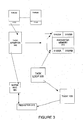
- FIGURE 3 there is illustrated a block diagram of an exemplary multi-threaded VerilogTM simulation wherein the multiple threads 110 include task calls 110a to a VerilogTM task 105, configured in accordance with an embodiment of the present invention.
- the multi-threaded simulation can comprise a simulation of an integrated circuit. Intergrated circuit testing is achieved in VerilogTM through completion of various tasks 105. As noted above, multiple threads 110 are used to test interworking parts of an integrated circuit. Execution of the task 105 is controlled by a task loop 305.
- the task loop 305 is a program which sequentially scans predetermined locations of a parameter memory 310.
- the parameter memory 310 stores any number of parameters for the task 105. Contiguous portions 310(0)...310(n) of the parameter memory 310 store a complete set of parameters for operation by the task 105 and can store a complete set of results from the operation of the task 105 on the parameters. A first set of memory locations in the parameter memory portions 310(x)a stores parameters while a second set of memory locations in the parameter memory portions 310(x)b store results from operation by the task 105 on the parameters. The portions 310(0)...310(n) of the parameter memory 310 are also associated with a unique identifier. The parameter memory 310 serves as a circular queue of parameters for operation by the task 105.
- the task loop 305 scans each portion of the parameter memory 310(0)...310(n), the parameters are retrieved from the parameter memory portion 310(x)(a) and provided to the task 105.
- the task operates on the parameters 105 and provides any result data to the task loop 305.
- the task loop 305 stores the results of operation of the task on the parameters retrieved from parameter memory portion 310(x)a in parameter memory portion 310(x)b.
- register 315 comprising a plurality of bits, wherein each bit 315(0)...315(n) of the register 31 5 is associated with a particular one of the unique identifiers.
- a register bit 31 5(x) is set each time that the task 105 writes results to the parameter memory portion 310(x)b associated with the same unique number.
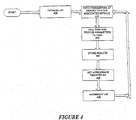
- a unique identification counter is initialized to zero.
- the task loop 305 fetches parameters for the task 105 from a parameter memory portion 310(x)a associated with the unique identification stored in the unique identification counter. After fetching the parameters, the task loop 305 causes the task 105 to be called with a task call (415). Upon completion of the task 105, results from the task call are stored (420) in the parameter memory portion 310(x)b associated with the unique identifier stored in the unique identifier counter.
- the register bit 315(x) associated with the unique identifier stored in the unique identifier counter is set.
- the unique identifier counter is incremented to reference the next parameter memory portion 310(x) in circular sequence. It is noted that the parameter memory 310 actually serves as a circular queue, wherein parameter memory portion 310(0) follows parameter memory portion 310(n). After incrementing the unique identifier counter, 410-430 are repeated by the task loop 305 for the parameters stored in the parameter memory portion 310(x+1 ), associated with incremented unique identifier counter.
- the plurality of threads 110 direct task calls 110(a) to a task wrapper 320.
- the task wrapper 320 selects a unique identifier for the task call 110(a) and stores the parameters at the parameter memory portion 310(x) associated with the unique identifier for the task call 310(x). Additionally, the task wrapper 320 resets the register bit 315(x) associated with the unique identifier.
- the selection of the unique identifier can be made by use of another counter that is incremented as each unique identifier is associated with a particular task call 110(a).
- the unique identifier corresponds to the unique identifiers of the parameter memory portions 310(x).
- the task wrapper 320 launches a watchdog 325 associated with the register bit 315(x). The watchdog 325 polls the register bit 310(x) for a set bit condition.
- the task wrapper sets the register bit 310(x) at 425.
- the watchdog 325 When the watchdog 325 detects the set bit condition, the watchdog 325 notifies the calling task wrapper 320.
- the task wrapper 320 can then retrieve the results from parameter memory portion 310(x)b, and return the results to the calling statement 1 10a.
- FIGURE 5 there is illustrated a flow diagram describing an exemplary operation of the task wrapper 320 responsive to receipt of a task call 110(a) from a calling thread 1 10.
- the task wrapper 320 selects a unique identifier for the task call 110a.
- the parameters provided by the task call 110a upon which the task 105 is to operate are stored (510) in parameter memory portion 310(x)a associated with the selected unique identifier.
- the register bit 315(x) associated with the unique identifier is reset and a watchdog 325 for the register bit 315(x) is launched (520).
- the task wrapper 320 waits for the watchdog 325 to indicate that the task 105 has operated on the parameters at parameter memory portion 310(x)a. Responsive thereto, the task wrapper 320 returns (530) the results stored in parameter memory portion 310(x)b to the calling thread 110.
- a CPU 60 is interconnected via system bus 62 to random access memory (RAM) 64, read only memory (ROM) 66, an input/output (I/O) adapter 68, a user interface adapter 72, a communications adapter 84, and a display adapter 86.
- the input/output (I/O) adapter 68 connects peripheral devices such as hard disc drives 40, floppy disc drives 41 for reading removable floppy discs 42, and optical disc drives 43 for reading removable optical disc 44 (such as a compact disc or a digital versatile disc) to the bus 62.
- the user interface adapter 72 connects devices such as a keyboard 74, a mouse 76 having a plurality of buttons 67, a speaker 78, a microphone 82, and/or other user interfaces devices such as a touch screen device (not shown) to the bus 62.
- the communications adapter 84 connects the computer system to a data processing network 92.
- the display adapter 86 connects a monitor 88 to the bus 62.
- An embodiment of the present invention can be implemented as sets of instructions resident in the random access memory 64 of one or more computer systems 110 configured generally as described in FIGURE 5.
- the set of instructions may be stored in another computer readable memory, for example in a hard disc drive 40, or in removable memory such as an optical disc 44 for eventual use in an optical disc drive 43, or a floppy disc 42 for eventual use in a floppy disc drive 41.
- the physical storage of the sets of instructions physically changes the medium upon which it is stored electrically, magnetically, or chemically so that the medium carries computer readable information.
- the foregoing allows for concurrent execution of tasks, such as VerilogTM tasks, while avoiding collisions between different calls to a particular task. Additionally, because the configurations are made at the task level, modifications are not required to the calling threads. The foregoing simplifies adaptation of preexisting simulations.
Landscapes
- Engineering & Computer Science (AREA)
- Software Systems (AREA)
- Theoretical Computer Science (AREA)
- Physics & Mathematics (AREA)
- General Engineering & Computer Science (AREA)
- General Physics & Mathematics (AREA)
- Debugging And Monitoring (AREA)
Abstract
Description
Claims (10)
- A system for executing a first task, said system comprising:a first plurality of memory locations for storing a plurality of parameter sets for operation upon by the first task; anda second plurality of memory locations for storing a second task, wherein the second task calls the first task a plurality of times and provides a different one of the plurality of parameter sets to the first task during each of the plurality of times.
- The system of claim 1, further comprising:a register comprising a plurality of bits, wherein each of said bits are associated with a particular one of the plurality of parameter sets; andwherein the second task sets the a particular one of the bits associated with a particular one of the plurality of parameters sets after providing the parameter set to the first task.
- The system of claim 2, further comprising:a third plurality of memory locations for storing a plurality of threads, wherein the plurality of threads includes a calling statement and a certain parameter set.
- The system of claim 3, further comprising:a fourth plurality of memory locations for storing a third task, wherein the third task receives the parameters from the thread and stores the parameters in the first plurality of memory locations.
- A method for executing a task, said method comprising:receiving a set of parameters from a calling thread;storing the set of parameters in a plurality of memory locations;retrieving results from operation on the set of parameters by the task; andproviding the results to the thread.
- The method of claim 5, wherein said method further comprises:launching a second task for indicating when the first task has operated on said parameters; andreceiving an indication from the second task when the first task has operated on said parameters.
- The method of claim 6, wherein retrieving the results is responsive to receiving an indication.
- A method for executing a task, said method comprising:selecting a parameter set from a position in a queue;calling the task;providing the parameter set to the task;receiving results from the task;storing the results at the position in the queue;indicating that said position in the queue stores the results; andselecting a parameter set from the next position in the queue.
- A system for executing a task, said system comprising:a first plurality of memory locations for storing a task manager, wherein the task manager receives task calls for execution of the task from a plurality of threads; anda queue for queuing parameters associated with the task calls, and for causing execution of the task with the parameters.
- The system of claim 9, wherein the task manager for selecting a unique identifiers and associating each of the task calls with a particular one of the unique identifiers, and wherein the queue queues the unique identifiers with the parameters.
Applications Claiming Priority (2)
| Application Number | Priority Date | Filing Date | Title |
|---|---|---|---|
| US261740 | 1994-06-17 | ||
| US10/261,740 US7318228B2 (en) | 2002-10-01 | 2002-10-01 | System and method for task arbitration in multi-threaded simulations |
Publications (2)
| Publication Number | Publication Date |
|---|---|
| EP1406172A2 true EP1406172A2 (en) | 2004-04-07 |
| EP1406172A3 EP1406172A3 (en) | 2006-11-08 |
Family
ID=31993540
Family Applications (1)
| Application Number | Title | Priority Date | Filing Date |
|---|---|---|---|
| EP03022259A Withdrawn EP1406172A3 (en) | 2002-10-01 | 2003-10-01 | System and method for task arbitration in multi-threaded simulations |
Country Status (2)
| Country | Link |
|---|---|
| US (1) | US7318228B2 (en) |
| EP (1) | EP1406172A3 (en) |
Cited By (1)
| Publication number | Priority date | Publication date | Assignee | Title |
|---|---|---|---|---|
| CN102004630A (en) * | 2009-08-31 | 2011-04-06 | 国际商业机器公司 | Multi-core/thread work-group computation scheduler |
Families Citing this family (5)
| Publication number | Priority date | Publication date | Assignee | Title |
|---|---|---|---|---|
| US7016923B2 (en) * | 2002-11-05 | 2006-03-21 | Sun Microsystems, Inc. | Multi-threaded garbage collector employing cascaded memory arrays of task identifiers to implement work stealing queues for task identification and processing |
| GB2433396B (en) * | 2005-12-15 | 2010-06-23 | Bridgeworks Ltd | A bridge |
| GB2436627B (en) * | 2006-03-29 | 2011-04-20 | Bridgeworks Ltd | Message handling |
| US7827286B1 (en) * | 2007-06-15 | 2010-11-02 | Amazon Technologies, Inc. | Providing enhanced access to stored data |
| KR101499890B1 (en) * | 2013-05-15 | 2015-03-06 | 주식회사 코스콤 | Low Latency Framework System |
Family Cites Families (8)
| Publication number | Priority date | Publication date | Assignee | Title |
|---|---|---|---|---|
| US6148323A (en) * | 1995-12-29 | 2000-11-14 | Hewlett-Packard Company | System and method for managing the execution of system management |
| US5926635A (en) * | 1997-02-05 | 1999-07-20 | Hewlett Packard Company | Method for reducing complexities when communicating between tasks |
| US6457063B1 (en) * | 1998-04-30 | 2002-09-24 | Sun Microsystems, Inc. | Method, apparatus & computer program product for dynamic administration, management and monitoring of daemon processes |
| US6272518B1 (en) * | 1998-08-17 | 2001-08-07 | International Business Machines Corporation | System and method for porting a multithreaded program to a job model |
| US6934947B1 (en) * | 1999-05-10 | 2005-08-23 | Robert Zeidman | Visual tool for developing real time task management code |
| US7035781B1 (en) * | 1999-12-30 | 2006-04-25 | Synopsys, Inc. | Mixed language simulator |
| US20020103847A1 (en) * | 2001-02-01 | 2002-08-01 | Hanan Potash | Efficient mechanism for inter-thread communication within a multi-threaded computer system |
| US20030005168A1 (en) * | 2001-06-29 | 2003-01-02 | Leerssen Scott Alan | System and method for auditing system call events with system call wrappers |
-
2002
- 2002-10-01 US US10/261,740 patent/US7318228B2/en not_active Expired - Lifetime
-
2003
- 2003-10-01 EP EP03022259A patent/EP1406172A3/en not_active Withdrawn
Non-Patent Citations (4)
| Title |
|---|
| FAISON T: "Interaction patterns for communicating processes" PATTERN LANGUAGES OF PROGRAMS CONFERENCE, 11 August 1998 (1998-08-11), XP002160754 * |
| FREEMAN E ET AL: "JavaSpaces. Principles, Patterns, and Practice" 15 June 1999 (1999-06-15), ADDISON WESLEY PROFESSIONAL , XP002400598 ISBN: 0-201-30955-6 Paragraphs 2.4-2.4.6, 3.3-3.3.2, 6-6.1.4 * the whole document * * |
| LEA D: "Concurrent Programming in Java: Design Principles and Patterns, Second Edition" 25 October 1999 (1999-10-25), ADDISON WESLEY PROFESSIONAL , XP002400599 ISBN: 0-201-31009-0 Paragraphs 4-4.1.6 * the whole document * * |
| SCHMIDT D C ET AL: "COMPARING ALTERNATIVE PROGRAMMING TECHNIQUES FOR MULTITHREADED CORBA SERVERS" C PLUS PLUS REPORT, SIGS PUBLICATIONS, INC. NEWYORK, NY, US, vol. 8, no. 1, April 1996 (1996-04), pages 56-66, XP001033506 ISSN: 1040-6042 * |
Cited By (2)
| Publication number | Priority date | Publication date | Assignee | Title |
|---|---|---|---|---|
| CN102004630A (en) * | 2009-08-31 | 2011-04-06 | 国际商业机器公司 | Multi-core/thread work-group computation scheduler |
| CN102004630B (en) * | 2009-08-31 | 2013-12-11 | 国际商业机器公司 | Multi-core/thread work-group computation scheduler |
Also Published As
| Publication number | Publication date |
|---|---|
| US7318228B2 (en) | 2008-01-08 |
| US20040064814A1 (en) | 2004-04-01 |
| EP1406172A3 (en) | 2006-11-08 |
Similar Documents
| Publication | Publication Date | Title |
|---|---|---|
| US5297274A (en) | Performance analysis of program in multithread OS by creating concurrently running thread generating breakpoint interrupts to active tracing monitor | |
| US6539500B1 (en) | System and method for tracing | |
| US7962913B2 (en) | Scheduling threads in a multiprocessor computer | |
| CN101183304B (en) | Concurrent, non-blocking, lock-free queue and method, and apparatus for implementing same | |
| JP4749556B2 (en) | Flexible interrupt controller with interrupt force register | |
| US6996821B1 (en) | Data processing systems and method for batching tasks of the same type in an instruction cache | |
| EP0132381A2 (en) | Method of synchronizing the sequence by which a variety of randomly called unrelated activities are executed in a digital processor | |
| JPH0640321B2 (en) | System and method for interrupt handling | |
| US20250094221A1 (en) | Thread scheduling for multithreaded data processing environments | |
| US5551041A (en) | Wait for service request in an iconic programming system | |
| US9529651B2 (en) | Apparatus and method for executing agent | |
| JP7617907B2 (en) | The processor and its internal interrupt controller | |
| US7634774B2 (en) | System and method of scheduling computing threads | |
| CN116932165A (en) | Task scheduling method, satellite navigation method, task scheduling system and storage medium | |
| US4342082A (en) | Program instruction mechanism for shortened recursive handling of interruptions | |
| CN113849292A (en) | Timed task execution method and device, storage medium and equipment | |
| US7318228B2 (en) | System and method for task arbitration in multi-threaded simulations | |
| US5463764A (en) | Method and system for system debugging through a keyboard device driver | |
| CA2465015A1 (en) | Context scheduling | |
| US7606958B2 (en) | Interrupt control method, interrupt control apparatus and interrupt control medium | |
| CN101989190B (en) | Wait instruction | |
| US20050193260A1 (en) | Interrupt control program, recording medium, and interrupt control method | |
| CN110837412B (en) | Method, device, equipment and storage medium for judging operation ready state | |
| CN112948094A (en) | Method, device, equipment and storage medium for distributing process automation tasks | |
| US20170192878A1 (en) | Separating Test Coverage In Software Processes Using Shared Memory |
Legal Events
| Date | Code | Title | Description |
|---|---|---|---|
| PUAI | Public reference made under article 153(3) epc to a published international application that has entered the european phase |
Free format text: ORIGINAL CODE: 0009012 |
|
| AK | Designated contracting states |
Kind code of ref document: A2 Designated state(s): AT BE BG CH CY CZ DE DK EE ES FI FR GB GR HU IE IT LI LU MC NL PT RO SE SI SK TR |
|
| AX | Request for extension of the european patent |
Extension state: AL LT LV MK |
|
| PUAL | Search report despatched |
Free format text: ORIGINAL CODE: 0009013 |
|
| RIC1 | Information provided on ipc code assigned before grant |
Ipc: G06F 9/54 20060101AFI20060927BHEP |
|
| AK | Designated contracting states |
Kind code of ref document: A3 Designated state(s): AT BE BG CH CY CZ DE DK EE ES FI FR GB GR HU IE IT LI LU MC NL PT RO SE SI SK TR |
|
| AX | Request for extension of the european patent |
Extension state: AL LT LV MK |
|
| RAP1 | Party data changed (applicant data changed or rights of an application transferred) |
Owner name: BROADCOM CORPORATION |
|
| 17P | Request for examination filed |
Effective date: 20070508 |
|
| AKX | Designation fees paid |
Designated state(s): DE FR GB |
|
| 17Q | First examination report despatched |
Effective date: 20071002 |
|
| STAA | Information on the status of an ep patent application or granted ep patent |
Free format text: STATUS: THE APPLICATION IS DEEMED TO BE WITHDRAWN |
|
| 18D | Application deemed to be withdrawn |
Effective date: 20140501 |