EP1405920A2 - Improved FRET process - Google Patents
Improved FRET process Download PDFInfo
- Publication number
- EP1405920A2 EP1405920A2 EP03022028A EP03022028A EP1405920A2 EP 1405920 A2 EP1405920 A2 EP 1405920A2 EP 03022028 A EP03022028 A EP 03022028A EP 03022028 A EP03022028 A EP 03022028A EP 1405920 A2 EP1405920 A2 EP 1405920A2
- Authority
- EP
- European Patent Office
- Prior art keywords
- entity
- fret
- nucleic acid
- pair
- spacer
- Prior art date
- Legal status (The legal status is an assumption and is not a legal conclusion. Google has not performed a legal analysis and makes no representation as to the accuracy of the status listed.)
- Ceased
Links
Images



Classifications
-
- C—CHEMISTRY; METALLURGY
- C12—BIOCHEMISTRY; BEER; SPIRITS; WINE; VINEGAR; MICROBIOLOGY; ENZYMOLOGY; MUTATION OR GENETIC ENGINEERING
- C12Q—MEASURING OR TESTING PROCESSES INVOLVING ENZYMES, NUCLEIC ACIDS OR MICROORGANISMS; COMPOSITIONS OR TEST PAPERS THEREFOR; PROCESSES OF PREPARING SUCH COMPOSITIONS; CONDITION-RESPONSIVE CONTROL IN MICROBIOLOGICAL OR ENZYMOLOGICAL PROCESSES
- C12Q1/00—Measuring or testing processes involving enzymes, nucleic acids or microorganisms; Compositions therefor; Processes of preparing such compositions
- C12Q1/68—Measuring or testing processes involving enzymes, nucleic acids or microorganisms; Compositions therefor; Processes of preparing such compositions involving nucleic acids
- C12Q1/6813—Hybridisation assays
- C12Q1/6816—Hybridisation assays characterised by the detection means
- C12Q1/6818—Hybridisation assays characterised by the detection means involving interaction of two or more labels, e.g. resonant energy transfer
Definitions
- the invention originates from the field of Real Time PCR. More specifically, the invention is directed to an improved design of Hybridization Probes.
- thermocyclers which have additional devices for measuring fluorescence signals during the amplification reaction.
- the amplification products are for example detected by means of fluorescent labeled hybridization probes which only emit fluorescence signals when they are bound to the target nucleic acid or in certain cases also by means of fluorescent dyes that bind to double-stranded DNA.
- a defined signal threshold is determined for all reactions to be analyzed and the number of cycles Cp required to reach this threshold value is determined for the target nucleic acid as well as for the reference nucleic acids such as the standard or housekeeping gene.
- the absolute or relative copy numbers of the target molecule can be determined on the basis of the Cp values obtained for the target nucleic acid and the reference nucleic acid (Roche Diagnostics LightCycler operator manual(Cat. No. 2 0110468))
- double-stranded DNA specific dyes may be used, which upon excitation with an appropriate wavelength show enhanced fluorescence only if they are bound to double-stranded DNA.
- those dyes may be used which, like SYBR Green I for example, do not affect the efficiency of the PCR reaction.
- a single-stranded hybridization probe is labeled with two components.
- the first component is excited with light of a suitable wavelength, the absorbed energy is transferred to the second component, the so-called quencher, according to the principle of fluorescence resonance energy transfer.
- the hybridization probe binds to the target DNA and is degraded by the 5'-3' exonuclease activity of the Taq Polymerase during the subsequent elongation phase.
- the excited fluorescent component and the quencher are spatially separated from one another and thus a fluorescence emission of the first component can be measured (US5,538,848).
- hybridization probes are also labeled with a first component and with a quencher, the labels preferably being located at both ends of the probe.
- both components are in spatial vicinity in solution.
- After hybridization to the target nucleic acids both components are separated from one another such that after excitation with light of a suitable wavelength the fluorescence emission of the first component can be measured (US 5,118,801).
- the FRET hybridization probe test formate is especially useful for all kinds of homogenous hybridization assays (Matthews, J. A. and Kricka, L. J., Anal Biochem 169 (1988) 1-25.. It is characterized by two single-stranded hybridization probes which are used simultaneously and are complementary to adjacent sites of the same strand of the amplified target nucleic acid. Both probes are labeled with different fluorescent components. When excited with light of a suitable wavelength, a first component transfers the absorbed energy to the second component according to the principle of fluorescence resonance energy transfer such that a fluorescence emission of the second component can be measured when both hybridization probes bind to adjacent positions of the target molecule to be detected.
- the hybridization probes When annealed to the target sequence, the hybridization probes must be located very close to each other, in a head to tail arrangement. Usually, the gap between the labeled 3' end of the first probe and the labeled 5' end or the second probe is as small as possible, i.e.1-5 bases. This allows for a close vicinity of the FRET donor compound and the FRET acceptor compound, which is typically 10-100 Angstroem.
- the FRET hybridization probe formate may be used in real time PCR, in order to detect the amplified target DNA.
- the FRET-hybridization probe format has been proven to be highly sensitive, exact and reliable (WO 97/46707; WO 97/46712; WO 97/46714).
- the design of appropriate FRET hybridization probe sequences may sometimes be limited by the special characteristics of the target nucleic acid sequence to be detected.
- FRET hybridization probes are used for melting curve analysis.
- the target nucleic acid is amplified first in a typical PCR reaction with suitable amplification primers
- the hybridization probes' may already be present during the amplification reaction or added subsequently.
- the temperature of the sample is constitutively increased, and fluorescence is detected as long as the hybridization probe was bound to the target DNA.
- the hybridization probes are released from their target, and the fluorescent signal is decreasing immediately down to the background level. This decrease is monitored with an appropriate fluorescence versus temperature-time plot such that a first derivative value can be determined, at which the maximum of fluorescence decrease is observed.
- G residues causing quenching effects are usually located in close spatial vicinity to the respective fluorescent compound (EP 1 046 717). Moreover, based on this effect, it is possible in some cases to set up an assay, wherein fluorescent emission of an unhybridized labeled probe is quenched by internal residues and hybridization can monitored due to a dequenching effect occurring as soon as the probe is being hybridized to a complementary target sequence (WO 01/73118).
- the present invention is directed to a pair of FRET hybridization probes hybridizing adjacently to a target nucleic acid sequence, a first member of said pair of hybridization probes comprising
- the spacer entity is composed of a chain of nucleotide residues, characterized in that the length of said chain is 1-10, preferably 2-7 and most preferred 3-5 A, T. or C nucleotide residues.
- the nucleotides representing the spacer are not capable of hybridizing to the target DNA.
- the present invention is directed to a pair of FRET hybridization probes hybridizing adjacently to a target nucleic acid sequence, the first member of said pair of FRET hybridization probes comprising
- this aspect of the invention may be defined as a pair of FRET hybridization probes hybridizing adjacently to a target nucleic acid sequence, the first member of said pair of FRET hybridization probes comprising
- the present invention is directed to a set of at least 3 oligonucleotides, characterized in that a first oligonucleotide and a second oligonucleotide are capable of acting as a pair of amplification primers for a template dependent nucleic acid amplification reaction, further characterized in that said first oligonucleotide and said third oligonucleotide are each labeled with one corresponding member of a FRET pair consisting of a FRET donor entity and a FRET acceptor entity, characterized in that either said first oligonucleotide or said third oligonucleotide are comprising
- the invention is also directed to a composition comprising a nucleic acid sample and a pair of hybridization disclosed above.
- the present invention provides a kit comprising a pair of hybridization probes or a set of oligonucleotides as disclosed above.
- the kit may contain at least one other component selected from a group consisting of nucleic acid amplification primers, template dependent nucleic acid polymerase, deoxynucleoside triphosphates and a buffer for template dependent nucleic acid amplification reaction.
- the inventive pair of hybridization probes may be used for any homogenous or heterogenous method for qualitative or quantitative detection of a nucleic acid sequence in a biological sample.
- the FRET hybridization probes according to the invention may be used for a method, wherein a part of said nucleic acid present in said sample, which comprises a target nucleic acid sequence substantially complementary to the sequences of said pair of FRET hybridization probes, is amplified by a nucleic acid amplification reaction, in particular by a polymerase chain reaction.
- fluorescence emission of either the FRET donor entity or emission of the FRET acceptor entity is monitored in real time.
- the present invention provides an improved method for the determination of the melting profile of a hybrid consisting of a target nucleic acid and a pair of FRET hybridization probes disclosed above, characterized in that the fluorescence emission is determined as a function of temperature.
- the invention is directed to a method for chemical solid phase synthesis of multiple oligonucleotides comprising
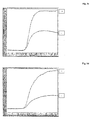
- the experiment compares FRET pairs with Fluorescein as a FRET donor being linked to the oligonucleotide either directly (“neg") or by 5A residue spacer (“5A”) according to the invention.
- Fig. 4a Fluorescein/JA286 FRET hybridization probes
- Fig. 4b Fluorescein/LCRed705 hybridization probes
- the present invention is based on the surprising observation that in all situations investigated by the inventors so far, a limited spatial separation of the FRET donor compound and the FRET acceptor compound surprisingly results in an increased fluorescent resonance energy transfer process.
- the FRET hybridization probe test format is characterized by two single-stranded hybridization probes which are used simultaneously and are complementary to adjacent sites of the same strand of the amplified target nucleic acid. Both probes are labeled with different fluorescent components. When excited with light of a suitable wavelength, a first component transfers the absorbed energy to the second component according to the principle of fluorescence resonance energy transfer such that a fluorescence emission of the second component can be measured when both hybridization probes bind to adjacent positions of the target molecule to be detected.
- the present invention is directed to a pair of FRET hybridization probes, wherein the fluorescent label of one member of said pair of hybridization probes is connected with the oligonucleotide chain by a specific spacer moiety .
- the distance of the two fluorescent compounds which generate the FRET pair is increased as compared to conventional FRET hybridization probes.
- the inventors have observed that in all cases investigated so far, this results in an increased fluorescent signaling.
- the desired effect of increasing the fluorescence resonance energy transfer and thus fluorescent signaling is achieved by a pair of FRET hybridization probes hybridizing adjacently to a target nucleic acid sequence, wherein one member of said pair of hybridization probes comprises
- the term "substantially complementary” shall mean, that the respective sequences specifically hybridize to each other under standard annealing conditions.
- the length of the nucleotide sequence entity which is substantially complementary to the sequence of the target nucleic acid may vary between 10 and 40 nucleotide residues. Preferably, but depending on the AT content of the target nucleic acid, said length is between 15 and 30 nucleotide residues. At least, a perfect Watson Crick base pairing between more than 85 % of the residues constituting the hybrid is required. In addition, a perfect complementarity over a segment of 10 constitutive nucleotide residues is required.
- hybridizing adjacently shall mean that in case the two hybridization probes are hybridized to the target nucleic acid, there exists either no or only a small gap ranging over 0-10 and preferably 1-2 complementary nucleotide residues between the two probes with respect to the target nucleic acid sequence
- the new invention provides a pair of FRET hybridization probes hybridizing adjacently to a target nucleic acid sequence, a first member of said pair of hybridization probes comprising
- spacer entity comprises all items between the fluorescent chromophore which are not participating in mesomeric effects and on the other side all items which are not part of the ribose entity of the either 5' or 3' terminal nucleotide residue.
- the spacer entity present in one member of an inventive pair of hybridization probes comprises a connecting chain of at least 15 atoms. Yet, in order to obtain the desired effect of improved FRET signaling the chain should not exceed more than a hundred atoms.
- the chain of connecting atoms is 20 - 60 and most preferably 30 - 45 atoms. This results in a distance of about 20 - 150 Angstroems, preferably 25 - 90 Angstroems and most preferably 40 - 70 Angstroems between the nucleotide sequence entity and the fluorescent entity connected by the spacer.
- the distance between the donor entity and the FRET acceptor entity, when the FRET probes are bound to the target sequence is also increased.
- usage of FRET hybridization probes nevertheless surprisingly results in an increased fluorescence signaling.
- the increase in the distance corresponds to the Angstroems valuables given above for the length of the spacer entities according to the present invention.
- the spacer entity is at least partially negatively charged. This effect is obtained if at least two atoms of said connecting chain of at least 15 atoms are carrying negatively charged substituents. Preferably, this effect is obtained by means of introducing at least two phosphate groups into the connecting chain representing the spacer.
- the spacer entity may contain at least two side chains, having free hydroxy or acidic groups such as a carboxy group.
- the spacer entity is composed of a chain of nucleotide residues, which are not capable of hybridizing to the target DNA.
- the two fluorescent moieties are still brought in a sufficiently reasonable vicinity to each other, if the numbers of nucleotide residues is between 1 and 10, preferably 2 and 7, and most preferably 3-5.
- one oligonucleotide of an inventive pair of FRET hybridization probes is designed in such a way that 3' or 5' to the nucleotide sequence entity which is substantially complementary to the sequence of the target nucleic acid, there are 1-10, preferably 2-7, and most preferably 3-5 additional nucleotide residues which act as a spacer entity.
- the 3' or 5' terminal end of the terminal residue not hybridizing to the target DNA is labeled with one FRET entity according to standard protocols known in the art.
- said additional non-hybridizing residues are A,T or C residues. Highly preferred, more than 70 % of said additional residues are A, C, or T residues. Most preferred, said additional residues are a string of homo-A, homo-T, or homo-C.
- the FRET donor entity which is connected to the sequence entity according to the invention by a spacer entity comprising a connecting chain of at least 15 atoms.
- a spacer entity comprising a connecting chain of at least 15 atoms.
- the new invention provides a pair of FRET hybridization probes hybridizing adjacently to a target nucleic acid sequence, the first member of said pair of FRET hybridization probes comprising
- At least 2 of these 15 different atoms carry negatively charged substituents.
- these at least 2 atoms are represented by phosphate groups.
- the preferred spacer characteristics with respect to its size as disclosed for the first aspect of the invention also apply for the difference between said two spacer entities.
- the invention is also directed to a pair of FRET hybridization probes hybridizing adjacently to a target nucleic acid sequence, the first member of said pair of FRET hybridization probes comprising
- both FRET hybridization probes are capable of forming non-covalent interactions such as nucleotide base pairing interactions with each other.
- both FRET hybridization probes are carrying a different number of additional nucleotide residues not hybridizing to the target nucleic acid such that a part of the additional residues of the first hybridization probe may form base pairing interactions with the nucleotide residues of the second hybridization probe thus forming a partial stem structure, when hybridized to the target nucleic acid.
- these base pairing interactions are A/T base pairing interactions.
- the stem structure formed by the nucleotides generating the base pairing interactions optionally comprises single mismatches.
- the present invention is also applicable to the primer/probe format useful for the detection of PCR amplification products.
- one primer is internally labeled with one fluorescent compound that participates in the FRET process.
- the term "pair of FRET hybridization probes” is also being defined as comprising a pair of oligonucleotides, characterized in that one of said oligonucleotides together with a third oligonucleotide is capable of acting as a primer for a polymerase amplification reaction (PCR).
- PCR polymerase amplification reaction
- a FRET signal occurs, when during or subsequently to an amplification reaction, the second oligonucleotide carrying a fluorescent component is being hybridized to the amplicon generated by means of PCR.
- the present invention also provides a set of at least 3 oligonucleotides, characterized in that a first oligonucleotide and a second oligonucleotide are capable of acting as a pair of amplification primers for a template dependent nucleic acid amplification reaction, further characterized in that said first oligonucleotide and said third oligonucleotide are each labeled with one corresponding member of a FRET pair consisting of a FRET donor entity and a FRET acceptor entity, such that either said first oligonucleotide or said third oligonucleotide comprise
- the third oligonucleotide which comprises the spacer entity according t o the invention, since the usage of a labeled primer requires an internal labeling different from a conventional 5' or 3' labeling which may be performed in automated processes known in the art.
- said third oligonucleotide is labeled with the FRET donor compound.
- At least 2 atoms of said connecting chain of at least 15 atoms carry negatively charged substituents. Most preferably, these at least 2 atoms are represented by phosphate groups. Moreover, the preferred spacer characteristics with respect to its size as disclosed for the first aspect of the invention also apply.
- the intensity of fluorescence emission from the FRET acceptor entity of a pair of FRET hybridization probes according to the invention when hybridized to its target sequence is detectably increased compared to the intensity of fluorescence emission of a FRET acceptor entity of a comparative pair of FRET hybridization probes hybridized to the same target DNA, if said comparative pair of FRET hybridization probes is identical to said pair of hybridization probes with the exception that no member of said comparative pair of hybridization probes does comprise a spacer entity connecting said nucleotide sequence entity and said fluorescent entity.
- the term "detectably increased” shall mean that a difference between the two mentioned pairs of FRET hybridization probes can be monitored in a conventional real time PCR assay, for example a LightCycler instrument (Roche Applied Sciences). Preferably, however, the detectable difference is more than 20%.
- the degree of fluorescence signal increase depends significantly on the target nucleic acid sequence and on the pair of FRET dyes used. In certain cases the fluorescence signal increase can exceed more than 200 %. Fluorescence signal increase is not only observed in conventional hybridization assays. As will be shown in the examples, it is also detectable in real time PCR quantification and in melting curve analysis.
- the invention is directed to a composition
- a composition comprising a nucleic acid sample and a pair of hybridization probes according to claims 1-6. Prior to analysis, such a composition is mixed with a sample to be analyzed thus forming a new composition additionally containing the target nucleic acid to become detected.
- the present invention is also directed to various methods and applications of using the inventive oligonucleotide pairs and compositions disclosed above.
- the pair of FRET hybridization probes according to the invention may be used for qualitative or quantitative detection of a nucleic acid sequence in a biological sample, wherein the nucleic acid present in said sample is hybridized with said pair of FRET hybridization probes according to the invention.
- such a method may be a typical hybridization assay.
- the hybridization may take place either in solution, or alternatively, either the target nucleic acid or one member of the pair of FRET hybridization probes is already by immobilized on a solid support.
- the solid support itself, for example can be a hybridization membrane, a magnetic glass bead, a micro-array for immobilizing nucleic acids or any other material known in the art.
- the nucleic acid to become detected in said sample is amplified by a nucleic acid amplification reaction, in particular by a polymerase chain reaction. More precisely, a part of said nucleic acid present in the sample is being subjected to a nucleic acid amplification reaction prior or during the hybridization procedure, for example, a polymerase chain reaction (PCR).
- PCR polymerase chain reaction
- the target nucleic acid comprises a sequence substantially complementary or homologous to the sequence of the used hybridization probes. In other words, the used hybridization probes need to hybridize specifically to the part of the target nucleic acid, which is being amplified.
- fluorescence emission of either the FRET donor entity or emission of the FRET acceptor entity is monitored in real time during the amplification reaction itself.
- a pair of FRET hybridization probes according to the invention is being used for monitoring progress of the amplification of a target nucleic during thermocycling.
- real time monitoring allows the generation of kinetic data and facilitates quantitative analysis.
- the present invention is also directed to a method of monitoring the amplification of a target nucleic acid by means of monitoring either the increase in fluorescence emission of the FRET acceptor entity or monitoring the decrease in fluorescence emission of the FRET donor entity during the amplification reaction itself.
- the new invention provides a method for the determination of the melting profile of a hybrid consisting of a target nucleic acid and a pair of FRET hybridization probes disclosed above, characterized in that the fluorescence emission is determined as a function of temperature.
- the present invention is directed to the usage of the FRET hybridization probes disclosed above for melting curve analysis, wherein monitoring of the dissociation of a complex between a target nucleic acid and a hybridization probe allows for the detection of small sequence variants such as single nucleotide polymorphisms.
- the invention is directed to a method for the determination of the melting profile of a hybrid consisting of a target nucleic acid and a pair of FRET hybridization probes according to the invention, characterized in that first, a ternary hybrid complex between the target nucleic acid and the two hybridization probes is formed. Subsequently, the temperature is increased and the thermal dissociation of the ternary complex is determined by means of monitoring fluorescence in real time.
- the new invention is also directed to a method for the determination of the melting profile of a hybrid consisting of a target nucleic acid and a pair of FRET hybridization probes as disclosed above, characterized in that the fluorescence emission is determined as a function of temperature.
- the invention also provides a kit comprising a pair of hybridization probes according to invention as disclosed above.
- a kit comprising a pair of hybridization probes according to invention as disclosed above.
- at least one other component selected from a group consisting of nucleic acid amplification primers, template dependent nucleic acid polymerase, deoxynucleoside triphosphates and a buffer for template dependent nucleic acid amplification reaction.
- the present invention is directed to a kit comprising a pair of hybridization probes according to the invention.
- a kit may comprise a pair of FRET hybridization probes according to the invention as disclosed above.
- it may also contain oligonucleotides capable of acting as a primer pair for a nucleic acid amplification reaction.
- kits according to the present invention may contain at least one additional component such as a nucleic acid polymerase, deoxynucleoside triphosphates or respective analogues and an appropriate buffer which may be used for a template dependent nucleic acid amplification reaction such as PCR.
- the kit may also comprise software tools such as compact discs carrying computer programs for quantitative analysis of relative or absolute nucleic acid quantification experiments.
- nucleotide residues carrying the spacer linked to the fluorescent moiety in principle may be either internal, 5' terminal or 3' terminal residues, as long as upon hybridization of the pair of oligonucleotides to the target nucleic acid, fluorescence resonance energy transfer can take place to an extent, wherein both FRET entities are brought into reasonable spatial vicinity such that subsequent to excitation of the FRET donor, fluorescence emission from the FRET acceptor can be monitored.
- the oligonucleotides acting as FRET hybridization probes may be labeled with the required fluorescent entity at any position by methods known in the art.
- the oligonucleotides may be labeled internally at the nucleoside base or the phosphate moiety.
- one oligonucleotide carrying the first FRET entity is labeled at the 3-hydroxy group of its 3' terminal residue and the second oligonucleotide carrying the second FRET entity is labeled at the 5' phosphate group of its 5' terminal residue such that when both oligonucleotides are hybridized to the target nucleic acid, the fluorescent labels of both FRET entities are brought in reasonable vicinity to each other due to the fact that said terminal residues are base pairing to adjacent residues in the target nucleic acid or at least to residues which are only separated by one, two or at maximum 10 further residues.
- one oligonucleotide is labeled at the 5' end and the second oligonucleotide is labeled at the 3' end, it may be chosen arbitrarily, which oligonucleotide carries the FRET donor moiety and which oligonucleotide carries the FRET acceptor moiety. Yet, as already discussed above, for the purpose of an improved fluorescent signaling, however, it has been proven to be advantageous, if the oligonucleotide carrying the spacer entity is labeled with the FRET donor moiety.
- the 5' fluorescent label may be introduced at the end of the oligonucleotide synthesis using an appropriate Phosphor Amidate carrying a fluorescent compound.
- an oligonucleotide carrying a reactive amino group may be labeled with a fluorescent compound activated as an NHS ester.
- commercially available controlled pore glass particles are used as a solid support for the start of a chemical oligonucleotide synthesis, which comprise a tri-functional spacer entity with a fluorescent compound.
- the design if hybridization probes according to the invention is applicable to any combination of fluorescent compounds, between which fluorescent energy transfer may take place.
- Illustratory examples which are not at all limiting the invention are Fluorescein/Cy5 (Amersham), Fluorescein/LC-Red-640 (Roche Applied Science), Fluorescein/LC-Red-705 (Roche Applied Science), and Fluorescein/JA286 (EP 747 447).
- the FRET acceptor entity is a quencher moiety different from a fluorescent compound and consequently, decrease in fluorescence from the FRET donor moiety is monitored.
- quencher compounds which may be used in this regard are Dabcyl (Kreuzer, K. A., et al., Clin Chem 47 (2001) 486-90.) or so called Black Hole Quenchers (WO 01/86001)
- FRET hybridization probes are typical single stranded DNA molecules. Nevertheless, any kind of modification is possible.
- the single stranded DNA may contain non-natural bases such as 7-deaza-purine, diamino-purine or C-nucleotides.
- the single stranded DNA may also have a modified sugar-phosphate backbone such as 2-O-Mehtyl, Phosphothioate, or anything similar.
- the present invention is directed to a new strategy for efficient synthesis of oligonucleotides according to the invention with regard to the embodiment characterized in that the spacer entity is represented by a chain of additional oligonucleotide residues not hybridizing to the respective target DNA.
- Such a reagent can subsequently be used as a solid phase starting material for solid phase synthesis of a multitude of desired different oligonucleotides having a common 3' end.
- Most preferably such a labeling reagent is composed of homo-T. The most preferred size is between 3 and 5.
- the present invention is also directed to a method for chemical solid phase synthesis of multiple oligonucleotides comprising
- the method has been proven to be particular advantageous, in case a Fluorescein labeled CPG is used in order to prepare a labeling reagent for respective FRET donor probes.
- 5' labeled Oligonucleotide (JA 286/ LC Red 640) synthesis was performed in the 1 ⁇ mol range.
- Commercially available standard phosphoramidites ( DMTr ibu G, DMTr bzA; DMTr bz C and DMTr T) and chemicals for standard synthesis were obtained from Glen Research.
- the 5' amino group was introduced by using commercially available 5' amino modifier (Glen Research (cat no. 10-1916-90) As solid support 3' phosphate CPG (GlenResearch 20-2900-01) was used. Removal of the oligonucleotides from the solid support and deprotection was carried out with 33 % NH 3 for 8h at 55 °C. The solution was evaporated under vacuum.
- the remainder was dissolved in 600 ⁇ l double destilled water and transferred in a microcentrifuge tube 60 ⁇ l of sodium acetate buffer (3M, ph 8.5 were added). Upon addition of 1.8 ml ice cold ethanol the mixture was stored at -15 °C for 3 h. The solution was centrifuged at 10000 x g for 15 min. The supernatant was decanted. The pellet is washed with 200 ⁇ l ice cold ethanol. After centrifugation the supernatent was decanted. The pellet was dissolved in 400 ⁇ l sodium borate buffer (0.1M pH 8.5) and was labeled according standard procedures.
- NHS-activated LC-Red-640 and JA286 were used.
- NHS-LC-Red-640 is obtainable from Roche applied Science (Cat. No: 2 015 161).
- NHS activated JA286 was synthesized according to EP 0747 447, example 1.
- NHS activated Cy5 was obtained from Amersham (Cat. No. DEITER?), whereas LCRed 705 (Roche Applied Science Cat. No. 2 157 594) was incorporated during oligonucleotide synthesis in form of a Phospohoramidate.
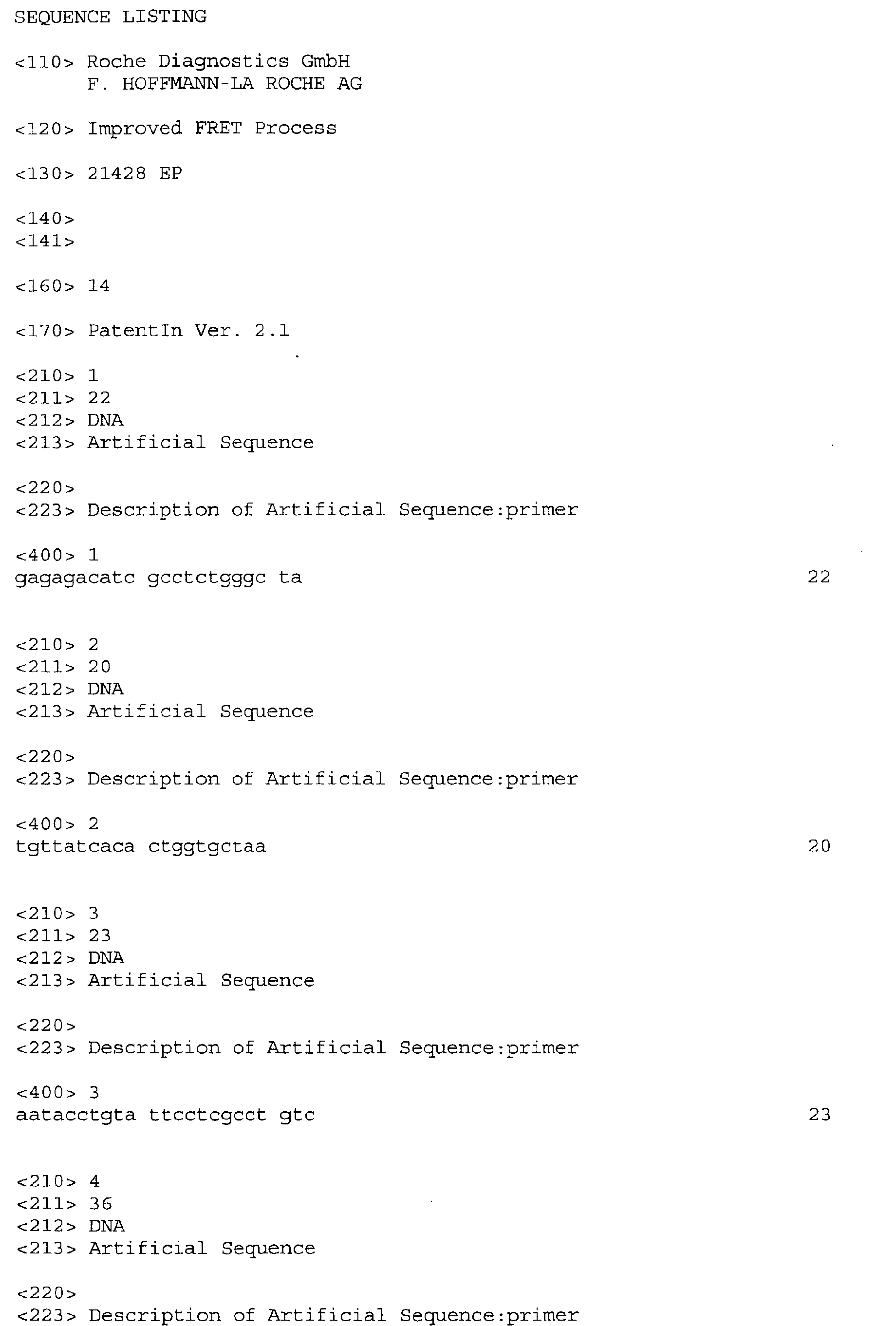
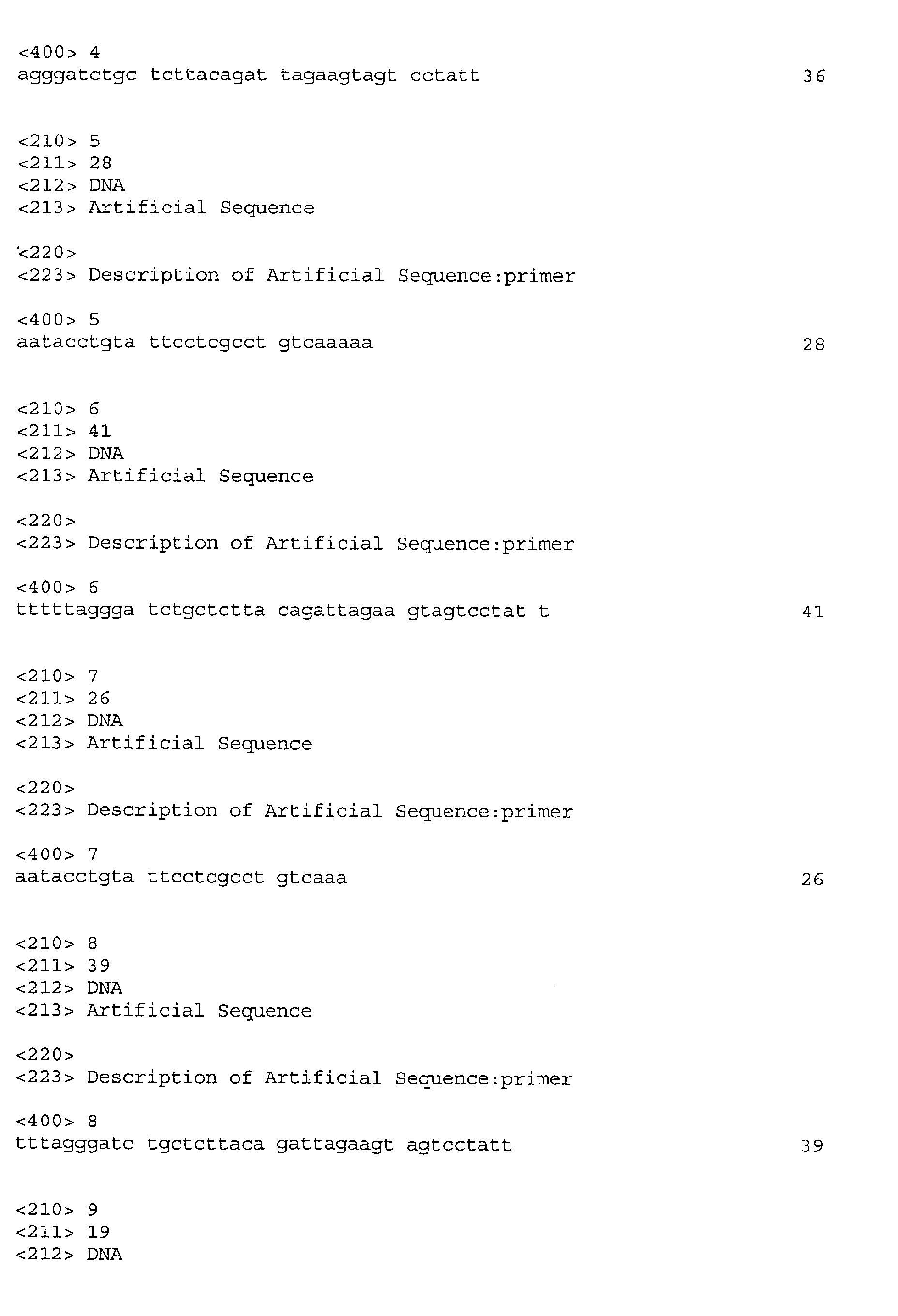
- the probes according to SEQ.ID.NO: 3, 5 and 7 were 3' terminally labeled with Fluorescein according to example 1.
- the probes according to SEQ. ID. NO: 4, 6 and 8 were 5' terminally labeled with JA286 as a FRET acceptor according to example 1.
- the FRET donor probe according to SEQ. Id. NO: 3 was used in combination with a FRET acceptor probe according to SEQ. ID. NO: 4 as a negative control.
- donor probes according to SEQ.ID.NO: 5 or SEQ. ID. NO:7 comprising 5 or 3 A nucleotide residue spacers according to the invention were combined with the FRET acceptor probe according to SEQ. ID. NO: 4.
- the FRET donor probe according to SEQ. Id. NO: 3 was used in combination with FRET acceptor probe according to SEQ. ID. NO: 6 or 8 comprising 5 or 3 T nucleotide residue spacers according to the invention.
- Amplification was performed in a LightCycler instrument (Roche Applied Science) according to the following thermocycling protocol: T[°C] t[sec] Ramp-rate[°C/sec] Acquisition Cycles Denaturation 95 30 20.0 none 1 Amplification 95 0 20.0 none 55 10 20.0 single 45 72 10 20.0 none
- Real time monitoring was performed using the 2 nd derivative threshold method over 45 cycles by measuring the fluorescence signals in a detection channel specific for JA286 emission (at 710 nm) and using arithmetic background correction for normalization of initial fluorescence background intensities.
- Fluorescence monitoring was performed by measuring the absolute signal values obtained in the JA286 channel at 710 nm and subsequent calculation of the first derivative.
- the experiment was performed as disclosed in example 2 with the modifications that G6PDH as a different target DNA sequence was detected and the utility of different FRET acceptor dyes was compared and a concentration of 4mM MgCl2 was used.
- primers and probes were as follows:
- the probes according to SEQ.ID.NO: 11 and 13 were 3' terminally labeled with Fluorescein according to example 1.
- the probes according to SEQ. ID. NO: 12 was 5' terminally labeled with JA286, LCRed640, Cy5 or LCRed705 as a FRET acceptor according to example 1.
- the FRET donor probes according to SEQ. Id. NO: 11 and 13 used in combination with all four FRET acceptor probes according to SEQ. ID. NO:12 each labeled with a different acceptor dye.
- Amplification was performed in a LightCycler instrument (Roche Applied Science) according to the following thermocycling protocol: T[°C] t[sec] Ramp-rate[°C/sec] Acquisition Cycles Denaturation 95 60 20.0 none 1 Amplification 95 0 20.0 none 55 15 20.0 single 45 72 15 20.0 none Cooling 40 30 20.0 none 1
- inventive improvement is applicable independently from the target DNA to be detected and, even more important, independently from the FRET acceptor dye which is actually used.
- the probes according to SEQ.ID.NO: 3, 5 (containing a 5 A spacer) and 14 (containing a 5 T spacer) were 3' terminally labeled with Fluorescein according to example 1.
- the probes according to SEQ. ID. NO: 4 were 5' terminally labeled with either JA286 or LCRed705 as a FRET acceptor according to example 1.
- the three different FRET donor probes each were used in combination with the two different FRET acceptor probe according to SEQ. ID. NO: 4.
Landscapes
- Chemical & Material Sciences (AREA)
- Organic Chemistry (AREA)
- Life Sciences & Earth Sciences (AREA)
- Zoology (AREA)
- Wood Science & Technology (AREA)
- Proteomics, Peptides & Aminoacids (AREA)
- Health & Medical Sciences (AREA)
- Engineering & Computer Science (AREA)
- Microbiology (AREA)
- Immunology (AREA)
- Physics & Mathematics (AREA)
- Molecular Biology (AREA)
- Biotechnology (AREA)
- Biophysics (AREA)
- Analytical Chemistry (AREA)
- Biochemistry (AREA)
- Bioinformatics & Cheminformatics (AREA)
- General Engineering & Computer Science (AREA)
- General Health & Medical Sciences (AREA)
- Genetics & Genomics (AREA)
- Measuring Or Testing Involving Enzymes Or Micro-Organisms (AREA)
Abstract
Description
- a nucleotide sequence entity which is substantially complementary to the sequence of the target nucleic acid
- a fluorescent entity, and
- a spacer entity connecting said nucleotide sequence entity and said fluorescent entity in such a way that upon hybridization of said pair of probes to the target DNA, the distance of the two fluorescent compounds which generate the FRET pair is increased as compared to a pair of FRET hybridization probes with no spacer entities between the nucleotide sequence entity and the fluorescent entity.
- a nucleotide sequence entity which is substantially complementary to the sequence of the target nucleic acid
- a fluorescent entity, said entity being either the FRET donor entity or the FRET acceptor entity
- a spacer entity connecting said nucleotide sequence entity and said fluorescent entity, said spacer entity comprising a chain of at least 15 atoms, wherein 2 atoms of said connecting chain of at least 15 atoms are carrying negatively charged substituents.
- a nucleotide sequence entity which is substantially complementary to the sequence of the target nucleic acid
- a fluorescent entity, said entity being the FRET donor entity
- a spacer entity connecting said nucleotide sequence entity and said fluorescent entity,
- a nucleotide sequence entity which is substantially complementary to the sequence of the target nucleic acid
- a fluorescent entity, said entity being the FRET acceptor entity
- a spacer entity connecting said nucleotide sequence entity and said fluorescent entity, said spacer entity being different from the spacer entity of said first member of said pair of FRET hybridization probes,
- a nucleotide sequence entity which is substantially complementary to the sequence of the target nucleic acid
- a fluorescent entity, said entity being the FRET donor entity
- a spacer entity connecting said nucleotide sequence entity and said fluorescent entity, said spacer entity comprising a number of n1=0-15 nucleotide residues which are not capable of hybridizing to the target DNA
- a nucleotide sequence entity which is substantially complementary to the sequence of the target nucleic acid
- a fluorescent entity, said entity being the FRET acceptor entity
- a spacer entity connecting said nucleotide sequence entity and said fluorescent entity, said spacer entity comprising a number of n2=0-15 nucleotide residues which are not capable not hybridizing to the target DNA,
either said first oligonucleotide or said third oligonucleotide are comprising
- a nucleotide sequence entity which is substantially complementary to the sequence of the target nucleic acid
- a fluorescent entity, said entity being either the FRET donor entity or the FRET acceptor entity
- a spacer entity connecting said nucleotide sequence entity and said fluorescent entity,
- a nucleotide sequence entity which is substantially complementary to the sequence of the target nucleic acid
- a fluorescent entity, and
- a spacer entity connecting said nucleotide sequence entity and said fluorescent entity in such a way that upon hybridization of said pair of probes to the target DNA, the distance of the two fluorescent compounds which generate the FRET pair is increased as compared to a pair of FRET hybridization probes with no spacer entities between the nucleotide sequence entity and the fluorescent entity.
- a nucleotide sequence entity which is substantially complementary to the sequence of the target nucleic acid
- a fluorescent entity, said entity being either the FRET donor entity or the FRET acceptor entity
- a spacer entity connecting said nucleotide sequence entity and said fluorescent entity, said spacer entity comprises a connecting chain of at least 15 atoms. said spacer entity comprising a connecting chain of at least 15 atoms,
- a nucleotide sequence entity which is substantially complementary to the sequence of the target nucleic acid
- a fluorescent entity, said being the FRET donor entity
- a spacer entity connecting said nucleotide sequence entity and said fluorescent entity,
- a nucleotide sequence entity which is substantially complementary to the sequence of the target nucleic acid
- a fluorescent entity, said entity being the FRET acceptor entity
- a spacer entity connecting said nucleotide sequence entity and said fluorescent entity, said spacer entity being different from the spacer entity of said first member of said pair of FRET hybridization probes,
- a nucleotide sequence entity which is substantially complementary to the sequence of the target nucleic acid
- a fluorescent entity, said entity being the FRET donor entity
- a spacer entity connecting said nucleotide sequence entity and said fluorescent entity, said spacer entity comprising a number of n1=0-15 nucleotide residues which are not capable of hybridizing to the target DNA
- a nucleotide sequence entity which is substantially complementary to the sequence of the target nucleic acid
- a fluorescent entity, said entity being the FRET acceptor entity
- a spacer entity connecting said nucleotide sequence entity and said fluorescent entity, said spacer entity comprising a number of n2=0-15 nucleotide residues which are not capable not hybridizing to the target DNA,
- a nucleotide sequence entity which is substantially complementary to the sequence of the target nucleic acid
- a fluorescent entity, said entity being either the FRET donor entity or the FRET acceptor entity
- a spacer entity connecting said nucleotide sequence entity and said fluorescent entity,
- wherein said spacer entity comprises a connecting chain of at least 15 atoms, preferably consists of a chain of 1-10 and most preferably consist of 3-5 nucleotide residues.
| 106 | copies of a plasmid containing the Factor V gene (Gene Bank Accession No: M_014335 ) |
| 3 mM | MgCl2 |
| 500 nM each | primers according to SEQ. ID. NO: 1 and 2 |
| 200 nM each | FRET hybridization probes according to SEQ.ID. NO: 3 and 4, 3 and 6, 3 and 8, 4 and 5, 4 and 7, respectively. |








| T[°C] | t[sec] | Ramp-rate[°C/sec] | Acquisition | Cycles | |
| Denaturation | 95 | 30 | 20.0 | none | 1 |
| Amplification | 95 | 0 | 20.0 | none | |
| 55 | 10 | 20.0 | single | 45 | |
| 72 | 10 | 20.0 | none |
| T[°C] | t[sec] | Ramp-rate[°C/sec] | Acquisition | Cycles | |
| Melting curve | 95 | 0 | 20.0 | | |
| 45 | 60 | 20.0 | continuous | 1 | |
| 75 | 10 | 0.1 | none | ||
| Cooling | 40 | 30 | 20.0 | none | 1 |




| T[°C] | t[sec] | Ramp-rate[°C/sec] | Acquisition | Cycles | |
| Denaturation | 95 | 60 | 20.0 | none | 1 |
| Amplification | 95 | 0 | 20.0 | none | |
| 55 | 15 | 20.0 | single | 45 | |
| 72 | 15 | 20.0 | none | ||
| Cooling | 40 | 30 | 20.0 | none | 1 |








Claims (12)
- A pair of FRET hybridization probes hybridizing adjacently to a target nucleic acid sequence, a first member of said pair of hybridization probes comprisingwherein 2 atoms of said connecting chain of at least 15 atoms are carrying negatively charged substituents.a nucleotide sequence entity which is substantially complementary to the sequence of the target nucleic acida fluorescent entity, said entity being either the FRET donor entity or the FRET acceptor entitya spacer entity connecting said nucleotide sequence entity and said fluorescent entity, said spacer entity comprising a connecting chain of at least 15 atoms,
- A pair of FRET hybridization probes according to claim 1, wherein said spacer entity is 1-10, preferably 2-7 and most preferred 3-5 A, T, or C nucleotide residues, which are not capable of hybridizing to the target DNA.
- A pair of FRET hybridization probes hybridizing adjacently to a target nucleic acid sequence, the first member of said pair of FRET hybridization probes comprisingthe second member of said pair of FRET hybridization probes comprisinga nucleotide sequence entity which is substantially complementary to the sequence of the target nucleic acida fluorescent entity, said entity being the FRET donor entitya first spacer entity connecting said nucleotide sequence entity and said first fluorescent entity,wherein the length of said first spacer entity the length of said second spacer entity differ in size at least by a connecting chain of 15 atoms.a nucleotide sequence entity which is substantially complementary to the sequence of the target nucleic acida second fluorescent entity, said entity being the FRET acceptor entitya second spacer entity connecting said nucleotide sequence entity and said fluorescent entity, said spacer entity being different from the spacer entity of said first member of said pair of FRET hybridization probes,
- A pair of FRET hybridization probes hybridizing adjacently to a target nucleic acid sequence, the first member of said pair of FRET hybridization probes comprisingthe second member of said pair of FRET hybridization probes comprisinga nucleotide sequence entity which is substantially complementary to the sequence of the target nucleic acida fluorescent entity, said entity being the FRET donor entitya spacer entity connecting said nucleotide sequence entity and said fluorescent entity, said spacer entity comprising a number of n1=0-15 nucleotide residues which are not capable of hybridizing to the target DNAwherein the value of n1 differs from the value of n2 by a natural number between 1 and 10, preferably by a natural number between 2-7 and most preferably by a natural number between 3-5.a nucleotide sequence entity which is substantially complementary to the sequence of the target nucleic acida fluorescent entity, said entity being the FRET acceptor entitya spacer entity connecting said nucleotide sequence entity and said fluorescent entity, said spacer entity comprising a number of n2=0-15 nucleotide residues which are not capable not hybridizing to the target DNA,
- A set of at least 3 oligonucleotides, characterized in that a first oligonucleotide and a second oligonucleotide are capable of acting as a pair of amplification primers for a template dependent nucleic acid amplification reaction, further characterized in that said first oligonucleotide and said third oligonucleotide are each labeled with one corresponding member of a FRET pair consisting of a FRET donor entity and a FRET acceptor entity,
either said first said oligonucleotide or said third oligonucleotide comprisingwherein said spacer entity comprises a connecting chain of at least 15 atoms, preferably consists of a chain of 1-10 and most preferably consists of a chain of 3-5 nucleotide residues.a nucleotide sequence entity which is substantially complementary to the sequence of the target nucleic acida fluorescent entity, said entity being either the FRET donor entity or the FRET acceptor entitya spacer entity connecting said nucleotide sequence entity and said fluorescent entity, - A composition comprising a nucleic acid sample and a pair of hybridization probes according to claims 1-5
- A kit comprising a pair of hybridization probes according to claims 1-5 and at least one other component selected from a group consisting of nucleic acid amplification primers, template dependent nucleic acid polymerase, deoxynucleoside triphosphates and a buffer for template dependent nucleic acid amplification reaction.
- Method for qualitative or quantitative detection of a nucleic acid sequence in a biological sample, wherein the nucleic acid present in said sample is hybridized with a pair of FRET hybridization probes according to claim 1-5.
- Method according to claim 8, wherein a part of said nucleic acid present in said sample, which comprises a target nucleic acid sequence substantially complementary to the sequences of said pair of FRET hybridization probes is amplified by a nucleic acid amplification reaction, in particular by a polymerase chain reaction.
- Method according to claim 9, wherein fluorescence emission of either the FRET donor entity or emission of the FRET acceptor entity is monitored in real time.
- Method for the determination of the melting profile of a hybrid consisting of a target nucleic acid and a pair of FRET hybridization probes according to claims 1-5, characterized in that the fluorescence emission is determined as a function of temperature.
- Method for chemical solid phase synthesis of multiple oligonucleotides comprisinga) Preparation of a dye labeled CPG- (N)n,
characterized in that N are arbitrarily chosen nucleotide residues different from G and n=1-10b) Solid phase synthesis of a first oligonucleotide having a first sequence using the CPG prepared in step a)c) Solid phase synthesis of at least a second oligonucleotide having a second sequence using the CPG prepared in step a)
Priority Applications (1)
| Application Number | Priority Date | Filing Date | Title |
|---|---|---|---|
| EP03022028A EP1405920A3 (en) | 2002-10-02 | 2003-10-01 | Improved FRET process |
Applications Claiming Priority (3)
| Application Number | Priority Date | Filing Date | Title |
|---|---|---|---|
| EP02022228 | 2002-10-02 | ||
| EP02022228 | 2002-10-02 | ||
| EP03022028A EP1405920A3 (en) | 2002-10-02 | 2003-10-01 | Improved FRET process |
Publications (2)
| Publication Number | Publication Date |
|---|---|
| EP1405920A2 true EP1405920A2 (en) | 2004-04-07 |
| EP1405920A3 EP1405920A3 (en) | 2004-04-14 |
Family
ID=31995525
Family Applications (1)
| Application Number | Title | Priority Date | Filing Date |
|---|---|---|---|
| EP03022028A Ceased EP1405920A3 (en) | 2002-10-02 | 2003-10-01 | Improved FRET process |
Country Status (1)
| Country | Link |
|---|---|
| EP (1) | EP1405920A3 (en) |
Cited By (2)
| Publication number | Priority date | Publication date | Assignee | Title |
|---|---|---|---|---|
| WO2011141738A1 (en) * | 2010-05-11 | 2011-11-17 | Enigma Diagnostics Limited | Signalling system |
| CN109593830A (en) * | 2018-12-26 | 2019-04-09 | 黄劭 | A kind of fluorescence probe reducing analysis background signal |
Family Cites Families (10)
| Publication number | Priority date | Publication date | Assignee | Title |
|---|---|---|---|---|
| CA1273552A (en) * | 1985-12-23 | 1990-09-04 | Michael J. Heller | Fluorescent stokes shift probes for polynucleotide hybridization assays |
| JP3509859B2 (en) * | 1991-11-07 | 2004-03-22 | ナノトロニクス,インコーポレイテッド | Hybridization of chromophore and fluorophore conjugated polynucleotides to create donor-donor energy transfer systems |
| US5925517A (en) * | 1993-11-12 | 1999-07-20 | The Public Health Research Institute Of The City Of New York, Inc. | Detectably labeled dual conformation oligonucleotide probes, assays and kits |
| US5728528A (en) * | 1995-09-20 | 1998-03-17 | The Regents Of The University Of California | Universal spacer/energy transfer dyes |
| US5945526A (en) * | 1996-05-03 | 1999-08-31 | Perkin-Elmer Corporation | Energy transfer dyes with enhanced fluorescence |
| US5800996A (en) * | 1996-05-03 | 1998-09-01 | The Perkin Elmer Corporation | Energy transfer dyes with enchanced fluorescence |
| WO1999011813A2 (en) * | 1997-09-04 | 1999-03-11 | Bayer Corporation | Oligonucleotide probes bearing quenchable fluorescent labels, and methods of use thereof |
| DE60045059D1 (en) * | 1999-04-20 | 2010-11-18 | Nat Inst Of Advanced Ind Scien | Methods and probes for determining the concentration of nucleic acid molecules and methods for analyzing the data obtained |
| US6727356B1 (en) * | 1999-12-08 | 2004-04-27 | Epoch Pharmaceuticals, Inc. | Fluorescent quenching detection reagents and methods |
| EP1207210B1 (en) * | 2000-11-15 | 2005-10-12 | Roche Diagnostics GmbH | Method for melting curve analysis of repetitive PCR products |
-
2003
- 2003-10-01 EP EP03022028A patent/EP1405920A3/en not_active Ceased
Cited By (2)
| Publication number | Priority date | Publication date | Assignee | Title |
|---|---|---|---|---|
| WO2011141738A1 (en) * | 2010-05-11 | 2011-11-17 | Enigma Diagnostics Limited | Signalling system |
| CN109593830A (en) * | 2018-12-26 | 2019-04-09 | 黄劭 | A kind of fluorescence probe reducing analysis background signal |
Also Published As
| Publication number | Publication date |
|---|---|
| EP1405920A3 (en) | 2004-04-14 |
Similar Documents
| Publication | Publication Date | Title |
|---|---|---|
| EP0676476B1 (en) | Isothermal strand displacement nucleic acid amplification | |
| US9181554B2 (en) | Methods for detecting a target nucleotide sequence in a sample utilising a nuclease-aptamer complex | |
| JP2001514859A (en) | Oligonucleotide probes with quenchable fluorescent labels and methods of use | |
| CN106574304B (en) | Strand Invasion-Based DNA Amplification Methods | |
| EP2054530A1 (en) | Dual function primers for amplifying dna and methods of use | |
| US20160108468A1 (en) | Isothermal Amplification of Nucleic Acid, and Library Preparation and Clone Generation in Sequencing | |
| EP1384789B1 (en) | Fluorescent hybridization probes with reduced background | |
| WO2006119326A2 (en) | Oligonucleotide probe/primer compositions and methods for polynucleotide detection | |
| EP1389638A1 (en) | Improved fluorescent resonance energy transfer probes | |
| EP1502958A1 (en) | New detection format for hot start real time polymerase chain reaction | |
| WO2022264174A1 (en) | A method to amplify and detect target nucleic acids with very high specificity and sensitivity | |
| US20070184453A1 (en) | Fret process | |
| EP3601608A1 (en) | Quantification of ngs dna by adapter sequence | |
| WO2005060618A2 (en) | Enzyme-free isothermal exponential amplification of nucleic acids and nucleic acid analog signals | |
| EP1086245B1 (en) | Multi-fluorescent hairpin energy transfer oligonucleotides | |
| EP1403382A2 (en) | Improved fluorescent resonance energy transfer probes | |
| EP2239339B1 (en) | Dye composition for fluid transfer control | |
| WO2012045670A1 (en) | Method for cell lysis in a pcr reaction buffer | |
| EP1502961B1 (en) | New detection format for hot start real time polymerase chain reaction | |
| WO2025027080A1 (en) | Use of 5'-tailed long primers to improve amplification performance when targeting short primer-binding sites | |
| HK1195786B (en) | Methods, compositions, and kits for determining hepatitis a virus |
Legal Events
| Date | Code | Title | Description |
|---|---|---|---|
| PUAI | Public reference made under article 153(3) epc to a published international application that has entered the european phase |
Free format text: ORIGINAL CODE: 0009012 |
|
| PUAL | Search report despatched |
Free format text: ORIGINAL CODE: 0009013 |
|
| AK | Designated contracting states |
Kind code of ref document: A2 Designated state(s): AT BE BG CH CY CZ DE DK EE ES FI FR GB GR HU IE IT LI LU MC NL PT RO SE SI SK TR |
|
| AX | Request for extension of the european patent |
Extension state: AL LT LV MK |
|
| AK | Designated contracting states |
Kind code of ref document: A3 Designated state(s): AT BE BG CH CY CZ DE DK EE ES FI FR GB GR HU IE IT LI LU MC NL PT RO SE SI SK TR |
|
| AX | Request for extension of the european patent |
Extension state: AL LT LV MK |
|
| 17P | Request for examination filed |
Effective date: 20041014 |
|
| AKX | Designation fees paid |
Designated state(s): AT BE BG CH CY CZ DE DK EE ES FI FR GB GR HU IE IT LI LU MC NL PT RO SE SI SK TR |
|
| 17Q | First examination report despatched |
Effective date: 20050408 |
|
| 17Q | First examination report despatched |
Effective date: 20050408 |
|
| STAA | Information on the status of an ep patent application or granted ep patent |
Free format text: STATUS: THE APPLICATION HAS BEEN REFUSED |
|
| 18R | Application refused |
Effective date: 20080923 |