EP1405841A1 - Process for preparation of 2-oxocarboxylic acid esters - Google Patents
Process for preparation of 2-oxocarboxylic acid esters Download PDFInfo
- Publication number
- EP1405841A1 EP1405841A1 EP02741189A EP02741189A EP1405841A1 EP 1405841 A1 EP1405841 A1 EP 1405841A1 EP 02741189 A EP02741189 A EP 02741189A EP 02741189 A EP02741189 A EP 02741189A EP 1405841 A1 EP1405841 A1 EP 1405841A1
- Authority
- EP
- European Patent Office
- Prior art keywords
- group
- methyl
- aqueous solution
- general formula
- reaction system
- Prior art date
- Legal status (The legal status is an assumption and is not a legal conclusion. Google has not performed a legal analysis and makes no representation as to the accuracy of the status listed.)
- Granted
Links
Classifications
-
- C—CHEMISTRY; METALLURGY
- C07—ORGANIC CHEMISTRY
- C07C—ACYCLIC OR CARBOCYCLIC COMPOUNDS
- C07C67/00—Preparation of carboxylic acid esters
- C07C67/30—Preparation of carboxylic acid esters by modifying the acid moiety of the ester, such modification not being an introduction of an ester group
- C07C67/313—Preparation of carboxylic acid esters by modifying the acid moiety of the ester, such modification not being an introduction of an ester group by introduction of doubly bound oxygen containing functional groups, e.g. carboxyl groups
Definitions
- the present invention relates to a process for the preparation of 2-oxocarboxylic acid esters suitable for use as an intermediate in the synthesis of pharmaceutical products, such as (S)- ⁇ -ethyl-2-oxo-1-pyrrolidine acetamide, an antiepileptic agent (See, Japanese Patent Laid-Open Publication No. Sho 60-252461).
- Hei 8-34762 (4) oxidation of a 2-hydroxycarboxylic acid ester with chlorine under light irradiation (See, Japanese Patent Laid-Open Publication No. Hei 11-228502); (5) oxidation of a 2-hydroxycarboxylic acid ester with a hypochlorite in a hydrophobic solvent in the presence of a hindered secondary amine under acidic condition of pH 6 or lower (See, Japanese Patent Laid-Open Publication No.
- the process (1) involves the use of osmium oxide which is harmful to human being
- the process (2) involves the use of an alkyl aluminum, a material difficult to handle on an industrial scale
- the process (3) which is a gas phase reaction
- the process (4) which involves light irradiation, each requires special facilities
- the process (5) the hindered secondary amine must be activated prior to use by treatment with a peracid, which is difficult to handle
- the process (6) involves the use of a halogenated hydrocarbon solvent, which is harmful to environment
- the process (7) the desired 2-oxocarboxylic acid ester can be produced only at low yield.
- none of these approaches is an industrially advantageous process for the preparation of 2-oxocarboxylic acid esters.
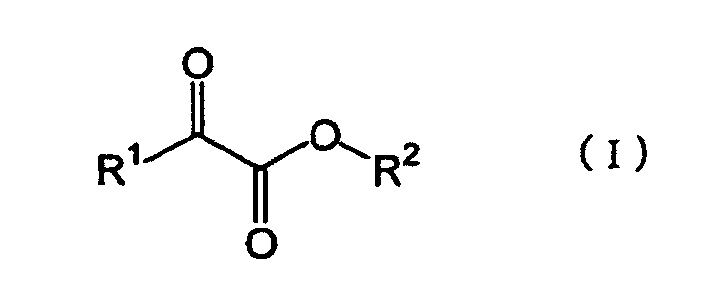
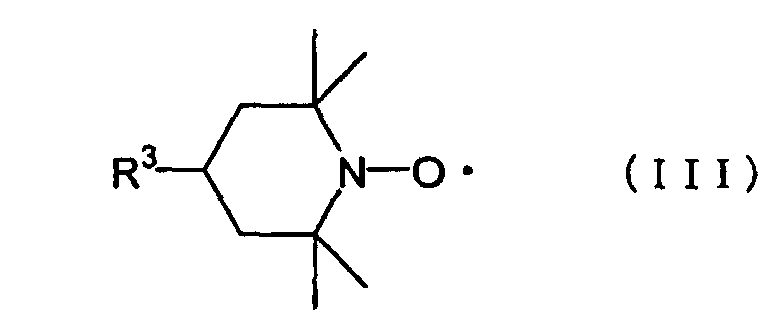
- the above-described objective is achieved by providing a process for the preparation of 2-oxocarboxylic acid esters represented by the following general formula (I): wherein R 1 and R 2 are each independently an alkyl group, an alkenyl group, an alkynyl group, an aryl group or an aralkyl group, which each may be substituted with substituents, the compound is referred to as 2-oxocarboxylic acid ester (I), comprising oxidizing a 2-hydroxycarboxylic acid ester represented by the following general formula (II): wherein R 1 and R 2 are as defined above, the compound is referred to as 2-hydroxycarboxylic acid ester (II), in the presence of a nitroxyl radical represented by the following general formula (III): wherein R 3 is a hydrogen atom, an alkoxyl group, an aralkyloxy group, an acyloxy group or a hydroxyl group, the compound is referred to nitroxyl radical
- the alkyl group that R 1 and R 2 independently represent in the general formulae above is preferably an alkyl group having 1 to 8 carbon atoms, such as methyl, ethyl, n-propyl, isopropyl, n-butyl, isobutyl, sec -butyl, tert -butyl, n-pentyl, isopentyl, neopentyl, 3-pentyl, n-hexyl, 3-methyl-1-pentyl, n-heptyl, 4-heptyl, n-octyl, cyclopropyl, cyclobutyl, cyclopentyl and cyclohexyl.
- 1 to 8 carbon atoms such as methyl, ethyl, n-propyl, isopropyl, n-butyl, isobutyl, sec -butyl, tert -butyl, n-penty
- the alkenyl group that R 1 and R 2 independently represent in the general formulae above is preferably an alkenyl group having 2 to 8 carbon atoms, such as vinyl, allyl, propenyl, butenyl and octenyl.
- the alkynyl group that R 1 and R 2 independently represent in the general formulae above is preferably an alkynyl group having 2 to 8 carbon atoms, such as ethynyl, propynyl, butynyl and octynyl.
- Each of the alkyl, alkenyl and alkynyl groups may be substituted with substituents.
- substituents include halogen atom such as fluorine atom, chlorine atom, bromine atom and iodine atom; alkoxyl group having 1 to 4 carbon atoms such as methoxy, ethoxy, propoxy and butoxy; acyloxy group having 2 to 11 carbon atoms such as acetoxy and benzoyloxy; and nitro group.
- the aryl group that R 1 and R 2 independently represent in the general formulae above is preferably an aryl group having 6 to 10 carbon atoms, such as phenyl and naphthyl.
- the aralkyl group that R 1 and R 2 independently represent in the general formulae above is preferably an aralkyl group consisting of an alkyl group having 1 to 6 carbon atoms and an aryl group having 6 to 10 carbon atoms, such as benzyl, 1-phenylethyl, 2-phenylethyl, 1-phenylpropyl, 3-phenylpropyl, 4-phenylbutyl, 2-phenylhexyl, naphthylmethyl and 3-naphthylbutyl.
- Each of the aryl and aralkyl groups may be substituted with substituents.
- substituents include halogen atom such as fluorine atom, chlorine atom, bromine atom and iodine atom; alkyl group having 1 to 4 carbon atoms such as methyl, ethyl, propyl and butyl; aryl group having 6 to 10 carbon atoms such as phenyl, 4-methylphenyl and naphthyl; alkoxyl group having 1 to 4 carbon atoms such as methoxy, ethoxy, propoxy and butoxy; acyloxy group having 2 to 11 carbon atoms such as acetoxy and benzoyloxy; and nitro group.
- the alkoxyl group that R 3 represents in the general formula above is preferably an alkoxyl group having 1 to 8 carbon atoms, such as methoxy, ethoxy, propoxy, butoxy, hexyloxy and octyloxy.
- the aralkyloxy group that R 3 represents in the general formula above is preferably an aralkyloxy group consisting of an alkyl group having 1 to 6 carbon atoms and an aryl group having 6 to 10 carbon atoms, such as phenylethyloxy and benzyloxy.
- the acyloxy group that R 3 represents in the general formula above is preferably an acyloxy group having 2 to 7 carbon atoms, such as acetoxy, propionyloxy and benzoyloxy.
- Examples of the 2-hydroxycarboxylic acid ester (II) for use in the present invention include methyl mandelate, ethyl mandelate, ethyl 2-hydroxy-2-(4-methoxycarbonylphenyl)acetate, methyl 2-hydroxypropionate, ethyl 2-hydroxypropionate, methyl 2-hydroxy-3-phenylpropionate, methyl 2-hydroxybutanoate, isopropyl 2-hydroxybutanoate, n-butyl 2-hydroxybutanoate, methyl 2-hydroxy-3-methylbutanoate, ethyl 2-hydroxy-3-phenylbutanoate, ethyl 2-hydroxy-4-(4-chlorophenyl)butanoate, methyl 4-acetoxy-2-hydroxybutanoate, methyl 2-hydroxypentanoate, ethyl 2-hydroxypentanoate, methyl 2-hydroxy-3-phenylpentanoate, isopropyl 2-hydroxy-5-(2-methoxyphenyl)pent
- nitroxyl radical (III) examples include 2,2,6,6-tetramethylpiperidine-1-oxy, 4-methoxy-2,2,6,6-tetramethylpiperidine-1-oxy, 4-benzyloxy-2,2,6,6-tetramethylpiperidine-1-oxy, 4-acetoxy-2,2,6,6-tetramethylpiperidine-1-oxy, 4-benzoyloxy-2,2,6,6-tetramethylpiperidine-1-oxy and 4-hydroxy-2,2,6,6-tetramethylpiperidine-1-oxy.
- 4-acetoxy-2,2,6,6-tetramethylpiperidine-1-oxy is particularly preferred.
- the nitroxyl radical (III) is preferably used in an amount of 0.001 to 1.0 molar equivalents of the 2-hydroxycarboxylic acid ester (II), and more preferably in an amount of 0.001 to 0.2 molar equivalents of the 2-hydroxycarboxylic acid ester (II) from economical point of view.
- hypochlorite examples include sodium hypochlorite, potassium hypochlorite and calcium hypochlorite (high test hypochlorite).
- Hypochlorites are generally used in the form of aqueous solution. Of these hypochlorites, sodium hypochlorite is particularly preferred since it is obtained at a low cost in the form of an aqueous solution containing 12 to 13% by mass of the compound and is easy to handle.
- sodium hypochlorite is particularly preferred since it is obtained at a low cost in the form of an aqueous solution containing 12 to 13% by mass of the compound and is easy to handle.
- commercially available products may be used either directly or after dilution.
- hypochlorite available in the form of solid, such as high test hypochlorite, it may be used directly or it may be dissolved in water to form an aqueous solution containing 5 to 20% by mass of the compound.
- the hypochlorite is preferably used in an amount of 1 to 10 molar equivalents, more preferably 1 to 4 molar equivalents, of the 2-hydroxycarboxylic acid ester (II).
- Examples of the metal bromide for use in the present invention include alkali metal bromides, such as lithium bromide, sodium bromide and potassium bromide; and alkaline earth metal bromides, such as magnesium bromide and barium bromide.
- the metal bromide is preferably used in an amount of 0.001 to 10.0 molar equivalents of the 2-hydroxycarboxylic acid ester (II), and more preferably in an amount of 0.002 to 0.3 molar equivalents of the 2-hydroxycarboxylic acid ester (II) in the viewpoint of economy and selectivity of the reaction.
- water may be used in any amount in the reaction of the present invention, it is preferably used in an amount of 0.1 to 500 times (by mass), preferably 0.5 to 100 times (by mass) the amount of the metal bromide.
- the reaction is carried out in the presence of a solvent.
- solvent may be any solvent that does not affect the reaction, including esters such as methyl acetate, ethyl acetate, propyl acetate, butyl acetate, methyl propionate and ethyl propionate; aliphatic hydrocarbons such as pentane, hexane, heptane and cyclohexane; and aromatic hydrocarbons such as benzene, toluene and xylene. These solvents may be used either independently or as a mixture of two or more.
- the solvent is preferably used in an amount of 0.1 to 100 times (by mass) the amount of the 2-hydroxycarboxylic acid ester (II), and more preferably in an amount of 1 to 20 times (by mass) the amount of the 2-hydroxycarboxylic acid ester (II) in terms of economy and readiness in post-treatment.
- reaction of the present invention is typically carried out in a pH range of 5 to 7, it is preferably carried out in a pH range of 5 to 6. If the pH of the reaction system is below 5, the nitroxyl radical (III) catalyst will lose activity and the reaction will not proceed. While if the pH of the reaction system is above 7, the 2-oxocarboxylic acid ester (I), the reaction product, will be hydrolyzed, resulting in a reduced yield and purity of the product.
- the pH of the reaction system may be adjusted by any proper technique, it may be adjusted for example by gradually adding an acid to the reaction system while the pH is monitored.
- the acid in such a case must be of a type that does not affect the reaction.
- the pH may also be adjusted by including a buffer in the reaction system prior to the reaction.
- the acid suitable for use in the former technique include mineral acids such as hydrochloric acid, sulfuric acid, nitric acid, boric acid and phosphoric acid; organic acids such as acetic acid, propionic acid and p-toluenesulfonic acid; phosphates such as potassium dihydrogen phosphate and sodium dihydrogen phosphate; and potassium hydrogen phthalate. These acids may be used directly, or it may be dissolved in or diluted with water. Of these acids, mineral acids or phosphates are particularly preferred since the adjustment of the pH is particularly easy with the use of these acids.
- the reaction is carried out at a temperature of 0 to 80°C, and more preferably at a temperature of 0 to 50°C.
- the reaction is typically carried out over a time period of 30 minutes to 50 hours while the reaction time may vary depending on the types of the 2-hydroxycarboxylic acid ester (II), the hypochlorite, the nitroxyl radical (III), the metal bromide and the solvent, as well as their amounts and the reaction temperature.
- the reaction process may be any proper process.
- the 2-hydroxycarboxylic acid ester (II), the nitroxyl radical (III), the metal bromide, water, and when necessary, the solvent are mixed with each other and while the reaction system is maintained at a predetermined temperature and within a pH range of 5 to 7, the hypochlorite is added to the reaction mixture in small portions.
- the 2-oxocarboxylic acid ester (I), the desired product of the present invention can be isolated/purified from the resulting reaction mixture by the use of techniques commonly used in the isolation/purification of organic compounds.
- a reductant such as sodium thiosulfate
- aqueous and the organic layers are separated.
- the aqueous layer is then extracted with an organic solvent such as ethyl acetate.
- the extract is added to the organic layer, and the combined organic layer is concentrated.
- the nitroxyl radical (III) and other high-boiling-point components are then removed by thin-film distillation and the resulting distillate is purified by distillation, column chromatography or other purification means.
- the 2-hydroxycarboxylic acid ester (II), such as methyl 2-hydroxybutanoate, to use as the starting material of the process of the present invention can be obtained, for example, in the following manner: a cyanohydrin is amidated with water and sulfuric acid, followed by the addition of an alcohol to esterify the product. While an aqueous alcohol is continuously fed to the reaction mixture, the hydroxycarboxylic acid ester, as it is generated, is collected by distillation (See, Japanese Patent Laid-Open Publication No. Hei 6-247896).
- the aqueous layer was extracted with 21.7g of ethyl acetate.
- the resulting organic layer was added to the organic layer obtained previously and the combined organic layer was concentrated.
- the resulting residue was purified by thin-film distillation and the distillate was further distilled to obtain 8.71g of methyl 2-oxobutanoate (97.6% purity and 86.4% isolated yield).
- aqueous solution of phosphoric acid was also added dropwise to the mixture to maintain the pH of the reaction system within a range of 4 to 4.5.
- the reaction mixture was stirred for additional 1 hour.
- the organic and the aqueous layers were separated and were subjected to gas chromatography analysis using internal standard technique. The results of the analysis indicated that 40.6% of methyl 2-hydroxybutanoate was converted to produce 3.82g of methyl 2-oxobutanoate (38.9% yield).
- aqueous solution of sodium hypochlorite 20% (by mass) aqueous solution of phosphoric acid was also added dropwise to the mixture to adjust the pH of the reaction system to a range of 7 to 8.
- the reaction mixture was stirred for additional 1 hour.
- the organic and the aqueous layers were separated and were subjected to gas chromatography analysis using internal standard technique. The results of the analysis indicated that 92.9% of methyl 2-hydroxybutanoate was converted to produce 7.30g of methyl 2-oxobutanoate (74.3% yield).
- the present invention allows efficient, simple and industrially advantageous preparation of 2-oxocarboxylic acid esters (I).
Landscapes
- Chemical & Material Sciences (AREA)
- Organic Chemistry (AREA)
- Organic Low-Molecular-Weight Compounds And Preparation Thereof (AREA)
- Low-Molecular Organic Synthesis Reactions Using Catalysts (AREA)
Abstract

Description

a hypochlorite, a metal bromide and water with the pH of the reaction system being kept within the range of 5 to 7.
Claims (2)
- A process for the preparation of 2-oxocarboxylic acid esters represented by the following general formula (I):wherein R1 and R2 are each independently an alkyl group, an alkenyl group, an alkynyl group, an aryl group or an aralkyl group, which each may be substituted with substituents, comprising oxidizing a 2-hydroxycarboxylic acid ester represented by the following general formula (II):
 wherein R1 and R2 are as defined above,
in the presence of a nitroxyl radical represented by the following general formula (III):wherein R3 is a hydrogen atom, an alkoxyl group, an aralkyloxy group, an acyloxy group or a hydroxyl group,
a hypochlorite, a metal bromide and water with the pH of the reaction system being kept within the range of 5 to 7. - The process according to claim 1, wherein the pH of the reaction system is kept within the range of 5 to 6.
Applications Claiming Priority (3)
| Application Number | Priority Date | Filing Date | Title |
|---|---|---|---|
| JP2001185891 | 2001-06-20 | ||
| JP2001185891 | 2001-06-20 | ||
| PCT/JP2002/006098 WO2003000638A1 (en) | 2001-06-20 | 2002-06-19 | Process for preparation of 2-oxocarboxylic acid esters |
Publications (3)
| Publication Number | Publication Date |
|---|---|
| EP1405841A1 true EP1405841A1 (en) | 2004-04-07 |
| EP1405841A4 EP1405841A4 (en) | 2004-12-22 |
| EP1405841B1 EP1405841B1 (en) | 2006-08-16 |
Family
ID=19025400
Family Applications (1)
| Application Number | Title | Priority Date | Filing Date |
|---|---|---|---|
| EP02741189A Expired - Lifetime EP1405841B1 (en) | 2001-06-20 | 2002-06-19 | Process for preparation of 2-oxocarboxylic acid esters |
Country Status (4)
| Country | Link |
|---|---|
| US (1) | US6897335B2 (en) |
| EP (1) | EP1405841B1 (en) |
| DE (1) | DE60213998T2 (en) |
| WO (1) | WO2003000638A1 (en) |
Families Citing this family (7)
| Publication number | Priority date | Publication date | Assignee | Title |
|---|---|---|---|---|
| TWI252847B (en) * | 2001-07-10 | 2006-04-11 | Synta Pharmaceuticals Corp | Synthesis of taxol enhancers |
| DE10206619B4 (en) * | 2002-02-15 | 2004-03-25 | Consortium für elektrochemische Industrie GmbH | Process for the preparation of alkyne carboxylic acids and alkyne carboxylic acid alkali alcohol esters by oxidation of alkyne alcohols |
| US7351850B2 (en) | 2004-05-20 | 2008-04-01 | Kuraray Co., Ltd. | Process for producing alphaoxocarbonyl compound |
| BRPI0610219A2 (en) * | 2005-04-15 | 2010-06-08 | Synta Pharmaceuticals Corp | methods of treating a human being with cancer and pharmaceutical composition |
| US8609720B2 (en) | 2006-08-21 | 2013-12-17 | Synta Pharmaceuticals Corp. | Compounds for treating proliferative disorders |
| US7939564B2 (en) * | 2006-08-31 | 2011-05-10 | Synta Pharmaceuticals Corp. | Combination with bis(thiohydrazide amides) for treating cancer |
| WO2016132805A1 (en) * | 2015-02-16 | 2016-08-25 | セントラル硝子株式会社 | PRACTICAL PROCESSES FOR PRODUCING FLUORINATED α-KETOCARBOXYLIC ESTERS AND ANALOGUES THEREOF |
Family Cites Families (3)
| Publication number | Priority date | Publication date | Assignee | Title |
|---|---|---|---|---|
| JPH0710806B2 (en) * | 1989-07-28 | 1995-02-08 | 株式会社クラレ | Method for producing α-ketocarboxylic acid ester |
| JPH11180932A (en) * | 1997-12-19 | 1999-07-06 | Toray Ind Inc | Method for producing α-ketocarboxylic acid ester |
| JP4207173B2 (en) * | 1998-03-05 | 2009-01-14 | 東レ・ファインケミカル株式会社 | Method for producing methyl pyruvate or ethyl pyruvate |
-
2002
- 2002-06-19 US US10/480,802 patent/US6897335B2/en not_active Expired - Fee Related
- 2002-06-19 WO PCT/JP2002/006098 patent/WO2003000638A1/en not_active Ceased
- 2002-06-19 EP EP02741189A patent/EP1405841B1/en not_active Expired - Lifetime
- 2002-06-19 DE DE60213998T patent/DE60213998T2/en not_active Expired - Fee Related
Also Published As
| Publication number | Publication date |
|---|---|
| EP1405841A4 (en) | 2004-12-22 |
| WO2003000638A1 (en) | 2003-01-03 |
| DE60213998D1 (en) | 2006-09-28 |
| EP1405841B1 (en) | 2006-08-16 |
| DE60213998T2 (en) | 2007-02-01 |
| US6897335B2 (en) | 2005-05-24 |
| US20040162441A1 (en) | 2004-08-19 |
Similar Documents
| Publication | Publication Date | Title |
|---|---|---|
| EP1405841B1 (en) | Process for preparation of 2-oxocarboxylic acid esters | |
| EP0178929B1 (en) | Process for producing aromatic diols and their ester and ether derivatives | |
| US4220800A (en) | Oxidative esterification process | |
| EP0412378B1 (en) | Process for producing alpha-keto-carboxylic acid ester | |
| JP2007533653A (en) | Method for preparing 2,3,5-trimethylhydroquinone diacylate | |
| US4482492A (en) | Preparation of vitamins K3 and K4 and derivatives | |
| KR20020088426A (en) | A process for preparing trimethylhydroquinone diacetate and trimethylhydroquinone | |
| JP2003073332A (en) | Method for producing 2-oxocarboxylic acid esters | |
| US3953526A (en) | Synthesis of hydroquinone | |
| US4609756A (en) | Process for the preparation of optionally substituted cinnamic acid in the presence of a catalyst | |
| EP0190815B1 (en) | Process for producing aromatic diols | |
| EP0204286B1 (en) | Process for preparing trans-beta-benzoylacrylic acid ester | |
| US3639445A (en) | Process for making substituted crotonates | |
| EP0265220B1 (en) | Method for producing 2,6-diacetoxynaphthalene | |
| US6417409B1 (en) | Process for the production of 2,3,5-trimethylhydroquinone diesters | |
| US4156097A (en) | Preparation of 2-cyclopentenyl ethers | |
| US4304942A (en) | Producing substituted 2-cyclopentenones | |
| EP0318591B1 (en) | Process for preparing dihydroxynaphthalene | |
| US5162572A (en) | Process for preparation of nitroacetate | |
| US5670661A (en) | Process for producing lactones and lactones obtained with this process | |
| JPH1067699A (en) | Method for producing 4-substituted-2-butenals | |
| EP0803493B1 (en) | Process for producing 4-substituted-2-butenals | |
| EP0194849A2 (en) | Improved process for producing N-acyl-acyloxy aromatic amines | |
| US4069257A (en) | Process for preparing 2-acetyl-3-methyl-1,3-butadiene | |
| EP0568621A1 (en) | Process for the production of cyanoacetic acid |
Legal Events
| Date | Code | Title | Description |
|---|---|---|---|
| PUAI | Public reference made under article 153(3) epc to a published international application that has entered the european phase |
Free format text: ORIGINAL CODE: 0009012 |
|
| 17P | Request for examination filed |
Effective date: 20031230 |
|
| AK | Designated contracting states |
Kind code of ref document: A1 Designated state(s): AT BE CH CY DE DK ES FI FR GB GR IE IT LI LU MC NL PT SE TR |
|
| AX | Request for extension of the european patent |
Extension state: AL LT LV MK RO SI |
|
| A4 | Supplementary search report drawn up and despatched |
Effective date: 20041108 |
|
| GRAP | Despatch of communication of intention to grant a patent |
Free format text: ORIGINAL CODE: EPIDOSNIGR1 |
|
| RBV | Designated contracting states (corrected) |
Designated state(s): BE CH DE FR GB LI NL |
|
| GRAS | Grant fee paid |
Free format text: ORIGINAL CODE: EPIDOSNIGR3 |
|
| GRAA | (expected) grant |
Free format text: ORIGINAL CODE: 0009210 |
|
| AK | Designated contracting states |
Kind code of ref document: B1 Designated state(s): BE CH DE FR GB LI NL |
|
| REG | Reference to a national code |
Ref country code: GB Ref legal event code: FG4D |
|
| REG | Reference to a national code |
Ref country code: CH Ref legal event code: EP |
|
| REF | Corresponds to: |
Ref document number: 60213998 Country of ref document: DE Date of ref document: 20060928 Kind code of ref document: P |
|
| REG | Reference to a national code |
Ref country code: CH Ref legal event code: NV Representative=s name: PATENTANWAELTE SCHAAD, BALASS, MENZL & PARTNER AG |
|
| EN | Fr: translation not filed | ||
| PLBE | No opposition filed within time limit |
Free format text: ORIGINAL CODE: 0009261 |
|
| STAA | Information on the status of an ep patent application or granted ep patent |
Free format text: STATUS: NO OPPOSITION FILED WITHIN TIME LIMIT |
|
| 26N | No opposition filed |
Effective date: 20070518 |
|
| PG25 | Lapsed in a contracting state [announced via postgrant information from national office to epo] |
Ref country code: FR Free format text: LAPSE BECAUSE OF FAILURE TO SUBMIT A TRANSLATION OF THE DESCRIPTION OR TO PAY THE FEE WITHIN THE PRESCRIBED TIME-LIMIT Effective date: 20070511 |
|
| PG25 | Lapsed in a contracting state [announced via postgrant information from national office to epo] |
Ref country code: FR Free format text: LAPSE BECAUSE OF FAILURE TO SUBMIT A TRANSLATION OF THE DESCRIPTION OR TO PAY THE FEE WITHIN THE PRESCRIBED TIME-LIMIT Effective date: 20060816 |
|
| PGFP | Annual fee paid to national office [announced via postgrant information from national office to epo] |
Ref country code: NL Payment date: 20090603 Year of fee payment: 8 |
|
| PGFP | Annual fee paid to national office [announced via postgrant information from national office to epo] |
Ref country code: BE Payment date: 20090619 Year of fee payment: 8 |
|
| PGFP | Annual fee paid to national office [announced via postgrant information from national office to epo] |
Ref country code: CH Payment date: 20090615 Year of fee payment: 8 |
|
| PGFP | Annual fee paid to national office [announced via postgrant information from national office to epo] |
Ref country code: DE Payment date: 20090615 Year of fee payment: 8 Ref country code: GB Payment date: 20090617 Year of fee payment: 8 |
|
| BERE | Be: lapsed |
Owner name: *KURARAY CO. LTD Effective date: 20100630 |
|
| REG | Reference to a national code |
Ref country code: NL Ref legal event code: V1 Effective date: 20110101 |
|
| REG | Reference to a national code |
Ref country code: CH Ref legal event code: PL |
|
| GBPC | Gb: european patent ceased through non-payment of renewal fee |
Effective date: 20100619 |
|
| PG25 | Lapsed in a contracting state [announced via postgrant information from national office to epo] |
Ref country code: LI Free format text: LAPSE BECAUSE OF NON-PAYMENT OF DUE FEES Effective date: 20100630 Ref country code: DE Free format text: LAPSE BECAUSE OF NON-PAYMENT OF DUE FEES Effective date: 20110101 Ref country code: CH Free format text: LAPSE BECAUSE OF NON-PAYMENT OF DUE FEES Effective date: 20100630 |
|
| PG25 | Lapsed in a contracting state [announced via postgrant information from national office to epo] |
Ref country code: NL Free format text: LAPSE BECAUSE OF NON-PAYMENT OF DUE FEES Effective date: 20110101 |
|
| PG25 | Lapsed in a contracting state [announced via postgrant information from national office to epo] |
Ref country code: BE Free format text: LAPSE BECAUSE OF NON-PAYMENT OF DUE FEES Effective date: 20100630 |
|
| PG25 | Lapsed in a contracting state [announced via postgrant information from national office to epo] |
Ref country code: GB Free format text: LAPSE BECAUSE OF NON-PAYMENT OF DUE FEES Effective date: 20100619 |