EP1405837A1 - A method for processing silicon-carbide materials using organic film formers - Google Patents
A method for processing silicon-carbide materials using organic film formers Download PDFInfo
- Publication number
- EP1405837A1 EP1405837A1 EP20030256204 EP03256204A EP1405837A1 EP 1405837 A1 EP1405837 A1 EP 1405837A1 EP 20030256204 EP20030256204 EP 20030256204 EP 03256204 A EP03256204 A EP 03256204A EP 1405837 A1 EP1405837 A1 EP 1405837A1
- Authority
- EP
- European Patent Office
- Prior art keywords
- preform
- ceramic
- pores
- organic fluid
- organic
- Prior art date
- Legal status (The legal status is an assumption and is not a legal conclusion. Google has not performed a legal analysis and makes no representation as to the accuracy of the status listed.)
- Withdrawn
Links
Images
Classifications
-
- C—CHEMISTRY; METALLURGY
- C04—CEMENTS; CONCRETE; ARTIFICIAL STONE; CERAMICS; REFRACTORIES
- C04B—LIME, MAGNESIA; SLAG; CEMENTS; COMPOSITIONS THEREOF, e.g. MORTARS, CONCRETE OR LIKE BUILDING MATERIALS; ARTIFICIAL STONE; CERAMICS; REFRACTORIES; TREATMENT OF NATURAL STONE
- C04B35/00—Shaped ceramic products characterised by their composition; Ceramics compositions; Processing powders of inorganic compounds preparatory to the manufacturing of ceramic products
- C04B35/515—Shaped ceramic products characterised by their composition; Ceramics compositions; Processing powders of inorganic compounds preparatory to the manufacturing of ceramic products based on non-oxide ceramics
- C04B35/58—Shaped ceramic products characterised by their composition; Ceramics compositions; Processing powders of inorganic compounds preparatory to the manufacturing of ceramic products based on non-oxide ceramics based on borides, nitrides, i.e. nitrides, oxynitrides, carbonitrides or oxycarbonitrides or silicides
- C04B35/584—Shaped ceramic products characterised by their composition; Ceramics compositions; Processing powders of inorganic compounds preparatory to the manufacturing of ceramic products based on non-oxide ceramics based on borides, nitrides, i.e. nitrides, oxynitrides, carbonitrides or oxycarbonitrides or silicides based on silicon nitride
- C04B35/591—Shaped ceramic products characterised by their composition; Ceramics compositions; Processing powders of inorganic compounds preparatory to the manufacturing of ceramic products based on non-oxide ceramics based on borides, nitrides, i.e. nitrides, oxynitrides, carbonitrides or oxycarbonitrides or silicides based on silicon nitride obtained by reaction sintering
-
- C—CHEMISTRY; METALLURGY
- C04—CEMENTS; CONCRETE; ARTIFICIAL STONE; CERAMICS; REFRACTORIES
- C04B—LIME, MAGNESIA; SLAG; CEMENTS; COMPOSITIONS THEREOF, e.g. MORTARS, CONCRETE OR LIKE BUILDING MATERIALS; ARTIFICIAL STONE; CERAMICS; REFRACTORIES; TREATMENT OF NATURAL STONE
- C04B35/00—Shaped ceramic products characterised by their composition; Ceramics compositions; Processing powders of inorganic compounds preparatory to the manufacturing of ceramic products
- C04B35/515—Shaped ceramic products characterised by their composition; Ceramics compositions; Processing powders of inorganic compounds preparatory to the manufacturing of ceramic products based on non-oxide ceramics
- C04B35/56—Shaped ceramic products characterised by their composition; Ceramics compositions; Processing powders of inorganic compounds preparatory to the manufacturing of ceramic products based on non-oxide ceramics based on carbides or oxycarbides
- C04B35/565—Shaped ceramic products characterised by their composition; Ceramics compositions; Processing powders of inorganic compounds preparatory to the manufacturing of ceramic products based on non-oxide ceramics based on carbides or oxycarbides based on silicon carbide
- C04B35/573—Shaped ceramic products characterised by their composition; Ceramics compositions; Processing powders of inorganic compounds preparatory to the manufacturing of ceramic products based on non-oxide ceramics based on carbides or oxycarbides based on silicon carbide obtained by reaction sintering or recrystallisation
-
- C—CHEMISTRY; METALLURGY
- C04—CEMENTS; CONCRETE; ARTIFICIAL STONE; CERAMICS; REFRACTORIES
- C04B—LIME, MAGNESIA; SLAG; CEMENTS; COMPOSITIONS THEREOF, e.g. MORTARS, CONCRETE OR LIKE BUILDING MATERIALS; ARTIFICIAL STONE; CERAMICS; REFRACTORIES; TREATMENT OF NATURAL STONE
- C04B35/00—Shaped ceramic products characterised by their composition; Ceramics compositions; Processing powders of inorganic compounds preparatory to the manufacturing of ceramic products
- C04B35/71—Ceramic products containing macroscopic reinforcing agents
- C04B35/78—Ceramic products containing macroscopic reinforcing agents containing non-metallic materials
- C04B35/80—Fibres, filaments, whiskers, platelets, or the like
-
- C—CHEMISTRY; METALLURGY
- C04—CEMENTS; CONCRETE; ARTIFICIAL STONE; CERAMICS; REFRACTORIES
- C04B—LIME, MAGNESIA; SLAG; CEMENTS; COMPOSITIONS THEREOF, e.g. MORTARS, CONCRETE OR LIKE BUILDING MATERIALS; ARTIFICIAL STONE; CERAMICS; REFRACTORIES; TREATMENT OF NATURAL STONE
- C04B2235/00—Aspects relating to ceramic starting mixtures or sintered ceramic products
- C04B2235/02—Composition of constituents of the starting material or of secondary phases of the final product
- C04B2235/30—Constituents and secondary phases not being of a fibrous nature
- C04B2235/42—Non metallic elements added as constituents or additives, e.g. sulfur, phosphor, selenium or tellurium
- C04B2235/422—Carbon
-
- C—CHEMISTRY; METALLURGY
- C04—CEMENTS; CONCRETE; ARTIFICIAL STONE; CERAMICS; REFRACTORIES
- C04B—LIME, MAGNESIA; SLAG; CEMENTS; COMPOSITIONS THEREOF, e.g. MORTARS, CONCRETE OR LIKE BUILDING MATERIALS; ARTIFICIAL STONE; CERAMICS; REFRACTORIES; TREATMENT OF NATURAL STONE
- C04B2235/00—Aspects relating to ceramic starting mixtures or sintered ceramic products
- C04B2235/02—Composition of constituents of the starting material or of secondary phases of the final product
- C04B2235/50—Constituents or additives of the starting mixture chosen for their shape or used because of their shape or their physical appearance
- C04B2235/52—Constituents or additives characterised by their shapes
- C04B2235/5208—Fibers
- C04B2235/5216—Inorganic
- C04B2235/524—Non-oxidic, e.g. borides, carbides, silicides or nitrides
- C04B2235/5244—Silicon carbide
-
- C—CHEMISTRY; METALLURGY
- C04—CEMENTS; CONCRETE; ARTIFICIAL STONE; CERAMICS; REFRACTORIES
- C04B—LIME, MAGNESIA; SLAG; CEMENTS; COMPOSITIONS THEREOF, e.g. MORTARS, CONCRETE OR LIKE BUILDING MATERIALS; ARTIFICIAL STONE; CERAMICS; REFRACTORIES; TREATMENT OF NATURAL STONE
- C04B2235/00—Aspects relating to ceramic starting mixtures or sintered ceramic products
- C04B2235/60—Aspects relating to the preparation, properties or mechanical treatment of green bodies or pre-forms
- C04B2235/614—Gas infiltration of green bodies or pre-forms
-
- C—CHEMISTRY; METALLURGY
- C04—CEMENTS; CONCRETE; ARTIFICIAL STONE; CERAMICS; REFRACTORIES
- C04B—LIME, MAGNESIA; SLAG; CEMENTS; COMPOSITIONS THEREOF, e.g. MORTARS, CONCRETE OR LIKE BUILDING MATERIALS; ARTIFICIAL STONE; CERAMICS; REFRACTORIES; TREATMENT OF NATURAL STONE
- C04B2235/00—Aspects relating to ceramic starting mixtures or sintered ceramic products
- C04B2235/60—Aspects relating to the preparation, properties or mechanical treatment of green bodies or pre-forms
- C04B2235/616—Liquid infiltration of green bodies or pre-forms
Definitions
- This invention relates to techniques for producing microporous carbon from the porous solid polymer.
- CVI-resin-melt inflation processes may be formed from melt infiltrated silicon carbide (SiC) materials and SiC-CMCs silicon-carbide ceramic-matrix composites (SiC CMCs).
- CVI stands for chemical vapor infiltration.
- Conventional techniques for making CRM materials include impregnating thermosetting resins into the pores of SiC and SiC-CMC materials, such as is disclosed in U.S. Patent No. 5,865,922. The thermosetting resin flow into the pores of the SiC and SiC-CMC materials and coat the walls of the pores. Thermosetting resins provide a source of carbon for subsequent melt infiltration into the surfaces of the pores of the SiC and SiC-CMC materials.
- Thermosetting resins are problematic because they often contain glycol pore formers that render the carbon char, e.g., unburnt carbon, open and accessible to subsequent processing steps to form the SiC or SiC CMS material.
- the carbon char coats the pore walls of the material by the flow of resin through the pores. It is preferable that the carbon char be converted to SiC. Because of its exposed condition, the carbon char will convert to SiC by the molten silicon that is used in subsequently processing steps.
- thermosetting resins conventionally used for SiC and SiC-CMC materials tend to be flammable and toxic. Because of the hazards of these resins, the impregnation process conventionally requires hazardous material handling procedures and any discarded resin must be disposed in a safe matter. Further, the resins typically require impregnating and pressure curing to assure complete filling of the internal void space within the porous preform prior to conversion to carbon char in a pyrolysis furnace.
- the invention is a method of processing a porous ceramic preform comprising: partially infiltrating interconnected pores of a ceramic preform with an organic fluid, converting the organic fluid on pore surfaces of preform to a carbon film, and injecting silicon into the pores with the carbon film of the preform.
- the embodiment of the invention makes use of non-toxic sources of carbon such as sugars in low viscosity solutions or catalyzed, low viscosity resin solutions such as polyester catalyzed with methyl ethyl ketone peroxide to provide a complete organic film coating of the pore surfaces, without having to necessarily resort to pressure curing as had been done to impregnate conventional thermosetting resins into the pores of the preform.
- non-toxic sources of carbon such as sugars in low viscosity solutions or catalyzed, low viscosity resin solutions such as polyester catalyzed with methyl ethyl ketone peroxide to provide a complete organic film coating of the pore surfaces, without having to necessarily resort to pressure curing as had been done to impregnate conventional thermosetting resins into the pores of the preform.
- FIGURE 1 is a flow chart showing exemplary process steps for forming a silicon carbide (SiC) refractory preform material, such as a matrix of a fiber reinforced ceramic-matrix composite material.
- Figure 2 shows schematically a system for chemical vapor infiltration of a fibrous preform, impregnation of the CVI treated ceramic-fibrous preform in a vacuum chamber, and heating system.
- SiC silicon carbide
- a preform 10 is a matrix of fibers having a relatively porous structure and is processed using the system shown herein. At the end of the process, the preform is the final CMC product. It may undergo subsequent fabrication steps before the preform becomes a final product ready for delivery to a customer or used in a larger product.
- the preform may be a porous fibrous product shaped as a gas turbine shroud, combustion liner or turbine blade.
- the preform may be formed into a variety of components and replacement components.
- One potential application is to fabricate components from the preform for a Brayton or Stirling cycle engine, which components are conventional made from high temperature cobalt- or nickel-containing alloys.
- the fiber preform may include unidirectional fibers, two-dimensional (2-D) woven fiber tows, or three-dimensional (3-D) woven or braided fiber tows.
- the fiber preform is positioned in a chamber 11 for chemical vapor infiltration (CVI).
- CVI chemical vapor infiltration
- the preform is partially densified by the CVI process, in step 12, with a suitable ceramic material to yield a rigid body preform having a relatively large volume fraction of interconnected pores.
- the material use for CV infiltration may be SiC, Si 3 N 4 , refractory disilicide or another suitable infiltration material.
- the CVI process coats the fibers of the preform with a generally uniform coating of ceramic material.
- the ceramic coating of the fibers provides rigidity to the preform and shield the fibers from damage during subsequent processing steps.
- the porosity of the preform may be in a range of 10 percent of the preform volume to 45 percent by volume.
- the preform is somewhat denser as it has been transformed into a SiC/SiC material, such as a fiber ceramic composite matrix (CMC)material.
- CMC fiber ceramic composite matrix
- the CVI process is performed for a length of time to partially densify the CMC. Typically the CVI process is carried out until 8-45 volume percent porosity remains in the CMC. Preferably, the CVI is performed until 10-20 percent porosity remains. Further reductions in the porosity of the perform require exponentially longer CVI process times.
- the Melt Infiltration process is meant to supplement the CVI matrix with a dense mixture of Si and SiC.
- the CVI process time is determined by comparing the rate of weight gain within the part to the cost of operating the furnace.
- the partial CVI treatment protects the fibers in the preform during subsequent processing steps.
- the organic fluid mixture 18 coats the pore surfaces of the preform so as to apply a source of carbon to the pore surfaces. As the mixture 18 is removed, an organic film coats the pore surfaces of the preform. This organic film is later converted to a carbon film by pyrolysis. Due to its relative low viscosities, the organic fluid mixture may not fill large pores.
- the organic solution need only partially fill the pores, unlike conventional impregnation techniques which completely filled the pores in the preform with a resin.
- the organic solution need only wet the interior porosity of the preform to apply a thin film of the solution to the pore surfaces.
- the organic film dries on the pore surfaces of the preform.
- the dried film is subsequently converted to a carbon char coating on the pore surfaces.
- the carbon in the char coating greatly increases the wettability of the interior CMC pore surfaces.
- the organic fluid mixture 18 may be a low viscosity organic liquid mixture that impregnates the porous matrix of the preform.
- the organic liquid mixture may be, for example, liquid corn syrup, molasses or sugar (sucrose) solution or a room temperature curing resin such as polyester. Dilute solutions of submicron carbon particulates such as carbon black or lampblack dispersed in water have also been found to be effective interior surface wetting agents to molten silicon. These organic liquid mixtures are generally commercially available products.
- the use of the organic fluid mixture 18 avoids the need for a thermosetting step that was conventionally required for the thermosetting resins.
- the porous SiC/SiC CMC preform has a porosity in a range of 10 percent to 45 percent.
- the preform is immersed in a tank 20 of the organic fluid mixture, in step 18.
- the tank with the preform is positioned in a vacuum chamber 22, in step 24.
- the chamber is evacuated until the pressure level in the chamber is sufficiently low that the organic liquid boils or foams, in step 26. After the organic liquid has boiled or foam for 0.5 to 25 minutes, the vacuum is released and the preform is withdrawn from the pool of organic liquid.
- the preform After being removed from the pool of organic liquid, the preform is placed in a heated oven 28 until water in the pores of the preform 30 is removed, in step 32.
- the oven heating step may be omitted if a polyester resin is used as the organic liquid.
- an organic coating remains on the surfaces of the pores of the preform material as a residual of the liquid organic fluid.
- the impregnated CMC preform is subjected to a pyrolysis cycle, in step 34.
- heat is applied to the preform 36 such that the organic coating is chemically changed to a carbon coating, e.g., carbon char, on the pore surfaces of the preform.
- the carbon coating strengthens the fiber-ceramic matrix of the preform.
- the CMC preform material 36 is impregnated with molten silicon, in step 38.
- the silicon substantially fills the pores of the preform. When the silicon cures and solidifies, the densification process of the preform is completed.
- the final preform 40 is a dense CMC matrix comprising silicon carbide and some free silicon.
- the porosity of the completed SiC CMC matrix is substantially less than 10 to 45 percent of the preform prior to silicon injection.
- the process disclosed here can be used to densify preforms made by a CVI process, and preforms formed by other ceramic processing methods that produce a porous ceramic or ceramic matrix composite.
- the method disclosed here may also be used to form ceramic bodies or composite bodies made by reaction-bonded silicon nitride, by ceramic polymer precursors, or made by other processes that produce a material that is porous may be densified by the reaction forming process disciosed here.
Landscapes
- Chemical & Material Sciences (AREA)
- Engineering & Computer Science (AREA)
- Ceramic Engineering (AREA)
- Chemical Kinetics & Catalysis (AREA)
- Manufacturing & Machinery (AREA)
- Materials Engineering (AREA)
- Structural Engineering (AREA)
- Organic Chemistry (AREA)
- Ceramic Products (AREA)
- Carbon And Carbon Compounds (AREA)
Abstract
A method of processing a porous ceramic preform is disclosed comprising:
partially infiltrating (16) interconnected pores of a ceramic preform with an
organic fluid (18), converting (34) the organic fluid on pore surfaces of the
preform to a carbon film, and injecting silicon (38) into the pores with the
carbon film of the preform.
Description
- This invention relates to techniques for producing microporous carbon from the porous solid polymer.
- Conventional CVI-resin-melt inflation (CRMs) processes may be formed from melt infiltrated silicon carbide (SiC) materials and SiC-CMCs silicon-carbide ceramic-matrix composites (SiC CMCs). CVI stands for chemical vapor infiltration. Conventional techniques for making CRM materials include impregnating thermosetting resins into the pores of SiC and SiC-CMC materials, such as is disclosed in U.S. Patent No. 5,865,922. The thermosetting resin flow into the pores of the SiC and SiC-CMC materials and coat the walls of the pores. Thermosetting resins provide a source of carbon for subsequent melt infiltration into the surfaces of the pores of the SiC and SiC-CMC materials.
- Thermosetting resins are problematic because they often contain glycol pore formers that render the carbon char, e.g., unburnt carbon, open and accessible to subsequent processing steps to form the SiC or SiC CMS material. The carbon char coats the pore walls of the material by the flow of resin through the pores. It is preferable that the carbon char be converted to SiC. Because of its exposed condition, the carbon char will convert to SiC by the molten silicon that is used in subsequently processing steps.
- Moreover, the thermosetting resins conventionally used for SiC and SiC-CMC materials tend to be flammable and toxic. Because of the hazards of these resins, the impregnation process conventionally requires hazardous material handling procedures and any discarded resin must be disposed in a safe matter. Further, the resins typically require impregnating and pressure curing to assure complete filling of the internal void space within the porous preform prior to conversion to carbon char in a pyrolysis furnace.
- In a one embodiment the invention is a method of processing a porous ceramic preform is disclosed comprising: partially infiltrating interconnected pores of a ceramic preform with an organic fluid, converting the organic fluid on pore surfaces of preform to a carbon film, and injecting silicon into the pores with the carbon film of the preform.
- The embodiment of the invention makes use of non-toxic sources of carbon such as sugars in low viscosity solutions or catalyzed, low viscosity resin solutions such as polyester catalyzed with methyl ethyl ketone peroxide to provide a complete organic film coating of the pore surfaces, without having to necessarily resort to pressure curing as had been done to impregnate conventional thermosetting resins into the pores of the preform.
- The invention will now be described in greater detail, by way of example, with reference to the drawings, in which:-
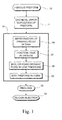
- FIGURE 1 is a flow chart of the processing steps for a CMC preform.
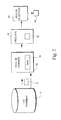
- FIGURE 2 is a schematic diagram of an impregnation, vacuum and heating system.
-
- FIGURE 1 is a flow chart showing exemplary process steps for forming a silicon carbide (SiC) refractory preform material, such as a matrix of a fiber reinforced ceramic-matrix composite material. Figure 2 shows schematically a system for chemical vapor infiltration of a fibrous preform, impregnation of the CVI treated ceramic-fibrous preform in a vacuum chamber, and heating system.
- A
preform 10 is a matrix of fibers having a relatively porous structure and is processed using the system shown herein. At the end of the process, the preform is the final CMC product. It may undergo subsequent fabrication steps before the preform becomes a final product ready for delivery to a customer or used in a larger product. The preform may be a porous fibrous product shaped as a gas turbine shroud, combustion liner or turbine blade. The preform may be formed into a variety of components and replacement components. One potential application is to fabricate components from the preform for a Brayton or Stirling cycle engine, which components are conventional made from high temperature cobalt- or nickel-containing alloys. - The fiber preform may include unidirectional fibers, two-dimensional (2-D) woven fiber tows, or three-dimensional (3-D) woven or braided fiber tows. The fiber preform is positioned in a
chamber 11 for chemical vapor infiltration (CVI). The preform is partially densified by the CVI process, instep 12, with a suitable ceramic material to yield a rigid body preform having a relatively large volume fraction of interconnected pores. The material use for CV infiltration may be SiC, Si3N4, refractory disilicide or another suitable infiltration material. - The CVI process coats the fibers of the preform with a generally uniform coating of ceramic material. The ceramic coating of the fibers provides rigidity to the preform and shield the fibers from damage during subsequent processing steps. Within the fibrous preform 10 (and before CVI), the porosity of the preform may be in a range of 10 percent of the preform volume to 45 percent by volume. After CVI 12, the preform is somewhat denser as it has been transformed into a SiC/SiC material, such as a fiber ceramic composite matrix (CMC)material.
- The CVI process is performed for a length of time to partially densify the CMC. Typically the CVI process is carried out until 8-45 volume percent porosity remains in the CMC. Preferably, the CVI is performed until 10-20 percent porosity remains. Further reductions in the porosity of the perform require exponentially longer CVI process times. The Melt Infiltration process is meant to supplement the CVI matrix with a dense mixture of Si and SiC. The CVI process time is determined by comparing the rate of weight gain within the part to the cost of operating the furnace. The partial CVI treatment protects the fibers in the preform during subsequent processing steps.
- After
partial CVI 12, the SiC/SiC preform 14 is impregnated with carbon, instep 16. Impregnating the SiC/SiC preform 14 with carbon provides good mechanical properties for the SiC and SiC-CMC materials of the preform. The source of the carbon to be applied to the preform is anorganic fluid mixture 18 that flows into the pores as the preform is immersed into atank 20 of thefluid mixture 18. - The
organic fluid mixture 18 coats the pore surfaces of the preform so as to apply a source of carbon to the pore surfaces. As themixture 18 is removed, an organic film coats the pore surfaces of the preform. This organic film is later converted to a carbon film by pyrolysis. Due to its relative low viscosities, the organic fluid mixture may not fill large pores. - The organic solution need only partially fill the pores, unlike conventional impregnation techniques which completely filled the pores in the preform with a resin. In the present impregnation process, the organic solution need only wet the interior porosity of the preform to apply a thin film of the solution to the pore surfaces. The organic film dries on the pore surfaces of the preform. The dried film is subsequently converted to a carbon char coating on the pore surfaces. The carbon in the char coating greatly increases the wettability of the interior CMC pore surfaces.
- The
organic fluid mixture 18 may be a low viscosity organic liquid mixture that impregnates the porous matrix of the preform. The organic liquid mixture may be, for example, liquid corn syrup, molasses or sugar (sucrose) solution or a room temperature curing resin such as polyester. Dilute solutions of submicron carbon particulates such as carbon black or lampblack dispersed in water have also been found to be effective interior surface wetting agents to molten silicon. These organic liquid mixtures are generally commercially available products. The use of theorganic fluid mixture 18 avoids the need for a thermosetting step that was conventionally required for the thermosetting resins. - The porous SiC/SiC CMC preform has a porosity in a range of 10 percent to 45 percent. To impregnate the pores, the preform is immersed in a
tank 20 of the organic fluid mixture, instep 18. The tank with the preform is positioned in avacuum chamber 22, instep 24. The chamber is evacuated until the pressure level in the chamber is sufficiently low that the organic liquid boils or foams, instep 26. After the organic liquid has boiled or foam for 0.5 to 25 minutes, the vacuum is released and the preform is withdrawn from the pool of organic liquid. - After being removed from the pool of organic liquid, the preform is placed in a heated oven 28 until water in the pores of the preform 30 is removed, in
step 32. The oven heating step may be omitted if a polyester resin is used as the organic liquid. - After the liquid evaporates from the pores, an organic coating remains on the surfaces of the pores of the preform material as a residual of the liquid organic fluid. The impregnated CMC preform is subjected to a pyrolysis cycle, in
step 34. During pyrolysis, heat is applied to thepreform 36 such that the organic coating is chemically changed to a carbon coating, e.g., carbon char, on the pore surfaces of the preform. The carbon coating strengthens the fiber-ceramic matrix of the preform. - By virtue of the coating of the organic liquid, a film of carbon remains on the pore walls after the pyrolysis step. The
CMC preform material 36, with the carbon coating on its pore walls, is impregnated with molten silicon, instep 38. The silicon substantially fills the pores of the preform. When the silicon cures and solidifies, the densification process of the preform is completed. - The
final preform 40 is a dense CMC matrix comprising silicon carbide and some free silicon. The porosity of the completed SiC CMC matrix is substantially less than 10 to 45 percent of the preform prior to silicon injection. - The process disclosed here can be used to densify preforms made by a CVI process, and preforms formed by other ceramic processing methods that produce a porous ceramic or ceramic matrix composite. The method disclosed here may also be used to form ceramic bodies or composite bodies made by reaction-bonded silicon nitride, by ceramic polymer precursors, or made by other processes that produce a material that is porous may be densified by the reaction forming process disciosed here.
Claims (10)
- A method of processing a porous ceramic preform (8) comprising:partially infiltrating (16) interconnected pores of a ceramic preform with an organic fluid (18),converting (34) the organic fluid on pore surfaces of preform to a carbon film, andinjecting silicon (38) into the pores with the carbon film of the preform.
- A method a porous ceramic preform as in claim 1 wherein the organic fluid is in a pool (20) and the preform is placed in the pool of organic fluid.
- A method as in claim 1 or 2 further comprising subjecting the preform to a vacuum while the organic fluid is infiltrating the preform, wherein the fluid boils or foams (32) in said vacuum.
- A method as in claim 1, 2 or 3 wherein the preform is placed in the pool of the organic fluid, and the pool is in a vacuum chamber (24) such that the fluid boils or foams in said vacuum.
- A method as in any preceding claims wherein an organic residue remains on the surfaces of the pores and the pyrolizing (34) of the preform converts the residue into a carbon film.
- A method as in any preceding claim further comprising at least partially treating a fiber preform with a chemical vapor infiltration process (11) to produce the ceramic fiber composite preform, and subsequently infiltrating the pores.
- A method as in any preceding claim wherein the preform (8) has a pore volume between 10 volume percent and 45 volume percent, before infiltration of the organic fluid.
- A method as in any preceding claim wherein the organic fluid (18) is selected from a group consisting of one or more of liquid corn syrup, molasses, sugar solution and polyester.
- A method as in any preceding claim wherein the preform (8) is a ceramic fiber composite.
- A process as in any one of claims 1 to 8 1 wherein the ceramic preform is a ceramic polymer preform (8).
Applications Claiming Priority (2)
| Application Number | Priority Date | Filing Date | Title |
|---|---|---|---|
| US263724 | 2002-10-04 | ||
| US10/263,724 US20040067316A1 (en) | 2002-10-04 | 2002-10-04 | Method for processing silicon-carbide materials using organic film formers |
Publications (1)
| Publication Number | Publication Date |
|---|---|
| EP1405837A1 true EP1405837A1 (en) | 2004-04-07 |
Family
ID=31993573
Family Applications (1)
| Application Number | Title | Priority Date | Filing Date |
|---|---|---|---|
| EP20030256204 Withdrawn EP1405837A1 (en) | 2002-10-04 | 2003-10-01 | A method for processing silicon-carbide materials using organic film formers |
Country Status (3)
| Country | Link |
|---|---|
| US (1) | US20040067316A1 (en) |
| EP (1) | EP1405837A1 (en) |
| JP (1) | JP2004123529A (en) |
Families Citing this family (46)
| Publication number | Priority date | Publication date | Assignee | Title |
|---|---|---|---|---|
| US7799375B2 (en) * | 2004-06-30 | 2010-09-21 | Poco Graphite, Inc. | Process for the manufacturing of dense silicon carbide |
| US20060035024A1 (en) * | 2004-08-11 | 2006-02-16 | General Electric Company | Processing of Sic/Sic ceramic matrix composites by use of colloidal carbon black |
| US7686990B2 (en) | 2004-12-31 | 2010-03-30 | General Electric Company | Method of producing a ceramic matrix composite article |
| US7708851B2 (en) | 2005-10-25 | 2010-05-04 | General Electric Company | Process of producing a ceramic matrix composite article and article formed thereby |
| US20070096371A1 (en) * | 2005-10-27 | 2007-05-03 | General Electric Company | Process of producing ceramic matrix composites |
| US8118546B2 (en) * | 2008-08-20 | 2012-02-21 | Siemens Energy, Inc. | Grid ceramic matrix composite structure for gas turbine shroud ring segment |
| US20120177488A1 (en) | 2009-03-27 | 2012-07-12 | General Electric Company | Process for joining silicon-containing ceramic articles and components produced thereby |
| US20100279845A1 (en) | 2009-04-30 | 2010-11-04 | General Electric Company | Process of producing ceramic matrix composites |
| US8442301B2 (en) * | 2009-04-30 | 2013-05-14 | General Electric Company | Nondestructive inspection method and system |
| US8899939B2 (en) * | 2009-12-23 | 2014-12-02 | General Electric Company | Process for producing a ceramic matrix composite article and article formed thereby |
| US20110171399A1 (en) * | 2010-01-08 | 2011-07-14 | General Electric Company | Process and apparatus for continuous coating of fibrous materials |
| US9228445B2 (en) | 2010-12-23 | 2016-01-05 | General Electric Company | Turbine airfoil components containing ceramic-based materials and processes therefor |
| US8721290B2 (en) | 2010-12-23 | 2014-05-13 | General Electric Company | Processes for producing components containing ceramic-based and metallic materials |
| US8777582B2 (en) | 2010-12-27 | 2014-07-15 | General Electric Company | Components containing ceramic-based materials and coatings therefor |
| US8777583B2 (en) | 2010-12-27 | 2014-07-15 | General Electric Company | Turbine airfoil components containing ceramic-based materials and processes therefor |
| US9701591B2 (en) * | 2011-10-12 | 2017-07-11 | United Technologies Corporation | Method for fabricating a ceramic material |
| US9308708B2 (en) | 2012-03-23 | 2016-04-12 | General Electric Company | Process for producing ceramic composite components |
| US10011043B2 (en) | 2012-04-27 | 2018-07-03 | General Electric Company | Method of producing an internal cavity in a ceramic matrix composite |
| US20130287941A1 (en) | 2012-04-27 | 2013-10-31 | General Electric Company | Method of producing a melt-infiltrated ceramic matrix composite article |
| US10450235B2 (en) | 2012-04-27 | 2019-10-22 | General Electric Company | Method of producing an internal cavity in a ceramic matrix composite and mandrel therefor |
| US9410437B2 (en) | 2012-08-14 | 2016-08-09 | General Electric Company | Airfoil components containing ceramic-based materials and processes therefor |
| US9751807B2 (en) * | 2012-08-16 | 2017-09-05 | General Electric Company | Consumable core for manufacture of composite articles and related method |
| US11319253B2 (en) | 2013-03-15 | 2022-05-03 | General Electric Company | Slurries for composite materials |
| CA2913031C (en) | 2013-05-29 | 2021-09-21 | General Electric Company | Method of forming a ceramic matrix composite component with cooling features |
| US20170015592A1 (en) | 2014-03-14 | 2017-01-19 | General Electric Company | Process of producing ceramic matrix composites and ceramic matrix composites formed thereby |
| US11072565B2 (en) | 2015-02-27 | 2021-07-27 | General Electric Company | Ceramic matrix composite structures with controlled microstructures fabricated using chemical vapor infiltration (CVI) |
| US10465534B2 (en) | 2015-06-05 | 2019-11-05 | Rolls-Royce North American Technologies, Inc. | Machinable CMC insert |
| US10458653B2 (en) * | 2015-06-05 | 2019-10-29 | Rolls-Royce Corporation | Machinable CMC insert |
| US10472976B2 (en) * | 2015-06-05 | 2019-11-12 | Rolls-Royce Corporation | Machinable CMC insert |
| US20170029340A1 (en) | 2015-07-30 | 2017-02-02 | General Electric Company | Uniformity of fiber spacing in cmc materials |
| US20170029339A1 (en) | 2015-07-30 | 2017-02-02 | General Electric Company | Uniformity of fiber spacing in cmc materials |
| US10052789B2 (en) | 2015-11-25 | 2018-08-21 | General Electric Company | Methods of processing ceramic fiber |
| US9815736B2 (en) | 2015-11-25 | 2017-11-14 | General Electric Company | Apparatus and methods for processing ceramic fiber |
| US10443386B2 (en) | 2016-05-04 | 2019-10-15 | General Electric Company | Automated ceramic matrix composite ply layup |
| US10378770B2 (en) | 2017-01-27 | 2019-08-13 | General Electric Company | Unitary flow path structure |
| US10393381B2 (en) | 2017-01-27 | 2019-08-27 | General Electric Company | Unitary flow path structure |
| US10371383B2 (en) | 2017-01-27 | 2019-08-06 | General Electric Company | Unitary flow path structure |
| US10247019B2 (en) | 2017-02-23 | 2019-04-02 | General Electric Company | Methods and features for positioning a flow path inner boundary within a flow path assembly |
| US10385776B2 (en) | 2017-02-23 | 2019-08-20 | General Electric Company | Methods for assembling a unitary flow path structure |
| US10753232B2 (en) | 2017-06-16 | 2020-08-25 | General Electric Company | Assemblies and methods for cooling flowpath support structure and flowpath components |
| US10663167B2 (en) | 2017-06-16 | 2020-05-26 | General Electric Company | Combustor assembly with CMC combustor dome |
| US10364707B2 (en) | 2017-06-16 | 2019-07-30 | General Electric Company | Retention assembly for gas turbine engine components |
| US10746035B2 (en) | 2017-08-30 | 2020-08-18 | General Electric Company | Flow path assemblies for gas turbine engines and assembly methods therefore |
| IT201900017171A1 (en) | 2019-09-25 | 2021-03-25 | Ge Avio Srl | DE-TUNED TURBINE BLADE TIP PROTECTORS |
| US11428160B2 (en) | 2020-12-31 | 2022-08-30 | General Electric Company | Gas turbine engine with interdigitated turbine and gear assembly |
| US12264110B2 (en) | 2021-07-21 | 2025-04-01 | General Electric Company | System and method for coating ceramic fiber |
Citations (7)
| Publication number | Priority date | Publication date | Assignee | Title |
|---|---|---|---|---|
| US5865922A (en) * | 1994-06-21 | 1999-02-02 | The United States Of America As Represented By The Administrator Of The National Aeronautics And Space Administration | Producing fiber reinforced composites having dense ceramic matrices |
| DE19749462C1 (en) * | 1997-11-10 | 1999-03-04 | Deutsch Zentr Luft & Raumfahrt | Moulded body reinforced with carbon fibres |
| US5945166A (en) * | 1997-12-30 | 1999-08-31 | The United States Of America As Represented By The Administrator Of The National Aeronautics And Space Administration | Method for forming fiber reinforced composite bodies with graded composition and stress zones |
| US6248269B1 (en) * | 1997-06-28 | 2001-06-19 | Daimlerchrysler Ag | Process for manufacturing a brake lining |
| DE19962548A1 (en) * | 1999-12-23 | 2001-07-12 | Daimler Chrysler Ag | Production of fiber-reinforced composite ceramic comprises impregnating fiber bundles with binders, mixing with carbon fillers and phenol resins, filling into mold, partially drying, pressing, carbonizing |
| EP1124074A1 (en) * | 2000-02-09 | 2001-08-16 | Brembo Engineering S.p.A. | A shaped composite material for breaking applications and a method for the preparation thereof |
| US6328834B1 (en) * | 1998-07-31 | 2001-12-11 | Daimlerchrysler Ag | Process for producing bodies made of fiber-reinforced composites |
Family Cites Families (7)
| Publication number | Priority date | Publication date | Assignee | Title |
|---|---|---|---|---|
| US5017319A (en) * | 1984-03-30 | 1991-05-21 | Shen Kuo C | Method of making composite products from lignocellulosic materials |
| US4692418A (en) * | 1984-08-29 | 1987-09-08 | Stemcor Corporation | Sintered silicon carbide/carbon composite ceramic body having fine microstructure |
| US5687787A (en) * | 1995-08-16 | 1997-11-18 | Northrop Grumman Corporation | Fiber reinforced ceramic matrix composite internal combustion engine exhaust manifold |
| US6051096A (en) * | 1996-07-11 | 2000-04-18 | Nagle; Dennis C. | Carbonized wood and materials formed therefrom |
| JP3722188B2 (en) * | 1999-01-28 | 2005-11-30 | 石川島播磨重工業株式会社 | Ceramic matrix composite member and manufacturing method thereof |
| US6503572B1 (en) * | 1999-07-23 | 2003-01-07 | M Cubed Technologies, Inc. | Silicon carbide composites and methods for making same |
| US6800364B2 (en) * | 2002-06-28 | 2004-10-05 | Ucar Carbon Company Inc. | Isotropic pitch-based materials for thermal insulation |
-
2002
- 2002-10-04 US US10/263,724 patent/US20040067316A1/en not_active Abandoned
-
2003
- 2003-10-01 EP EP20030256204 patent/EP1405837A1/en not_active Withdrawn
- 2003-10-03 JP JP2003345172A patent/JP2004123529A/en not_active Withdrawn
Patent Citations (7)
| Publication number | Priority date | Publication date | Assignee | Title |
|---|---|---|---|---|
| US5865922A (en) * | 1994-06-21 | 1999-02-02 | The United States Of America As Represented By The Administrator Of The National Aeronautics And Space Administration | Producing fiber reinforced composites having dense ceramic matrices |
| US6248269B1 (en) * | 1997-06-28 | 2001-06-19 | Daimlerchrysler Ag | Process for manufacturing a brake lining |
| DE19749462C1 (en) * | 1997-11-10 | 1999-03-04 | Deutsch Zentr Luft & Raumfahrt | Moulded body reinforced with carbon fibres |
| US5945166A (en) * | 1997-12-30 | 1999-08-31 | The United States Of America As Represented By The Administrator Of The National Aeronautics And Space Administration | Method for forming fiber reinforced composite bodies with graded composition and stress zones |
| US6328834B1 (en) * | 1998-07-31 | 2001-12-11 | Daimlerchrysler Ag | Process for producing bodies made of fiber-reinforced composites |
| DE19962548A1 (en) * | 1999-12-23 | 2001-07-12 | Daimler Chrysler Ag | Production of fiber-reinforced composite ceramic comprises impregnating fiber bundles with binders, mixing with carbon fillers and phenol resins, filling into mold, partially drying, pressing, carbonizing |
| EP1124074A1 (en) * | 2000-02-09 | 2001-08-16 | Brembo Engineering S.p.A. | A shaped composite material for breaking applications and a method for the preparation thereof |
Non-Patent Citations (1)
| Title |
|---|
| XU Y ET AL: "Carbon/silicon carbide composites prepared by chemical vapor infiltration combined with silicon melt infiltration", CARBON, XX, XX, vol. 37, no. 8, 1999, pages 1179 - 1187, XP004169418, ISSN: 0008-6223 * |
Also Published As
| Publication number | Publication date |
|---|---|
| US20040067316A1 (en) | 2004-04-08 |
| JP2004123529A (en) | 2004-04-22 |
Similar Documents
| Publication | Publication Date | Title |
|---|---|---|
| EP1405837A1 (en) | A method for processing silicon-carbide materials using organic film formers | |
| EP3549926B1 (en) | Method for preparing c/c-sic composite material part | |
| EP2657209B1 (en) | Method of producing an internal cavity in a ceramic matrix composite and mandrel therefor | |
| CA2378915C (en) | Method for fabricating ceramic matrix composite | |
| JP5410288B2 (en) | Manufacturing method of thermostructural composite material parts | |
| JP5405578B2 (en) | Manufacturing method for parts made of heat-resistant structural composite materials | |
| RU2176628C2 (en) | Composite material (variants) and method or preparing thereof, method of treating fibrous semi-finished product (variants) | |
| CN111132953A (en) | Ceramic component | |
| JP2018177635A (en) | Method of treating ceramic matrix composite (CMC) with protective ceramic coating | |
| US20060035024A1 (en) | Processing of Sic/Sic ceramic matrix composites by use of colloidal carbon black | |
| CN105541364B (en) | A kind of method of step densification production carbon pottery automobile brake disc | |
| CN109704799A (en) | The preparation method of ceramic matric composite | |
| JP2013256436A5 (en) | ||
| US20170015592A1 (en) | Process of producing ceramic matrix composites and ceramic matrix composites formed thereby | |
| US11505500B2 (en) | Ceramic component | |
| KR101122696B1 (en) | Method for preparing fiber reinforced silicon carbide composite materials | |
| EP3162547B1 (en) | Improved laminate resin transfer molding of fibrous preforms using particle filled resin systems | |
| JP5168451B2 (en) | Method for producing porous molded body and method for producing porous filled molded body | |
| CN114230347A (en) | Preparation method and product of continuous fiber reinforced ZrC/SiC composite part | |
| US10723660B2 (en) | Carbon yielding resin for melt infiltration | |
| CA2299225C (en) | Method and apparatus for manufacturing ceramic-based composite member | |
| Shivakumar et al. | Development of cyanate ester-based carbon/carbon composites | |
| JPH0912376A (en) | High toughness ceramics and manufacturing method thereof | |
| JPH10273369A (en) | Method for producing C / C composite material excellent in Si attack resistance and C / C crucible | |
| Hoffman | In Situ Processing Route for Uniform Density Carbon-Carbon Composites |
Legal Events
| Date | Code | Title | Description |
|---|---|---|---|
| PUAI | Public reference made under article 153(3) epc to a published international application that has entered the european phase |
Free format text: ORIGINAL CODE: 0009012 |
|
| AK | Designated contracting states |
Kind code of ref document: A1 Designated state(s): AT BE BG CH CY CZ DE DK EE ES FI FR GB GR HU IE IT LI LU MC NL PT RO SE SI SK TR |
|
| AX | Request for extension of the european patent |
Extension state: AL LT LV MK |
|
| 17P | Request for examination filed |
Effective date: 20041007 |
|
| AKX | Designation fees paid |
Designated state(s): DE FR GB IT |
|
| 17Q | First examination report despatched |
Effective date: 20050504 |
|
| STAA | Information on the status of an ep patent application or granted ep patent |
Free format text: STATUS: THE APPLICATION IS DEEMED TO BE WITHDRAWN |
|
| 18D | Application deemed to be withdrawn |
Effective date: 20050920 |