EP1404652B1 - A novel alkaloid derivative and a pharmaceutical composition containing the same - Google Patents
A novel alkaloid derivative and a pharmaceutical composition containing the same Download PDFInfo
- Publication number
- EP1404652B1 EP1404652B1 EP02733537A EP02733537A EP1404652B1 EP 1404652 B1 EP1404652 B1 EP 1404652B1 EP 02733537 A EP02733537 A EP 02733537A EP 02733537 A EP02733537 A EP 02733537A EP 1404652 B1 EP1404652 B1 EP 1404652B1
- Authority
- EP
- European Patent Office
- Prior art keywords
- compound
- formula
- heptarene
- benzo
- tetrahydro
- Prior art date
- Legal status (The legal status is an assumption and is not a legal conclusion. Google has not performed a legal analysis and makes no representation as to the accuracy of the status listed.)
- Expired - Lifetime
Links
- 0 CO[C@@](CCc1c2*)/C3=C\*C/C(/*)=C/C=C3/c1c(*)c(OI)c2O* Chemical compound CO[C@@](CCc1c2*)/C3=C\*C/C(/*)=C/C=C3/c1c(*)c(OI)c2O* 0.000 description 16
- KWOLFJPFCHCOCG-UHFFFAOYSA-N CC(c1ccccc1)=O Chemical compound CC(c1ccccc1)=O KWOLFJPFCHCOCG-UHFFFAOYSA-N 0.000 description 1
- HUCRPTCBZKJYPP-UHFFFAOYSA-N OC(c1ccc(CCl)cc1)Cl Chemical compound OC(c1ccc(CCl)cc1)Cl HUCRPTCBZKJYPP-UHFFFAOYSA-N 0.000 description 1
Images


Classifications
-
- C—CHEMISTRY; METALLURGY
- C07—ORGANIC CHEMISTRY
- C07C—ACYCLIC OR CARBOCYCLIC COMPOUNDS
- C07C69/00—Esters of carboxylic acids; Esters of carbonic or haloformic acids
- C07C69/76—Esters of carboxylic acids having a carboxyl group bound to a carbon atom of a six-membered aromatic ring
- C07C69/78—Benzoic acid esters
-
- A—HUMAN NECESSITIES
- A61—MEDICAL OR VETERINARY SCIENCE; HYGIENE
- A61P—SPECIFIC THERAPEUTIC ACTIVITY OF CHEMICAL COMPOUNDS OR MEDICINAL PREPARATIONS
- A61P21/00—Drugs for disorders of the muscular or neuromuscular system
- A61P21/02—Muscle relaxants, e.g. for tetanus or cramps
-
- A—HUMAN NECESSITIES
- A61—MEDICAL OR VETERINARY SCIENCE; HYGIENE
- A61P—SPECIFIC THERAPEUTIC ACTIVITY OF CHEMICAL COMPOUNDS OR MEDICINAL PREPARATIONS
- A61P29/00—Non-central analgesic, antipyretic or antiinflammatory agents, e.g. antirheumatic agents; Non-steroidal antiinflammatory drugs [NSAID]
-
- A—HUMAN NECESSITIES
- A61—MEDICAL OR VETERINARY SCIENCE; HYGIENE
- A61P—SPECIFIC THERAPEUTIC ACTIVITY OF CHEMICAL COMPOUNDS OR MEDICINAL PREPARATIONS
- A61P35/00—Antineoplastic agents
-
- A—HUMAN NECESSITIES
- A61—MEDICAL OR VETERINARY SCIENCE; HYGIENE
- A61P—SPECIFIC THERAPEUTIC ACTIVITY OF CHEMICAL COMPOUNDS OR MEDICINAL PREPARATIONS
- A61P37/00—Drugs for immunological or allergic disorders
- A61P37/02—Immunomodulators
- A61P37/06—Immunosuppressants, e.g. drugs for graft rejection
-
- C—CHEMISTRY; METALLURGY
- C07—ORGANIC CHEMISTRY
- C07C—ACYCLIC OR CARBOCYCLIC COMPOUNDS
- C07C203/00—Esters of nitric or nitrous acid
- C07C203/02—Esters of nitric acid
- C07C203/10—Esters of nitric acid having nitrate groups bound to carbon atoms of six-membered aromatic rings
-
- C—CHEMISTRY; METALLURGY
- C07—ORGANIC CHEMISTRY
- C07C—ACYCLIC OR CARBOCYCLIC COMPOUNDS
- C07C233/00—Carboxylic acid amides
- C07C233/01—Carboxylic acid amides having carbon atoms of carboxamide groups bound to hydrogen atoms or to acyclic carbon atoms
- C07C233/30—Carboxylic acid amides having carbon atoms of carboxamide groups bound to hydrogen atoms or to acyclic carbon atoms having the nitrogen atom of at least one of the carboxamide groups bound to a carbon atom of a hydrocarbon radical substituted by doubly-bound oxygen atoms
- C07C233/32—Carboxylic acid amides having carbon atoms of carboxamide groups bound to hydrogen atoms or to acyclic carbon atoms having the nitrogen atom of at least one of the carboxamide groups bound to a carbon atom of a hydrocarbon radical substituted by doubly-bound oxygen atoms with the substituted hydrocarbon radical bound to the nitrogen atom of the carboxamide group by a carbon atom of a ring other than a six-membered aromatic ring
-
- C—CHEMISTRY; METALLURGY
- C07—ORGANIC CHEMISTRY
- C07C—ACYCLIC OR CARBOCYCLIC COMPOUNDS
- C07C233/00—Carboxylic acid amides
- C07C233/01—Carboxylic acid amides having carbon atoms of carboxamide groups bound to hydrogen atoms or to acyclic carbon atoms
- C07C233/34—Carboxylic acid amides having carbon atoms of carboxamide groups bound to hydrogen atoms or to acyclic carbon atoms having the nitrogen atom of at least one of the carboxamide groups bound to a carbon atom of a hydrocarbon radical substituted by amino groups
- C07C233/41—Carboxylic acid amides having carbon atoms of carboxamide groups bound to hydrogen atoms or to acyclic carbon atoms having the nitrogen atom of at least one of the carboxamide groups bound to a carbon atom of a hydrocarbon radical substituted by amino groups with the substituted hydrocarbon radical bound to the nitrogen atom of the carboxamide group by a carbon atom of a ring other than a six-membered aromatic ring
-
- C—CHEMISTRY; METALLURGY
- C07—ORGANIC CHEMISTRY
- C07C—ACYCLIC OR CARBOCYCLIC COMPOUNDS
- C07C233/00—Carboxylic acid amides
- C07C233/64—Carboxylic acid amides having carbon atoms of carboxamide groups bound to carbon atoms of six-membered aromatic rings
- C07C233/76—Carboxylic acid amides having carbon atoms of carboxamide groups bound to carbon atoms of six-membered aromatic rings having the nitrogen atom of at least one of the carboxamide groups bound to a carbon atom of a hydrocarbon radical substituted by doubly-bound oxygen atoms
-
- C—CHEMISTRY; METALLURGY
- C07—ORGANIC CHEMISTRY
- C07C—ACYCLIC OR CARBOCYCLIC COMPOUNDS
- C07C235/00—Carboxylic acid amides, the carbon skeleton of the acid part being further substituted by oxygen atoms
- C07C235/02—Carboxylic acid amides, the carbon skeleton of the acid part being further substituted by oxygen atoms having carbon atoms of carboxamide groups bound to acyclic carbon atoms and singly-bound oxygen atoms bound to the same carbon skeleton
- C07C235/04—Carboxylic acid amides, the carbon skeleton of the acid part being further substituted by oxygen atoms having carbon atoms of carboxamide groups bound to acyclic carbon atoms and singly-bound oxygen atoms bound to the same carbon skeleton the carbon skeleton being acyclic and saturated
- C07C235/14—Carboxylic acid amides, the carbon skeleton of the acid part being further substituted by oxygen atoms having carbon atoms of carboxamide groups bound to acyclic carbon atoms and singly-bound oxygen atoms bound to the same carbon skeleton the carbon skeleton being acyclic and saturated having the nitrogen atom of at least one of the carboxamide groups bound to a carbon atom of a ring other than a six-membered aromatic ring
-
- C—CHEMISTRY; METALLURGY
- C07—ORGANIC CHEMISTRY
- C07C—ACYCLIC OR CARBOCYCLIC COMPOUNDS
- C07C235/00—Carboxylic acid amides, the carbon skeleton of the acid part being further substituted by oxygen atoms
- C07C235/42—Carboxylic acid amides, the carbon skeleton of the acid part being further substituted by oxygen atoms having carbon atoms of carboxamide groups bound to carbon atoms of six-membered aromatic rings and singly-bound oxygen atoms bound to the same carbon skeleton
-
- C—CHEMISTRY; METALLURGY
- C07—ORGANIC CHEMISTRY
- C07C—ACYCLIC OR CARBOCYCLIC COMPOUNDS
- C07C271/00—Derivatives of carbamic acids, i.e. compounds containing any of the groups, the nitrogen atom not being part of nitro or nitroso groups
- C07C271/06—Esters of carbamic acids
- C07C271/08—Esters of carbamic acids having oxygen atoms of carbamate groups bound to acyclic carbon atoms
- C07C271/24—Esters of carbamic acids having oxygen atoms of carbamate groups bound to acyclic carbon atoms with the nitrogen atom of at least one of the carbamate groups bound to a carbon atom of a ring other than a six-membered aromatic ring
-
- C—CHEMISTRY; METALLURGY
- C07—ORGANIC CHEMISTRY
- C07C—ACYCLIC OR CARBOCYCLIC COMPOUNDS
- C07C323/00—Thiols, sulfides, hydropolysulfides or polysulfides substituted by halogen, oxygen or nitrogen atoms, or by sulfur atoms not being part of thio groups
- C07C323/23—Thiols, sulfides, hydropolysulfides or polysulfides substituted by halogen, oxygen or nitrogen atoms, or by sulfur atoms not being part of thio groups containing thio groups and nitrogen atoms, not being part of nitro or nitroso groups, bound to the same carbon skeleton
- C07C323/39—Thiols, sulfides, hydropolysulfides or polysulfides substituted by halogen, oxygen or nitrogen atoms, or by sulfur atoms not being part of thio groups containing thio groups and nitrogen atoms, not being part of nitro or nitroso groups, bound to the same carbon skeleton at least one of the nitrogen atoms being part of any of the groups, X being a hetero atom, Y being any atom
- C07C323/40—Y being a hydrogen or a carbon atom
- C07C323/41—Y being a hydrogen or an acyclic carbon atom
-
- C—CHEMISTRY; METALLURGY
- C07—ORGANIC CHEMISTRY
- C07C—ACYCLIC OR CARBOCYCLIC COMPOUNDS
- C07C323/00—Thiols, sulfides, hydropolysulfides or polysulfides substituted by halogen, oxygen or nitrogen atoms, or by sulfur atoms not being part of thio groups
- C07C323/23—Thiols, sulfides, hydropolysulfides or polysulfides substituted by halogen, oxygen or nitrogen atoms, or by sulfur atoms not being part of thio groups containing thio groups and nitrogen atoms, not being part of nitro or nitroso groups, bound to the same carbon skeleton
- C07C323/39—Thiols, sulfides, hydropolysulfides or polysulfides substituted by halogen, oxygen or nitrogen atoms, or by sulfur atoms not being part of thio groups containing thio groups and nitrogen atoms, not being part of nitro or nitroso groups, bound to the same carbon skeleton at least one of the nitrogen atoms being part of any of the groups, X being a hetero atom, Y being any atom
- C07C323/40—Y being a hydrogen or a carbon atom
- C07C323/42—Y being a carbon atom of a six-membered aromatic ring
-
- C—CHEMISTRY; METALLURGY
- C07—ORGANIC CHEMISTRY
- C07C—ACYCLIC OR CARBOCYCLIC COMPOUNDS
- C07C49/00—Ketones; Ketenes; Dimeric ketenes; Ketonic chelates
- C07C49/587—Unsaturated compounds containing a keto groups being part of a ring
- C07C49/753—Unsaturated compounds containing a keto groups being part of a ring containing ether groups, groups, groups, or groups
- C07C49/755—Unsaturated compounds containing a keto groups being part of a ring containing ether groups, groups, groups, or groups a keto group being part of a condensed ring system with two or three rings, at least one ring being a six-membered aromatic ring
-
- C—CHEMISTRY; METALLURGY
- C07—ORGANIC CHEMISTRY
- C07D—HETEROCYCLIC COMPOUNDS
- C07D307/00—Heterocyclic compounds containing five-membered rings having one oxygen atom as the only ring hetero atom
- C07D307/77—Heterocyclic compounds containing five-membered rings having one oxygen atom as the only ring hetero atom ortho- or peri-condensed with carbocyclic rings or ring systems
- C07D307/93—Heterocyclic compounds containing five-membered rings having one oxygen atom as the only ring hetero atom ortho- or peri-condensed with carbocyclic rings or ring systems condensed with a ring other than six-membered
-
- C—CHEMISTRY; METALLURGY
- C07—ORGANIC CHEMISTRY
- C07C—ACYCLIC OR CARBOCYCLIC COMPOUNDS
- C07C2603/00—Systems containing at least three condensed rings
- C07C2603/02—Ortho- or ortho- and peri-condensed systems
- C07C2603/04—Ortho- or ortho- and peri-condensed systems containing three rings
- C07C2603/30—Ortho- or ortho- and peri-condensed systems containing three rings containing seven-membered rings
- C07C2603/34—Benzoheptalenes; Hydrogenated benzoheptalenes
Definitions
- the present invention relates to a novel alkaloid derivative and a pharmaceutical composition containing the same. More particularly, the present invention relates to a novel colchicine derivative having anticancer, anti-proliferous and anti-inflammatory effects and immunosuppressive and muscle relaxing functions, and pharmaceutically acceptable salts thereof, a pharmaceutical composition containing the same as an effective component, and methods for preparing the same.
- Colchicine is a pseudo-alkaloid widely used for treatment of gout and is used only for short-term therapeutic treatment due to its toxicity. However, colchicine has been reported to exhibit a very fast and specific therapeutic effect on gout, as described in the Alkaloids, 1991, vol. 41, 125-176 , U.S. patent No. 4,533,675 , and so on.
- colchicine inhibits formation of mitotic spindle, thereby suppresses cell division, leading to activation of anticancer and anti-proliferous effects. Also, continuous research into colchicine applications has been carried out and a variety of colchicine derivatives have been synthesized up to now, as described in U.S. patent No. 3,222,253 , U.S. patent application serial No. 00/608073A , WO 91/02084 , and so on. Among them, only demecolcine has been used for treatment of leukemia.
- colchicine can be used for treatment of psoriasis or rheumatoid arthritis and has an amyloidosis inhibitory effect and an anti-inflammatory effect ( Arch. Dermatol. 1982, Vol. 118, July, pp 453-457 ). Also, thiocolchicoside, which is one of colchicine derivatives, is widely used for treatment of skeletal muscle contracture and inflammation.
- a first feature of the present invention is to provide a novel colchicine derivative having anticancer, anti-proliferous and anti-inflammatory effects and immunosuppressive and muscle-relaxing functions, and pharmaceutically acceptable salts thereof.
- a second feature of the present invention is to provide methods for preparing the colchicine derivatives.
- a third feature of the present invention is to provide a pharmaceutical composition containing the colchicine derivative and pharmaceutically acceptable salts thereof as an effective component.
- colchicine derivatives represented by the formula (I) and pharmaceutically acceptable salts thereof: wherein when R 1 is N(R 6 )C(X 1 )-A, X 2 C(X 1 )-A, N(R 6 )-A, N(A) 2 or X 2 -A, R 2 is X 3 R 7 , R 3 and R 4 are independently hydrogen or a methyl group, R 5 is hydrogen or a methyl group, wherein R 6 and R 7 are independently hydrogen or a saturated C 1 to C 6 alkyl, and X, X 1 and X 3 are independently O or S; and X 2 is S; when R 2 is X 2 C(X 1 )-A, or X 2 -A, R 1 is N(R 6 )COCH 3 , N(R 6 )COCF 3 , or NHC(O)OR 8 , R 3 and R 4 are independently hydrogen or a methyl group, R 5 is hydrogen or a methyl group, where
- a pharmaceutical composition containing the colchicine derivatives and pharmaceutically acceptable salts thereof as effective components, the pharmaceutical composition having anticancer, anti-proliferous and anti-inflammatory effects and immunosuppressive and muscle-relaxing functions.
- the colchicine derivatives of the formula (I) are represented as the formula (Ia), (Ib), (Ic), (Id), or (Ie): wherein B in the formulas (Ia), (Ib), (Ic), (Id) and (Ie) is represented by the formula C1 or C2, and C in the formulas is represented by the formula C1, C2, C3, C4 or C5: wherein R 1 through R 5 and X are defined as in the compound of the formula (I).
- R 6 is hydrogen or saturated C 1 to C 6 alkyl
- X 1 and X 2 are independently O or S
- Hal, Hal 1 , and Hal 2 may be the same or different halogens
- L is a leaving group selected from methanesulfonyl, p -toluenesulfonyl or triflate
- P represents a general hydroxy-protecting group including methoxymethyl or t-butyldimethylsilyl
- R 10 is hydrogen or a lower alcohol of C 1 to C 3
- Y is represented by the general formula (a'), (b').
- Y 1 represents a C 1 to C 10 straight chain or branched alkyl, preferably, a C 2 to C 5 straight chain or branched alkyl, or a substituted C 5 to C 7 cycloalkyl
- R 8 represents hydrogen or a saturated C 1 to C 6 alkyl
- n 1 is an integer from 1 to 6, preferably an integer from 2 to 4
- n 2 and n 3 are independently an integer from 1 to 5, preferably an integer from 1 to 3
- n 4 is an integer 0 to 3
- n 5 is an integer from 1 to 6.
- a lower alkyl represents a saturated C 1 to C 6 , preferably, C 1 to C 4 straight chain or branched hydrocarbon.
- colchicine derivative of the formula (I) and its pharmaceutically acceptable salt according to the present invention include:
- Examples of the pharmaceutically acceptable salt of the colchicine derivative of the formula (I) include, but are not limited to, salts with inorganic bases such as sodium, potassium, magnesium or calcium and salts with organic bases such as ammonium, lysine, ethanolamine, N,N'-dibenzylethylenediamine and angelic acid
- Method 1 for preparing a compound of the formula (Ia) first, a compound of the formula (II) is reacted with a compound of the formula (III) to produce a compound (IV).
- the reaction can be carried out without using a base, but is generally carried out in the presence of a base used for amidation.
- a base include pyridine, triethylamine, diethylisopropylamine and dimethylphenylamine, and a phase transfer catalyst such as sodium hydrocarbonate or benzyltriethylammonium chloride.
- the reaction can be carried out without using a solvent, but is advantageously carried out in the presence of a solvent that does not adversely affect the reaction.
- reaction temperature is not specifically limited and is generally carried out at reduced or elevated temperature, preferably at room temperature.
- the compound of the formula (IV) is subjected to nitration to convert it into a compound of the formula (Ia).
- Compounds capable of nitrating halogen are generally used for the reaction, and examples of such compounds include AgNO 3 and t-butylammonium nitrate (Bu 4 NNO 3 ).
- the reaction is preferably carried out in the presence of a solvent that does not adversely affect the reaction, and examples of such solvent include chloroform, acetonitrile, a mixed solution of acetonitrile and water, dichloromethane, and the like.
- the reaction temperature is not specifically limited and is generally carried out at reduced or elevated temperature, preferably at room temperature.
- the compound of the formula (Ia) can be synthesized by reacting the compound of the formula (II) with a compound of the formula (V) to produce a compound (VI), followed by converting it into the compound (Ia).
- the conditions for reacting the compound of the formula (II) with the compound of the formula (V) are the same as those for amidation like in the reaction between the compound of the formula (II) and the compound of the formula (III).
- the reaction is generally carried out under nitrating conditions of alcohol.
- nitric acid and sulfuric acid, dinitrogen pentaoxide (N 2 O 5 ) and aluminum chloride III, potassium nitrate and boron trifluoride (BF 3 ), acetylnitrate, etc. may be used, most preferably nitric acid and acetic anhydride (Ac 2 O) are used.
- the reaction is preferably carried out in the presence of a solvent that does not adversely affect the reaction, and examples of the solvent used include chloroform, dichloromethane, and the like.
- the reaction temperature is not specifically limited and is generally carried out at reduced or elevated temperature, preferably at room temperature.
- the compound of the formula (Ia) can also be synthesized by performing nitration a compound of the formula (VII) prepared by converting hydrogen of alcohol in the compound of the formula (VI) into a leaving group such as methane sulfonyl, p -toluene sulfonyl or triflate.
- a compound of the formula (VII) prepared by converting hydrogen of alcohol in the compound of the formula (VI) into a leaving group such as methane sulfonyl, p -toluene sulfonyl or triflate.
- the reaction is generally carried out under nitrating conditions.
- t-butylammonium nitrate (Bu 4 NNO 3 ), t-butylammonium nitrate (Bu 4 NNO 3 ) and nitric acid, nitric acid and silver nitrate, or potassium nitrate is used.
- the reaction is preferably carried out in the presence of a solvent that does not adversely affect the reaction. Examples of the solvent used include chloroform, dichloromethane, a mixed solution of benzene and water, acetonitrile, ethylalcohol, and the like.
- the reaction temperature is not specifically limited and is generally carried out at reduced or elevated temperature, preferably at room temperature.
- Desired products can be isolated and purified by general methods, for example, column chromatography or recrystallization.
- Method 2 for preparing a compound of the formula (Ib) first, a compound of the formula (II) is reacted with a compound of the formula (VIII) to produce a compound (IX). The reaction is generally carried out in the same manner as in the amidation for converting the compound (II) into the compound (IV) as described in Method 1.
- the compound of the formula (IX) is subjected to nitration to produce the compound of the formula (Ib).
- This reaction is generally carried out in the same manner as in the nitration for converting the compound of the formula (IV) into the compound of the formula (Ia) as described in Method 1.
- the compound of the formula (Ib) can be synthesized by reacting the compound of the formula (II) with a compound of the formula (X) to produce a compound (XI), followed by converting the same into the compound (Ib).
- the conditions of reacting the compound of the formula (II) with the compound of the formula (X) are the same as those for amidation like in the reaction between the compound of the formula (II) and the compound of the formula (IV) as described in Method 1.
- the reaction is generally carried out under nitrating conditions of an alcoholic compound, that is, under the same conditions as those of converting the compound of the formula (VI) into the compound of the formula (Ia) as described in Method 1.
- the compound of the formula (Ib) can also be synthesized by performing nitration the compound of the formula (XII) prepared by converting hydrogen of alcohol in the compound of the formula (XI) into a leaving group such as methane sulfonyl, p -toluene sulfonyl or triflate.
- the reaction is generally carried out under nitrating conditions, that is, under the same conditions of converting the compound of the formula (VII) into the compound of the formula (Ia) as described in Method 1.
- Desired products can be isolated and purified by general methods, for example, column chromatography or recrystallization.
- Method 3 for preparing a compound of the formula (Ic) first, a compound of the formula (III) is reacted with a compound of the formula (XIII) to produce a compound (XIV).
- the base examples include pyridine, 4-dimethylaminopyridine, triethylamine, diethylisopropylamine, dimethylphenylamine, 2,6-lutidine, or sodium hydride (NaH), cesium carbonate, and a phase transfer catalyst such as sodium hydroxide or benzyltriethylammonium chloride.
- the reaction can be advantageously carried out in the presence of a solvent that does not adversely affect the reaction. Examples of the solvent include dichloromethane, chloroform, tetrahydrofuran, diethylether, toluene, dimethylformamide, toluene, dimethylformamide, acetonitrile, and the like.
- the reaction temperature is not specifically limited and is generally carried out at reduced or elevated temperature, preferably at room temperature.
- the compound of the formula (XIV) synthesized in the first step is subjected to nitration to produce the compound of the formula (Ic).
- This reaction is generally carried out in the same manner as in the nitration of halogen for converting the compound of the formula (IV) into the compound of the formula (Ia) as described in Method 1.
- the compound of the formula (Ic) can be synthesized by reacting the compound of the formula (XIII) with a compound of the formula (XV) to produce a compound (XVI), followed by converting the same into the compound (Ic).
- the reaction is generally carried out under nitrating conditions of an alcoholic compound, that is, under the same conditions as those of converting the compound of the formula (VI) into the compound of the formula (Ia) as described in Method 1.
- the compound of the formula (Ic) also can be synthesized by performing nitration the compound of the formula (XVII) prepared by converting hydrogen of alcohol in the compound (XVI) is converted into a leaving group such as methane sulfonyl, p -toluene sulfonyl or triflate.
- the reaction is generally carried out under nitrating conditions of an alcoholic compound, that is, under the same conditions of converting the compound of the formula (VII) into the compound of the formula (Ia) as described in Method 1.
- the compound of the formula (Ic) can be synthesized by reacting the compound of the formula (XIII) with a compound of the formula (XVIII) having a protecting group in alcohol to convert the same into a compound of the formula (XIX), followed by converting the compound of the formula (XIX) into the compound (XVI) by a deprotection.
- the reaction is preferably carried out in the presence of a base, preferably pentafluorophenyl and pyridine, or ethylchloroformate and triethylamine.
- a base preferably pentafluorophenyl and pyridine, or ethylchloroformate and triethylamine.
- This reaction can also be carried out without using a solvent, preferably in the presence of a solvent that does not adversely affect the reaction.
- the solvent include dichloromethane, chloroform, tetrahydrofuran, diethylether, and the like.
- the reaction temperature is not specifically limited and is generally carried out at reduced or elevated temperature, preferably at room temperature.
- Desired products can be isolated and purified by general methods, for example, column chromatography or recrystallization.
- Method 4 for preparing a compound of the formula (Id) first, a compound of the formula (XX) is reacted with a compound of the formula (VIII) to produce a compound (XXI). The reaction is generally carried out in the same manner as in the amidation for converting the compound (II) into the compound (IV) as described in Method 1.
- the compound of the formula (XXI) synthesized in the first step is subjected to nitration to produce the compound of the formula (Id).
- This reaction is generally carried out in the same manner as in the nitration of halogen for converting the compound of the formula (IV) into the compound of the formula (Ia) as described in Method 1.
- the compound of the formula (Id) can be synthesized by reacting the compound of the formula (XX) with a compound of the formula (X) to produce a compound (XXII), followed by converting the same into the compound (Id).
- the conditions of reacting the compound of the formula (XX) with the compound of the formula (X) are the same as those for amidation by which the compound of the formula (II) is converted into the compound of the formula (IV) as described in Method 1.
- the reaction is generally carried out under nitrating conditions of an alcoholic compound, that is, under the same conditions as those of converting the compound of the formula (VI) into the compound of the formula (Ia) as described in Method 1.
- the compound of the formula (Id) can also be synthesized by performing nitration the compound of the formula (XXIII) prepared by converting hydrogen of alcohol in the compound of the formula (XXII) into a leaving group such as methane sulfonyl, p -toluene sulfonyl or triflate.
- the reaction is generally carried out under nitrating conditions, that is, under the same conditions of converting the compound of the formula (VII) into the compound of the formula (Ia) as described in Method 1.
- Desired products can be isolated and purified by general methods, for example, column chromatography or recrystallization.
- Method 5 for preparing a compound of the formula (Ie) first, a compound of the formula (XIII) is reacted with a compound of the formula (VM) to produce a compound (XXIV).
- the base include sodium hydride (NaH), cesum carbonate, silver carbonate, a phase transfer catalyst such as sodium or potassium hydroxide or benzyltriethylammonium chloride, or crown ether.
- the reaction is preferably carried out in the presence of a solvent that does not adversely affect the reaction.
- a solvent include dichloromethane, chloroform, tetrahydrofuran, diethylether, toluene, dimethylformamide, dimethyl sulfoxide, or benzene.
- the reaction temperature is not specifically limited and is generally carried out at reduced or elevated temperature, preferably at cooling temperature or room temperature.
- the compound of the formula (XXIV) synthesized in the first step is subjected to nitration to convert the same into a compound of the formula (Ie).
- the reaction is generally carried out in the same manner as in the nitration of halogen for converting the compound (IV) into the compound (Ia) as described in Method 1.
- the compound of the formula (Ie) can be synthesized by reacting the compound of the formula (XIII) with a compound of the formula (X) to produce a compound (XXV), followed by converting the same into the compound (Ie).
- the conditions of reacting the compound of the formula (XIII) with the compound of the formula (X) are the same as those for the reaction between the compound of the formula (XIII) and the compound of the formula (VIII).
- the reaction is generally carried out under nitrating conditions of an alcoholic compound, preferably under the same conditions for the reaction for converting the compound of the formula (VI) into the compound of the formula (Ia) as described in Method 1.
- the compound of the formula (Ie) can also be synthesized by performing nitration a compound of the formula (XXVI) prepared by converting hydrogen in alcohol in the compound of the formula (XXV) into a leaving group such as methane sulfonyl, p -toluene sulfonyl or triflate.
- a compound of the formula (XXVI) prepared by converting hydrogen in alcohol in the compound of the formula (XXV) into a leaving group such as methane sulfonyl, p -toluene sulfonyl or triflate.
- the reaction is generally carried out under nitrating conditions, preferably under the same conditions of converting the compound of the formula (VII) into the compound of the formula (Ia) as described in Method 1.
- Desired products can be isolated and purified by general methods, for example, column chromatography or recrystallization.
- the pharmaceutical composition according to the present invention including the colchicine derivative of the formula (I) and its pharmaceutically acceptable salt as effective components can be used for gout treatment agents, anticancer agents, anti-proliferous agents, anti-inflammatory agents, immunosuppressive agents and muscle relaxing agents.
- the pharmaceutical composition according to the present invention can be prepared in various parenterally or orally administrable formulations.
- Typical examples of formations for parenteral administration preferably include in the form of an isotonic aqueous saline solution or suspension for injection.
- formulations for oral administration include tablets, capsules and the like, which may further contain a diluent (e.g.: lactose, dextrose, sucrose, mannitol, sorbitol, cellulose and/or glycine) or a lubricant (e.g.: silica, talc, stearic acid and its magnesium or potassium salt, and/or polyethylene glycol) in addition to effective components.
- a diluent e.g.: lactose, dextrose, sucrose, mannitol, sorbitol, cellulose and/or glycine
- a lubricant e.g.: silica, talc, stearic
- Tablets can further be prepared with a binder such as magnesium aluminum silicate, starch paste, gelatins, tragacanth, methylcellulose, sodium carboxymethylcellulose and/or polyvinylpyrrolidine.
- a binder such as magnesium aluminum silicate, starch paste, gelatins, tragacanth, methylcellulose, sodium carboxymethylcellulose and/or polyvinylpyrrolidine.
- an disintegrator such as starch, agar, and alginate or sodium salts thereof, boiling mixtures and/or absorbents, a coloring agent, a flavoring agent, or a sweetener.
- the formulations can be prepared by general techniques of mixing, granulation or coating.
- the pharmaceutical composition according to the present invention is sterilized and/or contains additives such as an antiseptic, a stabilizer, a hydrator or emulsifier, osmosis adjusting salts and/or a buffering agent, and other therapeutically effective materials.
- additives such as an antiseptic, a stabilizer, a hydrator or emulsifier, osmosis adjusting salts and/or a buffering agent, and other therapeutically effective materials.
- the colchicine derivative of the formula (I) and its pharmaceutically acceptable salt can be administered to mammals including humans through parenteral or oral routes in an amount of 1 to 200 mg/kg (body weight) once or several times per a day.
- Table 1 shows the list of the compounds synthesized in accordance with the method of the present invention in addition to the compounds of the above Examples Table 1A
- Human tumor cells including MCF-7 (human breast adenomatous tumor), MCF-7/DOX (adriamycin resistant cell strain), MRS-SA (human uterine sarcoma), MES-SA/DX5 (adriamycin resistant cell strain), A 549 (human non-small cell lung), SKOV-3 (human ovarian), SKMEL-2 (human melanoma), XF-498 (human CNS), HCT-15 (human colon) were incubated at 37°C in the presence of 5% CO 2 using a DMEM culture medium. The respective cells were seeded into each well of 96-well plates at a concentration of 2 ⁇ 10 3 ⁇ 5 ⁇ 10 3 cells/well.
- the colchicine derivative of the present invention exhibited a higher anticancer effect even at a low concentration of 0.02 to 773 nM than the conventional colchicine and taxol as shown in Tables 2 and 3.
- Example B Mixed lymphocyte reaction (MLR) tests
- MLR tests were carried out to determine the immunosuppressive effect of an immunosuppressive candidate material.
- a responding cell BALB/c mouse spleen cell
- a stimulating cell DBA/2 mouse spleen cell
- the cells grew little.
- the cells were proliferated due to induction of an antigen-antibody reaction.
- the proliferated cells were treated with the immunosuppressive candidate material for measurement of the proliferation inhibitory extent.
- Responding cells BALB/c mouse spleen cells
- stimulating cells DBA/2 mouse spleen cells
- cyclosporin A positive control group
- colchicines colchicine derivatives of the present invention
- the colchicine derivatives according to the present invention that is, the compounds 6, 9, 10, 11 and 12, suppressed growth of cells even at concentrations as low as 100 to 1000 nm and had a good immunosuppressive effect.
- This test was carried out to determine the immunosuppressive effect of an immunosuppressive candidate material by checking anti-proliferation of T cells and B cells.
- responding cells BALB/c mouse spleen cells
- lipopolysaccharide LPS
- ConA concanvalin A
- Responding cells (BALB/c mouse spleen cells) were seeded into each well of 96-well plates at a concentration of 2 ⁇ 10 5 cells/well. Then, 20 ⁇ g/ml lipopolysaccharide, cyclosporin A (positive control group), and inventive colchicine derivatives (compounds 6, 10 and 12) were simultaneously treated, and 2 ⁇ g/ml of ConA, cyclosporin A (positive control sample), and inventive colchicine derivatives (compounds 6, 10 and 12) were simultaneously treated. After culturing for 72 hours at a CO 2 incubator, a 20 ⁇ l MTS solution was added to each well, followed by further culturing for 2 to 4 hours and measuring OD at 490 nm using ELISA. The measurement results are shown in FIGS. 2 and 3.
- the colchicine derivatives according to the present invention suppressed proliferation of the B and T cells induced by LPS and ConA, respectively, in a concentration-dependent manner.
- the immunosuppressive effect of the colchicine derivatives according to the present invention was superior to that of cyclosporin A, a conventional immunosuppressive agent.
- the compounds 6 and 12 exhibited a remarkable anti-proliferous effect on B and T cells (FIG. 3).
- the colchicine derivatives according to the present invention were administered to ICR mice of 4-5 weeks old, weighing 18 to 20g, for acute (intravenous administration) toxicity assay and oral administration toxicity assay, as demonstrated in Tables 5 and 7.
- the same assays were carried out using colchicine as a control group (see Tables 4 and 6).
- Table 4 Acute toxicity of colchicine intravenously administered to mice Group Number of Mouse Dosage (mg/kg) Days for the test (death) Total 1 2 3 4 5 6 7 T1 5 2 - 3 1 - - 1 - 5/5 T2 5 5 1 4 5/5 T3 5 10 4 1 5/5 Table 5: Acute toxicity of compound 6 intravenously administered to mice Group Number of Mouse Dosage (mg/kg) Days for the test (death) Total 1 2 3 4 5 6 7 T1 5 5 - - - - - - - 0/5 T2 5 10 - - - - - - - - 0/5 T3 5 25 - - - - - - - - 0/2 T4 3 50 3 3 3/3 Table 6: Toxicity of colchicine orally administered to mice Group Number of Mouse Dosage (mg/kg) Days for the Test (death) Total 1 2 3 4 5 6 7 T1 5 5 - -
- This assay is carried out to test mutagenicity of chemical substances using histidine auxotrophic strains that are one of Salmonella Typhimurium mutants.
- artificially induced mutants histidine auxotrophic mutants
- histidine-free culture medium When various mutagens are added to the culture medium, only revertants generated by reverse mutation survive. Thus generated colonies and spontaneously induced revertants are compared for detection of mutation.
- Ames test was carried out using WP2 uvrA strains (tryptophan auxotrophic strains) of TA100, TA1535, TA98, TA1537 and Escherichia coli.
- Mutagens used as positive control samples were 0.5 ⁇ g/plate of sodium azide, 0.5 ⁇ g/plate of 4NQO (4-nitroquinolin-1-oxide), 50 ⁇ g/plate of 9-AA (9-aminoacridine).
- Colchicine and colchicine derivative (Compound 6) according to the present invention were treated at amounts of 0, 317.5, 625, 1250, 2500 and 5000 ⁇ g/plate, and incubated in the presence (+) and absence (-) of microsomal potysubstrate oxygenases (S-9 mixture) at 37°C for 48 hours. After incubation, the number of revertant colonies was counted. 3 plates were prepared for each test and the average was calculated. The results are demonstrated in Tables 8 and 9.
- the colchicine derivatives according to the present invention induced noticeably fewer revertant colonies than the positive control groups, implying no significant hazard as mutagens.
- novel colchicine derivative of the formula (I) according to the present invention or pharmaceutically acceptable salts thereof are superior to conventional colchicine in view of anticancer, anti-proliferous and immunosuppressive effects, and have less likelihood of toxicity and less hazard as mutagen than conventional colchicine.
Landscapes
- Organic Chemistry (AREA)
- Chemical & Material Sciences (AREA)
- Health & Medical Sciences (AREA)
- Veterinary Medicine (AREA)
- Medicinal Chemistry (AREA)
- Nuclear Medicine, Radiotherapy & Molecular Imaging (AREA)
- General Chemical & Material Sciences (AREA)
- Pharmacology & Pharmacy (AREA)
- Life Sciences & Earth Sciences (AREA)
- Animal Behavior & Ethology (AREA)
- General Health & Medical Sciences (AREA)
- Public Health (AREA)
- Chemical Kinetics & Catalysis (AREA)
- Bioinformatics & Cheminformatics (AREA)
- Engineering & Computer Science (AREA)
- Immunology (AREA)
- Pain & Pain Management (AREA)
- Transplantation (AREA)
- Rheumatology (AREA)
- Neurology (AREA)
- Orthopedic Medicine & Surgery (AREA)
- Physical Education & Sports Medicine (AREA)
- Acyclic And Carbocyclic Compounds In Medicinal Compositions (AREA)
- Pharmaceuticals Containing Other Organic And Inorganic Compounds (AREA)
- Organic Low-Molecular-Weight Compounds And Preparation Thereof (AREA)
- Furan Compounds (AREA)
Abstract
Description
- The present invention relates to a novel alkaloid derivative and a pharmaceutical composition containing the same. More particularly, the present invention relates to a novel colchicine derivative having anticancer, anti-proliferous and anti-inflammatory effects and immunosuppressive and muscle relaxing functions, and pharmaceutically acceptable salts thereof, a pharmaceutical composition containing the same as an effective component, and methods for preparing the same.
- Colchicine is a pseudo-alkaloid widely used for treatment of gout and is used only for short-term therapeutic treatment due to its toxicity. However, colchicine has been reported to exhibit a very fast and specific therapeutic effect on gout, as described in the Alkaloids, 1991, vol. 41, 125-176,
U.S. patent No. 4,533,675 , and so on. - During cell division, colchicine inhibits formation of mitotic spindle, thereby suppresses cell division, leading to activation of anticancer and anti-proliferous effects. Also, continuous research into colchicine applications has been carried out and a variety of colchicine derivatives have been synthesized up to now, as described in
U.S. patent No. 3,222,253 ,U.S. patent application serial No. 00/608073A ,WO 91/02084 - There is also a report that colchicine can be used for treatment of psoriasis or rheumatoid arthritis and has an amyloidosis inhibitory effect and an anti-inflammatory effect (Arch. Dermatol. 1982, Vol. 118, July, pp 453-457). Also, thiocolchicoside, which is one of colchicine derivatives, is widely used for treatment of skeletal muscle contracture and inflammation.
- A first feature of the present invention is to provide a novel colchicine derivative having anticancer, anti-proliferous and anti-inflammatory effects and immunosuppressive and muscle-relaxing functions, and pharmaceutically acceptable salts thereof.
- A second feature of the present invention is to provide methods for preparing the colchicine derivatives.
- A third feature of the present invention is to provide a pharmaceutical composition containing the colchicine derivative and pharmaceutically acceptable salts thereof as an effective component.
- In an aspect of the present invention, it is provided colchicine derivatives represented by the formula (I) and pharmaceutically acceptable salts thereof:

when R1 is N(R6)C(X1)-A, X2C(X1)-A, N(R6)-A, N(A)2 or X2-A, R2 is X3R7, R3 and R4 are independently hydrogen or a methyl group, R5 is hydrogen or a methyl group, wherein R6 and R7 are independently hydrogen or a saturated C1 to C6 alkyl, and X, X1 and X3 are independently O or S; and X2 is S;
when R2 is X2C(X1)-A, or X2-A, R1 is N(R6)COCH3, N(R6)COCF3, or NHC(O)OR8, R3 and R4 are independently hydrogen or a methyl group, R5 is hydrogen or a methyl group, wherein R6 is hydrogen or a saturated C1 to C6 alkyl, R8 is a saturated C1 to C6 alkyl, alkenyl, or substituted or unsubstituted aryl, and X, X1, and X2 are independently O or S;
when R3 and R4 are independently C(X1)-A or -A, R1 is N(R6)COCH3, N(R6)COCF3, or NHC(O)OR8, R2 is X3R7 or N(R7)2, R5 is hydrogen or a methyl, wherein R6 and R7 are independently hydrogen or a saturated C1 to C6 alkyl, R8 is a saturated C1 to C6 alkyl, alkenyl, or substituted or unsubstituted aryl, and X, X1, and X3 are independently O or S;
wherein A is represented by the formula (a), (b), (c), (d), (e), (f), (g), (h), (i) or (j):
-Y1-Hal (a)
-Y1-ONO2 (b)


- In another aspect of the present invention, it is provided a pharmaceutical composition containing the colchicine derivatives and pharmaceutically acceptable salts thereof as effective components, the pharmaceutical composition having anticancer, anti-proliferous and anti-inflammatory effects and immunosuppressive and muscle-relaxing functions.
- In still another aspect of the present invention, it is provided methods for preparing the colchicine derivative represented by the formula (I) according to the reaction schemes 1, 2, 3, 4 and 5. In the reaction schemes 1 to 5, the colchicine derivatives of the formula (I) are represented as the formula (Ia), (Ib), (Ic), (Id), or (Ie):


- R6 is hydrogen or saturated C1 to C6 alkyl; X1 and X2 are independently O or S; Hal, Hal1, and Hal2 may be the same or different halogens; L is a leaving group selected from methanesulfonyl, p-toluenesulfonyl or triflate; P represents a general hydroxy-protecting group including methoxymethyl or t-butyldimethylsilyl; R10 is hydrogen or a lower alcohol of C1 to C3; and Y is represented by the general formula (a'), (b'). (c'), (d') or (e'):
-Y1- (a')


integer 0 to 3, and n5 is an integer from 1 to 6. -
- FIG. 1 is a graph showing the immonosuppressive effect of a colchicine derivative tested by mixed lymphocyte reaction (MLR);
- FIG. 2 is a graph showing the immonosuppressive effect of cyclosphorine A as a positive control sample in an immunosuppressive effect test using a BALB/c mouse spleen; and
- FIG. 3 is a graph showing the immonosuppressive effect of a colchicine derivative according to the present invention in an immunosuppressive effect test using a BALB/c mouse spleen.
- The present invention will now be described in more detail.
- Throughout the specification, a lower alkyl represents a saturated C1 to C6, preferably, C1 to C4 straight chain or branched hydrocarbon.
- Preferred examples of the colchicine derivative of the formula (I) and its pharmaceutically acceptable salt according to the present invention include:
- 4-chloro-N-(1,2,3,10-tetramethoxy-9-oxo-5,6,7,9-tetrahydro-benzo[a]heptarene-7-yl)-butylamide;
- 4-chloromethyl-N-(1,2,3,10-tetramethoxy-9-oxo-5,6,7,9-tetrahydro-benzo[a]heptarene-7-yl)-benzamide;
- 3-chloromethyl-N-(1,2,3,10-tetramethoxy-9-oxo-5,6,7,9-tetrahydro-benzo[a]heptarene-7-yl)-benzamide;
- 4-iodo-N-(1,2,3,10-tetramethoxy-9-oxo-5,6,7,9-tetrahydro-benzo[a]heptarene-7-yl)-butylamide;
- 4-nitrooxy-N-(1,2,3,10-tetramethoxy-9-oxo-5,6,7,9-tetrahydro-benzo[a]heptarene-7-yl)-butylamide;
- 4-iodomethyl-N-(1,2,3,10-tetramethoxy-9-oxo-5,6,7,9-tetrahydro-benzo[a]heptarene-7-yl)-benzamide;
- 4-nitrooxymethyl-N-(1,2,3,10-tetramethoxy-9-oxo-5,6,7,9-tetrahydro-benzo[a]heptarene-7-yl)-benzamide;
- 3-iodomethyl-N-(1,2,3,10-tetramethoxy-9-oxo-5,6,7,9-tetrahydro-benzo[a]heptarene-7-yl)-benzamide;
- 3-nitrooxymethyl-N-(1,2,3,10-tetramethoxy-9-oxo-5,6,7,9-tetrahydro-benzo[a]heptarene-7-yl)-benzamide;
- 4-chloro-N-(1,2,3-trimethoxy-10-methylsulfanyl-9-oxo-5,6,7,9-tetrahydro-benzo[a]heptarene-7-yl)-butylamide;
- 4-chloromethyl-N-(1,2,3-trimethoxy-10-methylsulfanyl-9-oxo-5,6,7,9-tetrahydro-benzo[a]heptarene-7-yl)-benzamide;
- 3-chloromethyl-N-(1,2,3-trimethoxy-10-methylsulfanyl-9-oxo-5,6,7,9-tetrahydro-benzo[a]heptarene-7-yl)-benzamide;
- 4-iodo-N-(1,2,3-trimethoxy-10-methylsutfanyl-9-oxo-5,6,7,9-tetrahydro-benzo[a]heptarene-7-yl)-butylamide;
- 4-nitrooxy-N-(1,2,3-trimethoxy-10-methylsulfanyl-9-oxo-5,6,7,9-tetrahydro-benzo[a]heptarene-7-yl)-butylamide;
- 4-iodomethyl-N-(1,2,3-trimethoxy-10-methylsulfanyl-9-oxo-5,6,7,9-tetrahydro-benzo[a]heptarene-7-yl)-benzamide;
- 4-nitrooxymethyl-N-(1,2,3-trimethoxy-10-methylsulfanyl-9-oxo-5,6,7,9-tetrahydro-benzo[a]heptarene-7-yl)-benzamide;
- 3-iodomethyl-N-(1,2,3-thmethoxy-10-methylsulfanyl-9-oxo-5,6,7,9-tetrahydro-benzo[a]heptarene-7-yl)-benzamide;
- 3-nitrooxymethyl-N-(1,2,3-trimethoxy-10-methylsulfanyl-9-oxo-5,6,7,9-tetrahydro-benzo[a]heptarene-7-yl)-benzamide;
- 4-chloro-N-methyl-N-(1,2,3-trimethoxy-10-methylsulfanyl-9-oxo-5,6,7,9-tetrahydro-benzo[a]heptarene-7-yl)-butylamide;
- 4-nitrooxymethyl-N-methyl-N-(1,2,3-trimethoxy-10-methylsulfanyl-9-oxo-5,6,7,9-tetrahydro-benzo[a]heptarene-7-yl)-benzamide;
- 3-nitrooxymethyl-N-methyt-N-(1,2,3-trimethoxy-10-methylsulfanyl-9-oxo-5,6,7,9-tetrahydro-benzo[a]heptarene-7-yl)-benzamide;
- 4-chloro-N-methyl-N-(1,2,3,10-tetramethoxy-9-oxo-5,6,7,9-tetrahydro-benzo[a]heptarene-7-yl) butylamide;
- 4-chloromethyl-N-methyl-N-(1,2,3,10-tetramethoxy-9-oxo-5,6,7,9-tetrahydro-benzo[a]heptarene-7-yl) benzamide;
- N-methyl-4-nitrooxy-N-(1,2,3,10-tetramethoxy-9-oxo-5,6,7,9-tetrahydro-benzo[a]heptarene-7-yl) butylamide;
- N-methyl-4-nitrooxymethyl-N-(1,2,3,10-tetramethoxy-9-oxo-5,6,7,9-tetrahydro-benzo[a]heptarene-7-yl) benzamide.
- Examples of the pharmaceutically acceptable salt of the colchicine derivative of the formula (I) include, but are not limited to, salts with inorganic bases such as sodium, potassium, magnesium or calcium and salts with organic bases such as ammonium, lysine, ethanolamine, N,N'-dibenzylethylenediamine and angelic acid
- Preparation methods of the invention will now be described in more detail.
- In Method 1 for preparing a compound of the formula (Ia), first, a compound of the formula (II) is reacted with a compound of the formula (III) to produce a compound (IV). The reaction can be carried out without using a base, but is generally carried out in the presence of a base used for amidation. Preferred examples of the base include pyridine, triethylamine, diethylisopropylamine and dimethylphenylamine, and a phase transfer catalyst such as sodium hydrocarbonate or benzyltriethylammonium chloride. The reaction can be carried out without using a solvent, but is advantageously carried out in the presence of a solvent that does not adversely affect the reaction. Examples of the solvent used include dichloromethane, chloroform, tetrahydrofuran, diethylether, toluene and dimethylformamide. The reaction temperature is not specifically limited and is generally carried out at reduced or elevated temperature, preferably at room temperature.
- Second, the compound of the formula (IV) is subjected to nitration to convert it into a compound of the formula (Ia). Compounds capable of nitrating halogen are generally used for the reaction, and examples of such compounds include AgNO3 and t-butylammonium nitrate (Bu4NNO3). The reaction is preferably carried out in the presence of a solvent that does not adversely affect the reaction, and examples of such solvent include chloroform, acetonitrile, a mixed solution of acetonitrile and water, dichloromethane, and the like. The reaction temperature is not specifically limited and is generally carried out at reduced or elevated temperature, preferably at room temperature.
- Alternatively, the compound of the formula (Ia) can be synthesized by reacting the compound of the formula (II) with a compound of the formula (V) to produce a compound (VI), followed by converting it into the compound (Ia). The conditions for reacting the compound of the formula (II) with the compound of the formula (V) are the same as those for amidation like in the reaction between the compound of the formula (II) and the compound of the formula (III). In order to convert the compound (VI) into the compound of the formula (Ia), the reaction is generally carried out under nitrating conditions of alcohol. Preferably, nitric acid and sulfuric acid, dinitrogen pentaoxide (N2O5) and aluminum chloride III, potassium nitrate and boron trifluoride (BF3), acetylnitrate, etc., may be used, most preferably nitric acid and acetic anhydride (Ac2O) are used. The reaction is preferably carried out in the presence of a solvent that does not adversely affect the reaction, and examples of the solvent used include chloroform, dichloromethane, and the like. The reaction temperature is not specifically limited and is generally carried out at reduced or elevated temperature, preferably at room temperature.
- The compound of the formula (Ia) can also be synthesized by performing nitration a compound of the formula (VII) prepared by converting hydrogen of alcohol in the compound of the formula (VI) into a leaving group such as methane sulfonyl, p-toluene sulfonyl or triflate. In order to convert the compound (VII) into the compound of the formula (Ia), the reaction is generally carried out under nitrating conditions. Most preferably, t-butylammonium nitrate (Bu4NNO3), t-butylammonium nitrate (Bu4NNO3) and nitric acid, nitric acid and silver nitrate, or potassium nitrate is used. The reaction is preferably carried out in the presence of a solvent that does not adversely affect the reaction. Examples of the solvent used include chloroform, dichloromethane, a mixed solution of benzene and water, acetonitrile, ethylalcohol, and the like. The reaction temperature is not specifically limited and is generally carried out at reduced or elevated temperature, preferably at room temperature.
- Desired products can be isolated and purified by general methods, for example, column chromatography or recrystallization.
- In Method 2 for preparing a compound of the formula (Ib), first, a compound of the formula (II) is reacted with a compound of the formula (VIII) to produce a compound (IX). The reaction is generally carried out in the same manner as in the amidation for converting the compound (II) into the compound (IV) as described in Method 1.
- Second, the compound of the formula (IX) is subjected to nitration to produce the compound of the formula (Ib). This reaction is generally carried out in the same manner as in the nitration for converting the compound of the formula (IV) into the compound of the formula (Ia) as described in Method 1.
- Alternatively, the compound of the formula (Ib) can be synthesized by reacting the compound of the formula (II) with a compound of the formula (X) to produce a compound (XI), followed by converting the same into the compound (Ib). The conditions of reacting the compound of the formula (II) with the compound of the formula (X) are the same as those for amidation like in the reaction between the compound of the formula (II) and the compound of the formula (IV) as described in Method 1. In order to convert the compound (XI) into the compound of the formula (Ib), the reaction is generally carried out under nitrating conditions of an alcoholic compound, that is, under the same conditions as those of converting the compound of the formula (VI) into the compound of the formula (Ia) as described in Method 1.
- The compound of the formula (Ib) can also be synthesized by performing nitration the compound of the formula (XII) prepared by converting hydrogen of alcohol in the compound of the formula (XI) into a leaving group such as methane sulfonyl, p-toluene sulfonyl or triflate. In order to convert the compound (XII) into the compound of the formula (Ib), the reaction is generally carried out under nitrating conditions, that is, under the same conditions of converting the compound of the formula (VII) into the compound of the formula (Ia) as described in Method 1.
- Desired products can be isolated and purified by general methods, for example, column chromatography or recrystallization.
- In Method 3 for preparing a compound of the formula (Ic), first, a compound of the formula (III) is reacted with a compound of the formula (XIII) to produce a compound (XIV). The reaction is generally esterification between alcohol (X2=O) or thioalcohol (X2=S) and acyl or thioacyl halide, that is, the reaction is carried out in the presence of nickelacetylacetonate or zinc chloride or in the presence of a base that can be used for esterification. Examples of the base include pyridine, 4-dimethylaminopyridine, triethylamine, diethylisopropylamine, dimethylphenylamine, 2,6-lutidine, or sodium hydride (NaH), cesium carbonate, and a phase transfer catalyst such as sodium hydroxide or benzyltriethylammonium chloride. Also, the reaction can be advantageously carried out in the presence of a solvent that does not adversely affect the reaction. Examples of the solvent include dichloromethane, chloroform, tetrahydrofuran, diethylether, toluene, dimethylformamide, toluene, dimethylformamide, acetonitrile, and the like. The reaction temperature is not specifically limited and is generally carried out at reduced or elevated temperature, preferably at room temperature.
- Second, the compound of the formula (XIV) synthesized in the first step is subjected to nitration to produce the compound of the formula (Ic). This reaction is generally carried out in the same manner as in the nitration of halogen for converting the compound of the formula (IV) into the compound of the formula (Ia) as described in Method 1.
- Alternatively, the compound of the formula (Ic) can be synthesized by reacting the compound of the formula (XIII) with a compound of the formula (XV) to produce a compound (XVI), followed by converting the same into the compound (Ic). The reaction between the compound of the formula (XIII) and the compound of the formula (XV) is generally esterification between alcohol (X2=O) or thioalcohol (X2=S) and acyl or thioacyl halide, that is, the reaction is carried out under the same conditions as the reaction between the compound of the formula (XIII) and the compound of the formula (III) as mentioned above. In order to convert the compound (XVI) into the compound of the formula (Ic), the reaction is generally carried out under nitrating conditions of an alcoholic compound, that is, under the same conditions as those of converting the compound of the formula (VI) into the compound of the formula (Ia) as described in Method 1.
- The compound of the formula (Ic) also can be synthesized by performing nitration the compound of the formula (XVII) prepared by converting hydrogen of alcohol in the compound (XVI) is converted into a leaving group such as methane sulfonyl, p-toluene sulfonyl or triflate. In order to convert the compound (XVII) into the compound of the formula (Ic), the reaction is generally carried out under nitrating conditions of an alcoholic compound, that is, under the same conditions of converting the compound of the formula (VII) into the compound of the formula (Ia) as described in Method 1.
- Also, the compound of the formula (Ic) can be synthesized by reacting the compound of the formula (XIII) with a compound of the formula (XVIII) having a protecting group in alcohol to convert the same into a compound of the formula (XIX), followed by converting the compound of the formula (XIX) into the compound (XVI) by a deprotection. The conversion of the compound of the formula (XIII) into the compound of the formula (XIX) is generally esterification between alcohol (X2=O) or thioalcohol (X2=S) and carboxylic acid (R10=H) or carboxylic acid ester (R10=a lower alkyl of C1 to C3). When R10 is H, the reaction is preferably carried out in the presence of a base, preferably pentafluorophenyl and pyridine, or ethylchloroformate and triethylamine. This reaction can also be carried out without using a solvent, preferably in the presence of a solvent that does not adversely affect the reaction. Examples of the solvent include dichloromethane, chloroform, tetrahydrofuran, diethylether, and the like. The reaction temperature is not specifically limited and is generally carried out at reduced or elevated temperature, preferably at room temperature.
- Desired products can be isolated and purified by general methods, for example, column chromatography or recrystallization.
- In Method 4 for preparing a compound of the formula (Id), first, a compound of the formula (XX) is reacted with a compound of the formula (VIII) to produce a compound (XXI). The reaction is generally carried out in the same manner as in the amidation for converting the compound (II) into the compound (IV) as described in Method 1.
- Second, the compound of the formula (XXI) synthesized in the first step is subjected to nitration to produce the compound of the formula (Id). This reaction is generally carried out in the same manner as in the nitration of halogen for converting the compound of the formula (IV) into the compound of the formula (Ia) as described in Method 1.
- Alternatively, the compound of the formula (Id) can be synthesized by reacting the compound of the formula (XX) with a compound of the formula (X) to produce a compound (XXII), followed by converting the same into the compound (Id). The conditions of reacting the compound of the formula (XX) with the compound of the formula (X) are the same as those for amidation by which the compound of the formula (II) is converted into the compound of the formula (IV) as described in Method 1. In order to convert the compound (XXII) into the compound of the formula (Id), the reaction is generally carried out under nitrating conditions of an alcoholic compound, that is, under the same conditions as those of converting the compound of the formula (VI) into the compound of the formula (Ia) as described in Method 1.
- The compound of the formula (Id) can also be synthesized by performing nitration the compound of the formula (XXIII) prepared by converting hydrogen of alcohol in the compound of the formula (XXII) into a leaving group such as methane sulfonyl, p-toluene sulfonyl or triflate. In order to convert the compound (XXIII) into the compound of the formula (Id), the reaction is generally carried out under nitrating conditions, that is, under the same conditions of converting the compound of the formula (VII) into the compound of the formula (Ia) as described in Method 1.
- Desired products can be isolated and purified by general methods, for example, column chromatography or recrystallization.
- In Method 5 for preparing a compound of the formula (Ie), first, a compound of the formula (XIII) is reacted with a compound of the formula (VM) to produce a compound (XXIV). The reaction is generally a reaction between alcohol (X2=O) or thioalcohol (X2=S) and alkylhalide to produce ether or thioether, preferably in the presence of a base that can be used for etherification. Examples of the base include sodium hydride (NaH), cecium carbonate, silver carbonate, a phase transfer catalyst such as sodium or potassium hydroxide or benzyltriethylammonium chloride, or crown ether. The reaction is preferably carried out in the presence of a solvent that does not adversely affect the reaction. Examples of the solvent include dichloromethane, chloroform, tetrahydrofuran, diethylether, toluene, dimethylformamide, dimethyl sulfoxide, or benzene. The reaction temperature is not specifically limited and is generally carried out at reduced or elevated temperature, preferably at cooling temperature or room temperature.
- Second, the compound of the formula (XXIV) synthesized in the first step is subjected to nitration to convert the same into a compound of the formula (Ie). The reaction is generally carried out in the same manner as in the nitration of halogen for converting the compound (IV) into the compound (Ia) as described in Method 1.
- Alternatively, the compound of the formula (Ie) can be synthesized by reacting the compound of the formula (XIII) with a compound of the formula (X) to produce a compound (XXV), followed by converting the same into the compound (Ie). The conditions of reacting the compound of the formula (XIII) with the compound of the formula (X) are the same as those for the reaction between the compound of the formula (XIII) and the compound of the formula (VIII). In order to convert the compound (XXV) into the compound of the formula (Ie), the reaction is generally carried out under nitrating conditions of an alcoholic compound, preferably under the same conditions for the reaction for converting the compound of the formula (VI) into the compound of the formula (Ia) as described in Method 1.
- The compound of the formula (Ie) can also be synthesized by performing nitration a compound of the formula (XXVI) prepared by converting hydrogen in alcohol in the compound of the formula (XXV) into a leaving group such as methane sulfonyl, p-toluene sulfonyl or triflate. In order to convert the compound (XXVI) into the compound of the formula (Ie), the reaction is generally carried out under nitrating conditions, preferably under the same conditions of converting the compound of the formula (VII) into the compound of the formula (Ia) as described in Method 1.
- Desired products can be isolated and purified by general methods, for example, column chromatography or recrystallization.
- As described above, the pharmaceutical composition according to the present invention including the colchicine derivative of the formula (I) and its pharmaceutically acceptable salt as effective components can be used for gout treatment agents, anticancer agents, anti-proliferous agents, anti-inflammatory agents, immunosuppressive agents and muscle relaxing agents.
- The pharmaceutical composition according to the present invention can be prepared in various parenterally or orally administrable formulations. Typical examples of formations for parenteral administration preferably include in the form of an isotonic aqueous saline solution or suspension for injection. Examples of formulations for oral administration include tablets, capsules and the like, which may further contain a diluent (e.g.: lactose, dextrose, sucrose, mannitol, sorbitol, cellulose and/or glycine) or a lubricant (e.g.: silica, talc, stearic acid and its magnesium or potassium salt, and/or polyethylene glycol) in addition to effective components. Tablets can further be prepared with a binder such as magnesium aluminum silicate, starch paste, gelatins, tragacanth, methylcellulose, sodium carboxymethylcellulose and/or polyvinylpyrrolidine. In some cases, there may be further contained an disintegrator such as starch, agar, and alginate or sodium salts thereof, boiling mixtures and/or absorbents, a coloring agent, a flavoring agent, or a sweetener. The formulations can be prepared by general techniques of mixing, granulation or coating.
- The pharmaceutical composition according to the present invention is sterilized and/or contains additives such as an antiseptic, a stabilizer, a hydrator or emulsifier, osmosis adjusting salts and/or a buffering agent, and other therapeutically effective materials. These preparations can be formulated in accordance with known methods usually employed in the formulation process.
- As the effective components of the pharmaceutical composition of the present invention, the colchicine derivative of the formula (I) and its pharmaceutically acceptable salt can be administered to mammals including humans through parenteral or oral routes in an amount of 1 to 200 mg/kg (body weight) once or several times per a day.
- The present invention will be further described by the following Examples, but the Examples do not limit the scope of the invention.
-
- The preparation of the thiodeacetylcolchicine was carried out in accordance with the method of
WO 9421598 - The preparation of N-(10-amino-1,2,3-trimethoxy-9-oxo-5,6,7,9-tetrahydro-benzo[a]heptarene-7-yl)acetamide was carried out in accordance with the method of
WO 9421598 - The preparation of 4-hydroxymethylcolchicine and 4-hydroxy -methylthiocolchicine was carried out in accordance with the method of the Brevet
Canadien 778369 and Justus Liebigs Ann. Chem. 662,105-113 (1963) - The preparation of 7-hydroxy-1,2,3-trimethoxy-10-methylsulphenyl-6,7,-dihydro-5H-benzo[a]heptarene-9-on and colchicone was carried out in accordance with the method of the J. Med. Chem. Vol.40, 961-965 (1997).
-

- 0.1g (0.28mmol) of deacetylcolchicine was placed into a 10ml flask and 3.5ml of tetrahydrofuran was added thereto and then dissolved. To the mixture, 0.2mℓ (1.40mmol) of triethylamine was added dropwise and 0.035mℓ (0.31mmol) of 4-chlorobutyryl chloride was added slowly. The mixture was stirred for 2 hours, and then extracted with chloroform and dried over anhydrous magnesium sulfate and filtered. The solvent in the mixture was removed under reduced pressure. The concentrated product was purified by the column chromatography (ethylacetate: methanol = 85:15) to obtain the title product:
- 1H NMR (500 MHz, CDCl3) δ : 1.87-1.91 (m, 1H), 2.00-2.04 (m, 2H), 2.29-2.54 (m, 5H), 3.50 (t, J = 4.3 Hz, 2H), 3.67 (s, 3H), 3.91 (s, 3H), 3.95 (s, 3H), 4.01 (s, 3H), 4.65-4.68 (m, 1H), 6.54 (s, 1H), 6.88 (d, J = 11.0 Hz, 1H), 7.35 (d, J = 11.0 Hz, 1H), 7.51 (d, J = 6.5 Hz, 1H), 7.52 (s, 1H)
-

- 0.12g of title compound 2 (yields: 79%, as a yellow solid) was obtained in accordance with the same method with Example 1 except that 3-chloromethylbenzoyl chloride was used instead of 4-chlorobutyryl chloride:
- 1H NMR (500 MHz, CDCl3) δ :2.05-2.06 (m, 1H), 2.36-2.42 (m, 2H), 2.52-2.52 (m, 1H), 3.75 (s, 3H), 3.91 (s, 3H), 3.96 (s, 3H), 4.00 (s, 3H), 4.44 (s, 2H), 4.86-4.88 (m, 1H), 6.55 (s, 1H), 6.90 (d, J = 11.0Hz, 1H), 7.18 (d, J = 8.5 Hz, 2H), 7.39 (d, J = 11.0 Hz, 1H), 7.69 (s, 1H), 7.78 (d, J = 8.5 Hz, 2H), 8.40 (d, J = 6.5 Hz, 1H)
-

- 0.13g of the title compound 3 (yields: 92%, as a yellow solid) was carried out in accordance with the same method with Example 1 except that 4-chloromethyl benzoyl chloride was used instead of 4-chlorobutyryl chloride:
- 1H NMR (500 MHz, CDCl3) δ :2.22-2.26 (m, 1H), 2.39-2.48 (m, 2H), 2.53-2.57 (m, 1H), 3.75 (s, 3H), 3.95 (s, 3H), 3.97 (s, 3H), 4.01 (s, 3H), 4.90-4.95 (m, 1H), 5.30 (d,12.0 Hz, 1H), 5.36 (d,12.0 Hz, 1H), 6.56 (s, 1H), 6.93 (d, J = 11.0 Hz, 1H), 7.12 (t, J = 7.5 Hz, 1H), 7.30 (d, J = 7.5 Hz, 1H), 7.41 (d, J = 11.0 Hz, 1H), 7.56 (d, J = 7.5 Hz, 1H), 7.69 (s, 1H), 7.77 (s, 1H), 8.44 (d, J = 6.5 Hz, 1H)
-

- 0.1g (0.22mmol) of the compound 1 obtained from the Example 1 was placed into a 10ml flask and dissolved by adding the 5 ml of acetone. 0.097g (0.065 mmol) of sodium iodide was added dropwise thereto, and then the mixture was stirred at temperature of 40~50°C for 12 hours. The mixture was extracted with chloroform, dried over anhydrous magnesium sulfate and filtered, and then concentrated under reduced pressure to obtain 4-iodo-N-(1,2,3,10-tetramethoxy-9-oxo-5,6,7,9-tertahydro-benzo[a]heptarene-7-yl)-butylamide (intermediate compound 1) (the first step reaction). The concentrated intermediate compound 1 and 2mℓ of acetonitrile were placed into a 25mℓ flask and 0.15g (0.87mmol) of silver nitrate was added thereto. After stirring for 12 hours, the mixture was filtered. The solvent was removed under reduced pressure. Chloroform was added thereto and the mixture was dried over sodium sulfate and filtered under reduced pressure. The resulting compound was purified by the column chromatography (ethylacetate:methanol = 85:15) to obtain the title compound 4 as a yellow solid (53mg, yields of the second step: 50%) (the second step reaction).
1H NMR of the intermediate compound 1: - 1H NMR (500 MHz, CDCl3) δ :1.86-1.89 (m, 1H), 2.02-2.07 (m, 2H), 2.18-2.25 (m, 1H), 2.35-2.47 (m, 3H), 2.51-2.55 (m, 1H), 3.55 (t, 2H), 3.65 (s, 3H), 3.90 (s, 3H), 3.94 (s, 3H), 3.99 (s, 3H), 4.61-4.66 (m, 1H), 6.54 (s, 1H), 6.82 (d, 1H), 7. 3 0 (d, 1H), 7.44 (s, 1H), 7.46 (d, 1H)
- 1H NMR (500 MHz, CDCl3) δ :1.96-1.20 (m, 3H), 2.29-2.39 (m, 4H), 2.51-2.52 (m, 1H), 3.66 (s, 3H), 3.91 (s, 3H), 3.95 (s, 3H), 4.01 (s, 3H), 4.40-4.44 (m, 2H), 4.65-4.67 (m, 1H), 6.54 (s, 1H), 6.89 (d, J = 11.0 Hz, 1H), 7.36 (d, J = 11.0 Hz, 1H), 7.51 (s, 1H), 7.55 (d, J = 6.5 Hz, 1H)
- MS m/z (relative intensity): 977.349([2M+H]+, 17), 846.271(6), 527.12 (9), 489.165([M+H]+, 100), 358.170([M+H]+-CO(CH2)3ONO2, 48), 341.46(48)
-

- 33mg of the title compound 5 (yields of the second step reaction: 45%, as a yellow solid) was prepared by the same method of Example 4 through 4-iodomethyl-N-(1,2,3,10-tetramethoxy-9-oxo-5,6,7,9-tetra-hydro-benzo[a] heptarene-7-yl)-bezamide (intermediate compound 2) except for using compound 2 obtained from the Example 2.
1H NMR of intermediate compound 2: - 1H NMR (500 MHz, CDCl3) δ :2.01-2.09 (m, 1H), 2.31-2.45 (m, 2H), 2.51-2.55 (m, 1H), 3.75 (s, 3H), 3.91 (s, 3H), 3.96 (s, 3H), 4.00 (s, 2H), 4.86-4.89 (m, 1H), 6.54 (s, 1H), 6.90 (d, 1H), 7.19 (d, 2H), 7.38 (d, 1H), 7.67 (s, 1H), 7.71 (d, 2H), 8.28 (d, J = 6.5 Hz, 1H)
- 1H NMR (500 MHz, CDCl3) δ :2.02-2.09 (m, 1H), 2.35-2.58 (m, 3H), 3.76 (s, 3H), 3.91 (s, 3H), 3.97 (s, 3H), 4.01 (s, 3H), 4.86-4.91 (m, 1H), 5.30 (s, 2H), 6.56 (s, 1H), 6.92 (d, J = 11.0 Hz, 1H), 7.19 (d, J = 8.2 Hz, 2H), 7.41 (d, J = 11.0 Hz, 1H), 7.70 (s, 1H), 7.81 (d, J = 8.2 Hz, 2H), 8.36 (d, J = 6.5 Hz, 1H)
-

- 25mg of the title compound 6 (yields of the second step reaction: 42%, as a yellow solid) was prepared by the same method of Example 4 through 3-iodomethyl-N-(1,2,3,10-tetramethoxy-9-oxo-5,6,7,9-tetra-hydro-benzo[a] heptarene-7-yl)-benzamide (intermediate compound 3) except for using compound 3 obtained from the Example 3.
1H NMR of the intermediate compound 3: - 1H NMR (500 MHz, CDCl3) δ :2.23-2.31 (m, 1H), 2.38-2.48 (m, 2H), 2.56-2.60 (m, 1H), 3.74 (s, 3H), 3.92 (s, 3H), 3.97 (s, 3H), 3.99 (s, 3H), 4.23 (d, 1H), 4.28 (d, 1H), 4.88-4.95 (m, 1H), 6.59 (s, 1H), 7.03 (d, 1H). 7.13 (t, 1H), 7.33 (d, 1H), 7.45 (d, 1H), 7.59 (d, 1H), 7.70 (s, 1H), 7.78 (s, 1H), 8.44 (d, 1H)
- 1H NMR (500 MHz, CDCl3) δ :2.23-2.31 (m, 1H), 2.40-2.50 (m, 2H), 2.55-2.61 (m, 1H), 3.76 (s, 3H), 3.92 (s, 3H), 3.98 (s, 3H), 4.02 (s, 3H), 4.89-4.94 (m, 1H), 5.10 (d, J = 12.3 Hz, 1H), 5.20 (d, J = 12.3 Hz, 1H), 6.57 (s, 1H), 6.94 (d, J = 11.0 Hz, 1H), 7.14 (t, J = 7.9 Hz, 1H), 7.28 (d, J = 7.9 Hz, 1H), 7.44 (d, J = 11.0 Hz, 1H), 7.60 (d, J = 7.9 Hz, 1H), 7.70 (s, 1H), 7.81 (s, 1H), 8.56 (d, J = 6.5 Hz, 1H)
-

- 0.13g of the title compound 7 (yields: 86%, as a yellow solid) was prepared by the same method of Example 1 except that thiodeacetylcolchicine was used instead of deacetylcolchicine.
1H NMR (500 MHz, CDCl3) δ :1.86-1.93 (m, 1H), 2.00-2.10 (m, 2H), 2.23-2.31 (m, 1H), 2.37-2.55 (m, 4H), 2.45 (s, 3H), 3.53 (td, J = 6.5, 1.5 Hz, 2H), 3.67 (s, 3H), 3.91 (s, 3H), 3.95 (s, 3H), 4.68-4.73 (m, 1H), 6.54 (s, 1H), 7.09 (d, J = 10.6 Hz, 1H), 7.32 (d, J = 10.6 Hz, 1H), 7.35 (d, J = 7.3 Hz, 1H), 7.42 (s, 1H) -

- 0.12 g of the title compound 8 (yields: 89%, as a yellow solid) was prepared by the same method of Example 1 except that thiodeacetylcolchicine and 3-chloromethylbenzoyl chloride were used instead of deacetylcochicine and 4-chlorobutyryl chloride, respectively.
1H NMR (500 MHz, CDCl3) δ :2.09-2.15 (m, 1H), 2.31-2.38 (m, 1H), 2.41-2.48 (m, 1H), 2.44 (s, 3H), 2.55-2.59 (m, 1H), 3.75 (s, 3H), 3.91 (s, 3H), 3.97 (s, 3H), 4.47 (s, 2H), 4.90-4.95 (m, 1H), 6.56 (s, 1H), 7.10 (d, J = 10.6 Hz, 1H), 7.25 (d, J = 8.2 Hz, 2H), 7.35 (d, J = 10.6 Hz, 1H), 7.56 (s, 1H), 7.84 (d, J = 8.2 Hz, 2H), 8.11 (d, J = 7.3 Hz, 1H) -

- 0.15g of the title compound 9 (yields: 90%, as a yellow solid) was prepared by the same method of Example 1 except that thiodeacetylcolchicine and 4-chloromethylbenzoyl chloride were used instead of deacetylcolchicine and 4-chlorobutyryl chloride, respectively.
1H NMR (500 MHz, CDCl3) δ :2.20-2.25 (m, 1H), 2.33-2.49 (m, 2H), 2.45 (s, 3H), 2.56-2.60 (m, 1H), 3.75 (s, 3H), 3.92 (s, 3H), 3.96 (s, 3H), 4.37 (d,11.7 Hz, 1H), 4.41 (d,11.7 Hz, 1H), 4.93-4.98 (m, 1H), 6.57 (s, 1H), 7.13 (d, J = 10.6 Hz, 1H), 7.17 (t, J = 7.6 Hz, 1H), 7.34 (d, J = 7.6 Hz, 1H), 7.38 (d, J = 10.6 Hz, 1H), 7.65 (s, 1H), 7.67 (d, J = 7.6 Hz, 1H), 7.77 (s, 1H), 8.3 5 (d, J = 7.3 Hz, 1H) -

- 30mg of the title compound 10 (yields of second step reaction: 33%, as a yellow solid) was prepared by the same method of Example 4 through 4-iodo-N-(1,2,3-trimethoxy-10-methylsulfonyl-9-oxo-5,6,7,9-tetrahydro-benzo[a] heptarene-7-yl)-butylamide (intermediate compound 4) except for using compound 7 obtained from the Example 7.
1H NMR of intermediate compound 4: - 1H NMR (500 MHz, CDCl3) δ :1.92-1.98 (m, 1H), 2.01-2.12 (m, 2H), 2.24-2.55 (m, 5H), 2.45 (s, 3H), 3.50-3.54 (m, 2H), 3.68 (s, 3H), 3.91 (s, 3H), 3.95 (s, 3H), 4.71-4.74 (m, 1H), 6.55 (s, 1H), 7.11 (d, 1H), 7.34 (d, 1H), 7.53 (s, 1H), 7.98 (d, 1H)
- 1H NMR (500 MHz, CDCl3) δ :1.87-1.93 (m, 1H), 1.96-2.06 (m, 2H), 2.24-2.55 (m, 5H), 2.45 (s, 3H), 3.67 (s, 3H), 3.91 (s, 3H), 3.95 (s, 3H), 4.42-4.47 (m, 2H), 4.70-4.75 (m, 1H), 6.54 (s, 1H), 7.11 (d, J = 10.6 Hz, 1H), 7.34 (d, J = 10.6 Hz, 1H), 7.49 (s, 1H), 7.69 (d, J = 7.6 Hz, 1H)
-

- 75 mg of the title compound 11 (yields of second step reaction: 58%, as a yellow solid) was prepared by the same method of Example 4 through 4-iodomethyl-N-(1,2,3-trimethoxy-10-methylsulfonyl-9-oxo-5,6,7,9-tetrahydro-benzo[a]heptarene-7-yl)-benzamide (intermediate compound 5) except for using
compound 8 obtained from the Example 8.
1H NMR of intermediate compound 5: - 1H NMR (500 MHz, CDCl3) δ :2.15-2.20 (m, 1H), 2.28-2.35 (m, 1H), 2.38-2.44 (m, 1H), 2.44 (s, 3H), 2.53-2.56 (m, 1H), 3.75 (s, 3H), 3.90 (s, 3H), 3.96 (s, 3H), 4.27 (s, 2H), 4.92-4.97 (m, 1H), 6.56 (s, 1H), 7.12 (d, 1H), 7.17 (d, 2H), 7.36 (d, 1H), 7.67 (s, 1H), 7.80 (d, 2H), 8.67 (d, 1H)
- 1H NMR (500 MHz, CDCl3) δ :2.14-2.20 (m, 1H), 2.30-2.48 (m, 2H), 2.45 (s, 3H), 2.55-2.59 (m, 1H), 3.76 (s, 3H), 3.91 (s, 3H), 3.97 (s, 3H), 4.93-4.98 (m, 1H), 5.29 (s, 2H), 6.56 (s, 1H), 7.13 (d, J = 10.6 Hz, 1H), 7.20 (d, J = 8.5 Hz, 2H), 7.37 (d, J = 10.6 Hz, 1H), 7.66 (s, 1H), 7.90 (d, J = 8.5 Hz, 2H), 8.64 (d, J = 7.3 Hz, 1H)
-

- 70mg of the title compound 12 (yields of second step reaction: 64%, as a yellow solid) was prepared by the same method of Example 4 through 3-iodomethyl-N-(1,2,3-trimethoxy-10-methylsulfonyl-9-oxo-5,6,7,9-tetrahydro-benzo[a]heptarene-7-yl)-benzamide (intermediate compound 6) except for using
compound 9 obtained from the Example 9.
1H NMR of intermediate compound 6: - 1H NMR (500 MHz, CDCl3) 6 :2.26-2.45 (m, 3H), 2.45 (s, 3H), 2.54-2.58 (m, 1H), 3.75 (s, 3H), 3.91 (s, 3H), 3.97 (s, 3H), 4.16 (d, 1H), 4.23 (d, 1H), 4.95-5.00 (m, 1H), 6.57 (s, 1H), 7.05 (t, 1H), 7.16 (d, 1H), 7.26 (d, 1H), 7.39 (d, 1H), 7.60 (d, 1H), 7.77 (s, 1H), 7.80 (s, 1H), 8.82 (d, 1H)
- 1H NMR (500 MHz, CDCl3) δ :2.31-2.47 (m, 3H), 2.45 (s, 3H), 2.57-2.61 (m, 1H), 3.77 (s, 3H), 3.92 (s, 3H), 3.98 (s, 3H), 4.94-4.99 (m, 1H), 5.10 (d,12.0 Hz, 1H), 5.18 (d,12.0 Hz, 1 H), 6. 5 7 (s, 1H), 7.12 (t, J = 7.6 Hz, 1H), 7.18 (d, J = 10.6 Hz, 1H), 7.25 (d, J = 7.6 Hz, 1H), 7.42 (d, J = 10.6 Hz, 1H), 7.69 (s, 1H), 7.78-7.79 (m, 2H), 9.02 (d, J = 7.3 Hz, 1H)
- Table 1 shows the list of the compounds synthesized in accordance with the method of the present invention in addition to the compounds of the above Examples
Table 1A Compounds 1H NMR (500 MHz): δ 
1.85-1.90 (m, 1H), 2.00 (s, 3H), 2.23-2.42 (m, 4H), 2.50-2.56 (m, 1H), 2.82-2.88 (m, 2H), 3.68 (s, 3H), 3.74 (t, J = 6.3 Hz, 2H), 3.96 (s, 3H), 4.03 (s, 3H), 4.62-4.66 (m, 1H), 6.71 (s, 1H), 6.88 (d, J = 10.9 Hz, 1H), 7.34 (d, J = 10.9 Hz, 1H). 7.38 (d, J = 6.3 Hz, 1H), 7.54 (s, 1H) 
1.92-1.98 (m, 1H), 2.00 (s, 3H), 2.31-2.44 (m, 2H), 2.55-2.59 (m, 1H), 3.69 (s, 3H), 3.94 (s, 3H), 4.03 (s, 3H), 4.64-4.69 (m, 1H), 4.67 (s, 2H), 6.83 (s, 1H), 6.91 (d, J = 10.9 Hz, 1H), 7.38 (d, J = 10.9 Hz, 1H), 7.57 (d, J = 8.2 Hz, 2H), 7.61 (s, 1H), 7.94 (d, J = 6.2 Hz, 1H), 8.23 (d, J = 8.2 Hz, 2H) 
1.92-2.00 (m, 1H), 1.95(S,3H), 2.31-2.44 (m, 2H), 2.57-2.59 (m, 1H), 3.70 (s, 3H), 3.95 (s, 3H), 4.04 (s, 3H), 4.65-4.70 (m, 1H), 4.69 (s, 2H), 6.83 (s, 1H), 6.92 (d, J = 10.9 Hz, 1H), 7.39 (d, J = 10.9 Hz, 1H), 7.56 (t, J = 7.6 Hz, 1H), 7.64 (s, 1H), 7.71 (d, J = 7.6 Hz, 1H), 8.03 (d, J = 6.2 Hz, 1H), 8.19 (d, J = 7.6 Hz, 1H), 8.26 (s, I H) 
1.91-1.96 (m, 1H), 1.97 (s, 3H), 2.20-2.26 (m, 2H), 2.29.2.40 (m, 2H), 2.52-2.56 (m, 1H), 2.77-2.80 (m, 2H), 3.66 (s, 3H), 3.93 (s, 3H), 4.03 (s, 3H), 4.61-4.65 (m, 1H), 4.64 (t, J = 6.5 Hz, 2H), 6.70 (s, 1H), 6.90 (d, J = 10.9 Hz, 1H), 7.35 (d, J = 10.9 Hz, 1H), 7.60 (s, 1H), 8.05 (d, J = 6.2 Hz, 1H) 
1.90-1.95 (m, 1H), 1.99 (s, 3H), 2.29-2.43 (m, 2H), 2.55-2.58 (m, 1H), 3.69 (s, 3H), 3.93 (s, 3H), 4.03 (s, 3H), 4.64-4.68 (m, 1H), 4.82 (s, 2H), 6.83 (s, 1H), 6.91 (d, J = 10.9 Hz, 1H), 7.38 (d, J = 10.9 Hz, 1H), 7.53 (d, J = 8.2 Hz, 2H), 7.60 (s, 1H), 7.91 (d, J = 6.2 Hz, 1H), 8.22 (d, J = 8.2 Hz, 2H) 
1.89-1.96 (m, 1H), 1.99 (s, 3H), 2.29-2.43 (m, 2H), 2.54-2.58 (m, 1H), 3.69 (s, 3H), 3.93 (s, 3H), 4.03 (s, 3H), 4.63-4.68 (m, 1H), 4.81 (s, 2H), 6.82 (s, 1H), 6.91 (d, J = 10.9 Hz, 1H), 7.38 (d, J = 10.9 Hz, 1H), 7.53 (t, J = 7.6 Hz, 1H), 7.59 (s, 1H), 7.68 (d, J = 7.6 Hz, 1H), 7.84 (d, J = 6.2 Hz, 1H), 8.15 (d, J = 7.6 Hz, 1H), 8.23 (s, 1H) Table 1B(continued) Compounds 1H NMR (500 MHz): δ 
1.99-2.06 (m, 2H), 2.08-2.15 (m, 1H), 2.22-2.28 (m, 1H), 2.42 (s, 3H), 2.43-2.51 (m, 3H), 2.61-2.65 (m, 1H), 3.28 (s, 3H), 3.56 (t, J = 6.0 Hz, 2H), 3.70 (s, 3H), 3.90 (s, 3H), 3.94 (s, 3H), 4.98 (q, J = 6.2, 1H), 6.53 (s, 1H), 6.90 (s, 1H), 7.02 (d, J = 10.3 Hz, 1H), 7.27 (d, J = 10.3 Hz, 1H) 
2.25-2.36 (m, 2H), 2.44 (s, 3H), 2.49-2.56 (m, 1H), 2.66-2.69 (m, 1H), 3.23 (s, 3H), 3.72 (s, 3H), 3.91 (s, 3H), 3.94 (s, 3H), 5.06 (br, 1H), 5.42 (s, 2H), 6.57 (s, 1H), 7.05 (d, J = 10.3 Hz, 1H), 7.08 (s, 1H), 7.31-7.40 (m, 5H) 
2.25-2.37 (m, 2H), 2.44 (s, 3H), 2.48-2.56 (m, 1H), 2.66-2.68 (m, 1H), 3.24 (s, 3H), 3.72 (s, 3H), 3.91 (s, 3H), 3.94 (s, 3H), 5.05 (br, 1H), 5.40 (s, 2H), 6.57 (s, 1H), 7.06 (d, J = 10.3 Hz, 1H), 7.09 (s. 1H), 7.31-7.42 (m, 5H) 
2.15-2.20 (m, 1H), 2.43 (s, 3H), 2.44-2.64 (m, 3H), 3.70 (s, 3H), 3.92 (s, 3H), 3.96 (s, 3H), 4.62 (s, 2H), 5.57 (dd, J = 7, 7.5 Hz, 1H), 6.59 (s, 1H), 7.05 (d, J = 10.0 Hz, 1H), 7.30(d, J = 10.0Hz, 1H), 7.33 (s, 1H), 7.46 (dd, J = 8.0, 8.0 Hz, 1H), 7.62 (d, J = 8.0 Hz, 1H), 8.03 (d, J = 8.0 Hz, 1H), 8.06 (s, 1H) 
2.15-2.20 (m, 1H), 2.43 (s, 3H), 2.44-2.64 (m, 3H), 3.70 (s, 3H), 3.92 (s, 3H), 3.96 (s, 3H), 4.62 (s, 2H), 5.57 (dd, J = 7,7.5 Hz, 1H), 6.59 (s, 1H), 7.05 (d, J = 10.0 Hz, 1H), 7.30 (d, J = 10.0 Hz, 1H), 7.33 (s, 1H), 7.46 (dd, J 8.0, 8.0 Hz, 1H), 7.62 (d, J = 8.0 Hz, 1H), 8.03 (d, J = 8.0 Hz, 1 H), 8.06 (s, 1H) 
2.15-2.20 (m, 1H), 2.43 (s, 3H), 2.44-2.64 (m, 3H), 3.70 (s, 3H), 3.92 (s, 3H), 3.96 (s, 3H), 5.48 (s, 2H), 5.57 (dd, J = 7, 7.5 Hz, 1H), 6.59 (s, 1H), 7.05 (d, J = 10.0 Hz, 1H), 7.30-7.33 (m, 2H), 7.46 (dd, J = 8.0, 8.0 Hz, 1H), 7.63 (d, J = 8.0 Hz, 1H), 8.08-8.10 (m, 2H) 
2.15-2.20 (m, 1H), 2.43 (s, 3H), 2.44-2.64 (m, 3H), 3.70 (s, 3H), 3.92 (s, 3H), 3.96 (s, 3H), 5.48 (s, 2H), 5.57 (dd, J = 7, 7.5 Hz, 1H), 6.59 (s, 1H), 7.05 (d, J = 10.0 Hz, 1H), 7.30-7.33 (m, 2H), 7.46 (dd, J = 8.0, 8.0 Hz, 1H), 7.63 (d, J = 8.0 Hz, 1H), 8.08-8.10 (m, 2H) Table 1C(continued) Compounds 1H NMR (500 MHz): δ 
2.01-2.40 (m, 4H), 2.43-2.64 (m, 4H), 3.28 (s, 3H), 3.56 (t. J = 6.0 Hz, 2H), 3.69 (s, 3H), 3.90 (s, 3H), 3.94 (s, 3H), 3.98 (s, 3H), 4.94-5.01 (m, 1H), 6.53 (s, 1H), 6.80 (d, J = 10.6 Hz, 1H), 7.09 (s, 1H), 7.28 (d, J = 10.6 Hz, 1H) 
2.20-2.31 (m, 2H), 2.46-2.53 (m, 1H), 2.60-2.65 (m, 1H), 3.22 (s, 3H), 3.70 (s, 3H), 3.84 (s, 3H), 3.86 (s, 3H), 3.97 (s, 3H), 4.55 (s, 2H), 5.01-5.03 (m, 1H), 6.54 (s, 1H), 6.79 (d, J = 10.6 Hz, 1H), 7.25-7.45 (m, 6H) 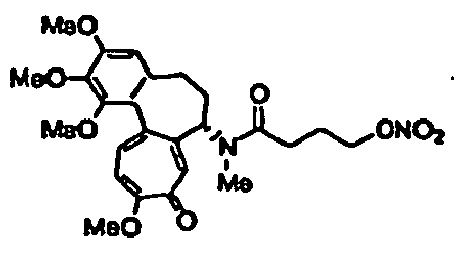
1.96-2.30 (m, 4H), 2.40-2.67 (m, 4H), 3.26 (s, 3H), 3.69 (s, 3H), 3.90 (s, 3H), 3.94 (s, 3H), 3.98 (s, 3H), 4.45 (t, J = 6.0 Hz, 2H), 5.01-5.04 (m, 1H), 6.53 (s, 1H), 6.81 (d, J = 10.6 Hz, 1H), 7.07 (s, 1H), 7.28 (d, J = 10.6 Hz, 1H) 
2.17-2.39 (m. 2H), 2.51-2.69 (m, 2H), 3.24 (s, 3H), 3.71 (s, 3H), 3.91 (s. 3H), 3.94 (s, 3H). 4.00 (s, 3H), 5.00-5.10 (m, 1H), 5.42 (s. 2H). 6.57 (s, 1H), 6.82 (d, J = 10.6 Hz, 1H), 7.28-7.39 (m, 6H) 
1.87-1.96 (m, 1H), 2.03 (s, 3H), 2.05-2.12 (m, 2H), 2.20-2.51 (m, 2H), 2.49 (t, J = 7.0 Hz, 2H), 2.81-2.83 (m, 1H), 3.65 (s, 3H), 3.96 (s, 3H), 3.97(s, 3H), 4.02 (s, 3H), 4.54 (t, J = 7.0 Hz, 2H), 4.63-4.65 (m, 1H), 5.17 (d, J = 12.0 Hz, 1H), 5.29 (d, J = 12.0 Hz, 1H), 6.88 (d, J = 11.0 Hz, 1H), 7.28 (d, J = 11.0 Hz, 1H), 7.56 (s, 1H), 7.87 (d, J = 6.5 Hz, 1H) 
1.82-1.88 (m, 1H), 2.00-2.26 (m, 4H), 2.36-2.56 (m, 2H), 2.45 (s, 3H), 2.91-2.94 (m, 1H), 3.42 (s, 3H), 3.54 (t, J = 6.2 Hz, 2H), 3.64 (s, 3H), 3.95 (s, 3H), 3.97 (s, 3H), 4.46 (d, J = 10.3 Hz, 1H), 4.50 (d, J = 10.3 Hz, 1H), 4.61-4.66 (m, 1H), 7.08 (d, J = 10.6 Hz, 1H), 7.25 (d, J = 10.6 Hz, 1H), 7.41 (d, J = 7.3 Hz, 1H). 7.43 (s, 1H) 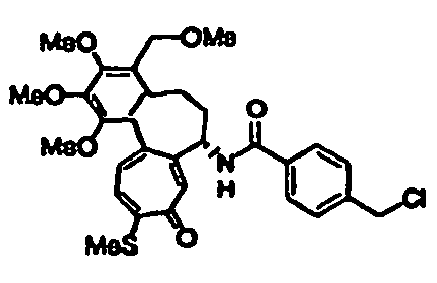
2.05-2.34 (m, 3H), 2.45 (s, 3H), 2.96-3.00 (m, 1H), 3.42 (s, 3H), 3.72 (s, 3H), 3.96 (s, 3H), 3.99 (s, 3H), 4.45 (s, 2H), 4.47 (d, J = 10.3 Hz, 1H), 4.54 (d, J = 10.3 Hz, 1H), 4.85-4.93 (m, 1H), 7.09 (d, J = 10.6 Hz, 1H), 7.22 (d, J = 8.3 Hz, 2H), 7.29 (d, J = 10.3 Hz, 1H), 7.59 (s, 1H), 7.84 (d, J = 8.3 Hz, 2H), 8.34 (d, J= 7.3 Hz, 1H) 
1.78-1.85 (m, 1H), 1.98-2.05 (m, 2H), 2.14-2.42 (m, 4H), 2.45 (s, 3H), 2.91-2.94 (m, 1H), 3.42 (s, 3H), 3.64 (s, 3H), 3.95 (s, 3H), 3.97 (s, 3H), 4.42-4.52 (m, 4H), 4.63-4.67 (m, 1H), 7.09 (d, J = 10.6 Hz, 1H), 7.26 (d, J = 10.6 Hz, 1H), 7.47 (s, 1H), 7.77 (d, J = 7.3 Hz, 1H) Table 1D(continued) Compounds 1H NMR (500 MHz): δ 
2.14-2.34 (m, 3H), 2.45 (s, 3H), 2.96-3.01 (m, 1H), 3.42 (s, 3H), 3.72 (s. 3H), 3.96 (s, 3H), 3.99 (s. 3H), 4.46 (d, J = 10.3 Hz, 1H), 4.53 (d, J = 10.3 Hz, 1H), 4.88-4.94 (m, 1H), 5.30 (s, 2H), 7.11 (d, J = 10.6 Hz, 1H), 7.21 (d, J = 8.3 Hz, 2H), 7.31 (d, J = 10.3 Hz, 1H). 7.62 (s, 1H), 7.88 (d, J = 8.3 Hz. 2H). 8.51 (d, J = 7.3 Hz, 1H) 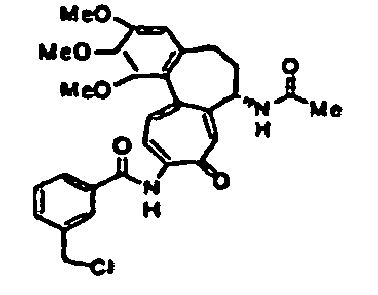
1.82(m, 1H), 2.03(s, 3H), 2.25(m, 1H), 2.40(m, 1H), 2.54(m, 1H). 3.66(s, 3H), 3.91(s, 3H), 3.94(s, 3H), 4.68(s, 2H), 4.71(m, 1H). 6.54(s, 1H), 6.73(d, J=7.0Hz, 1H), 7.51-7.65(m, 4H). 7.94(d, J=8.0Hz, 1H), 8.01(s, 1H), 9.20(d, J=11.0Hz, 1H), 10.32(s, 1H) 
1.84(m, 1H), 2.03(s, 3H), 2.28(m, 1H), 2.42(m, 1H), 2.54(m. 1H), 3.67(s, 3H), 3.91(s, 3H), 3.92(s, 3H), 4.69(m, 1H)), 5.53(s, 2H). 6.39(d, J=7.0Hz, 1H), 6.54(s, 1H), 7.51-7.65(m, 4H), 8.01(d, J=9.5Hz, 1H), 8.03(s, 1H), 9.18(d, J=11.0Hz,1H), 10.32(s, 1H) 
1.80(m, 1H), 2.02(s, 3H), 2.22(t, J=6.0, 6.5Hz, 2H). 2.40(m, 1H). 2.48 (m, 1H), 2.72(t, J=7.0Hz. 2H), 3.62(s. 3H), 3.67(t, J=6.0Hz, 2H), 390(s, 3H), 3.94(s,3H) 4.64(m, 1H), 6.18(d, J=7.0Hz, 1H), 6.52(s, 1H), 7.43(d, J=10.5Hz, 1H), 7.49(s, 1H), 8.99(d, J=11.0Hz, 1H), 9.41 (s, 1H) 
1.98(m,1H). 2.25(m,1H), 2.47(m, 1H), 2.49(m, 1H), 3.15(s,H),3.71(s, 3H), 3.88(s, 3H), 3.95(s, 3H), 4.55(s, 2H), 4.81(m,1H), 6.51 (s, 1H), 6.55(d, J=11.5Hz, 1H), 7.22(s, 1H), 7.28-7.37(dd, J=8.5.11.5Hz, 4H), 7.61(d,J=7.0Hz,1H), 7.87(d,J=10.5Hz,1H) 
1.98(m, 1H), 2.29(m, 1H), 2.50(m, 1H), 2.51(m, 1H), 3.14(s, 6H), 3.71(5, 3H), 3.89(s, 3H), 3.95(s, 3H), 4.81(m, 1H), 5.42(s, 2H), 6.52(s, 1H), 6.55(d, J=11.5Hz, 1H), 7.17(s, 1H), 7.27-7.40( dd, J=8.5,11.5Hz, 4H), 7.871(d,J=8.5Hz, 1H) 
1.98(m. 1H), 2.03(m, 1H), 2.48(m, 1H). 2.53(m. 1H), 3.14(s, 6H), 3.70(s, 3H). 3.90(s. 3H), 3.95(s, 3H), 4.56(s. 2H), 4.83(m, 1H), 6.55(s, 1H), 6.56(d, J=11.2Hz, 1H), 6.93(d, J=7.5Hz, 1H), 7.14-7.52(rm 4H), 7.73(d, J=7.7Hz, 1H), 7.79(s,1H) 
2.20(m, 1H), 2.48(m, 1H), 2.54(m, 2H), 3.15(s. 6H), 3.72(s, 3H), 3.90(s, 3H), 3.96(s, 3H), 4.85(m, 1H), 5.32(d, J=5.3Hz, 2H), 6.55(s, 1H), 6.58(d, J=11.3Hz, 1H), 7.28~7.54(m, 4H), 7.76(d, J=7.8Hz, 1H), 7.80(s, 1H) Table 1 E(continued) Compounds 1H NMR (500 MHz): 6 
1.80(m, 1H), 2.04(m, 1H), 2.07(t, 2H, J=7.0Hz), 2.20(m, 1H), 2.43 (m. 1H), 2.49(t, J=7.0Hz, 2H), 3.17(s, 6H), 3.56(t, J=6.0,6.5Hz, 2H), 3.64(s. 3H), 3.87(s, 3H), 3.93(s, 3H), 4.60(m, 1H), 6.49(s, 1H), 6.55( d, J=11.5Hz, 1H), 7.16(s, 1H), 7.21(d, J=10.5Hz, 1H), 7.27(d,J=11.5Hz, 1H) 
2.01(m, 1H), 2.04(t, 2H, J=6.5, 6.5Hz), 2.18(m,1H), 2.40(m, 1H), 2.46(m, 2H), 2.48(m, 1H), 3.17(s, 6H), 3.64(s, 3H), 3.88(s, 3H), 3.93(s, 3H), 4.45(t, 2H, J=6.0, 6.5Hz), 4.58(m, 1H), 6.48(s, 1H), 6.55(d, 1H, J=11.5Hz), 7.11(s,1H), 7.27(d, 1H, J=11.5Hz), 7.44(d, 1H, J=7.0Hz) - To ascertain the anticancer effects of colchicine derivatives of the formula (I) according to the present invention, the following tests were carried out by sulforhodamine-B (SRB) cytotoxicity assay. For comparison of anticancer effects, conventional colchicine and taxol as an anticancer drug were used as control groups.
- Human tumor cells, including MCF-7 (human breast adenomatous tumor), MCF-7/DOX (adriamycin resistant cell strain), MRS-SA (human uterine sarcoma), MES-SA/DX5 (adriamycin resistant cell strain), A 549 (human non-small cell lung), SKOV-3 (human ovarian), SKMEL-2 (human melanoma), XF-498 (human CNS), HCT-15 (human colon) were incubated at 37°C in the presence of 5% CO2 using a DMEM culture medium. The respective cells were seeded into each well of 96-well plates at a concentration of 2×10³~5×10³ cells/well. After culturing for 24 hours, colchicine dissolved in dimethylsulfoxide (DMSO), a
compound 6, acompound 12 and taxol were diluted, and further cultured for 72 hours. Each cell line of the resultant plates was fixed with trichloroacetic acid (TCA), stained with 0.4% SRB solution and rinsed with 1% acetic acid. Thereafter, the dye was dissolved in 10mM Tris base to measure the optical density (OD) at 520 nm. The measurement results are listed in Tables 2 and 3.Table 2 Materials ED50 (nM) MCF7 MCF-7/DOX MES-SA MES-SA/DX5 Colchicine 4 183 16 961 Compound 60.02 205 0.2 773 Compound 120.02 28 0.01 115 Taxol 0.04 943 0.02 1147 Table 3 Material ED50 (nM) A549 SK-OV-3 SK-MEL-2 XF498 HCT15 Colchicine 9 8 3 4 3 Compound 60.1 0.2 0.1 0.1 0.1 Compound 120.1 0.3 0.1 0.2 0.1 Taxol 0.3 1.2 0.1 1.7 0.1 - When ED50 values of the
compounds - MLR tests were carried out to determine the immunosuppressive effect of an immunosuppressive candidate material. When a responding cell (BALB/c mouse spleen cell) and a stimulating cell (DBA/2 mouse spleen cell) were cultured separately, the cells grew little. On the contrary, when the cells were simultaneously cultured, the cells were proliferated due to induction of an antigen-antibody reaction. The proliferated cells were treated with the immunosuppressive candidate material for measurement of the proliferation inhibitory extent.
- Responding cells (BALB/c mouse spleen cells) and stimulating cells (DBA/2 mouse spleen cells) were respectively seeded into each well of 96-well plates at a concentration of 2×10⁵ cells/well for simultaneous culturing, and cyclosporin A (positive control group), colchicines, and colchicine derivatives of the present invention (compounds 6,9,10,11 and 12) were treated. After culturing for 72 hours at a CO2 incubator, a 20 µℓ MTS solution was added to each well, followed by further culturing for 2 to 4 hours and measuring OD at 490 nm by using ELISA. The results were shown in FIG. 1.
- As shown in FIG. 1, it can be found that the colchicine derivatives according to the present invention, that is, the
compounds - This test was carried out to determine the immunosuppressive effect of an immunosuppressive candidate material by checking anti-proliferation of T cells and B cells. To identify the proliferation inhibitory extent, responding cells (BALB/c mouse spleen cells) were treated with an immunosuppressive candidate material, lipopolysaccharide (LPS) as a B cell activator and concanvalin A (ConA) as a T cell activator. It is known that the responding cells treated with LPS induce proliferation of B cells and those treated with ConA induce proliferation of T cells.
- Responding cells (BALB/c mouse spleen cells) were seeded into each well of 96-well plates at a concentration of 2×10⁵ cells/well. Then, 20 µg/ml lipopolysaccharide, cyclosporin A (positive control group), and inventive colchicine derivatives (
compounds compounds - As shown in FIGS. 2 and 3, the colchicine derivatives according to the present invention suppressed proliferation of the B and T cells induced by LPS and ConA, respectively, in a concentration-dependent manner. The immunosuppressive effect of the colchicine derivatives according to the present invention was superior to that of cyclosporin A, a conventional immunosuppressive agent. In particular, the
compounds - The colchicine derivatives according to the present invention were administered to ICR mice of 4-5 weeks old, weighing 18 to 20g, for acute (intravenous administration) toxicity assay and oral administration toxicity assay, as demonstrated in Tables 5 and 7. The same assays were carried out using colchicine as a control group (see Tables 4 and 6).
Table 4: Acute toxicity of colchicine intravenously administered to mice Group Number of Mouse Dosage (mg/kg) Days for the test (death) Total 1 2 3 4 5 6 7 T1 5 2 - 3 1 - - 1 - 5/5 T2 5 5 1 4 5/5 T3 5 10 4 1 5/5 Table 5: Acute toxicity of compound 6 intravenously administered to mice Group Number of Mouse Dosage (mg/kg) Days for the test (death) Total 1 2 3 4 5 6 7 T1 5 5 - - - - - - - 0/5 T2 5 10 - - - - - - - 0/5 T3 5 25 - - - - - - - 0/2 T4 3 50 3 3/3 Table 6: Toxicity of colchicine orally administered to mice Group Number of Mouse Dosage (mg/kg) Days for the Test (death) Total 1 2 3 4 5 6 7 T1 5 5 - - - - - - - 0/5 T2 5 10 - - - - - - - 0/5 T3 5 25 - - 3 1 - - - 4/5 T4 3 50 - 3 - 1 1 - - 5/5 Table 7: Toxicity of compound 6 orally administered to mice Group Number of Mouse Dosage (mg/kg) Days for the Test (Death) Total 1 2 3 4 5 6 7 T1 5 2 - - - - - - - 0/5 T2 5 5 - - - 1 - - - 1/5 T3 5 10 - 1 1 - - - - 2/5 - This assay is carried out to test mutagenicity of chemical substances using histidine auxotrophic strains that are one of Salmonella Typhimurium mutants. In the assay, artificially induced mutants (histidine auxotrophic mutants) are cultured in a histidine-free culture medium. When various mutagens are added to the culture medium, only revertants generated by reverse mutation survive. Thus generated colonies and spontaneously induced revertants are compared for detection of mutation.
- Ames test was carried out using WP2 uvrA strains (tryptophan auxotrophic strains) of TA100, TA1535, TA98, TA1537 and Escherichia coli. Mutagens used as positive control samples were 0.5 µg/plate of sodium azide, 0.5 µg/plate of 4NQO (4-nitroquinolin-1-oxide), 50 µg/plate of 9-AA (9-aminoacridine). Colchicine and colchicine derivative (Compound 6) according to the present invention were treated at amounts of 0, 317.5, 625, 1250, 2500 and 5000 µg/plate, and incubated in the presence (+) and absence (-) of microsomal potysubstrate oxygenases (S-9 mixture) at 37°C for 48 hours. After incubation, the number of revertant colonies was counted. 3 plates were prepared for each test and the average was calculated. The results are demonstrated in Tables 8 and 9.
Table 8 Test Strain Material Dosage (µg/Plate) Colony/Plate S-9 Mixture (-) S-9 Mixture (+) TA100 Colchicine 0 121 103 317.5 115 79 625 110 76 1250 112 100 2500 115 91 5000 108 78 TA1525 Colchicine 0 14 13 317.5 18 13 625 15 13 1250 17 7 2500 17 12 5000 13 10 TA98 Colchicine 0 31 35 317.5 29 37 625 29 32 1250 29 33 2500 24 37 5000 26 28 TA1537 Colchicine 0 10 14 317.5 17 20 625 14 18 1250 10 18 2500 8 21 5000 9 21 E.coli Colchicine 0 11 10 WP2 uvrA 317.5 10 11 625 6 14 1250 11 14 2500 10 12 5000 11 8 Positive control group TA100 Sodium azide 0.5 453 616 TA1535 Sodium azide 0.5 279 444 TA98 4NQO 0.5 488 391 TA1537 9-AA 50 175 588 WP2 uvrA 4NQO 0.5 268 653 Table 9 Test Strain Materials Dosage (µg/plate) Colony/plate S-9 Mixture (-) S-9 Mixture (+) TA100 Compound 6 0 95 104 317.5 81 96 625 77 84 1250 84 81 2500 88 77 5000 79 78 TA1525 Compound 6 0 12 10 317.5 14 14 625 18 12 1250 15 11 2500 10 11 5000 13 9 TA98 Compound 6 0 28 36 317.5 21 32 625 32 29 1250 24 33 2500 22 22 5000 19 23 TA1537 Compound 6 0 10 15 317.5 8 11 625 10 16 1250 16 13 2500 11 17 5000 7 14 E.coli Compound 6 0 11 10 WP2 uvrA 317.5 16 12 625 9 12 1250 10 12 2500 8 9 5000 11 13 Positive Control group TA100 Sodium azide 0.5 453 616 TA1535 Sodium azide 0.5 279 444 TA98 4NQO 0.5 488 391 TA1537 9-AA 50 175 588 WP2 uvrA 4NQO 0.5 268 653 - As shown in Tables 8 and 9, the colchicine derivatives according to the present invention induced noticeably fewer revertant colonies than the positive control groups, implying no significant hazard as mutagens.
- As described above, the novel colchicine derivative of the formula (I) according to the present invention or pharmaceutically acceptable salts thereof are superior to conventional colchicine in view of anticancer, anti-proliferous and immunosuppressive effects, and have less likelihood of toxicity and less hazard as mutagen than conventional colchicine.
Claims (15)
- Colchicine derivative of the following formula (I) and pharmaceutically acceptable salts thereof:
 when R1 is X2C(X1)-A, N(R6)-A, N(A)2 or X2-A, R2 is X3R7, R3 and R4 are independently hydrogen or a methyl group, R5 is hydrogen, or a methyl group, wherein R6 and R7 are independently hydrogen or a saturated C1 to C6 alkyl group, X, X1, and X3 are independently O or S, and X2 is S;when R2 is X2C(X1)-A, or X2-A, R1 is N(R6)COCH3, N(R6)COCF3, or NHC(O)OR8, R3 and R4 are independently hydrogen or a methyl group, R5 is hydrogen, or a methyl group, wherein R6 is hydrogen or a saturated C1 to C6 alkyl group, R8 is a saturated C1 to C6 alkyl, alkenyl, or substituted or unsubstituted aryl, and X, X1, and X2 are independently O or S;when R3 and R4 are independently C(X1)-A or -A, R1 is N(R6)COCH3, N(R6)COCF3, or NHC(O)OR8, R2 is X3R7, R5 is hydrogen, or a methyl group, wherein R6 and R7 are independently hydrogen or a saturated C1 to C6 alkyl group, R8 is a saturated C1 to C6 alkyl, alkenyl, or substituted or unsubstituted aryl, and X, X1, and X3 are independently O or S;wherein A is represented by the formula (a), (b), (c), (d), (e), (f), (g), (h), (i) or (j):
-Y1-Hal (a)
-Y1-ONO2 (b)


- A compound selected from the group consisting of:4-chloro-N-(1,2,3,10-tetramethoxy-9-oxo-5,6,7,9-tetrahydro-benzo[a]heptarene-7-yl)-butylamide;4-chloromethyl-N-(1,2,3,10-tetramethoxy-9-oxo-5,6,7,9-tetrahydro-benzo[a]heptarene-7-yl)-benzamide;3-chloromethyl-N-(1,2,3,10-tetramethoxy-9-oxo-5,6,7,9-tetrahydro-benzo[a]heptarene-7-yl)-benzamide;4-iodo-N-(1,2,3,10-tetramethoxy-9-oxo-5,6,7,9-tetrahydro-benzo[a]heptarene-7-yl)-butylamide;4-nitrooxy-N-(1,2,3,10-tetramethoxy-9-oxo-5,6,7,9-tetrahydro-benzo[a]heptarene-7-yl)-butylamide;4-iodomethyl-N-(1,2,3,10-tetramethoxy-9-oxo-5,6,7,9-tetrahydro-benzo[a]heptarene-7-yl)-benzamide;4-nitrooxymethyl-N-(1,2,3,10-tetramethoxy-9-oxo-5,6,7,9-tetrahydro-benzo[a]heptarene-7-yl)-benzamide;3-iodomethyl-N-(1,2,3,10-tetramethoxy-9-oxo-5,6,7,9-tetrahydro-benzo[a]heptarene-7-yl)-benzamide;3-nitrooxymethyl-N-(1,2,3,10-tetramethoxy-9-oxo-5,6,7,9-tetrahydro-benzo[a]heptarene-7-yl)-benzamide;4-chloro-N-(1,2,3-trimethoxy-10-methylsulfanyl-9-oxo-5,6,7,9-tetrahydro-benzo[a]heptarene-7-yl)-butylamide;4-chloromethyl-N-(1,2,3-trimethoxy-10-methylsulfanyl-9-oxo-5,6,7,9-tetrahydro-benzo[a]heptarene-7-yl)-benzamide;3-chloromethyl-N-(1,2,3-trimethoxy-10-methylsulfanyl-9-axo-S,G,7,9-tetrahydro-benzo[a]heptarene-7-yl)-benzamide;4-iodo-N-(1,2,3-trimethoxy-10-methylsulfanyl-9-oxa-5,6,7,9-tetrahydro-benzo[a]heptarene-7-yl)-butylamide;4-nitrooxy-N-(1,2,3-trimethoxy-10-methylsulfanyl-9-oxo-5,6,7,9-tetrahydro-benzo[a]heptarene-7-yl)-butylamide;4-iodomethyl-N-(1,2,3-trimethoxy-10-methylsulfanyl-9-oxo-5,6,7,9-tetrahydro-benzo[a]heptarene-7-yl)-benzamide;4-nitrooxymethyl-N-(1,2,3-trimethoxy-10-methylsulfanyl-9-oxo-5,6,7,9-tetrahydro-benzo[a]heptarene-7-yl)-benzamide;3-iodomethyl-N-(1,2,3-trimethoxy-10-methylsulfanyl-9-oxo-5,6,7,9-tetrahydxo-benzo[a]heptarene-7-yl)-benzamide;3-nitrooxymethyl-N-(1,2,3-trimethoxy-10-methylsulfanyl-9-oxo-5,6,7,9-tetrahydro-benzo[a]heptarene-7-yl)-benzamide;4-chloro-N-methyl-N-(1,2,3-trimethoxy-10-methylsulfanyl-9-oxo-5,6,7,9-tetrahydro-benzo [a]heptarene-7-yl)-butylamide;4-nitrooxymelhyl-N-methyl-N-(1,2,3-trimethoxy-10-methysulfanyl-9-oxo-5,6,7,9-tetrahydro-benzo[a]heptarene-7-yl)-benzamide;3-nitrooxymethyl-N-methyl-N-(1,2,3-trimethoxy-10-methylsulfanyl- 9-oxo-5,6,7,9-tetrahydro-benzo[a]heptarene-7-yl)-benzamide;4-chloro-N-methyl-N-(1,2,3,10-tetramethoxy-9-oxo-5,6,7,9-tetrahydro-benzo[a]heptarene-7-yl) butylamide;4-chloromethyl-N-methyl-N-(1,2,3,10-tetramethoxy-9-oxo-5,6,7,9-tetrahydro-benzo[a]heptarene-7-yl) benzamide;N-methyl-4-nitrooxy-N-(1,2,3,10-tetramethoxy-9-oxo-5,6,7,9-tetrahydro-benzo[a]heptarene-7-yl) butylamide;N-methyl-4-nitrooxymethyl-N-(1,2,3,10-tetramethoxy-9-oxo-5,6,7,9-tetrahydro-benzo [a]heptarene-7-yl) benzamide;or pharmaceutically acceptable salts thereof.
- A pharmaceutical composition comprising the colchicine derivative or its pharmaceutically acceptable salt according to claim 1 or 2.
- An anticancer agent, an anti-proliferous agent, and an immunosuppressive agent comprising the colchicine derivative or its pharmaceutically acceptable salt according to claim 1 or 2 as an active ingredient.
- A method for preparing a colchicine derivative of the formula (Ia) among the colchicine derivatives according to claim 1 comprising:reacting a compound of the formula (II) with a compound of the following formula (III) or a compound of the following formula (V) for amidation to produce a compound of the following formula (IV) or a compound of the following formula (VI); and subjecting the compound of the formula (IV) or (VI) for nitration to convert the same into the colchicine derivative of the formula (Ia):wherein, B is represented by the following formulas C1 and C2:


-Y1- (a')


- The method according to claim 5 comprising nitration of a compound represented by the formula (VII) prepared by converting hydrogen of alcohol in the compound of the formula (VI) into a leaving group before the nitration of the compound of the formula (VI):

- A method for preparing a colchicine derivative of the formula (Ib) among the colchicine derivatives according to claim 1 comprising:reacting the compound of the formula (II) with a compound of the formula (VIII) or a compound of the formula (X) for amidation to produce a compound (IX) or a compound of the formula (XI); and subjecting the compound of the formula (IX) or the compound of the formula (XI) to nitration for converting the same into the compound of the formula (Ib):wherein B is defined as in claim 5,


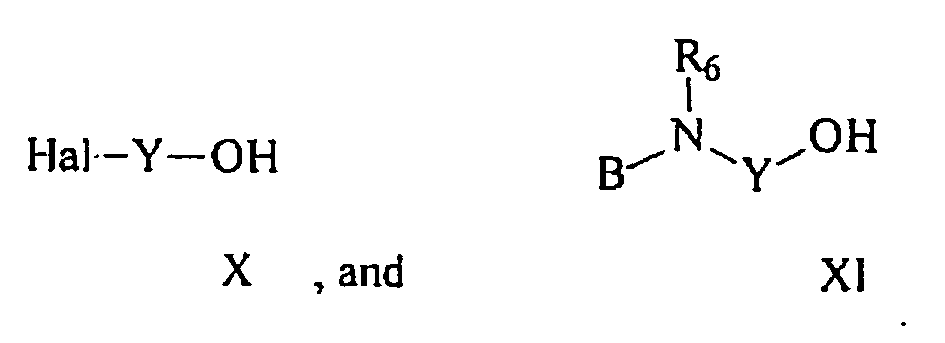
- The method according to claim 7 comprising nitration of a compound represented by the formula (XII) prepared by converting hydrogen of alcohol in the compound of the formula (XI) into a leaving group before nitration of the compound of the formula (XI):

- A method of preparing a colchicine derivative of the formula (Ic) among the colchicine derivatives according to claim 1 comprising:reacting a compound of the formula (XIII) with a compound of the formula (III) or a compound of the formula (XV) for esterification to produce a compound of the formula (XIV) or a compound of the formula (XVI); and subjecting the compound of the formula (XIV) or the compound of the formula (XVI) to nitration to produce the compound of the formula (Ic):wherein C is represented by the formula C1, C2, C3, C4 or C5:

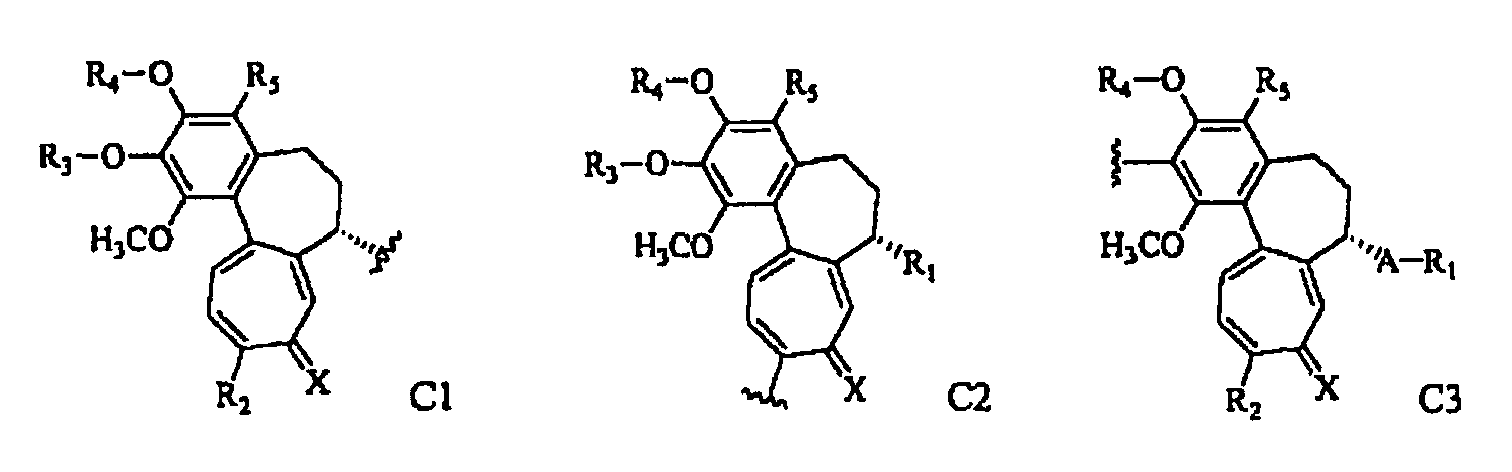


-Y1- (a')


- The method according to claim 9 comprising reacting the compound of the formula (XIII) with a compound of the formula (XVIII) having a hydroxy-protecting group to produce a compound of the formula (XIX) before esterification of the compound of the formula (XIII); and converting the compound of the formula (XIX) into a compound of the formula (XVI) by a deprotection:

- The method according to claim 9 or 10 comprising nitration of a compound of the formula (XVII) prepared by converting hydrogen of alcohol in the compound of the formula (XVI) into a leaving group before nitration of the compound of the formula (XVI):

- A method for preparing a colchicine derivative of the formula (Id) among the colchicine derivatives according to claim 1 comprising:reacting a compound of the formula (XX) with a compound of the formula (VIII) or a compound of the formula (X) for amidation to produce a compound of the formula (XXI) or a compound of the formula (XXII); and subjecting the compound of the formula (XXI) or the compound of the formula (XXII) to nitration to convert the same into the colchicine derivative of the formula (Id):wherein B is defined as in claim 5,


- The method according to claim 12 comprising nitration of a compound of the formula (XXIII) prepared by converting each hydrogen of alcohols in the compound of the formula (XXII) into a leaving group before nitration of the compound of the formula (XXII):

- A method of preparing a colchicine derivative of the formula (Ie) among the colchicine derivatives according to claim 1 comprising:reacting a compound of the formula (XIII) with a compound of the formula (VIII) or a compound of the formula (X) for esterification to produce a compound of the formula (XXIV) or a compound of the formula (XXV); and subjecting the compound of the formula (XXIV) or the compound of the formula (XXV) to nitration to convert the same into the colchicine derivative of the formula (Ie):wherein C is defined as in claim 9,
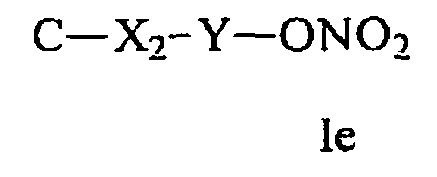


- The method according to claim 14 comprising nitration of a compound of the formula (XXVI) prepared by converting hydrogen of alcohol in the compound of the formula (XXV) into a leaving group before nitration of the compound of the formula (XXV):

Applications Claiming Priority (3)
| Application Number | Priority Date | Filing Date | Title |
|---|---|---|---|
| KR2001029341 | 2001-05-28 | ||
| KR20010029341 | 2001-05-28 | ||
| PCT/KR2002/000996 WO2002100824A1 (en) | 2001-05-28 | 2002-05-27 | A novel alkaloid derivative and a pharmaceutical composition containing the same |
Publications (3)
| Publication Number | Publication Date |
|---|---|
| EP1404652A1 EP1404652A1 (en) | 2004-04-07 |
| EP1404652A4 EP1404652A4 (en) | 2005-06-15 |
| EP1404652B1 true EP1404652B1 (en) | 2007-08-29 |
Family
ID=19710040
Family Applications (1)
| Application Number | Title | Priority Date | Filing Date |
|---|---|---|---|
| EP02733537A Expired - Lifetime EP1404652B1 (en) | 2001-05-28 | 2002-05-27 | A novel alkaloid derivative and a pharmaceutical composition containing the same |
Country Status (7)
| Country | Link |
|---|---|
| US (1) | US7119229B2 (en) |
| EP (1) | EP1404652B1 (en) |
| JP (1) | JP2004529204A (en) |
| KR (1) | KR100600158B1 (en) |
| AT (1) | ATE371644T1 (en) |
| DE (1) | DE60222131D1 (en) |
| WO (1) | WO2002100824A1 (en) |
Families Citing this family (12)
| Publication number | Priority date | Publication date | Assignee | Title |
|---|---|---|---|---|
| US6720323B2 (en) | 2000-07-07 | 2004-04-13 | Angiogene Pharmaceuticals Limited | Colchinol derivatives as angiogenesis inhibitors |
| EP1646608B1 (en) * | 2003-06-25 | 2011-03-02 | JE IL Pharmaceutical Co., Ltd. | Tricyclic derivatives or pharmaceutically acceptable salts thereof, their preparations and pharmaceutical compositions containing them |
| AR047732A1 (en) * | 2003-12-02 | 2006-02-15 | Nicox Sa | NITROOXIDERIVATES OF ANTIHIPERTENSIVE DRUGS |
| KR100820860B1 (en) * | 2007-10-01 | 2008-04-11 | 주식회사 중원 | Corrugated steel pipe connector for watertight flange type |
| EP2435403A4 (en) * | 2009-05-27 | 2015-04-01 | Takeda Pharmaceuticals Usa Inc | Thiocolchicine derivatives, method of making and methods of use thereof |
| KR101077609B1 (en) * | 2009-07-08 | 2011-10-27 | 제일약품주식회사 | Process for preparing tricyclic derivatives |
| JP5829520B2 (en) * | 2009-08-20 | 2015-12-09 | 国立大学法人 千葉大学 | Colchicine derivatives |
| KR101343443B1 (en) * | 2010-02-18 | 2013-12-19 | 재단법인 아산사회복지재단 | Colchicine derivatives or phamarceutically acceptable salts thereof, process for preparation thereof and pharmaceutical composition containing the same |
| WO2016139303A1 (en) * | 2015-03-03 | 2016-09-09 | Universität Zu Köln | Pharmaceutical composition for the therapy of diseases caused by highly proliferating cells |
| KR20250172901A (en) | 2018-06-29 | 2025-12-09 | 알버타 헬스 서비시즈 | Methods and uses of colchicine derivatives |
| KR20210117762A (en) * | 2020-03-20 | 2021-09-29 | 주식회사 이노파마스크린 | A screening method for plk-1 inhibitor and plk-1 inhibitor therefrom, use of the same |
| CN114656429A (en) * | 2021-11-18 | 2022-06-24 | 江苏新元素医药科技有限公司 | Anti-inflammatory analgesic compound and application thereof |
Family Cites Families (7)
| Publication number | Priority date | Publication date | Assignee | Title |
|---|---|---|---|---|
| NL278916A (en) | 1961-05-26 | |||
| BE638469A (en) * | 1962-10-11 | |||
| CH513119A (en) * | 1968-02-23 | 1971-09-30 | Merck Patent Gmbh | Process for the preparation of new halocolchicine derivatives |
| US4533675A (en) | 1984-04-17 | 1985-08-06 | The United States Of America As Represented By The Department Of Health And Human Services | Carbamates of colchicine for treatment of gout |
| US5175342A (en) * | 1988-08-24 | 1992-12-29 | The United States Of America As Represented By The Department Of Health And Human Services | Esters of 3-demethylthiocolchicine and n-acyl analogs |
| WO1991002084A1 (en) | 1989-08-09 | 1991-02-21 | Michael Reese Hospital And Medical Center | Method for detection and treatment of multiple drug-resistant tumor cells and useful colchicine derivative probes |
| IT1276996B1 (en) * | 1995-06-27 | 1997-11-04 | Indena Spa | COLCHICINE DERIVATIVES, THEIR USE AND FORMULATIONS CONTAINING THEM |
-
2002
- 2002-05-27 DE DE60222131T patent/DE60222131D1/en not_active Expired - Lifetime
- 2002-05-27 US US10/479,057 patent/US7119229B2/en not_active Expired - Fee Related
- 2002-05-27 KR KR1020037014670A patent/KR100600158B1/en not_active Expired - Fee Related
- 2002-05-27 WO PCT/KR2002/000996 patent/WO2002100824A1/en not_active Ceased
- 2002-05-27 EP EP02733537A patent/EP1404652B1/en not_active Expired - Lifetime
- 2002-05-27 JP JP2003503593A patent/JP2004529204A/en active Pending
- 2002-05-27 AT AT02733537T patent/ATE371644T1/en not_active IP Right Cessation
Also Published As
| Publication number | Publication date |
|---|---|
| JP2004529204A (en) | 2004-09-24 |
| US20040204494A1 (en) | 2004-10-14 |
| DE60222131D1 (en) | 2007-10-11 |
| ATE371644T1 (en) | 2007-09-15 |
| KR100600158B1 (en) | 2006-07-12 |
| EP1404652A4 (en) | 2005-06-15 |
| US7119229B2 (en) | 2006-10-10 |
| KR20040007550A (en) | 2004-01-24 |
| WO2002100824A1 (en) | 2002-12-19 |
| EP1404652A1 (en) | 2004-04-07 |
Similar Documents
| Publication | Publication Date | Title |
|---|---|---|
| DE60036968T2 (en) | Adamantane derivatives for the treatment of inflammatory, immunological and cardiovascular diseases | |
| AU745845B2 (en) | Potassium channel inhibitors | |
| DE60215851T2 (en) | N-ADAMANTYLMETHYL DERIVATIVES AND INTERMEDIATE PRODUCTS AS PHARMACEUTICAL COMPOSITIONS AND METHOD FOR THE PRODUCTION THEREOF | |
| DE69808130T2 (en) | Adamantane derivatives | |
| DE69812159T2 (en) | DERIVATIVES OF ADAMANTAN | |
| DE69415445T2 (en) | Cytotoxic stilbene derivatives and pharmaceutical compositions containing them | |
| DE69603117T2 (en) | Camptothecin derivative and its use as an anti-tumor agent | |
| EP1646608B1 (en) | Tricyclic derivatives or pharmaceutically acceptable salts thereof, their preparations and pharmaceutical compositions containing them | |
| US20040204494A1 (en) | Novel alkaloid derivative and a pharmaceutical composition containing the same | |
| US5824698A (en) | Antibacterial dibenzimidazole derivatives | |
| DE69305276T2 (en) | Arylglycinamide derivatives, processes for their preparation and their use in the therapy of dysuria | |
| DE69618600T2 (en) | COLCHICINE DERIVATIVES, THEIR USE AND FORMULATIONS CONTAINING THE SAME | |
| MXPA97003634A (en) | Derivatives of antibacterial benzymidazole | |
| DE69706690T2 (en) | ACRYLOYL-SUBSTITUTED DISTAMYCIN DERIVATIVES, METHODS FOR THE PRODUCTION THEREOF AND THEIR USE AS ANTITUMOR AND ANTIVIRAL AGENTS | |
| DE69533267T2 (en) | Colchicine derivatives and their therapeutic use | |
| DE69312567T2 (en) | 2-Formylpyridine-thiosemicarbazone derivatives, their preparation and their use as anti-tumor agents | |
| DE69705622T2 (en) | DISTAMYCIN DERIVATIVES, METHOD FOR THE PRODUCTION THEREOF AND THEIR USE AS AN ANTITUMOR AND ANTIVIRAL ACTIVE SUBSTANCES | |
| Toyokuni et al. | Synthetic studies on the validamycins. IV. Synthesis of DL-valienamine and related branched-chain unsaturated aminocyclitols. | |
| DE3781174T2 (en) | USE OF AROMATIC DIAMINES FOR THE TREATMENT OF ANGINA PECTORIS AND DIAMINE DAFUER. | |
| CH637932A5 (en) | METHOD FOR PRODUCING NEW DERIVATIVES OF PERHYDRO-AZA-HETEROCYCLEN. | |
| EP0716082A1 (en) | Oxy-phenyl-(phenyl)glycinolamides substituted with a heterocycle having antiatherosclerotic activity | |
| DE69126978T2 (en) | DERIVATIVES OF 6-AMINO-OCTAHYDRO-INDOLIZINTRIOL | |
| DE69908371T2 (en) | DISTAMYCIN DERIVATIVES CONTAINING THIOETHER GROUPS, METHOD FOR THE PRODUCTION THEREOF AND THEIR USE AS ANTITUARY AGENTS | |
| ITMI961168A1 (en) | COLCHYCINE SKELETON COMPOUNDS FOR USE AS DRUGS AND COMPOSITIONS THAT CONTAIN THEM | |
| DE69714040T2 (en) | TAXANE DERIVATIVES, THEIR PRODUCTION AND COMPOSITIONS THAT INCLUDE |
Legal Events
| Date | Code | Title | Description |
|---|---|---|---|
| PUAI | Public reference made under article 153(3) epc to a published international application that has entered the european phase |
Free format text: ORIGINAL CODE: 0009012 |
|
| 17P | Request for examination filed |
Effective date: 20031229 |
|
| AK | Designated contracting states |
Kind code of ref document: A1 Designated state(s): AT BE CH CY DE DK ES FI FR GB GR IE IT LI LU MC NL PT SE TR |
|
| AX | Request for extension of the european patent |
Extension state: AL LT LV MK RO SI |
|
| A4 | Supplementary search report drawn up and despatched |
Effective date: 20050502 |
|
| 17Q | First examination report despatched |
Effective date: 20060320 |
|
| GRAP | Despatch of communication of intention to grant a patent |
Free format text: ORIGINAL CODE: EPIDOSNIGR1 |
|
| GRAS | Grant fee paid |
Free format text: ORIGINAL CODE: EPIDOSNIGR3 |
|
| GRAA | (expected) grant |
Free format text: ORIGINAL CODE: 0009210 |
|
| AK | Designated contracting states |
Kind code of ref document: B1 Designated state(s): AT BE CH CY DE DK ES FI FR GB GR IE IT LI LU MC NL PT SE TR |
|
| REG | Reference to a national code |
Ref country code: GB Ref legal event code: FG4D |
|
| REG | Reference to a national code |
Ref country code: CH Ref legal event code: EP Ref country code: CH Ref legal event code: NV Representative=s name: ARNOLD & SIEDSMA AG |
|
| REG | Reference to a national code |
Ref country code: IE Ref legal event code: FG4D |
|
| REF | Corresponds to: |
Ref document number: 60222131 Country of ref document: DE Date of ref document: 20071011 Kind code of ref document: P |
|
| PG25 | Lapsed in a contracting state [announced via postgrant information from national office to epo] |
Ref country code: NL Free format text: LAPSE BECAUSE OF FAILURE TO SUBMIT A TRANSLATION OF THE DESCRIPTION OR TO PAY THE FEE WITHIN THE PRESCRIBED TIME-LIMIT Effective date: 20070829 Ref country code: ES Free format text: LAPSE BECAUSE OF FAILURE TO SUBMIT A TRANSLATION OF THE DESCRIPTION OR TO PAY THE FEE WITHIN THE PRESCRIBED TIME-LIMIT Effective date: 20071210 Ref country code: FI Free format text: LAPSE BECAUSE OF FAILURE TO SUBMIT A TRANSLATION OF THE DESCRIPTION OR TO PAY THE FEE WITHIN THE PRESCRIBED TIME-LIMIT Effective date: 20070829 |
|
| NLV1 | Nl: lapsed or annulled due to failure to fulfill the requirements of art. 29p and 29m of the patents act | ||
| PG25 | Lapsed in a contracting state [announced via postgrant information from national office to epo] |
Ref country code: AT Free format text: LAPSE BECAUSE OF FAILURE TO SUBMIT A TRANSLATION OF THE DESCRIPTION OR TO PAY THE FEE WITHIN THE PRESCRIBED TIME-LIMIT Effective date: 20070829 |
|
| PG25 | Lapsed in a contracting state [announced via postgrant information from national office to epo] |
Ref country code: BE Free format text: LAPSE BECAUSE OF FAILURE TO SUBMIT A TRANSLATION OF THE DESCRIPTION OR TO PAY THE FEE WITHIN THE PRESCRIBED TIME-LIMIT Effective date: 20070829 |
|
| EN | Fr: translation not filed | ||
| PG25 | Lapsed in a contracting state [announced via postgrant information from national office to epo] |
Ref country code: GR Free format text: LAPSE BECAUSE OF FAILURE TO SUBMIT A TRANSLATION OF THE DESCRIPTION OR TO PAY THE FEE WITHIN THE PRESCRIBED TIME-LIMIT Effective date: 20071130 Ref country code: DK Free format text: LAPSE BECAUSE OF FAILURE TO SUBMIT A TRANSLATION OF THE DESCRIPTION OR TO PAY THE FEE WITHIN THE PRESCRIBED TIME-LIMIT Effective date: 20070829 |
|
| PG25 | Lapsed in a contracting state [announced via postgrant information from national office to epo] |
Ref country code: PT Free format text: LAPSE BECAUSE OF FAILURE TO SUBMIT A TRANSLATION OF THE DESCRIPTION OR TO PAY THE FEE WITHIN THE PRESCRIBED TIME-LIMIT Effective date: 20080129 |
|
| PG25 | Lapsed in a contracting state [announced via postgrant information from national office to epo] |
Ref country code: SE Free format text: LAPSE BECAUSE OF FAILURE TO SUBMIT A TRANSLATION OF THE DESCRIPTION OR TO PAY THE FEE WITHIN THE PRESCRIBED TIME-LIMIT Effective date: 20071129 |
|
| PLBE | No opposition filed within time limit |
Free format text: ORIGINAL CODE: 0009261 |
|
| STAA | Information on the status of an ep patent application or granted ep patent |
Free format text: STATUS: NO OPPOSITION FILED WITHIN TIME LIMIT |
|
| PG25 | Lapsed in a contracting state [announced via postgrant information from national office to epo] |
Ref country code: DE Free format text: LAPSE BECAUSE OF FAILURE TO SUBMIT A TRANSLATION OF THE DESCRIPTION OR TO PAY THE FEE WITHIN THE PRESCRIBED TIME-LIMIT Effective date: 20071130 |
|
| 26N | No opposition filed |
Effective date: 20080530 |
|
| PG25 | Lapsed in a contracting state [announced via postgrant information from national office to epo] |
Ref country code: MC Free format text: LAPSE BECAUSE OF NON-PAYMENT OF DUE FEES Effective date: 20080531 |
|
| REG | Reference to a national code |
Ref country code: CH Ref legal event code: PL |
|
| GBPC | Gb: european patent ceased through non-payment of renewal fee |
Effective date: 20080527 |
|
| PG25 | Lapsed in a contracting state [announced via postgrant information from national office to epo] |
Ref country code: LI Free format text: LAPSE BECAUSE OF NON-PAYMENT OF DUE FEES Effective date: 20080531 Ref country code: CH Free format text: LAPSE BECAUSE OF NON-PAYMENT OF DUE FEES Effective date: 20080531 |
|
| PG25 | Lapsed in a contracting state [announced via postgrant information from national office to epo] |
Ref country code: IE Free format text: LAPSE BECAUSE OF NON-PAYMENT OF DUE FEES Effective date: 20080527 |
|
| PG25 | Lapsed in a contracting state [announced via postgrant information from national office to epo] |
Ref country code: GB Free format text: LAPSE BECAUSE OF NON-PAYMENT OF DUE FEES Effective date: 20080527 |
|
| PG25 | Lapsed in a contracting state [announced via postgrant information from national office to epo] |
Ref country code: CY Free format text: LAPSE BECAUSE OF FAILURE TO SUBMIT A TRANSLATION OF THE DESCRIPTION OR TO PAY THE FEE WITHIN THE PRESCRIBED TIME-LIMIT Effective date: 20070829 |
|
| PG25 | Lapsed in a contracting state [announced via postgrant information from national office to epo] |
Ref country code: LU Free format text: LAPSE BECAUSE OF NON-PAYMENT OF DUE FEES Effective date: 20080527 |
|
| PG25 | Lapsed in a contracting state [announced via postgrant information from national office to epo] |
Ref country code: TR Free format text: LAPSE BECAUSE OF FAILURE TO SUBMIT A TRANSLATION OF THE DESCRIPTION OR TO PAY THE FEE WITHIN THE PRESCRIBED TIME-LIMIT Effective date: 20070829 |
|
| PG25 | Lapsed in a contracting state [announced via postgrant information from national office to epo] |
Ref country code: IT Free format text: LAPSE BECAUSE OF NON-PAYMENT OF DUE FEES Effective date: 20080531 |
|
| PG25 | Lapsed in a contracting state [announced via postgrant information from national office to epo] |
Ref country code: FR Free format text: LAPSE BECAUSE OF FAILURE TO SUBMIT A TRANSLATION OF THE DESCRIPTION OR TO PAY THE FEE WITHIN THE PRESCRIBED TIME-LIMIT Effective date: 20080425 |