EP1401872B1 - Antigen targeting - Google Patents
Antigen targeting Download PDFInfo
- Publication number
- EP1401872B1 EP1401872B1 EP02726015A EP02726015A EP1401872B1 EP 1401872 B1 EP1401872 B1 EP 1401872B1 EP 02726015 A EP02726015 A EP 02726015A EP 02726015 A EP02726015 A EP 02726015A EP 1401872 B1 EP1401872 B1 EP 1401872B1
- Authority
- EP
- European Patent Office
- Prior art keywords
- antigen
- antibody
- mucosal
- madcam
- targeting
- Prior art date
- Legal status (The legal status is an assumption and is not a legal conclusion. Google has not performed a legal analysis and makes no representation as to the accuracy of the status listed.)
- Expired - Lifetime
Links
Images





Classifications
-
- A—HUMAN NECESSITIES
- A61—MEDICAL OR VETERINARY SCIENCE; HYGIENE
- A61K—PREPARATIONS FOR MEDICAL, DENTAL OR TOILETRY PURPOSES
- A61K39/00—Medicinal preparations containing antigens or antibodies
- A61K39/02—Bacterial antigens
- A61K39/105—Delta proteobacteriales, e.g. Lawsonia; Epsilon proteobacteriales, e.g. campylobacter, helicobacter
-
- A—HUMAN NECESSITIES
- A61—MEDICAL OR VETERINARY SCIENCE; HYGIENE
- A61K—PREPARATIONS FOR MEDICAL, DENTAL OR TOILETRY PURPOSES
- A61K39/00—Medicinal preparations containing antigens or antibodies
- A61K39/385—Haptens or antigens, bound to carriers
-
- A—HUMAN NECESSITIES
- A61—MEDICAL OR VETERINARY SCIENCE; HYGIENE
- A61P—SPECIFIC THERAPEUTIC ACTIVITY OF CHEMICAL COMPOUNDS OR MEDICINAL PREPARATIONS
- A61P37/00—Drugs for immunological or allergic disorders
- A61P37/02—Immunomodulators
- A61P37/04—Immunostimulants
-
- C—CHEMISTRY; METALLURGY
- C07—ORGANIC CHEMISTRY
- C07K—PEPTIDES
- C07K16/00—Immunoglobulins [IG], e.g. monoclonal or polyclonal antibodies
- C07K16/18—Immunoglobulins [IG], e.g. monoclonal or polyclonal antibodies against material from animals or humans
- C07K16/28—Immunoglobulins [IG], e.g. monoclonal or polyclonal antibodies against material from animals or humans against receptors, cell surface antigens or cell surface determinants
- C07K16/2803—Immunoglobulins [IG], e.g. monoclonal or polyclonal antibodies against material from animals or humans against receptors, cell surface antigens or cell surface determinants against the immunoglobulin superfamily
-
- A—HUMAN NECESSITIES
- A61—MEDICAL OR VETERINARY SCIENCE; HYGIENE
- A61K—PREPARATIONS FOR MEDICAL, DENTAL OR TOILETRY PURPOSES
- A61K39/00—Medicinal preparations containing antigens or antibodies
- A61K2039/505—Medicinal preparations containing antigens or antibodies comprising antibodies
-
- A—HUMAN NECESSITIES
- A61—MEDICAL OR VETERINARY SCIENCE; HYGIENE
- A61K—PREPARATIONS FOR MEDICAL, DENTAL OR TOILETRY PURPOSES
- A61K39/00—Medicinal preparations containing antigens or antibodies
- A61K2039/60—Medicinal preparations containing antigens or antibodies characteristics by the carrier linked to the antigen
- A61K2039/6031—Proteins
- A61K2039/6056—Antibodies
-
- A—HUMAN NECESSITIES
- A61—MEDICAL OR VETERINARY SCIENCE; HYGIENE
- A61K—PREPARATIONS FOR MEDICAL, DENTAL OR TOILETRY PURPOSES
- A61K39/00—Medicinal preparations containing antigens or antibodies
- A61K39/39—Medicinal preparations containing antigens or antibodies characterised by the immunostimulating additives, e.g. chemical adjuvants
Definitions
- compositions and methods for raising an immune response in animals are useful in raising mucosal and systemic immunity.
- mucosal surfaces of the body play an important role in defence against numerous infections 1 .
- induction of mucosal immunity has been problematic.
- Physiochemical barriers at mucosal surfaces prevent adequate amounts of intact antigen reaching underlying mucosal lymphoid tissue and antigen localization in lymphoid tissues is critical for immune induction 2 .
- the small amount of antigen that does reach these lymphoid sites is largely ignored in a system set up to maintain non reactivity or tolerance to a heavy burden of food and other benign antigens encountered daily.
- GALT Gut Associated Lymphoid Tissue
- the present inventors postulated that delivering antigens via the blood targeted to mucosal lymphoid tissues may bypass these obstacles.
- the present inventors tested targeting of antigens to the Mucosal Addressin Cellular Adhesion Molecule-1 (MAdCAM-1), a receptor present in circulatory vessels in the Gut Associated Lymphoid Tissue (GALT) and found that such antigen targeting induced a rapid mucosal IgA response in the gut and augmented (1000 fold) the systemic response to antigen.
- MAdCAM-1 Mucosal Addressin Cellular Adhesion Molecule-1
- GALT Gut Associated Lymphoid Tissue
- WO9413312 describes mammalian purified nucleic acids encoding mucosal addressins and the encoded proteins.
- WO9624673 describes isolated and/or recombinant nucleic acids which encode primate MAdCAMs, and to corresponding encoded proteins or polypeptides.
- WO98/44129 describes DNA constructs encoding a targeting molecule such as L-selectin and an antigen for DNA vaccination.
- the present invention provides the use of a targeted antigen comprising an antigen bound to a targeting moiety wherein the targeting moiety is an antibody, an antibody fragment or an antibody binding domain and the targeting moiety binds to Mucosal Addressin Cellular Adhesion Molecule-1 present in circulatory vessels in Gut Associated Lymphoid Tissue for the manufacture of a medicament for the induction of an IgA response to said antigen.
- the targeted antigen may administered by injection by a haematogeneous route.
- the antigen may be of a pathogen which colonizes a mucosal surface, for example an antigen from Salmonella, Cholera, Helicobacter pylori, HIV, Candida, P. gingivalis or gut parasites.
- the targeted antigen is administered to the animal parenterally.
- Routes of administration include IV, IM, IP, subcutaneous and intradermal. It is preferred that the administration is by a haematogenous route.
- Anti-MAdCAM-1 antibodies are known in the art. An antibody fragment or an antibody binding domain, may also be used. Further information regarding antibody fragments such as single chain Fvs can be found in for example, Hudson PJ & Kortt AA. "High avidity scFv multimers; diabodies and triabodies”. J. Immunol. Meth. 231 (1999) 177-189; Adams GP & Schier R. "Generating improved single-chain Fv molecules for tumor targeting". J. Immunol. Meth.
- Monoclonal antibodies directed against MAdCAM-1 are known in the art 10 .
- Two such antibodies, MECA-89 and MECA-367, are available from ATCC under accession nos. HB-292 and HB-9478 respectively.
- fusions need to be able to target the receptor, such as MAdCAM-1, in vivo. It is therefore highly preferred that the binding of the fusion to red blood cells or other cells (e.g. vascular endothelium of the lung) which it may encounter during its hematogenous traverse is minimal as such binding may inhibit the fusion reaching the desired sites within the GALT.
- red blood cells or other cells e.g. vascular endothelium of the lung
- the fusion process should be designed or selected so as not to interfere with the ability of the targeting moiety to bind to the receptor present in circulatory vessels in the GALT. This can be tested in vitro by determining whether the fusions bind the receptor, such as MAdCAM-1 on cryostat sections of the GALT by immunohistology or bind recombinant receptor proteins by ELISA.
- the antigen used in the present invention can be any antigen against which it is desired to raise an immune response. It is preferred that the antigen is selected such that an immune response is generated against any pathogen whose main portal of entry is the gut and those that colonise mucosal surface. This would include Salmonella, Cholera, Helicobacter pylori , rectally introduced HIV, Candida, P, gingivalis, gut parasites or gut associated toxins. Moreover, the present invention may be used to induce an immune response to gut hormones (e.g. gastrin) or their receptors for gut associated cancers [Watson SA, Clarke PA, Morris TM, Caplin ME.
- gut hormones e.g. gastrin
- HIV antigens such as gp120 and other candidates can be found in Stott J, Hu SL, Almond N. "Candidate vaccines protect macaques against primate immunodeficiency viruses.” AIDS Res Hum Retroviruses. 1998 Oct;14 Suppl 3-5265-70.
- Helicopbacter pylori antigens such as urease of Helicobacter pylori and other candidates can be found in Lee CK. "Vaccination against Helicobacter pylori in non-human primate models and humans.” Scand J Immunol. 2001 May;53(5):437-42.
- animal encompasses both human and non-human animals.
- circululatory vessel encompasses both blood and lymphatic vessels.
- the present inventors investigated whether targeting mucosal inductive sites such as the mesenteric lymph nodes (MLN) and Peyer's patches (PP) from the inside (via the blood) could be used to enhance the local mucosal immune response.
- the targeting strategy using the haematogenous rather than luminal route bypasses the need for antigen to penetrate through the mucous membranes or survive the harsh conditions of the alimentary lumen.
- the present inventors used rat IgG2a antibodies MECA-367 & MECA-89 specific for the mucosal lymphocyte homing receptor MAdCAM-1 expressed in the high endothelial venules of the MLN and PP and in the flat epithelium of the lamina limba (LP) 8-10 as a model antigen.
- Antigen binding regions of these antibodies target them to this mucosal vascular addressin, eliciting responses that can be measured against the isotypic determinants of rat IgG2a (Fig. 1a).
- Immunization with anti-MAdCAM-1 antibody MECA-367 resulted in preferential localization of antigen to MLN and PP in-vivo (Fig. 1b), consistent with the predominant expression of MAdCAM-1 in mucosal tissues 8,10 .
- the three immunogens used were two rat IgG2a antibodies against mouse MAdCAM-1 (MECA-367 and MECA-89) and the control rat IgG2a (GL117 which recognizes E.coli -galactosidase).
- the immunogens were isolated from hybridoma culture supernatant and purified on protein G Sepharose (Amersham Pharmacia Biotech, Little Chalfont, UK) or purchased from PharMingen (San Diego, CA, USA). 6-8 week old female CBA mice were used for all experiments.
- Mucosal antibody was isolated from faecal samples 18 . Briefly, 1ml of 0.1mg/ml soybean trypsin inhibitor (Sigma Chemical Co, St Louis, MO, USA) in PBS was added per 0.1g of faeces then vortexed in a mini-beadbeater (Biospec Products, Bartlesville, OK, USA) for 10sec at 2500rpm, debris removed by centrifugation 9000g, 4°C, for 15min, and supernatant assayed for antibody.
- soybean trypsin inhibitor Sigma Chemical Co, St Louis, MO, USA
- a mini-beadbeater Biospec Products, Bartlesville, OK, USA
- ELISA Rat IgG2a specific antibody responses from serum, faecal and culture supernatant samples were determined by Enzyme-Linked Immunosorbent Assays (ELISA). Briefly, microtitre plates (Dynatech, Chantilly, VA, USA) coated with rat IgG2a (GL117, 2 ⁇ g/ml in PBS) were incubated with serially diluted sera, faecal extract, or culture supernatant in blocking buffer (5% skimmed-milk powder in PBS) overnight at 4°C.
- blocking buffer 5% skimmed-milk powder in PBS
- Bound antibody was detected after incubation with peroxidase-conjugated antibodies to mouse IgG (donkey anti-mouse, adsorbed against rat Ig, Chemicon, Temecula, CA, USA), IgA (goat anti-mouse), IgG1, IgG2a, IgG2b, or IgG3 (rat anti-mouse) (Southern Biotechnology, Birmingham, AL, USA) diluted in blocking buffer.
- the substrate used was tetramethyl-benzidine (T2885, Sigma Chemical Co, St Louis, MO, USA) in 0.1M sodium acetate pH 6 and reactions stopped with 0.5M sulphuric acid.
- IgG and IgA titres were defined as the reciprocal of the highest dilution to reach an OD 450nm of 0.2 and 0.1 above background respectively.
- ELISPOT To determine the number of cell secreting antibody ELISPOT assay were performed. Briefly, 96 well sterile multiscreen filtration plates (Millipore S.A. Yvelines, Cedex, France) coated with rat IgG2a (GL117, 20 ⁇ g/ml in PBS) were incubated for 16hrs at 37°C 10%CO 2 with dilutions of single cell lymphocyte preparations isolated from mesenteric lymph nodes, Peyer's patches, spleen or lamina intestinal. Lamina intestinal lymphocytes were isolated as previously described 19 .
- Bound antibody was detected after incubation with peroxidase-conjugated antibodies to mouse IgA (Southern Biotechnology, Birmingham, AL, USA) diluted in blocking buffer. Number of spots representing individual antigen specific ASC were counted under a stereo microscope after development with AEC substrate (Dako Co, Carpinteria, CA, USA).
- Gastrointestinal explant culture Gastrointestinal explant cultures were performed using described methods 19,20 . Briefly, Peyer's patches were removed and the remaining small intestines were stripped of epithelium with 5mM EDTA, washed and cut into 3mm 2 pieces. 20 halved Peyer's patches pieces or 20 intestinal segments were cultured on gelfoam (Amersham Pharmacia Biotech, Little Chalfont, UK) in 2.5ml of RPMI with 10% foetal calf serum at 37°C 10% CO 2 for 6 days and culture supernatant used for analysis.
- gelfoam Amersham Pharmacia Biotech, Little Chalfont, UK
- Lymphocytes were cultured for 72 hours at 5 X10 6 cells/ml in 2ml in the presence of rat IgG2a (GL117, 40g/ml). Cytoldne levels in the supernatant were evaluated by sandwich ELISA. Recombinant cytokines as standards, coating antibody and biotinylated antibody were obtained from PharMingen (San Diego, CA, USA).
- Antigen binding domains (variable regions) of the heavy and light chains of anti-MAdCAM-1 antibodies (MECA-367 and MECA-89) and isotype control antibody (GL117) were RT-PCRed from RNA isolated from the corresponding hybirdoma, using methods previously described Gilliland et al 1996 (Rapid and reliable cloning of antibody variable regions and generation of recombinant single chain antibody fragments. Tissue Antigens 47,1-20).
- Variable domain of the light chains were cloned into an expression vector containing rat light chain constant region (Zhan, Y., Martin, R. M., Sutherland, R. M., Brady, J. L., and Lew, A. M. (2000).
- Antigens (OVA, helicobacter Urease B, helicobacter catalase, rotavirus VP7, cholera toxin B, mutant cholera toxin B) modified to contain Mlu-I /Xba-I cloning sites for antigen substitution, were fused to the CH3 domain of the Fc of mIgG2c heavy chain as previously described (Deliyannis, G., Boyle, J. S., Brady, J. L., Brown, L. E., and Lew, A. M. (2000).
- a fusion DNA vaccine that targets antigen-presenting cells increases protection from viral challenge, Proc Natl Acad Sci U S A 97, 6676-80.), using a 17 amino acid spacer.
- Heavy and light chain constructs from GL117 and MECA-367 were transfected into CHO cells using FuGENE (Roche, Mannheim, Germany) reagent according to manufacturers instructions. Supernatant was harvested 3 days after transfection and antibody binding to mouse MAdCAM-1 was tested on frozen sections of Peyer's patches and mesenteric lymph nodes by immunofluorescence. SIN from anti-MAdCAM-1 construct (MECA-367) but not from isotype control (GL117) showed binding to mucosal high endothelial venules. This demonstrated that antL-MAdCAM-1 antibody constructs (MECA-367) retain binding to mouse MAdCAM-1.
- MAdCAM-1 antigen targeting elicits a mucosal response and augments systemic response (Fig. 2).
- mice immunized with non-targeted isotype control did not develop a faecal antibody response (Fig. 2a).
- MAdCAM-1 antigen targeting induced an antigen specific faecal IgA antibody response that peaked at 2 weeks and remained detectable at 8 weeks (Fig. 2a). It should be noted that total faecal IgA immunoglobulin was not altered by targeting. In the systemic compartment, antibody responses were also augmented with MAdCAM-1 targeting.
- MAdCAM-1 antigen targeting induced a serum IgA antibody response whereas non-targeted isotype control immunization did not (Fig. 2b).
- the serum IgG antibody response with MAdCAM-1 targeting was enhanced 1000-fold above that without targeting (Fig. 2c).
- the serum IgG response was predominantly of the IgG1 isotype and could be further elevated, along with the mucosal antibody response, by intraperitoneal boosting with targeted or non-targeted antigen (data not shown).
- augmented responses were obtained through targeting of another anti-MAdCAM antibody (MECA-89) that recognizes an epitope from a different extracellular domain of MAdCAM-1 10 (Fig 2d).
- Gut IgA is made locally in humans but can be translocated from the blood in rodents 11 . We therefore wanted to determine whether IgA antibody in the faecal samples was of local origin. A substantial increase in antigen specific IgA antibody secreting cells was found in MLN, PP, and LP lymphocyte preparations (Fig. 3a&b). IgA antibody secreting cells could be detected in the PP and LP as early as 5 days after primary immunization (Fig. 3a) indicating that B-cells were stimulated in these sites. The number of IgA antibody secreting cells increased at day 11 in all three important sites of the GALT (Fig. 3b).
- Enhanced antigen specific secretion of IL-2 and IFN- ⁇ could be detected from MAdCAM-1 targeted immunized mice (Fig. 4). As these were detected only after boosting it remains moot whether this represents direct T-cell activation at this site or the result of lymphocyte trafficking. Overall, these data indicate that augmented antigen specific antibody responses in both mucosal and systemic lymphoid compartments induced by MAdCAM-1 antigen targeting, is associated with an enhanced T-cell cytokine response (Fig. 4).
- MAdCAM-1 expression is predominant in the GALT 9 . However, there is physiological expression at other sites. Follicular dendritic cells (FDC) expressing MAdCAM-1 12 are found in secondary lymphoid organs and are important in antigen presentation and costimulation for B-cells and the maintenance of memory 13 . It was possible therefore, that augmented responses attained with MAdCAM-1 antigen targeting resulted from effective antigen localization to FDC.
- FDC Follicular dendritic cells
- MAdCAM-1 antigen targeting resulted from effective antigen localization to FDC.
- Adult mice also express MAdCAM-1 on the sinus lining cells of the spleen 14 However, we could not detect any preferential localization of MAdCAM-1 targeted antigen in the spleen (Fig. 1b).
Landscapes
- Health & Medical Sciences (AREA)
- Immunology (AREA)
- Life Sciences & Earth Sciences (AREA)
- Chemical & Material Sciences (AREA)
- General Health & Medical Sciences (AREA)
- Medicinal Chemistry (AREA)
- Veterinary Medicine (AREA)
- Organic Chemistry (AREA)
- Public Health (AREA)
- Animal Behavior & Ethology (AREA)
- Pharmacology & Pharmacy (AREA)
- Epidemiology (AREA)
- Microbiology (AREA)
- Mycology (AREA)
- Biochemistry (AREA)
- Genetics & Genomics (AREA)
- Molecular Biology (AREA)
- Biophysics (AREA)
- Proteomics, Peptides & Aminoacids (AREA)
- Engineering & Computer Science (AREA)
- Bioinformatics & Cheminformatics (AREA)
- Chemical Kinetics & Catalysis (AREA)
- General Chemical & Material Sciences (AREA)
- Nuclear Medicine, Radiotherapy & Molecular Imaging (AREA)
- Medicines Containing Antibodies Or Antigens For Use As Internal Diagnostic Agents (AREA)
- Peptides Or Proteins (AREA)
Abstract
Description
- The present invention to compositions and methods for raising an immune response in animals. In particular the compositions and methods of the present invention are useful in raising mucosal and systemic immunity.
- As the preferred site of entry or colonization for many pathogens, mucosal surfaces of the body play an important role in defence against numerous infections1. However, induction of mucosal immunity, other than by live oral vaccines, has been problematic. Physiochemical barriers at mucosal surfaces prevent adequate amounts of intact antigen reaching underlying mucosal lymphoid tissue and antigen localization in lymphoid tissues is critical for immune induction 2. The small amount of antigen that does reach these lymphoid sites is largely ignored in a system set up to maintain non reactivity or tolerance to a heavy burden of food and other benign antigens encountered daily.
- Effective delivery of vaccine antigens to Gut Associated Lymphoid Tissue (GALT) has long been recognised as the primary hurdle for mucosal vaccine development. Strategies using the oral route impose a host of obstacles including mucus barriers, degradative gastric acid and alimentary enzymes 3,4. To overcome this, co-delivery of antigen with adjuvants such as cholera toxin has been employed 5, but the clinical application is limited due to the toxicity of such adjuvants. Direct injection of antigen into mucosal lymphoid tissue has also been used 6,7, but such practices would be unlikely to be accepted by vaccinees.
- The present inventors postulated that delivering antigens via the blood targeted to mucosal lymphoid tissues may bypass these obstacles. The present inventors tested targeting of antigens to the Mucosal Addressin Cellular Adhesion Molecule-1 (MAdCAM-1), a receptor present in circulatory vessels in the Gut Associated Lymphoid Tissue (GALT) and found that such antigen targeting induced a rapid mucosal IgA response in the gut and augmented (1000 fold) the systemic response to antigen.
- WO9413312 describes mammalian purified nucleic acids encoding mucosal addressins and the encoded proteins.
- WO9624673 describes isolated and/or recombinant nucleic acids which encode primate MAdCAMs, and to corresponding encoded proteins or polypeptides.
- WO98/44129 describes DNA constructs encoding a targeting molecule such as L-selectin and an antigen for DNA vaccination.
- The present invention provides the use of a targeted antigen comprising an antigen bound to a targeting moiety wherein the targeting moiety is an antibody, an antibody fragment or an antibody binding domain and the targeting moiety binds to Mucosal Addressin Cellular Adhesion Molecule-1 present in circulatory vessels in Gut Associated Lymphoid Tissue for the manufacture of a medicament for the induction of an IgA response to said antigen.
- In one embodiment, the targeted antigen may administered by injection by a haematogeneous route.
- The antigen may be of a pathogen which colonizes a mucosal surface, for example an antigen from Salmonella, Cholera, Helicobacter pylori, HIV, Candida, P. gingivalis or gut parasites.
-
- Figure 1. Targeting mucosal inductive sites via the blood. a, Scheme of antigen targeting to MAdGAM-1. Rat IgG2a anti-MAdCAM-1 antibodies were used to target sites of MAdCAM-1 expression in mesenteric lymph nodes (MLN) and Peyer's patches (PP) of the GALT. Targeting these specialized lymphoid sites via the blood route bypasses physiochemical barriers associated with mucosal antigen delivery (via the oral route). b, MAdCAM-1 targeted antigen preferentially localizes to mucosal inductive sites in-vivo. Proteins were radioiodinated and injected intravenously (5 mice per group) to quantify the amount accumulated in mucosal versus peripheral lymphoid sites. Means and standard deviations are shown. Binding of anti-MAdCAM-1 antibody MECA-367 was enhanced in MLN and PP compared with the isotype control (p = *0.013 and **0.002 respectively; Student t-test). No such enhancement was found in peripheral lymphoid sites such as the spleen and inguinal lymph nodes (ILN).
- Figure 2. MADCAM-1 antigen targeting induces mucosal and augments systemic immune response. Mice (5 per group) were immunized intravenously with 100g of either anti-MAdCAM-1 antibody MECA-367 or isotype control GL117 in saline. Rat IgG2a specific antibody responses for faecal IgA a, serum IgA b, and serum IgG c, were measured by ELISA at 2,4, and 8 weeks; Mean and standard deviation of antibody titres (log10) are shown. Faecal IgA responses (representing mucosal responses) were detected only when the antigen was targeted to MAdCAM-1 a. Moreover, such targeting greatly augmented the systemic IgA and IgG response b & c. Proteins were either heat aggregated (70°C 15mins) or cleared of aggregates by ultacentrifugation (5 X 10⁵g, 20min) to investigate their effect on the mucosal antibody response d. Mice (5 per group) were immunized intravenously with 100g of either aggregate free anti-MAdCAM-1 antibody MECA-89, aggregate free isotype control GL117, or heat aggregated isotype control GL117. Aggregation of protein had no effect on the mucosal antibody response. Moreover, targeting MAdCAM-1 with another rat IgG2a antibody MECA-89, resulted in similar enhancement in faecal antibody to that seen with MECA-367.
- Figure 3. Mucosal immune response elicited by MAdCAM-1 targeting is local. a & b, Mice (3 per group) were immunized intravenously with 100g of either MECA-367 or the isotype control GL117. Five and 11 days after, mesenteric lymph node (MLN), Peyer's patches (PP) and lamina propria lymphocytes (LPL) were harvested and assayed for rat IgG2a specific IgA antibody secreting cells (ASC) by ELISPOT; Mean and standard deviation (spots/106) cell are shown. MAdCAM-1 targeted immunization induced antigen specific B-cell responses in MLN, PP and LPL. c, Antigen specific IgA is secreted by gastrointestinal explants after MAdCAM-1 targeting. Mice (3 per group) were immunized intravenously with 100g of either MECA-367 or the isotype control GL117. Peyer's patches (PP) and intestinal segments (IS) were taken at 10 days and cultured in-vitro for 6 days. Antigen specific IgA in the culture supernatant was measured by ELISA; Mean and standard deviation of the optical density (O.D.) are shown. MAdCAM-1 targeted immunization induced a mucosal antibody response that could be detected in both PP and intestinal segment cultures.
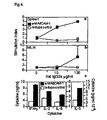
- Figure 4. MAdCAM-1 targeting enhances mucosal and systemic cytokine responses. Mice (3 per group) were immunized intravenously with 100g of either MECA-367 or isotype control GL117 and boosted intraduodenally at 2 weeks. After 3 days, spleens and MLN cells were harvested and cultured for 72hours in 40g/ml GL117. Cytokines ILr2, and IFN-γ were measured in culture supernatant by ELISA; Mean and standard deviation of cytokine levels are shown. MAdCAM-1 targeted immunization resulted in enhanced levels of IL-2 and IFN-γ from both spleen and MLN cell cultures.
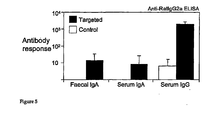
- Figure 5. Enhancement by MAdCAM-1 targeting is also effective by the intramuscular route. Mice (5 per group) were immunized intramuscularly with 100g of either anti-MAdCAM-1 (MECA-367) or isotype control (GL117) in 0.2ml of saline (0.1ml into each quadriceps). Rat IgG2a specific antibody responses for faecal IgA, serum IgA and serum IgG were measured by ELISA at 2 weeks; Means ± SD are shown
- Figure 6. Enhancement by MAdCAM-1 targeting is specific for the targeted antigen and can be shown for another antigen. (a) Mice (5 per group) were immunized intravenously with 100g of either MECA-367 or isotype control GL117 plus 500g of ovalbumin (OVA) in 0.3ml of saline. OVA specific antibody responses for faecal IgA, serum IgA and serum IgG were measured by ELISA at 2 weeks. (b) Mice were immunized intravenously with 60g of either Fluorescein isothiocyanate (FITC) conjugated anti-MAdCAM-1 antibody (MECA-89) or isotype control antibody (GL117) in 0.2ml of saline. FTTC specific antibody responses for faecal IgA, serum IgA and serum IgG were measured by ELISA at 2 weeks. Means ± SD are shown.
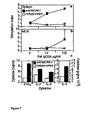
- Figure 7. MAdCAM-1 targeting enhances T-cell cytokine and proliferative responses Mice were immunized intravenously with 1g of either MECA-89 or isotype control GL117 in 0.1ml of saline on
days - Figure 8. Enhancement by MAdCAM-1 targeting is independent of splenic antigen localisation. Splenectomy or sham operations were performed on Mice (5 per group). One week after operation mice were immunized intravenously with 100g of either anti-MAdCAM-1 (MECA-367) or isotype control (GL117) in 0.2ml of saline. Rat IgG2a specific antibody responses for faecal IgA and serum IgG were measured by ELISA at 2 weeks; Means ± SD of two independent experiments are shown.
- Figure 9. IgG can be detected from transient transfection of antibody constructs. Heavy and light chain constructs from GL117, MBCA-367 and MECA-89 were transfected into CHO cells using FuGENE (Roche, Mannheim, Germany) reagent according to manufacturers instructions. S/N was harvested 3 days after transfection and levels of mouse IgG2c was determined by capture ELISA. Mean O.D. 450nm are shown
- Figure 10. Genetically fused antigen can be detected from transient transfection of antibody constructs. Heavy and light chain constructs from GL117, MECA-367 and MECA-89 were transfected into CHO cells using FuGENE (Roche, Mannheim, Germany) reagent according to manufacturers instructions. S/N was harvested 3 days after transfection and levels of ovalbumin (OVA) was determined by capture ELISA. Means ± SD (O.D. 450nm) are shown.
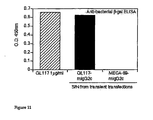
- Figure 11. Isotype control antibody (GL117) constructs retain binding to bacterial - galactosidase. Heavy and light chain constructs from GL117 and
MECA 89 were transfected into CHO cells using FuGENE (Roche, Mannheim, Germany) reagent according to manufacturers instructions. S/N was harvested 3 days after transfection and antibody binding to bacterial -galactosidase determined by ELISA. Means ± SD (O.D. 450nm) are shown. - In a preferred embodiment the targeted antigen is administered to the animal parenterally. Routes of administration include IV, IM, IP, subcutaneous and intradermal. It is preferred that the administration is by a haematogenous route. Anti-MAdCAM-1 antibodies are known in the art. An antibody fragment or an antibody binding domain, may also be used. Further information regarding antibody fragments such as single chain Fvs can be found in for example, Hudson PJ & Kortt AA. "High avidity scFv multimers; diabodies and triabodies". J. Immunol. Meth. 231 (1999) 177-189; Adams GP & Schier R. "Generating improved single-chain Fv molecules for tumor targeting". J. Immunol. Meth. 231 (1999) 249-260; Raag R & Whitlow M. "Single-chain Fvs" FASEB J. 9 (1995) 73-80; Owens RJ & Young RJ. "The genetic engineering of monoclonal antibodies" J. Immunol. Meth.168 (1994) 149-165.
- Monoclonal antibodies directed against MAdCAM-1 are known in the art10. Two such antibodies, MECA-89 and MECA-367, are available from ATCC under accession nos. HB-292 and HB-9478 respectively.
- As will be recognised by those skilled in the field of protein chemistry there are numerous methods by which the antigen may be bound to the targeting moiety. Examples of such methods include:
- 1) affinity conjugation such as antigen-ligand fusions where the ligand has an affinity for the targeting antibody (examples of such ligands would be streptococcal protein G, staphylococcal protein A, peptostreptococcal protein L) or bispecific antibody to cross-link antigen to targeting moiety.
- 2) chemical cross-linking. There are a host of well known cross-linking methods including periodate-borohydride, carbodiimide, glutaraldehyde, photoaffinity labelling, oxirane and various succinimide esters such as maleimidobenzoyl-suconimide ester. Many of these are readily available commercially e.g, from Pierce, Rockford, IL, USA,. There are many references to cross-linking techniques including Hermanson GT "Bioconjugate Techniques" Academic Press, San Diego 1996; Lee YC, Lee RT. Conjugation of glycopeptides to proteins. Methods EnzymoL 1989;179:253-7; Wong SS "Chemistry of Protein Conjugation and Cross-linking" CRC Press 1991; Harlow E & Lane D "Antibodies: A Laboratory Manual" Cold Spring Harbor Laboratory, 1988; Marriott G, Ottl J. Synthesis and applications of heterobifunctional photocleavable cross-linking reagents. Methods Enzymol. 1998;291:155-75.
- 3) genetic fusions. These can be made as recombinant antibody-antigen fusion proteins (in bacteria, yeast, insect or mammalian systems) or used for DNA immunization with or without spacers between the antibody and antigen. There are many publications of immunoglobulin fusions to other molecules. Fusions to antigens like influenza hamagglutinin are known in the art see, for example, Deliyannis G, Boyle JS, Brady JL, Brown LE, Lew AM. "A fusion DNA vaccine that targets antigen-presenting cells increases protection from viral challenge." Proc Natl Acad Sci USA. 2000 97:6676-80. Short sequences can also be inserted into the immunoglobulin molecule itself [Lunde E, Western KH, Rasmussen IB, Sandlie I, Bogen B. "Efficient delivery of T cell epitopes to APC by use of MHC class II-specific Troybodies." J Immunol. 2002 168:2154-62]. Shortened versions of antibody molecules (e.g. Fv fragments) may also be used to make genetic fusions [Reiter Y, Pastan I. "Antibody engineering of recombinant Fv immunotoxins for improved targeting of cancer: disulfide-stabilized Fv immunotoxins." Clin Cancer Res. 1996 2:245-52].
- As will be understood whatever the method of targeting moiety-antigen fusion used, such fusions need to be able to target the receptor, such as MAdCAM-1, in vivo. It is therefore highly preferred that the binding of the fusion to red blood cells or other cells (e.g. vascular endothelium of the lung) which it may encounter during its hematogenous traverse is minimal as such binding may inhibit the fusion reaching the desired sites within the GALT.
- For similar reasons antigens which have a high propensity for binding to cells or tissues which the fusion may encounter on its route to the GALT should also be avoided.
- Clearly the fusion process should be designed or selected so as not to interfere with the ability of the targeting moiety to bind to the receptor present in circulatory vessels in the GALT. This can be tested in vitro by determining whether the fusions bind the receptor, such as MAdCAM-1 on cryostat sections of the GALT by immunohistology or bind recombinant receptor proteins by ELISA.
- The antigen used in the present invention can be any antigen against which it is desired to raise an immune response. It is preferred that the antigen is selected such that an immune response is generated against any pathogen whose main portal of entry is the gut and those that colonise mucosal surface. This would include Salmonella, Cholera, Helicobacter pylori, rectally introduced HIV, Candida, P, gingivalis, gut parasites or gut associated toxins. Moreover, the present invention may be used to induce an immune response to gut hormones (e.g. gastrin) or their receptors for gut associated cancers [Watson SA, Clarke PA, Morris TM, Caplin ME. "Antiserum raised against an epitope of the cholecystokinin B/gastrin receptor inhibits hepatic invasion of a human colon tumor." Cancer Res. 2000 60:5902-7; Smith AM, Justin T, Michaeli D, Watson SA. "Phase I/II study of G17-DT, an anti-gastrin immunogen, in advanced colorectal cancer. Clin Cancer Res. 2000 6:4719-24].
- Information regarding HIV antigens such as gp120 and other candidates can be found in Stott J, Hu SL, Almond N. "Candidate vaccines protect macaques against primate immunodeficiency viruses." AIDS Res Hum Retroviruses. 1998 Oct;14 Suppl 3-5265-70.
- Information regarding Helicopbacter pylori antigens such as urease of Helicobacter pylori and other candidates can be found in Lee CK. "Vaccination against Helicobacter pylori in non-human primate models and humans." Scand J Immunol. 2001 May;53(5):437-42.
- Further information regarding antigens in which mucosal immunity is important may be found in van Ginkel FW, Nguyen HH, McGhee JR. "Vaccines for mucosal immunity to combat emerging infectious diseases." Emerg Infect Dis. 2000 Mar-Apr;6(2):123-32; and Neutra MR, Pringault E, Kraehenbuhl JP. "Antigen sampling across epithelial barriers and induction of mucosal immune responses." Annu Rev Immunol. 1996;14:275-300.
- As used herein the term "animal" encompasses both human and non-human animals.
- As used herein the term "circulatory vessel" encompasses both blood and lymphatic vessels.
- Throughout this specification the word "comprise", or variations such as "comprises" or "comprising", will be understood to imply the inclusion of a stated element, integer or step, or group of elements, integers or steps, but not the exclusion of any other element integer or step, or group of elements, integers or steps.
- Any discussion of documents, acts, materials, devices, articles or the like which has been included in the present specification is solely for the purpose of providing a context for the present invention. It is not to be taken as an admission that any or all of these matters form part of the prior art base or were common general knowledge in the field relevant to the present invention as it existed in Australia before the priority date of each claim of this application.
- In order that the nature of the present invention may be more dearly understood preferred forms thereof will be described with reference to the following Examples.
- The present inventors investigated whether targeting mucosal inductive sites such as the mesenteric lymph nodes (MLN) and Peyer's patches (PP) from the inside (via the blood) could be used to enhance the local mucosal immune response. The targeting strategy using the haematogenous rather than luminal route, bypasses the need for antigen to penetrate through the mucous membranes or survive the harsh conditions of the alimentary lumen. The present inventors used rat IgG2a antibodies MECA-367 & MECA-89 specific for the mucosal lymphocyte homing receptor MAdCAM-1 expressed in the high endothelial venules of the MLN and PP and in the flat epithelium of the lamina propria (LP) 8-10 as a model antigen. Antigen binding regions of these antibodies target them to this mucosal vascular addressin, eliciting responses that can be measured against the isotypic determinants of rat IgG2a (Fig. 1a). Immunization with anti-MAdCAM-1 antibody MECA-367 resulted in preferential localization of antigen to MLN and PP in-vivo (Fig. 1b), consistent with the predominant expression of MAdCAM-1 in mucosal tissues 8,10.
- The three immunogens used were two rat IgG2a antibodies against mouse MAdCAM-1 (MECA-367 and MECA-89) and the control rat IgG2a (GL117 which recognizes E.coli -galactosidase). The immunogens were isolated from hybridoma culture supernatant and purified on protein G Sepharose (Amersham Pharmacia Biotech, Little Chalfont, UK) or purchased from PharMingen (San Diego, CA, USA). 6-8 week old female CBA mice were used for all experiments.
- Mucosal antibody was isolated from faecal samples 18. Briefly, 1ml of 0.1mg/ml soybean trypsin inhibitor (Sigma Chemical Co, St Louis, MO, USA) in PBS was added per 0.1g of faeces then vortexed in a mini-beadbeater (Biospec Products, Bartlesville, OK, USA) for 10sec at 2500rpm, debris removed by
centrifugation 9000g, 4°C, for 15min, and supernatant assayed for antibody. - In-vivo antigen targeting was demonstrated by radiotracking 5µCi iodinated protein (specific activity of 40µCi/ µg; total protein including cold protein = 5µg). Protein was radiolabeled with I125 by the chloramine T method and injected intravenously. Organs harvested at 1 hour and radioactivity (cpm) for each whole tissue or 6 Peyer's patches determined on a gamma counter.
- ELISA: Rat IgG2a specific antibody responses from serum, faecal and culture supernatant samples were determined by Enzyme-Linked Immunosorbent Assays (ELISA). Briefly, microtitre plates (Dynatech, Chantilly, VA, USA) coated with rat IgG2a (GL117, 2µg/ml in PBS) were incubated with serially diluted sera, faecal extract, or culture supernatant in blocking buffer (5% skimmed-milk powder in PBS) overnight at 4°C. Bound antibody was detected after incubation with peroxidase-conjugated antibodies to mouse IgG (donkey anti-mouse, adsorbed against rat Ig, Chemicon, Temecula, CA, USA), IgA (goat anti-mouse), IgG1, IgG2a, IgG2b, or IgG3 (rat anti-mouse) (Southern Biotechnology, Birmingham, AL, USA) diluted in blocking buffer. The substrate used was tetramethyl-benzidine (T2885, Sigma Chemical Co, St Louis, MO, USA) in 0.1M
sodium acetate pH 6 and reactions stopped with 0.5M sulphuric acid. IgG and IgA titres were defined as the reciprocal of the highest dilution to reach an OD450nm of 0.2 and 0.1 above background respectively. - ELISPOT: To determine the number of cell secreting antibody ELISPOT assay were performed. Briefly, 96 well sterile multiscreen filtration plates (Millipore S.A. Yvelines, Cedex, France) coated with rat IgG2a (GL117, 20µg/ml in PBS) were incubated for 16hrs at 37°
C 10%CO2 with dilutions of single cell lymphocyte preparations isolated from mesenteric lymph nodes, Peyer's patches, spleen or lamina propria. Lamina propria lymphocytes were isolated as previously described 19. Bound antibody was detected after incubation with peroxidase-conjugated antibodies to mouse IgA (Southern Biotechnology, Birmingham, AL, USA) diluted in blocking buffer. Number of spots representing individual antigen specific ASC were counted under a stereo microscope after development with AEC substrate (Dako Co, Carpinteria, CA, USA). - Gastrointestinal explant culture: Gastrointestinal explant cultures were performed using described methods 19,20. Briefly, Peyer's patches were removed and the remaining small intestines were stripped of epithelium with 5mM EDTA, washed and cut into 3mm2 pieces. 20 halved Peyer's patches pieces or 20 intestinal segments were cultured on gelfoam (Amersham Pharmacia Biotech, Little Chalfont, UK) in 2.5ml of RPMI with 10% foetal calf serum at 37°
C 10% CO2 for 6 days and culture supernatant used for analysis. - Cell culture and Cytokine production: Lymphocytes were cultured for 72 hours at 5 X10⁶ cells/ml in 2ml in the presence of rat IgG2a (GL117, 40g/ml). Cytoldne levels in the supernatant were evaluated by sandwich ELISA. Recombinant cytokines as standards, coating antibody and biotinylated antibody were obtained from PharMingen (San Diego, CA, USA).
- Cloning: Antigen binding domains (variable regions) of the heavy and light chains of anti-MAdCAM-1 antibodies (MECA-367 and MECA-89) and isotype control antibody (GL117) were RT-PCRed from RNA isolated from the corresponding hybirdoma, using methods previously described Gilliland et al 1996 (Rapid and reliable cloning of antibody variable regions and generation of recombinant single chain antibody fragments. Tissue Antigens 47,1-20). Variable domain of the light chains were cloned into an expression vector containing rat light chain constant region (Zhan, Y., Martin, R. M., Sutherland, R. M., Brady, J. L., and Lew, A. M. (2000). Local production of anti-CD4 antibody by transgenic allogeneic grafts affords partial protection, Transplantation 70, 947-54). Variable antigen binding domains of the heavy chains were cloned into expression vectors containing mouse IgG2c constant regions as previously described (Zhan, Y., Martin, R. M., Sutherland, R. M., Brady, J. L., and Lew, A. M. (2000). Local production of anti-CD4 antibody by transgenic allogeneic grafts affords partial protection, Transplantation 70, 947-54; Martin, R. M., Brady, J. L., and Lew, A. M. (1998). The need for IgG2c specific antiserum when isotyping antibodies from C57BL/6 and NOD mice, J Immunol Methods 212,187-92) Antigens (OVA, helicobacter Urease B, helicobacter catalase, rotavirus VP7, cholera toxin B, mutant cholera toxin B) modified to contain Mlu-I /Xba-I cloning sites for antigen substitution, were fused to the CH3 domain of the Fc of mIgG2c heavy chain as previously described (Deliyannis, G., Boyle, J. S., Brady, J. L., Brown, L. E., and Lew, A. M. (2000). A fusion DNA vaccine that targets antigen-presenting cells increases protection from viral challenge, Proc Natl Acad Sci U S A 97, 6676-80.), using a 17 amino acid spacer.
- The sequences of these constructs are set out in the Sequence Listing as follows:
- SEQ. ID. NO.1
- GL117 light chain
- SEQ. ID. NO. 2
- GL117-mIgG2c-ext-OVA
- SEQ. ID. NO. 3
- MECA-367 light chain
- SEQ. ID. NO. 4
- MECA-367-mIgG2c-ext-OVA
- SEQ. ID. NO. 5
- MECA-89 light chain
- SEQ. ID. NO. 6
- MECA-89-mIgG2c-ext-OVA
- SEQ. ID. NO. 7
- Cholera toxin B
- SEQ. ID. NO. 8
- double mutant (dm) Cholera toxin B
- SEQ. ID. NO. 9
- Helicobacter pylori catalase
- SEQ. ID. NO.10
- Helicobacter felis urease B
- SEQ. ID. NO. 11
- Helicobacter pylori urease B
- SEQ. ID. NO. 12
- Rotavirus VP7
- Heavy and light chain constructs from GL117 and MECA-367 were transfected into CHO cells using FuGENE (Roche, Mannheim, Germany) reagent according to manufacturers instructions. Supernatant was harvested 3 days after transfection and antibody binding to mouse MAdCAM-1 was tested on frozen sections of Peyer's patches and mesenteric lymph nodes by immunofluorescence. SIN from anti-MAdCAM-1 construct (MECA-367) but not from isotype control (GL117) showed binding to mucosal high endothelial venules. This demonstrated that antL-MAdCAM-1 antibody constructs (MECA-367) retain binding to mouse MAdCAM-1.
- MAdCAM-1 antigen targeting elicits a mucosal response and augments systemic response (Fig. 2). As expected, mice immunized with non-targeted isotype control did not develop a faecal antibody response (Fig. 2a). In contrast MAdCAM-1 antigen targeting induced an antigen specific faecal IgA antibody response that peaked at 2 weeks and remained detectable at 8 weeks (Fig. 2a). It should be noted that total faecal IgA immunoglobulin was not altered by targeting. In the systemic compartment, antibody responses were also augmented with MAdCAM-1 targeting. Following similar kinetics to the faecal antibody response, MAdCAM-1 antigen targeting induced a serum IgA antibody response whereas non-targeted isotype control immunization did not (Fig. 2b). The serum IgG antibody response with MAdCAM-1 targeting was enhanced 1000-fold above that without targeting (Fig. 2c). The serum IgG response was predominantly of the IgG1 isotype and could be further elevated, along with the mucosal antibody response, by intraperitoneal boosting with targeted or non-targeted antigen (data not shown). Similarly augmented responses were obtained through targeting of another anti-MAdCAM antibody (MECA-89) that recognizes an epitope from a different extracellular domain of MAdCAM-110 (Fig 2d). As proteins may be more immunogenic when they are aggregated, we wanted to show that the enhanced effect of MECA antibodies was not due to an increased amount of aggregation within these samples. Mucosal IgA antibody elicited by MAdCAM-1 targeting was independent of protein aggregation as faecal IgA antibody responses could be detected after immunization with aggregate free anti-MAdCAM-1 antibody; moreover, heat aggregated isotype control did not induce faecal IgA antibody response (Fig 2d). Likewise, serum IgG responses from aggregate free anti-MAdCAM-1 antibody remained 3 log higher than untreated isotype controls (data not shown).
- Gut IgA is made locally in humans but can be translocated from the blood in rodents 11. We therefore wanted to determine whether IgA antibody in the faecal samples was of local origin. A substantial increase in antigen specific IgA antibody secreting cells was found in MLN, PP, and LP lymphocyte preparations (Fig. 3a&b). IgA antibody secreting cells could be detected in the PP and LP as early as 5 days after primary immunization (Fig. 3a) indicating that B-cells were stimulated in these sites. The number of IgA antibody secreting cells increased at
day 11 in all three important sites of the GALT (Fig. 3b). Antibody secreting cells were not detected in the spleen at 5 or 11 days after immunization (Fig 3a&b) suggesting that the primary source of serum antibodies were derived from the GALT and not the spleen. For further confirmation of local GALT antibody production, supernatants from gastrointestinal explant cultures were tested for antibody by ELISA. Antigen specific IgA could be detected in culture supernatants of PP and intestinal segments from MAdCAM-1 targeted, but not from the non-targeted immunizations (Fig. 3c). Thus, MAdCAM-1 antigen targeting elicits local mucosal B-cell responses in the GALT. - The presence of antigen specific IgA antibody secreting cells in the PP and LP only 5 days after immunization (Fig. 3a) suggests a strong role for the intestinal sites in the early induction of the mucosal antibody response to MAdCAM-1 targeted antigen. The concentration of antibody secreting cells in the MLN was unremarkable until day 11 (Fig 3a&b). It is possible that B-cell responses detected in the MLN at
day 11 resulted from B-cell stimulation at this site. However, we favour the proposal that they are derived from cells trafficking from the intestine to MLN, given the delay in the MLN response and the much higher concentration of specific B cells in the two intestinal sites. T-cell responses were also measured. Enhanced antigen specific secretion of IL-2 and IFN-γ could be detected from MAdCAM-1 targeted immunized mice (Fig. 4). As these were detected only after boosting it remains moot whether this represents direct T-cell activation at this site or the result of lymphocyte trafficking. Overall, these data indicate that augmented antigen specific antibody responses in both mucosal and systemic lymphoid compartments induced by MAdCAM-1 antigen targeting, is associated with an enhanced T-cell cytokine response (Fig. 4). - MAdCAM-1 expression is predominant in the GALT9. However, there is physiological expression at other sites. Follicular dendritic cells (FDC) expressing MAdCAM-112 are found in secondary lymphoid organs and are important in antigen presentation and costimulation for B-cells and the maintenance of memory13. It was possible therefore, that augmented responses attained with MAdCAM-1 antigen targeting resulted from effective antigen localization to FDC. Adult mice also express MAdCAM-1 on the sinus lining cells of the spleen 14 However, we could not detect any preferential localization of MAdCAM-1 targeted antigen in the spleen (Fig. 1b). This lack of preferential localization and the lack of antibody secreting cells in the spleen (Fig 3a&b) would indicate that the localization to the spleen or FDC alone was not important for the augmented responses. We therefore argue that localization to the endothelia of the GALT is the key mechanism for the augmented responses. For the same reasons outlined above, it is likely that the enhancement of systemic antibody responses (Fig. 2b&c) resulted primarily from antigen targeting to the GALT and not the spleen. This is further supported by the fact that an increase in serum IgA parallels that of faecal IgA (Fig. 2a&b) and that systemic antibody can result from mucosal responses 6,15,16. This is not surprising as the GALT comprises the majority of secondary lymphoid tissue in the body.
- Localization of antigen to lymphoid sites is a powerful way of generating immune responses1,7,17. We found that antigen delivered to a mucosal vascular addressin in the lymphoid tissue of the gut using the blood route would elicit strong mucosal responses. The blood route avoids the need for antigen to penetrate through mucous membranes or survive the harsh conditions throughout the alimentary tract
-
- 1. Czerkinsky, C. et al. Mucosal immunity and tolerance: relevance to vaccine development Immunol Rev 170 , 197-222. (1999).
- 2. Zinkernagel, R M. et al. Antigen localisation regulates immune responses in a dose- and time- dependent fashion: a geographical view of immune reactivity. Immunol Rev 156, 199-209 (1997).
- 3. Ermak, T. H. & Giannasca, P. J. Microparticle targeting to M cells. Adv Drug Deliv Rev 34, 261-283 (1998).
- 4. Frey, A. & Neutra, M. R. Targeting of mucosal vaccines to Peyer's patch M cells. Behring Inst Mitt, 376-389 (1997).
- 5. Elson, C. O. & Ealding, W. Generalized systemic and mucosal immunity in mice after mucosal stimulation with cholera toxin. J Immunol 132, 2736-2741 (1984).
- 6. Kawabata, S., Terao, Y., Fujiwara, T., Nakagawa, L & Hamada, S. Targeted salivary gland immunization with plasmid DNA elicits specific salivary immunoglobulin A and G antibodies and serum immunoglobulin G antibodies in mice. Infect Immun 67,5863-5868 (1999).
- 7. Lehner, T. et al. Protective mucosal immunity elicited by targeted iliac lymph node immunization with a subunit SIV envelope and core vaccine in macaques.
Nat Med 2 , 767-775 (1996). - 8. Briskin, M. J., McEvoy, L. M. & Butcher, E. C. MAdCAM-1 has homology to immunoglobulin and mucin-like adhesion receptors and to IgAl. Nature 363, 461-464 (1993).
- 9. Briskin, M. et al. Human mucosal addressin cell adhesion molecule-1 is preferentially expressed in intestinal tract and associated lymphoid tissue. Am J Pathol 151, 97-110 (1997).
- 10. Streeter, P. R, Berg, E. L., Rouse, B. T., Bargatze, R F. & Butcher, E. C. A tissue-specific endothelial cell molecule involved in lymphocyte homing. Nature 331 , 41-46 (1988).
- 11. Delacroix, D. L. et al. The liver in the IgA secretory immune system. Dogs, but not rats and rabbits, are suitable models for human studies.
Hepatology 3, 980-988 (1983). - 12. Szabo, M. C., Butcher, E. C. & McEvoy, L. M. Specialization of mucosal follicular dendritic cells revealed by mucosal addressin-cell adhesion molecule-1 display. J Immunol 158, 5584-5588 (1997).
- 13. Tew, J. G. et al. Follicular dendritic cells and presentation of antigen and costimulatory signals to B cells. Immunol Rev 156, 39-52 (1997).
- 14. Kraal, G., Schornagel, K., Streeter, P. R, Holzmann, B. & Butcher, E. C. Expression of the mucosal vascular addressin, MAdCAM-1, on sinus-lining cells in the spleen. Am J Pathol 147 , 763-771 (1995).
- 15. Harokopakis, E., Childers, N. K., Michalek, S. M., Zhang, S. S. & Tomasi, M. Conjugation of cholera toxin or its B subunit to liposomes for targeted delivery of antigens. J Immunol Methods 185, 31-42 (1995).
- 16. Sato, Y. et al. Injection of plasmid DNA into the gastric mucosa induces mucosal and systemic immunity. Cell Immunol 199, 58-63 (2000).
- 17. Boyle, J. S., Brady, J. L. & Lew, A. M. Enhanced responses to a DNA vaccine encoding a fusion antigen that is directed to sites of immune induction. Nature 392, 408-411 (1998).
- 18. Bromander, A. K., Ekman, L., Kopf, M., Nedrud, J. G. & Lycke, N. Y. IL-6-deficient mice exhibit normal mucosal IgA responses to local immunizations and Helicobacter felis infection. J Immunol 156, 4290-4297 (1996).
- 19. Kramer, D. R. & Cebra, J. J. Early appearance of "natural" mucosal IgA responses and germinal centers in suckling mice developing in the absence of maternal antibodies. J Immunol 154, 2051-2062 (1995).
- 20. Losonsky, G. A., Fantry, G. T., Reymann, M. & Lim, Y. Validation of a gastrointestinal explant system for measurement of mucosal antibody production: Clin
Diagn Lab Immunol 6, 803-807 (1999). -
- <110> The Council of The Queensland Institute of Medical Research
- <120> Antigen Targeting
- <130> AHB/FP6189021
- <140> EP 02726015.7
<141> 2002-05-24 - <150> PCT/AU02/00661
<151> 2002-05-24 - <150> PR 5241
<151> 2001-05-25 - <160> 12
- <170> PatentIn version 3.1
- <210> 1
<211> 699
<212> DNA
<213> Rattus sp.
<400> 1
- <210> 2
<211> 2333
<212> DNA
<213> Rattus sp.
<400> 2

- <210> 3
<211> 699
<212> DNA
<213> Rattus sp.
<400> 3
- <210> 4
<211> 2348
<212> DNA
<213> Rattus sp.
<400> 4

- <210> 5
<211> 699
<212> DNA
<213> Rattus sp.
<400> 5

- <210> 6
<211> 2342
<212> DNA
<213> Rattus sp.
<400> 6

- <210> 7
<211> 324
<212> DNA
<213> Vibrio cholerae
<400> 7
- <210> 8
<211> 324
<212> DNA
<213> Vibrio cholerae
<400> 8
- <210> 9
<211> 417
<212> DNA
<213> Helicobacter pylori
<400> 9
- <210> 10
<211>, 1719
<212> DNA
<213> Helicobacter felis
<400> 10

- <210> 11
<211> 1717
<212> DNA
<213> Helicobacter pylori
<400> 11

- <210> 12
<211> 853
<212> DNA
<213> Rotavirus VP7
<400> 12
Claims (4)
- The use of a targeted antigen comprising an antigen bound to a targeting moiety wherein the targeting moiety is an antibody, an antibody fragment or an antibody binding domain and the targeting moiety binds to Mucosal Addressin Cellular Adhesion Molecule-1 present in circulatory vessels in Gut Associated Lymphoid Tissue for the manufacture of a medicament for the induction of an IgA response to said antigen.
- The use according to claim 1 wherein said targeted antigen is administered by injection by a haematogeneous route.
- The use according to claim 1 or 2 wherein the antigen is of a pathogen which colonizes a mucosal surface.
- The use according to claim 3 wherein the antigen is from Salmonella, Cholera, Helicobacter pylori, HIV, Candida, P. gingivalis or gut parasites.
Applications Claiming Priority (3)
| Application Number | Priority Date | Filing Date | Title |
|---|---|---|---|
| AUPR5241A AUPR524101A0 (en) | 2001-05-25 | 2001-05-25 | Antigen targeting |
| AUPR524101 | 2001-05-25 | ||
| PCT/AU2002/000661 WO2002096949A1 (en) | 2001-05-25 | 2002-05-24 | Antigen targeting |
Publications (3)
| Publication Number | Publication Date |
|---|---|
| EP1401872A1 EP1401872A1 (en) | 2004-03-31 |
| EP1401872A4 EP1401872A4 (en) | 2005-03-23 |
| EP1401872B1 true EP1401872B1 (en) | 2007-01-03 |
Family
ID=3829219
Family Applications (1)
| Application Number | Title | Priority Date | Filing Date |
|---|---|---|---|
| EP02726015A Expired - Lifetime EP1401872B1 (en) | 2001-05-25 | 2002-05-24 | Antigen targeting |
Country Status (7)
| Country | Link |
|---|---|
| US (1) | US8097430B2 (en) |
| EP (1) | EP1401872B1 (en) |
| AT (1) | ATE350400T1 (en) |
| AU (1) | AUPR524101A0 (en) |
| CA (1) | CA2445537C (en) |
| DE (1) | DE60217339T2 (en) |
| WO (1) | WO2002096949A1 (en) |
Families Citing this family (1)
| Publication number | Priority date | Publication date | Assignee | Title |
|---|---|---|---|---|
| AU2004235659B2 (en) * | 2004-12-06 | 2011-08-18 | The Council Of The Queensland Institute Of Medical Research | Relay Vaccine |
Family Cites Families (7)
| Publication number | Priority date | Publication date | Assignee | Title |
|---|---|---|---|---|
| US5972336A (en) * | 1992-11-03 | 1999-10-26 | Oravax Merieux Co. | Urease-based vaccine against helicobacter infection |
| AU5675794A (en) * | 1992-12-15 | 1994-07-04 | Board Of Trustees Of The Leland Stanford Junior University | Mucosal vascular addressin, dna and expression |
| US6485726B1 (en) * | 1995-01-17 | 2002-11-26 | The Brigham And Women's Hospital, Inc. | Receptor specific transepithelial transport of therapeutics |
| US7750137B2 (en) * | 1995-09-01 | 2010-07-06 | Millennium Pharmaceuticals, Inc. | Mucosal vascular addressins |
| WO1996024673A1 (en) * | 1995-02-10 | 1996-08-15 | Leukosite, Inc. | Mucosal vascular addressins and uses thereof |
| DE69840326D1 (en) * | 1997-03-27 | 2009-01-22 | Csl Ltd | INCREASING IMMUNE RESPONSE USING TARGETED MOLECULES |
| CA2792479A1 (en) | 1998-02-27 | 1999-09-02 | The Trustees Of The University Of Pennsylvania | Vaccines, immunotherapeutics and methods for using the same |
-
2001
- 2001-05-25 AU AUPR5241A patent/AUPR524101A0/en not_active Abandoned
-
2002
- 2002-05-24 EP EP02726015A patent/EP1401872B1/en not_active Expired - Lifetime
- 2002-05-24 CA CA2445537A patent/CA2445537C/en not_active Expired - Lifetime
- 2002-05-24 AT AT02726015T patent/ATE350400T1/en not_active IP Right Cessation
- 2002-05-24 DE DE60217339T patent/DE60217339T2/en not_active Expired - Lifetime
- 2002-05-24 US US10/476,313 patent/US8097430B2/en not_active Expired - Lifetime
- 2002-05-24 WO PCT/AU2002/000661 patent/WO2002096949A1/en not_active Ceased
Also Published As
| Publication number | Publication date |
|---|---|
| EP1401872A4 (en) | 2005-03-23 |
| DE60217339D1 (en) | 2007-02-15 |
| DE60217339T2 (en) | 2007-10-11 |
| CA2445537A1 (en) | 2002-12-05 |
| ATE350400T1 (en) | 2007-01-15 |
| EP1401872A1 (en) | 2004-03-31 |
| US20040241175A1 (en) | 2004-12-02 |
| WO2002096949A1 (en) | 2002-12-05 |
| US8097430B2 (en) | 2012-01-17 |
| AUPR524101A0 (en) | 2001-06-21 |
| CA2445537C (en) | 2012-12-18 |
Similar Documents
| Publication | Publication Date | Title |
|---|---|---|
| US5194254A (en) | Enhancement of antigen immunogenicity | |
| US20230303718A1 (en) | Modified Antibody | |
| US4950480A (en) | Enhancement of antigen immunogenicity | |
| Agren et al. | Genetically engineered nontoxic vaccine adjuvant that combines B cell targeting with immunomodulation by cholera toxin A1 subunit | |
| Sterlin et al. | When therapeutic IgA antibodies might come of age | |
| Hakim et al. | A nine-amino acid peptide from IL-1beta augments antitumor immune responses induced by protein and DNA vaccines | |
| US11110155B2 (en) | Immunotherapeutic compositions for the treatment of Alzheimer's disease | |
| TW201100096A (en) | Antigen presenting cell targeted anti-viral vaccines | |
| WO2011092675A2 (en) | Molecular complex for targeting antigens towards cells comprising antigens and uses thereof for vaccination | |
| TW201100095A (en) | Antigen presenting cell targeted cancer vaccines | |
| US20230212231A1 (en) | Severe acute respiratory syndrome coronavirus 2 (sars-cov-2) polypeptides and uses thereof for vaccine purposes | |
| Skea et al. | Studies of the adjuvant-independent antibody response to immunotargeting. Target structure dependence, isotype distribution, and induction of long term memory. | |
| Baier et al. | Immunogenic targeting of recombinant peptide vaccines to human antigen-presenting cells by chimeric anti-HLA-DR and anti-surface immunoglobulin D antibody Fab fragments in vitro | |
| WO2014043215A1 (en) | Bi-specifc diabodies for masking and targeting vaccines | |
| US8097430B2 (en) | Antigen targeting | |
| Decroix et al. | Mucosal Immunity Induced by Intramuscular Administration of Free Peptides In‐Line with PADRE: IgA Antibodies to the ELDKWA Epitope of HIV gp41 | |
| US8349575B2 (en) | Relay vaccine | |
| AU2002256565B2 (en) | Antigen targeting | |
| Wang et al. | Enhanced contraception of canine zona pellucida 3 DNA vaccine via targeting DEC-205 in mice | |
| Ma et al. | Intranasal Co‐delivery with the Mouse Zona Pellucida 3 and GM‐CSF Expressing Constructs Enhances Humoral Immune Responses and Contraception in Mice | |
| Yu et al. | A targeted fimA DNA vaccine prevents alveolar bone loss in mice after intra‐nasal administration | |
| AU2002256565A1 (en) | Antigen targeting | |
| CA1327523C (en) | Antigen immunogenicity | |
| WO2010079161A1 (en) | A b cell depleting agent for the treatment of atherosclerosis | |
| CA2489940C (en) | Relay vaccine |
Legal Events
| Date | Code | Title | Description |
|---|---|---|---|
| PUAI | Public reference made under article 153(3) epc to a published international application that has entered the european phase |
Free format text: ORIGINAL CODE: 0009012 |
|
| 17P | Request for examination filed |
Effective date: 20031218 |
|
| AK | Designated contracting states |
Kind code of ref document: A1 Designated state(s): AT BE CH CY DE DK ES FI FR GB GR IE IT LI LU MC NL PT SE TR |
|
| AX | Request for extension of the european patent |
Extension state: AL LT LV MK RO SI |
|
| A4 | Supplementary search report drawn up and despatched |
Effective date: 20050203 |
|
| RIC1 | Information provided on ipc code assigned before grant |
Ipc: 7C 07K 16/28 A Ipc: 7A 61P 37/04 B Ipc: 7A 61K 39/21 B Ipc: 7A 61K 39/00 B Ipc: 7A 61K 39/02 B Ipc: 7A 61K 39/385 B |
|
| 17Q | First examination report despatched |
Effective date: 20050427 |
|
| GRAP | Despatch of communication of intention to grant a patent |
Free format text: ORIGINAL CODE: EPIDOSNIGR1 |
|
| GRAS | Grant fee paid |
Free format text: ORIGINAL CODE: EPIDOSNIGR3 |
|
| GRAA | (expected) grant |
Free format text: ORIGINAL CODE: 0009210 |
|
| AK | Designated contracting states |
Kind code of ref document: B1 Designated state(s): AT BE CH CY DE DK ES FI FR GB GR IE IT LI LU MC NL PT SE TR |
|
| PG25 | Lapsed in a contracting state [announced via postgrant information from national office to epo] |
Ref country code: AT Free format text: LAPSE BECAUSE OF FAILURE TO SUBMIT A TRANSLATION OF THE DESCRIPTION OR TO PAY THE FEE WITHIN THE PRESCRIBED TIME-LIMIT Effective date: 20070103 Ref country code: FI Free format text: LAPSE BECAUSE OF FAILURE TO SUBMIT A TRANSLATION OF THE DESCRIPTION OR TO PAY THE FEE WITHIN THE PRESCRIBED TIME-LIMIT Effective date: 20070103 Ref country code: DK Free format text: LAPSE BECAUSE OF FAILURE TO SUBMIT A TRANSLATION OF THE DESCRIPTION OR TO PAY THE FEE WITHIN THE PRESCRIBED TIME-LIMIT Effective date: 20070103 |
|
| REG | Reference to a national code |
Ref country code: GB Ref legal event code: FG4D |
|
| REF | Corresponds to: |
Ref document number: 60217339 Country of ref document: DE Date of ref document: 20070215 Kind code of ref document: P |
|
| REG | Reference to a national code |
Ref country code: IE Ref legal event code: FG4D |
|
| REG | Reference to a national code |
Ref country code: SE Ref legal event code: TRGR |
|
| PG25 | Lapsed in a contracting state [announced via postgrant information from national office to epo] |
Ref country code: ES Free format text: LAPSE BECAUSE OF FAILURE TO SUBMIT A TRANSLATION OF THE DESCRIPTION OR TO PAY THE FEE WITHIN THE PRESCRIBED TIME-LIMIT Effective date: 20070414 |
|
| PG25 | Lapsed in a contracting state [announced via postgrant information from national office to epo] |
Ref country code: PT Free format text: LAPSE BECAUSE OF FAILURE TO SUBMIT A TRANSLATION OF THE DESCRIPTION OR TO PAY THE FEE WITHIN THE PRESCRIBED TIME-LIMIT Effective date: 20070604 |
|
| ET | Fr: translation filed | ||
| PLBE | No opposition filed within time limit |
Free format text: ORIGINAL CODE: 0009261 |
|
| STAA | Information on the status of an ep patent application or granted ep patent |
Free format text: STATUS: NO OPPOSITION FILED WITHIN TIME LIMIT |
|
| 26N | No opposition filed |
Effective date: 20071005 |
|
| PG25 | Lapsed in a contracting state [announced via postgrant information from national office to epo] |
Ref country code: MC Free format text: LAPSE BECAUSE OF NON-PAYMENT OF DUE FEES Effective date: 20070531 |
|
| PG25 | Lapsed in a contracting state [announced via postgrant information from national office to epo] |
Ref country code: GR Free format text: LAPSE BECAUSE OF FAILURE TO SUBMIT A TRANSLATION OF THE DESCRIPTION OR TO PAY THE FEE WITHIN THE PRESCRIBED TIME-LIMIT Effective date: 20070404 |
|
| PG25 | Lapsed in a contracting state [announced via postgrant information from national office to epo] |
Ref country code: CY Free format text: LAPSE BECAUSE OF FAILURE TO SUBMIT A TRANSLATION OF THE DESCRIPTION OR TO PAY THE FEE WITHIN THE PRESCRIBED TIME-LIMIT Effective date: 20070103 |
|
| PG25 | Lapsed in a contracting state [announced via postgrant information from national office to epo] |
Ref country code: LU Free format text: LAPSE BECAUSE OF NON-PAYMENT OF DUE FEES Effective date: 20070524 |
|
| PG25 | Lapsed in a contracting state [announced via postgrant information from national office to epo] |
Ref country code: TR Free format text: LAPSE BECAUSE OF FAILURE TO SUBMIT A TRANSLATION OF THE DESCRIPTION OR TO PAY THE FEE WITHIN THE PRESCRIBED TIME-LIMIT Effective date: 20070103 |
|
| REG | Reference to a national code |
Ref country code: FR Ref legal event code: PLFP Year of fee payment: 15 |
|
| REG | Reference to a national code |
Ref country code: FR Ref legal event code: PLFP Year of fee payment: 16 |
|
| REG | Reference to a national code |
Ref country code: FR Ref legal event code: PLFP Year of fee payment: 17 |
|
| PGFP | Annual fee paid to national office [announced via postgrant information from national office to epo] |
Ref country code: NL Payment date: 20210512 Year of fee payment: 20 Ref country code: IT Payment date: 20210412 Year of fee payment: 20 Ref country code: FR Payment date: 20210412 Year of fee payment: 20 Ref country code: DE Payment date: 20210427 Year of fee payment: 20 |
|
| PGFP | Annual fee paid to national office [announced via postgrant information from national office to epo] |
Ref country code: GB Payment date: 20210429 Year of fee payment: 20 Ref country code: CH Payment date: 20210519 Year of fee payment: 20 Ref country code: BE Payment date: 20210415 Year of fee payment: 20 Ref country code: IE Payment date: 20210511 Year of fee payment: 20 Ref country code: SE Payment date: 20210511 Year of fee payment: 20 |
|
| REG | Reference to a national code |
Ref country code: DE Ref legal event code: R071 Ref document number: 60217339 Country of ref document: DE |
|
| REG | Reference to a national code |
Ref country code: NL Ref legal event code: MK Effective date: 20220523 |
|
| REG | Reference to a national code |
Ref country code: BE Ref legal event code: MK Effective date: 20220524 |
|
| REG | Reference to a national code |
Ref country code: CH Ref legal event code: PL Ref country code: GB Ref legal event code: PE20 Expiry date: 20220523 |
|
| REG | Reference to a national code |
Ref country code: IE Ref legal event code: MK9A |
|
| PG25 | Lapsed in a contracting state [announced via postgrant information from national office to epo] |
Ref country code: IE Free format text: LAPSE BECAUSE OF EXPIRATION OF PROTECTION Effective date: 20220524 Ref country code: GB Free format text: LAPSE BECAUSE OF EXPIRATION OF PROTECTION Effective date: 20220523 |