EP1401232A2 - Partially preemptive burst scheduling model for an optical burst switching network - Google Patents
Partially preemptive burst scheduling model for an optical burst switching network Download PDFInfo
- Publication number
- EP1401232A2 EP1401232A2 EP03020541A EP03020541A EP1401232A2 EP 1401232 A2 EP1401232 A2 EP 1401232A2 EP 03020541 A EP03020541 A EP 03020541A EP 03020541 A EP03020541 A EP 03020541A EP 1401232 A2 EP1401232 A2 EP 1401232A2
- Authority
- EP
- European Patent Office
- Prior art keywords
- data burst
- scheduled
- already
- burst
- under consideration
- Prior art date
- Legal status (The legal status is an assumption and is not a legal conclusion. Google has not performed a legal analysis and makes no representation as to the accuracy of the status listed.)
- Granted
Links
- 230000003287 optical effect Effects 0.000 title claims abstract description 19
- 238000000034 method Methods 0.000 claims abstract description 18
- 230000005540 biological transmission Effects 0.000 claims description 13
- 230000003139 buffering effect Effects 0.000 description 6
- 238000005516 engineering process Methods 0.000 description 5
- 230000009471 action Effects 0.000 description 4
- 238000004088 simulation Methods 0.000 description 4
- 238000001228 spectrum Methods 0.000 description 4
- 238000006243 chemical reaction Methods 0.000 description 3
- 238000013467 fragmentation Methods 0.000 description 3
- 238000006062 fragmentation reaction Methods 0.000 description 3
- 230000004048 modification Effects 0.000 description 3
- 238000012986 modification Methods 0.000 description 3
- 230000007423 decrease Effects 0.000 description 2
- 230000000694 effects Effects 0.000 description 2
- 238000013459 approach Methods 0.000 description 1
- 230000008901 benefit Effects 0.000 description 1
- 230000008859 change Effects 0.000 description 1
- 238000010276 construction Methods 0.000 description 1
- 230000006735 deficit Effects 0.000 description 1
- 238000013461 design Methods 0.000 description 1
- 230000004069 differentiation Effects 0.000 description 1
- 239000000835 fiber Substances 0.000 description 1
- 235000021190 leftovers Nutrition 0.000 description 1
- 238000013507 mapping Methods 0.000 description 1
- 239000011800 void material Substances 0.000 description 1
Images







Classifications
-
- H—ELECTRICITY
- H04—ELECTRIC COMMUNICATION TECHNIQUE
- H04Q—SELECTING
- H04Q11/00—Selecting arrangements for multiplex systems
- H04Q11/0001—Selecting arrangements for multiplex systems using optical switching
- H04Q11/0062—Network aspects
- H04Q11/0066—Provisions for optical burst or packet networks
-
- H—ELECTRICITY
- H04—ELECTRIC COMMUNICATION TECHNIQUE
- H04Q—SELECTING
- H04Q11/00—Selecting arrangements for multiplex systems
- H04Q11/0001—Selecting arrangements for multiplex systems using optical switching
- H04Q11/0062—Network aspects
- H04Q2011/0064—Arbitration, scheduling or medium access control aspects
-
- H—ELECTRICITY
- H04—ELECTRIC COMMUNICATION TECHNIQUE
- H04Q—SELECTING
- H04Q11/00—Selecting arrangements for multiplex systems
- H04Q11/0001—Selecting arrangements for multiplex systems using optical switching
- H04Q11/0062—Network aspects
- H04Q2011/0084—Quality of service aspects
Definitions
- the present invention generally relates to optical burst switching ("OBS") networks. More particularly, and not by way of any limitation, the present invention is directed to a method of implementing partially preemptive burst scheduling in an OBS network.
- OBS optical burst switching
- a short-term scheduling calendar referred to as a "Sliding Frontier" or "SF" must be maintained for prospective data burst arrivals.
- the SF includes all of the data channels and control channels for core node adjacency in the core OBS network.
- the SF progresses with the current time on the near-end and the latest scheduled burst on the far-end. All scheduled data bursts and their corresponding BHPs are maintained in the SF data structures such that each pair is doubly linked to each other.
- FIG. 1 illustrates an SF 100 comprising k data channels D1-D k and n control channels C1-C n .
- a first data burst 102a and its BHP 104a are scheduled on data channel D k and control channel C n , respectively.
- a second data burst 102b and its BHP 104b are scheduled on data channel D1 and control channel C1, respectively.
- a third data burst 102c and its BHP 104c are scheduled on data channel D2 and control channel C1, respectively.
- Contention may occur between multiple data bursts attempting to traverse the same egress link.
- data bursts are scheduled intact. Accordingly, when a burst overlaps another already-scheduled burst, it is dropped in its entirety, even if the overlap is minimal. This results in a drop in utilization.
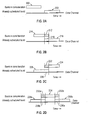
- FIG. 2A illustrates a case in which there is "No Overlap” between an already-scheduled burst 200 and a burst under consideration 202. In this case, there is no contention between the two burst 200, 202, and both can be scheduled without conflict.
- FIG. 2B illustrates a case of "Head Overlap", in which case a front portion or "head” 212 of a burst under consideration 214 overlaps with a rear portion 216 of an already-scheduled burst 218.
- FIG. 2A illustrates a case in which there is "No Overlap" between an already-scheduled burst 200 and a burst under consideration 202. In this case, there is no contention between the two burst 200, 202, and both can be scheduled without conflict.
- FIG. 2B illustrates a case of "Head Overlap", in which case a front portion or "head” 212 of a burst under consideration 214 overlaps with a rear portion 216 of an already
- FIG. 2C illustrates a case of "Tail Overlap", in which case a rear portion or “tail” 222 of a burst under consideration 224 overlaps with a front portion 226 of an already-scheduled burst 228.
- FIG. 2D illustrates a case of "Head-Tail Overlap”, in which case a head 232a and tail 232b of a burst under consideration 234 respectively overlap with a rear portion 236a of a first already-scheduled burst 238a and with a front portion 236b of an second already-scheduled burst 238b.
- FIG. 2E illustrates "Full Overlap", in which case the entirety of a burst under consideration 244 overlaps with a portion 246 of an already-scheduled burst 248.
- optical buffering For quality of service (“QoS”) support in OBS, there is an approach that uses offset value adjustments.
- QoS quality of service
- optical buffering is not a matured technology and can be performed only in a limited way by Fiber Delay Lines (“FDLs”), which have a big footprint in equipment design and are a source of optical impairments. FDLs do not offer random access feature and can be designed only in segments. Further, optical buffering itself causes additional fragmentation. Wavelength dimensioning also has a physical limit in terms of number of wavelengths and requires full-scale wavelength conversion, which is not an easy practice. Offset value adjustments affects negatively the end-to-end delay and is not flexible enough; for example, it is not capable of accommodating multiple classes.
- the present invention advantageously provides method and apparatus for implementing a partially preemptive QoS scheduling model in an OBS network node.
- the invention comprises a method of scheduling data bursts for transmission on one of a plurality of outgoing channels in a router in an optical burst switched ("OBS") node.
- the method comprises the steps of, responsive to a determination that a data burst to be scheduled overlaps with an already-scheduled data burst on each of the plurality of outgoing channels, determining an optimum channel with respect to which the already-scheduled data burst thereon overlaps the least amount with the data burst to be scheduled; dropping a portion of the data burst to be scheduled that overlaps with the already-scheduled data burst on the optimum channel; and scheduling a remaining portion of the data burst to be scheduled on the optimum channel.
- OBS optical burst switched
- the invention comprises a method of scheduling data bursts for transmission on one of a plurality of outgoing channels in a router in an optical burst switched ("OBS") node.
- the method comprises the steps of, responsive to a determination that a data burst to be scheduled overlaps with an already-scheduled data burst on each of the plurality of outgoing channels, determining an optimum channel with respect to which the already-scheduled data burst thereon overlaps the least amount with the data burst to be scheduled; dropping a portion of the already-scheduled data burst on the optimum channel that overlaps with the data burst to be scheduled; and scheduling the data burst to be scheduled on the optimum channel.
- OBS optical burst switched
- the invention comprises a method of scheduling data bursts for transmission on one of a plurality of outgoing channels in a router in an optical burst switched ("OBS") node.
- the method comprises the steps of, responsive to a determination that a data burst to be scheduled overlaps with an already-scheduled data burst on each of the plurality of outgoing channels, determining an optimum one of the outgoing channels with respect to which the already-scheduled data burst thereon overlaps the least amount with the data burst to be scheduled.
- a portion of the data burst to be scheduled that overlaps with the already-scheduled data burst on the optimum channel is dropped and a remaining portion of the data burst to be scheduled on the optimum channel is scheduled.
- a portion of the already-scheduled data burst on the optimum channel that overlaps with the data burst to be scheduled is preempted and the data burst to be scheduled is scheduled in its entirety.
- the invention comprises an apparatus for scheduling data bursts for transmission on one of a plurality of outgoing channels in a router in an optical burst switched ("OBS") node.
- the apparatus comprises means responsive to a determination that a data burst to be scheduled overlaps with an already-scheduled data burst on each of the plurality of outgoing channels for determining an optimum channel with respect to which the already-scheduled data burst thereon overlaps the least amount with the data burst to be scheduled; means for dropping a portion of the data burst to be scheduled that overlaps with the already-scheduled data burst on the optimum channel; and means for scheduling a remaining portion of the data burst to be scheduled on the optimum channel.
- the invention comprises an apparatus for scheduling data bursts for transmission on one of a plurality of outgoing channels in a router in an optical burst switched ("OBS") node.
- the apparatus comprises means responsive to a determination that a data burst to be scheduled overlaps with an already-scheduled data burst on each of the plurality of outgoing channels for determining an optimum channel with respect to which the already-scheduled data burst thereon overlaps the least amount with the data burst to be scheduled; means for dropping a portion of the already-scheduled data burst on the optimum channel that overlaps with the data burst to be scheduled; and means for scheduling the data burst to be scheduled on the optimum channel.
- bursts are made integer multiple of slots by using padding, as illustrated in FIG. 3.
- padding 300a, 300b has been added to each end of a data burst 302 so that the data burst 302 (including the padding 300a, 300b) comprises an integer multiple of slots 304, in this case, five.
- Slotted operation such as that illustrated in FIG. 3 supports a greater number of options in cases of overlap than just preempting, or dropping, the entire overlapping burst.
- partial dropping involves dropping only the overlapping portion of the burst under consideration. It will be recognized that partial dropping requires some modification of the BHP, as described hereinbelow.
- partial preemption involves preempting the overlapped portion of the already-scheduled data burst. This requires modifications and/or rescheduling of both the BHP of the partially preempted data burst and the BHP of the data burst under consideration.
- each data burst After a data burst and its corresponding BHP are forwarded to an outgoing link, depending on the wavelength conversion capability of the switch, each data burst has a spectrum of wavelengths to which it can be converted.
- FIG. 4 illustrates a first overlap situation 400 involving an already-scheduled data burst 402 and a data burst under consideration 404.
- the length of an overlap 406 is smaller than that of the threshold H, designated in FIG. 4 by a reference numeral 408. In this situation 400, therefore, a partial drop or preemption would be appropriate.
- FIGS. 5A and 5B illustrate this first course of action.
- a portion 502 of a data burst under consideration 504 overlaps with a portion 506 of an already-scheduled data burst 508. It will be assumed that the length of the overlapping portions 502, 506, is less than that of a predetermined threshold H. As illustrated in FIG. 5B, in a manner that will be described in greater detail below, a decision has been made to drop the portion 502 of the data burst under consideration 504 and to schedule the remainder of the data burst under consideration. The already-scheduled data burst 508 remains scheduled in its entirety.
- the second course of action is to preempt the portion of the already-scheduled data burst that overlaps with the data burst under consideration (or in cases such as the situation 410, to preempt the already-scheduled data burst in its entirety) and schedule the burst under consideration in its entirety.
- FIGS. 5A and 5C illustrate this course of action. As previously described, as illustrated in FIG. 5A, a portion 502 of a data burst under consideration 504 overlaps with a portion 506 of an already-scheduled data burst 508. It will be assumed that the length of the overlapping portions 502, 506, is less than that of a predetermined threshold H. As illustrated in FIG.
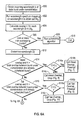
- FIGS. 6A, 6B, and 7-16 collectively illustrate operation of one embodiment of a method of implementing partial preemption/dropping in an OBS network.
- step 600 the incoming wavelength b of the data burst under consideration is obtained from its BHP.
- step 602 wavelength spectrum mapping is run on the wavelength b and the set W b is obtained.
- step 604 the overlap L i for each outgoing wavelength D i that is a member of W b is calculated.
- step 606 a determination is made whether there are one or more non-overlapping data bursts, in which case, the burst under consideration can be scheduled without contention from an already-scheduled data burst. If so, execution proceeds to step 608, in which a scheduling algorithm is run, and then to step 610, in which operation terminates.
- step 606 execution proceeds to step 612, in which the outgoing wavelength D j that has the smallest total overlap for all of the outgoing wavelengths D i that are members of the set W b is determined.
- step 614 a determination is made whether the overlap type is a head overlap and the threshold H is greater than the total overlap between the burst under consideration and the already-scheduled burst(s). If so, execution proceeds to step 614a, in which a determination is made whether the class of service C of the data burst under consideration is of a higher priority, or greater than, the class of service c n of the already-scheduled near-end data burst.
- step 614b in which a function Head-Overlap_Preempt (FIG. 7) is called.
- step 614b because as determined in step 614a, the already-scheduled data burst is of a lower priority class of service than the data burst under consideration, the overlapping portion of the already-scheduled data burst is preempted so that the entire data burst under consideration can be scheduled.
- step 614c If a negative determination is made in step 614a, execution proceeds to step 614c, in which a function Head-Overlap_Drop (FIG. 8) is called.
- step 614c because as determined in step 614a, the already-scheduled data burst is of a higher priority class of service than the data burst under consideration, the overlapping portion of the data burst under consideration is dropped and the remaining portion of the data burst under consideration is scheduled.
- step 616 a determination is made whether the overlap type is a tail overlap and the threshold H is greater than the total overlap between the burst under consideration and the already-scheduled burst(s). If so, execution proceeds to step 616a, in which a determination is made whether the class of service C of the data burst under consideration is greater than the class of service c f of the already-scheduled far-end data burst. If so, execution proceeds to step 616b, in which a function Tail-Overlap_Preempt (FIG. 9) is called.
- step 616b because as determined in step 616a, the already-scheduled data burst is of a lower priority class of service than the data burst under consideration, the overlapping portion of the already-scheduled data burst is preempted so that the entire data burst under consideration can be scheduled.
- step 616a If a negative determination is made in step 616a, execution proceeds to step 616c, in which a function Tail-Overlap_Drop (FIG. 10) is called.
- a function Tail-Overlap_Drop (FIG. 10) is called.
- step 616c because as determined in step 616a, the already-scheduled data burst is of a higher priority class of service than the data burst under consideration, the overlapping portion of the data burst under consideration is dropped and the remainder thereof is scheduled.
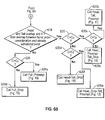
- step 618 a determination is made whether the overlap type is a head and tail overlap and the threshold H is greater than the total overlap between the burst under consideration and the already-scheduled burst(s). If so, execution proceeds to step 620, in which a determination is made whether the class of service C of the data burst under consideration is greater than the class of service c n of the already-scheduled near-end data burst. If so, execution proceeds to step 620a, in which a determination is made whether the class of service C of the data burst under consideration is greater than the class of service c f of the already-scheduled far-end data burst. If so, execution proceeds to step 620b, in which a function Head-Tail_Preempt (FIG. 11) is called.
- step 620b because as determined in step 620, the near-end already-scheduled data burst is of a lower priority class of service than the data burst under consideration and as determined in step 620a, the far-end already-scheduled data burst is of a lower priority class of service than the data burst under consideration, the overlapping portions of both the near-end and far-end already-scheduled data bursts are preempted so that the entire data burst under consideration can be scheduled.
- step 620a If a negative determination is made in step 620a, execution proceeds to step 620c, in which a function Head_Preempt-Tail_Drop (FIG. 13) is called.
- step 620c because as determined in step 620, the near-end already-scheduled data burst is of a lower priority class of service than the data burst under consideration, the overlapping portion of the near-end already-scheduled data burst is preempted in favor of scheduling the near-end overlapping portion of the data burst under consideration.
- step 620a because as determined in step 620a, the far-end already-scheduled data burst is of a higher priority class of service than the data burst under consideration, the far-end overlapping portion of the data burst under consideration is dropped and the far-end already-scheduled data burst remains scheduled in its entirety.
- step 620d a determination is made whether the class of service C of the data burst under consideration is greater than the class of service c f of the already-scheduled far-end data burst. If so, execution proceeds to step 620e, in which a function Head_Drop-Tail_Preempt (FIG. 12) is called.
- step 620e because as determined in step 620, the near-end already-scheduled data burst is of a higher priority class of service than the data burst under consideration, the near-end overlapping portion of the data burst under consideration is dropped and the near-end already-scheduled data burst remains scheduled in its entirety.
- the far-end already-scheduled data burst is of a lower priority class of service than the data burst under consideration, the overlapping portion of the far-end already-scheduled data burst is preempted in favor of scheduling the far-end overlapping portion of the data burst under consideration.
- step 620f a function Head-Tail_Drop (FIG. 14) is called.
- step 620f because as determined in step 620, the near-end already-scheduled data burst is of a higher priority class of service than the data burst under consideration, the near-end overlapping portion of the data burst under consideration is dropped and the near-end already-scheduled data burst remains scheduled in its entirety.
- the far-end already-scheduled data burst is of a higher priority class of service than the data burst under consideration, the far-end overlapping portion of the data burst under consideration is dropped and the far-end already-scheduled data burst remains scheduled,in its entirety.
- step 624 a determination is made whether the class of service C of the data burst under consideration is greater than the class of service c n of the already-scheduled near-end data burst. If so, execution proceeds to step 624a, in which a function Full_Preempt (FIG. 15) is called. As a result of step 624a, the already-scheduled data burst is preempted in its entirety and the data burst under consideration is scheduled in its entirety. If a negative determination is made in step 624, execution proceeds to step 624b, in which a function Full_Drop (FIG. 16) is called. As a result of step 624b, the data burst under consideration is dropped in its entirety and the already-scheduled data burst remains scheduled in its entirety.
- a function Full_Preempt FOG. 15
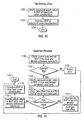
- FIG. 7 illustrates operation of the function Head-Overlap_Preempt (step 614b, FIG. 6A).
- step 700 the current time and the BHP of the already-scheduled data burst are checked.
- step 702 a determination is made whether there is sufficient time to modify the BHP of the already-scheduled data burst before transmission thereof to the control channel. If so, execution proceeds to step 704, in which the data burst length value in the BHP of the already-scheduled data burst is modified. It will be noted that only this value needs to be modified, as only the length of the already-scheduled data burst is being changed.
- step 706 the BHP of the data burst under consideration data burst is scheduled.
- step 702 If a negative determination is made in step 702, execution proceeds to step 708, in which an error message is returned. Execution terminates in step 710. As previously indicated, application of the Head-Overlap_Preempt function results in the overlapping portion of the already-scheduled data burst being preempted in favor of the overlapping portion of the data burst under consideration.
- FIG. 8 illustrates operation of the function Head-Overlap_Drop (step 614c, FIG. 6A).
- step 800 the data burst length value in the BHP of the data burst under consideration is modified.
- step 802 the BHP of the data burst under consideration is scheduled. Execution terminates in step 804.
- Head-Overlap_Drop function results in the overlapping portion of the data burst under consideration being dropped in favor of the overlapping portion of the already-scheduled data burst.
- FIG. 9 illustrates operation of the function Tail-Overlap_Preempt(step 616b, FIG. 6A). Since the already-scheduled data burst and its BHP are scheduled after the data burst under consideration, there is no need to check the time; however, the offset time between the already-scheduled data burst and the BHP thereof does change.
- step 900 a determination is made whether the new offset value between the already-scheduled data burst and its BHP exceeds a maximum value. If so, execution proceeds to step 902, in which the BHP of the already-scheduled data burst is rescheduled with the new offset value; otherwise, execution proceeds to step 904, in which the offset value in the BHP of the already-scheduled data burst is updated. Execution terminates in step 906.
- Tail-Overlap_Preempt function results in the overlapping portion of the already-scheduled data burst being preempted in favor of the overlapping portion of the data burst under consideration.
- FIG. 10 illustrates operation of the function Tail-Overlap_Drop (step 616c, FIG. 6A).
- step 1000 the data burst length value in the BHP of the data burst under consideration is modified.
- step 1002 the BHP of the data burst under consideration is scheduled. Execution terminates in step 1004.
- Tail-Overlap_Drop function results in the overlapping portion of the data burst under consideration being dropped in favor of the overlapping portion of the already-scheduled data burst.
- FIG. 11 illustrates operation of the function Head-Tail_Preempt (step 620b, FIG. 6B).
- step 1100 the current time and the BHP of the near-end already-scheduled data burst are checked.
- step 1102 a determination is made whether there is sufficient time to modify the BHP of the near-end already-scheduled data burst before transmission thereof to the control channel. If a negative determination is made in step 1102, execution proceeds to step 1108, in which an error message is returned; otherwise, execution proceeds to step 1104, in which the data burst length value in the BHP of the near-end already-scheduled data burst is modified. It will be noted that only this value needs to be modified, as only the length of the preempted data burst is being changed.
- step 1110 the new offset time between the far-end already-scheduled data burst and its BHP is checked.
- step 1112 a determination is made whether the new offset value exceeds a maximum value. If so, execution proceeds to step 1114, in which the BHP of the far-end already-scheduled data burst is rescheduled with the new offset value; otherwise, execution proceeds to step 1116.
- step 1116 the offset value in the BHP of the far-end already-scheduled data burst is updated.
- step 1118 the BHP of the data burst under consideration is scheduled. Execution terminates in step 1120.
- Head-Tail_Drop function results in the overlapping portion of the already-scheduled data burst being preempted in favor of the overlapping portion of the data burst under consideration and the overlapping portion of the already-scheduled data burst being preempted in favor of the overlapping portion of the data burst under consideration.
- FIG. 12 illustrates operation of the function Head_Drop-Tail_Preempt(step 620e, FIG. 6B).
- step 1200 the length value in the BHP of the data burst under consideration is modified.
- step 1202 the new offset time between the far-end already-scheduled data burst and its BHP is checked.
- step 1204 a determination is made whether the new offset time exceeds a maximum value. If so, execution proceeds to step 1206, in which the BHP of the far-end already-scheduled data burst is rescheduled with the new offset time; otherwise, execution proceeds to step 1208.
- step 1208 the offset time in the BHP of the far-end already-scheduled data burst is updated.
- step 1210 the BHP of the data burst under consideration is scheduled. Execution terminates in step 1212.
- Head_Drop-Tail_Preempt function results in the overlapping portion of the data burst under consideration being dropped in favor of the overlapping portion of the already-scheduled data burst and the overlapping portion of the already-scheduled data burst being preempted in favor of the overlapping portion of the data burst under consideration.
- FIG. 13 illustrates operation of the function Head_Preempt-Tail_Drop (step 620c, FIG. 6B).
- step 1300 the current time and the BHP of the near-end already-scheduled data burst are checked.
- step 1302 a determination is made whether there is sufficient time to modify the BHP of the near-end already-scheduled data burst before transmission thereof to the control channel. If so, execution proceeds to step 1304, in which the data burst length value in the BHP of the near-end already-scheduled data burst is modified. It will be noted that only this value needs to be modified, as only the length of the preempted data burst is being changed.
- step 1305 the BHP of the data burst under consideration is modified.
- step 1306 the BHP of the data burst under consideration is scheduled. If a negative determination is made in step 1302, execution proceeds to step 1308, in which an error message is returned. Execution terminates in step 1310.
- Head_Preempt-Tail_Drop function results in the overlapping portion of the already-scheduled data burst being preempted in favor of the overlapping portion of the data burst under consideration and the overlapping portion of the data burst under consideration being dropped in favor of the overlapping portion of the already-scheduled data burst.
- FIG. 14 illustrates operation of the function Head-Tail_Drop (step 620f, FIG. 6B).
- step 1400 the length value in the BHP of the data burst under consideration is modified.
- step 1402 BHP of the data burst under consideration is scheduled. Execution terminates in step 1404.
- Head-Tail_Drop function results in the overlapping portion of the data burst under consideration being dropped in favor of the overlapping portion of the already-scheduled data burst and the overlapping portion of the data burst under consideration being dropped in favor of the overlapping portion of the already-scheduled data burst.
- FIG. 15 illustrates operation of the function Full_Preempt (step 624a, FIG. 6B).
- step 1500 the current time and the BHP of the already-scheduled data burst are checked.
- step 1502 a determination is made whether the BHP of the already-scheduled data burst has already been transmitted. If so, an error message is returned in step 1504; otherwise, execution proceeds to step 1506.
- step 1506 the already-scheduled data burst and its BHP are dropped.
- step 1508 the data burst under consideration and its BHP are scheduled. Execution terminates in step 1510.
- FIG. 16 illustrates operation of the function Full_Drop (step 624b, FIG. 6B).
- step 1600 the data burst under consideration and its BHP are dropped. Execution terminates in step 1602.
- the following section comprises a presentation and comparison of simulation results of one embodiment of the partially preemptive QoS scheduling model as described herein ("Classful with Partial Preemption"), a QoS scheduling model that does not employ the partially preemptive features described herein (“Classful without Partial Preemption”), and a classless model with a void filling scheduler (“Classless”).
- the simulations are performed for the output link of an OBS core node. It will be assumed that there is no buffering, but that there is full wavelength conversion capability for OBS core nodes.
- Four classes, designated C0, C1, C2, and C3, where C0 has the highest priority and C3 has the lowest priority, are presumed. All four classes have the same arrival rate.
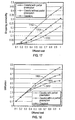
- FIG. 17 illustrates the dropping probability versus offered load for the three models set forth above.
- the Classful with Partial Preemption model represented by a line 1700
- the Classful without Partial Preemption model represented by a line 1702
- the Classful without Partial Preemption model has a 55% higher dropping probability at an offered load of 0.8, or 80%, than the Classless model, represented by a line 1704, which incurs a large tax for QoS considerations.
- the Classful with Partial Preemption model decreases the dropping probability in half at an offered load of 0.8.
- the Classful with Partial Preemption model represented by a line 1800 achieves better utilization than either the Classful without Partial Preemption model, represented by a line 1802, or the Classless model, represented by a line 1804.
- the partially preemptive QoS scheduling model described herein delivers proportional service differentiation with the least total dropping probability and higher utilization.
- the present invention advantageously provides an innovative and efficient solution for implementing a partially preemptive QoS scheduling model in an OBS network.
- the embodiments described herein enable a 20% or greater decrease in dropping probability and a 7 to 10% increase in utilization at a given load of 0.8 and beyond according to simulations and increase packet throughput.
- the embodiments described herein are simpler and more practical than optical buffering and wavelength dimensioning and, unlike those techniques, do not have any technological bound.
- application of the embodiments described herein is even easier with the slotted operation that is in more common practice today and the embodiments need not (although they may) be used in combination with optical buffering or wavelength dimensioning techniques.
Landscapes
- Engineering & Computer Science (AREA)
- Computer Networks & Wireless Communication (AREA)
- Data Exchanges In Wide-Area Networks (AREA)
Abstract
Description
- overlap_type: y
- y represents the code of the type of overlap
- overlap_amount: (an, af)
- an represents the amount of overlap in terms of slots at the near-end (head overlap); af represents the amount of overlap in terms of slots at the far-end (tail overlap).
- overlap_class: (cn, cf)
- cn represents the class of
the near-end overlapping data
burst;
cf represents the far-end overlapping burst.
BHP of the near-end already-scheduled data burst is modified. It will be noted that only this value needs to be modified, as only the length of the preempted data burst is being changed. In
Claims (8)
- A method of scheduling data bursts for transmission on one of a plurality of outgoing channels in a router in an optical burst switched ("OBS") node, the method comprising the steps of:responsive to a determination that a data burst to be scheduled overlaps with an already-scheduled data burst on each of the plurality of outgoing channels, determining an optimum channel with respect to which the already-scheduled data burst thereon overlaps the least amount with the data burst to be scheduled; dropping a portion of the data burst to be scheduled that overlaps with the already-scheduled data burst on the optimum channel; andscheduling a remaining portion of the data burst to be scheduled on the optimum channel.
- The method of claim 1 further comprising the step of, if the overlapping portion of the data burst to be scheduled exceeds a predetermined threshold value, dropping the entire data burst to be scheduled.
- The method of claim 2 wherein the threshold value comprises a ratio of the length of the overlapping portion of the data burst to be scheduled to the overall length of the data burst to be scheduled.
- The method of claim 1 further comprising the steps of:modifying a length value of a Burst Header Packet ("BHP") of the data burst under consideration; andscheduling transmission of the BHP of the data burst under consideration.
- Apparatus for scheduling data bursts for transmission on one of a plurality of outgoing channels in a router in an optical burst switched ("OBS") node, the apparatus comprising:means responsive to a determination that a data burst to be scheduled overlaps with an already-scheduled data burst on each of the plurality of outgoing channels for determining an optimum channel with respect to which the already-scheduled data burst thereon overlaps the least amount with the data burst to be scheduled;means for dropping a portion of the data burst to be scheduled that overlaps with the already-scheduled data burst on the optimum channel; andmeans for scheduling a remaining portion of the data burst to be scheduled on the optimum channel.
- The apparatus of claim 14 further comprising means responsive to the overlapping portion of the data burst to be scheduled exceeding a predetermined threshold value for dropping the entire data burst to be scheduled.
- The apparatus of claim 15 wherein the threshold value comprises a ratio of the length of the overlapping portion of the data burst to be scheduled to the overall length of the data burst to be scheduled.
- The apparatus of claim 14 further comprising:means for modifying a length value of a Burst Header Packet ("BHP") of the data burst under consideration; andmeans for scheduling transmission of the BHP of the data burst under consideration.
Applications Claiming Priority (4)
| Application Number | Priority Date | Filing Date | Title |
|---|---|---|---|
| US41170802P | 2002-09-18 | 2002-09-18 | |
| US411708P | 2002-09-18 | ||
| US282977 | 2002-10-29 | ||
| US10/282,977 US7254113B2 (en) | 2002-09-18 | 2002-10-29 | Partially preemptive burst scheduling model for an optical burst switching network |
Publications (3)
| Publication Number | Publication Date |
|---|---|
| EP1401232A2 true EP1401232A2 (en) | 2004-03-24 |
| EP1401232A3 EP1401232A3 (en) | 2008-11-12 |
| EP1401232B1 EP1401232B1 (en) | 2013-07-17 |
Family
ID=31949816
Family Applications (1)
| Application Number | Title | Priority Date | Filing Date |
|---|---|---|---|
| EP03020541.3A Expired - Lifetime EP1401232B1 (en) | 2002-09-18 | 2003-09-17 | Partially preemptive burst scheduling model for an optical burst switching network |
Country Status (2)
| Country | Link |
|---|---|
| US (1) | US7254113B2 (en) |
| EP (1) | EP1401232B1 (en) |
Cited By (1)
| Publication number | Priority date | Publication date | Assignee | Title |
|---|---|---|---|---|
| EP1635604A1 (en) * | 2004-09-09 | 2006-03-15 | Siemens Aktiengesellschaft | Scheduling of wavelengths with the least used channel in optical burst switched networks |
Families Citing this family (10)
| Publication number | Priority date | Publication date | Assignee | Title |
|---|---|---|---|---|
| KR100603254B1 (en) * | 2004-12-27 | 2006-07-24 | 삼성전자주식회사 | Filling of empty transmission section and transmitting burst data in optical burst switching network |
| US8660112B2 (en) * | 2004-12-27 | 2014-02-25 | Telefonaktiebolaget L M Ericsson (Publ) | Adaptive router architecture using logical internal addressing |
| CN101232438B (en) * | 2007-01-26 | 2012-10-03 | 华为技术有限公司 | Method for implementing outburst packet delay and core node |
| KR101918695B1 (en) * | 2011-03-10 | 2018-11-14 | 마벨 월드 트레이드 리미티드 | Data blocking systems for non-arbitrary networks |
| US9219693B2 (en) | 2012-02-22 | 2015-12-22 | Marvell World Trade Ltd. | Network devices with time aware medium access controller |
| US9882823B2 (en) | 2012-03-08 | 2018-01-30 | Marvell World Trade Ltd. | Systems and methods for blocking transmission of a frame in a network device |
| US9960872B2 (en) | 2012-03-08 | 2018-05-01 | Marvell International Ltd. | Systems and methods for performing a soft-block of a queue based on a size of a remaining period of a guard band |
| CN104620548B (en) | 2012-09-11 | 2018-02-27 | 马维尔国际贸易有限公司 | Method and apparatus for transmitting packets according to IEEE 802.1 QBV |
| US10153844B2 (en) | 2017-04-03 | 2018-12-11 | Futurewei Technologies, Inc. | Channel recovery in burst-mode, time-division multiplexing (TDM) passive optical networks (PONs) |
| US10778364B2 (en) | 2017-04-15 | 2020-09-15 | Futurewei Technologies, Inc. | Reduced power consumption for digital signal processing (DSP)-based reception in time-division multiplexing (TDM) passive optical networks (PONs) |
Family Cites Families (4)
| Publication number | Priority date | Publication date | Assignee | Title |
|---|---|---|---|---|
| US6563837B2 (en) | 1998-02-10 | 2003-05-13 | Enterasys Networks, Inc. | Method and apparatus for providing work-conserving properties in a non-blocking switch with limited speedup independent of switch size |
| GB9828144D0 (en) | 1998-12-22 | 1999-02-17 | Power X Limited | Data switching apparatus |
| US7130288B2 (en) * | 2001-01-24 | 2006-10-31 | Qualcomm Incorporated | Method for power control for mixed voice and data transmission |
| US20030206521A1 (en) * | 2002-05-06 | 2003-11-06 | Chunming Qiao | Methods to route and re-route data in OBS/LOBS and other burst swithched networks |
-
2002
- 2002-10-29 US US10/282,977 patent/US7254113B2/en not_active Expired - Fee Related
-
2003
- 2003-09-17 EP EP03020541.3A patent/EP1401232B1/en not_active Expired - Lifetime
Non-Patent Citations (1)
| Title |
|---|
| None |
Cited By (1)
| Publication number | Priority date | Publication date | Assignee | Title |
|---|---|---|---|---|
| EP1635604A1 (en) * | 2004-09-09 | 2006-03-15 | Siemens Aktiengesellschaft | Scheduling of wavelengths with the least used channel in optical burst switched networks |
Also Published As
| Publication number | Publication date |
|---|---|
| US7254113B2 (en) | 2007-08-07 |
| EP1401232A3 (en) | 2008-11-12 |
| EP1401232B1 (en) | 2013-07-17 |
| US20040052213A1 (en) | 2004-03-18 |
Similar Documents
| Publication | Publication Date | Title |
|---|---|---|
| Vokkarane et al. | Threshold-based burst assembly policies for QoS support in optical burst-switched networks | |
| Vokkarane et al. | Burst segmentation: an approach for reducing packet loss in optical burst switched networks | |
| Vokkarane et al. | Prioritized burst segmentation and composite burst-assembly techniques for QoS support in optical burst-switched networks | |
| Cankaya et al. | A preemptive scheduling technique for OBS networks with service differentiation | |
| Yang et al. | A probabilistic preemptive scheme for providing service differentiation in OBS networks | |
| EP1401232B1 (en) | Partially preemptive burst scheduling model for an optical burst switching network | |
| Zhang et al. | Early drop and wavelength grouping schemes for providing absolute QoS differentiation in optical burst-switched networks | |
| Vokkarane et al. | Channel scheduling algorithms using burst segmentation and FDLs for optical burst-switched networks | |
| Farahmand et al. | Dynamic traffic grooming in optical burst-switched networks | |
| Cameron et al. | Prioritized deflection routing in optical burst switching networks | |
| Li et al. | Performance of the implementation of a pipeline buffering system in optical burst switching networks | |
| Veisllari et al. | Scheduling techniques in an integrated hybrid node with electronic buffers | |
| Szymanski et al. | An FPGA controller for deterministic guaranteed-rate optical packet switching | |
| Zhang et al. | Path clustering: an approach to implement absolute QoS differentiation in optical burst-switched networks | |
| Phuritatkul et al. | Buffer and bandwidth allocation algorithms for quality of service provisioning in WDM optical burst switching networks | |
| Tachibana et al. | OPN05-1: Burst-Cluster Transmission Based on the Number of Hops for Improving Fairness in Optical Burst Switching Networks | |
| Öztürk | Quality of Service Analysis for Slotted Optical Burst Switching Networks | |
| Huang et al. | Reflection routing based on contending burst copying for optical burst switched networks | |
| Orawiwattanakul et al. | Resource Consumption Based Preemption for providing fairness in optical burst switching networks | |
| Li et al. | A batch channel-schedule algorithm in optical burst switch networks | |
| Zagorskis | Using the probabilistic model checker PRISM to analyze H-OTBA algorithm in Optical Burst Switching (OBS) networks | |
| Orawiwattanakul et al. | Preemption scheme for improving source level fairness in optical burst switching networks | |
| Tachibana et al. | QoS-guaranteed burst transmission for VoIP service over optical burst switching networks | |
| Tachibana et al. | Effect of switching time on timer-based burst assembly and its effect on voice-over-Internet protocol quality of service over optical burst switching networks | |
| Pevac et al. | Modelling and performance evaluation of optical burst switched node with deflection routing and dynamic wavelength allocation |
Legal Events
| Date | Code | Title | Description |
|---|---|---|---|
| PUAI | Public reference made under article 153(3) epc to a published international application that has entered the european phase |
Free format text: ORIGINAL CODE: 0009012 |
|
| AK | Designated contracting states |
Kind code of ref document: A2 Designated state(s): AT BE BG CH CY CZ DE DK EE ES FI FR GB GR HU IE IT LI LU MC NL PT RO SE SI SK TR |
|
| AX | Request for extension of the european patent |
Extension state: AL LT LV MK |
|
| RIN1 | Information on inventor provided before grant (corrected) |
Inventor name: CANKAYA, HAKKI CANDAN Inventor name: CHARCRANOON, SARAVUT Inventor name: EL-BAWAB, TAREK |
|
| RAP1 | Party data changed (applicant data changed or rights of an application transferred) |
Owner name: ALCATEL LUCENT |
|
| PUAL | Search report despatched |
Free format text: ORIGINAL CODE: 0009013 |
|
| AK | Designated contracting states |
Kind code of ref document: A3 Designated state(s): AT BE BG CH CY CZ DE DK EE ES FI FR GB GR HU IE IT LI LU MC NL PT RO SE SI SK TR |
|
| AX | Request for extension of the european patent |
Extension state: AL LT LV MK |
|
| RIC1 | Information provided on ipc code assigned before grant |
Ipc: H04L 12/56 20060101ALI20081006BHEP Ipc: H04Q 11/00 20060101AFI20040115BHEP |
|
| 17P | Request for examination filed |
Effective date: 20090511 |
|
| AKX | Designation fees paid |
Designated state(s): AT BE BG CH CY CZ DE DK EE ES FI FR GB GR HU IE IT LI LU MC NL PT RO SE SI SK TR |
|
| 17Q | First examination report despatched |
Effective date: 20110929 |
|
| RAP1 | Party data changed (applicant data changed or rights of an application transferred) |
Owner name: ALCATEL LUCENT |
|
| GRAP | Despatch of communication of intention to grant a patent |
Free format text: ORIGINAL CODE: EPIDOSNIGR1 |
|
| RIC1 | Information provided on ipc code assigned before grant |
Ipc: H04Q 11/00 20060101AFI20130130BHEP |
|
| GRAS | Grant fee paid |
Free format text: ORIGINAL CODE: EPIDOSNIGR3 |
|
| GRAA | (expected) grant |
Free format text: ORIGINAL CODE: 0009210 |
|
| AK | Designated contracting states |
Kind code of ref document: B1 Designated state(s): AT BE BG CH CY CZ DE DK EE ES FI FR GB GR HU IE IT LI LU MC NL PT RO SE SI SK TR |
|
| REG | Reference to a national code |
Ref country code: GB Ref legal event code: FG4D |
|
| REG | Reference to a national code |
Ref country code: CH Ref legal event code: EP |
|
| REG | Reference to a national code |
Ref country code: IE Ref legal event code: FG4D |
|
| REG | Reference to a national code |
Ref country code: AT Ref legal event code: REF Ref document number: 622802 Country of ref document: AT Kind code of ref document: T Effective date: 20130815 |
|
| REG | Reference to a national code |
Ref country code: DE Ref legal event code: R096 Ref document number: 60344495 Country of ref document: DE Effective date: 20130912 |
|
| 111Z | Information provided on other rights and legal means of execution |
Free format text: AT BE BG CH CY CZ DE DK EE ES FI FR GB GR HU IE IT LI LU MC NL PT RO SE SI SK TR Effective date: 20130410 |
|
| REG | Reference to a national code |
Ref country code: AT Ref legal event code: MK05 Ref document number: 622802 Country of ref document: AT Kind code of ref document: T Effective date: 20130717 |
|
| REG | Reference to a national code |
Ref country code: NL Ref legal event code: VDEP Effective date: 20130717 |
|
| REG | Reference to a national code |
Ref country code: FR Ref legal event code: GC Effective date: 20131112 |
|
| REG | Reference to a national code |
Ref country code: GB Ref legal event code: 732E Free format text: REGISTERED BETWEEN 20131212 AND 20131218 |
|
| PG25 | Lapsed in a contracting state [announced via postgrant information from national office to epo] |
Ref country code: BE Free format text: LAPSE BECAUSE OF FAILURE TO SUBMIT A TRANSLATION OF THE DESCRIPTION OR TO PAY THE FEE WITHIN THE PRESCRIBED TIME-LIMIT Effective date: 20130717 Ref country code: SE Free format text: LAPSE BECAUSE OF FAILURE TO SUBMIT A TRANSLATION OF THE DESCRIPTION OR TO PAY THE FEE WITHIN THE PRESCRIBED TIME-LIMIT Effective date: 20130717 Ref country code: AT Free format text: LAPSE BECAUSE OF FAILURE TO SUBMIT A TRANSLATION OF THE DESCRIPTION OR TO PAY THE FEE WITHIN THE PRESCRIBED TIME-LIMIT Effective date: 20130717 Ref country code: PT Free format text: LAPSE BECAUSE OF FAILURE TO SUBMIT A TRANSLATION OF THE DESCRIPTION OR TO PAY THE FEE WITHIN THE PRESCRIBED TIME-LIMIT Effective date: 20131118 Ref country code: CY Free format text: LAPSE BECAUSE OF FAILURE TO SUBMIT A TRANSLATION OF THE DESCRIPTION OR TO PAY THE FEE WITHIN THE PRESCRIBED TIME-LIMIT Effective date: 20130619 |
|
| PG25 | Lapsed in a contracting state [announced via postgrant information from national office to epo] |
Ref country code: GR Free format text: LAPSE BECAUSE OF FAILURE TO SUBMIT A TRANSLATION OF THE DESCRIPTION OR TO PAY THE FEE WITHIN THE PRESCRIBED TIME-LIMIT Effective date: 20131018 Ref country code: ES Free format text: LAPSE BECAUSE OF FAILURE TO SUBMIT A TRANSLATION OF THE DESCRIPTION OR TO PAY THE FEE WITHIN THE PRESCRIBED TIME-LIMIT Effective date: 20131028 Ref country code: NL Free format text: LAPSE BECAUSE OF FAILURE TO SUBMIT A TRANSLATION OF THE DESCRIPTION OR TO PAY THE FEE WITHIN THE PRESCRIBED TIME-LIMIT Effective date: 20130717 Ref country code: FI Free format text: LAPSE BECAUSE OF FAILURE TO SUBMIT A TRANSLATION OF THE DESCRIPTION OR TO PAY THE FEE WITHIN THE PRESCRIBED TIME-LIMIT Effective date: 20130717 Ref country code: SI Free format text: LAPSE BECAUSE OF FAILURE TO SUBMIT A TRANSLATION OF THE DESCRIPTION OR TO PAY THE FEE WITHIN THE PRESCRIBED TIME-LIMIT Effective date: 20130717 |
|
| PG25 | Lapsed in a contracting state [announced via postgrant information from national office to epo] |
Ref country code: CY Free format text: LAPSE BECAUSE OF FAILURE TO SUBMIT A TRANSLATION OF THE DESCRIPTION OR TO PAY THE FEE WITHIN THE PRESCRIBED TIME-LIMIT Effective date: 20130717 |
|
| PG25 | Lapsed in a contracting state [announced via postgrant information from national office to epo] |
Ref country code: MC Free format text: LAPSE BECAUSE OF FAILURE TO SUBMIT A TRANSLATION OF THE DESCRIPTION OR TO PAY THE FEE WITHIN THE PRESCRIBED TIME-LIMIT Effective date: 20130717 Ref country code: RO Free format text: LAPSE BECAUSE OF FAILURE TO SUBMIT A TRANSLATION OF THE DESCRIPTION OR TO PAY THE FEE WITHIN THE PRESCRIBED TIME-LIMIT Effective date: 20130717 Ref country code: CZ Free format text: LAPSE BECAUSE OF FAILURE TO SUBMIT A TRANSLATION OF THE DESCRIPTION OR TO PAY THE FEE WITHIN THE PRESCRIBED TIME-LIMIT Effective date: 20130717 Ref country code: SK Free format text: LAPSE BECAUSE OF FAILURE TO SUBMIT A TRANSLATION OF THE DESCRIPTION OR TO PAY THE FEE WITHIN THE PRESCRIBED TIME-LIMIT Effective date: 20130717 Ref country code: DK Free format text: LAPSE BECAUSE OF FAILURE TO SUBMIT A TRANSLATION OF THE DESCRIPTION OR TO PAY THE FEE WITHIN THE PRESCRIBED TIME-LIMIT Effective date: 20130717 Ref country code: EE Free format text: LAPSE BECAUSE OF FAILURE TO SUBMIT A TRANSLATION OF THE DESCRIPTION OR TO PAY THE FEE WITHIN THE PRESCRIBED TIME-LIMIT Effective date: 20130717 |
|
| REG | Reference to a national code |
Ref country code: CH Ref legal event code: PL |
|
| PLBE | No opposition filed within time limit |
Free format text: ORIGINAL CODE: 0009261 |
|
| STAA | Information on the status of an ep patent application or granted ep patent |
Free format text: STATUS: NO OPPOSITION FILED WITHIN TIME LIMIT |
|
| PG25 | Lapsed in a contracting state [announced via postgrant information from national office to epo] |
Ref country code: IT Free format text: LAPSE BECAUSE OF FAILURE TO SUBMIT A TRANSLATION OF THE DESCRIPTION OR TO PAY THE FEE WITHIN THE PRESCRIBED TIME-LIMIT Effective date: 20130717 |
|
| 26N | No opposition filed |
Effective date: 20140422 |
|
| REG | Reference to a national code |
Ref country code: IE Ref legal event code: MM4A |
|
| PG25 | Lapsed in a contracting state [announced via postgrant information from national office to epo] |
Ref country code: IE Free format text: LAPSE BECAUSE OF NON-PAYMENT OF DUE FEES Effective date: 20130917 Ref country code: CH Free format text: LAPSE BECAUSE OF NON-PAYMENT OF DUE FEES Effective date: 20130930 Ref country code: LI Free format text: LAPSE BECAUSE OF NON-PAYMENT OF DUE FEES Effective date: 20130930 |
|
| REG | Reference to a national code |
Ref country code: DE Ref legal event code: R097 Ref document number: 60344495 Country of ref document: DE Effective date: 20140422 |
|
| PGFP | Annual fee paid to national office [announced via postgrant information from national office to epo] |
Ref country code: DE Payment date: 20140922 Year of fee payment: 12 |
|
| PGFP | Annual fee paid to national office [announced via postgrant information from national office to epo] |
Ref country code: GB Payment date: 20140919 Year of fee payment: 12 Ref country code: FR Payment date: 20140919 Year of fee payment: 12 |
|
| REG | Reference to a national code |
Ref country code: FR Ref legal event code: RG Effective date: 20141016 |
|
| PG25 | Lapsed in a contracting state [announced via postgrant information from national office to epo] |
Ref country code: TR Free format text: LAPSE BECAUSE OF FAILURE TO SUBMIT A TRANSLATION OF THE DESCRIPTION OR TO PAY THE FEE WITHIN THE PRESCRIBED TIME-LIMIT Effective date: 20130717 |
|
| PG25 | Lapsed in a contracting state [announced via postgrant information from national office to epo] |
Ref country code: HU Free format text: LAPSE BECAUSE OF FAILURE TO SUBMIT A TRANSLATION OF THE DESCRIPTION OR TO PAY THE FEE WITHIN THE PRESCRIBED TIME-LIMIT; INVALID AB INITIO Effective date: 20030917 Ref country code: BG Free format text: LAPSE BECAUSE OF FAILURE TO SUBMIT A TRANSLATION OF THE DESCRIPTION OR TO PAY THE FEE WITHIN THE PRESCRIBED TIME-LIMIT Effective date: 20130717 Ref country code: LU Free format text: LAPSE BECAUSE OF NON-PAYMENT OF DUE FEES Effective date: 20130917 |
|
| REG | Reference to a national code |
Ref country code: DE Ref legal event code: R119 Ref document number: 60344495 Country of ref document: DE |
|
| GBPC | Gb: european patent ceased through non-payment of renewal fee |
Effective date: 20150917 |
|
| REG | Reference to a national code |
Ref country code: FR Ref legal event code: ST Effective date: 20160531 |
|
| PG25 | Lapsed in a contracting state [announced via postgrant information from national office to epo] |
Ref country code: GB Free format text: LAPSE BECAUSE OF NON-PAYMENT OF DUE FEES Effective date: 20150917 Ref country code: DE Free format text: LAPSE BECAUSE OF NON-PAYMENT OF DUE FEES Effective date: 20160401 |
|
| PG25 | Lapsed in a contracting state [announced via postgrant information from national office to epo] |
Ref country code: FR Free format text: LAPSE BECAUSE OF NON-PAYMENT OF DUE FEES Effective date: 20150930 |