EP1401172A2 - System and method for handling frames in multiple stack environments - Google Patents
System and method for handling frames in multiple stack environments Download PDFInfo
- Publication number
- EP1401172A2 EP1401172A2 EP03021048A EP03021048A EP1401172A2 EP 1401172 A2 EP1401172 A2 EP 1401172A2 EP 03021048 A EP03021048 A EP 03021048A EP 03021048 A EP03021048 A EP 03021048A EP 1401172 A2 EP1401172 A2 EP 1401172A2
- Authority
- EP
- European Patent Office
- Prior art keywords
- offload
- processing
- frames
- protocol stack
- stack
- Prior art date
- Legal status (The legal status is an assumption and is not a legal conclusion. Google has not performed a legal analysis and makes no representation as to the accuracy of the status listed.)
- Withdrawn
Links
Images




Classifications
-
- H—ELECTRICITY
- H04—ELECTRIC COMMUNICATION TECHNIQUE
- H04L—TRANSMISSION OF DIGITAL INFORMATION, e.g. TELEGRAPHIC COMMUNICATION
- H04L69/00—Network arrangements, protocols or services independent of the application payload and not provided for in the other groups of this subclass
- H04L69/12—Protocol engines
-
- H—ELECTRICITY
- H04—ELECTRIC COMMUNICATION TECHNIQUE
- H04L—TRANSMISSION OF DIGITAL INFORMATION, e.g. TELEGRAPHIC COMMUNICATION
- H04L69/00—Network arrangements, protocols or services independent of the application payload and not provided for in the other groups of this subclass
- H04L69/30—Definitions, standards or architectural aspects of layered protocol stacks
- H04L69/32—Architecture of open systems interconnection [OSI] 7-layer type protocol stacks, e.g. the interfaces between the data link level and the physical level
-
- H—ELECTRICITY
- H04—ELECTRIC COMMUNICATION TECHNIQUE
- H04L—TRANSMISSION OF DIGITAL INFORMATION, e.g. TELEGRAPHIC COMMUNICATION
- H04L69/00—Network arrangements, protocols or services independent of the application payload and not provided for in the other groups of this subclass
- H04L69/30—Definitions, standards or architectural aspects of layered protocol stacks
- H04L69/32—Architecture of open systems interconnection [OSI] 7-layer type protocol stacks, e.g. the interfaces between the data link level and the physical level
- H04L69/322—Intralayer communication protocols among peer entities or protocol data unit [PDU] definitions
- H04L69/329—Intralayer communication protocols among peer entities or protocol data unit [PDU] definitions in the application layer [OSI layer 7]
Definitions
- network processing is transferred from a host-based software implementation to an offload engine coupled to a host with a direct memory interface.
- an offload engine coupled to a host with a direct memory interface.
- the functions related, for example, to processing incoming frames that were performed by the host are then performed by the offload engine, thereby typically freeing up host resources (e.g., host processor resources).
- a period of time exists, for example, between the time in which the host protocol processing indicates an offload event to the offload engine and the time the offload engine continues processing on a connection.
- one or more packets may still reside in the non-offload stack. Such remaining packets are trapped and cannot be further processed by the host since the connection and the corresponding state information have been offloaded to the offload engine.
- the present invention may provide a system that handles frames in a multiple stack environment.
- the system may include, for example, a host and an offload engine.
- the host may run a software portion of a non-offload protocol stack.
- the offload engine may be coupled to the host and may include, for example, a hardware portion of an offload protocol stack.
- the non-offload protocol stack may include, for example, one or more partially processed frames. The one or more partially processed frames may be sent from the host to the offload engine to complete processing in the offload protocol stack.
- the present invention may provide a system that handles frames in a multiple stack environment.
- the system may include, for example, a first layered processing system and a second layered processing system, the second layered processing system being coupled to the first layered processing system. Frames of a particular connection in the first layered processing system may be moved to the second layered processing system.
- the present invention may provide a method that handles frames in a multiple stack environment.
- the method may include one or more of the following: completing an offload of a connection from a non-offload protocol stack to an offload protocol stack; and sending a partially processed frame remaining in the non-offload protocol stack to the offload protocol stack to complete processing of the partially processed frame.
- the first level of processing comprises L2 processing
- the second level of processing comprises L3 processing
- the set of frames is sent to the second level of processing in the offload protocol stack via a catch-up interface.
- the set of frames is sent to a layer that provides the second level of processing of the non-offload protocol stack before being sent to a layer that provides the second level of processing of the offload protocol stack.
- the set of frames is sent to the layer that provides the second level of processing of the non-offload protocol stack before being sent to the layer that provides the second level of processing of the offload protocol stack via a host interface.
- the first level of processing comprises L3 processing
- the second level of processing comprises L4 processing
- the set of frames is sent to the L4 processing in the offload protocol stack via a catch-up interface.
- the set of frames is sent to an L4 of the non-offload protocol stack before being sent to an L4 of the offload protocol stack.
- the non-offload protocol stack is coupled to the offload protocol stack via a host interface.
- the non-offload protocol stack comprises a layer that provides a first level of processing and a layer that provides a second level of processing, and wherein the layer that provides the first level of processing of the non-offload stack sends frames in order to the layer that provides the second level of processing to the non-offload stack.
- the first level of processing comprises L4 processing; and wherein the second level of processing comprises L5 processing.
- the layer that provides the first level of processing of the non-offload stack postpones delivery of a particular frame that is out of order.
- the offload protocol stack comprises a layer that provides a first level of processing and a layer that provides a second level of processing, and wherein the layer that provides the first level of processing of the offload stack sends frames in order to the layer that provides the second level of processing to the non-offload stack.
- the offload protocol stack comprises a layer that provides a first level of processing
- the non-offload protocol stack comprises a layer that provides a higher level of processing than the first level
- the layer that provides the first level of processing of the offload stack sends frames in order to the layer that provides the higher level of processing of the non-offload stack.
- the offload protocol stack comprises a layer that provides a first level of processing
- the non-offload protocol stack comprises a layer that provides a higher level of processing than the first level
- the layer that provides the first level of processing of the offload stack sends out-of-order frames to the layer that provides the higher level of processing of the non-offload stack.
- frames are processed or received out of order in the non-offload stack or the offload stack until an application layer of the respective stack.
- a system for handling frames in a multiple stack environment comprising:
- the one or more partially processed frames are sent from the software portion of the non-offload protocol stack to the hardware portion of the offload protocol stack.
- At least one partially processed frame in a first level, software processing block of the non-offload protocol stack is sent to a first level, hardware processing block of the offload protocol stack.
- the first level, software processing block comprises a software L3 processing block
- the first level, hardware processing block comprises a hardware L3 processing block
- the first level, software processing block comprises a software L4 processing block
- the first level, hardware processing block comprises a hardware L4 processing block
- frames are sent in order from a first level, hardware processing block in the offload engine to a second level, software processing block in the host.
- the first level, hardware processing block comprises a hardware L4 processing block
- the second level, software processing block comprises a software L5 processing block
- a system for handling frames in a multiple stack environment comprising:
- the frames of the particular connection in the first layered processing system are moved to the second layered processing system after the particular connection has been moved from the first layered processing system to the second layered processing system.
- the frames of the particular connection in the first layered processing system are partially processed frames.
- the frames of the particular connection are moved to the second layered processing system to continue layer processing.
- the frames of the particular connection are trapped in the first layered processing system.
- the particular connection is moved during a life of the particular connection.
- the first layered processing system comprises a first offload layered processing system
- the second layered processing system comprises a second offload layered processing system
- the first layered processing system comprises a first non-offload layered processing system
- the second layered processing system comprises a second non-offload layered processing system
- the first layered processing system comprises a non-offload layered processing system
- the second layered processing system comprises an offload layered processing system
- the first layered processing system handles a first set of connections and the second layered processing system handles a second set of connections.
- a decision to move a connection of the first set of connections from the first layered processing system to the second layered processing system is made on a per connection basis.
- a method for frames in a multiple stack environment comprising:
- the partially processed frame completed a first level of processing, but not a second level of processing, in the non-offload protocol stack, and wherein the sending comprises sending the partially processed frame to a second level, hardware processing block of the offload protocol.
- the first level of processing is L2 processing
- the second level of processing is L3 processing
- the second level, hardware processing block comprises a hardware L3 processing block.
- the first level of processing is L3 processing
- the second level of processing is L4 processing
- the second level, hardware processing block comprises a hardware L4 processing block.
- a second level, software processing block of the offload protocol stack receives frames in order from a first level, hardware processing block of the offload protocol.
- the second level, software processing block comprises a software L5 processing block
- the first level, hardware processing block comprises a hardware L4 processing block
- the second level, software processing block of the offload protocol stack comprises the second level, software processing block of the non-offload protocol stack.
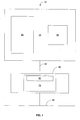
- FIG. 1 shows a block diagram illustrating an embodiment of a system that handles frames in a multiple stack environment according to the present invention.
- the system 10 may include, for example, a host 20, a network interface card (NIC) 30 and a host interface 40.
- the host 20 may include, for example, a host processor 50 (e.g., a central processing unit (CPU)) and a host memory 60.
- the host interface 40 may be, for example, a peripheral component interconnect (PCI), a direct memory access (DMA) interface or some other type of interface.
- the NIC 30 may include, for example, an offload engine 70.
- the offload engine 70 may be, for example, a transmission control protocol/internet protocol (TCP/IP) offload engine (TOE).
- the NIC 30 may include, for example, a DMA engine 80.
- the offload engine 70 may include, for example, the DMA engine 80.
- the host 20 may be coupled to the NIC 30 via the host interface 40.
- the NIC 30 may be coupled to a physical communications medium 80 such as, for example, an Ethernet.
- the present invention also contemplates integrating or separating the illustrated components of the system 10.
- the NIC 30 and the offload engine 70 may be integrated into a single integrated chip that may, for example, be mounted on a host motherboard.
- the DMA engine 80 may be a part of the NIC 30, but may be a separate component from the offload engine 70.
- the present invention also contemplates components that may not be illustrated.
- the offload engine 70 may be coupled to a dedicated memory on the NIC 30 or may include memory within the offload engine 70.
- the host 20 may also access the physical communications medium 90 via other NICs, adapters or controllers.
- FIGS. 2A and 2B show block flow diagrams illustrating embodiments of protocol stacks according to the present invention.
- FIG. 2A shows a block flow diagram illustrating an embodiment of a protocol stack used when a particular connection is not offloaded from the host 20 to the offload engine 70 according to the present invention.
- the non-offload protocol stack may include, for example, non-offload layers of protocol in hardware 100, a DMA interface 40 and non-offload layers of protocol in software 110.
- the non-offload layers of protocol in hardware 100 may include, for example, L1 and L2 processing layers.
- the non-offload layers of protocol in software 110 may include, for example, L3, L4, L5 or higher processing layers.
- packets may arrive via, for example, a network connection and may be processed by the non-offload layers of protocol in hardware 100 before being sent to the non-offload layers of protocol in software 110 via the DMA interface 40. The packets are then processed by the non-offload layers of protocol in software 110.
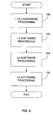
- FIG. 3 shows a flow chart illustrating an embodiment of a process that processes incoming packets that have not been offloaded according to the present invention.
- L1/L2 hardware may process the incoming frames.
- the L1/L2 hardware may be part of the non-offload layers of protocol in hardware 100.
- the frames may be carried on the physical communications medium 90 such as, for example, the Ethernet.
- the frames may be processed, for example, in an Ethernet adapter that may be part of the NIC 30.
- the Ethernet adapter may also be integrated, at least in part, with the offload engine 70.
- the L1/L2 processed frames may be passed from the NIC 30 to the host 20 via the host interface 40 (e.g., the DMA interface, PCI, etc.)
- the host 20 may use the host processor 50 and the host memory 60 to process the frames further.
- steps 150-170, L3/L4/L5 or higher processing may occur in respective layers of the non-offload layers of protocol in software 110 via software run by the host processor 50.
- FIG. 2B shows a block flow diagram illustrating an embodiment of a protocol stack used when a particular connection is offloaded from the host 20 to the offload engine 70 according to the present invention.
- the offload layers of protocol may include, for example, offload layers of protocol in hardware 120, the DMA interface 40 and offload layers of protocol in software 130.
- the offload layers of protocol in hardware 120 may include, for example, L1, L2, L3 and L4 processing layers.
- the offload layers of protocol in software 130 may include, for example, L5 or higher processing layers.
- FIG. 4 shows a flow chart illustrating an embodiment of a process that processes incoming packets that have been offloaded according to the present invention.
- L1/L2 hardware may process the incoming frames.
- the L1/L2 hardware may be part of the offload layers of protocol in hardware 120.
- the frames may be carried on the physical communications medium 90 such as, for example, the Ethernet.
- the frames may be processed, for example, in an Ethernet adapter that may be part of the NIC 30.
- the Ethernet adapter may also be integrated, at least in part, with the offload engine 70.
- the frames are L3/L4 offload processed in respective offload layers of protocol in hardware 120.
- the offload engine 70 of the NIC 30 may include, for example, hardware for L3/L4 processing.
- the offload engine 70 may provide accelerated processing.
- the offload engine 70 may include, for example, the hardware for L1/L2/L3/L4 processing.
- the frames are sent to the host 20 via the host interface 40 (e.g., the DMA interface, PCI, etc.)
- the host 20 may use the host processor 50 and the host memory 60 to process the frames further.
- L5 or higher processing may occur via software run by the host processor 50.
- the offload layers of protocol in software 130 are used to further process the frames.
- the offload protocol stack and the non-offload protocol stack may share processing layers for streams of packets.
- L1 and L2 processing layers of respective hardware portions of the protocol stacks may be commonly used by both the offload protocol stack and the non-offload protocol stack.
- the L5 or higher processing layers of respective software portions of the protocol stacks may be commonly used by both the offload protocol stack and the non-offload protocol stack.
- the offload protocol stack and the non-offload stack may share the host interface 40 (e.g., the DMA interface) and may communicate with each other via the host interface 40.
- partially processed packets in the non-offload protocol stack may be sent to corresponding layers in the offload protocol stack via the DMA interface 40 or some other interface.
- the offload protocol stack may then complete processing on the partially processed packets.
- FIG. 5 is a time representation of an embodiment of a system and method that process partially process frames according to the present invention.
- FIG. 5 illustrates an example in which frames 1-9 progress in time with respect to the network controller input (NCI), software L3 processing (SL3P), software L4 processing (SL4P), offload L3 processing (OL3P), offload L4 processing (OL4P) and software L5 processing (SL5P).
- the time line is not necessarily to scale (e.g., linear scale). Furthermore, the relative times between various layers may not necessarily be to scale.
- the offload protocol stack is notified of the decision to offload the connection 220 which may be processed by the SL4P.
- the SL4P then synchronizes with the SL3P and begins to collect software processing state information 230 including, for example, connection state information. It takes time 240, 250 for the OL3P and OL4P of the offload engine 70 to receive and to process state variables including, for example, connection state variables and to prepare to process new incoming frames.
- Frame 1 is an example of frame processing before the decision to offload the connection has been made according to the present invention.
- the frame 1 is received by the NCI.
- the network controller may provide the hardware for L1/L2 processing.
- the frame 1 may then be sent (e.g., via the host interface 40) to the software stack for further processing.
- L3, L4 and L5 processing may occur in SL3P, SL4P and SL5P, respectively, of the non-offload protocol stack.
- Frames 2 and 3 are examples of frames that were only partially processed, having completed L3 processing, but not L4 processing, in the software stack according to the present invention.
- the frames 2 and 3 are received by the NCI.
- the network controller may provide the hardware for L1/L2 processing.
- the frames 2 and 3 complete L3 processing in the SL3P before the state information is completely collected 230.
- the frames 2 and 3 are sent to SL4P, however, the frames 2 and 3 are not processed since the state information is not available in the software stack.
- the frames 2 and 3 are transferred via the host interface 40 (e.g., a DMA interface) to the offload engine 70 to OL4P where they are L4 processed.
- the frames 2 and 3 can be L4 processed even if received out of order by OL4P.
- the frames 2 and 3 are then sent to SL5P such that SL5P receives frames in order. Since the frame 1 was already received by SL5P, frames 2 and 3 can be sent to SL5P. L5 or higher processing of the frames 2 and 3 may be performed by SL5P or higher processing layers.
- Frames 4-8 are examples of frames that were only partially processed, having completed L1/L2 processing, but not L3 processing.
- the frames 4-8 are received by the NCI.
- the network controller may provide the hardware for L1/L2 processing.
- the frames 4-8 are sent to SL3P.
- the frames 4-8 are not processed since the state information is not available in the software stack after the state information is successfully collected 230.
- the frames 4-8 are transferred via the host interface 40 (e.g., a DMA interface) to the offload engine 70 to OL3P where they are L3 processed.
- the frames 4-8 can be L3 processed even if received out of order by the OL3P.
- the frames 4-8 are then sent to OL4P where they are L4 processed.
- the frames 4-8 can be L4 processed even if received out of order by OL4P.
- the frames 4-8 are then sent to SL5P such that SL5P receives frames in order. Since the frames 1-3 were already received by SL5P, frames 4-8 can be sent to SL5P using, for example, the host interface 40 (e.g., a DMA interface). L5 or higher processing of the frames 4-8 may be performed by SL5P or higher processing layers.
- Frame 9 is an example of frame processing after the connection has been offloaded to the offload engine 70 according to the present invention.
- Frame 9 is received by the NCI.
- the network controller may provide the hardware for L1/L2 processing.
- Frame 9 may then be sent to the offload engine 70 for further processing.
- L3 and L4 processing may occur in OL3P and OL4P, respectively.
- OL3P and OL4P may process frames out of order.
- the frame 9 may be L3 processed by OL3P before frames 4-8 are processed by OL3P.
- the frame 9 may be L4 processed by OL4P before frames 2-8 are processed by OL4P.
- OL4P sends frames to SL5P in order.
- the delivery of the frame 9 is postponed until the frames 2-8 are sent to SL5P.
- L5 or higher processing of the frame 9 may be performed by SL5P or higher processing layers.
- SL5P may, for example, be adapted such that SLP5 may receive and process frames out of order.
- a lower processing layer or a higher processing layer e.g., SLP6
- layers may receive and process out-of-order frames until or including the application layer.
- a lower processing layer or a higher processing layer may receive or process frames out of order.
- each of the multiple stacks had the same layer location of an in-order requirement (i.e., L5 in both stacks received frames in order)
- the present invention need not be so limited.
- different stacks in the multiple stack system may have different layer levels in which the frames are sent to the next layer in order.
- FIG. 6 shows a block representation illustrating an embodiment of a system that handles frames in a multiple stack environment according to the present invention.
- Frames may be received and processed by an L1/L2 hardware processing block 280 via a network input 340. If a decision to offload the connection has not been made, then the L1/L2 processed frame is sent to the L3 software processing block 290 via path 350 through the host interface 40 (e.g., a DMA interface, PCI, etc.) After L3 software processing, the frame is sent to L4 software processing block 300 via path 360. The frame is then sent to L5 software processing block 310 via path 370. After L5 processing of the frame, the frame may be passed on to other processing blocks that may provide higher layer or other processing.
- L1/L2 hardware processing block 280 via a network input 340.
- a frame is received by and processed by the L1/L2 hardware processing block 280 via the network input 340.
- the frame is sent to L3 offload processing block 320 via path 380.
- the frame is sent to L4 offload processing block 330 via path 390.
- the frame is sent to the L5 software processing block 310 via the host interface 40 and path 400.
- the L5 software processing block 310 receives frames in order.
- the L4 offload processing block 330 may postpone the delivery of frames to the L5 software processing block 310 until the frames can be delivered in order.
- the frame may be passed on to other processing blocks that may provide higher layer or other processing.
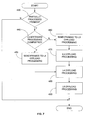
- FIG. 7 shows a flow chart illustrating an embodiment of a process that handles partially processed frames according to the present invention.
- query 430 it is determined whether partially processed packets are present in the non-offload protocol stack. If partially processed packets are not present in the non-offload protocol stack, then the process is complete. If partially processed packets are present in the non-offload protocol stack, then, in query 440, it is determined whether L3 software processing has been completed.
- One or more frames of the frames remaining in the non-offload protocol stack may have completed L1/L2 processing and may have been sent to the L3 software processing block 290 via the path 350 and the host interface 40. However, without state information, the L3 software processing block 290 cannot further process the one or more frames. Since L3 software processing was not completed, in step 460, the one or more frames are sent to the L3 offload processing block 320 via a catch-up interface 410.
- the catch-up interface 410 may use, for example, a dedicated path, the host interface 40 or another type of interface.
- the L3 offload processing block 320 processes the frames received via the catch-up interface 410.
- the L4 offload processing block 330 receives frames from the L3 offload processing block 320 and processes the frames.
- the L3 offload processing block 320 and the L4 offload processing block 330 are adapted to process out-of-order frames.
- the frames are sent to the L5 software processing block 310 via the host interface 40 and the path 400.
- the L5 software processing block 310 receives the frames in order from the L4 offload processing block 330.
- the L4 offload processing block 330 may be adapted to deliver the frames in order, even if the L4 offload processing block 330 receives or processes the frames out of order.
- the frame may be passed on to other processing blocks that may provide higher layer or other processing.
- One or more frames of the frames remaining in the non-offload protocol stack may have completed L3 software processing and may have been sent to the L4 software processing block 300 via the path 360. However, without state information, the L4 software processing block 300 cannot further process the one or more frames. Since L3 software processing was completed, in step 450, the one or more frames are sent to the L4 offload processing block 330 via a catch-up interface 420.
- the catch-up interface 420 may use, for example, a dedicated path, the host interface 40 or some other type of interface.
- the process then continues on to steps 480 and 490 as described above.
- the present invention need not be so limited.
- the present invention also contemplates catch-up interfaces at other layer levels in addition to or instead of the catch-up interfaces at L3 and L4.
- a multiple stack system showed a first stack being a non-offload stack and a second stack being an offload stack
- the present invention need not be so limited.
- two of the stacks may be both offload stacks or two of the stacks may be both non-offload stacks. Connections may thus be moved from an offload stack to another offload stack or from a non-offload stack to another non-offload stack.
- the multiple stack system may include more than two stacks.
- the multiple stack system may include, for example, two offload stacks and one non-offload stack in which connections can be moved between the three stacks.
- the decision to move a particular connection from one stack to another stack can be made, for example, on a per connection basis, a per stack basis, per host basis or according to other criteria and factors.
Landscapes
- Engineering & Computer Science (AREA)
- Computer Security & Cryptography (AREA)
- Computer Networks & Wireless Communication (AREA)
- Signal Processing (AREA)
- Computer And Data Communications (AREA)
- Data Exchanges In Wide-Area Networks (AREA)
- Communication Control (AREA)
Abstract
Description
wherein the one or more partially processed frames are sent to the offload protocol stack to complete processing in the offload protocol stack.
wherein the set of frames is sent to the second level of processing in the offload protocol stack.
wherein the second level of processing comprises L3 processing.
wherein the second level of processing comprises L4 processing.
wherein the layer that provides the first level of processing of the non-offload stack sends frames in order to the layer that provides the second level of processing to the non-offload stack.
wherein the second level of processing comprises L5 processing.
wherein the layer that provides the first level of processing of the offload stack sends frames in order to the layer that provides the second level of processing to the non-offload stack.
wherein the non-offload protocol stack comprises a layer that provides a higher level of processing than the first level, and
wherein the layer that provides the first level of processing of the offload stack sends frames in order to the layer that provides the higher level of processing of the non-offload stack.
wherein the non-offload protocol stack comprises a layer that provides a higher level of processing than the first level, and
wherein the layer that provides the first level of processing of the offload stack sends out-of-order frames to the layer that provides the higher level of processing of the non-offload stack.
wherein the one or more partially processed frames are sent from the host to the offload engine to complete processing in the offload protocol stack.
wherein the first level, hardware processing block comprises a hardware L3 processing block.
wherein the first level, hardware processing block comprises a hardware L4 processing block.
wherein the second level, software processing block comprises a software L5 processing block.
wherein the second layered processing system comprises a second offload layered processing system.
wherein the second layered processing system comprises a second non-offload layered processing system.
wherein the second layered processing system comprises an offload layered processing system.
wherein the sending comprises sending the partially processed frame to a second level, hardware processing block of the offload protocol.
wherein the second level of processing is L3 processing, and
wherein the second level, hardware processing block comprises a hardware L3 processing block.
wherein the second level of processing is L4 processing, and
wherein the second level, hardware processing block comprises a hardware L4 processing block.
wherein the first level, hardware processing block comprises a hardware L4 processing block.
Claims (10)
- A system for handling frames in a multiple stack environment, comprising:wherein the non-offload protocol stack comprises one or more partially processed frames, anda non-offload protocol stack; andan offload protocol stack coupled to the non-offload protocol stack,
wherein the one or more partially processed frames are sent to the offload protocol stack to complete processing in the offload protocol stack. - The system according to claim 1,
wherein the one or more partially processed frames comprise a set of frames that has completed a first level of processing, but not a second level of processing, in the non-offload protocol stack, and
wherein the set of frames is sent to the second level of processing in the offload protocol stack. - The system according to claim 2,
wherein the first level of processing comprises L2 processing, and
wherein the second level of processing comprises L3 processing. - The system according to claim 2, wherein the set of frames is sent to the second level of processing in the offload protocol stack via a catch-up interface.
- A system for handling frames in a multiple stack environment, comprising:wherein the non-offload protocol stack comprises one or more partially processed frames, anda host that runs a software portion of a non-offload protocol stack; andan offload engine coupled to the host and comprising a hardware portion of an offload protocol stack,
wherein the one or more partially processed frames are sent from the host to the offload engine to complete processing in the offload protocol stack. - The system according to claim 5, wherein the one or more partially processed frames are sent from the software portion of the non-offload protocol stack to the hardware portion of the offload protocol stack.
- A system for handling frames in a multiple stack environment, comprising:wherein frames of a particular connection in the first layered processing system are moved to the second layered processing system.a first layered processing system; anda second layered processing system coupled to the first layered processing system,
- The system according to claim 7, wherein the frames of the particular connection in the first layered processing system are moved to the second layered processing system after the particular connection has been moved from the first layered processing system to the second layered processing system.
- A method for frames in a multiple stack environment, comprising:completing an offload of a connection from a non-offload protocol stack to an offload protocol stack; andsending a partially processed frame remaining in the non-offload protocol stack to the offload protocol stack to complete processing of the partially processed frame.
- The method according to claim 9,
wherein the partially processed frame completed a first level of processing, but not a second level of processing, in the non-offload protocol stack, and
wherein the sending comprises sending the partially processed frame to a second level, hardware processing block of the offload protocol.
Applications Claiming Priority (4)
| Application Number | Priority Date | Filing Date | Title |
|---|---|---|---|
| US41129402P | 2002-09-17 | 2002-09-17 | |
| US411294P | 2002-09-17 | ||
| US302474 | 2002-11-21 | ||
| US10/302,474 US7426579B2 (en) | 2002-09-17 | 2002-11-21 | System and method for handling frames in multiple stack environments |
Publications (2)
| Publication Number | Publication Date |
|---|---|
| EP1401172A2 true EP1401172A2 (en) | 2004-03-24 |
| EP1401172A3 EP1401172A3 (en) | 2011-07-20 |
Family
ID=31949822
Family Applications (1)
| Application Number | Title | Priority Date | Filing Date |
|---|---|---|---|
| EP03021048A Withdrawn EP1401172A3 (en) | 2002-09-17 | 2003-09-17 | System and method for handling frames in multiple stack environments |
Country Status (2)
| Country | Link |
|---|---|
| US (1) | US7426579B2 (en) |
| EP (1) | EP1401172A3 (en) |
Families Citing this family (40)
| Publication number | Priority date | Publication date | Assignee | Title |
|---|---|---|---|---|
| US7133940B2 (en) * | 1997-10-14 | 2006-11-07 | Alacritech, Inc. | Network interface device employing a DMA command queue |
| US6757746B2 (en) | 1997-10-14 | 2004-06-29 | Alacritech, Inc. | Obtaining a destination address so that a network interface device can write network data without headers directly into host memory |
| US7185266B2 (en) * | 2003-02-12 | 2007-02-27 | Alacritech, Inc. | Network interface device for error detection using partial CRCS of variable length message portions |
| US6687758B2 (en) * | 2001-03-07 | 2004-02-03 | Alacritech, Inc. | Port aggregation for network connections that are offloaded to network interface devices |
| US7237036B2 (en) * | 1997-10-14 | 2007-06-26 | Alacritech, Inc. | Fast-path apparatus for receiving data corresponding a TCP connection |
| US8782199B2 (en) * | 1997-10-14 | 2014-07-15 | A-Tech Llc | Parsing a packet header |
| US6226680B1 (en) | 1997-10-14 | 2001-05-01 | Alacritech, Inc. | Intelligent network interface system method for protocol processing |
| US6697868B2 (en) | 2000-02-28 | 2004-02-24 | Alacritech, Inc. | Protocol processing stack for use with intelligent network interface device |
| US6658480B2 (en) * | 1997-10-14 | 2003-12-02 | Alacritech, Inc. | Intelligent network interface system and method for accelerated protocol processing |
| US7174393B2 (en) * | 2000-12-26 | 2007-02-06 | Alacritech, Inc. | TCP/IP offload network interface device |
| US8539112B2 (en) | 1997-10-14 | 2013-09-17 | Alacritech, Inc. | TCP/IP offload device |
| US8621101B1 (en) | 2000-09-29 | 2013-12-31 | Alacritech, Inc. | Intelligent network storage interface device |
| US7167927B2 (en) | 1997-10-14 | 2007-01-23 | Alacritech, Inc. | TCP/IP offload device with fast-path TCP ACK generating and transmitting mechanism |
| US6434620B1 (en) * | 1998-08-27 | 2002-08-13 | Alacritech, Inc. | TCP/IP offload network interface device |
| US7664883B2 (en) * | 1998-08-28 | 2010-02-16 | Alacritech, Inc. | Network interface device that fast-path processes solicited session layer read commands |
| US8019901B2 (en) * | 2000-09-29 | 2011-09-13 | Alacritech, Inc. | Intelligent network storage interface system |
| US7496689B2 (en) * | 2002-04-22 | 2009-02-24 | Alacritech, Inc. | TCP/IP offload device |
| US7543087B2 (en) * | 2002-04-22 | 2009-06-02 | Alacritech, Inc. | Freeing transmit memory on a network interface device prior to receiving an acknowledgement that transmit data has been received by a remote device |
| US7936766B2 (en) * | 2002-09-20 | 2011-05-03 | Wind River Systems, Inc. | System and method for separating logical networks on a dual protocol stack |
| US7191241B2 (en) * | 2002-09-27 | 2007-03-13 | Alacritech, Inc. | Fast-path apparatus for receiving data corresponding to a TCP connection |
| US7337241B2 (en) * | 2002-09-27 | 2008-02-26 | Alacritech, Inc. | Fast-path apparatus for receiving data corresponding to a TCP connection |
| US20040088262A1 (en) * | 2002-11-06 | 2004-05-06 | Alacritech, Inc. | Enabling an enhanced function of an electronic device |
| US7596634B2 (en) * | 2002-12-12 | 2009-09-29 | Millind Mittal | Networked application request servicing offloaded from host |
| US20050050187A1 (en) * | 2003-09-03 | 2005-03-03 | International Business Machines Corporation | Method and apparatus for support of bottleneck avoidance in an intelligent adapter |
| US20050066045A1 (en) * | 2003-09-03 | 2005-03-24 | Johnson Neil James | Integrated network interface supporting multiple data transfer protocols |
| US8285881B2 (en) * | 2003-09-10 | 2012-10-09 | Broadcom Corporation | System and method for load balancing and fail over |
| US6996070B2 (en) * | 2003-12-05 | 2006-02-07 | Alacritech, Inc. | TCP/IP offload device with reduced sequential processing |
| KR100557468B1 (en) * | 2003-12-17 | 2006-03-07 | 한국전자통신연구원 | Socket Compatibility Layer for Tio |
| US8572289B1 (en) * | 2003-12-19 | 2013-10-29 | Nvidia Corporation | System, method and computer program product for stateless offloading of upper level network protocol operations |
| US7636372B2 (en) * | 2003-12-19 | 2009-12-22 | Broadcom Corporation | Method and system for providing smart offload and upload |
| US7764709B2 (en) * | 2004-07-07 | 2010-07-27 | Tran Hieu T | Prioritization of network traffic |
| US8248939B1 (en) | 2004-10-08 | 2012-08-21 | Alacritech, Inc. | Transferring control of TCP connections between hierarchy of processing mechanisms |
| US8478907B1 (en) * | 2004-10-19 | 2013-07-02 | Broadcom Corporation | Network interface device serving multiple host operating systems |
| US7797460B2 (en) * | 2005-03-17 | 2010-09-14 | Microsoft Corporation | Enhanced network system through the combination of network objects |
| US7738500B1 (en) | 2005-12-14 | 2010-06-15 | Alacritech, Inc. | TCP timestamp synchronization for network connections that are offloaded to network interface devices |
| US7640472B2 (en) * | 2006-04-07 | 2009-12-29 | Agere Systems Inc. | Serialization of hardware and software debug data |
| US8539513B1 (en) | 2008-04-01 | 2013-09-17 | Alacritech, Inc. | Accelerating data transfer in a virtual computer system with tightly coupled TCP connections |
| US8341286B1 (en) | 2008-07-31 | 2012-12-25 | Alacritech, Inc. | TCP offload send optimization |
| US9306793B1 (en) | 2008-10-22 | 2016-04-05 | Alacritech, Inc. | TCP offload device that batches session layer headers to reduce interrupts as well as CPU copies |
| CN110830381B (en) | 2018-08-10 | 2021-10-26 | 华为技术有限公司 | Congestion control method and related equipment |
Family Cites Families (7)
| Publication number | Priority date | Publication date | Assignee | Title |
|---|---|---|---|---|
| JPH05265975A (en) * | 1992-03-16 | 1993-10-15 | Hitachi Ltd | Parallel calculation processor |
| US6434620B1 (en) * | 1998-08-27 | 2002-08-13 | Alacritech, Inc. | TCP/IP offload network interface device |
| US6226680B1 (en) * | 1997-10-14 | 2001-05-01 | Alacritech, Inc. | Intelligent network interface system method for protocol processing |
| US6141705A (en) * | 1998-06-12 | 2000-10-31 | Microsoft Corporation | System for querying a peripheral device to determine its processing capabilities and then offloading specific processing tasks from a host to the peripheral device when needed |
| US6909709B2 (en) * | 2000-06-13 | 2005-06-21 | Altigen Communications, Inc. | Packetized communications apparatus and method |
| US6714778B2 (en) * | 2001-05-15 | 2004-03-30 | Nokia Corporation | Context sensitive web services |
| US7007103B2 (en) * | 2002-04-30 | 2006-02-28 | Microsoft Corporation | Method to offload a network stack |
-
2002
- 2002-11-21 US US10/302,474 patent/US7426579B2/en not_active Expired - Lifetime
-
2003
- 2003-09-17 EP EP03021048A patent/EP1401172A3/en not_active Withdrawn
Also Published As
| Publication number | Publication date |
|---|---|
| US20040054814A1 (en) | 2004-03-18 |
| EP1401172A3 (en) | 2011-07-20 |
| US7426579B2 (en) | 2008-09-16 |
Similar Documents
| Publication | Publication Date | Title |
|---|---|---|
| US7426579B2 (en) | System and method for handling frames in multiple stack environments | |
| US7596144B2 (en) | System-on-a-chip (SoC) device with integrated support for ethernet, TCP, iSCSI, RDMA, and network application acceleration | |
| US8311059B2 (en) | Receive coalescing and automatic acknowledge in network interface controller | |
| EP1545090B1 (en) | Transmit scheduling method for multi-layer network interface card (NIC) operation | |
| US7596628B2 (en) | Method and system for transparent TCP offload (TTO) with a user space library | |
| US8631162B2 (en) | System and method for network interfacing in a multiple network environment | |
| EP1868093B1 (en) | Method and system for a user space TCP offload engine (TOE) | |
| EP1545042B1 (en) | Retransmission system and method for a transport offload engine | |
| US20030046330A1 (en) | Selective offloading of protocol processing | |
| US7080173B2 (en) | Reducing information reception delays | |
| JP2003523552A (en) | System and method for managing a connection between a client and a server | |
| CN1926834A (en) | Accelerated TCP (Transmission Control Protocol) stack processing | |
| EP2082540B1 (en) | Driver level segmentation offload | |
| US20060274787A1 (en) | Adaptive cache design for MPT/MTT tables and TCP context | |
| US20200220952A1 (en) | System and method for accelerating iscsi command processing | |
| EP1460806A2 (en) | System and method for network interfacing in a multiple network environment | |
| EP1515511A3 (en) | Multiple offload of network state objects with support for failover events | |
| US7213074B2 (en) | Method using receive and transmit protocol aware logic modules for confirming checksum values stored in network packet | |
| WO2004036805A2 (en) | System and method for network interfacing in a multiple network environment | |
| WO2008082260A1 (en) | Method and receiving apparatus for processing arq block in wibro system | |
| JP2000067017A (en) | Data communication method and data communication device | |
| US20250379927A1 (en) | Method and device for speeding up packet processing | |
| JP2009296133A (en) | Virtual network control system and method | |
| HK1094291B (en) | Accelerated tcp (transport control protocol) stack processing |
Legal Events
| Date | Code | Title | Description |
|---|---|---|---|
| PUAI | Public reference made under article 153(3) epc to a published international application that has entered the european phase |
Free format text: ORIGINAL CODE: 0009012 |
|
| AK | Designated contracting states |
Kind code of ref document: A2 Designated state(s): AT BE BG CH CY CZ DE DK EE ES FI FR GB GR HU IE IT LI LU MC NL PT RO SE SI SK TR |
|
| AX | Request for extension of the european patent |
Extension state: AL LT LV MK |
|
| RAP1 | Party data changed (applicant data changed or rights of an application transferred) |
Owner name: BROADCOM CORPORATION |
|
| PUAL | Search report despatched |
Free format text: ORIGINAL CODE: 0009013 |
|
| AK | Designated contracting states |
Kind code of ref document: A3 Designated state(s): AT BE BG CH CY CZ DE DK EE ES FI FR GB GR HU IE IT LI LU MC NL PT RO SE SI SK TR |
|
| AX | Request for extension of the european patent |
Extension state: AL LT LV MK |
|
| RIC1 | Information provided on ipc code assigned before grant |
Ipc: H04L 29/06 20060101AFI20040116BHEP Ipc: H04L 29/08 20060101ALI20110614BHEP |
|
| 17P | Request for examination filed |
Effective date: 20120120 |
|
| AKX | Designation fees paid |
Designated state(s): DE FR GB |
|
| 17Q | First examination report despatched |
Effective date: 20120911 |
|
| STAA | Information on the status of an ep patent application or granted ep patent |
Free format text: STATUS: THE APPLICATION IS DEEMED TO BE WITHDRAWN |
|
| 18D | Application deemed to be withdrawn |
Effective date: 20170401 |