EP1401165A1 - Procédé et dispositif pour la transmission de données via un réseau maillé - Google Patents
Procédé et dispositif pour la transmission de données via un réseau maillé Download PDFInfo
- Publication number
- EP1401165A1 EP1401165A1 EP03292326A EP03292326A EP1401165A1 EP 1401165 A1 EP1401165 A1 EP 1401165A1 EP 03292326 A EP03292326 A EP 03292326A EP 03292326 A EP03292326 A EP 03292326A EP 1401165 A1 EP1401165 A1 EP 1401165A1
- Authority
- EP
- European Patent Office
- Prior art keywords
- data
- sections
- recipient
- transmission
- section
- Prior art date
- Legal status (The legal status is an assumption and is not a legal conclusion. Google has not performed a legal analysis and makes no representation as to the accuracy of the status listed.)
- Withdrawn
Links
- 230000005540 biological transmission Effects 0.000 title claims abstract description 72
- 238000000034 method Methods 0.000 title claims abstract description 35
- 238000013467 fragmentation Methods 0.000 claims abstract description 17
- 238000006062 fragmentation reaction Methods 0.000 claims abstract description 17
- 238000012360 testing method Methods 0.000 claims description 14
- 238000011084 recovery Methods 0.000 abstract description 11
- 238000004891 communication Methods 0.000 description 7
- 238000010586 diagram Methods 0.000 description 5
- 238000012546 transfer Methods 0.000 description 5
- 230000008901 benefit Effects 0.000 description 4
- 239000013256 coordination polymer Substances 0.000 description 4
- 230000006378 damage Effects 0.000 description 3
- 239000000463 material Substances 0.000 description 3
- KRQUFUKTQHISJB-YYADALCUSA-N 2-[(E)-N-[2-(4-chlorophenoxy)propoxy]-C-propylcarbonimidoyl]-3-hydroxy-5-(thian-3-yl)cyclohex-2-en-1-one Chemical compound CCC\C(=N/OCC(C)OC1=CC=C(Cl)C=C1)C1=C(O)CC(CC1=O)C1CCCSC1 KRQUFUKTQHISJB-YYADALCUSA-N 0.000 description 2
- 230000006835 compression Effects 0.000 description 2
- 238000007906 compression Methods 0.000 description 2
- 230000007257 malfunction Effects 0.000 description 2
- 238000012986 modification Methods 0.000 description 2
- 230000004048 modification Effects 0.000 description 2
- 230000011664 signaling Effects 0.000 description 2
- 230000009897 systematic effect Effects 0.000 description 2
- 101710104662 Enterotoxin type C-3 Proteins 0.000 description 1
- 102100030844 Exocyst complex component 1 Human genes 0.000 description 1
- 102100040837 Galactoside alpha-(1,2)-fucosyltransferase 2 Human genes 0.000 description 1
- 101000893710 Homo sapiens Galactoside alpha-(1,2)-fucosyltransferase 2 Proteins 0.000 description 1
- 241000861223 Issus Species 0.000 description 1
- 101000882406 Staphylococcus aureus Enterotoxin type C-1 Proteins 0.000 description 1
- 101000882403 Staphylococcus aureus Enterotoxin type C-2 Proteins 0.000 description 1
- 230000004075 alteration Effects 0.000 description 1
- 230000000295 complement effect Effects 0.000 description 1
- 230000008034 disappearance Effects 0.000 description 1
- 239000000284 extract Substances 0.000 description 1
- 230000000737 periodic effect Effects 0.000 description 1
- 238000012545 processing Methods 0.000 description 1
- 230000000750 progressive effect Effects 0.000 description 1
Images


Classifications
-
- H—ELECTRICITY
- H04—ELECTRIC COMMUNICATION TECHNIQUE
- H04L—TRANSMISSION OF DIGITAL INFORMATION, e.g. TELEGRAPHIC COMMUNICATION
- H04L25/00—Baseband systems
- H04L25/02—Details ; arrangements for supplying electrical power along data transmission lines
- H04L25/14—Channel dividing arrangements, i.e. in which a single bit stream is divided between several baseband channels and reassembled at the receiver
Definitions
- the present invention relates to a method for transmitting data to the means of a meshed communication network, including a fragmentation step said data in sections, a step of transmitting said sections to the at least one recipient of said data and a step of assembling said sections by the recipient to reconstruct said data.
- Anytime TV type metadata which are data tables descriptive of the content of audiovisual data, which is also often accompanied by coding and transport signaling tables.
- the UDP protocol is not really reliable, because it happens frequently only data packets transmitted using this protocol suffer, as a result of incidents occurring during transmission, losses, duplications or even modifications of an initial order in which said packets have been issued.
- Such a modification of the initial order has in particular for consequence that an assembly in order of arrival of data packets does not not allow identical reconstruction of a data set constituted by said packets in a form which was that of said set before execution of the step of fragmentation.
- a data table with a large volume should be fragmented into several data packets for transmission by means of the UDP protocol, the different data packets being linked together. Disappearance or alteration of just one of these data packets will cause loss of the table in its together, which table will have to be transmitted again until all data packets forming the table arrived intact in a single sequence properly ordered to their addressee, which implies that the addressee of data will need a significant time interval to complete a complete recovery of said data during the assembly step.
- One of the aims of the invention is to reduce the time required for a recipient of data transmitted by means of a mesh communication network to lead to indeed a complete recovery of said data, by proposing a method of improved transmission that allows a recipient of such data to replace individually packets of data received in altered form or to fill in selectively empty spaces left in a data set by lost packets.
- a data transmission method in accordance with paragraph introductory is characterized according to the invention in that during the step of transmission, the sections are looped periodically to the recipient.
- the invention makes it possible, by providing a loop transmission of each section, recovery by the recipient of damaged or lost sections, said recovery can be carried out section by section, while the UDP protocol, which does not anticipate a new transmission of lost or altered packets, requires a error-free transmission of all the data to be transmitted, i.e. complete and properly ordered sequence formed by all sections containing said data, to guarantee the integrity of the data transmitted.
- a complete execution of the assembly step does not will last as long as it takes for each section to fully reach the at least once to the recipient, whereas, according to the known UDP protocol, the execution of the assembly step should last as long as the recipient has not received in full a complete and properly ordered sequence of all of these sections, which sequence is much more vulnerable, due to its greater size, at any transmission incident.
- the execution of a step of transmitting data according to the invention will therefore be much shorter than the execution of a transmission step according to the known UDP protocol, which makes it possible to choose, for the loop transmission, a cycle time longer than the time interval between two successive transmissions of a complete sequence required in the event of malfunction in a transmission according to the known method.
- This offers the added benefit of reducing the volume of communication required to transport of this data by means of an Internet type network, and therefore increase the bandwidth available on said network.
- the step of fragmentation includes a step of dividing the data into packets each containing one of said sections, on the one hand, and containing a header including an assigned number to said section and a total number of sections to be assembled by the recipient, else go.
- the transmission step includes a step registration, in the header of each transmitted data packet, of a number sequence representative of the number of times the section included in said package will have is the subject of a transmission.
- the sequence number is used to communicate information to the recipient relating to the number of transmissions that will have been necessary for the recipient actually receives all the data transmitted. An analysis of this information will allow in particular to assess a degree of relevance of a choice of data fragmentation parameters in sections and a choice of frequency transmission of sections in loop, in relation, inter alia, to a theoretical quality and to a real quality of transmission of these tables. Information from the number of sequence may also be used for statistical purposes.
- the step of transmission includes a step of registering a packet number in the header of each transmitted data packet, a succession of different packet numbers defining an order in which the corresponding packets will have been transmitted.
- An analysis of this information will, among other things, assess a rate of data loss caused by transmission incidents and, therefore, assess the actual quality of data transmission.
- Information from packet number may in particular be used for statistical purposes.
- the transmission step includes a registration step, in the header of each transmitted data packet, a table number and a number version common to all sections including data belonging to said table.
- This other particular embodiment of the invention is particularly well suited to applications for transmitting metadata tables using of a mesh network, because it allows, thanks to an identification of each table by a table and version number, a systematic and regular refresh of the content from said table.
- This mode of implementation allows systematic storage under a ordered form of each new section received by a receiving device intended for receive the transmitted data, and allows to reconstruct quickly and identically the table of origin of the said sections in the form which was hers before execution of the fragmentation stage.
- This preferred embodiment of the invention allows the recipient systematically eliminate any version of a table that has been returned obsolete by the receipt in its entirety of a new version of said table, this which allows more efficient management of the memory resources available to the recipient, and thus helps to minimize the costs of implementing the data transmission method according to the invention.
- the invention also relates, according to one of its material aspects, to a system data transmission using a mesh communication network, including means for fragmenting said data into sections, means for transmission of said sections to at least one recipient of said data and means of assembling said sections by the recipient to reconstitute said sections data, method characterized in that the transmission means include means for periodically looping transmission of said sections to the recipient.
- the means of fragmentation will include means of distributing data into packets containing each one of said sections, on the one hand, and containing a header including a number allocated to said section and a total number of sections to be assembled by the recipient, on the other hand.
- the means of transmission will include means of registration, in the header of each packet of transmitted data, a sequence number representative of the number of times the section included in said package will have been transmitted.
- the means of transmission will include means for entering a number packet in the header of each transmitted data packet, a succession of different packet numbers defining an order in which the packets correspondents will have been forwarded.
- the invention also relates, according to another of its material aspects, to a transmitting device intended for transmitting data and capable of performing steps of fragmentation of said data into sections and transmission of said sections, which steps being included in a method as described above.
- the invention also relates, according to yet another of its material aspects, a receiving device capable of receiving data previously fragmented into sections, and capable of performing a step of assembling said sections included in a process as described above.
- the TAB data table could for example be a metadata table of TVAnytime type, which is descriptive of the content of audiovisual data, or a coding and transport signaling table which usually accompanies such audiovisual data.
- a TAB table is intended to be broadcast on a Internet-type network at the same time as an audiovisual program to which it is associated.
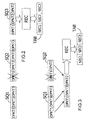
- Figs. 2 and 3 are diagrams which describe an execution of transmission and reception of data, respectively by means of a method known, and by means of a method according to the invention, and make it possible to observe the advantages offered by the invention.
- An implementation of the transmission method known requires that all sections of the same table be rendered within a same sequence of packets and in the correct order so that said table can actually be reconstituted by its recipient and be deemed received. So in the example described by Figs.
- the invention makes it possible, by providing a loop transmission of each section, progressive recovery by the recipient of altered sections or lost, said recovery can be carried out section by section. So in the example described in Fig. 3, the DPKT1 and DPKT3 data packets will be deemed received at the end of the first SQ1 sequence, the missing packet being deemed to have been received as soon as two thirds of the second SQ2 sequence as originally sent has been received by the recipient.
- the execution by the recipient of the assembly step does not will therefore last only the time necessary for each section to reach its entirety at least once to the recipient, whereas, according to the known UDP protocol, the execution of the assembly step should last as long as the recipient will not have received in full a complete and properly ordered sequence of all of these sections, which sequence is much more vulnerable, due to its more large size, any transmission incident.
- the invention therefore makes it possible to speed up the recovery of data by the recipient, which allows you to choose a cycle time for loop transmission longer than the time interval between two successive transmissions of a complete sequence required in the event of a transmission malfunction according to the known process.
- This has the added benefit of reducing the volume of communication necessary for the transport of this data by means of a network of the type Internet, and therefore increase the bandwidth available on said network.
- An IP integrity check sum may be made up of a sum of complement to "1" of 16-bit words constituting an IP datagram header.
- a UDP integrity checksum may relate to an IP pseudo-header, a header UDP and IP data.
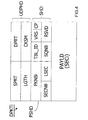
- the DPKTi data packet here contains a PSHD pseudo-header which includes a packet number PKNBi of said packet DPKTi, coded on two bytes, a succession of different packet numbers PKNB1, PKNB2, ... PKNBN defining an order in which the N corresponding packets DPKT1, DPKT2, ... DPKTN will have been transmitted.
- a PSHD pseudo-header which includes a packet number PKNBi of said packet DPKTi, coded on two bytes, a succession of different packet numbers PKNB1, PKNB2, ... PKNBN defining an order in which the N corresponding packets DPKT1, DPKT2, ... DPKTN will have been transmitted.
- Analysis of the information conveyed by the PKNBi package number will identify missing packets between different packets actually received and therefore assess a rate of data loss caused by transmission incidents and therefore assess the actual quality of data transmission.
- the information from the PKNBi package number may in particular be used for statistical purposes, for example to identify and report anomalies in the transmission conditions.
- the package number PKNBi will be materialized by the content of a counter included in a device data transmitter, which counter will be incremented each time that said device will transmit.
- a counter included in a device data transmitter, which counter will be incremented each time that said device will transmit.
- Such counters are known as such skilled in the art under the name "continuity meter”.
- the contents of the SECNB field will allow a device to receive packets of DPKTi data to assemble in their original order the different SECi sections that it is intended to receive, so as to reconstruct the TAB table in all consistency.
- the content of the LSEC field communicates to the receiving device packets of DPKTi data a value of the total number of different data packets which make up a single TAB table, which is identified by its field table identification code TBL_ID and its VRS version number field.
- TBL_ID field table identification code
- VRS version number field a value of the total number of different data packets which make up a single TAB table.
- the SQNB sequence number is used to communicate to the recipient a information on the number of transmissions that will have been necessary for the recipient actually receives all the data transmitted. An analysis of this information will allow in particular to assess a degree of relevance of a choice parameters for fragmenting tables into sections and a choice of frequency transmission of sections in loop, in relation, inter alia, to a theoretical quality and to a real quality of transmission of these tables. Information from the number of SQNB sequence may also be used for statistical purposes.
- the DPKTi data packet finally contains a PAYLD payload proper, in which the data constituting the SECi section will be included.
- the maximum section size will be 1484 bytes if this data packet is allocated DPKTi the structure described above.
- Fig. 5 represents, in the form of a flowchart, an algorithm describing a possible mode of implementation of an assembly step by a receiving device able to receive such data.
- the receiving device determines, based on the TBL_ID identification of the TAB table and its VRS version number, if this TAB table already exists in memory. If not, a new table is created in memory during a next NWTBL step. If the identified TAB table exists already in memory, the receiving device determines during a test step following TBLCPT if the identified TAB table is already complete. If so, the receiving device will ignore this data packet and proceed during a new RDPKT read step when reading a new data packet. if the TBLCPT test step shows that the identified TAB table is incomplete, the receiving device determines during a next NWSC test step whether the data packet being processed contains a SECi section which has not yet been received.
- the receiving device may proceed during a next DOTBL destruction step to a destruction of an old version of said TAB table, then an exploitation of the new version of this TAB table during a PRTBL processing step. if it appears from the last TBLCPT test step that the identified TAB table is incomplete, the receiving device will proceed during a new reading step RDPKT on reading a new data packet.
Landscapes
- Engineering & Computer Science (AREA)
- Power Engineering (AREA)
- Computer Networks & Wireless Communication (AREA)
- Signal Processing (AREA)
- Data Exchanges In Wide-Area Networks (AREA)
Abstract
Description
- une étape de lecture de chaque section par le destinataire,
- une étape d'identification de la table à laquelle appartient ladite section, et
- une étape d'inscription de ladite section dans un espace mémoire dédié à ladite table, à une adresse qui est déterminée par le numéro de section.
- une étape de test destinée à établir si toutes les sections formant une même table dans une version dite courante, identifiée par le numéro de version de ladite table, ont été inscrites dans l'espace mémoire dédié à ladite table, et
- une étape de destruction d'une version antérieure de ladite table destinée à être exécutée lorsque l'étape de test aura conclu que toutes les sections formant la version courante de ladite table ont été inscrites dans l'espace mémoire dédié à ladite table.
- un champ "port source" SPRT, qui définit une référence d'une application qui a généré les données contenues dans le paquet de données DPKTi,
- un champ "port destination" DPRT qui définit une référence d'une application destinée à exploiter les données contenues dans le paquet de données DPKTi,
- un champ "longueur" LGTH qui définit une longueur totale en octets du message transmis, en tenant compte à la fois des données et du ou des en-têtes,
- un champ de contrôle d'intégrité "checksum" CKSM, qui inclut un nombre résultant d'une somme de contrôle d'intégrité opérée sur l'en-tête et les données UDP, ainsi que sur certains champs issus d'une couche de protocole Internet appelé IP, par exemple des champs IP adresse source, adresse destination, type de protocole et longueur de données qui sont usuellement remplis par les protocoles IP et UDP.
- un champ TBL_ID d'identification de table "Table_id", codé sur un octet, qui permet d'identifier une table à laquelle appartient la section SECi contenue dans le paquet de données DPKTi,
- un champ VRS de numéro de version de table "Version", codé sur cinq bits, qui permet de définir sans équivoque à quelle version chronologique de ladite table appartient la section SECi contenue dans le paquet de données DPKTi,
- un champ CP destiné à contenir des informations relatives à une éventuelle compression, qui permettra d'avertir le destinataire que les données contenues dans le paquet de données DPKTi auront été compressées au moyen d'un algorithme identifié par la valeur du champ CP,
- un champ SECNB de numéro de section "Section_num", codé sur un octet, qui permet d'identifier sans équivoque la section SECi contenue dans le paquet de données DPKTi,
- un champ LSEC de dernier numéro de section "Last_Section_num", codé sur un octet, qui permet d'identifier sans équivoque le numéro N de la dernière section SECN contenue dans la table TAB, et qui permettra une initialisation d'un dispositif récepteur des paquets de données DPKTi (pour i=l à N),
- un champ SQNB de numéro de séquence dudit paquet DPKTi, codé ici sur un octet, lequel numéro de séquence SQNB est représentatif du nombre de fois où la section SECi incluse dans ce paquet de données DPKTi aura fait l'objet d'une transmission, et
- un champ RSVD réservé, qui pourra par exemple contenir des informations relatives à un éventuel cryptage.
Claims (11)
- Procédé de transmission de données au moyen d'un réseau maillé, incluant une étape de fragmentation desdites données en sections, une étape de transmission desdites sections vers au moins un destinataire desdites données et une étape d'assemblage desdites sections par le destinataire pour reconstituer lesdites données, lesdites sections étant transmises en boucle de façon automatique vers le destinataire au cours de l'étape de transmission, procédé caractérisé en ce que l'étape de fragmentation inclut une étape de répartition des données en paquets contenant chacun l'une desdites sections, d'une part, et contenant un en-tête incluant un numéro attribué à ladite section et un nombre total de sections à assembler par le destinataire, d'autre part.
- Procédé de transmission de données selon la revendication 1, dans lequel l'étape de transmission inclut une étape d'inscription, dans l'en-tête de chaque paquet de données transmis, d'un numéro de séquence représentatif du nombre de fois où la section incluse dans ledit paquet aura fait l'objet d'une transmission.
- Procédé de transmission de données selon l'une des revendications 1 ou 2, dans lequel l'étape de transmission inclut une étape d'inscription d'un numéro de paquet dans l'en-tête de chaque paquet de données transmis, une succession de différents numéros de paquets définissant un ordre dans lequel les paquets correspondants auront été transmis.
- Procédé de transmission de données selon l'une des revendications 1 à 3, dans lequel, les données transmises formant au moins une table contenant des informations relatives à un programme audiovisuel, l'étape de transmission inclut une étape d'inscription, dans l'en-tête de chaque paquet de données transmis, d'un numéro de table et d'un numéro de version communs à toutes les sections incluant des données appartenant à ladite table.
- Procédé de transmission de données selon la revendication 4, dans lequel l' étape d'assemblage inclut :une étape de lecture de chaque section par le destinataire,une étape d'identification de la table à laquelle appartient ladite section, etune étape d'inscription de ladite section dans un espace mémoire dédié à ladite table, à une adresse qui est déterminée par le numéro de section.
- Procédé de transmission de données selon la revendication 5, dans lequel l'étape d'assemblage inclut en outre :une étape de test destinée à établir si toutes les sections formant une même table dans une version dite courante, identifiée par le numéro de version de ladite table, ont été inscrites dans l'espace mémoire dédié à ladite table, etune étape de destruction d'une version antérieure de ladite table destinée à être exécutée lorsque l'étape de test aura conclu que toutes les sections formant la version courante de ladite table ont été inscrites dans l'espace mémoire dédié à ladite table.
- Système de transmission de données incluant des moyens de fragmentation desdites données en sections, des moyens de transmission desdites sections vers au moins un destinataire desdites données et des moyens d'assemblage desdites sections par le destinataire pour reconstituer lesdites données, les moyens de transmission incluant des moyens de transmission en boucle de façon automatique desdites sections vers le destinataire, système caractérisé en ce que les moyens de fragmentation incluent des moyens de répartition des données en paquets contenant chacun l'une desdites sections, d'une part, et contenant un en-tête incluant un numéro attribué à ladite section et un nombre total de sections à assembler par le destinataire, d'autre part.
- Système de transmission de données selon la revendication 7, dans lequel les moyens de transmission incluent des moyens d'inscription, dans l'en-tête de chaque paquet de données transmis, d'un numéro de séquence représentatif du nombre de fois où la section incluse dans ledit paquet aura fait l'objet d'une transmission.
- Système de transmission de données selon l'une des revendications 7 ou 8, dans lequel les moyens de transmission incluent des moyens d'inscription d'un numéro de paquet dans l'en-tête de chaque paquet de données transmis, une succession de différents numéros de paquets définissant un ordre dans lequel les paquets correspondants auront été transmis.
- Dispositif émetteur destiné à transmettre des données et apte à exécuter des étapes de fragmentation desdites données en sections et de transmission desdites sections vers au moins un destinataire, lesquelles étapes étant incluses dans un procédé conforme à l'une des revendications 1 à 4.
- Dispositif récepteur apte à recevoir des données préalablement fragmentées en sections, et apte à exécuter une étape d'assemblage desdites sections incluse dans un procédé conforme à l'une des revendications 1 à 6.
Applications Claiming Priority (2)
| Application Number | Priority Date | Filing Date | Title |
|---|---|---|---|
| FR0211795 | 2002-09-23 | ||
| FR0211795A FR2844939A1 (fr) | 2002-09-23 | 2002-09-23 | Procede de transmission de donnees via un reseau maille offrant une vitesse de reception accrue |
Publications (1)
| Publication Number | Publication Date |
|---|---|
| EP1401165A1 true EP1401165A1 (fr) | 2004-03-24 |
Family
ID=31897523
Family Applications (1)
| Application Number | Title | Priority Date | Filing Date |
|---|---|---|---|
| EP03292326A Withdrawn EP1401165A1 (fr) | 2002-09-23 | 2003-09-23 | Procédé et dispositif pour la transmission de données via un réseau maillé |
Country Status (2)
| Country | Link |
|---|---|
| EP (1) | EP1401165A1 (fr) |
| FR (1) | FR2844939A1 (fr) |
Cited By (1)
| Publication number | Priority date | Publication date | Assignee | Title |
|---|---|---|---|---|
| CN116368789A (zh) * | 2020-10-22 | 2023-06-30 | 维斯塔斯风力系统集团公司 | 一种检索来自风电场的运行数据的方法 |
Citations (5)
| Publication number | Priority date | Publication date | Assignee | Title |
|---|---|---|---|---|
| US5583859A (en) * | 1994-08-30 | 1996-12-10 | Bell Communications Research, Inc. | Data labeling technique for high performance protocol processing |
| WO1998043431A1 (fr) * | 1997-03-21 | 1998-10-01 | Canal+ Societe Anonyme | Procede pour telecharger des donnees vers un recepteur/decodeur mpeg et systeme de transmission mpeg pour appliquer ce procede |
| FR2797548A1 (fr) * | 2000-01-24 | 2001-02-16 | Thomson Multimedia Sa | Procede de transmission de donnees sur un canal de diffusion |
| WO2001054370A2 (fr) * | 2000-01-24 | 2001-07-26 | The University Of Manitoba | Procede et systeme pour le transfert de fichiers segmentes |
| WO2001076189A2 (fr) * | 2000-03-30 | 2001-10-11 | Telefonaktiebolaget Lm Ericsson (Publ) | Procede permettant de conserver le sequencement des paquets de donnees |
-
2002
- 2002-09-23 FR FR0211795A patent/FR2844939A1/fr active Pending
-
2003
- 2003-09-23 EP EP03292326A patent/EP1401165A1/fr not_active Withdrawn
Patent Citations (5)
| Publication number | Priority date | Publication date | Assignee | Title |
|---|---|---|---|---|
| US5583859A (en) * | 1994-08-30 | 1996-12-10 | Bell Communications Research, Inc. | Data labeling technique for high performance protocol processing |
| WO1998043431A1 (fr) * | 1997-03-21 | 1998-10-01 | Canal+ Societe Anonyme | Procede pour telecharger des donnees vers un recepteur/decodeur mpeg et systeme de transmission mpeg pour appliquer ce procede |
| FR2797548A1 (fr) * | 2000-01-24 | 2001-02-16 | Thomson Multimedia Sa | Procede de transmission de donnees sur un canal de diffusion |
| WO2001054370A2 (fr) * | 2000-01-24 | 2001-07-26 | The University Of Manitoba | Procede et systeme pour le transfert de fichiers segmentes |
| WO2001076189A2 (fr) * | 2000-03-30 | 2001-10-11 | Telefonaktiebolaget Lm Ericsson (Publ) | Procede permettant de conserver le sequencement des paquets de donnees |
Non-Patent Citations (1)
| Title |
|---|
| ALMEROTH K C ET AL: "Scalable delivery of Web pages using cyclic best-effort multicast", PROCEEDINGS IEEE INFOCOM'98 CONFERENCE ON COMPUTER COMMUNICATIONS, vol. 3, 29 March 1998 (1998-03-29) - 2 April 1998 (1998-04-02), IEEE, New York, NY, USA, pages 1214 - 1221 vol.3, XP002241420, ISBN: 0-7803-4383-2 * |
Cited By (1)
| Publication number | Priority date | Publication date | Assignee | Title |
|---|---|---|---|---|
| CN116368789A (zh) * | 2020-10-22 | 2023-06-30 | 维斯塔斯风力系统集团公司 | 一种检索来自风电场的运行数据的方法 |
Also Published As
| Publication number | Publication date |
|---|---|
| FR2844939A1 (fr) | 2004-03-26 |
Similar Documents
| Publication | Publication Date | Title |
|---|---|---|
| EP0559593B1 (fr) | Procédé et dispositif de compression et décompression de données pour un système de transmission | |
| FR2857538A1 (fr) | Systeme et methode de compression d'en-tete de paquets bases sur la creation dynamique d'un gabarit | |
| CA2429855C (fr) | Procede de reconstitution de messages achemines par un ou plusieurs reseaux de transmission par paquets | |
| FR2939993A1 (fr) | Procede de transmission d'un flux de donnees multi-canal sur un tunnel multi-transport, produit programme d'ordinateur, moyen de stockage et tetes de tunnel correspondantes | |
| CA2674414C (fr) | Procede de transmission/reception en temps reel de donnees par paquets entre un serveur et un terminal client, serveur et terminal correspondants | |
| FR2949931A1 (fr) | Procedes et dispositifs de transmission d'un flux de donnees, produit programme d'ordinateur et moyen de stockage correspondants. | |
| EP3637845B1 (fr) | Procédé de communication basé sur un protocole de transmission par trames | |
| FR2939994A1 (fr) | Procede de transmission d'un flux de donnees multi-canal sur un tunnel multi-transport, produit programme d'ordinateur, moyen de stockage et tetes de tunnel correspondantes | |
| EP2793431A1 (fr) | Méthode distribuée d'acquisition de données dans un réseau afdx | |
| KR101366254B1 (ko) | 방송망을 통하여 전송되는 ip 패킷의 압축 및 복원 방법 | |
| EP2282432A1 (fr) | Procédé de transmission de données multimedia dans des réseaux de communication ad hoc | |
| FR2806244A1 (fr) | Procede de transmission entre une station de base d'un reseau d'acces et un controleur de reseau d'acces d'un systeme de telecommunications | |
| FR2909241A1 (fr) | Procedes et dispositifs de gestion dynamique des erreurs de transmission par des points d'interconnexion de reseaux. | |
| EP3311545B1 (fr) | Procédé et dispositif de gestion de paquets dans une connexion multi-flux et multi-protocole | |
| FR2844939A1 (fr) | Procede de transmission de donnees via un reseau maille offrant une vitesse de reception accrue | |
| WO2008096086A2 (fr) | Procede de traitement de perte de paquets | |
| EP2469793B1 (fr) | Dispositif de transmission de paquets de données, et procédé, programme d'ordinateur et moyens de stockage correspondants | |
| EP2047653B1 (fr) | Transmission de flux de donnees en fragmentation des messages | |
| FR2951045A1 (fr) | Procede de gestion de la taille de paquets de donnees d'un flux de donnees, produit programme d'ordinateur, moyen de stockage, et tete de tunnel correspondants. | |
| WO2005008992A1 (fr) | Description de contenu de paquets dans un reseau de communication par paquets | |
| FR2898455A1 (fr) | Procede et dispositif de transmission de paquets de donnees | |
| WO2026017825A1 (fr) | Gestion de la transmission et de la reception d'un paquet de donnees compresse | |
| WO2005071902A1 (fr) | Marquage d'un datagramme transmis dans un reseau ip et transmission d'un tel datagramme | |
| WO2009004248A1 (fr) | Methode a base de codes correcteurs d'erreurs applicable a un flux de donnees multimedia a debit variable | |
| EP1653706B1 (fr) | Procédé de transmission d'un flux vidéo dans un réseau de télécommunications mobiles à débit restreint |
Legal Events
| Date | Code | Title | Description |
|---|---|---|---|
| PUAI | Public reference made under article 153(3) epc to a published international application that has entered the european phase |
Free format text: ORIGINAL CODE: 0009012 |
|
| AK | Designated contracting states |
Kind code of ref document: A1 Designated state(s): AT BE BG CH CY CZ DE DK EE ES FI FR GB GR HU IE IT LI LU MC NL PT RO SE SI SK TR |
|
| AX | Request for extension of the european patent |
Extension state: AL LT LV MK |
|
| 17P | Request for examination filed |
Effective date: 20040601 |
|
| AKX | Designation fees paid |
Designated state(s): AT BE BG CH CY CZ DE DK EE ES FI FR GB GR HU IE IT LI LU MC NL PT RO SE SI SK TR |
|
| 17Q | First examination report despatched |
Effective date: 20071121 |
|
| RAP1 | Party data changed (applicant data changed or rights of an application transferred) |
Owner name: ORANGE |
|
| STAA | Information on the status of an ep patent application or granted ep patent |
Free format text: STATUS: THE APPLICATION IS DEEMED TO BE WITHDRAWN |
|
| 18D | Application deemed to be withdrawn |
Effective date: 20180404 |
|
| RIC1 | Information provided on ipc code assigned before grant |
Ipc: H04L 29/06 20060101ALI20031211BHEP Ipc: H04L 25/14 20060101AFI20031211BHEP |