EP1398753A1 - Self-adhesive control tag with opening mark indicating function and method of using the same - Google Patents
Self-adhesive control tag with opening mark indicating function and method of using the same Download PDFInfo
- Publication number
- EP1398753A1 EP1398753A1 EP03733233A EP03733233A EP1398753A1 EP 1398753 A1 EP1398753 A1 EP 1398753A1 EP 03733233 A EP03733233 A EP 03733233A EP 03733233 A EP03733233 A EP 03733233A EP 1398753 A1 EP1398753 A1 EP 1398753A1
- Authority
- EP
- European Patent Office
- Prior art keywords
- adhesive
- base material
- adhesive layer
- management tag
- layer
- Prior art date
- Legal status (The legal status is an assumption and is not a legal conclusion. Google has not performed a legal analysis and makes no representation as to the accuracy of the status listed.)
- Withdrawn
Links
- 239000000853 adhesive Substances 0.000 title claims abstract description 100
- 238000000034 method Methods 0.000 title claims description 11
- 239000012790 adhesive layer Substances 0.000 claims abstract description 128
- 239000000463 material Substances 0.000 claims abstract description 102
- 230000001070 adhesive effect Effects 0.000 claims abstract description 98
- 229920000728 polyester Polymers 0.000 claims abstract description 17
- 239000004814 polyurethane Substances 0.000 claims abstract description 16
- 229920002635 polyurethane Polymers 0.000 claims abstract description 16
- 238000004804 winding Methods 0.000 claims abstract description 13
- 239000010935 stainless steel Substances 0.000 claims abstract description 9
- 229910001220 stainless steel Inorganic materials 0.000 claims abstract description 9
- 239000010410 layer Substances 0.000 claims description 108
- 239000010409 thin film Substances 0.000 claims description 38
- -1 polyethylene Polymers 0.000 description 35
- 239000010408 film Substances 0.000 description 25
- 229920005989 resin Polymers 0.000 description 23
- 239000011347 resin Substances 0.000 description 23
- 239000003431 cross linking reagent Substances 0.000 description 15
- 206010040844 Skin exfoliation Diseases 0.000 description 13
- 229920001225 polyester resin Polymers 0.000 description 13
- 239000004645 polyester resin Substances 0.000 description 13
- 239000003795 chemical substances by application Substances 0.000 description 12
- 229920000139 polyethylene terephthalate Polymers 0.000 description 11
- 239000005020 polyethylene terephthalate Substances 0.000 description 11
- 238000003825 pressing Methods 0.000 description 11
- 239000011800 void material Substances 0.000 description 11
- 239000004820 Pressure-sensitive adhesive Substances 0.000 description 10
- 239000005056 polyisocyanate Substances 0.000 description 10
- 229920001228 polyisocyanate Polymers 0.000 description 10
- 238000012360 testing method Methods 0.000 description 10
- 239000004411 aluminium Substances 0.000 description 9
- 229910052782 aluminium Inorganic materials 0.000 description 9
- XAGFODPZIPBFFR-UHFFFAOYSA-N aluminium Chemical compound [Al] XAGFODPZIPBFFR-UHFFFAOYSA-N 0.000 description 9
- 238000005259 measurement Methods 0.000 description 9
- 238000001035 drying Methods 0.000 description 8
- 238000007639 printing Methods 0.000 description 8
- 239000000126 substance Substances 0.000 description 8
- 238000007740 vapor deposition Methods 0.000 description 8
- 239000004743 Polypropylene Substances 0.000 description 7
- 229920001155 polypropylene Polymers 0.000 description 7
- OFOBLEOULBTSOW-UHFFFAOYSA-N Malonic acid Chemical compound OC(=O)CC(O)=O OFOBLEOULBTSOW-UHFFFAOYSA-N 0.000 description 6
- 238000005520 cutting process Methods 0.000 description 6
- 238000004519 manufacturing process Methods 0.000 description 6
- XNGIFLGASWRNHJ-UHFFFAOYSA-N phthalic acid Chemical compound OC(=O)C1=CC=CC=C1C(O)=O XNGIFLGASWRNHJ-UHFFFAOYSA-N 0.000 description 6
- LYCAIKOWRPUZTN-UHFFFAOYSA-N Ethylene glycol Chemical compound OCCO LYCAIKOWRPUZTN-UHFFFAOYSA-N 0.000 description 5
- 239000000123 paper Substances 0.000 description 5
- 125000001931 aliphatic group Chemical group 0.000 description 4
- 150000001875 compounds Chemical class 0.000 description 4
- 238000002845 discoloration Methods 0.000 description 4
- 239000012948 isocyanate Substances 0.000 description 4
- 238000002156 mixing Methods 0.000 description 4
- 229920005749 polyurethane resin Polymers 0.000 description 4
- 239000004698 Polyethylene Substances 0.000 description 3
- DNIAPMSPPWPWGF-UHFFFAOYSA-N Propylene glycol Chemical compound CC(O)CO DNIAPMSPPWPWGF-UHFFFAOYSA-N 0.000 description 3
- 239000002250 absorbent Substances 0.000 description 3
- 230000002745 absorbent Effects 0.000 description 3
- 239000002253 acid Substances 0.000 description 3
- 239000003963 antioxidant agent Substances 0.000 description 3
- 125000003118 aryl group Chemical group 0.000 description 3
- 238000004132 cross linking Methods 0.000 description 3
- MTHSVFCYNBDYFN-UHFFFAOYSA-N diethylene glycol Chemical compound OCCOCCO MTHSVFCYNBDYFN-UHFFFAOYSA-N 0.000 description 3
- 238000010030 laminating Methods 0.000 description 3
- 229910052751 metal Inorganic materials 0.000 description 3
- 239000002184 metal Substances 0.000 description 3
- 229920000573 polyethylene Polymers 0.000 description 3
- 229920005862 polyol Polymers 0.000 description 3
- 229920000098 polyolefin Polymers 0.000 description 3
- 150000003077 polyols Chemical class 0.000 description 3
- 239000010970 precious metal Substances 0.000 description 3
- 229920002050 silicone resin Polymers 0.000 description 3
- UPMLOUAZCHDJJD-UHFFFAOYSA-N 4,4'-Diphenylmethane Diisocyanate Chemical compound C1=CC(N=C=O)=CC=C1CC1=CC=C(N=C=O)C=C1 UPMLOUAZCHDJJD-UHFFFAOYSA-N 0.000 description 2
- 239000004925 Acrylic resin Substances 0.000 description 2
- 229920000178 Acrylic resin Polymers 0.000 description 2
- VTYYLEPIZMXCLO-UHFFFAOYSA-L Calcium carbonate Chemical compound [Ca+2].[O-]C([O-])=O VTYYLEPIZMXCLO-UHFFFAOYSA-L 0.000 description 2
- 239000004970 Chain extender Substances 0.000 description 2
- 239000005057 Hexamethylene diisocyanate Substances 0.000 description 2
- XEEYBQQBJWHFJM-UHFFFAOYSA-N Iron Chemical compound [Fe] XEEYBQQBJWHFJM-UHFFFAOYSA-N 0.000 description 2
- PXHVJJICTQNCMI-UHFFFAOYSA-N Nickel Chemical compound [Ni] PXHVJJICTQNCMI-UHFFFAOYSA-N 0.000 description 2
- VYPSYNLAJGMNEJ-UHFFFAOYSA-N Silicium dioxide Chemical compound O=[Si]=O VYPSYNLAJGMNEJ-UHFFFAOYSA-N 0.000 description 2
- KKEYFWRCBNTPAC-UHFFFAOYSA-N Terephthalic acid Chemical compound OC(=O)C1=CC=C(C(O)=O)C=C1 KKEYFWRCBNTPAC-UHFFFAOYSA-N 0.000 description 2
- XLOMVQKBTHCTTD-UHFFFAOYSA-N Zinc monoxide Chemical compound [Zn]=O XLOMVQKBTHCTTD-UHFFFAOYSA-N 0.000 description 2
- 239000000654 additive Substances 0.000 description 2
- WNLRTRBMVRJNCN-UHFFFAOYSA-N adipic acid Chemical compound OC(=O)CCCCC(O)=O WNLRTRBMVRJNCN-UHFFFAOYSA-N 0.000 description 2
- 125000000217 alkyl group Chemical group 0.000 description 2
- TZCXTZWJZNENPQ-UHFFFAOYSA-L barium sulfate Chemical compound [Ba+2].[O-]S([O-])(=O)=O TZCXTZWJZNENPQ-UHFFFAOYSA-L 0.000 description 2
- WERYXYBDKMZEQL-UHFFFAOYSA-N butane-1,4-diol Chemical compound OCCCCO WERYXYBDKMZEQL-UHFFFAOYSA-N 0.000 description 2
- 238000005229 chemical vapour deposition Methods 0.000 description 2
- 238000000151 deposition Methods 0.000 description 2
- 125000005442 diisocyanate group Chemical group 0.000 description 2
- 150000002009 diols Chemical class 0.000 description 2
- 239000000945 filler Substances 0.000 description 2
- RRAMGCGOFNQTLD-UHFFFAOYSA-N hexamethylene diisocyanate Chemical compound O=C=NCCCCCCN=C=O RRAMGCGOFNQTLD-UHFFFAOYSA-N 0.000 description 2
- QQVIHTHCMHWDBS-UHFFFAOYSA-N isophthalic acid Chemical compound OC(=O)C1=CC=CC(C(O)=O)=C1 QQVIHTHCMHWDBS-UHFFFAOYSA-N 0.000 description 2
- 238000003475 lamination Methods 0.000 description 2
- 239000000203 mixture Substances 0.000 description 2
- BDJRBEYXGGNYIS-UHFFFAOYSA-N nonanedioic acid Chemical compound OC(=O)CCCCCCCC(O)=O BDJRBEYXGGNYIS-UHFFFAOYSA-N 0.000 description 2
- 239000002985 plastic film Substances 0.000 description 2
- 229920006255 plastic film Polymers 0.000 description 2
- 229920001707 polybutylene terephthalate Polymers 0.000 description 2
- 229920005668 polycarbonate resin Polymers 0.000 description 2
- 239000004431 polycarbonate resin Substances 0.000 description 2
- 229920013716 polyethylene resin Polymers 0.000 description 2
- 229920005672 polyolefin resin Polymers 0.000 description 2
- 239000004800 polyvinyl chloride Substances 0.000 description 2
- 229920000915 polyvinyl chloride Polymers 0.000 description 2
- YPFDHNVEDLHUCE-UHFFFAOYSA-N propane-1,3-diol Chemical compound OCCCO YPFDHNVEDLHUCE-UHFFFAOYSA-N 0.000 description 2
- 230000003578 releasing effect Effects 0.000 description 2
- CXMXRPHRNRROMY-UHFFFAOYSA-N sebacic acid Chemical compound OC(=O)CCCCCCCCC(O)=O CXMXRPHRNRROMY-UHFFFAOYSA-N 0.000 description 2
- 229920005992 thermoplastic resin Polymers 0.000 description 2
- DVKJHBMWWAPEIU-UHFFFAOYSA-N toluene 2,4-diisocyanate Chemical compound CC1=CC=C(N=C=O)C=C1N=C=O DVKJHBMWWAPEIU-UHFFFAOYSA-N 0.000 description 2
- PUPZLCDOIYMWBV-UHFFFAOYSA-N (+/-)-1,3-Butanediol Chemical compound CC(O)CCO PUPZLCDOIYMWBV-UHFFFAOYSA-N 0.000 description 1
- LUYHWJKHJNFYGV-UHFFFAOYSA-N 1,2-diisocyanato-3-phenylbenzene Chemical compound O=C=NC1=CC=CC(C=2C=CC=CC=2)=C1N=C=O LUYHWJKHJNFYGV-UHFFFAOYSA-N 0.000 description 1
- ALQLPWJFHRMHIU-UHFFFAOYSA-N 1,4-diisocyanatobenzene Chemical compound O=C=NC1=CC=C(N=C=O)C=C1 ALQLPWJFHRMHIU-UHFFFAOYSA-N 0.000 description 1
- ATOUXIOKEJWULN-UHFFFAOYSA-N 1,6-diisocyanato-2,2,4-trimethylhexane Chemical compound O=C=NCCC(C)CC(C)(C)CN=C=O ATOUXIOKEJWULN-UHFFFAOYSA-N 0.000 description 1
- ICLCCFKUSALICQ-UHFFFAOYSA-N 1-isocyanato-4-(4-isocyanato-3-methylphenyl)-2-methylbenzene Chemical compound C1=C(N=C=O)C(C)=CC(C=2C=C(C)C(N=C=O)=CC=2)=C1 ICLCCFKUSALICQ-UHFFFAOYSA-N 0.000 description 1
- WVDRSXGPQWNUBN-UHFFFAOYSA-N 4-(4-carboxyphenoxy)benzoic acid Chemical compound C1=CC(C(=O)O)=CC=C1OC1=CC=C(C(O)=O)C=C1 WVDRSXGPQWNUBN-UHFFFAOYSA-N 0.000 description 1
- QTBSBXVTEAMEQO-UHFFFAOYSA-M Acetate Chemical compound CC([O-])=O QTBSBXVTEAMEQO-UHFFFAOYSA-M 0.000 description 1
- RYGMFSIKBFXOCR-UHFFFAOYSA-N Copper Chemical compound [Cu] RYGMFSIKBFXOCR-UHFFFAOYSA-N 0.000 description 1
- 229910000881 Cu alloy Inorganic materials 0.000 description 1
- 229920000089 Cyclic olefin copolymer Polymers 0.000 description 1
- 239000004713 Cyclic olefin copolymer Substances 0.000 description 1
- VGGSQFUCUMXWEO-UHFFFAOYSA-N Ethene Chemical compound C=C VGGSQFUCUMXWEO-UHFFFAOYSA-N 0.000 description 1
- JOYRKODLDBILNP-UHFFFAOYSA-N Ethyl urethane Chemical compound CCOC(N)=O JOYRKODLDBILNP-UHFFFAOYSA-N 0.000 description 1
- 239000005977 Ethylene Substances 0.000 description 1
- 229910000640 Fe alloy Inorganic materials 0.000 description 1
- VZCYOOQTPOCHFL-OWOJBTEDSA-N Fumaric acid Chemical compound OC(=O)\C=C\C(O)=O VZCYOOQTPOCHFL-OWOJBTEDSA-N 0.000 description 1
- 239000005058 Isophorone diisocyanate Substances 0.000 description 1
- 229920000877 Melamine resin Polymers 0.000 description 1
- 239000002202 Polyethylene glycol Substances 0.000 description 1
- 239000004721 Polyphenylene oxide Substances 0.000 description 1
- 239000004372 Polyvinyl alcohol Substances 0.000 description 1
- BQCADISMDOOEFD-UHFFFAOYSA-N Silver Chemical compound [Ag] BQCADISMDOOEFD-UHFFFAOYSA-N 0.000 description 1
- GWEVSGVZZGPLCZ-UHFFFAOYSA-N Titan oxide Chemical compound O=[Ti]=O GWEVSGVZZGPLCZ-UHFFFAOYSA-N 0.000 description 1
- 235000011037 adipic acid Nutrition 0.000 description 1
- 239000001361 adipic acid Substances 0.000 description 1
- 229920000180 alkyd Polymers 0.000 description 1
- 229910045601 alloy Inorganic materials 0.000 description 1
- 239000000956 alloy Substances 0.000 description 1
- 150000001412 amines Chemical class 0.000 description 1
- 150000004984 aromatic diamines Chemical class 0.000 description 1
- 229910000019 calcium carbonate Inorganic materials 0.000 description 1
- 150000004657 carbamic acid derivatives Chemical class 0.000 description 1
- 229920001577 copolymer Polymers 0.000 description 1
- 229910052802 copper Inorganic materials 0.000 description 1
- 239000010949 copper Substances 0.000 description 1
- 238000010586 diagram Methods 0.000 description 1
- 150000001991 dicarboxylic acids Chemical class 0.000 description 1
- 239000003085 diluting agent Substances 0.000 description 1
- GHLKSLMMWAKNBM-UHFFFAOYSA-N dodecane-1,12-diol Chemical compound OCCCCCCCCCCCCO GHLKSLMMWAKNBM-UHFFFAOYSA-N 0.000 description 1
- TVIDDXQYHWJXFK-UHFFFAOYSA-N dodecanedioic acid Chemical compound OC(=O)CCCCCCCCCCC(O)=O TVIDDXQYHWJXFK-UHFFFAOYSA-N 0.000 description 1
- 238000005516 engineering process Methods 0.000 description 1
- 229920001038 ethylene copolymer Polymers 0.000 description 1
- 239000005038 ethylene vinyl acetate Substances 0.000 description 1
- NBVXSUQYWXRMNV-UHFFFAOYSA-N fluoromethane Chemical compound FC NBVXSUQYWXRMNV-UHFFFAOYSA-N 0.000 description 1
- 125000000524 functional group Chemical group 0.000 description 1
- 230000009477 glass transition Effects 0.000 description 1
- 239000011086 glassine Substances 0.000 description 1
- PCHJSUWPFVWCPO-UHFFFAOYSA-N gold Chemical compound [Au] PCHJSUWPFVWCPO-UHFFFAOYSA-N 0.000 description 1
- 229910052737 gold Inorganic materials 0.000 description 1
- 239000010931 gold Substances 0.000 description 1
- 238000007646 gravure printing Methods 0.000 description 1
- XXMIOPMDWAUFGU-UHFFFAOYSA-N hexane-1,6-diol Chemical compound OCCCCCCO XXMIOPMDWAUFGU-UHFFFAOYSA-N 0.000 description 1
- 229920001903 high density polyethylene Polymers 0.000 description 1
- 239000004700 high-density polyethylene Substances 0.000 description 1
- WGCNASOHLSPBMP-UHFFFAOYSA-N hydroxyacetaldehyde Natural products OCC=O WGCNASOHLSPBMP-UHFFFAOYSA-N 0.000 description 1
- 229910052742 iron Inorganic materials 0.000 description 1
- 150000002513 isocyanates Chemical class 0.000 description 1
- ZFSLODLOARCGLH-UHFFFAOYSA-N isocyanuric acid Chemical compound OC1=NC(O)=NC(O)=N1 ZFSLODLOARCGLH-UHFFFAOYSA-N 0.000 description 1
- NIMLQBUJDJZYEJ-UHFFFAOYSA-N isophorone diisocyanate Chemical compound CC1(C)CC(N=C=O)CC(C)(CN=C=O)C1 NIMLQBUJDJZYEJ-UHFFFAOYSA-N 0.000 description 1
- 238000007648 laser printing Methods 0.000 description 1
- 229920001684 low density polyethylene Polymers 0.000 description 1
- 239000004702 low-density polyethylene Substances 0.000 description 1
- ABMFBCRYHDZLRD-UHFFFAOYSA-N naphthalene-1,4-dicarboxylic acid Chemical compound C1=CC=C2C(C(=O)O)=CC=C(C(O)=O)C2=C1 ABMFBCRYHDZLRD-UHFFFAOYSA-N 0.000 description 1
- VAWFFNJAPKXVPH-UHFFFAOYSA-N naphthalene-1,6-dicarboxylic acid Chemical compound OC(=O)C1=CC=CC2=CC(C(=O)O)=CC=C21 VAWFFNJAPKXVPH-UHFFFAOYSA-N 0.000 description 1
- SLCVBVWXLSEKPL-UHFFFAOYSA-N neopentyl glycol Chemical compound OCC(C)(C)CO SLCVBVWXLSEKPL-UHFFFAOYSA-N 0.000 description 1
- 229940117969 neopentyl glycol Drugs 0.000 description 1
- 229910052759 nickel Inorganic materials 0.000 description 1
- ISWSIDIOOBJBQZ-UHFFFAOYSA-N phenol group Chemical group C1(=CC=CC=C1)O ISWSIDIOOBJBQZ-UHFFFAOYSA-N 0.000 description 1
- OJMIONKXNSYLSR-UHFFFAOYSA-N phosphorous acid Chemical compound OP(O)O OJMIONKXNSYLSR-UHFFFAOYSA-N 0.000 description 1
- 239000000049 pigment Substances 0.000 description 1
- 239000004014 plasticizer Substances 0.000 description 1
- 238000007747 plating Methods 0.000 description 1
- 229920003207 poly(ethylene-2,6-naphthalate) Polymers 0.000 description 1
- 229920001200 poly(ethylene-vinyl acetate) Polymers 0.000 description 1
- 229920006122 polyamide resin Polymers 0.000 description 1
- 238000006068 polycondensation reaction Methods 0.000 description 1
- 229920005906 polyester polyol Polymers 0.000 description 1
- 229920000570 polyether Polymers 0.000 description 1
- 229920001223 polyethylene glycol Polymers 0.000 description 1
- 239000011112 polyethylene naphthalate Substances 0.000 description 1
- 229920001721 polyimide Polymers 0.000 description 1
- 239000009719 polyimide resin Substances 0.000 description 1
- 229920000642 polymer Polymers 0.000 description 1
- 229920002959 polymer blend Polymers 0.000 description 1
- 238000006116 polymerization reaction Methods 0.000 description 1
- 229920001451 polypropylene glycol Polymers 0.000 description 1
- 229920005990 polystyrene resin Polymers 0.000 description 1
- 229920002451 polyvinyl alcohol Polymers 0.000 description 1
- 235000019422 polyvinyl alcohol Nutrition 0.000 description 1
- 238000002360 preparation method Methods 0.000 description 1
- 238000007650 screen-printing Methods 0.000 description 1
- 239000000377 silicon dioxide Substances 0.000 description 1
- 239000004332 silver Substances 0.000 description 1
- 229910052709 silver Inorganic materials 0.000 description 1
- 239000002356 single layer Substances 0.000 description 1
- 238000005507 spraying Methods 0.000 description 1
- 238000004544 sputter deposition Methods 0.000 description 1
- 238000010186 staining Methods 0.000 description 1
- 150000005846 sugar alcohols Polymers 0.000 description 1
- 229920003002 synthetic resin Polymers 0.000 description 1
- 239000000057 synthetic resin Substances 0.000 description 1
- 150000007970 thio esters Chemical class 0.000 description 1
- OGIDPMRJRNCKJF-UHFFFAOYSA-N titanium oxide Inorganic materials [Ti]=O OGIDPMRJRNCKJF-UHFFFAOYSA-N 0.000 description 1
- VZCYOOQTPOCHFL-UHFFFAOYSA-N trans-butenedioic acid Natural products OC(=O)C=CC(O)=O VZCYOOQTPOCHFL-UHFFFAOYSA-N 0.000 description 1
- 229920002554 vinyl polymer Polymers 0.000 description 1
- 230000000007 visual effect Effects 0.000 description 1
- 239000011787 zinc oxide Substances 0.000 description 1
Images
Classifications
-
- G—PHYSICS
- G09—EDUCATION; CRYPTOGRAPHY; DISPLAY; ADVERTISING; SEALS
- G09F—DISPLAYING; ADVERTISING; SIGNS; LABELS OR NAME-PLATES; SEALS
- G09F3/00—Labels, tag tickets, or similar identification or indication means; Seals; Postage or like stamps
- G09F3/08—Fastening or securing by means not forming part of the material of the label itself
- G09F3/10—Fastening or securing by means not forming part of the material of the label itself by an adhesive layer
-
- G—PHYSICS
- G09—EDUCATION; CRYPTOGRAPHY; DISPLAY; ADVERTISING; SEALS
- G09F—DISPLAYING; ADVERTISING; SIGNS; LABELS OR NAME-PLATES; SEALS
- G09F3/00—Labels, tag tickets, or similar identification or indication means; Seals; Postage or like stamps
- G09F3/02—Forms or constructions
-
- G—PHYSICS
- G09—EDUCATION; CRYPTOGRAPHY; DISPLAY; ADVERTISING; SEALS
- G09F—DISPLAYING; ADVERTISING; SIGNS; LABELS OR NAME-PLATES; SEALS
- G09F3/00—Labels, tag tickets, or similar identification or indication means; Seals; Postage or like stamps
- G09F3/04—Labels, tag tickets, or similar identification or indication means; Seals; Postage or like stamps to be fastened or secured by the material of the label itself, e.g. by thermo-adhesion
-
- Y—GENERAL TAGGING OF NEW TECHNOLOGICAL DEVELOPMENTS; GENERAL TAGGING OF CROSS-SECTIONAL TECHNOLOGIES SPANNING OVER SEVERAL SECTIONS OF THE IPC; TECHNICAL SUBJECTS COVERED BY FORMER USPC CROSS-REFERENCE ART COLLECTIONS [XRACs] AND DIGESTS
- Y10—TECHNICAL SUBJECTS COVERED BY FORMER USPC
- Y10T—TECHNICAL SUBJECTS COVERED BY FORMER US CLASSIFICATION
- Y10T428/00—Stock material or miscellaneous articles
- Y10T428/28—Web or sheet containing structurally defined element or component and having an adhesive outermost layer
Definitions
- the present invention relates to a self-adhesive management tag which can fit by winding around a commercial article such as spectacle frames and precious metal goods like rings, display information such as a price on the commercial article, and recognize unsealed facts of the management tag if the management tag is peeled after the fitting and then is fitted by adhesion again, and further can prevent transferring of adhesive to the surface of the article, and a method of use thereof.
- labels having the unsealed mark display function for preventing ability of tamper has been known in recent years.
- the labels have a strong tackiness pressure-sensitive adhesive layer formed on the surface of backside of the base material having the unsealed mark display function.
- the unsealed mark display function may develop by peeling of the base material if the pressure-sensitive adhesive layer of the label adheres to the hand and the like at fitting to the commercial article and then the label is peeled from the hand and the like.
- the present invention is achieved inviewof the situation of the conventional technology described above.
- the invention is to provide a management tag which is difficult to exchange for fitting from the article fitted with the tag to the other articles and can prevent transferring of adhesive to the surface of an article, when the management tag is fitted by winding around the article such as commercial articles and adhering one side of the adhesive layer of the management tag with the other side of the adhesive layer of the management tag, and further which can develop the unsealed mark display function of the base material by peeling the tag at the interface between the adhesive layer and the base material having the unsealed mark display function without peeling of the tag at the interface between the adhesive layers or by peeling the tag at the surface of backside of the base material having the unsealed mark display function together with peeling of the tag at the interface between the adhesive layers, if the tag is tried to peel at the interface between the adhesive layers.
- the object of the present invention is achieved by forming an adhesive layer comprising at least one adhesive selected from the group consisting of polyurethane adhesives and polyester adhesives, and having a ball tack value of not more than 3, adhesive strength value to a stainless steel board according to JIS Z0237 of not more than 2 N/cm, and adhesive strength value between adhesive layers at 24 hours in leaving without pressure after adhesion by pressing adhesive layer sides together of 2 to 50 N/cm, on the surface of backside of base material having unsealed mark display function. And thus the present invention is completed.
- the present invention provides a management tag which comprises a base material having an unsealed mark display function and an adhesive layer formed on a part or all of a surface of backside of the base material, wherein the adhesive layer comprises at least one adhesive selected from the group consisting of polyurethane adhesives and polyester adhesives, and has a ball tack value of not more than 3, an adhesive strength value to stainless steel board according to JIS Z0237 of not more than 2 N/cm and adhesive strength value between adhesive layers at 24 hours in leaving without pressure after adhesion by pressure of adhesive layer sides together of 2 to 50 N/cm.
- the present invention also provides the management tag as described above, wherein the adhesive layer has type A durometer hardness according to JIS K6253 of not less than 20.
- the present invention also provides the management tag as described above, wherein the base material having the unsealed mark display function is a base material in which a release layer is partially formed on a surface of backside of the base material.
- the present invention further provides the management tag as described above, wherein the base material having the unsealed mark display function is a base material in which a release layer is partially formed on a surface of backside of the base material and an easy breakable thin film layer is covered on the release layer and the surface of backside of the base material in which the release layer is not formed, wherein an adhesive strength between the easy breakable thin film layer and the surface of backside of the base material is larger than an adhesive strength between the easy breakable thin film layer and the adhesive layer.
- the base material having the unsealed mark display function is a base material in which a release layer is partially formed on a surface of backside of the base material and an easy breakable thin film layer is covered on the release layer and the surface of backside of the base material in which the release layer is not formed, wherein an adhesive strength between the easy breakable thin film layer and the surface of backside of the base material is larger than an adhesive strength between the easy breakable thin film layer and the adhesive layer.
- the present invention furthermore provides a method of use of the management tag, which comprises displaying management information to the management tag as described above, winding the management tag around an article, fitting the management tag by adhering the adhesive layer sides together, and managing the article.
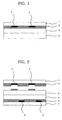
- 1 means a base material
- 2 means a release layer
- 3 means an easy breakable thin film layer
- 4 means an adhesive layer
- 5 means a release liner
- 6 means a spectacle frames and a management tag.
- the base material is preferably a sheet or film composed of a thermoplastic resin.
- the sheets or films composed of one or more of various synthetic resins such as polyolefins like polyethylene resins of high density polyethylene, middle density polyethylene, low density polyethylene and the like, polypropylene resins of polypropylene and the like, polymethyl-1-pentene/ethylene/cyclic olefin copolymer, and ethylene-vinyl acetate copolymer; polyester resins like polyethylene terephthalate, polyethylene naphthalate, polybutylene terephthalate: polyvinyl chloride resins; polyvinylalcohol resins; polycarbonate resins; polyamide resins; polyimide resins; fluororesins; copolymers containing two or more polymerization units thereof; polymer blends containing two or more resins thereof, polymer alloys containing one or more resins thereof can be used.
- the sheets or films composed of polyester resins are preferably used.
- the base material may be oriented un
- Thickness of the base material does not have any limitation. However, the thickness is generally in the range of 10 to 300 ⁇ m and preferably in the range of 20 to 200 ⁇ m.
- the shape of the base material does not have any limitation and includes polygons such as quadrangle like square and rectangle, and the like. Each side of the shape of the base material can have roundness and each corner of the shape of the base material can have roundness.
- the size of thebasematerial does not have any limitation, if it is a functionable size as the management tag.
- the width of the base material is generally in the range of 0.5 to 20 cm.
- the length of the base material is generally in the range of 3 to 50 cm.
- the base material may be colored or colorless and transparent, and is preferably transparent or translucent. Moreover, general printing, character printing or the like may be given on the surface of the base material or the surface of backside of the base material for displaying needed information. For this purpose, a thermal recording layer, a print receiving layer allowing thermal transfer, ink jet, laser printing, gravure printing, flexo printing, screen printing, or a printing performance-improved layer etc. may be formed on the base material.
- the base material has the unsealed mark display function.
- the base material having the unsealed mark display function is explained in the following, based on drawings.
- Examples of the base material having the unsealed mark display function are, for example, a base material in which a release layer 2 is partially formed on a surface of backside of the base material 1 and an easy breakable thin film layer 3 is covered on the release layer 2 and the surface of backside of the base material 1 in which the release layer 2 is not formed, as shown in FIG.1.
- the adhesive strength between the easy breakable thin film layer 3 and the surface of backside of the base material 1 is needed to be larger than an adhesive strength between the easy breakable thin film layer 3 and the adhesive layer 4 in the base material.
- the surface of backside of the base material may be surface-treated or an adhesive layer may be formed in the interface between the surface of backside of the base material 1 and the release layer 2 or in the interface between the surface of backside of the base material 1 and the easy breakable thin film layer 3.
- the release layer 2 can be peeled at the interface of the easy breakable thin film layer 3.
- the adhesive strength is preferably not more than 1.5 N/cm, more preferably not more than 1 N/cm, in general.
- the release layer 2 is preferably composed of a thin film of resin or a thin film of release agent.
- the resin includes, for example, resins having releasability such as acrylic resins, polyester resins, fluororesins, melamine resins and polyurethane resins.
- resins having releasability such as acrylic resins, polyester resins, fluororesins, melamine resins and polyurethane resins.
- release agent silicone resin release agents and non-silicone resin release agents such as polyvinyl carbamates resins, polyolefin resins, long-chain alkyl compounds and the like are illustrated.
- the release layer 2 may be transparent or translucent and be colored.
- the color of the release layer 2 is preferably the same color as the base material 1 or the easy breakable thin film layer 3 to be not able to recognize easily the release layer by observation from the surface side of the base material 1, more preferably transparent or translucent.
- the release layer 2 can be formed by forming partially a thin film on the surface of backside of the base material by various means such as applying, spraying and printing of a resin or a release agent.
- the thickness of the release layer 2 is not particularly limited, but in general is preferably in the range of 0.05 to 10 ⁇ m, more preferably in the range of 0.1 to 5 ⁇ m.
- the release layer 2 for example, letter, sign, figure, pattern and combinations of two or more members thereof are illustrated.
- the metal thin films include, for example, thin films composed of metal of aluminium, gold, silver, copper, copper alloy, iron, iron alloy, nickel or the like.
- the easy breakable thin film layer 3 can be formedbymetal plating, vapor deposition, sputtering, CVD (chemical vapor deposition) or the like, preferably vapor deposition.
- the resin thin film include thin films composed of at least one member of resins such as acrylic resins, polyester resins and polycarbonate resins, and adhesives thereof.
- the resin film may be transparent or colored.
- the thickness of the easy breakable thin layer 3 is not particularly limited, but is preferably in the range of 0.01 to 1 ⁇ m, more preferably in the range of 0.05 to 0.1 ⁇ m.
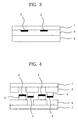
- the management tag A of the present invention is peeled after adhesion by laminating and pressing the surfaces of the adhesive layer 4, the management tag A is not peeled at the interface between the surfaces of adhesive layer 4 because the adhesive strength between the surfaces of adhesive layer 4 is strong.
- the management tag A is peeled at the interface of the easy breakable thin layer 3 and the adhesive layer 4.
- the management tag A is peeled at the interface between the release layer 2 and the easy breakable thin layer 3, and the easy breakable thin layer 3 formed on the surface of the release layer 2 and the adhesive layer 4 are peeled together as the lamination is. Accordingly, the easy breakable thin film layer 3 is broken around the release layer 2 and the easy breakable thin film layer 3 is peeled in shape of the release layer 2 from the release layer 2. As the result, the easy breakable thin film layer 3 lack from the surface of the release layer 2 and therefore the shape can be recognized and the peeled fact can be judged. Also, even if the peeled management tag A is tried to laminate again for returning into the original position, the peeled management tag A can be not adhered.
- a base material having transparent or translucent release layer 2 formed partially on the surface of backside of transparent or translucent base material 1 as shown in FIG. 3 is illustrated.
- transparent or translucent base material 1 and transparent or translucent release layer 2 are the same as transparent or translucent base material 1 and transparent or translucent release layer 2 in the example of the base material having the unsealed mark display function described before.
- the adhesive strength between the surface of backside of base material 1 without release layer 2 and adhesive layer 4 is needed to be larger than an adhesive strength between two adhesive layers 4.
- the surface of backside of base material 1 may be surface-treated, or another adhesive layer having large adhesive strength may be formed in the interface between the surface of backside of base material 1 and adhesive layer 4.
- the release layer 2 can peel from the surface of backside of base material 1.
- the adhesive strength is preferably not more than 1.5 N/cm, more preferably not more than 1 N/cm.
- release liner 5 is provided on the surface of adhesive layer 4 described after, the adhesive strength between release layer 2 and adhesive layer 4 is preferably larger than the adhesive strength between adhesive layer 4 and release liner 5.
- the management tag A of the present invention is peeled after adhesion by laminating and pressing the surfaces of the adhesive layer 4 together, the management tag A is peeled at the interface between two adhesive layers 4 in the surface of backside of the base material 1, in which the release layer 2 is not formed.
- the management tag A is peeled at the interface of release layer 2 and base material 1.
- release layer 2 is peeled together with the adhesive layer 4 as the lamination is. Accordingly, adhesive layer 4 is broken around the release layer 2 and release layer 2 is peeled from the surface of backside of base material 1. Therefore, a void is produced between release layer 2 and the surface of backside of base material 1.
- the management tag is not peeled at the interface between the surface of backside of basematerial 1 without release layer 2 and adhesive layer 4, and therefore, transparency is kept. Accordingly, the contrast of the opaque portion and the transparent portion is recognized by visual and the peeled fact can be recognized and judged. Also, even if the peeled management tag A is tried to laminate again for returning into the original position, the peeled management tag A can be not adhered.
- an adhesive layer comprising at least one adhesive selected from the group consisting of polyurethane adhesives and polyester adhesives is formed on a part or whole of the surface of the base material.
- the adhesive layer in the present invention has characteristic to have extremely low tackiness, and the ball tack value is not more than 3, and preferably not more than 2. If the ball tack value exceeds 3, adhesive may remains on the surface of articles fitted with the management tag.
- the adhesive layer has adhesive strength value to a stainless steel board according to JIS Z0237 of not more than 2 N/cm, and preferably not more than 1.5 N/cm.
- the adhesive layer has adhesive strength value between adhesive layers at 24 hours in leaving without pressure after adhesion by pressure of adhesive layer sides together of 2 to 50 N/cm, preferably 3 to 50 N/cm.
- a polyurethane adhesive layer has characteristic that the adhesive strength becomes strong immediately after adhering the adhesive layer sides together and the obtained adhesive strength maintains as it is.
- a polyester adhesive layer has characteristic that the adhesive layer is easily peeled off immediately after adhering the adhesive layer sides together and the adhesion strength increases gradually.
- type A durometer hardness according to JIS K6253 of the adhesive layer is preferably not less than 20, more preferably in the range of 30 to 100, and most preferably in the range of 40 to 80.
- type A durometer hardness is less than 20, there is the fear that the adhesive may remain on articles fitted with the management tag.
- sufficient adhesive strength may not be obtained when the hardness is more than 100.
- the polyurethane adhesive employed in the above-described adhesive layer is composed of a soft segment mainly composed of long-chain polyol and a hard segment composed of diisocyanate and chain extender.
- long-chain polyols polyester polyol, polyether polyol are mainly employed, and as diisocyanates, tolylene diisocyanate, diphenylmethane diisocyanate, hexamethylene diisocyanate and the like are used.
- chain extenders low molecule polyalcohols and aromatic diamines, etc. are used.
- the polyurethane adhesive is preferable that cured afterwards by adding a cross linking agent into polyurethane.
- a cross linking agent is preferable as a cross linking agent, and aliphatic or cycloaliphatic polyisocyanates are especially preferable in view of weatherability.
- the cross linking agent it is preferable to add a cross linking accelerator in combination.
- Polyisocyanate-based cross linking agents are polyisocyanate compounds having not less than 2 of isocyante groups in a molecule. Examples of this kind of cross linking agents are shown below; 1,4-tetramethylene diisocyanate, hexamethylene diisocyanate, 2,2,4-trimethylhexane-1,6-diisocyanate, lysinemethylester diisocyanate, p-phenylene diisocyanate, tolylene diisocyanate, biphenyl diisocyanate, 3,3'-dimethyl-4,4'-biphenylene diisocyanate, methylene bis(phenyl isocyanate), bis(isocyanate ethyl)fumarate, isophorone diisocyanate, methylcyclohexyl diisocyanate, 2-isocyanate ethyl-2,6-diisocyanatehexanoate.
- modified isocyanates thereof for example, multi-functional isocyanate compounds having not less than 3 functional groups such as isocyanurate type and urethane type may be used.
- the amount of the cross linking agent is preferably in the range of 1 to 60 parts by weight based on the weight of 100 parts by weight of polyurethane, and more preferably in the range of 10 to 40 parts by weight.
- Polyester adhesives employed in the above-described adhesive layer contain a polyester resin as a resin component.
- the polyester resin in the polyester adhesive is obtained by polycondensation of an acid component and a diol component.
- the acid component for example, aliphatic dicarboxylic acid and aromatic dicarboxylic acid may be illustrated, but these two types of dicarboxylic acids may be used in combination.
- a ratio by weight of the aliphatic dicarboxylic acid and the aromatic dicarboxylic acid is preferably in the range of 5:95 to 50:50.
- aliphatic dicarboxylic acids for example, adipic acid, sebacic acid, azelaic acid and decane-1,10-dicarboxylic acid may be illustrated.
- aromatic dicarboxylic acids for example, terephthalic acid, isophthalic acid, phthalic acid, naphthalene-1,4-dicarboxylic acid, naphthalene-2,5-dicarboxylic acid, diphenylether-4,4'-dicarboxylic acid and diphenyldicarboxylic acid may be illustrated.
- diol component for example, aliphatic diols and aromatic diols may be illustrated, but aliphatic diols are preferable.
- One aliphatic diol may be used, but two or more members, particularly two to four members of aliphatic diols are preferably used in combination.
- aliphatic diols for example, ethylene glycol, propylene glycol, trimethylene glycol, tetramethylene glycol, diethylene glycol, polyethylene glycol, polypropylene glycol, polytetramethylene glycol, hexamethylene glycol, dodecamethylene glycol and neo-pentyl glycol may be illustrated.
- a cross linking agent may be added to the polyester resin as the resin component in the polyester adhesive.
- Polyisocyanate-based cross linking agent is preferable as the cross linking agent.
- the polyisocyanate-based cross linking agents it is possible to use the same as those described as the polyisocyanate-based cross linking agents used in polyurethanes.
- the amount of the cross linking agent is preferably in the range of 1 to 20 parts by weight based on the weight of 100 parts by weight of polyester resin, and more preferably in the range of 2 to 10 parts by weight.
- a glass transition temperature of the cross-linked polyester resin and the cross-linked polyurethane resin is preferably in the range of -20°C to +60°C.
- polyester adhesives and polyurethane adhesives may be used in mixture.
- a mixing ratio of polyester adhesives and polyurethane adhesives is preferably in the range of 5:95 to 95:5 by mass ratio.
- the management tag having desired adhesive strength can be obtained by using the two types of adhesives in mixture.
- the adhesive layer of the present invention preferably does not contain substantially a tackifier, an oil and a plasticizer, unlike conventional adhesive layers. Because of this, the adhesive layer of the present invention has superior chemical stability, and the surface of articles fitted with the management tag can be prevented from staining.
- the adhesive layer may contain at least one member of other additives.
- additives dyestuffs, pigments, fillers, antioxidants and ultra-violet absorbents are illustrated as examples.
- fillers zinc oxide, titanium oxide, silica, calcium carbonate, and barium sulfate are illustrated as examples.
- antioxidants anilide-, phenol-, phosphite-, and thioester-based antioxidants are illustrated as examples.
- ultra-violet absorbents benzophenone- and bonzotriazole-based ultra-violet absorbents are illustrated as examples.
- Thickness of the adhesive layer does not have limitation particularly, but it is usually in the range of 5 to 40 ⁇ m, and preferably in the range of 10 to 25 ⁇ m.
- the area that the adhesive layer is particularly not limited so long as the management tag of the present invention can be tightly fitted to the articles by adhering through pressing adhesive layer sides together of the management tag.
- the adhesive layer of the present invention has printability of pictures and characters, it is possible to put printed pictures or characters on a part of the surface of the adhesive layer.
- the surface of the adhesive layer may be covered with a release liner.
- the release liner is composed of a support base material having a releasing property at least on one side of support base material.
- the surface of the side with releasing property of the support base material may be coated with a release agent or may not be coated with the release agent.
- paper, synthetic paper and plastic film are illustrated.
- paper a glassine paper and polyethylene laminate paper are illustrated
- plastic films films of polyolefin resins such as polyethylene resin and polypropylene resin, and of polyester resins such as polybutylene terephthalate resin and polyethylene terephthalate resin, and of acetate resins, of polystyrene resins and of polyvinylchloride resins are illustrated.
- polyolefin films such as polypropylene film, polyethylene film and papers and other films laminated with these polyolefin films are illustrated.
- silicone resins As a release agent used for a release liner, silicone resins, alkyd resins, fluorocarbon resins, and resins containing long-chain alkyl groups are illustrated.
- Thickness of the release liner is not particularly limited and may be chosen appropriately.
- the methods of forming the adhesive layer to the easy breakable thin film layer or the surface of backside of base material include a method of applying the adhesive to the easy breakable thin film layer or the surface of backside of base material and drying, a method of preparing a release liner with an adhesive layer by applying the adhesive to the surface of the release liner and drying, and then laminating the adhesive layer of the release liner with an adhesive layer on the easy breakable thin film layer or the surface of backside of the base material.
- the later is particularly preferable among them. Further, it is possible to control the viscosity of the adhesive used for application by adding a diluent, according to needs.
- the management tag of the present invention can have a form of a plane sheet or a rolled shape.
- the management tag of the present invention can be used for managing the article by fitting the article through displaying management information to the management tag and winding the management tag around the article and adhering adhesive layer sides together.
- the management information includes one or more information needed for managing the article, such as price of article, manufacturing serial number, manufacturing date, arrival date, material and method of treatment.
- management means to specify the article based on the management information and treat under the control of the manager.
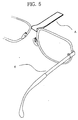
- management tag of the present invention For fitting the management tag of the present invention to the article, for example, as shown in FIG. 5, it is preferable to wind around the article by placing the surface of the adhesive layer of management tag on the side of the article such as spectacle frames and to adhere by pressing adhesive layer sides of both ends of management tag A.
- the management tag of the present invention can be fitted to articles such as spectacle frames and precious metal goods like rings.
- Adhesive strength measurement test measurement test of adhesive strength between adhesive layers at 24 hours in leaving without pressure after pressing adhesive layer sides together, ball tack measurement test and measurement test of type A durometer hardness in examples were performed according to the methods as follows. The tests (1) to (4) were performed under room temperature.
- Adhesive strength of an adhesive layer of a management tag was measured according to JIS Z 0237.8.3.1. Here stainless steel platewas used as testing board. Also, adhesive strength of the adhesive layer to the surface of base material was measured in the same method.
- Two adhesive layer sides of a management tag were located facing together and pressed, and left without pressure for 24 hours after adhesion by pressing, and then the adhered adhesive layer side was peeled off (in T type peeling) at peeling rate of 300 mm/min. The load of peeling was measured.
- the ball tack of an adhesive layer of a management tag was measured according to JIS Z0237.12. Measurement was performed under the condition of inclination angle of board of 30° , and of unit of 1/32 inch.
- the type A durometer hardness of the adhesive layer was measured according to JIS K6253.5.4.
- Arelease layer ( thickness of 1 ⁇ m) was formed by printing a release agent ( production of IPPO OIL AND FAT Co., Ltd., trade name "PEELOIL 1010" ) in the letter shape of "VOID" which means to be already unsealed, on the surface of backside of polyethylene terephthalate film ( thickness of 50 ⁇ m ) as the base material and drying. And then, the aluminium vapor deposition thin film layer ( thickness of 0.05 ⁇ m ) was formed by vapor-depositing aluminium on the release layer and the residual portion of the surface of backside of base material in which a release layer was not formed. Thus, the polyethylene terephthalate film having unsealed mark display function was prepared.
- a polyurethane adhesive solution was prepared by mixing 100 parts by weight of polyurethane resin (Dainichiseika Colour & Chemicals Mfg. Co., Ltd. REZAMINE UD8300LP, 50 weight % of non-volatile matter), 30 parts by weight of a cross linking agent of polyisocyanates compound (Dainichiseika Colour & Chemicals Mfg. Co., Ltd. REZAMINE NE, 75 weight % of non-volatile matter), and 0.5 parts by weight of amine/tin cross linking accelerator (Dainichiseika Colour & Chemicals Mfg. Co., Ltd. REZAMINE HI215 ACCELERATOR, 5 weight % of non-volatile matter).
- the polyurethane adhesive solution was applied on one side of the polypropylene film (Oji Seishi Co., Ltd., ALPHANE PP40 PU002, thickness 40 ⁇ m) as a release liner to obtain thickness of the adhesive layer after drying of 12 ⁇ m, the layer was dried.
- the surface of the adhesive layer of the release liner having the adhesive layer was laminated with the surface of backside of the obtained polyethylene terephthalate film having the unsealed mark display function described above to form an adhesive sheet having the release liner.
- Management information such as a price of a commercial article was flexo-printed on the surface of base material in the adhesive sheet having the release liner.
- a management tag was made by die cutting the adhesive sheet having the release liner in the shape of rectangular ( size: width of 1 cm and length of 5 cm ) until the die cutting reached the release liner from the base material side.
- the adhesive strength value of the polyurethane adhesive layer to a stainless steel plate measured according to JIS Z0237.8.3.1 was 0 N/cm.
- the adhesive strength value at 24 hours in leaving without pressure after adhesion by pressing the adhesive layer sides together was 8.2 N/cm.
- the ball tack value of the adhesive layer was 2.
- the type A durometer hardness of the adhesive layer was 78.
- the management tag was fitted to a spectacle frame by peeling the management tag from the release liner, winding the management tag around the spectacle frame, and adhering the adhesive layer sides together.
- the management tag was allowed to stand for one month after fitting to the spectacle frame and then was tried to remove from the spectacle frame.
- the management tag was not peeled at the adhesion interface between adhesive layers, but was peeled at the interface between the release layer and the aluminium vapor deposition thin film layer within the release layer having the letter shape of "VOID" ( already unsealed ), and at the interface between the aluminium vapor deposition thin film layer and the adhesive layer within the other portion. At the result, the display of "VOID" was developed. And then, the adhering of the management tag was tried, but it was impossible to adhere the management tag again. Also, adhesive residue, discoloration and stain to the spectacle frame were not observed.
- Arelease layer ( thickness of 1 ⁇ m) was formed by printing a release agent ( production of IPPO OIL AND FAT Co., Ltd., trade name "PEELOIL 1010" ) in the letter shape of "VOID" which means to be already unsealed, on the surface of backside of polyethylene terephthalate film ( thickness of 50 ⁇ m ) as the base material and drying. And then, the aluminium vapor deposition thin film layer ( thickness of 0.05 ⁇ m ) was formed by vapor-depositing aluminium on the release layer and the residual portion of the surface of backside of base material in which a release layer was not formed. Thus, the polyethylene terephthalate film having unsealed mark display function was prepared.
- a polyester adhesive solution was prepared by mixing 100 parts by weight of phthalic acid-based polyester resin (Dainichiseika Colour & Chemicals Mfg. Co., Ltd. SEIKABOND E-295, 60 weight % of non-volatile matter) and 5 parts by weight of a cross linking agent of polyisocyanates compound (Dainichiseika Colour & Chemicals Mfg. Co., Ltd. SEIKABOND C-75N, 75 weight % of non-volatile matter).
- the polyester adhesive solution was applied on one side of the polypropylene film (Oji Seishi Co., Ltd., ALPHANE PP40 PU002, thickness 40 ⁇ m) as a release liner to obtain thickness of the adhesive layer after drying of 20 ⁇ m, the layer was dried.
- the surface of the adhesive layer of the release liner having the adhesive layer was laminated with the surface of backside of the obtained polyethylene terephthalate film having the unsealed mark display function described above to form an adhesive sheet having the release liner.
- Management information such as a price of commercial article was flexo-printed on the surface of base material in the adhesive sheet having the release liner.
- a management tag was made by die cutting the adhesive sheet having the release liner in the shape of rectangular ( size: width of 1 cm and length of 5 cm ) until the die cutting reached the release liner from the base material.
- the adhesive strength value of the polyester adhesive layer to a stainless steel plate measured according to JIS Z0237.8.3.1 was 0.2 N/cm.
- the adhesive strength value at 24 hours in leaving without pressure after adhesion by pressing was 6.7 N/cm.
- the ball tack value of the adhesive layer was 2.
- the type A durometer hardness of the adhesive layer was 40.
- the management tag was fitted to a spectacle frame by peeling the management tag from the release liner, winding the management tag around the spectacle frame, and adhering the adhesive layer sides together.
- the management tag was allowed to stand for one month after fitting to the'spectacle frame and then was tried to remove from the spectacle frame.
- the management tag was not peeled at the adhesion interface between adhesive layers, but was peeled at the interface between the release layer and the aluminium vapor deposition thin film layer within the release layer having letter shape of "VOID", and at the interface between the aluminium vapor deposition thin film layer and the adhesive layer within the other portion. At the result, the display of "VOID" was developed. And then, the adhering of the management tag was tried, but it was impossible to adhere the management tag again. Also, adhesive residue, discoloration and stain to the spectacle frame were not observed.
- Arelease layer ( thickness of 1 ⁇ m ) was formed by printing a release agent ( production of IPPO OIL AND FAT Co., Ltd., trade name "PEELOIL 1010" ) in the letter shape of "VOID" which means to be already unsealed, on the surface of backside of polyethylene terephthalate film ( thickness of 50 ⁇ m ) as the base material and drying.
- a release agent production of IPPO OIL AND FAT Co., Ltd., trade name "PEELOIL 1010”
- VID letter shape of "VOID” which means to be already unsealed
- a polyester adhesive solution was prepared by mixing 100 parts by weight of phthalic acid-based polyester resin (Dainichiseika Colour & Chemicals Mfg. Co., Ltd. SEIKABOND E-295, 60 weight % of non-volatile matter) and 5 parts by weight of a cross linking agent of polyisocyanates compound (Dainichiseika Colour & Chemicals Mfg. Co., Ltd. SEIKABOND C-75N, 75 weight % of non-volatile matter).
- the polyester adhesive solution was applied on one side of the polypropylene film (Oji Seishi Co., Ltd., ALPHANE PP40 PU002, thickness 40 ⁇ m) as a release liner to obtain thickness of the adhesive layer after drying of 20 ⁇ m, the layer was dried.
- the surface of the adhesive layer of the release liner having the adhesive layer was laminated with the surface of backside of the obtained polyethylene terephthalate film having the unsealed mark display function described above to form an adhesive sheet having the release liner.
- Management information such as a price of commercial article was flexo-printed on the surface of base material in the adhesive sheet having the release liner.
- a management tag was made by die cutting the adhesive sheet having the release liner in the shape of rectangular ( size: width of 1 cm and length of 5 cm ) until the die cutting reached the release liner from the base material.
- the adhesive strength value of the polyester adhesive layer to a stainless steel plate measured according to JIS Z0237.8.3.1 was 0.2 N/cm.
- the adhesive strength value at 24 hours in leaving without pressure after adhesion by pressing was 6.7 N/cm.
- the ball tack value of the adhesive layer was 2.
- the type A durometer hardness of the adhesive layer was 40.
- the management tag was fitted to a spectacle frame by peeling the management tag from the release liner, winding the management tag around the spectacle frame, and adhering the adhesive layer sides together.
- the management tag was allowed to stand for one month after fitting to the spectacle frame and then was tried to remove from the spectacle frame.
- the management tag was difficult to be peeled at the adhesion interface between adhesive layers, but further was tried to peel forcibly.
- the management tag was peeled at the interface between the adhesive layers without the release layer and at the interface between the base material and the release layer within the release layer having letter shape of "VOID", At the result, the display of "VOID" was developed. And then, the adhering of the management tag was tried, but it was impossible to adhere the management tag again. Also, adhesive residue, discoloration and stain to the spectacle frame were not observed.
- the management tag of the present invention can be fitted an article by winding around the article and adhering the adhesive layer sides together. If the remove of the management tag of the present invention is tried from the article after the management tag was fitted to the article, the management tag is peeled at the interface between the adhesive layer and the base material having the unsealed mark display function without peeling of the tag at the interface between the adhesive layers or at the surface of backside of the base material having the unsealed mark display function together with peel ing of the tag at the interface between the adhesive layers. At the result, the unsealed mark display function can be developed. Therefore, it is difficult to transfer the ,management tag from the article fitted with the management to the other article.
- the management tag can prevent adhesive residue, discoloration and stain to the article fitted with the management.
Landscapes
- Physics & Mathematics (AREA)
- General Physics & Mathematics (AREA)
- Engineering & Computer Science (AREA)
- Theoretical Computer Science (AREA)
- Adhesive Tapes (AREA)
- Adhesives Or Adhesive Processes (AREA)
- Laminated Bodies (AREA)
Abstract
The present invention provides a management tag which
comprises a base material having an unsealed mark display
function and an adhesive layer formed on a part or all of
a surface of backside of the base material, wherein the
adhesive layer comprises at least one adhesive selected from
the group consisting of polyurethane adhesives and polyester
adhesives, and has a ball tack value of not more than 3, an
adhesive strength value to stainless steel board according
to JIS Z0237 of not more than 2 N/cm and adhesive strength
value between adhesive layers at 24 hours in leaving without
pressure after adhesion by pressure of adhesive layer sides
together of 2 to 50 N/cm.
The management tag of the present invention can be fitted
an article by winding around the article and then adhering
the adhesive layer sides together. If the management tag of
the present invention is tried to exchange for adhering to
other article after themanagement tagwas fitted to the article,
the unsealed facts of the management tag can be recognized
and further the transferring of adhesive to the surface of
the article can be prevented.
Description
The present invention relates to a self-adhesive
management tag which can fit by winding around a commercial
article such as spectacle frames and precious metal goods
like rings, display information such as a price on the
commercial article, and recognize unsealed facts of the
management tag if the management tag is peeled after the fitting
and then is fitted by adhesion again, and further can prevent
transferring of adhesive to the surface of the article, and
a method of use thereof.
As price tags for commercial articles such as spectacle
frames and precious metal goods like rings, models of price
tag having a strong bond which can be joined to the article
with the strong bond, and models of label having an
pressure-sensitive adhesive applied on the surface of
backside of a price tag which can be fitted by winding around
the article with the pressure-sensitive adhesive layer, have
been employed conventionally and generally.
However, if the models of price tag having a strong bond,
which can be joined to the article with the strong bond, are
needed to remove from the article after fitting to the article,
there are a problem that it needs an extra operation for using
a strong cutter when removing the price tag and therefore
it is not possible to remove the price tag quickly and a problem
that the commercial articles may be injured by the cutter.
There is also a problem that the management tag lacks the
preventing ability of tamper, because the price tag removed
from the commercial article can be fitted to another commercial
article though it takes the extra operation.
With respect to the models of label having the
pressure-sensitive adhesive applied on the surface of
backside of the price tag which can be fitted by winding around
the article with the pressure-sensitive adhesive layer, there
are problems that the pressure-sensitive adhesive is
transferred to the commercial article and therefore stains
and modifies the commercial article and that the
pressure-sensitive adhesive transfers to the hand at the
fitting of the price tag and stains the hand.
Further, labels having the unsealed mark display function
for preventing ability of tamper has been known in recent
years. The labels have a strong tackiness pressure-sensitive
adhesive layer formed on the surface of backside of the base
material having the unsealed mark display function.
However, if the labels are fitted to the commercial
article and then peeled from the commercial article, the tamper
is confirmed by transfer of the pressure-sensitive adhesive
layer to the commercial article. Therefore, there is a problem
that the labels stain the commercial article.
Also, there is a problem that it is not possible to use
the labels, because the unsealed mark display function may
develop by peeling of the base material if the
pressure-sensitive adhesive layer of the label adheres to
the hand and the like at fitting to the commercial article
and then the label is peeled from the hand and the like.
For solving the problems described above, it is
considered that a covering film having non-pressure-sensitive
adhesiveness is formed on the surface of the
pressure-sensitive adhesive layer, which contacts to the
commercial article. But, there are problems that it needs
a process for forming the covering film having
non-pressure-sensitive adhesiveness, it complicates the
process for preparing the label and the cost for preparation
of the label becomes higher.
The present invention is achieved inviewof the situation
of the conventional technology described above. The
invention is to provide a management tag which is difficult
to exchange for fitting from the article fitted with the tag
to the other articles and can prevent transferring of adhesive
to the surface of an article, when the management tag is fitted
by winding around the article such as commercial articles
and adhering one side of the adhesive layer of the management
tag with the other side of the adhesive layer of the management
tag, and further which can develop the unsealed mark display
function of the base material by peeling the tag at the
interface between the adhesive layer and the base material
having the unsealed mark display function without peeling
of the tag at the interface between the adhesive layers or
by peeling the tag at the surface of backside of the base
material having the unsealed mark display function together
with peeling of the tag at the interface between the adhesive
layers, if the tag is tried to peel at the interface between
the adhesive layers.
As a result of efforts by the present inventors to solve
the above-described problems, it was found that the object
of the present invention is achieved by forming an adhesive
layer comprising at least one adhesive selected from the group
consisting of polyurethane adhesives and polyester adhesives,
and having a ball tack value of not more than 3, adhesive
strength value to a stainless steel board according to JIS
Z0237 of not more than 2 N/cm, and adhesive strength value
between adhesive layers at 24 hours in leaving without pressure
after adhesion by pressing adhesive layer sides together of
2 to 50 N/cm, on the surface of backside of base material
having unsealed mark display function. And thus the present
invention is completed.
That is to say, the present invention provides a
management tag which comprises a base material having an
unsealed mark display function and an adhesive layer formed
on a part or all of a surface of backside of the base material,
wherein the adhesive layer comprises at least one adhesive
selected from the group consisting of polyurethane adhesives
and polyester adhesives, and has a ball tack value of not
more than 3, an adhesive strength value to stainless steel
board according to JIS Z0237 of not more than 2 N/cm and adhesive
strength value between adhesive layers at 24 hours in leaving
without pressure after adhesion by pressure of adhesive layer
sides together of 2 to 50 N/cm.
The present invention also provides the management tag
as described above, wherein the adhesive layer has type A
durometer hardness according to JIS K6253 of not less than
20.
The present invention also provides the management tag
as described above, wherein the base material having the
unsealed mark display function is a base material in which
a release layer is partially formed on a surface of backside
of the base material.
The present invention further provides the management
tag as described above, wherein the base material having the
unsealed mark display function is a base material in which
a release layer is partially formed on a surface of backside
of the base material and an easy breakable thin film layer
is covered on the release layer and the surface of backside
of the base material in which the release layer is not formed,
wherein an adhesive strength between the easy breakable thin
film layer and the surface of backside of the base material
is larger than an adhesive strength between the easy breakable
thin film layer and the adhesive layer.
The present invention furthermore provides a method of
use of the management tag, which comprises displaying
management information to the management tag as described
above, winding the management tag around an article, fitting
the management tag by adhering the adhesive layer sides
together, and managing the article.
The present invention will be explained in detail as
follows.
In drawings, 1 means a base material, 2 means a release
layer, 3 means an easy breakable thin film layer, 4 means
an adhesive layer, 5 means a release liner, 6 means a spectacle
frames and a management tag.
In the present invention, the base material is preferably
a sheet or film composed of a thermoplastic resin.
As the sheet or film composed of the thermoplastic resin,
for example, the sheets or films composed of one or more of
various synthetic resins, such as polyolefins like
polyethylene resins of high density polyethylene, middle
density polyethylene, low density polyethylene and the like,
polypropylene resins of polypropylene and the like,
polymethyl-1-pentene/ethylene/cyclic olefin copolymer, and
ethylene-vinyl acetate copolymer; polyester resins like
polyethylene terephthalate, polyethylene naphthalate,
polybutylene terephthalate: polyvinyl chloride resins;
polyvinylalcohol resins; polycarbonate resins; polyamide
resins; polyimide resins; fluororesins; copolymers
containing two or more polymerization units thereof; polymer
blends containing two or more resins thereof, polymer alloys
containing one or more resins thereof can be used. In
particularly, the sheets or films composed of polyester resins
are preferably used. The base material may be oriented
uniaxially or biaxially. The base material may be composed
of single layer or two or more layers of different layers
or same layers.
Thickness of the base material does not have any
limitation. However, the thickness is generally in the range
of 10 to 300 µm and preferably in the range of 20 to 200 µ
m.
The shape of the base material does not have any limitation
and includes polygons such as quadrangle like square and
rectangle, and the like. Each side of the shape of the base
material can have roundness and each corner of the shape of
the base material can have roundness.
The size of thebasematerial does not have any limitation,
if it is a functionable size as the management tag. The width
of the base material is generally in the range of 0.5 to 20
cm. The length of the base material is generally in the range
of 3 to 50 cm.
The base material may be colored or colorless and
transparent, and is preferably transparent or translucent.
Moreover, general printing, character printing or the like
may be given on the surface of the base material or the surface
of backside of the base material for displaying needed
information. For this purpose, a thermal recording layer,
a print receiving layer allowing thermal transfer, ink jet,
laser printing, gravure printing, flexo printing, screen
printing, or a printing performance-improved layer etc. may
be formed on the base material.
The base material has the unsealed mark display function.
The base material having the unsealed mark display function
is explained in the following, based on drawings.
Examples of the base material having the unsealed mark
display function are, for example, a base material in which
a release layer 2 is partially formed on a surface of backside
of the base material 1 and an easy breakable thin film layer
3 is covered on the release layer 2 and the surface of backside
of the base material 1 in which the release layer 2 is not
formed, as shown in FIG.1. The adhesive strength between the
easy breakable thin film layer 3 and the surface of backside
of the base material 1 is needed to be larger than an adhesive
strength between the easy breakable thin film layer 3 and
the adhesive layer 4 in the base material. For increasing
the adhesive strength between the release layer 2 and the
surface of backside of the base material 1, and the adhesive
strength between the easy breakable thin film layer 3 and
the surface of backside of the base material 1, the surface
of backside of the base material may be surface-treated or
an adhesive layer may be formed in the interface between the
surface of backside of the base material 1 and the release
layer 2 or in the interface between the surface of backside
of the base material 1 and the easy breakable thin film layer
3. Also, the release layer 2 can be peeled at the interface
of the easy breakable thin film layer 3. The adhesive strength
is preferably not more than 1.5 N/cm, more preferably not
more than 1 N/cm, in general. When release liner 5 is formed
on the surface of the adhesive layer 4 as described after,
the adhesive strength between the release layer 2 and the
easy breakable thin film layer 3 is preferably larger than
the adhesive strength between the adhesive layer 4 and the
release liner 5.
The release layer 2 is preferably composed of a thin
film of resin or a thin film of release agent. The resin includes,
for example, resins having releasability such as acrylic
resins, polyester resins, fluororesins, melamine resins and
polyurethane resins. As release agent, silicone resin release
agents and non-silicone resin release agents such as polyvinyl
carbamates resins, polyolefin resins, long-chain alkyl
compounds and the like are illustrated. The release layer
2 may be transparent or translucent and be colored. When the
base material 1 is transparent or translucent, the color of
the release layer 2 is preferably the same color as the base
material 1 or the easy breakable thin film layer 3 to be not
able to recognize easily the release layer by observation
from the surface side of the base material 1, more preferably
transparent or translucent.
The release layer 2 can be formed by forming partially
a thin film on the surface of backside of the base material
by various means such as applying, spraying and printing of
a resin or a release agent.
The thickness of the release layer 2 is not particularly
limited, but in general is preferably in the range of 0.05
to 10 µm, more preferably in the range of 0.1 to 5 µm.
As the shape of the release layer 2, for example, letter,
sign, figure, pattern and combinations of two or more members
thereof are illustrated.
As the easy breakable thin film layer 3, metal thin films,
resin thin films and the like are illustrated. The metal thin
films include, for example, thin films composed of metal of
aluminium, gold, silver, copper, copper alloy, iron, iron
alloy, nickel or the like. The easy breakable thin film layer
3 can be formedbymetal plating, vapor deposition, sputtering,
CVD (chemical vapor deposition) or the like, preferably vapor
deposition. The resin thin film include thin films composed
of at least one member of resins such as acrylic resins,
polyester resins and polycarbonate resins, and adhesives
thereof. The resin film may be transparent or colored.
The thickness of the easy breakable thin layer 3 is not
particularly limited, but is preferably in the range of 0.01
to 1 µm, more preferably in the range of 0.05 to 0.1 µm.
As shown in FIG. 2, for the constitution described above,
if the management tag A of the present invention is peeled
after adhesion by laminating and pressing the surfaces of
the adhesive layer 4, the management tag A is not peeled at
the interface between the surfaces of adhesive layer 4 because
the adhesive strength between the surfaces of adhesive layer
4 is strong. In the surface of backside of the base material
1, in which the release layer 2 is not formed, the management
tag A is peeled at the interface of the easy breakable thin
layer 3 and the adhesive layer 4. Further, in the surface
of backside of base material 1 having release layer 2, the
management tag A is peeled at the interface between the release
layer 2 and the easy breakable thin layer 3, and the easy
breakable thin layer 3 formed on the surface of the release
layer 2 and the adhesive layer 4 are peeled together as the
lamination is. Accordingly, the easy breakable thin film layer
3 is broken around the release layer 2 and the easy breakable
thin film layer 3 is peeled in shape of the release layer
2 from the release layer 2. As the result, the easy breakable
thin film layer 3 lack from the surface of the release layer
2 and therefore the shape can be recognized and the peeled
fact can be judged. Also, even if the peeled management tag
A is tried to laminate again for returning into the original
position, the peeled management tag A can be not adhered.
As other example of the base material having the unsealed
mark display function, for example, a base material having
transparent or translucent release layer 2 formed partially
on the surface of backside of transparent or translucent base
material 1 as shown in FIG. 3 is illustrated. In the base
material, transparent or translucent base material 1 and
transparent or translucent release layer 2 are the same as
transparent or translucent base material 1 and transparent
or translucent release layer 2 in the example of the base
material having the unsealed mark display function described
before. The adhesive strength between the surface of backside
of base material 1 without release layer 2 and adhesive layer
4 is needed to be larger than an adhesive strength between
two adhesive layers 4. For increasing the adhesive strength
between the surface of backside of base material 1 and adhesive
layer 4, the surface of backside of base material 1 may be
surface-treated, or another adhesive layer having large
adhesive strength may be formed in the interface between the
surface of backside of base material 1 and adhesive layer
4. The release layer 2 can peel from the surface of backside
of base material 1. In general, the adhesive strength is
preferably not more than 1.5 N/cm, more preferably not more
than 1 N/cm. When release liner 5 is provided on the surface
of adhesive layer 4 described after, the adhesive strength
between release layer 2 and adhesive layer 4 is preferably
larger than the adhesive strength between adhesive layer 4
and release liner 5.
As shown in FIG. 4, for the constitution described above,
if the management tag A of the present invention is peeled
after adhesion by laminating and pressing the surfaces of
the adhesive layer 4 together, the management tag A is peeled
at the interface between two adhesive layers 4 in the surface
of backside of the base material 1, in which the release layer
2 is not formed. In the surface of backside of base material
1 having release layer 2, the management tag A is peeled at
the interface of release layer 2 and base material 1. And
release layer 2 is peeled together with the adhesive layer
4 as the lamination is. Accordingly, adhesive layer 4 is broken
around the release layer 2 and release layer 2 is peeled from
the surface of backside of base material 1. Therefore, a void
is produced between release layer 2 and the surface of backside
of base material 1. By the void, transmitted light is
irregularly reflected, and therefore, the portion of release
layer 2 becomes opaque. On the other hand, the management
tag is not peeled at the interface between the surface of
backside of basematerial 1 without release layer 2 and adhesive
layer 4, and therefore, transparency is kept. Accordingly,
the contrast of the opaque portion and the transparent portion
is recognized by visual and the peeled fact can be recognized
and judged. Also, even if the peeled management tag A is
tried to laminate again for returning into the original
position, the peeled management tag A can be not adhered.
In the present invention, an adhesive layer comprising
at least one adhesive selected from the group consisting of
polyurethane adhesives and polyester adhesives is formed on
a part or whole of the surface of the base material.
The adhesive layer in the present invention has
characteristic to have extremely low tackiness, and the ball
tack value is not more than 3, and preferably not more than
2. If the ball tack value exceeds 3, adhesive may remains
on the surface of articles fitted with the management tag.
Moreover, the adhesive layer has adhesive strength
value to a stainless steel board according to JIS Z0237 of
not more than 2 N/cm, and preferably not more than 1.5 N/cm.
In addition, the adhesive layer has adhesive strength
value between adhesive layers at 24 hours in leaving without
pressure after adhesion by pressure of adhesive layer sides
together of 2 to 50 N/cm, preferably 3 to 50 N/cm.
A polyurethane adhesive layer has characteristic that
the adhesive strength becomes strong immediately after
adhering the adhesive layer sides together and the obtained
adhesive strength maintains as it is. A polyester adhesive
layer has characteristic that the adhesive layer is easily
peeled off immediately after adhering the adhesive layer
sides together and the adhesion strength increases gradually.
Furthermore, type A durometer hardness according to JIS
K6253 of the adhesive layer is preferably not less than 20,
more preferably in the range of 30 to 100, and most preferably
in the range of 40 to 80. When type A durometer hardness
is less than 20, there is the fear that the adhesive may remain
on articles fitted with the management tag. On the other
hand, sufficient adhesive strength may not be obtained when
the hardness is more than 100.
The polyurethane adhesive employed in the
above-described adhesive layer is composed of a soft segment
mainly composed of long-chain polyol and a hard segment
composed of diisocyanate and chain extender. As long-chain
polyols, polyester polyol, polyether polyol are mainly
employed, and as diisocyanates, tolylene diisocyanate,
diphenylmethane diisocyanate, hexamethylene diisocyanate
and the like are used. As chain extenders, low molecule
polyalcohols and aromatic diamines, etc. are used.
The polyurethane adhesive is preferable that cured
afterwards by adding a cross linking agent into polyurethane.
Polyisocyanates are preferable as a cross linking agent, and
aliphatic or cycloaliphatic polyisocyanates are especially
preferable in view of weatherability. In addition, when the
cross linking agent is used, it is preferable to add a cross
linking accelerator in combination.
Polyisocyanate-based cross linking agents are
polyisocyanate compounds having not less than 2 of isocyante
groups in a molecule. Examples of this kind of cross linking
agents are shown below; 1,4-tetramethylene diisocyanate,
hexamethylene diisocyanate,
2,2,4-trimethylhexane-1,6-diisocyanate, lysinemethylester
diisocyanate, p-phenylene diisocyanate, tolylene
diisocyanate, biphenyl diisocyanate,
3,3'-dimethyl-4,4'-biphenylene diisocyanate, methylene
bis(phenyl isocyanate), bis(isocyanate ethyl)fumarate,
isophorone diisocyanate, methylcyclohexyl diisocyanate,
2-isocyanate ethyl-2,6-diisocyanatehexanoate. Moreover,
modified isocyanates thereof, for example, multi-functional
isocyanate compounds having not less than 3 functional groups
such as isocyanurate type and urethane type may be used. The
amount of the cross linking agent is preferably in the range
of 1 to 60 parts by weight based on the weight of 100 parts
by weight of polyurethane, and more preferably in the range
of 10 to 40 parts by weight.
Polyester adhesives employed in the above-described
adhesive layer contain a polyester resin as a resin component.
The polyester resin in the polyester adhesive is obtained
by polycondensation of an acid component and a diol component.
As the acid component, for example, aliphatic dicarboxylic
acid and aromatic dicarboxylic acid may be illustrated, but
these two types of dicarboxylic acids may be used in combination.
When an aliphatic dicarboxylic acid and an aromatic
dicarboxylic acid are used in combination, a ratio by weight
of the aliphatic dicarboxylic acid and the aromatic
dicarboxylic acid is preferably in the range of 5:95 to 50:50.
As aliphatic dicarboxylic acids, for example, adipic acid,
sebacic acid, azelaic acid and decane-1,10-dicarboxylic acid
may be illustrated. As aromatic dicarboxylic acids, for
example, terephthalic acid, isophthalic acid, phthalic acid,
naphthalene-1,4-dicarboxylic acid,
naphthalene-2,5-dicarboxylic acid,
diphenylether-4,4'-dicarboxylic acid and
diphenyldicarboxylic acid may be illustrated. As the diol
component, for example, aliphatic diols and aromatic diols
may be illustrated, but aliphatic diols are preferable. One
aliphatic diol may be used, but two or more members,
particularly two to four members of aliphatic diols are
preferably used in combination. As aliphatic diols, for
example, ethylene glycol, propylene glycol, trimethylene
glycol, tetramethylene glycol, diethylene glycol,
polyethylene glycol, polypropylene glycol,
polytetramethylene glycol, hexamethylene glycol,
dodecamethylene glycol and neo-pentyl glycol may be
illustrated.
A cross linking agent may be added to the polyester resin
as the resin component in the polyester adhesive.
Polyisocyanate-based cross linking agent is preferable
as the cross linking agent. As the polyisocyanate-based cross
linking agents, it is possible to use the same as those
described as the polyisocyanate-based cross linking agents
used in polyurethanes. The amount of the cross linking agent
is preferably in the range of 1 to 20 parts by weight based
on the weight of 100 parts by weight of polyester resin, and
more preferably in the range of 2 to 10 parts by weight.
After cross linking the polyester resin and the
polyurethane resin used in the adhesive layer of the present
invention, a glass transition temperature of the cross-linked
polyester resin and the cross-linked polyurethane resin is
preferably in the range of -20°C to +60°C.
In the above-described adhesive layer, polyester
adhesives and polyurethane adhesives may be used in mixture.
A mixing ratio of polyester adhesives and polyurethane
adhesives is preferably in the range of 5:95 to 95:5 by mass
ratio. The management tag having desired adhesive strength
can be obtained by using the two types of adhesives in mixture.
The adhesive layer of the present invention preferably
does not contain substantially a tackifier, an oil and a
plasticizer, unlike conventional adhesive layers. Because
of this, the adhesive layer of the present invention has
superior chemical stability, and the surface of articles
fitted with the management tag can be prevented from staining.
In addition, the adhesive layer may contain at least
one member of other additives. As additives, dyestuffs,
pigments, fillers, antioxidants and ultra-violet absorbents
are illustrated as examples. As fillers, zinc oxide, titanium
oxide, silica, calcium carbonate, and barium sulfate are
illustrated as examples. As antioxidants, anilide-, phenol-,
phosphite-, and thioester-based antioxidants are illustrated
as examples. As ultra-violet absorbents, benzophenone- and
bonzotriazole-based ultra-violet absorbents are illustrated
as examples.
Thickness of the adhesive layer does not have limitation
particularly, but it is usually in the range of 5 to 40 µ
m, and preferably in the range of 10 to 25 µm.
The area that the adhesive layer is particularly not
limited so long as the management tag of the present invention
can be tightly fitted to the articles by adhering through
pressing adhesive layer sides together of the management tag.
In addition, since the adhesive layer of the present
invention has printability of pictures and characters, it
is possible to put printed pictures or characters on a part
of the surface of the adhesive layer.
Also, the surface of the adhesive layer may be covered
with a release liner.
The release liner is composed of a support base material
having a releasing property at least on one side of support
base material. The surface of the side with releasing
property of the support base material may be coated with a
release agent or may not be coated with the release agent.
As support base materials of the release liner, for
example, paper, synthetic paper and plastic film are
illustrated. For example, as paper, a glassine paper and
polyethylene laminate paper are illustrated, and as plastic
films, films of polyolefin resins such as polyethylene resin
and polypropylene resin, and of polyester resins such as
polybutylene terephthalate resin and polyethylene
terephthalate resin, and of acetate resins, of polystyrene
resins and of polyvinylchloride resins are illustrated. In
addition, as a suitable operative example of the release liner
in which a release agent is not coated, polyolefin films such
as polypropylene film, polyethylene film and papers and other
films laminated with these polyolefin films are illustrated.
As a release agent used for a release liner, silicone
resins, alkyd resins, fluorocarbon resins, and resins
containing long-chain alkyl groups are illustrated.
Thickness of the release liner is not particularly
limited and may be chosen appropriately.
The methods of forming the adhesive layer to the easy
breakable thin film layer or the surface of backside of base
material include a method of applying the adhesive to the
easy breakable thin film layer or the surface of backside
of base material and drying, a method of preparing a release
liner with an adhesive layer by applying the adhesive to the
surface of the release liner and drying, and then laminating
the adhesive layer of the release liner with an adhesive layer
on the easy breakable thin film layer or the surface of backside
of the base material. The later is particularly preferable
among them. Further, it is possible to control the viscosity
of the adhesive used for application by adding a diluent,
according to needs.
The management tag of the present invention can have
a form of a plane sheet or a rolled shape.
The management tag of the present invention can be used
for managing the article by fitting the article through
displaying management information to the management tag and
winding the management tag around the article and adhering
adhesive layer sides together. The management information
includes one or more information needed for managing the
article, such as price of article, manufacturing serial number,
manufacturing date, arrival date, material and method of
treatment. The term "management" means to specify the article
based on the management information and treat under the control
of the manager.
For fitting the management tag of the present invention
to the article, for example, as shown in FIG. 5, it is preferable
to wind around the article by placing the surface of the
adhesive layer of management tag on the side of the article
such as spectacle frames and to adhere by pressing adhesive
layer sides of both ends of management tag A.
The management tag of the present invention can be fitted
to articles such as spectacle frames and precious metal goods
like rings.
The present invention will be explained by an example
more concretely in the next paragraph. In addition, the
present invention was not restricted at all by these examples.
Adhesive strength measurement test, measurement test
of adhesive strength between adhesive layers at 24 hours in
leaving without pressure after pressing adhesive layer sides
together, ball tack measurement test and measurement test
of type A durometer hardness in examples were performed
according to the methods as follows. The tests (1) to (4)
were performed under room temperature.
Adhesive strength of an adhesive layer of a management
tag was measured according to JIS Z 0237.8.3.1. Here
stainless steel platewas used as testing board. Also, adhesive
strength of the adhesive layer to the surface of base material
was measured in the same method.
Two adhesive layer sides of a management tag were located
facing together and pressed, and left without pressure for
24 hours after adhesion by pressing, and then the adhered
adhesive layer side was peeled off (in T type peeling) at
peeling rate of 300 mm/min. The load of peeling was measured.
The ball tack of an adhesive layer of a management tag
was measured according to JIS Z0237.12. Measurement was
performed under the condition of inclination angle of board
of 30° , and of unit of 1/32 inch.
The type A durometer hardness of the adhesive layer was
measured according to JIS K6253.5.4.
Arelease layer ( thickness of 1 µm) was formed by printing
a release agent ( production of IPPO OIL AND FAT Co., Ltd.,
trade name "PEELOIL 1010" ) in the letter shape of "VOID"
which means to be already unsealed, on the surface of backside
of polyethylene terephthalate film ( thickness of 50 µm )
as the base material and drying. And then, the aluminium vapor
deposition thin film layer ( thickness of 0.05 µm ) was formed
by vapor-depositing aluminium on the release layer and the
residual portion of the surface of backside of base material
in which a release layer was not formed. Thus, the polyethylene
terephthalate film having unsealed mark display function was
prepared.
A polyurethane adhesive solution was prepared by mixing
100 parts by weight of polyurethane resin (Dainichiseika
Colour & Chemicals Mfg. Co., Ltd. REZAMINE UD8300LP, 50
weight % of non-volatile matter), 30 parts by weight of a
cross linking agent of polyisocyanates compound
(Dainichiseika Colour & Chemicals Mfg. Co., Ltd. REZAMINE
NE, 75 weight % of non-volatile matter), and 0.5 parts by
weight of amine/tin cross linking accelerator (Dainichiseika
Colour & Chemicals Mfg. Co., Ltd. REZAMINE HI215 ACCELERATOR,
5 weight % of non-volatile matter).
The polyurethane adhesive solution was applied on one
side of the polypropylene film (Oji Seishi Co., Ltd., ALPHANE
PP40 PU002, thickness 40 µm) as a release liner to obtain
thickness of the adhesive layer after drying of 12 µm, the
layer was dried. In the next step, the surface of the adhesive
layer of the release liner having the adhesive layer was
laminated with the surface of backside of the obtained
polyethylene terephthalate film having the unsealed mark
display function described above to form an adhesive sheet
having the release liner. Management information such as a
price of a commercial article was flexo-printed on the surface
of base material in the adhesive sheet having the release
liner. And, a management tag was made by die cutting the
adhesive sheet having the release liner in the shape of
rectangular ( size: width of 1 cm and length of 5 cm ) until
the die cutting reached the release liner from the base material
side.
The adhesive strength value of the polyurethane adhesive
layer to a stainless steel plate measured according to JIS
Z0237.8.3.1 was 0 N/cm. In addition, the adhesive strength
value at 24 hours in leaving without pressure after adhesion
by pressing the adhesive layer sides together was 8.2 N/cm.
Further, the ball tack value of the adhesive layer was 2.
Furthermore, the type A durometer hardness of the adhesive
layer was 78.
The management tag was fitted to a spectacle frame by
peeling the management tag from the release liner, winding
the management tag around the spectacle frame, and adhering
the adhesive layer sides together. The management tag was
allowed to stand for one month after fitting to the spectacle
frame and then was tried to remove from the spectacle frame.
The management tag was not peeled at the adhesion interface
between adhesive layers, but was peeled at the interface
between the release layer and the aluminium vapor deposition
thin film layer within the release layer having the letter
shape of "VOID" ( already unsealed ), and at the interface
between the aluminium vapor deposition thin film layer and
the adhesive layer within the other portion. At the result,
the display of "VOID" was developed. And then, the adhering
of the management tag was tried, but it was impossible to
adhere the management tag again. Also, adhesive residue,
discoloration and stain to the spectacle frame were not
observed.
Arelease layer ( thickness of 1 µm) was formed by printing
a release agent ( production of IPPO OIL AND FAT Co., Ltd.,
trade name "PEELOIL 1010" ) in the letter shape of "VOID"
which means to be already unsealed, on the surface of backside
of polyethylene terephthalate film ( thickness of 50 µm )
as the base material and drying. And then, the aluminium vapor
deposition thin film layer ( thickness of 0.05 µm ) was formed
by vapor-depositing aluminium on the release layer and the
residual portion of the surface of backside of base material
in which a release layer was not formed. Thus, the polyethylene
terephthalate film having unsealed mark display function was
prepared.
A polyester adhesive solution was prepared by mixing
100 parts by weight of phthalic acid-based polyester resin
(Dainichiseika Colour & Chemicals Mfg. Co., Ltd. SEIKABOND
E-295, 60 weight % of non-volatile matter) and 5 parts by
weight of a cross linking agent of polyisocyanates compound
(Dainichiseika Colour & Chemicals Mfg. Co., Ltd. SEIKABOND
C-75N, 75 weight % of non-volatile matter).
The polyester adhesive solution was applied on one side
of the polypropylene film (Oji Seishi Co., Ltd., ALPHANE PP40
PU002, thickness 40 µm) as a release liner to obtain thickness
of the adhesive layer after drying of 20 µm, the layer was
dried. In the next step, the surface of the adhesive layer
of the release liner having the adhesive layer was laminated
with the surface of backside of the obtained polyethylene
terephthalate film having the unsealed mark display function
described above to form an adhesive sheet having the release
liner. Management information such as a price of commercial
article was flexo-printed on the surface of base material
in the adhesive sheet having the release liner. And, a
management tag was made by die cutting the adhesive sheet
having the release liner in the shape of rectangular ( size:
width of 1 cm and length of 5 cm ) until the die cutting reached
the release liner from the base material.
The adhesive strength value of the polyester adhesive
layer to a stainless steel plate measured according to JIS
Z0237.8.3.1 was 0.2 N/cm. In addition, and the adhesive
strength value at 24 hours in leaving without pressure after
adhesion by pressing was 6.7 N/cm. Further, the ball tack
value of the adhesive layer was 2. Furthermore, the type
A durometer hardness of the adhesive layer was 40.
The management tag was fitted to a spectacle frame by
peeling the management tag from the release liner, winding
the management tag around the spectacle frame, and adhering
the adhesive layer sides together. The management tag was
allowed to stand for one month after fitting to the'spectacle
frame and then was tried to remove from the spectacle frame.
The management tag was not peeled at the adhesion interface
between adhesive layers, but was peeled at the interface
between the release layer and the aluminium vapor deposition
thin film layer within the release layer having letter shape
of "VOID", and at the interface between the aluminium vapor
deposition thin film layer and the adhesive layer within the
other portion. At the result, the display of "VOID" was
developed. And then, the adhering of the management tag was
tried, but it was impossible to adhere the management tag
again. Also, adhesive residue, discoloration and stain to
the spectacle frame were not observed.
Arelease layer ( thickness of 1 µm ) was formed by printing
a release agent ( production of IPPO OIL AND FAT Co., Ltd.,
trade name "PEELOIL 1010" ) in the letter shape of "VOID"
which means to be already unsealed, on the surface of backside
of polyethylene terephthalate film ( thickness of 50 µm )
as the base material and drying. Thus, the polyethylene
terephthalate film having unsealed mark display function was
prepared.
A polyester adhesive solution was prepared by mixing
100 parts by weight of phthalic acid-based polyester resin
(Dainichiseika Colour & Chemicals Mfg. Co., Ltd. SEIKABOND
E-295, 60 weight % of non-volatile matter) and 5 parts by
weight of a cross linking agent of polyisocyanates compound
(Dainichiseika Colour & Chemicals Mfg. Co., Ltd. SEIKABOND
C-75N, 75 weight % of non-volatile matter).
The polyester adhesive solution was applied on one side
of the polypropylene film (Oji Seishi Co., Ltd., ALPHANE PP40
PU002, thickness 40 µm) as a release liner to obtain thickness
of the adhesive layer after drying of 20 µm, the layer was
dried. In the next step, the surface of the adhesive layer
of the release liner having the adhesive layer was laminated
with the surface of backside of the obtained polyethylene
terephthalate film having the unsealed mark display function
described above to form an adhesive sheet having the release
liner. Management information such as a price of commercial
article was flexo-printed on the surface of base material
in the adhesive sheet having the release liner. And, a
management tag was made by die cutting the adhesive sheet
having the release liner in the shape of rectangular ( size:
width of 1 cm and length of 5 cm ) until the die cutting reached
the release liner from the base material.
The adhesive strength value of the polyester adhesive
layer to a stainless steel plate measured according to JIS
Z0237.8.3.1 was 0.2 N/cm. In addition, and the adhesive
strength value at 24 hours in leaving without pressure after
adhesion by pressing was 6.7 N/cm. Further, the ball tack
value of the adhesive layer was 2. Furthermore, the type
A durometer hardness of the adhesive layer was 40.
The management tag was fitted to a spectacle frame by
peeling the management tag from the release liner, winding
the management tag around the spectacle frame, and adhering
the adhesive layer sides together. The management tag was
allowed to stand for one month after fitting to the spectacle
frame and then was tried to remove from the spectacle frame.
The management tag was difficult to be peeled at the adhesion
interface between adhesive layers, but further was tried to
peel forcibly. The management tag was peeled at the interface
between the adhesive layers without the release layer and
at the interface between the base material and the release
layer within the release layer having letter shape of "VOID",
At the result, the display of "VOID" was developed. And then,
the adhering of the management tag was tried, but it was
impossible to adhere the management tag again. Also, adhesive
residue, discoloration and stain to the spectacle frame were
not observed.
The management tag of the present invention can be fitted
an article by winding around the article and adhering the
adhesive layer sides together. If the remove of the management
tag of the present invention is tried from the article after
the management tag was fitted to the article, the management
tag is peeled at the interface between the adhesive layer
and the base material having the unsealed mark display function
without peeling of the tag at the interface between the adhesive
layers or at the surface of backside of the base material
having the unsealed mark display function together with
peel ing of the tag at the interface between the adhesive layers.
At the result, the unsealed mark display function can be
developed. Therefore, it is difficult to transfer the
,management tag from the article fitted with the management
to the other article. The management tag can prevent adhesive
residue, discoloration and stain to the article fitted with
the management.
Claims (5)
- A management tag which comprises a base material having an unsealed mark display function and an adhesive layer formed on a part or all of a surface of backside of the base material, wherein the adhesive layer comprises at least one adhesive selected from the group consisting of polyurethane adhesives and polyester adhesives, and has a ball tack value of not more than 3, an adhesive strength value to stainless steel board according to JIS Z0237 of not more than 2 N/cm and adhesive strength value between adhesive layers at 24 hours in leaving without pressure after adhesion by pressure of adhesive layer sides together of 2 to 50 N/cm.
- The management tag as claimed in claim 1, wherein the adhesive layer has type A durometer hardness according to JIS K6253 of not less than 20.
- The management tag as claimed in claim 1 or claim 2, wherein the base material having the unsealed mark display function is a base material in which a release layer is partially formed on a surface of backside of the base material.
- The management tag as claimed in claim 1 or claim 2, wherein the base material having the unsealed mark display function is a base material in which a release layer is partially formed on a surface of backside of the base material and an easy breakable thin film layer is covered on the release layer and the surface of backside of the base material in which the release layer is not formed, wherein an adhesive strength between the easy breakable thin film layer and the surface of backside of the base material is larger than an adhesive strength between the easy breakable thin film layer and the adhesive layer.
- A method of use of the management tag, which comprises displaying management information to the management tag as claimed in any one of claims 1 to 4, winding the management tag around an article, fitting the management tag by adhering the adhesive layer sides together, and managing the article.
Applications Claiming Priority (3)
| Application Number | Priority Date | Filing Date | Title |
|---|---|---|---|
| JP2002162120 | 2002-06-03 | ||
| JP2002162120A JP2004012552A (en) | 2002-06-03 | 2002-06-03 | Self-adhesive management tag with unsealing indication function and method for using same |
| PCT/JP2003/006953 WO2003102902A1 (en) | 2002-06-03 | 2003-06-02 | Self-adhesive control tag with opening mark indicating function and method of using the same |
Publications (2)
| Publication Number | Publication Date |
|---|---|
| EP1398753A1 true EP1398753A1 (en) | 2004-03-17 |
| EP1398753A4 EP1398753A4 (en) | 2006-07-05 |
Family
ID=29706599
Family Applications (1)
| Application Number | Title | Priority Date | Filing Date |
|---|---|---|---|
| EP03733233A Withdrawn EP1398753A4 (en) | 2002-06-03 | 2003-06-02 | Self-adhesive control tag with opening mark indicating function and method of using the same |
Country Status (5)
| Country | Link |
|---|---|
| US (1) | US20040239101A1 (en) |
| EP (1) | EP1398753A4 (en) |
| JP (1) | JP2004012552A (en) |
| CN (1) | CN1511310A (en) |
| WO (1) | WO2003102902A1 (en) |
Families Citing this family (6)
| Publication number | Priority date | Publication date | Assignee | Title |
|---|---|---|---|---|
| KR101837486B1 (en) * | 2016-11-16 | 2018-03-13 | (주)이지켐 | Tape for checking whether disassembly of product and mobile terminal having the same |
| CN107393412B (en) * | 2017-07-28 | 2020-05-12 | 广东天元实业集团股份有限公司 | Multiple anti-counterfeiting label, multiple anti-counterfeiting label tape and preparation method thereof |
| CN112424854B (en) * | 2018-07-11 | 2023-03-28 | 琳得科株式会社 | Peeling detection label |
| EP3654317B1 (en) * | 2018-11-16 | 2021-12-29 | Aluminium Féron GmbH & Co. KG | Data carrier material with improved tear resistance |
| JP7412236B2 (en) * | 2020-03-17 | 2024-01-12 | Toppanエッジ株式会社 | Detected object with a fraud detection label attached |
| IT202400005461A1 (en) * | 2024-03-12 | 2025-09-12 | Lab Go S R L | ANTI-COUNTERFEITING LABEL, SYSTEM AND METHOD CONFIGURED TO CERTIFY AND AUTHENTICATE THE LABEL |
Family Cites Families (7)
| Publication number | Priority date | Publication date | Assignee | Title |
|---|---|---|---|---|
| US4121003A (en) * | 1977-04-22 | 1978-10-17 | Monarch Marking Systems, Inc. | Tamper indicating labels |
| US4763931A (en) * | 1984-10-01 | 1988-08-16 | Daimatsu Kagaku Kogyo Co., Ltd. | Adhesive material for preventing reuse |
| US4577426A (en) * | 1984-12-21 | 1986-03-25 | Monarch Marking Systems, Inc. | Composite label web |
| GB2173150B (en) * | 1985-03-28 | 1989-06-21 | Daimatsu Kagaku Kogyo Kk | An easily breakable sticking material |
| JP2560307Y2 (en) * | 1992-01-23 | 1998-01-21 | リンテック株式会社 | Sealing tag |
| JPH0944092A (en) * | 1995-08-02 | 1997-02-14 | Kobayashi Kirokushi Kk | Tag for sticking |
| JP2001316646A (en) * | 2000-05-10 | 2001-11-16 | Lintec Corp | Self-adhesive tape and method of using the same |
-
2002
- 2002-06-03 JP JP2002162120A patent/JP2004012552A/en active Pending
-
2003
- 2003-06-02 US US10/478,806 patent/US20040239101A1/en not_active Abandoned
- 2003-06-02 WO PCT/JP2003/006953 patent/WO2003102902A1/en not_active Ceased
- 2003-06-02 CN CNA03800321XA patent/CN1511310A/en active Pending
- 2003-06-02 EP EP03733233A patent/EP1398753A4/en not_active Withdrawn
Also Published As
| Publication number | Publication date |
|---|---|
| EP1398753A4 (en) | 2006-07-05 |
| WO2003102902A1 (en) | 2003-12-11 |
| JP2004012552A (en) | 2004-01-15 |
| CN1511310A (en) | 2004-07-07 |
| US20040239101A1 (en) | 2004-12-02 |
Similar Documents
| Publication | Publication Date | Title |
|---|---|---|
| US6562455B2 (en) | Self-adhesive tape and method of use thereof | |
| US20070116914A1 (en) | Easily peelable laminated film | |
| US8071212B2 (en) | Self-adhesive film | |
| JPH0310282A (en) | Label material capable of displaying trace of variation | |
| EP2418261A1 (en) | Pressure-sensitive adhesive sheet and pressure-sensitive adhesive label using same | |
| JP4364993B2 (en) | Marking film | |
| CA2367837A1 (en) | Image graphic adhesive system and method for using same | |
| KR101249551B1 (en) | Adhesive sheet | |
| US20040239101A1 (en) | Self-adhesive management tag with opening mark indicating function and mehod of using the same | |
| KR20010089562A (en) | Adhesive compositions and adhesive sheets | |
| EP1394231A1 (en) | Adhesive sheet and production method therefor | |
| EP1213695A2 (en) | Release sheet with printed layer and manufacturing method thereof | |
| JP2002169470A (en) | Printed display sheet and printed display body | |
| US20030121600A1 (en) | Image graphic adhesive system using a non-tacky adhesive | |
| JP2000098905A (en) | Thermal labels and glass bottles and bottles with thermal labels | |
| EP1161348B1 (en) | Marking film and composite marking film | |
| JP4006248B2 (en) | Image recording medium and image display sheet | |
| JP2001260549A (en) | Protective film of printing surface | |
| JP2006082551A (en) | Thermal transfer printing release sheet, thermal transfer printing pressure sensitive adhesive label, and manufacturing process of thermal transfer printing pressure sensitive adhesive label | |
| JP2003316271A (en) | Adhesive label for tamperproof | |
| JP2001098250A (en) | Weather-resistant pressure-sensitive adhesive and weater-resistant transfer sheet prepared by using the same | |
| JP2002205465A (en) | Thermal transfer printing release sheet, thermal transfer printing adhesive label, and method for manufacturing the same | |
| JP2026078686A (en) | Adhesive labels | |
| KR20230156852A (en) | Label, Method For Manufacturing The Same And Method For Removing The Same | |
| US20060128567A1 (en) | Imaging member having plasticizer containment layer |
Legal Events
| Date | Code | Title | Description |
|---|---|---|---|
| PUAI | Public reference made under article 153(3) epc to a published international application that has entered the european phase |
Free format text: ORIGINAL CODE: 0009012 |
|
| 17P | Request for examination filed |
Effective date: 20031112 |
|
| AK | Designated contracting states |
Kind code of ref document: A1 Designated state(s): AT BE BG CH CY CZ DE DK EE ES FI FR GB GR HU IE IT LI LU MC NL PT RO SE SI SK TR |
|
| RBV | Designated contracting states (corrected) |
Designated state(s): DE FR GB NL |
|
| A4 | Supplementary search report drawn up and despatched |
Effective date: 20060601 |
|
| 17Q | First examination report despatched |
Effective date: 20061025 |
|
| STAA | Information on the status of an ep patent application or granted ep patent |
Free format text: STATUS: THE APPLICATION IS DEEMED TO BE WITHDRAWN |
|
| 18D | Application deemed to be withdrawn |
Effective date: 20091203 |