EP1398698A1 - Procede et systeme de gestion d'evenements dans un systeme embarque a contraintes temps reel severes - Google Patents
Procede et systeme de gestion d'evenements dans un systeme embarque a contraintes temps reel severes Download PDFInfo
- Publication number
- EP1398698A1 EP1398698A1 EP20030292225 EP03292225A EP1398698A1 EP 1398698 A1 EP1398698 A1 EP 1398698A1 EP 20030292225 EP20030292225 EP 20030292225 EP 03292225 A EP03292225 A EP 03292225A EP 1398698 A1 EP1398698 A1 EP 1398698A1
- Authority
- EP
- European Patent Office
- Prior art keywords
- processing
- event
- time
- execution
- events
- Prior art date
- Legal status (The legal status is an assumption and is not a legal conclusion. Google has not performed a legal analysis and makes no representation as to the accuracy of the status listed.)
- Granted
Links
Images

Classifications
-
- G—PHYSICS
- G06—COMPUTING OR CALCULATING; COUNTING
- G06F—ELECTRIC DIGITAL DATA PROCESSING
- G06F9/00—Arrangements for program control, e.g. control units
- G06F9/06—Arrangements for program control, e.g. control units using stored programs, i.e. using an internal store of processing equipment to receive or retain programs
- G06F9/46—Multiprogramming arrangements
- G06F9/48—Program initiating; Program switching, e.g. by interrupt
- G06F9/4806—Task transfer initiation or dispatching
- G06F9/4812—Task transfer initiation or dispatching by interrupt, e.g. masked
-
- G—PHYSICS
- G06—COMPUTING OR CALCULATING; COUNTING
- G06F—ELECTRIC DIGITAL DATA PROCESSING
- G06F9/00—Arrangements for program control, e.g. control units
- G06F9/06—Arrangements for program control, e.g. control units using stored programs, i.e. using an internal store of processing equipment to receive or retain programs
- G06F9/46—Multiprogramming arrangements
- G06F9/54—Interprogram communication
Definitions
- the present invention relates to an event management method for control the behavior of a real-time system subjected to strong responsiveness constraints.
- Such systems are designed according to a software and hardware architecture in particular to react to identified events whose instants of appearance are most often not known, but which generally have causal links between them.
- the hardware part of the system architecture consists of processors, electronic equipment, and communication links between processors and between processors and equipment.
- Software "application” and hardware control run on this architecture.
- the various components of the architecture are used to generate the events, to varying degrees depending on the complexity of the events.
- the software part of complex real-time systems is often broken down into subsystems that each control several physical processes of the same nature.
- Events correspond for example to passages by certain values physical parameters, external or internal to the real-time system.
- a human interaction is seen as such an event because it results in the generating an electrical signal.
- the arrival of a date or the lapse of a delay are events in their own right.
- the system undertakes actions that act on its external or internal behavior. Behavioral changes are result in temporary or permanent changes to the parameters external or internal physics.
- An embedded system receives signals or messages from its environment through physical sensors or telecommunication.
- Physical sensors receive signals taken from internal equipment to the system. These devices are associated with electronic equipment which, if their physical condition permits, deliver to a digital information processor discretely or continuously.
- the flow of information reaches an acquisition or reception software that is run on this processor.
- acquisition software is a first level of software, is designed to condition the information received and in some cases it can serve as a filter to detect a single event from a data profile to be recognized.
- event generation can result from very elaborate treatments that require significant calculations as for pattern recognition. Given the limitations of sampling or calibration of physical sensors, calculation results are often biased. For these reasons, it is often necessary to prediction models corrected by real acquisitions. As a result, generation of events by these software based on measurements or dates appearance consume a lot of resources (calculation and transmission), and all the more so because they are exact and precise.
- a real-time system modifies the physical parameters of its environment through physical actuators or by sending messages to telecommunications equipment.
- These devices are associated with electronic devices which, if their physical state allows, receive discretely or continuously digital commands from a processor.
- actuators modify the physical parameters of the equipment internal to the system. Actuator controls or communication messages are routed and formatted by equipment control or transmission software.
- the modification of one or more physical parameters is carried out in response to an event by the execution by a processor of at least one "application” level software processing.
- This treatment called “reaction” corresponds to the partial or total implementation of a specified action in a state diagram and PLC transitions and must therefore have a duration limited.
- each treatment is periodic of period P or aperiodic.
- the triggering event is defined and the possible start date (delay) at the earliest.
- the date or end date is defined for a treatment aperiodic or for each occurrence of a periodic treatment.
- the trip stop event we define the termination event.
- the supervisor processing memorizes the event to be processed in a list of events to process.
- the event to be processed is not associated with other events to be processed that have not yet arrived, and that no transitional execution conditions is satisfied, the event to be treated is lost and the supervisory treatment is is waiting for a new event.
- the supervisory treatment is an aperiodic task which present in the form of a processing loop including a call to a event standby function to process the time management system, the supervisor processing calling the event waiting function to be processed at the completion of a transition or if no transition can be executed.
- the actions performed by the supervisory processing when performing a transition are actions of triggering, interrupting, terminating and / or changing mode operative periodical or aperiodic treatments.
- the actions of the transitions specified in the states and transitions diagram are associated with temporal constraints defining whether the treatments triggered by these actions should be executed in parallel or sequentially, and for each treatment to be triggered, duration of phase shift, duration maximum execution, and an activation period in the case of treatments periodicals.
- each action commands the management system of the time to generate an end of treatment event at the end of its execution at least partial, the supervisor processing waits for this event before performing the next action.
- the triggering of a treatment by the supervisory treatment is carried out by a call from a service of the time management system specifying the processing to be triggered, a mode operating time, a trip phase shift, a maximum duration execution, and an activation period in the case of periodic processing.
- the execution of an operation is subordinated to the arrival of least another event issued by an application process.
- the processing of Scheduled event management analyzes information about a next operation to be performed defined in the operation plan, to determine moment of activation of the operation, and command by a call to the system of time management a new execution of event management processing planned at the time of activation of the operation, associated with a mode indicating that the scheduled event handling has been triggered by itself.
- the treatment of scheduled event management waits for the end of the current scheduled operation execution, signaled by the supervisor processing.
- the invention also relates to a real time system for the implementation method according to one of the preceding claims, comprising application processing, a processing unit, a time operating system real time clock, a time management system gathering mechanisms to enable and disable application processing at times determined, and monitor their execution, these mechanisms being realized in a way independent of the processing unit, the operating system and the clock, each application processing being designed to present a state inactive in which it is pending activation by the management system of the time, at least one active state in which it performs normal operations and a termination state in which it performs termination operations before ending.
- this system further comprises a supervisory processing for process the events generated by the time management system, the processing supervisor having access to a diagram of states and transitions modeling the operation of the real-time system, and to a memory zone storing a current state and a list of events to process, the supervisor processing comprising means for determining whether a transition is to be triggered by function of the current state and the events stored in the list of events to be dealt with, means for performing actions corresponding to a triggered transition and ways to update the current state as a result triggering a transition.
- this system also comprises a scheduling treatment to manage a plan of operations in which operations are planned to perform medium- or long-term operations, and a management treatment planned events with access to the plan of operations to determine the moment a next operation specified in the operations plan is to be executed, and to control the generation of a specific event to destination of the supervisor processing when an operation is to be executed.
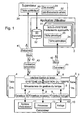
- the system shown in Figure 1 consists of software components and materials divided into three layers.
- the top layer contains the application real-time 2 performing the user-defined functions
- the layer intermediary includes a time management system 1 which offers the user application 2 the services it needs to manage time, these services are grouped together in a user interface 6 and using mechanisms 3 internal to the system 1.
- time management system is example described in the French patent application No. 01 03334 filed by the Applicant.
- All low-level hardware and software resources that is, the processor, are located in the lower layer which includes resources 12 including a processor 10, a system operating system 11 of the processor, for example consisting of a real-time kernel or a real-time executive, and a clock service 13 providing time absolute.
- resources 12 including a processor 10, a system operating system 11 of the processor, for example consisting of a real-time kernel or a real-time executive, and a clock service 13 providing time absolute.
- the operating system 11 provides low-level real-time services, and particular synchronization mechanisms and a distribution mechanism material resources between different treatments, commonly called scheduler.
- the time management service 1 is invoked by application processes or system for them to interact in the time in a fast and controlled way. It does not replace the kernel time real 11 but uses it to handle the allocation of processor 10 to the treatments software launched in parallel.
- the time management system 1 is preferably in a generic manner, that is, in a manner independent of low-level hardware and software resources, used by the application 2. For this purpose, it uses an interface 7 with the kernel real-time 11, grouping all the low-level services called by the system time management 1, in particular to carry out the user services grouped in the interface 6. It also uses an interface 8 with the This interface brings together all the services provided by the processing 12, called by time management system 1, and an interface 9 with the clock 13.
- All the treatments of the application 2, whose triggers must be managed executions and stops, are defined in a table 5 gathering their names or respective identifiers. Each treatment therefore has an identifier unique user defined statically in the processing table 5 which is shared by the different layers of the system architecture. Of this way each treatment can be recognized by both the system of time management 1 and by the application 2.
- the treatment table 5 allows the user to use a proper naming system instead of identifiers real-time kernel 11, which avoids confusion.
- this table is used to group processes or tasks into classes and subclasses according to their properties. For example, the class of users of the time management system.
- this invention aims to exploit such modeling by an automaton by providing a generic system supervisor 20 designed to run the automaton modeling the operation of the application, the description of the automaton being defined in a database 32 gathering tables of states and specific transitions of the application.
- Each subsystem 31 groups together treatments that can be classified into "applicative" processing and processing of acquisition of inputs or delivery of outputs, these processes being able to run in parallel or in series.
- Subsystem processing must match the functions characterizing the states of the automaton modeling the application. Functions performing similar calculations that are never performed in parallel can be grouped together in one treatment. Then just launch the processing by designating a mode of operation to select the desired function.
- the interactions in time of the subsystems 31 are performed by generating events 41 representative of the external or internal behavior of the real time system using the time management system 1. All events generated 41 (or only some of them referenced as system events) are then processed by the supervisor 20 who determines with the help of the description of the automaton in the database 32 if a transition to another state must be triggered depending on the state current 51 of the automaton and events 52 not yet treated that come to be generated.
- Observation events represent different transitions significant in the course of treatments. Although the events are defined by the user, the time management system 1 ensures the occurrence of these events and their recordings in readings observations. The role of these events is to trace behaviors dynamic processing, as well as activation requests.
- Some temporal events may characterize the overdue for treatments, others may be a timeout for a step in a treatment.
- the user is free to define as many events as he wishes and thus to have temporal monitoring points in his application.
- the occurrence of an event of this type leads to a record in the observation record of the treatment and may possibly lead to the notification of the event to a supervisor processing, if one exists.
- the user can define events in a manner independent of any temporal consideration. In Indeed, in a process, it may decide to ask the management system of the time 1 to lift such an event. In addition to recording the event in the record of observations of the processing author of the request, the event may be notified to a supervisory treatment so that it can achieve the proper operations.
- the monitoring of critical events is managed by the supervisor 20 from that they appear during the execution of the treatment. Such monitoring therefore requires a speed in taking into account such events.
- any event is represented by a unique identifier, defined by the user in the event table 4.
- the time management system 1 is designed to take into account two categories of treatments, namely periodic application processing 33 or aperiodic 34, and the aperiodic supervisory processing 50 which is performed by the supervisor 20 taking into account execution events and the trigger application processing 33, 34 to run the controller.
- Each treatment is associated with the moment it is triggered at one phase and if it is periodic at one time.
- the phase of a processing corresponds to the time separating a reference time and the request for activation of the processing by the time management system to the operating system. It makes it possible to distribute deterministically in time the requests for activations of each of the treatments with respect to this reference time.
- the period of execution of a periodic processing 33 is the time in a unit defined by the time management system, separating two iterations (two activation requests) from the processing.
- a deadline which corresponds to the maximum time allowed for a treatment for run from its request for activation by the system 1.
- supervisor processing 50 receives an override notification maturity.
- the temporal parameters entered during service calls of the time management system 1 must be expressed in a so-called unit "user" unit that is arbitrarily defined by example to the millisecond (ms).
- the absolute time or date information is expressed in the unit of the on-board clock and is therefore implementation dependent.
- the unit of time used by the system internally may be different from the user unit and may be close to the unit of time used by the external temporal physical source.
- the order of magnitude of this unit is the microsecond ( ⁇ s).
- treatments may have other characteristics complementary, but these are associated with either functionalities specific to the way in which the management system of the 1. This concerns, for example, information related to the monitoring of treatment progress.
- an application processing is characterized by one and only one of these states.
- the purpose of the time management system 1 is to produce, upon request of the application, the transitions between these different states. These transitions occur following the appearance of time events detected by the system or following the appearance of application events defined and introduced by the user.
- the periodic treatments must each be encapsulated in a loop infinite 21 in which the execution of each iteration is subject to an expectation in the idle state 23, trigger by the time management system 1 ( Figure 2).
- This processing structure is also preferable in the case of a aperiodic treatment, and in particular in the case of the supervisory treatment 50. It is also essential for the time management service 1 can monitor the timing of the treatment.
- the purpose of the "Initialize_service” function is to initialize the internal structures and the temporal control mechanisms of the system 1, that is to say, to define a number of operating characteristics of the system 1 and of describing the general context. execution of the system. These characteristics are dependent on the physical and software implementation of the target platform (microprocessor, operating system, etc.) and the application 2. Among these characteristics, there is generally the maximum number of treatments managed by the system, the units of time used, as well as the resolution and temporal accuracy. Other characteristics are more closely related to the implementation context, that is to say, relate to the type of microprocessor of the computer or the operating system for example.
- the "Stop_Service” function is used to terminate the activity of the system, to provided that all treatments entrusted to him are completed. The user is therefore responsible for stopping treatments whose management was assigned to system 1, before making the call to this function.
- the function "Accept_delete” performs support by the system of activation of periodic or aperiodic treatment.
- the call of this function causes the processing blocking at the origin of the request, which then goes into idle state 23 (FIG. 2), until system 1 performs the activation request concerning it to the real-time kernel.
- the system 1 supports the activation of the treatment and releases it his expectation in the corresponding time. This release comes with an event transmitted to the processing indicating its mode of execution: either it normally performs its periodic processing (transition to active state 24), or it leaves the loop and executes a termination sequence (transition to the state of termination 25) in the case where such a request has been made previously by another treatment.
- any periodic processing and the most aperiodic treatments use the function "Accept_ triggering "to wait for triggering.” In the absence of triggering signal, this function puts the process on hold, which Allows the processor to be assigned to another process. This point of Specific synchronization is used for all trigger types.
- the application processing 33, 34 retrieves a mode of operation parameter that it must exploit for change his execution schedule.
- An aperiodic task 34 is triggered following a request addressed to the time management service by the supervisor 20 or by any application task.
- a periodic task 33 is triggered initially on request to the time management service by the supervisor or by any application task. The following triggers are made automatically by time management service 1 at the rate of period. Automatic triggers are interrupted upon request addressed to the time management service by the supervisor or by any task application. After interruption, it is possible on request to trigger step by step or periodically the same treatment: indeed nothing distinguishes a priori a periodic task of an aperiodic task.
- At least one treatment of the application 2 must define the reference time used by the system to phase in time the requests for activation of the different treatments.
- the time management system 1 wakes up on its own when the trigger time is reached and updates its wake-up information. It then makes an activation request to the real-time executive for the processes concerned.
- the effective activation of the periodic processing that is to say the end of its wait on the call of the function "Accept_declenchement” and the continuation of its activity, are dependent on the scheduling policy applied by the executive real time. Accumulation of trigger requests is allowed as long as the implementation accepts it. If the accumulation threshold is crossed, an error is reported to the supervisor.
- the call of the function "Accept_delete” is inserted in the following model: beginning of treatment initialization operations infinite loop call function Accept_delete if the message coming from the system is Fin_Normale or Fin_Anormale so : get out of the loop if not periodic processing operations end if fine loop final operations (possibly depending on the termination message "End_normal” or "End_normal") end of treatment
- the "Trigger_Treatment” function allows the triggering of a treatment, and memorizes new activation parameters of the treatment. This function receives as input a processing identifier, phase values, period (for periodic processing) and expiry, as well as a parameter defining an operating mode of operation. The new activation parameters are then used continuously by the system to update the management of requests for activation of treatments. Any treatment may require system 1 to periodically or periodically trigger another process, using the "Trigger_process" function.
- phase information When the phase information is equal to a particular predefined value, for example -1, this means that the request for activation of the processing is immediate.
- phase information When the phase information is zero, it means that the activation of the processing must be performed with a zero phase with respect to the current reference time, that is to say at the reference time which is later than the current moment. If the period information is zero, it means that the activation of the treatment is aperiodic.
- the deadline information allows you to define the maximum time allocated to processing to execute from its activation request by the system.
- a Major event of overdue is reported to treatment supervisor if the processing does not reach completion within the specified time.
- a particular value for this parameter, for example null, means that there is no expiry date to be monitored for the considered treatment.
- the system Management 1 monitors the execution time of the processing. The moment corresponding to the end date is recalculated with each request activation of the processing concerned by the system 1 and constitutes a date of awakening of it. If the treatment has not reached the function again "Accept_delete" before the due date, system 1 wakes up himself at this point and engages the next treatment.
- the system transmits the event associated with this overrun global deadline with a supervisory treatment that has been waiting for receiving an event by calling the "Accept_Event" function described later in the description. If no treatment has made this call, then no message is transferred by the system 1. If such a treatment exists and that it is not processing a previous event, this new event is processed immediately by the supervisor processing, otherwise it is memorized in an event queue. This mechanism applied to a mistake of overdue has no bearing on the responsible treatment of his appearance.
- the "Mode" input parameter of this function makes it possible to transmit to the processing concerned a message for changing the operating mode: activation of a treatment according to a procedure, termination of the processing according to a mode of operation, ...
- the mode must be chosen from the symbols reserved for activation in the event table 4. The mode change is made the next time the relevant treatment is activated.
- Trigger authorization replaces the current activation parameters put in place during a previous authorization.
- a Trigger authorization replaces the current activation parameters put in place during a previous authorization.
- an authorization of delayed triggering replaces the current activation parameters set place during a previous delayed release authorization. This constraint is justified for reasons of simplicity of realization of the system of time management 1.
- Trigger_treatment_date allows triggering a treatment at an absolute date, and to memorize new parameters activation of the treatment.
- This function is analogous to the function “Trigger_treatment”, with the difference that it receives as input a date absolute instead of a phase value.
- the error codes returned by these two functions are the same, except those concerning the phase which are replaced in function “Trigger_treatment_date” by the error code "Non-compliant_date” in the case where the absolute date passed in parameter is not not conform to the constraints of the system.
- Trigger_Treatment or “Trigger_Treatment_” functions date "and" Accept_release "is performed as follows. an initialization sequence, the processing N uses the function "Accept_delete” to wait for activation by another treatment, in this case, supervisory treatment 50.
- the supervisor processing is executed and reaches the call of the function "Trigger_treatment" designating the processing N.
- the call of this function makes it possible to request the system 1 to memorize activation parameters (phase or date of activation). activation, period, mode, ...) for processing N, in the form of an activation event that is inserted into a queue. Calling this function returns a return code.
- the system 1 programs a counter with the difference between the activation date of the treatment N and the current date. When the counter expires, the system 1 sends an event signifying an activation mode or a termination mode as a return parameter of the "Accept_delay" function, which unblocks the processing N, the sequence executed by it. depending on this return code. If the return code is an activation mode, the processing N executes the sequence for which it was designed and then resumes on hold by calling the "Accept_delay" function again.
- the function "Differer_traitement” allows to put in sleep the execution of the which calls this function for a certain period of time spent in parameter. This function asks the time management system 1 to suspend the execution of the processing performing the request for the duration passed in parameter. Calling this function returns one of the error codes following information on the outcome of the operation: "Ok”, “Service_non_ active “and” Delay_non_conform "when the input parameter is not conform to the constraints of the system, in this case, that it exceeds temporal resource capabilities (clock 13).
- the function "Differer_traitement_date” makes it possible to put in sleep the execution of the processing which calls this function, until an absolute date, passed in parameter.
- This function is analogous to the function "Differer_traitement” except that it receives as input an absolute date instead of a duration.
- the processing that invokes the "Differer_treatment” function immediately sees its execution suspended.
- the system 1 takes into account the wake-up information of this processing and updates a list of alarm clocks.
- the real-time executive activates another treatment according to its scheduling policy. This action also leads to a record in the observation record of the treatment concerned.
- the time management system wakes up on its own when the moment of resume processing is reached, and updates its wake up information.
- the real-time executive is then requested by the system to resume the execution of the treatment concerned.
- the function "Freeze-treatment” allows a treatment to freeze, that is to say block the execution of another treatment.
- the call of this function means for the time management system 1 that it has to suspend activation requests specified in the parameter, until a next trigger is performed.
- a treatment may request the freezing of another treatment by calling the function "Freeze_treatment". This call makes it possible to signal the system 1 to inhibit any future triggering of the considered treatment.
- the system 1 updates its trigger information and hands over the processing that made the request.
- the system 1 carries out the equivalent of the "Report_events” function (see below) to warn the supervisor treatment of the effective gel of the treatment.
- the system 1 immediately performs this action before returning the hand to the processing making the request.
- Trigger_treatment the function "Trigger_treatment”.
- the supervisor 20 can thus perform a dynamic change of the mode of operation, synchronized in all the treatments, by calling the function "Freeze-treatment” to stop the activations of the treatments whose operating mode of operation must be changed, then by calling for each of these treatments , the "Trigger_Treatment" function associated with the temporal parameters of the new operating mode of operation and the mode parameter indicating to the processes in which operating mode they must operate.
- the "Trigger_Treatment" function associated with the temporal parameters of the new operating mode of operation and the mode parameter indicating to the processes in which operating mode they must operate.
- the "Finish_Treatment" function is used to indicate to the system 1 that it must terminate execution of a process whose identifier is passed as a parameter. For this purpose, it sends a termination message to the processing concerned. This function also receives as an input parameter a mode identifier which must be chosen from event IDs reserved for the termination.
- a process such as supervisor processing 50 may cause the system to terminate execution of another process by calling the "Finish_Treatment" function.
- the system 1 inhibits any future triggering of the concerned processing and sends the stop message provided as a parameter to this processing, which the latter will interpret as soon as it has performed again. call the "Accept_Event” function. If ever, this processing was already pending in the function "Accept_release" at the time of the request for termination, it is immediately authorized to perform its final part 25, as soon as the real-time executive has activated it according to the policy of scheduling.
- Designer_supervisor_ major allows the treatment that calls it declare themselves responsible for the management of major events. The call of this function is carried out by the supervisor processing 50 during its launch.
- the "Accept_Event” function also receives as a parameter a "delay before next waiting” which allows to define the delay maximum separating the delivery of an event by system 1 and the next This function is called by the supervisor 20.
- the aim is to enable detect an anomaly at the level of the supervisor, insofar as the supervisor would take too long to process a previous event.
- a null value for this parameter does not impose any checks on the time between next event waiting.
- the special value of -1 set by default for this parameter to mean that the delay remains unchanged compared to its current value.
- the system then executes a critical sequence of resetting, by calling a reserved subroutine "Edit_fatal_error" whose content is defined outside the system.
- the supervisor processing 50 it is therefore possible to signify to the system 1 a deadline for the processing of the events.
- This monitoring is enabled by providing System 1 with the value of this deadline when calling the "Accept_Event" function.
- the system 1 updates its wake-up list by calculating the date corresponding to the processing deadline of the event, and instructs the operating system 11 to activate the supervisor processing 50, providing the event thereto. If the supervisor process reaches the "Accept_Event" function again to wait for the next event, before the system has been woken up for the due date, this alarm is disabled.
- the "Report_Event” and "Report_Event_Date” functions allow a process to schedule, through the time management system 1, the occurrence of an exceptional event.
- An absolute delay or date, passed as an argument, makes it possible to specify the time at which the event will be signaled by the system 1.
- a characteristic value established by default for this parameter indicates that the signaling of the event must be immediate.
- the nature of the events is not necessarily related to time and can affect several treatments. The occurrence of such an event results in the constitution of an observation record and a signal to the supervisory treatment managing the event.
- any new deferred signaling replaces the previous one.
- the supervisor processing 50 has been waiting for an event in calling the function "Accept_events".
- the system activates the processing supervisor 50.
- the supervisor processing executes the corresponding action of end of processing of action i or i + 2 and calls again the function "Accept_events" for put on hold of a new event.
- supervisory processing is waiting event, then it is processed immediately by this one. Conversely, if this processing is processing a previous event, this new event is stored in the event queue associated with the processing supervisor.
- the "Delete_Event” function allows you to delete the last request deferred by any treatment to notify an evolution or report a major event.
- the choice between a signaling request or a notification request is made using a class call parameter event.
- any new deferred signaling replaces the previous one.
- Notify_evolution makes it possible to check the respect of a deadline intermediate in a treatment. This is achieved by specifying in a parameter, the maximum delay until the next notification.
- a sequence of instructions can thus be monitored by a call to this function at the beginning and at the end of this sequence.
- This function enters a date in the system wake-up list 1. If the concerned process invokes the "Notifier evolution" function before the system wakes up, the instant of this alarm is deactivated.
- a null value for this delay inhibits any expiration check intermediate. Event notification leads initially to the recording of it in an observation record. The date of the apparition of the event is not transmitted to the supervisor processing 50.
- the passage of the same processing by a new notification before the expiry of this period its count or replace it with a new value, depending on whether the new notification has a maximum null time or significant value.
- time management system 1 proposes, thanks to its interface 6, functions to control the execution of periodic or aperiodic and time monitoring tools and event management.
- these functions must be used within certain constraints that are introduced by the system architecture and the rate of resource use, of the latter.
- the trigger condition of a transition is a combination logical events 41, each of these events being attached to a subsystem 31 who is responsible for generating it.
- Treatment existing if possible, is sought in this subsystem to produce this event: the generation of an event can be conditioned by the choice of a mode operative 42 treatment treatment so that it is possible for any moment to inhibit it by acting through the time management service. Otherwise you have to create a treatment dedicated to the production of the event.
- a treatment periodical 33 or aperiodic 34 runs, it relies on its acquisitions or on calculation results to decide if the event has happened. Assuming that sensor uses an electronic signal in the presence of a physical event it is still necessary to associate a software treatment that is in charge of produce a logical event.
- the treatment provides detection calls the function "Report_events” provided by the interface 6 of the time management service and then continues its execution. if on the other hand, it is an event prediction sufficiently realistic to be credible or that it is necessary to anticipate its arrival, the treatment Calls the "Report_Event_Date" function of the Time Management Service, which is equivalent to deferring the reporting of the event to the date indicated.
- time management service 1 Some anomalies are detected automatically by the time management service 1. These are the anomalies in the processing time. These anomalies need to frame the operations concerned by calls to the functions "Notifier_evolution" provided by the interface 6 of the time management service.
- the time management service 1 stores all the events addressed to it and delivers them according to their priority to a consumer treatment. Only can read the processing 50 which has declared as supervisor by call to the service function "Designer_superviseur_majeur".
- the processing 50 of the supervisor 20 is an aperiodic task and is presented under the shape of a processing loop as described above with reference to the figure 2.
- This loop starts with a call to the function "Accept_events" provided by the interface 6 of the time management service. Without event, this function puts the supervisor on hold which allows assigning the processor 12 to another process. If a non-deferred event is received by the service, the supervisor 20 immediately resumes of his high priority and recovers the event to treat it.
- the supervisor 20 accesses the database 32 to a table 37 (FIG. 3) representing all the transitions of the system state diagram.
- the database 32 comprises two tables defining the automaton of the application 2, namely the state and transition table 37 and the description table of the transitions 38.
- the table of states and of transitions 37 comprises for each transition of the automaton a transition identifier, an identifier of the starting state and an identifier of the arrival state.
- the transitions description table 38 comprises for each transition identifier referenced in the table 37 a list of events to be included in the list of pending current events 52 to execute the transition, possibly a list of conditions relating to the events of the transition.
- the associated list or state variables of the real-time system to be performed to execute the transition, a list of actions to be executed to effect the transition to the arrival state, and a temporal profile of the actions.
- the time profile defines whether the triggers are parallel or sequential, and if they are done with phase shifts. It also indicates the periods of periodic treatments. For fashion changes, it gives the new phase shift and possibly the new period. Finally, it is possible to fix deadlines for periodic or aperiodic treatments.
- the supervisor keeps in memory the current state 51 of the PLC.
- the supervisor goes through the transitions possible, that is, associated with the current state 51. From table 38 describing the transitions, he looks for the presence of the event in the possible transitions found. If the event is not associated with any transition found, the event is lost and the supervisor is waiting for a new event. Otherwise, for each transition found, associated with the event, it determines whether all the conditions associated with the transition are met. If the event is found in a transition and if all conditions of the transition are satisfied, the supervisor clears the list of 52 events to be dealt with and proceeds with the implementation of the transition by day the current state of the automaton using table 37, performing the actions corresponding to the transition, specified in Table 38.
- the event is associated with other events that have not arrived, it is kept in memory in the list of events arrived 52 to be analyzed when another event is transmitted to the supervisor by the time management system.
- the supervisor is expected to wait for completion events indicating that processing is complete before triggering the next process. If events other than end of processing events occur during the execution of the actions of a transition, they are stored by the supervisor in a list of events not taken into account. At the processing of the last event of completion of the transition, this list of events not taken into account is traveled to successively process all the events in the order of their arrival during the execution of the transition.
- the supervisor 20 initializes all the treatments of the system and ensures their full control through the actions available to him. In the presence of events particular, it may decide to leave the initiative to operators provided that that they respect procedures.
- the supervisor is informed of any anomaly that requires actions at the system level; such an anomaly is detected by processing a subsystem and then reported to the supervisor as a specific event.
- the controller specified in the database 32 preferably includes anomaly transitions associated with diagnostic and corrective actions for handling prohibited events or reporting abnormality.
- the service of time management maintains in a table a history not only of system events, but also recent events relating to real-time behavior of the tasks and the service itself.
- a failure of the supervisor thus paralyzes the entire system; to can nonetheless, to attempt a reconfiguration, the time management service 1 is able to monitor the overdue by processing the supervisor. This deadline is set during the call by the supervisor at the function of the time management service "Accept_events". If the overrun is detected, the time management service that invokes a emergency software procedure "Treat_fatal_error" that we program freely.
- the present invention is based on the observation that the scheduled events are generated differently because they are programmed or deprogrammed at any time to be performed in the future.
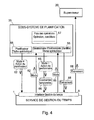
- the present invention further provides, as shown in FIG. 4, a planning subsystem 35.
- the scheduling subsystem 35 includes scheduled event management processing 56 and scheduling processing 55.
- the planning subsystem 35 is responsible for managing and scheduling operative requests, ie requests issued by an operator or by the system environment controlled by the real-time application. More precisely, it defines the operation to be carried out and its conditions of implementation. The conditions for implementing an operation implicitly explicitly the events that activate the operation and possibly who end.
- the planning subsystem 35 includes a planner 55 of Operations and a Scheduled Event Manager 56.
- the planner who to classify operations in chronological order, is a task aperiodic triggered based on requests that reach the system.
- the planner creates or updates a plan operation 57 associating each operation triggers conditions.
- the scheduled event manager 56 is a generic aperiodic process whose role is to initiate and control the execution of operations. As long as there is no scheduled operation, the scheduled event manager 56 is on hold like any other task of a trigger signal issued by the time management service 1. Any new operation assumes a triggering of the planner 55. At the end of its execution, the scheduler triggers the scheduled event manager.
- scheduler 55 calls the "Trigger_Treatment” function of the time management service by designating the scheduled event handler and choosing a particular mode 62 indicating that the trigger has been performed by the scheduler.
- the scheduled event manager 56 recognizes in the received mode 62 that it is an action of the planner 55. It then analyzes the planning information of the operation and in particular the nature of the planned event, for deduce a prediction of the arrival time of the event.
- the scheduled event handler schedules its next trigger on the calculated date. For this, it calls the function "Trigger_treatment_date" of the time management service by designating itself as recipient and in a mode 65 distinct from the previous 62, specifying that it has itself triggered.
- the time management service wakes up the scheduled event manager 56 which recognizes in the received mode 65 that it has triggered itself and therefore that it is the moment at which the operation must be started, or from the instant from which the system is allowed to detect the arrival of one or more events required to trigger the operation.
- the Scheduled Event Manager calls the Time Management Service for ask him to send to supervisor 20 a system event 68 representative of the fulfillment of the planned conditions for triggering the operation.
- This system event 68 received by the supervisor 20 must be provided in the state and transition diagram, specified in the 32, and the operation to be executed must correspond to the actions of the transition.
- the subsystems In the case where the operation is to be launched upon the arrival of one or more specific events required, these events being able to be generated by several subsystems, the subsystems authorize the generation of events until the triggering of the execution of the operation.
- the method consists of delegating this request to supervisor 20 in the form of an authorization event 68.
- This event authorization 68 received by the supervisor must be provided in the diagram of states and transitions, specified in Database 32. Transition corresponding does not change the current state 51 of the system, but changes simply the procedures of the treatments so that they are authorized to produce the expected events.
- the operation will be triggered when all events expected will be forwarded to the supervisor by the time management service according to the actions in the state and transition diagram, specified in the database 32.
- Scheduled event handler can wait for a signal supervisor's acknowledgment that the execution of the current transaction is complete, before taking into account a new operation. In that case, the event manager can monitor the duration of the execution of the processing of the operation by scheduling a deadline using the function "Notify_evolution" at the beginning of the loop 21.
- a dynamic planner must be able to change the next scheduled event without a committed operation. It is sufficient for the first time to cancel the time event that the scheduled event handler has programmed. For this, the scheduler 55 invokes the "Freeze” function of the time management service by designating the processing of the scheduled event manager 56. This has the effect of destroying the event in the time management service. Next, the scheduler calls the "Trigger_Treatment” function of the time management service by designating the scheduled event handler and selecting the particular mode 65 identifying a new operation.
Landscapes
- Engineering & Computer Science (AREA)
- Software Systems (AREA)
- Theoretical Computer Science (AREA)
- Physics & Mathematics (AREA)
- General Engineering & Computer Science (AREA)
- General Physics & Mathematics (AREA)
- Debugging And Monitoring (AREA)
Abstract
Description
La partie matérielle de l'architecture du système est constituée de processeurs, d'équipements électroniques, et de liens de communication entre processeurs et entre les processeurs et les équipements. Les logiciels "applicatifs" et de contrôle du matériel s'exécutent sur cette architecture. Les différents composants de l'architecture sont mis à contribution pour générer les événements, et ce à des degrés divers qui dépendent de la complexité des événements. La partie logicielle des systèmes temps réel complexes est souvent décomposée en sous-systèmes qui contrôlent chacun plusieurs processus physiques de même nature.
D'une manière semblable, des actionneurs modifient les paramètres physiques des équipements internes au système. Les commandes d'un actionneur ou les messages de communication sont acheminés et mis en forme par un logiciel de contrôle d'équipement ou de transmission.
En outre, il est nécessaire que dans chaque état du système temps réel, une liste complète indique les événements interdits, ceux qui sont autorisés mais sans effet, ceux qui provoquent des actions à l'intérieur de l'état, et enfin ceux qui conduisent à un changement d'état. En outre, l'arrivée d'un événement n'est souvent possible que sur une période de temps restreinte. Il est donc également nécessaire de limiter la détection de l'événement à cette période pour éviter les surcharges d'utilisation des ressources.
Le système de gestion du temps décrit dans la demande de brevet français n°01 03334, ne permet de prendre en compte ces contraintes d'une manière globale et générique. Au contraire, ces contraintes sont traitées au cas par cas, à chaque réalisation d'un système temps réel. Il en résulte que la conception et la réalisation d'un tel système reste complexe même en utilisant le système de gestion du temps.
Cet objectif est atteint par la prévision d'un procédé de gestion et de traitement d'événements apparaissant dans un système temps réel dans lequel des traitements applicatifs sont exécutés et communiquent entre eux à l'aide de commandes transmises à un système de gestion du temps, chaque traitement applicatif comprenant au moins un appel à une commande de mise en attente d'activation, qui place le traitement dans un état d'attente d'une commande d'activation transmise par le système de gestion du temps, les commandes transmises par les traitements applicatifs au système de gestion du temps comprenant des commandes de génération d'événement, le système de gestion du temps effectuant pour chaque commande de génération d'événement les étapes consistant à :
- insérer l'événement en association avec sa date de traitement dans une liste d'événements à traiter, et
- déterminer dans la liste d'événements le prochain événement à traiter en fonction des dates d'échéance respectives des événements de la liste, et commander un compteur pour qu'il se déclenche à la date d'échéance du prochain événement à traiter.
- au déclenchement du compteur, le système de gestion du temps active un traitement superviseur en lui transmettant l'événement à traiter, le traitement superviseur ayant accès à un diagramme d'états et de transitions modélisant le fonctionnement du système temps réel, et
- le traitement superviseur recherche dans le diagramme d'états et de transitions les transitions possibles à partir d'un état courant du système temps réel, et pour chaque transition possible, il détermine si des conditions d'exécution de la transition spécifiées dans le diagramme d'états et de transitions sont satisfaites du fait de la présence de l'événement à traiter, et si les conditions d'exécution de la transition sont satisfaites, il met à jour l'état courant du système temps réel et exécute des actions correspondant à la transition, spécifiées dans le diagramme d'états et de transitions, ces actions portant sur la gestion du déroulement de l'exécution des traitements applicatifs.
- une phase de planification d'une opération à moyen ou long terme, au cours de laquelle un traitement de planification insère une opération dans un plan d'opérations et déclenche un traitement de gestion d'événements planifiés par un appel au système de gestion du temps, associé à un mode d'exécution indiquant que le traitement de gestion d'événements planifiés est déclenché par le traitement de planification,
- une phase de programmation de l'exécution d'une prochaine opération spécifiée dans le plan d'opérations, au cours de laquelle le système de gestion du temps déclenche le traitement de gestion d'événements planifiés qui détecte par le mode d'exécution qu'il a été activé par le traitement de planification, analyse des informations relatives à la prochaine opération à exécuter pour déterminer l'instant d'activation de la prochaine opération, et commande par un appel au système de gestion du temps une nouvelle exécution du traitement de gestion d'événements planifiés à l'instant d'activation de l'opération, associée à un mode d'exécution indiquant que le traitement de gestion d'événements planifiés a été déclenché par lui-même,
- une phase de déclenchement de l'exécution d'une opération, au cours de laquelle le système de gestion du temps déclenche le traitement de gestion d'événements planifiés qui détecte par le mode d'exécution qu'il a été activé par lui-même, et commande au système de gestion du temps de générer un événement de déclenchement de l'opération à destination du traitement superviseur, et
- une phase d'exécution de l'opération, au cours de laquelle le traitement superviseur reçoit l'événement de déclenchement de l'opération et exécute l'opération conformément à une transition prévue dans le diagramme d'états et de transitions.
Néanmoins, l'ensemble de ces événements définis par l'utilisateur, sont associés aux traitements.
L'apparition d'un événement de ce type conduit à un enregistrement dans le relevé d'observations du traitement et peut éventuellement conduire à la notification de l'événement auprès d'un traitement superviseur, s'il en existe un.
- les événements locaux utilisés pour notifier le franchissement d'étapes à l'intérieur d'un sous-système 31,
- les événements globaux non critiques utilisés pour notifier le franchissement d'étapes significatives pour l'exécution de l'automate, et transmis au superviseur 20, et
- les événements critiques appelés événements majeurs qui regroupent les événements définis et signalés comme tels par l'utilisateur, et les événements liés aux erreurs temporelles détectées par le système 1.
La phase d'un traitement correspond au temps séparant un instant de référence et la demande d'activation du traitement par le système de gestion du temps au système d'exploitation. Elle permet de répartir de façon déterministe dans le temps les demandes d'activations de chacun des traitements par rapport à ce temps de référence.
La période d'exécution d'un traitement périodique 33 est le temps dans une unité définie par le système de gestion du temps, séparant deux itérations (deux demandes d'activation) du traitement.
L'unité de temps utilisée par le système en interne peut être différente de l'unité utilisateur et demeure proche de l'unité de temps employée par la source physique temporelle externe. L'ordre de grandeur de cette unité est la microseconde (µs).
- initialisation 22,
- inactif 23,
- actif 24, et
- terminaison 25.
Ces transitions surviennent suite à l'apparition d'événements temporels détectés par le système ou suite à l'apparition d'événements applicatifs définis et introduits par l'utilisateur.
- des fonctions de contrôle du système de gestion du temps 1,
- des fonctions de gestion des traitements périodiques et apériodiques, et
- des fonctions de suivi temporel des traitements et de gestion des erreurs éventuelles.
- "Initialiser_service", et
- "Arreter_service".
Ces caractéristiques sont tributaires de l'implémentation physique et logicielle de la plate-forme cible (microprocesseur, système d'exploitation, ...) et de l'application 2. Parmi ces caractéristiques, on retrouve de façon générale le nombre maximal de traitements gérés par le système, les unités de temps employées, ainsi que la résolution et la précision temporelle. D'autres caractéristiques sont liées de façon plus précise au contexte d'implémentation, c'est-à-dire, relèvent du type de microprocesseur du calculateur ou du système d'exploitation par exemple.
- "Accepter_declenchement",
- "Declencher_traitement",
- "Declencher_traitement_date",
- "Differer_traitement",
- "Differer_traitement_date",
- "Geler_traitement", et
- "Terminer_traitement",
Une fois que le traitement concerné est activé par l'ordonnanceur de l'exécutif, celui-ci sort de l'appel "Accepter_declenchement" (passage de l'état inactif 23 à l'état actif 24 ou de terminaison 25), et s'exécute (état 24) avant de revenir en position d'attente (état 23) en appelant à nouveau la fonction "Accepter_declenchement", ou bien se termine en exécutant ses instructions de terminaison à l'état 25.
Dans le cas d'une activation périodique, un nouveau déclenchement est programmé par le système 1 pour se produire au début de la prochaine période.
Les identificateurs d'événements utilisés par cette fonction sont par exemple :
- "Fin_normale" lorsqu'une demande d'arrêt a été effectuée par un autre traitement auprès du système 1,
- "Fin_anormale" lorsqu'une demande d'arrêt sur anomalie a été effectuée par un autre traitement auprès du système 1 ; le traitement doit alors se terminer par une séquence spécifique,
- "Normal" lorsqu'une demande d'activation a été effectuée par un autre traitement pour passer dans un mode appelé "Normal", et
- "Reconfiguration" lorsqu'une demande d'activation a été effectuée par un autre traitement pour passer dans un mode de reconfiguration.
debut du traitement
opérations d'initialisation
boucle infinie
appel fonction Accepter_declenchement
si le message provenant du système est Fin_Normale ou Fin_Anormale
alors :
sortir de la boucle
sinon
opérations du traitement périodique
fin si
fin boucle
opérations finales (éventuellement en fonction du message de terminaison
"Fin_normale" ou "Fin_anormale")
fin de traitement
Tout traitement peut demander au système 1 de déclencher périodiquement ou apériodiquement un autre traitement, en utilisant la fonction "Declencher_ traitement" .
Si l'information de période est nulle, cela signifie que l'activation du traitement est apériodique.
Le changement de mode est effectué à la prochaine activation du traitement concerné.
Lorsque le compteur arrive à échéance, le système 1 envoie un événement signifiant un mode d'activation ou un mode de terminaison en tant que paramètre de retour de la fonction "Accepter_declenchement", ce qui débloque le traitement N, la séquence exécutée par celui-ci dépendant de ce code de retour. Si le code de retour est un mode d'activation, le traitement N exécute la séquence pour laquelle il a été conçu, puis se remet en attente en appelant à nouveau la fonction "Accepter_declenchement".
Le traitement qui invoque la fonction "Differer_traitement" voit aussitôt son exécution suspendue. Le système 1 prend en compte les informations de réveil de ce traitement et met à jour une liste de réveils. L'exécutif temps réel active un autre traitement selon sa politique d'ordonnancement. Cette action conduit également à un enregistrement dans le relevé d'observation du traitement concerné.
- si un traitement programme un déclenchement de traitement complémentaire (voir plus loin dans la présente description), l'appel consécutif à une fonction de mise en sommeil d'un traitement annule le déclenchement correspondant ;
- si un traitement programme une notification immédiate avec délai maximum jusqu'à la prochaine notification, l'appel consécutif à une fonction de mise en sommeil d'un traitement empêche la détection d'un dépassement éventuel de ce délai.
Dès que le traitement considéré invoque la fonction "Accepter_declenchement" pour attendre sa prochaine activation, le système 1 réalise l'équivalent de la fonction "Signaler_evenement" (voir ci-après) pour avertir le traitement superviseur du gel effectif du traitement. Dans le cas où ce traitement était déjà en attente sur "Accepter_declenchement" au moment de la demande de gel, le système 1 effectue immédiatement cette action avant de rendre la main au traitement effectuant la requête.
Pour reprendre un processus de déclenchement après un gel, il suffit qu'un traitement appelle la fonction "Declencher_traitement".
Cet appel peut être utilisé pour les traitements apériodiques pour connaítre la fin de l'exécution de la partie principale du traitement.
Un tel procédé permet au superviseur de se synchroniser sur la fin d'exécution d'un ensemble de traitements, que leurs activations soient liées ou indépendantes. Le superviseur 20 peut ainsi effectuer un changement dynamique de mode opératoire, synchronisé dans tous les traitements, en appelant la fonction "Geler_traitement" pour arrêter les activations des traitements dont le mode opératoire de fonctionnement doit être changé, puis en appelant pour chacun de ces traitements, la fonction "Declencher_traitement" associée aux paramètres temporels du nouveau mode opératoire de fonctionnement et au paramètre de mode indiquant aux traitements dans quel mode opératoire ils doivent fonctionner.
De cette manière, un changement dynamique de mode opératoire peut être effectué d'une façon simple et synchronisée sans faire intervenir de test d'une variable partagée spécifiant le mode opératoire de fonctionnement.
Avant de rendre la main au traitement auteur de la requête, le système 1 inhibe tout déclenchement futur du traitement concerné et envoie le message d'arrêt fourni en paramètre à ce traitement, que ce dernier interprétera dès qu'il aura effectué à nouveau l'appel de la fonction "Accepter_evenement". Si jamais, ce traitement était déjà en attente dans la fonction "Accepter_declenchement" au moment de la demande de terminaison, il est immédiatement autorisé à effectuer sa partie finale 25, dès que l'exécutif temps réel l'aura activé selon la politique d'ordonnancement.
- l'observation du déroulement d'un traitement par accumulation d'enregistrements décrivant les différentes phases de son exécution et les dates correspondantes ;
- la détection d'événements temporels (dépassement d'échéance pour un traitement ou pour une partie d'un traitement) et transmission implicite ou explicite de ces événements au superviseur si elle existe ; et
- la notification purement explicite d'événements applicatifs (définis par le programmeur) auprès du superviseur pour déclencher l'action correspondant à la nature de ces événements.
- "Designer_superviseur_majeur",
- "Accepter_evenement",
- "Signaler_evenement",
- "Signaler_evenement_date",
- "Supprimer_evenement", et
- "Notifier_evolution".
Cette fonction reçoit en entrée un paramètre identifiant un mode, permettant de définir les caractéristiques de l'appel :
- mode bloquant : l'appel de cette fonction est bloquant jusqu'à ce qu'au moins un événement majeur soit présent dans la liste des événements survenus ; l'événement est alors supprimé de la liste des événements majeur et retourné par la fonction ;
- mode non-bloquant : l'appel de cette fonction est non bloquant, c'est-à-dire que si au moins un événement est survenu, celui-ci est supprimé de la liste des événements majeur et retourné par la fonction ; sinon un code d'erreur "Vide" est retourné par la fonction.
Ce traitement exceptionnel est également appelé si le seuil des cumuls des événements à destination du superviseur est franchi.
L'apparition d'un tel événement entraíne la constitution d'un relevé d'observation et une signalisation auprès du traitement superviseur assurant la gestion de l'événement.
Cette fonction introduit une date dans la liste des réveils du système 1. Si le traitement concerné invoque la fonction "Notifier evolution" avant le réveil du système associé à l'échéance, alors l'instant de ce réveil est désactivé.
- les événements systématiques qui apparaissent dans le cadre du fonctionnement prévu du système ;
- les événements planifiés (à moyen ou long terme) qui sont générés si un opérateur les décide ;
- les événements fortuits qui ne sont pas attendus dans le cadre d'un fonctionnement pré-établi ou planifié.
Le service de gestion du temps 1 mémorise tous les événements qui lui sont adressés et les délivre selon leur priorité à un traitement consommateur. Seul peut les lire le traitement 50 qui s'est déclaré comme superviseur par appel à la fonction du service "Designer_superviseur_majeur".
Sur la figure 3, la base de données 32 comprend deux tables définissant l'automate de l'application 2, à savoir la table d'états et de transitions 37 et la table de description des transitions 38. La table d'états et de transitions 37 comprend pour chaque transition de l'automate un identifiant de transition, un identifiant de l'état de départ et un identifiant de l'état d'arrivée. La table 38 de description des transitions comprend pour chaque identifiant de transition référencé dans la table 37 une liste d'événements devant figurer dans la liste des événements 52 en cours non traités pour exécuter la transition, éventuellement une liste de conditions portant sur les événements de la liste associée ou des variables d'état du système temps réel, devant être réalisées pour exécuter la transition, une liste d'actions à exécuter pour effectuer la transition vers l'état d'arrivée, et un profil temporel des actions.
- "Declencher_traitement" ou "Declencher_traitement_date" pour déclencher ou changer de mode ;
- "Geler_traitement" et "Terminer_traitement" pour respectivement interrompre un déclenchement et terminer un traitement.
Si des événements autres que des événements de fin de traitement arrivent pendant l'exécution des actions d'une transition, ils sont mémorisés par le superviseur dans une liste d'événements non pris en compte. Au traitement du dernier événement de fin de traitement de la transition, cette liste d'événements non pris en compte est parcourue pour traiter successivement tous les événements dans l'ordre de leur arrivée pendant l'exécution de la transition.
Si un profil temporel prévoit des déclenchements séquentiels, les traitements concernés doivent générer s'ils sont dans le mode opératoire réservé à cet effet des événements identifiant la fin de la boucle 21. Un tel événement est envoyé au superviseur 20 en appelant la fonction du service de gestion du temps " Signaler_événement".
L'automate spécifié dans la base de données 32 comporte de préférence des transitions d'anomalie associées à des actions de diagnostic et correctives pour traiter des événements interdits ou de signalement d' anomalie.
Pour gérer les événements planifiés, la présente invention prévoit en outre comme représenté sur la figure 4 un sous-système de planification 35.
Sur cette figure, le sous-système de planification 35 comprend un traitement de gestion des événements planifiés 56 et un traitement de planification 55.
Tant qu'il n'existe pas d'opération planifiée, le gestionnaire d'événements planifiés 56 est en attente comme toute autre tâche d'un signal de déclenchement émis par le service de gestion du temps 1. Toute nouvelle opération suppose un déclenchement du planificateur 55. A la fin de son exécution, le planificateur provoque le déclenchement du gestionnaire d'événements planifiés.
A la fin de cette occurrence d'exécution, le gestionnaire d'événements planifiés programme son prochain déclenchement à la date calculée. Pour cela, il appelle la fonction "Declencher_traitement_date" du service de gestion du temps en se désignant lui-même comme destinataire et dans un mode 65 distinct du précédent 62, spécifiant qu'il s'est lui-même déclenché.
A l'instant désiré, le service de gestion du temps réveille le gestionnaire d'événements planifiés 56 qui reconnaít dans le mode reçu 65 qu'il s'est lui-même déclenché et donc qu'il s'agit de l'instant auquel l'opération doit être lancée, ou de l'instant à partir duquel le système est autorisé à détecter l'arrivée d'un ou plusieurs événements requis pour déclencher l'opération.
Ensuite, le planificateur appelle la fonction "Declencher_traitement" du service de gestion du temps en désignant le gestionnaire d'événements planifiés et en choisissant le mode particulier 65 identifiant une nouvelle opération.
Claims (14)
- Procédé de gestion et de traitement d'événements apparaissant dans un système temps réel dans lequel des traitements applicatifs (31) sont exécutés et communiquent entre eux à l'aide de commandes transmises à un système de gestion du temps (1), chaque traitement applicatif comprenant au moins un appel à une commande de mise en attente d'activation, qui place le traitement dans un état d'attente d'une commande d'activation transmise par le système de gestion du temps, les commandes transmises par les traitements applicatifs au système de gestion du temps comprenant des commandes de génération d'événement, le système de gestion du temps effectuant pour chaque commande de génération d'événement les étapes consistant à :caractérisé en ce que :insérer l'événement en association avec sa date de traitement dans une liste d'événements à traiter, etdéterminer dans la liste d'événements le prochain événement à traiter en fonction des dates d'échéance respectives des événements de la liste, et commander un compteur pour qu'il se déclenche à la date d'échéance du prochain événement à traiter,au déclenchement du compteur, le système de gestion du temps (1) active un traitement superviseur (50) en lui transmettant l'événement à traiter, le traitement superviseur ayant accès à un diagramme d'états et de transitions (32) modélisant le fonctionnement du système temps réel, etle traitement superviseur recherche dans le diagramme d'états et de transitions les transitions possibles à partir d'un état courant (51) du système temps réel, et pour chaque transition possible, il détermine si des conditions d'exécution de la transition spécifiées dans le diagramme d'états et de transitions sont satisfaites du fait de la présence de l'événement à traiter, et si les conditions d'exécution de la transition sont satisfaites, il met à jour l'état courant du système temps réel et exécute des actions correspondant à la transition, spécifiées dans le diagramme d'états et de transitions, ces actions portant sur la gestion du déroulement de l'exécution des traitements applicatifs (31 ).
- Procédé selon la revendication 1,
caractérisé en ce que si parmi les transitions trouvées, l'événement à traiter est associé à d'autres événements à traiter qui ne sont pas encore arrivés, le traitement superviseur (50) mémorise l'événement à traiter dans une liste d'événements à traiter (52). - Procédé selon la revendication 1 ou 2,
caractérisé en ce que si dans toutes les transitions trouvées, l'événement à traiter n'est pas associé à d'autres événements à traiter qui ne sont pas encore arrivés, et qu'aucune condition d'exécution de transition n'est satisfaite, l'événement à traiter est perdu et le traitement superviseur (50) se remet en attente d'un nouvel événement. - Procédé selon l'une des revendications 1 à 3,
caractérisé en ce que le traitement superviseur (50) est une tâche apériodique qui se présente sous la forme d'une boucle de traitement (21) comportant un appel à une fonction d'attente d'événement à traiter du système de gestion du temps (1), le traitement superviseur appelant la fonction d'attente d'événement à traiter à la fin de l'exécution d'une transition ou si aucune transition ne peut être exécutée. - Procédé selon l'une des revendications 1 à 4,
caractérisé en ce que les actions exécutées par le traitement superviseur (50) lors de l'exécution d'une transition sont des actions de déclenchement, d'interruption, de terminaison et/ou de changement de mode opératoire (42) de traitements périodiques (33) ou apériodiques (34). - Procédé selon la revendication 5,
caractérisé en ce que les actions des transitions spécifiées dans le diagramme d'états et de transitions (32) sont associées à des contraintes temporelles définissant si les traitements déclenchés par ces actions doivent être exécutés en parallèles ou séquentiellement, et pour chaque traitement à déclencher, une durée de déphasage de déclenchement, une durée maximum d'exécution, et une période d'activation dans le cas de traitements périodiques. - Procédé selon la revendication 6,
caractérisé en ce que dans le cas où des actions d'une transition doivent être exécutées séquentiellement, chaque action commande au système de gestion du temps (1) de générer un événement de fin de traitement à la fin de son exécution au moins partielle, le traitement superviseur (50) se mettant en attente de cet événement avant d'exécuter l'action suivante. - Procédé selon la revendication 6 ou 7,
caractérisé en ce que le déclenchement d'un traitement (33, 34) par le traitement superviseur (50) est effectué par un appel d'un service du système de gestion du temps (1) spécifiant le traitement à déclencher, un mode opératoire, une durée de déphasage de déclenchement, une durée maximale d'exécution, et une période d'activation dans le cas d'un traitement périodique. - Procédé selon l'une des revendications 1 à 8,
caractérisé en ce qu'il comprend en outre :une phase de planification d'une opération à moyen ou long terme, au cours de laquelle un traitement de planification (55) insère une opération dans un plan d'opérations (57) et déclenche un traitement de gestion d'événements planifiés (56) par un appel au système de gestion du temps (1), associé à un mode d'exécution (62) indiquant que le traitement de gestion d'événements planifiés est déclenché par le traitement de planification,une phase de programmation de l'exécution d'une prochaine opération spécifiée dans le plan d'opérations (57), au cours de laquelle le système de gestion du temps déclenche le traitement de gestion d'événements planifiés qui détecte par le mode d'exécution (62) qu'il a été activé par le traitement de planification, analyse des informations relatives à la prochaine opération à exécuter pour déterminer l'instant d'activation de la prochaine opération, et commande par un appel au système de gestion du temps une nouvelle exécution du traitement de gestion d'événements planifiés à l'instant d'activation de l'opération, associée à un mode d'exécution (65) indiquant que le traitement de gestion d'événements planifiés a été déclenché par lui-même,une phase de déclenchement de l'exécution d'une opération, au cours de laquelle le système de gestion du temps déclenche le traitement de gestion d'événements planifiés qui détecte par le mode d'exécution (65) qu'il a été activé par lui-même, et commande au système de gestion du temps de générer un événement (68) de déclenchement de l'opération à destination du traitement superviseur (50), etune phase d'exécution de l'opération, au cours de laquelle le traitement superviseur reçoit l'événement (68) de déclenchement de l'opération et exécute l'opération conformément à une transition prévue dans le diagramme d'états et de transitions (32). - Procédé selon la revendication 9,
caractérisé en ce que l'exécution de la prochaine opération est subordonnée à l'arrivée d'au moins un autre événement émis par un traitement applicatif (31). - Procédé selon la revendication 10,
caractérisé en ce qu'à la suite de la commande de génération d'un événement (68) de déclenchement d'opération, le traitement de gestion d'événements planifiés (56) analyse des informations relatives à une prochaine opération à exécuter définie dans le plan d'opération (57), pour déterminer l'instant d'activation de l'opération, et commande par un appel au système de gestion du temps (1) une nouvelle exécution du traitement de gestion d'événements planifiés à l'instant d'activation de l'opération, associée à un mode (65) indiquant que le traitement de gestion d'événements planifiés a été déclenché par lui-même. - Procédé selon la revendication 11,
caractérisé en ce qu'avant de prendre en compte une nouvelle opération, le traitement de gestion d'événements planifiés (56) attend la fin de l'opération planifiée en cours d'exécution, signalée par le traitement superviseur (50). - Système temps réel pour la mise en oeuvre du procédé selon l'une des revendications précédentes, comprenant des traitements applicatifs (2), une unité de traitement (12), un système d'exploitation temps réel (11), une horloge temps réel (13), un système de gestion du temps (1) rassemblant des mécanismes (3) pour activer et désactiver les traitements applicatifs (2) à des instants déterminés, et surveiller l'exécution de ceux-ci, ces mécanismes étant réalisés d'une manière indépendante de l'unité de traitement (12), du système d'exploitation ( 11 ) et de l'horloge (13), chaque traitement applicatif étant conçu pour présenter un état inactif (23) dans lequel il est en attente d'activation par le système de gestion du temps (1), au moins un état actif (24) dans lequel il exécute des opérations normales et un état de terminaison (25) dans lequel il exécute des opérations de terminaison avant de se terminer,
caractérisé en ce qu'il comprend en outre un traitement superviseur (50) pour traiter les événements générés par le système de gestion du temps (1), le traitement superviseur ayant accès à un diagramme d'états et de transitions (32) modélisant le fonctionnement du système temps réel, et à une zone mémoire mémorisant un état courant (51) et une liste d'événements à traiter (52), le traitement superviseur comprenant des moyens pour déterminer si une transition est à déclencher en fonction de l'état courant et des événements mémorisés dans la liste des événements à traiter, des moyens pour exécuter des actions correspondant à une transition déclenchée et des moyens pour mettre à jour l'état courant à la suite du déclenchement d'une transition. - Système selon la revendication 13,
caractérisé en ce qu'il comprend en outre un traitement planificateur (55) pour gérer un plan d'opérations (57) dans lequel sont planifiées des opérations à exécuter à moyen ou long terme des opérations, et un traitement de gestion d'événements planifiés (56) ayant accès au plan d'opérations pour déterminer l'instant où une prochaine opération spécifiée dans le plan d'opérations doit être exécutée, et pour commander la génération d'un événement spécifique (68) à destination du traitement superviseur (50) lorsqu'une opération doit être exécutée.
Applications Claiming Priority (2)
| Application Number | Priority Date | Filing Date | Title |
|---|---|---|---|
| FR0211321A FR2844611B1 (fr) | 2002-09-12 | 2002-09-12 | Procede et systeme de gestion d'evenements dans un systeme embarque a contraintes temps reel severes |
| FR0211321 | 2002-09-12 |
Publications (2)
| Publication Number | Publication Date |
|---|---|
| EP1398698A1 true EP1398698A1 (fr) | 2004-03-17 |
| EP1398698B1 EP1398698B1 (fr) | 2019-03-13 |
Family
ID=31726041
Family Applications (1)
| Application Number | Title | Priority Date | Filing Date |
|---|---|---|---|
| EP03292225.4A Expired - Lifetime EP1398698B1 (fr) | 2002-09-12 | 2003-09-10 | Procédé et système de gestion d'évènements dans un système embarquè à contraintes temps réel sévères |
Country Status (2)
| Country | Link |
|---|---|
| EP (1) | EP1398698B1 (fr) |
| FR (1) | FR2844611B1 (fr) |
Cited By (4)
| Publication number | Priority date | Publication date | Assignee | Title |
|---|---|---|---|---|
| EP1868051A1 (fr) * | 2006-06-15 | 2007-12-19 | Société Nationale des Chemins de Fer Français | Procédé de validation d'un système de contrôle/commande et système de contrôle/commande pouvant être validé par le procédé |
| FR2954847A1 (fr) * | 2009-12-30 | 2011-07-01 | Thales Sa | Systeme et procede de gestion centralisee d'informations de navigation |
| FR3118501A1 (fr) * | 2020-12-28 | 2022-07-01 | Commissariat à l'énergie atomique et aux énergies alternatives | Système et procédé de commande de modes de fonctionnement d’un système |
| FR3129496A1 (fr) * | 2021-11-25 | 2023-05-26 | Stmicroelectronics (Grenoble 2) Sas | Procédé de gestion d’événements et circuit intégré correspondant. |
Citations (2)
| Publication number | Priority date | Publication date | Assignee | Title |
|---|---|---|---|---|
| EP0649089A1 (fr) * | 1993-10-14 | 1995-04-19 | Digital Equipment Corporation | Système et méthode pour optimiser des flux de messages entre agents dans des systèmes distribuées |
| US6317638B1 (en) * | 1997-08-22 | 2001-11-13 | Honeywell Inc. | Multi-layer state machine for a hybrid real-time control system and method of operation thereof |
Family Cites Families (1)
| Publication number | Priority date | Publication date | Assignee | Title |
|---|---|---|---|---|
| US5902352A (en) * | 1995-03-06 | 1999-05-11 | Intel Corporation | Method and apparatus for task scheduling across multiple execution sessions |
-
2002
- 2002-09-12 FR FR0211321A patent/FR2844611B1/fr not_active Expired - Fee Related
-
2003
- 2003-09-10 EP EP03292225.4A patent/EP1398698B1/fr not_active Expired - Lifetime
Patent Citations (2)
| Publication number | Priority date | Publication date | Assignee | Title |
|---|---|---|---|---|
| EP0649089A1 (fr) * | 1993-10-14 | 1995-04-19 | Digital Equipment Corporation | Système et méthode pour optimiser des flux de messages entre agents dans des systèmes distribuées |
| US6317638B1 (en) * | 1997-08-22 | 2001-11-13 | Honeywell Inc. | Multi-layer state machine for a hybrid real-time control system and method of operation thereof |
Cited By (10)
| Publication number | Priority date | Publication date | Assignee | Title |
|---|---|---|---|---|
| EP1868051A1 (fr) * | 2006-06-15 | 2007-12-19 | Société Nationale des Chemins de Fer Français | Procédé de validation d'un système de contrôle/commande et système de contrôle/commande pouvant être validé par le procédé |
| WO2007144513A3 (fr) * | 2006-06-15 | 2008-02-07 | Sncf | Procédé de validation d'un système de contrôle/commande et système de contrôle/commande pouvant être validé par le procédé |
| FR2954847A1 (fr) * | 2009-12-30 | 2011-07-01 | Thales Sa | Systeme et procede de gestion centralisee d'informations de navigation |
| US8676404B2 (en) | 2009-12-30 | 2014-03-18 | Thales | Centralized navigation information management method and system |
| FR3118501A1 (fr) * | 2020-12-28 | 2022-07-01 | Commissariat à l'énergie atomique et aux énergies alternatives | Système et procédé de commande de modes de fonctionnement d’un système |
| WO2022144337A1 (fr) * | 2020-12-28 | 2022-07-07 | Commissariat à l'énergie atomique et aux énergies alternatives | Système et procédé de commande de modes de fonctionnement d'un système |
| US12517495B2 (en) | 2020-12-28 | 2026-01-06 | Commissariat à l'énergie atomique et aux énergies alternatives | System and method for controlling operating modes of a system |
| FR3129496A1 (fr) * | 2021-11-25 | 2023-05-26 | Stmicroelectronics (Grenoble 2) Sas | Procédé de gestion d’événements et circuit intégré correspondant. |
| CN116166449A (zh) * | 2021-11-25 | 2023-05-26 | 意法半导体(格勒诺布尔2)公司 | 事件管理方法和对应的集成电路 |
| EP4187383A1 (fr) * | 2021-11-25 | 2023-05-31 | STMicroelectronics (Grenoble 2) SAS | Procédé de gestion d'événements et circuit intégré correspondant |
Also Published As
| Publication number | Publication date |
|---|---|
| EP1398698B1 (fr) | 2019-03-13 |
| FR2844611A1 (fr) | 2004-03-19 |
| FR2844611B1 (fr) | 2004-12-03 |
Similar Documents
| Publication | Publication Date | Title |
|---|---|---|
| CN114207590B (zh) | 服务质量标准决定的自动化操作数据管理 | |
| TWI557555B (zh) | 基於使用者活動之行動裝置之動態調整 | |
| EP1337919B1 (fr) | Procede de securisation rendant deterministe l'execution en temps reel d'applications multitaches du type controle-commande avec confinement d'erreur | |
| EP2987081B1 (fr) | Procédé d'allocation temporelle de tâches permettant une récupération d'erreur deterministe en temps réel | |
| FR2682202A1 (fr) | Procede et dispositif pour la gestion temps reel d'un systeme comprenant au moins un processeur apte a gerer plusieurs fonctions. | |
| CN114208127A (zh) | 预测操作数据管理系统中的服务质量的机器学习 | |
| EP2480969A1 (fr) | Systeme et procede de gestion de l'execution entrelacee de fils d'instructions | |
| EP2338109A2 (fr) | Procede d'execution deterministe et de synchronisation d'un systeme de traitement de l'information comportant plusieurs coeurs de traitement executant des taches systemes | |
| FR3010212A1 (fr) | Systeme de supervision de maintenance d'un ensemble d'engin(s), procede et programme d'ordinateur associes | |
| FR2997773A1 (fr) | Procede d'ordonnancement avec contraintes d'echeance, en particulier sous linux, realise en espace utilisateur. | |
| US20110246223A1 (en) | Active complex event processing or infection control and hygiene monitoring | |
| EP3470986B1 (fr) | Procédé et dispositif de surveillance d'une application logicielle avionique via sa durée d'exécution, programme d'ordinateur et système avionique associés | |
| EP1398698B1 (fr) | Procédé et système de gestion d'évènements dans un système embarquè à contraintes temps réel sévères | |
| CN112445583A (zh) | 任务管理方法、任务管理系统、电子设备、存储介质 | |
| WO2016066364A1 (fr) | Architecture logicielle pour systeme expert | |
| EP2317431A1 (fr) | Système et procédé d'adaptation d'architecture logicielle | |
| WO2013171227A1 (fr) | Procede de gestion d'une execution de taches dans un systeme informatique | |
| EP1410178B1 (fr) | Procede et systeme de gestion du temps dans un systeme temps reel | |
| WO2008141953A1 (fr) | Systeme automatise aux temps de reponse deterministes | |
| EP0264317A1 (fr) | Dispositif pour l'optimalisation des performances de primitives temps réel d'un noyau d'exécutif temps réel sur des structures multiprocesseurs | |
| EP2770438B1 (fr) | Surveillance de tests de performance éxécutés sur une architecture informatique | |
| FR2956226A1 (fr) | Procede, programme d'ordinateur et dispositif de supervision d'un ordonnanceur pour la gestion du partage de temps de traitement dans un systeme informatique multitache | |
| WO2020128363A1 (fr) | Système de supervision formelle de communications | |
| EP4268030A1 (fr) | Système et procédé de commande de modes de fonctionnement d'un système | |
| CN117057755B (zh) | 面向工业控制设备的流程热更新方法、设备及介质 |
Legal Events
| Date | Code | Title | Description |
|---|---|---|---|
| PUAI | Public reference made under article 153(3) epc to a published international application that has entered the european phase |
Free format text: ORIGINAL CODE: 0009012 |
|
| AK | Designated contracting states |
Kind code of ref document: A1 Designated state(s): AT BE BG CH CY CZ DE DK EE ES FI FR GB GR HU IE IT LI LU MC NL PT RO SE SI SK TR |
|
| AX | Request for extension of the european patent |
Extension state: AL LT LV MK |
|
| 17P | Request for examination filed |
Effective date: 20040514 |
|
| AKX | Designation fees paid |
Designated state(s): AT BE BG CH CY CZ DE DK EE ES FI FR GB GR HU IE IT LI LU MC NL PT RO SE SI SK TR |
|
| 17Q | First examination report despatched |
Effective date: 20110630 |
|
| STAA | Information on the status of an ep patent application or granted ep patent |
Free format text: STATUS: EXAMINATION IS IN PROGRESS |
|
| REG | Reference to a national code |
Ref country code: DE Ref legal event code: R079 Ref document number: 60351865 Country of ref document: DE Free format text: PREVIOUS MAIN CLASS: G06F0009460000 Ipc: G06F0009480000 |
|
| GRAP | Despatch of communication of intention to grant a patent |
Free format text: ORIGINAL CODE: EPIDOSNIGR1 |
|
| STAA | Information on the status of an ep patent application or granted ep patent |
Free format text: STATUS: GRANT OF PATENT IS INTENDED |
|
| RIC1 | Information provided on ipc code assigned before grant |
Ipc: G06F 9/48 20000101AFI20180625BHEP Ipc: G06F 9/54 20000101ALI20180625BHEP |
|
| INTG | Intention to grant announced |
Effective date: 20180718 |
|
| RAP1 | Party data changed (applicant data changed or rights of an application transferred) |
Owner name: CENTRE NATIONAL D'ETUDES SPATIALES |
|
| GRAJ | Information related to disapproval of communication of intention to grant by the applicant or resumption of examination proceedings by the epo deleted |
Free format text: ORIGINAL CODE: EPIDOSDIGR1 |
|
| STAA | Information on the status of an ep patent application or granted ep patent |
Free format text: STATUS: EXAMINATION IS IN PROGRESS |
|
| GRAP | Despatch of communication of intention to grant a patent |
Free format text: ORIGINAL CODE: EPIDOSNIGR1 |
|
| STAA | Information on the status of an ep patent application or granted ep patent |
Free format text: STATUS: GRANT OF PATENT IS INTENDED |
|
| INTC | Intention to grant announced (deleted) | ||
| INTG | Intention to grant announced |
Effective date: 20181022 |
|
| GRAS | Grant fee paid |
Free format text: ORIGINAL CODE: EPIDOSNIGR3 |
|
| GRAA | (expected) grant |
Free format text: ORIGINAL CODE: 0009210 |
|
| STAA | Information on the status of an ep patent application or granted ep patent |
Free format text: STATUS: THE PATENT HAS BEEN GRANTED |
|
| AK | Designated contracting states |
Kind code of ref document: B1 Designated state(s): AT BE BG CH CY CZ DE DK EE ES FI FR GB GR HU IE IT LI LU MC NL PT RO SE SI SK TR |
|
| REG | Reference to a national code |
Ref country code: GB Ref legal event code: FG4D Free format text: NOT ENGLISH |
|
| REG | Reference to a national code |
Ref country code: CH Ref legal event code: EP Ref country code: AT Ref legal event code: REF Ref document number: 1108632 Country of ref document: AT Kind code of ref document: T Effective date: 20190315 |
|
| REG | Reference to a national code |
Ref country code: DE Ref legal event code: R096 Ref document number: 60351865 Country of ref document: DE |
|
| REG | Reference to a national code |
Ref country code: IE Ref legal event code: FG4D Free format text: LANGUAGE OF EP DOCUMENT: FRENCH |
|
| REG | Reference to a national code |
Ref country code: NL Ref legal event code: MP Effective date: 20190313 |
|
| PG25 | Lapsed in a contracting state [announced via postgrant information from national office to epo] |
Ref country code: SE Free format text: LAPSE BECAUSE OF FAILURE TO SUBMIT A TRANSLATION OF THE DESCRIPTION OR TO PAY THE FEE WITHIN THE PRESCRIBED TIME-LIMIT Effective date: 20190313 Ref country code: FI Free format text: LAPSE BECAUSE OF FAILURE TO SUBMIT A TRANSLATION OF THE DESCRIPTION OR TO PAY THE FEE WITHIN THE PRESCRIBED TIME-LIMIT Effective date: 20190313 |
|
| PG25 | Lapsed in a contracting state [announced via postgrant information from national office to epo] |
Ref country code: GR Free format text: LAPSE BECAUSE OF FAILURE TO SUBMIT A TRANSLATION OF THE DESCRIPTION OR TO PAY THE FEE WITHIN THE PRESCRIBED TIME-LIMIT Effective date: 20190614 Ref country code: NL Free format text: LAPSE BECAUSE OF FAILURE TO SUBMIT A TRANSLATION OF THE DESCRIPTION OR TO PAY THE FEE WITHIN THE PRESCRIBED TIME-LIMIT Effective date: 20190313 Ref country code: BG Free format text: LAPSE BECAUSE OF FAILURE TO SUBMIT A TRANSLATION OF THE DESCRIPTION OR TO PAY THE FEE WITHIN THE PRESCRIBED TIME-LIMIT Effective date: 20190613 |
|
| REG | Reference to a national code |
Ref country code: AT Ref legal event code: MK05 Ref document number: 1108632 Country of ref document: AT Kind code of ref document: T Effective date: 20190313 |
|
| PG25 | Lapsed in a contracting state [announced via postgrant information from national office to epo] |
Ref country code: CZ Free format text: LAPSE BECAUSE OF FAILURE TO SUBMIT A TRANSLATION OF THE DESCRIPTION OR TO PAY THE FEE WITHIN THE PRESCRIBED TIME-LIMIT Effective date: 20190313 Ref country code: IT Free format text: LAPSE BECAUSE OF FAILURE TO SUBMIT A TRANSLATION OF THE DESCRIPTION OR TO PAY THE FEE WITHIN THE PRESCRIBED TIME-LIMIT Effective date: 20190313 Ref country code: ES Free format text: LAPSE BECAUSE OF FAILURE TO SUBMIT A TRANSLATION OF THE DESCRIPTION OR TO PAY THE FEE WITHIN THE PRESCRIBED TIME-LIMIT Effective date: 20190313 Ref country code: EE Free format text: LAPSE BECAUSE OF FAILURE TO SUBMIT A TRANSLATION OF THE DESCRIPTION OR TO PAY THE FEE WITHIN THE PRESCRIBED TIME-LIMIT Effective date: 20190313 Ref country code: RO Free format text: LAPSE BECAUSE OF FAILURE TO SUBMIT A TRANSLATION OF THE DESCRIPTION OR TO PAY THE FEE WITHIN THE PRESCRIBED TIME-LIMIT Effective date: 20190313 Ref country code: PT Free format text: LAPSE BECAUSE OF FAILURE TO SUBMIT A TRANSLATION OF THE DESCRIPTION OR TO PAY THE FEE WITHIN THE PRESCRIBED TIME-LIMIT Effective date: 20190713 Ref country code: SK Free format text: LAPSE BECAUSE OF FAILURE TO SUBMIT A TRANSLATION OF THE DESCRIPTION OR TO PAY THE FEE WITHIN THE PRESCRIBED TIME-LIMIT Effective date: 20190313 |
|
| REG | Reference to a national code |
Ref country code: DE Ref legal event code: R097 Ref document number: 60351865 Country of ref document: DE |
|
| PG25 | Lapsed in a contracting state [announced via postgrant information from national office to epo] |
Ref country code: AT Free format text: LAPSE BECAUSE OF FAILURE TO SUBMIT A TRANSLATION OF THE DESCRIPTION OR TO PAY THE FEE WITHIN THE PRESCRIBED TIME-LIMIT Effective date: 20190313 |
|
| PLBE | No opposition filed within time limit |
Free format text: ORIGINAL CODE: 0009261 |
|
| STAA | Information on the status of an ep patent application or granted ep patent |
Free format text: STATUS: NO OPPOSITION FILED WITHIN TIME LIMIT |
|
| PG25 | Lapsed in a contracting state [announced via postgrant information from national office to epo] |
Ref country code: DK Free format text: LAPSE BECAUSE OF FAILURE TO SUBMIT A TRANSLATION OF THE DESCRIPTION OR TO PAY THE FEE WITHIN THE PRESCRIBED TIME-LIMIT Effective date: 20190313 |
|
| 26N | No opposition filed |
Effective date: 20191216 |
|
| PG25 | Lapsed in a contracting state [announced via postgrant information from national office to epo] |
Ref country code: SI Free format text: LAPSE BECAUSE OF FAILURE TO SUBMIT A TRANSLATION OF THE DESCRIPTION OR TO PAY THE FEE WITHIN THE PRESCRIBED TIME-LIMIT Effective date: 20190313 |
|
| PG25 | Lapsed in a contracting state [announced via postgrant information from national office to epo] |
Ref country code: TR Free format text: LAPSE BECAUSE OF FAILURE TO SUBMIT A TRANSLATION OF THE DESCRIPTION OR TO PAY THE FEE WITHIN THE PRESCRIBED TIME-LIMIT Effective date: 20190313 |
|
| REG | Reference to a national code |
Ref country code: DE Ref legal event code: R119 Ref document number: 60351865 Country of ref document: DE |
|
| PG25 | Lapsed in a contracting state [announced via postgrant information from national office to epo] |
Ref country code: MC Free format text: LAPSE BECAUSE OF FAILURE TO SUBMIT A TRANSLATION OF THE DESCRIPTION OR TO PAY THE FEE WITHIN THE PRESCRIBED TIME-LIMIT Effective date: 20190313 |
|
| REG | Reference to a national code |
Ref country code: CH Ref legal event code: PL |
|
| PG25 | Lapsed in a contracting state [announced via postgrant information from national office to epo] |
Ref country code: LU Free format text: LAPSE BECAUSE OF NON-PAYMENT OF DUE FEES Effective date: 20190910 Ref country code: IE Free format text: LAPSE BECAUSE OF NON-PAYMENT OF DUE FEES Effective date: 20190910 Ref country code: DE Free format text: LAPSE BECAUSE OF NON-PAYMENT OF DUE FEES Effective date: 20200401 Ref country code: CH Free format text: LAPSE BECAUSE OF NON-PAYMENT OF DUE FEES Effective date: 20190930 Ref country code: LI Free format text: LAPSE BECAUSE OF NON-PAYMENT OF DUE FEES Effective date: 20190930 |
|
| REG | Reference to a national code |
Ref country code: BE Ref legal event code: MM Effective date: 20190930 |
|
| PG25 | Lapsed in a contracting state [announced via postgrant information from national office to epo] |
Ref country code: BE Free format text: LAPSE BECAUSE OF NON-PAYMENT OF DUE FEES Effective date: 20190930 |
|
| GBPC | Gb: european patent ceased through non-payment of renewal fee |
Effective date: 20190910 |
|
| PG25 | Lapsed in a contracting state [announced via postgrant information from national office to epo] |
Ref country code: GB Free format text: LAPSE BECAUSE OF NON-PAYMENT OF DUE FEES Effective date: 20190910 |
|
| PG25 | Lapsed in a contracting state [announced via postgrant information from national office to epo] |
Ref country code: CY Free format text: LAPSE BECAUSE OF FAILURE TO SUBMIT A TRANSLATION OF THE DESCRIPTION OR TO PAY THE FEE WITHIN THE PRESCRIBED TIME-LIMIT Effective date: 20190313 |
|
| PG25 | Lapsed in a contracting state [announced via postgrant information from national office to epo] |
Ref country code: HU Free format text: LAPSE BECAUSE OF FAILURE TO SUBMIT A TRANSLATION OF THE DESCRIPTION OR TO PAY THE FEE WITHIN THE PRESCRIBED TIME-LIMIT; INVALID AB INITIO Effective date: 20030910 |
|
| PGFP | Annual fee paid to national office [announced via postgrant information from national office to epo] |
Ref country code: FR Payment date: 20220816 Year of fee payment: 20 |