EP1397958A1 - Steam/leaf dessicant - Google Patents
Steam/leaf dessicant Download PDFInfo
- Publication number
- EP1397958A1 EP1397958A1 EP01934478A EP01934478A EP1397958A1 EP 1397958 A1 EP1397958 A1 EP 1397958A1 EP 01934478 A EP01934478 A EP 01934478A EP 01934478 A EP01934478 A EP 01934478A EP 1397958 A1 EP1397958 A1 EP 1397958A1
- Authority
- EP
- European Patent Office
- Prior art keywords
- mixture
- compound
- methyl
- phenoxy
- fluoro
- Prior art date
- Legal status (The legal status is an assumption and is not a legal conclusion. Google has not performed a legal analysis and makes no representation as to the accuracy of the status listed.)
- Granted
Links
- 0 C=CC=C(C(Cl)=*C=C)[N+]([O-])=O Chemical compound C=CC=C(C(Cl)=*C=C)[N+]([O-])=O 0.000 description 3
- URCSRJIAWGMUQM-UHFFFAOYSA-N CC(Nc(cc(c(Cl)c1)Oc2cccnc2OCC(OC)=O)c1F)=O Chemical compound CC(Nc(cc(c(Cl)c1)Oc2cccnc2OCC(OC)=O)c1F)=O URCSRJIAWGMUQM-UHFFFAOYSA-N 0.000 description 1
- AYRCCSMITWPGNA-UHFFFAOYSA-N CC(Nc(cc(c(N)c1)Oc2cccnc2OCC(OC)=O)c1F)=O Chemical compound CC(Nc(cc(c(N)c1)Oc2cccnc2OCC(OC)=O)c1F)=O AYRCCSMITWPGNA-UHFFFAOYSA-N 0.000 description 1
- DCYMEQZUKJSOBR-UHFFFAOYSA-N CC(Nc(cc(c([N+]([O-])=O)c1)Oc(cccc2)c2OCC(OC=[IH])=O)c1F)=O Chemical compound CC(Nc(cc(c([N+]([O-])=O)c1)Oc(cccc2)c2OCC(OC=[IH])=O)c1F)=O DCYMEQZUKJSOBR-UHFFFAOYSA-N 0.000 description 1
- HADARZMMOJACHQ-UHFFFAOYSA-N CC(Nc(cc(c([N+]([O-])=O)c1)Oc2ccccc2O)c1F)=O Chemical compound CC(Nc(cc(c([N+]([O-])=O)c1)Oc2ccccc2O)c1F)=O HADARZMMOJACHQ-UHFFFAOYSA-N 0.000 description 1
- KSHJVWQHIWTHHO-UHFFFAOYSA-O CC([OH+]c1cccnc1OCC(OC)=O)=O Chemical compound CC([OH+]c1cccnc1OCC(OC)=O)=O KSHJVWQHIWTHHO-UHFFFAOYSA-O 0.000 description 1
- HMOPMAWBRBERLG-UHFFFAOYSA-N CN(C(C(F)(F)F)=CC(N1)=O)C1=O Chemical compound CN(C(C(F)(F)F)=CC(N1)=O)C1=O HMOPMAWBRBERLG-UHFFFAOYSA-N 0.000 description 1
- ZVPFIPVGFORUDU-UHFFFAOYSA-N CN(C(C(F)(F)F)=CC(N1c(cc(c(Cl)c2)Oc3ccccc3OCC(O)=O)c2F)=O)C1=O Chemical compound CN(C(C(F)(F)F)=CC(N1c(cc(c(Cl)c2)Oc3ccccc3OCC(O)=O)c2F)=O)C1=O ZVPFIPVGFORUDU-UHFFFAOYSA-N 0.000 description 1
- ZFFFOZSMKIUPNF-UHFFFAOYSA-N CN(C(C(F)(F)F)=CC(N1c(cc(c([N+]([O-])=O)c2)F)c2F)=O)C1=O Chemical compound CN(C(C(F)(F)F)=CC(N1c(cc(c([N+]([O-])=O)c2)F)c2F)=O)C1=O ZFFFOZSMKIUPNF-UHFFFAOYSA-N 0.000 description 1
- IBCASEQWCJDLNS-UHFFFAOYSA-N COC(COc1ncccc1N)=O Chemical compound COC(COc1ncccc1N)=O IBCASEQWCJDLNS-UHFFFAOYSA-N 0.000 description 1
- MJZHOWKPNZUBPL-UHFFFAOYSA-N COC(COc1ncccc1Oc(c(Cl)c1)cc(N(C(C=C(C(F)(F)F)N2)=O)C2=O)c1F)=O Chemical compound COC(COc1ncccc1Oc(c(Cl)c1)cc(N(C(C=C(C(F)(F)F)N2)=O)C2=O)c1F)=O MJZHOWKPNZUBPL-UHFFFAOYSA-N 0.000 description 1
- CRKFZZGLBNCWBP-UHFFFAOYSA-N COC(COc1ncccc1[N+]([O-])=O)=O Chemical compound COC(COc1ncccc1[N+]([O-])=O)=O CRKFZZGLBNCWBP-UHFFFAOYSA-N 0.000 description 1
- JDDYXSAEEGHQLF-NSHDSACASA-N C[C@@H](C1)[O]1(C)C(COc1ncccc1Oc(c(N)c1)cc(NC(C)=O)c1F)=O Chemical compound C[C@@H](C1)[O]1(C)C(COc1ncccc1Oc(c(N)c1)cc(NC(C)=O)c1F)=O JDDYXSAEEGHQLF-NSHDSACASA-N 0.000 description 1
- RSPSVPUVTIHLNB-UHFFFAOYSA-N Cc(c(Oc1cccnc1SCC(OC)=O)c1)cc([FH+])c1N(C(C=C(C(F)(F)F)N1C)=O)C1=O Chemical compound Cc(c(Oc1cccnc1SCC(OC)=O)c1)cc([FH+])c1N(C(C=C(C(F)(F)F)N1C)=O)C1=O RSPSVPUVTIHLNB-UHFFFAOYSA-N 0.000 description 1
- ROJNMGYMBLNTPK-UHFFFAOYSA-N [O-][N+](c(c(F)c1)cc(F)c1F)=O Chemical compound [O-][N+](c(c(F)c1)cc(F)c1F)=O ROJNMGYMBLNTPK-UHFFFAOYSA-N 0.000 description 1
- UUOLETYDNTVQDY-UHFFFAOYSA-N [O-][N+](c1cccnc1Cl)=O Chemical compound [O-][N+](c1cccnc1Cl)=O UUOLETYDNTVQDY-UHFFFAOYSA-N 0.000 description 1
Classifications
-
- C—CHEMISTRY; METALLURGY
- C07—ORGANIC CHEMISTRY
- C07D—HETEROCYCLIC COMPOUNDS
- C07D403/00—Heterocyclic compounds containing two or more hetero rings, having nitrogen atoms as the only ring hetero atoms, not provided for by group C07D401/00
- C07D403/02—Heterocyclic compounds containing two or more hetero rings, having nitrogen atoms as the only ring hetero atoms, not provided for by group C07D401/00 containing two hetero rings
-
- A—HUMAN NECESSITIES
- A01—AGRICULTURE; FORESTRY; ANIMAL HUSBANDRY; HUNTING; TRAPPING; FISHING
- A01D—HARVESTING; MOWING
- A01D91/00—Methods for harvesting agricultural products
- A01D91/04—Products growing above the soil
-
- A—HUMAN NECESSITIES
- A01—AGRICULTURE; FORESTRY; ANIMAL HUSBANDRY; HUNTING; TRAPPING; FISHING
- A01N—PRESERVATION OF BODIES OF HUMANS OR ANIMALS OR PLANTS OR PARTS THEREOF; BIOCIDES, e.g. AS DISINFECTANTS, AS PESTICIDES OR AS HERBICIDES; PEST REPELLANTS OR ATTRACTANTS; PLANT GROWTH REGULATORS
- A01N43/00—Biocides, pest repellants or attractants, or plant growth regulators containing heterocyclic compounds
- A01N43/48—Biocides, pest repellants or attractants, or plant growth regulators containing heterocyclic compounds having rings with two nitrogen atoms as the only ring hetero atoms
- A01N43/54—1,3-Diazines; Hydrogenated 1,3-diazines
Definitions
- the present invention relates to a stem/leaf desiccant which is used before the harvest of crops such as potato, sunflower, soybean, rape, sorghum and the like, for desiccating the aboveground part of the plants.
- Desiccants which desiccate the aboveground part of the plants have been used to make harvest work of crops, such as potato, sunflower, soybean, rape, sorghum and the like, easy. Especially in a case of machine harvest, there is an advantage in an easy operation of a harvest machine and the like.
- crops such as sunflower
- the crops must be desiccated before pressing oil from the crops after the harvest.
- spraying the desiccant, which desiccate the crop plants before the harvest, to the plants, and lowering the water content of the seeds the drying cost before pressing oil can be decreased.
- the desiccant which desiccate the crop plants before the harvest
- the plants and lowering the water content of the seeds
- the drying cost before pressing oil can be decreased.
- the desiccant by spraying the desiccant to the plants and accelerating the ripeness of crops; the high-quality harvesting which are uniformly ripen can be gained.
- Diquat has been used as a desiccant, however there has been a great demand for higher-performance desiccant.
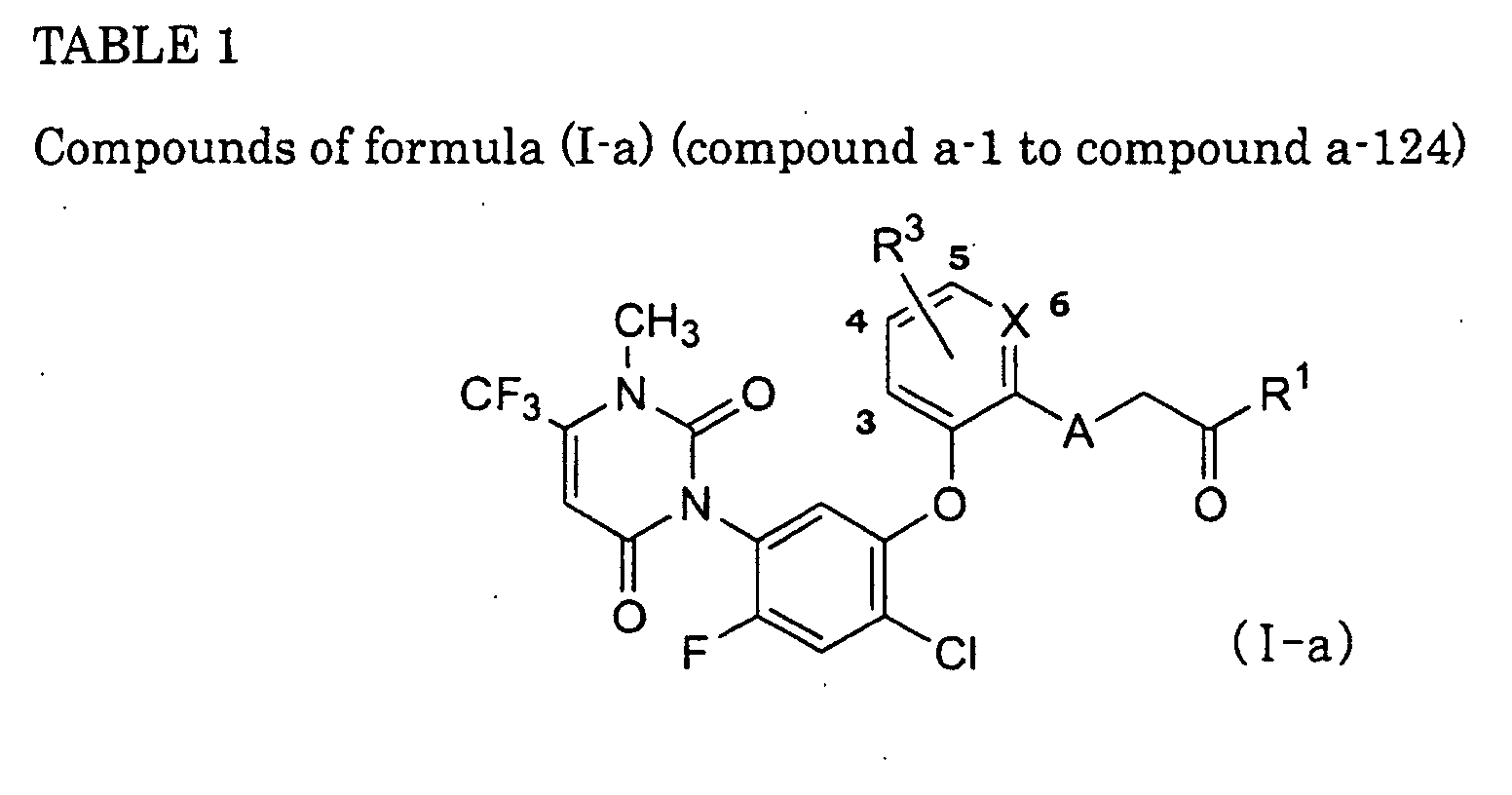
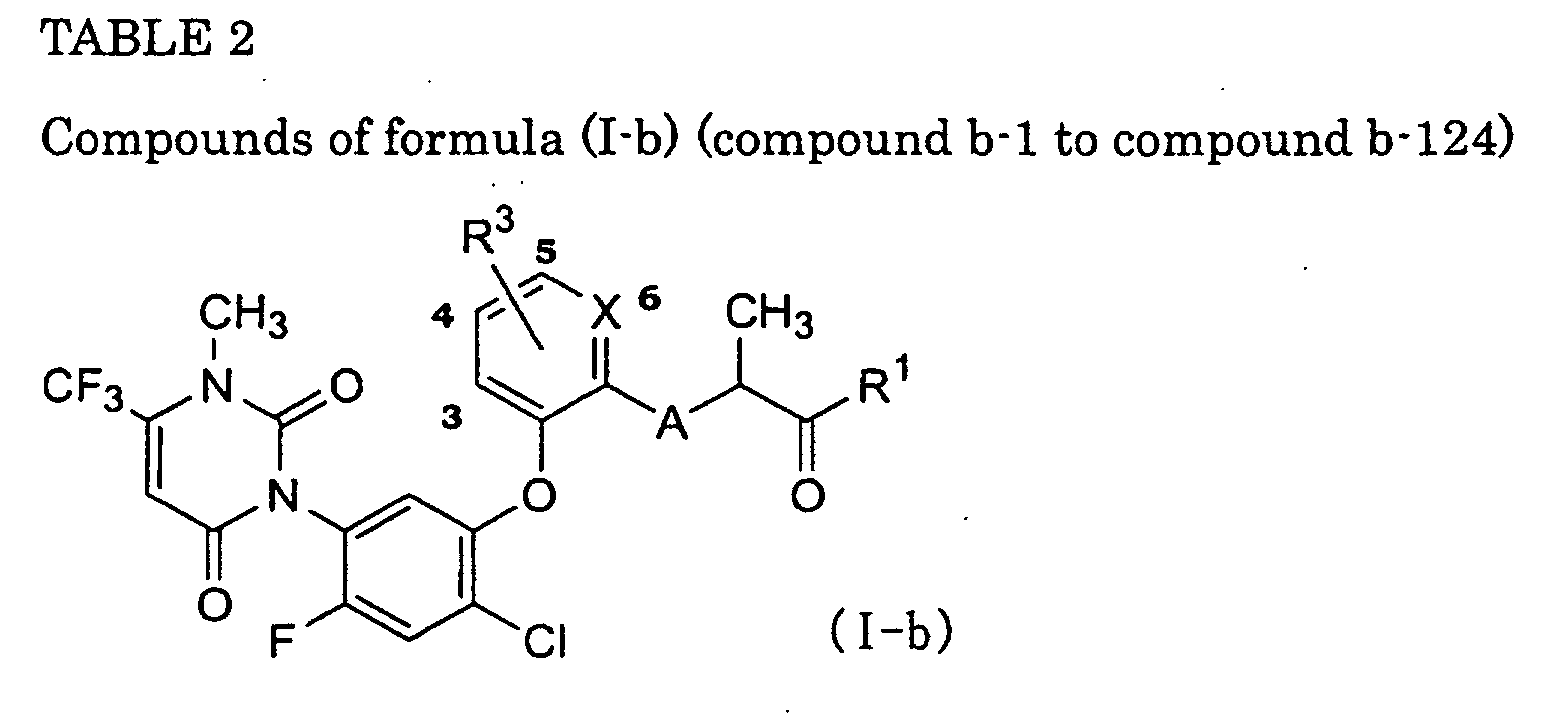
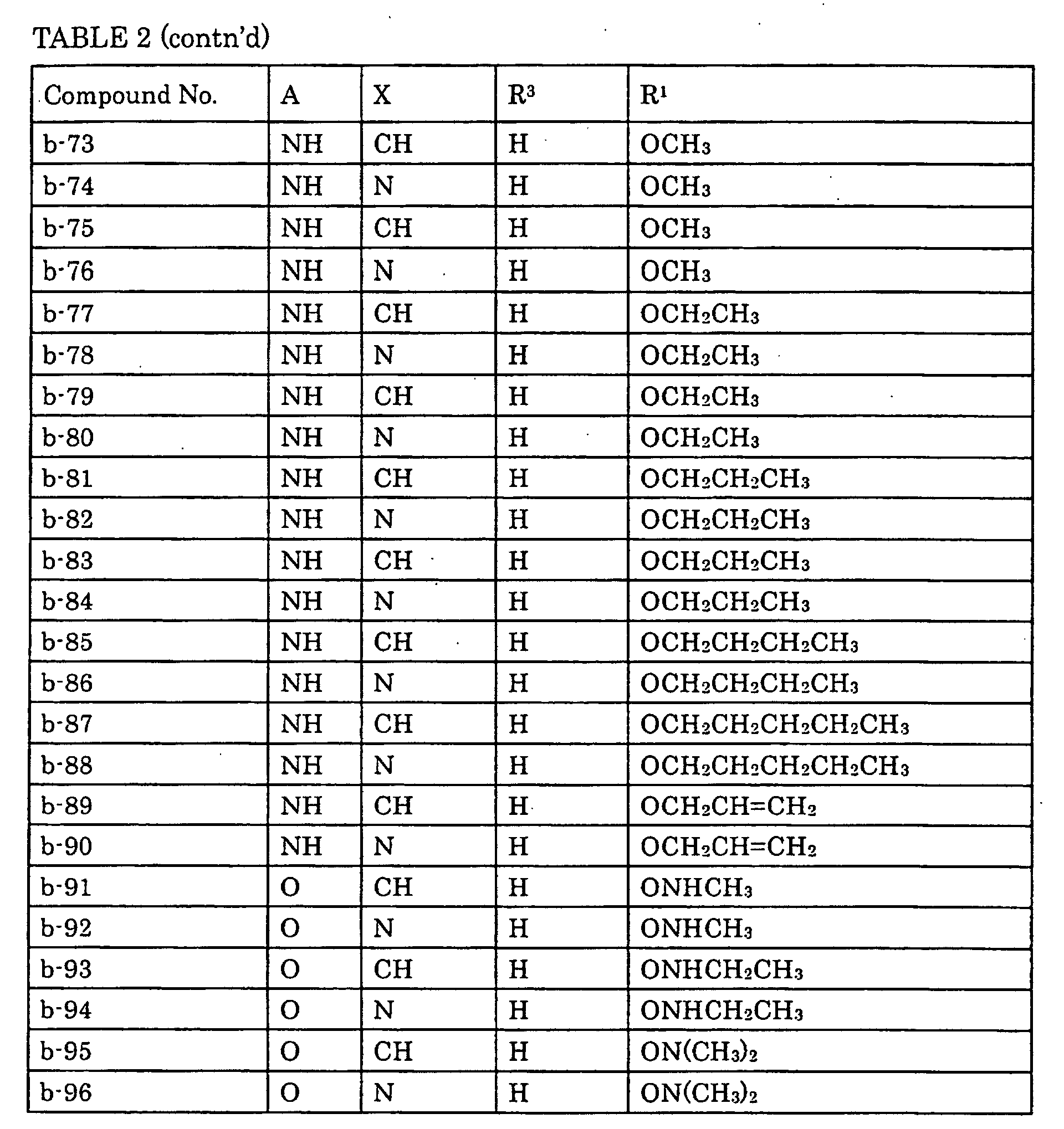
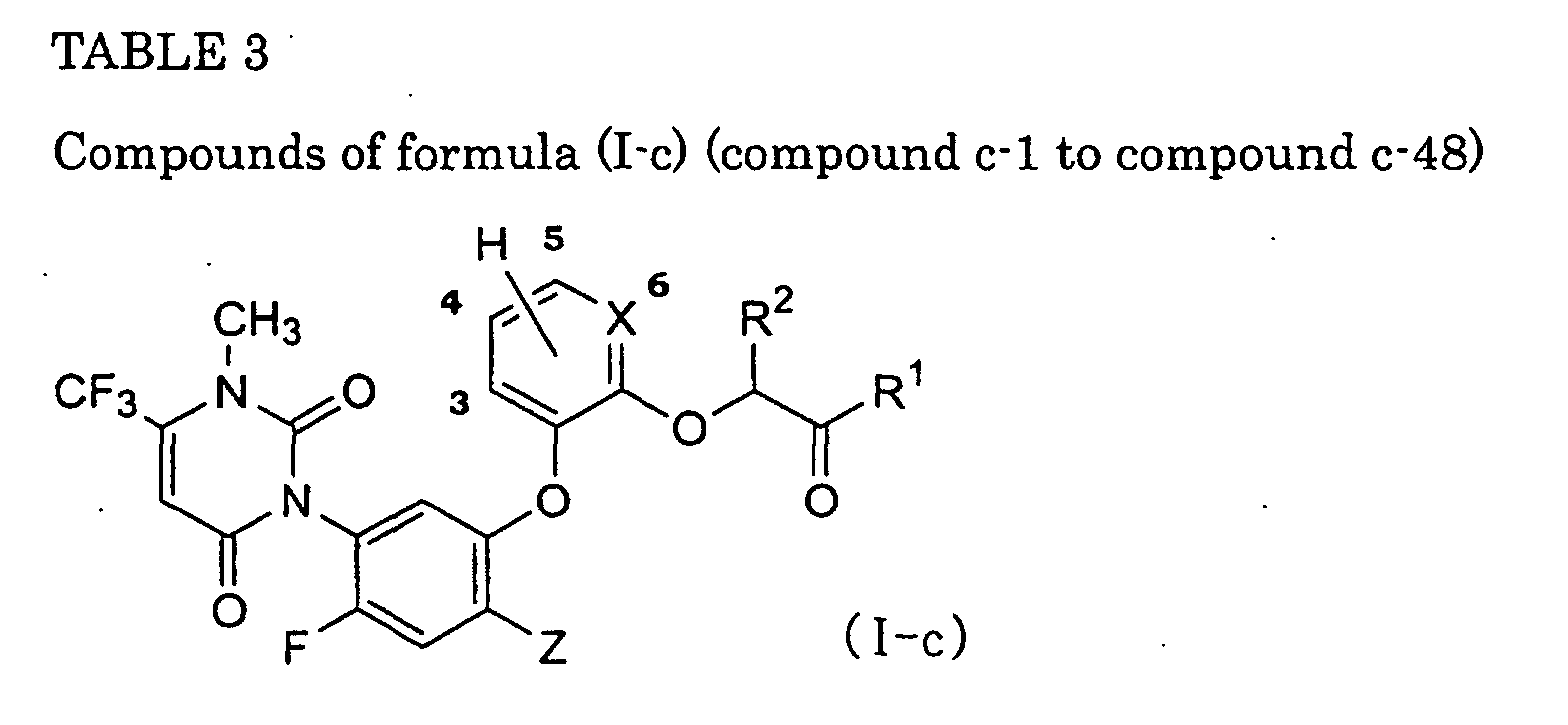
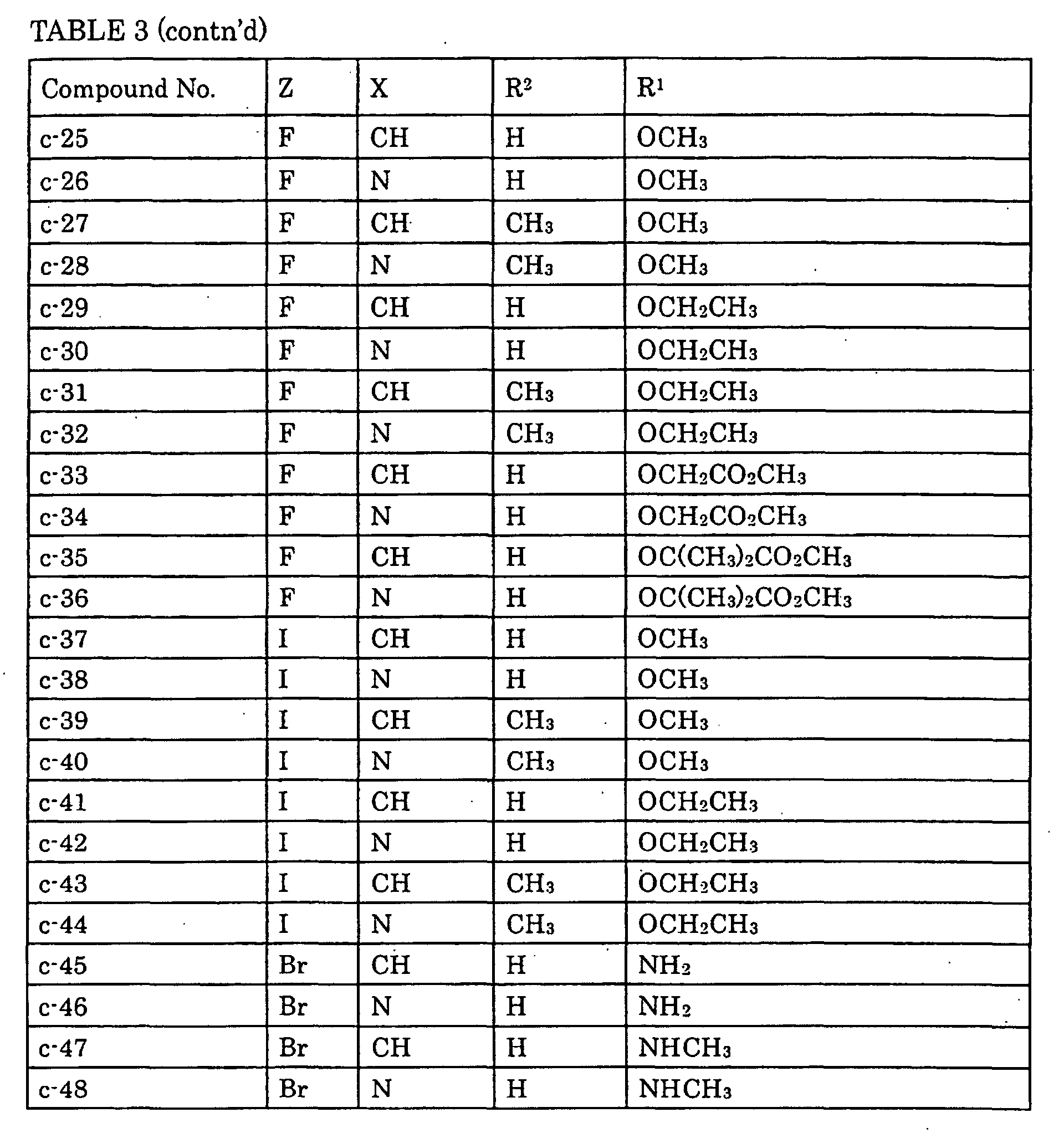
- the present inventor has extensively sought for a novel desiccant for potato, sunflower, soybean, rape, sorghum and the like. As a result, he has found that compounds of formula (I): wherein X is CH or nitrogen; Z is halogen; A is oxygen, sulfur, or NH; R 1 is hydroxyl, C 1 -C 7 alkoxy, C 3 -C 7 alkenyloxy, C 3 -C 7 alkynyloxy, C 5 -C 7 cycloalkoxy, ⁇ (C 1 -C 7 alkoxy)carbonyl ⁇ C 1 -C 3 alkoxy, (C 1 -C 7 alkylamino)oxy, ⁇ di(C 1 -C 7 alkyl)amino ⁇ oxy, (C 3 -C 7 alkylideneamino)oxy, C 1 -C 7 alkylamino, di(C 1 -C 7 alkyl)amino, C 3 -C 7 alkenylamino, C 3
- the present invention provides the desiccant, which comprise compounds (I) as active ingredients and which are used for desiccating aboveground parts of the plants, such as potato, sunflower, soybean, rape, sorghum and the like, before the harvest of crops thereof (hereinafter referred to as the present desiccant(s)).
- the present desiccant is typically used in a manner as described below.
- the application time of the present desiccant may change because of the weather condition or the crop plants growth condition.
- the present desiccant is usually applied when the ripening stage of the plants come near after the vegetative growth of the plants, which the present desiccant is going to be applied, has finished.
- the plants are potatoes, the present desiccant is preferably applied between a time of foliage turning yellow and three days before of the harvesting, more preferably between twenty-one days before and three days before of the harvesting.
- the plants are sunflowers
- the present desiccant is preferably applied when the backside of the flowers turn yellow after the plants has been ripened; or when a water content of the seeds ranges from 20 wt% to 50 wt% when a water content is a reference.
- the present desiccant is preferably applied between a time of leaves turning brown and one-week before of the harvesting. If the plants are rapes, the present desiccant is preferably applied when a color of the seeds starts to change from green to brown.
- the present desiccant is usually used in the form of various formulations including emulsifiable concentrates, wettable powders, flowables, and solutions, which can be prepared by mixing'the compound (I) with solid carriers, liquid carriers, or other bulking agents, and if necessary, adding surfactants and other auxiliary agents thereto.
- the compounds (I) are usually contained each in an amount of 0.5% to 80% by weight, preferably 1% to 70% by weight.
- the solid carrier used in the formulation may include, for example, the following materials in fine powder or granular form: clays (e.g., kaolinite, diatomaceous earth, synthetic hydrated silicon oxide, Fubasami clay, bentonite, acid clay); talc and other inorganic minerals ( e . g ., sericite, quartz powder, sulfur powder, activated carbon, calcium carbonate); and chemical fertilizers ( e . g ., ammonium sulfate, ammonium phosphate, ammonium nitrate, ammonium chloride, urea).
- the liquid carrier may include, for example, water; alcohols ( e . g ., methanol, ethanol); ketones ( e .
- acetone methyl ethyl ketone, cyclohexanone
- aromatic hydrocarbons e . g ., toluene, xylene, ethylbenzene, methylnaphthalene
- non-aromatic hydrocarbons e . g ., hexane, cyclohexane, kerosine
- esters e . g ., ethyl acetate, butyl acetate
- nitriles e .
- ethers e.g ., dioxane, diisopropyl ether
- acid amides e . g ., dimethylformamide, dimethylacetamide
- halogenated hydrocarbons e . g ., dichloroethane, trichloroethylene
- the surfactant may include, for example, alkyl sulfate salts; alkylsulfonic acid salts; alkylarylsulfonic acid salts; alkyl aryl ethers and their polyoxyethylene derivatives; polyethylene glycol ethers; polyol esters; and sugar alcohol derivatives.
- the other auxiliary agents may include, for example, adhesive agents and dispersing agents, such as casein, gelatin, polysaccharides (e . g ., powdered starch, gum arabic, cellulose derivatives, alginic acid), lignin derivatives, and synthetic water-soluble polymers (e . g ., polyvinyl alcohol, polyvinyl pyrrolidone, polyacrylic acid); and stabilizers such as PAP (isopropyl acid phosphate), BHT (2,6-di-tert-butyl-4-methylphenol), BHA (2-/3-tert-butyl-4-methyoxyphenol), vegetable oils, mineral oils, fatty acids, and fatty acid esters.
- adhesive agents and dispersing agents such as casein, gelatin, polysaccharides (e . g ., powdered starch, gum arabic, cellulose derivatives, alginic acid), lignin derivatives, and synthetic water-soluble polymers (e .
- the present desiccant thus formulated is applied to plants after diluted with water.
- the present desiccant can be expected to have further enhanced effects by incorporation of tank mix adjuvants in water used for dilution.
- the application amounts of the compounds (I) may vary with the formulations types, application times, and application places, but are usually in the range of 1 to 500 g/ha, preferably 1 to 100 g/ha.
- halogen represented by Z refers to fluorine, chlorine, bromine, or iodine
- C 1 -C 7 alkoxy represented by R 1 may include methoxy, ethoxy, propoxy, isopropoxy, butoxy, 1-methylpropoxy, 2-methylpropoxy, pentyloxy, 1-methylbutoxy, 2-methylbutoxy, 3-methylbutoxy, 2,2-dimethylpropoxy, hexyloxy, 1-methylpentyloxy, 2-methylpentyloxy, 3-methylpentyloxy, 4-methylpentyloxy, 1,2-dimethylbutoxy, 1,3-dimethylbutoxy, 2,3-dimethylbutoxy, 3,3-dimethylbutoxy, and heptyloxy
- C 3 -C 7 alkenyloxy represented by R 1 may include 2-propenyloxy, 3-butenyloxy, 4-pentenyloxy, 3-methyl-3-butenyloxy, and 3-methyl-2-butenyloxy
- R 1 is methoxy or ethoxy
- R 3 is hydrogen
- Z is chlorine or bromine
- Compounds (I) can be produced, for example, according to production processes A to E as described below.
- Compound (I-1) can be produced by reacting compound (V) with a diazotizing agent (first step), followed by reaction with a halide (second step).
- the reaction in the first step is usually carried out at a temperature range of -20°C to 20°C, and the reaction time is a moment to 5 hours.
- the diazotizing agent used in the reaction may include nitrous acid (prepared from nitrites such as sodium nitrite, and protonic acids such as acetic acid and hydrochloric acid); nitrite esters such as isoamyl nitrite and t-butyl nitrite.
- the reaction is usually carried out by adding dropwise the diazotizing agent to a mixture of compound (V) and a solvent such as acetic acid, acetonitrile, or water, or preparing a diazotizing agent in the solvent.
- the amounts of reagents are 1 mole of the diazotizing agent relative to 1 mole of compound (V), which is a theoretical ratio, but may suitably be changed depending upon the reaction conditions.
- the reaction mixture is usually used as the starting material in the second step, without being subjected to separation.
- the reaction in the second step is usually carried out in the range of 0°C to 80°C, and the reaction time is a moment to 24 hours.
- the halide used in the reaction may include fluorides (e . g ., tetrafluoroboric acid), chlorides ( e . g ., copper (I) chloride), bromides ( e . g ., copper (I) bromide), and iodides ( e . g ., potassium iodide).
- the reaction is usually carried out by adding dropwise the reaction mixture obtained in the first step to a mixture of a halide and a solvent such as acetic acid, acetonitrile, or water.
- the amounts of reagents are 1 mole of the halide relative to 1 mole of compound (V), which is a theoretical ratio, but may suitably be changed depending upon the reaction conditions.
- reaction mixture is poured into water, which is then extracted with an organic solvent, and the organic layer is concentrated to give a desired compound.
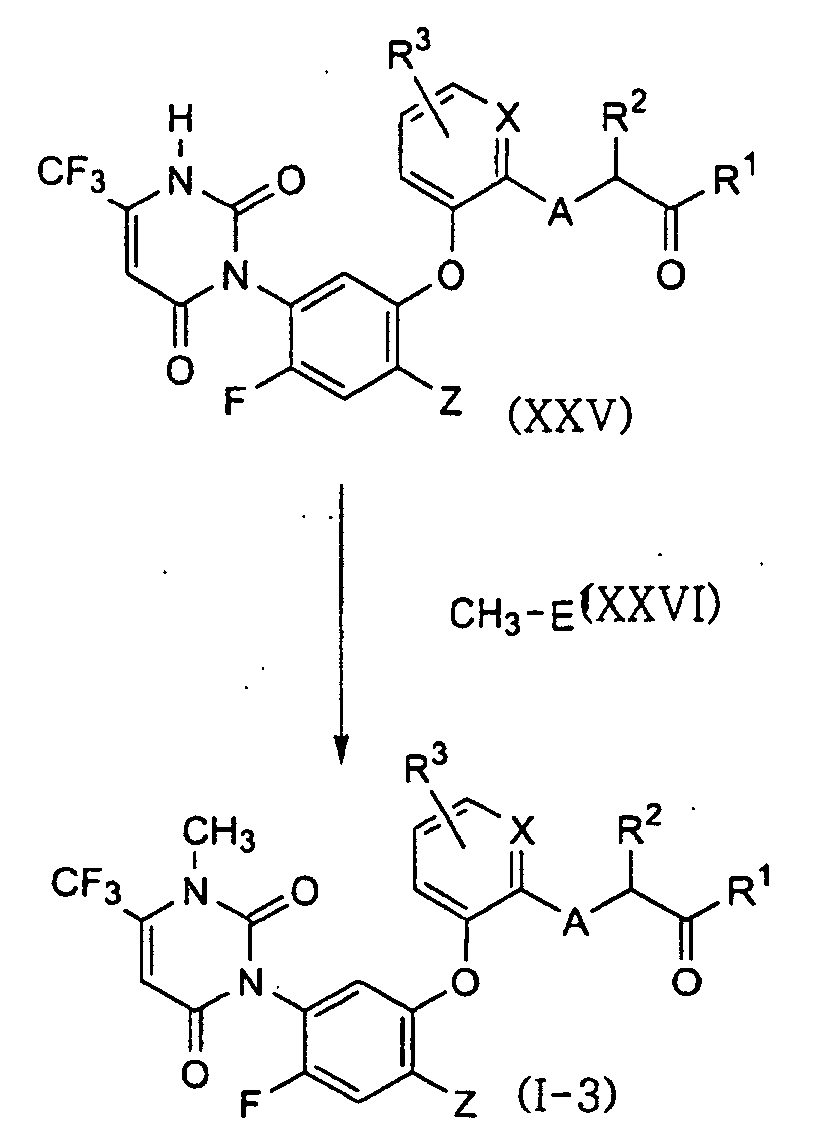
- E is chlorine or bromine
- Z, A, R 1 , R 2 , and R 3 are as defined above.
- Compound (I-3) can be produced by reacting compound (VI) with compound (XXI) in the presence of a base in a solvent.
- the reaction temperature is usually in the range of 0°C to 150°C, and the reaction time is usually a moment to 24 hours.
- the base used in the reaction may include organic bases such as pyridine, quinoline, N-methylmorpholine, 1,8-diazabicyclo[5.4.0]undec-7-ene, 1,5-azabicylco[4.3.0]non-5-ene, 1,4-diazabicyclo[2.2.2]octane, 4-dimethylaminopyridine, N,N-dimethylaniline, N,N-diethylaniline, triethylamine, tri-n-propylamine, and diisopropylethylamine; and inorganic bases such as sodium carbonate, potassium carbonate, sodium hydride, and potassium hydride.
- organic bases such as pyridine, quinoline, N-methylmorpholine, 1,8-diazabicyclo[5.4.0]undec-7-ene, 1,5-azabicylco[4.3.0]non-5-ene, 1,4-diazabicyclo[2.2.2]octane, 4-di
- the solvent used in the reaction may include aromatic hydrocarbons such as toluene and xylene; aromatic halogenated hydrocarbons such as chlorobenzene, dichlorobenzene, and benzotrifluride; ethers such as diisopropyl ether, methyl t-butyl ether, dioxane, tetrahydrofuran, ethylene glycol dimethyl ether, and diglym; ketones such as methyl isobutyl ketone; esters such as ethyl acetate; nitro compounds such as nitromethane; nitriles such as acetonitrile; amides such as N,N-dimethylformamide and N-methyl-2-pyrollidone; sulfur compounds such as dimethylsulfoxide and sulforane; and mixtures thereof.
- aromatic hydrocarbons such as toluene and xylene
- aromatic halogenated hydrocarbons such as chlorobenzene, dichlorobenzene,
- the amounts of reagents are 1 mole of compound (XXI) and 1 mole of the base, relative to 1 mole of compound (VI), which is a theoretical ratio, but may suitably be changed depending upon the reaction conditions.
- reaction mixture is poured into water, which is then extracted with an organic solvent, and the organic layer is concentrated to give a desired compound.
- the product may be purified by chromatography, recrystallization, or any other technique.
- E 1 is a leaving group such as iodine or methanesulfonyloxy
- X, Z, A, R 1 , R 2 , and R 3 are as defined above.
- Compound (I-3) can be produced by reacting compound (XXV) with compound (XXVI) in the presence of a base in a solvent.
- the reaction temperature is usually in the range of 0°C to 150°C, and the reaction time is usually a moment to 24 hours.
- the base used in the reaction may include organic bases such as pyridine, quinoline, N-methylmorpholine, 1,8-diazabicyclo[5.4.0]undec-7-ene, 1,5-diazabicylco[4.3.0]non-5-ene, 1,4-diazabicyclo[2.2.2]octane, 4-dimethylaminopyridine, N,N-dimethylaniline, N,N-diethylaniline, triethylamine, tri-n-propylamine, and diisopropylethylamine; and inorganic bases such as sodium carbonate, potassium carbonate, sodium hydride, and potassium hydride.
- organic bases such as pyridine, quinoline, N-methylmorpholine, 1,8-diazabicyclo[5.4.0]undec-7-ene, 1,5-diazabicylco[4.3.0]non-5-ene, 1,4-diazabicyclo[2.2.2]octane
- the solvent used in the reaction may include aromatic hydrocarbons such as toluene and xylene; aromatic halogenated hydrocarbons such as chlorobenzene, dichlorobenzene, and benzotrifluoride; ethers such as diisopropyl ether, methyl t-butyl ether, dioxane, tetrahydrofuran, ethylene glycol dimethyl ether, and diglym; ketones such as methyl isobutyl ketone; esters such as ethyl acetate; nitro compounds such as nitromethane; nitriles such as acetonitrile; amides such as N,N-dimethylformamide and N-methyl-2-pyrollidone; sulfur compounds such as dimethylsulfoxide and sulforane; and mixtures thereof.
- aromatic hydrocarbons such as toluene and xylene
- aromatic halogenated hydrocarbons such as chlorobenzene, dichlorobenzene,
- the amounts of reagents are 1 mole of compound (XXVI) and 1 mole of the base, relative to 1 mole of compound (XXV), which is a theoretical ratio, but may suitably be changed depending upon the reaction conditions.
- reaction mixture is poured into water, which is then extracted with an organic solvent, and the organic layer is concentrated to give a desired compound.
- the product may be purified by chromatography, recrystallization, or any other technique.
- Compound (I-2) can be produced by reacting compound (I-1) with compound (XX). The reaction may be carried out in the presence of an acid or a base as a catalyst.
- the reaction temperature is usually in the range of 20°C to 150°C, and the reaction time is usually a moment to 24 hours.
- the acid optionally used may include organic protonic acids such as methanesulfonic acid; and inorganic protonic acids such as sulfuric acid.
- the base may include organic bases such as pyridine; and inorganic bases such as sodium carbonate.
- the amounts of reagents are 1 mole to an excess of compound (XX), relative to 1 mole of compound (I-1).
- the reaction may involve the use of a solvent inert thereto.
- the methanol formed as a by-product may be distilled out of the reaction system, so that the rate of the reaction can be increased.
- reaction mixture is poured into water, which is then extracted with an organic solvent, and the organic layer is concentrated to give a desired compound.
- the product may be purified by chromatography, recrystallization, or any other technique.
- Compound (I-2) can also be produced by reacting compound (I-4) with compound (XX) under the dehydration conditions.
- X, Z, A, R 1 , R 2 , and R 3 are as defined above.
- Compound (V) can be produced by the process as shown below. wherein X, A, R 2 , and R 3 are as defined above.
- First step The step of producing compound (IV) from compound (II) and compound (III).
- Compound (IV) can be produced by reacting compound (II) with compound (III) in the presence of a base in a solvent.
- the reaction temperature is usually in the range of 0°C to 150°C, and the reaction time is usually a moment to 24 hours.
- the base used in the reaction may include organic bases such as pyridine, quinoline, N-methylmorpholine, 1,8-diazabicyclo[5.4.0]undec-7-ene, 1,5-diazabicylco[4.3.0]non-5-ene, 1,4-diazabicyclo[2.2.2]octane, 4-dimethylaminopyridine, N,N-dimethylaniline, N,N-diethylaniline, triethylamine, tri-n-propylamine, and diisopropylethylamine; and inorganic bases such as sodium carbonate, potassium carbonate, sodium hydride, and potassium hydride.
- organic bases such as pyridine, quinoline, N-methylmorpholine, 1,8-diazabicyclo[5.4.0]undec-7-ene, 1,5-diazabicylco[4.3.0]non-5-ene, 1,4-diazabicyclo[2.2.2]octane
- the solvent used in the reaction may include aromatic hydrocarbons such as toluene and xylene; ethers such as dioxane; amides such as N,N-dimethylformamide and N-methyl-2-pyrollidone; sulfur compounds such as dimethylsulfoxide and sulforane; and mixtures thereof.
- the amounts of reagents are 1 mole of compound (II) and 1 mole of the base, relative to 1 mole of compound (III), which is a theoretical ratio, but may suitably be changed depending upon the reaction conditions.
- reaction mixture is poured into water, which is then extracted with an organic solvent, and the organic layer is concentrated to give a desired compound.
- the product may be purified by chromatography, recrystallization, or any other technique.
- Second step The step of producing compound (V) from compound (IV).
- Compound (V) can be produced by reacting compound (IV) with iron powder in the presence of a protonic acid.
- the reaction temperature is usually in the range of 0°C to 100°C, and the reaction time is usually a moment to 24 hours.
- the protonic acid used in the reaction may include organic protonic acids such as acetic acid and propionic acid; and inorganic protonic acids such as hydrochloric acid.
- the amounts of reagents are 3 moles to an excess of the iron powder and 3 moles to an excess of the acid, relative to 1 mole of compound (IV), which may suitably be changed depending upon the reaction conditions.
- the reaction may involve the use of a solvent inert thereto.
- reaction mixture is filtered, and the filtrate is poured into water, which is neutralized and then extracted with an organic solvent, and the organic layer is concentrated to give a desired compound.
- the product may be purified by chromatography, recrystallization, or any other technique.
- Compound (II) can be produced according to the process known in the art.
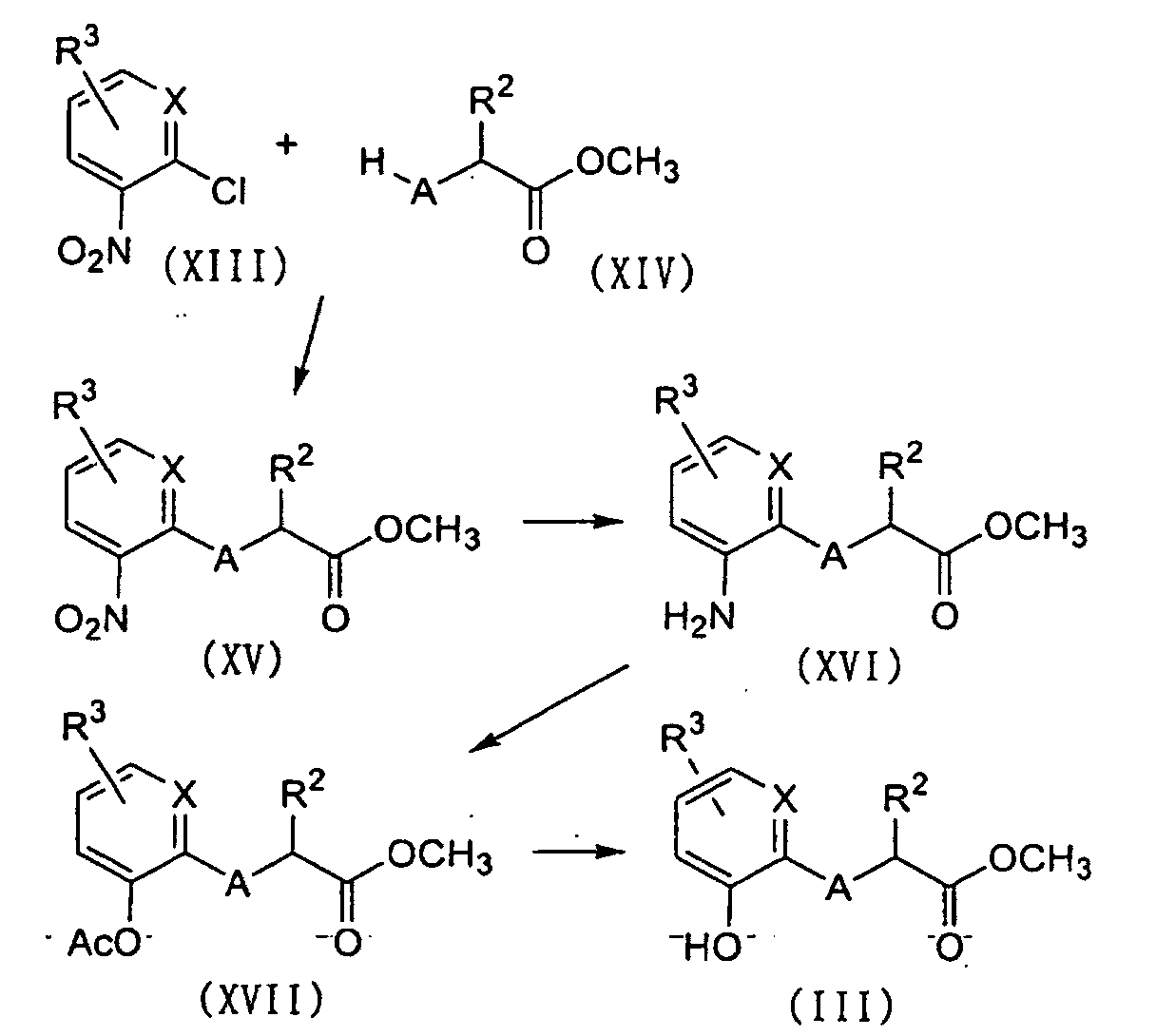
- Compound (III) can be produced by the process as shown below. wherein X, A, R 2 , and R 3 are as defined above.
- First step The step of producing compound (XV) from compound (XIII) and compound (XIV).
- Compound (XV) can be produced by reacting compound (XIII) with compound (XIV) in the presence of a base in a solvent.
- Second step The step of producing compound (XVI) from compound (XV).
- Compound (XVI) can be produced by reducing compound (XV) ( e . g ., by a technique such as iron reduction (Fe/acetic acid) or hydrogenation (Pd-C/H 2 )).
- Third step The step of producing compound (XVII) from compound (XVI).
- Compound (XVII) can be produced by reacting compound (XVI) with a diazotizing agent (e . g ., nitrous acid (prepared from nitrites such as sodium nitrite, and protonic acids such as acetic acid and hydrochloric acid), nitrite esters such as isoamyl nitrite and t-butyl nitrite), followed by reaction with acetic anhydride.
- a diazotizing agent e . g ., nitrous acid (prepared from nitrites such as sodium nitrite, and protonic acids such as acetic acid and hydrochloric acid), nitrite esters such as isoamyl nitrite and t-butyl nitrite
- Compound (III) can be produced by selective hydrolysis of compound (XVII).
- Compound (XXV) can be produced according to the process described in Reference Production Example 8 or 9.
- Production Example 8 Production of Compound a-108
- isoamyl nitrite is added dropwise to a mixture of methyl [3- ⁇ 2-amino-4-fluoro-5-[3-methyl-2,6-dioxo-4-(trifluoromethyl)-1,2,3,6-tetrah ydropyrimidin-1-yl]phenoxy ⁇ -6-chloro-2-pyridyloxy]acetate, copper (I) chloride, copper (II) chloride, and acetonitrile at room temperature, and the mixture is stirred for 1 hour. The reaction mixture is poured into 2% hydrochloric acid, and the mixture is extracted with ethyl acetate.
- isoamyl nitrite is added dropwise to a mixture of methyl [3- ⁇ 2-amino-4-fluoro-5-[3-methyl-2,6-dioxo-4-(trifluoromethyl)-1,2,3,6-tetrah ydropyrimidin-1-yl]phenoxy ⁇ -6-methoxy-2-pyridyloxy]acetate, copper (I) chloride, copper (II) chloride, and acetonitrile at room temperature, and the mixture is stirred for 1 hour. The reaction mixture is poured into 2% hydrochloric acid, and the mixture is extracted with ethyl acetate.
- Production Example 11 Production of Compound a-121
- Production Example 12 Production of Compound a-28
- Production Example 15 Production of Compound a-20
- Production Example 19 Production of Compound a-104
- Production Example 20 Production of Compound a-32
- Production Example 21 Production of Compound a-98
- a boron trifluoride diethyl ether complex was added dropwise to a mixture of 1.0 g of 3-amino-2-(methoxycarbonyl)methoxypyridine, 3 ml of 1,2-dimethoxyethane, and 1 ml of dichloromethane at -10°C. After stirring at the same temperature for 10 minutes, a solution of 0.68 g of t-butyl nitrite in 1 ml of 1,2-dimethoxyethane was added dropwise to the reaction mixture at -5°C or lower. After stirring at the same temperature for 30 minutes, n-pentane was poured into the mixture.
- the lower one of the two layers separated was dissolved in 3 ml of acetic anhydride, and the solution was stirred at 50°C to 70°C for 1 hour.
- the reaction mixture was cooled to room temperature and then poured into water, and the mixture was extracted with t-butyl methyl ether.
- the organic layer was washed with saturated aqueous sodium hydrogencarbonate solution and saturated aqueous sodium chloride solution, dried over anhydrous magnesium sulfate, and then concentrated.
- the residue was subjected to silica gel chromatography to give 0.48 g of 3-acetoxy-2-(methoxycarbonyl)methylthiopyridine.
- test example The following will describe test example and the present invention should not be limited to the test example.
- Seed potatoes were planted on a field and grown. At the time of the foliage turning yellow, 2.5 parts of each of compounds a-5 and a-6, 10 parts of Sorpol 3890 (Toho Chemical Industry Co., Ltd.), and 87.5 parts of SOLVESSO 200 (Exxon Mobile Chemical Company) were well mixed to give an emulsifiable concentrate for each compound, diluted at a prescribed dose with water containing 1% (v/v) crop oil concentrate (COC), and the dilution was uniformly sprayed to the plants.
- One section of the treated field are 2.1 x 15.2 m in area, and the potato plants on 14 day after the treatment were examined for the desiccant effect. The results are shown in Table 4. In the table, the desiccation effect was evaluated with following criteria.
- Test compound Application amount (g/ha) Desiccation effect Compound a-5 10 5
- the use of the present desiccant on a suitable time prior to harvest can gain the plants whose aboveground parts is sufficiently desiccated on the harvest time, so that works on and/or after the harvest can easily be performed.
Landscapes
- Life Sciences & Earth Sciences (AREA)
- Organic Chemistry (AREA)
- Chemical & Material Sciences (AREA)
- Environmental Sciences (AREA)
- Plant Pathology (AREA)
- Health & Medical Sciences (AREA)
- Engineering & Computer Science (AREA)
- Dentistry (AREA)
- General Health & Medical Sciences (AREA)
- Wood Science & Technology (AREA)
- Zoology (AREA)
- Pest Control & Pesticides (AREA)
- Agronomy & Crop Science (AREA)
- Plural Heterocyclic Compounds (AREA)
- Agricultural Chemicals And Associated Chemicals (AREA)
- Organic Low-Molecular-Weight Compounds And Preparation Thereof (AREA)
Abstract

a method for desiccating a crop plant and a method for harvesting a crop by using the stem/leaf desiccant.
Description

C1-C7 alkoxy represented by R1 may include methoxy, ethoxy, propoxy, isopropoxy, butoxy, 1-methylpropoxy, 2-methylpropoxy, pentyloxy, 1-methylbutoxy, 2-methylbutoxy, 3-methylbutoxy, 2,2-dimethylpropoxy, hexyloxy, 1-methylpentyloxy, 2-methylpentyloxy, 3-methylpentyloxy, 4-methylpentyloxy, 1,2-dimethylbutoxy, 1,3-dimethylbutoxy, 2,3-dimethylbutoxy, 3,3-dimethylbutoxy, and heptyloxy;
C3-C7 alkenyloxy represented by R1 may include 2-propenyloxy, 3-butenyloxy, 4-pentenyloxy, 3-methyl-3-butenyloxy, and 3-methyl-2-butenyloxy;
C3-C7 alkynyloxy represented by R1 may include 2-propynyloxy;
C5-C7 cycloalkoxy represented by R1 may include cyclopentyloxy and cyclohexyloxy;
{(C1-C7 alkoxy)carbonyl} C1-C3 alkoxy represented by R1 may include methoxycarbonylmethoxy, ethoxycarbonylmethoxy, and 1-(methoxycarbonyl)-1-methylethoxy;
(C1-C7 alkylamino)oxy represented by R1 may include (methylamino)oxy and (ethylamino)oxy;
{di(C1-C7 alkyl)amino}oxy represented by R1 may include (dimethylamino)oxy and (methylethylamino)oxy;
(C3-C7 alkylideneamino)oxy represented by R1 may include (isopropylideneamino)oxy;
C1-C7 alkylamino represented by R1 may include methylamino, ethylamino, propylamino, isopropylamino, butylamino, 1-methylpropylamino, 2-methylpropylamino, pentylamino, 1-methylbutylamino, 2-methylbutylamino, 3-methylbutylamino, 2,2-dimethylpropylamino, and hexylamino;
di(C1-C7 alkyl)amino represented by R1 may include dimethylamino and diethylamino;
C3-C7 alkenylamino represented by R1 may include 2-propenylamino;
C3-C7 alkynylamino represented by R1 may include 2-propynylamino;
C5-C7 cycloalkylamino represented by R1 may include cyclopentylamino and cyclohexylamino;
{(C1-C7 alkoxy)carbonyl} C1-C3 alkylamino represented by R1 may include methoxycarbonylmethylamino;
(C1-C7 alkoxy)amino represented by R1 may include methoxyamino, ethoxyamino, and isopropoxyamino;
halogen represented by R3 refers to fluorine, chlorine, bromine, or iodine;
C1-C3 alkyl represented by R3 refers to methyl, ethyl, propyl, or isopropyl; and
C1-C3 alkoxy represented by R3 refers to methoxy, ethoxy, propoxy, or isopropoxy.





1H-NMR (CDCl3, 250 MHz) δ(ppm): 3.49-3.50 (m, 3H), 3.73 (s, 3H), 4.66 (s, 2H), 6.28 (s, 1H), 6.76 (d, 1H, J = 6.6 Hz), 6.9-7.2 (m, 4H), 7.36 (d, 1H, J = 8.9 Hz).


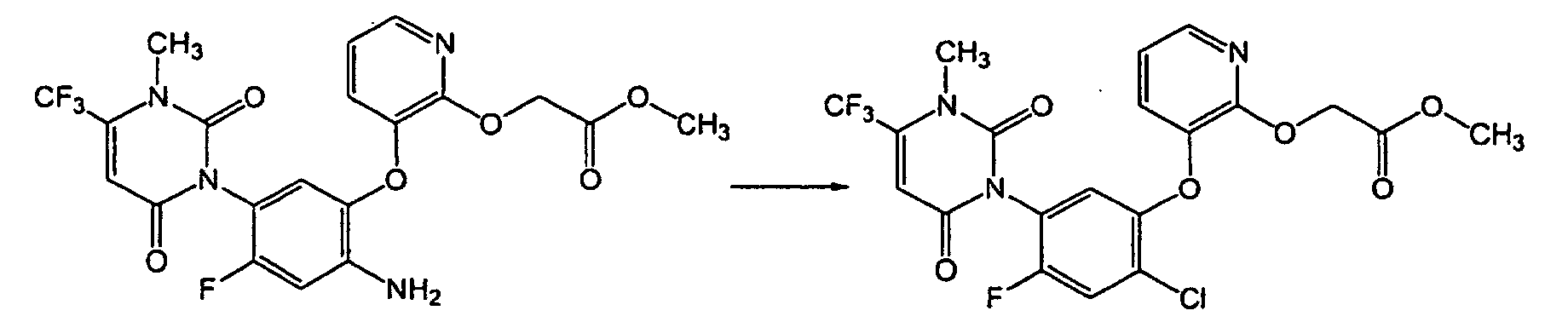
m.p.: 52.2°C;
1H-NMR (CDCl3, 300 MHz) δ(ppm): 3.50 (q, 3H, J = 1.0 Hz), 3.70 (s, 3H), 4.90 (d, 1H, J = 15.8 Hz), 4.97 (d, 1H, J = 15.8 Hz), 6.29 (s, 1H), 6.9-7.0 (m, 2H), 7.32 (dd, 1H, J = 7.7, 1.9 Hz), 7.37 (d, 1H, J = 8.7 Hz), 7.92 (dd, 1H, J = 4.9, 1.9 Hz).

1H-NMR (CDCl3, 300 MHz) δ(ppm): 1.51 (d, 3/2H, J = 7.0 Hz), 1.52 (d, 3/2H, J = 7.0 Hz), 3.50 (s, 3H), 3.67 (s, 3H), 5.29 (q, 1/2H, J = 7.0 Hz), 5.30 (q, 1/2H, J = 7.0 Hz), 6.28 (s, 1/2H), 6.29 (s, 1/2H), 6.8-7.0 (m, 2H), 7.3-7.4 (m, 2H), 7.8-7.9 (m, 1H).


1H-NMR (CDCl3, 300 MHz) δ(ppm): 3.54 (s, 3H), 3.75 (s, 3H), 4.01 (s, 2H), 6.33 (s, 1H), 6.9-7.0 (m, 3H), 7.42 (d, 1H, J = 9.0 Hz), 8.20 (dd, 1H, J = 4.1, 2.2 Hz).


1H-NMR (CDCl3, 250 MHz) δ(ppm): 1.47 (d, 3H, J = 6.8 Hz), 3.50 (q, 3H, J = 0.7 Hz), 3.6-3.8 (m, 3H), 4.6-4.8 (m, 1H), 6.28 (s, 1H), 6.7-6.8 (m, 1H), 6.8-6.9 (m, 1H), 6.9-7.1 (m, 1H), 7.1-7.2 (m, 2H), 7.3-7.4 (m, 1H).
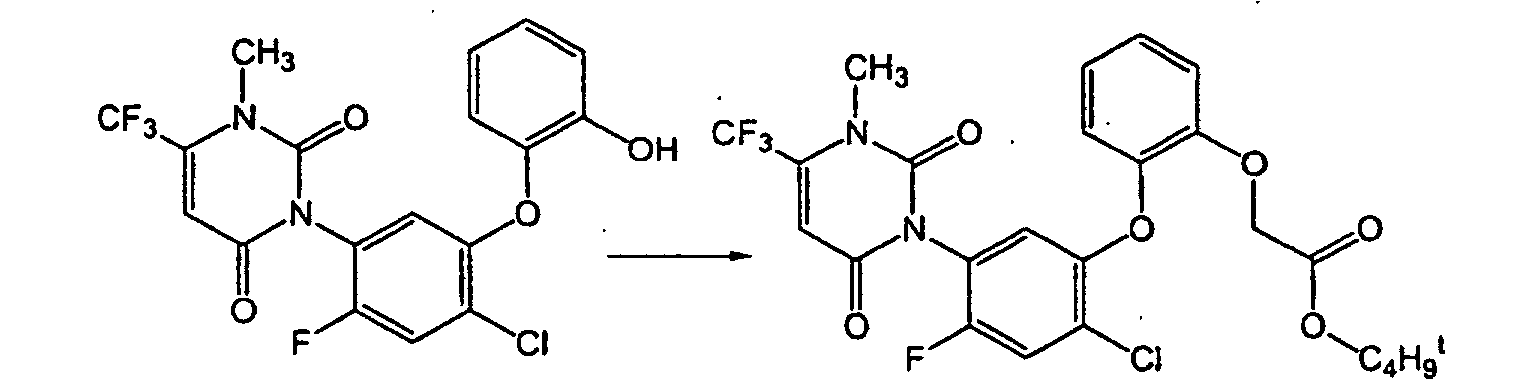
1H-NMR (CDCl3, 250 MHz) δ(ppm): 1.44 (s, 9H), 3.49 (d, 3H, J = 1.1 Hz), 4.53 (s, 2H), 6.27 (s, 1H), 6.80 (d, 1H, J = 6.6 Hz), 6.8-7.2 (m, 4H), 7.35 (d, 1H, J = 8.9 Hz);
m.p.: 55.6° C.

1H-NMR (CDCl3, 250 MHz) δ(ppm): 1.23 (t, 3H, J = 7.1 Hz), 1.47 (d, 3H, J = 6.8 Hz), 3.50 (s, 3H), 4.1-4.3 (m, 2H), 4.6-4.8 (m, 1H), 6.3-6.4 (m, 1H), 6.7-7.0 (m, 3H), 7.0-7.2 (m, 2H), 7.3-7.4 (m, 1H).

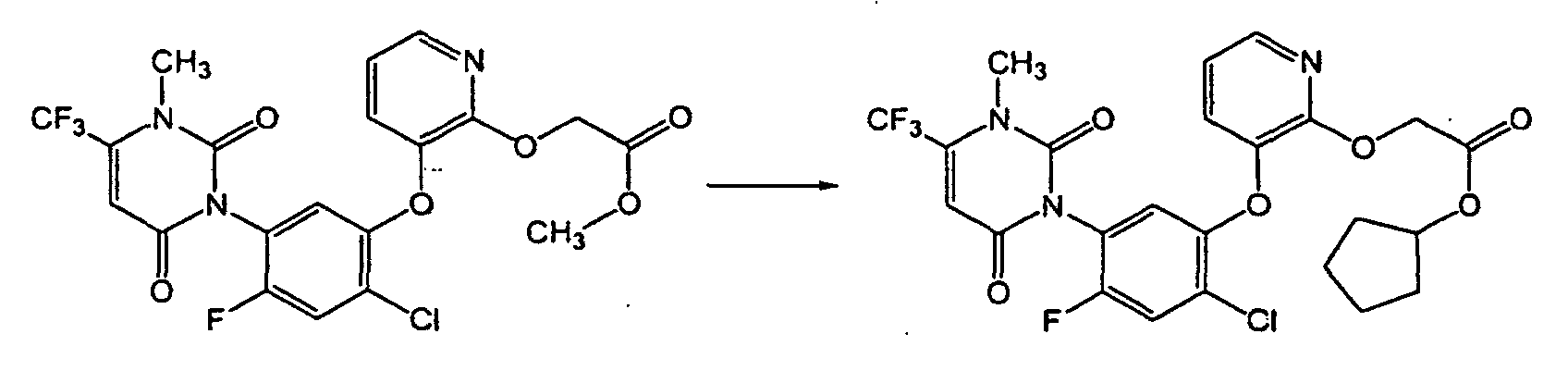

1H-NMR (CDCl3, 250 MHz) δ(ppm): 1.25 (t, 3H, J = 7.1 Hz), 3.50 (q, 3H, J = 1.2 Hz), 4.16 (q, 2H, J = 7.1 Hz), 4.88 (d, 1H, J = 15.9 Hz), 4.96 (d, 1H, J = 15.9 Hz), 6.29 (s, 1H), 6.9-7.0 (m, 2H), 7.3-7.4 (m, 2H), 7.9-8.0 (m, 1H).
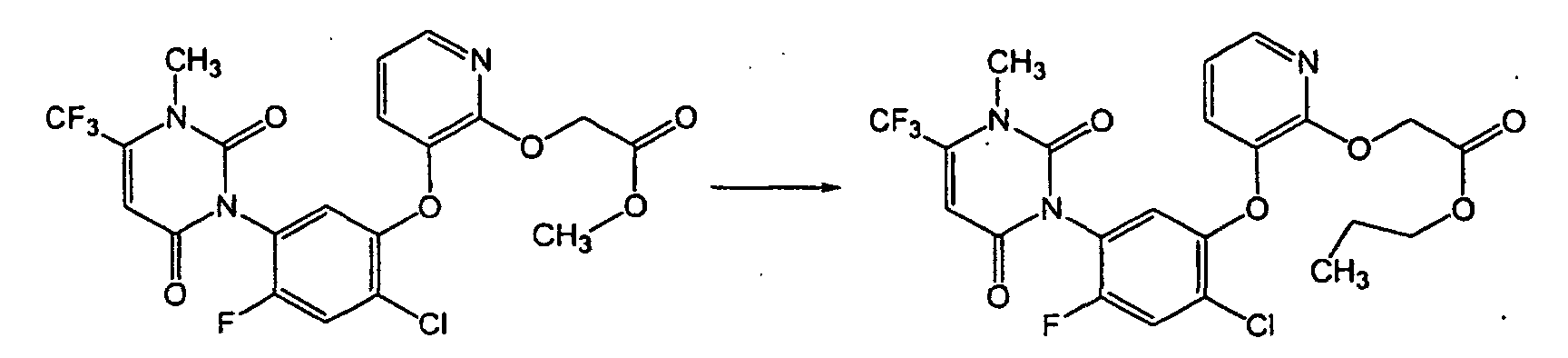
1H-NMR (CDCl3, 300 MHz) δ(ppm): 0.89 (t, 3H, J = 7.3 Hz), 1.63 (qt, 2H, J = 7.3, 6.5 Hz), 3.50 (q, 3H, J = 0.8 Hz), 4.06 (t, 2H, J = 6.5 Hz), 4.89 (d, 1H, J = 16.0 Hz), 4.97 (d, 1H, J = 16.0 Hz), 6.28 (s, 1H), 6.91 (dd, 1H, J = 7.8, 5.0 Hz), 6.93 (d, 1H, J = 6.5 Hz), 7.31 (dd, 1H, J = 7.8, 1.6 Hz), 7.36 (d, 1H, J = 8.9 Hz), 7.91 (dd, 1H, J = 5.0, 1.6 Hz).
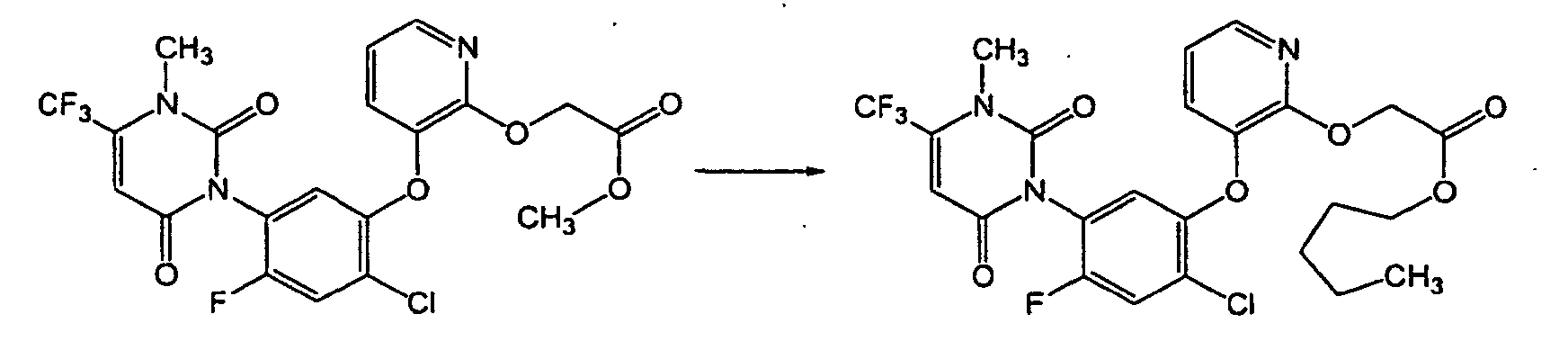
1H-NMR (CDCl3, 300 MHz) δ(ppm): 0.88 (t, 3H, J = 6.6 Hz), 1.2-1.4 (m, 4H), 1.5-1.7 (m, 2H), 3.50 (q, 3H, J = 1.0 Hz), 4.0-4.2 (m, 2H), 4.8-5.1 (m, 2H), 6.29 (s, 1H), 6.9-7.0 (m, 2H), 7.28 (dd, 1H, J = 7.9, 1.4 Hz), 7.37 (d, 1H, J = 9.0 Hz), 7.91 (dd, 1H, J = 4.9, 1.4 Hz).

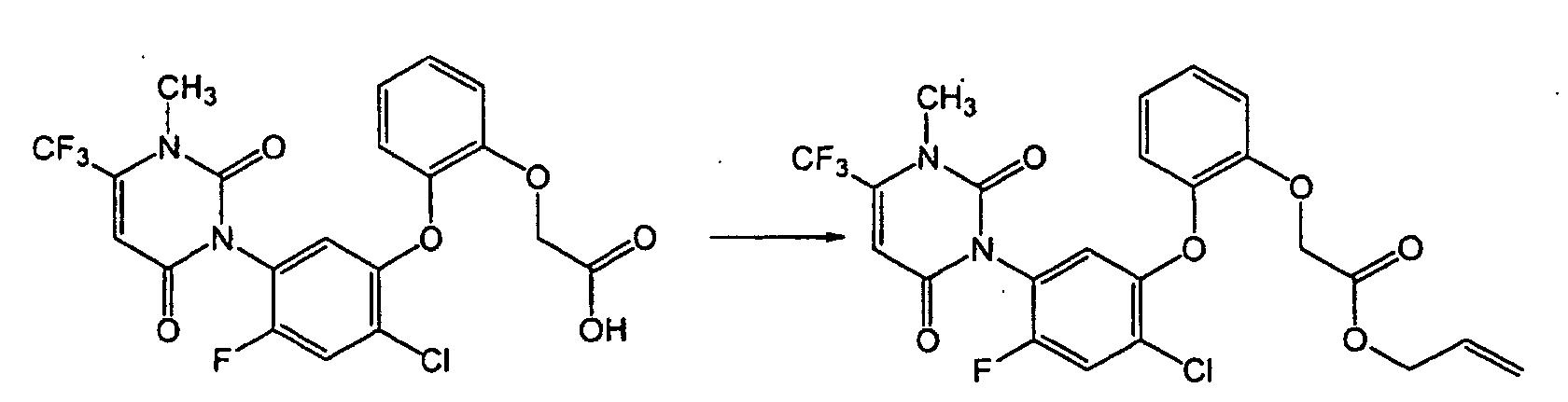
1H-NMR (CDCl3, 300 MHz) δ(ppm): 3.50 (d, 3H, J = 1.2 Hz), 4.62-4.64 (m, 2H), 4.68 (s, 2H), 5.22-5.32 (m, 2H), 5.8-6.0 (m, 1H), 6.28 (s, 1H), 6.76 (d, 1H, J = 6.5 Hz), 6.91-7.14 (m, 4H), 7.35 (d, 1H, J = 8.6Hz).

1H-NMR (CDCl3, 250 MHz) δ(ppm): 0.89 (d, 6H, J = 6.7 Hz), 1.8-2.0 (m, 1H), 3.50 (d, 3H, J = 1.2 Hz), 3.92 (d, 2H, J = 6.7 Hz), 4.67 (s, 2H), 6.28 (s, 1H), 6.77 (d, 1H, J = 6.6 Hz), 6.85-7.15 (m, 4H), 7.36 (d, 1H, J = 8.9 Hz).
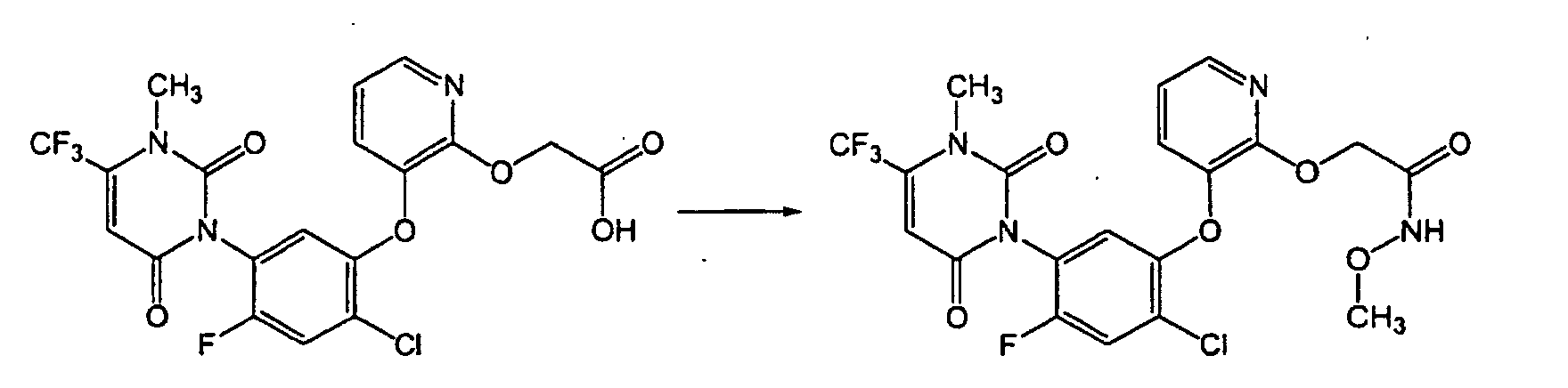
1H-NMR (CDCl3, 300 MHz) δ(ppm): 3.52 (s, 3H), 3.74 (s, 3H), 4.87 (s, 2H), 6.32 (s, 1H), 6.71 (d, 1H, J = 6.0Hz), 6.99 (dd, 1H, J = 7.6, 5.0 Hz), 7.38 (dd, 1H, J = 7.6, 1.7Hz), 7.44 (d, 1H, J = 8.7 Hz), 8.00 (dd, 1H, J = 5.0, 1.7 Hz), 8.7-9.0 (bs, 1H).
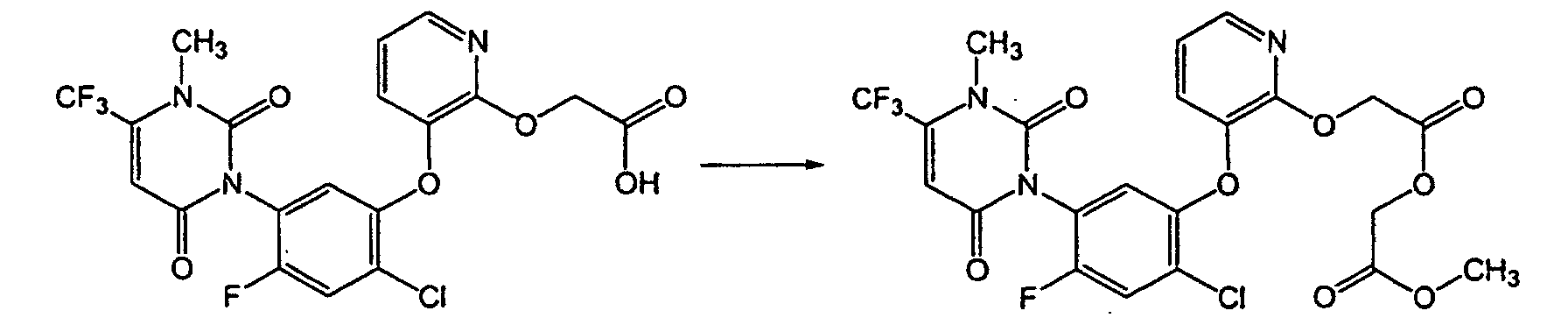
1H-NMR (CDCl3, 300 MHz) δ(ppm): 3.50 (s, 3H), 3.74 (s, 3H), 4.65 (s, 2H), 5.01 (d, 1H, J = 16.2 Hz), 5.09 (d, 1H, J = 16.2 Hz), 6.28 (s, 1H), 6.88 (d, 1H, J = 6.7 Hz), 6.93 (dd, 1H, J = 7.8, 4.9 Hz), 7.32 (dd, 1H, J = 7.8, 1.4 Hz), 7.37 (d, 1H, J = 9.0 Hz), 7.93 (dd, 1H, J = 4.9, 1.4 Hz).
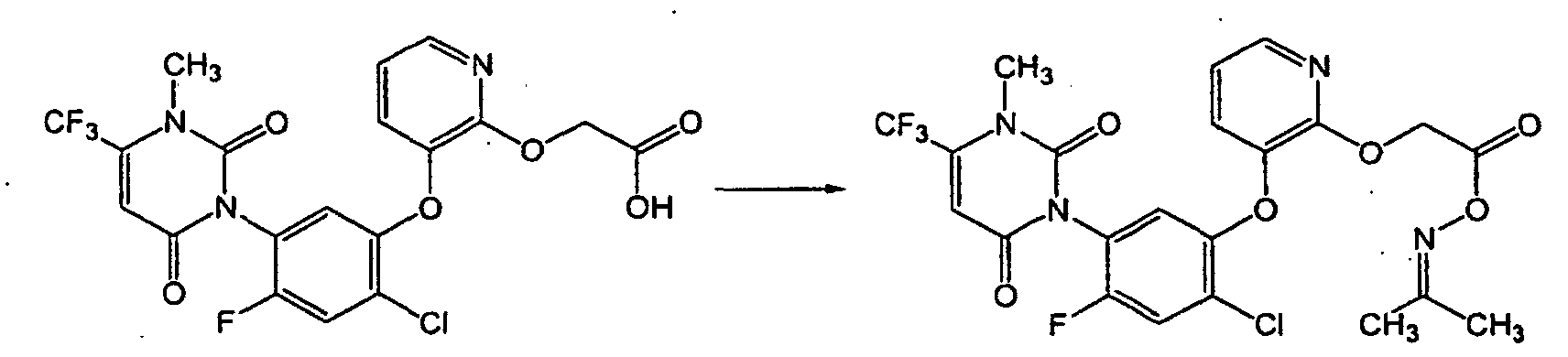
1H-NMR (CDCl3, 300 MHz) δ(ppm): 1.94 (s, 3H), 2.01 (s, 3H), 3.49 (s, 3H), 5.0-5.2 (m, 2H), 6.27 (s, 1H), 6.92 (dd, 1H, J = 7.8, 4.9 Hz), 6.98 (d, 1H, J = 6.5 Hz), 7.3-7.4 (m, 2H), 7.92 (d, 1H, J = 4.9 Hz).

1H-NMR (CDCl3, 250 MHz) δ(ppm): 3.52 (q, 3H, J = 1.1 Hz), 5.01 (s, 2H), 6.31 (s, 1H), 6.81 (d, 1H, J = 6.0 Hz), 6.9-7.1 (m, 2H), 7.1-7.4 (m, 7H), 7.78 (d, 1H, J = 8.7 Hz).

1H-NMR (CDCl3, 250 MHz) δ(ppm): 3.50 (q, 3H, J = 1.2 Hz), 5.06 (s, 2H), 6.29 (s, 1H), 6.57 (dd, 1H, J = 8.5, 1.6 Hz), 6.9-7.0 (m, 1H), 7.0-7.1 (m, 3H), 7.2-7.4 (m, 6H).

m.p.: 50.8°C.

m.p.: 55.4°C.

1H-NMR (CDCl3, 250 MHz) δ(ppm): 1.53 (d, 3H, J = 6.9 Hz), 3.51 (s, 3H), 4.76-4.83 (m, 1H), 6.32 (d, 1H, J = 3.5 Hz), 6.63-6.67 (m, 1H), 7.0-7.1 (m, 2H), 7.1-7.2 (m, 2H), 7.38 (d, 1H, J = 9.0 Hz).

1H-NMR (CDCl3, 250 MHz) δ(ppm): 3.50 (d, 3H, J = 1.2 Hz), 4.66 (s, 2H), 6.31 (s, 1H), 6.69 (d, 1H, J = 6.5 Hz), 6.98-7.20 (m, 4H), 7.38 (d, 1H, J = 8.8Hz).

1H-NMR (250 MHz, CDCl3) δ(ppm): 2.16 (3H, s), 3.78 (3H, s), 6.85-7.22 (4H, m), 7.75-7.83 (1H, br), 7.83 (1H, d, J = 10.7 Hz), 8.04 (1H, d, J = 6.9 Hz).
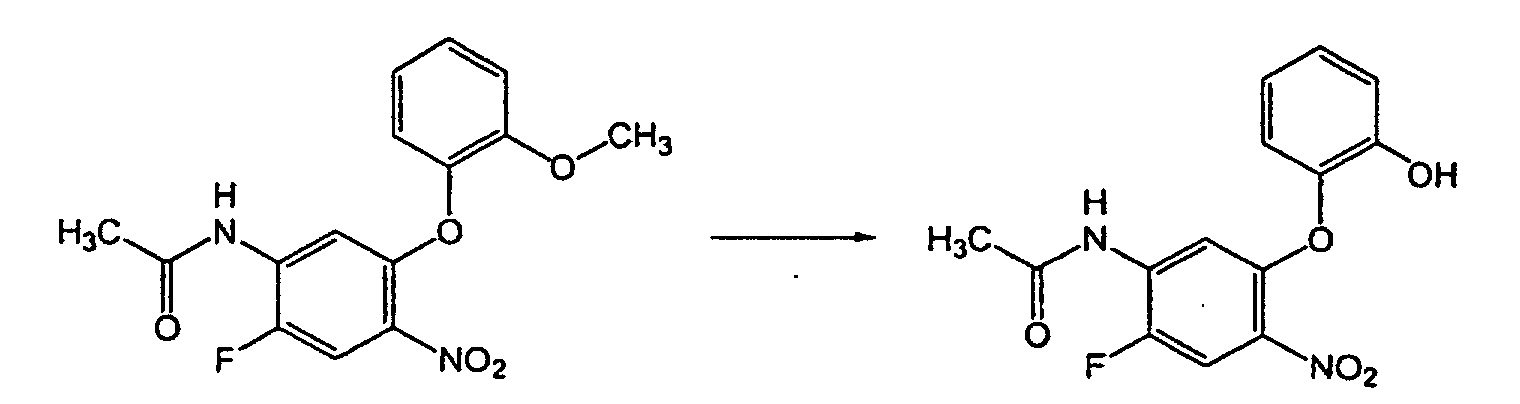
1H-NMR (300 MHz, CDCl3) δ(ppm): 2.20 (3H, s), 6.33 (1H, bs), 6.86-7.23 (4H, m), 7.63 (1H, bs), 7.81 (1H, d, J = 10.3 Hz), 8.34 (1H, d, J = 6.7 Hz).
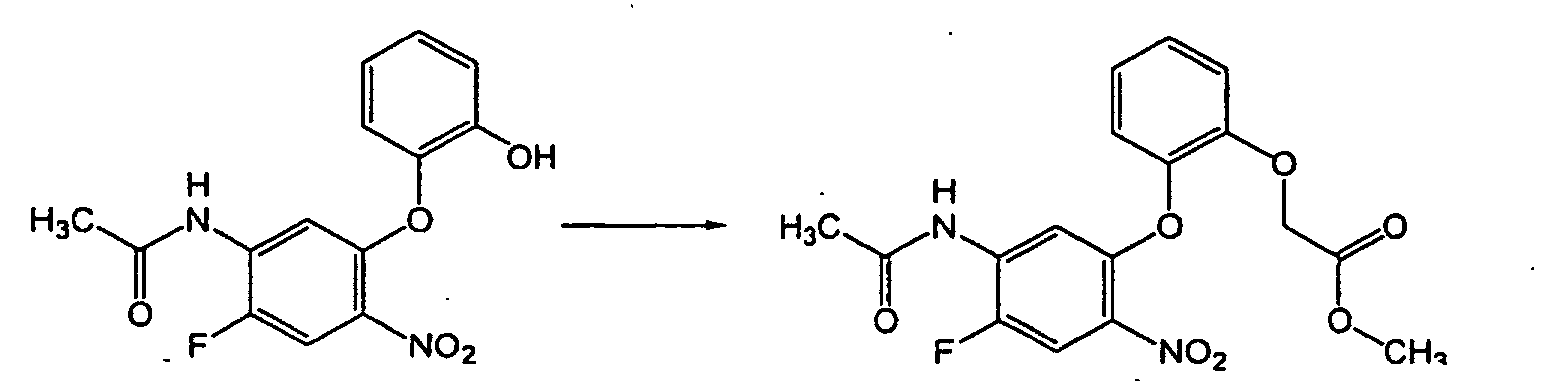
1H-NMR (250 MHz, CDCl3) δ(ppm): 2.16 (3H, s), 3.73 (3H, s), 4.62 (2H, s), 6.95-7.26 (4H, m), 7.71 (1H, bs), 7.85 (1H, d, J = 10.7 Hz), 8.06 (1H, d, J = 6.9 Hz).
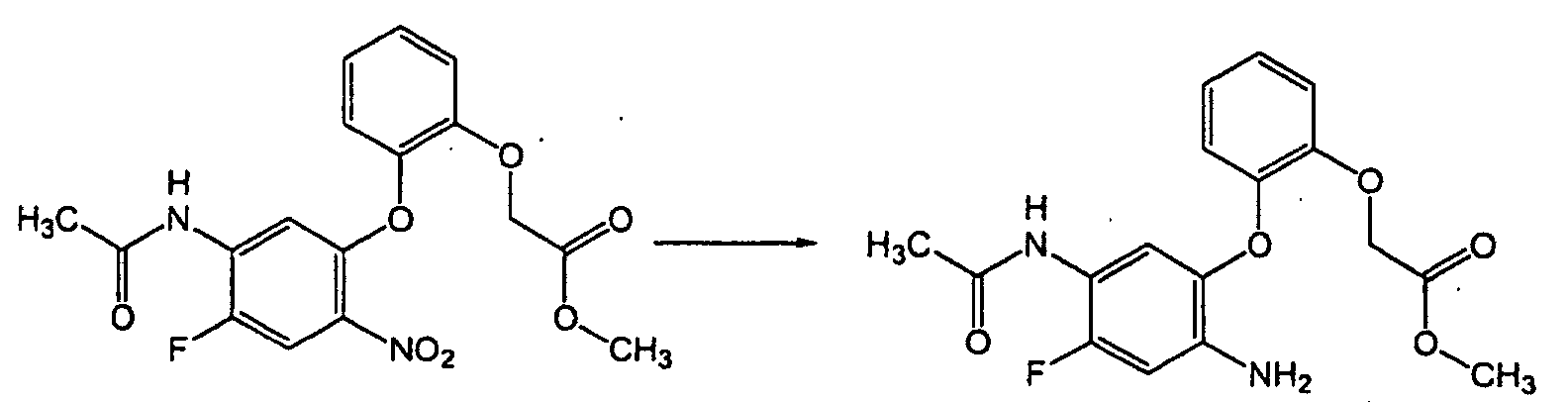
1H-NMR (250 MHz, CDCl3) δ(ppm): 2.11 (3H, s), 3.31-4.15 (2H, br), 3.76 (3H, s), 4.71 (2H, s), 6.54 (1H, d, J = 11.9 Hz), 6.90-7.01 (4H, m), 7.17 (1H, bs), 7.69 (1H, d, J = 7.5Hz).

m.p.: 138.9°C.
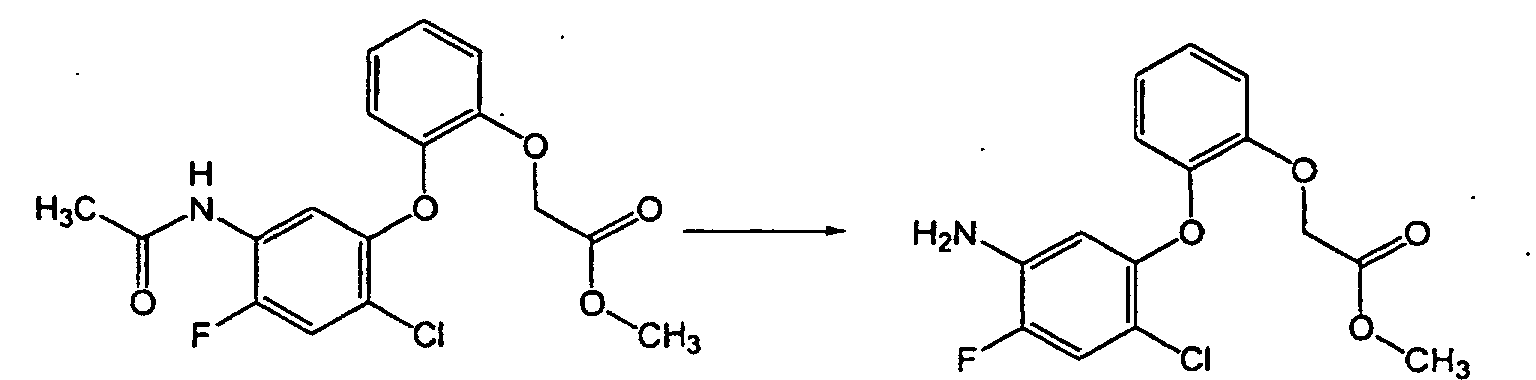
1H-NMR (250 MHz, CDCl3) δ(ppm): 3.74 (3H, s), 3.86 (2H, br), 4.70 (2H, s), 6.36 (1H, d, J = 8.21 Hz), 6.83-7.09 (5H, m).
m.p.: 150°C.

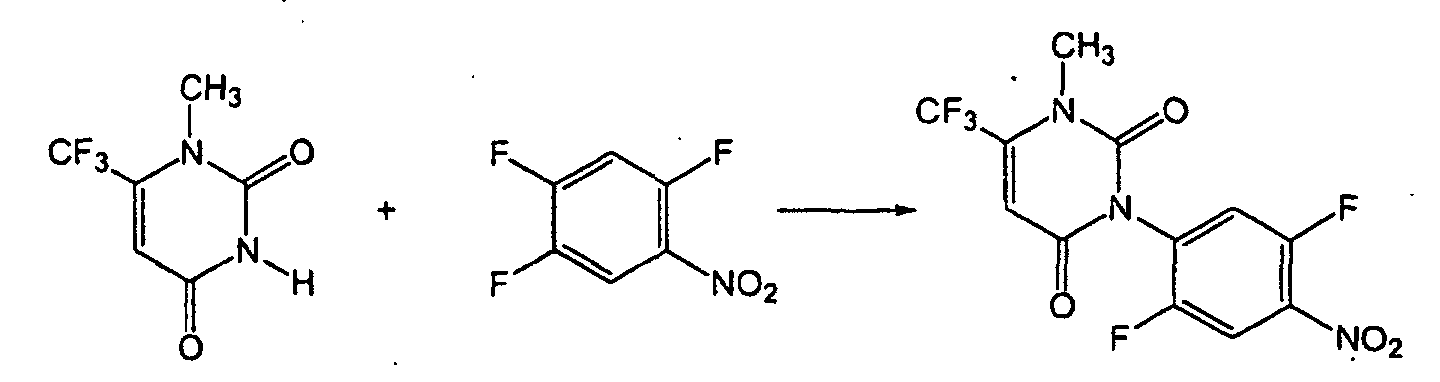
1H-NMR (CDCl3, 300 MHz) δ(ppm): 3.50 (q, 3H, J = 1.0 Hz), 3.70 (s, 3H), 4.63 (s, 2H), 6.28 (s, 1H), 6.88 (d, 1H, J = 8.4 Hz), 6.93 (d, 1H, J = 6.0 Hz), 7.0-7.1 (m, 1H), 7.1-7.3 (m, 2H), 7.87 (d, 1H, J = 8.7 Hz).
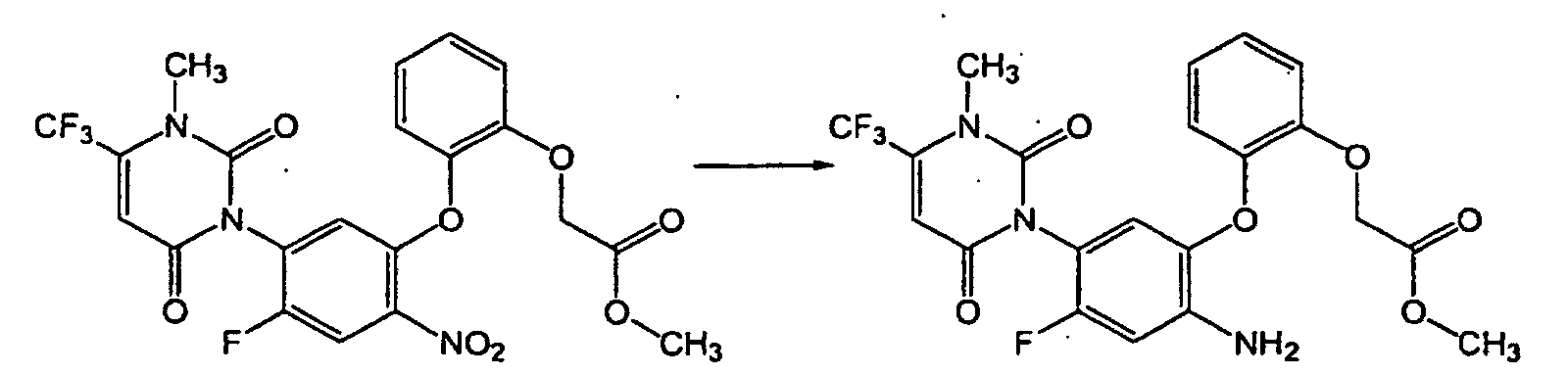
1H-NMR (CDCl3, 250 MHz) δ(ppm): 3.51 (q, 3H, J = 0.9 Hz), 3.76 (s, 3H), 4.2-4.4 (b, 2H), 4.69 (s, 2H), 6.29 (s, 1H), 6.6-6.7 (m, 2H), 6.9-7.1 (m, 4H).
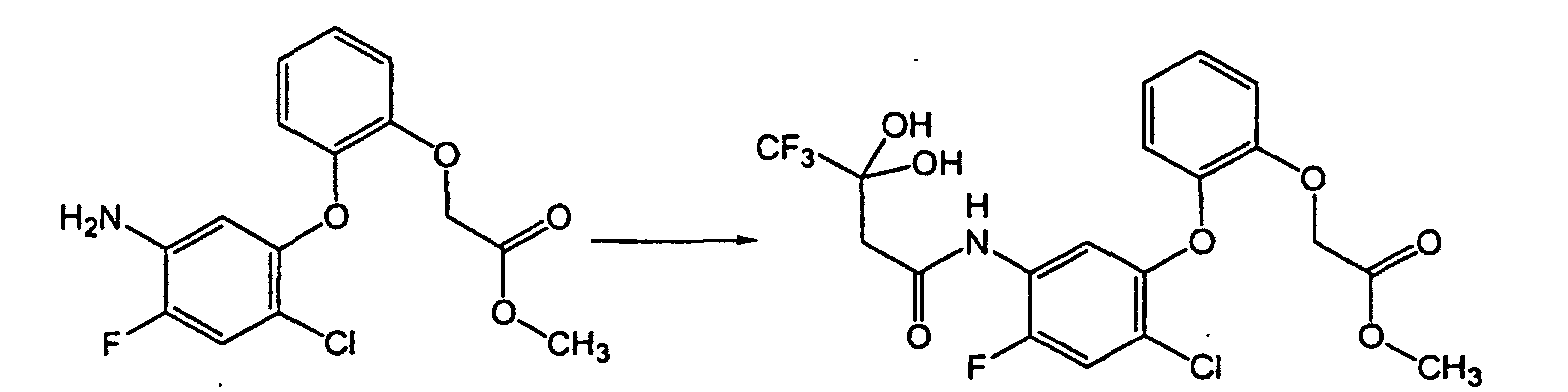
m.p.: 165.3°C.

1H-NMR (CDCl3, 250 MHz) δ(ppm): 3.72 (3H, s), 4.65 (2H, s), 6.16 (1H, s), 6.77 (1H, d, J = 6.6 Hz), 6.89-7.15 (4H, m), 7.36 (1H, d, J = 8.9 Hz).
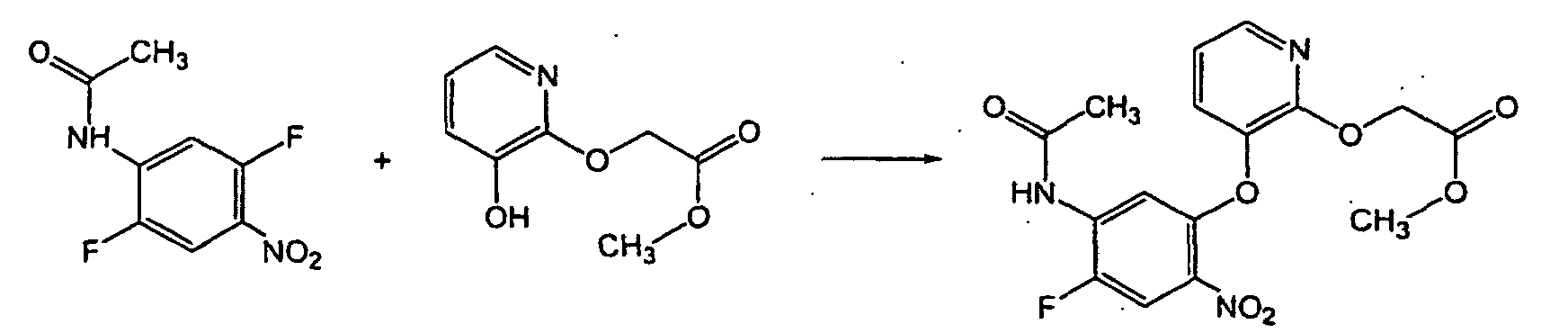
1H-NMR (CDCl3, 250 MHz) δ(ppm): 2.21 (s, 3H), 3.72 (s, 3H), 4.90 (s, 2H), 6.96 (dd, 1H, J = 7.8, 5.0 Hz), 7.35 (dd, 1H, J = 7.8, 1.6 Hz), 7.5-7.6 (b, 1H), 7.90 (d, 1H, J = 10.6 Hz), 7.97 (dd, 1H, J = 5.0, 1.6 Hz), 8.15 (d, 1H, J = 6.8Hz).

1H-NMR(CDCl3, 250 MHz) δ(ppm): 2.15 (s, 3H), 3.77 (s, 3H), 3.9-4.1 (b, 2H), 5.03 (s, 2H), 6.56 (d, 1H, J = 11.8 Hz), 6.84 (dd, 1H, J = 7.9, 5.0 Hz), 7.0-7.2 (b, 1H), 7.14 (dd, 1H, J = 7.9, 1.5 Hz), 7.80 (dd, 1H, J = 5.0, 1.5 Hz), 7.84 (d, 1H, J = 7.6 Hz).

1H-NMR (CDCl3, 250 MHz) δ(ppm): 2.18 (s, 3H), 3.75 (s, 3H), 4.98 (s, 2H), 6.87 (dd, 1H, J = 7.8, 4.9 Hz), 7.08 (dd, 1H, J = 7.8, 1.4 Hz), 7.23 (d, 1H, J = 10.3 Hz), 7.3-7.4 (b, 1H), 7.86 (dd, 1H, J = 4.9, 1.4 Hz) 8.07 (d, 1H, J = 7.3 Hz).
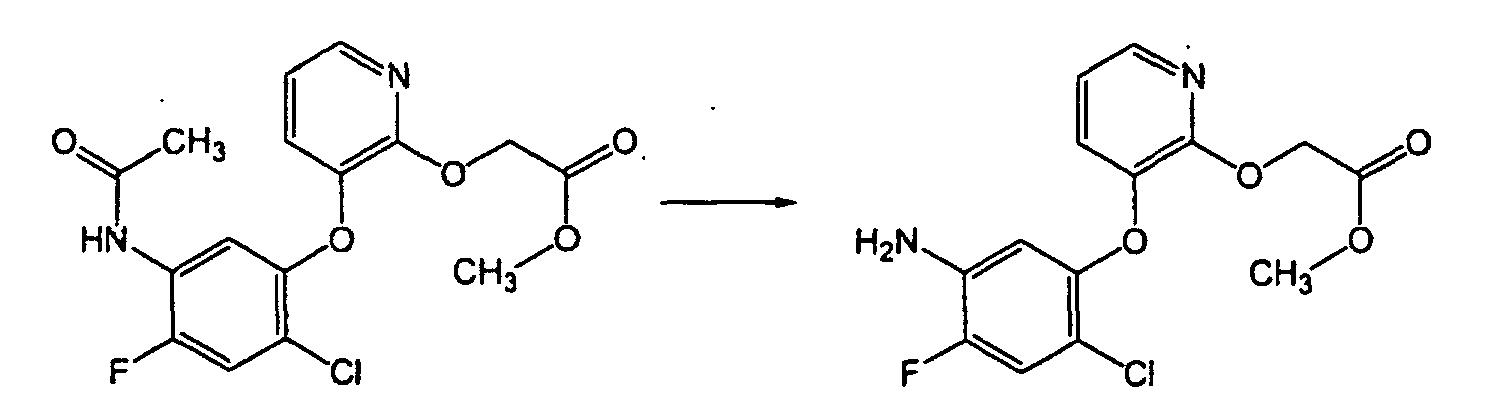
1H-NMR (CDCl3, 250 MHz) δ(ppm): 3.77 (s, 3H), 3.7-3.9 (b, 2H), 5.00 (s, 2H), 6.49 (d, 1H, J = 8.2 Hz), 6.88 (dd, 1H, J = 7.9, 5.0 Hz), 7.08 (d, 1H, J = 10.3 Hz), 7.10 (dd, 1H, J = 7.9, 1.6 Hz), 7.87 (dd, 1H, J = 5.0, 1.6 Hz).
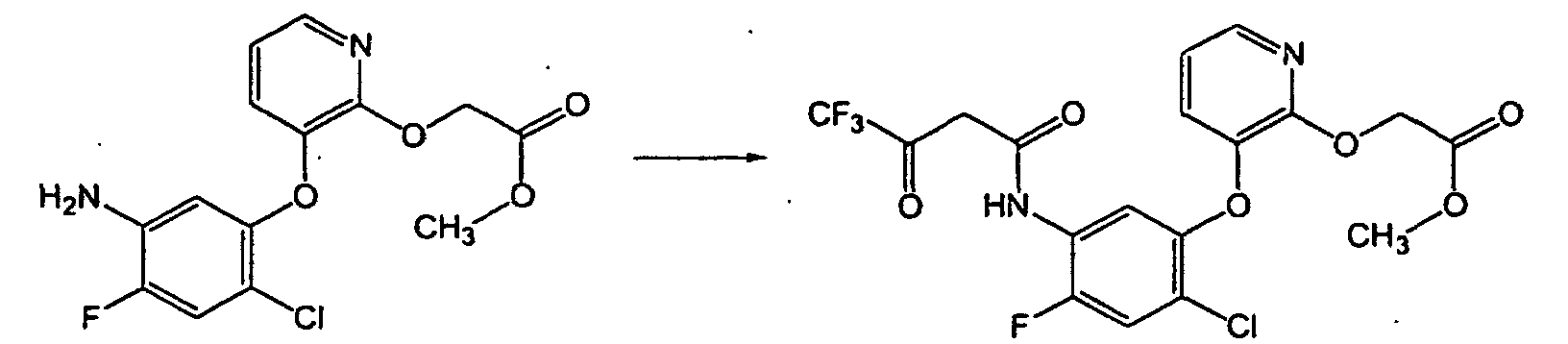
m.p.: 158.8°C.

1H-NMR (CDCl3, 250 MHz) δ(ppm): 3.70 (s, 3H), 4.93 (s, 2/2H), 4.94 (s, 2/2H), 6.19(s, 1H), 6.9-7.0 (m, 2H), 7.3-7.4 (m, 1H), 7.38 (d, 1H, J = 8.9 Hz); 7.93 (dd, 1H, J = 4.9, 1.6 Hz);
m.p.: 75.3°C.
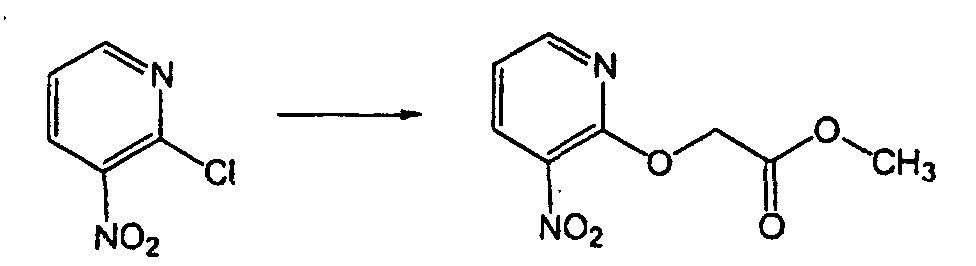
m.p.: 61.5°C.
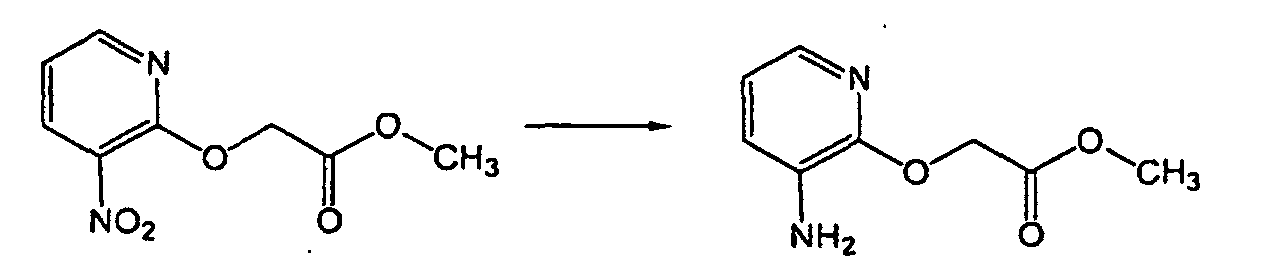
1H-NMR(CDCl3, 250 MHz) δ(ppm): 3.77 (s, 3H), 3.85 (bs, 2H), 4.95 (s, 2H), 6.75 (dd, 1H, J = 7.5, 5.0 Hz), 6.91 (dd, 1H, J = 7.5, 1.6 Hz), 7.50 (dd, 1H, J = 5.0, 1.6 Hz).
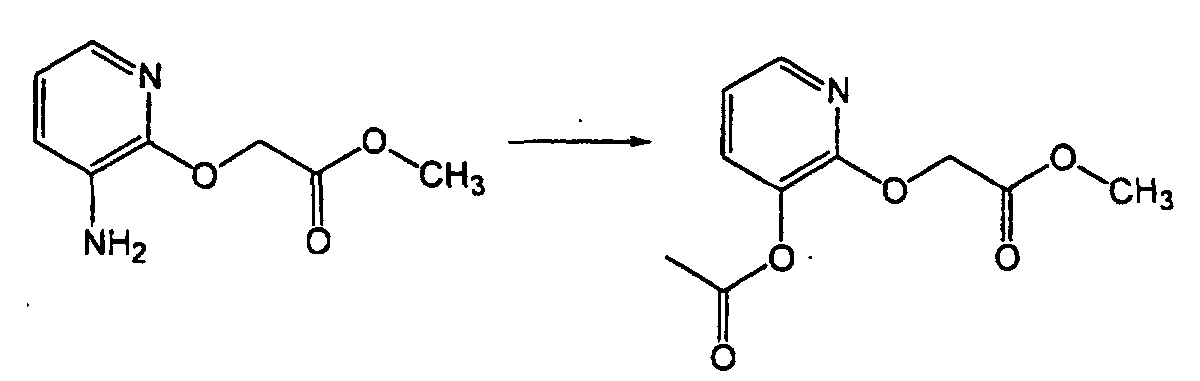
1H-NMR (CDCl3, 250 MHz) δ(ppm): 2.33 (s, 3H), 3.75 (s, 3H), 4.92 (s, 2H), 6.93 (dd, 1H, J = 7.7, 5.0 Hz), 7.38 (dd, 1H, J = 7.7, 1.6 Hz), 7.97 (dd, 1H, J = 5.0, 1.6 Hz).

1H-NMR (CDCl3, 250 MHz) δ(ppm): 3.78 (s, 3H), 4.98 (s, 2H), 6.84 (dd, 1H, J = 7.7, 5.0 Hz), 7.17 (dd, 1H, J = 7.7, 1.3 Hz), 7.63 (dd, 1H, J = 5.0, 1.3 Hz).

1H-NMR (CDCl3, 250 MHz) δ(ppm): 3.51 (q, 3H, J = 1.1 Hz), 3.68 (s, 3H), 4.86 (d, 1H), 4.98 (d, 1H), 6.29 (s, 1H), 6.99 (dd, 1H, J = 7.8, 4.9 Hz), 7.11 (d, 1H, J = 6.0 Hz), 7.51 (dd, 1H, J = 7.8, 1.6 Hz), 7.87 (d, 1H, J = 8.6 Hz), 7.99 (dd, 1H, J = 4.9, 1.6 Hz).

1H-NMR (CDCl3, 250 MHz) δ(ppm): 3.52 (s, 3H), 3.74 (s, 3H), 4.29 (bs, 2H), 5.00 (s, 2H), 6.30 (s, 1H), 6.61 (d, 1H, J = 11.3 Hz), 6.76 (d, 1H, J = 6.8 Hz), 6.86 (dd, 1H, J = 7.8, 5.0 Hz), 7.22 (dd, 1H, J = 7.8, 1.1 Hz), 7.82 (dd, 1H, J = 5.0, 1.1 Hz).
1H-NMR (CDCl3, 300 MHz) δ(ppm): 1.70 (d, 3H, J = 7.0 Hz), 3.74 (s, 3H), 5.46 (q, 1H, J = 7.0 Hz), 7.07 (dd, 1H, J = 7.8, 5.0 Hz), 8.2-8.4 (m, 2H).
1H-NMR (CDCl3, 300 MHz) δ(ppm): 1.63 (d, 3H, J = 6.8 Hz), 3.74 (s, 3H), 3.84 (bs, 2H), 5.38 (d, 1H, J = 6.8 Hz), 6.72 (dd, 1H, J = 7.7, 5.0 Hz), 6.90 (dd, 1H, J = 7.7, 1.4 Hz), 7.48 (dd, 1H, J = 5.0, 1.4 Hz).
1H-NMR (CDCl3, 300 MHz) δ(ppm): 1.60 (d, 1H, J = 7.0 Hz), 2.33 (s, 3H), 3.73 (s, 3H), 5.34 (q, 1H, J = 7.0 Hz), 6.91 (dd, 1H, J = 7.6, 5.0 Hz), 7.36 (dd, 1H, J = 7.6, 1.5 Hz), 7.97 (dd, 1H, J = 5.0, 1.5 Hz).
1H-NMR (CDCl3, 300 MHz) δ(ppm): 1.64 (d, 1H, J = 7.0 Hz), 3.75 (s, 3H), 5.45 (q, 1H, J = 7.0 Hz), 6.0-6.2 (bs, 1H), 6.83 (dd, 1H, J = 7.7, 5.0 Hz), 7.15 (dd, 1H, J = 7.7, 1.5 Hz), 7.63 (dd, 1H, J = 5.0, 1.5 Hz).
1H-NMR (CDCl3, 300 MHz) δ(ppm): 1.45 (d, 3/2H, J = 7.1 Hz), 1.46 (d, 3/2H, J = 7.1 Hz), 3.49 (s, 3/2H), 3.51 (s, 3/2H), 3.66 (s, 3H), 5.29 (q, 1/2H, J = 7.1Hz), 5.31 (q, 1/2H, J = 7.1 Hz), 6.28 (s, 1/2H), 6.30 (s, 1/2H), 6.9-7.0 (m, 1H), 7.10 (d, 1/2H, J = 6.1 Hz), 7.17 (d, 1/2H, J = 6.1 Hz), 7.4-7.6 (m, 1H), 7.8-7.9 (m, 1H), 7.9-8.0 (m, 1H).
1H-NMR (CDCl3, 300 MHz) δ(ppm): 1.61 (d, 3H, J = 7.1 Hz), 3.52 (s, 3H), 3.72 (s, 3H), 4.28 (bs, 2H), 5.40 (q, 1/2H, J = 7.1 Hz), 5.41 (q, 1/2H, J = 7.1 Hz), 6.30 (s, 1H), 6.62 (d, 1H, J = 10.9 Hz), 6.7-6.8 (m, 1H), 6.8-6.9 (m, 1H), 7.2-7.3 (m, 1H), 7.7-7.9 (m, 1H).
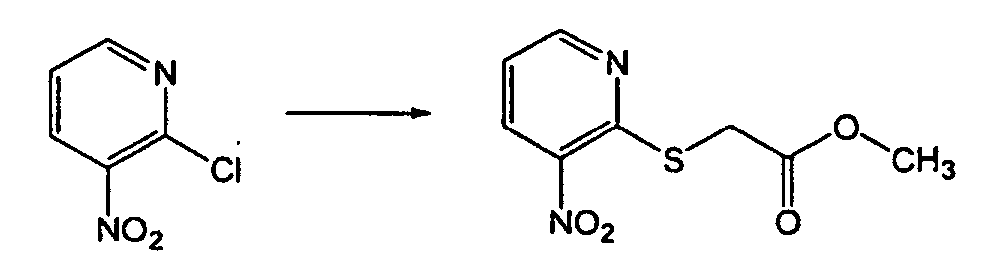
1H-NMR (CDCl3, 300 MHz) δ(ppm): 3.75 (s, 3H), 3.98 (s, 2H), 7.24 (dd, 1H, J = 8.0, 4.8 Hz); 8.54 (dd, 1H, J = 8.0, 1.8 Hz), 8.66 (dd, 1H, J = 4.8, 1.8 Hz).
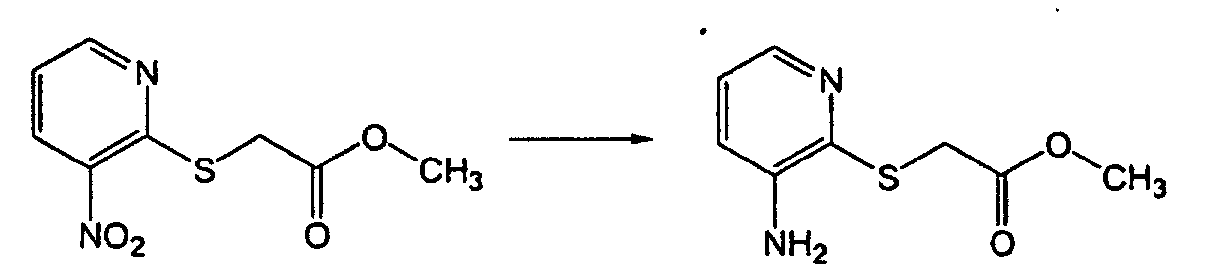
1H-NMR (CDCl3, 250 MHz) δ(ppm): 3.73 (s, 3H), 4.03 (s, 2H), 6.2-6.4 (b, 1H), 7.06 (dd, 1H, J = 8.0, 4.9 Hz), 7.1-7.2 (bs, 1H), 7.47 (dd, 1H, J = 8.0, 1.4 Hz), 8.05 (dd, 1H, J = 4.9, 1.4 Hz).

1H-NMR (CDCl3, 250 MHz) δ(ppm): 2.36 (s, 3H), 3.74 (s, 3H), 4.00 (s, 2H), 7.07 (dd, 1H, J = 8.0, 4.7 Hz), 7.37 (dd, 1H, J = 8.0, 1.5 Hz), 8.29 (dd, 1H, J = 4.7, 1.5 Hz).
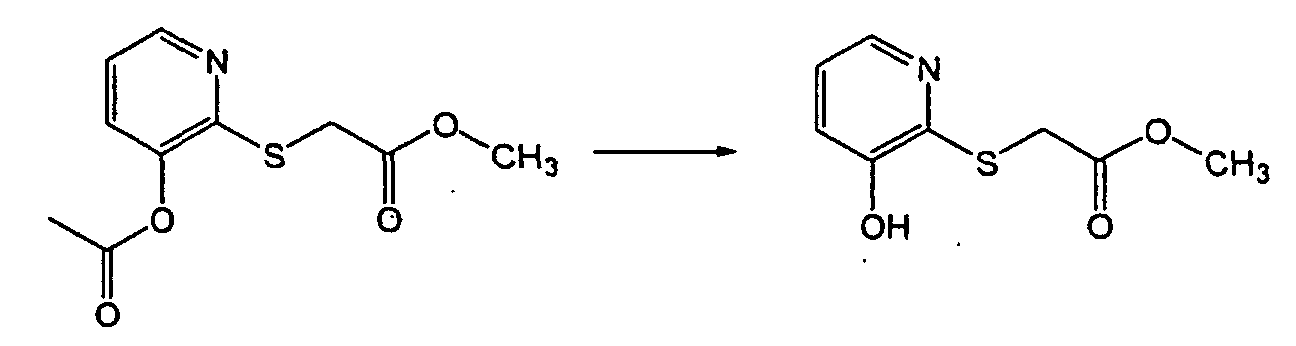
1H-NMR (CDCl3, 250 MHz) δ(ppm): 3.74 (s, 3H), 3.92 (s, 2H), 7.02 (dd, 1H, J = 8.1, 4.6 Hz), 7.13 (d, 1H, J = 8.1 Hz), 8.06 (d, 1H, J = 4.6 Hz).
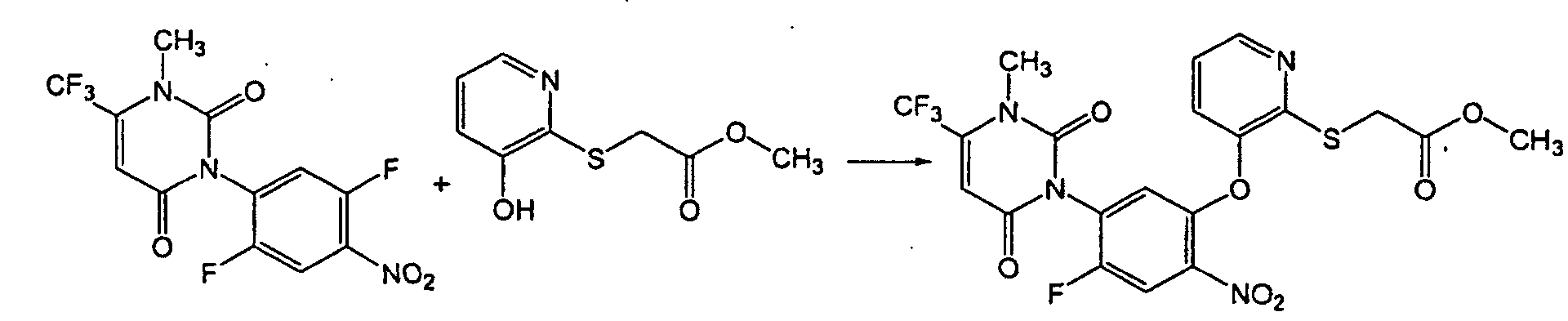
1H-NMR (CDCl3, 300 MHz) δ(ppm): 3.54 (s, 3H), 3.73 (s, 3H), 4.01 (s, 2H), 6.33 (s, 1H), 7.0-7.1 (m, 2H), 7.18 (dd, 1H, J = 7.8, 1.3 Hz), 7.92 (d, 1H, J = 8.5 Hz), 8.28 (dd, 1H, J = 4.4, 1.3 Hz).
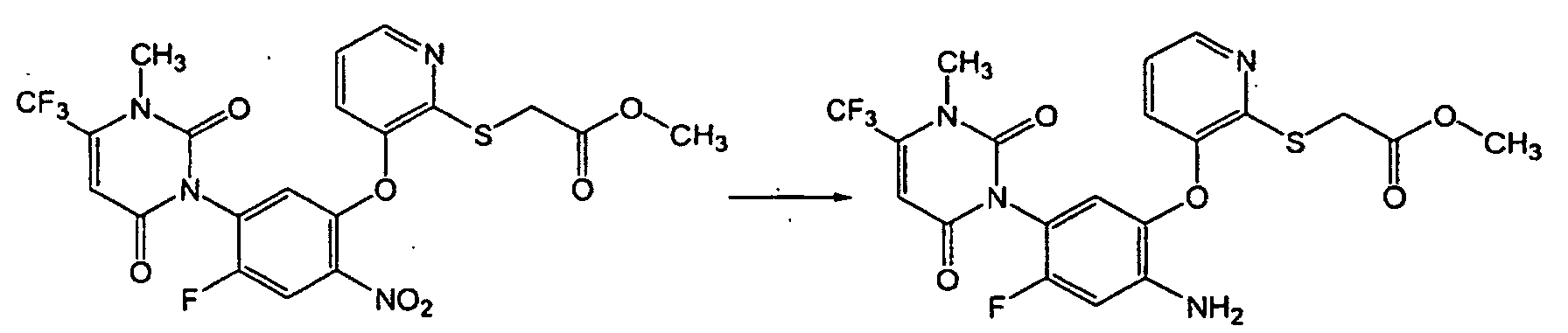
1H-NMR (CDCl3, 250 MHz) δ(ppm): 3.53 (s, 3H), 3.75 (s, 3H), 4.02 (s, 2H), 4.18 (bs, 2H), 6.32 (s, 1H), 6.66 (d, 1H, J = 10.7 Hz), 6.82 (d, 1H, J = 6.7 Hz), 6.95 (dd, 1H, J = 8.4, 4.9 Hz), 7.03 (dd, 1H, J = 8.4, 1.4 Hz), 8.14 (dd, 1H, J = 4.9, 1.4 Hz).







| Test compound | Application amount (g/ha) | Desiccation effect |
| Compound a-5 | 10 | 5 |
| Compound a-6 | 10 | 5 |
Claims (15)
- A desiccant for a crop plant, which comprises as an active ingredient, a compound of formula (I):wherein X is CH or nitrogen; Z is halogen; A is oxygen, sulfur, or NH; R1 is hydroxyl, C1-C7 alkoxy, C3-C7 alkenyloxy, C3-C7 alkynyloxy, C5-C7 cycloalkoxy, {(C1-C7 alkoxy)carbonyl} C1-C3 alkoxy, (C1-C7 alkylamino)oxy, {di(C1-C7 alkyl)amino}oxy, (C3-C7 alkylideneamino)oxy, C1-C7 alkylamino, di(C1-C7 alkyl)amino, C3-C7 alkenylamino, C3-C7 alkynylamino, C5-C7 cycloalkylamino, {(C1-C7 alkoxy)carbonyl} C1-C3 alkylamino, or (C1-C7 alkoxy)amino; R2 is hydrogen or methyl; and R3 is hydrogen, halogen, C1-C3 alkyl, or C1-C3 alkoxy.

- The desiccant for a potato, sunflower, soybean, rape or sorghum plant, which comprises as the active ingredient, the compound of formula (I) according to claim 1.
- The desiccant for a potato plant, which comprises as the active ingredient, the compound of formula (I) according to claim 1.
- The desiccant for a sunflower plant, which comprises the active ingredient, the compound of formula (I) according to claim 1.
- A method for desiccating a crop plant, which comprises applying the compound of formula (I) according to claim 1 to the crop plant prior to harvest.
- The method for desiccating a potato, sunflower, soybean, rape or sorghum plant, which comprises applying the compound of formula (I) according to claim 1 to the plant prior to harvest.
- The method for desiccating a potato plant, which comprises applying the compound of formula (I) according to claim 1 to a aboveground part of the plants prior to harvest.
- The method for desiccating a sunflower plant, which comprises applying the compound of formula (I) according to claim 1 to a aboveground part of the sunflower plant prior to harvest.
- The method according to any one of claims 5 to 8, wherein the compound of formula (I) is applied in an amount of 1 to 500 g per 1 ha.
- A method for harvesting a crop, which comprises a step of applying a compound of formula (I) according to claim 1 to the crop plant.
- The method for harvesting a crop selecting from a group of potato, sunflower, soybean, rape and sorghum, which comprises a step of applying the compound of formula (I) according to claim 1 to the crop plant.
- The method for harvesting a potato, which comprises a step of applying the compound of formula (I) according to claim 1 to the potato plant.
- The method for harvesting a sunflower, which comprises a step of applying the compound of formula (I) according to claim 1 to the sunflower plant.
- The method according to any one of claims 10 to 13, wherein the compound of formula (I) is applied in an amount of 1 to 500 g per 1 ha.
- Use of a compound of formula (I) according to claim 1 as a desiccant.
Priority Applications (1)
| Application Number | Priority Date | Filing Date | Title |
|---|---|---|---|
| EP06018718A EP1736052B1 (en) | 2001-05-31 | 2001-05-31 | Stem/leaf desiccant |
Applications Claiming Priority (1)
| Application Number | Priority Date | Filing Date | Title |
|---|---|---|---|
| PCT/JP2001/004631 WO2002098228A1 (en) | 2001-05-31 | 2001-05-31 | Stem/leaf desiccant |
Related Child Applications (1)
| Application Number | Title | Priority Date | Filing Date |
|---|---|---|---|
| EP06018718A Division EP1736052B1 (en) | 2001-05-31 | 2001-05-31 | Stem/leaf desiccant |
Publications (3)
| Publication Number | Publication Date |
|---|---|
| EP1397958A1 true EP1397958A1 (en) | 2004-03-17 |
| EP1397958A4 EP1397958A4 (en) | 2005-05-18 |
| EP1397958B1 EP1397958B1 (en) | 2007-01-10 |
Family
ID=11737388
Family Applications (2)
| Application Number | Title | Priority Date | Filing Date |
|---|---|---|---|
| EP06018718A Expired - Lifetime EP1736052B1 (en) | 2001-05-31 | 2001-05-31 | Stem/leaf desiccant |
| EP01934478A Expired - Lifetime EP1397958B1 (en) | 2001-05-31 | 2001-05-31 | Stem/leaf desiccant |
Family Applications Before (1)
| Application Number | Title | Priority Date | Filing Date |
|---|---|---|---|
| EP06018718A Expired - Lifetime EP1736052B1 (en) | 2001-05-31 | 2001-05-31 | Stem/leaf desiccant |
Country Status (6)
| Country | Link |
|---|---|
| US (2) | US7109148B2 (en) |
| EP (2) | EP1736052B1 (en) |
| BR (1) | BR0117036A (en) |
| CA (1) | CA2447845C (en) |
| DE (2) | DE60141927D1 (en) |
| WO (1) | WO2002098228A1 (en) |
Cited By (8)
| Publication number | Priority date | Publication date | Assignee | Title |
|---|---|---|---|---|
| WO2018019842A1 (en) * | 2016-07-29 | 2018-02-01 | Basf Se | Method for controlling ppo resistant weeds |
| US20190150440A1 (en) * | 2016-07-29 | 2019-05-23 | Sumitomo Chemical Company, Limited | Method for controlling pests of farm crops |
| WO2021013799A1 (en) | 2019-07-22 | 2021-01-28 | Bayer Aktiengesellschaft | Substituted n-phenyl uracils, salts thereof and their use as herbicidal agents |
| WO2021013800A1 (en) | 2019-07-22 | 2021-01-28 | Bayer Aktiengesellschaft | Substituted n-phenyl-n-aminouarcils and salts thereof and use thereof as herbicidal agents |
| WO2021063821A1 (en) * | 2019-10-01 | 2021-04-08 | Bayer Aktiengesellschaft | Pyrimidinedione derivatives |
| WO2022043205A1 (en) | 2020-08-24 | 2022-03-03 | Bayer Aktiengesellschaft | Substituted n-phenyluracils and salts thereof, and use thereof as herbicidal active substances |
| WO2024078906A1 (en) | 2022-10-10 | 2024-04-18 | Bayer Aktiengesellschaft | Substituted n-phenyluracils and salts thereof, and use thereof as herbicidal active substances |
| WO2025124942A1 (en) | 2023-12-12 | 2025-06-19 | BASF Agro B.V. | Process for preparing a saflufenacil intermediate |
Families Citing this family (13)
| Publication number | Priority date | Publication date | Assignee | Title |
|---|---|---|---|---|
| WO2002098228A1 (en) * | 2001-05-31 | 2002-12-12 | Sumitomo Chemical Company, Limited | Stem/leaf desiccant |
| JP2003104809A (en) * | 2001-09-28 | 2003-04-09 | Sumitomo Chem Co Ltd | Herbicide composition |
| US7578401B2 (en) * | 2006-03-10 | 2009-08-25 | Brant Andrew Schnitzer | Sink rack |
| AU2008263925A1 (en) * | 2007-06-12 | 2008-12-18 | Basf Se | Use of fungicides for making the phenological development of oil plants more coherent |
| US10863743B2 (en) | 2016-07-29 | 2020-12-15 | Basf Se | Method for controlling PPO resistant weeds |
| US10844019B2 (en) * | 2016-08-26 | 2020-11-24 | Sumitomo Chemical Company, Limited | 1-phenyl-3-carbamoyl urea compound, and use thereof |
| CN109563041B (en) * | 2016-08-26 | 2021-12-07 | 住友化学株式会社 | 1-acetyl-3-phenylurea compounds and uses thereof |
| AU2017316911B2 (en) * | 2016-08-26 | 2020-12-17 | Sumitomo Chemical Company, Limited | 3-pyridyloxyphenyldihydrouracil compound and use thereof |
| BR112020003589B8 (en) * | 2017-08-24 | 2023-03-07 | Sumitomo Chemical Co | AGRICULTURAL MIXTURE COMPRISING A PROTOPORPHYRINOGEN OXIDASE INHIBITOR COMPOUND, METHOD FOR ENHANCED ACTIVITY OF A PROTOPORPHYRINOGEN OXIDASE INHIBITOR COMPOUND, AND METHOD FOR CONTROLLING UNWANTED GROWTH OF RICE OR PEANUT |
| AR115690A1 (en) * | 2018-07-05 | 2021-02-17 | Sumitomo Chemical Co | URACIL COMPOUNDS AND COMPOSITION FOR THE CONTROL OF HARMFUL ARTHROPODS INCLUDING THESE COMPOUNDS |
| WO2020013279A1 (en) * | 2018-07-12 | 2020-01-16 | 住友化学株式会社 | Uracil compound and use of same |
| CN111587669B (en) * | 2020-06-08 | 2022-07-29 | 湖南省博世康中医药有限公司 | Automatic traditional Chinese medicinal material acquisition method |
| AU2021392179A1 (en) * | 2020-12-01 | 2023-06-29 | Sumitomo Chemical Company, Limited | Liquid agrochemical composition |
Family Cites Families (11)
| Publication number | Priority date | Publication date | Assignee | Title |
|---|---|---|---|---|
| DE69204909T2 (en) * | 1991-06-07 | 1996-02-08 | Sumitomo Chemical Co | Amino-urazil derivatives, their preparation and use. |
| DE4131038A1 (en) | 1991-09-20 | 1993-04-01 | Basf Ag | SUBSTITUTED 3-PHENYLURAZILES |
| DE4139952A1 (en) | 1991-12-04 | 1993-06-09 | Bayer Ag, 5090 Leverkusen, De | N-ARYL NITROGEN HETEROCYCLES |
| AU750045B2 (en) | 1998-07-09 | 2002-07-11 | Bayer Aktiengesellschaft | Substituted phenyl uracils |
| IL139899A (en) | 1999-12-07 | 2005-06-19 | Sumitomo Chemical Co | Uracil compounds and use thereof |
| AU1223701A (en) | 1999-10-22 | 2001-05-08 | Procter & Gamble Company, The | Shoe bags for use in laundering processes |
| DE19954312A1 (en) * | 1999-11-11 | 2001-05-17 | Bayer Ag | Substituted phenyluracile |
| IL167957A (en) * | 2000-02-04 | 2009-07-20 | Sumitomo Chemical Co | Hydroxypyridine compound |
| AU2001262676B2 (en) * | 2001-05-31 | 2007-01-25 | Sumitomo Chemical Company, Limited | Plant growth regulators for cotton harvest |
| WO2002098228A1 (en) * | 2001-05-31 | 2002-12-12 | Sumitomo Chemical Company, Limited | Stem/leaf desiccant |
| JP2003104809A (en) * | 2001-09-28 | 2003-04-09 | Sumitomo Chem Co Ltd | Herbicide composition |
-
2001
- 2001-05-31 WO PCT/JP2001/004631 patent/WO2002098228A1/en not_active Ceased
- 2001-05-31 EP EP06018718A patent/EP1736052B1/en not_active Expired - Lifetime
- 2001-05-31 BR BR0117036-8A patent/BR0117036A/en not_active Application Discontinuation
- 2001-05-31 EP EP01934478A patent/EP1397958B1/en not_active Expired - Lifetime
- 2001-05-31 DE DE60141927T patent/DE60141927D1/en not_active Expired - Lifetime
- 2001-05-31 CA CA2447845A patent/CA2447845C/en not_active Expired - Lifetime
- 2001-05-31 DE DE60125985T patent/DE60125985T2/en not_active Expired - Lifetime
- 2001-05-31 US US10/476,605 patent/US7109148B2/en not_active Expired - Lifetime
-
2006
- 2006-06-16 US US11/453,968 patent/US7538072B2/en not_active Expired - Lifetime
Cited By (12)
| Publication number | Priority date | Publication date | Assignee | Title |
|---|---|---|---|---|
| WO2018019842A1 (en) * | 2016-07-29 | 2018-02-01 | Basf Se | Method for controlling ppo resistant weeds |
| US20190150440A1 (en) * | 2016-07-29 | 2019-05-23 | Sumitomo Chemical Company, Limited | Method for controlling pests of farm crops |
| US11369112B2 (en) | 2016-07-29 | 2022-06-28 | Sumitomo Chemical Company, Limited | Method for controlling pests of farm crops |
| US11819024B2 (en) | 2016-07-29 | 2023-11-21 | Sumitomo Chemical Company, Limited | Method for controlling pests of farm crops |
| US12458023B2 (en) | 2016-07-29 | 2025-11-04 | Sumitomo Chemical Company, Limited | Method for controlling pests of farm crops |
| WO2021013799A1 (en) | 2019-07-22 | 2021-01-28 | Bayer Aktiengesellschaft | Substituted n-phenyl uracils, salts thereof and their use as herbicidal agents |
| WO2021013800A1 (en) | 2019-07-22 | 2021-01-28 | Bayer Aktiengesellschaft | Substituted n-phenyl-n-aminouarcils and salts thereof and use thereof as herbicidal agents |
| CN114401956A (en) * | 2019-07-22 | 2022-04-26 | 拜耳公司 | Substituted N-phenyluracils, their salts and their use as herbicides |
| WO2021063821A1 (en) * | 2019-10-01 | 2021-04-08 | Bayer Aktiengesellschaft | Pyrimidinedione derivatives |
| WO2022043205A1 (en) | 2020-08-24 | 2022-03-03 | Bayer Aktiengesellschaft | Substituted n-phenyluracils and salts thereof, and use thereof as herbicidal active substances |
| WO2024078906A1 (en) | 2022-10-10 | 2024-04-18 | Bayer Aktiengesellschaft | Substituted n-phenyluracils and salts thereof, and use thereof as herbicidal active substances |
| WO2025124942A1 (en) | 2023-12-12 | 2025-06-19 | BASF Agro B.V. | Process for preparing a saflufenacil intermediate |
Also Published As
| Publication number | Publication date |
|---|---|
| BR0117036A (en) | 2004-07-27 |
| EP1736052A3 (en) | 2009-01-07 |
| EP1397958B1 (en) | 2007-01-10 |
| US7109148B2 (en) | 2006-09-19 |
| EP1736052A2 (en) | 2006-12-27 |
| DE60125985T2 (en) | 2007-07-12 |
| WO2002098228A1 (en) | 2002-12-12 |
| US20060234865A1 (en) | 2006-10-19 |
| DE60141927D1 (en) | 2010-06-02 |
| EP1397958A4 (en) | 2005-05-18 |
| US20040138063A1 (en) | 2004-07-15 |
| US7538072B2 (en) | 2009-05-26 |
| CA2447845C (en) | 2010-04-20 |
| DE60125985D1 (en) | 2007-02-22 |
| CA2447845A1 (en) | 2002-12-12 |
| EP1736052B1 (en) | 2010-04-21 |
Similar Documents
| Publication | Publication Date | Title |
|---|---|---|
| AU2001262676A1 (en) | Plant growth regulators for cotton harvest | |
| WO2002098227A1 (en) | Plant growth regulators for cotton hervest | |
| JPH0317836B2 (en) | ||
| US4956469A (en) | Preparation of substituted tetrazolinones | |
| DE60125985T2 (en) | DRYING AGENT FOR STENLES AND LEAVES | |
| JPH08277243A (en) | Bactericidal and fungicidal method,compound,and benzophenone-containing composition | |
| IE910217A1 (en) | Herbicidal cinnamic ester uracils | |
| WO1997012883A1 (en) | Intermediates and process for the preparation of substituted salicylic acid derivatives as plant protective agents | |
| JPH11512745A (en) | Herbicidal heterocyclic benzisoxazoles and benzisoxazolidinones | |
| KR20010100825A (en) | Herbicidal benzoyloxy carboxylates and carboxamides | |
| JP2518353B2 (en) | Cyanoacetic acid amide derivative and its production intermediate | |
| JP2002363170A (en) | Foliage withering agent | |
| WO1991004964A1 (en) | Herbicidal sulfonamide derivatives | |
| KR100426950B1 (en) | O-benzyl oxime ether derivatives and their use in crop protection compositions | |
| JP2503547B2 (en) | Carbamoyltriazole derivative, its production method and herbicide containing it as an active ingredient | |
| EP0375414B1 (en) | Substituted guanidine and amidine compounds, their production and fungicidal use | |
| WO1992005700A1 (en) | 4-quinoxalinyloxyphenoxyalkylnitrile herbicides | |
| US5556859A (en) | N-(4-pyrimidinyl)amide pesticides | |
| JP2734692B2 (en) | A cyanoacetamide derivative and a plant disease controlling agent containing the same as an active ingredient. | |
| JP2832544B2 (en) | Pest control agent | |
| IL92461A (en) | (s)-1'-methoxycarbonylethyl and (s)-1'- ethoxycarbonylethyl 2-chloro-5- (2-chloro-4-trifluoromethylphenoxy) benzoates, their preparation and their uses as herbicides | |
| JP2932207B2 (en) | Phenoxyacetic acid derivative and plant growth regulator containing the same as active ingredient | |
| JPH07179442A (en) | 4-iminooxazolidin-2-one derivatives, their production method, and herbicides containing them as active ingredients | |
| KR920003063B1 (en) | Novel-2(2-imidazolinc-2yl)-3-(amino oxoacetyl)-pyridine derivatives and its salt | |
| JPH0649062A (en) | Pyrimidinylamino or triazinylaminoquinoline derivatives, their production method and agricultural and horticultural fungicides containing the same |
Legal Events
| Date | Code | Title | Description |
|---|---|---|---|
| PUAI | Public reference made under article 153(3) epc to a published international application that has entered the european phase |
Free format text: ORIGINAL CODE: 0009012 |
|
| 17P | Request for examination filed |
Effective date: 20031210 |
|
| AK | Designated contracting states |
Kind code of ref document: A1 Designated state(s): AT BE CH CY DE DK ES FI FR GB GR IE IT LI LU MC NL PT SE TR |
|
| AX | Request for extension of the european patent |
Extension state: AL LT LV MK RO SI |
|
| RAP1 | Party data changed (applicant data changed or rights of an application transferred) |
Owner name: SUMITOMO CHEMICAL COMPANY, LIMITED |
|
| A4 | Supplementary search report drawn up and despatched |
Effective date: 20050404 |
|
| RBV | Designated contracting states (corrected) |
Designated state(s): DE FR GB |
|
| GRAP | Despatch of communication of intention to grant a patent |
Free format text: ORIGINAL CODE: EPIDOSNIGR1 |
|
| RTI1 | Title (correction) |
Free format text: STEM/LEAF DESSICANT |
|
| GRAS | Grant fee paid |
Free format text: ORIGINAL CODE: EPIDOSNIGR3 |
|
| GRAA | (expected) grant |
Free format text: ORIGINAL CODE: 0009210 |
|
| RTI1 | Title (correction) |
Free format text: STEM/LEAF DESICCANT |
|
| AK | Designated contracting states |
Kind code of ref document: B1 Designated state(s): DE FR GB |
|
| REG | Reference to a national code |
Ref country code: GB Ref legal event code: FG4D |
|
| REF | Corresponds to: |
Ref document number: 60125985 Country of ref document: DE Date of ref document: 20070222 Kind code of ref document: P |
|
| ET | Fr: translation filed | ||
| PLBE | No opposition filed within time limit |
Free format text: ORIGINAL CODE: 0009261 |
|
| STAA | Information on the status of an ep patent application or granted ep patent |
Free format text: STATUS: NO OPPOSITION FILED WITHIN TIME LIMIT |
|
| 26N | No opposition filed |
Effective date: 20071011 |
|
| REG | Reference to a national code |
Ref country code: FR Ref legal event code: PLFP Year of fee payment: 16 |
|
| REG | Reference to a national code |
Ref country code: FR Ref legal event code: PLFP Year of fee payment: 17 |
|
| REG | Reference to a national code |
Ref country code: FR Ref legal event code: PLFP Year of fee payment: 18 |
|
| PGFP | Annual fee paid to national office [announced via postgrant information from national office to epo] |
Ref country code: DE Payment date: 20190521 Year of fee payment: 19 |
|
| PGFP | Annual fee paid to national office [announced via postgrant information from national office to epo] |
Ref country code: FR Payment date: 20190410 Year of fee payment: 19 |
|
| PGFP | Annual fee paid to national office [announced via postgrant information from national office to epo] |
Ref country code: GB Payment date: 20190529 Year of fee payment: 19 |
|
| REG | Reference to a national code |
Ref country code: DE Ref legal event code: R119 Ref document number: 60125985 Country of ref document: DE |
|
| GBPC | Gb: european patent ceased through non-payment of renewal fee |
Effective date: 20200531 |
|
| PG25 | Lapsed in a contracting state [announced via postgrant information from national office to epo] |
Ref country code: GB Free format text: LAPSE BECAUSE OF NON-PAYMENT OF DUE FEES Effective date: 20200531 Ref country code: FR Free format text: LAPSE BECAUSE OF NON-PAYMENT OF DUE FEES Effective date: 20200531 |
|
| PG25 | Lapsed in a contracting state [announced via postgrant information from national office to epo] |
Ref country code: DE Free format text: LAPSE BECAUSE OF NON-PAYMENT OF DUE FEES Effective date: 20201201 |