EP1397018A2 - Network initiated information delivery - Google Patents
Network initiated information delivery Download PDFInfo
- Publication number
- EP1397018A2 EP1397018A2 EP03255062A EP03255062A EP1397018A2 EP 1397018 A2 EP1397018 A2 EP 1397018A2 EP 03255062 A EP03255062 A EP 03255062A EP 03255062 A EP03255062 A EP 03255062A EP 1397018 A2 EP1397018 A2 EP 1397018A2
- Authority
- EP
- European Patent Office
- Prior art keywords
- network
- information delivery
- initiated
- initiated information
- information
- Prior art date
- Legal status (The legal status is an assumption and is not a legal conclusion. Google has not performed a legal analysis and makes no representation as to the accuracy of the status listed.)
- Withdrawn
Links
Images

Classifications
-
- H—ELECTRICITY
- H04—ELECTRIC COMMUNICATION TECHNIQUE
- H04L—TRANSMISSION OF DIGITAL INFORMATION, e.g. TELEGRAPHIC COMMUNICATION
- H04L67/00—Network arrangements or protocols for supporting network services or applications
- H04L67/50—Network services
- H04L67/55—Push-based network services
-
- H—ELECTRICITY
- H04—ELECTRIC COMMUNICATION TECHNIQUE
- H04L—TRANSMISSION OF DIGITAL INFORMATION, e.g. TELEGRAPHIC COMMUNICATION
- H04L67/00—Network arrangements or protocols for supporting network services or applications
- H04L67/50—Network services
- H04L67/60—Scheduling or organising the servicing of application requests, e.g. requests for application data transmissions using the analysis and optimisation of the required network resources
-
- H—ELECTRICITY
- H04—ELECTRIC COMMUNICATION TECHNIQUE
- H04W—WIRELESS COMMUNICATION NETWORKS
- H04W24/00—Supervisory, monitoring or testing arrangements
- H04W24/08—Testing, supervising or monitoring using real traffic
Definitions
- This invention relates generally to the field of wireless communication systems, and more particularly to sending information from a network element to a user terminal.
- PUSH Services Existing wireless systems support a class of services identified as "PUSH Services". In such services, information is "pushed" or delivered to the user terminal without a request for the information from the user terminal.
- PUSH service is advertising. Local businesses pay the local wireless providers to periodically send an advertisement to the user terminals.
- Over-the-air resources are the most limiting resource in a wireless communication system.
- Information transmitted as part of a PUSH Service must compete for over-the-air resources with other wireless traffic. Therefore, in a heavily loaded system, there is a real possibility that the pushed messages may be blocked or that system overload may result.
- Information to be delivered via a PUSH service can unnecessarily bog down system resources when the PUSH service information is sent during a heavily-loaded period. This can lead to delays, missed messages, and lost calls.
- the present invention provides a method and apparatus that allows the originator of a set of information to specify the network conditions under which the network will deliver the information to the target user terminals.
- an originator initiates a session with a network-initiated information delivery control processor. During this session, the originator supplies the information to be delivered, the information priority, and the life time of the information.
- a wireless radio network interface measures usage of the over-the-air resources. The resulting usage is compared to preselected trigger points, and a resulting load level is transmitted to the network initiated information delivery control processor.
- a network initiated information delivery control processor compares the delivery priority of each piece of information and sends the information to target user terminals when the over-the-air load level is sufficiently low. High priority information is sent immediately, regardless of the over-the-air resource usage. Lower priority information is sent when over-the-air resource usage is not as high, thereby not clogging the network with lower priority over the air transmissions.
- such an arrangement gives the information originators the ability to specify delivery priority of information.
- such an arrangement allows the network to continually monitor over-the-air resources and send information to target user terminals when surplus resources exist.
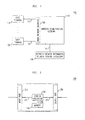
- FIG. 1 depicts a wireless communication system including a network initiated information delivery control processor in accordance with an exemplary embodiment of the present invention.
- FIG. 2 depicts the network initiated delivery control processor of FIG. 1 in more detail in accordance with an exemplary embodiment of the present invention.
- FIG. 3 depicts a flowchart of a method for providing network initiated information delivery in a radio network interface in accordance with an exemplary embodiment of the present invention.
- FIG. 4 depicts a flowchart of a method for providing network.initiated information delivery in a network initiated information delivery control processor in accordance with an exemplary embodiment of the present invention.
- FIG. 1 depicts a wireless communication system 100 in accordance with an exemplary embodiment of the present invention.
- Wireless communication system 100 includes user terminals 110 and 120, wireless communication network 130, and network information delivery control processor 140.
- Wireless communication network 130 comprises know functions necessary to operate and maintain wireless communications including radio network interface 150.
- Wireless communication network 130 can be based on any well known technology, such as analog or digital.
- User terminals 110 and 120 are coupled to radio network interface via links 111 and 121, respectively.
- Links 111 and 121 provide communication among a plurality of user terminals such as 110 and 120.
- User terminals 110 and 120 as well as links 111 and 121 can be based on any well-known technologies, such as Time Division Multiple Access (TDMA) or Code Division Multiple Access (CDMA).
- TDMA Time Division Multiple Access
- CDMA Code Division Multiple Access
- user terminal 110 and user terminal 120 are coupled to and communicating with communication network 130. It should be understood that in an actual network a plurality of user terminals are coupled to communication network 130. As depicted in FIG. 1, user terminal 110 is communicating with communication network 130 via link 111. User terminal 120 is communicating with communication network 130 via link 121. Links 111 and 121 are over-the-air links and can either be the same or different.
- network initiated information delivery control processor 140 is coupled to and communicating with communication network 130 via link 141.
- Link 141 can be based on any known technology such as digital, analog, wireless, or wireline. It should be understood that in an actual network a plurality of network initiated information delivery control processors can be coupled to wireless communication network 130.
- network initiated information delivery control processor 140 receives a call request from a user terminal, such as user terminal 110.
- the call request can originate from a terminal connected to communication network 130 or from any other network that can interface with communication network 130 such as a Public Switched Telephone Network (PSTN).
- PSTN Public Switched Telephone Network
- Network initiated information delivery control processor 140 accepts the call and requests instructions from originating user terminal 110. Communication between originating user terminal 110 and network initiated information delivery control processor 140 can be sent a variety of ways, including but not limited to using inband analog signals and out-of-band messages.
- Network initiated information delivery control processor 140 accepts instructions from originating user terminal 110.
- the instructions received from originating user terminal 110 preferably comprise information to be delivered to specific other user terminals, unique identifiers of the other user terminals, information delivery priority, and information life time.
- the unique identifiers of the other user terminals comprise information such as the address or geographical location of the other user terminals.
- the information life time is an indication of a time period after which the information is no longer to be delivered.
- network initiated information delivery control processor 140 instructs radio network interface 150 when to report the load level on over-the-air links 111 and 121.
- These instructions include but are not limited to a periodic interval, demand for real-time measurement, or when the load level has changed by a predetermined amount. Additional instructions include trigger points against which radio network interface 150 compares the actual over-the-air utilization. These instructions are sent via link 141.
- Network initiated information delivery control processor 140 and radio network interface 150 communicate via link 141 using any known technology such as digital, analog, wireless, or wireline.
- radio network interface 150 monitors and stores the utilization of link 111. This monitoring can be accomplished via methods such as buffer size and message delay. Radio network interface 150 compares actual monitored utilization with the predetermined trigger levels received from the network initiated information delivery control processor 140 to derive a normalized load level for link 111. Radio network interface 150 reports the load level for link 111 as instructed by network initiated information delivery control processor 140. These instructions include but are not limited to a periodic interval, demand for real time measurement, or when the load level has changed by a predetermined amount.
- Network initiated information delivery control processor 140 receives and stores the current load level reported by radio network interface 150. Network initiated information delivery control processor 140 compares the delivery priority of each stored set of information to determine at what load level each piece of information is designated for transmission. This transmission can be made to a specific user terminal, such as user terminal 120, a list of user terminals, or all user terminals in a specific geographical area. In accordance with a preferred embodiment of the present invention, network initiated information delivery control processor 140 increases the delivery priority of the information if it has not been transmitted for a predetermined period of time. In addition, network initiated information delivery control processor 140 will delete information that has exceeded the life time specified by the originating user terminal.
- FIG. 2 depicts network initiated information deliver processor 140 in accordance with an exemplary embodiment of the present invention.
- Network initiated information deliver processor 140 comprises input port 220, control processor 230, memory 240, output port 250, and links 270, 280, and 290.
- Control processor 230 may comprise a plurality of processors, each with substantially identical functions or with functions distributed among them by function type. However, a single control processor 230 is shown in FIG. 2 for clarity.
- Links 270, 280, and 290 are preferably Ethernet connections, but can alternately be any communication protocol that provides for communication between elements.
- input port 220 and output port 250 interface with wireless communication network 130.
- This can be based on any known technology, such as analog, digital, wireless, and wireline.
- Input port 200 and output port 250 may be located on the same physical link.
- Input port 220 and output port 250 preferably carry both bearer and control information between control processor 230 and wireless communication network 130.
- Input port 220 and output port 250 can be connected directly to wireless communication network 130, or to any network which can be connected to wireless communication network 130, such as the Public Switched Telephone Network (PSTN) .
- PSTN Public Switched Telephone Network
- Control processor 230 interacts with originating users to obtain the information to be transferred and to receive instructions concerning the transmission of the information. Control processor 230 interacts with radio network interface 150 to request load level information and to transmit the stored information when it is appropriate. Control processor 230 interacts with memory 240 to determine what information should be transmitted given received load levels, elevates the delivery priority of information that has not been transmitted for some predetermined interval, and deletes information which is no longer valid. Information is considered to be no longer valid when the life time specified by the user terminal originating the information has been exceeded.
- FIG. 3 depicts a flowchart 300 of a method for providing network initiated information delivery in a radio network interface in accordance with an exemplary embodiment of the present invention.
- Radio network interface 150 receives (301) instructions from network initiated information delivery processor 140 concerning the measuring and reporting intervals of the load level. Given these instructions and the knowledge of when the last measurement was made, radio network interface 150 determines (302) if a measurement is to be made. If not, radio network interface waits until it is appropriate to make a measurement.
- a measurement of the over-the-air utilization is taken (303). This measurement can be taken in a variety of ways, including but not limited to buffer size and message delay.
- Radio network interface 150 compares (304) the measurement to predetermined trigger levels and generates a normalized load level for the over-the-air link. Radio network interface 150 determines (305) if a report should be generated and sent to network initiated information delivery control processor 140. This decision can be based on a variety of factors including but not limited to elapsed time since the last report was generated or number of load levels traversed since the last report was generated. If a report should be generated, radio network interface 150 generates (306) a report.
- FIG. 4 depicts a flowchart 400 of a method for providing network initiated information delivery in a network initiated information delivery control processor in accordance with an exemplary embodiment of the present invention.
- Network initiated information delivery control function 140 receives (401) load levels from the various radio network interfaces with which it communicates. Network initiated information delivery control function 140 then stores (402) the load level values received.
- Network initiated information delivery control function 140 determines (403) which if any of the stored information should be transmitted to user terminals based on the reported load levels and the instructions from the user terminal which originated the information. As part of the decision process, information that has not been transmitted for a predetermined period of time will be assigned a higher delivery priority if the information had been designated by the originator or the network initiated information delivery control function as a candidate for escalation, and information whose life time has expired will be deleted. If it is appropriate to sent information, the information is sent (404).
- the present invention thereby provides a method and apparatus that allows pushed messages to be sent efficiently without overloading the communication system.
- a communication system can send pushed messages without causing delay, missed messages, or lost calls, especially in heavily loaded systems.
Landscapes
- Engineering & Computer Science (AREA)
- Computer Networks & Wireless Communication (AREA)
- Signal Processing (AREA)
- Mobile Radio Communication Systems (AREA)
- Small-Scale Networks (AREA)
- Computer And Data Communications (AREA)
Abstract
Description
Claims (10)
- A Network Initiated Information Delivery Control Processor Apparatus for providing network initiated information delivery in a wireless communication system, the Network Initiated Information Delivery Control Processor Apparatus comprising:an input port for receiving a load level indication from a radio network interface, instructions from end users, and data to be transmitted from end users;a processor for executing the instructions received from the end users;memory means for storing the data received from the end users; andan output port for transmitting the data to the end users and requesting load level information from the radio network interfaces.
- A Network Initiated Information Delivery Function in accordance with claim 1, wherein the input port further receives address information for a recipient.
- A Network Initiated Information Delivery Function in accordance with claim 2, wherein the address information comprises a unique address for a user terminal.
- A Network Initiated Information Delivery Function in accordance with claim 2, wherein the address information comprises a target geographical area.
- A method for providing network-initiated information delivery in a wireless communication system, the method comprising the steps of:measuring a current load level in a wireless radio network at a wireless radio network interface;setting a plurality of trigger levels for the wireless radio network at the wireless radio network interface;determining a load state by comparing the current load level in the wireless radio network and the plurality of trigger levels; andreporting the load state to a network-initiated information delivery control function.
- A method for providing network-initiated information delivery in accordance with claim 5, further comprising setting geographical areas to be measured.
- A method for providing network-initiated information delivery in accordance with claim 5, wherein the step of reporting the load state to a network-initiated information delivery control function comprises reporting the load state when a predetermined load state is reached.
- A method for providing network-initiated information delivery in accordance with claim 5, wherein the step of reporting the load state to a network-initiated information delivery control function comprises reporting the load state when a predetermined number of load states have changed since a previous report.
- A method for providing network-initiated information delivery in a wireless communication system, the method comprising the steps of:receiving load state information from a radio network interface at a network initiated information delivery control function;storing the load state information from the radio network interface at the network initiated information delivery control function;determining which stored data is a candidate for transmission; andtransmitting the candidate data to a recipient.
- A method for providing network-initiated information delivery in accordance with claim 9, wherein the stored data comprises a plurality of messages, the method further comprising increasing a message priority as a message ages.
Applications Claiming Priority (2)
| Application Number | Priority Date | Filing Date | Title |
|---|---|---|---|
| US10/232,131 US20040203722A1 (en) | 2002-08-30 | 2002-08-30 | Network initiated information delivery |
| US232131 | 2002-08-30 |
Publications (2)
| Publication Number | Publication Date |
|---|---|
| EP1397018A2 true EP1397018A2 (en) | 2004-03-10 |
| EP1397018A3 EP1397018A3 (en) | 2004-07-21 |
Family
ID=31715273
Family Applications (1)
| Application Number | Title | Priority Date | Filing Date |
|---|---|---|---|
| EP03255062A Withdrawn EP1397018A3 (en) | 2002-08-30 | 2003-08-14 | Network initiated information delivery |
Country Status (4)
| Country | Link |
|---|---|
| US (1) | US20040203722A1 (en) |
| EP (1) | EP1397018A3 (en) |
| JP (1) | JP2004096746A (en) |
| KR (1) | KR20040019904A (en) |
Cited By (1)
| Publication number | Priority date | Publication date | Assignee | Title |
|---|---|---|---|---|
| FR2900519A1 (en) * | 2006-04-26 | 2007-11-02 | Radiotelephone Sfr | METHOD FOR BROADCASTING TO AT LEAST ONE MOBILE TELEPHONE OF MULTIMEDIA CONTENT |
Families Citing this family (5)
| Publication number | Priority date | Publication date | Assignee | Title |
|---|---|---|---|---|
| US7190766B1 (en) * | 2002-09-26 | 2007-03-13 | Bellsouth Intellectual Property Corp. | System and method for conducting variable voice path assurance tests |
| JP4534861B2 (en) * | 2005-05-11 | 2010-09-01 | 日本電気株式会社 | Radio access network, radio network control apparatus, radio base station apparatus, and flow control method used therefor |
| US9367113B2 (en) * | 2013-01-11 | 2016-06-14 | Qualcomm Incorporated | Managing modem power consumption |
| US9143921B2 (en) | 2013-09-06 | 2015-09-22 | Qualcomm Incorporated | Communicating physical layer wireless parameters over an application programming interface |
| JP2015207819A (en) * | 2014-04-17 | 2015-11-19 | 株式会社リコー | Information processing apparatus, information processing system, communication control method, and program |
Family Cites Families (13)
| Publication number | Priority date | Publication date | Assignee | Title |
|---|---|---|---|---|
| US5333183A (en) * | 1992-03-13 | 1994-07-26 | Moscom Corporation | Universal MDR data record collection and reporting system |
| JPH0795279A (en) * | 1993-09-20 | 1995-04-07 | Fujitsu Ltd | Memory dial control system |
| WO1995015046A1 (en) * | 1993-11-26 | 1995-06-01 | Octel Communications Corporation | Exchange of information between interconnected voicemail systems |
| US5592530A (en) * | 1995-01-25 | 1997-01-07 | Inet, Inc. | Telephone switch dual monitors |
| US6044265A (en) * | 1995-06-05 | 2000-03-28 | Bellsouth Corporation | Methods and apparatus for cellular set programming |
| US20020120569A1 (en) * | 1997-10-16 | 2002-08-29 | Day Mark E. | System and method for communication between remote locations |
| US6282267B1 (en) * | 1998-03-26 | 2001-08-28 | Bell Atlantic Network Services, Inc. | Network planning traffic measurement program |
| DE60020417T2 (en) * | 1999-01-25 | 2005-10-27 | Nippon Telegraph And Telephone Corp. | Push network |
| JP2002057807A (en) * | 2000-08-08 | 2002-02-22 | Nec Corp | Mobile phone directory management system |
| US7388834B2 (en) * | 2000-08-24 | 2008-06-17 | Hewlett-Packard Development Company, L.P. | System and method for controlling network traffic flow in a multi-processor network |
| US6826153B1 (en) * | 2000-09-13 | 2004-11-30 | Jeffrey Kroon | System and method of increasing the message throughput in a radio network |
| US6725048B2 (en) * | 2000-09-22 | 2004-04-20 | Ericsson Inc. | Traffic congestion management when providing realtime information to service providers |
| US7054940B2 (en) * | 2002-01-25 | 2006-05-30 | Thomson Licensing | Adaptive cost of service for communication network based on level of network congestion |
-
2002
- 2002-08-30 US US10/232,131 patent/US20040203722A1/en not_active Abandoned
-
2003
- 2003-08-14 EP EP03255062A patent/EP1397018A3/en not_active Withdrawn
- 2003-08-20 JP JP2003296347A patent/JP2004096746A/en active Pending
- 2003-08-21 KR KR1020030057878A patent/KR20040019904A/en not_active Withdrawn
Cited By (1)
| Publication number | Priority date | Publication date | Assignee | Title |
|---|---|---|---|---|
| FR2900519A1 (en) * | 2006-04-26 | 2007-11-02 | Radiotelephone Sfr | METHOD FOR BROADCASTING TO AT LEAST ONE MOBILE TELEPHONE OF MULTIMEDIA CONTENT |
Also Published As
| Publication number | Publication date |
|---|---|
| JP2004096746A (en) | 2004-03-25 |
| KR20040019904A (en) | 2004-03-06 |
| US20040203722A1 (en) | 2004-10-14 |
| EP1397018A3 (en) | 2004-07-21 |
Similar Documents
| Publication | Publication Date | Title |
|---|---|---|
| US11240728B2 (en) | Methods and apparatus for selecting a network route for data communications for IoT devices | |
| EP2306677B1 (en) | System and method for optimizing network communication in response to network conditions | |
| EP1197103B1 (en) | Method and mobile switching center for reporting capability to perform periodic broadcast short message service (sms), and message center | |
| US8542590B2 (en) | Bi-directional load balancing | |
| KR20080028969A (en) | System and method for prioritizing transmission legs to precache data | |
| US5748620A (en) | Method for providing communications to a communication device in a radio communication system | |
| KR100429513B1 (en) | Service switching method based on quality of service in a mobile telecommunication system | |
| KR20060105447A (en) | Overload management method and system of network node | |
| US20040203722A1 (en) | Network initiated information delivery | |
| US8891361B2 (en) | Method of transfer of a call connection connecting a telecommunications base station and a mobile user terminal between dedicated and shared channels, and a corresponding telecommunications system | |
| EP2785129A2 (en) | Accepting or rejecting access requests | |
| US20020034190A1 (en) | System that uses Idle cellular resources for voice and data services | |
| CN101208969B (en) | System and method for optimizing network communication in response to network conditions | |
| US20080130505A1 (en) | Station | |
| EP2469923A1 (en) | Radio access network, base station, and data transfer method | |
| CN101610550A (en) | Control mechanism for common control channel usage | |
| JP2003186685A (en) | Overload control method for real-time processing system | |
| CN101091350B (en) | Method and device for performance optimization of data distribution network | |
| EP0989765A1 (en) | Method for allocating resources during high speed data transmission in a wireless telecommunications system | |
| KR100404876B1 (en) | Device and method for decentralizing load of call control processor | |
| JP3972687B2 (en) | Base station and wireless communication device | |
| WO2011009578A1 (en) | Method, system and base station for enhanced communication efficiency | |
| KR20110022265A (en) | System and method for preventing overload of billing server due to sending multimedia message | |
| HK1115954A (en) | Method and device for performance optimisation of a data distribution network | |
| KR101299500B1 (en) | Mobile communication system and channel controlling method for same |
Legal Events
| Date | Code | Title | Description |
|---|---|---|---|
| PUAI | Public reference made under article 153(3) epc to a published international application that has entered the european phase |
Free format text: ORIGINAL CODE: 0009012 |
|
| 17P | Request for examination filed |
Effective date: 20030902 |
|
| AK | Designated contracting states |
Kind code of ref document: A2 Designated state(s): AT BE BG CH CY CZ DE DK EE ES FI FR GB GR HU IE IT LI LU MC NL PT RO SE SI SK TR |
|
| AX | Request for extension of the european patent |
Extension state: AL LT LV MK |
|
| PUAL | Search report despatched |
Free format text: ORIGINAL CODE: 0009013 |
|
| AK | Designated contracting states |
Kind code of ref document: A3 Designated state(s): AT BE BG CH CY CZ DE DK EE ES FI FR GB GR HU IE IT LI LU MC NL PT RO SE SI SK TR |
|
| AX | Request for extension of the european patent |
Extension state: AL LT LV MK |
|
| 17Q | First examination report despatched |
Effective date: 20040921 |
|
| AKX | Designation fees paid |
Designated state(s): AT BE BG CH CY CZ DE DK EE ES FI FR GB GR HU IE IT LI LU MC NL PT RO SE SI SK TR |
|
| STAA | Information on the status of an ep patent application or granted ep patent |
Free format text: STATUS: THE APPLICATION IS DEEMED TO BE WITHDRAWN |
|
| 18D | Application deemed to be withdrawn |
Effective date: 20050202 |