EP1395687B1 - Method for the electrophoretic separation of oligonucleotides - Google Patents
Method for the electrophoretic separation of oligonucleotides Download PDFInfo
- Publication number
- EP1395687B1 EP1395687B1 EP02780804A EP02780804A EP1395687B1 EP 1395687 B1 EP1395687 B1 EP 1395687B1 EP 02780804 A EP02780804 A EP 02780804A EP 02780804 A EP02780804 A EP 02780804A EP 1395687 B1 EP1395687 B1 EP 1395687B1
- Authority
- EP
- European Patent Office
- Prior art keywords
- separation
- fragments
- microchannel
- accordance
- capillary
- Prior art date
- Legal status (The legal status is an assumption and is not a legal conclusion. Google has not performed a legal analysis and makes no representation as to the accuracy of the status listed.)
- Expired - Lifetime
Links
Images


Classifications
-
- G—PHYSICS
- G01—MEASURING; TESTING
- G01N—INVESTIGATING OR ANALYSING MATERIALS BY DETERMINING THEIR CHEMICAL OR PHYSICAL PROPERTIES
- G01N27/00—Investigating or analysing materials by the use of electric, electrochemical, or magnetic means
- G01N27/26—Investigating or analysing materials by the use of electric, electrochemical, or magnetic means by investigating electrochemical variables; by using electrolysis or electrophoresis
- G01N27/416—Systems
- G01N27/447—Systems using electrophoresis
- G01N27/44704—Details; Accessories
- G01N27/44747—Composition of gel or of carrier mixture
Definitions
- the present invention relates generally to electrophoretic separation and analysis of compounds and more specifically to media for the separation of compounds for the separation of compounds.
- Capillary electrophoresis systems present various advantages.
- capillary electrophoresis systems are readily adaptable to high throughput sample processing. With rapid increase in genomic information, the need for the rapid analysis of nucleic and samples is increasingly acute. Capillary electrophoresis systems are readily adaptable to multiplexing to increase sample throughput.
- Capillary dimension microchannels may be designed as an array of microchannels, such as a group of capillary tubes in a capillary array electrophoresis system (CAE system) or as a plurality of lanes on an electrophoresis chip.
- CAE system capillary array electrophoresis system
- the use of multiple detectable labels that may be separately detected by a detector allow a second level of multiplexing, further increasing throughput.
- various configurations of sample pooling allow another level of multiplexing.
- Capillary electrophoresis requires a microchannel (generally of capillary tube dimensions) that is filled with a separation media.
- the sample is introduced at one end of the microchannel and after migration through the length of the channel is detected at the opposite end.
- the separation media contains an electrolyte buffer allowing the current to flow from an anode to a cathode.
- a polymer included in the separation medium acts as a sieve for the separation of biomolecules. The movement of the biomolecules is inhibited by the sieving matrix, with smaller molecules able to overcome the friction and to move more quickly through the matrix than larger molecules.
- U.S. Pat. No. 4,865,706 discloses the use of crosslinked polyacrylamide gel as a molecular sieving agent for the separation of charged molecules.
- the interior wall of the capillary is covalently modified with a bonding agent.
- polymerization of a crosslinked separation matrix takes place inside the capillary tube.
- the mixture of monomer and a cross-linker is injected into the capillary and catalytically converted to a polymerized form. This may result in incomplete polymerization formation of bubbles and lack of gel uniformity, issues which represent the main drawback of the cross-linked separation matrices.
- Another drawback is the difficulty in removing the crosslinked gel.
- U.S. Pat. Nos. 5,089,111 ; 5,374,527 and 5,370,777 describe a significant improvement in CE matrix technology by replaceable matrix composed of an entangled solution of linear polymer. Although less rigid than crosslinked gel, the network of dynamic pores in entangled matrix provides equivalent media for separation of biomolecules.
- the main advantage of the entangled polymer media is the preparation outside the capillary resulting in a high homogeneity of the matrix.
- Another significant advantage is the ability to replace the matrix in capillaries after each run using a high pressure, thus increasing the run to run reproducibility.
- U.S. Pat. No. 5,567,292 proposes the use of a polymer for both suppression of electroosmotic flow and as a matrix for separation of polynucleotides in the size gauge of about 100 to 500 nucleotides in an uncoated capillary.
- the separation compound would be water-soluble, lack charged groups in a liquid media of 6-9 pH, have a molecular weight of 5 x 10 3 to 1 x 10 6 daltons and concentration between 0.001 and 10%.
- These separation media include polylactams, such as polyvinylpyrrolidone, as well as substituted polyacrylamide derivatives.
- the viscosity of an entangled medium requires high-pressure introduction of the matrix into the capillary.
- newly developed CE methods utilizing multiple electrokinetic injections of samples are not compatible with classic entangled matrices. The multiple sample loads as well as interruption in the current required in multiple injections is believed to degrade the entangled matrix.
- a primary feature of an entangled matrix is the high sieving capacity attendant with the relatively high molecular weight of the sieving polymers. However, this feature is not required for the separation of small oligonucleotides, such as those produced in single nucleotide polymorphism (SNP) typing.
- SNP single nucleotide polymorphism
- Assays for SNP typing such as single-nucleotide primer extension (SNuPE), microsequencing, oligonucleotide ligase assay (OLA); produce small oligonucleotide fragments (100 bases or smaller).
- SNuPE single-nucleotide primer extension
- OVA oligonucleotide ligase assay
- CE One of the most frequently used detection techniques in CE is laser-induced fluorescence. Because DNA exhibit no native fluorescence, synthetic dyes are commonly introduced at the 5'-end of each DNA molecule. Most fluorescent dyes include aromatic rings, capable of excitation of PI-electrons and subsequent emission of fluorescence light. By nature, the aromatic rings exhibit inherent hydrophobicity, which can be directly utilized for interaction with PVP pseudophase matrix leading to chromatography-like separation.
- the low viscosity separation media exhibiting high resolution is introduced into a capillary with low-pressure nitrogen filling.
- the separation media does not require a complex polymerization and does not exhibit entanglement property such as sieving.
- the separation procedure for small oligonucleotide fragments shows superior peak spacing (indicating separation selectivity) and peak efficiency.
- the CE media may be used for a multiple injection procedure for separation samples containing small compounds.
- This nontoxic medium provides a low cost tool for the separation of compounds with hydrophobic properties such as fluorescently labeled oligonucleotides.
- the low viscosity of a non-entangled separation media simplifies the filling of microchannels.
- the use of this separation media is especially useful for use in a system that enables multiple time spaced injections of multiple samples into a single capillary tube as the non-entangled medium is not affected by the sample migration and thus able to withstand multiple loads of separation mixture.
- the time spacing of the sample injection is sufficient such that each sample set is detectably separated when the samples reach the injector.
- This provides a method of high throughput sample analysis such as screening of single-nucleotide polymorphisms (SNPs), oligonucleotide quality control (QC) and other related oligonucleotide assays.
- the separation mechanism is opposite to sieving with the larger compounds eluting first and the small compounds eluting last.
- the low molecular PVP allows for preparation of high concentrated, non-entangled low viscosity PVP solutions (up to 10% w/v) which exhibit higher number of interacting vinylpyrrolidone units per volume and significantly increase the separation power.
- This media is especially suitable for the separation of fragments 11-30 bases in length.
- the low viscosity of the separation media allows for the capillary to be filled and emptied under low pressure. Without the need for high pressure filling, the microchannel filling system does not need to be designed with high-pressure seals.
- non-entangled PVP has the advantage of lower viscosity.
- the solution viscosity is plotted as a function of PVP concentration.
- PVP Mn 40,000 was used in this example.
- the entanglement threshold 45 is defined as the point of change of the slope, representing a marked increase in solution viscosity.
- the ⁇ is at 11.4%. Above this concentration the viscosity shows a rapid increase.
- the ⁇ concentration will vary with the molecular weight of PVP and temperature.
- a pseudophase separation assay does not require an entangled separation matrix. Instead, the compounds are separated based on chemical interactions with the separation media. Such interactions may be hydrophobic interactions, hydrogen bonding, or dipole-dipole interactions.
- the small nucleic acid fragments are each labeled with at least one compound having multiple aromatic rings. These multiple aromatic rings are believed to interact with the cyclic amides present on the PVP molecules. This interaction slows the migrating nucleic acid molecules. For a larger nucleic acid molecule, a smaller percentage of the size of the molecule is composed of the label compound. In contrast, for smaller oligonucleotide fragments, a larger percentage of the molecule will be the label compound.
- the smaller fragments will be more likely to have their mobility affected upon interactions with the separation media, resulting in a longer elution times.
- the larger fragments having a smaller percentage of the molecule comprised of the label, will be less affected by PVP and have a relatively faster migration rate causing these fragments to be detected before the smaller fragments.
- Fig. 1B With reference to Fig. 1B , the structure of a fluorescent label, FAM, and of PVP monomer is shown.
- the multiple aromatic rings of FAM are believed to interact with the cyclic amide ring of the PVP molecule. This interaction slows the migration of the migrating charged molecule.
- this interaction between charged rings provides an advantageous separation method for the separation of small oligonucleotide fragments.
- Labels such as FAM may be conjugated to nucleotide bases using conjugation methods that are known in the art. Labeled nucleotides are also available from commercial sources such as Molecular Probes, Eugene Or. These bases may then be incorporated into DNA fragments during synthetic reactions. As noted, SnuPE, rolling circle amplification, ligase amplification, microsequencing as well as other assays may be used in nucleic analysis and produce small DNA fragments. In single nucleotide polymorphism analysis, the assay seeks to determine DNA sequence variation at a single nucleotide locus. For such analysis, the production of small fragments for analysis allows an efficient analytical method.
- Non-entangled PVP may be used in a variety of microchannels electrophoretic separation systems.
- the term "microchannel” and “capillary” are used interchangeably and broadly refer to an elongate channel in which electrophoresis may be carried out.
- the channel will have an internal cross section that may be circular, rectangular, square or have other dimensions.
- the channel may be in the interior bore of a tube or may be a channel or groove in a plate, chip, or other substrate.
- Such a channel may be fabricated by dicing, etching, cast molding, or other known manufacturing. Characteristic of all of these channels is a high surface to volume ratio of the surface in contact with the separation media, providing for efficient heat dissipation during electrophoretic separation procedures.
- the microchannel be made of silica, quartz, or other similar material. Heat dissipation is further enhanced by having the total material thickness of the material from which the microchannel be fabricated by as small as possible.
- U.S. 6764648 describes a capillary electrophoresis chip and system for electrophoretic separation of charged compounds.
- This system includes a separation chip having a highly parallel set of microchannels on a substrate. Each microchannel has individual leads to allow for individual operation of each microchannel.
- the system also includes an automated system for moving samples from a sample plate to the individual openings of each microchannel.
- the PVP separation matrix could be included as the separation media. This media would provide a simplified loading and washing of the microchannels. If entangled separation matrices are used, the microchannels of the separation chip would be filled under pressure with pressure tight seals and the microchannels would be washed using a high-pressure wash system. When a non-entangled PVP separation matrix is used, the microchannels could be filled without using a high-pressure wash for the loading and washing of the microchannel.
- U.S. Pat. Ser. No. 09/352,281 illustrates an alternative system using microchannels, as well as a method of compound separation in which the present separation media is well suited.
- a capillary array electrophoresis system is described. This system is currently sold as the MegaBACE® system from Molecular Dynamics, Sunnyvale, CA a division of Amersham Pharmacia Biotech, Franklin Lakes, New Jersey.
- MegaBACE® system from Molecular Dynamics, Sunnyvale, CA a division of Amersham Pharmacia Biotech, Franklin Lakes, New Jersey.
- a highly parallel set of capillary tubes is arranged such that the set may be used for the parallel separation in 96 capillaries.
- the capillary array is filled by high-pressure injection of an entangled separation matrix.
- Samples are electrokinetically injected into the capillaries and the ends of the capillaries are brought into contact with an anode reservoir and a cathode reservoir. Following a separation procedure, the media from the capillary may be removed and the capillary refilled with the separation media. If the media of the present invention were used in this system, the capillary could be filled using a low pressure filling method. In addition, cleaning of the capillary tubes would be simplified and would not require high pressure pumping to empty the contents of the capillary tube.
- This reference also discloses a system and method for increasing the throughput of the analysis of small fragment samples.
- a first sample containing multiple small compounds to be separated is initially injected into the microchannel and exposed to an electrophoretic current for a selected interval.
- the current causes the sample to migrate away from the injection end of the capillary and towards a detection area on the microchannel at a location distal from the injection end.
- a second sample containing multiple small fragments is injected into each capillary.
- the timing of the injections i.e. the interval between each injection
- the PVP separation media when used as a non-entangled pseudophase, should be more stable than linear polyacrylamide, making PVP a better media for multiple injection separation procedures.
- the homogeneity of an entangled matrix, such as entangled linear polyacrylamide is often affected by the impact of migrating compounds. This requires that the matrix be replaced after each separation procedure.
- the frequent voltage interruptions are likely to cause disruptions in matrix entanglement and may limit the total number of injection cycles possible with the entangled matrix. It is expected that a homogenous media consisting of low-molecular weight pseudophase separation polymer dissolved in buffer will be less susceptible to buffer interaction or frequent voltage interruptions. This would make PVP an ideal media for this procedure.
- PVP PVP
- the separation media would prove valuable for multiple injections.
- the samples that are best suited for multiple injections are samples comprised of small molecules.
- Samples containing labeled oligonucleotide fragments under 100 bases in length are well suited for multiple injection, with fragments from 10-30 bases in length best suited for such injection.
- the use of non-entangled PVP as the separation matrix provides a separation media that is specifically selected for use with these fragment sizes.
- a variety of detectors may be used to detect the compounds as the compounds migrate past a detection location.
- LIF laser induced fluorescence
- the oligonucleotide fragments are labeled with an optically detectable label.
- a laser illumination beam excites fluorescence from the label. This fluorescence is collected from a thin object plane within the capillary at the detection window and transmitted to a detector.
- One advantage of this method of optical detection is the ability of the detector to identify different labels based on the emission profile characteristic of the label. This provides an additional method of multiplexing, allowing simultaneous detection of labels having different fluorescent profiles.
- detection methods are adaptable for use with the present separation media. These include detection with mass spectrometry and electrical conductivity gating. Either of these detection methods allows detection of separated charged compounds. In either method, the charged compound being separated may be conjugated to a label having multiple aromatic rings. This would both aid in the pseudophase separation of the sample molecules and aid in detection using various detection methods.
- Electroosmosis is the bulk flow of the separation media caused by interaction with the positively charged buffer ions and the negatively charged silica surface of the separation microchannel.
- the surface may be masked with dynamic coatings or covalent modification to form an interior surface coating.
- a thin layer of polyacrylamide is polymerized to coat the interior of the microchannel with a highly viscous layer.
- other coatings are known in the art.
- PVP is known to suppress electroosmosis. See Lido and Young, Anal. Chem. 70 (1998), p. 13 .
- the capillary was filled using nitrogen gas pressure at 6,89 Bar 100 psi). In contrast, up to 68,9 Bar (1000 psi) is required for current linear polyacrylamide filling of capillaries.
- a capillary tube in a capillary tube array in a MegaBACE_capillary electrophoresis system was filled with the separation media described above using a low pressure (6,89 Bar(100 psi)).
- the capillaries used were coated with polyacrylamide.
- Electropherograms of separations of samples containing 20 oligonucleotides ranging from 11 to 30 bases is shown in Figs. 2A and 2B.
- Fig. 2A shows a separation in a capillary filled with an entangled polyacrylamide matrix in 50mM Tris-TAPS buffer. The sample was electrokinetically injected for 15 seconds at 10 kV. The separation was performed at 10kV. The electropherogram shows that the peaks were poorly resolved. This is consistent with other separation systems in which a linear polyacrylamide entangled matrix was unable to resolve fragments of this size to single base separation. Instead, 2 base separation was common, resulting in overlap of bands differing by just one base. In contrast, the electropherogram of Fig.
- FIG. 2B shows the intensity peaks detected from a non-entangled PVP separation matrix.
- this separation non-entangled PVP as used to separate the samples.
- the samples were injected for 5 seconds at 15kV.
- the samples were then separated at 15 kV using the MegaBACE_capillary electrophoresis system.
- the results from Fig. 2B show that the peaks are much more distinct, allowing identification of all peaks from the 11 to 30 base fragments.
- the order in which the samples pass the detection location is revered from Fig. 2A to Fig. 2B .
- PVP is used as a separation matrix, as in Fig. 2B
- the larger fragments migrate more quickly than the smaller fragments.
- entangled matrices such as the one used in Fig. 2A .
- the microchannel containing linear polyacrylamide was run at a lower voltage than the capillary containing PVP.
- linear polyacrylamide or similar viscous sieving matrices are used as the separation media, increasing voltage may result in band broadening. This limits the voltage that may be used in the separation, placing a constraint on the speed of separation.
- the greatest source of band broadening is longitudinal diffusion. If the time the sample stays in the microchannel is shortened, diffusion is reduced.
- the PVP allows the use of higher voltages, resulting in more rapid migration, less diffusion, and sharper detection peaks. In this example, most of the fragments from 11-30 bases, with each fragment differing by a single base, could be separated using the MegaBACE with a high resolution in less than 20 minutes.
- 30 base pair fragments appear to be the upper limit for single base resolution. If the fragments are known to be each separated by at least 2 bases in length, it may be possible to separate fragment sets containing fragments longer than 30 bases and still achieve detectable resolution. In addition if energy transfer dyes are used, single base resolution of fragments longer than 30 bases should be possible. Energy transfer dyes are more hydrophobic than the dyes used in this example. This would increase retention times of this dye and result in a wider separation window.
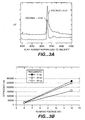
- Figs. 3A and 3B illustrate further advantages achieved through the use of the higher voltages for separation.
- increasing the voltage from 6kV to 12 kV results in a narrower peak.
- the compounds separated spend less time in the capillary, are less subject to diffusion and thus produce a narrower peak. This enhances the ability to detect fragments that differ by a single base.
- Fig. 3B illustrates the improvement in peak efficiency produced by separations at higher voltages. In this graph, for all three sizes of DNA fragments, 11 base pairs, 20 base pairs and 30 base pairs, show increased separation efficiency as the voltage is increased.
Landscapes
- Chemical & Material Sciences (AREA)
- Health & Medical Sciences (AREA)
- Life Sciences & Earth Sciences (AREA)
- Molecular Biology (AREA)
- Analytical Chemistry (AREA)
- Chemical Kinetics & Catalysis (AREA)
- Electrochemistry (AREA)
- Physics & Mathematics (AREA)
- Dispersion Chemistry (AREA)
- Biochemistry (AREA)
- General Health & Medical Sciences (AREA)
- General Physics & Mathematics (AREA)
- Immunology (AREA)
- Pathology (AREA)
- Measuring Or Testing Involving Enzymes Or Micro-Organisms (AREA)
- Investigating, Analyzing Materials By Fluorescence Or Luminescence (AREA)
- Other Investigation Or Analysis Of Materials By Electrical Means (AREA)
Description
- The present invention relates generally to electrophoretic separation and analysis of compounds and more specifically to media for the separation of compounds for the separation of compounds.
- The analysis of biological and other compounds often begins with the separation of macromolecules. Capillary electrophoresis has proved a valuable tool for the separation of macromolecules, allowing their further analysis or isolation. Compounds may be separated by size, charge, affinity to complexing agents etc.
- Capillary electrophoresis systems present various advantages. First, the low sample volume consumption required for capillary electrophoretic separation reduces costs for sample analysis. Second, the high surface to volume ratio, characteristic of a capillary dimension microchannels, allows for efficient heat dissipation. The resulting lower joule heating of the capillary allows greater voltage to be used in separations. Using higher voltages makes the separation more rapid, mitigating against diffusion from bandspreading. Third, capillary electrophoresis systems are readily adaptable to high throughput sample processing. With rapid increase in genomic information, the need for the rapid analysis of nucleic and samples is increasingly acute. Capillary electrophoresis systems are readily adaptable to multiplexing to increase sample throughput. Capillary dimension microchannels may be designed as an array of microchannels, such as a group of capillary tubes in a capillary array electrophoresis system (CAE system) or as a plurality of lanes on an electrophoresis chip. In addition, the use of multiple detectable labels that may be separately detected by a detector allow a second level of multiplexing, further increasing throughput. Finally, various configurations of sample pooling allow another level of multiplexing.
- Capillary electrophoresis requires a microchannel (generally of capillary tube dimensions) that is filled with a separation media. The sample is introduced at one end of the microchannel and after migration through the length of the channel is detected at the opposite end. The separation media contains an electrolyte buffer allowing the current to flow from an anode to a cathode. In one common method of capillary electrophoresis, a polymer included in the separation medium acts as a sieve for the separation of biomolecules. The movement of the biomolecules is inhibited by the sieving matrix, with smaller molecules able to overcome the friction and to move more quickly through the matrix than larger molecules.
-
U.S. Pat. No. 4,865,706 discloses the use of crosslinked polyacrylamide gel as a molecular sieving agent for the separation of charged molecules. The interior wall of the capillary is covalently modified with a bonding agent. Typically, polymerization of a crosslinked separation matrix takes place inside the capillary tube. The mixture of monomer and a cross-linker is injected into the capillary and catalytically converted to a polymerized form. This may result in incomplete polymerization formation of bubbles and lack of gel uniformity, issues which represent the main drawback of the cross-linked separation matrices. Another drawback is the difficulty in removing the crosslinked gel. -
U.S. Pat. Nos. 5,089,111 ;5,374,527 and5,370,777 describe a significant improvement in CE matrix technology by replaceable matrix composed of an entangled solution of linear polymer. Although less rigid than crosslinked gel, the network of dynamic pores in entangled matrix provides equivalent media for separation of biomolecules. The main advantage of the entangled polymer media is the preparation outside the capillary resulting in a high homogeneity of the matrix. Another significant advantage is the ability to replace the matrix in capillaries after each run using a high pressure, thus increasing the run to run reproducibility. - Various polymers have been proposed as entangled media for the separation of charged biomolecules.
U.S. Pat. No. 5,567,292 proposes the use of a polymer for both suppression of electroosmotic flow and as a matrix for separation of polynucleotides in the size gauge of about 100 to 500 nucleotides in an uncoated capillary. The separation compound would be water-soluble, lack charged groups in a liquid media of 6-9 pH, have a molecular weight of 5 x 10³ to 1 x 10⁶ daltons and concentration between 0.001 and 10%. These separation media include polylactams, such as polyvinylpyrrolidone, as well as substituted polyacrylamide derivatives. - Capillary electrophoresis for the detection of known point mutations by single-nucleotide primer extension and laser reduced fluorescence was described in Piggee et Al., J. Chromatogr. 781 (1997) 367-375.
- With these types of media entanglement is a prerequisite for a single base for separation of oligonucleotides in the gauge from approximately 100 to 1000 bases in length.
- The viscosity of an entangled medium requires high-pressure introduction of the matrix into the capillary. In addition, newly developed CE methods utilizing multiple electrokinetic injections of samples are not compatible with classic entangled matrices. The multiple sample loads as well as interruption in the current required in multiple injections is believed to degrade the entangled matrix. A primary feature of an entangled matrix is the high sieving capacity attendant with the relatively high molecular weight of the sieving polymers. However, this feature is not required for the separation of small oligonucleotides, such as those produced in single nucleotide polymorphism (SNP) typing. Assays for SNP typing; such as single-nucleotide primer extension (SNuPE), microsequencing, oligonucleotide ligase assay (OLA); produce small oligonucleotide fragments (100 bases or smaller). To avoid the requirement of high pressure fill and matrix inhomogeneity due to the sample impact, an alternative separation media that provides high separation speed and resolution of small oligonucleotide fragments is desired.
- In 1993, a modification of free-zone CE used for separation of small ionic compounds was developed. In this method, ultra dilute linear polymers are added to the CE buffer electrolyte. These polymeric additives act as pseudo-phases for separation. In contrast to sieving, pseudo-phase leads to separation of sample mixture through hydrogen bonding, hydrophobic interactions, steric interactions, and dipole-dipole interactions. However, to date the use of these polymers for pseudo-phase separation has been fairly limited. In one example a high-molecular polyvinylpyrrolidone [PVP] was used at low concentration as a buffer additive for the capillary electrophoresis separation of diastereomeric derivatives of tryptophan. Schutzner, et al., J. Crhromatogr. 639 (1993) 375-378. In a similar manner, a combination of polyethylene glycol and polyvinylpyrrolidone were used for the electrophoretic separation of azo dye compounds based on their inherent hydrophobicity. Blatny et al., J. Chromatogr. 717 (1995) 157-166. Similar high-molecular PVP matrix was applied for separation of nucleotide adducts (Barry et al.). These studies provided an initial indication that PVP could be used as a pseudophase for the separation of hydrophobically modified oligomers.
- One of the most frequently used detection techniques in CE is laser-induced fluorescence. Because DNA exhibit no native fluorescence, synthetic dyes are commonly introduced at the 5'-end of each DNA molecule. Most fluorescent dyes include aromatic rings, capable of excitation of PI-electrons and subsequent emission of fluorescence light. By nature, the aromatic rings exhibit inherent hydrophobicity, which can be directly utilized for interaction with PVP pseudophase matrix leading to chromatography-like separation.
- It is an object of the invention to provide a method involving a separation matrix, which is able to provide single base pair resolution of small fluorescently labeled oligonucleotide fragments (11-30 base fragments).
- The low viscosity separation media exhibiting high resolution is introduced into a capillary with low-pressure nitrogen filling.
- The separation media does not require a complex polymerization and does not exhibit entanglement property such as sieving. The separation procedure for small oligonucleotide fragments shows superior peak spacing (indicating separation selectivity) and peak efficiency.
- It is thereby possible to use higher voltages thann those allowed with the use of a separation media containing an entangled polymer matrix.
- The CE media may be used for a multiple injection procedure for separation samples containing small compounds.
- The above objects have been achieved through the use of a low molecular (Mn = 10,000 to 40,000) non-entangled polyvinylpyrrolidone for use as a separation media in microchannel electrophoretic preparation systems. This nontoxic medium provides a low cost tool for the separation of compounds with hydrophobic properties such as fluorescently labeled oligonucleotides. The low viscosity of a non-entangled separation media simplifies the filling of microchannels. The use of this separation media is especially useful for use in a system that enables multiple time spaced injections of multiple samples into a single capillary tube as the non-entangled medium is not affected by the sample migration and thus able to withstand multiple loads of separation mixture. The time spacing of the sample injection is sufficient such that each sample set is detectably separated when the samples reach the injector. This provides a method of high throughput sample analysis such as screening of single-nucleotide polymorphisms (SNPs), oligonucleotide quality control (QC) and other related oligonucleotide assays.
-
-
Fig. 1A is a plot of the viscosity as a function of PVP concentration (PVP MN = 40,000). -
Fig. 1B is a chemical diagram of polyvinyl pyrrolidone and a fluorescent label (FAM). -
Fig. 2A is an electropherogram of the separation of small oligonucleotide fragments using linear polyacrylamide as the separation media. -
Fig. 2B is an electropherogram of the separation of the same compounds separated inFig. 2A with non-entangled polyvinylpyrrolidone as the separation media. -
Fig. 3A is an illustration of a peak shape using PVP as the separation media at 6 and 12 kV. -
Fig. 3B is a graph of an increase in peak efficiency as running voltage increases obtained for three oligonucleotide fragments. - In CE, high molecular weight polyvinylpyrrolidone (Mw = 1,000,000) has been used as an entangled matrix for the separation of biopolymers. When used as an entangled matrix, PVP was generally limited to the separation of relatively large charged compounds (e.g. oligonucleotides of 100 bp or more). In the present invention the presence of fluorescent labels on short oligonucleotides (designed for their luminescence detection) is utilized for separation resulting from interactions with a solution of low molecular PVP (Mn = 10,000 to 40,000). The hydrofobic label represents the point of contact with the phase. For a small fragment the label constitutes more significant portion of size, therefore its migration will be influenced more significantly by the interaction. As a result, the separation mechanism is opposite to sieving with the larger compounds eluting first and the small compounds eluting last. The low molecular PVP allows for preparation of high concentrated, non-entangled low viscosity PVP solutions (up to 10% w/v) which exhibit higher number of interacting vinylpyrrolidone units per volume and significantly increase the separation power. This media is especially suitable for the separation of fragments 11-30 bases in length. The low viscosity of the separation media allows for the capillary to be filled and emptied under low pressure. Without the need for high pressure filling, the microchannel filling system does not need to be designed with high-pressure seals.
- The use of non-entangled PVP has the advantage of lower viscosity. With reference to
Fig. 1A , the solution viscosity is plotted as a function of PVP concentration. PVP Mn = 40,000 was used in this example. The entanglement threshold 45 is defined as the point of change of the slope, representing a marked increase in solution viscosity. In the presented example, for PVP Mn = 40,000 the Φ is at 11.4%. Above this concentration the viscosity shows a rapid increase. The Φ concentration will vary with the molecular weight of PVP and temperature. - As indicated in the background, a pseudophase separation assay does not require an entangled separation matrix. Instead, the compounds are separated based on chemical interactions with the separation media. Such interactions may be hydrophobic interactions, hydrogen bonding, or dipole-dipole interactions. In the present separation media, the small nucleic acid fragments are each labeled with at least one compound having multiple aromatic rings. These multiple aromatic rings are believed to interact with the cyclic amides present on the PVP molecules. This interaction slows the migrating nucleic acid molecules. For a larger nucleic acid molecule, a smaller percentage of the size of the molecule is composed of the label compound. In contrast, for smaller oligonucleotide fragments, a larger percentage of the molecule will be the label compound. As a result, the smaller fragments will be more likely to have their mobility affected upon interactions with the separation media, resulting in a longer elution times. In contrast, the larger fragments, having a smaller percentage of the molecule comprised of the label, will be less affected by PVP and have a relatively faster migration rate causing these fragments to be detected before the smaller fragments.
- With reference to
Fig. 1B , the structure of a fluorescent label, FAM, and of PVP monomer is shown. The multiple aromatic rings of FAM are believed to interact with the cyclic amide ring of the PVP molecule. This interaction slows the migration of the migrating charged molecule. In contrast to free zone electrophoresis, which separates molecule based on charge alone, this interaction between charged rings provides an advantageous separation method for the separation of small oligonucleotide fragments. - Labels, such as FAM, may be conjugated to nucleotide bases using conjugation methods that are known in the art. Labeled nucleotides are also available from commercial sources such as Molecular Probes, Eugene Or. These bases may then be incorporated into DNA fragments during synthetic reactions. As noted, SnuPE, rolling circle amplification, ligase amplification, microsequencing as well as other assays may be used in nucleic analysis and produce small DNA fragments. In single nucleotide polymorphism analysis, the assay seeks to determine DNA sequence variation at a single nucleotide locus. For such analysis, the production of small fragments for analysis allows an efficient analytical method.
- Non-entangled PVP may be used in a variety of microchannels electrophoretic separation systems. The term "microchannel" and "capillary" are used interchangeably and broadly refer to an elongate channel in which electrophoresis may be carried out. The channel will have an internal cross section that may be circular, rectangular, square or have other dimensions. The channel may be in the interior bore of a tube or may be a channel or groove in a plate, chip, or other substrate. Such a channel may be fabricated by dicing, etching, cast molding, or other known manufacturing. Characteristic of all of these channels is a high surface to volume ratio of the surface in contact with the separation media, providing for efficient heat dissipation during electrophoretic separation procedures. It is preferred that the microchannel be made of silica, quartz, or other similar material. Heat dissipation is further enhanced by having the total material thickness of the material from which the microchannel be fabricated by as small as possible.
- One system in which the present separation media may be useful is described in
U.S. 6764648 describes a capillary electrophoresis chip and system for electrophoretic separation of charged compounds. This system includes a separation chip having a highly parallel set of microchannels on a substrate. Each microchannel has individual leads to allow for individual operation of each microchannel. The system also includes an automated system for moving samples from a sample plate to the individual openings of each microchannel. In this system, the PVP separation matrix could be included as the separation media. This media would provide a simplified loading and washing of the microchannels. If entangled separation matrices are used, the microchannels of the separation chip would be filled under pressure with pressure tight seals and the microchannels would be washed using a high-pressure wash system. When a non-entangled PVP separation matrix is used, the microchannels could be filled without using a high-pressure wash for the loading and washing of the microchannel. -
U.S. Pat. Ser. No. 09/352,281 - This reference also discloses a system and method for increasing the throughput of the analysis of small fragment samples. In this method, a first sample containing multiple small compounds to be separated is initially injected into the microchannel and exposed to an electrophoretic current for a selected interval. The current causes the sample to migrate away from the injection end of the capillary and towards a detection area on the microchannel at a location distal from the injection end. After a selected interval, a second sample containing multiple small fragments is injected into each capillary. The timing of the injections (i.e. the interval between each injection) is selected such that when the compounds reach the detection location on the microchannel (e.g. capillary) each injected set of compounds is detectably separated from any other set of compounds (i.e. there are no peak overlaps) and the compounds within each sample are detectably separated. This cycle of injections is repeated a number of times, with each sample injection followed by an interval of separation in which the compounds in the sample migrate away from the injection end and toward the detection location. When the first sample set is proximate to the detection location, all of the injected samples are continuously detected as each compound in a sample migrates past the detection location. Using this method of multiple injections, it is possible to greatly increase the throughput of analysis of small nucleotide fragments.
- The PVP separation media, when used as a non-entangled pseudophase, should be more stable than linear polyacrylamide, making PVP a better media for multiple injection separation procedures. The homogeneity of an entangled matrix, such as entangled linear polyacrylamide is often affected by the impact of migrating compounds. This requires that the matrix be replaced after each separation procedure. In addition, the frequent voltage interruptions are likely to cause disruptions in matrix entanglement and may limit the total number of injection cycles possible with the entangled matrix. It is expected that a homogenous media consisting of low-molecular weight pseudophase separation polymer dissolved in buffer will be less susceptible to buffer interaction or frequent voltage interruptions. This would make PVP an ideal media for this procedure.
- The use of PVP as the separation media would prove valuable for multiple injections. Generally, the samples that are best suited for multiple injections are samples comprised of small molecules. Samples containing labeled oligonucleotide fragments under 100 bases in length are well suited for multiple injection, with fragments from 10-30 bases in length best suited for such injection. The use of non-entangled PVP as the separation matrix provides a separation media that is specifically selected for use with these fragment sizes.
- In either capillary array electrophoresis or in capillary chip electrophoresis a variety of detectors may be used to detect the compounds as the compounds migrate past a detection location. In many nucleic acid analysis systems, laser induced fluorescence (LIF) is detected by a confocal detector. The oligonucleotide fragments are labeled with an optically detectable label. As molecules migrate past the detection location, a laser illumination beam excites fluorescence from the label. This fluorescence is collected from a thin object plane within the capillary at the detection window and transmitted to a detector. One advantage of this method of optical detection is the ability of the detector to identify different labels based on the emission profile characteristic of the label. This provides an additional method of multiplexing, allowing simultaneous detection of labels having different fluorescent profiles.
- In addition to LIF detection, other detection methods are adaptable for use with the present separation media. These include detection with mass spectrometry and electrical conductivity gating. Either of these detection methods allows detection of separated charged compounds. In either method, the charged compound being separated may be conjugated to a label having multiple aromatic rings. This would both aid in the pseudophase separation of the sample molecules and aid in detection using various detection methods.
- In most electrophoretic separation methods some coating is used to mask the interior surface of the microchannel with a compound that is neutrally charged. This suppresses electroosmosis. Electroosmosis is the bulk flow of the separation media caused by interaction with the positively charged buffer ions and the negatively charged silica surface of the separation microchannel. The surface may be masked with dynamic coatings or covalent modification to form an interior surface coating. In one coating, a thin layer of polyacrylamide is polymerized to coat the interior of the microchannel with a highly viscous layer. In addition other coatings are known in the art. However, it is believed that uncoated capillaries may also be used. PVP is known to suppress electroosmosis. See Lido and Young, Anal. Chem. 70 (1998), p. 13. The capillary was filled using nitrogen gas pressure at 6,89 Bar 100 psi). In contrast, up to 68,9 Bar (1000 psi) is required for current linear polyacrylamide filling of capillaries.
- The separation media was prepared by dissolving 3.03 g of TRIS, 6.08 g of TAPS and 0.45 g of EDTA in 500 ml of water. Into this buffer 2 g of PVP (Mn = 40,000) was added. The PVP was dissolved under slow stirring for approximately 4 hours. This produces a 50 mM Tris-TAPS buffer containing 4.0% PVP (w/v). At this concentration the PVP is present far below its entanglement threshold (see
Fig. 1 ) in non-entangled form. - A capillary tube in a capillary tube array in a MegaBACE_capillary electrophoresis system was filled with the separation media described above using a low pressure (6,89 Bar(100 psi)). The capillaries used were coated with polyacrylamide.
- Electropherograms of separations of samples containing 20 oligonucleotides ranging from 11 to 30 bases is shown in
Figs. 2A and 2B. Fig. 2A shows a separation in a capillary filled with an entangled polyacrylamide matrix in 50mM Tris-TAPS buffer. The sample was electrokinetically injected for 15 seconds at 10 kV. The separation was performed at 10kV. The electropherogram shows that the peaks were poorly resolved. This is consistent with other separation systems in which a linear polyacrylamide entangled matrix was unable to resolve fragments of this size to single base separation. Instead, 2 base separation was common, resulting in overlap of bands differing by just one base. In contrast, the electropherogram ofFig. 2B shows the intensity peaks detected from a non-entangled PVP separation matrix. In this separation non-entangled PVP as used to separate the samples. 4.0 % PVP (Mr= 40,000) was used in 50 mM Tris-TAPS buffer. The samples were injected for 5 seconds at 15kV. The samples were then separated at 15 kV using the MegaBACE_capillary electrophoresis system. The results fromFig. 2B show that the peaks are much more distinct, allowing identification of all peaks from the 11 to 30 base fragments. The order in which the samples pass the detection location is revered fromFig. 2A to Fig. 2B . When PVP is used as a separation matrix, as inFig. 2B , the larger fragments migrate more quickly than the smaller fragments. The opposite is true for entangled matrices, such as the one used inFig. 2A . - In
Fig. 2 , the microchannel containing linear polyacrylamide was run at a lower voltage than the capillary containing PVP. When linear polyacrylamide or similar viscous sieving matrices are used as the separation media, increasing voltage may result in band broadening. This limits the voltage that may be used in the separation, placing a constraint on the speed of separation. In contrast, when using a low viscosity PVP as the separation media, the greatest source of band broadening is longitudinal diffusion. If the time the sample stays in the microchannel is shortened, diffusion is reduced. The PVP allows the use of higher voltages, resulting in more rapid migration, less diffusion, and sharper detection peaks. In this example, most of the fragments from 11-30 bases, with each fragment differing by a single base, could be separated using the MegaBACE with a high resolution in less than 20 minutes. - When standard fluorescent dyes are used, 30 base pair fragments appear to be the upper limit for single base resolution. If the fragments are known to be each separated by at least 2 bases in length, it may be possible to separate fragment sets containing fragments longer than 30 bases and still achieve detectable resolution. In addition if energy transfer dyes are used, single base resolution of fragments longer than 30 bases should be possible. Energy transfer dyes are more hydrophobic than the dyes used in this example. This would increase retention times of this dye and result in a wider separation window.
-
Figs. 3A and 3B illustrate further advantages achieved through the use of the higher voltages for separation. As shown inFig. 3A , increasing the voltage from 6kV to 12 kV results in a narrower peak. At the higher voltages, the compounds separated spend less time in the capillary, are less subject to diffusion and thus produce a narrower peak. This enhances the ability to detect fragments that differ by a single base.Fig. 3B illustrates the improvement in peak efficiency produced by separations at higher voltages. In this graph, for all three sizes of DNA fragments, 11 base pairs, 20 base pairs and 30 base pairs, show increased separation efficiency as the voltage is increased.
Claims (9)
- A method for electrophoretic separation of a mixture of oligonucleotide fragments, wherein said mixture contains at least two fragments of different lengths and said lengths are between 11 and 30 bases the steps of the method comprising;a) filling at least one microchannel with a separation media, said filling is effected by gas pressure loading of said microchannel, said gas pressure being not greater than, 6,89 bar (100 psi), said separation media including non-entangled low molecular polyvinylpyrrolidone with Mn within the range 10.000-40.000 and said separation media not including an entangled sieving matrix;b) injecting the mixture of oligonucleotide fragments into a first end of said microchannelsc) applying through said separation media an electrophoretic current sufficient to cause said oligonucleotide fragments to migrate through said separation media;
wherein an interaction between said separation media and said fragments retards the migration of said fragments, wherein smaller fragments are retarded to a greater degree than larger fragments;d) detecting separated oligonucleotide fragments at a detection location in said microchannel removed from said injection end of said microchannel. - A method in accordance with claim 1, wherein said step of detecting separated compounds is effected by detection of laser induced fluorescence as fragments migrate past a detection window or is effected by mass spectrometry.
- A method in accordance with claim 1, wherein said at least one microchannel is part of an array of microchannels, wherein steps a through d are effected in each microchannel in said array of microchannels.
- A method in accordance with the method of claim 3, wherein said array of microchannels is a capillary tube array or a plurality of microchannels defined by a separation substrate.
- A method in accordance with claim 1, wherein steps b and c are repeated at least twice, wherein following each injection step, an electrophoretic current is applied for an interval such that each mixture of fragments is detectably separated from any other mixture of fragments when each mixture of fragments migrates past the detection location.
- A method in accordance with claim 1, wherein the step of filling the microchannel includes treating an interior surface of said microchannel to inhibit electroosmosis.
- A method in accordance with claim 6, wherein treating the microchannel to inhibit electroosmosis includes adding a dynamic coating to the separation media.
- A method in accordance with claim 6, wherein treating the microchannel to inhibit electroosmosis includes coating the interior surface of the capillary with a static coating.
- A method in accordance with claim 6, wherein treating the microchannel to inhibit electroomosis includes covalent modification of the interior surface of the microchannel.
Applications Claiming Priority (3)
| Application Number | Priority Date | Filing Date | Title |
|---|---|---|---|
| US09/882,523 US6902657B2 (en) | 2001-06-15 | 2001-06-15 | Electrophoresis separation media and methods |
| US882523 | 2001-06-15 | ||
| PCT/US2002/017679 WO2002103056A1 (en) | 2001-06-15 | 2002-06-04 | Electrophoresis separation media and methods |
Publications (2)
| Publication Number | Publication Date |
|---|---|
| EP1395687A1 EP1395687A1 (en) | 2004-03-10 |
| EP1395687B1 true EP1395687B1 (en) | 2012-09-12 |
Family
ID=25380775
Family Applications (1)
| Application Number | Title | Priority Date | Filing Date |
|---|---|---|---|
| EP02780804A Expired - Lifetime EP1395687B1 (en) | 2001-06-15 | 2002-06-04 | Method for the electrophoretic separation of oligonucleotides |
Country Status (4)
| Country | Link |
|---|---|
| US (1) | US6902657B2 (en) |
| EP (1) | EP1395687B1 (en) |
| JP (1) | JP4143536B2 (en) |
| WO (1) | WO2002103056A1 (en) |
Families Citing this family (4)
| Publication number | Priority date | Publication date | Assignee | Title |
|---|---|---|---|---|
| AU2003276627A1 (en) * | 2003-11-12 | 2004-06-06 | The Norwegian Radium Hospital Research Foundation | Oscillating temperature capillary electrophoresis and uses therefor |
| US8426126B2 (en) * | 2004-03-18 | 2013-04-23 | Applied Biosystems, Llc | Modified surfaces as solid supports for nucleic acid purification |
| US8747584B2 (en) * | 2006-02-03 | 2014-06-10 | Springseal, Inc. | Flashless welding method and apparatus |
| WO2015038953A1 (en) * | 2013-09-13 | 2015-03-19 | Wisconsin Alumni Research Foundation | System and method for presenting large dna molecules for analysis |
Citations (1)
| Publication number | Priority date | Publication date | Assignee | Title |
|---|---|---|---|---|
| WO2001004618A1 (en) * | 1999-07-13 | 2001-01-18 | Molecular Dynamics, Inc. | Increased throughput analysis of small compounds using multiple temporally spaced injections |
Family Cites Families (6)
| Publication number | Priority date | Publication date | Assignee | Title |
|---|---|---|---|---|
| US4865706A (en) * | 1986-10-21 | 1989-09-12 | Northeastern University | High performance microcapillary gel electrophoresis |
| US5089111A (en) * | 1989-01-27 | 1992-02-18 | Bio-Rad Laboratories, Inc. | Electrophoretic sieving in gel-free media with dissolved polymers |
| US5213669A (en) * | 1992-01-31 | 1993-05-25 | Beckman Instruments, Inc. | Capillary column containing a dynamically cross-linked composition and method of use |
| US5374527A (en) * | 1993-01-21 | 1994-12-20 | Applied Biosystems, Inc. | High resolution DNA sequencing method using low viscosity medium |
| AU1254295A (en) * | 1993-12-17 | 1995-07-03 | Perkin-Elmer Corporation, The | Uncharged polymers for separation of biomolecules by capillary electrophoresis |
| US6660149B1 (en) | 1997-10-24 | 2003-12-09 | Beckman Coulter, Inc. | Multichannel microscale system for high throughput preparative separation with comprehensive collection and analysis |
-
2001
- 2001-06-15 US US09/882,523 patent/US6902657B2/en not_active Expired - Lifetime
-
2002
- 2002-06-04 WO PCT/US2002/017679 patent/WO2002103056A1/en not_active Ceased
- 2002-06-04 EP EP02780804A patent/EP1395687B1/en not_active Expired - Lifetime
- 2002-06-04 JP JP2003505377A patent/JP4143536B2/en not_active Expired - Fee Related
Patent Citations (1)
| Publication number | Priority date | Publication date | Assignee | Title |
|---|---|---|---|---|
| WO2001004618A1 (en) * | 1999-07-13 | 2001-01-18 | Molecular Dynamics, Inc. | Increased throughput analysis of small compounds using multiple temporally spaced injections |
Non-Patent Citations (1)
| Title |
|---|
| SUDOR J ET AL: "PRESSURE REFILLED POLYACRYLAMIDE COLUMNS FOR THE SEPARATION OF OLIGONUCLEOTIDES BY CAPILLARY ELECTROPHORESIS", ELECTROPHORESIS, WILEY INTERSCIENCE, DE, vol. 12, 1 January 1991 (1991-01-01), pages 1056 - 1058, XP000610153, ISSN: 0173-0835, DOI: DOI:10.1002/ELPS.1150121211 * |
Also Published As
| Publication number | Publication date |
|---|---|
| JP2004535573A (en) | 2004-11-25 |
| JP4143536B2 (en) | 2008-09-03 |
| US20020189948A1 (en) | 2002-12-19 |
| EP1395687A1 (en) | 2004-03-10 |
| US6902657B2 (en) | 2005-06-07 |
| WO2002103056A1 (en) | 2002-12-27 |
Similar Documents
| Publication | Publication Date | Title |
|---|---|---|
| Fung et al. | High-speed DNA sequencing by using mixed poly (ethylene oxide) solutions in uncoated capillary columns | |
| CA2153991C (en) | High resolution dna sequencing method using low viscosity medium | |
| EP1760462B1 (en) | Method of preparing a bare, fused silica, capillary for capillary electrophoresis | |
| Dolnı́k | DNA sequencing by capillary electrophoresis | |
| US6887668B2 (en) | Nucleic acid separation and detection by electrophoresis with a counter-migrating high-affinity intercalating dye | |
| US7198701B2 (en) | Nucleic acid analyzing method | |
| Paulus et al. | DNA digest analysis with capillary electrophoresis | |
| Smith et al. | Capillary electrophoresis of DNA | |
| US6902657B2 (en) | Electrophoresis separation media and methods | |
| Dolník et al. | Wall coating for DNA sequencing and fragment analysis by capillary electrophoresis | |
| US6878254B2 (en) | Size separation of analytes using monomeric surfactants | |
| Dolník | Capillary gel electrophoresis | |
| US20100051459A1 (en) | Denaturant-Free Electrophoresis of Biological Molecules Under High Temperature Conditions | |
| US6475362B1 (en) | Method and apparatus for compression of DNA samples for DNA sequencing | |
| AU671569B2 (en) | Entrapment of nucleic acid sequencing template in sample mixtures by entangled polymer networks | |
| Mikšík | Capillary gel and sieving electrophoresis | |
| Guttman | Capillary gel electrophoresis | |
| Wehr et al. | Sieving matrix selection | |
| Dubrow | Capillary gel electrophoresis | |
| US20060102480A1 (en) | Apparatus and methods for performing electrophoretic separations of macromolecules | |
| JP2001255302A (en) | Capillary electrophoretic apparatus |
Legal Events
| Date | Code | Title | Description |
|---|---|---|---|
| PUAI | Public reference made under article 153(3) epc to a published international application that has entered the european phase |
Free format text: ORIGINAL CODE: 0009012 |
|
| 17P | Request for examination filed |
Effective date: 20031114 |
|
| AK | Designated contracting states |
Kind code of ref document: A1 Designated state(s): AT BE CH CY DE DK ES FI FR GB GR IE IT LI LU MC NL PT SE TR |
|
| AX | Request for extension of the european patent |
Extension state: AL LT LV MK RO SI |
|
| RIN1 | Information on inventor provided before grant (corrected) |
Inventor name: MAHTANI, MELANIE, M. Inventor name: MINARIK, MAREK |
|
| RAP1 | Party data changed (applicant data changed or rights of an application transferred) |
Owner name: GE HEALTHCARE BIO-SCIENCES CORP. |
|
| 17Q | First examination report despatched |
Effective date: 20090331 |
|
| RTI1 | Title (correction) |
Free format text: METHOD FOR THE ELECTROPHORETIC SEPARATION OF OLIGONUCLEOTIDES |
|
| GRAP | Despatch of communication of intention to grant a patent |
Free format text: ORIGINAL CODE: EPIDOSNIGR1 |
|
| GRAS | Grant fee paid |
Free format text: ORIGINAL CODE: EPIDOSNIGR3 |
|
| GRAA | (expected) grant |
Free format text: ORIGINAL CODE: 0009210 |
|
| AK | Designated contracting states |
Kind code of ref document: B1 Designated state(s): AT BE CH CY DE DK ES FI FR GB GR IE IT LI LU MC NL PT SE TR |
|
| REG | Reference to a national code |
Ref country code: GB Ref legal event code: FG4D |
|
| REG | Reference to a national code |
Ref country code: CH Ref legal event code: EP |
|
| REG | Reference to a national code |
Ref country code: AT Ref legal event code: REF Ref document number: 575129 Country of ref document: AT Kind code of ref document: T Effective date: 20120915 |
|
| REG | Reference to a national code |
Ref country code: IE Ref legal event code: FG4D |
|
| REG | Reference to a national code |
Ref country code: DE Ref legal event code: R096 Ref document number: 60243697 Country of ref document: DE Effective date: 20121108 |
|
| PG25 | Lapsed in a contracting state [announced via postgrant information from national office to epo] |
Ref country code: FI Free format text: LAPSE BECAUSE OF FAILURE TO SUBMIT A TRANSLATION OF THE DESCRIPTION OR TO PAY THE FEE WITHIN THE PRESCRIBED TIME-LIMIT Effective date: 20120912 Ref country code: CY Free format text: LAPSE BECAUSE OF FAILURE TO SUBMIT A TRANSLATION OF THE DESCRIPTION OR TO PAY THE FEE WITHIN THE PRESCRIBED TIME-LIMIT Effective date: 20120912 |
|
| REG | Reference to a national code |
Ref country code: NL Ref legal event code: VDEP Effective date: 20120912 |
|
| REG | Reference to a national code |
Ref country code: AT Ref legal event code: MK05 Ref document number: 575129 Country of ref document: AT Kind code of ref document: T Effective date: 20120912 |
|
| PG25 | Lapsed in a contracting state [announced via postgrant information from national office to epo] |
Ref country code: GR Free format text: LAPSE BECAUSE OF FAILURE TO SUBMIT A TRANSLATION OF THE DESCRIPTION OR TO PAY THE FEE WITHIN THE PRESCRIBED TIME-LIMIT Effective date: 20121213 Ref country code: SE Free format text: LAPSE BECAUSE OF FAILURE TO SUBMIT A TRANSLATION OF THE DESCRIPTION OR TO PAY THE FEE WITHIN THE PRESCRIBED TIME-LIMIT Effective date: 20120912 |
|
| PG25 | Lapsed in a contracting state [announced via postgrant information from national office to epo] |
Ref country code: BE Free format text: LAPSE BECAUSE OF FAILURE TO SUBMIT A TRANSLATION OF THE DESCRIPTION OR TO PAY THE FEE WITHIN THE PRESCRIBED TIME-LIMIT Effective date: 20120912 Ref country code: ES Free format text: LAPSE BECAUSE OF FAILURE TO SUBMIT A TRANSLATION OF THE DESCRIPTION OR TO PAY THE FEE WITHIN THE PRESCRIBED TIME-LIMIT Effective date: 20121223 Ref country code: NL Free format text: LAPSE BECAUSE OF FAILURE TO SUBMIT A TRANSLATION OF THE DESCRIPTION OR TO PAY THE FEE WITHIN THE PRESCRIBED TIME-LIMIT Effective date: 20120912 |
|
| PG25 | Lapsed in a contracting state [announced via postgrant information from national office to epo] |
Ref country code: PT Free format text: LAPSE BECAUSE OF FAILURE TO SUBMIT A TRANSLATION OF THE DESCRIPTION OR TO PAY THE FEE WITHIN THE PRESCRIBED TIME-LIMIT Effective date: 20130114 |
|
| PG25 | Lapsed in a contracting state [announced via postgrant information from national office to epo] |
Ref country code: AT Free format text: LAPSE BECAUSE OF FAILURE TO SUBMIT A TRANSLATION OF THE DESCRIPTION OR TO PAY THE FEE WITHIN THE PRESCRIBED TIME-LIMIT Effective date: 20120912 |
|
| PLBE | No opposition filed within time limit |
Free format text: ORIGINAL CODE: 0009261 |
|
| STAA | Information on the status of an ep patent application or granted ep patent |
Free format text: STATUS: NO OPPOSITION FILED WITHIN TIME LIMIT |
|
| PG25 | Lapsed in a contracting state [announced via postgrant information from national office to epo] |
Ref country code: DK Free format text: LAPSE BECAUSE OF FAILURE TO SUBMIT A TRANSLATION OF THE DESCRIPTION OR TO PAY THE FEE WITHIN THE PRESCRIBED TIME-LIMIT Effective date: 20120912 |
|
| 26N | No opposition filed |
Effective date: 20130613 |
|
| PG25 | Lapsed in a contracting state [announced via postgrant information from national office to epo] |
Ref country code: IT Free format text: LAPSE BECAUSE OF FAILURE TO SUBMIT A TRANSLATION OF THE DESCRIPTION OR TO PAY THE FEE WITHIN THE PRESCRIBED TIME-LIMIT Effective date: 20120912 |
|
| REG | Reference to a national code |
Ref country code: DE Ref legal event code: R097 Ref document number: 60243697 Country of ref document: DE Effective date: 20130613 |
|
| PG25 | Lapsed in a contracting state [announced via postgrant information from national office to epo] |
Ref country code: MC Free format text: LAPSE BECAUSE OF FAILURE TO SUBMIT A TRANSLATION OF THE DESCRIPTION OR TO PAY THE FEE WITHIN THE PRESCRIBED TIME-LIMIT Effective date: 20120912 |
|
| REG | Reference to a national code |
Ref country code: CH Ref legal event code: PL |
|
| REG | Reference to a national code |
Ref country code: IE Ref legal event code: MM4A |
|
| PG25 | Lapsed in a contracting state [announced via postgrant information from national office to epo] |
Ref country code: IE Free format text: LAPSE BECAUSE OF NON-PAYMENT OF DUE FEES Effective date: 20130604 Ref country code: LI Free format text: LAPSE BECAUSE OF NON-PAYMENT OF DUE FEES Effective date: 20130630 Ref country code: CH Free format text: LAPSE BECAUSE OF NON-PAYMENT OF DUE FEES Effective date: 20130630 |
|
| PG25 | Lapsed in a contracting state [announced via postgrant information from national office to epo] |
Ref country code: TR Free format text: LAPSE BECAUSE OF FAILURE TO SUBMIT A TRANSLATION OF THE DESCRIPTION OR TO PAY THE FEE WITHIN THE PRESCRIBED TIME-LIMIT Effective date: 20120912 |
|
| PG25 | Lapsed in a contracting state [announced via postgrant information from national office to epo] |
Ref country code: LU Free format text: LAPSE BECAUSE OF NON-PAYMENT OF DUE FEES Effective date: 20130604 |
|
| REG | Reference to a national code |
Ref country code: FR Ref legal event code: PLFP Year of fee payment: 15 |
|
| REG | Reference to a national code |
Ref country code: DE Ref legal event code: R082 Ref document number: 60243697 Country of ref document: DE |
|
| REG | Reference to a national code |
Ref country code: FR Ref legal event code: PLFP Year of fee payment: 16 |
|
| REG | Reference to a national code |
Ref country code: FR Ref legal event code: PLFP Year of fee payment: 17 |
|
| PGFP | Annual fee paid to national office [announced via postgrant information from national office to epo] |
Ref country code: FR Payment date: 20180626 Year of fee payment: 17 |
|
| PGFP | Annual fee paid to national office [announced via postgrant information from national office to epo] |
Ref country code: DE Payment date: 20180627 Year of fee payment: 17 Ref country code: GB Payment date: 20180627 Year of fee payment: 17 |
|
| REG | Reference to a national code |
Ref country code: DE Ref legal event code: R119 Ref document number: 60243697 Country of ref document: DE |
|
| GBPC | Gb: european patent ceased through non-payment of renewal fee |
Effective date: 20190604 |
|
| PG25 | Lapsed in a contracting state [announced via postgrant information from national office to epo] |
Ref country code: GB Free format text: LAPSE BECAUSE OF NON-PAYMENT OF DUE FEES Effective date: 20190604 Ref country code: DE Free format text: LAPSE BECAUSE OF NON-PAYMENT OF DUE FEES Effective date: 20200101 |
|
| PG25 | Lapsed in a contracting state [announced via postgrant information from national office to epo] |
Ref country code: FR Free format text: LAPSE BECAUSE OF NON-PAYMENT OF DUE FEES Effective date: 20190630 |