EP1394656A2 - Data management system, method of providing access to a database and security structure - Google Patents
Data management system, method of providing access to a database and security structure Download PDFInfo
- Publication number
- EP1394656A2 EP1394656A2 EP03254798A EP03254798A EP1394656A2 EP 1394656 A2 EP1394656 A2 EP 1394656A2 EP 03254798 A EP03254798 A EP 03254798A EP 03254798 A EP03254798 A EP 03254798A EP 1394656 A2 EP1394656 A2 EP 1394656A2
- Authority
- EP
- European Patent Office
- Prior art keywords
- data
- organisations
- organisation
- members
- security structure
- Prior art date
- Legal status (The legal status is an assumption and is not a legal conclusion. Google has not performed a legal analysis and makes no representation as to the accuracy of the status listed.)
- Withdrawn
Links
Images




Classifications
-
- G—PHYSICS
- G06—COMPUTING OR CALCULATING; COUNTING
- G06F—ELECTRIC DIGITAL DATA PROCESSING
- G06F21/00—Security arrangements for protecting computers, components thereof, programs or data against unauthorised activity
- G06F21/60—Protecting data
- G06F21/62—Protecting access to data via a platform, e.g. using keys or access control rules
- G06F21/6218—Protecting access to data via a platform, e.g. using keys or access control rules to a system of files or objects, e.g. local or distributed file system or database
- G06F21/6227—Protecting access to data via a platform, e.g. using keys or access control rules to a system of files or objects, e.g. local or distributed file system or database where protection concerns the structure of data, e.g. records, types, queries
Definitions
- the present invention relates to a data management system, a method of providing organisations with access to a common database as part of that system and a security structure for implementing the system and method.
- a central database for instance on a server, accessible to members of that organisation.
- Security structures are well known for controlling access of the members to various data files within the database.
- data files may be owned by respective members, giving those members particular rights over the data files.
- permissions may be granted with respect to respective data files allowing members to be defined for those permissions to carry out functions as defined in those permissions, for instance, read, write, edit etc.
- Other functions for instance controlling user ID and user passwords, may be restricted to particular members having administrative rights. These members may have complete freedom to access or change any part of the database.
- the present invention is based on a recognition of the need to provide an external database for storing, for instance, multimedia material whereby different parties may use and work on the same data.
- the present invention also recognises the problem of providing data owned by different organisations on the same database. In particular, it may be that some organisations will not wish other organisations to view their data or even know that their data is on the database or know that they use the database.
- a data management system such as a media management system, including:
- a method of providing a plurality of external organisations with access to a common database containing a plurality of data libraries, each organisation including one or more respective members including the steps of a security structure for controlling access of members of the organisations to the data libraries.
- a security structure for use with a database storing a plurality of data libraries, the security structure allowing an interface between different external organisations and data of the data libraries, each organisation having one or more respective members, the security structure controlling access of the members of different organisations to the data of the data libraries.
- the security structure allows a plurality of different external organisations to use the same database, but controls access of all of the members.
- a security structure in this way, it is possible to provide a common database which allows different organisations and their members to work jointly on the data of particular data files whilst other organisations may not have sufficient access to know that those data files exist or to know that the organisations are even working on the database.
- some members may be allowed a lower level of operation, for instance, view only, compared to other members.
- the security structure allows an interface between the systems of different organisations with a common database.
- the data on the database under the control of the security structure, may be accessed and manipulated by a plurality of different organisation systems.
- the data storage/communication systems may include respective administrator rights for the respective systems.
- the rights of each member of all of the organisations are determined independently of the respective data storage/communication systems. Hence, a member of one organisation need not have any rights over the data of a data library owned by a different organisation.
- access of the members to the data includes at least reading, writing and editing of the data.
- the security structure can control reading, writing and editing of data from particular data libraries. It is also possible for the security structure to control other features of access, including functions not directly involving manipulation of the data of the data libraries.
- the data libraries have different respective ownerships.
- the security structure can control access of members to data according to the ownership of the data libraries in which the data is found.
- One or more of the data libraries may be owned by different respective organisations.
- each organisation may have its own data library storing a number of different data files. While members of the organisation owning a particular data library may have full access to that data library, the security structure may prevent members of other organisations from operating particular functions on the data of that data library. In particular, the security structure could prevent members of other organisations ever being granted permission to delete files of the data library.
- the security structure allows the members to request operation of functions with respect to the database, the functions including access to the data.
- a member may request particular data to be written, read or edited. Also, a member may request other functions, such as a change in password for the database.
- the security structure requires that the ID of the member be authenticated.
- the security structure denies such access unless it is by a member for which the ID can be authenticated.
- the security structure includes a list of functions available to respective members of the organisations and, when a member of one of the organisations requests a function, the security structure requires that it be determined that the requested function is available to the member.
- the security structure may allow a particular member only to read data such that, irrespective of what permissions might be granted to that member for particular data, the member can still only read that data. In this way, a member of one organisation cannot grant permission to the member of another organisation beyond what has been predetermined as allowable for that member or members of that organisation.
- the security structure includes, for each organisation, one or more roles, each role relating to one or more functions and defining the members of the organisation entitled to operate the one or more functions of the role.
- the predetermined roles define a whole set of functions so that members are given one or more of the sets by means of being part of the respective roles.
- the security structure includes one or more templates, each template providing a list of one or more functions and the roles having pointers to the templates so as to indicate the one or more functions available to the members defined for the role.
- the templates may be set up for use by any organisation.
- different organisations may have roles of the same name but which refer to different templates.
- an organisation with ownership of a data library might include a role called "user” referring to a template providing full read, write and edit functions, whereas an associated organisation may have a role also called “user” which refers to a template having only read and copy functionality.
- the security structure includes, for each respective organisation, an indication of all others of the organisations to which said respective organisation is visible and, when a member of one of the organisations requests a function, the security structure requires that it be determined that the function does not require access to data of a data library owned by an organisation which is not visible to the organisation of the member.
- the security structure provides for each target of a function to have associated with it one or more permissions, the permissions allowing defined functions to be operated by defined members and, when a member of one of the organisations requests a function, the security structure requires that it be determined that the requested function and the member be included in the permissions of the target of the function.
- the security structure provides a mechanism to ensure that the function itself is enabled for that member.
- a request to change the password for a member would only be allowed by the security structure if the request was made by the member in question or by the member having administrative rights for the appropriate organisation. It would not be allowed necessarily for a member of another organisation having administrative rights for that other organisation.
- the security structure provides for each function to allow multiple targets.
- the final authorisation of this function will depend upon the evaluation of optional business logic (for the purposes of authorisation) which can be associated with each function. This enables the system to allow complex operations upon a plurality of targets spanning (potentially) a plurality of organisations.
- data files of the data libraries have associated permissions, the permissions allowing defined functions to be operated on respective data files by defined members and, when a member of one of the organisations requests a function on a data file, the security structure requires that it be determined that the requested function and the member are included in the permissions of the data file.
- a computer program comprising program code means for performing all the steps of the security structure when the program is run on a computer.
- a computer program product comprising program code means stored on a computer readable medium for performing the steps of the security structure when the program product is run on a computer.
- the present application proposes a Media Management System (MMS) designed to allow multiple companies or organisations to collaborate in the management and workflow of digital media.
- MMS Media Management System
- the MMS makes use of a common database in which the data is divided into data libraries such that the database is divided into various sections.
- data libraries such that the database is divided into various sections.
- at least some of the organisations using the MMS will have ownership of respective data libraries.
- a database 2 is provided for storing data.
- This data is arranged in data libraries 4 which may be subdivided into data files 6.
- a plurality of organisations 8 may access the database 2 by means of an external network 10 such as the internet or World Wide Web.
- Each organisation may include one or more members 12 which may themselves be linked by a network as part of the respective organisations own internal system.
- the external organisations 8 interface with the database 2 by means of a security structure 14.
- the security structure 14 includes a store of information relating to the organisations 8, members 12, data libraries 4 and data files 6 governing what access is allowed by which members. It also implements procedures for conducting checks on the allowable access when a member 12 requests any function with respect to the data base 2.
- the security structure 14 may form an integral part of the physical interface or database. However, it is proposed that it be implemented in software and used to control otherwise conventional hardware.
- Security within the scope of MMS, can be thought of as consisting of two main sections. These sections are System Security and Application Security.
- System security is the description of the aspects of the system pertaining to the components which make up the MMS architecture and how they are secured individually and as a whole. System security defines the following things for each component
- the components which need to have system security defined for them are the Directory Server, the Web Sever, the Database, the UNIX systems, the FTP servers, the Application Servers, the Asset Storage and the Network.
- Application security deals with how the applications enforce security within themselves. This is particularly relevant in n-tier systems (particularly web based systems) because the web server / application server acts as a proxy between users and back end resources (as shown in Figure 2).
- the application server has one user and password to connect to things like databases with. This id has enough permissions within the database to carry out the actions for all users. This means that the application server is potentially a point at which attacks can be carried out on the other components in the system.
- the present invention is particularly concerned with system security.
- LDAP Lightweight Directory Access Protocol
- LDAP is a protocol developed as a mechanism for accessing information which is organised within hierarchical directories. Any item within this tree can be located by knowing its distinguished name (DN). The tree is organised underneath an initial suffix. The components of the DN list where it exists within the hierarchy.
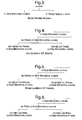
- Figure 3 shows a tree with three entries in it.
- the data is stored against each DN in the tree and the fields that can be represented are governed by the directory schema.
- LDAP itself is very simple and designed at efficient access to entries rather than being able to provide an expressive and functional query interface to it.
- LDAP includes 7 operations: ADD, MODIFY, DELETE, MODRDN, BIND, UNBIND and REBIND.
- the structure of the hierarchy that is stored in the Directory Server for MMS is key to understanding how the data is organised and how the mappings required to define security can be achieved.
- the hierarchy below this is then designed to reflect the needs of the application.
- the first hierarchical grouping is that of the organisations that are subscribed to MMS. These organisations and the associated roles, groups and members (to be explained below) are separate from each other and this needs to be reflected in the structure of the tree.
- the example given in Figure 3 shows a tree with two organisations within it. The entries for those organisations would be attached below the organisation within the DIT (Directory Information Tree). The organisation also includes a list of other organisations that this one can be visible to. Visibility of organisations is an important feature and will be mentioned below.
- An organisation 8 has a number (zero of more) users/members 12 within it. These users/members are grouped under the member branch of the organisation and are stored by uid attribute (user id). This is shown in Figure 4.
- An organisation 8 also contains a number of groups which are used to collect users/members 12 together for the purposes of administration and also some of the access permissions for assets. These groups are stored under the groups branch of the organisations by the cn attribute (common name). This is shown in Figure 5.
- the groups themselves consist of members which can in themselves be groups. Each member is a distinguished name which either references a user or another group.
- An organisation 8 also contains a number of roles which are used to decide the functional permissions of users/members within the organisations 8. Each role contains a list of members and the global of role that it references.
- the role information for MMS is stored globally within a template section of the DIT.
- the template section includes a plurality of templates, each defining a particular collection of functions such as read, write, edit etc. Templates may also be provided for defining only one respective function.
- a role created for an organisation 8 references a single template within the template section of the DIT. This in turn may reference further templates within the template area.
- the roles for an organisation are found under the roles branch in the DIT as shown in Figure 6.
- the template information includes the default information for organisations and roles which are referenced throughout the tree.
- one group 20 contains zero or more members 12 and zero or more groups 20, one role 22 contains zero or more members 12 and references one and one templates 24 and one template is referenced by zero or more roles 22 and references zero or more templates 24.
- a member 12 can be a member of zero or more groups 20 and roles 22.
- the following describes the process for obtaining a list of roles 22 that a user 12 is capable of performing. This process would need to be optimised by caching of results in a high throughput environment. The process is carried out as described below.
- the media management system provides a database 2 accessible from external organisations 8, each organisation 8 having one or more members 12.
- the security structure 14 attempts to authenticate the user 12.
- the security structure supports two things
- the security structure 14 can also use this information to be able to audit who has performed actions within the MMS system.
- Functional Access Requirements define the requirements within MMS to restrict access to functionality within the system.
- the method for restricting access to the functions within MMS is via the roles 22.
- the roles 22 define functions which can be carried out within MMS.
- a role 22 is a mapping of functionality against allowed users 12. Therefore, a role 22 has references to all the users 12 which are allowed to use it. In addition to this it also needs to be possible to group roles 22 to form functional blocks (much in the same way of having groups of groups).
- MMS Mobile Multimedia Subsystem
- the user 12 must be authenticated with MMS (as described above) and the user 12 must be a member of the role 22 which they are attempting to execute.
- the roles 22 themselves are fixed by MMS (it is not possible to define new roles) based on the requirements of the system. There needs to be a central source for the definition of roles 22 and groups of roles 22.
- Organisations 8 can draw from this as they need to. This will allow different organisations to be limited as to the functionality they can use within MMS. It also means that it is possible to easily add and remove functionality from MMS by changing the central references.
- the role membership model gives developers the ability to present an interface to users 12 based upon the functions that they have permission to execute, for example, only Ingestors will see the Ingest tab.
- Figure 9 shows the first two steps in checking whether an operation or function can be permitted.
- the function itself it not necessarily that important (though the target of it is).
- To be able use this model it is important that the end users 12 of the system are presented with an interface which allows the assignment and delegation of roles 22 to be managed.
- the best way to express this functionality is in terms of use cases and actor definitions.
- the use cases here overlap slightly with those defined for asset management but this is the prime source for allocating roles 22 within the system.
- This action is where a user 12 attempts to execute an action within MMS. This is a generic use case for any kind of action within MMS. Authorisation for this is given based upon whether the user 12 is a member of the appropriate role 22 and also whether the data that the action is being carried out on is something they have permissions to. This is described below with reference to Figure 10.
- This action is where a new role 22 is created. This is an administrative function. The information required for this action is the role details of the role to create.
- the role 22 is created outside the scope of organisations 8 and used as a template for those organisations to be able to use this role.
- This action is where an existing role 22 is removed.
- the role 22 is removed along with all references to it within MMS. This effectively removes the role from everyone. This is an administrative function.
- This action gives a user 12 within an organisation 8 membership of a Role 22.
- the required information for this action is a reference to the user 8 and the role 22 they are to be granted permission to.
- This grant can take the form of simple membership and also that of role administrator.
- Authorisation for this action is given based upon whether the user is a User Administrator or Organisation Administrator .
- This action is used to group roles 22 within roles 22. It allows a Role 22 to be added to another one. This allows the creation of role packages to group functions and provide easier administration for application security.
- the input for this action is a reference to the role being added and a reference of the role to which it is being added. This is an administrative operation.
- This action is used to ungroup a role 22 from another one. It is the inverse function of above. This input for this action is a reference to the role to be removed and a reference to the role it is to be removed from. This is an administrative operation outside the application context.
- This action removes a user's permissions from a role. It can be used to remove both role membership and also role administration privileges.
- the input for this action is a reference to a role and a reference to the user to be removed from it. This action is only available to users who are a User Administrator, Organisation Administrator.
- This action is used to allow a role 22 (or collection of roles) to an organisation 8. It is used so that different organisations 8 can be presented with differing functionality.
- the input for this action is a reference to the role to allocate and a reference to the organisation to allocate it to. This is an administrative action.
- This action is used to remove a role 22 (or collection of roles) from an organisation 8.
- the input for this action is a reference to the role to remove and a reference to the organisation from which to remove it from.
- This action is an administrative operation.
- the flow of security by the security structure 14 is built from the initial requirements for a user 8 to be authenticated through to working out whether they have permission to execute a function or role within MMS.
- the security structure 14 needs in order to be able to grant access to a particular action or function and that is to understand the resource that the action is targeting. Taking this requirement gives us a final decision flow for the security structure as shown in Figure 10.
- the security structure 14 determines whether or not the user 12 is listed for the target in question as having permission to conduct the requested function. In the case of actions or functions on data files 6 themselves, the data files 6 have associated with them details of users 12 and what functions, such as read, write, edit etc. they are permitted to perform. Similarly, where the target is data regarding a user 12, the action will only be allowed if the user 12 is acting upon his/her own data or if the user 12 has administrative rights for the organisation 8 in question.
- Figure 13 illustrates a flow diagram for a user attempting to change a password.
- the security structure includes mechanisms for storing permissions against the data and folders. These permissions are based upon either users 12 themselves or whether the users 12 are members of groups 20 who have been allocated those permissions.
- Permissions can also be specified at an asset metadata level.
- Grants are processed before Revokes to ensure consistency. For example, Grant Delete and Revoke View are processed in this order to ensure that they 'cancel each other out'.
- the permissions model gives the developers of the user interface the ability to present an interface to users based upon the asset and metadata permissions. For example, input fields and buttons may be disabled on the Dublin Core metadata screen if the User does not have Edit permission on the asset.
- An asset will have an owning organisation 8 and owner.
- the owner is likely to be the user who created the asset / folder, although this ownership can change with time (e.g. the original owner leaves the company).
- the owning organisation is likely to be the organisation of the owner, however, it is possible to create an asset on behalf of another organisation.
- Proxy assets have the same organisation as their master. This rule is enforced when:
- the use cases are the actions that can be performed which are relevant to the management of folders and assets within MMS.
- This action is the ability to create a user or group folder.
- This action is the ability to create a folder within a folder.
- This action is the ability to edit a folder, e.g. change the effective dates.
- This action is the ability to change a folder's owner or owning organisation.
- This action is the ability to remove a folder and any container relationships it is participating in (as a parent and/or sub folder).
- Soft or hard deletion is available (configurable using LDAP). A soft delete end dates the folder so that is no longer effective, whereas a hard delete removes the record.
- This action is the ability to view the access permissions on a folder.
- This action is the ability to grant access to a folder.
- This action is the ability to revoke access to a folder.
- This action is the ability to edit a folder's Dublin Core metadata.
- This action is the ability to add user defined metadata to a folder.
- This action is the ability to edit a folder's user defined metadata.
- This action is the ability to remove a folder's user defined metadata.
- This action is the ability to view the access permissions on a folder's user defined metadata.
- This action is the ability to grant access to a folder's user defined metadata.
- This action is the ability to revoke access to a folder's user defined metadata.
- This action is the ability to create a container relationship between a folder and another folder/asset.
- This action is the ability to remove a container relationship between a folder and another folder/asset.
- Soft or hard deletion is available (configurable using LDAP). A soft delete end dates the link so that.is no longer effective, whereas a hard delete removes the record.
- the existing asset is end dated so that it is no longer effective.
- the new version is placed in the folder(s) that the existing asset is in.
- This action is the ability to edit an asset, e.g. change the effective dates.
- This action is the ability to change an asset's owner or owning organisation.
- Soft delete is available (configurable using LDAP). A soft delete end dates the asset so that is no longer effective, whereas a hard delete removes the record.
- This action is the ability to view the access permissions on an asset.
- This action is the ability to grant access to an asset.
- This action is the ability to revoke access to an asset.
- This action is the ability to edit an asset's Dublin Core metadata.
- This action is the ability to edit an asset's format metadata. This action would only be performed if the asset's format metadata is re-extracted, e.g. a new format metadata extractor is made available.
- This action is the ability to add user defined metadata to an asset.
- This action is the ability to edit an asset's user defined metadata.
- This action is the ability to remove an asset's user defined metadata.
- This action is the ability to view the access permissions on an asset's user defined metadata.
- This action is the ability to grant access to an asset's user defined metadata.
- This action is the ability to revoke access to an asset's user defined metadata.
- This action is the ability to create a proxy relationship between two assets. Proxies should be read only, therefore all Edit permissions on the proxy will be removed.
- This action is the ability to remove a proxy relationship between two assets.
- Any authenticated user has the ability to create a group within MMS. This group is created within the scope of their organisation and the user is automatically installed as the owner of the group. This group can then be used to hold a collection of other groups and users and can then be used to restrict permission to assets within MMS. The input to this action is the name of the group to be created.
- Deleting a group is removing it from the system. It removes the group and also any references to it that existed from elsewhere. (note that if there are references to the group then a warning message should be displayed).
- the input to this action is a reference to the group.
- Authorisation for this action is granted based upon whether the user is either a Group Owner, Organisation.Administrator or MMS Administrator.
- the input to this action is the group to grant membership to and the reference to the user/group to be added to it.
- Authorisation for this action is granted based upon whether the user is either a Group Owner, Group Administrator, Domain Administrator or MMSAdministrator.
- the input to this action is a reference to the group and a reference to the entity to remove from it.
- Authorisation to this action is granted based on whether the user is either a Group Owner, Group Administrator, Domain Administrator or MMS Administrator. Membership cannot be revoked for a Group Owner.
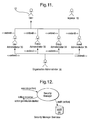
- FIG. 11 illustrates the various actors who are involved in within MMS.
- the User 12 is the basic unit within MMS, A User 12 is capable of performing most actions within the system aside from ingesting new assets. Users can modify their own data and data they have access to, create and control groups 20 and search for /download assets. The access a user 12 has to the system is dependent on the organisation 8 and groups 20 that they belong to.
- a User Administrator 30 is allowed to do anything that a User 12 can do and has additional capabilities with regards to the creation and management of users 12 within MMS.
- a User Administrator 30 can control the roles 22, password and personal details of users 12 within the same organisation 8 as themselves. They can also create new users 12 within their organisation.
- a Folder Administrator 32 is allowed to do anything that a User 12 can do with the additional capabilities with regards to the management of folders, i.e. collections of data files 6.
- a Folder Administrator 32 can manage any of the folders within the scope of their organisation 8. This includes creation, deletion and permissions.
- a Group Administrator 34 is allowed to do anything that a User 12 can do with additional capabilities pertaining to the management of groups.
- a Group Administrator 34 can manage any groups that exist within the scope of their own organisation 8.
- An Asset Administrator 36 is allowed to do anything that a User 12 can do with additional responsibilities and capabilities with regards to Assets.
- An Asset Administrator has administration privileges over any assets owned by their organisation and also the ability to ingest new assets.
- An Organization Administrator 38 has administrative privilege over everything that falls within the scope of their own organisation 8.
- the Ingestor 40 is a special role which is used for people who have the ability to introduce new assets into the system but do not have the ability to search and view existing assets. This duty would be assigned to someone who was given the job of bulk ingesting new assets or this duty can be added to users 12 to give them the additional privilege of ingesting file.
- the MMS may also include an auditing feature.
- the basic flow of the security structure 14 within an application is that an action is passed to it in order to be executed.
- the security structure then makes a decision on whether or not to execute the action based on the permissions of the user 12 attempting to execute the action, their roles and what they are attempting to perform the action on.
- the structure logs the action that was attempted and whether it was allowed or denied. It can then attempt to execute the action and return any response to the caller or inform the caller that they had insufficient permission to carry out the requested action.
- users 12 are able to access functionality with differing levels of permissions. It is important to be able to record who has done what within the system and when so that it is possible to track back possible problems within the system. It is important that all actions within the application get logged at the granularity of actions. It is possible to use software to analyse web server logs and get to very close to this functionality. The problem here is that the user 12 who requested the action is not necessarily going to be captured and also that the parameters and details of the action might not also be captured. Therefore all actions that occur within the system are logged. Being able to do this allows the following things
- Any technical support function will (at some stage) need to know what actions the user 12 has been attempting in order to assist them with their problems. It is better from a helpdesk point of view to have both perspectives on what the user is up to so that they can obtain from the user what the user thought they were doing as well as from the system what it thought they were doing. It also gives a very good feedback path to areas of inconsistency within the user interface of the system
- the audit database also logs attempts to access things that a user has not got access to. In the case of a perfect user interface this should not happen. In the real world it will happen but it should not happen that often. Being able to see the numbers of failed execute() actions it is possible to get a picture of possible break in attempts and attempted security breaches. For example a user account may be compromised and a hacker use it in order to attempt to trigger other actions by manipulating HTTP requests. This kind of activity would show up in an analysis of the logs which would allow the administrators of MMS to be able to say whether or not a user account needs to be monitored or locked.
- An ASP is a provider of applications to multiple organisations. This means that this kind of application provides services to multiple collections of individuals. The implications are from an application perspective that a block of functionality is provided to each organisation, which is not necessarily the same. Further to this the application needs to be aware of both the identity of users and also the organisation to which they belong in order to understand their security requirements (this also impacts the visibility of data).
- groups are the entities which are used in order to organise collections of users with respect to access to assets.
- Groups can be cross organisational in that a single group can contain members from multiple organisations.
- Groups can also be layered so it is possible to have groups of groups within the MMS framework.
- Roles are the mechanism for defining responsibilities and available functionality within MMS. Roles are the mechanism for grouping a user's functional capabilities. They exist within the scope of a single organisation rather than across multiple ones. The reason for this is to keep a very strong separation between roles and groups. Roles are stored globally for the whole of MMS and then referenced as required by each organisation so that different organisations can be given different functionality. The global roles can contain a list of roles that they include so it is possible to group roles into packages. At the organisation level, this grouping does not occur.
- Authentication is the process of taking a set of credentials from an end user of MMS and validating it against a centrally held store. The end result is to be able to say with a reasonable degree of confidence that an authenticated user is who they say they are.
- Authorisation is the act of taking an authenticated user and deciding to allow them to perform an action or operation within MMS. Authorisation can only happen against authenticated users.
- Users are individuals who are using the MMS application.
- a user belongs to a single organisation.
- a user can also belong to zero or more groups and be assigned to zero or more roles.
- Assets are the digital media that are stored within MMS.
- a Directory Server is a component within the MMS system which stores a directory of all the users, groups, organisations and roles within MMS. This is the central repository from which decisions on security decisions are made.
- An application server is a platform upon which the MMS application sits. It provides the underlying services (eg/ J2EE web and bean containers) that the application is built upon.
- An action is a function/operation that is carried out within the MMS system by a user. This can also be referenced as an operation.
- Folders are the way items are grouped within MMS. MMS can be thought of as a virtual filesystem for media assets. Within this context, a folder is a container for a list of assets or other folders.
Landscapes
- Engineering & Computer Science (AREA)
- Theoretical Computer Science (AREA)
- Computer Security & Cryptography (AREA)
- Bioethics (AREA)
- General Health & Medical Sciences (AREA)
- Computer Hardware Design (AREA)
- Health & Medical Sciences (AREA)
- Software Systems (AREA)
- Physics & Mathematics (AREA)
- General Engineering & Computer Science (AREA)
- General Physics & Mathematics (AREA)
- Databases & Information Systems (AREA)
- Storage Device Security (AREA)
- Information Retrieval, Db Structures And Fs Structures Therefor (AREA)
Abstract
Description
- The paths of access to each component (such as data file 6), which is how the component will be accessed within the system. For a database server this would describe which components could connect to the server and perform SQL operations. This is important so as to understand the network paths that can (under normal operation) be taken to a component.
- The identity of the entity (such as member 12) accessing the component. In the case of web applications, the application server serves as a proxy to back end components within the system. This means that the back end component is unlikely to know anything other than the fact that it is being accessed by the application server and be unaware of the identity of the user. This puts a greater requirement on the applications running within the application server to ensure that it only performs operations that the user is allowed to.
- The method for propagating authentication credentials within the
scope of the MMS system. This includes how to get
userids/passwords to users of the system (
ie members 12 of the organisations 8) as well as moving and storing the credentials required by the application server in order for it to be able to access back end services. - The backup and restore procedures for each component within the system. This is required so that a component can be reliably restored to a previous valid state if it becomes compromised.
- The last focus of system security is to understand the mechanisms for testing and verifying the policies which have been written for each component.
LDAP includes 7 operations: ADD, MODIFY, DELETE, MODRDN, BIND, UNBIND and REBIND.
- Obtain user DNThe Distinguished Name of the user or
member 12 needs to be available to begin this operation. This can be obtained using the user's uid attribute (since this is unique within the directory) using the following LDAP filter.
(uid=userid) - List the groups the user directly belongs toUsing the DN of the
user 12 whose membership you wish to find out use the following LDAP filter to obtain the list ofgroups 20 theuser 12 is directly a member of.
(&(objectclass=mmsGroup)(|(uniquemember=userDN)(mmsAdminist rator=userDN)(mmsOwner=userDN))) - Traverse the groups to find the full listFor each
group 20 dn reference within the uniquemember field within thegroup 20 obtain thegroups 20 that it is a member of (this operation is recursive). The current list of groups 20 auser 12 is a member of needs to be stored within a set in order to check for circular references. Use the following LDAP filter to check for the groups 20 agroup 20 belongs to
(&(obj ectclass=mmsGroup)(uniquemember=groupDN)).
- The Distinguished Name of the
user 12 needs to be available to begin this operation. This can be obtained using the user's uid attribute ( which is unique) using the following LDAP filter
(uid=userid)
- The next stage is to list the
roles 22 that theuser 12 is assigned to within theirorganisation 8. This is done by using the following LDAP filter.
(&(objectclass=mmsRole)(uniquemember=userDN))
- Once the list of
roles 22 within anorganisation 8 is known then each of these needs to be mapped (via the template information) to a final list of allowedroles 22 and the functions defined by thereference templates 24. For each retrievedrole 22 for an organisation 8 a lookup must be done to obtain the subroles incorporated within it. This is a recursive operation to traverse the role hierarchy which can be performed by loading up the attributes for eachrole 22 and using the uniquemember attribute in order to find the subroles.
| OPERATION | PERMISSION | INCLUDE |
| Grant | View | |
| Revoke | View | Edit, Delete, View Access, Grant Access, Revoke Access |
| Grant | Edit | View |
| Revoke | Edit | |
| Grant | Delete | View |
| Revoke | Delete | |
| Grant | View Access | View |
| Revoke | View Access | Grant Access, Revoke Access |
| Grant | Grant Access | View, View Access |
| Revoke | Grant Access | |
| Grant | Revoke Access | View, View Access |
| Revoke | Revoke Access |
- proxy is ingested
- owning organisation is changed on master
- version is ingested
Claims (19)
- A data management system including:a database for storing a plurality of data libraries; andan interface for controlling storage of data in the data libraries of said database and allowing access to said data by a plurality of external organisations, each organisation including one or more respective members; whereinthe interface includes a security structure controlling access of the members of the organisations to the data.
- A method of providing a plurality of external organisations with access to a common database containing a plurality of data libraries, each organisation including one or more respective members, the method including the steps of a security structure for controlling access of members of the organisations to the data.
- A security structure for use with a database storing a plurality of data libraries, the security structure allowing an interface between different external organisations and data of the data libraries, each organisation having one or more respective members and the security structure controlling access of the members of different organisations to the data of the data.
- A system, method or structure according to claim 1, 2 or 3, wherein the organisations operate respective data storage/communication systems and include an external connection to the database.
- A system, method or structure according to claim 4, wherein the data storage/communication systems include respective administrator rights for the respective systems.
- A system, method or structure according to any preceding claim wherein access of the members to the data includes at least reading, writing and editing of the data.
- A system, method or structure according to any preceding claim wherein the data libraries have different respective ownerships.
- A system, method or structure according to any preceding claim wherein one or more of the data libraries is owned by a respective organisation.
- A system, method or structure according to any preceding claim wherein the security structure allows the members to request operation of functions with respect to the database, the functions including access to the data.
- A system, method or structure according to claim 9 wherein, when a member of one of the organisations requests a function, security structure requires that the ID of the member be authenticated.
- A system, method or structure according to claim 9 or 10, wherein the security structure includes a list of functions available to respective members of the organisations and, when a member of one of the organisations requests a function, the security structure requires that it be determined that the requested function is available to the member.
- A system, method or structure according to claim 11 wherein the security structure includes, for each organisation, one or more roles, each role relating to one or more functions and defining the members of the organisation entitled to operate the one or more functions of the role.
- A system, method or structure according to claim 12, wherein the security structure includes one or more templates, each template providing a list of one or more functions and the roles having pointers to the templates so as to indicate the one or more functions available to the members defined for the role.
- A system, method or structure according to any one of claims 9 to 13, wherein the security structure includes, for each respective organisation, an indication of all others of the organisations to which said respective organisation is visible and, when a member of one of the organisations requests a function, the security structure requires that it be determined that the function does not require access to data of a data library owned by an organisation which is not visible to the organisation of the member.
- A system, method or structure according to any one of claims 9 to 14, wherein the security structure provides for each target of a function to have associated with it one or more permissions, the permissions allowing defined functions to be operated by defined members and, when a member of one of the organisations requires a function, the security structure requires that it be determined that the requested function and said member be included in the permissions of the target of the function.
- A system, method or structure according to any one of claims 9 to 15 wherein the security structure provides for each function to allow multiple targets.
- A system, method or structure wherein data files of said data libraries have associated permissions, the permissions allowing defined functions to be operated upon respective data files by defined members and, when a member of one of the organisations requests a function on a data file, the security structure requires that it be determined that the requested function and said member are included in the permissions of the data file.
- A computer program comprising program code means for performing all the steps of any one of the preceding claims when said program is run of a computer.
- A computer program product comprising program code means stored on a computer readable medium for performing all the steps of any one of claims 1 to 17 when said program product is run on a computer.
Applications Claiming Priority (2)
| Application Number | Priority Date | Filing Date | Title |
|---|---|---|---|
| GB0220359A GB2392517A (en) | 2002-09-02 | 2002-09-02 | Providing secure access to a database |
| GB0220359 | 2002-09-02 |
Publications (2)
| Publication Number | Publication Date |
|---|---|
| EP1394656A2 true EP1394656A2 (en) | 2004-03-03 |
| EP1394656A3 EP1394656A3 (en) | 2008-02-06 |
Family
ID=9943345
Family Applications (1)
| Application Number | Title | Priority Date | Filing Date |
|---|---|---|---|
| EP03254798A Withdrawn EP1394656A3 (en) | 2002-09-02 | 2003-07-31 | Data management system, method of providing access to a database and security structure |
Country Status (5)
| Country | Link |
|---|---|
| US (1) | US20040044905A1 (en) |
| EP (1) | EP1394656A3 (en) |
| JP (1) | JP2004094958A (en) |
| CN (1) | CN1495638A (en) |
| GB (1) | GB2392517A (en) |
Families Citing this family (20)
| Publication number | Priority date | Publication date | Assignee | Title |
|---|---|---|---|---|
| JP4500608B2 (en) * | 2004-07-07 | 2010-07-14 | 有限会社インフォメーション・ネット | Inter-company electronic commerce method and system |
| US8656161B2 (en) | 2004-11-30 | 2014-02-18 | Nec Corporation | Information sharing system, information sharing method, group management program and compartment management program |
| US7779456B2 (en) * | 2005-04-27 | 2010-08-17 | Gary M Dennis | System and method for enhanced protection and control over the use of identity |
| JP4807041B2 (en) * | 2005-11-02 | 2011-11-02 | 富士通株式会社 | Certification program |
| US8307406B1 (en) | 2005-12-28 | 2012-11-06 | At&T Intellectual Property Ii, L.P. | Database application security |
| US20080072066A1 (en) * | 2006-08-21 | 2008-03-20 | Motorola, Inc. | Method and apparatus for authenticating applications to secure services |
| US7743071B2 (en) * | 2007-02-26 | 2010-06-22 | Microsoft Corporation | Efficient data handling representations |
| US7720831B2 (en) * | 2007-02-26 | 2010-05-18 | Microsoft Corporation | Handling multi-dimensional data including writeback data |
| US8407781B2 (en) * | 2007-08-02 | 2013-03-26 | Nec Corporation | Information providing support device and information providing support method |
| US9471801B2 (en) * | 2007-11-29 | 2016-10-18 | Oracle International Corporation | Method and apparatus to support privileges at multiple levels of authentication using a constraining ACL |
| US9241002B2 (en) * | 2008-11-10 | 2016-01-19 | Red Hat, Inc. | Trusted relationships in multiple organization support in a networked system |
| US9479509B2 (en) | 2009-11-06 | 2016-10-25 | Red Hat, Inc. | Unified system for authentication and authorization |
| JP5049333B2 (en) * | 2009-11-26 | 2012-10-17 | 京セラドキュメントソリューションズ株式会社 | Authorization information registration device and authorization information registration program |
| US8959113B2 (en) | 2011-03-30 | 2015-02-17 | Open Text S.A. | System, method and computer program product for managing tabulated metadata |
| US20130117313A1 (en) * | 2011-11-08 | 2013-05-09 | Microsoft Corporation | Access control framework |
| WO2015196450A1 (en) | 2014-06-27 | 2015-12-30 | Microsoft Technology Licensing, Llc | System for data protection in power off mode |
| WO2015196449A1 (en) | 2014-06-27 | 2015-12-30 | Microsoft Technology Licensing, Llc | Data protection system based on user input patterns on device |
| CN105519038B (en) | 2014-06-27 | 2020-03-17 | 微软技术许可有限责任公司 | User input data protection method and system |
| CN106372469A (en) * | 2016-08-19 | 2017-02-01 | 上海宝尊电子商务有限公司 | Process-based database permission automated management system meeting international auditing standards |
| CN108304731B (en) * | 2017-12-21 | 2021-07-06 | 浪潮卓数大数据产业发展有限公司 | Method and system for managing enterprise data call and information processing platform |
Family Cites Families (12)
| Publication number | Priority date | Publication date | Assignee | Title |
|---|---|---|---|---|
| US6192405B1 (en) * | 1998-01-23 | 2001-02-20 | Novell, Inc. | Method and apparatus for acquiring authorized access to resources in a distributed system |
| US6453353B1 (en) * | 1998-07-10 | 2002-09-17 | Entrust, Inc. | Role-based navigation of information resources |
| US6182142B1 (en) * | 1998-07-10 | 2001-01-30 | Encommerce, Inc. | Distributed access management of information resources |
| US6460141B1 (en) * | 1998-10-28 | 2002-10-01 | Rsa Security Inc. | Security and access management system for web-enabled and non-web-enabled applications and content on a computer network |
| US6366915B1 (en) * | 1998-11-04 | 2002-04-02 | Micron Technology, Inc. | Method and system for efficiently retrieving information from multiple databases |
| US6453339B1 (en) * | 1999-01-20 | 2002-09-17 | Computer Associates Think, Inc. | System and method of presenting channelized data |
| GB9913165D0 (en) * | 1999-06-08 | 1999-08-04 | Secr Defence | Access control in a web environment |
| US7013485B2 (en) * | 2000-03-06 | 2006-03-14 | I2 Technologies U.S., Inc. | Computer security system |
| US20020026445A1 (en) * | 2000-08-28 | 2002-02-28 | Chica Sebastian De La | System and methods for the flexible usage of electronic content in heterogeneous distributed environments |
| US20020103811A1 (en) * | 2001-01-26 | 2002-08-01 | Fankhauser Karl Erich | Method and apparatus for locating and exchanging clinical information |
| US20030023677A1 (en) * | 2001-07-25 | 2003-01-30 | Graham Morison Zuill | On-line project collaboration system |
| US7146367B2 (en) * | 2002-05-14 | 2006-12-05 | Advectis, Inc. | Document management system and method |
-
2002
- 2002-09-02 GB GB0220359A patent/GB2392517A/en not_active Withdrawn
-
2003
- 2003-07-31 EP EP03254798A patent/EP1394656A3/en not_active Withdrawn
- 2003-08-28 US US10/650,448 patent/US20040044905A1/en not_active Abandoned
- 2003-09-02 CN CNA031579752A patent/CN1495638A/en active Pending
- 2003-09-02 JP JP2003310778A patent/JP2004094958A/en not_active Withdrawn
Also Published As
| Publication number | Publication date |
|---|---|
| EP1394656A3 (en) | 2008-02-06 |
| CN1495638A (en) | 2004-05-12 |
| JP2004094958A (en) | 2004-03-25 |
| US20040044905A1 (en) | 2004-03-04 |
| GB0220359D0 (en) | 2002-10-09 |
| GB2392517A (en) | 2004-03-03 |
Similar Documents
| Publication | Publication Date | Title |
|---|---|---|
| US20040044905A1 (en) | Data management system, method of providing access to a database and security structure | |
| CN114641768B (en) | Control access to cloud resources in your data using cloud-enabled data tagging and a dynamic access control policy engine | |
| US8370388B2 (en) | Mandatory access control list for managed content | |
| JP4892179B2 (en) | Zone-based security management for data items | |
| US7103784B1 (en) | Group types for administration of networks | |
| US7080224B2 (en) | Data processing method with restricted data arrangement, storage area management method, and data processing system | |
| US10148637B2 (en) | Secure authentication to provide mobile access to shared network resources | |
| US20070244899A1 (en) | Automatic folder access management | |
| JP2008547118A (en) | Granting unified authority for heterogeneous applications | |
| MX2008000514A (en) | Single view of data in a networked computer system with distributed storage. | |
| AU2022300907B2 (en) | Links platform-as-a-service | |
| Mont et al. | Privacy policy enforcement in enterprises with identity management solutions | |
| Delessy et al. | Patterns for access control in distributed systems | |
| CN100586123C (en) | Security audit method and system based on role management | |
| Varun et al. | Decentralized authorization in web services using public blockchain | |
| US20190057193A1 (en) | Policy-based mobile access to shared network resources | |
| US11115415B2 (en) | Method and system to capture and find information and relationships | |
| JP2009505245A (en) | Management and use of shared digital information on the network | |
| JP4723930B2 (en) | Compound access authorization method and apparatus | |
| US11625365B2 (en) | Method for managing virtual file, apparatus for the same, computer program for the same, and recording medium storing computer program thereof | |
| de la Motte et al. | Using a Client-Task Based Approach to Achieve a\Privacy Compliant Access Control System | |
| Pluta et al. | Identity & Access Control Management Infrastructure Blueprint—Design Principles for True Informational Self-Determination | |
| Jotterand | Usage control in secure messaging | |
| Haynes | Internet-Draft NetApp Intended status: Standards Track May 18, 2012 Expires: November 19, 2012 | |
| Giridharan et al. | A method of secured Co-authoring System development over wireless Network |
Legal Events
| Date | Code | Title | Description |
|---|---|---|---|
| PUAI | Public reference made under article 153(3) epc to a published international application that has entered the european phase |
Free format text: ORIGINAL CODE: 0009012 |
|
| AK | Designated contracting states |
Kind code of ref document: A2 Designated state(s): AT BE BG CH CY CZ DE DK EE ES FI FR GB GR HU IE IT LI LU MC NL PT RO SE SI SK TR |
|
| AX | Request for extension of the european patent |
Extension state: AL LT LV MK |
|
| PUAL | Search report despatched |
Free format text: ORIGINAL CODE: 0009013 |
|
| AK | Designated contracting states |
Kind code of ref document: A3 Designated state(s): AT BE BG CH CY CZ DE DK EE ES FI FR GB GR HU IE IT LI LU MC NL PT RO SE SI SK TR |
|
| AX | Request for extension of the european patent |
Extension state: AL LT LV MK |
|
| AKX | Designation fees paid | ||
| REG | Reference to a national code |
Ref country code: DE Ref legal event code: 8566 |
|
| STAA | Information on the status of an ep patent application or granted ep patent |
Free format text: STATUS: THE APPLICATION IS DEEMED TO BE WITHDRAWN |
|
| 18D | Application deemed to be withdrawn |
Effective date: 20080807 |