EP1394176A1 - Novel mucin binding polypeptides derived from Lactobacillus johnsonii - Google Patents
Novel mucin binding polypeptides derived from Lactobacillus johnsonii Download PDFInfo
- Publication number
- EP1394176A1 EP1394176A1 EP02019243A EP02019243A EP1394176A1 EP 1394176 A1 EP1394176 A1 EP 1394176A1 EP 02019243 A EP02019243 A EP 02019243A EP 02019243 A EP02019243 A EP 02019243A EP 1394176 A1 EP1394176 A1 EP 1394176A1
- Authority
- EP
- European Patent Office
- Prior art keywords
- polypeptide
- cncm
- seq
- polynucleotide
- cells
- Prior art date
- Legal status (The legal status is an assumption and is not a legal conclusion. Google has not performed a legal analysis and makes no representation as to the accuracy of the status listed.)
- Withdrawn
Links
- 108090000765 processed proteins & peptides Proteins 0.000 title claims abstract description 74
- 229920001184 polypeptide Polymers 0.000 title claims abstract description 70
- 102000004196 processed proteins & peptides Human genes 0.000 title claims abstract description 69
- 108010063954 Mucins Proteins 0.000 title claims abstract description 41
- 102000015728 Mucins Human genes 0.000 title claims abstract description 41
- 230000027455 binding Effects 0.000 title claims abstract description 36
- 241001468157 Lactobacillus johnsonii Species 0.000 title abstract description 25
- 238000002360 preparation method Methods 0.000 claims abstract description 14
- 108091033319 polynucleotide Proteins 0.000 claims description 45
- 102000040430 polynucleotide Human genes 0.000 claims description 45
- 239000002157 polynucleotide Substances 0.000 claims description 45
- 244000005700 microbiome Species 0.000 claims description 40
- 238000000034 method Methods 0.000 claims description 24
- 239000013598 vector Substances 0.000 claims description 19
- 150000001413 amino acids Chemical class 0.000 claims description 15
- 239000012634 fragment Substances 0.000 claims description 15
- 239000006041 probiotic Substances 0.000 claims description 14
- 235000018291 probiotics Nutrition 0.000 claims description 14
- 230000000529 probiotic effect Effects 0.000 claims description 11
- 239000012472 biological sample Substances 0.000 claims description 9
- 239000002773 nucleotide Substances 0.000 claims description 8
- 125000003729 nucleotide group Chemical group 0.000 claims description 8
- 102000014914 Carrier Proteins Human genes 0.000 claims description 5
- 108091008324 binding proteins Proteins 0.000 claims description 5
- 230000015572 biosynthetic process Effects 0.000 claims description 3
- 238000012258 culturing Methods 0.000 claims description 3
- 239000013604 expression vector Substances 0.000 claims description 3
- 230000001976 improved effect Effects 0.000 claims description 3
- 238000004519 manufacturing process Methods 0.000 claims description 3
- 230000001747 exhibiting effect Effects 0.000 claims 1
- 238000003786 synthesis reaction Methods 0.000 claims 1
- 108090000623 proteins and genes Proteins 0.000 abstract description 74
- 102000004169 proteins and genes Human genes 0.000 abstract description 49
- 241000894006 Bacteria Species 0.000 abstract description 16
- 229940051875 mucins Drugs 0.000 abstract description 16
- 108020005115 Pyruvate Kinase Proteins 0.000 abstract description 11
- 101150104472 clpE gene Proteins 0.000 abstract description 11
- 102000013009 Pyruvate Kinase Human genes 0.000 abstract description 10
- 108091005804 Peptidases Proteins 0.000 abstract description 5
- 239000004365 Protease Substances 0.000 abstract description 5
- 102100037486 Reverse transcriptase/ribonuclease H Human genes 0.000 abstract description 5
- 102000002508 Peptide Elongation Factors Human genes 0.000 abstract description 3
- 108010068204 Peptide Elongation Factors Proteins 0.000 abstract description 3
- 230000035939 shock Effects 0.000 abstract description 2
- 210000004027 cell Anatomy 0.000 description 75
- LWGJTAZLEJHCPA-UHFFFAOYSA-N n-(2-chloroethyl)-n-nitrosomorpholine-4-carboxamide Chemical compound ClCCN(N=O)C(=O)N1CCOCC1 LWGJTAZLEJHCPA-UHFFFAOYSA-N 0.000 description 66
- LOKCTEFSRHRXRJ-UHFFFAOYSA-I dipotassium trisodium dihydrogen phosphate hydrogen phosphate dichloride Chemical compound P(=O)(O)(O)[O-].[K+].P(=O)(O)([O-])[O-].[Na+].[Na+].[Cl-].[K+].[Cl-].[Na+] LOKCTEFSRHRXRJ-UHFFFAOYSA-I 0.000 description 26
- 239000002953 phosphate buffered saline Substances 0.000 description 26
- 241000186000 Bifidobacterium Species 0.000 description 19
- 239000000284 extract Substances 0.000 description 18
- 239000000872 buffer Substances 0.000 description 17
- 210000002421 cell wall Anatomy 0.000 description 16
- 238000001514 detection method Methods 0.000 description 16
- 239000013612 plasmid Substances 0.000 description 16
- 238000005406 washing Methods 0.000 description 16
- 241000588724 Escherichia coli Species 0.000 description 13
- 241000186660 Lactobacillus Species 0.000 description 13
- 102000037865 fusion proteins Human genes 0.000 description 13
- 108020001507 fusion proteins Proteins 0.000 description 13
- 241000699666 Mus <mouse, genus> Species 0.000 description 10
- 108010008281 Recombinant Fusion Proteins Proteins 0.000 description 10
- 102000007056 Recombinant Fusion Proteins Human genes 0.000 description 10
- FAPWRFPIFSIZLT-UHFFFAOYSA-M Sodium chloride Chemical compound [Na+].[Cl-] FAPWRFPIFSIZLT-UHFFFAOYSA-M 0.000 description 10
- 229940024606 amino acid Drugs 0.000 description 10
- 239000000499 gel Substances 0.000 description 10
- 210000004379 membrane Anatomy 0.000 description 10
- 239000012528 membrane Substances 0.000 description 10
- 108020004414 DNA Proteins 0.000 description 9
- 240000001046 Lactobacillus acidophilus Species 0.000 description 9
- 230000014509 gene expression Effects 0.000 description 9
- RAXXELZNTBOGNW-UHFFFAOYSA-N imidazole Natural products C1=CNC=N1 RAXXELZNTBOGNW-UHFFFAOYSA-N 0.000 description 9
- 238000003752 polymerase chain reaction Methods 0.000 description 9
- 238000009396 hybridization Methods 0.000 description 8
- JVTAAEKCZFNVCJ-UHFFFAOYSA-N lactic acid Chemical compound CC(O)C(O)=O JVTAAEKCZFNVCJ-UHFFFAOYSA-N 0.000 description 8
- 241000283973 Oryctolagus cuniculus Species 0.000 description 7
- 101710116435 Outer membrane protein Proteins 0.000 description 7
- 210000001035 gastrointestinal tract Anatomy 0.000 description 7
- 230000000968 intestinal effect Effects 0.000 description 7
- 230000002018 overexpression Effects 0.000 description 7
- 239000008188 pellet Substances 0.000 description 7
- 239000000523 sample Substances 0.000 description 7
- 239000000126 substance Substances 0.000 description 7
- 108091032973 (ribonucleotides)n+m Proteins 0.000 description 6
- PEDCQBHIVMGVHV-UHFFFAOYSA-N Glycerine Chemical compound OCC(O)CO PEDCQBHIVMGVHV-UHFFFAOYSA-N 0.000 description 6
- 108091028043 Nucleic acid sequence Proteins 0.000 description 6
- 108091034117 Oligonucleotide Proteins 0.000 description 6
- 239000001963 growth medium Substances 0.000 description 6
- PJJJBBJSCAKJQF-UHFFFAOYSA-N guanidinium chloride Chemical compound [Cl-].NC(N)=[NH2+] PJJJBBJSCAKJQF-UHFFFAOYSA-N 0.000 description 6
- 239000006228 supernatant Substances 0.000 description 6
- 239000000725 suspension Substances 0.000 description 6
- QKNYBSVHEMOAJP-UHFFFAOYSA-N 2-amino-2-(hydroxymethyl)propane-1,3-diol;hydron;chloride Chemical compound Cl.OCC(N)(CO)CO QKNYBSVHEMOAJP-UHFFFAOYSA-N 0.000 description 5
- 241000282414 Homo sapiens Species 0.000 description 5
- 241000186606 Lactobacillus gasseri Species 0.000 description 5
- 240000002605 Lactobacillus helveticus Species 0.000 description 5
- 241000186605 Lactobacillus paracasei Species 0.000 description 5
- 239000002033 PVDF binder Substances 0.000 description 5
- 239000000427 antigen Substances 0.000 description 5
- 102000036639 antigens Human genes 0.000 description 5
- 108091007433 antigens Proteins 0.000 description 5
- 230000009286 beneficial effect Effects 0.000 description 5
- 230000000694 effects Effects 0.000 description 5
- 230000002255 enzymatic effect Effects 0.000 description 5
- 229960004198 guanidine Drugs 0.000 description 5
- 239000006166 lysate Substances 0.000 description 5
- 239000000463 material Substances 0.000 description 5
- 229920002981 polyvinylidene fluoride Polymers 0.000 description 5
- 239000011780 sodium chloride Substances 0.000 description 5
- 239000000758 substrate Substances 0.000 description 5
- 238000001262 western blot Methods 0.000 description 5
- QFVHZQCOUORWEI-UHFFFAOYSA-N 4-[(4-anilino-5-sulfonaphthalen-1-yl)diazenyl]-5-hydroxynaphthalene-2,7-disulfonic acid Chemical compound C=12C(O)=CC(S(O)(=O)=O)=CC2=CC(S(O)(=O)=O)=CC=1N=NC(C1=CC=CC(=C11)S(O)(=O)=O)=CC=C1NC1=CC=CC=C1 QFVHZQCOUORWEI-UHFFFAOYSA-N 0.000 description 4
- HRPVXLWXLXDGHG-UHFFFAOYSA-N Acrylamide Chemical compound NC(=O)C=C HRPVXLWXLXDGHG-UHFFFAOYSA-N 0.000 description 4
- ATRRKUHOCOJYRX-UHFFFAOYSA-N Ammonium bicarbonate Chemical compound [NH4+].OC([O-])=O ATRRKUHOCOJYRX-UHFFFAOYSA-N 0.000 description 4
- IJGRMHOSHXDMSA-UHFFFAOYSA-N Atomic nitrogen Chemical compound N#N IJGRMHOSHXDMSA-UHFFFAOYSA-N 0.000 description 4
- FBOZXECLQNJBKD-ZDUSSCGKSA-N L-methotrexate Chemical compound C=1N=C2N=C(N)N=C(N)C2=NC=1CN(C)C1=CC=C(C(=O)N[C@@H](CCC(O)=O)C(O)=O)C=C1 FBOZXECLQNJBKD-ZDUSSCGKSA-N 0.000 description 4
- 241000699670 Mus sp. Species 0.000 description 4
- NBIIXXVUZAFLBC-UHFFFAOYSA-N Phosphoric acid Chemical compound OP(O)(O)=O NBIIXXVUZAFLBC-UHFFFAOYSA-N 0.000 description 4
- JLCPHMBAVCMARE-UHFFFAOYSA-N [3-[[3-[[3-[[3-[[3-[[3-[[3-[[3-[[3-[[3-[[3-[[5-(2-amino-6-oxo-1H-purin-9-yl)-3-[[3-[[3-[[3-[[3-[[3-[[5-(2-amino-6-oxo-1H-purin-9-yl)-3-[[5-(2-amino-6-oxo-1H-purin-9-yl)-3-hydroxyoxolan-2-yl]methoxy-hydroxyphosphoryl]oxyoxolan-2-yl]methoxy-hydroxyphosphoryl]oxy-5-(5-methyl-2,4-dioxopyrimidin-1-yl)oxolan-2-yl]methoxy-hydroxyphosphoryl]oxy-5-(6-aminopurin-9-yl)oxolan-2-yl]methoxy-hydroxyphosphoryl]oxy-5-(6-aminopurin-9-yl)oxolan-2-yl]methoxy-hydroxyphosphoryl]oxy-5-(6-aminopurin-9-yl)oxolan-2-yl]methoxy-hydroxyphosphoryl]oxy-5-(6-aminopurin-9-yl)oxolan-2-yl]methoxy-hydroxyphosphoryl]oxyoxolan-2-yl]methoxy-hydroxyphosphoryl]oxy-5-(5-methyl-2,4-dioxopyrimidin-1-yl)oxolan-2-yl]methoxy-hydroxyphosphoryl]oxy-5-(4-amino-2-oxopyrimidin-1-yl)oxolan-2-yl]methoxy-hydroxyphosphoryl]oxy-5-(5-methyl-2,4-dioxopyrimidin-1-yl)oxolan-2-yl]methoxy-hydroxyphosphoryl]oxy-5-(5-methyl-2,4-dioxopyrimidin-1-yl)oxolan-2-yl]methoxy-hydroxyphosphoryl]oxy-5-(6-aminopurin-9-yl)oxolan-2-yl]methoxy-hydroxyphosphoryl]oxy-5-(6-aminopurin-9-yl)oxolan-2-yl]methoxy-hydroxyphosphoryl]oxy-5-(4-amino-2-oxopyrimidin-1-yl)oxolan-2-yl]methoxy-hydroxyphosphoryl]oxy-5-(4-amino-2-oxopyrimidin-1-yl)oxolan-2-yl]methoxy-hydroxyphosphoryl]oxy-5-(4-amino-2-oxopyrimidin-1-yl)oxolan-2-yl]methoxy-hydroxyphosphoryl]oxy-5-(6-aminopurin-9-yl)oxolan-2-yl]methoxy-hydroxyphosphoryl]oxy-5-(4-amino-2-oxopyrimidin-1-yl)oxolan-2-yl]methyl [5-(6-aminopurin-9-yl)-2-(hydroxymethyl)oxolan-3-yl] hydrogen phosphate Polymers Cc1cn(C2CC(OP(O)(=O)OCC3OC(CC3OP(O)(=O)OCC3OC(CC3O)n3cnc4c3nc(N)[nH]c4=O)n3cnc4c3nc(N)[nH]c4=O)C(COP(O)(=O)OC3CC(OC3COP(O)(=O)OC3CC(OC3COP(O)(=O)OC3CC(OC3COP(O)(=O)OC3CC(OC3COP(O)(=O)OC3CC(OC3COP(O)(=O)OC3CC(OC3COP(O)(=O)OC3CC(OC3COP(O)(=O)OC3CC(OC3COP(O)(=O)OC3CC(OC3COP(O)(=O)OC3CC(OC3COP(O)(=O)OC3CC(OC3COP(O)(=O)OC3CC(OC3COP(O)(=O)OC3CC(OC3COP(O)(=O)OC3CC(OC3COP(O)(=O)OC3CC(OC3COP(O)(=O)OC3CC(OC3COP(O)(=O)OC3CC(OC3CO)n3cnc4c(N)ncnc34)n3ccc(N)nc3=O)n3cnc4c(N)ncnc34)n3ccc(N)nc3=O)n3ccc(N)nc3=O)n3ccc(N)nc3=O)n3cnc4c(N)ncnc34)n3cnc4c(N)ncnc34)n3cc(C)c(=O)[nH]c3=O)n3cc(C)c(=O)[nH]c3=O)n3ccc(N)nc3=O)n3cc(C)c(=O)[nH]c3=O)n3cnc4c3nc(N)[nH]c4=O)n3cnc4c(N)ncnc34)n3cnc4c(N)ncnc34)n3cnc4c(N)ncnc34)n3cnc4c(N)ncnc34)O2)c(=O)[nH]c1=O JLCPHMBAVCMARE-UHFFFAOYSA-N 0.000 description 4
- 239000001099 ammonium carbonate Substances 0.000 description 4
- 230000001580 bacterial effect Effects 0.000 description 4
- 230000004071 biological effect Effects 0.000 description 4
- 230000008827 biological function Effects 0.000 description 4
- 238000010790 dilution Methods 0.000 description 4
- 239000012895 dilution Substances 0.000 description 4
- 235000013305 food Nutrition 0.000 description 4
- 230000004927 fusion Effects 0.000 description 4
- 238000002955 isolation Methods 0.000 description 4
- 239000004310 lactic acid Substances 0.000 description 4
- 235000014655 lactic acid Nutrition 0.000 description 4
- 238000010369 molecular cloning Methods 0.000 description 4
- 210000004877 mucosa Anatomy 0.000 description 4
- YBYRMVIVWMBXKQ-UHFFFAOYSA-N phenylmethanesulfonyl fluoride Chemical compound FS(=O)(=O)CC1=CC=CC=C1 YBYRMVIVWMBXKQ-UHFFFAOYSA-N 0.000 description 4
- 210000002966 serum Anatomy 0.000 description 4
- 238000002415 sodium dodecyl sulfate polyacrylamide gel electrophoresis Methods 0.000 description 4
- 235000000346 sugar Nutrition 0.000 description 4
- 230000014616 translation Effects 0.000 description 4
- QTBSBXVTEAMEQO-UHFFFAOYSA-N Acetic acid Chemical compound CC(O)=O QTBSBXVTEAMEQO-UHFFFAOYSA-N 0.000 description 3
- 102000002260 Alkaline Phosphatase Human genes 0.000 description 3
- 108020004774 Alkaline Phosphatase Proteins 0.000 description 3
- QGZKDVFQNNGYKY-UHFFFAOYSA-N Ammonia Chemical compound N QGZKDVFQNNGYKY-UHFFFAOYSA-N 0.000 description 3
- 108091003079 Bovine Serum Albumin Proteins 0.000 description 3
- 239000003155 DNA primer Substances 0.000 description 3
- KCXVZYZYPLLWCC-UHFFFAOYSA-N EDTA Chemical compound OC(=O)CN(CC(O)=O)CCN(CC(O)=O)CC(O)=O KCXVZYZYPLLWCC-UHFFFAOYSA-N 0.000 description 3
- 102100030801 Elongation factor 1-alpha 1 Human genes 0.000 description 3
- LFQSCWFLJHTTHZ-UHFFFAOYSA-N Ethanol Chemical compound CCO LFQSCWFLJHTTHZ-UHFFFAOYSA-N 0.000 description 3
- WQZGKKKJIJFFOK-GASJEMHNSA-N Glucose Natural products OC[C@H]1OC(O)[C@H](O)[C@@H](O)[C@@H]1O WQZGKKKJIJFFOK-GASJEMHNSA-N 0.000 description 3
- 108010052285 Membrane Proteins Proteins 0.000 description 3
- 102000018697 Membrane Proteins Human genes 0.000 description 3
- 239000000020 Nitrocellulose Substances 0.000 description 3
- 108010049977 Peptide Elongation Factor Tu Proteins 0.000 description 3
- 229920001213 Polysorbate 20 Polymers 0.000 description 3
- KWYUFKZDYYNOTN-UHFFFAOYSA-M Potassium hydroxide Chemical compound [OH-].[K+] KWYUFKZDYYNOTN-UHFFFAOYSA-M 0.000 description 3
- 229920002684 Sepharose Polymers 0.000 description 3
- HEMHJVSKTPXQMS-UHFFFAOYSA-M Sodium hydroxide Chemical compound [OH-].[Na+] HEMHJVSKTPXQMS-UHFFFAOYSA-M 0.000 description 3
- 244000057717 Streptococcus lactis Species 0.000 description 3
- 235000014897 Streptococcus lactis Nutrition 0.000 description 3
- 238000004458 analytical method Methods 0.000 description 3
- 238000010923 batch production Methods 0.000 description 3
- 238000004113 cell culture Methods 0.000 description 3
- 238000006243 chemical reaction Methods 0.000 description 3
- 239000013611 chromosomal DNA Substances 0.000 description 3
- 210000000349 chromosome Anatomy 0.000 description 3
- 230000007423 decrease Effects 0.000 description 3
- 239000012894 fetal calf serum Substances 0.000 description 3
- 239000008103 glucose Substances 0.000 description 3
- 208000028774 intestinal disease Diseases 0.000 description 3
- 239000012139 lysis buffer Substances 0.000 description 3
- 239000002609 medium Substances 0.000 description 3
- 244000005706 microflora Species 0.000 description 3
- 239000000203 mixture Substances 0.000 description 3
- 238000002703 mutagenesis Methods 0.000 description 3
- 231100000350 mutagenesis Toxicity 0.000 description 3
- 229920001220 nitrocellulos Polymers 0.000 description 3
- 230000003287 optical effect Effects 0.000 description 3
- 244000052769 pathogen Species 0.000 description 3
- 238000002264 polyacrylamide gel electrophoresis Methods 0.000 description 3
- 239000000256 polyoxyethylene sorbitan monolaurate Substances 0.000 description 3
- 230000008569 process Effects 0.000 description 3
- 238000000746 purification Methods 0.000 description 3
- 108091008146 restriction endonucleases Proteins 0.000 description 3
- 150000003839 salts Chemical class 0.000 description 3
- -1 sulphate ester Chemical class 0.000 description 3
- 238000013519 translation Methods 0.000 description 3
- XLYOFNOQVPJJNP-UHFFFAOYSA-N water Chemical compound O XLYOFNOQVPJJNP-UHFFFAOYSA-N 0.000 description 3
- IVLXQGJVBGMLRR-UHFFFAOYSA-N 2-aminoacetic acid;hydron;chloride Chemical compound Cl.NCC(O)=O IVLXQGJVBGMLRR-UHFFFAOYSA-N 0.000 description 2
- YRNWIFYIFSBPAU-UHFFFAOYSA-N 4-[4-(dimethylamino)phenyl]-n,n-dimethylaniline Chemical compound C1=CC(N(C)C)=CC=C1C1=CC=C(N(C)C)C=C1 YRNWIFYIFSBPAU-UHFFFAOYSA-N 0.000 description 2
- QRXMUCSWCMTJGU-UHFFFAOYSA-N 5-bromo-4-chloro-3-indolyl phosphate Chemical compound C1=C(Br)C(Cl)=C2C(OP(O)(=O)O)=CNC2=C1 QRXMUCSWCMTJGU-UHFFFAOYSA-N 0.000 description 2
- NLXLAEXVIDQMFP-UHFFFAOYSA-N Ammonia chloride Chemical compound [NH4+].[Cl-] NLXLAEXVIDQMFP-UHFFFAOYSA-N 0.000 description 2
- 229910000013 Ammonium bicarbonate Inorganic materials 0.000 description 2
- 241000283707 Capra Species 0.000 description 2
- 108020004705 Codon Proteins 0.000 description 2
- 239000006144 Dulbecco’s modified Eagle's medium Substances 0.000 description 2
- 238000002965 ELISA Methods 0.000 description 2
- 241000193385 Geobacillus stearothermophilus Species 0.000 description 2
- 241000590002 Helicobacter pylori Species 0.000 description 2
- 206010020751 Hypersensitivity Diseases 0.000 description 2
- 241000186604 Lactobacillus reuteri Species 0.000 description 2
- CSNNHWWHGAXBCP-UHFFFAOYSA-L Magnesium sulfate Chemical compound [Mg+2].[O-][S+2]([O-])([O-])[O-] CSNNHWWHGAXBCP-UHFFFAOYSA-L 0.000 description 2
- 102000016943 Muramidase Human genes 0.000 description 2
- 108010014251 Muramidase Proteins 0.000 description 2
- 108010062010 N-Acetylmuramoyl-L-alanine Amidase Proteins 0.000 description 2
- PXHVJJICTQNCMI-UHFFFAOYSA-N Nickel Chemical compound [Ni] PXHVJJICTQNCMI-UHFFFAOYSA-N 0.000 description 2
- 108700026244 Open Reading Frames Proteins 0.000 description 2
- 229930040373 Paraformaldehyde Natural products 0.000 description 2
- VMHLLURERBWHNL-UHFFFAOYSA-M Sodium acetate Chemical compound [Na+].CC([O-])=O VMHLLURERBWHNL-UHFFFAOYSA-M 0.000 description 2
- PXIPVTKHYLBLMZ-UHFFFAOYSA-N Sodium azide Chemical compound [Na+].[N-]=[N+]=[N-] PXIPVTKHYLBLMZ-UHFFFAOYSA-N 0.000 description 2
- 229930006000 Sucrose Natural products 0.000 description 2
- CZMRCDWAGMRECN-UGDNZRGBSA-N Sucrose Chemical compound O[C@H]1[C@H](O)[C@@H](CO)O[C@@]1(CO)O[C@@H]1[C@H](O)[C@@H](O)[C@H](O)[C@@H](CO)O1 CZMRCDWAGMRECN-UGDNZRGBSA-N 0.000 description 2
- 108020004566 Transfer RNA Proteins 0.000 description 2
- 208000025865 Ulcer Diseases 0.000 description 2
- XSQUKJJJFZCRTK-UHFFFAOYSA-N Urea Chemical compound NC(N)=O XSQUKJJJFZCRTK-UHFFFAOYSA-N 0.000 description 2
- 101800000864 VP58 Proteins 0.000 description 2
- 208000026935 allergic disease Diseases 0.000 description 2
- 230000007815 allergy Effects 0.000 description 2
- 229910000147 aluminium phosphate Inorganic materials 0.000 description 2
- 235000012538 ammonium bicarbonate Nutrition 0.000 description 2
- 235000012501 ammonium carbonate Nutrition 0.000 description 2
- BFNBIHQBYMNNAN-UHFFFAOYSA-N ammonium sulfate Chemical compound N.N.OS(O)(=O)=O BFNBIHQBYMNNAN-UHFFFAOYSA-N 0.000 description 2
- 229910052921 ammonium sulfate Inorganic materials 0.000 description 2
- 235000011130 ammonium sulphate Nutrition 0.000 description 2
- 230000003321 amplification Effects 0.000 description 2
- 239000003242 anti bacterial agent Substances 0.000 description 2
- 239000012298 atmosphere Substances 0.000 description 2
- QVGXLLKOCUKJST-UHFFFAOYSA-N atomic oxygen Chemical compound [O] QVGXLLKOCUKJST-UHFFFAOYSA-N 0.000 description 2
- 230000005540 biological transmission Effects 0.000 description 2
- 239000011545 carbonate/bicarbonate buffer Substances 0.000 description 2
- 230000001413 cellular effect Effects 0.000 description 2
- 229960005091 chloramphenicol Drugs 0.000 description 2
- WIIZWVCIJKGZOK-RKDXNWHRSA-N chloramphenicol Chemical compound ClC(Cl)C(=O)N[C@H](CO)[C@H](O)C1=CC=C([N+]([O-])=O)C=C1 WIIZWVCIJKGZOK-RKDXNWHRSA-N 0.000 description 2
- 238000010367 cloning Methods 0.000 description 2
- 239000011248 coating agent Substances 0.000 description 2
- 238000000576 coating method Methods 0.000 description 2
- 230000000112 colonic effect Effects 0.000 description 2
- 239000000470 constituent Substances 0.000 description 2
- 235000014113 dietary fatty acids Nutrition 0.000 description 2
- 238000010828 elution Methods 0.000 description 2
- 210000002919 epithelial cell Anatomy 0.000 description 2
- 235000019441 ethanol Nutrition 0.000 description 2
- 230000007717 exclusion Effects 0.000 description 2
- 238000002474 experimental method Methods 0.000 description 2
- 238000000605 extraction Methods 0.000 description 2
- 229930195729 fatty acid Natural products 0.000 description 2
- 239000000194 fatty acid Substances 0.000 description 2
- 150000004665 fatty acids Chemical class 0.000 description 2
- 229920000159 gelatin Polymers 0.000 description 2
- 235000019322 gelatine Nutrition 0.000 description 2
- 229940037467 helicobacter pylori Drugs 0.000 description 2
- IPCSVZSSVZVIGE-UHFFFAOYSA-N hexadecanoic acid Chemical compound CCCCCCCCCCCCCCCC(O)=O IPCSVZSSVZVIGE-UHFFFAOYSA-N 0.000 description 2
- 238000001727 in vivo Methods 0.000 description 2
- 238000011534 incubation Methods 0.000 description 2
- 238000002347 injection Methods 0.000 description 2
- 239000007924 injection Substances 0.000 description 2
- 210000000936 intestine Anatomy 0.000 description 2
- 229930027917 kanamycin Natural products 0.000 description 2
- 229960000318 kanamycin Drugs 0.000 description 2
- SBUJHOSQTJFQJX-NOAMYHISSA-N kanamycin Chemical compound O[C@@H]1[C@@H](O)[C@H](O)[C@@H](CN)O[C@@H]1O[C@H]1[C@H](O)[C@@H](O[C@@H]2[C@@H]([C@@H](N)[C@H](O)[C@@H](CO)O2)O)[C@H](N)C[C@@H]1N SBUJHOSQTJFQJX-NOAMYHISSA-N 0.000 description 2
- 229930182823 kanamycin A Natural products 0.000 description 2
- 239000004325 lysozyme Substances 0.000 description 2
- 229960000274 lysozyme Drugs 0.000 description 2
- 235000010335 lysozyme Nutrition 0.000 description 2
- 239000003550 marker Substances 0.000 description 2
- 239000011159 matrix material Substances 0.000 description 2
- 230000007246 mechanism Effects 0.000 description 2
- 238000012544 monitoring process Methods 0.000 description 2
- 210000004400 mucous membrane Anatomy 0.000 description 2
- 210000003097 mucus Anatomy 0.000 description 2
- 229910052757 nitrogen Inorganic materials 0.000 description 2
- 238000003199 nucleic acid amplification method Methods 0.000 description 2
- 150000007523 nucleic acids Chemical class 0.000 description 2
- 239000001301 oxygen Substances 0.000 description 2
- 229910052760 oxygen Inorganic materials 0.000 description 2
- 229920002866 paraformaldehyde Polymers 0.000 description 2
- 230000001717 pathogenic effect Effects 0.000 description 2
- 235000010486 polyoxyethylene sorbitan monolaurate Nutrition 0.000 description 2
- 239000000047 product Substances 0.000 description 2
- 238000002731 protein assay Methods 0.000 description 2
- 210000001938 protoplast Anatomy 0.000 description 2
- 239000001632 sodium acetate Substances 0.000 description 2
- 235000017281 sodium acetate Nutrition 0.000 description 2
- 239000000243 solution Substances 0.000 description 2
- 241000894007 species Species 0.000 description 2
- 229960004793 sucrose Drugs 0.000 description 2
- 150000008163 sugars Chemical class 0.000 description 2
- 230000001225 therapeutic effect Effects 0.000 description 2
- 238000013518 transcription Methods 0.000 description 2
- 230000035897 transcription Effects 0.000 description 2
- 231100000397 ulcer Toxicity 0.000 description 2
- 229920002554 vinyl polymer Polymers 0.000 description 2
- MTCFGRXMJLQNBG-REOHCLBHSA-N (2S)-2-Amino-3-hydroxypropansäure Chemical compound OC[C@H](N)C(O)=O MTCFGRXMJLQNBG-REOHCLBHSA-N 0.000 description 1
- OWEGMIWEEQEYGQ-UHFFFAOYSA-N 100676-05-9 Natural products OC1C(O)C(O)C(CO)OC1OCC1C(O)C(O)C(O)C(OC2C(OC(O)C(O)C2O)CO)O1 OWEGMIWEEQEYGQ-UHFFFAOYSA-N 0.000 description 1
- PAWQVTBBRAZDMG-UHFFFAOYSA-N 2-(3-bromo-2-fluorophenyl)acetic acid Chemical compound OC(=O)CC1=CC=CC(Br)=C1F PAWQVTBBRAZDMG-UHFFFAOYSA-N 0.000 description 1
- MSWZFWKMSRAUBD-UHFFFAOYSA-N 2-Amino-2-Deoxy-Hexose Chemical compound NC1C(O)OC(CO)C(O)C1O MSWZFWKMSRAUBD-UHFFFAOYSA-N 0.000 description 1
- XZKIHKMTEMTJQX-UHFFFAOYSA-N 4-Nitrophenyl Phosphate Chemical compound OP(O)(=O)OC1=CC=C([N+]([O-])=O)C=C1 XZKIHKMTEMTJQX-UHFFFAOYSA-N 0.000 description 1
- 229920000936 Agarose Polymers 0.000 description 1
- GUBGYTABKSRVRQ-XLOQQCSPSA-N Alpha-Lactose Chemical compound O[C@@H]1[C@@H](O)[C@@H](O)[C@@H](CO)O[C@H]1O[C@@H]1[C@@H](CO)O[C@H](O)[C@H](O)[C@H]1O GUBGYTABKSRVRQ-XLOQQCSPSA-N 0.000 description 1
- VHUUQVKOLVNVRT-UHFFFAOYSA-N Ammonium hydroxide Chemical compound [NH4+].[OH-] VHUUQVKOLVNVRT-UHFFFAOYSA-N 0.000 description 1
- 239000004254 Ammonium phosphate Substances 0.000 description 1
- 108091093088 Amplicon Proteins 0.000 description 1
- 239000004475 Arginine Substances 0.000 description 1
- 208000002109 Argyria Diseases 0.000 description 1
- 238000009631 Broth culture Methods 0.000 description 1
- OKTJSMMVPCPJKN-UHFFFAOYSA-N Carbon Chemical compound [C] OKTJSMMVPCPJKN-UHFFFAOYSA-N 0.000 description 1
- 208000017667 Chronic Disease Diseases 0.000 description 1
- 102000008186 Collagen Human genes 0.000 description 1
- 108010035532 Collagen Proteins 0.000 description 1
- 206010009944 Colon cancer Diseases 0.000 description 1
- 241000766026 Coregonus nasus Species 0.000 description 1
- SHZGCJCMOBCMKK-UHFFFAOYSA-N D-mannomethylose Natural products CC1OC(O)C(O)C(O)C1O SHZGCJCMOBCMKK-UHFFFAOYSA-N 0.000 description 1
- 230000004544 DNA amplification Effects 0.000 description 1
- 239000006145 Eagle's minimal essential medium Substances 0.000 description 1
- 241000196324 Embryophyta Species 0.000 description 1
- 108090000860 Endopeptidase Clp Proteins 0.000 description 1
- 101710204837 Envelope small membrane protein Proteins 0.000 description 1
- 102000016359 Fibronectins Human genes 0.000 description 1
- 108010067306 Fibronectins Proteins 0.000 description 1
- 229930091371 Fructose Natural products 0.000 description 1
- 239000005715 Fructose Substances 0.000 description 1
- RFSUNEUAIZKAJO-ARQDHWQXSA-N Fructose Chemical compound OC[C@H]1O[C@](O)(CO)[C@@H](O)[C@@H]1O RFSUNEUAIZKAJO-ARQDHWQXSA-N 0.000 description 1
- PNNNRSAQSRJVSB-SLPGGIOYSA-N Fucose Natural products C[C@H](O)[C@@H](O)[C@H](O)[C@H](O)C=O PNNNRSAQSRJVSB-SLPGGIOYSA-N 0.000 description 1
- 108010010803 Gelatin Proteins 0.000 description 1
- 239000001828 Gelatine Substances 0.000 description 1
- 244000068988 Glycine max Species 0.000 description 1
- 235000010469 Glycine max Nutrition 0.000 description 1
- 102000003886 Glycoproteins Human genes 0.000 description 1
- 108090000288 Glycoproteins Proteins 0.000 description 1
- 108091006054 His-tagged proteins Proteins 0.000 description 1
- 241000282412 Homo Species 0.000 description 1
- 101001133056 Homo sapiens Mucin-1 Proteins 0.000 description 1
- 101001133081 Homo sapiens Mucin-2 Proteins 0.000 description 1
- 101000972284 Homo sapiens Mucin-3A Proteins 0.000 description 1
- 101000972286 Homo sapiens Mucin-4 Proteins 0.000 description 1
- DGAQECJNVWCQMB-PUAWFVPOSA-M Ilexoside XXIX Chemical compound C[C@@H]1CC[C@@]2(CC[C@@]3(C(=CC[C@H]4[C@]3(CC[C@@H]5[C@@]4(CC[C@@H](C5(C)C)OS(=O)(=O)[O-])C)C)[C@@H]2[C@]1(C)O)C)C(=O)O[C@H]6[C@@H]([C@H]([C@@H]([C@H](O6)CO)O)O)O.[Na+] DGAQECJNVWCQMB-PUAWFVPOSA-M 0.000 description 1
- 206010061217 Infestation Diseases 0.000 description 1
- 208000022559 Inflammatory bowel disease Diseases 0.000 description 1
- 102100027356 Interferon-induced protein with tetratricopeptide repeats 5 Human genes 0.000 description 1
- 239000005569 Iron sulphate Substances 0.000 description 1
- ONIBWKKTOPOVIA-BYPYZUCNSA-N L-Proline Chemical compound OC(=O)[C@@H]1CCCN1 ONIBWKKTOPOVIA-BYPYZUCNSA-N 0.000 description 1
- SHZGCJCMOBCMKK-DHVFOXMCSA-N L-fucopyranose Chemical compound C[C@@H]1OC(O)[C@@H](O)[C@H](O)[C@@H]1O SHZGCJCMOBCMKK-DHVFOXMCSA-N 0.000 description 1
- AGPKZVBTJJNPAG-WHFBIAKZSA-N L-isoleucine Chemical compound CC[C@H](C)[C@H](N)C(O)=O AGPKZVBTJJNPAG-WHFBIAKZSA-N 0.000 description 1
- ROHFNLRQFUQHCH-YFKPBYRVSA-N L-leucine Chemical compound CC(C)C[C@H](N)C(O)=O ROHFNLRQFUQHCH-YFKPBYRVSA-N 0.000 description 1
- AYFVYJQAPQTCCC-GBXIJSLDSA-N L-threonine Chemical compound C[C@@H](O)[C@H](N)C(O)=O AYFVYJQAPQTCCC-GBXIJSLDSA-N 0.000 description 1
- 244000199885 Lactobacillus bulgaricus Species 0.000 description 1
- 235000013960 Lactobacillus bulgaricus Nutrition 0.000 description 1
- 241000186673 Lactobacillus delbrueckii Species 0.000 description 1
- 101001007852 Lactobacillus delbrueckii subsp. bulgaricus Pyruvate kinase Proteins 0.000 description 1
- GUBGYTABKSRVRQ-QKKXKWKRSA-N Lactose Natural products OC[C@H]1O[C@@H](O[C@H]2[C@H](O)[C@@H](O)C(O)O[C@@H]2CO)[C@H](O)[C@@H](O)[C@H]1O GUBGYTABKSRVRQ-QKKXKWKRSA-N 0.000 description 1
- ROHFNLRQFUQHCH-UHFFFAOYSA-N Leucine Natural products CC(C)CC(N)C(O)=O ROHFNLRQFUQHCH-UHFFFAOYSA-N 0.000 description 1
- 239000006142 Luria-Bertani Agar Substances 0.000 description 1
- 239000006137 Luria-Bertani broth Substances 0.000 description 1
- 101710145006 Lysis protein Proteins 0.000 description 1
- GUBGYTABKSRVRQ-PICCSMPSSA-N Maltose Natural products O[C@@H]1[C@@H](O)[C@H](O)[C@@H](CO)O[C@@H]1O[C@@H]1[C@@H](CO)OC(O)[C@H](O)[C@H]1O GUBGYTABKSRVRQ-PICCSMPSSA-N 0.000 description 1
- 241000124008 Mammalia Species 0.000 description 1
- 241001465754 Metazoa Species 0.000 description 1
- 102100034256 Mucin-1 Human genes 0.000 description 1
- 102100034263 Mucin-2 Human genes 0.000 description 1
- 102100022497 Mucin-3A Human genes 0.000 description 1
- 102100022693 Mucin-4 Human genes 0.000 description 1
- MSFSPUZXLOGKHJ-UHFFFAOYSA-N Muraminsaeure Natural products OC(=O)C(C)OC1C(N)C(O)OC(CO)C1O MSFSPUZXLOGKHJ-UHFFFAOYSA-N 0.000 description 1
- 206010028980 Neoplasm Diseases 0.000 description 1
- 235000021314 Palmitic acid Nutrition 0.000 description 1
- 235000019483 Peanut oil Nutrition 0.000 description 1
- 108010013639 Peptidoglycan Proteins 0.000 description 1
- 239000001888 Peptone Substances 0.000 description 1
- 108010080698 Peptones Proteins 0.000 description 1
- 102000001105 Phosphofructokinases Human genes 0.000 description 1
- 108010069341 Phosphofructokinases Proteins 0.000 description 1
- OAICVXFJPJFONN-UHFFFAOYSA-N Phosphorus Chemical compound [P] OAICVXFJPJFONN-UHFFFAOYSA-N 0.000 description 1
- 108091000080 Phosphotransferase Proteins 0.000 description 1
- ONIBWKKTOPOVIA-UHFFFAOYSA-N Proline Natural products OC(=O)C1CCCN1 ONIBWKKTOPOVIA-UHFFFAOYSA-N 0.000 description 1
- 108010076504 Protein Sorting Signals Proteins 0.000 description 1
- 108020004511 Recombinant DNA Proteins 0.000 description 1
- 238000012300 Sequence Analysis Methods 0.000 description 1
- MTCFGRXMJLQNBG-UHFFFAOYSA-N Serine Natural products OCC(N)C(O)=O MTCFGRXMJLQNBG-UHFFFAOYSA-N 0.000 description 1
- 229920002472 Starch Polymers 0.000 description 1
- 235000021355 Stearic acid Nutrition 0.000 description 1
- 241000194020 Streptococcus thermophilus Species 0.000 description 1
- QAOWNCQODCNURD-UHFFFAOYSA-N Sulfuric acid Chemical compound OS(O)(=O)=O QAOWNCQODCNURD-UHFFFAOYSA-N 0.000 description 1
- 235000019486 Sunflower oil Nutrition 0.000 description 1
- 108020005038 Terminator Codon Proteins 0.000 description 1
- 244000299461 Theobroma cacao Species 0.000 description 1
- 235000009470 Theobroma cacao Nutrition 0.000 description 1
- AYFVYJQAPQTCCC-UHFFFAOYSA-N Threonine Natural products CC(O)C(N)C(O)=O AYFVYJQAPQTCCC-UHFFFAOYSA-N 0.000 description 1
- 239000004473 Threonine Substances 0.000 description 1
- 239000007984 Tris EDTA buffer Substances 0.000 description 1
- 239000007983 Tris buffer Substances 0.000 description 1
- 102100039414 WD repeat-containing protein 48 Human genes 0.000 description 1
- 240000008042 Zea mays Species 0.000 description 1
- 235000005824 Zea mays ssp. parviglumis Nutrition 0.000 description 1
- 235000002017 Zea mays subsp mays Nutrition 0.000 description 1
- 238000002835 absorbance Methods 0.000 description 1
- 239000008351 acetate buffer Substances 0.000 description 1
- 230000002378 acidificating effect Effects 0.000 description 1
- 150000007513 acids Chemical class 0.000 description 1
- 230000009471 action Effects 0.000 description 1
- 230000006978 adaptation Effects 0.000 description 1
- 239000011543 agarose gel Substances 0.000 description 1
- 229940037003 alum Drugs 0.000 description 1
- 229910021529 ammonia Inorganic materials 0.000 description 1
- 235000019270 ammonium chloride Nutrition 0.000 description 1
- 229910000148 ammonium phosphate Inorganic materials 0.000 description 1
- 235000019289 ammonium phosphates Nutrition 0.000 description 1
- 239000001166 ammonium sulphate Substances 0.000 description 1
- 230000000692 anti-sense effect Effects 0.000 description 1
- 229940088710 antibiotic agent Drugs 0.000 description 1
- 239000002518 antifoaming agent Substances 0.000 description 1
- 230000000890 antigenic effect Effects 0.000 description 1
- ODKSFYDXXFIFQN-UHFFFAOYSA-N arginine Natural products OC(=O)C(N)CCCNC(N)=N ODKSFYDXXFIFQN-UHFFFAOYSA-N 0.000 description 1
- 238000003556 assay Methods 0.000 description 1
- 238000000376 autoradiography Methods 0.000 description 1
- 244000052616 bacterial pathogen Species 0.000 description 1
- 230000004888 barrier function Effects 0.000 description 1
- 150000007514 bases Chemical class 0.000 description 1
- 238000012365 batch cultivation Methods 0.000 description 1
- WQZGKKKJIJFFOK-VFUOTHLCSA-N beta-D-glucose Chemical compound OC[C@H]1O[C@@H](O)[C@H](O)[C@@H](O)[C@@H]1O WQZGKKKJIJFFOK-VFUOTHLCSA-N 0.000 description 1
- SQVRNKJHWKZAKO-UHFFFAOYSA-N beta-N-Acetyl-D-neuraminic acid Natural products CC(=O)NC1C(O)CC(O)(C(O)=O)OC1C(O)C(O)CO SQVRNKJHWKZAKO-UHFFFAOYSA-N 0.000 description 1
- GUBGYTABKSRVRQ-QUYVBRFLSA-N beta-maltose Chemical compound OC[C@H]1O[C@H](O[C@H]2[C@H](O)[C@@H](O)[C@H](O)O[C@@H]2CO)[C@H](O)[C@@H](O)[C@@H]1O GUBGYTABKSRVRQ-QUYVBRFLSA-N 0.000 description 1
- 230000003115 biocidal effect Effects 0.000 description 1
- 230000000740 bleeding effect Effects 0.000 description 1
- 210000004556 brain Anatomy 0.000 description 1
- 201000011510 cancer Diseases 0.000 description 1
- 229940041514 candida albicans extract Drugs 0.000 description 1
- 239000004202 carbamide Substances 0.000 description 1
- 150000001720 carbohydrates Chemical class 0.000 description 1
- 235000014633 carbohydrates Nutrition 0.000 description 1
- 229910052799 carbon Inorganic materials 0.000 description 1
- 230000006860 carbon metabolism Effects 0.000 description 1
- 230000015556 catabolic process Effects 0.000 description 1
- 239000006143 cell culture medium Substances 0.000 description 1
- 239000001913 cellulose Substances 0.000 description 1
- 229920002678 cellulose Polymers 0.000 description 1
- 235000010980 cellulose Nutrition 0.000 description 1
- 238000005119 centrifugation Methods 0.000 description 1
- 238000012512 characterization method Methods 0.000 description 1
- 239000003795 chemical substances by application Substances 0.000 description 1
- 229920001436 collagen Polymers 0.000 description 1
- 201000010897 colon adenocarcinoma Diseases 0.000 description 1
- 238000004737 colorimetric analysis Methods 0.000 description 1
- 239000002299 complementary DNA Substances 0.000 description 1
- 150000001875 compounds Chemical class 0.000 description 1
- 238000004590 computer program Methods 0.000 description 1
- 238000010276 construction Methods 0.000 description 1
- 235000005822 corn Nutrition 0.000 description 1
- 239000012228 culture supernatant Substances 0.000 description 1
- XUJNEKJLAYXESH-UHFFFAOYSA-N cysteine Natural products SCC(N)C(O)=O XUJNEKJLAYXESH-UHFFFAOYSA-N 0.000 description 1
- 210000000172 cytosol Anatomy 0.000 description 1
- 238000006731 degradation reaction Methods 0.000 description 1
- 238000011161 development Methods 0.000 description 1
- 238000000502 dialysis Methods 0.000 description 1
- MNNHAPBLZZVQHP-UHFFFAOYSA-N diammonium hydrogen phosphate Chemical compound [NH4+].[NH4+].OP([O-])([O-])=O MNNHAPBLZZVQHP-UHFFFAOYSA-N 0.000 description 1
- 235000013681 dietary sucrose Nutrition 0.000 description 1
- 230000029087 digestion Effects 0.000 description 1
- ZPWVASYFFYYZEW-UHFFFAOYSA-L dipotassium hydrogen phosphate Chemical compound [K+].[K+].OP([O-])([O-])=O ZPWVASYFFYYZEW-UHFFFAOYSA-L 0.000 description 1
- 239000012153 distilled water Substances 0.000 description 1
- 229920001971 elastomer Polymers 0.000 description 1
- 230000009881 electrostatic interaction Effects 0.000 description 1
- 238000005516 engineering process Methods 0.000 description 1
- 238000009585 enzyme analysis Methods 0.000 description 1
- 238000001400 expression cloning Methods 0.000 description 1
- 239000003925 fat Substances 0.000 description 1
- 235000019197 fats Nutrition 0.000 description 1
- 230000002349 favourable effect Effects 0.000 description 1
- 210000003608 fece Anatomy 0.000 description 1
- 235000013312 flour Nutrition 0.000 description 1
- 239000012530 fluid Substances 0.000 description 1
- 239000006260 foam Substances 0.000 description 1
- 230000037406 food intake Effects 0.000 description 1
- 238000004108 freeze drying Methods 0.000 description 1
- 230000006870 function Effects 0.000 description 1
- 239000007789 gas Substances 0.000 description 1
- 239000008273 gelatin Substances 0.000 description 1
- 235000011852 gelatine desserts Nutrition 0.000 description 1
- 238000012239 gene modification Methods 0.000 description 1
- 230000002068 genetic effect Effects 0.000 description 1
- 230000005017 genetic modification Effects 0.000 description 1
- 235000013617 genetically modified food Nutrition 0.000 description 1
- 239000007973 glycine-HCl buffer Substances 0.000 description 1
- ZRALSGWEFCBTJO-UHFFFAOYSA-O guanidinium Chemical compound NC(N)=[NH2+] ZRALSGWEFCBTJO-UHFFFAOYSA-O 0.000 description 1
- 230000036541 health Effects 0.000 description 1
- 150000002402 hexoses Chemical class 0.000 description 1
- HNDVDQJCIGZPNO-UHFFFAOYSA-N histidine Natural products OC(=O)C(N)CC1=CN=CN1 HNDVDQJCIGZPNO-UHFFFAOYSA-N 0.000 description 1
- 230000002209 hydrophobic effect Effects 0.000 description 1
- 230000007124 immune defense Effects 0.000 description 1
- 230000028993 immune response Effects 0.000 description 1
- 210000000987 immune system Anatomy 0.000 description 1
- 230000003053 immunization Effects 0.000 description 1
- 238000003119 immunoblot Methods 0.000 description 1
- 230000006698 induction Effects 0.000 description 1
- 230000001939 inductive effect Effects 0.000 description 1
- 238000001802 infusion Methods 0.000 description 1
- 230000002401 inhibitory effect Effects 0.000 description 1
- 150000002484 inorganic compounds Chemical class 0.000 description 1
- 229910010272 inorganic material Inorganic materials 0.000 description 1
- 238000003780 insertion Methods 0.000 description 1
- 230000037431 insertion Effects 0.000 description 1
- 230000010354 integration Effects 0.000 description 1
- 230000003993 interaction Effects 0.000 description 1
- 230000003834 intracellular effect Effects 0.000 description 1
- 238000011835 investigation Methods 0.000 description 1
- BAUYGSIQEAFULO-UHFFFAOYSA-L iron(2+) sulfate (anhydrous) Chemical compound [Fe+2].[O-]S([O-])(=O)=O BAUYGSIQEAFULO-UHFFFAOYSA-L 0.000 description 1
- AGPKZVBTJJNPAG-UHFFFAOYSA-N isoleucine Natural products CCC(C)C(N)C(O)=O AGPKZVBTJJNPAG-UHFFFAOYSA-N 0.000 description 1
- 229960000310 isoleucine Drugs 0.000 description 1
- BPHPUYQFMNQIOC-NXRLNHOXSA-N isopropyl beta-D-thiogalactopyranoside Chemical compound CC(C)S[C@@H]1O[C@H](CO)[C@H](O)[C@H](O)[C@H]1O BPHPUYQFMNQIOC-NXRLNHOXSA-N 0.000 description 1
- 238000002372 labelling Methods 0.000 description 1
- 229940039696 lactobacillus Drugs 0.000 description 1
- 239000008101 lactose Substances 0.000 description 1
- 239000010410 layer Substances 0.000 description 1
- 230000037356 lipid metabolism Effects 0.000 description 1
- 230000001050 lubricating effect Effects 0.000 description 1
- 210000004072 lung Anatomy 0.000 description 1
- 229910052943 magnesium sulfate Inorganic materials 0.000 description 1
- 235000019341 magnesium sulphate Nutrition 0.000 description 1
- 238000012423 maintenance Methods 0.000 description 1
- 235000013372 meat Nutrition 0.000 description 1
- 229910052751 metal Inorganic materials 0.000 description 1
- 239000002184 metal Substances 0.000 description 1
- 150000002739 metals Chemical class 0.000 description 1
- 229960000485 methotrexate Drugs 0.000 description 1
- 238000013508 migration Methods 0.000 description 1
- 230000005012 migration Effects 0.000 description 1
- 235000013336 milk Nutrition 0.000 description 1
- 239000008267 milk Substances 0.000 description 1
- 210000004080 milk Anatomy 0.000 description 1
- 235000013379 molasses Nutrition 0.000 description 1
- 229910000402 monopotassium phosphate Inorganic materials 0.000 description 1
- 235000019796 monopotassium phosphate Nutrition 0.000 description 1
- 108010009719 mutanolysin Proteins 0.000 description 1
- WQEPLUUGTLDZJY-UHFFFAOYSA-N n-Pentadecanoic acid Natural products CCCCCCCCCCCCCCC(O)=O WQEPLUUGTLDZJY-UHFFFAOYSA-N 0.000 description 1
- 229910052759 nickel Inorganic materials 0.000 description 1
- 230000009871 nonspecific binding Effects 0.000 description 1
- 102000039446 nucleic acids Human genes 0.000 description 1
- 108020004707 nucleic acids Proteins 0.000 description 1
- QIQXTHQIDYTFRH-UHFFFAOYSA-N octadecanoic acid Chemical compound CCCCCCCCCCCCCCCCCC(O)=O QIQXTHQIDYTFRH-UHFFFAOYSA-N 0.000 description 1
- OQCDKBAXFALNLD-UHFFFAOYSA-N octadecanoic acid Natural products CCCCCCCC(C)CCCCCCCCC(O)=O OQCDKBAXFALNLD-UHFFFAOYSA-N 0.000 description 1
- 235000014593 oils and fats Nutrition 0.000 description 1
- 150000002482 oligosaccharides Polymers 0.000 description 1
- 150000007524 organic acids Chemical class 0.000 description 1
- 235000005985 organic acids Nutrition 0.000 description 1
- 125000001477 organic nitrogen group Chemical group 0.000 description 1
- 229940092253 ovalbumin Drugs 0.000 description 1
- 230000008506 pathogenesis Effects 0.000 description 1
- 239000000312 peanut oil Substances 0.000 description 1
- 235000019319 peptone Nutrition 0.000 description 1
- KHIWWQKSHDUIBK-UHFFFAOYSA-N periodic acid Chemical compound OI(=O)(=O)=O KHIWWQKSHDUIBK-UHFFFAOYSA-N 0.000 description 1
- PJNZPQUBCPKICU-UHFFFAOYSA-N phosphoric acid;potassium Chemical compound [K].OP(O)(O)=O PJNZPQUBCPKICU-UHFFFAOYSA-N 0.000 description 1
- 229910052698 phosphorus Inorganic materials 0.000 description 1
- 239000011574 phosphorus Substances 0.000 description 1
- 102000020233 phosphotransferase Human genes 0.000 description 1
- 238000013492 plasmid preparation Methods 0.000 description 1
- 229920002401 polyacrylamide Polymers 0.000 description 1
- 239000010695 polyglycol Substances 0.000 description 1
- 229920001522 polyglycol ester Polymers 0.000 description 1
- 239000002243 precursor Substances 0.000 description 1
- 238000004321 preservation Methods 0.000 description 1
- 125000002924 primary amino group Chemical group [H]N([H])* 0.000 description 1
- 239000013615 primer Substances 0.000 description 1
- 230000035755 proliferation Effects 0.000 description 1
- 230000002035 prolonged effect Effects 0.000 description 1
- 230000001737 promoting effect Effects 0.000 description 1
- 230000000644 propagated effect Effects 0.000 description 1
- 230000001902 propagating effect Effects 0.000 description 1
- 238000011321 prophylaxis Methods 0.000 description 1
- 238000000159 protein binding assay Methods 0.000 description 1
- 238000000734 protein sequencing Methods 0.000 description 1
- 238000001243 protein synthesis Methods 0.000 description 1
- 230000017854 proteolysis Effects 0.000 description 1
- 230000002797 proteolythic effect Effects 0.000 description 1
- 238000011002 quantification Methods 0.000 description 1
- 230000002285 radioactive effect Effects 0.000 description 1
- 238000002708 random mutagenesis Methods 0.000 description 1
- 230000009257 reactivity Effects 0.000 description 1
- 238000010188 recombinant method Methods 0.000 description 1
- 230000001105 regulatory effect Effects 0.000 description 1
- 238000009877 rendering Methods 0.000 description 1
- 230000003252 repetitive effect Effects 0.000 description 1
- 239000011347 resin Substances 0.000 description 1
- 229920005989 resin Polymers 0.000 description 1
- 238000012552 review Methods 0.000 description 1
- 229920006395 saturated elastomer Polymers 0.000 description 1
- 230000003248 secreting effect Effects 0.000 description 1
- 230000028327 secretion Effects 0.000 description 1
- 238000012163 sequencing technique Methods 0.000 description 1
- 239000012679 serum free medium Substances 0.000 description 1
- 239000013605 shuttle vector Substances 0.000 description 1
- SQVRNKJHWKZAKO-OQPLDHBCSA-N sialic acid Chemical compound CC(=O)N[C@@H]1[C@@H](O)C[C@@](O)(C(O)=O)OC1[C@H](O)[C@H](O)CO SQVRNKJHWKZAKO-OQPLDHBCSA-N 0.000 description 1
- 239000002356 single layer Substances 0.000 description 1
- 239000011734 sodium Substances 0.000 description 1
- 229910052708 sodium Inorganic materials 0.000 description 1
- 239000007974 sodium acetate buffer Substances 0.000 description 1
- AJPJDKMHJJGVTQ-UHFFFAOYSA-M sodium dihydrogen phosphate Chemical compound [Na+].OP(O)([O-])=O AJPJDKMHJJGVTQ-UHFFFAOYSA-M 0.000 description 1
- 229910000162 sodium phosphate Inorganic materials 0.000 description 1
- 235000012424 soybean oil Nutrition 0.000 description 1
- 238000010186 staining Methods 0.000 description 1
- 239000008107 starch Substances 0.000 description 1
- 235000019698 starch Nutrition 0.000 description 1
- 239000008117 stearic acid Substances 0.000 description 1
- 230000000638 stimulation Effects 0.000 description 1
- 210000002784 stomach Anatomy 0.000 description 1
- 239000005720 sucrose Substances 0.000 description 1
- 229910021653 sulphate ion Inorganic materials 0.000 description 1
- 239000001117 sulphuric acid Substances 0.000 description 1
- 235000011149 sulphuric acid Nutrition 0.000 description 1
- 239000002600 sunflower oil Substances 0.000 description 1
- 230000008093 supporting effect Effects 0.000 description 1
- 230000002194 synthesizing effect Effects 0.000 description 1
- 210000001519 tissue Anatomy 0.000 description 1
- 231100000331 toxic Toxicity 0.000 description 1
- 230000002588 toxic effect Effects 0.000 description 1
- 238000012546 transfer Methods 0.000 description 1
- 238000011282 treatment Methods 0.000 description 1
- LENZDBCJOHFCAS-UHFFFAOYSA-N tris Chemical compound OCC(N)(CO)CO LENZDBCJOHFCAS-UHFFFAOYSA-N 0.000 description 1
- 229960005486 vaccine Drugs 0.000 description 1
- 229940088594 vitamin Drugs 0.000 description 1
- 239000011782 vitamin Substances 0.000 description 1
- 229930003231 vitamin Natural products 0.000 description 1
- 235000013343 vitamin Nutrition 0.000 description 1
- 239000011800 void material Substances 0.000 description 1
- 230000003442 weekly effect Effects 0.000 description 1
- 239000012138 yeast extract Substances 0.000 description 1
Images


Classifications
-
- C—CHEMISTRY; METALLURGY
- C12—BIOCHEMISTRY; BEER; SPIRITS; WINE; VINEGAR; MICROBIOLOGY; ENZYMOLOGY; MUTATION OR GENETIC ENGINEERING
- C12N—MICROORGANISMS OR ENZYMES; COMPOSITIONS THEREOF; PROPAGATING, PRESERVING, OR MAINTAINING MICROORGANISMS; MUTATION OR GENETIC ENGINEERING; CULTURE MEDIA
- C12N9/00—Enzymes; Proenzymes; Compositions thereof; Processes for preparing, activating, inhibiting, separating or purifying enzymes
- C12N9/10—Transferases (2.)
- C12N9/12—Transferases (2.) transferring phosphorus containing groups, e.g. kinases (2.7)
- C12N9/1205—Phosphotransferases with an alcohol group as acceptor (2.7.1), e.g. protein kinases
-
- C—CHEMISTRY; METALLURGY
- C07—ORGANIC CHEMISTRY
- C07K—PEPTIDES
- C07K14/00—Peptides having more than 20 amino acids; Gastrins; Somatostatins; Melanotropins; Derivatives thereof
- C07K14/195—Peptides having more than 20 amino acids; Gastrins; Somatostatins; Melanotropins; Derivatives thereof from bacteria
- C07K14/335—Peptides having more than 20 amino acids; Gastrins; Somatostatins; Melanotropins; Derivatives thereof from bacteria from Lactobacillus (G)
-
- C—CHEMISTRY; METALLURGY
- C07—ORGANIC CHEMISTRY
- C07K—PEPTIDES
- C07K2319/00—Fusion polypeptide
Definitions
- the present invention relates to novel genes of Lactobacillus johnsonii encoding polypeptides involved in binding of the bacteria to mucins. These polypeptides belong to the protein families of elongation factors, heat shock protease clpE, or pyruvate kinases. In particular, the invention pertains to the use of the present genes in the preparation of polypeptides having the capacity to bind to mucins.
- lactic acid bacteria Due to their widespread employment in the preparation and preservation of food products, lactic acid bacteria have become a focus of intensive investigation. In nature, these bacteria are usually found in milk of mammals and plants, but are also prevalent in the intestine of human beings, where they represent a major constituent of the micro-flora.
- the gastro-intestinal tract is generally designed to function as a barrier against pathogens or exogenous antigens derived from microorganisms or food material and comprises a micro-flora, i.e. a complex ecosystem consisting of hundreds of bacterial species. Moreover, the gastro-intestinal tract and the micro-flora, respectively, is involved in the generation of immuno-physiologic reactions, such as eliciting immune responses or being implicated in the pathogenesis of several chronic conditions, such as inflammatory bowel disease.
- EP 0 768 375 a specific strain of the genus Bifidobacterium is disclosed, which is reported to become implanted in the intestinal flora and to assist in a modulation of the host's immune system, being capable to competitively exclude adhesion of pathogenic bacteria to intestinal cells, thus supporting the maintenance of the individual's health.
- probiotics The precise mechanisms underlying the beneficial effects of probiotics on their hosts have not yet been elucidated. It is assumed that a probiotic effect can best be achieved if the organisms adhere to mucosal cells and at least transiently stay in the gastro-intestinal tract. However, at present there is no evidence that exogenously administered probiotics are really capable to adhere to the mucosa or mucosal cells in vivo . Instead, they might pass into the feces without having adhered or multiplied (Bezkorovainy et al., Am J Clin. Nutr. 2001;73(2 Suppl):399S-405S).
- a problem of the present invention is to provide a means with which probiotic strains attach to intestinal structures.
- Mucins are large glycoprotein molecules having a molecular weight of more than about 1,000,000, being present on the surface of a number of epithelial cells, including those of the gastrointestinal tract, the lung or the uterine cervicex. Their main biological function resides in protecting and lubricating the epithelial cells thereunder, inhibiting bacteria from infestation of the tissue and rendering waterproof capability to the mucosa.
- the polypeptide portion of mucins contains threonine, serine and proline as a major constituent and often exhibits a tandemly repeated unit of amino acids.
- the oligosaccharide side chains which comprise up to 80% of the molecular weight of the mucin glycoproteins, consist of hexose, fucose, hexosamine, sialic acid and sulphate ester and show a high variability.
- mucin glycoproteins consist of hexose, fucose, hexosamine, sialic acid and sulphate ester.
- this elongation factor type polypeptide was expressed not only in the cytosol, as typically expected, but also present on the surface of the probiotic strain investigated, which led to the notion that said elongation factor type polypeptides might have a novel, so far not recognized biological activity.
- the present invention provides a polynucleotide as identified by any of SEQ ID. Nos. 1 to 3 or variants thereof, which variants are homologous to the said sequences as shown in SEQ ID. Nos. 1 to 3 and will yield biological active polypeptides, that is polypeptides having the capacity to bind to mucins.
- the polynucleotides are identified by a sequence as identified by SEQ ID. No. 1 to 3.
- the term "homology” shall designate a polynucleotide sequence if at least 90%, preferably at least 95 %, more preferably at least 97 %, even more preferably at least 98 %, of its nucleotide composition and nucleotide sequence corresponds or has identity to any of the sequences as identified by SEQ. ID. Nos. 1 to 3.
- the term “variant” shall designate a polynucleotide having the above degree of homology to a polynucleotide as identified by any of the SEQ. ID. Nos. 1 to 3, or fragments thereof.
- polynucleotide refers in general to polyribonucleotides and polydeoxyribonucleotides, and denotes an unmodified RNA or DNA or a modified RNA or DNA.
- fragment is to be understood to refer to polynucleotides shorter than the polynucleotide as identified by SEQ ID Nos. 1 to 3.
- the homology or sequence similarity or sequence identity of nucleotide sequences may easily be determined according to techniques well known in the art, e.g. by using established software or computer programs, e.g. the BestFit or Gap pairwise (GCG Wisconsin Package, Genetics Computer Group, 575 Science Drive, Madison, Wis. 53711). BestFit uses the local homology algorithm of Smith and Waterman, Advances in Applied Mathematics 2: 482-489 (1981), to find the best segment of identity or similarity between two sequences. Gap performs global alignments, all of one sequence with all of another similar sequence using the method of Needleman et al. (J. Mol. Biol. 48: (1970), 443-453).
- the default setting When using a sequence alignment program such as BestFit, to determine the degree of sequence homology, similarity or identity, the default setting may be used, or an appropriate scoring matrix may be selected to optimize identity, similarity or homology scores. Similarly, when using a program such as BestFit to determine sequence identity, similarity or homology between two different amino acid sequences, the default settings may be used, or an appropriate scoring matrix, such as blosum45 or blosum80, may be selected to optimize identity, similarity or homology scores.
- a sequence alignment program such as BestFit
- the present invention also encompasses polynucleotides that hybridize, preferably under stringent conditions, to any of the nucleotide sequences as identified by SEQ ID. Nos. 1 to 3, or their complements.
- Hybridization procedures are well known in the art and instructions for identifying DNA sequences by means of hybridization may be found in the Handbook by Sambrook et al.: Molecular Cloning, A Laboratory Manual (Cold Spring Harbor Laboratory Press, 1989).
- the hybridization may take place under stringent conditions, that is to say only hybrids in which the probe and target sequence, i.e. the polynucleotides contacted with the probe, are at least 90% identical are formed. It is generally accepted that the stringency of the hybridization, including the washing steps, is influenced or determined by varying the buffer composition, the temperature, and the salt concentration.
- the hybridization reaction is preferably carried out under a relatively low stringency compared with the washing steps.
- polynucleotide sequences according to the invention may suitably be utilized as hybridization probes for RNA, cDNA and DNA, in order to isolate DNAs or genes from other species which exhibit a high degree of similarity to the sequence of the present gene.
- oligonucleotides, derived from the present polynucleotide sequences do also represent suitable primers for performing a polymerase chain reaction (PCR) in order to synthesize DNA encoding a mucin binding polypeptides.
- PCR polymerase chain reaction
- Such oligonucleotides may contain of from 5 to 50 nucleotides, preferably of from 8 to 30, more preferably of from 10 to 20 nucleotides.
- the present invention also provides vectors containing any of the polynucleotides as described herein and allowing propagation and amplification of the present polynucleotides.
- Suitable vectors are e.g. those, which are replicated in the micro-organisms, into which they have been introduced, at a high copy number.
- the vector shall also allow propagation in different micro-organisms (shuttle vector) and/or expression of the desired polypeptide.
- the vectors will also contain a selection marker, such as a gene conferring resistance to a specific agent, e.g. an antibiotic.
- a stable transmission may also be achieved in integrating the present polynucleotides into the host's chromosome.
- the vector will also allow expression of the polynucleotide contained therein, and includes regulatory regions, such as e.g. promotors or repressors, which allow transcription of the insert under specific conditions only.
- a desirable promotor may be inducible, so that the genetic material harboring the polynucleotide according to the present invention is amplified within the micro-organism, used for propagation and expression, while expression of the desired polypeptide is only effected, when the micro-organism has been cultivated to a certain extent.
- a great number of polypeptides may be produced in the micro-organism, which might otherwise represent a burden of the growth thereof.
- Suitable vectors include e.g. pBR322, pUC, pNZ124, pGK12, pMG36, pSA3, pGKV110 and pGKV210.
- the present invention also pertains to a host cell containing a polynucleotide or a vector according to the present invention.
- a "host cell” as claimed shall designate a cell, that contains a polynucleotide or a vector as described herein, which polynucleotide or vector, respectively has not been originally endogenous. That is, the present invention embraces any kind of cell, into which a polynucleotide or vector according to the present invention has been introduced, which cell did not originally contain the present polynucleotides or vectors.
- a host cell according to the present invention also includes a micro-organism, from which the present polynucleotide has been derived, but which now contains additional copies thereof.
- Suitable host cells for use in the present invention comprise any kind of cell, in which the present polynucleotide may conveniently be propagated and/or expressed.
- Examples of such host cells are e.g. Lactococcus lactis, Lactobacillus delbruekii subsp. lactis and bulgaricus, Streptococcus thermophilus and other LAB that may be genetically transformed.
- the host cells may be produced by inserting the polynucleotide according to well known techniques, such as is described in the Handbook by Sambrook et al.: Molecular Cloning, A Laboratory Manual (Cold Spring Harbor Laboratory Press, 1989) or Kullen MJ., Klaenhammer TR. Genetic modification of intestinal Lactobacilli and Bifidobacteria. Curr. Issues Mol Biol. 2000;2(2):41-50).
- the host cells containing at least an endogenous copy of the polynucleotide according to the present invention may be cultivated batch-wise or continuously, e.g.
- Suitable sources of carbon include sugar and carbohydrates such as glucose, saccharose, lactose, fructose, maltose, molasses, starch and cellulose, oils and fats such as soya oil, sunflower oil, peanut oil and cocoa fat, fatty acids such as palmitic acid, stearic acid and linoleic acid, alcohols such as glycerol and ethanol, and organic acids such as acetic acid.
- Suitable sources of nitrogen include compounds which contain organic nitrogen, such as peptone, yeast extract, meat extract, malt extract, corn steep liquor, soya bean flour and urea, and inorganic compounds such as ammonium sulphate, ammonium chloride, ammonium phosphate, ammonium carbonate and ammonium nitrate. These sources of nitrogen can be used individually or in admixture. Phosphoric acid, potassium dihydrogen phosphate or dipotassium hydrogen phosphate, or the corresponding sodium-containing salts, can be used as sources of phosphorus.
- the culture medium must contain salts of metals such as magnesium sulphate or iron sulphate which are necessary for growth.
- essential growth promoting substances such as amino acids and vitamins can be used in addition to the above substances.
- suitable precursors can be added to the culture medium.
- the aforementioned substances which are used can be added to the culture in the form of a single batch or can be supplied in a suitable manner during cultivation.
- Basic compounds such as sodium hydroxide, potassium hydroxide, ammonia or aqueous ammonia, or acidic compounds such as phosphoric acid or sulphuric acid are used in a suitable manner in order to control the pH of the culture.
- Anti-foaming agents such as polyglycol esters of fatty acids can be used to control the generation of foam.
- suitable substances with a selective activity such as antibiotics, can be added to the medium.
- oxygen or oxygen-containing gas mixtures such as air are passed into the culture.
- the temperature of the culture normally ranges from 20 °C. to 45 °C. and is preferably 25 ° C. to 40 ° C. Cultivation is continued until a maximum of genetic or protein material has been formed. This target is normally reached within 10 hours to 160 hours.
- the present invention also provides polypeptides as identified by SEQ ID. Nos. 4 to 6, or variants thereof, which have a degree of homology to any of the polypeptide of SEQ ID. Nos. 4 to 6 of at least 90 % and are functional, mucin binding polypeptides.
- the variants according to invention include polypeptides having the biological activity of binding to mucins and having a homology of at least 90 %, preferably at least 95 %, more preferably at least 98 % to the said polypeptides as identified by SEQ ID. Nos. 4 to 6.
- These variant polypeptides as used herein shall be understood to mean polypeptides or a fragment thereof which has the above mentioned homology to the sequences shown and which are produced by nucleic acids according to the present invention.
- These variants may be obtained by deleting, adding or substituting one or more amino acids.
- the new amino acids will have properties corresponding or similar to the original ones, particularly with respect to the charge, hydrophobic character, steric properties, etc.
- the variant polypeptides of the present invention having mucin binding capacity and homology to the sequences as identified by SEQ ID NOs. 4 to 6 may be produced by conventional mutagenesis or directed evolution procedures. Random mutagenesis of the nucleotide sequence of SEQ ID Nos. 1 to 3 may be effected by several techniques known in the art, such as by chemical mutagenesis, UV or X-ray irradiation, insertion of an oligonucleotide linker randomly into a vector comprising SEQ ID Nos. 1 to 3, or by techniques such as error-prone PCR mutagenesis.
- the present invention also comprises chimeric or fusion proteins containing a polypeptide, variants or fragments thereof as described herein.
- Methods of engineering fragments using recombinant DNA techniques, protein engineering techniques, such as proteolytic digestion, or by protein synthesis are well known in the art.
- these fusion proteins may contain, apart from the polypeptide of the present invention, a short sequence of specific amino acids, which will allow a convenient isolation of the polypeptide.
- a tag is e.g. the so-called "His-tag” or another short amino acid sequence having a high antigeneicity and to which antibodies are available having a high binding affinity thereto.
- the fusion polypeptide according to the present invention may also contain another amino acid sequence having a desired biological activity.
- the polypeptides according to the present invention are surface proteins, i.e. anchored in the micro-organism's cell wall and extending into the environment, the present polypeptides may likewise be utilized for expressing a given polypeptide or peptide having a given biological function in a host cell according to the present invention.
- the fusion polypeptide may contain, apart from the amino acid sequence according to he present invention, short peptide sequences, designed for immunizing the host against a given antigen.
- the additional polypeptide part of the present fusion polypeptide may exhibit an enzymatic activity, e.g. a protease activity, which may assist the host in digesting the food material ingested and occasionally also to decrease the allergeneicity of the said food material.
- polynucleotides according to the present invention may be utilized for preparing a polypeptide according to the present invention and also a micro-organism having improved mucin binding capacity.
- a micro-organism of interest is selected and a polynucleotide according to the present invention is inserted therein by recombinant techniques.
- the present construct or polynucleotide is inserted into the hosts chromosome, preferably in a higher copy number.
- the micro-organism is then subjected to culture conditions allowing expression of the desired polypeptide.
- the micro-organisms are preferably micro-organisms, having a beneficial effect on the host incorporating them. Since the inherent task of the gene described herein is to allow a micro-organism to adhere to mucosal tissues, the capability of a micro-organism, expressing such polypeptides, to attach and adhere to the mucosa in a host's organism will be improved.
- the micro-organism utilized is preferably a probiotic micro-organism, with the effect that the residence time of the said probiotic micro-organism in the host will be prolonged, while it may exert its beneficial actions for the host for a longer period of time.
- the micro-organism expressing the present polypeptide will have a novel activity beneficial to the host incorporating them, such as the capacity to display antigens, i.e. its aptitude for being used as a vaccine, or the capacity to degrade proteins, i.e. a protease activity.
- a novel activity beneficial to the host incorporating them such as the capacity to display antigens, i.e. its aptitude for being used as a vaccine, or the capacity to degrade proteins, i.e. a protease activity.
- the skilled person will formulate said micro-organism in a suitable carrier, that enables such a passage.
- the present invention also provides a method for the production of a polypeptide according to the present invention which essentially comprises the step of culturing a micro-organism, containing a gene or gene construct as described herein under conditions suitable for growth of the micro-organism and expression of the gene and collecting the polypeptide. This may be achieved by centrifuging the culture broth to recover the micro-organisms as a pellet. The pellet is the subjected to well known treatments in order to isolate the membrane fraction and the proteins contained therein are collected.
- antibodies raised against the present polypeptides or antibodies raised against a portion of the fusion protein e.g. the "tag" may be utilized.
- the present invention also provides a method for detecting a polynucleotide sequence encoding a mucin binding polypeptide and having a polynucleotide sequence homologous to that as identified by SEQ ID. Nos. 1 to 3.
- Such method comprises the steps of collecting a biological sample, such as e.g. selecting a particular micro-organism.
- the DNA and/or the RNA of said micro-organism may be isolated prior to performing the detection step. Methods for isolating DNA and/or RNA are described in the Handbook by Sambrook et al.: Molecular Cloning, A Laboratory Manual (Cold Spring Harbor Laboratory Press, 1989).
- the detection step may be performed by e.g.
- the detection may be achieved by labeling the polynucleotides used as a probe with e.g. radioactive nucleotides or fluorescence markers and identifying the presence of the label by means of a autoradiography.
- the well known technique of the polymerase chain reaction may be utilized.
- two oligonucleotides derived from the present polynucleotide, are chosen such that one oligonucleotide is chosen from the sense and the other from the anti-sense strand such that a fragment, lying between them is defined.
- the oligonucleotides are then hybridized with the biological sample or the DNA or RNA, respectively isolated therefrom and the fragment lying between them is amplified.
- the presence of a polynucleotide according to the present invention may be detected by applying an aliquot of the PCR-reaction on a gel and visualizing the fragment obtained, wherein the presence of a fragment, having the appropriate size is indicative of the presence of a mucin binding protein in the biological sample investigated.
- the fragment amplified may be sequenced and the nucleic acid sequence thus obtained may be compared with the sequence according to the present invention.
- the invention also provides a method of detecting the presence of a polypeptide according to the present invention in a micro-organism, wherein an antibody raised against the present polypeptides is utilized. The presence of a bound antibody is then indicative of the presence of a mucin binding protein in the micro-organism investigated.
- an antibody raised against the present polypeptides is utilized.
- the presence of a bound antibody is then indicative of the presence of a mucin binding protein in the micro-organism investigated.
- L. johnsonii CNCM I-1225, L. johnsonii 1680, L. johnsonii 1657, L. acidophilus, CNCM-I-2461, L. acidophilus 12, L. paracasei CNCM-I-2116, L. gasseri 907, L. reuteri 2458, L. helveticus 1643, were grown under anaerobic conditions in DE Man-Rogosa-Sharpe (MRS) broth (Difco) overnight at 37°C when used for the preparation of antigenic material, ELISA or adhesion assays. All the Lactobacilli were from the Nestlé Culture Collection (Lausanne, Switzerland).
- Bifidobacteria 362 and CNCM-I 2170 were grown in brain heart infusion (BHI) with cystein (Difco). All the Lactobacilli and Bifidobacteria strains were from the Nestlé Culture Collection (Lausanne, Switzerland).
- Caco-2 human intestinal cells were used between passages 40 and 90.
- Cells were routinely grown in Dulbecco's modified Eagle minimal essential medium (25 mM glucose) (Gibco BRL) supplemented with 20% heat-inactivated (30, 56°C) fetal calf serum (Gibco, BRL) and 1% nonessential amino acids (Gibco, BRL) as previously described (7, 8, 12, 15-17).
- Cells were cultured at 37°C in a 10% CO 2 -90% air atmosphere. The culture medium was changed every 2 days. Cells were used at postconfluence after 15 days of culturing (fully differentiated cells) (44).
- the colonic adenocarcinoma cell line HT29 was obtained from American type Culture Collection (ATCC, manassas, VA). Undifferentiated cells were maintained in glucose-containing DMEM supplemented with 10% fetal calf serum (FCS; Animed Bioconcept, Allschwill, Switzerland) at 37 °C in a 5% CO 2 - air atmosphere. Culture medium was changed every 2 days.
- ATCC American type Culture Collection
- FCS fetal calf serum
- Rabbit serum against live CNCM I-1225 (10 9 /injection) was prepared by EUROGENTEC (B-4040 Herstal-Belgium).
- the IgG fraction of 20 ml of antiserum from the final bleeding was precipitated with a final concentration of 33% of ammonium sulfate and dialysed against PBS.
- the IgG were then incubated for 2 hours at 4 °C with a washed suspension of an overnight culture of 200 ml of CNCM I-1225 in PBS. After three washing steps with PBS, the bound antibodies were eluted with 0.1 M glycine-HCl pH 2.3 and neutralized immediately with 1M Tris-HCl pH 8.
- the antibody solution was then applied onto a FPLC Protein A Sepharose column (Pharmacia, Amersham) and eluted according the conditions of the manufacturer. Briefly, 4 ml aliquots were applied at 1ml/min in 0.1 M Tris-HCl buffer pH 8. After washing in the same buffer, IgG were eluted with 0.1 M glycine-HCl buffer pH 3. The 1 ml fractions were immediately neutralized with 0.2 ml of 1 M Tris-HCl buffer pH 8. The peak was dialyzed against PBS and kept in small fractions at - 20 °C.
- HT29-MTX (1) were cultured in 10 cm diameter plates for 3 weeks in DMEM cell medium (Gibco) supplemented with 10% fetal calf serum (Gibco). Cell culture medium was replaced by serum-free medium for 16 to 24 h. Cell culture supernatants and mucus were collected by repeated gentle pipetting on cells without damaging the monolayer. Samples were centrifuged 10 min at 1'200 rpm to discard dead cells, and supernatants were further centrifuged 30 min at 15'000 rpm to discard cellular debris. To avoid protein degradation, 0.01% NaN 3 , 5 mM EDTA, and 2 mM PMSF were added to the supernatants.
- Samples were stored at -20°C until use or were concentrated by lyophilization and further resuspended in 0.4 ml of 100 mM ammonium bicarbonate pH 7.6/HT29-MTX plate. They were loaded onto a Sepharose CL-4B column (Pharmacia) equilibrated in the same buffer (10 ml of Sepharose gel/ HT29-MTX plate). Elution of the column was done at a flow rate of 0.5 ml/min. Mucin containing fractions were eluted in the void volume, pooled and lyophilized.
- Total protein concentration was determined using the BCA kit (Pierce) or the Bio-Rad protein assay (Bio-Rad) according to manufacturers' instructions. Total sugars were assessed as described (Dubois M, Gilles KA, Hamilton JK, Rebers, PA, Smith, F. Colorimetric method for determination of sugars and related substances. Anal Chem 68: 350-6, 1956. Mucin preparations were analyzed by SDS/PAGE. For protein analysis, 10-20 ⁇ g of purified mucins were loaded onto a 5% SDS/PAGE gel and revealed by silver staining. For sugar analysis, 10-20 ⁇ g purified mucins were loaded onto a 4-20% gradient SDS/PAGE gel and revealed by PAS (Periodic acid Schiff) staining.
- CNCM I-1225 adhesion proteins
- T75 flasks containing differentiated Caco-2 cells or Ht29 cells were washed 2 times either with PBS pH 7.2 or 0.05 M sodium acetate buffer pH 5 containing 0.1M NaCl. They were then incubated with 12 ml PBS or acetate buffer alone or containing 100 ⁇ g/ml of CNCM I-1225 cell wall extract for 1 h at room temperature. After three washes with the respective buffers, they were harvested with a rubber policeman and transferred first in 50 ml tubes, washed once more and put into 1.5 ml Eppendorf tubes.
- the pellets were gently resuspended in 1 ml of 0.1 M glycine HCl pH 3 and centrifuged 5 minutes at 5000 rpm in a Sorvall Biofuge 13 centrifuge. The supernatants were immediately neutralized with 0.2 ml of 1 M Tris-HCl buffer pH 8 and dialyzed against PBS diluted three times overnight. They were then concentrated to 300 ⁇ l. The samples (20 ⁇ l) and the CNCM I-1225 cell wall extract were then applied onto a 4-20 % SDS polyacrylamide gel (Bio-Rad) in four series in non reducing conditions and blotted onto PVDF membranes.
- Bio-Rad SDS polyacrylamide gel
- the CNCM I-1225 protein band corresponding to a protein of apparent molecular weight of 58 kDa (P58) detected with the anti CNCM I-1225 surface antibodies was excised from the PVDF membrane stained with Coomassie blue and the first twelve amino acids were sequenced. The result gave Ala-Glu-Lys-Gln-Val-Tyr-Glu-Arg-Thr-Lys-Ala-Leu. This P58 peptide sequence was compared to the total predicted translated proteins of CNCM I-1225 using the bioinformatic program BlastP, which returned a strong match to the gene CNCM I-1225-009.
- the translated protein of CNCM I-1225-009 was compared to the current protein databases using the program BlastP and which returned a significant 77% identity (expectation value 0.0) to the elongation factor Tu (efTu) of Bacillus stearothermophilus [Ref. Krasny L., Mesters J.R., Tieleman L.N., Kraal B., Fucik V., RA Hilgenfeld R., Jonak J. "Structure and expression of elongation factor Tu from Bacillus stearothermophilus.” J. Mol. Biol. 283:371-381(1998).], involved in translation of proteins. This result is unexpected, as efTu is expected to be present only within the cell, and not on the cell surface.
- the CNCM I-1225 protein band corresponding to a protein of apparent molecular weight of 80 kDa (P80) detected with the anti CNCM I-1225 lysate antibodies was excised from the PVDF membrane stained with Coomassie blue and the first twelve amino acids were sequenced according to Edman. The result gave Met-Lys-Lys-Thr-Lys-Ile-Val-Ser-Thr-Leu-Gly-Pro. This P80 peptide sequence was compared to the total predicted translated proteins of CNCM I-1225 using the program BlastP, which returned a perfect match to the amino-terminus of the gene CNCM I-1225-080.
- the translated protein was compared to the current protein databases using the program BlastP and which returned a significant 81 % identity (expectation value 0.0) to the Lactobacillus delbrueckii subsp. bulgaricus pyruvate kinase (Accession number P34038) (Branny P, De La Torre F, Garel JR. (1996)
- the genes for phosphofructokinase and pyruvate kinase of Lactobacillus delbrueckii subsp. bulgaricus constitute an operon. J. Bacteriol 178:4727-30) involved in carbon metabolism. This result is unexpected, as pyruvate kinase is expected to be present only within the cell, and not on the cell surface.
- the CNCM I-1225 protein band corresponding to a protein of apparent molecular weight of 90 kDa (P90) detected with the anti CNCM I-1225 lysate antibodies was excised from the PVDF membrane stained with Coomassie blue and the first twelve amino acids were sequenced according to Edman. The result gave Asn(?)-Tyr-Phe-Asp-Asn-Gly-Asn-Tyr-Asn-Phe-Asp-Asp.
- This P90 peptide sequence was compared to the total predicted translated proteins of CNCM I-1225 using the program BlastP, which returned a perfect match to the amino-terminus of the gene CNCM I-1225-775.
- the translated protein was compared to the current protein databases using the program BlastP and which returned a significant 47% identity (expectation value e-162) to the Lactococcus lactis clp protease subunit E protein [Bolotin, A. et. al. (2001) The complete genome sequence of the lactic acid bacterium Lactococcus lactis ssp. lactis IL1403. Genome Res. 11 (5), 731-753] involved in degradation of incorrectly folded proteins. This result is unexpected, as clpE is expected to be present only within the cell, and not on the cell surface.
- the efTu was expressed in the heterologous host E. coli.
- the efTu gene was modified to remove the secretion signal sequence at the amino terminus of the produced protein to reduce toxic effects of overexpression, while the translation termination codon was eliminated and replaced by a peptide linker plus six times histidine tag to aid purification and detection of the recombinant protein.
- efTu gene was PCR amplified from L. johnsonii CNCM I-1225 chromosomal DNA using the oligonucleotide primers introducing a BspHI restriction site (underlined), and introducing a BamHI restriction site (underlined).
- the pyruvate kinase gene was PCR amplified from L. johnsonii CNCM I-1225 chromosomal DNA using the oligonucleotide primers introducing a BspHI restriction site (underlined), and introducing a BamHI restriction site (underlined).
- the clpE gene was PCR amplified from L. johnsonii CNCM I-1225 chromosomal DNA using the oligonucleotide primers introducing a BspHI restriction site (underlined), and introducing a BamHI restriction site (underlined).
- PCR was performed using the Pwo thermostable polymerase (Roche Molecular Biochemicals) on an Applied Biosystems 9700 thermocycler using the following amplification protocol: incubate at 95°C for 5 min, followed by 30 cycles of 95°C for 30 sec, 50°C for 30 sec, 68°C for 3 min and finally incubated at 68°C for 7 min before holding at 4°C.
- the amplicon was purified using the Millipore spin column system and the fragment eluted in 50 ⁇ l of TE buffer (10 mM Tris pH 8.0, 1 mM EDTA).
- a 25 ⁇ l sample was digested to completion with the restriction enzymes BspHI plus BamHI (or NcoI plus BamHI for clpE), the desired fragment purified over a 1% agarose gel, extracted from the agarose using the Life Technologies Concert gel extraction system and eluted in a 50 ⁇ l volume of TE.
- This fragment was ligated into the E. coli expression vector pET24d (Novagen) previously digested with the restriction enzymes Ncol plus Bam HI and dephosphorylated.
- the ligation was transformed into the E. coli strain XL1 blue (Stratagene) and transformants were selected on LB plates supplemented with Kanamycin. Individual colonies were screened by small-scale plasmid preparation and restriction enzyme analysis. Plasmids showing the expected restriction pattern were subjected to DNA sequence analysis to confirm the integrity of the construction.
- One DNA sequence confirmed plasmid was designated pDP649 as shown below.
- Plasmid pDP649 was transformed into the expression host BL21 (DE3) codon plus RIL obtained from Stratagene Inc and transformants selected on LB agar plates supplemented with 50 ⁇ g/ml Kanamycin and 30 ⁇ g/ml chloramphenicol.
- the host BL21 (DE3) codon plus RIL contains a plasmid carrying the chloramphenicol resistance selectable marker plus the arginine (AGA), isoleucine (ATT) and leucine (TTA) tRNA genes to promote the over expression of L. johnsonii CNCM I-1225 genes which is relatively A/T rich and hence containing these potentially problematic anticodons.
- Luria Bertani broth culture of 500 ml were grown overnight at 37°C to an optical density (abs. 600 nm) of 0.6 OD and protein expression was induced by the addition of 1 mM IPTG.
- the bacteria were harvested by centrifugation at 4000 x g for 20 min at 4 °C and resuspended in 5 ml of lysis buffer (50 mM NaH 2 PO 4 , 300 mM NaCl, 5 mM Imidazole pH 8) of pellet, containing 1 mg/ml of egg lysozyme (Fluka).
- the suspension was sonicated on ice 6 x 15 " with 15 " intervals at 50% of amplitude.
- the lysate was centrifuged at 10 000 x g for 30 min to pellet cellular debris.
- the His-Tagged protein contained in the supernatant was purified in native conditions by passage over a nickel affinity resin (Ni-NTA, Qiagen).
- Ni-NTA nickel affinity resin
- the column was equilibrated in lysis buffer and charged with the bacterial lysate. After washing with lysis buffer containing 10 mM imidazole until there was no more absorbance at 280 nm, the protein was eluted in 500 ⁇ l fractions with 125 mM imidazole in the same buffer.
- mice Balb/c mice aged 6-8 weeks were injected subcutaneously with 20 ⁇ g of recombinant protein absorbed on alum 2 times at weekly intervals and then with the same amount of protein in PBS at 15 days interval. Serum samples from mice were tested by ELISA or western blot analysis for reactivity against the antigen. Normal mouse serum was obtained from non-immunized mice from the same lot.
- HT29 (10000 cells/well) or Caco-2 cells (20 000 cells/well) were cultivated in 96- well cell culture NUNCLON Surface flat bottom plates (Nunc) in their respective medium for one or two weeks. They were then washed 2 times with PBS or 0.05M sodium acetate, 0.1 M NaCl buffer pH 5.0. CNCM I-1225 cell wall extract or recombinant proteins (100 ⁇ l) diluted in the respective buffers containing 10 mg/BSA were added to the cells and incubated 2 h at room temperature. Following three washings, cells were fixed with 200 ⁇ l of 2.5% paraformaldehyde in PBS for 10 min at room temperature.
- mice were incubated with 100 ⁇ l of 1 ⁇ g/ml of mouse anti HisTag antibody (Penta.His Antibody, Qiagen, Basel) or mouse antisera anti CNCM I-1225 recombinant proteins diluted 1/2000, followed by rabbit Ig anti mouse Ig conjugated to peroxydase (Zymed) 1/2000 in PBS for 1 hour at room temperature.
- the enzymatic activity bound to the wells was revealed with a TMB (tetramethyl benzidine) substrate kit (Pierce) and measured at 450 nm.
- TMB tetramethyl benzidine
- mice anti HisTag antibody Penta-His Antibody, Qiagen, Basel
- mouse antisera anti CNCM I-1225 recombinant proteins diluted 1/2000 in PBS were added to the wells and incubated for 1 h at 37 °C, followed by rabbit Ig anti mouse Ig conjugated to peroxydase (Zymed )1/2000 in PBS for 1 hour at 37°C.
- TMB tetramethyl benzidine
- the blots were incubated overnight at 4 °C with anti pyruvate kinase, anti clpE and anti efTu mouse antisera at dilutions of 1/10000, 1/5000 and 1/5000 respectively and normal mouse serum diluted 1/5000 as control.
- An additional blot was incubated with a monoclonal antibody obtained by injection of a guanidine-HCl extract of CNCM I-1225 into Balb/c mice. After washings, the blots were incubated for 1 hour at room temperature with rabbit anti mouse Ig conjugated to alkaline phosphatase (Santa Cruz Biotechnology, Inc) diluted 1/2000. Detection of the enzymatic activity to the blots was done with the BCIP/NBT substrate Kit (Zymed Laboratories, San Francisco, CA) according to the conditions of the manufacturer.
- Cell wall extracts (2 ⁇ g) and recombinant efTu (1 ⁇ g) were diluted with distilled water to 100 ⁇ l and applied on Ampholine PAG plate, pH 3-10 (Amersham, Pharmacia, Biotech, Inc). After migration as described by the manufacturer, they were blotted on 0.2 ⁇ m nitrocellulose with a Transblot SD Semi-Dry Electrophoretic Transfer Cell (Biorad) Detection of the efTu protein was done as described above.
- CNCM I-1225 cell wall proteins binding to differentiated Caco-2 cells and HT29 cells Detection and identification of CNCM I-1225 cell wall proteins binding to differentiated Caco-2 cells and HT29 cells:
- CNCM I-1225 proteins bound to their surface were eluted from the cells and resolved on a 4-20% SDS acrylamide gels together with the control cells eluates in non reducing conditions. They were blotted onto PVDF membranes and detected with anti-CNCM I-1225 surface antibodies.
- One of them of apparent molecular weight of 60 kD was found in the eluate from Caco-2 cells incubated at pH 5.0 only with CNCM I-1225 cell wall extract (Fig. 1 A).
- a protein band with the same apparent molecular weight was detected with the same antibodies in the eluate of HT29 cells incubated at pH 5.0 with the same cell wall extract (Fig. 1B).
- Binding of the efTu recombinant was done at 2 pH on both cell lines. Detection of the bound molecule was done by an antibody directed against the "His-Tag" epitope of the recombinant protein or by a polyclonal antibody directed against the whole molecule. As can be seen in Figs. 4 and 5, the efTu recombinant molecule did bind to both cell lines at pH 5, whereas it did not bind at pH 7.2. To confirm that the "His-Tag" was not responsible for the binding, a cell wall extract of CNCM I-1225 lactobacilli was incubated at different dilutions with the cells. The presence of efTu bound to the cells at pH 5 was again detected by the polyclonal antibody, excluding thus a non specific binding due to the "His-Tag".
- CNCM I-1225 and other bacteria cell surface associated proteins Detection of efTu in CNCM I-1225 and other bacteria cell surface associated proteins:
Landscapes
- Health & Medical Sciences (AREA)
- Chemical & Material Sciences (AREA)
- Life Sciences & Earth Sciences (AREA)
- Organic Chemistry (AREA)
- Molecular Biology (AREA)
- Genetics & Genomics (AREA)
- Wood Science & Technology (AREA)
- General Health & Medical Sciences (AREA)
- Medicinal Chemistry (AREA)
- Bioinformatics & Cheminformatics (AREA)
- Biochemistry (AREA)
- Zoology (AREA)
- Engineering & Computer Science (AREA)
- Proteomics, Peptides & Aminoacids (AREA)
- Biomedical Technology (AREA)
- Biotechnology (AREA)
- Microbiology (AREA)
- Biophysics (AREA)
- Gastroenterology & Hepatology (AREA)
- General Engineering & Computer Science (AREA)
- Peptides Or Proteins (AREA)
- Micro-Organisms Or Cultivation Processes Thereof (AREA)
- Preparation Of Compounds By Using Micro-Organisms (AREA)
Abstract
The present invention relates to novel genes and polypeptides, including elongation factor
efTu, heat shock protease clpE and pyruvate kinase like proteins of Lactobacillus johnsonii
involved in binding of the bacteria to mucins and to the corresponding genes. In particular,
the invention pertains to the use of the present genes in the preparation of polypeptides
having the capacity to bind to mucins.
Description
- The present invention relates to novel genes of Lactobacillus johnsonii encoding polypeptides involved in binding of the bacteria to mucins. These polypeptides belong to the protein families of elongation factors, heat shock protease clpE, or pyruvate kinases. In particular, the invention pertains to the use of the present genes in the preparation of polypeptides having the capacity to bind to mucins.
- Due to their widespread employment in the preparation and preservation of food products, lactic acid bacteria have become a focus of intensive investigation. In nature, these bacteria are usually found in milk of mammals and plants, but are also prevalent in the intestine of human beings, where they represent a major constituent of the micro-flora.
- In the recent past some particular strains of lactic acid bacteria have been found to exhibit favorable properties to man and animals upon ingestion. In particular, specific strains of the genus Lactobacillus or Bifidobacterium have been established to endure conditions prevailing in the different areas of the gastro-intestinal tract in a viable and live form and to be able to adhere to and colonize it. These kinds of strains are generically referred to as probiotics.
- The gastro-intestinal tract is generally designed to function as a barrier against pathogens or exogenous antigens derived from microorganisms or food material and comprises a micro-flora, i.e. a complex ecosystem consisting of hundreds of bacterial species. Moreover, the gastro-intestinal tract and the micro-flora, respectively, is involved in the generation of immuno-physiologic reactions, such as eliciting immune responses or being implicated in the pathogenesis of several chronic conditions, such as inflammatory bowel disease.
- This knowledge has led to the introduction of novel therapeutic interventions based on modifying the colonic flora by consumption of probiotic microorganisms in order to improve the colonic performance and to prevent and treat intestinal disorders.
- So far, a variety of reports have been issued, showing that specific probiotic microbes may alleviate or prevent diverse intestinal disorders and reduce the risk of some intestinal diseases. Some among the most recent publications on in vivo studies with probiotics describe their beneficial effect on the immune defenses (Majamaa et al., J. Allergy Clin Immunol 1997 Feb;99(2):179-85); Schiffrin et al., Am J Clin Nutr 1997 Aug;66(2):515S-520S), on allergy (Majamaa et al., supra; Kalliomaki et al., Lancet 2001 Apr 7;357(9262):1076-9) or on the proliferation of intestinal cells (Ichikawa et al., Dig Dis Sci 1999 Oct;44(10):2119-23). Moreover, said probiotics have been determined to have a role in pathogen exclusion (Mangiante et al, Chir Ital. 1999 May-Jun;51(3):221-6), and in lipid metabolism (Taranto et al., Dig Dis Sci 2000;45(8):1617-22).
- In
EP 0 768 375, a specific strain of the genus Bifidobacterium is disclosed, which is reported to become implanted in the intestinal flora and to assist in a modulation of the host's immune system, being capable to competitively exclude adhesion of pathogenic bacteria to intestinal cells, thus supporting the maintenance of the individual's health. - In addition, in
EP 0 577 903 the use of such a lactic acid bacteria having the ability of replacing Helicobacter pylori, an approved origin for the development of ulcer, for the therapeutic or prophylactic treatment of ulcer associated with the action of Helicobacter pylori is disclosed. - The precise mechanisms underlying the beneficial effects of probiotics on their hosts have not yet been elucidated. It is assumed that a probiotic effect can best be achieved if the organisms adhere to mucosal cells and at least transiently stay in the gastro-intestinal tract. However, at present there is no evidence that exogenously administered probiotics are really capable to adhere to the mucosa or mucosal cells in vivo. Instead, they might pass into the feces without having adhered or multiplied (Bezkorovainy et al., Am J Clin. Nutr. 2001;73(2 Suppl):399S-405S).
- In general, in view of the known valuable properties of probiotic strains obtaining a more detailed information relating to the biology of these strains is desired, in particular as regards the interaction with the hosts, that is the capability to adhere to the intestine's mucosa, which information will allow a better understanding of these mechanisms.
- Consequently, a problem of the present invention is to provide a means with which probiotic strains attach to intestinal structures.
- This problem has been solved by providing several novel genes of Lactobacillus johnsonii all of which encode surface proteins, i.e. membrane anchored or other polypeptides, allowing the micro-organism to bind and adhere to mucins.
- Mucins are large glycoprotein molecules having a molecular weight of more than about 1,000,000, being present on the surface of a number of epithelial cells, including those of the gastrointestinal tract, the lung or the uterine cervicex. Their main biological function resides in protecting and lubricating the epithelial cells thereunder, inhibiting bacteria from infestation of the tissue and rendering waterproof capability to the mucosa. The polypeptide portion of mucins contains threonine, serine and proline as a major constituent and often exhibits a tandemly repeated unit of amino acids. The oligosaccharide side chains, which comprise up to 80% of the molecular weight of the mucin glycoproteins, consist of hexose, fucose, hexosamine, sialic acid and sulphate ester and show a high variability. In humans at least four mucin families have been found so far, known as MUC1, MUC2, MUC3 and MUC4.
- In the figures,
- Fig. 1 shows a map of the plasmid pDP649 constructed for the over-expression of the L. johnsonii CNCM I-1225 elongation factor Tu with the carboxyl-terminal six-times His tag;
- Figs. 2A and 2B show the detection of CNCM I-1225 cell wall proteins bound to differentiated Caco-2 and HT29 cells. Differentiated Caco-2 cells (A) or HT29 cells (B) were incubated with buffer alone (a and c) or with a CNCM I-1225 cell wall extract from CNCM I-1225 (b and d) at pH 7.2 (a and b) or at pH 5.0 (c and d). Bound proteins were eluted as described, submitted to SDS-PAGE and analyzed by Western blot using anti-CNCM I-1225 surface antibodies.
- Figs. 3 A and B show graphs showing the binding of the native and fusion proteins purified from E. coli expressed from plasmid pDP649 to purified mucin from HT-29 MTX cells at pH 5.0 and pH 7.2.
- Figs. 4 A and B show graphs showing the binding of the native and fusion proteins purified from E. coli expressed from plasmid pDP649 to HT29 cells at pH 5.0 and pH 7.2.
- Figs. 5A and 5 B show graphs showing the binding of the native and fusion proteins purified from E. coli expressed from plasmid pDP649 to Caco-2 cells at pH 5.0 and pH 7.2.
- Fig. 6 shows the detection of efTu in Lactobacilli and Bifidobacteria outer membrane proteins. 1 µg of guanidine-HCl extract of outer membrane proteins of lactobacilli and Bifidobacteria was run on 10% SDS-PAGE, and analysed by Western blot using anti-efTu antiserum.1: L. johnsonii CNCM I-1225, 2 L johnsonii 1657, 3: L. johnsonii 1680, 4: L. acidophilus CNCM I-2332, 5: L. acidophilus 12, 6: L reuteri 2458, 7: L. gasseri 907, 8: L. paracasei CNCM I-2116, 9: L. helveticus 1643, 10: Bifidobacteria 362, 11: Bifidobacteria CNCM I-2170.
- Fig. 7 shows a map of the plasmid pDP609 constructed for the over-expression of the L. johnsonii CNCM I-1225 pyruvate kinase with the carboxyl-terminal six-times His tag;
- Figure 8 shows graphs showing the binding of the native and fusion proteins purified from E. coli expressed from plasmid pDP609 to purified mucin from HT-29 MTX cells at pH 5.0 and pH 7.2.
- Figs. 9 A and 9 B show graphs showing the binding of the native and fusion proteins purified from E. coli expressed from plasmid pDP609 to HT29 cells at pH 5.0 and pH 7.2.
- Figures 10A and 10 B show graphs showing the binding of the native and fusion proteins purified from E. coli expressed from plasmid pDP609 to Caco-2 cells at pH 5.0 and pH 7.2.
- Fig. 11 shows the detection of pyruvate kinase in Lactobacilli and Bifidobacteria outer membrane proteins. 1 µg of guanidine-HCl extract of outer membrane proteins of Lactobacilli and Bifidobacteria was run on 10% SDS-PAGE, and analyzed by Western blot using anti-pyruvate kinase antiserum. 1: L. johnsonii CNCM I-1225, 2 L johnsonii 1657, 3: L. johnsonii 1680, 4: L. acidophilus CNCM-I 2332, 5: L. acidophilus 12, 6: L reuteri 2458, 7: L. gasseri 907, 8: L. paracasei CNCM-I-2116, 9: L. helveticus 1643, 10: Bifidobacteria 362, 11: Bifidobacteria CNCM-2170.
- Fig. 12 shows a map of the plasmid pDP610 constructed for the over-expression of the L. johnsonii CNCM I-1225 clpE with the carboxyl-terminal six-times His tag;
- Figure 13 A and B shows graphs showing the binding of the native and fusion proteins purified from E. coli expressed from plasmid pDP610 to purified mucin from HT-29 MTX cells at pH 5.0 and pH 7.2.
- Figs. 14 A and 14 B show graphs showing the binding of the native and fusion proteins purified from E. coli expressed from plasmid pDP610 to HT29 cells at pH 5.0 and pH 7.2.
- Figures 15A and 15 B show graphs showing the binding of the native and fusion proteins purified from E. coli expressed from plasmid pDP610 to Caco-2 cells at pH 5.0 and pH 7.2.
- Fig. 16 shows the detection of clpE in Lactobacilli and Bifidobacteria outer membrane proteins. 1 µg of guanidine-HCl extract of outer membrane proteins of Lactobacilli and Bifidobacteria was run on 10% SDS-PAGE, and analysed by Western blot using anti-clpE antiserum.1: L. johnsonii CNCM I-1225, 2 L johnsonii 1657, 3: L. johnsonii 1680, 4: L. acidophilus CNCM-I 2332, 5: L. acidophilus 12, 6: L reuteri 2458, 7: L. gasseri 907, 8: L. paracasei CNCM-I-2116, 9: L. helveticus 1643, 10: Bifidobacteria 362, 11: Bifidobacteria CNCM-2170.
-
- In the line of investigating the probiotic strain Lactobacillus johnsonii CNCM I-1225, the characterization of surface molecules has been focused upon, since some of said surface molecules were assumed to contribute to the probiotic properties of said strain. In this respect some membrane bound polypeptides have been identified, which upon peptide sequencing and association of the nucleotide sequence derived therefrom with the genomic sequence of the micro-organism showed an open reading frame that exhibits a moderate homology to a type of polypeptides utilized by micro-organisms as elongation factors (efTu) during transcription and translation. Surprisingly, this elongation factor type polypeptide was expressed not only in the cytosol, as typically expected, but also present on the surface of the probiotic strain investigated, which led to the notion that said elongation factor type polypeptides might have a novel, so far not recognized biological activity.
- To identify the actual biological function of said new polypeptides in CNCM I-1225, the open reading frames of the corresponding genes were cloned into an expression vector, the polypeptides were recombinantly expressed in E.coli and collected. The resulting polypeptides were then subjected to a variety of different experimental conditions, such as e.g. binding assays to collagen or fibronectin, immune stimulation and pathogen exclusion.
- Unexpectedly, an experiment, wherein the recombinant polypeptides were contacted with mucins, showed a substantial binding affinity so that the present gene products were deemed to be involved in allowing Lactobacillus johnsonii to adhere to the mucosal tissue in the intestinal tract.
- Therefore, according to an embodiment the present invention provides a polynucleotide as identified by any of SEQ ID. Nos. 1 to 3 or variants thereof, which variants are homologous to the said sequences as shown in SEQ ID. Nos. 1 to 3 and will yield biological active polypeptides, that is polypeptides having the capacity to bind to mucins. According to most preferred embodiments the polynucleotides are identified by a sequence as identified by SEQ ID. No. 1 to 3.
- In the context of the present application, the term "homology" shall designate a polynucleotide sequence if at least 90%, preferably at least 95 %, more preferably at least 97 %, even more preferably at least 98 %, of its nucleotide composition and nucleotide sequence corresponds or has identity to any of the sequences as identified by SEQ. ID. Nos. 1 to 3. Likewise, the term "variant" shall designate a polynucleotide having the above degree of homology to a polynucleotide as identified by any of the SEQ. ID. Nos. 1 to 3, or fragments thereof. The term "polynucleotide" as used in the present specification refers in general to polyribonucleotides and polydeoxyribonucleotides, and denotes an unmodified RNA or DNA or a modified RNA or DNA. In the context of the present invention, the term "fragment" is to be understood to refer to polynucleotides shorter than the polynucleotide as identified by SEQ ID Nos. 1 to 3.
- The homology or sequence similarity or sequence identity of nucleotide sequences may easily be determined according to techniques well known in the art, e.g. by using established software or computer programs, e.g. the BestFit or Gap pairwise (GCG Wisconsin Package, Genetics Computer Group, 575 Science Drive, Madison, Wis. 53711). BestFit uses the local homology algorithm of Smith and Waterman, Advances in Applied Mathematics 2: 482-489 (1981), to find the best segment of identity or similarity between two sequences. Gap performs global alignments, all of one sequence with all of another similar sequence using the method of Needleman et al. (J. Mol. Biol. 48: (1970), 443-453). When using a sequence alignment program such as BestFit, to determine the degree of sequence homology, similarity or identity, the default setting may be used, or an appropriate scoring matrix may be selected to optimize identity, similarity or homology scores. Similarly, when using a program such as BestFit to determine sequence identity, similarity or homology between two different amino acid sequences, the default settings may be used, or an appropriate scoring matrix, such as blosum45 or blosum80, may be selected to optimize identity, similarity or homology scores.
- Accordingly, the present invention also encompasses polynucleotides that hybridize, preferably under stringent conditions, to any of the nucleotide sequences as identified by SEQ ID. Nos. 1 to 3, or their complements. Hybridization procedures are well known in the art and instructions for identifying DNA sequences by means of hybridization may be found in the Handbook by Sambrook et al.: Molecular Cloning, A Laboratory Manual (Cold Spring Harbor Laboratory Press, 1989). The hybridization may take place under stringent conditions, that is to say only hybrids in which the probe and target sequence, i.e. the polynucleotides contacted with the probe, are at least 90% identical are formed. It is generally accepted that the stringency of the hybridization, including the washing steps, is influenced or determined by varying the buffer composition, the temperature, and the salt concentration. The hybridization reaction is preferably carried out under a relatively low stringency compared with the washing steps.
- The polynucleotide sequences according to the invention may suitably be utilized as hybridization probes for RNA, cDNA and DNA, in order to isolate DNAs or genes from other species which exhibit a high degree of similarity to the sequence of the present gene. Moreover, oligonucleotides, derived from the present polynucleotide sequences do also represent suitable primers for performing a polymerase chain reaction (PCR) in order to synthesize DNA encoding a mucin binding polypeptides. Such oligonucleotides may contain of from 5 to 50 nucleotides, preferably of from 8 to 30, more preferably of from 10 to 20 nucleotides.
- According to an embodiment, the present invention also provides vectors containing any of the polynucleotides as described herein and allowing propagation and amplification of the present polynucleotides. Suitable vectors are e.g. those, which are replicated in the micro-organisms, into which they have been introduced, at a high copy number. Also suitable are those vectors by means of which the process of gene amplification by integration in the chromosome can be employed. Preferably the vector shall also allow propagation in different micro-organisms (shuttle vector) and/or expression of the desired polypeptide. In order to enable a stable transmission to the progeny the vectors will also contain a selection marker, such as a gene conferring resistance to a specific agent, e.g. an antibiotic. Alternatively, a stable transmission may also be achieved in integrating the present polynucleotides into the host's chromosome. Preferably the vector will also allow expression of the polynucleotide contained therein, and includes regulatory regions, such as e.g. promotors or repressors, which allow transcription of the insert under specific conditions only. Thus, a desirable promotor may be inducible, so that the genetic material harboring the polynucleotide according to the present invention is amplified within the micro-organism, used for propagation and expression, while expression of the desired polypeptide is only effected, when the micro-organism has been cultivated to a certain extent. To this end a great number of polypeptides may be produced in the micro-organism, which might otherwise represent a burden of the growth thereof.
- Examples of suitable vectors include e.g. pBR322, pUC, pNZ124, pGK12, pMG36, pSA3, pGKV110 and pGKV210.
- According to another embodiment the present invention also pertains to a host cell containing a polynucleotide or a vector according to the present invention. In the context of the present invention a "host cell" as claimed shall designate a cell, that contains a polynucleotide or a vector as described herein, which polynucleotide or vector, respectively has not been originally endogenous. That is, the present invention embraces any kind of cell, into which a polynucleotide or vector according to the present invention has been introduced, which cell did not originally contain the present polynucleotides or vectors. Likewise, a host cell according to the present invention also includes a micro-organism, from which the present polynucleotide has been derived, but which now contains additional copies thereof.
- Suitable host cells for use in the present invention comprise any kind of cell, in which the present polynucleotide may conveniently be propagated and/or expressed. Examples of such host cells are e.g. Lactococcus lactis, Lactobacillus delbruekii subsp. lactis and bulgaricus, Streptococcus thermophilus and other LAB that may be genetically transformed.
- The host cells may be produced by inserting the polynucleotide according to well known techniques, such as is described in the Handbook by Sambrook et al.: Molecular Cloning, A Laboratory Manual (Cold Spring Harbor Laboratory Press, 1989) or Kullen MJ., Klaenhammer TR. Genetic modification of intestinal Lactobacilli and Bifidobacteria. Curr. Issues Mol Biol. 2000;2(2):41-50). The host cells containing at least an endogenous copy of the polynucleotide according to the present invention may be cultivated batch-wise or continuously, e.g. by a batch process (batch cultivation) or by a fed batch process (feed process) or by a repeated fed batch process (repetitive feed process), for the purpose of propagating the genetic material or for synthesizing the polypeptide encoded by the present polynucleotides. A review of known methods of cultivation is given in the textbook by Chmiel (
Bioprozesstechnik 1. Einführung in die Bioverfahrenstechnik (Gustav Fischer Verlag, Stuttgart, 1991)) and in the textbook by Storhas (Bioreaktoren und periphere Einrichtungen (Vieweg Verlag, Brunswick/Wiesbaden, 1994)). - The culture medium which is used must fulfil the requirements of the respective micro-organisms used. Descriptions of culture media for various microorganisms are given in the Handbook "Manual of Methods for General Bacteriology" published by the American Society for Bacteriology (Washington D.C., USA, 1981). Suitable sources of carbon include sugar and carbohydrates such as glucose, saccharose, lactose, fructose, maltose, molasses, starch and cellulose, oils and fats such as soya oil, sunflower oil, peanut oil and cocoa fat, fatty acids such as palmitic acid, stearic acid and linoleic acid, alcohols such as glycerol and ethanol, and organic acids such as acetic acid. These substances can be used individually or in admixture. Suitable sources of nitrogen include compounds which contain organic nitrogen, such as peptone, yeast extract, meat extract, malt extract, corn steep liquor, soya bean flour and urea, and inorganic compounds such as ammonium sulphate, ammonium chloride, ammonium phosphate, ammonium carbonate and ammonium nitrate. These sources of nitrogen can be used individually or in admixture. Phosphoric acid, potassium dihydrogen phosphate or dipotassium hydrogen phosphate, or the corresponding sodium-containing salts, can be used as sources of phosphorus. In addition, the culture medium must contain salts of metals such as magnesium sulphate or iron sulphate which are necessary for growth. Finally, essential growth promoting substances such as amino acids and vitamins can be used in addition to the above substances. Moreover, suitable precursors can be added to the culture medium. The aforementioned substances which are used can be added to the culture in the form of a single batch or can be supplied in a suitable manner during cultivation. Basic compounds such as sodium hydroxide, potassium hydroxide, ammonia or aqueous ammonia, or acidic compounds such as phosphoric acid or sulphuric acid are used in a suitable manner in order to control the pH of the culture. Anti-foaming agents such as polyglycol esters of fatty acids can be used to control the generation of foam. In order to maintain the stability of vectors, suitable substances with a selective activity, such as antibiotics, can be added to the medium. In order to maintain aerobic conditions, oxygen or oxygen-containing gas mixtures such as air are passed into the culture. The temperature of the culture normally ranges from 20 °C. to 45 °C. and is preferably 25 ° C. to 40 ° C. Cultivation is continued until a maximum of genetic or protein material has been formed. This target is normally reached within 10 hours to 160 hours.
- According to another aspect the present invention also provides polypeptides as identified by SEQ ID. Nos. 4 to 6, or variants thereof, which have a degree of homology to any of the polypeptide of SEQ ID. Nos. 4 to 6 of at least 90 % and are functional, mucin binding polypeptides.
- The variants according to invention include polypeptides having the biological activity of binding to mucins and having a homology of at least 90 %, preferably at least 95 %, more preferably at least 98 % to the said polypeptides as identified by SEQ ID. Nos. 4 to 6. These variant polypeptides as used herein shall be understood to mean polypeptides or a fragment thereof which has the above mentioned homology to the sequences shown and which are produced by nucleic acids according to the present invention. These variants may be obtained by deleting, adding or substituting one or more amino acids. Preferably, in case of substituting amino acids, the new amino acids will have properties corresponding or similar to the original ones, particularly with respect to the charge, hydrophobic character, steric properties, etc.
- The variant polypeptides of the present invention having mucin binding capacity and homology to the sequences as identified by SEQ ID NOs. 4 to 6 may be produced by conventional mutagenesis or directed evolution procedures. Random mutagenesis of the nucleotide sequence of SEQ ID Nos. 1 to 3 may be effected by several techniques known in the art, such as by chemical mutagenesis, UV or X-ray irradiation, insertion of an oligonucleotide linker randomly into a vector comprising SEQ ID Nos. 1 to 3, or by techniques such as error-prone PCR mutagenesis.
- The present invention also comprises chimeric or fusion proteins containing a polypeptide, variants or fragments thereof as described herein. Methods of engineering fragments using recombinant DNA techniques, protein engineering techniques, such as proteolytic digestion, or by protein synthesis are well known in the art. In particular, these fusion proteins may contain, apart from the polypeptide of the present invention, a short sequence of specific amino acids, which will allow a convenient isolation of the polypeptide. Such a tag is e.g. the so-called "His-tag" or another short amino acid sequence having a high antigeneicity and to which antibodies are available having a high binding affinity thereto.
- It will be appreciated that the fusion polypeptide according to the present invention may also contain another amino acid sequence having a desired biological activity. Since the polypeptides according to the present invention are surface proteins, i.e. anchored in the micro-organism's cell wall and extending into the environment, the present polypeptides may likewise be utilized for expressing a given polypeptide or peptide having a given biological function in a host cell according to the present invention. To his end, the fusion polypeptide may contain, apart from the amino acid sequence according to he present invention, short peptide sequences, designed for immunizing the host against a given antigen. Likewise, the additional polypeptide part of the present fusion polypeptide may exhibit an enzymatic activity, e.g. a protease activity, which may assist the host in digesting the food material ingested and occasionally also to decrease the allergeneicity of the said food material.
- The polynucleotides according to the present invention may be utilized for preparing a polypeptide according to the present invention and also a micro-organism having improved mucin binding capacity.
- To this end, a micro-organism of interest is selected and a polynucleotide according to the present invention is inserted therein by recombinant techniques. Preferably, in order to enable a stable propagation of the genetic material introduced, the present construct or polynucleotide is inserted into the hosts chromosome, preferably in a higher copy number. The micro-organism is then subjected to culture conditions allowing expression of the desired polypeptide.
- The micro-organisms are preferably micro-organisms, having a beneficial effect on the host incorporating them. Since the inherent task of the gene described herein is to allow a micro-organism to adhere to mucosal tissues, the capability of a micro-organism, expressing such polypeptides, to attach and adhere to the mucosa in a host's organism will be improved. The micro-organism utilized, is preferably a probiotic micro-organism, with the effect that the residence time of the said probiotic micro-organism in the host will be prolonged, while it may exert its beneficial actions for the host for a longer period of time.
- Alternatively, in case of a fusion polypeptide having an additional biological function, the micro-organism expressing the present polypeptide will have a novel activity beneficial to the host incorporating them, such as the capacity to display antigens, i.e. its aptitude for being used as a vaccine, or the capacity to degrade proteins, i.e. a protease activity. It will be appreciated that in case of a micro-organism, that is inherently not substantially resistant to conditions in the stomach and therefore not expected to arrive in the gut of an individual in an essentially live and viable form, the skilled person will formulate said micro-organism in a suitable carrier, that enables such a passage.
- The present invention also provides a method for the production of a polypeptide according to the present invention which essentially comprises the step of culturing a micro-organism, containing a gene or gene construct as described herein under conditions suitable for growth of the micro-organism and expression of the gene and collecting the polypeptide. This may be achieved by centrifuging the culture broth to recover the micro-organisms as a pellet. The pellet is the subjected to well known treatments in order to isolate the membrane fraction and the proteins contained therein are collected. In order to purify the polypeptide according to the invention antibodies raised against the present polypeptides or antibodies raised against a portion of the fusion protein (e.g. the "tag") may be utilized. Alternatively, in case the polypeptide is synthesized in the micro-organism without its membrane binding domain, the intracellular fraction of the micro-organism is isolated and the proceedings for isolation as exemplarily indicated above are followed. For a more detailed information as regards the isolation of polypeptides from micro-organism reference is made to the Handbook by Sambrook et al.: Molecular Cloning, A Laboratory Manual (Cold Spring Harbor Laboratory Press, 1989)
- The present invention also provides a method for detecting a polynucleotide sequence encoding a mucin binding polypeptide and having a polynucleotide sequence homologous to that as identified by SEQ ID. Nos. 1 to 3. Such method comprises the steps of collecting a biological sample, such as e.g. selecting a particular micro-organism. In order to enable good results in the present method, the DNA and/or the RNA of said micro-organism may be isolated prior to performing the detection step. Methods for isolating DNA and/or RNA are described in the Handbook by Sambrook et al.: Molecular Cloning, A Laboratory Manual (Cold Spring Harbor Laboratory Press, 1989). The detection step may be performed by e.g. hybridizing the sample and/or the DNA isolated therefrom with a polynucleotide according to the present invention or a fragment thereof, and detecting the hybridization complex, wherein the presence of the hybridization complex correlates with the presence of a polynucleotide encoding a mucin binding proteins in the biological sample. The detection may be achieved by labeling the polynucleotides used as a probe with e.g. radioactive nucleotides or fluorescence markers and identifying the presence of the label by means of a autoradiography. Alternatively, also the well known technique of the polymerase chain reaction may be utilized. To this end, two oligonucleotides, derived from the present polynucleotide, are chosen such that one oligonucleotide is chosen from the sense and the other from the anti-sense strand such that a fragment, lying between them is defined. The oligonucleotides are then hybridized with the biological sample or the DNA or RNA, respectively isolated therefrom and the fragment lying between them is amplified. The presence of a polynucleotide according to the present invention may be detected by applying an aliquot of the PCR-reaction on a gel and visualizing the fragment obtained, wherein the presence of a fragment, having the appropriate size is indicative of the presence of a mucin binding protein in the biological sample investigated. In order to confirm the results obtained by PCR, the fragment amplified may be sequenced and the nucleic acid sequence thus obtained may be compared with the sequence according to the present invention.
- According to an alternative embodiment the invention also provides a method of detecting the presence of a polypeptide according to the present invention in a micro-organism, wherein an antibody raised against the present polypeptides is utilized. The presence of a bound antibody is then indicative of the presence of a mucin binding protein in the micro-organism investigated. It will be appreciated that the skilled person is well aware of raising polyclonal or monoclonal antibodies against a given antigen. In this respect reference is made to Granato D.A., Piguet P.-F. Clin. Exp. Immunol. 1986, 63:703-710, which document is incorporated herein by way of reference.
- The following example illustrates the invention without limiting it thereto.
- L. johnsonii CNCM I-1225, L. johnsonii 1680, L. johnsonii 1657, L. acidophilus, CNCM-I-2461,
L. acidophilus 12, L. paracasei CNCM-I-2116, L. gasseri 907, L. reuteri 2458, L. helveticus 1643, were grown under anaerobic conditions in DE Man-Rogosa-Sharpe (MRS) broth (Difco) overnight at 37°C when used for the preparation of antigenic material, ELISA or adhesion assays. All the Lactobacilli were from the Nestlé Culture Collection (Lausanne, Switzerland). Bifidobacteria 362 and CNCM-I 2170 were grown in brain heart infusion (BHI) with cystein (Difco). All the Lactobacilli and Bifidobacteria strains were from the Nestlé Culture Collection (Lausanne, Switzerland). - An overnight culture of 40 ml of bacteria was prepared and centrifuged for 10 minutes at 4000 x g at 4°C. The pellet was washed twice with cold phosphate-buffered saline (PBS), and then suspended in 5 M guanidinium hydrochloride (pH7.0) (1 ml/10 mg wet weight). The supernatant fluid was dialyzed overnight against PBS at 4°C in dialysis tubes with a cutoff of 6-8000 Daltons and put at -20°C in small fractions.
- An overnight culture of 500 ml of L. johnsonii CNCM I-1225 was prepared and centrifuged 10 minutes at 4000 x g at 4°C. The pellet was washed twice with cold phosphate-buffered saline (PBS), and re-suspended in a solution containing 30 mM ammonium carbonate, 1 mM phenylmethylsulfonyl fluoride, 5mM EDTA, 10% sucrose and was adjusted to
pH 8. After addition of 2000 U of mutanolysin (Sigma) and 20 mg of lysozyme (109000 U/mg, Sigma), the suspension was incubated for 30-60 min at 37 °C. Monitoring of protoplasts formation was done by reading the decrease of optical density measured at 590 nm (OD decreases until protoplast formation is finished). The suspension was then centrifuged at 10 000g for 10 minutes at 4°C. The supernatant was dialyzed against 50 mM ammonium bicarbonate pH 7.0, divided in small fractions and kept at - 20°C. - Caco-2 human intestinal cells (American Type Culture Collection) were used between passages 40 and 90. Cells were routinely grown in Dulbecco's modified Eagle minimal essential medium (25 mM glucose) (Gibco BRL) supplemented with 20% heat-inactivated (30, 56°C) fetal calf serum (Gibco, BRL) and 1% nonessential amino acids (Gibco, BRL) as previously described (7, 8, 12, 15-17). Cells were cultured at 37°C in a 10% CO2-90% air atmosphere. The culture medium was changed every 2 days. Cells were used at postconfluence after 15 days of culturing (fully differentiated cells) (44).
- The colonic adenocarcinoma cell line HT29 was obtained from American type Culture Collection (ATCC, manassas, VA). Undifferentiated cells were maintained in glucose-containing DMEM supplemented with 10% fetal calf serum (FCS; Animed Bioconcept, Allschwill, Switzerland) at 37 °C in a 5% CO2- air atmosphere. Culture medium was changed every 2 days.
- Rabbit serum against live CNCM I-1225 (109 /injection) was prepared by EUROGENTEC (B-4040 Herstal-Belgium). The IgG fraction of 20 ml of antiserum from the final bleeding was precipitated with a final concentration of 33% of ammonium sulfate and dialysed against PBS. The IgG were then incubated for 2 hours at 4 °C with a washed suspension of an overnight culture of 200 ml of CNCM I-1225 in PBS. After three washing steps with PBS, the bound antibodies were eluted with 0.1 M glycine-HCl pH 2.3 and neutralized immediately with 1M Tris-
HCl pH 8. The antibody solution was then applied onto a FPLC Protein A Sepharose column (Pharmacia, Amersham) and eluted according the conditions of the manufacturer. Briefly, 4 ml aliquots were applied at 1ml/min in 0.1 M Tris-HCl buffer pH 8. After washing in the same buffer, IgG were eluted with 0.1 M glycine-HCl buffer pH 3. The 1 ml fractions were immediately neutralized with 0.2 ml of 1 M Tris-HCl buffer pH 8. The peak was dialyzed against PBS and kept in small fractions at - 20 °C. - L. johnsonii bacteria from an overnight culture were centrifuged, washed 2 times with PBS pH 7.2 and adjusted to an optical density of 10 at 650 (OD650) with PBS. For coating, 0.3 ml of this suspension was diluted to a final volume of 10 ml with a 0.05 M carbonate-bicarbonate buffer (pH 9.6) (coating buffer). Maxisorb polyvinyl wells (Nunc) were coated overnight at 4 °C with 100 µl of this suspension. After saturation with gelatin (10 mg/ml I PBS), bacteria on the wells were incubated for 2 hours at room temperature on a rotating shaker with 100 µl dilutions of rabbit dilutions of anti live CNCM I-1225 or anti total CNCM I-1225 Ig. After three washings with PBS pH 7.2 containing 0.05
% Tween 20, 100 µl of goat anti-rabbit Ig conjugated to alkaline phosphatase (Sigma) diluted 1/2000 in PBS-Tween 20 were added to the wells for 1 hr at room temperature. After three more washings in the same buffer, the substrate p-nitro-phenyl phosphate (Sigma) dissolved in the appropriate buffer was added to the wells. Readings of enzymatic activity were made at 405 nm after 2 hr at 37 °C with aDynatech MR 5000 microtiter plate reader. - Purification was done according to Lesuffleur at al. (Lesuffleur, T., Barbat, A., Dussaulx, E., Zweibaum, A. 1990. Growth adaptation to methotrexate of HT-29 human colon carcinoma cells is associated with their ability to differentiate into columnar absorptive and mucus-secreting cells. Cancer Res. 50: 6334).
- In this respect, HT29-MTX (1) were cultured in 10 cm diameter plates for 3 weeks in DMEM cell medium (Gibco) supplemented with 10% fetal calf serum (Gibco). Cell culture medium was replaced by serum-free medium for 16 to 24 h. Cell culture supernatants and mucus were collected by repeated gentle pipetting on cells without damaging the monolayer. Samples were centrifuged 10 min at 1'200 rpm to discard dead cells, and supernatants were further centrifuged 30 min at 15'000 rpm to discard cellular debris. To avoid protein degradation, 0.01% NaN3, 5 mM EDTA, and 2 mM PMSF were added to the supernatants. Samples were stored at -20°C until use or were concentrated by lyophilization and further resuspended in 0.4 ml of 100 mM ammonium bicarbonate pH 7.6/HT29-MTX plate. They were loaded onto a Sepharose CL-4B column (Pharmacia) equilibrated in the same buffer (10 ml of Sepharose gel/ HT29-MTX plate). Elution of the column was done at a flow rate of 0.5 ml/min. Mucin containing fractions were eluted in the void volume, pooled and lyophilized.
- Total protein concentration was determined using the BCA kit (Pierce) or the Bio-Rad protein assay (Bio-Rad) according to manufacturers' instructions. Total sugars were assessed as described (Dubois M, Gilles KA, Hamilton JK, Rebers, PA, Smith, F. Colorimetric method for determination of sugars and related substances. Anal Chem 68: 350-6, 1956. Mucin preparations were analyzed by SDS/PAGE. For protein analysis, 10-20 µg of purified mucins were loaded onto a 5% SDS/PAGE gel and revealed by silver staining. For sugar analysis, 10-20 µg purified mucins were loaded onto a 4-20% gradient SDS/PAGE gel and revealed by PAS (Periodic acid Schiff) staining.
- T75 flasks containing differentiated Caco-2 cells or Ht29 cells were washed 2 times either with PBS pH 7.2 or 0.05 M sodium
acetate buffer pH 5 containing 0.1M NaCl. They were then incubated with 12 ml PBS or acetate buffer alone or containing 100 µg/ml of CNCM I-1225 cell wall extract for 1 h at room temperature. After three washes with the respective buffers, they were harvested with a rubber policeman and transferred first in 50 ml tubes, washed once more and put into 1.5 ml Eppendorf tubes. To elute the CNCM I-1225 adhesins, the pellets were gently resuspended in 1 ml of 0.1 Mglycine HCl pH 3 and centrifuged 5 minutes at 5000 rpm in a Sorvall Biofuge 13 centrifuge. The supernatants were immediately neutralized with 0.2 ml of 1 M Tris-HCl buffer pH 8 and dialyzed against PBS diluted three times overnight. They were then concentrated to 300 µl. The samples (20 µl) and the CNCM I-1225 cell wall extract were then applied onto a 4-20 % SDS polyacrylamide gel (Bio-Rad) in four series in non reducing conditions and blotted onto PVDF membranes. One part was stained with Coomassie Blue. The rest of the membrane was saturated with 3% BSA in 0.1 M Tris-HCL buffer pH 7.2, containing 0.15 M NaCl and 0.1 % Tween-20 (Buffer I) 2 h at 37 °C. The sample series were then incubated with 2 µg/ml of anti CNCM I-1225 specific surface antibodies, anti CNCM I-1225 lysate IgG antibodies or specific anti-ovalbumin antibodies (control) overnight at 4 °C. After three 15 minutes washings, goat anti rabbit Ig (whole molecule) conjugated to alkaline phosphatase (Sigma) was added for one hr at room temperature. After three more washings, CNCM I-1225 proteins that were bound to the cells were revealed by the BCIP/NBT substrate Kit (Zymed Laboratories, San Francisco, CA) according to the conditions of the manufacturer. - The CNCM I-1225 protein band corresponding to a protein of apparent molecular weight of 58 kDa (P58) detected with the anti CNCM I-1225 surface antibodies was excised from the PVDF membrane stained with Coomassie blue and the first twelve amino acids were sequenced. The result gave Ala-Glu-Lys-Gln-Val-Tyr-Glu-Arg-Thr-Lys-Ala-Leu. This P58 peptide sequence was compared to the total predicted translated proteins of CNCM I-1225 using the bioinformatic program BlastP, which returned a strong match to the gene CNCM I-1225-009. The translated protein of CNCM I-1225-009 was compared to the current protein databases using the program BlastP and which returned a significant 77% identity (expectation value 0.0) to the elongation factor Tu (efTu) of Bacillus stearothermophilus [Ref. Krasny L., Mesters J.R., Tieleman L.N., Kraal B., Fucik V., RA Hilgenfeld R., Jonak J. "Structure and expression of elongation factor Tu from Bacillus stearothermophilus." J. Mol. Biol. 283:371-381(1998).], involved in translation of proteins. This result is unexpected, as efTu is expected to be present only within the cell, and not on the cell surface.
- The CNCM I-1225 protein band corresponding to a protein of apparent molecular weight of 80 kDa (P80) detected with the anti CNCM I-1225 lysate antibodies was excised from the PVDF membrane stained with Coomassie blue and the first twelve amino acids were sequenced according to Edman. The result gave Met-Lys-Lys-Thr-Lys-Ile-Val-Ser-Thr-Leu-Gly-Pro. This P80 peptide sequence was compared to the total predicted translated proteins of CNCM I-1225 using the program BlastP, which returned a perfect match to the amino-terminus of the gene CNCM I-1225-080. The translated protein was compared to the current protein databases using the program BlastP and which returned a significant 81 % identity (expectation value 0.0) to the Lactobacillus delbrueckii subsp. bulgaricus pyruvate kinase (Accession number P34038) (Branny P, De La Torre F, Garel JR. (1996) The genes for phosphofructokinase and pyruvate kinase of Lactobacillus delbrueckii subsp. bulgaricus constitute an operon. J. Bacteriol 178:4727-30) involved in carbon metabolism. This result is unexpected, as pyruvate kinase is expected to be present only within the cell, and not on the cell surface.
- The CNCM I-1225 protein band corresponding to a protein of apparent molecular weight of 90 kDa (P90) detected with the anti CNCM I-1225 lysate antibodies was excised from the PVDF membrane stained with Coomassie blue and the first twelve amino acids were sequenced according to Edman. The result gave Asn(?)-Tyr-Phe-Asp-Asn-Gly-Asn-Tyr-Asn-Phe-Asp-Asp. This P90 peptide sequence was compared to the total predicted translated proteins of CNCM I-1225 using the program BlastP, which returned a perfect match to the amino-terminus of the gene CNCM I-1225-775. The translated protein was compared to the current protein databases using the program BlastP and which returned a significant 47% identity (expectation value e-162) to the Lactococcus lactis clp protease subunit E protein [Bolotin, A. et. al. (2001) The complete genome sequence of the lactic acid bacterium Lactococcus lactis ssp. lactis IL1403. Genome Res. 11 (5), 731-753] involved in degradation of incorrectly folded proteins. This result is unexpected, as clpE is expected to be present only within the cell, and not on the cell surface.
- To order to elucidate the biological activity of the efTu gene or the gene product, respectively, the efTu was expressed in the heterologous host E. coli. The efTu gene was modified to remove the secretion signal sequence at the amino terminus of the produced protein to reduce toxic effects of overexpression, while the translation termination codon was eliminated and replaced by a peptide linker plus six times histidine tag to aid purification and detection of the recombinant protein. To achieve this objective, efTu gene was PCR amplified from L. johnsonii CNCM I-1225 chromosomal DNA using the oligonucleotide primersintroducing a BspHI restriction site (underlined), and
 introducing a BamHI restriction site (underlined).
- To achieve the cloning and overexpression of the pyruvate kinase, the pyruvate kinase gene was PCR amplified from L. johnsonii CNCM I-1225 chromosomal DNA using the oligonucleotide primersintroducing a BspHI restriction site (underlined), and
 introducing a BamHI restriction site (underlined).
- To achieve the cloning and overexpression of the protease subunit clpE, the clpE gene was PCR amplified from L. johnsonii CNCM I-1225 chromosomal DNA using the oligonucleotide primersintroducing a BspHI restriction site (underlined), and
 introducing a BamHI restriction site (underlined).
- PCR was performed using the Pwo thermostable polymerase (Roche Molecular Biochemicals) on an Applied Biosystems 9700 thermocycler using the following amplification protocol: incubate at 95°C for 5 min, followed by 30 cycles of 95°C for 30 sec, 50°C for 30 sec, 68°C for 3 min and finally incubated at 68°C for 7 min before holding at 4°C. The amplicon was purified using the Millipore spin column system and the fragment eluted in 50 µl of TE buffer (10 mM Tris pH 8.0, 1 mM EDTA). A 25 µl sample was digested to completion with the restriction enzymes BspHI plus BamHI (or NcoI plus BamHI for clpE), the desired fragment purified over a 1% agarose gel, extracted from the agarose using the Life Technologies Concert gel extraction system and eluted in a 50 µl volume of TE. This fragment was ligated into the E. coli expression vector pET24d (Novagen) previously digested with the restriction enzymes Ncol plus BamHI and dephosphorylated. The ligation was transformed into the E. coli strain XL1 blue (Stratagene) and transformants were selected on LB plates supplemented with Kanamycin. Individual colonies were screened by small-scale plasmid preparation and restriction enzyme analysis. Plasmids showing the expected restriction pattern were subjected to DNA sequence analysis to confirm the integrity of the construction. One DNA sequence confirmed plasmid was designated pDP649 as shown below.
- Plasmid pDP649 was transformed into the expression host BL21 (DE3) codon plus RIL obtained from Stratagene Inc and transformants selected on LB agar plates supplemented with 50 µg/ml Kanamycin and 30 µg/ml chloramphenicol. The host BL21 (DE3) codon plus RIL contains a plasmid carrying the chloramphenicol resistance selectable marker plus the arginine (AGA), isoleucine (ATT) and leucine (TTA) tRNA genes to promote the over expression of L. johnsonii CNCM I-1225 genes which is relatively A/T rich and hence containing these potentially problematic anticodons.
- Luria Bertani broth culture of 500 ml were grown overnight at 37°C to an optical density (abs. 600 nm) of 0.6 OD and protein expression was induced by the addition of 1 mM IPTG. Four hours after induction, the bacteria were harvested by centrifugation at 4000 x g for 20 min at 4 °C and resuspended in 5 ml of lysis buffer (50 mM NaH2PO4, 300 mM NaCl, 5 mM Imidazole pH 8) of pellet, containing 1 mg/ml of egg lysozyme (Fluka). After an incubation of 30 min on ice, the suspension was sonicated on ice 6 x 15 " with 15 " intervals at 50% of amplitude. The lysate was centrifuged at 10 000 x g for 30 min to pellet cellular debris. The His-Tagged protein contained in the supernatant was purified in native conditions by passage over a nickel affinity resin (Ni-NTA, Qiagen). The column was equilibrated in lysis buffer and charged with the bacterial lysate. After washing with lysis buffer containing 10 mM imidazole until there was no more absorbance at 280 nm, the protein was eluted in 500 µl fractions with 125 mM imidazole in the same buffer. Monitoring of the elution was done with the Bio-Rad protein assay. The pooled protein fractions were equilibrated in PBS by passage onto a PD10 column (Pharmacia, Amersham), and frozen at -20 °C in presence of 10% glycerol until further use.
- Balb/c mice aged 6-8 weeks were injected subcutaneously with 20 µg of recombinant protein absorbed on
alum 2 times at weekly intervals and then with the same amount of protein in PBS at 15 days interval. Serum samples from mice were tested by ELISA or western blot analysis for reactivity against the antigen. Normal mouse serum was obtained from non-immunized mice from the same lot. - HT29 (10000 cells/well) or Caco-2 cells (20 000 cells/well) were cultivated in 96- well cell culture NUNCLON Surface flat bottom plates (Nunc) in their respective medium for one or two weeks. They were then washed 2 times with PBS or 0.05M sodium acetate, 0.1 M NaCl buffer pH 5.0. CNCM I-1225 cell wall extract or recombinant proteins (100 µl) diluted in the respective buffers containing 10 mg/BSA were added to the cells and incubated 2 h at room temperature. Following three washings, cells were fixed with 200 µl of 2.5% paraformaldehyde in PBS for 10 min at room temperature. After three washings, cells were incubated with 100 µl of 1 µg/ml of mouse anti HisTag antibody (Penta.His Antibody, Qiagen, Basel) or mouse antisera anti CNCM I-1225 recombinant proteins diluted 1/2000, followed by rabbit Ig anti mouse Ig conjugated to peroxydase (Zymed) 1/2000 in PBS for 1 hour at room temperature. After three more washings, the enzymatic activity bound to the wells was revealed with a TMB (tetramethyl benzidine) substrate kit (Pierce) and measured at 450 nm.
- Maxisorb 96 polyvinyl wells (Nunc) were coated with 50 µl of 5 µg/ml of HT29 MTX mucin preparation in 0.05 M carbonate/bicarbonate buffer pH 9.6 overnight at 4 °C.
- After saturation with 200 µl of 10 mg/ml of gelatine in PBS, the plates were washed two times with PBS pH 7.2 or 0.05M sodium acetate, 0.1 M
NaCl buffer pH 5. CNCM I-1225 cell wall extract or recombinant proteins (100 µl) diluted in the respective buffers containing 10 mg/ BSA were added to the wells and incubated 2 h at 37 °C. Following three washings, wells were fixed with 200 µl of 2.5% paraformaldehyde in PBS for 10 min at room temperature. After three washings, 100 µl of 1 µg/ml of mouse anti HisTag antibody ( Penta-His Antibody, Qiagen, Basel) or mouse antisera anti CNCM I-1225 recombinant proteins diluted 1/2000 in PBS were added to the wells and incubated for 1 h at 37 °C, followed by rabbit Ig anti mouse Ig conjugated to peroxydase (Zymed )1/2000 in PBS for 1 hour at 37°C. After three more washings, the enzymatic activity bound to the wells was revealed with a TMB (tetramethyl benzidine) substrate kit (Pierce) and measured at 450 nm. - Samples (1 µg) preparations from L. johnsonii CNCM I-1225, Lj3, La16, L. acidophilus, La10, La27, L. paracasei ST11, L. gasseri LGA4, L. reuteri 2458, L. helveticus LH157, and from Bifidobacteria B129 and Bb12, were run onto 10% SDS acrylamide gels in reducing conditions and blotted on 0.2 µm nitrocellulose (Biorad). After saturation as described above, the blots were incubated overnight at 4 °C with anti pyruvate kinase, anti clpE and anti efTu mouse antisera at dilutions of 1/10000, 1/5000 and 1/5000 respectively and normal mouse serum diluted 1/5000 as control. An additional blot was incubated with a monoclonal antibody obtained by injection of a guanidine-HCl extract of CNCM I-1225 into Balb/c mice. After washings, the blots were incubated for 1 hour at room temperature with rabbit anti mouse Ig conjugated to alkaline phosphatase (Santa Cruz Biotechnology, Inc) diluted 1/2000. Detection of the enzymatic activity to the blots was done with the BCIP/NBT substrate Kit (Zymed Laboratories, San Francisco, CA) according to the conditions of the manufacturer.
- Cell wall extracts (2 µg) and recombinant efTu (1 µg) were diluted with distilled water to 100 µl and applied on Ampholine PAG plate, pH 3-10 (Amersham, Pharmacia, Biotech, Inc). After migration as described by the manufacturer, they were blotted on 0.2 µm nitrocellulose with a Transblot SD Semi-Dry Electrophoretic Transfer Cell (Biorad) Detection of the efTu protein was done as described above.
- After the incubation with Caco-2 cells at different pHs, CNCM I-1225 proteins bound to their surface were eluted from the cells and resolved on a 4-20% SDS acrylamide gels together with the control cells eluates in non reducing conditions. They were blotted onto PVDF membranes and detected with anti-CNCM I-1225 surface antibodies. One of them of apparent molecular weight of 60 kD was found in the eluate from Caco-2 cells incubated at pH 5.0 only with CNCM I-1225 cell wall extract (Fig. 1 A). A protein band with the same apparent molecular weight was detected with the same antibodies in the eluate of HT29 cells incubated at pH 5.0 with the same cell wall extract (Fig. 1B). In order to confirm these results, the specific eluates from Caco-2 and HT29 cells incubated with the CNCM I-1225 cell wall extract at
pH 5 were run onto SDS 4-20% acrylamide gels, blotted and incubated with the antisera produced against the recombinant of this protein. As shown on fig 2, (has to be done again) the presence of this CNCM I-1225 protein could be detected on the immunoblots from Caco-2 or HT29 cells eluates. - Binding of the efTu recombinant was done at 2 pH on both cell lines. Detection of the bound molecule was done by an antibody directed against the "His-Tag" epitope of the recombinant protein or by a polyclonal antibody directed against the whole molecule. As can be seen in Figs. 4 and 5, the efTu recombinant molecule did bind to both cell lines at
pH 5, whereas it did not bind at pH 7.2. To confirm that the "His-Tag" was not responsible for the binding, a cell wall extract of CNCM I-1225 lactobacilli was incubated at different dilutions with the cells. The presence of efTu bound to the cells atpH 5 was again detected by the polyclonal antibody, excluding thus a non specific binding due to the "His-Tag". - The same binding experiment was done with the efTu recombinant or the CNCM I-1225 cell wall extract and a purified preparation of human intestinal cells mucins. As seen in Fig 5, the binding pattern of efTu to mucins was similar to the one observed in Fig 4 and 5 with the cell lines. The finding that the efTu molecule binds to its receptor only at acidic pH would suggest an electrostatic interaction between them. As by isoelectrofocusing, the isoelectric point of the recombinant molecule and the native efTu were found to be 5.6 and 5.8 respectively, their binding occurred when they were positively charged and not when they were negatively charged at pH 7.2. Only the isolation of efTu receptor on Caco-2 or HT29 cells will allow to determine whether another kind of binding can also take place.
- In order to elucidate whether efTu was covalently bound to peptidoglycan or associated to the surface of CNCM I-1225 bacteria in a non-covalent way, these bacteria and a set of other bacteria for comparison were treated with guanidine-HCl as described above. The released proteins were run on SDS acrylamide gels, blotted on nitrocellulose and incubated with the anti efTu antibody. It could be shown that this protein may be found in surface associated proteins of most lactobacilli and to a lesser extent in two Bifidobacteria.


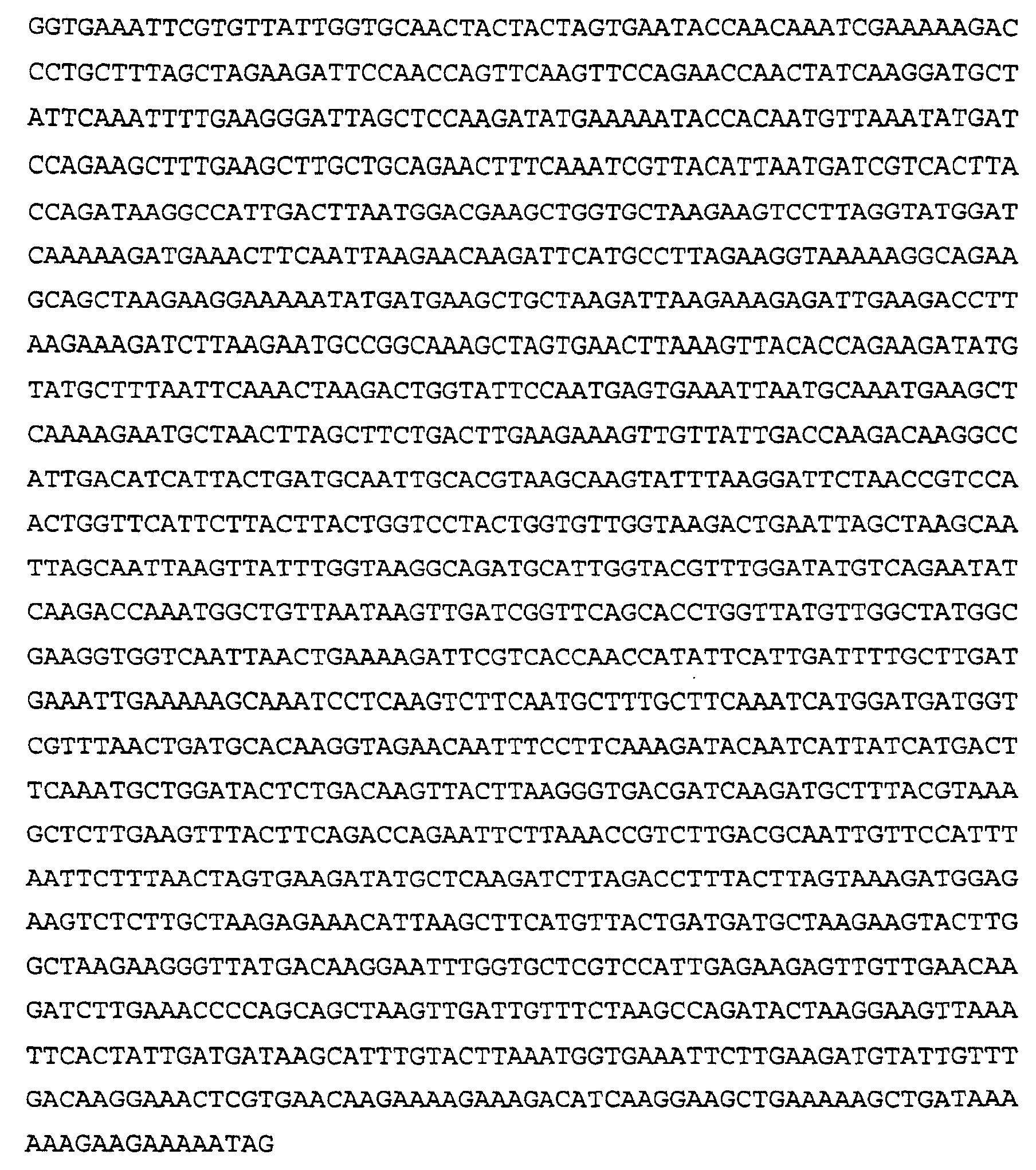
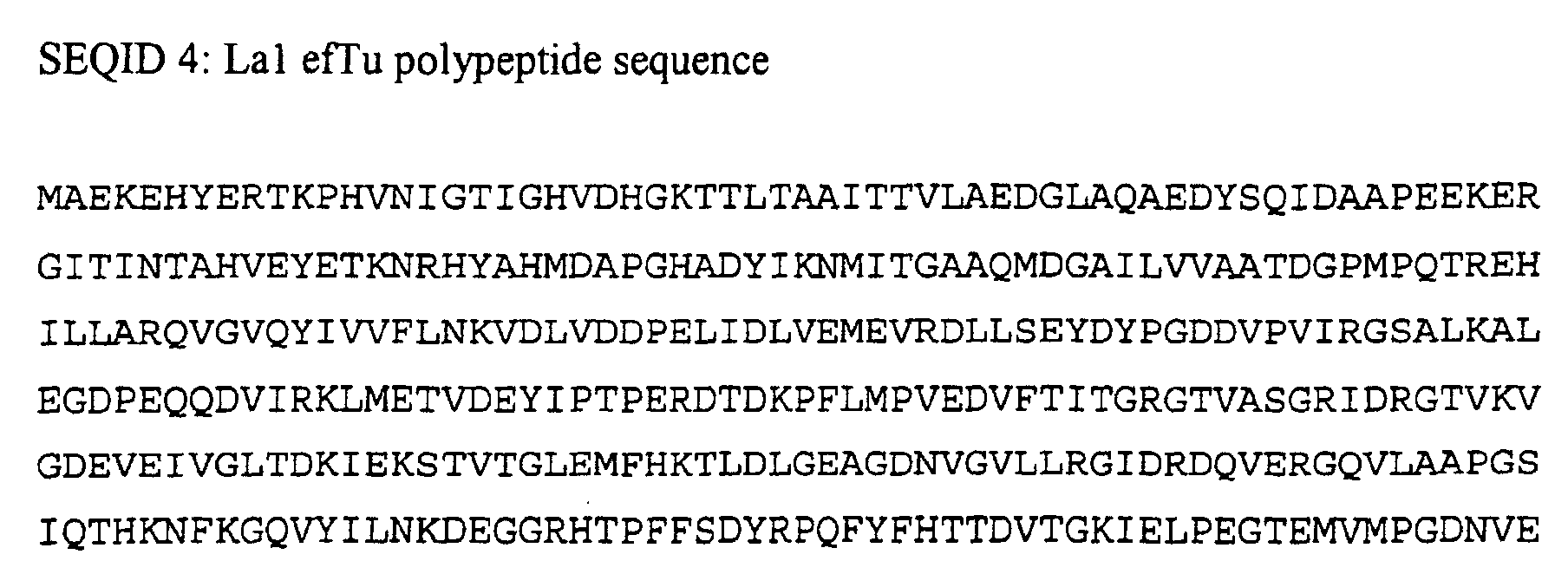

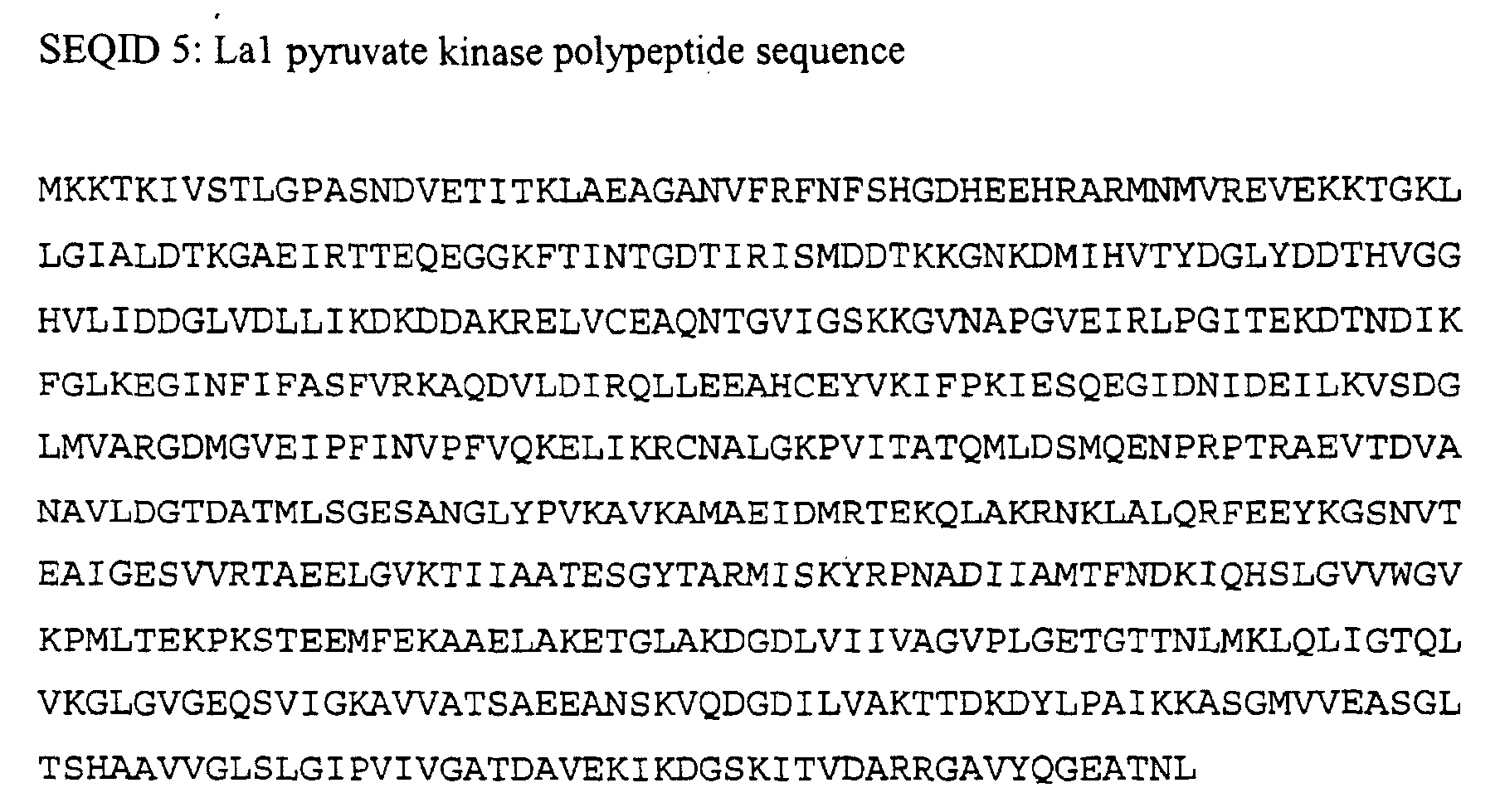
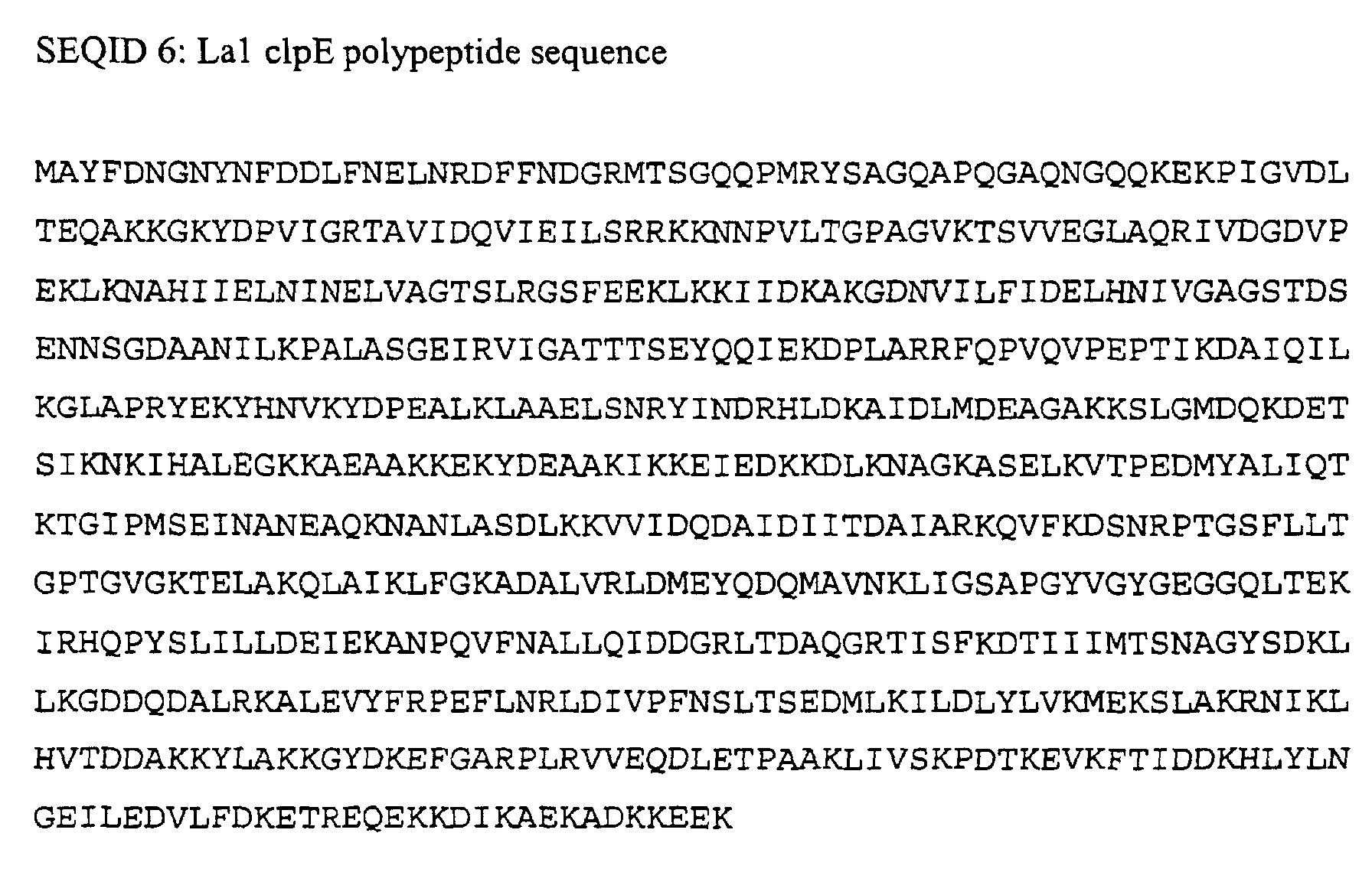

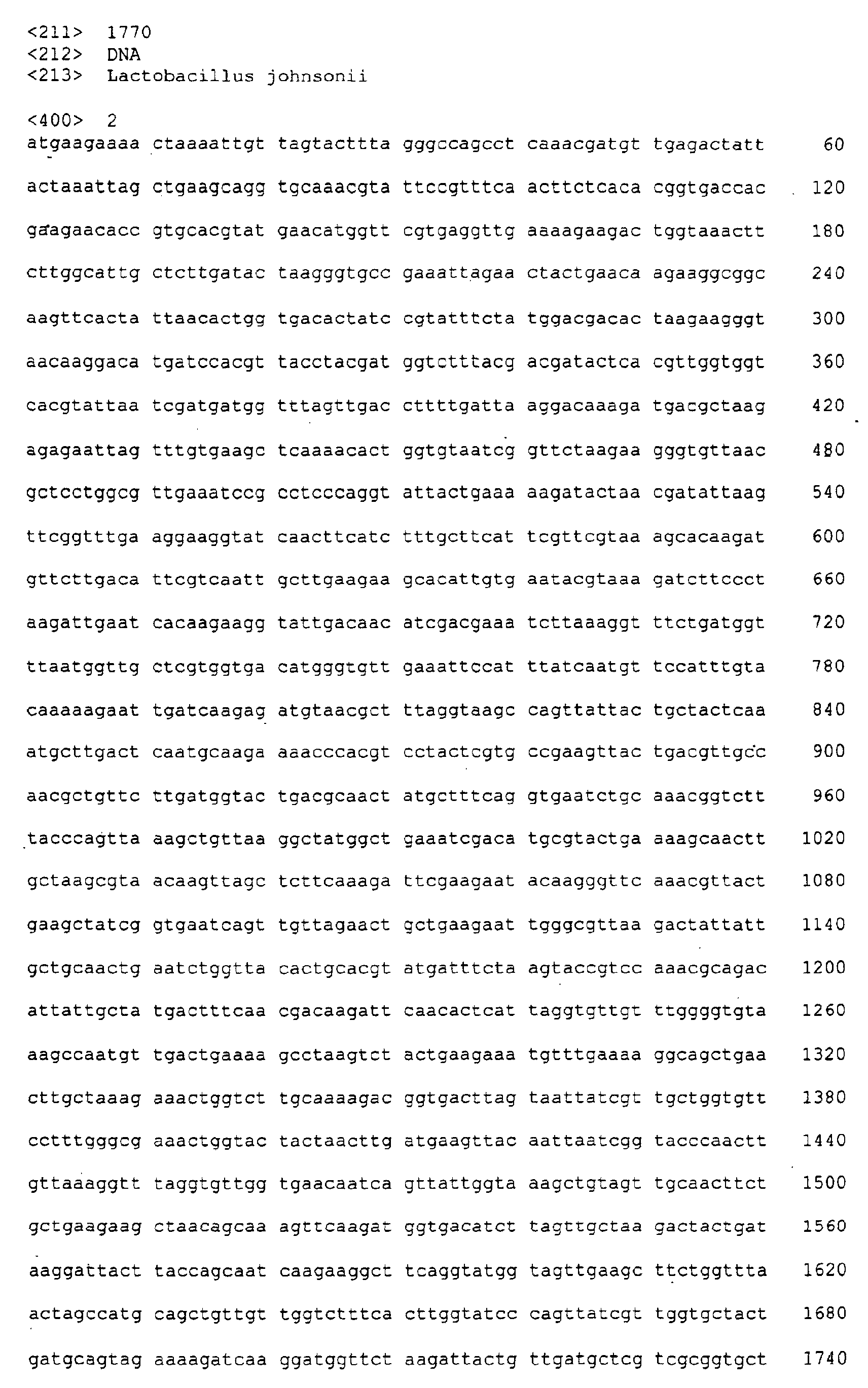


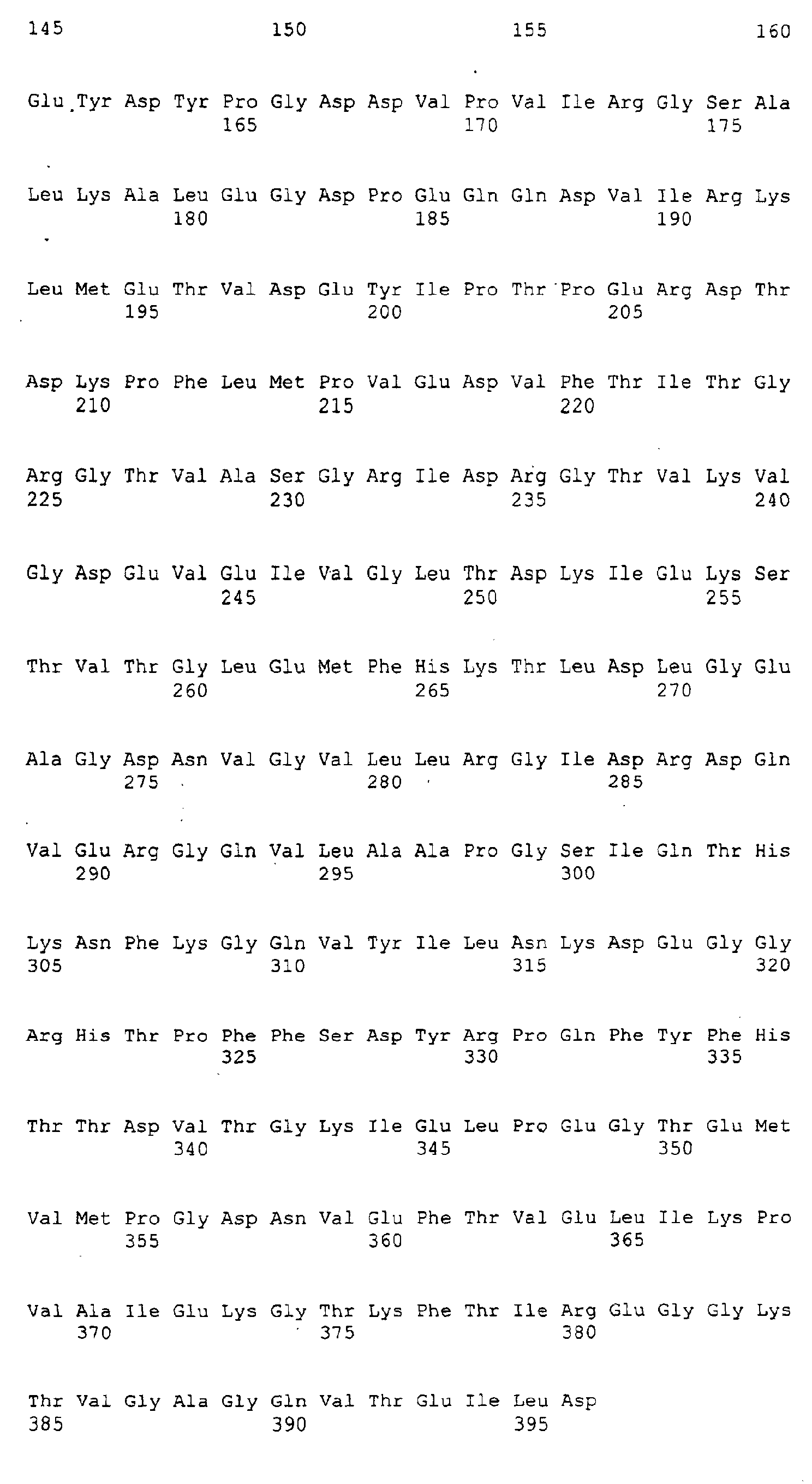
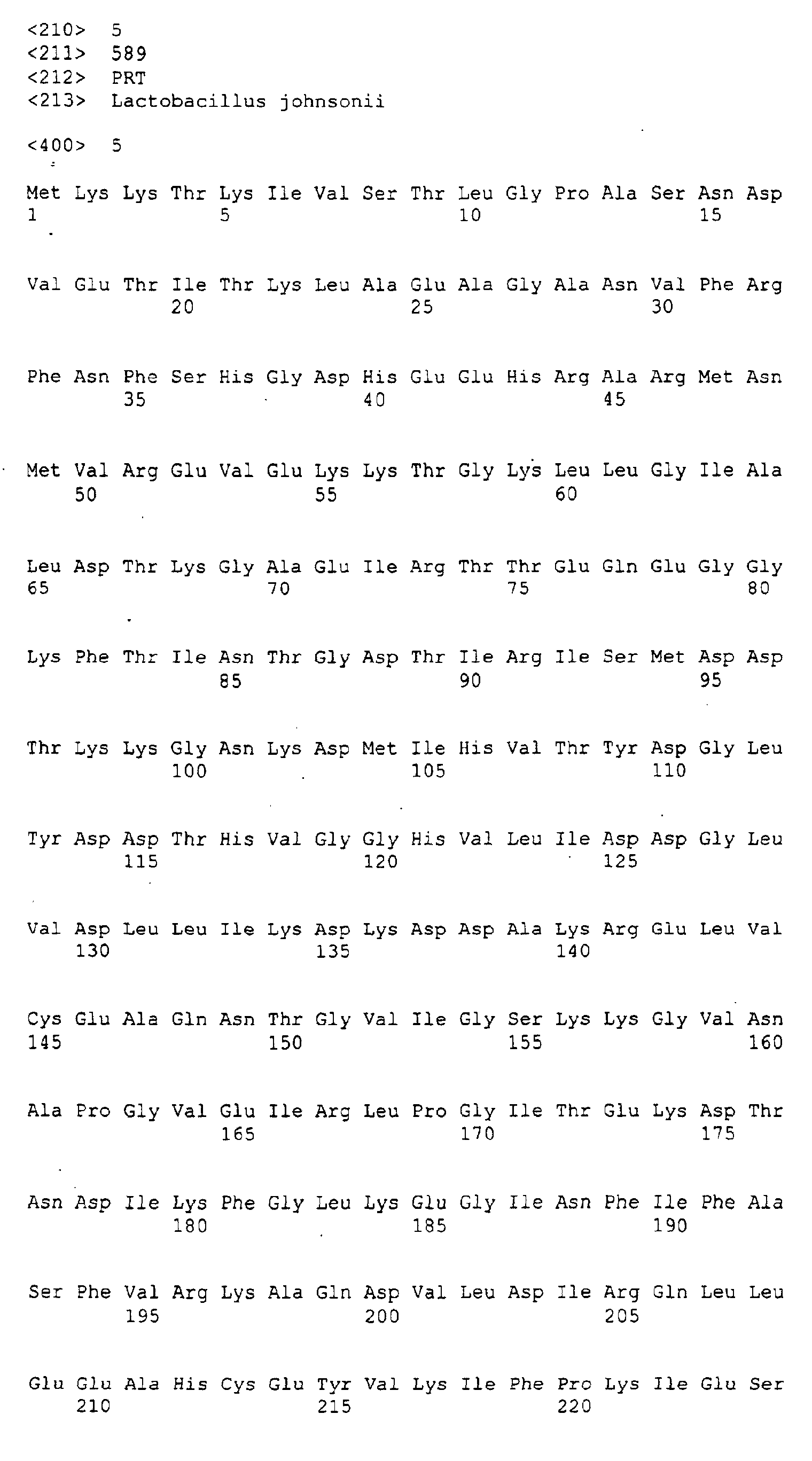
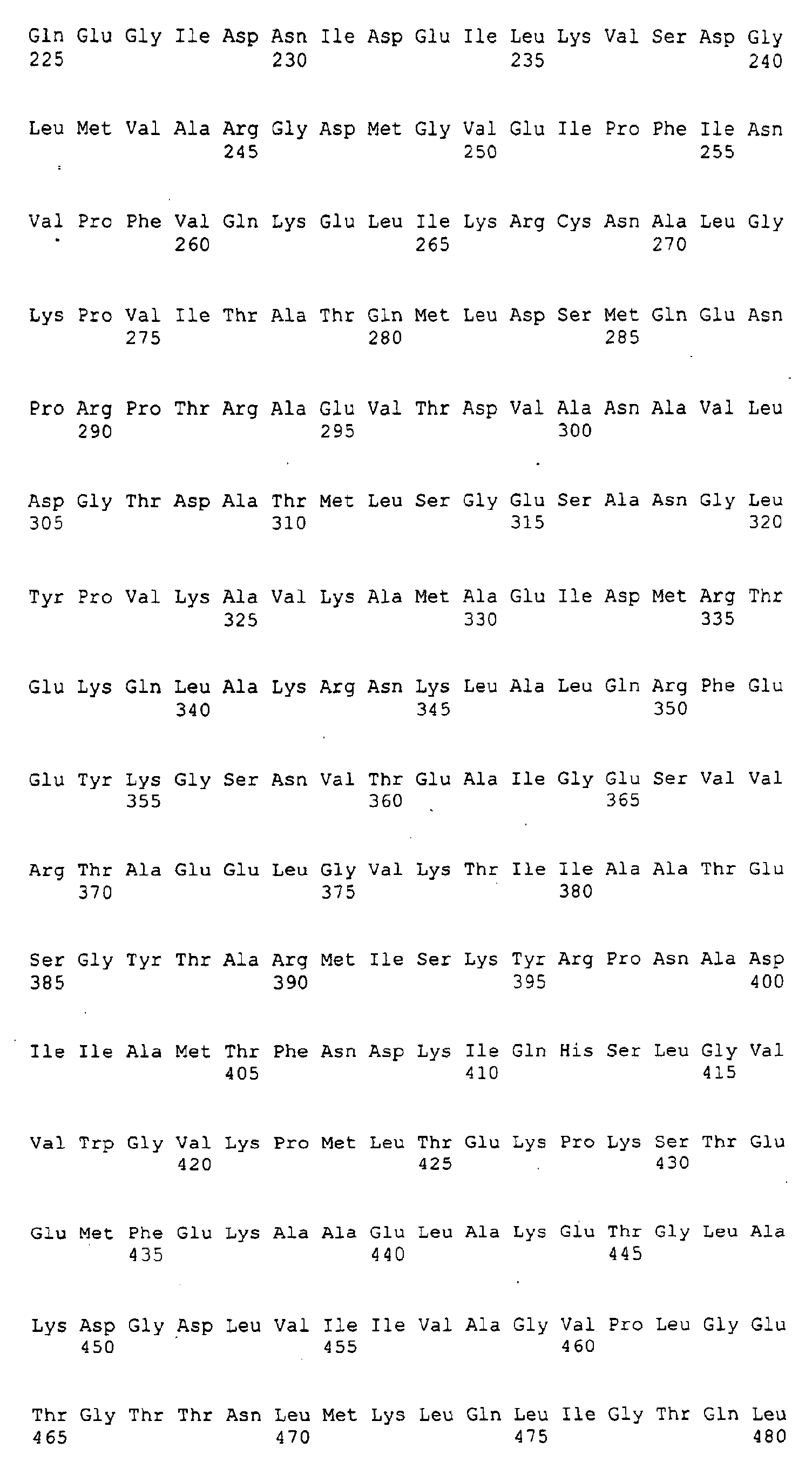


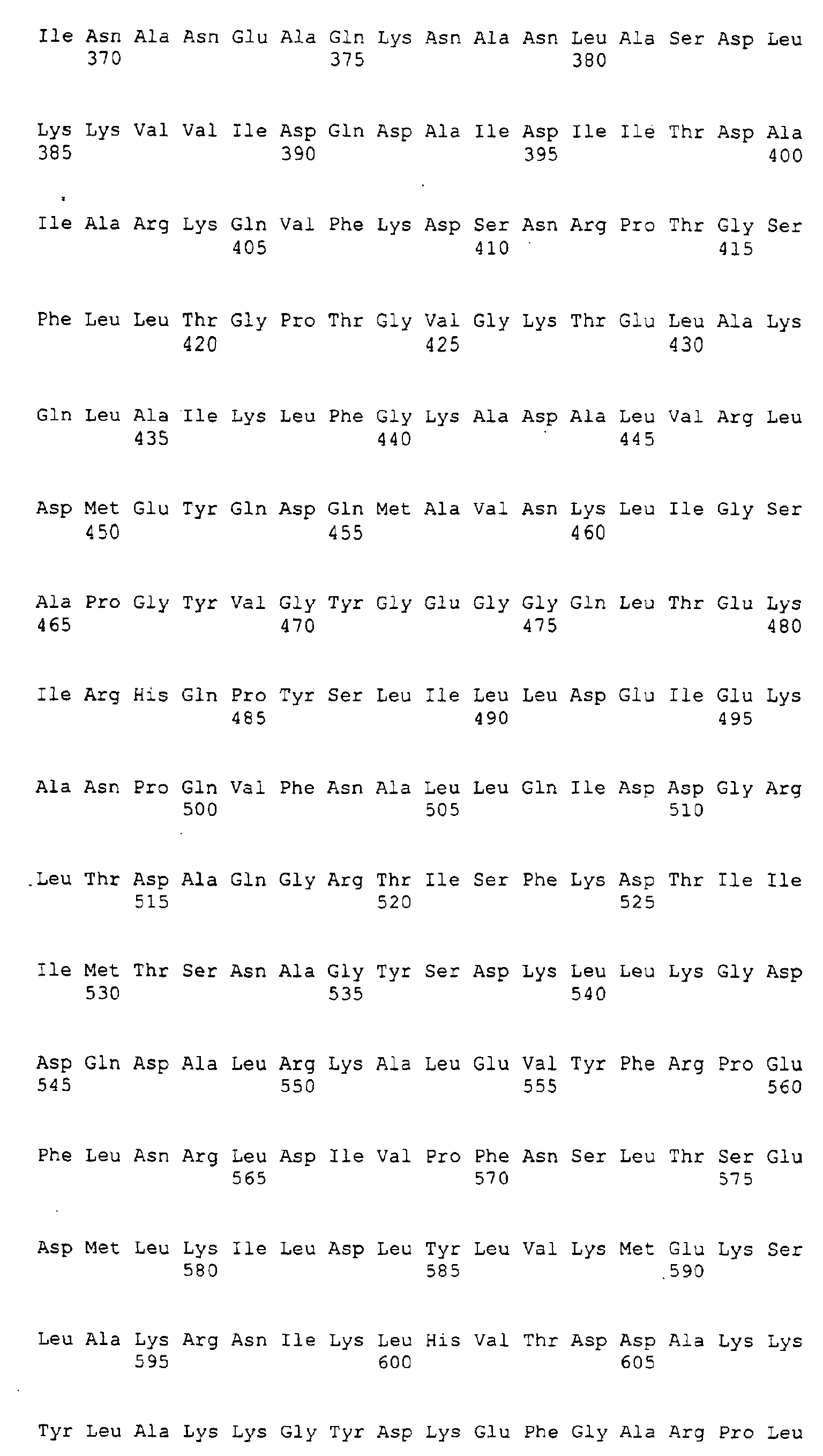
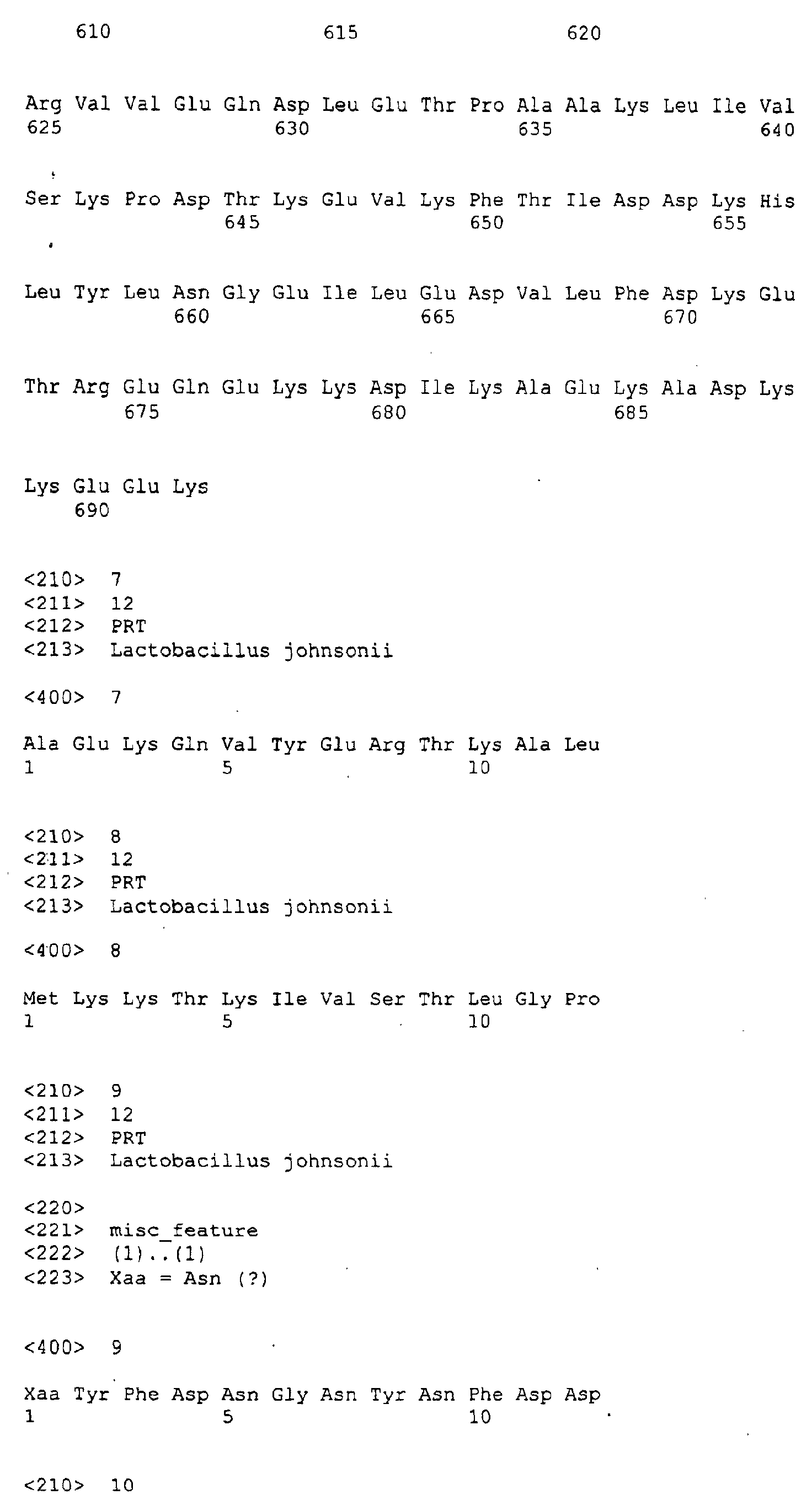
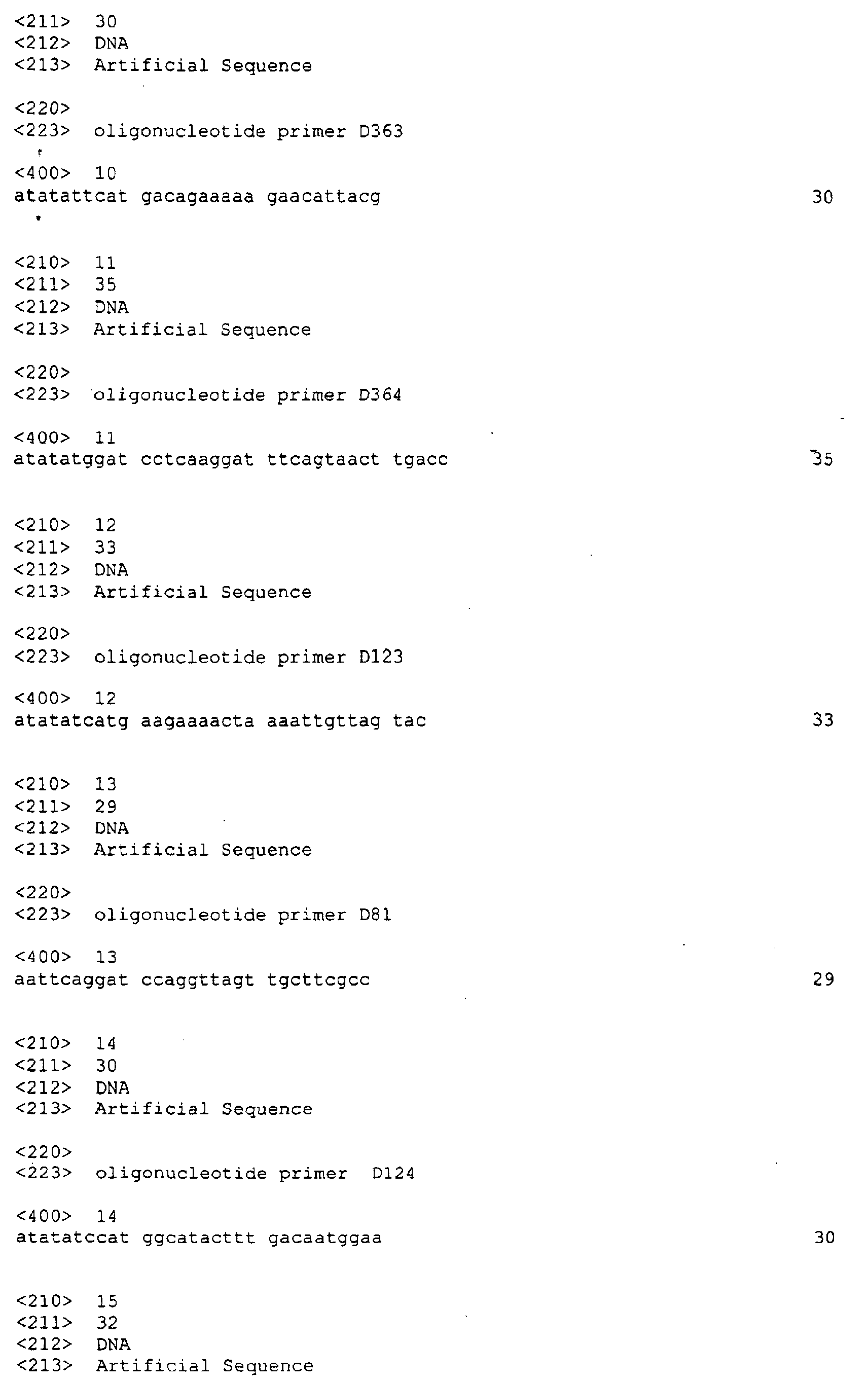

Claims (18)
- A polynucleotide as identified by any of SEQ. ID. Nos. 1 to 3 or variants or fragments thereof, obtainable by deleting, adding or substituting one or more nucleotides, having a degree of homology to SEQ. ID. No. 1 of at least 90 % and encoding a functional mucin binding polypeptide.
- The polynucleotide according to claim 1, which has a degree of homology to SEQ. ID. No. 1 to 3 of at least 95 %, preferably 98 %.
- The polynucleotide according to claim 1 or 2 , which has a sequence as identified by SEQ ID. Nos. 1, 2 or 3.
- A vector comprising a polynucleotide sequence according to any of the preceding claims.
- The vector according to claim 4, which is an expression vector.
- A host cell harboring a recombinant polynucleotide according to any of the claims 1 to 3 or a vector according to any of the claims 4 or 5.
- The host cell according to claim 6, which is a procaryotic or an eucaryotic cell.
- A polypeptide as identified by any of SEQ ID. Nos. 4 to 6, or variants thereof, obtained by deleting, adding or substituting one or more amino acids, which have a degree of homology to the polypeptide of any of SEQ ID. Nos. 4 to 6 of at least 90 % and are a functional, mucin binding polypeptide.
- The polypeptide according to claim 8, which have a degree of homology to the polypeptide as identified by any of SEQ. ID. Nos. 4 to 6 of at least 95 % preferably 98 %.
- The polypeptide according to claim 8, which has a sequence as identified by SEQ. ID. No. 4, 5 or 6.
- A fusion-polypeptide containing a polypeptide according to any of the claims 8 to 10.
- Use of a polynucleotide according to any of the claims 1 to 3 or a vector according to any of the claims 4 or 5 for the preparation of a polypeptide.
- Use of a polynucleotide according to any of the claims 1 to 3 or a vector according to any of the claims 4 or 5 for the preparation of a micro-organism exhibiting improved mucin binding capacity.
- The use according to claim 12, wherein the micro-organism is a probiotic microorganism.
- A method for producing a polypeptide according to any of the claims 8 to 11, which comprises, culturing a host cell according to any of the claims 7 or 8 under conditions, which allow synthesis of the polypeptide and recovering the polypeptide.
- An antibody, capable to bind to a polypeptide according to any of the claims 8 to 11.
- A method for detecting a mucin binding protein in a biological sample, which comprises the steps(a) providing a biological sample;(a) optionally purifying the DNA contained in the biological sample; and(b) detecting the presence of a polynucleotide according to any of the claims 1 to 3.
- A method for detecting a mucin binding protein in a biological sample, which comprises the steps(b) providing a biological sample;(c) detecting the presence of a mucin binding polypeptide according to any of the claims 8 to 11.
Priority Applications (3)
| Application Number | Priority Date | Filing Date | Title |
|---|---|---|---|
| EP02019243A EP1394176A1 (en) | 2002-08-27 | 2002-08-27 | Novel mucin binding polypeptides derived from Lactobacillus johnsonii |
| AU2003273800A AU2003273800A1 (en) | 2002-08-27 | 2003-08-21 | Novel mucin binding polypeptides derived from lactobacillus johnsonii |
| PCT/EP2003/009258 WO2004020467A2 (en) | 2002-08-27 | 2003-08-21 | Novel mucin binding polypeptides derived from lactobacillus johnsonii |
Applications Claiming Priority (1)
| Application Number | Priority Date | Filing Date | Title |
|---|---|---|---|
| EP02019243A EP1394176A1 (en) | 2002-08-27 | 2002-08-27 | Novel mucin binding polypeptides derived from Lactobacillus johnsonii |
Publications (1)
| Publication Number | Publication Date |
|---|---|
| EP1394176A1 true EP1394176A1 (en) | 2004-03-03 |
Family
ID=31197843
Family Applications (1)
| Application Number | Title | Priority Date | Filing Date |
|---|---|---|---|
| EP02019243A Withdrawn EP1394176A1 (en) | 2002-08-27 | 2002-08-27 | Novel mucin binding polypeptides derived from Lactobacillus johnsonii |
Country Status (3)
| Country | Link |
|---|---|
| EP (1) | EP1394176A1 (en) |
| AU (1) | AU2003273800A1 (en) |
| WO (1) | WO2004020467A2 (en) |
Cited By (1)
| Publication number | Priority date | Publication date | Assignee | Title |
|---|---|---|---|---|
| EP2147091A4 (en) * | 2007-04-24 | 2010-12-08 | Kemin Ind Inc | Broad-spectrum antibacterial and antifungal activity of lactobacillus johnsonii d115 |
Families Citing this family (8)
| Publication number | Priority date | Publication date | Assignee | Title |
|---|---|---|---|---|
| EP2228379A1 (en) | 2003-04-25 | 2010-09-15 | North Carolina State University | Lactobacillus acidophilus nucleic acid sequences encoding cell surface protein homologues and uses therefore |
| WO2005001057A2 (en) | 2003-06-23 | 2005-01-06 | North Carolina State University | Lactobacillus acidophilus nucleic acids encoding fructo-oligosaccharide utilization compounds and uses thereof |
| US7455992B2 (en) | 2004-02-23 | 2008-11-25 | North Carolina State University | Lactobacillus acidophilus nucleic acid sequences encoding protease homologues and uses therefore |
| US7459289B2 (en) | 2004-03-08 | 2008-12-02 | North Carolina State University | Lactobacillus acidophilus nucleic acid sequences encoding carbohydrate utilization-related proteins and uses therefor |
| US7608700B2 (en) | 2004-03-08 | 2009-10-27 | North Carolina State University | Lactobacillus acidophilus nucleic acid sequences encoding stress-related proteins and uses therefor |
| US7550576B2 (en) | 2004-08-09 | 2009-06-23 | North Carolina State University | Nucleic acid sequences encoding two-component sensing and regulatory proteins, antimicrobial proteins and uses therefor |
| WO2006047680A2 (en) | 2004-10-27 | 2006-05-04 | North Carolina State University | Lactobacillus acidophilus nucleic acids and uses thereof |
| US7495092B2 (en) | 2005-01-14 | 2009-02-24 | North Carolina State University | Compositions comprising promoter sequences and methods of use |
Citations (3)
| Publication number | Priority date | Publication date | Assignee | Title |
|---|---|---|---|---|
| US5603930A (en) * | 1992-07-06 | 1997-02-18 | Nestec S.A. | Lactobacillus johnsonii CNCM I-1225 |
| WO2001075110A2 (en) * | 2000-03-30 | 2001-10-11 | Dyax Corp. | Mucin-1 specific binding members and methods of use thereof |
| WO2002028351A2 (en) * | 2000-10-04 | 2002-04-11 | Wyeth | Recombinant mucin binding proteins from steptococcus pneumoniae |
-
2002
- 2002-08-27 EP EP02019243A patent/EP1394176A1/en not_active Withdrawn
-
2003
- 2003-08-21 AU AU2003273800A patent/AU2003273800A1/en not_active Abandoned
- 2003-08-21 WO PCT/EP2003/009258 patent/WO2004020467A2/en not_active Ceased
Patent Citations (3)
| Publication number | Priority date | Publication date | Assignee | Title |
|---|---|---|---|---|
| US5603930A (en) * | 1992-07-06 | 1997-02-18 | Nestec S.A. | Lactobacillus johnsonii CNCM I-1225 |
| WO2001075110A2 (en) * | 2000-03-30 | 2001-10-11 | Dyax Corp. | Mucin-1 specific binding members and methods of use thereof |
| WO2002028351A2 (en) * | 2000-10-04 | 2002-04-11 | Wyeth | Recombinant mucin binding proteins from steptococcus pneumoniae |
Non-Patent Citations (7)
| Title |
|---|
| BALAGUE C ET AL: "ALTERED EXPRESSION OF MUC2, MUC4, AND MUC5 MUCIN GENES IN PANCREAS TISSUES AND CANCER CELL LINES", GASTROENTEROLOGY, SAUNDERS, PHILADELPHIA, PA,, US, vol. 106, no. 4, April 1994 (1994-04-01), pages 1054 - 1061, XP001029573, ISSN: 0016-5085 * |
| CARNOY C ET AL: "PSEUDOMONAS AERUGINOSA OUTER MEMBRANE ADHESINS FOR HUMAN RESPIRATORY MUCUS GLYCOPROTEINS", INFECTION AND IMMUNITY, AMERICAN SOCIETY FOR MICROBIOLOGY. WASHINGTON, US, vol. 62, no. 5, May 1994 (1994-05-01), pages 1896 - 1900, XP000992943, ISSN: 0019-9567 * |
| DATABASE EMBL [online] 13 August 2002 (2002-08-13), "Lactobacillus johnsonii partial mRNA for putative elongation factor Tu, strain ATCC 33200", XP002225919, Database accession no. AJ418908 * |
| DATABASE SWALL [online] EBI; 1 February 1994 (1994-02-01), "Pyruvate kinase (EC 2.7.1.40)", XP002247858, Database accession no. P34038 * |
| DATABASE SWALL [online] EBI; 16 October 2001 (2001-10-16), "ATP-dependent Clp protease ATP-binding subunit clpE.", XP002247859, Database accession no. Q9CI09 * |
| KIRJAVAINEN PIRKKA V ET AL: "The ability of probiotic bacteria to bind to human intestinal mucus.", FEMS MICROBIOLOGY LETTERS, vol. 167, no. 2, 15 October 1998 (1998-10-15), pages 185 - 189, XP002247857, ISSN: 0378-1097 * |
| ROOS STEFAN ET AL: "A high-molecular-mass cell-surface protein from Lactobacillus reuteri 1063 adheres to mucus components.", MICROBIOLOGY (READING, ENGLAND) ENGLAND FEB 2002, vol. 148, no. Pt 2, February 2002 (2002-02-01), pages 433 - 442, XP002225918, ISSN: 1350-0872 * |
Cited By (1)
| Publication number | Priority date | Publication date | Assignee | Title |
|---|---|---|---|---|
| EP2147091A4 (en) * | 2007-04-24 | 2010-12-08 | Kemin Ind Inc | Broad-spectrum antibacterial and antifungal activity of lactobacillus johnsonii d115 |
Also Published As
| Publication number | Publication date |
|---|---|
| AU2003273800A1 (en) | 2004-03-19 |
| WO2004020467A3 (en) | 2004-09-30 |
| WO2004020467A2 (en) | 2004-03-11 |
Similar Documents
| Publication | Publication Date | Title |
|---|---|---|
| AU2024201593B2 (en) | A genetically modified Lactobacillus and uses thereof | |
| Arthur et al. | Contribution of VanY D, D-carboxypeptidase to glycopeptide resistance in Enterococcus faecalis by hydrolysis of peptidoglycan precursors | |
| DK2391641T3 (en) | Lactobacillus rhamnosus pili og pilus polypeptider | |
| Rojas et al. | Purification and characterization of a surface protein from Lactobacillus fermentum 104R that binds to porcine small intestinal mucus and gastric mucin | |
| KR101848102B1 (en) | Compositions and Methods for Bacterial Production of Chondroitin | |
| JP2974966B2 (en) | Composition comprising a protein having urease activity or an antibody against the protein | |
| US6506389B2 (en) | Adherence factors of non pathogenic microorganisms and applications thereof for screening microorganisms for specific probiotic properties; novel pharmaceutical compositions and food additives comprising such microorganisms and adherence factors | |
| US7038012B1 (en) | Enrichment process for H. pylori neutrophil activating protein (NAP) utilizing metal chelate chromatography | |
| US7125698B2 (en) | Polynucleotides, materials incorporating them, and methods for using them | |
| US20030165505A1 (en) | Nucleic acid and corresponding protein entitled 161P2F10B useful in treatment and detection of cancer | |
| Messner et al. | Occurrence, structure, chemistry, genetics, morphogenesis, and functions of S-layers | |
| US7026463B2 (en) | Polynucleotides and polypeptides, materials incorporating them and methods for using them | |
| WO2004020467A2 (en) | Novel mucin binding polypeptides derived from lactobacillus johnsonii | |
| JP2008537885A (en) | Methods and compositions for modifying bacterial adhesion and stress tolerance | |
| US8445426B2 (en) | Peptides and methods for producing them | |
| AU743165B2 (en) | Live attenuated bacteria of the species Actinobacillus pleuropneumoniae | |
| AU727676B2 (en) | Novel adherence factors of non pathogenic microorganisms and applications thereof for screening microorganisms for specific probiotic properties; novel pharmaceutical compositions and food additives comprising such microorganisms and adherence factors | |
| EP0939800A2 (en) | HELICOBACTER ANTIGEN (gamma-GLUTAMYLTRANSFERASE) AND SEQUENCES ENCODING THE SAME | |
| US20040023361A1 (en) | Lactic acid bacteria producing polysaccharide similar to those in human milk and corresponding gene | |
| Kawazu et al. | Comparative characterization of release factor RF-3 genes of Escherichia coli, Salmonella typhimurium, and Dichelobacter nodosus | |
| EP1382970A1 (en) | Novel mucin binding polypeptides | |
| JP4049408B2 (en) | Method for immobilizing proteins on the surface of Gram-positive bacteria | |
| JP2007530034A (en) | Novel mannose-specific adhesins and their use | |
| KR20180074609A (en) | Novel Salmonella specific bacteriophage SC1 and antibacterial composition comprising the same | |
| US20060099623A1 (en) | Polynucleotides and polypeptides isolated from lactobacillus and methods for their use |
Legal Events
| Date | Code | Title | Description |
|---|---|---|---|
| PUAI | Public reference made under article 153(3) epc to a published international application that has entered the european phase |
Free format text: ORIGINAL CODE: 0009012 |
|
| AK | Designated contracting states |
Kind code of ref document: A1 Designated state(s): AT BE BG CH CY CZ DE DK EE ES FI FR GB GR IE IT LI LU MC NL PT SE SK TR |
|
| AX | Request for extension of the european patent |
Extension state: AL LT LV MK RO SI |
|
| 17P | Request for examination filed |
Effective date: 20040903 |
|
| AKX | Designation fees paid |
Designated state(s): AT BE BG CH CY CZ DE DK EE ES FI FR GB GR IE IT LI LU MC NL PT SE SK TR |
|
| STAA | Information on the status of an ep patent application or granted ep patent |
Free format text: STATUS: THE APPLICATION HAS BEEN WITHDRAWN |
|
| 18W | Application withdrawn |
Effective date: 20061003 |