EP1393758A1 - Process for making sutures having improved knot tensile strength - Google Patents
Process for making sutures having improved knot tensile strength Download PDFInfo
- Publication number
- EP1393758A1 EP1393758A1 EP03254764A EP03254764A EP1393758A1 EP 1393758 A1 EP1393758 A1 EP 1393758A1 EP 03254764 A EP03254764 A EP 03254764A EP 03254764 A EP03254764 A EP 03254764A EP 1393758 A1 EP1393758 A1 EP 1393758A1
- Authority
- EP
- European Patent Office
- Prior art keywords
- polymer
- suture
- coating
- tensile strength
- coat
- Prior art date
- Legal status (The legal status is an assumption and is not a legal conclusion. Google has not performed a legal analysis and makes no representation as to the accuracy of the status listed.)
- Granted
Links
- 238000000034 method Methods 0.000 title claims abstract description 56
- 230000008569 process Effects 0.000 title claims abstract description 51
- 229920001577 copolymer Polymers 0.000 claims abstract description 75
- 238000009991 scouring Methods 0.000 claims abstract description 30
- 239000002904 solvent Substances 0.000 claims abstract description 17
- RKDVKSZUMVYZHH-UHFFFAOYSA-N 1,4-dioxane-2,5-dione Chemical compound O=C1COC(=O)CO1 RKDVKSZUMVYZHH-UHFFFAOYSA-N 0.000 claims abstract description 14
- 238000010438 heat treatment Methods 0.000 claims abstract description 14
- 229920000954 Polyglycolide Polymers 0.000 claims abstract description 9
- 229920000747 poly(lactic acid) Polymers 0.000 claims abstract description 9
- AEMRFAOFKBGASW-UHFFFAOYSA-N Glycolic acid Polymers OCC(O)=O AEMRFAOFKBGASW-UHFFFAOYSA-N 0.000 claims abstract 6
- XEKOWRVHYACXOJ-UHFFFAOYSA-N Ethyl acetate Chemical compound CCOC(C)=O XEKOWRVHYACXOJ-UHFFFAOYSA-N 0.000 claims description 60
- 238000000576 coating method Methods 0.000 claims description 54
- 239000011248 coating agent Substances 0.000 claims description 46
- PAPBSGBWRJIAAV-UHFFFAOYSA-N ε-Caprolactone Chemical compound O=C1CCCCCO1 PAPBSGBWRJIAAV-UHFFFAOYSA-N 0.000 claims description 13
- 239000000463 material Substances 0.000 claims description 8
- VPVXHAANQNHFSF-UHFFFAOYSA-N 1,4-dioxan-2-one Chemical compound O=C1COCCO1 VPVXHAANQNHFSF-UHFFFAOYSA-N 0.000 claims description 5
- VBICKXHEKHSIBG-UHFFFAOYSA-N 1-monostearoylglycerol Chemical compound CCCCCCCCCCCCCCCCCC(=O)OCC(O)CO VBICKXHEKHSIBG-UHFFFAOYSA-N 0.000 claims description 4
- 150000001875 compounds Chemical class 0.000 claims description 4
- JJTUDXZGHPGLLC-UHFFFAOYSA-N lactide Chemical compound CC1OC(=O)C(C)OC1=O JJTUDXZGHPGLLC-UHFFFAOYSA-N 0.000 claims description 3
- YFHICDDUDORKJB-UHFFFAOYSA-N trimethylene carbonate Chemical compound O=C1OCCCO1 YFHICDDUDORKJB-UHFFFAOYSA-N 0.000 claims description 3
- CJZGTCYPCWQAJB-UHFFFAOYSA-L calcium stearate Chemical compound [Ca+2].CCCCCCCCCCCCCCCCCC([O-])=O.CCCCCCCCCCCCCCCCCC([O-])=O CJZGTCYPCWQAJB-UHFFFAOYSA-L 0.000 claims description 2
- 235000013539 calcium stearate Nutrition 0.000 claims description 2
- 239000008116 calcium stearate Substances 0.000 claims description 2
- YQEMORVAKMFKLG-UHFFFAOYSA-N glycerine monostearate Natural products CCCCCCCCCCCCCCCCCC(=O)OC(CO)CO YQEMORVAKMFKLG-UHFFFAOYSA-N 0.000 claims description 2
- SVUQHVRAGMNPLW-UHFFFAOYSA-N glycerol monostearate Natural products CCCCCCCCCCCCCCCCC(=O)OCC(O)CO SVUQHVRAGMNPLW-UHFFFAOYSA-N 0.000 claims description 2
- 239000002480 mineral oil Substances 0.000 claims description 2
- 235000010446 mineral oil Nutrition 0.000 claims description 2
- 239000005002 finish coating Substances 0.000 claims 3
- 239000007788 liquid Substances 0.000 claims 2
- 150000002596 lactones Chemical class 0.000 abstract description 7
- 238000012360 testing method Methods 0.000 description 19
- 239000006185 dispersion Substances 0.000 description 14
- LCSKNASZPVZHEG-UHFFFAOYSA-N 3,6-dimethyl-1,4-dioxane-2,5-dione;1,4-dioxane-2,5-dione Chemical compound O=C1COC(=O)CO1.CC1OC(=O)C(C)OC1=O LCSKNASZPVZHEG-UHFFFAOYSA-N 0.000 description 13
- 230000008859 change Effects 0.000 description 8
- 239000000203 mixture Substances 0.000 description 8
- 230000000694 effects Effects 0.000 description 6
- 239000003356 suture material Substances 0.000 description 5
- 238000000137 annealing Methods 0.000 description 4
- 239000003960 organic solvent Substances 0.000 description 4
- LYCAIKOWRPUZTN-UHFFFAOYSA-N Ethylene glycol Chemical compound OCCO LYCAIKOWRPUZTN-UHFFFAOYSA-N 0.000 description 3
- 239000004359 castor oil Substances 0.000 description 3
- 235000019438 castor oil Nutrition 0.000 description 3
- ZEMPKEQAKRGZGQ-XOQCFJPHSA-N glycerol triricinoleate Natural products CCCCCC[C@@H](O)CC=CCCCCCCCC(=O)OC[C@@H](COC(=O)CCCCCCCC=CC[C@@H](O)CCCCCC)OC(=O)CCCCCCCC=CC[C@H](O)CCCCCC ZEMPKEQAKRGZGQ-XOQCFJPHSA-N 0.000 description 3
- 230000006872 improvement Effects 0.000 description 3
- 238000004519 manufacturing process Methods 0.000 description 3
- 239000007795 chemical reaction product Substances 0.000 description 2
- 238000007796 conventional method Methods 0.000 description 2
- 238000010586 diagram Methods 0.000 description 2
- 238000012986 modification Methods 0.000 description 2
- 230000004048 modification Effects 0.000 description 2
- 230000001954 sterilising effect Effects 0.000 description 2
- 238000004659 sterilization and disinfection Methods 0.000 description 2
- SJDLIJNQXLJBBE-UHFFFAOYSA-N 1,4-dioxepan-2-one Chemical compound O=C1COCCCO1 SJDLIJNQXLJBBE-UHFFFAOYSA-N 0.000 description 1
- AOLNDUQWRUPYGE-UHFFFAOYSA-N 1,4-dioxepan-5-one Chemical compound O=C1CCOCCO1 AOLNDUQWRUPYGE-UHFFFAOYSA-N 0.000 description 1
- FYRBJJHCFFXENF-UHFFFAOYSA-N 2-[2-(2-ethoxyethoxy)ethoxy]acetic acid Chemical compound CCOCCOCCOCC(O)=O FYRBJJHCFFXENF-UHFFFAOYSA-N 0.000 description 1
- CQWXKASOCUAEOW-UHFFFAOYSA-N 2-[2-(carboxymethoxy)ethoxy]acetic acid Chemical compound OC(=O)COCCOCC(O)=O CQWXKASOCUAEOW-UHFFFAOYSA-N 0.000 description 1
- 238000001134 F-test Methods 0.000 description 1
- 238000005299 abrasion Methods 0.000 description 1
- 239000002253 acid Substances 0.000 description 1
- 230000002411 adverse Effects 0.000 description 1
- 238000013019 agitation Methods 0.000 description 1
- 125000001931 aliphatic group Chemical group 0.000 description 1
- 229920003232 aliphatic polyester Polymers 0.000 description 1
- 238000000540 analysis of variance Methods 0.000 description 1
- 230000009286 beneficial effect Effects 0.000 description 1
- 239000007822 coupling agent Substances 0.000 description 1
- 238000000151 deposition Methods 0.000 description 1
- 150000002009 diols Chemical class 0.000 description 1
- 238000009826 distribution Methods 0.000 description 1
- 238000002474 experimental method Methods 0.000 description 1
- 238000001125 extrusion Methods 0.000 description 1
- 239000000835 fiber Substances 0.000 description 1
- 238000009472 formulation Methods 0.000 description 1
- 238000005461 lubrication Methods 0.000 description 1
- 238000004806 packaging method and process Methods 0.000 description 1
- 229920000151 polyglycol Polymers 0.000 description 1
- 239000010695 polyglycol Substances 0.000 description 1
- 239000004633 polyglycolic acid Substances 0.000 description 1
- 229920000642 polymer Polymers 0.000 description 1
- 238000012545 processing Methods 0.000 description 1
- 150000003839 salts Chemical class 0.000 description 1
- 238000004088 simulation Methods 0.000 description 1
- 150000003384 small molecules Chemical class 0.000 description 1
- 239000000126 substance Substances 0.000 description 1
- 230000003746 surface roughness Effects 0.000 description 1
- 238000001356 surgical procedure Methods 0.000 description 1
- 238000009864 tensile test Methods 0.000 description 1
- 238000010998 test method Methods 0.000 description 1
- 238000005406 washing Methods 0.000 description 1
Images

Classifications
-
- A—HUMAN NECESSITIES
- A61—MEDICAL OR VETERINARY SCIENCE; HYGIENE
- A61L—METHODS OR APPARATUS FOR STERILISING MATERIALS OR OBJECTS IN GENERAL; DISINFECTION, STERILISATION OR DEODORISATION OF AIR; CHEMICAL ASPECTS OF BANDAGES, DRESSINGS, ABSORBENT PADS OR SURGICAL ARTICLES; MATERIALS FOR BANDAGES, DRESSINGS, ABSORBENT PADS OR SURGICAL ARTICLES
- A61L17/00—Materials for surgical sutures or for ligaturing blood vessels ; Materials for prostheses or catheters
- A61L17/14—Post-treatment to improve physical properties
- A61L17/145—Coating
Definitions
- the present invention relates generally to processes for making braided sutures. More specifically, the present invention relates to a process for producing a braided suture having improved knot tensile strength.
- Braided multifilament sutures are commonly used in surgery because of their excellent flexibility and handling properties compared to monofilament sutures of the same material and diameter. It is known in the art that lubricious coatings may be applied as final coatings to the exterior of some types of braided suture to reduce undesirable surface roughness and the excessive tissue abrasion caused thereby, and to improve desirable characteristics, such as the ease of sliding a knot into place, and to increase the tensile strength of the suture. Nevertheless, the coating should not be so lubricious that it jeopardizes the security of the knot, as determined, for example, by the suture's ability to maintain the first throw of the knot.
- the tensile strength of a braided suture is of particular concern because of the risk that the suture may break in the incision or wound under tension.
- the tensile strength of the suture is particularly low at points where the bends of the knot exert additional stress on the braided filaments, increasing the likelihood that the suture will break at the knot as it is tightened.
- the final coating itself may have an adverse effect on the tensile strength at these points as it tends to bind the filaments, preventing them from moving relative to each other to relieve the tension exerted therein.
- knot tensile strength of the suture may be improved, but the additional lubrication may degrade the ability of the suture to hold the first throw of the surgeon's knot. Often, an intentional tradeoff is made to obtain an optimal combination of knot tensile strength and the first throw holding characteristic of the suture.
- EP 0 908 142 discloses a process for improving the knot tensile strength of a braided suture by tank-coating the surface of the suture with a co-polymer after performing a scouring step (i.e., scouring the suture in an organic solvent), and then heating the suture so that the co-polymer is redistributed among the braided filaments.
- a scouring step i.e., scouring the suture in an organic solvent
- this publication does not address the issue of knot security or disclose the application of a final coat to the suture.
- a preferred embodiment of the present invention is a process for producing a braided suture having an improved knot tensile strength and an effective first throw holding characteristic.
- a preferred process includes the steps of applying a biocompatible co-polymer to the braided suture, heating the suture to a temperature above the flow point of the co-polymer, and applying a final, outer coat to the suture.
- the suture is scoured with a solvent before the co-polymer is applied.
- the co-polymer is applied simultaneously with the scouring step by scouring the suture in a solution of co-polymer.
- the preferred co-polymers for this process comprise at least one lactone.
- the co-polymer comprises ⁇ -caprolactone and glycolide, most preferably in a concentration range of about 0.3% to about 0.5% by weight.
- Another preferred embodiment of the present invention is a process for improving the knot tensile strength of a braided suture by scouring the suture with a solution of a biocompatible co-polymer, and then heating the suture to a temperature above the flow point of the co-polymer.
- the scouring step is performed so as to remove a spin finish coat from the filaments of the suture while simultaneously applying the co-polymer to the filaments' surfaces.
- the present invention provides a process for coating filament surfaces with a co-polymer during the fabrication of a braided suture. This process produces a suture that has an increased knot tensile strength compared to conventional sutures prepared according to currently known processes. Moreover, the beneficial effects of a final coat, applied by conventional methods, are preserved, including effective first throw holding characteristics.
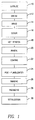
- FIG. 1 is a block diagram of a suture fabrication process generally employed in the industry.
- the conditions of each process step may be varied depending on the materials of which a suture is made and the final properties that are desired.
- Suture filaments are produced in a conventional manner, e.g., by extrusion (see step 10) and orientation of the polymeric structure by a hot stretching process (see step 12), then braided (see step 14) so as to form a suture.
- the filaments often are coated with a spin finish, such as a mixture of glycerol monostearate and mineral oil (GMS/MO), that lubricates the filaments to facilitate the handling and processing thereof.
- GMS/MO glycerol monostearate and mineral oil
- the resulting suture is made of a number of very long and finely-drawn filaments that are coated with the spin finish and twisted or braided together.
- the spin finish is removed from the filaments by washing the suture in an organic solvent.
- the suture is immersed in the solvent as it is pumped through scouring equipment, such as a scouring bath tank.
- the resulting agitation of the solvent causes it to penetrate throughout the suture, contacting the surface of each of the filaments.
- the suture is then hot stretched (see step 18) to maximize its elongation, and annealed (see step 20) in a heated chamber for an extended period of time to remove low molecular-weight compounds.
- a final coat typically comprising selected co-polymers and/or organic salts, is then applied (see step 22) using conventional techniques that are well known in the art.
- the components of the coating are dissolved/dispersed in a volatile organic solvent to form a coating solution/dispersion and the suture is then immersed in the solution/dispersion in a dip tank or drawn through a coating head to wet the suture with the coating solution/dispersion.
- the suture is then finished in a conventional manner which may include post-pliabilization (see step 24) wherein the final coat is broken up to increase the pliability of the suture, swaging a needle onto the suture (see step 26), packaging the needle and suture (see step 28) and sterilization of the packaged needle and suture (see step 30).
- post-pliabilization see step 24
- the final coat is broken up to increase the pliability of the suture
- swaging a needle onto the suture see step 26
- packaging the needle and suture see step 28
- sterilization of the packaged needle and suture see step 30.
- the braided suture is coated with a co-polymer prior to being heated, e.g., before the hot stretch step 18 (see FIG. 1).
- heating the suture after applying the co-polymer i.e., during the subsequent hot stretch and annealing steps 18, 20, further improves the distribution of the co-polymer among the suture filaments, thereby contributing to an increase in knot tensile strength.
- This coating step preferably, is performed by immersing the braided suture in a solution of co-polymer at a low concentration (e.g., between 0.1% and 1.5% co-polymer by weight).
- the co-polymer is applied to the suture after the scouring step 16.
- a final coat may be applied by a conventional process (e.g., see step 22) after the annealing step 20 is completed to improve the desirable properties of the suture, e.g., to improve the first throw holding characteristic of the suture.
- the co-polymers used in the coating step are selected for their ability to wet and lubricate the surfaces of the filaments, as well as for their biocompatibility.
- the co-polymer should preferably have a flow point within the temperature range of the hot stretch or annealing steps 18, 20.
- Suitable co-polymers are well known within the prior art and, in general, may be selected from those presently used in the final coating step 22 to provide lubricious coatings for the exterior surfaces of braided sutures.
- the majority of the co-polymers suitable for medical applications can be grouped as aliphatic polyesters derived from polyoxalates and polyoxaesters, as disclosed, e.g., in U.S. Patent No.
- Polyoxaester compounds preferred for use as lubricious coatings include the reaction products of an aliphatic polyoxycarboxylic acid and, at least, a diol (or polydiol), a lactone (or lactone oligomer), a coupling agent, or a combination thereof.
- the polyoxaester compound is a reaction product of ethylene glycol and either 3,6,9-trioxaundecanoic acid, polyglycol diacid, or 3,6-dioxaoctanedioic acid.
- castor oil co-polymers used as lubricious coatings include castor oil and either ⁇ -caprolactone, glycolide or 1,4-dioxanone or combinations thereof.
- Other lactone-based co-polymers may also be used advantageously as lubricious coatings, as is disclosed in European Patent Publication No. EP 0 908 142, the disclosure of which is incorporated by reference herein.
- ⁇ -caprolactone, 1,4-dioxanone, 1,4-dioxepan-2-one, 1,5-dioxepan-2-one, trimethylene carbonate, glycolide and lactide are preferred lactones for use in forming lubricious co-polymeric coatings.
- the more preferred lactones are ⁇ -caprolactone, 1,4-dioxanone and glycolide.
- the solvent of the co-polymer solution should preferably be able to dissolve the components of the co-polymer to the desired concentration and be sufficiently volatile that it will be removed from the suture during the subsequent heating steps 18, 20.
- the solvent should also be chemically compatible with the suture material (i.e., it should not attack or degrade the suture material), although the contact time between the suture and solvent typically is less than a minute.
- the solvent used for the co-polymer solution may be the same as is used in the scouring step, or a different solvent may be used.
- the solvent used in the scouring step should preferably be able to dissolve the spin finish and should be chemically compatible with the suture material because the contact time during the scouring step may be 15 minutes or longer.
- Another preferred process involves coating the surfaces of the filaments with the selected co-polymer during the performance of the scouring step 16 by scouring the suture with a solution of co-polymer.
- the foregoing process step shall be referred to hereinafter as the "scour-coat step” to denote the application of co-polymer to the suture during performance of the scouring step 16.
- the term "scour-coat” shall also denote the solution of co-polymer in scouring solvent used to apply co-polymer to the suture filaments during the scour-coat step.
- the scour-coat step is followed by a heating step, e.g., the hot stretch step 18.
- scouring the suture and simultaneously applying co-polymer to the suture in a single step process, followed by the step of heating the suture is observed to be as effective in improving knot tensile strength as scouring the suture and applying the co-polymer as separate steps, followed by the step of heating the suture.
- scouring causes the scour-coat to penetrate throughout the suture, depositing the co-polymer on the surface of each filament at the same time that it dissolves the spin finish.
- the conventional practice in the industry is to scour the suture with an organic solvent before applying a co-polymeric coating. This is done to prepare the surface of the filaments to become coated with the co-polymer without interference from the spin finish.
- the co-polymer used in the scour-coat is selected for its ability to adhere to the surfaces of the filaments in preference to the spin finish in the presence of the scouring solvent.
- the ability of the co-polymer to wet and lubricate the filaments should also be considered, as well as the biocompatibility of the co-polymer.
- Suitable co-polymers may be selected from the same groups discussed above, in a similar order of preference.
- the solvent for the scour-coat is selected for its ability to dissolve the co-polymer to a desired concentration, for its ability to efficiently remove the spin finish from the filament surfaces in preference to the co-polymer, and for its compatibility with the suture material. Chemical compatibility between the solvent and the suture material is particularly important as the contact time in the scour-coat step may be 15 minutes or longer.
- the optimum scour-coat composition and process conditions for the scour-coat step depend on the selection of a co-polymer, solvent and spin finish that operate together with the material of the suture filaments.
- the selection of the scour-coat and the conditions of the scour-coat step require some knowledge of polymer chemistry and filament properties, supported by a reasonable amount of experimentation, but are well within the knowledge and skill possessed by the ordinary practitioner in this art.
- a final coat may be applied to sutures prepared using the scour-coat step using conventional processes and final coat compositions that are known in the industry.
- the final coat dispersion applied to each suture during the final coating step 22 comprised a 9.0% dispersion in ethyl acetate of a 50/50 mixture of calcium stearate and a 65/35 PLA/PGA co-polymer.
- the sutures were subjected to post-pliabilization (see step 24) and sterilization (see step 30). All ratios and percentages used in the various formulations disclosed herein are presented on a weight-ratio basis.
- knot tensile strength and straight tensile strength were measured with an INSTRON Tensile Tester (Instron Corp., Canton, MA) according to conventional test procedures. Knot tensile strength was evaluated for a simple single-throw knot 32 with the right strand passing "over-under-and-over" the left strand as shown in FIG. 2. The suture was secured in the tensile test device with the knot approximately half-way between the grips.
- First throw holding properties were ranked by individual surgeons according to their subjective comparisons.
- the surgeon passes the suture through the edges of a wound, which may be an incision made in animal tissue or a simulation on a test platform, and ties a single throw knot, or "friction knot", with each suture running "over-under-and-over” the other as shown in the suture configuration 34 of FIG. 3.
- the strands 36, 38 of the suture are pulled apart to pull the edges of the wound together.
- the surgeon evaluates whether the suture holds the edges of the wound together in a satisfactory manner with minimal slippage of the single throw knot 34.
- Test data for Lots 1-4 were compared to data for Control 1
- test data for Lots 5-8 were compared to data for Control 2.
- the application of 90/10 CAP/GLY to the suture produced at least some increase in knot tensile strength over that measured for the corresponding control suture.
- Adding the lubricious material before the hot stretch step (Lots 1-4) resulted in substantially greater increases in knot tensile strength compared to addition of 90/10 CAP/GLY during the final coating step 22 (Lots 5-8).
- Table 3 compares surgeons' ratings of the first throw holding properties of VICRYL® 2-0 standard size sutures prepared with a scour-coat of 0.5% of 90/10 CAP/GLY in ethyl acetate against ratings of the first throw holding properties of similar sutures scoured in 100% ethyl acetate without CAP/GLY. The performance of each suture was rated by 11 surgeons, each performing six ties in a porcine study.
- Knot tensile strength increased measurably over that of the control suture at each scour-coat concentration tested for sutures of standard sizes of 3, 0, 2-0, 3-0 and 5-0.
- the knot tensile strength data show substantial improvements in knot tensile strength for sutures prepared at scour-coat concentrations of 0.3% and above for the same group of sutures.
- Increasing the scour coat concentrations above 0.5% did not generally result in a commensurate increase in knot tensile strength, but indicated a trend of progressively smaller improvements in knot tensile strength as the scour-coat concentrations were increased.
- Sutures of size 6-0 the smallest diameter suture tested, showed about the same knot tensile strength as the control across the range of scour coat concentrations tested. Little to no change was observed in straight tensile strength across the ranges of CAP/GLY concentrations applied to each of the suture sizes tested.
- Scour-Coating Concentration Tests (Size 3 VICRYL® braided suture) Scour-Coat Concentration Straight Tensile Strength (lbs) Straight Tensile Strength (std dev) Knot Tensile Strength (lbs) Knot Tensile Strength (std dev) %Change Knot Tensile Strength 0.0% 50.950 0.896 27.671 1.422 -- 0.1% 49.564 0.485 29.340 1.353 6.3 0.2% 50.772 0.776 29.886 1.476 8.0 0.3% 49.238 0.673 30.984 0.865 12.0 0.5% 48.502 0.720 30.921 0.609 11.7 0.7% 48.881 0.767 32.007 0.690 15.7 1.0% 48.773 0.729 30.959 1.525 11.9 Scour-Coating Concentration Tests (Size 0 VICRYL® braided suture) Scour-Coat Concentration Straight Tensile Strength (lbs) Straight Tensile Strength (std dev) Knot Tensile
Landscapes
- Health & Medical Sciences (AREA)
- Chemical & Material Sciences (AREA)
- Engineering & Computer Science (AREA)
- Materials Engineering (AREA)
- Surgery (AREA)
- Vascular Medicine (AREA)
- Epidemiology (AREA)
- Life Sciences & Earth Sciences (AREA)
- Animal Behavior & Ethology (AREA)
- General Health & Medical Sciences (AREA)
- Public Health (AREA)
- Veterinary Medicine (AREA)
- Materials For Medical Uses (AREA)
Abstract
Description
- The present invention relates generally to processes for making braided sutures. More specifically, the present invention relates to a process for producing a braided suture having improved knot tensile strength.
- Braided multifilament sutures are commonly used in surgery because of their excellent flexibility and handling properties compared to monofilament sutures of the same material and diameter. It is known in the art that lubricious coatings may be applied as final coatings to the exterior of some types of braided suture to reduce undesirable surface roughness and the excessive tissue abrasion caused thereby, and to improve desirable characteristics, such as the ease of sliding a knot into place, and to increase the tensile strength of the suture. Nevertheless, the coating should not be so lubricious that it jeopardizes the security of the knot, as determined, for example, by the suture's ability to maintain the first throw of the knot.
- The tensile strength of a braided suture is of particular concern because of the risk that the suture may break in the incision or wound under tension. The tensile strength of the suture is particularly low at points where the bends of the knot exert additional stress on the braided filaments, increasing the likelihood that the suture will break at the knot as it is tightened. The final coating itself may have an adverse effect on the tensile strength at these points as it tends to bind the filaments, preventing them from moving relative to each other to relieve the tension exerted therein. When a more lubricious coating (i.e., a coating that promotes movement of the fibers) is used, the knot tensile strength of the suture may be improved, but the additional lubrication may degrade the ability of the suture to hold the first throw of the surgeon's knot. Often, an intentional tradeoff is made to obtain an optimal combination of knot tensile strength and the first throw holding characteristic of the suture.
- European Patent Publication No. EP 0 908 142 (owned by Ethicon, Inc., Somerville, NJ), the disclosure of which is incorporated by reference herein, discloses a process for improving the knot tensile strength of a braided suture by tank-coating the surface of the suture with a co-polymer after performing a scouring step (i.e., scouring the suture in an organic solvent), and then heating the suture so that the co-polymer is redistributed among the braided filaments. However, this publication does not address the issue of knot security or disclose the application of a final coat to the suture.
- In the foregoing circumstances, there remains a need for a process that will significantly increase the knot tensile strength of a braided suture while preserving the ability of the suture to accept a final coat with the resulting improvement in its desirable properties, especially its first throw holding characteristic.
- A preferred embodiment of the present invention is a process for producing a braided suture having an improved knot tensile strength and an effective first throw holding characteristic. A preferred process includes the steps of applying a biocompatible co-polymer to the braided suture, heating the suture to a temperature above the flow point of the co-polymer, and applying a final, outer coat to the suture. In a more preferred process, the suture is scoured with a solvent before the co-polymer is applied. In another preferred process, the co-polymer is applied simultaneously with the scouring step by scouring the suture in a solution of co-polymer. The preferred co-polymers for this process comprise at least one lactone. More preferably, the co-polymer comprises ε-caprolactone and glycolide, most preferably in a concentration range of about 0.3% to about 0.5% by weight. Another preferred embodiment of the present invention is a process for improving the knot tensile strength of a braided suture by scouring the suture with a solution of a biocompatible co-polymer, and then heating the suture to a temperature above the flow point of the co-polymer. Preferably, the scouring step is performed so as to remove a spin finish coat from the filaments of the suture while simultaneously applying the co-polymer to the filaments' surfaces.
- For a more complete understanding of the present invention, reference is made to the following detailed description of the present invention considered in conjunction with the accompanying drawings, in which:
- FIG. 1 is a block diagram of a conventional process for manufacturing braided sutures;
- FIG. 2 is an illustration of a single throw knot used to test the knot tensile strength of a suture; and
- FIG. 3 is an illustration of a "first throw" knot used to test the knot holding characteristics of a suture.
-
- The present invention provides a process for coating filament surfaces with a co-polymer during the fabrication of a braided suture. This process produces a suture that has an increased knot tensile strength compared to conventional sutures prepared according to currently known processes. Moreover, the beneficial effects of a final coat, applied by conventional methods, are preserved, including effective first throw holding characteristics.
- FIG. 1 is a block diagram of a suture fabrication process generally employed in the industry. The conditions of each process step may be varied depending on the materials of which a suture is made and the final properties that are desired. Suture filaments are produced in a conventional manner, e.g., by extrusion (see step 10) and orientation of the polymeric structure by a hot stretching process (see step 12), then braided (see step 14) so as to form a suture. During the aforesaid processes, the filaments often are coated with a spin finish, such as a mixture of glycerol monostearate and mineral oil (GMS/MO), that lubricates the filaments to facilitate the handling and processing thereof. The resulting suture is made of a number of very long and finely-drawn filaments that are coated with the spin finish and twisted or braided together. During a subsequent
scouring step 16, the spin finish is removed from the filaments by washing the suture in an organic solvent. Typically, the suture is immersed in the solvent as it is pumped through scouring equipment, such as a scouring bath tank. The resulting agitation of the solvent causes it to penetrate throughout the suture, contacting the surface of each of the filaments. The suture is then hot stretched (see step 18) to maximize its elongation, and annealed (see step 20) in a heated chamber for an extended period of time to remove low molecular-weight compounds. A final coat, typically comprising selected co-polymers and/or organic salts, is then applied (see step 22) using conventional techniques that are well known in the art. For example, the components of the coating are dissolved/dispersed in a volatile organic solvent to form a coating solution/dispersion and the suture is then immersed in the solution/dispersion in a dip tank or drawn through a coating head to wet the suture with the coating solution/dispersion. The suture is then finished in a conventional manner which may include post-pliabilization (see step 24) wherein the final coat is broken up to increase the pliability of the suture, swaging a needle onto the suture (see step 26), packaging the needle and suture (see step 28) and sterilization of the packaged needle and suture (see step 30). - In a preferred process according to the present invention, the braided suture is coated with a co-polymer prior to being heated, e.g., before the hot stretch step 18 (see FIG. 1). Although the scope of the invention is not limited by any theory, it is believed that heating the suture after applying the co-polymer, i.e., during the subsequent hot stretch and
annealing steps scouring step 16. A final coat may be applied by a conventional process (e.g., see step 22) after the annealingstep 20 is completed to improve the desirable properties of the suture, e.g., to improve the first throw holding characteristic of the suture. - The co-polymers used in the coating step are selected for their ability to wet and lubricate the surfaces of the filaments, as well as for their biocompatibility. The co-polymer should preferably have a flow point within the temperature range of the hot stretch or
annealing steps final coating step 22 to provide lubricious coatings for the exterior surfaces of braided sutures. The majority of the co-polymers suitable for medical applications can be grouped as aliphatic polyesters derived from polyoxalates and polyoxaesters, as disclosed, e.g., in U.S. Patent No. 5,464,929; castor oil derivatives, as disclosed, e.g., in U.S. Patent No. 5,371,176; or caprolactone/glycolide co-polymers, as disclosed, e.g., in U.S. Patent No. 4,994,074, the disclosures of said patents being incorporated by reference herein. Polyoxaester compounds preferred for use as lubricious coatings include the reaction products of an aliphatic polyoxycarboxylic acid and, at least, a diol (or polydiol), a lactone (or lactone oligomer), a coupling agent, or a combination thereof. More preferably, the polyoxaester compound is a reaction product of ethylene glycol and either 3,6,9-trioxaundecanoic acid, polyglycol diacid, or 3,6-dioxaoctanedioic acid. Preferably, castor oil co-polymers used as lubricious coatings include castor oil and either ε-caprolactone, glycolide or 1,4-dioxanone or combinations thereof. Other lactone-based co-polymers may also be used advantageously as lubricious coatings, as is disclosed in European Patent Publication No. EP 0 908 142, the disclosure of which is incorporated by reference herein. ε-caprolactone, 1,4-dioxanone, 1,4-dioxepan-2-one, 1,5-dioxepan-2-one, trimethylene carbonate, glycolide and lactide are preferred lactones for use in forming lubricious co-polymeric coatings. The more preferred lactones are ∈-caprolactone, 1,4-dioxanone and glycolide. - The solvent of the co-polymer solution should preferably be able to dissolve the components of the co-polymer to the desired concentration and be sufficiently volatile that it will be removed from the suture during the
subsequent heating steps - Another preferred process involves coating the surfaces of the filaments with the selected co-polymer during the performance of the scouring
step 16 by scouring the suture with a solution of co-polymer. To facilitate consideration and discussion, the foregoing process step shall be referred to hereinafter as the "scour-coat step" to denote the application of co-polymer to the suture during performance of the scouringstep 16. The term "scour-coat" shall also denote the solution of co-polymer in scouring solvent used to apply co-polymer to the suture filaments during the scour-coat step. The scour-coat step is followed by a heating step, e.g., thehot stretch step 18. Surprisingly, scouring the suture and simultaneously applying co-polymer to the suture in a single step process, followed by the step of heating the suture, is observed to be as effective in improving knot tensile strength as scouring the suture and applying the co-polymer as separate steps, followed by the step of heating the suture. Although the scope of the invention is not limited by any theory, it is believed that scouring causes the scour-coat to penetrate throughout the suture, depositing the co-polymer on the surface of each filament at the same time that it dissolves the spin finish. As discussed above, the conventional practice in the industry is to scour the suture with an organic solvent before applying a co-polymeric coating. This is done to prepare the surface of the filaments to become coated with the co-polymer without interference from the spin finish. - The co-polymer used in the scour-coat is selected for its ability to adhere to the surfaces of the filaments in preference to the spin finish in the presence of the scouring solvent. The ability of the co-polymer to wet and lubricate the filaments should also be considered, as well as the biocompatibility of the co-polymer. Suitable co-polymers may be selected from the same groups discussed above, in a similar order of preference. The solvent for the scour-coat is selected for its ability to dissolve the co-polymer to a desired concentration, for its ability to efficiently remove the spin finish from the filament surfaces in preference to the co-polymer, and for its compatibility with the suture material. Chemical compatibility between the solvent and the suture material is particularly important as the contact time in the scour-coat step may be 15 minutes or longer.
- As may be appreciated from the foregoing discussion, the optimum scour-coat composition and process conditions for the scour-coat step depend on the selection of a co-polymer, solvent and spin finish that operate together with the material of the suture filaments. The selection of the scour-coat and the conditions of the scour-coat step require some knowledge of polymer chemistry and filament properties, supported by a reasonable amount of experimentation, but are well within the knowledge and skill possessed by the ordinary practitioner in this art. A final coat may be applied to sutures prepared using the scour-coat step using conventional processes and final coat compositions that are known in the industry.
- The following illustrative examples are intended to demonstrate the application of the invention to a type of braided suture well-known within the industry and are not intended to limit the scope of the invention in any way. All of the experiments described herein were performed on polyglactin (VICRYL®, Ethicon, Inc., Somerville, N.J.) braided sutures which are made of a bioabsorbable co-polymer comprising 90% polyglycolic acid and 10% polylactide by weight (90/10 PGA/PLA). The sutures were manufactured at laboratory scale according to the standard process steps employed for the commercial VICRYL® braided sutures except for the inclusion of a scour-coat step, or other modifications to the coating steps, as described herein. The final coat dispersion applied to each suture during the
final coating step 22 comprised a 9.0% dispersion in ethyl acetate of a 50/50 mixture of calcium stearate and a 65/35 PLA/PGA co-polymer. After thefinal coating step 22, the sutures were subjected to post-pliabilization (see step 24) and sterilization (see step 30). All ratios and percentages used in the various formulations disclosed herein are presented on a weight-ratio basis. - In the following examples, knot tensile strength and straight tensile strength were measured with an INSTRON Tensile Tester (Instron Corp., Canton, MA) according to conventional test procedures. Knot tensile strength was evaluated for a simple single-
throw knot 32 with the right strand passing "over-under-and-over" the left strand as shown in FIG. 2. The suture was secured in the tensile test device with the knot approximately half-way between the grips. - First throw holding properties were ranked by individual surgeons according to their subjective comparisons. Generally, to evaluate the holding properties of a suture, the surgeon passes the suture through the edges of a wound, which may be an incision made in animal tissue or a simulation on a test platform, and ties a single throw knot, or "friction knot", with each suture running "over-under-and-over" the other as shown in the
suture configuration 34 of FIG. 3. Thestrands strands single throw knot 34. - A series of tests were performed to examine the knot tensile strengths of VICRYL® braided sutures coated with a mixture of 90% ε-caprolactone and 10% glycolide (90/10 CAP/GLY) in ethyl acetate. Coatings were applied using conventional laboratory equipment according to the process sequences described herein below.
- Tests were performed using dyed VICRYL® 2-0 sutures that had been coated according to the following process sequences:
- Controls 1 and 2: scour in 100% ethyl acetate, hot stretch, anneal, tank coat with final coat dispersion;
- Lot 1: scour in 100% ethyl acetate, tank coat with 0.5% of 90/10 CAP/GLY in ethyl acetate for 10 seconds, hot stretch, anneal, tank coat with final coat dispersion;
- Lot 2: scour in 100% ethyl acetate, tank coat with 1.0% of 90/10 CAP/GLY in ethyl acetate for 10 seconds, hot stretch, anneal, tank coat with final coat dispersion;
- Lot 3: scour in 0.5% of 90/10 CAP/GLY in ethyl acetate for 15 minutes, hot stretch, anneal, tank coat with final coat dispersion;
- Lot 4: scour in 1.0% of 90/10 CAP/GLY in ethyl acetate for 15 minutes, hot stretch, anneal, tank coat with final coat dispersion;
- Lot 5: scour in 100% ethyl acetate, hot stretch, anneal, tank coat with a mixture of 0.5% of 90/10 CAP/GLY added to final coat dispersion;
- Lot 6: scour in 100% ethyl acetate, hot stretch, anneal, tank coat with a mixture of 1.0% of 90/10 CAP/GLY added to final coat dispersion;
- Lot 7: scour in 100% ethyl acetate, hot stretch, anneal, coat with 0.5% of 90/10 CAP/GLY in ethyl acetate using a first coating head, coat with final coat dispersion using a second coating head; and
- Lot 8: scour in 100% ethyl acetate, hot stretch, anneal, coat with 1.0% of 90/10 CAP/GLY in ethyl acetate using a first coating head, coat with final coat dispersion using a second coating head.
-
- The results of the knot tensile strength tests are summarized in Table 1 below. Test data for Lots 1-4 were compared to data for Control 1, and test data for Lots 5-8 were compared to data for Control 2. In each case, the application of 90/10 CAP/GLY to the suture produced at least some increase in knot tensile strength over that measured for the corresponding control suture. Adding the lubricious material before the hot stretch step (Lots 1-4) resulted in substantially greater increases in knot tensile strength compared to addition of 90/10 CAP/GLY during the final coating step 22 (Lots 5-8). Surprisingly, the results show no apparent difference in the effectiveness of applying the 90/10 CAP/GLY after the scouring step (Lots 1 and 2) and applying it concurrently with the scouring step (Lots 3 and 4). This indicates that, contrary to the practice in the industry, a co-polymer coating may be applied to a suture simultaneously with removing the spin finish.
Effects of Lubricious Material (90/10 CAP/GLY)
on Knot Tensile StrengthProcess Sequence Knot Tensile Strength (lbs) Knot Tensile Strength (std dev) %Change Knot Tensile Strength Control 1 7.79 0.27 -- Lot 1 9.29 0.32 19 Lot 2 8.95 0.64 15 Lot 3 9.13 0.38 17 Lot 4 9.13 0.39 17 Control 2 7.56 0.40 -- Lot 5 7.84 0.27 4 Lot 6 8.15 0.31 8 Lot 7 8.01 0.31 6 Lot 8 8.63 0.33 14 Tensile strength = mean tensile strength measured for 10 samples - Sutures from Lots 1, 3, 6 and 8 of Example 1 above were selected for tests of their knot security as determined by comparison of their first throw holding characteristics. Three sutures from each lot were tested at each of four incision sites in a porcine study.
- The subjective ranking of first throw holding characteristics, presented in Table 2 below, show that applying the lubricious coating before the hot stretch and annealing
steps 18, 20 (Lots 1 and 3) produces better first throw holding properties than applying the lubricious coating after those steps (Lots 6 and 8). On average, both Lot 1 and Lot 3 were considered to have a first throw holding characteristic equivalent to the control sutures. The sutures from Lots 6 and 8 were consistently considered to have worse first throw holding characteristics than the control. The effectiveness of Lots 1 and 3 in holding the first throw of the knot was somewhat unexpected as it had been believed that providing an additional lubricious coating beneath the final coat would interfere with the contact between the final coat and the filament surfaces, allowing the final coat to slip.First Throw Holding Rankings Compared to Control Incision Site: A B C D Average Across Sites Suture: 1 2 3 4 5 6 7 8 9 10 11 12 Lot 1 3 2 2 5 5 3 2 1 1 4 4 4 3.0 Lot 3 2 2 3 5 5 5 1 1 1 3 3 3 2.8 Lot 6 2 1 1 1 1 1 1 1 1 2 2 2 1.3 Lot 8 2 1 1 1 1 1 1 1 1 2 2 2 1.3 First Throw Rankings: 1 = Worse than control
2 = Slightly worse than control
3 = Equivalent to control
4 = Slightly better than control
5 = Better than control - Table 3 compares surgeons' ratings of the first throw holding properties of VICRYL® 2-0 standard size sutures prepared with a scour-coat of 0.5% of 90/10 CAP/GLY in ethyl acetate against ratings of the first throw holding properties of similar sutures scoured in 100% ethyl acetate without CAP/GLY. The performance of each suture was rated by 11 surgeons, each performing six ties in a porcine study.
- The results of the study show that the sutures prepared with a scour-coat followed by a standard final coat were preferred equally to the sutures prepared with only the standard final coat, based on comparison of the grand average (mean) results of Table 3 below. The mean values of 2.64 for the scour-coat sutures and 2.67 for the sutures with only a final coat would be equivalent to ratings between "fair" and "good" according to the ranking system used in the study. Comparison of the variances of the test populations (Table 4) shows no significant difference in variability between the results obtained for the sutures prepared with the scour-coat and those prepared with only the standard coating.
Surgeon Preference Study -- First Throw Holding Surgeon # Standard Coating First Throw Holding Rating Scour Coat First Throw Holding Rating 1 Average 2.00 2.17 2 Average 3.00 3.00 3 Average 2.83 2.17 4 Average 2.83 2.83 5 Average 2.50 2.50 6 Average 2.50 2.67 7 Average 2.83 2.67 8 Average 3.00 2.67 9 Average 2.00 3.00 10 Average 3.00 2.83 11 Average 2.83 2.50 Grand Average 2.67 2.64 First Throw Rankings: 3 = Good
2 = Fair
1 = PoorTwo-Sample Analysis of Variances (F-test) Standard Coating Scour Coat Mean 2.667 2.636 Variance 0.287 0.266 Observations 66 66 df 65 65 F 1.081
P(F<=f) one-tail 0.378
F critical one-tail 1.508 - The effect of scour-coat concentration on knot tensile strength was investigated for sutures across a range of standard sizes. The tests were performed using standard VICRYL® braided sutures with concentrations of 0.0% up to 1.5% of 90/10 CAP/GLY in ethyl acetate applied during the scour-coat step. The sutures that were scoured with ethyl acetate at 0.0% CAP/GLY concentrations were used as controls for each suture size tested. The values reported in Tables 5-10 below for straight tensile strength and knot tensile strength are the mean values of ten (10) replicate tests performed on sutures treated at each scour-coat concentration indicated therein.
- Knot tensile strength increased measurably over that of the control suture at each scour-coat concentration tested for sutures of standard sizes of 3, 0, 2-0, 3-0 and 5-0. The knot tensile strength data show substantial improvements in knot tensile strength for sutures prepared at scour-coat concentrations of 0.3% and above for the same group of sutures. Increasing the scour coat concentrations above 0.5% did not generally result in a commensurate increase in knot tensile strength, but indicated a trend of progressively smaller improvements in knot tensile strength as the scour-coat concentrations were increased. Sutures of size 6-0, the smallest diameter suture tested, showed about the same knot tensile strength as the control across the range of scour coat concentrations tested. Little to no change was observed in straight tensile strength across the ranges of CAP/GLY concentrations applied to each of the suture sizes tested.
- The results of this series of tests demonstrate that application of a scour-coat in the concentration range of 0.1% to 1.5% of 90/10 CAP/GLY increases the knot tensile strength of VICRYL® braided sutures of size 5-0 and larger. A concentration range of 0.2% to 1.0% is more preferred, and an optimum concentration range of 0.3% to 0.5% is indicated.
Scour-Coating Concentration Tests (Size 3 VICRYL® braided suture) Scour-Coat Concentration Straight Tensile Strength (lbs) Straight Tensile Strength (std dev) Knot Tensile Strength (lbs) Knot Tensile Strength (std dev) %Change Knot Tensile Strength 0.0% 50.950 0.896 27.671 1.422 -- 0.1% 49.564 0.485 29.340 1.353 6.3 0.2% 50.772 0.776 29.886 1.476 8.0 0.3% 49.238 0.673 30.984 0.865 12.0 0.5% 48.502 0.720 30.921 0.609 11.7 0.7% 48.881 0.767 32.007 0.690 15.7 1.0% 48.773 0.729 30.959 1.525 11.9 Scour-Coating Concentration Tests (Size 0 VICRYL® braided suture) Scour-Coat Concentration Straight Tensile Strength (lbs) Straight Tensile Strength (std dev) Knot Tensile Strength (lbs) Knot Tensile Strength (std dev) %Change Knot Tensile Strength 0.0% 22.627 0.493 11.989 0.362 -- 0.1% 22.381 0.458 12.312 0.557 2.7 0.3% 21.744 0.506 12.763 0.442 6.5 0.5% 22.092 0.704 13.253 0.666 10.4 0.7% 22.063 0.416 13.298 0.471 10.9 1.0% 21.720 0.564 12.996 0.691 8.4 Scour-Coating Concentration Tests (Size 2-0 VICRYL® braided suture) Scour-Coat Concentration Straight Tensile Strength (lbs) Straight Tensile Strength (std dev) Knot Tensile Strength (lbs) Knot Tensile Strength (std dev) %Change Knot Tensile Strength 0.0% 15.433 0.358 7.151 0.334 -- 0.1% 15.072 0.554 7.881 0.375 10.2 0.3% 14.847 0.487 8.535 0.521 19.4 0.5% 15.084 0.486 8.589 0.530 20.1 0.7% 15.454 0.279 8.730 0.245 22.1 1.0% 15.188 0.389 8.820 0.473 23.4 1.5% 15.006 0.496 8.935 0.304 25.0 Scour-Coating Concentration Tests (Size 3-0 VICRYL® braided suture) Scour-Coat Concentration Straight Tensile Strength (lbs) Straight Tensile Strength (std dev) Knot Tensile Strength (lbs) Knot Tensile Strength (std dev) %Change Knot Tensile Strength 0.0% 9.399 0.272 5.011 0.268 -- 0.1% 8.952 0.450 5.241 0.178 4.6 0.2% 9.482 0.316 5.558 0.257 10.9 0.3% 9.321 0.259 5.569 0.254 11.1 0.5% 9.092 0.244 5.633 0.249 12.4 0.7% 9.064 0.223 5.621 0.203 12.2 1.0% 9.279 0.226 5.540 0.102 10.6 Scour-Coating Concentration Tests (Size 5-0 VICRYL ® braided suture) Scour-Coat Concentration Straight Tensile Strength (lbs) Straight Tensile Strength (std dev) Knot Tensile Strength (lbs) Knot Tensile Strength (std dev) %Change Knot Tensile Strength 0.0% 3.591 0.081 1.872 0.068 -- 0.1% 3.472 0.079 2.044 0.091 9.2 0.3% 3.668 0.178 2.074 0.095 10.8 0.5% 3.568 0.089 2.088 0.117 11.5 0.7% 3.695 0.199 2.146 0.118 14.6 1.0% 3.523 0.121 2.090 0.083 11.6 Scour-Coating Concentration Tests (Size 6-0 VICRYL® braided suture) Scour-Coat Concentration Straight Tensile Strength (lbs) Straight Tensile Strength (std dev) Knot Tensile Strength (lbs) Knot Tensile Strength (std dev) %Change Knot Tensile Strength 0.0% 1.788 0.042 1.000 0.067 -- 0.1% 1.687 0.121 0.981 0.107 -1.9 0.3% 1.745 0.083 1.041 0.081 4.1 0.5% 1.674 0.104 1.002 0.074 0.2 0.7% 1.685 0.088 1.044 0.076 4.4 1.0% 1.587 0.094 0.962 0.075 -3.8 1.5% 1.709 0.091 1.005 0.065 0.5 - Although the invention disclosed herein has been described with reference to particular embodiments, it is to be understood that these embodiments are merely illustrative of the principles and applications of the present invention. It is therefore to be understood that numerous modifications may be made to the illustrative embodiments and that other arrangements may be devised without departing from the spirit and scope of the invention as defined by the appended claims.
Claims (22)
- A process for making a braided suture, comprising the steps of:wherein the heating step is performed after the step of applying the first coating and before the step of applying the second coating.applying a first coating comprising a biocompatible co-polymer to the braided suture;heating the braided suture at a temperature above the flow point of the co-polymer; andapplying a second coating to the braided suture,
- The process of Claim 1, comprising a step of scouring the braided suture with a liquid comprising a solvent before the performance of the step of applying the first coating.
- The process of Claim 1, comprising a step of scouring the braided suture with a liquid comprising a solvent, said scouring step being performed simultaneously with the step of applying the first coating.
- The process of Claim 1, wherein the co-polymer comprises at least one compound selected from the group consisting of ε-caprolactone, 1,4-dioxanone, 1,4-dioxapan-2-one, trimethylene carbonate, glycolide and lactide.
- The process of Claim 4, wherein the co-polymer comprises ε-caprolactone and glycolide.
- The process of Claim 5, wherein the co-polymer comprises ε-caprolactone and glycolide in a proportion of about 90% ε-caprolactone to about 10% glycolide by weight.
- The process of Claim 1, wherein the second coating is an outer coating.
- A process for making a braided suture, comprising the steps of:scouring the braided suture with a solution of a biocompatible co-polymer; andheating the braided suture at a temperature above the flow point of the co-polymer after the performance of the scouring step.
- The process of Claim 8, wherein the braided suture comprises a plurality of filaments having a spin finish coating, said scouring step including simultaneously removing said spin finish coating from said filaments.
- The process of Claim 9, wherein the spin finish coating comprises glycerol monostearate and mineral oil and the solution comprises ethyl acetate.
- The process of Claim 8, wherein the co-polymer comprises at least one compound selected from the group consisting of ε-caprolactone, 1,4-dioxanone, 1,4-dioxapan-2-one, trimethylene carbonate, glycolide and lactide.
- The process of Claim 11, wherein the co-polymer comprises ε-caprolactone and glycolide.
- The process of Claim 12, wherein the co-polymer comprises ε-caprolactone and glycolide in a proportion of about 90% ε-caprolactone to about 10% glycolide by weight.
- The process of Claim 13, wherein the co-polymer is applied in a solution comprising between about 0.1% and about 1.5% co-polymer by weight.
- The process of Claim 14, wherein the co-polymer is applied in a solution comprising between about 0.2% and about 1.0% co-polymer by weight.
- The process of Claim 15, wherein the co-polymer is applied in a solution comprising between about 0.3% and about 0.5% co-polymer by weight.
- The process of Claim 8, wherein the braided suture is made from a bioabsorbable material.
- The process of Claim 17, wherein the bioabsorbable material comprises a polyglycolide and a polylactide.
- The process of Claim 18, wherein the bioabsorbable material comprises a polyglycolide and a polylactide in a proportion of about 90% polyglycolide to about 10% polylactide by weight.
- The process of Claim 8, comprising the step of applying an outer coating to the braided suture after the heating step.
- The process of Claim 20, wherein said co-polymer is a first co-polymer and the outer coating includes calcium stearate and a second co-polymer.
- The process of Claim 21, wherein the second co-polymer comprises a polylactide and a polyglycolide in a proportion of about 65% polylactide to about 35% polyglycolide by weight.
Priority Applications (1)
| Application Number | Priority Date | Filing Date | Title |
|---|---|---|---|
| CY20081100416T CY1108527T1 (en) | 2002-07-31 | 2008-04-15 | PROCEDURE FOR CONSTRUCTION OF RATS WITH IMPROVED KNOWLEDGE TOLERANCE |
Applications Claiming Priority (2)
| Application Number | Priority Date | Filing Date | Title |
|---|---|---|---|
| US209202 | 1980-11-21 | ||
| US10/209,202 US6881434B2 (en) | 2002-07-31 | 2002-07-31 | Process for making sutures having improved knot tensile strength |
Publications (2)
| Publication Number | Publication Date |
|---|---|
| EP1393758A1 true EP1393758A1 (en) | 2004-03-03 |
| EP1393758B1 EP1393758B1 (en) | 2008-02-13 |
Family
ID=31494265
Family Applications (1)
| Application Number | Title | Priority Date | Filing Date |
|---|---|---|---|
| EP03254764A Expired - Lifetime EP1393758B1 (en) | 2002-07-31 | 2003-07-30 | Process for making sutures having improved knot tensile strength |
Country Status (8)
| Country | Link |
|---|---|
| US (1) | US6881434B2 (en) |
| EP (1) | EP1393758B1 (en) |
| AT (1) | ATE385812T1 (en) |
| CY (1) | CY1108527T1 (en) |
| DE (1) | DE60319038T2 (en) |
| DK (1) | DK1393758T3 (en) |
| ES (1) | ES2300545T3 (en) |
| PT (1) | PT1393758E (en) |
Cited By (2)
| Publication number | Priority date | Publication date | Assignee | Title |
|---|---|---|---|---|
| KR20210000803A (en) * | 2019-06-25 | 2021-01-06 | 윤지혜 | Medical thread and producing method for the same |
| KR102378316B1 (en) * | 2020-11-27 | 2022-03-25 | 오비스텍 주식회사 | Medical thread and producing method for the same |
Families Citing this family (5)
| Publication number | Priority date | Publication date | Assignee | Title |
|---|---|---|---|---|
| US20080119893A1 (en) * | 2006-11-20 | 2008-05-22 | Yasmin Wadia | Denatured human albumin suture material |
| US20100016890A1 (en) * | 2008-07-17 | 2010-01-21 | Steve Tsai | Spool Dip And Overcoat Process For Medical Devices |
| WO2017034223A1 (en) * | 2015-08-21 | 2017-03-02 | 강릉원주대학교산학협력단 | Silk suture and manufacturing method therefor |
| US12383246B2 (en) | 2020-10-12 | 2025-08-12 | Abbott Cardiovascular Systems, Inc. | Vessel closure device with improved safety and tract hemostasis |
| CN112336395B (en) * | 2020-11-07 | 2023-01-24 | 单县华宇缝合制品有限公司 | High-strength biological suture and preparation method thereof |
Citations (5)
| Publication number | Priority date | Publication date | Assignee | Title |
|---|---|---|---|---|
| WO1986000020A1 (en) * | 1984-06-14 | 1986-01-03 | Bioresearch Inc. | Composite surgical sutures |
| US5609609A (en) * | 1994-12-28 | 1997-03-11 | Gunze Limited | Surgical suture and method for preparation thereof |
| EP0839541A2 (en) * | 1996-10-31 | 1998-05-06 | Ethicon, Inc. | Coating mixture for surgical articles |
| EP0908142A2 (en) * | 1997-10-10 | 1999-04-14 | Ethicon, Inc. | Braided suture with improved knot strength and process to produce same |
| US5925065A (en) * | 1993-06-11 | 1999-07-20 | United States Surgical Corporation | Coated gut suture |
Family Cites Families (21)
| Publication number | Priority date | Publication date | Assignee | Title |
|---|---|---|---|---|
| US4027676A (en) * | 1975-01-07 | 1977-06-07 | Ethicon, Inc. | Coated sutures |
| US4201216A (en) * | 1976-12-15 | 1980-05-06 | Ethicon, Inc. | Absorbable coating composition for sutures |
| US4105034A (en) * | 1977-06-10 | 1978-08-08 | Ethicon, Inc. | Poly(alkylene oxalate) absorbable coating for sutures |
| US4185837A (en) * | 1978-05-05 | 1980-01-29 | Jerome Greene | Fluid seal with lubricated sealing surfaces |
| US4185637A (en) | 1978-05-30 | 1980-01-29 | Ethicon, Inc. | Coating composition for sutures |
| US4624256A (en) * | 1985-09-11 | 1986-11-25 | Pfizer Hospital Products Group, Inc. | Caprolactone polymers for suture coating |
| US4857602A (en) * | 1986-09-05 | 1989-08-15 | American Cyanamid Company | Bioabsorbable surgical suture coating |
| US4705820A (en) * | 1986-09-05 | 1987-11-10 | American Cyanamid Company | Surgical suture coating |
| ES2040719T3 (en) * | 1986-09-23 | 1993-11-01 | American Cyanamid Company | BIO-ABSORBABLE COATING FOR A SURGICAL ARTICLE. |
| JPS6485660A (en) * | 1987-02-19 | 1989-03-30 | Nippon Medical Supply | Suture coated with sugar fatty acid ester |
| ATE224185T1 (en) * | 1988-12-29 | 2002-10-15 | Genzyme Corp | ABSORBABLE MIXTURE FOR CONTROLLED RELEASE |
| US4994074A (en) * | 1990-02-01 | 1991-02-19 | Ethicon, Inc. | Copolymers of ε-caprolactone, glycolide and glycolic acid for suture coatings |
| US5100433A (en) * | 1990-11-08 | 1992-03-31 | Ethicon, Inc. | Suture coated with a copolymer coating composition |
| US5312437A (en) * | 1992-06-12 | 1994-05-17 | United States Surgical Corporation | Absorbable coating composition and suture coated therewith |
| US5371176A (en) * | 1993-02-05 | 1994-12-06 | Ethicon, Inc. | Castor oil polymers |
| CA2123647C (en) * | 1993-06-11 | 2007-04-17 | Steven L. Bennett | Bioabsorbable copolymer and coating composition containing same |
| US5939191A (en) * | 1993-06-11 | 1999-08-17 | United States Surgical Corporation | Coated gut suture |
| US5425949A (en) * | 1993-06-11 | 1995-06-20 | United States Surgical Corporation | Bioabsorbable copolymer and coating composition containing same |
| US5464929A (en) * | 1995-03-06 | 1995-11-07 | Ethicon, Inc. | Absorbable polyoxaesters |
| WO1998042451A1 (en) * | 1997-03-25 | 1998-10-01 | Tyco Group S.A.R.L. | Dual capillary coating |
| US6177094B1 (en) * | 1998-04-30 | 2001-01-23 | United States Surgical Corporation | Bioabsorbable blends and coating composition containing same |
-
2002
- 2002-07-31 US US10/209,202 patent/US6881434B2/en not_active Expired - Lifetime
-
2003
- 2003-07-30 ES ES03254764T patent/ES2300545T3/en not_active Expired - Lifetime
- 2003-07-30 DK DK03254764T patent/DK1393758T3/en active
- 2003-07-30 PT PT03254764T patent/PT1393758E/en unknown
- 2003-07-30 EP EP03254764A patent/EP1393758B1/en not_active Expired - Lifetime
- 2003-07-30 DE DE60319038T patent/DE60319038T2/en not_active Expired - Lifetime
- 2003-07-30 AT AT03254764T patent/ATE385812T1/en active
-
2008
- 2008-04-15 CY CY20081100416T patent/CY1108527T1/en unknown
Patent Citations (5)
| Publication number | Priority date | Publication date | Assignee | Title |
|---|---|---|---|---|
| WO1986000020A1 (en) * | 1984-06-14 | 1986-01-03 | Bioresearch Inc. | Composite surgical sutures |
| US5925065A (en) * | 1993-06-11 | 1999-07-20 | United States Surgical Corporation | Coated gut suture |
| US5609609A (en) * | 1994-12-28 | 1997-03-11 | Gunze Limited | Surgical suture and method for preparation thereof |
| EP0839541A2 (en) * | 1996-10-31 | 1998-05-06 | Ethicon, Inc. | Coating mixture for surgical articles |
| EP0908142A2 (en) * | 1997-10-10 | 1999-04-14 | Ethicon, Inc. | Braided suture with improved knot strength and process to produce same |
Cited By (2)
| Publication number | Priority date | Publication date | Assignee | Title |
|---|---|---|---|---|
| KR20210000803A (en) * | 2019-06-25 | 2021-01-06 | 윤지혜 | Medical thread and producing method for the same |
| KR102378316B1 (en) * | 2020-11-27 | 2022-03-25 | 오비스텍 주식회사 | Medical thread and producing method for the same |
Also Published As
| Publication number | Publication date |
|---|---|
| DK1393758T3 (en) | 2008-03-31 |
| US20040028805A1 (en) | 2004-02-12 |
| EP1393758B1 (en) | 2008-02-13 |
| ES2300545T3 (en) | 2008-06-16 |
| CY1108527T1 (en) | 2014-04-09 |
| US6881434B2 (en) | 2005-04-19 |
| PT1393758E (en) | 2008-03-31 |
| DE60319038D1 (en) | 2008-03-27 |
| DE60319038T2 (en) | 2009-02-05 |
| ATE385812T1 (en) | 2008-03-15 |
Similar Documents
| Publication | Publication Date | Title |
|---|---|---|
| US4532929A (en) | Dry coating of surgical filaments | |
| EP0214861B1 (en) | Surgical sutures | |
| EP0908142B1 (en) | Braided suture with improved knot strength and process to produce same | |
| Chu | Types and properties of surgical sutures | |
| EP1581121B1 (en) | Oil coated sutures | |
| JPH04300558A (en) | Suture coated with polyether amide | |
| JP2010279691A (en) | Novel biomaterial drug delivery and surface modification composition | |
| US6881434B2 (en) | Process for making sutures having improved knot tensile strength | |
| US5797962A (en) | Surgical suture and method for preparation thereof | |
| EP2168609B1 (en) | Coating for surgical suture comprising calcium stearate and caprolactone polymer | |
| GB1583390A (en) | Sutures coated with an absorbable coating composition and method for the tie-down characteristics of sutures | |
| EP0853949B1 (en) | Process for treating hydrolyzable resorbable surgical suture material | |
| Ajmeri et al. | Surgical sutures: the largest textile implant material | |
| JP2000102599A (en) | Coating agent for improving nodus strength of absorptive monofilament suture | |
| US5876421A (en) | Residual xylene removal from sutures | |
| WO2024218638A1 (en) | Antimicrobial compositions and sutures coated therewith | |
| KR0157510B1 (en) | Absorbent coating composition for suture and surgical suture coated with it | |
| AU2006203366B2 (en) | Absorbable copolymers and surgical articles fabricated therefrom | |
| Caudell et al. | Closure Materials | |
| EP1071480A1 (en) | Absorbable copolymers and surgical articles fabricated thefefrom |
Legal Events
| Date | Code | Title | Description |
|---|---|---|---|
| PUAI | Public reference made under article 153(3) epc to a published international application that has entered the european phase |
Free format text: ORIGINAL CODE: 0009012 |
|
| AK | Designated contracting states |
Kind code of ref document: A1 Designated state(s): AT BE BG CH CY CZ DE DK EE ES FI FR GB GR HU IE IT LI LU MC NL PT RO SE SI SK TR |
|
| AX | Request for extension of the european patent |
Extension state: AL LT LV MK |
|
| 17P | Request for examination filed |
Effective date: 20040811 |
|
| 17Q | First examination report despatched |
Effective date: 20040831 |
|
| AKX | Designation fees paid |
Designated state(s): AT BE BG CH CY CZ DE DK EE ES FI FR GB GR HU IE IT LI LU MC NL PT RO SE SI SK TR |
|
| GRAP | Despatch of communication of intention to grant a patent |
Free format text: ORIGINAL CODE: EPIDOSNIGR1 |
|
| GRAS | Grant fee paid |
Free format text: ORIGINAL CODE: EPIDOSNIGR3 |
|
| GRAA | (expected) grant |
Free format text: ORIGINAL CODE: 0009210 |
|
| AK | Designated contracting states |
Kind code of ref document: B1 Designated state(s): AT BE BG CH CY CZ DE DK EE ES FI FR GB GR HU IE IT LI LU MC NL PT RO SE SI SK TR |
|
| REG | Reference to a national code |
Ref country code: GB Ref legal event code: FG4D |
|
| REG | Reference to a national code |
Ref country code: CH Ref legal event code: EP |
|
| REG | Reference to a national code |
Ref country code: IE Ref legal event code: FG4D |
|
| REF | Corresponds to: |
Ref document number: 60319038 Country of ref document: DE Date of ref document: 20080327 Kind code of ref document: P |
|
| REG | Reference to a national code |
Ref country code: DK Ref legal event code: T3 Ref country code: PT Ref legal event code: SC4A Free format text: AVAILABILITY OF NATIONAL TRANSLATION Effective date: 20080319 |
|
| REG | Reference to a national code |
Ref country code: SE Ref legal event code: TRGR |
|
| REG | Reference to a national code |
Ref country code: GR Ref legal event code: EP Ref document number: 20080401010 Country of ref document: GR |
|
| REG | Reference to a national code |
Ref country code: CH Ref legal event code: NV Representative=s name: E. BLUM & CO. AG PATENT- UND MARKENANWAELTE VSP |
|
| REG | Reference to a national code |
Ref country code: ES Ref legal event code: FG2A Ref document number: 2300545 Country of ref document: ES Kind code of ref document: T3 |
|
| ET | Fr: translation filed | ||
| PG25 | Lapsed in a contracting state [announced via postgrant information from national office to epo] |
Ref country code: SI Free format text: LAPSE BECAUSE OF FAILURE TO SUBMIT A TRANSLATION OF THE DESCRIPTION OR TO PAY THE FEE WITHIN THE PRESCRIBED TIME-LIMIT Effective date: 20080213 |
|
| PG25 | Lapsed in a contracting state [announced via postgrant information from national office to epo] |
Ref country code: RO Free format text: LAPSE BECAUSE OF FAILURE TO SUBMIT A TRANSLATION OF THE DESCRIPTION OR TO PAY THE FEE WITHIN THE PRESCRIBED TIME-LIMIT Effective date: 20080213 |
|
| PLBE | No opposition filed within time limit |
Free format text: ORIGINAL CODE: 0009261 |
|
| STAA | Information on the status of an ep patent application or granted ep patent |
Free format text: STATUS: NO OPPOSITION FILED WITHIN TIME LIMIT |
|
| 26N | No opposition filed |
Effective date: 20081114 |
|
| PG25 | Lapsed in a contracting state [announced via postgrant information from national office to epo] |
Ref country code: HU Free format text: LAPSE BECAUSE OF FAILURE TO SUBMIT A TRANSLATION OF THE DESCRIPTION OR TO PAY THE FEE WITHIN THE PRESCRIBED TIME-LIMIT Effective date: 20080814 |
|
| PGFP | Annual fee paid to national office [announced via postgrant information from national office to epo] |
Ref country code: EE Payment date: 20150626 Year of fee payment: 13 Ref country code: MC Payment date: 20150609 Year of fee payment: 13 Ref country code: BG Payment date: 20150609 Year of fee payment: 13 |
|
| PGFP | Annual fee paid to national office [announced via postgrant information from national office to epo] |
Ref country code: GR Payment date: 20150615 Year of fee payment: 13 Ref country code: LU Payment date: 20150729 Year of fee payment: 13 |
|
| PGFP | Annual fee paid to national office [announced via postgrant information from national office to epo] |
Ref country code: CZ Payment date: 20150708 Year of fee payment: 13 Ref country code: SK Payment date: 20150703 Year of fee payment: 13 Ref country code: CY Payment date: 20150710 Year of fee payment: 13 Ref country code: FI Payment date: 20150709 Year of fee payment: 13 Ref country code: PT Payment date: 20150720 Year of fee payment: 13 |
|
| REG | Reference to a national code |
Ref country code: FR Ref legal event code: PLFP Year of fee payment: 14 |
|
| REG | Reference to a national code |
Ref country code: EE Ref legal event code: MM4A Ref document number: E001774 Country of ref document: EE Effective date: 20160731 |
|
| PG25 | Lapsed in a contracting state [announced via postgrant information from national office to epo] |
Ref country code: MC Free format text: LAPSE BECAUSE OF NON-PAYMENT OF DUE FEES Effective date: 20160801 |
|
| REG | Reference to a national code |
Ref country code: SK Ref legal event code: MM4A Ref document number: E 3445 Country of ref document: SK Effective date: 20160730 |
|
| REG | Reference to a national code |
Ref country code: GR Ref legal event code: ML Ref document number: 20080401010 Country of ref document: GR Effective date: 20170207 |
|
| PG25 | Lapsed in a contracting state [announced via postgrant information from national office to epo] |
Ref country code: FI Free format text: LAPSE BECAUSE OF NON-PAYMENT OF DUE FEES Effective date: 20160730 Ref country code: EE Free format text: LAPSE BECAUSE OF NON-PAYMENT OF DUE FEES Effective date: 20160731 Ref country code: GR Free format text: LAPSE BECAUSE OF NON-PAYMENT OF DUE FEES Effective date: 20170207 |
|
| PG25 | Lapsed in a contracting state [announced via postgrant information from national office to epo] |
Ref country code: SK Free format text: LAPSE BECAUSE OF NON-PAYMENT OF DUE FEES Effective date: 20160730 Ref country code: BG Free format text: LAPSE BECAUSE OF NON-PAYMENT OF DUE FEES Effective date: 20170228 Ref country code: CZ Free format text: LAPSE BECAUSE OF NON-PAYMENT OF DUE FEES Effective date: 20160730 Ref country code: PT Free format text: LAPSE BECAUSE OF NON-PAYMENT OF DUE FEES Effective date: 20170130 Ref country code: CY Free format text: LAPSE BECAUSE OF NON-PAYMENT OF DUE FEES Effective date: 20160730 |
|
| REG | Reference to a national code |
Ref country code: FR Ref legal event code: PLFP Year of fee payment: 15 |
|
| PG25 | Lapsed in a contracting state [announced via postgrant information from national office to epo] |
Ref country code: LU Free format text: LAPSE BECAUSE OF NON-PAYMENT OF DUE FEES Effective date: 20160730 |
|
| REG | Reference to a national code |
Ref country code: FR Ref legal event code: PLFP Year of fee payment: 16 |
|
| PGFP | Annual fee paid to national office [announced via postgrant information from national office to epo] |
Ref country code: BE Payment date: 20190617 Year of fee payment: 17 |
|
| PGFP | Annual fee paid to national office [announced via postgrant information from national office to epo] |
Ref country code: SE Payment date: 20190710 Year of fee payment: 17 Ref country code: TR Payment date: 20190718 Year of fee payment: 17 Ref country code: DK Payment date: 20190710 Year of fee payment: 17 Ref country code: ES Payment date: 20190801 Year of fee payment: 17 Ref country code: IE Payment date: 20190710 Year of fee payment: 17 |
|
| PGFP | Annual fee paid to national office [announced via postgrant information from national office to epo] |
Ref country code: AT Payment date: 20190625 Year of fee payment: 17 |
|
| PGFP | Annual fee paid to national office [announced via postgrant information from national office to epo] |
Ref country code: CH Payment date: 20190718 Year of fee payment: 17 |
|
| REG | Reference to a national code |
Ref country code: CH Ref legal event code: PL |
|
| REG | Reference to a national code |
Ref country code: DK Ref legal event code: EBP Effective date: 20200731 |
|
| REG | Reference to a national code |
Ref country code: SE Ref legal event code: EUG |
|
| REG | Reference to a national code |
Ref country code: NL Ref legal event code: MM Effective date: 20200801 |
|
| REG | Reference to a national code |
Ref country code: AT Ref legal event code: MM01 Ref document number: 385812 Country of ref document: AT Kind code of ref document: T Effective date: 20200730 |
|
| REG | Reference to a national code |
Ref country code: BE Ref legal event code: MM Effective date: 20200731 |
|
| PG25 | Lapsed in a contracting state [announced via postgrant information from national office to epo] |
Ref country code: NL Free format text: LAPSE BECAUSE OF NON-PAYMENT OF DUE FEES Effective date: 20200801 Ref country code: CH Free format text: LAPSE BECAUSE OF NON-PAYMENT OF DUE FEES Effective date: 20200731 Ref country code: LI Free format text: LAPSE BECAUSE OF NON-PAYMENT OF DUE FEES Effective date: 20200731 |
|
| PG25 | Lapsed in a contracting state [announced via postgrant information from national office to epo] |
Ref country code: BE Free format text: LAPSE BECAUSE OF NON-PAYMENT OF DUE FEES Effective date: 20200731 Ref country code: AT Free format text: LAPSE BECAUSE OF NON-PAYMENT OF DUE FEES Effective date: 20200730 Ref country code: SE Free format text: LAPSE BECAUSE OF NON-PAYMENT OF DUE FEES Effective date: 20200731 |
|
| PG25 | Lapsed in a contracting state [announced via postgrant information from national office to epo] |
Ref country code: DK Free format text: LAPSE BECAUSE OF NON-PAYMENT OF DUE FEES Effective date: 20200731 Ref country code: IE Free format text: LAPSE BECAUSE OF NON-PAYMENT OF DUE FEES Effective date: 20200730 |
|
| REG | Reference to a national code |
Ref country code: ES Ref legal event code: FD2A Effective date: 20211228 |
|
| PG25 | Lapsed in a contracting state [announced via postgrant information from national office to epo] |
Ref country code: ES Free format text: LAPSE BECAUSE OF NON-PAYMENT OF DUE FEES Effective date: 20200731 |
|
| PG25 | Lapsed in a contracting state [announced via postgrant information from national office to epo] |
Ref country code: TR Free format text: LAPSE BECAUSE OF NON-PAYMENT OF DUE FEES Effective date: 20200730 |
|
| PGFP | Annual fee paid to national office [announced via postgrant information from national office to epo] |
Ref country code: IT Payment date: 20220613 Year of fee payment: 20 Ref country code: GB Payment date: 20220609 Year of fee payment: 20 |
|
| PGFP | Annual fee paid to national office [announced via postgrant information from national office to epo] |
Ref country code: FR Payment date: 20220609 Year of fee payment: 20 |
|
| PGFP | Annual fee paid to national office [announced via postgrant information from national office to epo] |
Ref country code: DE Payment date: 20220608 Year of fee payment: 20 |
|
| REG | Reference to a national code |
Ref country code: DE Ref legal event code: R071 Ref document number: 60319038 Country of ref document: DE |
|
| REG | Reference to a national code |
Ref country code: GB Ref legal event code: PE20 Expiry date: 20230729 |
|
| PG25 | Lapsed in a contracting state [announced via postgrant information from national office to epo] |
Ref country code: GB Free format text: LAPSE BECAUSE OF EXPIRATION OF PROTECTION Effective date: 20230729 |