EP1393740A1 - Novel remedies for neurodegenerative disease - Google Patents
Novel remedies for neurodegenerative disease Download PDFInfo
- Publication number
- EP1393740A1 EP1393740A1 EP02769564A EP02769564A EP1393740A1 EP 1393740 A1 EP1393740 A1 EP 1393740A1 EP 02769564 A EP02769564 A EP 02769564A EP 02769564 A EP02769564 A EP 02769564A EP 1393740 A1 EP1393740 A1 EP 1393740A1
- Authority
- EP
- European Patent Office
- Prior art keywords
- amino acid
- selenoprotein
- peptide
- neurodegenerative diseases
- ataxia
- Prior art date
- Legal status (The legal status is an assumption and is not a legal conclusion. Google has not performed a legal analysis and makes no representation as to the accuracy of the status listed.)
- Withdrawn
Links
Images


Classifications
-
- A—HUMAN NECESSITIES
- A61—MEDICAL OR VETERINARY SCIENCE; HYGIENE
- A61K—PREPARATIONS FOR MEDICAL, DENTAL OR TOILETRY PURPOSES
- A61K38/00—Medicinal preparations containing peptides
- A61K38/16—Peptides having more than 20 amino acids; Gastrins; Somatostatins; Melanotropins; Derivatives thereof
- A61K38/17—Peptides having more than 20 amino acids; Gastrins; Somatostatins; Melanotropins; Derivatives thereof from animals; from humans
- A61K38/1703—Peptides having more than 20 amino acids; Gastrins; Somatostatins; Melanotropins; Derivatives thereof from animals; from humans from vertebrates
- A61K38/1709—Peptides having more than 20 amino acids; Gastrins; Somatostatins; Melanotropins; Derivatives thereof from animals; from humans from vertebrates from mammals
-
- A—HUMAN NECESSITIES
- A61—MEDICAL OR VETERINARY SCIENCE; HYGIENE
- A61P—SPECIFIC THERAPEUTIC ACTIVITY OF CHEMICAL COMPOUNDS OR MEDICINAL PREPARATIONS
- A61P25/00—Drugs for disorders of the nervous system
-
- A—HUMAN NECESSITIES
- A61—MEDICAL OR VETERINARY SCIENCE; HYGIENE
- A61P—SPECIFIC THERAPEUTIC ACTIVITY OF CHEMICAL COMPOUNDS OR MEDICINAL PREPARATIONS
- A61P25/00—Drugs for disorders of the nervous system
- A61P25/02—Drugs for disorders of the nervous system for peripheral neuropathies
-
- A—HUMAN NECESSITIES
- A61—MEDICAL OR VETERINARY SCIENCE; HYGIENE
- A61P—SPECIFIC THERAPEUTIC ACTIVITY OF CHEMICAL COMPOUNDS OR MEDICINAL PREPARATIONS
- A61P25/00—Drugs for disorders of the nervous system
- A61P25/08—Antiepileptics; Anticonvulsants
-
- A—HUMAN NECESSITIES
- A61—MEDICAL OR VETERINARY SCIENCE; HYGIENE
- A61P—SPECIFIC THERAPEUTIC ACTIVITY OF CHEMICAL COMPOUNDS OR MEDICINAL PREPARATIONS
- A61P25/00—Drugs for disorders of the nervous system
- A61P25/14—Drugs for disorders of the nervous system for treating abnormal movements, e.g. chorea, dyskinesia
-
- A—HUMAN NECESSITIES
- A61—MEDICAL OR VETERINARY SCIENCE; HYGIENE
- A61P—SPECIFIC THERAPEUTIC ACTIVITY OF CHEMICAL COMPOUNDS OR MEDICINAL PREPARATIONS
- A61P25/00—Drugs for disorders of the nervous system
- A61P25/14—Drugs for disorders of the nervous system for treating abnormal movements, e.g. chorea, dyskinesia
- A61P25/16—Anti-Parkinson drugs
-
- A—HUMAN NECESSITIES
- A61—MEDICAL OR VETERINARY SCIENCE; HYGIENE
- A61P—SPECIFIC THERAPEUTIC ACTIVITY OF CHEMICAL COMPOUNDS OR MEDICINAL PREPARATIONS
- A61P25/00—Drugs for disorders of the nervous system
- A61P25/28—Drugs for disorders of the nervous system for treating neurodegenerative disorders of the central nervous system, e.g. nootropic agents, cognition enhancers, drugs for treating Alzheimer's disease or other forms of dementia
Definitions
- the present invention relates to a novel use of plasma proteins, belonging to the field of medical drugs. Specifically, the present invention relates to a medicament for treating neurodegenerative diseases causing ataxia. More specifically, the present invention relates to a medicament for treating neurodegenerative diseases comprising as an active ingredient selenoprotein P, one of plasma proteins, preferably a peptide fragment or a series of peptide fragments derived from the C-terminal of selenoprotein P.
- Neurodegenerative diseases are known to cause decrease in motor function (ataxia) etc.
- Neurodegenerative diseases include, for instance, Alzheimer type senile dementia, Pick disease, Huntington chorea, Parkinson disease, spinocerebellar degeneration, progressive supranuclear palsy, intractable epilepsy, and the like.
- Cerebral ataxia Central nervous system disorders leading to ataxia is classified according to the regions suffered into cerebral (frontal lobe), cerebellar, vestibular (labyrinth), and spinal ataxia.
- Cerebral ataxia is caused by disorder in cerebral cortex, especially the frontal lobe, and can be observed in case of cerebrovascular lesion, cerebral atrophy, trauma, tumor, Pick disease, and chronic subdural hematoma. It exhibits atactic abasia and decrease in mental function.
- Cerebellar ataxia is a significant symptom associated with, for instance, cerebellar disorders such as cerebellar tumor, vascular disorders, degenerative disorders, cerebellar atrophy, or deformity. Lesions in the vermis induce trunk ataxia, exhibits astasia-abasia, and gluteus maximus gait, yields difficulty in maintaining posture and position with disorder in balance.
- disorders in the cerebellar hemisphere exhibit abnormality of tonus in limb muscles and decrease in myotony and are accompanied by maldispositional gait towards the affected lateral direction, incoordination, wrong indication in finger-finger test or finger-nose test, dysmetria, Holmes-Stewart phenomenon, as well as intention tremor and cerebellar speech (scanning, explosive).
- Vestibular (labyrinth) ataxia is caused by vestibular malfunctions and most of its cause is supposed to be the presence of, or sequela from, otological disorders in the internal ear, including, for instance, Mélich disease, sudden deafness, disorders in the balance-related nerves due to drug poisoning such as streptomycin or kanamycin, trauma, syphilis, acoustic trauma hearing loss, otosclerosis, and otitis interna (and its sequela).
- spinal ataxia also called ataxia of posterior funiculus
- disorders in posterior column of spinal cord lead to disorders in bathyesthesia, i.e. positional sensibility, articular sensibility and sensibility of grasp, resulting in ataxia. It is markedly observed in Friedreich's ataxia, subacute combined degeneration of spinal cord, locomotor ataxia, and the like.
- SCD spinocerebellar degeneration
- ataxia a principal symptom of ataxia
- its principal symptom is cerebellar or posterior funicular ataxia. Its progression is such that symptoms of ataxia gradually onset and slowly progress. In some cases, SCD only exhibits ataxia, trunk ataxia or incoordination.
- SCD sometimes displays other symptoms, including cerebellar mogilalia, extrapyramidal signs, in particular parkinsonism such as muscular rigidity and akinesia, pyramid sign such as an accelerated or even abnormal tendon reflex, nystagmus or involuntary motion (peripheral nervous symptoms), autonomous symptoms such as orthostatic hypotension or dysuria, and less frequently intelligence disorder. Accordingly, SCD is considered to be typical neurodegenerative diseases with ataxia.
- SCD is classified according to the principal lesions into (1) cerebellar type, including Holmes type with lesions in the cerebellar cortex; (2) spinocerebellar type, including Menzel type olivopontocerebellar atrophy; and (3) spinal cord type, including Friedreich's ataxia or hereditary spastic ataxia.
- cerebellar type including Holmes type with lesions in the cerebellar cortex
- spinocerebellar type including Menzel type olivopontocerebellar atrophy
- spinal cord type including Friedreich's ataxia or hereditary spastic ataxia.
- thyrotropin-releasing hormone TRH
- Hirtonin thyrotropin-releasing hormone
- TSH thyrotropin-releasing hormone
- This new drug however merely exhibits duration of the efficacy that is prolonged thrice as compared to the conventional one as evidenced in the experiment using Rolling Mouse Nagoya in which intraperitoneal administration of the TRH derivative showed duration of about 3 hours as compared to about 1 hour in case of TRH.
- a basic administration pattern of daily dosage for 2 to 3 weeks followed by ceasing of administration for 2 to 3 weeks is not significantly altered.
- symptomatic treatment has predominantly been used, such as a medicament for Parkinson disease to treat parkinsonism, e.g. tremor in hands, or a medicament for autonomous regulation to treat autonomous symptoms, e.g. orthostatic hypotension.
- selenoprotein P a protein derived from blood components, more preferably a peptide fragment from the C-terminal of selenoprotein P, exhibits a cell death-inhibitory activity, which hitherto has not been reported, and have filed a patent application (PCT/JP99/06322) for this finding.
- the present inventors further investigated for providing a novel medicament for ameliorating neurodegenerative diseases.
- selenoprotein P or a peptide fragment or a series of peptide fragments derived from the C-terminal of selenoprotein P surprisingly proved to be efficacious as a medicament for treating neurodegenerative diseases in humans or other animals as demonstrated in animal models which received in vivo administration thereof. Based on this finding, the present inventors have thus completed the present invention.
- the present invention relates to a medicament for treating neurodegenerative diseases comprising as an active ingredient selenoprotein P and/or a peptide fragment or a series of peptide fragments derived from the C-terminal of selenoprotein P.
- the peptide fragment or a series of the peptide fragments from the C-terminal of selenoprotein P is one having the amino acid sequence from 260th to 362nd amino acids from the C-terminal of selenoprotein P, or having said amino acid sequence with one or several amino acid residues therein being deleted, substituted or added, or having a partial sequence of either of the above amino acid sequences, or having any of the above amino acid sequences as a part of a whole sequence, having a cytotoxicity-inhibitory activity.
- the peptide fragment or a series of the peptide fragments from the C-terminal of selenoprotein P has the amino acid sequences of the formula: Arg Ser Xaa Cys Cys His Cys Arg His Leu Ile Phe Glu Lys (SEQ ID NO: 1) wherein Xaa represents selenocysteine, or said amino acid sequences with one or several amino acid residues therein being deleted, substituted or added, or a partial sequence of either of the above amino acid sequences, or an amino acid sequence comprising as a part any of the above amino acid sequences.
- Selenoprotein P was identified in 1977 as a selenium-containing protein other than glutathione-peroxidase. In 1982, it was revealed that selenium was incorporated into said protein in the form of selenocysteine. Moreover, in 1991, a full-length amino acid sequence of selenoprotein P was determined by cloning selenoprotein P cDNA and, as a result, possibility that said protein contains at most ten selenocysteine residues was demonstrated (Hill K. E. and Burk R. F., Biomed. Environ. Sci., 10, p. 198-208 (1997)). Little was known about the function of selenoprotein P. However, it has recently been demonstrated that selenoprotein P exhibits an activity to reduce phospholipid hydroperoxide or peroxynitrite in vitro and acts as a survival promoting factor of neurocytes.
- selenoprotein P proved to have an activity to lower a stumble index (i.e. frequency of stumbling/voluntary motion) in the experiment where Rolling Mouse Nagoya, model mice of spinocerebellar degeneration, one of neurodegenerative diseases, received intraperitoneal administration of selenoprotein P, and hence to ameliorate ataxia. It was thus demonstrated that selenoprotein P had an activity to treat neurodegenerative diseases with ataxia as a principal symptom.
- a stumble index i.e. frequency of stumbling/voluntary motion
- the present invention relates to a novel pharmaceutical efficacy of selenoprotein P based on the new findings as mentioned above and an active ingredient of a medicament for treating neurodegenerative diseases of the present invention is selenoprotein P. More specifically, selenocysteine, a selenium-containing amino acid, contained in selenoprotein P is thought to be responsible for amelioration of ataxia.
- the present inventors have found that a peptide fragment derived from the C-terminal of selenoprotein P, a protein from blood components, exhibited a cell death-inhibitory activity, which hitherto has not been reported, and filed a patent application. Selenocysteine contained in selenoprotein P is apparently involved in this activity.
- a protein and/or a series of peptides that contains selenocysteine and has a cell death-inhibitory activity can be a candidate of a medicament for treating neurodegenerative diseases.
- Selenium per se is one of essential trace elements and it is known that deficiency thereof induces a serious deficiency disease accompanied by, for instance, cardiomyopathy. It is also demonstrated that selenium is essential for survival, maintenance of life or growth of cells as can be seen from that addition of sodium selenite to culture medium is indispensable during serum-free culture. However, as will be understood from the fact that selenium compounds are designated as poisonous substance, a difference between effective and toxic amounts, i.e. a safety range of concentration, is small and hence selenium compounds used in an excess amount may be toxic to cells to induce unfavorably cell death.
- Acute toxic symptoms of selenium include, for example, pale face, neurological symptoms, dermatitis, and gastrointestinal disorders. It is also known that selenocystine, a dimer of selenocysteine, exhibits fairly strong toxicity when added alone to cell culture.
- selenoprotein P with the pharmaceutical efficacy according to the present invention is characteristic in that it not only contains selenocysteine but also possesses reduced toxicity.
- selenocysteine-containing synthetic peptides comprising 4 to 14 amino acid residues from the amino acid sequence of selenoprotein P exhibited no toxicity at a concentration where selenocystine exhibited toxicity.
- a peptide or a series of peptides of the present invention allows for providing selenium compounds that not only have reduced toxicity but also exhibit an unexpected activity to ameliorate ataxia.
- Selenoprotein P as used herein includes any selenoprotein P in any molecular type without any restriction as far as it exhibits a desired activity to ameliorate ataxia, including selenoprotein P as an intact molecule or in any of other various molecule types. Among these, preferred is a peptide fragment or a series of the peptide fragments from the C-terminal of selenoprotein P.
- the peptide fragment or a series of the peptide fragments from the C-terminal of selenoprotein P that has the amino acid sequence consisting of 103 amino acid residues from the C-terminal of selenoprotein P (260th to 362nd amino acids), or said amino acid sequence with one or several amino acid residues therein being deleted, substituted or added, or a partial sequence of either of the above amino acid sequences, or an amino acid sequence comprising as a part any of the above amino acid sequences.
- Cys is preferably replaced with Ser.
- the most preferable peptide according to the present invention is one having the amino acid sequences of the formula: Arg Ser Xaa Cys Cys His Cys Arg His Leu Ile Phe Glu Lys (SEQ ID NO: 1) wherein Xaa represents selenocysteine, or said amino acid sequences with one or several amino acid residues therein being deleted, substituted or added, or a partial sequence of either of the above amino acid sequences, or an amino acid sequence comprising as a part any of the above amino acid sequences.
- a series of the peptide fragments refers to a group of peptide fragments with different minute structures due to presence or absence of glycosylation, difference in electric charge, diversity in fragmentation, etc., each of the peptide fragments comprising about 4 to about 14 amino acid residues derived from the amino acid sequence of selenoprotein P, having at least one selenocysteine, or having said amino acid sequence with one or several amino acid residues therein being deleted, substituted or added.
- selenoprotein P and a series of the peptide fragments according to the present invention includes any molecules that are derived from the amino acid sequence of selenoprotein P and have an activity to ameliorate ataxia, including selenoprotein P as an intact molecule as well as peptide fragments from the C-terminal of selenoprotein P.
- the peptide fragments of the present invention may be prepared by the conventional methods using a peptide synthesizer. Alternatively, chemical compounds may also be designed by using the peptide fragments of the present invention as a lead substance.
- Selenoprotein P or the peptide fragment or a series of the peptide fragments derived from said protein for use in the present invention may be prepared by any process known in the art, for example, by isolation from human blood, or by the genetic recombination technique.
- Selenoprotein P or the peptide fragment or a series of the peptide fragments derived from said protein for use in the present invention as an active ingredient of a medicament for treating neurodegenerative diseases is rather stable to heat, a denaturing agent, a broad range of pH or protease in blood as compared to common enzymes.
- fractionation procedures may be applicable, including, for example, fractionations with applicable various carriers such as various chromatographic procedures such as heparin chromatography, cation exchange chromatography, anion exchange chromatography, hydrophobic chromatography, gel filtration chromatography, reverse phase chromatography, hydroxyapatite chromatography, or affinity chromatography with a column bound with an antibody, using plasma as a starting material.
- various fractionations may also be applicable such as ammonium sulfate precipitation, molecular size fractionation with membrane, isoelectric focusing, electrophoretic fractionation, etc.
- the peptide fragment or a series of the peptide fragments can be purified by conducting heparin chromatography, ammonium sulfate precipitation, anion exchange chromatography, cation exchange chromatography, hydrophobic chromatography, heparin chromatography, gel filtration chromatography, reverse phase chromatography and anion exchange chromatography in this order.
- Selenoprotein P or the peptide fragment or a series of the peptide fragments derived from said protein for use in the present invention as an active ingredient of a medicament for treating neurodegenerative diseases can also be purified by affinity chromatography using a suitable carrier to which an appropriate antibody against said protein is bound.
- affinity chromatography using a suitable carrier to which an appropriate antibody against said protein is bound.
- selenoprotein P or the peptide fragment or a series of the peptide fragments derived from said protein as an active ingredient may be combined with a suitable known excipient to produce a medicament for treating neurodegenerative diseases.
- An effective dose of the medicament for treating neurodegenerative diseases of the present invention may vary depending upon ages of subject, symptoms, severity, etc. and ultimately upon discretion of a physician.
- a pharmaceutical efficacy does not depend upon a route of administration but subcutaneous, intradermal, or intraperitoneal administration, or bolus administration within blood vessels or intravenous drip infusion is much preferred. It is also possible to administer orally or transdermally in case of peptides with a low molecular weight.
- a medicament for treating neurodegenerative diseases of the present invention may suitably be applied in general to neurodegenerative diseases, most effective for those with ataxia (decrease in motor function) as a principal symptom.
- a medicament for treating neurodegenerative diseases of the present invention comprising as an active ingredient selenoprotein P or a peptide or a series of peptides derived from said protein may be administered alone or in combination with other medical drug where synergetic effect may be expected.
- selenoprotein P and selenoprotein P fragments were purified from plasma based on the cell death-inhibitory activity of selenoprotein P.
- Heparin Sepharose-binding fraction from plasma was precipitated with 2 M ammonium sulfate. The precipitate was dissolved in more than 5 volumes of 20 mM Tris buffer, pH 8.0.
- Selenoprotein P present in this solution was adsorbed to a carrier to which an antibody against selenoprotein P fragment was bound (anti-SeP antibody column) and the carrier was washed with PBS.
- Selenoprotein P was eluted with 20 mM citrate buffer containing 4 M urea and was adsorbed to a cation exchanger (Macroprep High S: BioRad) equilibrated with 20 mM citrate buffer.
- Fmoc 9-Fluorenylmethoxycarbonyl
- MBzl p-Methoxybenzyl
- desired peptides were synthesized by the Fmoc technique with a peptide synthesizer. Then, the peptides were deprotected and purified by reverse phase HPLC.
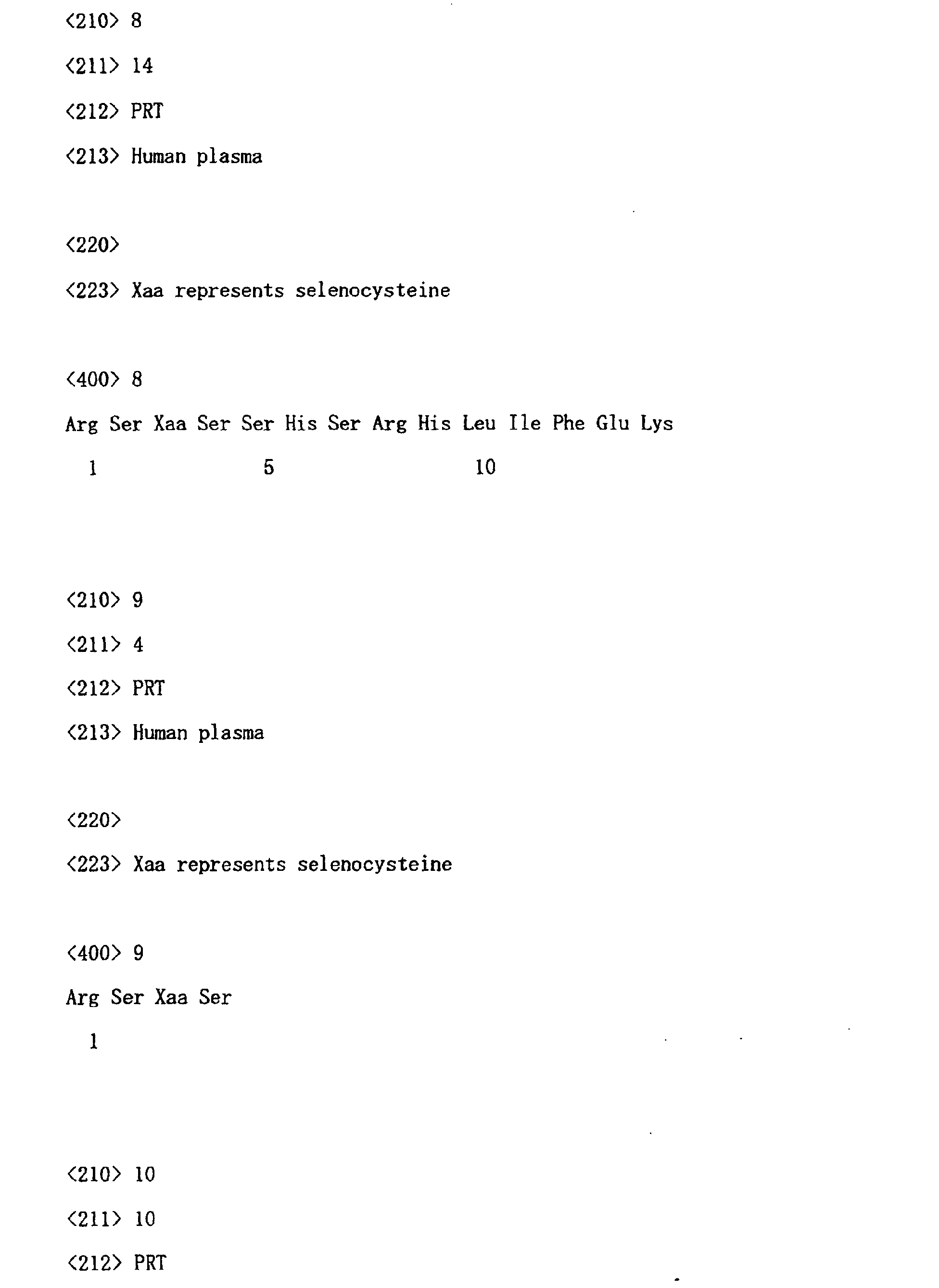
- the present inventors confirmed that a peptide having the amino acid sequence: Lys Arg Cys Ile Asn Gln Leu Leu Cys Lys Leu Pro Thr Asp Ser Glu Leu Ala Pro Arg Ser Xaa Cys Cys His Cys Arg His Leu Ile Phe Glu Lys (SEQ ID NO: 3) wherein Xaa represents selenocysteine had the cell death-inhibiting activity, which peptide was purified under reduced condition from selenoprotein P fragment having the amino acid sequence: 260Lys Arg Cys Ile Asn Gln Leu Leu Cys Lys Leu Pro Thr Asp Ser Glu Leu Ala Pro Arg Ser Xaa Cys Cys His Cys Arg His Leu Ile Phe Glu Lys Thr Gly Ser Ala Ile Thr Xaa Gln Cys Lys Glu Asn Leu Pro Ser Leu Cys Ser Xaa Gln Gly Leu Arg Ala Glu
- the amino acid sequence of peptide 14 corresponds to the amino acid sequence of peptide 6 in the direction from the C-terminal to the N-terminal thereof.
- Dami cells (described in Greenberg S. M. et al., Blood, vol. 72, p. 1968-1977 (1988)) for use in assay system for cytotoxicity-inhibitory activity, the cells were washed twice with assay medium (50% PBS/SA/0.03% HSA (manufactured by SIGMA) or SA/0.05% BSA free from fatty acid (WAKO)/4 ⁇ M long-chain polyvalent fatty acid (e.g. arachidonic acid, linoleic acid or linolenic acid)) and suspended in the same medium at 3 ⁇ 10 4 cells/ml.
- assay medium 50% PBS/SA/0.03% HSA (manufactured by SIGMA) or SA/0.05% BSA free from fatty acid (WAKO)/4 ⁇ M long-chain polyvalent fatty acid (e.g. arachidonic acid, linoleic acid or linolenic acid)
- WAKO long-chain polyvalent fatty acid
- the cell suspension was added to a 96-well plate in each 200 ⁇ l for wells for sample addition or in each 100 ⁇ l for wells for serial dilution.
- To the wells for sample addition was added each 2 ⁇ l assay sample containing either peptides synthesized in Preparation 2, selenocystine, selenomethionine, Ebselen, or sodium selenite at the same concentration.
- a serial dilution was made with the wells containing 100 ⁇ l cell suspension.
- the plate was incubated at 37°C in CO 2 incubator for 4 to 5 days followed by assessment of survival of the cells.
- Cytotoxicity-inhibitory activity was determined for each of the peptides obtained in Preparation 2.
- selenocysteine-containing peptides i.e. Peptide 3 through Peptide 16 were confirmed to have the cytotoxicity-inhibitory activity.
- Peptide 6 in which Cys residues were all replaced with Ser, could inhibit cytotoxicity most effectively at the lowest concentration.
- no toxicity was observed for the selenocysteine-containing peptides even at a concentration where toxicity could be observed in other selenium-containing substances. See Table 2.
- the animals were Rolling Mouse Nagoya (113 animals, five to eight months old, weighing 19.1 to 36.2 g) regardless of sex. Grouping of the animals was based on the weight measured on the day before initiation of the experiment and a stumbling index measured before initiation of the experiment.
- a quantity of voluntary motion was measured during thirty minutes immediately before administration (during 30-0 min. before administration), immediately after administration (during 0-30 min. after administration), one hour after administration (during 60-90 min. after administration), three hours after administration (during 180-210 min. after administration), and seven hours after administration (during 420-450 min. after administration) with a device for measuring voluntary motion.
- the present invention provides with an excellent medicament for treating neurodegenerative diseases, especially suitable for treating neurodegenerative diseases with ataxia as a principal symptom.
Landscapes
- Health & Medical Sciences (AREA)
- Life Sciences & Earth Sciences (AREA)
- Engineering & Computer Science (AREA)
- Bioinformatics & Cheminformatics (AREA)
- General Health & Medical Sciences (AREA)
- Public Health (AREA)
- Chemical & Material Sciences (AREA)
- Neurosurgery (AREA)
- Neurology (AREA)
- Medicinal Chemistry (AREA)
- Pharmacology & Pharmacy (AREA)
- Biomedical Technology (AREA)
- Veterinary Medicine (AREA)
- Animal Behavior & Ethology (AREA)
- Organic Chemistry (AREA)
- Chemical Kinetics & Catalysis (AREA)
- Nuclear Medicine, Radiotherapy & Molecular Imaging (AREA)
- General Chemical & Material Sciences (AREA)
- Immunology (AREA)
- Zoology (AREA)
- Marine Sciences & Fisheries (AREA)
- Proteomics, Peptides & Aminoacids (AREA)
- Epidemiology (AREA)
- Gastroenterology & Hepatology (AREA)
- Psychology (AREA)
- Pain & Pain Management (AREA)
- Hospice & Palliative Care (AREA)
- Psychiatry (AREA)
- Medicines That Contain Protein Lipid Enzymes And Other Medicines (AREA)
- Peptides Or Proteins (AREA)
Abstract
A medicament for treating neurodegenerative diseases, comprising as an active ingredient selenoprotein P and/or a peptide fragment or a series of peptide fragments derived from the C-terminal of selenoprotein P. An excellent medicament for treating neurodegenerative diseases, especially suitable for treating neurodegenerative diseases with ataxia as a principal symptom is provided.
Description
The present invention relates to a novel use of
plasma proteins, belonging to the field of medical drugs.
Specifically, the present invention relates to a medicament
for treating neurodegenerative diseases causing ataxia.
More specifically, the present invention relates to a
medicament for treating neurodegenerative diseases
comprising as an active ingredient selenoprotein P, one of
plasma proteins, preferably a peptide fragment or a series
of peptide fragments derived from the C-terminal of
selenoprotein P.
Neurodegenerative diseases are known to cause
decrease in motor function (ataxia) etc. Neurodegenerative
diseases include, for instance, Alzheimer type senile
dementia, Pick disease, Huntington chorea, Parkinson
disease, spinocerebellar degeneration, progressive
supranuclear palsy, intractable epilepsy, and the like.
Central nervous system disorders leading to
ataxia is classified according to the regions suffered into
cerebral (frontal lobe), cerebellar, vestibular (labyrinth),
and spinal ataxia. Cerebral ataxia is caused by disorder
in cerebral cortex, especially the frontal lobe, and can be
observed in case of cerebrovascular lesion, cerebral
atrophy, trauma, tumor, Pick disease, and chronic subdural
hematoma. It exhibits atactic abasia and decrease in
mental function. Cerebellar ataxia is a significant
symptom associated with, for instance, cerebellar disorders
such as cerebellar tumor, vascular disorders, degenerative
disorders, cerebellar atrophy, or deformity. Lesions in
the vermis induce trunk ataxia, exhibits astasia-abasia,
and gluteus maximus gait, yields difficulty in maintaining
posture and position with disorder in balance.
On the other hand, disorders in the cerebellar
hemisphere exhibit abnormality of tonus in limb muscles and
decrease in myotony and are accompanied by maldispositional
gait towards the affected lateral direction, incoordination,
wrong indication in finger-finger test or finger-nose test,
dysmetria, Holmes-Stewart phenomenon, as well as intention
tremor and cerebellar speech (scanning, explosive).
Vestibular (labyrinth) ataxia is caused by vestibular
malfunctions and most of its cause is supposed to be the
presence of, or sequela from, otological disorders in the
internal ear, including, for instance, Ménière disease,
sudden deafness, disorders in the balance-related nerves
due to drug poisoning such as streptomycin or kanamycin,
trauma, syphilis, acoustic trauma hearing loss,
otosclerosis, and otitis interna (and its sequela). In
case of spinal ataxia, also called ataxia of posterior
funiculus, disorders in posterior column of spinal cord
lead to disorders in bathyesthesia, i.e. positional
sensibility, articular sensibility and sensibility of grasp,
resulting in ataxia. It is markedly observed in
Friedreich's ataxia, subacute combined degeneration of
spinal cord, locomotor ataxia, and the like.
For example, spinocerebellar degeneration (SCD)
with a principal symptom of ataxia is known which is a
generic name for neurodegenerative diseases with unknown
causes. Clinically, its principal symptom is cerebellar or
posterior funicular ataxia. Its progression is such that
symptoms of ataxia gradually onset and slowly progress. In
some cases, SCD only exhibits ataxia, trunk ataxia or
incoordination. However, SCD sometimes displays other
symptoms, including cerebellar mogilalia, extrapyramidal
signs, in particular parkinsonism such as muscular rigidity
and akinesia, pyramid sign such as an accelerated or even
abnormal tendon reflex, nystagmus or involuntary motion
(peripheral nervous symptoms), autonomous symptoms such as
orthostatic hypotension or dysuria, and less frequently
intelligence disorder. Accordingly, SCD is considered to
be typical neurodegenerative diseases with ataxia.
SCD is classified according to the principal
lesions into (1) cerebellar type, including Holmes type
with lesions in the cerebellar cortex; (2) spinocerebellar
type, including Menzel type olivopontocerebellar atrophy;
and (3) spinal cord type, including Friedreich's ataxia or
hereditary spastic ataxia. According to statistics carried
out by the Ataxia Search Group, occurrence of SCD patients
in Japan in 1990 was about 7 to 10 cases per 1 x 10⁵ people,
among which about 60% comprised non-hereditary cases
whereas 40% hereditary cases. Among the non-hereditary
cases, most was olivopontocerebellar atrophy, which thus
most frequently occurs among total spinocerebellar
degeneration cases. On the other hand, as for the
hereditary cases, many of them were hitherto diagnosed as
Menzel type hereditary ataxia. However, with the progress
in genetic diagnosis in recent years, it was found that
Machado-Joseph disease (MJD) was the most frequent. On the
other hand, causes of the non-hereditary types such as
olivopontocerebellar atrophy remain completely unknown.
Thus, in spite of extensive study to elucidate the causes
from the genetic level, the reason why the cerebellum or
the neurocytes associated with the cerebellum are
selectively lead to death is still to be elucidated.
The only medicament hitherto known for treating
ataxia symptoms of spinocerebellar degeneration is
preparations of thyrotropin-releasing hormone (TRH)
tartarate for intravenous or intramuscular administration
(Hirtonin). Although the mechanism of activity is scarcely
known, it sometimes ameliorates ataxia, articulation
disorder, motion speed, and the like, in case of early
stage or in mild cases. However, duration of the efficacy
is as short as 1 hour and hence the efficacy of remedy is
not so much appreciated. Besides, this drug has an
activity to promote secretion of thyrotropin (TSH), thus
raising concern for side effects. Recently, oral
preparations of TRH-T derivatives (Ceredist) have been
developed. This new drug however merely exhibits duration
of the efficacy that is prolonged thrice as compared to the
conventional one as evidenced in the experiment using
Rolling Mouse Nagoya in which intraperitoneal
administration of the TRH derivative showed duration of
about 3 hours as compared to about 1 hour in case of TRH.
As such, a basic administration pattern of daily dosage for
2 to 3 weeks followed by ceasing of administration for 2 to
3 weeks is not significantly altered. Other than these
drugs, symptomatic treatment has predominantly been used,
such as a medicament for Parkinson disease to treat
parkinsonism, e.g. tremor in hands, or a medicament for
autonomous regulation to treat autonomous symptoms, e.g.
orthostatic hypotension. The circumstances are similar in
various diseases with ataxia as mentioned above and hence
little medicament is known for effectively ameliorating
symptoms of ataxia. Accordingly, there is a desire for
developing a novel medicament for treating with high
efficacy neurodegenerative diseases exhibiting ataxia as a
principal symptom.
Under the circumstances, the present inventors
have found that selenoprotein P, a protein derived from
blood components, more preferably a peptide fragment from
the C-terminal of selenoprotein P, exhibits a cell death-inhibitory
activity, which hitherto has not been reported,
and have filed a patent application (PCT/JP99/06322) for
this finding. The present inventors further investigated
for providing a novel medicament for ameliorating
neurodegenerative diseases. As a result, selenoprotein P
or a peptide fragment or a series of peptide fragments
derived from the C-terminal of selenoprotein P surprisingly
proved to be efficacious as a medicament for treating
neurodegenerative diseases in humans or other animals as
demonstrated in animal models which received in vivo
administration thereof. Based on this finding, the present
inventors have thus completed the present invention.
That is, the present invention relates to a
medicament for treating neurodegenerative diseases
comprising as an active ingredient selenoprotein P and/or a
peptide fragment or a series of peptide fragments derived
from the C-terminal of selenoprotein P.
In a preferable embodiment of the present
invention, the peptide fragment or a series of the peptide
fragments from the C-terminal of selenoprotein P is one
having the amino acid sequence from 260th to 362nd amino
acids from the C-terminal of selenoprotein P, or having
said amino acid sequence with one or several amino acid
residues therein being deleted, substituted or added, or
having a partial sequence of either of the above amino acid
sequences, or having any of the above amino acid sequences
as a part of a whole sequence, having a cytotoxicity-inhibitory
activity.
In a more preferable embodiment of the present
invention, the peptide fragment or a series of the peptide
fragments from the C-terminal of selenoprotein P has the
amino acid sequences of the formula: Arg Ser Xaa Cys Cys
His Cys Arg His Leu Ile Phe Glu Lys (SEQ ID NO: 1) wherein
Xaa represents selenocysteine, or said amino acid sequences
with one or several amino acid residues therein being
deleted, substituted or added, or a partial sequence of
either of the above amino acid sequences, or an amino acid
sequence comprising as a part any of the above amino acid
sequences.
Selenoprotein P was identified in 1977 as a
selenium-containing protein other than glutathione-peroxidase.
In 1982, it was revealed that selenium was
incorporated into said protein in the form of
selenocysteine. Moreover, in 1991, a full-length amino
acid sequence of selenoprotein P was determined by cloning
selenoprotein P cDNA and, as a result, possibility that
said protein contains at most ten selenocysteine residues
was demonstrated (Hill K. E. and Burk R. F., Biomed.
Environ. Sci., 10, p. 198-208 (1997)). Little was known
about the function of selenoprotein P. However, it has
recently been demonstrated that selenoprotein P exhibits an
activity to reduce phospholipid hydroperoxide or
peroxynitrite in vitro and acts as a survival promoting
factor of neurocytes.
As demonstrated in the Examples hereinbelow,
selenoprotein P proved to have an activity to lower a
stumble index (i.e. frequency of stumbling/voluntary
motion) in the experiment where Rolling Mouse Nagoya, model
mice of spinocerebellar degeneration, one of
neurodegenerative diseases, received intraperitoneal
administration of selenoprotein P, and hence to ameliorate
ataxia. It was thus demonstrated that selenoprotein P had
an activity to treat neurodegenerative diseases with ataxia
as a principal symptom.
The present invention relates to a novel
pharmaceutical efficacy of selenoprotein P based on the new
findings as mentioned above and an active ingredient of a
medicament for treating neurodegenerative diseases of the
present invention is selenoprotein P. More specifically,
selenocysteine, a selenium-containing amino acid, contained
in selenoprotein P is thought to be responsible for
amelioration of ataxia. The present inventors have found
that a peptide fragment derived from the C-terminal of
selenoprotein P, a protein from blood components, exhibited
a cell death-inhibitory activity, which hitherto has not
been reported, and filed a patent application.
Selenocysteine contained in selenoprotein P is apparently
involved in this activity. Hence, a protein and/or a
series of peptides that contains selenocysteine and has a
cell death-inhibitory activity can be a candidate of a
medicament for treating neurodegenerative diseases.
Selenium per se, as involved in the present
invention, is one of essential trace elements and it is
known that deficiency thereof induces a serious deficiency
disease accompanied by, for instance, cardiomyopathy. It
is also demonstrated that selenium is essential for
survival, maintenance of life or growth of cells as can be
seen from that addition of sodium selenite to culture
medium is indispensable during serum-free culture. However,
as will be understood from the fact that selenium compounds
are designated as poisonous substance, a difference between
effective and toxic amounts, i.e. a safety range of
concentration, is small and hence selenium compounds used
in an excess amount may be toxic to cells to induce
unfavorably cell death. Acute toxic symptoms of selenium
include, for example, pale face, neurological symptoms,
dermatitis, and gastrointestinal disorders. It is also
known that selenocystine, a dimer of selenocysteine,
exhibits fairly strong toxicity when added alone to cell
culture.
On the contrary, no strong toxicity was observed
in selenoprotein P or a peptide fragment derived from the
C-terminal of selenoprotein P according to the present
invention in spite of the presence of 9 to 10
selenocysteines therein. From this, selenoprotein P with
the pharmaceutical efficacy according to the present
invention is characteristic in that it not only contains
selenocysteine but also possesses reduced toxicity. In
fact, selenocysteine-containing synthetic peptides
comprising 4 to 14 amino acid residues from the amino acid
sequence of selenoprotein P exhibited no toxicity at a
concentration where selenocystine exhibited toxicity. Thus,
a peptide or a series of peptides of the present invention
allows for providing selenium compounds that not only have
reduced toxicity but also exhibit an unexpected activity to
ameliorate ataxia.
Selenoprotein P as used herein includes any
selenoprotein P in any molecular type without any
restriction as far as it exhibits a desired activity to
ameliorate ataxia, including selenoprotein P as an intact
molecule or in any of other various molecule types. Among
these, preferred is a peptide fragment or a series of the
peptide fragments from the C-terminal of selenoprotein P.
Most preferred is the peptide fragment or a series of the
peptide fragments from the C-terminal of selenoprotein P
that has the amino acid sequence consisting of 103 amino
acid residues from the C-terminal of selenoprotein P (260th
to 362nd amino acids), or said amino acid sequence with one
or several amino acid residues therein being deleted,
substituted or added, or a partial sequence of either of
the above amino acid sequences, or an amino acid sequence
comprising as a part any of the above amino acid sequences.
For amino acid substitution, Cys is preferably replaced
with Ser.
The most preferable peptide according to the
present invention is one having the amino acid sequences of
the formula: Arg Ser Xaa Cys Cys His Cys Arg His Leu Ile
Phe Glu Lys (SEQ ID NO: 1) wherein Xaa represents
selenocysteine, or said amino acid sequences with one or
several amino acid residues therein being deleted,
substituted or added, or a partial sequence of either of
the above amino acid sequences, or an amino acid sequence
comprising as a part any of the above amino acid sequences.
The term "a series of the peptide fragments" as
used herein refers to a group of peptide fragments with
different minute structures due to presence or absence of
glycosylation, difference in electric charge, diversity in
fragmentation, etc., each of the peptide fragments
comprising about 4 to about 14 amino acid residues derived
from the amino acid sequence of selenoprotein P, having at
least one selenocysteine, or having said amino acid
sequence with one or several amino acid residues therein
being deleted, substituted or added. That is,
selenoprotein P and a series of the peptide fragments
according to the present invention includes any molecules
that are derived from the amino acid sequence of
selenoprotein P and have an activity to ameliorate ataxia,
including selenoprotein P as an intact molecule as well as
peptide fragments from the C-terminal of selenoprotein P.
The peptide fragments of the present invention may be
prepared by the conventional methods using a peptide
synthesizer. Alternatively, chemical compounds may also be
designed by using the peptide fragments of the present
invention as a lead substance.
Selenoprotein P or the peptide fragment or a
series of the peptide fragments derived from said protein
for use in the present invention may be prepared by any
process known in the art, for example, by isolation from
human blood, or by the genetic recombination technique.
Selenoprotein P or the peptide fragment or a series of the
peptide fragments derived from said protein for use in the
present invention as an active ingredient of a medicament
for treating neurodegenerative diseases is rather stable to
heat, a denaturing agent, a broad range of pH or protease
in blood as compared to common enzymes. Thus, for
purification and identification thereof, a wide variety of
fractionation procedures may be applicable, including, for
example, fractionations with applicable various carriers
such as various chromatographic procedures such as heparin
chromatography, cation exchange chromatography, anion
exchange chromatography, hydrophobic chromatography, gel
filtration chromatography, reverse phase chromatography,
hydroxyapatite chromatography, or affinity chromatography
with a column bound with an antibody, using plasma as a
starting material. In addition to these, other various
fractionations may also be applicable such as ammonium
sulfate precipitation, molecular size fractionation with
membrane, isoelectric focusing, electrophoretic
fractionation, etc. A various combination of these
fractionations may suitably be used to effectively
fractionate selenoprotein P or the peptide fragment or a
series of the peptide fragments derived from said protein.
In a preferable embodiment, the peptide fragment or a
series of the peptide fragments can be purified by
conducting heparin chromatography, ammonium sulfate
precipitation, anion exchange chromatography, cation
exchange chromatography, hydrophobic chromatography,
heparin chromatography, gel filtration chromatography,
reverse phase chromatography and anion exchange
chromatography in this order.
Selenoprotein P or the peptide fragment or a
series of the peptide fragments derived from said protein
for use in the present invention as an active ingredient of
a medicament for treating neurodegenerative diseases can
also be purified by affinity chromatography using a
suitable carrier to which an appropriate antibody against
said protein is bound. An example of preferable
combination of such affinity chromatography with cation
exchange chromatography mentioned above is shown in
Preparation 1.
According to the present invention, selenoprotein
P or the peptide fragment or a series of the peptide
fragments derived from said protein as an active ingredient
may be combined with a suitable known excipient to produce
a medicament for treating neurodegenerative diseases. An
effective dose of the medicament for treating
neurodegenerative diseases of the present invention may
vary depending upon ages of subject, symptoms, severity,
etc. and ultimately upon discretion of a physician. A
pharmaceutical efficacy does not depend upon a route of
administration but subcutaneous, intradermal, or
intraperitoneal administration, or bolus administration
within blood vessels or intravenous drip infusion is much
preferred. It is also possible to administer orally or
transdermally in case of peptides with a low molecular
weight.
A medicament for treating neurodegenerative
diseases of the present invention may suitably be applied
in general to neurodegenerative diseases, most effective
for those with ataxia (decrease in motor function) as a
principal symptom. A medicament for treating
neurodegenerative diseases of the present invention
comprising as an active ingredient selenoprotein P or a
peptide or a series of peptides derived from said protein
may be administered alone or in combination with other
medical drug where synergetic effect may be expected.
The present invention is explained in more detail
by means of the following Preparation and Examples which
are not intended to restrict a scope of the present
invention in any sense. Reagents used in the following
Preparation and Examples were obtained from Wako Pure
Chemical Industries, Ltd., TAKARA SHUZO CO., Ltd., Toyobo,
and New England BioLabs.
As described below, selenoprotein P and
selenoprotein P fragments were purified from plasma based
on the cell death-inhibitory activity of selenoprotein P.
Heparin Sepharose-binding fraction from plasma
was precipitated with 2 M ammonium sulfate. The
precipitate was dissolved in more than 5 volumes of 20 mM
Tris buffer, pH 8.0. Selenoprotein P present in this
solution was adsorbed to a carrier to which an antibody
against selenoprotein P fragment was bound (anti-SeP
antibody column) and the carrier was washed with PBS.
Selenoprotein P was eluted with 20 mM citrate buffer
containing 4 M urea and was adsorbed to a cation exchanger
(Macroprep High S: BioRad) equilibrated with 20 mM citrate
buffer. Then, gradient elution was performed with a salt
concentration of sodium chloride and a fraction of
selenoprotein P fragments having the cell death-inhibitory
activity was recovered. At this stage, a full-length
selenoprotein P could also be obtained but with a cell
death-inhibitory activity per proteins being much lower
than that of the fragment thereof. According to the
procedures as described herein, purification may be carried
out in a short time and hence selenoprotein P fragments
with higher cell death-inhibitory activity per proteins
could be obtained. The fragments obtained at this stage
were a fraction of a mixture containing various molecular
species with varied sizes depending on the presence or
absence of glycosylation, intermolecular bonding, or inner
cleavage, etc. They were a group of selenoprotein P
fragments that showed a size ranging from 10 to 30 kDa in
electrophoresis under non-reductive condition.
Selenocysteine was protected with Fmoc (9-Fluorenylmethoxycarbonyl)
or MBzl (p-Methoxybenzyl). With
the protected selenocysteine, desired peptides were
synthesized by the Fmoc technique with a peptide
synthesizer. Then, the peptides were deprotected and
purified by reverse phase HPLC.
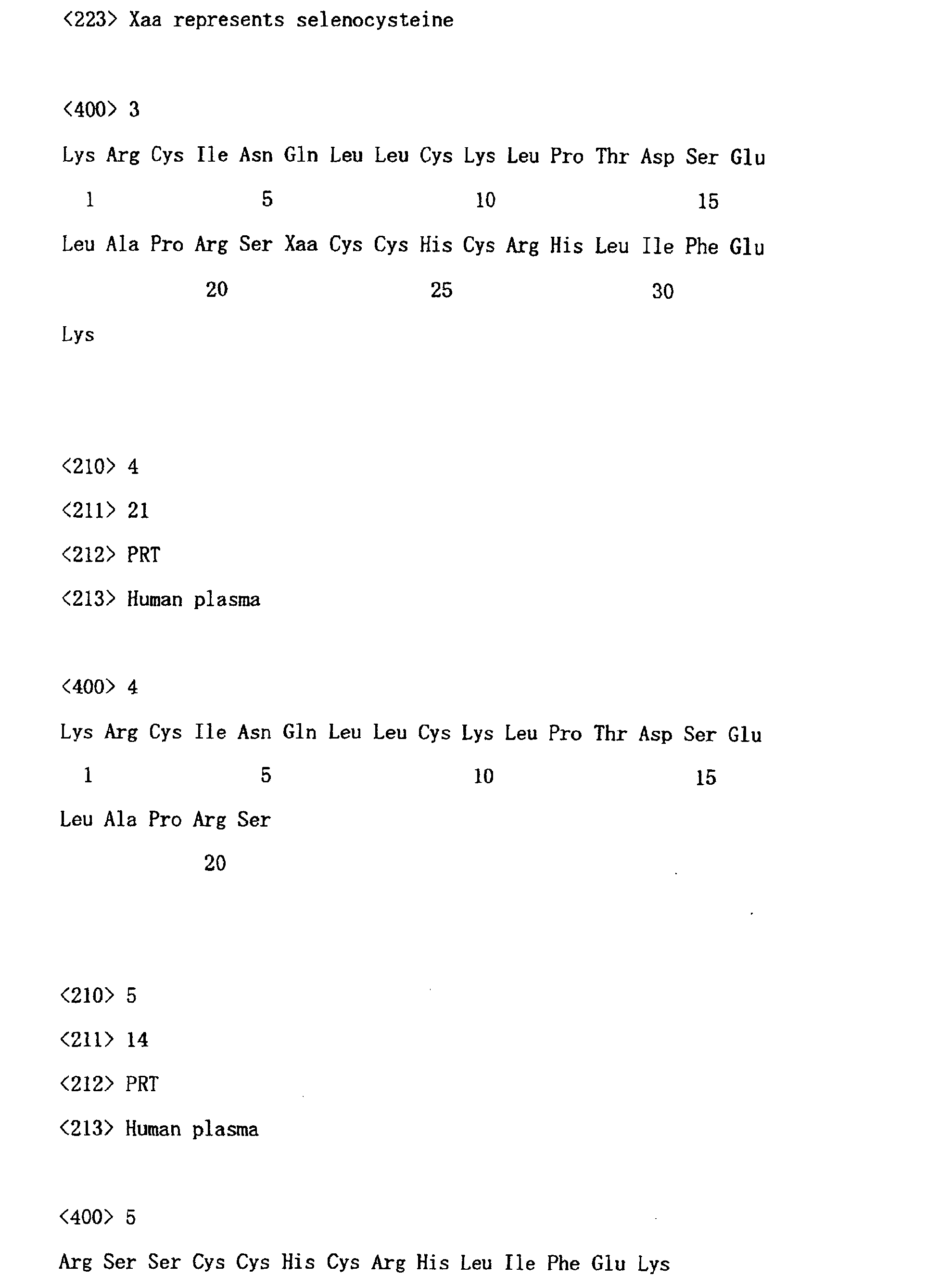
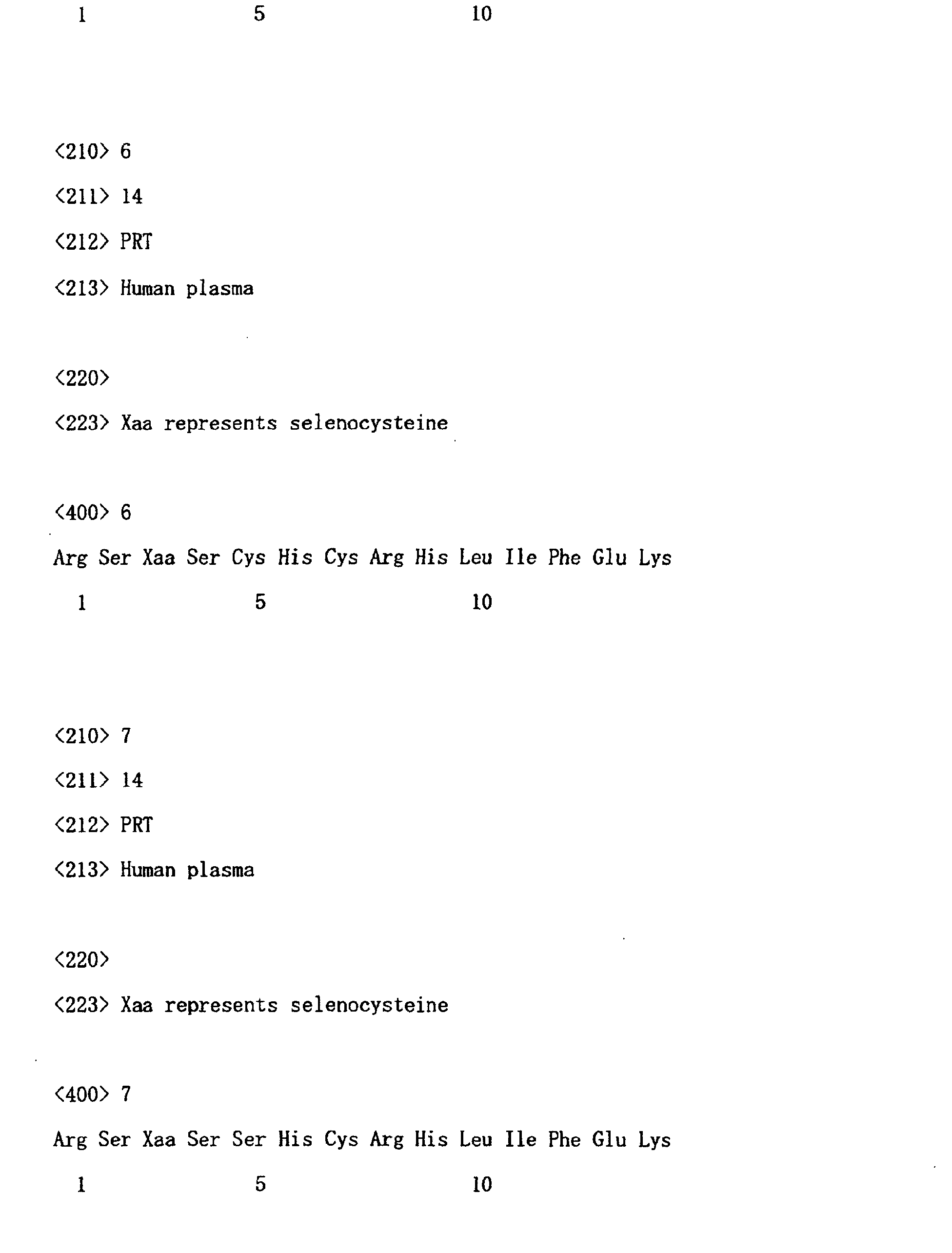
The present inventors confirmed that a peptide
having the amino acid sequence: Lys Arg Cys Ile Asn Gln Leu
Leu Cys Lys Leu Pro Thr Asp Ser Glu Leu Ala Pro Arg Ser Xaa
Cys Cys His Cys Arg His Leu Ile Phe Glu Lys (SEQ ID NO: 3)
wherein Xaa represents selenocysteine had the cell death-inhibiting
activity, which peptide was purified under
reduced condition from selenoprotein P fragment having the
amino acid sequence: 260Lys Arg Cys Ile Asn Gln Leu Leu Cys
Lys Leu Pro Thr Asp Ser Glu Leu Ala Pro Arg Ser Xaa Cys Cys
His Cys Arg His Leu Ile Phe Glu Lys Thr Gly Ser Ala Ile Thr
Xaa Gln Cys Lys Glu Asn Leu Pro Ser Leu Cys Ser Xaa Gln Gly
Leu Arg Ala Glu Glu Asn Ile Thr Glu Ser Cys Gln Xaa Arg Leu
Pro Pro Ala Ala Xaa Gln Ile Ser Gln Gln Leu Ile Pro Thr Glu
Ala Ser Ala Ser Xaa Arg Xaa Lys Asn Gln Ala Lys Lys Xaa Glu
Xaa Pro Ser Asn362 (SEQ ID NO: 2) wherein Xaa is as defined
above, having the cell death-inhibiting activity. Based on
this, peptide fragments having the amino acid sequences as
described below were synthesized.
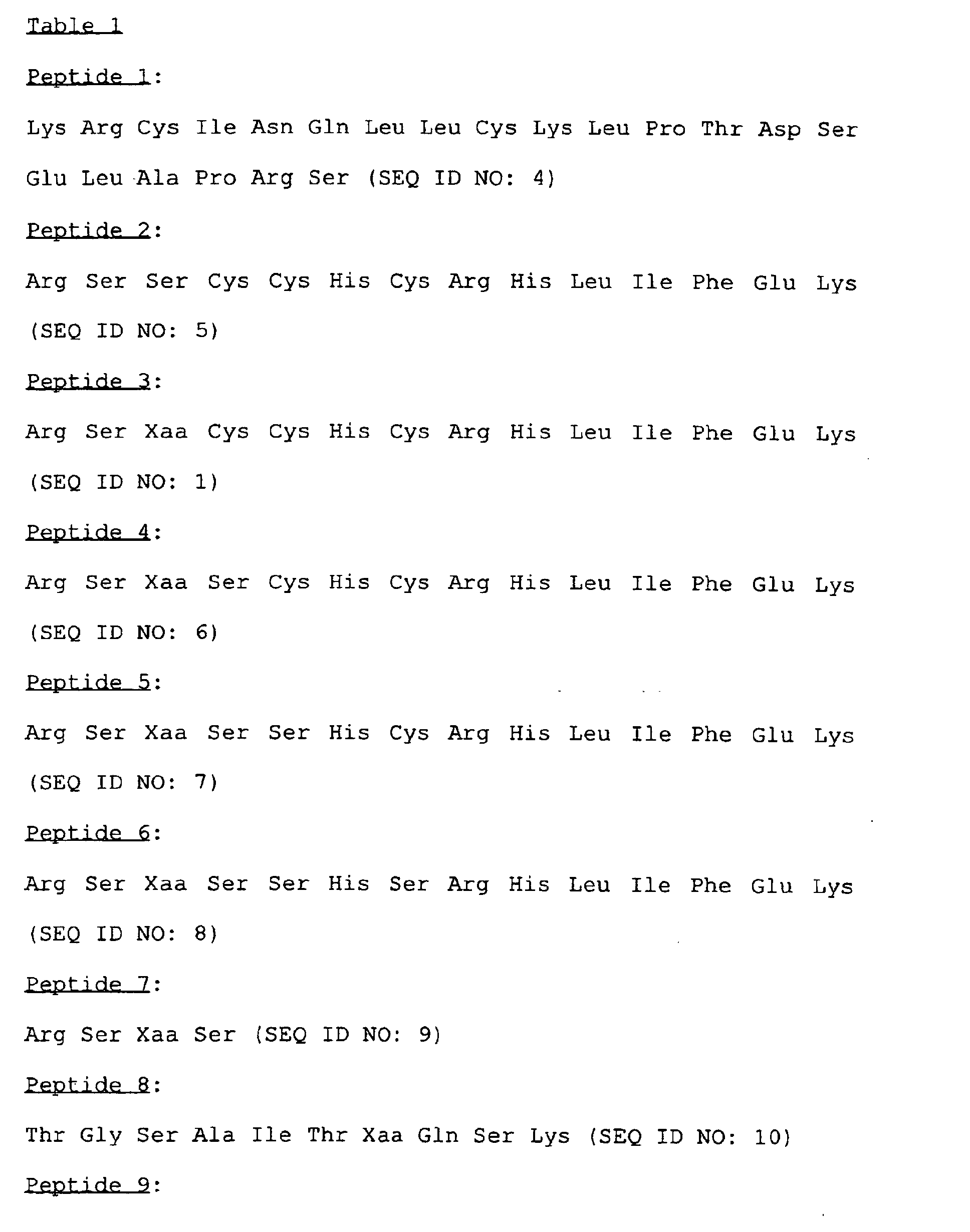

The amino acid sequence of peptide 14 corresponds
to the amino acid sequence of peptide 6 in the direction
from the C-terminal to the N-terminal thereof.
Using Dami cells (described in Greenberg S. M. et
al., Blood, vol. 72, p. 1968-1977 (1988)) for use in assay
system for cytotoxicity-inhibitory activity, the cells were
washed twice with assay medium (50% PBS/SA/0.03% HSA
(manufactured by SIGMA) or SA/0.05% BSA free from fatty
acid (WAKO)/4 µM long-chain polyvalent fatty acid (e.g.
arachidonic acid, linoleic acid or linolenic acid)) and
suspended in the same medium at 3 × 10⁴ cells/ml. The cell
suspension was added to a 96-well plate in each 200 µl for
wells for sample addition or in each 100 µl for wells for
serial dilution. To the wells for sample addition was
added each 2 µl assay sample containing either peptides
synthesized in Preparation 2, selenocystine,
selenomethionine, Ebselen, or sodium selenite at the same
concentration. After stirring, a serial dilution was made
with the wells containing 100 µl cell suspension. The
plate was incubated at 37°C in CO2 incubator for 4 to 5
days followed by assessment of survival of the cells.
Cytotoxicity-inhibitory activity was determined
for each of the peptides obtained in Preparation 2. As a
result, selenocysteine-containing peptides, i.e. Peptide 3
through Peptide 16, were confirmed to have the
cytotoxicity-inhibitory activity. Among these, Peptide 6,
in which Cys residues were all replaced with Ser, could
inhibit cytotoxicity most effectively at the lowest
concentration. Also, no toxicity was observed for the
selenocysteine-containing peptides even at a concentration
where toxicity could be observed in other selenium-containing
substances. See Table 2.

In order to confirm the activity to ameliorate
ataxia of selenoprotein P, Rolling Mouse Nagoya, the
established model of ataxia, was used with a stumbling
index. Animals were divided into the following groups each
consisting of ten animals: a control group
intraperitoneally administered with saline (0.25
mL/head/week); a group intraperitoneally administered with
a low dose of selenoprotein P (0.05 mg/head/week; 0.25
mL/head/week); and a group intraperitoneally administered
with a high dose of selenoprotein P (0.5 mg/head/week; 0.25
mL/head/week). The animals received intraperitoneal
administration once a week for three weeks.
The animals were Rolling Mouse Nagoya (113
animals, five to eight months old, weighing 19.1 to 36.2 g)
regardless of sex. Grouping of the animals was based on
the weight measured on the day before initiation of the
experiment and a stumbling index measured before initiation
of the experiment. A quantity of voluntary motion was
measured during thirty minutes immediately before
administration (during 30-0 min. before administration),
immediately after administration (during 0-30 min. after
administration), one hour after administration (during 60-90
min. after administration), three hours after
administration (during 180-210 min. after administration),
and seven hours after administration (during 420-450 min.
after administration) with a device for measuring voluntary
motion. Stumbling of animals was counted with a video
camera set upon the device for measuring voluntary motion
during the same time period as that of measurement of
voluntary motion. A stumbling index was calculated by the
formula: [Count of stumbling (count/30 min.)] / [Voluntary
motion (count/30 min.)]. The results are shown in Figs. 1
to 3 wherein #: p<0.05, ##: p<0.01, being significant as
compared to values before administration (paired t-test);
*: p<0.05, being significant as compared to control during
the same time period (Turkey test).
It was demonstrated that a stumbling index in the
group of a high dose administration of selenoprotein P (0.5
mg/head) remained lower than the control group at each time
period on every Week 1, Week 2 and Week 3 after
administration, with significant decrease during 60-90 min.
after administration on Week 1. When compared with values
before administration, significant decrease in a stumbling
index was observed during 420-450 min. after administration
on Week 1, during 60-90 min., during 180-210 min., and
during 420-450 min. after administration on Week 2, and
during 60-90 min. after administration on Week 3. On the
contrary, no significant decrease in a stumbling index was
seen in the group of low dose administration of
selenoprotein P (0.05 mg/head).
Thus, the present invention provides with an
excellent medicament for treating neurodegenerative
diseases, especially suitable for treating
neurodegenerative diseases with ataxia as a principal
symptom.




Claims (4)
- A medicament for treating neurodegenerative diseases, comprising as an active ingredient selenoprotein P and/or a peptide fragment or a series of peptide fragments derived from the C-terminal of selenoprotein P.
- The medicament for treating neurodegenerative diseases according to claim 1 wherein said peptide fragment or a series of peptide fragments derived from the C-terminal of selenoprotein P is a peptide or a series of peptides with a cytotoxicity-inhibitory activity having the amino acid sequence from 260th to 362nd amino acid residues from the C-terminal of selenoprotein P, or said amino acid sequence with one or several amino acid residues therein being deleted, substituted or added, or a partial sequence of either of the above amino acid sequences, or an amino acid sequence comprising as a part any of the above amino acid sequences.
- The medicament for treating neurodegenerative diseases according to claim 1 or 2 wherein said peptide fragment or a series of peptide fragments derived from the C-terminal of selenoprotein P is a peptide or a series of peptides having the amino acid sequences of the formula (I): Arg Ser Xaa Cys Cys His Cys Arg His Leu Ile Phe Glu Lys (SEQ ID NO: 1) wherein Xaa represents selenocysteine, or said amino acid sequences with one or several amino acid residues therein being deleted, substituted or added, or a partial sequence of either of the above amino acid sequences, or an amino acid sequence comprising as a part any of the above amino acid sequences.
- The medicament for treating neurodegenerative diseases according to any one of claims 1 to 3 wherein the principal symptom due to neurodegenerative condition is ataxia.
Applications Claiming Priority (3)
| Application Number | Priority Date | Filing Date | Title |
|---|---|---|---|
| JP2001141462 | 2001-05-11 | ||
| JP2001141462 | 2001-05-11 | ||
| PCT/JP2002/004558 WO2002092121A1 (en) | 2001-05-11 | 2002-05-10 | Novel remedies for neurodegenerative disease |
Publications (2)
| Publication Number | Publication Date |
|---|---|
| EP1393740A1 true EP1393740A1 (en) | 2004-03-03 |
| EP1393740A4 EP1393740A4 (en) | 2005-08-10 |
Family
ID=18987921
Family Applications (1)
| Application Number | Title | Priority Date | Filing Date |
|---|---|---|---|
| EP02769564A Withdrawn EP1393740A4 (en) | 2001-05-11 | 2002-05-10 | Novel remedies for neurodegenerative disease |
Country Status (4)
| Country | Link |
|---|---|
| US (2) | US20050143310A1 (en) |
| EP (1) | EP1393740A4 (en) |
| JP (1) | JP4402885B2 (en) |
| WO (1) | WO2002092121A1 (en) |
Cited By (4)
| Publication number | Priority date | Publication date | Assignee | Title |
|---|---|---|---|---|
| EP1566181A4 (en) * | 2002-11-29 | 2009-06-17 | Chemo Sero Therapeut Res Inst | NEW AGENT TO ENHANCE NEUROTRANSMISSION FAILURES |
| EP1915998A4 (en) * | 2005-06-22 | 2009-11-18 | Kowa Co | PROPHYLACTIC OR THERAPEUTIC AGENT FOR CORNEAL OR CONJUNCTIVAL DISEASE |
| EP2522359A1 (en) * | 2011-05-09 | 2012-11-14 | Universite De Rouen | Compounds with thioredoxin-like fold domain for the treatment of degenerative disorders |
| EP3484502A4 (en) * | 2016-08-18 | 2020-03-04 | Alkahest, Inc. | BLOOD PLASMA FRACTIONS FOR THE TREATMENT OF COGNITIVE DISORDERS ASSOCIATED WITH AGING |
Families Citing this family (3)
| Publication number | Priority date | Publication date | Assignee | Title |
|---|---|---|---|---|
| DE60135501D1 (en) | 2001-03-23 | 2008-10-02 | Chemo Sero Therapeut Res Inst | NEW MEANS TO REDUCE MOTORIZED INTERFERENCE |
| EP1726649A3 (en) * | 2001-05-11 | 2007-03-28 | Juridical Foundation The Chemo-Sero-Therapeutic Research Institute | Peptide fragment having cytotoxicity-inhibitory activity and screening method for peptide fragment having said cytotoxicity-inhibitory activity |
| US9259432B1 (en) | 2011-01-31 | 2016-02-16 | Parminder J. S. Vig | Composition and methods for targeted delivery of a therapeutic compound to the brain or spinal cord of a subject for treatment of neurodegenerative diseases |
Family Cites Families (5)
| Publication number | Priority date | Publication date | Assignee | Title |
|---|---|---|---|---|
| WO2000031131A1 (en) * | 1998-11-19 | 2000-06-02 | Juridical Foundation The Chemo-Sero-Therapeutic Research Institute | Peptide fragments having cell death inhibitory activity |
| JP2002060346A (en) * | 2000-05-19 | 2002-02-26 | Chemo Sero Therapeut Res Inst | Novel ischemia / reperfusion injury inhibitor |
| DE60135501D1 (en) * | 2001-03-23 | 2008-10-02 | Chemo Sero Therapeut Res Inst | NEW MEANS TO REDUCE MOTORIZED INTERFERENCE |
| EP1726649A3 (en) * | 2001-05-11 | 2007-03-28 | Juridical Foundation The Chemo-Sero-Therapeutic Research Institute | Peptide fragment having cytotoxicity-inhibitory activity and screening method for peptide fragment having said cytotoxicity-inhibitory activity |
| JP2004182616A (en) * | 2002-11-29 | 2004-07-02 | Chemo Sero Therapeut Res Inst | Novel neurotransmitter dysfunction improver |
-
2002
- 2002-05-10 EP EP02769564A patent/EP1393740A4/en not_active Withdrawn
- 2002-05-10 JP JP2002589037A patent/JP4402885B2/en not_active Expired - Fee Related
- 2002-05-10 WO PCT/JP2002/004558 patent/WO2002092121A1/en not_active Ceased
- 2002-05-10 US US10/477,216 patent/US20050143310A1/en not_active Abandoned
-
2007
- 2007-02-20 US US11/707,942 patent/US20070249534A1/en not_active Abandoned
Non-Patent Citations (2)
| Title |
|---|
| No further relevant documents disclosed * |
| See also references of WO02092121A1 * |
Cited By (6)
| Publication number | Priority date | Publication date | Assignee | Title |
|---|---|---|---|---|
| EP1566181A4 (en) * | 2002-11-29 | 2009-06-17 | Chemo Sero Therapeut Res Inst | NEW AGENT TO ENHANCE NEUROTRANSMISSION FAILURES |
| EP1915998A4 (en) * | 2005-06-22 | 2009-11-18 | Kowa Co | PROPHYLACTIC OR THERAPEUTIC AGENT FOR CORNEAL OR CONJUNCTIVAL DISEASE |
| EP2522359A1 (en) * | 2011-05-09 | 2012-11-14 | Universite De Rouen | Compounds with thioredoxin-like fold domain for the treatment of degenerative disorders |
| WO2012152739A1 (en) * | 2011-05-09 | 2012-11-15 | Universite De Rouen | Compounds with thioredoxin-like fold domain for the treatment of degenerative disorders |
| EP3484502A4 (en) * | 2016-08-18 | 2020-03-04 | Alkahest, Inc. | BLOOD PLASMA FRACTIONS FOR THE TREATMENT OF COGNITIVE DISORDERS ASSOCIATED WITH AGING |
| EP3995140A1 (en) * | 2016-08-18 | 2022-05-11 | Alkahest, Inc. | Blood plasma fractions as a treatment for aging-associated cognitive disorders |
Also Published As
| Publication number | Publication date |
|---|---|
| US20050143310A1 (en) | 2005-06-30 |
| WO2002092121A1 (en) | 2002-11-21 |
| JP4402885B2 (en) | 2010-01-20 |
| JPWO2002092121A1 (en) | 2004-08-26 |
| US20070249534A1 (en) | 2007-10-25 |
| EP1393740A4 (en) | 2005-08-10 |
Similar Documents
| Publication | Publication Date | Title |
|---|---|---|
| US20070249534A1 (en) | Novel medicament for treating neurodegenerative diseases | |
| AU634954B2 (en) | Treatment of diabetes mellitus | |
| DE69031168T2 (en) | Use of IGF1 or IGF2 for the manufacture of a medicament for the treatment of amyotrophic lateral sclerosis | |
| US7189701B1 (en) | Tetrapeptide stimulating functional activity of neurons pharmacological agent based thereon and method of use thereof | |
| AU2010251788B2 (en) | Novel agents for ameliorating motor disorder | |
| EA011586B1 (en) | Novel carbamylated epo and method for its production | |
| EP3231438B1 (en) | Wt1 immunotherapy for intraocular angiogenic disease | |
| US6610649B2 (en) | Insulin C-peptides | |
| EP0132769A1 (en) | Pharmaceutical formulation for the treatment of diabetes mellitus | |
| EP0140084A1 (en) | Process for the preparation of insulin derivatives with a C-terminally elongated B-chain, basically modified insulin derivatives, compositions containing them and their use | |
| KR102806029B1 (en) | Cyclic polypeptides, methods for their preparation and therapeutic uses | |
| EP2217619B1 (en) | Cyclic, cystein-free protein | |
| US10059743B2 (en) | Peptide derivative for regulating thymic stromal lymphoid protein-mediated signaling and pharmaceutical composition for preventing and treating allergy and asthma diseases comprising same | |
| EP2219663B1 (en) | Reverse protein | |
| JP2004182616A (en) | Novel neurotransmitter dysfunction improver | |
| AU2007242956A1 (en) | Novel agents for ameliorating motor disorder | |
| WO2002090380A1 (en) | Tetrapeptide stimulating the retinal function and the method of its application | |
| JPH07309771A (en) | Parenteral antitumor agent | |
| HK1128703B (en) | Neuroprotective compounds and uses thereof | |
| HK1128703A1 (en) | Neuroprotective compounds and uses thereof | |
| JPH01275533A (en) | Enhancer of power of memory | |
| HK1245149A1 (en) | Wt1 immunotherapy for intraocular angiogenic disease | |
| HK1245149B (en) | Wt1 immunotherapy for intraocular angiogenic disease | |
| HK1146905B (en) | Reverse protein | |
| HK1001621A (en) | Amylin isolated from pancreatic islet amyloid and pharmaceutical compositions comprising it |
Legal Events
| Date | Code | Title | Description |
|---|---|---|---|
| PUAI | Public reference made under article 153(3) epc to a published international application that has entered the european phase |
Free format text: ORIGINAL CODE: 0009012 |
|
| 17P | Request for examination filed |
Effective date: 20031205 |
|
| AK | Designated contracting states |
Kind code of ref document: A1 Designated state(s): AT BE CH CY DE DK ES FI FR GB GR IE IT LI LU MC NL PT SE TR |
|
| A4 | Supplementary search report drawn up and despatched |
Effective date: 20050628 |
|
| 17Q | First examination report despatched |
Effective date: 20091118 |
|
| STAA | Information on the status of an ep patent application or granted ep patent |
Free format text: STATUS: THE APPLICATION IS DEEMED TO BE WITHDRAWN |
|
| 18D | Application deemed to be withdrawn |
Effective date: 20121201 |