EP1392218B1 - Gram-positive fatty acid degrader - Google Patents
Gram-positive fatty acid degrader Download PDFInfo
- Publication number
- EP1392218B1 EP1392218B1 EP02731558A EP02731558A EP1392218B1 EP 1392218 B1 EP1392218 B1 EP 1392218B1 EP 02731558 A EP02731558 A EP 02731558A EP 02731558 A EP02731558 A EP 02731558A EP 1392218 B1 EP1392218 B1 EP 1392218B1
- Authority
- EP
- European Patent Office
- Prior art keywords
- glycerol
- bacillus
- grease
- ranging
- composition
- Prior art date
- Legal status (The legal status is an assumption and is not a legal conclusion. Google has not performed a legal analysis and makes no representation as to the accuracy of the status listed.)
- Expired - Lifetime
Links
Images


Classifications
-
- C—CHEMISTRY; METALLURGY
- C02—TREATMENT OF WATER, WASTE WATER, SEWAGE, OR SLUDGE
- C02F—TREATMENT OF WATER, WASTE WATER, SEWAGE, OR SLUDGE
- C02F3/00—Biological treatment of water, waste water, or sewage
- C02F3/34—Biological treatment of water, waste water, or sewage characterised by the microorganisms used
- C02F3/343—Biological treatment of water, waste water, or sewage characterised by the microorganisms used for digestion of grease, fat, oil
-
- C—CHEMISTRY; METALLURGY
- C12—BIOCHEMISTRY; BEER; SPIRITS; WINE; VINEGAR; MICROBIOLOGY; ENZYMOLOGY; MUTATION OR GENETIC ENGINEERING
- C12N—MICROORGANISMS OR ENZYMES; COMPOSITIONS THEREOF; PROPAGATING, PRESERVING, OR MAINTAINING MICROORGANISMS; MUTATION OR GENETIC ENGINEERING; CULTURE MEDIA
- C12N1/00—Microorganisms; Compositions thereof; Processes of propagating, maintaining or preserving microorganisms or compositions thereof; Processes of preparing or isolating a composition containing a microorganism; Culture media therefor
- C12N1/20—Bacteria; Culture media therefor
-
- C—CHEMISTRY; METALLURGY
- C12—BIOCHEMISTRY; BEER; SPIRITS; WINE; VINEGAR; MICROBIOLOGY; ENZYMOLOGY; MUTATION OR GENETIC ENGINEERING
- C12N—MICROORGANISMS OR ENZYMES; COMPOSITIONS THEREOF; PROPAGATING, PRESERVING, OR MAINTAINING MICROORGANISMS; MUTATION OR GENETIC ENGINEERING; CULTURE MEDIA
- C12N1/00—Microorganisms; Compositions thereof; Processes of propagating, maintaining or preserving microorganisms or compositions thereof; Processes of preparing or isolating a composition containing a microorganism; Culture media therefor
- C12N1/20—Bacteria; Culture media therefor
- C12N1/205—Bacterial isolates
-
- C—CHEMISTRY; METALLURGY
- C12—BIOCHEMISTRY; BEER; SPIRITS; WINE; VINEGAR; MICROBIOLOGY; ENZYMOLOGY; MUTATION OR GENETIC ENGINEERING
- C12N—MICROORGANISMS OR ENZYMES; COMPOSITIONS THEREOF; PROPAGATING, PRESERVING, OR MAINTAINING MICROORGANISMS; MUTATION OR GENETIC ENGINEERING; CULTURE MEDIA
- C12N1/00—Microorganisms; Compositions thereof; Processes of propagating, maintaining or preserving microorganisms or compositions thereof; Processes of preparing or isolating a composition containing a microorganism; Culture media therefor
- C12N1/32—Processes using, or culture media containing, lower alkanols, i.e. C1 to C6
-
- C—CHEMISTRY; METALLURGY
- C12—BIOCHEMISTRY; BEER; SPIRITS; WINE; VINEGAR; MICROBIOLOGY; ENZYMOLOGY; MUTATION OR GENETIC ENGINEERING
- C12N—MICROORGANISMS OR ENZYMES; COMPOSITIONS THEREOF; PROPAGATING, PRESERVING, OR MAINTAINING MICROORGANISMS; MUTATION OR GENETIC ENGINEERING; CULTURE MEDIA
- C12N1/00—Microorganisms; Compositions thereof; Processes of propagating, maintaining or preserving microorganisms or compositions thereof; Processes of preparing or isolating a composition containing a microorganism; Culture media therefor
- C12N1/38—Chemical stimulation of growth or activity by addition of chemical compounds which are not essential growth factors; Stimulation of growth by removal of a chemical compound
-
- C—CHEMISTRY; METALLURGY
- C12—BIOCHEMISTRY; BEER; SPIRITS; WINE; VINEGAR; MICROBIOLOGY; ENZYMOLOGY; MUTATION OR GENETIC ENGINEERING
- C12R—INDEXING SCHEME ASSOCIATED WITH SUBCLASSES C12C - C12Q, RELATING TO MICROORGANISMS
- C12R2001/00—Microorganisms ; Processes using microorganisms
- C12R2001/01—Bacteria or Actinomycetales ; using bacteria or Actinomycetales
- C12R2001/07—Bacillus
- C12R2001/11—Bacillus megaterium
Definitions
- the present invention is related to identifying a Gram-positive organism that degrades fats, oils and grease. More particularly, the present invention is related to providing a non-pathogenic, spore-forming Gram-positive, lipophilic bacterial strain that produces extracellular lipase and also efficiently oxidizes or degrades fatty acids and grease. The invention is further related to a liquid and dry formulations comprising said Gram-positive organism and a method for enhancing fatty acid degradation employing glycerol.
- the frequency of pumping the accumulated grease solids can be quite variable, ranging from several weeks to several months. If traps are not cleaned on a regular basis, grease clogs may occur causing wastewater to back up into the food preparation area causing malodors and requiring the establishment to close until the problem is corrected.
- grease traps can function to biologically mediate a reduction of BOD and O&G in the bulk liquid resulting in cleaner effluent wastewater. This reduction of BOD and O&G is dependent upon the hydraulic retention time, which is dependent on the size of the grease trap and wastewater flow. Other factors that affect biological activity within a grease trap include pH, temperature and whether or not the facility practices bioaugmentation.
- Bioaugmentation the addition of commercial bacterial products that increase the biological activity in the system, has been used to reduce the BOD and O&G in the effluents from grease traps. This has helped to reduce surcharges that the food establishments must pay to municipalities for wastewater services. Additionally, bioaugmentation has been used to decrease the pumping frequency of grease traps, to keep drain lines open and to reduce malodors.
- bioaugmentation has also been used to help remove grease from lift stations, drain lines, septic tanks, waste treatment facilities and other situations where grease accumulation can cause flow problems and malodors.
- Bioaugmentation products can be either liquid or dry. Because of ease of handling, liquid products are generally preferred and can be added by a liquid metering pump drawing on a container that is replenished on a periodic basis. However, dry formulations are preferred for other applications such as waste treatment facilities.
- Gram-negative microorganisms When Gram-negative microorganisms are used for bioaugmentation in liquid products, they are present as vegetative cells and as such, they may be killed by chemicals, such as surfactants and preservatives, which are often used in such formulations. Therefore, products containing Gram-negative organisms cannot contain biocides and surfactants. Then, unpreserved liquid products may develop severe malodors from microbial contaminants growing in the product. Some of these contaminants may be undesirable in a food service environment. Furthermore, unpreserved products may also suffer from decreased shelf life and efficacy. Clearly, while Gram-negative microorganisms have an advantage in fatty acid degradation, their use in residential and food service products have serious drawbacks.
- Dry Gram-negative products do have an advantage of improved shelf life over liquid Gram-negative formulations. However, this advantage is modest and varies significantly from bacterial strain to bacterial strain in the product. Although dry products can be rehydrated with water and applied like liquid products, the disadvantages of using unpreserved liquids containing Gram-negative microorganisms still apply to rehydrated dry materials.
- Gram-negative microorganisms are known to have the ability to biodegrade fatty acids generated by the action of lipase. This ability to oxidize and degrade fatty acids is generally not found in Gram-positive, spore-forming microorganisms, specifically members of the genus Bacillus.
- bioaugmentation formulations that can effectively and efficiently degrade or oxidize fats, oil and grease without causing malodors or other undesirable conditions, such as occurs with Gram-negative organisms.
- DE 198 50 012 discloses a waste purification agent on a biological basis comprising spores of a aerobic spore-forming microorganism expressing membrane-bound lipase.
- US 6,162,635 discloses a novel strain of Bacillus bacteria that produces lipase enzymes for the degradation of oleaginous materials such as fats, greases and cooking oils, protease enzymes to degrade proteins and amylases to break down starch. Specifically, this strain has been determined to be species B. subtilis.
- EP-A 0 569 140 relates to a liquid drain opener formulation which comprises a stable suspension of viable microorganisms, a surfactant, and a preservative all contained in an aqueous medium and having a pH in the range of about 3 to 10.
- an object of the present invention to provide a non-pathogenic, spore-forming Gram-positive, lipophilic bacterial strain that produces extracellular lipase and also efficiently hydrolyzes or degrades fatty acids and grease or a mixture of fatty acid and grease.
- An additional object of the present invention is to provide a method for degrading fatty acid and grease using a Gram-positive strain of Bacillus species.
- Yet another object of the present invention is to enhance the biodegrading activity of Gram-positive strain of Bacillus megaterium ATCC PTA-3142.
- a further object of the invention is to provide a method for augmenting fatty acid degrading activity of Bacillus megaterium ATCC PTA-3142 employing glycerol as an activity enhancer.
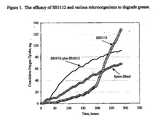
- FIG. 1 shows the efficacy of various microorganisms to degrade grease and FIGs. 2 through 7 show the effect of glycerol on biodegrading activity of SB3112 and various microorganisms.
- biodegradation means that the substrate is broken down, oxidized or degraded by the microorganism.
- activity enhancement means that the biodegradation activity of the microorganism is increased by the presence or addition of a particular component, said component being designated as “activity enhancer”, or “activator”.
- the preserved, spore-based Gram-positive containing product can contain preservatives and surfactants to aid in the biodegradation of fats, oils or grease, because the spores are relatively resistant to biocides and surfactants. Furthermore, these products may also contain micronutrients promoting the growth of the microorganisms.
- a Gram-positive product comprising lipase producing, fatty acid degrading, spore-forming microorganism in a preserved liquid formulation offers various advantages required for efficacious degradation of oil and grease. Dry products also benefit from the activity of SB3112.
- Liquid and dry products formulated in accordance with the present invention for grease traps, or other similar uses where fatty acid or grease needs to be degraded may also contain in addition to surfactants, biocides, growth promoting non-toxic amounts of inorganic nutrients and micronutrients, certain activity enhancers, stabilizers, viscosifiers, enzymes, fillers, preservatives and the like.
- Table 1 lists examples of various components that a liquid formulation may contain in addition to SB3112 in accordance with the present invention. Other inclusions in both liquid and dry formulations are exemplified below:
- a CES AER-200 respirometer unit was used The 500 ml respirometer bottles contained SSC 3 minimal salt medium and 20 mM MOPS adjusted to pH 7.2. Respirometer bottles were prepared by adding SSC 3 mineral salt media to each bottle. This media contained the following chemicals per liter of water: NH 4 Cl, 0.8g; MgSO 4 •7H 2 O, 0.2 g; CaCl 2 •2H 2 O, 10 mg, Fe 2 Na 2 Ethylene diamine tetraacetic acid, 15 mg; KH 2 PO 4 , 3.06 g; FeSO 4 •7H 2 O, 28 ⁇ g; ZnSO 4 •7H 2 O, 140 ⁇ g; MnSO4•H 2 O, 84 ⁇ g; CoCl 2 •6H 2 O, 24 ⁇ g; CuSO 4 • 5H 2 O, 25 ⁇ g; NaMoO 4 •2H 2 O, 24 ⁇ g.
- the buffer 3-(N-morpholino) propane sulfonic acid (MOPS), was added 4.28 g per liter.
- the pH of the medium was adjusted to 7.0 prior to autoclaving.
- the bottles containing SSC 3 media were autoclaved for two hours.
- the target substrate 1000 ppm stearic acid (SA) was added as indicated below.
- SA was weighed and added individually into the appropriate reactor prior to autoclaving.
- Glycerol 500 ppmv, was added to all bottles.
- Glycerol was first diluted 50% v/v with deionized water to reduce the viscosity and 0.5 ml was added to each reactor prior to autoclaving.
- a pure culture of microorganism was used as inoculum.
- the optical density (OD) of an overnight culture in plate count broth (PCB) was determined in order to estimate the bacterial count.
- the target dose into each reactor was 1 x 10 6 CFU/ml based on the optical density measurement of the broth culture.
- a CES AER-200 respirometer unit was used to monitor oxygen uptake in 500 ml bottles maintained at 25°C. Each 500 ml bottle contained SSC 3 minimal salt medium and 20 mM MOPS buffer (pH adjusted to 7.2). Glycerol, 500 ppmv, was added to all bottles. Glycerol was first diluted 50% v/v with deionized water to reduce the viscosity and 0.5 ml was added to each reactor. High molecular weight fatty acids (C-16 and C-18) were weighed individually and added to the appropriate bottles to a 1000 mg/L concentration except for oleic acid, which was tested at 200 mg/L. The low molecular weight fatty acids (C-2, C-4 and C-5) were filter sterilized using chemical resistant filters (0.2 ⁇ m) and were added to the appropriate autoclaved bottles to provide 1000 mg/L concentration.
- a pure culture of SB3112 was used as inoculum
- the optical density (OD) of an overnight culture in plate count broth (PCB) was determined in order to estimate the bacterial count.
- the target dose into each reactor was 1 x 10 6 CFU/ml based on the optical density measurement of the broth culture. MacConkey streaks were performed on the inoculum at the time of use to detect Gram-negative contamination. Sterile techniques were used in all experiments.
- MacConkey and standard methods agar (SMA) agar streaks were performed on each bottle's contents at the end of the experiment.
- the MacConkey agar plates were used to detect Gram-negative contamination.
- the SMA plates were used to test for pure culture. No contamination was detected.
- Oxygen uptake response attributed to the individual fatty acid was calculated by subtracting the glycerol data from the fatty acid plus glycerol data, in order to observe the amount of oxygen uptake attributed to the oxidation of the fatty acid alone.
- the pH of each reactor at the end of the experiment was within the range of 6.8 to 7.2.
- Standard Methods Agar (SMA) plates were streaked from each bottle. All bottles showed single colony morphologies on SMA plates at the end of the experiment indicating that pure culture testing was achieved. Final MacConkey streaks of all bottles were negative (no Gram-negative contamination).
- Table 3 shows the activity of SB3112 for degrading various fatty acids.
- the oxygen uptake rates were calculated using a three-point running average and the maximum value is shown in the Table.
- the results indicate that SB3112 degrades (oxidizes) all these fatty acids (oleic, stearic, palmitic, valeric, butyric and acetic acids). It may be noted that valeric and butyric acids are particularly odorous, and because SB3112 degrades these compounds, SB3112 may be useful in reducing odors attributable to these and similar volatile fatty acids.
- Respirometer bottles were prepared by adding 250 ml of SSC 3 mineral salt media to each bottle. The pH of the medium was adjusted to 7.0 prior to autoclaving. The bottles containing SSC 3 media were autoclaved for two hours. Waste kitchen grease was autoclaved separately to kill unwanted microorganisms. Following autoclaving of the grease, 2 ml of the hot sterile grease was added to each cooled 250 ml respirometer bottle. The inoculum for the respirometer bottles was an overnight broth culture (plate count broth) of each strain, or the 9002 blend of microorganisms. Each bottle was inoculated to contain initially ⁇ 3 x 10 5 CFU/ml. Following inoculation a caustic trap containing 5 ml of 30% KOH to remove carbon dioxide was suspended in the bottle and the septum cap was secured tightly.
- the rate of oxygen consumption by SB3112 after 180 hr was 4.4 mg O 2 /L/hr compared to 0.7 and 0.8 mg O 2 /L/hr for SB3012 plus SB3013 and 9002, respectively, during the same time period. Uninoculated controls did not show oxygen uptake (data not shown).
- SB3112 culture was obtained from retained slant and plated on agar by standard method. A single colony was picked then grown overnight in standard plate count broth. Based on the measured optical density, 1 x 10 6 CFU/ml (target) of SB3112 was added to each reactor. Each substrate (stearic acid and glycerol) was added to the reaction vessel prior to autoclaving. The reactor size was 500 ml containing SSC 3 autoclaved medium.
- a CES AER-200 respirometry system was used.
- the 500 ml respirometer bottles (reactors) contained SSC 3 minimal salts medium and 20 mM MOPS adjusted to a pH of 7.2.
- the target substrates, LCFA, were added as described in the individual experimental methods below.
- Glycerol was diluted 50% (w/w) with de-ionized water to reduce the viscosity and then pipetted (v/v) into the appropriate reactor. Reactors were sterilized by autoclaving and sterile techniques were used in each experiment. MacConkey streaks were performed on each inoculum at time of use to detect Gram-negative contamination. MacConkey and standard methods agar (SMA) agar plate streaks were performed on each bottle's contents at the end of the experiment. The SMA plates were used to test for pure cultures.
- SMA standard methods agar
- Palmitic acid was added to each reactor at 500 mg per 500 ml (w/v).
- Diluted glycerol was added by pipette (v/v) as described in Table 4.
- a pure culture of SB3112 was used as the inoculum.
- the optical density (OD) of an overnight culture in plate count broth (PCB) was determined in order to estimate the bacterial count.
- the target dose into each reactor was based on the optical density measurement of the broth culture.
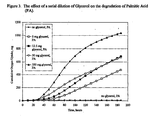
- Figure 3 shows the averaged data as a function of serial dilution of glycerol using palmitic acid as a substrate. All concentrations of glycerol (10 ppm to 200 ppm) showed a significant enhancement of the degradation of palmitic acid. Without the addition of glycerol, no Significant oxygen uptake was observed indicating no degradation of palmitic acid.
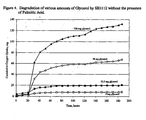
- Figure 4 shows the oxygen uptake as a function of serial addition of glycerol in the absence of palmitic acid. These values were subtracted from the glycerol plus palmitic acid data shown in Figure 3 (note the differences in the Y axis values between Figures 3 and 4).
- Figure 5 shows the result of the subtraction and thus shows only the oxygen uptake attributed to the degradation of palmitic acid by SB3112.
- STUDY 2 Other Bacillus megaterium
- Palmitic acid was added 500 mg per 500 ml volume reactor (1000 ppmv).
- Glycerol was added 50 mg per 500 ml reactor (100 ppmv).
- Pure culture of each strain was used as the inoculum.
- the optical density (OD) of an overnight culture in plate count broth (PCB) was determined in order to estimate the bacterial count.
- the target dose into each reactor was based on the optical density measurement of the broth culture. The treatments for each reactor are shown in Table 5.
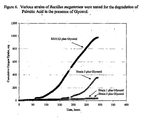
- Figure 6 shows the averaged oxygen uptake data for various Bacillus megaterium strains for the degradation of palmitic acid in the presence of glycerol Strain SB3112 initiated oxygen uptake sooner, produced a high rate of uptake and showed a higher total cumulative oxygen uptake compared to Strain 3. Without the presence of glycerol there was no degradation of palmitic acid in this study as indicated by the absence of oxygen uptake.
- the ATCC strains 2 and 1 showed no oxygen uptake on palmitic acid alone or on palmitic acid with the addition of glycerol. In fact, the degradation of glycerol was inhibited in the presence of PA.
- the amount of oxygen uptake expected from 50 mg of glycerol should be approximately 70 mg.
- SB3112 degraded palmitic acid to a much greater extent than strain 3 with the addition of glycerol.
- ATCC strains 2 and 1 did not degrade palmitic acid with or without glycerol.
- Figure 7 shows the response to the addition of glycerol to LCFA substrate by the two products.
- the data indicate that whereas SB3112 containing product readily consumed the palmitic acid, the commercially available mixture did not significantly degrade the palmitic acid. All products and reactors were free of Gram-negative contamination as indicated by no growth when streaked on MacConkey agar.
- Respirometry was used to test each of a number of carboxylic acids ranging in chain length from 2 (acetic acid) to 18 (oleic acid). 1000 mg/L of each acid was tested except oleic which was tested at 200 mg/L. Glycerol was used at a concentration of 500 ppm The study was conducted for a period of 10 days.
- Table 7 shows the utilization of long chain fatty acids by SB3112 spores in the presence of glycerol (glycerol uptake subtracted out). When compared with the data in the absence of glycerol the results obtained in the presence of glycerol demonstrate that glycerol significantly enhances degradation of long-chain (fatty) acids.
- Component Quantity Range Preferred Amount Surfactants Linear Alkylbenzene Sulphonic Acid 0.5-5% 1-2% Ethoxylated alcohol 0.5-5% 0.5-1.5% Preservatives 1,2-benzisothiazolin-3-one 0.025-0.2% 0.045-0.1% Methyl anthranilate 20-40 ppm 25-35 ppm Microorganisms Bacillus licheniformis 1 x 10 6 to 1 x 10 9 CFU/ml 5 x 10 6 to 1 x 10 8 CFU/ml Bacillus amyoliquefaciens 1 x 10 6 to 1 x 10 9 CFU/ml 5 x 10 6 to 1 x 10 8 CFU/ml Bacillus pasteurii 1 x 10 6 to 1 x 10 9 CFU/ml 5 x 10 6 to 1 x 10 8 CFU/ml Bacillus laevolacticus 1 x 10 6 to 1 x 10 9 CFU/ml 5 x 10 6 to 1 x 10 8 CFU
- Oxygen uptake rate (mg/hr) Total cumulative oxygen uptake (mg) oleic acid, C-18:1 4.9 185 stearic acid, C-18 1.75 230 palmitic acid, C-16 2.87 480 valeric acid, C-5 2.37 342 butyric acid, C-4 1.96 308 acetic acid, C-2 1.7 247 Each reactor volume was 0.5 liters. Oleic acid was 100 mg per reactor and all other substrates were 500 mg per reactor. Table 4. Glycerol Ladder Treatments. Reactor Glycerol, ppm Palmitic acid (500 mg per reactor volume of diluted glycerol per 500 ml reactor 1,2,3. No glycerol yes 0 4,5.
Landscapes
- Life Sciences & Earth Sciences (AREA)
- Chemical & Material Sciences (AREA)
- Engineering & Computer Science (AREA)
- Health & Medical Sciences (AREA)
- Organic Chemistry (AREA)
- Biotechnology (AREA)
- Zoology (AREA)
- Bioinformatics & Cheminformatics (AREA)
- Wood Science & Technology (AREA)
- Genetics & Genomics (AREA)
- Microbiology (AREA)
- Biochemistry (AREA)
- Biomedical Technology (AREA)
- Virology (AREA)
- Tropical Medicine & Parasitology (AREA)
- General Engineering & Computer Science (AREA)
- General Health & Medical Sciences (AREA)
- Medicinal Chemistry (AREA)
- Hydrology & Water Resources (AREA)
- Biodiversity & Conservation Biology (AREA)
- Oil, Petroleum & Natural Gas (AREA)
- Environmental & Geological Engineering (AREA)
- Water Supply & Treatment (AREA)
- General Chemical & Material Sciences (AREA)
- Micro-Organisms Or Cultivation Processes Thereof (AREA)
- Preparation Of Compounds By Using Micro-Organisms (AREA)
- Cephalosporin Compounds (AREA)
- Enzymes And Modification Thereof (AREA)
- Purification Treatments By Anaerobic Or Anaerobic And Aerobic Bacteria Or Animals (AREA)
Abstract
Description
- The present invention is related to identifying a Gram-positive organism that degrades fats, oils and grease. More particularly, the present invention is related to providing a non-pathogenic, spore-forming Gram-positive, lipophilic bacterial strain that produces extracellular lipase and also efficiently oxidizes or degrades fatty acids and grease. The invention is further related to a liquid and dry formulations comprising said Gram-positive organism and a method for enhancing fatty acid degradation employing glycerol.
- Most food service establishments are required to have a device that prevents grease from flowing directly from the kitchen or food preparation area into the sewer or to an on-site waste disposal system. Commonly called grease traps, these devices function to physically prevent oils and grease from flowing directly into the sanitary sewer and to store the separated grease solid for eventual solid waste disposal.
- Many municipalities place restrictions and surcharges based on the biological oxygen demand (BOD) and oil.and grease (O&G) levels in the effluents from grease traps. In addition to wastewater treatment costs and surcharges, the grease solids from the traps must also be periodically removed and disposed. The food service establishment then faces two recurring charges for wastewater treatment, one a municipal treatment cost and secondly a grease disposal cost.
- However, the frequency of pumping the accumulated grease solids can be quite variable, ranging from several weeks to several months. If traps are not cleaned on a regular basis, grease clogs may occur causing wastewater to back up into the food preparation area causing malodors and requiring the establishment to close until the problem is corrected. In addition to providing physical means to trap O&G, grease traps can function to biologically mediate a reduction of BOD and O&G in the bulk liquid resulting in cleaner effluent wastewater. This reduction of BOD and O&G is dependent upon the hydraulic retention time, which is dependent on the size of the grease trap and wastewater flow. Other factors that affect biological activity within a grease trap include pH, temperature and whether or not the facility practices bioaugmentation.
- Bioaugmentation, the addition of commercial bacterial products that increase the biological activity in the system, has been used to reduce the BOD and O&G in the effluents from grease traps. This has helped to reduce surcharges that the food establishments must pay to municipalities for wastewater services. Additionally, bioaugmentation has been used to decrease the pumping frequency of grease traps, to keep drain lines open and to reduce malodors.
- In addition to grease traps, bioaugmentation has also been used to help remove grease from lift stations, drain lines, septic tanks, waste treatment facilities and other situations where grease accumulation can cause flow problems and malodors.
- Bioaugmentation products can be either liquid or dry. Because of ease of handling, liquid products are generally preferred and can be added by a liquid metering pump drawing on a container that is replenished on a periodic basis. However, dry formulations are preferred for other applications such as waste treatment facilities.
- Strains used in bioaugmentation of grease applications produce an important extracellular enzyme, lipase. This enzyme hydrolyzes and breaks the ester bond between the glycerol backbone and the fatty acid moieties making up the grease. The glycerol is quickly disposed by biodegradation. However, the fatty acids are difficult to degrade and can persist causing pH drops, clogging and malodors.
- When Gram-negative microorganisms are used for bioaugmentation in liquid products, they are present as vegetative cells and as such, they may be killed by chemicals, such as surfactants and preservatives, which are often used in such formulations. Therefore, products containing Gram-negative organisms cannot contain biocides and surfactants. Then, unpreserved liquid products may develop severe malodors from microbial contaminants growing in the product. Some of these contaminants may be undesirable in a food service environment. Furthermore, unpreserved products may also suffer from decreased shelf life and efficacy. Clearly, while Gram-negative microorganisms have an advantage in fatty acid degradation, their use in residential and food service products have serious drawbacks.
- Dry Gram-negative products, on the other hand, do have an advantage of improved shelf life over liquid Gram-negative formulations. However, this advantage is modest and varies significantly from bacterial strain to bacterial strain in the product. Although dry products can be rehydrated with water and applied like liquid products, the disadvantages of using unpreserved liquids containing Gram-negative microorganisms still apply to rehydrated dry materials.
- Many Gram-negative microorganisms are known to have the ability to biodegrade fatty acids generated by the action of lipase. This ability to oxidize and degrade fatty acids is generally not found in Gram-positive, spore-forming microorganisms, specifically members of the genus Bacillus.
- Accordingly, there is a need to develop bioaugmentation formulations that can effectively and efficiently degrade or oxidize fats, oil and grease without causing malodors or other undesirable conditions, such as occurs with Gram-negative organisms.
- Specifically, there is a need to find non-pathogenic, spore-forming Gram-positive, lipophilic bacterial strain that produces extracellular lipase and efficiently oxidizes or breaks down fatty acids and grease. Heretofore, such a Gram-positive organism and a formulation containing the same have not been identified or produced.
If fatty acid degrading microorganisms are identified, there is a further need to augment or enhance the fatty acid degrading activity of such microorganisms in order to maximize the effectiveness of products based thereon. - DE 198 50 012 discloses a waste purification agent on a biological basis comprising spores of a aerobic spore-forming microorganism expressing membrane-bound lipase.
- US 6,162,635 discloses a novel strain of Bacillus bacteria that produces lipase enzymes for the degradation of oleaginous materials such as fats, greases and cooking oils, protease enzymes to degrade proteins and amylases to break down starch. Specifically, this strain has been determined to be species B. subtilis.
- EP-
A 0 569 140 relates to a liquid drain opener formulation which comprises a stable suspension of viable microorganisms, a surfactant, and a preservative all contained in an aqueous medium and having a pH in the range of about 3 to 10. - It is, therefore, an object of the present invention to provide a non-pathogenic, spore-forming Gram-positive, lipophilic bacterial strain that produces extracellular lipase and also efficiently hydrolyzes or degrades fatty acids and grease or a mixture of fatty acid and grease.
- It is a further object of the present invention to provide liquid and dry compositions comprising a non-pathogenic, spore-forming Gram-positive, lipophilic bacterial strain that produces extracellular lipase and efficiently hydrolyzes or degrades fats, oils and grease.
- An additional object of the present invention is to provide a method for degrading fatty acid and grease using a Gram-positive strain of Bacillus species.
- Yet another object of the present invention is to enhance the biodegrading activity of Gram-positive strain of Bacillus megaterium ATCC PTA-3142.
- A further object of the invention is to provide a method for augmenting fatty acid degrading activity of Bacillus megaterium ATCC PTA-3142 employing glycerol as an activity enhancer.
- Various other objects and advantages of the present invention will become evident from a brief description of the drawings and detailed description of the invention.
- Additional advantages and novel features of the invention will be set forth in part in the description that follows, and in part will become more apparent to those skilled in the art upon examination of the following or upon learning by practice of the invention.
- In the drawings, FIG. 1 shows the efficacy of various microorganisms to degrade grease and FIGs. 2 through 7 show the effect of glycerol on biodegrading activity of SB3112 and various microorganisms.
- The above and various other objects and advantages of the present invention are achieved by a biologically pure culture of a Gram-positive microorganism, Bacillus megaterium, strain SB3112, ATCC deposit number PTA-3142, and a composition comprising the same. The deposit shall be maintained in viable condition at the ATCC during the entire term of the issued patent and shall be made available to any person or entity for non-commercial use without restriction, but in accordance with the provisions of the law governing the deposit.
- It should be understood that unless defined otherwise, all technical and scientific terms used herein have the same meaning as commonly understood by one of ordinary skill in the art to which this invention belongs. Although any methods and materials similar or equivalent to those described herein can be used in the practice or testing of the present invention, the methods and materials described herein are preferred. Unless mentioned otherwise, the techniques employed or contemplated herein are standard methodologies well known to one of ordinary skill in the art. The materials, methods and examples are only exemplary and not limiting.
- The term "biodegradation", "biodegraded", or "biodegrading" as used herein means that the substrate is broken down, oxidized or degraded by the microorganism. And the term "activity enhancement" as used herein means that the biodegradation activity of the microorganism is increased by the presence or addition of a particular component, said component being designated as "activity enhancer", or "activator".
- By utilizing a Gram-positive, spore-forming organism that can oxidize fatty acids, one can obtain the advantages of an improved preserved liquid product, and stable, easy to use dry products. Unlike Gram-negative containing products, the preserved, spore-based Gram-positive containing product can contain preservatives and surfactants to aid in the biodegradation of fats, oils or grease, because the spores are relatively resistant to biocides and surfactants. Furthermore, these products may also contain micronutrients promoting the growth of the microorganisms. Thus, a Gram-positive product comprising lipase producing, fatty acid degrading, spore-forming microorganism in a preserved liquid formulation offers various advantages required for efficacious degradation of oil and grease. Dry products also benefit from the activity of SB3112.
- Liquid and dry products formulated in accordance with the present invention for grease traps, or other similar uses where fatty acid or grease needs to be degraded, may also contain in addition to surfactants, biocides, growth promoting non-toxic amounts of inorganic nutrients and micronutrients, certain activity enhancers, stabilizers, viscosifiers, enzymes, fillers, preservatives and the like. Table 1 lists examples of various components that a liquid formulation may contain in addition to SB3112 in accordance with the present invention. Other inclusions in both liquid and dry formulations are exemplified below:
- (A) Other microorganisms may be selected from the group consisting of the genera Acinetobacter, Aspergillus, Azospirillum, Burkholderia, Bacillus, Ceriporiopsis, Enterobacter, Escherichia, Lactobacillus, Paenebacillus, Paracoccus, Pseudomonas, Rhodococcus, Syphingomonas, Streptococcus, Thiobacillus, Trichoderma, and Xanthomonas.
- (B) Within Bacillus genera, the microorganism may be selected from the group consisting of Bacillus licheniformis, Bacillus subtilus, Bacillus amyoliquofaciens, Bacillus laevolacticus, and Bacillus pasteurii and Bacillus megaterium other than strain SB3112 and a combination thereof The preservative is selected from the group consisting of 1,2-benzisothiazolin-3-one;5-chloro-2-methyl-4-isothiazolin-3-one, 2-methyl-4-isothiazolin-3-one; quaternium-15; phenol; sodium o-phenylphenate; o-phenylphenol; 6-acetoxy-2,4-dimethyl-m-dioxane; chlorhexidine; tris(hydroxymethyl)nitromethane; hexahydro-1,3,5-tnis(2-hydroxyethyl)-s-triazine; p-hydroxybenzoic acid or its methyl, ethyl, propyl, or butyl esters; benzoic, ascorbic, citric, or sorbic acid; imidazolidinyl urea; diazolidinyl urea; dimethylol dimethylhydantoin; methylene bisthiocyanate; 2-bromo-2-nitropropane-1,3-diol; 1,2-benzisothiazoline-3-one; methyl anthranilate and a mixture thereof.
- (C)The surfactant is selected from the group consisting of trideceth-3; 3 mole ethylene oxide adduct of a linear, primary C 12-14 alcohol; 7 mole ethylene oxide adduct of a linear, primary C12-14 alcohol; sodium lauryl sulfate; ammonium lauryl sulfate; dodecyl benzene sulfonic acid; ammonium lauryl sulfate; sodium xylene sulfonate; sodium lauryl sulfate; cocamide diethanolamine; lauramine oxide; sodium alphasulfo methyl C12-18 ester and disodium alphasulfo C12-18 fatty acid salt; sodium dodecylbenzene sulfonate; alkyl polyglycoside; nonylphenoxypoly (ethyleneoxy) ethanol, branched; nonylphenoxypoly (ethyleneoxy) ethanol, branched; alkoxylated linear alcohol; blend of ethoxylates of linear, primary 12-14 carbon number alcohol; linear alkyl sulfate; alkanolamide; octylphenoxypolyethoxyethanol absorbed on magnesium carbonate; sodium dodecylbenzene sulfonate and isopropyl alcohol; poe (6) tridecyl alcohol; poly (oxy-1,2-ethanediyl), alpha (nonylphenyl)-omega hydroxy, branched, or other surfactants known in the art, and a mixture thereof.
- (D) The nutrients are selected from the group consisting of disodium phosphate, monosodium phosphate, sodium thiosulfate, ammonium sulfate, magnesium sulfate, manganese sulfate, ferrous sulfate, potassium phosphate, dipotassium phosphate, monocalcium phosphate, magnesium chloride, calcium chloride, chelated iron, manganese chloride, sodium molybdate, cobalt chloride, sodium nitrate, bakers yeast, yeast extract, soy peptone, skim milk powder, beef extract, sarsaponin, whey, gelatin, and urea and others known in the art, and a mixture thereof.
- (E) The dry fillers are selected from the group consisting of starch, sodium chloride, glucose, sodium bicarbonate, corncobs, bran, and various ground grains.
- (F) The enzymes are selected from the group consisting of protease, amylase, lipase and cellulase and others known in the art, and a mixture thereof.
- (G) The range (w/w) in which various components may be included in the dry product composition in accordance with the present invention are as follows:
- (i) SB3112 ranging from about 1 x 10⁵ to about 5x10¹¹ CFU/g
- (ii) glycerol ranging from about 0 to about 10%
- (iii) surfactant ranging from 0 to 10%
- (iv) enzymes ranging from 0 to 1%
- (v) preservative ranging from 0 to 1.0%
- (vi) nutrients ranging from about 0 to 20%
- (vii) filler ranging from 0 to 95%
- (H) The range (w/v) in which various components may be included in the liquid product composition in accordance with the present invention are as follows:
- (i) SB3112 ranging from about 1 x 10⁵ to about 5 x 10¹¹ CFU/ml
- (ii) glycerol ranging from about 0 to about 10%
- (iii) surfactant ranging from 0 to 10%
- (iv) preservative ranging from 1 ppm to 1.0%
- (v) color ranging from 0 to 1%
- (vi) fragrance ranging from 0 to 1.0%
- (vii) viscosifier ranging from 0 to 5%
- (viii) nutrients ranging from 0 to 20%
- (ix) enzymes ranging from 0 to 1%
- In order to show unexpectedly significant superiority of SB3112 over other Bacillus megaterium strains, the following side-by-side comparative study was performed using three other Bacillus megaterium strains having designations Strain 1, Strain 2 and Strain 3. Stearic acid (SA) and glycerol (G) were used as substrates. Stearic acid degradation was determined by standard respirometric (oxygen uptake) measurement and sterile techniques were used in all studies.
- A CES AER-200 respirometer unit was used The 500 ml respirometer bottles contained SSC3 minimal salt medium and 20 mM MOPS adjusted to pH 7.2. Respirometer bottles were prepared by adding SSC3 mineral salt media to each bottle. This media contained the following chemicals per liter of water: NH4Cl, 0.8g; MgSO4•7H2O, 0.2 g; CaCl2•2H2O, 10 mg, Fe2Na2Ethylene diamine tetraacetic acid, 15 mg; KH2PO4, 3.06 g; FeSO4•7H2O, 28 µg; ZnSO4•7H2O, 140 µg; MnSO4•H2O, 84 µg; CoCl2•6H2O, 24 µg; CuSO4 • 5H2O, 25 µg; NaMoO4•2H2O, 24 µg. The buffer, 3-(N-morpholino) propane sulfonic acid (MOPS), was added 4.28 g per liter. The pH of the medium was adjusted to 7.0 prior to autoclaving. The bottles containing SSC3 media were autoclaved for two hours.
- The target substrate, 1000 ppm stearic acid (SA), was added as indicated below. The SA was weighed and added individually into the appropriate reactor prior to autoclaving. Glycerol, 500 ppmv, was added to all bottles. Glycerol was first diluted 50% v/v with deionized water to reduce the viscosity and 0.5 ml was added to each reactor prior to autoclaving. A pure culture of microorganism was used as inoculum. The optical density (OD) of an overnight culture in plate count broth (PCB) was determined in order to estimate the bacterial count. The target dose into each reactor was 1 x 10⁶ CFU/ml based on the optical density measurement of the broth culture. Following inoculation, a caustic trap containing 5 ml of 30% KOH to remove carbon dioxide was suspended in the bottle and the septum cap was secured tightly. MacConkey streaks were performed on the inoculum prior to its use to ensure the absence of Gram-negative contamination. MacConkey and standard methods agar (SMA) plate streaks were also performed on each bottle's contents at the end of the experiment (MacConkey agar plates were used to detect Gram-negative contamination; SMA plates were used to test for pure cultures).
-
- Glycerol + SB3112
- Glycerol + Stearic acid + SB3112
- Glycerol + Strain 1
- Glycerol + Stearic acid + Strain 1
- Glycerol + Strain 2
- Glycerol + Stearic acid + Strain 2
- Glycerol + Strain 3
- Glycerol + Stearic acid + Strain 3
- The values for stearic acid degradation lag phase, oxygen uptake rate, and the total cumulative oxygen uptake for each strain are presented in Table 2. These oxygen uptake rates were calculated using a three-point average and the maximum values are shown. The data clearly indicate surprising results, showing that SB3112 is superior, demonstrating the highest activity on stearic acid by having the shortest lag phase, the fastest uptake rate and the greatest cumulative oxygen uptake, compared to all other strains tested.
- Having determined the superiority of SB3112 compared to other Bacillus megaterium strains, the following study was performed to determine the efficacy of SB3112 for degrading fatty acids. For this purpose, a number of fatty acids (99% or greater purity) were obtained from commercial sources as listed below:
- oleic acid, C-18:1
- stearic acid, C-18
- palmitic acid, C-16
- valeric acid, C-5
- butyric acid, C-4
- acetic acid, C-2
- A CES AER-200 respirometer unit was used to monitor oxygen uptake in 500 ml bottles maintained at 25°C. Each 500 ml bottle contained SSC3 minimal salt medium and 20 mM MOPS buffer (pH adjusted to 7.2). Glycerol, 500 ppmv, was added to all bottles. Glycerol was first diluted 50% v/v with deionized water to reduce the viscosity and 0.5 ml was added to each reactor. High molecular weight fatty acids (C-16 and C-18) were weighed individually and added to the appropriate bottles to a 1000 mg/L concentration except for oleic acid, which was tested at 200 mg/L. The low molecular weight fatty acids (C-2, C-4 and C-5) were filter sterilized using chemical resistant filters (0.2 µm) and were added to the appropriate autoclaved bottles to provide 1000 mg/L concentration.
- A pure culture of SB3112 was used as inoculum The optical density (OD) of an overnight culture in plate count broth (PCB) was determined in order to estimate the bacterial count. The target dose into each reactor was 1 x 10⁶ CFU/ml based on the optical density measurement of the broth culture. MacConkey streaks were performed on the inoculum at the time of use to detect Gram-negative contamination. Sterile techniques were used in all experiments.
-
1,2,3. Glycerol only control 4,5,6. C-18 7,8,9. C-16 10,11,12. C-5 13,14,15. C-4 16,17,18. C-2 19,20,21. C-18:1 - MacConkey and standard methods agar (SMA) agar streaks were performed on each bottle's contents at the end of the experiment. The MacConkey agar plates were used to detect Gram-negative contamination. The SMA plates were used to test for pure culture. No contamination was detected.
- Oxygen uptake response attributed to the individual fatty acid was calculated by subtracting the glycerol data from the fatty acid plus glycerol data, in order to observe the amount of oxygen uptake attributed to the oxidation of the fatty acid alone. The pH of each reactor at the end of the experiment was within the range of 6.8 to 7.2. Standard Methods Agar (SMA) plates were streaked from each bottle. All bottles showed single colony morphologies on SMA plates at the end of the experiment indicating that pure culture testing was achieved. Final MacConkey streaks of all bottles were negative (no Gram-negative contamination).
- Table 3 shows the activity of SB3112 for degrading various fatty acids. The oxygen uptake rates were calculated using a three-point running average and the maximum value is shown in the Table. The results indicate that SB3112 degrades (oxidizes) all these fatty acids (oleic, stearic, palmitic, valeric, butyric and acetic acids). It may be noted that valeric and butyric acids are particularly odorous, and because SB3112 degrades these compounds, SB3112 may be useful in reducing odors attributable to these and similar volatile fatty acids.
- The following study was performed to show the efficacy of SB3112 to degrade grease.
- Respirometer bottles were prepared by adding 250 ml of SSC3 mineral salt media to each bottle. The pH of the medium was adjusted to 7.0 prior to autoclaving. The bottles containing SSC3 media were autoclaved for two hours. Waste kitchen grease was autoclaved separately to kill unwanted microorganisms. Following autoclaving of the grease, 2 ml of the hot sterile grease was added to each cooled 250 ml respirometer bottle. The inoculum for the respirometer bottles was an overnight broth culture (plate count broth) of each strain, or the 9002 blend of microorganisms. Each bottle was inoculated to contain initially ≈ 3 x 10⁵ CFU/ml. Following inoculation a caustic trap containing 5 ml of 30% KOH to remove carbon dioxide was suspended in the bottle and the septum cap was secured tightly.
- To show superiority of SB3112, a comparative study was performed using two other inoculum samples. Thus, the three inoculum were as follows:
- 1. Bacillus megaterium strain SB3112.
- 2. Inoculum 9002, representing a blend of four spores (Bacillus licheniformis, Bacillus amyloliquefaciens, Bacillus pasteurii, and Bacillus laevolacticus) that produce extracellular enzymes lipase, amylase and protease. This mixture is known to affect the degradation of kitchen waste materials, but does not degrade fatty acids.
- 3. Inoculum SB3012 and SB3013 representing a blend of Gram-negative microorganisms known for their ability to degrade fatty acids.
- The results of this experiment are shown in Figure 1. The data show that the Gram-negative microorganism mixture (SB3012 and SB3013) began consuming oxygen almost immediately at a rate of 1.5 mg O2/L/hr. The 9002 spore blend also began consuming oxygen quickly, but the rate of 1.2 mg O2A/L/hr was slightly lower than SB3012 and SB3013. Strain SB3112 had a lag of 50 hr before oxygen consumption began at the rate of 0.5 mg O2/L/hr. At about 180 hr, SB3112 began a rapid rise in oxygen consumption surpassing both the spore blend 9002 and the Gram-negative blend. The rate of oxygen consumption by SB3112 after 180 hr was 4.4 mg O2/L/hr compared to 0.7 and 0.8 mg O2/L/hr for SB3012 plus SB3013 and 9002, respectively, during the same time period. Uninoculated controls did not show oxygen uptake (data not shown).
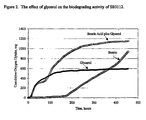
- As shown by the following study, it was discovered that the presence of glycerol enhances the biodegrading activity of SB3112.
- SB3112 culture was obtained from retained slant and plated on agar by standard method. A single colony was picked then grown overnight in standard plate count broth. Based on the measured optical density, 1 x 10⁶ CFU/ml (target) of SB3112 was added to each reactor. Each substrate (stearic acid and glycerol) was added to the reaction vessel prior to autoclaving. The reactor size was 500 ml containing SSC3 autoclaved medium.
-
- 1, 2. Stearic acid, 0.2%,
- 3, 4. Stearic acid, 0.2% + 0.1 % glycerol
- 5, 6. Glycerol, 0.1%.
- Final MacConkey streaks were performed to detect any Gram-negative contamination. No contamination was found. The results are shown in Figure 2. The data clearly indicate that fatty acid degrading activity of SB3112 is significantly enhanced by the presence or addition of glycerol.
- Comparisons of biodegrading activity of various microorganisms as a function of various glycerol levels were performed to show the effect of glycerol as an activator. Long chain fatty acids (LCFA) were used as target substrates and an aqueous serial dilution of glycerol (G) was used to determine the effective concentration range of glycerol as an activator. Measurement of LCFA degradation was determined by the respirometric oxygen uptake and the rate of biodegrading activity of a microorganism was indicated by the rate of oxygen uptake, the methods and materials employed being similar to those described for various experiments herein above. However, the specifics of various studies have been noted for each study set forth below. The Bacillus megaterium strains were obtained from ATCC.
- A CES AER-200 respirometry system was used. The 500 ml respirometer bottles (reactors) contained SSC3 minimal salts medium and 20 mM MOPS adjusted to a pH of 7.2. The target substrates, LCFA, were added as described in the individual experimental methods below.
- Glycerol was diluted 50% (w/w) with de-ionized water to reduce the viscosity and then pipetted (v/v) into the appropriate reactor. Reactors were sterilized by autoclaving and sterile techniques were used in each experiment. MacConkey streaks were performed on each inoculum at time of use to detect Gram-negative contamination. MacConkey and standard methods agar (SMA) agar plate streaks were performed on each bottle's contents at the end of the experiment. The SMA plates were used to test for pure cultures.
- Specific methods employed in each of the following four studies are detailed below.
- This study was undertaken to determine the effective concentration of glycerol for the enhancement of degradation of a LCFA as measured by the increased rate of oxygen uptake.
- Specific methods: Palmitic acid was added to each reactor at 500 mg per 500 ml (w/v). Diluted glycerol was added by pipette (v/v) as described in Table 4. A pure culture of SB3112 was used as the inoculum. The optical density (OD) of an overnight culture in plate count broth (PCB) was determined in order to estimate the bacterial count. The target dose into each reactor was based on the optical density measurement of the broth culture.
- Figure 3 shows the averaged data as a function of serial dilution of glycerol using palmitic acid as a substrate. All concentrations of glycerol (10 ppm to 200 ppm) showed a significant enhancement of the degradation of palmitic acid. Without the addition of glycerol, no Significant oxygen uptake was observed indicating no degradation of palmitic acid.
- Figure 4 shows the oxygen uptake as a function of serial addition of glycerol in the absence of palmitic acid. These values were subtracted from the glycerol plus palmitic acid data shown in Figure 3 (note the differences in the Y axis values between Figures 3 and 4). Figure 5 shows the result of the subtraction and thus shows only the oxygen uptake attributed to the degradation of palmitic acid by SB3112.
- It is clear from the data presented that glycerol at a concentration as low as 10 ppm will stimulate the degradation of the LCFA, palmitic acid. It is important to note that glycerol at a concentration of 10 ppm does not produce a significant increase in bacterial cell number
- This study was undertaken to compare the effect of glycerol on the degradation of the LCFA, Palmitic add, using various Bacillus megaterium strains.
- Palmitic acid was added 500 mg per 500 ml volume reactor (1000 ppmv). Glycerol was added 50 mg per 500 ml reactor (100 ppmv). Pure culture of each strain was used as the inoculum. The optical density (OD) of an overnight culture in plate count broth (PCB) was determined in order to estimate the bacterial count. The target dose into each reactor was based on the optical density measurement of the broth culture. The treatments for each reactor are shown in Table 5.
- Figure 6 shows the averaged oxygen uptake data for various Bacillus megaterium strains for the degradation of palmitic acid in the presence of glycerol Strain SB3112 initiated oxygen uptake sooner, produced a high rate of uptake and showed a higher total cumulative oxygen uptake compared to Strain 3. Without the presence of glycerol there was no degradation of palmitic acid in this study as indicated by the absence of oxygen uptake.
- The ATCC strains 2 and 1 showed no oxygen uptake on palmitic acid alone or on palmitic acid with the addition of glycerol. In fact, the degradation of glycerol was inhibited in the presence of PA. The amount of oxygen uptake expected from 50 mg of glycerol should be approximately 70 mg.
- In short, SB3112 degraded palmitic acid to a much greater extent than strain 3 with the addition of glycerol. ATCC strains 2 and 1 did not degrade palmitic acid with or without glycerol.
- This study was undertaken to compare a commercially available product containing a Gram-positive mixture of 5 to 7 strains with the fully formulated product of the present invention containing SB3112. All strains were in spore form including the SB3112.
- The fully formulated products were diluted into the appropriate reactor to achieve an initial spore count in the reactors of about 5.4 x 10⁴ CFU/ml. The treatments for each reactor are shown in Table 6.
- Figure 7 shows the response to the addition of glycerol to LCFA substrate by the two products. The data indicate that whereas SB3112 containing product readily consumed the palmitic acid, the commercially available mixture did not significantly degrade the palmitic acid. All products and reactors were free of Gram-negative contamination as indicated by no growth when streaked on MacConkey agar.
- The data indicate that the product containing SB3112 degraded the palmitic acid whereas the commercially available product did not significantly degrade the palmitic acid. Both products were able to degrade glycerol in the presence of the LCFA
- This study was undertaken to demonstrate the effect of glycerol on oxidation of fatty acids of various chain lengths.
- Specific methods are as follows: Respirometry was used to test each of a number of carboxylic acids ranging in chain length from 2 (acetic acid) to 18 (oleic acid). 1000 mg/L of each acid was tested except oleic which was tested at 200 mg/L. Glycerol was used at a concentration of 500 ppm The study was conducted for a period of 10 days.
- Table 7 shows the utilization of long chain fatty acids by SB3112 spores in the presence of glycerol (glycerol uptake subtracted out). When compared with the data in the absence of glycerol the results obtained in the presence of glycerol demonstrate that glycerol significantly enhances degradation of long-chain (fatty) acids.
- Various embodiments of the present invention have now been described in accordance with the objects and advantages noted above. It will be appreciated that these examples are merely illustrative and not limiting of the invention. Of course, many variations and modifications of the present invention will be apparent and suggested to those of ordinary skill in the art and all such variations and modifications are included within the purview and scope of the claims.
Table 1. Example Components in a Liquid Composition according to present invention. Component Quantity Range Preferred Amount Surfactants Linear Alkylbenzene Sulphonic Acid 0.5-5% 1-2% Ethoxylated alcohol 0.5-5% 0.5-1.5% Preservatives 1,2-benzisothiazolin-3-one 0.025-0.2% 0.045-0.1% Methyl anthranilate 20-40 ppm 25-35 ppm Microorganisms Bacillus licheniformis 1 x 10⁶ to 1 x 10⁹ CFU/ml 5 x 10⁶ to 1 x 10⁸ CFU/ml Bacillus amyoliquefaciens 1 x 10⁶ to 1 x 10⁹ CFU/ml 5 x 10⁶ to 1 x 10⁸ CFU/ml Bacillus pasteurii 1 x 10⁶ to 1 x 10⁹ CFU/ml 5 x 10⁶ to 1 x 10⁸ CFU/ml Bacillus laevolacticus 1 x 10⁶ to 1 x 10⁹ CFU/ml 5 x 10⁶ to 1 x 10⁸ CFU/ml Activator Glycerol 0-10% 0.001%-4% Other ingredients Tetrasodium ethylenediamine tetraacetate (stabilizer) 0.1-1.0% 0.2-0.5% Fragrance 0-0.5% 0.2-0.3% Other spore forming microorganisms 0 to 1 x 10⁹ CFU/ml 5 x 10⁶ to 1 x 10⁸ CFU/ml Viscosifier 0-0.5% 0.2-0.3% Table 2. Stearic acid utilisation by various Bacillus megaterium strains. Parameter SB3112 Strain 1 Strain 2 Strain 3 Lag phase (hours) 20 72 60 100 Oxygen uptake rate(mg/hr) 1.9 1.1 0.8 0.9 Total cumulative oxygen uptake (mg) 180 140 110 90 Each reactor volume was 0.5 liters. Table 3: Degradation of fatty acids by Bacillus megaterium strain SB3112. Fatty acid used Oxygen uptake rate (mg/hr) Total cumulative oxygen uptake (mg) oleic acid, C-18:1 4.9 185 stearic acid, C-18 1.75 230 palmitic acid, C-16 2.87 480 valeric acid, C-5 2.37 342 butyric acid, C-4 1.96 308 acetic acid, C-2 1.7 247 Each reactor volume was 0.5 liters. Oleic acid was 100 mg per reactor and all other substrates were 500 mg per reactor. Table 4. Glycerol Ladder Treatments. Reactor Glycerol, ppm Palmitic acid (500 mg per reactor volume of diluted glycerol per 500 ml reactor 1,2,3. No glycerol yes 0 4,5. 10 ppm yes 10 µl 6,7. 25 ppm No 25 µl 8,9,10. 25 ppm yes 25 µl 11,12. 100 ppm No 100 µl 13,14,15. 100 ppm yes 100 µl 16,17. 200 ppm No 0.20 ml 18,19,20. 200 ppm yes 0.20 ml Table 5. Other Bacillus megaterium Treatments. Reactor Glycerol, ppm Strain 1,3. No glycerol SB3112 4,5. 100 ppm SB3112 6,7. No glycerol Strain 2 8,9. 100 ppm Strain 2 14,15. No glycerol Strain 1 16,17. 100 ppm Strain 1 22,23. No glycerol Strain 3 24. 100 ppm Strain3 Table 6. Other species of bacteria Treatments Reactor # Palmitic acid Product 1,2,3 Yes Commercially available product 4,5,6 Yes SB3112 product - 7,8 No Commercially available product 9,10 No SB3112 product Table 7. Growth rates of SB3112 on various carboxylic acids. With Glycerol* Without Glycerol*** Fatty acid Oxygen uptake rate (mg/L/hr) Total cumulative oxygen uptake (mg/L) Oxygen uptake rate (mg/L/hr) Total cumulative oxygen uptake (mg/L) oleic acid**, C-18:1 9.8 370 0 0 stearic acid, C-18 3.5 460 0 0 palmitic acid, C-16 5.7 960 0 0 *Glycerol uptake subtracted out **Oleic acid was 200 mg per reactor while stearic and palmitic were 500 mg per 500 ml reactor. ***No uptake was measured for the above fatty acids prior to 150 hours of treatment without the presence of glycerol.
Claims (12)
- A biologically pure culture of Bacillus megaterium ATCC PTA-3142.
- A composition for degrading fatty acid, comprising Bacillus megaterium ATCC PTA-3142 and a component selected from the group consisting of a non-toxic nutrient formulation, surfactant, activator, preservative, filler, stabilizer, fragrance, viscosifier, enzymes, and a combination thereof.
- The composition of claim 2, further comprising additional classes of bacteria.
- The composition of claim 3, wherein the additional classes of bacteria are selected from the group consisting of genera: Acinetobacter, Aspergillus, Azospirillum, Burkholderia, Bacillus, Ceriporiopsis, Enterobacter, Escherichia, Lactobacillus, Paenebacillus, Paracoccus, Pseudomonas, Rhodococcus, Syphingomonas, Streptococcus, Thiobacillus, Trichoderma, Xanthomonas, and a combination thereof.
- The composition of claim 3, wherein the bacteria are selected from the group consisting of Bacillus licheniformis, Bacillus amyoliquofaciens, Bacillus laevolacticus, Bacillus pasteurii, Bacillus subtilus, Bacillus megaterium and a combination thereof.
- The composition of claim 2, wherein the components are as follows:(i) Bacillus megaterium ATCC PTA-3142 ranging from 1 x 10⁵ to 5 x 10¹¹ CFU/ml;(ii) glycerol ranging from 0% to 10%;(iii) surfactant ranging from 0% to 10%;(iv) preservative ranging from 1 ppm to 1.0%;(v) color ranging from 0% to 1%;(vi) fragrance ranging from 0% to 1.0%;(vii) viscosifier ranging from 0% to 5%;all percentages being v/v.
- A method for degrading fatty acid or grease, comprising exposing fatty acid, grease, or fatty acid and grease to a composition comprising Bacillus megaterium ATCC PTA-3142.
- The method of claim 7, which comprises adding a biodegrading activator to the composition.
- The method of claim 8, wherein said activator is glycerol in a range of 0.001% to 10% (v/v).
- The method of claim 7, which comprises adding a surfactant to the composition to enhance bioavailability of fatty acids and grease.
- A method for enhancing biodegrading activity of a biologically pure culture of Bacillus megaterium ATCC PTA-3142, comprising making glycerol available in an effective amount to enhance biodegradation activity of said microorganism.
- The method of claim 11, wherein the amount of glycerol is in a range of 5 ppm to 1% (w/v).
Applications Claiming Priority (3)
| Application Number | Priority Date | Filing Date | Title |
|---|---|---|---|
| US09/861,142 US6649401B2 (en) | 2001-05-18 | 2001-05-18 | Gram-positive fatty acid degrader |
| US861142 | 2001-05-18 | ||
| PCT/US2002/013454 WO2002094181A2 (en) | 2001-05-18 | 2002-04-26 | Gram-positive fatty acid degrader |
Publications (3)
| Publication Number | Publication Date |
|---|---|
| EP1392218A2 EP1392218A2 (en) | 2004-03-03 |
| EP1392218A4 EP1392218A4 (en) | 2004-12-08 |
| EP1392218B1 true EP1392218B1 (en) | 2006-11-29 |
Family
ID=25334999
Family Applications (1)
| Application Number | Title | Priority Date | Filing Date |
|---|---|---|---|
| EP02731558A Expired - Lifetime EP1392218B1 (en) | 2001-05-18 | 2002-04-26 | Gram-positive fatty acid degrader |
Country Status (12)
| Country | Link |
|---|---|
| US (3) | US6649401B2 (en) |
| EP (1) | EP1392218B1 (en) |
| JP (1) | JP3975441B2 (en) |
| AT (1) | ATE346910T1 (en) |
| AU (1) | AU2002303532B2 (en) |
| CA (1) | CA2447749C (en) |
| DE (1) | DE60216448T2 (en) |
| ES (1) | ES2278026T3 (en) |
| IL (2) | IL158915A0 (en) |
| MX (1) | MXPA03010552A (en) |
| NZ (1) | NZ530191A (en) |
| WO (1) | WO2002094181A2 (en) |
Cited By (3)
| Publication number | Priority date | Publication date | Assignee | Title |
|---|---|---|---|---|
| US9133420B2 (en) | 2013-01-08 | 2015-09-15 | Ecolab Usa Inc. | Methods of using enzyme compositions |
| CN109455875A (en) * | 2018-10-30 | 2019-03-12 | 中原环保股份有限公司 | A kind of trade effluent deepness denitrogenation method for treating |
| WO2021112691A1 (en) * | 2019-12-03 | 2021-06-10 | Robert Green | Onsite microorganism-based treatment method, system and apparatus |
Families Citing this family (32)
| Publication number | Priority date | Publication date | Assignee | Title |
|---|---|---|---|---|
| US9969633B2 (en) * | 1999-12-16 | 2018-05-15 | Robert Whiteman | Systems and methods for treating oil, fat and grease in collection systems |
| US7879593B2 (en) * | 1999-12-16 | 2011-02-01 | Whiteman G Robert | Fermentation systems, methods and apparatus |
| US20050164902A1 (en) * | 2003-10-24 | 2005-07-28 | Ecolab Inc. | Stable compositions of spores, bacteria, and/or fungi |
| US7795199B2 (en) * | 2000-06-29 | 2010-09-14 | Ecolab Inc. | Stable antimicrobial compositions including spore, bacteria, fungi, and/or enzyme |
| JP2005192950A (en) * | 2004-01-09 | 2005-07-21 | Ajinomoto Co Inc | Deodorant with microbe dry fungus body as effective component, and method of deodorization |
| JP2005236781A (en) * | 2004-02-20 | 2005-09-02 | Fujitsu Ten Ltd | Vibrator for directly driving board |
| US7315022B1 (en) | 2004-08-02 | 2008-01-01 | Kla-Tencor Technologies Corporation | High-speed electron beam inspection |
| US20060293212A1 (en) * | 2005-05-05 | 2006-12-28 | Ecolab Inc. | Stable solid compositions of spores, bacteria, fungi and/or enzyme |
| CN1333072C (en) * | 2005-08-15 | 2007-08-22 | 戴承镛 | Large bacillus, its preparation method and use |
| US20070170113A1 (en) * | 2006-01-20 | 2007-07-26 | Lenger Markus J | Insitu Grease/Biosolid Bioremediation Apparatus and Method |
| US7615156B2 (en) * | 2006-01-20 | 2009-11-10 | Markus Johannes Lenger | Device for in situ bioremediation of liquid waste |
| KR200420931Y1 (en) * | 2006-04-07 | 2006-07-07 | (주)동양그린 | Food processing device using microorganism |
| FR2901267B1 (en) * | 2006-05-18 | 2010-09-10 | Akaeno | BACTERIAL COMPOSITION FOR THE TREATMENT OF ANIMAL FAT-LOADED SLUDGE, PROCESS FOR THE TREATMENT OF SUCH SLUDGE AND INSTALLATION FOR THE IMPLEMENTATION OF SUCH A METHOD |
| CA2681258A1 (en) * | 2007-03-20 | 2008-09-25 | Waste To Water Corporation | Food waste treatment device using microorganisms |
| JP5427041B2 (en) | 2007-03-23 | 2014-02-26 | ノボザイムス バイオロジカルズ,インコーポレイティド | Prevention and reduction of biofilm formation and plankton-like growth |
| WO2008149352A2 (en) * | 2007-06-04 | 2008-12-11 | Pixer Technology Ltd. | Apparatus and method for inducing controllable jets in liquids |
| AU2008313267B2 (en) | 2007-10-18 | 2013-09-19 | Ecolab Inc. | Pressed, waxy, solid cleaning compositions and methods of making them |
| BE1018007A5 (en) * | 2008-02-21 | 2010-03-02 | Van Lidth De Jeude Jehan Lienart | Wrapping microorganisms. |
| BE1018018A6 (en) | 2008-02-28 | 2010-04-06 | Gielen Cornelis | SOLUTION FOR BIOLOGICAL CLEANING OF TOOTHBRUSHES AND ACCOMPANYING DEVICE. |
| WO2010059028A1 (en) * | 2008-11-21 | 2010-05-27 | University Putra Malaysia | Bacteria for the degradation and modification of fats, oils and grease |
| US7964548B2 (en) | 2009-01-20 | 2011-06-21 | Ecolab Usa Inc. | Stable aqueous antimicrobial enzyme compositions |
| US7723281B1 (en) | 2009-01-20 | 2010-05-25 | Ecolab Inc. | Stable aqueous antimicrobial enzyme compositions comprising a tertiary amine antimicrobial |
| WO2012137220A2 (en) | 2011-04-04 | 2012-10-11 | Indian Oil Corporation Ltd. | Bio-augmentation composition and use thereof for improving efficiency of effluent treatment in hydrocarbon processing plant |
| GB2496672B (en) * | 2011-11-21 | 2013-10-30 | Mclean Cleaning Ltd | Cleaning fluid comprising micro-organisms |
| WO2014021397A1 (en) * | 2012-07-31 | 2014-02-06 | 株式会社オリエントナノ | Microbial flora activator, anti-filamentous fungi agent comprising said microbial flora activator as active ingredient, and method for treating waste water containing oil, fat, etc. using said microbial flora activator |
| US8609398B1 (en) | 2012-08-14 | 2013-12-17 | Osprey Biotechnics, Inc. | Selective biodegradation of free fatty acids in fat-containing waste |
| CA2939188A1 (en) * | 2014-02-10 | 2015-08-13 | Ibex Bionomics, Llc | Plant microbial fermentation products for controlling phytopathogens and for wastewater remediation |
| WO2015123752A1 (en) * | 2014-02-18 | 2015-08-27 | Green On Industries Inc. | Composition and method for hydrocarbon and lipid degradation and dispersal |
| CN105693043B (en) * | 2016-04-22 | 2018-02-02 | 东北电力大学 | Soybean oil waste water processing and the method for recycling |
| CN105838609A (en) * | 2016-06-03 | 2016-08-10 | 西南石油大学 | Preparation method of microbial agent for removing kitchen waste oil |
| CN108504585B (en) * | 2017-08-17 | 2021-05-14 | 北京沃太斯环保科技发展有限公司 | Benzene degrading bacterium for treating atmospheric pollution and preparation method and application thereof |
| CA3222902A1 (en) * | 2021-07-19 | 2023-01-26 | The Procter & Gamble Company | Method of stain removal using bacterial spores |
Family Cites Families (5)
| Publication number | Priority date | Publication date | Assignee | Title |
|---|---|---|---|---|
| EP0569140A1 (en) * | 1992-04-16 | 1993-11-10 | Sybron Chemical Holdings Inc. | Drain opener formulation |
| BR9707840A (en) * | 1996-03-06 | 2000-01-04 | Univ California | Processes to alter the wettability and water absorbency of textile fibers, to increase the wettability and water absorbency in cotton fibers and to alter the physical properties of polyester fibers, and aromatic polyester fiber. |
| DE19850012A1 (en) * | 1998-10-30 | 2000-05-04 | Aladin Ges Fuer Innovative Mik | New Paenibacillus pabuli strain DSM 10049 and 2-component cleaner, e.g. pipe degreaser, for biological disposal system containing triglyceride or fatty acid and nutrients in emulsion and supported microorganism spores |
| US6162635A (en) * | 1999-04-14 | 2000-12-19 | Roebic Laboratories, Inc. | Enzyme-producing strain of Bacillus bacteria |
| US6083737A (en) * | 1999-04-14 | 2000-07-04 | Roebic Laboratories, Inc. | Enzyme-producing strain of Bacillus pumilus |
-
2001
- 2001-05-18 US US09/861,142 patent/US6649401B2/en not_active Expired - Lifetime
-
2002
- 2002-04-23 US US10/128,050 patent/US6818211B2/en not_active Expired - Lifetime
- 2002-04-26 MX MXPA03010552A patent/MXPA03010552A/en active IP Right Grant
- 2002-04-26 DE DE60216448T patent/DE60216448T2/en not_active Expired - Lifetime
- 2002-04-26 EP EP02731558A patent/EP1392218B1/en not_active Expired - Lifetime
- 2002-04-26 AT AT02731558T patent/ATE346910T1/en not_active IP Right Cessation
- 2002-04-26 CA CA2447749A patent/CA2447749C/en not_active Expired - Fee Related
- 2002-04-26 IL IL15891502A patent/IL158915A0/en unknown
- 2002-04-26 ES ES02731558T patent/ES2278026T3/en not_active Expired - Lifetime
- 2002-04-26 WO PCT/US2002/013454 patent/WO2002094181A2/en not_active Ceased
- 2002-04-26 AU AU2002303532A patent/AU2002303532B2/en not_active Ceased
- 2002-04-26 JP JP2002590902A patent/JP3975441B2/en not_active Expired - Fee Related
- 2002-04-26 NZ NZ530191A patent/NZ530191A/en not_active IP Right Cessation
-
2003
- 2003-09-22 US US10/667,697 patent/US20050036990A1/en not_active Abandoned
- 2003-11-17 IL IL158915A patent/IL158915A/en not_active IP Right Cessation
Cited By (5)
| Publication number | Priority date | Publication date | Assignee | Title |
|---|---|---|---|---|
| US9133420B2 (en) | 2013-01-08 | 2015-09-15 | Ecolab Usa Inc. | Methods of using enzyme compositions |
| US9738857B2 (en) | 2013-01-08 | 2017-08-22 | Ecolab Usa Inc. | Methods of using enzyme compositions |
| US10717115B2 (en) | 2013-01-08 | 2020-07-21 | Ecolab Usa Inc. | Methods of using enzyme compositions |
| CN109455875A (en) * | 2018-10-30 | 2019-03-12 | 中原环保股份有限公司 | A kind of trade effluent deepness denitrogenation method for treating |
| WO2021112691A1 (en) * | 2019-12-03 | 2021-06-10 | Robert Green | Onsite microorganism-based treatment method, system and apparatus |
Also Published As
| Publication number | Publication date |
|---|---|
| ES2278026T3 (en) | 2007-08-01 |
| JP3975441B2 (en) | 2007-09-12 |
| IL158915A0 (en) | 2004-05-12 |
| US20030008382A1 (en) | 2003-01-09 |
| CA2447749A1 (en) | 2002-11-28 |
| CA2447749C (en) | 2013-01-15 |
| WO2002094181B1 (en) | 2003-10-23 |
| WO2002094181A3 (en) | 2003-07-24 |
| MXPA03010552A (en) | 2005-09-08 |
| US6649401B2 (en) | 2003-11-18 |
| AU2002303532B2 (en) | 2005-07-07 |
| WO2002094181A2 (en) | 2002-11-28 |
| US20050036990A1 (en) | 2005-02-17 |
| US6818211B2 (en) | 2004-11-16 |
| IL158915A (en) | 2009-09-22 |
| DE60216448T2 (en) | 2007-09-20 |
| EP1392218A4 (en) | 2004-12-08 |
| DE60216448D1 (en) | 2007-01-11 |
| US20030049832A1 (en) | 2003-03-13 |
| EP1392218A2 (en) | 2004-03-03 |
| JP2004528852A (en) | 2004-09-24 |
| ATE346910T1 (en) | 2006-12-15 |
| NZ530191A (en) | 2005-07-29 |
Similar Documents
| Publication | Publication Date | Title |
|---|---|---|
| US6818211B2 (en) | Gram-positive fatty acid degrader | |
| AU2002303532A1 (en) | Gram-positive fatty acid degrader | |
| JP6243473B2 (en) | Prevention and reduction of biofilm formation and plankton-like growth | |
| US20100008893A1 (en) | Bacillus velezensis strain | |
| US20090324533A1 (en) | Bacillus amyloliquefaciens Strain | |
| US20100028314A1 (en) | Bacillus Amyloliquefaciens Strain | |
| US20090318292A1 (en) | Bacillus Subtilis Strain | |
| WO1997025865A1 (en) | Cleaner and sanitizer formulation | |
| CA2093970A1 (en) | Drain opener formulation | |
| CN106745828A (en) | A kind of broad-spectrum biological preparation administered for black and odorous water and its application method | |
| US4350770A (en) | Microbiological process for removing oleaginous material from wastewater and microbiological combination capable of same | |
| CN101886041B (en) | Microbiological preparation for efficiently treating municipal lake water pollution | |
| WO2010059028A1 (en) | Bacteria for the degradation and modification of fats, oils and grease | |
| Shivsharan et al. | Isolation of microorganisms from dairy effluent. | |
| US6762047B2 (en) | Bacterial parts washer, composition and method of use | |
| JP2003038169A (en) | Gram-positive fatty acid-degrading microorganism | |
| Ledent et al. | Reversal of the inhibitory effect of surfactants upon germination and growth of a consortium of two strains of Bacillus | |
| EP0915061A1 (en) | Method for reducing the effect of detergents upon germination and/or growth of micro-organisms | |
| JP3018144B2 (en) | Low-scattering microbial material composition | |
| JP2920129B1 (en) | Microorganisms capable of degrading fats and oils |
Legal Events
| Date | Code | Title | Description |
|---|---|---|---|
| PUAI | Public reference made under article 153(3) epc to a published international application that has entered the european phase |
Free format text: ORIGINAL CODE: 0009012 |
|
| 17P | Request for examination filed |
Effective date: 20031118 |
|
| AK | Designated contracting states |
Kind code of ref document: A2 Designated state(s): AT BE CH CY DE DK ES FI FR GB GR IE IT LI LU MC NL PT SE TR |
|
| AX | Request for extension of the european patent |
Extension state: AL LT LV MK RO SI |
|
| RIC1 | Information provided on ipc code assigned before grant |
Ipc: 7C 12N 1/20 A Ipc: 7A 23K 1/18 B |
|
| RIC1 | Information provided on ipc code assigned before grant |
Ipc: 7C 12N 1/32 B Ipc: 7C 12N 1/20 A Ipc: 7C 12N 1/38 B Ipc: 7C 12R 1/11 B Ipc: 7A 23K 1/18 B Ipc: 7C 02F 3/34 B |
|
| A4 | Supplementary search report drawn up and despatched |
Effective date: 20041025 |
|
| 17Q | First examination report despatched |
Effective date: 20050223 |
|
| GRAP | Despatch of communication of intention to grant a patent |
Free format text: ORIGINAL CODE: EPIDOSNIGR1 |
|
| GRAS | Grant fee paid |
Free format text: ORIGINAL CODE: EPIDOSNIGR3 |
|
| GRAA | (expected) grant |
Free format text: ORIGINAL CODE: 0009210 |
|
| AK | Designated contracting states |
Kind code of ref document: B1 Designated state(s): AT BE CH CY DE DK ES FI FR GB GR IE IT LI LU MC NL PT SE TR |
|
| PG25 | Lapsed in a contracting state [announced via postgrant information from national office to epo] |
Ref country code: AT Free format text: LAPSE BECAUSE OF FAILURE TO SUBMIT A TRANSLATION OF THE DESCRIPTION OR TO PAY THE FEE WITHIN THE PRESCRIBED TIME-LIMIT Effective date: 20061129 Ref country code: FI Free format text: LAPSE BECAUSE OF FAILURE TO SUBMIT A TRANSLATION OF THE DESCRIPTION OR TO PAY THE FEE WITHIN THE PRESCRIBED TIME-LIMIT Effective date: 20061129 Ref country code: LI Free format text: LAPSE BECAUSE OF FAILURE TO SUBMIT A TRANSLATION OF THE DESCRIPTION OR TO PAY THE FEE WITHIN THE PRESCRIBED TIME-LIMIT Effective date: 20061129 Ref country code: CH Free format text: LAPSE BECAUSE OF FAILURE TO SUBMIT A TRANSLATION OF THE DESCRIPTION OR TO PAY THE FEE WITHIN THE PRESCRIBED TIME-LIMIT Effective date: 20061129 |
|
| REG | Reference to a national code |
Ref country code: GB Ref legal event code: FG4D |
|
| REG | Reference to a national code |
Ref country code: CH Ref legal event code: EP |
|
| REG | Reference to a national code |
Ref country code: IE Ref legal event code: FG4D |
|
| REF | Corresponds to: |
Ref document number: 60216448 Country of ref document: DE Date of ref document: 20070111 Kind code of ref document: P |
|
| PG25 | Lapsed in a contracting state [announced via postgrant information from national office to epo] |
Ref country code: DK Free format text: LAPSE BECAUSE OF FAILURE TO SUBMIT A TRANSLATION OF THE DESCRIPTION OR TO PAY THE FEE WITHIN THE PRESCRIBED TIME-LIMIT Effective date: 20070228 Ref country code: SE Free format text: LAPSE BECAUSE OF FAILURE TO SUBMIT A TRANSLATION OF THE DESCRIPTION OR TO PAY THE FEE WITHIN THE PRESCRIBED TIME-LIMIT Effective date: 20070228 |
|
| ET | Fr: translation filed | ||
| PG25 | Lapsed in a contracting state [announced via postgrant information from national office to epo] |
Ref country code: PT Free format text: LAPSE BECAUSE OF FAILURE TO SUBMIT A TRANSLATION OF THE DESCRIPTION OR TO PAY THE FEE WITHIN THE PRESCRIBED TIME-LIMIT Effective date: 20070430 |
|
| REG | Reference to a national code |
Ref country code: CH Ref legal event code: PL |
|
| REG | Reference to a national code |
Ref country code: ES Ref legal event code: FG2A Ref document number: 2278026 Country of ref document: ES Kind code of ref document: T3 |
|
| PLBE | No opposition filed within time limit |
Free format text: ORIGINAL CODE: 0009261 |
|
| STAA | Information on the status of an ep patent application or granted ep patent |
Free format text: STATUS: NO OPPOSITION FILED WITHIN TIME LIMIT |
|
| 26N | No opposition filed |
Effective date: 20070830 |
|
| PG25 | Lapsed in a contracting state [announced via postgrant information from national office to epo] |
Ref country code: GR Free format text: LAPSE BECAUSE OF FAILURE TO SUBMIT A TRANSLATION OF THE DESCRIPTION OR TO PAY THE FEE WITHIN THE PRESCRIBED TIME-LIMIT Effective date: 20070301 |
|
| PG25 | Lapsed in a contracting state [announced via postgrant information from national office to epo] |
Ref country code: MC Free format text: LAPSE BECAUSE OF NON-PAYMENT OF DUE FEES Effective date: 20070430 |
|
| PG25 | Lapsed in a contracting state [announced via postgrant information from national office to epo] |
Ref country code: CY Free format text: LAPSE BECAUSE OF FAILURE TO SUBMIT A TRANSLATION OF THE DESCRIPTION OR TO PAY THE FEE WITHIN THE PRESCRIBED TIME-LIMIT Effective date: 20061129 Ref country code: LU Free format text: LAPSE BECAUSE OF NON-PAYMENT OF DUE FEES Effective date: 20070426 |
|
| PG25 | Lapsed in a contracting state [announced via postgrant information from national office to epo] |
Ref country code: TR Free format text: LAPSE BECAUSE OF FAILURE TO SUBMIT A TRANSLATION OF THE DESCRIPTION OR TO PAY THE FEE WITHIN THE PRESCRIBED TIME-LIMIT Effective date: 20061129 |
|
| REG | Reference to a national code |
Ref country code: FR Ref legal event code: PLFP Year of fee payment: 15 |
|
| PGFP | Annual fee paid to national office [announced via postgrant information from national office to epo] |
Ref country code: FR Payment date: 20160309 Year of fee payment: 15 Ref country code: BE Payment date: 20160224 Year of fee payment: 15 |
|
| PGFP | Annual fee paid to national office [announced via postgrant information from national office to epo] |
Ref country code: NL Payment date: 20160411 Year of fee payment: 15 |
|
| PGFP | Annual fee paid to national office [announced via postgrant information from national office to epo] |
Ref country code: IE Payment date: 20160411 Year of fee payment: 15 Ref country code: GB Payment date: 20160420 Year of fee payment: 15 |
|
| PGFP | Annual fee paid to national office [announced via postgrant information from national office to epo] |
Ref country code: IT Payment date: 20160418 Year of fee payment: 15 |
|
| REG | Reference to a national code |
Ref country code: NL Ref legal event code: MM Effective date: 20170501 |
|
| GBPC | Gb: european patent ceased through non-payment of renewal fee |
Effective date: 20170426 |
|
| REG | Reference to a national code |
Ref country code: IE Ref legal event code: MM4A |
|
| REG | Reference to a national code |
Ref country code: FR Ref legal event code: ST Effective date: 20171229 |
|
| PG25 | Lapsed in a contracting state [announced via postgrant information from national office to epo] |
Ref country code: NL Free format text: LAPSE BECAUSE OF NON-PAYMENT OF DUE FEES Effective date: 20170501 Ref country code: FR Free format text: LAPSE BECAUSE OF NON-PAYMENT OF DUE FEES Effective date: 20170502 |
|
| PG25 | Lapsed in a contracting state [announced via postgrant information from national office to epo] |
Ref country code: GB Free format text: LAPSE BECAUSE OF NON-PAYMENT OF DUE FEES Effective date: 20170426 |
|
| REG | Reference to a national code |
Ref country code: BE Ref legal event code: MM Effective date: 20170430 |
|
| PG25 | Lapsed in a contracting state [announced via postgrant information from national office to epo] |
Ref country code: IE Free format text: LAPSE BECAUSE OF NON-PAYMENT OF DUE FEES Effective date: 20170426 |
|
| PG25 | Lapsed in a contracting state [announced via postgrant information from national office to epo] |
Ref country code: IT Free format text: LAPSE BECAUSE OF NON-PAYMENT OF DUE FEES Effective date: 20170426 Ref country code: BE Free format text: LAPSE BECAUSE OF NON-PAYMENT OF DUE FEES Effective date: 20170430 |
|
| PGFP | Annual fee paid to national office [announced via postgrant information from national office to epo] |
Ref country code: DE Payment date: 20190429 Year of fee payment: 18 Ref country code: ES Payment date: 20190503 Year of fee payment: 18 |
|
| REG | Reference to a national code |
Ref country code: DE Ref legal event code: R119 Ref document number: 60216448 Country of ref document: DE |
|
| PG25 | Lapsed in a contracting state [announced via postgrant information from national office to epo] |
Ref country code: DE Free format text: LAPSE BECAUSE OF NON-PAYMENT OF DUE FEES Effective date: 20201103 |
|
| REG | Reference to a national code |
Ref country code: ES Ref legal event code: FD2A Effective date: 20210906 |
|
| PG25 | Lapsed in a contracting state [announced via postgrant information from national office to epo] |
Ref country code: ES Free format text: LAPSE BECAUSE OF NON-PAYMENT OF DUE FEES Effective date: 20200427 |