EP1391510A1 - Method of constructing host and process for producing foreign protein - Google Patents
Method of constructing host and process for producing foreign protein Download PDFInfo
- Publication number
- EP1391510A1 EP1391510A1 EP02733248A EP02733248A EP1391510A1 EP 1391510 A1 EP1391510 A1 EP 1391510A1 EP 02733248 A EP02733248 A EP 02733248A EP 02733248 A EP02733248 A EP 02733248A EP 1391510 A1 EP1391510 A1 EP 1391510A1
- Authority
- EP
- European Patent Office
- Prior art keywords
- gene
- heterologous protein
- transformant
- production
- eukaryotic host
- Prior art date
- Legal status (The legal status is an assumption and is not a legal conclusion. Google has not performed a legal analysis and makes no representation as to the accuracy of the status listed.)
- Granted
Links
Classifications
-
- C—CHEMISTRY; METALLURGY
- C12—BIOCHEMISTRY; BEER; SPIRITS; WINE; VINEGAR; MICROBIOLOGY; ENZYMOLOGY; MUTATION OR GENETIC ENGINEERING
- C12P—FERMENTATION OR ENZYME-USING PROCESSES TO SYNTHESISE A DESIRED CHEMICAL COMPOUND OR COMPOSITION OR TO SEPARATE OPTICAL ISOMERS FROM A RACEMIC MIXTURE
- C12P21/00—Preparation of peptides or proteins
-
- C—CHEMISTRY; METALLURGY
- C12—BIOCHEMISTRY; BEER; SPIRITS; WINE; VINEGAR; MICROBIOLOGY; ENZYMOLOGY; MUTATION OR GENETIC ENGINEERING
- C12N—MICROORGANISMS OR ENZYMES; COMPOSITIONS THEREOF; PROPAGATING, PRESERVING, OR MAINTAINING MICROORGANISMS; MUTATION OR GENETIC ENGINEERING; CULTURE MEDIA
- C12N15/00—Mutation or genetic engineering; DNA or RNA concerning genetic engineering, vectors, e.g. plasmids, or their isolation, preparation or purification; Use of hosts therefor
- C12N15/09—Recombinant DNA-technology
- C12N15/63—Introduction of foreign genetic material using vectors; Vectors; Use of hosts therefor; Regulation of expression
- C12N15/79—Vectors or expression systems specially adapted for eukaryotic hosts
- C12N15/80—Vectors or expression systems specially adapted for eukaryotic hosts for fungi
- C12N15/81—Vectors or expression systems specially adapted for eukaryotic hosts for fungi for yeasts
- C12N15/815—Vectors or expression systems specially adapted for eukaryotic hosts for fungi for yeasts for yeasts other than Saccharomyces
Definitions
- the present invention relates to a eukaryotic host microorganism in which part of the genome of the eukaryotic microorganism is modified for the purpose of improving the productivity of a heterologous protein by a transformant of the eukaryotic host microorganism, a method of constructing the host, a transformant of the host and a method of producing a protein using the transformant.
- the eukaryotic microorganism is preferably the fission yeast, Schizosaccharomyces pombe (hereinafter referred to as S. pombe ).
- E. coli Escherichia coli
- the target products are various biogenous proteins (herein, inclusive of polypeptides), and many of them have already been produced industrially for medical and other uses so far.
- yeasts seem favorable for expression of animal and plant proteins because of their eukaryotic similarity in the transcription and translation systems to animals and plants, and the baker's yeast ( Saccharomyces cerevisiae ) is a widely used host.
- yeasts S. pombe is known to be close to animal cells in nature as is evident from the fact that it grows by fission not by budding as a result of the different evolution process it has followed since it diverged from other yeasts at early stages. Therefore, the use of S. pombe as the host for expression of heterologous proteins is expected to provide a gene product closer to its natural form in animal cells.
- Production systems for heterologous proteins using eukaryotic microorganisms such as yeasts can be realized easily by conventional microbiological techniques and recombinant DNA technology with high productivity. Large cultures are already available and are acceleratingly used for actual production. Even after the scale is enlarged for actual production, cells retain the high production efficiency per cell obtained in the laboratory.
- the present invention aims at improvement in the production efficiency of a heterologous protein, relates to a method of constructing a eukaryotic host organism, a host constructed by the construction method, a transformant of the host obtained by introducing a gene encoding a heterologous protein into the host and a method of producing a heterologous protein using the transformant, and provides:
- the part of the genome unnecessary or detrimental to production of the heterologous protein by the transformant in culture is preferably genes associated with energy metabolism, proteases, meiosis, transcription, cell growth and division and DNA synthesis, protein synthesis, membrane transport, cell structure maintenance, signal transduction or ion homeostasis in the eukaryotic host microorganism.
- the eukaryotic microorganism is preferably a yeast, especially S. pombe .
- the part of the genome unnecessary or detrimental to production of the heterologous protein by S. pombe is a gene selected from the genes associated with energy metabolism (such as pyruvate decarboxylase gene) and the genes associated with proteases (such as endopeptidases like serine protease gene and exopeptidases like aminopeptidase and carboxypeptidase).
- the eukaryotic microorganism is preferably a fungus, especially a unicellular fungus (i.e., a yeast).
- a yeast of the Saccharomyces genus such as the baker's yeast, a yeast of the Shizosaccharomyces genus or a yeast of the Pichia genus is preferable.
- Eukaryotic microorganism of the Aspergillus genus, the Rhizopus genus or the Penicillium genus and other eukaryotic microorganism may be mentioned.
- the eukaryotic microorganism particularly preferred in the present invention is a yeast of the Schizosaccharomyces genus, especially S. pombe .
- hosts mean those eukaryotic microorganisms, unless otherwise noted.
- heterologous gene a protein extrinsic to a host (i.e., a heterologous protein) (hereinafter referred to as a heterologous gene) to the host and causing the host having the introduced heterologous gene (i.e., a trasnformant) to produce the heterologous protein and collecting the heterologous protein.
- a host i.e., a heterologous protein
- a trasnformant i.e., a trasnformant
- the part of the genome may be a gene or a nongenomic part, preferably a genomic part of the genome. Deletion or inactivation of the gene improves the production efficiency of the heterologous protein by the transformant. It is believed that a lot of such unnecessary or detrimental genes exist in a genome. Deletion or inactivation of part of these genes sufficiently meets the purpose of the present invention.
- the part of the genome unnecessary or detrimental to production of the heterologous protein by the transformant may be genes essential for the wild type host to survive or grow, because such essential genes are not always necessary to a transformant culture.
- the genes essential for conversion of carbon sources to nutrients are no longer necessary if the nutrients are added to the culture environment (culture medium).
- genes associated with meiosis are not always necessary for the growth of a transformant.
- the existence of such unnecessary genes can be a burden to growth of the transformant or production of the heterologous protein. Therefore, deletion or inactivation of such genes lightens the burden and improves the production efficiency of the heterologous protein.
- genes associated with proteases tend to inhibit the production of the heterologous protein. Because the heterologous protein produced is fundamentally unnecessary to the host, the transformant tends to degrade the produced heterologous protein by proteases. Since degradation of the heterologous protein is considered as a factor of reduction in the production efficiency of the heterologous protein, deletion or inactivation of the genes associated with production of such proteases improves the production efficiency of the heterologous protein.
- genes unnecessary or detrimental to production of the heterologous protein as described above are preferably genes associated with energy metabolism, proteases, meiosis, transcription, cell growth and division and DNA synthesis, protein synthesis, membrane transport, cell structure maintenance, signal transduction or ion homeostasis. Particularly preferred are genes selected from the genes associated with energy metabolism and the genes associated with proteases.
- the gene in the genes associated with energy metabolism is a gene associated with ethanol fermentation.
- a typical example of the genes associated with ethanol fermentation is the gene encoding pyruvate decarboxylase (the pyruvate decarboxylase gene). Deletion or inactivation of the pyruvate decarboxylase gene is considered to make the culture of the transformant distribute more energy to synthetases instead of ethanol fermentation and thereby improve the production efficiency of the heterologous protein.
- the genes associated with proteases include genes encoding endopeptidases such as serine proteases, carboxyl proteases and metal proteases and exopeptidases such as aminopeptidases and carboxypeptidases. Particularly preferred are genes encoding serine proteases (serine protease genes), genes encoding aminopeptidases (aminopeptidase genes) and genes encoding carboxypeptidases (carboxypeptidase genes). Deletion or inactivation of these genes associated with proteases is considered to improve the production efficiency of the heterologous protein.
- Part of the genome of the host can be deleted or inactivated by known methods.
- One or more parts of the genome may be deleted or inactivated.
- the part to be deleted or inactivated is gene(s)
- deletion or inactivation a single gene or at least two genes may be effected on a single gene or two or more individual genes.
- Deletion of a gene may be deletion of the entire gene or deletion of part of the gene for inactivation of the gene.
- Inactivation of a gene means not only deletion of part of the gene but also modification of the gene without deletion.
- a gene may be inactivated by inserting another gene or DNA into a certain sequence in the gene as the inactivation target. In any case, the target gene is inactivated so as to encode an inactive protein or so as to be unable to be transcribed or translated.
- the heterologous protein is preferably a protein which is produced by multicellular organisms such as animals and plants, especially a protein produced by a mammal (inclusive of human). Such a protein is rarely obtained with high activity by a prokaryotic host microorganism such as E. coli and is obtained with low production efficiency by using an animal cell line such as CHO as the host.
- the use of the transgenic eukaryotic host microorganism of the present invention is considered to solve these problems.
- a 1.8-kb fragment from the orotidine phosphate decarboxylase gene was inserted in the 1785-bp ORF (the protein-coding region) of the pyruvate decarboxylase gene pdc1 (SPAC1F8.07) of the fission yeast S. pombe to obtain a pdc1-disrupted vector.
- a green fluorescent protein-producing uracil-requiring auxotroph obtained by inactivating the orotidine phosphate decarboxylase activity of the yeast strain used in the octuplicated integrative production system disclosed in JP-A-2000-262284 through gene disruption
- a uracil-unrequiring strain capable of forming colonies on the minimum medium was collected. Analysis of the genomic DNA by PCR amplification confirmed disruption of the pyruvate decarboxylase gene.
- the transformant was grown and tested for green fluorescent protein production in YPD liquid medium (1% yeast extract (DIFCO), 2% Bacto-Peptone (DIFCO), 2% glucose (Wako Pure Chemical Industries, Ltd.)) in test tube-shaped culture vessels.
- the production per cell was higher than in the original strain, according to fluorometry using a microplate reader (CORONA, MTP-32+MTPF2) at an excitation wavelength of 490 nm and an emission wavelength 530 nm.
- CORONA, MTP-32+MTPF2 microplate reader
- Example 2 Improvement in the production efficiency of Aequorea victria green fluorescent protein by inactivation of the serine protease gene isp6
- a 1.8-kb fragment from the orotidine phosphate decarboxylase gene was inserted in the ORF (1404 bp) of a serine protease gene isp6 (SPAC4A8.04) of the fission yeast S. pombe to obtain a isp6-disrupted vector.
- SPAC4A8.04 serine protease gene isp6
- the same uracil-requiring auxotroph as in Example 1 was transformed with the vector.
- a uracil-unrequiring strain capable of forming colonies on the minimum medium was collected. Analysis of the genomic DNA by PCR amplification confirmed disruption of the serine protease gene.
- Example 3 Improvement in the production efficiency of Aequorea victria green fluorescent protein by inactivation of the aminopeptidase gene SPC4F10.02 (aminopeptidase I)
- these DNA fragments were ligated with a 1.8-kbp fragment from the ura4 gene as the marker gene by PCR amplification using primers having the nucleotide sequences ACAAGCAGATCTCCCAGTCA and GCTTTCGTTGAAAGACTTG to give a gene disruptive vector having the ura4a gene instead of the ORF of the aminopeptidase gene in the genomic DNA sequence.
- a S. pombe strain (leul-32, ura4-D18) was transformed with the vector.
- a uracil-unrequiring strain capable of forming colonies on the minimum medium was collected.
- Analysis of the genomic DNA using PCR amplification designed so as to amplify DNA fragments only when the intended gene was disrupted confirmed disruption of the aminopeptidase gene SPC4F10.02.
- the transformant was transformed with an expression vector obtained by inserting the Aequorea victria green fluorescent protein gene in the expression vector for fission yeast (JP-A-7-163373). After screening, the resulting transformant was incubated in YPD liquid containing 100 mg/L antibiotic G418 as the expression medium in test tube-shaped culture vessels. The production per cell was higher than in the original strain. Namely, according to fluorometry using a microplate reader (CORONA, MTP-32+MTPF2) at an excitation wavelength of 490 nm and an emission wavelength 530 nm, the expression level was increased about twice to 231, as compared with that by the non-disruptive strain containing the same gene insert.
- these DNA fragments were ligated with a 1.8-kbp fragment from the ura4 gene as the marker gene by PCR amplification using primers having the nucleotide sequences CGTATTAGCGATTGAACTG and CAGGGAAGAACGTTCCAAGA to give a gene disruptive vector having the ura4 gene instead of the ORF of the aminopeptidase gene in the genomic DNA sequence.
- a S. pombe strain (leul-32, ura4-D18) was transformed with the vector.
- a uracil-unrequiring strain capable of forming colonies on the minimum medium was collected.
- Analysis of the genomic DNA using PCR amplification designed so as to amplify DNA fragments only the intended gene was disrupted confirmed disruption of the carboxypeptidase SPBC16G5.09.
- the transformant was transformed with an expression vector obtained by inserting the Aequorea victria green fluorescent protein gene in the expression vector for fission yeast (JP-A-7-163373). After screening, the resulting transformant was incubated in YPD liquid containing 100 mg/L antibiotic G418 as the expression medium in test tube-shaped culture vessels. The production per cell was higher than in the original strain. Namely, according to fluorometry using a microplate reader (CORONA, MTP-32+MTPF2) at an excitation wavelength of 490 nm and an emission wavelength 530 nm, the expression level was increased by about 1.6 times to 215, as compared with that by the non-disruptive strain containing the same gene insert.
- the gene-disruptive S.pombe transformants were transformed with an expression vector obtained by inserting the Aequorea victria green fluorescent protein gene in the same manner as in Examples 3 and 4. The transformants were incubated, and the green fluorescent protein productions were measured at an excitation wavelength of 490 nm and an emission wavelength 530 nm. The absorbances were higher than those of non-disruptive strains containing the same genes insert.
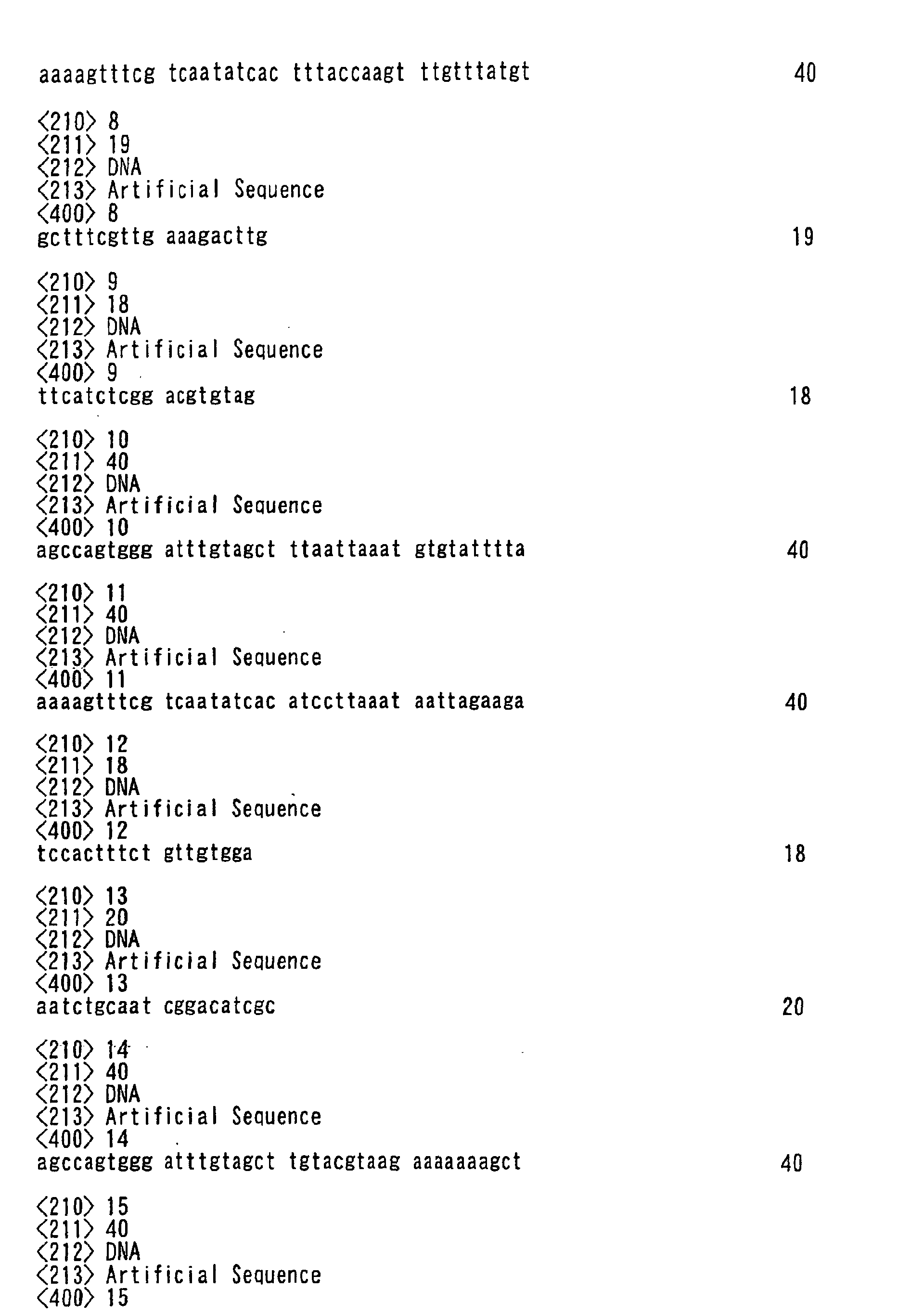
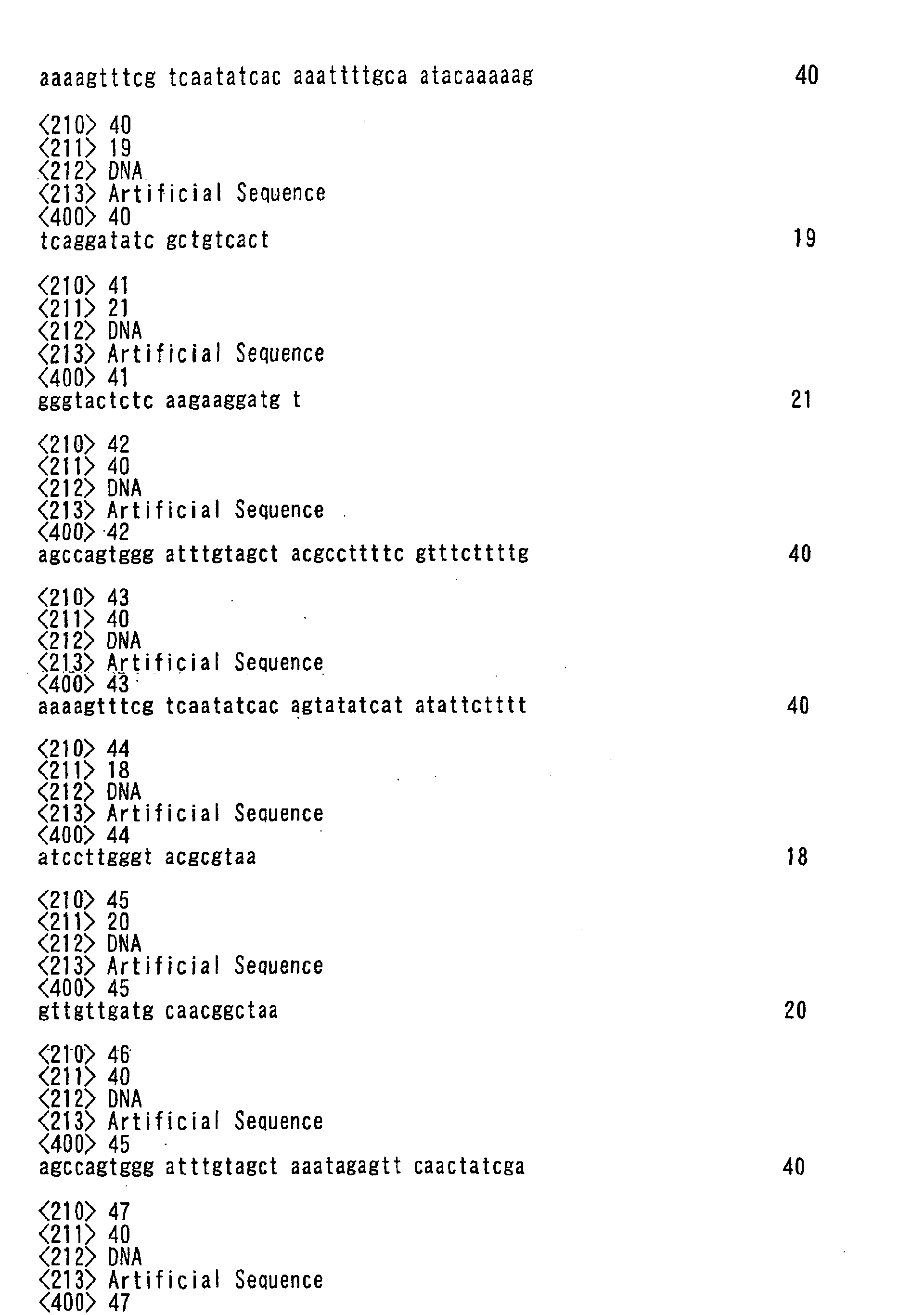
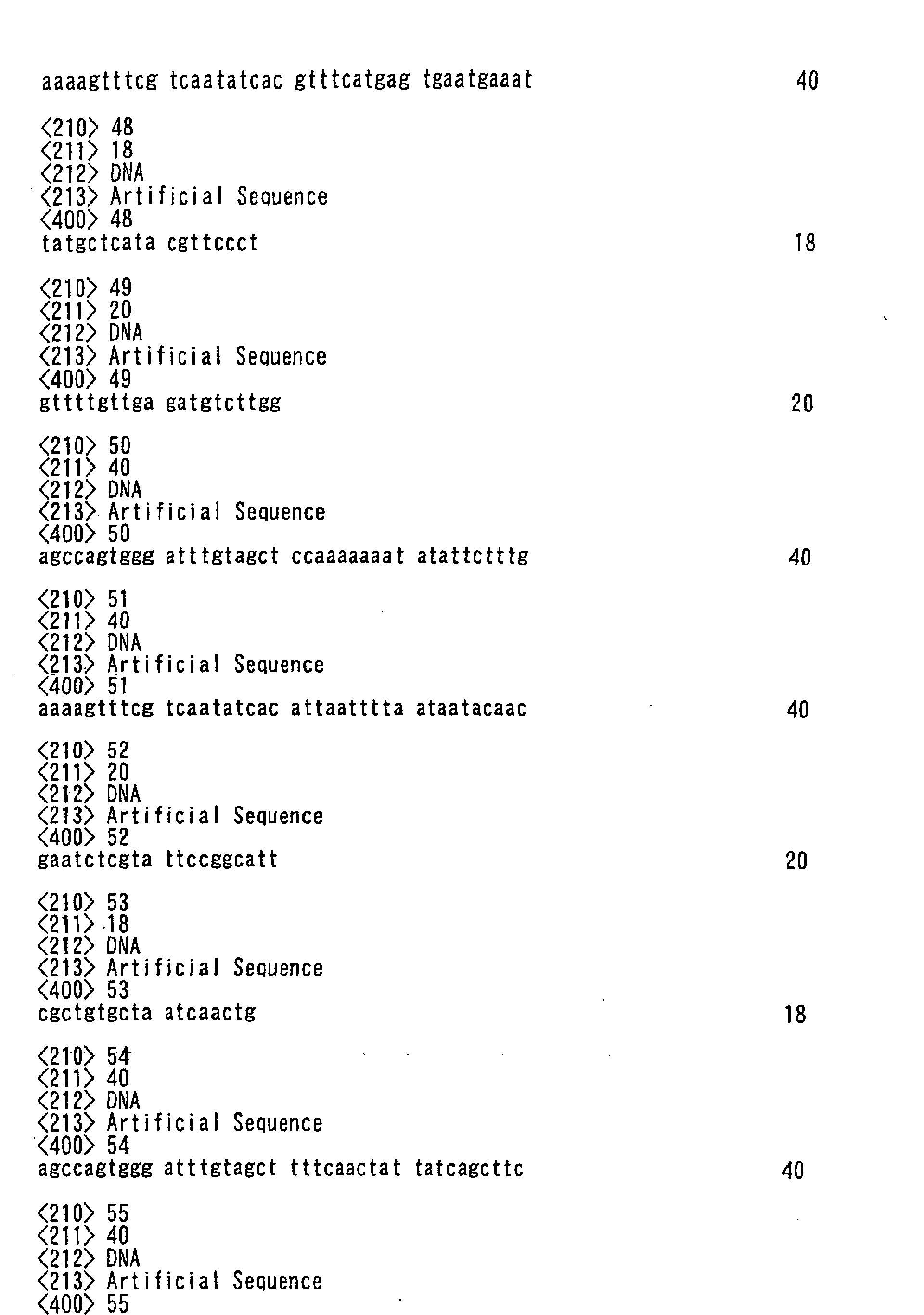
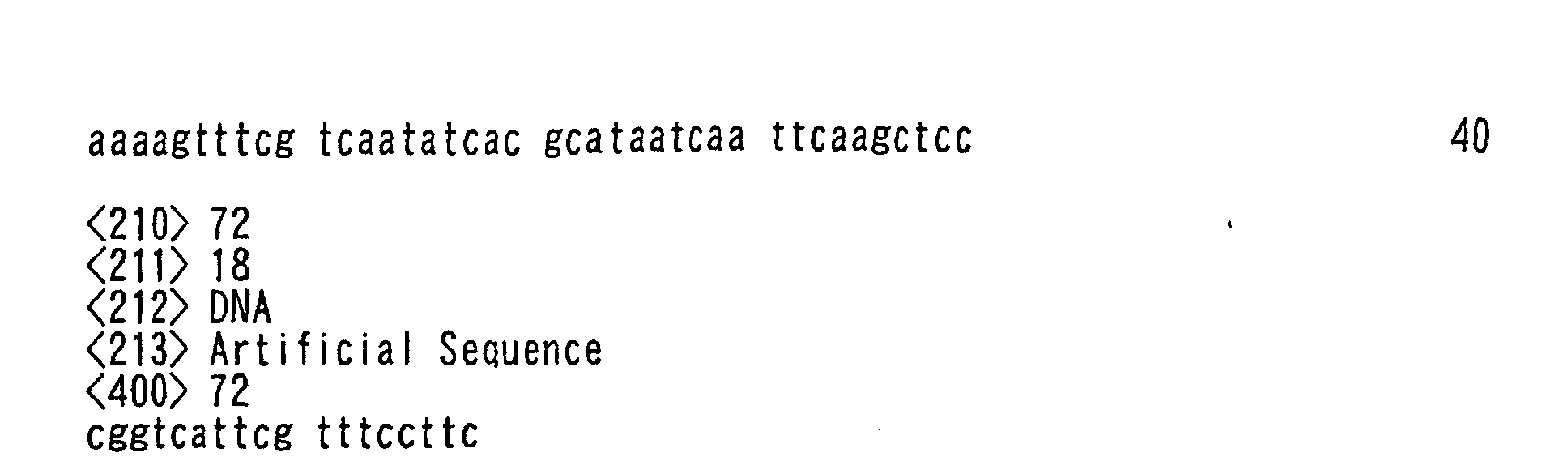
- the disrupted genes and the primers (4 types) used are given below.
- Inactivation of the pyruvate decarboxylase gene or a protease gene in the fission yeast S. pombe improves production efficiency of a heterologous protein in a transformant of the fission yeast host S. pombe.
- deletion or inactivation of part of the genome unnecessary or detrimental to production of the heterologous protein by the transformant in culture improves production efficiency of the heterologous protein.
Landscapes
- Life Sciences & Earth Sciences (AREA)
- Health & Medical Sciences (AREA)
- Genetics & Genomics (AREA)
- Chemical & Material Sciences (AREA)
- Engineering & Computer Science (AREA)
- Organic Chemistry (AREA)
- Zoology (AREA)
- Wood Science & Technology (AREA)
- Biotechnology (AREA)
- General Engineering & Computer Science (AREA)
- Bioinformatics & Cheminformatics (AREA)
- Microbiology (AREA)
- Biochemistry (AREA)
- Mycology (AREA)
- Biomedical Technology (AREA)
- General Health & Medical Sciences (AREA)
- Molecular Biology (AREA)
- Chemical Kinetics & Catalysis (AREA)
- Physics & Mathematics (AREA)
- General Chemical & Material Sciences (AREA)
- Biophysics (AREA)
- Plant Pathology (AREA)
- Micro-Organisms Or Cultivation Processes Thereof (AREA)
- Preparation Of Compounds By Using Micro-Organisms (AREA)
Abstract
Description
Example 4 Improvement of the production efficiency of Aequorea victria green fluorescent protein by inactivation of the carboxypeptidase SPBC16G5.09
The name of the gene: Aspertic protease gene SPCC1795.09 (putative aspartic proteinase)
The length of the ORF: 1566 bp
Primers:




The name of the gene: Cytoplasmic aminopeptidase gene SPAC13A11.05 (cytosol amino peptidase)
The length of the ORF: 1542 bp
Primers:



The name of the gene: Dipeptidyl aminopeptidase gene SPC14C4.15 (dipeptidyl aminopeptidase)
The length of the ORF: 2606 bp
Primers:




The name of the gene: Carboxypeptidase gene SPBC337.07c (putative carboxypeptidase)
The length of the ORF: 1665 bp
Primers:




The name of the gene: Vacuolar carboxylase S gene SPAC24C9.08 (putative vacuolar carboxypeptidase s)
'The length of the ORF: 1791 bp
Primers:


The name of the gene: Zinc protease gene SPCUNK4.12c (putative zinc-protease)
The length of the ORF: 2910 bp
Primers:




The name of the gene: Zinc protease gene SPCC1442.07c (putative ZN-protease)
The length of the ORF: 849 bp
Primers:




The name of the gene: Metalloprotease gene SPCC965.04 (putative metallopeptidase)
The length of the ORF: 2231 bp
Primers:


The name of the gene: Zinc metalloprotease gene SPAC17A5.04c (putative zinc metallopeptidase)
The length of the ORF: 1610 bp
Primers:




The name of the gene: CAAX prenyl protease I gene SPC3H1.05 (putative CAAX prenyl protease)
The length of the ORF: 1495 bp
Primers:




The name of the gene: Dipeptidyl peptidase gene SPBC1711.12 (putative dipeptidyl peptidase)
The length of the ORF: 2052 bp
Primers:



The name of the gene: Dipeptidase gene SPCC965.12 (putative dipeptidase)
The length of the ORF: 1251 bp
Primers:




The name of the gene: Methionine metallopeptidase gene SPBC 14C8.03 (putative methionine metallopeptidase)
The length of the ORF: 1281 bp
Primers:




The name of the gene: Methionine aminopeptidase gene SPBC3E7.10 (putative methionine aminopeptidase)
The length of the ORF: 1301 bp
Primers:




The name of the gene: Signal peptidase gene SPAC1071.04c (putative signal peptidase)
The length of the ORF: 504 bp
Primers:




The name of the gene: Mitochondrial processing peptidase β subunit gene SPBP23A10.15c (mitochondrial processing peptidase beta subunit)
The length of the ORF: 1374 bp
Primers:









Claims (13)
- A method of constructing a eukaryotic host microorganism for production of a heterologous protein encoded by a transgenically introduced gene, which is characterized by deleting or inactivating part or all of the genome of a eukaryotic host microorganism unnecessary or detrimental to production of the heterologous protein by a transformant of the host in culture for the purpose of improving productivity of the heterologous protein.
- The method according to Claim 1, wherein the part of the genome unnecessary or detrimental to production of the heterologous protein by the transformant in culture is genes associated with energy metabolism, proteases, meiosis, transcription, cell growth and division and DNA synthesis, protein synthesis, membrane transport, cell structure maintenance, signal transduction or ion homeostasis in the eukaryotic host microorganism.
- The method according to Claim 1 or 2, wherein the eukaryotic host microorganism is Schizosaccharomyces pombe .
- The method according to Claim 3, wherein the part of the genome of Schizosaccharomyces pombe unnecessary or detrimental to production of the heterologous protein by the transformant in culture is a gene selected from the genes associated with energy metabolism and the genes associated with proteases.
- A eukaryotic host microorganism for production of a heterologous protein encoded by a transgenically introduced gene, which is constructed by the method according to Claim 1 or 2.
- The host according to Claim 5, wherein the eukaryotic microorganism is Schizosaccharomyces pombe.
- A transformant obtained by introducing the structural gene encoding a heterologous protein into a eukaryotic host microorganism in which part or all of the genome of the eukaryotic host microorganism unnecessary or detrimental to production of the heterologous protein by the transformant in culture has been deleted or inactivated for the purpose of improving productivity of the heterologous protein.
- The transformant according to Claim 7, wherein the part of the genome unnecessary or detrimental to production of the heterologous protein by the transformant in culture is genes associated with the energy metabolism, proteases, meiosis, transcription, cell growth and division and DNA synthesis, protein synthesis, membrane transport, cell structure maintenance, signal transduction or ion homeostasis in the eukaryotic host microorganism.
- The transformant according to Claim 7 or 8, wherein the eukaryotic microorganism is Schizosaccharomyces pombe.
- A method of producing a heterologous protein, comprising causing a transformant of a eukaryotic host microorganism having a gene encoding a heterologous protein extrinsic to the host and collecting the heterologous protein, wherein the productivity of the heterologous protein is improved by deleting or inactivating part or all of the genome of the eukaryotic host microorganism which is unnecessary or detrimental to production of the heterologous protein by the transformant in culture.
- The method according to Claim 10, wherein the part of the genome unnecessary or detrimental to production of the heterologous protein by the transformant in culture is genes associated with the energy metabolism, proteases, meiosis, transcription, cell growth and division and DNA synthesis, protein synthesis, membrane transport, cell structure maintenance, signal transduction or ion homeostasis in the eukaryotic host microorganism.
- The method according to Claim 10 or 11, wherein the eukaryotic microorganism is Schizosaccharomyces pombe.
- The method according to Claim 12, wherein the part of the genome unnecessary or detrimental to production of the heterologous protein by the transformant in culture is a gene selected from the genes associated with energy metabolism and the genes associated with proteases.
Applications Claiming Priority (3)
| Application Number | Priority Date | Filing Date | Title |
|---|---|---|---|
| JP2001160128 | 2001-05-29 | ||
| JP2001160128 | 2001-05-29 | ||
| PCT/JP2002/005223 WO2002101038A1 (en) | 2001-05-29 | 2002-05-29 | Method of constructing host and process for producing foreign protein |
Publications (3)
| Publication Number | Publication Date |
|---|---|
| EP1391510A1 true EP1391510A1 (en) | 2004-02-25 |
| EP1391510A4 EP1391510A4 (en) | 2005-06-01 |
| EP1391510B1 EP1391510B1 (en) | 2007-09-12 |
Family
ID=19003592
Family Applications (1)
| Application Number | Title | Priority Date | Filing Date |
|---|---|---|---|
| EP02733248A Expired - Lifetime EP1391510B1 (en) | 2001-05-29 | 2002-05-29 | Method of constructing host and process for producing foreign protein |
Country Status (6)
| Country | Link |
|---|---|
| US (1) | US7723098B2 (en) |
| EP (1) | EP1391510B1 (en) |
| JP (1) | JP4211603B2 (en) |
| CA (1) | CA2448289A1 (en) |
| DE (1) | DE60222404T2 (en) |
| WO (1) | WO2002101038A1 (en) |
Cited By (1)
| Publication number | Priority date | Publication date | Assignee | Title |
|---|---|---|---|---|
| EP2182060A1 (en) * | 2005-08-03 | 2010-05-05 | Asahi Glass Company, Limited | Transformed yeast host cells and method of producing foreign protein |
Families Citing this family (10)
| Publication number | Priority date | Publication date | Assignee | Title |
|---|---|---|---|---|
| JP2006109701A (en) * | 2003-04-10 | 2006-04-27 | Asahi Glass Co Ltd | Yeast host, transformant and method for producing heterologous protein |
| GB0523282D0 (en) * | 2005-11-15 | 2005-12-21 | Isis Innovation | Methods using pores |
| WO2007063919A1 (en) | 2005-11-29 | 2007-06-07 | Asahi Glass Company, Limited | Method of modifying chromosome |
| KR20110117101A (en) | 2009-01-27 | 2011-10-26 | 아사히 가라스 가부시키가이샤 | Transformation method, transformant, and production method of heterologous protein of ski irradiated Caromyces pombe |
| WO2011021629A1 (en) | 2009-08-21 | 2011-02-24 | 旭硝子株式会社 | Transformant and process for production thereof, and process for production of lactic acid |
| KR20130132789A (en) | 2010-11-05 | 2013-12-05 | 아사히 가라스 가부시키가이샤 | Transformant of yeast of genus schizosaccharomyces and method for producing same |
| WO2012128260A1 (en) | 2011-03-24 | 2012-09-27 | 旭硝子株式会社 | TRANSFORMANT OF YEAST OF GENUS SCHIZOSACCHAROMYCES, METHOD FOR PRODUCING SAME, METHOD FOR PRODUCING β-GLUCOSIDASE, AND METHOD FOR DECOMPOSING CELLULOSE |
| EP2808388B1 (en) | 2012-01-23 | 2019-03-13 | AGC Inc. | Expression vector and method for producing protein |
| EP2886642B1 (en) | 2012-08-20 | 2019-07-24 | AGC Inc. | Transformant of schizosaccharomyces pombe mutant, and cloning vector |
| US10597662B2 (en) | 2013-11-22 | 2020-03-24 | Jmtc Enzyme Corporation | Transformant and process for production thereof, and process for production of lactic acid |
Family Cites Families (12)
| Publication number | Priority date | Publication date | Assignee | Title |
|---|---|---|---|---|
| JPH06506117A (en) | 1991-04-01 | 1994-07-14 | メルク エンド カンパニー インコーポレーテッド | Genes affecting Pichia proteolytic activity and their use |
| GB9411356D0 (en) | 1994-06-07 | 1994-07-27 | Delta Biotechnology Ltd | Yeast strains |
| US6110703A (en) * | 1996-07-05 | 2000-08-29 | Novo Nordisk A/S | Method for the production of polypeptides |
| ES2133104B1 (en) * | 1997-06-19 | 2000-04-01 | Antibioticos Sau | A PROCEDURE TO INCREASE THE PRODUCTION OF PENICILLIN IN PENICILLIUM CHRYSOGENUM BY INACTIVATING THE LYS2 GENE. |
| JP2000078978A (en) | 1998-09-04 | 2000-03-21 | Kirin Brewery Co Ltd | Candida boizini strains with reduced protease activity and their use as hosts for the production of heterologous proteins |
| JP2000136199A (en) * | 1998-10-29 | 2000-05-16 | Asahi Glass Co Ltd | Signal peptide, secretory expression vector usable in Schizosaccharomyces pombe, and method for producing protein using the same |
| JP4860820B2 (en) * | 1999-01-13 | 2012-01-25 | ノボザイムス,インコーポレイティド | Method for producing polypeptide in cyclohexadepsipeptide-deficient cells |
| JP4305998B2 (en) * | 1999-03-18 | 2009-07-29 | 旭硝子株式会社 | Method for transformation of Schizosaccharomyces pombe |
| DE60032370T2 (en) | 1999-08-19 | 2007-10-11 | Kirin Beer K.K. | YEAST VARIANTS AND METHOD FOR THE PRODUCTION OF GLYCOPROTEIN-CONTAINING SUGAR CHAINS FROM THE MAMMALIAN TYPE |
| DE19941768A1 (en) * | 1999-09-02 | 2001-03-15 | Lichtenberg Frate Hella | New Schizosaccharomyces pombe mutants with defective potassium uptake useful for expressing human eag related gene in screening assays for potassium ion channel modulators |
| CA2430270A1 (en) * | 2000-11-22 | 2002-05-30 | Cargill Dow Polymers, Llc | Methods and materials for the synthesis of organic products |
| US20030082671A1 (en) * | 2001-07-24 | 2003-05-01 | Thomas Hoeg-Jensen | Method for making acylated polypeptides |
-
2002
- 2002-05-29 WO PCT/JP2002/005223 patent/WO2002101038A1/en not_active Ceased
- 2002-05-29 EP EP02733248A patent/EP1391510B1/en not_active Expired - Lifetime
- 2002-05-29 JP JP2003503788A patent/JP4211603B2/en not_active Expired - Lifetime
- 2002-05-29 CA CA002448289A patent/CA2448289A1/en not_active Abandoned
- 2002-05-29 DE DE60222404T patent/DE60222404T2/en not_active Expired - Lifetime
-
2003
- 2003-12-01 US US10/724,108 patent/US7723098B2/en not_active Expired - Lifetime
Cited By (1)
| Publication number | Priority date | Publication date | Assignee | Title |
|---|---|---|---|---|
| EP2182060A1 (en) * | 2005-08-03 | 2010-05-05 | Asahi Glass Company, Limited | Transformed yeast host cells and method of producing foreign protein |
Also Published As
| Publication number | Publication date |
|---|---|
| EP1391510A4 (en) | 2005-06-01 |
| WO2002101038A1 (en) | 2002-12-19 |
| JP4211603B2 (en) | 2009-01-21 |
| DE60222404T2 (en) | 2008-06-19 |
| US7723098B2 (en) | 2010-05-25 |
| US20040132192A1 (en) | 2004-07-08 |
| CA2448289A1 (en) | 2002-12-19 |
| EP1391510B1 (en) | 2007-09-12 |
| JPWO2002101038A1 (en) | 2004-09-24 |
| DE60222404D1 (en) | 2007-10-25 |
Similar Documents
| Publication | Publication Date | Title |
|---|---|---|
| Porro et al. | Recombinant protein production in yeasts | |
| US8329448B2 (en) | Yeast host, transformant and method for producing heterologous proteins | |
| US7723098B2 (en) | Method of constructing host and method of producing heterologous protein | |
| US8404472B2 (en) | System for producing aromatic molecules by bioconversion | |
| CN108949801A (en) | A method of by knocking out nucleic acid enzyme system to regulate and control external biological synthesizing activity | |
| US10174304B2 (en) | Expression vector and method for producing protein | |
| US6645767B1 (en) | Cells engineered to contain genes of interest without expressed bacterial sequences and materials and methods therefor | |
| WO2017101060A1 (en) | Gene cassette for homologous recombination knock-out in yeast cells | |
| CA2803719C (en) | Production cell line | |
| CN102120966A (en) | Construction and application of URA3 defective P. pastoris X-33 strain | |
| JP7763756B2 (en) | Non-viral transcription activation domains and related methods and uses | |
| Muzaev et al. | Selective system based on fragments of the M1 virus for the yeast Saccharomyces cerevisiae transformation | |
| Sánchez et al. | Microbial synthesis of secondary metabolites and strain improvement: Current trends and future prospects | |
| US10351864B2 (en) | Cloning vector | |
| KR20230075506A (en) | Recombinant yeast for the production of oligopeptides | |
| JP2006109701A (en) | Yeast host, transformant and method for producing heterologous protein | |
| WO2017163946A1 (en) | Induction-type promoter | |
| CN121204166A (en) | Compositions for gene editing and their applications in gene editing | |
| JP4918943B2 (en) | Yeast transformation method | |
| EP4569101A1 (en) | Synthetic formolase pathway | |
| Wedde et al. | 1 Fungi: important organisms in history and today | |
| WO2018030526A1 (en) | Transformant and method for producing 3-hydroxypropionic acid |
Legal Events
| Date | Code | Title | Description |
|---|---|---|---|
| PUAI | Public reference made under article 153(3) epc to a published international application that has entered the european phase |
Free format text: ORIGINAL CODE: 0009012 |
|
| 17P | Request for examination filed |
Effective date: 20031204 |
|
| AK | Designated contracting states |
Kind code of ref document: A1 Designated state(s): AT BE CH CY DE DK ES FI FR GB GR IE IT LI LU MC NL PT SE TR |
|
| AX | Request for extension of the european patent |
Extension state: AL LT LV MK RO SI |
|
| A4 | Supplementary search report drawn up and despatched |
Effective date: 20050419 |
|
| RIC1 | Information provided on ipc code assigned before grant |
Ipc: 7C 12R 1/645 B Ipc: 7C 12N 1/19 B Ipc: 7C 12N 15/09 A Ipc: 7C 12P 21/00 B |
|
| GRAP | Despatch of communication of intention to grant a patent |
Free format text: ORIGINAL CODE: EPIDOSNIGR1 |
|
| GRAS | Grant fee paid |
Free format text: ORIGINAL CODE: EPIDOSNIGR3 |
|
| RIN1 | Information on inventor provided before grant (corrected) |
Inventor name: KUMAGAI, HIROMICHI,C/O ASAHI GLASS COMPANY LTD. Inventor name: TOHDA, HIDEKI,C/O ASAHI GLASS COMPANY LIMITED Inventor name: HAMA, YUKO,C/O ASAHI GLASS COMPANY LIMITED |
|
| GRAA | (expected) grant |
Free format text: ORIGINAL CODE: 0009210 |
|
| AK | Designated contracting states |
Kind code of ref document: B1 Designated state(s): DE FR GB |
|
| REG | Reference to a national code |
Ref country code: GB Ref legal event code: FG4D |
|
| REF | Corresponds to: |
Ref document number: 60222404 Country of ref document: DE Date of ref document: 20071025 Kind code of ref document: P |
|
| ET | Fr: translation filed | ||
| PLBE | No opposition filed within time limit |
Free format text: ORIGINAL CODE: 0009261 |
|
| STAA | Information on the status of an ep patent application or granted ep patent |
Free format text: STATUS: NO OPPOSITION FILED WITHIN TIME LIMIT |
|
| 26N | No opposition filed |
Effective date: 20080613 |
|
| REG | Reference to a national code |
Ref country code: FR Ref legal event code: PLFP Year of fee payment: 15 |
|
| REG | Reference to a national code |
Ref country code: FR Ref legal event code: PLFP Year of fee payment: 16 |
|
| REG | Reference to a national code |
Ref country code: FR Ref legal event code: PLFP Year of fee payment: 17 |
|
| REG | Reference to a national code |
Ref country code: DE Ref legal event code: R082 Ref document number: 60222404 Country of ref document: DE Representative=s name: MUELLER-BORE & PARTNER PATENTANWAELTE PARTG MB, DE Ref country code: DE Ref legal event code: R081 Ref document number: 60222404 Country of ref document: DE Owner name: AGC INC., JP Free format text: FORMER OWNER: ASAHI GLASS CO., LTD., TOKIO/TOKYO, JP |
|
| PGFP | Annual fee paid to national office [announced via postgrant information from national office to epo] |
Ref country code: FR Payment date: 20210520 Year of fee payment: 20 Ref country code: DE Payment date: 20210520 Year of fee payment: 20 |
|
| PGFP | Annual fee paid to national office [announced via postgrant information from national office to epo] |
Ref country code: GB Payment date: 20210520 Year of fee payment: 20 |
|
| REG | Reference to a national code |
Ref country code: DE Ref legal event code: R071 Ref document number: 60222404 Country of ref document: DE |
|
| REG | Reference to a national code |
Ref country code: GB Ref legal event code: PE20 Expiry date: 20220528 |
|
| PG25 | Lapsed in a contracting state [announced via postgrant information from national office to epo] |
Ref country code: GB Free format text: LAPSE BECAUSE OF EXPIRATION OF PROTECTION Effective date: 20220528 |