EP1389605A1 - Separatory agent for optical isomer - Google Patents
Separatory agent for optical isomer Download PDFInfo
- Publication number
- EP1389605A1 EP1389605A1 EP02720603A EP02720603A EP1389605A1 EP 1389605 A1 EP1389605 A1 EP 1389605A1 EP 02720603 A EP02720603 A EP 02720603A EP 02720603 A EP02720603 A EP 02720603A EP 1389605 A1 EP1389605 A1 EP 1389605A1
- Authority
- EP
- European Patent Office
- Prior art keywords
- separating agent
- aromatic
- chromatography
- agent according
- phase
- Prior art date
- Legal status (The legal status is an assumption and is not a legal conclusion. Google has not performed a legal analysis and makes no representation as to the accuracy of the status listed.)
- Withdrawn
Links
- RSKVDDNFAQKJOD-UHFFFAOYSA-N CC[O](C)C(c(cc1O)cc(O)c1O)=O Chemical compound CC[O](C)C(c(cc1O)cc(O)c1O)=O RSKVDDNFAQKJOD-UHFFFAOYSA-N 0.000 description 1
- LNTHITQWFMADLM-UHFFFAOYSA-N OC(c(cc1O)cc(O)c1O)=O Chemical compound OC(c(cc1O)cc(O)c1O)=O LNTHITQWFMADLM-UHFFFAOYSA-N 0.000 description 1
Classifications
-
- B—PERFORMING OPERATIONS; TRANSPORTING
- B01—PHYSICAL OR CHEMICAL PROCESSES OR APPARATUS IN GENERAL
- B01D—SEPARATION
- B01D15/00—Separating processes involving the treatment of liquids with solid sorbents; Apparatus therefor
- B01D15/08—Selective adsorption, e.g. chromatography
- B01D15/26—Selective adsorption, e.g. chromatography characterised by the separation mechanism
- B01D15/38—Selective adsorption, e.g. chromatography characterised by the separation mechanism involving specific interaction not covered by one or more of groups B01D15/265 and B01D15/30 - B01D15/36, e.g. affinity, ligand exchange or chiral chromatography
- B01D15/3833—Chiral chromatography
-
- C—CHEMISTRY; METALLURGY
- C08—ORGANIC MACROMOLECULAR COMPOUNDS; THEIR PREPARATION OR CHEMICAL WORKING-UP; COMPOSITIONS BASED THEREON
- C08B—POLYSACCHARIDES; DERIVATIVES THEREOF
- C08B15/00—Preparation of other cellulose derivatives or modified cellulose, e.g. complexes
- C08B15/05—Derivatives containing elements other than carbon, hydrogen, oxygen, halogens or sulfur
- C08B15/06—Derivatives containing elements other than carbon, hydrogen, oxygen, halogens or sulfur containing nitrogen, e.g. carbamates
-
- B—PERFORMING OPERATIONS; TRANSPORTING
- B01—PHYSICAL OR CHEMICAL PROCESSES OR APPARATUS IN GENERAL
- B01J—CHEMICAL OR PHYSICAL PROCESSES, e.g. CATALYSIS OR COLLOID CHEMISTRY; THEIR RELEVANT APPARATUS
- B01J20/00—Solid sorbent compositions or filter aid compositions; Sorbents for chromatography; Processes for preparing, regenerating or reactivating thereof
- B01J20/22—Solid sorbent compositions or filter aid compositions; Sorbents for chromatography; Processes for preparing, regenerating or reactivating thereof comprising organic material
- B01J20/26—Synthetic macromolecular compounds
-
- B—PERFORMING OPERATIONS; TRANSPORTING
- B01—PHYSICAL OR CHEMICAL PROCESSES OR APPARATUS IN GENERAL
- B01J—CHEMICAL OR PHYSICAL PROCESSES, e.g. CATALYSIS OR COLLOID CHEMISTRY; THEIR RELEVANT APPARATUS
- B01J20/00—Solid sorbent compositions or filter aid compositions; Sorbents for chromatography; Processes for preparing, regenerating or reactivating thereof
- B01J20/22—Solid sorbent compositions or filter aid compositions; Sorbents for chromatography; Processes for preparing, regenerating or reactivating thereof comprising organic material
- B01J20/26—Synthetic macromolecular compounds
- B01J20/262—Synthetic macromolecular compounds obtained otherwise than by reactions only involving carbon to carbon unsaturated bonds, e.g. obtained by polycondensation
-
- B—PERFORMING OPERATIONS; TRANSPORTING
- B01—PHYSICAL OR CHEMICAL PROCESSES OR APPARATUS IN GENERAL
- B01J—CHEMICAL OR PHYSICAL PROCESSES, e.g. CATALYSIS OR COLLOID CHEMISTRY; THEIR RELEVANT APPARATUS
- B01J20/00—Solid sorbent compositions or filter aid compositions; Sorbents for chromatography; Processes for preparing, regenerating or reactivating thereof
- B01J20/22—Solid sorbent compositions or filter aid compositions; Sorbents for chromatography; Processes for preparing, regenerating or reactivating thereof comprising organic material
- B01J20/26—Synthetic macromolecular compounds
- B01J20/265—Synthetic macromolecular compounds modified or post-treated polymers
-
- B—PERFORMING OPERATIONS; TRANSPORTING
- B01—PHYSICAL OR CHEMICAL PROCESSES OR APPARATUS IN GENERAL
- B01J—CHEMICAL OR PHYSICAL PROCESSES, e.g. CATALYSIS OR COLLOID CHEMISTRY; THEIR RELEVANT APPARATUS
- B01J20/00—Solid sorbent compositions or filter aid compositions; Sorbents for chromatography; Processes for preparing, regenerating or reactivating thereof
- B01J20/281—Sorbents specially adapted for preparative, analytical or investigative chromatography
- B01J20/282—Porous sorbents
- B01J20/285—Porous sorbents based on polymers
-
- B—PERFORMING OPERATIONS; TRANSPORTING
- B01—PHYSICAL OR CHEMICAL PROCESSES OR APPARATUS IN GENERAL
- B01J—CHEMICAL OR PHYSICAL PROCESSES, e.g. CATALYSIS OR COLLOID CHEMISTRY; THEIR RELEVANT APPARATUS
- B01J20/00—Solid sorbent compositions or filter aid compositions; Sorbents for chromatography; Processes for preparing, regenerating or reactivating thereof
- B01J20/281—Sorbents specially adapted for preparative, analytical or investigative chromatography
- B01J20/286—Phases chemically bonded to a substrate, e.g. to silica or to polymers
-
- B—PERFORMING OPERATIONS; TRANSPORTING
- B01—PHYSICAL OR CHEMICAL PROCESSES OR APPARATUS IN GENERAL
- B01J—CHEMICAL OR PHYSICAL PROCESSES, e.g. CATALYSIS OR COLLOID CHEMISTRY; THEIR RELEVANT APPARATUS
- B01J20/00—Solid sorbent compositions or filter aid compositions; Sorbents for chromatography; Processes for preparing, regenerating or reactivating thereof
- B01J20/281—Sorbents specially adapted for preparative, analytical or investigative chromatography
- B01J20/29—Chiral phases
-
- B—PERFORMING OPERATIONS; TRANSPORTING
- B01—PHYSICAL OR CHEMICAL PROCESSES OR APPARATUS IN GENERAL
- B01J—CHEMICAL OR PHYSICAL PROCESSES, e.g. CATALYSIS OR COLLOID CHEMISTRY; THEIR RELEVANT APPARATUS
- B01J20/00—Solid sorbent compositions or filter aid compositions; Sorbents for chromatography; Processes for preparing, regenerating or reactivating thereof
- B01J20/30—Processes for preparing, regenerating, or reactivating
- B01J20/32—Impregnating or coating ; Solid sorbent compositions obtained from processes involving impregnating or coating
- B01J20/3202—Impregnating or coating ; Solid sorbent compositions obtained from processes involving impregnating or coating characterised by the carrier, support or substrate used for impregnation or coating
- B01J20/3204—Inorganic carriers, supports or substrates
-
- B—PERFORMING OPERATIONS; TRANSPORTING
- B01—PHYSICAL OR CHEMICAL PROCESSES OR APPARATUS IN GENERAL
- B01J—CHEMICAL OR PHYSICAL PROCESSES, e.g. CATALYSIS OR COLLOID CHEMISTRY; THEIR RELEVANT APPARATUS
- B01J20/00—Solid sorbent compositions or filter aid compositions; Sorbents for chromatography; Processes for preparing, regenerating or reactivating thereof
- B01J20/30—Processes for preparing, regenerating, or reactivating
- B01J20/32—Impregnating or coating ; Solid sorbent compositions obtained from processes involving impregnating or coating
- B01J20/3231—Impregnating or coating ; Solid sorbent compositions obtained from processes involving impregnating or coating characterised by the coating or impregnating layer
- B01J20/3242—Layers with a functional group, e.g. an affinity material, a ligand, a reactant or a complexing group
- B01J20/3268—Macromolecular compounds
- B01J20/3272—Polymers obtained by reactions otherwise than involving only carbon to carbon unsaturated bonds
- B01J20/3274—Proteins, nucleic acids, polysaccharides, antibodies or antigens
-
- C—CHEMISTRY; METALLURGY
- C07—ORGANIC CHEMISTRY
- C07B—GENERAL METHODS OF ORGANIC CHEMISTRY; APPARATUS THEREFOR
- C07B57/00—Separation of optically-active compounds
-
- B—PERFORMING OPERATIONS; TRANSPORTING
- B01—PHYSICAL OR CHEMICAL PROCESSES OR APPARATUS IN GENERAL
- B01J—CHEMICAL OR PHYSICAL PROCESSES, e.g. CATALYSIS OR COLLOID CHEMISTRY; THEIR RELEVANT APPARATUS
- B01J2220/00—Aspects relating to sorbent materials
- B01J2220/50—Aspects relating to the use of sorbent or filter aid materials
- B01J2220/54—Sorbents specially adapted for analytical or investigative chromatography
-
- G—PHYSICS
- G01—MEASURING; TESTING
- G01N—INVESTIGATING OR ANALYSING MATERIALS BY DETERMINING THEIR CHEMICAL OR PHYSICAL PROPERTIES
- G01N27/00—Investigating or analysing materials by the use of electric, electrochemical, or magnetic means
- G01N27/26—Investigating or analysing materials by the use of electric, electrochemical, or magnetic means by investigating electrochemical variables; by using electrolysis or electrophoresis
- G01N27/416—Systems
- G01N27/447—Systems using electrophoresis
- G01N27/44704—Details; Accessories
- G01N27/44747—Composition of gel or of carrier mixture
Definitions
- the present invention relates to a separating agent for enantiomeric isomers, in particular a separating agent for enantiomeric isomers that is used preferably for chromatography.
- the present invention provides a technology for analyzing enantiomeric isomers, which performs optical resolution of a wide variety of chiral compounds with high separation coefficient in the analyses of, in particular, medicines, foods, agricultural chemicals, and perfumes.
- optically active poly(triphenylmethyl methacrylate) JP 57-150432 A
- cellulose and amylose derivative
- amylose derivative Y. Okamoto, M. Kawashima and K. Hatada, J. Am. Chem. Soc., 106, 5337, 1984
- ovomucoid JP 63-307829 A
- HPLC high chiral immobilizing phases for HPLC
- optical resolution columns that carry cellulose or an amylose derivative on silica gel are known to have high asymmetry identifying ability for a very wide variety of compounds.
- the inventors of the present invention have made extensive research on a separating agent for enantiomeric isomers having unique asymmetry identifying ability and thus achieved the present invention.
- the present invention relates to a separating agent for enantiomeric isomers, including as an effective component an aromatic polysaccharide derivative having a long-chain alkoxy group having at least 10 carbon atoms as a substituent on the aromatic group.
- the present invention provides use of an aromatic polysaccharide derivative having as a substituent on the aromatic group a long-chain alkoxy group having at least 10 carbon atoms as a separating agent for enantiomeric isomers and a method of separating enantiomeric isomers with an aromatic polysaccharide derivative having as the substituent on the aromatic group a long-chain alkoxy group having at least 10 carbon atoms.
- any synthetic polysaccharide, any natural polysaccharide, and any modified natural polysaccharide may be used so long as they have an optical activity. Those which have a high regularity in the binding form are more desired.
- ⁇ -1,4-glucan cellulose
- ⁇ -1,4-glucan amylose, amylopectin
- ⁇ -1,6-glucan dextran
- ⁇ -1,6-glucan busturan
- ⁇ -1,3-glucan for example, cardran, schizophyllan, etc.
- ⁇ -1,3-glucan ⁇ -1,2-glucan (Crown Gall polysaccharide)
- ⁇ -1,4-galactan ⁇ -1,4-mannan, ⁇ -1,6-mannan, ⁇ -1,2-fructan (inulin), ⁇ -2,6-fructan (levan)
- ⁇ -1,4-xylan ⁇ -1,3-xylan
- ⁇ -1,4-chitosan ⁇ -1,4-N-acetylchitosan (chitin)
- pullulan agarose, alginic acid, and the like.
- the polysaccharide includes starch containing amylose.
- starch containing amylose cellulose, amylose, ⁇ -1,4-xylan, ⁇ -1,4-chitosan, chitin, ⁇ -1,4-mannan, inulin, and cardran, which are readily available as the polysaccharide having high purity, are preferred.
- Cellulose and amylose are particularly preferred.
- polysaccharides have a number-average degree of polymerization (an average number of pyranose rings or furanose rings contained in one molecule) of at least 5, preferably at least 10, or preferably 1,000 or less in view of ease of handling, though there is no particular limitation in the upper limit thereof.
- the aromatic polysaccharide derivative is a compound being combined with an aromatic compound having a functional group being reactive with part or all of the hydroxyl groups of the polysaccharide through an ester bond, an urethane bond or an ether bond.
- examples of the aromatic compound having a functional group that is reactive with a hydroxyl group include aromatic carboxylic acid derivatives, such as aromatic carboxylic acids, chlorides, anhydrides, or esters thereof or aromatic isocyanic acids, each having a long-chain alkoxy group having at least 10, preferably 10 to 30 carbon atoms as a substituent on the aromatic ring.
- the long-chain alkoxy group is preferably a linear alkoxy group having no branching.
- an aromatic ester group or a carbamate group formed by the reaction of a polysaccharide with an aromatic carboxylic acid, an aromatic carboxylic acid derivative or an aromatic isocyanic acid, each having a long-chain alkoxy group having as a substituent at least 10 carbon atoms, is preferably at least 0.1 per 1 glucose unit.
- the aromatic polysaccharide derivatives of the present invention are preferably ester derivatives or carbamate derivatives of polysaccharides having such an ester group or carbamate group, with ester derivatives being particularly preferable.
- the aromatic polysaccharide derivatives of the present invention having a long-chain alkoxy group having at least 10 carbon atoms can form an obj ective separating agent for enantiomeric isomers by any one of a method of carrying on a carrier described below and a method of pulverizing or forming the aromatic polysaccharide derivative by itself into beads.
- the carrying as used herein means that the polysaccharide derivative is immobilized on a carrier and the method of immobilization is physical adsorption between the polysaccharide derivative and the carrier, chemical bond between the polysaccharide derivative and the carrier, chemical bond between the polysaccharide derivatives, chemical bond of the polysaccharide derivative to a third component, light irradiation to the polysaccharide derivative, radical reaction and the like; any one of the methods may be used.
- the carrier as used herein includes porous organic carriers and porous inorganic carriers, preferably porous organic carriers. Suitable examples of the porous organic carrier include polymer substances such as polystyrene, polyacrylamide, and polyacrylate.
- Suitable examples of the porous inorganic carrier include silica, alumina, magnesia, glass, kaolin, titanium oxide, silicates, and hydroxyapatite.
- a particularly preferred carrier is silica gel.
- the silica gel has a particle size of 0.1 ⁇ m to 10 mm, preferably 1 ⁇ m to 300 ⁇ m and an average pore diameter of 10 ⁇ to 100 ⁇ m, preferably 50 ⁇ to 50, 000 ⁇ .
- the surface of the silica gel is desirably surface treated in order to remove the influence of the remaining silanol. However, there arises no problem if no surface treatment is practiced.
- the carrying amount of the aromatic polysaccharide derivative on the carrier is preferably 1 to 100 parts by weight, particularly 5 to 60 parts by weight, based on the carrier.
- the method of pulverizing or forming into a spherical shape the aromatic polysaccharide derivative having a long-chain alkoxy group having at least 10 carbon atoms may be any conventionally known method.
- the obtained pulverized or spherical polysaccharide derivative may be used as it is or may be sieved and classified into an even particle size.
- the separating agent for enantiomeric isomers of the present invention is useful as a chiral immobilizingphase for chromatography and generally used in chromatographic methods such as a gas chromatographic method, a liquid chromatographic method, a thin layer chromatographic method, a capillary electrophoretic method, and a continuous preparative liquid chromatographic method.
- the separating agent of the present invention is used as an immobilizing phase for liquid chromatography, in particular liquid chromatography with water, alcohol, acetonitrile or mixtures of these as the moving phase; an immobilizing phase for thin layer chromatography; as an asymmetry identifying agent to add to an electrophoretic liquid or fill in a capillary in a capillary electrophoretic method such as a micelle electroconductive chromatographic method or a capillary electrochromatographic method; or as an immobilizing phase for a continuous preparative liquid chromatographic method such as a simulated moving bed chromatography.
- the aromatic polysaccharide derivative of the present invention can be applied not only as a separating agent for chromatography but also as a host-guest separating agent, membrane separation, and a liquid crystal material, utilizing self-agglomeration of a side-chain long-chain alkoxy group.
- the separating agent for enantiomeric isomers having high asymmetry identifying ability, in particular, for hydrophobic compounds can be provided.
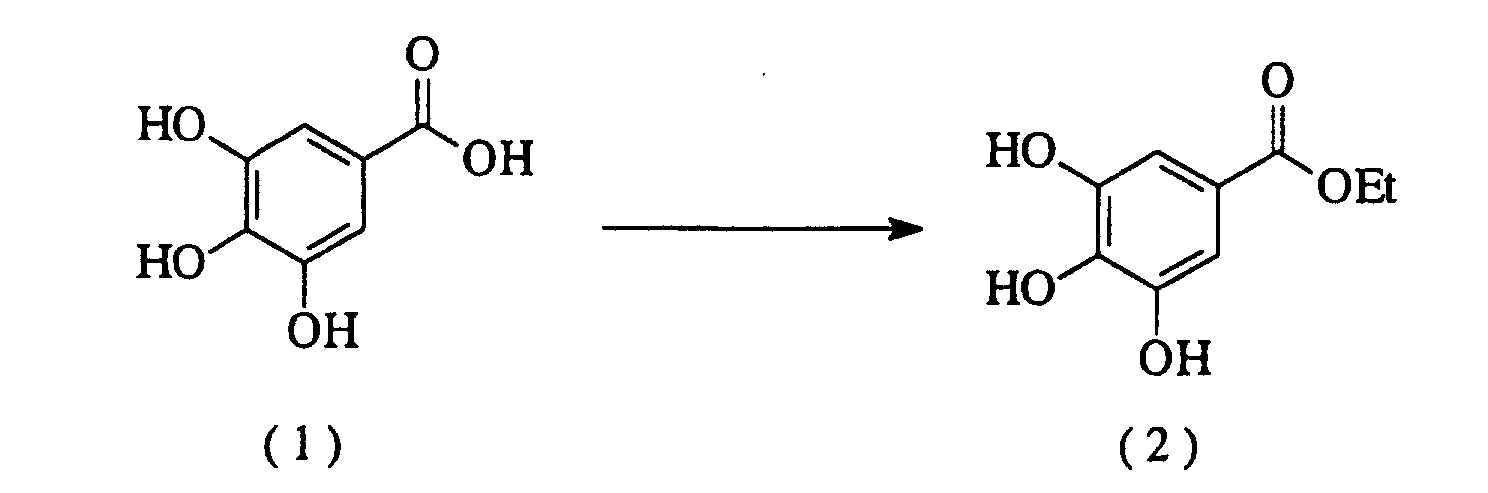
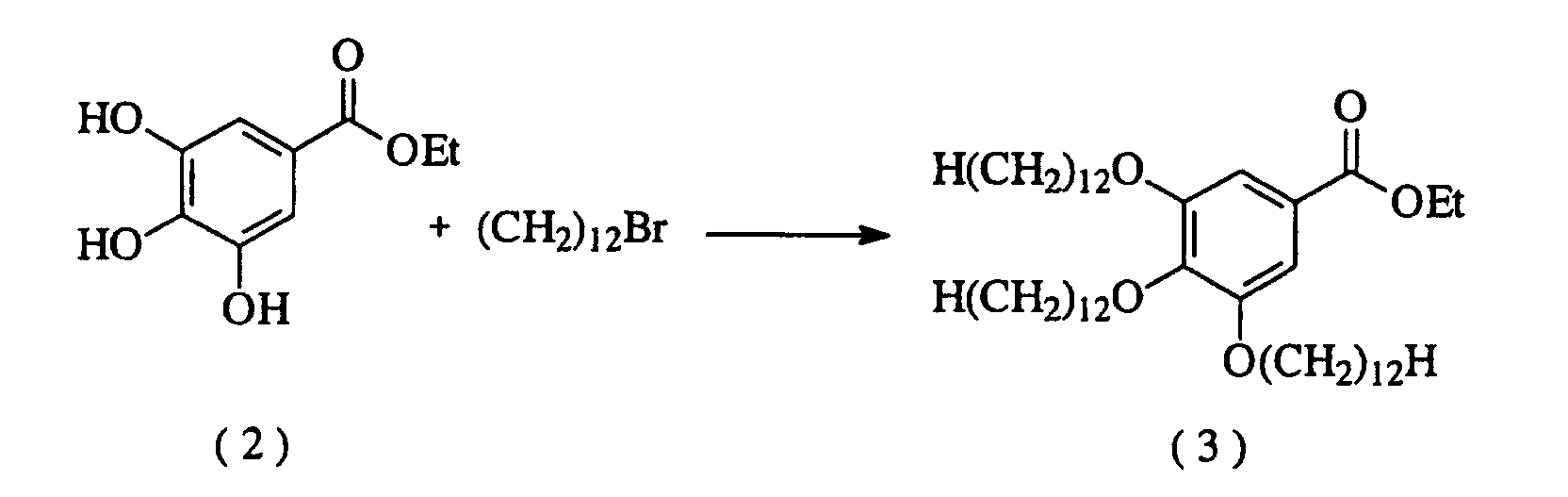
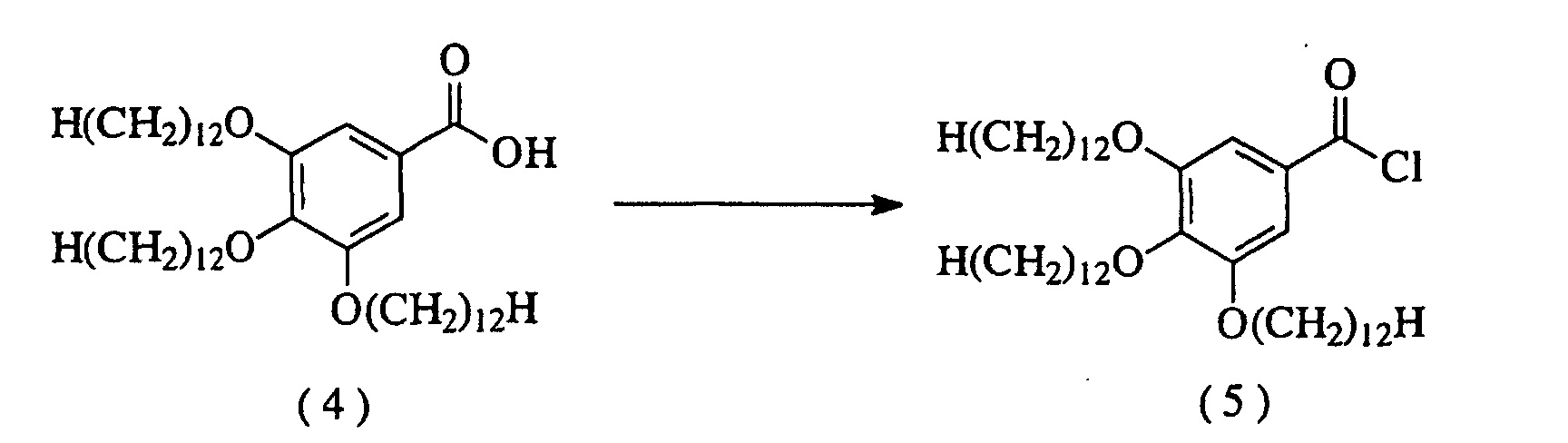
- Example 1 Production method for cellulose tris[3',4',5'-tri(dodecan-1-yloxy)benzoate]-carried type filler and method of fabricating a column filled therewith
- the carried type filler fabricated in [6] was pressed and filled into a stainless steel-made column of ⁇ 0.20 cm ⁇ L 25 cm by a slurry filling method to fabricate a separation column for enantiomeric isomers.
- holding coefficient (k') and separation coefficient ( ⁇ ) shown in table are defined by the following formulae.
- the dead time defined was an elution time of tri-tert-butylbenzene.
Landscapes
- Chemical & Material Sciences (AREA)
- Analytical Chemistry (AREA)
- Organic Chemistry (AREA)
- Chemical Kinetics & Catalysis (AREA)
- Health & Medical Sciences (AREA)
- Life Sciences & Earth Sciences (AREA)
- Biochemistry (AREA)
- Molecular Biology (AREA)
- General Health & Medical Sciences (AREA)
- Inorganic Chemistry (AREA)
- Engineering & Computer Science (AREA)
- Materials Engineering (AREA)
- Medicinal Chemistry (AREA)
- Polymers & Plastics (AREA)
- Organic Low-Molecular-Weight Compounds And Preparation Thereof (AREA)
- Solid-Sorbent Or Filter-Aiding Compositions (AREA)
- Polysaccharides And Polysaccharide Derivatives (AREA)
Abstract
Description


| Results of Elemental Analysis of Cellulose Tris[3',4'5'-tri(dodecan-1-yloxy)benzoate] (6) | |||
| C(%) | H(%) | N(%) | |
| Calculated | 76.01 | 11.24 | 0.00 |
| Found | 75.98 | 10.98 | 0.11 |

Holding coefficient;


flow rate: 0.5 ml/min, temperature: 25°C, detection: 254 nm

Claims (7)
- A separating agent for enantiomeric isomers, comprising, as an effective component, an aromatic polysaccharide derivative having a long-chain alkoxy group having at least 10 carbon atoms as a substituent on the aromatic group.
- The separating agent according to claim 1, wherein the aromatic polysaccharide derivative is an ester derivative or a carbamate derivative of cellulose or amylose.
- The separating agent according to claim 1 or 2, wherein the long-chain alkoxy group is a linear alkoxy group having no branching.
- The separating agent according to any one of claims 1 to 3, wherein the separating agent is used as a chiral immobilizing phase for chromatography.
- The separating agent according to claim 4, wherein the chiral immobilizing phase for chromatography is used under condition where water, alcohol, acetonitrile or a mixture thereof is used as a moving phase.
- The separating agent according to claim 4, wherein the chiral immobilizing phase for chromatography is added in an electrophoretic solution in a capillary electrophoresis or is an asymmetry recognition solution filled in a capillary.
- The separating agent according to claim 4, wherein the chiral immobilizing phase for chromatography is an immobilizing phase for a continuous preparative liquid chromatography.
Applications Claiming Priority (3)
| Application Number | Priority Date | Filing Date | Title |
|---|---|---|---|
| JP2001131943 | 2001-04-27 | ||
| JP2001131943 | 2001-04-27 | ||
| PCT/JP2002/004161 WO2002088049A1 (en) | 2001-04-27 | 2002-04-25 | Separatory agent for optical isomer |
Publications (2)
| Publication Number | Publication Date |
|---|---|
| EP1389605A1 true EP1389605A1 (en) | 2004-02-18 |
| EP1389605A4 EP1389605A4 (en) | 2007-04-18 |
Family
ID=18980041
Family Applications (1)
| Application Number | Title | Priority Date | Filing Date |
|---|---|---|---|
| EP02720603A Withdrawn EP1389605A4 (en) | 2001-04-27 | 2002-04-25 | RELEASE AGENT FOR OPTICAL ISOMERS |
Country Status (6)
| Country | Link |
|---|---|
| US (1) | US20040045896A1 (en) |
| EP (1) | EP1389605A4 (en) |
| JP (1) | JPWO2002088049A1 (en) |
| KR (1) | KR20040002414A (en) |
| CN (1) | CN1462264A (en) |
| WO (1) | WO2002088049A1 (en) |
Family Cites Families (11)
| Publication number | Priority date | Publication date | Assignee | Title |
|---|---|---|---|---|
| JPS56142216A (en) * | 1980-02-19 | 1981-11-06 | Daicel Chem Ind Ltd | Optical resolution of racemate by optically active polymer |
| JPS60142930A (en) * | 1983-12-28 | 1985-07-29 | Daicel Chem Ind Ltd | Resolving agent |
| US4861872A (en) * | 1986-03-20 | 1989-08-29 | Daicel Chemical Industries, Ltd. | Alkyl-phenylcarbamate derivative of polysaccharide |
| US4912205A (en) * | 1986-03-20 | 1990-03-27 | Daicel Chemical Industries, Ltd. | Alkyl-substituted phenylcarbamate derivative of polysaccharide |
| US5066793A (en) * | 1987-10-26 | 1991-11-19 | Ciba-Geigy Corporation | Finely particulate cellulose esters of aromatic or aromatic-aliphatic carboxylic acids, process for their preparation, and the use thereof |
| US5491223A (en) * | 1991-02-28 | 1996-02-13 | Daicel Chemical Industries, Ltd. | Polysaccharide derivative and separating agent |
| US5354852A (en) * | 1991-03-04 | 1994-10-11 | Daicel Chemical Industries, Ltd. | Polysaccharide derivative, process for producing the same, and separating agent |
| JP3051782B2 (en) * | 1992-09-16 | 2000-06-12 | ダイセル化学工業株式会社 | Separating agents comprising alkoxy-substituted aromatic carbamate derivatives of cellulose |
| JP3148032B2 (en) * | 1993-01-18 | 2001-03-19 | ダイセル化学工業株式会社 | Substituted aromatic carbamate derivatives of polysaccharides and separating agents |
| US5496937A (en) * | 1993-05-14 | 1996-03-05 | Nakano Vinegar Co., Ltd. | Polysaccharide substances, process for producing them and use of them |
| EP0907663B1 (en) * | 1996-06-27 | 2004-03-10 | Novartis AG | Thermally immobilized polysaccharide derivatives |
-
2002
- 2002-04-25 CN CN02801455A patent/CN1462264A/en active Pending
- 2002-04-25 US US10/467,237 patent/US20040045896A1/en not_active Abandoned
- 2002-04-25 KR KR1020027017820A patent/KR20040002414A/en not_active Ceased
- 2002-04-25 WO PCT/JP2002/004161 patent/WO2002088049A1/en not_active Ceased
- 2002-04-25 JP JP2002585355A patent/JPWO2002088049A1/en active Pending
- 2002-04-25 EP EP02720603A patent/EP1389605A4/en not_active Withdrawn
Also Published As
| Publication number | Publication date |
|---|---|
| KR20040002414A (en) | 2004-01-07 |
| EP1389605A4 (en) | 2007-04-18 |
| WO2002088049A1 (en) | 2002-11-07 |
| JPWO2002088049A1 (en) | 2004-08-12 |
| US20040045896A1 (en) | 2004-03-11 |
| CN1462264A (en) | 2003-12-17 |
Similar Documents
| Publication | Publication Date | Title |
|---|---|---|
| US20070215549A1 (en) | Separating agent for enantiomeric isomers | |
| US20090008329A1 (en) | Separating agent for enantiomeric isomers | |
| US20040045896A1 (en) | Separatory agent for optical isomer | |
| US7740758B2 (en) | Separating agent including polysaccharide derivative having a polycyclic structure | |
| JP2001163806A (en) | Optical isomer separating agent | |
| KR101011780B1 (en) | Separators for Optical Isomers | |
| EP1264815A2 (en) | Separating agent for enantiomeric isomers | |
| US7090775B2 (en) | Separation agent for separating optical isomer and method for preparation thereof | |
| KR100848300B1 (en) | Separators for Optical Isomers | |
| EP1637542A1 (en) | Separatory agent for optical isomer | |
| JP2013164294A (en) | Polysaccharide derivative and optical isomer separation filler containing the same |
Legal Events
| Date | Code | Title | Description |
|---|---|---|---|
| PUAI | Public reference made under article 153(3) epc to a published international application that has entered the european phase |
Free format text: ORIGINAL CODE: 0009012 |
|
| 17P | Request for examination filed |
Effective date: 20031024 |
|
| AK | Designated contracting states |
Kind code of ref document: A1 Designated state(s): AT BE CH CY DE DK ES FI FR GB GR IE IT LI LU MC NL PT SE TR |
|
| A4 | Supplementary search report drawn up and despatched |
Effective date: 20070320 |
|
| RIC1 | Information provided on ipc code assigned before grant |
Ipc: C07B 57/00 20060101AFI20021113BHEP |
|
| RAP1 | Party data changed (applicant data changed or rights of an application transferred) |
Owner name: DAICEL CHEMICAL INDUSTRIES, LTD. |
|
| 17Q | First examination report despatched |
Effective date: 20080124 |
|
| STAA | Information on the status of an ep patent application or granted ep patent |
Free format text: STATUS: THE APPLICATION IS DEEMED TO BE WITHDRAWN |
|
| 18D | Application deemed to be withdrawn |
Effective date: 20080604 |