EP1389468A1 - Compositions for promoting healing of bone fracture - Google Patents
Compositions for promoting healing of bone fracture Download PDFInfo
- Publication number
- EP1389468A1 EP1389468A1 EP02771772A EP02771772A EP1389468A1 EP 1389468 A1 EP1389468 A1 EP 1389468A1 EP 02771772 A EP02771772 A EP 02771772A EP 02771772 A EP02771772 A EP 02771772A EP 1389468 A1 EP1389468 A1 EP 1389468A1
- Authority
- EP
- European Patent Office
- Prior art keywords
- composition according
- drug
- fracture
- pde4 inhibitor
- compound
- Prior art date
- Legal status (The legal status is an assumption and is not a legal conclusion. Google has not performed a legal analysis and makes no representation as to the accuracy of the status listed.)
- Withdrawn
Links
- 0 *c1cc2cc(CO)c(*)c(C(C=CN3*)=CC3=O)c2cc1* Chemical compound *c1cc2cc(CO)c(*)c(C(C=CN3*)=CC3=O)c2cc1* 0.000 description 3
Images





Classifications
-
- A—HUMAN NECESSITIES
- A61—MEDICAL OR VETERINARY SCIENCE; HYGIENE
- A61K—PREPARATIONS FOR MEDICAL, DENTAL OR TOILETRY PURPOSES
- A61K31/00—Medicinal preparations containing organic active ingredients
- A61K31/33—Heterocyclic compounds
- A61K31/395—Heterocyclic compounds having nitrogen as a ring hetero atom, e.g. guanethidine or rifamycins
- A61K31/495—Heterocyclic compounds having nitrogen as a ring hetero atom, e.g. guanethidine or rifamycins having six-membered rings with two or more nitrogen atoms as the only ring heteroatoms, e.g. piperazine or tetrazines
- A61K31/50—Pyridazines; Hydrogenated pyridazines
- A61K31/502—Pyridazines; Hydrogenated pyridazines ortho- or peri-condensed with carbocyclic ring systems, e.g. cinnoline, phthalazine
-
- A—HUMAN NECESSITIES
- A61—MEDICAL OR VETERINARY SCIENCE; HYGIENE
- A61K—PREPARATIONS FOR MEDICAL, DENTAL OR TOILETRY PURPOSES
- A61K31/00—Medicinal preparations containing organic active ingredients
- A61K31/21—Esters, e.g. nitroglycerine, selenocyanates
- A61K31/27—Esters, e.g. nitroglycerine, selenocyanates of carbamic or thiocarbamic acids, meprobamate, carbachol, neostigmine
-
- A—HUMAN NECESSITIES
- A61—MEDICAL OR VETERINARY SCIENCE; HYGIENE
- A61K—PREPARATIONS FOR MEDICAL, DENTAL OR TOILETRY PURPOSES
- A61K31/00—Medicinal preparations containing organic active ingredients
- A61K31/275—Nitriles; Isonitriles
- A61K31/277—Nitriles; Isonitriles having a ring, e.g. verapamil
-
- A—HUMAN NECESSITIES
- A61—MEDICAL OR VETERINARY SCIENCE; HYGIENE
- A61K—PREPARATIONS FOR MEDICAL, DENTAL OR TOILETRY PURPOSES
- A61K31/00—Medicinal preparations containing organic active ingredients
- A61K31/33—Heterocyclic compounds
- A61K31/335—Heterocyclic compounds having oxygen as the only ring hetero atom, e.g. fungichromin
- A61K31/34—Heterocyclic compounds having oxygen as the only ring hetero atom, e.g. fungichromin having five-membered rings with one oxygen as the only ring hetero atom, e.g. isosorbide
- A61K31/343—Heterocyclic compounds having oxygen as the only ring hetero atom, e.g. fungichromin having five-membered rings with one oxygen as the only ring hetero atom, e.g. isosorbide condensed with a carbocyclic ring, e.g. coumaran, bufuralol, befunolol, clobenfurol, amiodarone
-
- A—HUMAN NECESSITIES
- A61—MEDICAL OR VETERINARY SCIENCE; HYGIENE
- A61K—PREPARATIONS FOR MEDICAL, DENTAL OR TOILETRY PURPOSES
- A61K31/00—Medicinal preparations containing organic active ingredients
- A61K31/33—Heterocyclic compounds
- A61K31/38—Heterocyclic compounds having sulfur as a ring hetero atom
- A61K31/381—Heterocyclic compounds having sulfur as a ring hetero atom having five-membered rings
-
- A—HUMAN NECESSITIES
- A61—MEDICAL OR VETERINARY SCIENCE; HYGIENE
- A61K—PREPARATIONS FOR MEDICAL, DENTAL OR TOILETRY PURPOSES
- A61K31/00—Medicinal preparations containing organic active ingredients
- A61K31/33—Heterocyclic compounds
- A61K31/395—Heterocyclic compounds having nitrogen as a ring hetero atom, e.g. guanethidine or rifamycins
- A61K31/40—Heterocyclic compounds having nitrogen as a ring hetero atom, e.g. guanethidine or rifamycins having five-membered rings with one nitrogen as the only ring hetero atom, e.g. sulpiride, succinimide, tolmetin, buflomedil
-
- A—HUMAN NECESSITIES
- A61—MEDICAL OR VETERINARY SCIENCE; HYGIENE
- A61K—PREPARATIONS FOR MEDICAL, DENTAL OR TOILETRY PURPOSES
- A61K31/00—Medicinal preparations containing organic active ingredients
- A61K31/33—Heterocyclic compounds
- A61K31/395—Heterocyclic compounds having nitrogen as a ring hetero atom, e.g. guanethidine or rifamycins
- A61K31/41—Heterocyclic compounds having nitrogen as a ring hetero atom, e.g. guanethidine or rifamycins having five-membered rings with two or more ring hetero atoms, at least one of which being nitrogen, e.g. tetrazole
- A61K31/4164—1,3-Diazoles
- A61K31/4166—1,3-Diazoles having oxo groups directly attached to the heterocyclic ring, e.g. phenytoin
-
- A—HUMAN NECESSITIES
- A61—MEDICAL OR VETERINARY SCIENCE; HYGIENE
- A61K—PREPARATIONS FOR MEDICAL, DENTAL OR TOILETRY PURPOSES
- A61K31/00—Medicinal preparations containing organic active ingredients
- A61K31/33—Heterocyclic compounds
- A61K31/395—Heterocyclic compounds having nitrogen as a ring hetero atom, e.g. guanethidine or rifamycins
- A61K31/41—Heterocyclic compounds having nitrogen as a ring hetero atom, e.g. guanethidine or rifamycins having five-membered rings with two or more ring hetero atoms, at least one of which being nitrogen, e.g. tetrazole
- A61K31/42—Oxazoles
-
- A—HUMAN NECESSITIES
- A61—MEDICAL OR VETERINARY SCIENCE; HYGIENE
- A61K—PREPARATIONS FOR MEDICAL, DENTAL OR TOILETRY PURPOSES
- A61K31/00—Medicinal preparations containing organic active ingredients
- A61K31/33—Heterocyclic compounds
- A61K31/395—Heterocyclic compounds having nitrogen as a ring hetero atom, e.g. guanethidine or rifamycins
- A61K31/41—Heterocyclic compounds having nitrogen as a ring hetero atom, e.g. guanethidine or rifamycins having five-membered rings with two or more ring hetero atoms, at least one of which being nitrogen, e.g. tetrazole
- A61K31/42—Oxazoles
- A61K31/423—Oxazoles condensed with carbocyclic rings
-
- A—HUMAN NECESSITIES
- A61—MEDICAL OR VETERINARY SCIENCE; HYGIENE
- A61K—PREPARATIONS FOR MEDICAL, DENTAL OR TOILETRY PURPOSES
- A61K31/00—Medicinal preparations containing organic active ingredients
- A61K31/33—Heterocyclic compounds
- A61K31/395—Heterocyclic compounds having nitrogen as a ring hetero atom, e.g. guanethidine or rifamycins
- A61K31/435—Heterocyclic compounds having nitrogen as a ring hetero atom, e.g. guanethidine or rifamycins having six-membered rings with one nitrogen as the only ring hetero atom
- A61K31/44—Non condensed pyridines; Hydrogenated derivatives thereof
-
- A—HUMAN NECESSITIES
- A61—MEDICAL OR VETERINARY SCIENCE; HYGIENE
- A61K—PREPARATIONS FOR MEDICAL, DENTAL OR TOILETRY PURPOSES
- A61K31/00—Medicinal preparations containing organic active ingredients
- A61K31/33—Heterocyclic compounds
- A61K31/395—Heterocyclic compounds having nitrogen as a ring hetero atom, e.g. guanethidine or rifamycins
- A61K31/435—Heterocyclic compounds having nitrogen as a ring hetero atom, e.g. guanethidine or rifamycins having six-membered rings with one nitrogen as the only ring hetero atom
- A61K31/44—Non condensed pyridines; Hydrogenated derivatives thereof
- A61K31/4409—Non condensed pyridines; Hydrogenated derivatives thereof only substituted in position 4, e.g. isoniazid, iproniazid
-
- A—HUMAN NECESSITIES
- A61—MEDICAL OR VETERINARY SCIENCE; HYGIENE
- A61K—PREPARATIONS FOR MEDICAL, DENTAL OR TOILETRY PURPOSES
- A61K31/00—Medicinal preparations containing organic active ingredients
- A61K31/33—Heterocyclic compounds
- A61K31/395—Heterocyclic compounds having nitrogen as a ring hetero atom, e.g. guanethidine or rifamycins
- A61K31/435—Heterocyclic compounds having nitrogen as a ring hetero atom, e.g. guanethidine or rifamycins having six-membered rings with one nitrogen as the only ring hetero atom
- A61K31/44—Non condensed pyridines; Hydrogenated derivatives thereof
- A61K31/4418—Non condensed pyridines; Hydrogenated derivatives thereof having a carbocyclic group directly attached to the heterocyclic ring, e.g. cyproheptadine
-
- A—HUMAN NECESSITIES
- A61—MEDICAL OR VETERINARY SCIENCE; HYGIENE
- A61K—PREPARATIONS FOR MEDICAL, DENTAL OR TOILETRY PURPOSES
- A61K31/00—Medicinal preparations containing organic active ingredients
- A61K31/33—Heterocyclic compounds
- A61K31/395—Heterocyclic compounds having nitrogen as a ring hetero atom, e.g. guanethidine or rifamycins
- A61K31/435—Heterocyclic compounds having nitrogen as a ring hetero atom, e.g. guanethidine or rifamycins having six-membered rings with one nitrogen as the only ring hetero atom
- A61K31/44—Non condensed pyridines; Hydrogenated derivatives thereof
- A61K31/4425—Pyridinium derivatives, e.g. pralidoxime, pyridostigmine
-
- A—HUMAN NECESSITIES
- A61—MEDICAL OR VETERINARY SCIENCE; HYGIENE
- A61K—PREPARATIONS FOR MEDICAL, DENTAL OR TOILETRY PURPOSES
- A61K31/00—Medicinal preparations containing organic active ingredients
- A61K31/33—Heterocyclic compounds
- A61K31/395—Heterocyclic compounds having nitrogen as a ring hetero atom, e.g. guanethidine or rifamycins
- A61K31/435—Heterocyclic compounds having nitrogen as a ring hetero atom, e.g. guanethidine or rifamycins having six-membered rings with one nitrogen as the only ring hetero atom
- A61K31/44—Non condensed pyridines; Hydrogenated derivatives thereof
- A61K31/445—Non condensed piperidines, e.g. piperocaine
- A61K31/4453—Non condensed piperidines, e.g. piperocaine only substituted in position 1, e.g. propipocaine, diperodon
-
- A—HUMAN NECESSITIES
- A61—MEDICAL OR VETERINARY SCIENCE; HYGIENE
- A61K—PREPARATIONS FOR MEDICAL, DENTAL OR TOILETRY PURPOSES
- A61K31/00—Medicinal preparations containing organic active ingredients
- A61K31/33—Heterocyclic compounds
- A61K31/395—Heterocyclic compounds having nitrogen as a ring hetero atom, e.g. guanethidine or rifamycins
- A61K31/435—Heterocyclic compounds having nitrogen as a ring hetero atom, e.g. guanethidine or rifamycins having six-membered rings with one nitrogen as the only ring hetero atom
- A61K31/47—Quinolines; Isoquinolines
- A61K31/4709—Non-condensed quinolines and containing further heterocyclic rings
-
- A—HUMAN NECESSITIES
- A61—MEDICAL OR VETERINARY SCIENCE; HYGIENE
- A61K—PREPARATIONS FOR MEDICAL, DENTAL OR TOILETRY PURPOSES
- A61K31/00—Medicinal preparations containing organic active ingredients
- A61K31/33—Heterocyclic compounds
- A61K31/395—Heterocyclic compounds having nitrogen as a ring hetero atom, e.g. guanethidine or rifamycins
- A61K31/495—Heterocyclic compounds having nitrogen as a ring hetero atom, e.g. guanethidine or rifamycins having six-membered rings with two or more nitrogen atoms as the only ring heteroatoms, e.g. piperazine or tetrazines
- A61K31/4985—Pyrazines or piperazines ortho- or peri-condensed with heterocyclic ring systems
-
- A—HUMAN NECESSITIES
- A61—MEDICAL OR VETERINARY SCIENCE; HYGIENE
- A61K—PREPARATIONS FOR MEDICAL, DENTAL OR TOILETRY PURPOSES
- A61K31/00—Medicinal preparations containing organic active ingredients
- A61K31/33—Heterocyclic compounds
- A61K31/395—Heterocyclic compounds having nitrogen as a ring hetero atom, e.g. guanethidine or rifamycins
- A61K31/495—Heterocyclic compounds having nitrogen as a ring hetero atom, e.g. guanethidine or rifamycins having six-membered rings with two or more nitrogen atoms as the only ring heteroatoms, e.g. piperazine or tetrazines
- A61K31/50—Pyridazines; Hydrogenated pyridazines
-
- A—HUMAN NECESSITIES
- A61—MEDICAL OR VETERINARY SCIENCE; HYGIENE
- A61K—PREPARATIONS FOR MEDICAL, DENTAL OR TOILETRY PURPOSES
- A61K31/00—Medicinal preparations containing organic active ingredients
- A61K31/33—Heterocyclic compounds
- A61K31/395—Heterocyclic compounds having nitrogen as a ring hetero atom, e.g. guanethidine or rifamycins
- A61K31/495—Heterocyclic compounds having nitrogen as a ring hetero atom, e.g. guanethidine or rifamycins having six-membered rings with two or more nitrogen atoms as the only ring heteroatoms, e.g. piperazine or tetrazines
- A61K31/50—Pyridazines; Hydrogenated pyridazines
- A61K31/501—Pyridazines; Hydrogenated pyridazines not condensed and containing further heterocyclic rings
-
- A—HUMAN NECESSITIES
- A61—MEDICAL OR VETERINARY SCIENCE; HYGIENE
- A61K—PREPARATIONS FOR MEDICAL, DENTAL OR TOILETRY PURPOSES
- A61K31/00—Medicinal preparations containing organic active ingredients
- A61K31/33—Heterocyclic compounds
- A61K31/395—Heterocyclic compounds having nitrogen as a ring hetero atom, e.g. guanethidine or rifamycins
- A61K31/495—Heterocyclic compounds having nitrogen as a ring hetero atom, e.g. guanethidine or rifamycins having six-membered rings with two or more nitrogen atoms as the only ring heteroatoms, e.g. piperazine or tetrazines
- A61K31/50—Pyridazines; Hydrogenated pyridazines
- A61K31/5025—Pyridazines; Hydrogenated pyridazines ortho- or peri-condensed with heterocyclic ring systems
-
- A—HUMAN NECESSITIES
- A61—MEDICAL OR VETERINARY SCIENCE; HYGIENE
- A61K—PREPARATIONS FOR MEDICAL, DENTAL OR TOILETRY PURPOSES
- A61K31/00—Medicinal preparations containing organic active ingredients
- A61K31/33—Heterocyclic compounds
- A61K31/395—Heterocyclic compounds having nitrogen as a ring hetero atom, e.g. guanethidine or rifamycins
- A61K31/495—Heterocyclic compounds having nitrogen as a ring hetero atom, e.g. guanethidine or rifamycins having six-membered rings with two or more nitrogen atoms as the only ring heteroatoms, e.g. piperazine or tetrazines
- A61K31/505—Pyrimidines; Hydrogenated pyrimidines, e.g. trimethoprim
- A61K31/519—Pyrimidines; Hydrogenated pyrimidines, e.g. trimethoprim ortho- or peri-condensed with heterocyclic rings
-
- A—HUMAN NECESSITIES
- A61—MEDICAL OR VETERINARY SCIENCE; HYGIENE
- A61K—PREPARATIONS FOR MEDICAL, DENTAL OR TOILETRY PURPOSES
- A61K31/00—Medicinal preparations containing organic active ingredients
- A61K31/33—Heterocyclic compounds
- A61K31/395—Heterocyclic compounds having nitrogen as a ring hetero atom, e.g. guanethidine or rifamycins
- A61K31/495—Heterocyclic compounds having nitrogen as a ring hetero atom, e.g. guanethidine or rifamycins having six-membered rings with two or more nitrogen atoms as the only ring heteroatoms, e.g. piperazine or tetrazines
- A61K31/505—Pyrimidines; Hydrogenated pyrimidines, e.g. trimethoprim
- A61K31/519—Pyrimidines; Hydrogenated pyrimidines, e.g. trimethoprim ortho- or peri-condensed with heterocyclic rings
- A61K31/52—Purines, e.g. adenine
- A61K31/522—Purines, e.g. adenine having oxo groups directly attached to the heterocyclic ring, e.g. hypoxanthine, guanine, acyclovir
-
- A—HUMAN NECESSITIES
- A61—MEDICAL OR VETERINARY SCIENCE; HYGIENE
- A61K—PREPARATIONS FOR MEDICAL, DENTAL OR TOILETRY PURPOSES
- A61K31/00—Medicinal preparations containing organic active ingredients
- A61K31/33—Heterocyclic compounds
- A61K31/395—Heterocyclic compounds having nitrogen as a ring hetero atom, e.g. guanethidine or rifamycins
- A61K31/535—Heterocyclic compounds having nitrogen as a ring hetero atom, e.g. guanethidine or rifamycins having six-membered rings with at least one nitrogen and one oxygen as the ring hetero atoms, e.g. 1,2-oxazines
- A61K31/5375—1,4-Oxazines, e.g. morpholine
- A61K31/5377—1,4-Oxazines, e.g. morpholine not condensed and containing further heterocyclic rings, e.g. timolol
-
- A—HUMAN NECESSITIES
- A61—MEDICAL OR VETERINARY SCIENCE; HYGIENE
- A61K—PREPARATIONS FOR MEDICAL, DENTAL OR TOILETRY PURPOSES
- A61K31/00—Medicinal preparations containing organic active ingredients
- A61K31/33—Heterocyclic compounds
- A61K31/395—Heterocyclic compounds having nitrogen as a ring hetero atom, e.g. guanethidine or rifamycins
- A61K31/55—Heterocyclic compounds having nitrogen as a ring hetero atom, e.g. guanethidine or rifamycins having seven-membered rings, e.g. azelastine, pentylenetetrazole
- A61K31/551—Heterocyclic compounds having nitrogen as a ring hetero atom, e.g. guanethidine or rifamycins having seven-membered rings, e.g. azelastine, pentylenetetrazole having two nitrogen atoms, e.g. dilazep
-
- A—HUMAN NECESSITIES
- A61—MEDICAL OR VETERINARY SCIENCE; HYGIENE
- A61K—PREPARATIONS FOR MEDICAL, DENTAL OR TOILETRY PURPOSES
- A61K9/00—Medicinal preparations characterised by special physical form
- A61K9/14—Particulate form, e.g. powders, Processes for size reducing of pure drugs or the resulting products, Pure drug nanoparticles
- A61K9/16—Agglomerates; Granulates; Microbeadlets ; Microspheres; Pellets; Solid products obtained by spray drying, spray freeze drying, spray congealing,(multiple) emulsion solvent evaporation or extraction
- A61K9/1605—Excipients; Inactive ingredients
- A61K9/1629—Organic macromolecular compounds
- A61K9/1641—Organic macromolecular compounds obtained otherwise than by reactions only involving carbon-to-carbon unsaturated bonds, e.g. polyethylene glycol, poloxamers
- A61K9/1647—Polyesters, e.g. poly(lactide-co-glycolide)
-
- A—HUMAN NECESSITIES
- A61—MEDICAL OR VETERINARY SCIENCE; HYGIENE
- A61L—METHODS OR APPARATUS FOR STERILISING MATERIALS OR OBJECTS IN GENERAL; DISINFECTION, STERILISATION OR DEODORISATION OF AIR; CHEMICAL ASPECTS OF BANDAGES, DRESSINGS, ABSORBENT PADS OR SURGICAL ARTICLES; MATERIALS FOR BANDAGES, DRESSINGS, ABSORBENT PADS OR SURGICAL ARTICLES
- A61L27/00—Materials for grafts or prostheses or for coating grafts or prostheses
- A61L27/14—Macromolecular materials
- A61L27/22—Polypeptides or derivatives thereof, e.g. degradation products
- A61L27/227—Other specific proteins or polypeptides not covered by A61L27/222, A61L27/225 or A61L27/24
-
- A—HUMAN NECESSITIES
- A61—MEDICAL OR VETERINARY SCIENCE; HYGIENE
- A61L—METHODS OR APPARATUS FOR STERILISING MATERIALS OR OBJECTS IN GENERAL; DISINFECTION, STERILISATION OR DEODORISATION OF AIR; CHEMICAL ASPECTS OF BANDAGES, DRESSINGS, ABSORBENT PADS OR SURGICAL ARTICLES; MATERIALS FOR BANDAGES, DRESSINGS, ABSORBENT PADS OR SURGICAL ARTICLES
- A61L27/00—Materials for grafts or prostheses or for coating grafts or prostheses
- A61L27/50—Materials characterised by their function or physical properties, e.g. injectable or lubricating compositions, shape-memory materials, surface modified materials
- A61L27/58—Materials at least partially resorbable by the body
-
- A—HUMAN NECESSITIES
- A61—MEDICAL OR VETERINARY SCIENCE; HYGIENE
- A61P—SPECIFIC THERAPEUTIC ACTIVITY OF CHEMICAL COMPOUNDS OR MEDICINAL PREPARATIONS
- A61P19/00—Drugs for skeletal disorders
-
- A—HUMAN NECESSITIES
- A61—MEDICAL OR VETERINARY SCIENCE; HYGIENE
- A61P—SPECIFIC THERAPEUTIC ACTIVITY OF CHEMICAL COMPOUNDS OR MEDICINAL PREPARATIONS
- A61P19/00—Drugs for skeletal disorders
- A61P19/02—Drugs for skeletal disorders for joint disorders, e.g. arthritis, arthrosis
-
- A—HUMAN NECESSITIES
- A61—MEDICAL OR VETERINARY SCIENCE; HYGIENE
- A61P—SPECIFIC THERAPEUTIC ACTIVITY OF CHEMICAL COMPOUNDS OR MEDICINAL PREPARATIONS
- A61P19/00—Drugs for skeletal disorders
- A61P19/08—Drugs for skeletal disorders for bone diseases, e.g. rachitism, Paget's disease
-
- A—HUMAN NECESSITIES
- A61—MEDICAL OR VETERINARY SCIENCE; HYGIENE
- A61P—SPECIFIC THERAPEUTIC ACTIVITY OF CHEMICAL COMPOUNDS OR MEDICINAL PREPARATIONS
- A61P43/00—Drugs for specific purposes, not provided for in groups A61P1/00-A61P41/00
-
- A—HUMAN NECESSITIES
- A61—MEDICAL OR VETERINARY SCIENCE; HYGIENE
- A61L—METHODS OR APPARATUS FOR STERILISING MATERIALS OR OBJECTS IN GENERAL; DISINFECTION, STERILISATION OR DEODORISATION OF AIR; CHEMICAL ASPECTS OF BANDAGES, DRESSINGS, ABSORBENT PADS OR SURGICAL ARTICLES; MATERIALS FOR BANDAGES, DRESSINGS, ABSORBENT PADS OR SURGICAL ARTICLES
- A61L2430/00—Materials or treatment for tissue regeneration
- A61L2430/02—Materials or treatment for tissue regeneration for reconstruction of bones; weight-bearing implants
Definitions
- the present invention relates to a composition for accelerating bone fracture healing, specifically, to a pharmaceutical composition for accelerating bone fracture healing, which comprises as an active ingredient a PDE4 inhibitor, preferably a PDE4 inhibitor together with a biocompatible and biodegradable polymer, which is especially in the form of microsphere preparation, more preferably, microsphere-containing injectable preparation, and which is able to promote bone fracture healing when locally administered.
- a PDE4 inhibitor preferably a PDE4 inhibitor together with a biocompatible and biodegradable polymer, which is especially in the form of microsphere preparation, more preferably, microsphere-containing injectable preparation, and which is able to promote bone fracture healing when locally administered.
- Bone fracture is a condition where a physiological continuity of bone tissue is partially or completely broken off and generally classified on the basis of the outbreak mechanism into (a) fracture by external force, (b) pathological fracture, and (c) fatigue fracture.
- the state of bone fracture is classified on the basis of the fracture line (the line tracing the epiphysis generated by bone transection), into fissure fracture, greenstick fracture, transverse fracture, oblique fracture, spiral fracture, segmental fracture, comminuted fracture, avulsion fracture, compression fracture, depression fracture, and the like (IGAKU-DAIJITEN, 18th ed., pp. 719-720, published by Nanzando).
- the fracture healing process is mainly classified into the following three stages ("Kossetsu Chiryougaku (Fracture Therapeutics)", April, 2000, pp. 29-37, 46-51, Nanko-do), and it is considered that, the healing progresses in the reparative phase, an important stage for bone fracture healing, by a mechanism different from that in the bone remodeling phase where osteogenesis and osteolysis (bone resorption) occur repeatedly.
- the new bone formed during the re-molding phase has intensity of certain degree, and one's daily life is less hampered; however, the reparative phase takes a long term and restricts patient's daily life greatly. Accordingly, it is clinically important to shorten the term of reparative phase.
- peptide-type physiologically active substances such as bone morphogenetic protein (BMP) and transforming growth factor (TGF)
- BMP bone morphogenetic protein
- TGF transforming growth factor
- BMP bone morphogenetic protein
- TGF transforming growth factor
- a pharmaceutical preparation for local administration containing a compound of the formula below (JP-04-364179A (1992)) as a bone formation accelerator after microcapsulation with lactic acid-glycolic acid copolymer (PLGA) in JP-09-263545A (1997).
- CAMP cyclic AMP
- PDE phosphodiesterase
- One of purposes of the present invention is to provide a novel pharmaceutical composition for accelerating bone fracture healing, which accelerates the healing of a fracture in the early stage.
- Another purpose of the present invention is to provide a novel pharmaceutical composition for local administration which, when applied to a fracture region, exerts efficiently the fracture healing accelerating activity only at an intended site while avoiding the manifestation of systemic action of an active ingredient.
- Yet another purpose of the present invention is to provide a sustained release depot preparation for accelerating bone fracture healing, which, when applied locally, can release an active ingredient gradually and exert the drug efficacy over a long term by one time dosage.
- the present inventors have investigated into pharmacological actions of various compounds and noticed that compounds having PDE4 inhibiting activity could affect the fracture healing process. The inventors have then found that the compounds having PDE4 inhibiting activity can accelerate the fracture healing and established the present invention.
- the present invention provides a composition for accelerating bone fracture healing, which comprises a PDE4 inhibitor as an active ingredient.
- the present invention provides a pharmaceutical preparation suitable for local administration at the fracture region, specifically, a bone fracture healing accelerating composition in the form of depot preparation.
- the bone fracture healing accelerating composition of the present invention has a superior effect on the bone fracture healing process especially in the reparative phase.
- the present composition can accelerate the fracture healing by accelerating the endochondral ossification wherein a soft callus is formed at the fracture region, which in turn is replaced by hard callus.
- the pharmaceutical composition of the present invention can be prepared by combining a PDE4 inhibitor as an active ingredient and a conventional pharmaceutically acceptable excipient or a diluting agent therefor.
- Preferred pharmaceutical composition is a sustained release composition for local administration, which contains a PDE4 inhibitor(s) and a biocompatible and biodegradable polymer(s). It is further preferred that said composition for local administration is in the form of microsphere, which microsphere can be formulated as an injectable preparation.
- PDE can be classified into PDE1-5 according to the teaching of "Trends in Pharmacological Sciences, vol. 11, pp. 150-155", and PDE4 inhibitors suitable for the present bone fracture healing accelerating composition are preferably selective to PDE4 with higher inhibitory activity against PDE4 compared to others (PDE1-3, 5), more preferably have 10 times or more inhibitory activity on PDE4 than on the other PDEs.
- the inhibitory activity of such PDE4 inhibitor on PDE4 is particularly preferably 50 times or more, and yet more preferably 100 times or more of that on the other PDEs.
- PDE4 inhibitors are compounds of which IC 50 of PDE4 inhibitory activity is 0.1-1000nM, preferably 0.1-100nM, more preferably less than 100nM, when determined by a method described in "Advances in Cyclic Nucleotide Research", vol. 10, pp. 69-92, 1979, Raven Press.
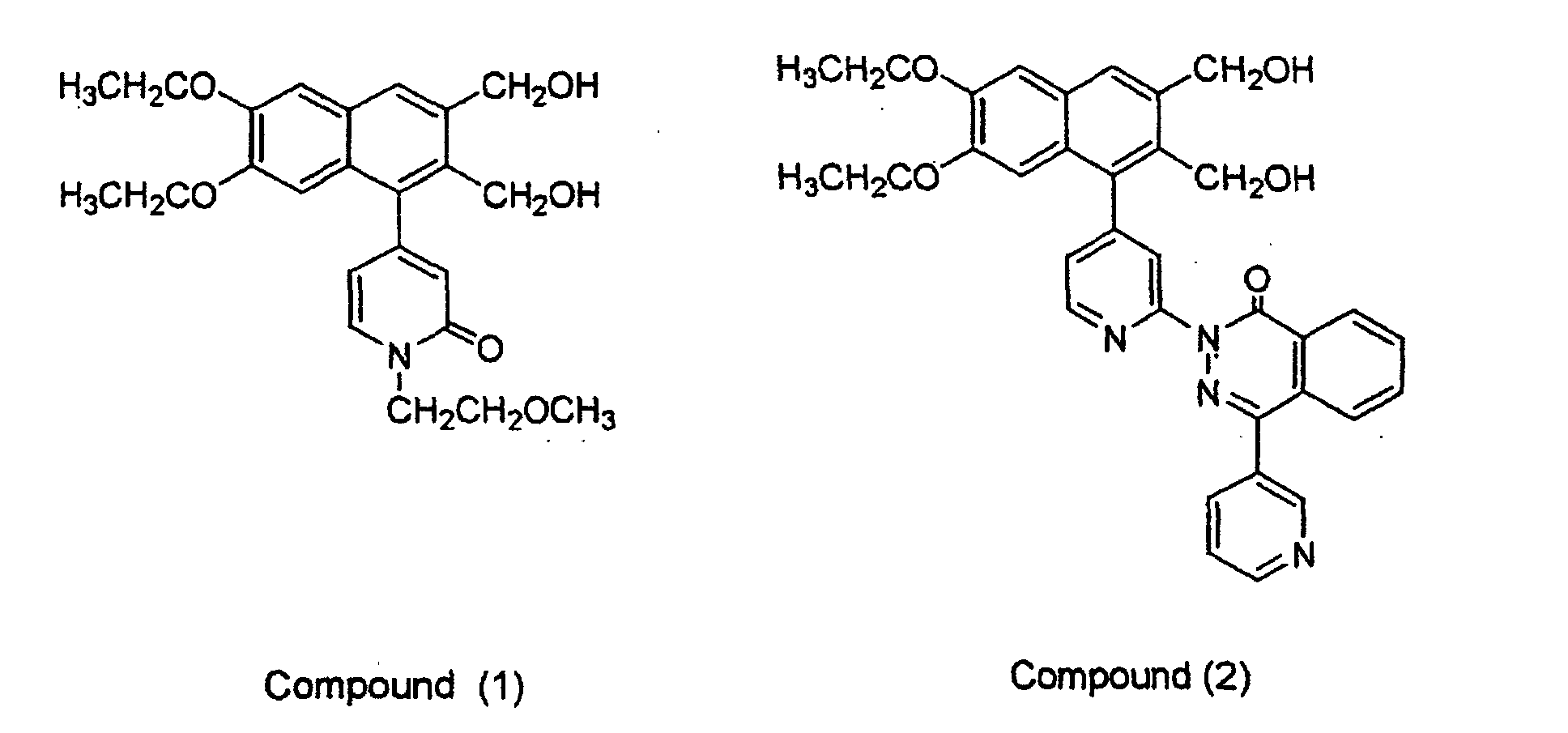
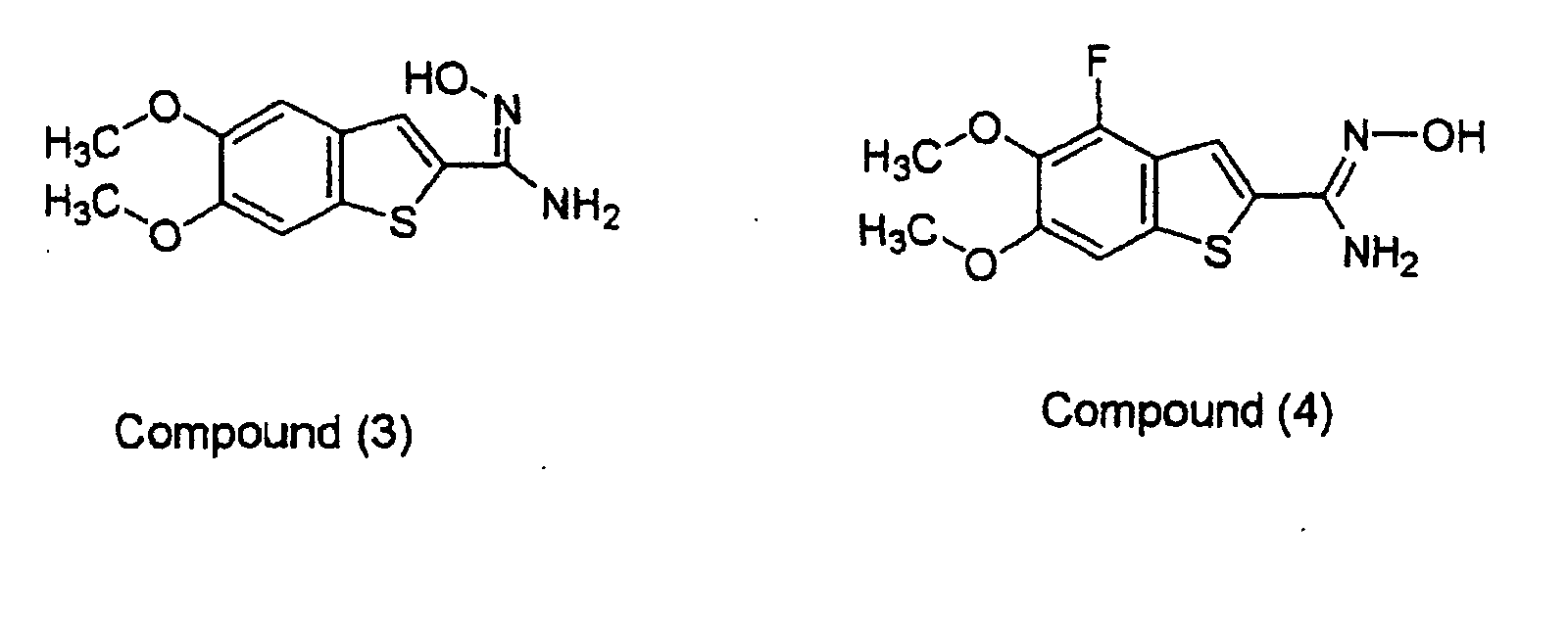
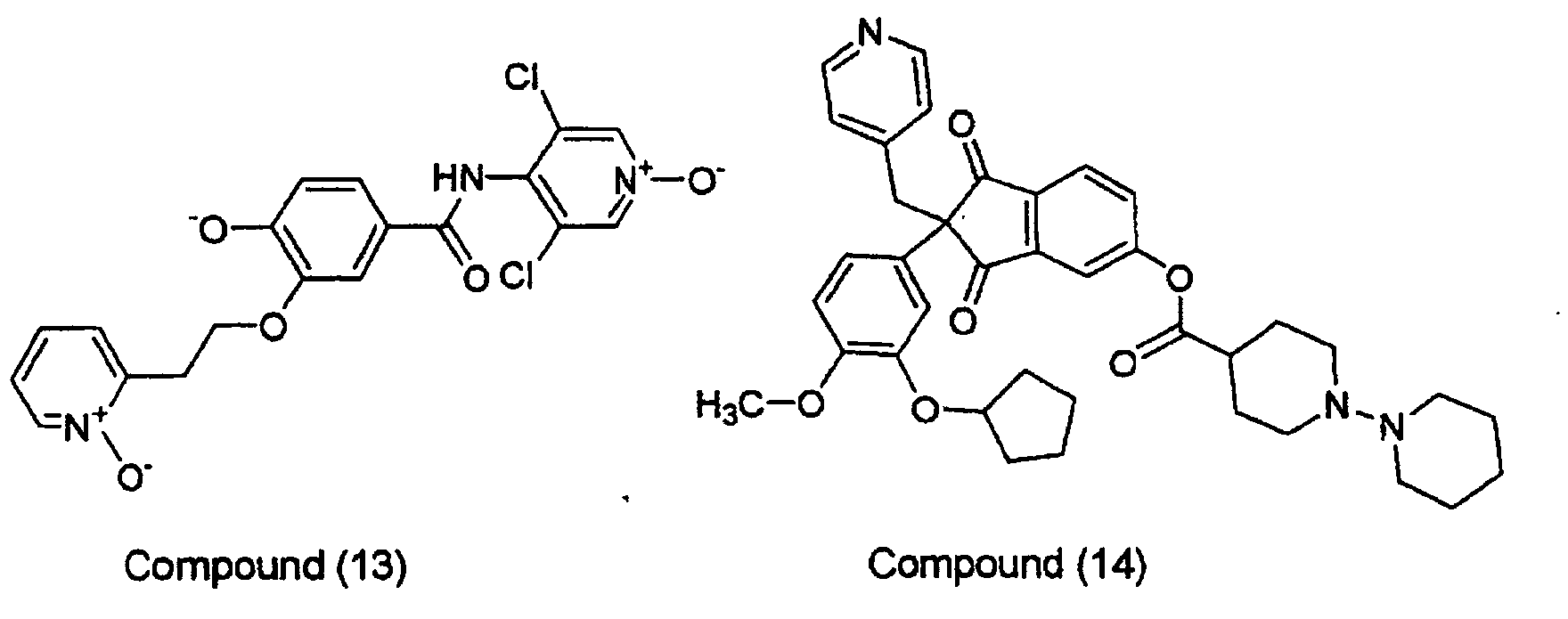
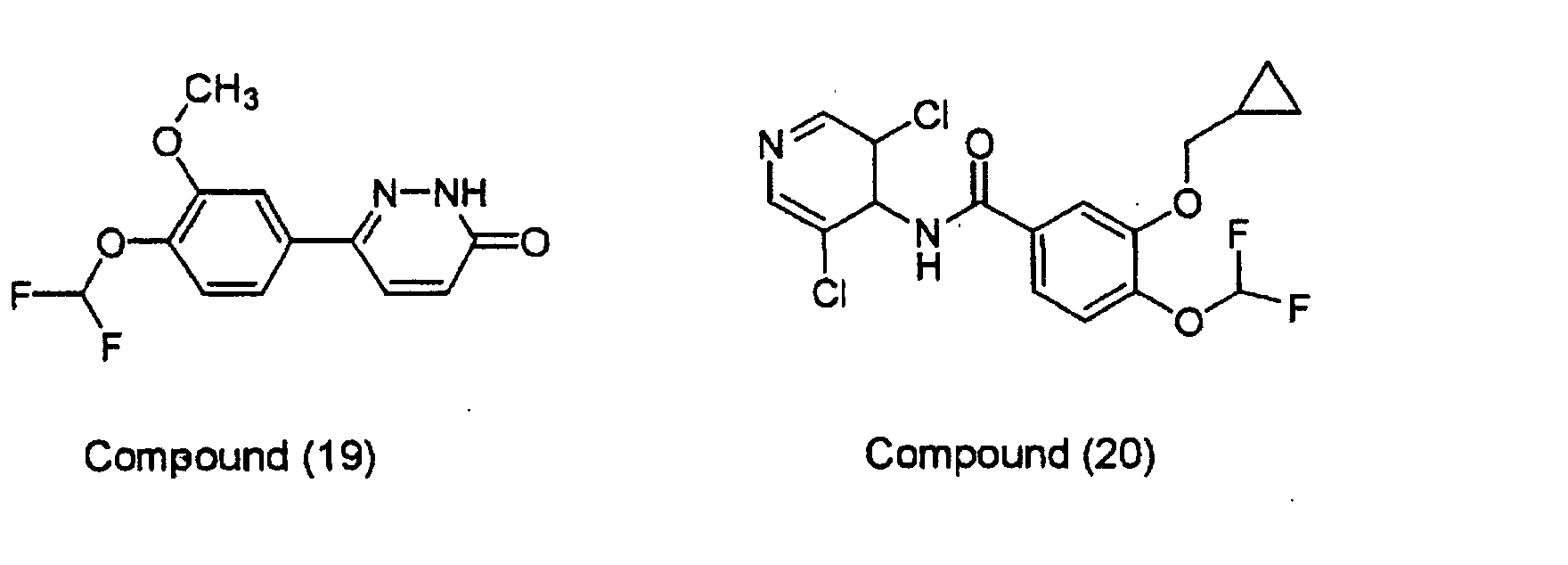
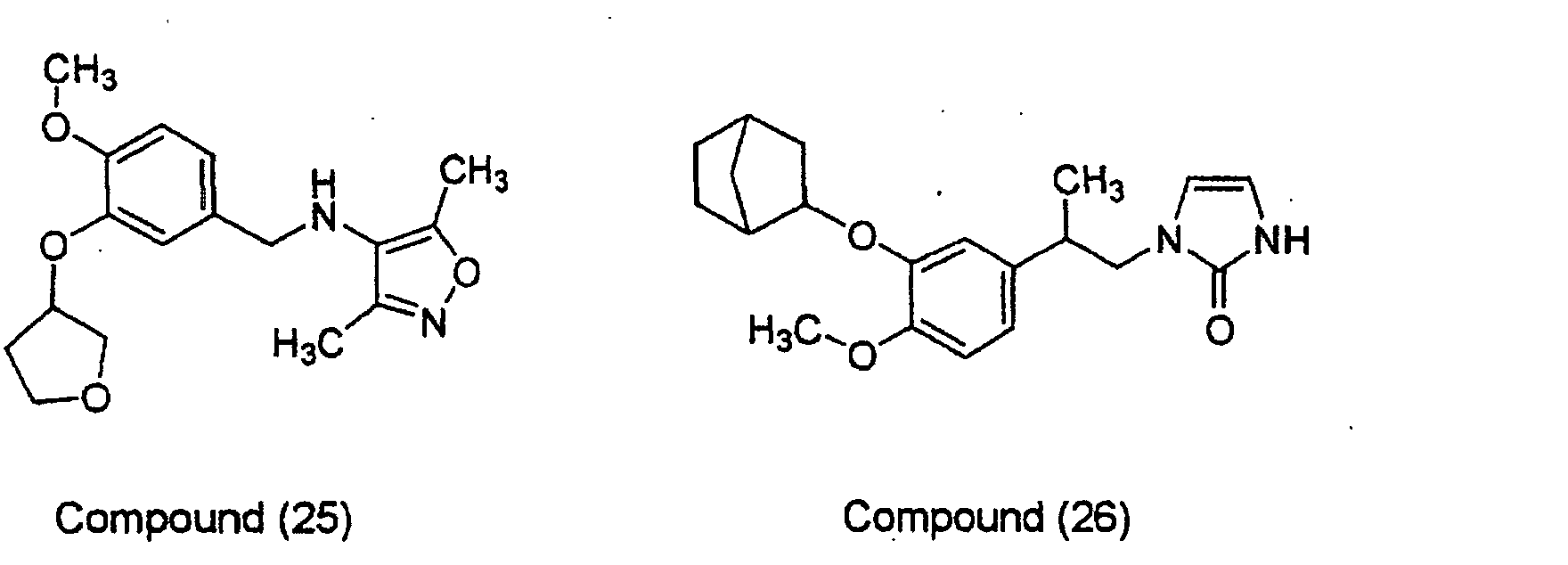
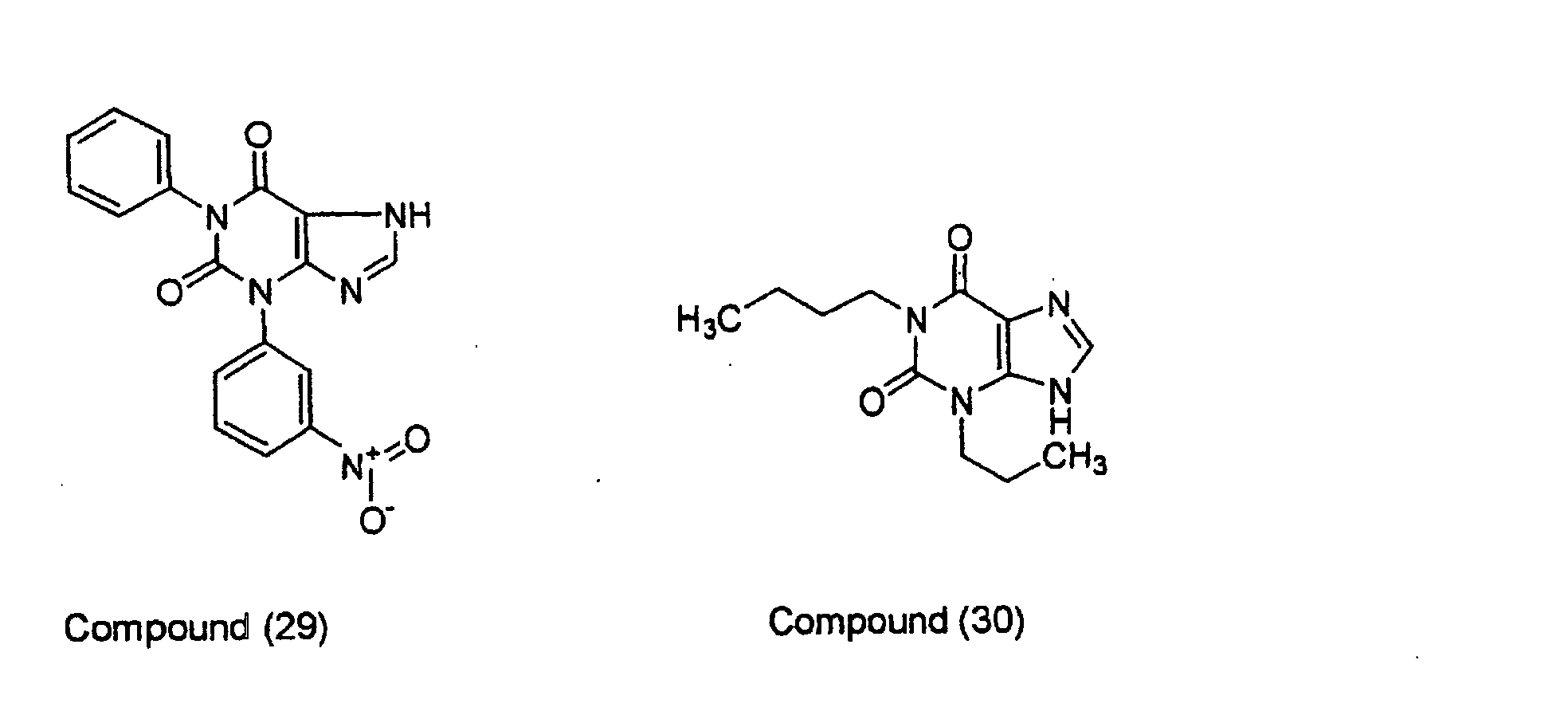
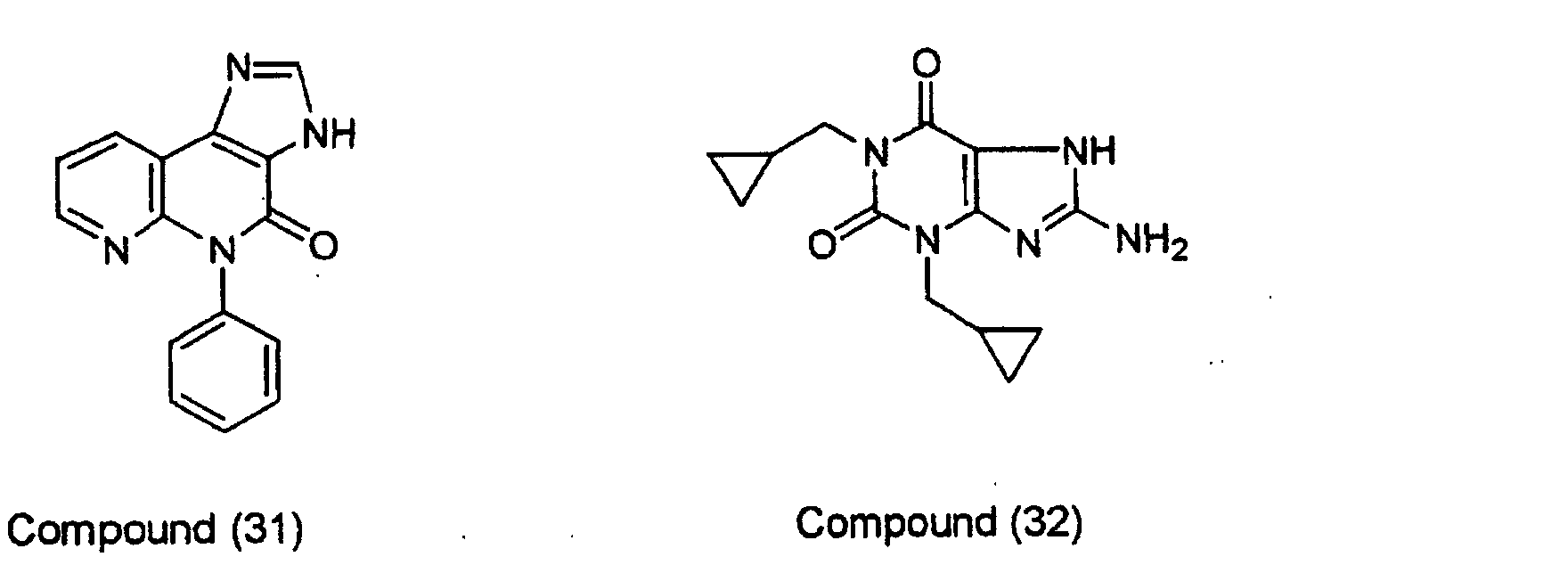
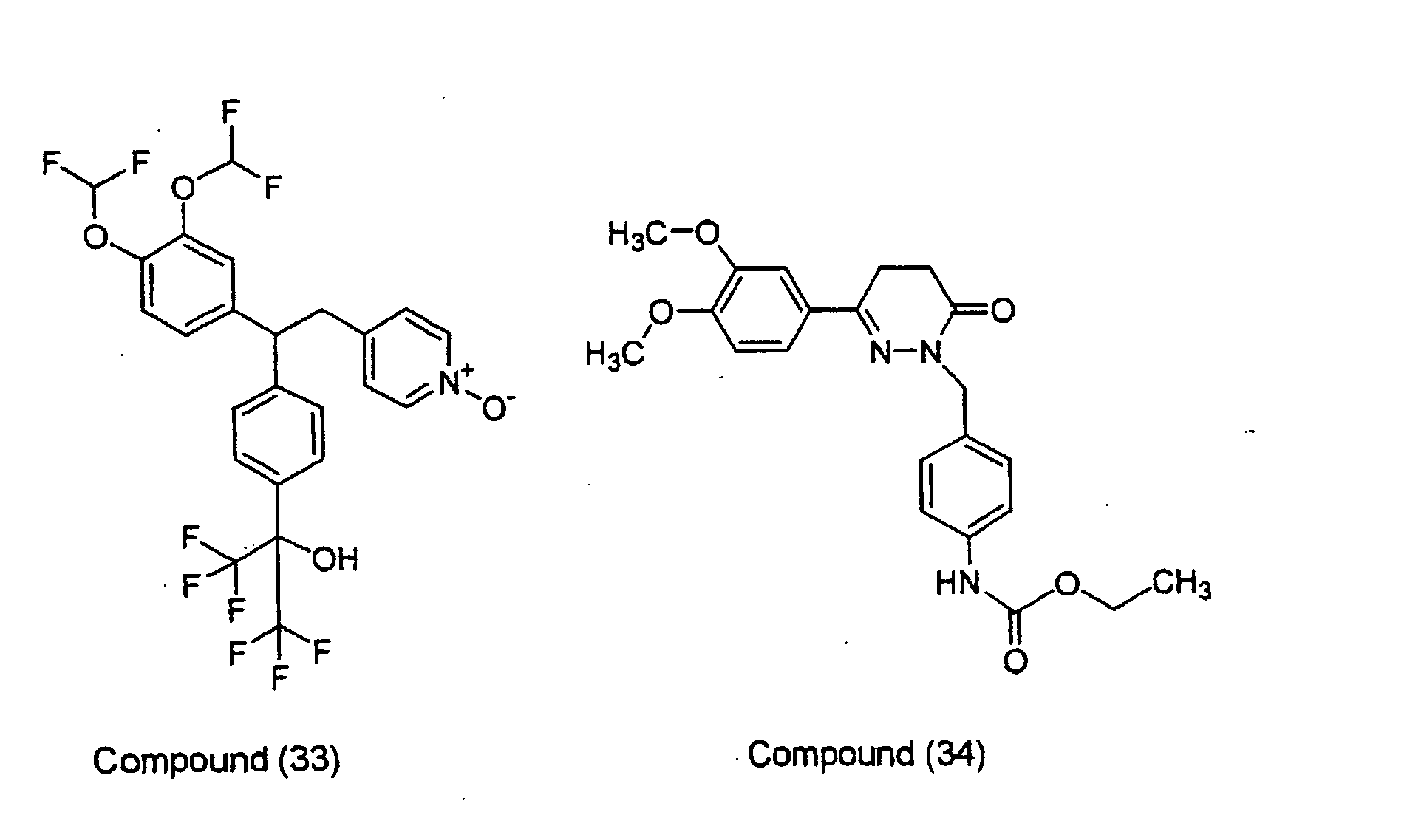
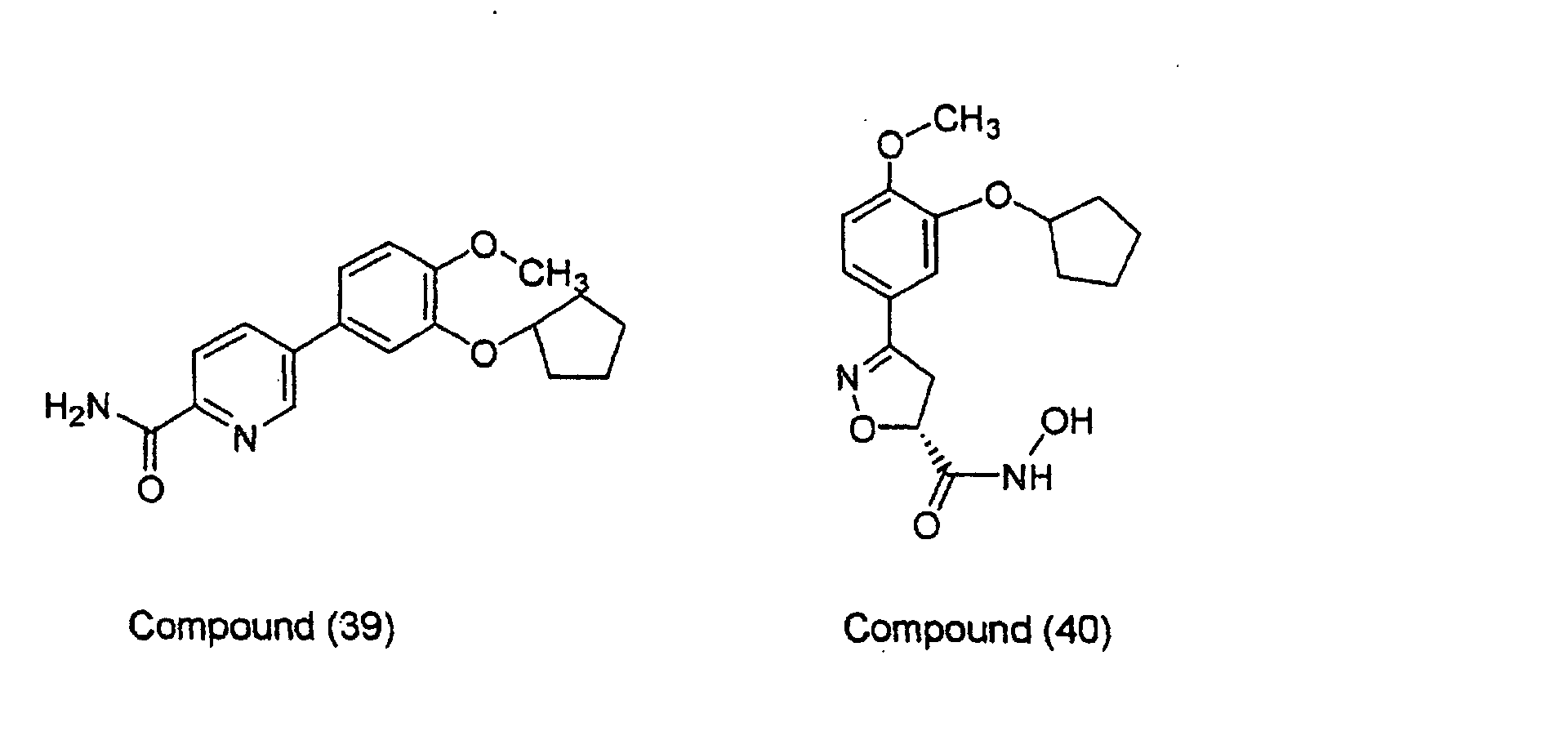
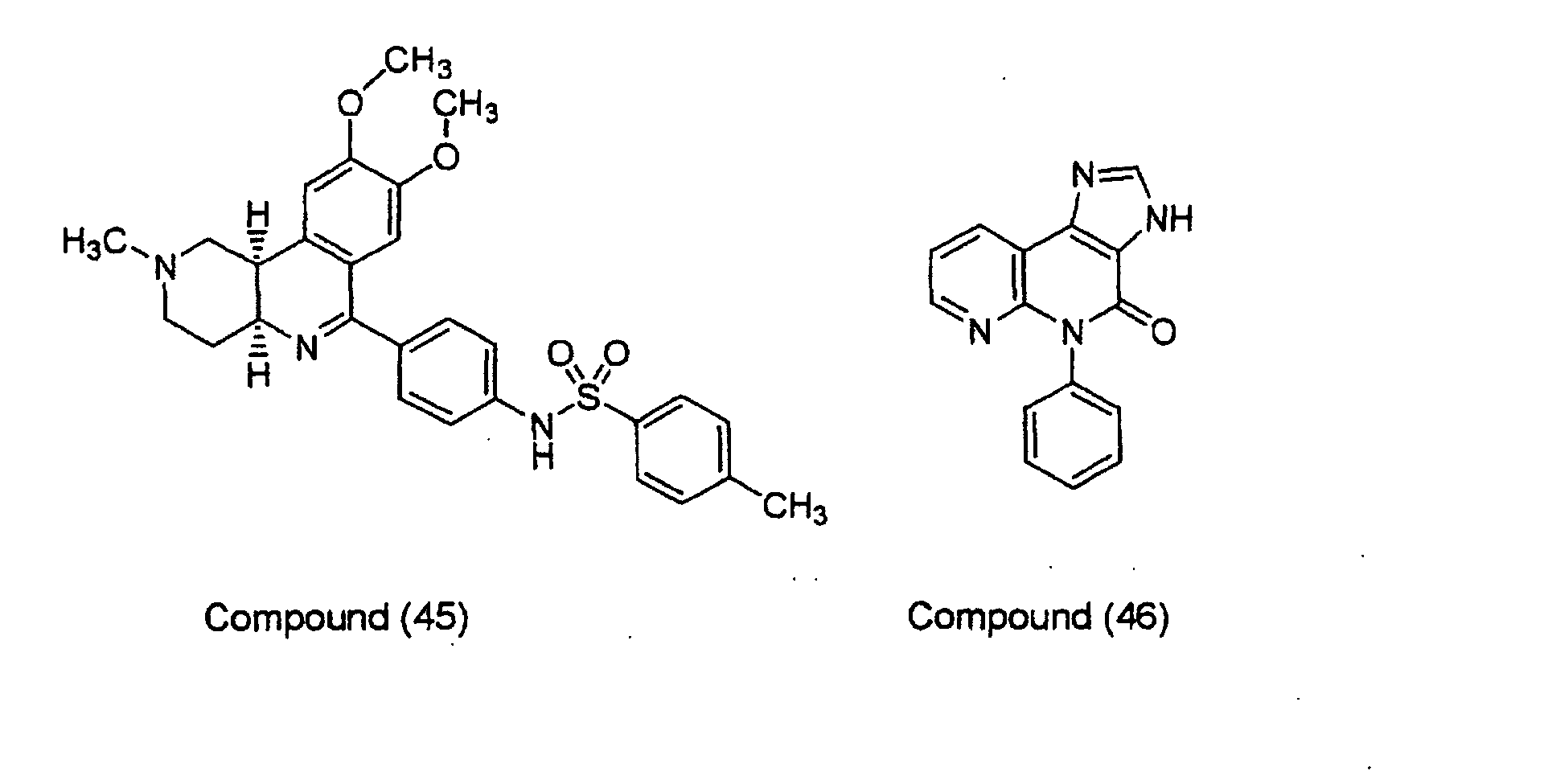
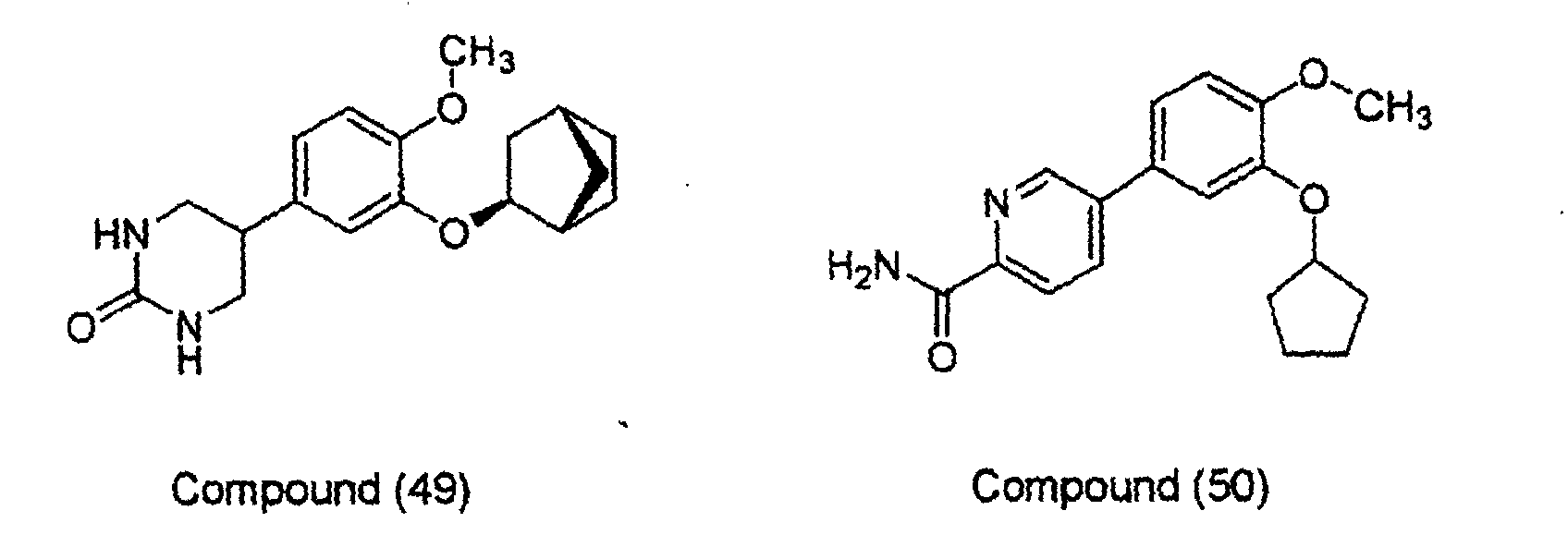
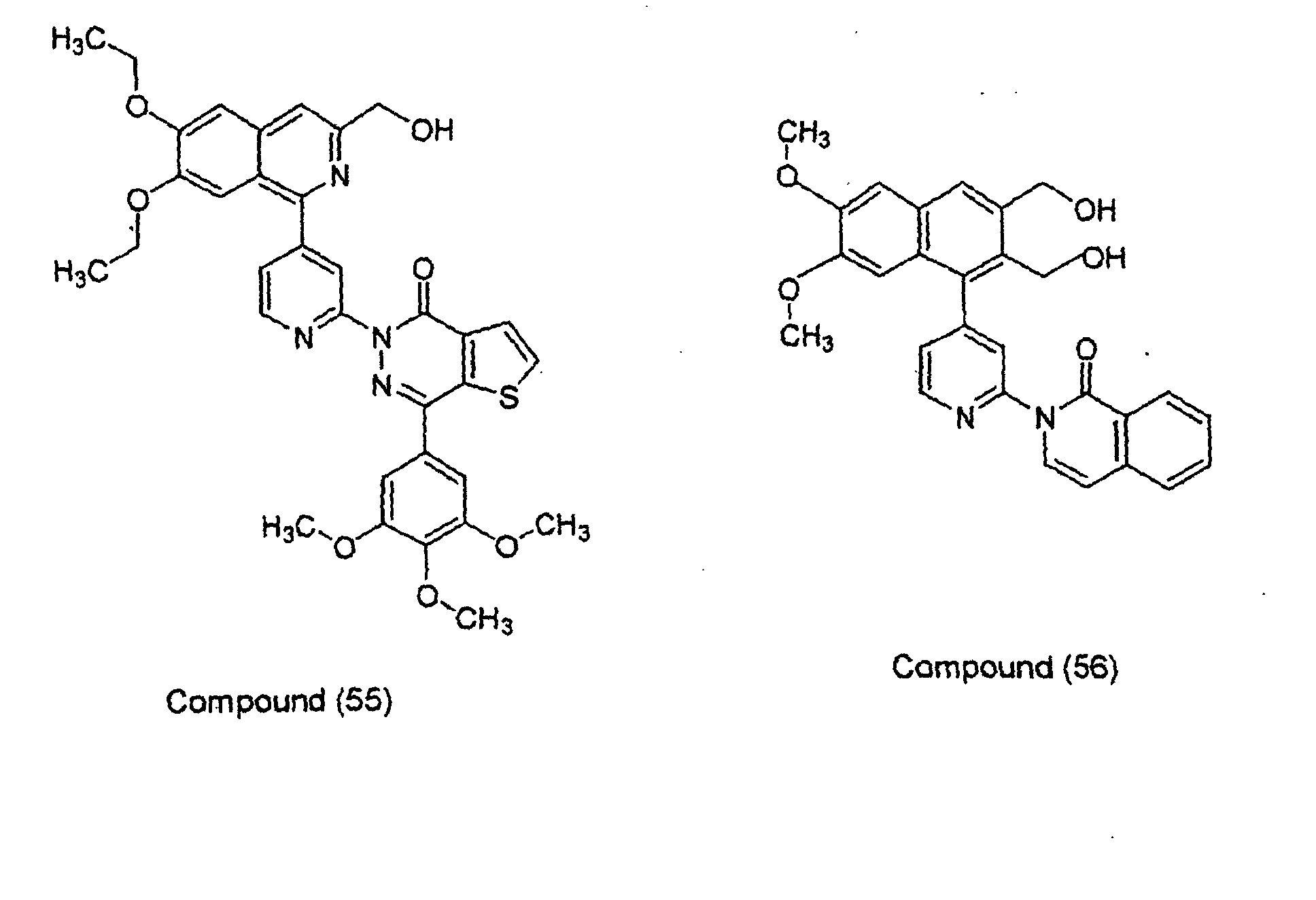
- selective PDE4 inhibitors include Compounds (1) to (57) represented by the following formulas or pharmaceutically acceptable salts thereof.
- the compounds having PDE4 inhibitory activity can be classified into (A) to (D) below according to the chemical structure, and a PDE4 inhibitor for the present invention can be selected from these compounds appropriately; however, preferred compounds belong to (A) and (B), in particular, (A) .
- Examples of compounds of group (A) include those shown by the following formulas (I) to (III) and pharmacologically acceptable salts thereof.
- R 1 and R 2 are the same or different and each a hydrogen atom, a hydroxyl group, a cycle-lower alkyloxy group, or an optionally substituted lower alkoxy group, or bind together at the ends to form a lower alkylenedioxy group
- R 3 is an optionally substituted 6-membered nitrogen-containing heterocyclic group
- -OR 4 and -OR 5 are the same or different and each an optionally protected hydroxyl group. JP 05-229987A, (1993).
- R 1' and R 2' are the same or different and each a hydrogen atom or an optionally protected hydroxyl group; either of R 3' and R 4' is an optionally protected hydroxy-substituted methyl group and the other is a hydrogen atom, a lower alkyl group or an optionally protected hydroxy-substituted methyl group; and R 5' and R 6' are the same or different and each a hydrogen atom, an optionally substituted lower alkyl group, an optionally substituted phenyl group or an optionally protected amino group, or bind together at the ends and form in association with the adjacent nitrogen atom an optionally substituted heterocyclic group. JP-09-59255A, (1993).
- A is a group selected from those shown by the formulas: wherein R 1" and R 2" are the same or different and each a hydrogen atom or an optionally protected hydroxyl group; R 31 is an optionally protected hydroxymethyl group; R 32 is a hydrogen atom, a lower alkyl group or an optionally protected hydroxymethyl group; R 33 is an optionally substituted lower alkyl group; R 41 is an optionally protected hydroxymethyl group; R 42 is an optionally protected hydroxymethyl group; the dotted line represents the presence or absence of a double bond; and R 5" and R 6" are the same or different and each a hydrogen atom or an optionally protected amino group, or bind together at the ends and form in association with the adjacent nitrogen atom an optionally substituted heterocyclic group. JP-10-226685A, (1998).
- PDE4 inhibitor which is an active ingredient of the present bone fracture healing accelerating composition
- group (A) compounds having naphthalene or isoquinoline skeleton and pharmaceutically acceptable salts thereof are more preferred, and Compounds (1) and (2) and their pharmaceutically acceptable salts are still more preferred.
- the bone fracture healing accelerating composition of the present invention is preferably applied locally to a vicinity of fracture region so that the drug concentration in the systemic blood does not increase but the one at the fracture region is maintained.
- Examples of preferred embodiments of the present composition include depot preparations which gradually release a drug when administered locally (e.g., pellet preparation, gel preparation, matrix preparation, microsphere preparation, a sustained release preparation obtained by adding a drug into an aqueous solution of a biocompatible and biodegradable polymer, a preparation which is designed to be a liquid at the time of administration and to form a gel in a living body after administration, a preparation embedded in various bases which are reported to be generally used in the field of orthopedics, and the like.)
- depot preparations which gradually release a drug when administered locally e.g., pellet preparation, gel preparation, matrix preparation, microsphere preparation, a sustained release preparation obtained by adding a drug into an aqueous solution of a biocompatible and biodegradable polymer, a preparation which is designed to be a liquid at the time of administration and to form a gel in a living body after administration, a preparation embedded in various bases which are reported to be generally used in the field of orthopedics, and the like.
- pellet preparations include a long-term sustained release preparation obtainable by compressing a drug and fine particles of lactic acid-glycolic acid copolymer of which terminal carboxyl group is esterified by an alcohol, and the like. (JP2001-187749A)
- gel preparations include those obtained by dissolving into a phosphate buffer a drug and hyaluronic acid which is chemically bound to polyethylene glycol (Journal of Controlled Release, 59 (1999) pp. 77-86), and the like.
- matrix preparations comprising a drug include those obtained by impregnating a drug into granular material of collagen or fibrous membrane preparation, or by adding a drug to a granular material of collagen or a reaction mixture for preparing a fibrous membrane preparation, and the like (JP10-182499A (1998), JP06-305983 (1994)).
- Examples of a sustained release preparation obtained by adding a drug into an aqueous solution of a biocompatible and biodegradable polymer include those obtained by adding a drug into an aqueous sodium hyaluronate solution, and the like.
- Examples of a preparation designed to be a liquid at the time of administration and to form a gel in a living body after administration include those wherein a drug and a lactic acid-glycolic acid copolymer are dissolved in N-methyl-2-pyrrolidone (Journal of Controlled Release, 33 (1995) pp. 237-243), or a preparation comprising a drug and a polymer that exists as an solution at low temperature but forms a gel at body temperature, such as a block co-polymer of lactic acid-glycolic acid copolymer and polyethylene glycol and the like (ibid., 27(1993), 139-147).
- Examples of a preparation embedded in various bases which are reported to be generally used in the field of orthopaedics include those prepared by mixing a drug and a base (e.g., water-insoluble biocompatible and biodegradable polymer, polymethyl methacrylate, hydroxyapatite, tricalcium phosphate or the like). Biomaterials, vol. 21, pp. 2405-2412 (2000); and International Journal of Pharmaceutics, vol. 206, pp. 1-12 (2000).
- a base e.g., water-insoluble biocompatible and biodegradable polymer, polymethyl methacrylate, hydroxyapatite, tricalcium phosphate or the like.
- Preparations for local administration that release an effective amount of PDE4 inhibitor gradually in affected fracture region are preferred in the respect that the administration frequency during the term required for bone fracture healing can be reduced.
- the particle size of such microspheres is preferably in the range suitable for passing a needle, more preferably 0.01-150 ⁇ m, particularly preferably 0.1-100 ⁇ m in the respect that the irritation at the affection site can be reduced.
- the present bone fracture healing accelerating composition containing a PDE4 inhibitor as an active ingredient is administered locally to a vicinity of fracture region, it would be preferable to make the dosage small.
- the PDE4 inhibitor content in the composition such as microsphere preparation can be preferably 0.0001-80% by weight, more preferably 0.001-50% by weight, and further more preferably 0.01-50% by weight.
- the dose of a PDE4 inhibitor as an active ingredient may vary depending on the kind of PDE4 inhibitor to be used, the weight, age, conditions of the subject or a site to be applied and is generally determined by a physician; however, for local administration, the dose can usually be in the range of from 1 ng to 1 g per affected site.
- the bone fracture healing accelerating composition of the present invention can be prepared in a conventional manner using a PDE4 inhibitor and a pharmaceutically acceptable excipient or a carrier therefor.
- Preferred composition can be prepared by combining a PDE4 inhibitor and a biocompatible and biodegradable polymer.
- the water-insoluble biocompatible and biodegradable polymer is a water-insoluble biocompatible and biodegradable polymer that requires at least 1000 ml of water to dissolve 1 g of the polymer at 25°C
- specific example include hydroxy fatty acid polyesters and derivatives thereof (for example, poly lactic acid, poly glycolic acid, poly citric acid, poly malic acid, poly- ⁇ -hydroxybutyric acid, ring-opening polymerized ⁇ -caprolactones, lactic acid-glycolic acid copolymer, 2-hydroxybutyric acid-glycolic acid copolymer, block copolymer of poly lactic acid and polyethylene glycol, block copolymer of poly glycolic acid and polyethylene glycol, and block copolymer of lactic acid-glycolic acid copolymer and polyethylene glycol, etc.
- polymers of alkyl ⁇ -cyanoacrylates e.g., polybutyl-2-cyanoacrylate, etc .
- polyalkylene oxalate e.g., polytrimethylene oxalate, polytetramethylene oxalate, etc.
- polyortho-esters polycarbonates (e.g., polyethylene carbonate, polyethylenepropylene carbonate, etc. ), polyortho-carbonates, polyamino acids (e.g., poly- ⁇ -L-alanine, poly- ⁇ -benzyl-L-glutamic acid, poly- ⁇ -methyl-L-glutamic acid, etc. ), hyaluronic acid esters.
- biocompatible and biodegradable polymers include sodium hyaluronate, chondroitin sulfate, collagen, gelatin, fibrin, and the like.
- hydroxy fatty acid polyesters are particularly preferred. Above all, those of which average molecular weight ranging in between 2000 and about 800000 are more preferred, those ranging in between 2000 and about 200000 are especially preferred and those ranging in between 5000 and 50000 are most preferred.
- poly lactic acid, lactic acid-glycolic acid copolymer and 2-hydroxybutyric acid-glycolic acid copolymer are more preferred.
- the molar ratio of lactic acid and glycolic acid in a lactic acid-glycolic acid copolymer is preferably 90:10 to 30:70, more preferably 80:20 to 40:60, and the molar ratio of 2-hydroxybutyric acid and glycolic acid in a 2-hydroxybutyric acid-glycolic acid copolymer is preferably 90:10 to 30:70, more preferably 80:20 to 40:60.
- Pulverization of PDE4 inhibitor can be carried out using any one of conventional methods for producing fine particles including mechanical pulverization methods such as jet mill, hammer mill, convolution ball mill, jar ball mill, beads mill, shaker mill, rod mill and tube mill pulverizations, or so-called crystallization method wherein a drug is first dissolved in a solvent and then recrystallized by adjusting pH, changing temperature, or altering the constitution of solvent, and recovering the particles by centrifugation, filtration, or the like.
- mechanical pulverization methods such as jet mill, hammer mill, convolution ball mill, jar ball mill, beads mill, shaker mill, rod mill and tube mill pulverizations, or so-called crystallization method wherein a drug is first dissolved in a solvent and then recrystallized by adjusting pH, changing temperature, or altering the constitution of solvent, and recovering the particles by centrifugation, filtration, or the like.
- any appropriate process can be used depending on the selected PDE4 inhibitor.
- microsphere preparation can be prepared by the following methods.
- a salt of a PDE4 inhibitor shows low incorporation rate into a microsphere, it may be converted into corresponding free form using an acid or a base prior to the preparation of microspheres.
- a drug is added to a solution of water-insoluble biocompatible and biodegradable polymer in a water-immiscible organic solvent of which boiling point is lower than water (water-insoluble polymer solution), and the resultant organic phase is dispersed into an aqueous phase to give an O/W emulsion, which is followed by removal of the organic solvent.
- This method can be conducted in a manner similar to those described in, for example, JP 56-19324B (1981),JP 63-91325A (1988), JP 08-151321A (1996), Kajeev Jain et al., "Controlled Drug Delivery by Biodegradable Poly (Ester) Devices: Different Preparative Approaches", Drug Development and Industrial Pharmacy, vol. 24(8), pp. 703-727, 1998, JP 60-100516A (1985), JP 62-201816A (1987), JP 09-221417A .(1997) and JP 06-211648A (1994).
- a solution of water insoluble biocompatible and biodegradable polymer in an organic solvent is dissolved or dispersed a drug, or is dispersed an aqueous solution of the drug.
- the resultant solution or dispersion is then sprayed via a nozzle into a drying chamber of a spray drier to volatilize the organic solvent in the fine droplets in a very short time.
- This method can be conducted in a manner similar to those described in, for example, JP 01-155942A (1989), JP 05-194200A (1993), JP 05-70363A (1993), JP 08-151321A (1996), JP 09-221417A (1997), USP 5,922,253, "Spray Drying Handbook” (John Wiley & Sons, New York 1984), Partick B. Deasy, "Microcapsulation and Related Drug Processes” (Marcel Dekker, Inc., New York 1984) and the forecited Jain et al. (ibid), and the like.
- a solution of a drug and a water insoluble biocompatible and biodegradable polymer in a water miscible organic solvent is added to an aqueous solution of protective colloid, followed by emulsification with stirring to yield fine particles.
- This method can be conducted in a manner similar to those described in, for example, JP 05-58882A (1993), JP 09-110678A (1997) and International Journal of Pharmaceutics, vol. 187, pp. 143-152 (1999).
- organic phase examples include the followings.
- the emulsification can be achieved by a conventional method, for example, the intermittent shaking method, the method using a mixer such as a propeller shaker or a turbine shaker, the colloidal mill method, the homogenizer method and the ultrasonication method.
- a conventional method for example, the intermittent shaking method, the method using a mixer such as a propeller shaker or a turbine shaker, the colloidal mill method, the homogenizer method and the ultrasonication method.
- organic solvent usable in these methods include halogenated hydrocarbons (methylene chloride, chloroform, carbon tetrachloride, chloroethane, dichloroethane, trichloroethane, etc .), aliphatic esters (ethyl acetate, butyl acetate, etc .), aromatic hydrocarbons (benzene, etc .), aliphatic hydrocarbons (n-hexane, n-pentane, cyclohexane, etc. ), ketones (methylethyl ketone, etc .), ethers (diethyl ether, diisopropyl ether, methyl isobutyl ether, etc .)
- halogenated hydrocarbons methylene chloride, chloroform, carbon tetrachloride, chloroethane, dichloroethane, trichloroethane, etc .
- aliphatic esters ethyl acetate,
- an emulsifier may be added to an aqueous phase to stabilize emulsion, which emulsifier includes, for example, anionic surfactants (sodium oleate, sodium stearate, sodium lauryl sulfate, etc .), nonionic surfactants (polyoxyethylene sorbitan fatty acid ester [Tween80, Tween 60 (Nikko Chemicals, Co., Ltd.)], polyethylene castor oil derivatives [HCO-60, HCO-50 (Nikko Chemicals, Co., Ltd.)], polyvinylpyrrolidone, polyvinyl alcohol, carboxymethyl cellulose, methyl cellulose, lecithin, gelatin, etc.
- anionic surfactants sodium oleate, sodium stearate, sodium lauryl sulfate, etc .
- nonionic surfactants polyoxyethylene sorbitan fatty acid ester [Tween80, Tween 60 (Nikko Chemicals, Co., Ltd
- the former can be preferably added to the organic phase at the time of preparation of O/W emulsion.
- an osmoregulatory agent may be included in an aqueous phase to prevent the outflow of an active ingredient into an aqueous phase (JP 2608245).
- the O/W emulsion obtained in the above-mentioned manner is then subjected to in-water-drying to remove organic solvent present in emulsion to give microspheres.
- Organic solvent can be removed from emulsion in a conventional manner such as heating, placing under reduced pressure, blowing air, or the like, and for example, a method where a solvent is distilled off in an open system (JP 56-19324B (1981), JP 63-91325A (1988), JP 08-151321A (1996), JP 06-211648A (1994)) or in a closed system (JP 09-221418A (1997)) can be employed.
- a method where a solvent is extracted and removed by means of a large quantity of outside water phase JP-2582186 can also be used.
- the mixture upon emulsification, gives emulsion wherein the polymer solution constitutes the dispersed-phase and the homogeneous mixed solution constitutes the continuous-phase.
- the solvent A is then removed from the dispersed phase (WO/01/80835).
- a method for preparing microspheres from emulsion by in-water-drying method in which emulsion an organic phase containing an organic solvent with a boiling point lower than water (methylene chloride, ethyl acetate, etc .) and a water insoluble polymer is emulsified in an aqueous phase, comprising (1) employing a device equipped with a gas separation membrane (permeable evaporation membrane, porous membrane, etc. ), (2) providing emulsion to be subjected to the in-water-drying to one side of the gas separating membrane, and (3) distilling off the organic solvent in emulsion to the other side of the gas separating membrane (WO/01/83594).
- a gas separation membrane permeable evaporation membrane, porous membrane, etc.
- the organic solvent remaining in microspheres can be removed by heating microspheres in an aqueous phase at temperature higher than the boiling point of the organic solvent (JP 2000-239152A) or heating the microspheres to dry after coating with an additive of high melting point (JP 09-221417A (1997)).
- the resultant microspheres are recovered by centrifugation, filtration or sieving, washed to remove substances attached on the surface such as additives in the water-phase, and subjected to lyophilization optionally after combining with an aggregation inhibitor to prevent the agglomeration of microspheres, for example, sugar, sugar alcohol or inorganic salt, preferably lactose, mannitol or sorbitol.
- an aggregation inhibitor to prevent the agglomeration of microspheres
- sugar, sugar alcohol or inorganic salt preferably lactose, mannitol or sorbitol.
- a sieve to obtain microspheres of an intended particle size, and it is more preferred to use a sieve allowing particles of, for example, 150 ⁇ m or below to pass so as to improve the syringeability when the microsphere preparation is used as injectable solution.
- amphiphilic solvents such as acetone, acetonitrile, tetrahydrofuran and dioxane in addition to the organic solvents used in the "In-water Drying Method” above can be used.
- a PDE4 inhibitor and optionally one or more additional ingredients, or a solution thereof, are dissolved or dispersed in an organic solution of water insoluble polymer in any one of these organic solvents to form an organic phase.
- the organic phase is added gradually to a solvent (disperse medium) immiscible with the organic solvent above, for example, silicon oil, liquid paraffin, sesame oil, soybean oil, corn oil, cotton seed oil, coconuts oil, linseed oil, with stirring to form O/O emulsion.
- a surfactant may be added to the disperse medium.
- the water insoluble polymer can be solidified by cooling the emulsion or evaporating the solvent in the organic phase by heating.
- a hardening agent such as hexane, cyclohexane, methyl ethyl ketone, octamethyl-cyclotetrasiloxane or the like can be added gently to emulsion with stirring, or versa, to separate out the water insoluble polymer from emulsion thereby forming microspheres.
- the resultant microspheres are recovered by centrifugation, filtration or sieving, washed with hexane or purified water to remove solvents, additives, etc. attached on its surface, and optionally subjected to airdrying, vacuum-drying, or lyophilization. Alternatively, it can be lyophilized after adding an aggregation inhibitor in a manner similar to that used in the above-mentioned in-water-drying method.
- Examples of internal organic phase in the phase separation method include the following embodiments.
- microspheres by "Spray Drying Method” is conducted using the same organic solvent as the above-mentioned phase separation method.
- a water insoluble biocompatible and biodegradable polymer To an organic solvent is dissolved a water insoluble biocompatible and biodegradable polymer, and a PDE4 inhibitor and optionally one or more additional ingredients, or a solution thereof, are dissolved or dispersed in the solution, and sprayed via a nozzle into a drying chamber of a spray drier to volatilize the organic solvent to form microspheres.
- any commercially available spray dryers for example, such as Pulvis Mini Spray GS31 (YAMATO Scientific Co., Ltd.), Mini Spray Dryer (Shibata Scientific Technology, Co., Ltd.), can be used.
- microspheres are then worked-up in a manner similar to that used in the in-water drying method to yield the desired microsphere preparation.
- water-miscible organic solvents include acetone, methanol, ethanol or a mixture thereof, which may further contain a volatile solvent (methylene chloride, chloroform) in which a drug can dissolve, if necessary.
- a volatile solvent methylene chloride, chloroform
- colloid protective agent include polyvinyl alcohol.
- microsphere preparation of the present composition for accelerating the bone fracture healing comprising a PDE4 inhibitor as an active ingredient
- it can be preferably applied locally, more preferably, as injection or implant.
- An injectable preparation of microspheres can be prepared by dispersing/suspending microspheres obtained by the present invention at a concentration of 0.0001-1000 mg/ml, preferably 0.0005-800 mg/ml, more preferably 0.001-500 mg/ml into an aqueous solution containing a dispersant.
- dispersant examples include nonionic surfactants such as polyoxyethylene sorbitan fatty acid ester (Tween80, Tween60, Nikko Chemicals Co., Ltd.), polyethylene castor oil (HCO-60, HCO-50, Nikko Chemicals Co., Ltd.), cellulose-derived dispersants such as carboxymethyl cellulose sodium, sodium alginate, dextran, sodium hyaluronate, and the like. These dispersants can serve to improve the dispersibility of microspheres and stabilize the elution of an active ingredient.
- a dispersant can generally be added to a composition at a concentration of 0.01-2 % by weight, preferably 0.05-1 % by weight.
- the injectable preparation above may optionally contain a preservative (methylparaben, propylparaben, benzyl alcohol, chlorobutanol, sorbic acid, boric acid, amino acid, polyethylene glycol, etc .), an isotonizing agent (sodium chloride, glycerin, sorbitol, glucose, mannitol, etc. ), a pH modifier (sodium hydroxide, potassium hydroxide, hydrochloric acid, phosphoric acid, citric acid, oxalic acid, carbonic acid, acetic acid, arginine, lysine, etc .), a buffer (sodium hydrogen phosphate, potassium hydrogen phosphate, etc .) or the like.
- a preservative methylparaben, propylparaben, benzyl alcohol, chlorobutanol, sorbic acid, boric acid, amino acid, polyethylene glycol, etc .
- an isotonizing agent sodium chloride,
- a steroid antiinflammatory analgesic or non-steroidal antiinflammatory analgesic may be dissolved or dispersed in the injectable preparation.
- steroidal antiinflammatory analgesic include dexamethasone, triamcinolone, triamcinolone acetonide, halopredone, paramethasone, hydrocortisone, prednisolone, methylprednisolone, betamethasone, and the like.
- non-steroidal antiinflammatory analgesic include ibuprofen, ketoprofen, indomethacin, naproxen, piroxicam, and the like.
- the microsphere injection containing PDE4 inhibitor can be in the form of a kit for preparing an injectable preparation at the time of use, which kit comprises a solid preparation of an aggregation inhibitor and microspheres, a dispersant and injectable distilled water.
- the solid preparation used in a kit can be prepared by suspending microspheres in an aqueous solution containing an aggregation inhibitor, and subjecting the suspension to lyophilization, vacuum drying, or spray drying, and/or the like.
- the lyophilization is especially preferred.
- a dispersant When preparing a solid preparation, a dispersant can be added to an aqueous solution containing aggregation inhibitor (mannitol, sorbitol, lactose, glucose, xylitol, maltose, galactose, sucrose, etc. ) in order to improve the re-dispersibility into injectable distilled water, thereby yielding a solid preparation of good dispersibility.
- aggregation inhibitor mannitol, sorbitol, lactose, glucose, xylitol, maltose, galactose, sucrose, etc.
- it can be formulated into a kit for preparing an injectable preparation, in which a steroidal antiinflammatory analgesic and/or a non-steroidal antiinflammatory analgesic as well as a dispersant are combined.
- the present bone fracture healing accelerating composition comprising a PDE4 inhibitor as an active ingredient can be used in treatment of various warm blood mammals such as human, a domestic animal (a horse, a bull, a sheep, a pig), a pet (a dog, a cat), and the like.
- disorders to which the present fracture healing accelerating composition comprising a PDE4 inhibitor as an active ingredient applicable include (a) fracture by external force, (b) pathological fracture (fracture associated with osteoporosis, osteomalacia, malignant tumor, multiple myeloma, osteogenesis imperfecta congenita, cyctic bone, suppurative myelitis, osteopetrosis or nutrition disorders), and (c) fatigue fracture.
- the present fracture healing accelerating composition comprising a PDE4 inhibitor as an active ingredient can be applied to any of the following fractures, including fissure fracture, greenstick fracture, transverse fracture, oblique fracture, spiral fracture, segmental fracture, comminuted fracture, avulsion fracture, compression fracture, depression fracture, and the like
- CD (SD) IGS rats (Charles River Japan, Inc.; male; 7-week-old) were housed for seven days at room temperature (23 ⁇ 2°C) and 40-70 % humidity. During the housing period, the rats were free to access commercially available food (from Oriental Bio; CE-2).
- the left-lower legs of rats were shaved and sterilized with 70 % aqueous ethanol, fibulas were exposed with scissors and cut with nail scissors (Natsume Seisakusyo; B17). The cut sections of the fibula were re-matched with tweezers.
- the drug-containing microspheres prepared in Example 2-(1) which contains 0.1 or 0.5 mg of Compound (1), were placed around the cutting site of each rat using spatula followed by suturing with silk thread.
- the same amount of drug-free microspheres prepared in Control Example 1-(1) were placed around the cutting site using spatula followed by suturing with silk thread.
- the fibula excised at 6 weeks after suturing was subjected to DXA bone densitometer (Aloka; DCS-600) to determine bone mineral density and bone mineral content at fracture region (scanning width: 1 mm).
- the volume of fibula excised 6 weeks after suturing was determined using Plethysmometer (Muromachi Kikai Co., Ltd.; TK-101).
- the fibula excised at 6 weeks after suturing was subjected to a three-point bending test with bone strength tester (from Muromachi Kikai Co., Ltd.; TK-252C) to determine bone strength.
- bone strength tester from Muromachi Kikai Co., Ltd.; TK-252C
- the fibula was supported by two supports apart from each other by 8 mm and the cut section was positioned at the middle of these supports, i.e., 4 mm apart from the respective two supports.
- Loading (3 mm/minute) from upper direction was kept on the middle point (fracture section) of fibula until fibula begins to fracture.
- the maximum pressure necessary to break the bone was defined as the breaking force and the total energy spent to break the bone was defined as the breaking energy.
- CD (SD) IGS rats (Charles River Japan, Inc.; male; 7-week-old) were housed for seven days at room temperature (23 ⁇ 2°C) and 50 ⁇ 20 % humidity. During the housing period, the rats were free to access commercially available food (from Oriental Bio; CE-2).
- the left-lower legs of rats were shaved and sterilized with 70 % aqueous ethanol; fibulas were exposed with scissors and cut with nail scissors (Natsume Seisakusyo; B17). The cut sections of the fibula were re-matched with tweezers.
- the drug-containing microspheres prepared in Example 7 which contains 0.004, 0.02, 0.1 or 0.5 mg of Compound (2), were placed around the cutting site using spatula followed by suturing with silk thread.
- the same amount of drug-free microspheres prepared in Control Example 2 were placed around the cutting site using spatula followed by suturing with silk thread.
- every animal was sterilized with 70 % aqueous ethanol.
- Five rats at two weeks later and 10 rats at four weeks later were taken from each group and sacrificed by laparotomy with bleeding under ether anesthesia and the fibulas were excised.
- the fibula excised at 2 weeks after suturing was subjected to DXA bone densitometer (from Aloka; DCS-600) to determine bone mineral density and bone mineral content at fracture region (scanning width: 1 mm).
- the fibula excised at 4 weeks after suturing was subjected to a three-point bending test with bone strength tester (from Muromachi Kikai Co., Ltd.; TK-252C) to determine bone strength. Briefly, the fibula was supported by two supports apart from each other by 8 mm and the cut section was positioned at the middle of these supports, i.e., 4 mm apart from the respective two supports. Loading (3 mm/minute) from upper direction was kept on the middle point (fracture section) of fibula until fibula begins to fracture. The breaking force and the total energy spent to break the bone was defined as the breaking energy.
- Costicartilages were isolated from. NZ line rabbit (Kitayama Labes., Co Ltd.; male; 4-week-old) and soaked into Hank's balanced salt solution (calcium- and magnesium-free; LifeTech Co., Ltd.; hereinafter, referred to as "HBSS").
- Hank's balanced salt solution calcium- and magnesium-free; LifeTech Co., Ltd.; hereinafter, referred to as "HBSS"
- One costicartilage and one costa were excised together, the adipose tissue and the muscle tissue were removed and then, the proliferating chondrocyte layer of costicartilage was excised.
- the collected proliferating chondrocyte layer was cut into sections with a surgical knife (FEATHER Safety Razor Co., Ltd.) and the all proliferating chondrocyte layer sections from 4 rabbits were combined in a centrifuge tube.
- HBSS HBSS supplied with 0.1 % tetrasodium ethylenediamine tetraacetate to obtain suspension of the proliferating chondrocyte layer sections, which was shaken at 37°C for 20 minutes and centrifuged (1500 rpm, 10 minutes). The supernatant was aspirated off, and 40 ml of HBSS (pH 7.2) supplied with 0.2 % trypsin was added to the tube to suspend the precipitates and shaken at 37°C for 1 hour. The tube was centrifuged (1500 rpm, 10 minutes), and the supernatant was aspirated off.
- the precipitates were washed twice with HBSS, suspended in 100 ml of HBSS supplied with 0.1 % collagenase (Wako Pure Chemical Industries, Ltd., 034-10533) and shaken at 37°C for 3 hours.
- the content of the tube was passed through the Cell Strainer (pore size 40 ⁇ m) and the filtrate was divided into four centrifuge tubes.
- To each of all four tubes was added 40 ml of medium ( ⁇ -MEM, LifeTech Co., Ltd.), and the tubes were centrifuged (1500 rpm, 10 minutes). The supernatant was aspirated off, and the resultant precipitates were collected in one tube with Pipetman.
- the tube was re-centrifuged (1500 rpm, 10 minutes). Washing procedure comprising addition of medium followed by centrifugation was repeated additional three times. The precipitates were suspended in the same medium to give an about 5 ml suspension, and the cell number was counted.
- the suspension of costicartilage cell described above was added to 24-well plate at 50,000 cells per well (day 1). Next day, medium was replaced with the same medium. After the medium replacement at day 5, the medium in the well for test sample was replaced with a medium (including 0.1 % dimethylsulfoxide as a vehicle) containing a test compound indicated in Table 10 below. At the same time, the medium in the well for control was replaced with the same medium as the above except that it does not contain a test compound (vehicle only). At that time, ascorbate-phosphate ester was added to the medium at 2 mM of final concentration. In the case of Alcian blue staining, medium was changed at 5, 7, 9, 12 and 14 days, and the Alcian blue staining was carried out at day 16 from the initiation of cultivation.
- Japanese White rabbits male; 11-week-old; 4 rabbits/group were housed for seven days at room temperature (23 ⁇ 2°C) and 55 ⁇ 15 % humidity. During the housing period, the rabbits were free to access commercially available food (from Oriental Bio Service; LRC4) .
- the shoulder-side on the fracture line was defined as the proximal end and the point 5 mm apart from the proximal end toward wrist defined as the distal end.
- the total (cross sectional) bone area (mm 2 ) and stress-strain index (SSI: mm 3 ) at the distal end were determined using pQCT (Norland-Stratec; XCT-960A) (Clinical Calcium Vol. 10, 35-41, 2000).
- CD (SD) IGS rats (Charles River Japan, Inc.; male; 7-week-old) were housed for seven days at room temperature (23 ⁇ 2°C) and 55 ⁇ 15 % humidity. During the housing period, the rats were free to access commercially available food (from Oriental Bio Service; CRF-1).
- Streptozotocin (Sigma), which induce diabetes, was dissolved in citrate-buffered saline (pH 4.5) to obtain 0.05 M streptozocin solution and injected intravenously to each rat at 60 mg/kg.
- citrate-buffered saline pH 4.5
- streptozocin solution was diluted in citrate-buffered saline (pH 4.5) to obtain 0.05 M streptozocin solution and injected intravenously to each rat at 60 mg/kg.
- blood-glucose monitor Molecular Devices; M-SPmax250
- rats were divided into groups so that a significant difference in glucose level may not occur among groups.
- the average blood-glucose level was from 426.12 to 428.23 mg/dl.
- PDE4 inhibitor has bone mineral content increasing effects in a dose-dependent manner even in the case of bone fracture of diabetic subjects, of which healing is known to be delayed, as demonstrated in the diabetic model animals .
- the fibula used in the determination of mineral content was subjected to a three-point bending test with bone strength tester (from Muromachi Kikai Co., Ltd.; TK-252C) to determine bone strength. Briefly, the fibula was supported by two supports apart from each other by 8 mm and the cut section was positioned at the middle of these supports, i.e., 4 mm apart from the respective two supports. Loading (3 mm/minute) from upper direction was kept on the middle point (fracture section) of fibula until fibula begins to fracture. The maximum pressure necessary to break the bone was defined as the breaking force. The total energy spent to break the bone was defined as the breaking energy. The results are shown in Table 13.
- PDE4 inhibitor increased the breaking force and the breaking energy even in the case of bone fracture of diabetic subjects, of which healing is known to be delayed, as demonstrated in the diabetic model animals .
- the void of bone defect was not filled. In contrast, the void of bone defect was filled and bulging bone was observed in every sample from the test groups.
- CD (SD) IGS rats (Charles River Japan, Inc.; male; 7-week-old) were housed for seven days at room temperature (23 ⁇ 2°C) and 55 ⁇ 15 % humidity. During the housing period, the rats were free to access commercially available food (from Oriental Bio Service; CRF-1).
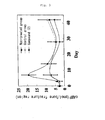
- control group (6 rats/group), the cut sections were re-matched with tweezers and sutured with silk thread without any treatment. Following the suturing, all animals were sterilized with 70 % aqueous ethanol. At 0, 3, 7, 14, 28 or 42 days after suturing, each one rat from each group was sacrificed by laparotomy with bleeding under ether anesthesia and the fibula was excised.
- the fracture segment of the excised fibula was cut into 1 cm sections and frozen with liquid nitrogen.
- the resultant sections were milled at -80°C, suspended in 300 ⁇ l of 6 % trichloroacetic acid, and sonicated.
- the suspension was centrifuged at 12000 rpm for 15 minutes.
- the supernatant was extracted with ether to remove trichloroacetic acid and incubated at 75°C for 5 minutes to remove ether from the supernatant.
- the CAMP in the resultant supernatant was measured using CAMP EIA system (Amersham Pharmacia Biotech).
- CD (SD) IGS rats (Charles River Japan, Inc.; male; 8-week-old) were housed for seven days at room temperature (23 ⁇ 2°C) and 55 ⁇ 15 % humidity. During the housing period, the rats were free to access commercially available food (from Oriental Bio Service; CRF-1).
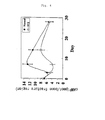
- Streptozotocin ("STZ", Sigma), which induce diabetes, was dissolved in citrate-buffered saline (pH 4.5) to obtain 0.05 M streptozocin solution and injected intravenously to each rat at 60 mg/kg.
- PH 4.5 citrate-buffered saline
- blood-glucose monitor Molecular Devices; M-SPmax250
- rats were divided into groups so that a significant difference in glucose level may not occur among groups.
- the average blood-glucose level was from 404.5 to 410.00 mg/dl.
- the fracture segment of the excised fibula was cut into 1 cm sections and frozen with liquid nitrogen.
- the resultant sections were milled at -80°C, suspended in 300 ⁇ l of 6 % trichloroacetic acid, and sonicated.
- the suspension was centrifuged at 12000 rpm for 15 minutes.
- the supernatant was extracted with ether to remove trichloroacetic acid and incubated at 75°C for 5 minutes to remove ether from the supernatant.
- the CAMP in the resultant supernatant was measured using CAMP EIA system (Amersham Pharmacia Biotech).
- a mixer Touch mixer MT-51: YAMATO Scientific Co., Ltd.
- 2.2 g of microsphere free of drug was obtained.
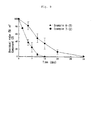
- test tube was centrifuged (2000 rpm, 5 min) and 9 ml of supernatant was sampled and loaded on FL-HPLC (column; Hypersil 5-ODS, diameter: 4 mm, length: 300 mm, GL Sciences, Inc., excitation wavelength: 315 nm, fluorescence wavelength: 465 nm) and the drug content was determined by comparing with a standard curve prepared separately with a drug solution. On the basis of the result and the sampling volume, the elution amount of drug was estimated.
- FL-HPLC columnumn; Hypersil 5-ODS, diameter: 4 mm, length: 300 mm, GL Sciences, Inc., excitation wavelength: 315 nm, fluorescence wavelength: 465 nm
- the estimation of elution amount of drug was repeated regularly by adding 9 ml of phosphate buffered saline (pH 7.4) to the test tube after sampling, and conducting the same procedures under the same conditions, which comprises stirring, sampling, and estimating.
- phosphate buffered saline pH 7.4
- Example 1-(4) After the final sampling, the remaining eluate was removed from the test tube and the drug content in the residual microsphere was determined according to the method described in Example 1-(4).
- the elution rate was calculated based on the assumption that the sum of drug eluted from and remained in the microsphere being 100 %.
- blood samples were collected at regular time intervals from jugular vein with a syringe containing heparin and centrifuged to obtain plasma samples.
- To 0.1 ml of plasma were added 0.2 ml of internal standard solution and 1 M dibasic potassium phosphate and then 7.0 ml of chloroform. The mixture was shaken for 10 minutes and centrifuged for 5 minutes to separate 5 ml of organic phase.
- the resultant organic phase was evaporated to dryness at 40°C under nitrogen atmosphere, re-dissolved in 0.5 ml of mobile phase and then loaded on FL-HPLC (column; Hypersil 5-ODS, diameter: 4 mm, length: 300 mm, GL Sciences, Inc., excitation wavelength: 315 nm, fluorescence wavelength: 465 nm) to determine the plasma concentration.
- FL-HPLC column; Hypersil 5-ODS, diameter: 4 mm, length: 300 mm, GL Sciences, Inc., excitation wavelength: 315 nm, fluorescence wavelength: 465 nm
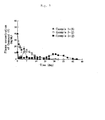
- mice Male SD rats (7-weeks-old, 5 rats/group, Japan SLC) were conditioned for a week by housing at room temperature (23 ⁇ 2°C) under 12 hours light-dark cycle while feeding with food and water ad libitum. Each rat then received subcutaneously microsphere dispersion obtained in Examples 1-(5), 2-(2) or 3-(2) from back at 2 ml per rat (total drug dosage: 5 mg/rat). After drug administration, under ether anesthesia, blood samples were collected at regular time intervals from jugular vein with a syringe containing heparin and centrifuged to obtain plasma samples. The concentration of the compound in plasma was determined in a manner similar to that described in Test Example 2.
- mice Male SD rats (7-weeks-old, 5 rat per group, Japan SLC) were conditioned for a week by housing at room temperature (23 ⁇ 2°C) under 12 hours light-dark cycle while feeding with food and water ad libitum. Each rat then received subcutaneously microsphere dispersion obtained in Example 2-(2) from back at 2 ml per rat (total drug dosage: 5 mg/rat).
- microspheres were collected from the sites of administration.
- 5 ml of acetonitrile containing internal control substance was added and dissolved with homogenizer (Polytron: Kinematica A.G.). After centrifugation at 3,000 rpm, 5 minutes, 3 ml of supernatant was collected, combined with 7 ml of 0.5 M aqueous sodium chloride solution, stirred with a mixer (Touch mixer MT-51: YAMATO Scientific Co., Ltd.) and then centrifuged at 2,000 rpm for 5 minutes to separate supernatant.
- homogenizer Polytron: Kinematica A.G.
- Microspheres were collected at regular time intervals from the administration site. To the collected microspheres, 10 ml of acetonitrile was added and dissolved with homogenizer (Polytron: Kinematica A.G.). After centrifugation at 3,000 rpm for 5 minutes, 3 ml of supernatant was collected, combined with 6 ml of 0.5 M aqueous sodium chloride, stirred with a mixer (Touch mixer MT-51: YAMATO Scientific Co., Ltd.) and then centrifuged at 2000 rpm for 5 minutes to separate supernatant.
- homogenizer Polytron: Kinematica A.G.
- the bone fracture healing accelerating composition of the present invention comprises a PDE4 inhibitor as an active ingredient, which, when administered locally to the fracture region, can promote the fracture healing by accelerating the endochondral ossification in the reparative phase without producing side effects due to systemic action of PDE4 inhibitor, and can accelerate the healing of bone fracture of elderly people, and diabetic or osteoporosis patients in the early stage, which bone fracture is becoming a major social issue of recent years, whereby exerts an effect of preventing the patients from becoming bedridden and ensures their normal daily life.
- a PDE4 inhibitor as an active ingredient
- compositions containing a PDE4 inhibitor and a biocompatible and biodegradable polymer into a depot preparation, especially into an injectable microsphere preparation and administering the same locally to a fracture region thereby allowing efficacy to last.
Landscapes
- Health & Medical Sciences (AREA)
- General Health & Medical Sciences (AREA)
- Chemical & Material Sciences (AREA)
- Medicinal Chemistry (AREA)
- Veterinary Medicine (AREA)
- Public Health (AREA)
- Life Sciences & Earth Sciences (AREA)
- Animal Behavior & Ethology (AREA)
- Epidemiology (AREA)
- Pharmacology & Pharmacy (AREA)
- Bioinformatics & Cheminformatics (AREA)
- Engineering & Computer Science (AREA)
- Dermatology (AREA)
- Physical Education & Sports Medicine (AREA)
- Nuclear Medicine, Radiotherapy & Molecular Imaging (AREA)
- General Chemical & Material Sciences (AREA)
- Chemical Kinetics & Catalysis (AREA)
- Oral & Maxillofacial Surgery (AREA)
- Transplantation (AREA)
- Organic Chemistry (AREA)
- Emergency Medicine (AREA)
- Rheumatology (AREA)
- Orthopedic Medicine & Surgery (AREA)
- Immunology (AREA)
- Pharmaceuticals Containing Other Organic And Inorganic Compounds (AREA)
- Medicinal Preparation (AREA)
- Medicines That Contain Protein Lipid Enzymes And Other Medicines (AREA)
- Acyclic And Carbocyclic Compounds In Medicinal Compositions (AREA)
- Pyridine Compounds (AREA)
- Plural Heterocyclic Compounds (AREA)
- Pyrrole Compounds (AREA)
- Emulsifying, Dispersing, Foam-Producing Or Wetting Agents (AREA)
- Heterocyclic Carbon Compounds Containing A Hetero Ring Having Oxygen Or Sulfur (AREA)
Abstract
Description

















R3 is an optionally substituted 6-membered nitrogen-containing heterocyclic group; and
-OR4 and -OR5 are the same or different and each an optionally protected hydroxyl group. JP 05-229987A, (1993).

either of R3' and R4' is an optionally protected hydroxy-substituted methyl group and the other is a hydrogen atom, a lower alkyl group or an optionally protected hydroxy-substituted methyl group; and
R5' and R6' are the same or different and each a hydrogen atom, an optionally substituted lower alkyl group, an optionally substituted phenyl group or an optionally protected amino group, or bind together at the ends and form in association with the adjacent nitrogen atom an optionally substituted heterocyclic group. JP-09-59255A, (1993).

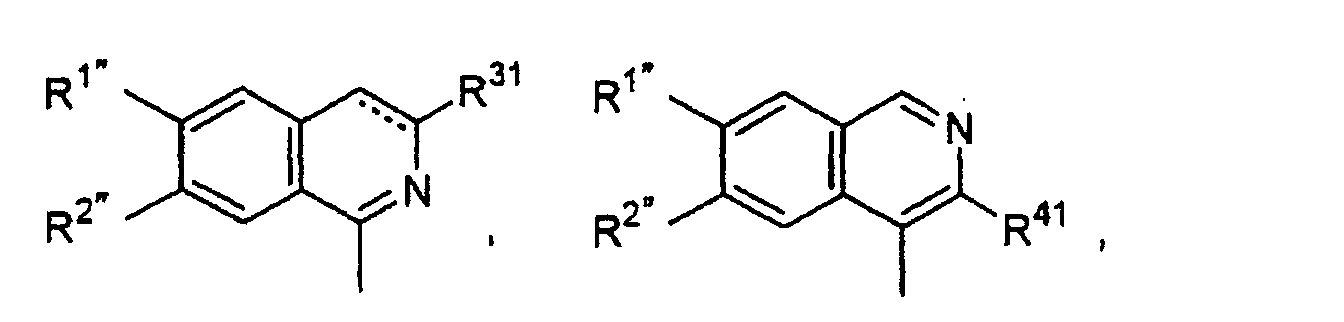
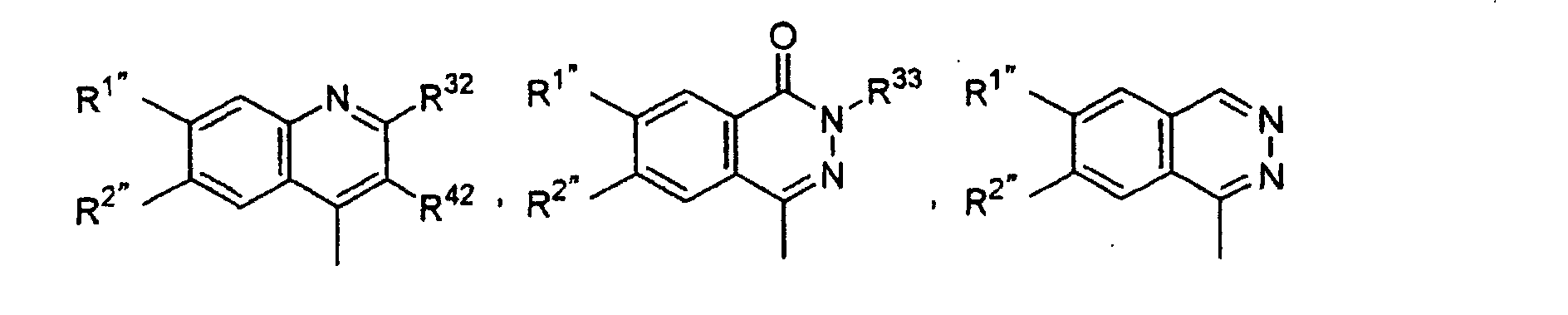
R5" and R6" are the same or different and each a hydrogen atom or an optionally protected amino group, or bind together at the ends and form in association with the adjacent nitrogen atom an optionally substituted heterocyclic group. JP-10-226685A, (1998).
| Fibula Bone Mineral Density (mg/cm2) | ||
| Drug | Drug Content | Bone Mineral Bone Mineral Density (mg/cm2) |
| | 0 | 33.69 ± 0.80 |
| Compound (1) | 0.1 mg | 36.77 ± 1.52 |
| Compound (1) | 0.5 mg | 40.05 ± 1.34 |
| Fibula Bone Mineral Content (mg) | ||
| Drug | Drug Content | Bone Mineral Bone Mineral Content (mg) |
| | 0 | 11.99 ± 0.50 |
| Compound (1) | 0.1 mg | 14.27 ± 0.76 |
| Compound (1) | 0.5 mg | 15.20 ± 0.82 |
| Fibula Volume (µl) | ||
| Drug | Drug Content | Bone volume (µl) |
| | 0 | 62.7 ± 2.0 |
| Compound(1) | 0.1 mg | 68.1 ± 2.9 |
| Compound(1) | 0.5 mg | 77.2 ± 2.9 |
| Breaking Energy (mJ) | ||
| Drug | Drug Content | Breaking Energy (mJ) |
| | 0 | 2.27 ± 0.14 |
| Compound(1) | 0.1 mg | 4.37 ± 0.71 |
| Compound(1) | 0.5 mg | 6.44 ± 1.06 |
| Breaking Force (N) | ||
| Drug | Drug Content | Breaking force (N) |
| | 0 | 15.0 ± 0.94 |
| Compound(1) | 0.1 mg | 19.8 ± 2.14 |
| Compound(1) | 0.5 mg | 23.0 ± 1.68 |
| Fibula Bone Mineral Density (mg/cm2) | ||
| Drug | Drug Content | Bone Mineral Density (mg/cm2) |
| | 0 | 40.48 ± 1.36 |
| Compound(2) | 0.004 mg | 46.18 ± 3.18 |
| Compound(2) | 0.02 mg | 50.72 ± 2.68 |
| Compound(2) | 0.1 mg | 56.06 ± 4.19 |
| Compound(2) | 0.5 mg | 52.18 ± 4.36 |
| Fibula Bone Mineral Content (mg) | ||
| Drug | Drug Content | Bone Mineral Content (mg) |
| | 0 | 13.62 ± 0.78 |
| Compound(2) | 0.004 mg | 15.90 ± 1.88 |
| Compound(2) | 0.02 mg | 19.86 ± 1.75 |
| Compound(2) | 0.1 mg | 23.10 ± 2.72 |
| Compound(2) | 0.5 mg | 23.24 ± 2.97 |
| Fibula Volume (µl) | ||
| Drug | Drug Content | Bone Volume (µl) |
| | 0 | 79.20 ± 4.87 |
| Compound(2) | 0.004 mg | 85.0 ± 8.14 |
| Compound(2) | 0.02 mg | 97.6 ± 4.99 |
| Compound(2) | 0.1 mg | 121.6 ± 13.76 |
| Compound(2) | 0.5 mg | 132.2 ± 11.72 |
| Breaking Energy (mJ) | ||
| Drug | Drug Content | Breaking Energy (mJ) |
| | 0 | 2.19 ± 0.33 |
| Compound(2) | 0.004 mg | 2.66 ± 0.49 |
| Compound(2) | 0.02 mg | 2.59 ± 0.55 |
| Compound(2) | 0.1 mg | 3.15 ± 0.54 |
| Compound(2) | 0.5 mg | 3.27 ± 0.61 |
| Test Compound | Concentration (M) | Proteoglycan Production (%) |
| Vehicle | - | 100 |
| Compound(1) | 1X10⁻⁴ | 524 |
| Compound(2) | 1X10⁻⁶ | 204 |
| Compound(2) | 1X10⁻⁵ | 906 |
| Compound(9) | 1X10⁻⁶ | 132 |
| Compound(9) | 1X10⁻⁵ | 149 |
| Compound(11) | 1X10⁻⁶ | 161 |
| Compound(11) | 1X10⁻⁵ | 149 |
| Compound(21) | 1X10⁻⁶ | 156 |
| Compound(21) | 1X10⁻⁵ | 339 |
| Compound(27) | 1X10⁻⁶ | 151 |
| Compound(27) | 1X10⁻⁵ | 157 |
| Compound(44) | 1X10⁻⁵ | 185 |
| Compound(44) | 1X10⁻⁴ | 263 |
| Test Compound | Concentration (M) | Proteoglycan Production (%) |
| vehicle | - | 100 |
| Compound(2) | 1X10⁻⁷ M | 128 |
| Compound(2) | 1X10⁻⁶ M | 183 |
| Compound(2) | 1X10⁻⁵ M | 686 |
| Compound(52) | 1X10⁻⁷ M | 213 |
| Compound(52) | 1X10⁻⁶ M | 774 |
| Compound(52) | 1X10⁻⁵ M | 820 |
| Compound(53) | 1X10⁻⁶ M | 729 |
| Compound(54) | 1X10⁻⁶ M | 171 |
| Compound(54) | 1X10⁻⁵ M | 396 |
| Compound(55) | 1X10⁻⁶ M | 171 |
| Compound(55) | 1X10⁻⁵ M | 188 |
| Drug | Drug Content | Bone mineral content (mg) |
| | 0 | 10.25 ± 1.27 |
| Compound(2) | 0.03 mg | 13.69 ± 0.96 |
| Compound(2) | 0.1 mg | 14.60 ± 0.69 |
| Drug | Drug Content | Breaking Force (N) |
| | 0 | 6.25 ± 0.70 |
| Compound(2) | 0.03 mg | 8.13 ± 1.20 |
| Compound(2) | 0.1 mg | 11.75 ± 2.14 |
| Drug | Drug Content | Breaking Energy (mJ) |
| | 0 | 0.69 ± 0.08 |
| Compound(2) | 0.03 mg | 1.53 ± 0.39 |
| Compound(2) | 0.1 mg | 2.91 ± 0.82 |
| | 100 mm |
| Cylinder length | 120 mm x 120 mm |
| Membrane thickness of | 60 µm |
| Inside diameter of hollow fiber membrane | 200 µm |
| Outside diameter of hollow fiber membrane | 320 µm |
| Number of hollow fiber | 1800 |
| Effective membrane area of hollow fiber membrane | 0.15 m2 |
Claims (19)
- A composition for accelerating fracture healing, which comprises a PDE4 inhibitor as an active ingredient.
- The composition according to claim 1, which is prepared so as to release the PDE4 inhibitor gradually at the fracture region.
- The composition according to claim 2, which comprises a biocompatible and biodegradable polymer.
- The composition according to claim 3, wherein the biocompatible and biodegradable polymer is water-insoluble.
- The composition according to claim 4, which is in the form of microsphere preparation.
- The composition according to claim 5, wherein the particle size of a microsphere is 0.1-150 µm.
- The composition according to claim 5 or 6, wherein the PDE4 inhibitor content is 0.0001-80% by weight.
- The composition according to any one of claims 4 to 7, wherein the water-insoluble biocompatible and biodegradable polymer is a hydroxy fatty acid polyester.
- The composition according to claim 8, wherein the water-insoluble biocompatible and biodegradable polymer is one or more polymers selected from the group consisting of poly lactic acid, lactic acid-glycolic acid copolymer and 2-hydroxybutyric acid-glycolic acid copolymer.
- The composition according to claim 8 or 9, wherein the water-insoluble biocompatible and biodegradable polymer has an average molecular weight of 2000-800000.
- The composition according to any one of claims 5 to 10, which is an injectable microsphere preparation prepared by dispersing at a concentration of 0.0001-1000 mg/ml microspheres in an aqueous solution containing a dispersant.
- The composition according to claim 11, which comprises a dispersant at a concentration of 0.01-2 % by weight.
- The composition according to claim 11 or 12, wherein the dispersant is one or more selected from the group consisting of polyoxyethylene sorbitan fatty acid ester, polyethylene castor oil, carboxymethyl cellulose sodium, sodium alginate, dextran and sodium hyaluronate.
- The composition according to any one of claims 1 to 13, wherein the PDE4 inhibitor is a selective PDE4 inhibitor.
- The composition according to any one of claims 1 to 14, wherein IC50 of the PDE4 inhibitor is less than 100 nM.
- The composition according to any one of claims 1 to 15, wherein the PDE4 inhibitor is a compound having a partial structure having PDE4 inhibitory activity as follows:(A) naphthalene or an analogous chemical structure thereof; or(B) 3-cyclopentyloxy-4-methoxyphenyl or an analogous chemical structure thereof.
- The composition according to any one of claims 1 to 16, wherein the PDE4 inhibitor is a compound having a partial structure of naphthalene or isoquinoline skeleton having PDE4 inhibitory activity or a pharmaceutically acceptable salt thereof.
- The composition according to claims 17, wherein the PDE4 inhibitor is 2,3-bis(hydroxymethyl)-6,7-diethoxy-1-[1-(2-metoxyethyl)-2-oxo-4-pyridyl]naphthalene or 2,3-bis(hydroxymethyl)-6,7-diethoxy-1-[2-(4-(3-pyridyl)-1(2H)-phthaladinon-2-yl)-4-pyridyl]naphthalene or a pharmaceutically acceptable salt thereof.
- A composition for preparing an injectable preparation, which is obtainable by suspending microspheres set forth in any one of claims 5-10 into an aqueous solution containing an aggregation inhibitor, and lyophilizing the resultant suspension.
Applications Claiming Priority (3)
| Application Number | Priority Date | Filing Date | Title |
|---|---|---|---|
| JP2001154064 | 2001-05-23 | ||
| JP2001154064 | 2001-05-23 | ||
| PCT/JP2002/004931 WO2002094321A1 (en) | 2001-05-23 | 2002-05-22 | Compositions for promoting healing of bone fracture |
Publications (2)
| Publication Number | Publication Date |
|---|---|
| EP1389468A1 true EP1389468A1 (en) | 2004-02-18 |
| EP1389468A4 EP1389468A4 (en) | 2007-01-10 |
Family
ID=18998478
Family Applications (1)
| Application Number | Title | Priority Date | Filing Date |
|---|---|---|---|
| EP02771772A Withdrawn EP1389468A4 (en) | 2001-05-23 | 2002-05-22 | COMPOSITIONS PROMOTING THE GUISON OF A BONE FRACTURE |
Country Status (9)
| Country | Link |
|---|---|
| US (2) | US20040146561A1 (en) |
| EP (1) | EP1389468A4 (en) |
| JP (2) | JP4510384B2 (en) |
| KR (1) | KR20040007596A (en) |
| CN (1) | CN1520313A (en) |
| AR (1) | AR033918A1 (en) |
| CA (1) | CA2447619A1 (en) |
| MX (1) | MXPA03010679A (en) |
| WO (1) | WO2002094321A1 (en) |
Cited By (3)
| Publication number | Priority date | Publication date | Assignee | Title |
|---|---|---|---|---|
| WO2007094960A3 (en) * | 2006-02-13 | 2007-12-21 | Eastman Kodak Co | Oil-in-oil emulsions |
| WO2010132730A3 (en) * | 2009-05-14 | 2011-01-06 | Surmodics Pharmaceuticals, Inc. | Hyaluronic acid (ha) injection vehicle |
| US8685981B2 (en) | 2009-01-19 | 2014-04-01 | Daiichi Sankyo Company, Limited | Cyclic compound having hetero atom |
Families Citing this family (11)
| Publication number | Priority date | Publication date | Assignee | Title |
|---|---|---|---|---|
| TWI221838B (en) | 2001-08-09 | 2004-10-11 | Tanabe Seiyaku Co | Pyrazinoisoquinoline compound or naphthalene compound |
| US8067433B2 (en) | 2005-11-09 | 2011-11-29 | Zalicus Inc. | Methods, compositions, and kits for the treatment of ophthalmic disorders |
| AR057986A1 (en) * | 2005-11-21 | 2008-01-09 | Japan Tobacco Inc | HETEROCICLICAL COMPOUND AND ITS PHARMACEUTICAL USE |
| US20100034892A1 (en) | 2006-08-30 | 2010-02-11 | The Trustees Of Columbia University In The City Of New York | Treatment for bone formation disorders by growth factor delivery |
| ATE542555T1 (en) * | 2007-08-27 | 2012-02-15 | Arthrex Inc | CAPSULES FOR ADMINISTRATION OF PUNCTURED BONE MARROW |
| EP2498798A4 (en) * | 2009-11-10 | 2014-01-01 | Univ Columbia | COMPOSITIONS AND METHODS OF TREATING WOUNDS |
| US20140056960A1 (en) * | 2010-12-29 | 2014-02-27 | Imperial Innovations Limited | Methods for Improving Fracture Healing and Bone Formation |
| JPWO2012169518A1 (en) * | 2011-06-07 | 2015-02-23 | ホソカワミクロン株式会社 | Liquid composition and cosmetic and hair restorer using the same |
| JP6585583B2 (en) * | 2014-03-27 | 2019-10-02 | 小川香料株式会社 | Emulsified composition |
| CN110099677A (en) | 2016-10-28 | 2019-08-06 | 斯皮内特赫拉公司 | Pharmaceutical compositions and uses thereof |
| KR102587602B1 (en) | 2022-12-29 | 2023-10-13 | 황만기 | Manufacturing method for composition promoting recovery of bone fracture |
Family Cites Families (111)
| Publication number | Priority date | Publication date | Assignee | Title |
|---|---|---|---|---|
| US4193926A (en) | 1974-03-20 | 1980-03-18 | Schering Aktiengesellschaft | 4-(Polyalkoxy phenyl)-2-pyrrolidones |
| JPS5619324A (en) | 1979-07-24 | 1981-02-24 | Asahi Electronics | Wheel passage type anchoring clamp |
| US4542025A (en) * | 1982-07-29 | 1985-09-17 | The Stolle Research And Development Corporation | Injectable, long-acting microparticle formulation for the delivery of anti-inflammatory agents |
| JPS6067417A (en) | 1983-09-24 | 1985-04-17 | Tetsuo Kato | Production of microcapsules metabolizable in vivo |
| JPS60100516A (en) | 1983-11-04 | 1985-06-04 | Takeda Chem Ind Ltd | Preparation of sustained release microcapsule |
| GB8406906D0 (en) | 1984-03-16 | 1984-04-18 | Akzo Nv | Benzo-thiazole and benzothiophene derivatives |
| DK159431C (en) | 1984-05-10 | 1991-03-18 | Byk Gulden Lomberg Chem Fab | 6-PHENYL-3 (2H) -PYRIDAZINONES, METHOD OF PREPARING THEREOF, PHARMACEUTICALS CONTAINING THESE AND USING THE COMPOUNDS FOR THE PREPARATION OF MEDICINAL PRODUCTS |
| JPH0720859B2 (en) | 1985-02-07 | 1995-03-08 | 武田薬品工業株式会社 | Microcapsule manufacturing method |
| US4962091A (en) * | 1986-05-23 | 1990-10-09 | Syntex (U.S.A.) Inc. | Controlled release of macromolecular polypeptides |
| US5939388A (en) * | 1986-07-01 | 1999-08-17 | Rosen; Vicki A. | Methods of administering BMP-5 compositions |
| ATE63553T1 (en) | 1986-08-21 | 1991-06-15 | Pfizer | QUINAZOLINDIONES AND PYRIDOPYRIMIDINDIONES. |
| JPH0725689B2 (en) | 1986-10-07 | 1995-03-22 | 中外製薬株式会社 | Sustained-release preparation containing granulocyte colony-stimulating factor |
| US5000886A (en) | 1987-05-26 | 1991-03-19 | American Cyanamid Company | Silicone-hardened pharmaceutical microcapsules and process of making the same |
| DE3738228A1 (en) | 1987-11-11 | 1989-05-24 | Hoechst Ag | METHOD FOR PRODUCING BIODEGRADABLE MICRO-CAPSULES OF WATER-SOLUBLE PEPTIDES AND PROTEINS AND MICRO-CAPSULES OBTAINED BY THIS PROCESS |
| JPH01305929A (en) | 1988-06-02 | 1989-12-11 | Toshiba Corp | X-ray diagnosing device |
| WO1990009783A1 (en) | 1989-02-22 | 1990-09-07 | Massachusetts Institute Of Technology | Delivery system for controlled release of bioactive factors |
| GB8913889D0 (en) | 1989-06-16 | 1989-08-02 | May & Baker Ltd | New compositions of matter |
| WO1991001720A1 (en) | 1989-08-07 | 1991-02-21 | Herman Wade Schlameus | Composition and method of promoting hard tissue healing |
| JP2578001B2 (en) | 1989-12-11 | 1997-02-05 | 明治製菓株式会社 | Anti-dementia drug |
| GB8929208D0 (en) | 1989-12-27 | 1990-02-28 | Almirall Lab | New xanthine derivatives |
| ES2149761T3 (en) | 1990-04-25 | 2000-11-16 | Nissan Chemical Ind Ltd | DERIVED FROM PIRIDAZINONE. |
| US5288496A (en) * | 1990-05-15 | 1994-02-22 | Stolle Research & Development Corporation | Growth promoters for animals |
| DK0460488T3 (en) | 1990-05-30 | 2001-09-17 | Takeda Chemical Industries Ltd | Sulfur-containing heterocyclic compounds |
| DE69122427T2 (en) | 1990-06-01 | 1997-03-06 | Kyowa Hakko Kogyo Kk | Imidazonaphthyridine derivatives |
| IE71647B1 (en) | 1991-01-28 | 1997-02-26 | Rhone Poulenc Rorer Ltd | Benzamide derivatives |
| US5171217A (en) | 1991-02-28 | 1992-12-15 | Indiana University Foundation | Method for delivery of smooth muscle cell inhibitors |
| YU48420B (en) | 1991-03-25 | 1998-07-10 | Hoechst Aktiengesellschaft | PROCEDURE FOR OBTAINING BIOLOGICAL DEGRADABLE MICROPARTICLES WITH LONG TERM ACTION |
| JPH0558882A (en) | 1991-09-04 | 1993-03-09 | Yoshiaki Kawashima | Nanocapsule manufacturing method |
| JP3205884B2 (en) | 1991-10-01 | 2001-09-04 | 武田薬品工業株式会社 | Sustained-release microparticle formulation coated with anti-agglomeration agent |
| PH31245A (en) | 1991-10-30 | 1998-06-18 | Janssen Pharmaceutica Nv | 1,3-Dihydro-2H-imidazoÄ4,5-BÜ-quinolin-2-one derivatives. |
| US5291490A (en) * | 1992-02-18 | 1994-03-01 | At&T Bell Laboratories | Node for a communication network |
| JP3042156B2 (en) | 1992-02-20 | 2000-05-15 | 田辺製薬株式会社 | Naphthalene derivative, its production method and its synthetic intermediate |
| FI944549L (en) | 1992-04-02 | 1994-11-30 | Smithkline Beecham Corp | Compounds useful in the treatment of allergic and inflammatory diseases |
| US5214008A (en) * | 1992-04-17 | 1993-05-25 | Guardian Industries Corp. | High visible, low UV and low IR transmittance green glass composition |
| DE4223169C1 (en) | 1992-07-10 | 1993-11-25 | Ferring Arzneimittel Gmbh | Process for the microencapsulation of water-soluble active substances |
| JP2651320B2 (en) | 1992-07-16 | 1997-09-10 | 田辺製薬株式会社 | Method for producing sustained-release microsphere preparation |
| IL106517A0 (en) * | 1992-07-28 | 1994-08-26 | Rhone Poulenc Rorer Ltd | Compounds containing phenyl linked to aryl or heteroaryl by an aliphatic or heteroatom containing linking group |
| JP2911732B2 (en) | 1992-10-01 | 1999-06-23 | 田辺製薬株式会社 | Sustained release polynuclear microsphere preparation and its manufacturing method |
| US5455252A (en) | 1993-03-31 | 1995-10-03 | Syntex (U.S.A.) Inc. | Optionally substituted 6,8-quinolines |
| JPH06305983A (en) | 1993-04-21 | 1994-11-01 | Sangi Co Ltd | Preparation for sustained release of medicine |
| US5459151A (en) | 1993-04-30 | 1995-10-17 | American Home Products Corporation | N-acyl substituted phenyl piperidines as bronchodilators and antiinflammatory agents |
| GB9309324D0 (en) | 1993-05-06 | 1993-06-16 | Bayer Ag | Venzofuranyl-and-thiophenyl-alkanecarboxyclic acids derivatives |
| GB9312853D0 (en) * | 1993-06-22 | 1993-08-04 | Euro Celtique Sa | Chemical compounds |
| US5605914A (en) | 1993-07-02 | 1997-02-25 | Celgene Corporation | Imides |
| ZA945609B (en) * | 1993-07-28 | 1995-05-12 | Rhone Poulenc Rorer Ltd | [Di(ether or thioether)heteroaryl or fluoro substituted aryl] compounds |
| JPH07101861A (en) * | 1993-08-10 | 1995-04-18 | Tanabe Seiyaku Co Ltd | Anti-asthma drug |
| US5665754A (en) * | 1993-09-20 | 1997-09-09 | Glaxo Wellcome Inc. | Substituted pyrrolidines |
| CZ283564B6 (en) * | 1993-11-26 | 1998-05-13 | Pfizer Inc. | 3-aryl-2-isoxazoline-5-hydroxamic acids and pharmaceutical compositions based thereon |
| US5502072A (en) * | 1993-11-26 | 1996-03-26 | Pfizer Inc. | Substituted oxindoles |
| GB9401460D0 (en) * | 1994-01-26 | 1994-03-23 | Rhone Poulenc Rorer Ltd | Compositions of matter |
| GB9412383D0 (en) | 1994-06-21 | 1994-08-10 | Celltech Ltd | Chemical compound |
| GB9412672D0 (en) | 1994-06-23 | 1994-08-10 | Celltech Ltd | Chemical compounds |
| JP3056788B2 (en) | 1994-06-24 | 2000-06-26 | ユーロ−セルティーク,エス.エイ. | Phosphodiesterase IV inhibitory compounds and methods of inhibition |
| WO1996006843A1 (en) | 1994-08-29 | 1996-03-07 | Yamanouchi Pharmaceutical Co., Ltd. | Novel naphthyridine derivative and medicinal composition thereof |
| JP3790567B2 (en) | 1994-09-30 | 2006-06-28 | 武田薬品工業株式会社 | Sustained release agent |
| US5614515A (en) * | 1994-11-17 | 1997-03-25 | University Of Southern California | Lazaroid-based compositions and method for preventing adhesion formation using the same |
| ATE252894T1 (en) | 1995-01-05 | 2003-11-15 | Univ Michigan | SURFACE-MODIFIED NANOPARTICLES AND METHODS FOR THEIR PRODUCTION AND USE |
| US6346274B1 (en) * | 1995-03-10 | 2002-02-12 | Roche Diagnostics Gmbh | Polypeptide-containing pharmaceutical forms of administration in the form of microparticles and method for the preparation thereof |
| TW332201B (en) * | 1995-04-06 | 1998-05-21 | Janssen Pharmaceutica Nv | 1,3-Dihydro-1-(phenylalkyl)-2H-imidazol-2-one derivatives |
| DE19514568A1 (en) * | 1995-04-20 | 1996-10-24 | Merck Patent Gmbh | Arylalkyl pyridazinones |
| US5922253A (en) | 1995-05-18 | 1999-07-13 | Alkermes Controlled Therapeutics, Inc. | Production scale method of forming microparticles |
| US5910492A (en) | 1995-06-05 | 1999-06-08 | Takeda Chemical Industries, Ltd. | Osteogenic promoting pharmaceutical composition |
| JP2992677B2 (en) | 1995-06-05 | 1999-12-20 | 武田薬品工業株式会社 | Bone formation promoting pharmaceutical composition |
| IL118469A (en) * | 1995-06-15 | 2000-08-13 | Tanabe Seiyaku Co | Naphthalene derivatives their preparation and intermediates thereof |
| JP3033090B2 (en) * | 1995-06-15 | 2000-04-17 | 田辺製薬株式会社 | Naphthalene derivative, its production method and its synthetic intermediate |
| US5728844A (en) * | 1995-08-29 | 1998-03-17 | Celgene Corporation | Immunotherapeutic agents |
| US5942253A (en) * | 1995-10-12 | 1999-08-24 | Immunex Corporation | Prolonged release of GM-CSF |
| JPH09110678A (en) | 1995-10-19 | 1997-04-28 | Tanabe Seiyaku Co Ltd | Coated microsphere preparation and method for producing the same |
| GB9523267D0 (en) | 1995-11-14 | 1996-01-17 | Sandoz Ltd | Organic compounds |
| EP0873311A1 (en) * | 1995-12-15 | 1998-10-28 | Merck Frosst Canada Inc. | Tri-aryl ethane derivatives as pde iv inhibitors |
| JP3765338B2 (en) | 1995-12-15 | 2006-04-12 | 武田薬品工業株式会社 | Manufacturing method of sustained-release preparation for injection |
| GB9603723D0 (en) | 1996-02-22 | 1996-04-24 | Merck & Co Inc | Diphenyl pyridyl derivatives as pde iv inhibitors |
| CA2192773C (en) * | 1995-12-15 | 2008-09-23 | Hiroaki Okada | Production of sustained-release preparation for injection |
| JP3191004B2 (en) | 1995-12-15 | 2001-07-23 | 武田薬品工業株式会社 | Manufacturing method of microsphere |
| JPH09169665A (en) * | 1995-12-21 | 1997-06-30 | Kenichi Miyamoto | Agent for treatment osteoporosis |
| GB9526325D0 (en) | 1995-12-22 | 1996-02-21 | Bp Exploration Operating | Inhibitors |
| US6010711A (en) * | 1996-01-26 | 2000-01-04 | University Of Rochester | Methods, articles and compositions for the pharmacologic inhibition of bone resorption with phosphodiesterase inhibitors |
| GB9606736D0 (en) | 1996-02-19 | 1996-06-05 | Shire International Licensing | Therapeutic method |
| DE19617864A1 (en) | 1996-04-23 | 1997-10-30 | Schering Ag | New chiral phenyldihydrofuranones |
| JP2000510866A (en) * | 1996-05-20 | 2000-08-22 | ダーウィン・ディスカバリー・リミテッド | Quinoline sulfonamides as inhibitors of TNF and PDE-IV |
| NZ332341A (en) | 1996-05-20 | 2000-05-26 | Darwin Discovery Ltd | Quinoline carboxamides as TNF inhibitors and as PDE-IV inhibitors |
| EP1027660A1 (en) * | 1996-07-12 | 2000-08-16 | Lava, Inc. | Digital video system having a data base of coded data for digital audio and video information |
| KR100338610B1 (en) * | 1996-09-04 | 2002-05-27 | 디. 제이. 우드, 스피겔 알렌 제이 | Indazole Derivatives and Their Use as Inhibitors of Phosphodiesterase (PDE) type IV and the Production of Tumor Necrosis Factor (TNF) |
| JP4354016B2 (en) * | 1996-11-29 | 2009-10-28 | 株式会社メディサイエンスプラニング | Novel purine derivative and pharmaceutical composition containing the same |
| ID19155A (en) * | 1996-12-13 | 1998-06-18 | Tanabe Seiyaku Co | PYRIDINES, THEIR PRODUCTS AND THE INTERMEDIETS FOR THE PRODUCTION |
| JP3951395B2 (en) | 1996-12-13 | 2007-08-01 | 田辺製薬株式会社 | Pyridine derivatives, process for producing the same and synthetic intermediates thereof |
| WO1998046289A1 (en) | 1997-04-16 | 1998-10-22 | White Spot Ag | Biodegradable osteosynthesis implant |
| FR2762841B1 (en) * | 1997-04-30 | 1999-07-02 | Jouveinal Inst Rech | DIAZEPINO-INDOLONES INHIBITING PHOSPHODIESTERASES IV |
| FR2764514B1 (en) * | 1997-06-13 | 1999-09-03 | Biopharmex Holding Sa | IMPLANT INJECTED IN SUBCUTANEOUS OR INTRADERMAL WITH CONTROLLED BIORESORBABILITY FOR REPAIR OR PLASTIC SURGERY AND AESTHETIC DERMATOLOGY |
| US6124314A (en) * | 1997-10-10 | 2000-09-26 | Pfizer Inc. | Osteoporosis compounds |
| TW577758B (en) | 1997-10-27 | 2004-03-01 | Ssp Co Ltd | Intra-articular preparation for the treatment of arthropathy |
| JP3240593B2 (en) | 1998-02-16 | 2001-12-17 | 株式会社高研 | Pharmaceutical sustained-release agent using soluble collagen powder as carrier |
| US6451335B1 (en) * | 1998-07-02 | 2002-09-17 | Euro-Celtique S.A. | Formulations and methods for providing prolonged local anesthesia |
| MY121142A (en) * | 1999-02-23 | 2005-12-30 | Smithkline Beecham Corp | Controlled release formulation for treating copd |
| FR2792938B1 (en) * | 1999-04-28 | 2001-07-06 | Warner Lambert Co | NEWS 1-AMINO TRIAZOLO [4,3-a] QUINAZOLINE-5-ONES PHOSPHODIESTERASE IV INHIBITORS |
| FR2793684B1 (en) * | 1999-05-17 | 2001-08-10 | Ethypharm Lab Prod Ethiques | USE OF BIODEGRADABLE MICROSPHERES RELEASING ANTI-CANCER AGENT FOR THE TREATMENT OF GLIOBLASTOMA, PROCESS FOR PREPARING SUCH MICROSPHERES AND SUSPENSION CONTAINING THEM |
| PL200923B1 (en) * | 1999-08-21 | 2009-02-27 | Nycomed Gmbh | SYNERGISTIC COMBINATION OF PDE INHIBITORS AND ß₂ ADRENOCEPTOR AGONIST |
| CZ20022140A3 (en) | 1999-12-22 | 2002-11-13 | Pharmacia Corporation | Formulation of cyklooxygenase-2 inhibitor with successive release |
| US6348602B1 (en) * | 1999-12-23 | 2002-02-19 | Icos Corporation | Cyclic AMP-specific phosphodiesterase inhibitors |
| JP3718708B2 (en) | 2000-01-19 | 2005-11-24 | 独立行政法人物質・材料研究機構 | Calcium phosphate bioceramic sintered body and method for producing the same |
| AU2001233034A1 (en) * | 2000-01-27 | 2001-08-07 | American Cyanamid Company | Method for preparing alpha-sulfonyl hydroxamic acid derivatives |
| CZ20022413A3 (en) * | 2000-01-31 | 2003-08-13 | Pfizer Products Inc. | Pyrimidine carboxamides useful as inhibitors of PDE4 isozymes |
| GB0008660D0 (en) | 2000-04-07 | 2000-05-31 | Arakis Ltd | The treatment of respiratory diseases |
| WO2001080835A1 (en) | 2000-04-24 | 2001-11-01 | Tanabe Seiyaku Co., Ltd. | Process for producing microsphere |
| US7011776B2 (en) | 2000-04-28 | 2006-03-14 | Tanabe Seiman Co., Ltd. | Method and apparatus for preparing microspheres |
| EP1289557B1 (en) * | 2000-06-06 | 2006-07-12 | Glaxo Group Limited | Cancer treatment composition containing an anti-neoplastic agent and a pde4 inhibitor |
| AU7773801A (en) * | 2000-08-11 | 2002-02-25 | Ono Pharmaceutical Co | Piperidine derivatives and drugs containing these derivatives as the active ingredient |
| DE10061137B4 (en) * | 2000-12-07 | 2016-10-06 | Takeda Gmbh | New pharmaceutical preparation |
| WO2002060875A1 (en) * | 2001-01-31 | 2002-08-08 | Pfizer Products Inc. | Nicotinamide biaryl derivatives useful as inhibitors of pde4 isozymes |
| CZ20031903A3 (en) * | 2001-01-31 | 2004-07-14 | Pfizer Products Inc. | Amide derivatives of thiazolyl-, oxazolyl-, pyrrolyl- and imidazolyl carboxylic acids useful as PDE4isozyme inhibitors |
| JP4364179B2 (en) | 2005-08-15 | 2009-11-11 | 株式会社ソニー・コンピュータエンタテインメント | Drawing processing apparatus and drawing processing method |
-
2002
- 2002-05-22 WO PCT/JP2002/004931 patent/WO2002094321A1/en not_active Ceased
- 2002-05-22 US US10/478,709 patent/US20040146561A1/en not_active Abandoned
- 2002-05-22 MX MXPA03010679A patent/MXPA03010679A/en not_active Application Discontinuation
- 2002-05-22 CN CNA028127331A patent/CN1520313A/en active Pending
- 2002-05-22 CA CA002447619A patent/CA2447619A1/en not_active Abandoned
- 2002-05-22 JP JP2002591037A patent/JP4510384B2/en not_active Expired - Fee Related
- 2002-05-22 KR KR10-2003-7015231A patent/KR20040007596A/en not_active Ceased
- 2002-05-22 EP EP02771772A patent/EP1389468A4/en not_active Withdrawn
- 2002-05-23 AR ARP020101912A patent/AR033918A1/en not_active Application Discontinuation
-
2007
- 2007-07-19 US US11/826,921 patent/US7659273B2/en not_active Expired - Fee Related
-
2010
- 2010-02-17 JP JP2010032734A patent/JP2010155849A/en active Pending
Cited By (4)
| Publication number | Priority date | Publication date | Assignee | Title |
|---|---|---|---|---|
| WO2007094960A3 (en) * | 2006-02-13 | 2007-12-21 | Eastman Kodak Co | Oil-in-oil emulsions |
| US8329761B2 (en) | 2006-02-13 | 2012-12-11 | Eastman Kodak Company | Oil-in-oil emulsions |
| US8685981B2 (en) | 2009-01-19 | 2014-04-01 | Daiichi Sankyo Company, Limited | Cyclic compound having hetero atom |
| WO2010132730A3 (en) * | 2009-05-14 | 2011-01-06 | Surmodics Pharmaceuticals, Inc. | Hyaluronic acid (ha) injection vehicle |
Also Published As
| Publication number | Publication date |
|---|---|
| JPWO2002094321A1 (en) | 2004-09-02 |
| US20080031958A1 (en) | 2008-02-07 |
| MXPA03010679A (en) | 2004-03-02 |
| WO2002094321A1 (en) | 2002-11-28 |
| JP2010155849A (en) | 2010-07-15 |
| US20040146561A1 (en) | 2004-07-29 |
| CA2447619A1 (en) | 2002-11-28 |
| KR20040007596A (en) | 2004-01-24 |
| US7659273B2 (en) | 2010-02-09 |
| EP1389468A4 (en) | 2007-01-10 |
| CN1520313A (en) | 2004-08-11 |
| AR033918A1 (en) | 2004-01-07 |
| JP4510384B2 (en) | 2010-07-21 |
Similar Documents
| Publication | Publication Date | Title |
|---|---|---|
| US7659273B2 (en) | Composition for accelerating bone fracture healing | |
| US8399466B2 (en) | Composition for regenerative treatment of cartilage disease | |
| US5656299A (en) | Sustained release microsphere preparation containing antipsychotic drug and production process thereof | |
| KR100354270B1 (en) | Microencapsulated 3-piperidinyl-substituted 1,2-benzisoxazole and 1,2-benzisothiazole | |
| EP2465537B1 (en) | Microspheres comprising ONO-1301 | |
| JP5916622B2 (en) | Depot system containing glatiramer or a pharmacologically acceptable salt thereof | |
| Kohane et al. | Biocompatibility of lipid‐protein‐sugar particles containing bupivacaine in the epineurium | |
| WO2006032202A1 (en) | Long acting sustained-release formulation containing dopamine receptor agonist and the preparation method thereof | |
| JP2526589B2 (en) | Peptide-containing microcapsule and method for producing the same | |
| CN117715625A (en) | Intra-articular injection dosage form comprising colchicine for the treatment of crystalline and amorphous-related acute inflammatory arthritis | |
| JP2026503608A (en) | Intra-articular injection dosage form containing colchicine for use in the treatment of joint diseases such as osteoarthritis | |
| CN113876724A (en) | A double-layered microsphere loaded with parecoxib, interleukin-4 and bovine serum albumin for the treatment of osteoarthritis and preparation method thereof | |
| WO2010017265A2 (en) | Injectable extended release compositions and methods of treating arthritis using same | |
| JPH10203966A (en) | Sustained release microcapsule and its production | |
| HK1059889A (en) | Compositions for promoting healing of bone fracture | |
| KR20250091283A (en) | Intra-articular injection formulation containing colchicine and an anesthetic for the treatment of acute inflammatory arthritis associated with crystals and amorphous cysts | |
| US20090110744A1 (en) | Sustained release pharmaceutical compositions | |
| HK1059745A (en) | Therapeutic compositions for repairing chondropathy | |
| Qiu et al. | Preparation of injectable double-layer microspheres for the long-term treatment of osteoarthritis | |
| JPWO1994010982A1 (en) | Antipsychotic drug-containing sustained-release microspheres and their manufacturing method |
Legal Events
| Date | Code | Title | Description |
|---|---|---|---|
| PUAI | Public reference made under article 153(3) epc to a published international application that has entered the european phase |
Free format text: ORIGINAL CODE: 0009012 |
|
| 17P | Request for examination filed |
Effective date: 20031113 |
|
| AK | Designated contracting states |
Kind code of ref document: A1 Designated state(s): AT BE CH CY DE DK ES FI FR GB GR IE IT LI LU MC NL PT SE TR |
|
| AX | Request for extension of the european patent |
Extension state: AL LT LV MK RO SI |
|
| REG | Reference to a national code |
Ref country code: HK Ref legal event code: DE Ref document number: 1059889 Country of ref document: HK |
|
| RIC1 | Information provided on ipc code assigned before grant |
Ipc: A61K 31/42 20060101ALI20060711BHEP Ipc: A61K 31/4166 20060101ALI20060711BHEP Ipc: A61K 31/40 20060101ALI20060711BHEP Ipc: A61K 31/381 20060101ALI20060711BHEP Ipc: A61K 31/343 20060101ALI20060711BHEP Ipc: A61K 31/277 20060101ALI20060711BHEP Ipc: A61K 31/27 20060101ALI20060711BHEP Ipc: A61K 9/19 20060101ALI20060711BHEP Ipc: A61K 9/14 20060101ALI20060711BHEP Ipc: A61K 9/10 20060101ALI20060711BHEP Ipc: A61K 45/00 20060101AFI20021204BHEP |
|
| A4 | Supplementary search report drawn up and despatched |
Effective date: 20061212 |
|
| 17Q | First examination report despatched |
Effective date: 20070516 |
|
| RAP1 | Party data changed (applicant data changed or rights of an application transferred) |
Owner name: MITSUBISHI TANABE PHARMA CORPORATION |
|
| REG | Reference to a national code |
Ref country code: HK Ref legal event code: WD Ref document number: 1059889 Country of ref document: HK |
|
| GRAC | Information related to communication of intention to grant a patent modified |
Free format text: ORIGINAL CODE: EPIDOSCIGR1 |
|
| GRAP | Despatch of communication of intention to grant a patent |
Free format text: ORIGINAL CODE: EPIDOSNIGR1 |
|
| RIC1 | Information provided on ipc code assigned before grant |
Ipc: A61K 9/19 20060101ALI20120723BHEP Ipc: A61K 31/27 20060101ALI20120723BHEP Ipc: A61K 31/42 20060101ALI20120723BHEP Ipc: A61K 31/40 20060101ALI20120723BHEP Ipc: A61K 45/00 20060101AFI20120723BHEP Ipc: A61K 31/4166 20060101ALI20120723BHEP Ipc: A61K 31/277 20060101ALI20120723BHEP Ipc: A61K 9/10 20060101ALI20120723BHEP Ipc: A61K 31/343 20060101ALI20120723BHEP Ipc: A61K 31/381 20060101ALI20120723BHEP Ipc: A61K 9/14 20060101ALI20120723BHEP Ipc: A61P 19/08 20060101ALI20120723BHEP |
|
| STAA | Information on the status of an ep patent application or granted ep patent |
Free format text: STATUS: THE APPLICATION IS DEEMED TO BE WITHDRAWN |
|
| 18D | Application deemed to be withdrawn |
Effective date: 20121219 |