EP1387685B1 - Analgesic composition comprising an opioid and a sodium channel blocker - Google Patents
Analgesic composition comprising an opioid and a sodium channel blocker Download PDFInfo
- Publication number
- EP1387685B1 EP1387685B1 EP02734980A EP02734980A EP1387685B1 EP 1387685 B1 EP1387685 B1 EP 1387685B1 EP 02734980 A EP02734980 A EP 02734980A EP 02734980 A EP02734980 A EP 02734980A EP 1387685 B1 EP1387685 B1 EP 1387685B1
- Authority
- EP
- European Patent Office
- Prior art keywords
- morphine
- opioid
- ttx
- sodium channel
- pain
- Prior art date
- Legal status (The legal status is an assumption and is not a legal conclusion. Google has not performed a legal analysis and makes no representation as to the accuracy of the status listed.)
- Expired - Lifetime
Links
- 229940125794 sodium channel blocker Drugs 0.000 title claims description 6
- 239000003195 sodium channel blocking agent Substances 0.000 title claims description 6
- 230000000202 analgesic effect Effects 0.000 title abstract description 26
- 239000000203 mixture Substances 0.000 title abstract description 9
- CFMYXEVWODSLAX-QOZOJKKESA-N tetrodotoxin Chemical compound O([C@@]([C@H]1O)(O)O[C@H]2[C@@]3(O)CO)[C@H]3[C@@H](O)[C@]11[C@H]2[C@@H](O)N=C(N)N1 CFMYXEVWODSLAX-QOZOJKKESA-N 0.000 claims abstract description 110
- 229950010357 tetrodotoxin Drugs 0.000 claims abstract description 106
- CFMYXEVWODSLAX-UHFFFAOYSA-N tetrodotoxin Natural products C12C(O)NC(=N)NC2(C2O)C(O)C3C(CO)(O)C1OC2(O)O3 CFMYXEVWODSLAX-UHFFFAOYSA-N 0.000 claims abstract description 106
- 208000002193 Pain Diseases 0.000 claims abstract description 46
- 230000036407 pain Effects 0.000 claims abstract description 36
- 108010052164 Sodium Channels Proteins 0.000 claims abstract description 29
- 102000018674 Sodium Channels Human genes 0.000 claims abstract description 29
- 230000036592 analgesia Effects 0.000 claims abstract description 26
- RPQXVSUAYFXFJA-HGRQIUPRSA-N saxitoxin Chemical compound NC(=O)OC[C@@H]1N=C(N)N2CCC(O)(O)[C@@]22N=C(N)N[C@@H]12 RPQXVSUAYFXFJA-HGRQIUPRSA-N 0.000 claims abstract description 26
- RPQXVSUAYFXFJA-UHFFFAOYSA-N saxitoxin hydrate Natural products NC(=O)OCC1N=C(N)N2CCC(O)(O)C22NC(N)=NC12 RPQXVSUAYFXFJA-UHFFFAOYSA-N 0.000 claims abstract description 26
- 150000001875 compounds Chemical class 0.000 claims abstract description 20
- 239000003612 morphinomimetic agent Substances 0.000 claims abstract description 12
- 241000124008 Mammalia Species 0.000 claims abstract description 9
- BQJCRHHNABKAKU-KBQPJGBKSA-N morphine Chemical compound O([C@H]1[C@H](C=C[C@H]23)O)C4=C5[C@@]12CCN(C)[C@@H]3CC5=CC=C4O BQJCRHHNABKAKU-KBQPJGBKSA-N 0.000 claims description 207
- 229960005181 morphine Drugs 0.000 claims description 102
- 230000037396 body weight Effects 0.000 claims description 16
- 239000002552 dosage form Substances 0.000 claims description 10
- 239000008194 pharmaceutical composition Substances 0.000 claims description 9
- -1 ethoxytetrodotoxin Chemical compound 0.000 claims description 7
- COVOMQKTVSVWBZ-CJCGOCGYSA-N deoxytetrodotoxin Chemical compound O1C(C2(O)CO)(O)OC3C(O)C1[C@@H]1CN=C(N)NC12C3O COVOMQKTVSVWBZ-CJCGOCGYSA-N 0.000 claims description 5
- SVOKHTHBCRETOQ-CNKCMGRGSA-N methoxytetrodotoxin Chemical compound OC1C(C2O)OC3(O)OC2[C@@H]2[C@@H](OC)N=C(N)NC21C3(O)CO SVOKHTHBCRETOQ-CNKCMGRGSA-N 0.000 claims description 5
- MWPMJZZQPDXVJT-UHFFFAOYSA-N Tetrodonic acid Natural products N1C(N)=NC2OC(C(O)=O)C31C2C(O)C(O)(CO)C(O)C3O MWPMJZZQPDXVJT-UHFFFAOYSA-N 0.000 claims description 4
- MWPMJZZQPDXVJT-JTUKEBEQSA-N tetrodonicacid Chemical compound [C@]12([C@H](C(O)=O)O[C@@H]3N=C(N1)N)[C@@H]3[C@@H](O)[C@@](O)(CO)[C@H](O)[C@@H]2O MWPMJZZQPDXVJT-JTUKEBEQSA-N 0.000 claims description 4
- 101000878595 Arabidopsis thaliana Squalene synthase 1 Proteins 0.000 claims 1
- WSFSSNUMVMOOMR-UHFFFAOYSA-N Formaldehyde Chemical compound O=C WSFSSNUMVMOOMR-UHFFFAOYSA-N 0.000 description 33
- 238000012360 testing method Methods 0.000 description 33
- 230000000694 effects Effects 0.000 description 26
- 241000700159 Rattus Species 0.000 description 22
- 241001465754 Metazoa Species 0.000 description 21
- 230000005764 inhibitory process Effects 0.000 description 20
- 238000000034 method Methods 0.000 description 17
- 229940005483 opioid analgesics Drugs 0.000 description 14
- 230000002195 synergetic effect Effects 0.000 description 12
- 241000699670 Mus sp. Species 0.000 description 11
- 231100000419 toxicity Toxicity 0.000 description 11
- 230000001988 toxicity Effects 0.000 description 11
- 229960005195 morphine hydrochloride Drugs 0.000 description 10
- XELXKCKNPPSFNN-BJWPBXOKSA-N morphine hydrochloride trihydrate Chemical compound O.O.O.Cl.O([C@H]1[C@H](C=C[C@H]23)O)C4=C5[C@@]12CCN(C)[C@@H]3CC5=CC=C4O XELXKCKNPPSFNN-BJWPBXOKSA-N 0.000 description 10
- 238000011260 co-administration Methods 0.000 description 9
- 230000000903 blocking effect Effects 0.000 description 8
- 239000000014 opioid analgesic Substances 0.000 description 8
- 239000000126 substance Substances 0.000 description 8
- FAPWRFPIFSIZLT-UHFFFAOYSA-M Sodium chloride Chemical compound [Na+].[Cl-] FAPWRFPIFSIZLT-UHFFFAOYSA-M 0.000 description 7
- 229940079593 drug Drugs 0.000 description 7
- 239000003814 drug Substances 0.000 description 7
- QTBSBXVTEAMEQO-UHFFFAOYSA-N Acetic acid Chemical compound CC(O)=O QTBSBXVTEAMEQO-UHFFFAOYSA-N 0.000 description 6
- 208000000094 Chronic Pain Diseases 0.000 description 6
- 230000003993 interaction Effects 0.000 description 6
- 210000002569 neuron Anatomy 0.000 description 6
- 239000000843 powder Substances 0.000 description 6
- 230000000638 stimulation Effects 0.000 description 6
- 108090000137 Opioid Receptors Proteins 0.000 description 5
- 102000003840 Opioid Receptors Human genes 0.000 description 5
- 230000009471 action Effects 0.000 description 5
- 238000006243 chemical reaction Methods 0.000 description 5
- 230000001965 increasing effect Effects 0.000 description 5
- 102000051367 mu Opioid Receptors Human genes 0.000 description 5
- 230000002829 reductive effect Effects 0.000 description 5
- 230000004044 response Effects 0.000 description 5
- 150000003839 salts Chemical class 0.000 description 5
- 210000003594 spinal ganglia Anatomy 0.000 description 5
- 108020001612 μ-opioid receptors Proteins 0.000 description 5
- 206010012335 Dependence Diseases 0.000 description 4
- 241000196324 Embryophyta Species 0.000 description 4
- 206010065390 Inflammatory pain Diseases 0.000 description 4
- 208000005298 acute pain Diseases 0.000 description 4
- OROGSEYTTFOCAN-DNJOTXNNSA-N codeine Chemical compound C([C@H]1[C@H](N(CC[C@@]112)C)C3)=C[C@H](O)[C@@H]1OC1=C2C3=CC=C1OC OROGSEYTTFOCAN-DNJOTXNNSA-N 0.000 description 4
- 239000012528 membrane Substances 0.000 description 4
- 229940127240 opiate Drugs 0.000 description 4
- 230000003389 potentiating effect Effects 0.000 description 4
- 230000020341 sensory perception of pain Effects 0.000 description 4
- 239000000243 solution Substances 0.000 description 4
- 101000768857 Arabidopsis thaliana 3-phosphoshikimate 1-carboxyvinyltransferase, chloroplastic Proteins 0.000 description 3
- WPNJAUFVNXKLIM-UHFFFAOYSA-N Moxonidine Chemical compound COC1=NC(C)=NC(Cl)=C1NC1=NCCN1 WPNJAUFVNXKLIM-UHFFFAOYSA-N 0.000 description 3
- 206010028980 Neoplasm Diseases 0.000 description 3
- 241000700157 Rattus norvegicus Species 0.000 description 3
- 230000002411 adverse Effects 0.000 description 3
- 201000011510 cancer Diseases 0.000 description 3
- 210000003169 central nervous system Anatomy 0.000 description 3
- 239000003795 chemical substances by application Substances 0.000 description 3
- 230000003247 decreasing effect Effects 0.000 description 3
- 229960002428 fentanyl Drugs 0.000 description 3
- PJMPHNIQZUBGLI-UHFFFAOYSA-N fentanyl Chemical compound C=1C=CC=CC=1N(C(=O)CC)C(CC1)CCN1CCC1=CC=CC=C1 PJMPHNIQZUBGLI-UHFFFAOYSA-N 0.000 description 3
- 210000000929 nociceptor Anatomy 0.000 description 3
- 230000001473 noxious effect Effects 0.000 description 3
- 230000000144 pharmacologic effect Effects 0.000 description 3
- XLYOFNOQVPJJNP-UHFFFAOYSA-N water Substances O XLYOFNOQVPJJNP-UHFFFAOYSA-N 0.000 description 3
- 108700040991 Ala(2)- deltorphin II Proteins 0.000 description 2
- 206010002091 Anaesthesia Diseases 0.000 description 2
- NUNBRHVOPFWRRG-RCEFDBTISA-N Deltorphin B Chemical compound C([C@@H](C(=O)N[C@@H](CCC(O)=O)C(=O)N[C@H](C(=O)N[C@@H](C(C)C)C(=O)NCC(N)=O)C(C)C)NC(=O)[C@@H](C)NC(=O)[C@@H](N)CC=1C=CC(O)=CC=1)C1=CC=CC=C1 NUNBRHVOPFWRRG-RCEFDBTISA-N 0.000 description 2
- DGAQECJNVWCQMB-PUAWFVPOSA-M Ilexoside XXIX Chemical compound C[C@@H]1CC[C@@]2(CC[C@@]3(C(=CC[C@H]4[C@]3(CC[C@@H]5[C@@]4(CC[C@@H](C5(C)C)OS(=O)(=O)[O-])C)C)[C@@H]2[C@]1(C)O)C)C(=O)O[C@H]6[C@@H]([C@H]([C@@H]([C@H](O6)CO)O)O)O.[Na+] DGAQECJNVWCQMB-PUAWFVPOSA-M 0.000 description 2
- 206010061218 Inflammation Diseases 0.000 description 2
- 206010028347 Muscle twitching Diseases 0.000 description 2
- ZLMJMSJWJFRBEC-UHFFFAOYSA-N Potassium Chemical compound [K] ZLMJMSJWJFRBEC-UHFFFAOYSA-N 0.000 description 2
- 230000001154 acute effect Effects 0.000 description 2
- 239000000654 additive Substances 0.000 description 2
- 230000000996 additive effect Effects 0.000 description 2
- 230000037005 anaesthesia Effects 0.000 description 2
- 229940035676 analgesics Drugs 0.000 description 2
- 239000000730 antalgic agent Substances 0.000 description 2
- 230000005540 biological transmission Effects 0.000 description 2
- 239000007853 buffer solution Substances 0.000 description 2
- 239000003153 chemical reaction reagent Substances 0.000 description 2
- 229960004126 codeine Drugs 0.000 description 2
- 230000000763 evoking effect Effects 0.000 description 2
- 230000036749 excitatory postsynaptic potential Effects 0.000 description 2
- 239000000835 fiber Substances 0.000 description 2
- 210000002683 foot Anatomy 0.000 description 2
- 230000035929 gnawing Effects 0.000 description 2
- 244000144993 groups of animals Species 0.000 description 2
- OROGSEYTTFOCAN-UHFFFAOYSA-N hydrocodone Natural products C1C(N(CCC234)C)C2C=CC(O)C3OC2=C4C1=CC=C2OC OROGSEYTTFOCAN-UHFFFAOYSA-N 0.000 description 2
- 230000002102 hyperpolarization Effects 0.000 description 2
- 230000004054 inflammatory process Effects 0.000 description 2
- 238000002347 injection Methods 0.000 description 2
- 239000007924 injection Substances 0.000 description 2
- 238000010255 intramuscular injection Methods 0.000 description 2
- 239000007927 intramuscular injection Substances 0.000 description 2
- 239000000463 material Substances 0.000 description 2
- 230000001404 mediated effect Effects 0.000 description 2
- 229960003938 moxonidine Drugs 0.000 description 2
- 210000001640 nerve ending Anatomy 0.000 description 2
- 108091008700 nociceptors Proteins 0.000 description 2
- 239000011591 potassium Substances 0.000 description 2
- 229910052700 potassium Inorganic materials 0.000 description 2
- 230000008569 process Effects 0.000 description 2
- 102000005962 receptors Human genes 0.000 description 2
- 108020003175 receptors Proteins 0.000 description 2
- 239000011734 sodium Substances 0.000 description 2
- 229910052708 sodium Inorganic materials 0.000 description 2
- 238000010998 test method Methods 0.000 description 2
- 231100000331 toxic Toxicity 0.000 description 2
- 230000002588 toxic effect Effects 0.000 description 2
- SNPXXFHHLSLKNY-UHFFFAOYSA-N (2,6-diamino-10,10-dihydroxy-1-methyl-3a,4,8,9-tetrahydropyrrolo[1,2-c]purin-4-yl) carbamate Chemical compound NC=1N(C23N(C(=NC(C2N1)OC(=O)N)N)CCC3(O)O)C SNPXXFHHLSLKNY-UHFFFAOYSA-N 0.000 description 1
- PZZOEXPDTYIBPI-UHFFFAOYSA-N 2-[[2-(4-hydroxyphenyl)ethylamino]methyl]-3,4-dihydro-2H-naphthalen-1-one Chemical compound C1=CC(O)=CC=C1CCNCC1C(=O)C2=CC=CC=C2CC1 PZZOEXPDTYIBPI-UHFFFAOYSA-N 0.000 description 1
- USSIQXCVUWKGNF-UHFFFAOYSA-N 6-(dimethylamino)-4,4-diphenylheptan-3-one Chemical compound C=1C=CC=CC=1C(CC(C)N(C)C)(C(=O)CC)C1=CC=CC=C1 USSIQXCVUWKGNF-UHFFFAOYSA-N 0.000 description 1
- 206010001497 Agitation Diseases 0.000 description 1
- OYPRJOBELJOOCE-UHFFFAOYSA-N Calcium Chemical compound [Ca] OYPRJOBELJOOCE-UHFFFAOYSA-N 0.000 description 1
- 206010058019 Cancer Pain Diseases 0.000 description 1
- 108091006146 Channels Proteins 0.000 description 1
- 208000017667 Chronic Disease Diseases 0.000 description 1
- 206010010774 Constipation Diseases 0.000 description 1
- FEWJPZIEWOKRBE-JCYAYHJZSA-N Dextrotartaric acid Chemical compound OC(=O)[C@H](O)[C@@H](O)C(O)=O FEWJPZIEWOKRBE-JCYAYHJZSA-N 0.000 description 1
- 208000035859 Drug effect increased Diseases 0.000 description 1
- 241001539473 Euphoria Species 0.000 description 1
- 206010015535 Euphoric mood Diseases 0.000 description 1
- VEXZGXHMUGYJMC-UHFFFAOYSA-N Hydrochloric acid Chemical compound Cl VEXZGXHMUGYJMC-UHFFFAOYSA-N 0.000 description 1
- CPELXLSAUQHCOX-UHFFFAOYSA-N Hydrogen bromide Chemical class Br CPELXLSAUQHCOX-UHFFFAOYSA-N 0.000 description 1
- 238000012449 Kunming mouse Methods 0.000 description 1
- 241000699666 Mus <mouse, genus> Species 0.000 description 1
- 206010028813 Nausea Diseases 0.000 description 1
- 208000001294 Nociceptive Pain Diseases 0.000 description 1
- 229940127450 Opioid Agonists Drugs 0.000 description 1
- 229910019142 PO4 Inorganic materials 0.000 description 1
- 208000000114 Pain Threshold Diseases 0.000 description 1
- 208000004880 Polyuria Diseases 0.000 description 1
- 208000004550 Postoperative Pain Diseases 0.000 description 1
- 101100244562 Pseudomonas aeruginosa (strain ATCC 15692 / DSM 22644 / CIP 104116 / JCM 14847 / LMG 12228 / 1C / PRS 101 / PAO1) oprD gene Proteins 0.000 description 1
- ZTVQQQVZCWLTDF-UHFFFAOYSA-N Remifentanil Chemical compound C1CN(CCC(=O)OC)CCC1(C(=O)OC)N(C(=O)CC)C1=CC=CC=C1 ZTVQQQVZCWLTDF-UHFFFAOYSA-N 0.000 description 1
- 208000004756 Respiratory Insufficiency Diseases 0.000 description 1
- 206010038678 Respiratory depression Diseases 0.000 description 1
- QAOWNCQODCNURD-UHFFFAOYSA-L Sulfate Chemical compound [O-]S([O-])(=O)=O QAOWNCQODCNURD-UHFFFAOYSA-L 0.000 description 1
- KKEYFWRCBNTPAC-UHFFFAOYSA-N Terephthalic acid Chemical class OC(=O)C1=CC=C(C(O)=O)C=C1 KKEYFWRCBNTPAC-UHFFFAOYSA-N 0.000 description 1
- 150000001242 acetic acid derivatives Chemical class 0.000 description 1
- 239000002253 acid Substances 0.000 description 1
- 239000013543 active substance Substances 0.000 description 1
- 230000007059 acute toxicity Effects 0.000 description 1
- 231100000403 acute toxicity Toxicity 0.000 description 1
- 239000000556 agonist Substances 0.000 description 1
- 238000010171 animal model Methods 0.000 description 1
- 229940127088 antihypertensive drug Drugs 0.000 description 1
- 238000011888 autopsy Methods 0.000 description 1
- QAOWNCQODCNURD-UHFFFAOYSA-M bisulphate group Chemical group S([O-])(O)(=O)=O QAOWNCQODCNURD-UHFFFAOYSA-M 0.000 description 1
- 210000000988 bone and bone Anatomy 0.000 description 1
- 210000004556 brain Anatomy 0.000 description 1
- 239000011575 calcium Substances 0.000 description 1
- 229910001424 calcium ion Inorganic materials 0.000 description 1
- 210000004413 cardiac myocyte Anatomy 0.000 description 1
- 210000000748 cardiovascular system Anatomy 0.000 description 1
- 210000005056 cell body Anatomy 0.000 description 1
- 230000001684 chronic effect Effects 0.000 description 1
- 150000001860 citric acid derivatives Chemical class 0.000 description 1
- 230000009849 deactivation Effects 0.000 description 1
- 230000007123 defense Effects 0.000 description 1
- 102000048124 delta Opioid Receptors Human genes 0.000 description 1
- 108700023159 delta Opioid Receptors Proteins 0.000 description 1
- 230000001419 dependent effect Effects 0.000 description 1
- 230000003001 depressive effect Effects 0.000 description 1
- 238000013461 design Methods 0.000 description 1
- 230000008034 disappearance Effects 0.000 description 1
- 230000035619 diuresis Effects 0.000 description 1
- 238000007876 drug discovery Methods 0.000 description 1
- 238000011156 evaluation Methods 0.000 description 1
- 230000002461 excitatory amino acid Effects 0.000 description 1
- 239000003257 excitatory amino acid Substances 0.000 description 1
- 238000002474 experimental method Methods 0.000 description 1
- VZCYOOQTPOCHFL-OWOJBTEDSA-L fumarate(2-) Chemical class [O-]C(=O)\C=C\C([O-])=O VZCYOOQTPOCHFL-OWOJBTEDSA-L 0.000 description 1
- 210000000548 hind-foot Anatomy 0.000 description 1
- 150000003840 hydrochlorides Chemical class 0.000 description 1
- XMBWDFGMSWQBCA-UHFFFAOYSA-N hydrogen iodide Chemical class I XMBWDFGMSWQBCA-UHFFFAOYSA-N 0.000 description 1
- MTNDZQHUAFNZQY-UHFFFAOYSA-N imidazoline Chemical compound C1CN=CN1 MTNDZQHUAFNZQY-UHFFFAOYSA-N 0.000 description 1
- 230000002401 inhibitory effect Effects 0.000 description 1
- 238000002690 local anesthesia Methods 0.000 description 1
- 150000002688 maleic acid derivatives Chemical class 0.000 description 1
- 150000004701 malic acid derivatives Chemical class 0.000 description 1
- 238000005259 measurement Methods 0.000 description 1
- 230000028161 membrane depolarization Effects 0.000 description 1
- 229960001797 methadone Drugs 0.000 description 1
- WSFSSNUMVMOOMR-NJFSPNSNSA-N methanone Chemical compound O=[14CH2] WSFSSNUMVMOOMR-NJFSPNSNSA-N 0.000 description 1
- 210000002161 motor neuron Anatomy 0.000 description 1
- 210000003205 muscle Anatomy 0.000 description 1
- 230000008693 nausea Effects 0.000 description 1
- 208000004296 neuralgia Diseases 0.000 description 1
- 208000015122 neurodegenerative disease Diseases 0.000 description 1
- 208000021722 neuropathic pain Diseases 0.000 description 1
- 239000002547 new drug Substances 0.000 description 1
- 150000002823 nitrates Chemical class 0.000 description 1
- 210000000056 organ Anatomy 0.000 description 1
- 230000037040 pain threshold Effects 0.000 description 1
- 235000021317 phosphate Nutrition 0.000 description 1
- 150000003013 phosphoric acid derivatives Chemical class 0.000 description 1
- 229920003229 poly(methyl methacrylate) Polymers 0.000 description 1
- 239000004926 polymethyl methacrylate Substances 0.000 description 1
- 238000012545 processing Methods 0.000 description 1
- 230000002035 prolonged effect Effects 0.000 description 1
- 239000000018 receptor agonist Substances 0.000 description 1
- 229940044601 receptor agonist Drugs 0.000 description 1
- 238000011084 recovery Methods 0.000 description 1
- 229960003394 remifentanil Drugs 0.000 description 1
- 150000003385 sodium Chemical class 0.000 description 1
- 229910001415 sodium ion Inorganic materials 0.000 description 1
- 230000000392 somatic effect Effects 0.000 description 1
- 241000894007 species Species 0.000 description 1
- 210000000278 spinal cord Anatomy 0.000 description 1
- 150000003890 succinate salts Chemical class 0.000 description 1
- 150000003467 sulfuric acid derivatives Chemical class 0.000 description 1
- 229910021653 sulphate ion Inorganic materials 0.000 description 1
- 230000009044 synergistic interaction Effects 0.000 description 1
- 229940095064 tartrate Drugs 0.000 description 1
- 150000003892 tartrate salts Chemical class 0.000 description 1
- 210000001170 unmyelinated nerve fiber Anatomy 0.000 description 1
Images


Classifications
-
- A—HUMAN NECESSITIES
- A61—MEDICAL OR VETERINARY SCIENCE; HYGIENE
- A61K—PREPARATIONS FOR MEDICAL, DENTAL OR TOILETRY PURPOSES
- A61K45/00—Medicinal preparations containing active ingredients not provided for in groups A61K31/00 - A61K41/00
- A61K45/06—Mixtures of active ingredients without chemical characterisation, e.g. antiphlogistics and cardiaca
-
- A—HUMAN NECESSITIES
- A61—MEDICAL OR VETERINARY SCIENCE; HYGIENE
- A61K—PREPARATIONS FOR MEDICAL, DENTAL OR TOILETRY PURPOSES
- A61K31/00—Medicinal preparations containing organic active ingredients
- A61K31/33—Heterocyclic compounds
- A61K31/395—Heterocyclic compounds having nitrogen as a ring hetero atom, e.g. guanethidine or rifamycins
- A61K31/435—Heterocyclic compounds having nitrogen as a ring hetero atom, e.g. guanethidine or rifamycins having six-membered rings with one nitrogen as the only ring hetero atom
- A61K31/47—Quinolines; Isoquinolines
- A61K31/485—Morphinan derivatives, e.g. morphine, codeine
-
- A—HUMAN NECESSITIES
- A61—MEDICAL OR VETERINARY SCIENCE; HYGIENE
- A61K—PREPARATIONS FOR MEDICAL, DENTAL OR TOILETRY PURPOSES
- A61K31/00—Medicinal preparations containing organic active ingredients
- A61K31/33—Heterocyclic compounds
- A61K31/395—Heterocyclic compounds having nitrogen as a ring hetero atom, e.g. guanethidine or rifamycins
- A61K31/495—Heterocyclic compounds having nitrogen as a ring hetero atom, e.g. guanethidine or rifamycins having six-membered rings with two or more nitrogen atoms as the only ring heteroatoms, e.g. piperazine or tetrazines
- A61K31/505—Pyrimidines; Hydrogenated pyrimidines, e.g. trimethoprim
- A61K31/517—Pyrimidines; Hydrogenated pyrimidines, e.g. trimethoprim ortho- or peri-condensed with carbocyclic ring systems, e.g. quinazoline, perimidine
-
- A—HUMAN NECESSITIES
- A61—MEDICAL OR VETERINARY SCIENCE; HYGIENE
- A61K—PREPARATIONS FOR MEDICAL, DENTAL OR TOILETRY PURPOSES
- A61K31/00—Medicinal preparations containing organic active ingredients
- A61K31/33—Heterocyclic compounds
- A61K31/395—Heterocyclic compounds having nitrogen as a ring hetero atom, e.g. guanethidine or rifamycins
- A61K31/495—Heterocyclic compounds having nitrogen as a ring hetero atom, e.g. guanethidine or rifamycins having six-membered rings with two or more nitrogen atoms as the only ring heteroatoms, e.g. piperazine or tetrazines
- A61K31/505—Pyrimidines; Hydrogenated pyrimidines, e.g. trimethoprim
- A61K31/519—Pyrimidines; Hydrogenated pyrimidines, e.g. trimethoprim ortho- or peri-condensed with heterocyclic rings
-
- A—HUMAN NECESSITIES
- A61—MEDICAL OR VETERINARY SCIENCE; HYGIENE
- A61K—PREPARATIONS FOR MEDICAL, DENTAL OR TOILETRY PURPOSES
- A61K31/00—Medicinal preparations containing organic active ingredients
- A61K31/33—Heterocyclic compounds
- A61K31/395—Heterocyclic compounds having nitrogen as a ring hetero atom, e.g. guanethidine or rifamycins
- A61K31/495—Heterocyclic compounds having nitrogen as a ring hetero atom, e.g. guanethidine or rifamycins having six-membered rings with two or more nitrogen atoms as the only ring heteroatoms, e.g. piperazine or tetrazines
- A61K31/505—Pyrimidines; Hydrogenated pyrimidines, e.g. trimethoprim
- A61K31/519—Pyrimidines; Hydrogenated pyrimidines, e.g. trimethoprim ortho- or peri-condensed with heterocyclic rings
- A61K31/52—Purines, e.g. adenine
-
- A—HUMAN NECESSITIES
- A61—MEDICAL OR VETERINARY SCIENCE; HYGIENE
- A61P—SPECIFIC THERAPEUTIC ACTIVITY OF CHEMICAL COMPOUNDS OR MEDICINAL PREPARATIONS
- A61P25/00—Drugs for disorders of the nervous system
- A61P25/04—Centrally acting analgesics, e.g. opioids
-
- A—HUMAN NECESSITIES
- A61—MEDICAL OR VETERINARY SCIENCE; HYGIENE
- A61P—SPECIFIC THERAPEUTIC ACTIVITY OF CHEMICAL COMPOUNDS OR MEDICINAL PREPARATIONS
- A61P25/00—Drugs for disorders of the nervous system
- A61P25/06—Antimigraine agents
-
- A—HUMAN NECESSITIES
- A61—MEDICAL OR VETERINARY SCIENCE; HYGIENE
- A61P—SPECIFIC THERAPEUTIC ACTIVITY OF CHEMICAL COMPOUNDS OR MEDICINAL PREPARATIONS
- A61P43/00—Drugs for specific purposes, not provided for in groups A61P1/00-A61P41/00
Definitions
- the present invention relates to a pharmaceutical composition
- a pharmaceutical composition comprising a synergistically effective analgesic combination of an opioid analgesic agent and a compound that specifically binds to the SS1 or SS2 subunit of a sodium channel in a pharmaceutically suitable vehicle, for use in producing analgesia in a mammal experiencing pain.
- opioid analgesics such as morphine are the most powerful analgesics for treating severe chronic and acute pain.
- An example of chronic pain is the pain experienced by cancer patients.
- An example of acute pain is the pain experienced after operations.
- the pain relieving activity of opioid analgesics includes a depressive effect on the central nervous system.
- the analgesic activity of opioid analgesics such as morphine and deltorphin II can be mediated via different opioid receptors, for example via ⁇ -opioid and ⁇ -opioid receptors.
- Opioid analgesics are invaluable for the treatment of severe acute or chronic pain as, for example, may occur in bone degenerative diseases and cancer conditions. They are easy to administer and they provide effective pain relief in most patients. Due to the excellent overall tolerability of opioids, the doses of morphine and other strong opioids can be increased to relatively high levels.
- the opioids used for treating such pain are indeed highly effective but have a number of unpleasant and/or undesirable side effects (e.g. a short duration of activity, respiratory depression, nausea, constipation, diuresis and euphoria and they are also addictive).
- side effects e.g. a short duration of activity, respiratory depression, nausea, constipation, diuresis and euphoria and they are also addictive.
- the opioid side effects make it impossible to continuously administer sufficiently high dosages to adequately control pain over the needed period of time.
- pain conditions that do not sufficiently respond to opioid pain treatment alone.
- Tetrodotoxin is effective on all severe chronic pains. Tetrodotoxin is capable of providing analgesia in a mammal experiencing acute or chronic pain.
- tetrodotoxin was found to be about 3,000 times more analgesically potent than morphine. Moreover, TTX does not produce addiction. Furthermore, trials in humans indicate that TTX also provides a duration of action much longer than morphine. TTX provides significant analgesia for pain from chemical stimulation. However, a larger dose appears to be necessary for suppressing pain induced by heat. In studies of use of TTX to treat addiction, experiments suggest a steep dose-toxicity curve for TTX. Therefore, there is a need to improve safety by reducing the TTX dose needed for efficient pain relief.
- Fairbanks (US Patent No. 6,204,271 ) introduced co-administration of an opioid analgesic agent and moxonidine as a non-opioid agent for producing synergistic analgesia in mammals, hoping to provide a reduced propensity for causing undesirable side effects.
- Moxonidine is known to be an imidazoline/ ⁇ 2 -adrenergic (I 1 / ⁇ 2 -AR) receptor agonist and is clinically used in antihypertensive medications.
- Monoxidine is reported to have analgesic activity, but is not comparable to TTX, which is potent and provides long duration of relief in cancer patients.
- TTX is also non-addictive as shown through studies in a variety of animals.
- the present invention is related to producing analgesia in mammals, in particular in humans, by co-administering synergistically effective amounts of (1) a sodium channel blocking compound that specifically binds to the SS1 or SS2 subunit of a sodium channel, such as tetrodotoxin or saxitoxin or analogs thereof; and (2) an opioid analgesic agent.
- a sodium channel blocking compound that specifically binds to the SS1 or SS2 subunit of a sodium channel, such as tetrodotoxin or saxitoxin or analogs thereof.
- the present invention further pertains to analgesic pharmaceutical compositions comprising synergistically effective amounts of a sodium channel blocking compound that specifically binds to the SS1 or SS2 subunit of a sodium channel selected from the group consisting of tetrodotoxin, saxitoxin, methoxytetrodotoxin, ethoxytetrodotoxin, deoxytetrodotoxin, aminotetrodotoxin and tetrodonic acid and an opioid analgesic agent.
- a sodium channel blocking compound that specifically binds to the SS1 or SS2 subunit of a sodium channel selected from the group consisting of tetrodotoxin, saxitoxin, methoxytetrodotoxin, ethoxytetrodotoxin, deoxytetrodotoxin, aminotetrodotoxin and tetrodonic acid and an opioid analgesic agent.
- An object of this invention to provide a potent analgesic composition containing a long-acting analgesic sodium channel blocking compound that specifically binds to the SS1 or SS2 subunit of a sodium channel selected from the group consisting of tetrodotoxin, saxitoxin, methoxytetrodotoxin, ethoxytetrodotoxin, deoxytetrodotoxin aminotetrodotoxin and tetrodenic acid, and an opioid analgesic agent, with a reduced propensity for causing undesirable adverse effects.
- a potent analgesic composition containing a long-acting analgesic sodium channel blocking compound that specifically binds to the SS1 or SS2 subunit of a sodium channel selected from the group consisting of tetrodotoxin, saxitoxin, methoxytetrodotoxin, ethoxytetrodotoxin, deoxytetrodotoxin aminotetrod
- an opioid analgesic agent such as morphine and its derivatives
- the present invention is related to producing analgesia in mammals, in particular in humans, by co-administering synergistically effective amounts of (1) a sodium channel blocking compound that specifically binds to the SS1 or SS2 subunit of a sodium channel selected from the group consisting of tetrodotoxin, saxitoxin, methoxytetrodotoxin, ethoxytetrodotoxin, deoxytetrodotoxin, aminotetrodotoxin and tetrodonic acid, and (2) an opioid analgesic agent.
- the opioid agent or a pharmaceutically acceptable derivative or salt thereof can be administered in a low-analgesic dose, or even in a per se sub-analgesic dose.
- the composition may contain both, a sodium channel blocking compound that specifically binds to the SS1 or SS2 subunit of a sodium channel selected from the specified group and the opioid agent, together in one dosage form or each in a separate dosage form
- Tetrodotoxin and saxitoxin are known to be sodium channel blocking compounds that specifically bind to the SS1 or SS2 subunit of a sodium channel.
- Tetrodotoxin and its pharmacologically acceptable salts are species of octahydro-12-(hydroxymethyl)-2-imino-5,9:7,10a-dimethano-10aH-[1,3]dioxocino [6,5-d]pyrimidine-4, 7, 10, 11, 12-pentol derivatives that may be used in accordance with the invention.
- the chemical name of tetrodotoxin and other related data are shown below:
- TTX compounds can be manufactured in a known manner essentially in accordance with the processes described in the US Patent Application 09/695,711 , 09/818,775 , and 09/818,863 or in a manner similar to these processes.
- tetrodotoxin synergizes with the analgesic activity of opioids, in particular opioids such as morphine, when tetrodotoxin and such an opioid analgesic are co-administered for the treatment of pain.
- opioids in particular opioids such as morphine
- TTX and STX possess similar modes of action and toxicity. Therefore, the inventors suggest that STX is also synergistic with the analgesic activity of opioids at similar dosage ranges.
- Opioid or opiate is a general term for natural or synthetic substances that bind to specific receptors ( "opioid receptors" ) in the central nervous system, producing an agonist action.
- opioid receptors specific receptors
- ⁇ - and ⁇ are known.
- ⁇ 1 and ⁇ 2 are known.
- Opioid analgesics are extremely useful in managing severe acute pain, postoperative pain and chronic pain including cancer pain.
- Typical opioid analgesics are morphine, codeine, methadone and fentanyl. These analgesics can be used in the invention.
- Opioid agonists with opioid receptor activity like morphine and compounds structurally related to morphine, or compounds functionally related to morphine such as deltorphin II, or pharmaceutically acceptable derivatives or salts thereof, can be used in the invention.
- Fentanyl, remifentanil and etc. are further examples of opioid analgesics used in clinical treatment that can be employed.
- Morphine is most preferably used as the opioid.
- Suitable pharmaceutically acceptable salts of opioids include hydrochlorides, hydrobromides, hydroiodides, sulphates, bisulphates, phosphates, acetates, nitrates, citrates, tartrates, bitartrates, terephthalates, succinates, malates, maleates, fumarates, pectinates and pamoates.
- the pharmaceutically acceptable salt of morphine is a hydrochloride, a sulphate or a tartrate.
- Nociception is a processing reaction by the central nervous system to the transmission of stimulation of nociceptors. Noxious stimuli can cause depolarization in the primary perceptive nerve endings so as to excite the receptors.
- the nociceptors indeed are the nerve endings of neurons that have their cell bodies outside the spinal column in the dorsal root ganglion.
- the true nociception neurons are the myelinated fibers (A ⁇ ) and unmyelinated fibers (C-fibers). Nociception acts also like an alarm to induce escape or defense reactions against noxious stimuli.
- Tetrodotoxin has long been considered interesting for its action of altering the pain caused by nociception.
- tetrodotoxin inhibits the ectopic discharges originating at related dorsal root ganglia (DRG) and dorsal horn (DH) of the spinal cord and hyperexcitability of neurons, and increases the reaction threshold of pain receptors.
- DRG dorsal root ganglia
- DH dorsal horn
- the TTX-S sodium channel that is sensitive to tetrodotoxin and manifests rapid inward ionic currents
- the TTX-R channel that is resistant to tetrodotoxin and manifests slower inward ionic currents
- TTX Perihperal application of TTX blocked the fast excitatory postsynaptic potentials (EPSP) evoked by electrical stimulation but failed to block the electrically evoked slow EPSPs (Srdija Jeftinija). This finding provides an explanation of the result that TTX produced only 71.7% inhibition even at a dose of 2.5 ⁇ g/kg in the formalin test model in rats.
- Morphine as a classic analgesic produces pain inhibition primarily via ⁇ receptors (Besse, D. et al.).
- a recent study shows that morphine can block the excitatory amino acid mediated membrane current in ambignal motoneurons of the rat, produce hyperpolarization in the membrane potential, and cause EPSPs to disappear (Zhang, M. et al.).
- an opioid with a trace amount of tetrodotoxin
- equal pain relieving effects may be achieved with dosages that are substantially reduced as compared to the dosages needed when the opioid is administered alone.
- the ID 50 dose of morphine was reduced 16-fold.
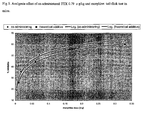
- Clear synergistic action was observed when TTX at the dose of 0.19 ⁇ g/kg (1/100 LD 50 ) was given in combination with morphine respectively at doses of 0.08, 0.15, 0.20, 0.60, 1.25, 2.5mg/kg, as shown in Fig. 2 .
- TTX at the dose of 0.39 ⁇ g/kg co-administered with morphine at 0.15 mg/kg also produced a synergistic effect ( Fig. 3 ).
- the combination of tetrodotoxin and morphine will either produce positive synergistic analgesic action, or at least produce equal analgesic effect at lower dose levels for both, establishing the feasibility of the present invention.
- Tetrodotoxin produces pharmacological effects on the cardiovascular system, analgesia and local anesthesia. In particular, it provides significant alleviation of various dull pains and stinging pains without causing addiction. Based upon the findings of the present invention, the safety and efficacy of TTX can be improved by lowering the dose necessary for treating pain through synergistic action.
- Opioid analgesic agents such as morphine, are of limited use because they readily induce tolerance, dependence and addiction.
- this invention provides a novel solution that markedly improves anesthesia effect and substantially reduces undesirable adverse effects.
- the proportions of sodium channel blocker and opiate for co-administration will be preferably from 1:100 to 1:30,000, more preferably from 1:200 to 1:5,000, still more preferably from 1:500 to 1:2000.
- preferred combinations of the sodium channel blocker and opiate are TTX or STX combined with morphine or codeine or fentanyl.
- Wistar male rats having a body weight between 180-300 grams, first class, QA No. 013056, supplied by the Experimental Animal Center of Medical Branch, Beijing University.
- Tetrodotoxin powder purity 95%, Nanning Maple Leaf Pharmaceutical Co., LTD., batch no. 0324C. Before use, the powder was dissolved into an acetic acid solution at the required concentrations and stored at 4°C in a refrigerator.
- Morphine hydrochloride powder batch no. 960802, Qinghai Pharmaceutical Plant.
- Formaldehyde (formalin), batch no. 9401002, Beijing No. 3 Chemical Plant. Prepared to the required concentrations before use.
- the method described by Vogel et al was followed. Having a body weight between 180-220 grams, 228 male Wistar rats were randomly divided into 24 groups. They were not given food, only water ad-libitum during the 12 hours prior to dosing. The rats were dosed intramuscularly with a normal saline solution (control), morphine hydrochloride or TTX at 0.39 ⁇ g/kg or 0.19 ⁇ g/kg; or by co-administering intramuscularly TTX at 0.39 ⁇ g/kg + morphine, or TTX at 0.19 ⁇ g/kg + morphine on either side of a rat. The injection volume was 0.1 mL/100 gram body weight.
- each rat was given subcutaneously 0.06 mL of 2.5% formalin in the plantar surface of the right paw. Then the animal was put into a 12 cm x 12 cm x 12 cm polymethyl methacrylate box to observe. Its reactions to pain were monitored in the following 5 minutes. The analgesia effect would be manifested if the animal put all its paws on the floor and indicated no preference to the treated paw. Parameter signs included twitching, lifting, licking or gnawing the treated hind paw. The painful response scores were calculated as per the following formula: licking/gnawing time (sec) x 3 + twitching occurrences x 2/3 + lifting time (sec).
- Inhibition rate % the average of the pain response scores of the control group - that of the TTX group / the average of the pain response scores of the control group ⁇ 100 %
- the medium inhibition dose, ID 50 was calculated by the Logit method.
- the half inhibition dose (ID 50 ) of morphine in the model of formalin-induced pain in rats was 2.30 mg/kg body weight.
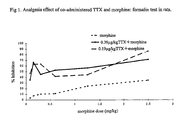
- a trace amount of TTX, 0.19 ⁇ g/kg or 1/100 of LD 50 produced an inhibition rate of 11.6% when used alone, but effected significant analgesia when co-administered with a small dose of morphine, e.g. increasing the inhibition rate to 63.7% in combination with 0.30 mg/kg of morphine.Morphine used alone at 0.30 mg/kg only produced 10.2% inhibition.
- TTX at 0.19 ⁇ g/kg with morphine at 2.50 mg/kg increased the inhibition rate to 86.7% from 34.9% where the latter was used alone.
- TTX at a dose of 0.39 ⁇ g/kg (1/50 of LD 50 ) produced an inhibition rate of 32.9% when used alone and 66.2% in combination of 0.15 mg/kg of morphine, whereas the latter only produced an inhibition rate of 7.2% when used alone.
- Analgesia effect increased with the morphine doses in other groups but not significantly. Table 1 .
- Analgesia effect of co-administered TTX and morphine formalin test in rats Test drug Dose(mg/kg) Animal number Pain reaction score Inhibition rate (%) ID 50 of morphine (mg/kg) Normal saline 8 252.3 ⁇ 105.4 0.19 ⁇ 10 -3 10 223.0+58.3 11.6 TTX 0.39 ⁇ 10 -3 10 169.1 ⁇ 47.2 32.9 Morphine 0.08 8 243.8 ⁇ 36.4 3.4 0.15 8 234.0 ⁇ 26.9 7.2 0.30 8 226.5 ⁇ 73.5 10.2 0.60 8 274.3 ⁇ 119.5 11.0 2.30 1.25 8 190.3 ⁇ 129.9 24.6 (1.38 ⁇ 4.26) 2.50 8 164.3 ⁇ 82.0 34.9 5.00 8 49.8 ⁇ 34.1 80.2 10.00 8 5.6 ⁇ 6.5 97.7 TTX (0.39 ⁇ 10 -3 0.08 8 162.9 ⁇ 55.4 35.4 mg/kg) 0.15 20 85.3 ⁇ 54.2 66.2 + morphine 0.30 14 138.0 ⁇ 50.7 45.3 0.60
- Tetrodotoxin powder purity 95%, Nanning Maple Leaf Pharmaceutical Co., LTD., batch no. 0324C. Before use, the powder was dissolved into an acetic acid solution to the required concentrations and stored at 4°C in a refrigerator.
- Morphine hydrochloride powder batch no. 960802, Qinghai Pharmaceutical Plant.
- Formaldehyde batch no. 9401002, Beijing No. 3 Chemical Plant. Prepared to the required concentrations before use.
- the method of heat stimulation-induced tail-flick in mice was used to assess the analgesia effect of co-administering TTX and morphine.
- a one fold increase in pain threshold/latency was adopted as the criterion for determining the doses of morphine, either used alone or in combination with TTX at 0.79 ⁇ g/kg (1/25 LD 50 ) and 0.39 ⁇ g/kg (1/50 LD 50 ), and ED 50 was calculated by the probit method.
- TTX and morphine were given intramuscularly on either side of an animal.
- morphine was given alone, the upper and lower limits of dosage and a progression ratio were determined through preliminary tests so as to calculate the doses for four animal groups. Likewise, the morphine doses were determined for co-administeration with TTX at doses of 0.79 ⁇ g/kg (1/25 LD 50 ) and 0.39 ⁇ g/kg (1/50 LD 50 ), respectively.
- mice half male and half female, were randomly divided into 16 groups. They were not given food, only water 12 hours prior to dosing. Rats were dosed with a saline solution as a control, morphine hydrochloride, TTX X2 at 0.79 ⁇ g/kg (1/25 LD 50 ) and 0.39 ⁇ g/kg (1/50 LD 50 ), and 12 co-administering groups of TTX at 0.79 ⁇ g/kg in combination of morphine and TTX at 0.39 ⁇ g/kg in combination with morphine, respectively.
- the heat tail flick analgesia meter includes a heat source consisting of a 12 V, 50 watt, 8.75 mm projector lamp. The light beam from the heat source was focused and directed to a point on the tail of a mouse being tested, having a distance of 1-2 mm plus 1/3 of the tail length to the tail end.
- test drugs were given intramuscularly.
- TTX morphine or a mixture of the two was injected into the gluteal muscle on either side of the animal in a volume of 0.1 mL/10 g body weight.
- the tail-flick latencies were measured and recorded at 15, 30,45, 60, 90, 120, 150, 180 min after dosing. For each measurement, three readings were made consecutively one minute apart, and their average was recorded as the latency. The testing on one animal would be terminated when tail-flick was not observed within 20 seconds, and the latency would be recorded as 20 seconds.
- ED 50 for morphine used alone was 0.41 mg/kg at 45 min after dosing, providing the criterion of one fold increase in latency for the heat-induced tail flick test in mice.
- Co-administered with TTX at a dose of 1/25 LD 50 (0.79 ⁇ g/kg) the ED 50 of morphine decreased to 0.07 mg/kg.
- TTX at a dose of 1/50 LD 50 the ED 50 of morphine decreased to 0.21 mg/kg.
- ID 50 for morphine used alone was 0.33 mg/kg at 45 min after dosing.
- Co-administered with TTX at small doses of 0.79 ⁇ g/kg and 0.39 ⁇ g/kg the ID 50 of morphine decreased respectively to 0.08 mg/kg and 0.15 mg/kg, or only 1/4 and 1/2 of the ID 50 for morphine used alone.
- test protocols are designed for this purpose as shown in Example 3-6.
- This test is intended to measure the toxicity interaction of TTX and morphine through determining and comparing the half death doses (LD 50 ) of morphine, and co-administered TTX and morphine.
- the LD 50 of TTX is known from US Patent Application No. 09/695,053 .
- the method will follow the test for determining acute toxicity. Toxicity of the combination of TTX and morphine will be examined in two proportions to obtain the LD 50 values, respectively.
- Wistar rats having a body weight between 200-220 grams each, will be randomly divided into 12-15 groups of 10, half male and half female; and each test drug or combination will use 4 ⁇ 5 groups of animals. They will be allowed no food, only water ad-libitum during the 12 hours before dosing.
- TTX or morphine individually, each animal will receive one administration of the test drug.
- TTX and morphine For co-administration of TTX and morphine, each animal will be given TTX and morphine on either side (in separate dosage forms) or one administration of TTX and morphine in a singular dosage form. After dosing, the animals will be monitored with respect to toxic reactions and death for seven consecutive days. Autopsy will be conducted on any dead animals immediately, with general examination for toxic reactions in major organs.
- the LD 50 values will be determined by the Bliss method. If the LD 50 increases significantly by comparison with the theoretical additive, the toxicity of co-administeration is lower than that of TTX or morphine individually used, indicating improved safety in light of the synergistic analgesic action between TTX and morphine. Even if the LD 50 remains unchanged, the combined use of TTX and morphine can still be desirable.
- Example 4 Isobolographic profile for the interaction between TTX and morphine by the pain model of formalin-induced inflammation in rats
- the isobologram is a commonly used technique to establish superadditive, subadditive, or merely additive effects resulting from the administration of two compounds.
- the design of this test follows Tallarida' s method, which was also adopted in US Patent No. 5,468,744 .
- the purpose is to elicit the optimal analgesic proportions in the combination or composition of TTX and morphine, in light of the findings of toxicity interactions in Example 3.
- the pain model of formalin test in rats will be used to assess the analgesic effects of the test drug or combinations, particularly, determine the half inhibition doses (ID 50 ). For determining ID 50 of TTX or morphine individually, each animal will receive one administration of the test drug.
- each animal will be given TTX and morphine on either side (in separate dosage forms) or one administration of TTX and morphine in a single dosage form.
- the proportions of TTX and morphine in terms of weight for co-administration will be between 1:200 to 1:5,000.
- the number of particular proportions/animal groups will be determined based upon these proportion ranges so that sound and sufficient data can be made available for one person in the art with ordinary skills to draw and interpret isobolograms thereupon.
- Example 5 Toxicity of saxitoxin (STX) and morphine co-administered by intramuscular injection in rats
- this test is intended to conclude the toxicity interaction of STX and morphine through determining and comparing the half death doses (LD 50 ) of STX, morphine, and co-administered STX and morphine. Toxicity of the combination of STX and morphine will be examined in two proportions to obtain the LD 50 values, respectively.
- Wistar rats, half male and half female, having a body weight between 200-220 grams each, will be randomly divided into 16 ⁇ 20 groups of 10, and each test drug or combination will use 4-5 groups of animals.
- the test method and procedure will follow Example 3, as will the analysis of the toxicity interaction between STX and morphine and the feasibility of their combination use.
- Example 6 Isobologram profile for the interaction between STX and morphine by the pain model of formalin-induced inflammation in mice
- the proportions of STX and morphine for co-administration will be preferably between 1:200 to 1:5,000.
Landscapes
- Health & Medical Sciences (AREA)
- General Health & Medical Sciences (AREA)
- Life Sciences & Earth Sciences (AREA)
- Chemical & Material Sciences (AREA)
- Veterinary Medicine (AREA)
- Medicinal Chemistry (AREA)
- Animal Behavior & Ethology (AREA)
- Public Health (AREA)
- Pharmacology & Pharmacy (AREA)
- Epidemiology (AREA)
- Nuclear Medicine, Radiotherapy & Molecular Imaging (AREA)
- Chemical Kinetics & Catalysis (AREA)
- Engineering & Computer Science (AREA)
- Organic Chemistry (AREA)
- General Chemical & Material Sciences (AREA)
- Bioinformatics & Cheminformatics (AREA)
- Pain & Pain Management (AREA)
- Emergency Medicine (AREA)
- Biomedical Technology (AREA)
- Neurology (AREA)
- Neurosurgery (AREA)
- Pharmaceuticals Containing Other Organic And Inorganic Compounds (AREA)
- Acyclic And Carbocyclic Compounds In Medicinal Compositions (AREA)
- Medicines That Contain Protein Lipid Enzymes And Other Medicines (AREA)
Abstract
Description
- The present invention relates to a pharmaceutical composition comprising a synergistically effective analgesic combination of an opioid analgesic agent and a compound that specifically binds to the SS1 or SS2 subunit of a sodium channel in a pharmaceutically suitable vehicle, for use in producing analgesia in a mammal experiencing pain.
- According to
US Patent No. 6,150,524 , opioid analgesics such as morphine are the most powerful analgesics for treating severe chronic and acute pain. An example of chronic pain is the pain experienced by cancer patients. An example of acute pain is the pain experienced after operations. The pain relieving activity of opioid analgesics includes a depressive effect on the central nervous system. The analgesic activity of opioid analgesics such as morphine and deltorphin II can be mediated via different opioid receptors, for example via µ -opioid and δ -opioid receptors. Opioid analgesics are invaluable for the treatment of severe acute or chronic pain as, for example, may occur in bone degenerative diseases and cancer conditions. They are easy to administer and they provide effective pain relief in most patients. Due to the excellent overall tolerability of opioids, the doses of morphine and other strong opioids can be increased to relatively high levels. - The opioids used for treating such pain are indeed highly effective but have a number of unpleasant and/or undesirable side effects (e.g. a short duration of activity, respiratory depression, nausea, constipation, diuresis and euphoria and they are also addictive). In some patients, particularly in the chronically ill, the opioid side effects make it impossible to continuously administer sufficiently high dosages to adequately control pain over the needed period of time. There are also some pain conditions that do not sufficiently respond to opioid pain treatment alone. Therefore, there is a constant need for improved opioid containing analgesic combinations with increased analgesic activity which comprise opioid and non-opioid analgesically active agents and which offer the possibility of reducing the opioid dose needed for efficient pain relief and thereby also reducing the opioid side effects that might result from the otherwise required higher dosages.
- Recently,
Hartmann (US Patent No. 6, 150,524 ) andNagase (US Patent 6,177,438 ) have discovered morphine derivatives through modifying the structure of morphine so as to reduce the adverse effects associated with the use of morphine. The results based upon animal studies, however, are still insufficient to support pharmaceutical use in humans with acceptable safety and efficacy. - On the other hand, sodium channel blocking compounds that bind to the SS1 or SS2 subunit of a sodium channel, particularly tetrodotoxin and saxitoxin, are found to possess a potent analgesic property (
US Patent Application No. 09/695,053 - In one embodiment, tetrodotoxin (TTX) was found to be about 3,000 times more analgesically potent than morphine. Moreover, TTX does not produce addiction. Furthermore, trials in humans indicate that TTX also provides a duration of action much longer than morphine. TTX provides significant analgesia for pain from chemical stimulation. However, a larger dose appears to be necessary for suppressing pain induced by heat. In studies of use of TTX to treat addiction, experiments suggest a steep dose-toxicity curve for TTX. Therefore, there is a need to improve safety by reducing the TTX dose needed for efficient pain relief.
-
Fairbanks (US Patent No. 6,204,271 ) introduced co-administration of an opioid analgesic agent and moxonidine as a non-opioid agent for producing synergistic analgesia in mammals, hoping to provide a reduced propensity for causing undesirable side effects. Moxonidine is known to be an imidazoline/ α2-adrenergic (I1/ α2-AR) receptor agonist and is clinically used in antihypertensive medications. Monoxidine is reported to have analgesic activity, but is not comparable to TTX, which is potent and provides long duration of relief in cancer patients. TTX is also non-addictive as shown through studies in a variety of animals. - The present invention is related to producing analgesia in mammals, in particular in humans, by co-administering synergistically effective amounts of (1) a sodium channel blocking compound that specifically binds to the SS1 or SS2 subunit of a sodium channel, such as tetrodotoxin or saxitoxin or analogs thereof; and (2) an opioid analgesic agent. The present invention further pertains to analgesic pharmaceutical compositions comprising synergistically effective amounts of a sodium channel blocking compound that specifically binds to the SS1 or SS2 subunit of a sodium channel selected from the group consisting of tetrodotoxin, saxitoxin, methoxytetrodotoxin, ethoxytetrodotoxin, deoxytetrodotoxin, aminotetrodotoxin and tetrodonic acid and an opioid analgesic agent.
- An object of this invention to provide a potent analgesic composition containing a long-acting analgesic sodium channel blocking compound that specifically binds to the SS1 or SS2 subunit of a sodium channel selected from the group consisting of tetrodotoxin, saxitoxin, methoxytetrodotoxin, ethoxytetrodotoxin, deoxytetrodotoxin aminotetrodotoxin and tetrodenic acid, and an opioid analgesic agent, with a reduced propensity for causing undesirable adverse effects.
- It is also an object of the invention to provide a non-addictive sodium channel blocker with analgesic activity showing synergy with the analgesic activity of the opioid, and to provide analgesic compositions comprising an opioid analgesic agent, such as morphine and its derivatives, and such a synergistically effective non-addictive sodium channel blocker which allows reducing the amount of the opioid necessary to achieve effective pain treatment.
-
-
Figure 1 shows the analgesia effect of co-administered TTX and morphine observed in the formalin-induced inflammatory pain test in rats. -
Figure 2 shows the actual and the theoretical predictive analgesia effect of TTX at 0.19 µg/kg co-administered with morphine observed in the formalin-induced inflammatory pain test in rats. -
Figure 3 shows the actual and the theoretical predictive analgesia effect of TTX at 0.39 µg/kg co-administered with morphine observed in the formalin test in rats. -
Figure 4 shows the actual and the theoretical predictive analgesia effect of TTX at 0.39 µg/kg co-administered with morphine observed in the tail-flick test in mice. -
Figure 5 shows the actual and the theoretical predictive analgesia effect of TTX at 0.79 µg/kg co-administered with morphine observed in the tail-flick test in mice. - The present invention is related to producing analgesia in mammals, in particular in humans, by co-administering synergistically effective amounts of (1) a sodium channel blocking compound that specifically binds to the SS1 or SS2 subunit of a sodium channel selected from the group consisting of tetrodotoxin, saxitoxin, methoxytetrodotoxin, ethoxytetrodotoxin, deoxytetrodotoxin, aminotetrodotoxin and tetrodonic acid, and (2) an opioid analgesic agent. In such a combination the opioid agent or a pharmaceutically acceptable derivative or salt thereof can be administered in a low-analgesic dose, or even in a per se sub-analgesic dose. The composition may contain both, a sodium channel blocking compound that specifically binds to the SS1 or SS2 subunit of a sodium channel selected from the specified group and the opioid agent, together in one dosage form or each in a separate dosage form
- Tetrodotoxin and saxitoxin are known to be sodium channel blocking compounds that specifically bind to the SS1 or SS2 subunit of a sodium channel.
- Tetrodotoxin and its pharmacologically acceptable salts are species of octahydro-12-(hydroxymethyl)-2-imino-5,9:7,10a-dimethano-10aH-[1,3]dioxocino [6,5-d]pyrimidine-4, 7, 10, 11, 12-pentol derivatives that may be used in accordance with the invention.The chemical name of tetrodotoxin and other related data are shown below:
- Chemical name: octahydro-12-(hydroxymethyl)-2-imino-5, 9: 7, 10a-dimethano-10aH-[1,3]dioxocino[6,5-d]pyrimidine-,4, 7, 10, 11, 12-pentol
- Molecular formula: C11H17N3O8
- Molecular weight: 319.27
- Structure:

- TTX compounds can be manufactured in a known manner essentially in accordance with the processes described in the
US Patent Application 09/695,711 09/818,775 09/818,863 - The chemical name of saxitoxin and other related data are shown below:
- Chemical name: 2,6-diamino-4-((aminocarbonyl) oxy) methyl-3a,4,8,9-tetrahydro-1H, 10H-pyrrolo(1,2-c)purine -10,10-diol (3aS-(3a-a-a-4-a, 10aR*))
- Molecular formula: C10H17N7O4
- Molecular weight: 299.3
- One of the findings in this invention is that tetrodotoxin synergizes with the analgesic activity of opioids, in particular opioids such as morphine, when tetrodotoxin and such an opioid analgesic are co-administered for the treatment of pain. This co-administration results in a greater-than-additive effect.
- According to
US Patent Application No. 09/695,053 - Opioid or opiate is a general term for natural or synthetic substances that bind to specific receptors ( "opioid receptors" ) in the central nervous system, producing an agonist action. At present two types of opioid receptors, µ - and δ are known. Also two subtypes of µ receptors, µ1 and
µ 2 are known. Opioid analgesics are extremely useful in managing severe acute pain, postoperative pain and chronic pain including cancer pain. Typical opioid analgesics are morphine, codeine, methadone and fentanyl. These analgesics can be used in the invention. Opioid agonists with opioid receptor activity, like morphine and compounds structurally related to morphine, or compounds functionally related to morphine such as deltorphin II, or pharmaceutically acceptable derivatives or salts thereof, can be used in the invention. Fentanyl, remifentanil and etc. are further examples of opioid analgesics used in clinical treatment that can be employed. Morphine is most preferably used as the opioid. Suitable pharmaceutically acceptable salts of opioids include hydrochlorides, hydrobromides, hydroiodides, sulphates, bisulphates, phosphates, acetates, nitrates, citrates, tartrates, bitartrates, terephthalates, succinates, malates, maleates, fumarates, pectinates and pamoates. Preferably, the pharmaceutically acceptable salt of morphine is a hydrochloride, a sulphate or a tartrate. - Nociception is a processing reaction by the central nervous system to the transmission of stimulation of nociceptors. Noxious stimuli can cause depolarization in the primary perceptive nerve endings so as to excite the receptors. The nociceptors indeed are the nerve endings of neurons that have their cell bodies outside the spinal column in the dorsal root ganglion. The true nociception neurons are the myelinated fibers (A δ) and unmyelinated fibers (C-fibers). Nociception acts also like an alarm to induce escape or defense reactions against noxious stimuli.
- Tetrodotoxin has long been considered interesting for its action of altering the pain caused by nociception. According to Catterall, in animal models of neuropathic pain in rats, tetrodotoxin inhibits the ectopic discharges originating at related dorsal root ganglia (DRG) and dorsal horn (DH) of the spinal cord and hyperexcitability of neurons, and increases the reaction threshold of pain receptors. As Kostyun et al pointed out, at least two types of voltage-dependent sodium channels exist in the dorsal root ganglion neurons of a mammal, i.e. the TTX-S sodium channel that is sensitive to tetrodotoxin and manifests rapid inward ionic currents, and the TTX-R channel that is resistant to tetrodotoxin and manifests slower inward ionic currents.
- Perihperal application of TTX blocked the fast excitatory postsynaptic potentials (EPSP) evoked by electrical stimulation but failed to block the electrically evoked slow EPSPs (Srdija Jeftinija). This finding provides an explanation of the result that TTX produced only 71.7% inhibition even at a dose of 2.5 µg/kg in the formalin test model in rats.
- Morphine as a classic analgesic produces pain inhibition primarily via µ receptors (Besse, D. et al.). A recent study shows that morphine can block the excitatory amino acid mediated membrane current in ambignal motoneurons of the rat, produce hyperpolarization in the membrane potential, and cause EPSPs to disappear (Zhang, M. et al.).
- North concluded that morphine can increase a potassium conductance and produce hyperpolarization by exciting µ receptors. In addition, the disappearance of EPSPs may result from the inhibition on the entry of calcium and sodium ions. Further study by Hung et al shows that the inhibition by morphine of sodium channels is not caused by direct stimulation to opioid receptors but rather is related to delay in the recovery rate of inactivated sodium channels.
- Without being bound by any theory of the invention, in view of the blocking action of TTX and morphine on sodium channels, the inventors believe the synergistic analgesic effect of co-administering a trace amount of TTX and a small morphine dose, occurs by tetrodotoxin inhibiting the transmission of noxious stimulation to the spinal column, while morphine produces a central blockade of sodium currents.
- The inventors studied the synergistic analgesic action in two animal pain models. According to the invention, by co-administering an opioid with a trace amount of tetrodotoxin, equal pain relieving effects may be achieved with dosages that are substantially reduced as compared to the dosages needed when the opioid is administered alone. In the model of formaldehyde (formalin) induced inflammatory pain in rats, the ID50 dose of morphine was reduced 16-fold. Clear synergistic action was observed when TTX at the dose of 0.19 µg/kg (1/100 LD50) was given in combination with morphine respectively at doses of 0.08, 0.15, 0.20, 0.60, 1.25, 2.5mg/kg, as shown in
Fig. 2 . TTX at the dose of 0.39µg/kg co-administered with morphine at 0.15 mg/kg also produced a synergistic effect (Fig. 3 ). - In the other nociceptive pain model, heat-induced tail-flick in mice, the ED50 of morphine was reduced 2 to 5 fold, and the duration of action was prolonged significantly.
- Therefore, the combination of tetrodotoxin and morphine will either produce positive synergistic analgesic action, or at least produce equal analgesic effect at lower dose levels for both, establishing the feasibility of the present invention.
- Tetrodotoxin produces pharmacological effects on the cardiovascular system, analgesia and local anesthesia. In particular, it provides significant alleviation of various dull pains and stinging pains without causing addiction. Based upon the findings of the present invention, the safety and efficacy of TTX can be improved by lowering the dose necessary for treating pain through synergistic action. Opioid analgesic agents, such as morphine, are of limited use because they readily induce tolerance, dependence and addiction. By co-administration of small morphine doses and trace amounts of TTX, this invention provides a novel solution that markedly improves anesthesia effect and substantially reduces undesirable adverse effects.In terms of weight, the proportions of sodium channel blocker and opiate for co-administration will be preferably from 1:100 to 1:30,000, more preferably from 1:200 to 1:5,000, still more preferably from 1:500 to 1:2000.
- As compounds, preferred combinations of the sodium channel blocker and opiate are TTX or STX combined with morphine or codeine or fentanyl.
- The following examples illustrate the methods and compositions of the invention, but are in no way intended to limit the invention.
- In this example, the synergistic analgesia effect produced by co-administering tetrodotoxin and morphine was observed in a formalin test in rats.
- Wistar male rats having a body weight between 180-300 grams, first class, QA No. 013056, supplied by the Experimental Animal Center of Medical Branch, Beijing University.
- Tetrodotoxin powder, purity 95%, Nanning Maple Leaf Pharmaceutical Co., LTD., batch no. 0324C. Before use, the powder was dissolved into an acetic acid solution at the required concentrations and stored at 4°C in a refrigerator.
- Morphine hydrochloride powder, batch no. 960802, Qinghai Pharmaceutical Plant.
- Formaldehyde (formalin), batch no. 9401002, Beijing No. 3 Chemical Plant. Prepared to the required concentrations before use.
- The method described by Vogel et al was followed. Having a body weight between 180-220 grams, 228 male Wistar rats were randomly divided into 24 groups. They were not given food, only water ad-libitum during the 12 hours prior to dosing. The rats were dosed intramuscularly with a normal saline solution (control), morphine hydrochloride or TTX at 0.39µg/kg or 0.19µg/kg; or by co-administering intramuscularly TTX at 0.39µg/kg + morphine, or TTX at 0.19µg/kg + morphine on either side of a rat. The injection volume was 0.1 mL/100 gram body weight. At 40 minutes after dosing, each rat was given subcutaneously 0.06 mL of 2.5% formalin in the plantar surface of the right paw. Then the animal was put into a 12 cm x 12 cm x 12 cm polymethyl methacrylate box to observe. Its reactions to pain were monitored in the following 5 minutes. The analgesia effect would be manifested if the animal put all its paws on the floor and indicated no preference to the treated paw. Parameter signs included twitching, lifting, licking or gnawing the treated hind paw. The painful response scores were calculated as per the following formula: licking/gnawing time (sec) x 3 + twitching occurrences x 2/3 + lifting time (sec).
- The pain response scores of the TTX groups were compared with those of the control groups, and the following formula was used to calculate the inhibition rate of TTX on pain responses:

- The medium inhibition dose, ID50, was calculated by the Logit method.
- During preliminary tests no significant differences were observed among the results of normal saline, buffer solution and normal saline plus buffer solution. Therefore, only normal saline was used as a control in the formal tests.Neither administering on both sides of an animal nor variance in injection volumes were taken into consideration for co-administering groups.
- As shown in Table 1 and
Fig. 1 , the half inhibition dose (ID50) of morphine in the model of formalin-induced pain in rats was 2.30 mg/kg body weight. A trace amount of TTX, 0.19 µg/kg or 1/100 of LD50, produced an inhibition rate of 11.6% when used alone, but effected significant analgesia when co-administered with a small dose of morphine, e.g. increasing the inhibition rate to 63.7% in combination with 0.30 mg/kg of morphine.Morphine used alone at 0.30 mg/kg only produced 10.2% inhibition. Combination of TTX at 0.19 µ g/kg with morphine at 2.50 mg/kg increased the inhibition rate to 86.7% from 34.9% where the latter was used alone. TTX at a dose of 0.39 µg/kg (1/50 of LD50) produced an inhibition rate of 32.9% when used alone and 66.2% in combination of 0.15 mg/kg of morphine, whereas the latter only produced an inhibition rate of 7.2% when used alone. Analgesia effect increased with the morphine doses in other groups but not significantly.Table 1 . Analgesia effect of co-administered TTX and morphine: formalin test in rats Test drug Dose(mg/kg) Animal number Pain reaction score Inhibition rate (%) ID50 of morphine (mg/kg) Normal saline 8 252.3±105.4 0.19 × 10⁻³ 10 223.0+58.3 11.6 TTX 0.39 × 10-3 10 169.1±47.2 32.9 Morphine 0.08 8 243.8±36.4 3.4 0.15 8 234.0±26.9 7.2 0.30 8 226.5±73.5 10.2 0.60 8 274.3±119.5 11.0 2.30 1.25 8 190.3±129.9 24.6 (1.38~4.26) 2.50 8 164.3±82.0 34.9 5.00 8 49.8±34.1 80.2 10.00 8 5.6±6.5 97.7 TTX (0.39 × 10-3 0.08 8 162.9±55.4 35.4 mg/kg) 0.15 20 85.3±54.2 66.2 + morphine 0.30 14 138.0±50.7 45.3 0.60 14 119.5±38.3 52.6 1.25 14 109.3±64.4 56.7 2.50 8 71.6±44.2 71.6 TTX (0.19 × 10- 0.08 8 132.0±39.3 47.7 3mg/kg) 0.15 10 94.1±43.9 62.7 + morphine 0.30 8 91.6±51.3 63.7 0.60 8 146.8±66.6 41.8 1.25 8 139.4±68.9 44.7 2.50 8 36.6±16.3 86.7 5.00 8 24.4±12.1 90.3 - In this example, the synergistic analgesia effect produced by co-administering tetrodotoxin and morphine was observed through heat-induced tail-flick test in mice.
- Kunming mice having a body weight between 12-22 grams, first class, QA No. 013056, supplied by the Experimental Animal Center of Medical Branch, Beijing University.
- Tetrodotoxin powder, purity 95%, Nanning Maple Leaf Pharmaceutical Co., LTD., batch no. 0324C. Before use, the powder was dissolved into an acetic acid solution to the required concentrations and stored at 4°C in a refrigerator.
- Morphine hydrochloride powder, batch no. 960802, Qinghai Pharmaceutical Plant.
- Formaldehyde, batch no. 9401002, Beijing No. 3 Chemical Plant. Prepared to the required concentrations before use.
- The method of heat stimulation-induced tail-flick in mice was used to assess the analgesia effect of co-administering TTX and morphine. A one fold increase in pain threshold/latency was adopted as the criterion for determining the doses of morphine, either used alone or in combination with TTX at 0.79 µg/kg (1/25 LD50) and 0.39 µg/kg (1/50 LD50), and ED50 was calculated by the probit method. For co-administeration, TTX and morphine were given intramuscularly on either side of an animal.
- Where morphine was given alone, the upper and lower limits of dosage and a progression ratio were determined through preliminary tests so as to calculate the doses for four animal groups. Likewise, the morphine doses were determined for co-administeration with TTX at doses of 0.79 µg/kg (1/25 LD50) and 0.39 µg/kg (1/50 LD50), respectively.
- 320 screened mice, half male and half female, were randomly divided into 16 groups. They were not given food, only water 12 hours prior to dosing. Rats were dosed with a saline solution as a control, morphine hydrochloride, TTX X2 at 0.79 µg/kg (1/25 LD50) and 0.39 µg/kg (1/50 LD50), and 12 co-administering groups of TTX at 0.79 µg/kg in combination of morphine and TTX at 0.39 µg/kg in combination with morphine, respectively. The heat tail flick analgesia meter includes a heat source consisting of a 12 V, 50 watt, 8.75 mm projector lamp. The light beam from the heat source was focused and directed to a point on the tail of a mouse being tested, having a distance of 1-2 mm plus 1/3 of the tail length to the tail end.
- The test drugs were given intramuscularly. TTX, morphine or a mixture of the two was injected into the gluteal muscle on either side of the animal in a volume of 0.1 mL/10 g body weight. The tail-flick latencies were measured and recorded at 15, 30,45, 60, 90, 120, 150, 180 min after dosing. For each measurement, three readings were made consecutively one minute apart, and their average was recorded as the latency. The testing on one animal would be terminated when tail-flick was not observed within 20 seconds, and the latency would be recorded as 20 seconds. The pain inhibition rate was calculated according to the following formula for the purpose of assessing the analgesia potency:

- The results were processed with SPSS, a statistical software. Half effective dose (ED50) and half inhibition dose (ID50) were calculated with the probit method. The synergistic action of TTX and morphine was evaluated by an isobologram.
- As shown in Tables 2 and 3, ED50 for morphine used alone was 0.41 mg/kg at 45 min after dosing, providing the criterion of one fold increase in latency for the heat-induced tail flick test in mice. Co-administered with TTX at a dose of 1/25 LD50 (0.79 µg/kg), the ED50 of morphine decreased to 0.07 mg/kg. When co-administered with TTX at a dose of 1/50 LD50 (0.39 µg/kg), the ED50 of morphine decreased to 0.21 mg/kg.
- Providing the basic latency as a criterion, ID50 for morphine used alone was 0.33 mg/kg at 45 min after dosing. Co-administered with TTX at small doses of 0.79 µg/kg and 0.39 µg/kg the ID50 of morphine decreased respectively to 0.08 mg/kg and 0.15 mg/kg, or only 1/4 and 1/2 of the ID50 for morphine used alone.
Table 2. Analgesia effect of co-administered TTX and morphine - ID50 (heat induced tail flick test in mice, latency Mean±SD, n=20), compared with the ID50 for morphine used alone. Group Dose (mg/kg) Latency before dosing Latency after dosing Inhibition rate(%) ID50&95% Confidence Limits Control (normal saline) 5.36±0.96 5.43±0.89 1.29 TTX 0.79×10-3 5.25±0.59 6.04±0.76 12.06 0.39×10⁻³ 5.56±0.81 5.88±1.00 5.44 Morphine hydrochloride 0.01 5.48±1.44 6.35±1.87 13.70 0.06 5.83±1.49 8.67±2.54 32.76 0.33 0.33 5.2 1±1 .39 10.04±2.49 48.11 (0.21~0.55) 1.80 5.63±1.31 18.94±1.02 70.27 TTX(0.79ug/kg)+ morphine hydrochloride 0.004 5.83+1.26 7.22±1.14 19.25 0.016 6.37±1.08 9.96±2.40 36.04 0.08 0.073 0.330 5.78±1.29 6.31±1.10 11.82±2.65 17.21±2.23 51.09 63.33 (0.05~0.14) TTX(0.39ug/kg)+ morphine hydrochloride 0.01 5.76±0.89 8.17±1.94 29.50 0.05 5.84±0.73 10.16±1.85 42.52 0.15 0.28 5.55±0.88 12.50±3.46 55.60 (0.08∼0.33) 1.50 5.61±0.86 16.28±2.53 65.54 Table 3. Analgesia effect of co-administered TTX and morphine - ED50 (heat induced tail flick test in mice, n=20); ED50 of morphine by comparison with the latencies at 45 min after dosing. Group Dose (mg/kg) Positive occurrences Percentage of positive occurrences (%) ED50&95% Confidence Limits ED95&95% Confidence Limits Control (N.S) TTX 0.79 × 10⁻³ 0.39 × 10⁻³ Morphine Hydrochloride 0.01 0 0 0.06 2 10 0.41 0.77 0.33 7 35 (0.30~0.84) (0.54~1.91) 1.80 20 100 TTX(0.79ug/kg)+ Morphine Hydrochloride 0.004 0 0 0.016 2 10 0.07 0.13 0.073 10 50 (0.06~0.10) (0.10~0.22) 0.330 20 100 TTX(0.39ug/kg)+ Morphine Hydrochloride 0.01 1 5 0.05 2 10 0.21 0.42 0.28 14 70 (0.16~0.29) (0.33~0.62) 1.50 20 100 - For practical use of the synergistic interaction between an opioid analgesic agent and a compound that binds to the SS1 or SS2 subunit of a sodium channel, it is helpful to characterize the toxicity resulting from co-administration thereof, and subsequently to elicit the optimal analgesic proportions in the combination or composition thereof. Therefore, test protocols are designed for this purpose as shown in Example 3-6.
- This test is intended to measure the toxicity interaction of TTX and morphine through determining and comparing the half death doses (LD50) of morphine, and co-administered TTX and morphine. The LD50 of TTX is known from
US Patent Application No. 09/695,053 - Wistar rats, having a body weight between 200-220 grams each, will be randomly divided into 12-15 groups of 10, half male and half female; and each test drug or combination will use 4~5 groups of animals. They will be allowed no food, only water ad-libitum during the 12 hours before dosing. For determining LD50 of TTX or morphine individually, each animal will receive one administration of the test drug. For co-administration of TTX and morphine, each animal will be given TTX and morphine on either side (in separate dosage forms) or one administration of TTX and morphine in a singular dosage form. After dosing, the animals will be monitored with respect to toxic reactions and death for seven consecutive days. Autopsy will be conducted on any dead animals immediately, with general examination for toxic reactions in major organs.
- Consequently, the LD50 values will be determined by the Bliss method. If the LD50 increases significantly by comparison with the theoretical additive, the toxicity of co-administeration is lower than that of TTX or morphine individually used, indicating improved safety in light of the synergistic analgesic action between TTX and morphine. Even if the LD50 remains unchanged, the combined use of TTX and morphine can still be desirable.
- The isobologram is a commonly used technique to establish superadditive, subadditive, or merely additive effects resulting from the administration of two compounds. The design of this test follows Tallarida' s method, which was also adopted in
US Patent No. 5,468,744 . As mentioned above, the purpose is to elicit the optimal analgesic proportions in the combination or composition of TTX and morphine, in light of the findings of toxicity interactions in Example 3. The pain model of formalin test in rats will be used to assess the analgesic effects of the test drug or combinations, particularly, determine the half inhibition doses (ID50). For determining ID50 of TTX or morphine individually, each animal will receive one administration of the test drug. For co-administration of TTX and morphine, each animal will be given TTX and morphine on either side (in separate dosage forms) or one administration of TTX and morphine in a single dosage form. The proportions of TTX and morphine in terms of weight for co-administration will be between 1:200 to 1:5,000. The number of particular proportions/animal groups will be determined based upon these proportion ranges so that sound and sufficient data can be made available for one person in the art with ordinary skills to draw and interpret isobolograms thereupon. - As in Example 3, this test is intended to conclude the toxicity interaction of STX and morphine through determining and comparing the half death doses (LD50) of STX, morphine, and co-administered STX and morphine. Toxicity of the combination of STX and morphine will be examined in two proportions to obtain the LD50 values, respectively.
- Wistar rats, half male and half female, having a body weight between 200-220 grams each, will be randomly divided into 16~20 groups of 10, and each test drug or combination will use 4-5 groups of animals. The test method and procedure will follow Example 3, as will the analysis of the toxicity interaction between STX and morphine and the feasibility of their combination use.
- The method will follow Example 4, replacing TTX with STX.
In terms of weight, the proportions of STX and morphine for co-administration will be preferably between 1:200 to 1:5,000. - Various articles of the scientific and patent literature are cited herein. Each such article is hereby incorporated in its entirety and for all purposes by such citation.
- 1. Hartmann, et al., Morphine derivatives with analgesic activity,
US Patent No.6,150,524, 2000 . - 2. Nagase, et al., Morphine derivatives and pharmaceutical use thereof,
US Patent No. 6,177,438, 2001 . - 3. Dong,Q.B. et al., A Method of Analgesia,
US Patent Application No. 09/695,053, 2000 - 4. Adams, et al. Synergistic local anesthetic compositions,
US Patent No.4,022,899, 1977 . - 5. Catterall WA. Cellular and molecular biology of voltage gated sodium channels. Physiol Rev. 1992;72;s15-s18.
- 6. Kostyun, P.G. , Veselovsky, N.S and Tsyndrenko, A.Y., Ionic currents in the somatic membrane of rat dorsal root ganglion neurons. I. Sodium current, Neuroscience, 6(1981) 2423-2430.
- 7. Srdija Jeftinija, The role of tetrodotoxin-resistant Sodium channels of small primary afferent fibers. Brain Research 639 (1994) 125-134.
- 8.
US Patent Application 09/695,053, 2000 - 9. Besse, D., Lombard, M-C. And Besson, J-M (1991) Autoradiographic distribution of mu, delta and kappa opioid binging sites in the superficial dorsal horn, over the rostrocaudal axis of the rat spinal cord. Brain Res., 548:287-291.
- 10. Zhang M, Nie L, Liu L, Wang YT, Neuman RS, Bieger D. Morphine blocked the exitatory amino acid mediated membrane current in ambignal motoneurons of the rat. Acta Physiologica Sinica, 1995,47(3),253-258.
- 11. North, R.A. and Willianms, J.T. (1985) . On the potassium conductance increased by opiates in rat brains coeruleus neurones. J.Physiol., 364,265-280.
- 12. C.-F. Hung, C.-H. Tsai and M-J. Su, Opioid receptor independent effects of morphine on membrane currents in single cardiac myocytes , British Journal of Anesthesia 1998;81:925-931.
- 13. H. Gerhard Vogel, Wolfgang H. Vogel, Guide to pharmacological tests-new drug discovery and pharmacological evaluation, translated by Guanhua Du et al, Sciences Publishing of China, 2001,499-500.
- 14. Duanzheng Xu, Application of bio-statistics in pharmacology, Sciences Publishing of China, 1986,357-366.
- 15. Tallarida, R.J. et al., Statistical analysis of drug-drug and site-site interactions with isobolograms, Life Sci. 1989; 45: 947-961.
- 16. Zhang, W. et al., Statistics and Programs of Pharmacology, Beijing People' s Health Publishing Service. 1988; p 108-116
Claims (12)
- A pharmaceutical composition comprising an opioid and a sodium channel blocker that specifically binds to the SS1 or SS2 subunit of a sodium channel selected from the group consisting of tetrodotoxin, saxitoxin, methoxytetrodotoxin, ethoxytetrodotoxin, deoxytetrodotoxin, aminotetrodotoxin and tetrodonic acid for use in producing analgesia in a mammal experiencing pain.
- The pharmaceutical composition of claim 1, wherein the opioid and the compound that binds to the SS 1 or SS2 subunit of a sodium channel are designed to be administered together in one single dosage form.
- The pharmaceutical composition of claim 1, wherein the opioid and the compound that binds to the SS1 or SS2 subunit of a sodium channel are designed to be administered in separate dosage forms.
- The pharmaceutical composition of any one of claims 1 to 3, wherein the opioid is morphine.
- The pharmaceutical composition of any one of claims 1 to 3, wherein the effective dose of tetrodotoxin or saxitoxin is from 0.01 µg per kilogram body weight to 20 µg per kilogram body weight.
- The pharmaceutical composition of claim 4, wherein the effective dose of morphine is from 0.002 mg per kilogram body weight to 20 mg per kilogram body weight.
- Use of a compound that binds specifically to the SS1 or SS2 subunit of a sodium channel selected from the group consisting of tetrodotoxin, saxitoxin, methoxytetrodotoxin, ethoxytetrodotoxin, deoxytetrodotoxin, aminotetrodotoxin and tetrodonic acid
for the preparation of a pharmaceutical composition for producing analgesia in a mammal experiencing pain,
which is designed to be administered in combination with an opioid analgesic agent. - The use of claim 7, wherein the opioid and the compound that binds to the SS1 or SS2 subunit of a sodium channel are designed to be administered together in one single dosage form.
- The use of claim 7, wherein the opioid and the compound that binds to the SS1 or SS2 subunit of a sodium channel are designed to be administered in separate dosage forms.
- The use of any one of claims 7 to 9, wherein the opioid is morphine.
- The use of any one of claims 7 to 9, wherein the effective dose of tetrodotoxin or saxitoxin is from 0.01 µg per kilogram body weight to 20 µg per kilogram body weight.
- The use of claim 10, wherein the effective dose of morphine is from 0.002 mg per kilogram body weight to 20 mg per kilogram body weight.
Applications Claiming Priority (3)
| Application Number | Priority Date | Filing Date | Title |
|---|---|---|---|
| CNB011180986A CN1269482C (en) | 2001-05-18 | 2001-05-18 | Use of sodium ion channel blocker and opioid analgesic in the preparation of medicines for synergistic analgesia in mammals |
| CN01118098 | 2001-05-18 | ||
| PCT/CN2002/000339 WO2002094272A1 (en) | 2001-05-18 | 2002-05-20 | Analgesic composition and method |
Publications (3)
| Publication Number | Publication Date |
|---|---|
| EP1387685A1 EP1387685A1 (en) | 2004-02-11 |
| EP1387685A4 EP1387685A4 (en) | 2007-05-23 |
| EP1387685B1 true EP1387685B1 (en) | 2010-04-21 |
Family
ID=4662967
Family Applications (1)
| Application Number | Title | Priority Date | Filing Date |
|---|---|---|---|
| EP02734980A Expired - Lifetime EP1387685B1 (en) | 2001-05-18 | 2002-05-20 | Analgesic composition comprising an opioid and a sodium channel blocker |
Country Status (9)
| Country | Link |
|---|---|
| US (2) | US6780866B2 (en) |
| EP (1) | EP1387685B1 (en) |
| JP (1) | JP2004529959A (en) |
| CN (1) | CN1269482C (en) |
| AT (1) | ATE464903T1 (en) |
| CA (1) | CA2485337C (en) |
| DE (1) | DE60236077D1 (en) |
| ES (1) | ES2344631T3 (en) |
| WO (1) | WO2002094272A1 (en) |
Families Citing this family (12)
| Publication number | Priority date | Publication date | Assignee | Title |
|---|---|---|---|---|
| CN1284536C (en) * | 2000-09-18 | 2006-11-15 | 威克斯医药有限公司 | Use of tetrodotoxin or saxitoxin and analogs thereof in the preparation of analgesics for systemic analgesia |
| CN1269482C (en) * | 2001-05-18 | 2006-08-16 | 威克斯医药有限公司 | Use of sodium ion channel blocker and opioid analgesic in the preparation of medicines for synergistic analgesia in mammals |
| EA006739B1 (en) * | 2001-11-15 | 2006-04-28 | Майкроу Элджи Корпорейшн | Pharmaceutical compositions containing 3,4-propinoperhydropurines and uses thereof for blocking neuronal transmission |
| CN1568999A (en) * | 2003-07-14 | 2005-01-26 | 南宁枫叶药业有限公司 | Stable freeze dried formulation of spheroidine for medical use |
| CN101123967A (en) * | 2004-05-07 | 2008-02-13 | 菲特托克斯有限公司 | Transdermal administration of algal toxins |
| WO2005110275A1 (en) * | 2004-05-07 | 2005-11-24 | Phytotox Limited | Methods of treating wounds with gonyautoxins |
| WO2006032459A1 (en) * | 2004-09-22 | 2006-03-30 | Laboratorios Del Dr. Esteve S.A. | Tetrodotoxin and its derivatives for the treatment of peripheral-nervously derived neuropathic pain |
| EP1702627A1 (en) * | 2005-03-18 | 2006-09-20 | Laboratorios Del Dr. Esteve, S.A. | Analgesic combination of sodium channel blockers with opioid antagonists |
| WO2007025213A2 (en) * | 2005-08-25 | 2007-03-01 | Wex Pharmaceuticals, Inc. | Use of sodium channel blockers for the management of musculoskeletal pain |
| CA2619856A1 (en) * | 2005-08-25 | 2007-03-01 | Wex Pharmaceuticals Inc. | Use of sodium channel blockers for the treatment of visceral pain or pain caused by cancer treatment |
| GB0603008D0 (en) * | 2006-02-14 | 2006-03-29 | Portela & Ca Sa | Method |
| US9018222B2 (en) * | 2006-03-27 | 2015-04-28 | Wex Medical Limited | Use of sodium channel blockers for the treatment of neuropathic pain developing as a consequence of chemotherapy |
Citations (1)
| Publication number | Priority date | Publication date | Assignee | Title |
|---|---|---|---|---|
| WO1998051290A2 (en) * | 1997-05-16 | 1998-11-19 | Children's Medical Center Corporation | Local anesthetic formulations comprising a site 1 sodium channel blocker combined with a second active agent |
Family Cites Families (17)
| Publication number | Priority date | Publication date | Assignee | Title |
|---|---|---|---|---|
| US4022899A (en) | 1973-06-12 | 1977-05-10 | Astra Pharmaceutical Products, Inc. | Synergistic local anesthetic compositions |
| US4906779A (en) * | 1986-07-10 | 1990-03-06 | State Of Oregon, Acting By And Through The Oregon State Board Of Higher Education, Acting For And On Behalf Of The Oregon Health Sciences University | N,N'-disubstituted guanidines and their use as excitatory amino acid antagonists |
| US5262568A (en) * | 1990-03-02 | 1993-11-16 | State Of Oregon | Tri- and tetra-substituted guanidines and their use as excitatory amino acid antagonists |
| ATE165977T1 (en) * | 1991-12-30 | 1998-05-15 | Neurex Corp | METHODS OF PRODUCING ANALGESIA AND ENHANCEMENT OPIATE ANALGESIA |
| EP0663401B1 (en) | 1993-07-23 | 2000-06-07 | Toray Industries, Inc. | Morphinan derivative and medicinal use |
| WO1995023132A1 (en) * | 1994-02-23 | 1995-08-31 | Cambridge Neuroscience, Inc. | Blockers of ion channels and methods of use thereof |
| US5846975A (en) * | 1994-03-17 | 1998-12-08 | Nanning Maple Leaf Pharmaceutical Co., Ltd. | Use of amino hydrogenated quinazoline compounds and derivatives thereof for abstaining from drug dependence |
| GB9513180D0 (en) * | 1995-06-28 | 1995-08-30 | Univ London | Ion channel |
| DE19602963A1 (en) | 1995-12-20 | 1997-07-31 | Nycomed Arzneimittel Gmbh | New morphine derivatives |
| CN1072486C (en) * | 1996-09-24 | 2001-10-10 | 王维国 | Medicament for giving up narcotic drugs and stopping pain and its prepn. |
| CN1081034C (en) * | 1997-03-07 | 2002-03-20 | 潘心富 | Medicine of diguanidino-prine-hydride compounds for giving up drug-taking |
| WO1998043619A2 (en) * | 1997-04-02 | 1998-10-08 | The Regents Of The University Of California | Method of local anesthesia |
| DE19936719A1 (en) * | 1999-08-06 | 2001-02-15 | Gruenenthal Gmbh | Substituted 1,5-dihydropyrrol-2-one derivatives |
| CN1203857C (en) * | 2000-09-18 | 2005-06-01 | 威克斯医药有限公司 | A New Approach to Local Anesthesia and Analgesia |
| CN1284536C (en) * | 2000-09-18 | 2006-11-15 | 威克斯医药有限公司 | Use of tetrodotoxin or saxitoxin and analogs thereof in the preparation of analgesics for systemic analgesia |
| CN1236773C (en) * | 2000-11-22 | 2006-01-18 | 南宁枫叶药业有限公司 | Preparation for analgesia and anesthesia or curing drug dependence |
| CN1269482C (en) * | 2001-05-18 | 2006-08-16 | 威克斯医药有限公司 | Use of sodium ion channel blocker and opioid analgesic in the preparation of medicines for synergistic analgesia in mammals |
-
2001
- 2001-05-18 CN CNB011180986A patent/CN1269482C/en not_active Expired - Fee Related
-
2002
- 2002-02-05 US US10/062,483 patent/US6780866B2/en not_active Expired - Fee Related
- 2002-05-20 DE DE60236077T patent/DE60236077D1/en not_active Expired - Lifetime
- 2002-05-20 EP EP02734980A patent/EP1387685B1/en not_active Expired - Lifetime
- 2002-05-20 JP JP2002590989A patent/JP2004529959A/en active Pending
- 2002-05-20 CA CA002485337A patent/CA2485337C/en not_active Expired - Fee Related
- 2002-05-20 AT AT02734980T patent/ATE464903T1/en not_active IP Right Cessation
- 2002-05-20 ES ES02734980T patent/ES2344631T3/en not_active Expired - Lifetime
- 2002-05-20 WO PCT/CN2002/000339 patent/WO2002094272A1/en not_active Ceased
-
2004
- 2004-05-20 US US10/849,240 patent/US20040214842A1/en not_active Abandoned
Patent Citations (1)
| Publication number | Priority date | Publication date | Assignee | Title |
|---|---|---|---|---|
| WO1998051290A2 (en) * | 1997-05-16 | 1998-11-19 | Children's Medical Center Corporation | Local anesthetic formulations comprising a site 1 sodium channel blocker combined with a second active agent |
Non-Patent Citations (1)
| Title |
|---|
| HAGEN ET AL.: "An Open-Label, Multi-Dose Efficacy and Safety Study of Intgramuscular Tetrodotoxin in Patients with Severe Cancer-Related Pain", JOURNAL OF PAIN AND SYMPTOM MANAGEMENT, vol. 34, 2 August 2007 (2007-08-02), pages 171 - 182 * |
Also Published As
| Publication number | Publication date |
|---|---|
| JP2004529959A (en) | 2004-09-30 |
| US20040214842A1 (en) | 2004-10-28 |
| CN1386505A (en) | 2002-12-25 |
| CN1269482C (en) | 2006-08-16 |
| EP1387685A1 (en) | 2004-02-11 |
| WO2002094272A1 (en) | 2002-11-28 |
| DE60236077D1 (en) | 2010-06-02 |
| CA2485337C (en) | 2007-08-28 |
| CA2485337A1 (en) | 2002-11-28 |
| EP1387685A4 (en) | 2007-05-23 |
| ATE464903T1 (en) | 2010-05-15 |
| ES2344631T3 (en) | 2010-09-02 |
| US6780866B2 (en) | 2004-08-24 |
| US20020198226A1 (en) | 2002-12-26 |
Similar Documents
| Publication | Publication Date | Title |
|---|---|---|
| ES2412858T3 (en) | Procedure to treat drug and behavioral addictions | |
| EP1102589B1 (en) | Topical compositions comprising an opioid analgesic and an nmda antagonist | |
| Fürst et al. | Peripheral versus central antinociceptive actions of 6-amino acid-substituted derivatives of 14-O-methyloxymorphone in acute and inflammatory pain in the rat | |
| JP2007507538A (en) | Pain relief method | |
| US6780866B2 (en) | Analgesic composition and method | |
| JP2002507962A (en) | Pain relief by combination of tramadol and NMDA | |
| KR101630467B1 (en) | Inhibitor of analgesic tolerance | |
| JP2018515547A (en) | Combination of opioid and N-acylethanolamine | |
| EP2014288A1 (en) | Combination of benzyl-4, 5-dihydro-1H-imidazole derivative and an opioid receptor ligand | |
| Yoon et al. | Additive antinociception between intrathecal sildenafil and morphine in the rat formalin test | |
| CN101039675A (en) | Tetrodotoxin and its derivatives for the treatment of peripheral-nervously derived neuropathic pain | |
| US11660275B2 (en) | Epilepsy treatment agent | |
| EP0906757B1 (en) | Analgesic composition comprising moxonidine and an opioid analgesic agent | |
| HUP0302767A2 (en) | Histamine receptor antagonists | |
| EP1702627A1 (en) | Analgesic combination of sodium channel blockers with opioid antagonists | |
| US20080188508A1 (en) | Methods and Therapies for Potentiating a Therapeutic Action of an Opioid Receptor Agonist and Inhibiting and/or Reversing Tolerance to Opioid Receptor Agonists | |
| Miranda et al. | Opioid antagonism in fentanyl antinociception experimental | |
| AU2004233582B2 (en) | Pharmaceutical compositon comprising a cathepsin S inhibitor and an opioid | |
| EP1797883A2 (en) | Pharmaceutical composition comprising a cathepsin S inhibitor and an opioid | |
| KR20100126441A (en) | Combination comprising cannabinoid receptor binding compound and opioids | |
| MXPA01000447A (en) | Topical compositions comprising an opioid analgesic and an nmda antagonist |
Legal Events
| Date | Code | Title | Description |
|---|---|---|---|
| PUAI | Public reference made under article 153(3) epc to a published international application that has entered the european phase |
Free format text: ORIGINAL CODE: 0009012 |
|
| 17P | Request for examination filed |
Effective date: 20030911 |
|
| AK | Designated contracting states |
Kind code of ref document: A1 Designated state(s): AT BE CH CY DE DK ES FI FR GB GR IE IT LI LU MC NL PT SE TR |
|
| AX | Request for extension of the european patent |
Extension state: AL LT LV MK RO SI |
|
| RAP1 | Party data changed (applicant data changed or rights of an application transferred) |
Owner name: WEX MEDICAL LIMITED |
|
| A4 | Supplementary search report drawn up and despatched |
Effective date: 20070425 |
|
| RIC1 | Information provided on ipc code assigned before grant |
Ipc: A61K 31/485 20060101ALI20070416BHEP Ipc: A61K 31/519 20060101ALI20070416BHEP Ipc: A61K 31/52 20060101ALI20070416BHEP Ipc: A61K 31/00 20060101ALI20070416BHEP Ipc: A61P 25/04 20060101ALI20070416BHEP Ipc: A61K 45/06 20060101ALI20070416BHEP Ipc: A61K 31/517 20060101AFI20021206BHEP |
|
| 17Q | First examination report despatched |
Effective date: 20080122 |
|
| GRAP | Despatch of communication of intention to grant a patent |
Free format text: ORIGINAL CODE: EPIDOSNIGR1 |
|
| RTI1 | Title (correction) |
Free format text: ANALGESIC COMPOSITION COMPRISING AN OPIOID AND A SODIUM CHANNEL BLOCKER |
|
| GRAC | Information related to communication of intention to grant a patent modified |
Free format text: ORIGINAL CODE: EPIDOSCIGR1 |
|
| GRAS | Grant fee paid |
Free format text: ORIGINAL CODE: EPIDOSNIGR3 |
|
| GRAA | (expected) grant |
Free format text: ORIGINAL CODE: 0009210 |
|
| AK | Designated contracting states |
Kind code of ref document: B1 Designated state(s): AT BE CH CY DE DK ES FI FR GB GR IE IT LI LU MC NL PT SE TR |
|
| REG | Reference to a national code |
Ref country code: GB Ref legal event code: FG4D |
|
| REG | Reference to a national code |
Ref country code: CH Ref legal event code: EP |
|
| REG | Reference to a national code |
Ref country code: IE Ref legal event code: FG4D |
|
| REF | Corresponds to: |
Ref document number: 60236077 Country of ref document: DE Date of ref document: 20100602 Kind code of ref document: P |
|
| REG | Reference to a national code |
Ref country code: NL Ref legal event code: VDEP Effective date: 20100421 |
|
| REG | Reference to a national code |
Ref country code: ES Ref legal event code: FG2A Ref document number: 2344631 Country of ref document: ES Kind code of ref document: T3 |
|
| PG25 | Lapsed in a contracting state [announced via postgrant information from national office to epo] |
Ref country code: NL Free format text: LAPSE BECAUSE OF FAILURE TO SUBMIT A TRANSLATION OF THE DESCRIPTION OR TO PAY THE FEE WITHIN THE PRESCRIBED TIME-LIMIT Effective date: 20100421 Ref country code: SE Free format text: LAPSE BECAUSE OF FAILURE TO SUBMIT A TRANSLATION OF THE DESCRIPTION OR TO PAY THE FEE WITHIN THE PRESCRIBED TIME-LIMIT Effective date: 20100421 |
|
| REG | Reference to a national code |
Ref country code: CH Ref legal event code: NV Representative=s name: VOSSIUS & PARTNER |
|
| PG25 | Lapsed in a contracting state [announced via postgrant information from national office to epo] |
Ref country code: AT Free format text: LAPSE BECAUSE OF FAILURE TO SUBMIT A TRANSLATION OF THE DESCRIPTION OR TO PAY THE FEE WITHIN THE PRESCRIBED TIME-LIMIT Effective date: 20100421 Ref country code: FI Free format text: LAPSE BECAUSE OF FAILURE TO SUBMIT A TRANSLATION OF THE DESCRIPTION OR TO PAY THE FEE WITHIN THE PRESCRIBED TIME-LIMIT Effective date: 20100421 |
|
| PG25 | Lapsed in a contracting state [announced via postgrant information from national office to epo] |
Ref country code: GR Free format text: LAPSE BECAUSE OF FAILURE TO SUBMIT A TRANSLATION OF THE DESCRIPTION OR TO PAY THE FEE WITHIN THE PRESCRIBED TIME-LIMIT Effective date: 20100722 Ref country code: MC Free format text: LAPSE BECAUSE OF NON-PAYMENT OF DUE FEES Effective date: 20100531 Ref country code: CY Free format text: LAPSE BECAUSE OF FAILURE TO SUBMIT A TRANSLATION OF THE DESCRIPTION OR TO PAY THE FEE WITHIN THE PRESCRIBED TIME-LIMIT Effective date: 20100421 |
|
| PG25 | Lapsed in a contracting state [announced via postgrant information from national office to epo] |
Ref country code: DK Free format text: LAPSE BECAUSE OF FAILURE TO SUBMIT A TRANSLATION OF THE DESCRIPTION OR TO PAY THE FEE WITHIN THE PRESCRIBED TIME-LIMIT Effective date: 20100421 Ref country code: PT Free format text: LAPSE BECAUSE OF FAILURE TO SUBMIT A TRANSLATION OF THE DESCRIPTION OR TO PAY THE FEE WITHIN THE PRESCRIBED TIME-LIMIT Effective date: 20100823 |
|
| PLBE | No opposition filed within time limit |
Free format text: ORIGINAL CODE: 0009261 |
|
| STAA | Information on the status of an ep patent application or granted ep patent |
Free format text: STATUS: NO OPPOSITION FILED WITHIN TIME LIMIT |
|
| PG25 | Lapsed in a contracting state [announced via postgrant information from national office to epo] |
Ref country code: BE Free format text: LAPSE BECAUSE OF FAILURE TO SUBMIT A TRANSLATION OF THE DESCRIPTION OR TO PAY THE FEE WITHIN THE PRESCRIBED TIME-LIMIT Effective date: 20100421 |
|
| 26N | No opposition filed |
Effective date: 20110124 |
|
| PG25 | Lapsed in a contracting state [announced via postgrant information from national office to epo] |
Ref country code: IE Free format text: LAPSE BECAUSE OF NON-PAYMENT OF DUE FEES Effective date: 20100520 |
|
| PGFP | Annual fee paid to national office [announced via postgrant information from national office to epo] |
Ref country code: ES Payment date: 20110518 Year of fee payment: 10 Ref country code: FR Payment date: 20110607 Year of fee payment: 10 Ref country code: CH Payment date: 20110531 Year of fee payment: 10 |
|
| PGFP | Annual fee paid to national office [announced via postgrant information from national office to epo] |
Ref country code: GB Payment date: 20110525 Year of fee payment: 10 |
|
| PGFP | Annual fee paid to national office [announced via postgrant information from national office to epo] |
Ref country code: IT Payment date: 20110524 Year of fee payment: 10 |
|
| PGFP | Annual fee paid to national office [announced via postgrant information from national office to epo] |
Ref country code: DE Payment date: 20110629 Year of fee payment: 10 |
|
| PG25 | Lapsed in a contracting state [announced via postgrant information from national office to epo] |
Ref country code: LU Free format text: LAPSE BECAUSE OF NON-PAYMENT OF DUE FEES Effective date: 20100520 |
|
| PG25 | Lapsed in a contracting state [announced via postgrant information from national office to epo] |
Ref country code: TR Free format text: LAPSE BECAUSE OF FAILURE TO SUBMIT A TRANSLATION OF THE DESCRIPTION OR TO PAY THE FEE WITHIN THE PRESCRIBED TIME-LIMIT Effective date: 20100421 |
|
| REG | Reference to a national code |
Ref country code: CH Ref legal event code: PL |
|
| GBPC | Gb: european patent ceased through non-payment of renewal fee |
Effective date: 20120520 |
|
| PG25 | Lapsed in a contracting state [announced via postgrant information from national office to epo] |
Ref country code: LI Free format text: LAPSE BECAUSE OF NON-PAYMENT OF DUE FEES Effective date: 20120531 Ref country code: CH Free format text: LAPSE BECAUSE OF NON-PAYMENT OF DUE FEES Effective date: 20120531 |
|
| PG25 | Lapsed in a contracting state [announced via postgrant information from national office to epo] |
Ref country code: IT Free format text: LAPSE BECAUSE OF NON-PAYMENT OF DUE FEES Effective date: 20120520 |
|
| REG | Reference to a national code |
Ref country code: FR Ref legal event code: ST Effective date: 20130131 |
|
| REG | Reference to a national code |
Ref country code: DE Ref legal event code: R119 Ref document number: 60236077 Country of ref document: DE Effective date: 20121201 |
|
| PG25 | Lapsed in a contracting state [announced via postgrant information from national office to epo] |
Ref country code: FR Free format text: LAPSE BECAUSE OF NON-PAYMENT OF DUE FEES Effective date: 20120531 Ref country code: GB Free format text: LAPSE BECAUSE OF NON-PAYMENT OF DUE FEES Effective date: 20120520 |
|
| PG25 | Lapsed in a contracting state [announced via postgrant information from national office to epo] |
Ref country code: DE Free format text: LAPSE BECAUSE OF NON-PAYMENT OF DUE FEES Effective date: 20121201 |
|
| REG | Reference to a national code |
Ref country code: ES Ref legal event code: FD2A Effective date: 20131030 |
|
| PG25 | Lapsed in a contracting state [announced via postgrant information from national office to epo] |
Ref country code: ES Free format text: LAPSE BECAUSE OF NON-PAYMENT OF DUE FEES Effective date: 20120521 |