EP1387070A2 - Verfahren und Vorrichtung zum Betrieb einer Abgasnachbehandlungsanlage einer Verbrennungskraftmaschine - Google Patents
Verfahren und Vorrichtung zum Betrieb einer Abgasnachbehandlungsanlage einer Verbrennungskraftmaschine Download PDFInfo
- Publication number
- EP1387070A2 EP1387070A2 EP03090205A EP03090205A EP1387070A2 EP 1387070 A2 EP1387070 A2 EP 1387070A2 EP 03090205 A EP03090205 A EP 03090205A EP 03090205 A EP03090205 A EP 03090205A EP 1387070 A2 EP1387070 A2 EP 1387070A2
- Authority
- EP
- European Patent Office
- Prior art keywords
- temperature
- exhaust gas
- catalyst
- catalytic converter
- energy output
- Prior art date
- Legal status (The legal status is an assumption and is not a legal conclusion. Google has not performed a legal analysis and makes no representation as to the accuracy of the status listed.)
- Granted
Links
Images


Classifications
-
- F—MECHANICAL ENGINEERING; LIGHTING; HEATING; WEAPONS; BLASTING
- F01—MACHINES OR ENGINES IN GENERAL; ENGINE PLANTS IN GENERAL; STEAM ENGINES
- F01N—GAS-FLOW SILENCERS OR EXHAUST APPARATUS FOR MACHINES OR ENGINES IN GENERAL; GAS-FLOW SILENCERS OR EXHAUST APPARATUS FOR INTERNAL-COMBUSTION ENGINES
- F01N3/00—Exhaust or silencing apparatus having means for purifying, rendering innocuous, or otherwise treating exhaust
- F01N3/08—Exhaust or silencing apparatus having means for purifying, rendering innocuous, or otherwise treating exhaust for rendering innocuous
- F01N3/10—Exhaust or silencing apparatus having means for purifying, rendering innocuous, or otherwise treating exhaust for rendering innocuous by thermal or catalytic conversion of noxious components of exhaust
- F01N3/18—Exhaust or silencing apparatus having means for purifying, rendering innocuous, or otherwise treating exhaust for rendering innocuous by thermal or catalytic conversion of noxious components of exhaust characterised by methods of operation; Control
- F01N3/20—Exhaust or silencing apparatus having means for purifying, rendering innocuous, or otherwise treating exhaust for rendering innocuous by thermal or catalytic conversion of noxious components of exhaust characterised by methods of operation; Control specially adapted for catalytic conversion
- F01N3/2006—Periodically heating or cooling catalytic reactors, e.g. at cold starting or overheating
-
- F—MECHANICAL ENGINEERING; LIGHTING; HEATING; WEAPONS; BLASTING
- F01—MACHINES OR ENGINES IN GENERAL; ENGINE PLANTS IN GENERAL; STEAM ENGINES
- F01N—GAS-FLOW SILENCERS OR EXHAUST APPARATUS FOR MACHINES OR ENGINES IN GENERAL; GAS-FLOW SILENCERS OR EXHAUST APPARATUS FOR INTERNAL-COMBUSTION ENGINES
- F01N13/00—Exhaust or silencing apparatus characterised by constructional features
- F01N13/009—Exhaust or silencing apparatus characterised by constructional features having two or more separate purifying devices arranged in series
-
- F—MECHANICAL ENGINEERING; LIGHTING; HEATING; WEAPONS; BLASTING
- F02—COMBUSTION ENGINES; HOT-GAS OR COMBUSTION-PRODUCT ENGINE PLANTS
- F02D—CONTROLLING COMBUSTION ENGINES
- F02D41/00—Electrical control of supply of combustible mixture or its constituents
- F02D41/02—Circuit arrangements for generating control signals
- F02D41/021—Introducing corrections for particular conditions exterior to the engine
- F02D41/0235—Introducing corrections for particular conditions exterior to the engine in relation with the state of the exhaust gas treating apparatus
- F02D41/024—Introducing corrections for particular conditions exterior to the engine in relation with the state of the exhaust gas treating apparatus to increase temperature of the exhaust gas treating apparatus
- F02D41/0245—Introducing corrections for particular conditions exterior to the engine in relation with the state of the exhaust gas treating apparatus to increase temperature of the exhaust gas treating apparatus by increasing temperature of the exhaust gas leaving the engine
-
- F—MECHANICAL ENGINEERING; LIGHTING; HEATING; WEAPONS; BLASTING
- F01—MACHINES OR ENGINES IN GENERAL; ENGINE PLANTS IN GENERAL; STEAM ENGINES
- F01N—GAS-FLOW SILENCERS OR EXHAUST APPARATUS FOR MACHINES OR ENGINES IN GENERAL; GAS-FLOW SILENCERS OR EXHAUST APPARATUS FOR INTERNAL-COMBUSTION ENGINES
- F01N2430/00—Influencing exhaust purification, e.g. starting of catalytic reaction, filter regeneration, or the like, by controlling engine operating characteristics
- F01N2430/06—Influencing exhaust purification, e.g. starting of catalytic reaction, filter regeneration, or the like, by controlling engine operating characteristics by varying fuel-air ratio, e.g. by enriching fuel-air mixture
-
- F—MECHANICAL ENGINEERING; LIGHTING; HEATING; WEAPONS; BLASTING
- F01—MACHINES OR ENGINES IN GENERAL; ENGINE PLANTS IN GENERAL; STEAM ENGINES
- F01N—GAS-FLOW SILENCERS OR EXHAUST APPARATUS FOR MACHINES OR ENGINES IN GENERAL; GAS-FLOW SILENCERS OR EXHAUST APPARATUS FOR INTERNAL-COMBUSTION ENGINES
- F01N2560/00—Exhaust systems with means for detecting or measuring exhaust gas components or characteristics
- F01N2560/02—Exhaust systems with means for detecting or measuring exhaust gas components or characteristics the means being an exhaust gas sensor
- F01N2560/026—Exhaust systems with means for detecting or measuring exhaust gas components or characteristics the means being an exhaust gas sensor for measuring or detecting NOx
-
- F—MECHANICAL ENGINEERING; LIGHTING; HEATING; WEAPONS; BLASTING
- F02—COMBUSTION ENGINES; HOT-GAS OR COMBUSTION-PRODUCT ENGINE PLANTS
- F02D—CONTROLLING COMBUSTION ENGINES
- F02D2200/00—Input parameters for engine control
- F02D2200/02—Input parameters for engine control the parameters being related to the engine
- F02D2200/08—Exhaust gas treatment apparatus parameters
- F02D2200/0802—Temperature of the exhaust gas treatment apparatus
- F02D2200/0804—Estimation of the temperature of the exhaust gas treatment apparatus
-
- Y—GENERAL TAGGING OF NEW TECHNOLOGICAL DEVELOPMENTS; GENERAL TAGGING OF CROSS-SECTIONAL TECHNOLOGIES SPANNING OVER SEVERAL SECTIONS OF THE IPC; TECHNICAL SUBJECTS COVERED BY FORMER USPC CROSS-REFERENCE ART COLLECTIONS [XRACs] AND DIGESTS
- Y02—TECHNOLOGIES OR APPLICATIONS FOR MITIGATION OR ADAPTATION AGAINST CLIMATE CHANGE
- Y02T—CLIMATE CHANGE MITIGATION TECHNOLOGIES RELATED TO TRANSPORTATION
- Y02T10/00—Road transport of goods or passengers
- Y02T10/10—Internal combustion engine [ICE] based vehicles
- Y02T10/12—Improving ICE efficiencies
Definitions
- the invention relates to a method and a device for operating a Exhaust gas aftertreatment system of a lean-burn internal combustion engine Inclusion of an engine control unit with the in the preambles of claims 1 and 14 mentioned features.
- a common problem of practically all catalysts is the strong one Temperature dependence of the catalyst activity.
- Warming up to its working temperature is known in a so-called Warm-up phase measures to increase the catalyst temperature.
- deterioration in the efficiency of the Engine or through rich operation in connection with secondary air supply the exhaust gas temperature and / or a chemical energy content of the exhaust gas increases and thus a quick one Exceeding the light-off temperature of at least one pre-catalyst reached.
- To Ending the warm-up phase are usually not temperature-increasing Action taken.
- Low load operating phases of the internal combustion engine are problematic, especially idle phases, in which all combustion processes, but especially in Diesel engines or direct-injection stratified gasoline engines, very low Exhaust gas temperatures occur. Prolonged persistence in this operating area leads to a Cooling down of the catalyst system.
- the exhaust gas temperature of internal combustion engines usually takes with decreasing load and (to a lesser extent) with decreasing speed from.
- a first catalytic converter has at least partially cooled to such an extent that at best, possible conversion performance is no longer achieved. In general, this is not particularly critical in low-load operation, since this is usually with low Exhaust gas mass flows ( ⁇ long residence time in the catalytic converter) and low raw emissions, especially HC raw emissions.
- stratified gasoline engines can be operated in the lower load range in various operating modes.
- the stratified charge mode is generally the most economical mode of operation. This is associated with a particularly low exhaust gas temperature, which the light-off mode in stratified operation phases in the lowest load range (n ⁇ 0.4 * n nominal ; p me ⁇ 0.2 * p me, mx ) Temperature of an at least first, downstream of the engine catalyst can quickly fall below.
- the above-described effect of cooling the catalytic converter in the near-idle operating range thus applies to these engines in a special way.
- temperature thresholds are immediate taking of temperature-increasing measures ensures what at Directly injecting lean-burn and stratified engines are generally prohibited the shift operation in favor of the "hotter" homogeneous operation means. Associated with it is a consumption disadvantage.
- the invention is therefore based on the object of providing a method which sufficient exhaust gas and / or in all operating phases of the internal combustion engine Ensures catalyst temperature so that fuel consumption while granting the Emission security can be reduced by taking the actual level of emissions Cooling of the catalysts of an exhaust gas aftertreatment system better recognizes what the tolerance threshold for starting temperature-increasing measures for the exhaust gas and / or Catalyst system can be expanded.
- the catalyst should prevent the pre-catalyst from over-cooling become.
- the invention is implemented according to claims 1 and 17. Advantageous configurations the procedure are the subject of subclaims.
- the method according to the invention for optimal operation of an exhaust gas aftertreatment system Catalyst system with at least a first catalyst element (pre-catalyst) and preferably at least a second catalyst element (main catalyst), the one Internal combustion engine are connected downstream and with an electronic Motor control are connected to a preferably integrated control unit characterized in that behind the first catalyst element, the energy discharge ( cooling due to energy discharge) is determined.
- This energy discharge is in the Difference from the cited prior art as a reference for temperature-increasing Measures for the exhaust gas flow and / or catalyst used.
- Predeterminable threshold values for this energy discharge are introduced and / or discharged initiated catalyst temperature increasing measures, the intensity of which depends on the amount of Energy output depends and according to the invention increases with the amount of energy output.
- At least two threshold values predefined for the energy discharge from the first catalyst element are also be Predefinable minimum temperature threshold values for the second catalyst element in the Evaluation included.
- the first temperature-increasing measures are carried out according to the Invention initiated when a first predeterminable threshold value for the energy output from the pre-catalyst is exceeded, preferably if at the same time Threshold temperature minimum value for the second catalyst element is undershot.
- the Temperature increasing measures are withdrawn if the Energy discharge value falls below a likewise predeterminable minimum value.
- the energy output after the pre-catalyst exceeds the second energy output threshold, also becomes the threshold temperature minimum value for the second Catalyst element determined (adjusted) and it will, if this value falls below temperature-increasing measures are initiated, the intensity of which is normally higher will be as in the first case.
- the measures will be withdrawn if the Energy discharge value reaches a predeterminable second minimum value, which as a rule is below the first minimum value. Ideally, these two minimum limits are for the energy output at zero.
- the method according to the invention is characterized in that for determining the Energy output from the first catalyst element, the heat flow is first determined, which is the product of the exhaust gas mass flow, the specific heat capacity and the temperature difference between a specifiable exhaust gas temperature threshold (Starting temperature of the catalyst depending on its aging) and by Measurement or model determined exhaust gas temperature in front of the catalyst system.
- the Heat flow is accumulated and gives the energy output from the first Catalyst element.
- the process has the great advantage that the temperature-increasing measures are not immediately or by a certain delay time after falling below a Temperature threshold to be taken, but depending on the needs actual cooling due to energy discharge can only be initiated later, which allows system tolerances to be better exploited.
- the inventive method is preferably controlled so that the function according to the invention is used if the "cat heating function" known to the person skilled in the art is finished in the engine start phase.
- This "cat heating function” is professionally via a Predeterminable temperature threshold is regulated in order to quickly heat up the first time Reach exhaust system.
- the Measures according to the invention preferably only after completion of those known per se Catalytic converter heating, which is usually in the first 2 ... 120 seconds after engine start is taken because they should not replace the well-known "cat heating function".
- the procedure is controlled so that only after the "cat heating process" in the Starting phase after engine start, the determination of the energy output is carried out.
- the method can also be controlled according to the invention in such a way that Already as a "cat heating function" in the engine start phase, not only the temperature as Limit value acts, but a predefinable threshold for a minimum amount of energy for the exhaust gas aftertreatment system is set as a guideline for measures to be initiated becomes.
- This minimum amount of energy is times the specific exhaust gas mass flow Heat capacity times [exhaust gas temperature upstream of pre-catalyst minus ambient temperature], accumulated from engine start. After exceeding one that can be specified in the exhaust system Temperature-increasing measures become threshold values for this minimum amount of energy initiated.
- control unit is aligned so that they are used exclusively for internal combustion engines operating at idle Exceeding the threshold value (s) for the minimum amount of energy before Exhaust gas aftertreatment system and / or for the energy discharge from the pre-catalyst regulates temperature-increasing measures, so that going out in particular the first Catalyst element is prevented.
- Motorized measures are preferably used as temperature-increasing measures Application that either leads to an increase in the exhaust gas temperature and / or to a Increase a proportion of pollutants in the exhaust gas. According to the second alternative then causes a release of the oxidative pollutant conversion on the catalyst Heat of reaction the desired catalyst heating.
- the temperature-increasing measures in question depend on the type of Internal combustion engine.
- the temperature-increasing measure can in particular be a shift an ignition angle in the "late" direction (late ignition) and / or a change an exhaust gas recirculation rate and / or a change in valve timing of input and / or Exhaust valves and / or an adjustment of one arranged in the inlet duct Charge movement flap and / or an adjustment in an air intake line arranged throttle valve.
- Has the spark ignition internal combustion engine direct fuel injection also comes as a temperature-increasing measure a change in an injection timing in question, a splitting of an injection quantity in several fuel components injected during a work cycle, a lowering of one Lambda values in a stratified charge mode ("enrichment"), a suppression of the Stratified charge operation in favor of a lean or stoichiometric homogeneous operation and / or a suppression of lean homogeneous operation in favor of stoichiometric homogeneous operation.
- a (self-igniting) diesel engine preferably a shift in an injection timing, a change in Exhaust gas recirculation rate, throttling the intake air and / or a change in Valve control times of the intake and exhaust valves to increase the catalyst or respectively Exhaust gas temperature carried out.
- the intensity of the temperature-increasing measure in relation to its heating effect will preferably depending on a deviation of the determined catalyst and / or Exhaust gas temperature regulated by the specified temperature threshold (s). This is at Steplessly or narrowly influenceable measures, such as adjusting the Ignition point or the exhaust gas recirculation rate, by appropriate control without problems possible.
- measures that consist in the selection of two switching states For example, the operating mode suppression in direct-injection gasoline engines an intensity control of the temperature-increasing measure by appropriate Regulation of the duration and frequency of the measure activated and deactivated at intervals. This leads, for example, to switching back and forth in lean operation Shift operation (with usually low exhaust gas temperatures) and homogeneous operation (with significantly higher exhaust gas temperatures).
- the first temperature-increasing measure takes place according to the invention by throttling idle (which is usually operated in shift mode) while maintaining the Shift operation, the intake manifold pressure at idle to a value of 600 to 700 mbar, is preferably reduced to 640 to 660 mbar, particularly preferably to 650 mbar.
- control unit in which an algorithm for Control of the process steps is stored in digital form.
- This control unit or the algorithm can be particularly preferably in an engine control unit be integrated.
- the internal combustion engine is an advantageous embodiment a direct-injection spark-ignition engine (gasoline engine), which preferably is stratified.
- gasoline engine gasoline engine
- the invention can also be used for the aftertreatment of Exhaust gases from diesel engines are used.
- a noble metal content of the at least one catalyst in particular at least one precatalyst, preferably all the catalysts used, at most 3.59 g / dm 3 catalyst volume (100 g / ft 3 ) , preferably at most 2.87 g / dm 3 (80 g / ft 3 ).
- Known catalyst systems of direct-injection stratified gasoline engines have considerably higher noble metal contents, namely at least 3.95 g / dm 3 (110 g / ft 3 ), typically at least 4.67 g / dm 3 (130 g / ft 3 ), in order in the New European Maintain a driving cycle (NEDC) with thermally undamaged and sulfur-free catalysts and a shift-time share of at least 250 s, an HC emission of less than 0.07 g / km and a NO x emission of less than 0.05 g / km.
- NEDC New European Maintain a driving cycle
- a catalyst is referred to as sulfur-free, which has a stored sulfur mass below 0.2 g / dm 3 catalyst volume.
- These high noble metal feeds according to the prior art counteract the aging-related increase in the lightoff temperature.
- the method according to the invention described above enables the working temperature window to be limited to the highly effective working range, in particular in the case of aged exhaust gas cleaning systems.
- a catalyst system with a pre-catalyst reduced in noble metal according to the invention which was subjected to an artificial furnace aging at 1100 ° C.
- the internal combustion engine 10 shown in FIG. 1 is preferably a gasoline engine equipped with a direct fuel injection, not shown, the is capable of a lean stratified charge operation in the low and partial load range.
- low-consumption stratified charging mode - in contrast to a Homogeneous operation - an ignitable cloud of fuel only in the area of a spark plug generated while there is almost pure air in the rest of the combustion chamber.
- Generation and Stabilization of the fuel cloud is brought about by a late injection timing and can also by known structural measures, such as one in an air intake duct arranged charge movement flap and / or a trough-like configuration of a Piston crown, are supported.
- An exhaust gas generated by the internal combustion engine 10 is passed through an exhaust gas duct 12, in which a catalyst system is arranged, which comprises a pre-catalyst 14, preferably a 3-way catalyst, and an NO x storage catalyst 16 as the main catalyst.
- the pre-catalyst 14 and the NO x storage catalyst 16 preferably have a noble metal content of less than 2.87 g / dm 3 catalyst volume (80 g / ft 3 ).
- Various sensors are also arranged in the exhaust gas duct 12, which enable control of the internal combustion engine 10, in particular in the sense of maintaining predeterminable catalyst temperatures and activities, and which, among other things, allow the determination of the energy output by determining the heat flow from the catalyst element 14.
- an air / fuel mixture to be supplied to the internal combustion engine 10 is regulated to a target lambda specification by a lambda probe 18 arranged upstream of the catalyst system 14, 16 (lambda control).
- a NO x end emission (NO x breakthrough) is monitored with the aid of a NO x sensor 20 arranged downstream of the storage catalytic converter 16.
- a temperature sensor 22 arranged in the vicinity (upstream or downstream) of the NO x storage catalytic converter 16 detects an exhaust gas temperature from which a catalytic converter temperature of the storage catalytic converter 16 can be derived.
- the catalyst temperature can also be calculated as a function of suitable operating parameters of the internal combustion engine 10, for example an engine speed n, an engine load L, and / or a vehicle speed v.
- the engine control unit 24 comprises a control unit 26, in which an algorithm is stored which, in addition to aging the catalyst system, determines the energy output from the pre-catalyst 14 and depending on the at least two predetermined energy output threshold values for the pre-catalyst 14 and the predefinable minimum temperature threshold for the temperature of the NO x Storage catalytic converter 16 carries out at least one temperature-increasing measure when the first energy discharge threshold or both threshold values are exceeded and at the same time the temperature minimum threshold is undershot for the NO x storage catalytic converter 16.
- FIG Figure 2 A preferred sequence of the method sequence controlled by the control unit 26 is shown in FIG Figure 2 shown.
- FIG. 3 shows the course of a catalyst activity as a function of the energy output
Landscapes
- Engineering & Computer Science (AREA)
- Chemical & Material Sciences (AREA)
- Combustion & Propulsion (AREA)
- Mechanical Engineering (AREA)
- General Engineering & Computer Science (AREA)
- Chemical Kinetics & Catalysis (AREA)
- Health & Medical Sciences (AREA)
- Toxicology (AREA)
- Exhaust Gas After Treatment (AREA)
Abstract
Description
- gedrosselter Schichtbetrieb außerhalb Leerlauf bei immer höheren Lasten und Drehzahlen;
- Verzicht auf Schichtbetrieb zugunsten Homogen-Magerbetrieb;
- Verzicht auf Homogen-Magerbetrieb zugunsten homogen-stöchiometrischem Betrieb;
- homogen-stöchiometrischer Betrieb mit Spätzündung.
- Figur 1
- eine schematische Anordnung einer Verbrennungskraftmaschine mit nachgeschaltetem Abgasnachbehandlungssystem;
- Figur 2
- ein Fließdiagramm eines Ablaufs des erfindungsgemäßen Verfahrens gemäß einer vorteilhaften Ausführung;
- Figur 3
- einen Verlauf der Katalysatoraktivität gemäß erfindungsgemäßem Verfahren in Abhängigkeit vom Energieaustrag und
- Figur 4
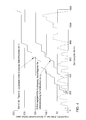
- einen kumulierten Zeitanteil des Verbots des Schichtbetriebs im Leerlauf im N E FZ.
- In einem ersten Schritt S1 wird eine Lightoff-Temperatur des Vorkatalysators 14 (TLOKV) ermittelt. Diese kann entweder einen Festwert darstellen oder mit Werten der mittels bekannter Diagnoseverfahren (zum Beispiel Messung der Sauerstoffspeicherfähigkeit OSC) ermittelten Vorkatalysator-Desaktivierung korreliert werden. Unter Lightoff- oder Anspringtemperatur wird hier nicht die übliche Schwelle einer 50%-Konvertierung verstanden, sondern eine Temperaturschwelle, bei deren Unterschreiten der Katalysator ein für eine spezifische Motor-Fahrzeug-Kombination kritisches Emissionsverhalten zeigt. Als Anhaltswert für einen frischen Vorkatalysator kann hier ein Wert von 280 °C angenommen werden. Für einen Vorkatalysator am Ende der Fahrzeuglebensdauer, der die EU IV-Grenzwerte noch einhält, steigt TLOVK auf zirka 360 °C an. Für andere Motoren und Katalysatoren können hier vollkommen andere Werte gelten, so dass die Zahlenwerte nur als beispielhafte Darstellungen zu verstehen sind.
- In einem zweiten Schritt S2 wird die Temperaturdifferenz zwischen der durch Messung oder Modellierung ermittelten Abgastemperatur vor Vorkatalysator TAVVK und TLOVK durch Subtraktion ermittelt (TAVVK - TLOVK).
- In einem dritten Schritt S3 wird der die Lightoff-Temperatur des Vorkatalysators 14 unterschreitende Wärmestrom WSULOVK durch Multiplikation der unter dem Schritt S2 ermittelten Temperaturdifferenz mit dem Abgasmassenstrom MSABG und der spezifischen Wärmekapazität ermittelt, also WSULOVK = (TAWK - TLOVK) * Cp,Abg * MSABG. Der Wärmestrom wird mit einem vorgebbaren Schwellwert EGESMN für den Gesamtenergiestrom EGES [EGES = MSABG * CP,Abg * (TAVVK-Umgebungstemperatur)] verglichen. Solange der über die Abgasenergie in das Abgassystem eingetragene Gesamtenergiestrom nicht die vorgebbare Schwelle EGESMN überschritten hat, wird WSULOVK zu Null gesetzt (Blockieren der Funktion nach Motorstart während der ersten Durchwärmung der Abgasanlage).
- In einem vierten Schritt S4 wird WSULOVK kumuliert, das heißt in einem Integrator aufintegriert, und bildet den tatsächlichen Energieaustrag EAVK(neu) aus dem Vorkatalysator 14. Dabei wird der Integratorausgang bei erneuter Durchwärmung des Katalysators zu Null begrenzt. Länger anstehende hohe Abgastemperaturen sollen kein "Polster" für die nächste Phase der Beaufschlagung mit kaltem Abgas aufbauen. EAVK(neu) = EAVK(alt) + WSULOVK, wobei EAVK(alt) = kumulierter Wärmestrom des letzten Rechenschrittes ist.
- In einem fünften Schritt S5a wird geprüft, ob der Betrag von EAVK(neu) einen ersten Schwellwert EVKMX1 überschreitet. Ist dies nicht der Fall, sind keine Maßnahmen notwendig. Falls jedoch diese Schwelle überschritten wird, wird in Schritt S5b geprüft, ob ein zweiter Schwellwert EVKMX2 (> EVKMX1) überschritten wird. Falls dies nicht der Fall ist, wird weiterhin die Temperatur in dem nachgeschalteten Hauptkatalysator 16 TIHK geprüft um festzustellen, ob diese eine Temperaturminimalschwelle TIHKMN unterschreitet. Bei hinreichend warmem Hauptkatalysator kann dieser die gesamte Konvertierungsleistung übernehmen und besondere temperatursteigernde Maßnahmen können somit unterbleiben. Auch TIHK kann bekanntermaßen als Festwert oder - besser - als Variable festgelegt werden, die mit zunehmender Alterung des Hauptkatalysators ansteigt (Verfahren analog Vorkatalysator). Unterhalb des ersten Schwellwertes werden keinerlei Maßnahmen ergriffen, da eine gewisse Teil-Auskühlung des Vorkatalysators toleriert werden kann. Wird aber der erste Schwellwert EVKMX1 überschritten und ist vorzugsweise auch der Hauptkatalysator hinreichend kalt TIHK < TIHKMN, so wird eine erste, die Abgas- und/oder Katalysatortemperatur steigernde Maßnahme ergriffen. Vorzugsweise wird hier der Leerlauf (der üblicherweise im Schichtmodus betrieben wird) unter Beibehaltung des Schichtbetriebs stärker gedrosselt. Alternativ kann zum Beispiel in einen stark abgemagerten Homogenmodus umgeschaltet werden. Die erste temperatursteigernde Maßnahme wird zurückgenommen, wenn der Betrag von EAVK(neu) einen Minimalwert EVKMN1 unterschreitet, dieser liegt sinnvollerweise bei Null. (In diesem Ausführungsbeispiel wird die erste Maßnahme auch zurückgenommen, wenn kein Leerlaufbetriebszustand mehr vorliegt).
- In einem optionalen sechsten Schritt S6 wird geprüft, ob der Energieaustrag |EAVK(neu)| trotz Ergreifens einer ersten temperatursteigernden Maßnahme einen zweiten Schwellwert EVKMX2 überschreitet. Ist dies der Fall, wird geprüft, ob die Temperatur in dem nachgeschalteten Hauptkatalysator TIHK die vorgebbare Temperaturminimalschwelle TIHKMN unterschreitet. Wird auch der zweite Schwellwert für den Energieaustrag überschritten und ist vorzugsweise auch der Hauptkatalysator hinreichend kalt, so wird eine weitere, die Abgas- und/oder Katalysatortemperatur steigernde Maßnahme ergriffen, die in ihrer Intensität stärker ist als eine erste Maßnahme. Vorzugsweise wird hier der Leerlauf in einem stöchiometrischen Homogenmodus betrieben. Die zweite temperatursteigernde Maßnahme wird zurückgenommen, wenn der Energieaustrag |EAVK(neu)| einen Minimalwert EVKMN2 unterschreitet, dieser liegt sinnvollerweise unterhalb EVKMN1, idealerweise identisch mit EVKMN1 bei Null, (In diesem Ausführungsbeispiel wird die zweite Maßnahme auch zurückgenommen, wenn kein Leerlaufbetriebszustand mehr vorliegt).
- Die mit frischem Katalysatorsystem im NEFZ gemessenen Verbräuche und HC-Emissionen werden zu 100 % gesetzt. Die HC-Emissionen liegen um zirka 40 % unter dem EU IV-Grenzwert.
- Mit dem gealterten Katalysatorsystem wurde ohne jegliche Maßnahme eine HC-Emission von 214 % bei gleichem Verbrauch erreicht.
- Bei generellem Schichtbetriebsverbot im Leerlauf wurde eine HC-Emission von 142 % bei einem Verbrauch von 102,4 % gemessen.
- Erfindungsgemäß wurde für den letzten Versuchsabschnitt ein Schichtbetriebsverbot im Leerlauf nur nach Überschreiten eines Energieaustrags aus dem Vorkatalysator von 5 kJ gesetzt (EVKMX1 = 5 kJ). Die Temperaturschwelle TLOVK wurde auf 320 °C festgesetzt. Damit wird in 86 s des NEFZ der Schichtbetrieb im Leerlauf freigegeben. Die HC-Emissionen betragen 155 % des Frischzustandes und der Verbrauch liegt bei 101,5 % des Frischzustandes. Somit kann eine deutliche Verbrauchsminderung gegenüber dem Stand der Technik bei nur geringer Zunahme der HC-Emission erreicht werden.
- 10
- Verbrennungskraftmaschine
- 12
- Abgaskanal
- 14
- erstes Katalysatorelement (Vorkatalysator)
- 16
- zweites Katalysatorelement (Hauptkatalysator / NOx-Speicherkatalysator)
- 18
- Lambdasonde
- 20
- NOx-Sensor
- 22
- Temperatursensor
- 24
- Motorsteuergerät
- 26
- Steuereinheit
- 28
- Katalysatoraktivität neuer Katalysator
- 30
- Katalysatoraktivität gealterter Katalysator
- 32
- Temperaturbereich konventioneller Ottomotor
- 34
- Temperaturbereich direkteinspritzender Ottomotor
- S1
- Bestimmung der Lightoff-(Anspring)temperatur von Vorkatalysator
- S2
- Differenzbildung zwischen Abgastemperatur vor Vorkatalysator und Anspringtemperatur
- S3
- Ermittlung des die Anspringtemperatur unterschreitenden Wärmestroms
- S4
- Bildung des Energieaustrags aus Vorkatalysator durch Kumulierung des Wärmestroms
- S5
- Prüfung, ob Energieaustrag einen ersten Schwellwert überschreitet,
wenn nein: keine Maßnahme,
wenn ja: Prüfung, ob Temperaturminimalwert von Hauptkatalysator unterschritten, (optionale Unterschritte)
wenn nein: keine Maßnahme, (optionale Unterschritte)
wenn ja: erste temperatursteigernde Maßnahmen einleiten - S6
- Prüfung, ob Energieaustrag einen weiteren Schwellwert überschreitet,
wenn ja: Prüfung, ob Temperaturminimalwert von Hauptkatalysator unterschritten, (optionale Unterschritte)
wenn nein: keine Maßnahme, (optionale Unterschritte)
wenn ja: verstärkte temperatursteigernde Maßnahmen einleiten
Claims (20)
- Verfahren zum Betrieb einer einer Verbrennungskraftmaschine (10) nachgeschalteten Abgasnachbehandlungsanlage, umfassend ein Katalysatorsystem mit mindestens einem ersten Katalysatorelement (14) unter Einbeziehung einer elektronischen Motorsteuerung mit bevorzugt integrierter Steuereinheit (24, 26), dadurch gekennzeichnet, dass der tatsächliche Energieaustrag aus dem ersten Katalysatorelement (14) ermittelt und als Bezugsgröße für mindestens eine temperatursteigernde Maßnahme für den Abgasstrom und/oder Katalysator eingesetzt wird, wobei mindestens ein Schwellwert für diesen Energieaustrag vorgegeben wird.
- Verfahren nach Anspruch 1, dadurch gekennzeichnet, dass das Katalysatorsystem zusätzlich zu einem ersten Katalysatorelement (14) mindestens ein zweites Katalysatorelement (16) aufweist.
- Verfahren nach Anspruch 1 oder 2, dadurch gekennzeichnet, dass mindestens zwei Schwellwerte für den Energieaustrag aus dem ersten Katalysatorelement (14) vorgegeben werden.
- Verfahren nach einem der Ansprüche 1 bis 3, dadurch gekennzeichnet, dass die Ermittlung des Energieaustrags nach Beendigung einer nach einem Motorstart anschließenden Warmlaufphase durchgeführt wird.
- Verfahren nach Anspruch 4, dadurch gekennzeichnet, dass die Ermittlung des Energieaustrags in einer Niedriglastphase, insbesondere in einer Leerlaufphase, durchgeführt wird.
- Verfahren nach einem der Ansprüche 1 bis 5, dadurch gekennzeichnet, dass von der Motorsteuerung (26) Maßnahmen zur Erhöhung der Abgas- und/oder Katalysatortemperatur getroffen werden, wenn der Energieaustrag aus Katalysatorelement (14) oberhalb eines ersten vorgebbaren Schwellwertes liegt.
- Verfahren nach einem der Ansprüche 1 bis 6, dadurch gekennzeichnet, dass von der Motorsteuerung (26) Maßnahmen zur Erhöhung der Abgas- und/oder Katalysatortemperatur getroffen werden, wenn der Energieaustrag aus Katalysatorelement (14) oberhalb eines ersten vorgebbaren Schwellwertes liegt und die Temperaturminimalschwelle für Katalysatorelement (16) gleichzeitig unterschritten wird.
- Verfahren nach einem der Ansprüche 1 bis 7, dadurch gekennzeichnet, dass von der Motorsteuerung (26) Maßnahmen zur Erhöhung der Abgas- und/oder Katalysatortemperatur getroffen werden, wenn der Energieaustrag aus Katalysatorelement (14) oberhalb eines zweiten vorgebbaren Schwellwertes liegt
- Verfahren nach einem der Ansprüche 1 bis 8, dadurch gekennzeichnet, dass von der Motorsteuerung (26) Maßnahmen zur Erhöhung der Abgas- und/oder Katalysatortemperatur getroffen werden, wenn der Energieaustrag aus Katalysatorelement (14) oberhalb eines zweiten vorgebbaren Schwellwertes liegt, und die Temperaturminimalschwelle für Katalysatorelement (16) gleichzeitig unterschritten wird.
- Verfahren nach einem der Ansprüche 1 bis 9, dadurch gekennzeichnet, dass man zur Ermittlung des Energieaustrags zuerst den eine Lightoff-Temperatur für Katalysatorelement (14) unterschreitenden Wärmestrom durch Multiplikation des Abgasmassenstroms mit der spezifischen Wärmekapazität und mit der Differenz aus der durch Messung oder Modellierung ermittelten Abgastemperatur von Katalysatorelement (14) und der Lightoff-Temperatur von Katalysatorelement (14) ermittelt und diesen anschließend kumuliert beziehungsweise aufintegriert, wobei der Integratorausgang bei erneuter Durchwärmung des Katalysators zu Null begrenzt wird.
- Verfahren nach Anspruch 10, dadurch gekennzeichnet, dass der Wärmestrom mit einem in die Abgasnachbehandlungsanlage vorgebbaren Schwellwert für die Gesamtenergie verglichen und zu Null gesetzt wird, solange die Schwelle für die Gesamtenergie nicht überschritten wird, um die Funktion nach Motorstart für die erste Durchwärmung zu sperren.
- Verfahren nach einem der Ansprüche 1 bis 11, dadurch gekennzeichnet, dass temperatursteigernde Maßnahmen wieder zurückgenommen werden, wenn der Energieaustrag jeweils einen vorgebbaren Minimalwert unterschreitet.
- Verfahren nach einem der Ansprüche 1 bis 9, dadurch gekennzeichnet, dass die Intensität der temperatursteigernden Maßnahmen hinsichtlich einer Heizwirkung der Maßnahme in Abhängigkeit von einer Abweichung des ermittelten Energieaustrags aus Katalysatorelement (14) und vorzugsweise zusätzlich der Temperaturminimalschwelle von Katalysatorelement (16) geregelt wird.
- Verfahren nach einem der Ansprüche 1 bis 13, dadurch gekennzeichnet, dass als temperatursteigernde Maßnahme eine motorische Maßnahme zur Steigerung der Abgas- und/oder Katalysatortemperatur und/oder zur Erhöhung eines Schadstoffanteils oxidierbarer Komponenten des Abgases erfolgt.
- Verfahren nach Anspruch 11, dadurch gekennzeichnet, dass als erste temperatursteigernde Maßnahme eine Androsselung des Leerlaufs unter Beibehaltung des Schichtbetriebs erfolgt, wobei der Saugrohrdruck im Leerlauf bevorzugt auf einen Wert von 600-700 mbar abgesenkt wird.
- Verfahren nach einem der Ansprüche 1 bis 10 und 12 bis 15, dadurch gekennzeichnet, dass die Regelung der "Katheizfunktion" in der Motorstartphase über eine vorgebbare Mindest-Energiemenge für die Abgasnachbehandlungsanlage gesteuert wird, wobei die Mindest-Energiemenge als Produkt des Abgasmassenstroms, der spezifischen Wärmekapazität und der Abgastemperatur vor Katalysatorelement (14) minus Umgebungstemperatur ermittelt wird, und nach Überschreiten dieser Schwelle temperatursteigernde Maßnahmen eingeleitet werden.
- Vorrichtung zum optimalen Betrieb einer einer Verbrennungskraftmaschine (10) nachgeschalteten Abgasnachbehandlungsanlage umfassend ein Katalysatorsystem (14, 16) und unter Einbeziehung einer elektronischen Motorsteuerung mit integrierter Steuereinheit (24, 26) umfassend Mittel, mit denen die folgenden Verfahrensschritte durchführbar sind:(a) Bestimmung des Energieaustrags aus Katalysatorelement (14), indem der Wärmestrom ermittelt und kumuliert wird,(b) bei Überschreiten eines ersten vorgebbaren Schwellwertes für den Energieaustrag aus Katalysatorelement (14) und vorzugsweise gleichzeitigem Unterschreiten der Temperaturminimalschwelle für Katalysatorelement (16) - Veranlassung der Durchführung mindestens einer Maßnahme zur Steigerung einer Abgas- und/oder Katalysatortemperatur,(c) gegebenenfalls bei Überschreitung eines zweiten vorgebbaren Schwellwertes für den Energieaustrag aus Katalysatorelement (14) und vorzugsweise gleichzeitigem Unterschreiten der Temperaturminimalschwelle für Katalysatorelement (16)-Veranlassung der Durchführung mindestens einer Maßnahme zur Steigerung einer Abgas- und/oder Katalysatortemperatur.
- Vorrichtung nach Anspruch 17 umfassend weitere Mittel, mit denen die folgenden Verfahrensschritte durchführbar sind:(d) Ermittlung der Mindest-Energiemenge in der Motorstartphase vor der Abgasnachbehandlungsanlage, bei Überschreitung einer vorgebbaren Schwelle für diese Mindest-Energiemenge - Veranlassung der Durchführung mindestens einer Maßnahme zur Steigerung einer Abgas- und/oder Katalysatortemperatur.
- Vorrichtung nach Anspruch 17 oder 18, dadurch gekennzeichnet, dass die Mittel eine Steuereinheit (26) umfassen, in der ein Algorithmus zur Steuerung der Verfahrensschritte in digitaler Form hinterlegt ist.
- Vorrichtung nach Anspruch 19, dadurch gekennzeichnet, dass die Steuereinheit (26) und/oder der Algorithmus in ein Motorsteuergerät (24) integriert ist.
Applications Claiming Priority (2)
| Application Number | Priority Date | Filing Date | Title |
|---|---|---|---|
| DE10235714A DE10235714A1 (de) | 2002-07-29 | 2002-07-29 | Verfahren und Vorrichtung zum Betrieb einer Abgasnachbehandlungsanlage einer Verbrennungskraftmaschine |
| DE10235714 | 2002-07-29 |
Publications (3)
| Publication Number | Publication Date |
|---|---|
| EP1387070A2 true EP1387070A2 (de) | 2004-02-04 |
| EP1387070A3 EP1387070A3 (de) | 2007-10-03 |
| EP1387070B1 EP1387070B1 (de) | 2009-10-14 |
Family
ID=30010600
Family Applications (1)
| Application Number | Title | Priority Date | Filing Date |
|---|---|---|---|
| EP03090205A Expired - Lifetime EP1387070B1 (de) | 2002-07-29 | 2003-07-08 | Verfahren und Vorrichtung zum Betrieb einer Abgasnachbehandlungsanlage einer Verbrennungskraftmaschine |
Country Status (3)
| Country | Link |
|---|---|
| EP (1) | EP1387070B1 (de) |
| AT (1) | ATE445775T1 (de) |
| DE (2) | DE10235714A1 (de) |
Cited By (1)
| Publication number | Priority date | Publication date | Assignee | Title |
|---|---|---|---|---|
| EP1959119A2 (de) | 2007-02-16 | 2008-08-20 | Volkswagen Aktiengesellschaft | Verfahren und Vorrichtung zur Abgasnachbehandlung einer mit Erdgas betriebenen Brennkraftmaschine |
Families Citing this family (1)
| Publication number | Priority date | Publication date | Assignee | Title |
|---|---|---|---|---|
| DE102019210242A1 (de) * | 2019-07-11 | 2021-01-14 | Vitesco Technologies GmbH | Verfahren und Vorrichtung zum Aufheizen des Katalysators eines einen Verbrennungsmotor und einen Elektromotor enthaltenden Kraftfahrzeugs |
Family Cites Families (3)
| Publication number | Priority date | Publication date | Assignee | Title |
|---|---|---|---|---|
| DE19753842C2 (de) * | 1997-12-04 | 1999-10-07 | Siemens Ag | Verfahren zum Betreiben eines Abgaskatalysators für eine Brennkraftmaschine |
| DE19836955A1 (de) * | 1998-08-14 | 2000-03-09 | Siemens Ag | Verfahren zum Erkennen und Aufrechterhalten der Betriebsbereitschaft eines NO¶x¶-Speicherkatalysators |
| DE19907382A1 (de) * | 1999-02-20 | 2000-08-24 | Bayerische Motoren Werke Ag | Verfahren zur Abschätzung der Katalysatortemperatur |
-
2002
- 2002-07-29 DE DE10235714A patent/DE10235714A1/de not_active Ceased
-
2003
- 2003-07-08 DE DE50312014T patent/DE50312014D1/de not_active Expired - Lifetime
- 2003-07-08 AT AT03090205T patent/ATE445775T1/de not_active IP Right Cessation
- 2003-07-08 EP EP03090205A patent/EP1387070B1/de not_active Expired - Lifetime
Cited By (2)
| Publication number | Priority date | Publication date | Assignee | Title |
|---|---|---|---|---|
| EP1959119A2 (de) | 2007-02-16 | 2008-08-20 | Volkswagen Aktiengesellschaft | Verfahren und Vorrichtung zur Abgasnachbehandlung einer mit Erdgas betriebenen Brennkraftmaschine |
| EP1959119A3 (de) * | 2007-02-16 | 2014-02-12 | Volkswagen Aktiengesellschaft | Verfahren und Vorrichtung zur Abgasnachbehandlung einer mit Erdgas betriebenen Brennkraftmaschine |
Also Published As
| Publication number | Publication date |
|---|---|
| DE50312014D1 (de) | 2009-11-26 |
| EP1387070B1 (de) | 2009-10-14 |
| DE10235714A1 (de) | 2004-03-04 |
| EP1387070A3 (de) | 2007-10-03 |
| ATE445775T1 (de) | 2009-10-15 |
Similar Documents
| Publication | Publication Date | Title |
|---|---|---|
| EP1161618B1 (de) | Verfahren zur de-sulfatierung eines nox-speicherkatalysators | |
| EP0892158B1 (de) | Verfahren und Vorrichtung zur Überwachung der De-Sulfatierung bei NOx-Speicherkatalysatoren | |
| EP1121519B1 (de) | Verfahren und vorrichtung zur de-sulfatierung eines nox-speicherkatalysators | |
| EP4095364A1 (de) | Verfahren zum betreiben einer verbrennungskraftmaschine | |
| DE602004004948T2 (de) | Steuergerät für die Verbrennung eines Verbrennungsmotors | |
| DE102017209693A1 (de) | Verfahren zum Regenerieren eines Partikelfilters in der Abgasanlage eines Verbrennungsmotors sowie Verbrennungsmotor | |
| EP1584809B1 (de) | Verfahren zur Regeneration einer Abgasnachbehandlungseinrichtung | |
| DE10162115A1 (de) | Verfahren und Vorrichtung zur Katalysatoraufheizung | |
| DE10154041B4 (de) | Verfahren und Vorrichtung zur Reduzierung einer Schadstoffendemission | |
| DE10226873B4 (de) | Verfahren zur Steuerung der Betriebsartenwahl einer Verbrennungskraftmaschine | |
| DE10003903B4 (de) | Vorrichtung und Verfahren zur Steuerung eines Betriebes eines Mehrzylindermotors für Kraftfahrzeuge mit einer mehrflutigen Abgasreinigungsanlage | |
| DE10222769A1 (de) | Verfahren und Vorrichtung zur Steuerung eines Motorstartvorgangs | |
| EP1387070B1 (de) | Verfahren und Vorrichtung zum Betrieb einer Abgasnachbehandlungsanlage einer Verbrennungskraftmaschine | |
| EP1370758B1 (de) | Verfahren zur steuerung eines warmlaufs eines katalysatorsystems | |
| DE10338181B4 (de) | Verfahren und Vorrichtung zur Temperaturbeeinflussung eines Katalysatorsystems | |
| DE102022121068A1 (de) | Abgasregelung für Motoren mit magerer Verbrennung | |
| DE10241497B3 (de) | Verfahren zur Steuerung des Magerbetriebs einer einen Stickoxid-Speicherkatalysator aufweisenden Brennkraftmaschine, insbesondere eines Kraftfahrzeuges | |
| DE10305451A1 (de) | Verfahren und Vorrichtung zum Betreiben einer Brennkraftmaschine | |
| EP1300572B1 (de) | Verfahren und Vorrichtung zur Steuerung einer magerlauffähigen Verbrennungskraftmaschine | |
| DE102017101610A1 (de) | Verfahren zur Reduzierung der Kaltstart-Emissionen bei einem fremdgezündeten Verbrennungsmotor | |
| DE10115968A1 (de) | Verfahren zur Erwärmung eines Katalysators | |
| DE10154974A1 (de) | Verfahren und Vorrichtung zur Umschaltung einer Verbrennungskraftmaschine von einem gefeuerten Betrieb in einen ungefeuerten Schubbetrieb | |
| DE10253614B4 (de) | Verfahren zum Betreiben einer Brennkraftmaschine eines Fahrzeugs, insbesondere eines Kraftfahrzeuges | |
| DE10249609B4 (de) | Verfahren zur Steuerung eines NOx-Speicherkatalysators | |
| EP1540151B1 (de) | Verfahren zur ermittlung des alterungsgrades eines stickoxid-speicherkatalysators einer brennkraftmaschine insbesondere eines kraftfahrzeuges |
Legal Events
| Date | Code | Title | Description |
|---|---|---|---|
| PUAI | Public reference made under article 153(3) epc to a published international application that has entered the european phase |
Free format text: ORIGINAL CODE: 0009012 |
|
| AK | Designated contracting states |
Kind code of ref document: A2 Designated state(s): AT BE BG CH CY CZ DE DK EE ES FI FR GB GR HU IE IT LI LU MC NL PT RO SE SI SK TR |
|
| AX | Request for extension of the european patent |
Extension state: AL LT LV MK |
|
| PUAL | Search report despatched |
Free format text: ORIGINAL CODE: 0009013 |
|
| AK | Designated contracting states |
Kind code of ref document: A3 Designated state(s): AT BE BG CH CY CZ DE DK EE ES FI FR GB GR HU IE IT LI LU MC NL PT RO SE SI SK TR |
|
| AX | Request for extension of the european patent |
Extension state: AL LT LV MK |
|
| 17P | Request for examination filed |
Effective date: 20080403 |
|
| AKX | Designation fees paid |
Designated state(s): AT BE BG CH CY CZ DE DK EE ES FI FR GB GR HU IE IT LI LU MC NL PT RO SE SI SK TR |
|
| GRAP | Despatch of communication of intention to grant a patent |
Free format text: ORIGINAL CODE: EPIDOSNIGR1 |
|
| GRAS | Grant fee paid |
Free format text: ORIGINAL CODE: EPIDOSNIGR3 |
|
| GRAA | (expected) grant |
Free format text: ORIGINAL CODE: 0009210 |
|
| AK | Designated contracting states |
Kind code of ref document: B1 Designated state(s): AT BE BG CH CY CZ DE DK EE ES FI FR GB GR HU IE IT LI LU MC NL PT RO SE SI SK TR |
|
| REG | Reference to a national code |
Ref country code: GB Ref legal event code: FG4D Free format text: NOT ENGLISH |
|
| REG | Reference to a national code |
Ref country code: CH Ref legal event code: EP |
|
| REG | Reference to a national code |
Ref country code: IE Ref legal event code: FG4D |
|
| REF | Corresponds to: |
Ref document number: 50312014 Country of ref document: DE Date of ref document: 20091126 Kind code of ref document: P |
|
| NLV1 | Nl: lapsed or annulled due to failure to fulfill the requirements of art. 29p and 29m of the patents act | ||
| PG25 | Lapsed in a contracting state [announced via postgrant information from national office to epo] |
Ref country code: SE Free format text: LAPSE BECAUSE OF FAILURE TO SUBMIT A TRANSLATION OF THE DESCRIPTION OR TO PAY THE FEE WITHIN THE PRESCRIBED TIME-LIMIT Effective date: 20091014 Ref country code: ES Free format text: LAPSE BECAUSE OF FAILURE TO SUBMIT A TRANSLATION OF THE DESCRIPTION OR TO PAY THE FEE WITHIN THE PRESCRIBED TIME-LIMIT Effective date: 20100125 Ref country code: FI Free format text: LAPSE BECAUSE OF FAILURE TO SUBMIT A TRANSLATION OF THE DESCRIPTION OR TO PAY THE FEE WITHIN THE PRESCRIBED TIME-LIMIT Effective date: 20091014 Ref country code: PT Free format text: LAPSE BECAUSE OF FAILURE TO SUBMIT A TRANSLATION OF THE DESCRIPTION OR TO PAY THE FEE WITHIN THE PRESCRIBED TIME-LIMIT Effective date: 20100215 |
|
| REG | Reference to a national code |
Ref country code: IE Ref legal event code: FD4D |
|
| PG25 | Lapsed in a contracting state [announced via postgrant information from national office to epo] |
Ref country code: SI Free format text: LAPSE BECAUSE OF FAILURE TO SUBMIT A TRANSLATION OF THE DESCRIPTION OR TO PAY THE FEE WITHIN THE PRESCRIBED TIME-LIMIT Effective date: 20091014 |
|
| PG25 | Lapsed in a contracting state [announced via postgrant information from national office to epo] |
Ref country code: BG Free format text: LAPSE BECAUSE OF FAILURE TO SUBMIT A TRANSLATION OF THE DESCRIPTION OR TO PAY THE FEE WITHIN THE PRESCRIBED TIME-LIMIT Effective date: 20100114 Ref country code: RO Free format text: LAPSE BECAUSE OF FAILURE TO SUBMIT A TRANSLATION OF THE DESCRIPTION OR TO PAY THE FEE WITHIN THE PRESCRIBED TIME-LIMIT Effective date: 20091014 Ref country code: IE Free format text: LAPSE BECAUSE OF FAILURE TO SUBMIT A TRANSLATION OF THE DESCRIPTION OR TO PAY THE FEE WITHIN THE PRESCRIBED TIME-LIMIT Effective date: 20091014 Ref country code: EE Free format text: LAPSE BECAUSE OF FAILURE TO SUBMIT A TRANSLATION OF THE DESCRIPTION OR TO PAY THE FEE WITHIN THE PRESCRIBED TIME-LIMIT Effective date: 20091014 Ref country code: DK Free format text: LAPSE BECAUSE OF FAILURE TO SUBMIT A TRANSLATION OF THE DESCRIPTION OR TO PAY THE FEE WITHIN THE PRESCRIBED TIME-LIMIT Effective date: 20091014 |
|
| PLBE | No opposition filed within time limit |
Free format text: ORIGINAL CODE: 0009261 |
|
| STAA | Information on the status of an ep patent application or granted ep patent |
Free format text: STATUS: NO OPPOSITION FILED WITHIN TIME LIMIT |
|
| PG25 | Lapsed in a contracting state [announced via postgrant information from national office to epo] |
Ref country code: SK Free format text: LAPSE BECAUSE OF FAILURE TO SUBMIT A TRANSLATION OF THE DESCRIPTION OR TO PAY THE FEE WITHIN THE PRESCRIBED TIME-LIMIT Effective date: 20091014 Ref country code: CZ Free format text: LAPSE BECAUSE OF FAILURE TO SUBMIT A TRANSLATION OF THE DESCRIPTION OR TO PAY THE FEE WITHIN THE PRESCRIBED TIME-LIMIT Effective date: 20091014 |
|
| 26N | No opposition filed |
Effective date: 20100715 |
|
| PG25 | Lapsed in a contracting state [announced via postgrant information from national office to epo] |
Ref country code: GR Free format text: LAPSE BECAUSE OF FAILURE TO SUBMIT A TRANSLATION OF THE DESCRIPTION OR TO PAY THE FEE WITHIN THE PRESCRIBED TIME-LIMIT Effective date: 20100115 |
|
| BERE | Be: lapsed |
Owner name: VOLKSWAGEN AG Effective date: 20100731 |
|
| PG25 | Lapsed in a contracting state [announced via postgrant information from national office to epo] |
Ref country code: MC Free format text: LAPSE BECAUSE OF NON-PAYMENT OF DUE FEES Effective date: 20100731 |
|
| REG | Reference to a national code |
Ref country code: CH Ref legal event code: PL |
|
| GBPC | Gb: european patent ceased through non-payment of renewal fee |
Effective date: 20100708 |
|
| PG25 | Lapsed in a contracting state [announced via postgrant information from national office to epo] |
Ref country code: IT Free format text: LAPSE BECAUSE OF FAILURE TO SUBMIT A TRANSLATION OF THE DESCRIPTION OR TO PAY THE FEE WITHIN THE PRESCRIBED TIME-LIMIT Effective date: 20091014 |
|
| REG | Reference to a national code |
Ref country code: FR Ref legal event code: ST Effective date: 20110331 |
|
| PG25 | Lapsed in a contracting state [announced via postgrant information from national office to epo] |
Ref country code: LI Free format text: LAPSE BECAUSE OF NON-PAYMENT OF DUE FEES Effective date: 20100731 Ref country code: CH Free format text: LAPSE BECAUSE OF NON-PAYMENT OF DUE FEES Effective date: 20100731 |
|
| PG25 | Lapsed in a contracting state [announced via postgrant information from national office to epo] |
Ref country code: FR Free format text: LAPSE BECAUSE OF NON-PAYMENT OF DUE FEES Effective date: 20100802 |
|
| PG25 | Lapsed in a contracting state [announced via postgrant information from national office to epo] |
Ref country code: BE Free format text: LAPSE BECAUSE OF NON-PAYMENT OF DUE FEES Effective date: 20100731 |
|
| PG25 | Lapsed in a contracting state [announced via postgrant information from national office to epo] |
Ref country code: GB Free format text: LAPSE BECAUSE OF NON-PAYMENT OF DUE FEES Effective date: 20100708 |
|
| PG25 | Lapsed in a contracting state [announced via postgrant information from national office to epo] |
Ref country code: AT Free format text: LAPSE BECAUSE OF NON-PAYMENT OF DUE FEES Effective date: 20100708 |
|
| PG25 | Lapsed in a contracting state [announced via postgrant information from national office to epo] |
Ref country code: CY Free format text: LAPSE BECAUSE OF FAILURE TO SUBMIT A TRANSLATION OF THE DESCRIPTION OR TO PAY THE FEE WITHIN THE PRESCRIBED TIME-LIMIT Effective date: 20091014 |
|
| PG25 | Lapsed in a contracting state [announced via postgrant information from national office to epo] |
Ref country code: LU Free format text: LAPSE BECAUSE OF NON-PAYMENT OF DUE FEES Effective date: 20100708 Ref country code: HU Free format text: LAPSE BECAUSE OF FAILURE TO SUBMIT A TRANSLATION OF THE DESCRIPTION OR TO PAY THE FEE WITHIN THE PRESCRIBED TIME-LIMIT Effective date: 20100415 Ref country code: NL Free format text: LAPSE BECAUSE OF FAILURE TO SUBMIT A TRANSLATION OF THE DESCRIPTION OR TO PAY THE FEE WITHIN THE PRESCRIBED TIME-LIMIT Effective date: 20091014 |
|
| PG25 | Lapsed in a contracting state [announced via postgrant information from national office to epo] |
Ref country code: TR Free format text: LAPSE BECAUSE OF FAILURE TO SUBMIT A TRANSLATION OF THE DESCRIPTION OR TO PAY THE FEE WITHIN THE PRESCRIBED TIME-LIMIT Effective date: 20091014 |
|
| PGFP | Annual fee paid to national office [announced via postgrant information from national office to epo] |
Ref country code: DE Payment date: 20120731 Year of fee payment: 10 |
|
| REG | Reference to a national code |
Ref country code: DE Ref legal event code: R119 Ref document number: 50312014 Country of ref document: DE Effective date: 20140201 |
|
| PG25 | Lapsed in a contracting state [announced via postgrant information from national office to epo] |
Ref country code: DE Free format text: LAPSE BECAUSE OF NON-PAYMENT OF DUE FEES Effective date: 20140201 |