EP1386964A1 - Method of expressing long-chain prenyl diphosphate synthase - Google Patents
Method of expressing long-chain prenyl diphosphate synthase Download PDFInfo
- Publication number
- EP1386964A1 EP1386964A1 EP02769565A EP02769565A EP1386964A1 EP 1386964 A1 EP1386964 A1 EP 1386964A1 EP 02769565 A EP02769565 A EP 02769565A EP 02769565 A EP02769565 A EP 02769565A EP 1386964 A1 EP1386964 A1 EP 1386964A1
- Authority
- EP
- European Patent Office
- Prior art keywords
- dna
- diphosphate synthase
- derived
- pstvk28
- coli dh5α
- Prior art date
- Legal status (The legal status is an assumption and is not a legal conclusion. Google has not performed a legal analysis and makes no representation as to the accuracy of the status listed.)
- Withdrawn
Links
- WOLFCKKMHUVEPN-UHFFFAOYSA-N CCCCN(C)CC Chemical compound CCCCN(C)CC WOLFCKKMHUVEPN-UHFFFAOYSA-N 0.000 description 1
Images


Classifications
-
- C—CHEMISTRY; METALLURGY
- C12—BIOCHEMISTRY; BEER; SPIRITS; WINE; VINEGAR; MICROBIOLOGY; ENZYMOLOGY; MUTATION OR GENETIC ENGINEERING
- C12N—MICROORGANISMS OR ENZYMES; COMPOSITIONS THEREOF; PROPAGATING, PRESERVING, OR MAINTAINING MICROORGANISMS; MUTATION OR GENETIC ENGINEERING; CULTURE MEDIA
- C12N9/00—Enzymes; Proenzymes; Compositions thereof; Processes for preparing, activating, inhibiting, separating or purifying enzymes
- C12N9/10—Transferases (2.)
- C12N9/1085—Transferases (2.) transferring alkyl or aryl groups other than methyl groups (2.5)
-
- C—CHEMISTRY; METALLURGY
- C12—BIOCHEMISTRY; BEER; SPIRITS; WINE; VINEGAR; MICROBIOLOGY; ENZYMOLOGY; MUTATION OR GENETIC ENGINEERING
- C12P—FERMENTATION OR ENZYME-USING PROCESSES TO SYNTHESISE A DESIRED CHEMICAL COMPOUND OR COMPOSITION OR TO SEPARATE OPTICAL ISOMERS FROM A RACEMIC MIXTURE
- C12P7/00—Preparation of oxygen-containing organic compounds
- C12P7/66—Preparation of oxygen-containing organic compounds containing the quinoid structure
Definitions
- the present invention relates to a protein involved in the expression of a eukaryotes-derived long-chain prenyl diphosphate synthase, a gene coding for such enzyme, a vector containing such enzyme gene, a transformant resulting from transformation with such vector and a long-chain prenyl diphosphate synthase gene-containing expression vector as well as a method of producing a long-chain prenyl diphosphate synthase (in particular decaprenyl diphosphate synthase and solanesyl diphosphate synthase) and of a coenzyme Q having a long-chain isoprenoid in its side chain (in particular coenzyme Q 9 or coenzyme Q 10 ).
- Isoprenoids is a generic name for a variety of compounds, including sterols, carotinoids and terpenes, among others. Among them, there is a group of prenyl diphosphate compounds containing a coenzyme Q side chain, and the synthesis thereof depends on the polymerization-like condensation reaction of isopentenyl diphosphate, which is an isoprene unit containing 5 carbon atoms, as catalyzed by a prenyl diphosphate synthase.
- the respective prenyl diphosphate synthases are roughly classified into 4 groups.
- prenyl diphosphate synthases are known to perform their catalytic function in the form of homodimers. Examples of such are farnesyl diphosphate synthase (Eberthardt, N. L. (1975), J. Biol. Chem., 250, 863-866) and geranylgeranyl diphosphate synthase (Sagami, H. (1994), J. Biol. Chem., 269, 20561-20566).
- the medium chain (6 or 7 isoprene units) prenyl diphosphate synthases are known to be heterodimeric enzymes composed of two proteins each independently having no catalytic activity. Examples are hexaprenyl diphosphate synthase (Fujii, H. (1982), J. Biol. Chem., 257, 14610), and heptaprenyl diphosphate synthase (Takahashi, I. (1980), J. Biol. Chem., 255, 4539).
- Coenzymes Q are composed of a quinone skeleton and an isoprenoid side chain and occur widely in a variety of living things, from microorganisms, such as bacteria and yeasts, to higher animals and plants.
- prokaryotes they occur in the plasma membrane and function as electron acceptors for cell membrane stabilization and for periplasmic membrane protein disulfide bond formation.
- eukaryotes they occur in the mitochondrial membrane and/or cytoplasmic membrane, and serve as essential factors in the electron transfer system in the mitochondrial respiratory chain and in the oxidative phosphorylation, function as antioxidants and contribute to the stabilization of biomembranes.
- this coenzyme Q 10 is produced, for example, by isolating coenzymes Q from a plant, such as tobacco, and synthetically modifying the side chain length thereof.
- coenzyme Q 10 is produced by a wide variety of organisms, from microorganisms, such as bacteria and yeasts, to higher animals and plants, and the method comprising cultivating a microorganism and extracting this substance from cells thereof is thought to be one of the most efficient methods of production thereof and, actually, is in use in commercial production thereof.
- such methods cannot be said to be satisfactory in productivity since, for example, the yield is poor and/or the procedure is complicated.
- the pathway comprises three main steps, namely the step of the synthesis of decaprenyl diphosphate to serve as the source of the decaprenyl side chain of coenzyme Q 10 , the step of the synthesis of parahydroxybenzoic acid to serve as the source of the quinone ring, and the step of the coupling of these two compounds, followed by successive substituent conversion to complete coenzyme Q 10 .
- the reactions involved in decaprenyl diphosphate synthase which are said to determine the rate of the whole biosynthetic reaction process and which determine the length of the side chain of coenzyme Q 10 , are considered to be the most important reactions.
- decaprenyl diphosphate synthase genes have been isolated from several microbial species, such as Schizosaccharomyces pombe (JP-A-09-173076) and Gluconobacter suboxydans (JP-A-10-57072) and studied for their use in coenzyme Q 10 production.
- the host microorganism for this coenzyme Q 10 production it is desirable to use prokaryotes, such as Escherichia coli , from the viewpoint of productivity, safety, recombinant system preparation, and so on.
- decaprenyl diphosphate synthase gene sources it is also possible to utilize eukaryotes in which coenzyme Q 10 is produced in relatively large amounts.
- fungi are strong candidates.
- coenzyme Q 10 was not produced or was produced only in unsatisfactory amounts. It is thought that this is due to an insufficient level of expression of the long-chain prenyl diphosphate synthase. Therefore, the development of a method of causing efficient expression, in prokaryotes, of a eukaryote-derived decaprenyl diphosphate synthase gene serving in relatively abundant coenzyme Q 10 production has been desired.
- prenyl diphosphate synthase-biosynthesizing eukaryotes there might be two forms of prenyl diphosphate synthase
- the present inventors considered that when derived from the genus Saitoella or the like, the enzyme of which recombinant gene expression, in Escherichia coli, a prokaryote, had been confirmed would be expressed in the homo form and that when derived from the genus Schizosaccharomyces or the like, the enzyme of which recombinant gene expression in Escherichia coli could not be confirmed would be expressed in the hetero form.
- the present invention thus relates to a DNA defined below under (a), (b) or (c):
- the invention further relates to a DNA coding for the protein defined above under (d) or (e).
- the invention relates to an expression vector resulting from insertion of the above DNA into a vector for expression; the expression vector as defined above wherein the vector for expression is pSTV28; the expression vector as defined above which is pSTVDLP1; the expression vector as defined above which is pSTVK28-mDLP1; and the expression vector as defined above which is pSTVK28-hDLP1.
- the invention relates to a transformant resulting from transformation of a host microorganism with the above DNA; a transformant resulting from transformation of a host microorganism with the above expression vector; the transformant as defined above wherein the host microorganism is Escherichia coli ; the transformant as defined above which is E. coli DH5 ⁇ (pSTVDLP1) (FERM BP-7433); the transformant as defined above which is E. coli DH5 ⁇ (pSTVK28-mDLP1); and the transformant as defined above which is E. coli DH5 ⁇ (pSTVK28-hDLP1).
- the invention further relates to the transformant as defined above which harbors a eukaryote-derived long-chain prenyl diphosphate synthase gene further introduced therein; the transformant as defined above wherein the eukaryote-derived prenyl diphosphate synthase gene is a gene derived from a microorganism belong to the genus Schizosaccharomyces, Saitoella, Rhodotorula, Leucosporidium, Asperugillus or Bulleomyces, a human-derived gene or a mouse-derived gene; the transformant as defined above which is E.
- coli DH5 ⁇ (pSTVDLP1, pBSDPS) (FERM BP-7548) ; the transformant as defined above which is E. coli DH5 ⁇ (pSTVDLP1, pUhDPS1) (FERM BP-8025); the transformant as defined above which is E. coli DH5 ⁇ (pSTVDLP1, pBmSDS1); the transformant as defined above which is E. coli DH5 ⁇ (pSTVK28-mDLP1, pUhDPS1); the transformant as defined above which is E. coli DH5 ⁇ (pSTVK28-mDLP1, pBmSDS1) (FERM BP-8027); the transformant as defined above which is E.
- the invention relates to a method of producing coenzymes Q which comprises cultivating the transformant as defined above in a medium to cause formation and accumulation of a coenzyme Q in the culture and recovering the same.
- the DNAs of the invention were isolated as follows.
- PCR primers N-dlp1 (SEQ ID NO:7) and C-dlp1 (SEQ ID NO:8) were synthesized.
- hDLP1-N SEQ ID NO: 9
- hDLP1-C SEQ ID NO:10
- mDLP1-N SEQ ID NO:11
- mDLP1-C SEQ ID NO:12
- PCR was carried out by 2 minutes of heat treatment at 94°C and 25 repetitions of the cycle one minute at 94°C ⁇ one minute at 56°C ⁇ two minutes at 72°C. That a DNA of about 900 bp was amplified from the chromosomal gene of Schizosaccharomyces pombe IFO 1628, a DNA about 1,200 bp from the human chromosome, and a DNA about 1, 200 bp from the murine chromosome was revealed by analyzing the base sequences of the respective genes. The DNAs obtained were sequenced and found to have the base sequences shown in the sequence listing under SEQ ID NO:1, 3, and 5, respectively.
- the DNA of the present invention which is a DNA coding for a protein enabling or enhancing the activity expression of a eukaryote-derived long-chain prenyl diphosphate synthase in a host microorganism, may be a DNA having the base sequence shown under SEQ ID NO:1, 3 or 5, or a DNA having a base sequence derived from the base sequence shown under SEQ ID NO:1, 3 or 5 by deletion, addition, insertion and/or substitution of one to several bases, or a DNA capable of hybridizing with the DNA comprising the base sequence shown under SEQ ID NO:1, 3 or 5 under a stringent condition.
- the DNA of the invention includes those DNAs coding for a protein. comprising the amino acid sequence shown under SEQ ID NO:2, 4 or 6.
- base sequence derived from a base sequence by deletion, addition, insertion and/or substitution of one to several bases means a base sequence resulting from deletion, addition, insertion and/or substitution of such a number of bases as can be deleted, added, inserted and/or substituted by a method well known to those skilled in the art as described in Supplemental Issue, Tanpakushitsu, Kakusan, Koso (Protein, Nucleic Acid and Enzyme), PCR Method for Gene Amplification, TAKKAJ, 35 (17), 2951-3178 (1990) or Henry A. Erlich (ed.), translated into Japanese under the supervision of Ikunoshin Kato: PCR Technology (1990), for instance.
- DNA capable of hybridizing with a DNA comprising the base sequence shown under SEQ ID NO:1, 3 or 5 under a stringent condition means a DNA obtained by the colony hybridization, plaque hybridization or Southern hybridization technique, among others, using, as a probe, the DNA comprising the base sequence shown under SEQ ID NO:1, 3 or 5.
- Those skilled in the art can easily obtain any desired DNA by conducting such hybridization according to the method described in Molecular Cloning, 2nd Edt. (Cold Spring Harbor Laboratory Press, 1989).
- the desired DNA can be obtained by carrying out the hybridization at a temperature of not lower than 50°C in urea-free SSC having a salt concentration of not higher than 0.5 M.
- protein enabling or enhancing the activity expression of a eukaryote-derived long-chain prenyl diphosphate synthase in a host microorganism indicates a protein that increases the coenzyme Q production in the host microorganism by causing a eukaryote-derived long-chain prenyl diphosphate synthase gene to be expressed in the host microorganism harboring the gene as introduced therein and thus enabling or enhancing the expression of the long-chain prenyl diphosphate synthase activity.
- Whether a protein is such a protein or not can be checked by preparing a transformant resulting from transformation with the long-chain prenyl diphosphate synthase gene alone and a transformant resulting from transformation with the long-chain prenyl diphosphate synthase gene together with a DNA coding for the protein in question and measuring and comparing the coenzyme Q productions in both transformants under the same conditions.
- the protein corresponds to the one defined hereinabove.
- the protein of the invention which is a protein enabling or enhancing (potentiating) the activity expression of a eukaryote-derived long-chain prenyl diphosphate synthase in a host microorganism, may be a protein having the amino acid sequence shown under SEQ ID NO:2, 4, or 6, or a protein having an amino acid sequence derived from the amino acid sequence shown under SEQ ID NO:2, 4 or 6 by deletion, addition, insertion and/or substitution of one to several amino acid residues.
- amino acid sequence derived by deletion, addition, insertion and/or substitution of one to several amino acid residues can be obtained by deleting, adding, inserting and/or substituting such a number of amino acid residues as can be deleted, added, inserted and/or substituted by a method well known to those skilled in the art, for example by the technique of site-specific mutagenesis. Such method is more specifically described in the literature, for example Nucleic Acids Res., 10, 6487 (1982), and Methods in Enzymology, 100, 448 (1983).
- an expression vector can be prepared by excising a DNA fragment containing the gene with restriction enzyme treatment, or amplifying, by PCR, the enzyme-encoding gene segment alone, and inserting this into a promoter-containing vector for expression.
- the expression vector of the invention comprises a vector for expression with the above-mentioned DNA inserted therein.
- the vector for expression is not particularly restricted but may be, for example, one resulting from insertion of an appropriate promoter into an Escherichia coli -derived plasmid.
- Escherichia coli -derived plasmid there may be mentioned, for example, pSTV28, pBR322, pBR325, pUC19, and pUC119.
- promoter there may be mentioned, for example, the T7 promoter, trp promoter, tac promoter, lac promoter, and ⁇ PL promoter.
- pGEX-2T, pGEX-3T, pGEX-3X (the three being products of Pharmacia), pBluescript II, pUC19 (product of Toyobo), pMALC2, pET-3T, pUCNT (described in WO 94/03613) and the like may also be used as the vector for expression.
- an expression vector designated as pSTVDLP1 can be constructed by inserting a DNA comprising the base sequence shown under SEQ ID NO:1 into the vector pSTV28 for expression, an expression vector designated as pSTVK28-hDLP1 by inserting a DNA comprising the base sequence shown under SE ID NO:3 into pSTV28, and an expression vector designated as pSTVK28-mDLP1 by inserting a DNA comprising the base sequence shown under SEQ ID NO:5 into pSTV28.
- the transformant of the invention may be one resulting from transformation of a host microorganism with the DNA mentioned above, or one resulting from transformation of a host microorganism with the expression vector mentioned above, or one resulting from transformation of a host microorganism with the above-mentioned DNA or expression vector together with a eukaryote-derived long-chain prenyl diphosphate synthase gene used additionally.
- the eukaryote to serve as the long-chain prenyl diphosphate synthase gene source is not particularly restricted but includes, among others, decaprenyl diphosphate synthase-producing microorganisms belonging to the genera Schizosaccharomyces, Saitoella, Rhodotorula, Leucosporidium, Asperugillus, Bulleomyces and the like, human beings, and solanesyl diphosphate synthase-producing mice.
- the host microorganism is not particularly restricted. Escherichia coli and the like are suitably used, however.
- the species of Escherichia coli is not particularly restricted but includes XL1-Blue, BL-21, JM109, NM522, DH5 ⁇ , HB101, and DH5, among others. Among them, Escherichia coli DH5 ⁇ is suitably used.
- the microorganism When, for example, the above-mentioned expression vector pSTVDLP1 is introduced, together with an expression vector for the decaprenyl diphosphate synthase gene derived from the genus Schizosaccharomyces , into Escherichia coli , the microorganism can be converted into a transformant capable of producing significant amounts of coenzyme Q 10 which originally cannot be produced in Escherichia coli .
- the transformant of the invention includes, among others, the following:
- E. coli DH5 ⁇ (pSTVDLP1) has been deposited with the National Institute of Advanced Industrial Science and Technology International Patent Organism Depositary, Central 6, 1-1-1 Higashi, Tsukuba, Ibaraki, Japan as of January 18, 2001 under the accession number FERM BP-7433, E. coli DH5 ⁇ (pSTVDLP1, pBSDPS) as of April 17, 2001 under the accession number FERM BP-7548, E. coli DH5 ⁇ (pSTVDLP1, pUhDPS1) as of April 19, 2002 under the accession number FERM BP-8025, E.
- the other gene there may be mentioned, for example, the polyprenyl diphosphate transferase gene and the like.
- a coenzyme Q can be produced in the conventional manner by cultivating the transformant obtained in accordance with the invention in a medium and recovering the coenzyme Q form the culture.
- the host microorganism is Escherichia coli
- LB medium, M9 medium containing glucose and/or casamino acids, and the like can be used as the medium.
- an agent as isopropylthiogalactoside and/or indolyl-3-acrylic acid for instance, maybe added to the medium.
- the cultivation is carried out, for example, at 20 to 40°C, preferably at 30 to 37°C, more preferably at 37°C, for 17 to 24 hours and, on that occasion, aeration, agitation and the like may be made according to need.
- the coenzyme Q obtained may be optionally purified or used in the form of a roughly purified product according to the intended use thereof.
- separation/purification methods for coenzyme Q purification from the culture obtained, an appropriate combination of separation/purification methods known in the art can be used.
- separation/purification methods known in the art there may be mentioned the methods utilizing the difference in electric charge, such as ion exchange chromatography, the methods utilizing the difference in specific affinity, such as affinity chromatography, and the methods utilizing the difference in hydrophobicity, such as reversed phase high-performance liquid chromatography, among others.
- coenzyme Q obtained in accordance with the invention is not particularly restricted but the coenzyme Q can be suitably used in drugs, foods and so forth.
- PCR was carried out by 2 minutes of heat treatment at 94°C followed by 25 repetitions of the following cycle: one minute at 94°C ⁇ one minute at 56°C ⁇ two minutes at 72°C.
- the thus-amplified DNA was analyzed by 0.7% agarose gel electrophoresis.
- the thus-obtained fragment of about 900 bp was excised from the gel, purified using a DNA extraction kit (Sephaglas (trademark) BandPrep Kit, product of Amersham Pharmacia Biotech) and then cloned in a vector for expression in Escherichia coli using a PCR product direct cloning kit (pT7BlueT-Vector Kit, product of NOVAGEN) to give pT7-DLP1.
- a DNA extraction kit Sephaglas (trademark) BandPrep Kit, product of Amersham Pharmacia Biotech
- pT7BlueT-Vector Kit product of NOVAGEN
- the DNA base sequence was determined using a DNA sequencer (model 377, product of Perkin Elmer) and a DNA sequencing kit (product of Perkin Elmer, ABI PRISM (trademark) BigDye (trademark) Terminator Cycle Sequence Ready Reaction Kit with AmpliTaq (registered trademark) DNA polymerase, FS) and conducting the reactions according to the manual attached to the kit. As a result, the full-length sequence occurring on the database could be obtained.
- pT7-DLP1 was cleaved with the restriction enzymes Eco RI and Eco RV (products of Takara Shuzo), followed by 0.8% agarose gel electrophoresis.
- the fragment of about 900 bp was excised from the gel and purified using a DNA extraction kit (Sephaglas (trademark) BandPrep Kit, product of Amersham Pharmacia Biotech), and this DNA fragment was then inserted into pSTV28 (product of Takara Shuzo) at the Eco RI- Sma I site.
- the DNA base sequence was determined using a DNA sequencer (model 377, product of Perkin Elmer) and a DNA sequencing kit (product of Perkin Elmer, ABI PRISM (trademark) BigDye (trademark) Terminator Cycle Sequence Ready Reaction Kit with AmpliTaq (registered trademark) DNA polymerase, FS) and conducting the reactions according to the manual attached to the kit.
- a DNA sequencer model 377, product of Perkin Elmer
- ABI PRISM trademark
- BigDye (trademark) Terminator Cycle Sequence Ready Reaction Kit with AmpliTaq (registered trademark) DNA polymerase, FS)
- AmpliTaq registered trademark
- the E. coli DH5 ⁇ (pSTVDLP1) strain obtained by transformation with the above-obtained pSTVDLP1 has been deposited with the National Institute of Advanced Industrial Science and Technology International Patent Organism Depositary, Central 6, 1-1-1 Higashi, Tsukuba, Ibaraki, Japan as of January 18, 2001 under the accession number FERM BP-7433.
- PCR was carried out by 2 minutes of heat treatment at 94°C followed by 35 repetitions of the following cycle: one minute at 94°C ⁇ one minute at 56°C ⁇ two minutes at 72°C.
- the thus-amplified DNA was analyzed by 0.7% agarose gel electrophoresis.
- the thus-obtained fragment of about 1,200 bp was excised from the gel, purified using a DNA extraction kit (Sephaglas (trademark) BandPrep Kit, product of Amersham Pharmacia Biotech) and then cloned in a vector for expression in Escherichia coli using a PCR product direct cloning kit (pT7BlueT-Vector Kit, product of NOVAGEN) to give pT7-hDLP1.
- a DNA extraction kit Sephaglas (trademark) BandPrep Kit, product of Amersham Pharmacia Biotech
- pT7BlueT-Vector Kit product of NOVAGEN
- the DNA base sequence was determined using a DNA sequencer (model 377, product of Perkin Elmer) and a DNA sequencing kit (product of Perkin Elmer, ABI PRISM (trademark) BigDye (trademark) Terminator Cycle Sequence Ready Reaction Kit with AmpliTaq (registered trademark) DNA polymerase, FS) and conducting the reactions according to the manual attached to the kit. As a result, the full-length sequence occurring on the database could be obtained.
- pT7-hDLP1 was cleaved with the restriction enzymes Bam HI and Hind III (products of Takara Shuzo) , followed by 0.8% agarose gel electrophoresis.
- the fragment of about 1, 200 bp was excised from the gel and purified using a DNA extraction kit (Sephaglas (trademark) BandPrep Kit, product of Amersham Pharmacia Biotech), and this DNA fragment was then inserted into pSTV28 (product of Takara Shuzo) at the Bam HI- Hind III site.
- the DNA base sequence was determined using a DNA sequencer (model 377, product of Perkin Elmer) and a DNA sequencing kit (product of Perkin Elmer, ABI PRISM (trademark) BigDye (trademark) Terminator Cycle Sequence Ready Reaction Kit with AmpliTaq (registered trademark) DNA polymerase, FS) and conducting the reactions according to the manual attached to the kit.
- a DNA sequencer model 377, product of Perkin Elmer
- ABI PRISM trademark
- BigDye trademark
- Terminator Cycle Sequence Ready Reaction Kit with AmpliTaq (registered trademark) DNA polymerase, FS) an expression vector, pSTVK28-hDLP1
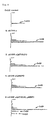
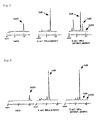
- a restriction enzyme map of the expression vector pSTVK28-hDLP1 is shown in Fig. 2.
- An Escherichia coli strain, DH5 ⁇ (pSTVK28-hDLP1) was obtained by transformation with pSTVK28-hDLP1.
- PCR was carried out by 2 minutes of heat treatment at 94°C followed by 35 repetitions of the following cycle: one minute at 94°C ⁇ one minute at 56°C ⁇ two minutes at 72°C.
- the thus-amplified DNA was analyzed by 0.7% agarose gel electrophoresis.
- the thus-obtained fragment of about 1,200 bp was excised from the gel, purified using a DNA extraction kit (Sephaglas (trademark) BandPrep Kit, product of Amersham Pharmacia Biotech) and then cloned in a vector for expression in Escherichia coli using a PCR product direct cloning kit (pT7BlueT-Vector Kit, product of NOVAGEN) to give pT7-mDLP1.
- a DNA extraction kit Sephaglas (trademark) BandPrep Kit, product of Amersham Pharmacia Biotech
- pT7BlueT-Vector Kit product of NOVAGEN
- the DNA base sequence was determined using a DNA sequencer (model 377, product of Perkin Elmer) and a DNA sequencing kit (product of Perkin Elmer, ABI PRISM (trademark) BigDye (trademark) Terminator Cycle Sequence Ready Reaction Kit with AmpliTaq (registered trademark) DNA polymerase, FS) and conducting the reactions according to the manual attached to the kit. As a result, the full-length sequence occurring on the database could be obtained.
- pT7-mDLP1 was cleaved with the restriction enzymes Eco RI and Bam HI (products of Takara Shuzo), followed by 0.8% agarose gel electrophoresis.
- the fragment of about 1,200 bp was excised from the gel and purified using a DNA extraction kit (Sephaglas (trademark) BandPrep Kit, product of Amersham Pharmacia Biotech), and this DNA fragment was then inserted into pSTV28 (product of Takara Shuzo) at the Eco RI- Bam HI site.
- the DNA base sequence was determined using a DNA sequencer (model 377, product of Perkin Elmer) and a DNA sequencing kit (product of Perkin Elmer, ABI PRISM (trademark) BigDye (trademark) Terminator Cycle Sequence Ready Reaction Kit with AmpliTaq (registered trademark) DNA polymerase, FS) and conducting the reactions according to the manual attached to the kit.
- a DNA sequencer model 377, product of Perkin Elmer
- ABI PRISM trademark
- BigDye trademark
- Terminator Cycle Sequence Ready Reaction Kit with AmpliTaq (registered trademark) DNA polymerase, FS) an expression vector, pSTVK28-mDLP1
- a restriction enzyme map of the expression vector pSTVK28-mDLP1 is shown in Fig. 3.
- An Escherichia coli strain, DH5 ⁇ (pSTVK28-mDLP1) was obtained by transformation with pSTVK28-mDLP1.
- PCR was carried out by 2 minutes of heat treatment at 94°C followed by 25 repetitions of the following cycle: one minute at 94°C ⁇ one minute at 56°C ⁇ two minutes at 72° C.
- the thus-amplified DNA was analyzed by 0.7% agarose gel electrophoresis.
- the thus-obtained fragment of about 1,100 bp was excised from the gel, purified using a DNA extraction kit (Sephaglas (trademark) BandPrep Kit, product of Amersham Pharmacia Biotech) and then inserted into the vector pBluescript II for expression in Escherichia coli at the Sal I- Pst I site to give an expression vector, pBSDPS.
- Escherichia coli DH5 ⁇ was transformed with this vector to give E. coli DH5 ⁇ (pBSDPS).
- This transformant was further transformed with pSTVDLP1, followed by screening using 30 ⁇ g/ml chloramphenicol and 50 ⁇ g/ml ampicillin, whereby E. coli DH5 ⁇ (pSTVDLP1, pBSDPS) harboring both of the vectors was obtained.
- PCR primers hDPS1-N (SEQ ID NO:15) and hDPS1-C (SEQ ID NO:16), were prepared.
- a human liver cDNA library cDNALibrary, Human Liver, plasmid type (product of Takara Shuzo)
- PCR was carried out by 2 minutes of heat treatment at 94°C followed by 35 repetitions of the following cycle: one minute at 94°C ⁇ one minute at 56°C ⁇ two minutes at 72°C.
- the thus-amplified DNA was analyzed by 0.7% agarose gel electrophoresis.
- the thus-obtained fragment of about 1, 250 bp was excised from the gel, purified using a DNA extraction kit (Sephaglas (trademark) BandPrep Kit, product of Amersham Pharmacia Biotech) and then cloned in a vector for expression in Escherichia coli using a PCR product direct cloning kit (pT7BlueT-Vector Kit, product of NOVAGEN) to give pT7-hDPS1.
- a DNA extraction kit Sephaglas (trademark) BandPrep Kit, product of Amersham Pharmacia Biotech
- pT7BlueT-Vector Kit product of NOVAGEN
- the DNA base sequence was determined using a DNA sequencer (model 377, product of Perkin Elmer) and a DNA sequencing kit (product of Perkin Elmer, ABI PRISM (trademark) BigDye (trademark) Terminator Cycle Sequence Ready Reaction Kit with AmpliTaq (registered trademark) DNA polymerase, FS) and conducting the reactions according to the manual attached to the kit. As a result, the full-length sequence occurring on the database could be obtained.
- pT7-hDPS1 was cleaved with the restriction enzymes Sal I and Bam HI (products of Takara Shuzo), followed by 0.8% agarose gel electrophoresis.
- the fragment of about 1, 250 bp was excised from the gel and purified using a DNA extraction kit (Sephaglas (trademark) BandPrep Kit, product of Amersham Pharmacia Biotech), and this DNA fragment was then inserted into pUC119 (product of Takara Shuzo) at the Sal I- Bam HI site.
- the DNA base sequence was determined using a DNA sequencer (model 377, product of Perkin Elmer) and a DNA sequencing kit (product of Perkin Elmer, ABI PRISM (trademark) BigDye (trademark) Terminator Cycle Sequence Ready Reaction Kit with AmpliTaq (registered trademark) DNA polymerase, FS) and conducting the reactions according to the manual attached to the kit.
- a DNA sequencer model 377, product of Perkin Elmer
- ABI PRISM trademark
- BigDye trademark
- Terminator Cycle Sequence Ready Reaction Kit with AmpliTaq (registered trademark) DNA polymerase, FS) an expression vector, pUhDPS1
- Escherichia coli DH5 ⁇ was transformed with this vector to give E. coli DH5 ⁇ (pUhDPS1).
- PCR primers mSDS-N (SEQ ID NO:17) and mSDS-C (SEQ ID NO:18), were prepared.
- a murine liver cDNA library cDNA Library, Mouse Liver, plasmid type (product of Takara Shuzo)
- PCR was carried out by 2 minutes of heat treatment at 94°C followed by 35 repetitions of the following cycle: one minute at 94°C ⁇ one minute at 56°C ⁇ two minutes at 72°C.
- the thus-amplified DNA was analyzed by 0.7% agarose gel electrophoresis.
- the thus-obtained fragment of about 1,230 bp was excised from the gel, purified using a DNA extraction kit (Sephaglas (trademark) BandPrep Kit, product of Amersham Pharmacia Biotech) and then cloned in a vector for expression in Escherichia coli using a PCR product direct cloning kit (pT7BlueT-Vector Kit, product of NOVAGEN) to give pT7-mSDS.
- a DNA extraction kit Sephaglas (trademark) BandPrep Kit, product of Amersham Pharmacia Biotech
- pT7BlueT-Vector Kit product of NOVAGEN
- the DNA base sequence was determined using a DNA sequencer (model 377, product of Perkin Elmer) and a DNA sequencing kit (product of Perkin Elmer, ABI PRISM (trademark) BigDye (trademark) Terminator Cycle Sequence Ready Reaction Kit with AmpliTaq (registered trademark) DNA polymerase, FS) and conducting the reactions according to the manual attached to the kit. As a result, the full-length sequence occurring on the database could be obtained.
- pT7-mSDS was cleaved with the restriction enzymes Eco RI and Sal I (products of Takara Shuzo), followed by 0.8% agarose gel electrophoresis.
- the fragment of about 1, 230 bp was excised from the gel and purified using a DNA extraction kit (Sephaglas (trademark) BandPrep Kit, product of Amersham Pharmacia Biotech), and this DNA fragment was then inserted into pBluescript II SK (+) (product of Toyobo) at the Eco RI- Sal I site.
- the DNA base sequence was determined using a DNA sequencer (model 377, product of Perkin Elmer) and a DNA sequencing kit (product of Perkin Elmer, ABI PRISM (trademark) BigDye (trademark) Terminator Cycle Sequence Ready Reaction Kit with AmpliTaq (registered trademark) DNA polymerase, FS) and conducting the reactions according to the manual attached to the kit.
- a DNA sequencer model 377, product of Perkin Elmer
- ABI PRISM trademark
- BigDye trademark
- Terminator Cycle Sequence Ready Reaction Kit with AmpliTaq (registered trademark) DNA polymerase, FS) an expression vector, pBmSDS1
- Escherichia coli DH5 ⁇ was transformed with this vector to give E. coli DH5 ⁇ (pBmSDS1).
- E. coli DH5 ⁇ (pBSDPS), E. coli DH5 ⁇ (pUhDPS1), and E. coli DH5 ⁇ (pBmSDS1) resulting from transformation with the long-chain prenyl diphosphate synthase expression vectors constructed in Examples 4 to 6 were further transformed in various combinations with the expression vectors for activity elevatory protein expression as constructed in Examples 1 to 3.
- the transformant E. coli DH5 ⁇ (pBSDPS) was further transformed with pSTVDLP1, as described in Example 4, to give the transformant E. coli DH5 ⁇ (pSTVDLP1, pBSDPS) harboring both of the vectors.
- the following transformants were further obtained in the same manner:
- E. coli DH5 ⁇ (pSTVDLP1, pBSDPS) has been deposited with the National Institute of Advanced Industrial Science and Technology International Patent Organism Depositary, Central 6, 1-1-1 Higashi, Tsukuba, Ibaraki, Japan as of April 17, 2001 under the accession number FERM BP-7548, E. coli DH5 ⁇ (pSTVDLP1, pUhDPS1) as of April 19, 2002 under the accession number FERM BP-8025, E. coli DH5 ⁇ (pSTVK28-mDLP1, pBmSDS1) as of April 19, 2002 under the accession number FERM BP-8027, and E. coli DH5 ⁇ (pSTVK28-hDLP1, pUhDPS1) as of April 19, 2002 under the accession number FERM BP-8026.
- E. coli DH5 ⁇ (pBSDPS), E. coli DH5 ⁇ (pUhDPS1) and E. coli DH5 ⁇ (pBmSDS1) obtained in the above examples were each shake-cultured overnight at 37°C in 200 ml of LB medium containing 50 ⁇ g/ml ampicillin, E. coli DH5 ⁇ (pSTVDLP1) in 200 ml of LB medium containing 30 ⁇ g/ml chloramphenicol, E. coli DH5 ⁇ (pSTVK28-hDLP1) and E. coli DH5 ⁇ (pSTVK28-mDLP1) each in 200 ml of LB medium containing 50 ⁇ g/ml kanamycin, E.
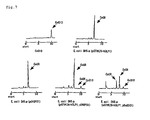
- Acetone-methanol (7:2) (3 ml) was added to these cells, and extraction was effected by 6 repetitions of 30 seconds of sonication and the subsequent 30 seconds of standing on ice. Centrifugation (3,000 rpm, 5 minutes) gave an extract. This extract was vacuum-dried, 1 ml of chloroform-methanol (1:1) and an equal amount of a 0.7% aqueous solution of sodium chloride were added to the dried product, and the mixture was stirred well for attaining dissolution and then centrifuged at 14, 000 rpm for 1 minute. The lower layer was extracted and dried, and the residue was dissolved in 50 ⁇ l of chloroform-methanol (2:1). This sample was spotted on a TLC plate, and developed with 100% benzene.
- the invention provides a protein involved in the expression of a eukaryotes-derived long-chain prenyl diphosphate synthase, a gene coding for such enzyme, a vector containing such enzyme gene, a transformant resulting from transformation with such vector and a long-chain prenyl diphosphate synthase gene-containing expression vector as well as a method of producing a long-chain prenyl diphosphate synthase (in particular decaprenyl diphosphate synthase and solanesyl diphosphate synthase) and of a coenzyme Q having a long-chain isoprenoid in its side chain (in particular coenzyme Q 9 or coenzyme Q 10 ).
Landscapes
- Chemical & Material Sciences (AREA)
- Life Sciences & Earth Sciences (AREA)
- Organic Chemistry (AREA)
- Zoology (AREA)
- Engineering & Computer Science (AREA)
- Wood Science & Technology (AREA)
- Health & Medical Sciences (AREA)
- Genetics & Genomics (AREA)
- Bioinformatics & Cheminformatics (AREA)
- Microbiology (AREA)
- General Engineering & Computer Science (AREA)
- Biotechnology (AREA)
- General Health & Medical Sciences (AREA)
- Biochemistry (AREA)
- Medicinal Chemistry (AREA)
- Molecular Biology (AREA)
- Biomedical Technology (AREA)
- Chemical Kinetics & Catalysis (AREA)
- General Chemical & Material Sciences (AREA)
- Micro-Organisms Or Cultivation Processes Thereof (AREA)
- Peptides Or Proteins (AREA)
- Enzymes And Modification Thereof (AREA)
- Preparation Of Compounds By Using Micro-Organisms (AREA)
Abstract
The present invention provides a method of producing a
long-chain prenyl diphosphate synthase (in particular
decaprenyl diphosphate synthase and solanesyl diphosphate
synthase) using a gene and a protein which are required for
enabling or enhancing the activity expression of a
eukaryote-derived long-chain prenyl diphosphate synthase as
well as a method of efficiently producing a coenzyme Q having
a long-chain isoprenoid in its side chain (in particular
coenzyme Q9 or coenzyme Q10) using a microorganism.
The present invention relates to a DNA having a base
sequence shown under SEQ ID NO:1, 3 or 5 and a DNA sequence
derived from the above base sequence by deletion, addition,
insertion and/or substitution of one to several bases thereof,
and coding for a protein enabling (functioning) or enhancing
the activity expression of a eukaryote-derived long-chain
prenyl diphosphate synthase in a host microorganism.
Description
The present invention relates to a protein involved in
the expression of a eukaryotes-derived long-chain prenyl
diphosphate synthase, a gene coding for such enzyme, a vector
containing such enzyme gene, a transformant resulting from
transformation with such vector and a long-chain prenyl
diphosphate synthase gene-containing expression vector as well
as a method of producing a long-chain prenyl diphosphate
synthase (in particular decaprenyl diphosphate synthase and
solanesyl diphosphate synthase) and of a coenzyme Q having a
long-chain isoprenoid in its side chain (in particular coenzyme
Q9 or coenzyme Q10).
"Isoprenoids" is a generic name for a variety of compounds,
including sterols, carotinoids and terpenes, among others.
Among them, there is a group of prenyl diphosphate compounds
containing a coenzyme Q side chain, and the synthesis thereof
depends on the polymerization-like condensation reaction of
isopentenyl diphosphate, which is an isoprene unit containing
5 carbon atoms, as catalyzed by a prenyl diphosphate synthase.
The respective prenyl diphosphate synthases are roughly
classified into 4 groups.
The short chain (3 or 4 isoprene units) prenyl diphosphate
synthases are known to perform their catalytic function in the
form of homodimers. Examples of such are farnesyl diphosphate
synthase (Eberthardt, N. L. (1975), J. Biol. Chem., 250,
863-866) and geranylgeranyl diphosphate synthase (Sagami, H.
(1994), J. Biol. Chem., 269, 20561-20566).
The medium chain (6 or 7 isoprene units) prenyl
diphosphate synthases are known to be heterodimeric enzymes
composed of two proteins each independently having no catalytic
activity. Examples are hexaprenyl diphosphate synthase (Fujii,
H. (1982), J. Biol. Chem., 257, 14610), and heptaprenyl
diphosphate synthase (Takahashi, I. (1980), J. Biol. Chem., 255,
4539).
Further, as for the long-chain (8 to 10 isoprene units)
prenyl diphosphate synthases, it is reported that
prokaryote-derived such enzymes are undissociable homodimers
and are activated by a polyprenyl diphosphate carrier protein
(Ohnuma, S. (1991), J. Biol. Chem., 266, 23706-23713). At
present, however, there is no report available about
eukaryotes-derived long-chain prenyl diphosphate synthases.
Coenzymes Q are composed of a quinone skeleton and an
isoprenoid side chain and occur widely in a variety of living
things, from microorganisms, such as bacteria and yeasts, to
higher animals and plants. In prokaryotes, they occur in the
plasma membrane and function as electron acceptors for cell
membrane stabilization and for periplasmic membrane protein
disulfide bond formation. In eukaryotes, they occur in the
mitochondrial membrane and/or cytoplasmic membrane, and serve
as essential factors in the electron transfer system in the
mitochondrial respiratory chain and in the oxidative
phosphorylation, function as antioxidants and contribute to the
stabilization of biomembranes.
Coenzymes Q having an isoprenoid side chain resulting
from condensation of 8 to 10 isoprene units, among others, have
attracted attention as materials of health foods and the like.
Among them, coenzyme Q10 comprising 10 isoprene units is
intrinsic in humans and is therefore very useful and is in use
as a heart medicine.
Commercially, this coenzyme Q10 is produced, for example,
by isolating coenzymes Q from a plant, such as tobacco, and
synthetically modifying the side chain length thereof.
It is also known that coenzyme Q10 is produced by a wide
variety of organisms, from microorganisms, such as bacteria and
yeasts, to higher animals and plants, and the method comprising
cultivating a microorganism and extracting this substance from
cells thereof is thought to be one of the most efficient methods
of production thereof and, actually, is in use in commercial
production thereof. However, such methods cannot be said to
be satisfactory in productivity since, for example, the yield
is poor and/or the procedure is complicated.
Attempts have also been made to isolate genes involved
in biosynthesis of coenzyme Q10, amplify the genes by means of
the recombinant DNA technology and utilizing them in increasing
the production of coenzyme Q10. In living organisms, coenzyme
Q10 is produced via a multistage complicated reaction process
in which a number of enzymes are involved. The biosynthetic
pathway therefor in prokaryotes differs in part from that in
eukaryotes. Basically, however, the pathway comprises three
main steps, namely the step of the synthesis of decaprenyl
diphosphate to serve as the source of the decaprenyl side chain
of coenzyme Q10, the step of the synthesis of parahydroxybenzoic
acid to serve as the source of the quinone ring, and the step
of the coupling of these two compounds, followed by successive
substituent conversion to complete coenzyme Q10. Among the
reactions involved, the reactions involved in decaprenyl
diphosphate synthase, which are said to determine the rate of
the whole biosynthetic reaction process and which determine the
length of the side chain of coenzyme Q10, are considered to be
the most important reactions.
For efficient production of coenzyme Q10, it is considered
effective to isolate the decaprenyl diphosphate synthase gene,
which is the key gene in the biosynthesis in question, and
utilize the same for causing a production increase. Thus, so
far, decaprenyl diphosphate synthase genes have been isolated
from several microbial species, such as Schizosaccharomyces
pombe (JP-A-09-173076) and Gluconobacter suboxydans
(JP-A-10-57072) and studied for their use in coenzyme Q10
production. As for the host microorganism for this coenzyme
Q10 production, it is desirable to use prokaryotes, such as
Escherichia coli, from the viewpoint of productivity, safety,
recombinant system preparation, and so on.
As for the decaprenyl diphosphate synthase gene sources,
it is also possible to utilize eukaryotes in which coenzyme Q10
is produced in relatively large amounts. Thus, for example,
fungi are strong candidates. However, when a
eukaryote-derived decaprenyl diphosphate synthase gene was
introduced by recombination into those microorganisms which
belong to the prokaryotes, for example Escherichia coli,
coenzyme Q10 was not produced or was produced only in
unsatisfactory amounts. It is thought that this is due to an
insufficient level of expression of the long-chain prenyl
diphosphate synthase. Therefore, the development of a method
of causing efficient expression, in prokaryotes, of a
eukaryote-derived decaprenyl diphosphate synthase gene
serving in relatively abundant coenzyme Q10 production has been
desired.
It is an object of the present invention to provide a
protein involved in the expression of a eukaryotes-derived
long-chain prenyl diphosphate synthase, a gene coding for such
enzyme, a vector containing such enzyme gene, a transformant
resulting from transformation with such vector and a long-chain
prenyl diphosphate synthase gene-containing expression vector
as well as a method of producing a long-chain prenyl diphosphate
synthase (in particular decaprenyl diphosphate synthase and
solanesyl diphosphate synthase) and of a coenzyme Q having a
long-chain isoprenoid in its side chain (in particular coenzyme
Q9 or coenzyme Q10).
Presupposing that, in the group of long-chain prenyl
diphosphate synthase-biosynthesizing eukaryotes, there might
be two forms of prenyl diphosphate synthase, the present
inventors considered that when derived from the genus Saitoella
or the like, the enzyme of which recombinant gene expression,
in Escherichia coli, a prokaryote, had been confirmed would be
expressed in the homo form and that when derived from the genus
Schizosaccharomyces or the like, the enzyme of which
recombinant gene expression in Escherichia coli could not be
confirmed would be expressed in the hetero form. Thus, they
considered that there might be another gene involved in the
expression of such a long-chain prenyl diphosphate synthase
gene incapable of being expressed upon gene recombination and
the long-chain prenyl diphosphate synthase gene would be
expressed with the cooperation of the other gene and that,
therefore, transformation of a prokaryotic host, such as
Escherichia coli, with the long-chain prenyl diphosphate
synthase gene alone could not result in satisfactory activity
production.
Accordingly, they made investigations in an attempt to
isolate a gene involved in the activity expression of a
eukaryote-derived long-chain prenyl diphosphate synthase gene
and succeeded in isolating genes enhancing the expression, in
Escherichia coli, of the eukaryote-derived long-chain prenyl
diphosphate synthase gene from a microorganism belonging to the
genus Schizosaccharomyces and the higher animals mouse and
human. Thus, they have now completed the present invention.
The present invention thus relates to a DNA defined below
under (a), (b) or (c):
The invention further relates to a DNA coding for the
protein defined above under (d) or (e).
Further, the invention relates to an expression vector
resulting from insertion of the above DNA into a vector for
expression; the expression vector as defined above wherein the
vector for expression is pSTV28; the expression vector as
defined above which is pSTVDLP1; the expression vector as
defined above which is pSTVK28-mDLP1; and the expression vector
as defined above which is pSTVK28-hDLP1.
Furthermore, the invention relates to a transformant
resulting from transformation of a host microorganism with the
above DNA; a transformant resulting from transformation of a
host microorganism with the above expression vector; the
transformant as defined above wherein the host microorganism
is Escherichia coli; the transformant as defined above which
is E. coli DH5α(pSTVDLP1) (FERM BP-7433); the transformant as
defined above which is E. coli DH5α(pSTVK28-mDLP1); and the
transformant as defined above which is E. coli
DH5α(pSTVK28-hDLP1).
The invention further relates to the transformant as
defined above which harbors a eukaryote-derived long-chain
prenyl diphosphate synthase gene further introduced therein;
the transformant as defined above wherein the eukaryote-derived
prenyl diphosphate synthase gene is a gene derived from a
microorganism belong to the genus Schizosaccharomyces,
Saitoella, Rhodotorula, Leucosporidium, Asperugillus or
Bulleomyces, a human-derived gene or a mouse-derived gene; the
transformant as defined above which is E. coli DH5α(pSTVDLP1,
pBSDPS) (FERM BP-7548) ; the transformant as defined above which
is E. coli DH5α(pSTVDLP1, pUhDPS1) (FERM BP-8025); the
transformant as defined above which is E. coli DH5α(pSTVDLP1,
pBmSDS1); the transformant as defined above which is E. coli
DH5α(pSTVK28-mDLP1, pUhDPS1); the transformant as defined
above which is E. coli DH5α(pSTVK28-mDLP1, pBmSDS1) (FERM
BP-8027); the transformant as defined above which is E. coli
DH5α(pSTVK28-hDLP1, pUhDPS1) (FERM BP-8026); or the
transformant as defined above which is E. coli
DH5α(pSTVK28-hDLP1, pBmSDS1).
Still further, the invention relates to a method of
producing coenzymes Q which comprises cultivating the
transformant as defined above in a medium to cause formation
and accumulation of a coenzyme Q in the culture and recovering
the same.
In the following, the present invention is described in
detail.
The DNAs of the invention were isolated as follows.
Using the sequence of the decaprenyl diphosphate synthase
gene of the genus Schizosaccharomyces, a homology search was
conducted from a chromosomal database for the genus
Schizosaccharomyces, and gene relatively high in homology was
found out. Based on the above-mentioned gene sequence, genes
relatively high in homology were also found out from chromosomal
databases for the mouse and human, respectively.
For separating the thus-found gene from the chromosome
of the genus Schizosaccharomyces, PCR primers, N-dlp1 (SEQ ID
NO:7) and C-dlp1 (SEQ ID NO:8) were synthesized. For the
separation from the human chromosome, hDLP1-N (SEQ ID NO: 9) and
hDLP1-C (SEQ ID NO:10) were synthesized and, for the separation
from the murine chromosome, mDLP1-N (SEQ ID NO:11) and mDLP1-C
(SEQ ID NO:12) were synthesized.
Using these primers, the PCR conditions were studied and
determined, and PCR was carried out by 2 minutes of heat
treatment at 94°C and 25 repetitions of the cycle one minute
at 94°C → one minute at 56°C → two minutes at 72°C. That a DNA
of about 900 bp was amplified from the chromosomal gene of
Schizosaccharomyces pombe IFO 1628, a DNA about 1,200 bp from
the human chromosome, and a DNA about 1, 200 bp from the murine
chromosome was revealed by analyzing the base sequences of the
respective genes. The DNAs obtained were sequenced and found
to have the base sequences shown in the sequence listing under
SEQ ID NO:1, 3, and 5, respectively.
The DNA of the present invention, which is a DNA coding
for a protein enabling or enhancing the activity expression of
a eukaryote-derived long-chain prenyl diphosphate synthase in
a host microorganism, may be a DNA having the base sequence shown
under SEQ ID NO:1, 3 or 5, or a DNA having a base sequence derived
from the base sequence shown under SEQ ID NO:1, 3 or 5 by deletion,
addition, insertion and/or substitution of one to several bases,
or a DNA capable of hybridizing with the DNA comprising the base
sequence shown under SEQ ID NO:1, 3 or 5 under a stringent
condition.
Since a number of amino acids are encoded by one or more
codons (genetic code degeneracy), not only the DNA comprising
the base sequence shown under SEQ ID NO:1, 3 or 5 but also a
number of other DNAs code for a protein comprising the amino
acid sequence shown under SEQ ID NO:2, 4 or 6. Therefore, the
DNA of the invention includes those DNAs coding for a protein.
comprising the amino acid sequence shown under SEQ ID NO:2, 4
or 6.
The term "base sequence derived from a base sequence by deletion, addition, insertion and/or substitution of one to several bases" as used herein means a base sequence resulting from deletion, addition, insertion and/or substitution of such a number of bases as can be deleted, added, inserted and/or substituted by a method well known to those skilled in the art as described in Supplemental Issue, Tanpakushitsu, Kakusan, Koso (Protein, Nucleic Acid and Enzyme), PCR Method for Gene Amplification, TAKKAJ, 35 (17), 2951-3178 (1990) or Henry A. Erlich (ed.), translated into Japanese under the supervision of Ikunoshin Kato: PCR Technology (1990), for instance.
The term "base sequence derived from a base sequence by deletion, addition, insertion and/or substitution of one to several bases" as used herein means a base sequence resulting from deletion, addition, insertion and/or substitution of such a number of bases as can be deleted, added, inserted and/or substituted by a method well known to those skilled in the art as described in Supplemental Issue, Tanpakushitsu, Kakusan, Koso (Protein, Nucleic Acid and Enzyme), PCR Method for Gene Amplification, TAKKAJ, 35 (17), 2951-3178 (1990) or Henry A. Erlich (ed.), translated into Japanese under the supervision of Ikunoshin Kato: PCR Technology (1990), for instance.
The term "DNA capable of hybridizing with a DNA comprising
the base sequence shown under SEQ ID NO:1, 3 or 5 under a
stringent condition" means a DNA obtained by the colony
hybridization, plaque hybridization or Southern hybridization
technique, among others, using, as a probe, the DNA comprising
the base sequence shown under SEQ ID NO:1, 3 or 5. Those skilled
in the art can easily obtain any desired DNA by conducting such
hybridization according to the method described in Molecular
Cloning, 2nd Edt. (Cold Spring Harbor Laboratory Press, 1989).
For example, the desired DNA can be obtained by carrying out
the hybridization at a temperature of not lower than 50°C in
urea-free SSC having a salt concentration of not higher than
0.5 M.
Further, the term "protein enabling or enhancing the
activity expression of a eukaryote-derived long-chain prenyl
diphosphate synthase in a host microorganism" indicates a
protein that increases the coenzyme Q production in the host
microorganism by causing a eukaryote-derived long-chain prenyl
diphosphate synthase gene to be expressed in the host
microorganism harboring the gene as introduced therein and thus
enabling or enhancing the expression of the long-chain prenyl
diphosphate synthase activity.
Whether a protein is such a protein or not can be checked
by preparing a transformant resulting from transformation with
the long-chain prenyl diphosphate synthase gene alone and a
transformant resulting from transformation with the long-chain
prenyl diphosphate synthase gene together with a DNA coding for
the protein in question and measuring and comparing the coenzyme
Q productions in both transformants under the same conditions.
In other words, when the coenzyme Q production is absolutely
zero or little in the transformant resulting from
transformation with the long-chain prenyl diphosphate synthase
gene alone but the coenzyme Q production is significant in the
transformant resulting from transformation with the long-chain
prenyl diphosphate synthase gene together with the DNA coding
for the protein in question, the protein corresponds to the one
defined hereinabove.
The protein of the invention, which is a protein enabling
or enhancing (potentiating) the activity expression of a
eukaryote-derived long-chain prenyl diphosphate synthase in a
host microorganism, may be a protein having the amino acid
sequence shown under SEQ ID NO:2, 4, or 6, or a protein having
an amino acid sequence derived from the amino acid sequence
shown under SEQ ID NO:2, 4 or 6 by deletion, addition, insertion
and/or substitution of one to several amino acid residues.
The "amino acid sequence derived by deletion, addition,
insertion and/or substitution of one to several amino acid
residues" so referred to herein can be obtained by deleting,
adding, inserting and/or substituting such a number of amino
acid residues as can be deleted, added, inserted and/or
substituted by a method well known to those skilled in the art,
for example by the technique of site-specific mutagenesis.
Such method is more specifically described in the literature,
for example Nucleic Acids Res., 10, 6487 (1982), and Methods
in Enzymology, 100, 448 (1983).
For causing the protein of the invention to be expressed,
it is necessary to join the gene for the protein to the downstream
of an appropriate promoter. For example, an expression vector
can be prepared by excising a DNA fragment containing the gene
with restriction enzyme treatment, or amplifying, by PCR, the
enzyme-encoding gene segment alone, and inserting this into a
promoter-containing vector for expression.
The expression vector of the invention comprises a vector
for expression with the above-mentioned DNA inserted therein.
The vector for expression is not particularly restricted
but may be, for example, one resulting from insertion of an
appropriate promoter into an Escherichia coli-derived plasmid.
As the Escherichia coli-derived plasmid, there may be mentioned,
for example, pSTV28, pBR322, pBR325, pUC19, and pUC119. As the
promoter, there may be mentioned, for example, the T7 promoter,
trp promoter, tac promoter, lac promoter, and λPL promoter.
In the practice of the invention, pGEX-2T, pGEX-3T,
pGEX-3X (the three being products of Pharmacia), pBluescript
II, pUC19 (product of Toyobo), pMALC2, pET-3T, pUCNT (described
in WO 94/03613) and the like may also be used as the vector for
expression.
Among them, pSTV28 is suitably used. In specific
examples, an expression vector designated as pSTVDLP1 can be
constructed by inserting a DNA comprising the base sequence
shown under SEQ ID NO:1 into the vector pSTV28 for expression,
an expression vector designated as pSTVK28-hDLP1 by inserting
a DNA comprising the base sequence shown under SE ID NO:3 into
pSTV28, and an expression vector designated as pSTVK28-mDLP1
by inserting a DNA comprising the base sequence shown under SEQ
ID NO:5 into pSTV28.
The transformant of the invention may be one resulting
from transformation of a host microorganism with the DNA
mentioned above, or one resulting from transformation of a host
microorganism with the expression vector mentioned above, or
one resulting from transformation of a host microorganism with
the above-mentioned DNA or expression vector together with a
eukaryote-derived long-chain prenyl diphosphate synthase gene
used additionally.
By introducing the above expression vector, together with
an expression vector containing a eukaryote-derived long-chain
prenyl diphosphate synthase gene, into an appropriate host
microorganism, it becomes possible to utilize the resulting
transformant in coenzyme Q production.
The eukaryote to serve as the long-chain prenyl
diphosphate synthase gene source is not particularly restricted
but includes, among others, decaprenyl diphosphate
synthase-producing microorganisms belonging to the genera
Schizosaccharomyces, Saitoella, Rhodotorula, Leucosporidium,
Asperugillus, Bulleomyces and the like, human beings, and
solanesyl diphosphate synthase-producing mice.
The host microorganism is not particularly restricted.
Escherichia coli and the like are suitably used, however. The
species of Escherichia coli is not particularly restricted but
includes XL1-Blue, BL-21, JM109, NM522, DH5α, HB101, and DH5,
among others. Among them, Escherichia coli DH5α is suitably
used.
When, for example, the above-mentioned expression vector
pSTVDLP1 is introduced, together with an expression vector for
the decaprenyl diphosphate synthase gene derived from the genus
Schizosaccharomyces, into Escherichia coli, the microorganism
can be converted into a transformant capable of producing
significant amounts of coenzyme Q10 which originally cannot be
produced in Escherichia coli.
The transformant of the invention includes, among others,
the following:
Among them, E. coli DH5α(pSTVDLP1) has been deposited
with the National Institute of Advanced Industrial Science and
Technology International Patent Organism Depositary, Central
6, 1-1-1 Higashi, Tsukuba, Ibaraki, Japan as of January 18, 2001
under the accession number FERM BP-7433,
E. coli DH5α(pSTVDLP1, pBSDPS) as of April 17, 2001 under the accession number FERM BP-7548,
E. coli DH5α(pSTVDLP1, pUhDPS1) as of April 19, 2002 under the accession number FERM BP-8025,
E. coli DH5α(pSTVK28-mDLP1, pBmSDS1) as of April 19, 2002 under the accession number FERM BP-8027, and
E. coli DH5α(pSTVK28-hDLP1, pUhDPS1) as of April 19, 2002 under the accession number FERM BP-8026.
E. coli DH5α(pSTVDLP1, pBSDPS) as of April 17, 2001 under the accession number FERM BP-7548,
E. coli DH5α(pSTVDLP1, pUhDPS1) as of April 19, 2002 under the accession number FERM BP-8025,
E. coli DH5α(pSTVK28-mDLP1, pBmSDS1) as of April 19, 2002 under the accession number FERM BP-8027, and
E. coli DH5α(pSTVK28-hDLP1, pUhDPS1) as of April 19, 2002 under the accession number FERM BP-8026.
By using the DNA of the invention combinedly with a
eukaryote-derived long-chain prenyl diphosphate synthase gene
expression vector and, in addition, introducing another gene
involved in the biosynthesis of a coenzyme Q simultaneously into
the microorganism employed, it becomes possible to expect a
still better result.
As the other gene, there may be mentioned, for example,
the polyprenyl diphosphate transferase gene and the like.
A coenzyme Q can be produced in the conventional manner
by cultivating the transformant obtained in accordance with the
invention in a medium and recovering the coenzyme Q form the
culture.
In cases where the host microorganism is Escherichia coli,
LB medium, M9 medium containing glucose and/or casamino acids,
and the like can be used as the medium. For efficient promoter
functioning, such an agent as isopropylthiogalactoside and/or
indolyl-3-acrylic acid, for instance, maybe added to the medium.
The cultivation is carried out, for example, at 20 to 40°C,
preferably at 30 to 37°C, more preferably at 37°C, for 17 to
24 hours and, on that occasion, aeration, agitation and the like
may be made according to need.
In the practice of the invention, the coenzyme Q obtained
may be optionally purified or used in the form of a roughly
purified product according to the intended use thereof.
For coenzyme Q purification from the culture obtained,
an appropriate combination of separation/purification methods
known in the art can be used. As the separation/purification
methods known in the art, there may be mentioned the methods
utilizing the difference in electric charge, such as ion
exchange chromatography, the methods utilizing the difference
in specific affinity, such as affinity chromatography, and the
methods utilizing the difference in hydrophobicity, such as
reversed phase high-performance liquid chromatography, among
others.
The use of the coenzyme Q obtained in accordance with the
invention is not particularly restricted but the coenzyme Q can
be suitably used in drugs, foods and so forth.
The following examples illustrate the present invention
in further detail. These examples are, however, by no means
limitative of the scope of the invention.
Using the base sequence of the decaprenyl diphosphate
synthase gene of Schizosaccharomyces pombe, homology search was
conducted in the Sanger Center database and, as a result, a gene
having 26% homology was found out by means of GENETYX (Software
Development Co., Ltd.). PCR primers, N-dlp1 (SEQ ID NO:7) and
C-dlp1 (SEQ ID NO:8), were prepared for obtaining that gene.
Separately, the chromosomal DNA of Schizosaccharomyces pombe
IFO 1628 was prepared by the method of C. S. Hoffman et al. (Gene,
57 (1987), 267-272). Using these, PCR was carried out by 2
minutes of heat treatment at 94°C followed by 25 repetitions
of the following cycle: one minute at 94°C → one minute at 56°C
→ two minutes at 72°C. The thus-amplified DNA was analyzed by
0.7% agarose gel electrophoresis.
The thus-obtained fragment of about 900 bp was excised
from the gel, purified using a DNA extraction kit (Sephaglas
(trademark) BandPrep Kit, product of Amersham Pharmacia
Biotech) and then cloned in a vector for expression in
Escherichia coli using a PCR product direct cloning kit
(pT7BlueT-Vector Kit, product of NOVAGEN) to give pT7-DLP1.
The DNA base sequence was determined using a DNA sequencer
(model 377, product of Perkin Elmer) and a DNA sequencing kit
(product of Perkin Elmer, ABI PRISM (trademark) BigDye
(trademark) Terminator Cycle Sequence Ready Reaction Kit with
AmpliTaq (registered trademark) DNA polymerase, FS) and
conducting the reactions according to the manual attached to
the kit. As a result, the full-length sequence occurring on
the database could be obtained.
pT7-DLP1 was cleaved with the restriction enzymes EcoRI
and EcoRV (products of Takara Shuzo), followed by 0.8% agarose
gel electrophoresis. The fragment of about 900 bp was excised
from the gel and purified using a DNA extraction kit (Sephaglas
(trademark) BandPrep Kit, product of Amersham Pharmacia
Biotech), and this DNA fragment was then inserted into pSTV28
(product of Takara Shuzo) at the EcoRI-SmaI site. The DNA base
sequence was determined using a DNA sequencer (model 377,
product of Perkin Elmer) and a DNA sequencing kit (product of
Perkin Elmer, ABI PRISM (trademark) BigDye (trademark)
Terminator Cycle Sequence Ready Reaction Kit with AmpliTaq
(registered trademark) DNA polymerase, FS) and conducting the
reactions according to the manual attached to the kit. As a
result, an expression vector, pSTVDLP1, could be obtained. A
restriction enzyme map of the expression vector pSTVDLP1 is
shown in Fig. 1.
The E. coli DH5α(pSTVDLP1) strain obtained by
transformation with the above-obtained pSTVDLP1 has been
deposited with the National Institute of Advanced Industrial
Science and Technology International Patent Organism
Depositary, Central 6, 1-1-1 Higashi, Tsukuba, Ibaraki, Japan
as of January 18, 2001 under the accession number FERM BP-7433.
Using the base sequence of the DLP1 gene of
Schizosaccharomyces pombe as obtained in Example 1, homology
search was conducted in a Genbank database and, as a result,
a gene having 27% homology was found out by means of GENETYX
(Software Development Co., Ltd.). PCR primers, hDLP1-N (SEQ
ID NO:9) and hDLP1-C (SEQ ID NO: 10), were prepared for obtaining
that gene. Using a human liver cDNA library (cDNA Library,
Human Liver, plasmid type (product of Takara Shuzo)) as a
template, PCR was carried out by 2 minutes of heat treatment
at 94°C followed by 35 repetitions of the following cycle: one
minute at 94°C → one minute at 56°C → two minutes at 72°C. The
thus-amplified DNA was analyzed by 0.7% agarose gel
electrophoresis.
The thus-obtained fragment of about 1,200 bp was excised
from the gel, purified using a DNA extraction kit (Sephaglas
(trademark) BandPrep Kit, product of Amersham Pharmacia
Biotech) and then cloned in a vector for expression in
Escherichia coli using a PCR product direct cloning kit
(pT7BlueT-Vector Kit, product of NOVAGEN) to give pT7-hDLP1.
The DNA base sequence was determined using a DNA sequencer
(model 377, product of Perkin Elmer) and a DNA sequencing kit
(product of Perkin Elmer, ABI PRISM (trademark) BigDye
(trademark) Terminator Cycle Sequence Ready Reaction Kit with
AmpliTaq (registered trademark) DNA polymerase, FS) and
conducting the reactions according to the manual attached to
the kit. As a result, the full-length sequence occurring on
the database could be obtained.
pT7-hDLP1 was cleaved with the restriction enzymes BamHI
and HindIII (products of Takara Shuzo) , followed by 0.8% agarose
gel electrophoresis. The fragment of about 1, 200 bp was excised
from the gel and purified using a DNA extraction kit (Sephaglas
(trademark) BandPrep Kit, product of Amersham Pharmacia
Biotech), and this DNA fragment was then inserted into pSTV28
(product of Takara Shuzo) at the BamHI-HindIII site. The DNA
base sequence was determined using a DNA sequencer (model 377,
product of Perkin Elmer) and a DNA sequencing kit (product of
Perkin Elmer, ABI PRISM (trademark) BigDye (trademark)
Terminator Cycle Sequence Ready Reaction Kit with AmpliTaq
(registered trademark) DNA polymerase, FS) and conducting the
reactions according to the manual attached to the kit. As a
result, an expression vector, pSTVK28-hDLP1, could be obtained.
A restriction enzyme map of the expression vector pSTVK28-hDLP1
is shown in Fig. 2. An Escherichia coli strain,
DH5α(pSTVK28-hDLP1), was obtained by transformation with
pSTVK28-hDLP1.
Using the base sequence of the DLP1 gene of
Schizosaccharomyces pombe as obtained in Example 1, homology
search was conducted in a Genbank database and, as a result,
a gene having 31% homology was found out by means of GENETYX
(Software Development Co., Ltd.). PCR primers, mDLP1-N (SEQ
ID NO:11) and mDLP1-C (SEQ ID NO:12), were prepared for
obtaining that gene. Using a murine liver cDNA library (cDNA
Library, Mouse Liver, plasmid type (product of Takara Shuzo))
as a template, PCR was carried out by 2 minutes of heat treatment
at 94°C followed by 35 repetitions of the following cycle: one
minute at 94°C → one minute at 56°C → two minutes at 72°C. The
thus-amplified DNA was analyzed by 0.7% agarose gel
electrophoresis.
The thus-obtained fragment of about 1,200 bp was excised
from the gel, purified using a DNA extraction kit (Sephaglas
(trademark) BandPrep Kit, product of Amersham Pharmacia
Biotech) and then cloned in a vector for expression in
Escherichia coli using a PCR product direct cloning kit
(pT7BlueT-Vector Kit, product of NOVAGEN) to give pT7-mDLP1.
The DNA base sequence was determined using a DNA sequencer
(model 377, product of Perkin Elmer) and a DNA sequencing kit
(product of Perkin Elmer, ABI PRISM (trademark) BigDye
(trademark) Terminator Cycle Sequence Ready Reaction Kit with
AmpliTaq (registered trademark) DNA polymerase, FS) and
conducting the reactions according to the manual attached to
the kit. As a result, the full-length sequence occurring on
the database could be obtained.
pT7-mDLP1 was cleaved with the restriction enzymes EcoRI
and BamHI (products of Takara Shuzo), followed by 0.8% agarose
gel electrophoresis. The fragment of about 1,200 bp was excised
from the gel and purified using a DNA extraction kit (Sephaglas
(trademark) BandPrep Kit, product of Amersham Pharmacia
Biotech), and this DNA fragment was then inserted into pSTV28
(product of Takara Shuzo) at the EcoRI-BamHI site. The DNA base
sequence was determined using a DNA sequencer (model 377,
product of Perkin Elmer) and a DNA sequencing kit (product of
Perkin Elmer, ABI PRISM (trademark) BigDye (trademark)
Terminator Cycle Sequence Ready Reaction Kit with AmpliTaq
(registered trademark) DNA polymerase, FS) and conducting the
reactions according to the manual attached to the kit. As a
result, an expression vector, pSTVK28-mDLP1, could be obtained.
A restriction enzyme map of the expression vector pSTVK28-mDLP1
is shown in Fig. 3. An Escherichia coli strain,
DH5α(pSTVK28-mDLP1), was obtained by transformation with
pSTVK28-mDLP1.
Using pKS18 (Suzuki, K., J. Biochem., 121, 496-505
(1997)) having a Schizosaccharomyces pombe cDNA-derived
decaprenyl diphosphate synthase gene and primers, N-dps (SEQ
ID NO:13) and C-dps (SEQ ID NO:14), PCR was carried out by 2
minutes of heat treatment at 94°C followed by 25 repetitions
of the following cycle: one minute at 94°C → one minute at 56°C
→ two minutes at 72° C. The thus-amplified DNA was analyzed
by 0.7% agarose gel electrophoresis.
The thus-obtained fragment of about 1,100 bp was excised
from the gel, purified using a DNA extraction kit (Sephaglas
(trademark) BandPrep Kit, product of Amersham Pharmacia
Biotech) and then inserted into the vector pBluescript II for
expression in Escherichia coli at the SalI-PstI site to give
an expression vector, pBSDPS. Escherichia coli DH5α was
transformed with this vector to give E. coli DH5α(pBSDPS).
This transformant was further transformed with pSTVDLP1,
followed by screening using 30 µg/ml chloramphenicol and 50
µg/ml ampicillin, whereby E. coli DH5α(pSTVDLP1, pBSDPS)
harboring both of the vectors was obtained.
Using the base sequence of the human decaprenyl
diphosphate synthase gene appearing on a Genbank database, PCR
primers, hDPS1-N (SEQ ID NO:15) and hDPS1-C (SEQ ID NO:16), were
prepared. Using a human liver cDNA library (cDNALibrary, Human
Liver, plasmid type (product of Takara Shuzo)) as a template,
PCR was carried out by 2 minutes of heat treatment at 94°C
followed by 35 repetitions of the following cycle: one minute
at 94°C → one minute at 56°C → two minutes at 72°C. The
thus-amplified DNA was analyzed by 0.7% agarose gel
electrophoresis.
The thus-obtained fragment of about 1, 250 bp was excised
from the gel, purified using a DNA extraction kit (Sephaglas
(trademark) BandPrep Kit, product of Amersham Pharmacia
Biotech) and then cloned in a vector for expression in
Escherichia coli using a PCR product direct cloning kit
(pT7BlueT-Vector Kit, product of NOVAGEN) to give pT7-hDPS1.
The DNA base sequence was determined using a DNA sequencer
(model 377, product of Perkin Elmer) and a DNA sequencing kit
(product of Perkin Elmer, ABI PRISM (trademark) BigDye
(trademark) Terminator Cycle Sequence Ready Reaction Kit with
AmpliTaq (registered trademark) DNA polymerase, FS) and
conducting the reactions according to the manual attached to
the kit. As a result, the full-length sequence occurring on
the database could be obtained.
pT7-hDPS1 was cleaved with the restriction enzymes SalI
and BamHI (products of Takara Shuzo), followed by 0.8% agarose
gel electrophoresis. The fragment of about 1, 250 bp was excised
from the gel and purified using a DNA extraction kit (Sephaglas
(trademark) BandPrep Kit, product of Amersham Pharmacia
Biotech), and this DNA fragment was then inserted into pUC119
(product of Takara Shuzo) at the SalI-BamHI site. The DNA base
sequence was determined using a DNA sequencer (model 377,
product of Perkin Elmer) and a DNA sequencing kit (product of
Perkin Elmer, ABI PRISM (trademark) BigDye (trademark)
Terminator Cycle Sequence Ready Reaction Kit with AmpliTaq
(registered trademark) DNA polymerase, FS) and conducting the
reactions according to the manual attached to the kit. As a
result, an expression vector, pUhDPS1, could be obtained.
Escherichia coli DH5α was transformed with this vector to give
E. coli DH5α(pUhDPS1).
Using the base sequence of the murine solanesyl
diphosphate synthase gene appearing on a Genbank database, PCR
primers, mSDS-N (SEQ ID NO:17) and mSDS-C (SEQ ID NO:18), were
prepared. Using a murine liver cDNA library (cDNA Library,
Mouse Liver, plasmid type (product of Takara Shuzo)) as a
template, PCR was carried out by 2 minutes of heat treatment
at 94°C followed by 35 repetitions of the following cycle: one
minute at 94°C → one minute at 56°C → two minutes at 72°C. The
thus-amplified DNA was analyzed by 0.7% agarose gel
electrophoresis.
The thus-obtained fragment of about 1,230 bp was excised
from the gel, purified using a DNA extraction kit (Sephaglas
(trademark) BandPrep Kit, product of Amersham Pharmacia
Biotech) and then cloned in a vector for expression in
Escherichia coli using a PCR product direct cloning kit
(pT7BlueT-Vector Kit, product of NOVAGEN) to give pT7-mSDS.
The DNA base sequence was determined using a DNA sequencer
(model 377, product of Perkin Elmer) and a DNA sequencing kit
(product of Perkin Elmer, ABI PRISM (trademark) BigDye
(trademark) Terminator Cycle Sequence Ready Reaction Kit with
AmpliTaq (registered trademark) DNA polymerase, FS) and
conducting the reactions according to the manual attached to
the kit. As a result, the full-length sequence occurring on
the database could be obtained.
pT7-mSDS was cleaved with the restriction enzymes EcoRI
and SalI (products of Takara Shuzo), followed by 0.8% agarose
gel electrophoresis. The fragment of about 1, 230 bp was excised
from the gel and purified using a DNA extraction kit (Sephaglas
(trademark) BandPrep Kit, product of Amersham Pharmacia
Biotech), and this DNA fragment was then inserted into
pBluescript II SK (+) (product of Toyobo) at the EcoRI-SalI site.
The DNA base sequence was determined using a DNA sequencer
(model 377, product of Perkin Elmer) and a DNA sequencing kit
(product of Perkin Elmer, ABI PRISM (trademark) BigDye
(trademark) Terminator Cycle Sequence Ready Reaction Kit with
AmpliTaq (registered trademark) DNA polymerase, FS) and
conducting the reactions according to the manual attached to
the kit. As a result, an expression vector, pBmSDS1, could be
obtained. Escherichia coli DH5α was transformed with this
vector to give E. coli DH5α(pBmSDS1).
The transformants E. coli DH5α(pBSDPS), E. coli
DH5α(pUhDPS1), and E. coli DH5α(pBmSDS1) resulting from
transformation with the long-chain prenyl diphosphate synthase
expression vectors constructed in Examples 4 to 6 were further
transformed in various combinations with the expression vectors
for activity elevatory protein expression as constructed in
Examples 1 to 3.
For example, the transformant E. coli DH5α(pBSDPS) was
further transformed with pSTVDLP1, as described in Example 4,
to give the transformant E. coli DH5α(pSTVDLP1, pBSDPS)
harboring both of the vectors. The following transformants
were further obtained in the same manner:
Among them, E. coli DH5α(pSTVDLP1, pBSDPS) has been
deposited with the National Institute of Advanced Industrial
Science and Technology International Patent Organism
Depositary, Central 6, 1-1-1 Higashi, Tsukuba, Ibaraki, Japan
as of April 17, 2001 under the accession number FERM BP-7548,
E. coli DH5α(pSTVDLP1, pUhDPS1) as of April 19, 2002 under the
accession number FERM BP-8025,
E. coli DH5α(pSTVK28-mDLP1, pBmSDS1) as of April 19, 2002 under the accession number FERM BP-8027, and
E. coli DH5α(pSTVK28-hDLP1, pUhDPS1) as of April 19, 2002 under the accession number FERM BP-8026.
E. coli DH5α(pSTVK28-mDLP1, pBmSDS1) as of April 19, 2002 under the accession number FERM BP-8027, and
E. coli DH5α(pSTVK28-hDLP1, pUhDPS1) as of April 19, 2002 under the accession number FERM BP-8026.
The transformants E. coli DH5α(pBSDPS), E. coli
DH5α(pUhDPS1) and E. coli DH5α(pBmSDS1) obtained in the above
examples were each shake-cultured overnight at 37°C in 200 ml
of LB medium containing 50 µg/ml ampicillin,
E. coli DH5α(pSTVDLP1) in 200 ml of LB medium containing 30 µg/ml chloramphenicol,
E. coli DH5α(pSTVK28-hDLP1) and E. coli DH5α(pSTVK28-mDLP1) each in 200 ml of LB medium containing 50 µg/ml kanamycin,
E. coli DH5α(pSTVDLP1, pBSDPS), E. coli DH5α(pSTVDLP1, pUhDPS1) and E. coli DH5α(pSTVDLP1, pBmSDS1) each in 200 ml of LB medium containing 30 µg/ml chloramphenicol and 50 µg/ml ampicillin,
E. coli DH5α(pSTVK28-hDLP1, pUhDPS1), E. coli DH5α(pSTVK28-hDLP1, pBmSDS1), E. coli DH5α(pSTVK28-mDLP1, pUhDPS1) and E. coli DH5α(pSTVK28-mDLP1, pBmSDS1) each in 200 ml of LB medium containing 50 µg/ml kanamycin and 50 µg/ml ampicillin. Bacterial cells were harvested by centrifugation (3,000 rpm, 20 minutes).
E. coli DH5α(pSTVDLP1) in 200 ml of LB medium containing 30 µg/ml chloramphenicol,
E. coli DH5α(pSTVK28-hDLP1) and E. coli DH5α(pSTVK28-mDLP1) each in 200 ml of LB medium containing 50 µg/ml kanamycin,
E. coli DH5α(pSTVDLP1, pBSDPS), E. coli DH5α(pSTVDLP1, pUhDPS1) and E. coli DH5α(pSTVDLP1, pBmSDS1) each in 200 ml of LB medium containing 30 µg/ml chloramphenicol and 50 µg/ml ampicillin,
E. coli DH5α(pSTVK28-hDLP1, pUhDPS1), E. coli DH5α(pSTVK28-hDLP1, pBmSDS1), E. coli DH5α(pSTVK28-mDLP1, pUhDPS1) and E. coli DH5α(pSTVK28-mDLP1, pBmSDS1) each in 200 ml of LB medium containing 50 µg/ml kanamycin and 50 µg/ml ampicillin. Bacterial cells were harvested by centrifugation (3,000 rpm, 20 minutes).
Acetone-methanol (7:2) (3 ml) was added to these cells,
and extraction was effected by 6 repetitions of 30 seconds of
sonication and the subsequent 30 seconds of standing on ice.
Centrifugation (3,000 rpm, 5 minutes) gave an extract. This
extract was vacuum-dried, 1 ml of chloroform-methanol (1:1) and
an equal amount of a 0.7% aqueous solution of sodium chloride
were added to the dried product, and the mixture was stirred
well for attaining dissolution and then centrifuged at 14, 000
rpm for 1 minute. The lower layer was extracted and dried, and
the residue was dissolved in 50 µl of chloroform-methanol (2:1).
This sample was spotted on a TLC plate, and developed with 100%
benzene. The silica gel portion at approximately the same
position as the spot obtained by development of coenzyme Q10
as a standard was scraped off and extracted with 400 µl of
chloroform-methanol (1:1). A 20-µl portion of this extract was
analyzed by high-performance liquid chromatography (LC-10A,
product of Shimadzu). For the separation, a reversed phase
column (YMC-pack ODS-A, 250 x 4.6 mm, S-5 µm, 120A) was used,
separation was effected using 100% ethanol as a mobile phase
solvent, and the products coenzyme Q9 and Q10 were detected based
on the absorbance at the wavelength 275 nm. The results are
shown in Figs. 4 to 8. As shown in Figs. 4 to 8, it was revealed
that the introduction of each DLP1 gene together with the prenyl
diphosphate synthase gene and the subsequent expression thereof
resulted in the production of coenzyme Q9 and/or Q10, which
cannot be expressed in those Escherichia coli strains resulting
from transformation with the prenyl diphosphate synthase gene
alone.
The invention provides a protein involved in the
expression of a eukaryotes-derived long-chain prenyl
diphosphate synthase, a gene coding for such enzyme, a vector
containing such enzyme gene, a transformant resulting from
transformation with such vector and a long-chain prenyl
diphosphate synthase gene-containing expression vector as well
as a method of producing a long-chain prenyl diphosphate
synthase (in particular decaprenyl diphosphate synthase and
solanesyl diphosphate synthase) and of a coenzyme Q having a
long-chain isoprenoid in its side chain (in particular coenzyme
Q9 or coenzyme Q10). According to the invention, it is possible
to produce eukaryote-derived enzymes as well as coenzyme Q9,
coenzyme Q10 and the like.
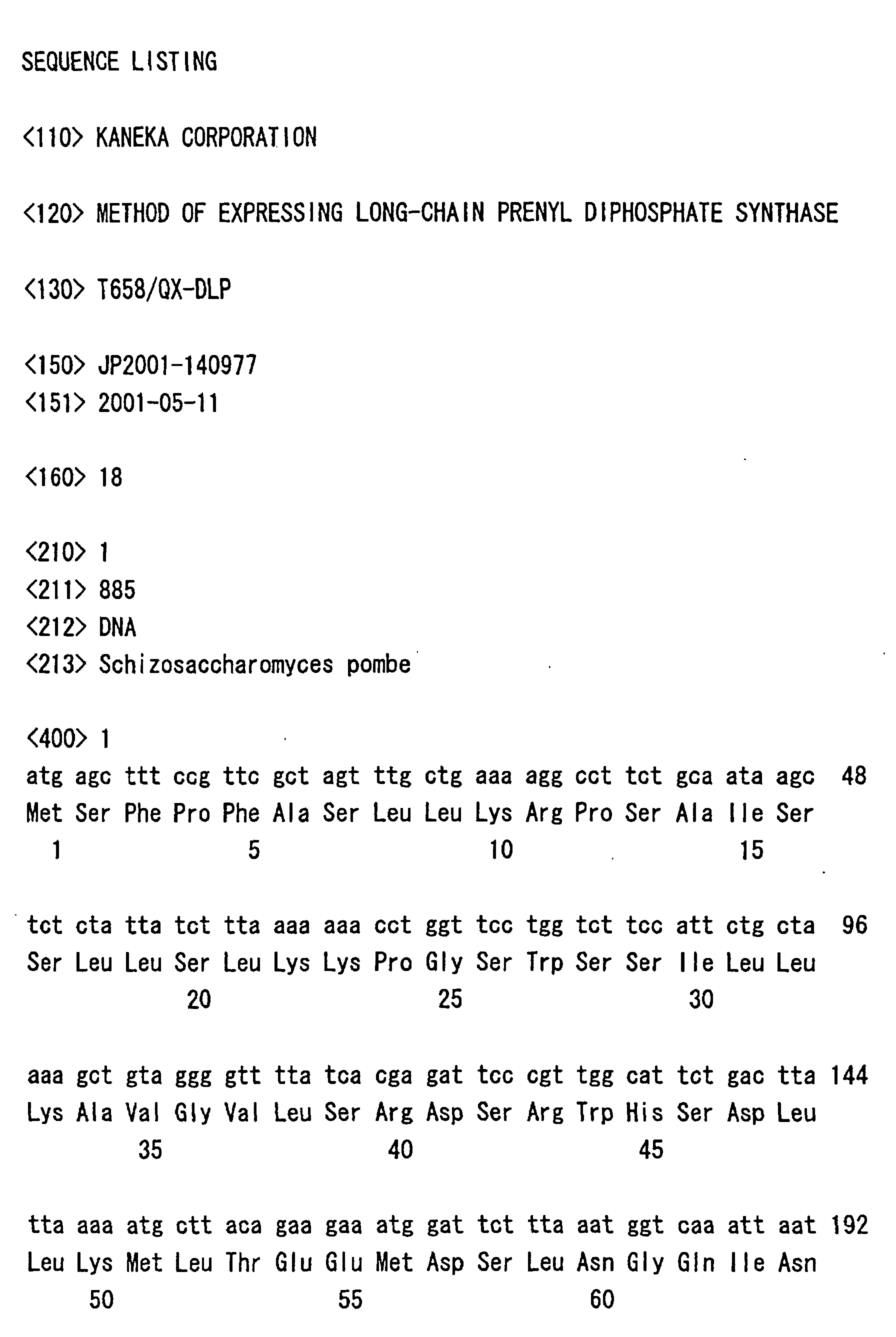
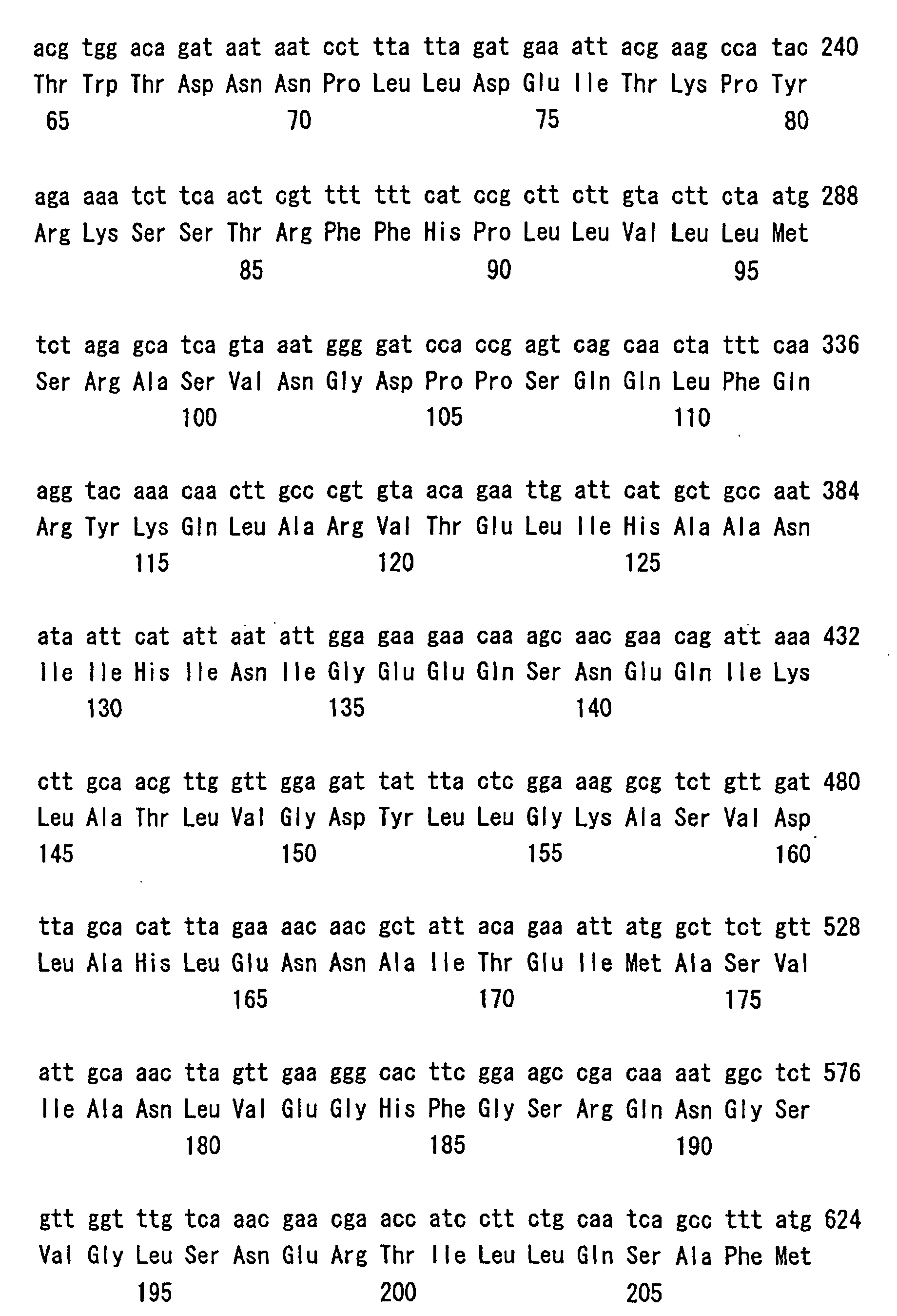
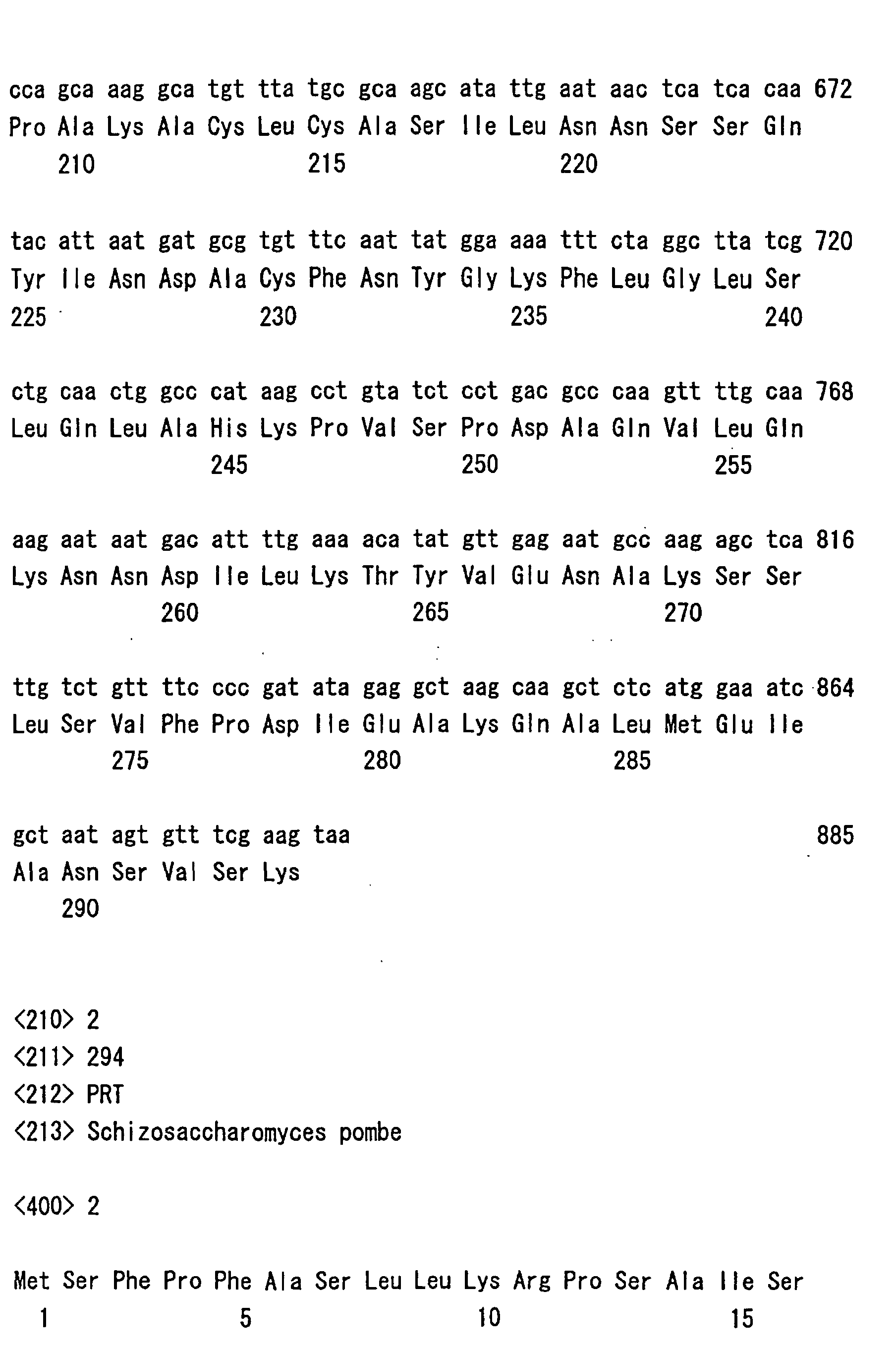

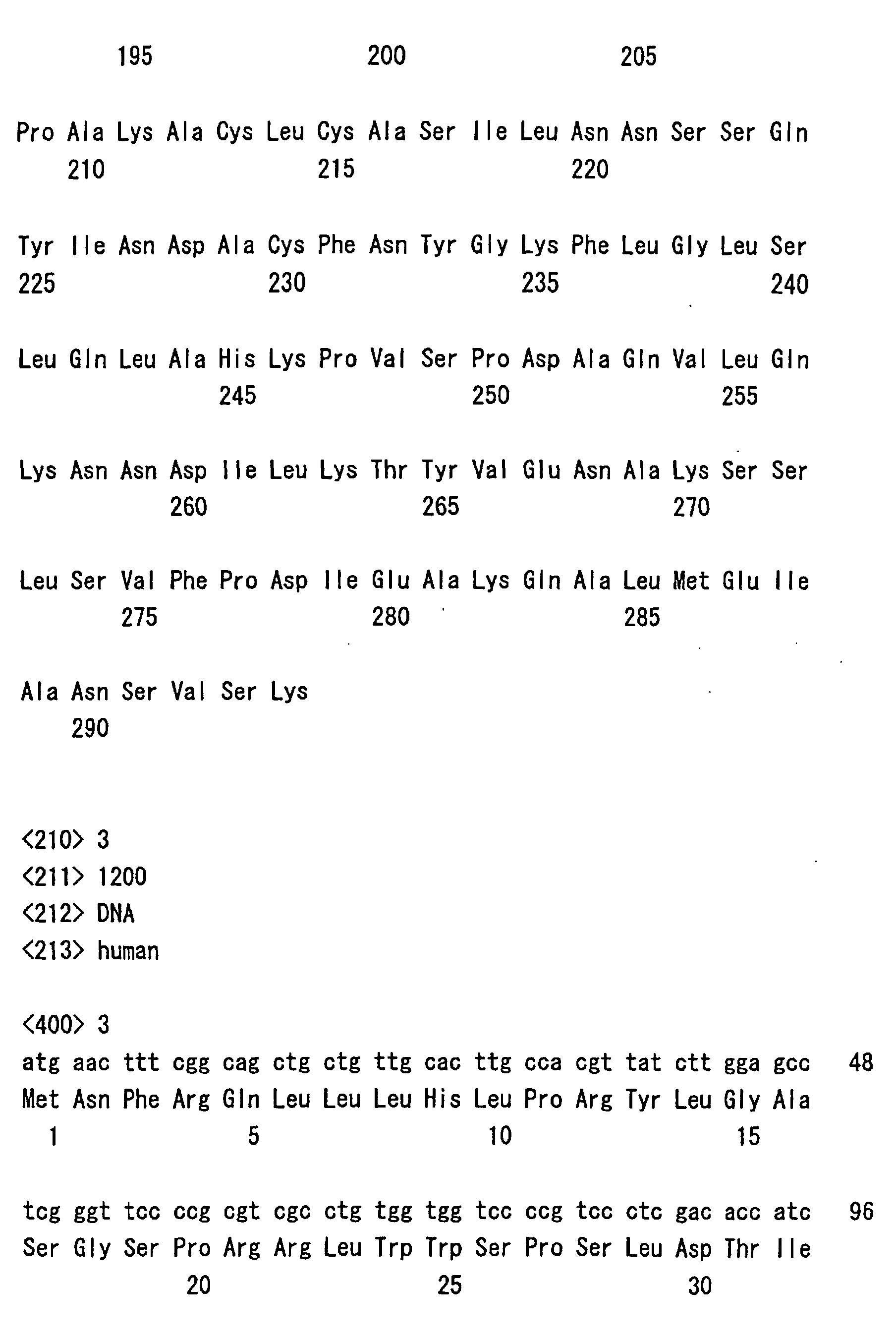
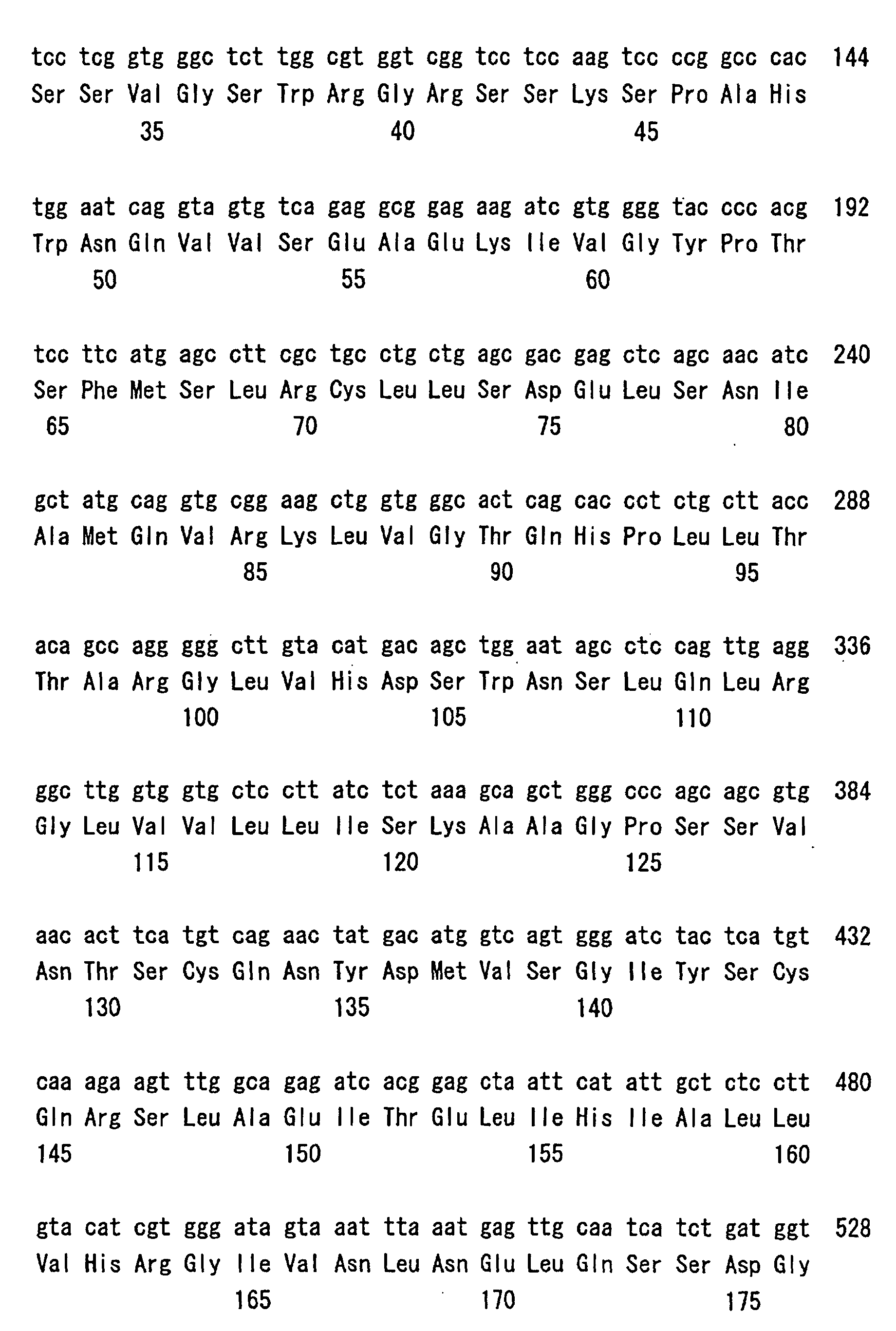
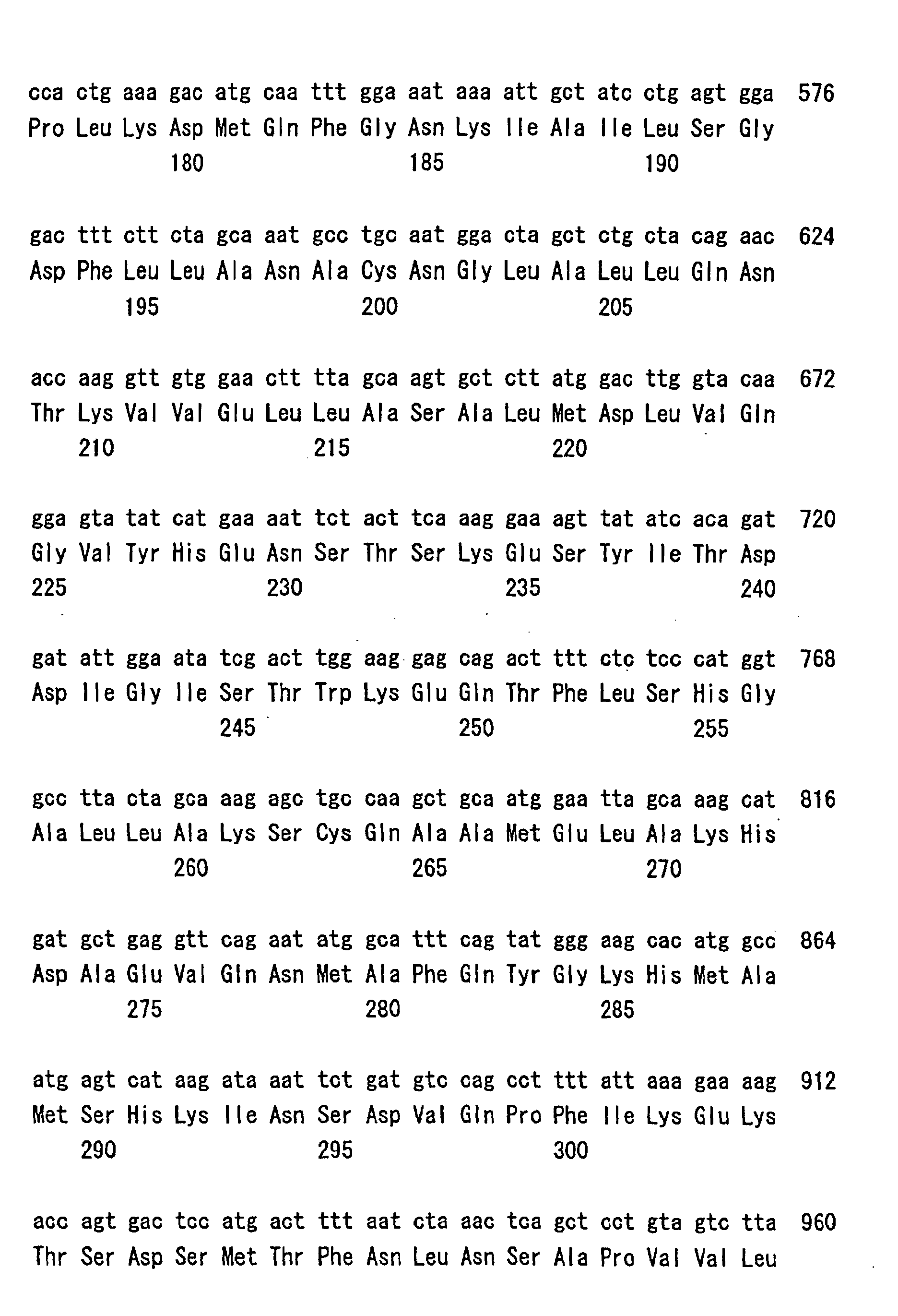


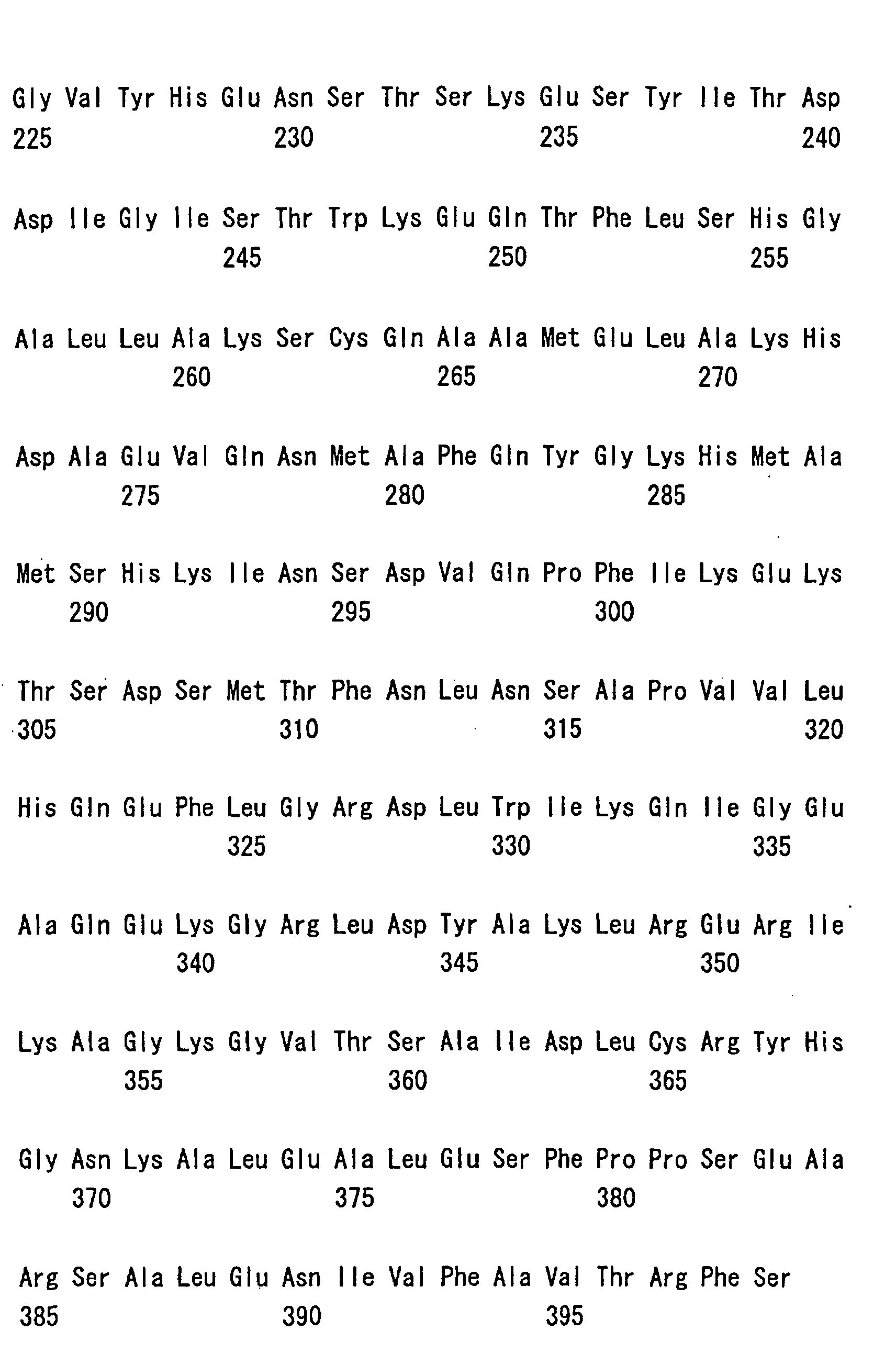


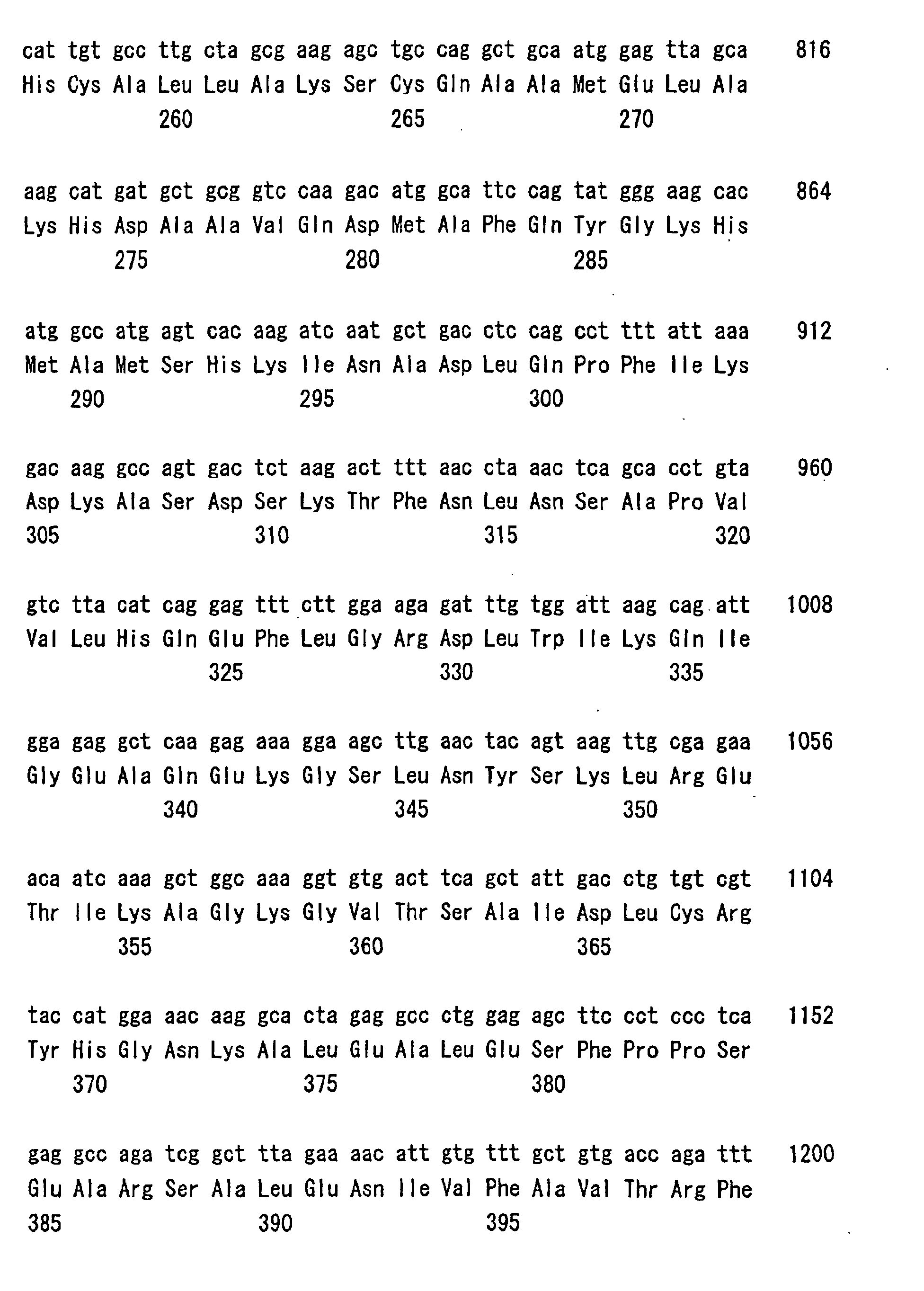
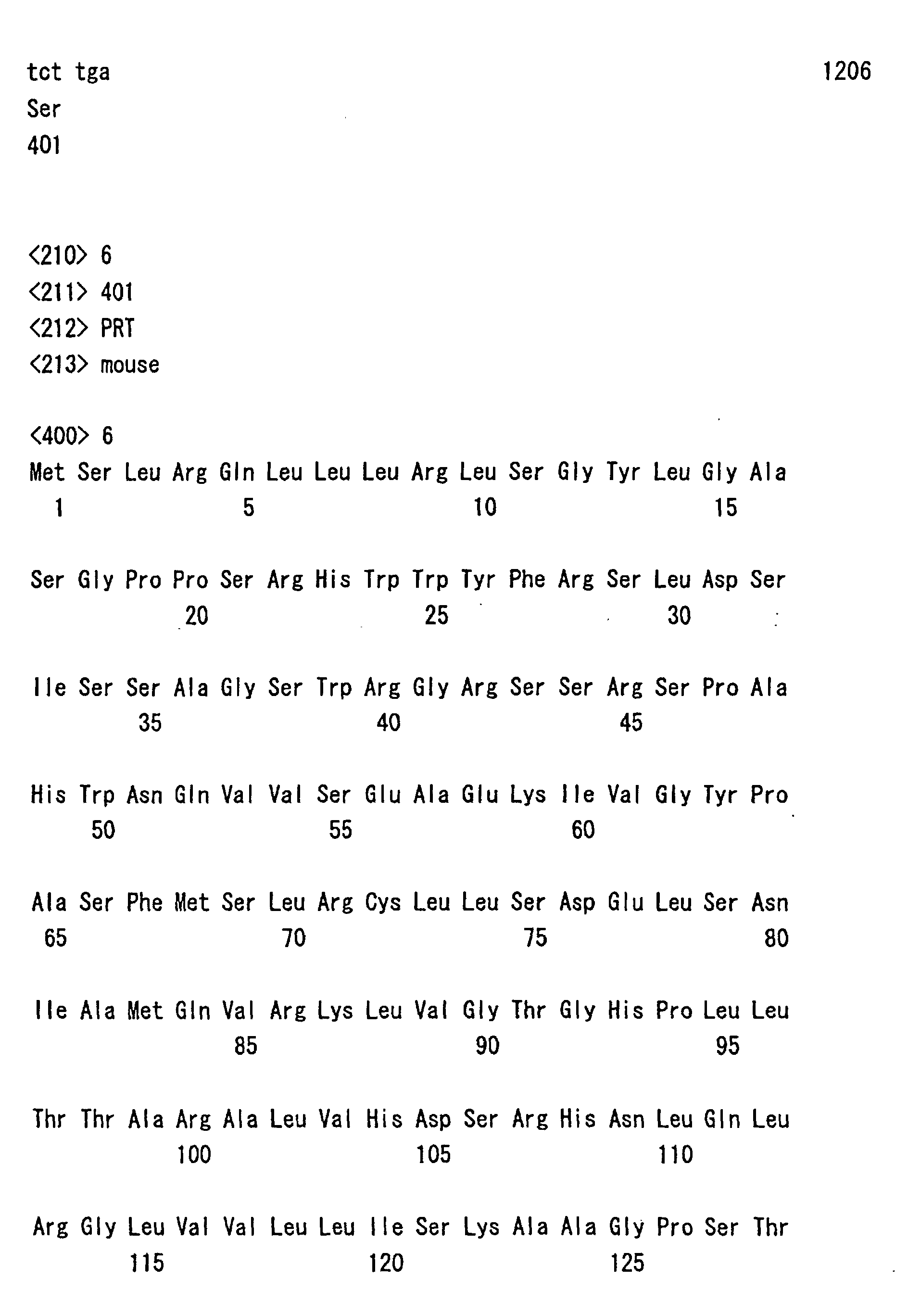
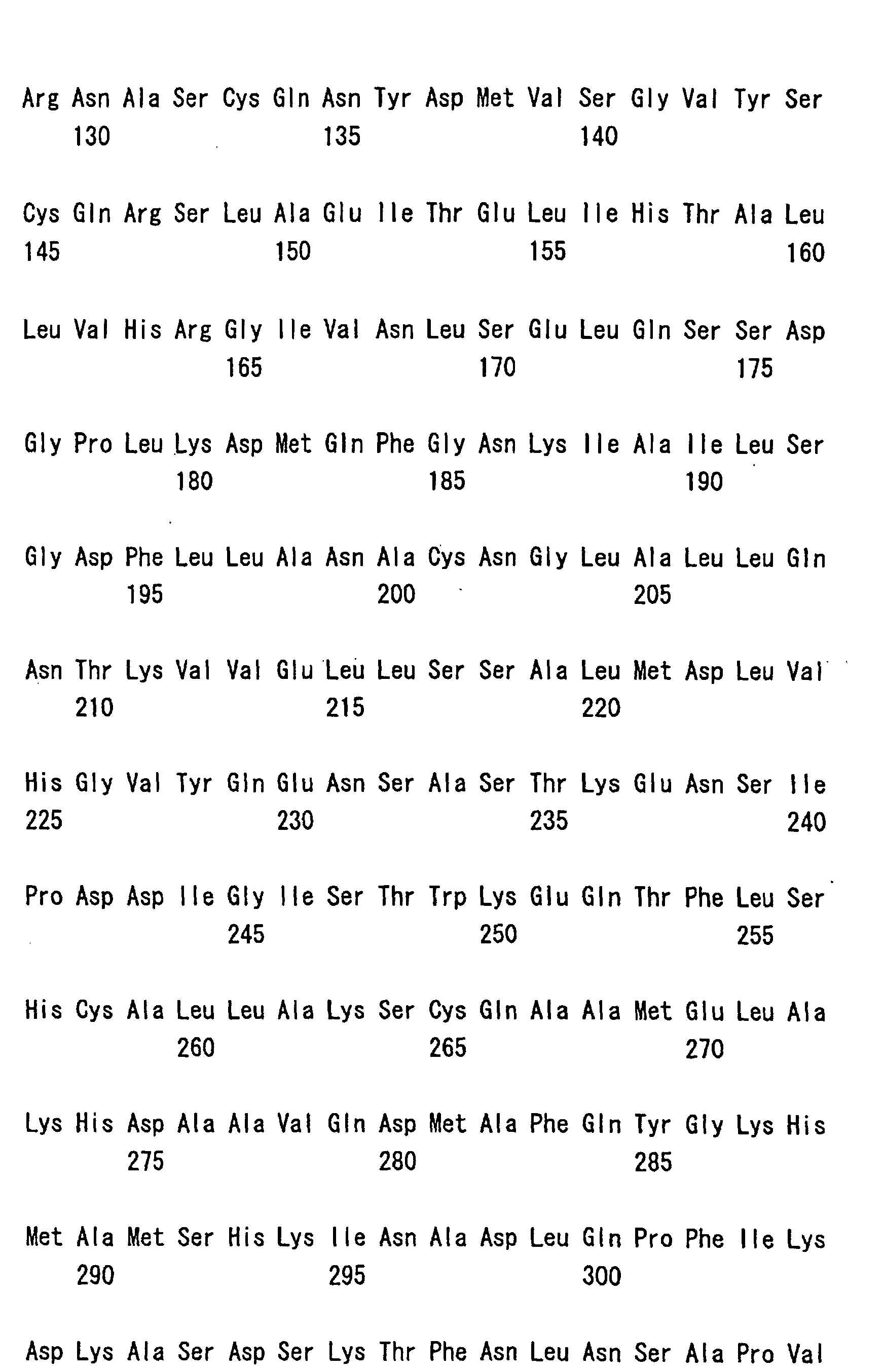


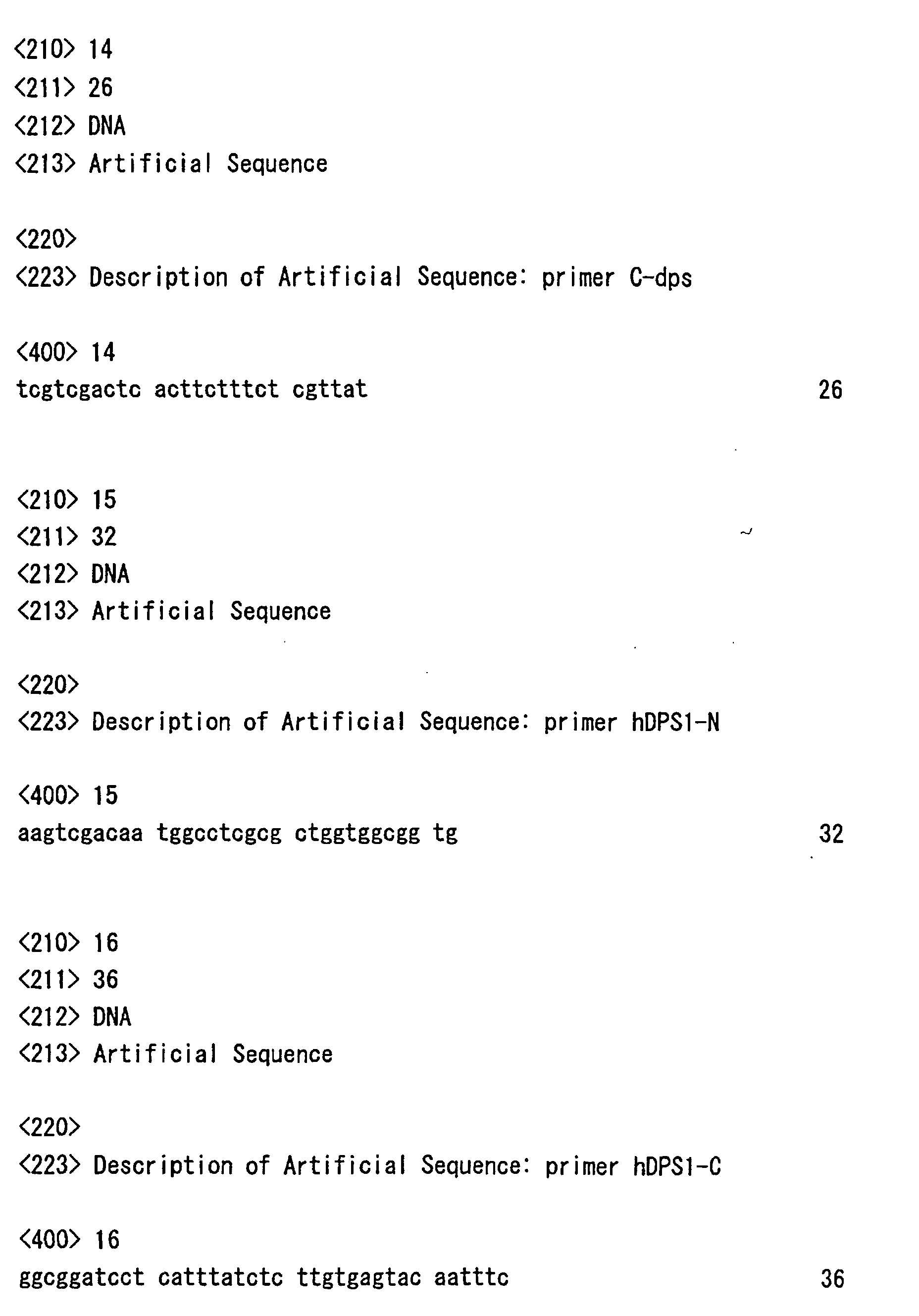

Claims (24)
- A DNA defined below under (a), (b) or (c):(a) a DNA having a base sequence shown under SEQ ID NO:1, 3 or 5 and coding for a protein enabling or enhancing the activity expression of a eukaryote-derived long-chain prenyl diphosphate synthase in a host microorganism;(b) a DNA having a base sequence derived from the base sequence shown under SEQ ID NO:1, 3 or 5 by deletion, addition, insertion and/or substitution of one to several bases thereof and coding for a protein enabling or enhancing the activity expression of a eukaryote-derived long-chain prenyl diphosphate synthase in a host microorganism;(c) a DNA capable of hybridizing with a DNA comprising the base sequence shown under SEQ ID NO:1, 3 or 5 under a stringent condition and coding for a protein enabling or enhancing the activity expression of a eukaryote-derived long-chain prenyl diphosphate synthase in a host microorganism.
- A protein defined below under (d) or (e):(d) a protein having an amino acid sequence shown under SEQ ID NO:2, 4 or 6 and enabling or enhancing the activity expression of a eukaryote-derived long-chain prenyl diphosphate synthase in a host microorganism;(e) a protein having an amino acid sequence derived from the amino acid sequence shown under SEQ ID NO:2, 4 or 6 by deletion, addition, insertion and/or substitution of one to several amino acid residues and enabling or enhancing the activity expression of a eukaryote-derived long-chain prenyl diphosphate synthase in a host microorganism.
- A DNA coding for the protein according to Claim 2.
- An expression vector resulting from insertion of the DNA according to Claim 1 or 3 into a vector for expression.
- The expression vector according to Claim 4,
wherein the vector for expression is pSTV28. - The expression vector according to Claim 5,
which is pSTVDLP1. - The expression vector according to Claim 5,
which is pSTVK28-mDLP1. - The expression vector according to Claim 5,
which is pSTVK28-hDLP1. - A transformant resulting from transformation of a host microorganism with the DNA according to Claim 1 or 3.
- A transformant resulting from transformation of a host microorganism with the expression vector according to Claim 4, 5, 6, 7 or 8.
- The transformant according to Claim 9 or 10,
wherein the host microorganism is Escherichia coli. - The transformant according to Claim 11,
which is E. coli DH5α(pSTVDLP1) (FERM BP-7433). - The transformant according to Claim 11,
which is E. coli DH5α(pSTVK28-mDLP1). - The transformant according to Claim 11,
which is E. coli DH5α(pSTVK28-hDLP1). - The transformant according to Claim 9, 10, 11, 12, 13 or 14,
which harbors a eukaryote-derived long-chain prenyl diphosphate synthase gene further introduced therein. - The transformant according to Claim 15,
wherein the eukaryote-derived prenyl diphosphate synthase gene is a gene derived from a microorganism belong to the genus Schizosaccharomyces, Saitoella, Rhodotorula, Leucosporidium, Asperugillus or Bulleomyces, a human-derived gene or a mouse-derived gene. - The transformant according to Claim 15,
which is E. coli DH5α(pSTVDLP1, pBSDPS) (FERM BP-7548). - The transformant according to Claim 15,
which is E. coli DH5α(pSTVDLP1, pUhDPS1) (FERM BP-8025). - The transformant according to Claim 15,
which is E. coli DH5α(pSTVDLP1, pBmSDS1). - The transformant according to Claim 15,
which is E. coli DH5α(pSTVK28-mDLP1, pUhDPS1). - The transformant according to Claim 15,
which is E. coli DH5α(pSTVK28-mDLP1, pBmSDS1) (FERM BP-8027) . - The transformant according to Claim 15,
which is E. coli DH5α(pSTVK28-hDLP1, pUhDPS1) (FERM BP-8026). - The transformant according to Claim 15,
which is E. coli DH5α(pSTVK28-hDLP1, pBmSDS1). - A method of producing coenzymes Q,
which comprises cultivating the transformant according to any one of Claims 15 to 23 in a medium to cause formation. and accumulation of a coenzyme Q in the culture and recovering the same.
Applications Claiming Priority (3)
| Application Number | Priority Date | Filing Date | Title |
|---|---|---|---|
| JP2001140977 | 2001-05-11 | ||
| JP2001140977 | 2001-05-11 | ||
| PCT/JP2002/004566 WO2002092811A1 (en) | 2001-05-11 | 2002-05-10 | Method of expressing long-chain prenyl diphosphate synthase |
Publications (2)
| Publication Number | Publication Date |
|---|---|
| EP1386964A1 true EP1386964A1 (en) | 2004-02-04 |
| EP1386964A4 EP1386964A4 (en) | 2005-05-04 |
Family
ID=18987493
Family Applications (1)
| Application Number | Title | Priority Date | Filing Date |
|---|---|---|---|
| EP02769565A Withdrawn EP1386964A4 (en) | 2001-05-11 | 2002-05-10 | Method of expressing long-chain prenyl diphosphate synthase |
Country Status (7)
| Country | Link |
|---|---|
| US (2) | US7402413B2 (en) |
| EP (1) | EP1386964A4 (en) |
| JP (1) | JP4271948B2 (en) |
| CA (1) | CA2444977A1 (en) |
| CZ (1) | CZ20033381A3 (en) |
| NO (1) | NO20034994D0 (en) |
| WO (1) | WO2002092811A1 (en) |
Families Citing this family (6)
| Publication number | Priority date | Publication date | Assignee | Title |
|---|---|---|---|---|
| JP2002191367A (en) * | 2000-12-27 | 2002-07-09 | Kanegafuchi Chem Ind Co Ltd | Method for producing coenzyme Q10 |
| US8618355B2 (en) | 2008-03-17 | 2013-12-31 | National Research Council Of Canada | Aromatic prenyltransferase from hop |
| JP5645366B2 (en) * | 2009-02-25 | 2014-12-24 | 日立造船株式会社 | Long chain trans prenyl diphosphate synthase gene |
| ES2949010T3 (en) | 2019-05-31 | 2023-09-25 | Henkel Ag & Co Kgaa | Onium functionalized siloxanes |
| US11471426B2 (en) | 2019-10-16 | 2022-10-18 | American River Nutrition, Llc | Compositions comprising quinone and/or quinol and methods of preparations and use thereof |
| WO2024186556A2 (en) * | 2023-03-03 | 2024-09-12 | The Regents Of The University Of California | Enhancing car-t cell performance for cancer immunotherapy |
Family Cites Families (9)
| Publication number | Priority date | Publication date | Assignee | Title |
|---|---|---|---|---|
| JPH09173076A (en) | 1995-12-27 | 1997-07-08 | Alpha- Shokuhin Kk | Method for producing heterogeneous ubiquinone |
| JPH1057072A (en) | 1996-08-22 | 1998-03-03 | Alpha- Shokuhin Kk | Method for producing ubiquinone-10 |
| US6225097B1 (en) * | 1997-09-17 | 2001-05-01 | Toyota Jidosha Kabushiki Kaisha | Decaprenyl diphosphate synthetase gene |
| JPH11178590A (en) | 1997-09-17 | 1999-07-06 | Toyota Motor Corp | Decaprenyl diphosphate synthase gene |
| JP3941998B2 (en) * | 1999-08-24 | 2007-07-11 | 株式会社カネカ | Method for producing Coenzyme Q10 |
| JP4191482B2 (en) * | 2000-11-20 | 2008-12-03 | 株式会社カネカ | Method for producing coenzyme Q10 |
| JP2002191367A (en) | 2000-12-27 | 2002-07-09 | Kanegafuchi Chem Ind Co Ltd | Method for producing coenzyme Q10 |
| US6783969B1 (en) * | 2001-03-05 | 2004-08-31 | Nuvelo, Inc. | Cathepsin V-like polypeptides |
| JP2002345469A (en) | 2001-04-25 | 2002-12-03 | Kanegafuchi Chem Ind Co Ltd | Method for producing coenzyme Q10 |
-
2002
- 2002-05-10 US US10/477,269 patent/US7402413B2/en not_active Expired - Fee Related
- 2002-05-10 EP EP02769565A patent/EP1386964A4/en not_active Withdrawn
- 2002-05-10 CZ CZ20033381A patent/CZ20033381A3/en unknown
- 2002-05-10 WO PCT/JP2002/004566 patent/WO2002092811A1/en not_active Ceased
- 2002-05-10 CA CA002444977A patent/CA2444977A1/en not_active Abandoned
- 2002-05-10 JP JP2002589678A patent/JP4271948B2/en not_active Expired - Fee Related
-
2003
- 2003-11-10 NO NO20034994A patent/NO20034994D0/en unknown
-
2008
- 2008-06-13 US US12/139,175 patent/US8163525B2/en not_active Expired - Fee Related
Also Published As
| Publication number | Publication date |
|---|---|
| JPWO2002092811A1 (en) | 2004-09-02 |
| NO20034994D0 (en) | 2003-11-10 |
| US7402413B2 (en) | 2008-07-22 |
| CA2444977A1 (en) | 2002-11-21 |
| JP4271948B2 (en) | 2009-06-03 |
| EP1386964A4 (en) | 2005-05-04 |
| WO2002092811A1 (en) | 2002-11-21 |
| US20090130727A1 (en) | 2009-05-21 |
| US8163525B2 (en) | 2012-04-24 |
| CZ20033381A3 (en) | 2004-04-14 |
| US20040137567A1 (en) | 2004-07-15 |
Similar Documents
| Publication | Publication Date | Title |
|---|---|---|
| EP1778843B1 (en) | Production of isoprenoids | |
| Okada et al. | Molecular cloning and mutational analysis of the ddsA gene encoding decaprenyl diphosphate synthase from Gluconobacter suboxydans | |
| JP3198842B2 (en) | Geranylgeranyl diphosphate synthase and DNA encoding the same | |
| US8163525B2 (en) | Method of expressing long-chain prenyl diphosphate synthase | |
| EP0763542B1 (en) | Long-chain prenyl diphosphate synthase | |
| US20090226986A1 (en) | Production of Coenzyme Q-10 | |
| US20080064074A1 (en) | Process for producing coenzyme q10 | |
| US6410280B1 (en) | Decaprenyl diphosphate synthetase gene | |
| JP4307609B2 (en) | Method for producing coenzyme Q10 | |
| EP1123979B1 (en) | Process for producing coenzyme q10 | |
| EP1391515A1 (en) | Process for producing coenzyme q 10 | |
| US7320883B2 (en) | Process for producing coenzyme Q10 | |
| JPH11178590A (en) | Decaprenyl diphosphate synthase gene | |
| JP2002281986A (en) | Erythrose reductase, its gene, and cells transfected with the gene | |
| JPH08131162A (en) | Gene for coding phosphoenolpyruvic carboxylase | |
| JPH119283A (en) | Maltose phosphorylase gene, novel recombinant DNA and method for producing maltose phosphorylase |
Legal Events
| Date | Code | Title | Description |
|---|---|---|---|
| PUAI | Public reference made under article 153(3) epc to a published international application that has entered the european phase |
Free format text: ORIGINAL CODE: 0009012 |
|
| 17P | Request for examination filed |
Effective date: 20031110 |
|
| AK | Designated contracting states |
Kind code of ref document: A1 Designated state(s): AT BE CH CY DE DK ES FI FR GB GR IE IT LI LU MC NL PT SE TR |
|
| A4 | Supplementary search report drawn up and despatched |
Effective date: 20050321 |
|
| 17Q | First examination report despatched |
Effective date: 20050620 |
|
| 17Q | First examination report despatched |
Effective date: 20050620 |
|
| STAA | Information on the status of an ep patent application or granted ep patent |
Free format text: STATUS: THE APPLICATION IS DEEMED TO BE WITHDRAWN |
|
| 18D | Application deemed to be withdrawn |
Effective date: 20100508 |