EP1386574B1 - Voice control apparatus of vacuum cleaner and method thereof - Google Patents
Voice control apparatus of vacuum cleaner and method thereof Download PDFInfo
- Publication number
- EP1386574B1 EP1386574B1 EP02258238A EP02258238A EP1386574B1 EP 1386574 B1 EP1386574 B1 EP 1386574B1 EP 02258238 A EP02258238 A EP 02258238A EP 02258238 A EP02258238 A EP 02258238A EP 1386574 B1 EP1386574 B1 EP 1386574B1
- Authority
- EP
- European Patent Office
- Prior art keywords
- voice command
- voice
- signal
- vacuum cleaner
- user
- Prior art date
- Legal status (The legal status is an assumption and is not a legal conclusion. Google has not performed a legal analysis and makes no representation as to the accuracy of the status listed.)
- Expired - Lifetime
Links
Images
Classifications
-
- G—PHYSICS
- G10—MUSICAL INSTRUMENTS; ACOUSTICS
- G10L—SPEECH ANALYSIS TECHNIQUES OR SPEECH SYNTHESIS; SPEECH RECOGNITION; SPEECH OR VOICE PROCESSING TECHNIQUES; SPEECH OR AUDIO CODING OR DECODING
- G10L15/00—Speech recognition
- G10L15/20—Speech recognition techniques specially adapted for robustness in adverse environments, e.g. in noise, of stress induced speech
-
- A—HUMAN NECESSITIES
- A47—FURNITURE; DOMESTIC ARTICLES OR APPLIANCES; COFFEE MILLS; SPICE MILLS; SUCTION CLEANERS IN GENERAL
- A47L—DOMESTIC WASHING OR CLEANING; SUCTION CLEANERS IN GENERAL
- A47L9/00—Details or accessories of suction cleaners, e.g. mechanical means for controlling the suction or for effecting pulsating action; Storing devices specially adapted to suction cleaners or parts thereof; Carrying-vehicles specially adapted for suction cleaners
-
- G—PHYSICS
- G05—CONTROLLING; REGULATING
- G05D—SYSTEMS FOR CONTROLLING OR REGULATING NON-ELECTRIC VARIABLES
- G05D1/00—Control of position, course, altitude or attitude of land, water, air or space vehicles, e.g. using automatic pilots
- G05D1/0011—Control of position, course, altitude or attitude of land, water, air or space vehicles, e.g. using automatic pilots associated with a remote control arrangement
- G05D1/0016—Control of position, course, altitude or attitude of land, water, air or space vehicles, e.g. using automatic pilots associated with a remote control arrangement characterised by the operator's input device
-
- G—PHYSICS
- G05—CONTROLLING; REGULATING
- G05D—SYSTEMS FOR CONTROLLING OR REGULATING NON-ELECTRIC VARIABLES
- G05D1/00—Control of position, course, altitude or attitude of land, water, air or space vehicles, e.g. using automatic pilots
- G05D1/0011—Control of position, course, altitude or attitude of land, water, air or space vehicles, e.g. using automatic pilots associated with a remote control arrangement
- G05D1/0033—Control of position, course, altitude or attitude of land, water, air or space vehicles, e.g. using automatic pilots associated with a remote control arrangement by having the operator tracking the vehicle either by direct line of sight or via one or more cameras located remotely from the vehicle
Definitions
- the present invention relates to a voice control of a vacuum cleaner and, more particularly, to a voice control apparatus and method of a vacuum cleaner that are capable of effectively controlling a vacuum cleaner through a voice command from ambience.
- a vacuum cleaner makes the inside of a main body to a high vacuum state by forcibly circulating air inside a mechanism according to a rotation of a motor. Accordingly, the vacuum cleaner sucks dust or contaminant together with air through a suction hole by using a strong air volume generated owing to high pressure difference between the ambience and the inside of the main body, thereby performing cleaning.
- the blade connected to the internal motor is quickly rotated to vacuumize the inside of the cleaner and dust or contaminant is sucked through the suction hole together with air.
- the dust sucked through the suction hole is filtered by the filter and the sucked air is discharged to the exhaust hole, thereby performing a cleaning.
- the vacuum cleaner can be driven or perform an operation by itself in a fully automatic mode, can be driven or perform an operation by using a device such as a remote controller in a remote control mode, or can perform a cleaning operation or be controlled in a manual control mode.
- a recent vacuum cleaner adopts a special sensor to recognize an ambience to add a function of a free movement and an obstacle avoiding, thereby providing a convenient working environment to users.
- the cleaning operation can be performed more conveniently, and at the same time, a user can be free in using hands or for a level of vision.
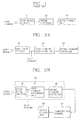
- FIG. 1 is a block diagram of a voice control apparatus of a vacuum cleaner in accordance with a conventional art.
- the vacuum cleaner receives a voice command through a device such as a microphone and provides it to an input signal detector 11.
- the input signal detector 11 compares the inputted voice command with a pre-set voice command, and outputs a driving control signal corresponding to the voice command of a user to a driving controller 13.
- the driving controller 13 In response to the driving control signal, the driving controller 13 outputs a motor drive control signal to a motor driving unit 15 to control an operation of the vacuum cleaner.
- the vacuum cleaner performs an operation through suction of air of water and due to a variety of noises generated from the vacuum cleaner itself, several phonemes instructed by the user are much damaged, causing a great problem in recognizing a voice command.
- the strong noise makes it hard to recognize the voice command according to a distance between the user and a receiving unit for receiving the voice command of the user or positions of the user and the vacuum cleaner.
- JP-A-04183425 discloses a voice recognition control device for a vacuum cleaner which allows functions such as drive, weak intake, strong intake or the like to be controlled by an operator's voice.
- an aim of the present invention is to provide a voice control method and apparatus of a vacuum cleaner that is capable of effectively controlling a vacuum cleaner through a voice command by providing a voice recognizable environment to effectively perform a voice command of a user in an environment with a strong noise.
- a voice control apparatus of a vacuum cleaner comprising: a sense signal detector for detecting a sense signal provided from a user to provide a voice recognizable environment in an ambience; a voice command recognizing unit for temporarily stopping a driving of a motor upon receiving the detected sense signal and, at the same time, then outputting a voice command control signal previously set in a voice command set corresponding to a voice command instructed by the user; and a driving command controller for controlling a function and a mode of a vacuum cleaner upon receiving the voice command control signal.
- a voice control method of operating a vacuum cleaner comprising the steps of: detecting a sense signal to provide a voice recognisable environment; temporarily stopping driving of a motor upon receiving the detected sense signal, at the same time, outputting a voice command control signal previously set in a voice command set corresponding to a voice command instructed by the user; and controlling a function and a mode of the vacuum cleaner (29) upon receiving the voice command control signal.
- Figure 2A and 2B are a block diagram of a voice control apparatus of a vacuum cleaner in accordance with the present invention.
- a voice control apparatus of a vacuum cleaner includes a sense signal detector 21 for detecting a sense signal provided from a user to provide a voice recognizable environment from an ambience; a voice command recognizing unit 23 for temporarily stopping a driving of a motor upon receiving the detected sense signal and, at the same time, outputting a voice command control signal previously set in a voice command set corresponding to a voice command instructed by the user; and a driving command controller 25 for controlling a function and a mode of a vacuum cleaner upon receiving the voice command control signal.
- all elements for vacuum cleaning are constructed in one body of the cleaner.
- a communication channel 27 which uses a wired or wireless communication means for outputting a voice command control signal should be additionally included in the body 29 of the vacuum cleaner.
- the voice command recognizing unit includes a voice recognizer for discriminating a voice command given by a user, an encoder unit for coding each voice command as discriminated and outputting it, and a decoder unit for decoding a data frame coded by the encoder unit and outputting it.
- the vacuum cleaner is operated in one of a fully automatic mode, a remote control mode and a manual control mode.
- the sense signal detector 21 detects a sense signal provided from a user, and the voice command recognizing unit 23 temporarily stops a driving of the motor upon receiving the detected sense signal and, at the same time, turns on a switch for a voice recognition, thereby providing an environment that a voice command instructed by the user can be received.
- the voice command recognizing unit 23 receives the voice command for controlling the vacuum cleaner from the user, it discriminates the voice command of the user and outputs a corresponding voice command control signal to control the motor.
- the sense signal detector 21 detects the sense signal for providing a voice recognizable environment in a noise-strong environment.
- the sense signal is a voice signal obtained by receiving a sound of ambience through a microphone and separating a voice signal therefrom or selectively canceling a noise from the ambient sound.
- the sense signal detector 21 uses a nickname, a simply defined command form, in order to heighten a voice recognition rate. That is, a voice source of the user is learned previously for a predetermined time by using a nickname and stored in the detector, so that the nickname value and the sense signal value provided for a voice recognition are compared to detect an accurate voice signal.
- the sense signal is a contact signal detected by a tactile sensor attached at a certain portion of the body of the vacuum cleaner, or at a certain portion of the docking station separated from the body of the vacuum cleaner.
- the voice command recognizing unit 23 receives the detected sense signal to temporarily stop the driving of the motor and, at the same time, turns on the switch for the voice recognition, thereby providing an environment that the voice command instructed by the user can be received.
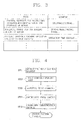
- the voice command control signal pre-set in the voice command set as shown in Figure 3 is outputted corresponding to the voice command.
- the voice recognizer discriminates the voice command given by the user, codes each voice command and outputs it, the encoder unit transmits the coded data frame to the decoder unit, and the decoder unit decodes the coded data outputted from the encoding unit, so that the voice command control signal is outputted to the driving command controller 25.
- Figure 3 is an exemplary view showing voice data provided to a voice command set in accordance with the present invention.
- the driving command controller 25 receives the voice command control signal and drives the vacuum cleaner under the control of the microcomputer.
- Figure 4 is a flow chart of a voice control method of a vacuum cleaner in accordance with the present invention.
- a voice control method of the vacuum cleaner includes a voice control request recognizing step (ST11) of detecting a sense signal to provide a voice recognition environment; a voice command standby mode step (ST13) of temporarily stopping driving of the motor in response to the detected sense signal and waiting for a voice command of a user; a voice command detecting step (ST15) of detecting a voice command of the user; a voice command control step (ST17) of outputting a voice command control signal from a voice command set according to the detected voice command; and a communication channel connecting step (ST19) of receiving the voice command control signal and outputting the voice command control signal to a body of the vacuum cleaner through a wired or wireless communication unit.
- step (ST13) for the voice command standby mode after the driving of the motor is temporarily stopped, and then, when a certain time elapses, the motor driving is resumed to perform a certain operation until a new sense signal is inputted.
- the vacuum cleaner sequentially performs a series of operations previously set in the voice command set until a new sensing is inputted.
- the voice control apparatus and method of a vacuum cleaner of the present invention have the following advantages.
- the vacuum cleaner can be effectively controlled through a user's voice command even in an environment with a strong noise.
Landscapes
- Engineering & Computer Science (AREA)
- Physics & Mathematics (AREA)
- Aviation & Aerospace Engineering (AREA)
- Automation & Control Theory (AREA)
- General Physics & Mathematics (AREA)
- Remote Sensing (AREA)
- Radar, Positioning & Navigation (AREA)
- Audiology, Speech & Language Pathology (AREA)
- Multimedia (AREA)
- Computing Systems (AREA)
- Mathematical Physics (AREA)
- Theoretical Computer Science (AREA)
- Acoustics & Sound (AREA)
- Human Computer Interaction (AREA)
- Health & Medical Sciences (AREA)
- Computational Linguistics (AREA)
- Mechanical Engineering (AREA)
- Electric Vacuum Cleaner (AREA)
Description
- The present invention relates to a voice control of a vacuum cleaner and, more particularly, to a voice control apparatus and method of a vacuum cleaner that are capable of effectively controlling a vacuum cleaner through a voice command from ambience.
- In general, a vacuum cleaner makes the inside of a main body to a high vacuum state by forcibly circulating air inside a mechanism according to a rotation of a motor. Accordingly, the vacuum cleaner sucks dust or contaminant together with air through a suction hole by using a strong air volume generated owing to high pressure difference between the ambience and the inside of the main body, thereby performing cleaning.
- A general vacuum cleaner includes: a suction hole for sucking dust or contaminant, a motor, a rotating blade for making the inside of the device to a vacuum state, a filter for filtering dust or contaminant, dust collecting case and an exhaust hole for discharge sucked air.
- The operation of the vacuum cleaner constructed as described above in accordance with the conventional art will now be explained.
- In the vacuum cleaner, the blade connected to the internal motor is quickly rotated to vacuumize the inside of the cleaner and dust or contaminant is sucked through the suction hole together with air. At this time, the dust sucked through the suction hole is filtered by the filter and the sucked air is discharged to the exhaust hole, thereby performing a cleaning.
- Recently, besides the vacuum cleaning, a cleaner that can perform a damp cloth cleaning is also fabricated, and is advancing to have a variety of functions.
- For example, the vacuum cleaner can be driven or perform an operation by itself in a fully automatic mode, can be driven or perform an operation by using a device such as a remote controller in a remote control mode, or can perform a cleaning operation or be controlled in a manual control mode.
- Especially, a recent vacuum cleaner adopts a special sensor to recognize an ambience to add a function of a free movement and an obstacle avoiding, thereby providing a convenient working environment to users.
- In addition, by adding a voice recognition function in controlling of the vacuum cleaner, the cleaning operation can be performed more conveniently, and at the same time, a user can be free in using hands or for a level of vision.
-
Figure 1 is a block diagram of a voice control apparatus of a vacuum cleaner in accordance with a conventional art. - As shown in
Figure 1 , the vacuum cleaner receives a voice command through a device such as a microphone and provides it to aninput signal detector 11. Theinput signal detector 11 compares the inputted voice command with a pre-set voice command, and outputs a driving control signal corresponding to the voice command of a user to adriving controller 13. - In response to the driving control signal, the
driving controller 13 outputs a motor drive control signal to amotor driving unit 15 to control an operation of the vacuum cleaner. - However, the voice controlling of the vacuum cleaner in accordance with the conventional vacuum cleaner has the following problems.
- That is, in the voice controlling of the conventional vacuum cleaner, a voice command is hardly recognized due to the strong noise generated from the vacuum cleaner itself.
- That is, the vacuum cleaner performs an operation through suction of air of water and due to a variety of noises generated from the vacuum cleaner itself, several phonemes instructed by the user are much damaged, causing a great problem in recognizing a voice command. In addition, the strong noise makes it hard to recognize the voice command according to a distance between the user and a receiving unit for receiving the voice command of the user or positions of the user and the vacuum cleaner.
- Moreover, in order to implement a voice recognition algorithm to discriminate and process various noises and voices in an environment of the strong noise, a large amount of data needs to be processed. This result in a necessity of a high performance microcomputer for processing the data, and thus, increase in an expense.
-
JP-A-04183425 - Therefore, an aim of the present invention is to provide a voice control method and apparatus of a vacuum cleaner that is capable of effectively controlling a vacuum cleaner through a voice command by providing a voice recognizable environment to effectively perform a voice command of a user in an environment with a strong noise.
- To achieve these and other advantages and in accordance with the purpose of the present invention, as embodied and broadly described herein, there is provided a voice control apparatus of a vacuum cleaner comprising: a sense signal detector for detecting a sense signal provided from a user to provide a voice recognizable environment in an ambiance; a voice command recognizing unit for temporarily stopping a driving of a motor upon receiving the detected sense signal and, at the same time, then outputting a voice command control signal previously set in a voice command set corresponding to a voice command instructed by the user; and a driving command controller for controlling a function and a mode of a vacuum cleaner upon receiving the voice command control signal.
- To achieve the above objects, there is also provided a voice control method of operating a vacuum cleaner, comprising the steps of: detecting a sense signal to provide a voice recognisable environment; temporarily stopping driving of a motor upon receiving the detected sense signal, at the same time, outputting a voice command control signal previously set in a voice command set corresponding to a voice command instructed by the user; and controlling a function and a mode of the vacuum cleaner (29) upon receiving the voice command control signal.
- The foregoing and other aims, features, aspects and advantages of the present invention will become more apparent from the following detailed description of the present invention when taken in conjunction with the accompanying drawings.
- The accompanying drawings, which are included to provide a further understanding of the invention and are incorporated in and constitute a part of this specification, illustrate embodiments of the invention and together with the description serve to explain the principles of the invention.
- In the drawings:
-
Figure 1 is a block diagram of a voice control apparatus of a vacuum cleaner in accordance with a conventional art; -
Figure 2A and 2B are a block diagram of a voice control apparatus of a vacuum cleaner in accordance with the present invention; -
Figure 3 is an exemplary view showing voice data provided to a voice command set in accordance with the present invention; and -
Figure 4 is a flow chart of a voice control method of a vacuum cleaner in accordance with the present invention. - Reference will now be made in detail to the preferred embodiments of the present invention, examples of which are illustrated in the accompanying drawings.
-
Figure 2A and 2B are a block diagram of a voice control apparatus of a vacuum cleaner in accordance with the present invention. - As shown in
Figure 2A , a voice control apparatus of a vacuum cleaner includes asense signal detector 21 for detecting a sense signal provided from a user to provide a voice recognizable environment from an ambience; a voicecommand recognizing unit 23 for temporarily stopping a driving of a motor upon receiving the detected sense signal and, at the same time, outputting a voice command control signal previously set in a voice command set corresponding to a voice command instructed by the user; and adriving command controller 25 for controlling a function and a mode of a vacuum cleaner upon receiving the voice command control signal. In the embodiment of the present invention, all elements for vacuum cleaning are constructed in one body of the cleaner. - However, as shown in
Figure 2B , in case that thebody 29 of the vacuum cleaner and thedocking station 20 are separately constructed acommunication channel 27 which uses a wired or wireless communication means for outputting a voice command control signal should be additionally included in thebody 29 of the vacuum cleaner. - The voice command recognizing unit includes a voice recognizer for discriminating a voice command given by a user, an encoder unit for coding each voice command as discriminated and outputting it, and a decoder unit for decoding a data frame coded by the encoder unit and outputting it.
- The operation of the vacuum cleaner constructed as described above will now be explained.
- First, the vacuum cleaner is operated in one of a fully automatic mode, a remote control mode and a manual control mode.
- The
sense signal detector 21 detects a sense signal provided from a user, and the voicecommand recognizing unit 23 temporarily stops a driving of the motor upon receiving the detected sense signal and, at the same time, turns on a switch for a voice recognition, thereby providing an environment that a voice command instructed by the user can be received. - At this time, when the voice
command recognizing unit 23 receives the voice command for controlling the vacuum cleaner from the user, it discriminates the voice command of the user and outputs a corresponding voice command control signal to control the motor. - This will now be described in detail.
- The
sense signal detector 21 detects the sense signal for providing a voice recognizable environment in a noise-strong environment. - The sense signal is a voice signal obtained by receiving a sound of ambience through a microphone and separating a voice signal therefrom or selectively canceling a noise from the ambient sound.
- At this time, the
sense signal detector 21 uses a nickname, a simply defined command form, in order to heighten a voice recognition rate. That is, a voice source of the user is learned previously for a predetermined time by using a nickname and stored in the detector, so that the nickname value and the sense signal value provided for a voice recognition are compared to detect an accurate voice signal. - In case that a voice is hardly recognized due to a strong noise, the sense signal is a contact signal detected by a tactile sensor attached at a certain portion of the body of the vacuum cleaner, or at a certain portion of the docking station separated from the body of the vacuum cleaner.
- The sense signal is an infrared ray signal detected by an infrared remote controller receiving unit by operating an infrared remote controller directly by the user.
- Thereafter, the voice
command recognizing unit 23 receives the detected sense signal to temporarily stop the driving of the motor and, at the same time, turns on the switch for the voice recognition, thereby providing an environment that the voice command instructed by the user can be received. - At this time, when the user instructs a voice command, the voice command control signal pre-set in the voice command set as shown in
Figure 3 is outputted corresponding to the voice command. - That is, in the voice
command recognizing unit 23,the voice recognizer discriminates the voice command given by the user, codes each voice command and outputs it, the encoder unit transmits the coded data frame to the decoder unit, and the decoder unit decodes the coded data outputted from the encoding unit, so that the voice command control signal is outputted to thedriving command controller 25. -
Figure 3 is an exemplary view showing voice data provided to a voice command set in accordance with the present invention. - As shown in
Figure 3 , the voice command set includes a control sentence for instructing operation, movement, rotation and stoppage of the motor of the vacuum cleaner; a numerical sound for controlling a strong, medium and weak driving force of the motor, and a command sentence for controlling a display window showing an, operation state of the vacuum cleaner. The control sentence, the numerical sound and the command sentence stored in the voice command set are learned by the user for a predetermined time and stored. - Thereafter, by having a microcomputer for controlling a function and a mode of the vacuum cleaner, the
driving command controller 25 receives the voice command control signal and drives the vacuum cleaner under the control of the microcomputer. -
Figure 4 is a flow chart of a voice control method of a vacuum cleaner in accordance with the present invention. - As shown in
Figure 4 , a voice control method of the vacuum cleaner includes a voice control request recognizing step (ST11) of detecting a sense signal to provide a voice recognition environment; a voice command standby mode step (ST13) of temporarily stopping driving of the motor in response to the detected sense signal and waiting for a voice command of a user; a voice command detecting step (ST15) of detecting a voice command of the user; a voice command control step (ST17) of outputting a voice command control signal from a voice command set according to the detected voice command; and a communication channel connecting step (ST19) of receiving the voice command control signal and outputting the voice command control signal to a body of the vacuum cleaner through a wired or wireless communication unit. - In the step (ST13) for the voice command standby mode, after the driving of the motor is temporarily stopped, and then, when a certain time elapses, the motor driving is resumed to perform a certain operation until a new sense signal is inputted.
- Thereafter, the vacuum cleaner sequentially performs a series of operations previously set in the voice command set until a new sensing is inputted.
- As so far described, the voice control apparatus and method of a vacuum cleaner of the present invention have the following advantages.
- That is, by providing a voice recognizable environment, the vacuum cleaner can be effectively controlled through a user's voice command even in an environment with a strong noise.
- In addition, since a high performance microcomputer is not necessary to drive the voice recognition algorithm, a cost can be reduced.
Claims (19)
- A voice control method (29) of operating a vacuum cleaner, comprising the steps of:detecting a sense signal to provide a voice recognisable environment;temporarily stopping driving of a motor upon receiving the detected sense signal, and at the same time, outputting a voice command control signal previously set in a voice command set corresponding to a voice command instructed by the user; andcontrolling a function and a mode of the vacuum cleaner (29) upon receiving the voice command control signal.
- The method of claim 1, wherein the sense signal is a voice signal of a user inputted through a microphone.
- The method of claim 2, wherein the sense signal is a voice signal obtained by receiving an ambient sound through the microphone and separately extracting a voice signal, or by selectively canceling only a noise from the ambience.
- The method of claim 2, wherein the sense signal is a voice signal corresponding to a nickname previously recognised by a detector (21) in order to heighten a voice recognition rate.
- The method of claim 1, wherein the sense signal is a contact signal detected through a tactile sensor which generates a signal by human body's contact thereto.
- The method of claim 5, wherein the tactile sensor is attached at a certain portion of the body of a vacuum cleaner (29) or at a certain portion of a docking station (20) separated from the body of the vacuum cleaner (29).
- The method of claim 1, wherein the sense signal is an infrared signal provided from an infrared remote controller and detected through an infrared remote controller receiving unit.
- The method of claim 1, wherein after the driving of the motor is temporarily stopped, and then, when a certain time elapses, the motor driving is resumed to perform a certain operation until a new sense signal is inputted.
- The method of claim 1, wherein the voice command control signal is outputted from a voice command set previously set according to a voice command instructed by a user.
- The method of claim 9, wherein a user's voice command is learned previously for a predetermined time and stored in the voice command set, and then the stored voice command value and a voice command value instructed by the user are compared to output the voice command control signal.
- The method of claim 9, wherein the vacuum cleaner (29) sequentially performs a series of operations previously set in the voice command set until a sense signal is newly inputted.
- The method of claim 1, wherein the voice command control signal is outputted to the vacuum cleaner (29) through a communication channel (27) in order to control a function and a mode of the vacuum cleaner (29).
- A voice control apparatus of a vacuum cleaner comprising:a sense signal detector (21) for detecting a sense signal provided from a user to provide a voice recognizable environment;a voice command recognizing unit (23) for temporarily stopping a driving of a motor upon receiving the detected sense signal and then, at the same time, outputting a voice command control signal previously set in a voice command set corresponding to a voice command instructed by the user; anda driving command controller (25) for controlling a function and a mode of a vacuum cleaner upon receiving the voice command control signal.
- The apparatus of claim 13 further comprising: a wired or wireless communication channel (27) for receiving the voice command control signal and outputting a voice command control signal to the vacuum cleaner (29).
- The apparatus of claim 13, wherein the sense signal is a voice signal separately extracted from an ambient sound through a microphone after sensing the ambient sound, or a voice signal detected after selectively canceling only a noise from the ambient sound, and a voice signal corresponding to a nickname previously recognized by a detector in order to heighten a voice recognition rate.
- The apparatus of claim 13, wherein the sense signal is a contact signal detected by a tactile sensor attached at a certain portion of the body of the vacuum cleaner or at a certain portion of a docking station (20) separated from the body of the vacuum cleaner (29).
- The apparatus of claim 13, wherein the sense signal is an infrared signal provided from an infrared remote controller and detected through an infrared remote controller receiving unit.
- The apparatus of claim 13, wherein a user's voice command is learned previously for a predetermined time and stored in the voice command set, and then the stored voice command value and a voice command value instructed by the user are compared to output the voice command control signal.
- The apparatus of claim 13, wherein a series of operations previously set in the voice command set are sequentially performed until a fresh sense signal provided for voice recognition is inputted from the user.
Applications Claiming Priority (2)
| Application Number | Priority Date | Filing Date | Title |
|---|---|---|---|
| KR2002045865 | 2002-08-02 | ||
| KR10-2002-0045865A KR100474340B1 (en) | 2002-08-02 | 2002-08-02 | Voice controlled vacuum cleaner and method thereof |
Publications (3)
| Publication Number | Publication Date |
|---|---|
| EP1386574A2 EP1386574A2 (en) | 2004-02-04 |
| EP1386574A3 EP1386574A3 (en) | 2006-01-11 |
| EP1386574B1 true EP1386574B1 (en) | 2008-11-19 |
Family
ID=30113218
Family Applications (1)
| Application Number | Title | Priority Date | Filing Date |
|---|---|---|---|
| EP02258238A Expired - Lifetime EP1386574B1 (en) | 2002-08-02 | 2002-11-29 | Voice control apparatus of vacuum cleaner and method thereof |
Country Status (4)
| Country | Link |
|---|---|
| US (1) | US7310603B2 (en) |
| EP (1) | EP1386574B1 (en) |
| JP (1) | JP2004070266A (en) |
| KR (1) | KR100474340B1 (en) |
Families Citing this family (18)
| Publication number | Priority date | Publication date | Assignee | Title |
|---|---|---|---|---|
| KR100476427B1 (en) * | 2002-10-07 | 2005-03-16 | 엘지전자 주식회사 | Control device and method for cleaner |
| EP1562180B1 (en) * | 2004-02-06 | 2015-04-01 | Nuance Communications, Inc. | Speech dialogue system and method for controlling an electronic device |
| KR101296472B1 (en) * | 2011-11-18 | 2013-08-13 | 엘지전자 주식회사 | Mobile robot |
| KR101356165B1 (en) | 2012-03-09 | 2014-01-24 | 엘지전자 주식회사 | Robot cleaner and controlling method of the same |
| KR101348108B1 (en) * | 2012-03-23 | 2014-01-16 | 주식회사 제론헬스케어 | Daily life health information measuring apparatus and method of measuring daily life health information |
| TWI470387B (en) * | 2012-10-02 | 2015-01-21 | Nat University Of Kaohsuing | Wireless voice control system |
| KR101428877B1 (en) | 2012-12-05 | 2014-08-14 | 엘지전자 주식회사 | A robot cleaner |
| US9155439B2 (en) | 2013-01-16 | 2015-10-13 | Techtronic Floor Care Technology Limited | Apparatus and method of utilizing wireless switches to control a vacuum cleaner |
| KR102094347B1 (en) * | 2013-07-29 | 2020-03-30 | 삼성전자주식회사 | Auto-cleaning system, cleaning robot and controlling method thereof |
| JP6573474B2 (en) * | 2015-04-14 | 2019-09-11 | シャープ株式会社 | Speech recognition system |
| CN108231069B (en) * | 2017-08-30 | 2021-05-11 | 深圳乐动机器人有限公司 | Voice control method for cleaning robot, cloud server, cleaning robot and storage medium thereof |
| KR102679107B1 (en) * | 2018-02-23 | 2024-06-27 | 삼성전자주식회사 | Washing machine and controlling method thereof |
| WO2020060267A1 (en) * | 2018-09-20 | 2020-03-26 | Samsung Electronics Co., Ltd. | Cleaning robot and method for performing task thereof |
| KR102570384B1 (en) | 2018-12-27 | 2023-08-25 | 삼성전자주식회사 | Home appliance and method for voice recognition thereof |
| KR20210017392A (en) | 2019-08-08 | 2021-02-17 | 삼성전자주식회사 | Electronic device and method for speech recognition of the same |
| CN112155485B (en) * | 2020-09-14 | 2023-02-28 | 美智纵横科技有限责任公司 | A control method, control device, cleaning robot and storage medium |
| CN112953798A (en) * | 2021-03-11 | 2021-06-11 | 苏州三六零机器人科技有限公司 | Cleaning equipment control method, equipment and device based on base station and storage medium |
| CN116798419A (en) * | 2022-03-14 | 2023-09-22 | 追觅创新科技(苏州)有限公司 | Voice control method and device for equipment, storage medium and electronic device |
Family Cites Families (18)
| Publication number | Priority date | Publication date | Assignee | Title |
|---|---|---|---|---|
| JPS57118299A (en) * | 1981-01-14 | 1982-07-23 | Nissan Motor | Voice load driver |
| DE3110582C2 (en) | 1981-03-18 | 1986-07-24 | Kraftwerk Union AG, 4330 Mülheim | Method for manipulating and / or storing a nuclear reactor fuel assembly |
| JPS5861040A (en) * | 1981-10-06 | 1983-04-11 | Nissan Motor Co Ltd | Vocal command control unit for equipment installed on vehicles |
| US4827520A (en) * | 1987-01-16 | 1989-05-02 | Prince Corporation | Voice actuated control system for use in a vehicle |
| DE4009900A1 (en) * | 1990-03-20 | 1991-11-07 | Blaupunkt Werke Gmbh | Speech controlled vehicle communications centre - has acoustic device blocked during input of speech commands |
| JPH0458929A (en) * | 1990-06-28 | 1992-02-25 | Matsushita Electric Ind Co Ltd | Vacuum cleaner |
| JPH04105630A (en) * | 1990-08-27 | 1992-04-07 | Sanyo Electric Co Ltd | Vacuum cleaner |
| JPH04183425A (en) | 1990-11-19 | 1992-06-30 | Sanyo Electric Co Ltd | Control device for vacuum cleaner |
| US5345538A (en) * | 1992-01-27 | 1994-09-06 | Krishna Narayannan | Voice activated control apparatus |
| US5832440A (en) * | 1996-06-10 | 1998-11-03 | Dace Technology | Trolling motor with remote-control system having both voice--command and manual modes |
| JPH10301592A (en) | 1997-04-28 | 1998-11-13 | Murata Mach Ltd | Voice input device |
| JP2000305589A (en) | 1999-04-16 | 2000-11-02 | Kobe Steel Ltd | Adaptive type voice recognition device, voice processing device and pet toy |
| US6380852B1 (en) * | 1999-11-02 | 2002-04-30 | Quietech Llc | Power shut-off that operates in response to prespecified remote-conditions |
| US6459955B1 (en) | 1999-11-18 | 2002-10-01 | The Procter & Gamble Company | Home cleaning robot |
| KR20010106845A (en) * | 2000-05-23 | 2001-12-07 | 이정철 | home use robot and control method thereof |
| KR20010016048A (en) * | 2000-10-16 | 2001-03-05 | 장기영 | A home personal robot with multi-faculity |
| KR100662628B1 (en) * | 2001-04-18 | 2007-01-02 | 삼성광주전자 주식회사 | Robot cleaner that recognizes sound signal and its system |
| KR20020088880A (en) * | 2001-05-22 | 2002-11-29 | 안현기 | Multi Functional Robot and Method for Controlling thereof |
-
2002
- 2002-08-02 KR KR10-2002-0045865A patent/KR100474340B1/en not_active Expired - Fee Related
- 2002-11-27 US US10/304,865 patent/US7310603B2/en not_active Expired - Lifetime
- 2002-11-27 JP JP2002344240A patent/JP2004070266A/en active Pending
- 2002-11-29 EP EP02258238A patent/EP1386574B1/en not_active Expired - Lifetime
Also Published As
| Publication number | Publication date |
|---|---|
| US20040034533A1 (en) | 2004-02-19 |
| EP1386574A2 (en) | 2004-02-04 |
| KR20040012328A (en) | 2004-02-11 |
| KR100474340B1 (en) | 2005-03-10 |
| EP1386574A3 (en) | 2006-01-11 |
| US7310603B2 (en) | 2007-12-18 |
| JP2004070266A (en) | 2004-03-04 |
Similar Documents
| Publication | Publication Date | Title |
|---|---|---|
| US7310603B2 (en) | Voice control apparatus of vacuum cleaner and method thereof | |
| KR102188090B1 (en) | A smart home appliance, a method for operating the same and a system for voice recognition using the same | |
| CN103712311B (en) | Air-conditioning and control method thereof | |
| EP1341158A3 (en) | Voice-controlled electric appliance, in particular fume exhausting hood | |
| KR20150086339A (en) | Electronic apparatus and vacuum cleaner | |
| CA2433088A1 (en) | Breast pump | |
| CN110594831A (en) | Range hood and control method thereof | |
| JP2012002461A (en) | Air conditioner | |
| JP2017053538A (en) | Air cleaner | |
| JP2000197599A (en) | Vacuum cleaner | |
| CN219346575U (en) | Control device of range hood | |
| JPS63291616A (en) | Air cleaner | |
| KR100476427B1 (en) | Control device and method for cleaner | |
| JP6554953B2 (en) | Air purifier | |
| KR100423495B1 (en) | Operation control system by speech recognition for portable device and a method using the same | |
| JP2007147962A (en) | On-vehicle use voice recognition device, open-close body control device, and voice recognition method | |
| KR100217778B1 (en) | Method and apparatus for atomatically cleaning dust in remote controlled vacuum cleaner | |
| JP2000325723A (en) | Air cleaner | |
| JPH0225646A (en) | Blowing device | |
| KR100535834B1 (en) | Air cleaner and control method thereof | |
| JPH04183425A (en) | Control device for vacuum cleaner | |
| CN111202465A (en) | Sound control switch opening system | |
| JP2004357838A (en) | Oxygen enrichment machine | |
| JPH05261230A (en) | Air purifier controller | |
| JP2005176957A (en) | Electric vacuum cleaner |
Legal Events
| Date | Code | Title | Description |
|---|---|---|---|
| PUAI | Public reference made under article 153(3) epc to a published international application that has entered the european phase |
Free format text: ORIGINAL CODE: 0009012 |
|
| AK | Designated contracting states |
Kind code of ref document: A2 Designated state(s): AT BE BG CH CY CZ DE DK EE ES FI FR GB GR IE IT LI LU MC NL PT SE SK TR |
|
| AX | Request for extension of the european patent |
Extension state: AL LT LV MK RO SI |
|
| PUAL | Search report despatched |
Free format text: ORIGINAL CODE: 0009013 |
|
| AK | Designated contracting states |
Kind code of ref document: A3 Designated state(s): AT BE BG CH CY CZ DE DK EE ES FI FR GB GR IE IT LI LU MC NL PT SE SK TR |
|
| AX | Request for extension of the european patent |
Extension state: AL LT LV MK RO SI |
|
| 17P | Request for examination filed |
Effective date: 20060529 |
|
| 17Q | First examination report despatched |
Effective date: 20060710 |
|
| AKX | Designation fees paid |
Designated state(s): GB IT SE |
|
| REG | Reference to a national code |
Ref country code: DE Ref legal event code: 8566 |
|
| 17Q | First examination report despatched |
Effective date: 20060710 |
|
| GRAP | Despatch of communication of intention to grant a patent |
Free format text: ORIGINAL CODE: EPIDOSNIGR1 |
|
| GRAS | Grant fee paid |
Free format text: ORIGINAL CODE: EPIDOSNIGR3 |
|
| GRAA | (expected) grant |
Free format text: ORIGINAL CODE: 0009210 |
|
| AK | Designated contracting states |
Kind code of ref document: B1 Designated state(s): GB IT SE |
|
| REG | Reference to a national code |
Ref country code: GB Ref legal event code: FG4D |
|
| PG25 | Lapsed in a contracting state [announced via postgrant information from national office to epo] |
Ref country code: SE Free format text: LAPSE BECAUSE OF FAILURE TO SUBMIT A TRANSLATION OF THE DESCRIPTION OR TO PAY THE FEE WITHIN THE PRESCRIBED TIME-LIMIT Effective date: 20090219 |
|
| PLBE | No opposition filed within time limit |
Free format text: ORIGINAL CODE: 0009261 |
|
| STAA | Information on the status of an ep patent application or granted ep patent |
Free format text: STATUS: NO OPPOSITION FILED WITHIN TIME LIMIT |
|
| 26N | No opposition filed |
Effective date: 20090820 |
|
| PGFP | Annual fee paid to national office [announced via postgrant information from national office to epo] |
Ref country code: GB Payment date: 20161006 Year of fee payment: 15 |
|
| PGFP | Annual fee paid to national office [announced via postgrant information from national office to epo] |
Ref country code: IT Payment date: 20161116 Year of fee payment: 15 |
|
| GBPC | Gb: european patent ceased through non-payment of renewal fee |
Effective date: 20171129 |
|
| PG25 | Lapsed in a contracting state [announced via postgrant information from national office to epo] |
Ref country code: IT Free format text: LAPSE BECAUSE OF NON-PAYMENT OF DUE FEES Effective date: 20171129 |
|
| PG25 | Lapsed in a contracting state [announced via postgrant information from national office to epo] |
Ref country code: GB Free format text: LAPSE BECAUSE OF NON-PAYMENT OF DUE FEES Effective date: 20171129 |