EP1385349A2 - Radio relay apparatus, method of determining identification code thereof, and monitoring apparatus - Google Patents
Radio relay apparatus, method of determining identification code thereof, and monitoring apparatus Download PDFInfo
- Publication number
- EP1385349A2 EP1385349A2 EP03254561A EP03254561A EP1385349A2 EP 1385349 A2 EP1385349 A2 EP 1385349A2 EP 03254561 A EP03254561 A EP 03254561A EP 03254561 A EP03254561 A EP 03254561A EP 1385349 A2 EP1385349 A2 EP 1385349A2
- Authority
- EP
- European Patent Office
- Prior art keywords
- identification code
- radio relay
- relay apparatus
- base station
- formal
- Prior art date
- Legal status (The legal status is an assumption and is not a legal conclusion. Google has not performed a legal analysis and makes no representation as to the accuracy of the status listed.)
- Granted
Links
Images


Classifications
-
- H—ELECTRICITY
- H04—ELECTRIC COMMUNICATION TECHNIQUE
- H04W—WIRELESS COMMUNICATION NETWORKS
- H04W16/00—Network planning, e.g. coverage or traffic planning tools; Network deployment, e.g. resource partitioning or cells structures
- H04W16/24—Cell structures
- H04W16/26—Cell enhancers or enhancement, e.g. for tunnels, building shadow
-
- H—ELECTRICITY
- H04—ELECTRIC COMMUNICATION TECHNIQUE
- H04B—TRANSMISSION
- H04B7/00—Radio transmission systems, i.e. using radiation field
- H04B7/14—Relay systems
- H04B7/15—Active relay systems
- H04B7/155—Ground-based stations
-
- H—ELECTRICITY
- H04—ELECTRIC COMMUNICATION TECHNIQUE
- H04B—TRANSMISSION
- H04B7/00—Radio transmission systems, i.e. using radiation field
- H04B7/24—Radio transmission systems, i.e. using radiation field for communication between two or more posts
- H04B7/26—Radio transmission systems, i.e. using radiation field for communication between two or more posts at least one of which is mobile
- H04B7/2603—Arrangements for wireless physical layer control
- H04B7/2606—Arrangements for base station coverage control, e.g. by using relays in tunnels
Definitions
- the present invention relates to a radio relay apparatus for relaying communications between a base station and a mobile station in a mobile communication system, a monitoring apparatus for monitoring a mobile communication system, and a method of determining an identification code of the radio relay apparatus.
- a base station communicates with mobile stations located in a cell covered by the base station.
- radio relay apparatuses are installed to relay the radio communications between the base station and the mobile stations.
- a monitoring apparatus for monitoring the radio relay apparatuses may be installed in a mobile communication system.
- Each of the radio relay apparatuses transmits information required for monitoring to the monitoring apparatus.
- each of the radio relay apparatuses transmits the monitoring information with an identification code included therein.
- the identification code of a radio relay apparatus is determined in the following way.
- a maintainer specifies a base station according to its location as the target to be relayed to/from by the radio relay apparatus. Then, in conjunction with an identification code of the specified base station, the maintainer determines an identification code of the radio relay apparatus and writes the determined identification code to the radio relay apparatus.
- the base station is enabled to determine all the call areas covered by itself by using the identification codes of the radio relay apparatuses.
- the maintainer specifies another base station as the new target of relay, and in a similar way, the maintainer determines an identification code of each radio relay apparatus in conjunction with the identification code of the newly specified base station, and then writes the determined identification code to the radio relay apparatus.
- a more specific object of the present invention is to provide a radio relay apparatus, a monitoring apparatus, and a method of determining an identification code of the radio relay apparatus enabling quick formation of a radio communication area.
- a radio relay apparatus for relaying communications between a base station and a mobile station and transmitting monitoring information including a formal identification code thereof to a monitoring apparatus in a mobile communication system, comprising a determination unit configured to determine a first identification code used as a temporary identification code of the radio relay apparatus, said first identification code being determined in conjunction with an identification code of the base station that serves as a target to be relayed to/from by the radio relay apparatus; and a receiver configured to receive a second identification code determined by the monitoring apparatus, said monitoring apparatus determining the second identification code based on the first identification code, said second identification code being determined to be different from identification codes of other radio relay apparatuses, wherein the second identification code is used as the formal identification code of the radio relay apparatus.
- the determination unit combines a part of the identification code of the base station and a characteristic code of the radio relay apparatus, and uses the combined code as the first identification code.
- the radio relay apparatus further comprising a modification determination unit configured to determine whether the formal identification code of the radio relay apparatus needs to be modified, wherein when the modification determination unit determines that the formal identification code of the radio relay apparatus needs to be modified, the determination unit determines the first identification code used as the temporary identification code of the radio relay apparatus on the basis of an identification code of another base station.
- a modification determination unit configured to determine whether the formal identification code of the radio relay apparatus needs to be modified, wherein when the modification determination unit determines that the formal identification code of the radio relay apparatus needs to be modified, the determination unit determines the first identification code used as the temporary identification code of the radio relay apparatus on the basis of an identification code of another base station.
- the radio relay apparatus further comprising a transmitter configured to transmit the monitoring information including the formal identification code of the radio relay apparatus to the monitoring apparatus.
- a monitoring apparatus for monitoring a mobile communication system including a base station, a mobile station, and a radio relay apparatus for relaying communications between the base station and the mobile station, comprising a receiver configured to receive a first identification code from the radio relay apparatus used as a temporary identification code of the radio relay apparatus; a determination unit configured to determine a second identification code used as a formal identification code of the radio relay apparatus; and a transmitter configured to transmit the formal identification code to the radio relay apparatus.
- the determination unit determines the second identification code that is different from formal identification codes of other radio relay apparatuses.
- a method of determining a formal identification code of a radio relay apparatus in a mobile communication system including the radio relay apparatus for relaying communications between a base station and a mobile station, and a monitoring apparatus for monitoring the mobile communication system by using monitoring information including the formal identification code of the radio relay apparatus, comprising the steps of determining, by the radio relay apparatus, a first identification code used as a temporary identification code of the radio relay apparatus in conjunction with an identification code of the base station serving as a target to be relayed to/from; and determining, by the monitoring apparatus, a second identification code based on the first identification code, said second identification code being determined to be different from formal identification codes of other radio relay apparatuses, and the radio relay apparatus using the second identification code as the formal identification code thereof.
- the radio relay apparatus determines a first identification code used as a temporary identification code thereof, and transmits the temporary identification code to the monitoring apparatus.
- the monitoring apparatus determines a second identification code different from identification codes of any other radio relay apparatuses.
- the radio relay apparatus receives the second identification code from the monitoring apparatus, and uses the second identification code as the formal identification code thereof. In this way, the maintainer does not need to perform cumbersome operations, and the time required for starting operations of the radio relay apparatus can be shortened, and radio communication areas can be formed quickly.
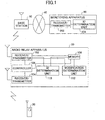
- FIG. 1 is a view showing an example of a configuration of a radio communication system according to an embodiment of the present invention.
- the radio communication system in FIG. 1 for example, is a PHS (Personal Handyphone System) communication system, including a base station 10, a mobile station 20, a radio relay apparatus 30, a communication network 40, and a monitoring apparatus 50.
- PHS Personal Handyphone System
- the radio relay apparatus 30 relays the communications between the base station 10 and the mobile station 20.
- the radio relay apparatus 30 includes receivers/transmitters 102 and 104, a communication controller 106, a memory 108, a determination unit 110 for determining the identification code of the radio relay apparatus 30, and a modification determination unit 112.
- the receiver/transmitter 102 communicates with the base station 10, while the receiver/transmitter 104 communicates with the mobile station 20.
- the communication controller 106 outputs the signals received by the receiver/transmitter 102 from the base station 10 to the receiver/transmitter 104, and the signals received by the receiver/transmitter 104 from the mobile station 20 to the receiver/transmitter 102, thereby controlling relay of the communication between the mobile station 20 and the base station 10.
- the communication controller 106 monitors the operational condition of the radio relay apparatus 30, and transmits the monitoring information to the monitoring apparatus 50 via the receiver/transmitter 102, base station 10 and the communication network 40. In doing this, in order for the monitoring apparatus 50 to identify the source of transmission of the monitoring information, the communication controller 106 appends an identification code of the radio relay apparatus 30 (apparatus identification code) to the monitoring information and transmits the monitoring information to the monitoring apparatus 50.
- apparatus identification code is determined on the basis of an identification code of the base station 10 (referred to as "base station identification code" below), which is the target to be relayed to/from by the radio relay apparatus 30. The details of the process of determining the apparatus identification code are described below.
- the communication controller 106 determines the base station 10 serving as the target to be relayed to/from. Specifically, the communication controller 106 tries to receive the perch channel signals transmitted from base stations, thereby searching for base stations in the surrounding area. When the communication controller 106 succeeds in receiving the perch channel signals, it specifies each base station transmitting the perch channel signals as a candidate for the target to be relayed to/from by the radio relay apparatus 30. Furthermore, the communication controller 106 specifies one of the candidates yielding the highest level of the received signals as the base station 10, which serves as the target to be relayed to/from by the radio relay apparatus 30.
- the communication controller 106 receives the base station identification code transmitted from the base station 10 through the receiver/transmitter 102 and stores the base station identification code in the memory 108.
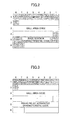
- FIG. 2 is a view showing an example of a structure of the base station identification code of the base station 10.
- the base station identification code shown in FIG. 2 includes a 9-bit company identification code, a 16-bit call area identification code, and an 11-bit base station characteristic code.
- the determination unit 110 determines a temporary identification code of the radio relay apparatus 30 based on the base station identification code stored in the memory 108, and stores the temporary identification code in the memory 108.
- the identification code of the radio relay apparatus 30 is referred to as "apparatus identification code”.
- the determination unit 110 combines the company identification code and the call area identification code with a characteristic code of the radio relay apparatus 30, and uses the combined code as the above temporary apparatus identification code.
- FIG. 3 is a view showing a structure of the apparatus identification code determined in the above way.
- the apparatus identification code shown in FIG. 3 is used to uniquely determine a radio relay apparatus, including a 9-bit company identification code, a 16-bit call area identification code, and an 11-bit radio relay apparatus characteristic code.
- the company identification code and the call area identification code are the same as the corresponding parts of the base station identification code of the base station 10, which is stored in the memory 108.
- the radio relay apparatus characteristic code may be stored in advance in the radio relay apparatus.
- the communication controller 106 starts operations using the temporary apparatus identification code as determined above. Specifically, the communication controller 106 monitors the operational condition of the radio relay apparatus 30. Further, the communication controller 106 appends the temporary apparatus identification code and the base station identification code stored in the memory 108 to the monitoring information, and transmits the monitoring information to the monitoring apparatus 50.
- the receiver/transmitter 102 transmits a starting completion message including the temporary apparatus identification code stored in the memory 108 to the monitoring apparatus 50 via the base station 10 and the communication network 40.
- the monitoring apparatus 50 includes a receiver/transmitter 202 and a determination unit 204 for determining the apparatus identification code of the radio relay apparatus 30.
- the receiver/transmitter 202 receives the starting completion message from the radio relay apparatus 30 and outputs the message to the determination unit 204.
- the determination unit 204 manages all the formal (non-temporary) identification codes of the radio relay apparatuses comprising the mobile communication system.
- the determination unit 204 determines an apparatus identification code once a starting completion message is received. In doing this, the determination unit 204 assigns the radio relay apparatus 30 a formal apparatus identification code that is different from the formal apparatus identification codes of the other radio relay apparatuses.
- the determination unit 204 transmits directly the temporary identification code to the radio relay apparatus 30; when the received temporary identification code is the same as the formal identification code of an existing radio relay apparatus, the determination unit 204 determines an identification code different from the temporary identification code and transmits the determined identification, code to the radio relay apparatus 30.
- the determination unit 204 appends the determined apparatus identification code to a responding message to the starting completion message, and transmits this responding message to the receiver/transmitter 202, and to the radio relay apparatus 30, which is the transmission source of the starting completion message, via the communication network 40 and the base station 10.
- the receiver/transmitter 102 in the radio relay apparatus 30 receives the responding message to the starting completion message from the monitoring apparatus 50, and then transmits the apparatus identification code included in the responding message to the determination unit 110.
- the determination unit 110 identifies the input apparatus identification code as the formal identification code of the radio relay apparatus 30 (formal apparatus identification code), and stores the formal apparatus identification code in the memory 108. Further, the determination unit 110 sets a flag to one, which is indicative of the fact that the formal apparatus identification code is received. This flag is referred to as "reception flag" below.
- the communication controller 106 continues operations using the formal apparatus identification code. Specifically, the communication controller 106 monitors the operational condition of the radio relay apparatus 30. Further, when transmitting the monitoring information to the monitoring apparatus 50, the communication controller 106 confirms whether the reception flag is set to one, and if the reception flag is set to one, the communication controller 106 appends the formal apparatus identification code stored in the memory 108 to the monitoring information, and transmits the monitoring information to the monitoring apparatus 50.
- the target of relay of a radio relay apparatus in usual operations which has a specified identification code
- the apparatus identification code may also be changed, and it can be determined in the following way.
- the communication controller 106 When the communication controller 106 detects that the radio relay apparatus 30 is out of synchronization with the base station 10 serving as the target of relay, the communication controller 106 determines a new base station 10 to be the new target of relay. Specifically, the communication controller 106 tries to receive the perch channel signals transmitted from base stations, thereby searching for base stations in the surrounding area. When the communication controller 106 succeeds in receiving the perch channel signals, it specifies each base station transmitting the received perch channel signals as a candidate of the target to be relayed to/from by the radio relay apparatus 30.
- the modification determination unit 112 via the receiver/transmitter 102, receives the base station identification codes transmitted from one or numerous base stations, which are determined to be candidates of the target to be relayed to/from by the radio relay apparatus 30, the modification determination unit 112 determines whether there is a base station identification code, which includes the same company identification code and the same call area identification code as those included in the formal apparatus identification code stored in the memory 108, among the base station identification codes from the one or numerous base stations specified as candidates for target of relay.
- the modification determination unit 112 decides that it is not necessary to modify the formal apparatus identification code. In this case, the communication controller 106 continues to use the formal apparatus identification code stored in the memory 108 and starts to operate.
- the modification determination unit 112 decides that it is necessary to modify the formal apparatus identification code. In this case, the modification determination unit 112 sets the reception flag to zero.
- the communication controller 106 After setting the reception flag to zero, the communication controller 106 determines a base station 10 to be the target to be relayed to/from, and stores the base station identification code transmitted from this base station 10 in the memory 108. Then, the determination unit 110 determines the temporary apparatus identification code based on the base station identification code stored in the memory 108, and stores the determined temporary apparatus identification code in the memory 108. Further, the receiver/transmitter 102 transmits the starting completion message including the temporary apparatus identification code stored in the memory 108 to the monitoring apparatus 50 via the base station 10 and the communication network 40, and the communication controller 106 starts operations with the temporary apparatus identification code.
- the receiver/transmitter 102 transmits the apparatus identification code included in the responding message to the determination unit 110.
- the determination unit 110 specifies the input apparatus identification code as the formal apparatus identification code of the radio relay apparatus 30, and stores the formal apparatus identification code in the memory 108, and further sets the reception flag to one. Then the communication controller 106 continues operations using the formal apparatus identification code.
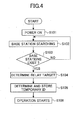
- FIG. 4 is a flow chart showing the operation of the radio relay apparatus 30 when the radio relay apparatus 30 is newly installed and its power is turned ON.
- step S101 the power of the radio relay apparatus 30 is turned ON.
- step S102 the radio relay apparatus 30 searches for base stations in the surrounding area.
- step S103 the radio relay apparatus 30 determines whether base stations exist in the surrounding area.
- step S104 if base stations exist in the surrounding area, the radio relay apparatus 30 specifies the base station yielding the highest level of the received signals (for example, perch channel signals) to be the base station 10, which serves as the target to be relayed to/from by the radio relay apparatus 30.
- the base station yielding the highest level of the received signals (for example, perch channel signals) to be the base station 10, which serves as the target to be relayed to/from by the radio relay apparatus 30.
- step S105 after the base station 10 serving as the target of relay is determined, the radio relay apparatus 30 receives the base station identification code transmitted from the base station 10, and determines a temporary apparatus identification code including the company identification code, the call area identification code, and the radio relay apparatus characteristic code, and stores the temporary apparatus identification code in the memory 108.
- step S106 the radio relay apparatus 30 starts to operate using the temporary apparatus identification code.
- FIG. 5 is a flow chart showing the operation of the radio relay apparatus 30 after it starts to operate.
- step S201 the radio relay apparatus 30 starts to operate.
- step S202 the radio relay apparatus 30 appends the temporary apparatus identification code to the monitoring information, and transmits the monitoring information to the monitoring apparatus 50.
- the monitoring apparatus 50 Upon receiving the starting completion message from the radio relay apparatus 30, the monitoring apparatus 50 determines the apparatus identification code of the radio relay apparatus 30. Furthermore, the monitoring apparatus 50 appends the determined apparatus identification code to the responding message to the starting completion message, and transmits this responding message to the radio relay apparatus 30.
- step S203 the radio relay apparatus 30 receives the responding message to the starting completion message from the monitoring apparatus 50.
- step S204 the radio relay apparatus 30 determines the apparatus identification code included in the responding message to be the formal apparatus identification code, and stores the formal apparatus identification code in the memory 108.
- step S205 the radio relay apparatus 30 sets the reception flag to one.
- step S206 the radio relay apparatus 30 continues operations using the formal apparatus identification code.
- FIG. 6 is a flow chart showing the operation of the radio relay apparatus 30 when it is out of synchronization with the base station 10 serving as the target of relay.
- step S301 the radio relay apparatus 30 detects that the radio relay apparatus 30 is out of synchronization with the base station 10 serving as the target of relay.
- step S302 when the synchronization deviation is detected, the radio relay apparatus 30 searches for base stations in the surrounding area.
- step S303 the radio relay apparatus 30 determines whether base stations exist in the surrounding area.
- step S304 if base stations exist in the surrounding area, the radio relay apparatus 30 determines whether there exists a base station identification code including the same company identification code and the same call area identification code as those included in the formal apparatus identification code stored in the memory 108 among the base station identification codes from the surrounding base stations.
- step S305 if there exists a base station identification code including the same company identification code and the same call area identification code as those included in the formal apparatus identification code stored in the memory 108 (YES at S304), the radio relay apparatus 30 decides that it is not necessary to modify the formal apparatus identification code. In this case, the radio relay apparatus 30 continues to use the formal apparatus identification code stored in the memory 108 for operations.
- step S306 if there is not a base station identification code including the same company identification code and the same call area identification code as those included in the formal apparatus identification code stored in the memory 108 (NO at S304), the radio relay apparatus 30 decides that it is necessary to modify the formal apparatus identification code. In this case, the radio relay apparatus 30 sets the reception flag to be zero.
- step 104 in FIG. 4 that is, determination of the base station 10 serving as the target to be relayed
- the radio relay apparatus 30 receives the base station identification code from the base station 10 serving as a target of relay, determines the temporary apparatus identification code of the radio relay apparatus 30 on the basis of the base station identification code, and transmits the temporary apparatus identification code to the monitoring apparatus 50.
- the radio relay apparatus 30 specifies the received apparatus identification code as the formal identification code of the radio relay apparatus. In this way, the maintainer does not need to perform cumbersome operations as done in the related art, and the time required for starting operation of the radio relay apparatus 30 can be shortened, and radio communication areas can be formed quickly.
- the radio relay apparatus 30 transmits a new temporary apparatus identification code to the monitoring apparatus 50 immediately, and the monitoring apparatus 50 transmits an apparatus identification code, which is to be used as the new formal apparatus identification code, to the radio relay apparatus 30.
- the formal apparatus identification code used by the radio relay apparatus 30 and the monitoring apparatus 50 can be determined quickly, and therefore the time for adjusting can be shorten, and the monitoring apparatus 50 is able to properly perform monitoring.
- the radio relay apparatus 30 and the base station 10 is not in synchronization, if there exists a base station identification code including the same company identification code and the same call area identification code as those included in the formal apparatus identification code stored in the memory 108 among the received base station identification codes, it is not necessary to modify the formal apparatus identification code. Hence, it is not necessary to determine the temporary apparatus identification code or modify the formal apparatus identification code. As a result, the number of modifications of the formal apparatus identification code can be reduced to be as small as possible, thereby reducing the workload of processing.
- the monitoring apparatus 50 is able to make the temporary apparatus identification codes before and after the modification correlate with each other, thereby preventing errors when identifying the radio relay apparatus 30.
- the radio relay apparatus receives an identification code from the base station serving as a target of relay, determines a first identification code used as a temporary identification code of the radio relay apparatus on the basis of the identification code of the base station and transmits the temporary identification code to the monitoring apparatus.
- the radio relay apparatus uses the received identification code to be a formal identification code of the radio relay apparatus.
Landscapes
- Engineering & Computer Science (AREA)
- Computer Networks & Wireless Communication (AREA)
- Signal Processing (AREA)
- Radio Relay Systems (AREA)
- Mobile Radio Communication Systems (AREA)
Abstract
Description
Claims (7)
- A radio relay apparatus for relaying communications between a base station and a mobile station and transmitting monitoring information including a formal identification code thereof to a monitoring apparatus in a mobile communication system, comprising:whereina determination unit configured to determine a first identification code used as a temporary identification code of the radio relay apparatus, said first identification code being determined in conjunction with an identification code of the base station that serves as a target to be relayed to/from by the radio relay apparatus; anda receiver configured to receive a second identification code determined by the monitoring apparatus, said monitoring apparatus determining the second identification code based on the first identification code, said second identification code being determined to be different from identification codes of other radio relay apparatuses,
the second identification code is used as the formal identification code of the radio relay apparatus. - The radio relay apparatus as claimed in claim 1, wherein
the determination unit combines a part of the identification code of the base station and a characteristic code of the radio relay apparatus, and uses the combined code as the first identification code. - The radio relay apparatus as claimed in claim 1, further comprising a modification determination unit configured to determine whether the formal identification code of the radio relay apparatus needs to be modified,
wherein
when the modification determination unit determines that the formal identification code of the radio relay apparatus needs to be modified, the determination unit determines the first identification code used as the temporary identification code of the radio relay apparatus on the basis of an identification code of another base station. - The radio relay apparatus as claimed in claim 1, further comprising a transmitter configured to transmit the monitoring information including the formal identification code of the radio relay apparatus to the monitoring apparatus.
- A monitoring apparatus for monitoring a mobile communication system including a base station, a mobile station, and a radio relay apparatus for relaying communications between the base station and the mobile station, comprising:a receiver configured to receive a first identification code from the radio relay apparatus used as a temporary identification code of the radio relay apparatus;a determination unit configured to determine a second identification code used as a formal identification code of the radio relay apparatus; anda transmitter configured to transmit the formal identification code to the radio relay apparatus.
- The monitoring apparatus as claimed in claim 5, wherein the determination unit determines the second identification code that is different from formal identification codes of any other radio relay apparatuses.
- A method of determining a formal identification code of a radio relay apparatus in a mobile communication system including the radio relay apparatus for relaying communications between a base station and a mobile station, and a monitoring apparatus for monitoring the mobile communication system by using monitoring information including the formal identification code of the radio relay apparatus, comprising the steps of:determining, by the radio relay apparatus, a first identification code used as a temporary identification code of the radio relay apparatus in conjunction with an identification code of the base station serving as a target to be relayed to/from; anddetermining, by the monitoring apparatus, a second identification code based on the first identification code, said second identification code being determined to be different from formal identification codes of other radio relay apparatuses, and the radio relay apparatus using the second identification code as the formal identification code thereof.
Applications Claiming Priority (2)
| Application Number | Priority Date | Filing Date | Title |
|---|---|---|---|
| JP2002212881A JP2004056589A (en) | 2002-07-22 | 2002-07-22 | Wireless relay device, monitoring device, and identification code determination method for wireless relay device |
| JP2002212881 | 2002-07-22 |
Publications (3)
| Publication Number | Publication Date |
|---|---|
| EP1385349A2 true EP1385349A2 (en) | 2004-01-28 |
| EP1385349A3 EP1385349A3 (en) | 2004-02-04 |
| EP1385349B1 EP1385349B1 (en) | 2005-06-08 |
Family
ID=29997217
Family Applications (1)
| Application Number | Title | Priority Date | Filing Date |
|---|---|---|---|
| EP03254561A Expired - Lifetime EP1385349B1 (en) | 2002-07-22 | 2003-07-21 | Radio relay apparatus, method of determining identification code thereof, and monitoring apparatus |
Country Status (5)
| Country | Link |
|---|---|
| US (1) | US7283786B2 (en) |
| EP (1) | EP1385349B1 (en) |
| JP (1) | JP2004056589A (en) |
| CN (1) | CN1257617C (en) |
| DE (1) | DE60300801T2 (en) |
Cited By (2)
| Publication number | Priority date | Publication date | Assignee | Title |
|---|---|---|---|---|
| WO2009077418A1 (en) * | 2007-12-14 | 2009-06-25 | Nokia Siemens Networks Oy | Identification of relay base stations in wireless networks |
| CN102487291A (en) * | 2010-12-03 | 2012-06-06 | 大可全创意股份有限公司 | WI-FI wireless signal relay switching system without relying on signal distribution |
Families Citing this family (7)
| Publication number | Priority date | Publication date | Assignee | Title |
|---|---|---|---|---|
| WO2006043902A1 (en) * | 2004-10-21 | 2006-04-27 | Matsushita Electric Industrial Co., Ltd. | Method and system for identifying a relay mobile station in a wireless communication network |
| JP4983208B2 (en) * | 2006-11-07 | 2012-07-25 | 富士通株式会社 | Relay station, wireless communication method |
| EP2007154A1 (en) * | 2007-06-21 | 2008-12-24 | Alcatel Lucent | A method of transmitting signaling messages |
| EP2693785B1 (en) | 2011-03-31 | 2019-12-25 | Nec Corporation | Mobile communication system and relay station control method |
| JP5684091B2 (en) * | 2011-10-27 | 2015-03-11 | 京セラ株式会社 | Base station and radio communication system |
| JP5869585B2 (en) * | 2011-10-27 | 2016-02-24 | 京セラ株式会社 | Wireless communication system, communication control method, and relay station |
| CN109890088B (en) * | 2013-05-16 | 2022-03-22 | 索尼集团公司 | Terminal device, base station and method for operating terminal device for wireless communication system |
Family Cites Families (6)
| Publication number | Priority date | Publication date | Assignee | Title |
|---|---|---|---|---|
| JPH024047A (en) | 1988-06-22 | 1990-01-09 | Mitsubishi Electric Corp | Method for setting address |
| GB9500825D0 (en) * | 1995-01-17 | 1995-03-08 | Macnamee Robert J G | Radio communications systems with repeaters |
| JP3358952B2 (en) | 1996-09-11 | 2002-12-24 | 株式会社エヌ・ティ・ティ・ドコモ | Wireless relay device and its maintenance control method |
| FI105369B (en) * | 1997-01-03 | 2000-07-31 | Nokia Networks Oy | Procedure for checking repeaters and repeaters |
| JP2001128208A (en) | 1999-10-25 | 2001-05-11 | Matsushita Electric Works Ltd | Wireless communication system |
| JP3447663B2 (en) | 2000-05-10 | 2003-09-16 | 日本電気通信システム株式会社 | Mobile communication system with wireless base station installation position automatic registration function and wireless base station installation position automatic registration method |
-
2002
- 2002-07-22 JP JP2002212881A patent/JP2004056589A/en active Pending
-
2003
- 2003-07-21 DE DE60300801T patent/DE60300801T2/en not_active Expired - Lifetime
- 2003-07-21 US US10/622,487 patent/US7283786B2/en not_active Expired - Lifetime
- 2003-07-21 EP EP03254561A patent/EP1385349B1/en not_active Expired - Lifetime
- 2003-07-22 CN CN03146103.4A patent/CN1257617C/en not_active Expired - Fee Related
Cited By (5)
| Publication number | Priority date | Publication date | Assignee | Title |
|---|---|---|---|---|
| WO2009077418A1 (en) * | 2007-12-14 | 2009-06-25 | Nokia Siemens Networks Oy | Identification of relay base stations in wireless networks |
| US8494441B2 (en) | 2007-12-14 | 2013-07-23 | Nokia Siemens Networks Oy | Identification of relay base stations in wireless networks |
| US8792819B2 (en) * | 2007-12-14 | 2014-07-29 | Nokia Siemens Networks Oy | Identification of relay base stations in wireless networks |
| CN102487291A (en) * | 2010-12-03 | 2012-06-06 | 大可全创意股份有限公司 | WI-FI wireless signal relay switching system without relying on signal distribution |
| CN102487291B (en) * | 2010-12-03 | 2015-02-04 | 大可全创意股份有限公司 | A WI-FI wireless signal relay system without relying on signal distribution |
Also Published As
| Publication number | Publication date |
|---|---|
| US20040106373A1 (en) | 2004-06-03 |
| DE60300801T2 (en) | 2005-11-24 |
| EP1385349B1 (en) | 2005-06-08 |
| CN1477790A (en) | 2004-02-25 |
| DE60300801D1 (en) | 2005-07-14 |
| US7283786B2 (en) | 2007-10-16 |
| JP2004056589A (en) | 2004-02-19 |
| EP1385349A3 (en) | 2004-02-04 |
| CN1257617C (en) | 2006-05-24 |
Similar Documents
| Publication | Publication Date | Title |
|---|---|---|
| US6999725B2 (en) | Controlling operation of mobile base station so as to avoid radio interference | |
| US7224954B2 (en) | Method and device for communicating via an ad-hoc wireless network | |
| US6243591B1 (en) | Mobile communication system | |
| US5214789A (en) | Radio channel allocation based on location of mobile users | |
| KR20090080727A (en) | Apparatus and method for handover of a system between systems using different frequency bands | |
| RU2004131557A (en) | SERVICE TRANSMISSION CALLED BY DETERMINATION OF LOCATION | |
| JP7054860B2 (en) | Base station equipment, communication system and communication control method | |
| CN113365320B (en) | Method, device and equipment for switching signal channel and storage medium | |
| EP1385349B1 (en) | Radio relay apparatus, method of determining identification code thereof, and monitoring apparatus | |
| CN109857435B (en) | Diffusion type software upgrading method between offline devices | |
| US7818022B2 (en) | Communication apparatus and electric power control method | |
| US9119177B2 (en) | Radio base station and method for selecting frequency band of radio base station | |
| US7424297B2 (en) | Soft handoff system, mobile terminal having the same, and soft handoff method | |
| US20100222082A1 (en) | Base station selecting method and wireless terminal device | |
| JP2004023613A (en) | Radio communication system | |
| JPH1093496A (en) | Wireless relay device and its maintenance control method | |
| JPH0669862A (en) | Interference avoidance method in mobile radio communication system | |
| US10285041B2 (en) | Wireless communication apparatus, identification information setup method, and program | |
| US6473620B1 (en) | Method for tracing call establishing message | |
| US20140087683A1 (en) | Method and apparatus of temporary local transmission for disaster information delivery | |
| KR20030090845A (en) | Method and apparatus for recognizing superhigh speed data communication system | |
| KR100534564B1 (en) | System and method for monitoring the radio net quality using the terminal | |
| US9853710B2 (en) | Relay apparatus specifying frequency offset based on connection history and method thereof | |
| US20100080209A1 (en) | Radio Synchronization Method, Radio Synchronization System, and Base Station | |
| JP2003250176A (en) | Base station selection method |
Legal Events
| Date | Code | Title | Description |
|---|---|---|---|
| PUAI | Public reference made under article 153(3) epc to a published international application that has entered the european phase |
Free format text: ORIGINAL CODE: 0009012 |
|
| PUAL | Search report despatched |
Free format text: ORIGINAL CODE: 0009013 |
|
| 17P | Request for examination filed |
Effective date: 20030731 |
|
| AK | Designated contracting states |
Kind code of ref document: A2 Designated state(s): AT BE BG CH CY CZ DE DK EE ES FI FR GB GR HU IE IT LI LU MC NL PT RO SE SI SK TR |
|
| AX | Request for extension of the european patent |
Extension state: AL LT LV MK |
|
| AK | Designated contracting states |
Kind code of ref document: A3 Designated state(s): AT BE BG CH CY CZ DE DK EE ES FI FR GB GR HU IE IT LI LU MC NL PT RO SE SI SK TR |
|
| AX | Request for extension of the european patent |
Extension state: AL LT LV MK |
|
| RIC1 | Information provided on ipc code assigned before grant |
Ipc: 7H 04Q 7/36 A |
|
| 17Q | First examination report despatched |
Effective date: 20040414 |
|
| AKX | Designation fees paid |
Designated state(s): DE GB |
|
| GRAP | Despatch of communication of intention to grant a patent |
Free format text: ORIGINAL CODE: EPIDOSNIGR1 |
|
| GRAS | Grant fee paid |
Free format text: ORIGINAL CODE: EPIDOSNIGR3 |
|
| GRAA | (expected) grant |
Free format text: ORIGINAL CODE: 0009210 |
|
| AK | Designated contracting states |
Kind code of ref document: B1 Designated state(s): DE GB |
|
| REG | Reference to a national code |
Ref country code: GB Ref legal event code: FG4D |
|
| REF | Corresponds to: |
Ref document number: 60300801 Country of ref document: DE Date of ref document: 20050714 Kind code of ref document: P |
|
| PLBE | No opposition filed within time limit |
Free format text: ORIGINAL CODE: 0009261 |
|
| STAA | Information on the status of an ep patent application or granted ep patent |
Free format text: STATUS: NO OPPOSITION FILED WITHIN TIME LIMIT |
|
| 26N | No opposition filed |
Effective date: 20060309 |
|
| PGFP | Annual fee paid to national office [announced via postgrant information from national office to epo] |
Ref country code: DE Payment date: 20130717 Year of fee payment: 11 |
|
| PGFP | Annual fee paid to national office [announced via postgrant information from national office to epo] |
Ref country code: GB Payment date: 20130717 Year of fee payment: 11 |
|
| REG | Reference to a national code |
Ref country code: DE Ref legal event code: R119 Ref document number: 60300801 Country of ref document: DE |
|
| GBPC | Gb: european patent ceased through non-payment of renewal fee |
Effective date: 20140721 |
|
| PG25 | Lapsed in a contracting state [announced via postgrant information from national office to epo] |
Ref country code: DE Free format text: LAPSE BECAUSE OF NON-PAYMENT OF DUE FEES Effective date: 20150203 |
|
| PG25 | Lapsed in a contracting state [announced via postgrant information from national office to epo] |
Ref country code: GB Free format text: LAPSE BECAUSE OF NON-PAYMENT OF DUE FEES Effective date: 20140721 |
|
| REG | Reference to a national code |
Ref country code: DE Ref legal event code: R079 Ref document number: 60300801 Country of ref document: DE Free format text: PREVIOUS MAIN CLASS: H04Q0007360000 Ipc: H04W0016000000 |
|
| P01 | Opt-out of the competence of the unified patent court (upc) registered |
Effective date: 20230520 |