EP1384718A1 - Intramolecular amidation of sulfamate esters catalyzed by metalloporphyrins - Google Patents
Intramolecular amidation of sulfamate esters catalyzed by metalloporphyrins Download PDFInfo
- Publication number
- EP1384718A1 EP1384718A1 EP03102223A EP03102223A EP1384718A1 EP 1384718 A1 EP1384718 A1 EP 1384718A1 EP 03102223 A EP03102223 A EP 03102223A EP 03102223 A EP03102223 A EP 03102223A EP 1384718 A1 EP1384718 A1 EP 1384718A1
- Authority
- EP
- European Patent Office
- Prior art keywords
- metalloporphyrin
- catalyst
- sulfamate
- ruthenium
- amidation
- Prior art date
- Legal status (The legal status is an assumption and is not a legal conclusion. Google has not performed a legal analysis and makes no representation as to the accuracy of the status listed.)
- Withdrawn
Links
- 230000009435 amidation Effects 0.000 title abstract description 24
- 238000007112 amidation reaction Methods 0.000 title abstract description 24
- IIACRCGMVDHOTQ-UHFFFAOYSA-N sulfamic acid Chemical class NS(O)(=O)=O IIACRCGMVDHOTQ-UHFFFAOYSA-N 0.000 title abstract description 15
- 125000004122 cyclic group Chemical group 0.000 claims abstract description 22
- -1 sulfamate ester Chemical class 0.000 claims abstract description 17
- 230000003197 catalytic effect Effects 0.000 claims abstract description 6
- 239000003054 catalyst Substances 0.000 claims description 39
- 238000000034 method Methods 0.000 claims description 22
- YMWUJEATGCHHMB-UHFFFAOYSA-N Dichloromethane Chemical compound ClCCl YMWUJEATGCHHMB-UHFFFAOYSA-N 0.000 claims description 18
- XSWALQKVYPLUJA-UHFFFAOYSA-N [Ru].N1C(C=C2N=C(C=C3NC(=C4)C=C3)C=C2)=CC=C1C=C1C=CC4=N1 Chemical compound [Ru].N1C(C=C2N=C(C=C3NC(=C4)C=C3)C=C2)=CC=C1C=C1C=CC4=N1 XSWALQKVYPLUJA-UHFFFAOYSA-N 0.000 claims description 18
- UHOVQNZJYSORNB-UHFFFAOYSA-N Benzene Chemical compound C1=CC=CC=C1 UHOVQNZJYSORNB-UHFFFAOYSA-N 0.000 claims description 15
- 150000001875 compounds Chemical class 0.000 claims description 12
- 238000006243 chemical reaction Methods 0.000 claims description 10
- WEVYAHXRMPXWCK-UHFFFAOYSA-N Acetonitrile Chemical compound CC#N WEVYAHXRMPXWCK-UHFFFAOYSA-N 0.000 claims description 9
- KJTLSVCANCCWHF-UHFFFAOYSA-N Ruthenium Chemical compound [Ru] KJTLSVCANCCWHF-UHFFFAOYSA-N 0.000 claims description 9
- 229910052707 ruthenium Inorganic materials 0.000 claims description 9
- BWHMMNNQKKPAPP-UHFFFAOYSA-L potassium carbonate Chemical compound [K+].[K+].[O-]C([O-])=O BWHMMNNQKKPAPP-UHFFFAOYSA-L 0.000 claims description 8
- KWYUFKZDYYNOTN-UHFFFAOYSA-M potassium hydroxide Inorganic materials [OH-].[K+] KWYUFKZDYYNOTN-UHFFFAOYSA-M 0.000 claims description 8
- 229910052723 transition metal Inorganic materials 0.000 claims description 8
- PNEYBMLMFCGWSK-UHFFFAOYSA-N aluminium oxide Inorganic materials [O-2].[O-2].[O-2].[Al+3].[Al+3] PNEYBMLMFCGWSK-UHFFFAOYSA-N 0.000 claims description 7
- 229910052593 corundum Inorganic materials 0.000 claims description 7
- 150000003624 transition metals Chemical class 0.000 claims description 7
- 229910001845 yogo sapphire Inorganic materials 0.000 claims description 7
- XEEYBQQBJWHFJM-UHFFFAOYSA-N Iron Chemical compound [Fe] XEEYBQQBJWHFJM-UHFFFAOYSA-N 0.000 claims description 6
- ZMXDDKWLCZADIW-UHFFFAOYSA-N N,N-Dimethylformamide Chemical compound CN(C)C=O ZMXDDKWLCZADIW-UHFFFAOYSA-N 0.000 claims description 6
- ZBIKORITPGTTGI-UHFFFAOYSA-N [acetyloxy(phenyl)-$l^{3}-iodanyl] acetate Chemical compound CC(=O)OI(OC(C)=O)C1=CC=CC=C1 ZBIKORITPGTTGI-UHFFFAOYSA-N 0.000 claims description 5
- 229910052751 metal Inorganic materials 0.000 claims description 5
- 239000002184 metal Substances 0.000 claims description 5
- 239000007800 oxidant agent Substances 0.000 claims description 5
- 230000001590 oxidative effect Effects 0.000 claims description 5
- CPLXHLVBOLITMK-UHFFFAOYSA-N magnesium oxide Inorganic materials [Mg]=O CPLXHLVBOLITMK-UHFFFAOYSA-N 0.000 claims description 4
- 229910000027 potassium carbonate Inorganic materials 0.000 claims description 4
- XLOMVQKBTHCTTD-UHFFFAOYSA-N zinc oxide Inorganic materials [Zn]=O XLOMVQKBTHCTTD-UHFFFAOYSA-N 0.000 claims description 4
- RYGMFSIKBFXOCR-UHFFFAOYSA-N Copper Chemical compound [Cu] RYGMFSIKBFXOCR-UHFFFAOYSA-N 0.000 claims description 3
- QECVIPBZOPUTRD-UHFFFAOYSA-N N=S(=O)=O Chemical group N=S(=O)=O QECVIPBZOPUTRD-UHFFFAOYSA-N 0.000 claims description 3
- 229910017052 cobalt Inorganic materials 0.000 claims description 3
- 239000010941 cobalt Substances 0.000 claims description 3
- GUTLYIVDDKVIGB-UHFFFAOYSA-N cobalt atom Chemical compound [Co] GUTLYIVDDKVIGB-UHFFFAOYSA-N 0.000 claims description 3
- 229910052802 copper Inorganic materials 0.000 claims description 3
- 239000010949 copper Substances 0.000 claims description 3
- 229910052742 iron Inorganic materials 0.000 claims description 3
- WPBNNNQJVZRUHP-UHFFFAOYSA-L manganese(2+);methyl n-[[2-(methoxycarbonylcarbamothioylamino)phenyl]carbamothioyl]carbamate;n-[2-(sulfidocarbothioylamino)ethyl]carbamodithioate Chemical compound [Mn+2].[S-]C(=S)NCCNC([S-])=S.COC(=O)NC(=S)NC1=CC=CC=C1NC(=S)NC(=O)OC WPBNNNQJVZRUHP-UHFFFAOYSA-L 0.000 claims description 3
- 229910052762 osmium Inorganic materials 0.000 claims description 3
- SYQBFIAQOQZEGI-UHFFFAOYSA-N osmium atom Chemical compound [Os] SYQBFIAQOQZEGI-UHFFFAOYSA-N 0.000 claims description 3
- PCLIMKBDDGJMGD-UHFFFAOYSA-N N-bromosuccinimide Chemical compound BrN1C(=O)CCC1=O PCLIMKBDDGJMGD-UHFFFAOYSA-N 0.000 claims description 2
- JYJVVHFRSFVEJM-UHFFFAOYSA-N iodosobenzene Chemical compound O=IC1=CC=CC=C1 JYJVVHFRSFVEJM-UHFFFAOYSA-N 0.000 claims description 2
- 230000002194 synthesizing effect Effects 0.000 claims description 2
- 239000003960 organic solvent Substances 0.000 claims 1
- 239000000758 substrate Substances 0.000 abstract description 13
- 238000011938 amidation process Methods 0.000 abstract 1
- HEDRZPFGACZZDS-MICDWDOJSA-N Trichloro(2H)methane Chemical compound [2H]C(Cl)(Cl)Cl HEDRZPFGACZZDS-MICDWDOJSA-N 0.000 description 16
- 230000015572 biosynthetic process Effects 0.000 description 8
- 238000003786 synthesis reaction Methods 0.000 description 7
- 239000000047 product Substances 0.000 description 6
- 239000002904 solvent Substances 0.000 description 6
- 230000007306 turnover Effects 0.000 description 6
- 238000001644 13C nuclear magnetic resonance spectroscopy Methods 0.000 description 5
- 238000005160 1H NMR spectroscopy Methods 0.000 description 5
- 230000003595 spectral effect Effects 0.000 description 5
- AOSZTAHDEDLTLQ-AZKQZHLXSA-N (1S,2S,4R,8S,9S,11S,12R,13S,19S)-6-[(3-chlorophenyl)methyl]-12,19-difluoro-11-hydroxy-8-(2-hydroxyacetyl)-9,13-dimethyl-6-azapentacyclo[10.8.0.02,9.04,8.013,18]icosa-14,17-dien-16-one Chemical compound C([C@@H]1C[C@H]2[C@H]3[C@]([C@]4(C=CC(=O)C=C4[C@@H](F)C3)C)(F)[C@@H](O)C[C@@]2([C@@]1(C1)C(=O)CO)C)N1CC1=CC=CC(Cl)=C1 AOSZTAHDEDLTLQ-AZKQZHLXSA-N 0.000 description 4
- 229940126657 Compound 17 Drugs 0.000 description 4
- SVOOVMQUISJERI-UHFFFAOYSA-K rhodium(3+);triacetate Chemical compound [Rh+3].CC([O-])=O.CC([O-])=O.CC([O-])=O SVOOVMQUISJERI-UHFFFAOYSA-K 0.000 description 4
- 0 CC(CC(*1C(C(*2C3=CC=C22)(*4=C5C=CC4=C2c(c(N)c(c(N)c2N)N)c2N)O)*2=C4C=CC2=C3c(c(N)c(c(*)c2N)N)c2N)=C4c(c(N)c(c(N)c2N)N)c2N)C1=C5c(c(N)c(c(N)c1N)N)c1N Chemical compound CC(CC(*1C(C(*2C3=CC=C22)(*4=C5C=CC4=C2c(c(N)c(c(N)c2N)N)c2N)O)*2=C4C=CC2=C3c(c(N)c(c(*)c2N)N)c2N)=C4c(c(N)c(c(N)c2N)N)c2N)C1=C5c(c(N)c(c(N)c1N)N)c1N 0.000 description 3
- 230000002950 deficient Effects 0.000 description 3
- 229940079593 drug Drugs 0.000 description 3
- 239000003814 drug Substances 0.000 description 3
- QTBSBXVTEAMEQO-UHFFFAOYSA-N Acetic acid Chemical compound CC(O)=O QTBSBXVTEAMEQO-UHFFFAOYSA-N 0.000 description 2
- XKRFYHLGVUSROY-UHFFFAOYSA-N Argon Chemical compound [Ar] XKRFYHLGVUSROY-UHFFFAOYSA-N 0.000 description 2
- VYPSYNLAJGMNEJ-UHFFFAOYSA-N Silicium dioxide Chemical compound O=[Si]=O VYPSYNLAJGMNEJ-UHFFFAOYSA-N 0.000 description 2
- 150000001413 amino acids Chemical class 0.000 description 2
- 239000006227 byproduct Substances 0.000 description 2
- 238000006555 catalytic reaction Methods 0.000 description 2
- 230000000694 effects Effects 0.000 description 2
- 239000003446 ligand Substances 0.000 description 2
- 238000004519 manufacturing process Methods 0.000 description 2
- 229910052757 nitrogen Inorganic materials 0.000 description 2
- 125000004433 nitrogen atom Chemical group N* 0.000 description 2
- 150000004032 porphyrins Chemical class 0.000 description 2
- 238000002360 preparation method Methods 0.000 description 2
- 239000011541 reaction mixture Substances 0.000 description 2
- 229910052703 rhodium Inorganic materials 0.000 description 2
- 239000010948 rhodium Substances 0.000 description 2
- MHOVAHRLVXNVSD-UHFFFAOYSA-N rhodium atom Chemical compound [Rh] MHOVAHRLVXNVSD-UHFFFAOYSA-N 0.000 description 2
- 229940124530 sulfonamide Drugs 0.000 description 2
- GLGNXYJARSMNGJ-VKTIVEEGSA-N (1s,2s,3r,4r)-3-[[5-chloro-2-[(1-ethyl-6-methoxy-2-oxo-4,5-dihydro-3h-1-benzazepin-7-yl)amino]pyrimidin-4-yl]amino]bicyclo[2.2.1]hept-5-ene-2-carboxamide Chemical compound CCN1C(=O)CCCC2=C(OC)C(NC=3N=C(C(=CN=3)Cl)N[C@H]3[C@H]([C@@]4([H])C[C@@]3(C=C4)[H])C(N)=O)=CC=C21 GLGNXYJARSMNGJ-VKTIVEEGSA-N 0.000 description 1
- ONBQEOIKXPHGMB-VBSBHUPXSA-N 1-[2-[(2s,3r,4s,5r)-3,4-dihydroxy-5-(hydroxymethyl)oxolan-2-yl]oxy-4,6-dihydroxyphenyl]-3-(4-hydroxyphenyl)propan-1-one Chemical compound O[C@@H]1[C@H](O)[C@@H](CO)O[C@H]1OC1=CC(O)=CC(O)=C1C(=O)CCC1=CC=C(O)C=C1 ONBQEOIKXPHGMB-VBSBHUPXSA-N 0.000 description 1
- 238000004791 1D NOESY Methods 0.000 description 1
- KMGCKSAIIHOKCX-UHFFFAOYSA-N 2,3-dihydro-1h-inden-2-ol Chemical compound C1=CC=C2CC(O)CC2=C1 KMGCKSAIIHOKCX-UHFFFAOYSA-N 0.000 description 1
- QLVJTBXFPARHIY-XFXOYXDSSA-N C[C@H]([C@](C)([C@@H]1N2C(C(O)=O)=C(CN(c3cccc4c3C3CC=C4CC[N]4(CC5)CC[N]5(CC(N)=O)CC4)S3(=O)=O)[C@@H]1C)C2=O)O Chemical compound C[C@H]([C@](C)([C@@H]1N2C(C(O)=O)=C(CN(c3cccc4c3C3CC=C4CC[N]4(CC5)CC[N]5(CC(N)=O)CC4)S3(=O)=O)[C@@H]1C)C2=O)O QLVJTBXFPARHIY-XFXOYXDSSA-N 0.000 description 1
- 239000004215 Carbon black (E152) Substances 0.000 description 1
- 102000004190 Enzymes Human genes 0.000 description 1
- 108090000790 Enzymes Proteins 0.000 description 1
- 208000010412 Glaucoma Diseases 0.000 description 1
- 229940122440 HIV protease inhibitor Drugs 0.000 description 1
- UCYGGIOROSMBJX-YNTFGVKOSA-N N[C@H]([C@@H](C1)O)C2C1CC=CC2 Chemical compound N[C@H]([C@@H](C1)O)C2C1CC=CC2 UCYGGIOROSMBJX-YNTFGVKOSA-N 0.000 description 1
- RAKVELNBJSGEJZ-BDAKNGLRSA-N O=S1(O[C@H](Cc2ccccc22)[C@H]2N1)=O Chemical compound O=S1(O[C@H](Cc2ccccc22)[C@H]2N1)=O RAKVELNBJSGEJZ-BDAKNGLRSA-N 0.000 description 1
- LNUFLCYMSVYYNW-ZPJMAFJPSA-N [(2r,3r,4s,5r,6r)-2-[(2r,3r,4s,5r,6r)-6-[(2r,3r,4s,5r,6r)-6-[(2r,3r,4s,5r,6r)-6-[[(3s,5s,8r,9s,10s,13r,14s,17r)-10,13-dimethyl-17-[(2r)-6-methylheptan-2-yl]-2,3,4,5,6,7,8,9,11,12,14,15,16,17-tetradecahydro-1h-cyclopenta[a]phenanthren-3-yl]oxy]-4,5-disulfo Chemical compound O([C@@H]1[C@@H](COS(O)(=O)=O)O[C@@H]([C@@H]([C@H]1OS(O)(=O)=O)OS(O)(=O)=O)O[C@@H]1[C@@H](COS(O)(=O)=O)O[C@@H]([C@@H]([C@H]1OS(O)(=O)=O)OS(O)(=O)=O)O[C@@H]1[C@@H](COS(O)(=O)=O)O[C@H]([C@@H]([C@H]1OS(O)(=O)=O)OS(O)(=O)=O)O[C@@H]1C[C@@H]2CC[C@H]3[C@@H]4CC[C@@H]([C@]4(CC[C@@H]3[C@@]2(C)CC1)C)[C@H](C)CCCC(C)C)[C@H]1O[C@H](COS(O)(=O)=O)[C@@H](OS(O)(=O)=O)[C@H](OS(O)(=O)=O)[C@H]1OS(O)(=O)=O LNUFLCYMSVYYNW-ZPJMAFJPSA-N 0.000 description 1
- 150000001336 alkenes Chemical class 0.000 description 1
- 150000001414 amino alcohols Chemical class 0.000 description 1
- 229910052786 argon Inorganic materials 0.000 description 1
- 230000003115 biocidal effect Effects 0.000 description 1
- HCRKCZRJWPKOAR-JTQLQIEISA-N brinzolamide Chemical compound CCN[C@H]1CN(CCCOC)S(=O)(=O)C2=C1C=C(S(N)(=O)=O)S2 HCRKCZRJWPKOAR-JTQLQIEISA-N 0.000 description 1
- 229960000722 brinzolamide Drugs 0.000 description 1
- YZBQHRLRFGPBSL-RXMQYKEDSA-N carbapenem Chemical compound C1C=CN2C(=O)C[C@H]21 YZBQHRLRFGPBSL-RXMQYKEDSA-N 0.000 description 1
- 238000004587 chromatography analysis Methods 0.000 description 1
- 229940125773 compound 10 Drugs 0.000 description 1
- 229940126543 compound 14 Drugs 0.000 description 1
- 229940125758 compound 15 Drugs 0.000 description 1
- 229940126142 compound 16 Drugs 0.000 description 1
- 229940126214 compound 3 Drugs 0.000 description 1
- 230000003247 decreasing effect Effects 0.000 description 1
- 238000007876 drug discovery Methods 0.000 description 1
- 150000002148 esters Chemical class 0.000 description 1
- 230000001747 exhibiting effect Effects 0.000 description 1
- 238000002474 experimental method Methods 0.000 description 1
- 239000012065 filter cake Substances 0.000 description 1
- 239000000706 filtrate Substances 0.000 description 1
- 150000003278 haem Chemical class 0.000 description 1
- 125000000623 heterocyclic group Chemical group 0.000 description 1
- 239000004030 hiv protease inhibitor Substances 0.000 description 1
- 229930195733 hydrocarbon Natural products 0.000 description 1
- 150000002430 hydrocarbons Chemical class 0.000 description 1
- 230000007062 hydrolysis Effects 0.000 description 1
- 238000006460 hydrolysis reaction Methods 0.000 description 1
- CBVCZFGXHXORBI-PXQQMZJSSA-N indinavir Chemical compound C([C@H](N(CC1)C[C@@H](O)C[C@@H](CC=2C=CC=CC=2)C(=O)N[C@H]2C3=CC=CC=C3C[C@H]2O)C(=O)NC(C)(C)C)N1CC1=CC=CN=C1 CBVCZFGXHXORBI-PXQQMZJSSA-N 0.000 description 1
- 229960001936 indinavir Drugs 0.000 description 1
- 230000006698 induction Effects 0.000 description 1
- 238000003780 insertion Methods 0.000 description 1
- 230000037431 insertion Effects 0.000 description 1
- 238000002955 isolation Methods 0.000 description 1
- ZLVXBBHTMQJRSX-VMGNSXQWSA-N jdtic Chemical compound C1([C@]2(C)CCN(C[C@@H]2C)C[C@H](C(C)C)NC(=O)[C@@H]2NCC3=CC(O)=CC=C3C2)=CC=CC(O)=C1 ZLVXBBHTMQJRSX-VMGNSXQWSA-N 0.000 description 1
- 239000000203 mixture Substances 0.000 description 1
- SPLQTGUKDMGUSV-UHFFFAOYSA-N n-(4-methoxyphenyl)methanesulfonamide Chemical compound COC1=CC=C(NS(C)(=O)=O)C=C1 SPLQTGUKDMGUSV-UHFFFAOYSA-N 0.000 description 1
- 230000003287 optical effect Effects 0.000 description 1
- 125000001997 phenyl group Chemical group [H]C1=C([H])C([H])=C(*)C([H])=C1[H] 0.000 description 1
- 239000002243 precursor Substances 0.000 description 1
- 230000006340 racemization Effects 0.000 description 1
- 238000011160 research Methods 0.000 description 1
- 239000000741 silica gel Substances 0.000 description 1
- 229910002027 silica gel Inorganic materials 0.000 description 1
- 239000007858 starting material Substances 0.000 description 1
- 239000003203 stereoselective catalyst Substances 0.000 description 1
- 230000000707 stereoselective effect Effects 0.000 description 1
- 150000003456 sulfonamides Chemical class 0.000 description 1
- YNHJECZULSZAQK-UHFFFAOYSA-N tetraphenylporphyrin Chemical compound C1=CC(C(=C2C=CC(N2)=C(C=2C=CC=CC=2)C=2C=CC(N=2)=C(C=2C=CC=CC=2)C2=CC=C3N2)C=2C=CC=CC=2)=NC1=C3C1=CC=CC=C1 YNHJECZULSZAQK-UHFFFAOYSA-N 0.000 description 1
- 238000012546 transfer Methods 0.000 description 1
- 238000006276 transfer reaction Methods 0.000 description 1
Images



Classifications
-
- B—PERFORMING OPERATIONS; TRANSPORTING
- B01—PHYSICAL OR CHEMICAL PROCESSES OR APPARATUS IN GENERAL
- B01J—CHEMICAL OR PHYSICAL PROCESSES, e.g. CATALYSIS OR COLLOID CHEMISTRY; THEIR RELEVANT APPARATUS
- B01J31/00—Catalysts comprising hydrides, coordination complexes or organic compounds
- B01J31/16—Catalysts comprising hydrides, coordination complexes or organic compounds containing coordination complexes
- B01J31/18—Catalysts comprising hydrides, coordination complexes or organic compounds containing coordination complexes containing nitrogen, phosphorus, arsenic or antimony as complexing atoms, e.g. in pyridine ligands, or in resonance therewith, e.g. in isocyanide ligands C=N-R or as complexed central atoms
- B01J31/1805—Catalysts comprising hydrides, coordination complexes or organic compounds containing coordination complexes containing nitrogen, phosphorus, arsenic or antimony as complexing atoms, e.g. in pyridine ligands, or in resonance therewith, e.g. in isocyanide ligands C=N-R or as complexed central atoms the ligands containing nitrogen
- B01J31/181—Cyclic ligands, including e.g. non-condensed polycyclic ligands, comprising at least one complexing nitrogen atom as ring member, e.g. pyridine
- B01J31/1825—Ligands comprising condensed ring systems, e.g. acridine, carbazole
- B01J31/183—Ligands comprising condensed ring systems, e.g. acridine, carbazole with more than one complexing nitrogen atom, e.g. phenanthroline
-
- B—PERFORMING OPERATIONS; TRANSPORTING
- B01—PHYSICAL OR CHEMICAL PROCESSES OR APPARATUS IN GENERAL
- B01J—CHEMICAL OR PHYSICAL PROCESSES, e.g. CATALYSIS OR COLLOID CHEMISTRY; THEIR RELEVANT APPARATUS
- B01J31/00—Catalysts comprising hydrides, coordination complexes or organic compounds
- B01J31/02—Catalysts comprising hydrides, coordination complexes or organic compounds containing organic compounds or metal hydrides
- B01J31/0215—Sulfur-containing compounds
- B01J31/0222—Sulfur-containing compounds comprising sulfonyl groups
-
- B—PERFORMING OPERATIONS; TRANSPORTING
- B01—PHYSICAL OR CHEMICAL PROCESSES OR APPARATUS IN GENERAL
- B01J—CHEMICAL OR PHYSICAL PROCESSES, e.g. CATALYSIS OR COLLOID CHEMISTRY; THEIR RELEVANT APPARATUS
- B01J31/00—Catalysts comprising hydrides, coordination complexes or organic compounds
- B01J31/02—Catalysts comprising hydrides, coordination complexes or organic compounds containing organic compounds or metal hydrides
- B01J31/0234—Nitrogen-, phosphorus-, arsenic- or antimony-containing compounds
- B01J31/0235—Nitrogen containing compounds
- B01J31/0245—Nitrogen containing compounds being derivatives of carboxylic or carbonic acids
- B01J31/0247—Imides, amides or imidates (R-C=NR(OR))
-
- B—PERFORMING OPERATIONS; TRANSPORTING
- B01—PHYSICAL OR CHEMICAL PROCESSES OR APPARATUS IN GENERAL
- B01J—CHEMICAL OR PHYSICAL PROCESSES, e.g. CATALYSIS OR COLLOID CHEMISTRY; THEIR RELEVANT APPARATUS
- B01J31/00—Catalysts comprising hydrides, coordination complexes or organic compounds
- B01J31/02—Catalysts comprising hydrides, coordination complexes or organic compounds containing organic compounds or metal hydrides
- B01J31/0234—Nitrogen-, phosphorus-, arsenic- or antimony-containing compounds
- B01J31/0271—Nitrogen-, phosphorus-, arsenic- or antimony-containing compounds also containing elements or functional groups covered by B01J31/0201 - B01J31/0231
-
- B—PERFORMING OPERATIONS; TRANSPORTING
- B01—PHYSICAL OR CHEMICAL PROCESSES OR APPARATUS IN GENERAL
- B01J—CHEMICAL OR PHYSICAL PROCESSES, e.g. CATALYSIS OR COLLOID CHEMISTRY; THEIR RELEVANT APPARATUS
- B01J31/00—Catalysts comprising hydrides, coordination complexes or organic compounds
- B01J31/16—Catalysts comprising hydrides, coordination complexes or organic compounds containing coordination complexes
- B01J31/18—Catalysts comprising hydrides, coordination complexes or organic compounds containing coordination complexes containing nitrogen, phosphorus, arsenic or antimony as complexing atoms, e.g. in pyridine ligands, or in resonance therewith, e.g. in isocyanide ligands C=N-R or as complexed central atoms
- B01J31/1805—Catalysts comprising hydrides, coordination complexes or organic compounds containing coordination complexes containing nitrogen, phosphorus, arsenic or antimony as complexing atoms, e.g. in pyridine ligands, or in resonance therewith, e.g. in isocyanide ligands C=N-R or as complexed central atoms the ligands containing nitrogen
- B01J31/181—Cyclic ligands, including e.g. non-condensed polycyclic ligands, comprising at least one complexing nitrogen atom as ring member, e.g. pyridine
- B01J31/1825—Ligands comprising condensed ring systems, e.g. acridine, carbazole
- B01J31/183—Ligands comprising condensed ring systems, e.g. acridine, carbazole with more than one complexing nitrogen atom, e.g. phenanthroline
- B01J31/1835—Ligands comprising condensed ring systems, e.g. acridine, carbazole with more than one complexing nitrogen atom, e.g. phenanthroline comprising aliphatic or saturated rings
-
- B—PERFORMING OPERATIONS; TRANSPORTING
- B01—PHYSICAL OR CHEMICAL PROCESSES OR APPARATUS IN GENERAL
- B01J—CHEMICAL OR PHYSICAL PROCESSES, e.g. CATALYSIS OR COLLOID CHEMISTRY; THEIR RELEVANT APPARATUS
- B01J31/00—Catalysts comprising hydrides, coordination complexes or organic compounds
- B01J31/16—Catalysts comprising hydrides, coordination complexes or organic compounds containing coordination complexes
- B01J31/20—Carbonyls
-
- C—CHEMISTRY; METALLURGY
- C07—ORGANIC CHEMISTRY
- C07D—HETEROCYCLIC COMPOUNDS
- C07D487/00—Heterocyclic compounds containing nitrogen atoms as the only ring hetero atoms in the condensed system, not provided for by groups C07D451/00 - C07D477/00
- C07D487/22—Heterocyclic compounds containing nitrogen atoms as the only ring hetero atoms in the condensed system, not provided for by groups C07D451/00 - C07D477/00 in which the condensed system contains four or more hetero rings
-
- B—PERFORMING OPERATIONS; TRANSPORTING
- B01—PHYSICAL OR CHEMICAL PROCESSES OR APPARATUS IN GENERAL
- B01J—CHEMICAL OR PHYSICAL PROCESSES, e.g. CATALYSIS OR COLLOID CHEMISTRY; THEIR RELEVANT APPARATUS
- B01J2231/00—Catalytic reactions performed with catalysts classified in B01J31/00
- B01J2231/40—Substitution reactions at carbon centres, e.g. C-C or C-X, i.e. carbon-hetero atom, cross-coupling, C-H activation or ring-opening reactions
- B01J2231/46—C-H or C-C activation
-
- B—PERFORMING OPERATIONS; TRANSPORTING
- B01—PHYSICAL OR CHEMICAL PROCESSES OR APPARATUS IN GENERAL
- B01J—CHEMICAL OR PHYSICAL PROCESSES, e.g. CATALYSIS OR COLLOID CHEMISTRY; THEIR RELEVANT APPARATUS
- B01J2531/00—Additional information regarding catalytic systems classified in B01J31/00
- B01J2531/02—Compositional aspects of complexes used, e.g. polynuclearity
- B01J2531/0238—Complexes comprising multidentate ligands, i.e. more than 2 ionic or coordinative bonds from the central metal to the ligand, the latter having at least two donor atoms, e.g. N, O, S, P
- B01J2531/0241—Rigid ligands, e.g. extended sp2-carbon frameworks or geminal di- or trisubstitution
- B01J2531/025—Ligands with a porphyrin ring system or analogues thereof, e.g. phthalocyanines, corroles
-
- B—PERFORMING OPERATIONS; TRANSPORTING
- B01—PHYSICAL OR CHEMICAL PROCESSES OR APPARATUS IN GENERAL
- B01J—CHEMICAL OR PHYSICAL PROCESSES, e.g. CATALYSIS OR COLLOID CHEMISTRY; THEIR RELEVANT APPARATUS
- B01J2531/00—Additional information regarding catalytic systems classified in B01J31/00
- B01J2531/10—Complexes comprising metals of Group I (IA or IB) as the central metal
- B01J2531/16—Copper
-
- B—PERFORMING OPERATIONS; TRANSPORTING
- B01—PHYSICAL OR CHEMICAL PROCESSES OR APPARATUS IN GENERAL
- B01J—CHEMICAL OR PHYSICAL PROCESSES, e.g. CATALYSIS OR COLLOID CHEMISTRY; THEIR RELEVANT APPARATUS
- B01J2531/00—Additional information regarding catalytic systems classified in B01J31/00
- B01J2531/70—Complexes comprising metals of Group VII (VIIB) as the central metal
- B01J2531/72—Manganese
-
- B—PERFORMING OPERATIONS; TRANSPORTING
- B01—PHYSICAL OR CHEMICAL PROCESSES OR APPARATUS IN GENERAL
- B01J—CHEMICAL OR PHYSICAL PROCESSES, e.g. CATALYSIS OR COLLOID CHEMISTRY; THEIR RELEVANT APPARATUS
- B01J2531/00—Additional information regarding catalytic systems classified in B01J31/00
- B01J2531/80—Complexes comprising metals of Group VIII as the central metal
- B01J2531/82—Metals of the platinum group
- B01J2531/821—Ruthenium
-
- B—PERFORMING OPERATIONS; TRANSPORTING
- B01—PHYSICAL OR CHEMICAL PROCESSES OR APPARATUS IN GENERAL
- B01J—CHEMICAL OR PHYSICAL PROCESSES, e.g. CATALYSIS OR COLLOID CHEMISTRY; THEIR RELEVANT APPARATUS
- B01J2531/00—Additional information regarding catalytic systems classified in B01J31/00
- B01J2531/80—Complexes comprising metals of Group VIII as the central metal
- B01J2531/82—Metals of the platinum group
- B01J2531/825—Osmium
-
- B—PERFORMING OPERATIONS; TRANSPORTING
- B01—PHYSICAL OR CHEMICAL PROCESSES OR APPARATUS IN GENERAL
- B01J—CHEMICAL OR PHYSICAL PROCESSES, e.g. CATALYSIS OR COLLOID CHEMISTRY; THEIR RELEVANT APPARATUS
- B01J2531/00—Additional information regarding catalytic systems classified in B01J31/00
- B01J2531/80—Complexes comprising metals of Group VIII as the central metal
- B01J2531/84—Metals of the iron group
- B01J2531/842—Iron
-
- B—PERFORMING OPERATIONS; TRANSPORTING
- B01—PHYSICAL OR CHEMICAL PROCESSES OR APPARATUS IN GENERAL
- B01J—CHEMICAL OR PHYSICAL PROCESSES, e.g. CATALYSIS OR COLLOID CHEMISTRY; THEIR RELEVANT APPARATUS
- B01J2531/00—Additional information regarding catalytic systems classified in B01J31/00
- B01J2531/80—Complexes comprising metals of Group VIII as the central metal
- B01J2531/84—Metals of the iron group
- B01J2531/845—Cobalt
-
- B—PERFORMING OPERATIONS; TRANSPORTING
- B01—PHYSICAL OR CHEMICAL PROCESSES OR APPARATUS IN GENERAL
- B01J—CHEMICAL OR PHYSICAL PROCESSES, e.g. CATALYSIS OR COLLOID CHEMISTRY; THEIR RELEVANT APPARATUS
- B01J2540/00—Compositional aspects of coordination complexes or ligands in catalyst systems
- B01J2540/20—Non-coordinating groups comprising halogens
- B01J2540/22—Non-coordinating groups comprising halogens comprising fluorine, e.g. trifluoroacetate
- B01J2540/225—Non-coordinating groups comprising halogens comprising fluorine, e.g. trifluoroacetate comprising perfluoroalkyl groups or moieties
-
- C—CHEMISTRY; METALLURGY
- C07—ORGANIC CHEMISTRY
- C07B—GENERAL METHODS OF ORGANIC CHEMISTRY; APPARATUS THEREFOR
- C07B2200/00—Indexing scheme relating to specific properties of organic compounds
- C07B2200/07—Optical isomers
Definitions
- the invention relates to methods for the direct intramolecular amidation of sulfamate esters affording cyclic sulfamidates. More particularly, the method represents an example of asymmetric intramolecular amidation of sulfamate ester with high ee values.
- Cyclic sulfamidate or sulfonamide is useful building block for drug discovery.
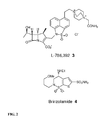
- Major recent pharmaceutical applications include the carbapenem antibiotic L-786,392 (Compound 3 , see FIG. 2), and brinzolamide (Compound 4 , see FIG. 2) for the treatment of glaucoma (Rosen et al., Science (1999), 283, 703; Dauban et al., Org. Lett. (2000), 2, 2327; Dauban et al., and Tetrahedron Lett. (2001), 42, 1037. FIG. 2).
- Cyclic sulfamidate has also been utilized in the preparation of amino acids (Baldwin et al., Tetrahedron: Asymmetry (1990), 1, 881; Boulton et al., J. Chem. Soc., Perkin Trans. (1999), 1, 1421; and Halcomb et al., J. Am. Chem. Soc. (2002), 124, 2534), and serves as chiral auxiliaries (Oppolzer et al., Tetrahedron Lett. (1994), 35, 3509; Ahn et al., Tetrahedron Lett. (1998), 39, 6321; and Lin et al., Tetrahedron (1999), 55, 13983).
- the present invention provides for the first time (1) intramolecular amidation of sulfamate esters catalyzed by a metalloporphyrin and (2) asymmetric intramolecular amidation of sulfamidate esters catalyzed by a transition-metal complex.
- the target cyclic sulfamidates can be easily converted to ⁇ or ⁇ amino alcohol (Du Bois et al., J. Am. Chem. Soc. (2001), 123, 6935), which is an important precursor for drug synthesis and for the synthesis chiral ligands for asymmetric catalysis (Kajiro et al., Synlett (1998), 51; Davies et al., Tetrahedron Lett. (1996), 37, 813; Ghosh et al., J. Am. Chem. Soc. (1996), 118, 2527).
- the present invention relates to a method for synthesizing a cyclic sulfamidate from a sulfamate ester comprising the step of catalyzing the reaction of an oxidant and a base with said sulfamate ester with a catalytic amount of metalloporphyrin as catalyst for producing the cyclic sulfamidate.
- the sulfamate ester is a compound comprising a sulfonylamide functional group.
- the oxidant is selected from the group consisting of PhI(OAc) 2 , PhIO, and NBS.
- the solvent for the reaction is acetonitrile, DMF, CH 2 Cl 2 or benzene.
- the base is Al 2 O 3 , MgO, ZnO, K 2 CO 3 , and KOH.
- the catalyst has the following structure: wherein M is a metal, preferably a transition metal, most preferably ruthenium.
- the catalyst has the following structure: wherein M is a metal, preferably a transition metal, most preferably ruthenium.
- the present invention provides a non-chiral metalloporphyrin catalyst represented by the structure: and a chiral metalloporphyrin catalyst represented by the structure: wherein M is a metal, preferably a transition metal such as ruthenium, manganese, iron, osmium, copper or cobalt, and most preferably ruthenium.
- M is a metal, preferably a transition metal such as ruthenium, manganese, iron, osmium, copper or cobalt, and most preferably ruthenium.
- the metalloporphyrin is a transition metal metalloporphyrin, such as ruthenium, manganese, iron, osmium, copper or cobalt metalloporphyrin.
- the porphyrin ligand is a tetraphenylporphyrin and the phenyl rings are attached at the meso positions of the porphyrin.
- catalysts are capable of exhibiting both regioselectivity and stereoselectivity.
- the catalyst is capable of selectively catalyzing intramolecular amidation of saturated C-H bonds. In another embodiment of the present invention, the catalyst is capable of catalyzing asymmetric intramolecular amidation of saturated C-H bonds. In one embodiment of this invention, the stereoselectivity is for the formation of only cis-configuration cyclic sulfamidates.
- the present invention provides a method for preparation of cyclic sulfamidates with the catalysts from sulfamate esters. Further, the present invention provides a method for producing a cis-cyclic sulfamidate with the catalyst. The present invention also provides a method for producing an optically active cyclic sulfamidate with the catalyst.
- the substrate is a sulfamate ester, a sulfamate ester derivative, or a hydrocarbon containing sulfonylamide group.
- solvents known in the art can be used to carry out the reaction.
- solvents include but are not limited to acetonitrile, DMF, CH 2 Cl 2 , and benzene.
- bases include but are not limted to Al 2 O 3 , MgO, ZnO, K 2 CO 3 , and KOH.
- stereoselective refers to selection of an optical isomer and the term “enantioselectivity” represents the maximal asymmetric induction and minimal racemization of the optically active products.
- turnover refers to the relative number of molecules of products per number of molecules of catalyst prior to the exhaustion of a given reaction.
- the invention relates to a direct method of synthesis of cyclic sulfamidates using ruthenium porphyrin (Compound/Catalyst 1, see FIG. 1, prepared according to: Murahashi et al., Tetrahedron Lett. 1995, 36,8059; Groves et al., J. Am. Chem. Soc. 1996, 118, 8961) as a general and effective catalyst for the direct intramolecular amidation of sulfamate esters.
- ruthenium porphyrin Compound/Catalyst 1, see FIG. 1, prepared according to: Murahashi et al., Tetrahedron Lett. 1995, 36,8059; Groves et al., J. Am. Chem. Soc. 1996, 118, 8961
- the commercially available Al 2 O 3 was dried to constant weight at 250 °C for 12 hours.
- Dichloromethane was freshly distilled from CaH 2 immediately prior to use. The reaction mixture was cooled to 25° C, diluted with 5 mL of CH 2 Cl 2 , and filtered through a pad of celite.
- Spectral data for Compound 16 are: 1 H NMR (CDCl 3 , 400 MHz) 7.37 (m, 5H), 4.60 (m, 1H), 4.39 (m, 2H), 2.14 (m, 1H), 1.10-1.85 (m, 8H) ppm; 13 C NMR (CDCl 3 , 100 MHz) 136.7, 129.3, 129.1, 127.3, 86.9, 64.3, 45.3, 31.8, 29.7, 24.8, 24.4 ppm; HRMS (EI) calcd. for C 13 H 17 NO 3 S: 267.0929, found: 267.0935.
- the reaction temperature has effect on the ee values as well.
- benzene was used as solvent, lowering reaction temperature resulted in increase in ee values (entries B and C in FIG. 6: from 79 to 84%; entries E and F in FIG. 6: from 82 to 87%; entries H and I in FIG. 6: from 81 to 82%).
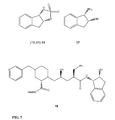
- optically-active Compound 17 (see FIG. 7) is currently receiving considerable attention as the key component of HIV protease inhibitor, indinavir Compound 18 (see: Hiyama et al., Synlett (1998), 51. FIG. 7).
- Compound 17 can be easily prepared from (1S,2R)-Compound 14 (see FIG. 7) after hydrolysis (see: Du Bois et al., J. Am. Chem. Soc. (2001), 123, 6935).
Landscapes
- Chemical & Material Sciences (AREA)
- Organic Chemistry (AREA)
- Engineering & Computer Science (AREA)
- Materials Engineering (AREA)
- Chemical Kinetics & Catalysis (AREA)
- Inorganic Chemistry (AREA)
- Catalysts (AREA)
- Organic Low-Molecular-Weight Compounds And Preparation Thereof (AREA)
Abstract
The present invention relates to novel intramolecular
amidation processes for substrates such as sulfamate esters
using chiral and non-chiral metalloporphyrin complexes, which
can maximize catalytic activity and enhance efficiency,
stereoselectivity and speed of amidation of these substrates.
The intramolecular amidation of sulfamate ester exhibits
excellent cis-selectivity, affording cyclic sulfamidates with
high ee values catalyzed by chiral metalloporphyrin.
Description
- The invention relates to methods for the direct intramolecular amidation of sulfamate esters affording cyclic sulfamidates. More particularly, the method represents an example of asymmetric intramolecular amidation of sulfamate ester with high ee values.
- Cyclic sulfamidate or sulfonamide is useful building block for drug discovery. Major recent pharmaceutical applications include the carbapenem antibiotic L-786,392 (Compound 3, see FIG. 2), and brinzolamide (Compound 4, see FIG. 2) for the treatment of glaucoma (Rosen et al., Science (1999), 283, 703; Dauban et al., Org. Lett. (2000), 2, 2327; Dauban et al., and Tetrahedron Lett. (2001), 42, 1037. FIG. 2). Cyclic sulfamidate has also been utilized in the preparation of amino acids (Baldwin et al., Tetrahedron: Asymmetry (1990), 1, 881; Boulton et al., J. Chem. Soc., Perkin Trans. (1999), 1, 1421; and Halcomb et al., J. Am. Chem. Soc. (2002), 124, 2534), and serves as chiral auxiliaries (Oppolzer et al., Tetrahedron Lett. (1994), 35, 3509; Ahn et al., Tetrahedron Lett. (1998), 39, 6321; and Lin et al., Tetrahedron (1999), 55, 13983).
- Catalytic intramolecular amidation was pioneered by Breslow in 1983 using transition-metal porphyrin complexes and rhodium acetate as catalysts yielding cyclic sulfonamides (Breslow et al., J. Am. Chem. Soc. (1983), 105, 6728).
Recent research by Du Bois showed that rhodium acetate served as an efficient catalyst for intramolecular amidation of sulfamate esters affording corresponding cyclic sulfamidates in good to high yield (Du Bois et al., J. Am. Chem. Soc. (2001), 123, 6935). However, challenge remains to seek more stereoselective catalysts for the synthesis of optically active cyclic sulfamidates. There has been no report on asymmetric intramolecular amidation of such substrates using chiral catalysts. - On the other hand, metalloporphyrin-catalyzed intermolecular nitrogen-atom transfer has attracted considerable attention not only because of its unique relationship to heme-containing enzymes but also because of its unusually high selectivity and catalytic turnover (Che et al., Org. Lett. (2000), 2, 2233). Moderate ee values have been obtained for asymmetric aziridination of alkenes and amidation of saturated C-H bonds (Che et al., Chem. Comm. (1997), 2373; Che et al., Chem. Comm. (1999), 2377; Marchon et al., Chem. Comm. (1999), 989; and Che et al., Chem. Eur. J. (2002), 1563). The successful isolation of bis(tosylimido) ruthenium porphyrin provides useful insight into the mechanism of ruthenium porphyrin-catalyzed intramolecular nitrogen-atom transfer reactions (Che et al., J. Am. Chem. Soc. (1999), 121, 9120; and Che et al., Chem. Eur. J. (2002), 1563).
- The present invention provides for the first time (1) intramolecular amidation of sulfamate esters catalyzed by a metalloporphyrin and (2) asymmetric intramolecular amidation of sulfamidate esters catalyzed by a transition-metal complex. The target cyclic sulfamidates can be easily converted to α or β amino alcohol (Du Bois et al., J. Am. Chem. Soc. (2001), 123, 6935), which is an important precursor for drug synthesis and for the synthesis chiral ligands for asymmetric catalysis (Kajiro et al., Synlett (1998), 51; Davies et al., Tetrahedron Lett. (1996), 37, 813; Ghosh et al., J. Am. Chem. Soc. (1996), 118, 2527).
- The present invention relates to a method for synthesizing a cyclic sulfamidate from a sulfamate ester comprising the step of catalyzing the reaction of an oxidant and a base with said sulfamate ester with a catalytic amount of metalloporphyrin as catalyst for producing the cyclic sulfamidate.
- In a preferred embodiment, the sulfamate ester is a compound comprising a sulfonylamide functional group.
- In a preferred embodiment, the oxidant is selected from the group consisting of PhI(OAc)2, PhIO, and NBS.
- In a preferred embodiment, the solvent for the reaction is acetonitrile, DMF, CH2Cl2 or benzene.
- In a preferred embodiment, the base is Al2O3, MgO, ZnO, K2CO3, and KOH.
- In a preferred embodiment, the catalyst has the following structure:wherein M is a metal, preferably a transition metal, most preferably ruthenium.

- In another preferred embodiment, the catalyst has the following structure:wherein M is a metal, preferably a transition metal, most preferably ruthenium.

-
- FIG. 1 provides representative examples of the metalloporphyrin catalysts capable of catalyzing intramolecular amidation of sulfamate esters with high efficiency and high diastereo- or enantio- selectivity.
- FIG. 2 provides representative examples of drugs containing cyclic sulfonamide unit.
- FIG. 3 illustrates the described method involving the direct intramolecular amidation of sulfamate esters using metalloporphyrin as a general and efficient catalyst.
- FIG. 4 provides representative examples of intramolecular amidation of sulfamate esters catalyzed by electron-deficient ruthenium porphyrin yielding the corresponding cyclic sulfamidates in good to excellent yields with excellent diastereoselectivity.
- FIG. 5 provides representative examples of intramolecular amidation of sulfamate esters catalyzed by electron-deficient ruthenium porphyrin with high turnover numbers.
- FIG. 6 provides representative examples of asymmetric intramolecular amidation of sulfamate esters catalyzed by chiral ruthenium porphyrin with high enantioselectivity.
- FIG 7. provides representative examples of pharmaceutical application of α-amino alcohol.
-
- The present invention provides a non-chiral metalloporphyrin catalyst represented by the structure:and a chiral metalloporphyrin catalyst represented by the structure:
 wherein M is a metal, preferably a transition metal such as ruthenium, manganese, iron, osmium, copper or cobalt, and most preferably ruthenium.
- In one embodiment of this invention, the metalloporphyrin is a transition metal metalloporphyrin, such as ruthenium, manganese, iron, osmium, copper or cobalt metalloporphyrin.
- In one embodiment of this invention, the porphyrin ligand is a tetraphenylporphyrin and the phenyl rings are attached at the meso positions of the porphyrin.
- In one embodiment of the present invention, catalysts are capable of exhibiting both regioselectivity and stereoselectivity.
- In one embodiment of the present invention, the catalyst is capable of selectively catalyzing intramolecular amidation of saturated C-H bonds. In another embodiment of the present invention, the catalyst is capable of catalyzing asymmetric intramolecular amidation of saturated C-H bonds. In one embodiment of this invention, the stereoselectivity is for the formation of only cis-configuration cyclic sulfamidates.
- Additionally, the present invention provides a method for preparation of cyclic sulfamidates with the catalysts from sulfamate esters. Further, the present invention provides a method for producing a cis-cyclic sulfamidate with the catalyst. The present invention also provides a method for producing an optically active cyclic sulfamidate with the catalyst.
- In an embodiment of this invention, the substrate is a sulfamate ester, a sulfamate ester derivative, or a hydrocarbon containing sulfonylamide group.
- A number of solvents known in the art can used to carry out the reaction. Such solvents include but are not limited to acetonitrile, DMF, CH2Cl2, and benzene.
- A number of bases know in the art can be used. Such bases include but are not limted to Al2O3, MgO, ZnO, K2CO3, and KOH.
- As used herein, the term "stereoselective" refers to selection of an optical isomer and the term "enantioselectivity" represents the maximal asymmetric induction and minimal racemization of the optically active products. The term "turnover" refers to the relative number of molecules of products per number of molecules of catalyst prior to the exhaustion of a given reaction.
- Various publications are cited herein, the disclosures of which are incorporated by reference in their entirety for all purposes.
- Having described the invention, the following examples are included to illustrate the benefits of the present invention. The examples are only illustrative and are not meant to unduly limit the scope of the present invention.
- The invention relates to a direct method of synthesis of cyclic sulfamidates using ruthenium porphyrin (Compound/Catalyst 1, see FIG. 1, prepared according to: Murahashi et al., Tetrahedron Lett. 1995, 36,8059; Groves et al., J. Am. Chem. Soc. 1996, 118, 8961) as a general and effective catalyst for the direct intramolecular amidation of sulfamate esters.
- Typical conditions employ 1.5% of Catalyst 1, 1 equiv. of sulfamate ester, 2 equiv. of Phi(OAc)2, 2.5 equiv. of anhydrous Al2O3 (pH = 7-7.4) in distilled dichloromethane under argon at 40 °C for 2 hours. The commercially available Al2O3 was dried to constant weight at 250 °C for 12 hours. Dichloromethane was freshly distilled from CaH2 immediately prior to use. The reaction mixture was cooled to 25° C, diluted with 5 mL of CH2Cl2, and filtered through a pad of celite. The filter cake was rinsed with 2 × 5 mL of CH2Cl2 and the combined filtrates were evaporated under reduced pressure. The residue was purified by chromatography on silica gel (230-400 mesh) to afford the corresponding cyclic sulfamidates. AcOH generated as a by-product from PhI(OAc)2 should be scavenged from the reaction mixture by addition of base. Following a series of control experiments, Al2O3 was proved the best among MgO, ZnO, K2CO3, Al2O3 and KOH, giving the highest yields.
- With only 1.5% catalyst loading, sulfamate esters (Compounds/Substrates 5-10, see FIG. 4) were converted into corresponding cyclic sulfamidates (Compounds/Products 11-16, see FIG. 4) with good to high yields (see FIG. 4). The highest yield (88%) was achieved on the intramolecular amidation of
Substrates Catalyst 1 not only shows high catalytic efficiency, but also shows excellent cis-selectivity. ForSubstrates cyclic sulfamidates ruthenium porphyrin 1 has better stereoselectivity than rhodium acetate (cis and trans mixture were obtained whenSubstrate 8 was catalyzed by rhodium acetate. The ratio of cis/trans is 8:1. See: Du Bois et al., J. Am. Chem. Soc. 2001, 123, 6935). The oxidant used in the catalytic reaction is PhI(OAc)2, which is commercially available. For Substrates 5-7, and 10, six- rather than five-membered heterocycles 10-12 and 16 were formed in high yields. Forsubstrates membered ring products - All the target cyclic sulfamidates were characterized by 1H, 13C and NOESY NMR and HRMS. The spectral data of Products 11-14 are identical with those reported in the literature (see: Du Bois et al., J. Am. Chem. Soc. 2001, 123, 6935). Spectral data for
Compound 9 are: 1H NMR (CDCl3, 400 MHz) : δ = 7.29 (m, 5H), 4.82 (s, 2H), 4.37 (t, J = 9.3 Hz, 2H), 3.03 (t, J = 9.2 Hz, 2H) ; 13C NMR (CDCl3, 100 MHz) : δ = 136.4, 128.9, 128.7, 127.0, 71.4, 35.2. HRMS (EI) calcd. for C8H11NO3S: 201.0460, found: 201.0456. Spectral data forCompound 10 are: 1H NMR (CDCl3, 400 MHz) 7.23 (m, 5H), 4.66 (s, 2H), 4.34 (m, 1H), 3.15 (dd, 1H, J = 13.6 Hz), 2.32 (m, 2H), 1.10-1.86 (m, 8H) ppm; 13C NMR (CDCl3, 100 MHz) 140.0, 129.2, 128.3, 126.0, 87.2, 44.0, 38.9, 32.4, 30.0, 24.5, 24.4 ppm; HRMS (EI) calcd. for C13H19NO3S: 269.1087, found: 269.1090. Spectral data forCompound 15 are: 1H NMR (CDCl3, 400 MHz) 7.43 (m, 5H), 5.07 (m, 1H), 4.84 (m, 2H), 4.45 (t, J = 6.5 Hz, 1H) ppm; 13C NMR (CDCl3, 100 MHz) 135.3, 129.5, 129.4, 126.7, 75.0, 59.6 ppm; HRMS (EI) calcd. for C8H9NSO3: 199.0303, found: 199.0297. Spectral data forCompound 16 are: 1H NMR (CDCl3, 400 MHz) 7.37 (m, 5H), 4.60 (m, 1H), 4.39 (m, 2H), 2.14 (m, 1H), 1.10-1.85 (m, 8H) ppm; 13C NMR (CDCl3, 100 MHz) 136.7, 129.3, 129.1, 127.3, 86.9, 64.3, 45.3, 31.8, 29.7, 24.8, 24.4 ppm; HRMS (EI) calcd. for C13H17NO3S: 267.0929, found: 267.0935. - Turnover refers to the relative number of molecules of products per number of molecules of catalyst prior to the exhaustion of a given reaction and shows a very important aspect of catalyst efficiency. The turnover numbers of rhodium catalyst don't excess 50 (see: Du Bois et al., J. Am. Chem. Soc. (2001), 123, 6935). With electron-
deficient ruthenium porphyrin 1 as catalyst, intramolecular amidation of 5 and 7 afforded 290 and 301 turnover numbers, respectively (FIG. 5). This shows thatcatalyst 1 is more robust than rhodium catalysts (the reaction condition are almost the same as those example 1, except that lower catalyst loading was employed in example 2. See the footnote of FIG. 5). - With chiral ruthenium porphyrin (Compound/
Catalyst 2 in FIG. 1) (prepared according to: Che et al., Chem. Comm. (1997), 1205) as catalyst, sulfamate esters (Compounds/Substrates sulfamate ester 5 was converted into 11 with 46% ee when the reaction was performed in CH2Cl2 (entry A of FIG. 6). But the ee value increased sharply to 79% when benzene was used as solvent (entry B of FIG. 6). Same conclusion can be obtained forSubstrates - The reaction temperature has effect on the ee values as well. When benzene was used as solvent, lowering reaction temperature resulted in increase in ee values (entries B and C in FIG. 6: from 79 to 84%; entries E and F in FIG. 6: from 82 to 87%; entries H and I in FIG. 6: from 81 to 82%).
- The present invention provides a powerful method for the synthesis of chiral cyclic sulfamidates. These compounds are potentially useful for the synthesis of optically active α or β-amino alcohol, which is of particular importance for drug synthesis. For example, optically-active Compound 17 (see FIG. 7) is currently receiving considerable attention as the key component of HIV protease inhibitor, indinavir Compound 18 (see: Hiyama et al., Synlett (1998), 51. FIG. 7).
Compound 17 can be easily prepared from (1S,2R)-Compound 14 (see FIG. 7) after hydrolysis (see: Du Bois et al., J. Am. Chem. Soc. (2001), 123, 6935). From commercially available and non-chiral 2-indanol,Compound 17 can be obtained through 3 steps. However, it took eight steps to yieldCompound 17 from chiral amino acid as starting material (see: Hiyama et al., Synlett (1998), 51).
Claims (15)
- A method for synthesizing a cyclic sulfamidate from a sulfamate ester comprising the step of catalyzing the reaction of an oxidant and a base with said sulfamate ester with a catalytic amount of metalloporphyrin as catalyst for producing the cyclic sulfamidate.
- The method according to claim 1 wherein the sulfamate ester is a compound comprising a sulfonylamide functional group.
- The method according to claim 1 wherein the oxidant is selected from the group consisting of PhI(OAc)2, PhIO, and NBS.
- The method according to claim 1 further comprising an organic solvent selected from the group consisting of acetonitrile, DMF, CH2Cl2, and benzene.
- The method according to claim 1 wherein the base is selected from the group consisting of Al2O3, MgO, ZnO, K2CO3, and KOH.
- The method accoring to claim 1 wherein the metalloporphyrin is a transition metal metalloporphyrin.
- The method according to claim 6 wherein the transition metal metalloporphyrin is selected from the group consisting of ruthenium, manganese, iron, cobalt, copper and osmium metalloporphyrin.
- The method according to claim 7, wherein the metalloporphyrin is ruthenium porphyrin.
- The method according to claim 1 wherein the metalloporphyrin catalyst has the structure:wherein M represents a metal.

- The method of claim 9 wherein M is ruthenium.
- The method of claim 9 wherein the catalyst exhibits cis-selectivity.
- The method according to claim 1 wherein the metalloporphyrin catalyst has the structure:wherein M represents a metal.
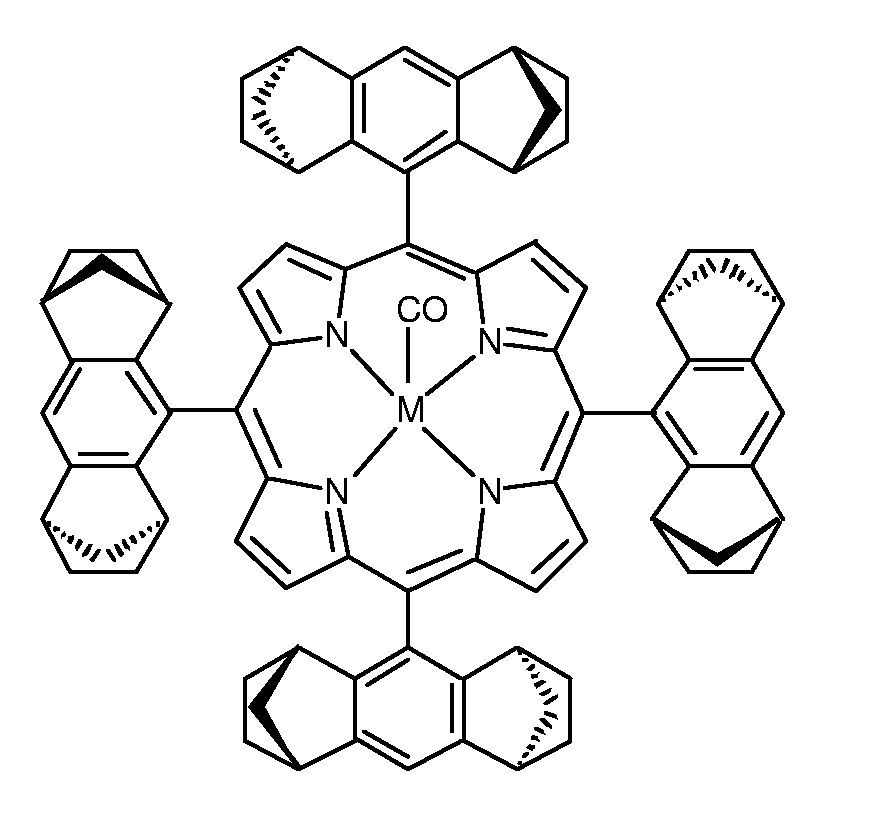
- The method of claim 12 wherein M is ruthenium.
- The method of claim 12 wherein the catalyst exhibit cis-selectivity.
- The method of claim 12 wherein the catalyst exhibits enantioselctivity and yields corresponding cyclic sulfamidate with high ee value.
Applications Claiming Priority (2)
| Application Number | Priority Date | Filing Date | Title |
|---|---|---|---|
| US202581 | 2002-07-23 | ||
| US10/202,581 US20040019204A1 (en) | 2002-07-23 | 2002-07-23 | Intramolecular amidation of sulfamate esters catalyzed by metalloporphyrins |
Publications (1)
| Publication Number | Publication Date |
|---|---|
| EP1384718A1 true EP1384718A1 (en) | 2004-01-28 |
Family
ID=30000100
Family Applications (1)
| Application Number | Title | Priority Date | Filing Date |
|---|---|---|---|
| EP03102223A Withdrawn EP1384718A1 (en) | 2002-07-23 | 2003-07-18 | Intramolecular amidation of sulfamate esters catalyzed by metalloporphyrins |
Country Status (2)
| Country | Link |
|---|---|
| US (2) | US20040019204A1 (en) |
| EP (1) | EP1384718A1 (en) |
Families Citing this family (7)
| Publication number | Priority date | Publication date | Assignee | Title |
|---|---|---|---|---|
| GB2397067B (en) * | 2002-12-23 | 2005-05-11 | Destiny Pharma Ltd | Porphin & azaporphin derivatives with at least one cationic-nitrogen-containing meso-substituent for use in photodynamic therapy & in vitro sterilisation |
| GB2415372A (en) | 2004-06-23 | 2005-12-28 | Destiny Pharma Ltd | Non photodynamical or sonodynamical antimicrobial use of porphyrins and azaporphyrins containing at least one cationic-nitrogen-containing substituent |
| US20110207956A1 (en) * | 2010-02-24 | 2011-08-25 | Zhang X Peter | Intramolecular c-h amination with phosphoryl azides |
| KR101286617B1 (en) * | 2010-06-21 | 2013-07-23 | 한국화학연구원 | Method for preparing [1,2,3]-oxathiazolidine-2,2-dioxide or [1,2,5]-thiadiazolidine-1,1-dioxide derivatives |
| US10125319B2 (en) * | 2011-07-31 | 2018-11-13 | Saudi Arabian Oil Company | Integrated process to produce asphalt and desulfurized oil |
| CN104961741A (en) * | 2015-06-10 | 2015-10-07 | 华中师范大学 | High-steric hindrance chiral porphyrin, preparation method thereof, and application thereof in metalloporphyrin |
| CN115779893A (en) * | 2022-12-19 | 2023-03-14 | 江南大学 | A chiral noble metal nanocatalyst mediated by H2TPPS-arginine assembly and its preparation method |
-
2002
- 2002-07-23 US US10/202,581 patent/US20040019204A1/en not_active Abandoned
-
2003
- 2003-07-18 EP EP03102223A patent/EP1384718A1/en not_active Withdrawn
-
2004
- 2004-03-03 US US10/790,810 patent/US7105660B2/en not_active Expired - Lifetime
Non-Patent Citations (2)
| Title |
|---|
| ESPINO C G ET AL: "Synthesis of 1,3-difunctionalized amine derivatives through selective C-H bond oxidation", JOURNAL OF THE AMERICAN CHEMICAL SOCIETY 2001 UNITED STATES, vol. 123, no. 28, 2001, pages 6935 - 6936, XP002260943, ISSN: 0002-7863 * |
| LIANG JIANG-LIN ET AL: "Metalloporphyrin-mediated asymmetric nitrogen-atom transfer to hydrocarbons: aziridination of alkenes and amidation of saturated C-H bonds catalyzed by chiral ruthenium and manganese porphyrins.", CHEMISTRY (WEINHEIM AN DER BERGSTRASSE, GERMANY) GERMANY 2 APR 2002, vol. 8, no. 7, 2 April 2002 (2002-04-02), pages 1563 - 1572, XP002260944, ISSN: 0947-6539 * |
Also Published As
| Publication number | Publication date |
|---|---|
| US7105660B2 (en) | 2006-09-12 |
| US20040019204A1 (en) | 2004-01-29 |
| US20040236099A1 (en) | 2004-11-25 |
Similar Documents
| Publication | Publication Date | Title |
|---|---|---|
| Fruit et al. | Asymmetric transfer of nitrenes catalyzed by chiral dirhodium (II) using aromatic sulfamate esters | |
| Jin et al. | Chiral rare earth metal complex-catalyzed conjugate addition of O-alkylhydroxylamines. An efficient synthetic entry into optically active 2-acyl aziridines | |
| Anas et al. | Routes toward enantiopure 2-substituted indolines: an overview | |
| CN110452150B (en) | Axial chiral indole-naphthalene compound and preparation method thereof | |
| Yanagisawa et al. | Asymmetric protonations of enol derivatives | |
| US9334297B2 (en) | Chiral imidazolium salts for asymmetric catalysis | |
| Yu et al. | Enantioselective Ag (I)-catalyzed [3+ 2] cycloaddition of azomethine ylides using a chiral ferrocene-based phosphine–phosphoramidite ligand having a stereogenic P-center | |
| CN111848320B (en) | A kind of synthesis method of chiral 2-hydroxy-1,4-dicarbonyl compound and pantolactone | |
| Chen et al. | Bifunctional AgOAc-catalyzed asymmetric reactions | |
| US20040019204A1 (en) | Intramolecular amidation of sulfamate esters catalyzed by metalloporphyrins | |
| Kubota et al. | Strained silacycle-catalyzed asymmetric Diels–Alder cycloadditions: the first highly enantioselective silicon Lewis acid catalyst | |
| US20050124596A1 (en) | Chiral porphyrins, chiral metalloporphyrins, and methods for synthesis of the same | |
| KR20020009485A (en) | Process for producing optically active alcohol | |
| JP7464234B2 (en) | Method for producing highly optically active allene carboxylic acid compounds having axial asymmetry | |
| CN112940002A (en) | Method for synthesizing eight-membered bridged ring compound through palladium-catalyzed asymmetric ring addition reaction | |
| Valleix et al. | Chiral amidophosphane–copper-catalyzed asymmetric conjugate addition of dialkylzinc reagents to nitroalkenes | |
| CN113173862B (en) | A method for the selective desaturation of inert carbon-carbon bonds to synthesize alkenes | |
| Liu et al. | Enantiodivergent synthesis of 1, 2-bis (diphenylphosphino) ethanes via asymmetric [3+ 2]-cycloaddition | |
| CN115197145B (en) | Chiral spirocyclic ammonium salt compounds and preparation methods and applications thereof | |
| Zou et al. | New bis (1-ferrocenylethyl) amine-derived monodentate phosphoramidite ligands for highly enantioselective copper-catalyzed 1, 4-conjugate addition | |
| CN114426511A (en) | Method for preparing chiral spiro [2.4] heptane compounds through palladium-catalyzed asymmetric cycloaddition reaction | |
| Akiyama et al. | Pd (II)-catalyzed enantioselective intramolecular Heck-type reaction to construct chiral sulfonamide rings | |
| US7385064B1 (en) | Catalysts for use in enantioselective synthesis | |
| CN114516814B (en) | A catalytic asymmetric preparation method of chiral quaternary carbon α-amino acid ester compounds | |
| Grach et al. | Screening of amino sulfur ferrocenes as catalysts for the enantioselective addition of diethylzinc to benzaldehyde |
Legal Events
| Date | Code | Title | Description |
|---|---|---|---|
| PUAI | Public reference made under article 153(3) epc to a published international application that has entered the european phase |
Free format text: ORIGINAL CODE: 0009012 |
|
| AK | Designated contracting states |
Kind code of ref document: A1 Designated state(s): AT BE BG CH CY CZ DE DK EE ES FI FR GB GR HU IE IT LI LU MC NL PT RO SE SI SK TR |
|
| AX | Request for extension of the european patent |
Extension state: AL LT LV MK |
|
| AKX | Designation fees paid | ||
| REG | Reference to a national code |
Ref country code: DE Ref legal event code: 8566 |
|
| STAA | Information on the status of an ep patent application or granted ep patent |
Free format text: STATUS: THE APPLICATION IS DEEMED TO BE WITHDRAWN |
|
| 18D | Application deemed to be withdrawn |
Effective date: 20040729 |