EP1383346A1 - Service control apparatus, system and method and switching center for contolling ISUP signaling interworking - Google Patents
Service control apparatus, system and method and switching center for contolling ISUP signaling interworking Download PDFInfo
- Publication number
- EP1383346A1 EP1383346A1 EP03014190A EP03014190A EP1383346A1 EP 1383346 A1 EP1383346 A1 EP 1383346A1 EP 03014190 A EP03014190 A EP 03014190A EP 03014190 A EP03014190 A EP 03014190A EP 1383346 A1 EP1383346 A1 EP 1383346A1
- Authority
- EP
- European Patent Office
- Prior art keywords
- forwarding
- switching center
- interwork
- service control
- parameter
- Prior art date
- Legal status (The legal status is an assumption and is not a legal conclusion. Google has not performed a legal analysis and makes no representation as to the accuracy of the status listed.)
- Granted
Links
Images


Classifications
-
- H—ELECTRICITY
- H04—ELECTRIC COMMUNICATION TECHNIQUE
- H04M—TELEPHONIC COMMUNICATION
- H04M3/00—Automatic or semi-automatic exchanges
-
- H—ELECTRICITY
- H04—ELECTRIC COMMUNICATION TECHNIQUE
- H04Q—SELECTING
- H04Q3/00—Selecting arrangements
- H04Q3/0016—Arrangements providing connection between exchanges
- H04Q3/0025—Provisions for signalling
-
- H—ELECTRICITY
- H04—ELECTRIC COMMUNICATION TECHNIQUE
- H04Q—SELECTING
- H04Q3/00—Selecting arrangements
- H04Q3/0016—Arrangements providing connection between exchanges
- H04Q3/0029—Provisions for intelligent networking
- H04Q3/0045—Provisions for intelligent networking involving hybrid, i.e. a mixture of public and private, or multi-vendor systems
Definitions
- the present invention relates to service control apparatus, forwarding switching equipment, a service control system, and a service control method.
- the CAMEL Customerized Applications for Mobile Enhanced Logic
- IN Intelligent Network
- 3GPP The 3rd Generation Partnership Project
- I-SUP ISDN User Part
- an MSC Mobile Switching Center
- SCP Service Control Point
- the present invention has been accomplished in view of the above problem and an object of the invention is to implement efficient call processing while preventing increase in the volume of data transmitted and received between the service control apparatus (equivalent to SCP) and the forwarding switching center (equivalent to MSC).
- a service control apparatus is a service control apparatus (SCP) comprising notifying means for, on the occasion of providing a service utilizing ISUP interwork between a first leg defined between an originating switching center and a call-forwarding switching center (forwarding MSC) and a second leg defined between the forwarding switching center and a call-receiving switching center (receiving MSC), notifying the forwarding switching center of interwork pattern identification information corresponding to a category of the service.
- SCP service control apparatus
- a forwarding switching center is forwarding switching equipment for transmitting and receiving data to and from the aforementioned service control apparatus, the forwarding switching equipment comprising: storage means for storing an interwork pattern in which a parameter received from the originating switching center is correlated with a process to the parameter, for every interwork pattern identification information; and processing means for performing the process to the parameter with reference to the interwork pattern corresponding to the interwork pattern identification information notified of by the notifying means of the service control apparatus.
- the invention may also be applied to construction of a service control system comprising the aforementioned service control apparatus and the aforementioned forwarding switching equipment and configured to implement communication between the service control apparatus and the forwarding switching equipment.
- a service control method is a service control method comprising a notification step wherein, on the occasion of providing a service utilizing ISUP interwork between a first leg defined between an originating switching center and a call-forwarding switching center (forwarding MSC) and a second leg defined between the forwarding switching center and a call-receiving switching center (receiving MSC), a service control apparatus (SCP) notifies the forwarding switching center of interwork pattern identification information corresponding to a category of the service.
- forwarding MSC call-forwarding switching center
- Rceiving MSC call-receiving switching center
- Another service control method is a service control method comprising a processing step wherein a call-forwarding switching center comprising storage means storing an interwork pattern in which a parameter received from an originating switching center is correlated with a process to the parameter, for every interwork pattern identification information, performs the process to the parameter with reference to the interwork pattern corresponding to the interwork pattern identification information notified of by a service control apparatus.
- a call-forwarding switching center comprising storage means storing an interwork pattern in which a parameter received from an originating switching center is correlated with a process to the parameter, for every interwork pattern identification information, performs the process to the parameter with reference to the interwork pattern corresponding to the interwork pattern identification information notified of by a service control apparatus.
- the service control apparatus transmits to the forwarding switching center, the identification information of an interwork pattern which the forwarding switching center is instructed to use.
- the forwarding switching center performs each parameter process with reference to the interwork pattern specified by the identification information. Namely, the processes to parameters, e.g., "abandon and then generate,” “transmit,” etc., are not executed on the service control apparatus side but executed on the forwarding switching center side.
- the forwarding switching center does not have to transmit any of the parameters on the signal received from the originating switching center, to the service control apparatus.
- This decreases the volume of data transmitted and received between the forwarding switching center and the service control apparatus on the occasion of implementing the ISUP interwork and suppresses the drop of throughput in the system.
- Fig. 1 is a conceptual diagram showing the overall configuration of service control system 1 in the present embodiment.
- the service control system 1 is comprised of at least forwarding MSC (Mobile Switching Center) 20 and SCP (Service Control Point) 30.
- the forwarding MSC 20 and SCP 30 are wired to each other so as to be able to transmit and receive various data between them.
- the forwarding MSC 20 is wired to originating switching center 10 and to receiving MSC 40.
- the originating switching center 10 puts parameters A to D on an IAM (Initial Address Message) and transmits it to the forwarding MSC 20.
- the IAM is a connect request signal being one of the ISUP messages.
- the originating switching center 10 receives an ACM (Address Complete Message) and an ANM (ANswer Message) from the forwarding MSC 20.
- the ACM is one of the ISUP messages and a signal notifying that a route of switching equipment to a correspondent has been specified.
- the ANM is one of the ISUP message and a signal notifying that a communicable state with the correspondent was established.
- the forwarding MSC 20 (corresponding to the forwarding switching center) has an interwork pattern table 21 (corresponding to the storage means) inside.
- Fig. 2 is a diagram showing a data storage example of the interwork pattern table 21.
- the interwork pattern table 21 is comprised of interwork patterns 21a, 21b, and 21c corresponding to respective interwork pattern numbers #1, #2, and #3 (corresponding to the interwork pattern identification information).
- the interwork pattern 21a is comprised of parameter area 211 and parameter process area 212, in which parameters and parameter processes are stored in correlation with each other.
- the parameter area 211 stores parameters (e.g., A, B, C, D, E) that can be transmitted from the originating switching center 10, and the parameter process area 212 stores types of processes (e.g., "abandon and then generate,” “transmit,” “abandon,” “receive from SCP") to be executed to the corresponding parameters.
- the parameter A is a parameter for display of connection characteristics and can be further separated into a satellite connection display parameter A1, a continuity check display parameter A2, an echo canceller display parameter A3, and so on.
- the parameter B is a parameter for display of forward call, and may be further separated into a national/international call display parameter B1, an end-to-end connection display parameter B2, an interconnection display parameter B3, an end-to-end information display parameter B4, an ISUP1 link display parameter B5, an ISUP1 link choice display parameter B6, an ISDN access display parameter B7, and an SCCP method display parameter B8.
- the parameters C, D, and E are an originating user class parameter, a communication route request display parameter, and a terminating number parameter, respectively.
- the other parameters assumed in the incoming-call forwarding service include those of calling line identity, redirection number, call forwarding information, first called party number, access transport, user service information, generic number, charge area information, caller ID non-display reason, additional user class, carrier information transport, and so on.
- the forwarding MSC 20 is provided with a parameter processor 22 (corresponding to the processing means).
- the parameter processor 22 selects an interwork pattern to be referred to, based on the interwork pattern number out of #1, #2, and #3, which was notified of by SCP 30. Then the parameter processor 22 performs the parameter processes corresponding to the respective parameters A-E, with reference to the selected interwork pattern.
- the forwarding MSC 20 receives the IAM from the originating switching center 10 and sends the ACM and ANM to the originating switching center 10.
- the forwarding MSC 20 transmits an InitialDP (Detection Point) to the SCP 30 and receives a Connect from the SCP 30.
- the InitialDP herein is a control signal being one of CAP (CAMEL Applications Part) signals compliant with the CAMEL control signaling system.
- the Connect is one of the CAP signals and a signal notifying the MSC of an interwork pattern number and a parameter.
- the forwarding MSC 20 transmits an LAM to the receiving MSC 40 and receives an ACM and an ANM from the receiving MSC 40.
- the SCP 30 (corresponding to the service control apparatus) is provided with at least service table 31 and pattern notifying unit 32.
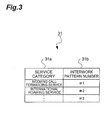
- Fig. 3 is a diagram showing a data storage example of the service table 31.
- the service table 31 is comprised of service category area 31a and interwork pattern number area 31b, in which service categories and interwork pattern numbers are stored in correlation with each other.
- the service category area 31a stores categories of services (e.g., "incoming-call forwarding service,” “international roaming service,” etc. that can be provided in the service control system 1.
- categories of services e.g., "incoming-call forwarding service,” "international roaming service,” etc.
- the interwork pattern number area 31b stores as "interwork pattern numbers” identification information (e.g., "#1,” "#2,” “#3,”...) that can uniquely specify the interwork pattern which the forwarding MSC 20 is instructed to refer to.
- Some service categories stored in the service category area 31a can be further seg-mentalized according to conditions of the ISUP interwork for provision of corresponding services.
- the incoming-call forwarding service can be categorized, for example, into cases where the incoming-call destination is an international carrier, a PHS (Personal Handyphone System), or a caller-paying pocket pager, in view of the incoming-call destination.
- PHS Personal Handyphone System
- the pattern notifying unit 32 determines the foregoing interwork pattern number and parameter according to the service category and transmits the Connect therewith to the forwarding MSC 20. This notifies the forwarding MSC 20 of the interwork pattern to which the forwarding MSC 20 is to refer, and the parameter used according to necessity as well.
- the receiving MSC 40 (corresponding to the receiving switching center) receives the LAM from the forwarding MSC 20 and sends the ACM and ANM to the forwarding MSC 20.
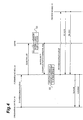
- Fig. 4 is a flowchart for explaining the service control processing executed by the service control system 1.
- the forwarding MSC 20 receives the IAM containing the parameters A(a)-D(d), which was transmitted from the originating switching center 10.
- the forwarding MSC 20 transmits the foregoing InitialDP to the SCP 30.
- the SCP 30 determines the category of the service to be started, based on the InitialDP received in S2, and selects and extracts an interwork pattern number from the service table 31 on the basis of the determination result.
- the step S3 may be configured so that the SCP 30 first determines whether the ISUP interwork is necessary, on the basis of the service category, and so that, only when it is determined that the ISUP interwork is necessary, the interwork pattern number is selected and extracted.
- the SCP 30 notifies the forwarding MSC 20 of the interwork pattern number extracted in S3 (#1 in the example of Fig. 4) and a parameter (E(e) in the example of Fig. 4) through the Connect.
- the forwarding MSC 20 executes the interwork corresponding to the interwork pattern number notified of in S4.
- the forwarding MSC 20 refers to the interwork pattern table 21 and maps the parameters for the zone between forwarding MSC 20 and SCP 30 (hereinafter referred to as "first leg") to those for the zone between SCP 30 and receiving MSC 40 (hereinafter referred to as "second leg") with reference to the interwork pattern table 21 (parameter conversion).
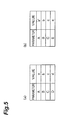
- the parameters A-D before the mapping have their respective values a-d.
- the forwarding MSC 20 abandons the value a and then generates a value a' as a substitute.
- the parameter processes thereto both are "transmit.” Therefore, the existing values b, c are retained as values after the mapping. Since the parameter process to the parameter D(d) is "abandon,” the forwarding MSC 20 deletes the parameter D(d). As a consequence, the value d will not be transported to the receiving MSC 40.
- the parameter process to the parameter E(e) is "receive from SCP.” Therefore, the parameter E(e) received from SCP 30 in S4 is newly added to the parameters after the mapping.
- the parameters A(a'), B(b), C(c), and E(e) resulting from the mapping by the forwarding MSC 20 in S5 are transported to the receiving MSC 40. This permits the forwarding MSC 20 to be connected to the receiving MSC 40 through these parameters.
- the receiving MSC 40 sends the ACM and ANM to the forwarding MSC 20.
- the forwarding MSC 20 sends the ACM and ANM to the originating switching center 10.
- the SCP 30 when the SCP 30 receives the InitialDP from the forwarding MSC 20, the SCP 30 selects the identification number of the interwork pattern and the parameter that the forwarding MSC 20 will necessitate on the occasion of executing the ISUP interwork, and then notifies the forwarding MSC 20 of them.
- the forwarding MSC 20 acquires the interwork pattern corresponding to the interwork pattern number thus notified of, from the interwork pattern table 21 and performs the mapping of the parameters while adequately adding the parameter notified of. This mapping completes the connection based on the incoming-call forwarding service (ISUP interwork) between the forwarding MSC 20 and the receiving MSC 40.
- the parameter processes are not executed in SCP 30 but executed in the forwarding MSC 20.
- the forwarding MSC 20 does not have to transmit any of the parameters A(a)-D(d) on the signal received from the originating switching center 10, to the SCP 30.
- This decreases the volume of data transmitted and received between the forwarding MSC 20 and SCP 30 on the occasion of implementing the ISUP interwork and suppresses the drop of throughput in the service control system 1.
- the mode described in the present embodiment is just a preferred example of the service control system according to the present invention and the present invention is by no means intended to be limited to the mode.
- the present embodiment exemplified the incoming-call forwarding service as a CAMEL service utilizing the ISUP interwork, but, without having to be limited to this example, the present invention can also be applied to the international roaming service and other services.
Landscapes
- Engineering & Computer Science (AREA)
- Computer Networks & Wireless Communication (AREA)
- Signal Processing (AREA)
- Mobile Radio Communication Systems (AREA)
- Telephonic Communication Services (AREA)
Abstract
Description
- The present invention relates to service control apparatus, forwarding switching equipment, a service control system, and a service control method.
- Conventionally, the CAMEL (Customized Applications for Mobile Enhanced Logic) services including incoming-call forwarding and international roaming were proposed as IN (Intelligent Network) services in 3GPP (The 3rd Generation Partnership Project). When the incoming-call forwarding process is carried out by use of the CAMEL services, there are cases where charge accounts of communication fees and/or connection conditions are different between a section from an originator to a forwarding point (first leg) and a section from the forwarding point to a destination (second leg).
- In such cases, in order to implement seamless connection between the first leg and the second leg, it is necessary to effect the interwork (equivalent to interworking) using I-SUP (ISDN User Part). Since ISUP is the known, common data part, the detailed description thereof is omitted herein, but it is one of the user parts for which the procedure for implementing ISDN by the common channel signaling system is defined in the functional configuration model of Signaling System No. 7.
- In the above prior art, however, an MSC (Mobile Switching Center) as a forwarding switching center transmits all parameters on a signal received from the originating switching center, independent of types of services, to an SCP (Service Control Point) as a service control apparatus. Then the SCP rewrites the parameters according to individual service conditions and transmits the rewritten parameters to a receiving MSC, thereby implementing the ISUP interwork.
- There was thus concern that the volume of data (e.g., control signals) transmitted and received between MSC and SCP became so large as to lower the throughput (substantial volume of data transmitted per unit time). Furthermore, parameter deleting capability in SCP is unprescribed in the 3GPP-based CAMEL services. For this reason, it was difficult to apply the ISUP interwork requiring deletion of any unnecessary parameter, to systems consisting of MSC and SCP.
- The present invention has been accomplished in view of the above problem and an object of the invention is to implement efficient call processing while preventing increase in the volume of data transmitted and received between the service control apparatus (equivalent to SCP) and the forwarding switching center (equivalent to MSC).
- In order to solve the above problem, a service control apparatus according to the present invention is a service control apparatus (SCP) comprising notifying means for, on the occasion of providing a service utilizing ISUP interwork between a first leg defined between an originating switching center and a call-forwarding switching center (forwarding MSC) and a second leg defined between the forwarding switching center and a call-receiving switching center (receiving MSC), notifying the forwarding switching center of interwork pattern identification information corresponding to a category of the service.
- A forwarding switching center according to the present invention is forwarding switching equipment for transmitting and receiving data to and from the aforementioned service control apparatus, the forwarding switching equipment comprising: storage means for storing an interwork pattern in which a parameter received from the originating switching center is correlated with a process to the parameter, for every interwork pattern identification information; and processing means for performing the process to the parameter with reference to the interwork pattern corresponding to the interwork pattern identification information notified of by the notifying means of the service control apparatus.
- The invention may also be applied to construction of a service control system comprising the aforementioned service control apparatus and the aforementioned forwarding switching equipment and configured to implement communication between the service control apparatus and the forwarding switching equipment.
- A service control method according to the present invention is a service control method comprising a notification step wherein, on the occasion of providing a service utilizing ISUP interwork between a first leg defined between an originating switching center and a call-forwarding switching center (forwarding MSC) and a second leg defined between the forwarding switching center and a call-receiving switching center (receiving MSC), a service control apparatus (SCP) notifies the forwarding switching center of interwork pattern identification information corresponding to a category of the service.
- Another service control method according to the present invention is a service control method comprising a processing step wherein a call-forwarding switching center comprising storage means storing an interwork pattern in which a parameter received from an originating switching center is correlated with a process to the parameter, for every interwork pattern identification information, performs the process to the parameter with reference to the interwork pattern corresponding to the interwork pattern identification information notified of by a service control apparatus.
- According to these aspects of the invention, the service control apparatus transmits to the forwarding switching center, the identification information of an interwork pattern which the forwarding switching center is instructed to use. The forwarding switching center performs each parameter process with reference to the interwork pattern specified by the identification information. Namely, the processes to parameters, e.g., "abandon and then generate," "transmit," etc., are not executed on the service control apparatus side but executed on the forwarding switching center side.
- For this reason, the forwarding switching center does not have to transmit any of the parameters on the signal received from the originating switching center, to the service control apparatus. This decreases the volume of data transmitted and received between the forwarding switching center and the service control apparatus on the occasion of implementing the ISUP interwork and suppresses the drop of throughput in the system. As a consequence, it becomes feasible to effect efficient call processing while preventing the increase in the volume of data transmitted and received between the service control apparatus and the forwarding switching center.
- The present invention will become more fully understood from the detailed description given herein below and the accompanying drawings which are given by way of illustration only, and thus are not to be considered as limiting the present invention.
- Further scope of applicability of the present invention will become apparent from the detailed description given hereinafter. However, it should be understood that the detailed description and specific examples, while indicating preferred embodiments of the invention, are given by way of illustration only, since various changes and modifications within the spirit and scope of the invention will become apparent to those skilled in the art from this detailed description.
-
- Fig. 1 is a conceptual diagram showing the configuration of the service control system.
- Fig. 2 is a diagram conceptually showing a data storage example of the interwork pattern table.
- Fig. 3 is a diagram conceptually showing a data storage example of the service table.
- Fig. 4 is a flowchart for explaining the operation of the service control system.
- Fig. 5A is a diagram showing the parameters before mapping and Fig. 5B a diagram showing the parameters after mapping.
-
- An embodiment in which the present invention is applied to the incoming-call forwarding service being one of the IN services will be described below in detail with reference to the accompanying drawings.
- First, a configuration will be described. Fig. 1 is a conceptual diagram showing the overall configuration of
service control system 1 in the present embodiment. As shown in Fig. 1, theservice control system 1 is comprised of at least forwarding MSC (Mobile Switching Center) 20 and SCP (Service Control Point) 30. Theforwarding MSC 20 andSCP 30 are wired to each other so as to be able to transmit and receive various data between them. The forwarding MSC 20 is wired to originatingswitching center 10 and to receiving MSC 40. - The originating
switching center 10 puts parameters A to D on an IAM (Initial Address Message) and transmits it to the forwardingMSC 20. The IAM is a connect request signal being one of the ISUP messages. - The originating
switching center 10 receives an ACM (Address Complete Message) and an ANM (ANswer Message) from theforwarding MSC 20. The ACM is one of the ISUP messages and a signal notifying that a route of switching equipment to a correspondent has been specified. The ANM is one of the ISUP message and a signal notifying that a communicable state with the correspondent was established. - The forwarding MSC 20 (corresponding to the forwarding switching center) has an interwork pattern table 21 (corresponding to the storage means) inside. Fig. 2 is a diagram showing a data storage example of the interwork pattern table 21. As shown in Fig. 2, the interwork pattern table 21 is comprised of
interwork patterns pattern numbers # 1, #2, and #3 (corresponding to the interwork pattern identification information). - Furthermore, the
interwork pattern 21a is comprised ofparameter area 211 andparameter process area 212, in which parameters and parameter processes are stored in correlation with each other. Theparameter area 211 stores parameters (e.g., A, B, C, D, E) that can be transmitted from the originatingswitching center 10, and theparameter process area 212 stores types of processes (e.g., "abandon and then generate," "transmit," "abandon," "receive from SCP") to be executed to the corresponding parameters. - Specifically, for example, the parameter A is a parameter for display of connection characteristics and can be further separated into a satellite connection display parameter A1, a continuity check display parameter A2, an echo canceller display parameter A3, and so on. Likewise, the parameter B is a parameter for display of forward call, and may be further separated into a national/international call display parameter B1, an end-to-end connection display parameter B2, an interconnection display parameter B3, an end-to-end information display parameter B4, an ISUP1 link display parameter B5, an ISUP1 link choice display parameter B6, an ISDN access display parameter B7, and an SCCP method display parameter B8.
- Furthermore, the parameters C, D, and E are an originating user class parameter, a communication route request display parameter, and a terminating number parameter, respectively. In addition to the above parameters, the other parameters assumed in the incoming-call forwarding service include those of calling line identity, redirection number, call forwarding information, first called party number, access transport, user service information, generic number, charge area information, caller ID non-display reason, additional user class, carrier information transport, and so on.
- The forwarding MSC 20 is provided with a parameter processor 22 (corresponding to the processing means). The
parameter processor 22 selects an interwork pattern to be referred to, based on the interwork pattern number out of #1, #2, and #3, which was notified of by SCP 30. Then theparameter processor 22 performs the parameter processes corresponding to the respective parameters A-E, with reference to the selected interwork pattern. - The forwarding MSC 20 receives the IAM from the originating
switching center 10 and sends the ACM and ANM to the originatingswitching center 10. - The
forwarding MSC 20 transmits an InitialDP (Detection Point) to theSCP 30 and receives a Connect from theSCP 30. The InitialDP herein is a control signal being one of CAP (CAMEL Applications Part) signals compliant with the CAMEL control signaling system. The Connect is one of the CAP signals and a signal notifying the MSC of an interwork pattern number and a parameter. - Furthermore, the
forwarding MSC 20 transmits an LAM to thereceiving MSC 40 and receives an ACM and an ANM from thereceiving MSC 40. - The SCP 30 (corresponding to the service control apparatus) is provided with at least service table 31 and
pattern notifying unit 32. - Fig. 3 is a diagram showing a data storage example of the service table 31. As shown in Fig. 3, the service table 31 is comprised of
service category area 31a and interworkpattern number area 31b, in which service categories and interwork pattern numbers are stored in correlation with each other. - The
service category area 31a stores categories of services (e.g., "incoming-call forwarding service," "international roaming service,"...) that can be provided in theservice control system 1. - The interwork
pattern number area 31b stores as "interwork pattern numbers" identification information (e.g., "#1," "#2," "#3,"...) that can uniquely specify the interwork pattern which the forwardingMSC 20 is instructed to refer to. - Some service categories stored in the
service category area 31a can be further seg-mentalized according to conditions of the ISUP interwork for provision of corresponding services. The incoming-call forwarding service can be categorized, for example, into cases where the incoming-call destination is an international carrier, a PHS (Personal Handyphone System), or a caller-paying pocket pager, in view of the incoming-call destination. - When the
SCP 30 receives the InitialDP from the forwardingMSC 20, thepattern notifying unit 32 determines the foregoing interwork pattern number and parameter according to the service category and transmits the Connect therewith to the forwardingMSC 20. This notifies the forwardingMSC 20 of the interwork pattern to which the forwardingMSC 20 is to refer, and the parameter used according to necessity as well. - The receiving MSC 40 (corresponding to the receiving switching center) receives the LAM from the forwarding
MSC 20 and sends the ACM and ANM to the forwardingMSC 20. - The operation of the
service control system 1 according to the present invention will be described below. In addition thereto, each of steps being the components of the service control method according to the present invention will be described. The operation will be described based on the premise of notation that the parameters A, B, C, and D having their respective values a, b, c, and d are denoted by A(a), B(b), C(c), and D(d). Fig. 4 is a flowchart for explaining the service control processing executed by theservice control system 1. - In S1, the forwarding
MSC 20 receives the IAM containing the parameters A(a)-D(d), which was transmitted from theoriginating switching center 10. - In S2, the forwarding
MSC 20 transmits the foregoing InitialDP to theSCP 30. - In S3, the
SCP 30 determines the category of the service to be started, based on the InitialDP received in S2, and selects and extracts an interwork pattern number from the service table 31 on the basis of the determination result. The step S3 may be configured so that theSCP 30 first determines whether the ISUP interwork is necessary, on the basis of the service category, and so that, only when it is determined that the ISUP interwork is necessary, the interwork pattern number is selected and extracted. - In S4, the
SCP 30 notifies the forwardingMSC 20 of the interwork pattern number extracted in S3 (#1 in the example of Fig. 4) and a parameter (E(e) in the example of Fig. 4) through the Connect. - In S5, the forwarding
MSC 20 executes the interwork corresponding to the interwork pattern number notified of in S4. Namely, the forwardingMSC 20 refers to the interwork pattern table 21 and maps the parameters for the zone between forwardingMSC 20 and SCP 30 (hereinafter referred to as "first leg") to those for the zone betweenSCP 30 and receiving MSC 40 (hereinafter referred to as "second leg") with reference to the interwork pattern table 21 (parameter conversion). - An example of the mapping of parameters A-D from the first leg to the second leg will be described below in more detail with reference to Fig. 2, Fig. 5A, and Fig. 5B. As shown in Fig. 5A, the parameters A-D before the mapping have their respective values a-d. For example, it is determined that the parameter process to A(a) is "abandon and then generate" with reference to the
interwork pattern 21a. Accordingly, as shown in Fig. 5B, the forwardingMSC 20 abandons the value a and then generates a value a' as a substitute. - Subsequently, concerning the parameters B(b) and C(c), the parameter processes thereto both are "transmit." Therefore, the existing values b, c are retained as values after the mapping. Since the parameter process to the parameter D(d) is "abandon," the forwarding
MSC 20 deletes the parameter D(d). As a consequence, the value d will not be transported to the receivingMSC 40. The parameter process to the parameter E(e) is "receive from SCP." Therefore, the parameter E(e) received fromSCP 30 in S4 is newly added to the parameters after the mapping. - In S6, the parameters A(a'), B(b), C(c), and E(e) resulting from the mapping by the forwarding
MSC 20 in S5 are transported to the receivingMSC 40. This permits the forwardingMSC 20 to be connected to the receivingMSC 40 through these parameters. - In S7 and S8, the receiving
MSC 40 sends the ACM and ANM to the forwardingMSC 20. - In S9 and S10, the forwarding
MSC 20 sends the ACM and ANM to theoriginating switching center 10. - In the
service control system 1 according to the present invention, as described above, when theSCP 30 receives the InitialDP from the forwardingMSC 20, theSCP 30 selects the identification number of the interwork pattern and the parameter that the forwardingMSC 20 will necessitate on the occasion of executing the ISUP interwork, and then notifies the forwardingMSC 20 of them. The forwardingMSC 20 acquires the interwork pattern corresponding to the interwork pattern number thus notified of, from the interwork pattern table 21 and performs the mapping of the parameters while adequately adding the parameter notified of. This mapping completes the connection based on the incoming-call forwarding service (ISUP interwork) between the forwardingMSC 20 and the receivingMSC 40. - In the
service control system 1 in the present embodiment, the parameter processes are not executed inSCP 30 but executed in the forwardingMSC 20. For this reason, the forwardingMSC 20 does not have to transmit any of the parameters A(a)-D(d) on the signal received from theoriginating switching center 10, to theSCP 30. This decreases the volume of data transmitted and received between the forwardingMSC 20 andSCP 30 on the occasion of implementing the ISUP interwork and suppresses the drop of throughput in theservice control system 1. As a consequence, it becomes feasible to prevent the increase in the volume of data transmitted and received between forwardingMSC 20 andSCP 30 and thereby implement the efficient incoming-call forwarding processing. - The mode described in the present embodiment is just a preferred example of the service control system according to the present invention and the present invention is by no means intended to be limited to the mode. For example, the present embodiment exemplified the incoming-call forwarding service as a CAMEL service utilizing the ISUP interwork, but, without having to be limited to this example, the present invention can also be applied to the international roaming service and other services.
- From the invention thus described, it will be obvious that the embodiments of the invention may be varied in many ways. Such variations are not to be regarded as a departure from the spirit and scope of the invention, and all such modifications as would be obvious to one skilled in the art are intended for inclusion within the scope of the following claims.
Claims (5)
- A service control apparatus comprising notifying means for, on the occasion of providing a service utilizing ISUP interwork between a first leg defined between an originating switching center and a call-forwarding switching center and a second leg defined between the forwarding switching center and a call-receiving switching center, notifying the forwarding switching center of interwork pattern identification information corresponding to a category of the service.
- Forwarding switching equipment for transmitting and receiving data to and from the service control apparatus as set forth in Claim 1, said forwarding switching equipment comprising:storage means for storing an interwork pattern in which a parameter received from the originating switching center is correlated with a process to the parameter, for every said interwork pattern identification information; andprocessing means for performing the process to the parameter with reference to the interwork pattern corresponding to the interwork pattern identification information notified of by the notifying means of the service control apparatus.
- A service control system comprising the service control apparatus as set forth in Claim 1 and the forwarding switching equipment, and configured to implement communication between the service control apparatus and the forwarding switching equipment.
- A service control method comprising a notification step wherein, on the occasion of providing a service utilizing ISUP interwork between a first leg defined between an originating switching center and a call-forwarding switching center and a second leg defined between the forwarding switching center and a call-receiving switching center, a service control apparatus notifies the forwarding switching center of interwork pattern identification information corresponding to a category of the service.
- A service control method comprising a processing step wherein a call-forwarding switching center comprising storage means storing an interwork pattern in which a parameter received from an originating switching center is correlated with a process to the parameter, for every interwork pattern identification information, performs the process to the parameter with reference to the interwork pattern corresponding to the interwork pattern identification information notified of by a service control apparatus.
Applications Claiming Priority (2)
| Application Number | Priority Date | Filing Date | Title |
|---|---|---|---|
| JP2002211512 | 2002-07-19 | ||
| JP2002211512A JP4005863B2 (en) | 2002-07-19 | 2002-07-19 | Service control apparatus, transfer source exchange, service control system, and service control method |
Publications (2)
| Publication Number | Publication Date |
|---|---|
| EP1383346A1 true EP1383346A1 (en) | 2004-01-21 |
| EP1383346B1 EP1383346B1 (en) | 2006-05-03 |
Family
ID=29774684
Family Applications (1)
| Application Number | Title | Priority Date | Filing Date |
|---|---|---|---|
| EP03014190A Expired - Lifetime EP1383346B1 (en) | 2002-07-19 | 2003-06-24 | Service control apparatus, system and method and switching center for contolling ISUP signaling interworking |
Country Status (7)
| Country | Link |
|---|---|
| US (1) | US7062027B2 (en) |
| EP (1) | EP1383346B1 (en) |
| JP (1) | JP4005863B2 (en) |
| KR (1) | KR100564685B1 (en) |
| CN (1) | CN1258294C (en) |
| DE (1) | DE60304940T2 (en) |
| SG (1) | SG107146A1 (en) |
Cited By (2)
| Publication number | Priority date | Publication date | Assignee | Title |
|---|---|---|---|---|
| CN100461962C (en) * | 2006-04-27 | 2009-02-11 | 华为技术有限公司 | Method for processing call services roaming between networks |
| CN100461963C (en) * | 2006-04-27 | 2009-02-11 | 华为技术有限公司 | call control method |
Families Citing this family (4)
| Publication number | Priority date | Publication date | Assignee | Title |
|---|---|---|---|---|
| CN100396074C (en) * | 2005-10-05 | 2008-06-18 | 华为技术有限公司 | A method, device and system for providing prepaid services |
| US8718257B2 (en) | 2006-07-10 | 2014-05-06 | Francesco Ricci | Systems and methods for providing answering services |
| TWM308453U (en) * | 2006-08-04 | 2007-03-21 | Dexin Corp | Accommodating and positioning structure of mouse |
| JP5012561B2 (en) * | 2008-02-25 | 2012-08-29 | 沖電気工業株式会社 | Callee information notification system, callee information notification method, application server, and communication terminal |
Citations (3)
| Publication number | Priority date | Publication date | Assignee | Title |
|---|---|---|---|---|
| US5818919A (en) * | 1996-07-15 | 1998-10-06 | At&T Corp. | Inter-network call forwarding with subscriber identity |
| US5852660A (en) * | 1996-04-10 | 1998-12-22 | Ericsson Inc. | Network protocol conversion module within a telecommunications system |
| US5912897A (en) * | 1996-01-31 | 1999-06-15 | Siemens Aktiengesellschaft | Method for converting messages exhibiting different formats in communication systems |
Family Cites Families (15)
| Publication number | Priority date | Publication date | Assignee | Title |
|---|---|---|---|---|
| US5509010A (en) * | 1993-06-25 | 1996-04-16 | At&T Corp. | Communications signaling protocols |
| US5504804A (en) * | 1994-01-19 | 1996-04-02 | Telefonaktiebolaget Lm Ericsson | Providing individual subscriber services in a cellular mobile communications network |
| US5867784A (en) * | 1995-07-05 | 1999-02-02 | Telefonaktiebolaget Lm Ericsson | Call forwarding in a mobile communication system |
| US5940490A (en) * | 1995-08-23 | 1999-08-17 | Stratus Computer Corporation | Call processing to provide number portability |
| US5797103A (en) * | 1996-06-14 | 1998-08-18 | Motorola, Inc. | Method and apparatus for informing a remote unit of a feature-originated call |
| US6122510A (en) * | 1997-11-04 | 2000-09-19 | Telefonaktiebolaget Lm Ericsson | Method and apparatus for providing network-specific mobile services |
| US6438223B1 (en) * | 1999-03-03 | 2002-08-20 | Open Telephone Network, Inc. | System and method for local number portability for telecommunication networks |
| EP1179266B1 (en) * | 1999-05-14 | 2009-03-04 | Nokia Corporation | Ip telephony gateway |
| US6560327B1 (en) * | 1999-10-01 | 2003-05-06 | Sprint Spectrum, L.P. | Method and system for providing telecommunications services using mediated service logic |
| US6882838B1 (en) * | 1999-11-04 | 2005-04-19 | Lucent Technologies Inc. | System and method for providing dynamic call disposition service to wireless terminals |
| JP4046927B2 (en) * | 2000-04-26 | 2008-02-13 | キヤノン株式会社 | Communication device |
| US6647259B1 (en) * | 2000-08-30 | 2003-11-11 | Lucent Technologies Inc. | Method for limiting the number of simultaneous call forwarding attempts in a cellular communication system |
| US20020168060A1 (en) * | 2001-05-11 | 2002-11-14 | Huie David L. | Method for detecting and preventing call forwarding events |
| US7155220B2 (en) * | 2001-11-23 | 2006-12-26 | Telefonaktiebolaget Lm Ericsson (Publ) | System and method of providing access to intelligent network services from a plurality of telecommunications networks |
| US6914973B2 (en) * | 2002-06-25 | 2005-07-05 | Tekelec | Methods and systems for improving trunk utilization for calls to ported numbers |
-
2002
- 2002-07-19 JP JP2002211512A patent/JP4005863B2/en not_active Expired - Lifetime
-
2003
- 2003-06-05 SG SG200303222A patent/SG107146A1/en unknown
- 2003-06-10 US US10/457,489 patent/US7062027B2/en not_active Expired - Lifetime
- 2003-06-24 EP EP03014190A patent/EP1383346B1/en not_active Expired - Lifetime
- 2003-06-24 DE DE60304940T patent/DE60304940T2/en not_active Expired - Lifetime
- 2003-07-09 KR KR1020030046379A patent/KR100564685B1/en not_active Expired - Fee Related
- 2003-07-18 CN CNB031786391A patent/CN1258294C/en not_active Expired - Fee Related
Patent Citations (3)
| Publication number | Priority date | Publication date | Assignee | Title |
|---|---|---|---|---|
| US5912897A (en) * | 1996-01-31 | 1999-06-15 | Siemens Aktiengesellschaft | Method for converting messages exhibiting different formats in communication systems |
| US5852660A (en) * | 1996-04-10 | 1998-12-22 | Ericsson Inc. | Network protocol conversion module within a telecommunications system |
| US5818919A (en) * | 1996-07-15 | 1998-10-06 | At&T Corp. | Inter-network call forwarding with subscriber identity |
Non-Patent Citations (1)
| Title |
|---|
| HUMPHREY J D: "INTERWORKING AND THE IN PLATFORM: DETAILING THE DEVELOPMENT OF THE GSM CAMEL STANDARD FOR INTERWORKING IN", 6TH IEE CONFERENCE ON TELECOMMUNICATIONS. EDINBURGH, UK, MARCH 29 - APRIL 1, 1998, IEE CONFERENCE PUBLICATION, LONDON: IEE, UK, vol. NO. 451, 29 March 1998 (1998-03-29), pages 250 - 257, XP000880801, ISBN: 0-85296-700-4 * |
Cited By (2)
| Publication number | Priority date | Publication date | Assignee | Title |
|---|---|---|---|---|
| CN100461962C (en) * | 2006-04-27 | 2009-02-11 | 华为技术有限公司 | Method for processing call services roaming between networks |
| CN100461963C (en) * | 2006-04-27 | 2009-02-11 | 华为技术有限公司 | call control method |
Also Published As
| Publication number | Publication date |
|---|---|
| CN1258294C (en) | 2006-05-31 |
| US7062027B2 (en) | 2006-06-13 |
| US20040013257A1 (en) | 2004-01-22 |
| SG107146A1 (en) | 2004-11-29 |
| JP4005863B2 (en) | 2007-11-14 |
| JP2004056513A (en) | 2004-02-19 |
| DE60304940T2 (en) | 2007-04-26 |
| KR20040010140A (en) | 2004-01-31 |
| EP1383346B1 (en) | 2006-05-03 |
| DE60304940D1 (en) | 2006-06-08 |
| KR100564685B1 (en) | 2006-03-30 |
| CN1489400A (en) | 2004-04-14 |
Similar Documents
| Publication | Publication Date | Title |
|---|---|---|
| US6137806A (en) | Intelligent network with alternate routing of signalling messages, and method of operating such network | |
| US5832382A (en) | Optimized routing of mobile calls within a telecommunications network | |
| US6332022B1 (en) | Method and apparatus for routing emergency services calls in an intelligent network | |
| US5883943A (en) | Calling party name delivery to digital phone subscriber | |
| US7349693B2 (en) | Method for implementing a call connection between a non-local calling subscriber and a local called subscriber who is an intelligent network subscriber | |
| RU2000124096A (en) | METHOD FOR A CALLBACK FOR COMMUNICATION WITH APPROPRIATELY AGREED DEVICES | |
| WO2007074466A2 (en) | Late forwarding to local voicemail system of calls to roaming users | |
| US8060087B2 (en) | CDMA intelligent network system and its method, device for realizing international roaming service | |
| EP0979573B1 (en) | A method and a system for use in a telecommunication network | |
| EP1383346B1 (en) | Service control apparatus, system and method and switching center for contolling ISUP signaling interworking | |
| US7924992B2 (en) | Method of ensuring call processing for intelligent user | |
| EP1131918A1 (en) | Triggering of intelligent network service | |
| EP1202583B1 (en) | Triggerless local number portability | |
| EP1555844B1 (en) | Method, apparatus and network arrangement for establishing calls in a communication network | |
| US8223937B2 (en) | Method of and switching device for handling a telephone call initiated from a calling terminal in a circuit switched telecommunications network | |
| US6754327B1 (en) | Standalone ACD system with native signaling system 7 capability | |
| Meskauskas | Customised Applications for Mobile Enhanced Logic (CAMEL) | |
| EP2202995A1 (en) | Controlling a call in a telecommunications network | |
| US7099344B2 (en) | Multiple dialogues on connection-oriented TCAP transaction | |
| US7738648B1 (en) | Methods, systems and computer program products for rerouting specific services traffic from a signaling message routing node | |
| US20040174859A1 (en) | Device for transmitting signaling messages | |
| KR100303642B1 (en) | Method for optimizing route when call transfer | |
| JPH06276295A (en) | Multi-party control device in ATM switch | |
| WO2009043362A1 (en) | Executing service logic in a signal transfer point |
Legal Events
| Date | Code | Title | Description |
|---|---|---|---|
| PUAI | Public reference made under article 153(3) epc to a published international application that has entered the european phase |
Free format text: ORIGINAL CODE: 0009012 |
|
| 17P | Request for examination filed |
Effective date: 20030624 |
|
| AK | Designated contracting states |
Kind code of ref document: A1 Designated state(s): AT BE BG CH CY CZ DE DK EE ES FI FR GB GR HU IE IT LI LU MC NL PT RO SE SI SK TR |
|
| AX | Request for extension of the european patent |
Extension state: AL LT LV MK |
|
| 17Q | First examination report despatched |
Effective date: 20040227 |
|
| AKX | Designation fees paid |
Designated state(s): DE GB IT |
|
| GRAP | Despatch of communication of intention to grant a patent |
Free format text: ORIGINAL CODE: EPIDOSNIGR1 |
|
| GRAS | Grant fee paid |
Free format text: ORIGINAL CODE: EPIDOSNIGR3 |
|
| GRAA | (expected) grant |
Free format text: ORIGINAL CODE: 0009210 |
|
| AK | Designated contracting states |
Kind code of ref document: B1 Designated state(s): DE GB IT |
|
| REG | Reference to a national code |
Ref country code: GB Ref legal event code: FG4D |
|
| REF | Corresponds to: |
Ref document number: 60304940 Country of ref document: DE Date of ref document: 20060608 Kind code of ref document: P |
|
| PLBE | No opposition filed within time limit |
Free format text: ORIGINAL CODE: 0009261 |
|
| STAA | Information on the status of an ep patent application or granted ep patent |
Free format text: STATUS: NO OPPOSITION FILED WITHIN TIME LIMIT |
|
| 26N | No opposition filed |
Effective date: 20070206 |
|
| PGFP | Annual fee paid to national office [announced via postgrant information from national office to epo] |
Ref country code: DE Payment date: 20180612 Year of fee payment: 16 |
|
| PGFP | Annual fee paid to national office [announced via postgrant information from national office to epo] |
Ref country code: GB Payment date: 20180620 Year of fee payment: 16 Ref country code: IT Payment date: 20180625 Year of fee payment: 16 |
|
| REG | Reference to a national code |
Ref country code: DE Ref legal event code: R119 Ref document number: 60304940 Country of ref document: DE |
|
| GBPC | Gb: european patent ceased through non-payment of renewal fee |
Effective date: 20190624 |
|
| PG25 | Lapsed in a contracting state [announced via postgrant information from national office to epo] |
Ref country code: DE Free format text: LAPSE BECAUSE OF NON-PAYMENT OF DUE FEES Effective date: 20200101 Ref country code: IT Free format text: LAPSE BECAUSE OF NON-PAYMENT OF DUE FEES Effective date: 20190624 Ref country code: GB Free format text: LAPSE BECAUSE OF NON-PAYMENT OF DUE FEES Effective date: 20190624 |