TECHNICAL FIELD
This invention relates to television-based entertainment and information
architectures and, in particular, to parsed program guide data.
BACKGROUND
Television-based entertainment and information systems include client
devices that receive program guide data which is information that describes
programs such as television shows and movies. Program guide data can include
such information as program titles, descriptions of the programs, station and
channel identifiers, and other schedule information. Additionally, program guide
data may include video on-demand content information, such as movie schedules,
as well as application information, such as for interactive games, and other
programming information that may be of interest to a viewer.
When a headend service, such as a network operator, receives the program
guide data from a program guide data provider, the program guide data is not
organized or formatted when it is passed along to the client devices. When a client
device receives the program guide data, a program guide application in a client
device organizes and processes the program guide data to generate an electronic or
interactive program guide which enables a television viewer to navigate through a
display of the programming information and locate programs such as television
shows and video on-demand movies.
Accordingly, for television-based entertainment and information systems,
there is a need for a technique to parse and organize program guide data before
providing the program guide data to client devices to minimize the program guide
data processing and formatting performed at a client device.
SUMMARY
A program guide data system parses program guide data into data sections
such that program guide data corresponding to a program is distributed into one or
more of the data sections. A program guide data file is generated that includes the
data sections and the program guide data file is communicated to client devices.
In an implementation, the data sections are similarly formatted to include various
element data types that contain the program guide data and/or are indexes to
additional data sections that contain the program guide data. The data sections
having program guide data corresponding to a program are cross-referenced and/or
indexed to minimize program guide data processing at a client device.
BRIEF DESCRIPTION OF THE DRAWINGS
The same numbers are used throughout the drawings to reference like
features and components.
Fig. 1 illustrates an exemplary system architecture in which the systems and
methods for parsed program guide data can be implemented.
Fig. 2 illustrates various components of an exemplary parsed program
guide data system.
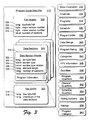
Fig. 3 illustrates an exemplary program guide data file that includes parsed
program guide data.
Fig. 4 is a flow diagram that illustrates a method for parsed program guide
data.
Fig. 5 is a flow diagram that illustrates a method for parsed program guide
data.
DETAILED DESCRIPTION
A program guide data system is described that parses program guide data
into data sections such that program guide data corresponding to a program is
distributed into one or more of the data sections. A program guide data file is
generated that includes the data sections and the program guide data file is
communicated to client devices. In an implementation, the data sections are
similarly formatted to include various element data types that contain the program
guide data and/or are indexes to additional data sections that contain the program
guide data.
The data sections having program guide data corresponding to a program
are cross-referenced and/or indexed to minimize program guide data processing at
a client device. Additionally, the program guide data file format compresses the
program guide data which saves system resources to maintain or store the program
guide data, and reduces the bandwidth required to transmit, or otherwise
communicate, the program guide data from a headend service to a client device.
The following discussion is directed to television-based entertainment and
information systems, such as interactive TV networks, cable networks, and
Web-enabled TV networks that utilize electronic and interactive program guides.
Client devices in such systems range from full-resource clients with substantial
memory and processing resources, such as TV-enabled personal computers and
TV recorders equipped with hard-disks, to low-resource clients with limited
memory and/or processing resources, such as traditional set-top boxes. While
aspects of the described systems and methods can be used in any of these systems
and for any types of client devices, they are described in the context of the
following exemplary environment.
Exemplary System Architecture
Fig. 1 illustrates an exemplary television entertainment system 100 that is
an architecture in which parsed program guide data can be implemented. System
100 facilitates distribution of content and program guide data to multiple viewers,
and includes components to further facilitate parsed program guide data. The
system 100 includes one or more content providers 102, one or more program data
providers 104, a content distribution system 106, and multiple client devices
108(1), 108(2), ..., 108(N) coupled to the content distribution system 106 via a
broadcast network 110.
Content provider 102 includes a content server 112 and stored content 114,
such as movies, television programs, commercials, music, and similar audio and/or
video content. Content server 112 controls distribution of the stored content 114
from content provider 102 to the content distribution system 106. Additionally,
content server 112 controls distribution of live content (e.g., content that was not
previously stored, such as live feeds) and/or content stored at other locations to the
content distribution system 106. Program data provider 104 includes an electronic
program guide (EPG) and/or Interactive Program Guide (IPG) database 116 and an
EPG and/or IPG server 118. The program guide database 116 stores electronic
files of program data which is used to generate an electronic or interactive
program guide (or, "program guide").
An electronic file maintains program guide data 120 (or, "EPG data", or
"IPG data") that may include a program title 122, program broadcast day(s) 124 to
identify which days of the week the program will be shown, program start times(s)
126 to identify a time that the program will be shown on the particular day or days
of the week, and a program category 128. A program category describes the genre
of a program and categorizes it as a particular program type. For example, a
program can be categorized as a movie, a comedy, a sporting event, a news
program, a sitcom, a talk show, or as any number of other category descriptions.
Program guide data can also include program ratings, characters, descriptions,
actor names, station identifiers, channel identifiers, other schedule information,
and so on. Additionally, program guide data may include video on-demand
content information, such as movie schedules, as well as application information,
such as for interactive games, and other programming information that may be of
interest to a viewer.
The program guide server 118 processes the program data prior to
distribution to generate a published version of the program guide data which can
contain programming information for all broadcast channels and on-demand
content listings for one or more days. The processing may involve any number of
techniques to reduce, modify, or enhance the program guide data. Such processes
might include selection of content, content compression, format modification, and
the like. The program guide server 118 controls distribution of the published
version of the program guide data from program data provider 104 to the content
distribution system 106 using, for example, a file transfer protocol (FTP) over a
TCP/IP network (e.g., Internet or Intranet). Further, the published version of the
program guide data can be transmitted from program data provider 104 via a
satellite and the content distribution system 106 directly to a client device 108.
Content distribution system 106 includes a broadcast transmitter 130, one
or more content processing applications 132, and one or more program data
processing applications 134. Broadcast transmitter 130 broadcasts signals, such as
cable television signals, across broadcast network 110. Broadcast network 110 can
include a cable television network, RF, microwave, satellite, and/or data network,
such as the Internet, and may also include wired or wireless media using any
broadcast format or broadcast protocol. Additionally, broadcast network 110 can
be any type of network, using any type of network topology and any network
communication protocol, and can be represented or otherwise implemented as a
combination of two or more networks.
A content processing application 132 processes the content received from
content provider 102 prior to transmitting the content across broadcast network
110. Similarly, a program data processing application 134 processes the program
guide data received from program data provider 104 prior to transmitting the
program guide data across broadcast network 110. A particular content processing
application 132 may encode, or otherwise process, the received content into a
format that is understood by the multiple client devices 108(1), 108(2), ..., 108(N)
coupled to broadcast network 110. Although Fig. 1 shows a single content
provider 102, a single program data provider 104, and a single content distribution
system 106, exemplary system 100 can include any number of content providers
and/or program data providers coupled to any number of content distribution
systems.
Content distribution system 106 is representative of a headend service that
provides EPG and/or IPG data, as well as content, to multiple subscribers. Each
content distribution system 106 may receive a slightly different version of the
program guide data that takes into account different programming preferences and
lineups. The program guide server 118 can create different versions of an
electronic or interactive program guide that includes those channels of relevance
to respective headend services, and the content distribution system 106 transmits
the electronic or interactive program guide data to the multiple client devices
108(1), 108(2), ..., 108(N). In one implementation, for example, content
distribution system 106 utilizes a carousel file system to repeatedly broadcast the
program data over an out-of-band (OOB) channel to the client devices 108.
Alternatively, the multiple client devices 108(1), 108(2), ..., 108(N) can receive
standard, or uniform, program guide data and individually determine the program
guide data to display based on the associated headend service.
A client device 108 can be implemented as a set-top box, a satellite
receiver, a TV recorder with a hard disk, a digital video recorder (DVR) and
playback system, a personal video recorder (PVR) and playback system, a game
console, an information appliance, and as any number of similar embodiments.
For example, a client device 108(1) receives broadcast content from a
satellite-based transmitter via a satellite dish 136. Client device 108(1) is coupled
to a television 138(1) for presenting the content received by the client device (e.g.,
audio data and video data), as well as a graphical user interface. A particular client
device 108 can be coupled to any number of televisions 138 and/or similar devices
that can be implemented to display or otherwise render content. Similarly, any
number of client devices 108 can be coupled to a single television 138.
Client device 108(2) is also coupled to receive broadcast content from
broadcast network 110 and provide the received content to associated television
138(2). Client device 108(N) is an example of a combination television 140 and
integrated set-top box 142. In this example, the various components and
functionality of the set-top box are integrated into the television, rather than using
two separate devices. The set-top box integrated into the television can receive
broadcast signals via a satellite dish (similar to satellite dish 136) and/or via
broadcast network 110.
In alternate implementations, client devices 108 may receive broadcast
signals via the Internet or any other broadcast medium, such as over back channel
144 which can be implemented as a Internet protocol (IP) connection or as other
protocol connections using a modem connection and conventional telephone line,
for example. Further, back channel 144 provides an alternate communication link
between each of the client devices 108, and between the client devices 108 and the
content distribution system 106.
The exemplary system 100 also includes stored on-demand content 144,
such as Video On-Demand (VOD) movie content. The stored on-demand content
can be viewed with a television 138 via a client device 108 through an onscreen
movie guide, for example, and a viewer can enter instructions to stream a
particular movie, or other stored content, to a corresponding client device 108.
Exemplary Parsed Program Guide Data System
Fig. 2 illustrates an exemplary parsed program guide data system 200 that
includes a network operator 202 as an implementation of the content distribution
system 106 (Fig. 1) which provides program guide data, as well as content, to
multiple client devices. Network operator 202 includes components to generate
parsed program guide data in a television-based entertainment and information
system.
Computing components of network operator 202 include one or more
processors 204 (e.g., microprocessors) which process various instructions to
control the operation of network operator 202 and to communicate with other
electronic and computing devices, such as client devices 108. Network operator
202 can be implemented with one or more memory components, examples of
which include a random access memory (RAM) 206, a non-volatile memory 208
(e.g., ROM, Flash, EPROM, EEPROM, etc.), and a memory component 210
implemented as a program guide database, for example. The memory components
(e.g., RAM 206, non-volatile memory 208, and memory component 210) store
various information and/or data such as received content, program guide data 212,
and/or configuration information for network operator 202.
An operating system 214 and a program guide format application 216, as
well as other application programs (not shown), can be stored in non-volatile
memory 208 and executed on a processor 204 to provide a runtime environment.
A runtime environment facilitates extensibility of network operator 202 by
allowing various interfaces to be defined that, in turn, allow application programs
to interact with network operator 202. The application programs that may be
implemented in network operator 202 can include a browser to browse the Web
(e.g., "World Wide Web"), an email program to facilitate electronic mail, and so
on.
The program guide format application 216 generates a program guide data
file 218 which includes program guide data sections of parsed program guide data.
The program guide format application parses the program guide data 212 to
generate the program guide data file 218 prior to communicating the program
guide data file 218 to client devices 108. The program guide format application
216 can be implemented as a software component to generate the program guide
data file 218, or can be implemented as several component applications distributed
to each perform one or more functions to parse program guide data.
Network operator 202 further includes one or more communication
interfaces 220 and a PSTN, DSL, or cable modem 222. A communication
interface 220 can be implemented as a serial and/or parallel interface, as a wireless
interface, and/or as any other type of network interface to establish a
communication link with broadcast network 110 (Fig. 1). Modem 222 facilitates
network operator 202 communication with other electronic and computing devices
via a conventional telephone line, a DSL connection, or a cable modem to
establish a communication link via back channel 144 (Fig. 1) .
A system bus (not shown) typically connects the various components within
network operator 202. A system bus can be implemented as one or more of any of
several types of bus structures, including a memory bus or memory controller, a
peripheral bus, an accelerated graphics port, or a local bus using any of a variety
of bus architectures. By way of example, such architectures can include an
Industry Standard Architecture (ISA) bus, a Micro Channel Architecture (MCA)
bus, an Enhanced ISA (EISA) bus, a Video Electronics Standards Association
(VESA) local bus, and a Peripheral Component Interconnects (PCI) bus also
known as a Mezzanine bus.
Fig. 3 illustrates an exemplary program guide data file 218 generated with
the program guide format application 216 in network operator 202 (Fig. 2). The
format of program guide data file 218 includes a file header 300, a file trailer 302,
and multiple program guide data sections 304 which each include information
from the program guide data 212 corresponding to the programs. The program
guide data file 218 can be generated to include program guide data for one day, or
can include program guide data for more than one day. In the particular
implementation described herein, the program guide data file 218 is self sufficient
in terms of the program guide data listings. Further, the data file 218 corresponds
to a particular headend service, a locale, and a twenty-four hour time period which
is based on an authoritative start time. At a client device, the single program guide
data file 218 can be parsed independently, and listings from other program guide
data files can be integrated seamlessly.
Data types for the program guide data file 218 are defined as a byte (eight
bits), a short (sixteen bits), a tri (thirty-two bits), a string (thirty-two bits), and a
long (thirty-two bits). All of the data types are represented in a big-endian format
where the most significant value in a data sequence is stored first at the lowest
storage address in memory. An entry of program information into a data section
304 of the program guide data file 218 of the form "datatype: (2: field1, 4: field2)"
indicates that field1 is two bits and that field2 is four bits. When the total number
of bits does not equal the size of the entry datatype, the bits are right justified. For
example, the following entry "byte: (2: 0x3, 4: 0x8 (hex))" is represented as
b00111000. Further, an entry of program information of the form "string: (field1,
field2)" indicates a single twenty-four bit index into a section for strings of the
program guide data file 218. The first variable fieldl is a null terminated string
directly followed by field2 which is also a null terminated string.
The file header 300 is eight bytes of program guide data file 218
information that includes data type 306 which is a verification value that indicates
the start of a file (rather than some corrupted data, for example), a major version
number 308 which indicates a major revision of the program guide data file 218, a
minor version number 310 which indicates a minor revision to the program guide
data file 218, and a number of sections 312 to indicate how many program guide
data sections 304 of program information are included in the program guide data
file 218. The major version number 308 and the minor version number 310 enable
making changes to the program guide data file 218 such that different versions of
client devices 108 can receive and decode different versions of the program guide
data file 218. The minor version number 310 is incremented to indicate a small
change to the file format, such as adding one value for example. The major
version number 308 is incremented to indicate a new release of a product, for
example, having multiple data file 218 changes.
The file trailer 302 is eight bytes of program guide data file 218
information that includes data type 314 which is a verification value that indicates
the end of a file (rather than some corrupted data, for example), and a checksum
316 of the program guide data sections 304, such as a CRC (cyclic redundancy
checking) method of checking for errors in the program guide data file 218 when
communicating the program guide data file from network operator 202 to a client
device 108.
The program guide data sections 304 include a sixteen byte header 318
followed by program information specific to a particular section. The data section
header 318 includes data type 320 which is a section verification marker, a section
type 322 which identifies the program information included within a particular
data section, a section type version 324 which indicates the particular data section
version, and an element length 326 and a number of elements 328 are multiplied to
indicate the total program information associated with a particular program guide
data section 304.
Each of the program guide data sections 304 are defined to include program
information from the program guide data 212 corresponding to the programs. In
the exemplary implementation described herein, the program guide data 212 is
parsed into defined program guide data sections 304 that include meta information
330, channels 332, programs 334, schedule 336, program links 338, data strings
340, program rating 342, categories 344, pay-per-view information 346, qualifiers
348, program qualifiers 350, channel qualifiers 352, schedule qualifiers 354, rating
systems 356, a ratings section 358, and program category 360.
Channels data section: The
channels data section 332 includes the
following program guide data file 218 information:
| Section id | 1 |
| Section version | 1 |
| Element length | 15 |
| Number of elements | number of channels |
Each of the program guide data sections include a section identifier to
identify a location of the data section in the program guide data file 218. In this
example, the channels data section 332 is the first section of the program guide
data file 218. When a client device receives the program guide data file 300 from
network operator 202, the client device can utilize the program guide data sections
that are recognized, and/or disregard the program guide data sections that are not
recognized according to the section identifier. This allows for different client
devices having different program guide formats to receive and process a common
program guide data file 218. Each of the program guide data sections also include
a section version number which can be incremented to indicate a modification or
newer version of a data section.
The total length in bytes of elements in the channels data section 332 is
fifteen and the number of elements is the total number of channels in program
guide data 212. The element data types for the channels data section include the
following:
- short:
- tuner number
- byte:
- (1: IsAlias, 2: ChannelMode, 1: SupressListings, 1: PreemptListings)
- string:
- (station call letters, network call letters)
- long:
- (1: are bounds known, 11: start time in minutes, 11: end time in
minutes, 7: days broadcast (SMTWHFS))
- long:
- channel service identifier
The tuner number indicates the channel number that a viewer tunes to at the
client device to watch a program on a particular channel. The "IsAlias" parameter
can represent one channel that will appear as multiple channels on a client device.
For example, a pay-per-view logo that is displayed on several channels is included
in the program guide data file 218 once, but will be displayed on the several
channels at the client device. If "IsAlias" is set for a particular channel, the
channel is an alias for the closest prior channel that does not have its "IsAlias" bit
set.
The "ChannelMode" parameter identifies a service tier of the channel as
Basic, Expanded Basic, Premium, PPV, Music, and the like. The
"SupressListings" parameter identifies that the channel is not part of grid. The
"PreemptListings" parameter identifies that in the case of split channels, the
listings for a channel change are preempted. The elements include the station call
letters and the network call letters associated with a particular channel, as well as a
channel service identifier which is a DVB service identification number that
identifies the particular channel. Other information corresponding to a particular
channel includes an indication as to whether bounds are known which is used to
indicate whether channel time bounds are known in case of split channels, and a
start time, end time, and the days of the week that the particular channel is
broadcast.
Programs data section: The
programs data section 334 includes the
following program guide data file 218 information:
| Section id | 2 |
| Section version | 1 |
| Element length | 12 |
| Number of elements | number of programs |
The programs data section 334 is identified as the second section of the
program guide data file 218, has a total element length of twelve bytes, and
includes the total number of programs in program guide data 212 as the number of
elements. The element data types for the programs data section include the
following:
- string
- (title, description)
- byte:
- (1: automatic movie link)
- short:
- duration (in minutes)
- byte:
- year of publication
- long:
- program service identifier
The title and description parameters are an index to the data strings data
section 340. As described above, an index into the data strings data section of the
format "string: (field1, field2)" is a single index where the first variable field1
(e.g., "title") is a null terminated string directly followed by field2 (e.g.,
"description") which is also a null terminated string. The "automatic movie link"
parameter indicates a URL (universal resource locator) where information
associated with the program can be located. Other information corresponding to a
particular program includes the duration of the program in minutes, the publication
year of the program, and a program service identifier which is a DVB program
identification number that identifies the particular program.
Schedule data section: The
schedule data section 336 cross-references
programs with respective broadcast channels and includes the following program
guide data file 218 information:
| Section id | 3 |
| Section version | 1 |
| Element length | 10 |
| Number of elements | number of schedule entries |
The schedule data section 336 is identified as the third section of the
program guide data file 218, has a total element length of ten bytes, and includes
the total number of schedule entries in program guide data 212 as the number of
elements. The element data types for the schedule data section include the
following:
- short:
- channel
- short:
- program
- short:
- start time (in minutes)
- short:
- duration (in minutes)
- short:
- (1: chat, 1: news, 1: weather, 1: movie, 1: newseries 1: lastinseries,
1: multichannelaudio, 1: signlanguage, 1: bilingual, 1: widescreen,
1: teletext, 1: subtitled, 1: has PPV info, 1: closed captioned,
1: repeat, 1: stereo)
The "channel" and "program" parameters are indexes into the channels data
section 332 and into the programs data section 334, respectively. Because
programs may often be repeated, cross-referencing the programs with the
respective broadcast channels in this schedule data section 336 further minimizes
the amount of program guide data 212 maintained with program guide data file
218. Other information corresponding to a particular schedule entry includes the
start time of the program and the duration of the program both in minutes, as well
as the category and rendering information included in the element data type list
above.
Program Links: The program links
data section 338 relates a program
with additional associated information, such as with a Web site having information
about a movie. The program links data section includes the following program
guide data file 218 information:
| Section id | 4 |
| Section version | 1 |
| Element length | 17 |
| Number of elements | number of program links |
The programs data section 338 is identified as the fourth section of the
program guide data file 218, has a total element length of seventeen bytes, and
includes a total number of program links as the number of elements. The element
data types for the program links data section include the following:
- byte:
- (1: service handled, 2: program link type)
- short:
- program identifier
one of the following two (string or tri):
- string:
- URL (service handled=false)
- tri:
- unused (service handled=true)
one of the following two (tri or string):
- tri:
- offset from start (in seconds) (type=program, program static)
- string:
- key phrase (type=key phrase)
- short:
- duration (in seconds)
- string:
- description
The "service handled" parameter identifies whether the program link is
internal or external. An internal link signifies that a request be handled by a
service, while an external link is a site URL. The "program link type" parameter
identifies whether the link is specific to the program episode or is static for all the
showings of the program. The element data type parameters include a program
identifier, a duration of crossover link display in seconds, and a description index
into the data strings data section 340 to a description of the program. Other
information includes either a URL (universal resource locator) to a Web site for
example, or indicates that the element data type is unused. Additionally, the
information includes an "offset from the start" parameter which indicates a
crossover link display start time, or a "key phrase" which identifies that a link is
not program specific, but related to a key phrase that describes the program.
Data Strings data section: The data strings
data section 340 includes the
string programming information and is indexed from one or more of the other data
sections. The data strings data section includes the following program guide data
file 218 information:
| Section id | 5 |
| Section version | 1 |
| Element length | variable |
| Number of elements | 1 |
The data strings data section 340 is identified as the fifth section of the
program guide data file 218, has a variable element length to accommodate any
number of varying lengths of string data, and is formatted as one element. The
element is an arbitrary number of null terminated strings. The data strings data
section 340 is implemented to support UTF-8 formatted strings which can be used
to encode most languages. The string data can be encoded with an encoding
scheme, such as UTF-8, and can also be compressed with a data compression
technique that utilizes encoding scheme values as compression indexing values
where the encoding scheme values are part of the encoding scheme. This data
compression technique is described in a copending US Patent Application entitled
"Program Guide Data Compression" by inventors Shield et al. filed June ,
2002, and having serial number , the disclosure of which is
incorporated herein by reference.
Program Rating data section: The program
rating data section 342 cross-references
a program with a particular program rating and includes the following
program guide data file 218 information:
| Section id | 6 |
| Section version | 1 |
| Element length | 4 |
| Number of elements | number of program ratings |
The program rating data section 342 is identified as the sixth section of the
program guide data file 218, has a total element length of four bytes, and includes
the total number of program ratings as the number of elements. The element data
types for the program rating data section include the following:
- short:
- program index
- short:
- rating index
The "program index" and "rating index" parameters are indexes into the
programs data section 334 and into a ratings data section 358, respectively, to
cross-reference a particular program with a program rating.
Meta Information data section: The meta
information data section 330
includes general information about the program guide data file 218 (for one day,
for example) and includes the following program guide data file information:
| Section id | 7 |
| Section version | 5 |
| Element length | 38 |
| Number of elements | 1 |
The meta information data section 330 is identified as the seventh section
of the program guide data file 218, has a total element length of thirty-eight bytes,
and is formatted as one element. The element data types for the meta information
data section include the following:
- long:
- first schedule entry start time (in seconds)
- long:
- last schedule entry end time (in seconds)
- long:
- generation time (in seconds)
- byte:
- (1: string section is compressed, 1: has A/B information)
- string:
- headend identifier
- string:
- target locale
- byte:
- data source type
- long:
- last schedule entry start time in seconds
- long:
- authoritative start time
- long:
- authoritative end time
- string:
- unique dictionary id/name
The "first schedule entry start time" indicates the beginning start time for
the first program in the program guide data 212, and the "last schedule entry end
time" indicates the end of the program guide data. The "generation time"
indicates the UTC time that the program guide data file 218 was created by a
server (e.g., the network operator 202) for transmission to a client device. A one
bit indicator identifies whether the data strings data section 340 is compressed, and
an "A/B information" indicator identifies provider information. A "headend
identifier" identifies the network operator 202 as having generated the program
guide data file 218. A "target locale" identifies the language (e.g., English) of the
recipient client devices 108.
A "data source type" indicates the listings data provider type. A "last
schedule entry start time" identifies the last program start time in the program
guide data 212. An "authoritative start time" indicates a start time of the first
scheduled record which can be implemented as the headend time zone plus an
additional two hours. An "authoritative end time" indicates an end time of the last
scheduled record. A "unique dictionary identifier and/or name" indicates a file
and path name that informs a client device where to find a compression dictionary
file corresponding to the data strings section 340 having been compressed.
Categories data section: The
categories data section 344 includes the
following program guide data file 218 information:
| Section id | 8 |
| Section version | 1 |
| Element length | 8 |
| Number of elements | number of categories |
The categories data section 344 is identified as the eighth section of the
program guide data file 218, has a total element length of eight bytes, and includes
a total number of categories as the number of elements. The element data types
for the categories data section include the following:
- string:
- category name
- string:
- subcategory name
The "category name" identifies the category of a particular program, such
as a movie, a comedy, a sporting event, a news program, a sitcom, a talk show, or
as any number of other category descriptions. The "subcategory name" further
identifies and/or distinguishes the category of the particular program. For
example, a program categorized as a movie may be subcategorized as an action
movie, or as a comedy. Further, a sporting event may be subcategorized as a
football game, or as a baseball game.
PPV Information data section: The pay-per-view (PPV)
information data
section 346 includes the following program guide data file 218 information:
| Section id | 9 |
| Section version | 1 |
| Element length | 11 |
| Number of elements | number of schedule entries with PPV info |
The PPV information data section 346 is identified as the ninth section of
the program guide data file 218, has a total element length of eleven bytes, and
includes the total number of schedule entries in the program guide data file 218
that has associated PPV information as the number of elements. The element data
types for the PPV information data section include the following:
- short:
- schedule entry index
- byte:
- (1: all day, 2: type)
- string:
- purchase string
- long:
- PPV service identifier
The "schedule entry index" references to an element entry in the schedule
data section 336 that identifies a corresponding program as having associated PPV
information. The "all day" parameter indicates that the channel runs on the tuner
position all day, and the "type" parameter indicates an impulse or a non-impulse
PPV selection. A "purchase string" includes client offer terms to purchase and
receive a PPV program and a "PPV service identifier" identifies a link into the
PPV system.
Qualifiers data section: The
qualifiers data section 348 contains
additional qualifier information that may be included with the program, channel,
and schedule information corresponding to a particular program. The qualifiers
data section includes the following program guide data file 218 information:
| Section id | 10 |
| Section version | 1 |
| Element length | 8 |
| Number of elements | total number of qualifiers (program, channel, and schedule) |
The qualifiers data section 348 is identified as the tenth section of the
program guide data file 218, has a total element length of eight bytes, and includes
a total number of qualifiers for the program, channel, and schedule information in
program guide data 212 as the number of elements. The element data types for the
qualifiers data section include the following:
- string:
- qualifier name
- string:
- qualifier value
The "qualifier name" identifies the particular program, channel, or schedule
qualifier and the "qualifier value" identifies the content of the qualifier. A
qualifier can be utilized for extensibility to add information about a particular
program, for example, without changing the format of the program guide data file
218. The qualifiers, such as the program qualifiers 350, channel qualifiers 352,
and schedule qualifiers 354, can be implemented to enable format extensibility of
the program guide data file 218 without modifying the file format. This enables a
server (e.g., network operator 202) to serve multiple clients with different program
guide data processing capabilities.
Program Qualifiers data section: The program
qualifiers data section 350
cross-references a program with a particular qualifier and includes the following
program guide data file 218 information:
| Section id | 11 |
| Section version | 1 |
| Element length | 4 |
| Number of elements | number of program qualifiers |
The program qualifiers data section 350 is identified as the eleventh section
of the program guide data file 218, has a total element length of four bytes, and
includes a total number of program qualifiers as the number of elements. The
element data types for the program qualifiers data section include the following:
- short:
- qualifier index
- short:
- program index
The "program index" and the "qualifier index" parameters are indexes into
the programs data section 334 and into the qualifiers data section 348,
respectively, to cross-reference a particular program with a qualifier.
Channel Qualifiers data section: The channel
qualifiers data section 352
cross-references a channel with a particular qualifier and includes the following
program guide data file 218 information:
| Section id | 12 |
| Section version | 1 |
| Element length | 4 |
| Number of elements | number of channel qualifiers |
The channel qualifiers data section 352 is identified as the twelfth section
of the program guide data file 218, has a total element length of four bytes, and
includes a total number of channel qualifiers as the number of elements. The
element data types for the channel qualifiers data section include the following:
- short:
- qualifier index
- short:
- channel index
The "channel index" and the "qualifier index" parameters are indexes into
the channels data section 332 and into the qualifiers data section 348, respectively,
to cross-reference a particular channel with a qualifier.
Schedule Qualifiers data section: The schedule
qualifiers data section
354 cross-references a schedule entry with a particular qualifier and includes the
following program guide data file 218 information:
| Section id | 13 |
| Section version | 1 |
| Element length | 4 |
| Number of elements | number of schedule qualifiers |
The schedule qualifiers data section 354 is identified as the thirteenth
section of the program guide data file 218, has a total element length of four bytes,
and includes a total number of schedule qualifiers as the number of elements. The
element data types for the schedule qualifiers data section include the following:
- short:
- qualifier index
- short:
- schedule entry index
The "schedule entry index" and the "qualifier index" parameters are
indexes into the schedule data section 336 and into the qualifiers data section 348,
respectively, to cross-reference a particular schedule entry with a qualifier.
Rating Systems data section: The rating
systems data section 356
includes the following program guide data file 218 information:
| Section id | 14 |
| Section version | 1 |
| Element length | 10 |
| Number of elements | number of rating systems |
The rating systems data section 356 is identified as the fourteenth section of
the program guide data file 218, has a total element length of ten bytes, and
includes a total number of rating systems as the number of elements. The element
data types for the rating systems data section include the following:
- string:
- rating system name
- string:
- description of rating system
- short:
- type of rating system
The "rating system name" identifies the rating system and the "description
of rating system" is an index to the data strings data section 340 which includes a
string data description of a corresponding rating system. The "type of rating
system" identifies the rating system as a television rating system, a movie rating
system, a foreign rating system, or as any number of other types of rating systems.
Ratings data section: The
ratings data section 358 includes the following
program guide data file 218 information:
| Section id | 15 |
| Section version | 1 |
| Element length | 12 |
| Number of elements | number of different ratings |
The ratings data section 358 is identified as the fifteenth section of the
program guide data file 218, has a total element length of twelve bytes, and
includes the total number of different ratings as the number of elements. The
element data types for the programs data section include the following:
- short:
- rating system index
- short:
- rating value
- string:
- rating name
- string:
- rating description
The "rating system index" references to an element entry in the rating
systems data section 356. The "rating value" is a table index to indicate the
associated rating, such as "G", "PG", "R", and the like, which is indicated as the
"rating name". The "rating description" is an index into the data strings data
section 340 which includes a string data description of a corresponding rating
name.
Program Category data section: The program
category data section 360
cross-references a category entry with a particular program and includes the
following program guide data file 218 information:
| Section id | 16 |
| Section version | 1 |
| Element length | 6 |
| Number of elements | number of different program categories |
The program category data section 360 is identified as the sixteenth section
of the program guide data file 218, has a total element length of six bytes, and
includes a total number of the different program categories as the number of
elements. The element data types for the program category data section include
the following:
- short:
- program index
- short:
- category index
- short:
- percentage of relevance
The "program index" and the "category index" parameters are indexes into
the programs data section 334 and into the categories data section 344,
respectively, to cross-reference a particular program with a category. The
"percentage of relevance" indicates how well, or to what extent, the program is
described by the category identification. For example, a program that is a
romantic comedy can be categorized as both a romance and a comedy. The
"percentage of relevance" specifies a relationship to indicate which category better
identifies the particular program, such as Romance: 70% and Comedy: 30% (e.g.,
the program is more of a romance having comedic values. It should be noted that
there may be an unlimited number of categories and relevance percentages
associated with a particular program, such as Action: 50%, Horror: 30%,
Romance: 10%, Science Fiction: 5%, and Fantasy: 5%, for example.
Methods for Parsed Program Guide Data
Methods for parsed program guide data may be described in the general
context of computer-executable instructions performed by a program guide format
application 216 at network operator 202. Generally, computer-executable
instructions include routines, programs, objects, components, data structures, and
the like that perform particular functions or implement particular abstract data
types. Methods for parsed program guide data may also be practiced in distributed
computing environments where functions are performed by remote processing
devices that are linked through a communications network. In a distributed
computing environment, computer-executable instructions may be located in both
local and remote computer storage media, including memory storage devices.
Fig. 4 illustrates a method 400 for parsed program guide data. The order in
which the method is described is not intended to be construed as a limitation, and
any number of the described method blocks can be combined in any order to
implement the method. Furthermore, the method can be implemented in any
suitable hardware, software, firmware, or combination thereof.
At block 402, program guide data is received. For example, network
operator 202 receives program guide data 212 (Fig. 2) from a program guide data
provider 104 (Fig. 1). At block 404, the program guide data is parsed into data
sections such that the program guide data corresponding to a program is
distributed into one or more of the data sections. For example, a title and a
description of the program are parsed into the data strings data section 340, and a
channel number associated with the program is parsed into the channels data
section 332.
At block 406, the program guide data corresponding to the program in each
of the one or more data sections is correlated. Correlating the program guide data
corresponding to the program can include indexing the program guide data
corresponding to the program in a first data section with the program guide data
corresponding to the program in at least a second data section at block 408.
Alternatively, and/or in addition, the program guide data corresponding to the
program in a first data section can be cross-referenced with the program guide data
corresponding to the program in at least a second data section at block 410. This
can include the program guide data corresponding to the program in the first data
section and in the second data section being cross-referenced in a third data
section. For example, a title and a description of the program are referenced from
a programs data section 334, and the title and the description are parsed into the
data strings data section 340. Further, a channel number in the schedule data
section 336 can be cross-referenced to program guide data corresponding to the
program in the programs data section 334.
At block 412, a program guide data file is generated that includes the data
sections. For example, program guide format application 216 in network operator
202 generates the program guide data file 218 from the program guide data 212.
At block 414, the program guide data file is communicated to one or more client
devices, such as television-based receiving devices. For example, network
operator 202 (e.g., content distribution system 106 (Fig. 1)) communicates the
program guide data file 218 to client devices 108 via the broadcast network 110.
Fig. 5 illustrates a method 500 for parsed program guide data. The order in
which the method is described is not intended to be construed as a limitation, and
any number of the described method blocks can be combined in any order to
implement the method. Furthermore, the method can be implemented in any
suitable hardware, software, firmware, or combination thereof.
At block 502, a program guide data file is received that includes data
sections having parsed program guide data. For example, a client device 108
receives the program guide data file 218 from network operator 202 via the
broadcast network 110. At block 504, a program guide is generated from program
guide data corresponding to a program distributed within one or more of the data
sections. Generating the program guide can include correlating the program guide
data corresponding to the program from each of the one or more data sections at
block 506.
Alternatively, or in addition, generating the program guide includes
referencing index information in a first data section to obtain program guide data
corresponding to the program from at least a second data section at block 508. For
example, index information in the programs data section 334 is referenced to
obtain a title and/or a description of the program from the data strings data section
340. Further, schedule information associated with the program is referenced
from the schedule data section 336.
At block 510, the program guide is generated to display the program title,
description, and schedule information together. At block 512, the program guide
is communicated for display. For example, client device 108(2) generates a
program guide and communicates the program guide to television 138(2) for
display.
Conclusion
Although the invention has been described in language specific to structural
features and/or methods, it is to be understood that the invention defined in the
appended claims is not necessarily limited to the specific features or methods
described. Rather, the specific features and methods are disclosed as preferred
forms of implementing the claimed invention.