EP1381211A2 - Queueing of calls and virtual interaction with caller using Internet protocols - Google Patents
Queueing of calls and virtual interaction with caller using Internet protocols Download PDFInfo
- Publication number
- EP1381211A2 EP1381211A2 EP03405396A EP03405396A EP1381211A2 EP 1381211 A2 EP1381211 A2 EP 1381211A2 EP 03405396 A EP03405396 A EP 03405396A EP 03405396 A EP03405396 A EP 03405396A EP 1381211 A2 EP1381211 A2 EP 1381211A2
- Authority
- EP
- European Patent Office
- Prior art keywords
- caller
- call
- callback
- availability
- based message
- Prior art date
- Legal status (The legal status is an assumption and is not a legal conclusion. Google has not performed a legal analysis and makes no representation as to the accuracy of the status listed.)
- Granted
Links
Images



Classifications
-
- H—ELECTRICITY
- H04—ELECTRIC COMMUNICATION TECHNIQUE
- H04Q—SELECTING
- H04Q3/00—Selecting arrangements
- H04Q3/64—Distributing or queueing
-
- H—ELECTRICITY
- H04—ELECTRIC COMMUNICATION TECHNIQUE
- H04L—TRANSMISSION OF DIGITAL INFORMATION, e.g. TELEGRAPHIC COMMUNICATION
- H04L65/00—Network arrangements, protocols or services for supporting real-time applications in data packet communication
- H04L65/1066—Session management
- H04L65/1096—Supplementary features, e.g. call forwarding or call holding
-
- H—ELECTRICITY
- H04—ELECTRIC COMMUNICATION TECHNIQUE
- H04L—TRANSMISSION OF DIGITAL INFORMATION, e.g. TELEGRAPHIC COMMUNICATION
- H04L65/00—Network arrangements, protocols or services for supporting real-time applications in data packet communication
- H04L65/1066—Session management
- H04L65/1101—Session protocols
-
- H—ELECTRICITY
- H04—ELECTRIC COMMUNICATION TECHNIQUE
- H04L—TRANSMISSION OF DIGITAL INFORMATION, e.g. TELEGRAPHIC COMMUNICATION
- H04L65/00—Network arrangements, protocols or services for supporting real-time applications in data packet communication
- H04L65/1066—Session management
- H04L65/1101—Session protocols
- H04L65/1104—Session initiation protocol [SIP]
-
- H—ELECTRICITY
- H04—ELECTRIC COMMUNICATION TECHNIQUE
- H04L—TRANSMISSION OF DIGITAL INFORMATION, e.g. TELEGRAPHIC COMMUNICATION
- H04L65/00—Network arrangements, protocols or services for supporting real-time applications in data packet communication
- H04L65/40—Support for services or applications
- H04L65/401—Support for services or applications wherein the services involve a main real-time session and one or more additional parallel real-time or time sensitive sessions, e.g. white board sharing or spawning of a subconference
-
- H—ELECTRICITY
- H04—ELECTRIC COMMUNICATION TECHNIQUE
- H04M—TELEPHONIC COMMUNICATION
- H04M3/00—Automatic or semi-automatic exchanges
- H04M3/42—Systems providing special services or facilities to subscribers
- H04M3/50—Centralised arrangements for answering calls; Centralised arrangements for recording messages for absent or busy subscribers ; Centralised arrangements for recording messages
- H04M3/51—Centralised call answering arrangements requiring operator intervention, e.g. call or contact centers for telemarketing
- H04M3/523—Centralised call answering arrangements requiring operator intervention, e.g. call or contact centers for telemarketing with call distribution or queueing
-
- H—ELECTRICITY
- H04—ELECTRIC COMMUNICATION TECHNIQUE
- H04M—TELEPHONIC COMMUNICATION
- H04M3/00—Automatic or semi-automatic exchanges
- H04M3/42—Systems providing special services or facilities to subscribers
- H04M3/50—Centralised arrangements for answering calls; Centralised arrangements for recording messages for absent or busy subscribers ; Centralised arrangements for recording messages
- H04M3/51—Centralised call answering arrangements requiring operator intervention, e.g. call or contact centers for telemarketing
- H04M3/523—Centralised call answering arrangements requiring operator intervention, e.g. call or contact centers for telemarketing with call distribution or queueing
- H04M3/5231—Centralised call answering arrangements requiring operator intervention, e.g. call or contact centers for telemarketing with call distribution or queueing with call back arrangements
-
- H—ELECTRICITY
- H04—ELECTRIC COMMUNICATION TECHNIQUE
- H04M—TELEPHONIC COMMUNICATION
- H04M7/00—Arrangements for interconnection between switching centres
- H04M7/0024—Services and arrangements where telephone services are combined with data services
- H04M7/0033—Notification or handling of incoming calls by a computer
-
- H—ELECTRICITY
- H04—ELECTRIC COMMUNICATION TECHNIQUE
- H04M—TELEPHONIC COMMUNICATION
- H04M7/00—Arrangements for interconnection between switching centres
- H04M7/0024—Services and arrangements where telephone services are combined with data services
- H04M7/0042—Services and arrangements where telephone services are combined with data services where the data service is a text-based messaging service
- H04M7/0048—Services and arrangements where telephone services are combined with data services where the data service is a text-based messaging service where the text-based messaging service is a Short Message Service
-
- H—ELECTRICITY
- H04—ELECTRIC COMMUNICATION TECHNIQUE
- H04M—TELEPHONIC COMMUNICATION
- H04M7/00—Arrangements for interconnection between switching centres
- H04M7/0024—Services and arrangements where telephone services are combined with data services
- H04M7/0054—Services and arrangements where telephone services are combined with data services where the data service is an electronic mail service
-
- H—ELECTRICITY
- H04—ELECTRIC COMMUNICATION TECHNIQUE
- H04M—TELEPHONIC COMMUNICATION
- H04M7/00—Arrangements for interconnection between switching centres
- H04M7/006—Networks other than PSTN/ISDN providing telephone service, e.g. Voice over Internet Protocol (VoIP), including next generation networks with a packet-switched transport layer
-
- H—ELECTRICITY
- H04—ELECTRIC COMMUNICATION TECHNIQUE
- H04Q—SELECTING
- H04Q2213/00—Indexing scheme relating to selecting arrangements in general and for multiplex systems
- H04Q2213/13072—Sequence circuits for call signaling, ACD systems
-
- H—ELECTRICITY
- H04—ELECTRIC COMMUNICATION TECHNIQUE
- H04Q—SELECTING
- H04Q2213/00—Indexing scheme relating to selecting arrangements in general and for multiplex systems
- H04Q2213/13103—Memory
-
- H—ELECTRICITY
- H04—ELECTRIC COMMUNICATION TECHNIQUE
- H04Q—SELECTING
- H04Q2213/00—Indexing scheme relating to selecting arrangements in general and for multiplex systems
- H04Q2213/13152—Callback
-
- H—ELECTRICITY
- H04—ELECTRIC COMMUNICATION TECHNIQUE
- H04Q—SELECTING
- H04Q2213/00—Indexing scheme relating to selecting arrangements in general and for multiplex systems
- H04Q2213/13173—Busy signals
-
- H—ELECTRICITY
- H04—ELECTRIC COMMUNICATION TECHNIQUE
- H04Q—SELECTING
- H04Q2213/00—Indexing scheme relating to selecting arrangements in general and for multiplex systems
- H04Q2213/13204—Protocols
-
- H—ELECTRICITY
- H04—ELECTRIC COMMUNICATION TECHNIQUE
- H04Q—SELECTING
- H04Q2213/00—Indexing scheme relating to selecting arrangements in general and for multiplex systems
- H04Q2213/13389—LAN, internet
Definitions
- the present invention relates to a method and system for processing calls using virtual interaction queuing over an IP (internet protocol) network.
- IP internet protocol
- Comfort prompts may be voice (either recorded or synthesized) messages regarding the unavailability of an agent, voice-recorded advertisements for the business, prerecorded music, etc.
- Fig. 1 is a diagram depicting this method according to a related art.
- the contact/call center queues the call in a queue according to the order of receipt, or other information associated with the call such as the dialed number or calling line ID, in step S4.
- this call is then cleared (i.e., disconnected) in step S6.
- step S8 the contact center places a callback to the caller so that a call contact between the agent and the caller can be made once again in step S10.
- This process is known as virtual queuing.
- a more detailed discussion of the virtual queuing process of a call can be found in U.S. Patent No. 6, 259,786 issued on July 10, 2001.
- the present invention provides a method and system for processing calls which overcome problems and limitations associated with the related art.
- the present invention provides a method and system for processing a call when a call recipient is unavailable by using an IP (Internet Protocol)-based user-interactive approach.
- the method includes queuing the call in a queue associated with a call center, obtaining a messaging preference of the caller (the messaging preferences including caller presence and availability relating to the call), disconnecting the call, generating at least one IP-based message for the caller according to the caller's messaging preference, and transmitting the at least one IP-based message to the caller over an IP network, so as to begin a virtual interaction between the caller and the call center after the call is disconnected.
- IP Internet Protocol
- Fig. 1 is a diagram depicting a virtual queuing process for processing calls according to a related art.
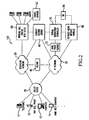
- Fig. 2 is a block diagram of a system for processing calls according to an embodiment of the present invention.
- Fig. 3 is a flowchart illustrating processing steps of a method of processing calls according to an embodiment of the present invention.
- Fig. 4 is a flow diagram depicting one example of a virtual interaction queuing according to an embodiment of the present invention.
- agent is used to refer to a recipient of a call placed by a caller.
- An agent can be a person or automatic interaction processing system (such as IVR) employed by a business, company, organization, or other entity, but is not limited to such.
- Fig. 2 is a diagram of a system 100 for processing calls according to an embodiment of the present invention.
- the system 100 includes a caller device 10 that a caller uses to place a call, a telephone network 20 which is any known public (PSTN) or private telephone network, an IP network 30 such as the Internet, intranet, extranet or other IP-based communications network, a gateway or ISP (Internet Service Provider) 40 used as an interface between the IP network 30 and the telephone network 20, an inbound call router 50 with a queue for routing incoming calls to appropriate agents or queuing the calls when the agents are not available, a contact routing server 60 for handling outbound calls, a virtual interaction scheduler 70, an availability proxy or server 72, an IP/Multi-Media message handler 80, and one or more databases 90 or other storage unit for storing information and data generated and used in the system 100. All the components of the system 100 are all operatively coupled.
- PSTN public
- IP network 30 such as the Internet, intranet, extranet or other IP-based communications network
- system 100 may include communication servers such as Interactive Voice Response (IVR) servers for providing voice-generated messages to callers as known in the art.
- IVR Interactive Voice Response
- the system 100 may additionally include any components typically present in existing telephone network systems to process calls, such a call scheduler, a switching device, etc.
- the components 50, 52, 60, 70, 80 and 90 may all reside at a call center for processing incoming calls. In another embodiment, these components may be located at separate places as needed.
- the caller device 10 can be any known device or combination of devices having the capability of receiving and transmitting IP messages.
- Examples of the caller device 10 include, but are not limited to, an IP-based telephone 11, a mobile phone 12 (e.g., an SMS text message displayed on a cell phone), a computer 13 in the form of a laptop, workstation, or others, and a handheld computer 14 such as a Personal Digital Assistant (PDA).
- PDA Personal Digital Assistant
- the telephone network 20 may receive a call request through the IP network 30 and the gateway/ISP 40. In this manner, although it is not shown, it is understood that the telephone network 20 can receive a call request from a caller device 10 through any known means such as via a satellite and/or base station.
- the caller device 10 be equipped with multi-media capabilities, such capabilities are not required to use the present invention.
- the inbound call router 50 queues the incoming calls in the queue according to known techniques. Then the contact routing server 60 obtains a current caller's messaging preferences using techniques which will be discussed later, and disconnects the call once the call has been queued.
- the virtual interaction scheduler 70 schedules IP-based messages specific for the current user based on the caller's messaging preferences and capabilities. This information along with the derived contact schedule based on this information may be stored in the database 90.
- the IP/multi-media message handler 80 generates the IP-base messages for the caller and transmits them to a caller device 10 that may or may not be the same device that placed the original call over the IP network according to the schedule and the user's messaging preferences.
- the IP/Multi-Media message handler 80 also receives the caller's preferences for contact, availability and/or the caller's presence information from the caller device 10 over the IP network 30. Presence information is information identifying the availability of a caller based on the propensity to answer and/or the media capabilities of the caller.
- the availability proxy/server 72 obtains presence and availability information associated with the caller using the IP network 30, provides it to the IP/Multi-Media message handler and/or any other component requesting this information, and is known in the art.
- the generation and transmission of IP-based messages can vary depending on the caller's responses and presence information, as well as agent availability.
- the IP/Multi-Media message handler 80 oversees the interaction between the caller and the call center over the IP network 30.
- the virtual interaction scheduler 70 requests the contact routing server 60 to place the callback using known callback dialing techniques.
- callback dialing technique is discussed in detail in the above-described U.S. Patent No. 6, 259,786 issued on July 10, 2001, the entire content of which is herein fully incorporated by reference.
- Fig. 3 illustrates a flowchart illustrating processing steps of a method of processing calls according to an embodiment of the present invention. These processing steps can be implemented in the system 100 of Fig. 2 or other similar system.
- a call is placed by a caller to an agent using the caller device 10 in Step S20.
- This call request is received by the telephone network 20 and processed by the inbound call router 50. If the inbound call router 50 or like determines at Step S22 that the agent (or any other agent) is currently available to pick up the call, then the call is delivered to that agent in Step S24 and the process ends.
- Step S30 the current caller's messaging preferences are registered.
- the caller's messaging preferences indicate the manner in which the caller desires to receive the callback and/or IP-based messages before the callback. For instance, one caller may prefer to receive the callback after 9 p.m. when he or she is at home. Another caller may prefer to receive the IP-based messages in every 30 minutes only for 3 hours until the callback is made.
- the messaging preferences may also indicate the technical capability of the caller device 10 which can be used to determine what kind of messages should be sent to each caller, availability of the caller, a media capability of the caller, a purpose of the call, and/or the priority of using an agent's presence or availability information to override the user's preferences of a callback in the case when an agent becomes available before the allotted or desired callback time.
- Step S30 can be implemented in a variety of different ways.
- the registration of the current user's messaging preferences can occur using IVR, VoIP (voice over IP), web browser, e-mail communication, etc.
- the contact routing server 60 can send a message requesting input of the caller's messaging preferences by displaying a web form (with the message) on the display device associated with the caller device 10 or by sending an e-mail requesting a return e-mail with the caller's messaging preferences through the IP network 30.
- the caller's messaging preferences can be automatically supplied by the caller device 10 depending on the caller device 10.
- SIP Session Initiation Protocol
- SIP Session Initiation Protocol
- SIP is a known standards-based protocol for initiating communication over the Internet.
- Certain known programs such as Microsoft Windows Messenger, 3rd generation Cell Phones, and AOL Instant Messenger support SIP and related messaging protocols such as SIMPLE (SIP for Instant Messaging and Presence Leverage).
- SIMPLE Session Initiation Protocol
- the caller may have previous contact and preferences information is maintained in a context repository (e.g. cookie associated with the caller's web browser or some other repository on the caller device. The caller may then be asked to verify and/or update the existing preferences. For example, the caller may prefer to be contacted by SMS text message if this would be quicker than waiting for a voice call.
- context repository e.g. cookie associated with the caller's web browser or some other repository on the caller device.
- the caller may then be asked to verify and/or update the existing preferences. For example, the caller may prefer to be contacted
- the virtual interaction scheduler 70 in Step S32 schedules messages for the current caller based on the caller's messaging preferences and any other information.
- the scheduling may also be affected by predetermined criteria and/or policies.
- These messages would mainly be IP-based messages for transmission over the IP network 30, and can be selected to target specific needs, preferences, habits, etc. of the current caller.
- This information may be obtained through a combination of explicit caller request such as a web form request, and/or implicit information obtained through browsing history such as browser cookies (cookies are a known web technique for storing pieces of information relating to the interactions between web client and servers).
- these messages can be in any form or shape such as an e-mail, a pushed web page, an instant message, a VoIP message, an SMS message, a pop-up window, etc., and may include, but are not limited to, a message notifying the estimated time until the callback (which may pop up on the display device associated with the caller device 10), a web form providing a menu of options for the caller's selection (e.g., cancel call, need technical support, etc.), an e-mail or web page providing advertisements that may be caller-specific, etc. Any information which may be helpful to the current caller is provided to the caller in these IP-based messages with or without multi-media presentation, and such information including the caller's messaging preferences can be stored in the database 90.
- a message notifying the estimated time until the callback which may pop up on the display device associated with the caller device 10
- a web form providing a menu of options for the caller's selection (e.g., cancel call, need technical support, etc.)
- Step S34 the IP/Multi-Media message handler 80 sends an initial message to the current caller over the IP network 30.
- the initial message may inform the caller to hang up since the call will be cleared shortly.
- Step S36 the current call is cleared (i.e., disconnected) using any known technique.
- the virtual interaction scheduler 70 is updated with the caller's presence information.
- the presence information is information indicating the availability of the current caller to receive the callback and any IP-based messages.
- the technique of obtaining the presence information is known and is implemented by the availability proxy/server 72.
- the program is configured to automatically determine the availability of a user based on predetermined criteria. In one example, if the user's screen saver is on, then the program would automatically indicate to an outsider that the user is currently not available.
- the program is also configured so that the user can manually set his or her availability by using an input device such as a keyboard.
- the presence information can be obtained using such known techniques and configurations.
- the caller's presence information may change over a time period and thus, the scheduler 70 may need to be updated periodically as needed.
- Step S40 according to the current caller's presence information and the messaging preferences, the IP/Multi-Media message handler 80 generates and transmits various messages to the caller device 10 and interacts with the caller back and forth over the IP network 30.
- the call center can obtain any needed information from the caller and at the same time, present advertisements, promotions and other information to the caller. As a result, the call center does not lose contact with the caller even after the call is cleared and this time can be an effective tool for promoting business and other interests.
- Step S42 it is determined whether the callback condition(s) has been satisfied. This determination can be made by the scheduler 70 based on the status of the availability of the agent (or any agent), the caller's availability, the caller's preferred callback time if designated, caller's preferred callback device, any current request from the caller for the callback, and/or any other information that would be helpful to determine the optimal time for a callback.
- Step S42 If it is determined at Step S42 that the callback condition has not been satisfied, then the process returns to Step S38 and subsequent steps discussed above. On the other hand, if the callback condition has been satisfied, then the callback is made using existing techniques in Step S44.
- Step S44 the caller's designated preference of using availability is determined. If the caller has indicated to call-back on the available (present) device, availability is determined of the caller through availability mechanisms (such as a presence proxy or server), and the call-back commences to the caller on the available device.
- Fig. 4 is a flow diagram of an example of an interaction between a caller and a contact center according to an embodiment of the present invention. Briefly, as shown in Fig. 4, as the caller's call is queued, user preferences are registered, the call is cleared, various messages in different forms can be provided to the caller on the caller device 10 over the IP network 30, and the caller interacts with the contact center over the IP network 30 by receiving and transmitting IP-based messages until a callback is made successfully at the optimal time.
- the present invention eliminates toll charges for both the caller and the call center and overcomes inconveniences associated with holding for an agent since the call request is cleared once it has been queued into the system.
- the call center maintains close contact with the caller through IP-based messages and interactions until the callback is made.
- the callback in the present invention is made allowing for the likely availability of both the agent and the caller, thereby increasing the efficiency and effectiveness of callbacks.
- the present invention can be implemented by using existing hardware and/or software known in the art. Further, any known computer programming language or protocols can be used to implement the invention.
Landscapes
- Engineering & Computer Science (AREA)
- Computer Networks & Wireless Communication (AREA)
- Signal Processing (AREA)
- Multimedia (AREA)
- Business, Economics & Management (AREA)
- General Business, Economics & Management (AREA)
- Marketing (AREA)
- Telephonic Communication Services (AREA)
Abstract
Description
Claims (30)
- A method of processing a call from a caller when a call recipient is unavailable, the method comprising:queuing the call in a queue associated with a call center;obtaining a messaging preference of the caller;disconnecting the call;generating at least one IP (internet protocol)-based message for the caller according to the caller's messaging preference; andtransmitting the at least one IP-based message to the caller over an IP network, so as to begin a virtual interaction between the caller and the call center after the call is disconnected.
- The method of claim 1, further comprising:receiving the caller's presence information over the IP network;generating at least one new IP-based message for the caller based on the received presence information; andtransmitting the at least one new IP-based message to the caller over the IP network.
- The method of claim 2, further comprising:determining whether a callback condition has been satisfied; andplacing the callback when the callback condition has been satisfied.
- The method of claim 3, wherein the determining step includes:determining an availability of the call recipient;determining an availability of the caller based on at least one of the caller's messaging preference and the caller's presence information; anddetermining if the caller's presence information takes a higher priority over the user's preferences of a later callback.
- The method of claim 1, further comprising:receiving a response of the caller to the transmitted at least one IP-based message over the IP network during the virtual interaction between the caller and the call center.
- The method of claim 1, wherein the at least one IP-based message is in the form of at least one of the following: an e-mail, a web page, a pop-up window, a VoIP (Voice over IP) form, and an instant message form.
- The method of claim 1, wherein the at least one IP-based message carries at least one of the following: advertisement, information on an availability of the call recipient, information on a status of a callback, and a menu of options for the caller's selection.
- The method of claim 1, wherein the caller's messaging preference is obtained using at least one of the following: an e-mail, a web page, an IVR (interactive voice response), and SIP (Session Initiation Protocol).
- The method of claim 1, wherein the messaging preference includes at least one of the following: an availability of the caller, a media capability of the caller, a purpose of the call, and priority information pertaining to presence/availability of the call recipient and the caller's preferences of a callback.
- The method of claim 1, wherein a callback request from the caller is re-routed to another agent or target destination or is terminated based on information carried through at least one IP-based message.
- A system for processing a call from a caller when a call recipient is unavailable, the system comprising:a call router queuing the call in a queue associated with a call center and then disconnecting the call; andan IP (internet protocol)-based message handler generating at least one IP-based message for the caller according to a messaging preference of the caller over an IP network, so as to begin a virtual interaction between the caller and the call center after the call is disconnected.
- The system of claim 11, further comprising:a virtual interaction scheduler receiving presence information associated with the caller and scheduling IP-based messages to be sent to the caller based on the presence information and the messaging preference of the caller.
- The system of claim 12, wherein the virtual interaction scheduler determines whether a callback condition has been satisfied and controls an operation of placing the callback when the callback condition has been satisfied.
- The system of claim 13, wherein the scheduler determines whether a callback condition has been satisfied based on the following:an availability of the call recipient; andan availability of the caller based on at least one of the caller's messaging preference and the caller's presence information.
- The system of claim 11, wherein the IP-based message handler receives responses from the caller to the IP-based messages over the IP network and processes the responses.
- The system of claim 11, wherein the at least one IP-based message is in the form of at least one of the following: an e-mail, a web page, a pop-up window, a VoIP (Voice over IP) form, and an instant message form.
- The system of claim 11, wherein the at least one IP-based message carries at least one of the following: advertisement, information on an availability of the call recipient, information on a status of a callback, and a menu of options for the caller's selection.
- The system of claim 11, wherein the caller's messaging preference is obtained using at least one of the following: an e-mail, a web page, an IVR (interactive voice response), and SIP (Session Initiation Protocol).
- The system of claim 11, wherein the messaging preference includes at least one of the following: an availability of the caller, a media capability of the caller, a purpose of the call, and priority information pertaining to presence/availability of the call recipient and the caller's preferences of a callback.
- The system of claim 11, wherein the call router includes an outbound call router for re-routing a callback request from the caller to another agent or target destination or for terminating the callback request based on information carried through at least one IP-based message.
- A computer program product embodied on at least one computer-readable medium, for processing a call from a caller when a call recipient is unavailable, the computer program product comprising computer-executable instructions for:queuing the call in a queue associated with a call center;obtaining a messaging preference of the caller;disconnecting the call;generating at least one IP (internet protocol)-based message for the caller according to the caller's messaging preference; andtransmitting the at least one IP-based message to the caller over an IP network, so as to begin a virtual interaction between the caller and the call center after the call is disconnected.
- The computer program product of claim 21, further comprising computer-executable instructions for:receiving the caller's presence information over the IP network;generating at least one new IP-based message for the caller based on the received presence information; andtransmitting the at least one new IP-based message to the caller over the IP network.
- The computer program product of claim 22, further comprising computer-executable instructions for:determining whether a callback condition has been satisfied; andplacing the callback when the callback condition has been satisfied.
- The computer program product of claim 23, wherein the computer-executable instructions for determining whether a callback condition has been satisfied make the determination based on the following:an availability of the call recipient; andan availability of the caller based on at least one of the caller's messaging preference and the caller's presence information.
- The computer program product of claim 21, further comprising computer-executable instructions for:receiving a response of the caller to the transmitted at least one IP-based message over the IP network during the virtual interaction between the caller and the call center.
- The computer program product of claim 21, wherein the at least one IP-based message is in the form of at least one of the following: an e-mail, a web page, a pop-up window, a VoIP (Voice over IP) form, and an instant message form.
- The computer program product of claim 21, wherein the at least one IP-based message carries at least one of the following: advertisement, information on an availability of the call recipient, information on a status of a callback, and a menu of options for the caller's selection.
- The computer program product of claim 21, wherein the caller's messaging preference is obtained using at least one of the following: an e-mail, a web page, an IVR (interactive voice response), and SIP (Session Initiation Protocol).
- The computer program product of claim 21, wherein the messaging preference includes at least one of the following: an availability of the caller, a media capability of the caller, a purpose of the call, and priority information pertaining to presence/availability of the call recipient and the caller's preferences of a callback.
- The computer program product of claim 21, further comprising computer-executable instructions for:re-routing a callback request from the caller to another agent or a target destination or terminating the callback request based on information carried through at least one IP-based message.
Applications Claiming Priority (2)
| Application Number | Priority Date | Filing Date | Title |
|---|---|---|---|
| US10/177,120 US7245711B2 (en) | 2002-06-24 | 2002-06-24 | Virtual interaction queuing using internet protocols |
| US177120 | 2002-06-24 |
Publications (3)
| Publication Number | Publication Date |
|---|---|
| EP1381211A2 true EP1381211A2 (en) | 2004-01-14 |
| EP1381211A3 EP1381211A3 (en) | 2005-11-16 |
| EP1381211B1 EP1381211B1 (en) | 2016-03-23 |
Family
ID=29734299
Family Applications (1)
| Application Number | Title | Priority Date | Filing Date |
|---|---|---|---|
| EP03405396.7A Expired - Lifetime EP1381211B1 (en) | 2002-06-24 | 2003-06-03 | Queueing of calls and virtual interaction with caller using Internet protocols |
Country Status (5)
| Country | Link |
|---|---|
| US (1) | US7245711B2 (en) |
| EP (1) | EP1381211B1 (en) |
| CN (1) | CN100544385C (en) |
| CA (1) | CA2430433C (en) |
| TW (1) | TWI223954B (en) |
Cited By (1)
| Publication number | Priority date | Publication date | Assignee | Title |
|---|---|---|---|---|
| FR2934448A1 (en) * | 2008-07-25 | 2010-01-29 | Alcatel Lucent | Interactive communication establishing method for e.g. portable computers, in digital communication system, involves displaying incoming call notification having presence information concerning user of terminal, to user of another terminal |
Families Citing this family (93)
| Publication number | Priority date | Publication date | Assignee | Title |
|---|---|---|---|---|
| US7031442B1 (en) | 1997-02-10 | 2006-04-18 | Genesys Telecommunications Laboratories, Inc. | Methods and apparatus for personal routing in computer-simulated telephony |
| US6104802A (en) | 1997-02-10 | 2000-08-15 | Genesys Telecommunications Laboratories, Inc. | In-band signaling for routing |
| US6711611B2 (en) | 1998-09-11 | 2004-03-23 | Genesis Telecommunications Laboratories, Inc. | Method and apparatus for data-linking a mobile knowledge worker to home communication-center infrastructure |
| US6985943B2 (en) | 1998-09-11 | 2006-01-10 | Genesys Telecommunications Laboratories, Inc. | Method and apparatus for extended management of state and interaction of a remote knowledge worker from a contact center |
| USRE46528E1 (en) | 1997-11-14 | 2017-08-29 | Genesys Telecommunications Laboratories, Inc. | Implementation of call-center outbound dialing capability at a telephony network level |
| US7907598B2 (en) | 1998-02-17 | 2011-03-15 | Genesys Telecommunication Laboratories, Inc. | Method for implementing and executing communication center routing strategies represented in extensible markup language |
| USRE46153E1 (en) | 1998-09-11 | 2016-09-20 | Genesys Telecommunications Laboratories, Inc. | Method and apparatus enabling voice-based management of state and interaction of a remote knowledge worker in a contact center environment |
| CA2328335A1 (en) * | 2000-01-24 | 2001-07-24 | Avaya Technology Corp. | Automated transaction distribution system and method allowing selection of agents by transaction initiators |
| US8644475B1 (en) | 2001-10-16 | 2014-02-04 | Rockstar Consortium Us Lp | Telephony usage derived presence information |
| US7299286B2 (en) | 2001-12-27 | 2007-11-20 | Nortel Networks Limited | Personal user agent |
| US7227937B1 (en) | 2002-03-19 | 2007-06-05 | Nortel Networks Limited | Monitoring natural interaction for presence detection |
| US7139797B1 (en) | 2002-04-10 | 2006-11-21 | Nortel Networks Limited | Presence information based on media activity |
| US7035923B1 (en) | 2002-04-10 | 2006-04-25 | Nortel Networks Limited | Presence information specifying communication preferences |
| US8392609B2 (en) | 2002-09-17 | 2013-03-05 | Apple Inc. | Proximity detection for media proxies |
| US7555108B2 (en) * | 2002-10-01 | 2009-06-30 | Nortel Networks Limited | Presence information for telephony users |
| US7711810B2 (en) | 2003-01-03 | 2010-05-04 | Nortel Networks Limited | Distributed services based on presence technology |
| US6970547B2 (en) * | 2003-05-12 | 2005-11-29 | Onstate Communications Corporation | Universal state-aware communications |
| US7315617B2 (en) * | 2003-08-25 | 2008-01-01 | Cisco Technology, Inc. | Method and system for managing calls of an automatic call distributor |
| US7460652B2 (en) * | 2003-09-26 | 2008-12-02 | At&T Intellectual Property I, L.P. | VoiceXML and rule engine based switchboard for interactive voice response (IVR) services |
| US7813488B2 (en) * | 2003-09-29 | 2010-10-12 | Siemens Enterprise Communications, Inc. | System and method for providing information regarding an identity's media availability |
| US9118574B1 (en) | 2003-11-26 | 2015-08-25 | RPX Clearinghouse, LLC | Presence reporting using wireless messaging |
| US7356475B2 (en) | 2004-01-05 | 2008-04-08 | Sbc Knowledge Ventures, L.P. | System and method for providing access to an interactive service offering |
| US8472612B1 (en) * | 2004-01-29 | 2013-06-25 | Avaya Inc. | Call center customer queue shortcut access code |
| US8457300B2 (en) | 2004-02-12 | 2013-06-04 | Avaya Inc. | Instant message contact management in a contact center |
| US7729490B2 (en) | 2004-02-12 | 2010-06-01 | Avaya Inc. | Post-termination contact management |
| US8229454B1 (en) | 2004-03-22 | 2012-07-24 | Avaya Inc. | Personal location information management |
| KR20050114556A (en) * | 2004-06-01 | 2005-12-06 | 삼성전자주식회사 | Apparatus and method of setting up talk session in ptt service providing system |
| US9462122B1 (en) * | 2004-06-07 | 2016-10-04 | Aol Inc. | Selective call routing and blocking |
| GB0412888D0 (en) * | 2004-06-10 | 2004-07-14 | Nortel Networks Ltd | Method of operating a contact center |
| US7936861B2 (en) | 2004-07-23 | 2011-05-03 | At&T Intellectual Property I, L.P. | Announcement system and method of use |
| US8165281B2 (en) | 2004-07-28 | 2012-04-24 | At&T Intellectual Property I, L.P. | Method and system for mapping caller information to call center agent transactions |
| US7580837B2 (en) | 2004-08-12 | 2009-08-25 | At&T Intellectual Property I, L.P. | System and method for targeted tuning module of a speech recognition system |
| US8634537B2 (en) * | 2004-08-16 | 2014-01-21 | Aspect Software, Inc. | Method of routing calls from a contact center |
| US7602898B2 (en) | 2004-08-18 | 2009-10-13 | At&T Intellectual Property I, L.P. | System and method for providing computer assisted user support |
| US7539732B2 (en) * | 2004-09-15 | 2009-05-26 | International Business Machines Corporation | Client based instant messenger queue limit |
| US7197130B2 (en) | 2004-10-05 | 2007-03-27 | Sbc Knowledge Ventures, L.P. | Dynamic load balancing between multiple locations with different telephony system |
| US7668889B2 (en) | 2004-10-27 | 2010-02-23 | At&T Intellectual Property I, Lp | Method and system to combine keyword and natural language search results |
| US7657005B2 (en) | 2004-11-02 | 2010-02-02 | At&T Intellectual Property I, L.P. | System and method for identifying telephone callers |
| US7724889B2 (en) | 2004-11-29 | 2010-05-25 | At&T Intellectual Property I, L.P. | System and method for utilizing confidence levels in automated call routing |
| US7864942B2 (en) | 2004-12-06 | 2011-01-04 | At&T Intellectual Property I, L.P. | System and method for routing calls |
| US7242751B2 (en) | 2004-12-06 | 2007-07-10 | Sbc Knowledge Ventures, L.P. | System and method for speech recognition-enabled automatic call routing |
| US7751551B2 (en) | 2005-01-10 | 2010-07-06 | At&T Intellectual Property I, L.P. | System and method for speech-enabled call routing |
| US7627096B2 (en) | 2005-01-14 | 2009-12-01 | At&T Intellectual Property I, L.P. | System and method for independently recognizing and selecting actions and objects in a speech recognition system |
| US7627109B2 (en) | 2005-02-04 | 2009-12-01 | At&T Intellectual Property I, Lp | Call center system for multiple transaction selections |
| US8223954B2 (en) | 2005-03-22 | 2012-07-17 | At&T Intellectual Property I, L.P. | System and method for automating customer relations in a communications environment |
| US20060256772A1 (en) * | 2005-05-12 | 2006-11-16 | Yahoo! Inc. | Selecting a network for routing real-time audio |
| US8107495B2 (en) * | 2005-05-13 | 2012-01-31 | Yahoo! Inc. | Integrating access to audio messages and instant messaging with VOIP |
| US7636432B2 (en) | 2005-05-13 | 2009-12-22 | At&T Intellectual Property I, L.P. | System and method of determining call treatment of repeat calls |
| US8781092B2 (en) | 2005-05-16 | 2014-07-15 | Noble Systems Corporation | Systems and methods for callback processing |
| US8036374B2 (en) | 2005-05-16 | 2011-10-11 | Noble Systems Corporation | Systems and methods for detecting call blocking devices or services |
| US8005204B2 (en) | 2005-06-03 | 2011-08-23 | At&T Intellectual Property I, L.P. | Call routing system and method of using the same |
| US7657020B2 (en) | 2005-06-03 | 2010-02-02 | At&T Intellectual Property I, Lp | Call routing system and method of using the same |
| US8503641B2 (en) | 2005-07-01 | 2013-08-06 | At&T Intellectual Property I, L.P. | System and method of automated order status retrieval |
| US7526073B2 (en) * | 2005-07-01 | 2009-04-28 | At&T Intellectual Property L.L.P. | IVR to SMS text messenger |
| US8526577B2 (en) | 2005-08-25 | 2013-09-03 | At&T Intellectual Property I, L.P. | System and method to access content from a speech-enabled automated system |
| US8548157B2 (en) | 2005-08-29 | 2013-10-01 | At&T Intellectual Property I, L.P. | System and method of managing incoming telephone calls at a call center |
| US7583671B2 (en) * | 2005-11-23 | 2009-09-01 | Yahoo! Inc. | Multi-modal auto complete function for a connection |
| US9008075B2 (en) | 2005-12-22 | 2015-04-14 | Genesys Telecommunications Laboratories, Inc. | System and methods for improving interaction routing performance |
| US9635172B2 (en) * | 2006-04-13 | 2017-04-25 | Tp Lab Inc. | Selective voice communication among multiple services |
| US8855292B1 (en) | 2006-09-08 | 2014-10-07 | Avaya Inc. | Agent-enabled queue bypass to agent |
| US20080147793A1 (en) * | 2006-10-31 | 2008-06-19 | Singh Munindar P | Method And System For Coordinating A Synchronous Activity |
| US8346873B2 (en) * | 2006-11-30 | 2013-01-01 | Accenture Global Services Limited | Context-based identification of entity with which communication occurs |
| US8099084B2 (en) | 2006-12-31 | 2012-01-17 | Ektimisi Semiotics Holdings, Llc | Method, system, and computer program product for creating smart services |
| US20080273678A1 (en) | 2007-05-01 | 2008-11-06 | Igor Balk | Systems and methods for phone call management |
| US7286661B1 (en) * | 2007-05-01 | 2007-10-23 | Unison Technologies Llc | Systems and methods for scalable hunt-group management |
| US20080285736A1 (en) | 2007-05-16 | 2008-11-20 | Unison Technolgies Llc | Systems and methods for providing unified collaboration systems with conditional communication handling |
| US20080285588A1 (en) | 2007-05-16 | 2008-11-20 | Unison Technologies Llc | Systems and methods for providing unified collaboration systems with combined communication log |
| US8340265B2 (en) * | 2007-07-31 | 2012-12-25 | At&T Intellectual Property I, L.P. | System for processing recorded messages |
| US9055149B2 (en) | 2009-01-28 | 2015-06-09 | Virtual Hold Technology, Llc | Managing, directing, and queuing communication events using image technology |
| US8112069B2 (en) * | 2009-01-28 | 2012-02-07 | Virtual Hold Technology, Llc | System and method for establishing automated call back using a mobile communication device |
| US8938221B2 (en) * | 2009-01-28 | 2015-01-20 | Virtual Hold Technology, Llc | System and method for providing a callback cloud |
| US8213911B2 (en) * | 2009-01-28 | 2012-07-03 | Virtual Hold Technology Llc | Mobile communication device for establishing automated call back |
| US9386155B2 (en) | 2009-01-28 | 2016-07-05 | Virtual Hold Technology, Llc | Communication device for establishing automated call back using queues |
| US8223956B2 (en) * | 2009-01-28 | 2012-07-17 | Virtual Hold Technology, Llc | System and method for managing, directing, and queuing communication events |
| TWI420387B (en) * | 2009-07-30 | 2013-12-21 | Woei Jia Hwang | Internet real time vocal recording method and application thereof |
| US20140188481A1 (en) * | 2009-12-22 | 2014-07-03 | Cyara Solutions Pty Ltd | System and method for automated adaptation and improvement of speaker authentication in a voice biometric system environment |
| CN102263865B (en) * | 2010-05-24 | 2014-03-12 | 中兴通讯股份有限公司 | Real-time queuing feedback function realization method and system for next generation call center (NGCC) |
| US9241014B2 (en) | 2010-10-12 | 2016-01-19 | United Services Automobile Association (Usaa) | Methods, systems, and computer-readable media for transferring or recovering a communication between a number of participants |
| US9992334B2 (en) * | 2011-10-13 | 2018-06-05 | Nuance Communications, Inc. | Multi-modal customer care system |
| JP6021487B2 (en) * | 2012-07-18 | 2016-11-09 | キヤノン株式会社 | Information processing system, control method, server, information processing apparatus, and computer program |
| US9516168B2 (en) | 2012-10-19 | 2016-12-06 | Virtual Hold Technology, Llc | Managing, directing, and queuing communication events using near-field communications |
| US9258172B2 (en) * | 2012-10-24 | 2016-02-09 | Microsoft Technology Licensing, Llc | Calling an unready terminal |
| US10084911B2 (en) | 2014-09-11 | 2018-09-25 | At&T Intellectual Property I, L.P. | Active records for interactive systems |
| US9661027B2 (en) | 2014-09-11 | 2017-05-23 | At&T Intellectual Property I, L.P. | Informational enrichment for interactive systems |
| US9065915B1 (en) | 2014-10-10 | 2015-06-23 | Noble Syetems Corporation | Sending callback text messages from a contact center |
| US20180007208A1 (en) * | 2015-01-08 | 2018-01-04 | Mystate Mobile (2014) Ltd. | System and method of customer service center call-back |
| US10645226B2 (en) | 2016-03-31 | 2020-05-05 | Genesys Telecommunications Laboratories, Inc. | System and method for interaction callback pacing |
| US20180115644A1 (en) * | 2016-10-25 | 2018-04-26 | Ali Hassan Al-Khaja | System and method for switching from a call on a voice communication channel to web based self-services |
| US10674011B1 (en) | 2017-05-04 | 2020-06-02 | Noble Systems Corporation | Enhanced abandoned call recovery for a contact center |
| US10477022B2 (en) | 2017-11-22 | 2019-11-12 | Repnow Inc. | Automated telephone host system interaction |
| CN108712580B (en) * | 2018-05-10 | 2020-08-11 | 我要家网络科技有限公司 | Directional callback online consultation free conversation system |
| US10609217B2 (en) * | 2018-07-12 | 2020-03-31 | Nice Ltd | Method and system for automatic detection of agent availability to attend a schedule and reassignment thereof |
| US10750021B1 (en) * | 2019-07-04 | 2020-08-18 | Noble Systems Corporation | Handling a callback call in a contact center in response to a limited-content message |
Family Cites Families (10)
| Publication number | Priority date | Publication date | Assignee | Title |
|---|---|---|---|---|
| US5185782A (en) | 1991-02-08 | 1993-02-09 | A&T Bell Laboratories | ACD arrangement for automatically returning a call at a time specified by the original caller |
| US5884032A (en) * | 1995-09-25 | 1999-03-16 | The New Brunswick Telephone Company, Limited | System for coordinating communications via customer contact channel changing system using call centre for setting up the call between customer and an available help agent |
| US6002760A (en) * | 1998-02-17 | 1999-12-14 | Genesys Telecommunications Laboratories, Inc. | Intelligent virtual queue |
| US5946387A (en) * | 1997-02-10 | 1999-08-31 | Genesys Telecommunications Laboratories, Inc, | Agent-level network call routing |
| US20010012335A1 (en) * | 1998-02-06 | 2001-08-09 | Lance Kaufman | Preference based telecommunication information service |
| US6332154B2 (en) | 1998-09-11 | 2001-12-18 | Genesys Telecommunications Laboratories, Inc. | Method and apparatus for providing media-independent self-help modules within a multimedia communication-center customer interface |
| US6826194B1 (en) | 1999-01-20 | 2004-11-30 | Tadiran Telecom Business Systems Ltd. | Method for serving IP users by graphically-based interaction to agents of a call center |
| US6389028B1 (en) | 1999-09-24 | 2002-05-14 | Genesys Telecommunications Laboratories, Inc. | Method and apparatus for providing estimated response-wait-time displays for data network-based inquiries to a communication center |
| US20020056000A1 (en) | 2000-11-08 | 2002-05-09 | Albert Coussement Stefaan Valere | Personal interaction interface for communication-center customers |
| US7076043B2 (en) * | 2002-05-01 | 2006-07-11 | Sun Microsystems, Inc. | System and method of using presence information to delay dialing phone calls initiated by a caller to a callee |
-
2002
- 2002-06-24 US US10/177,120 patent/US7245711B2/en not_active Expired - Lifetime
-
2003
- 2003-05-29 CA CA002430433A patent/CA2430433C/en not_active Expired - Lifetime
- 2003-06-03 EP EP03405396.7A patent/EP1381211B1/en not_active Expired - Lifetime
- 2003-06-17 TW TW092116352A patent/TWI223954B/en not_active IP Right Cessation
- 2003-06-24 CN CNB03149286XA patent/CN100544385C/en not_active Expired - Fee Related
Cited By (1)
| Publication number | Priority date | Publication date | Assignee | Title |
|---|---|---|---|---|
| FR2934448A1 (en) * | 2008-07-25 | 2010-01-29 | Alcatel Lucent | Interactive communication establishing method for e.g. portable computers, in digital communication system, involves displaying incoming call notification having presence information concerning user of terminal, to user of another terminal |
Also Published As
| Publication number | Publication date |
|---|---|
| CA2430433A1 (en) | 2003-12-24 |
| EP1381211B1 (en) | 2016-03-23 |
| US20030235287A1 (en) | 2003-12-25 |
| TW200401557A (en) | 2004-01-16 |
| CA2430433C (en) | 2008-04-15 |
| US7245711B2 (en) | 2007-07-17 |
| CN1622568A (en) | 2005-06-01 |
| CN100544385C (en) | 2009-09-23 |
| EP1381211A3 (en) | 2005-11-16 |
| TWI223954B (en) | 2004-11-11 |
Similar Documents
| Publication | Publication Date | Title |
|---|---|---|
| US7245711B2 (en) | Virtual interaction queuing using internet protocols | |
| US9247070B2 (en) | Method of operating a contact center | |
| US7668171B2 (en) | Method and apparatus for providing estimated response-wait-time displays for data network-based inquiries to a communication center | |
| US6738473B1 (en) | Call queuing | |
| US6985576B1 (en) | Method and apparatus for automatic call distribution | |
| CN1152549C (en) | Multimedia managing and prioritized queneing system integrated with intelligent routing capability | |
| EP1654860B1 (en) | Multi-user call waiting | |
| US8774394B2 (en) | System and method for eliminating hold time in a telecommunications network | |
| EP1868344A2 (en) | Providing context information in reponse to selecting tags | |
| US20050201547A1 (en) | Call queuing | |
| JP2005102234A (en) | Apparatus and method for improving and enhancing telephony | |
| US10645226B2 (en) | System and method for interaction callback pacing | |
| US10819853B2 (en) | System and method for replacing hold-time with a call back in a contact center environment | |
| US7729479B2 (en) | Automatic generation of mixed media messages | |
| US20070041564A1 (en) | System and method for the establishment of a connection between a contact requester and a communication center | |
| US7929686B2 (en) | System and method for managing request priority in a telecommunications network | |
| EP1718085A2 (en) | Method for eliminating hold time in a telecommunications network | |
| HK1097985A (en) | Method for eliminating hold time in a telecommunications network |
Legal Events
| Date | Code | Title | Description |
|---|---|---|---|
| PUAI | Public reference made under article 153(3) epc to a published international application that has entered the european phase |
Free format text: ORIGINAL CODE: 0009012 |
|
| AK | Designated contracting states |
Kind code of ref document: A2 Designated state(s): AT BE BG CH CY CZ DE DK EE ES FI FR GB GR HU IE IT LI LU MC NL PT RO SE SI SK TR |
|
| AX | Request for extension of the european patent |
Extension state: AL LT LV MK |
|
| PUAL | Search report despatched |
Free format text: ORIGINAL CODE: 0009013 |
|
| AK | Designated contracting states |
Kind code of ref document: A3 Designated state(s): AT BE BG CH CY CZ DE DK EE ES FI FR GB GR HU IE IT LI LU MC NL PT RO SE SI SK TR |
|
| AX | Request for extension of the european patent |
Extension state: AL LT LV MK |
|
| 17P | Request for examination filed |
Effective date: 20060317 |
|
| AKX | Designation fees paid |
Designated state(s): AT BE BG CH CY CZ DE DK EE ES FI FR GB GR HU IE IT LI LU MC NL PT RO SE SI SK TR |
|
| 17Q | First examination report despatched |
Effective date: 20060822 |
|
| RAP1 | Party data changed (applicant data changed or rights of an application transferred) |
Owner name: AVAYA INC. |
|
| GRAP | Despatch of communication of intention to grant a patent |
Free format text: ORIGINAL CODE: EPIDOSNIGR1 |
|
| INTG | Intention to grant announced |
Effective date: 20150921 |
|
| GRAS | Grant fee paid |
Free format text: ORIGINAL CODE: EPIDOSNIGR3 |
|
| GRAA | (expected) grant |
Free format text: ORIGINAL CODE: 0009210 |
|
| AK | Designated contracting states |
Kind code of ref document: B1 Designated state(s): AT BE BG CH CY CZ DE DK EE ES FI FR GB GR HU IE IT LI LU MC NL PT RO SE SI SK TR |
|
| REG | Reference to a national code |
Ref country code: GB Ref legal event code: FG4D |
|
| REG | Reference to a national code |
Ref country code: CH Ref legal event code: EP |
|
| REG | Reference to a national code |
Ref country code: AT Ref legal event code: REF Ref document number: 784157 Country of ref document: AT Kind code of ref document: T Effective date: 20160415 |
|
| REG | Reference to a national code |
Ref country code: IE Ref legal event code: FG4D |
|
| REG | Reference to a national code |
Ref country code: DE Ref legal event code: R096 Ref document number: 60348703 Country of ref document: DE |
|
| REG | Reference to a national code |
Ref country code: NL Ref legal event code: MP Effective date: 20160323 |
|
| PG25 | Lapsed in a contracting state [announced via postgrant information from national office to epo] |
Ref country code: FI Free format text: LAPSE BECAUSE OF FAILURE TO SUBMIT A TRANSLATION OF THE DESCRIPTION OR TO PAY THE FEE WITHIN THE PRESCRIBED TIME-LIMIT Effective date: 20160323 Ref country code: GR Free format text: LAPSE BECAUSE OF FAILURE TO SUBMIT A TRANSLATION OF THE DESCRIPTION OR TO PAY THE FEE WITHIN THE PRESCRIBED TIME-LIMIT Effective date: 20160624 |
|
| REG | Reference to a national code |
Ref country code: AT Ref legal event code: MK05 Ref document number: 784157 Country of ref document: AT Kind code of ref document: T Effective date: 20160323 |
|
| PG25 | Lapsed in a contracting state [announced via postgrant information from national office to epo] |
Ref country code: NL Free format text: LAPSE BECAUSE OF FAILURE TO SUBMIT A TRANSLATION OF THE DESCRIPTION OR TO PAY THE FEE WITHIN THE PRESCRIBED TIME-LIMIT Effective date: 20160323 Ref country code: SE Free format text: LAPSE BECAUSE OF FAILURE TO SUBMIT A TRANSLATION OF THE DESCRIPTION OR TO PAY THE FEE WITHIN THE PRESCRIBED TIME-LIMIT Effective date: 20160323 |
|
| PG25 | Lapsed in a contracting state [announced via postgrant information from national office to epo] |
Ref country code: EE Free format text: LAPSE BECAUSE OF FAILURE TO SUBMIT A TRANSLATION OF THE DESCRIPTION OR TO PAY THE FEE WITHIN THE PRESCRIBED TIME-LIMIT Effective date: 20160323 |
|
| PG25 | Lapsed in a contracting state [announced via postgrant information from national office to epo] |
Ref country code: SK Free format text: LAPSE BECAUSE OF FAILURE TO SUBMIT A TRANSLATION OF THE DESCRIPTION OR TO PAY THE FEE WITHIN THE PRESCRIBED TIME-LIMIT Effective date: 20160323 Ref country code: AT Free format text: LAPSE BECAUSE OF FAILURE TO SUBMIT A TRANSLATION OF THE DESCRIPTION OR TO PAY THE FEE WITHIN THE PRESCRIBED TIME-LIMIT Effective date: 20160323 Ref country code: PT Free format text: LAPSE BECAUSE OF FAILURE TO SUBMIT A TRANSLATION OF THE DESCRIPTION OR TO PAY THE FEE WITHIN THE PRESCRIBED TIME-LIMIT Effective date: 20160725 Ref country code: RO Free format text: LAPSE BECAUSE OF FAILURE TO SUBMIT A TRANSLATION OF THE DESCRIPTION OR TO PAY THE FEE WITHIN THE PRESCRIBED TIME-LIMIT Effective date: 20160323 Ref country code: ES Free format text: LAPSE BECAUSE OF FAILURE TO SUBMIT A TRANSLATION OF THE DESCRIPTION OR TO PAY THE FEE WITHIN THE PRESCRIBED TIME-LIMIT Effective date: 20160323 Ref country code: CZ Free format text: LAPSE BECAUSE OF FAILURE TO SUBMIT A TRANSLATION OF THE DESCRIPTION OR TO PAY THE FEE WITHIN THE PRESCRIBED TIME-LIMIT Effective date: 20160323 |
|
| PG25 | Lapsed in a contracting state [announced via postgrant information from national office to epo] |
Ref country code: IT Free format text: LAPSE BECAUSE OF FAILURE TO SUBMIT A TRANSLATION OF THE DESCRIPTION OR TO PAY THE FEE WITHIN THE PRESCRIBED TIME-LIMIT Effective date: 20160323 Ref country code: BE Free format text: LAPSE BECAUSE OF FAILURE TO SUBMIT A TRANSLATION OF THE DESCRIPTION OR TO PAY THE FEE WITHIN THE PRESCRIBED TIME-LIMIT Effective date: 20160323 |
|
| REG | Reference to a national code |
Ref country code: DE Ref legal event code: R097 Ref document number: 60348703 Country of ref document: DE |
|
| PLBE | No opposition filed within time limit |
Free format text: ORIGINAL CODE: 0009261 |
|
| STAA | Information on the status of an ep patent application or granted ep patent |
Free format text: STATUS: NO OPPOSITION FILED WITHIN TIME LIMIT |
|
| PG25 | Lapsed in a contracting state [announced via postgrant information from national office to epo] |
Ref country code: DK Free format text: LAPSE BECAUSE OF FAILURE TO SUBMIT A TRANSLATION OF THE DESCRIPTION OR TO PAY THE FEE WITHIN THE PRESCRIBED TIME-LIMIT Effective date: 20160323 Ref country code: MC Free format text: LAPSE BECAUSE OF FAILURE TO SUBMIT A TRANSLATION OF THE DESCRIPTION OR TO PAY THE FEE WITHIN THE PRESCRIBED TIME-LIMIT Effective date: 20160323 |
|
| REG | Reference to a national code |
Ref country code: CH Ref legal event code: PL |
|
| PG25 | Lapsed in a contracting state [announced via postgrant information from national office to epo] |
Ref country code: BG Free format text: LAPSE BECAUSE OF FAILURE TO SUBMIT A TRANSLATION OF THE DESCRIPTION OR TO PAY THE FEE WITHIN THE PRESCRIBED TIME-LIMIT Effective date: 20160623 |
|
| 26N | No opposition filed |
Effective date: 20170102 |
|
| REG | Reference to a national code |
Ref country code: IE Ref legal event code: MM4A |
|
| REG | Reference to a national code |
Ref country code: FR Ref legal event code: ST Effective date: 20170228 |
|
| PG25 | Lapsed in a contracting state [announced via postgrant information from national office to epo] |
Ref country code: FR Free format text: LAPSE BECAUSE OF NON-PAYMENT OF DUE FEES Effective date: 20160630 Ref country code: LI Free format text: LAPSE BECAUSE OF NON-PAYMENT OF DUE FEES Effective date: 20160630 Ref country code: CH Free format text: LAPSE BECAUSE OF NON-PAYMENT OF DUE FEES Effective date: 20160630 |
|
| PG25 | Lapsed in a contracting state [announced via postgrant information from national office to epo] |
Ref country code: IE Free format text: LAPSE BECAUSE OF NON-PAYMENT OF DUE FEES Effective date: 20160603 Ref country code: SI Free format text: LAPSE BECAUSE OF FAILURE TO SUBMIT A TRANSLATION OF THE DESCRIPTION OR TO PAY THE FEE WITHIN THE PRESCRIBED TIME-LIMIT Effective date: 20160323 |
|
| PG25 | Lapsed in a contracting state [announced via postgrant information from national office to epo] |
Ref country code: CY Free format text: LAPSE BECAUSE OF FAILURE TO SUBMIT A TRANSLATION OF THE DESCRIPTION OR TO PAY THE FEE WITHIN THE PRESCRIBED TIME-LIMIT Effective date: 20160323 Ref country code: HU Free format text: LAPSE BECAUSE OF FAILURE TO SUBMIT A TRANSLATION OF THE DESCRIPTION OR TO PAY THE FEE WITHIN THE PRESCRIBED TIME-LIMIT; INVALID AB INITIO Effective date: 20030603 |
|
| PG25 | Lapsed in a contracting state [announced via postgrant information from national office to epo] |
Ref country code: LU Free format text: LAPSE BECAUSE OF NON-PAYMENT OF DUE FEES Effective date: 20160603 Ref country code: TR Free format text: LAPSE BECAUSE OF FAILURE TO SUBMIT A TRANSLATION OF THE DESCRIPTION OR TO PAY THE FEE WITHIN THE PRESCRIBED TIME-LIMIT Effective date: 20160323 |
|
| REG | Reference to a national code |
Ref country code: DE Ref legal event code: R082 Ref document number: 60348703 Country of ref document: DE Representative=s name: PAGE, WHITE & FARRER GERMANY LLP, DE |
|
| PGFP | Annual fee paid to national office [announced via postgrant information from national office to epo] |
Ref country code: DE Payment date: 20210629 Year of fee payment: 19 |
|
| PGFP | Annual fee paid to national office [announced via postgrant information from national office to epo] |
Ref country code: GB Payment date: 20220628 Year of fee payment: 20 |
|
| REG | Reference to a national code |
Ref country code: DE Ref legal event code: R119 Ref document number: 60348703 Country of ref document: DE |
|
| PG25 | Lapsed in a contracting state [announced via postgrant information from national office to epo] |
Ref country code: DE Free format text: LAPSE BECAUSE OF NON-PAYMENT OF DUE FEES Effective date: 20230103 |
|
| REG | Reference to a national code |
Ref country code: GB Ref legal event code: PE20 Expiry date: 20230602 |
|
| PG25 | Lapsed in a contracting state [announced via postgrant information from national office to epo] |
Ref country code: GB Free format text: LAPSE BECAUSE OF EXPIRATION OF PROTECTION Effective date: 20230602 |