TECHNICAL FIELD
-
The present invention relates generally to a commodity
developing method, a commodity developing system, a commodity
development program and a recording medium on which the commodity
development program is recorded, and particularly to a commodity
developing method, commodity developing system, and commodity
development program for developing a commodity based on
commodity concept information gathered and analyzed using a
computer.
BACKGROUND ART
-
In the field of commodity development, it has been quite
a while since makers (producers) have started opting for the
so-called needs development concept or market-in concept of
reflecting user needs obtained through market research in
developing commodity quality rather than the so-called seeds
development concept or the product-out concept of developing
commodity quality based on the superb technology held by the
maker.
-
In turn, this transition relates to a growing popularity
in the so-called pull marketing strategy in which the maker or
seller attempts to provide an attractive commodity that can
allure a user into voluntarily making a purchase because of the
product quality or product image, this strategy replacing the
so-called push marketing strategy in which the maker or seller
attempts to market a commodity by basically convincing the user
of the superiority of its technology, plus a few other added
touches.
-
However, it is not always so easy to obtain good results
in commodity sales just by changing from one concept to the other.
-
That is, although a new-commodity with quality improvement
reflecting the results from market research may be recognized
by the user as a 'good commodity' , in most cases the appeal factor
does not go far enough to the extent of convincing the user into
actually buying the commodity. This is where the struggle in
commodity development or commodity sales lies.
-
The reason a new commodity with quality design reflecting
the results of market research does not necessarily lead to user
purchase may be because results of the market research merely
reveal obvious needs of the user with respect to a new commodity.
Therefore, although some quality improvements may be made, the
new commodity developed based on such market research is unable
to give a sense of novelty or surprise to the user. In other
words, the user is not amazed by the new commodity. (Product
Planning Tools―A Collection of Tools for New Product Development
(translation); Kanda, Noriaki; JUSE Press, Ltd.; 1995)
-
In this regard, an amazement-factor of a new commodity
is said to correspond to a multiplication of an originality
factor and a latent needs consistency factor.
-
The originality of the commodity is associated with the
product-out method and the push marketing strategy, and this
factor depends largely upon the capabilities of the maker such
as its commodity development capacity or production technology.
On the other hand, the latent needs consistency is associated
with the market-in method and pull marketing strategy, and this
factor can be enhanced through establishing an accurate market
research method.
-
In most cases, conventional market research is based on
surveys conducted by having direct interviews with an examinee,
making inquiries using the phone, or sending out questionnaires
by mail, for example. Such survey methods have the advantage
of being able to accurately excavate even very fine details
concerning the image and perception held by the examinee.
However, the number of examinees being subjected to the survey,
that is, the sampling number may be restricted by the survey
cost and possibly by physical factors as well. Thus, the data
obtained from the survey may not be sufficient, and also, a long
time may be required in analyzing and outputting the results
from the acquired data so that a timely reflection of the survey
results on the commodity development may not be possible.
Disclosure of the Invention
-
The present invention has been conceived in response to
the problems of the related art and its object is to provide
a commodity developing method, a commodity developing system,
and a commodity development program for realizing timely and
effective commodity development by grasping a commodity concept
using a computer and grasping a latent needs consistency of a
commodity. Also, it is another object of the present invention
to provide a recording medium on which a commodity development
program according to the present invention is recorded.
-
According to one embodiment, the present invention
provides a commodity developing method for conducting commodity
development based on commodity concept information that is
gathered and analyzed using a computer, the method including:
- a commodity concept data input step of defining a plurality
of commodity concepts for each of a current product and an ideal
commodity and inputting data pertaining to the plurality of
commodity concepts;
- a commodity concept data compiling step of compiling the
commodity concept data input by a plurality of individuals;
- a commodity concept weighting step of obtaining a relation
between the current product and the ideal commodity for each
of the plurality of commodity concepts based on the compiled
commodity concept data, and weighting the commodity concepts
based on the relation; and
- a commodity concept information outputting step of
outputting information on the weighted commodity concepts.
-
-
Herein, a 'commodity' refers to a category with
predetermined characteristics to which a product family belongs,
the products of the product family being manufactured by
competing companies or a same company. In other words, the term
'commodity' may be perceived as referring to the concept of a
product line, a product group, or product items including
products that are closely associated with respect to the their
similarity, customer range, sales route, or usage, for example.
On the other hand, the term 'product' comes under the
above-described 'commodity' and is used to refer to the products
of a product family that are manufactured by competing companies
or a same company. That is, the term may be perceived as
referring to the concept of a product type or each of the
individual product items belonging to a particular product line,
'for example. Normally, the terms 'commodity' and 'product' are
not particularly differentiated, or otherwise, a commodity may
be loosely defined as a product that is distributed in the market,
as opposed to being in the hands of the producer. However, for
convenience's sake, the terms are given the above definitions.
in the present application. Also, a 'current product' refers
to a product that is actually manufactured and sold, and an 'ideal
product' refers to a commodity in an idealistic state of the
current product, that is, a commodity provided with the ideal
commodity concept.
-
Also, the commodity concept refers to the significance
of the commodity, in other words, the commodity value. The
commodity concept includes concepts regarding physical and
technical characteristics of the commodity, namely, an object
concept corresponding to the significance of a commodity that
is designed to realize a physical function (object commodity),
and an abstract commodity image held by a commodity user (the
inputter of the computer if the user is operating the computer
himself/herself, or the customer presenting a commodity concept
through an input operator), in other words, a subject concept
corresponding to the significance of a commodity designed to
realize a characteristic lifestyle (subject commodity). It is
noted that the latter commodity image (subject concept) may be
realized in place of a physical or technical characteristic of
a commodity. That is, the commodity image may actually be used
as an aim for commodity development in the way the object concept
related to the physical or technical characteristics of the
commodity is handled. Thus, the accurate realization of a
commodity image (subject concept) demanded by consumers in the
commodity may be the key to success in today's commodity
development.
-
Also, a relation between a current product and an ideal
product may be a representation of the ratio of or a difference
in the number of inputs made for the current product and the
number of inputs made for the ideal product with respect to a
particular commodity concept, for example. In the case of
describing the relation between the current product and the ideal
product using the ratio, when a common commodity concept for
the current product and the ideal product has a ratio greater
than 1, this implies that the commodity concept corresponds to
obvious needs of the user that has a low realization rate in
the current product. Further, when this ratio is infinite, in
other words, when the commodity concept is totally unrecognized
by the user as a commodity concept for the current product, this
means that this commodity concept corresponds to the latent needs ,
that is, the commodity concept corresponds to a new concept for
the commodity. Based on the relation obtained for a plurality
of commodity concepts, the weighting of the commodity concepts
may be obtained.
-
As for the output method of the information, a suitable
method such as a screen display method or a print out method
may be selected. As for the form of output, a diagram may be
selected, or a value portfolio for the commodity may be selected
as well. Additionally, by outputting this information from the
computer used by the inputter, valuable hints for selecting a
commodity may be provided to the inputter (i.e., commodity user
or customer).
-
It is noted that the definitions of the various terms given
above are applied throughout the descriptions of the present
invention unless noted as otherwise.
-
The commodity developing method according to the present
embodiment uses a so-called definition technique for extracting
a valuable commodity concept and conducting commodity
development based on this concept.
-
Thus, according to the present invention, with respect
to obvious needs of the user, a commodity concept with a low
realization rate in the current commodity may be effectively
extracted, and further, a commodity concept representing latent
needs of the user may be determined. Such commodity concepts
may be used as targets in commodity development or commodity
sales and may be reflected in commodity development in the broad
sense including quality design or sales strategy of the commodity
(synonymous to 'product' in this context) in order to win
attracted customers.
-
In this case, when the commodity concept determined as
a target is not present in the current product manufactured by
the concerned company, or when this commodity concept is not
well-recognized in the current product of this company, emphasis
may be put on letting out this commodity concept in new commodity
development or product improvement, for example. On the other
hand, when the commodity concept determined as the target is
prevalent in the hot-selling product of the concerned company,
this characteristic may be further strengthened to
differentiate the product from other products, for example.
-
According to a further embodiment, the present invention
provides a commodity developing method using a so-called
definition method, further including:
- a trial product commodity concept data inputting step of
defining a plurality of commodity concepts for a trial product.
and inputting data pertaining to the plurality of commodity
concepts for the trial product;
- a trial product commodity concept data compiling step of
compiling the trial product commodity concept data input by a
plurality of individuals; and
- a commodity concept information outputting step of
outputting information pertaining to a consistency between
information on the plurality of commodity concepts for the trial
product that is based on the compiled trial product commodity
concept data and the information on the weighted commodity
concepts.
-
-
Thus, according to the present invention, it may be
quantitatively verified whether the commodity concept
determined as the target is present in the product to be sold.
-
Also, according to another embodiment, the present
invention provides a commodity developing method including:
- a coordinate axis name and current product indicating step
of defining and indicating two pairs of opposing commodity
concepts represented by respective coordinate axes, which
define a coordinate plane and are given coordinate axis names,
and indicating a plurality of current products, wherein the
opposing commodity concepts of each pair belong to a same
category and are respectively assigned to opposing ends of the
respective representative coordinate axis;
- a coordinate plane data inputting step of inputting a
coordinate point in the coordinate plane for each current product
according to a recognition level of the commodity concepts;
- a coordinate plane data compiling step of compiling the
coordinate plane data pertaining to the coordinate points input
by a plurality of individuals; and
- a commodity concept information outputting step of
statistically processing the compiled coordinate plane data and
outputting a coordinate plane diagram indicating positions of
the plurality of current products based on the statistically
processed coordinate plane data.
-
-
Herein, a pair of opposing concepts belonging to a same
category may, for example, correspond to concepts masculine and
feminine that belong to a same category and can be arranged in
a pair. Such opposing concepts are respectively set at opposing
ends of a coordinate axis; that is, the concepts are arranged
at (assigned to) the opposing ends (two quadrants) extending
from a center of a coordinate axis, and a coordinate plane axis
diagram (map) made up of two coordinate axes implementing two
pairs of such opposing concepts is prepared. Then, for each
current product, a coordinate point according to a recognition
level of the commodity concept in the product is input.
-
For example, through market research, a hot-selling
product may be determined from a plurality of current products,
and two commodity concepts for determining the position of the
hot-selling product in the two-axis coordinate plane may be
determined. Herein, the two commodity concepts may correspond
to the effective commodity concepts for realizing a hot-selling
product.
-
The commodity developing method according to the present
embodiment uses a so-called positioning method to extract
commodity concepts, and conducts commodity development based
on the extracted commodity concepts.
-
Thus, according to the present invention, with respect
to obvious needs of the user, commodity concepts that are
well-recognized in a hot-selling product may be effectively
extracted, and the extracted commodity concepts may be used as
targets in commodity development or commodity sales and may be
reflected in quality design or sales strategy of the commodity
so as to gain the attraction of customers.
-
The commodity developing method of the present invention
using the positioning method may further include a combined
information outputting step of combining and indicating
positions of information different from the plurality of current
products on top of the coordinate plane diagram indicating the
positioning of the plurality of current products in the
coordinate plane defined by the coordinate axes representing
the two pairs of opposing commodity concepts, and outputting
the combined information. For example, a plurality of current
products may be positioned on a coordinate plane diagram
implementing the images (commodity concepts) static/dynamic,
and masculine/feminine for the two coordinate axes, and, using
same method of acquiring and analyzing data, a plurality of names
of celebrities (a set of already known perception information) ,
for example, may be positioned on the coordinate plane along
with the current products. By interpreting the overlapping
states of the positions of the current products and the celebrity
names, more useful information can be obtained.
-
Also, according to another embodiment, the present
invention provides a commodity developing method including:
- a commodity concept and current product indicating step
of defining and indicating a plurality of commodity concepts
and a plurality of current products;
- a commodity concept data inputting step of inputting data
pertaining to whether each of the plurality of commodity concepts
can be recognized in each of the plurality of current products;
- a commodity concept data compiling step of compiling the
commodity concept data pertaining to whether each of the
plurality of commodity concepts can be recognized input by a
plurality of individuals;
- a weighting step of analyzing the compiled commodity
concept data using a cluster analyzing method and weighting the
plurality of commodity concepts for each of the plurality of
current products based on the analyzed commodity concept data;
and
- a commodity concept information outputting step of
outputting information on the weighted plurality of commodity
concepts for each current product.
-
-
The commodity developing method according to the present
embodiment uses a so-called Sensitive Differentiation Method
(SDM) to extract commodity concepts, and conduct commodity
development based on the extracted commodity concepts.
-
For example, an inputter (commodity user) inputs a
commodity concept that he/she uses as a basis for sorting three
given commodity concepts and current products into two groups.
Further, the inputter inputs an evaluation of whether or not
the input commodity concept can be recognized in each of the
current products indicated. Then, a plurality of commodity
concepts acquired from a plurality of inputters may be analyzed
using a cluster analysis method. Consequently, each current
product may have a plurality of commodity. concepts , and weighting
of the plurality of commodity concepts can be obtained based
on the number of inputters inputting each commodity concept for
the current product. By grouping the current products according
to their main commodity concepts with the largest weight
(grouping into a plurality of clusters), a dendrogram made up
of a plurality of clusters can be obtained. Through this
analyzing method, the commodity concept with a large weight in
the weighting of commodity concepts for a hot-selling product
may be determined, this information being useful for product
development.
-
Thus, according to the present invention, with respect
to the obvious needs of the user, the commodity concept
well-recognized in a hot-selling product may be effectively
extracted, and the extracted commodity concept may be used as
a target in commodity development or commodity sales and
reflected in quality design or sales strategy of the commodity
so that customers. are attracted to the commodity.
-
Also, according to another embodiment, the present
invention provides a commodity developing method including:
- a related commodity concept data inputting step of
defining a commodity concept for a subjected commodity,
distinguishing said commodity concept into a plurality of
commodity concepts in association with directions respectively
corresponding to a commodity quality, a commodity intermediate
value, and a commodity satisfaction level, and inputting
commodity concept data of the plurality of distinguished
commodity concepts;
- a commodity concept data compiling step of compiling the
commodity concept data input by a plurality of individuals;
- a commodity concept associating step of analyzing the
compiled commodity concept data using a DEMATEL analyzing method,
setting the commodity quality and the commodity satisfaction
level at opposing ends of an axis, respectively, setting the
commodity intermediate value at an intermediate point of the
opposing ends of the axis, and developing the commodity concept
in conjunction with the set axis; and
- a commodity concept information outputting step of
outputting information on the associated commodity concept as
a commodity concept association diagram.
-
-
For example, a user conceives a first commodity concept
through free imagination. This commodity concept is usually an
intuitive or first hand value for the commodity recognized by
the user; in other words, this concept is close to a remark or
a first impression of the commodity. Also, a concept related
to the commodity quality and conceived based on the first
commodity concept is a concept that may be directly linked to
quality design. This concept may be conceived by asking a
question "why," for example, to extract a cause from a
cause-and-effect relation or a higher-level concept in a
configurational relation with respect to the first commodity
concept. On the other hand, a concept related to the commodity
satisfaction level and conceived based on the first commodity
concept may correspond to an ultimate value demanded in the
commodity by the user. This concept may be conceived by asking
a question "so what," for example, to extract a result from a
cause-and-effect relation or a higher level concept in a
configurational relation with respect to the first commodity
concept.
-
These values develop into higher levels and, thus, obvious
values in the commodity as well as unnoticed latent values in
the commodity may be deciphered. Also, fundamental demands in
quality for a subjected commodity as well ultimate commodity
images demanded by the commodity user may be deciphered.
-
The commodity developing method according to the present
embodiment uses a so-called DEMATEL method or sentence
completion method to extract commodity concepts, and conduct
commodity development based on the extracted commodity
concepts.
-
Thus, according to the present invention, through
visualizing the logical structure of the value recognition
mind-set of the user, commodity concepts related to commodity
quality and commodity satisfaction may be effectively extracted
and/or deciphered so that the commodity concepts may be used
as targets in commodity development and commodity sales and
reflected in quality design and sales strategy of the commodity,
leading to acquisition of attracted customers.
-
Also, according to another embodiment, the present
invention provides a commodity developing method including:
- a commodity concept data inputting step of defining and
inputting a plurality of commodity concepts for a subjected
commodity;
- a commodity concept data compiling step of compiling
commodity concept data input by a plurality of individuals;
- a commodity concept weighting step of weighting a
plurality of compiled commodity concepts based on respective
input counts of the commodity concepts; and
- a commodity concept information outputting step of
outputting information on the weighted commodity concepts.
-
-
Herein, the information obtained from weighting the
commodity concepts may be displayed in the form of a histogram,
for example, and by interpreting this information, the commodity
concept that is to be used as the target may be obtained.
-
Also, according to another embodiment, the present
invention provides a commodity developing method, including:
- a commodity concept data inputting step of defining and
inputting a plurality of commodity concepts for a subjected
commodity;
- a commodity concept data compiling step of compiling
commodity concept data input by a plurality of individuals; and
- a commodity concept information outputting step of
positioning words corresponding to the commodity concepts on
a plane coordinates diagram based on the compiled commodity
concept data and relevancy between the words, and outputting
the positioning information as a commodity concept relevancy
diagram.
-
-
The commodity developing method according to the present
embodiment uses an association method such as a so-called KJ
method to determine the similarities, relevancies between
commodity concepts and position the commodity concepts on a plane
coordinates diagram from arbitrary perspectives so that
commodity concepts consistent with the latent needs of the user
can be determined.
-
Also, according to another embodiment, the present
invention provides a commodity developing method including:
- a commodity concept evaluation step of re-setting a
commodity concept based on a common ground between commodity
concepts determined as the target for commodity development or
commodity sales in at least two of the commodity developing
methods of the present invention.
-
-
Herein, a common ground between commodity concepts refers
to a state of the commodity concepts being identical as well
as a state of the commodity concepts being similar.
-
When commodity concepts determined as effective by
different commodity developing methods have a common ground,
it may be presumed that this common commodity concept is even
more effective. On the other hand, when a common ground cannot
be found between the commodity concepts determined by different
commodity developing methods, the effectiveness of the
commodity concepts may be reassessed so as to avoid
misinterpretations. Further, when the weighting of the
effective commodity concepts differ depending on the commodity
developing method used, the effectiveness of the commodity
concepts may be determined comprehensively to set a more accurate
commodity concept target.
-
Thus, according to the present invention, by accurately
determining an effectiveness commodity concept, this commodity
concept may be set as a target for commodity development or
commodity sales and reflected in quality design and sales
strategy of the commodity so that customers may be attracted
to the developed commodity.
-
Also, according to another embodiment, the present
invention provides a commodity developing method including:
- a commodity concept data inputting method including an
input template rendering step of displaying a plurality of input
templates corresponding to a plurality of analyzing methods on
a first computer, and an inputting step of selecting a
predetermined input template from the plurality of input
templates and inputting data pertaining to a plurality of
commodity concepts. In this way, a desired analyzing method may
be used based on data obtained by a simple inputting method,
and the commodity developing methods of the present invention
may be realized more effectively.
-
-
Also, according to another embodiment, the present
invention provides a commodity developing method including:
- a commodity concept input data processing method including
a commodity concept replacing step of replacing an input
commodity concept with a commodity concept category by referring
to a dictionary table collating a commodity concept and a
commodity concept category having an identical concept and
commonality with the commodity concept. In this way, words
describing a commodity concept input by different individuals
may be standardized upon analysis, and the commodity developing
method of the present invention may be realized more effectively.
-
-
Herein, a concept category having a same concept and
commonality with the commodity concept corresponds to a common
and universal commodity concept. This common and universal
commodity concept may correspond to a word exactly the same as
that.input as the commodity concept, or it may correspond to
a superordinate concept that can bring together a plurality of
related commodity concepts..
-
Further, according to another aspect, the present
invention provides a commodity developing system for
effectively realizing the commodity developing methods of the
present invention, the system implementing a first computer for
inputting commodity concept data pertaining to a collectivity
of commodity concepts, and a second computer for receiving the
commodity concept data via a line, analyzing the commodity
concept data, and outputting commodity concept information for
commodity development, and further including:
- input template rendering means for displaying on the first
computer a plurality of input templates corresponding to a
plurality of analyzing methods; and
- input means for selecting a predetermined input template
from the plurality of input templates and inputting the commodity
concept data.
-
-
According to another embodiment, the present invention
provides a commodity developing system including:
- commodity concept replacing means for replacing an input
commodity concept with a commodity concept category by referring.
to a dictionary table collating a commodity concept and a
commodity concept category having an identical concept and
commonality with the commodity concept; and
- analyzing means for analyzing data pertaining to the
commodity concept category.
-
-
Also, according to a further aspect, the present invention
provides a program for effectively realizing the commodity
developing methods and commodity developing systems of the
present invention, the program instructing a computer to
perform:
- a commodity concept data inputting step of defining a
plurality of commodity concepts for each of a current product
and an ideal commodity and inputting data pertaining to the
plurality of commodity concepts;
- a commodity concept data compiling step of compiling the
commodity concept data input by a plurality of individuals;
- a commodity concept weighting step of obtaining a relation
between the current product and the ideal commodity for each
of the plurality of commodity concepts based on the compiled
commodity concept data, and weighting the commodity concepts
based on the relation; and
- a commodity concept information outputting step of
outputting information on the weighted commodity concepts. The
present invention also provides a computer readable recording
medium recording the program according to the present
embodiment.
-
-
According to another embodiment, the present invention
provides a program for instructing a computer to perform:
- a coordinate axis name and current product indicating step
of defining and indicating two pairs of opposing commodity
concepts represented by respective coordinate axes, which
define a coordinate plane and are given coordinate axis names,
and indicating a plurality of current products, wherein the
opposing commodity concepts of each pair belong to a same
category and are respectively assigned to opposing ends of the
respective representative coordinate axis;
- a coordinate plane data inputting step of inputting a
coordinate point in the coordinate plane for each of the
plurality of current products according to a recognition level
of the commodity concepts;
- a coordinate plane data compiling step of compiling
coordinate plane data pertaining to the coordinate points input
by a plurality of individuals; and
- a commodity concept information outputting step of
statistically processing the compiled coordinate plane data and
outputting a coordinate plane diagram indicating a positioning
of the plurality of current products based on the statistically
processed coordinate plane data. The present invention also
provides a computer readable recording medium recording the
program according to the present embodiment.
-
-
According to another embodiment, the present invention
provides a program for instructing a computer to perform:
- a commodity concept and current product indicating step
of defining and indicating a plurality of commodity concepts
and a plurality of current products;
- a commodity concept data inputting step of inputting data
pertaining to whether each of the plurality of commodity concepts
can be recognized in each of the current products;
- a commodity concept data compiling step of compiling the
commodity concept data pertaining to whether each of the
plurality of commodity concepts can be recognized input by a
plurality of individuals;
- a weighting step of analyzing the compiled commodity
concept data using a cluster analyzing method and weighting the
plurality of commodity concepts for each current product based
on the analyzed commodity concept data; and
- a commodity concept information outputting step of
outputting information on the weighted plurality of commodity
concepts for each of the plurality of current products. The
present invention also provides a computer readable recording
medium recording the program according to the present
embodiment.
-
-
According to another embodiment, the present invention
provides a program for instructing a computer to perform:
- a related commodity concept data inputting step of
defining a commodity concept for a subjected commodity,
distinguishing said commodity concept into a plurality of
commodity concepts in association with directions respectively
corresponding to a commodity quality, a commodity intermediate
value, and a commodity satisfaction level, and inputting
commodity concept data of the plurality of distinguished
commodity concepts;
- a commodity concept data compiling step of compiling the
commodity concept data input by a plurality of individuals;
- a commodity concept associating step of analyzing the
compiled commodity concept data using a DEMATEL analyzing method,
setting the commodity quality and the commodity satisfaction
level at opposing ends of an axis, respectively, setting the
commodity intermediate value at an intermediate point of the
opposing ends of the axis, and developing the commodity concept
in conjunction with the set axis; and
- a commodity concept information outputting step of
outputting information on the associated commodity concept as
a commodity concept association diagram. The present invention
also provides a computer readable recording medium recording
the program according to the present invention.
-
-
According to another embodiment, the present invention
provides a program for instruction a computer to perform:
- a commodity concept data inputting step of defining and
inputting a plurality of commodity concepts for a subjected
commodity;
- a commodity concept data compiling step of compiling
commodity concept data input by a plurality of individuals;
- a commodity concept weighting step of weighting a
plurality of compiled commodity concepts based on respective.
input counts of the commodity concepts; and
- a commodity concept information outputting step of
outputting information on the weighted commodity concepts. The
present invention also provides a computer readable medium
recording the program according to the present embodiment.
-
-
According to another embodiment, the present invention
provides a program for instructing a computer to perform:
- a commodity concept data inputting step of defining and
inputting a plurality of commodity concepts for a subjected
commodity;
- a commodity concept data compiling step of compiling
commodity concept data input by a plurality of individuals; and
- a commodity concept information outputting step of
positioning words corresponding to the commodity concepts on
a plane coordinates diagram based on the compiled commodity
concept data and relevancy between words, and outputting the
positioning information as a commodity concept relevancy
diagram. The present invention also provides a computer
readable recording medium recording the program according to
the present invention.
-
-
According to another embodiment, the present invention
provides a program for conducting commodity development based
on commodity concept information gathered and analyzed, the
program instructing a computer to perform:,
- an input template rendering- step of displaying on a first
computer a plurality of input templates corresponding to a
plurality of analyzing methods; and
- an inputting step of selecting a predetermined input
template from the plurality of input templates and inputting
data pertaining to a plurality of commodity concepts. The
present invention also provides a computer readable recording
medium recording the program according to the present
embodiment.
-
-
According to another embodiment, the present invention
provides a program for conducting commodity development based
on commodity concept information gathered and analyzed, the
program instructing a computer to perform:
- a commodity concept replacing step of replacing an input
commodity concept with a commodity concept category by referring
to a dictionary table collating a commodity concept and a
commodity concept category having an identical concept and
commonality with the commodity concept; and
- an analyzing step of analyzing data pertaining to the
commodity concept category. The present invention also
provides a computer readable recording medium recording the
program according to the present embodiment.
-
-
Further, in the commodity concept developing methods and
the commodity developing systems according to the present
invention, the commodity concept data input to the computer are
preferably obtained from surveys such as face-to-face
interviews conducted by a survey crew so that the obtained
commodity concept data may be more effective.
BRIEF DESCRIPTION OF THE DRAWINGS
-
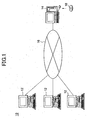
- FIG.1 is a schematic diagram illustrating a commodity
developing system according to an embodiment of the present
invention;
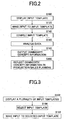
- FIG.2 is a schematic process flowchart illustrating a
commodity developing method according to an embodiment of the
present invention;
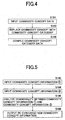
- FIG.3 is a flowchart illustrating the usage of a template
in the commodity developing method according to a further
embodiment of the present invention;
- FIG.4 is a flowchart illustrating a commodity concept
categorization method used in a commodity concept developing
method according to a further embodiment;
- FIG. 5 is a flowchart illustrating a commonality analyzing
method for commodity concepts used in a commodity developing
method according to a further embodiment;
- FIG.6 is a flowchart illustrating a common process flow
of commodity developing methods according to examples 1, 4 , and
5 corresponding to an embodiment of the present invention;
- FIG.7 is a flowchart illustrating a process flow of a
commodity developing method according to example 2 of the present
embodiment;
- FIG. 8 is a flowchart illustrating a process flow of a
commodity developing method according to example 3 of the present
embodiment;
- FIG.9 shows an input template used in the commodity
developing method according to example 1 of the present
embodiment;
- FIG. 10 shows a dictionary table used in the present
invention;
- FIG. 11 shows a work list used in the commodity concept
developing method according to example 1;
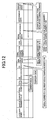
- FIG.12 shows a compilation list used in the commodity
concept developing method according to example 1;
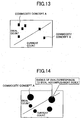
- FIG.13 shows a correlation diagram showing a 'current
count' and an 'ideal count' for a plurality of commodity concepts
obtained in the commodity concept developing method according
to example 1;
- FIG.14 shows the correlation diagram of FIG.13 in which
an 'ideal accomplishment level' for each commodity concept is
represented by the size of the diameters of an oval corresponding
to the commodity concept;
- FIG.15 shows an input template used in the commodity
concept developing method according to example 2;
- FIG.16 shows a compilation chart used in the commodity
concept developing method according to example 2;
- FIG.17 shows a scatter chart obtained in the commodity
concept developing method according to example 2, the scatter
chart indicating the positioning of a plurality of current
products;
- FIG.18 shows the scatter chart of FIG.17 in which each
'survey product' is represented in the form of a 10% probability
oval;
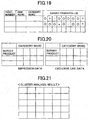
- FIG. 19 shows an input template used in the commodity
concept developing method according to example 3;
- FIG.20 shows level charts used in the commodity concept
developing method according to example 3;
- FIG.21 shows a cluster analysis result obtained in the
commodity concept developing method according to example 3;
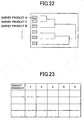
- FIG.22 shows a dendrogram obtained in the commodity
concept developing method according to example 3;
- FIG.23 shows a compilation chart obtained in the commodity
concept developing method according to example 3, the
compilation chart being created by extracting characteristic
commodity concepts;
- FIG. 24 shows a histogram obtained in the commodity concept
developing method according to example 3, the histogram
indicating a number value for each 'survey product';
- FIG. 25 shows an input template used in the commodity
concept developing method according to example 4;
- FIG.26 shows a work list used in the commodity concept
developing method according to example 4;
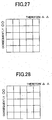
- FIG.27 shows a cross support matrix obtained in the
commodity concept developing method according to example 4;
- FIG.28 shows a total influence matrix obtained from the
cross support matrix of FIG. 27;
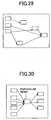
- FIG.29 shows a value recognition structure diagram
obtained from the total influence matrix of FIG.28;
- FIG.30 shows a value recognition structure diagram
obtained in the commodity concept developing method according
to example 4, the value recognition structure diagram setting
a particular word at the center;
- FIG.31 shows a compilation chart used in the commodity
concept developing method according to example 4;
- FIG.32 shows a scatter chart obtained from the compilation
chart of FIG.31, the scatter chart indicating a 'cause level'
and a 'center level' for each 'category word';
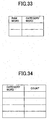
- FIG.33 shows an input template used in the commodity
concept developing method according to example 5;
- FIG.34 shows a compilation chart used in the commodity
concept developing method according to example 5;
- FIG.35 shows a histogram for the category words obtained
in the commodity concept developing method according to example
5; and
- FIG.36 shows an orthogonal coordinates diagram obtained
in the commodity concept developing method according to example
5, the diagram indicating the positioning of the category words.
-
BEST MODE FOR CARRYING OUT THE INVENTION
-
In the following, preferred embodiments of the present
invention (referred to as present embodiment hereinafter) for
the commodity developing method, the commodity developing
system, the commodity developing program, and the recording
medium on which the commodity developing program is recorded
will be described with reference to the accompanying drawings.
(Schematic Configuration of Commodity Developing System)
-
First, referring to FIG. 1, an outline of the commodity
developing system according to the present embodiment is
described.
-
The commodity developing system 10 according to the
present embodiment includes a plurality of computers (first
computer) 12 that inputs commodity concept data, a computer
(second computer) 14 that receives and analyzes the commodity
concept data, and outputs commodity concept information, and
a line network (line) 16 such as a general communication line
interconnecting the computers 12 and the computer 14 or an
Internet connection line. Herein, the commodity concept
information may be output to the computers 12.
-
The plurality of computers 12 may be stationed at various
stores selling the commodity or service stations, for example,
and the computer 14 may be stationed at a commodity development
department, for example.
-
In this case, the computers 12 and 14 may be connected
via a general or dedicated communication line, or they may be
connected via an Internet connection line. Also, a LAN may be
used as the communication line between the computers 12 and 14
in which case the computers 12 and 14 have a client-server
relation. Alternatively, the computers 12 and 14 may have a
so-called terminal-host relation.
-
Further, a recording medium such as a CD-ROM 18 is provided
on which is recorded a commodity development program for
developing a commodity based on the commodity concept
information gathered and analyzed in the commodity developing
system 10. The CD-ROM 18 may be implemented in the computer 14
as shown in FIG. 1, or it may be implemented in the computer 12
as well.
-
At the computer 12, the commodity concept data may be
directly input by a commodity user, or the commodity concept
data may be input by a sales attendant at the store that is
listening to the commodity concept data from the commodity user.
Alternatively, the sales attendant at the store may collectively
input the data of a plurality of users based on results from
a questionnaire survey.
-
The input commodity concept data are accumulated and
processed in the computer 14 according to a suitable processing
method such as a collective processing method or an instant
processing method.
-
The commodity developing system 10 may be used to execute
a commodity developing method according to the present
embodiment of which specific examples 1~5 will be described
below.
(Common Process Flow of Commodity Development Method
according to the Present Embodiment)
-
In the following, a common process flow for each of the
exemplary commodity developing methods according to the present
embodiment is described.
1) General Process Flow
-
First of all, a general process flow is described with
reference to FIG.2. This general process flow is a common
process flow for all the exemplary commodity developing methods
according to the present embodiment described below.
-
The process starts with an input template being displayed
at the computer 12 (S100) , the input template designating input
items and an input method, for example.
-
Then, commodity concept data is input to the respective
item columns of the input template (S120).
-
Next, the commodity concept data input to a plurality of
computers 12 are gathered at the computer 14 via the line network
16, and a compiling process is performed (S140).
-
Next, the data is analyzed according to a predetermined
analyzing method (S160).
-
Next, based on results from the analysis, commodity
concept information is output in a predetermined format
according to a predetermined outputting method (S180).
-
Thus, commodity development can be conducted by reflecting
the obtained commodity concept information on the production
and sales planning of the commodity (S200).
2) Input Flow
-
In the following, the inputting process (S100 and S120)
of FIG.2 concerning the usage of the template are described in
greater detail with reference to FIG. 3.
-
In the inputting process (S100 and S120), a plurality of
input templates corresponding to a plurality of predetermined
analyzing methods are displayed (S102).
-
Then, an inputter making the inputs selects an input
template (S104). In this case, the computer 14 may administer
the computer 12 to select an input template corresponding to
the designated analyzing method, or the inputter may select an
input template arbitrarily.
-
Then, the commodity concept data is input to the selected
input template (S122).
3) Compiling Process Flow (Categorization of Commodity
Concept)
-
In the following, the compiling process (S120 and S140)
of FIG.2 will be described in greater detail with reference to
FIG. 4.
-
When the commodity concept. data is input (S124) , the
commodity concept is replaced by a commodity concept category
(S142). The commodity concept category refers to a concept that
matches and has common ground with a commodity concept. Because
of a difference in vocabulary strengths or sensitivity of the
inputters, a plurality of commodity concepts described using
various words may actually be categorized into one substantial
concept. Thus, in order to obtain useful and efficient data,
the commodity concepts are processed for standardization.
Hence, the commodity concept categorization is performed.
Herein, it is noted that the replacement of the commodity concept
with the commodity concept category is realized by referring
to a dictionary table that compares the commodity concept to
the commodity concept category, the details of this process being
described later.
-
Then, based on the replaced commodity concept category
data, the compiling process is performed (S144).
4) Commodity Concept Information Follow-Up Process
(Common Ground Analysis of Commodity Concept)
-
In the following, a common ground analysis of the commodity
concept as a commodity concept information follow-up process
will be described with reference to FIG. 5.
-
Commodity concept information obtained using a
predetermined analyzing method (commodity concept information
1 ○) is input to the computer 14 (S182), and commodity concept
information obtained using another predetermined analyzing
method (commodity concept information 2 ○) is input to the
computer 14 (S184).
-
Then, a common ground between the two sets of commodity
concept information is analyzed (S186) , and commodity concept
information reevaluated based on the common ground analysis is
output (S188). In this way, commodity concept information that
is more effective than the individual sets of commodity concept
information can be obtained.
(Individual Process Flow for each Exemplary Commodity
Developing Method according to the Present Embodiment)
-
In the following, process flows of the commodity
developing methods according to examples 1~5 of the present
embodiment will be described in due order.
1) Process Flow of Commodity Developing Methods according
to Examples 1, 4, and 5 of the Present Embodiment
-
Referring to FIG.6, a common process flow for the commodity
developing methods according to the examples 1, 4, and 5 of the
present embodiment is described. The commodity developing
method according to example 1 uses a so-called definition method;
the commodity developing method according to example 4 uses a
so-called sentence completion method; and the commodity
developing method according to example 5 uses a so-called
association method.
-
First, an inputter inputs a commodity concept conceived
through free imagination (defined commodity concept) to the
input template of the computer 12 (S300).
-
Then, referring to a dictionary table comparing the
commodity concept to the commodity concept category, a work list
arranging a commodity concept with a hit commodity concept
category matching the commodity concept is made (S302).
-
Then, for the commodity concept that does not make a hit
(that cannot be put in the list), a commodity concept category
is input to the work list (S304).
-
Then, when the inputting of the commodity concept category
to the work list is completed (S306) , the commodity concept and
the commodity concept category in the work list are displayed
on the input template (S308).
-
Then, the commodity concept and the commodity concept
category are checked to see if they are an appropriate match,
and they may be corrected if necessary (S310).
-
Then, the plurality of sets of input data from a plurality
of inputters are compiled, and a compilation chart is made
therefrom (S312). This compilation chart may have different
formats depending on the different analyzing methods used in
the various commodity developing methods. Detailed
descriptions of each of the different compilation charts are
given later.
-
Then, the commodity concept category data is analyzed
according to the predetermined analyzing method used in the
respective commodity developing methods (S314).
-
Then, the thus obtained commodity concept information is
output as a diagram or chart in the respective formats designated
by the various predetermined analyzing methods used in the
various commodity developing methods (S316).
2) Process Flow of Commodity Developing Method according
to Example 2 of the Present Embodiment
-
Next, referring to FIG. 7, a process flow of the commodity
developing method according to example 2 of the present
embodiment is described. The commodity developing method
according to example 2 uses a so-called positioning method.
-
First, coordinate axis names defining two pairs of
opposing commodity concepts and a plurality of current products
are displayed on the input template (S400).
-
Then, numerical values of coordinate points according to
the recognition level of the commodity concept for each of the
current products are input to the input template as coordinate
plane data (S402).
-
Then, plural sets of input data are compiled and a
predetermined compilation chart (coordinate plane data
compilation chart) is created (S404). The details concerning
this compilation chart are described later.
-
Then, the plural sets of input data are statistically
processed to generate probability oval depiction data (S406).
The details concerning the probability oval depiction data are
described later.
-
Then, the commodity concept information on the positioning
of the current products obtained based on the probability oval
depiction data is output in the form of coordinate plane figures
(S408). Further, if necessary, information other than that on
the current products, for example, a plurality of names of
celebrities, obtained in the above manner may be displayed in
conjunction with the coordinate plane figures (S410) to
interpret the association of the current product with a
celebrity.
3) Process Flow of Commodity Developing Method according
to Example 3 of the Present Embodiment
-
Next, referring to FIG.8, a process flow of a commodity
developing method according to example 3 of the present
embodiment is described. The commodity developing method
according to example 3 uses a so-called Sensitive
Differentiation Method (SDM).
-
First, a plurality of commodity concepts and a plurality
of current products are defined and displayed on the input
template (S500).
-
Then, for each commodity concept displayed on the input
template, it is determined whether the commodity concept is
recognized in each of the current products, and for example,
circles ○ and crosses × are input according to the
determination results (S502).
-
The subsequent procedures of this process flow after step
502 (S502) are identical to steps 302 (S302) through step 316
(S316) shown in FIG.6.
(Specific Description of Commodity Developing Method
according to each Example of the Present Embodiment)
-
In the following, specific descriptions of the commodity
developing method according to the examples 1~5 of the present
embodiment are given in due order.
1) Commodity Developing Method according to Example 1 of
the Present Embodiment
-
Herein, the commodity developing method according to
example 1 of the present embodiment (definition method) is
described.
-
FIG. 9 shows an input template used in the present example.
This input template indicates three items labeled 'current',
'ideal' , and 'trial' , respectively. The items correspond to the
above-described current product, the ideal product, and a trial
product. Also, each item has columns for entering a 'raw word'
and a 'category word' , respectively. The former corresponds to
the commodity concept, and the latter corresponds to the
commodity concept category (corresponding to S100 in FIG.2).
-
In the commodity developing method according to example
1 of the present embodiment, a commodity being subjected to a
survey is specified at the time the execution of the survey of
the specified commodity is decided, and for example, a commodity
'shampoo' may be designated. This commodity subjected to the
survey may be separately indicated in the input template, or
it may be revealed in some other way. The input template shown
in FIG.9 is provided for an inputter to freely define commodity
concepts for the shampoo he/she is currently using (current
product) in his/her own words, and also to define commodity
concepts for an ideal shampoo product (ideal commodity) in a
similar fashion. Also, if necessary, a plurality of commodity
concepts for a trial product are defined and input as well in
order to check its consistency with user needs (corresponding
to S120 of FIG.2 and S300 of FIG.6). For example, commodity
concepts for the shampoo currently being used may be that it
has a floral scent and leaves the hair moist, and the commodity
concept for the ideal shampoo may be that it has a rich foam
and effectively cleanses the hair.
-
FIG. 10 shows a dictionary table used in the present example.
The dictionary table shows a comparison of the 'raw word' to
the 'category word'. It is noted that a plurality of dictionary
tables may be provided according to the various types of
commodities being subjected to commodity development, or a
plurality of the tables may be provided according to the various
types of analyzing methods. However, in the given examples of
the present embodiment, the same dictionary table is used. For
example, when a commodity concept is expressed as 'not causing
strain on the skin' in the 'raw word', an expression 'low
irritant' may be referred to in the dictionary table.
-
FIG. 11 shows a work list used in the present example. The
work list shows the 'category word' corresponding to the 'raw
word' input for each of the three items, 'current', 'ideal',
and 'trial' in the form of a list. The format of the work list
differs depending on the various examples of the present
embodiment.
-
After the input to the input template is completed for
the input items, a predetermined dictionary table is designated,
and categorization is instructed so that the 'raw words' input
for the three items 'current', 'ideal', and 'trial',
respectively, are copied and 'category words' making a hit with
the respective 'raw words' are filled into the work list
(corresponding to S302 of FIG. 6). Also, the inputter may be able
to correct a 'raw word' in the work list.
-
After the inputting of the 'category words' to the work
list is completed, a 'completion' process is performed so that
the 'raw words' and the 'category words' of the work list are
put back into the columns of the original input template
(corresponding to S308 of FIG. 6).
-
Then, the inputter checks the 'raw words' and the 'category
words' in the input template to see if the juxtapositions are
appropriate, and makes corrections if necessary (corresponding
to S310 of FIG.6). Then, if there is no problem, a 'compilation'
process is instructed.
-
FIG.12 shows a compilation chart used in the present
example. The compilation chart includes an item 'category word'
as well as the following items.
-
'Sample number' refers to the number of inputs made by
the plurality of inputters (total number of inputters).
'Current count' refers to the number of inputs of the 'category
word' for the item 'current' out of the 'sample number'; and
'ideal count' refers to the number of inputs of the 'category
number' for the item 'ideal' out of the 'sample number'. 'Total
count' refers to the total of the 'current count' and the 'ideal
count'. Herein, the 'category word' with a large 'current
count' is a representation of a commodity image or perception
that the commodity user generally has towards the current
product; in other words, this 'category word' may be perceived
as representing an existent commodity concept. On the other
hand, the 'category word' with a large 'ideal count' is a
representation of a commodity image or perception that the
commodity user has towards the ideal product; in other words,
this 'category word' may be perceived as representing a latent
commodity concept.
-
'CS coefficient' refers to the value obtained by dividing
the 'ideal count' by the 'current count'. This 'CS coefficient'
corresponds to a customer satisfaction coefficient, that is,
a weighting coefficient for the plurality of commodity concepts
('category words' in this example) from the aspect of the
above-described nature of commodity concepts.
-
'CS index' refers to the value obtained by multiplying
the 'CS coefficient' by the total value of the 'ideal count'
and 'current count', dividing the multiplication result by 1/2
the 'sample number', and expressing this division result in the
form of a percentage value. This 'CS index' may be perceived
as an attempt at generalizing the weighting of a commodity
concept out of the plurality of commodity concepts.
-
'New value index' is a 'CS index' of which the 'category
word' has a 'current count' that is equal to zero. Thus, the
'category word' with a large 'new value index' is a
representation of a commodity concept that does not exist in
the current commodity and merely exists as an ideally desired
commodity concept; in other words, this may be considered an
ultimate value.
-
'Trial evaluation sample number' refers to the number of
inputs made by a plurality of inputters (the total number of
inputters) that have answered questionnaires after actually
using the trial product. 'Trial count' corresponds to the
number of inputs of the 'category word' for the item 'trial'
out of the 'sample number'.
-
'Ideal accomplishment index' corresponds to a value
obtained by dividing the 'trial count' by the 'trial evaluation
sample number' , dividing the 'ideal count' by the 'sample number' ,
further dividing the former division result by the latter
division result, and expressing the obtained result in the form
of a percentage value. This 'ideal accomplishment index' may
be likened to an indicator indicating how far the trial product
is able to satisfy the commodity concept ultimately sought after
by the commodity user.
-
'Improvement index' corresponds to the value obtained by
dividing the 'sample number' by the 'trial evaluation sample
number', dividing the 'current count' by the 'sample number',
further dividing the former division result by the latter
division result, and expressing the obtained result in the form
of a percentage value. This 'improvement index' may be
considered an indicator indicating the extent of improvement
in the trial product with respect to the current commodity.
-
'Unique value index' corresponds to the value obtained
by dividing the 'trial count' by the 'trial evaluation sample
number' and expressing the obtained result in the form of a
percentage value.. This 'unique value index' represents a new
found value in the trial product that is recognized by the
commodity user upon using the trial product for the commodity
concept with both the 'current count' and 'ideal count' equaling.
zero.
-
By instructing a 'compiling' process, the compilation
chart of FIG. 12 is made (corresponding to S140 of FIG.2 and
S312 of FIG.6). In this case, the compiling procedure actually
includes the analyzing procedure (S160 of FIG. 2 and S314 of
FIG. 6).
-
Based on the compilation chart, significant information
concerning the commodity concept can be output in various forms
(S180 of FIG.2 and S316 of FIG. 6)
-
For example, FIG. 13 is an example of a correlation diagram
representing a relation between the 'current count' and the
'ideal count' for the plurality of commodity concepts
('commodity concept category' in this example) obtained. This
correlation diagram may be obtained by pressing a 'value
portfolio (count)' button or a 'value portfolio (percentage)'
button.
-
As is evident from the above descriptions, in FIG. 13,
commodity concept A has a character of being a latent new value,
and commodity concept B has a character of being an obvious value
that is regarded as effective. Thus, an effective commodity
development is possible by developing a new commodity that can
realize commodity concept A or commodity concept B, for example.
-
Also, FIG. 14 is an example of a diagram indicating ovals
having various diameters (radii) according to the scale of the
'ideal accomplishment index' for each of the commodity concepts
shown in FIG. 13. According to this drawing, it can be determined
that the commodity concept A, which corresponds to the new value,
is significantly supplemented in the trial product.
-
It is noted that for each item of the compilation chart,
the order of the commodity concept may be rearranged according
their respective values; in other words, the compilation chart
may be output as a value chart for considering the effectiveness
of the commodity concepts from various aspects.
2) Commodity Developing Method according to Example 2 of
the Present Embodiment
-
In the following, the commodity developing method
according to example 2 of the present embodiment (positioning
method) will be described.
-
FIG.15 shows an example of an input template used in the
present example. This input template includes 'panel number'
for distinguishing inputters, 'survey product' indicating the
plurality of current products (current-product names) being
subjected to the survey, 'X' representing the coordinate point
for an X coordinate axis name described below, and 'Y'
representing the coordinate point for a Y coordinate axis name
described below, as items (S100 of FIG.2 and S400 of FIG.7).
The 'X coordinate axis name' and the 'Y coordinate axis name'
are each defined as a pair of opposing commodity concepts that
belong to the same category. For example, a name
'static/dynamic' may be assigned as the 'X coordinate axis name',
and a name 'masculine/feminine' may be assigned as the 'Y
coordinate axis name'.
-
In the commodity developing method according to example
2 of the present embodiment, a plurality of commodities subjected
to the survey are specified in the item 'survey product' of the
input template of FIG.15. Then, for each 'survey product',
coordinate points 'X' and 'Y' are input by the inputter according
to his/her evaluation of where the coordinate points are
positioned on the respective coordinate axes with respect to
the commodity concepts corresponding to the 'X coordinate axis
name' and the 'Y coordinate axis name' based on the sense or
image of the product held by the inputter (S120 in FIG.2, S402
in FIG.7). After completing the entering of inputs for the
'survey products', the input coordinate points 'X' and 'Y' may
be corrected if necessary in consideration of the relative
balance between each of the 'survey products'.
-
Then, the input data (coordinate plane data) made by a
plurality of inputters are compiled and the compilation chart
shown in FIG.16 is made. Herein, it is noted that this
compilation may also be used as an analysis chart (S140 and S160
in FIG.2; S404 and S406 in FIG. 7)
-
The compilation chart includes the 'survey product' as
well as 'X average', 'Y average' , and 'probability oval depiction
data' as items.
-
Herein, 'X average' and 'Y average' correspond to average
values obtained from standardized values of 'X' and 'Y'
('standardized X' and 'standardized Y' in FIG.15),
respectively.
-
Next, 'probability oval depiction data' of the compilation
chart is generated according to the following procedures.
-
First, for each 'survey product' , the slope of a regression
line is obtained. Then, each set of coordinates are rotated
according to the slope with an average (X, Y) as a center. Then,
standard deviations in the X direction and Y direction are
obtained. Then, values of an inverse function of the standard
normal distribution with respect to a probability P is obtained,
and the diameters of the oval in the X direction and the Y
direction are set.
-
Based on the compilation chart, useful information
relating to the commodity concept may be output in various forms
(S180 in FIG.2; S408 in FIG.7).
-
For example, FIG.17 represents information on the
positioning of the plurality of current products in the form
of a scatter diagram. Also, in FIG.18, a 10% probability oval
is shown for each 'survey product' represented in FIG.17.
-
In FIG.18, for example, if current products C and D
correspond to products made by the company conducting this survey
and current products E and F correspond to products made by other
companies, and if the current product C corresponds to a
hot-selling commodity (product), a feminine image may be
considered a target commodity concept for developing further
product items since the current product C corresponding to the
hot-selling commodity has a feminine image as its commodity
concept.
-
Further, with regard to the commodity concept of a feminine
image, the current product C is competing with the current
product F made by another company. Also, with respect to the
commodity concept of a static image, the current product D is
competing with the current product E made by another company.
Such information is useful in commodity development.
-
Additionally, after obtaining the above compilation chart,
another different compilation chart featuring the names of a
plurality of female celebrities, for example, may be created
according to similar procedures. Then, the data of the two
compilation charts may be combined and represented in a scatter
chart (not shown, S410 in FIG. 7).
-
In such scatter chart, the state of the current product
in association with celebrity names may be analyzed, thereby
further providing useful information for commodity development.
3) Commodity Developing Method according to Example 3 of
the Present Embodiment
-
In the following, the commodity developing method
according to example 3 of the present embodiment (SDM: Sensitive
Differentiation Method) will be described.
-
In FIG. 19, an input template used in this example is shown.
This input template includes the items 'panel number' , 'raw word' ,
'category word' , and 'survey product (A~N)'. The item 'survey
products (A~N)' contains evaluations for a plurality of survey
products (S100 in FIG.2, S500 in FIG. 8).
-
In the commodity developing method according to example
3 of the present embodiment, first, the plurality of current
product names as surveyed commodities are indicated in the item
'survey products (A~N)'.
-
Then, for each 'raw word' or 'category word', it is
determined by the inputter whether the respective current
products (current product names) hold the image described by
the 'raw word' (or 'category word'). Namely, a circle '○' is
input for the current products that hold the image described
by the 'raw word', and a cross '×' is input for the current
products that do not hold the image described by the 'raw word'
(S120 in FIG.2; S502 in FIG. 8).
-
The subsequent processing procedures performed in this
example are identical to those performed in step 140 (S140) and
the subsequent steps of FIG. 2.
-
Then, level charts as shown in FIG.20 are made as
compilation charts.
-
In FIG.20, two level charts are formed; one being an
impression data level chart that disregards the 'like/dislike'
factor (i.e., like level + dislike level), the other being an
exclusive like data level chart that focuses on the 'like' factor
(i.e., like level - dislike level).
-
In each level chart, the number of inputs made for each
'category word' is shown for each 'survey product'.
-
Based on the level charts, a cluster analysis result as
shown in FIG.21 is obtained, and further, a dendrogram as shown
in FIG.22 is obtained from the cluster analysis result.
-
In FIGS. 21 and 22, the survey products are divided into
a plurality of clusters based on differences in their main
commodity concepts, and in each cluster for a particular
commodity concept, current products that are distinguished from
other current products by this commodity concept are assigned.
-
The current products may have a plurality of commodity
concepts including the main commodity concept. FIG. 21 shows a
weighting of the commodity concepts based on the input count
of each commodity concept, and in this way, the main commodity
concept may be determined. Then, by categorizing the current
products according to their main commodity concepts that take
up a large weight in the weighting, the dendogram (tree map)
of FIG.22 made up of a plurality of clusters may be obtained.
-
Through this analysis method, it may be determined that
the commodity concept with a large weight in the weighting of
the commodity concepts recognized in the hot-selling commodity
is a valuable concept for the commodity development.
-
Further, as shown in FIG. 23, five characteristic commodity
concepts (commodity concept categories), for example, for each
survey product may be extracted to form a compilation chart,
and a histogram indicating a level for each 'survey product'
as shown in FIG.24 may be generated based on the compilation
chart. In this way, the commodity concepts may be regarded from
a perspective that is different from a perspective of the
dendrogram so that further useful information may be obtained
for commodity development.
4) Commodity Developing Method according to Example 4 of
the Present Embodiment
-
In the following, the commodity developing method
according to example 4 of the present embodiment (sentence
completion method or DEMATEL analysis method) will be described.
-
FIG.25 shows an input template used in the present example.
This input template includes columns for inputting a 'raw word'
and a 'category word' for each of the items 'because ~',
'consequently ~', and 'therefore ~' (S100 in FIG. 2).
-
In the commodity developing method according to example
4 of the present embodiment, first, the surveyed commodities
are specified (not shown in the input template). Then, words
are input to each of the columns corresponding to the items for
logically completing a sentence including a fact, a remark, and
a conclusion, namely, a sentence, 'Because ~, consequently ~,
and therefore ~,' describing a commodity concept for each of
the surveyed commodities (S120 in FIG.2; S300 in FIG.6). For
example, 'my shampoo' as a surveyed commodity may be described
by inputting a commodity concept ('raw word' or 'category word' ) ,
'because it foams up easily,' 'consequently it leaves the hair
moist,' and 'therefore it facilitates hair styling'.
-
After inputting the commodity concept, the processes
corresponding to step 302 (S302) of FIG.6 and the subsequent
steps are performed according to procedures identical to those
for example 1 of the present embodiment.
-
However, in this case, the work list conforms to a format
shown in FIG. 26.
-
DEMATEL analysis starts with the formation of a square
matrix shown in FIG.27 for variable × variable called a cross
support matrix. The square matrix for the variables is
different from a correlation coefficient matrix in that it is
an asymmetrical matrix. Thereby, it is possible to assign
directional meaning to each numerical value in each cell, and
an analysis of an influential power relation, a cause-and-effect
relation, or an order relation moving from column to row may
be possible.
-
In DEMATEL analysis, the influential power of the path
generated when the cross support matrix is squared, cubed, and
so on, is mass computed by multiplying the cross support matrix
by its inverse matrix to obtain an indirect influence matrix,
and adding this to the direct influence matrix to obtain a total
influence matrix as shown in FIG. 28.
-
Based on the total influence matrix, a value recognition
structure diagram (commodity concept relation chart) as shown
in FIG.29 may be obtained.
-
In the value recognition structure diagram, first hand
values corresponding to the remarked words are connected to fact
words corresponding to the commodity quality and conclusion
words corresponding to the commodity satisfaction level.
-
In this way, an understanding of the logic in the value
recognition of commodity users may be facilitated, and hidden
or latent values or needs may be discovered by moving further
to the right in FIG.29.
-
Herein, by designating a particular word, a value
recognition structure diagram centering on the particular word
may be obtained as shown in FIG. 30.
-
Also, a compilation chart as shown in FIG. 31 may be made,
this chart including the items 'cause level' corresponding to
the total sum of the column sum and the row sum, and 'center
level' corresponding to the difference between the column sum
and the row sum for each 'category word'. Based on this
compilation chart, a scatter chart shown in FIG.32 may be
obtained. From this scatter chart, information on which word
corresponds to the cause of a particular value recognition and
leads to which word, or which word is frequently used can be
obtained.
5) Commodity Developing Method according to Example 5 of
the Present Embodiment
-
In the following, the commodity developing method
according to example 5 of the present embodiment (association
method) will be described.
-
FIG. 33 shows an input template used in the present example.
This template includes columns for inputting a 'raw word' and
'category word' for a surveyed product, which is not shown (S100
in FIG. 2).
-
In the commodity concept developing method according to
example 5 of the present embodiment, first, a surveyed product
is designated in advance, and a plurality of commodity concepts
are defined freely and input. The subsequent process steps for
this method are identical to the process steps S302 and onward
of FIG.6 showing the commodity developing method according to
example 1 of the present embodiment.
-
In the commodity concept developing method according to
example 5 of the present embodiment, a compilation chart as shown
in FIG.34 is obtained.
-
This compilation chart includes an item 'count'
corresponding to the number of inputs made for each 'category
word'.
-
Based on this compilation chart, a histogram as shown in
FIG.35 may be obtained. From this histogram, an image held by
the commodity user for a surveyed product can be easily
determined, and a key commodity concept being for commodity
development may be obtained.
-
Also, as shown in FIG. 36, ovals with radii based on the
standardized values of inputs in the item 'count' for each
'category word' may be positioned in a graph having orthogonal
coordinate axes. The positions of the ovals representing the
'category words' (commodity concepts) may be rearranged freely
according to similarities and relevancies between the commodity
concepts, for example, so as to look at the commodity concepts
from all different aspects. In this way, a commodity concept
corresponding to latent needs can be determined.