EP1379035A1 - Communication data amount measurement system - Google Patents
Communication data amount measurement system Download PDFInfo
- Publication number
- EP1379035A1 EP1379035A1 EP02714565A EP02714565A EP1379035A1 EP 1379035 A1 EP1379035 A1 EP 1379035A1 EP 02714565 A EP02714565 A EP 02714565A EP 02714565 A EP02714565 A EP 02714565A EP 1379035 A1 EP1379035 A1 EP 1379035A1
- Authority
- EP
- European Patent Office
- Prior art keywords
- data
- measuring
- communication
- service type
- transmitting
- Prior art date
- Legal status (The legal status is an assumption and is not a legal conclusion. Google has not performed a legal analysis and makes no representation as to the accuracy of the status listed.)
- Withdrawn
Links
Images




Classifications
-
- G—PHYSICS
- G06—COMPUTING OR CALCULATING; COUNTING
- G06Q—INFORMATION AND COMMUNICATION TECHNOLOGY [ICT] SPECIALLY ADAPTED FOR ADMINISTRATIVE, COMMERCIAL, FINANCIAL, MANAGERIAL OR SUPERVISORY PURPOSES; SYSTEMS OR METHODS SPECIALLY ADAPTED FOR ADMINISTRATIVE, COMMERCIAL, FINANCIAL, MANAGERIAL OR SUPERVISORY PURPOSES, NOT OTHERWISE PROVIDED FOR
- G06Q20/00—Payment architectures, schemes or protocols
- G06Q20/08—Payment architectures
- G06Q20/085—Payment architectures involving remote charge determination or related payment systems
-
- G—PHYSICS
- G06—COMPUTING OR CALCULATING; COUNTING
- G06Q—INFORMATION AND COMMUNICATION TECHNOLOGY [ICT] SPECIALLY ADAPTED FOR ADMINISTRATIVE, COMMERCIAL, FINANCIAL, MANAGERIAL OR SUPERVISORY PURPOSES; SYSTEMS OR METHODS SPECIALLY ADAPTED FOR ADMINISTRATIVE, COMMERCIAL, FINANCIAL, MANAGERIAL OR SUPERVISORY PURPOSES, NOT OTHERWISE PROVIDED FOR
- G06Q20/00—Payment architectures, schemes or protocols
- G06Q20/38—Payment protocols; Details thereof
- G06Q20/382—Payment protocols; Details thereof insuring higher security of transaction
-
- H—ELECTRICITY
- H04—ELECTRIC COMMUNICATION TECHNIQUE
- H04L—TRANSMISSION OF DIGITAL INFORMATION, e.g. TELEGRAPHIC COMMUNICATION
- H04L12/00—Data switching networks
- H04L12/02—Details
- H04L12/14—Charging, metering or billing arrangements specially adapted for data communications, e.g. authentication, authorisation and accounting [AAA] framework
-
- H—ELECTRICITY
- H04—ELECTRIC COMMUNICATION TECHNIQUE
- H04L—TRANSMISSION OF DIGITAL INFORMATION, e.g. TELEGRAPHIC COMMUNICATION
- H04L43/00—Arrangements for monitoring or testing data switching networks
-
- H—ELECTRICITY
- H04—ELECTRIC COMMUNICATION TECHNIQUE
- H04L—TRANSMISSION OF DIGITAL INFORMATION, e.g. TELEGRAPHIC COMMUNICATION
- H04L67/00—Network arrangements or protocols for supporting network services or applications
- H04L67/01—Protocols
- H04L67/02—Protocols based on web technology, e.g. hypertext transfer protocol [HTTP]
-
- H—ELECTRICITY
- H04—ELECTRIC COMMUNICATION TECHNIQUE
- H04M—TELEPHONIC COMMUNICATION
- H04M15/00—Arrangements for metering, time-control or time indication ; Metering, charging or billing arrangements for voice wireline or wireless communications, e.g. VoIP
-
- H—ELECTRICITY
- H04—ELECTRIC COMMUNICATION TECHNIQUE
- H04M—TELEPHONIC COMMUNICATION
- H04M15/00—Arrangements for metering, time-control or time indication ; Metering, charging or billing arrangements for voice wireline or wireless communications, e.g. VoIP
- H04M15/07—Split billing, i.e. both A-party and B-party charged for the communication
-
- H—ELECTRICITY
- H04—ELECTRIC COMMUNICATION TECHNIQUE
- H04M—TELEPHONIC COMMUNICATION
- H04M15/00—Arrangements for metering, time-control or time indication ; Metering, charging or billing arrangements for voice wireline or wireless communications, e.g. VoIP
- H04M15/31—Distributed metering or calculation of charges
-
- H—ELECTRICITY
- H04—ELECTRIC COMMUNICATION TECHNIQUE
- H04M—TELEPHONIC COMMUNICATION
- H04M15/00—Arrangements for metering, time-control or time indication ; Metering, charging or billing arrangements for voice wireline or wireless communications, e.g. VoIP
- H04M15/48—Secure or trusted billing, e.g. trusted elements or encryption
-
- H—ELECTRICITY
- H04—ELECTRIC COMMUNICATION TECHNIQUE
- H04M—TELEPHONIC COMMUNICATION
- H04M15/00—Arrangements for metering, time-control or time indication ; Metering, charging or billing arrangements for voice wireline or wireless communications, e.g. VoIP
- H04M15/58—Arrangements for metering, time-control or time indication ; Metering, charging or billing arrangements for voice wireline or wireless communications, e.g. VoIP based on statistics of usage or network monitoring
-
- H—ELECTRICITY
- H04—ELECTRIC COMMUNICATION TECHNIQUE
- H04M—TELEPHONIC COMMUNICATION
- H04M15/00—Arrangements for metering, time-control or time indication ; Metering, charging or billing arrangements for voice wireline or wireless communications, e.g. VoIP
- H04M15/82—Criteria or parameters used for performing billing operations
- H04M15/8214—Data or packet based
-
- H—ELECTRICITY
- H04—ELECTRIC COMMUNICATION TECHNIQUE
- H04M—TELEPHONIC COMMUNICATION
- H04M2215/00—Metering arrangements; Time controlling arrangements; Time indicating arrangements
- H04M2215/01—Details of billing arrangements
- H04M2215/0156—Secure and trusted billing, e.g. trusted elements, encryption, digital signature, codes or double check mechanisms to secure billing calculation and information
-
- H—ELECTRICITY
- H04—ELECTRIC COMMUNICATION TECHNIQUE
- H04M—TELEPHONIC COMMUNICATION
- H04M2215/00—Metering arrangements; Time controlling arrangements; Time indicating arrangements
- H04M2215/01—Details of billing arrangements
- H04M2215/0188—Network monitoring; statistics on usage on called/calling number
-
- H—ELECTRICITY
- H04—ELECTRIC COMMUNICATION TECHNIQUE
- H04M—TELEPHONIC COMMUNICATION
- H04M2215/00—Metering arrangements; Time controlling arrangements; Time indicating arrangements
- H04M2215/20—Technology dependant metering
- H04M2215/2013—Fixed data network, e.g. PDN, ATM, B-ISDN
-
- H—ELECTRICITY
- H04—ELECTRIC COMMUNICATION TECHNIQUE
- H04M—TELEPHONIC COMMUNICATION
- H04M2215/00—Metering arrangements; Time controlling arrangements; Time indicating arrangements
- H04M2215/22—Bandwidth or usage-sensitve billing
-
- H—ELECTRICITY
- H04—ELECTRIC COMMUNICATION TECHNIQUE
- H04M—TELEPHONIC COMMUNICATION
- H04M2215/00—Metering arrangements; Time controlling arrangements; Time indicating arrangements
- H04M2215/64—Split billing, sharing the cost of calls, e.g. between calling and called parties
-
- H—ELECTRICITY
- H04—ELECTRIC COMMUNICATION TECHNIQUE
- H04M—TELEPHONIC COMMUNICATION
- H04M2215/00—Metering arrangements; Time controlling arrangements; Time indicating arrangements
- H04M2215/78—Metric aspects
- H04M2215/782—Data or packet based
-
- H—ELECTRICITY
- H04—ELECTRIC COMMUNICATION TECHNIQUE
- H04M—TELEPHONIC COMMUNICATION
- H04M2215/00—Metering arrangements; Time controlling arrangements; Time indicating arrangements
- H04M2215/96—Distributed calculation of charges, e.g. in different nodes like for mobiles between HLR and VLR, or between the terminal and the billing function
Definitions
- the invention relates to a communication data volume measuring system, a communication data volume measuring method, a data (e. g. , packet) relaying apparatus, a data relaying method, a program, and a recording medium used in a charging process and the like.
- a data e. g. , packet
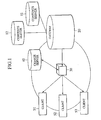
- Fig. 1 is a general configuration diagram of a conventional communication data volume measuring system. A conventional method for charging will now be described with reference to Fig. 1.
- the conventional communication data volume measuring system comprises contents servers 11, 12 that provide contents, a gateway 20, a charging (measuring) point 30, a charge server 40, and clients 51 to 53.
- the contents server 11 provides contents to the client 51 through packet communication.
- the contents server 11 includes in a packet information such as the destination (client 51) and transmits the packet to the gateway 20.
- the packet transmitted to the gateway 20 is then transmitted to the charging point 30 that in turn transmits it to the client 51.
- the charging point 20 measures (counts) a packet level communication data volume. That is, the charging point 30 measures the communication data volume of the relayed packet in order to charge for only the relayed packet.
- the measured value is transmitted to the charge server 40, and the charge server 40 performs a process of charging the measured value thus received.
- charging may be made separately by each of a plurality of contents servers e.g., companies A and B or maybe made separately for each of a plurality of service types.
- the invention according to Claim 1 is a communication data volume measuring system having a plurality of measuring points for measuring a communication data volume and a data relaying apparatus for receiving data and transmitting the data to any of the plurality of measuring points, the gist of the invention being the fact that the data relaying apparatus has a service-type judging means for judging the service type of the received data, a measuring point determining means for determining the measuring point to which the data is to be transmitted from among the plurality of measuring points based on the service type, and a data transmission means for transmitting the data to the determined measuring point; and the fact that each of the plurality of measuring points has a data receiving means for receiving the data from the data relaying apparatus and a communication data volume measuring means for measuring the communication data volume of the received data.
- the invention according to Claim 2 is an invention according to Claim 1, the gist of the invention being the fact that the data relaying apparatus has a server for transmitting the data; the server has an adding means for adding an HTTP extension header indicating the service type of the data; and the service-type judging means of the data relaying apparatus judges the service type based on the HTTP extension header added to the received data.
- the invention according to Claim 3 is an invention according to Claim 2, the gist of the invention being the fact that when the data is transmitted through a secure communication, the adding means of the server adds an HTTP extension header indicating a service type to data transmitted in response to an HTTP signal requesting the start of the secure communication.
- the invention according to Claim 4 is a data relaying apparatus in a communication data volume measuring system having a plurality of measuring points for measuring a communication data volume and a data relaying apparatus for receiving data and transmitting the data to any of the plurality of measuring points, the gist of the invention being the fact that the data relaying apparatus has a service-type judging means for judging the service type of the received data, a measuring point determining means for determining the measuring point to which the data is to be transmitted from among the plurality of measuring points based on the service type, and a data transmission means for transmitting the data to the determined measuring point.
- the invention according to Claim 5 is a data relaying apparatus for transmitting and receiving data and measuring a communication data volume, the gist of the invention being the fact that the apparatus has a service-type judging means for judging the service types of the received data, a communication data volume measuring means for measuring the communication data volume of the received data for each of the service types, and a data transmission means for transmitting the data.
- the invention according to Claim 6 is a communication data volume measuring method in a communication data volume measuring system having a plurality of measuring points for measuring a communication data volume and a data relaying apparatus for receiving data and transmitting the data to any of the plurality of measuring points, the gist of the invention being the fact that the method has the steps of: A) judging the service type of the received data; B) determining the measuring point to which the data is to be transmitted from among the plurality of measuring points based on the service type at the data relaying apparatus; C) transmitting the data to the determined measuring point from the data relaying apparatus; and D) measuring the communication data volume of the received data at the determined measuring point.
- the invention according to Claim 7 is an invention according to Claim 6 , the gist of the invention being the fact that it further comprises a step of E) adding an HTTP extension header indicating the service type of said data at a server transmitting said data to said data relaying apparatus, wherein, in said step A), said data relaying apparatus judges said service type based on said HTTP extension header added to said data.
- the invention according to Claim 8 is an invention according to Claim 7, the gist of the invention being the fact that when the data is transmitted through a secure communication, the server adds an HTTP extension header indicating a service type to data transmitted in response to an HTTP signal requesting the start of the secure communication in the step E.
- the invention according to Claim 9 is a data relaying method in a communication data volume measuring system having a plurality of measuring points for measuring a communication data volume and a data relaying apparatus for receiving data and transmitting the data to any of the plurality of measuring points, the gist of the invention being the fact that it has the steps of: F) judging the service type of the received data; G) determining the measuring point to which the data is to be transmitted from among the plurality of measuring points based on the service types; and H) transmitting the data to the determined measuring point.
- the invention according to Claim 10 is a data relaying method in a data relaying apparatus for transmitting and receiving data and measuring a communication data volume, the gist of the invention being the fact that it has the steps of: I) judging the service type of the received data; J) measuring the communication data volume of the received data for each of the service types; and K) transmitting the data.
- the above inventions make it possible to perform measurement on each service type when measuring communication data volumes in a charging process and the like.
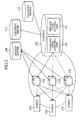
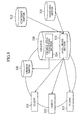
- Fig. 2 is a general configuration diagram of a communication data volume measuring system according to a first embodiment of the invention
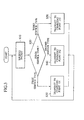
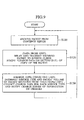
- Fig. 3 is a flow chart showing operations of a gateway of the communication data volume measuring system according to the first embodiment of the invention. A method of charging according to the first embodiment will now be described with reference to Figs. 2 and 3.
- the communication data volume measuring system comprises contents servers 111, 112 for providing contents, a gateway 120, charging points 131 to 133, a charge server 140, and clients 151 to 153.
- the gateway 120 has a service-type judging unit 121 and a charging point assigning unit 122.
- the charging points 131 to 133 constitute a plurality of measuring points for measuring a communication data volume
- the gateway 120 constitutes a data relaying apparatus for receiving data and transmitting the data to any of the plurality of measuring points (charging points 131 to 133).
- the service-type judging unit 121 constitutes a service type-judging means for judging the service type of the received data.
- the charging point assigning unit 122 constitutes a measuring point determining means for determining the measuring point to which the data is to, be transmitted from among the plurality of measuring points (charging points 131 to 133 ) based on the service type thus judged and a data transmission means for transmitting the data to the measuring point thus determined.
- each of the plurality of charging points 131 to 133 comprises a data receiving means for receiving (capturing) the data from the data relaying apparatus (gateway 120) and a communication data volume measuring means for measuring the communication data volume of the received (captured) data.
- each of the charging points 131 to 133 relays the captured data from the gateway 120 to the clients 151 to 153 without terminating an HTTP protocol.
- a plurality of charging points are provided in accordance with the number of service types, and a packet is assigned by the gateway 120 according to the service type thereof.
- the charging point 131 to be a charging point of a first service type
- the charging point 132 to be a charging point of a second service type
- the charging point 133 to be a charging point of a third service type.
- the contents server 111 provides contents to the client 151.
- the contents server 111 transmits a packet including information such as the destination (client 151) and information on the service type to the gateway 120.
- information on the service type for example, it may be inserted as an HTTP (Hyper Text Transfer Protocol) extension header.
- HTTP Hyper Text Transfer Protocol
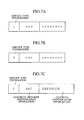
- FIG. 7 An example of an HTTP extension header indicating the service type is shown in Fig. 7.
- Fig. 7A shows an HTTP extension header for charging a client.
- the HTTP extension header includes service type information "1" that indicates a first service type for which the client is charged.
- Fig. 7B shows an HTTP extension header for the case of free of charge data.
- the HTTP extension header includes service type information "3" indicating a third service type that is free of charge.
- Fig. 7C shows an HTTP extension header for charging a contents server.
- the HTTP extension header includes service type information "2" that indicates a second service type for which the contents server is charged.
- the HTTP extension header also includes contents server information "ABC” that identifies the contents server to be charged and contents identification information "DEFGHIJK” that identifies contents provided by the contents server (e.g., an IP address and URL).
- data (packets) provided by the contents server 111 include HTTP response data and Push-type distribution data.
- the service-type judging unit 121 judges the service type of the packet (S20).
- the charging point assigning unit 122 transmits the received packet to the charging point associated with the service type thus judged (S30 to S50). For example, when the service-type judging unit 121 judges the service type of the packet to be of the second service type, the packet is transmitted to the charging point 132.
- the charging points 131 to 133 measure packet level communication data volumes. Specifically, the charging points 131 to 133 measure the communication data volumes of packets that they have relayed in order to charge for the relayed packets. Measured values are transmitted to the charge server 140, and the charge server 140 performs a charging process for the measured values thus received.
- the packet is transmitted to the client 151 via any of the charging points 131 to 133.
- the gateway 120 determines the charging point to relay the packet in accordance with the service type. This makes it possible to measure a communication data volume for each of the service types and to charge for each of the service types.
- Fig. 4 is a general configuration diagram of a communication data volume measuring system according to a second embodiment of the invention
- Figs. 5 and 6 are time charts showing operations of the communication data volume measuring system according to the second embodiment of the invention.
- a method of charging according to the second embodiment of the invention will now be described with reference to Figs. 4 to 6.
- the communication data volume measuring system comprises contents servers 211, 212, a gateway 220, charging points 231 to 233, a charge server 240, clients 251 to 253, and an application server 260.
- the gateway 220 has a service-type judging unit 221 and a charging point assigning unit 222.
- the application server 260 constitutes a server transmitting data to a data relaying apparatus (gateway 220).
- the application server 260 has an adding means for adding HTTP extension headers indicating service types of data (e.g. , a first service type for which a client is to be charged, a second service type for which a contents server is to be charged, and a third service type that is free of charge data).
- service types of data e.g. , a first service type for which a client is to be charged, a second service type for which a contents server is to be charged, and a third service type that is free of charge data.
- the client 251 transmits an HTTP request message to the gateway 220 to request contents (data) from the contents server 211 (S501).
- the HTTP request message is transferred from the gateway 220 to the application server 260 (S502) and is further transferred to the contents server 211 (S503).
- the contents server 211 transmits the data requested by the HTTP request message to the application server 260 as HTTP response message (S504).
- the application server 260 inserts service type information of the data in an HTTP extension header of the HTTP response message and transmits the same to the gateway 220 (S505).
- the gateway 220 determines the charging point 232 as the party to which the HTTP response message is to be transmitted from among the plurality of charging points 231 to 233 based on the service type information inserted in the HTTP extension header and transmits the HTTP response message to the charging point 232 thus determined (S506).
- the charging point 232 relays the HTTP response message to the client 251, captures the HTTP response message, and measures the communication data volume of the captured data (S507).
- the application server 260 can add an HTTP extension header indicating a service type to data (an HTTP response message) transmitted in response to an HTTP signal (an HTTP request message (CONNECT method)) requesting the start of the SSL communication.
- an HTTP request message CONNECT method
- SSL communication is used as a secure communication according to the present embodiment, the invention is not limited to such cases, and any secure communication may be used which is started by transmitting an HTTP signal (an HTTP request message (CONNECT method)).
- the client 251 transmits an HTTP request message using the CONNECT method to the gateway 220 as a signal (an HTTP signal) requesting the start of the SSL communication with the contents server 211 (S601).
- the HTTP request message (CONNECT method) is transferred from the gateway 220 to the application server 260 (S602). Further, the application server 260 transfers the HTTP request message (CONNECT method) to the contents server 211 (S603).
- the contents server 211 transmits an HTTP response message in response to the HTTP request message (CONNECT method) (S604).
- the application server 260 inserts service type information of the data to be provided by the contents server 211 in an HTTP extension header of the HTTP response message transmitted in response to the signal (HTTP request message (CONNECT method)) requesting the start of the SSL communication and transmits the same to the gateway 220 (S605).
- HTTP request message CONNECT method
- the gateway 220 determines the charging point 232 as the party to whom the HTTP response message is to be transmitted from among the plurality of charging points 231 to 233 based on the service type information inserted in the HTTP extension header of the HTTP response message and transmits the HTTP response message to the charging point 232 thus determined (5606).
- communication ports for the SSL communication are provided between the client 251 and the gateway 220, between the gateway 220 and the application server 260, and between the application server 260 and the contents server 211.
- the gateway 220 routes all data packets associated with the SSL communication so that they pass through the charging point 232.
- the charging point 232 relays the HTTP response message to the client 251, captures the HTTP response message, and measures the communication data volume of the captured data (5607).
- the gateway 220 and the application 260 open communication ports for relaying encrypted data and only relay data until the SSL communication is disconnected.
- SSL communication since data is encrypted, it is not possible to inform of the service type using an HTTP extension header.
- the charging point 232 can identify an IP address added to a data packet associated with the SSL communication to measure a communication data volume associated with the SSL communication (S611).
- the charging point 232 can identify an IP address added to a data packet associated with the SSL communication to measure a communication data volume associated with the SSL communication (S613).
- the present embodiment is different from the first embodiment in that packets are transmitted from the contents servers 211, 212 to the gateway 220 through the application server 260.
- Fig. 8 is a general configuration diagram of a communication data volume measuring system according to a third embodiment of the invention
- Fig. 9 is a flow chart showing operations of a gateway of the communication data volume measuring system according to the third embodiment of the invention
- Fig. 10 is a time chart showing operations of the communication data volume measuring system according to the third embodiment of the invention. A method of charging according to the third embodiment of the invention will now be described with reference to Figs. 8 to 10.
- the communication data volume measuring system comprises contents servers 311, 312, a gateway 320, a charge server 340, and clients 351 to 353.
- the gateway 320 has a data probe unit 323 and a charge data collecting unit 324.
- the gateway 320 includes functions of a charging point.
- the charge data collecting unit 324 of the gateway 320 directly communicates with the charge server 340 with regard to charges.
- the gateway 320 constitutes a data relaying apparatus that transmits and receives data and measures the communication data volume.
- the data probe unit 323 constitutes a service-type judging means for judging the service type of the received data, a communication data volume measuring means for measuring the communication data volume of the received data for each service type, and a data transmission means for transmitting data.
- the gateway 320 when the gateway 320 receives data (a packet) addressed to a client from a contents server (S110), the data probe unit 323 relays and transmits the packet to the desired client (S120). Service type information may be deleted from the transmission this time because it is not necessarily required by the client. Further, the gateway 320 notifies the charge data collecting unit 324 of a copy of the packet.
- the charge data collecting unit 324 interprets the packet volume (communication data volume) and service type of the packet received from the data probe unit 323 and combines them into information required for charging which is then notified to the charge server 340 (S130).
- the charge information may be collected for each service type, each user, each unit time, each content , and so on to allow the improvement of efficiency.
- a method is possible in which the process of interpreting service types and packet volumes is performed at the data probe unit 323 in advance, in order to reduce the volume of data notified to the charge data collecting unit 324.
- the gateway 320 may receive a packet from a contents server through an application server as in the second embodiment of the invention.
- the client 351 transmits an HTTP request message using the CONNECT method to the gateway 320 as a signal (an HTTP signal) requesting the start of the SSL communication with the contents server 311 (S1001).
- the gateway 320 measures and stores the communication data volume of the HTTP request message (CONNECT method) (S1002) and transfers the HTTP request message (CONNECT method) to the contents server 311 (S1003).
- the contents server 311 transmits an HTTP response message in response to the HTTP request message (CONNECT method) (S1004).
- the gateway 320 measures the communication data volume of the HTTP response message transmitted in response to the signal (HTTP request message (CONNECT method)) requesting the start of the SSL communication (S1005) and relays and transmits the HTTP response message to the desired client 351 (S1006).
- HTTP request message CONNECT method
- the charge data collecting unit 324 of the gateway 320 judges the service type of the HTTP response message based on service type information inserted in an HTTP extension head of the HTTP response message and measures and stored the communication data volume of the HTTP response message for each of the service types.
- the charge data collecting unit 324 of the gateway 320 can store the communication data volume of the HTTP request message (CONNECT method) measured at S1002 in association with the communication data volume of the HTTP response message.
- the gateway 320 opens a communication port for relaying the encrypted data and only relays data until the SSL communication is disconnected.
- SSL communication since data is encrypted, a service type can not be notified using an HTTP extension header.
- the gateway 320 can identify a communication port opened for the SSL communication to measure a communication data volume associated with the SSL communication (S1011).
- the gateway 320 can identify a communication port opened for the SSL communication to measure a communication data volume associated with the SSL communication (S1013).
- a program for causing a computer 1115 to execute the functions of the gateway 120, 220, 320, charging points 131 to 133, 231 to 233, and the like according to the present embodiment may be recorded in a computer-readable recording medium.
- the computer-readable recording medium may be a floppy disk 1116, a compact disk 1117, an IC chip 1118, a cassette tape 1119, or the like, for example.
- a program can be easily stored, transported, sold, and so on with such a computer-readable recording medium on which the program is recorded.
- the invention may be applied to the simple measurement of a communication data volume and the like.
- the invention makes it possible to measure a communication data volume for each service type when measuring it for a charging process and the like.
Landscapes
- Engineering & Computer Science (AREA)
- Signal Processing (AREA)
- Computer Networks & Wireless Communication (AREA)
- Business, Economics & Management (AREA)
- Accounting & Taxation (AREA)
- Physics & Mathematics (AREA)
- Strategic Management (AREA)
- General Physics & Mathematics (AREA)
- Theoretical Computer Science (AREA)
- General Business, Economics & Management (AREA)
- Finance (AREA)
- Computer Security & Cryptography (AREA)
- Probability & Statistics with Applications (AREA)
- Data Exchanges In Wide-Area Networks (AREA)
Abstract
Description
wherein, in said step A), said data relaying apparatus judges said service type based on said HTTP extension header added to said data.
Claims (12)
- A communication data volume measuring system having a plurality of measuring points for measuring a communication data volume and a data relaying apparatus for receiving data and transmitting said data to any of said plurality of measuring points, wherein:said data relaying apparatus comprises:a service-type judging means for judging the service type of said received data;a measuring point determining means for determining the measuring point to which said data is to be transmitted from among said plurality of measuring points based on said service type; anda data transmission means for transmitting said data to said determined measuring point, andeach of said plurality of measuring points comprises:a data receiving means for receiving said data from said data relaying apparatus; anda communication data volume measuring means for measuring the communication data volume of said received data.
- The communication data volume measuring system according to Claim 1, wherein:a server for transmitting said data to said data relaying apparatus is provided;said server comprises an adding means for adding an HTTP extension header indicating the service type of said data; andsaid service-type judging means of said data relaying apparatus judges said service type based on said HTTP extension header added to said received data.
- The communication data volume measuring system according to Claim 2, wherein, when said data is transmitted through a secure communication, said adding means of said server adds an HTTP extension header indicating said service type to data transmitted in response to an HTTP signal requesting the start of the secure communication.
- A data relaying apparatus in a communication data volume measuring system comprising a plurality of measuring points for measuring a communication data volume and a data relaying apparatus for receiving data and transmitting said data to any of said plurality of measuring points, including:a service-type judging means for judging the service type of said received data;a measuring point determining means for determining the measuring point to which said data is to be transmitted from among said plurality of measuring points based on said service type; anda data transmission means for transmitting said data to said determined measuring point.
- A data relaying apparatus for transmitting and receiving data and measuring a communication data volume, comprising:a service-type judging means for judging the service types of said received data;a communication data volume measuring means for measuring the communication data volume of said received data for each of said service types; anda data transmission means for transmitting said data.
- A communication data volume measuring method in a communication data volume measuring system comprising a plurality of measuring points for measuring a communication data volume and a data relaying apparatus for receiving data and transmitting said data to any of said plurality of measuring points, comprising the steps of:A) judging the service type of said received data at said data relaying apparatus;B) determining the measuring point to which said data is to be transmitted from among said plurality of measuring points based on said service type at said data relaying apparatus;C) transmitting said data to said determined measuring point from said data relaying apparatus; andD) measuring the communication data volume of said received data at said determined measuring point.
- The communication data volume measuring method according to Claim 6, further comprising a step of:wherein, in said step A), said data relaying apparatus judges said service type based on said HTTP extension header added to said data.E) adding an HTTP extension header indicating the service type of said data at a server transmitting said data to said data relaying apparatus,
- The communication data volume measuring method according to Claim 7, wherein, in said step E), when said data is transmitted through a secure communication, said server adds an HTTP extension header indicating said service type to data transmitted in response to an HTTP signal requesting the start of the secure communication.
- A data relaying method in a communication data volume measuring system comprising a plurality of measuring points for measuring a communication data volume and a data relaying apparatus for receiving data and transmitting said data to any of said plurality of measuring points , comprising the steps of:F) judging the service type of said received data;G) determining the measuring point to which said data is to be transmitted from among said plurality of measuring points based on said service type; andH) transmitting said data to said determined measuring point.
- A data relaying method in a data relaying apparatus for transmitting and receiving data and measuring a communication data volume, comprising the steps of:I) judging the service types of said received data;J) measuring the communication data volume of said received data for each of said service types; andK) transmitting said data.
- A program for causing a computer to execute the data relaying method according to Claim 9 or 10.
- A computer-readable recording medium on which a program for causing a computer to execute the data relaying method according Claim 9 or 10 is recorded.
Applications Claiming Priority (3)
| Application Number | Priority Date | Filing Date | Title |
|---|---|---|---|
| JP2001110024 | 2001-04-09 | ||
| JP2001110024 | 2001-04-09 | ||
| PCT/JP2002/003543 WO2002084955A1 (en) | 2001-04-09 | 2002-04-09 | Communication data amount measurement system |
Publications (2)
| Publication Number | Publication Date |
|---|---|
| EP1379035A1 true EP1379035A1 (en) | 2004-01-07 |
| EP1379035A4 EP1379035A4 (en) | 2005-10-19 |
Family
ID=18961872
Family Applications (1)
| Application Number | Title | Priority Date | Filing Date |
|---|---|---|---|
| EP02714565A Withdrawn EP1379035A4 (en) | 2001-04-09 | 2002-04-09 | SYSTEM FOR MEASURING THE QUANTITY OF COMMUNICATION DATA |
Country Status (7)
| Country | Link |
|---|---|
| US (1) | US6954714B2 (en) |
| EP (1) | EP1379035A4 (en) |
| JP (1) | JP3764423B2 (en) |
| CN (1) | CN1224225C (en) |
| AU (1) | AU2002246391B2 (en) |
| CA (1) | CA2417178C (en) |
| WO (1) | WO2002084955A1 (en) |
Families Citing this family (13)
| Publication number | Priority date | Publication date | Assignee | Title |
|---|---|---|---|---|
| CN1256823C (en) * | 2002-12-07 | 2006-05-17 | 华为技术有限公司 | Wireless local area network service system and method capable of billing based on user data traffic |
| US7363349B2 (en) | 2003-01-31 | 2008-04-22 | Visto Corporation | Asynchronous real-time retrieval of data |
| US7702311B2 (en) * | 2003-06-30 | 2010-04-20 | Nortel Networks Limited | Method for extending content aware accounting to a serving GPRS node |
| CN100377523C (en) * | 2003-10-28 | 2008-03-26 | 华为技术有限公司 | A device for collecting data service information and a billing method using the device |
| JP4580635B2 (en) * | 2003-12-10 | 2010-11-17 | ソニー株式会社 | In-vehicle communication system and communication method, in-vehicle communication terminal and communication method, program recording medium, and program |
| US8631163B1 (en) * | 2003-12-11 | 2014-01-14 | At&T Intellectual Property Ii, L.P. | Automatic connectivity determiner and configurator |
| WO2005084149A2 (en) * | 2004-03-09 | 2005-09-15 | Ktfreetel Co., Ltd. | Method and system for detailed accounting of packet data |
| WO2005101758A1 (en) * | 2004-04-16 | 2005-10-27 | Fujitsu Limited | Communication terminal, communication controller, charging system, data communication program, charging program, data communication method and charging method |
| US7545761B1 (en) * | 2005-06-08 | 2009-06-09 | Cellco Partnership | Session classification for differentiated prepaid accounting |
| CN101364880B (en) * | 2007-08-09 | 2013-10-09 | 华为技术有限公司 | Charging method, system and apparatus and message processing apparatus |
| CN101340449B (en) * | 2008-08-15 | 2011-09-14 | 宇龙计算机通信科技(深圳)有限公司 | Mobile terminal and method for obtaining network access information |
| EP2609517B1 (en) | 2010-08-24 | 2020-04-01 | BlackBerry Limited | Constant access gateway and de-duplicated data cache server |
| JPWO2016056614A1 (en) * | 2014-10-10 | 2017-09-07 | 株式会社Nttドコモ | Packet usage calculation device and packet usage calculation method |
Family Cites Families (13)
| Publication number | Priority date | Publication date | Assignee | Title |
|---|---|---|---|---|
| JP3187230B2 (en) * | 1993-09-06 | 2001-07-11 | 株式会社東芝 | Congestion control method and congestion control device |
| US7216043B2 (en) * | 1997-02-12 | 2007-05-08 | Power Measurement Ltd. | Push communications architecture for intelligent electronic devices |
| US6295294B1 (en) * | 1997-08-07 | 2001-09-25 | At&T Corp. | Technique for limiting network congestion |
| JPH1174882A (en) * | 1997-08-29 | 1999-03-16 | Net Beesu:Kk | Program recording medium recording information resource transfer control program |
| US6606708B1 (en) * | 1997-09-26 | 2003-08-12 | Worldcom, Inc. | Secure server architecture for Web based data management |
| JPH11224239A (en) | 1998-02-09 | 1999-08-17 | Ntt Data Corp | Data amount counting system, information providing system and measuring method |
| AU5896399A (en) | 1998-12-04 | 2000-06-26 | Ukiah Software, Inc. | Directory enabled policy management tool for intelligent traffic management |
| JP2000252979A (en) | 1999-02-25 | 2000-09-14 | Casio Comput Co Ltd | Network connection system having charging function and charging method |
| JP2000307574A (en) | 1999-04-15 | 2000-11-02 | Nec Corp | Billing system in mobile communication |
| DE69920893T2 (en) * | 1999-07-13 | 2006-03-09 | International Business Machines Corp. | Correction of the connection bandwidth based on the observation of the allocation of network resources |
| US8751248B2 (en) * | 2000-07-28 | 2014-06-10 | Visual Telecommunications Network, Inc. | Method, apparatus, and medium using a master control file for computer software interoperability between disparate operating systems |
| JP2002245077A (en) * | 2001-02-14 | 2002-08-30 | Hitachi Ltd | Information distribution service system and mobile data transmission / reception device |
| US7222245B2 (en) * | 2002-04-26 | 2007-05-22 | Hewlett-Packard Development Company, L.P. | Managing system power based on utilization statistics |
-
2002
- 2002-04-09 JP JP2002582562A patent/JP3764423B2/en not_active Expired - Fee Related
- 2002-04-09 WO PCT/JP2002/003543 patent/WO2002084955A1/en not_active Ceased
- 2002-04-09 CN CNB028011384A patent/CN1224225C/en not_active Expired - Fee Related
- 2002-04-09 CA CA002417178A patent/CA2417178C/en not_active Expired - Fee Related
- 2002-04-09 US US10/333,738 patent/US6954714B2/en not_active Expired - Fee Related
- 2002-04-09 EP EP02714565A patent/EP1379035A4/en not_active Withdrawn
- 2002-04-09 AU AU2002246391A patent/AU2002246391B2/en not_active Ceased
Also Published As
| Publication number | Publication date |
|---|---|
| CN1224225C (en) | 2005-10-19 |
| CA2417178C (en) | 2007-10-30 |
| CN1461547A (en) | 2003-12-10 |
| CA2417178A1 (en) | 2003-01-24 |
| US20030108057A1 (en) | 2003-06-12 |
| EP1379035A4 (en) | 2005-10-19 |
| JPWO2002084955A1 (en) | 2004-08-05 |
| WO2002084955A1 (en) | 2002-10-24 |
| US6954714B2 (en) | 2005-10-11 |
| AU2002246391B2 (en) | 2007-02-15 |
| JP3764423B2 (en) | 2006-04-05 |
Similar Documents
| Publication | Publication Date | Title |
|---|---|---|
| CA2417178C (en) | Communication data amount measurement system | |
| US6519051B1 (en) | Fax through data network and remote access network appliance control apparatus and method | |
| CN101981876B (en) | Data communication terminal, proxy device, data communication system, and data communication method | |
| JP5301689B2 (en) | Mobile device access point in packet-based network and billing method and system in said network | |
| EP1906628A1 (en) | Inter-client communication log management system | |
| JP5350650B2 (en) | COMMUNICATION CONTROL METHOD, GATEWAY DEVICE, RELAY SERVER, COMMUNICATION SYSTEM, AND DEVICE PROGRAM | |
| CN101174997B (en) | Device and method for detecting RADIUS server usability on BRAS equipment | |
| JP2005253082A (en) | Correlation system and method for heterogeneous telecommunications signaling protocols | |
| JP2001358777A (en) | Network system and packet data transmission method | |
| US20060121919A1 (en) | Network management device, mobile terminal, communication method using same | |
| US7590741B2 (en) | Communication system for adding data transmission origin information to data | |
| US8406747B2 (en) | Communication system and a personal communication proxy | |
| US20020083046A1 (en) | Database management device, database management method and storage medium therefor | |
| JP2010114882A (en) | Network connector device | |
| JP2003158549A (en) | Traffic information collecting apparatus, traffic information collecting method, program and recording medium | |
| US7804828B2 (en) | Communication method between communication networks | |
| JP2002171367A (en) | Data communication billing device | |
| JP5614036B2 (en) | Mobile communication system and communication method, mobile terminal and program thereof | |
| JP2003060871A (en) | Communication device, communication method, and communication program | |
| JP2000163376A (en) | Computer network connection authentication and history recording device | |
| JP4018971B2 (en) | Communication apparatus and communication method | |
| JP2004214948A (en) | Packet communication method, packet communication device, packet communication program, and packet communication program recording medium | |
| JP2002259092A (en) | REMOTE OUTPUT SYSTEM, REMOTE OUTPUT METHOD, AND PROGRAM FOR IMPLEMENTING THESE WITH COMPUTER | |
| JP2007026204A (en) | Network connection billing system and method | |
| JP3660852B2 (en) | Data conversion device, medium, and information aggregate |
Legal Events
| Date | Code | Title | Description |
|---|---|---|---|
| PUAI | Public reference made under article 153(3) epc to a published international application that has entered the european phase |
Free format text: ORIGINAL CODE: 0009012 |
|
| 17P | Request for examination filed |
Effective date: 20030206 |
|
| AK | Designated contracting states |
Kind code of ref document: A1 Designated state(s): DE ES FI FR GB IT NL SE |
|
| A4 | Supplementary search report drawn up and despatched |
Effective date: 20050907 |
|
| RIC1 | Information provided on ipc code assigned before grant |
Ipc: 7H 04L 12/26 A |
|
| 17Q | First examination report despatched |
Effective date: 20090512 |
|
| GRAP | Despatch of communication of intention to grant a patent |
Free format text: ORIGINAL CODE: EPIDOSNIGR1 |
|
| STAA | Information on the status of an ep patent application or granted ep patent |
Free format text: STATUS: THE APPLICATION IS DEEMED TO BE WITHDRAWN |
|
| 18D | Application deemed to be withdrawn |
Effective date: 20111101 |