EP1378792A2 - Colour photographic print material - Google Patents

Colour photographic print material Download PDF

Info

Publication number
EP1378792A2
EP1378792A2 EP03101337A EP03101337A EP1378792A2 EP 1378792 A2 EP1378792 A2 EP 1378792A2 EP 03101337 A EP03101337 A EP 03101337A EP 03101337 A EP03101337 A EP 03101337A EP 1378792 A2 EP1378792 A2 EP 1378792A2
Authority
EP
European Patent Office
Prior art keywords
silver halide
coupler
halide emulsion
hydrogen atom
cyan
Prior art date
Legal status (The legal status is an assumption and is not a legal conclusion. Google has not performed a legal analysis and makes no representation as to the accuracy of the status listed.)
Withdrawn
Application number
EP03101337A
Other languages
German (de)
French (fr)
Other versions
EP1378792A3 (en
Inventor
Markus Geiger
Axel Jochum
Ralf Weimann
Current Assignee (The listed assignees may be inaccurate. Google has not performed a legal analysis and makes no representation or warranty as to the accuracy of the list.)
Agfa Gevaert NV
Agfa Gevaert AG
Original Assignee
Agfa Gevaert NV
Agfa Gevaert AG
Priority date (The priority date is an assumption and is not a legal conclusion. Google has not performed a legal analysis and makes no representation as to the accuracy of the date listed.)
Filing date
Publication date
Application filed by Agfa Gevaert NV, Agfa Gevaert AG filed Critical Agfa Gevaert NV
Publication of EP1378792A2 publication Critical patent/EP1378792A2/en
Publication of EP1378792A3 publication Critical patent/EP1378792A3/en
Withdrawn legal-status Critical Current

Links

Classifications

    • GPHYSICS
    • G03PHOTOGRAPHY; CINEMATOGRAPHY; ANALOGOUS TECHNIQUES USING WAVES OTHER THAN OPTICAL WAVES; ELECTROGRAPHY; HOLOGRAPHY
    • G03CPHOTOSENSITIVE MATERIALS FOR PHOTOGRAPHIC PURPOSES; PHOTOGRAPHIC PROCESSES, e.g. CINE, X-RAY, COLOUR, STEREO-PHOTOGRAPHIC PROCESSES; AUXILIARY PROCESSES IN PHOTOGRAPHY
    • G03C7/00Multicolour photographic processes or agents therefor; Regeneration of such processing agents; Photosensitive materials for multicolour processes
    • G03C7/30Colour processes using colour-coupling substances; Materials therefor; Preparing or processing such materials
    • G03C7/32Colour coupling substances
    • G03C7/3225Combination of couplers of different kinds, e.g. yellow and magenta couplers in a same layer or in different layers of the photographic material
    • GPHYSICS
    • G03PHOTOGRAPHY; CINEMATOGRAPHY; ANALOGOUS TECHNIQUES USING WAVES OTHER THAN OPTICAL WAVES; ELECTROGRAPHY; HOLOGRAPHY
    • G03CPHOTOSENSITIVE MATERIALS FOR PHOTOGRAPHIC PURPOSES; PHOTOGRAPHIC PROCESSES, e.g. CINE, X-RAY, COLOUR, STEREO-PHOTOGRAPHIC PROCESSES; AUXILIARY PROCESSES IN PHOTOGRAPHY
    • G03C1/00Photosensitive materials
    • G03C1/005Silver halide emulsions; Preparation thereof; Physical treatment thereof; Incorporation of additives therein
    • G03C1/035Silver halide emulsions; Preparation thereof; Physical treatment thereof; Incorporation of additives therein characterised by the crystal form or composition, e.g. mixed grain
    • G03C2001/03517Chloride content
    • GPHYSICS
    • G03PHOTOGRAPHY; CINEMATOGRAPHY; ANALOGOUS TECHNIQUES USING WAVES OTHER THAN OPTICAL WAVES; ELECTROGRAPHY; HOLOGRAPHY
    • G03CPHOTOSENSITIVE MATERIALS FOR PHOTOGRAPHIC PURPOSES; PHOTOGRAPHIC PROCESSES, e.g. CINE, X-RAY, COLOUR, STEREO-PHOTOGRAPHIC PROCESSES; AUXILIARY PROCESSES IN PHOTOGRAPHY
    • G03C7/00Multicolour photographic processes or agents therefor; Regeneration of such processing agents; Photosensitive materials for multicolour processes
    • G03C7/30Colour processes using colour-coupling substances; Materials therefor; Preparing or processing such materials
    • G03C7/3022Materials with specific emulsion characteristics, e.g. thickness of the layers, silver content, shape of AgX grains
    • GPHYSICS
    • G03PHOTOGRAPHY; CINEMATOGRAPHY; ANALOGOUS TECHNIQUES USING WAVES OTHER THAN OPTICAL WAVES; ELECTROGRAPHY; HOLOGRAPHY
    • G03CPHOTOSENSITIVE MATERIALS FOR PHOTOGRAPHIC PURPOSES; PHOTOGRAPHIC PROCESSES, e.g. CINE, X-RAY, COLOUR, STEREO-PHOTOGRAPHIC PROCESSES; AUXILIARY PROCESSES IN PHOTOGRAPHY
    • G03C7/00Multicolour photographic processes or agents therefor; Regeneration of such processing agents; Photosensitive materials for multicolour processes
    • G03C7/30Colour processes using colour-coupling substances; Materials therefor; Preparing or processing such materials
    • G03C7/305Substances liberating photographically active agents, e.g. development-inhibiting releasing couplers
    • G03C7/30511Substances liberating photographically active agents, e.g. development-inhibiting releasing couplers characterised by the releasing group
    • G03C7/305172-equivalent couplers, i.e. with a substitution on the coupling site being compulsory with the exception of halogen-substitution
    • G03C7/305352-equivalent couplers, i.e. with a substitution on the coupling site being compulsory with the exception of halogen-substitution having the coupling site not in rings of cyclic compounds
    • GPHYSICS
    • G03PHOTOGRAPHY; CINEMATOGRAPHY; ANALOGOUS TECHNIQUES USING WAVES OTHER THAN OPTICAL WAVES; ELECTROGRAPHY; HOLOGRAPHY
    • G03CPHOTOSENSITIVE MATERIALS FOR PHOTOGRAPHIC PURPOSES; PHOTOGRAPHIC PROCESSES, e.g. CINE, X-RAY, COLOUR, STEREO-PHOTOGRAPHIC PROCESSES; AUXILIARY PROCESSES IN PHOTOGRAPHY
    • G03C7/00Multicolour photographic processes or agents therefor; Regeneration of such processing agents; Photosensitive materials for multicolour processes
    • G03C7/30Colour processes using colour-coupling substances; Materials therefor; Preparing or processing such materials
    • G03C7/32Colour coupling substances
    • G03C7/34Couplers containing phenols
    • G03C7/346Phenolic couplers
    • GPHYSICS
    • G03PHOTOGRAPHY; CINEMATOGRAPHY; ANALOGOUS TECHNIQUES USING WAVES OTHER THAN OPTICAL WAVES; ELECTROGRAPHY; HOLOGRAPHY
    • G03CPHOTOSENSITIVE MATERIALS FOR PHOTOGRAPHIC PURPOSES; PHOTOGRAPHIC PROCESSES, e.g. CINE, X-RAY, COLOUR, STEREO-PHOTOGRAPHIC PROCESSES; AUXILIARY PROCESSES IN PHOTOGRAPHY
    • G03C7/00Multicolour photographic processes or agents therefor; Regeneration of such processing agents; Photosensitive materials for multicolour processes
    • G03C7/30Colour processes using colour-coupling substances; Materials therefor; Preparing or processing such materials
    • G03C7/32Colour coupling substances
    • G03C7/36Couplers containing compounds with active methylene groups
    • G03C7/38Couplers containing compounds with active methylene groups in rings
    • G03C7/381Heterocyclic compounds
    • G03C7/382Heterocyclic compounds with two heterocyclic rings
    • G03C7/3825Heterocyclic compounds with two heterocyclic rings the nuclei containing only nitrogen as hetero atoms
    • G03C7/3835Heterocyclic compounds with two heterocyclic rings the nuclei containing only nitrogen as hetero atoms four nitrogen atoms

Definitions

  • This invention relates to a colour photographic print material having a combination of specific magenta couplers and specific cyan couplers.
  • Colour photographic print materials are in particular materials for reflection prints or displays, which most usually exhibit a positive image. They are thus not a recording material like colour photographic films.
  • Colour photographic print materials conventionally contain at least one red-sensitive silver halide emulsion layer containing at least one cyan coupler, at least one green-sensitive silver halide emulsion layer containing at least one magenta coupler and at least one blue-sensitive silver halide emulsion layer containing at least one yellow coupler.
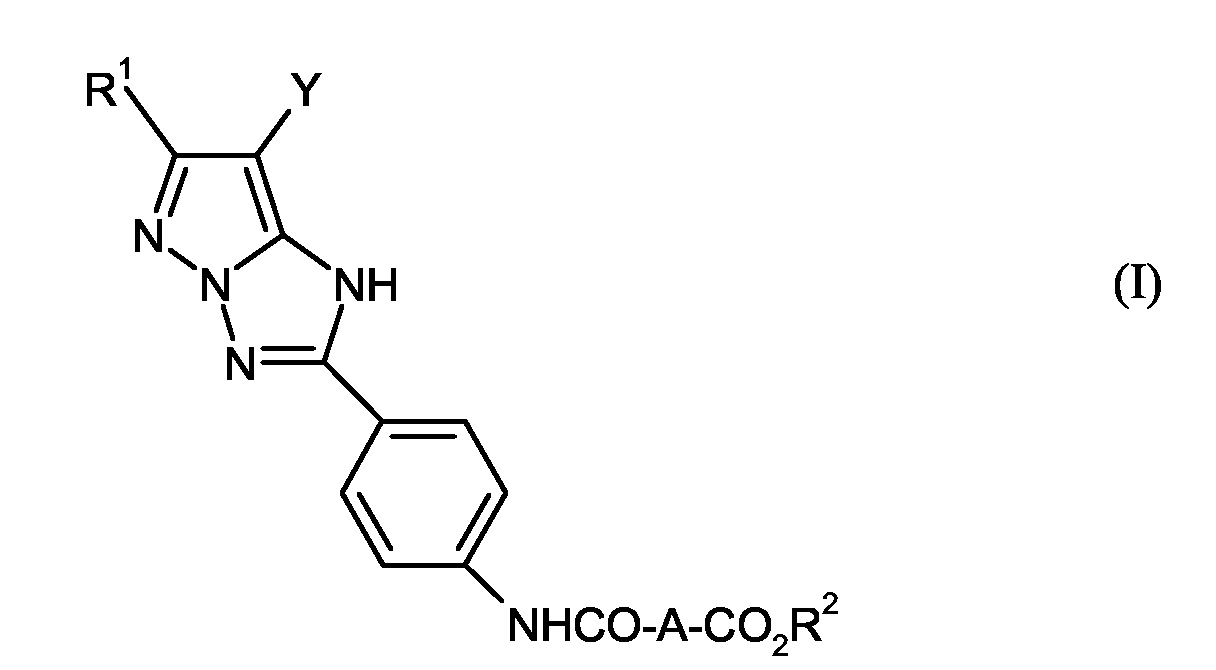
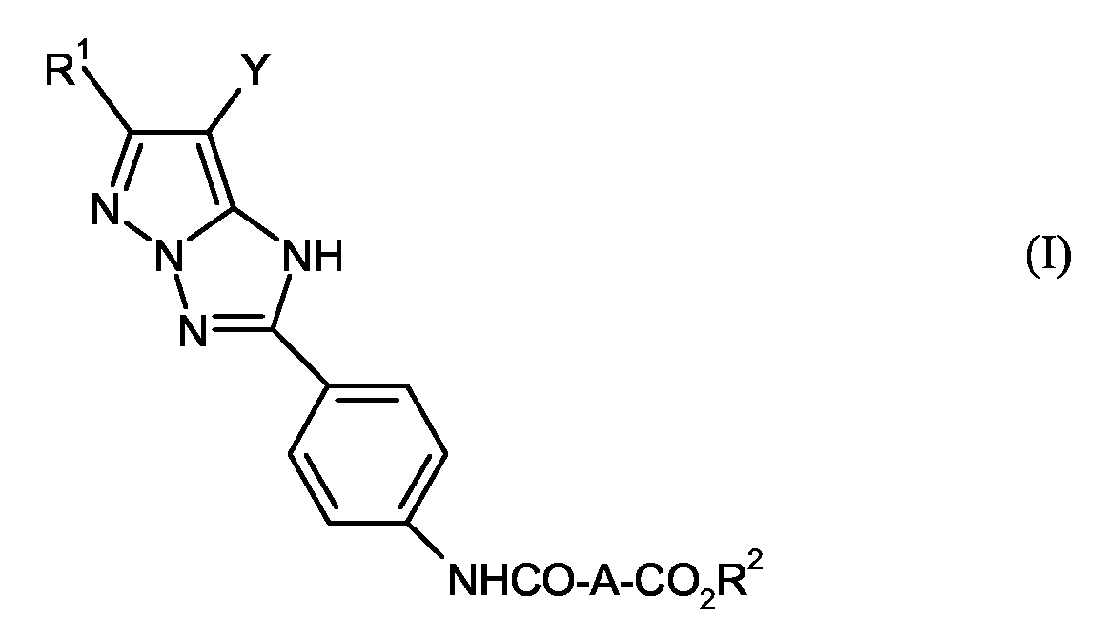
  • EP 571 959 discloses novel magenta couplers which are distinguished by pure colours and excellent stability of the dyes produced therefrom. They are of the formula (I) in which
  • the object of the invention was to overcome the above-stated disadvantage. Surprisingly, this is achieved if the magenta couplers of the formula (I) are used together with the cyan couplers of the formula (II).
  • the present invention accordingly provides a print material having a support, at least one red-sensitive silver halide emulsion layer containing at least one cyan coupler, at least one green-sensitive silver halide emulsion layer containing at least one magenta coupler and at least one blue-sensitive silver halide emulsion layer containing at least one yellow coupler, characterised in that the magenta coupler is of the formula (I) and the cyan coupler is of the formula wherein in the formula (II)
  • Suitable cyan couplers are:
  • magenta couplers examples are:
  • colour photographic print materials are colour photographic paper, colour reversal photographic paper and semi-transparent display material. A review may be found in Research Disclosure 37038 (1995), Research Disclosure 38957 (1996) and Research Disclosure 40145 (1997).
  • Photographic print materials consist of a support, onto which at least one photosensitive silver halide emulsion layer is applied.
  • Suitable supports are in particular thin films and sheets.
  • a review of support materials and auxiliary layers applied to the front and reverse sides thereof is given in Research Disclosure 37254, part 1 (1995), page 285 and in Research Disclosure 38957, part XV (1996), page 627.
  • the colour photographic print materials conventionally contain at least one red-sensitive, one green-sensitive and one blue-sensitive silver halide emulsion layer, optionally together with interlayers and protective layers.
  • these layers may be differently arranged. This is demonstrated for the most important products:
  • Colour photographic paper and colour photographic display material conventionally have on the support, in the stated sequence, one blue-sensitive, yellow-coupling silver halide emulsion layer, one green-sensitive, magenta-coupling silver halide emulsion layer and one red-sensitive, cyan-coupling silver halide emulsion layer; a yellow filter layer is not necessary.
  • Colour papers may also contain differently sensitised interlayers, by means of which gradation may be influenced.
  • the substantial constituents of the photographic emulsion layers are binder, silver halide grains and colour couplers.
  • red sensitisers which may be considered for the red-sensitive layer are pentamethinecyanines having naphthothiazole, naphthoxazole or benzothiazole as basic end groups, which may be substituted with halogen, methyl or methoxy groups and may be bridged by 9,11-alkylene, in particular 9,11-neopentylene.
  • the N,N' substituents may be C 4 -C 8 alkyl groups.
  • the methine chain may additionally also bear substituents.
  • Pentamethines having only one methyl group on the cyclohexene ring may also be used.
  • the red sensitiser may be supersensitised and stabilised by the addition of heterocyclic mercapto compounds.
  • the red-sensitive layer additionally be spectrally sensitised between 390 and 590 nm, preferably at 500 nm, in order to bring about improved differentiation of red tones.
  • the spectral sensitisers may be added to the photographic emulsion in dissolved form or as a dispersion. Both the solution and dispersion may contain additives such as wetting agents or buffers.
  • the spectral sensitiser or a combination of spectral sensitisers may be added before, during or after preparation of the emulsion.
  • Photographic print materials contain either silver chloride-bromide emulsions containing up to 80 mol% of AgBr or silver chloride-bromide emulsions containing above 95 mol% of AgCl.
  • the materials contain yellow couplers and optionally further cyan and magenta couplers blended with the couplers according to the invention.
  • the maximum absorption of the dyes formed from the couplers and the colour developer oxidation product is preferably within the following ranges: yellow coupler 440 to 450 nm, magenta coupler 540 to 560 nm, cyan coupler 625 to 670 nm.
  • the yellow couplers associated with a blue-sensitive layer in print materials are almost always two-equivalent couplers of the pivaloylacetanilide and cyclopropylcarbonylacetanilide series.
  • the non-photosensitive interlayers generally arranged between layers of different spectral sensitivity may contain agents which prevent an undesirable diffusion of developer oxidation products from one photosensitive layer into another photosensitive layer with a different spectral sensitisation.
  • Suitable compounds may be found in Research Disclosure 37254, part 7 (1995), page 292, in Research Disclosure 37038, part III (1995), page 84 and in Research Disclosure 38957, part X.D (1996), pages 621 et seq..
  • the photographic material may also contain UV light absorbing compounds, optical brighteners, spacers, filter dyes, formalin scavengers, light stabilisers, antioxidants, D min dyes, plasticisers (latices), biocides and additives to improve coupler and dye stability, to reduce colour fogging and to reduce yellowing, and others.
  • Suitable compounds may be found in Research Disclosure 37254, part 8 (1995), page 292, in Research Disclosure 37038, parts IV, V, VI, VII, X, XI and XIII (1995), pages 84 et seq. and in Research Disclosure 38957, parts VI, VIII, IX and X (1996), pages 607 and 610 et seq..
  • the layers of colour photographic materials are conventionally hardened, i.e. the binder used, preferably gelatine, is crosslinked by appropriate chemical methods.
  • Suitable hardener substances may be found in Research Disclosure 37254, part 9 (1995), page 294, in Research Disclosure 37038, part XII (1995), page 86 and in Research Disclosure 38957, part II.B (1996), page 599.
  • a colour photographic recording material suitable for rapid processing was produced by applying the following layers in the stated sequence onto a layer support of paper coated on both sides with polyethylene. Quantities are stated in each case per 1 m 2 . The silver halide application rate is stated as the corresponding quantities of AgNO 3 .
  • the results are shown in Table 1.
  • the samples are also stored in darkness for 42 days at 80°C and 50% relative humidity and the percentage reductions in density at maximum density for the magenta layer ( ⁇ D magenta ) and the cyan layer ( ⁇ D cyan ) were determined. Further samples are exposed to 15 ⁇ 10 6 lux ⁇ h of light from a daylight-standardised xenon lamp (100 klux to ANSI Standard IT.9.9).

Landscapes

  • Physics & Mathematics (AREA)
  • General Physics & Mathematics (AREA)
  • Silver Salt Photography Or Processing Solution Therefor (AREA)

Abstract

A colour photographic print material having at least one red-sensitive silver halide emulsion layer containing at least one cyan coupler, at least one green-sensitive silver halide emulsion layer containing at least one magenta coupler and at least one blue-sensitive silver halide emulsion layer containing at least one yellow coupler, characterised in that the magenta coupler is of the formula
Figure 80000001
in which
R1
means a tertiary alkyl residue,
Y
means a hydrogen atom or a halogen atom,
A
means an alkylene residue and
R2
means an alkyl residue or an aryl residue and the cyan coupler is of the formula
Figure 80010001
in which
R3
means a hydrogen atom or an alkyl group,
R4
means an alkyl group with at least 8 C atoms,
R5
means a halogen atom, a cyano, trifluoromethyl or alkoxycarbonyl group,
R6
means a hydrogen atom or R5 and
Z
means a hydrogen atom or a group eliminable under the conditions of chromogenic development,
is distinguished by very good colour purity after long-term storage.

Description

This invention relates to a colour photographic print material having a combination of specific magenta couplers and specific cyan couplers.
Colour photographic print materials are in particular materials for reflection prints or displays, which most usually exhibit a positive image. They are thus not a recording material like colour photographic films.
Colour photographic print materials conventionally contain at least one red-sensitive silver halide emulsion layer containing at least one cyan coupler, at least one green-sensitive silver halide emulsion layer containing at least one magenta coupler and at least one blue-sensitive silver halide emulsion layer containing at least one yellow coupler.
EP 571 959 discloses novel magenta couplers which are distinguished by pure colours and excellent stability of the dyes produced therefrom. They are of the formula (I)
Figure 00010001
in which
R1
means a tertiary alkyl residue,
Y
means a hydrogen atom or a halogen atom,
A
means an alkylene residue, in particular a -CH2-CH2 residue and
R2
means an alkyl residue or an aryl residue,
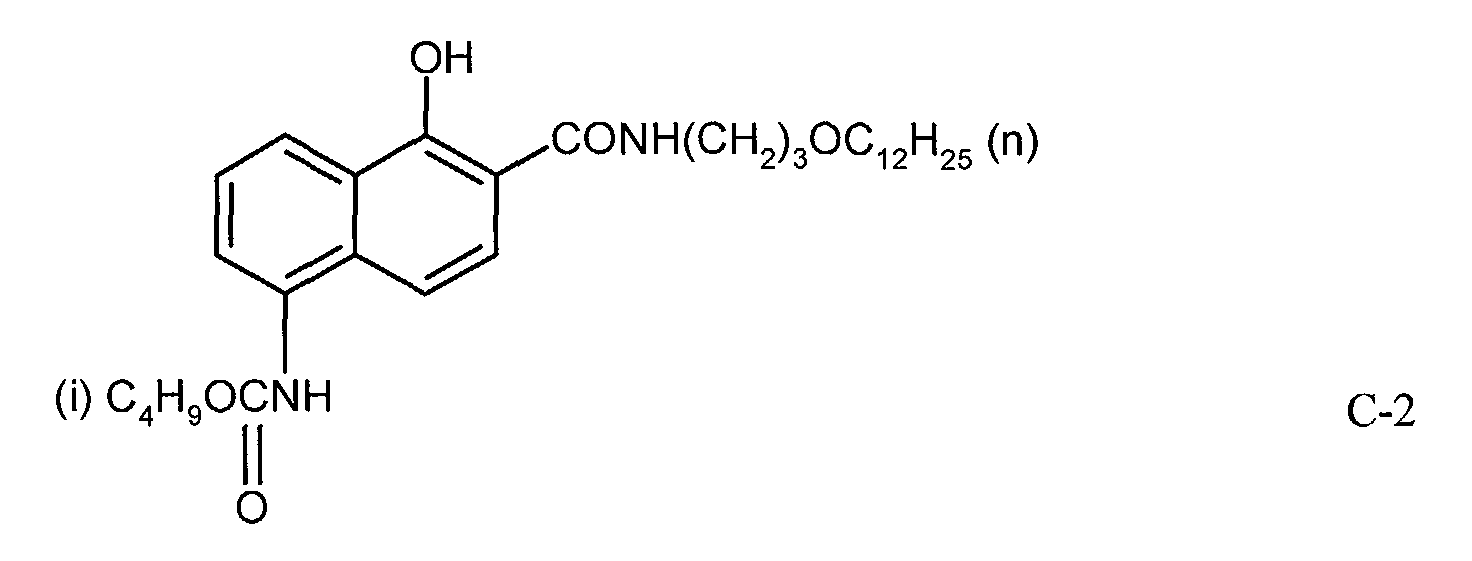
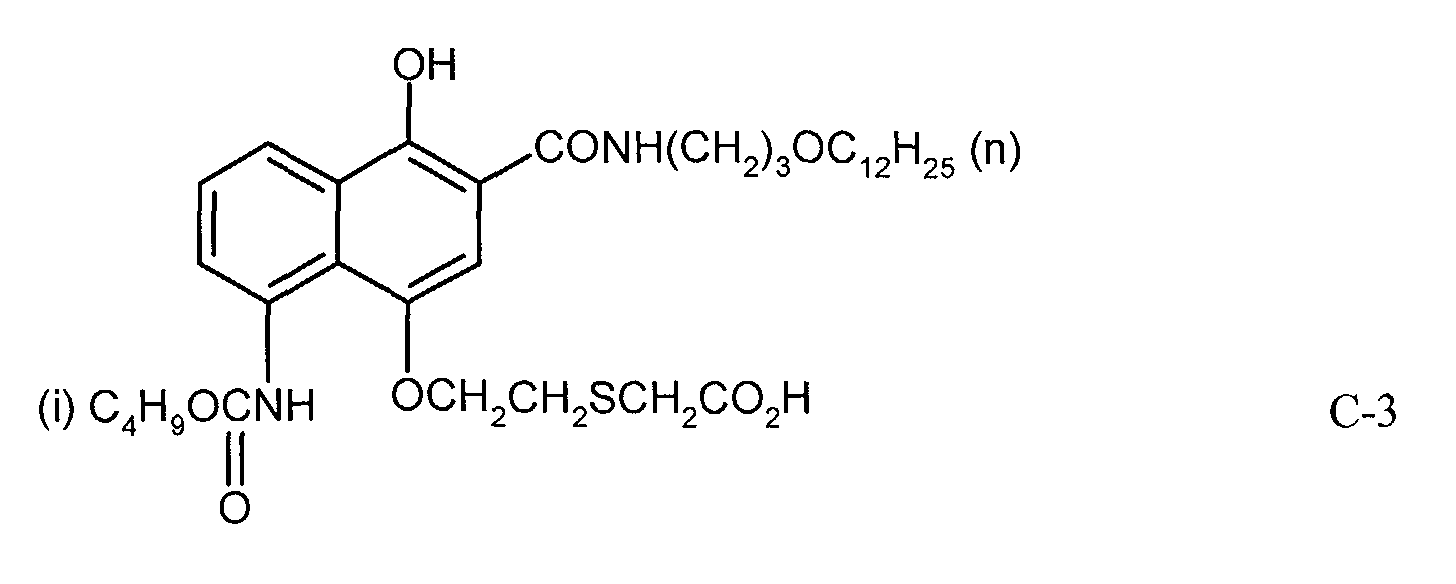
and are used together with known cyan couplers, for example with the following compounds C-1 to C-4
Figure 00020001
Figure 00020002
Figure 00020003
Figure 00030001
However, this combination has the disadvantage that, especially over long-term storage, the stability of the cyan and magenta dyes is very different and, as the paper ages, a colour cast develops which spoils the appearance of the image.
The object of the invention was to overcome the above-stated disadvantage. Surprisingly, this is achieved if the magenta couplers of the formula (I) are used together with the cyan couplers of the formula (II).
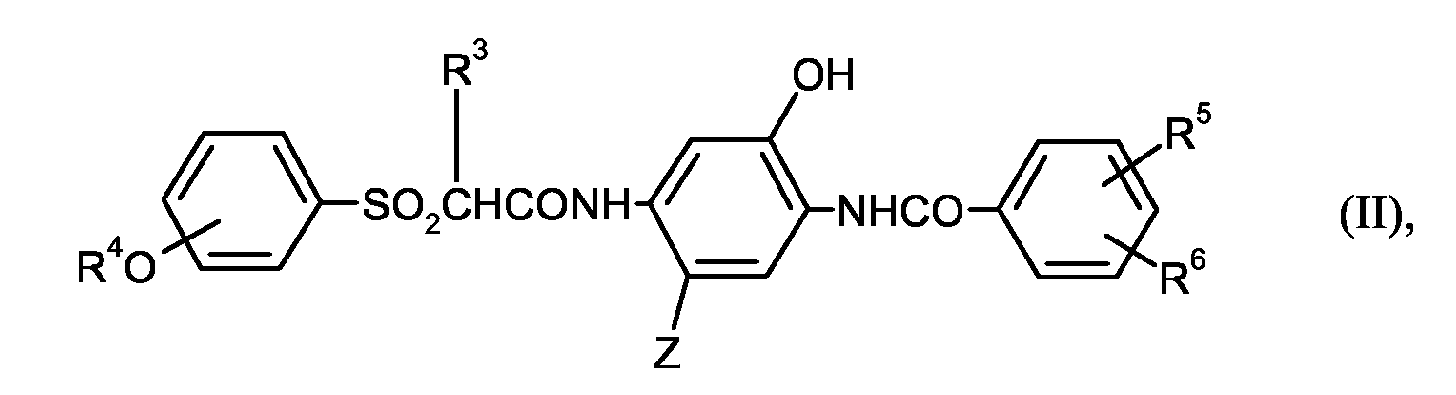
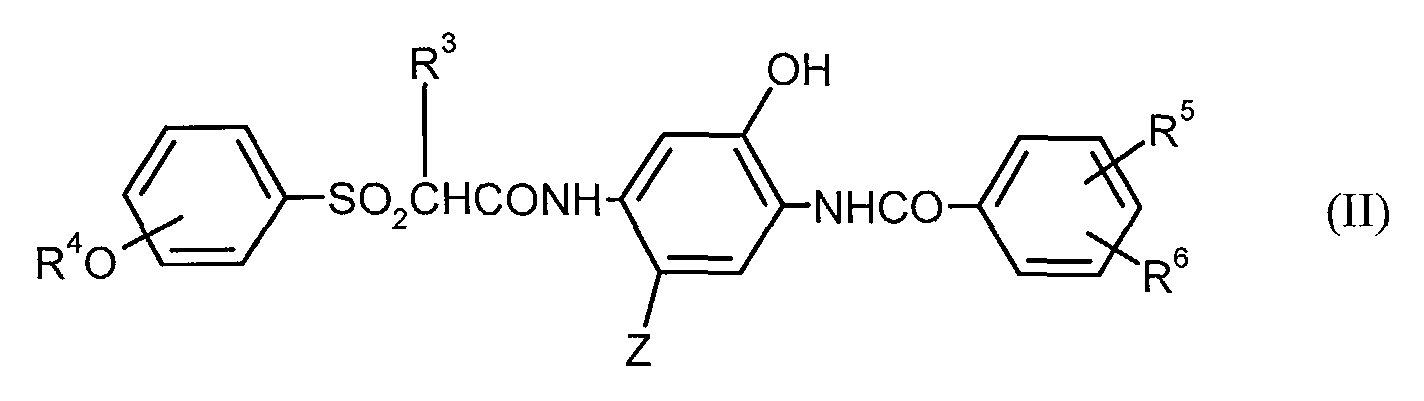
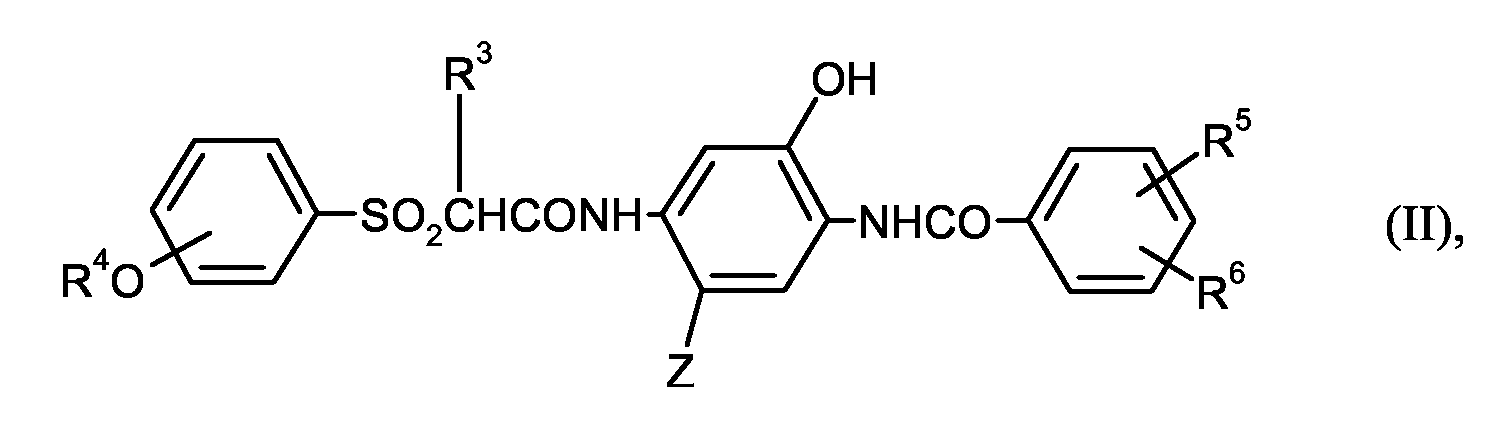
The present invention accordingly provides a print material having a support, at least one red-sensitive silver halide emulsion layer containing at least one cyan coupler, at least one green-sensitive silver halide emulsion layer containing at least one magenta coupler and at least one blue-sensitive silver halide emulsion layer containing at least one yellow coupler, characterised in that the magenta coupler is of the formula (I) and the cyan coupler is of the formula
Figure 00030002
wherein in the formula (II)
R3
means a hydrogen atom or an alkyl group, in particular with 1 to 4 C atoms,
R4
means an alkyl group with at least 8 C atoms,
R5
means a halogen atom, a cyano, trifluoromethyl or alkoxycarbonyl group,
R6
means a hydrogen atom or R5 and
Z
means a hydrogen atom or a group eliminable under the conditions of chromogenic development, in particular a chlorine atom.
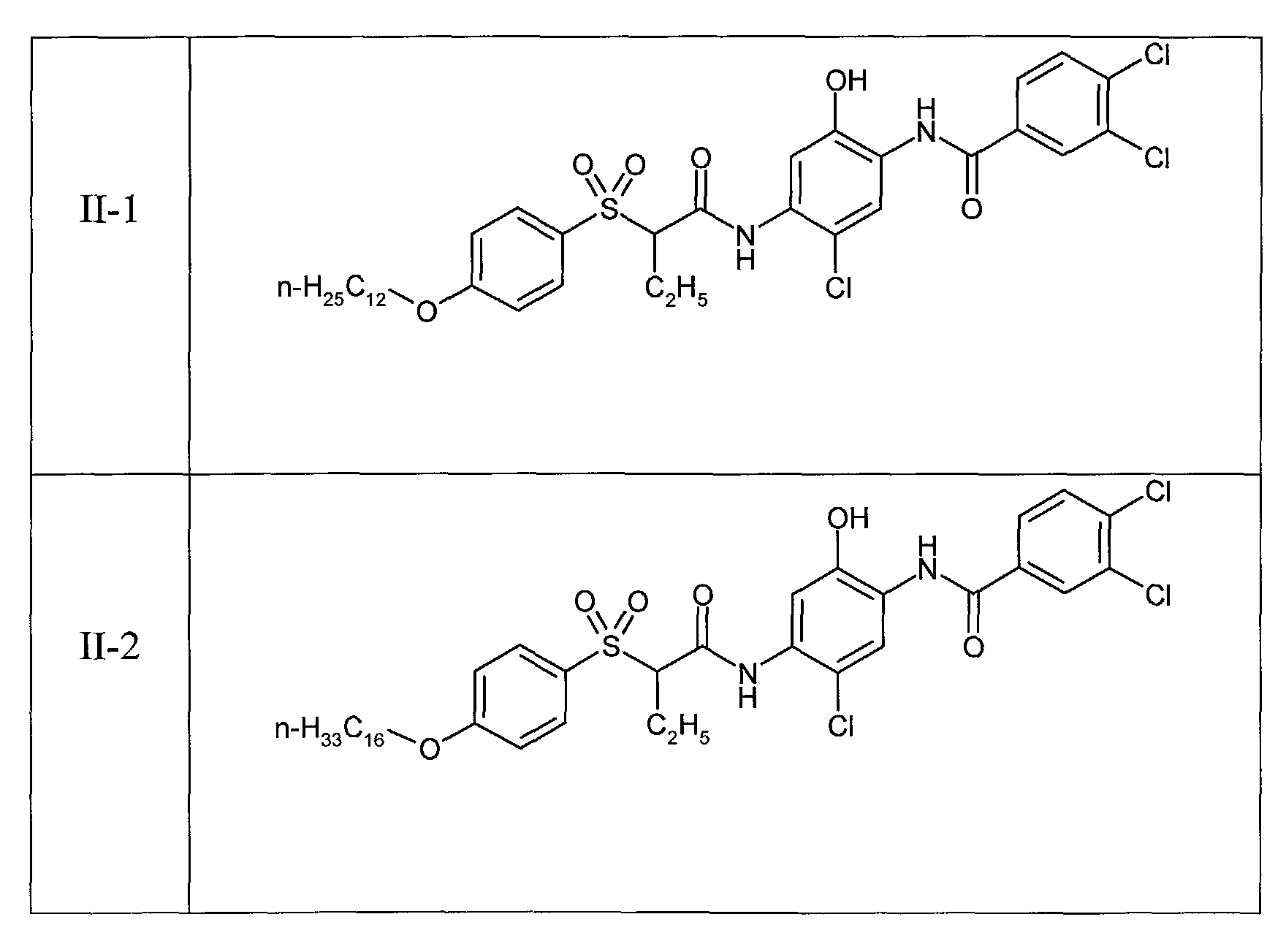
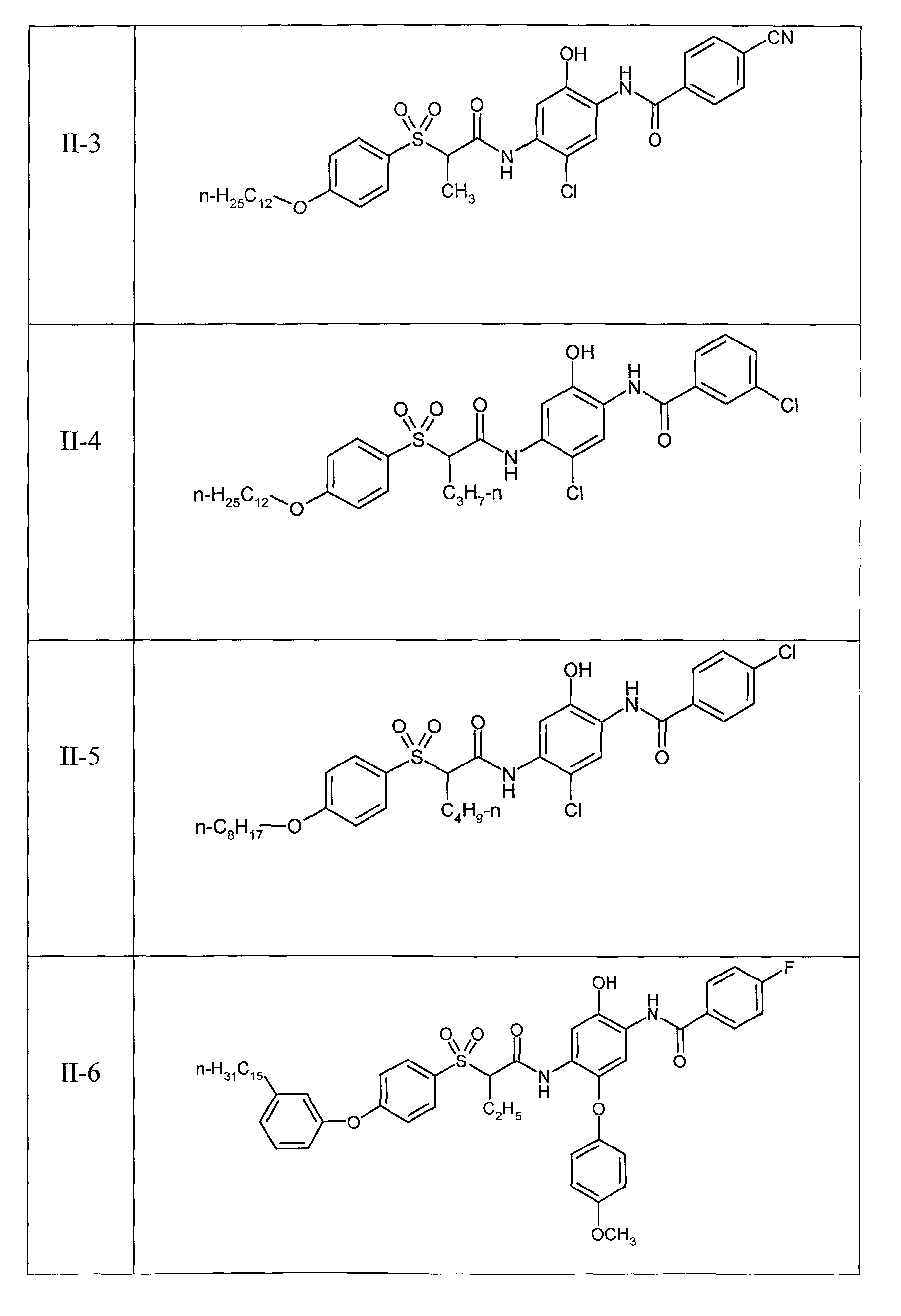
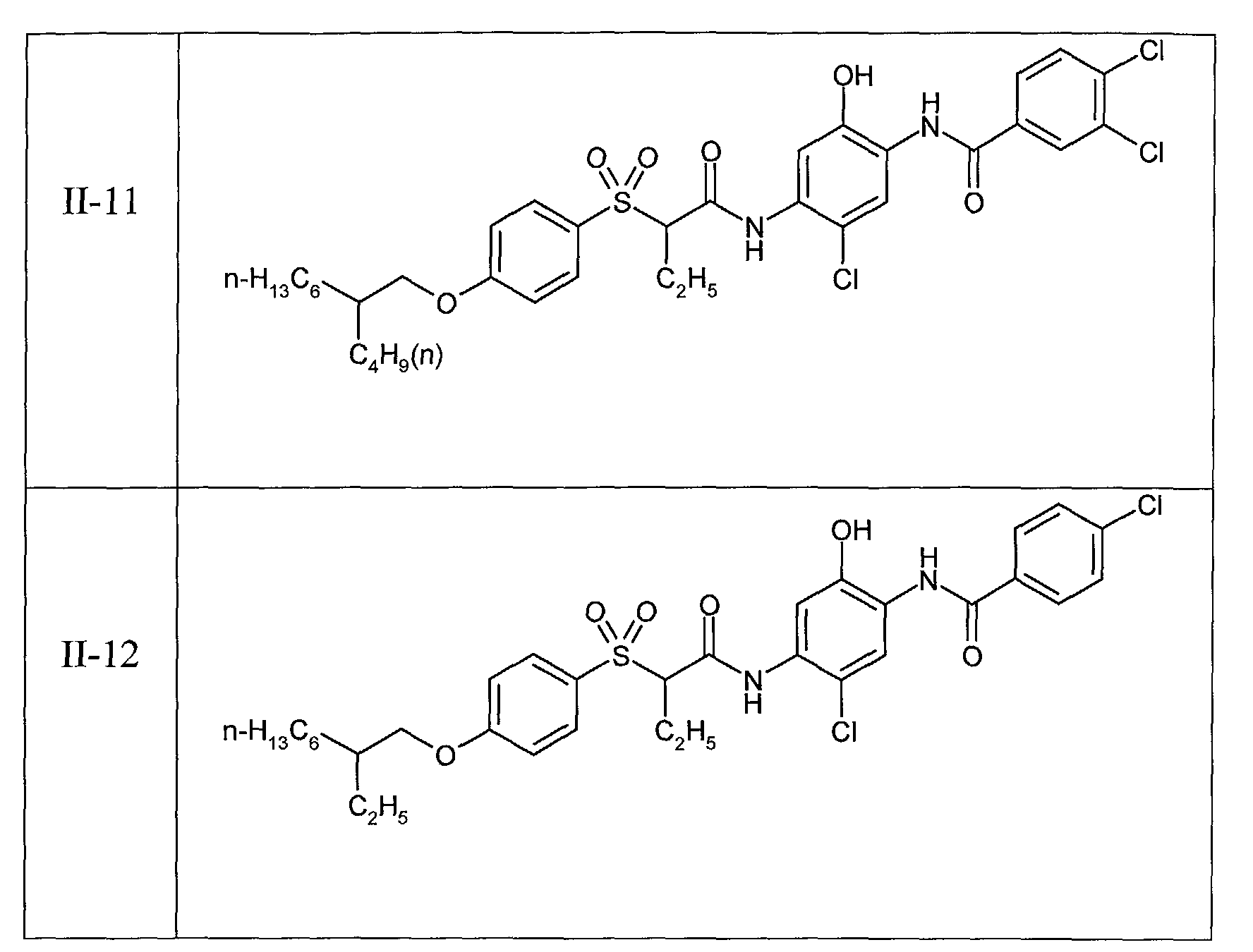
Suitable cyan couplers are:
Figure 00040001
Figure 00050001
Figure 00060001
Figure 00070001
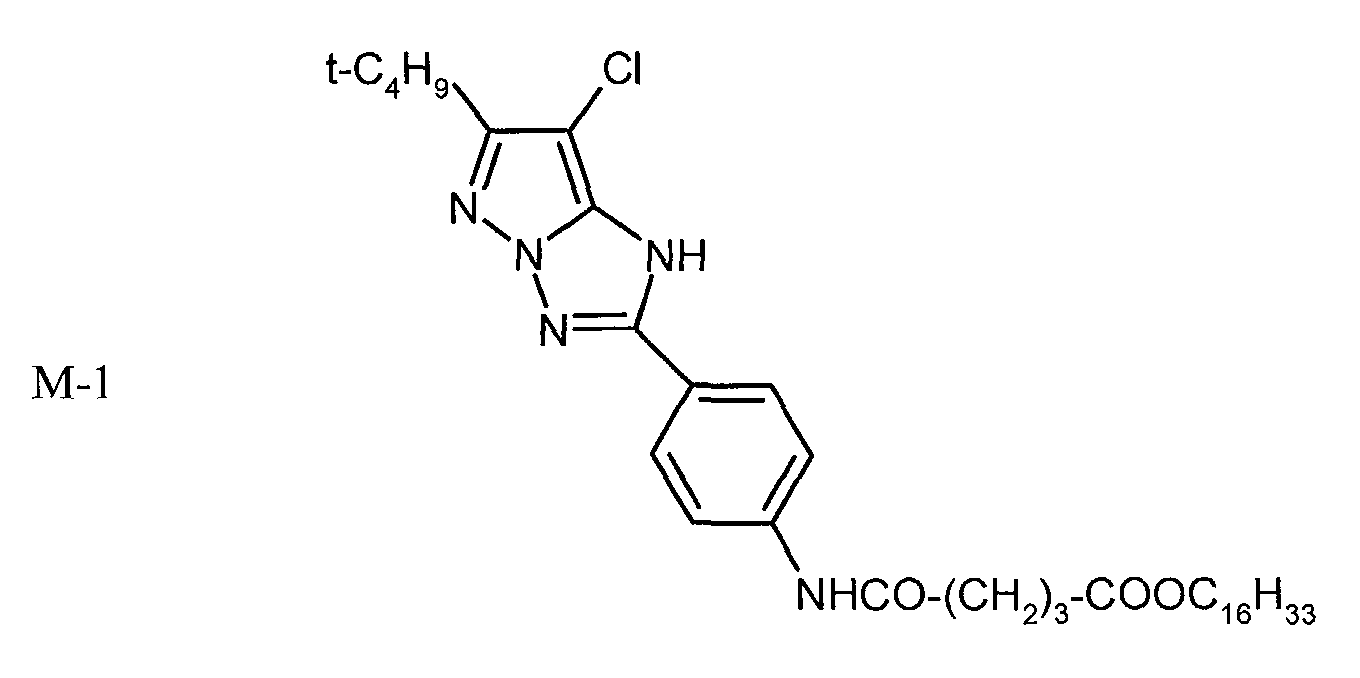
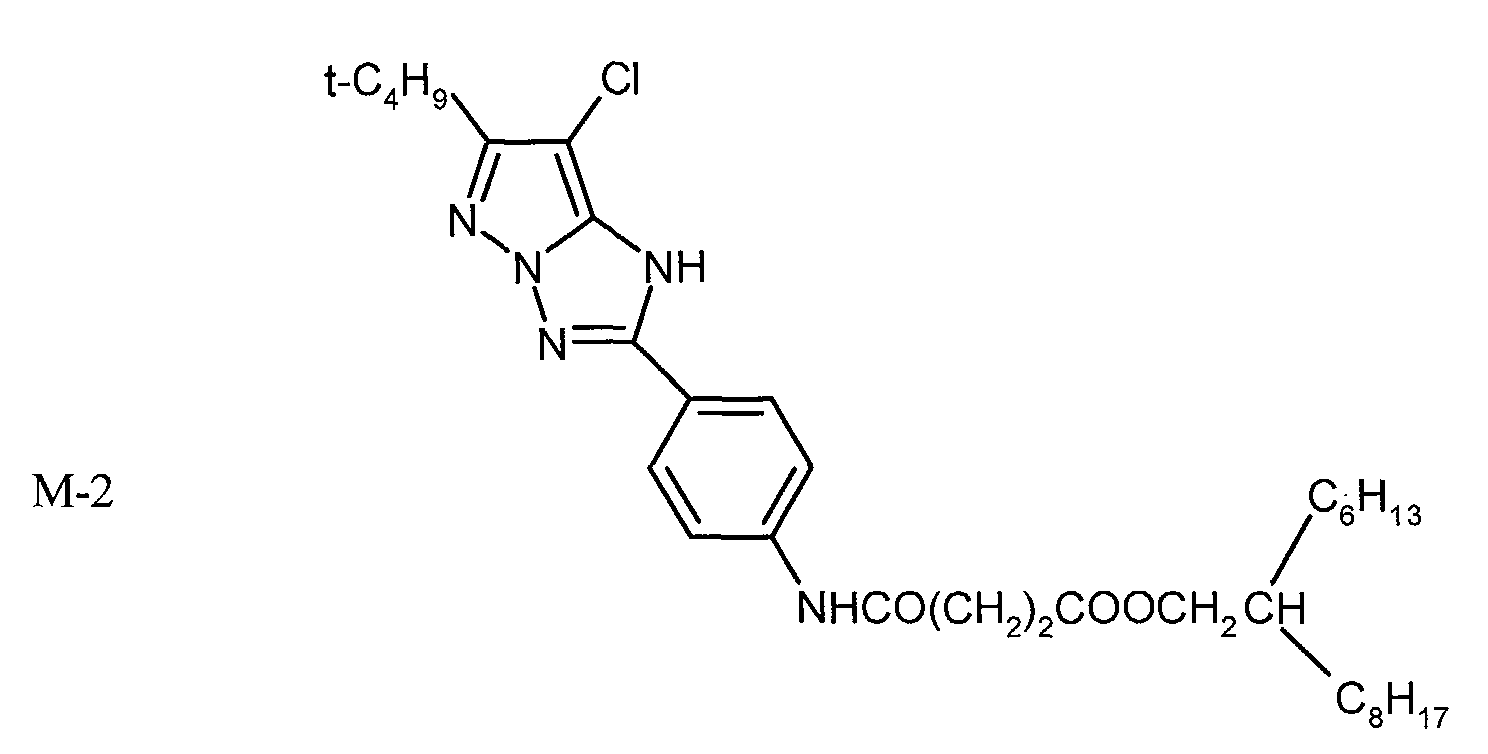
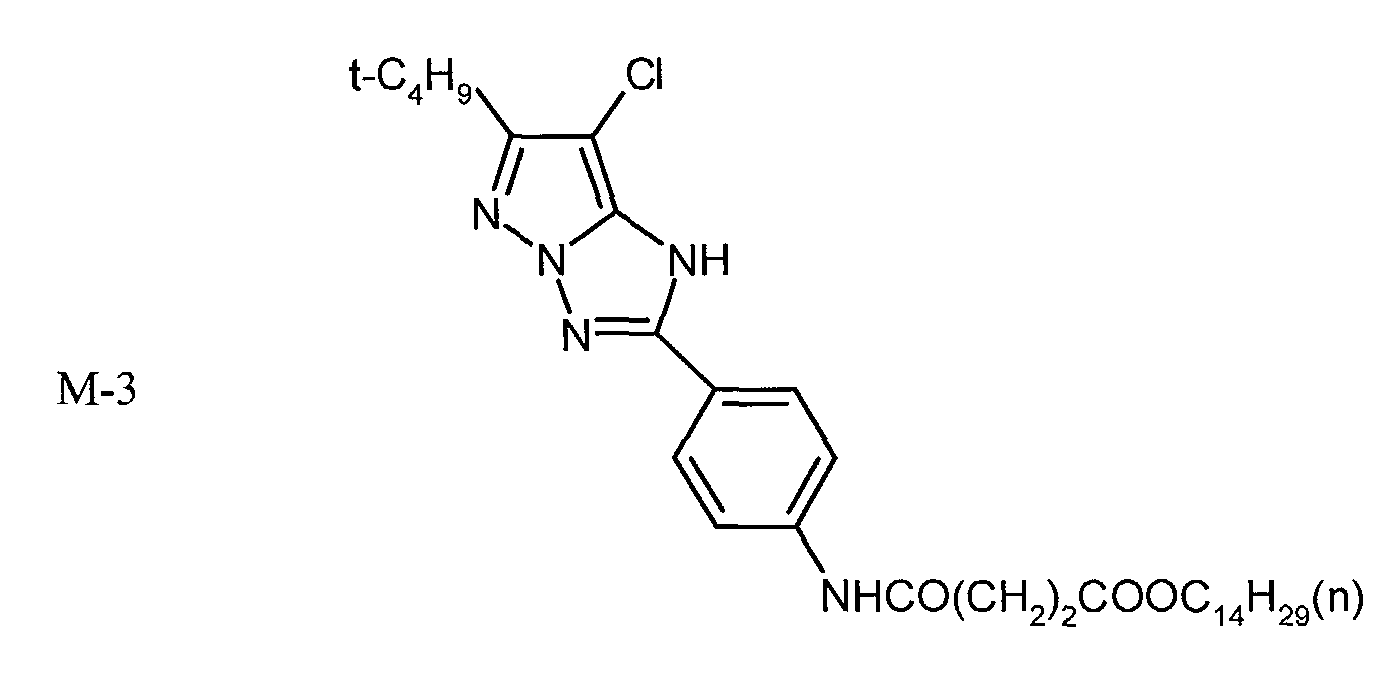
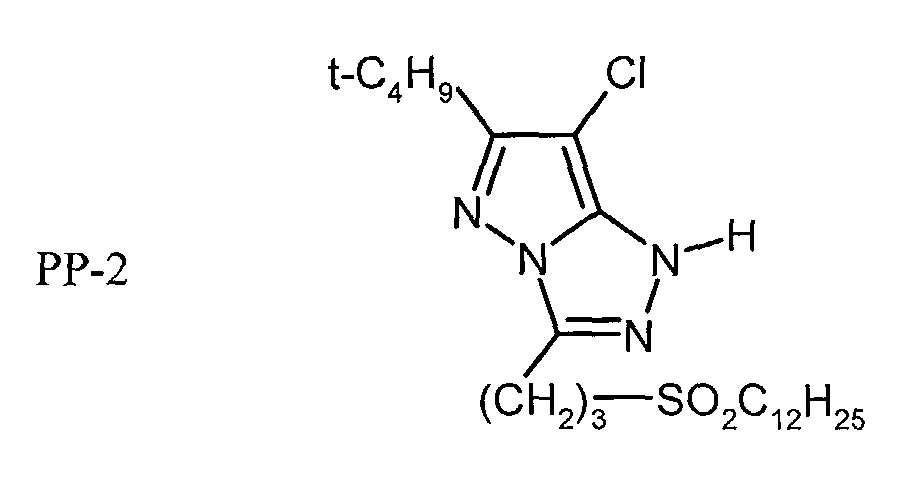
Examples of magenta couplers are:
Figure 00070002
Figure 00080001
Figure 00080002
Figure 00080003
Examples of colour photographic print materials are colour photographic paper, colour reversal photographic paper and semi-transparent display material. A review may be found in Research Disclosure 37038 (1995), Research Disclosure 38957 (1996) and Research Disclosure 40145 (1997).
Photographic print materials consist of a support, onto which at least one photosensitive silver halide emulsion layer is applied. Suitable supports are in particular thin films and sheets. A review of support materials and auxiliary layers applied to the front and reverse sides thereof is given in Research Disclosure 37254, part 1 (1995), page 285 and in Research Disclosure 38957, part XV (1996), page 627.
The colour photographic print materials conventionally contain at least one red-sensitive, one green-sensitive and one blue-sensitive silver halide emulsion layer, optionally together with interlayers and protective layers.
Depending upon the type of photographic print material, these layers may be differently arranged. This is demonstrated for the most important products:
Colour photographic paper and colour photographic display material conventionally have on the support, in the stated sequence, one blue-sensitive, yellow-coupling silver halide emulsion layer, one green-sensitive, magenta-coupling silver halide emulsion layer and one red-sensitive, cyan-coupling silver halide emulsion layer; a yellow filter layer is not necessary.
The number and arrangement of the photosensitive layers may be varied in order to achieve specific results. Colour papers, for example, may also contain differently sensitised interlayers, by means of which gradation may be influenced.
The substantial constituents of the photographic emulsion layers are binder, silver halide grains and colour couplers.
Details of suitable binders may be found in Research Disclosure 37254, part 2 (1995), page 286 and in Research Disclosure 38957, part II.A (1996), page 598.
Details of suitable silver halide emulsions, the production, ripening, stabilisation and spectral sensitisation thereof, including suitable spectral sensitisers, may be found in Research Disclosure 37254, part 3 (1995), page 286, in Research Disclosure 37038, part XV (1995), page 89 and in Research Disclosure 38957, part V.A (1996), page 603.
Further red sensitisers which may be considered for the red-sensitive layer are pentamethinecyanines having naphthothiazole, naphthoxazole or benzothiazole as basic end groups, which may be substituted with halogen, methyl or methoxy groups and may be bridged by 9,11-alkylene, in particular 9,11-neopentylene. The N,N' substituents may be C4-C8 alkyl groups. The methine chain may additionally also bear substituents. Pentamethines having only one methyl group on the cyclohexene ring may also be used. The red sensitiser may be supersensitised and stabilised by the addition of heterocyclic mercapto compounds.
The red-sensitive layer additionally be spectrally sensitised between 390 and 590 nm, preferably at 500 nm, in order to bring about improved differentiation of red tones.
The spectral sensitisers may be added to the photographic emulsion in dissolved form or as a dispersion. Both the solution and dispersion may contain additives such as wetting agents or buffers.
The spectral sensitiser or a combination of spectral sensitisers may be added before, during or after preparation of the emulsion.
Photographic print materials contain either silver chloride-bromide emulsions containing up to 80 mol% of AgBr or silver chloride-bromide emulsions containing above 95 mol% of AgCl.
Apart from the cyan and magenta couplers according to the invention, the materials contain yellow couplers and optionally further cyan and magenta couplers blended with the couplers according to the invention.
Details of colour couplers may be found in Research Disclosure 37254, part 4 (1995), page 288, in Research Disclosure 37038, part II (1995), page 80 and in Research Disclosure 38957, part X.B (1996), page 616. In print materials, the maximum absorption of the dyes formed from the couplers and the colour developer oxidation product is preferably within the following ranges: yellow coupler 440 to 450 nm, magenta coupler 540 to 560 nm, cyan coupler 625 to 670 nm.
The yellow couplers associated with a blue-sensitive layer in print materials are almost always two-equivalent couplers of the pivaloylacetanilide and cyclopropylcarbonylacetanilide series.
The non-photosensitive interlayers generally arranged between layers of different spectral sensitivity may contain agents which prevent an undesirable diffusion of developer oxidation products from one photosensitive layer into another photosensitive layer with a different spectral sensitisation.
Suitable compounds (white couplers, scavengers or DOP scavengers) may be found in Research Disclosure 37254, part 7 (1995), page 292, in Research Disclosure 37038, part III (1995), page 84 and in Research Disclosure 38957, part X.D (1996), pages 621 et seq..
The photographic material may also contain UV light absorbing compounds, optical brighteners, spacers, filter dyes, formalin scavengers, light stabilisers, antioxidants, Dmin dyes, plasticisers (latices), biocides and additives to improve coupler and dye stability, to reduce colour fogging and to reduce yellowing, and others. Suitable compounds may be found in Research Disclosure 37254, part 8 (1995), page 292, in Research Disclosure 37038, parts IV, V, VI, VII, X, XI and XIII (1995), pages 84 et seq. and in Research Disclosure 38957, parts VI, VIII, IX and X (1996), pages 607 and 610 et seq..
The layers of colour photographic materials are conventionally hardened, i.e. the binder used, preferably gelatine, is crosslinked by appropriate chemical methods.
Suitable hardener substances may be found in Research Disclosure 37254, part 9 (1995), page 294, in Research Disclosure 37038, part XII (1995), page 86 and in Research Disclosure 38957, part II.B (1996), page 599.
Once exposed with an image, colour photographic materials are processed using different processes depending upon their nature. Details relating to processing methods and the necessary chemicals are disclosed in Research Disclosure 37254, part 10 (1995), page 294, in Research Disclosure 37038, parts XVI to XXIII (1995), pages 95 et seq. and in Research Disclosure 38957, parts XVIII, XIX and XX (1996), pages 630 et seq. together with example materials.
Examples Example 1
A colour photographic recording material suitable for rapid processing was produced by applying the following layers in the stated sequence onto a layer support of paper coated on both sides with polyethylene. Quantities are stated in each case per 1 m2. The silver halide application rate is stated as the corresponding quantities of AgNO3.
Layer structure 101
Layer 1:
(Substrate layer)
0.10 g of gelatine
Layer 2:
(Blue-sensitive layer)
Blue-sensitive silver halide emulsion (99.5 mol% chloride, 0.5 mol% bromide, average grain diameter 0.75 µm) prepared from 0.4 g of AgNO3.
1.25 g of gelatine
0.4 g of yellow coupler GB-1
0.1 g of yellow coupler GB-2
0.30 g of tricresyl phosphate (TCP)
0.10 g of stabiliser ST-1
Layer 3:
(Interlayer)
0.10 g of gelatine
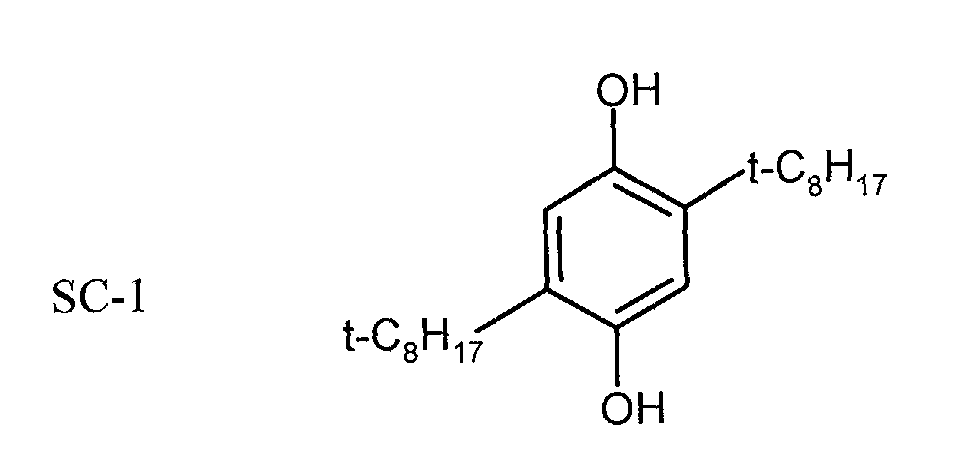
0.06 g of DOP scavenger SC-1
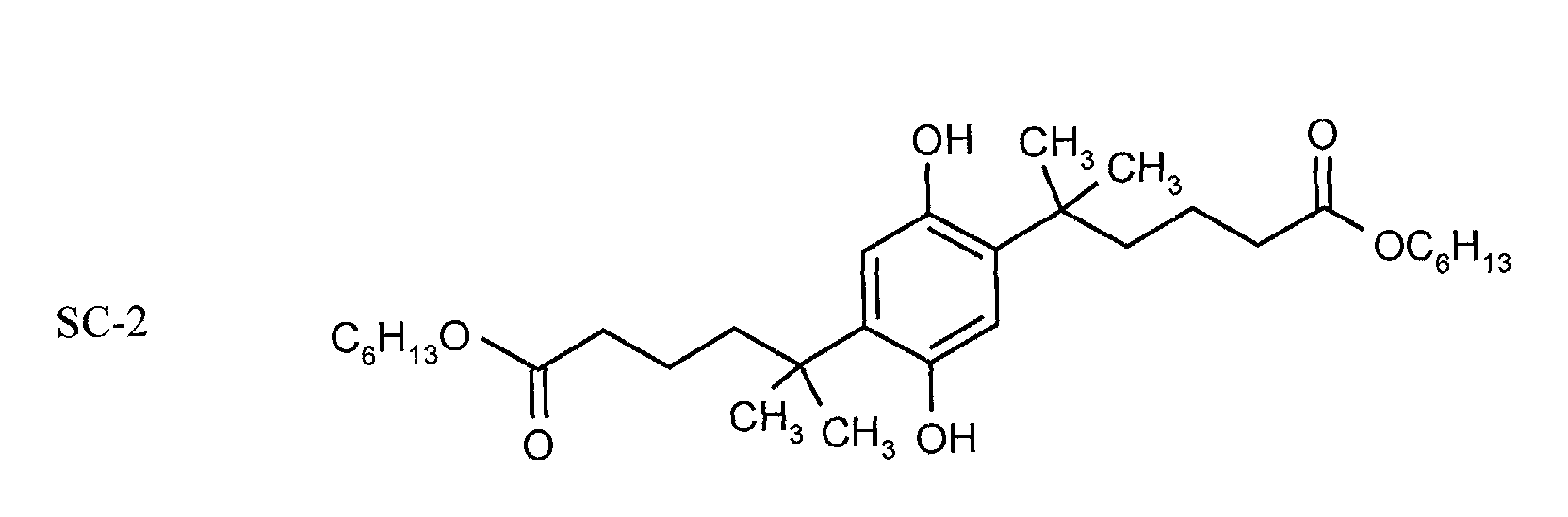
0.06 g of DOP scavenger SC-2
0.12 g of TCP
Layer 4:
(Green-sensitive layer)
Green-sensitive silver halide emulsion (99.5 mol% chloride, 0.5 mol% bromide, average grain diameter 0.45 µm) prepared from 0.14 g of AgNO3.
1.10 g of gelatine
0.15 g of magenta coupler M-3
0.15 g of stabiliser ST-2
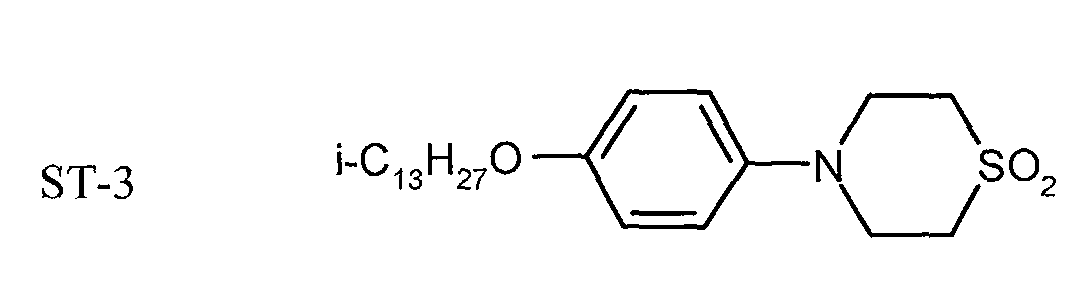
0.20 g of stabiliser ST-3
0.40 g of TCP
Layer 5:
(UV protective layer)
1.05 g of gelatine
0.35 g of UV absorber UV-1
0.10 g of UV absorber UV-2
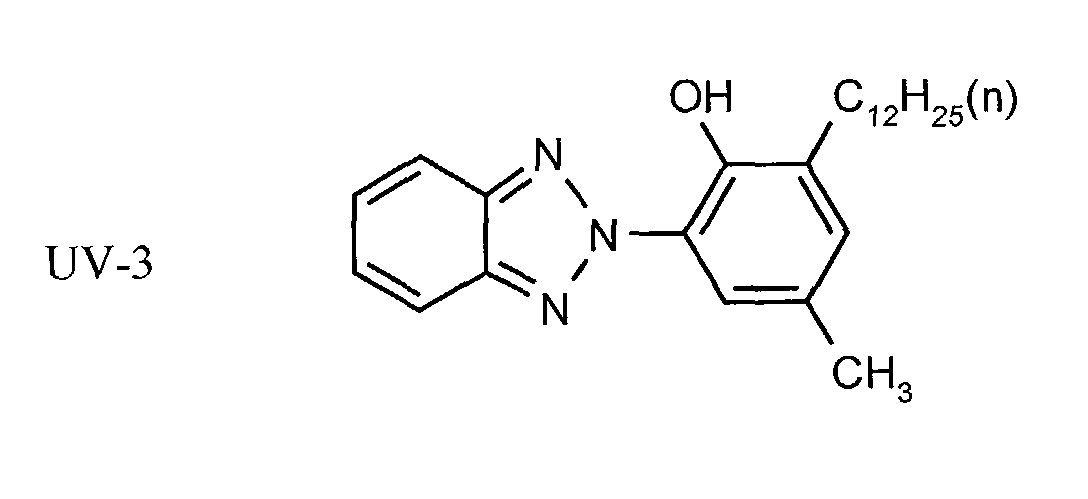
0.05 g of UV absorber UV-3
0.06 g of DOP scavenger SC-1
0.06 g of DOP scavenger SC-2
0.25 g of TCP
Layer 6:
(Red-sensitive layer)
Red-sensitive silver halide emulsion (99.5 mol% chloride, 0.5 mol% bromide, average grain diameter 0.48 µm) prepared from 0.28 g of AgNO3.
1.00 g of gelatine
0.10 g of cyan coupler BG-1
0.30 g of cyan coupler BG-2
0.20 g of TCP
0.20 g of dibutyl phthalate
Layer 7:
(UV protective layer)
1.05 g of gelatine
0.35 g of UV absorber UV-1
0.10 g of UV absorber UV-2
0.05 g of UV absorber UV-3
0.15 g of TCP
Layer 8:
(Protective layer)
0.90 g of gelatine
0.05 g of optical brightener W-1
0.07 g of polyvinylpyrrolidone
1.20 ml of silicone oil
2.50 mg of polymethyl methacrylate spacers, average particle size 0.8 µm
0.30 g of instant hardener H-1
Processing:
Samples of the material are exposed under a grey wedge through a red filter and processed as follows.
a) Colour developer - 45 s - 35°C
Triethanolamine 9.0 g
N,N-Diethylhydroxylamine 4.0 g
Diethylene glycol 0.05 g
3-Methyl-4-amino-N-ethyl-N-methane-
sulfonamidoethylaniline sulfate 5.0 g
Potassium sulfite 0.2 g
Triethylene glycol 0.05 g
Potassium carbonate 22 g
Potassium hydroxide 0.4 g
Ethylenediaminetetraacetic acid, disodium salt 2.2 g
Potassium chloride 2.5 g
1,2-Dihydroxybenzene-3,4,6-trisulfonic acid
trisodium salt 0.3 g
make up with water to 1000 ml; pH 10.0
b) Bleach/fixing bath - 45 s - 35°C
Ammonium thiosulfate 75 g
Sodium hydrogen sulfite 13.5 g
Ammonium acetate 2.0 g
Ethylenediaminetetraacetic acid
(iron/ammonium salt) 57 g
Ammonia, 25% 9.5 g
make up with acetic acid to 1000 ml; pH 5.5
c) Rinsing - 2 min - 33°C
d) Drying
The percentage yellow and magenta secondary densities of the cyan layer were then determined at cyan density Dcyan = 1.0 (SDyellow(cyan)' SDmagenta(cyan)), as was the percentage cyan secondary density of the magenta layer at magenta density Dmagenta = 1.0 (SDcyan(magenta)). The results are shown in Table 1. The samples are also stored in darkness for 42 days at 80°C and 50% relative humidity and the percentage reductions in density at maximum density for the magenta layer (ΔDmagenta) and the cyan layer (ΔDcyan) were determined. Further samples are exposed to 15·106lux·h of light from a daylight-standardised xenon lamp (100 klux to ANSI Standard IT.9.9). The reduction in density at D = 0.6 for the magenta layer (ΔDLmagenta) and the cyan layer (ΔDLcyan) is then determined. Optical density values were measured with an X-Rite 414 densitometer (status A filter).
The following compounds are used in Example 1:
Figure 00170001
Figure 00170002
Figure 00170003
Figure 00170004
Figure 00180001
Figure 00180002
Figure 00180003
Figure 00180004
Figure 00190001
Figure 00190002
Figure 00190003
Figure 00190004
Figure 00190005
Figure 00200001
The other layer structures were produced in the same manner as structure 101, except that 0.4 g of the cyan coupler stated in Table 1 was used instead of 0.1 g of BG-1 and 0.3 g of BG-3 and the magenta coupler stated in Table 1 was used instead of M-3. The results are likewise shown in Table 1.
Figure 00200002
Figure 00200003
Figure 00210001
As is clear from the Table, excellent dye stability combined with very high colour purity are only achieved when the cyan and magenta couplers according to the invention are used.
Claims (3)

  1. A colour photographic print material having at least one red-sensitive silver halide emulsion layer containing at least one cyan coupler, at least one green-sensitive silver halide emulsion layer containing at least one magenta coupler and at least one blue-sensitive silver halide emulsion layer containing at least one yellow coupler, characterised in that the magenta coupler is of the formula
    Figure 00230001
    in which
    R1
    means a tertiary alkyl residue,
    Y
    means a hydrogen atom or a halogen atom,
    A
    means an alkylene residue and
    R2
    means an alkyl residue or an aryl residue and the cyan coupler is of the formula
    Figure 00230002
    in which
    R3
    means a hydrogen atom or an alkyl group,
    R4
    means an alkyl group with at least 8 C atoms,
    R5
    means a halogen atom, a cyano, trifluoromethyl or alkoxycarbonyl group,
    R6
    means a hydrogen atom or R5 and
    Z
    means a hydrogen atom or a group eliminable under the conditions of chromogenic development.
  2. A colour photographic print material according to claim 1, characterised in that at least 95 mol% of the silver halides of the silver halide emulsion layers consist of AgCl.
  3. A colour photographic print material according to claim 1, characterised in that the yellow coupler belongs to the group of pivaloylacetanilide two-equivalent couplers.
EP03101337A 2002-07-01 2003-05-14 Colour photographic print material Withdrawn EP1378792A3 (en)

Applications Claiming Priority (2)

Application Number Priority Date Filing Date Title
DE10229471 2002-07-01
DE10229471A DE10229471A1 (en) 2002-07-01 2002-07-01 Color photographic copy material

Publications (2)

Publication Number Publication Date
EP1378792A2 true EP1378792A2 (en) 2004-01-07
EP1378792A3 EP1378792A3 (en) 2004-03-17

Family

ID=29719425

Family Applications (1)

Application Number Title Priority Date Filing Date
EP03101337A Withdrawn EP1378792A3 (en) 2002-07-01 2003-05-14 Colour photographic print material

Country Status (4)

Country Link
US (1) US20040018455A1 (en)
EP (1) EP1378792A3 (en)
JP (1) JP2004126516A (en)
DE (1) DE10229471A1 (en)

Cited By (1)

* Cited by examiner, † Cited by third party
Publication number Priority date Publication date Assignee Title
US11378334B2 (en) * 2020-05-14 2022-07-05 Standard Foods Corporation Spray drum system

Families Citing this family (1)

* Cited by examiner, † Cited by third party
Publication number Priority date Publication date Assignee Title
KR102612831B1 (en) 2021-06-07 2023-12-13 한국지역난방공사 Hybrid system of CO2 compact membrane separation and utilization for urban power plants for Effluent CO2 concetration control

Family Cites Families (4)

* Cited by examiner, † Cited by third party
Publication number Priority date Publication date Assignee Title
US5888716A (en) * 1996-08-20 1999-03-30 Eastman Kodak Company Photographic element containing improved coupler set
DE19947787A1 (en) * 1999-10-05 2001-04-12 Agfa Gevaert Ag Photographic silver halide material, useful as color negative, reversal or positive film, paper or dye diffusion transfer or silver dye bleach material, contains acylamino-sulfonylacylamino-phenol and phenylbenzofuranone
DE10101222A1 (en) * 2001-01-12 2002-07-25 Agfa Gevaert Ag Color photographic material especially used as a print material contains a 2-acylamino-5-phenylsulfonylmethylcarbonylamino-phenol cyan coupler and 2,4,6-triphenyl-triazine UV absorber
DE10101221A1 (en) * 2001-01-12 2002-07-25 Agfa Gevaert Ag Photographic copying material used for e.g. photographic paper and color reversal paper, contains a 2-acylamino-5-phenylsulfonylmethylcarbonylamino-phenol cyan coupler

Cited By (1)

* Cited by examiner, † Cited by third party
Publication number Priority date Publication date Assignee Title
US11378334B2 (en) * 2020-05-14 2022-07-05 Standard Foods Corporation Spray drum system

Also Published As

Publication number Publication date
EP1378792A3 (en) 2004-03-17
JP2004126516A (en) 2004-04-22
DE10229471A1 (en) 2004-01-29
US20040018455A1 (en) 2004-01-29

Similar Documents

Publication Publication Date Title
US6218097B1 (en) Color photographic silver halide material
EP0278003B1 (en) Process for processing silver halide color photographic material
US6534254B1 (en) Color photographic print material
EP0272604A2 (en) Silver halide color photographic material
EP0264083B1 (en) Silver halide photographic material and method of forming a dye image thereon
US6558887B2 (en) Color photographic silver halide material
US20040018455A1 (en) Colour photographic print material
US6171773B1 (en) Color photographic print material
EP0305926A1 (en) Silver halide color photosensitive materials
US6010838A (en) Color photographic silver halide material
EP0193397B1 (en) Light-sensitive silver halide color photographic material
US20040110103A1 (en) Colour photographic silver halide material
US5079133A (en) Silver halide color photographic material
EP0598216B1 (en) Method for processing silver halide color photographic material
US6451521B1 (en) Color-photography silver halide material
US6020114A (en) Color photographic recording material
JP4203002B2 (en) Color-photocopy material
US20040033450A1 (en) Color photographic print material
US20040023172A1 (en) Colour photographic print material
EP1109062A1 (en) Colour photographic silver halide material
JPS62165656A (en) Silver halide photographic sensitive material
JPH05150429A (en) Silver halide color photographic sensitive material
EP1380892A2 (en) Colour photographic print material
DE19853861A1 (en) Color photographic copy material containing a pyrrolo(1,2-b)-1,2,4-triazole blue-green coupler and giving a yellow density corresponding to 1-15% of the blue-green density
JPS62169161A (en) Silver halide photographic sensitive material

Legal Events

Date Code Title Description
PUAI Public reference made under article 153(3) epc to a published international application that has entered the european phase

Free format text: ORIGINAL CODE: 0009012

AK Designated contracting states

Kind code of ref document: A2

Designated state(s): AT BE BG CH CY CZ DE DK EE ES FI FR GB GR HU IE IT LI LU MC NL PT RO SE SI SK TR

AX Request for extension of the european patent

Extension state: AL LT LV MK

PUAL Search report despatched

Free format text: ORIGINAL CODE: 0009013

AK Designated contracting states

Kind code of ref document: A3

Designated state(s): AT BE BG CH CY CZ DE DK EE ES FI FR GB GR HU IE IT LI LU MC NL PT RO SE SI SK TR

AX Request for extension of the european patent

Extension state: AL LT LV MK

STAA Information on the status of an ep patent application or granted ep patent

Free format text: STATUS: THE APPLICATION IS DEEMED TO BE WITHDRAWN

18D Application deemed to be withdrawn

Effective date: 20040311