EP1378520A1 - Cyclic single strand trispecific antibody - Google Patents
Cyclic single strand trispecific antibody Download PDFInfo
- Publication number
- EP1378520A1 EP1378520A1 EP02724089A EP02724089A EP1378520A1 EP 1378520 A1 EP1378520 A1 EP 1378520A1 EP 02724089 A EP02724089 A EP 02724089A EP 02724089 A EP02724089 A EP 02724089A EP 1378520 A1 EP1378520 A1 EP 1378520A1
- Authority
- EP
- European Patent Office
- Prior art keywords
- antibody
- reshaped
- against human
- cyclic
- tumor
- Prior art date
- Legal status (The legal status is an assumption and is not a legal conclusion. Google has not performed a legal analysis and makes no representation as to the accuracy of the status listed.)
- Withdrawn
Links
Images


Classifications
-
- C—CHEMISTRY; METALLURGY
- C07—ORGANIC CHEMISTRY
- C07K—PEPTIDES
- C07K16/00—Immunoglobulins [IG], e.g. monoclonal or polyclonal antibodies
- C07K16/18—Immunoglobulins [IG], e.g. monoclonal or polyclonal antibodies against material from animals or humans
- C07K16/28—Immunoglobulins [IG], e.g. monoclonal or polyclonal antibodies against material from animals or humans against receptors, cell surface antigens or cell surface determinants
- C07K16/30—Immunoglobulins [IG], e.g. monoclonal or polyclonal antibodies against material from animals or humans against receptors, cell surface antigens or cell surface determinants from tumour cells
-
- A—HUMAN NECESSITIES
- A61—MEDICAL OR VETERINARY SCIENCE; HYGIENE
- A61P—SPECIFIC THERAPEUTIC ACTIVITY OF CHEMICAL COMPOUNDS OR MEDICINAL PREPARATIONS
- A61P35/00—Antineoplastic agents
-
- C—CHEMISTRY; METALLURGY
- C07—ORGANIC CHEMISTRY
- C07K—PEPTIDES
- C07K16/00—Immunoglobulins [IG], e.g. monoclonal or polyclonal antibodies
- C07K16/18—Immunoglobulins [IG], e.g. monoclonal or polyclonal antibodies against material from animals or humans
- C07K16/28—Immunoglobulins [IG], e.g. monoclonal or polyclonal antibodies against material from animals or humans against receptors, cell surface antigens or cell surface determinants
- C07K16/2803—Immunoglobulins [IG], e.g. monoclonal or polyclonal antibodies against material from animals or humans against receptors, cell surface antigens or cell surface determinants against the immunoglobulin superfamily
- C07K16/2809—Immunoglobulins [IG], e.g. monoclonal or polyclonal antibodies against material from animals or humans against receptors, cell surface antigens or cell surface determinants against the immunoglobulin superfamily against the T-cell receptor (TcR)-CD3 complex
-
- C—CHEMISTRY; METALLURGY
- C07—ORGANIC CHEMISTRY
- C07K—PEPTIDES
- C07K16/00—Immunoglobulins [IG], e.g. monoclonal or polyclonal antibodies
- C07K16/18—Immunoglobulins [IG], e.g. monoclonal or polyclonal antibodies against material from animals or humans
- C07K16/28—Immunoglobulins [IG], e.g. monoclonal or polyclonal antibodies against material from animals or humans against receptors, cell surface antigens or cell surface determinants
- C07K16/2803—Immunoglobulins [IG], e.g. monoclonal or polyclonal antibodies against material from animals or humans against receptors, cell surface antigens or cell surface determinants against the immunoglobulin superfamily
- C07K16/2818—Immunoglobulins [IG], e.g. monoclonal or polyclonal antibodies against material from animals or humans against receptors, cell surface antigens or cell surface determinants against the immunoglobulin superfamily against CD28 or CD152
-
- A—HUMAN NECESSITIES
- A61—MEDICAL OR VETERINARY SCIENCE; HYGIENE
- A61K—PREPARATIONS FOR MEDICAL, DENTAL OR TOILETRY PURPOSES
- A61K39/00—Medicinal preparations containing antigens or antibodies
- A61K2039/505—Medicinal preparations containing antigens or antibodies comprising antibodies
-
- C—CHEMISTRY; METALLURGY
- C07—ORGANIC CHEMISTRY
- C07K—PEPTIDES
- C07K2317/00—Immunoglobulins specific features
- C07K2317/30—Immunoglobulins specific features characterized by aspects of specificity or valency
- C07K2317/31—Immunoglobulins specific features characterized by aspects of specificity or valency multispecific
-
- C—CHEMISTRY; METALLURGY
- C07—ORGANIC CHEMISTRY
- C07K—PEPTIDES
- C07K2317/00—Immunoglobulins specific features
- C07K2317/50—Immunoglobulins specific features characterized by immunoglobulin fragments
- C07K2317/55—Fab or Fab'
Definitions
- the present invention relates to an engineered cyclic single-chain trispecific antibody, DNA sequences coding it, expression vectors containing the said sequences as well as host cells containing the said expressing vectors.
- trispecific antibody is based on introducing three different antigen-binding sites into a single molecule. Since the antibody genes selected for construction are different, so the trispecific antibody has various biological functions.
- the trispecific antibodies reported were mainly constructed by chemical coupling method, hybrid hybridoma technique or genetic fusion expression, these antibodies contained three Fab fragments or only one single-chain antibody (scFv) among three antibodies ( Fay TN et al, 1988; Tutt A et al, 1991; Jung G et al, 1991; Schott ME et al, 1993; French RR, 1998; Somasundaram C et al, 1999; Schoonjans R et al, 2000a; Schoonjans R et al, 2000b; Wong WM et al, 2000).
- the cyclic single-chain trispecific antibody mentioned in this invention is a new kind of engineering antibody, designed based on the model of two signals activation for T cell that play a key function in immunotherapy of cancer.
- T cell-mediated cell immunity plays a key role.
- Full activation of T cells requires two signals: the primary signal is provided by the TCR/CD3 complex; which is related with antigen specificity; the second signal, also called co-stimulatory signal, is afforded by the co-stimulatory molecules on the surface of APC.
- Human CD3 consists of five different polypeptide chains. CD3 and TCR constitute the CD3/TCR complex with non-covalent bonds.
- T cells receive only primary signal (TCR binding ), without co-stimulatory signal, T cells will be induced anergy, or apoptosis.
- the co-stimulatory signal is non-antigen specificity and non-MHC restriction but involve in inducing the secretion of cytokines, the proliferation and effect function of T cells.
- CD28 is the most important receptor of co-stimulatory signal on the surface of T cells. Among various receptors of co-stimulatory signal on T cell, such as CD2, CD4, CD8 etc, only CD28 can prevents the induction of T cell anergy (Slavik et al, 1999). Based on these principles, T cell can be activated by using anti-CD3 antibody and anti-CD28 antibody as the ligands of these molecules respectively.
- BsAb bispecific antibodies
- TAA tumor-associated antigen
- CD3 or CD28 mAbs with specificity to tumor-associated antigen
- BsAb was produced by coupling two antibodies against trigger molecule TCR-CD3 and TAA.
- TAA tumor-associated antigen
- This problem might be circumvented by ex vivo activation of T cell through using IL-2 or lectin as co-stimulatory molecule.
- anti-CD28 mAb was found to be able to deliver co-stimulatory signal as the B7 family, and cooperate with anti-CD3/TAA to trigger optimal activation of T cell effectively.
- Demanet et al (1996) demonstrated that the lymphoma loaded 10 5 BCL1 cells was eliminated when anti-CD3/anti-Id BsAb plus anti-CD28 Mab were injected into Balb/C mice model for several times. Comparing with single application of BsAb, the curative effect was increased by 20 fold, while the dose of BsAb was only 10 percent of that of single BsAb.
- SCID mice model with human chronic B lymphocyte leukemia.
- Bohlen et al (1997) demonstrated that combined injection of anti-CD3/anti-CD19 BsAb with anti-CD28 McAb into the mice could mediate the autologous T cells to inhibit the growth of tumor cells and prevent recrudescence of the tumor.
- anti-CD3/anti-TAA BsAb and anti-CD28/anti-TAA BsAb were used together to improve the specificity to tumor cells.
- Renner et al(1994) reported that combined injection of anti-CD3/anti-CD30 BsAb with anti-CD28/anti-CD30 BsAb into SCID mice with human Hodgkin's disease produced exciting killing effect.
- Mazzoni et al (1996) simultaneously applied anti-CD3/anti-FBP (ovary carcinoma TAA) BsAb and anti-CD28/anti-FBP BsAb in killing assay in vitro the results showed that the double-signals can activate CD8 + T cells effectively to kill the ovary carcinoma cells with FBP antigen specifically.
- the present invention will establish a method to construct cyclic single-chain trispecific antibody ( TsAb ) by cyclizing the linear antibody molecule with fragments of antibody hinge region.
- HAMA human anti-mouse antibody
- the HAMA response makes the mouse antibodies rapid clearance from the blood, neutralizes and blocks the function of antibody, causes the patient to have an allergic reaction. Because it is very difficult to make human monoclonal antibody with hybridoma technology, it will be a selective way to fully apply the rodent monoclonal antibodies by humanizing modification of the antibodies with genetic and protein engineering techniques.
- Antibody is shaped like a capital letter “Y” and consists of two identical long "heavy” chains and two identical short “light” chains. Each chain has one variable domain and one or several constant domain.
- the variable domains are mainly responsible for the binding to the antigen while the constant domains are responsible for binding the effector molecules.
- the variable domains contain three flexible loop regions, which is hypervariable in sequence and crystal structure and binds antigens directly, termed the complementarity determining regions (CDRs).
- CDRs complementarity determining regions
- the rest of variable domains shows less variability and consist of antiparallel beta-sheets and are called framework regions (FRs).
- CDRs and FRs array one by one to form a sandwich structure.
- the first generation of humanized antibody is human-mouse chimeric antibody, which consists of rodent variable regions and human constant regions. It has been demonstrated that chimaric antibody could significantly enhance pharmacodynamics coefficient and decrease immunogenicity, some of them had been applied in clinical trial. However, the result of clinic trial showed that more than half of the patients treated with chimeric antibodies generated HAMA response after repeated injection.
- the second generation of humanized antibody was called "CDR-grafted" antibody, in which rodent CDRs were transplanted into human FRs. Comparing to the chimaric antibody it is further humanized to make the antibody more human-like while it keeps the antigen-binding specificity of rodent antibody.
- the general strategy of residue replacement involves selecting the most homologous human sequence as acceptor FRs, referring to the known crystal structure of variable regions and the sequences of corresponding families, building the molecular model with computer, and then determining which residue to be replaced.
- adjusting the key FR residues may increase the heterogeneity of antibody, as well as the affinity of it. So it is necessary to optimize repeatedly the balance between the affinity and the immunogenicity in constructing a good therapeutic reshaped antibody.
- interlinker In the construction of cyclic trispecific antibody, selection of interlinker is very important because interlinker will determine whether the construction would be successful as desire.
- a flexible short peptide (Gly 4 Ser) is used between the interlinkers and antibody fragments to facilitate the different antibody fragments to fold individually and correctly.
- Interlinker Fc Unable to activate effector cascade due to the absence of Fc is the main shortcoming of small molecular antibodies. Among the four subclass of human IgG, it has been proved that IgG1 can mediate ADCC and CDC effect most efficiently. Some C-terminal residues of IgG1 CH2 can bind with C1q to trigger classical complement pathway. Of those residues, Glu318, Lys320 and Lys322 are closed in spatial and locate on the surface of Fc to bind to C1q directly. Some studies also showed that glycosylation of Fc at Asn297 was very important for ADCC and CDC without any influence to the antigen-binding activity of antibodies. Hence, a 26 amino acid fragment of human IgG1 CH2 from Asn 297 to Lys322 (including glycosylation site and C1q binding site ) is chosen as an interlinker in the construction of trispecific antibody in the invention.
- Interlinker HAS The other problem of small molecule antibody in clinic practice is its short half-life and rapid clearance from blood, which is a vital defect for immunotherapy, although it is advantage for immunodiagnosis and neutralization of toxin.
- Human serum albumin is a major serum protein and spreads widely in human body. Without any enzyme activity, immune activity and side-effect, HSA is removed slowly via liver and exists in vivo for several weeks. It has been demonstrated that the stability of protein linked to HSA be increased by 20-40 folds and the fusion protein was mainly uptaken by liver for clearance, which reduce the toxicity to the kidney remarkably.
- HSA molecule is made up of three domains that contain 585 amino acid residues and 17 disulfide bonds. Domain III has been verified that it can function as the intact HSA protein. As a result, a fragment of 25 amino acid residues from 403 to 425 of domain III is chosen as interlinker in the invention.
- Human IgG3' CL hinge Cysteine in hinge region can form disulfide bond to facilitate the conjunction between two heavy chains in the formation of antibody with natural spatial structure.
- Human IgG3' CL hinge region composes of 17 amino acid residue including two cysteines, and this makes it suitable to act as interlinker.
- a fragment of 17 amino acid residues in hinge region of human IgG3'CL is utilized to cyclize the trispecific antibody.
- Fay TN Jacobs I, Teisner B. et al.(1988): Two fetal antigens (FA-1 and FA-2) and endometrial proteins (PP12 and PP14) isolated from amniotic fluid; preliminary observations in fetal and maternal tissues.
- F-1 and FA-2 Two fetal antigens
- PP12 and PP14 endometrial proteins isolated from amniotic fluid; preliminary observations in fetal and maternal tissues.
- Tutt A Stevenson GT, Glennie MJ(1991): Trispecific F(ab')3 derivatives that use cooperative signaling via the TCR / CD3 complex and CD2 to activate and redirect resting cytotoxic T cells. J Immunol 147(1):60-9; 17.
- ovarian carcinoma The incidence of ovarian carcinoma is the second in gynecologic malignancy. The most serious nodus of this disease is absence of symptoms in early-stage, prone to recurrence and rather low five-year livability (30%). To improve its post-cure situations, it is critical to develop a sensitive early diagnostic method and an effective approach to eliminate the remained focus after surgical operation. In this way, the cyclic single-chain trispecific antibody will be helpful during the immunotherapy of ovarian carcinoma.
- the object of the present invention is to provide a specifically designed engineering anti-tumor ⁇ reshaped anti-CD3 ⁇ reshaped anti-CD28 cyclic single-chain trispecific antibody with low toxicity, high efficiency and simplified techniques to produce.
- the present invention provides an expression vector which can be used in constructing a universal cyclic single-chain trispecific antibody.
- the present invention provides a host cell containing the expression vector used in constructing cyclic single-chain trispecific antibody.
- the present invention provides a nucleotide sequence coding for that said cyclic single-chain trispecific antibody.
- An antibody molecule comprises two identical pairs of heavy chains and light chains. Each of chains is composed of one variable region (V) and one or more constant region (C). The V regions are responsible for antigen binding and C regions for effector molecule binding. Within every variable regions, there are three short flexible loop segments, which are entitled as complementarity-determining regions (CDRs) and variable in sequence and crystal structure, while the other intervening segments known as framework regions (FRs) are relative stable, and is composed of ⁇ -sheet. These CDRs and FRs arrange at intervals and form a "sandwich" structure.
- CDRs complementarity-determining regions
- FRs framework regions
- Fab antibody is a fragment of antibody containing Fd fragment (V H of heavy chain +CH1 ) and entire light chain. They form a hetero-dimer by disulfide bond. It is about 1/3 of an entire antibody molecule in size and has only one antigen-binding site.
- Single-chain antibody is a recombinant protein produced by genetic engineering technology. It is composed of a VH and a VL connected with a linker peptide. It is about 1/6 of an entire antibody molecule in size.
- Single-domain antibody is referred to a variable region of heavy chain or light chain. This type of engineering antibody fragment has only one domain and is about 1/12 of an entire antibody in size.
- Minimal recognizing unit is any single CDR of variable regions of heavy chain or light chain. It is about 1/70 ⁇ 1/80 of an entire antibody molecule in size.
- reshaped antibody also known as CDR-grafted antibody
- substitution of murine CDRs for human CDRs is carried out by artificial synthesis or site-directed mutagenesis, so it remains the antigen-binding activity of original murine monoclonal antibody.
- Some amino acid residues in human FRs may interfere with the conformation of antigen-binding site, so these amino acids have to be altered to get a highest affinity humanized antibody to the greatest extent.
- the present invention provides a cyclic single-chain trispecific antibody against tumor. It comprised of three parts: an anti-tumor Fab, single-domain antibody or scFv, a reshaped Fab, single-domain antibody or scFv against human CD3 molecule, and a reshaped Fab, single-domain antibody or scFv against human CD28 molecule, they are ligated by some interlinker peptides to form a cyclic single-chain molecule.
- the anti-tumor antibody of the cyclic single-chain trispecific antibody mentioned in this invention may be a Fab fragment, a single-domain antibody or a single-chain antibody against human ovarian carcinoma.
- the cyclic single-chain trispecific antibody is composed of a single-chain antibody against carcinoma, a reshaped single-chain antibody against human CD3 and a reshaped single-domain antibody against human CD28, which are ligated by some interlinker peptides to form a cyclic single-chain molecule.
- the single-domain antibody of the cyclic single-chain trispecific antibody mentioned in this invention is the V H of antibody against CD28, whose amino acid sequence is one of following sequences:
- interlinker peptides between the anti-tumor antibody (Fab, single-domain antibody or scFv), reshaped CD3 antibody (Fab, single-domain antibody or scFv) and reshaped CD28 antibody (Fab, single-domain antibody or scFv). That said interlinker peptides may has one of following amino acid sequences:
- the trispecific antibody has better been ligated to form a cyclic molecule using following interlinker peptides.
- the present invention provides a nucleotide sequence coding for the cyclic single-chain trispecific antibody mentioned in the invention.
- the present invention provides an expression vector containing above mentioned nucleotide sequences.
- the expression vector can be pTRI.
- the present invention provides a host cell containing above mentioned expression vector.
- the host cell can be Escherichia coli.
- the design and construction of the trispecific antibody mentioned in this invention is based on following theory.
- the activation of T lymphocyte needs a co-stimulating signal.
- the gene coding for an antibody against human carcinoma is fused with the sequences of two reshaped antibody against two main stimulation signal molecules.
- the present trispecific antibody differs from other trispecific antibodies in following characteristics:
- Fig.1 is a flow chart of construction and expression of the cyclic trispecific single- chain antibody
- Fig.2 is a illustration of the ligation of different antibodies (anti-tumor scFv ⁇ anti-CD3 ⁇ anti-CD28) and interlinkers;
- Fig.3 is two DNA sequences and the putative amino acid sequences of reshaped single-domain antibody (VH) against CD28;
- Fig.4 is the DNA and amino acid sequences of interlinkers
- Fig.5 is a view of the overlapping PCR
- Fig.6 is a physical map of universal expression vector pTRI used for cyclic single-chain trispecific antibody
- Fig.7 is a pattern of SDS-PAGE of the cyclic anti-ovarian carcinoma trispecific antibody expressed in pTRI;
- Fig.8 is Western blotting results of the cyclic single-chain trispecific antibody against ovary carcinoma, which was expressed in E. coli, and the left view is Lane 1, supernatant of vector pTMF; Lane 2, supernatant of TsAb, and the right view is Lane 1, supernatant of TsAb ( 400ug / ml ); Lane 2, supernatant of TsAb ( 40ug / ml ); Lane 3, supernatant of TsAb ( 4ug / ml );
- Fig.9 is ELISA results of reaction between the cyclic single-chain trispecific antibody against ovary carcinoma with antigen CD28, wherein Control was supernatant of vector pTMF; TRI was supernatant of TsAb;
- Fig.10 is ELISA results of reaction between the cyclic single-chain trispecific antibody against ovary carcinoma with membrane antigen of ovary carcinoma cells or antigen CD3, wherein PTMFSKOV was a reaction between supernatant of vector pTMF with membrane antigen of ovary carcinoma cells; TRISKOV was a reaction between TsAb with membrane antigen of ovary carcinoma cells; PTMFJUR was a reaction between supernatant of vector pTMF with membrane antigen of Juekat cells; TRIJUR was a reaction between TsAb with membrane antigen of Jurkat cells;
- Fig.11 is the cytotoxicity in vitro of the cyclic single-chain trispecific antibody against ovary carcinoma to ovary carcinoma cells (OCCD3CD28: anti-ovary carcinoma scFv + anti-CD3 antibody + anti-CD28 antibody; OCCD3: anti-ovary carcinoma scFv + anti-CD3 antibody; TRI: cyclic single-chain trispecific antibody; Control: no antibodies; VectorCK: supernatant of vector); and
- Fig. 12 is a rosette formation assay of the cyclic single-chain trispecific antibody.
- the interlinker sequence was artificially synthesized by using overlapping PCR.
- a new plasmid named pUHM1 was generated by insertion this interlinker sequence into pUC19.
- the DNA fragment of bispecific antibody against ovarian carcinoma ⁇ CD3 was achieved by digesting plasmid pALM-Fc with Xho I and BamHI and then was inserted into pUHM1.
- the plasmid containing this sequence is named pUHM2.
- Another-expression plasmid pTCH1 was generated by inserting the reshaped single-domain antibody against CD28 and interlinker into pTMF.
- the fragment of anti-ovarian carcinoma ⁇ anti-CD3 bispecific antibody and interlinker was digested from pUHM2, and then was inserted into pTCH1.
- the final expression vector, named pTRI was used to transform BL21 competent cells.
- the clones that had been proved to be pTRI positive were inoculated to LB medium with 50 ⁇ g/ml Kanamycin, cultured at 37°C with vigorous shaking to OD 550 0.4-0.5. The culture was induced with IPTG to final concentration of 0.8mmol/L for 4 hours and then harvested by centrifugation.
- the cells were lysed by ultrasonic and the lysate was centrifuged at 12,000 rpm for 10 minutes, the supernatant and pellet were separated on 8% and 12% SDS-PAGE.
- the samples were also analyzed by standards procedures, including immunoblotting, immunological activity and cytological assay (see Fig.1 ⁇ Fig.6).
- This cloning vector is derived from pUC19.
- a linker sequence of 5'- Hind III-pelB-human IgG3'CL hinge(complementary)-Gly 4 Ser-HSA-Gly 4 Ser-N de I- Eco RI-3' was inserted into pUC19 linearized with Hin dIII and Eco RI.
- oligonucleotide fragments named P1 ⁇ P3 and RE1 ⁇ RE3 were used in SOE-PCR as template/primer to get a 285 bp entire linker fragment:
- Overlapping PCR was carried out with two steps as shown in Fig.5.
- First step Two double-stranded products M1 and M2 were assembled with P1, P2, RE2 and RE3, P3 and Re1, respectively.
- Second step The entire linker was got by using overlapping PCR with equal molar of M1 and M2 as templates.
- M1 In a 30 ⁇ l reaction, adding 4 ⁇ l ( ⁇ 10pmol/L) of P1, P2, RE2 and RE3, respectively, 3 ⁇ l of 10 ⁇ pfu DNA polymerase buffer, 4 ⁇ l of dNTPs (2mmol/L each), 1 ⁇ l of pfu DNA polymerase, adding deionized H2O to adjust total volume to be 30 ⁇ l, overlaid with 100 ⁇ l paraffin oil. Run 30 PCR cycles on a thermal cycler. The thermal cycle is 94°C for 1min, 55°C for 30 sec and 72°C for 40 sec. The amplified DNA fragments are analyzed on 2.5% agarose gel. The target band was cut out and recovered using Gel DNA purification kit (Watson Inc. Shanghai, China ).
- the full-length PCR product was digested with Hind III and Eco RI at 37°C for 4 hours.
- the digested DNA fragments were separated on 1% agarose gel.
- the target band was recovered using Gel DNA purification Kit (Watson Inc. Shanghai, China ).
- solution I 50mmol / l glucose , 10mmol / l EDTA, 25mmol / l Tris-Cl8.0
- One microgram of pUC19 DNA was digested with Hind III and Eco RI in 40 ⁇ l system ( 4 ⁇ l 10 ⁇ buffer, 30U HindIII and 30U EcoRI ) at 37°C for 4 hours.
- the reaction mixture was analyzed on 1% agarose gel.
- the target band was recovered using Gel DNA purification Kit (Watson Inc. Shanghai, China ).
- the cloning vector pUMH2 is originated from palsmid pUMH1 with insertion of a bispecific antibody fragment (5'-XhoI- anti-ovarian carcinoma scFv -Fc linker -anti-CD3 scFv-BamHI-3' ) between Xho I and Bam HI .
- the anti-ovarian ⁇ anti-CD3 bispecific single-chain antibody fragment is digested from pALM-Fc constructed in our lab.
- Extraction plasmid DNA of pALM-Fc by Alkaline lysis digest 1 ⁇ g of pALM-Fc with XhoI and BamHI in a 40 ⁇ l reaction containing 30U Xho I and Bam HI ( TaKaRa, Dalian, China ) ,4 ⁇ l 10 ⁇ buffer, incubate at 37°C for 4 h. The product was separated on 1% agarose gel. The target band was then cut out and recovered by using Gel purification Kit (Waston Inc, Shanghai, China).
- pTCH1 was derived from vector pTMF containing - Nde I-( VH of anti-CD28 scFv)-(c-myc)-Gly4Ser-Human IgG3'CL(17aa, Forward)- Bam HI.
- the target band was then cut out and recovered by using Gel purification Kit (Waston Inc, Shanghai, China).
- Set up ligation reaction Double digested pTMF 40ng Double digested fragment of anti-CD28 scFv 20 ng 10 ⁇ T4 ligation buffer: 2 ⁇ L T4 DNA ligase: 2 ⁇ L Nuclease-Free Water to final volume 20 ⁇ L Incubate at 16°C overnight.
- Sample preparation Take protein sample and mix with equal volume of loading buffer( 100mM Tris-HCl pH 6.8, 200mM DTT, 4% SDS 20% glycerol, 0.2% bromophenol blue ), heat e at 100°C for 5 min prior to load each sample onto an SDS-polyacrylamide gel
- Electrophoresis Run the gel at 60V in stacking gel, then 120V in separating gel in electrophoresis buffer ( 25mM Tris, 0.1% SDS, 250mM Glycine (pH8.3) ).
- Coomassie Brilliant Blue R 250 50% methanol, 10% acetic acid
- destaining with 10% acetic acid (50% methanol, 10% acetic acid), changing the solution every 30 min until background is clear (3 to 5 changes). Take pictures and analyze the
- scTsAb The molecular weight of scTsAb is 84kDa (shown in Fig. 8).
- ELISA enzyme-linked immunosorbant assay
- PBL Human peripheral blood lymphocytes
- monocyte/macrophage fraction is depleted by glass adherence method( 37°C 2 hours).
- SKOV-3 cells are plated in flat-bottom 96-well plate to prepare cell monolayer.
- Freshly isolated effector cells ( PBL ) were added to the monolayer of tumor cells at appropriate ratios with different dilutions of supernatant containing sTRI at the same time and incubate overnight at 37°C for 3 days in 5% CO 2 Incubators. Wash the plate two times with RPMI 1640 medium to remove effector cells.
- Percent of cytotoxicity of the cyclic single-chain trispecific antibody group is obviously higher than the other two experiment sets (oc-scFv+CD3scFv and oc-scFv+CD3 scFv+CD28 scFv) .
Landscapes
- Health & Medical Sciences (AREA)
- Chemical & Material Sciences (AREA)
- Immunology (AREA)
- Organic Chemistry (AREA)
- Life Sciences & Earth Sciences (AREA)
- General Health & Medical Sciences (AREA)
- Medicinal Chemistry (AREA)
- Genetics & Genomics (AREA)
- Molecular Biology (AREA)
- Proteomics, Peptides & Aminoacids (AREA)
- Biophysics (AREA)
- Biochemistry (AREA)
- Cell Biology (AREA)
- Chemical Kinetics & Catalysis (AREA)
- Nuclear Medicine, Radiotherapy & Molecular Imaging (AREA)
- Pharmacology & Pharmacy (AREA)
- Animal Behavior & Ethology (AREA)
- Public Health (AREA)
- Veterinary Medicine (AREA)
- General Chemical & Material Sciences (AREA)
- Peptides Or Proteins (AREA)
- Preparation Of Compounds By Using Micro-Organisms (AREA)
- Medicines Containing Antibodies Or Antigens For Use As Internal Diagnostic Agents (AREA)
- Micro-Organisms Or Cultivation Processes Thereof (AREA)
- Medicines That Contain Protein Lipid Enzymes And Other Medicines (AREA)
Abstract
The invention provides a cyclic single-chain trispecific antibody against human
tumor. It comprises three parts. The first part is an anti-tumor Fab antibody, an
anti-tumor single-domain antibody or an scFv. The second part is a reshaped Fab
antibody against human CD3, a reshaped single-domain antibody against human CD3
or a reshaped scFv against human CD3. The third part is a reshaped Fab antibody
against human CD28, a reshaped single-domain antibody against human CD28 or a
reshaped scFv against human CD28. The present invention also offers the DNA
sequence coding for this trispecific antibody, expression vectors containing this DNA
sequence and host cells (E. coli) containing the vectors.
Description
- The present invention relates to an engineered cyclic single-chain trispecific antibody, DNA sequences coding it, expression vectors containing the said sequences as well as host cells containing the said expressing vectors.
- Strategy of constructing trispecific antibody is based on introducing three different antigen-binding sites into a single molecule. Since the antibody genes selected for construction are different, so the trispecific antibody has various biological functions. The trispecific antibodies reported were mainly constructed by chemical coupling method, hybrid hybridoma technique or genetic fusion expression, these antibodies contained three Fab fragments or only one single-chain antibody (scFv) among three antibodies ( Fay TN et al, 1988; Tutt A et al, 1991; Jung G et al, 1991; Schott ME et al, 1993; French RR, 1998; Somasundaram C et al, 1999; Schoonjans R et al, 2000a; Schoonjans R et al, 2000b; Wong WM et al, 2000).
- The cyclic single-chain trispecific antibody mentioned in this invention is a new kind of engineering antibody, designed based on the model of two signals activation for T cell that play a key function in immunotherapy of cancer. In tumor immunotherapy T cell-mediated cell immunity plays a key role. Full activation of T cells requires two signals: the primary signal is provided by the TCR/CD3 complex; which is related with antigen specificity; the second signal, also called co-stimulatory signal, is afforded by the co-stimulatory molecules on the surface of APC. Human CD3 consists of five different polypeptide chains. CD3 and TCR constitute the CD3/TCR complex with non-covalent bonds. If T cells receive only primary signal (TCR binding), without co-stimulatory signal, T cells will be induced anergy, or apoptosis. The co-stimulatory signal is non-antigen specificity and non-MHC restriction but involve in inducing the secretion of cytokines, the proliferation and effect function of T cells. CD28 is the most important receptor of co-stimulatory signal on the surface of T cells. Among various receptors of co-stimulatory signal on T cell, such as CD2, CD4, CD8 etc, only CD28 can prevents the induction of T cell anergy (Slavik et al, 1999). Based on these principles, T cell can be activated by using anti-CD3 antibody and anti-CD28 antibody as the ligands of these molecules respectively.
- The development of engineering antibody technology especially the application of genetic engineering technology in antibody modification has facilitated the alteration of antibody according to the need in application. In recent years, some bispecific antibodies and bispecific single-chain antibodies with different targeting properties have been produced, which can recognizes cancer cells and direct to stimulate immune effector cells.
- Among the reports about genetic engineered antibodies in tumor immunotherapy, most of them were related to bispecific antibodies (BsAb) or mAbs with specificity to tumor-associated antigen (TAA) and CD3 or CD28. In the earlier clinical experiments for tumor immunotherapy, BsAb was produced by coupling two antibodies against trigger molecule TCR-CD3 and TAA. But the therapy effect was disappointed since it could lead to the activated T cell clone anergy and apoptosis. This problem might be circumvented by ex vivo activation of T cell through using IL-2 or lectin as co-stimulatory molecule. With more understanding of CD28 molecule and development of double stimulatory signal theory, anti-CD28 mAb was found to be able to deliver co-stimulatory signal as the B7 family, and cooperate with anti-CD3/TAA to trigger optimal activation of T cell effectively.
- Demanet et al (1996) demonstrated that the lymphoma loaded 105 BCL1 cells was eliminated when anti-CD3/anti-Id BsAb plus anti-CD28 Mab were injected into Balb/C mice model for several times. Comparing with single application of BsAb, the curative effect was increased by 20 fold, while the dose of BsAb was only 10 percent of that of single BsAb. Using the SCID mice model with human chronic B lymphocyte leukemia. Bohlen et al (1997) demonstrated that combined injection of anti-CD3/anti-CD19 BsAb with anti-CD28 McAb into the mice could mediate the autologous T cells to inhibit the growth of tumor cells and prevent recrudescence of the tumor. In further research, anti-CD3/anti-TAA BsAb and anti-CD28/anti-TAA BsAb were used together to improve the specificity to tumor cells. For example, Renner et al(1994) reported that combined injection of anti-CD3/anti-CD30 BsAb with anti-CD28/anti-CD30 BsAb into SCID mice with human Hodgkin's disease produced exciting killing effect. Mazzoni et al (1996) simultaneously applied anti-CD3/anti-FBP (ovary carcinoma TAA)BsAb and anti-CD28/anti-FBP BsAb in killing assay in vitro, the results showed that the double-signals can activate CD8+ T cells effectively to kill the ovary carcinoma cells with FBP antigen specifically. Comparing the results using anti-CD3/anti-CD19 BsAb only, Manzke et al (1999) achieved promising effect when using anti-CD3/anti-CD19 BsAb and bivalent anti-CD28 antibody simultaneously in treating B cell mediated lymphocyte cancer. It was also obtained significant effect in treatment of solid tumor with BsAb. Using a mice model with transplanted B16 melanoma and lung cancer, Grosse-Hovest et al (1999) showed that the anti-CD3/anti-tumor BsAb had a significant treating effect, but it could be remarkably enhanced the killing-rate of tumor cells by synchronously injecting anti-CD28 BsAb with anti-CD3/anti-tumor BsAb. Moreover, when attacked with tumor cells again, the amount of long-term survivors was significantly increased in the mice treated by i.v. injection of BsAb, which proved that BsAb could induce long-term protective immunity.
- Thus, if the genes of anti-TAA antibody, anti-CD3 antibody and anti-CD28 antibody are linked together and expressed by genetic engineering technology, the resulted antibody will activate effector cells and cure tumor with higher efficiency. At the same time, the whole productive procedure will greatly become simple, efficient, lower cost. However, the antibody would be unstable and difficult to transport in vivo if the three antibodies just linked one by one to form a linear molecule. To solve this problem, the present invention will establish a method to construct cyclic single-chain trispecific antibody (TsAb) by cyclizing the linear antibody molecule with fragments of antibody hinge region.
- In addition, there are many problems that need to solve in murine mAb when it used in clinic therapy. One major problem is HAMA (human anti-mouse antibody) response in patient resulting from immunogenicity of mouse-derived mAb. The HAMA response makes the mouse antibodies rapid clearance from the blood, neutralizes and blocks the function of antibody, causes the patient to have an allergic reaction. Because it is very difficult to make human monoclonal antibody with hybridoma technology, it will be a selective way to fully apply the rodent monoclonal antibodies by humanizing modification of the antibodies with genetic and protein engineering techniques.
- The strategies of antibody humanization are based on the knowledge about distinguishable structure and distinct domain of antibody. Antibody is shaped like a capital letter "Y" and consists of two identical long "heavy" chains and two identical short "light" chains. Each chain has one variable domain and one or several constant domain. The variable domains are mainly responsible for the binding to the antigen while the constant domains are responsible for binding the effector molecules. The variable domains contain three flexible loop regions, which is hypervariable in sequence and crystal structure and binds antigens directly, termed the complementarity determining regions (CDRs). The rest of variable domains shows less variability and consist of antiparallel beta-sheets and are called framework regions (FRs). CDRs and FRs array one by one to form a sandwich structure. Between the heavy- and light-chains or between two heavy-chains, it was linked by disulfide bond. The conservative features of antibody structure enable it to be modified by genetic engineering and protein engineering techniques to keep its antigen-binding specificity and effector function, at the same time reduce its immunogenicity with maximum possibility for application clinical therapy.
- The first generation of humanized antibody is human-mouse chimeric antibody, which consists of rodent variable regions and human constant regions. It has been demonstrated that chimaric antibody could significantly enhance pharmacodynamics coefficient and decrease immunogenicity, some of them had been applied in clinical trial. However, the result of clinic trial showed that more than half of the patients treated with chimeric antibodies generated HAMA response after repeated injection. The second generation of humanized antibody was called "CDR-grafted" antibody, in which rodent CDRs were transplanted into human FRs. Comparing to the chimaric antibody it is further humanized to make the antibody more human-like while it keeps the antigen-binding specificity of rodent antibody. In principle, different murine CDRs can be transplanted into the same human FRs and produce various reshaped antibodies with different sequences. However, this over-simple graft usually produces antibodies with poor even no activity since additional alterations of individual amino acid residues within the framework may be effect on the conformation of antigen-binding site. Thus it is invariably necessary to consider possible interactions between the amino acid residues of FRs and CDRs. The murine individual residues that served to hold the CDRs in their correct spatial construction for antigen-binding should be retained. For example, when only the CDRs of rodent antibody against human lymphocyte surface antigen were grafted into human framework, the affinity of the resulted reshaped antibody was unacceptable. Using computer to model the VH CDRs and FRs, it was found that Phe27 in FR1 contacted closely with CDR1 in rodent antibody but Ser27 in human antibody. When the serine residue at position 27 had been replaced with phenylalanine, the reshaped antibody kept the original binding activity of rodent antibody. In fact the affinity of some reshaped antibody can be improved more than 3 folds after mutation of several individual FR residues. The first reshaped antibody, CAMPATH-1H, has been used successfully in the clinic therapy of non-Hodgkin lymphoma and rheumatoid arthritis. Similar results are also obtained from HuRSV-19 and D1.3VHFNS/VK.
- The general strategy of residue replacement involves selecting the most homologous human sequence as acceptor FRs, referring to the known crystal structure of variable regions and the sequences of corresponding families, building the molecular model with computer, and then determining which residue to be replaced. However, It is noticeable that adjusting the key FR residues may increase the heterogeneity of antibody, as well as the affinity of it. So it is necessary to optimize repeatedly the balance between the affinity and the immunogenicity in constructing a good therapeutic reshaped antibody. In this invention, we construct the cyclic trispecific antibody with reshaped anti-CD3 scFv and reshaped anti-CD28 single-domain antibody, which were constructed in our own library. It will be helpful to reduce the immunogenicity of the whole molecule and for further clinical therapy.
- In the construction of cyclic trispecific antibody, selection of interlinker is very important because interlinker will determine whether the construction would be successful as desire. In this invention, we choose a part of Fc fragment of human IgG, a part of human serum albumin and the hinge region of human IgG3' CL as the interlinkers. A flexible short peptide (Gly4Ser) is used between the interlinkers and antibody fragments to facilitate the different antibody fragments to fold individually and correctly.
- Interlinker Fc: Unable to activate effector cascade due to the absence of Fc is the main shortcoming of small molecular antibodies. Among the four subclass of human IgG, it has been proved that IgG1 can mediate ADCC and CDC effect most efficiently. Some C-terminal residues of IgG1 CH2 can bind with C1q to trigger classical complement pathway. Of those residues, Glu318, Lys320 and Lys322 are closed in spatial and locate on the surface of Fc to bind to C1q directly. Some studies also showed that glycosylation of Fc at Asn297 was very important for ADCC and CDC without any influence to the antigen-binding activity of antibodies. Hence, a 26 amino acid fragment of human IgG1 CH2 from Asn 297 to Lys322 (including glycosylation site and C1q binding site) is chosen as an interlinker in the construction of trispecific antibody in the invention.
- Interlinker HAS: The other problem of small molecule antibody in clinic practice is its short half-life and rapid clearance from blood, which is a vital defect for immunotherapy, although it is advantage for immunodiagnosis and neutralization of toxin. Human serum albumin is a major serum protein and spreads widely in human body. Without any enzyme activity, immune activity and side-effect, HSA is removed slowly via liver and exists in vivo for several weeks. It has been demonstrated that the stability of protein linked to HSA be increased by 20-40 folds and the fusion protein was mainly uptaken by liver for clearance, which reduce the toxicity to the kidney remarkably. HSA molecule is made up of three domains that contain 585 amino acid residues and 17 disulfide bonds. Domain III has been verified that it can function as the intact HSA protein. As a result, a fragment of 25 amino acid residues from 403 to 425 of domain III is chosen as interlinker in the invention.
- Human IgG3' CL hinge: Cysteine in hinge region can form disulfide bond to facilitate the conjunction between two heavy chains in the formation of antibody with natural spatial structure. Human IgG3' CL hinge region composes of 17 amino acid residue including two cysteines, and this makes it suitable to act as interlinker. In the invention a fragment of 17 amino acid residues in hinge region of human IgG3'CL is utilized to cyclize the trispecific antibody.
- [References: 1. Huang HL. Gene engineering antibody. Monoclonal Antibody Communication, 1991, 7(3): 1-4; 2. Liu XF, Huang HL. Progress in gene engineering antibody. Progress Biotechnol, 1994, 14(1): 54; 3. Huang HL. Humanized antibody: small molecule antibody and tumor therapy. Monoclonal Antibody Communication, 1993, 9(3): 19; 4. Slavik,J.M.,Hutchcroft,J.E.&Bierer,B.E.(1999): CD28/CTLA-4 and CD80/CD86 families,signaling and function. Immunologic Research. 19/1:1-24; 5. Demanet C, Brissinck J, Leo O et al. : Bispecific antiboddy-mediated immunotherapy of the BCL1 lymphoma:increasd efficacy with multiple injections and CD28-induced costimulation. Blood 1996; 87: 4390-4398; 6. Bohlen H, Manzke O , Titzer S et al.: Prevention of Epstein-Barr virus-induced human B-cell lymphoma in severe combined immunodeficient mice treated with CD3 × CD19 bispecific antibodies,CD28 monospecific antibodies, and autologous T cells. Cancer Res. 1997,- 57: 1704-1709; 7. Renner C, Jang W,Sahin U et al. Science 1994; 264:833-835;8. Mazzoni A, Mezzanzanica D, Jung G et al.: CD3-CD28 costimulation as a means to avoiding T cell preactivation in bispecific monoclonal antibody-based treatment of ovarian carcinoma. Cancer Res. 1996;56:5443-5449;9. Manzke, O., Berthold, F, Huebe, K. et al.(1999): CD3×Cd19 bispecific antibodies and CD28 bivalent antibodies enhance T-cell reactivity against autologous leukemic cells in pediatric B-All bone marrow. Int. J. Cancer, 80:715-722;10. Grosse-Hovest L,Brandl M, Dohlsten M et al. : Int. J. Cancer 1999;80:138-144;11. Boulianne,GL.,Hozumi,N.&Shulman,M.J.(1984): Production of functional chimeric mouse/human antibody. Nature. 312, 643-646; 12. Neuberger,M.S., Williams,GT. & Fox,R.O. (1984): Recombinant antibodies possessing novel effector functions. Nature 312,604-608;13. Jones, P.T.,Dear,P.H., Foote,J. et al. (1986): Replacing the complementarity-determining regions in a human antibody with those from a mouse. Nature, 321,522-525; 14. Riechmann,L., Clark, M., Waldmann, H. et al. (1988): Reshaping human antibodies for therapy. Nature,332,323-327; 15. Fay TN, Jacobs I, Teisner B. et al.(1988): Two fetal antigens (FA-1 and FA-2) and endometrial proteins (PP12 and PP14) isolated from amniotic fluid; preliminary observations in fetal and maternal tissues. Eur J Obstet Gynecol Reprod Biol ,29(1):73-85; 16. Tutt A, Stevenson GT, Glennie MJ(1991): Trispecific F(ab')3 derivatives that use cooperative signaling via the TCR/CD3 complex and CD2 to activate and redirect resting cytotoxic T cells. J Immunol 147(1):60-9; 17. Jung G, Freimann U, Von Marschall Z, et al.(1991): Target cell-induced T cell activation with bi- and trispecific antibody fragments. Eur J Immunol 21(10):2431-5: 18. French RR,(1998): Production of bispecific and trispecific F(ab)2 and F(ab)3 antibody derivatives. Methods Mol Biol, 80:121-134; 19. Somasundaram C, Sundarapandiyan K, Keler T, et al., (1999): Development of a trispecific antibody conjugate that directs two distinct tumor-associated antigens to CD64 on myeloid effector cells. Hum Antibodies, 9(1):47-54; 20. Schoonjans R, Willems A, Schoonooghe S, et al.(2000a): Fab chains As an efficient heterodimerization scaffold for the production of recombinant bispecific and trispecific antibody derivatives. J Immunol ,165(12):7050-7; 21. Schoonjans R, Willems A, Grooten J, et al.,(2000b): Efficient heterodimerization of recombinant bi- and trispecific antibodies. Bioseparation ,9(3):179-83; 22. Wong WM, Vakis SA, Ayre KR, et al.,(2000): Rheumatoid arthritis T cells produce Thl cytokines in response to stimulation with a novel trispecific antibody directed against CD2, CD3, and CD28. Scand J Rheumatol ,29(5):282-7; 23. Schott ME, Frazier KA, Pollock DK,et al.,(1993): Preparation, characterization, and in vivo biodistribution properties of synthetically cross-linked multivalent antitumor antibody fragments. Bioconjug Chem ,4(2):153-65]
- The incidence of ovarian carcinoma is the second in gynecologic malignancy. The most serious nodus of this disease is absence of symptoms in early-stage, prone to recurrence and rather low five-year livability (30%). To improve its post-cure situations, it is critical to develop a sensitive early diagnostic method and an effective approach to eliminate the remained focus after surgical operation. In this way, the cyclic single-chain trispecific antibody will be helpful during the immunotherapy of ovarian carcinoma.
- The object of the present invention is to provide a specifically designed engineering anti-tumor×reshaped anti-CD3×reshaped anti-CD28 cyclic single-chain trispecific antibody with low toxicity, high efficiency and simplified techniques to produce.
- In a preferred embodiment, the present invention provides an expression vector which can be used in constructing a universal cyclic single-chain trispecific antibody.
- In another aspect, the present invention provides a host cell containing the expression vector used in constructing cyclic single-chain trispecific antibody.
- In yet another aspect, the present invention provides a nucleotide sequence coding for that said cyclic single-chain trispecific antibody.
- An antibody molecule comprises two identical pairs of heavy chains and light chains. Each of chains is composed of one variable region (V) and one or more constant region (C). The V regions are responsible for antigen binding and C regions for effector molecule binding. Within every variable regions, there are three short flexible loop segments, which are entitled as complementarity-determining regions (CDRs) and variable in sequence and crystal structure, while the other intervening segments known as framework regions (FRs) are relative stable, and is composed of β -sheet. These CDRs and FRs arrange at intervals and form a "sandwich" structure. The terms used in present invention are list as follows.
- "Fab antibody" is a fragment of antibody containing Fd fragment (VH of heavy chain +CH1) and entire light chain. They form a hetero-dimer by disulfide bond. It is about 1/3 of an entire antibody molecule in size and has only one antigen-binding site.
- "Single-chain antibody (scFv)" is a recombinant protein produced by genetic engineering technology. It is composed of a VH and a VL connected with a linker peptide. It is about 1/6 of an entire antibody molecule in size.
- "Single-domain antibody" is referred to a variable region of heavy chain or light chain. This type of engineering antibody fragment has only one domain and is about 1/12 of an entire antibody in size.
- "Minimal recognizing unit (MRU)" is any single CDR of variable regions of heavy chain or light chain. It is about 1/70~1/80 of an entire antibody molecule in size.
- In "reshaped antibody" (also known as CDR-grafted antibody), the substitution of murine CDRs for human CDRs is carried out by artificial synthesis or site-directed mutagenesis, so it remains the antigen-binding activity of original murine monoclonal antibody. Some amino acid residues in human FRs may interfere with the conformation of antigen-binding site, so these amino acids have to be altered to get a highest affinity humanized antibody to the greatest extent.
- The present invention provides a cyclic single-chain trispecific antibody against tumor. It comprised of three parts: an anti-tumor Fab, single-domain antibody or scFv, a reshaped Fab, single-domain antibody or scFv against human CD3 molecule, and a reshaped Fab, single-domain antibody or scFv against human CD28 molecule, they are ligated by some interlinker peptides to form a cyclic single-chain molecule.
- The anti-tumor antibody of the cyclic single-chain trispecific antibody mentioned in this invention may be a Fab fragment, a single-domain antibody or a single-chain antibody against human ovarian carcinoma.
- It is the best that the cyclic single-chain trispecific antibody is composed of a single-chain antibody against carcinoma, a reshaped single-chain antibody against human CD3 and a reshaped single-domain antibody against human CD28, which are ligated by some interlinker peptides to form a cyclic single-chain molecule.
- It is better that the single-domain antibody of the cyclic single-chain trispecific antibody mentioned in this invention is the VH of antibody against CD28, whose amino acid sequence is one of following sequences:


- In the cyclic single-chain trispecific antibody mentioned in this invention, there has better been some kinds of interlinker peptides between the anti-tumor antibody (Fab, single-domain antibody or scFv), reshaped CD3 antibody (Fab, single-domain antibody or scFv) and reshaped CD28 antibody (Fab, single-domain antibody or scFv). That said interlinker peptides may has one of following amino acid sequences:


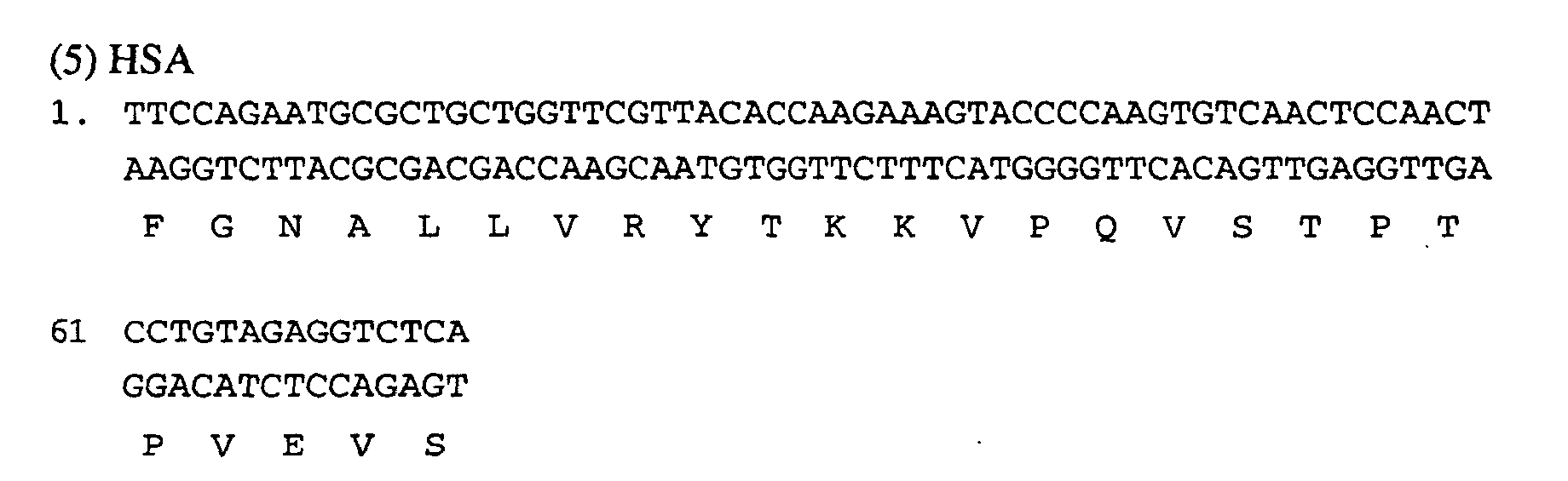

- The trispecific antibody has better been ligated to form a cyclic molecule using following interlinker peptides.


- The present invention provides a nucleotide sequence coding for the cyclic single-chain trispecific antibody mentioned in the invention.
- In another aspects, the present invention provides an expression vector containing above mentioned nucleotide sequences. The expression vector can be pTRI.
- In yet another aspects, the present invention provides a host cell containing above mentioned expression vector. The host cell can be Escherichia coli.
- The design and construction of the trispecific antibody mentioned in this invention is based on following theory. The activation of T lymphocyte needs a co-stimulating signal. The gene coding for an antibody against human carcinoma is fused with the sequences of two reshaped antibody against two main stimulation signal molecules. The present trispecific antibody differs from other trispecific antibodies in following characteristics:
- 1. The trispecific antibody is a cyclic protein molecule. A hinge region of human antibody is introduced to the flanking regions of the linear trispecific antibody molecule and the antibody is circularized by hinge region sequence through disulfide bonds. The formation of a cyclic molecule reduces the interference between different antigen-binding sites in the same molecule and makes it more stable and is easier to be transported in vivo.
- 2. All three antibodies in the trispecific antibody, especially the single-domain antibody against human CD28, are small molecule antibodies. The molecular weight of the whole trispecific antibody (84kDa) is rather low which make it beneficial in tumor immunotherapy.
- 3. The antibodies against CD28 and CD3, which are in charge of the activation of T cell are both humanized reshaped antibodies with much lower immunogenecity.
- 4. There is a specifically designed interlinker between every two antibodies, which makes the antibody folding correctly to proper conformation and introduces many other biological functions.
- 5. These three antibody molecules are linked to an entire molecule, and led to an entire molecule has three different functions.
- 6. The anti-tumor antibody of this trispecific antibody can be replaced by other tumor-specific or cytokine-specific antibodies easily, this feature will broaden its scope of utilization.
- 7. It is designed to be produced by E. coli and the products need no more modification in vitro. So it is easy to be produced at low cost.
-
- Fig.1 is a flow chart of construction and expression of the cyclic trispecific single- chain antibody;
- Fig.2 is a illustration of the ligation of different antibodies (anti-tumor scFv ×anti-CD3 ×anti-CD28) and interlinkers;
- Fig.3 is two DNA sequences and the putative amino acid sequences of reshaped single-domain antibody (VH) against CD28;
- Fig.4 is the DNA and amino acid sequences of interlinkers;
- Fig.5 is a view of the overlapping PCR;
- Fig.6 is a physical map of universal expression vector pTRI used for cyclic single-chain trispecific antibody;
- Fig.7 is a pattern of SDS-PAGE of the cyclic anti-ovarian carcinoma trispecific antibody expressed in pTRI;
- Fig.8 is Western blotting results of the cyclic single-chain trispecific antibody against ovary carcinoma, which was expressed in E. coli, and the left view is
Lane 1, supernatant of vector pTMF;Lane 2, supernatant of TsAb, and the right view isLane 1, supernatant of TsAb (400ug/ml);Lane 2, supernatant of TsAb (40ug/ml);Lane 3, supernatant of TsAb (4ug/ml); - Fig.9 is ELISA results of reaction between the cyclic single-chain trispecific antibody against ovary carcinoma with antigen CD28, wherein Control was supernatant of vector pTMF; TRI was supernatant of TsAb;
- Fig.10 is ELISA results of reaction between the cyclic single-chain trispecific antibody against ovary carcinoma with membrane antigen of ovary carcinoma cells or antigen CD3, wherein PTMFSKOV was a reaction between supernatant of vector pTMF with membrane antigen of ovary carcinoma cells; TRISKOV was a reaction between TsAb with membrane antigen of ovary carcinoma cells; PTMFJUR was a reaction between supernatant of vector pTMF with membrane antigen of Juekat cells; TRIJUR was a reaction between TsAb with membrane antigen of Jurkat cells;
- Fig.11 is the cytotoxicity in vitro of the cyclic single-chain trispecific antibody against ovary carcinoma to ovary carcinoma cells (OCCD3CD28: anti-ovary carcinoma scFv + anti-CD3 antibody + anti-CD28 antibody; OCCD3: anti-ovary carcinoma scFv + anti-CD3 antibody; TRI: cyclic single-chain trispecific antibody; Control: no antibodies; VectorCK: supernatant of vector); and
- Fig. 12 is a rosette formation assay of the cyclic single-chain trispecific antibody.
- The interlinker sequence was artificially synthesized by using overlapping PCR. A new plasmid named pUHM1 was generated by insertion this interlinker sequence into pUC19. The DNA fragment of bispecific antibody against ovarian carcinoma× CD3 was achieved by digesting plasmid pALM-Fc with XhoI and BamHI and then was inserted into pUHM1. The plasmid containing this sequence is named pUHM2. Another-expression plasmid pTCH1 was generated by inserting the reshaped single-domain antibody against CD28 and interlinker into pTMF. The fragment of anti-ovarian carcinoma×anti-CD3 bispecific antibody and interlinker was digested from pUHM2, and then was inserted into pTCH1. The final expression vector, named pTRI was used to transform BL21 competent cells. The clones that had been proved to be pTRI positive were inoculated to LB medium with 50 µ g/ml Kanamycin, cultured at 37°C with vigorous shaking to OD550 0.4-0.5. The culture was induced with IPTG to final concentration of 0.8mmol/L for 4 hours and then harvested by centrifugation. The cells were lysed by ultrasonic and the lysate was centrifuged at 12,000 rpm for 10 minutes, the supernatant and pellet were separated on 8% and 12% SDS-PAGE. The samples were also analyzed by standards procedures, including immunoblotting, immunological activity and cytological assay (see Fig.1~Fig.6).
- The protocols in detail are listed as follows.
- This cloning vector is derived from pUC19. A linker sequence of 5'-HindIII-pelB-human IgG3'CL
hinge(complementary)-Gly4Ser-HSA-Gly4Ser-NdeI-EcoRI-3' was inserted into pUC19 linearized with HindIII and EcoRI. - Six oligonucleotide fragments, named P1~P3 and RE1~RE3 were used in SOE-PCR as template/primer to get a 285 bp entire linker fragment:



- Overlapping PCR was carried out with two steps as shown in Fig.5. First step: Two double-stranded products M1 and M2 were assembled with P1, P2, RE2 and RE3, P3 and Re1, respectively. Second step: The entire linker was got by using overlapping PCR with equal molar of M1 and M2 as templates.
- Generation of M1: In a 30 µl reaction, adding 4 µl (~10pmol/L) of P1, P2, RE2 and RE3, respectively, 3 µl of 10×pfu DNA polymerase buffer, 4µl of dNTPs (2mmol/L each), 1 µl of pfu DNA polymerase, adding deionized H2O to adjust total volume to be 30 µl, overlaid with 100 µl paraffin oil. Run 30 PCR cycles on a thermal cycler. The thermal cycle is 94°C for 1min, 55°C for 30 sec and 72°C for 40 sec. The amplified DNA fragments are analyzed on 2.5% agarose gel. The target band was cut out and recovered using Gel DNA purification kit (Watson Inc. Shanghai, China ).
- Generation of M2: In a 30 µl reaction, adding 10 µl of P3, RE1 (∼10pmol, each), 3 µl of 10×PCR buffer, 4 µl of dNTPs (2mM, each), 1 µl of pfu DNA polymerase , adding deionized H2O to adjust total volume to be 30 µl, overlaid with 100 µl of paraffin oil. Run 30 PCR cycles on a thermal cycler. The thermal cycle is 94°C for 1min, 60°C for 30 sec and 72°C for 40 sec. The amplified DNA fragments are analyzed on 2.5% agarose gel. The target band was cut out and recovered using Gel DNA purification Kit (Watson Inc. Shanghai, China ).
- Generation of the full-length linker : In a 30 µl reaction, adding 5 µl of recovered M1 and M2 as templates , 2 µl of P1 and RE1 as primers, 3 µl of 10×pfu Buffer, 4 µl of dNTPs (2mM, each), 1 µl of pfu DNA polymerase, adding deionized H2O to adjust total volume to 30 µl, overlaid with paraffin oil. Run 30 PCR cycles on a thermal cycler. The thermal cycle is 94°C for 1min, 55°C for 30 sec and 72°C for 40 sec. The amplified DNA fragments are analyzed on 2.5% agarose gel. The full-length band was cut out and recovered using Gel DNA purification Kit (Watson Inc. Shanghai, China ).
- The full-length PCR product was digested with HindIII and EcoRI at 37°C for 4 hours. The digested DNA fragments were separated on 1% agarose gel. The target band was recovered using Gel DNA purification Kit (Watson Inc. Shanghai, China ).
- Inoculate a single-colony of DH5 α containing plasmid pUC19 into 5ml of LB medium containing 100 µ g/ml ampicillin. Incubate the culture overnight at 37°C with vigorous shaking. Pour 1.5 ml of the culture to an eppendorf tube. Centrifuge at 12,000rpm for 1min. remove the medium and resuspend the bacterial pellet in 100 µl of solution I (50mmol/l glucose, 10mmol/l EDTA, 25mmol/l Tris-Cl8.0) by vigorous vortexing. Add 200 µl of freshly prepared solution II(0.2mol/l NaOH, 1% SDS) to bacterial suspension, close the tube tightly and then mix the contents by inverting the tube several times. Store the tube on ice for 3min, add 150 µl of ice-cold solution III(3mol/L KAc, pH4.8). Close the tube and invert several times softly. Store the tube on ice for 5 min. Centrifuge the bacterial lysate at 12,000rpm at 4°C for 10 min. transfer the supernatant to a fresh tube. Precipitate DNA from the supernatant by adding two volumes of ice-cold ethanol. Mix the solution by vortex and then allow the mixture to stand for 10 min. at room temperature. Centrifuge at 12,000rpm for 20 min. at 4°C. Add 75% ethanol to wash the DNA pellet once, store the opened tube at room temperature to dry. Dissolve the pellet in 100 µl H2O containing 50µg/ml DNase-free RNaseA. Store the tube at 37°C for 30min. Add an equal volume of Phenol: chloroform(1:1). Mix the organic and aqueous phases by vortex and then centrifuge the emulsion at 12,000rpm for 2min. at room temperature. Transfer the aqueous upper layer to a fresh tube. Add an equal volume of chloroform: isopentanol (24:1, V/V). Mix the organic and aqueous phases by vortex and then centrifuge the emulsion at 12,000rpm for 2min at room temperature. Transfer the upper aqueous layer to a fresh tube. Add 1/10 volume of NaAc (3mol/l, pH5.2) and two volumes of ice-cold ethanol. Mix the solution by vortex and then allow the mixture to stand for 10 min. at room temperature. Centrifuge at 12,000rpm for 60 min. at 4°C. Add 75% ethanol to wash the DNA pellet once, store the opened tube at room temperature to dry out. Dissolve the pellet in 25 µl H2O.
- One microgram of pUC19 DNA was digested with HindIII and EcoRI in 40 µl system (4
µl 10×buffer, 30U HindIII and 30U EcoRI) at 37°C for 4 hours. The reaction mixture was analyzed on 1% agarose gel. The target band was recovered using Gel DNA purification Kit (Watson Inc. Shanghai, China ). - About 40 ng of recovered double-digested pUC19 fragment and about 20 ng of double-digested PCR product were used in a 20 µl ligation reaction( 2
µl 10× T4 DNA ligase buffer, 1µl T4 DNA ligase ). Incubate overnight at 16°C. - Pick a single colony of
Top 10 from a plate. Transfer the colony into 3ml of antibiotic-free LB medium. Incubate the culture at 37°C overnight with shaking. Transfer 300 µl of the culture to 30 ml of LB medium. Incubate the culture to OD5500.3~0.4(about 3 hours) at 37°C with vigorous shaking. Store the culture on ice for 10 min to cool down then centrifuge at 4,000 rpm for 10 min at 4°C. Remove the supernatant, add 20ml ice-cold 0.1mol/L CaCl2 to resuspend the pellet by swirling or gentle vortex. Cool the culture by storing the tube on ice for 30 min. Centrifuge at 4,000rpm for 10min at 4°C. Remove the supernatant, add 2ml ice-cold 0.1mol/l CaCl2 (containing 12% glycerol) to resuspend the pellet. Add each 200 µl of this competent cell to eppendorf tube then store at -70°C. - Gently mix 10µl ligation product with 200µl DH5 a chemical competent cell, keep on ice for 30 minutes, then incubate in 42°C water bath for exactly 90 second, then cool on ice for 5 minutes, transfer all of 200µl transformed competent cells onto agar LB medium containing 100 µg/ml Ampicilline. After the liquid has been absorbed, invert the plate and incubate at 37°C overnight. Pick single colony for mini-preparation of plasmid DNA by alkaline lysis method. Identify the plasmid by digestion with HindIII and EcoR I and then amplified with P1 and RE1 as primers. The positive plasmid was further identified by sequencing, designated as pUMH1.
- The cloning vector pUMH2 is originated from palsmid pUMH1 with insertion of a bispecific antibody fragment (5'-XhoI- anti-ovarian carcinoma scFv -Fc linker -anti-CD3 scFv-BamHI-3') between XhoI and BamHI. The anti-ovarian× anti-CD3 bispecific single-chain antibody fragment is digested from pALM-Fc constructed in our lab.
- Extraction plasmid DNA of pALM-Fc by Alkaline lysis, digest 1µg of pALM-Fc with XhoI and BamHI in a 40 µ l reaction containing 30U XhoI and BamHI (TaKaRa, Dalian, China) ,4
µl 10×buffer, incubate at 37°C for 4 h. The product was separated on 1% agarose gel. The target band was then cut out and recovered by using Gel purification Kit (Waston Inc, Shanghai, China). - Digest 1µg of pUMH1 DNA with XhoI and BamHI in 40 µl volume as described above, incubate at 37°C for 4 h. Extract the digested fragment with Gel purification Kit ( Waston INC, Shanghai, China).
- Set up ligation reaction as follows:
Double digested pUMH1 40ng Double digested fragment of bispecific antibody 20ng 10×T4 ligation buffer: 2 µL T4 DNA ligase: 2 µ L Nuclease-free water to final volume 20 µ L - Incubate at 16°C overnight. Gently mix 10 µl ligation mixture with 200µl DH5α competent cell, place the cells on ice for 30 min, then incubate in 42°C water bath for exactly 90 second, then cool on ice for 5 min, transfer all of 200µl transformed competent cells onto agar LB medium containing 100 µg/ml ampicillin. After the liquid has been absorbed, invert the plate and incubate at 37°C overnight. Pick single colony for mini-preparation of plasmid DNA. Identify the insert fragment with XhoI, BamHI; HindIII and EcoRI. The identified positive plasmid was pUMH2.
- The construction of the cyclic single-chain trispecific antibody was based on the expression vector pTCH1 and bispecific fragment from pUMH2. pTCH1 was derived from vector pTMF containing -NdeI-( VH of anti-CD28 scFv)-(c-myc)-Gly4Ser-Human IgG3'CL(17aa, Forward)-BamHI.
- Extract the recombinant plasmid pUC19 containing-NdeI-(anti-CD28 VH)-(c-myc)-Gly4Ser-Human IgG3'CL (17AA, forward)-BamHI- fragment by alkaline lysis mini-preparation. Then, Digest 1µg of the plasmid DNA with NdeI and BamHI in a 40 µl system(4 µL 10×buffer, 30U NdeI, BamHI each), incubate in a water bath at 37°C for 4 h. Digest the vector pTMF at the same time. The product was separated on 1% agarose gel. The target band was then cut out and recovered by using Gel purification Kit (Waston Inc, Shanghai, China). Set up ligation reaction:
Double digested pTMF 40ng Double digested fragment of anti-CD28 scFv 20 ng 10×T4 ligation buffer: 2 µL T4 DNA ligase: 2 µL Nuclease-Free Water to final volume 20 µ L - Gently mix 10 µl ligation mixture with 200 µl chemical competent BL21 cell, place the cells on ice for 30 min, then incubate in 42°C water bath for exactly 90 sec, then cool on ice for 5 min, transfer all of 200 µl transformed competent BL21 cells onto agar LB medium containing 50µg/ml kanamycin. After the liquid has been absorbed, invert the plate and incubate at 37°C overnight. Pick single colony for mini-preparation of plasmid DNA. Identify the insert fragment with NdeI and HindIII digestion and the size of plasmid. The positive plasmid was named as pTCH1.
- Digest 1µg of pTCH1 DNA with NdeI and HindIII in a 40µl system(4
µ L 10× buffer, 30U NdeI and HindIII), incubate at 37°C for 4 h. The product was separated on 1% agarose gel. The target band was then cut out and recovered by using Gel purification Kit (Waston Inc, Shanghai, China). - Mini-preparation of plasmid pUMH2 with alkaline lysis method. Digest 1µg of pUMH2 DNA with NdeI and HindIII in a 40µl system (4 µL 10× buffer, 30U NdeI and HindIII), incubate at 37°C for 4 h. The product was separated on 1% agarose gel. The target band was cut out and recovered by using Gel purification Kit (Waston Inc, Shanghai, China)
- Set up ligation reaction:
Double digested pTCH1 40ng Double digested bispecific fragment 20ng 10× T4 ligation buffer 2 µL T4 DNA ligase 2 µL final volume 20 µL - Incubate at 16°C overnight. Gently Mix 10µl of ligation product with 200µl BL21 chemical competent cells and keep on ice for 30 minutes, incubate in 42°C water bath for exactly 90 sec, then cool on ice for 5 min, transfer all of 200µl transformed competent cells onto agar LB medium containing 50µg/ml kanamycin. After the liquid has been absorbed, invert the plate and incubate at 37°C overnight. Pick single colony for mini-preparation of plasmid DNA. Identify sample with NdeI and HindIII. The positive plasmid was named as pTR1.
- Pick a fresh pTR1 positive single colony into LB media containing 50µg/ml Kanamycin, incubate at 37°C overnight. Dilute the overnight cultures 1:100 in 50ml of fresh LB medium in a 250ml flask. Incubate the culture to grow at 37°C until the cells reach mid-log growth (OD600 0.4~0.5), add IPTG to the culture to a final concentration of 0.8mM, incubate the culture for a further 4h. Collect and sonicate the bacteria on ice, 12000 rpm centrifuge for 10 minute, analyze the supernatant and the pellet by 8%, 12% SDS-PAGE.
Casting of SDS-polyacrylamide gel Stacking gel
5%Separating gel
12%Separating gel
8% Sealing gel 30% Acrylamide stock: 0.5 6.0 4.0 0.53 (29:1)(ml) H2O(ml): 2.1 4.9 6.9 0.93 1 M Tris-HCl: 0.38 - - 0.05 (pH 8.8)(ml) 1.5 M Tris-HCl: - 3.8 3.8 - (pH 6.8) (ml) 10% SDS(ml): 0.03 0.15 0.15 0.02 10% Peroxydisulphate (ml): 0.03 0.15 0.15 0.02 TEMED (ml): 0.003 0.006 0.009 0.0012 * 29:1 w:w ratio of acrylamide to N,N'-methylene bis-acrylamide - Sample preparation: Take protein sample and mix with equal volume of loading buffer(100mM Tris-HCl pH 6.8, 200mM DTT, 4
% SDS 20% glycerol, 0.2% bromophenol blue), heat e at 100°C for 5 min prior to load each sample onto an SDS-polyacrylamide gel Electrophoresis: Run the gel at 60V in stacking gel, then 120V in separating gel in electrophoresis buffer ( 25mM Tris, 0.1% SDS, 250mM Glycine (pH8.3) ). Stain proteins in the gel for 1 to 2 hr in Coomassie blue R-250 staining solution (0.25% (w/v) CoomassieBrilliant Blue R 250, 50% methanol, 10% acetic acid). Follow by destaining with 10% acetic acid (50% methanol, 10% acetic acid), changing the solution every 30 min until background is clear (3 to 5 changes). Take pictures and analyze the gels ( shown in Fig. 7). - Western-blot: the Protein samples are transferred from polyacrylamide gels to PVDF membrane by electrophoresis (Bio-Rad mighty small transphor system). Electrophoresis blotting is performed according to the protocol provided by manufacturer. Briefly, incubate the membrane in the blocking solution (5% skimmed milk) for two hours and wash it in TBST three times for 5 minutes each. Transfer the membrane to TBST containing 1:1,000 dilution of mouse anti-c-myc IgG and incubate for 1 hour at room temperature. Wash the membrane in TBST three times for 5 minutes each. Transfer the membrane to TBST containing goat anti-mouse IgG HRP conjugate (1:1000 dilution) and incubate for 1 hour at room temperature. Wash the membrane in TBST five times for 5 minutes each. At last, incubate the membrane in substrate solution (6mg/ml DAB, 1% H2O2 ) until the bands of interest have reached the desired intensity. Stop the reaction by washing the membrane in deionized water for several times.. The molecular weight of scTsAb is 84kDa (shown in Fig. 8).
- The antigen binding activities of sTRI to rhCD28/Fc antigen and cell membrane antigen of Jurkat cell and SKOV-3 cell are studied by enzyme-linked immunosorbant assay (ELISA). Briefly, cell membrane antigen is prepared with ultrasonic disruption of tumor cells. ELISA was performed with the antigen immobilized on 96-well plates. Mouse anti-c-myc antibody (9E10) is used as primary antibody and HRP-conjugated goat anti-mouse IgG as secondary antibody. At last, visualize the result with OPD as substrate and measure the absorbance at 490 nm. As shown in Fig 9 and Fig 10, the cyclic single-chain trispecific antibody can bind to three kinds of antigen specifically.
- Human peripheral blood lymphocytes (PBL) of healthy donors are obtained by Ficoll gradient separation, monocyte/macrophage fraction is depleted by glass adherence method(37°
C 2 hours). SKOV-3 cells are plated in flat-bottom 96-well plate to prepare cell monolayer. Freshly isolated effector cells (PBL) were added to the monolayer of tumor cells at appropriate ratios with different dilutions of supernatant containing sTRI at the same time and incubate overnight at 37°C for 3 days in 5% CO2 Incubators. Wash the plate two times with RPMI 1640 medium to remove effector cells. Add 200ul RPMI 1640 medium and 20µl MTT solution (0.5mg/ml, sigma) and incubate at 37°C for 4 hours. After discarding the MTT supernatant, add 100ul DMSO to dissolve the formazan and read the sample at OD570. Prepare the blank wells by adding medium only and the control wells by adding target cells and effector cells. Design three replicates for each sample. The percent of cytotoxicity is calculated as the following formula: Percent cytotoxicity =(absorbance of control wells - absorbance of experiment wells / absorbance of control wells absorbance of blank wells) × 100. As shown in Fig. 11, adding of the cyclic single-chain trispecific antibody results specifically killing effects to tumor cells. Percent of cytotoxicity of the cyclic single-chain trispecific antibody group is obviously higher than the other two experiment sets (oc-scFv+CD3scFv and oc-scFv+CD3 scFv+CD28 scFv). - Centrifugate the trypsinized SKOV-3 cells for 5 minutes at 1,000 rpm, discard the supernatant and resuspend the cells in complete medium (10% bovine serum, RPMI 1640 ). Add 2×10² SKOV-3 cells per well and incubate at 37 °C overnight in 5% CO2 incubator. PBLs isolated as above are activated by adding 100 IU IL-2 at 37°C overnight at the same time. PBLs are washed three times with RPMI 1640 to remove residual IL-2 and added into SKOV-3 plate with E/T ratio of 20:1(E: effector cells, PBLs; T: target cells, SKOV-3 cells). Meanwhile, cyclic single-chain trispecific antibody supernatant is supplemented. Incubate the mix above at 37°C in 5% CO2 incubator and photograph under inverted microscope at the intervals of two hours. As shown in Fig. 12 and Table 2, after two hours the effector cells begin to adhere with the target cells. After four hours the target cells started to break. At last, after 10 hours, most of target cells fall to pieces.
Table 2. Percent of Rosette formation mediated by the cyclic single-chain trispecific antibody Concentration of sample 400µg/ml of antibody 40µg/ml of antibody 4uµg/ml of antibody 40µg/ml of vector supernatant Blank Percent of wreath formation 40% 30% 20% 10% 0 


Claims (18)
- A cyclic single-chain trispecific antibody against human tumor, comprising three parts connected together, a first part thereof having an anti-tumor Fab antibody ,an anti-tumor single-domain antibody or an scFv; a second part thereof having a reshaped Fab antibody against human CD3, a reshaped single-domain antibody against human CD3 or a reshaped scFv against human CD3, and a third part thereof having a reshaped Fab antibody against human CD28, a reshaped single-domain antibody against human CD28 or a reshaped scFv against human CD28.
- The cyclic single-chain trispecific antibody as claimed in claim 1, wherein the anti-tumor Fab antibody, single-domain antibody or scFvis Fab antibody against human ovarian carcinoma, single-domain antibody against human ovarian carcinoma or scFv against human ovarian carcinoma respectively.
- The cyclic single-chain trispecific antibody as claimed in claim 1, wherein it comprises an anti-tumor scFv, a reshaped scFv against human CD3 and a reshaped single-domain antibody against human CD28.
- The cyclic single-chain trispecific antibody as claimed in claim 3, wherein the reshaped single-domain antibody against human CD28 is a reshaped VH fragment with one of following two amino acid sequences:or


- The cyclic single-chain trispecific antibody as claimed in claim 1, wherein there are some kinds of linker peptide between the anti-tumor Fab, anti-tumor single-domain antibody or anti-tumor scFv, and the reshaped Fab, reshaped single-domain antibody or reshaped scFv against human CD3, and the reshaped Fab, reshaped single-domain antibody or reshaped scFv against human CD28.
- The cyclic single-chain trispecific antibody as claimed in claim 5, wherein the linker peptides are one of following six amino acid sequences:






- The cyclic single-chain trispecific antibody as claimed in claim 5, wherein the antibody is linked to a cyclic molecule by using following two interlinker peptides:or


- A polynucleotide sequence coding for the cyclic single-chain trispecific antibody mentioned in any of claim 1 to 7.
- An expression vector containing nucleotide sequences as claimed in claim 8.
- The expression vector according to claim 8, wherein it is pTRI.
- A host cell containing the expression vector mentioned in any of claim8 or claim 9.
- The host cell according to claim 10, wherein it is Escherichia coli.
- A drug complex for therapy or prevention of cancer, comprising the cyclic single-chain trispecific antibody as any one of claim 1 to claim 7 and pharmic vector.
- The drug complex as claimed in claim 13 wherein the drug complex is used for therapy or prevention of ovary carcinoma.
- A use of the cyclic single-chain trispecific antibody as any one of claim 1 to claim 7 for preparing drugs to treat or prevent cancer.
- The use as claimed in claim 15, wherein the cancer is ovary carcinoma.
- A use of the cyclic single-chain trispecific antibody as any one of claim 1 to claim 7 for treating or preventing cancer.
- The use as claimed in claim 17, wherein the cancer is ovary carcinoma.
Applications Claiming Priority (3)
| Application Number | Priority Date | Filing Date | Title |
|---|---|---|---|
| CN01110554 | 2001-04-11 | ||
| CNB011105542A CN1294148C (en) | 2001-04-11 | 2001-04-11 | Single-stranded cyctic trispecific antibody |
| PCT/CN2002/000252 WO2002083738A1 (en) | 2001-04-11 | 2002-04-10 | Cyclic single strand trispecific antibody |
Publications (2)
| Publication Number | Publication Date |
|---|---|
| EP1378520A1 true EP1378520A1 (en) | 2004-01-07 |
| EP1378520A4 EP1378520A4 (en) | 2006-08-16 |
Family
ID=4658662
Family Applications (1)
| Application Number | Title | Priority Date | Filing Date |
|---|---|---|---|
| EP02724089A Withdrawn EP1378520A4 (en) | 2001-04-11 | 2002-04-10 | CYCLIC MONOCATARY TRISPECIFIC ANTIBODY |
Country Status (7)
| Country | Link |
|---|---|
| US (1) | US20050175606A1 (en) |
| EP (1) | EP1378520A4 (en) |
| JP (1) | JP2005501517A (en) |
| CN (1) | CN1294148C (en) |
| CA (1) | CA2443705A1 (en) |
| RU (1) | RU2355705C2 (en) |
| WO (1) | WO2002083738A1 (en) |
Cited By (55)
| Publication number | Priority date | Publication date | Assignee | Title |
|---|---|---|---|---|
| WO2005118642A3 (en) * | 2004-06-01 | 2006-03-23 | Domantis Ltd | Bispecific fusion antibodies with enhanced serum half-life |
| WO2006059106A3 (en) * | 2004-12-02 | 2007-01-04 | Domantis Ltd | Bispecific domain antibodies targeting serum albumin and glp-1 or pyy |
| WO2006059108A3 (en) * | 2004-12-02 | 2007-02-22 | Domantis Ltd | ANTI-IL-IRl SINGLE DOMAIN ANTIBODIES AND THERAPEUTIC USES |
| EP1736484B1 (en) * | 2004-04-01 | 2010-10-06 | Beijing ABT Genetic Engineering Technology Co., Ltd. | An gene engineering recombinant anti-cea, anti-cd3 and anti-cd28 single-chain tri-specific antibody |
| US9028822B2 (en) | 2002-06-28 | 2015-05-12 | Domantis Limited | Antagonists against TNFR1 and methods of use therefor |
| WO2016146702A1 (en) * | 2015-03-16 | 2016-09-22 | Helmholtz Zentrum München - Deutsches Forschungszentrum für Gesundheit und Umwelt (GmbH) | Trispecific binding molecules for treating hbv infection and associated conditions |
| WO2017191101A1 (en) | 2016-05-02 | 2017-11-09 | F. Hoffmann-La Roche Ag | The contorsbody - a single chain target binder |
| WO2017180913A3 (en) * | 2016-04-13 | 2018-02-08 | Sanofi | Trispecific and/or trivalent binding proteins |
| EP3297672A4 (en) * | 2015-05-21 | 2018-12-05 | Harpoon Therapeutics Inc. | Trispecific binding proteins and methods of use |
| WO2019086394A1 (en) | 2017-11-01 | 2019-05-09 | F. Hoffmann-La Roche Ag | The compbody - a multivalent target binder |
| WO2019086395A1 (en) | 2017-11-01 | 2019-05-09 | F. Hoffmann-La Roche Ag | Trifab-contorsbody |
| US10323239B2 (en) | 2012-10-04 | 2019-06-18 | Research Development Foundation | Serine protease molecules and therapies |
| WO2019175885A1 (en) * | 2018-03-15 | 2019-09-19 | Biond Biologics Ltd. | Methods and compositions for decreasing soluble immune receptor cd28 |
| US10544221B2 (en) | 2016-05-20 | 2020-01-28 | Harpoon Therapeutics, Inc. | Single chain variable fragment CD3 binding proteins |
| US10543271B2 (en) | 2017-05-12 | 2020-01-28 | Harpoon Therapeutics, Inc. | Mesothelin binding proteins |
| US10730954B2 (en) | 2017-05-12 | 2020-08-04 | Harpoon Therapeutics, Inc. | MSLN targeting trispecific proteins and methods of use |
| US10815311B2 (en) | 2018-09-25 | 2020-10-27 | Harpoon Therapeutics, Inc. | DLL3 binding proteins and methods of use |
| US10844134B2 (en) | 2016-11-23 | 2020-11-24 | Harpoon Therapeutics, Inc. | PSMA targeting trispecific proteins and methods of use |
| US10849973B2 (en) | 2016-11-23 | 2020-12-01 | Harpoon Therapeutics, Inc. | Prostate specific membrane antigen binding protein |
| EP3564265A4 (en) * | 2016-12-30 | 2021-02-17 | Cytocares (Shanghai) Inc. | TRIFUNCTIONAL MOLECULE AND ITS APPLICATION |
| US10927180B2 (en) | 2017-10-13 | 2021-02-23 | Harpoon Therapeutics, Inc. | B cell maturation antigen binding proteins |
| US10934344B2 (en) | 2006-03-31 | 2021-03-02 | Chugai Seiyaku Kabushiki Kaisha | Methods of modifying antibodies for purification of bispecific antibodies |
| US11001643B2 (en) | 2014-09-26 | 2021-05-11 | Chugai Seiyaku Kabushiki Kaisha | Cytotoxicity-inducing therapeutic agent |
| US11066483B2 (en) | 2010-11-30 | 2021-07-20 | Chugai Seiyaku Kabushiki Kaisha | Cytotoxicity-inducing therapeutic agent |
| US11072666B2 (en) | 2016-03-14 | 2021-07-27 | Chugai Seiyaku Kabushiki Kaisha | Cell injury inducing therapeutic drug for use in cancer therapy |
| WO2021155071A1 (en) * | 2020-01-29 | 2021-08-05 | Inhibrx, Inc. | Cd28 single domain antibodies and multivalent and multispecific constructs thereof |
| US11129905B2 (en) | 2015-10-25 | 2021-09-28 | Sanofi | Bivalent, bispecific binding proteins for prevention or treatment of HIV infection |
| US11136403B2 (en) | 2017-10-13 | 2021-10-05 | Harpoon Therapeutics, Inc. | Trispecific proteins and methods of use |
| US11180563B2 (en) | 2020-02-21 | 2021-11-23 | Harpoon Therapeutics, Inc. | FLT3 binding proteins and methods of use |
| US11186649B2 (en) | 2017-10-10 | 2021-11-30 | Sanofi | Anti-CD38 antibodies and methods of use |
| US11453716B2 (en) | 2016-05-20 | 2022-09-27 | Harpoon Therapeutics, Inc. | Single domain serum albumin binding protein |
| EP4079747A1 (en) * | 2014-12-05 | 2022-10-26 | Xyphos Biosciences Inc. | Insertable variable fragments of antibodies and modified a1-a2 domains of nkg2d ligands |
| US11485790B2 (en) | 2014-04-07 | 2022-11-01 | Chugai Seiyaku Kabushiki Kaisha | Immunoactivating antigen-binding molecule |
| US11505605B2 (en) | 2014-05-13 | 2022-11-22 | Chugai Seiyaku Kabushiki Kaisha | T cell-redirected antigen-binding molecule for cells having immunosuppression function |
| US11530268B2 (en) | 2018-10-09 | 2022-12-20 | Sanofi | Trispecific anti-CD38, anti-CD28, and anti-CD3 binding proteins and methods of use for treating viral infection |
| US11535668B2 (en) | 2017-02-28 | 2022-12-27 | Harpoon Therapeutics, Inc. | Inducible monovalent antigen binding protein |
| US11613576B2 (en) | 2019-04-09 | 2023-03-28 | Sanofi | Trispecific binding proteins, methods, and uses thereof |
| US11623958B2 (en) | 2016-05-20 | 2023-04-11 | Harpoon Therapeutics, Inc. | Single chain variable fragment CD3 binding proteins |
| US11649293B2 (en) | 2015-11-18 | 2023-05-16 | Chugai Seiyaku Kabushiki Kaisha | Method for enhancing humoral immune response |
| US11649262B2 (en) | 2015-12-28 | 2023-05-16 | Chugai Seiyaku Kabushiki Kaisha | Method for promoting efficiency of purification of Fc region-containing polypeptide |
| US11660340B2 (en) | 2015-11-18 | 2023-05-30 | Chugai Seiyaku Kabushiki Kaisha | Combination therapy using T cell redirection antigen binding molecule against cell having immunosuppressing function |
| US11851476B2 (en) | 2011-10-31 | 2023-12-26 | Chugai Seiyaku Kabushiki Kaisha | Antigen-binding molecule having regulated conjugation between heavy-chain and light-chain |
| US11866507B2 (en) | 2017-04-11 | 2024-01-09 | Inhibrx, Inc. | Multispecific polypeptide constructs having constrained CD3 binding and methods of using the same |
| EP4257193A3 (en) * | 2016-04-13 | 2024-01-24 | Sanofi | Trispecific and/or trivalent binding proteins |
| US12195533B2 (en) | 2018-07-24 | 2025-01-14 | Inhibrx Biosciences, Inc. | Multispecific polypeptide constructs containing a constrained CD3 binding domain and a receptor binding region and methods of using the same |
| US12195544B2 (en) | 2018-09-21 | 2025-01-14 | Harpoon Therapeutics, Inc. | EGFR binding proteins and methods of use |
| WO2025016902A1 (en) * | 2023-07-14 | 2025-01-23 | Julius-Maximilians-Universität Würzburg | Multivalent single-partite antibodies for dual-antigen restricted immunotherapy |
| US12227594B2 (en) | 2017-11-01 | 2025-02-18 | Hoffmann-La Roche Inc. | Bispecific 2+1 contorsbodies |
| US12331132B2 (en) | 2018-04-11 | 2025-06-17 | Inhibrx Biosciences, Inc. | Multispecific polypeptide constructs having constrained CD3 binding and related methods and uses |
| US12415860B2 (en) | 2018-05-14 | 2025-09-16 | Harpoon Therapeutics, Inc. | Binding moiety for conditional activation of immunoglobulin molecules |
| US12503510B2 (en) | 2019-03-14 | 2025-12-23 | Biond Biologics Ltd. | Small shedding blocking agents |
| US12516128B2 (en) | 2019-05-14 | 2026-01-06 | Harpoon Therapeutics, Inc. | EpCAM binding proteins and methods of use |
| US12528863B2 (en) | 2019-07-10 | 2026-01-20 | Chugai Seiyaku Kabushiki Kaisha | Claudin-6 binding molecules and uses thereof |
| US12589163B2 (en) | 2020-03-12 | 2026-03-31 | Biond Biologics Ltd. | Shedding blocking agents with increased stability |
| US12612459B2 (en) | 2019-12-02 | 2026-04-28 | Biond Biologics Ltd. | Methods of identifying agents that block MCD28 cleavage by MMPS |
Families Citing this family (144)
| Publication number | Priority date | Publication date | Assignee | Title |
|---|---|---|---|---|
| US9321832B2 (en) | 2002-06-28 | 2016-04-26 | Domantis Limited | Ligand |
| US7235641B2 (en) * | 2003-12-22 | 2007-06-26 | Micromet Ag | Bispecific antibodies |
| EP2014680A1 (en) * | 2007-07-10 | 2009-01-14 | Friedrich-Alexander-Universität Erlangen-Nürnberg | Recombinant, single-chain, trivalent tri-specific or bi-specific antibody derivatives |
| CN101952312A (en) | 2007-07-31 | 2011-01-19 | 米迪缪尼有限公司 | Multispecific epitope binding proteins and uses thereof |
| JP4780134B2 (en) * | 2008-04-09 | 2011-09-28 | ソニー株式会社 | Image display device and driving method of image display device |
| MX2012012927A (en) | 2010-05-06 | 2013-05-01 | Novartis Ag | Compositions and methods of use for therapeutic low density lipoprotein - related protein 6 (lrp6) multivalent antibodies. |
| SG185416A1 (en) | 2010-05-06 | 2012-12-28 | Novartis Ag | Compositions and methods of use for therapeutic low density lipoprotein -related protein 6 (lrp6) antibodies |
| WO2013048243A1 (en) | 2011-09-29 | 2013-04-04 | Apo-T B.V. | Multi-specific binding molecules targeting aberrant cells |
| US8883735B2 (en) | 2011-11-04 | 2014-11-11 | Novartis Ag | Low density lipoprotein-related protein 6 (LRP6)-half life extender constructs |
| EP2802356A1 (en) | 2012-01-13 | 2014-11-19 | Apo-T B.V. | Aberrant cell-restricted immunoglobulins provided with a toxic moiety |
| KR102069397B1 (en) | 2012-02-15 | 2020-01-22 | 에프. 호프만-라 로슈 아게 | Fc-receptor based affinity chromatography |
| KR20150095684A (en) | 2012-12-18 | 2015-08-21 | 노파르티스 아게 | Compositions and methods that utilize a peptide tag that binds to hyaluronan |
| SG11201505896YA (en) | 2013-02-20 | 2015-09-29 | Novartis Ag | Treatment of cancer using humanized anti-egfrviii chimeric antigen receptor |
| WO2014130635A1 (en) | 2013-02-20 | 2014-08-28 | Novartis Ag | Effective targeting of primary human leukemia using anti-cd123 chimeric antigen receptor engineered t cells |
| ES2769574T3 (en) | 2013-03-15 | 2020-06-26 | Michael C Milone | Recognition of cytotoxic cells with chimeric receptors for adoptive immunotherapy |
| UY35468A (en) | 2013-03-16 | 2014-10-31 | Novartis Ag | CANCER TREATMENT USING AN ANTI-CD19 CHEMERIC ANTIGEN RECEIVER |
| ES2773306T3 (en) | 2013-09-16 | 2020-07-10 | Helmholtz Zentrum Muenchen Deutsches Forschungszentrum Gesundheit & Umwelt Gmbh | Bi or multispecific polypeptides binding to immune effector cell surface antigens and HBV antigens to treat HBV infections and associated states |
| ES2918501T3 (en) | 2013-12-19 | 2022-07-18 | Novartis Ag | Human mesothelin chimeric antigen receptors and uses thereof |
| WO2015090229A1 (en) | 2013-12-20 | 2015-06-25 | Novartis Ag | Regulatable chimeric antigen receptor |
| EP3097117B1 (en) | 2014-01-21 | 2023-10-04 | Novartis Ag | Enhanced antigen presenting ability of car t cells by co-introduction of costimulatory molecules |
| WO2015142661A1 (en) | 2014-03-15 | 2015-09-24 | Novartis Ag | Regulatable chimeric antigen receptor |
| CN122399016A (en) | 2014-03-15 | 2026-07-17 | 诺华股份有限公司 | Treatment of cancer using chimeric antigen receptor |
| RU2688349C2 (en) | 2014-03-21 | 2019-05-21 | Ф. Хоффманн-Ля Рош Аг | In vitro prediction of antibody half-life in vivo |
| SG10202109752XA (en) | 2014-04-07 | 2021-10-28 | Novartis Ag | Treatment of cancer using anti-cd19 chimeric antigen receptor |
| US10647768B2 (en) | 2014-05-29 | 2020-05-12 | Macrogenics, Inc. | Multi-chain polypeptide-containing tri-specific binding molecules |
| US20170327553A1 (en) | 2014-06-25 | 2017-11-16 | Novartis Ag | Compositions and methods for long acting proteins |
| EP3161001A2 (en) | 2014-06-25 | 2017-05-03 | Novartis AG | Antibodies specific for il-17a fused to hyaluronan binding peptide tags |
| US20170290876A1 (en) | 2014-06-25 | 2017-10-12 | Novartis Ag | Compositions and methods for long acting proteins |
| JP2017528433A (en) | 2014-07-21 | 2017-09-28 | ノバルティス アーゲー | Low immunoenhancing dose of mTOR inhibitor and CAR combination |
| AU2015292744C1 (en) | 2014-07-21 | 2021-01-21 | Novartis Ag | Treatment of cancer using humanized anti-BCMA chimeric antigen receptor |
| JP6831777B2 (en) | 2014-07-21 | 2021-02-17 | ノバルティス アーゲー | Treatment of cancer using the CD33 chimeric antigen receptor |
| WO2016014553A1 (en) | 2014-07-21 | 2016-01-28 | Novartis Ag | Sortase synthesized chimeric antigen receptors |
| WO2016019300A1 (en) | 2014-07-31 | 2016-02-04 | Novartis Ag | Subset-optimized chimeric antigen receptor-containing t-cells |
| EP3180359A1 (en) | 2014-08-14 | 2017-06-21 | Novartis AG | Treatment of cancer using gfr alpha-4 chimeric antigen receptor |
| EP3712171A1 (en) | 2014-08-19 | 2020-09-23 | Novartis AG | Treatment of cancer using a cd123 chimeric antigen receptor |
| US10577417B2 (en) | 2014-09-17 | 2020-03-03 | Novartis Ag | Targeting cytotoxic cells with chimeric receptors for adoptive immunotherapy |
| PT3215528T (en) | 2014-11-06 | 2019-10-11 | Hoffmann La Roche | Fc-region variants with modified fcrn-binding and methods of use |
| US20180334490A1 (en) | 2014-12-03 | 2018-11-22 | Qilong H. Wu | Methods for b cell preconditioning in car therapy |
| RU2751362C2 (en) | 2014-12-29 | 2021-07-13 | Новартис Аг | Methods for producing cells expressing chimeric antigen receptor |
| EP3250602A1 (en) | 2015-01-26 | 2017-12-06 | Cellectis | T cell receptor knock out engineered immune cells, endowed with chimeric antigen receptors binding to cd123 for the treatment of relapsed/refractory acute myeloid lymphoma or blastic plasmacytoid dendritic cell neoplasm |
| WO2016126608A1 (en) | 2015-02-02 | 2016-08-11 | Novartis Ag | Car-expressing cells against multiple tumor antigens and uses thereof |
| PL3280729T3 (en) | 2015-04-08 | 2022-08-22 | Novartis Ag | Cd20 therapies, cd22 therapies, and combination therapies with a cd19 chimeric antigen receptor (car) - expressing cell |
| WO2016168595A1 (en) | 2015-04-17 | 2016-10-20 | Barrett David Maxwell | Methods for improving the efficacy and expansion of chimeric antigen receptor-expressing cells |
| WO2016172583A1 (en) | 2015-04-23 | 2016-10-27 | Novartis Ag | Treatment of cancer using chimeric antigen receptor and protein kinase a blocker |
| EP3770168A1 (en) | 2015-05-18 | 2021-01-27 | TCR2 Therapeutics Inc. | Compositions and methods for tcr reprogramming using fusion proteins |
| US10829735B2 (en) | 2015-07-21 | 2020-11-10 | The Trustees Of The University Of Pennsylvania | Methods for improving the efficacy and expansion of immune cells |
| US11667691B2 (en) | 2015-08-07 | 2023-06-06 | Novartis Ag | Treatment of cancer using chimeric CD3 receptor proteins |
| ES2987957T3 (en) | 2015-11-23 | 2024-11-18 | Novartis Ag | Optimized lentiviral transfer vectors and their uses |
| PT3393504T (en) | 2015-12-22 | 2025-12-30 | Novartis Ag | Mesothelin chimeric antigen receptor (CAR) and anti-PD-L1 inhibitor antibody for combined use in anticancer therapy. |
| CA3009852A1 (en) | 2015-12-28 | 2017-07-06 | Novartis Ag | Methods of making chimeric antigen receptor-expressing cells |
| KR20180099768A (en) | 2015-12-30 | 2018-09-05 | 노파르티스 아게 | Immune effector cell therapy with enhanced efficacy |
| EP3851457A1 (en) | 2016-01-21 | 2021-07-21 | Novartis AG | Multispecific molecules targeting cll-1 |
| SG11201807489PA (en) | 2016-03-04 | 2018-09-27 | Novartis Ag | Cells expressing multiple chimeric antigen receptor (car) molecules and uses therefore |
| EP3432924A1 (en) | 2016-03-23 | 2019-01-30 | Novartis AG | Cell secreted minibodies and uses thereof |
| US20190112380A1 (en) | 2016-03-29 | 2019-04-18 | University Of Southern California | Chimeric antigen receptors targeting cancer |
| US20230071283A1 (en) | 2016-04-15 | 2023-03-09 | Aimee S. Payne | Compositions and methods for selective protein expression |
| WO2017210617A2 (en) | 2016-06-02 | 2017-12-07 | Porter, David, L. | Therapeutic regimens for chimeric antigen receptor (car)- expressing cells |
| EP3484455A2 (en) | 2016-07-15 | 2019-05-22 | Novartis AG | Treatment and prevention of cytokine release syndrome using a chimeric antigen receptor in combination with a kinase inhibitor |
| KR20230100748A (en) | 2016-07-28 | 2023-07-05 | 노파르티스 아게 | Combination therapies of chimeric antigen receptors adn pd-1 inhibitors |
| SG11201900885VA (en) | 2016-08-01 | 2019-02-27 | Novartis Ag | Treatment of cancer using a chimeric antigen receptor in combination with an inhibitor of a pro-m2 macrophage molecule |
| WO2018026953A1 (en) | 2016-08-02 | 2018-02-08 | TCR2 Therapeutics Inc. | Compositions and methods for tcr reprogramming using fusion proteins |
| JP7467117B2 (en) | 2016-10-07 | 2024-04-15 | ノバルティス アーゲー | Chimeric antigen receptors for the treatment of cancer - Patents.com |
| BR112019007100A2 (en) | 2016-10-07 | 2019-06-25 | Tcr2 Therapeutics Inc | compositions and methods for reprogramming t-cell receptors using fusion proteins |
| CN110177803A (en) | 2016-11-22 | 2019-08-27 | T细胞受体治疗公司 | Compositions and methods for TCR reprogramming using fusion proteins |
| WO2018111340A1 (en) | 2016-12-16 | 2018-06-21 | Novartis Ag | Methods for determining potency and proliferative function of chimeric antigen receptor (car)-t cells |
| CN106589129B (en) * | 2016-12-30 | 2021-03-05 | 上海近岸生物科技有限公司 | Tri-functional molecule combined with CD19, CD3 and CD28 and application thereof |
| US11535662B2 (en) | 2017-01-26 | 2022-12-27 | Novartis Ag | CD28 compositions and methods for chimeric antigen receptor therapy |
| US20190375815A1 (en) | 2017-01-31 | 2019-12-12 | Novartis Ag | Treatment of cancer using chimeric t cell receptor proteins having multiple specificities |
| EP3615055A1 (en) | 2017-04-28 | 2020-03-04 | Novartis AG | Cells expressing a bcma-targeting chimeric antigen receptor, and combination therapy with a gamma secretase inhibitor |
| EP3615068A1 (en) | 2017-04-28 | 2020-03-04 | Novartis AG | Bcma-targeting agent, and combination therapy with a gamma secretase inhibitor |
| WO2018232020A1 (en) | 2017-06-13 | 2018-12-20 | TCR2 Therapeutics Inc. | Compositions and methods for tcr reprogramming using fusion proteins |
| US11607457B2 (en) | 2017-07-13 | 2023-03-21 | City Of Hope | Anti-cancer phosphorothioate-coupled peptide conjugates and methods of using the same |
| SG11202003415XA (en) | 2017-10-18 | 2020-05-28 | Novartis Ag | Compositions and methods for selective protein degradation |
| WO2019084288A1 (en) | 2017-10-25 | 2019-05-02 | Novartis Ag | Methods of making chimeric antigen receptor-expressing cells |
| GB201804701D0 (en) | 2018-03-23 | 2018-05-09 | Gammadelta Therapeutics Ltd | Lymphocytes expressing heterologous targeting constructs |
| US20210047405A1 (en) | 2018-04-27 | 2021-02-18 | Novartis Ag | Car t cell therapies with enhanced efficacy |
| US20210396739A1 (en) | 2018-05-01 | 2021-12-23 | Novartis Ag | Biomarkers for evaluating car-t cells to predict clinical outcome |
| US20210213063A1 (en) | 2018-05-25 | 2021-07-15 | Novartis Ag | Combination therapy with chimeric antigen receptor (car) therapies |
| JP7599205B2 (en) | 2018-06-01 | 2024-12-13 | アンヘレス セラピューティクス インコーポレイテッド | Diverse antigen-binding domains, novel platforms and other enhancements for cell therapy |
| PE20210320A1 (en) | 2018-06-01 | 2021-02-16 | Novartis Ag | BINDING MOLECULES AGAINST BCMA AND THE USES OF THEM |
| WO2019237035A1 (en) | 2018-06-08 | 2019-12-12 | Intellia Therapeutics, Inc. | Compositions and methods for immunooncology |
| IL279367B2 (en) | 2018-06-13 | 2026-05-01 | Novartis Ag | Bcma chimeric antigen receptors and uses thereof |
| WO2020013126A1 (en) | 2018-07-09 | 2020-01-16 | 国立大学法人 熊本大学 | Cyclic single-chain antibody |
| AR116109A1 (en) | 2018-07-10 | 2021-03-31 | Novartis Ag | DERIVATIVES OF 3- (5-AMINO-1-OXOISOINDOLIN-2-IL) PIPERIDINE-2,6-DIONA AND USES OF THE SAME |
| SG11202101811VA (en) | 2018-08-30 | 2021-03-30 | Tcr2 Therapeutics Inc | Compositions and methods for tcr reprogramming using fusion proteins |
| SI3844267T1 (en) | 2018-08-31 | 2025-10-30 | Novartis Ag | Methods of making chimeric antigen receptor-expressing cells |
| US20210171909A1 (en) | 2018-08-31 | 2021-06-10 | Novartis Ag | Methods of making chimeric antigen receptor?expressing cells |
| EP3849565A4 (en) | 2018-09-12 | 2022-12-28 | Fred Hutchinson Cancer Research Center | REDUCING CD33 EXPRESSION FOR SELECTIVE PROTECTION OF THERAPEUTIC CELLS |
| US20210347851A1 (en) | 2018-09-28 | 2021-11-11 | Novartis Ag | Cd19 chimeric antigen receptor (car) and cd22 car combination therapies |
| WO2020069405A1 (en) | 2018-09-28 | 2020-04-02 | Novartis Ag | Cd22 chimeric antigen receptor (car) therapies |
| AU2019402189B2 (en) | 2018-12-20 | 2023-04-13 | Novartis Ag | Dosing regimen and pharmaceutical combination comprising 3-(1-oxoisoindolin-2-yl)piperidine-2,6-dione derivatives |
| CR20210326A (en) | 2018-12-21 | 2021-09-10 | Hoffmann La Roche | CD28 ANTIGEN BINDING AGONIST MOLECULES ACTING ON THE TUMOR |
| EP3924054B1 (en) | 2019-02-15 | 2025-04-02 | Novartis AG | 3-(1-oxo-5-(piperidin-4-yl)isoindolin-2-yl)piperidine-2,6-dione derivatives and uses thereof |
| CA3123519A1 (en) | 2019-02-15 | 2020-08-20 | Novartis Ag | Substituted 3-(1-oxoisoindolin-2-yl)piperidine-2,6-dione derivatives and uses thereof |
| EP3927371A1 (en) | 2019-02-22 | 2021-12-29 | Novartis AG | Combination therapies of egfrviii chimeric antigen receptors and pd-1 inhibitors |
| US20220152150A1 (en) | 2019-02-25 | 2022-05-19 | Novartis Ag | Mesoporous silica particles compositions for viral delivery |
| KR102930430B1 (en) | 2019-03-15 | 2026-02-26 | 카티전 테라퓨틱스, 인코포레이티드 | Anti-bcma chimeric antigen receptors |
| WO2020210678A1 (en) | 2019-04-12 | 2020-10-15 | Novartis Ag | Methods of making chimeric antigen receptor-expressing cells |
| WO2020219742A1 (en) | 2019-04-24 | 2020-10-29 | Novartis Ag | Compositions and methods for selective protein degradation |
| US12037378B2 (en) | 2019-05-21 | 2024-07-16 | Novartis Ag | Variant CD58 domains and uses thereof |
| AU2020279224B2 (en) | 2019-05-21 | 2024-12-05 | Novartis Ag | Trispecific binding molecules against BCMA and uses thereof |
| UY38701A (en) | 2019-05-21 | 2020-12-31 | Novartis Ag | MOLECULES OF BINDING TO CD19, CONJUGATES, COMPOSITIONS THAT INCLUDE THEM AND USES OF THE SAME |
| BR112021026832A2 (en) | 2019-07-02 | 2022-05-10 | Hutchinson Fred Cancer Res | Recombinant ad35 vectors and related gene therapy enhancements |
| WO2021035170A1 (en) | 2019-08-21 | 2021-02-25 | Precision Biosciences, Inc. | Compositions and methods for tcr reprogramming using fusion proteins |
| WO2021108661A2 (en) | 2019-11-26 | 2021-06-03 | Novartis Ag | Chimeric antigen receptors and uses thereof |
| US20230057071A1 (en) | 2019-12-20 | 2023-02-23 | Novartis Ag | Combination of anti tim-3 antibody mbg453 and anti tgf-beta antibody nis793, with or without decitabine or the anti pd-1 antibody spartalizumab, for treating myelofibrosis and myelodysplastic syndrome |
| EP4104187A1 (en) | 2020-02-14 | 2022-12-21 | Novartis AG | Method of predicting response to chimeric antigen receptor therapy |
| JP2023516008A (en) | 2020-02-27 | 2023-04-17 | ノバルティス アーゲー | Method for producing chimeric antigen receptor-expressing cells |
| IL295878A (en) | 2020-02-27 | 2022-10-01 | Novartis Ag | Methods of making chimeric antigen receptor-expressing cells |
| CN111269326A (en) | 2020-02-28 | 2020-06-12 | 南京北恒生物科技有限公司 | Novel chimeric antigen receptors and their uses |
| CA3173213A1 (en) | 2020-03-31 | 2021-10-07 | Roland B. WALTER | Anti-cd33 antibodies and uses thereof |
| MX2022014203A (en) | 2020-05-12 | 2023-02-22 | Lyell Immunopharma Inc | CHIMERIC ANTIGEN RECEPTOR (CAR) SPACERS. |
| CN111849910B (en) | 2020-05-27 | 2021-06-15 | 南京北恒生物科技有限公司 | Engineered immune cells and their uses |
| US20230332104A1 (en) | 2020-06-11 | 2023-10-19 | Novartis Ag | Zbtb32 inhibitors and uses thereof |
| WO2021249462A1 (en) | 2020-06-11 | 2021-12-16 | 南京北恒生物科技有限公司 | Engineered immune cell expressing nk inhibitory molecule and use thereof |
| EP4168007A1 (en) | 2020-06-23 | 2023-04-26 | Novartis AG | Dosing regimen comprising 3-(1-oxoisoindolin-2-yl)piperidine-2,6-dione derivatives |
| CA3181118A1 (en) | 2020-07-15 | 2022-01-20 | Yali ZHOU | Engineered immune cell for allotransplantation |
| CA3176556A1 (en) | 2020-07-16 | 2022-01-20 | Novartis Ag | Anti-betacellulin antibodies, fragments thereof, and multi-specific binding molecules |
| CN114057890A (en) | 2020-07-31 | 2022-02-18 | 南京北恒生物科技有限公司 | Novel costimulatory domains and uses thereof |
| EP4188549A1 (en) | 2020-08-03 | 2023-06-07 | Novartis AG | Heteroaryl substituted 3-(1-oxoisoindolin-2-yl)piperidine-2,6-dione derivatives and uses thereof |
| CN112063588A (en) | 2020-08-13 | 2020-12-11 | 南京北恒生物科技有限公司 | Engineered immune cells and uses thereof |
| US11919958B2 (en) | 2020-08-19 | 2024-03-05 | Xencor, Inc. | Anti-CD28 compositions |
| WO2022040586A2 (en) | 2020-08-21 | 2022-02-24 | Novartis Ag | Compositions and methods for in vivo generation of car expressing cells |
| CN114163532A (en) | 2020-09-10 | 2022-03-11 | 南京北恒生物科技有限公司 | Chimeric antigen receptors comprising novel costimulatory domains and uses thereof |
| CN114525259B (en) | 2020-11-03 | 2025-02-14 | 南京北恒生物科技有限公司 | Chimeric antigen receptor targeting CD7 and its use |
| CN112300282A (en) | 2020-11-03 | 2021-02-02 | 南京北恒生物科技有限公司 | Humanized antibodies targeting CD7 and uses thereof |
| KR20230107617A (en) | 2020-11-13 | 2023-07-17 | 노파르티스 아게 | Combination therapy using chimeric antigen receptor (CAR)-expressing cells |
| CN114524876B (en) | 2020-11-23 | 2025-12-05 | 南京北恒生物科技有限公司 | Antibodies targeting NKG2A and their applications |
| US20240052029A1 (en) | 2021-01-12 | 2024-02-15 | Bioheng Therapeutics Limited | Ror1-targeting antibody and use thereof |
| US20240082306A1 (en) | 2021-02-03 | 2024-03-14 | Bioheng Therapeutics Limited | Novel chimeric antigen receptor and use thereof |
| AU2022227686A1 (en) | 2021-02-25 | 2023-07-27 | Lyell Immunopharma, Inc. | Ror1 targeting chimeric antigen receptor |
| TW202304979A (en) | 2021-04-07 | 2023-02-01 | 瑞士商諾華公司 | USES OF ANTI-TGFβ ANTIBODIES AND OTHER THERAPEUTIC AGENTS FOR THE TREATMENT OF PROLIFERATIVE DISEASES |
| AR125468A1 (en) | 2021-04-27 | 2023-07-19 | Novartis Ag | VIRAL VECTOR PRODUCTION SYSTEM |
| EP4388000A1 (en) | 2021-08-20 | 2024-06-26 | Novartis AG | Methods of making chimeric antigen receptor?expressing cells |
| JP2024542027A (en) | 2021-11-02 | 2024-11-13 | フレッド ハッチンソン キャンサー センター | Cancer treatment using cell-targeted therapy and related research protocols |
| IL314993A (en) | 2022-02-23 | 2024-10-01 | Xencor Inc | Anti-CD28 X anti-PSMA antibodies |
| IL316174A (en) | 2022-04-26 | 2024-12-01 | Novartis Ag | Multispecific antibodies targeting il-13 and il-18 |
| WO2023214325A1 (en) | 2022-05-05 | 2023-11-09 | Novartis Ag | Pyrazolopyrimidine derivatives and uses thereof as tet2 inhibitors |
| KR20250067174A (en) | 2022-09-15 | 2025-05-14 | 노파르티스 아게 | Treatment of autoimmune disorders using chimeric antigen receptor therapy |
| JP2026519263A (en) | 2022-10-26 | 2026-06-15 | ノバルティス アーゲー | Lentivirus preparations |
| WO2025038646A1 (en) | 2023-08-14 | 2025-02-20 | Intellia Therapeutics, Inc. | Cd70 car-t compositions and methods for cell-based therapy |
| EP4780849A1 (en) * | 2023-09-20 | 2026-07-29 | Evolveimmune Therapeutics, Inc. | Multispecific antibodies that bind cd3 and cd2 and methods of use thereof |
| WO2025212519A1 (en) | 2024-04-01 | 2025-10-09 | Moonlight Bio, Inc. | Dll3 binding proteins and uses thereof |
| WO2025250739A1 (en) | 2024-05-31 | 2025-12-04 | Janssen Biotech, Inc. | Chimeric antigen receptor with spacer domains derived from human igg |
Family Cites Families (7)
| Publication number | Priority date | Publication date | Assignee | Title |
|---|---|---|---|---|
| US5601819A (en) * | 1988-08-11 | 1997-02-11 | The General Hospital Corporation | Bispecific antibodies for selective immune regulation and for selective immune cell binding |
| WO1991003493A1 (en) * | 1989-08-29 | 1991-03-21 | The University Of Southampton | Bi-or trispecific (fab)3 or (fab)4 conjugates |
| IL108501A (en) * | 1994-01-31 | 1998-10-30 | Mor Research Applic Ltd | Antibodies and pharmaceutical compositions containing them |
| EP0826696B1 (en) * | 1996-09-03 | 2002-05-29 | GSF-Forschungszentrum für Umwelt und Gesundheit GmbH | Use of bi-and trispecific antibodies for inducing tumor immunity |
| DE19725586C2 (en) * | 1997-06-17 | 1999-06-24 | Gsf Forschungszentrum Umwelt | Process for the preparation of cell preparations for immunization by means of heterologous intact bispecific and / or trispecific antibodies |
| WO2000018806A1 (en) * | 1998-09-25 | 2000-04-06 | Horst Lindhofer | Bispecific and trispecific antibodies which specifically react with inducible surface antigens as operational target structures |
| US20020064528A1 (en) * | 2000-01-28 | 2002-05-30 | Zhenping Zhu | Antibodies specific to KDR and uses thereof |
-
2001
- 2001-04-11 CN CNB011105542A patent/CN1294148C/en not_active Expired - Fee Related
-
2002
- 2002-04-10 WO PCT/CN2002/000252 patent/WO2002083738A1/en not_active Ceased
- 2002-04-10 RU RU2003130072/13A patent/RU2355705C2/en not_active IP Right Cessation
- 2002-04-10 CA CA002443705A patent/CA2443705A1/en not_active Abandoned
- 2002-04-10 EP EP02724089A patent/EP1378520A4/en not_active Withdrawn
- 2002-04-10 JP JP2002581493A patent/JP2005501517A/en active Pending
- 2002-04-10 US US10/474,345 patent/US20050175606A1/en not_active Abandoned
Non-Patent Citations (4)
| Title |
|---|
| JUNG G ET AL: "TARGET CELL-INDUCED T CELL ACTIVATION WITH BI- AND TRISPECIFIC ANTIBODY FRAGMENTS" EUROPEAN JOURNAL OF IMMUNOLOGY, WEINHEIM, DE, vol. 21, 1 October 1991 (1991-10-01), pages 2431-2435, XP000647636 ISSN: 0014-2980 * |
| SCHOONJANS R ET AL: "Fab chains as an efficient heterodimerization scaffold for the production of recombinant bispecific and trispecific antibody derivatives" JOURNAL OF IMMUNOLOGY, WILLIAMS & WILKINS CO, US, vol. 165, no. 12, 15 December 2000 (2000-12-15), pages 7050-7057, XP002207879 ISSN: 0022-1767 * |
| See also references of WO02083738A1 * |
| SONG LI-PING ET AL: "A new model of trispecific antibody resulting the cytotoxicity directed against tumor cells." SHENGWU HUAXUE YU SHENGWU WULI XUEBAO, vol. 35, no. 6, June 2003 (2003-06), pages 503-510, XP002388106 ISSN: 0582-9879 * |
Cited By (93)
| Publication number | Priority date | Publication date | Assignee | Title |
|---|---|---|---|---|
| US9028822B2 (en) | 2002-06-28 | 2015-05-12 | Domantis Limited | Antagonists against TNFR1 and methods of use therefor |
| EP1736484B1 (en) * | 2004-04-01 | 2010-10-06 | Beijing ABT Genetic Engineering Technology Co., Ltd. | An gene engineering recombinant anti-cea, anti-cd3 and anti-cd28 single-chain tri-specific antibody |
| EA012622B1 (en) * | 2004-06-01 | 2009-10-30 | Домэнтис Лимитед | Bispecific fusion antibodies with enhanced serum half-life |
| US8921528B2 (en) | 2004-06-01 | 2014-12-30 | Domantis Limited | Bispecific fusion antibodies with enhanced serum half-life |
| EP2740743A3 (en) * | 2004-06-01 | 2015-08-19 | Domantis Limited | Bispecific fusion antibodies with enhanced serum half-life |
| WO2005118642A3 (en) * | 2004-06-01 | 2006-03-23 | Domantis Ltd | Bispecific fusion antibodies with enhanced serum half-life |
| WO2006059106A3 (en) * | 2004-12-02 | 2007-01-04 | Domantis Ltd | Bispecific domain antibodies targeting serum albumin and glp-1 or pyy |
| WO2006059108A3 (en) * | 2004-12-02 | 2007-02-22 | Domantis Ltd | ANTI-IL-IRl SINGLE DOMAIN ANTIBODIES AND THERAPEUTIC USES |
| USRE50968E1 (en) | 2006-03-31 | 2026-07-28 | Chugai Seiyaku Kabushiki Kaisha | Methods of modifying antibodies for purification of bispecific antibodies |
| US10934344B2 (en) | 2006-03-31 | 2021-03-02 | Chugai Seiyaku Kabushiki Kaisha | Methods of modifying antibodies for purification of bispecific antibodies |
| US12522669B2 (en) | 2010-11-30 | 2026-01-13 | Chugai Seiyaku Kabushiki Kaisha | Cytotoxicity-inducing therapeutic agent |
| US11066483B2 (en) | 2010-11-30 | 2021-07-20 | Chugai Seiyaku Kabushiki Kaisha | Cytotoxicity-inducing therapeutic agent |
| US12479929B2 (en) | 2010-11-30 | 2025-11-25 | Chugai Seiyaku Kabushiki Kaisha | Cytotoxicity-inducing therapeutic agent |
| US11851476B2 (en) | 2011-10-31 | 2023-12-26 | Chugai Seiyaku Kabushiki Kaisha | Antigen-binding molecule having regulated conjugation between heavy-chain and light-chain |
| US11535838B2 (en) | 2012-10-04 | 2022-12-27 | Research Development Foundation | Serine protease molecules and therapies |
| US10323239B2 (en) | 2012-10-04 | 2019-06-18 | Research Development Foundation | Serine protease molecules and therapies |
| US10920211B2 (en) | 2012-10-04 | 2021-02-16 | Research Development Foundation | Serine protease molecules and therapies |
| US10738295B2 (en) | 2012-10-04 | 2020-08-11 | Research Development Foundation | Serine protease molecules and therapies |
| US11485790B2 (en) | 2014-04-07 | 2022-11-01 | Chugai Seiyaku Kabushiki Kaisha | Immunoactivating antigen-binding molecule |
| US11505605B2 (en) | 2014-05-13 | 2022-11-22 | Chugai Seiyaku Kabushiki Kaisha | T cell-redirected antigen-binding molecule for cells having immunosuppression function |
| US11001643B2 (en) | 2014-09-26 | 2021-05-11 | Chugai Seiyaku Kabushiki Kaisha | Cytotoxicity-inducing therapeutic agent |
| EP4079747A1 (en) * | 2014-12-05 | 2022-10-26 | Xyphos Biosciences Inc. | Insertable variable fragments of antibodies and modified a1-a2 domains of nkg2d ligands |
| US10711054B2 (en) | 2015-03-16 | 2020-07-14 | Helmholtz Zentrum München—Deutsches Forschungszentrum fur Gesundheit und umwelt (GmbH) | Trispecific binding molecules for treating HBV infection and associated conditions |
| WO2016146702A1 (en) * | 2015-03-16 | 2016-09-22 | Helmholtz Zentrum München - Deutsches Forschungszentrum für Gesundheit und Umwelt (GmbH) | Trispecific binding molecules for treating hbv infection and associated conditions |
| US12084518B2 (en) | 2015-05-21 | 2024-09-10 | Harpoon Therapeutics, Inc. | Trispecific binding proteins and methods of use |
| CN111234027A (en) * | 2015-05-21 | 2020-06-05 | 哈普恩治疗公司 | Trispecific binding proteins and methods of use |
| AU2021201003B2 (en) * | 2015-05-21 | 2023-04-06 | Harpoon Therapeutics, Inc. | Trispecific binding proteins and methods of use |
| EP3932428A1 (en) * | 2015-05-21 | 2022-01-05 | Harpoon Therapeutics, Inc. | Trispecific binding proteins and methods of use |
| US10954311B2 (en) | 2015-05-21 | 2021-03-23 | Harpoon Therapeutics, Inc. | Trispecific binding proteins and methods of use |
| EP3297672A4 (en) * | 2015-05-21 | 2018-12-05 | Harpoon Therapeutics Inc. | Trispecific binding proteins and methods of use |
| US11779651B2 (en) | 2015-10-25 | 2023-10-10 | Sanofi | Bivalent, bispecific binding proteins for prevention or treatment of HIV infection |
| US11129905B2 (en) | 2015-10-25 | 2021-09-28 | Sanofi | Bivalent, bispecific binding proteins for prevention or treatment of HIV infection |
| US11649293B2 (en) | 2015-11-18 | 2023-05-16 | Chugai Seiyaku Kabushiki Kaisha | Method for enhancing humoral immune response |
| US11660340B2 (en) | 2015-11-18 | 2023-05-30 | Chugai Seiyaku Kabushiki Kaisha | Combination therapy using T cell redirection antigen binding molecule against cell having immunosuppressing function |
| US11649262B2 (en) | 2015-12-28 | 2023-05-16 | Chugai Seiyaku Kabushiki Kaisha | Method for promoting efficiency of purification of Fc region-containing polypeptide |
| US11072666B2 (en) | 2016-03-14 | 2021-07-27 | Chugai Seiyaku Kabushiki Kaisha | Cell injury inducing therapeutic drug for use in cancer therapy |
| CN109476732A (en) * | 2016-04-13 | 2019-03-15 | 赛诺菲 | Trispecific and/or trivalent binding proteins |
| EP4257193A3 (en) * | 2016-04-13 | 2024-01-24 | Sanofi | Trispecific and/or trivalent binding proteins |
| CN109476732B (en) * | 2016-04-13 | 2024-03-22 | 赛诺菲 | Trispecific and/or trivalent binding proteins |
| US10882922B2 (en) | 2016-04-13 | 2021-01-05 | Sanofi | Trispecific and/or trivalent binding proteins |
| WO2017180913A3 (en) * | 2016-04-13 | 2018-02-08 | Sanofi | Trispecific and/or trivalent binding proteins |
| US11192960B2 (en) | 2016-04-13 | 2021-12-07 | Sanofi | Trispecific and/or trivalent binding proteins |
| US11932704B2 (en) | 2016-04-13 | 2024-03-19 | Sanofi | Trispecific and/or trivalent binding proteins |
| CN109071635A (en) * | 2016-05-02 | 2018-12-21 | 豪夫迈·罗氏有限公司 | Contorsbody- single-stranded target conjugate |
| EP3889175A1 (en) | 2016-05-02 | 2021-10-06 | F. Hoffmann-La Roche AG | The contorsbody - a single chain target binder |
| WO2017191101A1 (en) | 2016-05-02 | 2017-11-09 | F. Hoffmann-La Roche Ag | The contorsbody - a single chain target binder |
| CN109071635B (en) * | 2016-05-02 | 2023-09-01 | 豪夫迈·罗氏有限公司 | Contorsbody - single-stranded target binder |
| US11453716B2 (en) | 2016-05-20 | 2022-09-27 | Harpoon Therapeutics, Inc. | Single domain serum albumin binding protein |
| US11623958B2 (en) | 2016-05-20 | 2023-04-11 | Harpoon Therapeutics, Inc. | Single chain variable fragment CD3 binding proteins |
| US12528859B2 (en) | 2016-05-20 | 2026-01-20 | Harpoon Therapeutics, Inc. | Single domain serum albumin binding protein |
| US10544221B2 (en) | 2016-05-20 | 2020-01-28 | Harpoon Therapeutics, Inc. | Single chain variable fragment CD3 binding proteins |
| US10844134B2 (en) | 2016-11-23 | 2020-11-24 | Harpoon Therapeutics, Inc. | PSMA targeting trispecific proteins and methods of use |
| US10849973B2 (en) | 2016-11-23 | 2020-12-01 | Harpoon Therapeutics, Inc. | Prostate specific membrane antigen binding protein |
| EP3564265A4 (en) * | 2016-12-30 | 2021-02-17 | Cytocares (Shanghai) Inc. | TRIFUNCTIONAL MOLECULE AND ITS APPLICATION |
| US11535668B2 (en) | 2017-02-28 | 2022-12-27 | Harpoon Therapeutics, Inc. | Inducible monovalent antigen binding protein |
| US11866507B2 (en) | 2017-04-11 | 2024-01-09 | Inhibrx, Inc. | Multispecific polypeptide constructs having constrained CD3 binding and methods of using the same |
| US11607453B2 (en) | 2017-05-12 | 2023-03-21 | Harpoon Therapeutics, Inc. | Mesothelin binding proteins |
| US10730954B2 (en) | 2017-05-12 | 2020-08-04 | Harpoon Therapeutics, Inc. | MSLN targeting trispecific proteins and methods of use |
| US10543271B2 (en) | 2017-05-12 | 2020-01-28 | Harpoon Therapeutics, Inc. | Mesothelin binding proteins |
| US11365261B2 (en) | 2017-10-10 | 2022-06-21 | Sanofi | Anti-CD38 antibodies and methods of use |
| US11186649B2 (en) | 2017-10-10 | 2021-11-30 | Sanofi | Anti-CD38 antibodies and methods of use |
| US12371504B2 (en) | 2017-10-13 | 2025-07-29 | Harpoon Therapeutics, Inc. | Trispecific proteins and methods of use |
| US10927180B2 (en) | 2017-10-13 | 2021-02-23 | Harpoon Therapeutics, Inc. | B cell maturation antigen binding proteins |
| US11136403B2 (en) | 2017-10-13 | 2021-10-05 | Harpoon Therapeutics, Inc. | Trispecific proteins and methods of use |
| US11976125B2 (en) | 2017-10-13 | 2024-05-07 | Harpoon Therapeutics, Inc. | B cell maturation antigen binding proteins |
| US12043651B2 (en) | 2017-11-01 | 2024-07-23 | Hoffmann-La Roche Inc. | Compbody—a multivalent target binder |
| WO2019086394A1 (en) | 2017-11-01 | 2019-05-09 | F. Hoffmann-La Roche Ag | The compbody - a multivalent target binder |
| WO2019086395A1 (en) | 2017-11-01 | 2019-05-09 | F. Hoffmann-La Roche Ag | Trifab-contorsbody |
| US12227594B2 (en) | 2017-11-01 | 2025-02-18 | Hoffmann-La Roche Inc. | Bispecific 2+1 contorsbodies |
| KR20200069367A (en) * | 2017-11-01 | 2020-06-16 | 에프. 호프만-라 로슈 아게 | TRIFAB-Contols body |
| WO2019175885A1 (en) * | 2018-03-15 | 2019-09-19 | Biond Biologics Ltd. | Methods and compositions for decreasing soluble immune receptor cd28 |
| US12139534B2 (en) | 2018-03-15 | 2024-11-12 | Biond Biologics Ltd. | Methods and compositions for decreasing soluble immune receptor CD28 |
| AU2019234183B2 (en) * | 2018-03-15 | 2025-12-18 | Biond Biologics Ltd. | Methods and compositions for decreasing soluble immune receptor CD28 |
| CN112074539A (en) * | 2018-03-15 | 2020-12-11 | 比昂生物制剂公司 | Methods and compositions for reducing the soluble immunoreceptor CD28 |
| IL277354B2 (en) * | 2018-03-15 | 2025-07-01 | Biond Biologics Ltd | Methods and compositions for decreasing soluble immune receptor cd28 |
| IL277354B1 (en) * | 2018-03-15 | 2025-03-01 | Biond Biologics Ltd | Methods and compounds for downregulating soluble CD28 receptor |
| US12331132B2 (en) | 2018-04-11 | 2025-06-17 | Inhibrx Biosciences, Inc. | Multispecific polypeptide constructs having constrained CD3 binding and related methods and uses |
| US12415860B2 (en) | 2018-05-14 | 2025-09-16 | Harpoon Therapeutics, Inc. | Binding moiety for conditional activation of immunoglobulin molecules |
| US12195533B2 (en) | 2018-07-24 | 2025-01-14 | Inhibrx Biosciences, Inc. | Multispecific polypeptide constructs containing a constrained CD3 binding domain and a receptor binding region and methods of using the same |
| US12195544B2 (en) | 2018-09-21 | 2025-01-14 | Harpoon Therapeutics, Inc. | EGFR binding proteins and methods of use |
| US10815311B2 (en) | 2018-09-25 | 2020-10-27 | Harpoon Therapeutics, Inc. | DLL3 binding proteins and methods of use |
| US11807692B2 (en) | 2018-09-25 | 2023-11-07 | Harpoon Therapeutics, Inc. | DLL3 binding proteins and methods of use |
| US11530268B2 (en) | 2018-10-09 | 2022-12-20 | Sanofi | Trispecific anti-CD38, anti-CD28, and anti-CD3 binding proteins and methods of use for treating viral infection |
| US12503510B2 (en) | 2019-03-14 | 2025-12-23 | Biond Biologics Ltd. | Small shedding blocking agents |
| US12227573B2 (en) | 2019-04-09 | 2025-02-18 | Sanofi | Trispecific binding proteins, methods, and uses thereof |
| US11613576B2 (en) | 2019-04-09 | 2023-03-28 | Sanofi | Trispecific binding proteins, methods, and uses thereof |
| US12516128B2 (en) | 2019-05-14 | 2026-01-06 | Harpoon Therapeutics, Inc. | EpCAM binding proteins and methods of use |
| US12528863B2 (en) | 2019-07-10 | 2026-01-20 | Chugai Seiyaku Kabushiki Kaisha | Claudin-6 binding molecules and uses thereof |
| US12612459B2 (en) | 2019-12-02 | 2026-04-28 | Biond Biologics Ltd. | Methods of identifying agents that block MCD28 cleavage by MMPS |
| WO2021155071A1 (en) * | 2020-01-29 | 2021-08-05 | Inhibrx, Inc. | Cd28 single domain antibodies and multivalent and multispecific constructs thereof |
| US11180563B2 (en) | 2020-02-21 | 2021-11-23 | Harpoon Therapeutics, Inc. | FLT3 binding proteins and methods of use |
| US12589163B2 (en) | 2020-03-12 | 2026-03-31 | Biond Biologics Ltd. | Shedding blocking agents with increased stability |
| WO2025016902A1 (en) * | 2023-07-14 | 2025-01-23 | Julius-Maximilians-Universität Würzburg | Multivalent single-partite antibodies for dual-antigen restricted immunotherapy |
Also Published As
| Publication number | Publication date |
|---|---|
| CN1294148C (en) | 2007-01-10 |
| WO2002083738A1 (en) | 2002-10-24 |
| CA2443705A1 (en) | 2002-10-24 |
| RU2355705C2 (en) | 2009-05-20 |
| CN1380341A (en) | 2002-11-20 |
| RU2003130072A (en) | 2005-04-20 |
| JP2005501517A (en) | 2005-01-20 |
| EP1378520A4 (en) | 2006-08-16 |
| US20050175606A1 (en) | 2005-08-11 |
Similar Documents
| Publication | Publication Date | Title |
|---|---|---|
| US20050175606A1 (en) | Cyclic single-chain trispecific antibody | |
| JP7425604B2 (en) | Anti-CTLA4-anti-PD-1 bifunctional antibodies, pharmaceutical compositions and uses thereof | |
| US10822428B2 (en) | Bi-and monospecific, asymmetric antibodies and methods of generating the same | |
| KR101229731B1 (en) | Multispecific deimmunized cd3-binders | |
| JP2023153984A (en) | Tumor therapeutics and their applications | |
| EP4112647A1 (en) | Anti-cd47/anti-pd-l1 antibody and applications thereof | |
| WO2004108158A1 (en) | De-immunized anti-cd3 antibody | |
| US20220332829A1 (en) | Anti-b7-h3 antibody and application thereof | |
| TW202033218A (en) | Multi-specific protein molecules | |
| WO2019005639A2 (en) | Multi-specific antibodies and methods of making and using thereof | |
| CN118871468A (en) | Development and application of a new type of immunomodulator | |
| KR20210043475A (en) | Multi specific fusion protein and use thereof | |
| TW202246340A (en) | Anti-CTLA-4 antibody and use thereof | |
| EP3778632A1 (en) | Anti-human lag-3 monoclonal antibody and use thereof | |
| EP4265644A1 (en) | Bispecific antibody for specifically neutralizing tgf-? signal of helper t cell, and pharmaceutical combination and use thereof | |
| US20230257469A1 (en) | TGFßR2 EXTRACELLULAR DOMAIN TRUNCATED MOLECULE, FUSION PROTEIN OF TGFßR2 EXTRACELLULAR DOMAIN TRUNCATED MOLECULE AND ANTI-EGFR ANTIBODY, AND ANTI-TUMOR USE OF FUSION PROTEIN | |
| TWI894360B (en) | Anti-TIGIT antibodies and bispecific antibodies and their applications | |
| HK40089099A (en) | Anti-tigit antibody and double antibody and their application | |
| KR20250148649A (en) | anti-MUC17*CD3*CD28 trispecific antibody | |
| WO2026057723A1 (en) | Claudin-1/egfr bispecific antibodies for targeted degradation | |
| HK40100643A (en) | Bispecific antibody for specifically neutralizing tgf-beta signal of helper t cell, and pharmaceutical combination and use thereof | |
| HK40075930A (en) | TGFβR2 EXTRACELLULAR DOMAIN TRUNCATED MOLECULE, FUSION PROTEIN OF TGFβR2 EXTRACELLULAR DOMAIN TRUNCATED MOLECULE AND ANTI-EGFR ANTIBODY, AND ANTI-TUMOR USE OF FUSION PROTEIN | |
| JP2023543826A (en) | Anti-CD3 antibodies and their uses |
Legal Events
| Date | Code | Title | Description |
|---|---|---|---|
| PUAI | Public reference made under article 153(3) epc to a published international application that has entered the european phase |
Free format text: ORIGINAL CODE: 0009012 |
|
| 17P | Request for examination filed |
Effective date: 20031010 |
|
| AK | Designated contracting states |
Kind code of ref document: A1 Designated state(s): AT BE CH CY DE DK ES FI FR GB GR IE IT LI LU MC NL PT SE TR |
|
| AX | Request for extension of the european patent |
Extension state: AL LT LV MK RO SI |
|
| A4 | Supplementary search report drawn up and despatched |
Effective date: 20060717 |
|
| 17Q | First examination report despatched |
Effective date: 20070716 |
|
| STAA | Information on the status of an ep patent application or granted ep patent |
Free format text: STATUS: THE APPLICATION IS DEEMED TO BE WITHDRAWN |
|
| 18D | Application deemed to be withdrawn |
Effective date: 20091103 |