EP1378515A1 - Peptides for inducing apoptosis in tumor cells - Google Patents
Peptides for inducing apoptosis in tumor cells Download PDFInfo
- Publication number
- EP1378515A1 EP1378515A1 EP02014074A EP02014074A EP1378515A1 EP 1378515 A1 EP1378515 A1 EP 1378515A1 EP 02014074 A EP02014074 A EP 02014074A EP 02014074 A EP02014074 A EP 02014074A EP 1378515 A1 EP1378515 A1 EP 1378515A1
- Authority
- EP
- European Patent Office
- Prior art keywords
- carcinoma
- peptide
- peptides
- nucleic acid
- iaps
- Prior art date
- Legal status (The legal status is an assumption and is not a legal conclusion. Google has not performed a legal analysis and makes no representation as to the accuracy of the status listed.)
- Withdrawn
Links
Images

Classifications
-
- C—CHEMISTRY; METALLURGY
- C07—ORGANIC CHEMISTRY
- C07K—PEPTIDES
- C07K7/00—Peptides having 5 to 20 amino acids in a fully defined sequence; Derivatives thereof
- C07K7/04—Linear peptides containing only normal peptide links
- C07K7/08—Linear peptides containing only normal peptide links having 12 to 20 amino acids
-
- C—CHEMISTRY; METALLURGY
- C07—ORGANIC CHEMISTRY
- C07K—PEPTIDES
- C07K14/00—Peptides having more than 20 amino acids; Gastrins; Somatostatins; Melanotropins; Derivatives thereof
- C07K14/001—Peptides having more than 20 amino acids; Gastrins; Somatostatins; Melanotropins; Derivatives thereof by chemical synthesis
-
- C—CHEMISTRY; METALLURGY
- C07—ORGANIC CHEMISTRY
- C07K—PEPTIDES
- C07K14/00—Peptides having more than 20 amino acids; Gastrins; Somatostatins; Melanotropins; Derivatives thereof
- C07K14/435—Peptides having more than 20 amino acids; Gastrins; Somatostatins; Melanotropins; Derivatives thereof from animals; from humans
- C07K14/46—Peptides having more than 20 amino acids; Gastrins; Somatostatins; Melanotropins; Derivatives thereof from animals; from humans from vertebrates
- C07K14/47—Peptides having more than 20 amino acids; Gastrins; Somatostatins; Melanotropins; Derivatives thereof from animals; from humans from vertebrates from mammals
- C07K14/4701—Peptides having more than 20 amino acids; Gastrins; Somatostatins; Melanotropins; Derivatives thereof from animals; from humans from vertebrates from mammals not used
- C07K14/4747—Apoptosis related proteins
-
- A—HUMAN NECESSITIES
- A61—MEDICAL OR VETERINARY SCIENCE; HYGIENE
- A61K—PREPARATIONS FOR MEDICAL, DENTAL OR TOILETRY PURPOSES
- A61K38/00—Medicinal preparations containing peptides
Definitions
- the present invention relates to peptides that are suitable to induce apoptosis, the nucleic acids encoding said peptides and the use of the peptides and/or nucleic acids in cancer therapy.
- Cancer is the second major cause of death in Europe and Northern America. The effective cure of patients, though, is often difficult since many tumor cells have developed a resistance to anti-cancer drugs used for chemotherapy.
- the described phenotype involves a variety of strategies that tumor cells use to evade the cytostatic effects of anticancer drugs.
- Mechanisms for drug resistance include modifications in detoxification and DNA repair pathways, changes in cellular sites of drug sequestration, decreases in drug-target affinity, synthesis of specific drug inhibitors within cells, and accelerated removal or secretion of drugs.
- Cancer cells commonly fail to undergo so-called "programmed cell death” or "apoptosis", a signaling process that plays a key role in preventing cell tissues from abnormal growth.
- apoptosis defects appear to be a major problem in cancer therapy as they confer resistance to many tumors against current treatment protocols, leading to tumor progression.
- Apoptosis pathways involve diverse groups of molecules.
- One set of mediators implicated in apoptosis are so-called caspases, cysteine proteases that cleave their substrates specifically at aspartate residues.
- Caspases convey the apoptotic signal in a proteolytic cascade, with caspases cleaving and activating other caspases which subsequently degrade other cellular targets eventually resulting in cellular breakdown. If one or more steps in this cascade is inhibited in tumor cells, these cells fail to accomplish apoptosis and, thus, continue to grow.
- Caspase activation itself can be triggered by external stimuli or by intracellular stress response via the mitochondria leading to the release of mitochondrial proteins.
- IAPs Inhibitors of Apoptosis Proteins
- the present invention solves the described problem by providing randomized peptides that bind to particular IAPs and, thus, can impede said IAPs from exerting their anti-apoptotic effect.
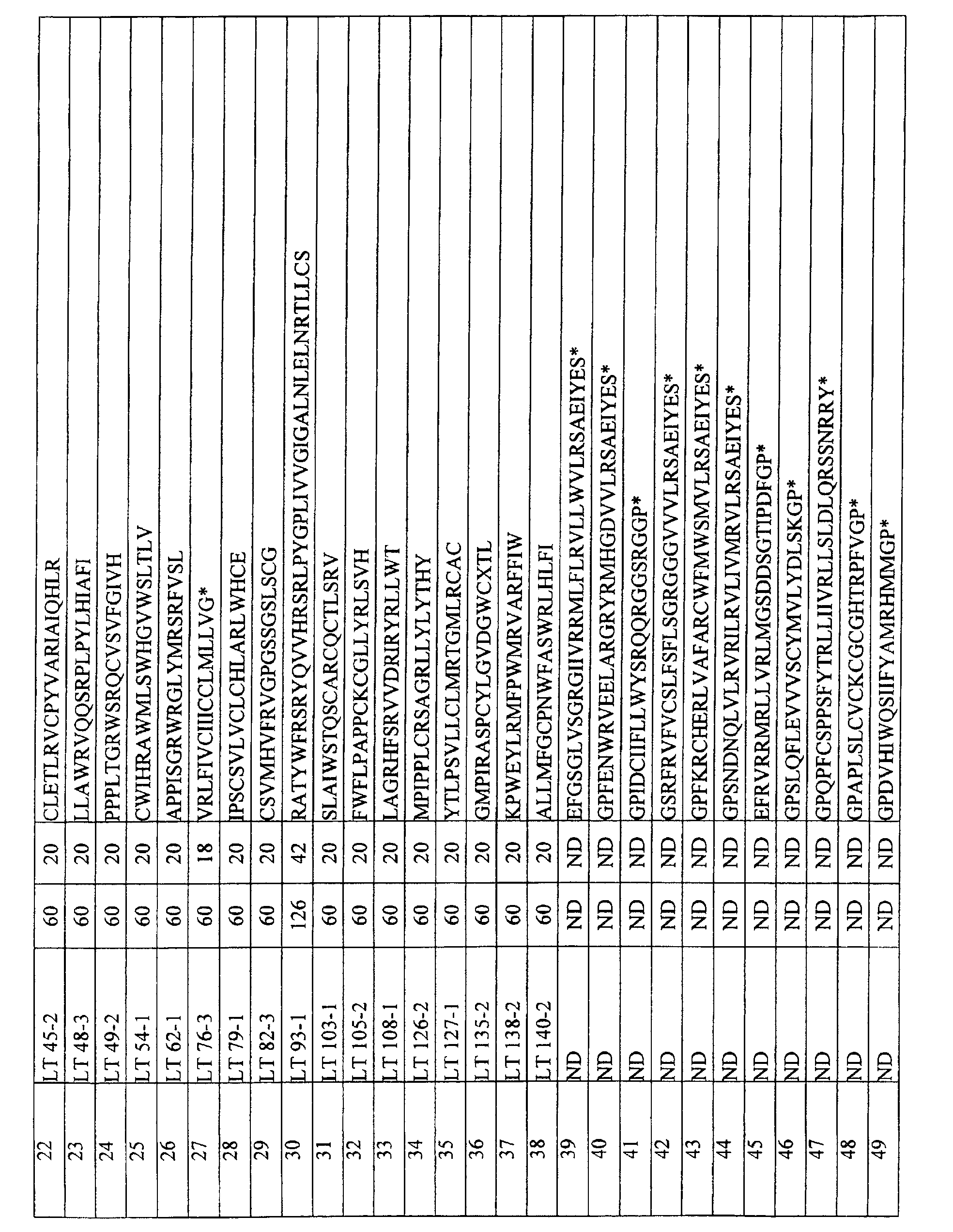
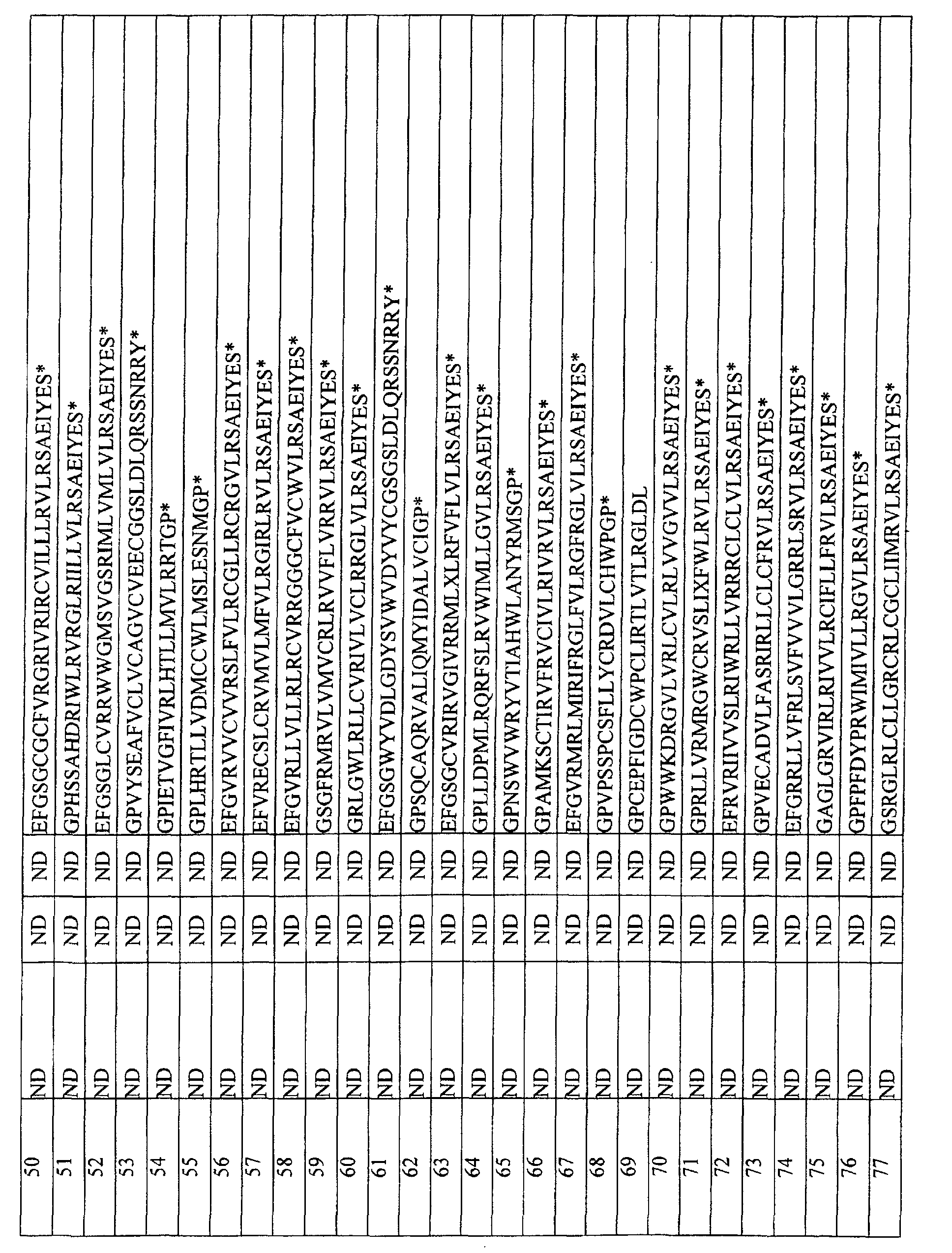
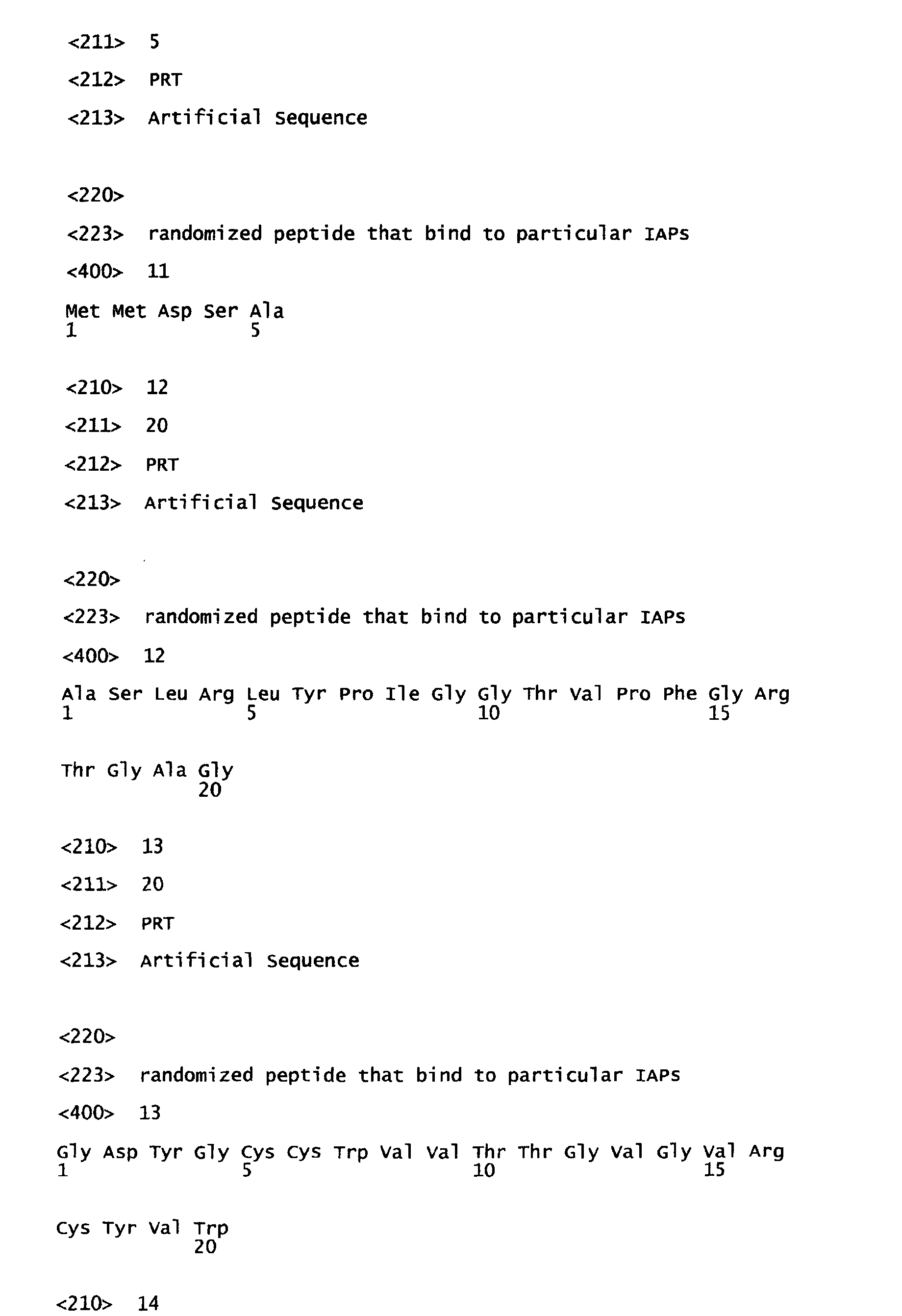
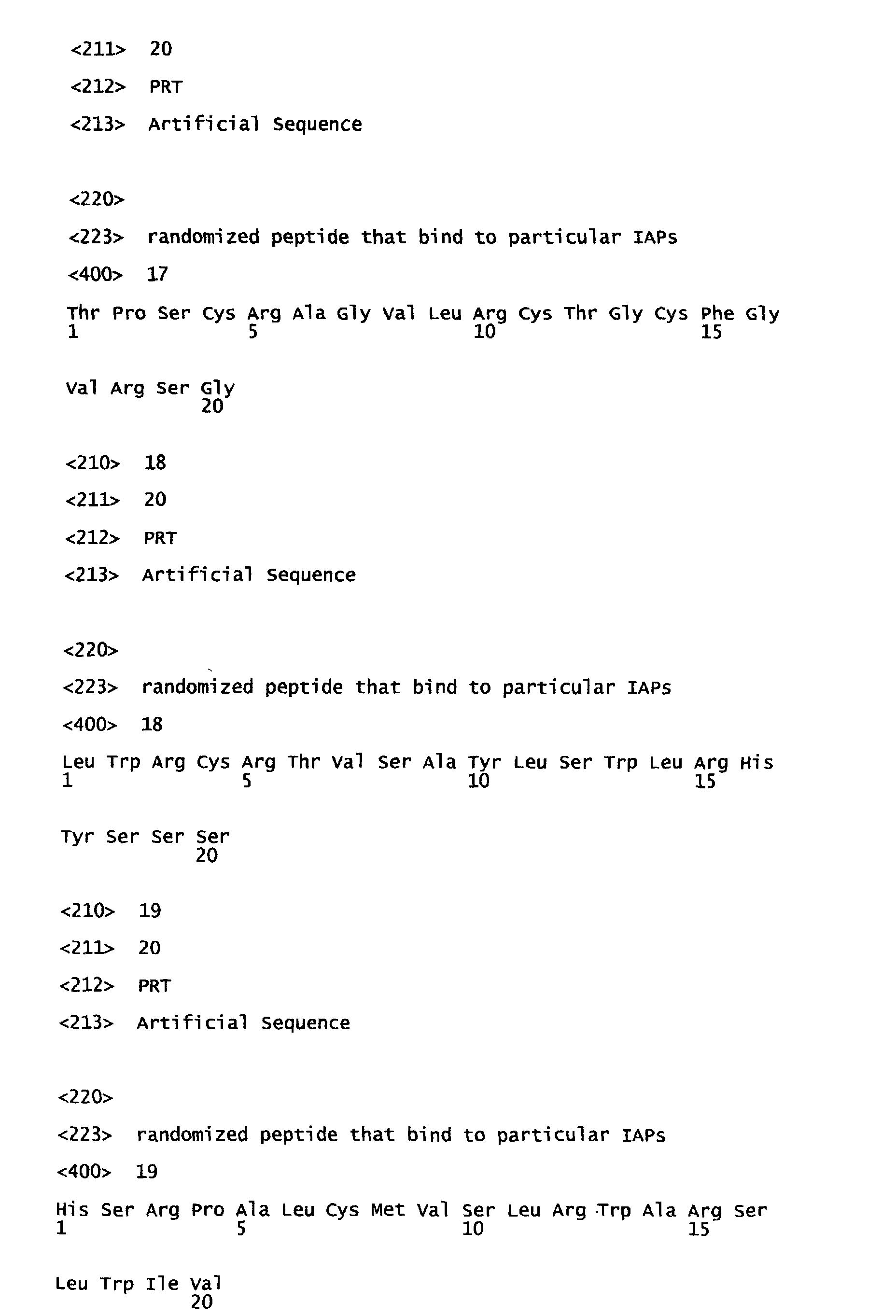
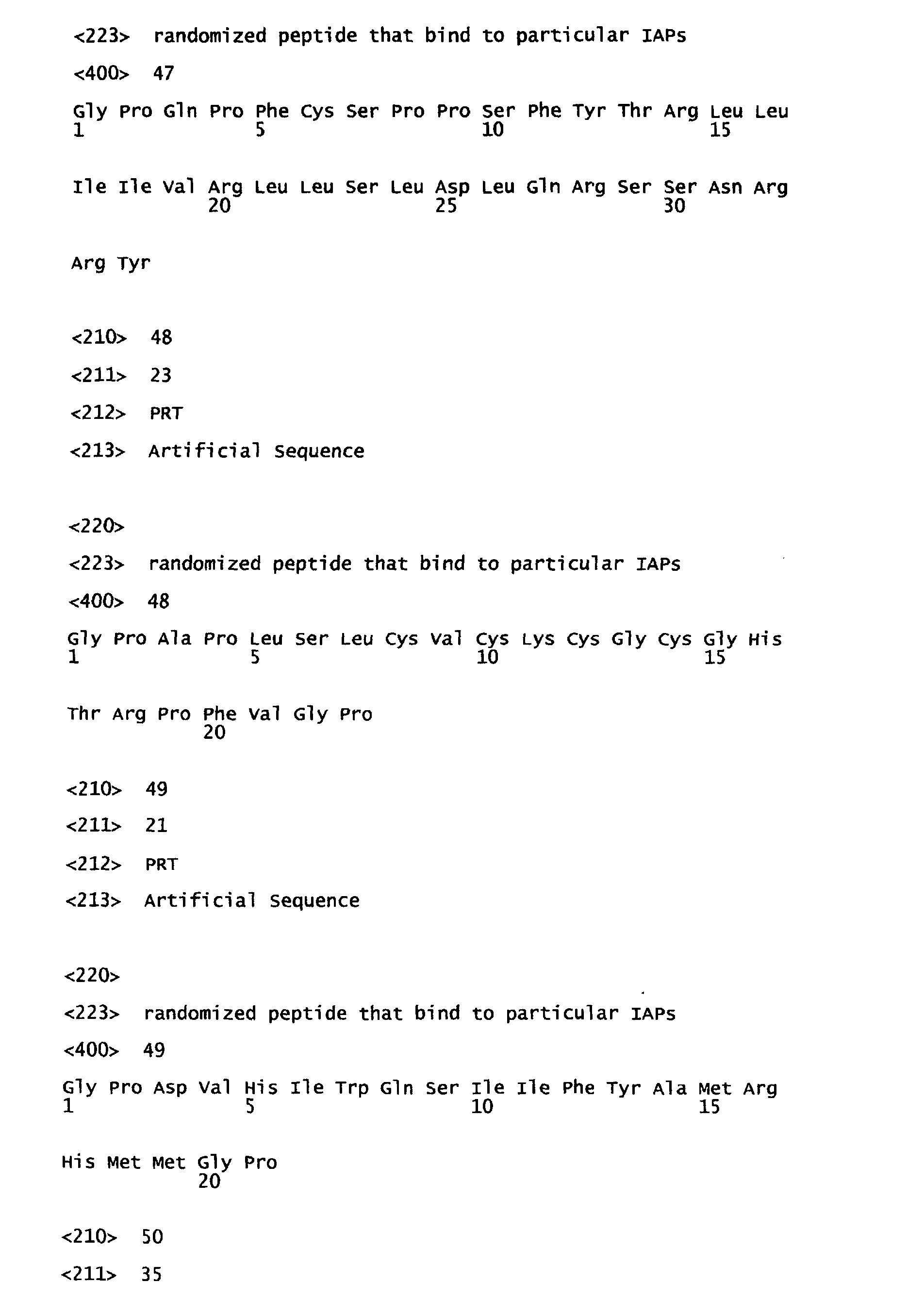
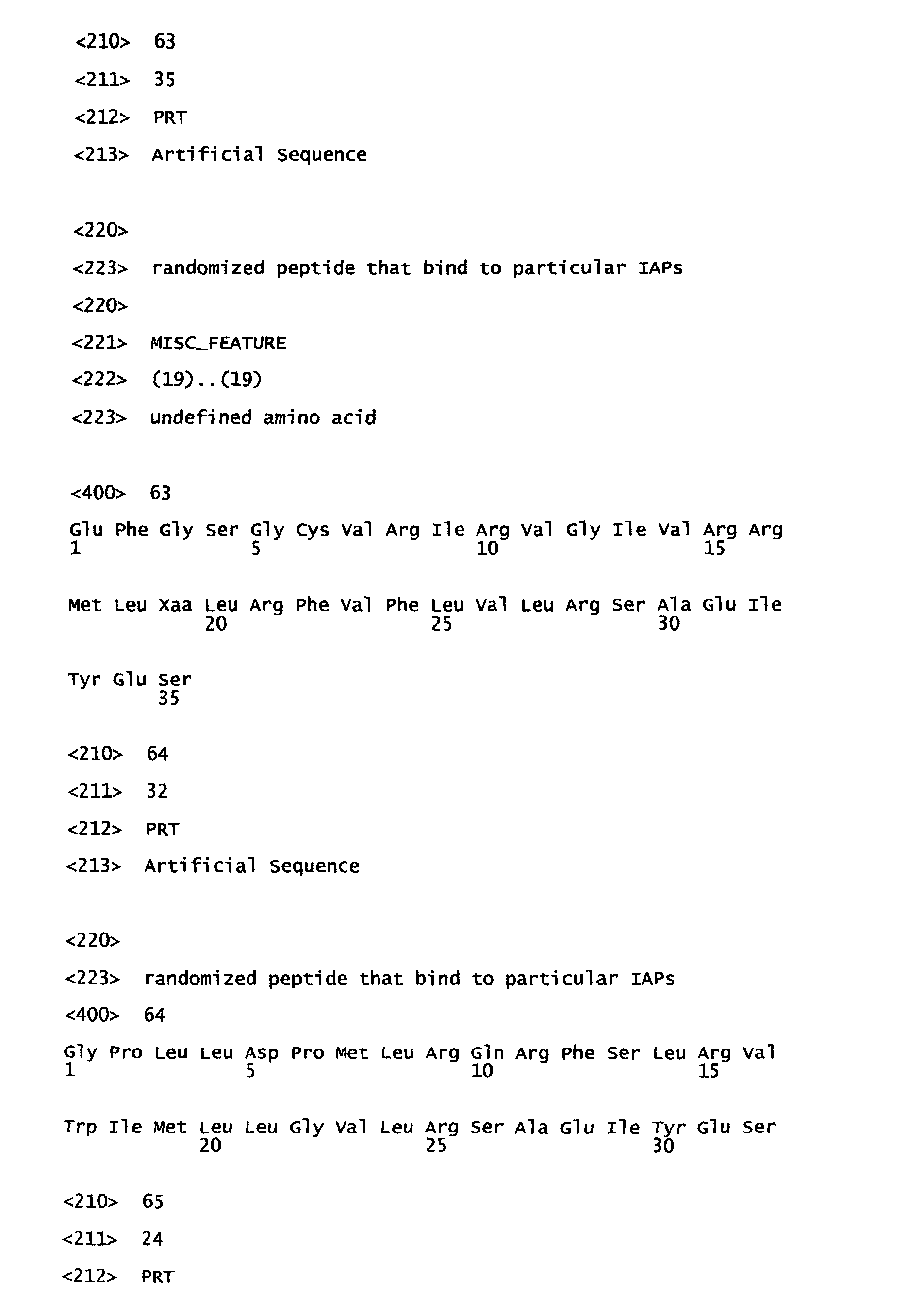
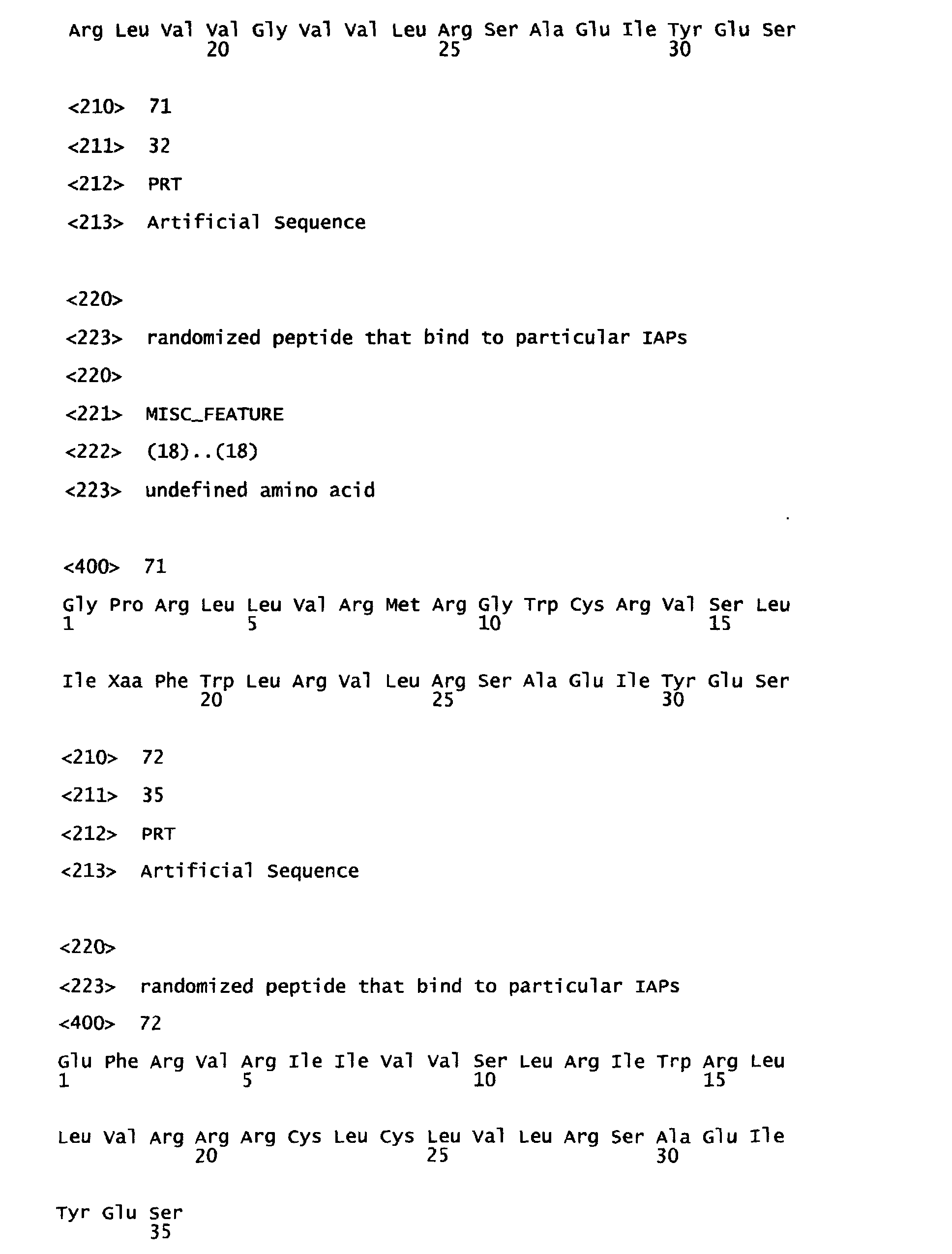
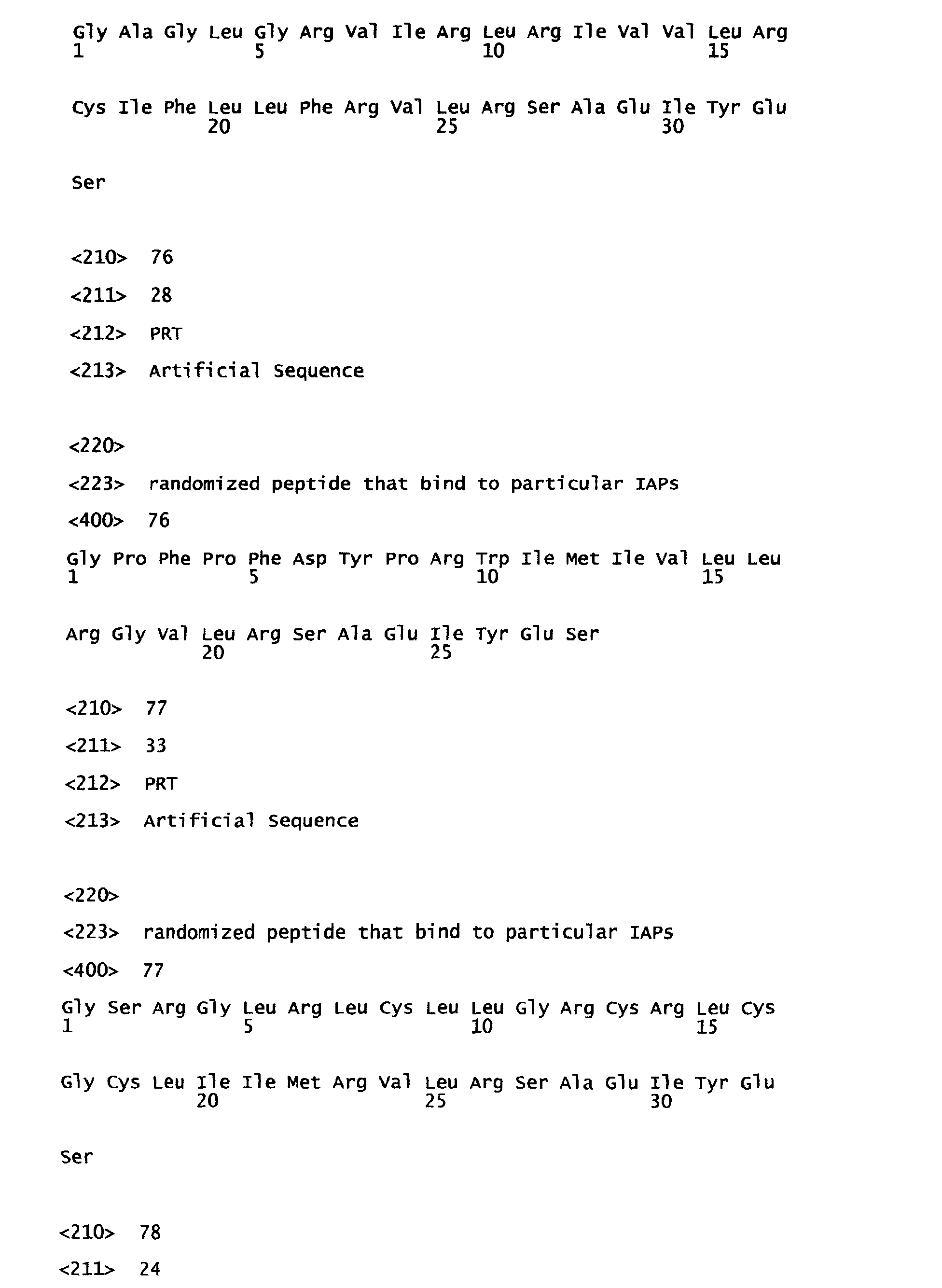
- the object of the present invention is attained by a peptide, a fragment or derivative thereof, comprising an amino acid sequence selected from the group of SEQ ID NOS: 1, 2, 3,4,5,6,7,8,9, 10, 11, 12, 13, 14, 15, 16, 17, 18, 19,20,21,22,23,24,25,26,27,28, 29, 30, 31, 32, 33, 34, 35, 36, 37, 38, 39, 40, 41, 42, 43, 44, 45, 46, 47, 48, 49, 50, 51, 52, 53, 54, 55, 56, 57, 58, 59, 60, 61, 62, 63, 64, 65, 66, 67, 68, 69, 70, 71, 72, 73, 74, 75, 76, 77, 78, 79, 80, 81, 82, 83, 84, 85, 86. (see TABLE 1).
- the term derivative or fragment of peptides further includes peptides in which one or more amino acids of the disclosed sequences can be substituted by one or more amino acids different from the original one(s), or peptides the amino acid sequence of which is either extended, shortened, or both, on either the aminoterminal, or the carboxyterminal or both ends with respect to the original proteins, provided that the binding properties of the peptides remain unaffected.
- they differ from the original amino acid sequence as disclosed in the present invention in no more that 50%, more preferably not more than 35% and most preferably not more than 10%.
- the peptides of the present invention bind to IAPs.
- IAPs Preferably they bind to human IAPs selected from the group consisting of c-IAPI, c-IAP2, XIAP, NAIP, survivin and livin/ML-IAP, and/or a fragment or derivative of any of the aforementioned IAPs.
- Livin/ML-IAP will be referred to as livin hereinafter. More preferably, the peptides bind to survivin and livin, and most preferably said peptides bind to livin.
- the peptides of the present invention can be identified by methods well known to the person skilled in the art. In general, the identification is achieved by contacting a peptide library with the desired interaction partner, e.g. livin, and selecting those which successfully bind.
- a peptide library with the desired interaction partner, e.g. livin
- screening of peptides libraries by e.g. phage display, ribosome display, mRNA display and yeast and/or mammalian two-hybrid systems.
- the preferred method to identify the peptides of the present invention is the two-hybrid approach. Particularly preferred is the use of the two-hybrid system to perform a so-called "peptide aptamer screening" (see EXAMPLES).
- the peptides of the library can optionally be anchored at both ends within a so-called scaffold protein, leading to a more preferred conformational stage of the peptides.
- scaffold proteins comprise e.g. E.coli thioredoxin A (trxA), staphylococcal nuclease, protease inhibitor eglin, Tendarnistat from Streptomyces tendea, cellular transcription factor Sp1, and green fluorescent protein GFP.
- the preferred scaffold protein of the present invention is trxA.
- the peptides can be linked to a second moiety to create a so-called fusion protein.
- the fusion partner can be a carrier, which is preferably a protein, a fragment or derivative thereof, the attachment of which to any of the peptides, fragment or derivative thereof enables the penetration of the peptides through the cell membrane into the cell.
- Appropriate carriers, in particular proteins are known to the person skilled in the art and include TAT, influenza virus hemagglutinin, the VP22 protein from herpes simplex virus, Antennapedia, fibroblast growth factor, Galparan (transportan), poly-arginine, Pep-1.
- Other carriers known to a person skilled in the art which do not belong to proteins, but mediate the internalization of molecules into cells include lipids and cationic lipids.
- the term derivative or fragment of a protein refers to peptides in which one or more aminoacids can be substituted by other aminoacids different from the original one(s), or peptides the aminoacid sequence of which is either extended, shortened, or both, on either the aminoterminal, or the carboxyterminal or both ends, with respect to the original one(s), provided that the function as a carrier for the cellular uptake of the peptides remains unaffected.
- the above definition relates to TAT, influenza virus hemagglutinin, the VP22 protein from herpes simplex virus, Antennapedia, fibroblast growth factor, Galparan (transportan), poly-arginine and Pep-1.
- the linkage of the peptides to the carrier can occur by any chemical interaction known to the person skilled in the art, like chemical adsorption, dipole-dipole or the like.
- the carrier is linked to the peptides by a chemical bond, in particular a covalent bond, in case the carrier is a protein. This bond must be such that it remains unaffected before and while penetrating the cell membrane and, if necessary for the interaction of the peptides with IAPs, can be cleaved.
- the peptide/carrier entity can interact with IAPs to the necessary extent, a cleavage being not necessary.
- a further embodiment of the present invention relates to a nucleic acid, preferably a DNA, coding for a peptide of the present invention.
- the nucleic acids coding for the peptides of the present invention can be placed in expression vectors capable of expressing an encoded protein, polypeptide or peptide. Nucleic acids are inserted into vectors from which they may be expressed by methods known to the person skilled in the art. Vectors may, if desired, contain nucleic acids encoding portions of other proteins, thereby providing a fusion protein.
- the present invention is also directed to a recombinant DNA and an expression vector which includes any one of the present nucleic acids operably linked to regulatory control nucleic acid which effects expression of the nucleic acid in a host cell.
- the present invention is further directed to a host cell which contains such a recombinant DNA or such an expression vector.
- Expression vectors include plasmids designed for the expression of proteins or polypeptides fused to or within bacterial phage coat proteins.
- the DNA encoding the desired peptide may be ligated into expression vectors suitable for any host.
- the DNA encoding the desired polypeptide may also contain a signal sequence to permit secretion from the intended host. Both prokaryotic and eukaryotic host systems are contemplated.
- the present invention also contemplates a process for producing a recombinant peptide or immunogenic fragments thereof, encoded by a nucleic acid of the present invention.
- the process involves: a) culturing a host cell which contains an expression vector having one of the nucleic acids of the present invention in a culture medium under conditions suitable for expression of one of said recombinant proteins in the host cell, and b) isolating the recombinant protein from the host cell or the culture medium.
- the peptides of the present invention are isolated from lysed cells, or from the culture medium, and are purified to the extent needed for the intended use.
- purification may be accomplished by salt fractionation, size exclusion chromatography, ion exchange chromatography, reverse phase chromatography, affinity chromatography and the like.
- the present invention further contemplates antibodies which can bind to the present peptides or fusion peptides, derivatives and fragments thereof.
- Such antibodies preferably bind to unique antigenic regions or epitopes in the peptides of the present invention.
- the antibody can be monoclonal or polyclonal.
- animals, preferably rabbits, chicken or mice are immunized with at least one peptide of the present invention, or a fragment or derivative thereof.
- the raised antibodies can be isolated by well-known methods.
- Epitopes and antigenic regions useful for generating antibodies can be found within the present peptides by procedures available to one of skill in the art. For example, short, unique peptide sequences can be identified in the present proteins and polypeptides that have little or no homology to known amino acid sequences. Preferably the region of a protein selected to act as a peptide epitope or antigen is not entirely hydrophobic; hydrophilic regions are preferred because those regions likely constitute surface epitopes rather than internal regions of the present proteins and polypeptides. These surface epitopes are more readily detected in samples tested for the presence of the present proteins and polypeptides.
- Peptides for immunization can be made by any procedure known to one of skill in the art, for example, by using in vitro translation or chemical synthesis procedures.
- Short peptides which provide an antigenic epitope but which by themselves are too small to induce an immune response may be conjugated to a suitable carrier.
- Suitable carriers and methods of linkage are well known in the art. Suitable carriers are typically large macromolecules such as proteins, polysaccharides and polymeric amino acids. Examples include serum albumins, keyhole limpet hemocyanin, ovalbumin, polylysine and the like.
- One of skill in the art can use available procedures and coupling reagents to link the desired peptide epitope to such a carrier.
- coupling reagents can be used to form disulfide linkages or thioether linkages from the carrier to the peptide of interest. If the peptide lacks a disulfide group, one may be provided by the addition of a cysteine residue. Alternatively, coupling may be accomplished by activation of carboxyl groups.
- the minimum size of peptides useful for obtaining antigen specific antibodies can vary widely. The minimum size must be sufficient to provide an antigenic epitope which is specific to the peptide. The maximum size is not critical unless it is desired to obtain antibodies to one particular epitope. For example, a large polypeptide may comprise multiple epitopes, one epitope being particularly useful and a second epitope being immunodominant.
- the peptides of the present invention and/or their coding nucleic acids can be used as a pharmaceutical, optionally in combination with at least one active compound.
- active compound refers to a compound other than the peptide, a fragment or derivative thereof, which is able to induce apoptosis or which inhibits cell proliferation.
- Cytostatic compounds which are able to induce apoptosis are known to the person skilled in the art.
- One class of active compounds are chemical compounds having a cytostatic or antineoplastic effect ("cytostatic compound").
- Cytostatic compounds included in the present invention comprise, but are not restricted to (i) antimetabolites; (ii) DNA-fragmenting agents; (iii) DNA-crosslinking agents; (iv) intercalating agents; (v) protein synthesis inhibitors; (vi) topoisomerase I poisons; (vii) topoisomerase II poisons; (viii) microtubule-directed agents; (ix) kinase inhibitors; (x) miscellaneous investigational agents; (xi) hormones and (xii) hormone antagonists.
- a further object of the present invention are pharmaceutical preparations which comprise an effective dose of at least one of the disclosed peptides and/or one of their coding nucleic acids, and/or at least one active compound and a pharmaceutically acceptable carrier, i.e. one or more pharmaceutically acceptable carrier substances and/or additives.
- the dosage of the polypeptide or the nucleic acid, in combination with one or more active compounds to be administered depends on the individual case and is, as is customary, to be adapted to the individual circumstances to achieve an optimum effect.
- the peptides and their coding nucleic acids according to the present invention can be used for the treatment of all cancer types which fail to undergo apoptosis.
- cancer types comprise neuroblastoma, intestine carcinoma such as rectum carcinoma, colon carcinoma, familiary adenomatous polyposis carcinoma and hereditary non-polyposis colorectal cancer, esophageal carcinoma, labial carcinoma, larynx carcinoma, hypopharynx carcinoma, tong carcinoma, salivary gland carcinoma, gastric carcinoma, adenocarcinoma, medullary thyroidea carcinoma, papillary thyroidea carcinoma, renal carcinoma, kidney parenchym carcinoma, ovarian carcinoma, cervix carcinoma, uterine corpus carcinoma, endometrium carcinoma, chorion carcinoma, pancreatic carcinoma, prostate carcinoma, testis carcinoma, breast carcinoma, urinary carcinoma, melanoma, brain tumors such as glioblastoma, astrocytoma, meningio
- the cancer to be analyzed, diagnosed and treated is melanoma.
- a further embodiment of the present invention is a diagnostic kit comprising at least one peptide of the present invention, and/or a nucleic acid encoding a peptide, a vector and a host cells.
- the diagnostic kit can be used to detect IAPs, particularly livin, in tumor cells that fail to undergo apoptosis, in particular melanoma.
- Methods to determine the presence and amount of IAPs in a given sample are well known to the person skilled in the art. Briefly, a sample is provided, said sample is contacted with a peptide that specifically binds to livin and the presence or amount of the peptide bound to livin is determined, whereby the presence or amount of livin in said sample is determined.
- Methods to determine the amount and presence of peptides comprise, among others, Western blotting, immunoprecipitation, ELISA, and RIA.
- the peptides and nucleic acids of the present invention can be labelled with a suitable marker well-known to the person skilled in the art.
- FIG. 1 Modified "Peptide Aptamer System” in S. cerevisiae.
- Peptides of a peptide expression library with a length of 20 amino acids are co-expressed as a fusion peptides fused to a transcriptional transactivator domain (GAL4AD), together with the target protein X (e.g. livin) which is fused to a DNA binding domain (GAL4BD).
- GAL4AD transcriptional transactivator domain
- GAL4BD DNA binding domain
- a synthetic transcription factor is created which in turn binds to the binding site and activates the transcription of a selection marker (e.g. ADE2).
- a selection marker e.g. ADE2
- yeast colonies are able to grow, which express a peptide that binds to the target (NLS: nuclear localization signal; TAG: suitable marker to detect the peptide aptamer; trxA: E.coli Thioredoxin A scaffold)
- NLS nuclear localization signal
- TAG suitable marker to detect the peptide aptamer
- trxA E.coli Thioredoxin A scaffold
- Example 1 Screening for livin-binding peptides
- Yeast strain KF1 (MATa trp1-901 leu2-3,112 his 3-200 gal4 ⁇ gal80 ⁇ LYS2::GAL1-HIS3 GAL2-ADE2 met2::GAL7-lacZ SPAL10-URA3) is generated from PJ69-4A after integration at the ura3 -52 locus by homologous recombination of PCR product encompassing the SPAL10-URA3 allele from yeast strain MaV103.
- KF1 thus contains three selectable marker genes under the control of Gal4-binding sites: GAL2-ADE2, GAL1-HIS3 and SPO13-URA3.
- a yeast expression vector, pADtrx, in which the ADH1 promoter directs the expression the E.coli thioredoxin A (trxA) fused to the Gal4 activation domain, is constructed from pRS424.
- pADtrx contains the simian virus 40 nuclear localization signal and an influenza hemagglutinin epitope.
- a randomized peptide expression library is generated in pADtrx by cloning randomized 60-mer oligonucleotides into the unique Rsr II site of trxA.
- the complexity of the peptide aptamer expression library is estimated to be in the range of 2 x 10 8 different members.
- KF1 transformants expressing pPC97/livin and the peptide aptamer expression library are selected initially for growth in the absence of adenine. Subsequently, they are analyzed by replica plating for activation of the Gal4-dependent GAL2-ADE2, GAL1-HIS3 and SPO13-URA3 genes. Peptide aptamer expression vectors from clones exhibiting growth in the absence of adenine and histidine are rescued, and activation of the selectable markers is verified by rescreening. Binding specificity of livin binding aptamers was tested by using control proteins as baits like HPV16 E6 or HPV16E7.
- the "CheckMateTM Mammalian Two-Hybrid System” (Promega GmbH, Mannheim, Germany) is employed.
- the complete livin protein was expressed as a Gal4 binding domain fusion protein from pBIND.
- Individual peptide aptamers are expressed within the trxA scaffold, linked to the transcriptional activation domain of the herpes simplex virus-1 VP16 protein, from pACT.
- Reporter plasmid pG5luc contains the firefly luciferase under the transcriptional control of five Gal4-binding sites. Cells are harvested 24 hours after transfection, and luciferase activities are measured by methods known to the person skilled in the art.
Landscapes
- Chemical & Material Sciences (AREA)
- Health & Medical Sciences (AREA)
- Organic Chemistry (AREA)
- Life Sciences & Earth Sciences (AREA)
- Molecular Biology (AREA)
- Genetics & Genomics (AREA)
- Medicinal Chemistry (AREA)
- Biophysics (AREA)
- Proteomics, Peptides & Aminoacids (AREA)
- Biochemistry (AREA)
- General Health & Medical Sciences (AREA)
- Gastroenterology & Hepatology (AREA)
- Chemical Kinetics & Catalysis (AREA)
- General Chemical & Material Sciences (AREA)
- Toxicology (AREA)
- Zoology (AREA)
- Medicines That Contain Protein Lipid Enzymes And Other Medicines (AREA)
- Peptides Or Proteins (AREA)
Abstract
The present invention relates to peptides which interact with IAPs. IAPs are highly
expressed in tumor cells which fail to undergo apoptosis. By binding to IAPs, the peptides
of the present invention release tumor cells from the apoptosis block and thus provide a
new tool for effective cancer therapy.
Description
- The present invention relates to peptides that are suitable to induce apoptosis, the nucleic acids encoding said peptides and the use of the peptides and/or nucleic acids in cancer therapy.
- Cancer is the second major cause of death in Europe and Northern America. The effective cure of patients, though, is often difficult since many tumor cells have developed a resistance to anti-cancer drugs used for chemotherapy. The described phenotype involves a variety of strategies that tumor cells use to evade the cytostatic effects of anticancer drugs. Mechanisms for drug resistance include modifications in detoxification and DNA repair pathways, changes in cellular sites of drug sequestration, decreases in drug-target affinity, synthesis of specific drug inhibitors within cells, and accelerated removal or secretion of drugs. Cancer cells commonly fail to undergo so-called "programmed cell death" or "apoptosis", a signaling process that plays a key role in preventing cell tissues from abnormal growth. Thus, apoptosis defects appear to be a major problem in cancer therapy as they confer resistance to many tumors against current treatment protocols, leading to tumor progression.
- Apoptosis pathways involve diverse groups of molecules. One set of mediators implicated in apoptosis are so-called caspases, cysteine proteases that cleave their substrates specifically at aspartate residues. Caspases convey the apoptotic signal in a proteolytic cascade, with caspases cleaving and activating other caspases which subsequently degrade other cellular targets eventually resulting in cellular breakdown. If one or more steps in this cascade is inhibited in tumor cells, these cells fail to accomplish apoptosis and, thus, continue to grow. Caspase activation itself can be triggered by external stimuli or by intracellular stress response via the mitochondria leading to the release of mitochondrial proteins.
- A failure in activating the caspase cascade is caused by the action of so-called Inhibitors of Apoptosis Proteins (IAPs). IAPs bind to early active caspases, thereby preventing the ongoing of the apoptosis process. They are expressed at high levels in many tumors and, by inhibition of caspases, contribute to the resistance of cancers against apoptosis induction.
- From the foregoing it becomes evident, that inhibition of IAP function represents a major task for efficient cancer therapy. It has been reported earlier that the mammalian mitochondrial protein Smac, when released into the cytosol in the course of an apoptotic response, can bind to IAPs and, thus, promotes the proteolytic activation of caspases resulting in apoptosis. Therefore, Smac or fragments thereof, could be a potential tool for the treatment of drug-resistant tumors. However, the therapeutic use of naturally existing IAP-binding proteins like Smac can bear the disadvantage of evoking undesired side effects. In addition, binding of Smac to IAPs is restricted to a particular region on the IAP protein, the so-called BIR region. The problem underlying the present invention is to find other molccules which are able to promote apoptosis in tumor cells by binding to IAPs, but which do not possess the disadvantages of naturally existing IAP-binding partners.
- The present invention solves the described problem by providing randomized peptides that bind to particular IAPs and, thus, can impede said IAPs from exerting their anti-apoptotic effect.
- The object of the present invention is attained by a peptide, a fragment or derivative thereof, comprising an amino acid sequence selected from the group of SEQ ID NOS: 1, 2, 3,4,5,6,7,8,9, 10, 11, 12, 13, 14, 15, 16, 17, 18, 19,20,21,22,23,24,25,26,27,28, 29, 30, 31, 32, 33, 34, 35, 36, 37, 38, 39, 40, 41, 42, 43, 44, 45, 46, 47, 48, 49, 50, 51, 52, 53, 54, 55, 56, 57, 58, 59, 60, 61, 62, 63, 64, 65, 66, 67, 68, 69, 70, 71, 72, 73, 74, 75, 76, 77, 78, 79, 80, 81, 82, 83, 84, 85, 86. (see TABLE 1).
- In the context of the present invention, the term derivative or fragment of peptides further includes peptides in which one or more amino acids of the disclosed sequences can be substituted by one or more amino acids different from the original one(s), or peptides the amino acid sequence of which is either extended, shortened, or both, on either the aminoterminal, or the carboxyterminal or both ends with respect to the original proteins, provided that the binding properties of the peptides remain unaffected. Preferably they differ from the original amino acid sequence as disclosed in the present invention in no more that 50%, more preferably not more than 35% and most preferably not more than 10%.
- The peptides of the present invention bind to IAPs. Preferably they bind to human IAPs selected from the group consisting of c-IAPI, c-IAP2, XIAP, NAIP, survivin and livin/ML-IAP, and/or a fragment or derivative of any of the aforementioned IAPs. Livin/ML-IAP will be referred to as livin hereinafter. More preferably, the peptides bind to survivin and livin, and most preferably said peptides bind to livin.
- The peptides of the present invention can be identified by methods well known to the person skilled in the art. In general, the identification is achieved by contacting a peptide library with the desired interaction partner, e.g. livin, and selecting those which successfully bind. Among the known methods are screening of peptides libraries by e.g. phage display, ribosome display, mRNA display and yeast and/or mammalian two-hybrid systems. The preferred method to identify the peptides of the present invention is the two-hybrid approach. Particularly preferred is the use of the two-hybrid system to perform a so-called "peptide aptamer screening" (see EXAMPLES).
- For peptide aptamer screening, the peptides of the library can optionally be anchored at both ends within a so-called scaffold protein, leading to a more preferred conformational stage of the peptides. Known scaffold proteins comprise e.g. E.coli thioredoxin A (trxA), staphylococcal nuclease, protease inhibitor eglin, Tendarnistat from Streptomyces tendea, cellular transcription factor Sp1, and green fluorescent protein GFP. The preferred scaffold protein of the present invention is trxA.
- Optionally, the peptides can be linked to a second moiety to create a so-called fusion protein. The fusion partner can be a carrier, which is preferably a protein, a fragment or derivative thereof, the attachment of which to any of the peptides, fragment or derivative thereof enables the penetration of the peptides through the cell membrane into the cell. Appropriate carriers, in particular proteins, are known to the person skilled in the art and include TAT, influenza virus hemagglutinin, the VP22 protein from herpes simplex virus, Antennapedia, fibroblast growth factor, Galparan (transportan), poly-arginine, Pep-1. Other carriers known to a person skilled in the art which do not belong to proteins, but mediate the internalization of molecules into cells include lipids and cationic lipids.
- When a protein is used as a carrier, the term derivative or fragment of a protein refers to peptides in which one or more aminoacids can be substituted by other aminoacids different from the original one(s), or peptides the aminoacid sequence of which is either extended, shortened, or both, on either the aminoterminal, or the carboxyterminal or both ends, with respect to the original one(s), provided that the function as a carrier for the cellular uptake of the peptides remains unaffected. The above definition relates to TAT, influenza virus hemagglutinin, the VP22 protein from herpes simplex virus, Antennapedia, fibroblast growth factor, Galparan (transportan), poly-arginine and Pep-1.
- The linkage of the peptides to the carrier can occur by any chemical interaction known to the person skilled in the art, like chemical adsorption, dipole-dipole or the like. Preferably, the carrier is linked to the peptides by a chemical bond, in particular a covalent bond, in case the carrier is a protein. This bond must be such that it remains unaffected before and while penetrating the cell membrane and, if necessary for the interaction of the peptides with IAPs, can be cleaved. In general, the peptide/carrier entity can interact with IAPs to the necessary extent, a cleavage being not necessary.
- A further embodiment of the present invention relates to a nucleic acid, preferably a DNA, coding for a peptide of the present invention. The nucleic acids coding for the peptides of the present invention can be placed in expression vectors capable of expressing an encoded protein, polypeptide or peptide. Nucleic acids are inserted into vectors from which they may be expressed by methods known to the person skilled in the art. Vectors may, if desired, contain nucleic acids encoding portions of other proteins, thereby providing a fusion protein.
- Therefore, the present invention is also directed to a recombinant DNA and an expression vector which includes any one of the present nucleic acids operably linked to regulatory control nucleic acid which effects expression of the nucleic acid in a host cell. The present invention is further directed to a host cell which contains such a recombinant DNA or such an expression vector.
- Expression vectors include plasmids designed for the expression of proteins or polypeptides fused to or within bacterial phage coat proteins. The DNA encoding the desired peptide, whether in a fusion, premature or mature form, may be ligated into expression vectors suitable for any host. The DNA encoding the desired polypeptide may also contain a signal sequence to permit secretion from the intended host. Both prokaryotic and eukaryotic host systems are contemplated.
- The present invention also contemplates a process for producing a recombinant peptide or immunogenic fragments thereof, encoded by a nucleic acid of the present invention. The process involves: a) culturing a host cell which contains an expression vector having one of the nucleic acids of the present invention in a culture medium under conditions suitable for expression of one of said recombinant proteins in the host cell, and b) isolating the recombinant protein from the host cell or the culture medium.
- The peptides of the present invention, whether in a premature, mature or fused form, are isolated from lysed cells, or from the culture medium, and are purified to the extent needed for the intended use. One of skill in the art can readily purify these proteins, polypeptides and peptides by any available procedure. For example, purification may be accomplished by salt fractionation, size exclusion chromatography, ion exchange chromatography, reverse phase chromatography, affinity chromatography and the like.
- The present invention further contemplates antibodies which can bind to the present peptides or fusion peptides, derivatives and fragments thereof. Such antibodies preferably bind to unique antigenic regions or epitopes in the peptides of the present invention. The antibody can be monoclonal or polyclonal. To generate an antibody, animals, preferably rabbits, chicken or mice are immunized with at least one peptide of the present invention, or a fragment or derivative thereof. The raised antibodies can be isolated by well-known methods.
- Epitopes and antigenic regions useful for generating antibodies can be found within the present peptides by procedures available to one of skill in the art. For example, short, unique peptide sequences can be identified in the present proteins and polypeptides that have little or no homology to known amino acid sequences. Preferably the region of a protein selected to act as a peptide epitope or antigen is not entirely hydrophobic; hydrophilic regions are preferred because those regions likely constitute surface epitopes rather than internal regions of the present proteins and polypeptides. These surface epitopes are more readily detected in samples tested for the presence of the present proteins and polypeptides.
- Peptides for immunization can be made by any procedure known to one of skill in the art, for example, by using in vitro translation or chemical synthesis procedures. Short peptides which provide an antigenic epitope but which by themselves are too small to induce an immune response may be conjugated to a suitable carrier. Suitable carriers and methods of linkage are well known in the art. Suitable carriers are typically large macromolecules such as proteins, polysaccharides and polymeric amino acids. Examples include serum albumins, keyhole limpet hemocyanin, ovalbumin, polylysine and the like. One of skill in the art can use available procedures and coupling reagents to link the desired peptide epitope to such a carrier. For example, coupling reagents can be used to form disulfide linkages or thioether linkages from the carrier to the peptide of interest. If the peptide lacks a disulfide group, one may be provided by the addition of a cysteine residue. Alternatively, coupling may be accomplished by activation of carboxyl groups.
- The minimum size of peptides useful for obtaining antigen specific antibodies can vary widely. The minimum size must be sufficient to provide an antigenic epitope which is specific to the peptide. The maximum size is not critical unless it is desired to obtain antibodies to one particular epitope. For example, a large polypeptide may comprise multiple epitopes, one epitope being particularly useful and a second epitope being immunodominant.
- Furthermore, the peptides of the present invention and/or their coding nucleic acids, can be used as a pharmaceutical, optionally in combination with at least one active compound. This is a further embodiment of the present invention. The term "active compound" refers to a compound other than the peptide, a fragment or derivative thereof, which is able to induce apoptosis or which inhibits cell proliferation.
- Active compounds which are able to induce apoptosis are known to the person skilled in the art. One class of active compounds are chemical compounds having a cytostatic or antineoplastic effect ("cytostatic compound"). Cytostatic compounds included in the present invention comprise, but are not restricted to (i) antimetabolites; (ii) DNA-fragmenting agents; (iii) DNA-crosslinking agents; (iv) intercalating agents; (v) protein synthesis inhibitors; (vi) topoisomerase I poisons; (vii) topoisomerase II poisons; (viii) microtubule-directed agents; (ix) kinase inhibitors; (x) miscellaneous investigational agents; (xi) hormones and (xii) hormone antagonists.
- A further object of the present invention are pharmaceutical preparations which comprise an effective dose of at least one of the disclosed peptides and/or one of their coding nucleic acids, and/or at least one active compound and a pharmaceutically acceptable carrier, i.e. one or more pharmaceutically acceptable carrier substances and/or additives.
- The dosage of the polypeptide or the nucleic acid, in combination with one or more active compounds to be administered, depends on the individual case and is, as is customary, to be adapted to the individual circumstances to achieve an optimum effect.
- The peptides and their coding nucleic acids according to the present invention, respectively the medicaments containing the latter, can be used for the treatment of all cancer types which fail to undergo apoptosis. Examples of such cancer types comprise neuroblastoma, intestine carcinoma such as rectum carcinoma, colon carcinoma, familiary adenomatous polyposis carcinoma and hereditary non-polyposis colorectal cancer, esophageal carcinoma, labial carcinoma, larynx carcinoma, hypopharynx carcinoma, tong carcinoma, salivary gland carcinoma, gastric carcinoma, adenocarcinoma, medullary thyroidea carcinoma, papillary thyroidea carcinoma, renal carcinoma, kidney parenchym carcinoma, ovarian carcinoma, cervix carcinoma, uterine corpus carcinoma, endometrium carcinoma, chorion carcinoma, pancreatic carcinoma, prostate carcinoma, testis carcinoma, breast carcinoma, urinary carcinoma, melanoma, brain tumors such as glioblastoma, astrocytoma, meningioma, medulloblastoma and peripheral neuroectodermal tumors, Hodgkin lymphoma, non-Hodgkin lymphoma, Burkitt lymphoma, acute lymphatic leukemia (ALL), chronic lymphatic leukemia (CLL), acute myeolid leukemia (AML), chronic myeloid leukemia (CML), adult T-cell leukemia lymphoma, hepatocellular carcinoma, gall bladder carcinoma, bronchial carcinoma, small cell lung carcinoma, non-small cell lung carcinoma, multiple myeloma, basalioma, teratoma, retinoblastoma, choroidea melanoma, seminoma, rhabdomyosarcoma, craniopharyngeoma, osteosarcoma, chondrosarcoma, myosarcoma, liposarcoma, fibrosarcoma, Ewing sarcoma and plasmocytoma.
- In a preferred embodiment of the invention, the cancer to be analyzed, diagnosed and treated is melanoma.
- A further embodiment of the present invention is a diagnostic kit comprising at least one peptide of the present invention, and/or a nucleic acid encoding a peptide, a vector and a host cells.
- The diagnostic kit can be used to detect IAPs, particularly livin, in tumor cells that fail to undergo apoptosis, in particular melanoma. Methods to determine the presence and amount of IAPs in a given sample are well known to the person skilled in the art. Briefly, a sample is provided, said sample is contacted with a peptide that specifically binds to livin and the presence or amount of the peptide bound to livin is determined, whereby the presence or amount of livin in said sample is determined. Methods to determine the amount and presence of peptides comprise, among others, Western blotting, immunoprecipitation, ELISA, and RIA. For these purposes the peptides and nucleic acids of the present invention can be labelled with a suitable marker well-known to the person skilled in the art.
- Peptides of a peptide expression library with a length of 20 amino acids are co-expressed as a fusion peptides fused to a transcriptional transactivator domain (GAL4AD), together with the target protein X (e.g. livin) which is fused to a DNA binding domain (GAL4BD). Upon successful binding of a peptide with the target protein, a synthetic transcription factor is created which in turn binds to the binding site and activates the transcription of a selection marker (e.g. ADE2). Using selective growth conditions, e.g. lacking adenine on growth media, only those yeast colonies are able to grow, which express a peptide that binds to the target (NLS: nuclear localization signal; TAG: suitable marker to detect the peptide aptamer; trxA: E.coli Thioredoxin A scaffold)
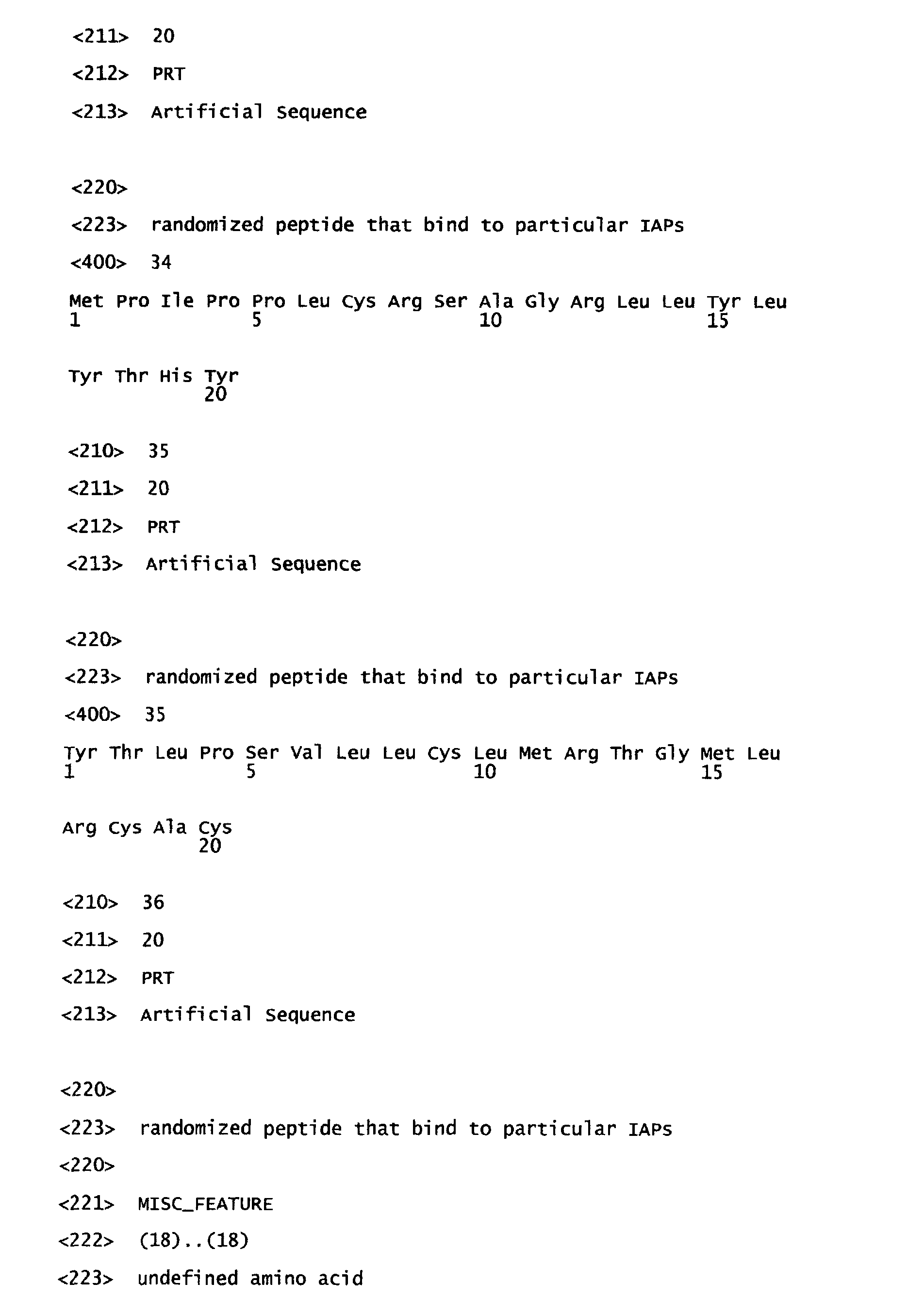
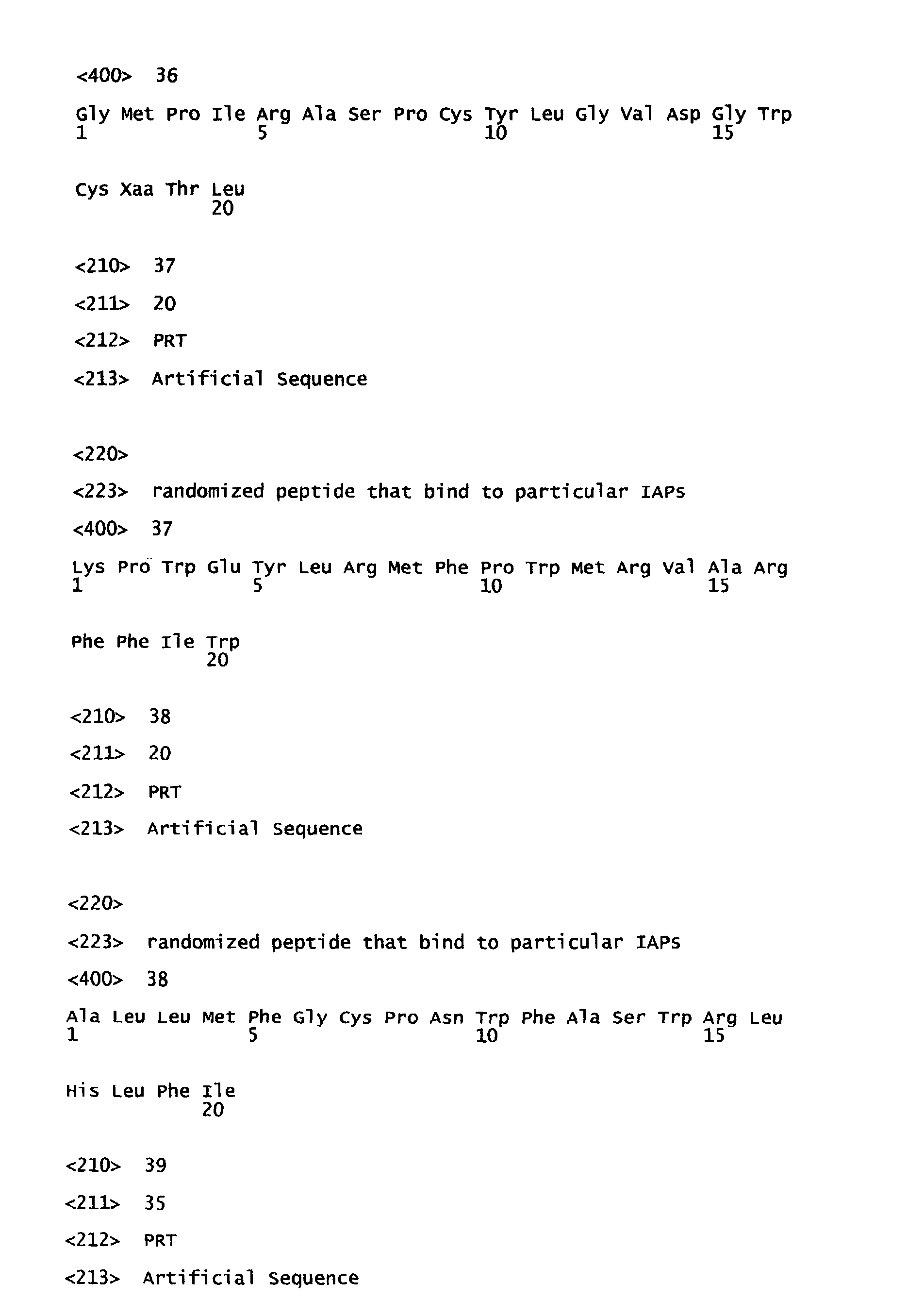
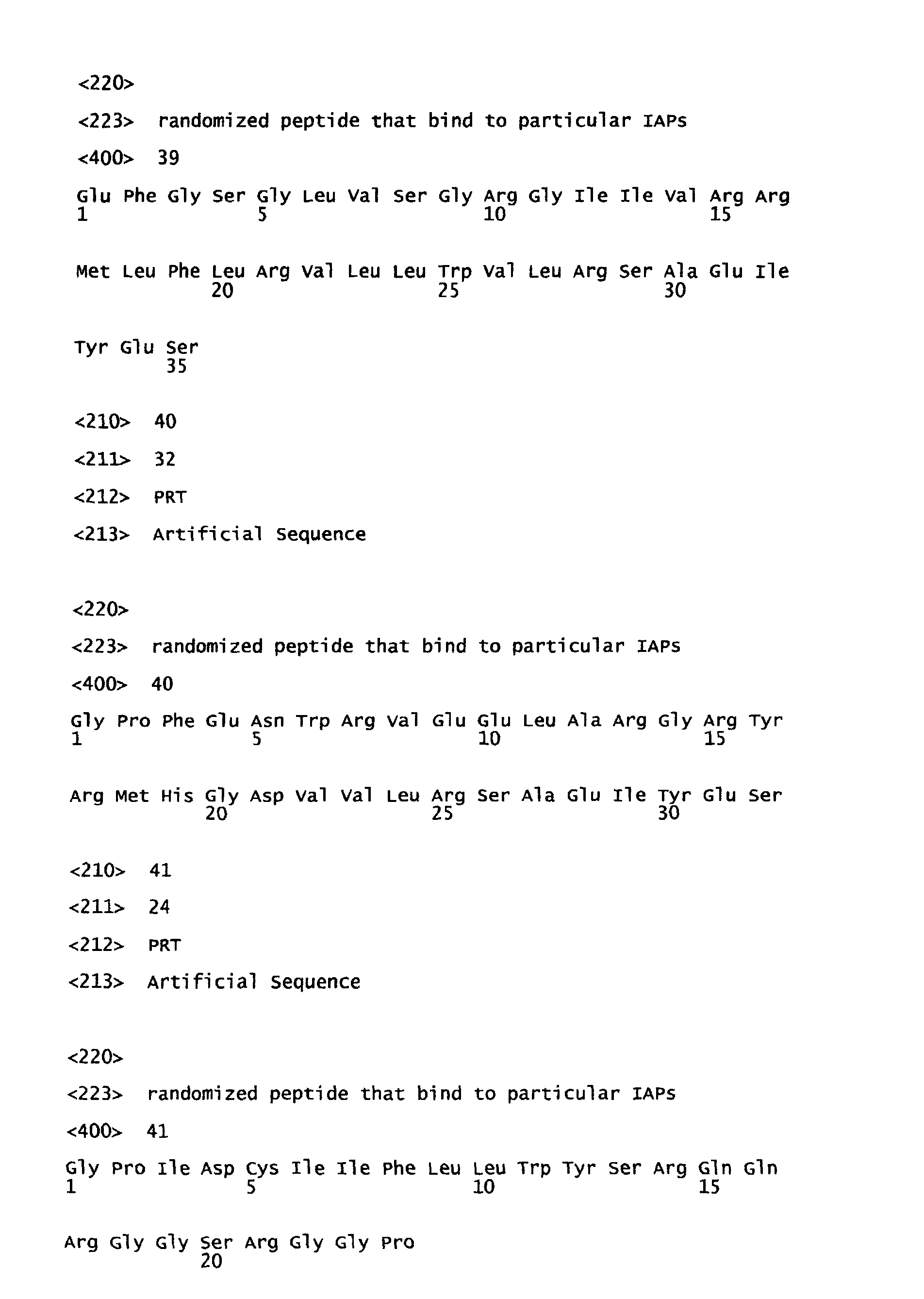
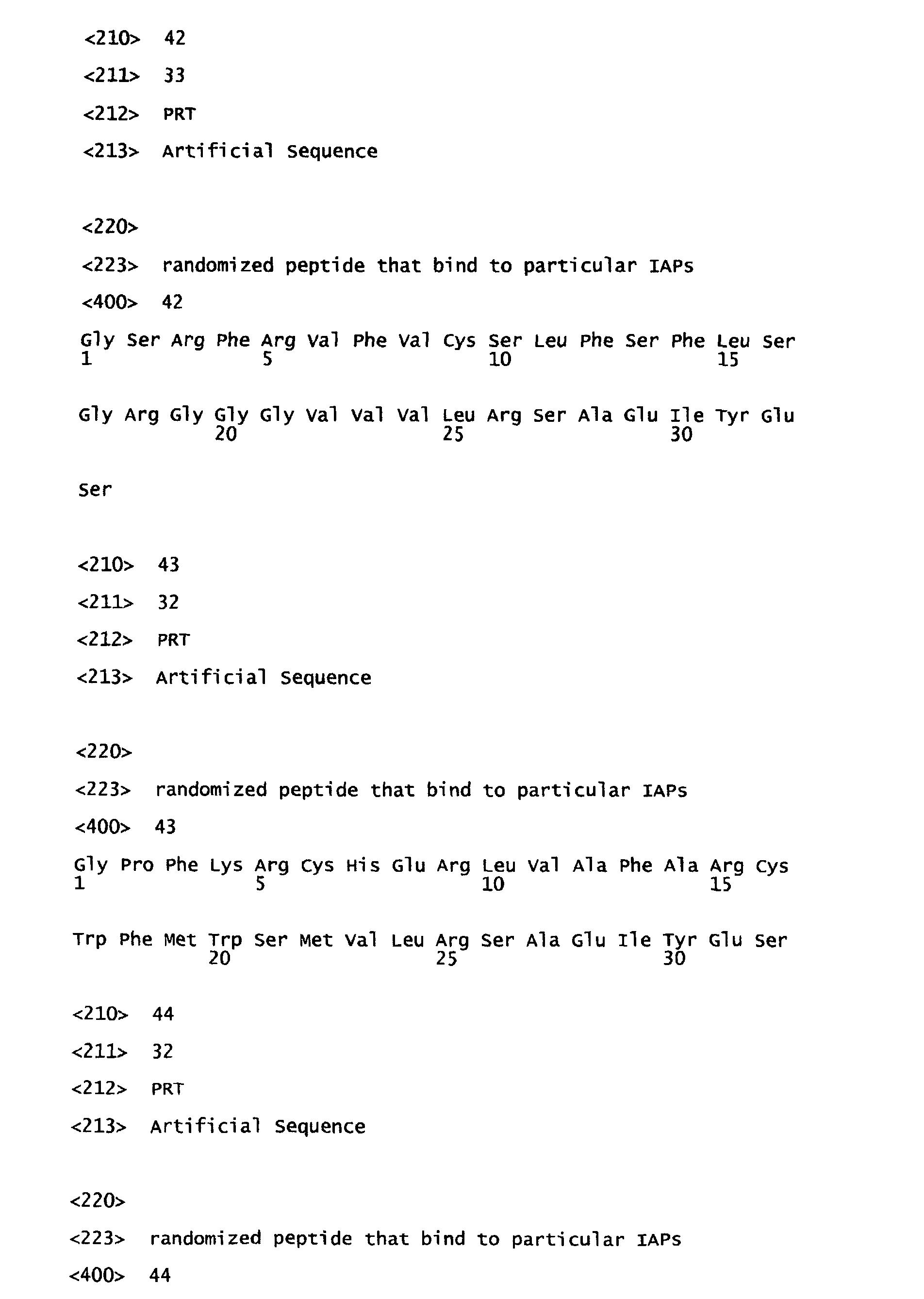
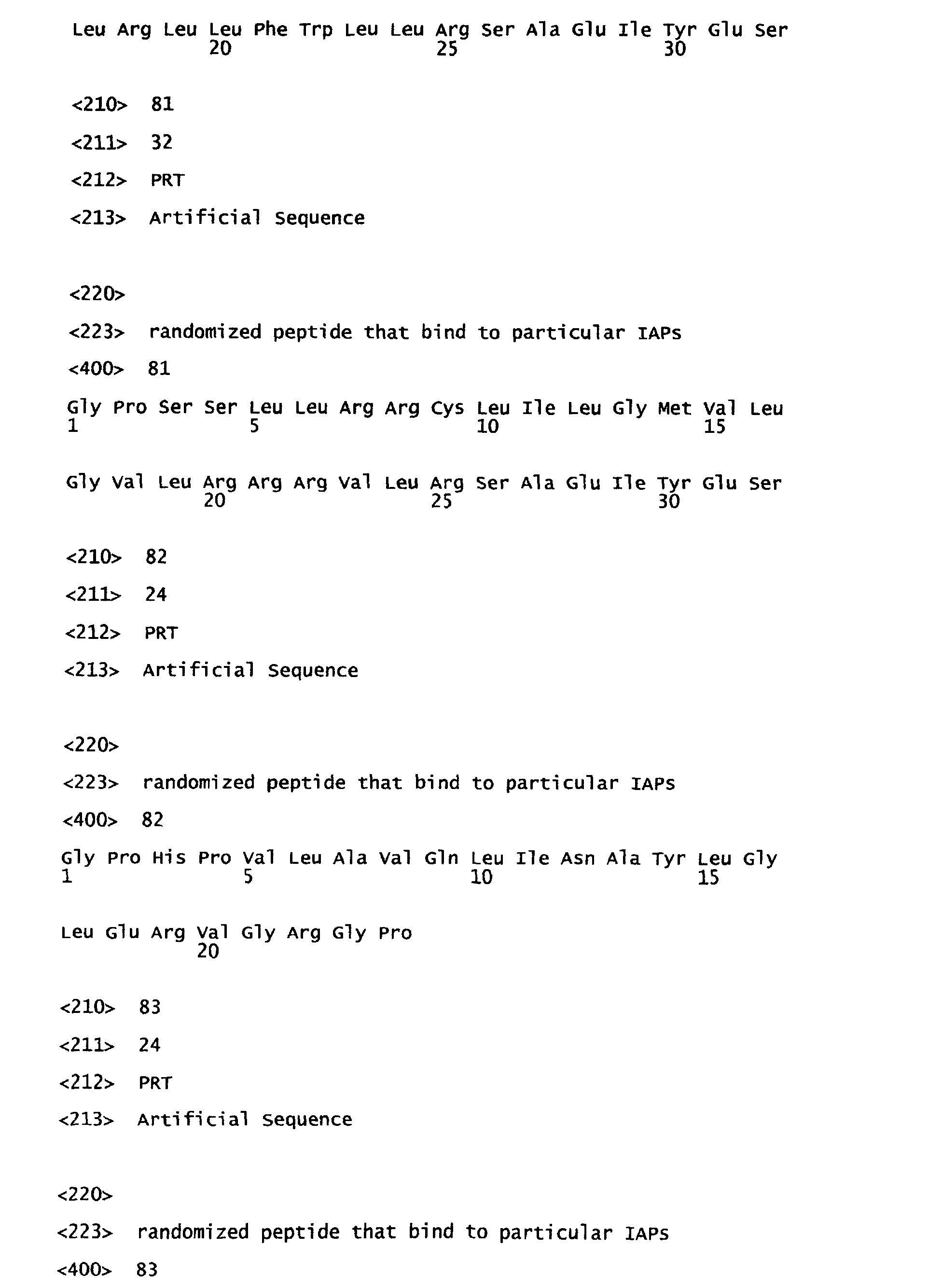
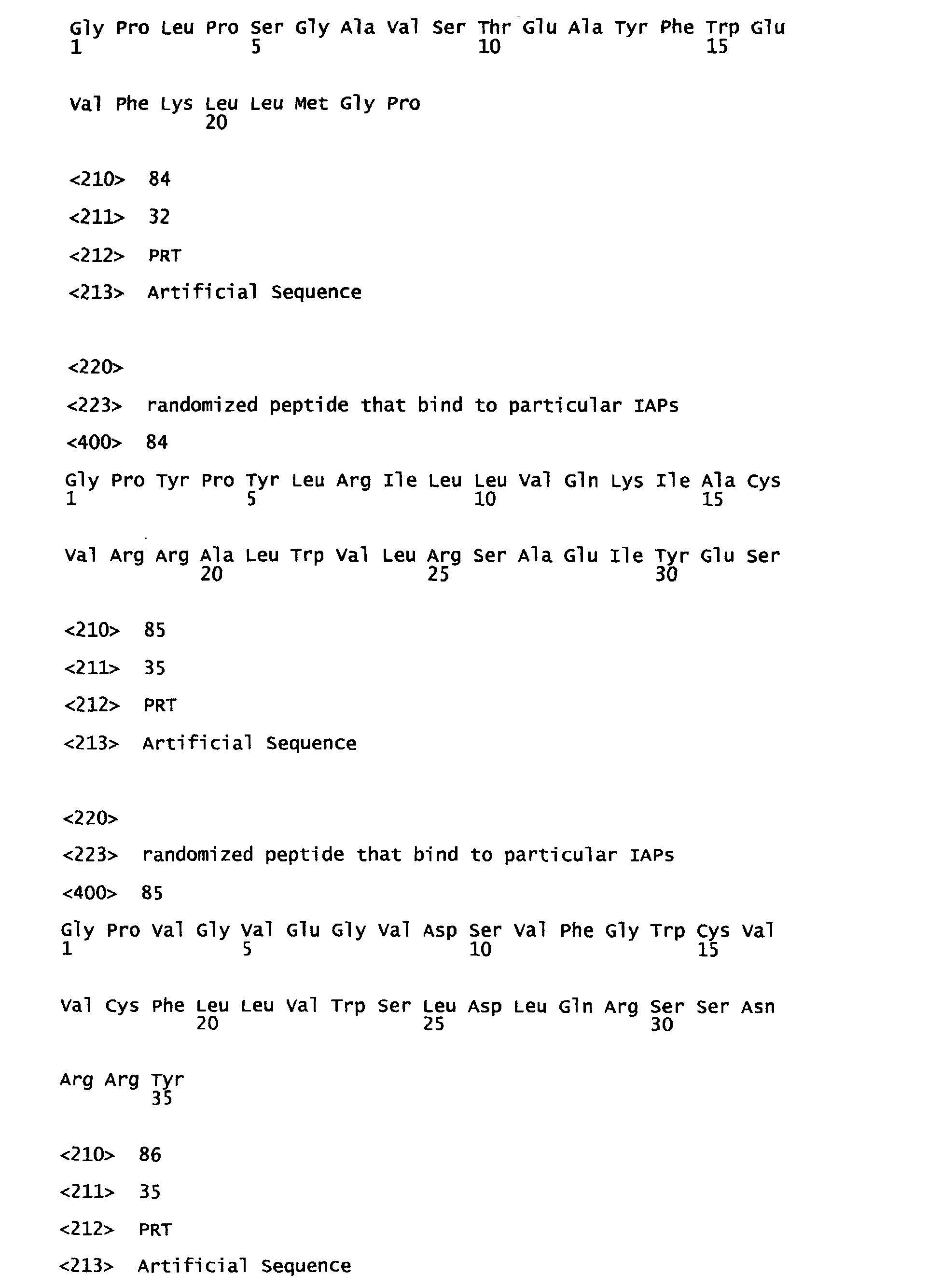
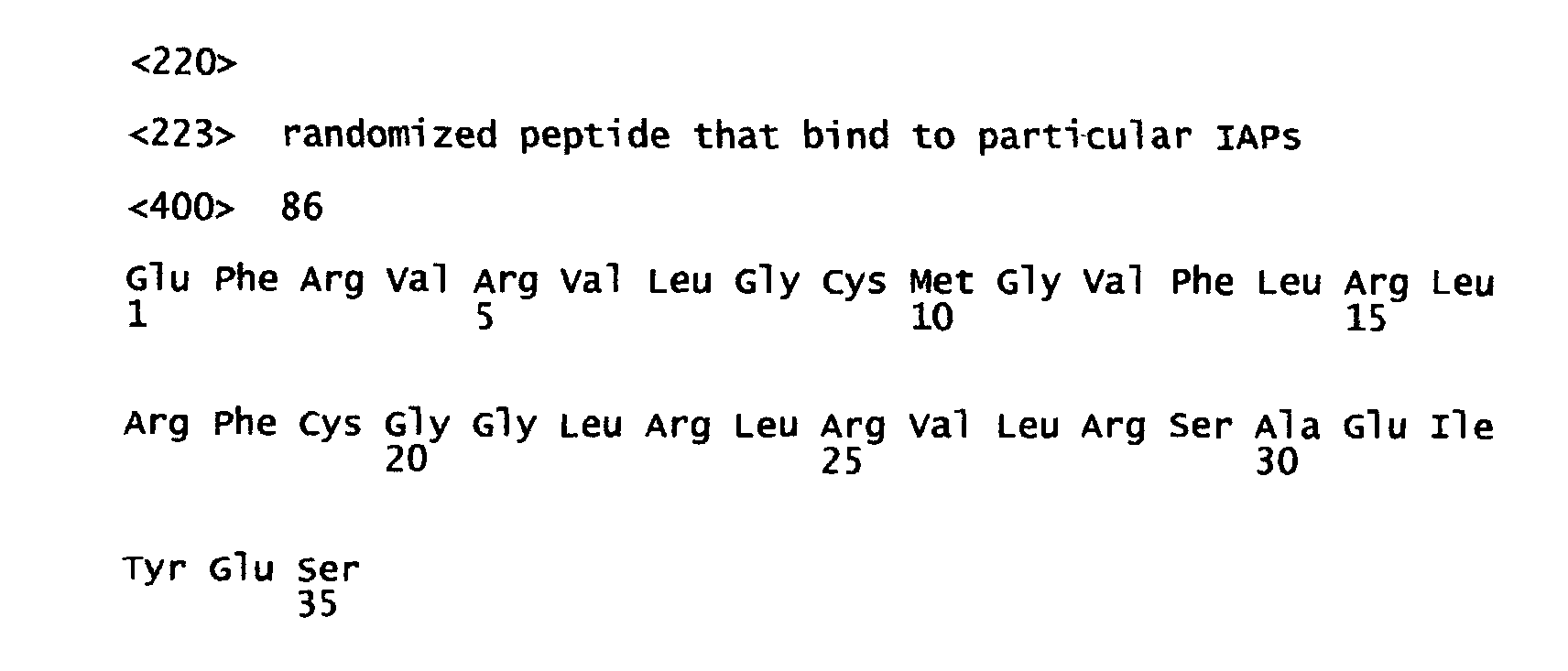
- The Table displays the sequences of the 86 peptides of the present invention (NS = nucleotide sequence; AS =amino acid sequence; * = break of peptide chain, resulting in a "linear peptide" fused to the N-terminal part of trxA; ND = Not Determined))
- A method derived from the "peptide aptamer system" is used. Yeast strain KF1 (MATa trp1-901 leu2-3,112 his 3-200 gal4Δ gal80Δ LYS2::GAL1-HIS3 GAL2-ADE2 met2::GAL7-lacZ SPAL10-URA3) is generated from PJ69-4A after integration at the ura3-52 locus by homologous recombination of PCR product encompassing the SPAL10-URA3 allele from yeast strain MaV103. KF1 thus contains three selectable marker genes under the control of Gal4-binding sites: GAL2-ADE2, GAL1-HIS3 and SPO13-URA3. As bait, the complete livin sequence is fused in frame to the Gal4 DNA-binding domain into vector pPC97, yielding pPC97/livin. A yeast expression vector, pADtrx, in which the ADH1 promoter directs the expression the E.coli thioredoxin A (trxA) fused to the Gal4 activation domain, is constructed from pRS424. In addition, pADtrx contains the simian virus 40 nuclear localization signal and an influenza hemagglutinin epitope. A randomized peptide expression library is generated in pADtrx by cloning randomized 60-mer oligonucleotides into the unique RsrII site of trxA. Oligonucleotides contained triplets of the sequence NKK (where N = G, A, T or C and K = G or C), which encode for all 20 amino acids but result in only one stop codon. The complexity of the peptide aptamer expression library is estimated to be in the range of 2 x 10⁸ different members.
- KF1 transformants expressing pPC97/livin and the peptide aptamer expression library are selected initially for growth in the absence of adenine. Subsequently, they are analyzed by replica plating for activation of the Gal4-dependent GAL2-ADE2, GAL1-HIS3 and SPO13-URA3 genes. Peptide aptamer expression vectors from clones exhibiting growth in the absence of adenine and histidine are rescued, and activation of the selectable markers is verified by rescreening. Binding specificity of livin binding aptamers was tested by using control proteins as baits like HPV16 E6 or HPV16E7.
- Using the above method, 38 peptides have been identified that in the context of trxA specifically interact with livin (see Table 1 SEQ ID NOS:1-38). Alternatively, a peptide aptamer library was directly fused to the Gal4 activation domain, giving rise to "linear" peptides that are not embedded in the trxA scaffold. Using this approach, another 48 peptides that specifically interact with livin have been identified (Table 1 SEQ ID NOS:39-86)
- In order to analyze the aptamer/livin interactions in human cells, the "CheckMate™ Mammalian Two-Hybrid System" (Promega GmbH, Mannheim, Germany) is employed. The complete livin protein was expressed as a Gal4 binding domain fusion protein from pBIND. Individual peptide aptamers are expressed within the trxA scaffold, linked to the transcriptional activation domain of the herpes simplex virus-1 VP16 protein, from pACT. Reporter plasmid pG5luc contains the firefly luciferase under the transcriptional control of five Gal4-binding sites. Cells are harvested 24 hours after transfection, and luciferase activities are measured by methods known to the person skilled in the art.
- Using this approach, it is shown that the interaction of the selected peptides to livin occurs also in mammalian cells.













Claims (21)
- A peptide, a fragment or derivative thereof, comprising an amino acid sequence selected from the group of SEQ ID NOS:1, 2, 3, 4, 5, 6, 7, 8, 9, 10, 11, 12, 13, 14, 15, 16, 17, 18, 19, 20, 21, 22, 23, 24, 25, 26, 27, 28, 29, 30, 31, 32, 33, 34, 35, 36, 37, 38, 39, 40, 41, 42, 43, 44, 45, 46, 47, 48, 49, 50, 51, 52, 53, 54, 55, 56, 57, 58, 59, 60, 61, 62, 63, 64, 65, 66, 67, 68, 69, 70, 71, 72, 73, 74, 75, 76, 77, 78, 79, 80, 81, 82, 83, 84, 85, 86.
- A peptide according to claim 1, wherein the peptide is linked to a second moiety for the formation of a fusion protein.
- A peptide according to claim 1 or 2, wherein the second moiety is a carrier.
- A nucleic acid coding for a peptide according to claim 1.
- A recombinant DNA comprising at least one nucleic acid coding for a peptide according to claim 1, operably linked to regulatory control nucleic acid sequences which can affect expression of said nucleic acid sequences in a host cell.
- An expression vector or plasmid comprising the recombinant DNA according to claim 5.
- A host cell comprising the expression vector of claim 8.
- The host cell according to claim 7, wherein the host cell is a eukaryotic or prokaryotic cell.
- A method of producing a peptide or an immunogenic fragment thereof, encoded by the recombinant DNA according to claim 5, which process comprises (i) culturing a host cell in a culture medium suitable for the expression of said proteins or immunogenic fragments thereof, and (ii) recovering said recombinant proteins or immunogenic fragments thereof from said host cell or said culture medium.
- An antibody that immunospecifically binds to a peptide according to claim 1.
- A pharmaceutical composition comprising at least one peptide according to claim 1, a fragment or derivative thereof, optionally in combination with at least one active compound.
- A pharmaceutical composition comprising at least one nucleic acid according to claim 4, a fragment or derivative thereof, optionally in combination with at least one active compound.
- A pharmaceutical composition according to claim 11 or 12, wherein the active compound is a cytostatic drug.
- A pharmaceutical composition according to any of claims 11 o 13, wherein the cytostatic drug is selected from the group consisting of (i) antimetabolites; (ii) DNA-fragmenting agents; (iii) DNA-crosslinking agents; (iv) intercalating agents; (v) protein synthesis inhibitors; (vi) topoisomerase I poisons; (vii) topoisomerase II poisons; (viii) microtubule-directed agents; (ix) kinase inhibitors; (x) miscellaneous investigational agents; (xi) hormones and (xii) hormone antagonists.
- The use of at least one peptide according to claim 1, optionally in combination with at least one active compound for the manufacture of a medicament for the binding of IAPs.
- The use of at least one nucleic acid according to claim 4, optionally in combination with at least one active compound for the manufacture of a medicament for the binding of IAPs.
- The use according to claim 15 or 16 for the treatment of cancer, wherein the cancer to be treated is selected from the group consisting of neuroblastoma, intestine carcinoma preferably rectum carcinoma, colon carcinoma, familiary adenomatous polyposis carcinoma and hereditary non-polyposis colorectal cancer, esophageal carcinoma, labial carcinoma, larynx carcinoma, hypopharynx carcinoma, tong carcinoma, salivary gland carcinoma, gastric carcinoma, adenocarcinoma, medullary thyroidea carcinoma, papillary thyroidea carcinoma, renal carcinoma, kidney parenchym carcinoma, ovarian carcinoma, cervix carcinoma, uterine corpus carcinoma, endometrium carcinoma, chorion carcinoma, pancreatic carcinoma, prostate carcinoma, testis carcinoma, breast carcinoma, urinary carcinoma, melanoma, brain tumors preferably glioblastoma, astrocytoma, meningioma, medulloblastoma and peripheral neuroectodermal tumors, Hodgkin lymphoma, non-Hodgkin lymphoma, Burkitt lymphoma, acute lymphatic leukemia (ALL), chronic lymphatic leukemia (CLL), acute myeolid leukemia (AML), chronic myeloid leukemia (CML), adult T-cell leukemia lymphoma, hepatocellular carcinoma, gall bladder carcinoma, bronchial carcinoma, small cell lung carcinoma, non-small cell lung carcinoma, multiple myeloma, basalioma, teratoma, retinoblastoma, choroidea melanoma, seminoma, rhabdomyosarcoma, craniopharyngeoma, osteosarcoma, chondrosarcoma, myosarcoma, liposarcoma, fibrosarcoma, Ewing sarcoma and plasmocytoma.
- The use according to claim 17, wherein the cancer to be treated is melanoma.
- A medicament for the treatment of cancer, comprising a peptide and / or a nucleic acid as claimed in claims 1 and 4, respectively, and a pharmaceutically acceptable carrier.
- A diagnostic kit for the detection of IAPs in said cancer cells, comprising at least one of the peptides of claim 1.
- A diagnostic kit for the detection of IAPs in said cancer cells, comprising at least one nucleic acid of claim 4, and/or a vector of claim 6, and/or a host cell of claims 7 or 8.
Priority Applications (6)
| Application Number | Priority Date | Filing Date | Title |
|---|---|---|---|
| EP02014074A EP1378515A1 (en) | 2002-07-01 | 2002-07-01 | Peptides for inducing apoptosis in tumor cells |
| US10/519,539 US7544768B2 (en) | 2002-07-01 | 2003-07-01 | Peptides for inducing apoptosis in tumor cells |
| EP03761567A EP1523495A2 (en) | 2002-07-01 | 2003-07-01 | Peptides for inducing apoptosis in tumor cells |
| PCT/EP2003/006958 WO2004003008A2 (en) | 2002-07-01 | 2003-07-01 | Peptides for inducing apoptosis in tumor cells |
| AU2003249912A AU2003249912A1 (en) | 2002-07-01 | 2003-07-01 | Peptides for inducing apoptosis in tumor cells |
| EP06122212A EP1795538A1 (en) | 2002-07-01 | 2003-07-01 | Peptides for inducing apoptosis in tumor cells |
Applications Claiming Priority (1)
| Application Number | Priority Date | Filing Date | Title |
|---|---|---|---|
| EP02014074A EP1378515A1 (en) | 2002-07-01 | 2002-07-01 | Peptides for inducing apoptosis in tumor cells |
Publications (1)
| Publication Number | Publication Date |
|---|---|
| EP1378515A1 true EP1378515A1 (en) | 2004-01-07 |
Family
ID=29719684
Family Applications (3)
| Application Number | Title | Priority Date | Filing Date |
|---|---|---|---|
| EP02014074A Withdrawn EP1378515A1 (en) | 2002-07-01 | 2002-07-01 | Peptides for inducing apoptosis in tumor cells |
| EP06122212A Ceased EP1795538A1 (en) | 2002-07-01 | 2003-07-01 | Peptides for inducing apoptosis in tumor cells |
| EP03761567A Withdrawn EP1523495A2 (en) | 2002-07-01 | 2003-07-01 | Peptides for inducing apoptosis in tumor cells |
Family Applications After (2)
| Application Number | Title | Priority Date | Filing Date |
|---|---|---|---|
| EP06122212A Ceased EP1795538A1 (en) | 2002-07-01 | 2003-07-01 | Peptides for inducing apoptosis in tumor cells |
| EP03761567A Withdrawn EP1523495A2 (en) | 2002-07-01 | 2003-07-01 | Peptides for inducing apoptosis in tumor cells |
Country Status (4)
| Country | Link |
|---|---|
| US (1) | US7544768B2 (en) |
| EP (3) | EP1378515A1 (en) |
| AU (1) | AU2003249912A1 (en) |
| WO (1) | WO2004003008A2 (en) |
Cited By (1)
| Publication number | Priority date | Publication date | Assignee | Title |
|---|---|---|---|---|
| WO2006018418A3 (en) * | 2004-08-16 | 2006-08-10 | Univ Liege | Antiangiogenic peptides |
Families Citing this family (3)
| Publication number | Priority date | Publication date | Assignee | Title |
|---|---|---|---|---|
| EP2189158A1 (en) * | 2008-11-20 | 2010-05-26 | DKFZ Deutsches Krebsforschungszentrum, Stiftung des Öffentlichen Rechts | Combination of rocaglamide and apoptosis inducing substances for the treatment of cancer |
| KR101447901B1 (en) * | 2013-04-16 | 2014-10-16 | 한양대학교 산학협력단 | Adipocyte targeted non-viral gene delivery system |
| CN109999182B (en) * | 2019-03-29 | 2023-03-07 | 四川大学华西医院 | Application of blood coagulation factor in preparation of antineoplastic drugs |
Citations (2)
| Publication number | Priority date | Publication date | Assignee | Title |
|---|---|---|---|---|
| WO2002016402A2 (en) * | 2000-08-23 | 2002-02-28 | Board Of Regents, The University Of Texas System | Apoptotic compounds |
| WO2002026775A2 (en) * | 2000-09-29 | 2002-04-04 | Trustees Of Princeton University | Compositions and methods for regulating apoptosis |
Family Cites Families (1)
| Publication number | Priority date | Publication date | Assignee | Title |
|---|---|---|---|---|
| US20070003535A1 (en) * | 2005-03-17 | 2007-01-04 | Reed John C | Methods and compositions for derepression of IAP-inhibited caspase |
-
2002
- 2002-07-01 EP EP02014074A patent/EP1378515A1/en not_active Withdrawn
-
2003
- 2003-07-01 EP EP06122212A patent/EP1795538A1/en not_active Ceased
- 2003-07-01 AU AU2003249912A patent/AU2003249912A1/en not_active Abandoned
- 2003-07-01 US US10/519,539 patent/US7544768B2/en not_active Expired - Fee Related
- 2003-07-01 EP EP03761567A patent/EP1523495A2/en not_active Withdrawn
- 2003-07-01 WO PCT/EP2003/006958 patent/WO2004003008A2/en not_active Ceased
Patent Citations (2)
| Publication number | Priority date | Publication date | Assignee | Title |
|---|---|---|---|---|
| WO2002016402A2 (en) * | 2000-08-23 | 2002-02-28 | Board Of Regents, The University Of Texas System | Apoptotic compounds |
| WO2002026775A2 (en) * | 2000-09-29 | 2002-04-04 | Trustees Of Princeton University | Compositions and methods for regulating apoptosis |
Cited By (2)
| Publication number | Priority date | Publication date | Assignee | Title |
|---|---|---|---|---|
| WO2006018418A3 (en) * | 2004-08-16 | 2006-08-10 | Univ Liege | Antiangiogenic peptides |
| US7655626B2 (en) | 2004-08-16 | 2010-02-02 | Universite De Liege | Antiangiogenic peptides |
Also Published As
| Publication number | Publication date |
|---|---|
| US20050203288A1 (en) | 2005-09-15 |
| EP1795538A1 (en) | 2007-06-13 |
| WO2004003008A3 (en) | 2004-04-01 |
| WO2004003008A2 (en) | 2004-01-08 |
| US7544768B2 (en) | 2009-06-09 |
| EP1523495A2 (en) | 2005-04-20 |
| AU2003249912A1 (en) | 2004-01-19 |
Similar Documents
| Publication | Publication Date | Title |
|---|---|---|
| KR101758671B1 (en) | Oligopeptidic compounds and uses thereof | |
| Wu et al. | Identification of a RING protein that can interact in vivo with the BRCA1 gene product | |
| US7982023B2 (en) | Bag proteins and nucleic acid molecules encoding them | |
| KR20190016026A (en) | Agents of CD47 inducing programmed cell death and their use in the treatment of diseases associated with programmed cell death defects | |
| CN105744944B (en) | immune system regulator | |
| Finnegan et al. | Induction of apoptosis in prostate carcinoma cells by BH3 peptides which inhibit Bak/Bcl-2 interactions | |
| CA2505250A1 (en) | Acetylated hmgb1 protein | |
| CN101384716A (en) | HLA-A3303-restricted WT1 peptide and pharmaceutical composition comprising the same | |
| John et al. | Identification and characterization of novel endogenous proteolytic forms of the human angiogenesis inhibitors restin and endostatin | |
| CN101384618A (en) | Peptidyl inhibition of CAPCNA protein-protein interactions in cancer | |
| CN108047312A (en) | A kind of stable polypeptide targeting proteins chimer molecules and its preparation method and application | |
| JP2001505540A (en) | Compound that inhibits interaction between signal transducing protein and GLGF (PDH / DHR) domain and use thereof | |
| JP4215274B2 (en) | Src SH3 binding peptide and method for separating and using the same | |
| JP2013535954A (en) | Peptides, structures and uses thereof | |
| CN100398652C (en) | regulatory zinc finger protein | |
| CN117756909A (en) | Improved anti-aging compounds and their use in cancer treatment | |
| US20200360529A1 (en) | Peptidic materials that traffic efficiently to the cell cytosol and nucleus | |
| Adachi et al. | Investigation on cellular uptake and pharmacodynamics of DOCK2-inhibitory peptides conjugated with cell-penetrating peptides | |
| US7544768B2 (en) | Peptides for inducing apoptosis in tumor cells | |
| US7141541B1 (en) | Use of peptides | |
| ES2764663T3 (en) | Compositions and methods to inhibit CD279 interactions | |
| WO2001048014A1 (en) | Bh4-fused polypeptides | |
| AU6038399A (en) | Novel bag proteins and nucleic acid molecules encoding them | |
| WO2014169274A2 (en) | Modified proteins and methods of use thereof | |
| KR20160009548A (en) | Peptide for inhibiting hsp expression and composition containing same |
Legal Events
| Date | Code | Title | Description |
|---|---|---|---|
| PUAI | Public reference made under article 153(3) epc to a published international application that has entered the european phase |
Free format text: ORIGINAL CODE: 0009012 |
|
| AK | Designated contracting states |
Kind code of ref document: A1 Designated state(s): AT BE BG CH CY CZ DE DK EE ES FI FR GB GR IE IT LI LU MC NL PT SE SK TR |
|
| AX | Request for extension of the european patent |
Extension state: AL LT LV MK RO SI |
|
| AKX | Designation fees paid | ||
| REG | Reference to a national code |
Ref country code: DE Ref legal event code: 8566 |
|
| STAA | Information on the status of an ep patent application or granted ep patent |
Free format text: STATUS: THE APPLICATION IS DEEMED TO BE WITHDRAWN |
|
| 18D | Application deemed to be withdrawn |
Effective date: 20040708 |