EP1377056B1 - Verification of electronic television program guide data - Google Patents
Verification of electronic television program guide data Download PDFInfo
- Publication number
- EP1377056B1 EP1377056B1 EP03077336A EP03077336A EP1377056B1 EP 1377056 B1 EP1377056 B1 EP 1377056B1 EP 03077336 A EP03077336 A EP 03077336A EP 03077336 A EP03077336 A EP 03077336A EP 1377056 B1 EP1377056 B1 EP 1377056B1
- Authority
- EP
- European Patent Office
- Prior art keywords
- data
- database
- missing
- program
- data fields
- Prior art date
- Legal status (The legal status is an assumption and is not a legal conclusion. Google has not performed a legal analysis and makes no representation as to the accuracy of the status listed.)
- Expired - Lifetime
Links
Images


Classifications
-
- H—ELECTRICITY
- H04—ELECTRIC COMMUNICATION TECHNIQUE
- H04H—BROADCAST COMMUNICATION
- H04H20/00—Arrangements for broadcast or for distribution combined with broadcast
- H04H20/12—Arrangements for observation, testing or troubleshooting
-
- H—ELECTRICITY
- H04—ELECTRIC COMMUNICATION TECHNIQUE
- H04H—BROADCAST COMMUNICATION
- H04H60/00—Arrangements for broadcast applications with a direct linking to broadcast information or broadcast space-time; Broadcast-related systems
- H04H60/02—Arrangements for generating broadcast information; Arrangements for generating broadcast-related information with a direct linking to broadcast information or to broadcast space-time; Arrangements for simultaneous generation of broadcast information and broadcast-related information
- H04H60/07—Arrangements for generating broadcast information; Arrangements for generating broadcast-related information with a direct linking to broadcast information or to broadcast space-time; Arrangements for simultaneous generation of broadcast information and broadcast-related information characterised by processes or methods for the generation
-
- H—ELECTRICITY
- H04—ELECTRIC COMMUNICATION TECHNIQUE
- H04H—BROADCAST COMMUNICATION
- H04H60/00—Arrangements for broadcast applications with a direct linking to broadcast information or broadcast space-time; Broadcast-related systems
- H04H60/68—Systems specially adapted for using specific information, e.g. geographical or meteorological information
- H04H60/72—Systems specially adapted for using specific information, e.g. geographical or meteorological information using electronic programme guides [EPG]
-
- H—ELECTRICITY
- H04—ELECTRIC COMMUNICATION TECHNIQUE
- H04N—PICTORIAL COMMUNICATION, e.g. TELEVISION
- H04N17/00—Diagnosis, testing or measuring for television systems or their details
-
- H—ELECTRICITY
- H04—ELECTRIC COMMUNICATION TECHNIQUE
- H04N—PICTORIAL COMMUNICATION, e.g. TELEVISION
- H04N21/00—Selective content distribution, e.g. interactive television or video on demand [VOD]
- H04N21/20—Servers specifically adapted for the distribution of content, e.g. VOD servers; Operations thereof
- H04N21/25—Management operations performed by the server for facilitating the content distribution or administrating data related to end-users or client devices, e.g. end-user or client device authentication, learning user preferences for recommending movies
- H04N21/262—Content or additional data distribution scheduling, e.g. sending additional data at off-peak times, updating software modules, calculating the carousel transmission frequency, delaying a video stream transmission, generating play-lists
- H04N21/26283—Content or additional data distribution scheduling, e.g. sending additional data at off-peak times, updating software modules, calculating the carousel transmission frequency, delaying a video stream transmission, generating play-lists for associating distribution time parameters to content, e.g. to generate electronic programme guide data
-
- H—ELECTRICITY
- H04—ELECTRIC COMMUNICATION TECHNIQUE
- H04N—PICTORIAL COMMUNICATION, e.g. TELEVISION
- H04N21/00—Selective content distribution, e.g. interactive television or video on demand [VOD]
- H04N21/20—Servers specifically adapted for the distribution of content, e.g. VOD servers; Operations thereof
- H04N21/25—Management operations performed by the server for facilitating the content distribution or administrating data related to end-users or client devices, e.g. end-user or client device authentication, learning user preferences for recommending movies
- H04N21/266—Channel or content management, e.g. generation and management of keys and entitlement messages in a conditional access system, merging a VOD unicast channel into a multicast channel
- H04N21/2665—Gathering content from different sources, e.g. Internet and satellite
-
- H—ELECTRICITY
- H04—ELECTRIC COMMUNICATION TECHNIQUE
- H04N—PICTORIAL COMMUNICATION, e.g. TELEVISION
- H04N21/00—Selective content distribution, e.g. interactive television or video on demand [VOD]
- H04N21/80—Generation or processing of content or additional data by content creator independently of the distribution process; Content per se
- H04N21/83—Generation or processing of protective or descriptive data associated with content; Content structuring
- H04N21/84—Generation or processing of descriptive data, e.g. content descriptors
-
- H—ELECTRICITY
- H04—ELECTRIC COMMUNICATION TECHNIQUE
- H04N—PICTORIAL COMMUNICATION, e.g. TELEVISION
- H04N7/00—Television systems
- H04N7/08—Systems for the simultaneous or sequential transmission of more than one television signal, e.g. additional information signals, the signals occupying wholly or partially the same frequency band, e.g. by time division
- H04N7/087—Systems for the simultaneous or sequential transmission of more than one television signal, e.g. additional information signals, the signals occupying wholly or partially the same frequency band, e.g. by time division with signal insertion during the vertical blanking interval only
- H04N7/088—Systems for the simultaneous or sequential transmission of more than one television signal, e.g. additional information signals, the signals occupying wholly or partially the same frequency band, e.g. by time division with signal insertion during the vertical blanking interval only the inserted signal being digital
- H04N7/0887—Systems for the simultaneous or sequential transmission of more than one television signal, e.g. additional information signals, the signals occupying wholly or partially the same frequency band, e.g. by time division with signal insertion during the vertical blanking interval only the inserted signal being digital for the transmission of programme or channel identifying signals
-
- H—ELECTRICITY
- H04—ELECTRIC COMMUNICATION TECHNIQUE
- H04N—PICTORIAL COMMUNICATION, e.g. TELEVISION
- H04N7/00—Television systems
- H04N7/10—Adaptations for transmission by electrical cable
-
- H—ELECTRICITY
- H04—ELECTRIC COMMUNICATION TECHNIQUE
- H04N—PICTORIAL COMMUNICATION, e.g. TELEVISION
- H04N7/00—Television systems
- H04N7/16—Analogue secrecy systems; Analogue subscription systems
Definitions
- This invention relates to an electronic program guide (“EPG") system that provides users with schedule information for broadcast or cablecast programs available for viewing on a video display. More particularly, it relates to a system and method for verification of the EPG data prior to transmission to a plurality of remote locations such as cable system head ends or viewer sites.
- EPG electronic program guide
- Electronic program guides for television systems are known in the art, particularly with regard to cable television systems.
- one common implementation of a electronic program guide utilizes a dedicated cable television channel for continuously broadcasting program schedule information.
- the advantage of such a system is that it is relatively easy to deploy because it is centrally implemented at the cable head-end. No additional electronics or software are required at the viewer location because full control of the display is maintained at the cable head-end.
- the display information is then broadcast continuously on a dedicated cable channel.
- the television viewer simply tunes the cable converter box or television tuner to the channel on which the schedule information is modulated and views the program listings.
- these program guides utilize a scrolling display of television listings or a fixed display that periodically changes.
- Some systems employ a partial screen of listings with additional information in the remainder of the screen such as advertisements for movies on pay channels, pay-per-view (PPV) event schedules, time and weather information, and other commercial information.
- PSV pay-per-view
- These systems generally incorporate a grid or matrix to display the program schedule information, with a different row for each channel and columns representing different time slots.
- interactive program guides are also known. Such guides permit the user to select the program listings to be displayed based on user selection criteria and display the listings on the television receiver in a desired format.
- Interactive guides are more versatile than dedicated channel guides because they operate under user control. However, they are more costly to implement because they require memory and processor capabilities at each user site.
- the present invention may be used with either dedicated channel or interactive program guides because it operates on the program listings data common to both types of guides.
- Modern cable systems include upwards of 100 channels. Thus, for both dedicated channel and interactive program EPGs, large quantities of data are required to provide a complete listing of program schedule information.
- a problem common to both types of systems is that there are often errors in the data that must be corrected. Errors may arise for any number of reasons.
- the listings database contains an enormous amount of data.
- Electronic program guides whether of the dedicated channel or interactive variety, include a database comprising the program listings information for the various stations and pay-per-view channels.
- the listings data may be arranged in weekly blocks or other time periods.
- a cable system with eighty (80) channels, each one broadcasting 24 hours a day.
- each station a daily average of four hours of two-hour programs, five hours of on-hour programs, and the balance comprising one-half hour programs, 37 different programs are aired per channel per day.
- a program listings database with incorrect listings or incomplete information is of limited utility. There is thus a need to ensure the reliability of the data transmitted to the cable systems and ultimately to viewers. However, because the volume of data is so great, there is a need for an automated procedure for verification of the data to reduce the number of manual hours required. There is thus a need for an automated system and method of reviewing the EPG data and flagging any errors therein. In addition, there is a need to provide a list of any such errors to a database editor to permit the editor to take whatever corrective action is necessary. In addition, different data may need to be generated for different cable systems because, e.g., each cable system may have different local programming or pay-per-view programs or schedules.
- EPG 3 typically display program listings in grid format with columns representing different time slots and rows representing different channels.
- Set-top converters vary with regard to their text display capabilities. Some may display text using a proportional font while others use a standard font. In addition, some are configured to display symbols in the grid cells in addition to text which decreases the available space for text display. Thus, the database must be configured in such a way to accommodate the varying capabilities of set-top converters.
- US5,311,423 discloses a method of managing information used and generated in the scheduling and exhibition of performances in a video network.
- the exhibition plan is generated through the performances of an exhibition manager process which operates on a computer.
- the system and method of the present invention provides for automated checking of the program listings data in the database.
- the database of television program schedule listings may undergo initial processing as follows. First, the data is collected from the various information providers and checked for high level errors. Next, it may be required to normalize the data to the EPG database structure and format as it is possible that the information collected from the different sources uses different formats and syntax. Finally, the data may be processed with a text fit system to determine if any titles in the database require editing in order to fit within a grid cell of a predetermined size for any of the different platforms on which the EPG will operate.
- the text fit process may be incorporated as part of the listing verification process so that text requiring editing to fit within a particular grid cell size is identified and presented to the user for editing if not already included in a library or look-up table of pre-edited text.
- the listing verification system and procedure of the present invention operates on the data to check for any errors in the data.
- checks may be run for any missing stations, schedule gaps, schedule overlaps, missing titles, missing copy, missing fields (i.e., run time, slot time, program type), missing movie ratings, missing program origin, missing PPV price, PPV events on non-PPV station, non-PPV event on PPV station, inappropriate language, lengthy titles, lengthy copy, and editorial errors.
- "Lengthy” as used herein refers to text that is too long to fit into the allocated grid space in the program guide. Errors are automatically written to output files and separate files are used for each of the above parameters.
- Fig. 1 is a block diagram illustrating schematically the general configuration for one embodiment of an electronic program guide delivery system.
- Information for the database may originate from several different information providers.
- one source may provide all the national listings which may include network (both broadcast and cable) schedules, and regional program schedules or, alternatively, there may be multiple sources of such information.
- a single second source (or combination of second sources) may provide local listings information which includes schedules for locally originated programs, channel maps for individual cable systems, and information on shared channels (single cable channels that carry different programming during different parts of the day).
- a third information provider (or multiple providers) may furnish all of the listings information for pay-per-view events. It may even be the case that each of these categories of program schedule information are provided by multiple sources.
- there may be other information providers such as billing vendors that furnish billing information.
- a second function which may be performed on the data is pre-verification editing.
- One example of such editing is processing of the data by the text fit system disclosed in co-pending application serial number 247,059. Text fit processing in effect expands the database to include multiple values for text fields for individual listings to accommodate different EPG platforms. For example, varying amounts of space are allocated for program titles for the different platforms.
- multiple versions of a title may be required to fit inside grid cells of, e.g., for a two hour program, 30, 60, 90, and 120 minutes.
- the text fit system determines whether an edited version of a title is required to fit within the designated space for a particular platform and grid cell.
- the database is then edited to include an abbreviate version of the title as well as the full title for the listing. It is also possible that a portion of the data will already contain multiple versions of titles.
- it may be desirable to incorporate the text fit process into the verification utility by using the verification utility to first identify listings requiring processing with the text fit system and then running the text fit system on these identified listings. Depending on the particular implementation of the EPG delivery system, it may be desirable or necessary to perform additional pre-verification processing on the data.
- the listings database is assembled and processed by the data verification system.
- the data versification system operates on the listings database and generates error reports for errors found therein.
- the program listings and channel map editing systems are used to make changes to the data in the listings database.
- the data verification system operates under user control to determine which data fields are to be checked. Alternatively, the system can operate fully automatically to check all data fields.
- An advantageous feature of one embodiment of the present invention is the creation of reports for each type of error.
- the reports permit the editor to reconcile any missing or conflicting information in the database with the information provider.
- the reports may be electronically generated and then viewed on a computer, stored in electronic format, or printed as hard copies.
- the utility operates on the database of program listings information for a user definable time period, such as one week.
- stations may be selected individually, by channel map, platform type, multi-system operator ("MSO"), or arbitrary grouping.
- MSO multi-system operator
- Each of the processing options associated with the system is discussed below. The operation of the various options is discussed under the section headed "System Operation.”
- the listings database (or any subset thereof) is checked against a second database that includes a list of all stations that should be included in the listings database or subset, such as a station list file for a particular cable system.
- the missing stations verification utility then outputs to a file a list of the missing stations.
- the database is then checked to determine if, for any designated station, there are any gaps between the ending time of a program and the start time of the next program.
- the end times for listings are calculated by adding the program's slot time (total time until the beginning of the next listing) to the start time.
- the system provides the flexibility of being able to specify any time range for checking for gaps and overlaps. If the beginning of the time range for a channel does not coincide with the beginning of a program, the system will check for the "intersecting listing", i.e., the listing starting prior to and ending after the beginning of the specified time range.
- Schedule holes are written to a file that includes the date, station, start time, and end time of the hole or other information sufficient to uniquely identify the schedule hole.
- This option also checks for overlaps in a similar manner. If the listings data indicates that a program on a particular channel begins prior to the sum of the start time plus the run time of the previous program, the listing is flagged as a program overlap error.
- the listings database is checked for missing titles for program events, i.e., where the listing has no title field.
- Listings with missing titles are written to a file that includes the date, station, and start time of the listing.
- Certain program listings include additional descriptive information in addition to the program tide called "copy.” These include movies, live sports, and pay-per-view programs. The additional information may also be provided for other programs as well as determined by the operating rules for the EPG.
- the missing copy option checks these listings for missing copy and writes any such listings to a file with sufficient context data to identify the program, such as program date, station, start time, and title.
- This option checks the database listings to ensure that all required fields for each type of program are present.
- the schedule information for pay-per-view and premium movies must include an MPAA rating as this parameter may be used by viewers to lock-out certain movies.
- the missing fields option will check that the MPAA rating, as well as the other fields dictated by the operating rules, are in the database for the pay-per-view and premium listings.
- the operating rules may further dictate that the schedule information include price information, a telephone number for ordering the event, and promotional copy used for advertising the event.
- the missing fields option would then check these fields as well for programs designated as PPV events.
- the operating rules may dictate different required fields for other types of listings. Listings with missing fields are written to a file including the date, station, and start time of the program, as well as an identification of the missing field.
- the listings database includes the MPAA movie ratings for movies to be shown on premium and PPV channels. Any such movies with missing ratings are written to a file including the date, station, start time, and title of the movie.
- Some or all of the data in the database may have already been processed with the text fit system to provide multiple titles where required to fit into the grid cells.
- the lengthy titles option permits the user to perform an additional check for any titles that do not fit into the maximum allowable space for each of the selected platforms and also identifies those entries not yet processed with the text fit system. Any such titles found are written to a file including the platform, date, station, start time, and title of the listings. This option may be selected for any of the platforms on which the EPG operates.
- the titles may then be processed using text fit and the verification utility re-run on the database.
- This option is similar to the lengthy copy option and searches the listings database for the copy for movies, live sports, pay-per-view programs, and any other entries with copy that will not fit into the allowable space for the selected platforms. Any such listings found are written to a file including the platform, date, station, start time, and title of the listings.
- the listings database is searched for editorial errors which can include, inter alia , duplicated titles or years in the copy of a movie, cross references to other days, and certain phrases such as "at press time.” Editorial errors are written to a file including the date, station, start time, and description of the error found for each listing. Of course, these particular errors represent only one particular embodiment of the system designed to detect the most common types of errors - the utility may readily be modified to detect any specified editorial errors.
- This option searches the listings database for inappropriate language in titles, copy, and messages.
- the listings database is checked against a language dictionary that includes all of the language deemed inappropriate.
- Listings with any such language are written to a file including the date, station, start time, and inappropriate language found.
- the above options for verifying the data in the listings database are not exhaustive.
- the verification system may be readily configured to check any field in the database.
- Some of the other fields which may be checked are as follows: missing program type, missing slot time, missing run time, missing program origin, PPV event on a non-PPV station, non-PPV event on a PPV station, and missing price or promotional copy for PPV events.
- Program type refers to the type of broadcast, i.e., broadcast, PPV, near video on demand ("NVOD”), etc.
- the slot time of a program is the total time from the beginning of one program until the start of the next program, including commercial time, and program run time, is the actual running time of the program itself.
- the slot time for a program must exceed (or be only slightly less than) its nm time, which is another possible verification option.
- Program origin indicates the source of the program.
- the program type and station type are used to check whether a PPV event is scheduled on a non-PPV station and whether a non-PPV event is scheduled on a PPV station.
- the data verification system may also be configured with an error navigation feature as follows. Following processing of the database or designated subset thereof and generation of the various error reports, the system may be configured to return to the portions of the database identified as containing errors, retrieve the appropriate database entries, and present them to the user for correction. Following correction of the errors, the database may again be processed with the data verification utility to check for errors. In this manner, an iterative process may be implemented to correct and verify all of the data in the database.
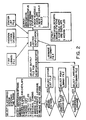
- the data verification utility operates as shown in the flow diagram of Fig. 2 .
- First the user is queried to specify the platform or platforms and the channel maps for which the utility is to be nm. Alternatively, with a database such as that described in Tables 1 and 2, the user need only specify the cable group, system, or head end.
- the verification system can then extract from the database the appropriate platform(s) and channel map(s).
- the desired verification options are chosen. Alternatively, the user may elect to activate all verification options. Depending on the options selected, the user may be queried for additional information. If the "Check Lengthy Titles" or "Check Lengthy Copy” option is selected, the user must input the path and filename for a font library file in order to determine the proper font to be used for display of the text.
- this step may be eliminates as the file may be selected automatically.
- the particular font chosen affect the space required to display the text.
- the user may be supplied with a list of possible files and need only select a file from the displayed list. If the "Check Missing Stations" option is selected, the user will be requested to enter a master list of all stations that should appear in the listings database or a subset of stations representing the list for a particular cable system. This information may be contained in a station list file. If the "Check Language” option is selected, the user enters a language dictionary file containing a library of inappropriate words. Finally, the user is queried to enter a path and filenames for the output verification reports. Or course, a default path and filename may be used. Separate verification reports are generated for each selected option. The user may also elect to combine chosen reports into a single report.
- the database may be configured to define all the necessary parameters so that the user need only select the cable system and verification options.
- the database For each cable system (or cable group or head end), the database contains a table with the correct platform(s) and a table listing the different fonts available for use with the platforms so that the user need not designate the font library file.
- the language dictionary file may be defined by the choice of platform, eliminating the need for the user to define the file.
- the data verification utility displays the selected options and user entered parameters for confirmation by the user.
- the data verification process then begins.
- the system displays to the user a summary report showing the cumulative total errors located for each of the selected options.
- output reports are generated for each of the options selected including all listings found with the indicated error or omission.
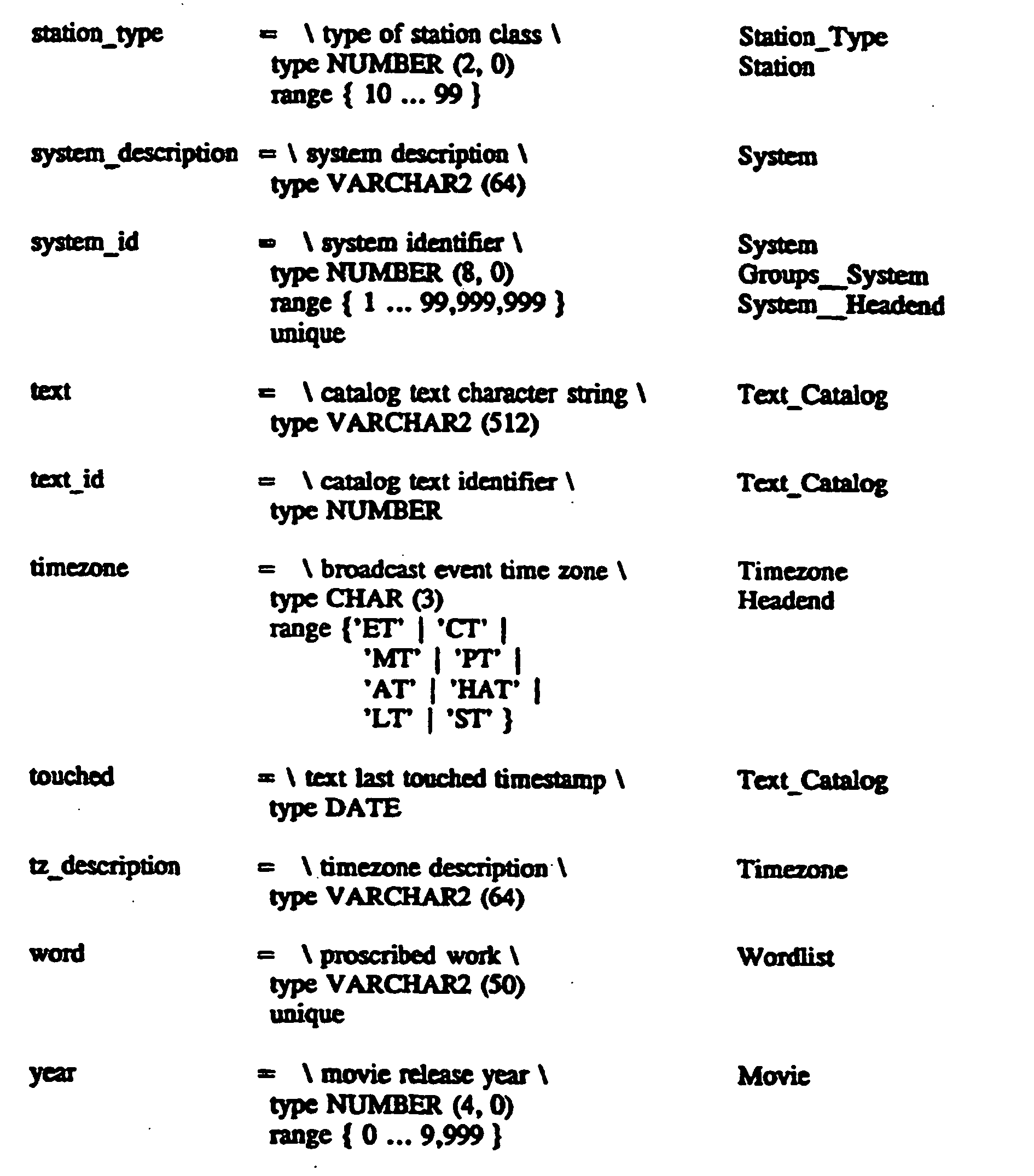
- Table 1 is an alphabetical list of all the data fields in one embodiment of a relational database for television program listings.
- the table shows the format, size, and data range for each field. Not every data field is used for each database entry. For example, fields such as actor_name, mpaa_rating, mpaa_ra_description, mpaa_reason, mpaa_reason_code, star-rating, and year will generally be used only for movies.
- Table 2 illustrates the structure of the relational database of Fig. 1 showing how the various database fields are organized as well as the primary keys (pk) and foreign keys. The bold typeface indicates the name of a table in the database and the entries listed underneath are the fields that comprise the table.
- the station list file may contain every station in the database, a subset of stations representing the stations in a particular cable system, any user defined group of stations, or a single station.
- the station list file contains a data field for each station indicating the daily on-air times for that station.
- the listings database i.e., the station_id field
- the listing database is then searched against this file to determine if each station in the station list file is included in the database. If missing stations are found, the total number of missing stations is incremented and displayed and the name of the missing station is written to an output file.
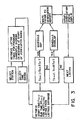
- the schedule gap and overlap option operates as shown in Fig. 3 .
- the flow chart shows the operation for a single station but operation is the same for each station in a station list file.
- a time range is selected for checking for gaps and overlaps.
- the system checks the database to determine if the beginning of the time range coincides with the start of a program and begins the process with this listing. If the beginning of the time range intersects a program already showing, the system begins the process with this listing.
- the start time (start_time) for the first listing to be checked is then retrieved form the database. If there are no gaps or overlaps in the schedule, the start time of the next listing should be the start time of the previous listing plus the slot run time (slot_run_time) of the previous listing.
- T n + 1 T n + RT n schedule is correct T n + 1 > T n + RT n schedule gap T n + 1 ⁇ T n + RT n schedule overlap
- T. represents the start time and RT. the slot run time for the nth listing in the database.
- Each entry in the database is checked independently of the other entries so that a schedule gap or overlap for a particular pair of programs will not affect all of the subsequent listings in the database. For stations that do not broadcast 24 hours a day, an off-the-air place holder is inverted into the database and treated as a program.
- a small gap or overlap i.e., 5 minutes
- a movie may begin 5 minutes or so after the slot time so that if the previous movie runs 3 minutes into the slot time, there is no actual overlap.
- a movie with a running time of, e.g.. 87 minutes will end prior to the beginning of the next time slot.
- premium stations it is common for premium stations to fill this apparent gap with advertising or other promotional material.
- T n + 1 T n + RT n + / - 5 minutes schedule is correct T n + 1 > T n + RT n + 5 minutes schedule gap T n + 1 ⁇ T n + RT n - 5 minutes schedule overlap
- the missing titles, missing copy, missing fields, and missing movie ratings utilities operate as follows. For each of these options, the listings are checked for the missing information by searching the designated field or fields. For missing titles, all of the different titles for a program may be checked, including the full (TVG) tide and the various shortened versions (i.e., for 30, 60, 90, and 120 minute grid boxes). For the missing copy option, the long copy, short copy, and promo copy fields may be checked. In the database described by Tables 1 and 2, all textual data (including program titles, copy, and originator) for a program is stored in a Text_Catalog table, which is indexed using a text_id.
- the text_id is obtained from another table, such as Program_Map, which consists of an array of pointers into the Text_Catalog.
- Program_Map table is indexed using the program_id and field_type. There is a text pointer for each of the different field types as indicated under the field_description in Table 1. Using a program_id, all text data associated with a program may be retrieved.
- the MPAA_rating field is checked.
- all fields which should be present for a particular listing are checked.
- the appropriate count is incremented and displayed.
- the date, start time, station identification, and title are written to the appropriate output verification report.
- the missing copy option will check for missing copy for all the listings that should include copy such as movies, live sports, and pay-per-view programs.
- the missing movie ratings option checks all premium channels and pay-per-view events for movie ratings since only these channels will air un-edited movies. It is of course also possible to generate a single output verification report including all of the listings with musing information. Thus, a single file can be generated listing all listings with missing titles, copy, and/or movie ratings.
- the system Based on the platform or platforms selected by the user (the Platform_id field), the system a table in the database that indicates the various different display formats for each listing. For example, if the platform support both an interactive and channel guide type EFG, each with different display characteristics, the table will indicate that each should be included in the database. Thus, for a two hour movie, the system will check that there are titles for each listing lagged as 30, 60, 90, and 120 minute listings to fit into the different sized grid cells for each of the two types of EPGs. If any of the required titles are missing, the system will write sufficient information to the output report to identify the missing title.
- the system checks the multiple versions of the titles in the database to ensure that each fits into the designated space for the particular platform.
- the space required for display of the listings is determined by consulting the table listing the available fonts for the platform and calculating the space required based on the font and character pair kerning.
- the character_pair_kerning table shown in Table 2 returns the kerning value for character pairs that are kerned which is used to determine the actual space required for display of a character pair.
- a look-up table may be built including, for each different font, the space required for display of a word, accounting for character pair kerning.
- the look up table is consulted prior to actually calculating the required space. If the word is in the look-up table, it is not necessary to calculate the space requirement. If it is not, following calculation of the space requirement, the word is added to the look-up table for future reference. Alternatively, in order to avoid recalculation of whether any particular title will fit in a particular display for a particular platform, an appropriate tag is applied to each title that previously has been text-fitted. Then, when the verification process is run, in order to determine if all text-fitted titles are present, the system checks for the presence of titles previously tagged for the specific platform.
- each listing which, according to the operating rules of the EPG, should include copy is checked. Based on the platform chosen, the system consults a table in the database that indicates the space available for copy. Lengthy copy is then checked in the same manner as lengthy titles. If the space required for display of the title or copy exceeds the available space, the count is incremented and displayed and the platform, date, start time, station identification and lengthy title or copy are written to the appropriate verification report.
- the above options check for fields that are completely missing data and fields that include data that exceeds the designated space in which it must fit. They do not, however, detect errors in the data itself.
- the editorial errors option supplements these options by cheeking for particular errors in the data fields. This option searches the listings for the more common types of errors found in the database. These include duplicated movie titles and years, cross references to other days of the programming week (for programs repealing each day), and the phrase "at press time” (often used where at the time the database is compiled certain information about a program is not yet known). For each such editorial error located, the count is incremented and displayed, and the date, time, station identification, and type of error are written to the output verification file.
- the inappropriate language option is similar to the editorial errors option in that it checks the listings database for certain words and phrases that are not appropriate for an EPG. All such words and phrases are included in the language dictionary file. The database is then checked for any character strings matching these words and phrases. If any matches are found, the count is incremented by one and displayed and the date, start time, station identification, and inappropriate language found are written to the output file.
- the inappropriate language utility may be configured to check each database field containing textual data. Alternatively, only certain text fields may be designated for checking against the inappropriate language file.
- Missing program type, slot time, run time, program origin, PPV price and PPV promotional copy may be implemented in the same manner as the other missing field options.
- the PPV event on a non-PPV station and non-PPV event on a PPV station options are implemented by comparing the program_type and station_type fields for a program.
- the system may be implemented on any of a number of digital computers.
- a 486 based personal computer system may be used.
- a mass storage device such as an optical disc, hard drive, or magnetic tape is used to store the database.
- the data verification utility may be resident on the computer which includes a display device and keyboard for entry of user commands.
- the utility is implemented in a Microsoft Windows environment for maximum user friendliness.
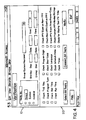
- Fig. 4 shows a verification set-up screen for selecting the various verification options.
- the user selects whether to run verification on a group of cable systems, a single cable system, or a single head end. Also in the top portion of screen 10, the user selects the starting and ending times on which the data verification is nm. In the lower portion of the screen 20, the various verification options are selected. Alternatively, all tests may be selected using a single button.
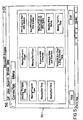
- correction menu 30 shown in Fig. 5 .
- the correction menu permits the user to correct the errors by type of error.
- the user is presented with the correction editor screen shown in Fig. 6 .
- the correction editor screen displays the values of the different fields for the program listing containing an error so that the user may make the appropriate changes.
- the data for a particular cable system is extracted and prepared for transmission to the cable system.
- the data corresponding to a particular channel map is extracted from the database and converted to ASCII format or a binary data format readable by the cable system.
- the data file may be transmitted to the cable system by any of a number of means such as by satellite, telephone line, portable storage medium, or broadcast.
- the data verification utility may be resident at each of the cable system head-ends.
- the cable system's individual data file is extracted from the program listings database and transmitted to the cable system.
- the various checking options associated with the utility may then be run at the cable system head end prior to transmission of the ERG data to individual viewers.
- only the data for stations carried by the particular cable system is checked.
- the advantage of this arrangement is that it provides for listings editing capabilities at each cable system so that errors not detected by the ERG provider may be corrected and last minute changes reflected in the data provided to the viewers.
Landscapes
- Engineering & Computer Science (AREA)
- Signal Processing (AREA)
- Multimedia (AREA)
- Databases & Information Systems (AREA)
- General Physics & Mathematics (AREA)
- Astronomy & Astrophysics (AREA)
- Physics & Mathematics (AREA)
- Health & Medical Sciences (AREA)
- Biomedical Technology (AREA)
- General Health & Medical Sciences (AREA)
- Two-Way Televisions, Distribution Of Moving Picture Or The Like (AREA)
- Testing, Inspecting, Measuring Of Stereoscopic Televisions And Televisions (AREA)
- Television Systems (AREA)
- Circuits Of Receivers In General (AREA)
- Stored Programmes (AREA)
Abstract
Description
- This invention relates to an electronic program guide ("EPG") system that provides users with schedule information for broadcast or cablecast programs available for viewing on a video display. More particularly, it relates to a system and method for verification of the EPG data prior to transmission to a plurality of remote locations such as cable system head ends or viewer sites.
- Electronic program guides for television systems are known in the art, particularly with regard to cable television systems. For example, one common implementation of a electronic program guide utilizes a dedicated cable television channel for continuously broadcasting program schedule information. The advantage of such a system is that it is relatively easy to deploy because it is centrally implemented at the cable head-end. No additional electronics or software are required at the viewer location because full control of the display is maintained at the cable head-end. The display information is then broadcast continuously on a dedicated cable channel. The television viewer simply tunes the cable converter box or television tuner to the channel on which the schedule information is modulated and views the program listings. Typically, these program guides utilize a scrolling display of television listings or a fixed display that periodically changes. Some systems employ a partial screen of listings with additional information in the remainder of the screen such as advertisements for movies on pay channels, pay-per-view (PPV) event schedules, time and weather information, and other commercial information. These systems generally incorporate a grid or matrix to display the program schedule information, with a different row for each channel and columns representing different time slots.
- In addition, interactive program guides are also known. Such guides permit the user to select the program listings to be displayed based on user selection criteria and display the listings on the television receiver in a desired format. Interactive guides are more versatile than dedicated channel guides because they operate under user control. However, they are more costly to implement because they require memory and processor capabilities at each user site. The present invention may be used with either dedicated channel or interactive program guides because it operates on the program listings data common to both types of guides.
- Modern cable systems include upwards of 100 channels. Thus, for both dedicated channel and interactive program EPGs, large quantities of data are required to provide a complete listing of program schedule information. A problem common to both types of systems is that there are often errors in the data that must be corrected. Errors may arise for any number of reasons. First, it is common for a complete database of program listings to be compiled from several different sources. Much of the data is available on a national basis, including network schedule (both broadcast and cable), pay-per-view listings, and regional programming. Some data, however, must be obtained at a local level, including locally originated programs, channel maps for individual cable systems, and pricing for pay-per-view programs. The fact that there is no single entity responsible for compilation of the entire listings database increases the risk of errors. For example, a portion of the data may need to be converted to a different format before it can be utilized in the program guide.
- Second, the listings database contains an enormous amount of data. Electronic program guides, whether of the dedicated channel or interactive variety, include a database comprising the program listings information for the various stations and pay-per-view channels. The listings data may be arranged in weekly blocks or other time periods. As an example, consider a cable system with eighty (80) channels, each one broadcasting 24 hours a day. Assuming for each station a daily average of four hours of two-hour programs, five hours of on-hour programs, and the balance comprising one-half hour programs, 37 different programs are aired per channel per day. Thus, a one week database comprises on average information for 37x80x7 = 20,720 programs. Although many programs repeat on a daily basis, it is apparent that even one weeks' worth of program listings for the average cable system is a very large amount of data. In addition, while much of the data may be compiled in advance, a substantial number of listings must be added, and schedule changes accounted for, shortly before the data is transmitted to the various cable systems. The volume of data makes it difficult and time consuming to manually ensure its reliability.
- Finally, certain programs, primarily sports events, are not scheduled as far in advance as other programs. For example, although a time slot may be slated for a baseball game, it may not be known until one week or less in advance of the scheduled game, the particular game to be broadcast. There is thus a need to efficiently and quickly identify entries in a listings database that require editing of one form or another either to add information or correct errors.
- A program listings database with incorrect listings or incomplete information is of limited utility. There is thus a need to ensure the reliability of the data transmitted to the cable systems and ultimately to viewers. However, because the volume of data is so great, there is a need for an automated procedure for verification of the data to reduce the number of manual hours required. There is thus a need for an automated system and method of reviewing the EPG data and flagging any errors therein. In addition, there is a need to provide a list of any such errors to a database editor to permit the editor to take whatever corrective action is necessary. In addition, different data may need to be generated for different cable systems because, e.g., each cable system may have different local programming or pay-per-view programs or schedules.
- One factor that complicates the task is the need for a program listings database to be compatible with a plurality of different platforms. Different cable systems may have different hardware configurations at the cable system head-end and different set-top converter boxes at the viewer locations. For example, EPG3 typically display program listings in grid format with columns representing different time slots and rows representing different channels. Set-top converters vary with regard to their text display capabilities. Some may display text using a proportional font while others use a standard font. In addition, some are configured to display symbols in the grid cells in addition to text which decreases the available space for text display. Thus, the database must be configured in such a way to accommodate the varying capabilities of set-top converters. One way to accomplish this is by editing the text (program titles, copy, station identifications, and any other text included in the EPG) to abbreviate any text that does not fit into a particular grid cell. A system for assisting in this "text fit" process is described in co-pending application serial number
08/247,059 . Thus, when verifying the data prior to transmission to a cable system, it is necessary to specify the platform on which the EPG operates so as to determine if the listings are properly edited for the particular platform. -
US5,311,423 discloses a method of managing information used and generated in the scheduling and exhibition of performances in a video network. The exhibition plan is generated through the performances of an exhibition manager process which operates on a computer. - The invention is defined in the independent claims. Optional features of the invention are defined in the dependent claims.
- The system and method of the present invention provides for automated checking of the program listings data in the database.
- Prior to being processed by the data verification system of the present invention, the database of television program schedule listings may undergo initial processing as follows. First, the data is collected from the various information providers and checked for high level errors. Next, it may be required to normalize the data to the EPG database structure and format as it is possible that the information collected from the different sources uses different formats and syntax. Finally, the data may be processed with a text fit system to determine if any titles in the database require editing in order to fit within a grid cell of a predetermined size for any of the different platforms on which the EPG will operate. Alternatively, the text fit process may be incorporated as part of the listing verification process so that text requiring editing to fit within a particular grid cell size is identified and presented to the user for editing if not already included in a library or look-up table of pre-edited text.
- At this stage, the listing verification system and procedure of the present invention operates on the data to check for any errors in the data. In particular, checks may be run for any missing stations, schedule gaps, schedule overlaps, missing titles, missing copy, missing fields (i.e., run time, slot time, program type), missing movie ratings, missing program origin, missing PPV price, PPV events on non-PPV station, non-PPV event on PPV station, inappropriate language, lengthy titles, lengthy copy, and editorial errors. "Lengthy" as used herein refers to text that is too long to fit into the allocated grid space in the program guide. Errors are automatically written to output files and separate files are used for each of the above parameters.
-
-
Fig. 1 is a block diagram showing an EPG delivery system including the data verification system of the invention herein. -
Fig. 2 is a flow chart illustrating the overall operation of the data verification system of the invention herein. -
Fig. 3 is a flow chart showing the operation of the schedule gaps and overlaps verification step of one embodiment of the data verification system of the invention herein. -
Fig. 4 is an illustration of a user interface for setting the parameters of one embodiment of the data verification system of the invention herein. -
Fig.5 is an illustration of a post-verification correction menu of one embodiment of the data verification system of the invention herein. -
Fig. 6 is illustration of the correction editor feature of one embodiment of the data verification system of the invention herein. -
Fig. 1 is a block diagram illustrating schematically the general configuration for one embodiment of an electronic program guide delivery system. Information for the database may originate from several different information providers. For example, one source may provide all the national listings which may include network (both broadcast and cable) schedules, and regional program schedules or, alternatively, there may be multiple sources of such information. A single second source (or combination of second sources) may provide local listings information which includes schedules for locally originated programs, channel maps for individual cable systems, and information on shared channels (single cable channels that carry different programming during different parts of the day). A third information provider (or multiple providers) may furnish all of the listings information for pay-per-view events. It may even be the case that each of these categories of program schedule information are provided by multiple sources. Of course, it is also possible that all the information be gathered and provided by a single source or that overlapping information be gathered from the multiple sources. In addition, there may be other information providers such as billing vendors that furnish billing information. - Due to the fact that the listings database is likely to be comprised of information from a variety of different sources which may or may not furnish the data in the desired format, it may be necessary to perform format conversion and/or syntax verification on the received data prior to loading it into the database. This step is necessary to ensure that the data is in a uniform format in the database for further processing. A second function which may be performed on the data is pre-verification editing. One example of such editing is processing of the data by the text fit system disclosed in co-pending application serial number 247,059. Text fit processing in effect expands the database to include multiple values for text fields for individual listings to accommodate different EPG platforms. For example, varying amounts of space are allocated for program titles for the different platforms. In addition, within the same platform, multiple versions of a title may be required to fit inside grid cells of, e.g., for a two hour program, 30, 60, 90, and 120 minutes. The text fit system determines whether an edited version of a title is required to fit within the designated space for a particular platform and grid cell. The database is then edited to include an abbreviate version of the title as well as the full title for the listing. It is also possible that a portion of the data will already contain multiple versions of titles. In some cases, it may be desirable to incorporate the text fit process into the verification utility by using the verification utility to first identify listings requiring processing with the text fit system and then running the text fit system on these identified listings. Depending on the particular implementation of the EPG delivery system, it may be desirable or necessary to perform additional pre-verification processing on the data.
- Following the pre-verification processing steps, the listings database is assembled and processed by the data verification system. As shown in
Fig. 1 , the data versification system operates on the listings database and generates error reports for errors found therein. The program listings and channel map editing systems are used to make changes to the data in the listings database. The data verification system operates under user control to determine which data fields are to be checked. Alternatively, the system can operate fully automatically to check all data fields. An advantageous feature of one embodiment of the present invention is the creation of reports for each type of error. The reports permit the editor to reconcile any missing or conflicting information in the database with the information provider. The reports may be electronically generated and then viewed on a computer, stored in electronic format, or printed as hard copies. The utility operates on the database of program listings information for a user definable time period, such as one week. For each verification utility, stations may be selected individually, by channel map, platform type, multi-system operator ("MSO"), or arbitrary grouping. Each of the processing options associated with the system is discussed below. The operation of the various options is discussed under the section headed "System Operation." - In order to determine if there are any stations missing from the database, the listings database (or any subset thereof) is checked against a second database that includes a list of all stations that should be included in the listings database or subset, such as a station list file for a particular cable system. The missing stations verification utility then outputs to a file a list of the missing stations.
- It is important to ensure that there are no gaps in the programming schedule, Included in the database is an indication of the daily on-the-air periods for each station. The database is then checked to determine if, for any designated station, there are any gaps between the ending time of a program and the start time of the next program. The end times for listings are calculated by adding the program's slot time (total time until the beginning of the next listing) to the start time. The system provides the flexibility of being able to specify any time range for checking for gaps and overlaps. If the beginning of the time range for a channel does not coincide with the beginning of a program, the system will check for the "intersecting listing", i.e., the listing starting prior to and ending after the beginning of the specified time range. Schedule holes are written to a file that includes the date, station, start time, and end time of the hole or other information sufficient to uniquely identify the schedule hole.
- This option also checks for overlaps in a similar manner. If the listings data indicates that a program on a particular channel begins prior to the sum of the start time plus the run time of the previous program, the listing is flagged as a program overlap error.
- The listings database is checked for missing titles for program events, i.e., where the listing has no title field. Listings with missing titles are written to a file that includes the date, station, and start time of the listing.
- Certain program listings include additional descriptive information in addition to the program tide called "copy." These include movies, live sports, and pay-per-view programs. The additional information may also be provided for other programs as well as determined by the operating rules for the EPG. The missing copy option checks these listings for missing copy and writes any such listings to a file with sufficient context data to identify the program, such as program date, station, start time, and title.
- This option checks the database listings to ensure that all required fields for each type of program are present. For example, according to the operating rules of the EPG as defined by the EPG provider, the schedule information for pay-per-view and premium movies must include an MPAA rating as this parameter may be used by viewers to lock-out certain movies. Thus, the missing fields option will check that the MPAA rating, as well as the other fields dictated by the operating rules, are in the database for the pay-per-view and premium listings. For PPV events, the operating rules may further dictate that the schedule information include price information, a telephone number for ordering the event, and promotional copy used for advertising the event. The missing fields option would then check these fields as well for programs designated as PPV events. Similarly, the operating rules may dictate different required fields for other types of listings. Listings with missing fields are written to a file including the date, station, and start time of the program, as well as an identification of the missing field.
- The listings database includes the MPAA movie ratings for movies to be shown on premium and PPV channels. Any such movies with missing ratings are written to a file including the date, station, start time, and title of the movie.
- Some or all of the data in the database may have already been processed with the text fit system to provide multiple titles where required to fit into the grid cells. The lengthy titles option permits the user to perform an additional check for any titles that do not fit into the maximum allowable space for each of the selected platforms and also identifies those entries not yet processed with the text fit system. Any such titles found are written to a file including the platform, date, station, start time, and title of the listings. This option may be selected for any of the platforms on which the EPG operates. The titles may then be processed using text fit and the verification utility re-run on the database.
- This option is similar to the lengthy copy option and searches the listings database for the copy for movies, live sports, pay-per-view programs, and any other entries with copy that will not fit into the allowable space for the selected platforms. Any such listings found are written to a file including the platform, date, station, start time, and title of the listings.
- The listings database is searched for editorial errors which can include, inter alia, duplicated titles or years in the copy of a movie, cross references to other days, and certain phrases such as "at press time." Editorial errors are written to a file including the date, station, start time, and description of the error found for each listing. Of course, these particular errors represent only one particular embodiment of the system designed to detect the most common types of errors - the utility may readily be modified to detect any specified editorial errors.
- This option searches the listings database for inappropriate language in titles, copy, and messages. The listings database is checked against a language dictionary that includes all of the language deemed inappropriate. Listings with any such language are written to a file including the date, station, start time, and inappropriate language found.
- The above options for verifying the data in the listings database are not exhaustive. The verification system may be readily configured to check any field in the database. Some of the other fields which may be checked are as follows: missing program type, missing slot time, missing run time, missing program origin, PPV event on a non-PPV station, non-PPV event on a PPV station, and missing price or promotional copy for PPV events. Program type refers to the type of broadcast, i.e., broadcast, PPV, near video on demand ("NVOD"), etc. The slot time of a program is the total time from the beginning of one program until the start of the next program, including commercial time, and program run time, is the actual running time of the program itself. The slot time for a program must exceed (or be only slightly less than) its nm time, which is another possible verification option. Program origin indicates the source of the program. The program type and station type are used to check whether a PPV event is scheduled on a non-PPV station and whether a non-PPV event is scheduled on a PPV station.
- It will be recognized by those of skill in the art that the particular information written to the appropriate file when an error or omission is located is not critical. All that is necessary is that sufficient context data is supplied to uniquely identify the faulty listing for correction purposes.
- The data verification system may also be configured with an error navigation feature as follows. Following processing of the database or designated subset thereof and generation of the various error reports, the system may be configured to return to the portions of the database identified as containing errors, retrieve the appropriate database entries, and present them to the user for correction. Following correction of the errors, the database may again be processed with the data verification utility to check for errors. In this manner, an iterative process may be implemented to correct and verify all of the data in the database.
- The data verification utility operates as shown in the flow diagram of
Fig. 2 . First the user is queried to specify the platform or platforms and the channel maps for which the utility is to be nm. Alternatively, with a database such as that described in Tables 1 and 2, the user need only specify the cable group, system, or head end. The verification system can then extract from the database the appropriate platform(s) and channel map(s). Next, the desired verification options are chosen. Alternatively, the user may elect to activate all verification options. Depending on the options selected, the user may be queried for additional information. If the "Check Lengthy Titles" or "Check Lengthy Copy" option is selected, the user must input the path and filename for a font library file in order to determine the proper font to be used for display of the text. If the selection of a platform uniquely determines the font, this step may be eliminates as the file may be selected automatically. The particular font chosen affect the space required to display the text. Of course, the user may be supplied with a list of possible files and need only select a file from the displayed list. If the "Check Missing Stations" option is selected, the user will be requested to enter a master list of all stations that should appear in the listings database or a subset of stations representing the list for a particular cable system. This information may be contained in a station list file. If the "Check Language" option is selected, the user enters a language dictionary file containing a library of inappropriate words. Finally, the user is queried to enter a path and filenames for the output verification reports. Or course, a default path and filename may be used. Separate verification reports are generated for each selected option. The user may also elect to combine chosen reports into a single report. - Alternatively, to minimize the amount of user interaction required, the database may be configured to define all the necessary parameters so that the user need only select the cable system and verification options. For each cable system (or cable group or head end), the database contains a table with the correct platform(s) and a table listing the different fonts available for use with the platforms so that the user need not designate the font library file. Similarly, the language dictionary file may be defined by the choice of platform, eliminating the need for the user to define the file.
- Following input of all the requested information, the data verification utility displays the selected options and user entered parameters for confirmation by the user. The data verification process then begins. Following professing, the system displays to the user a summary report showing the cumulative total errors located for each of the selected options. In addition, output reports are generated for each of the options selected including all listings found with the indicated error or omission.
- Table 1 is an alphabetical list of all the data fields in one embodiment of a relational database for television program listings. The table shows the format, size, and data range for each field. Not every data field is used for each database entry. For example, fields such as actor_name, mpaa_rating, mpaa_ra_description, mpaa_reason, mpaa_reason_code, star-rating, and year will generally be used only for movies. Those of ordinary skill in the art will recognize that the disclosed data verification utility may be designed to operate with any database configuration. Table 2 illustrates the structure of the relational database of
Fig. 1 showing how the various database fields are organized as well as the primary keys (pk) and foreign keys. The bold typeface indicates the name of a table in the database and the entries listed underneath are the fields that comprise the table.




- As shown in
Fig. 2 , in order to four missing stations, the user must designate a station list file. The station list file may contain every station in the database, a subset of stations representing the stations in a particular cable system, any user defined group of stations, or a single station. In addition, the station list file contains a data field for each station indicating the daily on-air times for that station. The listings database (i.e., the station_id field) is then searched against this file to determine if each station in the station list file is included in the database. If missing stations are found, the total number of missing stations is incremented and displayed and the name of the missing station is written to an output file. - The schedule gap and overlap option operates as shown in
Fig. 3 . The flow chart shows the operation for a single station but operation is the same for each station in a station list file. First, a time range is selected for checking for gaps and overlaps. The system then checks the database to determine if the beginning of the time range coincides with the start of a program and begins the process with this listing. If the beginning of the time range intersects a program already showing, the system begins the process with this listing. The start time (start_time) for the first listing to be checked is then retrieved form the database. If there are no gaps or overlaps in the schedule, the start time of the next listing should be the start time of the previous listing plus the slot run time (slot_run_time) of the previous listing. Each listing is then checked in succession according to the following equations used to determine whether there is a hole or a gap:


where T. represents the start time and RT. the slot run time for the nth listing in the database. Each entry in the database is checked independently of the other entries so that a schedule gap or overlap for a particular pair of programs will not affect all of the subsequent listings in the database. For stations that do not broadcast 24 hours a day, an off-the-air place holder is inverted into the database and treated as a program. - For some television stations, particularly premium stations, a small gap or overlap (i.e., 5 minutes) in programs may be permitted. For example, on a premium movie channel, a movie may begin 5 minutes or so after the slot time so that if the previous movie runs 3 minutes into the slot time, there is no actual overlap. Similarly, a movie with a running time of, e.g.. 87 minutes will end prior to the beginning of the next time slot. However, it is common for premium stations to fill this apparent gap with advertising or other promotional material. If is the case, the equations may be modified as follows to reflect the fact that such small gaps and overlaps are permissible:


- The missing titles, missing copy, missing fields, and missing movie ratings utilities operate as follows. For each of these options, the listings are checked for the missing information by searching the designated field or fields. For missing titles, all of the different titles for a program may be checked, including the full (TVG) tide and the various shortened versions (i.e., for 30, 60, 90, and 120 minute grid boxes). For the missing copy option, the long copy, short copy, and promo copy fields may be checked. In the database described by Tables 1 and 2, all textual data (including program titles, copy, and originator) for a program is stored in a Text_Catalog table, which is indexed using a text_id. The text_id is obtained from another table, such as Program_Map, which consists of an array of pointers into the Text_Catalog. The Program_Map table is indexed using the program_id and field_type. There is a text pointer for each of the different field types as indicated under the field_description in Table 1. Using a program_id, all text data associated with a program may be retrieved.
- For the missing movie rating option, the MPAA_rating field is checked. For the missing fields option, all fields which should be present for a particular listing (according to the operating rules of the EPG) are checked. When any of the above missing fields is found, the appropriate count is incremented and displayed. In addition, the date, start time, station identification, and title (for missing copy and MPAA ratings) are written to the appropriate output verification report.
- The missing copy option will check for missing copy for all the listings that should include copy such as movies, live sports, and pay-per-view programs. The missing movie ratings option checks all premium channels and pay-per-view events for movie ratings since only these channels will air un-edited movies. It is of course also possible to generate a single output verification report including all of the listings with musing information. Thus, a single file can be generated listing all listings with missing titles, copy, and/or movie ratings.
- The operation of the lengthy titles and lengthy copy options is as follows. Based on the platform or platforms selected by the user (the Platform_id field), the system a table in the database that indicates the various different display formats for each listing. For example, if the platform support both an interactive and channel guide type EFG, each with different display characteristics, the table will indicate that each should be included in the database. Thus, for a two hour movie, the system will check that there are titles for each listing lagged as 30, 60, 90, and 120 minute listings to fit into the different sized grid cells for each of the two types of EPGs. If any of the required titles are missing, the system will write sufficient information to the output report to identify the missing title. In addition, the system checks the multiple versions of the titles in the database to ensure that each fits into the designated space for the particular platform. The space required for display of the listings is determined by consulting the table listing the available fonts for the platform and calculating the space required based on the font and character pair kerning. The character_pair_kerning table shown in Table 2 returns the kerning value for character pairs that are kerned which is used to determine the actual space required for display of a character pair. In order to avoid calculating the space required for display of an entire word each time the word is encountered in the database, a look-up table may be built including, for each different font, the space required for display of a word, accounting for character pair kerning. In this manner, the look up table is consulted prior to actually calculating the required space. If the word is in the look-up table, it is not necessary to calculate the space requirement. If it is not, following calculation of the space requirement, the word is added to the look-up table for future reference. Alternatively, in order to avoid recalculation of whether any particular title will fit in a particular display for a particular platform, an appropriate tag is applied to each title that previously has been text-fitted. Then, when the verification process is run, in order to determine if all text-fitted titles are present, the system checks for the presence of titles previously tagged for the specific platform.
- For lengthy copy, each listing which, according to the operating rules of the EPG, should include copy, is checked. Based on the platform chosen, the system consults a table in the database that indicates the space available for copy. Lengthy copy is then checked in the same manner as lengthy titles. If the space required for display of the title or copy exceeds the available space, the count is incremented and displayed and the platform, date, start time, station identification and lengthy title or copy are written to the appropriate verification report.
- The above options check for fields that are completely missing data and fields that include data that exceeds the designated space in which it must fit. They do not, however, detect errors in the data itself. The editorial errors option supplements these options by cheeking for particular errors in the data fields. This option searches the listings for the more common types of errors found in the database. These include duplicated movie titles and years, cross references to other days of the programming week (for programs repealing each day), and the phrase "at press time" (often used where at the time the database is compiled certain information about a program is not yet known). For each such editorial error located, the count is incremented and displayed, and the date, time, station identification, and type of error are written to the output verification file.
- The above editorial errors are only a few of the errors that may occur in the database. If additional types of errors are detected, these may also be checked by the editorial error option.
- The inappropriate language option is similar to the editorial errors option in that it checks the listings database for certain words and phrases that are not appropriate for an EPG. All such words and phrases are included in the language dictionary file. The database is then checked for any character strings matching these words and phrases. If any matches are found, the count is incremented by one and displayed and the date, start time, station identification, and inappropriate language found are written to the output file. The inappropriate language utility may be configured to check each database field containing textual data. Alternatively, only certain text fields may be designated for checking against the inappropriate language file.
- Operation of the other verification options is similar to that of the options enumerated above. Missing program type, slot time, run time, program origin, PPV price and PPV promotional copy may be implemented in the same manner as the other missing field options. The PPV event on a non-PPV station and non-PPV event on a PPV station options are implemented by comparing the program_type and station_type fields for a program.
- It will be recognized by those of skill in the art that the system may be implemented on any of a number of digital computers. In one embodiment, a 486 based personal computer system may be used. Alternatively, due to the large amount of data to be processed, a more powerful workstation computer may be used. A mass storage device, such as an optical disc, hard drive, or magnetic tape is used to store the database. The data verification utility may be resident on the computer which includes a display device and keyboard for entry of user commands. In one embodiment, the utility is implemented in a Microsoft Windows environment for maximum user friendliness.
Fig. 4 . shows a verification set-up screen for selecting the various verification options. In the top portion of thescreen 10, the user selects whether to run verification on a group of cable systems, a single cable system, or a single head end. Also in the top portion ofscreen 10, the user selects the starting and ending times on which the data verification is nm. In the lower portion of thescreen 20, the various verification options are selected. Alternatively, all tests may be selected using a single button. After verification is run, the user is presented withcorrection menu 30 shown inFig. 5 . The correction menu permits the user to correct the errors by type of error. Upon selecting an error type for correction, the user is presented with the correction editor screen shown inFig. 6 . The correction editor screen displays the values of the different fields for the program listing containing an error so that the user may make the appropriate changes. - Once the data is processed by the data verification utility and the additions, changes, and edits are made to the listings database, the data for a particular cable system is extracted and prepared for transmission to the cable system. At this stage, the data corresponding to a particular channel map is extracted from the database and converted to ASCII format or a binary data format readable by the cable system. The data file may be transmitted to the cable system by any of a number of means such as by satellite, telephone line, portable storage medium, or broadcast.
- In an alternate embodiment, the data verification utility may be resident at each of the cable system head-ends. In this manner, the cable system's individual data file is extracted from the program listings database and transmitted to the cable system. The various checking options associated with the utility may then be run at the cable system head end prior to transmission of the ERG data to individual viewers. Thus, only the data for stations carried by the particular cable system is checked. The advantage of this arrangement is that it provides for listings editing capabilities at each cable system so that errors not detected by the ERG provider may be corrected and last minute changes reflected in the data provided to the viewers.
- The code for a particular computer program to implement the invention disclosed herein will be readily apparent to those skilled in the art of video system programming and graphic display based on the description contained herein and associated figures. It will also be appreciated by those skilled in the art that there can be departure from the specific embodiment of the invention described herein without departing from the true scope of the claims appended hereto.
Claims (14)
- A method of making a schedule of television programs available via a distribution system, the method comprising:storing a database of television program listings collected from one or more information providers, the database comprising data fields for television channel data for a plurality of television channels;extracting from the database data providing a program schedule for the distribution system; andtransmitting the data providing the program schedule to the distribution system to make the program schedule available via said system;characterised by:automatically analysing with a data processor one or more of the data fields in the database listings for at least one of invalid data and missing data (20);providing a report of detected errors; andproviding to a user editing means (30, 40) by which the user can correct the detected errors before the data is transmitted to the distribution system.
- The method defined in claim 1, wherein automatically analysing with a data processor one or more of the data fields comprises automatically analysing with the data processor one or more of the data fields for at least one of missing titles, missing copy, and missing fields (20).
- The method defined in claim 1, wherein automatically analysing with a data processor one or more of the data fields comprises automatically analysing with the data processor one or more of the data fields for at least one of lengthy titles and lengthy copy (20).
- The method defined in claim 1, wherein automatically analysing with a data processor one or more of the data fields comprises automatically analysing with the data processor one or more of the data fields for editorial errors (20).
- The method defined in claim 1, wherein automatically analysing with a data processor one or more of the data fields comprises automatically analysing with the data processor one or more of the data fields for inappropriate language (20).
- The method defined in claim 1, wherein automatically analysing with a data processor one or more of the data fields comprises automatically analysing with the data processor one or more of the data fields for missing movie ratings (20).
- The method defined in claim 1, wherein automatically analysing with a data processor one or more of the data fields comprises automatically analysing with the data processor one or more of the data fields for missing program type (20).
- The method defined in claim 1, wherein automatically analysing with a data processor one or more of the data fields comprises automatically analysing with the data processor one or more of the data fields for missing price for pay programs (20).
- The method defined in claim 1 wherein automatically analysing with a data processor one or more of the data fields comprises:selecting a channel list file that identifies one or more television channels; andautomatically comparing with the data processor the channel list file against the data fields of the database to determine whether any of the one or more television channels in the file is missing from the database.
- The method defined in claim 1, wherein the distribution system is a cable or other pay television system.
- The method defined in claim 1, further comprising transmitting by the distribution system the data providing a program schedule to a plurality of television viewers.
- The method defined in claim 1, further comprising automatically analysing with the data processor one or more of the data fields to determine whether each of the following inequalities is substantially met:


where Tn denotes the schedule time and RTn denotes the run time for the nth television program listing in the database for a television channel, and T n+1 denotes the schedule time for the n+lth television program listing in the database for the television channel. - The method defined in claim 1, further comprising providing a report of a start time and an end time of one or more of a schedule gap and schedule overlap.
- A system for making a schedule of television programs available via a distribution system, comprising means for carrying out the method defined in any of claims 1 - 13.
Priority Applications (1)
| Application Number | Priority Date | Filing Date | Title |
|---|---|---|---|
| EP09011488.5A EP2175646B1 (en) | 1994-10-28 | 1995-10-27 | Verifying EPG data |
Applications Claiming Priority (4)
| Application Number | Priority Date | Filing Date | Title |
|---|---|---|---|
| US330684 | 1994-10-28 | ||
| US08/330,684 US5576755A (en) | 1994-10-28 | 1994-10-28 | System and method for verification of electronic television program guide data |
| EP00201588A EP1026894B1 (en) | 1994-10-28 | 1995-10-27 | System and method for verification of electronic television program guide data |
| EP95937668A EP0788713B1 (en) | 1994-10-28 | 1995-10-27 | System and method for verification of electronic television program guide data |
Related Parent Applications (3)
| Application Number | Title | Priority Date | Filing Date |
|---|---|---|---|
| EP00201588A Division EP1026894B1 (en) | 1994-10-28 | 1995-10-27 | System and method for verification of electronic television program guide data |
| EP95937668.2 Division | 1995-10-27 | ||
| EP00201588.1 Division | 2000-04-28 |
Related Child Applications (1)
| Application Number | Title | Priority Date | Filing Date |
|---|---|---|---|
| EP09011488.5A Division EP2175646B1 (en) | 1994-10-28 | 1995-10-27 | Verifying EPG data |
Publications (2)
| Publication Number | Publication Date |
|---|---|
| EP1377056A1 EP1377056A1 (en) | 2004-01-02 |
| EP1377056B1 true EP1377056B1 (en) | 2009-09-09 |
Family
ID=23290850
Family Applications (4)
| Application Number | Title | Priority Date | Filing Date |
|---|---|---|---|
| EP09011488.5A Expired - Lifetime EP2175646B1 (en) | 1994-10-28 | 1995-10-27 | Verifying EPG data |
| EP03077336A Expired - Lifetime EP1377056B1 (en) | 1994-10-28 | 1995-10-27 | Verification of electronic television program guide data |
| EP95937668A Expired - Lifetime EP0788713B1 (en) | 1994-10-28 | 1995-10-27 | System and method for verification of electronic television program guide data |
| EP00201588A Expired - Lifetime EP1026894B1 (en) | 1994-10-28 | 1995-10-27 | System and method for verification of electronic television program guide data |
Family Applications Before (1)
| Application Number | Title | Priority Date | Filing Date |
|---|---|---|---|
| EP09011488.5A Expired - Lifetime EP2175646B1 (en) | 1994-10-28 | 1995-10-27 | Verifying EPG data |
Family Applications After (2)
| Application Number | Title | Priority Date | Filing Date |
|---|---|---|---|
| EP95937668A Expired - Lifetime EP0788713B1 (en) | 1994-10-28 | 1995-10-27 | System and method for verification of electronic television program guide data |
| EP00201588A Expired - Lifetime EP1026894B1 (en) | 1994-10-28 | 1995-10-27 | System and method for verification of electronic television program guide data |
Country Status (13)
| Country | Link |
|---|---|
| US (1) | US5576755A (en) |
| EP (4) | EP2175646B1 (en) |
| JP (1) | JP2974784B2 (en) |
| AT (3) | ATE442738T1 (en) |
| AU (1) | AU700801B2 (en) |
| BR (1) | BR9509532A (en) |
| CA (1) | CA2203017C (en) |
| DE (3) | DE69531414T2 (en) |
| DK (1) | DK0788713T3 (en) |
| ES (4) | ES2204445T3 (en) |
| GR (1) | GR3035412T3 (en) |
| PT (2) | PT1377056E (en) |
| WO (1) | WO1996013935A1 (en) |
Families Citing this family (237)
| Publication number | Priority date | Publication date | Assignee | Title |
|---|---|---|---|---|
| US8352400B2 (en) | 1991-12-23 | 2013-01-08 | Hoffberg Steven M | Adaptive pattern recognition based controller apparatus and method and human-factored interface therefore |
| US5644354A (en) | 1992-10-09 | 1997-07-01 | Prevue Interactive, Inc. | Interactive video system |
| CA2157600A1 (en) | 1993-03-05 | 1994-09-15 | Roy J. Mankovitz | Apparatus and method using compressed codes for television program record scheduling |
| US6239794B1 (en) | 1994-08-31 | 2001-05-29 | E Guide, Inc. | Method and system for simultaneously displaying a television program and information about the program |
| US6418556B1 (en) | 1993-09-09 | 2002-07-09 | United Video Properties, Inc. | Electronic television program guide schedule system and method |
| CN1129309C (en) * | 1994-10-27 | 2003-11-26 | 英戴克系统公司 | Apparatus and method for loading video recorder programming data into television signal |
| US5576755A (en) | 1994-10-28 | 1996-11-19 | Davis; Bruce | System and method for verification of electronic television program guide data |
| US6583825B1 (en) * | 1994-11-07 | 2003-06-24 | Index Systems, Inc. | Method and apparatus for transmitting and downloading setup information |
| US20030213001A1 (en) | 1994-11-07 | 2003-11-13 | Index Systems, Inc. | Method and apparatus for transmitting and downloading setup information |
| US6064378A (en) * | 1994-12-23 | 2000-05-16 | Thomson Consumer Electronics, Inc. | Program guide in a digital video system |
| US5880768A (en) | 1995-04-06 | 1999-03-09 | Prevue Networks, Inc. | Interactive program guide systems and processes |
| US8539528B2 (en) * | 1995-04-17 | 2013-09-17 | Starsight Telecast, Inc. | Multi-source switching in a television system |
| US5828945A (en) * | 1995-04-17 | 1998-10-27 | Starsight Telecast, Inc. | Merging multi-source information in a television system |
| US5550576A (en) * | 1995-04-17 | 1996-08-27 | Starsight Telecast Incorporated | Method and apparatus for merging television program schedule information received from multiple television schedule information sources |
| US5666645A (en) * | 1995-04-26 | 1997-09-09 | News America Publications, Inc. | Data management and distribution system and method for an electronic television program guide |
| US6769128B1 (en) | 1995-06-07 | 2004-07-27 | United Video Properties, Inc. | Electronic television program guide schedule system and method with data feed access |
| US6388714B1 (en) | 1995-10-02 | 2002-05-14 | Starsight Telecast Inc | Interactive computer system for providing television schedule information |
| US6732369B1 (en) * | 1995-10-02 | 2004-05-04 | Starsight Telecast, Inc. | Systems and methods for contextually linking television program information |
| US8850477B2 (en) | 1995-10-02 | 2014-09-30 | Starsight Telecast, Inc. | Systems and methods for linking television viewers with advertisers and broadcasters |
| US6323911B1 (en) | 1995-10-02 | 2001-11-27 | Starsight Telecast, Inc. | System and method for using television schedule information |
| US6075575A (en) * | 1995-10-02 | 2000-06-13 | Starsight Telecast, Inc. | Remote control device and method for using television schedule information |
| US6157413A (en) * | 1995-11-20 | 2000-12-05 | United Video Properties, Inc. | Interactive special events video signal navigation system |
| AU1464297A (en) * | 1995-12-29 | 1997-07-28 | Tele-Communications, Inc. | Method and system for managing a pay-per-view scheduling database |
| US5745679A (en) * | 1996-03-06 | 1998-04-28 | Micron Technology, Inc. | Method and device for file transfer by cascade release |
| US5905713A (en) * | 1996-04-15 | 1999-05-18 | Hughes Electronics Corporation | Method and apparatus for analyzing digital multi-program transmission packet streams |
| WO1997041689A1 (en) * | 1996-04-30 | 1997-11-06 | Sanyo Electric Co., Ltd. | Program guide display controller and television receiver |
| US6469753B1 (en) | 1996-05-03 | 2002-10-22 | Starsight Telecast, Inc. | Information system |
| US5801787A (en) | 1996-06-14 | 1998-09-01 | Starsight Telecast, Inc. | Television schedule system and method of operation for multiple program occurrences |
| US5946045A (en) * | 1996-08-01 | 1999-08-31 | Thomson Consumer Electronics, Inc. | System for forming program guides and video data for storage and transmission in different coding formats |
| US5946052A (en) * | 1996-08-01 | 1999-08-31 | Thomson Consumer Electronics, Inc. | System for acquiring and processing video data and program guides transmitted in different coding formats |
| US6049333A (en) * | 1996-09-03 | 2000-04-11 | Time Warner Entertainment Company, L.P. | System and method for providing an event database in a telecasting system |
| US20030066085A1 (en) * | 1996-12-10 | 2003-04-03 | United Video Properties, Inc., A Corporation Of Delaware | Internet television program guide system |
| US6687906B1 (en) | 1996-12-19 | 2004-02-03 | Index Systems, Inc. | EPG with advertising inserts |
| US6020880A (en) * | 1997-02-05 | 2000-02-01 | Matsushita Electric Industrial Co., Ltd. | Method and apparatus for providing electronic program guide information from a single electronic program guide server |
| US6130720A (en) * | 1997-02-10 | 2000-10-10 | Matsushita Electric Industrial Co., Ltd. | Method and apparatus for providing a variety of information from an information server |
| US5850218A (en) | 1997-02-19 | 1998-12-15 | Time Warner Entertainment Company L.P. | Inter-active program guide with default selection control |
| US6130726A (en) | 1997-03-24 | 2000-10-10 | Evolve Products, Inc. | Program guide on a remote control display |
| US20050097594A1 (en) | 1997-03-24 | 2005-05-05 | O'donnell Frank | Systems and methods for awarding affinity points based upon remote control usage |
| US8769598B2 (en) * | 1997-03-24 | 2014-07-01 | Logitech Europe S.A. | Program guide on a remote control |
| GB2323963B (en) * | 1997-04-04 | 1999-05-12 | Sony Corp | Data transmission apparatus and data transmission method |
| US9113122B2 (en) | 1997-04-21 | 2015-08-18 | Rovi Guides, Inc. | Method and apparatus for time-shifting video and text in a text-enhanced television program |
| US6061097A (en) | 1997-05-22 | 2000-05-09 | United Video Properties, Inc. | Interactive television program guide with selectable non-program options |
| CN1941863B (en) | 1997-07-21 | 2011-06-29 | 骏升发展(美国)有限公司 | Method for displaying target advertisement to user in electronic program guide system |
| ES2177040T3 (en) | 1997-09-18 | 2002-12-01 | United Video Properties Inc | EMAIL REMINDER FOR AN INTERNET TELEVISION PROGRAM GUIDE. |
| US6604240B2 (en) | 1997-10-06 | 2003-08-05 | United Video Properties, Inc. | Interactive television program guide system with operator showcase |
| US6209130B1 (en) * | 1997-10-10 | 2001-03-27 | United Video Properties, Inc. | System for collecting television program data |
| US6954897B1 (en) * | 1997-10-17 | 2005-10-11 | Sony Corporation | Method and apparatus for adjusting font size in an electronic program guide display |
| US6160545A (en) * | 1997-10-24 | 2000-12-12 | General Instrument Corporation | Multi-regional interactive program guide for television |
| US5973683A (en) * | 1997-11-24 | 1999-10-26 | International Business Machines Corporation | Dynamic regulation of television viewing content based on viewer profile and viewing history |
| US7024681B1 (en) * | 1997-12-04 | 2006-04-04 | Verizon Laboratories Inc. | Method and apparatus for near video on demand |
| US6075550A (en) * | 1997-12-23 | 2000-06-13 | Lapierre; Diane | Censoring assembly adapted for use with closed caption television |
| AU2025999A (en) * | 1998-01-05 | 1999-07-26 | Amiga Development Llc | System for combining electronic program guide data |
| US6782510B1 (en) * | 1998-01-27 | 2004-08-24 | John N. Gross | Word checking tool for controlling the language content in documents using dictionaries with modifyable status fields |
| US7185355B1 (en) | 1998-03-04 | 2007-02-27 | United Video Properties, Inc. | Program guide system with preference profiles |
| JPH11252519A (en) * | 1998-03-05 | 1999-09-17 | Mitsubishi Electric Corp | Program information transmission apparatus and program information transmission method |
| US20020112029A1 (en) * | 1998-03-06 | 2002-08-15 | Craig S. Gravina | System and method for accepting and integrating entertainment information from entertainment information producers |
| US20020095676A1 (en) | 1998-05-15 | 2002-07-18 | Robert A. Knee | Interactive television program guide system for determining user values for demographic categories |
| TW456148B (en) | 1998-06-16 | 2001-09-21 | United Video Properties Inc | Interactive television program guide with simultaneous watch and record capabilities |
| US6536041B1 (en) * | 1998-06-16 | 2003-03-18 | United Video Properties, Inc. | Program guide system with real-time data sources |
| US6442755B1 (en) | 1998-07-07 | 2002-08-27 | United Video Properties, Inc. | Electronic program guide using markup language |
| US8286207B1 (en) * | 1998-07-13 | 2012-10-09 | Thomson Licensing | System for processing programs and system timing information derived from multiple broadcast sources |
| CN1867068A (en) | 1998-07-14 | 2006-11-22 | 联合视频制品公司 | Client-server based interactive television program guide system with remote server recording |
| AR020608A1 (en) | 1998-07-17 | 2002-05-22 | United Video Properties Inc | A METHOD AND A PROVISION TO SUPPLY A USER REMOTE ACCESS TO AN INTERACTIVE PROGRAMMING GUIDE BY A REMOTE ACCESS LINK |
| EP1942668B1 (en) | 1998-07-17 | 2017-07-12 | Rovi Guides, Inc. | Interactive television program guide system having multiple devices within a household |
| US6505348B1 (en) | 1998-07-29 | 2003-01-07 | Starsight Telecast, Inc. | Multiple interactive electronic program guide system and methods |
| JP2000115102A (en) * | 1998-08-07 | 2000-04-21 | Matsushita Electric Ind Co Ltd | Program broadcasting system |
| US6898762B2 (en) | 1998-08-21 | 2005-05-24 | United Video Properties, Inc. | Client-server electronic program guide |
| ES2235296T3 (en) * | 1998-09-11 | 2005-07-01 | Two Way Media Limited | DISTRIBUTION OF INTERACTIVE APPLICATIONS. |
| JP2000101525A (en) * | 1998-09-21 | 2000-04-07 | Mitsubishi Electric Corp | Program guide data collection and distribution system and program guide data collection and distribution device |
| US6675385B1 (en) | 1998-10-21 | 2004-01-06 | Liberate Technologies | HTML electronic program guide for an MPEG digital TV system |
| US6643450B1 (en) * | 1998-10-29 | 2003-11-04 | Oak Technology, Inc. | Digital versatile disc playback system with program chain object searching capabilities |
| US7603685B2 (en) | 1998-11-03 | 2009-10-13 | United Video Properties, Inc. | Program guide system with combination category search |
| US6859799B1 (en) | 1998-11-30 | 2005-02-22 | Gemstar Development Corporation | Search engine for video and graphics |
| TW499816B (en) * | 1998-11-30 | 2002-08-21 | United Video Properties Inc | Interactive program guide system and method |
| US6865746B1 (en) | 1998-12-03 | 2005-03-08 | United Video Properties, Inc. | Electronic program guide with related-program search feature |
| GB9828589D0 (en) * | 1998-12-23 | 1999-02-17 | Ntl Group Limited | Automatic electronic programme scheduling system |
| US7904187B2 (en) | 1999-02-01 | 2011-03-08 | Hoffberg Steven M | Internet appliance system and method |
| WO2000046988A2 (en) * | 1999-02-08 | 2000-08-10 | United Video Properties, Inc. | Electronic program guide with support for rich program content |
| JP4086403B2 (en) * | 1999-02-25 | 2008-05-14 | 松下電器産業株式会社 | Program information collection and distribution system and program information creation device |
| EP2315438A1 (en) * | 1999-03-04 | 2011-04-27 | Starsight Telecast, Inc. | Multiple interactive electronic program guide system and methods |
| US6542905B1 (en) * | 1999-03-10 | 2003-04-01 | Ltcq, Inc. | Automated data integrity auditing system |
| US6728713B1 (en) | 1999-03-30 | 2004-04-27 | Tivo, Inc. | Distributed database management system |
| US6804778B1 (en) * | 1999-04-15 | 2004-10-12 | Gilian Technologies, Ltd. | Data quality assurance |
| US20030229809A1 (en) * | 1999-04-15 | 2003-12-11 | Asaf Wexler | Transparent proxy server |
| US9171545B2 (en) * | 1999-04-19 | 2015-10-27 | At&T Intellectual Property Ii, L.P. | Browsing and retrieval of full broadcast-quality video |
| US6351811B1 (en) * | 1999-04-22 | 2002-02-26 | Adapt Network Security, L.L.C. | Systems and methods for preventing transmission of compromised data in a computer network |
| WO2001001689A1 (en) | 1999-06-29 | 2001-01-04 | United Video Properties, Inc. | Method and system for a video-on-demand-related interactive display within an interactive television application |
| JP4250817B2 (en) * | 1999-08-04 | 2009-04-08 | 三菱電機株式会社 | Program guide providing device |
| CA2385877A1 (en) * | 1999-09-24 | 2001-03-29 | United Video Properties, Inc. | Interactive television program guide with enhanced user interface |
| AU4711601A (en) | 1999-12-10 | 2001-07-03 | United Video Properties, Inc. | Systems and methods for coordinating interactive and passive advertisement and merchandising opportunities |
| JP2001211129A (en) * | 2000-01-26 | 2001-08-03 | Dainippon Printing Co Ltd | Electronic program guide creation system |
| US6871140B1 (en) * | 2000-02-25 | 2005-03-22 | Costar Group, Inc. | System and method for collection, distribution, and use of information in connection with commercial real estate |
| JP3718402B2 (en) * | 2000-03-07 | 2005-11-24 | 株式会社東芝 | Information distribution system, information providing device, information storage device, and information providing method |
| US20010033243A1 (en) | 2000-03-15 | 2001-10-25 | Harris Glen Mclean | Online remote control configuration system |
| US6784805B2 (en) | 2000-03-15 | 2004-08-31 | Intrigue Technologies Inc. | State-based remote control system |
| US8531276B2 (en) | 2000-03-15 | 2013-09-10 | Logitech Europe S.A. | State-based remote control system |
| SE0000988L (en) * | 2000-03-22 | 2001-09-23 | Nokia Corp | Communication methods and systems and terminals utilizing this method |
| AU8928901A (en) | 2000-03-31 | 2001-10-15 | United Video Properties Inc | System and method for meta-data-linked advertisements |
| AU2001250056B2 (en) | 2000-03-31 | 2006-05-25 | Rovi Guides, Inc. | Systems and methods for reducing cut-offs in program recording |
| JP4813638B2 (en) * | 2000-04-20 | 2011-11-09 | ソニー株式会社 | Network program recording reservation system, network program recording reservation method, recording device, and information terminal device |
| AU2001259558A1 (en) * | 2000-05-08 | 2001-11-20 | Worldgate Service, Inc. | System and method for broadcasting information in a television distribution system |
| JP2001358671A (en) * | 2000-06-16 | 2001-12-26 | Fujitsu Ltd | Apparatus and method for verifying data broadcast |
| WO2002003690A1 (en) * | 2000-07-03 | 2002-01-10 | Fujitsu Limited | Digital video information apparatus |
| US7490092B2 (en) | 2000-07-06 | 2009-02-10 | Streamsage, Inc. | Method and system for indexing and searching timed media information based upon relevance intervals |
| US7103906B1 (en) | 2000-09-29 | 2006-09-05 | International Business Machines Corporation | User controlled multi-device media-on-demand system |
| CN101707693B (en) | 2000-10-11 | 2017-04-26 | 乐威指南公司 | Systems and methods for providing storage of data on servers in an on-demand media delivery system |
| EP1327357A2 (en) | 2000-10-11 | 2003-07-16 | United Video Properties, Inc. | Systems and methods for caching data in media-on-demand systems |
| US20090132316A1 (en) * | 2000-10-23 | 2009-05-21 | Costar Group, Inc. | System and method for associating aerial images, map features, and information |
| BR0207769A (en) | 2001-02-21 | 2004-09-14 | United Video Properties Inc | Systems and methods for interactive program guides with personal video recording features |
| US6839072B2 (en) | 2001-06-15 | 2005-01-04 | Koninklijke Philips Electronics N.V. | Method and system and article of manufacture for display of option recommendations through time-by-score |
| US7263202B2 (en) * | 2001-07-05 | 2007-08-28 | Digimarc Corporation | Watermarking to control video recording |
| US8032909B2 (en) * | 2001-07-05 | 2011-10-04 | Digimarc Corporation | Watermarking and electronic program guides |
| US8122465B2 (en) | 2001-07-05 | 2012-02-21 | Digimarc Corporation | Watermarking to set video usage permissions |
| US20030088420A1 (en) * | 2001-07-10 | 2003-05-08 | Koninklijke Philips Electronics N.V. | Electronic program guide for processing content-related information configured using a reference information model |
| US20030066081A1 (en) * | 2001-07-27 | 2003-04-03 | Barone Samuel T. | Command protocol for interactive TV production tools |
| WO2003017129A1 (en) * | 2001-08-16 | 2003-02-27 | Goldpocket Interactive | Interactive television tracking system |
| CA2456962C (en) * | 2001-08-16 | 2012-01-17 | Samuel T. Barone, Jr. | Digital data monitoring and logging in an itv system |
| JP2003122466A (en) * | 2001-10-12 | 2003-04-25 | Fujitsu Ltd | List display data creation device and data creation program |
| US20050005291A1 (en) * | 2001-10-12 | 2005-01-06 | Mcginley Maurice Joseph | Method and system for presenting broadcasting scheduled events overlapping in time |
| US20030093807A1 (en) * | 2001-11-15 | 2003-05-15 | Sony Corporation | Channel metaphor for TV system |
| JP2003219331A (en) * | 2002-01-21 | 2003-07-31 | Funai Electric Co Ltd | Digital / analog broadcast receiver |
| US20030154489A1 (en) * | 2002-01-31 | 2003-08-14 | Paul Finster | Method and system for separating static and dynamic data |
| US20030145325A1 (en) * | 2002-01-31 | 2003-07-31 | Paul Finster | Method and system for presentation of pre-generated programming information |
| US7774816B2 (en) * | 2002-04-23 | 2010-08-10 | Rovi Technologies Corporation | Conflict manager for a video recorder |
| US20030206719A1 (en) * | 2002-04-23 | 2003-11-06 | Jim Bumgardner | Storage Management for a Video Recorder |
| US20060085818A1 (en) * | 2002-11-15 | 2006-04-20 | Bodlaender Maarten P | Introducing new content items in a community-based recommendation system |
| KR20050086696A (en) * | 2002-11-19 | 2005-08-30 | 코닌클리케 필립스 일렉트로닉스 엔.브이. | Method for concurrently presenting multiple content types in a tv platform |
| US20040103434A1 (en) * | 2002-11-25 | 2004-05-27 | United Video Properties, Inc. | Interactive television systems with conflict management capabilities |
| US7493646B2 (en) | 2003-01-30 | 2009-02-17 | United Video Properties, Inc. | Interactive television systems with digital video recording and adjustable reminders |
| US7913279B2 (en) * | 2003-01-31 | 2011-03-22 | Microsoft Corporation | Global listings format (GLF) for multimedia programming content and electronic program guide (EPG) information |
| US8116611B2 (en) * | 2003-02-10 | 2012-02-14 | Aptiv Digital, Inc. | Tuner sharing video recorder system architecture |
| US20060051059A1 (en) | 2004-09-08 | 2006-03-09 | Krakirian Haig H | Video recorder having user extended and automatically extended time slots |
| US6760538B1 (en) | 2003-04-21 | 2004-07-06 | Pioneer Digital Technologies, Inc. | Video recorder having user extended and automatically extended time slots |
| US7861269B1 (en) | 2003-09-03 | 2010-12-28 | Microsoft Corporation | EPG data |
| US20050091191A1 (en) * | 2003-09-24 | 2005-04-28 | Greg Miller | System and method for managing and utilizing information |
| US8809705B2 (en) * | 2007-12-04 | 2014-08-19 | General Electric Company | Device and method for switching electrical energy |
| US8650596B2 (en) | 2003-11-03 | 2014-02-11 | Microsoft Corporation | Multi-axis television navigation |
| US7984468B2 (en) | 2003-11-06 | 2011-07-19 | United Video Properties, Inc. | Systems and methods for providing program suggestions in an interactive television program guide |
| US20050251580A1 (en) * | 2004-05-10 | 2005-11-10 | Sony Computer Entertainment Inc. | System and method for efficiently implementing processed data structures in an electronic network |
| US20050278302A1 (en) * | 2004-05-27 | 2005-12-15 | Ritter Gerd M | Search of recently accessed documents |
| US7751804B2 (en) | 2004-07-23 | 2010-07-06 | Wideorbit, Inc. | Dynamic creation, selection, and scheduling of radio frequency communications |
| US8086575B2 (en) | 2004-09-23 | 2011-12-27 | Rovi Solutions Corporation | Methods and apparatus for integrating disparate media formats in a networked media system |
| US8806533B1 (en) | 2004-10-08 | 2014-08-12 | United Video Properties, Inc. | System and method for using television information codes |
| US20070005629A1 (en) * | 2004-10-14 | 2007-01-04 | Hirokazu Tokuda | Memory device for a rail longitudinal guide for a motor vehicle seat |
| US20060174270A1 (en) * | 2005-02-02 | 2006-08-03 | United Video Properties, Inc. | Systems and methods for providing approximated information in an interactive television program guide |
| US8229283B2 (en) | 2005-04-01 | 2012-07-24 | Rovi Guides, Inc. | System and method for quality marking of a recording |
| US7680061B2 (en) * | 2005-04-07 | 2010-03-16 | Comcast Cable Holdings, Llc | Method and system which apply heuristics to identify signals accessible to subscribers in hybrid fiber coaxial (HFC) interactive networks |
| US9973817B1 (en) | 2005-04-08 | 2018-05-15 | Rovi Guides, Inc. | System and method for providing a list of video-on-demand programs |
| DE102006018238A1 (en) | 2005-04-20 | 2007-03-29 | Logitech Europe S.A. | Remote control system for home theater system, analyzes log of events stored by remote controller to identify patterns of interest in logged use of remote controller |
| US20060253880A1 (en) * | 2005-05-03 | 2006-11-09 | International Business Machines Corporation | System for adapting television entertainment network setup in remote locations |
| US7788266B2 (en) | 2005-08-26 | 2010-08-31 | Veveo, Inc. | Method and system for processing ambiguous, multi-term search queries |
| KR100864809B1 (en) * | 2005-09-07 | 2008-10-23 | 삼성전자주식회사 | Apparatus and method for providing electronic program guide for digital broadcasting |
| US7805741B2 (en) * | 2005-09-13 | 2010-09-28 | Cyberlink Corp. | Systems and methods for networking digital video recorders |
| US20070079342A1 (en) | 2005-09-30 | 2007-04-05 | Guideworks, Llc | Systems and methods for managing local storage of on-demand content |
| US7646962B1 (en) | 2005-09-30 | 2010-01-12 | Guideworks, Llc | System and methods for recording and playing back programs having desirable recording attributes |
| US9113107B2 (en) | 2005-11-08 | 2015-08-18 | Rovi Guides, Inc. | Interactive advertising and program promotion in an interactive television system |
| US7644054B2 (en) * | 2005-11-23 | 2010-01-05 | Veveo, Inc. | System and method for finding desired results by incremental search using an ambiguous keypad with the input containing orthographic and typographic errors |
| US20070157261A1 (en) * | 2005-12-15 | 2007-07-05 | Ryan Steelberg | Digital media management system and method |
| KR100748684B1 (en) * | 2005-12-19 | 2007-08-13 | 삼성전자주식회사 | Method and apparatus for checking broadcast schedule contention in broadcast system |
| JP5193061B2 (en) * | 2005-12-27 | 2013-05-08 | ダン アンド ブラッドストリート コーポレーション | Method and system for enhancing matching from customer-driven queries |
| US8607287B2 (en) | 2005-12-29 | 2013-12-10 | United Video Properties, Inc. | Interactive media guidance system having multiple devices |
| US7765235B2 (en) | 2005-12-29 | 2010-07-27 | Rovi Guides, Inc. | Systems and methods for resolving conflicts and managing system resources in multimedia delivery systems |
| US9681105B2 (en) | 2005-12-29 | 2017-06-13 | Rovi Guides, Inc. | Interactive media guidance system having multiple devices |
| US8214869B2 (en) * | 2005-12-29 | 2012-07-03 | Rovi Guides, Inc. | Systems and methods for managing a status change of a multimedia asset in multimedia delivery systems |
| US8424048B1 (en) | 2006-02-18 | 2013-04-16 | Philip Scott Lyren | Portable electronic device for receiving and playing feature length movies |
| US7739280B2 (en) | 2006-03-06 | 2010-06-15 | Veveo, Inc. | Methods and systems for selecting and presenting content based on user preference information extracted from an aggregate preference signature |
| US8316394B2 (en) | 2006-03-24 | 2012-11-20 | United Video Properties, Inc. | Interactive media guidance application with intelligent navigation and display features |
| US20070250844A1 (en) * | 2006-03-24 | 2007-10-25 | Microsoft Corporation | Video Program Offer Generator |
| EP1841239A1 (en) | 2006-03-31 | 2007-10-03 | Sony United Kingdom Limited | Method for measuring the data quality of an EPG data set |
| US8521601B1 (en) | 2006-04-08 | 2013-08-27 | Philip Scott Lyren | Marketing and selling feature length movies over networks |
| US20070255913A1 (en) * | 2006-04-28 | 2007-11-01 | Timothy Weaver | Methods, systems, and products for recording media |
| US7647464B2 (en) * | 2006-04-28 | 2010-01-12 | At&T Intellectual Property, I,L.P. | Methods, systems, and products for recording media to a restoration server |
| US8468561B2 (en) | 2006-08-09 | 2013-06-18 | Google Inc. | Preemptible station inventory |
| US8832742B2 (en) | 2006-10-06 | 2014-09-09 | United Video Properties, Inc. | Systems and methods for acquiring, categorizing and delivering media in interactive media guidance applications |
| US8296816B2 (en) * | 2006-11-06 | 2012-10-23 | At&T Intellectual Property I, L.P. | Method and system for updating digital video recorder scheduling |
| US7801888B2 (en) | 2007-03-09 | 2010-09-21 | Microsoft Corporation | Media content search results ranked by popularity |
| US8418206B2 (en) | 2007-03-22 | 2013-04-09 | United Video Properties, Inc. | User defined rules for assigning destinations of content |
| US7826444B2 (en) | 2007-04-13 | 2010-11-02 | Wideorbit, Inc. | Leader and follower broadcast stations |
| US7889724B2 (en) | 2007-04-13 | 2011-02-15 | Wideorbit, Inc. | Multi-station media controller |
| US7925201B2 (en) | 2007-04-13 | 2011-04-12 | Wideorbit, Inc. | Sharing media content among families of broadcast stations |
| US20090019492A1 (en) | 2007-07-11 | 2009-01-15 | United Video Properties, Inc. | Systems and methods for mirroring and transcoding media content |
| JP5473599B2 (en) * | 2007-07-11 | 2014-04-16 | パナソニック株式会社 | Terminal device, information correction server, program information correction method, and information correction method |
| US20090133078A1 (en) | 2007-11-16 | 2009-05-21 | United Video Properties, Inc | Systems and methods for automatically purchasing and recording popular pay programs in an interactive media delivery system |
| US8943539B2 (en) | 2007-11-21 | 2015-01-27 | Rovi Guides, Inc. | Enabling a friend to remotely modify user data |
| KR101481514B1 (en) * | 2007-11-30 | 2015-01-13 | 엘지전자 주식회사 | Terminal and its broadcasting control method |
| CN101465968B (en) * | 2007-12-18 | 2012-03-28 | 新奥特(北京)视频技术有限公司 | Method for real-time detecting and prompting program time-interval layout based on event trigger mechanism |
| US20090165049A1 (en) | 2007-12-19 | 2009-06-25 | United Video Properties, Inc. | Methods and devices for presenting and interactive media guidance application |
| US20090172544A1 (en) * | 2007-12-31 | 2009-07-02 | United Video Properties, Inc. | Interactive media guidance application with access to multiple data sets |
| US8989561B1 (en) | 2008-05-29 | 2015-03-24 | Rovi Guides, Inc. | Systems and methods for alerting users of the postponed recording of programs |
| US20110225026A1 (en) * | 2008-06-13 | 2011-09-15 | Google Inc. | Map-Based Interface for Booking Broadcast Advertisements |
| US8601526B2 (en) | 2008-06-13 | 2013-12-03 | United Video Properties, Inc. | Systems and methods for displaying media content and media guidance information |
| US10063934B2 (en) | 2008-11-25 | 2018-08-28 | Rovi Technologies Corporation | Reducing unicast session duration with restart TV |
| US9442933B2 (en) * | 2008-12-24 | 2016-09-13 | Comcast Interactive Media, Llc | Identification of segments within audio, video, and multimedia items |
| US8713016B2 (en) | 2008-12-24 | 2014-04-29 | Comcast Interactive Media, Llc | Method and apparatus for organizing segments of media assets and determining relevance of segments to a query |
| US11531668B2 (en) * | 2008-12-29 | 2022-12-20 | Comcast Interactive Media, Llc | Merging of multiple data sets |
| US9032442B2 (en) * | 2008-12-31 | 2015-05-12 | Arris Technology, Inc. | Acquiring cable channel map information in a cable receiver |
| US8176043B2 (en) | 2009-03-12 | 2012-05-08 | Comcast Interactive Media, Llc | Ranking search results |
| US20100250614A1 (en) * | 2009-03-31 | 2010-09-30 | Comcast Cable Holdings, Llc | Storing and searching encoded data |
| US8533223B2 (en) * | 2009-05-12 | 2013-09-10 | Comcast Interactive Media, LLC. | Disambiguation and tagging of entities |
| US9892730B2 (en) | 2009-07-01 | 2018-02-13 | Comcast Interactive Media, Llc | Generating topic-specific language models |
| US8786702B2 (en) | 2009-08-31 | 2014-07-22 | Behavioral Recognition Systems, Inc. | Visualizing and updating long-term memory percepts in a video surveillance system |
| US9166714B2 (en) | 2009-09-11 | 2015-10-20 | Veveo, Inc. | Method of and system for presenting enriched video viewing analytics |
| US9014546B2 (en) | 2009-09-23 | 2015-04-21 | Rovi Guides, Inc. | Systems and methods for automatically detecting users within detection regions of media devices |
| US8508401B1 (en) | 2010-08-31 | 2013-08-13 | Logitech Europe S.A. | Delay fixing for command codes in a remote control system |
| USD774529S1 (en) | 2010-11-04 | 2016-12-20 | Bank Of America Corporation | Display screen with graphical user interface for funds transfer |
| USD708625S1 (en) * | 2010-11-04 | 2014-07-08 | Bank Of America Corporation | Display screen of a communications device with graphical user interface |
| US9736524B2 (en) | 2011-01-06 | 2017-08-15 | Veveo, Inc. | Methods of and systems for content search based on environment sampling |
| USD774528S1 (en) | 2011-02-21 | 2016-12-20 | Bank Of America Corporation | Display screen with graphical user interface for funds transfer |
| USD774526S1 (en) | 2011-02-21 | 2016-12-20 | Bank Of America Corporation | Display screen with graphical user interface for funds transfer |
| USD774527S1 (en) | 2011-02-21 | 2016-12-20 | Bank Of America Corporation | Display screen with graphical user interface for funds transfer |
| US8805418B2 (en) | 2011-12-23 | 2014-08-12 | United Video Properties, Inc. | Methods and systems for performing actions based on location-based rules |
| US8931023B2 (en) * | 2012-05-21 | 2015-01-06 | Verizon Patent And Licensing Inc. | Method and system for providing feedback based on monitoring of channels at a customer premise |
| USD770478S1 (en) | 2012-09-07 | 2016-11-01 | Bank Of America Corporation | Communication device with graphical user interface |
| US10424032B2 (en) | 2012-12-12 | 2019-09-24 | Quality Standards, Llc | Methods for administering preventative healthcare to a patient population |
| US10600516B2 (en) * | 2012-12-12 | 2020-03-24 | Advanced Healthcare Systems, Inc. | Healthcare administration method for complex case and disease management |
| US20140164003A1 (en) * | 2012-12-12 | 2014-06-12 | Debra Thesman | Methods for optimizing managed healthcare administration and achieving objective quality standards |
| US20140196062A1 (en) | 2013-01-10 | 2014-07-10 | United Video Properties, Inc. | Systems and methods for setting prices in data driven media placement |
| US9848276B2 (en) | 2013-03-11 | 2017-12-19 | Rovi Guides, Inc. | Systems and methods for auto-configuring a user equipment device with content consumption material |
| US9313545B2 (en) * | 2013-08-27 | 2016-04-12 | At&T Mobility Ii Llc | Method and apparatus for managing viewing of media content |
| US9674563B2 (en) | 2013-11-04 | 2017-06-06 | Rovi Guides, Inc. | Systems and methods for recommending content |
| US9288521B2 (en) | 2014-05-28 | 2016-03-15 | Rovi Guides, Inc. | Systems and methods for updating media asset data based on pause point in the media asset |
| CN106659368B (en) | 2014-07-21 | 2020-04-17 | 恩多巧爱思股份有限公司 | Multi-focus and multi-camera endoscope system |
| US9948962B2 (en) | 2014-11-13 | 2018-04-17 | Time Warner Cable Enterprises Llc | Apparatus and methods for efficient delivery of electronic program guide data |
| CA2982341C (en) | 2015-04-09 | 2023-08-08 | Ibiquity Digital Corporation | Systems and methods for detection of signal quality in digital radio broadcast signals |
| US10149002B1 (en) * | 2016-03-21 | 2018-12-04 | Tribune Broadcasting Company, Llc | Systems and methods for retrieving content files |
| USD851667S1 (en) | 2017-09-29 | 2019-06-18 | Humantelligence Inc. | Display screen with graphical user interface for assessment instructions |
| USD880506S1 (en) | 2017-11-03 | 2020-04-07 | Humantelligence Inc. | Display screen with user interface for culture analytics |
| USD871429S1 (en) | 2017-11-13 | 2019-12-31 | Humantelligence Inc. | Display screen with graphical user interface for culture analytics |
| USD878403S1 (en) | 2017-11-14 | 2020-03-17 | Humantelligence Inc. | Display screen with user interface for culture analytics |
| EP3493549A1 (en) * | 2017-11-29 | 2019-06-05 | Vestel Elektronik Sanayi ve Ticaret A.S. | Method, apparatus and computer program for identifying a scheduling mismatch occurring at a television broadcaster |
| US12182715B2 (en) * | 2020-03-05 | 2024-12-31 | Saudi Arabian Oil Company | Proxy modeling workflow and program for reactive transport modeling |
| US11961002B2 (en) | 2020-03-05 | 2024-04-16 | Saudi Arabian Oil Company | Random selection of observation cells for proxy modeling of reactive transport modeling |
| US11561674B2 (en) | 2020-03-05 | 2023-01-24 | Saudi Arabian Oil Company | User interface for proxy modeling of reactive transport modeling |
| USD951270S1 (en) | 2020-03-06 | 2022-05-10 | Saphyre, Inc. | Display screen or portion thereof with graphical user interface |
| CN113961549B (en) * | 2021-09-22 | 2024-06-21 | 新疆众友信息科技有限公司 | Medical data integration method and system based on data warehouse |
| CN114401448B (en) * | 2021-12-27 | 2024-03-01 | 珠海迈科智能科技股份有限公司 | Abnormality detection method, device, equipment and storage medium for program forecast information |
| US12430606B2 (en) * | 2022-08-02 | 2025-09-30 | Target Brands, Inc. | Planogram item category modification |
Family Cites Families (12)
| Publication number | Priority date | Publication date | Assignee | Title |
|---|---|---|---|---|
| US4639779A (en) * | 1983-03-21 | 1987-01-27 | Greenberg Burton L | Method and apparatus for the automatic identification and verification of television broadcast programs |
| US4706121B1 (en) * | 1985-07-12 | 1993-12-14 | Insight Telecast, Inc. | Tv schedule system and process |
| US4945412A (en) * | 1988-06-14 | 1990-07-31 | Kramer Robert A | Method of and system for identification and verification of broadcasting television and radio program segments |
| JPH02264586A (en) * | 1989-04-04 | 1990-10-29 | Pioneer Electron Corp | Catv system and catv terminal equipment |
| US5099319A (en) * | 1989-10-23 | 1992-03-24 | Esch Arthur G | Video information delivery method and apparatus |
| US5353121A (en) * | 1989-10-30 | 1994-10-04 | Starsight Telecast, Inc. | Television schedule system |
| EP1653732A3 (en) * | 1990-09-10 | 2007-11-14 | Starsight Telecast, Inc. | User interface for television schedule system |
| US5311423A (en) * | 1991-01-07 | 1994-05-10 | Gte Service Corporation | Schedule management method |
| JPH04271443A (en) * | 1991-02-27 | 1992-09-28 | Canon Inc | Database construction method and device |
| US5416508A (en) * | 1991-10-22 | 1995-05-16 | Pioneer Electronic Corporation | CATV system with transmission of program schedules, linked program broadcasts, and permissive ordering periods |
| DE4239351C1 (en) * | 1992-11-24 | 1994-02-24 | Inst Rundfunktechnik Gmbh | Method for receiving teletext data |
| US5576755A (en) | 1994-10-28 | 1996-11-19 | Davis; Bruce | System and method for verification of electronic television program guide data |
-
1994
- 1994-10-28 US US08/330,684 patent/US5576755A/en not_active Expired - Lifetime
-
1995
- 1995-10-27 BR BR9509532A patent/BR9509532A/en not_active IP Right Cessation
- 1995-10-27 AT AT03077336T patent/ATE442738T1/en not_active IP Right Cessation
- 1995-10-27 EP EP09011488.5A patent/EP2175646B1/en not_active Expired - Lifetime
- 1995-10-27 DE DE69531414T patent/DE69531414T2/en not_active Expired - Lifetime
- 1995-10-27 ES ES00201588T patent/ES2204445T3/en not_active Expired - Lifetime
- 1995-10-27 CA CA002203017A patent/CA2203017C/en not_active Expired - Lifetime
- 1995-10-27 JP JP8514782A patent/JP2974784B2/en not_active Expired - Lifetime
- 1995-10-27 DK DK95937668T patent/DK0788713T3/en active
- 1995-10-27 WO PCT/US1995/013957 patent/WO1996013935A1/en not_active Ceased
- 1995-10-27 AT AT95937668T patent/ATE197865T1/en not_active IP Right Cessation
- 1995-10-27 PT PT03077336T patent/PT1377056E/en unknown
- 1995-10-27 EP EP03077336A patent/EP1377056B1/en not_active Expired - Lifetime
- 1995-10-27 EP EP95937668A patent/EP0788713B1/en not_active Expired - Lifetime
- 1995-10-27 ES ES03077336T patent/ES2333210T3/en not_active Expired - Lifetime
- 1995-10-27 DE DE69536003T patent/DE69536003D1/en not_active Expired - Lifetime
- 1995-10-27 PT PT95937668T patent/PT788713E/en unknown
- 1995-10-27 EP EP00201588A patent/EP1026894B1/en not_active Expired - Lifetime
- 1995-10-27 DE DE69519524T patent/DE69519524T2/en not_active Expired - Lifetime
- 1995-10-27 ES ES09011488.5T patent/ES2527951T3/en not_active Expired - Lifetime
- 1995-10-27 AU AU39707/95A patent/AU700801B2/en not_active Expired
- 1995-10-27 AT AT00201588T patent/ATE246428T1/en not_active IP Right Cessation
- 1995-10-27 ES ES95937668T patent/ES2154351T3/en not_active Expired - Lifetime
-
2001
- 2001-02-14 GR GR20010400242T patent/GR3035412T3/en not_active IP Right Cessation
Also Published As
Similar Documents
| Publication | Publication Date | Title |
|---|---|---|
| EP0788713B1 (en) | System and method for verification of electronic television program guide data | |
| AU703839B2 (en) | Data management and distribution system and method for an electronic television program guide | |
| US20100154002A1 (en) | System for collecting television program data | |
| JP4201706B2 (en) | System and method for combining several EPG sources into one reliable EPG | |
| US20060026645A1 (en) | Guide system and method of operation | |
| CA2331043C (en) | Systems and methods for advertising television networks, channels, and programs | |
| EP1450562A2 (en) | Global listings format (GLF) for multimedia programming content and electronic program guide (EPG) informtion | |
| US7200854B2 (en) | Television program length indicator | |
| HK1063125B (en) | Verification of electronic television program guide data | |
| HK1031796B (en) | System and method for verification of electronic television program guide data | |
| MXPA97003047A (en) | System and method for verification of data deguia detelevision electroni program | |
| US8042139B2 (en) | Method for configuring broadcast components of a broadcast system including a compression control system | |
| US20030154489A1 (en) | Method and system for separating static and dynamic data | |
| HK1059348B (en) | Data management and distribution system and method for an electronic television program guide |
Legal Events
| Date | Code | Title | Description |
|---|---|---|---|
| PUAI | Public reference made under article 153(3) epc to a published international application that has entered the european phase |
Free format text: ORIGINAL CODE: 0009012 |
|
| AC | Divisional application: reference to earlier application |
Ref document number: 0788713 Country of ref document: EP Kind code of ref document: P Ref document number: 1026894 Country of ref document: EP Kind code of ref document: P |
|
| AK | Designated contracting states |
Kind code of ref document: A1 Designated state(s): AT BE CH CZ DE DK ES FR GB GR IE IT LI LU MC NL PT SE |
|
| AX | Request for extension of the european patent |
Extension state: AL LT LV MK |
|
| RIN1 | Information on inventor provided before grant (corrected) |
Inventor name: DASCH, JOHN HARRY Inventor name: MORRIS, MICHAEL Inventor name: COLLINS, DEBBIE Inventor name: ZUCKER, JONATHAN, SETH Inventor name: GORMAN, MITCHELL, S. Inventor name: DARATA, PAUL Inventor name: DAVIS, BRUCE Inventor name: SCHWARTZ, MICHELE S. |
|
| 17P | Request for examination filed |
Effective date: 20040624 |
|
| 17Q | First examination report despatched |
Effective date: 20040723 |
|
| AKX | Designation fees paid |
Designated state(s): AT BE CH CZ DE DK ES FR GB GR IE IT LI LU MC NL PT SE |
|
| REG | Reference to a national code |
Ref country code: HK Ref legal event code: DE Ref document number: 1063125 Country of ref document: HK |
|
| RTI1 | Title (correction) |
Free format text: VERIFICATION OF ELECTRONIC TELEVISION PROGRAM GUIDE DATA |
|
| GRAP | Despatch of communication of intention to grant a patent |
Free format text: ORIGINAL CODE: EPIDOSNIGR1 |
|
| 111Z | Information provided on other rights and legal means of execution |
Free format text: AT BE CH CZ DE DK ES FR GB GR IE IT LU MC NL PT SE Effective date: 20090226 |
|
| GRAS | Grant fee paid |
Free format text: ORIGINAL CODE: EPIDOSNIGR3 |
|
| GRAA | (expected) grant |
Free format text: ORIGINAL CODE: 0009210 |
|
| AC | Divisional application: reference to earlier application |
Ref document number: 0788713 Country of ref document: EP Kind code of ref document: P Ref document number: 1026894 Country of ref document: EP Kind code of ref document: P |
|
| AK | Designated contracting states |
Kind code of ref document: B1 Designated state(s): AT BE CH CZ DE DK ES FR GB GR IE IT LI LU MC NL PT SE |
|
| REG | Reference to a national code |
Ref country code: GB Ref legal event code: FG4D |
|
| REG | Reference to a national code |
Ref country code: CH Ref legal event code: EP |
|
| REG | Reference to a national code |
Ref country code: IE Ref legal event code: FG4D |
|
| REF | Corresponds to: |
Ref document number: 69536003 Country of ref document: DE Date of ref document: 20091022 Kind code of ref document: P |
|
| REG | Reference to a national code |
Ref country code: PT Ref legal event code: SC4A Free format text: AVAILABILITY OF NATIONAL TRANSLATION Effective date: 20091120 |
|
| PG25 | Lapsed in a contracting state [announced via postgrant information from national office to epo] |
Ref country code: SE Free format text: LAPSE BECAUSE OF FAILURE TO SUBMIT A TRANSLATION OF THE DESCRIPTION OR TO PAY THE FEE WITHIN THE PRESCRIBED TIME-LIMIT Effective date: 20090909 |
|
| NLV1 | Nl: lapsed or annulled due to failure to fulfill the requirements of art. 29p and 29m of the patents act | ||
| REG | Reference to a national code |
Ref country code: ES Ref legal event code: FG2A Ref document number: 2333210 Country of ref document: ES Kind code of ref document: T3 |
|
| PG25 | Lapsed in a contracting state [announced via postgrant information from national office to epo] |
Ref country code: NL Free format text: LAPSE BECAUSE OF FAILURE TO SUBMIT A TRANSLATION OF THE DESCRIPTION OR TO PAY THE FEE WITHIN THE PRESCRIBED TIME-LIMIT Effective date: 20090909 |
|
| REG | Reference to a national code |
Ref country code: HK Ref legal event code: GR Ref document number: 1063125 Country of ref document: HK |
|
| PG25 | Lapsed in a contracting state [announced via postgrant information from national office to epo] |
Ref country code: MC Free format text: LAPSE BECAUSE OF NON-PAYMENT OF DUE FEES Effective date: 20091031 |
|
| REG | Reference to a national code |
Ref country code: CH Ref legal event code: PL |
|
| PG25 | Lapsed in a contracting state [announced via postgrant information from national office to epo] |
Ref country code: AT Free format text: LAPSE BECAUSE OF FAILURE TO SUBMIT A TRANSLATION OF THE DESCRIPTION OR TO PAY THE FEE WITHIN THE PRESCRIBED TIME-LIMIT Effective date: 20090909 Ref country code: BE Free format text: LAPSE BECAUSE OF FAILURE TO SUBMIT A TRANSLATION OF THE DESCRIPTION OR TO PAY THE FEE WITHIN THE PRESCRIBED TIME-LIMIT Effective date: 20090909 |
|
| PLBE | No opposition filed within time limit |
Free format text: ORIGINAL CODE: 0009261 |
|
| STAA | Information on the status of an ep patent application or granted ep patent |
Free format text: STATUS: NO OPPOSITION FILED WITHIN TIME LIMIT |
|
| PG25 | Lapsed in a contracting state [announced via postgrant information from national office to epo] |
Ref country code: DK Free format text: LAPSE BECAUSE OF FAILURE TO SUBMIT A TRANSLATION OF THE DESCRIPTION OR TO PAY THE FEE WITHIN THE PRESCRIBED TIME-LIMIT Effective date: 20090909 |
|
| 26N | No opposition filed |
Effective date: 20100610 |
|
| PG25 | Lapsed in a contracting state [announced via postgrant information from national office to epo] |
Ref country code: GR Free format text: LAPSE BECAUSE OF FAILURE TO SUBMIT A TRANSLATION OF THE DESCRIPTION OR TO PAY THE FEE WITHIN THE PRESCRIBED TIME-LIMIT Effective date: 20091210 Ref country code: LI Free format text: LAPSE BECAUSE OF NON-PAYMENT OF DUE FEES Effective date: 20091031 Ref country code: CH Free format text: LAPSE BECAUSE OF NON-PAYMENT OF DUE FEES Effective date: 20091031 Ref country code: IE Free format text: LAPSE BECAUSE OF NON-PAYMENT OF DUE FEES Effective date: 20091027 |
|
| PG25 | Lapsed in a contracting state [announced via postgrant information from national office to epo] |
Ref country code: LU Free format text: LAPSE BECAUSE OF NON-PAYMENT OF DUE FEES Effective date: 20091027 |
|
| REG | Reference to a national code |
Ref country code: FR Ref legal event code: GC Effective date: 20120425 |
|
| PG25 | Lapsed in a contracting state [announced via postgrant information from national office to epo] |
Ref country code: CZ Free format text: LAPSE BECAUSE OF NON-PAYMENT OF DUE FEES Effective date: 20090909 |
|
| REG | Reference to a national code |
Ref country code: GB Ref legal event code: 732E Free format text: REGISTERED BETWEEN 20121004 AND 20121010 |
|
| REG | Reference to a national code |
Ref country code: FR Ref legal event code: RG Effective date: 20140822 |
|
| PGFP | Annual fee paid to national office [announced via postgrant information from national office to epo] |
Ref country code: ES Payment date: 20140911 Year of fee payment: 20 |
|
| PGFP | Annual fee paid to national office [announced via postgrant information from national office to epo] |
Ref country code: GB Payment date: 20141022 Year of fee payment: 20 Ref country code: FR Payment date: 20141008 Year of fee payment: 20 Ref country code: DE Payment date: 20141023 Year of fee payment: 20 |
|
| PGFP | Annual fee paid to national office [announced via postgrant information from national office to epo] |
Ref country code: PT Payment date: 20141024 Year of fee payment: 20 |
|
| PGFP | Annual fee paid to national office [announced via postgrant information from national office to epo] |
Ref country code: IT Payment date: 20141014 Year of fee payment: 20 |
|
| REG | Reference to a national code |
Ref country code: GB Ref legal event code: 732E Free format text: REGISTERED BETWEEN 20150820 AND 20150826 |
|
| REG | Reference to a national code |
Ref country code: DE Ref legal event code: R071 Ref document number: 69536003 Country of ref document: DE |
|
| REG | Reference to a national code |
Ref country code: PT Ref legal event code: MM4A Free format text: MAXIMUM VALIDITY LIMIT REACHED Effective date: 20151027 |
|
| REG | Reference to a national code |
Ref country code: GB Ref legal event code: PE20 Expiry date: 20151026 |
|
| PG25 | Lapsed in a contracting state [announced via postgrant information from national office to epo] |
Ref country code: GB Free format text: LAPSE BECAUSE OF EXPIRATION OF PROTECTION Effective date: 20151026 |
|
| REG | Reference to a national code |
Ref country code: ES Ref legal event code: FD2A Effective date: 20160203 |
|
| PG25 | Lapsed in a contracting state [announced via postgrant information from national office to epo] |
Ref country code: PT Free format text: LAPSE BECAUSE OF EXPIRATION OF PROTECTION Effective date: 20151104 |
|
| PG25 | Lapsed in a contracting state [announced via postgrant information from national office to epo] |
Ref country code: ES Free format text: LAPSE BECAUSE OF EXPIRATION OF PROTECTION Effective date: 20151028 |