EP1376124A2 - Toxin detection and compound screening using biological membrane microarrays - Google Patents
Toxin detection and compound screening using biological membrane microarrays Download PDFInfo
- Publication number
- EP1376124A2 EP1376124A2 EP03076980A EP03076980A EP1376124A2 EP 1376124 A2 EP1376124 A2 EP 1376124A2 EP 03076980 A EP03076980 A EP 03076980A EP 03076980 A EP03076980 A EP 03076980A EP 1376124 A2 EP1376124 A2 EP 1376124A2
- Authority
- EP
- European Patent Office
- Prior art keywords
- toxin
- binding
- invention according
- receptor
- target compound
- Prior art date
- Legal status (The legal status is an assumption and is not a legal conclusion. Google has not performed a legal analysis and makes no representation as to the accuracy of the status listed.)
- Withdrawn
Links
- 231100000765 toxin Toxicity 0.000 title claims abstract description 93
- 239000003053 toxin Substances 0.000 title claims abstract description 92
- 239000012528 membrane Substances 0.000 title claims abstract description 57
- 150000001875 compounds Chemical class 0.000 title claims abstract description 52
- 238000001514 detection method Methods 0.000 title claims description 7
- 238000002493 microarray Methods 0.000 title abstract description 67
- 238000012216 screening Methods 0.000 title description 11
- 108700012359 toxins Proteins 0.000 claims abstract description 90
- 230000027455 binding Effects 0.000 claims abstract description 89
- 239000000523 sample Substances 0.000 claims abstract description 52
- 238000000034 method Methods 0.000 claims abstract description 21
- 150000002632 lipids Chemical class 0.000 claims description 42
- 102000005962 receptors Human genes 0.000 claims description 30
- 108020003175 receptors Proteins 0.000 claims description 30
- 230000024033 toxin binding Effects 0.000 claims description 30
- 150000002270 gangliosides Chemical class 0.000 claims description 29
- 229940106189 ceramide Drugs 0.000 claims description 20
- 239000000243 solution Substances 0.000 claims description 18
- 239000000758 substrate Substances 0.000 claims description 18
- 102000004310 Ion Channels Human genes 0.000 claims description 15
- 108090000862 Ion Channels Proteins 0.000 claims description 15
- HVYWMOMLDIMFJA-DPAQBDIFSA-N cholesterol Chemical compound C1C=C2C[C@@H](O)CC[C@]2(C)[C@@H]2[C@@H]1[C@@H]1CC[C@H]([C@H](C)CCCC(C)C)[C@@]1(C)CC2 HVYWMOMLDIMFJA-DPAQBDIFSA-N 0.000 claims description 14
- 239000000203 mixture Substances 0.000 claims description 13
- 239000000126 substance Substances 0.000 claims description 11
- 238000012544 monitoring process Methods 0.000 claims description 10
- YDNKGFDKKRUKPY-JHOUSYSJSA-N C16 ceramide Natural products CCCCCCCCCCCCCCCC(=O)N[C@@H](CO)[C@H](O)C=CCCCCCCCCCCCCC YDNKGFDKKRUKPY-JHOUSYSJSA-N 0.000 claims description 9
- ZVEQCJWYRWKARO-UHFFFAOYSA-N ceramide Natural products CCCCCCCCCCCCCCC(O)C(=O)NC(CO)C(O)C=CCCC=C(C)CCCCCCCCC ZVEQCJWYRWKARO-UHFFFAOYSA-N 0.000 claims description 9
- 239000000470 constituent Substances 0.000 claims description 9
- VVGIYYKRAMHVLU-UHFFFAOYSA-N newbouldiamide Natural products CCCCCCCCCCCCCCCCCCCC(O)C(O)C(O)C(CO)NC(=O)CCCCCCCCCCCCCCCCC VVGIYYKRAMHVLU-UHFFFAOYSA-N 0.000 claims description 9
- 102000003688 G-Protein-Coupled Receptors Human genes 0.000 claims description 8
- 108090000045 G-Protein-Coupled Receptors Proteins 0.000 claims description 8
- 102000018697 Membrane Proteins Human genes 0.000 claims description 8
- 108010052285 Membrane Proteins Proteins 0.000 claims description 8
- 229920000642 polymer Polymers 0.000 claims description 8
- 235000012000 cholesterol Nutrition 0.000 claims description 7
- 102000003922 Calcium Channels Human genes 0.000 claims description 6
- 108090000312 Calcium Channels Proteins 0.000 claims description 6
- 102000018899 Glutamate Receptors Human genes 0.000 claims description 6
- 108010027915 Glutamate Receptors Proteins 0.000 claims description 6
- CRJGESKKUOMBCT-VQTJNVASSA-N N-acetylsphinganine Chemical compound CCCCCCCCCCCCCCC[C@@H](O)[C@H](CO)NC(C)=O CRJGESKKUOMBCT-VQTJNVASSA-N 0.000 claims description 6
- 102000004257 Potassium Channel Human genes 0.000 claims description 6
- 102000018674 Sodium Channels Human genes 0.000 claims description 6
- 108010052164 Sodium Channels Proteins 0.000 claims description 6
- 230000008859 change Effects 0.000 claims description 6
- 239000000463 material Substances 0.000 claims description 6
- 108020001213 potassium channel Proteins 0.000 claims description 6
- 150000003573 thiols Chemical class 0.000 claims description 6
- JSPNNZKWADNWHI-PNANGNLXSA-N (2r)-2-hydroxy-n-[(2s,3r,4e,8e)-3-hydroxy-9-methyl-1-[(2r,3r,4s,5s,6r)-3,4,5-trihydroxy-6-(hydroxymethyl)oxan-2-yl]oxyoctadeca-4,8-dien-2-yl]heptadecanamide Chemical compound CCCCCCCCCCCCCCC[C@@H](O)C(=O)N[C@H]([C@H](O)\C=C\CC\C=C(/C)CCCCCCCCC)CO[C@@H]1O[C@H](CO)[C@@H](O)[C@H](O)[C@H]1O JSPNNZKWADNWHI-PNANGNLXSA-N 0.000 claims description 5
- WWBITQUCWSFVNB-UHFFFAOYSA-N 3-silylpropan-1-amine Chemical compound NCCC[SiH3] WWBITQUCWSFVNB-UHFFFAOYSA-N 0.000 claims description 5
- 108010009685 Cholinergic Receptors Proteins 0.000 claims description 5
- 102000019027 Ryanodine Receptor Calcium Release Channel Human genes 0.000 claims description 5
- BLRPTPMANUNPDV-UHFFFAOYSA-N Silane Chemical compound [SiH4] BLRPTPMANUNPDV-UHFFFAOYSA-N 0.000 claims description 5
- 102000034337 acetylcholine receptors Human genes 0.000 claims description 5
- 125000003277 amino group Chemical group 0.000 claims description 5
- 229930183167 cerebroside Natural products 0.000 claims description 5
- RIZIAUKTHDLMQX-UHFFFAOYSA-N cerebroside D Natural products CCCCCCCCCCCCCCCCC(O)C(=O)NC(C(O)C=CCCC=C(C)CCCCCCCCC)COC1OC(CO)C(O)C(O)C1O RIZIAUKTHDLMQX-UHFFFAOYSA-N 0.000 claims description 5
- 108091052345 ryanodine receptor (TC 1.A.3.1) family Proteins 0.000 claims description 5
- 229910000077 silane Inorganic materials 0.000 claims description 5
- BWGNESOTFCXPMA-UHFFFAOYSA-N Dihydrogen disulfide Chemical compound SS BWGNESOTFCXPMA-UHFFFAOYSA-N 0.000 claims description 4
- 230000007613 environmental effect Effects 0.000 claims description 4
- 235000013305 food Nutrition 0.000 claims description 4
- 241001465754 Metazoa Species 0.000 claims description 3
- 229910019142 PO4 Inorganic materials 0.000 claims description 3
- 108010039918 Polylysine Proteins 0.000 claims description 3
- 125000003178 carboxy group Chemical group [H]OC(*)=O 0.000 claims description 3
- 239000011521 glass Substances 0.000 claims description 3
- 125000002887 hydroxy group Chemical group [H]O* 0.000 claims description 3
- 208000015181 infectious disease Diseases 0.000 claims description 3
- 230000002458 infectious effect Effects 0.000 claims description 3
- 229910052751 metal Inorganic materials 0.000 claims description 3
- 239000002184 metal Substances 0.000 claims description 3
- 229910052755 nonmetal Inorganic materials 0.000 claims description 3
- NBIIXXVUZAFLBC-UHFFFAOYSA-K phosphate Chemical compound [O-]P([O-])([O-])=O NBIIXXVUZAFLBC-UHFFFAOYSA-K 0.000 claims description 3
- 239000010452 phosphate Substances 0.000 claims description 3
- 229920000656 polylysine Polymers 0.000 claims description 3
- 229910052710 silicon Inorganic materials 0.000 claims description 3
- 239000010703 silicon Substances 0.000 claims description 3
- BDHFUVZGWQCTTF-UHFFFAOYSA-M sulfonate Chemical compound [O-]S(=O)=O BDHFUVZGWQCTTF-UHFFFAOYSA-M 0.000 claims description 3
- 229920001661 Chitosan Polymers 0.000 claims description 2
- 229920002873 Polyethylenimine Polymers 0.000 claims description 2
- 239000007864 aqueous solution Substances 0.000 claims description 2
- 150000001720 carbohydrates Chemical class 0.000 claims description 2
- 239000000919 ceramic Substances 0.000 claims description 2
- 238000003384 imaging method Methods 0.000 claims description 2
- 229910044991 metal oxide Inorganic materials 0.000 claims description 2
- 150000004706 metal oxides Chemical class 0.000 claims description 2
- 230000000704 physical effect Effects 0.000 claims description 2
- 238000001209 resonance light scattering Methods 0.000 claims description 2
- 125000003396 thiol group Chemical class [H]S* 0.000 claims 1
- 210000004027 cell Anatomy 0.000 abstract description 11
- 230000009870 specific binding Effects 0.000 abstract description 7
- 210000000170 cell membrane Anatomy 0.000 abstract description 5
- 108010049048 Cholera Toxin Proteins 0.000 description 39
- 102000009016 Cholera Toxin Human genes 0.000 description 39
- IJFVSSZAOYLHEE-UHFFFAOYSA-N 2,3-di(dodecanoyloxy)propyl 2-(trimethylazaniumyl)ethyl phosphate Chemical compound CCCCCCCCCCCC(=O)OCC(COP([O-])(=O)OCC[N+](C)(C)C)OC(=O)CCCCCCCCCCC IJFVSSZAOYLHEE-UHFFFAOYSA-N 0.000 description 33
- 229940118376 tetanus toxin Drugs 0.000 description 16
- 108010055044 Tetanus Toxin Proteins 0.000 description 15
- SQVRNKJHWKZAKO-UHFFFAOYSA-N beta-N-Acetyl-D-neuraminic acid Natural products CC(=O)NC1C(O)CC(O)(C(O)=O)OC1C(O)C(O)CO SQVRNKJHWKZAKO-UHFFFAOYSA-N 0.000 description 12
- 238000002073 fluorescence micrograph Methods 0.000 description 12
- SQVRNKJHWKZAKO-LUWBGTNYSA-N N-acetylneuraminic acid Chemical compound CC(=O)N[C@@H]1[C@@H](O)CC(O)(C(O)=O)O[C@H]1[C@H](O)[C@H](O)CO SQVRNKJHWKZAKO-LUWBGTNYSA-N 0.000 description 10
- 229940060155 neuac Drugs 0.000 description 10
- CERZMXAJYMMUDR-UHFFFAOYSA-N neuraminic acid Natural products NC1C(O)CC(O)(C(O)=O)OC1C(O)C(O)CO CERZMXAJYMMUDR-UHFFFAOYSA-N 0.000 description 10
- 238000003491 array Methods 0.000 description 9
- 230000005764 inhibitory process Effects 0.000 description 9
- QPJBWNIQKHGLAU-IQZHVAEDSA-N ganglioside GM1 Chemical compound O[C@@H]1[C@@H](O)[C@H](OC[C@H](NC(=O)CCCCCCCCCCCCCCCCC)[C@H](O)\C=C\CCCCCCCCCCCCC)O[C@H](CO)[C@H]1O[C@H]1[C@H](O)[C@@H](O[C@]2(O[C@H]([C@H](NC(C)=O)[C@@H](O)C2)[C@H](O)[C@H](O)CO)C(O)=O)[C@@H](O[C@H]2[C@@H]([C@@H](O[C@H]3[C@@H]([C@@H](O)[C@@H](O)[C@@H](CO)O3)O)[C@@H](O)[C@@H](CO)O2)NC(C)=O)[C@@H](CO)O1 QPJBWNIQKHGLAU-IQZHVAEDSA-N 0.000 description 8
- 239000003112 inhibitor Substances 0.000 description 8
- 231100000699 Bacterial toxin Toxicity 0.000 description 7
- 239000000688 bacterial toxin Substances 0.000 description 7
- WTJKGGKOPKCXLL-RRHRGVEJSA-N phosphatidylcholine Chemical compound CCCCCCCCCCCCCCCC(=O)OC[C@H](COP([O-])(=O)OCC[N+](C)(C)C)OC(=O)CCCCCCCC=CCCCCCCCC WTJKGGKOPKCXLL-RRHRGVEJSA-N 0.000 description 7
- -1 bactrachotoxin Chemical compound 0.000 description 6
- 239000000872 buffer Substances 0.000 description 6
- 239000012634 fragment Substances 0.000 description 6
- 230000006870 function Effects 0.000 description 6
- 230000003993 interaction Effects 0.000 description 6
- 206010008631 Cholera Diseases 0.000 description 5
- 238000003556 assay Methods 0.000 description 5
- 238000002474 experimental method Methods 0.000 description 5
- 239000003446 ligand Substances 0.000 description 5
- 102000004169 proteins and genes Human genes 0.000 description 5
- 108090000623 proteins and genes Proteins 0.000 description 5
- NVNPEYQWKCQBBU-ADMXJUBYSA-N (2r,4s,5r,6r)-2-[(2s,3s,4r,5r,6s)-2-[(2r,3s,4s,5s,6s)-3-acetamido-2-[(2s,3r,4s,5s,6r)-4-[(2r,4s,5r,6r)-5-amino-2-carboxy-4-hydroxy-6-(1,2,3-trihydroxypropyl)oxan-2-yl]oxy-6-[(2r,3s,4r,5r,6r)-4,5-dihydroxy-2-(hydroxymethyl)-6-[(e)-3-hydroxy-1-(octadecanoyl Chemical compound O[C@@H]1[C@@H](O)[C@H](OC(CNC(=O)CCCCCCCCCCCCCCCCC)C(O)\C=C\CCCCCCCCCCCCC)O[C@H](CO)[C@H]1O[C@@H]1[C@@H](O)[C@H](O[C@@]2(O[C@H]([C@H](N)[C@@H](O)C2)C(O)C(O)CO)C(O)=O)[C@H](O[C@@H]2[C@H]([C@H](O[C@@H]3[C@H]([C@H](O[C@@]4(O[C@H]([C@H](N)[C@@H](O)C4)C(O)C(O)O[C@@]4(O[C@H]([C@H](N)[C@@H](O)C4)C(O)C(O)CO)C(O)=O)C(O)=O)[C@H](O)[C@H](CO)O3)O)[C@H](O)[C@H](CO)O2)NC(C)=O)[C@H](CO)O1 NVNPEYQWKCQBBU-ADMXJUBYSA-N 0.000 description 4
- OVRNDRQMDRJTHS-KEWYIRBNSA-N N-acetyl-D-galactosamine Chemical compound CC(=O)N[C@H]1C(O)O[C@H](CO)[C@H](O)[C@@H]1O OVRNDRQMDRJTHS-KEWYIRBNSA-N 0.000 description 4
- MBLBDJOUHNCFQT-UHFFFAOYSA-N N-acetyl-D-galactosamine Natural products CC(=O)NC(C=O)C(O)C(O)C(O)CO MBLBDJOUHNCFQT-UHFFFAOYSA-N 0.000 description 4
- 238000000159 protein binding assay Methods 0.000 description 4
- XLYOFNOQVPJJNP-UHFFFAOYSA-N water Substances O XLYOFNOQVPJJNP-UHFFFAOYSA-N 0.000 description 4
- 241000894006 Bacteria Species 0.000 description 3
- HEMHJVSKTPXQMS-UHFFFAOYSA-M Sodium hydroxide Chemical compound [OH-].[Na+] HEMHJVSKTPXQMS-UHFFFAOYSA-M 0.000 description 3
- 238000010494 dissociation reaction Methods 0.000 description 3
- 230000005593 dissociations Effects 0.000 description 3
- MHMNJMPURVTYEJ-UHFFFAOYSA-N fluorescein-5-isothiocyanate Chemical compound O1C(=O)C2=CC(N=C=S)=CC=C2C21C1=CC=C(O)C=C1OC1=CC(O)=CC=C21 MHMNJMPURVTYEJ-UHFFFAOYSA-N 0.000 description 3
- PCHJSUWPFVWCPO-UHFFFAOYSA-N gold Chemical compound [Au] PCHJSUWPFVWCPO-UHFFFAOYSA-N 0.000 description 3
- 239000010931 gold Substances 0.000 description 3
- 229910052737 gold Inorganic materials 0.000 description 3
- 238000011534 incubation Methods 0.000 description 3
- 238000002372 labelling Methods 0.000 description 3
- 230000009871 nonspecific binding Effects 0.000 description 3
- 238000007639 printing Methods 0.000 description 3
- 239000002356 single layer Substances 0.000 description 3
- 238000002198 surface plasmon resonance spectroscopy Methods 0.000 description 3
- 238000012360 testing method Methods 0.000 description 3
- 108010044241 tetanus toxin fragment C Proteins 0.000 description 3
- KILNVBDSWZSGLL-KXQOOQHDSA-N 1,2-dihexadecanoyl-sn-glycero-3-phosphocholine Chemical compound CCCCCCCCCCCCCCCC(=O)OC[C@H](COP([O-])(=O)OCC[N+](C)(C)C)OC(=O)CCCCCCCCCCCCCCC KILNVBDSWZSGLL-KXQOOQHDSA-N 0.000 description 2
- 241000193738 Bacillus anthracis Species 0.000 description 2
- 108030001720 Bontoxilysin Proteins 0.000 description 2
- 241000196324 Embryophyta Species 0.000 description 2
- LFQSCWFLJHTTHZ-UHFFFAOYSA-N Ethanol Chemical compound CCO LFQSCWFLJHTTHZ-UHFFFAOYSA-N 0.000 description 2
- OVRNDRQMDRJTHS-UHFFFAOYSA-N N-acelyl-D-glucosamine Natural products CC(=O)NC1C(O)OC(CO)C(O)C1O OVRNDRQMDRJTHS-UHFFFAOYSA-N 0.000 description 2
- OVRNDRQMDRJTHS-RTRLPJTCSA-N N-acetyl-D-glucosamine Chemical compound CC(=O)N[C@H]1C(O)O[C@H](CO)[C@@H](O)[C@@H]1O OVRNDRQMDRJTHS-RTRLPJTCSA-N 0.000 description 2
- MBLBDJOUHNCFQT-LXGUWJNJSA-N N-acetylglucosamine Natural products CC(=O)N[C@@H](C=O)[C@@H](O)[C@H](O)[C@H](O)CO MBLBDJOUHNCFQT-LXGUWJNJSA-N 0.000 description 2
- 102000019315 Nicotinic acetylcholine receptors Human genes 0.000 description 2
- 108050006807 Nicotinic acetylcholine receptors Proteins 0.000 description 2
- 241000239226 Scorpiones Species 0.000 description 2
- 231100000659 animal toxin Toxicity 0.000 description 2
- 230000008901 benefit Effects 0.000 description 2
- 229940053031 botulinum toxin Drugs 0.000 description 2
- 230000003915 cell function Effects 0.000 description 2
- 230000009137 competitive binding Effects 0.000 description 2
- 230000001419 dependent effect Effects 0.000 description 2
- 238000003795 desorption Methods 0.000 description 2
- 238000011161 development Methods 0.000 description 2
- 231100000673 dose–response relationship Toxicity 0.000 description 2
- 238000005516 engineering process Methods 0.000 description 2
- GNBHRKFJIUUOQI-UHFFFAOYSA-N fluorescein Chemical compound O1C(=O)C2=CC=CC=C2C21C1=CC=C(O)C=C1OC1=CC(O)=CC=C21 GNBHRKFJIUUOQI-UHFFFAOYSA-N 0.000 description 2
- 238000000799 fluorescence microscopy Methods 0.000 description 2
- 230000007246 mechanism Effects 0.000 description 2
- 238000012986 modification Methods 0.000 description 2
- 230000004048 modification Effects 0.000 description 2
- 239000013642 negative control Substances 0.000 description 2
- 230000003287 optical effect Effects 0.000 description 2
- 239000008363 phosphate buffer Substances 0.000 description 2
- 239000004033 plastic Substances 0.000 description 2
- 238000002360 preparation method Methods 0.000 description 2
- 239000012488 sample solution Substances 0.000 description 2
- SQVRNKJHWKZAKO-OQPLDHBCSA-N sialic acid Chemical compound CC(=O)N[C@@H]1[C@@H](O)C[C@@](O)(C(O)=O)OC1[C@H](O)[C@H](O)CO SQVRNKJHWKZAKO-OQPLDHBCSA-N 0.000 description 2
- IOAPDMZSLCJVCR-XWSXOIAXSA-N (2s,4s,5r,6r)-5-acetamido-2-[(2r,3r,4s,5s,6r)-2-[(2s,3r,4r,5s,6r)-3-acetamido-2-[(2r,3s,4s,5r,6s)-3,5-dihydroxy-2-(hydroxymethyl)-6-[(2r,3s,4r,5r,6r)-4,5,6-trihydroxy-2-(hydroxymethyl)oxan-3-yl]oxyoxan-4-yl]oxy-5-hydroxy-6-(hydroxymethyl)oxan-4-yl]oxy-3,5 Chemical compound O1[C@@H]([C@H](O)[C@H](O)CO)[C@H](NC(=O)C)[C@@H](O)C[C@@]1(C(O)=O)O[C@@H]1[C@@H](O)[C@H](O[C@@H]2[C@H]([C@H](O[C@@H]3[C@H]([C@H](O[C@H]4[C@@H]([C@@H](O)[C@H](O)O[C@@H]4CO)O)O[C@H](CO)[C@@H]3O)O)O[C@H](CO)[C@H]2O)NC(C)=O)O[C@H](CO)[C@@H]1O IOAPDMZSLCJVCR-XWSXOIAXSA-N 0.000 description 1
- IJFVSSZAOYLHEE-SSEXGKCCSA-N 1,2-dilauroyl-sn-glycero-3-phosphocholine Chemical compound CCCCCCCCCCCC(=O)OC[C@H](COP([O-])(=O)OCC[N+](C)(C)C)OC(=O)CCCCCCCCCCC IJFVSSZAOYLHEE-SSEXGKCCSA-N 0.000 description 1
- DIXRLQJYISYSEL-UHFFFAOYSA-N 11-aminoundecane-1-thiol Chemical compound NCCCCCCCCCCCS DIXRLQJYISYSEL-UHFFFAOYSA-N 0.000 description 1
- 241000242759 Actiniaria Species 0.000 description 1
- 101710126338 Apamin Proteins 0.000 description 1
- 241000193830 Bacillus <bacterium> Species 0.000 description 1
- 102000000844 Cell Surface Receptors Human genes 0.000 description 1
- 108010001857 Cell Surface Receptors Proteins 0.000 description 1
- 241000193403 Clostridium Species 0.000 description 1
- 241000193449 Clostridium tetani Species 0.000 description 1
- 241000186227 Corynebacterium diphtheriae Species 0.000 description 1
- 101710121036 Delta-hemolysin Proteins 0.000 description 1
- 108010053187 Diphtheria Toxin Proteins 0.000 description 1
- 102000016607 Diphtheria Toxin Human genes 0.000 description 1
- 229930189130 Grayanotoxin Natural products 0.000 description 1
- JPEBAJKDWYGOHM-UHFFFAOYSA-N Grayanotoxin VIII Natural products C1C(O)C2(O)C(C)(C)C(O)CC2C(=C)C2CCC3C(=C)CC21C3O JPEBAJKDWYGOHM-UHFFFAOYSA-N 0.000 description 1
- IHEDDHMJFFWQJA-UHFFFAOYSA-N Grayanotoxin XI Natural products C1C(O)C2(O)C(C)(C)C(O)CC2C(=C)C2CC(O)C3C(C)(O)CC21C3O IHEDDHMJFFWQJA-UHFFFAOYSA-N 0.000 description 1
- 241000238891 Hololena Species 0.000 description 1
- 238000001074 Langmuir--Blodgett assembly Methods 0.000 description 1
- 241000186781 Listeria Species 0.000 description 1
- 206010034133 Pathogen resistance Diseases 0.000 description 1
- 108010081690 Pertussis Toxin Proteins 0.000 description 1
- 108010079723 Shiga Toxin Proteins 0.000 description 1
- 108010017898 Shiga Toxins Proteins 0.000 description 1
- 101710084578 Short neurotoxin 1 Proteins 0.000 description 1
- 241000194017 Streptococcus Species 0.000 description 1
- 206010043376 Tetanus Diseases 0.000 description 1
- 101710182223 Toxin B Proteins 0.000 description 1
- 101710182532 Toxin a Proteins 0.000 description 1
- 108010057266 Type A Botulinum Toxins Proteins 0.000 description 1
- FVECELJHCSPHKY-UHFFFAOYSA-N Veratridine Natural products C1=C(OC)C(OC)=CC=C1C(=O)OC1C2(O)OC34CC5(O)C(CN6C(CCC(C)C6)C6(C)O)C6(O)C(O)CC5(O)C4CCC2C3(C)CC1 FVECELJHCSPHKY-UHFFFAOYSA-N 0.000 description 1
- 241000607626 Vibrio cholerae Species 0.000 description 1
- 125000000738 acetamido group Chemical group [H]C([H])([H])C(=O)N([H])[*] 0.000 description 1
- 230000003213 activating effect Effects 0.000 description 1
- LWXBZLHHWJUOSV-VCVJBUKQSA-N alpha-Neup5Ac-(2->8)-alpha-Neup5Ac Chemical compound CC(=O)N[C@@H]1[C@@H](O)C[C@](O)(C(O)=O)O[C@H]1[C@H](O)[C@@H](CO)O[C@@]1(C(O)=O)O[C@@H]([C@H](O)[C@H](O)CO)[C@H](NC(C)=O)[C@@H](O)C1 LWXBZLHHWJUOSV-VCVJBUKQSA-N 0.000 description 1
- 150000001412 amines Chemical class 0.000 description 1
- 239000012491 analyte Substances 0.000 description 1
- 238000004458 analytical method Methods 0.000 description 1
- 239000003242 anti bacterial agent Substances 0.000 description 1
- 229940088710 antibiotic agent Drugs 0.000 description 1
- 229940065181 bacillus anthracis Drugs 0.000 description 1
- 230000004888 barrier function Effects 0.000 description 1
- 239000011324 bead Substances 0.000 description 1
- 239000012148 binding buffer Substances 0.000 description 1
- 229960000074 biopharmaceutical Drugs 0.000 description 1
- 239000007844 bleaching agent Substances 0.000 description 1
- 235000014633 carbohydrates Nutrition 0.000 description 1
- 230000001413 cellular effect Effects 0.000 description 1
- 150000001783 ceramides Chemical class 0.000 description 1
- 239000003153 chemical reaction reagent Substances 0.000 description 1
- 239000003083 cnidarian venom Substances 0.000 description 1
- 239000011248 coating agent Substances 0.000 description 1
- 238000000576 coating method Methods 0.000 description 1
- 238000012875 competitive assay Methods 0.000 description 1
- 238000003271 compound fluorescence assay Methods 0.000 description 1
- 238000011109 contamination Methods 0.000 description 1
- 230000008094 contradictory effect Effects 0.000 description 1
- 238000005202 decontamination Methods 0.000 description 1
- 230000003588 decontaminative effect Effects 0.000 description 1
- IGKWESNBSFVVHE-UHFFFAOYSA-N dihydrograyanotoxin ii Chemical compound C1CC2C(C)C3CC(O)C(C)(C)C3(O)C(O)CC22C(O)C1C(C)(O)C2 IGKWESNBSFVVHE-UHFFFAOYSA-N 0.000 description 1
- 238000009826 distribution Methods 0.000 description 1
- 230000000694 effects Effects 0.000 description 1
- 238000002848 electrochemical method Methods 0.000 description 1
- 230000002255 enzymatic effect Effects 0.000 description 1
- 230000002349 favourable effect Effects 0.000 description 1
- 239000012530 fluid Substances 0.000 description 1
- 238000001917 fluorescence detection Methods 0.000 description 1
- 238000002376 fluorescence recovery after photobleaching Methods 0.000 description 1
- 239000007850 fluorescent dye Substances 0.000 description 1
- LEZNRPFLOGYEIO-QSEDPUOVSA-N ganglioside GT1b Chemical compound O[C@@H]1[C@@H](O)[C@H](OC[C@H](NC(=O)CCCCCCCCCCCCCCCCC)[C@H](O)\C=C\CCCCCCCCCCCCC)O[C@H](CO)[C@H]1O[C@H]1[C@H](O)[C@@H](O[C@]2(O[C@H]([C@H](NC(C)=O)[C@@H](O)C2)[C@H](O)[C@@H](CO)O[C@]2(O[C@H]([C@H](NC(C)=O)[C@@H](O)C2)[C@H](O)[C@H](O)CO)C(O)=O)C(O)=O)[C@@H](O[C@H]2[C@@H]([C@@H](O[C@H]3[C@@H]([C@@H](O[C@]4(O[C@H]([C@H](NC(C)=O)[C@@H](O)C4)[C@H](O)[C@H](O)CO)C(O)=O)[C@@H](O)[C@@H](CO)O3)O)[C@@H](O)[C@@H](CO)O2)NC(C)=O)[C@@H](CO)O1 LEZNRPFLOGYEIO-QSEDPUOVSA-N 0.000 description 1
- 238000013537 high throughput screening Methods 0.000 description 1
- 230000005660 hydrophilic surface Effects 0.000 description 1
- 238000007654 immersion Methods 0.000 description 1
- 238000003780 insertion Methods 0.000 description 1
- 230000037431 insertion Effects 0.000 description 1
- 230000003834 intracellular effect Effects 0.000 description 1
- 238000011835 investigation Methods 0.000 description 1
- 230000002427 irreversible effect Effects 0.000 description 1
- 238000011898 label-free detection Methods 0.000 description 1
- 230000001665 lethal effect Effects 0.000 description 1
- 239000002502 liposome Substances 0.000 description 1
- 238000004519 manufacturing process Methods 0.000 description 1
- 238000005259 measurement Methods 0.000 description 1
- 125000002496 methyl group Chemical group [H]C([H])([H])* 0.000 description 1
- 238000012775 microarray technology Methods 0.000 description 1
- YVIIHEKJCKCXOB-STYWVVQQSA-N molport-023-276-178 Chemical compound C([C@H](NC(=O)[C@H](CCC(N)=O)NC(=O)[C@H](CCC(N)=O)NC(=O)[C@@H]1CSSC[C@H]2C(=O)N[C@@H](CCCCN)C(=O)N[C@@H](C)C(=O)N3CCC[C@H]3C(=O)N[C@@H](CCC(O)=O)C(=O)N[C@H](C(=O)N[C@@H](C)C(=O)N[C@H](C(N[C@@H](CSSC[C@H](N)C(=O)N[C@@H](CC(N)=O)C(=O)N2)C(=O)N[C@@H](C)C(=O)N[C@@H](CCCNC(N)=N)C(=O)N[C@@H](CCCNC(N)=N)C(=O)N1)=O)CC(C)C)[C@@H](C)O)C(N)=O)C1=CNC=N1 YVIIHEKJCKCXOB-STYWVVQQSA-N 0.000 description 1
- 230000003387 muscular Effects 0.000 description 1
- 230000010807 negative regulation of binding Effects 0.000 description 1
- 230000000926 neurological effect Effects 0.000 description 1
- 210000002569 neuron Anatomy 0.000 description 1
- 150000002843 nonmetals Chemical class 0.000 description 1
- 229920001542 oligosaccharide Polymers 0.000 description 1
- 239000002245 particle Substances 0.000 description 1
- 230000008506 pathogenesis Effects 0.000 description 1
- 230000035699 permeability Effects 0.000 description 1
- 239000012071 phase Substances 0.000 description 1
- 230000035479 physiological effects, processes and functions Effects 0.000 description 1
- 229920000768 polyamine Polymers 0.000 description 1
- 239000011148 porous material Substances 0.000 description 1
- 108090000765 processed proteins & peptides Proteins 0.000 description 1
- 102000004196 processed proteins & peptides Human genes 0.000 description 1
- 238000009877 rendering Methods 0.000 description 1
- 238000011160 research Methods 0.000 description 1
- RPQXVSUAYFXFJA-HGRQIUPRSA-N saxitoxin Chemical compound NC(=O)OC[C@@H]1N=C(N)N2CCC(O)(O)[C@@]22N=C(N)N[C@@H]12 RPQXVSUAYFXFJA-HGRQIUPRSA-N 0.000 description 1
- RPQXVSUAYFXFJA-UHFFFAOYSA-N saxitoxin hydrate Natural products NC(=O)OCC1N=C(N)N2CCC(O)(O)C22NC(N)=NC12 RPQXVSUAYFXFJA-UHFFFAOYSA-N 0.000 description 1
- 239000002795 scorpion venom Substances 0.000 description 1
- 230000035945 sensitivity Effects 0.000 description 1
- 150000003384 small molecules Chemical class 0.000 description 1
- 238000002764 solid phase assay Methods 0.000 description 1
- 238000001179 sorption measurement Methods 0.000 description 1
- 241000894007 species Species 0.000 description 1
- 238000006467 substitution reaction Methods 0.000 description 1
- 230000004083 survival effect Effects 0.000 description 1
- CFMYXEVWODSLAX-QOZOJKKESA-N tetrodotoxin Chemical compound O([C@@]([C@H]1O)(O)O[C@H]2[C@@]3(O)CO)[C@H]3[C@@H](O)[C@]11[C@H]2[C@@H](O)N=C(N)N1 CFMYXEVWODSLAX-QOZOJKKESA-N 0.000 description 1
- 229950010357 tetrodotoxin Drugs 0.000 description 1
- CFMYXEVWODSLAX-UHFFFAOYSA-N tetrodotoxin Natural products C12C(O)NC(=N)NC2(C2O)C(O)C3C(CO)(O)C1OC2(O)O3 CFMYXEVWODSLAX-UHFFFAOYSA-N 0.000 description 1
- 239000010409 thin film Substances 0.000 description 1
- 230000000699 topical effect Effects 0.000 description 1
- FVECELJHCSPHKY-JLSHOZRYSA-N veratridine Chemical compound C1=C(OC)C(OC)=CC=C1C(=O)O[C@@H]1[C@@]2(O)O[C@]34C[C@@]5(O)[C@H](CN6[C@@H](CC[C@H](C)C6)[C@@]6(C)O)[C@]6(O)[C@@H](O)C[C@@]5(O)[C@@H]4CC[C@H]2[C@]3(C)CC1 FVECELJHCSPHKY-JLSHOZRYSA-N 0.000 description 1
- 229940118696 vibrio cholerae Drugs 0.000 description 1
- 238000005406 washing Methods 0.000 description 1
Images




Classifications
-
- G—PHYSICS
- G01—MEASURING; TESTING
- G01N—INVESTIGATING OR ANALYSING MATERIALS BY DETERMINING THEIR CHEMICAL OR PHYSICAL PROPERTIES
- G01N33/00—Investigating or analysing materials by specific methods not covered by groups G01N1/00 - G01N31/00
- G01N33/48—Biological material, e.g. blood, urine; Haemocytometers
- G01N33/50—Chemical analysis of biological material, e.g. blood, urine; Testing involving biospecific ligand binding methods; Immunological testing
- G01N33/5005—Chemical analysis of biological material, e.g. blood, urine; Testing involving biospecific ligand binding methods; Immunological testing involving human or animal cells
- G01N33/5008—Chemical analysis of biological material, e.g. blood, urine; Testing involving biospecific ligand binding methods; Immunological testing involving human or animal cells for testing or evaluating the effect of chemical or biological compounds, e.g. drugs, cosmetics
- G01N33/5014—Chemical analysis of biological material, e.g. blood, urine; Testing involving biospecific ligand binding methods; Immunological testing involving human or animal cells for testing or evaluating the effect of chemical or biological compounds, e.g. drugs, cosmetics for testing toxicity
-
- G—PHYSICS
- G01—MEASURING; TESTING
- G01N—INVESTIGATING OR ANALYSING MATERIALS BY DETERMINING THEIR CHEMICAL OR PHYSICAL PROPERTIES
- G01N33/00—Investigating or analysing materials by specific methods not covered by groups G01N1/00 - G01N31/00
- G01N33/48—Biological material, e.g. blood, urine; Haemocytometers
- G01N33/50—Chemical analysis of biological material, e.g. blood, urine; Testing involving biospecific ligand binding methods; Immunological testing
- G01N33/53—Immunoassay; Biospecific binding assay; Materials therefor
- G01N33/543—Immunoassay; Biospecific binding assay; Materials therefor with an insoluble carrier for immobilising immunochemicals
- G01N33/554—Immunoassay; Biospecific binding assay; Materials therefor with an insoluble carrier for immobilising immunochemicals the carrier being a biological cell or cell fragment, e.g. bacteria, yeast cells
-
- B—PERFORMING OPERATIONS; TRANSPORTING
- B01—PHYSICAL OR CHEMICAL PROCESSES OR APPARATUS IN GENERAL
- B01J—CHEMICAL OR PHYSICAL PROCESSES, e.g. CATALYSIS OR COLLOID CHEMISTRY; THEIR RELEVANT APPARATUS
- B01J2219/00—Chemical, physical or physico-chemical processes in general; Their relevant apparatus
- B01J2219/00274—Sequential or parallel reactions; Apparatus and devices for combinatorial chemistry or for making arrays; Chemical library technology
- B01J2219/00277—Apparatus
- B01J2219/00279—Features relating to reactor vessels
- B01J2219/00306—Reactor vessels in a multiple arrangement
- B01J2219/00313—Reactor vessels in a multiple arrangement the reactor vessels being formed by arrays of wells in blocks
- B01J2219/00315—Microtiter plates
-
- B—PERFORMING OPERATIONS; TRANSPORTING
- B01—PHYSICAL OR CHEMICAL PROCESSES OR APPARATUS IN GENERAL
- B01J—CHEMICAL OR PHYSICAL PROCESSES, e.g. CATALYSIS OR COLLOID CHEMISTRY; THEIR RELEVANT APPARATUS
- B01J2219/00—Chemical, physical or physico-chemical processes in general; Their relevant apparatus
- B01J2219/00274—Sequential or parallel reactions; Apparatus and devices for combinatorial chemistry or for making arrays; Chemical library technology
- B01J2219/00277—Apparatus
- B01J2219/00351—Means for dispensing and evacuation of reagents
- B01J2219/00387—Applications using probes
-
- B—PERFORMING OPERATIONS; TRANSPORTING
- B01—PHYSICAL OR CHEMICAL PROCESSES OR APPARATUS IN GENERAL
- B01J—CHEMICAL OR PHYSICAL PROCESSES, e.g. CATALYSIS OR COLLOID CHEMISTRY; THEIR RELEVANT APPARATUS
- B01J2219/00—Chemical, physical or physico-chemical processes in general; Their relevant apparatus
- B01J2219/00274—Sequential or parallel reactions; Apparatus and devices for combinatorial chemistry or for making arrays; Chemical library technology
- B01J2219/00277—Apparatus
- B01J2219/00497—Features relating to the solid phase supports
-
- B—PERFORMING OPERATIONS; TRANSPORTING
- B01—PHYSICAL OR CHEMICAL PROCESSES OR APPARATUS IN GENERAL
- B01J—CHEMICAL OR PHYSICAL PROCESSES, e.g. CATALYSIS OR COLLOID CHEMISTRY; THEIR RELEVANT APPARATUS
- B01J2219/00—Chemical, physical or physico-chemical processes in general; Their relevant apparatus
- B01J2219/00274—Sequential or parallel reactions; Apparatus and devices for combinatorial chemistry or for making arrays; Chemical library technology
- B01J2219/00277—Apparatus
- B01J2219/00497—Features relating to the solid phase supports
- B01J2219/00527—Sheets
-
- B—PERFORMING OPERATIONS; TRANSPORTING
- B01—PHYSICAL OR CHEMICAL PROCESSES OR APPARATUS IN GENERAL
- B01J—CHEMICAL OR PHYSICAL PROCESSES, e.g. CATALYSIS OR COLLOID CHEMISTRY; THEIR RELEVANT APPARATUS
- B01J2219/00—Chemical, physical or physico-chemical processes in general; Their relevant apparatus
- B01J2219/00274—Sequential or parallel reactions; Apparatus and devices for combinatorial chemistry or for making arrays; Chemical library technology
- B01J2219/00277—Apparatus
- B01J2219/0054—Means for coding or tagging the apparatus or the reagents
- B01J2219/00572—Chemical means
- B01J2219/00576—Chemical means fluorophore
-
- B—PERFORMING OPERATIONS; TRANSPORTING
- B01—PHYSICAL OR CHEMICAL PROCESSES OR APPARATUS IN GENERAL
- B01J—CHEMICAL OR PHYSICAL PROCESSES, e.g. CATALYSIS OR COLLOID CHEMISTRY; THEIR RELEVANT APPARATUS
- B01J2219/00—Chemical, physical or physico-chemical processes in general; Their relevant apparatus
- B01J2219/00274—Sequential or parallel reactions; Apparatus and devices for combinatorial chemistry or for making arrays; Chemical library technology
- B01J2219/00583—Features relative to the processes being carried out
- B01J2219/00585—Parallel processes
-
- B—PERFORMING OPERATIONS; TRANSPORTING
- B01—PHYSICAL OR CHEMICAL PROCESSES OR APPARATUS IN GENERAL
- B01J—CHEMICAL OR PHYSICAL PROCESSES, e.g. CATALYSIS OR COLLOID CHEMISTRY; THEIR RELEVANT APPARATUS
- B01J2219/00—Chemical, physical or physico-chemical processes in general; Their relevant apparatus
- B01J2219/00274—Sequential or parallel reactions; Apparatus and devices for combinatorial chemistry or for making arrays; Chemical library technology
- B01J2219/00583—Features relative to the processes being carried out
- B01J2219/0059—Sequential processes
-
- B—PERFORMING OPERATIONS; TRANSPORTING
- B01—PHYSICAL OR CHEMICAL PROCESSES OR APPARATUS IN GENERAL
- B01J—CHEMICAL OR PHYSICAL PROCESSES, e.g. CATALYSIS OR COLLOID CHEMISTRY; THEIR RELEVANT APPARATUS
- B01J2219/00—Chemical, physical or physico-chemical processes in general; Their relevant apparatus
- B01J2219/00274—Sequential or parallel reactions; Apparatus and devices for combinatorial chemistry or for making arrays; Chemical library technology
- B01J2219/00583—Features relative to the processes being carried out
- B01J2219/00596—Solid-phase processes
-
- B—PERFORMING OPERATIONS; TRANSPORTING
- B01—PHYSICAL OR CHEMICAL PROCESSES OR APPARATUS IN GENERAL
- B01J—CHEMICAL OR PHYSICAL PROCESSES, e.g. CATALYSIS OR COLLOID CHEMISTRY; THEIR RELEVANT APPARATUS
- B01J2219/00—Chemical, physical or physico-chemical processes in general; Their relevant apparatus
- B01J2219/00274—Sequential or parallel reactions; Apparatus and devices for combinatorial chemistry or for making arrays; Chemical library technology
- B01J2219/00583—Features relative to the processes being carried out
- B01J2219/00603—Making arrays on substantially continuous surfaces
- B01J2219/00605—Making arrays on substantially continuous surfaces the compounds being directly bound or immobilised to solid supports
-
- B—PERFORMING OPERATIONS; TRANSPORTING
- B01—PHYSICAL OR CHEMICAL PROCESSES OR APPARATUS IN GENERAL
- B01J—CHEMICAL OR PHYSICAL PROCESSES, e.g. CATALYSIS OR COLLOID CHEMISTRY; THEIR RELEVANT APPARATUS
- B01J2219/00—Chemical, physical or physico-chemical processes in general; Their relevant apparatus
- B01J2219/00274—Sequential or parallel reactions; Apparatus and devices for combinatorial chemistry or for making arrays; Chemical library technology
- B01J2219/00583—Features relative to the processes being carried out
- B01J2219/00603—Making arrays on substantially continuous surfaces
- B01J2219/00605—Making arrays on substantially continuous surfaces the compounds being directly bound or immobilised to solid supports
- B01J2219/0061—The surface being organic
-
- B—PERFORMING OPERATIONS; TRANSPORTING
- B01—PHYSICAL OR CHEMICAL PROCESSES OR APPARATUS IN GENERAL
- B01J—CHEMICAL OR PHYSICAL PROCESSES, e.g. CATALYSIS OR COLLOID CHEMISTRY; THEIR RELEVANT APPARATUS
- B01J2219/00—Chemical, physical or physico-chemical processes in general; Their relevant apparatus
- B01J2219/00274—Sequential or parallel reactions; Apparatus and devices for combinatorial chemistry or for making arrays; Chemical library technology
- B01J2219/00583—Features relative to the processes being carried out
- B01J2219/00603—Making arrays on substantially continuous surfaces
- B01J2219/00605—Making arrays on substantially continuous surfaces the compounds being directly bound or immobilised to solid supports
- B01J2219/00612—Making arrays on substantially continuous surfaces the compounds being directly bound or immobilised to solid supports the surface being inorganic
-
- B—PERFORMING OPERATIONS; TRANSPORTING
- B01—PHYSICAL OR CHEMICAL PROCESSES OR APPARATUS IN GENERAL
- B01J—CHEMICAL OR PHYSICAL PROCESSES, e.g. CATALYSIS OR COLLOID CHEMISTRY; THEIR RELEVANT APPARATUS
- B01J2219/00—Chemical, physical or physico-chemical processes in general; Their relevant apparatus
- B01J2219/00274—Sequential or parallel reactions; Apparatus and devices for combinatorial chemistry or for making arrays; Chemical library technology
- B01J2219/00583—Features relative to the processes being carried out
- B01J2219/00603—Making arrays on substantially continuous surfaces
- B01J2219/00605—Making arrays on substantially continuous surfaces the compounds being directly bound or immobilised to solid supports
- B01J2219/00614—Delimitation of the attachment areas
- B01J2219/00621—Delimitation of the attachment areas by physical means, e.g. trenches, raised areas
-
- B—PERFORMING OPERATIONS; TRANSPORTING
- B01—PHYSICAL OR CHEMICAL PROCESSES OR APPARATUS IN GENERAL
- B01J—CHEMICAL OR PHYSICAL PROCESSES, e.g. CATALYSIS OR COLLOID CHEMISTRY; THEIR RELEVANT APPARATUS
- B01J2219/00—Chemical, physical or physico-chemical processes in general; Their relevant apparatus
- B01J2219/00274—Sequential or parallel reactions; Apparatus and devices for combinatorial chemistry or for making arrays; Chemical library technology
- B01J2219/00583—Features relative to the processes being carried out
- B01J2219/00603—Making arrays on substantially continuous surfaces
- B01J2219/00605—Making arrays on substantially continuous surfaces the compounds being directly bound or immobilised to solid supports
- B01J2219/00623—Immobilisation or binding
- B01J2219/00626—Covalent
-
- B—PERFORMING OPERATIONS; TRANSPORTING
- B01—PHYSICAL OR CHEMICAL PROCESSES OR APPARATUS IN GENERAL
- B01J—CHEMICAL OR PHYSICAL PROCESSES, e.g. CATALYSIS OR COLLOID CHEMISTRY; THEIR RELEVANT APPARATUS
- B01J2219/00—Chemical, physical or physico-chemical processes in general; Their relevant apparatus
- B01J2219/00274—Sequential or parallel reactions; Apparatus and devices for combinatorial chemistry or for making arrays; Chemical library technology
- B01J2219/00583—Features relative to the processes being carried out
- B01J2219/00603—Making arrays on substantially continuous surfaces
- B01J2219/00605—Making arrays on substantially continuous surfaces the compounds being directly bound or immobilised to solid supports
- B01J2219/00632—Introduction of reactive groups to the surface
- B01J2219/00637—Introduction of reactive groups to the surface by coating it with another layer
-
- B—PERFORMING OPERATIONS; TRANSPORTING
- B01—PHYSICAL OR CHEMICAL PROCESSES OR APPARATUS IN GENERAL
- B01J—CHEMICAL OR PHYSICAL PROCESSES, e.g. CATALYSIS OR COLLOID CHEMISTRY; THEIR RELEVANT APPARATUS
- B01J2219/00—Chemical, physical or physico-chemical processes in general; Their relevant apparatus
- B01J2219/00274—Sequential or parallel reactions; Apparatus and devices for combinatorial chemistry or for making arrays; Chemical library technology
- B01J2219/00583—Features relative to the processes being carried out
- B01J2219/00603—Making arrays on substantially continuous surfaces
- B01J2219/00639—Making arrays on substantially continuous surfaces the compounds being trapped in or bound to a porous medium
- B01J2219/00641—Making arrays on substantially continuous surfaces the compounds being trapped in or bound to a porous medium the porous medium being continuous, e.g. porous oxide substrates
-
- B—PERFORMING OPERATIONS; TRANSPORTING
- B01—PHYSICAL OR CHEMICAL PROCESSES OR APPARATUS IN GENERAL
- B01J—CHEMICAL OR PHYSICAL PROCESSES, e.g. CATALYSIS OR COLLOID CHEMISTRY; THEIR RELEVANT APPARATUS
- B01J2219/00—Chemical, physical or physico-chemical processes in general; Their relevant apparatus
- B01J2219/00274—Sequential or parallel reactions; Apparatus and devices for combinatorial chemistry or for making arrays; Chemical library technology
- B01J2219/00583—Features relative to the processes being carried out
- B01J2219/00603—Making arrays on substantially continuous surfaces
- B01J2219/00659—Two-dimensional arrays
-
- B—PERFORMING OPERATIONS; TRANSPORTING
- B01—PHYSICAL OR CHEMICAL PROCESSES OR APPARATUS IN GENERAL
- B01J—CHEMICAL OR PHYSICAL PROCESSES, e.g. CATALYSIS OR COLLOID CHEMISTRY; THEIR RELEVANT APPARATUS
- B01J2219/00—Chemical, physical or physico-chemical processes in general; Their relevant apparatus
- B01J2219/00274—Sequential or parallel reactions; Apparatus and devices for combinatorial chemistry or for making arrays; Chemical library technology
- B01J2219/00583—Features relative to the processes being carried out
- B01J2219/00603—Making arrays on substantially continuous surfaces
- B01J2219/00677—Ex-situ synthesis followed by deposition on the substrate
-
- B—PERFORMING OPERATIONS; TRANSPORTING
- B01—PHYSICAL OR CHEMICAL PROCESSES OR APPARATUS IN GENERAL
- B01J—CHEMICAL OR PHYSICAL PROCESSES, e.g. CATALYSIS OR COLLOID CHEMISTRY; THEIR RELEVANT APPARATUS
- B01J2219/00—Chemical, physical or physico-chemical processes in general; Their relevant apparatus
- B01J2219/00274—Sequential or parallel reactions; Apparatus and devices for combinatorial chemistry or for making arrays; Chemical library technology
- B01J2219/0068—Means for controlling the apparatus of the process
- B01J2219/00686—Automatic
- B01J2219/00689—Automatic using computers
-
- B—PERFORMING OPERATIONS; TRANSPORTING
- B01—PHYSICAL OR CHEMICAL PROCESSES OR APPARATUS IN GENERAL
- B01J—CHEMICAL OR PHYSICAL PROCESSES, e.g. CATALYSIS OR COLLOID CHEMISTRY; THEIR RELEVANT APPARATUS
- B01J2219/00—Chemical, physical or physico-chemical processes in general; Their relevant apparatus
- B01J2219/00274—Sequential or parallel reactions; Apparatus and devices for combinatorial chemistry or for making arrays; Chemical library technology
- B01J2219/0068—Means for controlling the apparatus of the process
- B01J2219/00702—Processes involving means for analysing and characterising the products
- B01J2219/00707—Processes involving means for analysing and characterising the products separated from the reactor apparatus
-
- B—PERFORMING OPERATIONS; TRANSPORTING
- B01—PHYSICAL OR CHEMICAL PROCESSES OR APPARATUS IN GENERAL
- B01J—CHEMICAL OR PHYSICAL PROCESSES, e.g. CATALYSIS OR COLLOID CHEMISTRY; THEIR RELEVANT APPARATUS
- B01J2219/00—Chemical, physical or physico-chemical processes in general; Their relevant apparatus
- B01J2219/00274—Sequential or parallel reactions; Apparatus and devices for combinatorial chemistry or for making arrays; Chemical library technology
- B01J2219/00718—Type of compounds synthesised
- B01J2219/0072—Organic compounds
- B01J2219/00725—Peptides
-
- B—PERFORMING OPERATIONS; TRANSPORTING
- B01—PHYSICAL OR CHEMICAL PROCESSES OR APPARATUS IN GENERAL
- B01J—CHEMICAL OR PHYSICAL PROCESSES, e.g. CATALYSIS OR COLLOID CHEMISTRY; THEIR RELEVANT APPARATUS
- B01J2219/00—Chemical, physical or physico-chemical processes in general; Their relevant apparatus
- B01J2219/00274—Sequential or parallel reactions; Apparatus and devices for combinatorial chemistry or for making arrays; Chemical library technology
- B01J2219/00718—Type of compounds synthesised
- B01J2219/0072—Organic compounds
- B01J2219/00731—Saccharides
-
- B—PERFORMING OPERATIONS; TRANSPORTING
- B01—PHYSICAL OR CHEMICAL PROCESSES OR APPARATUS IN GENERAL
- B01J—CHEMICAL OR PHYSICAL PROCESSES, e.g. CATALYSIS OR COLLOID CHEMISTRY; THEIR RELEVANT APPARATUS
- B01J2219/00—Chemical, physical or physico-chemical processes in general; Their relevant apparatus
- B01J2219/00274—Sequential or parallel reactions; Apparatus and devices for combinatorial chemistry or for making arrays; Chemical library technology
- B01J2219/00718—Type of compounds synthesised
- B01J2219/0072—Organic compounds
- B01J2219/0074—Biological products
-
- C—CHEMISTRY; METALLURGY
- C40—COMBINATORIAL TECHNOLOGY
- C40B—COMBINATORIAL CHEMISTRY; LIBRARIES, e.g. CHEMICAL LIBRARIES
- C40B40/00—Libraries per se, e.g. arrays, mixtures
- C40B40/04—Libraries containing only organic compounds
- C40B40/10—Libraries containing peptides or polypeptides, or derivatives thereof
-
- C—CHEMISTRY; METALLURGY
- C40—COMBINATORIAL TECHNOLOGY
- C40B—COMBINATORIAL CHEMISTRY; LIBRARIES, e.g. CHEMICAL LIBRARIES
- C40B40/00—Libraries per se, e.g. arrays, mixtures
- C40B40/04—Libraries containing only organic compounds
- C40B40/12—Libraries containing saccharides or polysaccharides, or derivatives thereof
-
- C—CHEMISTRY; METALLURGY
- C40—COMBINATORIAL TECHNOLOGY
- C40B—COMBINATORIAL CHEMISTRY; LIBRARIES, e.g. CHEMICAL LIBRARIES
- C40B60/00—Apparatus specially adapted for use in combinatorial chemistry or with libraries
- C40B60/14—Apparatus specially adapted for use in combinatorial chemistry or with libraries for creating libraries
-
- G—PHYSICS
- G01—MEASURING; TESTING
- G01N—INVESTIGATING OR ANALYSING MATERIALS BY DETERMINING THEIR CHEMICAL OR PHYSICAL PROPERTIES
- G01N2500/00—Screening for compounds of potential therapeutic value
Definitions
- the present invention pertains to detection of biological and chemical molecules.
- the invention uses biological membrane microarrays for detecting and identifying toxins, and screening compounds that can inhibit toxin binding.
- toxins which can have harmful and sometimes lethal effects on other living organisms. All animal toxins target a cell surface protein that involves in an essential cell function. Nearly all of these toxins are ligands of ion channels, which regulate rapid transport activity into or out of the cell. When toxin molecules bind to ion channels, the ion channels are inactivated, and consequently the toxin interferes with the biochemical mechanisms for important specific cellular functions, such as neurological or muscular functions. Some toxins bind to proteins on the cell surface during pathogenesis - examples include the binding of diphtheria toxin (corynebacterium diphtheriae) and anthrax toxin (bacillus anthracis).
- toxins can target a specific function.
- tetrodotoxin, saxitoxin, bactrachotoxin, grayanotoxin, veratridine, actonitine, scorpion and sea anemone venom can attack different sites of sodium channels and block their function; and, some other toxins including apamin and related peptides, scorpion charybdotxins, dendrotoxins, hanatoxins, sea anemone toxins target specifically potassium channels.
- toxins such as hololena or calcicludine target calcium channels
- toxins such as bungarotoxin and conantokins target, respectively, target nicotinic acetylcholine receptors and glutamate receptors.
- lipids on the surface of the host cell are targets for toxin binding.
- cholesterol is the target molecule for bacteria from the genera streptococcus, bacillus, clostridium, and listeria.
- a large number of bacterial toxins target carbohydrate derivatized lipids on the cell surface, often with high specificity.
- These lipids, glycosylated derivatives of ceramides referred to as sphingoglycolipids can be classified into cerebrocides (ceramide monosaccharide), sulfatides (ceramide monosaccharide sulfates) and gangliosides (ceramide oligosaccharides).
- bacteria use a variety of sophisticated strategies for survival and modification of host physiology in order to promote their own multiplication and spread.
- bacterial toxins use several different mechanisms.
- a large of group of toxins alter the plasma permeability barrier by inserting and re-organizing into cell membranes, while other toxins act inside the cell.
- Many of these bacterial toxins acting inside a cell usually consist of two functional domains - the first is involved in binding to the cell membrane (binding domain; termed B) and the second is involved in intracellular enzymatic activities (activating domain; termed A).
- binding domain termed B
- activating domain activating domain
- cholera toxin consists of two domains, pentameric B domain and an A domain. The pentameric B domain specifically binds to the gangloside-rich domains on a cell surface.
- Chemical toxins either naturally occurring or man-made, are also a concern. Many kinds of chemical toxin molecules also act on cell surface proteins, including G protein-coupled receptors and ion channels. The chemical toxin molecules can specifically bind to these types of receptors to either activate or deactivate them. Depending on the particular function, the over- or under-activation of receptors can cause illness or other serious consequences.
- the present invention provides a high-throughput method for using biological membrane microarrays to identify and detect toxins in a sample and to screen for compounds that can block the binding of toxin molecules to targets.
- the method comprises several steps: i) providing an array having a plurality of biological membranes associated with a surface of a substrate; ii) contact the array with a sample or sample solution having a target compound; iii) monitoring for binding activity of at least one biological membrane with the target compound, or in other words, detecting a binding event between at least one or more of biological membrane probe microspots associated with the substrate surface with one or more of the target constituents.
- the biological membranes contain a toxin-binding moiety.
- the toxin-binding moiety may be a cell-surface protein.
- the cell-surface protein is an ion channel, such as for a sodium channel, a potassium channel, a calcium channel, an acetylcholine receptor (e.g., nicotinic acetylcholine receptor), a ryanodine receptor, a glutamate receptor, and any combination of ion channels.
- the cell-surface protein is a receptor, such as G protein-coupled receptors.
- the toxin-binding moiety is a natural lipid, a synthetic lipid, or a lipid composition containing a host lipid and a receptor, or a purified receptor.
- the receptor can be a ganglioside, a ceramide, a cerebroside, a sulfatide, or cholesterol.
- the method employs labeled toxin or a know compound with an affinity to the toxin molecule or to the receptor site.
- the toxin to be detected in the sample can be a synthetic or natural toxin derived from animal, including human, plant, infectious tissues, food, or environmental sources.
- the present invention also includes an array comprising a plurality of biological membrane probes, containing a toxin-binding moiety.
- the biological membranes are arranged in distinct microspots associated with a surface of a substrate for use according to the present method.
- a biological membrane or a composition containing biological membranes that do not have toxin-binding receptors also may be included in the array as a negative control.
- the target compound can have at least one constituent that is labeled.
- the monitoring or detection step comprises detecting for the presence of the label. Detection may be done preferably by imaging based on the fluorescence, phosphorescence, chemiluminescence, or resonance light scattering, which emanate from the bound target molecule. Prior to detection, the substrate can be washed to remove unbound targets.
- the monitoring step comprises detecting directly a physical change due to the binding of the target compound to the biological membranes.
- the change in physical properties at the biological interface is a change in refractive index or electrical impedance.
- surface plasmon resonance and other optical sensor technologies may be employed.
- competitive binding assays may be applied to a sample containing labeled toxin molecules and a known compound, to generate an inhibitor profile.
- the array of probe microspots can be incubated with labeled and unlabeled target compounds.
- the binding event between labeled and unlabeled target compound and the probe is determined by measuring a decrease in the signal of the label due to competition between the two types of target compounds for the probe.
- the compound may inhibit the binding of the toxin in two possible ways. According to one way, the compound may bind to the receptor site, thereby deactivating the receptor site on the cell membrane. Alternatively, the compounds may bind to the toxin molecule itself, rendering the toxin molecule incompatible with cellular receptor sites.
- the specific binding pattern of a given toxin to a set of different biological membrane probes in the microarray can be used as a "signature" to identify and detect the presence of a toxin in the sample.
- the invention provides an immobilized membrane array comprising a biological membrane associated with a surface of a substrate coated with an amine-presenting compound.
- the substrate can be made of or include a glass, ceramic, silicon, metal, non-metal, polymer or plastic surface, and may be configured as a bead, chip, slide, multiwell microplate, or a microcolumn, as described in PCT Publication No. WO 03/022,421, B.L. Webb et al., incorporated herein by reference, and the like.
- the substrate may be smooth or flat, uneven or porous.
- the surface can be coated with a material, such as a silane, thiol, disulfide, or a polymer.
- the silane may present terminal polar moieties, such as hydroxyl, carboxyl, phosphate, sulfonate, or amino groups.
- the surface may be positively charged and contain amino groups, such as ⁇ -aminopropylsilane.
- the amine presenting compound molecule can be 11-mercaptoundecylamine or a thiol.
- the amine-presenting compound can be a polymer.
- the polymer may be a poly-lysine, a polyethyleneimine, or chitosan.
- the immobilized membrane comprises a toxin-binding receptor.
- the present invention contemplates using the present arrays in biosensor and diagnostic devices.
- Figure 1 shows structures of GM1 and GT1b gangliosides.
- Figures 2A, B, and C are fluorescence images of microarrays consisting of DLPC (top row), DLPC doped with 4 mol % GM1 (middle row), and DLPC doped with 4 mol % GT1b (bottom row), treated with solutions of toxins.
- the images correspond to microarrays treated with: (2A) buffer only; (2B) 1nM fluorescein-labeled cholera toxin (B domain; FITC-CTx); and (2C) 2nM fluorescein-labeled tetanus toxin (C fragment; FITC-TTx).
- Figures 3A, B, C, D are fluorescence images of microarrays of DLPC (top row), DLPC doped with 4 mol % GM1 (middle row), and DLPC doped with 4 mol % GT1b (bottom row), treated with solutions containing FITC-CTx in the absence and presence of different inhibitors.
- the images correspond to microarrays treated with: (3A) FITC-CTx (1 nM); (3B) FITC-CTx (1 nM) and unlabeled tetanus toxin (100 nM); (3C) FITC-CTx (1 nM) and unlabeled bungaratoxin (100 nM); and (3D) FITC-CTx (1 nM) and unlabeled cholera toxin (100 nM).
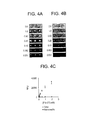
- Figures 4A and B are fluorescence images of microarrays.
- the fluorescence images of (4A) shows the GM1 ganglioside (4 mol % in DLPC) treated with solutions of FITC-CTx at concentrations ranging from 0.031 nM to 2.0 nM.
- Fluorescence images of (4B) show an identical set of microarrays treated with FITC-CTx at the same concentrations and excess unlabeled cholera toxin (100 nM). These residual signals provide an estimate of the amount of non-specific binding at each concentration of FITC-CTx.
- Figure 4C shows graphs of the concentration dependence of the total fluorescence signal (in RFU), the signal due to non-specific binding, and the signal due to specific binding (estimated as the difference in the signals between (4A) and (4B) at each concentration of FITC-CTx).
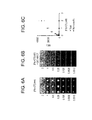
- Figure 5 shows graphs of the dose-dependant inhibition of the binding of labeled cholera toxin to GM1 ganglioside microarrays by unlabeled cholera toxin.
- the arrays were treated with solutions containing FITC-CTx (1 nM) and unlabeled cholera toxin at different concentrations (0 nM - 200 nM).
- Figure 6 shows the dose response of GM1-DLPC microarrays to FITC-labeled cholera toxin.
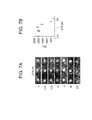
- Figure 7 shows the specific competitive binding of unlabeled cholera toxin (CT, domain B) to the GM1-DLPC arrays against the fluoresently labeled CT.
- Figure 8 shows the binding selectivity of fluorescently labeled FITC-CT and FITC-TTx to gangliosides in multiplexed arrays.
- Microarrays containing components of cell membranes provide an attractive platform for efficient monitoring and study of fundamental aspects of molecular recognition involved in protein binding at the surface of a cell. Detection of chemical or bacterial toxins and the testing of compounds as potential inhibitors can be a particularly significant and topical application of membrane microarrays.
- Microarrays have spatially indexed microspots, comprising immobilized "probe" molecules of biological interest. When exposed to an assay sample of interest, "target" molecules in the sample bind to the probe molecules of the microspots to an extent determined by the concentration of the target molecule and its affinity for a particular probe molecule. In principle, if the target concentrations are known, the affinity of the target for the different probe microspots can be estimated simultaneously.
- the amounts of binding observed at each microspot may be used to estimate simultaneously the concentrations of multiple analytes in the sample.
- the attractiveness of microarray technology lies in the ability to obtain highly multiplexed information using small amounts of sample.
- the present invention describes the fabrication of microarrays having a variety of ion channels integrated in lipid membranes.
- the ion channels include sodium channel, potassium channel, calcium channel, acetylcholine receptor, ryanodine receptor, glutamate receptor, and any given combinations of these ion channels.
- These ion channels can be in the form of membrane preparations that are separated from certain cell lines, or in the form of re-folded protein in liposomes, bacteria expressing systems, or the like.
- the re-folded ion channels can be made using state-of-the-art methods.
- This type of microarray is preferably used to identify animal toxins and to screen compounds that interfere with the binding of toxins to these ion channels.
- a microarray may consist of different lipid compositions.
- the lipid compositions may include a synthetic lipid such as DLPC (dilaurylphosphatidylcholine), a mixture of different synthetic lipids such as dipalmitoylphosphatidylcholine (DPPC)/dimyristylphosphtidylcholine (DMPC), egg phosphatidylcholine (egg PC), a synthetic host lipid doped with toxin-binding receptors, or a purified toxin-binding receptor.
- the host lipid can be any given lipid such as a synthetic lipid or a natural lipid (e.g., egg PC).
- the toxin-binding receptor may include a ganglioside, such as GM1 and GT1b, or a ceramide such as Gal( ⁇ )-ceramide, or a cholesterol, or a cerebroside.
- a ganglioside such as GM1 and GT1b
- a ceramide such as Gal( ⁇ )-ceramide
- a cholesterol or a cerebroside.
- This type of microarray is preferably used to identify bacterial toxins and screen compounds that interfere with the binding of toxins to these biological membranes.
- Table 1 presents receptors for bacterial toxins.
- a microarray may have a number of biological membranes containing cell surface receptors including G protein-coupled receptors. Preferably expressed, G protein-coupled receptors play key physiological roles in the central neuron system. Preferably, this type of microarray may be used to identify small-molecule chemical toxins (e.g., ⁇ .200-500 kilo-daltons, preferably ⁇ ⁇ 2-5 kdaltons).
- small-molecule chemical toxins e.g., ⁇ .200-500 kilo-daltons, preferably ⁇ ⁇ 2-5 kdaltons.
- a microarray of any given combination of these biological membranes can be fabricated and used to screen any given set of toxins.
- a specific embodiment includes an array of locations of a given biological membrane containing a toxin-binding target.
- the method for detecting and identifying a toxin in a sample comprises: providing an array having a plurality of biological membranes associated with a surface of a substrate; contacting the array with a solution having a target compound; monitoring for binding activity of at least one biological membrane with said target compound.
- the biological membranes are arranged preferably in distinct microspots.
- the biological membranes contain a toxin-binding moiety, such as a cell-surface protein.
- the toxin-binding moiety may be a natural lipid, a synthetic lipid, or a lipid composition containing a toxin-binding receptor, or a purified receptor.
- the toxin-binding moiety may be an G protein-coupled receptor, or an ion channel, such as a sodium channel, a potassium channel, a calcium channel, and any combination of ion channels.
- the toxin-binding moiety also may be an acetylcholine receptor, a ryanodine receptor, a glutamate receptor, a ceramide, a ganglioside, a cerebroside, sulfatides or cholesterol.
- the method employs a labeled toxin or known compounds with an affinity to the toxin molecule or to the receptor site.
- the target compound can have at least one constituent that is labeled or no labeled constituent.
- the monitoring step comprises detecting for the presence of the label.
- the monitoring step comprises detecting directly a physical change due to the binding of said target compound to said biological membranes.
- the invention in a second aspect, includes an array for identifying and detecting a toxin.
- the array comprising a plurality of biological membrane probes associated with a surface of a substrate; said biological membrane containing a toxin-binding moiety or toxin-binding receptor.
- the toxin-binding receptor is a natural lipid, a synthetic lipid, a lipid composition containing toxin-binding receptor, or a purified receptor.
- the toxin-binding receptor is a G protein-coupled receptor, a sodium channel, a potassium channel, a calcium channel, an acetylcholine receptor, a ryanodine receptor, a glutamate receptor, a ceramide, a ganglioside, a cerebroside, sulfatides or cholesterol.
- the substrate includes glass, metal-oxides, metal, non-metals, silicon, or plastic, which may be configured as a chip, a slide or a microplate.
- the substrate could be smooth and flat, or porous, with particle or pores on the scale of nanometers or microns (e.g., ⁇ 1-50 nm up to ⁇ 25 or 50-500 ⁇ m).
- the surface may be coated with a material such as a silane, thiol, disulfide, or a polymer. When the substrate is gold, the coating may be a thiol or disulfide.
- the silane presents terminal polar moieties, such as hydroxyl, carboxyl, phosphate, sulfonate, thiol, or amino groups.
- the polymer is a polyamine, such as poly-lysine or a polyethylenenimine.
- the surface may be positively charged and contains amino groups, such as ⁇ -aminopropylsilane.
- the biological membrane microarrays may be used to identify and detect the presence of toxins in a sample.
- the specific binding pattern of a given toxin to a set of different biological membrane probes in the microarray is used to identify and detect the presence of a toxin in the sample.
- the binding of toxins to the biological membrane array can be monitored using fluorescently labeled toxins in combination with state-of-the-art fluorescence detection methods.
- the binding of toxin to the biological membrane array can be monitored using label-free detection methods such as surface plasmon resonance (SPR) or other optical or electrochemical methods.
- SPR surface plasmon resonance
- a biological membrane microarray can also be employed to screen compounds that can interfere with the binding of a given toxin or a given set of toxins to the receptors in the array.
- the method for identifying and detecting a toxin in a sample may comprise: providing an array having a plurality of biological membrane microspots associated with a surface of a substrate; contacting a sample solution comprising an unknown toxin with an array of probe biological membrane microspots; and detecting the binding profile of the unknown toxin to at least one or more of the probe microspots.
- the sample is a biofluid from a specific infectious tissue, or a solution from food or environmental sources.
- the sample is an aqueous solution having chemical toxins collected and/or concentrated, for instance in a solution fluid bath, from ambient samples such as contaminated air or other gaseous media.
- a microarray according to the present invention may have lipids containing the GM1 and GT1b gangliosides.
- the description that follows demonstrates their use for detecting toxins and screening of compounds as potential toxin inhibitors.
- toxin-ganglioside interactions is the binding of the (cholera) toxin produced by vibrio cholerae to the ganglioside GM1.
- the GM1 ganglioside contains a pentasaccharide (Figure 1) consisting of Gal( ⁇ 1-3)GalNAc( ⁇ 1-4)(NeuAc( ⁇ 2-3))Gal( ⁇ 1-4)Glc( ⁇ 1-1)-ceramide.
- Figure 1 pentasaccharide
- the binding epitope of GM1 for the cholera toxin includes the internal Gal and almost all of the external Gal ⁇ 3, NeuAc ⁇ 3, and possibly the methyl moiety of the acetamido group of GalNAc ⁇ 4.
- the binding domain of the cholera toxin itself consists of a pentamer of B domains; multivalent interactions with several GM1 groups lead to significantly enhanced affinity of the toxin for the cell surface.
- the specificity of toxin-carbohydrate interactions is well demonstrated by differences in the binding epitopes between the tetanus and cholera toxins.
- the tetanus toxin (produced by clostridium tetani) binds specifically to the ganglioside GT1b; this ganglioside (NeuAc( ⁇ 2-3)Gal( ⁇ 1-3)GalNac( ⁇ 1-4)(NeuAc( ⁇ 2-8)NeuAc( ⁇ 2-3))Gal( ⁇ 1-4)Glc( ⁇ 1-1)Ceramide) (Figure 1) contains two sialic acid (NeuAc ⁇ 3 and NeuAc ⁇ 8) residues appended to the GM 1 ganglioside.
- membrane microarrays offer exciting possibilities for biopharmaceutical research.
- a membrane microarray requires the immobilization of the probe molecules of interest and the associated lipids.
- Another unique aspect of membrane microarrays is the need to keep the probe confined to the microspot while maintaining the desired lateral movement of individual molecules within the microspot - properties that are contradictory and preclude covalent immobilization of the membrane.
- Assays for microarrays require incubation with different reagents and buffers, and withdrawal through air-water interfaces between these multiple steps; moreover, conventional microarray scanners are not well suited to scanning slides that are wet. Given these considerations, an ideal surface for membrane microarrays should have properties such that: (i) supported membranes on the surface resist physical desorption when withdrawn through air-water interfaces, and (ii) supported membranes on the surface exhibit long-range lateral fluidity.
- Microarrays of lipids containing gangliosides on surfaces coated with ⁇ -aminopropylsilane (GAPS) are fabricated and used for detecting the binding of toxins by fluorescence imaging.
- DLPC 1,2-Dilauroylsn-glycero-3-phosphocholine
- the materials were dilaurylphosphatidylcholine (DLPC), egg phosphatidylcholine (egg PC), gangliosides (Monosialoganglioside (GM1) and trisialoganglioside (GT1b)), and cholesterol from Sigma Chemical (St. Louis, MO).
- the toxins included bungarotoxin, cholera toxin B domain (CTx) and FITC-labeled cholera toxin B domain (FITC-CTx) from Sigma Chemical, tetanus toxin fragment C (TTx) and FITC-labeled tetanus toxin fragment C (FITC-TTx) from Calbiochem (Pasadena, CA). All toxins were handled with extreme care; a 2M sodium hydroxide solution or bleach was used for decontamination. GAPS slides from Corning Inc. (Corning, NY) were used.
- lipid microarrays can be deposited in a microplate, or GAPS coated slides.
- DLPC dilaurylphosphatidylcholine
- egg PC egg phosphatidylcholine
- thin films of dilaurylphosphatidylcholine (DLPC) (1mg/ml) or egg phosphatidylcholine (egg PC) lipid in the absence or presence of 4 mol% ganglioside (GM1 or GT1b) in 20 mM phosphate buffer (pH 7.4) were sonicated to clarity to form small vesicles of lipids.
- 25 ⁇ L of each lipid solution was added to different wells of a 384 well microplate.
- the binding assays were carried out by incubating arrays of the gangliosides with the appropriate solution, washing with buffer to remove unbound toxins (and potential inhibitors), and scanning using a fluorescence scanner.
- the binding assays were designed to test: (I) the selectivity of binding; (II) the specificity of inhibition; and (III) the dose dependency of binding and inhibition.
- Microarrays are naturally suited for simultaneously screening the binding of a compound to multiple probes.
- the array is incubated with a compound at a particular concentration; if a positive signal (a "hit") is obtained for a probe microspot, more detailed analysis (e.g. dose dependency studies described below) is carried out.
- Our studies were aimed at simply establishing the specificity of binding to ganglioside microarrays using known toxin-ganglioside interactions.
- Figures 2A-C show fluorescence false color images of three identical microarrays on a single GAPS slide; each microarray consists of three replicate microspots of DLPC (top row), DLPC doped with GM1 (middle row), and DLPC doped with GT1b (bottom row).
- the first microarray was treated with buffer only and serves as a negative control. As expected, no signal is observed on any of the microspots in Figure 2A.
- the second microarray in Figure 2B was incubated with a solution of fluorescently labeled cholera toxin (B domain; FITC-CTx).
- the binding signal is lower than that observed for binding of FITC-CTx to GT1b; sub-optimal amounts of GT1b in the mixed lipid or issues with labeling of the tetanus toxin could be possible reasons for the poorer signal.
- the signal observed for binding of FITC-TTx to the GM1 microspots is approximately 35% of that observed for binding to GT1b microspots.
- Previous researchers have reported that the tetanus toxin does not bind to GM1; it is hypothesize that this binding phenomenon is non-specific in nature and appears accentuated due to the inherently low net signal (signal minus background) ( ⁇ 3000 RFU) for binding of FITC-TTx to GT1b.
- Figures 3A-D show fluorescence images of four microarrays (identical in probe content to that used in Figure 2), which were treated with solutions containing FITC-CTx and either the tetanus toxin, bungaratoxin or unlabeled cholera toxin.
- Figure 3A in which the array was treated with fluorescently labeled cholera toxin, provides the reference for measuring inhibition.
- Figure 3B is a fluorescence image of an array treated with a mixture of the labeled cholera toxin (1 nM) and unlabeled tetanus toxin (100 nM).
- the probe GM1or GT1b
- DLPC host lipid
- the surface binding capacity for the cholera toxin was estimated to be at a ganglioside density of about 4 mol %. The estimate as outlined below does not take into account inhomogeneities in the distribution of gangliosides in the host lipid.
- the radius of the pentameric binding domain of the cholera toxin is ⁇ 3 nm.
- the number of cholera toxin molecules per square micron is ⁇ 2.3 x 10 4 .
- the number of binding sites corresponding to a monolayer of the cholera toxin is ⁇ 1.2 x 10 5 / ⁇ m 2 .
- the area occupied by a GM1 molecule in a GM1 monolayer at the air water interface was estimated to be ⁇ 0.6 nm 2 .
- the number of cholera toxin molecules that can bind to a surface presenting GM1 molecules is ⁇ 6.3 x 10 4 molecules per ⁇ m 2 . Therefore, a DLPC surface doped with ⁇ 4 mol % GM1 is likely to be sufficient to support the maximum possible amount of binding of the cholera toxin.
- Figure 4 shows fluorescence images of microarrays of the GT1b ganglioside (4 mol %) treated with different concentrations of FITC-CTx.
- the signal is dependent on the concentration of FITC-CTx.
- a corresponding set of microarrays was treated with a mixture containing FITC-CTx at the same concentrations and excess unlabeled cholera toxin.
- the difference between the signals at each concentration of FITC-CTx provides a measure of the amount of specific binding to the GM1 microspots. Specific binding is observed even at a concentration of ⁇ 30 pM, which demonstrates the excellent sensitivity of the fluorescence assay.
- the amount of binding is linear at concentrations less than 1 nM. Unfortunately, the background signals at higher concentrations of FITC-CTx are too high to observe saturation of the binding signal.
- the binding of the cholera toxin to gangliosides is multivalent.
- the binding affinity is dependent on the valence of the interaction, hence the binding cannot be characterized by a single dissociation constant.
- the estimated binding constant below represents the "average" affinity of the ganglioside microspots for the cholera toxin.
- GM1 microarrays were treated with increasing concentrations of unlabeled cholera toxin at a fixed concentration of FITC-CTx (1 nM). From the inhibition profile as shown in Figure 5, IC 50 is estimated to be ⁇ 20 nM.
- Equation 1 The estimate of K i from the measured IC 50 value is given by Equation 1, where K; is the equilibrium dissociation constant for the inhibitor, L is the concentration of FITC-CTx, and K L is the equilibrium dissociation constant of FITC-CTx.
- K i IC 50 1+ L K L
- Figure 6 shows the dose response of fluorescently labeled toxin (Fitc-cholera toxin B, Fitc-CT) binding to a microarray of DLPC doped with 4% gangloside GM1 on a GAPS slide.
- Fluorescence images of the microarray after Fitc-CT binding On the right is a plot of fluorescence intensity of DLPC/GM1 arrays as a function of the concentration of Fitc-CT in the absence (the total) and presence (non-specific) of excess unlabeled cholera toxin B.
- Figure 7 shows the specific competitive binding of unlabeled cholera toxin B with fluorescently labeled FITC-CT to the array of DPLC-doped with 4% gangloside GM on a GAPS slide.
- Figure 8 shows the binding selectivity of fluorescently labeled FITC-CT and FITC-tetanus toxin to gangliosides in a multiplexed arrays. These results suggest that FITC-CT specifically binds to GM1, and FITC-tetanus toxin preferably binds to GT1b in the arrays.
- Figure 8A show fluorescence images of three multiplexed microarray after the incubation with three different solutions: 1 nM Fitc-CT, 2 nM FITC-Tetanus toxin fragment C (FITC-TT), and buffer only, respectively. Each microarray consists of three rows of different lipid compositions.
- FIG. 8B shows fluorescence images of four multiplexed microarray after the incubation with 1 nM Fitc-CT in the absence of any unlabeled toxin (I), 100 nM CT (II), 100 nM Tetanus toxin (III), and 100 nM bungarotoxin (IV).
- I unlabeled toxin
- II 100 nM CT
- II 100 nM Tetanus toxin
- IV 100 nM bungarotoxin
Landscapes
- Health & Medical Sciences (AREA)
- Life Sciences & Earth Sciences (AREA)
- Engineering & Computer Science (AREA)
- Immunology (AREA)
- Biomedical Technology (AREA)
- Molecular Biology (AREA)
- Chemical & Material Sciences (AREA)
- Urology & Nephrology (AREA)
- Hematology (AREA)
- Microbiology (AREA)
- Cell Biology (AREA)
- Analytical Chemistry (AREA)
- Toxicology (AREA)
- Pathology (AREA)
- General Physics & Mathematics (AREA)
- Food Science & Technology (AREA)
- Medicinal Chemistry (AREA)
- Physics & Mathematics (AREA)
- Biotechnology (AREA)
- Biochemistry (AREA)
- General Health & Medical Sciences (AREA)
- Bioinformatics & Cheminformatics (AREA)
- Tropical Medicine & Parasitology (AREA)
- Mycology (AREA)
- Investigating Or Analysing Biological Materials (AREA)
- Investigating Or Analysing Materials By The Use Of Chemical Reactions (AREA)
- Measuring Or Testing Involving Enzymes Or Micro-Organisms (AREA)
Abstract
Description
| Receptors for Bacterial Toxins | |
| Toxin | Ligands |
| Cholera toxin | GM1: gal(β1,3)GalNAc(β1,4)(NeuAc(α2,3))Gal(β1,4)Glc(β)-ceramide |
| Heat-labile toxin | GM1 |
| Tetanus toxin | GT1b: gal(β1,3)GalNAc(β1,4)((NeuAc(α2,8))NeuAc(2,3)Gal(β1,4)Glc(β)-ceramide |
| Botulinum toxin A & E | GD1b: NeuAc(α2,8)gal(β1,3)GalNAc(β1,4)(NeuAc(α2,8))NeuAc(2,3)Gal(β1,4)Glc(β)-ceramide |
| Botulinum toxin B | Gal(β)-ceramide |
| Botulinum toxin B, C, F | GT1b |
| Delta toxin | GM2: galNAc(β1,4)(NeuAc(α2,3))Gal(β1,4)Glc(β)-ceramide |
| Toxin A | Gal(α1,3)Gal(β1,4)GlcNAc(β1,3)Gal(β1,4)Glc(β)-ceramide |
| Shiga toxin | Gal(α1,4)Gal(β)-ceramide |
| Vero toxin | Gal(α1,4)Gal(β1,4)Gac(β)-ceramide |
| Pertussis toxin | NeuAc(α2,6)Gal |
| Dysenteriae toxin | GlcNAc(β1) |
Claims (20)
- A method for detecting a binding event between a probe and target compound, said method comprising: providing an array having a plurality of biological membrane probes associated with a surface of a substrate; contacting a sample having a target compound with said array of biological membrane probes; and detecting or monitoring a binding event between at least one or more of the probes with one or more of the constituents of the target compound.
- A device for detecting and identifying a toxin, the device comprises: an array with a plurality of biological membrane probes associated with a surface of a substrate; said biological membrane containing a toxin-binding moiety.
- The method according to claim 1, wherein the array of microspots is incubated with labeled target and an unlabeled target compound, and the binding event between the unlabeled target compound and the probe is determined by measuring a decrease in the signal of the label due to competition between the labeled target and the unlabeled target compound for the probe.
- The method according to claim 1, wherein said sample comprises an unknown toxin with said array of biological membrane microspots; and detecting the binding profile of the unknown toxin to at least one or more of the microspots.
- The method according to claim 1, wherein the sample is a biofluid from a specific infectious tissue, a solution from food or environmental sources, or an aqueous solution having chemical toxins collected or concentrated from a contaminated gaseous media.
- The method according to claim 1, wherein said biological membranes contain a toxin-binding moiety.
- The invention according to either claim 1 or 2, wherein said biological membranes are arranged in distinct microspots.
- The invention according to any one of claims 1-7, wherein said toxin-binding moiety is a cell-surface protein.
- The invention according to any one of claims 1-8, wherein the toxin-binding moiety is a natural lipid, a synthetic lipid, or a lipid composition containing a toxin-binding receptor, or a purified receptor.
- The invention according to any one of claims 1-8, wherein the toxin-binding receptor is a sodium channel, a potassium channel, a calcium channel, or any combination of ion channels, an acetylcholine receptor, a ryanodine receptor, a glutamate receptor, a G protein-coupled receptor, a ceramide, a ganglioside, a cerebroside, sulfatides or cholesterol.
- The invention according to any one of claims 1 and 7-10, wherein the target compound has at least one constituent that is labeled, and the detection or monitoring of the label is carried out by imaging based on fluorescence, phosphorescence, chemiluminescence, or resonance light scattering emanating from the bound target.
- The invention according to any one of claims 1 and 7-10, wherein the target compound is unlabeled and the binding event is determined by a change in physical properties at the interface.
- The invention according to either claims 1 or 12, wherein the monitoring step includes detecting directly a physical or chemical change due to the binding of said target compound to said biological membranes.
- The invention according to claim 1, wherein said method employs a labeled toxin or known compounds with an affinity to the toxin molecule or to the receptor site.
- The invention according to any one of claims 1 and 4-14, said toxin sample can be a synthetic or natural toxin, or from a human, animal, plant, food, or environmental source.
- The invention according to any one of claims 1-15, wherein the substrate comprises glass, ceramic, metal-oxide, metal, non-metal, silicon, or polymer.
- The invention according to any one of claims 1-16, wherein the substrate is either nano- or micro-porous.
- The invention according to any one of claims 1-17, wherein the surface is coated with a material, including one of the following: a silane, thiol, disulfide, or a polymer; terminal polar moieties having a hydroxyl, carboxyl, phosphate, sulfonate, thiol, or amino groups; or a γ-aminopropylsilane, poly-lysine, polyethyleneimine, or chitosan.
- The invention according to any one of claims 1-18, wherein the surface is positively charged.
- The invention according to any one of claims 1 and 3-6, wherein said-toxin binding moiety is a carbohydrate.
Applications Claiming Priority (2)
| Application Number | Priority Date | Filing Date | Title |
|---|---|---|---|
| US39227502P | 2002-06-27 | 2002-06-27 | |
| US392275P | 2002-06-27 |
Publications (2)
| Publication Number | Publication Date |
|---|---|
| EP1376124A2 true EP1376124A2 (en) | 2004-01-02 |
| EP1376124A3 EP1376124A3 (en) | 2004-01-14 |
Family
ID=29718075
Family Applications (1)
| Application Number | Title | Priority Date | Filing Date |
|---|---|---|---|
| EP03076980A Withdrawn EP1376124A3 (en) | 2002-06-27 | 2003-06-26 | Toxin detection and compound screening using biological membrane microarrays |
Country Status (2)
| Country | Link |
|---|---|
| US (1) | US20040002064A1 (en) |
| EP (1) | EP1376124A3 (en) |
Cited By (4)
| Publication number | Priority date | Publication date | Assignee | Title |
|---|---|---|---|---|
| WO2004046725A3 (en) * | 2002-11-20 | 2004-08-19 | Corning Inc | Substrates with biological membrane arrays and methods for their fabrication |
| WO2004025244A3 (en) * | 2002-09-16 | 2004-10-14 | Sense Proteomic Ltd | Protein arrays and uses thereof |
| FR2970781A1 (en) * | 2011-01-25 | 2012-07-27 | Centre Nat Rech Scient | METHOD FOR MANUFACTURING AN ANALYTICAL MEDIUM AND USE FOR DETECTION OF TOXINS |
| WO2017108115A1 (en) * | 2015-12-22 | 2017-06-29 | Centre National De La Recherche Scientifique - Cnrs - | Device for detecting neurotoxins and process for manufacture thereof |
Families Citing this family (15)
| Publication number | Priority date | Publication date | Assignee | Title |
|---|---|---|---|---|
| US10272409B2 (en) * | 2001-07-11 | 2019-04-30 | Michael E. Hogan | Methods and devices based upon a novel form of nucleic acid duplex on a surface |
| US20050218398A1 (en) * | 2004-04-06 | 2005-10-06 | Availableip.Com | NANO-electronics |
| US7862624B2 (en) * | 2004-04-06 | 2011-01-04 | Bao Tran | Nano-particles on fabric or textile |
| US20050218397A1 (en) * | 2004-04-06 | 2005-10-06 | Availableip.Com | NANO-electronics for programmable array IC |
| US7330369B2 (en) * | 2004-04-06 | 2008-02-12 | Bao Tran | NANO-electronic memory array |
| US7019391B2 (en) * | 2004-04-06 | 2006-03-28 | Bao Tran | NANO IC packaging |
| US20060183166A1 (en) * | 2005-02-11 | 2006-08-17 | Michael Mayer | Arrays of supported biomembranes and uses thereof |
| US7671398B2 (en) * | 2005-02-23 | 2010-03-02 | Tran Bao Q | Nano memory, light, energy, antenna and strand-based systems and methods |
| WO2006102687A1 (en) * | 2005-03-22 | 2006-09-28 | The Trustees Of Columbia University In The City Of New York | A liposome-based microarray and methods of use thereof |
| US7322413B2 (en) * | 2005-07-15 | 2008-01-29 | Halliburton Energy Services, Inc. | Equalizer valve assembly |
| US7393699B2 (en) | 2006-06-12 | 2008-07-01 | Tran Bao Q | NANO-electronics |
| KR100908641B1 (en) * | 2007-03-20 | 2009-07-21 | 강원대학교산학협력단 | Analysis of Unlabeled Blood Proteins Using Competitive Interactions Based on Chip Technology |
| US20100130829A1 (en) * | 2008-11-25 | 2010-05-27 | Ye Fang | Materials and methods for detecting early cell migration events |
| ES2857574T3 (en) * | 2015-07-23 | 2021-09-29 | Adarza Biosystems Inc | Competitive Small Molecule Detection Assays Using Array Imaging Reflectometry |
| CN111337468B (en) * | 2020-04-24 | 2022-12-09 | 新乡医学院 | Multi-analysis snake venom mixture analysis fluorescent sensor |
Family Cites Families (15)
| Publication number | Priority date | Publication date | Assignee | Title |
|---|---|---|---|---|
| US4933285A (en) * | 1986-10-07 | 1990-06-12 | Environmental Technologies Group, Inc. | Multiple monolayers of polymeric linkages on a solid phase for immobilizing macromolecules |
| US4931498A (en) * | 1988-02-25 | 1990-06-05 | Purdue Research Foundation | Immobilized artificial membranes |
| US5004543A (en) * | 1988-06-21 | 1991-04-02 | Millipore Corporation | Charge-modified hydrophobic membrane materials and method for making the same |
| US5618531A (en) * | 1990-10-19 | 1997-04-08 | New York University | Method for increasing the viability of cells which are administered to the brain or spinal cord |
| SE9403245D0 (en) * | 1994-09-26 | 1994-09-26 | Pharmacia Biosensor Ab | Improvements relating to bilayer lipid membranes |
| US5741462A (en) * | 1995-04-25 | 1998-04-21 | Irori | Remotely programmable matrices with memories |
| US6699719B2 (en) * | 1996-11-29 | 2004-03-02 | Proteomic Systems, Inc. | Biosensor arrays and methods |
| CN1265049A (en) * | 1997-07-22 | 2000-08-30 | 拉普吉恩公司 | Polyethylenimine-based biomolecule arrays |
| WO2001007889A2 (en) * | 1999-07-27 | 2001-02-01 | Cellomics, Inc. | Miniaturized cell array methods and apparatus for cell-based screening |
| GB9923146D0 (en) * | 1999-09-30 | 1999-12-01 | Imperial College | Detector array |
| US6835717B2 (en) * | 2000-03-08 | 2004-12-28 | The Johns Hopkins University School Of Medicine | β-cyclodextrin compositions, and use to prevent transmission of sexually transmitted diseases |
| US6977155B2 (en) * | 2000-08-10 | 2005-12-20 | Corning Incorporated | Arrays of biological membranes and methods and use thereof |
| US7678539B2 (en) * | 2000-08-10 | 2010-03-16 | Corning Incorporated | Arrays of biological membranes and methods and use thereof |
| US8815577B2 (en) * | 2001-07-30 | 2014-08-26 | Meso Scale Technologies, Llc | Assay electrode having immobilized lipid/protein layers, methods of making the same and methods of using the same for luminescence test measurements |
| US6790632B2 (en) * | 2002-06-17 | 2004-09-14 | Stephen Eliot Zweig | Membrane receptor reagent and assay |
-
2003
- 2003-06-24 US US10/602,242 patent/US20040002064A1/en not_active Abandoned
- 2003-06-26 EP EP03076980A patent/EP1376124A3/en not_active Withdrawn
Cited By (8)
| Publication number | Priority date | Publication date | Assignee | Title |
|---|---|---|---|---|
| WO2004025244A3 (en) * | 2002-09-16 | 2004-10-14 | Sense Proteomic Ltd | Protein arrays and uses thereof |
| WO2004046725A3 (en) * | 2002-11-20 | 2004-08-19 | Corning Inc | Substrates with biological membrane arrays and methods for their fabrication |
| FR2970781A1 (en) * | 2011-01-25 | 2012-07-27 | Centre Nat Rech Scient | METHOD FOR MANUFACTURING AN ANALYTICAL MEDIUM AND USE FOR DETECTION OF TOXINS |
| WO2012101378A1 (en) * | 2011-01-25 | 2012-08-02 | Centre National De La Recherche Scientifique - Cnrs | Method for manufacturing an analysis substrate, and use thereof for detecting toxins |
| US10073089B2 (en) | 2011-01-25 | 2018-09-11 | Abraxis LLC | Method for manufacturing an analysis substrate, and use thereof for detecting toxins |
| WO2017108115A1 (en) * | 2015-12-22 | 2017-06-29 | Centre National De La Recherche Scientifique - Cnrs - | Device for detecting neurotoxins and process for manufacture thereof |
| WO2017108582A1 (en) * | 2015-12-22 | 2017-06-29 | Centre National De La Recherche Scientifique - Cnrs - | Device for detecting neurotoxins and process for manufacture thereof |
| AU2016376356B2 (en) * | 2015-12-22 | 2023-07-20 | Centre National De La Recherche Scientifique - Cnrs - | Device for detecting neurotoxins and process for manufacture thereof |
Also Published As
| Publication number | Publication date |
|---|---|
| EP1376124A3 (en) | 2004-01-14 |
| US20040002064A1 (en) | 2004-01-01 |
Similar Documents
| Publication | Publication Date | Title |
|---|---|---|
| US20040002064A1 (en) | Toxin detection and compound screening using biological membrane microarrays | |
| DE69737818T2 (en) | An affinity sample array suitable for measuring a change in thickness or mass on its surface | |
| US20090275480A1 (en) | Universal readout for target identification using biological microarrays | |
| EP1388010B1 (en) | Arrays comprising biological membrane microspots | |
| Lauer et al. | Analysis of cholera toxin− ganglioside interactions by flow cytometry | |
| US20090088329A1 (en) | Multicomponent protein microarrays | |
| EP1872129B1 (en) | Proteolipid membrane and lipid membrane biosensor | |
| CN1902497B (en) | An assay chip, and uses of said assay chip to determine molecular structures and functions | |
| US5874668A (en) | Atomic force microscope for biological specimens | |
| US20090061416A1 (en) | Surfaces and methods for biosensor cellular assays | |
| US20040253596A1 (en) | Bioanalytical recognition surface with optimized recognition element density | |
| EP2195639B1 (en) | Single-cell label-free assay | |
| Fang et al. | Applications of biomembranes in drug discovery | |
| US20060172339A1 (en) | Particle-based multiplex assay for identifying glycosylation | |
| Herr | Protein microarrays for the detection of biothreats | |
| EP1974211A1 (en) | Molecular identification through membrane-engineered cells | |
| ¹KIM SAPSFORD et al. | PLANAR WAVEGUIDES FOR FLUORESCENCE | |
| HK1109804B (en) | Proteolipid membrane and lipid membrane biosensor |
Legal Events
| Date | Code | Title | Description |
|---|---|---|---|
| PUAI | Public reference made under article 153(3) epc to a published international application that has entered the european phase |
Free format text: ORIGINAL CODE: 0009012 |
|
| PUAL | Search report despatched |
Free format text: ORIGINAL CODE: 0009013 |
|
| AK | Designated contracting states |
Kind code of ref document: A2 Designated state(s): AT BE BG CH CY CZ DE DK EE ES FI FR GB GR HU IE IT LI LU MC NL PT RO SE SI SK TR |
|
| AX | Request for extension of the european patent |
Extension state: AL LT LV MK |
|
| AK | Designated contracting states |
Kind code of ref document: A3 Designated state(s): AT BE BG CH CY CZ DE DK EE ES FI FR GB GR HU IE IT LI LU MC NL PT RO SE SI SK TR |
|
| AX | Request for extension of the european patent |
Extension state: AL LT LV MK |
|
| 17P | Request for examination filed |
Effective date: 20040709 |
|
| AKX | Designation fees paid |
Designated state(s): AT BE BG CH CY CZ DE DK EE ES FI FR GB GR HU IE IT LI LU MC NL PT RO SE SI SK TR |
|
| 17Q | First examination report despatched |
Effective date: 20060725 |
|
| STAA | Information on the status of an ep patent application or granted ep patent |
Free format text: STATUS: THE APPLICATION IS DEEMED TO BE WITHDRAWN |
|
| 18D | Application deemed to be withdrawn |
Effective date: 20061205 |