EP1374888A1 - Remedies for arthritis deformans and remedies for rheumatoid arthritis - Google Patents
Remedies for arthritis deformans and remedies for rheumatoid arthritis Download PDFInfo
- Publication number
- EP1374888A1 EP1374888A1 EP02701642A EP02701642A EP1374888A1 EP 1374888 A1 EP1374888 A1 EP 1374888A1 EP 02701642 A EP02701642 A EP 02701642A EP 02701642 A EP02701642 A EP 02701642A EP 1374888 A1 EP1374888 A1 EP 1374888A1
- Authority
- EP
- European Patent Office
- Prior art keywords
- seq
- activity
- protein
- degradation
- following
- Prior art date
- Legal status (The legal status is an assumption and is not a legal conclusion. Google has not performed a legal analysis and makes no representation as to the accuracy of the status listed.)
- Withdrawn
Links
Images


Classifications
-
- C—CHEMISTRY; METALLURGY
- C07—ORGANIC CHEMISTRY
- C07K—PEPTIDES
- C07K14/00—Peptides having more than 20 amino acids; Gastrins; Somatostatins; Melanotropins; Derivatives thereof
- C07K14/435—Peptides having more than 20 amino acids; Gastrins; Somatostatins; Melanotropins; Derivatives thereof from animals; from humans
- C07K14/475—Growth factors; Growth regulators
- C07K14/51—Bone morphogenetic factor; Osteogenins; Osteogenic factor; Bone-inducing factor
-
- A—HUMAN NECESSITIES
- A61—MEDICAL OR VETERINARY SCIENCE; HYGIENE
- A61P—SPECIFIC THERAPEUTIC ACTIVITY OF CHEMICAL COMPOUNDS OR MEDICINAL PREPARATIONS
- A61P19/00—Drugs for skeletal disorders
- A61P19/02—Drugs for skeletal disorders for joint disorders, e.g. arthritis, arthrosis
-
- A—HUMAN NECESSITIES
- A61—MEDICAL OR VETERINARY SCIENCE; HYGIENE
- A61P—SPECIFIC THERAPEUTIC ACTIVITY OF CHEMICAL COMPOUNDS OR MEDICINAL PREPARATIONS
- A61P29/00—Non-central analgesic, antipyretic or antiinflammatory agents, e.g. antirheumatic agents; Non-steroidal antiinflammatory drugs [NSAID]
-
- A—HUMAN NECESSITIES
- A61—MEDICAL OR VETERINARY SCIENCE; HYGIENE
- A61P—SPECIFIC THERAPEUTIC ACTIVITY OF CHEMICAL COMPOUNDS OR MEDICINAL PREPARATIONS
- A61P43/00—Drugs for specific purposes, not provided for in groups A61P1/00-A61P41/00
-
- C—CHEMISTRY; METALLURGY
- C07—ORGANIC CHEMISTRY
- C07K—PEPTIDES
- C07K14/00—Peptides having more than 20 amino acids; Gastrins; Somatostatins; Melanotropins; Derivatives thereof
- C07K14/435—Peptides having more than 20 amino acids; Gastrins; Somatostatins; Melanotropins; Derivatives thereof from animals; from humans
- C07K14/475—Growth factors; Growth regulators
- C07K14/50—Fibroblast growth factor [FGF]
- C07K14/503—Fibroblast growth factor [FGF] basic FGF [bFGF]
-
- A—HUMAN NECESSITIES
- A61—MEDICAL OR VETERINARY SCIENCE; HYGIENE
- A61K—PREPARATIONS FOR MEDICAL, DENTAL OR TOILETRY PURPOSES
- A61K38/00—Medicinal preparations containing peptides
Definitions
- a chondromodulin-I protein had an activity of growing articular chondrocytes by itself or under coexistence of a basic fibroblast growth factor (also referred to as “chondrocyte growth promoting activity” hereinafter) and an activity of suppressing hyper degradation of cartilage matrix (also referred to as “cartilage matrix hyper degradation suppressing activity” hereinafter), and thus accomplished the present invention.
- the present invention provides the followings.
- hChM-I suppressed the production of neutral proteases (NP) including matrix metalloprotease-3 (MMP-3) derived from chondrocytes, they also found that hChM-I had an activity of suppressing hyper degradation of cartilage matrix.
- NP neutral proteases
- MMP-3 matrix metalloprotease-3
- drugs containing a chondromodulin-I protein having the chondrocyte growth promoting activity and the cartilage matrix hyper degradation suppressing activity as an active ingredient can be used as articular chondrocyte growth agents, agents for suppressing hyper degradation of cartilage matrix, other therapeutic agents for diseases caused by suppression of growth of articular chondrocytes or therapeutic agents for diseases caused by hyper degradation of cartilage matrix.
- the aforementioned drugs can be preferably used as therapeutic agents for osteoarthritis and therapeutic agents for chronic rheumatoid arthritis among the diseases caused by suppression of growth of articular chondrocytes and diseases caused by hyper degradation of cartilage matrix.
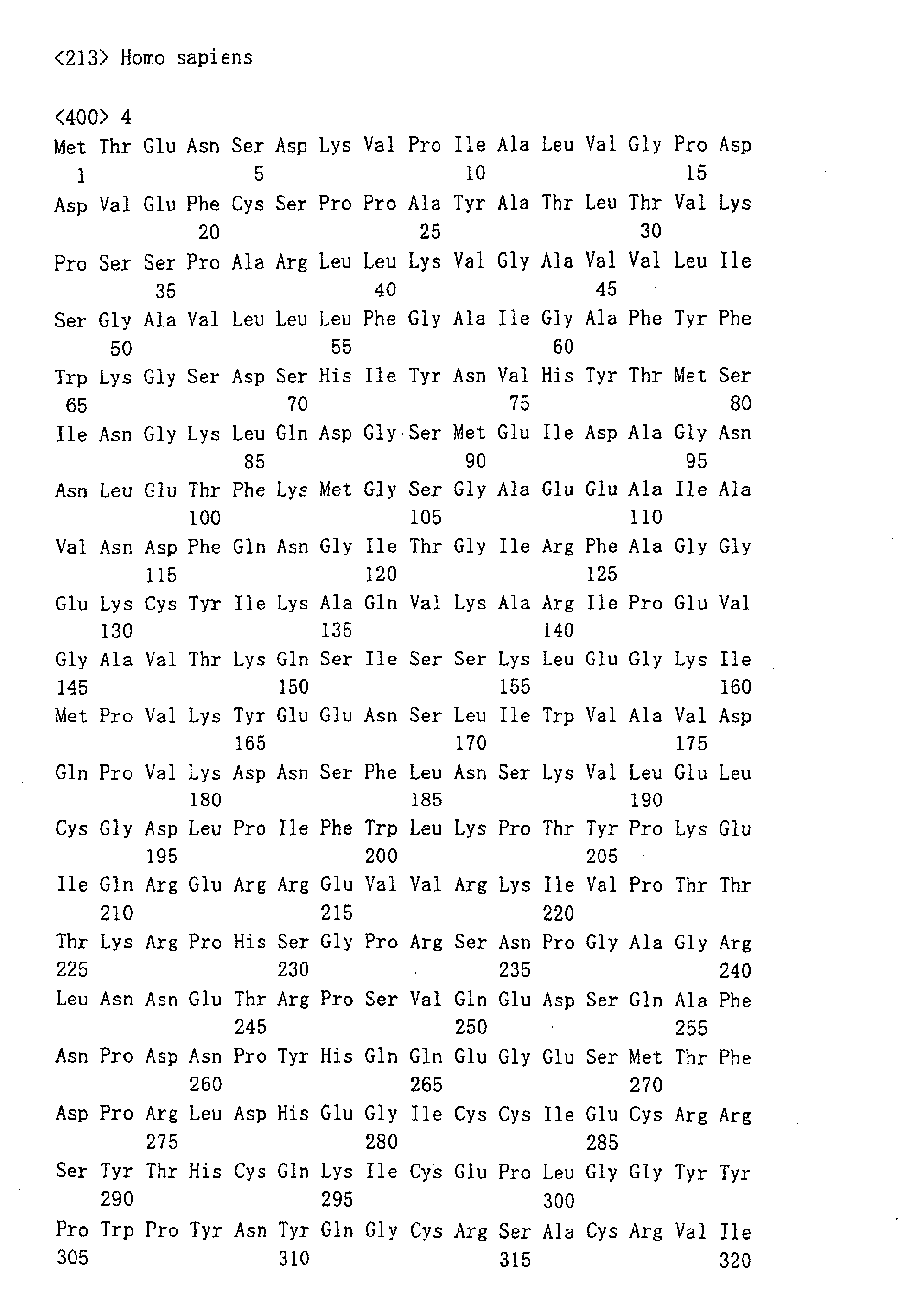
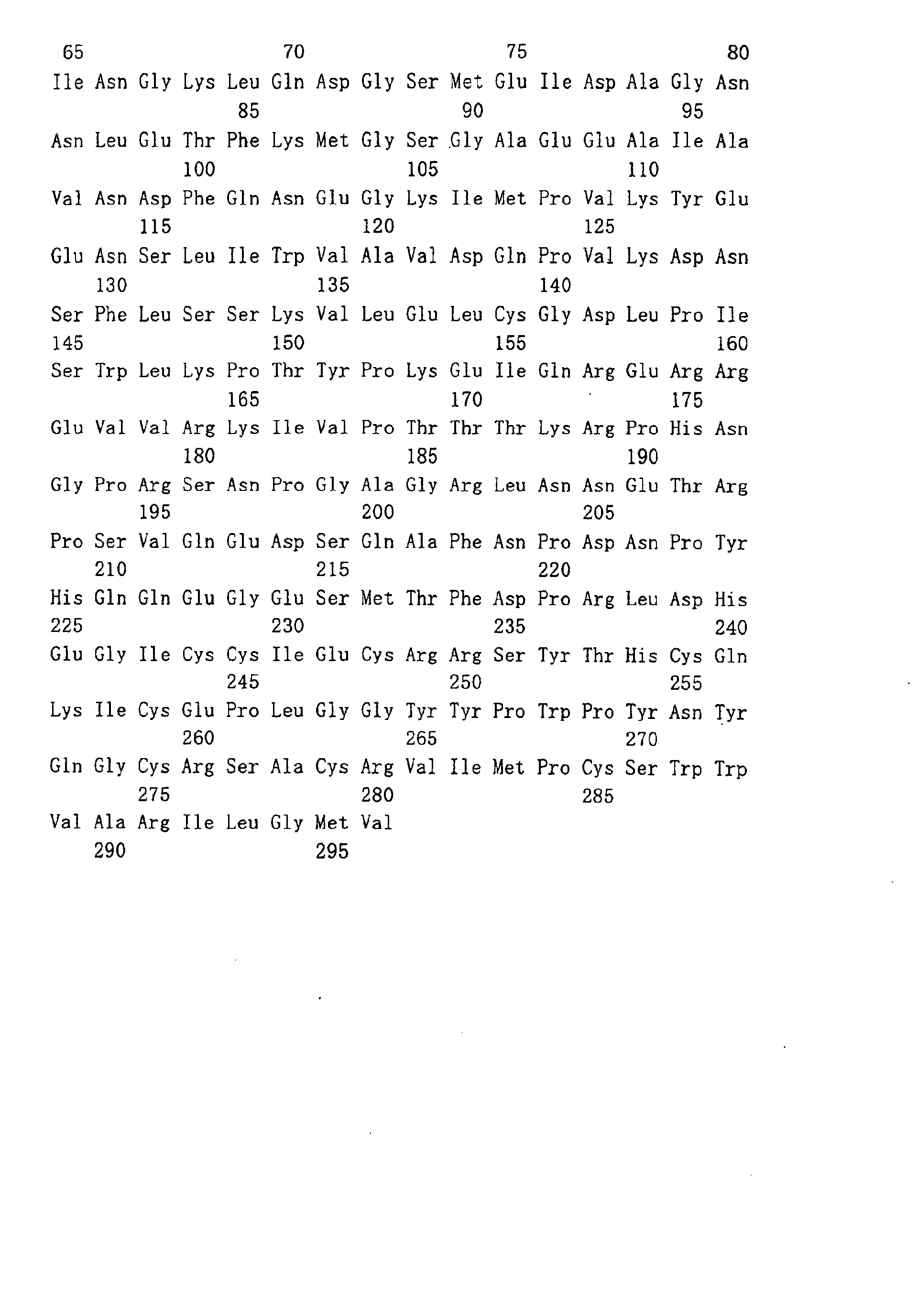
- Nucleotide sequences of DNAs coding for the proteins having the aforementioned amino acid sequence of SEQ ID NO: 2, 4 or 6 mentioned in Sequence Listing are exemplified as SEQ ID NOS: 1, 3 and 5.
- the nucleotide numbers 2 to 1003 in the nucleotide sequence of SEQ ID NO: 1, the nucleotide numbers 2 to 1003 in the nucleotide sequence of SEQ ID NO: 3 and the nucleotide numbers 2 to 889 in the nucleotide sequence of SEQ ID NO: 5 are the coding regions.
- the aforementioned DNAs coding for the hChM-I proteins can be obtained from human chromosomal DNA or chromosome library by PCR using primers prepared based on those sequences.
- hChM-I or chondromodulin proteins derived from animals other than humans may have an amino acid mutation due to SNP (single nucleotide polymorphism) or the like so long as they have a chondrocyte growth promoting activity and a cartilage matrix hyper degradation suppressing activity.
- hChM-I other than the currently known hChM-I or homologues thereof from animals other than humans can also be used in the present invention so long as they have functions equivalent to those of the aforementioned hChM-I.
- analogues of natural hChM-I including deletion, substitution, insertion, addition or the like of amino acids may also be used.
- hChM-I In view of antigenicity or the like, it is preferable to use hChM-I or analogues thereof.
- analogues of hChM-I proteins which have an amino acid sequence of SEQ ID NO: 2, 4 or 6 including deletion, substitution, insertion or addition of one or several amino acids may be used so long as they have a chondrocyte growth promoting activity and a cartilage matrix hyper degradation suppressing activity.
- the term "several" means a number of about 2 to 30, preferably about 2 to 20, particularly preferably 2 to 10.
- DNA of the present invention may be DNA which is hybridizable with the nucleotide sequence of the nucleotide numbers 2 to 1003 in the nucleotide sequence of SEQ ID NO: 1, the nucleotide numbers 2 to 1003 in the nucleotide sequence of SEQ ID NO: 3 or the nucleotide numbers 2 to 889 in the nucleotide sequence of SEQ ID NO: 5 or a probe that can be prepared from any of these sequences under a stringent condition, and codes for a protein having a chondrocyte growth promoting activity and a cartilage matrix hyper degradation suppressing activity.
- articular cartilage tissues become fragile with degradation of extracellular matrices of chondrocytes such as type II collagen and proteoglycan due to various factors, and advanced joint destruction including loss of chondrocytes is observed as a terminal pathologic status.
- chondrocytes such as type II collagen and proteoglycan
- advanced joint destruction including loss of chondrocytes is observed as a terminal pathologic status.
- articular cartilage tissues which constitute major lesions of these joint diseases, as experimental materials that hChM-I promoted the growth of articular chondrocytes.
- hChM-I suppressed the induction of activities of neutral proteases from chondrocytes associated with pathological hyper degradation of extracellular matrices of chondrocytes, and in particular, suppressed the production of MMP-3, which is considered to play the main role among them. Therefore, drugs containing a ChM-I protein and drugs containing DNA coding for this protein of the present invention are expected to potently inhibit the clinical progression of pathology of OA- and RA- joint and achieve structural regeneration by improving the conditions from both aspects of abnormal metabolism of extracellular matrices of chondrocytes and control of growth of chondrocytes themselves.
- solvents or suspending agents used for the production of preparations for parenteral administration include, for example, water, propylene glycol, polyethylene glycol, benzyl alcohol, ethyl oleate, lecithin and so forth.
- bases used for suppository include, for example, cacao butter, emulsified cacao butter, lauric fat, witepsol and so forth.
- ChM-I in the drugs of the present invention is appropriately determined depending on the dosage form, age, body weight, symptoms of the patient etc. However, when it is used as an oral agent or a drug for external use, 1 ng to 50 mg/day (1/10 thereof or less in the case of injection) in terms of the amount of ChM-I is generally desirable for adult. This dose may be administered once a day, or two to several times a day at suitable intervals or intermittently. When ChM-I is used as an injection, the aforementioned dose is preferably administered repetitively and intermittently.
- ChM-I used for medical purposes may be any of purified ChM-I, recombinant ChM-I, culture broth of transformant, isolated transformant, transformant treated product, immobilized transformant, crude enzyme solution, enzyme-treated product etc.
- the drugs of the present invention may contain ingredients exhibiting effect of growing articular chondrocytes or effect of suppressing hyper degradation of cartilage matrix, in particular, therapeutic effect for osteoarthritis or therapeutic effect for chronic rheumatoid arthritis, other than ChM-I, in combination with ChM-I so long as the effect of ChM-I is not degraded.
- the drugs of the present invention may contain a basic fibroblast growth factor together with ChM-I.
- a chondromodulin-I gene into egg cells of a patient with osteoarthritis, chronic rheumatoid arthritis or the like by the aforementioned methods, diseases caused by suppression of growth of articular chondrocytes or hyper degradation of cartilage matrix such as osteoarthritis and chronic rheumatoid arthritis in offspring of the patient can be prophylactically prevented.
- Phosphate-buffered saline PBS(-) not containing Ca 2+ or Mg 2+
- Mitsubishi RDF-CHO Formula culture medium referred to as "TS-2" hereinafter
- penicillin G-streptomycin solution PBS(-) not containing Ca 2+ or Mg 2+
- trypsin-EDTA solution PBS(-) not containing Ca 2+ or Mg 2+
- TS-2 Mitsubishi RDF-CHO Formula culture medium
- Collagenase type II
- trypsin TRCK treated trypsin inhibitor
- Azocoll substrate ⁇ 5.0 mesh
- the articular chondrocytes used for evaluation were obtained as follows. That is, cartilage tissues were collected from both of the right and left knee joints and the shoulder joints of male Japanese white rabbits (purchased from Japan Laboratory Animals Inc.) with a body weight of about 1.5 kg and shaken in 0.025% trypsin-0.265 M EDTA/TS-2 at 37°C for 30 minutes, and then the supernatant was removed. Subsequently, the tissue sections were washed 3 times with 10% rabbit serum/TS-2 and shaken in 0.3% collagenase/TS-2 at 37°C for 60 minutes, and then the supernatant was removed. The tissue sections were shredded with a surgical blade and shaken in 0.15% collagenase/10% rabbit serum/TS-2 at 37°C for 3 hours for further digestion.
- the digested tissue solution obtained by the above procedure was filtered through a cell strainer (40 ⁇ m mesh) and then centrifuged at 2000 rpm at 4°C for 5 minutes to obtain articular chondrocytes.
- the cells were washed with TS-2 and resuspended in 10% rabbit serum/TS-2 at a density of 1.5 to 2 x 10 5 cells/ml.
- the cell suspension were plated in 96-well plates in a volume of 100 ⁇ l/well and cultured at 37°C in the presence of air containing 5% CO 2 .
- the TS-2 used above was added with 100 U/ml of penicillin G and 100 ⁇ g/ml of streptomycin before use.
- the rabbit serum was prepared by centrifugation from the whole blood of the same rabbit as used for the isolation of articular chondrocytes and inactivated at 56°C for 30 minutes before use.
- the effect of hChM-I on the growth of chondrocytes was evaluated in terms of changes in the DNA synthesis activity determined based on measurement of the [ 3 H] thymidine uptake ability of articular chondrocytes and the number of cells.
- the [ 3 H] thymidine uptake ability was measured as follows. The articular chondrocytes prepared by the above method were cultured until the cells reached a semi-confluent state, and then the culture medium was replaced with 100 ⁇ l/well of 0.5% rabbit serum/TS-2.
- Each culture medium was removed by using a cell harvester (HARVESTER96 MACH IIIM, TOMTEC), then added with 100 ⁇ l/well of 0.025% trypsin-0.265 M EDTA/PBS(-) and incubated for 5 minutes.
- the floating cells were adsorbed on a glass filter (Printed Filter Mat A, WALLAC), and the filter was dried and then impregnated with a scintillator, MeltiLex A.
- the radioactivity was measured by using a ⁇ scintillation counter (TRILUX 145 MICROBETA, WALLAC).
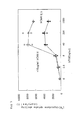
- hChM-I used by itself hardly influenced the [ 3 H]thymidine uptake ability, whereas it enhanced the [ 3 H]thymidine uptake promotion by bFGF in a concentration-dependent manner (Figs. 1 and 2) .
- the changes in the number of cells were measured as follows.
- the culture medium of articular chondrocytes that reached a semiconfluent state was replaced with 100 ⁇ l/well of TS-2 containing various concentrations of the rabbit serum (final concentrations: 0, 0.5 and 10%), bFGF (final concentrations: 0 and 200 ng/ml) and hChM-I (final concentrations: 0 and 10 ⁇ M), and the culture was further continued for 3 days.
- Each culture medium was removed, and then the cells were detached and collected in 50 ⁇ l/well of 0.025% trypsin-0.265 M EDTA/PBS(-).
- the number of cells was counted by using a hemacytometer (improved Neubauer ruling) under a microscope.
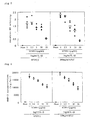
- hChM-I used by itself hardly influenced the number of articular chondrocytes or the increase in the number of cells with the increase of the serum concentration (Fig. 3).
- hChM-I enhanced the increase in the number of cells promoted by the addition of bFGF (Fig. 4).
- hChM-I The effect of hChM-I on the production of chondrocyte extracellular matrix-degradating enzymes was evaluated in terms of the neutral protease (NP) activity and the MMP-3 concentration in a culture medium. That is, the articular chondrocytes prepared by the above method were cultured until the cells reached a confluent state, and then the culture medium was replaced with 100 ⁇ l/well of TS-2 containing various concentrations of IL-1 ⁇ (final concentrations: 0 and 1 ng/ml), bFGF (final concentrations: 0 and 200 ng/ml) and hChM-I(final concentrations: 0, 2.5, 5, 10 and 20 ⁇ M).
- IL-1 ⁇ final concentrations: 0 and 1 ng/ml
- bFGF final concentrations: 0 and 200 ng/ml
- hChM-I final concentrations: 0, 2.5, 5, 10 and 20 ⁇ M.
- culture medium of rabbit articular chondrocytes separately treated with 1 ng/ml of IL-1 ⁇ for 24 hours was prepared beforehand and stored as a standard.
- the NP activity was measured as follows. 75 ⁇ l of each sample and 75 ⁇ l of the standard serially diluted thawed at room temperature were added with 5 ⁇ l of 1 mg/ml trypsin solution and incubated at 37°C for 15 minutes to convert the inactive protease precursor in the sample into the active form. The mixture was further added with 5 ⁇ l of 5 mg/ml trypsin inhibitor solution to terminate the conversion reaction.
- the Azocoll substrate suspension (60 ⁇ g/ml in 0.05 M tris(hydroxymethyl)aminomethane/hydrochloric acid buffer (pH 7.8) containing 1 mM calcium chloride, 125 ⁇ l/tube) placed into microtubes beforehand was added with 75 ⁇ l of the sample or the standard converted to the active form, sufficiently stirred and then incubated at 37°C for 24 hours.
- Undecomposed substrate and the supernatant containing dyes eluted along with the decomposition of the substrate were centrifuged at 3000 rpm for 10 minutes, and then 80 ⁇ l of each sample supernatant was immediately collected on a microplate.
- the absorbance of the supernatant was measured at 520 nm, the specific absorption wavelength of the dye, by using a microplate reader (SPECTRA MAX250, Molecular Devices).
- the NP activity of each sample was calculated as a relative activity from a regression line obtained by using the absorbance of the standard.
- the MMP-3 concentration was measured by using a commercially available ELISA kit (Matrix Metalloproteinase-3 (MMP-3), rabbits, ELISA system) according to the attached instruction as follows. Each sample and a rabbit MMP-3 standard solution of a known concentration were added in a volume of 100 ⁇ l/well to a 96-well plate on which anti-rabbit MMP-3 monoclonal antibodies (specifically recognizing rabbit inactive MMP-3 precursor) were immobilized and incubated at 4°C for 2 hours. The samples were washed off, and then 100 ⁇ l/well of a peroxidase-labeled anti-rabbit MMP-3 monoclonal antibody solution was added to each well and incubated at 4°C for 1 hour.
- MMP-3 Microx Metalloproteinase-3
- rabbits ELISA system
Landscapes
- Health & Medical Sciences (AREA)
- Chemical & Material Sciences (AREA)
- Organic Chemistry (AREA)
- Life Sciences & Earth Sciences (AREA)
- Medicinal Chemistry (AREA)
- General Health & Medical Sciences (AREA)
- Genetics & Genomics (AREA)
- Toxicology (AREA)
- Biophysics (AREA)
- Molecular Biology (AREA)
- Biochemistry (AREA)
- Proteomics, Peptides & Aminoacids (AREA)
- Gastroenterology & Hepatology (AREA)
- Zoology (AREA)
- Nuclear Medicine, Radiotherapy & Molecular Imaging (AREA)
- Pharmacology & Pharmacy (AREA)
- Chemical Kinetics & Catalysis (AREA)
- Orthopedic Medicine & Surgery (AREA)
- Veterinary Medicine (AREA)
- Public Health (AREA)
- Animal Behavior & Ethology (AREA)
- General Chemical & Material Sciences (AREA)
- Engineering & Computer Science (AREA)
- Rheumatology (AREA)
- Bioinformatics & Cheminformatics (AREA)
- Pain & Pain Management (AREA)
- Immunology (AREA)
- Physical Education & Sports Medicine (AREA)
- Medicines That Contain Protein Lipid Enzymes And Other Medicines (AREA)
Abstract
Description
The number of cells was counted by using a hemacytometer (improved Neubauer ruling) under a microscope. As a result, hChM-I used by itself hardly influenced the number of articular chondrocytes or the increase in the number of cells with the increase of the serum concentration (Fig. 3). However, hChM-I enhanced the increase in the number of cells promoted by the addition of bFGF (Fig. 4). These results revealed that hChM-I promoted the growth of articular chondrocytes via an action for regulation of DNA synthesis cooperated with bFGF.
Subsequently, the Azocoll substrate suspension (60 µg/ml in 0.05 M tris(hydroxymethyl)aminomethane/hydrochloric acid buffer (pH 7.8) containing 1 mM calcium chloride, 125 µl/tube) placed into microtubes beforehand was added with 75 µl of the sample or the standard converted to the active form, sufficiently stirred and then incubated at 37°C for 24 hours. Undecomposed substrate and the supernatant containing dyes eluted along with the decomposition of the substrate were centrifuged at 3000 rpm for 10 minutes, and then 80 µl of each sample supernatant was immediately collected on a microplate. The absorbance of the supernatant was measured at 520 nm, the specific absorption wavelength of the dye, by using a microplate reader (SPECTRA MAX250, Molecular Devices). The NP activity of each sample was calculated as a relative activity from a regression line obtained by using the absorbance of the standard. As a result, hChM-I dose-dependently suppressed the NP activity of the culture medium of articular chondrocytes increased by the IL-1β stimulation irrespective of the presence or absence of bFGF (Fig. 5).





Claims (36)
- A therapeutic agent for osteoarthritis containing a chondromodulin-I protein having activities of the following (i) and (ii) as an active ingredient:(i) an activity of growing articular chondrocytes by itself or under coexistence of a basic fibroblast growth factor;(ii) an activity of suppressing hyper degradation of cartilage matrix.
- A therapeutic agent for osteoarthritis, which contains a protein defined in the following (a) or (b) as an active ingredient:(a) a protein which has the amino acid sequence of SEQ ID NO: 2, 4 or 6;(b) a protein which has an amino acid sequence of SEQ ID NO: 2, 4 or 6 including deletion, substitution, insertion or addition of one or several amino acids, and has activities of the following (i) and (ii):(i) an activity of growing articular chondrocytes by itself or under coexistence of a basic fibroblast growth factor;(ii) an activity of suppressing hyper degradation of cartilage matrix.
- The therapeutic agent for osteoarthritis according to claim 1 or 2, which further contains a basic fibroblast growth factor.
- A therapeutic agent for osteoarthritis, which contains DNA coding for a protein defined in the following (a) or (b):(a) a protein which has the amino acid sequence of SEQ ID NO: 2, 4 or 6;(b) a protein which has an amino acid sequence of SEQ ID NO: 2, 4 or 6 including deletion, substitution, insertion or addition of one or several amino acids, and has activities of the following (i) and (ii):(i) an activity of growing articular chondrocytes by itself or under coexistence of a basic fibroblast growth factor;(ii) an activity of suppressing hyper degradation of cartilage matrix.
- The therapeutic agent for osteoarthritis according to claim 4, wherein the DNA is DNA defined in the following (c) or (d):(c) DNA which contains a nucleotide sequence comprising the nucleotide sequence of the nucleotide numbers 2 to 1003 of SEQ ID NO: 1, the nucleotide numbers 2 to 1003 of SEQ ID NO: 3 or the nucleotide numbers 2 to 889 of SEQ ID NO: 5;(d) DNA which is hybridizable with a nucleotide sequence comprising the sequence of the nucleotide numbers 2 to 1003 of SEQ ID NO: 1, the nucleotide numbers 2 to 1003 of SEQ ID NO: 3 or the nucleotide numbers 2 to 889 of SEQ ID NO: 5 or a probe that can be prepared from any of these nucleotide sequences under a stringent condition, and codes for a protein having activities of the following (i) and (ii):(i) an activity of growing articular chondrocytes by itself or under coexistence of a basic fibroblast growth factor;(ii) an activity of suppressing hyper degradation of cartilage matrix.
- The therapeutic agent for osteoarthritis according to claim 4 or 5, which is a drug for gene therapy containing a vector that contains the DNA mentioned in claim 4 or 5 and can be expressed in an animal.
- A therapeutic agent for chronic rheumatoid arthritis, which contains a chondromodulin-I protein having activities of the following (i) and (ii) as an active ingredient:(i) an activity of growing articular chondrocytes by itself or under coexistence of a basic fibroblast growth factor;(ii) an activity of suppressing hyper degradation of cartilage matrix.
- A therapeutic agent for chronic rheumatoid arthritis, which contains a protein defined in the following (a) or (b) as an active ingredient:(a) a protein which has the amino acid sequence of SEQ ID NO: 2, 4 or 6;(b) a protein which has an amino acid sequence of SEQ ID NO: 2, 4 or 6 including deletion, substitution, insertion or addition of one or several amino acids, and has activities of the following (i) and (ii):(i) an activity of growing articular chondrocytes by itself or under coexistence of a basic fibroblast growth factor;(ii) an activity of suppressing hyper degradation of cartilage matrix.
- The therapeutic agent for chronic rheumatoid arthritis according to claim 7 or 8, which further contains a basic fibroblast growth factor.
- A therapeutic agent for chronic rheumatoid arthritis, which contains DNA coding for a protein defined in the following (a) or (b):(a) a protein which has the amino acid sequence of SEQ ID NO: 2, 4 or 6;(b) a protein which has an amino acid sequence of SEQ ID NO: 2, 4 or 6 including deletion, substitution, insertion or addition of one or several amino acids, and has activities of the following (i) and (ii):(i) an activity of growing articular chondrocytes by itself or under coexistence of a basic fibroblast growth factor;(ii) an activity of suppressing hyper degradation of cartilage matrix.
- The therapeutic agent for chronic rheumatoid arthritis according to claim 10, wherein the DNA is DNA defined in the following (c) or (d):(c) DNA which contains a nucleotide sequence comprising the nucleotide sequence of the nucleotide numbers 2 to 1003 of SEQ ID NO: 1, the nucleotide numbers 2 to 1003 of SEQ ID NO: 3 or the nucleotide numbers 2 to 889 of SEQ ID NO: 5;(d) DNA which is hybridizable with a nucleotide sequence comprising the sequence of the nucleotide numbers 2 to 1003 of SEQ ID NO: 1, the nucleotide numbers 2 to 1003 of SEQ ID NO: 3 or the nucleotide numbers 2 to 889 of SEQ ID NO: 5 or a probe that can be prepared from any of these nucleotide sequences under a stringent condition, and codes for a protein having activities of the following (i) and (ii):(i) an activity of growing articular chondrocytes by itself or under coexistence of a basic fibroblast growth factor;(ii) an activity of suppressing hyper degradation of cartilage matrix:
- The therapeutic agent for chronic rheumatoid arthritis according to claim 10 or 11, which is a drug for gene therapy containing a vector that contains the DNA mentioned in claim 10 or 11 and can be expressed in an animal.
- An articular chondrocyte growth agent, which contains a chondromodulin-I protein having activities of the following (i) and (ii) as an active ingredient:(i) an activity of growing articular chondrocytes by itself or under coexistence of a basic fibroblast growth factor;(ii) an activity of suppressing hyper degradation of cartilage matrix.
- An articular chondrocyte growth agent, which contains a protein defined in the following (a) or (b) as an active ingredient:(a) a protein which has the amino acid sequence of SEQ ID NO: 2, 4 or 6;(b) a protein which has an amino acid sequence of SEQ ID NO: 2, 4 or 6 including deletion, substitution, insertion or addition of one or several amino acids, and has activities of the following (i) and (ii):(i) an activity of growing articular chondrocytes by itself or under coexistence of a basic fibroblast growth factor;(ii) an activity of suppressing hyper degradation of cartilage matrix.
- The articular chondrocyte growth agent according to claim 13 or 14, which further contains a basic fibroblast growth factor.
- An articular chondrocyte growth agent, which contains DNA coding for a protein defined in the following (a) or (b):(a) a protein which has the amino acid sequence of SEQ ID NO: 2, 4 or 6;(b) a protein which has an amino acid sequence of SEQ ID NO: 2, 4 or 6 including deletion, substitution, insertion or addition of one or several amino acids, and has activities of the following (i) and (ii):(i) an activity of growing articular chondrocytes by itself or under coexistence of a basic fibroblast growth factor;(ii) an activity of suppressing hyper degradation of cartilage matrix.
- The articular chondrocyte growth agent according to claim 16, wherein the DNA is DNA defined in the following (c) or (d):(c) DNA which contains a nucleotide sequence comprising the nucleotide sequence of the nucleotide numbers 2 to 1003 of SEQ ID NO: 1, the nucleotide numbers 2 to 1003 of SEQ ID NO: 3 or the nucleotide numbers 2 to 889 of SEQ ID NO: 5;(d) DNA which is hybridizable with a nucleotide sequence comprising the sequence of the nucleotide numbers 2 to 1003 of SEQ ID NO: 1, the nucleotide numbers 2 to 1003 of SEQ ID NO: 3 or the nucleotide numbers 2 to 889 of SEQ ID NO: 5 or a probe that can be prepared from any of these nucleotide sequences under a stringent condition, and codes for a protein having activities of the following (i) and (ii):(i) an activity of growing articular chondrocytes by itself or under coexistence of a basic fibroblast growth factor;(ii) an activity of suppressing hyper degradation of cartilage matrix.
- The articular chondrocyte growth agent according to claim 16 or 17, which is a drug for gene therapy containing a vector that contains the DNA mentioned in claim 16 or 17 and can be expressed in an animal.
- An agent for suppressing hyper degradation of cartilage matrix, which contains a chondromodulin-I protein having activities of the following (i) and (ii) as an active ingredient:(i) an activity of growing articular chondrocytes by itself or under coexistence of a basic fibroblast growth factor;(ii) an activity of suppressing hyper degradation of cartilage matrix.
- An agent for suppressing hyper degradation of cartilage matrix, which contains a protein defined in the following (a) or (b) as an active ingredient:(a) a protein which has the amino acid sequence of SEQ ID NO: 2, 4 or 6;(b) a protein which has an amino acid sequence of SEQ ID NO: 2, 4 or 6 including deletion, substitution, insertion or addition of one or several amino acids, and has activities of the following (i) and (ii):(i) an activity of growing articular chondrocytes by itself or under coexistence of a basic fibroblast growth factor;(ii) an activity of suppressing hyper degradation of cartilage matrix.
- The agent for suppressing hyper degradation of cartilage matrix according to claim 19 or 20, which further contains a basic fibroblast growth factor.
- An agent for suppressing hyper degradation of cartilage matrix, which contains DNA coding for a protein defined in the following (a) or (b):(a) a protein which has the amino acid sequence of SEQ ID NO: 2, 4 or 6;(b) a protein which has an amino acid sequence of SEQ ID NO: 2, 4 or 6 including deletion, substitution, insertion or addition of one or several amino acids, and has activities of the following (i) and (ii):(i) an activity of growing articular chondrocytes by itself or under coexistence of a basic fibroblast growth factor;(ii) an activity of suppressing hyper degradation of cartilage matrix.
- The agent for suppressing hyper degradation of cartilage matrix according to claim 22, wherein the DNA is DNA defined in the following (c) or (d):(c) DNA which contains a nucleotide sequence comprising the nucleotide sequence of the nucleotide numbers 2 to 1003 of SEQ ID NO: 1, the nucleotide numbers 2 to 1003 of SEQ ID NO: 3 or the nucleotide numbers 2 to 889 of SEQ ID NO: 5;(d) DNA which is hybridizable with a nucleotide sequence comprising the sequence of the nucleotide numbers 2 to 1003 of SEQ ID NO: 1, the nucleotide numbers 2 to 1003 of SEQ ID NO: 3 or the nucleotide numbers 2 to 889 of SEQ ID NO: 5 or a probe that can be prepared from any of these nucleotide sequences under a stringent condition, and codes for a protein having activities of the following (i) and (ii):(i) an activity of growing articular chondrocytes by itself or under coexistence of a basic fibroblast growth factor;(ii) an activity of suppressing hyper degradation of cartilage matrix.
- The agent for suppressing hyper degradation of cartilage matrix according to claim 22 or 23, which is a drug for gene therapy containing a vector that contains the DNA mentioned in claim 22 or 23 and can be expressed in an animal.
- A therapeutic agent for a disease caused by suppression of growth of articular chondrocytes, which contains a chondromodulin-I protein having activities of the following (i) and (ii) as an active ingredient:(i) an activity of growing articular chondrocytes by itself or under coexistence of a basic fibroblast growth factor;(ii) an activity of suppressing hyper degradation of cartilage matrix.
- A therapeutic agent for a disease caused by suppression of growth of articular chondrocytes, which contains a protein defined in the following (a) or (b) as an active ingredient:(a) a protein which has the amino acid sequence of SEQ ID NO: 2, 4 or 6;(b) a protein which has an amino acid sequence of SEQ ID NO: 2, 4 or 6 including deletion, substitution, insertion or addition of one or several amino acids, and has activities of the following (i) and (ii):(i) an activity of growing articular chondrocytes by itself or under coexistence of a basic fibroblast growth factor;(ii) an activity of suppressing hyper degradation of cartilage matrix.
- The therapeutic agent for a disease caused by suppression of growth of articular chondrocytes according to claim 25 or 26, which further contains a basic fibroblast growth factor.
- A therapeutic agent for a disease caused by suppression of growth of articular chondrocytes, which contains DNA coding for a protein defined in the following (a) or (b):(a) a protein which has the amino acid sequence of SEQ ID NO: 2, 4 or 6;(b) a protein which has an amino acid sequence of SEQ ID NO: 2, 4 or 6 including deletion, substitution, insertion or addition of one or several amino acids, and has activities of the following (i) and (ii):(i) an activity of growing articular chondrocytes by itself or under coexistence of a basic fibroblast growth factor;(ii) an activity of suppressing hyper degradation of cartilage matrix.
- The therapeutic agent for a disease caused by suppression of growth of articular chondrocytes according to claim 28, wherein the DNA is DNA defined in the following (c) or (d):(c) DNA which contains a nucleotide sequence comprising the nucleotide sequence of the nucleotide numbers 2 to 1003 of SEQ ID NO: 1, the nucleotide numbers 2 to 1003 of SEQ ID NO: 3 or the nucleotide numbers 2 to 889 of SEQ ID NO: 5;(d) DNA which is hybridizable with a nucleotide sequence comprising the sequence of the nucleotide numbers 2 to 1003 of SEQ ID NO: 1, the nucleotide numbers 2 to 1003 of SEQ ID NO: 3 or the nucleotide numbers 2 to 889 of SEQ ID NO: 5 or a probe that can be prepared from any of these nucleotide sequences under a stringent condition, and codes for a protein having activities of the following (i) and (ii):(i) an activity of growing articular chondrocytes by itself or under coexistence of a basic fibroblast growth factor;(ii) an activity of suppressing hyper degradation of cartilage matrix.
- The therapeutic agent for a disease caused by suppression of growth of articular chondrocytes according to claim 28 or 29, which is a drug for gene therapy containing a vector that contains the DNA mentioned in claim 28 or 29 and can be expressed in an animal.
- A therapeutic agent for a disease caused by hyper degradation of cartilage matrix, which contains a chondromodulin-I protein having activities of the following (i) and (ii) as an active ingredient:(i) an activity of growing articular chondrocytes by itself or under coexistence of a basic fibroblast growth factor;(ii) an activity of suppressing hyper degradation of cartilage matrix.
- A therapeutic agent for a disease caused by hyper degradation of cartilage matrix, which contains a protein defined in the following (a) or (b) as an active ingredient:(a) a protein which has the amino acid sequence of SEQ ID NO: 2, 4 or 6;(b) a protein which has an amino acid sequence of SEQ ID NO: 2, 4 or 6 including deletion, substitution, insertion or addition of one or several amino acids, and has activities of the following (i) and (ii):(i) an activity of growing articular chondrocytes by itself or under coexistence of a basic fibroblast growth factor;(ii) an activity of suppressing hyper degradation of cartilage matrix.
- The therapeutic agent for a disease caused by hyper degradation of cartilage matrix according to claim 31 or 32, which further contains a basic fibroblast growth factor.
- A therapeutic agent for a disease caused by hyper degradation of cartilage matrix, which contains DNA coding for a protein defined in the following (a) or (b):(a) a protein which has the amino acid sequence of SEQ ID NO: 2, 4 or 6;(b) a protein which has an amino acid sequence of SEQ ID NO: 2, 4 or 6 including deletion, substitution, insertion or addition of one or several amino acids, and has activities of the following (i) and (ii):(i) an activity of growing articular chondrocytes by itself or under coexistence of a basic fibroblast growth factor;(ii) an activity of suppressing hyper degradation of cartilage matrix.
- The therapeutic agent for a disease caused by hyper degradation of cartilage matrix according to claim 34, wherein the DNA is DNA defined in the following (c) or (d) :(c) DNA which contains a nucleotide sequence comprising the nucleotide sequence of the nucleotide numbers 2 to 1003 of SEQ ID NO: 1, the nucleotide numbers 2 to 1003 of SEQ ID NO: 3 or the nucleotide numbers 2 to 889 of SEQ ID NO: 5;(d) DNA which is hybridizable with a nucleotide sequence comprising the sequence of the nucleotide numbers 2 to 1003 of SEQ ID NO.: 1, the nucleotide numbers 2 to 1003 of SEQ ID NO: 3 or the nucleotide numbers 2 to 889 of SEQ ID NO: 5 or a probe that can be prepared from any of these nucleotide sequences under a stringent condition, and codes for a protein having activities of the following (i) and (ii):(i) an activity of growing articular chondrocytes by itself or under coexistence of a basic fibroblast growth factor;(ii) an activity of suppressing hyper degradation of cartilage matrix.
- The therapeutic agent for a disease caused by hyper degradation of cartilage matrix according to claim 34 or 35, which is a drug for gene therapy containing a vector that contains the DNA mentioned in claim 34 or 35 and can be expressed in an animal.
Applications Claiming Priority (3)
| Application Number | Priority Date | Filing Date | Title |
|---|---|---|---|
| JP2001055305 | 2001-02-28 | ||
| JP2001055305 | 2001-02-28 | ||
| PCT/JP2002/001865 WO2002072134A1 (en) | 2001-02-28 | 2002-02-28 | Remedies for arthritis deformans and remedies for rheumatoid arthritis |
Publications (2)
| Publication Number | Publication Date |
|---|---|
| EP1374888A1 true EP1374888A1 (en) | 2004-01-02 |
| EP1374888A4 EP1374888A4 (en) | 2004-07-07 |
Family
ID=18915505
Family Applications (1)
| Application Number | Title | Priority Date | Filing Date |
|---|---|---|---|
| EP02701642A Withdrawn EP1374888A4 (en) | 2001-02-28 | 2002-02-28 | REMEDIES FOR DEFORMING ARTHRITIS AND FOR RHUMATOID ARTHRITIS |
Country Status (5)
| Country | Link |
|---|---|
| US (1) | US20040106550A1 (en) |
| EP (1) | EP1374888A4 (en) |
| JP (1) | JPWO2002072134A1 (en) |
| CA (1) | CA2439653A1 (en) |
| WO (1) | WO2002072134A1 (en) |
Families Citing this family (3)
| Publication number | Priority date | Publication date | Assignee | Title |
|---|---|---|---|---|
| US8697139B2 (en) | 2004-09-21 | 2014-04-15 | Frank M. Phillips | Method of intervertebral disc treatment using articular chondrocyte cells |
| EP1923457B1 (en) * | 2005-08-18 | 2017-06-28 | KOKEN CO., Ltd. | Cell culture support embeddable in vivo |
| CN115212297A (en) * | 2022-06-10 | 2022-10-21 | 苏州市独墅湖医院(苏州大学附属独墅湖医院) | A kind of genetic engineering drug for treating inflammatory arthritis and preparation method thereof |
Family Cites Families (3)
| Publication number | Priority date | Publication date | Assignee | Title |
|---|---|---|---|---|
| JP3585180B2 (en) * | 1993-05-11 | 2004-11-04 | 三菱化学株式会社 | Novel human proteins and genes encoding them |
| JP3737532B2 (en) * | 1994-08-19 | 2006-01-18 | 敏一 中村 | Cartilage disorder treatment |
| CA2350623A1 (en) * | 1998-11-13 | 2000-05-25 | Zymogenetics, Inc. | Mammalian chondromodulin-like protein |
-
2002
- 2002-02-28 EP EP02701642A patent/EP1374888A4/en not_active Withdrawn
- 2002-02-28 WO PCT/JP2002/001865 patent/WO2002072134A1/en not_active Ceased
- 2002-02-28 US US10/469,393 patent/US20040106550A1/en not_active Abandoned
- 2002-02-28 JP JP2002571093A patent/JPWO2002072134A1/en active Pending
- 2002-02-28 CA CA002439653A patent/CA2439653A1/en not_active Abandoned
Also Published As
| Publication number | Publication date |
|---|---|
| CA2439653A1 (en) | 2002-09-19 |
| US20040106550A1 (en) | 2004-06-03 |
| EP1374888A4 (en) | 2004-07-07 |
| JPWO2002072134A1 (en) | 2004-07-02 |
| WO2002072134A1 (en) | 2002-09-19 |
Similar Documents
| Publication | Publication Date | Title |
|---|---|---|
| JP3200609B2 (en) | Epithelial cell growth promoter | |
| EA001204B1 (en) | Truncated glial cell lin-derived neurotrophic factor, dna, coding said factor, vector, containing said dna, method for producing said factor, pharmaceutical composition and method of treatment | |
| US20080064065A1 (en) | Non-activated polypeptides having a function of tissue regeneration and method for preparing the same | |
| EP1530643A2 (en) | Chimeric protein | |
| ES2286817T3 (en) | CONDROMODULINA-I HUMAN PROTEIN. | |
| US20040106550A1 (en) | Remedies for arthritis deformans and remedies for rheumatoid arthritis | |
| MXPA05002617A (en) | Long acting erythropoietins that maintain tissue protective activity of endogenous erythropoietin. | |
| US20230121387A1 (en) | Methods and compositions for treating muscle atrophy | |
| CA2235805C (en) | Anti-cancer agent | |
| PL188157B1 (en) | Drug for optimising mucus viscosity and stimulating intestinal functions | |
| US6855685B2 (en) | Anti-cancer agent | |
| US5726148A (en) | Method of treating metabolic bone diseases with an IL-1 receptor | |
| WO1998014577B1 (en) | Nucleotide and protein sequence of mammastatin and methods of use | |
| AU759409B2 (en) | Preventives and/or remedies for obesity | |
| EP0473080B1 (en) | Chondromodulin-I protein | |
| CN113024675A (en) | HB-NC4 recombinant protein, preparation method and application thereof | |
| KR19980079554A (en) | Treatment and Treatment of Refractory Dermatitis in Dogs | |
| JP3737532B2 (en) | Cartilage disorder treatment | |
| CN113773364B (en) | Small molecule peptide and preparation method and application thereof | |
| EP1863850B1 (en) | Non-activated polypeptides having a function of tissue regeneration and method for preparing the same | |
| WO2025136032A1 (en) | Hyaluronidase hyal2 variant with improved properties | |
| US6723696B1 (en) | Bone resorption inhibitors | |
| JP2025186253A (en) | Recombinant human neuregulin derivatives and uses thereof | |
| KR20240086947A (en) | Peptide for cartilage regeneration and uses thereof | |
| JP2025540290A (en) | Cartilage regeneration peptides and their uses |
Legal Events
| Date | Code | Title | Description |
|---|---|---|---|
| PUAI | Public reference made under article 153(3) epc to a published international application that has entered the european phase |
Free format text: ORIGINAL CODE: 0009012 |
|
| 17P | Request for examination filed |
Effective date: 20030904 |
|
| AK | Designated contracting states |
Kind code of ref document: A1 Designated state(s): AT BE CH CY DE DK ES FI FR GB GR IE IT LI LU MC NL PT SE TR |
|
| AX | Request for extension of the european patent |
Extension state: AL LT LV MK RO SI |
|
| A4 | Supplementary search report drawn up and despatched |
Effective date: 20040525 |
|
| RIC1 | Information provided on ipc code assigned before grant |
Ipc: 7A 61K 48/00 B Ipc: 7A 61K 31/711 B Ipc: 7A 61K 38/17 B Ipc: 7A 61K 38/57 B Ipc: 7C 07K 14/51 A |
|
| 17Q | First examination report despatched |
Effective date: 20050302 |
|
| STAA | Information on the status of an ep patent application or granted ep patent |
Free format text: STATUS: THE APPLICATION HAS BEEN WITHDRAWN |
|
| 18W | Application withdrawn |
Effective date: 20050818 |